User login
In MS, serious adverse effects are more common in rituximab versus ocrelizumab
, a new postmarketing analysis finds, and AE-related deaths were not unusual. Serious AEs, and those linked to death, were more common in the rituximab group, although the reported infection rate was higher in the ocrelizumab group.
The analysis, published Aug. 21 in the Multiple Sclerosis Journal, highlights the importance of monitoring patients for infections and encouraging them to do the same, the authors said.
“This report points out the impact of treatments in terms of unrecognized or underappreciated complications,” said Mark Gudesblatt, MD, medical director of the Comprehensive MS Care Center at South Shore Neurologic Associates in Patchogue, N.Y., who reviewed the study findings. “These medications have a significant downside.”
Lead author Natalia Gonzalez Caldito, MD, of the University of Texas Southwestern Medical Center, Dallas, and colleagues analyzed AEs for the drugs in the Food and Drug Administration’s Adverse Event Reporting System. They only included cases in which the drugs were solely used to treat MS and were indicated as the cause of the AEs.
Rituximab (Rituxan) and ocrelizumab (Ocrevus) are both monoclonal antibodies. Rituximab is not FDA approved for MS but is used off label; ocrelizumab is approved for the relapsing forms of MS and primary progressive MS.
The researchers found 623 AE reports and 1,466 total AEs for rituximab and 7,948 and 23,613, respectively, for ocrelizumab. The average ages for the groups were 48.76 versus 43.89, respectively, (P < .001), and 71% in each group were women.
Among total AEs, serious AEs were more common in the rituximab group versus the ocrelizumab group (64.8% vs. 56.3%, respectively, P < .001). Adverse events that caused death were also more common in the rituximab group versus the ocrelizumab group (5.75% vs. 2.11%, P < .001).
Infections and infestations were more common in the ocrelizumab group than the rituximab group (21.93% vs. 11.05%, respectively, P < .001). However, certain AEs were more common in the rituximab group than the ocrelizumab group: Those in the blood and lymphatic system category (2.86% vs. 0.91%, respectively, P < .001), and those in the neoplasms category (4.02% vs. 1.28%, P < .001, respectively).
Researchers found a highly strong association between rituximab and a rare side effects – ear pruritus (itching, 0.8%). They also identified signals for infusion-related reaction (4.82%), throat irritation (4.01%) and throat tightness (1.44%), malignant melanoma (0.8%), breast cancer (1.77%) and neutropenia (2.57%).
Among the ocrelizumab AEs, researchers found the strongest association with oral herpes (2.21%), and they found other signals for herpes zoster (2.89%), urinary tract infection (10.52%), nasopharyngitis (9.79%), infusion-related reaction (4.76%), throat irritation (3.08%), and notably MS relapses (4.1%).
“Additional pharmacovigilance studies are needed to explore and further characterize these findings,” the researchers wrote. “Furthermore, these observations suggest that the AE profile of other second-generation anti-CD20 [monoclonal antibodies] may also differ from those of rituximab and ocrelizumab.”
Dr. Gudesblatt praised the analysis and said the findings make sense. “Use of B-cell–depleting agents lead to accumulative immune deficiency in routine care, which leads to higher rates of infection,” he said. He added that, “in the clinical trials for ocrelizumab, patients with IgG and IgM deficiency were excluded, but there is no advisement to exclude such patients in real care. The rates of infection in those patients with MS who have preexisting immune deficiencies and who are treated with these agents are unknown.”
The prospect of AEs is especially worrisome, he said, since “this information is only short term. Who knows what effect the prolonged use of unopposed B-cell depletion will have on infections in the long run?”
Neurologist Mitchell Wallin, MD, MPH, of George Washington University, Washington, and the University of Maryland, Baltimore County, said in an interview that the analysis is rigorous and especially useful because it includes a wider array of subjects – including those who are older and sicker – than took part in earlier clinical trials. “It’s really important to look at this real-world evidence,” he said, “and basically put this in the back of your head when you follow up with your patients.”
No study funding was reported. The corresponding author reported various disclosures. Dr. Gudesblatt and Dr. Wallin reported no disclosures.
SOURCE: Gonzalez Caldito N et al. Mult Scler J. 2020 Aug 21. doi: 10.1177/1352458520949986.
, a new postmarketing analysis finds, and AE-related deaths were not unusual. Serious AEs, and those linked to death, were more common in the rituximab group, although the reported infection rate was higher in the ocrelizumab group.
The analysis, published Aug. 21 in the Multiple Sclerosis Journal, highlights the importance of monitoring patients for infections and encouraging them to do the same, the authors said.
“This report points out the impact of treatments in terms of unrecognized or underappreciated complications,” said Mark Gudesblatt, MD, medical director of the Comprehensive MS Care Center at South Shore Neurologic Associates in Patchogue, N.Y., who reviewed the study findings. “These medications have a significant downside.”
Lead author Natalia Gonzalez Caldito, MD, of the University of Texas Southwestern Medical Center, Dallas, and colleagues analyzed AEs for the drugs in the Food and Drug Administration’s Adverse Event Reporting System. They only included cases in which the drugs were solely used to treat MS and were indicated as the cause of the AEs.
Rituximab (Rituxan) and ocrelizumab (Ocrevus) are both monoclonal antibodies. Rituximab is not FDA approved for MS but is used off label; ocrelizumab is approved for the relapsing forms of MS and primary progressive MS.
The researchers found 623 AE reports and 1,466 total AEs for rituximab and 7,948 and 23,613, respectively, for ocrelizumab. The average ages for the groups were 48.76 versus 43.89, respectively, (P < .001), and 71% in each group were women.
Among total AEs, serious AEs were more common in the rituximab group versus the ocrelizumab group (64.8% vs. 56.3%, respectively, P < .001). Adverse events that caused death were also more common in the rituximab group versus the ocrelizumab group (5.75% vs. 2.11%, P < .001).
Infections and infestations were more common in the ocrelizumab group than the rituximab group (21.93% vs. 11.05%, respectively, P < .001). However, certain AEs were more common in the rituximab group than the ocrelizumab group: Those in the blood and lymphatic system category (2.86% vs. 0.91%, respectively, P < .001), and those in the neoplasms category (4.02% vs. 1.28%, P < .001, respectively).
Researchers found a highly strong association between rituximab and a rare side effects – ear pruritus (itching, 0.8%). They also identified signals for infusion-related reaction (4.82%), throat irritation (4.01%) and throat tightness (1.44%), malignant melanoma (0.8%), breast cancer (1.77%) and neutropenia (2.57%).
Among the ocrelizumab AEs, researchers found the strongest association with oral herpes (2.21%), and they found other signals for herpes zoster (2.89%), urinary tract infection (10.52%), nasopharyngitis (9.79%), infusion-related reaction (4.76%), throat irritation (3.08%), and notably MS relapses (4.1%).
“Additional pharmacovigilance studies are needed to explore and further characterize these findings,” the researchers wrote. “Furthermore, these observations suggest that the AE profile of other second-generation anti-CD20 [monoclonal antibodies] may also differ from those of rituximab and ocrelizumab.”
Dr. Gudesblatt praised the analysis and said the findings make sense. “Use of B-cell–depleting agents lead to accumulative immune deficiency in routine care, which leads to higher rates of infection,” he said. He added that, “in the clinical trials for ocrelizumab, patients with IgG and IgM deficiency were excluded, but there is no advisement to exclude such patients in real care. The rates of infection in those patients with MS who have preexisting immune deficiencies and who are treated with these agents are unknown.”
The prospect of AEs is especially worrisome, he said, since “this information is only short term. Who knows what effect the prolonged use of unopposed B-cell depletion will have on infections in the long run?”
Neurologist Mitchell Wallin, MD, MPH, of George Washington University, Washington, and the University of Maryland, Baltimore County, said in an interview that the analysis is rigorous and especially useful because it includes a wider array of subjects – including those who are older and sicker – than took part in earlier clinical trials. “It’s really important to look at this real-world evidence,” he said, “and basically put this in the back of your head when you follow up with your patients.”
No study funding was reported. The corresponding author reported various disclosures. Dr. Gudesblatt and Dr. Wallin reported no disclosures.
SOURCE: Gonzalez Caldito N et al. Mult Scler J. 2020 Aug 21. doi: 10.1177/1352458520949986.
, a new postmarketing analysis finds, and AE-related deaths were not unusual. Serious AEs, and those linked to death, were more common in the rituximab group, although the reported infection rate was higher in the ocrelizumab group.
The analysis, published Aug. 21 in the Multiple Sclerosis Journal, highlights the importance of monitoring patients for infections and encouraging them to do the same, the authors said.
“This report points out the impact of treatments in terms of unrecognized or underappreciated complications,” said Mark Gudesblatt, MD, medical director of the Comprehensive MS Care Center at South Shore Neurologic Associates in Patchogue, N.Y., who reviewed the study findings. “These medications have a significant downside.”
Lead author Natalia Gonzalez Caldito, MD, of the University of Texas Southwestern Medical Center, Dallas, and colleagues analyzed AEs for the drugs in the Food and Drug Administration’s Adverse Event Reporting System. They only included cases in which the drugs were solely used to treat MS and were indicated as the cause of the AEs.
Rituximab (Rituxan) and ocrelizumab (Ocrevus) are both monoclonal antibodies. Rituximab is not FDA approved for MS but is used off label; ocrelizumab is approved for the relapsing forms of MS and primary progressive MS.
The researchers found 623 AE reports and 1,466 total AEs for rituximab and 7,948 and 23,613, respectively, for ocrelizumab. The average ages for the groups were 48.76 versus 43.89, respectively, (P < .001), and 71% in each group were women.
Among total AEs, serious AEs were more common in the rituximab group versus the ocrelizumab group (64.8% vs. 56.3%, respectively, P < .001). Adverse events that caused death were also more common in the rituximab group versus the ocrelizumab group (5.75% vs. 2.11%, P < .001).
Infections and infestations were more common in the ocrelizumab group than the rituximab group (21.93% vs. 11.05%, respectively, P < .001). However, certain AEs were more common in the rituximab group than the ocrelizumab group: Those in the blood and lymphatic system category (2.86% vs. 0.91%, respectively, P < .001), and those in the neoplasms category (4.02% vs. 1.28%, P < .001, respectively).
Researchers found a highly strong association between rituximab and a rare side effects – ear pruritus (itching, 0.8%). They also identified signals for infusion-related reaction (4.82%), throat irritation (4.01%) and throat tightness (1.44%), malignant melanoma (0.8%), breast cancer (1.77%) and neutropenia (2.57%).
Among the ocrelizumab AEs, researchers found the strongest association with oral herpes (2.21%), and they found other signals for herpes zoster (2.89%), urinary tract infection (10.52%), nasopharyngitis (9.79%), infusion-related reaction (4.76%), throat irritation (3.08%), and notably MS relapses (4.1%).
“Additional pharmacovigilance studies are needed to explore and further characterize these findings,” the researchers wrote. “Furthermore, these observations suggest that the AE profile of other second-generation anti-CD20 [monoclonal antibodies] may also differ from those of rituximab and ocrelizumab.”
Dr. Gudesblatt praised the analysis and said the findings make sense. “Use of B-cell–depleting agents lead to accumulative immune deficiency in routine care, which leads to higher rates of infection,” he said. He added that, “in the clinical trials for ocrelizumab, patients with IgG and IgM deficiency were excluded, but there is no advisement to exclude such patients in real care. The rates of infection in those patients with MS who have preexisting immune deficiencies and who are treated with these agents are unknown.”
The prospect of AEs is especially worrisome, he said, since “this information is only short term. Who knows what effect the prolonged use of unopposed B-cell depletion will have on infections in the long run?”
Neurologist Mitchell Wallin, MD, MPH, of George Washington University, Washington, and the University of Maryland, Baltimore County, said in an interview that the analysis is rigorous and especially useful because it includes a wider array of subjects – including those who are older and sicker – than took part in earlier clinical trials. “It’s really important to look at this real-world evidence,” he said, “and basically put this in the back of your head when you follow up with your patients.”
No study funding was reported. The corresponding author reported various disclosures. Dr. Gudesblatt and Dr. Wallin reported no disclosures.
SOURCE: Gonzalez Caldito N et al. Mult Scler J. 2020 Aug 21. doi: 10.1177/1352458520949986.
FROM MULTIPLE SCLEROSIS JOURNAL
Obesity boosts risks in COVID-19 from diagnosis to death
A new analysis of existing research confirms a stark link between excess weight and COVID-19:
Obese patients faced the greatest bump in risk on the hospitalization front, with their odds of being admitted listed as 113% higher. The odds of diagnosis, ICU admission, and death were 46% higher (odds ratio [OR], 1.46; 95% confidence interval [CI], 1.30-1.65; P < .0001); 74% higher (OR, 1.74, CI, 1.46-2.08, P < .0001); 48% (OR, 1.48, CI, 1.22–1.80, P < .001, all pooled analyses and 95% CI), respectively. All differences were highly significantly different, investigators reported in a systematic review and meta-analysis published online Aug. 26 in Obesity Reviews.
“Essentially, these are pretty scary statistics,” nutrition researcher and study lead author Barry M. Popkin, PhD, of the University of North Carolina at Chapel Hill School of Public Health, said in an interview. “Other studies have talked about an increase in mortality, and we were thinking there’d be a little increase like 10% – nothing like 48%.”
According to the Johns Hopkins University of Medicine tracker, nearly 6 million people in the United States had been diagnosed with COVID-19 as of Aug. 30. The number of deaths had surpassed 183,000.
The authors of the new review launched their project to better understand the link between obesity and COVID-19 “all the way from being diagnosed to death,” Dr. Popkin said, adding that the meta-analysis is the largest of its kind to examine the link.
Dr. Popkin and colleagues analyzed 75 studies during January to June 2020 that tracked 399,461 patients (55% of whom were male) diagnosed with COVID-19. They found that 18 of 20 studies linked obesity with a 46% higher risk of diagnosis, but Dr. Popkin cautioned that this may be misleading. “I suspect it’s because they’re sicker and getting tested more for COVID,” he said. “I don’t think obesity enhances your likelihood of getting COVID. We don’t have a biological rationale for that.”
The researchers examined 19 studies that explored a link between obesity and hospitalization; all 19 found a higher risk of hospitalization in patients with obesity (pooled OR, 2.13). Twenty-one of 22 studies that looked at ICU admissions discovered a higher risk for patients with obesity (pooled OR, 1.74). And 27 of 35 studies that examined COVID-19 mortality found a higher death rate in patients with obesity (pooled OR, 1.48).
The review also looked at 14 studies that examined links between obesity and administration of invasive mechanical ventilation. All the studies found a higher risk for patients with obesity (pooled OR, 1.66; 95% CI, 1.38-1.99; P < .0001).
Could socioeconomic factors explain the difference in risk for people with obesity? It’s not clear. According to Dr. Popkin, most of the studies don’t examine factors such as income. While he believes physical factors are the key to the higher risk, he said “there’s clearly a social side to this.”
On the biological front, it appears that “the immune system is much weaker if you’re obese,” he said, and excess weight may worsen the course of a respiratory disease such as COVID-19 because of lung disorders such as sleep apnea.
In addition to highlighting inflammation and a weakened immune system, the review offers multiple explanations for why patients with obesity face worse outcomes in COVID-19. It may be more difficult for medical professionals to care for them in the hospital because of their weight, the authors wrote, and “obesity may also impair therapeutic treatments during COVID-19 infections.” The authors noted that ACE inhibitors may worsen COVID-19 in patients with type 2 diabetes.
The researchers noted that “potentially the vaccines developed to address COVID-19 will be less effective for individuals with obesity due to a weakened immune response.” They pointed to research that suggests T-cell responses are weaker and antibody titers wane at a faster rate in people with obesity who are vaccinated against influenza.
Pulmonologist Joshua L. Denson, MD, MS, of Tulane University, New Orleans, praised the review in an interview, but noted that some of the included studies have wide confidence intervals. One study that links COVID-19 to a sixfold higher mortality rate (OR, 6.29) has a confidence interval of 1.76-22.45.
Dr. Denson said he’s seen about 100 patients with COVID-19, and many are obese and have metabolic syndrome.
Like the authors of the study, he believes higher levels of inflammation play a crucial role in making these patients more vulnerable. “For whatever reason, the virus tends to really like that state. That’s driving these people to get sick,” he said.
Moving forward, Dr. Popkin urged physicians to redouble their efforts to warn patients about the risks of obesity and the importance of healthy eating. He also said COVID-19 vaccine researchers must stratify obese vs. nonobese subjects in clinical trials.
The review was funded by Bloomberg Philanthropies, the Carolina Population Center, World Bank, and Saudi Health Council. The review authors report no relevant disclosures. Dr. Denson reports no relevant disclosures.
SOURCE: Popkin BM et al. Obes Rev. 2020 Aug 26. doi: 10.1111/obr.13128.
A new analysis of existing research confirms a stark link between excess weight and COVID-19:
Obese patients faced the greatest bump in risk on the hospitalization front, with their odds of being admitted listed as 113% higher. The odds of diagnosis, ICU admission, and death were 46% higher (odds ratio [OR], 1.46; 95% confidence interval [CI], 1.30-1.65; P < .0001); 74% higher (OR, 1.74, CI, 1.46-2.08, P < .0001); 48% (OR, 1.48, CI, 1.22–1.80, P < .001, all pooled analyses and 95% CI), respectively. All differences were highly significantly different, investigators reported in a systematic review and meta-analysis published online Aug. 26 in Obesity Reviews.
“Essentially, these are pretty scary statistics,” nutrition researcher and study lead author Barry M. Popkin, PhD, of the University of North Carolina at Chapel Hill School of Public Health, said in an interview. “Other studies have talked about an increase in mortality, and we were thinking there’d be a little increase like 10% – nothing like 48%.”
According to the Johns Hopkins University of Medicine tracker, nearly 6 million people in the United States had been diagnosed with COVID-19 as of Aug. 30. The number of deaths had surpassed 183,000.
The authors of the new review launched their project to better understand the link between obesity and COVID-19 “all the way from being diagnosed to death,” Dr. Popkin said, adding that the meta-analysis is the largest of its kind to examine the link.
Dr. Popkin and colleagues analyzed 75 studies during January to June 2020 that tracked 399,461 patients (55% of whom were male) diagnosed with COVID-19. They found that 18 of 20 studies linked obesity with a 46% higher risk of diagnosis, but Dr. Popkin cautioned that this may be misleading. “I suspect it’s because they’re sicker and getting tested more for COVID,” he said. “I don’t think obesity enhances your likelihood of getting COVID. We don’t have a biological rationale for that.”
The researchers examined 19 studies that explored a link between obesity and hospitalization; all 19 found a higher risk of hospitalization in patients with obesity (pooled OR, 2.13). Twenty-one of 22 studies that looked at ICU admissions discovered a higher risk for patients with obesity (pooled OR, 1.74). And 27 of 35 studies that examined COVID-19 mortality found a higher death rate in patients with obesity (pooled OR, 1.48).
The review also looked at 14 studies that examined links between obesity and administration of invasive mechanical ventilation. All the studies found a higher risk for patients with obesity (pooled OR, 1.66; 95% CI, 1.38-1.99; P < .0001).
Could socioeconomic factors explain the difference in risk for people with obesity? It’s not clear. According to Dr. Popkin, most of the studies don’t examine factors such as income. While he believes physical factors are the key to the higher risk, he said “there’s clearly a social side to this.”
On the biological front, it appears that “the immune system is much weaker if you’re obese,” he said, and excess weight may worsen the course of a respiratory disease such as COVID-19 because of lung disorders such as sleep apnea.
In addition to highlighting inflammation and a weakened immune system, the review offers multiple explanations for why patients with obesity face worse outcomes in COVID-19. It may be more difficult for medical professionals to care for them in the hospital because of their weight, the authors wrote, and “obesity may also impair therapeutic treatments during COVID-19 infections.” The authors noted that ACE inhibitors may worsen COVID-19 in patients with type 2 diabetes.
The researchers noted that “potentially the vaccines developed to address COVID-19 will be less effective for individuals with obesity due to a weakened immune response.” They pointed to research that suggests T-cell responses are weaker and antibody titers wane at a faster rate in people with obesity who are vaccinated against influenza.
Pulmonologist Joshua L. Denson, MD, MS, of Tulane University, New Orleans, praised the review in an interview, but noted that some of the included studies have wide confidence intervals. One study that links COVID-19 to a sixfold higher mortality rate (OR, 6.29) has a confidence interval of 1.76-22.45.
Dr. Denson said he’s seen about 100 patients with COVID-19, and many are obese and have metabolic syndrome.
Like the authors of the study, he believes higher levels of inflammation play a crucial role in making these patients more vulnerable. “For whatever reason, the virus tends to really like that state. That’s driving these people to get sick,” he said.
Moving forward, Dr. Popkin urged physicians to redouble their efforts to warn patients about the risks of obesity and the importance of healthy eating. He also said COVID-19 vaccine researchers must stratify obese vs. nonobese subjects in clinical trials.
The review was funded by Bloomberg Philanthropies, the Carolina Population Center, World Bank, and Saudi Health Council. The review authors report no relevant disclosures. Dr. Denson reports no relevant disclosures.
SOURCE: Popkin BM et al. Obes Rev. 2020 Aug 26. doi: 10.1111/obr.13128.
A new analysis of existing research confirms a stark link between excess weight and COVID-19:
Obese patients faced the greatest bump in risk on the hospitalization front, with their odds of being admitted listed as 113% higher. The odds of diagnosis, ICU admission, and death were 46% higher (odds ratio [OR], 1.46; 95% confidence interval [CI], 1.30-1.65; P < .0001); 74% higher (OR, 1.74, CI, 1.46-2.08, P < .0001); 48% (OR, 1.48, CI, 1.22–1.80, P < .001, all pooled analyses and 95% CI), respectively. All differences were highly significantly different, investigators reported in a systematic review and meta-analysis published online Aug. 26 in Obesity Reviews.
“Essentially, these are pretty scary statistics,” nutrition researcher and study lead author Barry M. Popkin, PhD, of the University of North Carolina at Chapel Hill School of Public Health, said in an interview. “Other studies have talked about an increase in mortality, and we were thinking there’d be a little increase like 10% – nothing like 48%.”
According to the Johns Hopkins University of Medicine tracker, nearly 6 million people in the United States had been diagnosed with COVID-19 as of Aug. 30. The number of deaths had surpassed 183,000.
The authors of the new review launched their project to better understand the link between obesity and COVID-19 “all the way from being diagnosed to death,” Dr. Popkin said, adding that the meta-analysis is the largest of its kind to examine the link.
Dr. Popkin and colleagues analyzed 75 studies during January to June 2020 that tracked 399,461 patients (55% of whom were male) diagnosed with COVID-19. They found that 18 of 20 studies linked obesity with a 46% higher risk of diagnosis, but Dr. Popkin cautioned that this may be misleading. “I suspect it’s because they’re sicker and getting tested more for COVID,” he said. “I don’t think obesity enhances your likelihood of getting COVID. We don’t have a biological rationale for that.”
The researchers examined 19 studies that explored a link between obesity and hospitalization; all 19 found a higher risk of hospitalization in patients with obesity (pooled OR, 2.13). Twenty-one of 22 studies that looked at ICU admissions discovered a higher risk for patients with obesity (pooled OR, 1.74). And 27 of 35 studies that examined COVID-19 mortality found a higher death rate in patients with obesity (pooled OR, 1.48).
The review also looked at 14 studies that examined links between obesity and administration of invasive mechanical ventilation. All the studies found a higher risk for patients with obesity (pooled OR, 1.66; 95% CI, 1.38-1.99; P < .0001).
Could socioeconomic factors explain the difference in risk for people with obesity? It’s not clear. According to Dr. Popkin, most of the studies don’t examine factors such as income. While he believes physical factors are the key to the higher risk, he said “there’s clearly a social side to this.”
On the biological front, it appears that “the immune system is much weaker if you’re obese,” he said, and excess weight may worsen the course of a respiratory disease such as COVID-19 because of lung disorders such as sleep apnea.
In addition to highlighting inflammation and a weakened immune system, the review offers multiple explanations for why patients with obesity face worse outcomes in COVID-19. It may be more difficult for medical professionals to care for them in the hospital because of their weight, the authors wrote, and “obesity may also impair therapeutic treatments during COVID-19 infections.” The authors noted that ACE inhibitors may worsen COVID-19 in patients with type 2 diabetes.
The researchers noted that “potentially the vaccines developed to address COVID-19 will be less effective for individuals with obesity due to a weakened immune response.” They pointed to research that suggests T-cell responses are weaker and antibody titers wane at a faster rate in people with obesity who are vaccinated against influenza.
Pulmonologist Joshua L. Denson, MD, MS, of Tulane University, New Orleans, praised the review in an interview, but noted that some of the included studies have wide confidence intervals. One study that links COVID-19 to a sixfold higher mortality rate (OR, 6.29) has a confidence interval of 1.76-22.45.
Dr. Denson said he’s seen about 100 patients with COVID-19, and many are obese and have metabolic syndrome.
Like the authors of the study, he believes higher levels of inflammation play a crucial role in making these patients more vulnerable. “For whatever reason, the virus tends to really like that state. That’s driving these people to get sick,” he said.
Moving forward, Dr. Popkin urged physicians to redouble their efforts to warn patients about the risks of obesity and the importance of healthy eating. He also said COVID-19 vaccine researchers must stratify obese vs. nonobese subjects in clinical trials.
The review was funded by Bloomberg Philanthropies, the Carolina Population Center, World Bank, and Saudi Health Council. The review authors report no relevant disclosures. Dr. Denson reports no relevant disclosures.
SOURCE: Popkin BM et al. Obes Rev. 2020 Aug 26. doi: 10.1111/obr.13128.
FROM OBESITY REVIEWS
Report touts PFO closure in divers; experts disagree
A new report recommends the surgical closure of patent foramen ovale (PFO) in high-risk divers, but physicians in the United States urged caution about widespread use of the procedure in this population.
“PFO closure is recommended in divers with a high-grade PFO, with a history of unprovoked decompression sickness [DCS], or at the diver’s preference. Besides protection from DCS, PFO closure also offers the diver life-long protection from PFO-associated stroke,” write the authors of an analysis of the DIVE-PFO Registry.
The investigators, led by Jakub Honêk, MD, PhD, of Motol
Over a mean of about 7 years, the divers who underwent catheter-based PFO closure had no unprovoked decompression sickness (DCS), while the condition occurred in 11% of those who hadn’t had the procedure, according to the report, a research letter published online in the Journal of the American College of Cardiology.Decompression sickness, also known as the bends, can occur as gas bubbles pass through the circulatory system as divers ascend. In divers with PFO, which affects about 25% of the population, the bubbles can bypass filtration in the lungs and cause strokes, said neurologist David Thaler, MD, PhD, of Tufts Medical Center, Boston.
PFO closure via surgery is one option for divers with PFO, but there’s debate over whether the procedure should be widespread. For the new research letter, researchers prospectively tracked 748 divers in the DIVE-PFO (Decompression Illness Prevention in Divers with a Patent Foramen Ovale) registry during 2006-2018. Twenty-two percent had high-grade PFO.
In divers with PFO of grade 3 or above, procedures were performed if patients had a history of DCS or if they couldn’t adapt to conservative diving recommendations. The researchers said this population included commercial divers.
The groups that did or didn’t undergo surgery were similar in age (40.0 and 37.3 years, respectively, P = 0.079), and sex (78.2% and 79.6% male, respectively, P = 0.893), but differed in number of new dives (30,684 vs. 25,328, respectively, P < 0.001,), ). They were tracked for a mean of 7.1 years and 6.5 years, respectively.
It’s not clear whether the divers who underwent the closure procedure had fewer DCSs because they were more cautious about dive safety than the other diver group. The research letter doesn’t mention whether strokes occurred in divers in the two groups.
The study authors write that the results are consistent with previous findings that “PFO closure eliminates arterial gas emboli, “PFO is a major risk factor for unprovoked DCS,” and “PFO closure is a safe procedure with a very low complication rate.”
In interviews, physicians who are familiar with diver safety questioned the value of the findings and said medical professionals shouldn’t change practice.
Not so fast, experts say
Dr. Thaler, the Tufts Medical Center neurologist, questioned why the report explored a link between PFO and DCS. Overall, he said, the findings are too incomplete to inform practice. Anesthesiologist Richard Moon, MD, of Duke University, Durham, N.C., also questioned the study’s examination of DCS. “Most DCS cases are uncorrelated with PFO. It is only serious cases, a minority, that could conceivably be related to PFO, and even then, many serious cases that occur in divers with PFO are unrelated to it.” He added that “numerous divers with mild DCS ... have been mistakenly evaluated for PFO. Such practice is unsubstantiated by data.”
Should more closures be performed in this population? “I would be hesitant to make the recommended closures in divers,” said cardiologist David C. Peritz, MD, of Dartmouth-Hitchcock Medical Center, Lebanon, N.H. “There are probably other ways that you can decrease your chances of getting decompression illness and make your dives more safe.”
Cardiologist Clifford J. Kavinsky, MD, PhD, of Rush University Medical Center, Chicago, said the closure procedure is “relatively safe” when performed by experienced surgeons. He noted that it is “only approved to prevent recurrent ischemic stroke in patients predominantly between the ages of 18 and 60 years who have experienced a cortical stroke presumed to be of embolic nature and for which no obvious cause can be found.”
As for high-risk divers, he said PFO closures “can be considered, but the data as yet are not strong enough to strongly recommend it.”
The Czech Republic’s Ministry of Health funded the study. The authors report no relevant disclosures. Dr. Thaler, Dr. Kavinsky, Dr. Moon and Dr. Peritz report no relevant disclosures.
SOURCE: Honěk J et al. J Am Coll Cardiol. 2020 Sep 1;76(9):1149-50.
A new report recommends the surgical closure of patent foramen ovale (PFO) in high-risk divers, but physicians in the United States urged caution about widespread use of the procedure in this population.
“PFO closure is recommended in divers with a high-grade PFO, with a history of unprovoked decompression sickness [DCS], or at the diver’s preference. Besides protection from DCS, PFO closure also offers the diver life-long protection from PFO-associated stroke,” write the authors of an analysis of the DIVE-PFO Registry.
The investigators, led by Jakub Honêk, MD, PhD, of Motol
Over a mean of about 7 years, the divers who underwent catheter-based PFO closure had no unprovoked decompression sickness (DCS), while the condition occurred in 11% of those who hadn’t had the procedure, according to the report, a research letter published online in the Journal of the American College of Cardiology.Decompression sickness, also known as the bends, can occur as gas bubbles pass through the circulatory system as divers ascend. In divers with PFO, which affects about 25% of the population, the bubbles can bypass filtration in the lungs and cause strokes, said neurologist David Thaler, MD, PhD, of Tufts Medical Center, Boston.
PFO closure via surgery is one option for divers with PFO, but there’s debate over whether the procedure should be widespread. For the new research letter, researchers prospectively tracked 748 divers in the DIVE-PFO (Decompression Illness Prevention in Divers with a Patent Foramen Ovale) registry during 2006-2018. Twenty-two percent had high-grade PFO.
In divers with PFO of grade 3 or above, procedures were performed if patients had a history of DCS or if they couldn’t adapt to conservative diving recommendations. The researchers said this population included commercial divers.
The groups that did or didn’t undergo surgery were similar in age (40.0 and 37.3 years, respectively, P = 0.079), and sex (78.2% and 79.6% male, respectively, P = 0.893), but differed in number of new dives (30,684 vs. 25,328, respectively, P < 0.001,), ). They were tracked for a mean of 7.1 years and 6.5 years, respectively.
It’s not clear whether the divers who underwent the closure procedure had fewer DCSs because they were more cautious about dive safety than the other diver group. The research letter doesn’t mention whether strokes occurred in divers in the two groups.
The study authors write that the results are consistent with previous findings that “PFO closure eliminates arterial gas emboli, “PFO is a major risk factor for unprovoked DCS,” and “PFO closure is a safe procedure with a very low complication rate.”
In interviews, physicians who are familiar with diver safety questioned the value of the findings and said medical professionals shouldn’t change practice.
Not so fast, experts say
Dr. Thaler, the Tufts Medical Center neurologist, questioned why the report explored a link between PFO and DCS. Overall, he said, the findings are too incomplete to inform practice. Anesthesiologist Richard Moon, MD, of Duke University, Durham, N.C., also questioned the study’s examination of DCS. “Most DCS cases are uncorrelated with PFO. It is only serious cases, a minority, that could conceivably be related to PFO, and even then, many serious cases that occur in divers with PFO are unrelated to it.” He added that “numerous divers with mild DCS ... have been mistakenly evaluated for PFO. Such practice is unsubstantiated by data.”
Should more closures be performed in this population? “I would be hesitant to make the recommended closures in divers,” said cardiologist David C. Peritz, MD, of Dartmouth-Hitchcock Medical Center, Lebanon, N.H. “There are probably other ways that you can decrease your chances of getting decompression illness and make your dives more safe.”
Cardiologist Clifford J. Kavinsky, MD, PhD, of Rush University Medical Center, Chicago, said the closure procedure is “relatively safe” when performed by experienced surgeons. He noted that it is “only approved to prevent recurrent ischemic stroke in patients predominantly between the ages of 18 and 60 years who have experienced a cortical stroke presumed to be of embolic nature and for which no obvious cause can be found.”
As for high-risk divers, he said PFO closures “can be considered, but the data as yet are not strong enough to strongly recommend it.”
The Czech Republic’s Ministry of Health funded the study. The authors report no relevant disclosures. Dr. Thaler, Dr. Kavinsky, Dr. Moon and Dr. Peritz report no relevant disclosures.
SOURCE: Honěk J et al. J Am Coll Cardiol. 2020 Sep 1;76(9):1149-50.
A new report recommends the surgical closure of patent foramen ovale (PFO) in high-risk divers, but physicians in the United States urged caution about widespread use of the procedure in this population.
“PFO closure is recommended in divers with a high-grade PFO, with a history of unprovoked decompression sickness [DCS], or at the diver’s preference. Besides protection from DCS, PFO closure also offers the diver life-long protection from PFO-associated stroke,” write the authors of an analysis of the DIVE-PFO Registry.
The investigators, led by Jakub Honêk, MD, PhD, of Motol
Over a mean of about 7 years, the divers who underwent catheter-based PFO closure had no unprovoked decompression sickness (DCS), while the condition occurred in 11% of those who hadn’t had the procedure, according to the report, a research letter published online in the Journal of the American College of Cardiology.Decompression sickness, also known as the bends, can occur as gas bubbles pass through the circulatory system as divers ascend. In divers with PFO, which affects about 25% of the population, the bubbles can bypass filtration in the lungs and cause strokes, said neurologist David Thaler, MD, PhD, of Tufts Medical Center, Boston.
PFO closure via surgery is one option for divers with PFO, but there’s debate over whether the procedure should be widespread. For the new research letter, researchers prospectively tracked 748 divers in the DIVE-PFO (Decompression Illness Prevention in Divers with a Patent Foramen Ovale) registry during 2006-2018. Twenty-two percent had high-grade PFO.
In divers with PFO of grade 3 or above, procedures were performed if patients had a history of DCS or if they couldn’t adapt to conservative diving recommendations. The researchers said this population included commercial divers.
The groups that did or didn’t undergo surgery were similar in age (40.0 and 37.3 years, respectively, P = 0.079), and sex (78.2% and 79.6% male, respectively, P = 0.893), but differed in number of new dives (30,684 vs. 25,328, respectively, P < 0.001,), ). They were tracked for a mean of 7.1 years and 6.5 years, respectively.
It’s not clear whether the divers who underwent the closure procedure had fewer DCSs because they were more cautious about dive safety than the other diver group. The research letter doesn’t mention whether strokes occurred in divers in the two groups.
The study authors write that the results are consistent with previous findings that “PFO closure eliminates arterial gas emboli, “PFO is a major risk factor for unprovoked DCS,” and “PFO closure is a safe procedure with a very low complication rate.”
In interviews, physicians who are familiar with diver safety questioned the value of the findings and said medical professionals shouldn’t change practice.
Not so fast, experts say
Dr. Thaler, the Tufts Medical Center neurologist, questioned why the report explored a link between PFO and DCS. Overall, he said, the findings are too incomplete to inform practice. Anesthesiologist Richard Moon, MD, of Duke University, Durham, N.C., also questioned the study’s examination of DCS. “Most DCS cases are uncorrelated with PFO. It is only serious cases, a minority, that could conceivably be related to PFO, and even then, many serious cases that occur in divers with PFO are unrelated to it.” He added that “numerous divers with mild DCS ... have been mistakenly evaluated for PFO. Such practice is unsubstantiated by data.”
Should more closures be performed in this population? “I would be hesitant to make the recommended closures in divers,” said cardiologist David C. Peritz, MD, of Dartmouth-Hitchcock Medical Center, Lebanon, N.H. “There are probably other ways that you can decrease your chances of getting decompression illness and make your dives more safe.”
Cardiologist Clifford J. Kavinsky, MD, PhD, of Rush University Medical Center, Chicago, said the closure procedure is “relatively safe” when performed by experienced surgeons. He noted that it is “only approved to prevent recurrent ischemic stroke in patients predominantly between the ages of 18 and 60 years who have experienced a cortical stroke presumed to be of embolic nature and for which no obvious cause can be found.”
As for high-risk divers, he said PFO closures “can be considered, but the data as yet are not strong enough to strongly recommend it.”
The Czech Republic’s Ministry of Health funded the study. The authors report no relevant disclosures. Dr. Thaler, Dr. Kavinsky, Dr. Moon and Dr. Peritz report no relevant disclosures.
SOURCE: Honěk J et al. J Am Coll Cardiol. 2020 Sep 1;76(9):1149-50.
FROM JACC
Multiple traits more common in difficult-to-treat patients with migraine
Overall, insufficient responders—patients less likely to get relief shortly after acute treatment—are “more medically and psychosocially complex,” wrote the authors of the study, which appeared in the July/August issue of Headache.
Common characteristics of insufficient responders
The researchers, led by Louise Lombard, M Nutr, of Eli Lilly and Company, analyzed data from a 2014 cross-sectional survey. They tracked 583 patients with migraine, including 200 (34%) who were considered insufficient responders because they failed to achieve freedom from pain within 2 hours of acute treatment in at least four of five attacks.
The insufficient and sufficient responder groups were similar in age (mean = 40 for both) and gender (80% and 75% female, respectively, P = .170) and race (72% and 77% white, P = .279).
However, insufficient responders were clearly more affected by headaches, multiple treatments, and other burdens. Compared with those who had better responses to treatment, they were more likely to have four or more migraine headache days per month (46% vs. 31%), rebound or medication-overuse headaches (16% vs. 7%) and chronic migraine (12% vs. 5%, all P < .05).
They were also more likely have comorbid depression (38% vs. 22%) and psychological conditions other than depression and anxiety (8% vs. 4%, all P < .05).
As for treatment, insufficient response was higher in patients who waited until the appearance of pain to take medication (odds ratio = 1.83, 95% confidence interval [CI] 1.15–2.92, P = .011, after adjustment for covariates). And insufficient responders were more likely to have been prescribed at least three unique preventive regimens (12% vs. 6%), to take over-the-counter medications (50% vs. 38%) and to take opioid painkillers (16% vs. 8%, all P < .05).
The authors, who caution that the study does not prove cause and effect, wrote that insufficient responders “may benefit from education on how and when to use current treatments.”
Managing insufficient responders
Neurology Reviews editor-in-chief Alan M. Rapoport, MD, said the study “confirms a lot of what we knew.” Dr, Rapoport, who was not involved in the study, is clinical professor of neurology at the University of California, Los Angeles.
“As expected, the insufficient responders used more opioids and over-the-counter medications, which is not the ideal way to treat migraine,” he said. “That probably caused them to have medication-overuse headache, which might have caused them to respond poorly to even the best treatment regimen. They also had more severe symptoms, more comorbidities, and a poorer quality of life. They also had more impairment and greater impact on work, with more of them unemployed.”
The insufficient responders also “took medication at the time or after the pain began, rather than before it when they thought the attack was beginning due to premonitory symptoms,” he said.
Dr. Rapoport also noted a surprising and unusual finding: Patients who did not report sensitivity to light as their most bothersome symptom were more likely to be insufficient responders (OR = 2.3, 95% CI [1.21–4.37], P = .011). “In all recent migraine studies,” he said, “the majority of patients selected photophobia as their most bothersome symptom.”
In the big picture, he said, the study suggests that “a third triptan does not seem to work better than the first two, patients with medication-overuse headache and chronic migraine and those not on preventive medication do not respond that well to acute care treatment, and the same is true when depression is present.”
No study funding was reported. Four study authors reported ties with Eli Lilly, and two reported employment by Adelphi Real World, which provided the survey results..
SOURCE: Lombard L et al. Headache. 2020;60(7):1325-39. doi: 10.1111/head.13835.
Overall, insufficient responders—patients less likely to get relief shortly after acute treatment—are “more medically and psychosocially complex,” wrote the authors of the study, which appeared in the July/August issue of Headache.
Common characteristics of insufficient responders
The researchers, led by Louise Lombard, M Nutr, of Eli Lilly and Company, analyzed data from a 2014 cross-sectional survey. They tracked 583 patients with migraine, including 200 (34%) who were considered insufficient responders because they failed to achieve freedom from pain within 2 hours of acute treatment in at least four of five attacks.
The insufficient and sufficient responder groups were similar in age (mean = 40 for both) and gender (80% and 75% female, respectively, P = .170) and race (72% and 77% white, P = .279).
However, insufficient responders were clearly more affected by headaches, multiple treatments, and other burdens. Compared with those who had better responses to treatment, they were more likely to have four or more migraine headache days per month (46% vs. 31%), rebound or medication-overuse headaches (16% vs. 7%) and chronic migraine (12% vs. 5%, all P < .05).
They were also more likely have comorbid depression (38% vs. 22%) and psychological conditions other than depression and anxiety (8% vs. 4%, all P < .05).
As for treatment, insufficient response was higher in patients who waited until the appearance of pain to take medication (odds ratio = 1.83, 95% confidence interval [CI] 1.15–2.92, P = .011, after adjustment for covariates). And insufficient responders were more likely to have been prescribed at least three unique preventive regimens (12% vs. 6%), to take over-the-counter medications (50% vs. 38%) and to take opioid painkillers (16% vs. 8%, all P < .05).
The authors, who caution that the study does not prove cause and effect, wrote that insufficient responders “may benefit from education on how and when to use current treatments.”
Managing insufficient responders
Neurology Reviews editor-in-chief Alan M. Rapoport, MD, said the study “confirms a lot of what we knew.” Dr, Rapoport, who was not involved in the study, is clinical professor of neurology at the University of California, Los Angeles.
“As expected, the insufficient responders used more opioids and over-the-counter medications, which is not the ideal way to treat migraine,” he said. “That probably caused them to have medication-overuse headache, which might have caused them to respond poorly to even the best treatment regimen. They also had more severe symptoms, more comorbidities, and a poorer quality of life. They also had more impairment and greater impact on work, with more of them unemployed.”
The insufficient responders also “took medication at the time or after the pain began, rather than before it when they thought the attack was beginning due to premonitory symptoms,” he said.
Dr. Rapoport also noted a surprising and unusual finding: Patients who did not report sensitivity to light as their most bothersome symptom were more likely to be insufficient responders (OR = 2.3, 95% CI [1.21–4.37], P = .011). “In all recent migraine studies,” he said, “the majority of patients selected photophobia as their most bothersome symptom.”
In the big picture, he said, the study suggests that “a third triptan does not seem to work better than the first two, patients with medication-overuse headache and chronic migraine and those not on preventive medication do not respond that well to acute care treatment, and the same is true when depression is present.”
No study funding was reported. Four study authors reported ties with Eli Lilly, and two reported employment by Adelphi Real World, which provided the survey results..
SOURCE: Lombard L et al. Headache. 2020;60(7):1325-39. doi: 10.1111/head.13835.
Overall, insufficient responders—patients less likely to get relief shortly after acute treatment—are “more medically and psychosocially complex,” wrote the authors of the study, which appeared in the July/August issue of Headache.
Common characteristics of insufficient responders
The researchers, led by Louise Lombard, M Nutr, of Eli Lilly and Company, analyzed data from a 2014 cross-sectional survey. They tracked 583 patients with migraine, including 200 (34%) who were considered insufficient responders because they failed to achieve freedom from pain within 2 hours of acute treatment in at least four of five attacks.
The insufficient and sufficient responder groups were similar in age (mean = 40 for both) and gender (80% and 75% female, respectively, P = .170) and race (72% and 77% white, P = .279).
However, insufficient responders were clearly more affected by headaches, multiple treatments, and other burdens. Compared with those who had better responses to treatment, they were more likely to have four or more migraine headache days per month (46% vs. 31%), rebound or medication-overuse headaches (16% vs. 7%) and chronic migraine (12% vs. 5%, all P < .05).
They were also more likely have comorbid depression (38% vs. 22%) and psychological conditions other than depression and anxiety (8% vs. 4%, all P < .05).
As for treatment, insufficient response was higher in patients who waited until the appearance of pain to take medication (odds ratio = 1.83, 95% confidence interval [CI] 1.15–2.92, P = .011, after adjustment for covariates). And insufficient responders were more likely to have been prescribed at least three unique preventive regimens (12% vs. 6%), to take over-the-counter medications (50% vs. 38%) and to take opioid painkillers (16% vs. 8%, all P < .05).
The authors, who caution that the study does not prove cause and effect, wrote that insufficient responders “may benefit from education on how and when to use current treatments.”
Managing insufficient responders
Neurology Reviews editor-in-chief Alan M. Rapoport, MD, said the study “confirms a lot of what we knew.” Dr, Rapoport, who was not involved in the study, is clinical professor of neurology at the University of California, Los Angeles.
“As expected, the insufficient responders used more opioids and over-the-counter medications, which is not the ideal way to treat migraine,” he said. “That probably caused them to have medication-overuse headache, which might have caused them to respond poorly to even the best treatment regimen. They also had more severe symptoms, more comorbidities, and a poorer quality of life. They also had more impairment and greater impact on work, with more of them unemployed.”
The insufficient responders also “took medication at the time or after the pain began, rather than before it when they thought the attack was beginning due to premonitory symptoms,” he said.
Dr. Rapoport also noted a surprising and unusual finding: Patients who did not report sensitivity to light as their most bothersome symptom were more likely to be insufficient responders (OR = 2.3, 95% CI [1.21–4.37], P = .011). “In all recent migraine studies,” he said, “the majority of patients selected photophobia as their most bothersome symptom.”
In the big picture, he said, the study suggests that “a third triptan does not seem to work better than the first two, patients with medication-overuse headache and chronic migraine and those not on preventive medication do not respond that well to acute care treatment, and the same is true when depression is present.”
No study funding was reported. Four study authors reported ties with Eli Lilly, and two reported employment by Adelphi Real World, which provided the survey results..
SOURCE: Lombard L et al. Headache. 2020;60(7):1325-39. doi: 10.1111/head.13835.
FROM HEADACHE
APA tackles structural racism in psychiatry, itself
Amanda Calhoun, MD, recalls noticing a distinct empathy gap while she trained at a youth psychiatric unit.

A White male patient hurled the N-word at a Black patient, and the majority White staff did nothing. “And then [they] told me the White patient was struggling and that’s why they allowed it, even though he was aggressive,” said Dr. Calhoun, psychiatry resident at Yale University in New Haven, Conn. But Dr. Calhoun noticed less restraint on the part of her colleagues while she was treating an angry female Black Latinx patient.
“I remember staff saying she was a nightmare; they called her the B-word; she was ‘a terror.’ How is that this patient isn’t viewed as struggling, where the other patient is? I don’t understand the difference here.”
And, Dr. Calhoun said, “when a patient can complain that they feel they were treated differently based on skin color, [the White majority staff] would just say they have borderline personality disorder or they’re depressed.
“When the staff is not diverse, I really see differential treatment in who gets the benefit of the doubt and their empathy.”
Psychiatrists such as Dr. Calhoun can list countless other examples of institutional racism, interpersonal racism, and prejudice in psychiatry. They see signs of institutional racism in clinical care, academia, and in research. Some are questioning the American Psychiatric Association decision to put on hiatus the Institute on Psychiatric Services, its fall annual meeting that has traditionally served as a vehicle for examining the treatment of underserved communities.
Against that backdrop – and after the killing of George Floyd and amid the disproportionate impact of COVID-19 on communities of color – the APA launched an effort the group says is aimed at reforming itself and psychiatry as a whole. In June, the APA announced the formation of the Presidential Task Force to Address Structural Racism Throughout Psychiatry, and the panel – focused on anti-Black racism – has begun its yearlong work.
A specialty with inherent contradictions
Jeffrey Geller, MD, MPH, the APA’s president, acknowledged in an interview that racism in psychiatry is older than the APA – which celebrated its 175th anniversary as an association last year.
As Dr. Geller pointed out recently, Benjamin Rush, MD, a founding father of the United States and the father of American psychiatry, was an abolitionist who owned one enslaved man – and thought the intelligence and morality of Black people were equal to that of their White counterparts.1 Dr. Rush also thought the skin color of Black people was a manifestation of a type of leprosy that he called “Negritude.”2 “Rush was a remarkable mix of contradictions,” Dr. Geller wrote.
Altha J. Stewart, MD, the first and only Black president of the APA, declined to be interviewed for this article.
But as Dr. Stewart was wrapping up her term as president, she reportedly3 said that a 1970 paper titled “Dimensions of Institutional Racism in Psychiatry” by the late Melvin Sabshin, MD, and associates was essentially a blueprint for moving the specialty forward.
That paper, published in the American Journal of Psychiatry, took psychiatry to task on many levels. One of the barriers that Black psychiatric patients must overcome, according to Dr. Sabshin and associates, is the “biases of the White therapist, who must overcome his cultural blind spots, reactive guilt, and unconscious prejudice.” They called community psychiatry paternalistic. Furthermore, Dr. Sabshin, who would later serve as medical director of the APA for almost 25 years, criticized White mental health professionals for viewing Black communities as “seething cauldrons of psychopathology”:
“They create stereotypes of absent fathers, primitive rage, psychopathy, self-depreciation, promiscuity, deficits in intellectual capacity, and lack of psychological sensitivity,” Dr. Sabshin and his associates wrote. “Gross pathological caricaturization ignores the enormous variation of behavior in black communities. ... The obsession with black psychopathology has been so great that it has retarded serious consideration of racism as it pertains to white psychopathology.”4
In other words, White American psychiatrists adopted the prevailing views of society at large toward Black people. More recently, “there was a period in this country where Black people were thought to be at higher risk of developing issues like schizophrenia5 instead of depression,” said Gregory Scott Brown, MD, of the Center for Green Psychiatry and the University of Texas in Austin.

“Pharmaceutical companies developed ads for antipsychotic medications that portrayed angry Black men or women. This got into the heads of who may have been conditioned without knowing it,” he said.
In addition, psychiatry has failed to diversify its ranks. To this day, Dr. Geller said, “Black psychiatrists are underrepresented in academic settings, leadership positions, hospitals, and clinics. Black patients are suffering because of inequities in access to care in treatment, and even those who receive treatment are often misdiagnosed since we don’t account for the extended community’s trauma.” About 2% of U.S. psychiatrists are Black, and Black people make up 13% of the U.S. population.6
The low percentage of Black psychiatrists hurts the field for many reasons, said task force member Steven Starks, MD, clinical assistant professor of psychiatry at the University of Houston, and not solely because the gap forces many Black patients to be treated by non-Black psychiatrists. “The association has a large, broad impact on our field and profession through the DSM, and work in areas like government relations and access to care and insurance,” Dr. Starks said.
Task force gets mixed reviews
After the announcement, Dr. Geller named the psychiatrists who will serve, and the task force, chaired by Cheryl D. Wills, MD, assistant professor of psychiatry at Case Western Reserve University in Cleveland, got to work quickly.
The task force has conducted an online town hall and will conduct another one on Aug. 24. It also released the results of a survey of nearly 500 members about the top three areas that the task force should address.
“Access to Healthcare/Mental Healthcare” received the most votes (97) as the recommended top priority, followed by “Socio-Economic Conditions and Factors” (49). These two areas also received the most first-, second- and third-priority votes overall (173 and 166, respectively).
The other areas with high numbers of first priority votes were “Lack of Minority Psychiatrists, Faculty and Leaders” and “Education for Psychiatrists,” both tied at 46. Those areas received 142 and 122 total votes supporting them as first, second, and third priorities.
Thirty-seven members said “Racism within the APA/APA Actions” should be the top priority. A small number of respondents appeared to doubt the need for such a task force: Nineteen thought the top priority should be “Questioning the Concept of Structural Racism/Task Force.”
Meanwhile, some psychiatrists are raising questions about the task force’s makeup.
Ruth S. Shim, MD, MPH, the Luke & Grace Kim Professor of Cultural Psychiatry at the University of California, Davis, said that she was disappointed by the task force’s membership. Specifically, Dr. Shim said, the task force does not include enough APA members she sees as qualified to address structural racism.
“While many of the Black psychiatrists who are members of the task force are experts in issues of diversity, inclusion, and equity, other members of the board of trustees who were appointed to this task force do not have any expertise in this area,” said Dr. Shim, who wrote a scathing commentary7 in July about the APA’s failures regarding structural racism. “I believe the selection of members could have been more thoughtful and more inclusive of diverse perspectives and voices.”
Dr. Geller countered that the task force includes a mix of APA board members and non–board members with various types of expertise. “Certain board members were chosen because their colleagues on the board “were already involved in task forces and other projects,” he said.
How the task force is envisioned
Dr. Geller’s goals for the task force, which will operate at least through his 1-year term as president, are ambitious.
“I hope the task force will identify structural racism wherever it’s taking place – where psychiatrists practice, within the APA itself,” Dr. Geller said. “It will be an educational process so we can inform members and ourselves about clear and subtle structural racism. Then we’re going to proffer solutions in several areas that can rectify some of what we’ve been doing and the negative outcomes that have resulted in areas of leadership such as access to care, treatment, hospital and clinic administration, health insurance, and academia. It’s clear that this is a massive undertaking.”
For her part, Dr. Shim thinks the task force might chip around the edges of the structural problems in the specialty – rather than focusing on the roots. “The task force is set up to fail,” she said. “To truly dismantle structural racism in the APA, the leadership of the organization – the CEO, the executive committee, and the board of trustees – must do the hard work of deep self-reflection and self-study to recognize the role that they have played in perpetuating and upholding White supremacy in the organization.
“I do not believe the task force will be capable of doing this, as this is not what they have been tasked to do,” Dr. Shim said.
Task force member Dr. Starks said he believes there is potential for progress within the APA. While Black members have been frustrated by an APA power structure that seems both harmful and unchangeable, he said, “this is an opportunity for us to re-root and achieve equity in mental health.”
He added that the priorities of the task force are not set in stone. “Those things that are listed on the website may change and evolve over time as we report back to the board and develop our functions internally,” said Dr. Starks, who praised Dr. Shim’s commentary as “courageous.”
The website lists these initial charges for the task force:
- Providing education and resources on APA’s and psychiatry’s history regarding structural racism.
- Explaining the current impact of structural racism on the mental health of our patients and colleagues.
- Developing achievable and actionable recommendations for change to eliminate structural racism in the APA and psychiatry now and in the future.
- Providing reports with specific recommendations for achievable actions to the APA board of trustees at each of its meetings through May 2021.
- Monitoring the implementation of tasks.
Meanwhile, the task force is reporting to the APA board of directors each month. The entity is tied to the 1-year presidential term of Dr. Geller, which ends in spring 2021, but Dr. Starks said he hopes it will continue in another form – such as a formal committee.
Importance of cultural competence
Dr. Brown highlighted the importance of cultural competence – “making sure that we are looking at patients in the context of their cultural background, their religion, their race, so we can make informed decisions without jumping to conclusions too soon.”
For example, if an African American man or woman talks about hearing God’s voice, “we shouldn’t necessarily brush it off or diminish it as psychiatric illness if it’s in the context of that person’s religious background,” Dr. Brown said.
Francis G. Lu, MD, agreed. He said the task force should explore cultural competency on both clinical and systems levels.
“An antidote to structural racism would be systems cultural competence involving organizations, clinics, and teams looking beyond patient care issues,” said Dr. Lu, the Luke & Grace Kim Professor in Cultural Psychiatry Emeritus at the University of California, Davis. A good starting point, he said, is the National Standards for Culturally and Linguistically Appropriate Services in Health and Health Care, also known as the National CLAS Standards.
Looking forward, Olusola Ajilore, MD, PhD, called for a focus on targeted efforts aimed at encouraging more minority medical students to become psychiatrists.
“We have a field with a lot of crucial questions that have yet to be answered,” said Dr. Ajilore, associate director of residency training and education at the University of Illinois at Chicago. “With more Black psychiatrists, we might be more aware of some of the research questions that affect our community, such as the mental health consequences of exposure to racism and prejudice.”
However, the role of White psychiatrists cannot be overemphasized, said Constance E. Dunlap, MD, clinical professor of psychiatry and behavioral sciences at George Washington University in Washington.

“Whites can make a difference by acknowledging the racial hierarchy that ‘unfairly disadvantages some ... and unfairly advantages others’ – to use the language8 offered by Dr. Camara Phyllis Jones, said Dr. Dunlap.
“As psychiatrists – as physicians – we are obligated to help patients see themselves and the world more clearly. This starts with our own self-appraisal and extends to our work, whether it is in a psychodynamic space or a community psychiatry setting,” Dr. Dunlap said. “Bottom line, instead of focusing on guilt, I tell my White colleagues and patients: You have privilege, use it constructively to benefit the world.”
Dr. Calhoun said she hopes to see mandated integration of training about racism into psychiatric education. “Rather than a special racism lecture, I’d like to see instruction implemented throughout. It should be essential for psychiatrists to learn about the historical racism of psychiatry and the current racial inequities that exist among psychiatric patients.”
The practice of community psychiatry,9 almost by definition, is uniquely positioned to break through some of those structural issues. “The community psychiatry approach to treatment is not specific to any race or cultural group – because each person is treated as an individual,” said Stephanie Le Melle, MD, MS, director of public psychiatry education at Columbia University and the New York Psychiatric Institute. “The social determinants of health, culture, and social justice experience of each person is taken into consideration,” said Dr. Le Melle.
“Community psychiatry steps outside of the traditional medical model of symptoms and illness, and focuses on understanding the person’s strengths and goals – and helps them to live their best lives.”
Dr. Le Melle also views diversifying the psychiatric workforce as imperative.
“For many African American, Latinx, and other marginalized populations that have had to deal with systemic and structural racism, discrimination, and historical abuse at the hands of psychiatry, it can be difficult to establish trust,” said Dr. Le Melle. “Therefore, diversity of our workforce and cultural humility are also crucial for engagement.”
The APA’s decision to not go forward with this year’s Institute on Psychiatric Services: The Mental Health Services Conference undermines the group’s credibility on these issues, according to some psychiatrists.
The IPS meeting, founded in 1948, is “where we traditionally teach and present about the social determinants of health and racism,” said Dr. Le Melle. “If the APA is serious about addressing the social determinants of health, bias, and discrimination against marginalized people and cultural humility, it needs to embrace and grow community psychiatry, not cut it.”
When asked about the IPS conference, Dr. Geller said that it has been scheduled for October 2021 in New York City. He also said the decision to skip the 2020 conference was made 2 years ago. The conference’s organizing committee decided to cancel the event when hotel space in the preferred city could not be arranged, Dr. Geller said.
Meanwhile, in a widely circulated letter that was sent to the APA board of trustees on Aug. 7, numerous leaders in psychiatry from across the country are citing steps they say the APA must take from “continuing impacts of structural racism that will greatly harm underserved patients, [minority and underrepresented] (M/UR) psychiatrists, and the APA as a whole.”
One step the leaders asked the APA to take was to hire an independent entity to investigate the organization’s “workplace culture, staff morale, and experiences of staff members and M/UR psychiatrists who support and/or work at the organization or have previously been dismissed or departed.”
Dr. Calhoun said she agrees that an internal examination would be productive.
“I’d like to see multiple people in positions of power (in the APA) in order to forward agendas,” Dr. Calhoun said. “Unless we do, we’ll have no way to achieve the goal of getting rid of structural racism.”
Dr. Calhoun, Dr. Geller, Dr. Brown, Dr. Starks, Dr. Lu, Dr. Ajilore, Dr. Dunlap, and Dr. Le Melle reported no relevant disclosures. Dr. Shim disclosed receiving royalties from American Psychiatric Association Publishing. Dr. Stewart is a coeditor of “Black Mental Health: Patients, Providers, and Systems” (American Psychiatric Association Publishing, 2018).
References
1. Geller J. Psychiatric News. 2020 Jun 23.
2. Washington HA. Medical Apartheid: The Dark History of Medical Experimentation on Black Americans From Colonial Times to the Present. (New York: Doubleday), 2006.
3. ”Stewart brings a robust and eventful presidential year to a close.” Psychiatric News Daily. 2019 May 18.
4. Sabshin M et al. Am J Psychiatry. 1970 Dec;127:6.
5. Metzl JM. The Protest Psychosis: How Schizophrenia Became a Black Disease. (Boston: Beacon Press), 2009.
6. U.S. Census Bureau. Population estimates. 2019 Jul 1.
7. Shim RS. “Structural racism is why I’m leaving organized psychiatry. statnews.com. 2020 Jul 1.
8. Jones CP. Ethn Dis;28(Suppl):231-4.
9. Ewalt JR and Ewalt PA. Am J Psychiatry. 2006 Apr 1. doi: 10.1176/ajp.126.1.43.
Amanda Calhoun, MD, recalls noticing a distinct empathy gap while she trained at a youth psychiatric unit.
A White male patient hurled the N-word at a Black patient, and the majority White staff did nothing. “And then [they] told me the White patient was struggling and that’s why they allowed it, even though he was aggressive,” said Dr. Calhoun, psychiatry resident at Yale University in New Haven, Conn. But Dr. Calhoun noticed less restraint on the part of her colleagues while she was treating an angry female Black Latinx patient.
“I remember staff saying she was a nightmare; they called her the B-word; she was ‘a terror.’ How is that this patient isn’t viewed as struggling, where the other patient is? I don’t understand the difference here.”
And, Dr. Calhoun said, “when a patient can complain that they feel they were treated differently based on skin color, [the White majority staff] would just say they have borderline personality disorder or they’re depressed.
“When the staff is not diverse, I really see differential treatment in who gets the benefit of the doubt and their empathy.”
Psychiatrists such as Dr. Calhoun can list countless other examples of institutional racism, interpersonal racism, and prejudice in psychiatry. They see signs of institutional racism in clinical care, academia, and in research. Some are questioning the American Psychiatric Association decision to put on hiatus the Institute on Psychiatric Services, its fall annual meeting that has traditionally served as a vehicle for examining the treatment of underserved communities.
Against that backdrop – and after the killing of George Floyd and amid the disproportionate impact of COVID-19 on communities of color – the APA launched an effort the group says is aimed at reforming itself and psychiatry as a whole. In June, the APA announced the formation of the Presidential Task Force to Address Structural Racism Throughout Psychiatry, and the panel – focused on anti-Black racism – has begun its yearlong work.
A specialty with inherent contradictions
Jeffrey Geller, MD, MPH, the APA’s president, acknowledged in an interview that racism in psychiatry is older than the APA – which celebrated its 175th anniversary as an association last year.
As Dr. Geller pointed out recently, Benjamin Rush, MD, a founding father of the United States and the father of American psychiatry, was an abolitionist who owned one enslaved man – and thought the intelligence and morality of Black people were equal to that of their White counterparts.1 Dr. Rush also thought the skin color of Black people was a manifestation of a type of leprosy that he called “Negritude.”2 “Rush was a remarkable mix of contradictions,” Dr. Geller wrote.
Altha J. Stewart, MD, the first and only Black president of the APA, declined to be interviewed for this article.
But as Dr. Stewart was wrapping up her term as president, she reportedly3 said that a 1970 paper titled “Dimensions of Institutional Racism in Psychiatry” by the late Melvin Sabshin, MD, and associates was essentially a blueprint for moving the specialty forward.
That paper, published in the American Journal of Psychiatry, took psychiatry to task on many levels. One of the barriers that Black psychiatric patients must overcome, according to Dr. Sabshin and associates, is the “biases of the White therapist, who must overcome his cultural blind spots, reactive guilt, and unconscious prejudice.” They called community psychiatry paternalistic. Furthermore, Dr. Sabshin, who would later serve as medical director of the APA for almost 25 years, criticized White mental health professionals for viewing Black communities as “seething cauldrons of psychopathology”:
“They create stereotypes of absent fathers, primitive rage, psychopathy, self-depreciation, promiscuity, deficits in intellectual capacity, and lack of psychological sensitivity,” Dr. Sabshin and his associates wrote. “Gross pathological caricaturization ignores the enormous variation of behavior in black communities. ... The obsession with black psychopathology has been so great that it has retarded serious consideration of racism as it pertains to white psychopathology.”4
In other words, White American psychiatrists adopted the prevailing views of society at large toward Black people. More recently, “there was a period in this country where Black people were thought to be at higher risk of developing issues like schizophrenia5 instead of depression,” said Gregory Scott Brown, MD, of the Center for Green Psychiatry and the University of Texas in Austin.
“Pharmaceutical companies developed ads for antipsychotic medications that portrayed angry Black men or women. This got into the heads of who may have been conditioned without knowing it,” he said.
In addition, psychiatry has failed to diversify its ranks. To this day, Dr. Geller said, “Black psychiatrists are underrepresented in academic settings, leadership positions, hospitals, and clinics. Black patients are suffering because of inequities in access to care in treatment, and even those who receive treatment are often misdiagnosed since we don’t account for the extended community’s trauma.” About 2% of U.S. psychiatrists are Black, and Black people make up 13% of the U.S. population.6
The low percentage of Black psychiatrists hurts the field for many reasons, said task force member Steven Starks, MD, clinical assistant professor of psychiatry at the University of Houston, and not solely because the gap forces many Black patients to be treated by non-Black psychiatrists. “The association has a large, broad impact on our field and profession through the DSM, and work in areas like government relations and access to care and insurance,” Dr. Starks said.
Task force gets mixed reviews
After the announcement, Dr. Geller named the psychiatrists who will serve, and the task force, chaired by Cheryl D. Wills, MD, assistant professor of psychiatry at Case Western Reserve University in Cleveland, got to work quickly.
The task force has conducted an online town hall and will conduct another one on Aug. 24. It also released the results of a survey of nearly 500 members about the top three areas that the task force should address.
“Access to Healthcare/Mental Healthcare” received the most votes (97) as the recommended top priority, followed by “Socio-Economic Conditions and Factors” (49). These two areas also received the most first-, second- and third-priority votes overall (173 and 166, respectively).
The other areas with high numbers of first priority votes were “Lack of Minority Psychiatrists, Faculty and Leaders” and “Education for Psychiatrists,” both tied at 46. Those areas received 142 and 122 total votes supporting them as first, second, and third priorities.
Thirty-seven members said “Racism within the APA/APA Actions” should be the top priority. A small number of respondents appeared to doubt the need for such a task force: Nineteen thought the top priority should be “Questioning the Concept of Structural Racism/Task Force.”
Meanwhile, some psychiatrists are raising questions about the task force’s makeup.
Ruth S. Shim, MD, MPH, the Luke & Grace Kim Professor of Cultural Psychiatry at the University of California, Davis, said that she was disappointed by the task force’s membership. Specifically, Dr. Shim said, the task force does not include enough APA members she sees as qualified to address structural racism.
“While many of the Black psychiatrists who are members of the task force are experts in issues of diversity, inclusion, and equity, other members of the board of trustees who were appointed to this task force do not have any expertise in this area,” said Dr. Shim, who wrote a scathing commentary7 in July about the APA’s failures regarding structural racism. “I believe the selection of members could have been more thoughtful and more inclusive of diverse perspectives and voices.”
Dr. Geller countered that the task force includes a mix of APA board members and non–board members with various types of expertise. “Certain board members were chosen because their colleagues on the board “were already involved in task forces and other projects,” he said.
How the task force is envisioned
Dr. Geller’s goals for the task force, which will operate at least through his 1-year term as president, are ambitious.
“I hope the task force will identify structural racism wherever it’s taking place – where psychiatrists practice, within the APA itself,” Dr. Geller said. “It will be an educational process so we can inform members and ourselves about clear and subtle structural racism. Then we’re going to proffer solutions in several areas that can rectify some of what we’ve been doing and the negative outcomes that have resulted in areas of leadership such as access to care, treatment, hospital and clinic administration, health insurance, and academia. It’s clear that this is a massive undertaking.”
For her part, Dr. Shim thinks the task force might chip around the edges of the structural problems in the specialty – rather than focusing on the roots. “The task force is set up to fail,” she said. “To truly dismantle structural racism in the APA, the leadership of the organization – the CEO, the executive committee, and the board of trustees – must do the hard work of deep self-reflection and self-study to recognize the role that they have played in perpetuating and upholding White supremacy in the organization.
“I do not believe the task force will be capable of doing this, as this is not what they have been tasked to do,” Dr. Shim said.
Task force member Dr. Starks said he believes there is potential for progress within the APA. While Black members have been frustrated by an APA power structure that seems both harmful and unchangeable, he said, “this is an opportunity for us to re-root and achieve equity in mental health.”
He added that the priorities of the task force are not set in stone. “Those things that are listed on the website may change and evolve over time as we report back to the board and develop our functions internally,” said Dr. Starks, who praised Dr. Shim’s commentary as “courageous.”
The website lists these initial charges for the task force:
- Providing education and resources on APA’s and psychiatry’s history regarding structural racism.
- Explaining the current impact of structural racism on the mental health of our patients and colleagues.
- Developing achievable and actionable recommendations for change to eliminate structural racism in the APA and psychiatry now and in the future.
- Providing reports with specific recommendations for achievable actions to the APA board of trustees at each of its meetings through May 2021.
- Monitoring the implementation of tasks.
Meanwhile, the task force is reporting to the APA board of directors each month. The entity is tied to the 1-year presidential term of Dr. Geller, which ends in spring 2021, but Dr. Starks said he hopes it will continue in another form – such as a formal committee.
Importance of cultural competence
Dr. Brown highlighted the importance of cultural competence – “making sure that we are looking at patients in the context of their cultural background, their religion, their race, so we can make informed decisions without jumping to conclusions too soon.”
For example, if an African American man or woman talks about hearing God’s voice, “we shouldn’t necessarily brush it off or diminish it as psychiatric illness if it’s in the context of that person’s religious background,” Dr. Brown said.
Francis G. Lu, MD, agreed. He said the task force should explore cultural competency on both clinical and systems levels.
“An antidote to structural racism would be systems cultural competence involving organizations, clinics, and teams looking beyond patient care issues,” said Dr. Lu, the Luke & Grace Kim Professor in Cultural Psychiatry Emeritus at the University of California, Davis. A good starting point, he said, is the National Standards for Culturally and Linguistically Appropriate Services in Health and Health Care, also known as the National CLAS Standards.
Looking forward, Olusola Ajilore, MD, PhD, called for a focus on targeted efforts aimed at encouraging more minority medical students to become psychiatrists.
“We have a field with a lot of crucial questions that have yet to be answered,” said Dr. Ajilore, associate director of residency training and education at the University of Illinois at Chicago. “With more Black psychiatrists, we might be more aware of some of the research questions that affect our community, such as the mental health consequences of exposure to racism and prejudice.”
However, the role of White psychiatrists cannot be overemphasized, said Constance E. Dunlap, MD, clinical professor of psychiatry and behavioral sciences at George Washington University in Washington.
“Whites can make a difference by acknowledging the racial hierarchy that ‘unfairly disadvantages some ... and unfairly advantages others’ – to use the language8 offered by Dr. Camara Phyllis Jones, said Dr. Dunlap.
“As psychiatrists – as physicians – we are obligated to help patients see themselves and the world more clearly. This starts with our own self-appraisal and extends to our work, whether it is in a psychodynamic space or a community psychiatry setting,” Dr. Dunlap said. “Bottom line, instead of focusing on guilt, I tell my White colleagues and patients: You have privilege, use it constructively to benefit the world.”
Dr. Calhoun said she hopes to see mandated integration of training about racism into psychiatric education. “Rather than a special racism lecture, I’d like to see instruction implemented throughout. It should be essential for psychiatrists to learn about the historical racism of psychiatry and the current racial inequities that exist among psychiatric patients.”
The practice of community psychiatry,9 almost by definition, is uniquely positioned to break through some of those structural issues. “The community psychiatry approach to treatment is not specific to any race or cultural group – because each person is treated as an individual,” said Stephanie Le Melle, MD, MS, director of public psychiatry education at Columbia University and the New York Psychiatric Institute. “The social determinants of health, culture, and social justice experience of each person is taken into consideration,” said Dr. Le Melle.
“Community psychiatry steps outside of the traditional medical model of symptoms and illness, and focuses on understanding the person’s strengths and goals – and helps them to live their best lives.”
Dr. Le Melle also views diversifying the psychiatric workforce as imperative.
“For many African American, Latinx, and other marginalized populations that have had to deal with systemic and structural racism, discrimination, and historical abuse at the hands of psychiatry, it can be difficult to establish trust,” said Dr. Le Melle. “Therefore, diversity of our workforce and cultural humility are also crucial for engagement.”
The APA’s decision to not go forward with this year’s Institute on Psychiatric Services: The Mental Health Services Conference undermines the group’s credibility on these issues, according to some psychiatrists.
The IPS meeting, founded in 1948, is “where we traditionally teach and present about the social determinants of health and racism,” said Dr. Le Melle. “If the APA is serious about addressing the social determinants of health, bias, and discrimination against marginalized people and cultural humility, it needs to embrace and grow community psychiatry, not cut it.”
When asked about the IPS conference, Dr. Geller said that it has been scheduled for October 2021 in New York City. He also said the decision to skip the 2020 conference was made 2 years ago. The conference’s organizing committee decided to cancel the event when hotel space in the preferred city could not be arranged, Dr. Geller said.
Meanwhile, in a widely circulated letter that was sent to the APA board of trustees on Aug. 7, numerous leaders in psychiatry from across the country are citing steps they say the APA must take from “continuing impacts of structural racism that will greatly harm underserved patients, [minority and underrepresented] (M/UR) psychiatrists, and the APA as a whole.”
One step the leaders asked the APA to take was to hire an independent entity to investigate the organization’s “workplace culture, staff morale, and experiences of staff members and M/UR psychiatrists who support and/or work at the organization or have previously been dismissed or departed.”
Dr. Calhoun said she agrees that an internal examination would be productive.
“I’d like to see multiple people in positions of power (in the APA) in order to forward agendas,” Dr. Calhoun said. “Unless we do, we’ll have no way to achieve the goal of getting rid of structural racism.”
Dr. Calhoun, Dr. Geller, Dr. Brown, Dr. Starks, Dr. Lu, Dr. Ajilore, Dr. Dunlap, and Dr. Le Melle reported no relevant disclosures. Dr. Shim disclosed receiving royalties from American Psychiatric Association Publishing. Dr. Stewart is a coeditor of “Black Mental Health: Patients, Providers, and Systems” (American Psychiatric Association Publishing, 2018).
References
1. Geller J. Psychiatric News. 2020 Jun 23.
2. Washington HA. Medical Apartheid: The Dark History of Medical Experimentation on Black Americans From Colonial Times to the Present. (New York: Doubleday), 2006.
3. ”Stewart brings a robust and eventful presidential year to a close.” Psychiatric News Daily. 2019 May 18.
4. Sabshin M et al. Am J Psychiatry. 1970 Dec;127:6.
5. Metzl JM. The Protest Psychosis: How Schizophrenia Became a Black Disease. (Boston: Beacon Press), 2009.
6. U.S. Census Bureau. Population estimates. 2019 Jul 1.
7. Shim RS. “Structural racism is why I’m leaving organized psychiatry. statnews.com. 2020 Jul 1.
8. Jones CP. Ethn Dis;28(Suppl):231-4.
9. Ewalt JR and Ewalt PA. Am J Psychiatry. 2006 Apr 1. doi: 10.1176/ajp.126.1.43.
Amanda Calhoun, MD, recalls noticing a distinct empathy gap while she trained at a youth psychiatric unit.
A White male patient hurled the N-word at a Black patient, and the majority White staff did nothing. “And then [they] told me the White patient was struggling and that’s why they allowed it, even though he was aggressive,” said Dr. Calhoun, psychiatry resident at Yale University in New Haven, Conn. But Dr. Calhoun noticed less restraint on the part of her colleagues while she was treating an angry female Black Latinx patient.
“I remember staff saying she was a nightmare; they called her the B-word; she was ‘a terror.’ How is that this patient isn’t viewed as struggling, where the other patient is? I don’t understand the difference here.”
And, Dr. Calhoun said, “when a patient can complain that they feel they were treated differently based on skin color, [the White majority staff] would just say they have borderline personality disorder or they’re depressed.
“When the staff is not diverse, I really see differential treatment in who gets the benefit of the doubt and their empathy.”
Psychiatrists such as Dr. Calhoun can list countless other examples of institutional racism, interpersonal racism, and prejudice in psychiatry. They see signs of institutional racism in clinical care, academia, and in research. Some are questioning the American Psychiatric Association decision to put on hiatus the Institute on Psychiatric Services, its fall annual meeting that has traditionally served as a vehicle for examining the treatment of underserved communities.
Against that backdrop – and after the killing of George Floyd and amid the disproportionate impact of COVID-19 on communities of color – the APA launched an effort the group says is aimed at reforming itself and psychiatry as a whole. In June, the APA announced the formation of the Presidential Task Force to Address Structural Racism Throughout Psychiatry, and the panel – focused on anti-Black racism – has begun its yearlong work.
A specialty with inherent contradictions
Jeffrey Geller, MD, MPH, the APA’s president, acknowledged in an interview that racism in psychiatry is older than the APA – which celebrated its 175th anniversary as an association last year.
As Dr. Geller pointed out recently, Benjamin Rush, MD, a founding father of the United States and the father of American psychiatry, was an abolitionist who owned one enslaved man – and thought the intelligence and morality of Black people were equal to that of their White counterparts.1 Dr. Rush also thought the skin color of Black people was a manifestation of a type of leprosy that he called “Negritude.”2 “Rush was a remarkable mix of contradictions,” Dr. Geller wrote.
Altha J. Stewart, MD, the first and only Black president of the APA, declined to be interviewed for this article.
But as Dr. Stewart was wrapping up her term as president, she reportedly3 said that a 1970 paper titled “Dimensions of Institutional Racism in Psychiatry” by the late Melvin Sabshin, MD, and associates was essentially a blueprint for moving the specialty forward.
That paper, published in the American Journal of Psychiatry, took psychiatry to task on many levels. One of the barriers that Black psychiatric patients must overcome, according to Dr. Sabshin and associates, is the “biases of the White therapist, who must overcome his cultural blind spots, reactive guilt, and unconscious prejudice.” They called community psychiatry paternalistic. Furthermore, Dr. Sabshin, who would later serve as medical director of the APA for almost 25 years, criticized White mental health professionals for viewing Black communities as “seething cauldrons of psychopathology”:
“They create stereotypes of absent fathers, primitive rage, psychopathy, self-depreciation, promiscuity, deficits in intellectual capacity, and lack of psychological sensitivity,” Dr. Sabshin and his associates wrote. “Gross pathological caricaturization ignores the enormous variation of behavior in black communities. ... The obsession with black psychopathology has been so great that it has retarded serious consideration of racism as it pertains to white psychopathology.”4
In other words, White American psychiatrists adopted the prevailing views of society at large toward Black people. More recently, “there was a period in this country where Black people were thought to be at higher risk of developing issues like schizophrenia5 instead of depression,” said Gregory Scott Brown, MD, of the Center for Green Psychiatry and the University of Texas in Austin.
“Pharmaceutical companies developed ads for antipsychotic medications that portrayed angry Black men or women. This got into the heads of who may have been conditioned without knowing it,” he said.
In addition, psychiatry has failed to diversify its ranks. To this day, Dr. Geller said, “Black psychiatrists are underrepresented in academic settings, leadership positions, hospitals, and clinics. Black patients are suffering because of inequities in access to care in treatment, and even those who receive treatment are often misdiagnosed since we don’t account for the extended community’s trauma.” About 2% of U.S. psychiatrists are Black, and Black people make up 13% of the U.S. population.6
The low percentage of Black psychiatrists hurts the field for many reasons, said task force member Steven Starks, MD, clinical assistant professor of psychiatry at the University of Houston, and not solely because the gap forces many Black patients to be treated by non-Black psychiatrists. “The association has a large, broad impact on our field and profession through the DSM, and work in areas like government relations and access to care and insurance,” Dr. Starks said.
Task force gets mixed reviews
After the announcement, Dr. Geller named the psychiatrists who will serve, and the task force, chaired by Cheryl D. Wills, MD, assistant professor of psychiatry at Case Western Reserve University in Cleveland, got to work quickly.
The task force has conducted an online town hall and will conduct another one on Aug. 24. It also released the results of a survey of nearly 500 members about the top three areas that the task force should address.
“Access to Healthcare/Mental Healthcare” received the most votes (97) as the recommended top priority, followed by “Socio-Economic Conditions and Factors” (49). These two areas also received the most first-, second- and third-priority votes overall (173 and 166, respectively).
The other areas with high numbers of first priority votes were “Lack of Minority Psychiatrists, Faculty and Leaders” and “Education for Psychiatrists,” both tied at 46. Those areas received 142 and 122 total votes supporting them as first, second, and third priorities.
Thirty-seven members said “Racism within the APA/APA Actions” should be the top priority. A small number of respondents appeared to doubt the need for such a task force: Nineteen thought the top priority should be “Questioning the Concept of Structural Racism/Task Force.”
Meanwhile, some psychiatrists are raising questions about the task force’s makeup.
Ruth S. Shim, MD, MPH, the Luke & Grace Kim Professor of Cultural Psychiatry at the University of California, Davis, said that she was disappointed by the task force’s membership. Specifically, Dr. Shim said, the task force does not include enough APA members she sees as qualified to address structural racism.
“While many of the Black psychiatrists who are members of the task force are experts in issues of diversity, inclusion, and equity, other members of the board of trustees who were appointed to this task force do not have any expertise in this area,” said Dr. Shim, who wrote a scathing commentary7 in July about the APA’s failures regarding structural racism. “I believe the selection of members could have been more thoughtful and more inclusive of diverse perspectives and voices.”
Dr. Geller countered that the task force includes a mix of APA board members and non–board members with various types of expertise. “Certain board members were chosen because their colleagues on the board “were already involved in task forces and other projects,” he said.
How the task force is envisioned
Dr. Geller’s goals for the task force, which will operate at least through his 1-year term as president, are ambitious.
“I hope the task force will identify structural racism wherever it’s taking place – where psychiatrists practice, within the APA itself,” Dr. Geller said. “It will be an educational process so we can inform members and ourselves about clear and subtle structural racism. Then we’re going to proffer solutions in several areas that can rectify some of what we’ve been doing and the negative outcomes that have resulted in areas of leadership such as access to care, treatment, hospital and clinic administration, health insurance, and academia. It’s clear that this is a massive undertaking.”
For her part, Dr. Shim thinks the task force might chip around the edges of the structural problems in the specialty – rather than focusing on the roots. “The task force is set up to fail,” she said. “To truly dismantle structural racism in the APA, the leadership of the organization – the CEO, the executive committee, and the board of trustees – must do the hard work of deep self-reflection and self-study to recognize the role that they have played in perpetuating and upholding White supremacy in the organization.
“I do not believe the task force will be capable of doing this, as this is not what they have been tasked to do,” Dr. Shim said.
Task force member Dr. Starks said he believes there is potential for progress within the APA. While Black members have been frustrated by an APA power structure that seems both harmful and unchangeable, he said, “this is an opportunity for us to re-root and achieve equity in mental health.”
He added that the priorities of the task force are not set in stone. “Those things that are listed on the website may change and evolve over time as we report back to the board and develop our functions internally,” said Dr. Starks, who praised Dr. Shim’s commentary as “courageous.”
The website lists these initial charges for the task force:
- Providing education and resources on APA’s and psychiatry’s history regarding structural racism.
- Explaining the current impact of structural racism on the mental health of our patients and colleagues.
- Developing achievable and actionable recommendations for change to eliminate structural racism in the APA and psychiatry now and in the future.
- Providing reports with specific recommendations for achievable actions to the APA board of trustees at each of its meetings through May 2021.
- Monitoring the implementation of tasks.
Meanwhile, the task force is reporting to the APA board of directors each month. The entity is tied to the 1-year presidential term of Dr. Geller, which ends in spring 2021, but Dr. Starks said he hopes it will continue in another form – such as a formal committee.
Importance of cultural competence
Dr. Brown highlighted the importance of cultural competence – “making sure that we are looking at patients in the context of their cultural background, their religion, their race, so we can make informed decisions without jumping to conclusions too soon.”
For example, if an African American man or woman talks about hearing God’s voice, “we shouldn’t necessarily brush it off or diminish it as psychiatric illness if it’s in the context of that person’s religious background,” Dr. Brown said.
Francis G. Lu, MD, agreed. He said the task force should explore cultural competency on both clinical and systems levels.
“An antidote to structural racism would be systems cultural competence involving organizations, clinics, and teams looking beyond patient care issues,” said Dr. Lu, the Luke & Grace Kim Professor in Cultural Psychiatry Emeritus at the University of California, Davis. A good starting point, he said, is the National Standards for Culturally and Linguistically Appropriate Services in Health and Health Care, also known as the National CLAS Standards.
Looking forward, Olusola Ajilore, MD, PhD, called for a focus on targeted efforts aimed at encouraging more minority medical students to become psychiatrists.
“We have a field with a lot of crucial questions that have yet to be answered,” said Dr. Ajilore, associate director of residency training and education at the University of Illinois at Chicago. “With more Black psychiatrists, we might be more aware of some of the research questions that affect our community, such as the mental health consequences of exposure to racism and prejudice.”
However, the role of White psychiatrists cannot be overemphasized, said Constance E. Dunlap, MD, clinical professor of psychiatry and behavioral sciences at George Washington University in Washington.
“Whites can make a difference by acknowledging the racial hierarchy that ‘unfairly disadvantages some ... and unfairly advantages others’ – to use the language8 offered by Dr. Camara Phyllis Jones, said Dr. Dunlap.
“As psychiatrists – as physicians – we are obligated to help patients see themselves and the world more clearly. This starts with our own self-appraisal and extends to our work, whether it is in a psychodynamic space or a community psychiatry setting,” Dr. Dunlap said. “Bottom line, instead of focusing on guilt, I tell my White colleagues and patients: You have privilege, use it constructively to benefit the world.”
Dr. Calhoun said she hopes to see mandated integration of training about racism into psychiatric education. “Rather than a special racism lecture, I’d like to see instruction implemented throughout. It should be essential for psychiatrists to learn about the historical racism of psychiatry and the current racial inequities that exist among psychiatric patients.”
The practice of community psychiatry,9 almost by definition, is uniquely positioned to break through some of those structural issues. “The community psychiatry approach to treatment is not specific to any race or cultural group – because each person is treated as an individual,” said Stephanie Le Melle, MD, MS, director of public psychiatry education at Columbia University and the New York Psychiatric Institute. “The social determinants of health, culture, and social justice experience of each person is taken into consideration,” said Dr. Le Melle.
“Community psychiatry steps outside of the traditional medical model of symptoms and illness, and focuses on understanding the person’s strengths and goals – and helps them to live their best lives.”
Dr. Le Melle also views diversifying the psychiatric workforce as imperative.
“For many African American, Latinx, and other marginalized populations that have had to deal with systemic and structural racism, discrimination, and historical abuse at the hands of psychiatry, it can be difficult to establish trust,” said Dr. Le Melle. “Therefore, diversity of our workforce and cultural humility are also crucial for engagement.”
The APA’s decision to not go forward with this year’s Institute on Psychiatric Services: The Mental Health Services Conference undermines the group’s credibility on these issues, according to some psychiatrists.
The IPS meeting, founded in 1948, is “where we traditionally teach and present about the social determinants of health and racism,” said Dr. Le Melle. “If the APA is serious about addressing the social determinants of health, bias, and discrimination against marginalized people and cultural humility, it needs to embrace and grow community psychiatry, not cut it.”
When asked about the IPS conference, Dr. Geller said that it has been scheduled for October 2021 in New York City. He also said the decision to skip the 2020 conference was made 2 years ago. The conference’s organizing committee decided to cancel the event when hotel space in the preferred city could not be arranged, Dr. Geller said.
Meanwhile, in a widely circulated letter that was sent to the APA board of trustees on Aug. 7, numerous leaders in psychiatry from across the country are citing steps they say the APA must take from “continuing impacts of structural racism that will greatly harm underserved patients, [minority and underrepresented] (M/UR) psychiatrists, and the APA as a whole.”
One step the leaders asked the APA to take was to hire an independent entity to investigate the organization’s “workplace culture, staff morale, and experiences of staff members and M/UR psychiatrists who support and/or work at the organization or have previously been dismissed or departed.”
Dr. Calhoun said she agrees that an internal examination would be productive.
“I’d like to see multiple people in positions of power (in the APA) in order to forward agendas,” Dr. Calhoun said. “Unless we do, we’ll have no way to achieve the goal of getting rid of structural racism.”
Dr. Calhoun, Dr. Geller, Dr. Brown, Dr. Starks, Dr. Lu, Dr. Ajilore, Dr. Dunlap, and Dr. Le Melle reported no relevant disclosures. Dr. Shim disclosed receiving royalties from American Psychiatric Association Publishing. Dr. Stewart is a coeditor of “Black Mental Health: Patients, Providers, and Systems” (American Psychiatric Association Publishing, 2018).
References
1. Geller J. Psychiatric News. 2020 Jun 23.
2. Washington HA. Medical Apartheid: The Dark History of Medical Experimentation on Black Americans From Colonial Times to the Present. (New York: Doubleday), 2006.
3. ”Stewart brings a robust and eventful presidential year to a close.” Psychiatric News Daily. 2019 May 18.
4. Sabshin M et al. Am J Psychiatry. 1970 Dec;127:6.
5. Metzl JM. The Protest Psychosis: How Schizophrenia Became a Black Disease. (Boston: Beacon Press), 2009.
6. U.S. Census Bureau. Population estimates. 2019 Jul 1.
7. Shim RS. “Structural racism is why I’m leaving organized psychiatry. statnews.com. 2020 Jul 1.
8. Jones CP. Ethn Dis;28(Suppl):231-4.
9. Ewalt JR and Ewalt PA. Am J Psychiatry. 2006 Apr 1. doi: 10.1176/ajp.126.1.43.
Diabetic amputations soared amid Italian pandemic lockdown
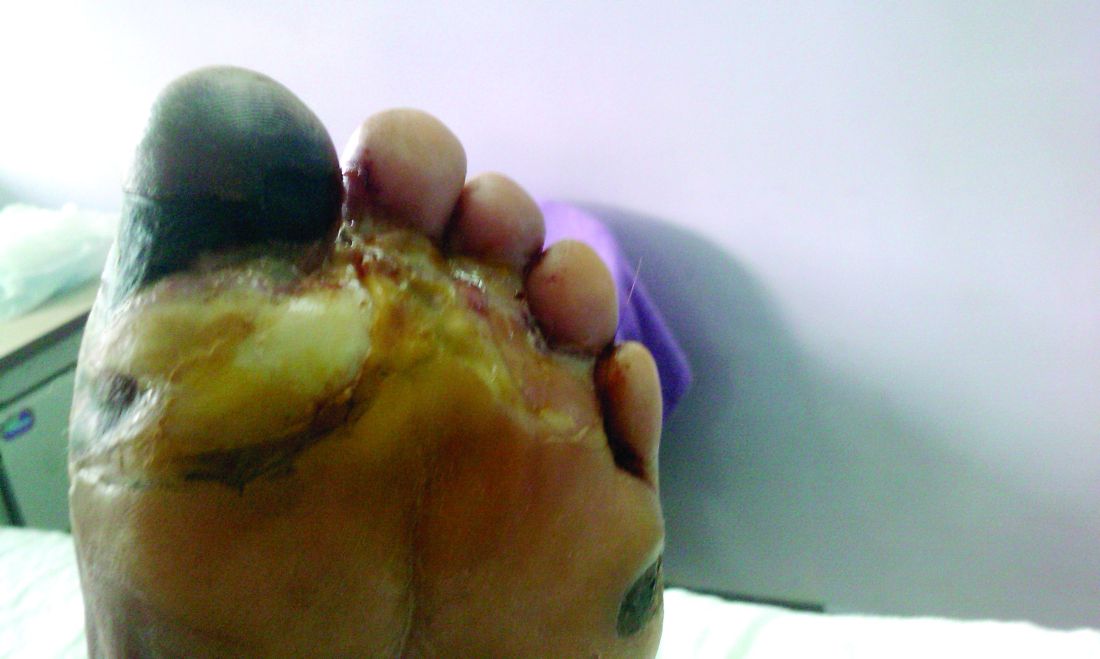
Amid a mandatory national lockdown, the rates of amputations skyrocketed at a hospital far from the hardest-hit region as many patients developed gangrene.
The findings offer critical lessons for the United States, said wound care specialist William H. Tettelbach, MD, of Western Peaks Specialty Hospital near Salt Lake City. “It’s become more obvious that outpatient wound care is a critical care need for the community because of the risk of ignoring these chronic wounds and letting them remain open. We cannot let these services be closed down like some were when the pandemic started.”
The study, led by Paola Caruso, MD, of the University of Campania Luigi Vanvitelli in Naples, appeared in Diabetes Care.
The researchers launched the study to understand how patients with diabetes and DFU fared during the height of the pandemic in Italy, where tens of thousands of people died, mainly in the northern region of the country. They focused on patients in the southern region who were admitted to the division of endocrinology and metabolic diseases at the Teaching Hospital at the University of Campania Luigi Vanvitelli.
The study compared 25 patients who were admitted from March 9 to May 18, 2020, with 38 patients who were admitted from a longer period between January and May 2019. The demographics of the groups are similar, with average ages in the early 60s and more men than women (21:4, respectively, in 2020 and 23:15, respectively, in 2019.)
The results reveal high numbers of emergent and serious cases in 2020. Compared with 2019, fewer were outpatients (16% vs. 45%, P = .028) and more were emergency patients (76% vs. 26%, P < .001).
Clinically, gangrene was much more common in the 2020 group, compared with the 2019 group (64% vs. 29%, P = .009), as was amputation (60% vs. 18%, P = .001).
The researchers determined that amputation was more than three times more likely in the 2020 versus the 2019 group (relative risk, 3.26; 95% confidence interval, 1.55-6.84) even though the 2019 period was longer. After adjustment for gender, the heightened risk in 2020 was 2.50 (95% CI, 1.18-5.29).
There was no statistically significant increase in the risk of revascularization.
“The COVID-19 lockdown may have had a detrimental impact on amputation risk because of the sudden interruption of DFU care and lower-limb preservation pathways, resulting in delayed diagnosis and treatment,” the researchers wrote. “DFU is often characterized by progressive clinical course, which can rapidly lead patients to critical worsening of their ulcers.”
They added that “the higher risk of amputation observed during COVID-19 lockdown confirms the need for proper and timely management of DFU patients to prevent dramatic outcomes responsible for a reduction of quality of life and increased morbidity and mortality.”
The study authors didn’t discuss why more patients seemed to have stayed home and not gotten proper care. It’s not clear if they were scared to get treatment or couldn’t obtain it because of the national shutdown.
Both have been factors affecting diabetic foot care in the United States during the pandemic, said Dr. Tettelbach. He called the study “timely and pertinent,” and said it highlights how wound care is “a critical need” that must remain available even when other medical services such as elective surgeries are shut down.
Infection-control protocols such as allowing patients to wait for appointments in their cars instead of waiting rooms will alleviate the fears of certain patients about seeking in-person care during the pandemic, he said. But some patients will be afraid to come in no matter what, he said, and home health may be the best solution for their care.
Several of the study authors reported various disclosures. Dr. Tettelbach reported no relevant disclosures.
SOURCE: Caruso P et al. Diabetes Care. 2020 Jul 23. doi:10.2337/dc20-1347.
Amid a mandatory national lockdown, the rates of amputations skyrocketed at a hospital far from the hardest-hit region as many patients developed gangrene.
The findings offer critical lessons for the United States, said wound care specialist William H. Tettelbach, MD, of Western Peaks Specialty Hospital near Salt Lake City. “It’s become more obvious that outpatient wound care is a critical care need for the community because of the risk of ignoring these chronic wounds and letting them remain open. We cannot let these services be closed down like some were when the pandemic started.”
The study, led by Paola Caruso, MD, of the University of Campania Luigi Vanvitelli in Naples, appeared in Diabetes Care.
The researchers launched the study to understand how patients with diabetes and DFU fared during the height of the pandemic in Italy, where tens of thousands of people died, mainly in the northern region of the country. They focused on patients in the southern region who were admitted to the division of endocrinology and metabolic diseases at the Teaching Hospital at the University of Campania Luigi Vanvitelli.
The study compared 25 patients who were admitted from March 9 to May 18, 2020, with 38 patients who were admitted from a longer period between January and May 2019. The demographics of the groups are similar, with average ages in the early 60s and more men than women (21:4, respectively, in 2020 and 23:15, respectively, in 2019.)
The results reveal high numbers of emergent and serious cases in 2020. Compared with 2019, fewer were outpatients (16% vs. 45%, P = .028) and more were emergency patients (76% vs. 26%, P < .001).
Clinically, gangrene was much more common in the 2020 group, compared with the 2019 group (64% vs. 29%, P = .009), as was amputation (60% vs. 18%, P = .001).
The researchers determined that amputation was more than three times more likely in the 2020 versus the 2019 group (relative risk, 3.26; 95% confidence interval, 1.55-6.84) even though the 2019 period was longer. After adjustment for gender, the heightened risk in 2020 was 2.50 (95% CI, 1.18-5.29).
There was no statistically significant increase in the risk of revascularization.
“The COVID-19 lockdown may have had a detrimental impact on amputation risk because of the sudden interruption of DFU care and lower-limb preservation pathways, resulting in delayed diagnosis and treatment,” the researchers wrote. “DFU is often characterized by progressive clinical course, which can rapidly lead patients to critical worsening of their ulcers.”
They added that “the higher risk of amputation observed during COVID-19 lockdown confirms the need for proper and timely management of DFU patients to prevent dramatic outcomes responsible for a reduction of quality of life and increased morbidity and mortality.”
The study authors didn’t discuss why more patients seemed to have stayed home and not gotten proper care. It’s not clear if they were scared to get treatment or couldn’t obtain it because of the national shutdown.
Both have been factors affecting diabetic foot care in the United States during the pandemic, said Dr. Tettelbach. He called the study “timely and pertinent,” and said it highlights how wound care is “a critical need” that must remain available even when other medical services such as elective surgeries are shut down.
Infection-control protocols such as allowing patients to wait for appointments in their cars instead of waiting rooms will alleviate the fears of certain patients about seeking in-person care during the pandemic, he said. But some patients will be afraid to come in no matter what, he said, and home health may be the best solution for their care.
Several of the study authors reported various disclosures. Dr. Tettelbach reported no relevant disclosures.
SOURCE: Caruso P et al. Diabetes Care. 2020 Jul 23. doi:10.2337/dc20-1347.
Amid a mandatory national lockdown, the rates of amputations skyrocketed at a hospital far from the hardest-hit region as many patients developed gangrene.
The findings offer critical lessons for the United States, said wound care specialist William H. Tettelbach, MD, of Western Peaks Specialty Hospital near Salt Lake City. “It’s become more obvious that outpatient wound care is a critical care need for the community because of the risk of ignoring these chronic wounds and letting them remain open. We cannot let these services be closed down like some were when the pandemic started.”
The study, led by Paola Caruso, MD, of the University of Campania Luigi Vanvitelli in Naples, appeared in Diabetes Care.
The researchers launched the study to understand how patients with diabetes and DFU fared during the height of the pandemic in Italy, where tens of thousands of people died, mainly in the northern region of the country. They focused on patients in the southern region who were admitted to the division of endocrinology and metabolic diseases at the Teaching Hospital at the University of Campania Luigi Vanvitelli.
The study compared 25 patients who were admitted from March 9 to May 18, 2020, with 38 patients who were admitted from a longer period between January and May 2019. The demographics of the groups are similar, with average ages in the early 60s and more men than women (21:4, respectively, in 2020 and 23:15, respectively, in 2019.)
The results reveal high numbers of emergent and serious cases in 2020. Compared with 2019, fewer were outpatients (16% vs. 45%, P = .028) and more were emergency patients (76% vs. 26%, P < .001).
Clinically, gangrene was much more common in the 2020 group, compared with the 2019 group (64% vs. 29%, P = .009), as was amputation (60% vs. 18%, P = .001).
The researchers determined that amputation was more than three times more likely in the 2020 versus the 2019 group (relative risk, 3.26; 95% confidence interval, 1.55-6.84) even though the 2019 period was longer. After adjustment for gender, the heightened risk in 2020 was 2.50 (95% CI, 1.18-5.29).
There was no statistically significant increase in the risk of revascularization.
“The COVID-19 lockdown may have had a detrimental impact on amputation risk because of the sudden interruption of DFU care and lower-limb preservation pathways, resulting in delayed diagnosis and treatment,” the researchers wrote. “DFU is often characterized by progressive clinical course, which can rapidly lead patients to critical worsening of their ulcers.”
They added that “the higher risk of amputation observed during COVID-19 lockdown confirms the need for proper and timely management of DFU patients to prevent dramatic outcomes responsible for a reduction of quality of life and increased morbidity and mortality.”
The study authors didn’t discuss why more patients seemed to have stayed home and not gotten proper care. It’s not clear if they were scared to get treatment or couldn’t obtain it because of the national shutdown.
Both have been factors affecting diabetic foot care in the United States during the pandemic, said Dr. Tettelbach. He called the study “timely and pertinent,” and said it highlights how wound care is “a critical need” that must remain available even when other medical services such as elective surgeries are shut down.
Infection-control protocols such as allowing patients to wait for appointments in their cars instead of waiting rooms will alleviate the fears of certain patients about seeking in-person care during the pandemic, he said. But some patients will be afraid to come in no matter what, he said, and home health may be the best solution for their care.
Several of the study authors reported various disclosures. Dr. Tettelbach reported no relevant disclosures.
SOURCE: Caruso P et al. Diabetes Care. 2020 Jul 23. doi:10.2337/dc20-1347.
FROM DIABETES CARE
Delaying denosumab dose boosts risk for vertebral fractures
a new study confirms. Physicians say they are especially concerned about the risk facing patients who are delaying the treatment during the coronavirus pandemic.

The recommended doses of denosumab are at 6-month intervals. Patients who delayed a dose by more than 16 weeks were nearly four times more likely to suffer vertebral fractures, compared with those who received on-time injections, according to the study, which was published in Annals of Internal Medicine.
“Because patients who used denosumab were at high risk for vertebral fracture, strategies to improve timely administration of denosumab in routine clinical settings are needed,” wrote the study authors, led by Houchen Lyu, MD, PhD, of National Clinical Research Center for Orthopedics, Sports Medicine & Rehabilitation at General Hospital of Chinese PLA in Beijing.
Denosumab, a human monoclonal antibody, is used to reduce bone loss in osteoporosis. The manufacturer of Prolia, a brand of the drug, recommends it be given every 6 months, but the study reports that it’s common for injections to be delayed.
Researchers have linked cessation of denosumab to higher risk of fractures, and Dr. Lyu led a study published earlier this year that linked less-frequent doses to less bone mineral density improvement. “However,” the authors of the new study wrote, “whether delaying subsequent injections beyond the recommended 6-month interval is associated with fractures is unknown.”
For their new study, researchers retrospectively analyzed data from 2,594 patients in the U.K. 45 years or older (mean age, 76; 94% female; 53% with a history of major osteoporotic fracture) who began taking denosumab between 2010 and 2019. They used a design that aimed to emulate a clinical trial, comparing three dosing intervals: “on time” (within 4 weeks of the recommended 6-month interval), “short delay” (within 4-16 weeks) and “long delay” (16 weeks to 6 months).
The study found that the risk of composite fracture over 6 months out of 1,000 was 27.3 for on-time dosing, 32.2 for short-delay dosing, and 42.4 for long-delay dosing. The hazard ratio for long-delay versus on-time was 1.44 (95% confidence interval, 0.96-2.17; P = .093).
Vertebral fractures were less likely, but delays boosted the risk significantly: Over 6 months, it grew from 2.2 in 1,000 (on time) to 3.6 in 1,000 (short delay) and 10.1 in 1,000 (long delay). The HR for long delay versus on time was 3.91 (95% CI, 1.62-9.45; P = .005).
“This study had limited statistical power for composite fracture and several secondary end points ... except for vertebral fracture. Thus, evidence was insufficient to conclude that fracture risk was increased at other anatomical sites.”
In an accompanying editorial, two physicians from the University of Minnesota, Minneapolis, noted that the study is “timely and relevant” since the coronavirus pandemic may disrupt dosage schedules more than usual. While the study has limitations, the “findings are consistent with known denosumab pharmacokinetics and prior studies of fracture incidence after denosumab treatment discontinuation, wrote Kristine E. Ensrud, MD, MPH, who is also of Minneapolis VA Health Care System, and John T. Schousboe, MD, PhD, who is also of HealthPartners Institute.
The editorial authors noted that, in light of the pandemic, “some organizations recommend temporary transition to an oral bisphosphonate in patients receiving denosumab treatment for whom continued treatment is not feasible within 7 to 8 months of their most recent injection.”
In an interview, endocrinologist and osteoporosis specialist Ethel Siris, MD, of Columbia University, New York, said many of her patients aren’t coming in for denosumab injections during the pandemic. “It’s hard enough to get people to show up every 6 months to get their shot when things are going nicely,” she said. “We’re talking older women who may be on a lot of other medications. People forget, and it’s difficult for the office to constantly remind some of them to get their shots at an infusion center.”
The lack of symptoms is another challenge to getting patients to return for doses, she said. “In osteoporosis, the only time something hurts is if you break it.”
Since the pandemic began, many patients have been avoiding medical offices because of fear of getting the coronavirus.
The new research is helpful because it shows that patients are “more likely to fracture if they delay,” Dr. Siris noted. The endocrinologist added that she has successfully convinced some patients to give themselves subcutaneous injections in the abdomen at home.
Dr. Siris said she has been able to watch patients do these injections on video to check their technique. Her patients have been impressed by “how easy it is and delighted to have accomplished it,” she said.
The study was funded by the National Institutes of Health China’s National Clinical Research Center for Orthopedics, Sports Medicine & Rehabilitation. The study authors, commentary authors, and Dr. Siris report no relevant disclosures.
SOURCE: Lyu H et al. Ann Intern Med. 2020 Jul 28. doi: 10.7326/M20-0882.
a new study confirms. Physicians say they are especially concerned about the risk facing patients who are delaying the treatment during the coronavirus pandemic.
The recommended doses of denosumab are at 6-month intervals. Patients who delayed a dose by more than 16 weeks were nearly four times more likely to suffer vertebral fractures, compared with those who received on-time injections, according to the study, which was published in Annals of Internal Medicine.
“Because patients who used denosumab were at high risk for vertebral fracture, strategies to improve timely administration of denosumab in routine clinical settings are needed,” wrote the study authors, led by Houchen Lyu, MD, PhD, of National Clinical Research Center for Orthopedics, Sports Medicine & Rehabilitation at General Hospital of Chinese PLA in Beijing.
Denosumab, a human monoclonal antibody, is used to reduce bone loss in osteoporosis. The manufacturer of Prolia, a brand of the drug, recommends it be given every 6 months, but the study reports that it’s common for injections to be delayed.
Researchers have linked cessation of denosumab to higher risk of fractures, and Dr. Lyu led a study published earlier this year that linked less-frequent doses to less bone mineral density improvement. “However,” the authors of the new study wrote, “whether delaying subsequent injections beyond the recommended 6-month interval is associated with fractures is unknown.”
For their new study, researchers retrospectively analyzed data from 2,594 patients in the U.K. 45 years or older (mean age, 76; 94% female; 53% with a history of major osteoporotic fracture) who began taking denosumab between 2010 and 2019. They used a design that aimed to emulate a clinical trial, comparing three dosing intervals: “on time” (within 4 weeks of the recommended 6-month interval), “short delay” (within 4-16 weeks) and “long delay” (16 weeks to 6 months).
The study found that the risk of composite fracture over 6 months out of 1,000 was 27.3 for on-time dosing, 32.2 for short-delay dosing, and 42.4 for long-delay dosing. The hazard ratio for long-delay versus on-time was 1.44 (95% confidence interval, 0.96-2.17; P = .093).
Vertebral fractures were less likely, but delays boosted the risk significantly: Over 6 months, it grew from 2.2 in 1,000 (on time) to 3.6 in 1,000 (short delay) and 10.1 in 1,000 (long delay). The HR for long delay versus on time was 3.91 (95% CI, 1.62-9.45; P = .005).
“This study had limited statistical power for composite fracture and several secondary end points ... except for vertebral fracture. Thus, evidence was insufficient to conclude that fracture risk was increased at other anatomical sites.”
In an accompanying editorial, two physicians from the University of Minnesota, Minneapolis, noted that the study is “timely and relevant” since the coronavirus pandemic may disrupt dosage schedules more than usual. While the study has limitations, the “findings are consistent with known denosumab pharmacokinetics and prior studies of fracture incidence after denosumab treatment discontinuation, wrote Kristine E. Ensrud, MD, MPH, who is also of Minneapolis VA Health Care System, and John T. Schousboe, MD, PhD, who is also of HealthPartners Institute.
The editorial authors noted that, in light of the pandemic, “some organizations recommend temporary transition to an oral bisphosphonate in patients receiving denosumab treatment for whom continued treatment is not feasible within 7 to 8 months of their most recent injection.”
In an interview, endocrinologist and osteoporosis specialist Ethel Siris, MD, of Columbia University, New York, said many of her patients aren’t coming in for denosumab injections during the pandemic. “It’s hard enough to get people to show up every 6 months to get their shot when things are going nicely,” she said. “We’re talking older women who may be on a lot of other medications. People forget, and it’s difficult for the office to constantly remind some of them to get their shots at an infusion center.”
The lack of symptoms is another challenge to getting patients to return for doses, she said. “In osteoporosis, the only time something hurts is if you break it.”
Since the pandemic began, many patients have been avoiding medical offices because of fear of getting the coronavirus.
The new research is helpful because it shows that patients are “more likely to fracture if they delay,” Dr. Siris noted. The endocrinologist added that she has successfully convinced some patients to give themselves subcutaneous injections in the abdomen at home.
Dr. Siris said she has been able to watch patients do these injections on video to check their technique. Her patients have been impressed by “how easy it is and delighted to have accomplished it,” she said.
The study was funded by the National Institutes of Health China’s National Clinical Research Center for Orthopedics, Sports Medicine & Rehabilitation. The study authors, commentary authors, and Dr. Siris report no relevant disclosures.
SOURCE: Lyu H et al. Ann Intern Med. 2020 Jul 28. doi: 10.7326/M20-0882.
a new study confirms. Physicians say they are especially concerned about the risk facing patients who are delaying the treatment during the coronavirus pandemic.
The recommended doses of denosumab are at 6-month intervals. Patients who delayed a dose by more than 16 weeks were nearly four times more likely to suffer vertebral fractures, compared with those who received on-time injections, according to the study, which was published in Annals of Internal Medicine.
“Because patients who used denosumab were at high risk for vertebral fracture, strategies to improve timely administration of denosumab in routine clinical settings are needed,” wrote the study authors, led by Houchen Lyu, MD, PhD, of National Clinical Research Center for Orthopedics, Sports Medicine & Rehabilitation at General Hospital of Chinese PLA in Beijing.
Denosumab, a human monoclonal antibody, is used to reduce bone loss in osteoporosis. The manufacturer of Prolia, a brand of the drug, recommends it be given every 6 months, but the study reports that it’s common for injections to be delayed.
Researchers have linked cessation of denosumab to higher risk of fractures, and Dr. Lyu led a study published earlier this year that linked less-frequent doses to less bone mineral density improvement. “However,” the authors of the new study wrote, “whether delaying subsequent injections beyond the recommended 6-month interval is associated with fractures is unknown.”
For their new study, researchers retrospectively analyzed data from 2,594 patients in the U.K. 45 years or older (mean age, 76; 94% female; 53% with a history of major osteoporotic fracture) who began taking denosumab between 2010 and 2019. They used a design that aimed to emulate a clinical trial, comparing three dosing intervals: “on time” (within 4 weeks of the recommended 6-month interval), “short delay” (within 4-16 weeks) and “long delay” (16 weeks to 6 months).
The study found that the risk of composite fracture over 6 months out of 1,000 was 27.3 for on-time dosing, 32.2 for short-delay dosing, and 42.4 for long-delay dosing. The hazard ratio for long-delay versus on-time was 1.44 (95% confidence interval, 0.96-2.17; P = .093).
Vertebral fractures were less likely, but delays boosted the risk significantly: Over 6 months, it grew from 2.2 in 1,000 (on time) to 3.6 in 1,000 (short delay) and 10.1 in 1,000 (long delay). The HR for long delay versus on time was 3.91 (95% CI, 1.62-9.45; P = .005).
“This study had limited statistical power for composite fracture and several secondary end points ... except for vertebral fracture. Thus, evidence was insufficient to conclude that fracture risk was increased at other anatomical sites.”
In an accompanying editorial, two physicians from the University of Minnesota, Minneapolis, noted that the study is “timely and relevant” since the coronavirus pandemic may disrupt dosage schedules more than usual. While the study has limitations, the “findings are consistent with known denosumab pharmacokinetics and prior studies of fracture incidence after denosumab treatment discontinuation, wrote Kristine E. Ensrud, MD, MPH, who is also of Minneapolis VA Health Care System, and John T. Schousboe, MD, PhD, who is also of HealthPartners Institute.
The editorial authors noted that, in light of the pandemic, “some organizations recommend temporary transition to an oral bisphosphonate in patients receiving denosumab treatment for whom continued treatment is not feasible within 7 to 8 months of their most recent injection.”
In an interview, endocrinologist and osteoporosis specialist Ethel Siris, MD, of Columbia University, New York, said many of her patients aren’t coming in for denosumab injections during the pandemic. “It’s hard enough to get people to show up every 6 months to get their shot when things are going nicely,” she said. “We’re talking older women who may be on a lot of other medications. People forget, and it’s difficult for the office to constantly remind some of them to get their shots at an infusion center.”
The lack of symptoms is another challenge to getting patients to return for doses, she said. “In osteoporosis, the only time something hurts is if you break it.”
Since the pandemic began, many patients have been avoiding medical offices because of fear of getting the coronavirus.
The new research is helpful because it shows that patients are “more likely to fracture if they delay,” Dr. Siris noted. The endocrinologist added that she has successfully convinced some patients to give themselves subcutaneous injections in the abdomen at home.
Dr. Siris said she has been able to watch patients do these injections on video to check their technique. Her patients have been impressed by “how easy it is and delighted to have accomplished it,” she said.
The study was funded by the National Institutes of Health China’s National Clinical Research Center for Orthopedics, Sports Medicine & Rehabilitation. The study authors, commentary authors, and Dr. Siris report no relevant disclosures.
SOURCE: Lyu H et al. Ann Intern Med. 2020 Jul 28. doi: 10.7326/M20-0882.
FROM ANNALS OF INTERNAL MEDICINE
Key clinical point: Patients with osteoporosis who delay denosumab doses are at much higher risk for vertebral fractures.
Major finding: Over 6 months, the risk of vertebral fractures grew from 2.2 in 1,000 (on-time doses) to 10.1 in 1,000 (delay of more than 16 weeks) – a hazard ratio of 3.91 (confidence interval, 1.62 to 9.45; P = .005).
Study details: Retrospective analysis of 2,594 patients in the U.K. 45 years or older who began taking denosumab between 2010 and 2019.
Disclosures: The study was funded by the National Institutes of Health China’s National Clinical Research Center for Orthopedics, Sports Medicine & Rehabilitation. The study authors report no relevant disclosures.
Source: Lyu H et al. Ann Intern Med. 2020 Jul 28. doi: 10.7326/M20-0882.
Hospital medicine update highlights research from ‘extended family’
The annual “Update in Hospital Medicine” session will go a step further by highlighting the work and insights of what Dr. Pfeifer affectionately calls the “extended family.”

Scott Kaatz, DO, MSc, SFHM, a hospitalist at Henry Ford Hospital in Detroit, explained that “the Update has a long-standing tradition at the national meeting as an overview of the most impactful or insightful publications relevant to clinicians working in the hospital, which includes internists, pediatricians, obstetricians, family physicians, nurse practitioners, physician assistants, and other specialties.”
Why does the Update embrace such a wide focus? Because there’s a need for a broader perspective, according to Dr. Pfeifer, professor of medicine at the Medical College of Wisconsin, Milwaukee. “The Society of Hospital Medicine Annual Conference has many superb offerings with specific focuses that help attendees fill knowledge and practice gaps and network with individuals with similar interests,” he said. “All of those different offerings highlight something that is very cool about hospital medicine – its diversity. However, it’s also important for us to come together as one big family to support each other and advocate for the larger cause of hospital medicine. With the “Update in Hospital Medicine,” attendees can specifically hear about the clinical changes happening in their “extended family.”

“We will be giving an overview of key new literature across the spectrum of hospital medicine in areas such as sepsis, inclusion/diversity, co-management, and hospital staffing models,” Dr. Kaatz said. “We will also highlight the various different focuses/practices within hospital medicine and the wonderful diversity within the Society of Hospital Medicine. We have coordinated our selection of topics with the Special Interest Groups (SIGs) and the Chapters to make sure we include the voices of our wider membership. This will also allow us to celebrate our diversity by giving shout outs to our SIGs and chapters and showcase the wonderful things going on in hospital medicine, including advances being made by our very own members.”
Dr. Kaatz added that he and Dr. Pfeifer are grateful to the organizers for allowing them to try something new. “Presented papers will reflect the interests of SHM members via a ‘learner needs assessment’ survey,” he said. “Several of the special interest groups and local chapters surveyed their membership and voted on the most impactful papers in the past year. It has been very gratifying to see the level of engagement in our society and to be able to share this important research with a large audience.”
Dr. Pfeifer has no relevant disclosures. Dr. Kaatz discloses research funding to institution (BMS) and consultant/advisory board relationships (BMS, Pfizer and Janssen).
“Update in Hospital Medicine”
The annual “Update in Hospital Medicine” session will go a step further by highlighting the work and insights of what Dr. Pfeifer affectionately calls the “extended family.”
Scott Kaatz, DO, MSc, SFHM, a hospitalist at Henry Ford Hospital in Detroit, explained that “the Update has a long-standing tradition at the national meeting as an overview of the most impactful or insightful publications relevant to clinicians working in the hospital, which includes internists, pediatricians, obstetricians, family physicians, nurse practitioners, physician assistants, and other specialties.”
Why does the Update embrace such a wide focus? Because there’s a need for a broader perspective, according to Dr. Pfeifer, professor of medicine at the Medical College of Wisconsin, Milwaukee. “The Society of Hospital Medicine Annual Conference has many superb offerings with specific focuses that help attendees fill knowledge and practice gaps and network with individuals with similar interests,” he said. “All of those different offerings highlight something that is very cool about hospital medicine – its diversity. However, it’s also important for us to come together as one big family to support each other and advocate for the larger cause of hospital medicine. With the “Update in Hospital Medicine,” attendees can specifically hear about the clinical changes happening in their “extended family.”
“We will be giving an overview of key new literature across the spectrum of hospital medicine in areas such as sepsis, inclusion/diversity, co-management, and hospital staffing models,” Dr. Kaatz said. “We will also highlight the various different focuses/practices within hospital medicine and the wonderful diversity within the Society of Hospital Medicine. We have coordinated our selection of topics with the Special Interest Groups (SIGs) and the Chapters to make sure we include the voices of our wider membership. This will also allow us to celebrate our diversity by giving shout outs to our SIGs and chapters and showcase the wonderful things going on in hospital medicine, including advances being made by our very own members.”
Dr. Kaatz added that he and Dr. Pfeifer are grateful to the organizers for allowing them to try something new. “Presented papers will reflect the interests of SHM members via a ‘learner needs assessment’ survey,” he said. “Several of the special interest groups and local chapters surveyed their membership and voted on the most impactful papers in the past year. It has been very gratifying to see the level of engagement in our society and to be able to share this important research with a large audience.”
Dr. Pfeifer has no relevant disclosures. Dr. Kaatz discloses research funding to institution (BMS) and consultant/advisory board relationships (BMS, Pfizer and Janssen).
“Update in Hospital Medicine”
The annual “Update in Hospital Medicine” session will go a step further by highlighting the work and insights of what Dr. Pfeifer affectionately calls the “extended family.”
Scott Kaatz, DO, MSc, SFHM, a hospitalist at Henry Ford Hospital in Detroit, explained that “the Update has a long-standing tradition at the national meeting as an overview of the most impactful or insightful publications relevant to clinicians working in the hospital, which includes internists, pediatricians, obstetricians, family physicians, nurse practitioners, physician assistants, and other specialties.”
Why does the Update embrace such a wide focus? Because there’s a need for a broader perspective, according to Dr. Pfeifer, professor of medicine at the Medical College of Wisconsin, Milwaukee. “The Society of Hospital Medicine Annual Conference has many superb offerings with specific focuses that help attendees fill knowledge and practice gaps and network with individuals with similar interests,” he said. “All of those different offerings highlight something that is very cool about hospital medicine – its diversity. However, it’s also important for us to come together as one big family to support each other and advocate for the larger cause of hospital medicine. With the “Update in Hospital Medicine,” attendees can specifically hear about the clinical changes happening in their “extended family.”
“We will be giving an overview of key new literature across the spectrum of hospital medicine in areas such as sepsis, inclusion/diversity, co-management, and hospital staffing models,” Dr. Kaatz said. “We will also highlight the various different focuses/practices within hospital medicine and the wonderful diversity within the Society of Hospital Medicine. We have coordinated our selection of topics with the Special Interest Groups (SIGs) and the Chapters to make sure we include the voices of our wider membership. This will also allow us to celebrate our diversity by giving shout outs to our SIGs and chapters and showcase the wonderful things going on in hospital medicine, including advances being made by our very own members.”
Dr. Kaatz added that he and Dr. Pfeifer are grateful to the organizers for allowing them to try something new. “Presented papers will reflect the interests of SHM members via a ‘learner needs assessment’ survey,” he said. “Several of the special interest groups and local chapters surveyed their membership and voted on the most impactful papers in the past year. It has been very gratifying to see the level of engagement in our society and to be able to share this important research with a large audience.”
Dr. Pfeifer has no relevant disclosures. Dr. Kaatz discloses research funding to institution (BMS) and consultant/advisory board relationships (BMS, Pfizer and Janssen).
“Update in Hospital Medicine”
Most family medicine residents remain in specialty
As many primary care practices struggle financially, a new study offers positive news about the retention of family medicine (FM) graduates in the specialty. According to the research, at least 85% of physicians who completed FM residency training in 2014-2017 went on to be certified by the American Board of Family Medicine (ABFM).
The U.S. could have a shortage of 21,100-55,200 primary care physicians by the year 2033, says a report released in June by the Association of American Medical Colleges.
Most U.S. primary care doctors specialize in FM, according to the American Academy of Family Physicians, and the number of physicians choosing this specialty declined over most of the period of the study, Mingliang Dai, PhD, lead author of the research, said in an interview. The study is in the July/August 2020 issue of Annals of Family Medicine.
Some positive news for the specialty is that 92% of 66,778 FM residency graduates from 1994-2017 self-designated FM as their primary specialty. This represents a 2.5% improvement on physician retention in the specialty compared with the period from 1969 to 1993, reported Dr. Dai and coauthor Lars E. Peterson, MD, PhD, both of the American Board of Family Medicine. Dr. Peterson also works in the department of family and community medicine at the University of Kentucky in Lexington.
“I am not surprised by the finding and hope that it means that family medicine has continued to demonstrate its importance as a specialty,” Santina J. Wheat, MD, program director of Northwestern’s McGaw Family Medicine residency program at Humboldt Park, Chicago, said in an interview. “We have demonstrated to our peers during the pandemic that we are valuable team members and I hope that perception will only be strengthened.
“Many of our graduates feel very strongly about being family medicine physicians. Most of graduates are practicing outpatient primary care so this does strongly align with my experience,” noted Dr. Wheat, a family physician at Erie Family Health Center in Chicago who serves on the editorial advisory board of Family Practice News.
The study authors noted that 98% of those whose last training was in FM “claimed FM as their primary specialty.”
The new research provides follow-up to a landmark 1996 report that found 91% of 38,659 FM residency graduates from 1969-1993 identified their specialty as FM, Dr. Dai said in an interview.
“The statistics on the primary care workforce, especially family medicine residency graduates, have not been examined for over 20 years,” the study author noted.
“We think it is important to monitor whether recent graduates continue to practice what they are trained for,” Dr. Dai said.
For the new report, Dr. Dai and Dr. Peterson examined records from the ABFM and American Medical Association for the years 1994-2017. They tracked 66,778 family medicine residency graduates and found that 92% identified FM as their primary specialty. The other top specialties were FM/sport medicine (2%), FM/geriatric medicine (1%), internal medicine/geriatrics (1%), and emergency medicine (1%).
The study reveals the tremendous evolution of the FM residency pipeline since the mid-1990s. The percentage of women among residency graduates grew from 40% in 1994-1997 to 54% in 2014-2017, and the percentage of international students jumped from 18% to 29% over that time period.
The 1996 report found that just 23% of FM graduate residents were women during the 1969-1993 period, and only 12% were international students.
In an interview, Heather Paladine, MD, MEd, FAAFP, residency director of the New York Presbyterian–Columbia Family Medicine Residency Program, called the study “thorough.” She also made the following comments about the new research: “It’s very good news that the percentage of FM grads who practice in our field is not decreasing. Once people finish an FM residency, they stay in our field.”
Dr. Paladine added that “this study validates what I have seen as a residency program director. Most of our graduates go into primary care job, and even many who do fellowships continue to practice primary care as well as their area of focus.”
However, she cautioned that the study doesn’t address a crucial challenge.
“The key to relieving the primary care shortage will be to look earlier in the pipeline: How can we get more medical students to choose family medicine? How can we increase the number of FM residency positions and find stable funding for them? How can we support family physicians to decrease burnout and make it a more attractive field? We know our field is needed, but insurance reimbursements are focused on more subspecialty care,” she noted.
As for the years since 2017, the last year analyzed in the study, Dr. Paladine said the trends seem to be continuing.
The impact of COVID-19 is still yet to be seen, but Dr. Paladine and other experts provided possibilities for the field in light of the pandemic.
“While the nation’s health care system is strained by COVID-19 patients, we have not yet seen COVID-19-related policy changes in medical education that may have a direct impact on residency programs,” Dr. Dai said in an interview.
Dr. Paladine said it’s possible that the pandemic could actually boost interest in medicine.
“After 9/11, I saw a number of college graduates who wanted to reach out and help people and ended up switching their plans to medical school,” she said. “This may happen again after COVID.”
Dr. Wheat also offered a positive outlook for the specialty.
“I am not expecting COVID to decrease the percentage of FM graduates working in family medicine. If anything, I think it will encourage them to have a broader scope and work as leaders in health care to look out for the primary care needs of our communities,” she said.
Neil Skolnik, MD, associate director of the family medicine residency program at Abington (Pa.) Hospital–Jefferson Health, said in an interview that the study shows that the FM pipeline “remains strong.”
Dr. Skolnik, who serves on the editorial advisory board of Family Practice News, added that “it is also good to see that there has been an increasing diversity in the composition of physicians graduating from family medicine residency programs, most importantly an increase in the proportion of women, with women now accounting for over half of graduates.”
However, Dr. Skolnik noted, “it is a bit surprising that less than 1% of graduates identified as practicing geriatric medicine, given the expected increasing proportion of the population that is over 80 years of age. As a specialty, perhaps we can think about ways to encourage more graduating residents to consider geriatrics as an area of interest as there is a societal need, and it can be a very gratifying area of practice.”
No study funding was reported. The study authors, Dr. Paladine, Dr. Skolnik, and Dr. Wheat reported no relevant disclosures.
Katie Lennon contributed to this report.
SOURCE: Dai M and Peterson LE. Ann Fam Med. 2020 Jul. doi: 10.1370/afm.2535.
As many primary care practices struggle financially, a new study offers positive news about the retention of family medicine (FM) graduates in the specialty. According to the research, at least 85% of physicians who completed FM residency training in 2014-2017 went on to be certified by the American Board of Family Medicine (ABFM).
The U.S. could have a shortage of 21,100-55,200 primary care physicians by the year 2033, says a report released in June by the Association of American Medical Colleges.
Most U.S. primary care doctors specialize in FM, according to the American Academy of Family Physicians, and the number of physicians choosing this specialty declined over most of the period of the study, Mingliang Dai, PhD, lead author of the research, said in an interview. The study is in the July/August 2020 issue of Annals of Family Medicine.
Some positive news for the specialty is that 92% of 66,778 FM residency graduates from 1994-2017 self-designated FM as their primary specialty. This represents a 2.5% improvement on physician retention in the specialty compared with the period from 1969 to 1993, reported Dr. Dai and coauthor Lars E. Peterson, MD, PhD, both of the American Board of Family Medicine. Dr. Peterson also works in the department of family and community medicine at the University of Kentucky in Lexington.
“I am not surprised by the finding and hope that it means that family medicine has continued to demonstrate its importance as a specialty,” Santina J. Wheat, MD, program director of Northwestern’s McGaw Family Medicine residency program at Humboldt Park, Chicago, said in an interview. “We have demonstrated to our peers during the pandemic that we are valuable team members and I hope that perception will only be strengthened.
“Many of our graduates feel very strongly about being family medicine physicians. Most of graduates are practicing outpatient primary care so this does strongly align with my experience,” noted Dr. Wheat, a family physician at Erie Family Health Center in Chicago who serves on the editorial advisory board of Family Practice News.
The study authors noted that 98% of those whose last training was in FM “claimed FM as their primary specialty.”
The new research provides follow-up to a landmark 1996 report that found 91% of 38,659 FM residency graduates from 1969-1993 identified their specialty as FM, Dr. Dai said in an interview.
“The statistics on the primary care workforce, especially family medicine residency graduates, have not been examined for over 20 years,” the study author noted.
“We think it is important to monitor whether recent graduates continue to practice what they are trained for,” Dr. Dai said.
For the new report, Dr. Dai and Dr. Peterson examined records from the ABFM and American Medical Association for the years 1994-2017. They tracked 66,778 family medicine residency graduates and found that 92% identified FM as their primary specialty. The other top specialties were FM/sport medicine (2%), FM/geriatric medicine (1%), internal medicine/geriatrics (1%), and emergency medicine (1%).
The study reveals the tremendous evolution of the FM residency pipeline since the mid-1990s. The percentage of women among residency graduates grew from 40% in 1994-1997 to 54% in 2014-2017, and the percentage of international students jumped from 18% to 29% over that time period.
The 1996 report found that just 23% of FM graduate residents were women during the 1969-1993 period, and only 12% were international students.
In an interview, Heather Paladine, MD, MEd, FAAFP, residency director of the New York Presbyterian–Columbia Family Medicine Residency Program, called the study “thorough.” She also made the following comments about the new research: “It’s very good news that the percentage of FM grads who practice in our field is not decreasing. Once people finish an FM residency, they stay in our field.”
Dr. Paladine added that “this study validates what I have seen as a residency program director. Most of our graduates go into primary care job, and even many who do fellowships continue to practice primary care as well as their area of focus.”
However, she cautioned that the study doesn’t address a crucial challenge.
“The key to relieving the primary care shortage will be to look earlier in the pipeline: How can we get more medical students to choose family medicine? How can we increase the number of FM residency positions and find stable funding for them? How can we support family physicians to decrease burnout and make it a more attractive field? We know our field is needed, but insurance reimbursements are focused on more subspecialty care,” she noted.
As for the years since 2017, the last year analyzed in the study, Dr. Paladine said the trends seem to be continuing.
The impact of COVID-19 is still yet to be seen, but Dr. Paladine and other experts provided possibilities for the field in light of the pandemic.
“While the nation’s health care system is strained by COVID-19 patients, we have not yet seen COVID-19-related policy changes in medical education that may have a direct impact on residency programs,” Dr. Dai said in an interview.
Dr. Paladine said it’s possible that the pandemic could actually boost interest in medicine.
“After 9/11, I saw a number of college graduates who wanted to reach out and help people and ended up switching their plans to medical school,” she said. “This may happen again after COVID.”
Dr. Wheat also offered a positive outlook for the specialty.
“I am not expecting COVID to decrease the percentage of FM graduates working in family medicine. If anything, I think it will encourage them to have a broader scope and work as leaders in health care to look out for the primary care needs of our communities,” she said.
Neil Skolnik, MD, associate director of the family medicine residency program at Abington (Pa.) Hospital–Jefferson Health, said in an interview that the study shows that the FM pipeline “remains strong.”
Dr. Skolnik, who serves on the editorial advisory board of Family Practice News, added that “it is also good to see that there has been an increasing diversity in the composition of physicians graduating from family medicine residency programs, most importantly an increase in the proportion of women, with women now accounting for over half of graduates.”
However, Dr. Skolnik noted, “it is a bit surprising that less than 1% of graduates identified as practicing geriatric medicine, given the expected increasing proportion of the population that is over 80 years of age. As a specialty, perhaps we can think about ways to encourage more graduating residents to consider geriatrics as an area of interest as there is a societal need, and it can be a very gratifying area of practice.”
No study funding was reported. The study authors, Dr. Paladine, Dr. Skolnik, and Dr. Wheat reported no relevant disclosures.
Katie Lennon contributed to this report.
SOURCE: Dai M and Peterson LE. Ann Fam Med. 2020 Jul. doi: 10.1370/afm.2535.
As many primary care practices struggle financially, a new study offers positive news about the retention of family medicine (FM) graduates in the specialty. According to the research, at least 85% of physicians who completed FM residency training in 2014-2017 went on to be certified by the American Board of Family Medicine (ABFM).
The U.S. could have a shortage of 21,100-55,200 primary care physicians by the year 2033, says a report released in June by the Association of American Medical Colleges.
Most U.S. primary care doctors specialize in FM, according to the American Academy of Family Physicians, and the number of physicians choosing this specialty declined over most of the period of the study, Mingliang Dai, PhD, lead author of the research, said in an interview. The study is in the July/August 2020 issue of Annals of Family Medicine.
Some positive news for the specialty is that 92% of 66,778 FM residency graduates from 1994-2017 self-designated FM as their primary specialty. This represents a 2.5% improvement on physician retention in the specialty compared with the period from 1969 to 1993, reported Dr. Dai and coauthor Lars E. Peterson, MD, PhD, both of the American Board of Family Medicine. Dr. Peterson also works in the department of family and community medicine at the University of Kentucky in Lexington.
“I am not surprised by the finding and hope that it means that family medicine has continued to demonstrate its importance as a specialty,” Santina J. Wheat, MD, program director of Northwestern’s McGaw Family Medicine residency program at Humboldt Park, Chicago, said in an interview. “We have demonstrated to our peers during the pandemic that we are valuable team members and I hope that perception will only be strengthened.
“Many of our graduates feel very strongly about being family medicine physicians. Most of graduates are practicing outpatient primary care so this does strongly align with my experience,” noted Dr. Wheat, a family physician at Erie Family Health Center in Chicago who serves on the editorial advisory board of Family Practice News.
The study authors noted that 98% of those whose last training was in FM “claimed FM as their primary specialty.”
The new research provides follow-up to a landmark 1996 report that found 91% of 38,659 FM residency graduates from 1969-1993 identified their specialty as FM, Dr. Dai said in an interview.
“The statistics on the primary care workforce, especially family medicine residency graduates, have not been examined for over 20 years,” the study author noted.
“We think it is important to monitor whether recent graduates continue to practice what they are trained for,” Dr. Dai said.
For the new report, Dr. Dai and Dr. Peterson examined records from the ABFM and American Medical Association for the years 1994-2017. They tracked 66,778 family medicine residency graduates and found that 92% identified FM as their primary specialty. The other top specialties were FM/sport medicine (2%), FM/geriatric medicine (1%), internal medicine/geriatrics (1%), and emergency medicine (1%).
The study reveals the tremendous evolution of the FM residency pipeline since the mid-1990s. The percentage of women among residency graduates grew from 40% in 1994-1997 to 54% in 2014-2017, and the percentage of international students jumped from 18% to 29% over that time period.
The 1996 report found that just 23% of FM graduate residents were women during the 1969-1993 period, and only 12% were international students.
In an interview, Heather Paladine, MD, MEd, FAAFP, residency director of the New York Presbyterian–Columbia Family Medicine Residency Program, called the study “thorough.” She also made the following comments about the new research: “It’s very good news that the percentage of FM grads who practice in our field is not decreasing. Once people finish an FM residency, they stay in our field.”
Dr. Paladine added that “this study validates what I have seen as a residency program director. Most of our graduates go into primary care job, and even many who do fellowships continue to practice primary care as well as their area of focus.”
However, she cautioned that the study doesn’t address a crucial challenge.
“The key to relieving the primary care shortage will be to look earlier in the pipeline: How can we get more medical students to choose family medicine? How can we increase the number of FM residency positions and find stable funding for them? How can we support family physicians to decrease burnout and make it a more attractive field? We know our field is needed, but insurance reimbursements are focused on more subspecialty care,” she noted.
As for the years since 2017, the last year analyzed in the study, Dr. Paladine said the trends seem to be continuing.
The impact of COVID-19 is still yet to be seen, but Dr. Paladine and other experts provided possibilities for the field in light of the pandemic.
“While the nation’s health care system is strained by COVID-19 patients, we have not yet seen COVID-19-related policy changes in medical education that may have a direct impact on residency programs,” Dr. Dai said in an interview.
Dr. Paladine said it’s possible that the pandemic could actually boost interest in medicine.
“After 9/11, I saw a number of college graduates who wanted to reach out and help people and ended up switching their plans to medical school,” she said. “This may happen again after COVID.”
Dr. Wheat also offered a positive outlook for the specialty.
“I am not expecting COVID to decrease the percentage of FM graduates working in family medicine. If anything, I think it will encourage them to have a broader scope and work as leaders in health care to look out for the primary care needs of our communities,” she said.
Neil Skolnik, MD, associate director of the family medicine residency program at Abington (Pa.) Hospital–Jefferson Health, said in an interview that the study shows that the FM pipeline “remains strong.”
Dr. Skolnik, who serves on the editorial advisory board of Family Practice News, added that “it is also good to see that there has been an increasing diversity in the composition of physicians graduating from family medicine residency programs, most importantly an increase in the proportion of women, with women now accounting for over half of graduates.”
However, Dr. Skolnik noted, “it is a bit surprising that less than 1% of graduates identified as practicing geriatric medicine, given the expected increasing proportion of the population that is over 80 years of age. As a specialty, perhaps we can think about ways to encourage more graduating residents to consider geriatrics as an area of interest as there is a societal need, and it can be a very gratifying area of practice.”
No study funding was reported. The study authors, Dr. Paladine, Dr. Skolnik, and Dr. Wheat reported no relevant disclosures.
Katie Lennon contributed to this report.
SOURCE: Dai M and Peterson LE. Ann Fam Med. 2020 Jul. doi: 10.1370/afm.2535.
FROM ANNALS OF FAMILY MEDICINE
Amid pandemic, Virginia hospital’s opioid overdoses up nearly 10-fold
Opioid overdoses have shot up by almost 10-fold at a Virginia ED since March, a new report finds. The report provides more evidence that the coronavirus pandemic is sparking a severe medical crisis among illicit drug users.
“Health care providers should closely monitor the number of overdoses coming into their hospitals and in the surrounding community during this time,” study lead author and postdoctoral research fellow Taylor Ochalek, PhD, said in an interview. “If they do notice an increasing trend of overdoses, they should spread awareness in the community to the general public, and offer resources and information for those that may be seeking help and/or may be at a high risk of overdosing.”
Dr. Ochalek presented the study findings at the virtual annual meeting of the College on Problems of Drug Dependence.
According to the report, opioid overdoses at the VCU Medical Center in Richmond, Va., grew from an average of six a month from February to December 2019 to 50, 57, and 63 in March, April, and May 2020. Of the 171 cases in the later time frame, the average age was 44 years, 72% were male, and 82% were African American.
“The steep increase in overdoses began primarily in March,” said Dr. Ochalek, of Virginia Commonwealth University in Richmond. “This timing coincides with the Virginia governor’s state of emergency declaration, stay-at-home order, and closure of nonessential businesses order.”
The researchers did not provide details about the types of opioids used, the patient outcomes, or whether the patients tested positive for COVID-19. It’s unclear whether the pandemic directly spawned a higher number of overdoses, but there are growing signs of a stark nationwide trend.
“Nationwide, federal and local officials are reporting alarming spikes in drug overdoses – a hidden epidemic within the coronavirus pandemic,” the Washington Post reported on July 1, pointing to increases in Kentucky, Virginia, and the Chicago area.
Meanwhile, the federal Overdose Detection Mapping Application Program, which tracks overdoses nationwide, issued 191% more “spike alerts” in January to April 2020 than in the same time period in 2019. However, the spike alerts began to increase in January, weeks before the pandemic began to take hold.
The findings are consistent with trends in Houston, where overdose calls were up 31% in the first 3 months of 2020, compared with 2019, said psychologist James Bray, PhD, of the University of Texas, San Antonio, in an interview. More recent data suggest that the numbers are rising even higher, said Dr. Bray, who works with Houston first responders and has analyzed data.
Dr. Bray said.
Another potential factor is the disruption in the illicit drug supply chain because of limits on crossings at the southern border, said ED physician Scott Weiner, MD, MPH, of Brigham and Women’s Hospital and Harvard Medical School, both in Boston. “As a result, opioids of extremely variable potency have infiltrated markets, and people using drugs may not be used to the new doses, especially if they are high-potency fentanyl analogues.”
Moving forward, Dr. Bray said, “people need continued access to treatment. Telehealth and other virtual services need to be provided so that people can continue to have access to treatment even during the pandemic.”
Dr. Weiner also emphasized the importance of treatment for patients who overdose on opioids. “In my previous work, we discovered that about 1 in 20 patients who are treated in an emergency department and survive would die within 1 year. That number will likely increase drastically during COVID,” he said. “When a patient presents after overdose, we must intervene aggressively with buprenorphine and other harm-reduction techniques to save these lives.”
The study was funded by the National Institutes of Health. Dr. Ochalek, Dr. Weiner, and Dr. Bray reported no relevant disclosures.
Opioid overdoses have shot up by almost 10-fold at a Virginia ED since March, a new report finds. The report provides more evidence that the coronavirus pandemic is sparking a severe medical crisis among illicit drug users.
“Health care providers should closely monitor the number of overdoses coming into their hospitals and in the surrounding community during this time,” study lead author and postdoctoral research fellow Taylor Ochalek, PhD, said in an interview. “If they do notice an increasing trend of overdoses, they should spread awareness in the community to the general public, and offer resources and information for those that may be seeking help and/or may be at a high risk of overdosing.”
Dr. Ochalek presented the study findings at the virtual annual meeting of the College on Problems of Drug Dependence.
According to the report, opioid overdoses at the VCU Medical Center in Richmond, Va., grew from an average of six a month from February to December 2019 to 50, 57, and 63 in March, April, and May 2020. Of the 171 cases in the later time frame, the average age was 44 years, 72% were male, and 82% were African American.
“The steep increase in overdoses began primarily in March,” said Dr. Ochalek, of Virginia Commonwealth University in Richmond. “This timing coincides with the Virginia governor’s state of emergency declaration, stay-at-home order, and closure of nonessential businesses order.”
The researchers did not provide details about the types of opioids used, the patient outcomes, or whether the patients tested positive for COVID-19. It’s unclear whether the pandemic directly spawned a higher number of overdoses, but there are growing signs of a stark nationwide trend.
“Nationwide, federal and local officials are reporting alarming spikes in drug overdoses – a hidden epidemic within the coronavirus pandemic,” the Washington Post reported on July 1, pointing to increases in Kentucky, Virginia, and the Chicago area.
Meanwhile, the federal Overdose Detection Mapping Application Program, which tracks overdoses nationwide, issued 191% more “spike alerts” in January to April 2020 than in the same time period in 2019. However, the spike alerts began to increase in January, weeks before the pandemic began to take hold.
The findings are consistent with trends in Houston, where overdose calls were up 31% in the first 3 months of 2020, compared with 2019, said psychologist James Bray, PhD, of the University of Texas, San Antonio, in an interview. More recent data suggest that the numbers are rising even higher, said Dr. Bray, who works with Houston first responders and has analyzed data.
Dr. Bray said.
Another potential factor is the disruption in the illicit drug supply chain because of limits on crossings at the southern border, said ED physician Scott Weiner, MD, MPH, of Brigham and Women’s Hospital and Harvard Medical School, both in Boston. “As a result, opioids of extremely variable potency have infiltrated markets, and people using drugs may not be used to the new doses, especially if they are high-potency fentanyl analogues.”
Moving forward, Dr. Bray said, “people need continued access to treatment. Telehealth and other virtual services need to be provided so that people can continue to have access to treatment even during the pandemic.”
Dr. Weiner also emphasized the importance of treatment for patients who overdose on opioids. “In my previous work, we discovered that about 1 in 20 patients who are treated in an emergency department and survive would die within 1 year. That number will likely increase drastically during COVID,” he said. “When a patient presents after overdose, we must intervene aggressively with buprenorphine and other harm-reduction techniques to save these lives.”
The study was funded by the National Institutes of Health. Dr. Ochalek, Dr. Weiner, and Dr. Bray reported no relevant disclosures.
Opioid overdoses have shot up by almost 10-fold at a Virginia ED since March, a new report finds. The report provides more evidence that the coronavirus pandemic is sparking a severe medical crisis among illicit drug users.
“Health care providers should closely monitor the number of overdoses coming into their hospitals and in the surrounding community during this time,” study lead author and postdoctoral research fellow Taylor Ochalek, PhD, said in an interview. “If they do notice an increasing trend of overdoses, they should spread awareness in the community to the general public, and offer resources and information for those that may be seeking help and/or may be at a high risk of overdosing.”
Dr. Ochalek presented the study findings at the virtual annual meeting of the College on Problems of Drug Dependence.
According to the report, opioid overdoses at the VCU Medical Center in Richmond, Va., grew from an average of six a month from February to December 2019 to 50, 57, and 63 in March, April, and May 2020. Of the 171 cases in the later time frame, the average age was 44 years, 72% were male, and 82% were African American.
“The steep increase in overdoses began primarily in March,” said Dr. Ochalek, of Virginia Commonwealth University in Richmond. “This timing coincides with the Virginia governor’s state of emergency declaration, stay-at-home order, and closure of nonessential businesses order.”
The researchers did not provide details about the types of opioids used, the patient outcomes, or whether the patients tested positive for COVID-19. It’s unclear whether the pandemic directly spawned a higher number of overdoses, but there are growing signs of a stark nationwide trend.
“Nationwide, federal and local officials are reporting alarming spikes in drug overdoses – a hidden epidemic within the coronavirus pandemic,” the Washington Post reported on July 1, pointing to increases in Kentucky, Virginia, and the Chicago area.
Meanwhile, the federal Overdose Detection Mapping Application Program, which tracks overdoses nationwide, issued 191% more “spike alerts” in January to April 2020 than in the same time period in 2019. However, the spike alerts began to increase in January, weeks before the pandemic began to take hold.
The findings are consistent with trends in Houston, where overdose calls were up 31% in the first 3 months of 2020, compared with 2019, said psychologist James Bray, PhD, of the University of Texas, San Antonio, in an interview. More recent data suggest that the numbers are rising even higher, said Dr. Bray, who works with Houston first responders and has analyzed data.
Dr. Bray said.
Another potential factor is the disruption in the illicit drug supply chain because of limits on crossings at the southern border, said ED physician Scott Weiner, MD, MPH, of Brigham and Women’s Hospital and Harvard Medical School, both in Boston. “As a result, opioids of extremely variable potency have infiltrated markets, and people using drugs may not be used to the new doses, especially if they are high-potency fentanyl analogues.”
Moving forward, Dr. Bray said, “people need continued access to treatment. Telehealth and other virtual services need to be provided so that people can continue to have access to treatment even during the pandemic.”
Dr. Weiner also emphasized the importance of treatment for patients who overdose on opioids. “In my previous work, we discovered that about 1 in 20 patients who are treated in an emergency department and survive would die within 1 year. That number will likely increase drastically during COVID,” he said. “When a patient presents after overdose, we must intervene aggressively with buprenorphine and other harm-reduction techniques to save these lives.”
The study was funded by the National Institutes of Health. Dr. Ochalek, Dr. Weiner, and Dr. Bray reported no relevant disclosures.
FROM CPDD 2020