User login
ALTTO: Dual HER2 blockade offers no survival edge in adjuvant breast cancer treatment
CHICAGO – Dual HER2 blockade with lapatinib and trastuzumab provides no additional benefit in the adjuvant treatment of HER2-positive breast cancer, according to the long-awaited, first results from the phase III ALTTO trial.
At 4 years, the primary outcome of disease-free survival was 86% with trastuzumab alone, compared with 88% with concurrent lapatinib (Tykerb) and trastuzumab (Herceptin) (hazard ratio, 0.84; P = .048), and 87% with trastuzumab followed by lapatinib (HR, 0.96; P = .610), Dr. Martine Piccart-Gebhart reported during the plenary session at the annual meeting of the American Society of Clinical Oncology.

Median overall survival rates were 94%, 95%, and 95%, respectively.
ALTTO’s sister trial, NeoALTTO (Neoadjuvant Lapatinib and/or Trastuzumab Treatment Optimization), demonstrated that neoadjuvant treatment with combination trastuzumab and lapatinib doubled the number of pathological complete responses (pCRs), compared with each single agent, and reduced the overall risk of death by two-thirds in women with a pCR.
"The doubling in pCR observed in NeoALTTO did not translate into improved survival outcomes in ALTTO at 4.5 years," said Dr. Piccart-Gebhart, head of the medicine department, Jules Bordet Institute, Brussels.
Invited discussant and past ASCO president Dr. George Sledge Jr., professor of medicine and chief of oncology at Stanford University Medical Center, Palo Alto, Calif., pointed out that ALTTO called for a stringent P value of .025 or less to demonstrate statistical significance, but that no one should be "fooled" by the disease-free survival P value of .048 into thinking this was a positive trial.
"This is a negative trial," he said.
He also noted that the 555 disease-free events seen in ALTTO fell far short of the 850 events planned for, and thus the trial was underpowered.
"Might this trial, with more events and further follow-up, turn statistically positive? Perhaps, but not very positive given the results we’ve seen today," Dr. Sledge commented. "HER2 has reverted to the incrementalism that we see so commonly in the adjuvant field. This is not, alas, 2005. This is not a great leap forward. This is a serious disappointment not just for investigators, but for the entire field."
Several previous trials (B-31, N9831, and HERA) presented at the same meeting in 2005 showed a striking disease-free survival advantage from the addition of 1 year of trastuzumab to adjuvant chemotherapy in women with HER2-positive breast cancer.
During a press briefing, ALTTO study cochair Dr. Edith Perez cast the low event rate of ALTTO in a slightly more positive light, saying that the "patients overall did pretty well."
Ripple effects
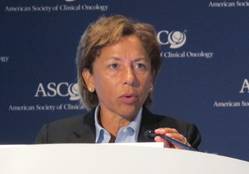
Had the results of ALTTO been positive, it would have changed the design of future breast cancer trials by eliminating the need for large adjuvant trials, suggested Dr. Perez, deputy director at large, Mayo Clinic Cancer Center, Jacksonville, Fla. Novel targeted agents could have been reliably evaluated in the neoadjuvant setting if pCR had correlated with the findings in adjuvant trials.
As it stands now, the data call into question whether an improvement in pCR can be routinely used as a reliable surrogate for disease-free and overall survival, ASCO president Dr. Clifford Hudis, chief of breast cancer at Memorial Sloan Kettering Cancer Center, New York, said at the briefing.
"The answer from ALTTO right now is maybe not, and this, I think, is going to cause a tremendous amount of high-level technical scientific discussion in terms of drug development," he told reporters.
Dr. Hudis pointed out that last fall, the Food and Drug Administration for the first time ever approved a drug, pertuzumab (Perjeta), for use in the preoperative breast cancer setting based on an increased pCR rate alone. The hope is that this will ultimately save lives, although this question won’t be answered until 2016, when results from the APHINITY trial are expected, he said.
Based on the ALTTO data, "the simple link that improving the rate of shrinkage of the cancer will necessarily reduce the rate of distant recurrence is not established," Dr. Hudis said. "So our ability to go from big studies taking many years to small studies taking months is not established. That’s a fundamental observation, and it may have implications well beyond breast cancer."
ALTTO design
The open-label, multicenter ALTTO study randomized 8,381 women after surgery to concurrent trastuzumab and lapatinib, trastuzumab followed by lapatinib, or trastuzumab alone for 1 year. Patients received anti-HER2 therapy after completing all chemotherapy (design 1), concurrently with a taxane following anthracycline (design 2), or concurrently with a non-anthracycline, platinum-containing regimen (design 2B).
The lapatinib-alone vs. trastuzumab-alone arm was closed in early 2011 due to futility, and results from that arm will be presented later this year.
The current efficacy results were based on 6,281 women, with 4,613 receiving the anti-HER2 drugs after completing chemotherapy.
Lapatinib was associated with significant increases in diarrhea, hepatobiliary events, and skin rash or erythema. This may explain why only 60-78% of patients in the lapatinib-containing arms received at least 85% of protocol-specified dose, Dr. Piccart-Gebhart said during the formal presentation of the late-breaking abstract.
Importantly, cardiac toxicity was "remarkably low in all treatment arms" at less than 1%, she said. This was true despite 97% of women receiving anthracyclines.
A primary cardiac event, defined as cardiac death or severe congestive heart failure (New York Heart Association class III-IV), occurred in 0.97% of patients on lapatinib plus trastuzumab, 0.25% on trastuzumab followed by lapatinib, and 0.86% on trastuzumab alone. Any cardiac event was reported in 3.7%, 2.4%, and 4.5%, respectively.
Follow-up in ALTTO will continue, with a protocol-specified updated efficacy analysis planned in 2 years.
ALTTO was sponsored by the National Cancer Institute and GlaxoSmithKline, maker of lapatinib. Dr. Piccart-Gebhart reported employment or a leadership role with PharmaMar, and a consulting/advisory role and honoraria from several companies, but not GSK. Dr. Sledge reported serving as a board member for Syndax and as a consultant for Roche-Genentech, Symphogen, and Seattle Genetics. Dr. Perez reported having no financial disclosures.
CHICAGO – Dual HER2 blockade with lapatinib and trastuzumab provides no additional benefit in the adjuvant treatment of HER2-positive breast cancer, according to the long-awaited, first results from the phase III ALTTO trial.
At 4 years, the primary outcome of disease-free survival was 86% with trastuzumab alone, compared with 88% with concurrent lapatinib (Tykerb) and trastuzumab (Herceptin) (hazard ratio, 0.84; P = .048), and 87% with trastuzumab followed by lapatinib (HR, 0.96; P = .610), Dr. Martine Piccart-Gebhart reported during the plenary session at the annual meeting of the American Society of Clinical Oncology.
Median overall survival rates were 94%, 95%, and 95%, respectively.
ALTTO’s sister trial, NeoALTTO (Neoadjuvant Lapatinib and/or Trastuzumab Treatment Optimization), demonstrated that neoadjuvant treatment with combination trastuzumab and lapatinib doubled the number of pathological complete responses (pCRs), compared with each single agent, and reduced the overall risk of death by two-thirds in women with a pCR.
"The doubling in pCR observed in NeoALTTO did not translate into improved survival outcomes in ALTTO at 4.5 years," said Dr. Piccart-Gebhart, head of the medicine department, Jules Bordet Institute, Brussels.
Invited discussant and past ASCO president Dr. George Sledge Jr., professor of medicine and chief of oncology at Stanford University Medical Center, Palo Alto, Calif., pointed out that ALTTO called for a stringent P value of .025 or less to demonstrate statistical significance, but that no one should be "fooled" by the disease-free survival P value of .048 into thinking this was a positive trial.
"This is a negative trial," he said.
He also noted that the 555 disease-free events seen in ALTTO fell far short of the 850 events planned for, and thus the trial was underpowered.
"Might this trial, with more events and further follow-up, turn statistically positive? Perhaps, but not very positive given the results we’ve seen today," Dr. Sledge commented. "HER2 has reverted to the incrementalism that we see so commonly in the adjuvant field. This is not, alas, 2005. This is not a great leap forward. This is a serious disappointment not just for investigators, but for the entire field."
Several previous trials (B-31, N9831, and HERA) presented at the same meeting in 2005 showed a striking disease-free survival advantage from the addition of 1 year of trastuzumab to adjuvant chemotherapy in women with HER2-positive breast cancer.
During a press briefing, ALTTO study cochair Dr. Edith Perez cast the low event rate of ALTTO in a slightly more positive light, saying that the "patients overall did pretty well."
Ripple effects
Had the results of ALTTO been positive, it would have changed the design of future breast cancer trials by eliminating the need for large adjuvant trials, suggested Dr. Perez, deputy director at large, Mayo Clinic Cancer Center, Jacksonville, Fla. Novel targeted agents could have been reliably evaluated in the neoadjuvant setting if pCR had correlated with the findings in adjuvant trials.
As it stands now, the data call into question whether an improvement in pCR can be routinely used as a reliable surrogate for disease-free and overall survival, ASCO president Dr. Clifford Hudis, chief of breast cancer at Memorial Sloan Kettering Cancer Center, New York, said at the briefing.
"The answer from ALTTO right now is maybe not, and this, I think, is going to cause a tremendous amount of high-level technical scientific discussion in terms of drug development," he told reporters.
Dr. Hudis pointed out that last fall, the Food and Drug Administration for the first time ever approved a drug, pertuzumab (Perjeta), for use in the preoperative breast cancer setting based on an increased pCR rate alone. The hope is that this will ultimately save lives, although this question won’t be answered until 2016, when results from the APHINITY trial are expected, he said.
Based on the ALTTO data, "the simple link that improving the rate of shrinkage of the cancer will necessarily reduce the rate of distant recurrence is not established," Dr. Hudis said. "So our ability to go from big studies taking many years to small studies taking months is not established. That’s a fundamental observation, and it may have implications well beyond breast cancer."
ALTTO design
The open-label, multicenter ALTTO study randomized 8,381 women after surgery to concurrent trastuzumab and lapatinib, trastuzumab followed by lapatinib, or trastuzumab alone for 1 year. Patients received anti-HER2 therapy after completing all chemotherapy (design 1), concurrently with a taxane following anthracycline (design 2), or concurrently with a non-anthracycline, platinum-containing regimen (design 2B).
The lapatinib-alone vs. trastuzumab-alone arm was closed in early 2011 due to futility, and results from that arm will be presented later this year.
The current efficacy results were based on 6,281 women, with 4,613 receiving the anti-HER2 drugs after completing chemotherapy.
Lapatinib was associated with significant increases in diarrhea, hepatobiliary events, and skin rash or erythema. This may explain why only 60-78% of patients in the lapatinib-containing arms received at least 85% of protocol-specified dose, Dr. Piccart-Gebhart said during the formal presentation of the late-breaking abstract.
Importantly, cardiac toxicity was "remarkably low in all treatment arms" at less than 1%, she said. This was true despite 97% of women receiving anthracyclines.
A primary cardiac event, defined as cardiac death or severe congestive heart failure (New York Heart Association class III-IV), occurred in 0.97% of patients on lapatinib plus trastuzumab, 0.25% on trastuzumab followed by lapatinib, and 0.86% on trastuzumab alone. Any cardiac event was reported in 3.7%, 2.4%, and 4.5%, respectively.
Follow-up in ALTTO will continue, with a protocol-specified updated efficacy analysis planned in 2 years.
ALTTO was sponsored by the National Cancer Institute and GlaxoSmithKline, maker of lapatinib. Dr. Piccart-Gebhart reported employment or a leadership role with PharmaMar, and a consulting/advisory role and honoraria from several companies, but not GSK. Dr. Sledge reported serving as a board member for Syndax and as a consultant for Roche-Genentech, Symphogen, and Seattle Genetics. Dr. Perez reported having no financial disclosures.
CHICAGO – Dual HER2 blockade with lapatinib and trastuzumab provides no additional benefit in the adjuvant treatment of HER2-positive breast cancer, according to the long-awaited, first results from the phase III ALTTO trial.
At 4 years, the primary outcome of disease-free survival was 86% with trastuzumab alone, compared with 88% with concurrent lapatinib (Tykerb) and trastuzumab (Herceptin) (hazard ratio, 0.84; P = .048), and 87% with trastuzumab followed by lapatinib (HR, 0.96; P = .610), Dr. Martine Piccart-Gebhart reported during the plenary session at the annual meeting of the American Society of Clinical Oncology.
Median overall survival rates were 94%, 95%, and 95%, respectively.
ALTTO’s sister trial, NeoALTTO (Neoadjuvant Lapatinib and/or Trastuzumab Treatment Optimization), demonstrated that neoadjuvant treatment with combination trastuzumab and lapatinib doubled the number of pathological complete responses (pCRs), compared with each single agent, and reduced the overall risk of death by two-thirds in women with a pCR.
"The doubling in pCR observed in NeoALTTO did not translate into improved survival outcomes in ALTTO at 4.5 years," said Dr. Piccart-Gebhart, head of the medicine department, Jules Bordet Institute, Brussels.
Invited discussant and past ASCO president Dr. George Sledge Jr., professor of medicine and chief of oncology at Stanford University Medical Center, Palo Alto, Calif., pointed out that ALTTO called for a stringent P value of .025 or less to demonstrate statistical significance, but that no one should be "fooled" by the disease-free survival P value of .048 into thinking this was a positive trial.
"This is a negative trial," he said.
He also noted that the 555 disease-free events seen in ALTTO fell far short of the 850 events planned for, and thus the trial was underpowered.
"Might this trial, with more events and further follow-up, turn statistically positive? Perhaps, but not very positive given the results we’ve seen today," Dr. Sledge commented. "HER2 has reverted to the incrementalism that we see so commonly in the adjuvant field. This is not, alas, 2005. This is not a great leap forward. This is a serious disappointment not just for investigators, but for the entire field."
Several previous trials (B-31, N9831, and HERA) presented at the same meeting in 2005 showed a striking disease-free survival advantage from the addition of 1 year of trastuzumab to adjuvant chemotherapy in women with HER2-positive breast cancer.
During a press briefing, ALTTO study cochair Dr. Edith Perez cast the low event rate of ALTTO in a slightly more positive light, saying that the "patients overall did pretty well."
Ripple effects
Had the results of ALTTO been positive, it would have changed the design of future breast cancer trials by eliminating the need for large adjuvant trials, suggested Dr. Perez, deputy director at large, Mayo Clinic Cancer Center, Jacksonville, Fla. Novel targeted agents could have been reliably evaluated in the neoadjuvant setting if pCR had correlated with the findings in adjuvant trials.
As it stands now, the data call into question whether an improvement in pCR can be routinely used as a reliable surrogate for disease-free and overall survival, ASCO president Dr. Clifford Hudis, chief of breast cancer at Memorial Sloan Kettering Cancer Center, New York, said at the briefing.
"The answer from ALTTO right now is maybe not, and this, I think, is going to cause a tremendous amount of high-level technical scientific discussion in terms of drug development," he told reporters.
Dr. Hudis pointed out that last fall, the Food and Drug Administration for the first time ever approved a drug, pertuzumab (Perjeta), for use in the preoperative breast cancer setting based on an increased pCR rate alone. The hope is that this will ultimately save lives, although this question won’t be answered until 2016, when results from the APHINITY trial are expected, he said.
Based on the ALTTO data, "the simple link that improving the rate of shrinkage of the cancer will necessarily reduce the rate of distant recurrence is not established," Dr. Hudis said. "So our ability to go from big studies taking many years to small studies taking months is not established. That’s a fundamental observation, and it may have implications well beyond breast cancer."
ALTTO design
The open-label, multicenter ALTTO study randomized 8,381 women after surgery to concurrent trastuzumab and lapatinib, trastuzumab followed by lapatinib, or trastuzumab alone for 1 year. Patients received anti-HER2 therapy after completing all chemotherapy (design 1), concurrently with a taxane following anthracycline (design 2), or concurrently with a non-anthracycline, platinum-containing regimen (design 2B).
The lapatinib-alone vs. trastuzumab-alone arm was closed in early 2011 due to futility, and results from that arm will be presented later this year.
The current efficacy results were based on 6,281 women, with 4,613 receiving the anti-HER2 drugs after completing chemotherapy.
Lapatinib was associated with significant increases in diarrhea, hepatobiliary events, and skin rash or erythema. This may explain why only 60-78% of patients in the lapatinib-containing arms received at least 85% of protocol-specified dose, Dr. Piccart-Gebhart said during the formal presentation of the late-breaking abstract.
Importantly, cardiac toxicity was "remarkably low in all treatment arms" at less than 1%, she said. This was true despite 97% of women receiving anthracyclines.
A primary cardiac event, defined as cardiac death or severe congestive heart failure (New York Heart Association class III-IV), occurred in 0.97% of patients on lapatinib plus trastuzumab, 0.25% on trastuzumab followed by lapatinib, and 0.86% on trastuzumab alone. Any cardiac event was reported in 3.7%, 2.4%, and 4.5%, respectively.
Follow-up in ALTTO will continue, with a protocol-specified updated efficacy analysis planned in 2 years.
ALTTO was sponsored by the National Cancer Institute and GlaxoSmithKline, maker of lapatinib. Dr. Piccart-Gebhart reported employment or a leadership role with PharmaMar, and a consulting/advisory role and honoraria from several companies, but not GSK. Dr. Sledge reported serving as a board member for Syndax and as a consultant for Roche-Genentech, Symphogen, and Seattle Genetics. Dr. Perez reported having no financial disclosures.
AT THE ASCO ANNUAL MEETING 2014
Major finding: Disease-free survival at 4 years was 86% with trastuzumab, 88% with concurrent lapatinib plus trastuzumab, and 87% with trastuzumab followed by lapatinib.
Data source: A randomized phase III study in 8,381 women with HER2-positive breast cancer.
Key clinical point: Combination lapatinib and trastuzumab does not improve DFS or OS in adjuvant HER2-positive early breast cancer.
Disclosures: ALTTO was sponsored by the National Cancer Institute and GlaxoSmithKline, maker of lapatinib. Dr. Piccart-Gebhart reported employment or a leadership role with PharmaMar and a consulting/advisory role and honoraria from several companies, but not GSK. Dr. Perez reported having no financial disclosures.

Residents, postop complications linked
BOSTON – Resident participation in emergency general surgery cases was independently associated with a host of complications – pulmonary embolism, surgical site infections, and unplanned reoperation in a secondary analysis of the American College of Surgeons prospective National Surgical Quality Improvement database.
Adequate exposure of residents to emergency general surgery is crucial for surgical training, but academic operating teams should be mindful of this association, Dr. George Kasotakis said at the annual meeting of the American Surgical Association.

Three papers have shown resident participation modestly increases complications in elective surgery, but their impact is not well understood for emergency general surgery, where patient physiology is typically deranged and timely surgery is imperative.
Dr. Kasotakis and his colleagues at Boston University identified 141,010 patients who underwent emergency general surgery procedures in the 2005-2010 American College of Surgeons prospective National Surgical Quality Improvement database. Because of the nonrandom assignment of more complex cases to resident participation, patients were matched 1:1 based on age; gender; use of alcohol, tobacco, and steroids; inpatient status; obesity; diabetes; renal failure; cardiopulmonary disease; and expected probability for morbidity and mortality. Regression models were fitted for each outcome and adjusted for the same risk factors and operative time.
The most common procedures were appendectomy (40%), exploratory laparotomy (8.75%), bowel resection (9.2%), cholecystectomy (6%), and lysis of adhesions (6%).
Thirty-day mortality was similar with and without residents (3.25% vs. 2.96%; P = .082), but hospital length of stay was longer by about a half a day with residents (4.97 days vs. 4.59 days; P = .019), said Dr. Kasotakis, an acute care surgeon and intensivist.
Resident participation added about 20 minutes to operative (75 minutes vs. 59 minutes; P less than .001) and anesthesia (122 minutes vs. 100 minutes; P less than .001) times.
Intraoperative transfusions were more common with residents (3.43% vs. 2.55%; P less than .001), perhaps because of longer operating room times, and, as a result, fewer postoperative transfusions were needed (1.12% vs. 1.28% P = .031), he said. Unplanned reoperations, however, were more common with residents, as well (4.22% vs. 3.80%; P = .002).
Postsurgical superficial wound infections (3.5% vs. 2.78%; P less than .001) and organ space surgical site infections (2.27% vs. 1.77%; P less than .001) were more common in the resident group, while wound dehiscence was not (0.63% vs. 0.69%; P = .266), Dr. Kasotakis noted.
Pulmonary complications were significantly more common in the resident group including postoperative pneumonia (1.85% vs. 1.67%; P = .04), reintubation (1.64% vs. 1.15%; P less than .001), and mechanical ventilation for more than 48 hours (2.87% vs. 2.06%; P less than .001).
The same was true for deep vein thrombosis (DVT) (0.80% vs. 0.62%; P = .002) and pulmonary embolism (PE) (0.43% vs. 0.28%; P less than .001).
Urinary tract infections (UTI) were higher with resident participation (1.45% vs. 1.14%; P less than .001), as was sepsis (2.42% vs. 2.13%; P = .005), likely because of the increase in surgical infections, Dr. Kasotakis said.
Thankfully, significant cardiac complications and septic shock were not more common with residents, he said.
Adjusted analyses
After adjustment for operative duration, case complexity and pre-existing comorbidities, residents did not increase length of stay (odds ratio, 0.07; P = .242) or septic events (OR, 1.07; P = .155), but their participation was still independently associated with about 20% more superficial surgical site infections (odds ratio, 1.23; P less than .001), organ space infections (OR, 1.21; P less than .001), UTIs (OR, 1.23; P = .001), and intraoperative transfusions (OR, 1.20; P = .001), he said.
Also, about 8% more patients required a return trip to the operating room when residents participated (OR, 1.08; P = .041).
"These outcomes can perhaps be attributed to their underdeveloped surgical skills," Dr. Kasotakis said.
The incidence of DVT and PE were also higher by about 25% (OR, 1.25; P = .011) and 40% (OR, 1.42; P = .005), respectively, perhaps because of delayed DVT prophylaxis initiation because of concerns of hemostasis or missed doses due to additional return trips to the emergency department, he suggested.
Interestingly, reintubation and prolonged mechanical ventilation rates were increased by about 40% (OR, 1.38; OR, 1.43; both P less than .001), perhaps because of prolonged operative times or greater resuscitation requirements, he added.
Dr. Kasotakis was quick to point out that this was a secondary analysis of a data set not originally intended to assess the effect of trainee participation, that no information was available on the degree of resident involvement during surgery or in perioperative care, and that participating institutions were skewed toward tertiary centers, which typically receive more complex cases.
"Staff surgeons should supervise as needed and minimize unnecessary [emergency department] time. And residents, for their part, should be well prepared for emergency procedures through simulation training and aim to maximize their operating room efficiency," he suggested.
The results sparked a flurry of rebuttals led off by discussant Dr. Julie Ann Sosa, Duke University, Durham, N.C.,who said they conflict with other analyses showing little to no impact from residents in elective cases.
"If not interpreted with care, policy makers, payers, and the public could construe that surgical care at academic health centers is compromised by trainees, which could have unfortunate ramifications for everyone in the room as well as the trainees and the patients," she said.
Dr. Sosa expressed concern about drawing causal inferences from an observational study in the setting of possible selection bias and said attempts to match for case complexity using CPT codes do not necessarily account for say, "the difference between a routine appendectomy that takes 15-30 minutes and a complex one that takes 3 hours for a perforation."
Some attendees questioned why the authors didn’t match the institutions in the analysis and chose to ascribe all of the outcomes to residents, with a round of applause following the suggestion that the paper should be titled "Academic centers increase emergency surgery complications." Other attendees questioned whether the poor outcomes reflect resident training and supervision.
Dr. George Velmahos, Massachusetts General Hospital, Boston, questioned whether hospitals have a medical/legal responsibility to inform patients that a resident is in the operating room and may impact outcomes.
Dr. Kasotakis said that institutions may want to add a clause to consent paperwork stating that residents and trainees will be participating.
The complete manuscript of this study and its presentation at the American Surgical Association’s 134th Annual Meeting is anticipated to be published in the Annals of Surgery, pending editorial review.
Dr. Kasotakis reported no conflicts.

|
| Dr. Sapan S. Desai |
While it is tempting to value the very high sample sizes reported in studies that utilize administrative database sources such as NSQIP, it is with great caution that we should interpret the results of these studies. Databases are a valuable source of determining incidence, costs, and even some correlations among various factors. Correlations, however, do not imply causation. For instance, one could say that there is a high correlation between the number of taxis on the street after 3 a.m. and the number of crimes, but that does not mean that taxi drivers transform into criminals during the hour of the wolf.
Databases are a blunt tool for identifying trends in data over large samples and over many years. However, as noted in the study presented by Dr. Kasotakis, the NSQIP does not track the extent of resident participation in operative cases. In fact, the exact variable that is tracked is entitled "ATTEND" in position 16 of the NSQIP and is as follows: 1) Attending & Resident in OR, 2) Attending Alone, and 3) Attending Not Present, but Available. It does not characterize the amount of the case completed by the resident, nor does it state the level of training of the resident. It does not mention whether medical students, visitors, nurse trainees, PAs, new scrub techs, or other personnel are present. In fact, there is no way to know who did what during the case, which is a requirement in order to be able to reliably and accurately determine that the resident is the culprit for longer case times and more intraoperative transfusions. This specific variable has insufficient granularity: the conclusion that "[adding] a clause to consent paperwork stating that residents and trainees will be participating in the case" due to the "underdeveloped surgical skills" of trainees, among other factors, is invalid.
As Dr. Sosa indicated, it is dangerous to imply that these correlations somehow imply causation, as this may lead to adverse impacts on training and negatively impact patient care far more than a possible 20 minute increase in the duration of an operation. The sole utility of this paper is that it is hypothesis generating; only a properly designed prospective study can truly study the positive and negative impacts on patient care due to resident education in the operating room. The question is, do we really want to know the answer to this question and will it truly affect what we do now?
Sapan S. Desai, M.D., is the resident medical editor for Vascular Specialist.
|
|
| Dr. Sapan S. Desai |
While it is tempting to value the very high sample sizes reported in studies that utilize administrative database sources such as NSQIP, it is with great caution that we should interpret the results of these studies. Databases are a valuable source of determining incidence, costs, and even some correlations among various factors. Correlations, however, do not imply causation. For instance, one could say that there is a high correlation between the number of taxis on the street after 3 a.m. and the number of crimes, but that does not mean that taxi drivers transform into criminals during the hour of the wolf.
Databases are a blunt tool for identifying trends in data over large samples and over many years. However, as noted in the study presented by Dr. Kasotakis, the NSQIP does not track the extent of resident participation in operative cases. In fact, the exact variable that is tracked is entitled "ATTEND" in position 16 of the NSQIP and is as follows: 1) Attending & Resident in OR, 2) Attending Alone, and 3) Attending Not Present, but Available. It does not characterize the amount of the case completed by the resident, nor does it state the level of training of the resident. It does not mention whether medical students, visitors, nurse trainees, PAs, new scrub techs, or other personnel are present. In fact, there is no way to know who did what during the case, which is a requirement in order to be able to reliably and accurately determine that the resident is the culprit for longer case times and more intraoperative transfusions. This specific variable has insufficient granularity: the conclusion that "[adding] a clause to consent paperwork stating that residents and trainees will be participating in the case" due to the "underdeveloped surgical skills" of trainees, among other factors, is invalid.
As Dr. Sosa indicated, it is dangerous to imply that these correlations somehow imply causation, as this may lead to adverse impacts on training and negatively impact patient care far more than a possible 20 minute increase in the duration of an operation. The sole utility of this paper is that it is hypothesis generating; only a properly designed prospective study can truly study the positive and negative impacts on patient care due to resident education in the operating room. The question is, do we really want to know the answer to this question and will it truly affect what we do now?
Sapan S. Desai, M.D., is the resident medical editor for Vascular Specialist.
|
|
| Dr. Sapan S. Desai |
While it is tempting to value the very high sample sizes reported in studies that utilize administrative database sources such as NSQIP, it is with great caution that we should interpret the results of these studies. Databases are a valuable source of determining incidence, costs, and even some correlations among various factors. Correlations, however, do not imply causation. For instance, one could say that there is a high correlation between the number of taxis on the street after 3 a.m. and the number of crimes, but that does not mean that taxi drivers transform into criminals during the hour of the wolf.
Databases are a blunt tool for identifying trends in data over large samples and over many years. However, as noted in the study presented by Dr. Kasotakis, the NSQIP does not track the extent of resident participation in operative cases. In fact, the exact variable that is tracked is entitled "ATTEND" in position 16 of the NSQIP and is as follows: 1) Attending & Resident in OR, 2) Attending Alone, and 3) Attending Not Present, but Available. It does not characterize the amount of the case completed by the resident, nor does it state the level of training of the resident. It does not mention whether medical students, visitors, nurse trainees, PAs, new scrub techs, or other personnel are present. In fact, there is no way to know who did what during the case, which is a requirement in order to be able to reliably and accurately determine that the resident is the culprit for longer case times and more intraoperative transfusions. This specific variable has insufficient granularity: the conclusion that "[adding] a clause to consent paperwork stating that residents and trainees will be participating in the case" due to the "underdeveloped surgical skills" of trainees, among other factors, is invalid.
As Dr. Sosa indicated, it is dangerous to imply that these correlations somehow imply causation, as this may lead to adverse impacts on training and negatively impact patient care far more than a possible 20 minute increase in the duration of an operation. The sole utility of this paper is that it is hypothesis generating; only a properly designed prospective study can truly study the positive and negative impacts on patient care due to resident education in the operating room. The question is, do we really want to know the answer to this question and will it truly affect what we do now?
Sapan S. Desai, M.D., is the resident medical editor for Vascular Specialist.
BOSTON – Resident participation in emergency general surgery cases was independently associated with a host of complications – pulmonary embolism, surgical site infections, and unplanned reoperation in a secondary analysis of the American College of Surgeons prospective National Surgical Quality Improvement database.
Adequate exposure of residents to emergency general surgery is crucial for surgical training, but academic operating teams should be mindful of this association, Dr. George Kasotakis said at the annual meeting of the American Surgical Association.
Three papers have shown resident participation modestly increases complications in elective surgery, but their impact is not well understood for emergency general surgery, where patient physiology is typically deranged and timely surgery is imperative.
Dr. Kasotakis and his colleagues at Boston University identified 141,010 patients who underwent emergency general surgery procedures in the 2005-2010 American College of Surgeons prospective National Surgical Quality Improvement database. Because of the nonrandom assignment of more complex cases to resident participation, patients were matched 1:1 based on age; gender; use of alcohol, tobacco, and steroids; inpatient status; obesity; diabetes; renal failure; cardiopulmonary disease; and expected probability for morbidity and mortality. Regression models were fitted for each outcome and adjusted for the same risk factors and operative time.
The most common procedures were appendectomy (40%), exploratory laparotomy (8.75%), bowel resection (9.2%), cholecystectomy (6%), and lysis of adhesions (6%).
Thirty-day mortality was similar with and without residents (3.25% vs. 2.96%; P = .082), but hospital length of stay was longer by about a half a day with residents (4.97 days vs. 4.59 days; P = .019), said Dr. Kasotakis, an acute care surgeon and intensivist.
Resident participation added about 20 minutes to operative (75 minutes vs. 59 minutes; P less than .001) and anesthesia (122 minutes vs. 100 minutes; P less than .001) times.
Intraoperative transfusions were more common with residents (3.43% vs. 2.55%; P less than .001), perhaps because of longer operating room times, and, as a result, fewer postoperative transfusions were needed (1.12% vs. 1.28% P = .031), he said. Unplanned reoperations, however, were more common with residents, as well (4.22% vs. 3.80%; P = .002).
Postsurgical superficial wound infections (3.5% vs. 2.78%; P less than .001) and organ space surgical site infections (2.27% vs. 1.77%; P less than .001) were more common in the resident group, while wound dehiscence was not (0.63% vs. 0.69%; P = .266), Dr. Kasotakis noted.
Pulmonary complications were significantly more common in the resident group including postoperative pneumonia (1.85% vs. 1.67%; P = .04), reintubation (1.64% vs. 1.15%; P less than .001), and mechanical ventilation for more than 48 hours (2.87% vs. 2.06%; P less than .001).
The same was true for deep vein thrombosis (DVT) (0.80% vs. 0.62%; P = .002) and pulmonary embolism (PE) (0.43% vs. 0.28%; P less than .001).
Urinary tract infections (UTI) were higher with resident participation (1.45% vs. 1.14%; P less than .001), as was sepsis (2.42% vs. 2.13%; P = .005), likely because of the increase in surgical infections, Dr. Kasotakis said.
Thankfully, significant cardiac complications and septic shock were not more common with residents, he said.
Adjusted analyses
After adjustment for operative duration, case complexity and pre-existing comorbidities, residents did not increase length of stay (odds ratio, 0.07; P = .242) or septic events (OR, 1.07; P = .155), but their participation was still independently associated with about 20% more superficial surgical site infections (odds ratio, 1.23; P less than .001), organ space infections (OR, 1.21; P less than .001), UTIs (OR, 1.23; P = .001), and intraoperative transfusions (OR, 1.20; P = .001), he said.
Also, about 8% more patients required a return trip to the operating room when residents participated (OR, 1.08; P = .041).
"These outcomes can perhaps be attributed to their underdeveloped surgical skills," Dr. Kasotakis said.
The incidence of DVT and PE were also higher by about 25% (OR, 1.25; P = .011) and 40% (OR, 1.42; P = .005), respectively, perhaps because of delayed DVT prophylaxis initiation because of concerns of hemostasis or missed doses due to additional return trips to the emergency department, he suggested.
Interestingly, reintubation and prolonged mechanical ventilation rates were increased by about 40% (OR, 1.38; OR, 1.43; both P less than .001), perhaps because of prolonged operative times or greater resuscitation requirements, he added.
Dr. Kasotakis was quick to point out that this was a secondary analysis of a data set not originally intended to assess the effect of trainee participation, that no information was available on the degree of resident involvement during surgery or in perioperative care, and that participating institutions were skewed toward tertiary centers, which typically receive more complex cases.
"Staff surgeons should supervise as needed and minimize unnecessary [emergency department] time. And residents, for their part, should be well prepared for emergency procedures through simulation training and aim to maximize their operating room efficiency," he suggested.
The results sparked a flurry of rebuttals led off by discussant Dr. Julie Ann Sosa, Duke University, Durham, N.C.,who said they conflict with other analyses showing little to no impact from residents in elective cases.
"If not interpreted with care, policy makers, payers, and the public could construe that surgical care at academic health centers is compromised by trainees, which could have unfortunate ramifications for everyone in the room as well as the trainees and the patients," she said.
Dr. Sosa expressed concern about drawing causal inferences from an observational study in the setting of possible selection bias and said attempts to match for case complexity using CPT codes do not necessarily account for say, "the difference between a routine appendectomy that takes 15-30 minutes and a complex one that takes 3 hours for a perforation."
Some attendees questioned why the authors didn’t match the institutions in the analysis and chose to ascribe all of the outcomes to residents, with a round of applause following the suggestion that the paper should be titled "Academic centers increase emergency surgery complications." Other attendees questioned whether the poor outcomes reflect resident training and supervision.
Dr. George Velmahos, Massachusetts General Hospital, Boston, questioned whether hospitals have a medical/legal responsibility to inform patients that a resident is in the operating room and may impact outcomes.
Dr. Kasotakis said that institutions may want to add a clause to consent paperwork stating that residents and trainees will be participating.
The complete manuscript of this study and its presentation at the American Surgical Association’s 134th Annual Meeting is anticipated to be published in the Annals of Surgery, pending editorial review.
Dr. Kasotakis reported no conflicts.
BOSTON – Resident participation in emergency general surgery cases was independently associated with a host of complications – pulmonary embolism, surgical site infections, and unplanned reoperation in a secondary analysis of the American College of Surgeons prospective National Surgical Quality Improvement database.
Adequate exposure of residents to emergency general surgery is crucial for surgical training, but academic operating teams should be mindful of this association, Dr. George Kasotakis said at the annual meeting of the American Surgical Association.
Three papers have shown resident participation modestly increases complications in elective surgery, but their impact is not well understood for emergency general surgery, where patient physiology is typically deranged and timely surgery is imperative.
Dr. Kasotakis and his colleagues at Boston University identified 141,010 patients who underwent emergency general surgery procedures in the 2005-2010 American College of Surgeons prospective National Surgical Quality Improvement database. Because of the nonrandom assignment of more complex cases to resident participation, patients were matched 1:1 based on age; gender; use of alcohol, tobacco, and steroids; inpatient status; obesity; diabetes; renal failure; cardiopulmonary disease; and expected probability for morbidity and mortality. Regression models were fitted for each outcome and adjusted for the same risk factors and operative time.
The most common procedures were appendectomy (40%), exploratory laparotomy (8.75%), bowel resection (9.2%), cholecystectomy (6%), and lysis of adhesions (6%).
Thirty-day mortality was similar with and without residents (3.25% vs. 2.96%; P = .082), but hospital length of stay was longer by about a half a day with residents (4.97 days vs. 4.59 days; P = .019), said Dr. Kasotakis, an acute care surgeon and intensivist.
Resident participation added about 20 minutes to operative (75 minutes vs. 59 minutes; P less than .001) and anesthesia (122 minutes vs. 100 minutes; P less than .001) times.
Intraoperative transfusions were more common with residents (3.43% vs. 2.55%; P less than .001), perhaps because of longer operating room times, and, as a result, fewer postoperative transfusions were needed (1.12% vs. 1.28% P = .031), he said. Unplanned reoperations, however, were more common with residents, as well (4.22% vs. 3.80%; P = .002).
Postsurgical superficial wound infections (3.5% vs. 2.78%; P less than .001) and organ space surgical site infections (2.27% vs. 1.77%; P less than .001) were more common in the resident group, while wound dehiscence was not (0.63% vs. 0.69%; P = .266), Dr. Kasotakis noted.
Pulmonary complications were significantly more common in the resident group including postoperative pneumonia (1.85% vs. 1.67%; P = .04), reintubation (1.64% vs. 1.15%; P less than .001), and mechanical ventilation for more than 48 hours (2.87% vs. 2.06%; P less than .001).
The same was true for deep vein thrombosis (DVT) (0.80% vs. 0.62%; P = .002) and pulmonary embolism (PE) (0.43% vs. 0.28%; P less than .001).
Urinary tract infections (UTI) were higher with resident participation (1.45% vs. 1.14%; P less than .001), as was sepsis (2.42% vs. 2.13%; P = .005), likely because of the increase in surgical infections, Dr. Kasotakis said.
Thankfully, significant cardiac complications and septic shock were not more common with residents, he said.
Adjusted analyses
After adjustment for operative duration, case complexity and pre-existing comorbidities, residents did not increase length of stay (odds ratio, 0.07; P = .242) or septic events (OR, 1.07; P = .155), but their participation was still independently associated with about 20% more superficial surgical site infections (odds ratio, 1.23; P less than .001), organ space infections (OR, 1.21; P less than .001), UTIs (OR, 1.23; P = .001), and intraoperative transfusions (OR, 1.20; P = .001), he said.
Also, about 8% more patients required a return trip to the operating room when residents participated (OR, 1.08; P = .041).
"These outcomes can perhaps be attributed to their underdeveloped surgical skills," Dr. Kasotakis said.
The incidence of DVT and PE were also higher by about 25% (OR, 1.25; P = .011) and 40% (OR, 1.42; P = .005), respectively, perhaps because of delayed DVT prophylaxis initiation because of concerns of hemostasis or missed doses due to additional return trips to the emergency department, he suggested.
Interestingly, reintubation and prolonged mechanical ventilation rates were increased by about 40% (OR, 1.38; OR, 1.43; both P less than .001), perhaps because of prolonged operative times or greater resuscitation requirements, he added.
Dr. Kasotakis was quick to point out that this was a secondary analysis of a data set not originally intended to assess the effect of trainee participation, that no information was available on the degree of resident involvement during surgery or in perioperative care, and that participating institutions were skewed toward tertiary centers, which typically receive more complex cases.
"Staff surgeons should supervise as needed and minimize unnecessary [emergency department] time. And residents, for their part, should be well prepared for emergency procedures through simulation training and aim to maximize their operating room efficiency," he suggested.
The results sparked a flurry of rebuttals led off by discussant Dr. Julie Ann Sosa, Duke University, Durham, N.C.,who said they conflict with other analyses showing little to no impact from residents in elective cases.
"If not interpreted with care, policy makers, payers, and the public could construe that surgical care at academic health centers is compromised by trainees, which could have unfortunate ramifications for everyone in the room as well as the trainees and the patients," she said.
Dr. Sosa expressed concern about drawing causal inferences from an observational study in the setting of possible selection bias and said attempts to match for case complexity using CPT codes do not necessarily account for say, "the difference between a routine appendectomy that takes 15-30 minutes and a complex one that takes 3 hours for a perforation."
Some attendees questioned why the authors didn’t match the institutions in the analysis and chose to ascribe all of the outcomes to residents, with a round of applause following the suggestion that the paper should be titled "Academic centers increase emergency surgery complications." Other attendees questioned whether the poor outcomes reflect resident training and supervision.
Dr. George Velmahos, Massachusetts General Hospital, Boston, questioned whether hospitals have a medical/legal responsibility to inform patients that a resident is in the operating room and may impact outcomes.
Dr. Kasotakis said that institutions may want to add a clause to consent paperwork stating that residents and trainees will be participating.
The complete manuscript of this study and its presentation at the American Surgical Association’s 134th Annual Meeting is anticipated to be published in the Annals of Surgery, pending editorial review.
Dr. Kasotakis reported no conflicts.
Major finding: Rates were significantly higher with resident participation than without for DVT (0.80% vs. 0.62%; P = .002) and PE (0.43% vs. 0.28%; P less than .001).
Data source: A secondary analysis of 141,010 emergency general surgery cases in the prospective ACS NSQIP database.
Disclosures: Dr. Kasotakis and his coauthors reported no conflicting interests.

Eltrombopag reduces bleeding in children with chronic immune thrombocytopenia
MILAN – Eltrombopag significantly improved platelet counts and halved bleeding events in children with chronic immune thrombocytopenia in the phase III PETIT2 study.
"It was great to see in this study that not only did we improve platelet counts, but we also significantly reduced bleeding," study author Dr. John Grainger said at the annual congress of the European Hematology Association.
Bleeding events were reduced by 50% at week 12 and by 66% at study’s end.
"Eltrombopag is a potential new treatment for children with immune thrombocytopenia," Dr. Grainger, a consultant pediatric hematologist at the Royal Manchester (England) Children’s Hospital, said during a press briefing at the meeting highlighting the results.

Immune thrombocytopenia (ITP) is a rare autoimmune disorder that affects 5 in 100,000 children and is characterized by a low platelet count, bruising, and petechiae.
Most children with ITP get better without drug intervention, but 30% will have persistent disease. Current treatments such as splenectomy and corticosteroids often fail and carry long-term risks such as infection and bone health effects, Dr. Grainger said.
Eltrombopag (Promacta/Revolade), a thrombopoietin receptor agonist, is approved in about 90 countries, including the United States, as a treatment for adult chronic ITP, and for thrombocytopenia in patients with chronic hepatitis C infection.
Eltrombopag is not approved for use in the pediatric setting, though drug maker GlaxoSmithKline will seek a pediatric chronic ITP indication shortly, according to Dr. Peter Langmuir, vice president of clinical development at GSK Oncology.
The multicenter PETIT2 study, the largest clinical trial in pediatric ITP to date, enrolled 92 children with ITP for at least 12 months who had failed at least one prior treatment and had particularly low platelet counts of less than 30 Gi/L, which increased their risk of bleeding, Dr. Grainger observed. Children were initially randomized to daily eltrombopag or placebo for 13 weeks, with all children receiving eltrombopag for 24 weeks in the second phase of the study. Dosing ranged from 12.5 mg/kg to 75 mg based on age and weight, and was titrated according to platelet response.
In all, 40% of children on eltrombopag achieved a persistent platelet response for 6-8 weeks between weeks 5 and 12, compared with 3.4% on placebo (P less than .001).
"It should be noted that the children all started on a relatively low dose of the drug, and in some children it took a considerable time to build up responses," he said. "But on average, responses were seen between 3 and 4 weeks, so it didn’t really take long to get this durable response."
Treatment with eltrombopag also allowed 61% of children to stop or reduce other ITP treatments such as steroids, Dr. Grainger said.
Four children came off study due to a lack of response, and 5 children had abnormal liver tests, but these returned to normal after treatment discontinuation.
The most common adverse events with eltrombopag were nasopharyngitis, rhinitis, cough, and respiratory tract infections. Grade 3/4 adverse events occurred in 12.7% of children on eltrombopag and 10.3% of children on placebo, and serious events in 8% and 14%.
"This is a safe drug for children to have," Dr. Grainger said.
GlaxoSmithKline sponsored the study. Dr. Grainger has received research nurse support from Baxter and honoraria for participation on advisory boards for Amgen, Baxter, and GlaxoSmithKline.
MILAN – Eltrombopag significantly improved platelet counts and halved bleeding events in children with chronic immune thrombocytopenia in the phase III PETIT2 study.
"It was great to see in this study that not only did we improve platelet counts, but we also significantly reduced bleeding," study author Dr. John Grainger said at the annual congress of the European Hematology Association.
Bleeding events were reduced by 50% at week 12 and by 66% at study’s end.
"Eltrombopag is a potential new treatment for children with immune thrombocytopenia," Dr. Grainger, a consultant pediatric hematologist at the Royal Manchester (England) Children’s Hospital, said during a press briefing at the meeting highlighting the results.
Immune thrombocytopenia (ITP) is a rare autoimmune disorder that affects 5 in 100,000 children and is characterized by a low platelet count, bruising, and petechiae.
Most children with ITP get better without drug intervention, but 30% will have persistent disease. Current treatments such as splenectomy and corticosteroids often fail and carry long-term risks such as infection and bone health effects, Dr. Grainger said.
Eltrombopag (Promacta/Revolade), a thrombopoietin receptor agonist, is approved in about 90 countries, including the United States, as a treatment for adult chronic ITP, and for thrombocytopenia in patients with chronic hepatitis C infection.
Eltrombopag is not approved for use in the pediatric setting, though drug maker GlaxoSmithKline will seek a pediatric chronic ITP indication shortly, according to Dr. Peter Langmuir, vice president of clinical development at GSK Oncology.
The multicenter PETIT2 study, the largest clinical trial in pediatric ITP to date, enrolled 92 children with ITP for at least 12 months who had failed at least one prior treatment and had particularly low platelet counts of less than 30 Gi/L, which increased their risk of bleeding, Dr. Grainger observed. Children were initially randomized to daily eltrombopag or placebo for 13 weeks, with all children receiving eltrombopag for 24 weeks in the second phase of the study. Dosing ranged from 12.5 mg/kg to 75 mg based on age and weight, and was titrated according to platelet response.
In all, 40% of children on eltrombopag achieved a persistent platelet response for 6-8 weeks between weeks 5 and 12, compared with 3.4% on placebo (P less than .001).
"It should be noted that the children all started on a relatively low dose of the drug, and in some children it took a considerable time to build up responses," he said. "But on average, responses were seen between 3 and 4 weeks, so it didn’t really take long to get this durable response."
Treatment with eltrombopag also allowed 61% of children to stop or reduce other ITP treatments such as steroids, Dr. Grainger said.
Four children came off study due to a lack of response, and 5 children had abnormal liver tests, but these returned to normal after treatment discontinuation.
The most common adverse events with eltrombopag were nasopharyngitis, rhinitis, cough, and respiratory tract infections. Grade 3/4 adverse events occurred in 12.7% of children on eltrombopag and 10.3% of children on placebo, and serious events in 8% and 14%.
"This is a safe drug for children to have," Dr. Grainger said.
GlaxoSmithKline sponsored the study. Dr. Grainger has received research nurse support from Baxter and honoraria for participation on advisory boards for Amgen, Baxter, and GlaxoSmithKline.
MILAN – Eltrombopag significantly improved platelet counts and halved bleeding events in children with chronic immune thrombocytopenia in the phase III PETIT2 study.
"It was great to see in this study that not only did we improve platelet counts, but we also significantly reduced bleeding," study author Dr. John Grainger said at the annual congress of the European Hematology Association.
Bleeding events were reduced by 50% at week 12 and by 66% at study’s end.
"Eltrombopag is a potential new treatment for children with immune thrombocytopenia," Dr. Grainger, a consultant pediatric hematologist at the Royal Manchester (England) Children’s Hospital, said during a press briefing at the meeting highlighting the results.
Immune thrombocytopenia (ITP) is a rare autoimmune disorder that affects 5 in 100,000 children and is characterized by a low platelet count, bruising, and petechiae.
Most children with ITP get better without drug intervention, but 30% will have persistent disease. Current treatments such as splenectomy and corticosteroids often fail and carry long-term risks such as infection and bone health effects, Dr. Grainger said.
Eltrombopag (Promacta/Revolade), a thrombopoietin receptor agonist, is approved in about 90 countries, including the United States, as a treatment for adult chronic ITP, and for thrombocytopenia in patients with chronic hepatitis C infection.
Eltrombopag is not approved for use in the pediatric setting, though drug maker GlaxoSmithKline will seek a pediatric chronic ITP indication shortly, according to Dr. Peter Langmuir, vice president of clinical development at GSK Oncology.
The multicenter PETIT2 study, the largest clinical trial in pediatric ITP to date, enrolled 92 children with ITP for at least 12 months who had failed at least one prior treatment and had particularly low platelet counts of less than 30 Gi/L, which increased their risk of bleeding, Dr. Grainger observed. Children were initially randomized to daily eltrombopag or placebo for 13 weeks, with all children receiving eltrombopag for 24 weeks in the second phase of the study. Dosing ranged from 12.5 mg/kg to 75 mg based on age and weight, and was titrated according to platelet response.
In all, 40% of children on eltrombopag achieved a persistent platelet response for 6-8 weeks between weeks 5 and 12, compared with 3.4% on placebo (P less than .001).
"It should be noted that the children all started on a relatively low dose of the drug, and in some children it took a considerable time to build up responses," he said. "But on average, responses were seen between 3 and 4 weeks, so it didn’t really take long to get this durable response."
Treatment with eltrombopag also allowed 61% of children to stop or reduce other ITP treatments such as steroids, Dr. Grainger said.
Four children came off study due to a lack of response, and 5 children had abnormal liver tests, but these returned to normal after treatment discontinuation.
The most common adverse events with eltrombopag were nasopharyngitis, rhinitis, cough, and respiratory tract infections. Grade 3/4 adverse events occurred in 12.7% of children on eltrombopag and 10.3% of children on placebo, and serious events in 8% and 14%.
"This is a safe drug for children to have," Dr. Grainger said.
GlaxoSmithKline sponsored the study. Dr. Grainger has received research nurse support from Baxter and honoraria for participation on advisory boards for Amgen, Baxter, and GlaxoSmithKline.
AT THE EHA CONGRESS
Key clinical point: Eltrombopag may soon be a treatment option for children with chronic immune thrombocytopenia.
Major finding: Platelet response was durable at 6-8 weeks in 40% of children on eltrombopag versus 3.4% of children on placebo (P less than .001).
Data source: A phase III randomized study in 92 children.
Disclosures: GlaxoSmithKline sponsored the study. Dr. Grainger has received research nurse support from Baxter and honoraria for participation on advisory boards for Amgen, Baxter, and GlaxoSmithKline.

Ramucirumab briefly prolonged advanced NSCLC survival
CHICAGO – Adding the recently approved stomach cancer drug, ramucirumab (Cyramza) to docetaxel reduced the risk of death in second-line, non–small cell lung cancer by 14% in the phase III REVEL study.
This is the first therapy in roughly a decade to improve the outcome of lung cancer patients in the second-line setting, according to study author Dr. Maurice Perol, head of thoracic oncology at Cancer Research Center of Lyon, France.
In addition, the recombinant human monoclonal antibody showed benefits in nonsquamous carcinoma as well as the squamous subtype, where treatments are limited.
Still, the median survival gain of just 1.4 months did not impress all at the annual meeting of the American Society of Clinical Oncology, where the study was highlighted in a press briefing before its formal presentation.
To hear Dr. Perol wade through the data and controversy, listen to our interview online.
The study was supported by ImClone, a subsidiary of Eli Lilly, which markets ramucirumab. Dr. Perol reported serving as a consultant or adviser with Lilly, Pfizer, Roche, Boehringer Ingelheim, and Genentech.
The video associated with this article is no longer available on this site. Please view all of our videos on the MDedge YouTube channel
CHICAGO – Adding the recently approved stomach cancer drug, ramucirumab (Cyramza) to docetaxel reduced the risk of death in second-line, non–small cell lung cancer by 14% in the phase III REVEL study.
This is the first therapy in roughly a decade to improve the outcome of lung cancer patients in the second-line setting, according to study author Dr. Maurice Perol, head of thoracic oncology at Cancer Research Center of Lyon, France.
In addition, the recombinant human monoclonal antibody showed benefits in nonsquamous carcinoma as well as the squamous subtype, where treatments are limited.
Still, the median survival gain of just 1.4 months did not impress all at the annual meeting of the American Society of Clinical Oncology, where the study was highlighted in a press briefing before its formal presentation.
To hear Dr. Perol wade through the data and controversy, listen to our interview online.
The study was supported by ImClone, a subsidiary of Eli Lilly, which markets ramucirumab. Dr. Perol reported serving as a consultant or adviser with Lilly, Pfizer, Roche, Boehringer Ingelheim, and Genentech.
The video associated with this article is no longer available on this site. Please view all of our videos on the MDedge YouTube channel
CHICAGO – Adding the recently approved stomach cancer drug, ramucirumab (Cyramza) to docetaxel reduced the risk of death in second-line, non–small cell lung cancer by 14% in the phase III REVEL study.
This is the first therapy in roughly a decade to improve the outcome of lung cancer patients in the second-line setting, according to study author Dr. Maurice Perol, head of thoracic oncology at Cancer Research Center of Lyon, France.
In addition, the recombinant human monoclonal antibody showed benefits in nonsquamous carcinoma as well as the squamous subtype, where treatments are limited.
Still, the median survival gain of just 1.4 months did not impress all at the annual meeting of the American Society of Clinical Oncology, where the study was highlighted in a press briefing before its formal presentation.
To hear Dr. Perol wade through the data and controversy, listen to our interview online.
The study was supported by ImClone, a subsidiary of Eli Lilly, which markets ramucirumab. Dr. Perol reported serving as a consultant or adviser with Lilly, Pfizer, Roche, Boehringer Ingelheim, and Genentech.
The video associated with this article is no longer available on this site. Please view all of our videos on the MDedge YouTube channel

VIDEO: Metastatic cervical cancer yields to immunotherapy
CHICAGO – For the first time, researchers have shown that immunotherapy using adoptive T-cell therapy can induce complete remission in metastatic cervical cancer.
The study involved just nine patients given a single infusion of human papillomavirus (HPV)-targeted T cell therapy, but is sparking enormous excitement.
To learn more, watch our interview at the annual meeting of the American Society of Clinical Oncology with lead study author Dr. Christian Hinrichs of the National Cancer Institute.
The study was supported by the National Cancer Institute, National Institutes of Health. The authors reported no financial disclosures.
The video associated with this article is no longer available on this site. Please view all of our videos on the MDedge YouTube channel
CHICAGO – For the first time, researchers have shown that immunotherapy using adoptive T-cell therapy can induce complete remission in metastatic cervical cancer.
The study involved just nine patients given a single infusion of human papillomavirus (HPV)-targeted T cell therapy, but is sparking enormous excitement.
To learn more, watch our interview at the annual meeting of the American Society of Clinical Oncology with lead study author Dr. Christian Hinrichs of the National Cancer Institute.
The study was supported by the National Cancer Institute, National Institutes of Health. The authors reported no financial disclosures.
The video associated with this article is no longer available on this site. Please view all of our videos on the MDedge YouTube channel
CHICAGO – For the first time, researchers have shown that immunotherapy using adoptive T-cell therapy can induce complete remission in metastatic cervical cancer.
The study involved just nine patients given a single infusion of human papillomavirus (HPV)-targeted T cell therapy, but is sparking enormous excitement.
To learn more, watch our interview at the annual meeting of the American Society of Clinical Oncology with lead study author Dr. Christian Hinrichs of the National Cancer Institute.
The study was supported by the National Cancer Institute, National Institutes of Health. The authors reported no financial disclosures.
The video associated with this article is no longer available on this site. Please view all of our videos on the MDedge YouTube channel
AT THE ASCO ANNUAL MEETING 2014
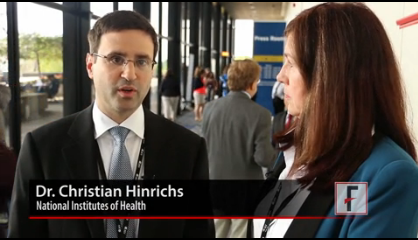
VIDEO: Immunotherapy as treatment for cervical cancer
CHICAGO – Research demonstrating that immunotherapy can be harnessed to treat metastatic cervical cancer was one of the highlights of the annual meeting of the American Society of Clinical Oncology.
We spoke with gynecologic cancer expert Dr. Don Dizon to learn more about why human papillomavirus-targeted T-cell therapy could work in cervical cancer and if this same cellular-based approach could be used in other virally mediated tumors.
Dr. Dizon is director of the Oncology Sexual Health Clinic at Massachusetts General Hospital Cancer Center in Boston.
He reported having no financial disclosures.
The video associated with this article is no longer available on this site. Please view all of our videos on the MDedge YouTube channel
CHICAGO – Research demonstrating that immunotherapy can be harnessed to treat metastatic cervical cancer was one of the highlights of the annual meeting of the American Society of Clinical Oncology.
We spoke with gynecologic cancer expert Dr. Don Dizon to learn more about why human papillomavirus-targeted T-cell therapy could work in cervical cancer and if this same cellular-based approach could be used in other virally mediated tumors.
Dr. Dizon is director of the Oncology Sexual Health Clinic at Massachusetts General Hospital Cancer Center in Boston.
He reported having no financial disclosures.
The video associated with this article is no longer available on this site. Please view all of our videos on the MDedge YouTube channel
CHICAGO – Research demonstrating that immunotherapy can be harnessed to treat metastatic cervical cancer was one of the highlights of the annual meeting of the American Society of Clinical Oncology.
We spoke with gynecologic cancer expert Dr. Don Dizon to learn more about why human papillomavirus-targeted T-cell therapy could work in cervical cancer and if this same cellular-based approach could be used in other virally mediated tumors.
Dr. Dizon is director of the Oncology Sexual Health Clinic at Massachusetts General Hospital Cancer Center in Boston.
He reported having no financial disclosures.
The video associated with this article is no longer available on this site. Please view all of our videos on the MDedge YouTube channel
AT ASCO ANNUAL MEETING 2014

Lenalidomide plus R-CHOP tackles thorny DLBCL subtype
CHICAGO – Lenalidomide in combination with R-CHOP chemotherapy induced responses in 98% of patients with newly diagnosed diffuse large B-cell lymphoma in a phase II study.
Among the 60 evaluable patients, 80% had complete responses, and 18% had partial responses.
Moreover, progression-free and overall survival were increased with lenalidomide (Revlimid) in the activated B-cell (ABC) or non–germinal center B-cell (non-GCB) subtype, which is associated with a poor outcome when treated with standard R-CHOP monotherapy.
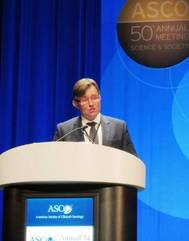
"It appears the addition of lenalidomide to R-CHOP may ameliorate the negative effect of the non-GCB phenotype on outcome," Dr. Grzegorz Nowakowski said at the annual meeting of the American Society of Clinical Oncology.
About 40% of patients with diffuse large B-cell lymphoma (DLBCL) given R-CHOP every 21 days will relapse or develop refractory disease. For those who do, the response rate for single-agent lenalidomide is about 30%, he said.
The study involved 64 patients with untreated stages II-V CD20-positive DLBCL who received oral lenalidomide 25 mg on days 1-10 with standard-dose R-CHOP (cyclophosphamide, hydroxydaunorubicin, vincristine, and prednisone) chemotherapy every 21 days for six cycles (R2CHOP).
All patients received pegfilgrastim on day 2 of each cycle and aspirin prophylaxis throughout.
At baseline, 25% of patients were older than age 70 years, 60% had stage IV disease, and 52% were International Prognostic Index high intermediate or high risk.
The DLBCL subtype was germinal-center B-cell (GCB) in 51% and non-GCB in 34%, with 16% unknown.
Efficacy was examined by DLBCL subtype and against a matched case-control cohort of 87 consecutive, contemporary DLBCL cases in the Mayo Clinic Lymphoma Database who were treated with R-CHOP alone.
At 2 years, progression-free survival (PFS) and overall survival rates in the R2CHOP group were 59% and 78%, compared with rates of 52% and 65% in the R-CHOP case-matched controls, said Dr. Nowakowski of the Mayo Clinic, Rochester, Minn.
When the case controls were examined by molecular subtype, there was a significant difference between non-GCB and GCB controls treated with standard R-CHOP alone for progression-free survival (28% vs. 64%; P = .00029) and overall survival (46% vs. 74%; P = .000036).
In contrast, non-GCB and GCB treated with R2CHOP with lenalidomide had similar rates of progression (60% vs. 59%; P = 0.83) and overall survival at 2 years (83% vs. 75%; P = .61), he reported.
Similar results were recently seen in elderly DLBCL patients in the phase II Italian REAL07 trial (Lancet Oncol. 2014 Jun;15:730-7), said Dr. Nowakowski and invited discussant Dr. Andre Goy, chief of lymphoma and chair and director, John Theurer Cancer Center, Hackensack (N.J.) University Medical Center.
Lenalidomide offers "very promising activity with R2CHOP, particularly in the non-GC subtype," Dr. Goy said "These data will need to be confirmed in ongoing randomized studies, but might offer a new platform in combination/maintenance post–R-CHOP, particularly in elderly patients because the ABC percentage increases with age and they tend to have a worse outcome."
Dr. Goy observed that lenalidomide increased the incidence of grade 3 and 4 neutropenia and thrombocytopenia, but this did not translate into more infections, serious adverse events, or treatment delays.
Grade 3 febrile neutropenia developed in six patients, grade 4 sepsis in one, hemorrhage in one, and thrombosis in one, Dr. Nowakowski said. One patient died of perforation/sepsis unrelated to treatment.
The ongoing phase II ECOG 1412 trial is utilizing gene expression profiling of DLBCL subtype in its evaluation of the efficacy of R2CHOP vs. R-CHOP, he said.
The study was supported by Celgene. Dr. Nowakowski reported having no financial disclosures. Dr. Goy reported serving in a consultant or advisory role with Celgene and Pharmacyclics and receiving honoraria from Janssen Oncology and Millennium Pharmaceuticals.
CHICAGO – Lenalidomide in combination with R-CHOP chemotherapy induced responses in 98% of patients with newly diagnosed diffuse large B-cell lymphoma in a phase II study.
Among the 60 evaluable patients, 80% had complete responses, and 18% had partial responses.
Moreover, progression-free and overall survival were increased with lenalidomide (Revlimid) in the activated B-cell (ABC) or non–germinal center B-cell (non-GCB) subtype, which is associated with a poor outcome when treated with standard R-CHOP monotherapy.
"It appears the addition of lenalidomide to R-CHOP may ameliorate the negative effect of the non-GCB phenotype on outcome," Dr. Grzegorz Nowakowski said at the annual meeting of the American Society of Clinical Oncology.
About 40% of patients with diffuse large B-cell lymphoma (DLBCL) given R-CHOP every 21 days will relapse or develop refractory disease. For those who do, the response rate for single-agent lenalidomide is about 30%, he said.
The study involved 64 patients with untreated stages II-V CD20-positive DLBCL who received oral lenalidomide 25 mg on days 1-10 with standard-dose R-CHOP (cyclophosphamide, hydroxydaunorubicin, vincristine, and prednisone) chemotherapy every 21 days for six cycles (R2CHOP).
All patients received pegfilgrastim on day 2 of each cycle and aspirin prophylaxis throughout.
At baseline, 25% of patients were older than age 70 years, 60% had stage IV disease, and 52% were International Prognostic Index high intermediate or high risk.
The DLBCL subtype was germinal-center B-cell (GCB) in 51% and non-GCB in 34%, with 16% unknown.
Efficacy was examined by DLBCL subtype and against a matched case-control cohort of 87 consecutive, contemporary DLBCL cases in the Mayo Clinic Lymphoma Database who were treated with R-CHOP alone.
At 2 years, progression-free survival (PFS) and overall survival rates in the R2CHOP group were 59% and 78%, compared with rates of 52% and 65% in the R-CHOP case-matched controls, said Dr. Nowakowski of the Mayo Clinic, Rochester, Minn.
When the case controls were examined by molecular subtype, there was a significant difference between non-GCB and GCB controls treated with standard R-CHOP alone for progression-free survival (28% vs. 64%; P = .00029) and overall survival (46% vs. 74%; P = .000036).
In contrast, non-GCB and GCB treated with R2CHOP with lenalidomide had similar rates of progression (60% vs. 59%; P = 0.83) and overall survival at 2 years (83% vs. 75%; P = .61), he reported.
Similar results were recently seen in elderly DLBCL patients in the phase II Italian REAL07 trial (Lancet Oncol. 2014 Jun;15:730-7), said Dr. Nowakowski and invited discussant Dr. Andre Goy, chief of lymphoma and chair and director, John Theurer Cancer Center, Hackensack (N.J.) University Medical Center.
Lenalidomide offers "very promising activity with R2CHOP, particularly in the non-GC subtype," Dr. Goy said "These data will need to be confirmed in ongoing randomized studies, but might offer a new platform in combination/maintenance post–R-CHOP, particularly in elderly patients because the ABC percentage increases with age and they tend to have a worse outcome."
Dr. Goy observed that lenalidomide increased the incidence of grade 3 and 4 neutropenia and thrombocytopenia, but this did not translate into more infections, serious adverse events, or treatment delays.
Grade 3 febrile neutropenia developed in six patients, grade 4 sepsis in one, hemorrhage in one, and thrombosis in one, Dr. Nowakowski said. One patient died of perforation/sepsis unrelated to treatment.
The ongoing phase II ECOG 1412 trial is utilizing gene expression profiling of DLBCL subtype in its evaluation of the efficacy of R2CHOP vs. R-CHOP, he said.
The study was supported by Celgene. Dr. Nowakowski reported having no financial disclosures. Dr. Goy reported serving in a consultant or advisory role with Celgene and Pharmacyclics and receiving honoraria from Janssen Oncology and Millennium Pharmaceuticals.
CHICAGO – Lenalidomide in combination with R-CHOP chemotherapy induced responses in 98% of patients with newly diagnosed diffuse large B-cell lymphoma in a phase II study.
Among the 60 evaluable patients, 80% had complete responses, and 18% had partial responses.
Moreover, progression-free and overall survival were increased with lenalidomide (Revlimid) in the activated B-cell (ABC) or non–germinal center B-cell (non-GCB) subtype, which is associated with a poor outcome when treated with standard R-CHOP monotherapy.
"It appears the addition of lenalidomide to R-CHOP may ameliorate the negative effect of the non-GCB phenotype on outcome," Dr. Grzegorz Nowakowski said at the annual meeting of the American Society of Clinical Oncology.
About 40% of patients with diffuse large B-cell lymphoma (DLBCL) given R-CHOP every 21 days will relapse or develop refractory disease. For those who do, the response rate for single-agent lenalidomide is about 30%, he said.
The study involved 64 patients with untreated stages II-V CD20-positive DLBCL who received oral lenalidomide 25 mg on days 1-10 with standard-dose R-CHOP (cyclophosphamide, hydroxydaunorubicin, vincristine, and prednisone) chemotherapy every 21 days for six cycles (R2CHOP).
All patients received pegfilgrastim on day 2 of each cycle and aspirin prophylaxis throughout.
At baseline, 25% of patients were older than age 70 years, 60% had stage IV disease, and 52% were International Prognostic Index high intermediate or high risk.
The DLBCL subtype was germinal-center B-cell (GCB) in 51% and non-GCB in 34%, with 16% unknown.
Efficacy was examined by DLBCL subtype and against a matched case-control cohort of 87 consecutive, contemporary DLBCL cases in the Mayo Clinic Lymphoma Database who were treated with R-CHOP alone.
At 2 years, progression-free survival (PFS) and overall survival rates in the R2CHOP group were 59% and 78%, compared with rates of 52% and 65% in the R-CHOP case-matched controls, said Dr. Nowakowski of the Mayo Clinic, Rochester, Minn.
When the case controls were examined by molecular subtype, there was a significant difference between non-GCB and GCB controls treated with standard R-CHOP alone for progression-free survival (28% vs. 64%; P = .00029) and overall survival (46% vs. 74%; P = .000036).
In contrast, non-GCB and GCB treated with R2CHOP with lenalidomide had similar rates of progression (60% vs. 59%; P = 0.83) and overall survival at 2 years (83% vs. 75%; P = .61), he reported.
Similar results were recently seen in elderly DLBCL patients in the phase II Italian REAL07 trial (Lancet Oncol. 2014 Jun;15:730-7), said Dr. Nowakowski and invited discussant Dr. Andre Goy, chief of lymphoma and chair and director, John Theurer Cancer Center, Hackensack (N.J.) University Medical Center.
Lenalidomide offers "very promising activity with R2CHOP, particularly in the non-GC subtype," Dr. Goy said "These data will need to be confirmed in ongoing randomized studies, but might offer a new platform in combination/maintenance post–R-CHOP, particularly in elderly patients because the ABC percentage increases with age and they tend to have a worse outcome."
Dr. Goy observed that lenalidomide increased the incidence of grade 3 and 4 neutropenia and thrombocytopenia, but this did not translate into more infections, serious adverse events, or treatment delays.
Grade 3 febrile neutropenia developed in six patients, grade 4 sepsis in one, hemorrhage in one, and thrombosis in one, Dr. Nowakowski said. One patient died of perforation/sepsis unrelated to treatment.
The ongoing phase II ECOG 1412 trial is utilizing gene expression profiling of DLBCL subtype in its evaluation of the efficacy of R2CHOP vs. R-CHOP, he said.
The study was supported by Celgene. Dr. Nowakowski reported having no financial disclosures. Dr. Goy reported serving in a consultant or advisory role with Celgene and Pharmacyclics and receiving honoraria from Janssen Oncology and Millennium Pharmaceuticals.
AT THE ASCO ANNUAL MEETING 2014
Key clinical point: DLBCL patients with the molecular subtype non-GCB may benefit from the addition of lenalidomide to R-CHOP chemotherapy.
Major finding: Non-GCB and GCB subtypes treated with R-CHOP plus lenalidomide had similar rates of progression (60% vs. 59%; P = .83) and overall survival at 2 years (83% vs. 75%; P = .61)
Data source: A phase II study in 64 newly diagnosed diffuse large B-cell lymphoma patients.
Disclosures: The study was supported by Celgene. Dr. Nowakowski reported having no financial disclosures. Dr. Goy reported serving in a consultant or advisory role with Celgene and Pharmacyclics and receiving honoraria from Janssen Oncology and Millennium Pharmaceuticals.

Azathioprine, Anti-TNF Monotherapy Safe in IBD Pregnancy
CHICAGO – Women with inflammatory bowel disease can safely continue monotherapy with azathioprine/6-mercaptopurine or antitumor necrosis–alpha agents during pregnancy to maintain remission, according to an analysis of 1,289 women and 1,039 live births.
Infants exposed to azathioprine/6 MP and anti-TNF-alpha agents achieve developmental milestone scores at rates similar to unexposed infants and do not have higher rates of congenital anomalies, lead author Dr. Uma Mahadevan said at the annual Digestive Disease Week.
Overall, there were 55 congenital anomalies, with 21 diagnosed at birth. Events were similar among infants with in utero exposure to azathioprine, anti-TNF agents, combination therapy, and those with no drug exposure (12 vs. 17 vs. 7 vs. 19 events).
Exposure was defined as any use of azathioprine/6 MP or the anti-TNF-alpha agents infliximab (Remicade), adalimumab (Humira), or certolizumab pegol (Cimzia) at any time from 3 months prior to conception to the end of the pregnancy. Nine women had exposure to the recombinant monoclonal antibody natalizumab (Tysabri) and were included in the anti-TNF agents group.
The analysis was based on the PIANO registry, a prospective cohort of pregnant women with IBD who were followed by telephone or in-person questionnaire at every trimester, at delivery, at 4, 9, and 12 months after delivery, and annually for the first 4 years of their child’s life. Seven women received their diagnosis of IBD during pregnancy, 59.4% had Crohn’s disease, 38.3% ulcerative colitis, and 2.3% were indeterminate.
Two-thirds of women reported breastfeeding, with unexposed women significantly more likely to breastfeed than women with exposure to azathioprine, anti-TNF agents, or combination therapy (85% vs. 65% vs. 71% vs. 61%; P less than .0001).
After controlling for drug exposure, breastfeeding was not associated with an increased risk of infant infection or reduced height or weight, reported Dr. Mahadevan, with the University of California San Francisco.
Infants exposed to combination therapy, however, had higher rates of preterm birth, after adjustment for none/mild vs. moderate/severe IBD activity (odds ratio, 2.6; P less than .05).
Infants exposed to combination therapy who were born to mothers with ulcerative colitis also had increased rates of preterm birth (odds ratio, 4.9), low birth weight (OR, 6.1), and NICU stay (OR, 3.9).
One possible reason for this signal is that women with ulcerative colitis in the PIANO registry, as well as two other studies, have more disease activity during pregnancy, Dr. Mahadevan suggested. Another possibility is that mothers with ulcerative colitis may have low levels of untreated inflammation.
With just 161 women available for analysis, the PIANO investigators previously reported a significant increase in infant infections at 12 months of age in those exposed to combination infliximab or adalimumab plus azathioprine. Most anti-TNF agents cross the placenta in the second and third trimester, which has raised concerns about immune system development and risk of subsequent infections.
In the current analysis, there was no increase in infant infections when the investigators looked at all anti-TNF drugs. "But when we removed certolizumab from the analysis, it was significant just as it was 2 years ago," Dr. Mahadevan said in an interview. "Certolizumab is not actively transported across the placenta. Fortunately, the majority of the infections were minor, including otitis media and upper respiratory infections."
Developmental milestones
Overall, infants exposed to azathioprine or anti-TNF agents were found to achieve developmental milestones at rates similar to unexposed infants of mothers with IBD based on Denver Childhood Developmental Test and Ages and Stages Questionnaire scores, she said.
After controlling for preterm birth, the mean developmental milestone score at 4 months was 0.92 for infants with no drug exposure, with a nonsignificant mean delta difference of 0.01, 0.01, 0.00 points for infants exposed to azathioprine, anti-TNF agents, and combination therapy, respectively.
In a surprising twist, infants exposed to anti-TNF agents alone actually had significantly better scores at 12 months than unexposed infants, bettering the average score of 0.81 in the unexposed group by a mean delta of 0.02 points (P = .01), Dr. Mahadevan said.
"I wouldn’t interpret this data [as indicating] that biologics make your baby smarter. I think the key thing is that it doesn’t make it worse," she remarked. "When you see the deltas, they are pretty small."
On the Ages and Stages Questionnaire, the biologic group had significantly better mean scores than the unexposed group for gross motor skills at 36 months (55.94 vs. 47.53; P = .01), gross motor skills at 48 months (60 vs. 51.20; P = .02), fine motor skills at 48 months (53.50 vs. 42.11; P = .01), and personal/social interaction at 48 months (58 vs. 51.93; P = .04).
The azathioprine-exposed group always had better scores than the unexposed group, Dr. Mahadevan said. Where it was statistically significant was for personal/social interaction at 24 months (50.75 vs. 47.34; P = .04), problem solving at 36 months (mean 52.04 vs. 48.66; P = .05), and problem solving at 48 months (mean 59.92 vs. 57.66; P = .02).
Dr. Mahadevan observed that the data may change because not all infants have reached each time point and may not reflect outcomes in lower socioeconomic groups since more than 90% of women were of similar socioeconomic and educational status.
Still, the findings are reassuring in the absence of any randomized controlled trials. A recent report found children born to mothers with IBD had higher rates of attention-deficit hyperactivity disorder and gross motor abnormalities (J. Crohns Colitis 2013;7:542-50), while a case series reported normal neuropsychological development in 25 consecutive children exposed in utero to TNF-alpha inhibitors (Inflamm. Bowel Dis. 2014;20:495-501), she noted.
A recent systematic review of 58 articles or abstracts also found no association between TNF-alpha inhibitor use during pregnancy with IBD and adverse pregnancy outcomes, congenital abnormalities, or infections in the first year of life (BMC Medicine 2013;11:174).
The study was supported by the Crohn’s and Colitis Foundation of America. Dr. Mahadevan reported serving as an advisor for Janssen-Cilag, AbbVie, Takeda, and UCB Pharma, and receiving research grants from Prometheus Laboratories and GlaxoSmithKline.
CHICAGO – Women with inflammatory bowel disease can safely continue monotherapy with azathioprine/6-mercaptopurine or antitumor necrosis–alpha agents during pregnancy to maintain remission, according to an analysis of 1,289 women and 1,039 live births.
Infants exposed to azathioprine/6 MP and anti-TNF-alpha agents achieve developmental milestone scores at rates similar to unexposed infants and do not have higher rates of congenital anomalies, lead author Dr. Uma Mahadevan said at the annual Digestive Disease Week.
Overall, there were 55 congenital anomalies, with 21 diagnosed at birth. Events were similar among infants with in utero exposure to azathioprine, anti-TNF agents, combination therapy, and those with no drug exposure (12 vs. 17 vs. 7 vs. 19 events).
Exposure was defined as any use of azathioprine/6 MP or the anti-TNF-alpha agents infliximab (Remicade), adalimumab (Humira), or certolizumab pegol (Cimzia) at any time from 3 months prior to conception to the end of the pregnancy. Nine women had exposure to the recombinant monoclonal antibody natalizumab (Tysabri) and were included in the anti-TNF agents group.
The analysis was based on the PIANO registry, a prospective cohort of pregnant women with IBD who were followed by telephone or in-person questionnaire at every trimester, at delivery, at 4, 9, and 12 months after delivery, and annually for the first 4 years of their child’s life. Seven women received their diagnosis of IBD during pregnancy, 59.4% had Crohn’s disease, 38.3% ulcerative colitis, and 2.3% were indeterminate.
Two-thirds of women reported breastfeeding, with unexposed women significantly more likely to breastfeed than women with exposure to azathioprine, anti-TNF agents, or combination therapy (85% vs. 65% vs. 71% vs. 61%; P less than .0001).
After controlling for drug exposure, breastfeeding was not associated with an increased risk of infant infection or reduced height or weight, reported Dr. Mahadevan, with the University of California San Francisco.
Infants exposed to combination therapy, however, had higher rates of preterm birth, after adjustment for none/mild vs. moderate/severe IBD activity (odds ratio, 2.6; P less than .05).
Infants exposed to combination therapy who were born to mothers with ulcerative colitis also had increased rates of preterm birth (odds ratio, 4.9), low birth weight (OR, 6.1), and NICU stay (OR, 3.9).
One possible reason for this signal is that women with ulcerative colitis in the PIANO registry, as well as two other studies, have more disease activity during pregnancy, Dr. Mahadevan suggested. Another possibility is that mothers with ulcerative colitis may have low levels of untreated inflammation.
With just 161 women available for analysis, the PIANO investigators previously reported a significant increase in infant infections at 12 months of age in those exposed to combination infliximab or adalimumab plus azathioprine. Most anti-TNF agents cross the placenta in the second and third trimester, which has raised concerns about immune system development and risk of subsequent infections.
In the current analysis, there was no increase in infant infections when the investigators looked at all anti-TNF drugs. "But when we removed certolizumab from the analysis, it was significant just as it was 2 years ago," Dr. Mahadevan said in an interview. "Certolizumab is not actively transported across the placenta. Fortunately, the majority of the infections were minor, including otitis media and upper respiratory infections."
Developmental milestones
Overall, infants exposed to azathioprine or anti-TNF agents were found to achieve developmental milestones at rates similar to unexposed infants of mothers with IBD based on Denver Childhood Developmental Test and Ages and Stages Questionnaire scores, she said.
After controlling for preterm birth, the mean developmental milestone score at 4 months was 0.92 for infants with no drug exposure, with a nonsignificant mean delta difference of 0.01, 0.01, 0.00 points for infants exposed to azathioprine, anti-TNF agents, and combination therapy, respectively.
In a surprising twist, infants exposed to anti-TNF agents alone actually had significantly better scores at 12 months than unexposed infants, bettering the average score of 0.81 in the unexposed group by a mean delta of 0.02 points (P = .01), Dr. Mahadevan said.
"I wouldn’t interpret this data [as indicating] that biologics make your baby smarter. I think the key thing is that it doesn’t make it worse," she remarked. "When you see the deltas, they are pretty small."
On the Ages and Stages Questionnaire, the biologic group had significantly better mean scores than the unexposed group for gross motor skills at 36 months (55.94 vs. 47.53; P = .01), gross motor skills at 48 months (60 vs. 51.20; P = .02), fine motor skills at 48 months (53.50 vs. 42.11; P = .01), and personal/social interaction at 48 months (58 vs. 51.93; P = .04).
The azathioprine-exposed group always had better scores than the unexposed group, Dr. Mahadevan said. Where it was statistically significant was for personal/social interaction at 24 months (50.75 vs. 47.34; P = .04), problem solving at 36 months (mean 52.04 vs. 48.66; P = .05), and problem solving at 48 months (mean 59.92 vs. 57.66; P = .02).
Dr. Mahadevan observed that the data may change because not all infants have reached each time point and may not reflect outcomes in lower socioeconomic groups since more than 90% of women were of similar socioeconomic and educational status.
Still, the findings are reassuring in the absence of any randomized controlled trials. A recent report found children born to mothers with IBD had higher rates of attention-deficit hyperactivity disorder and gross motor abnormalities (J. Crohns Colitis 2013;7:542-50), while a case series reported normal neuropsychological development in 25 consecutive children exposed in utero to TNF-alpha inhibitors (Inflamm. Bowel Dis. 2014;20:495-501), she noted.
A recent systematic review of 58 articles or abstracts also found no association between TNF-alpha inhibitor use during pregnancy with IBD and adverse pregnancy outcomes, congenital abnormalities, or infections in the first year of life (BMC Medicine 2013;11:174).
The study was supported by the Crohn’s and Colitis Foundation of America. Dr. Mahadevan reported serving as an advisor for Janssen-Cilag, AbbVie, Takeda, and UCB Pharma, and receiving research grants from Prometheus Laboratories and GlaxoSmithKline.
CHICAGO – Women with inflammatory bowel disease can safely continue monotherapy with azathioprine/6-mercaptopurine or antitumor necrosis–alpha agents during pregnancy to maintain remission, according to an analysis of 1,289 women and 1,039 live births.
Infants exposed to azathioprine/6 MP and anti-TNF-alpha agents achieve developmental milestone scores at rates similar to unexposed infants and do not have higher rates of congenital anomalies, lead author Dr. Uma Mahadevan said at the annual Digestive Disease Week.
Overall, there were 55 congenital anomalies, with 21 diagnosed at birth. Events were similar among infants with in utero exposure to azathioprine, anti-TNF agents, combination therapy, and those with no drug exposure (12 vs. 17 vs. 7 vs. 19 events).
Exposure was defined as any use of azathioprine/6 MP or the anti-TNF-alpha agents infliximab (Remicade), adalimumab (Humira), or certolizumab pegol (Cimzia) at any time from 3 months prior to conception to the end of the pregnancy. Nine women had exposure to the recombinant monoclonal antibody natalizumab (Tysabri) and were included in the anti-TNF agents group.
The analysis was based on the PIANO registry, a prospective cohort of pregnant women with IBD who were followed by telephone or in-person questionnaire at every trimester, at delivery, at 4, 9, and 12 months after delivery, and annually for the first 4 years of their child’s life. Seven women received their diagnosis of IBD during pregnancy, 59.4% had Crohn’s disease, 38.3% ulcerative colitis, and 2.3% were indeterminate.
Two-thirds of women reported breastfeeding, with unexposed women significantly more likely to breastfeed than women with exposure to azathioprine, anti-TNF agents, or combination therapy (85% vs. 65% vs. 71% vs. 61%; P less than .0001).
After controlling for drug exposure, breastfeeding was not associated with an increased risk of infant infection or reduced height or weight, reported Dr. Mahadevan, with the University of California San Francisco.
Infants exposed to combination therapy, however, had higher rates of preterm birth, after adjustment for none/mild vs. moderate/severe IBD activity (odds ratio, 2.6; P less than .05).
Infants exposed to combination therapy who were born to mothers with ulcerative colitis also had increased rates of preterm birth (odds ratio, 4.9), low birth weight (OR, 6.1), and NICU stay (OR, 3.9).
One possible reason for this signal is that women with ulcerative colitis in the PIANO registry, as well as two other studies, have more disease activity during pregnancy, Dr. Mahadevan suggested. Another possibility is that mothers with ulcerative colitis may have low levels of untreated inflammation.
With just 161 women available for analysis, the PIANO investigators previously reported a significant increase in infant infections at 12 months of age in those exposed to combination infliximab or adalimumab plus azathioprine. Most anti-TNF agents cross the placenta in the second and third trimester, which has raised concerns about immune system development and risk of subsequent infections.
In the current analysis, there was no increase in infant infections when the investigators looked at all anti-TNF drugs. "But when we removed certolizumab from the analysis, it was significant just as it was 2 years ago," Dr. Mahadevan said in an interview. "Certolizumab is not actively transported across the placenta. Fortunately, the majority of the infections were minor, including otitis media and upper respiratory infections."
Developmental milestones
Overall, infants exposed to azathioprine or anti-TNF agents were found to achieve developmental milestones at rates similar to unexposed infants of mothers with IBD based on Denver Childhood Developmental Test and Ages and Stages Questionnaire scores, she said.
After controlling for preterm birth, the mean developmental milestone score at 4 months was 0.92 for infants with no drug exposure, with a nonsignificant mean delta difference of 0.01, 0.01, 0.00 points for infants exposed to azathioprine, anti-TNF agents, and combination therapy, respectively.
In a surprising twist, infants exposed to anti-TNF agents alone actually had significantly better scores at 12 months than unexposed infants, bettering the average score of 0.81 in the unexposed group by a mean delta of 0.02 points (P = .01), Dr. Mahadevan said.
"I wouldn’t interpret this data [as indicating] that biologics make your baby smarter. I think the key thing is that it doesn’t make it worse," she remarked. "When you see the deltas, they are pretty small."
On the Ages and Stages Questionnaire, the biologic group had significantly better mean scores than the unexposed group for gross motor skills at 36 months (55.94 vs. 47.53; P = .01), gross motor skills at 48 months (60 vs. 51.20; P = .02), fine motor skills at 48 months (53.50 vs. 42.11; P = .01), and personal/social interaction at 48 months (58 vs. 51.93; P = .04).
The azathioprine-exposed group always had better scores than the unexposed group, Dr. Mahadevan said. Where it was statistically significant was for personal/social interaction at 24 months (50.75 vs. 47.34; P = .04), problem solving at 36 months (mean 52.04 vs. 48.66; P = .05), and problem solving at 48 months (mean 59.92 vs. 57.66; P = .02).
Dr. Mahadevan observed that the data may change because not all infants have reached each time point and may not reflect outcomes in lower socioeconomic groups since more than 90% of women were of similar socioeconomic and educational status.
Still, the findings are reassuring in the absence of any randomized controlled trials. A recent report found children born to mothers with IBD had higher rates of attention-deficit hyperactivity disorder and gross motor abnormalities (J. Crohns Colitis 2013;7:542-50), while a case series reported normal neuropsychological development in 25 consecutive children exposed in utero to TNF-alpha inhibitors (Inflamm. Bowel Dis. 2014;20:495-501), she noted.
A recent systematic review of 58 articles or abstracts also found no association between TNF-alpha inhibitor use during pregnancy with IBD and adverse pregnancy outcomes, congenital abnormalities, or infections in the first year of life (BMC Medicine 2013;11:174).
The study was supported by the Crohn’s and Colitis Foundation of America. Dr. Mahadevan reported serving as an advisor for Janssen-Cilag, AbbVie, Takeda, and UCB Pharma, and receiving research grants from Prometheus Laboratories and GlaxoSmithKline.
AT DDW 2014

Azathioprine, anti-TNF monotherapy safe in IBD pregnancy
CHICAGO – Women with inflammatory bowel disease can safely continue monotherapy with azathioprine/6-mercaptopurine or antitumor necrosis–alpha agents during pregnancy to maintain remission, according to an analysis of 1,289 women and 1,039 live births.
Infants exposed to azathioprine/6 MP and anti-TNF-alpha agents achieve developmental milestone scores at rates similar to unexposed infants and do not have higher rates of congenital anomalies, lead author Dr. Uma Mahadevan said at the annual Digestive Disease Week.

Overall, there were 55 congenital anomalies, with 21 diagnosed at birth. Events were similar among infants with in utero exposure to azathioprine, anti-TNF agents, combination therapy, and those with no drug exposure (12 vs. 17 vs. 7 vs. 19 events).
Exposure was defined as any use of azathioprine/6 MP or the anti-TNF-alpha agents infliximab (Remicade), adalimumab (Humira), or certolizumab pegol (Cimzia) at any time from 3 months prior to conception to the end of the pregnancy. Nine women had exposure to the recombinant monoclonal antibody natalizumab (Tysabri) and were included in the anti-TNF agents group.
The analysis was based on the PIANO registry, a prospective cohort of pregnant women with IBD who were followed by telephone or in-person questionnaire at every trimester, at delivery, at 4, 9, and 12 months after delivery, and annually for the first 4 years of their child’s life. Seven women received their diagnosis of IBD during pregnancy, 59.4% had Crohn’s disease, 38.3% ulcerative colitis, and 2.3% were indeterminate.
Two-thirds of women reported breastfeeding, with unexposed women significantly more likely to breastfeed than women with exposure to azathioprine, anti-TNF agents, or combination therapy (85% vs. 65% vs. 71% vs. 61%; P less than .0001).
After controlling for drug exposure, breastfeeding was not associated with an increased risk of infant infection or reduced height or weight, reported Dr. Mahadevan, with the University of California San Francisco.
Infants exposed to combination therapy, however, had higher rates of preterm birth, after adjustment for none/mild vs. moderate/severe IBD activity (odds ratio, 2.6; P less than .05).
Infants exposed to combination therapy who were born to mothers with ulcerative colitis also had increased rates of preterm birth (odds ratio, 4.9), low birth weight (OR, 6.1), and NICU stay (OR, 3.9).
One possible reason for this signal is that women with ulcerative colitis in the PIANO registry, as well as two other studies, have more disease activity during pregnancy, Dr. Mahadevan suggested. Another possibility is that mothers with ulcerative colitis may have low levels of untreated inflammation.
With just 161 women available for analysis, the PIANO investigators previously reported a significant increase in infant infections at 12 months of age in those exposed to combination infliximab or adalimumab plus azathioprine. Most anti-TNF agents cross the placenta in the second and third trimester, which has raised concerns about immune system development and risk of subsequent infections.
In the current analysis, there was no increase in infant infections when the investigators looked at all anti-TNF drugs. "But when we removed certolizumab from the analysis, it was significant just as it was 2 years ago," Dr. Mahadevan said in an interview. "Certolizumab is not actively transported across the placenta. Fortunately, the majority of the infections were minor, including otitis media and upper respiratory infections."
Developmental milestones
Overall, infants exposed to azathioprine or anti-TNF agents were found to achieve developmental milestones at rates similar to unexposed infants of mothers with IBD based on Denver Childhood Developmental Test and Ages and Stages Questionnaire scores, she said.
After controlling for preterm birth, the mean developmental milestone score at 4 months was 0.92 for infants with no drug exposure, with a nonsignificant mean delta difference of 0.01, 0.01, 0.00 points for infants exposed to azathioprine, anti-TNF agents, and combination therapy, respectively.
In a surprising twist, infants exposed to anti-TNF agents alone actually had significantly better scores at 12 months than unexposed infants, bettering the average score of 0.81 in the unexposed group by a mean delta of 0.02 points (P = .01), Dr. Mahadevan said.
"I wouldn’t interpret this data [as indicating] that biologics make your baby smarter. I think the key thing is that it doesn’t make it worse," she remarked. "When you see the deltas, they are pretty small."
On the Ages and Stages Questionnaire, the biologic group had significantly better mean scores than the unexposed group for gross motor skills at 36 months (55.94 vs. 47.53; P = .01), gross motor skills at 48 months (60 vs. 51.20; P = .02), fine motor skills at 48 months (53.50 vs. 42.11; P = .01), and personal/social interaction at 48 months (58 vs. 51.93; P = .04).
The azathioprine-exposed group always had better scores than the unexposed group, Dr. Mahadevan said. Where it was statistically significant was for personal/social interaction at 24 months (50.75 vs. 47.34; P = .04), problem solving at 36 months (mean 52.04 vs. 48.66; P = .05), and problem solving at 48 months (mean 59.92 vs. 57.66; P = .02).
Dr. Mahadevan observed that the data may change because not all infants have reached each time point and may not reflect outcomes in lower socioeconomic groups since more than 90% of women were of similar socioeconomic and educational status.
Still, the findings are reassuring in the absence of any randomized controlled trials. A recent report found children born to mothers with IBD had higher rates of attention-deficit hyperactivity disorder and gross motor abnormalities (J. Crohns Colitis 2013;7:542-50), while a case series reported normal neuropsychological development in 25 consecutive children exposed in utero to TNF-alpha inhibitors (Inflamm. Bowel Dis. 2014;20:495-501), she noted.
A recent systematic review of 58 articles or abstracts also found no association between TNF-alpha inhibitor use during pregnancy with IBD and adverse pregnancy outcomes, congenital abnormalities, or infections in the first year of life (BMC Medicine 2013;11:174).
The study was supported by the Crohn’s and Colitis Foundation of America. Dr. Mahadevan reported serving as an advisor for Janssen-Cilag, AbbVie, Takeda, and UCB Pharma, and receiving research grants from Prometheus Laboratories and GlaxoSmithKline.
CHICAGO – Women with inflammatory bowel disease can safely continue monotherapy with azathioprine/6-mercaptopurine or antitumor necrosis–alpha agents during pregnancy to maintain remission, according to an analysis of 1,289 women and 1,039 live births.
Infants exposed to azathioprine/6 MP and anti-TNF-alpha agents achieve developmental milestone scores at rates similar to unexposed infants and do not have higher rates of congenital anomalies, lead author Dr. Uma Mahadevan said at the annual Digestive Disease Week.
Overall, there were 55 congenital anomalies, with 21 diagnosed at birth. Events were similar among infants with in utero exposure to azathioprine, anti-TNF agents, combination therapy, and those with no drug exposure (12 vs. 17 vs. 7 vs. 19 events).
Exposure was defined as any use of azathioprine/6 MP or the anti-TNF-alpha agents infliximab (Remicade), adalimumab (Humira), or certolizumab pegol (Cimzia) at any time from 3 months prior to conception to the end of the pregnancy. Nine women had exposure to the recombinant monoclonal antibody natalizumab (Tysabri) and were included in the anti-TNF agents group.
The analysis was based on the PIANO registry, a prospective cohort of pregnant women with IBD who were followed by telephone or in-person questionnaire at every trimester, at delivery, at 4, 9, and 12 months after delivery, and annually for the first 4 years of their child’s life. Seven women received their diagnosis of IBD during pregnancy, 59.4% had Crohn’s disease, 38.3% ulcerative colitis, and 2.3% were indeterminate.
Two-thirds of women reported breastfeeding, with unexposed women significantly more likely to breastfeed than women with exposure to azathioprine, anti-TNF agents, or combination therapy (85% vs. 65% vs. 71% vs. 61%; P less than .0001).
After controlling for drug exposure, breastfeeding was not associated with an increased risk of infant infection or reduced height or weight, reported Dr. Mahadevan, with the University of California San Francisco.
Infants exposed to combination therapy, however, had higher rates of preterm birth, after adjustment for none/mild vs. moderate/severe IBD activity (odds ratio, 2.6; P less than .05).
Infants exposed to combination therapy who were born to mothers with ulcerative colitis also had increased rates of preterm birth (odds ratio, 4.9), low birth weight (OR, 6.1), and NICU stay (OR, 3.9).
One possible reason for this signal is that women with ulcerative colitis in the PIANO registry, as well as two other studies, have more disease activity during pregnancy, Dr. Mahadevan suggested. Another possibility is that mothers with ulcerative colitis may have low levels of untreated inflammation.
With just 161 women available for analysis, the PIANO investigators previously reported a significant increase in infant infections at 12 months of age in those exposed to combination infliximab or adalimumab plus azathioprine. Most anti-TNF agents cross the placenta in the second and third trimester, which has raised concerns about immune system development and risk of subsequent infections.
In the current analysis, there was no increase in infant infections when the investigators looked at all anti-TNF drugs. "But when we removed certolizumab from the analysis, it was significant just as it was 2 years ago," Dr. Mahadevan said in an interview. "Certolizumab is not actively transported across the placenta. Fortunately, the majority of the infections were minor, including otitis media and upper respiratory infections."
Developmental milestones
Overall, infants exposed to azathioprine or anti-TNF agents were found to achieve developmental milestones at rates similar to unexposed infants of mothers with IBD based on Denver Childhood Developmental Test and Ages and Stages Questionnaire scores, she said.
After controlling for preterm birth, the mean developmental milestone score at 4 months was 0.92 for infants with no drug exposure, with a nonsignificant mean delta difference of 0.01, 0.01, 0.00 points for infants exposed to azathioprine, anti-TNF agents, and combination therapy, respectively.
In a surprising twist, infants exposed to anti-TNF agents alone actually had significantly better scores at 12 months than unexposed infants, bettering the average score of 0.81 in the unexposed group by a mean delta of 0.02 points (P = .01), Dr. Mahadevan said.
"I wouldn’t interpret this data [as indicating] that biologics make your baby smarter. I think the key thing is that it doesn’t make it worse," she remarked. "When you see the deltas, they are pretty small."
On the Ages and Stages Questionnaire, the biologic group had significantly better mean scores than the unexposed group for gross motor skills at 36 months (55.94 vs. 47.53; P = .01), gross motor skills at 48 months (60 vs. 51.20; P = .02), fine motor skills at 48 months (53.50 vs. 42.11; P = .01), and personal/social interaction at 48 months (58 vs. 51.93; P = .04).
The azathioprine-exposed group always had better scores than the unexposed group, Dr. Mahadevan said. Where it was statistically significant was for personal/social interaction at 24 months (50.75 vs. 47.34; P = .04), problem solving at 36 months (mean 52.04 vs. 48.66; P = .05), and problem solving at 48 months (mean 59.92 vs. 57.66; P = .02).
Dr. Mahadevan observed that the data may change because not all infants have reached each time point and may not reflect outcomes in lower socioeconomic groups since more than 90% of women were of similar socioeconomic and educational status.
Still, the findings are reassuring in the absence of any randomized controlled trials. A recent report found children born to mothers with IBD had higher rates of attention-deficit hyperactivity disorder and gross motor abnormalities (J. Crohns Colitis 2013;7:542-50), while a case series reported normal neuropsychological development in 25 consecutive children exposed in utero to TNF-alpha inhibitors (Inflamm. Bowel Dis. 2014;20:495-501), she noted.
A recent systematic review of 58 articles or abstracts also found no association between TNF-alpha inhibitor use during pregnancy with IBD and adverse pregnancy outcomes, congenital abnormalities, or infections in the first year of life (BMC Medicine 2013;11:174).
The study was supported by the Crohn’s and Colitis Foundation of America. Dr. Mahadevan reported serving as an advisor for Janssen-Cilag, AbbVie, Takeda, and UCB Pharma, and receiving research grants from Prometheus Laboratories and GlaxoSmithKline.
CHICAGO – Women with inflammatory bowel disease can safely continue monotherapy with azathioprine/6-mercaptopurine or antitumor necrosis–alpha agents during pregnancy to maintain remission, according to an analysis of 1,289 women and 1,039 live births.
Infants exposed to azathioprine/6 MP and anti-TNF-alpha agents achieve developmental milestone scores at rates similar to unexposed infants and do not have higher rates of congenital anomalies, lead author Dr. Uma Mahadevan said at the annual Digestive Disease Week.
Overall, there were 55 congenital anomalies, with 21 diagnosed at birth. Events were similar among infants with in utero exposure to azathioprine, anti-TNF agents, combination therapy, and those with no drug exposure (12 vs. 17 vs. 7 vs. 19 events).
Exposure was defined as any use of azathioprine/6 MP or the anti-TNF-alpha agents infliximab (Remicade), adalimumab (Humira), or certolizumab pegol (Cimzia) at any time from 3 months prior to conception to the end of the pregnancy. Nine women had exposure to the recombinant monoclonal antibody natalizumab (Tysabri) and were included in the anti-TNF agents group.
The analysis was based on the PIANO registry, a prospective cohort of pregnant women with IBD who were followed by telephone or in-person questionnaire at every trimester, at delivery, at 4, 9, and 12 months after delivery, and annually for the first 4 years of their child’s life. Seven women received their diagnosis of IBD during pregnancy, 59.4% had Crohn’s disease, 38.3% ulcerative colitis, and 2.3% were indeterminate.
Two-thirds of women reported breastfeeding, with unexposed women significantly more likely to breastfeed than women with exposure to azathioprine, anti-TNF agents, or combination therapy (85% vs. 65% vs. 71% vs. 61%; P less than .0001).
After controlling for drug exposure, breastfeeding was not associated with an increased risk of infant infection or reduced height or weight, reported Dr. Mahadevan, with the University of California San Francisco.
Infants exposed to combination therapy, however, had higher rates of preterm birth, after adjustment for none/mild vs. moderate/severe IBD activity (odds ratio, 2.6; P less than .05).
Infants exposed to combination therapy who were born to mothers with ulcerative colitis also had increased rates of preterm birth (odds ratio, 4.9), low birth weight (OR, 6.1), and NICU stay (OR, 3.9).
One possible reason for this signal is that women with ulcerative colitis in the PIANO registry, as well as two other studies, have more disease activity during pregnancy, Dr. Mahadevan suggested. Another possibility is that mothers with ulcerative colitis may have low levels of untreated inflammation.
With just 161 women available for analysis, the PIANO investigators previously reported a significant increase in infant infections at 12 months of age in those exposed to combination infliximab or adalimumab plus azathioprine. Most anti-TNF agents cross the placenta in the second and third trimester, which has raised concerns about immune system development and risk of subsequent infections.
In the current analysis, there was no increase in infant infections when the investigators looked at all anti-TNF drugs. "But when we removed certolizumab from the analysis, it was significant just as it was 2 years ago," Dr. Mahadevan said in an interview. "Certolizumab is not actively transported across the placenta. Fortunately, the majority of the infections were minor, including otitis media and upper respiratory infections."
Developmental milestones
Overall, infants exposed to azathioprine or anti-TNF agents were found to achieve developmental milestones at rates similar to unexposed infants of mothers with IBD based on Denver Childhood Developmental Test and Ages and Stages Questionnaire scores, she said.
After controlling for preterm birth, the mean developmental milestone score at 4 months was 0.92 for infants with no drug exposure, with a nonsignificant mean delta difference of 0.01, 0.01, 0.00 points for infants exposed to azathioprine, anti-TNF agents, and combination therapy, respectively.
In a surprising twist, infants exposed to anti-TNF agents alone actually had significantly better scores at 12 months than unexposed infants, bettering the average score of 0.81 in the unexposed group by a mean delta of 0.02 points (P = .01), Dr. Mahadevan said.
"I wouldn’t interpret this data [as indicating] that biologics make your baby smarter. I think the key thing is that it doesn’t make it worse," she remarked. "When you see the deltas, they are pretty small."
On the Ages and Stages Questionnaire, the biologic group had significantly better mean scores than the unexposed group for gross motor skills at 36 months (55.94 vs. 47.53; P = .01), gross motor skills at 48 months (60 vs. 51.20; P = .02), fine motor skills at 48 months (53.50 vs. 42.11; P = .01), and personal/social interaction at 48 months (58 vs. 51.93; P = .04).
The azathioprine-exposed group always had better scores than the unexposed group, Dr. Mahadevan said. Where it was statistically significant was for personal/social interaction at 24 months (50.75 vs. 47.34; P = .04), problem solving at 36 months (mean 52.04 vs. 48.66; P = .05), and problem solving at 48 months (mean 59.92 vs. 57.66; P = .02).
Dr. Mahadevan observed that the data may change because not all infants have reached each time point and may not reflect outcomes in lower socioeconomic groups since more than 90% of women were of similar socioeconomic and educational status.
Still, the findings are reassuring in the absence of any randomized controlled trials. A recent report found children born to mothers with IBD had higher rates of attention-deficit hyperactivity disorder and gross motor abnormalities (J. Crohns Colitis 2013;7:542-50), while a case series reported normal neuropsychological development in 25 consecutive children exposed in utero to TNF-alpha inhibitors (Inflamm. Bowel Dis. 2014;20:495-501), she noted.
A recent systematic review of 58 articles or abstracts also found no association between TNF-alpha inhibitor use during pregnancy with IBD and adverse pregnancy outcomes, congenital abnormalities, or infections in the first year of life (BMC Medicine 2013;11:174).
The study was supported by the Crohn’s and Colitis Foundation of America. Dr. Mahadevan reported serving as an advisor for Janssen-Cilag, AbbVie, Takeda, and UCB Pharma, and receiving research grants from Prometheus Laboratories and GlaxoSmithKline.
AT DDW 2014
Key clinical point: Monotherapy with azathioprine and anti-TNF agents can be continued in pregnancy with IBD to maintain remission.
Major finding: Congenital anomalies were not higher in children with exposure to azathioprine, anti-TNF agents, or combination therapy, compared with no drug exposure (12 vs. 17 vs. 7 vs. 19 anomalies).
Data source: Analysis of 1,289 women with IBD and 1,039 live births.
Disclosures: The study was supported by the Crohn’s and Colitis Foundation of America. Dr. Mahadevan reported serving as an advisor for Janssen-Cilag, AbbVie, Takeda, and UCB Pharma, and receiving research grants from Prometheus Laboratories and GlaxoSmithKline.

Pembrolizumab monotherapy posts 6.75-month PFS in stage IV NSCLC
CHICAGO – Monotherapy with the experimental anti-PD-1 antibody pembrolizumab induced durable treatment responses and slowed progression in previously untreated stage IV non–small cell lung cancer in an ongoing phase Ib trial.
The overall response rate was 26% (11 of 42 patients) by Response Evaluation Criteria in Solid Tumors (RECIST) criteria and 47% (21 of 45 patients) by investigator-assessed, immune-related response criteria (irRC).
Responses are ongoing in 100% of responders by RECIST and 90% of responders by irRC, with the median duration of response not reached after a median of 36 weeks follow-up, Dr. Naiyer Rizvi said at the annual meeting of the American Society of Clinical Oncology.
Responses in the phase I KEYNOTE-001 study are very comparable with response rates of 15%-32% achieved with classic chemotherapy in the first-line setting in phase III studies using gemcitabine plus cisplatin, taxol plus carboplatin, or pemetrexed plus cisplatin, said invited discussant Dr. Julie Brahmer of Johns Hopkins University, Baltimore.
"The key thing [with pembrolizumab] is that these responses are very long lasting," she said.
Moreover, median progression-free survival with the classic chemotherapy doublets ranged from 4.5 months to 5.3 months but reached 6.75 months by RECIST and 9.25 months by irRC in the interim analysis of pembrolizumab.
"A very early but interesting progression-free survival of 6.75 months is quite intriguing," Dr. Brahmer said.
Enrollment is expected to begin this September in the phase III KEYNOTE-024 study comparing pembrolizumab monotherapy with platinum-based doublet chemotherapy in treatment-naive PD-L1 positive, metastatic non–small cell lung cancer (NSCLC), said Dr. Rizvi, a medical oncologist with Memorial Sloan Kettering Cancer Center in New York.
Study details
Pembrolizumab, previously known as MK-3475, exerts dual ligand (PD-L1 and PD-L2) blockade of the programmed death 1 (PD-1) pathway. It is being investigated in more than 30 different cancers, and it made waves at the ASCO meeting for its treatment of metastatic melanoma.
Dr. Brahmer said that the key questions for the current study are whether PD-L1 sensitivity was the right biomarker to use and what the best cut-off is.
The KEYNOTE-001 study enrolled 84 previously untreated patients with stage IV NSCLC and an Eastern Cooperative Oncology Group (ECOG) performance status of 0-1. Tumors were classified as PD-L1 positive in 57 patients, using a cut point of at least 1% of tumor cells stained, as measured using a prototype immunohistochemistry assay.
Of these 57 patients, 45 with evaluable imaging at baseline were randomly assigned to pembrolizumab 10 mg/kg every 3 weeks or 10 mg/kg every 2 weeks until disease progression or unacceptable toxicity. Most patients (76%) had nonsquamous histology, and 69% were former smokers.
Patients received a median of nine doses (range 1-23) and spent an average of 154 days on therapy (range 1-400).
Tumor shrinkage by RECIST criteria occurred in 80% of patients with measurable disease and at least one postbaseline scan, Dr. Rizvi said. Activity was observed across dose levels and across the 2- and 3-week schedules.
Nine patients with new tumors would have been considered as having progressive disease and likely taken off therapy if they had been assessed by traditional RECIST criteria rather than irRC, "illustrating that RECIST may not be the best imaging modality to assess patients treated with immunotherapy," he said.
Grade 1-2 treatment-related events occurred in 36 of the 45 patients. The most common events were fatigue in 10 patients, pruritus in 6, and hypothyroidism in 4.
There was one each treatment-related grade 4 blood creatine phosphokinase elevation, grade 3 pericardial effusion, grade 3 pneumonitis, and grade 2 kidney injury, with two events leading to treatment discontinuation.
"Based on these safety data, we feel pembrolizumab is a safe and well-tolerated regimen," Dr. Rizvi said.
An additional 50 patients are being enrolled in the KEYNOTE-001 study, with the total population to be analyzed both with 1% and 45% cut points, he said.
The study was supported by Merck. Dr. Rizvi reported a consultant or advisory role with Bristol-Myers Squibb and honoraria from Bristol-Myers Squibb, MedImmune, and Roche/Genentech.
CHICAGO – Monotherapy with the experimental anti-PD-1 antibody pembrolizumab induced durable treatment responses and slowed progression in previously untreated stage IV non–small cell lung cancer in an ongoing phase Ib trial.
The overall response rate was 26% (11 of 42 patients) by Response Evaluation Criteria in Solid Tumors (RECIST) criteria and 47% (21 of 45 patients) by investigator-assessed, immune-related response criteria (irRC).
Responses are ongoing in 100% of responders by RECIST and 90% of responders by irRC, with the median duration of response not reached after a median of 36 weeks follow-up, Dr. Naiyer Rizvi said at the annual meeting of the American Society of Clinical Oncology.
Responses in the phase I KEYNOTE-001 study are very comparable with response rates of 15%-32% achieved with classic chemotherapy in the first-line setting in phase III studies using gemcitabine plus cisplatin, taxol plus carboplatin, or pemetrexed plus cisplatin, said invited discussant Dr. Julie Brahmer of Johns Hopkins University, Baltimore.
"The key thing [with pembrolizumab] is that these responses are very long lasting," she said.
Moreover, median progression-free survival with the classic chemotherapy doublets ranged from 4.5 months to 5.3 months but reached 6.75 months by RECIST and 9.25 months by irRC in the interim analysis of pembrolizumab.
"A very early but interesting progression-free survival of 6.75 months is quite intriguing," Dr. Brahmer said.
Enrollment is expected to begin this September in the phase III KEYNOTE-024 study comparing pembrolizumab monotherapy with platinum-based doublet chemotherapy in treatment-naive PD-L1 positive, metastatic non–small cell lung cancer (NSCLC), said Dr. Rizvi, a medical oncologist with Memorial Sloan Kettering Cancer Center in New York.
Study details
Pembrolizumab, previously known as MK-3475, exerts dual ligand (PD-L1 and PD-L2) blockade of the programmed death 1 (PD-1) pathway. It is being investigated in more than 30 different cancers, and it made waves at the ASCO meeting for its treatment of metastatic melanoma.
Dr. Brahmer said that the key questions for the current study are whether PD-L1 sensitivity was the right biomarker to use and what the best cut-off is.
The KEYNOTE-001 study enrolled 84 previously untreated patients with stage IV NSCLC and an Eastern Cooperative Oncology Group (ECOG) performance status of 0-1. Tumors were classified as PD-L1 positive in 57 patients, using a cut point of at least 1% of tumor cells stained, as measured using a prototype immunohistochemistry assay.
Of these 57 patients, 45 with evaluable imaging at baseline were randomly assigned to pembrolizumab 10 mg/kg every 3 weeks or 10 mg/kg every 2 weeks until disease progression or unacceptable toxicity. Most patients (76%) had nonsquamous histology, and 69% were former smokers.
Patients received a median of nine doses (range 1-23) and spent an average of 154 days on therapy (range 1-400).
Tumor shrinkage by RECIST criteria occurred in 80% of patients with measurable disease and at least one postbaseline scan, Dr. Rizvi said. Activity was observed across dose levels and across the 2- and 3-week schedules.
Nine patients with new tumors would have been considered as having progressive disease and likely taken off therapy if they had been assessed by traditional RECIST criteria rather than irRC, "illustrating that RECIST may not be the best imaging modality to assess patients treated with immunotherapy," he said.
Grade 1-2 treatment-related events occurred in 36 of the 45 patients. The most common events were fatigue in 10 patients, pruritus in 6, and hypothyroidism in 4.
There was one each treatment-related grade 4 blood creatine phosphokinase elevation, grade 3 pericardial effusion, grade 3 pneumonitis, and grade 2 kidney injury, with two events leading to treatment discontinuation.
"Based on these safety data, we feel pembrolizumab is a safe and well-tolerated regimen," Dr. Rizvi said.
An additional 50 patients are being enrolled in the KEYNOTE-001 study, with the total population to be analyzed both with 1% and 45% cut points, he said.
The study was supported by Merck. Dr. Rizvi reported a consultant or advisory role with Bristol-Myers Squibb and honoraria from Bristol-Myers Squibb, MedImmune, and Roche/Genentech.
CHICAGO – Monotherapy with the experimental anti-PD-1 antibody pembrolizumab induced durable treatment responses and slowed progression in previously untreated stage IV non–small cell lung cancer in an ongoing phase Ib trial.
The overall response rate was 26% (11 of 42 patients) by Response Evaluation Criteria in Solid Tumors (RECIST) criteria and 47% (21 of 45 patients) by investigator-assessed, immune-related response criteria (irRC).
Responses are ongoing in 100% of responders by RECIST and 90% of responders by irRC, with the median duration of response not reached after a median of 36 weeks follow-up, Dr. Naiyer Rizvi said at the annual meeting of the American Society of Clinical Oncology.
Responses in the phase I KEYNOTE-001 study are very comparable with response rates of 15%-32% achieved with classic chemotherapy in the first-line setting in phase III studies using gemcitabine plus cisplatin, taxol plus carboplatin, or pemetrexed plus cisplatin, said invited discussant Dr. Julie Brahmer of Johns Hopkins University, Baltimore.
"The key thing [with pembrolizumab] is that these responses are very long lasting," she said.
Moreover, median progression-free survival with the classic chemotherapy doublets ranged from 4.5 months to 5.3 months but reached 6.75 months by RECIST and 9.25 months by irRC in the interim analysis of pembrolizumab.
"A very early but interesting progression-free survival of 6.75 months is quite intriguing," Dr. Brahmer said.
Enrollment is expected to begin this September in the phase III KEYNOTE-024 study comparing pembrolizumab monotherapy with platinum-based doublet chemotherapy in treatment-naive PD-L1 positive, metastatic non–small cell lung cancer (NSCLC), said Dr. Rizvi, a medical oncologist with Memorial Sloan Kettering Cancer Center in New York.
Study details
Pembrolizumab, previously known as MK-3475, exerts dual ligand (PD-L1 and PD-L2) blockade of the programmed death 1 (PD-1) pathway. It is being investigated in more than 30 different cancers, and it made waves at the ASCO meeting for its treatment of metastatic melanoma.
Dr. Brahmer said that the key questions for the current study are whether PD-L1 sensitivity was the right biomarker to use and what the best cut-off is.
The KEYNOTE-001 study enrolled 84 previously untreated patients with stage IV NSCLC and an Eastern Cooperative Oncology Group (ECOG) performance status of 0-1. Tumors were classified as PD-L1 positive in 57 patients, using a cut point of at least 1% of tumor cells stained, as measured using a prototype immunohistochemistry assay.
Of these 57 patients, 45 with evaluable imaging at baseline were randomly assigned to pembrolizumab 10 mg/kg every 3 weeks or 10 mg/kg every 2 weeks until disease progression or unacceptable toxicity. Most patients (76%) had nonsquamous histology, and 69% were former smokers.
Patients received a median of nine doses (range 1-23) and spent an average of 154 days on therapy (range 1-400).
Tumor shrinkage by RECIST criteria occurred in 80% of patients with measurable disease and at least one postbaseline scan, Dr. Rizvi said. Activity was observed across dose levels and across the 2- and 3-week schedules.
Nine patients with new tumors would have been considered as having progressive disease and likely taken off therapy if they had been assessed by traditional RECIST criteria rather than irRC, "illustrating that RECIST may not be the best imaging modality to assess patients treated with immunotherapy," he said.
Grade 1-2 treatment-related events occurred in 36 of the 45 patients. The most common events were fatigue in 10 patients, pruritus in 6, and hypothyroidism in 4.
There was one each treatment-related grade 4 blood creatine phosphokinase elevation, grade 3 pericardial effusion, grade 3 pneumonitis, and grade 2 kidney injury, with two events leading to treatment discontinuation.
"Based on these safety data, we feel pembrolizumab is a safe and well-tolerated regimen," Dr. Rizvi said.
An additional 50 patients are being enrolled in the KEYNOTE-001 study, with the total population to be analyzed both with 1% and 45% cut points, he said.
The study was supported by Merck. Dr. Rizvi reported a consultant or advisory role with Bristol-Myers Squibb and honoraria from Bristol-Myers Squibb, MedImmune, and Roche/Genentech.
AT THE ASCO ANNUAL MEETING 2014
Key clinical point: Median progression-free survival with the classic chemotherapy doublets ranged from 4.5 months to 5.3 months but reached 6.75 months by RECIST and 9.25 months by irRC in the interim analysis of pembrolizumab.
Major finding: The overall response rate was 26% by RECIST criteria and 47% by investigator-assessed, immune-related response criteria.
Data source: An ongoing phase 1b study in 45 patients with previously untreated advanced NSCLC.
Disclosures: The study was supported by Merck. Dr. Rizvi reported a consultant or advisory role with Bristol-Myers Squibb and honoraria from Bristol-Myers Squibb, MedImmune, and Roche/Genentech.