User login
Patient satisfaction not always linked to hospital safety, effectiveness
BOSTON – Hospital size and operative volume were significantly associated with satisfaction among general surgery patients in an analysis of 171 U.S. hospitals.
Surprisingly, all other safety and effectiveness measures, with the exception of low hospital mortality index, did not reliably reflect patient satisfaction, "indicating that the system plays perhaps a bigger role than anything else we can do," Dr. Gregory D. Kennedy said at the annual meeting of the American Surgical Association.

Moreover, a clean room and well-controlled pain were the best predictors of high patient satisfaction.
If it’s "the quality of the hotel, not the quality of the surgeon that drives patient satisfaction," and given that this is tied to reimbursement, what should the message be to hospital CEOs? asked discussant Dr. John J. Ricotta, chief of surgery at MedStar Washington (D.C.) Hospital Center.
Dr. Kennedy said the message he takes to the C-suite is that patient satisfaction cannot be a surrogate marker for safety and effectiveness or the only measure of quality because, in doing the right thing, surgeons often make patients unhappy. As a colorectal surgeon, he said he has unhappy patients every day, and remarked that he sometimes feels like a used car salesman where the only thing that he worries about is whether the patient is having a good experience when they drive off the lot, not whether it’s a safe, reliable car.
Dr. Kennedy, vice chair of quality at the University of Wisconsin School of Medicine, Madison, suggested that future quality measures also may need to make the distinction between satisfied and engaged, well-informed patients because a disengaged patient can be highly satisfied, while a highly engaged patient may not.
For the current study, the investigators examined federal Hospital Consumer Assessment Healthcare Providers and Systems (HCAHPS) survey results from 171 hospitals in the University Health System Consortium database from 2011 to 2012. Patients can check one of four boxes for each question on the 27-item survey, with high satisfaction defined as median responses above the 75th percentile on the top box score. This cutoff was used because the Centers for Medicare & Medicaid Services, which developed the HCAHPS, uses only the top box score, Dr. Kennedy explained.
The median hospital size was 421 beds (range, 25-1,280 beds), the median operative volume was 6,341 cases (range, 192-24,258 cases), and the mortality index was 0.83 (range, 0-2.61).
In all, 62% of high-volume hospitals, defined as those with an operative volume above the median, achieved high patient satisfaction, compared with 38% of low-volume hospitals (P less than .001). Similar results were seen for operative volume, he said.
Other system measures such as number of ICU cases and Surgical Care Improvement Project (SCIP) compliance were not associated with high HCAHPS scores.
Among patient safety indicators, only low mortality index was associated with high satisfaction (P less than .001), while complications, early mortality, and overall mortality were not.
Interestingly, hospitals with a higher number of Patient Safety Indicator cases – those involving accidental puncture, laceration, and venous thromboembolism – had higher rates of patient satisfaction, "suggesting that unsafe care is perhaps correlated with high satisfaction," Dr. Kennedy said.
Discussant Dr. Fabrizio Michelassi, chair of surgery at Weill Cornell Medical College and surgeon-in-chief, New York–Presbyterian Hospital/Weill Cornell Medical Center, in New York City, questioned whether "unsafe care gives more options for physicians to show their compassionate side," and said the overall findings are not that surprising to practicing surgeons, who frequently hear patient complaints, despite having performed a quality operation.
Dr. Kennedy said a recent paper from the Cleveland Clinic (Dis. Colon Rectum. 2013;56:219-25) suggests that Patient Safety Indicator cases are really a reflection of surgical complexity and not unsafe care at all.
Finally, other discussants criticized the study for failing to tie satisfaction to patient outcomes; for failing to control for factors influencing patient satisfaction such as age, sex, or social status; and for not looking at geographic differences or nursing-to-staff ratios.
The complete manuscript of this study and its presentation at the American Surgical Association’s 134th Annual Meeting, April 2014, in Boston, is anticipated to be published in the Annals of Surgery, pending editorial review.
Dr. Kennedy reported no conflicting interests.
BOSTON – Hospital size and operative volume were significantly associated with satisfaction among general surgery patients in an analysis of 171 U.S. hospitals.
Surprisingly, all other safety and effectiveness measures, with the exception of low hospital mortality index, did not reliably reflect patient satisfaction, "indicating that the system plays perhaps a bigger role than anything else we can do," Dr. Gregory D. Kennedy said at the annual meeting of the American Surgical Association.
Moreover, a clean room and well-controlled pain were the best predictors of high patient satisfaction.
If it’s "the quality of the hotel, not the quality of the surgeon that drives patient satisfaction," and given that this is tied to reimbursement, what should the message be to hospital CEOs? asked discussant Dr. John J. Ricotta, chief of surgery at MedStar Washington (D.C.) Hospital Center.
Dr. Kennedy said the message he takes to the C-suite is that patient satisfaction cannot be a surrogate marker for safety and effectiveness or the only measure of quality because, in doing the right thing, surgeons often make patients unhappy. As a colorectal surgeon, he said he has unhappy patients every day, and remarked that he sometimes feels like a used car salesman where the only thing that he worries about is whether the patient is having a good experience when they drive off the lot, not whether it’s a safe, reliable car.
Dr. Kennedy, vice chair of quality at the University of Wisconsin School of Medicine, Madison, suggested that future quality measures also may need to make the distinction between satisfied and engaged, well-informed patients because a disengaged patient can be highly satisfied, while a highly engaged patient may not.
For the current study, the investigators examined federal Hospital Consumer Assessment Healthcare Providers and Systems (HCAHPS) survey results from 171 hospitals in the University Health System Consortium database from 2011 to 2012. Patients can check one of four boxes for each question on the 27-item survey, with high satisfaction defined as median responses above the 75th percentile on the top box score. This cutoff was used because the Centers for Medicare & Medicaid Services, which developed the HCAHPS, uses only the top box score, Dr. Kennedy explained.
The median hospital size was 421 beds (range, 25-1,280 beds), the median operative volume was 6,341 cases (range, 192-24,258 cases), and the mortality index was 0.83 (range, 0-2.61).
In all, 62% of high-volume hospitals, defined as those with an operative volume above the median, achieved high patient satisfaction, compared with 38% of low-volume hospitals (P less than .001). Similar results were seen for operative volume, he said.
Other system measures such as number of ICU cases and Surgical Care Improvement Project (SCIP) compliance were not associated with high HCAHPS scores.
Among patient safety indicators, only low mortality index was associated with high satisfaction (P less than .001), while complications, early mortality, and overall mortality were not.
Interestingly, hospitals with a higher number of Patient Safety Indicator cases – those involving accidental puncture, laceration, and venous thromboembolism – had higher rates of patient satisfaction, "suggesting that unsafe care is perhaps correlated with high satisfaction," Dr. Kennedy said.
Discussant Dr. Fabrizio Michelassi, chair of surgery at Weill Cornell Medical College and surgeon-in-chief, New York–Presbyterian Hospital/Weill Cornell Medical Center, in New York City, questioned whether "unsafe care gives more options for physicians to show their compassionate side," and said the overall findings are not that surprising to practicing surgeons, who frequently hear patient complaints, despite having performed a quality operation.
Dr. Kennedy said a recent paper from the Cleveland Clinic (Dis. Colon Rectum. 2013;56:219-25) suggests that Patient Safety Indicator cases are really a reflection of surgical complexity and not unsafe care at all.
Finally, other discussants criticized the study for failing to tie satisfaction to patient outcomes; for failing to control for factors influencing patient satisfaction such as age, sex, or social status; and for not looking at geographic differences or nursing-to-staff ratios.
The complete manuscript of this study and its presentation at the American Surgical Association’s 134th Annual Meeting, April 2014, in Boston, is anticipated to be published in the Annals of Surgery, pending editorial review.
Dr. Kennedy reported no conflicting interests.
BOSTON – Hospital size and operative volume were significantly associated with satisfaction among general surgery patients in an analysis of 171 U.S. hospitals.
Surprisingly, all other safety and effectiveness measures, with the exception of low hospital mortality index, did not reliably reflect patient satisfaction, "indicating that the system plays perhaps a bigger role than anything else we can do," Dr. Gregory D. Kennedy said at the annual meeting of the American Surgical Association.
Moreover, a clean room and well-controlled pain were the best predictors of high patient satisfaction.
If it’s "the quality of the hotel, not the quality of the surgeon that drives patient satisfaction," and given that this is tied to reimbursement, what should the message be to hospital CEOs? asked discussant Dr. John J. Ricotta, chief of surgery at MedStar Washington (D.C.) Hospital Center.
Dr. Kennedy said the message he takes to the C-suite is that patient satisfaction cannot be a surrogate marker for safety and effectiveness or the only measure of quality because, in doing the right thing, surgeons often make patients unhappy. As a colorectal surgeon, he said he has unhappy patients every day, and remarked that he sometimes feels like a used car salesman where the only thing that he worries about is whether the patient is having a good experience when they drive off the lot, not whether it’s a safe, reliable car.
Dr. Kennedy, vice chair of quality at the University of Wisconsin School of Medicine, Madison, suggested that future quality measures also may need to make the distinction between satisfied and engaged, well-informed patients because a disengaged patient can be highly satisfied, while a highly engaged patient may not.
For the current study, the investigators examined federal Hospital Consumer Assessment Healthcare Providers and Systems (HCAHPS) survey results from 171 hospitals in the University Health System Consortium database from 2011 to 2012. Patients can check one of four boxes for each question on the 27-item survey, with high satisfaction defined as median responses above the 75th percentile on the top box score. This cutoff was used because the Centers for Medicare & Medicaid Services, which developed the HCAHPS, uses only the top box score, Dr. Kennedy explained.
The median hospital size was 421 beds (range, 25-1,280 beds), the median operative volume was 6,341 cases (range, 192-24,258 cases), and the mortality index was 0.83 (range, 0-2.61).
In all, 62% of high-volume hospitals, defined as those with an operative volume above the median, achieved high patient satisfaction, compared with 38% of low-volume hospitals (P less than .001). Similar results were seen for operative volume, he said.
Other system measures such as number of ICU cases and Surgical Care Improvement Project (SCIP) compliance were not associated with high HCAHPS scores.
Among patient safety indicators, only low mortality index was associated with high satisfaction (P less than .001), while complications, early mortality, and overall mortality were not.
Interestingly, hospitals with a higher number of Patient Safety Indicator cases – those involving accidental puncture, laceration, and venous thromboembolism – had higher rates of patient satisfaction, "suggesting that unsafe care is perhaps correlated with high satisfaction," Dr. Kennedy said.
Discussant Dr. Fabrizio Michelassi, chair of surgery at Weill Cornell Medical College and surgeon-in-chief, New York–Presbyterian Hospital/Weill Cornell Medical Center, in New York City, questioned whether "unsafe care gives more options for physicians to show their compassionate side," and said the overall findings are not that surprising to practicing surgeons, who frequently hear patient complaints, despite having performed a quality operation.
Dr. Kennedy said a recent paper from the Cleveland Clinic (Dis. Colon Rectum. 2013;56:219-25) suggests that Patient Safety Indicator cases are really a reflection of surgical complexity and not unsafe care at all.
Finally, other discussants criticized the study for failing to tie satisfaction to patient outcomes; for failing to control for factors influencing patient satisfaction such as age, sex, or social status; and for not looking at geographic differences or nursing-to-staff ratios.
The complete manuscript of this study and its presentation at the American Surgical Association’s 134th Annual Meeting, April 2014, in Boston, is anticipated to be published in the Annals of Surgery, pending editorial review.
Dr. Kennedy reported no conflicting interests.
AT ASA 2014
Major finding: In the sample, 62% of high-volume hospitals achieved high patient satisfaction, vs. 38% of low-volume hospitals. Other system measures such as number of ICU cases and Surgical Care Improvement Project (compliance were not associated with high HCAHPS scores.
Data source: A retrospective analysis of HCAHPS surveys at 171 U.S. hospitals.
Disclosures: Dr. Kennedy reported no conflicting interests.

De-escalation of ABVD chemotherapy fails in early-stage, favorable Hodgkin’s lymphoma
MILAN – Neither dacarbazine nor bleomycin can be safely omitted from ABVD chemotherapy without affecting efficacy in early-stage, favorable Hodgkin’s lymphoma, according to the final analysis of the German Hodgkin Study Group HD13 trial.
The primary endpoint of freedom from treatment failure (FFTF) at 5 years was 93.1% after ABVD (doxorubicin, bleomycin, vinblastine, and dacarbazine) chemotherapy, compared with 81.4% after ABV and 77.1% after AV.
All patients received two cycles of ABVD, ABV, AVD, or AV chemotherapy followed by 30 Gy involved-field radiation therapy.
"Dacarbazine cannot be omitted without considerable loss of efficacy," Dr. Karolin Behringer said at the annual congress of the European Hematology Association.
The findings confirm the inferiority of the ABV and AV arms, which were prematurely closed in 2006 and 2005 after a safety analysis detected a strong increase in events in the two arms compared with standard ABVD.
The four-armed HD13 trial, however, also sought to answer whether the AVD regimen is equivalent to ABVD chemotherapy.
The 5-year FFTF rate with AVD was 89.2%, or 3.9 percentage points lower than with ABVD (hazard ratio, 1.50; 95% confidence interval, 1.00-2.26).
This was largely due to more late relapses with AVD than with ABVD (37 vs. 20), said Dr. Behringer, of the University Hospital of Cologne, Germany.
As a result, AVD failed to meet the noninferiority test with a margin of 1.72 for hazard ratio, corresponding to a 6% difference in 5-year FFTF between ABVD and AVD.
"Bleomycin cannot be omitted with the predefined noninferiority margin of 6%," she said.
Importantly, the reduction in FFTF did not translate into poorer overall survival.
Five-year overall survival rates were 97.6% with ABVD, 94.1% with ABV, 97.6% with AVD, and 98.1% with AV, Dr. Behringer reported.
AVD patients had similar rates as those treated with ABVD chemotherapy as salvage therapy with stem cell transplantation (49% vs. 45%) or BEACOPP (bleomycin, etoposide, Adriamycin, cyclophosphamide, Oncovin, procarbazine, and prednisone) chemotherapy (31% vs. 35%).
Patients in the AVD arm, however, experienced significantly less grade 3/4 toxicity than did those in the ABVD arm (26.3% vs. 32.7%; P = .03). Grade 3/4 events were similar in the ABV and AV arms (28.3% vs. 26.5%), she said.
The study was conducted by the German Hodgkin Study Group. Dr. Behringer reported having no financial disclosures.
MILAN – Neither dacarbazine nor bleomycin can be safely omitted from ABVD chemotherapy without affecting efficacy in early-stage, favorable Hodgkin’s lymphoma, according to the final analysis of the German Hodgkin Study Group HD13 trial.
The primary endpoint of freedom from treatment failure (FFTF) at 5 years was 93.1% after ABVD (doxorubicin, bleomycin, vinblastine, and dacarbazine) chemotherapy, compared with 81.4% after ABV and 77.1% after AV.
All patients received two cycles of ABVD, ABV, AVD, or AV chemotherapy followed by 30 Gy involved-field radiation therapy.
"Dacarbazine cannot be omitted without considerable loss of efficacy," Dr. Karolin Behringer said at the annual congress of the European Hematology Association.
The findings confirm the inferiority of the ABV and AV arms, which were prematurely closed in 2006 and 2005 after a safety analysis detected a strong increase in events in the two arms compared with standard ABVD.
The four-armed HD13 trial, however, also sought to answer whether the AVD regimen is equivalent to ABVD chemotherapy.
The 5-year FFTF rate with AVD was 89.2%, or 3.9 percentage points lower than with ABVD (hazard ratio, 1.50; 95% confidence interval, 1.00-2.26).
This was largely due to more late relapses with AVD than with ABVD (37 vs. 20), said Dr. Behringer, of the University Hospital of Cologne, Germany.
As a result, AVD failed to meet the noninferiority test with a margin of 1.72 for hazard ratio, corresponding to a 6% difference in 5-year FFTF between ABVD and AVD.
"Bleomycin cannot be omitted with the predefined noninferiority margin of 6%," she said.
Importantly, the reduction in FFTF did not translate into poorer overall survival.
Five-year overall survival rates were 97.6% with ABVD, 94.1% with ABV, 97.6% with AVD, and 98.1% with AV, Dr. Behringer reported.
AVD patients had similar rates as those treated with ABVD chemotherapy as salvage therapy with stem cell transplantation (49% vs. 45%) or BEACOPP (bleomycin, etoposide, Adriamycin, cyclophosphamide, Oncovin, procarbazine, and prednisone) chemotherapy (31% vs. 35%).
Patients in the AVD arm, however, experienced significantly less grade 3/4 toxicity than did those in the ABVD arm (26.3% vs. 32.7%; P = .03). Grade 3/4 events were similar in the ABV and AV arms (28.3% vs. 26.5%), she said.
The study was conducted by the German Hodgkin Study Group. Dr. Behringer reported having no financial disclosures.
MILAN – Neither dacarbazine nor bleomycin can be safely omitted from ABVD chemotherapy without affecting efficacy in early-stage, favorable Hodgkin’s lymphoma, according to the final analysis of the German Hodgkin Study Group HD13 trial.
The primary endpoint of freedom from treatment failure (FFTF) at 5 years was 93.1% after ABVD (doxorubicin, bleomycin, vinblastine, and dacarbazine) chemotherapy, compared with 81.4% after ABV and 77.1% after AV.
All patients received two cycles of ABVD, ABV, AVD, or AV chemotherapy followed by 30 Gy involved-field radiation therapy.
"Dacarbazine cannot be omitted without considerable loss of efficacy," Dr. Karolin Behringer said at the annual congress of the European Hematology Association.
The findings confirm the inferiority of the ABV and AV arms, which were prematurely closed in 2006 and 2005 after a safety analysis detected a strong increase in events in the two arms compared with standard ABVD.
The four-armed HD13 trial, however, also sought to answer whether the AVD regimen is equivalent to ABVD chemotherapy.
The 5-year FFTF rate with AVD was 89.2%, or 3.9 percentage points lower than with ABVD (hazard ratio, 1.50; 95% confidence interval, 1.00-2.26).
This was largely due to more late relapses with AVD than with ABVD (37 vs. 20), said Dr. Behringer, of the University Hospital of Cologne, Germany.
As a result, AVD failed to meet the noninferiority test with a margin of 1.72 for hazard ratio, corresponding to a 6% difference in 5-year FFTF between ABVD and AVD.
"Bleomycin cannot be omitted with the predefined noninferiority margin of 6%," she said.
Importantly, the reduction in FFTF did not translate into poorer overall survival.
Five-year overall survival rates were 97.6% with ABVD, 94.1% with ABV, 97.6% with AVD, and 98.1% with AV, Dr. Behringer reported.
AVD patients had similar rates as those treated with ABVD chemotherapy as salvage therapy with stem cell transplantation (49% vs. 45%) or BEACOPP (bleomycin, etoposide, Adriamycin, cyclophosphamide, Oncovin, procarbazine, and prednisone) chemotherapy (31% vs. 35%).
Patients in the AVD arm, however, experienced significantly less grade 3/4 toxicity than did those in the ABVD arm (26.3% vs. 32.7%; P = .03). Grade 3/4 events were similar in the ABV and AV arms (28.3% vs. 26.5%), she said.
The study was conducted by the German Hodgkin Study Group. Dr. Behringer reported having no financial disclosures.
AT THE EHA CONGRESS
Major finding: The 5-year FFTF rate was 93.1% with ABVD and 89.2% with AVD (HR, 1.50; 95% confidence interval, 1.00-2.26).
Data source: A prospective, randomized study in 1,710 patients with early-stage, favorable Hodgkin’s lymphoma.
Key clinical point: Dacarbazine and bleomycin should not be omitted from ABVD chemotherapy in the treatment of early-stage, favorable Hodgkin’s lymphoma.
Disclosures: The study was conducted by the German Hodgkin Study Group. Dr. Behringer reported having no financial disclosures.
De-escalation of ABVD chemotherapy fails in early-stage, favorable Hodgkin’s lymphoma
MILAN – Neither dacarbazine nor bleomycin can be safely omitted from ABVD chemotherapy without affecting efficacy in early-stage, favorable Hodgkin’s lymphoma, according to the final analysis of the German Hodgkin Study Group HD13 trial.
The primary endpoint of freedom from treatment failure (FFTF) at 5 years was 93.1% after ABVD (doxorubicin, bleomycin, vinblastine, and dacarbazine) chemotherapy, compared with 81.4% after ABV and 77.1% after AV.
All patients received two cycles of ABVD, ABV, AVD, or AV chemotherapy followed by 30 Gy involved-field radiation therapy.
"Dacarbazine cannot be omitted without considerable loss of efficacy," Dr. Karolin Behringer said at the annual congress of the European Hematology Association.
The findings confirm the inferiority of the ABV and AV arms, which were prematurely closed in 2006 and 2005 after a safety analysis detected a strong increase in events in the two arms compared with standard ABVD.
The four-armed HD13 trial, however, also sought to answer whether the AVD regimen is equivalent to ABVD chemotherapy.
The 5-year FFTF rate with AVD was 89.2%, or 3.9 percentage points lower than with ABVD (hazard ratio, 1.50; 95% confidence interval, 1.00-2.26).
This was largely due to more late relapses with AVD than with ABVD (37 vs. 20), said Dr. Behringer, of the University Hospital of Cologne, Germany.
As a result, AVD failed to meet the noninferiority test with a margin of 1.72 for hazard ratio, corresponding to a 6% difference in 5-year FFTF between ABVD and AVD.
"Bleomycin cannot be omitted with the predefined noninferiority margin of 6%," she said.
Importantly, the reduction in FFTF did not translate into poorer overall survival.
Five-year overall survival rates were 97.6% with ABVD, 94.1% with ABV, 97.6% with AVD, and 98.1% with AV, Dr. Behringer reported.
AVD patients had similar rates as those treated with ABVD chemotherapy as salvage therapy with stem cell transplantation (49% vs. 45%) or BEACOPP (bleomycin, etoposide, Adriamycin, cyclophosphamide, Oncovin, procarbazine, and prednisone) chemotherapy (31% vs. 35%).
Patients in the AVD arm, however, experienced significantly less grade 3/4 toxicity than did those in the ABVD arm (26.3% vs. 32.7%; P = .03). Grade 3/4 events were similar in the ABV and AV arms (28.3% vs. 26.5%), she said.
The study was conducted by the German Hodgkin Study Group. Dr. Behringer reported having no financial disclosures.
MILAN – Neither dacarbazine nor bleomycin can be safely omitted from ABVD chemotherapy without affecting efficacy in early-stage, favorable Hodgkin’s lymphoma, according to the final analysis of the German Hodgkin Study Group HD13 trial.
The primary endpoint of freedom from treatment failure (FFTF) at 5 years was 93.1% after ABVD (doxorubicin, bleomycin, vinblastine, and dacarbazine) chemotherapy, compared with 81.4% after ABV and 77.1% after AV.
All patients received two cycles of ABVD, ABV, AVD, or AV chemotherapy followed by 30 Gy involved-field radiation therapy.
"Dacarbazine cannot be omitted without considerable loss of efficacy," Dr. Karolin Behringer said at the annual congress of the European Hematology Association.
The findings confirm the inferiority of the ABV and AV arms, which were prematurely closed in 2006 and 2005 after a safety analysis detected a strong increase in events in the two arms compared with standard ABVD.
The four-armed HD13 trial, however, also sought to answer whether the AVD regimen is equivalent to ABVD chemotherapy.
The 5-year FFTF rate with AVD was 89.2%, or 3.9 percentage points lower than with ABVD (hazard ratio, 1.50; 95% confidence interval, 1.00-2.26).
This was largely due to more late relapses with AVD than with ABVD (37 vs. 20), said Dr. Behringer, of the University Hospital of Cologne, Germany.
As a result, AVD failed to meet the noninferiority test with a margin of 1.72 for hazard ratio, corresponding to a 6% difference in 5-year FFTF between ABVD and AVD.
"Bleomycin cannot be omitted with the predefined noninferiority margin of 6%," she said.
Importantly, the reduction in FFTF did not translate into poorer overall survival.
Five-year overall survival rates were 97.6% with ABVD, 94.1% with ABV, 97.6% with AVD, and 98.1% with AV, Dr. Behringer reported.
AVD patients had similar rates as those treated with ABVD chemotherapy as salvage therapy with stem cell transplantation (49% vs. 45%) or BEACOPP (bleomycin, etoposide, Adriamycin, cyclophosphamide, Oncovin, procarbazine, and prednisone) chemotherapy (31% vs. 35%).
Patients in the AVD arm, however, experienced significantly less grade 3/4 toxicity than did those in the ABVD arm (26.3% vs. 32.7%; P = .03). Grade 3/4 events were similar in the ABV and AV arms (28.3% vs. 26.5%), she said.
The study was conducted by the German Hodgkin Study Group. Dr. Behringer reported having no financial disclosures.
MILAN – Neither dacarbazine nor bleomycin can be safely omitted from ABVD chemotherapy without affecting efficacy in early-stage, favorable Hodgkin’s lymphoma, according to the final analysis of the German Hodgkin Study Group HD13 trial.
The primary endpoint of freedom from treatment failure (FFTF) at 5 years was 93.1% after ABVD (doxorubicin, bleomycin, vinblastine, and dacarbazine) chemotherapy, compared with 81.4% after ABV and 77.1% after AV.
All patients received two cycles of ABVD, ABV, AVD, or AV chemotherapy followed by 30 Gy involved-field radiation therapy.
"Dacarbazine cannot be omitted without considerable loss of efficacy," Dr. Karolin Behringer said at the annual congress of the European Hematology Association.
The findings confirm the inferiority of the ABV and AV arms, which were prematurely closed in 2006 and 2005 after a safety analysis detected a strong increase in events in the two arms compared with standard ABVD.
The four-armed HD13 trial, however, also sought to answer whether the AVD regimen is equivalent to ABVD chemotherapy.
The 5-year FFTF rate with AVD was 89.2%, or 3.9 percentage points lower than with ABVD (hazard ratio, 1.50; 95% confidence interval, 1.00-2.26).
This was largely due to more late relapses with AVD than with ABVD (37 vs. 20), said Dr. Behringer, of the University Hospital of Cologne, Germany.
As a result, AVD failed to meet the noninferiority test with a margin of 1.72 for hazard ratio, corresponding to a 6% difference in 5-year FFTF between ABVD and AVD.
"Bleomycin cannot be omitted with the predefined noninferiority margin of 6%," she said.
Importantly, the reduction in FFTF did not translate into poorer overall survival.
Five-year overall survival rates were 97.6% with ABVD, 94.1% with ABV, 97.6% with AVD, and 98.1% with AV, Dr. Behringer reported.
AVD patients had similar rates as those treated with ABVD chemotherapy as salvage therapy with stem cell transplantation (49% vs. 45%) or BEACOPP (bleomycin, etoposide, Adriamycin, cyclophosphamide, Oncovin, procarbazine, and prednisone) chemotherapy (31% vs. 35%).
Patients in the AVD arm, however, experienced significantly less grade 3/4 toxicity than did those in the ABVD arm (26.3% vs. 32.7%; P = .03). Grade 3/4 events were similar in the ABV and AV arms (28.3% vs. 26.5%), she said.
The study was conducted by the German Hodgkin Study Group. Dr. Behringer reported having no financial disclosures.
AT THE EHA CONGRESS
Major finding: The 5-year FFTF rate was 93.1% with ABVD and 89.2% with AVD (HR, 1.50; 95% confidence interval, 1.00-2.26).
Data source: A prospective, randomized study in 1,710 patients with early-stage, favorable Hodgkin’s lymphoma.
Key clinical point: Dacarbazine and bleomycin should not be omitted from ABVD chemotherapy in the treatment of early-stage, favorable Hodgkin’s lymphoma.
Disclosures: The study was conducted by the German Hodgkin Study Group. Dr. Behringer reported having no financial disclosures.
Elderly AML patients respond to first-line azacitidine
MILAN – The phase III AML-001 study of azacitidine failed to achieve its primary overall survival endpoint in elderly patients with newly diagnosed acute myeloid leukemia and more than 30% bone marrow blasts, but the drug did provide a clinically meaningful 4-month improvement in median survival from 6.5 months with conventional regimens to 10.4 months, according to Dr. Hervé Dombret.
The hazard ratio was 0.84 in unstratified analysis (P = .0829) and 0.85 after stratification by ECOG performance status and cytogenetic risk (P = .1009).
The lack of statistical significance likely came from a convergence of the survival curves at approximately 2 years, suggested Dr. Dombret of Hôpital Saint Louis, Paris.
At 1 year, survival was 46.5% with azacitidine vs. 34.2% with conventional care regimens (95% confidence interval, 3.5%-21%).
Further, a preplanned sensitivity analysis that censored for subsequent acute myeloid leukemia (AML) treatment demonstrated a statistically significant overall survival benefit for azacitidine (median, 12.1 months vs. 6.9 months; HR, 0.75; P = .0147, unstratified; HR, 0.76; P = .0190, stratified), Dr. Dombret said in a late-breaking abstract session at the annual congress of the European Hematology Association.
In an earlier phase III study, azacitidine (Vidaza) showed a significant survival advantage over conventional care regimens in older AML patients with low blast counts of 20%-30% (J. Clin. Oncol. 2010;28:562-9).
Older AML patients have a poor prognosis and a median overall survival of only about 2-8 months. Therapeutic options include best supportive care, intensive chemotherapy, and low-dose cytarabine, but intensive chemotherapy is not suitable for many because of high toxicity, especially in those with significant comorbidity and adverse risk factors, Dr. Dombret said.
The 488 patients, aged 65 years and older, enrolled in the AML-001 study had a median age of 75 years (range, 64-91 years), a third had poor-risk cytogenetics, and a third had myelodysplasia-related changes present at baseline. The median bone marrow blasts was 70% in azacitidine-treated patients and 74% in those given conventional care.
Prior to randomization, investigators preselected patients for one of three conventional care regimens: best supportive care (BSC) only until study end (n = 89), low-dose cytarabine (LDAC) 20 mg twice daily for 10 days in 28-day cycles plus BSC until disease progression or unacceptable toxicity (n = 312), or intensive chemotherapy with cytarabine 100-200 mg/m2 continuous IV infusion for 7 days plus anthracycline IV for 3 days (induction with up to two consolidation cycles) plus BSC (n = 87).
The patients were then evenly randomized to remain on their assigned conventional care regimen or to receive azacitidine 75 mg/m2 subcutaneous daily for 7 days every 28 days plus BSC, ideally for at least six cycles.
The median exposure to randomized treatment was six cycles of azacitidine, 65 days of BSC, four cycles of LDAC, and two cycles of intensive chemotherapy.
The overall survival benefit with azacitidine was obtained despite similar response rates and response duration in the conventional arms, Dr. Dombret said. Data were not presented, but overall survival was similar for the three conventional regimens, he said.
Azacitidine had an effect on overall survival among all patients; nevertheless, lower hazard ratios were observed for younger patients aged less than 75 years, females, and importantly, patients with AML with myelodysplasia-related changes and those with poor-risk cytogenetics, Dr. Dombret said.
He urged caution in interpreting the subgroup analysis, but said the lower hazard ratios for poor-risk cytogenetic patients were "a really interesting clinical observation."
The safety profile was consistent with that previously observed with azacitidine. Grade 3/4 hematologic adverse events in the azacitidine group were anemia in 16%, neutropenia in 26%, febrile neutropenia in 28%, and thrombocytopenia in 24%. These findings compare with rates of 5%, 5%, 28%, and 5% in the BSC-only group; 23%, 25%, 30%, and 28% in the LDAC group; and 14%, 33%, 31%, and 21% in the intensive chemotherapy group, Dr. Dombret reported.
Celgene, maker of azacitidine, is currently recruiting patients for a phase III study evaluating azacitidine plus BSC as maintenance therapy in patients, aged 55 years or older, with AML in complete remission.
Dr. Dombret reported consulting for and honoraria from the study sponsor, Celgene. Several coauthors also reported financial ties, including employment, with Celgene.
MILAN – The phase III AML-001 study of azacitidine failed to achieve its primary overall survival endpoint in elderly patients with newly diagnosed acute myeloid leukemia and more than 30% bone marrow blasts, but the drug did provide a clinically meaningful 4-month improvement in median survival from 6.5 months with conventional regimens to 10.4 months, according to Dr. Hervé Dombret.
The hazard ratio was 0.84 in unstratified analysis (P = .0829) and 0.85 after stratification by ECOG performance status and cytogenetic risk (P = .1009).
The lack of statistical significance likely came from a convergence of the survival curves at approximately 2 years, suggested Dr. Dombret of Hôpital Saint Louis, Paris.
At 1 year, survival was 46.5% with azacitidine vs. 34.2% with conventional care regimens (95% confidence interval, 3.5%-21%).
Further, a preplanned sensitivity analysis that censored for subsequent acute myeloid leukemia (AML) treatment demonstrated a statistically significant overall survival benefit for azacitidine (median, 12.1 months vs. 6.9 months; HR, 0.75; P = .0147, unstratified; HR, 0.76; P = .0190, stratified), Dr. Dombret said in a late-breaking abstract session at the annual congress of the European Hematology Association.
In an earlier phase III study, azacitidine (Vidaza) showed a significant survival advantage over conventional care regimens in older AML patients with low blast counts of 20%-30% (J. Clin. Oncol. 2010;28:562-9).
Older AML patients have a poor prognosis and a median overall survival of only about 2-8 months. Therapeutic options include best supportive care, intensive chemotherapy, and low-dose cytarabine, but intensive chemotherapy is not suitable for many because of high toxicity, especially in those with significant comorbidity and adverse risk factors, Dr. Dombret said.
The 488 patients, aged 65 years and older, enrolled in the AML-001 study had a median age of 75 years (range, 64-91 years), a third had poor-risk cytogenetics, and a third had myelodysplasia-related changes present at baseline. The median bone marrow blasts was 70% in azacitidine-treated patients and 74% in those given conventional care.
Prior to randomization, investigators preselected patients for one of three conventional care regimens: best supportive care (BSC) only until study end (n = 89), low-dose cytarabine (LDAC) 20 mg twice daily for 10 days in 28-day cycles plus BSC until disease progression or unacceptable toxicity (n = 312), or intensive chemotherapy with cytarabine 100-200 mg/m2 continuous IV infusion for 7 days plus anthracycline IV for 3 days (induction with up to two consolidation cycles) plus BSC (n = 87).
The patients were then evenly randomized to remain on their assigned conventional care regimen or to receive azacitidine 75 mg/m2 subcutaneous daily for 7 days every 28 days plus BSC, ideally for at least six cycles.
The median exposure to randomized treatment was six cycles of azacitidine, 65 days of BSC, four cycles of LDAC, and two cycles of intensive chemotherapy.
The overall survival benefit with azacitidine was obtained despite similar response rates and response duration in the conventional arms, Dr. Dombret said. Data were not presented, but overall survival was similar for the three conventional regimens, he said.
Azacitidine had an effect on overall survival among all patients; nevertheless, lower hazard ratios were observed for younger patients aged less than 75 years, females, and importantly, patients with AML with myelodysplasia-related changes and those with poor-risk cytogenetics, Dr. Dombret said.
He urged caution in interpreting the subgroup analysis, but said the lower hazard ratios for poor-risk cytogenetic patients were "a really interesting clinical observation."
The safety profile was consistent with that previously observed with azacitidine. Grade 3/4 hematologic adverse events in the azacitidine group were anemia in 16%, neutropenia in 26%, febrile neutropenia in 28%, and thrombocytopenia in 24%. These findings compare with rates of 5%, 5%, 28%, and 5% in the BSC-only group; 23%, 25%, 30%, and 28% in the LDAC group; and 14%, 33%, 31%, and 21% in the intensive chemotherapy group, Dr. Dombret reported.
Celgene, maker of azacitidine, is currently recruiting patients for a phase III study evaluating azacitidine plus BSC as maintenance therapy in patients, aged 55 years or older, with AML in complete remission.
Dr. Dombret reported consulting for and honoraria from the study sponsor, Celgene. Several coauthors also reported financial ties, including employment, with Celgene.
MILAN – The phase III AML-001 study of azacitidine failed to achieve its primary overall survival endpoint in elderly patients with newly diagnosed acute myeloid leukemia and more than 30% bone marrow blasts, but the drug did provide a clinically meaningful 4-month improvement in median survival from 6.5 months with conventional regimens to 10.4 months, according to Dr. Hervé Dombret.
The hazard ratio was 0.84 in unstratified analysis (P = .0829) and 0.85 after stratification by ECOG performance status and cytogenetic risk (P = .1009).
The lack of statistical significance likely came from a convergence of the survival curves at approximately 2 years, suggested Dr. Dombret of Hôpital Saint Louis, Paris.
At 1 year, survival was 46.5% with azacitidine vs. 34.2% with conventional care regimens (95% confidence interval, 3.5%-21%).
Further, a preplanned sensitivity analysis that censored for subsequent acute myeloid leukemia (AML) treatment demonstrated a statistically significant overall survival benefit for azacitidine (median, 12.1 months vs. 6.9 months; HR, 0.75; P = .0147, unstratified; HR, 0.76; P = .0190, stratified), Dr. Dombret said in a late-breaking abstract session at the annual congress of the European Hematology Association.
In an earlier phase III study, azacitidine (Vidaza) showed a significant survival advantage over conventional care regimens in older AML patients with low blast counts of 20%-30% (J. Clin. Oncol. 2010;28:562-9).
Older AML patients have a poor prognosis and a median overall survival of only about 2-8 months. Therapeutic options include best supportive care, intensive chemotherapy, and low-dose cytarabine, but intensive chemotherapy is not suitable for many because of high toxicity, especially in those with significant comorbidity and adverse risk factors, Dr. Dombret said.
The 488 patients, aged 65 years and older, enrolled in the AML-001 study had a median age of 75 years (range, 64-91 years), a third had poor-risk cytogenetics, and a third had myelodysplasia-related changes present at baseline. The median bone marrow blasts was 70% in azacitidine-treated patients and 74% in those given conventional care.
Prior to randomization, investigators preselected patients for one of three conventional care regimens: best supportive care (BSC) only until study end (n = 89), low-dose cytarabine (LDAC) 20 mg twice daily for 10 days in 28-day cycles plus BSC until disease progression or unacceptable toxicity (n = 312), or intensive chemotherapy with cytarabine 100-200 mg/m2 continuous IV infusion for 7 days plus anthracycline IV for 3 days (induction with up to two consolidation cycles) plus BSC (n = 87).
The patients were then evenly randomized to remain on their assigned conventional care regimen or to receive azacitidine 75 mg/m2 subcutaneous daily for 7 days every 28 days plus BSC, ideally for at least six cycles.
The median exposure to randomized treatment was six cycles of azacitidine, 65 days of BSC, four cycles of LDAC, and two cycles of intensive chemotherapy.
The overall survival benefit with azacitidine was obtained despite similar response rates and response duration in the conventional arms, Dr. Dombret said. Data were not presented, but overall survival was similar for the three conventional regimens, he said.
Azacitidine had an effect on overall survival among all patients; nevertheless, lower hazard ratios were observed for younger patients aged less than 75 years, females, and importantly, patients with AML with myelodysplasia-related changes and those with poor-risk cytogenetics, Dr. Dombret said.
He urged caution in interpreting the subgroup analysis, but said the lower hazard ratios for poor-risk cytogenetic patients were "a really interesting clinical observation."
The safety profile was consistent with that previously observed with azacitidine. Grade 3/4 hematologic adverse events in the azacitidine group were anemia in 16%, neutropenia in 26%, febrile neutropenia in 28%, and thrombocytopenia in 24%. These findings compare with rates of 5%, 5%, 28%, and 5% in the BSC-only group; 23%, 25%, 30%, and 28% in the LDAC group; and 14%, 33%, 31%, and 21% in the intensive chemotherapy group, Dr. Dombret reported.
Celgene, maker of azacitidine, is currently recruiting patients for a phase III study evaluating azacitidine plus BSC as maintenance therapy in patients, aged 55 years or older, with AML in complete remission.
Dr. Dombret reported consulting for and honoraria from the study sponsor, Celgene. Several coauthors also reported financial ties, including employment, with Celgene.
AT THE EHA CONGRESS
Key clinical point: Elderly patients with newly diagnosed AML benefit from first-line azacitidine.
Major finding: Median overall survival was 10.4 months with azacitidine and 6.5 months with conventional care regimens (HR, 0.84; P = .0829, unstratified).
Data source: A randomized phase III study in 488 patients with newly diagnosed AML.
Key clinical point: Elderly patients with newly diagnosed AML benefit from first-line azacitidine.
Disclosures: Dr. Dombret reported consulting for and honoraria from the study sponsor, Celgene. Several coauthors also reported financial ties, including employment, with Celgene.
Less frequent zoledronic acid an option in metastatic breast cancer
CHICAGO – Women with breast cancer and bone metastases previously treated with bisphosphonates can safely reduce the frequency of their zoledronic acid infusions, according to results from the phase III OPTIMIZE-2 study.
At a median follow-up of 11.9 months, the skeletal-related event (SRE) rate, the study’s primary endpoint, was 23.2% with zoledronic acid (Zometa) every 12 weeks and 22% with zoledronic acid every 4 weeks (P = .724).
The upper limit of the 95% confidence interval for the SRE rate difference was 9.8%, which is below the predefined noninferiority margin of 10%, Dr. Gabriel N. Hortobagyi reported at the annual meeting of the American Society of Clinical Oncology.

Zoledronic acid, a third-generation bisphosphonate, is used to reduce the risk of SREs such as bone fractures and spinal cord compression in patients with bone metastases from solid tumors, and is approved to be administered every 3-4 weeks by intravenous infusion.
It has safety concerns similar to other bisphosphonates such as atypical fractures, chronic kidney impairment, and osteonecrosis of the jaw, and therefore, less frequent dosing could have distinct advantages, Dr. Hortobagyi, professor of medicine at the University of Texas M.D. Anderson Cancer Center, Houston, said during a press briefing highlighting the study.
Dr. Patricia Ganz, professor of medicine at the University of California, Los Angeles, told reporters that for women living with advanced breast cancer and bone metastases, the late-breaking abstract results mean they can spend more time with family and friends and less time in their doctor’s office, with less toxicity and less cost.
"Sometimes we have to add things, but sometimes we have to take away to add value to patients’ care," she said.
The noninferiority, double-blind OPTIMIZE-2 trial enrolled 412 patients with breast cancer and bone metastases and randomly assigned 403 patients to 4 mg intravenous zoledronic acid every 4 weeks or every 12 weeks for 1 year. All participants had received at least nine doses of zoledronic acid or pamidronate prior to study entry. Their average age was 59 years.
The mean skeletal morbidity rate was 0.46 with monthly zoledronic acid and 0.50 with quarterly treatment (P = .854), Dr. Hortobagyi said.
Times to first on-study SRE were also similar in the two arms (Hazard ratio, 1.06; P = .792).
The safety profile was similar in both arms, although there were more kidney-related adverse events in the monthly arm than in the quarterly arm (9.6% vs. 7.9%), he said.
Women dosed monthly had more grade 3/4 adverse events (47.5% vs. 42.6%) and were more likely to stop treatment due to these events (11.6% vs. 8.9%).
Two patients treated monthly developed osteonecrosis of the jaw, whereas none did with quarterly treatment.
Bone marker profiles were similar between arms, Dr. Hortobagyi said. Serum bone-specific alkaline phosphatase was not significantly different at any time point and urinary N-telopeptide/creatinine was significantly different at week 36 only.
Because of study limitations, such as its relatively modest size, and statistical concerns, the inferiority claim should be interpreted with caution, he said. The protocol was revised during the course of the trial including a placebo arm that was dropped because of poor accrual. The sample size was also reduced from 705 to 412 patients based on new data that became available from the ZOOM trial.
As previously reported, ZOOM also demonstrated no difference in skeletal morbidity rate, its primary endpoint, between zoledronic acid dosed quarterly or monthly in women with metastatic breast cancer and bone metastases.
Novartis sponsored the trial. Dr. Hortobagyi disclosed serving as a consultant to Antigen Express, Novartis, and Pfizer, and research funds to his institution from Novartis.
CHICAGO – Women with breast cancer and bone metastases previously treated with bisphosphonates can safely reduce the frequency of their zoledronic acid infusions, according to results from the phase III OPTIMIZE-2 study.
At a median follow-up of 11.9 months, the skeletal-related event (SRE) rate, the study’s primary endpoint, was 23.2% with zoledronic acid (Zometa) every 12 weeks and 22% with zoledronic acid every 4 weeks (P = .724).
The upper limit of the 95% confidence interval for the SRE rate difference was 9.8%, which is below the predefined noninferiority margin of 10%, Dr. Gabriel N. Hortobagyi reported at the annual meeting of the American Society of Clinical Oncology.
Zoledronic acid, a third-generation bisphosphonate, is used to reduce the risk of SREs such as bone fractures and spinal cord compression in patients with bone metastases from solid tumors, and is approved to be administered every 3-4 weeks by intravenous infusion.
It has safety concerns similar to other bisphosphonates such as atypical fractures, chronic kidney impairment, and osteonecrosis of the jaw, and therefore, less frequent dosing could have distinct advantages, Dr. Hortobagyi, professor of medicine at the University of Texas M.D. Anderson Cancer Center, Houston, said during a press briefing highlighting the study.
Dr. Patricia Ganz, professor of medicine at the University of California, Los Angeles, told reporters that for women living with advanced breast cancer and bone metastases, the late-breaking abstract results mean they can spend more time with family and friends and less time in their doctor’s office, with less toxicity and less cost.
"Sometimes we have to add things, but sometimes we have to take away to add value to patients’ care," she said.
The noninferiority, double-blind OPTIMIZE-2 trial enrolled 412 patients with breast cancer and bone metastases and randomly assigned 403 patients to 4 mg intravenous zoledronic acid every 4 weeks or every 12 weeks for 1 year. All participants had received at least nine doses of zoledronic acid or pamidronate prior to study entry. Their average age was 59 years.
The mean skeletal morbidity rate was 0.46 with monthly zoledronic acid and 0.50 with quarterly treatment (P = .854), Dr. Hortobagyi said.
Times to first on-study SRE were also similar in the two arms (Hazard ratio, 1.06; P = .792).
The safety profile was similar in both arms, although there were more kidney-related adverse events in the monthly arm than in the quarterly arm (9.6% vs. 7.9%), he said.
Women dosed monthly had more grade 3/4 adverse events (47.5% vs. 42.6%) and were more likely to stop treatment due to these events (11.6% vs. 8.9%).
Two patients treated monthly developed osteonecrosis of the jaw, whereas none did with quarterly treatment.
Bone marker profiles were similar between arms, Dr. Hortobagyi said. Serum bone-specific alkaline phosphatase was not significantly different at any time point and urinary N-telopeptide/creatinine was significantly different at week 36 only.
Because of study limitations, such as its relatively modest size, and statistical concerns, the inferiority claim should be interpreted with caution, he said. The protocol was revised during the course of the trial including a placebo arm that was dropped because of poor accrual. The sample size was also reduced from 705 to 412 patients based on new data that became available from the ZOOM trial.
As previously reported, ZOOM also demonstrated no difference in skeletal morbidity rate, its primary endpoint, between zoledronic acid dosed quarterly or monthly in women with metastatic breast cancer and bone metastases.
Novartis sponsored the trial. Dr. Hortobagyi disclosed serving as a consultant to Antigen Express, Novartis, and Pfizer, and research funds to his institution from Novartis.
CHICAGO – Women with breast cancer and bone metastases previously treated with bisphosphonates can safely reduce the frequency of their zoledronic acid infusions, according to results from the phase III OPTIMIZE-2 study.
At a median follow-up of 11.9 months, the skeletal-related event (SRE) rate, the study’s primary endpoint, was 23.2% with zoledronic acid (Zometa) every 12 weeks and 22% with zoledronic acid every 4 weeks (P = .724).
The upper limit of the 95% confidence interval for the SRE rate difference was 9.8%, which is below the predefined noninferiority margin of 10%, Dr. Gabriel N. Hortobagyi reported at the annual meeting of the American Society of Clinical Oncology.
Zoledronic acid, a third-generation bisphosphonate, is used to reduce the risk of SREs such as bone fractures and spinal cord compression in patients with bone metastases from solid tumors, and is approved to be administered every 3-4 weeks by intravenous infusion.
It has safety concerns similar to other bisphosphonates such as atypical fractures, chronic kidney impairment, and osteonecrosis of the jaw, and therefore, less frequent dosing could have distinct advantages, Dr. Hortobagyi, professor of medicine at the University of Texas M.D. Anderson Cancer Center, Houston, said during a press briefing highlighting the study.
Dr. Patricia Ganz, professor of medicine at the University of California, Los Angeles, told reporters that for women living with advanced breast cancer and bone metastases, the late-breaking abstract results mean they can spend more time with family and friends and less time in their doctor’s office, with less toxicity and less cost.
"Sometimes we have to add things, but sometimes we have to take away to add value to patients’ care," she said.
The noninferiority, double-blind OPTIMIZE-2 trial enrolled 412 patients with breast cancer and bone metastases and randomly assigned 403 patients to 4 mg intravenous zoledronic acid every 4 weeks or every 12 weeks for 1 year. All participants had received at least nine doses of zoledronic acid or pamidronate prior to study entry. Their average age was 59 years.
The mean skeletal morbidity rate was 0.46 with monthly zoledronic acid and 0.50 with quarterly treatment (P = .854), Dr. Hortobagyi said.
Times to first on-study SRE were also similar in the two arms (Hazard ratio, 1.06; P = .792).
The safety profile was similar in both arms, although there were more kidney-related adverse events in the monthly arm than in the quarterly arm (9.6% vs. 7.9%), he said.
Women dosed monthly had more grade 3/4 adverse events (47.5% vs. 42.6%) and were more likely to stop treatment due to these events (11.6% vs. 8.9%).
Two patients treated monthly developed osteonecrosis of the jaw, whereas none did with quarterly treatment.
Bone marker profiles were similar between arms, Dr. Hortobagyi said. Serum bone-specific alkaline phosphatase was not significantly different at any time point and urinary N-telopeptide/creatinine was significantly different at week 36 only.
Because of study limitations, such as its relatively modest size, and statistical concerns, the inferiority claim should be interpreted with caution, he said. The protocol was revised during the course of the trial including a placebo arm that was dropped because of poor accrual. The sample size was also reduced from 705 to 412 patients based on new data that became available from the ZOOM trial.
As previously reported, ZOOM also demonstrated no difference in skeletal morbidity rate, its primary endpoint, between zoledronic acid dosed quarterly or monthly in women with metastatic breast cancer and bone metastases.
Novartis sponsored the trial. Dr. Hortobagyi disclosed serving as a consultant to Antigen Express, Novartis, and Pfizer, and research funds to his institution from Novartis.
AT THE ASCO ANNUAL MEETING 2014
Major finding: The skeletal-related event rate was 23.2% with zoledronic acid every 12 weeks and 22% with zoledronic acid every 4 weeks (P = .724).
Data source: A phase III, double-blind study in 412 women with bone metastases from breast cancer.
Key clinical point: Women with breast cancer and bone metastases can receive bisphosphonates less often without compromising care.
Disclosures: Novartis sponsored the trial. Dr. Hortobagyi disclosed serving as a consultant to Antigen Express, Novartis, and Pfizer, and research funds to his institution from Novartis.

TEXT/SOFT provide practice-changing results for premenopausal breast cancer
CHICAGO – Adjuvant exemestane is more effective at preventing recurrence than tamoxifen is when either is given with ovarian function suppression in premenopausal women with hormone-sensitive breast cancers, according to a joint analysis of the phase III TEXT and SOFT trials.
"Exemestane plus OFS [ovarian function suppression] significantly improves disease-free survival, breast cancer free–interval, and distant recurrence free–interval and is a new treatment option for premenopausal women with hormone receptor-positive early breast cancer," lead study author Dr. Olivia Pagani said during a plenary session at the annual meeting of the American Society of Clinical Oncology.

The results were consistent in TEXT (Tamoxifen and Exemestane Trial) and SOFT (Suppression of Ovarian Function Trial), and in women who did and did not receive chemotherapy, said Dr. Pagani, clinical director of the breast unit at the Oncology Institute of Southern Switzerland, Bellinzona.
Among the 43% of women who did not receive chemotherapy, 97.6% of these women in TEXT and 97.5% in SOFT who received the aromatase inhibitor exemestane (Aromasin) remained free from breast cancer at 5 years.
On average, these women had lower-risk features such as older age and smaller tumors, however, 21% of them in TEXT and 8% in SOFT had node-positive disease, she observed. After 5.7 years median follow-up, there were very few distant recurrences in this subgroup, only 1% in the exemestane group.
"These results suggest that some premenopausal women have an excellent prognosis with highly effective endocrine therapy without chemotherapy," Dr. Pagani said.
Invited discussant Dr. Nancy E. Davidson, director of the University of Pittsburgh Cancer Institute, said, "We should remember the power of endocrine therapy in properly selected patients of all ages. Not every premenopausal patient needs chemotherapy."
Dr. Davidson said the results show that the combination of ovarian suppression and an aromatase inhibitor (AI) is "an evidence-based approach and may provide support to use the combination in women who cannot take tamoxifen or perhaps in those at very high risk, especially if they don’t take chemotherapy."
She went on to say, however, that "For now, I’m waiting for the results of SOFT to finalize my approach."
Currently, the standard adjuvant endocrine therapy for premenopausal women is 5 years of tamoxifen, while aromatase inhibitors are primarily used in postmenopausal women, where they have been shown to improve outcomes over tamoxifen.
Physicians in some countries, typically outside the United States, however, recommend adding OFS to tamoxifen in high-risk younger women, but the benefit of this strategy is uncertain. SOFT included a third treatment arm of tamoxifen alone to address the role of OFS for women receiving tamoxifen, but those results are not expected until late 2014.
Study details
The joint analysis, simultaneously published online in the New England Journal of Medicine, included 4,690 premenopausal women with early hormone-sensitive breast cancer, who were randomly assigned to exemestane 25 mg daily or tamoxifen 20 mg daily for 5 years (2014 [doi:10.1056/NEJMoa1404037]).
Randomization occurred within 12 weeks of surgery for all women in TEXT and women in SOFT who did not receive chemotherapy. Women in SOFT who received prior (neo)adjuvant chemotherapy were randomized within 8 months of chemotherapy completion when premenopausal status was demonstrated.
OFS in both trials was achieved through monthly injections of the gonadotropin-releasing hormone agonist triptorelin pamoate (Trelstar Depot), bilateral oophorectomy, or ovarian radiation.
Routine use of bisphosphonates was not permitted, but adjuvant trastuzumab was allowed, if indicated.
Overall, 42% of women were lymph node–positive, 36% had tumors larger than 2 cm, and 12% had human epidermal growth factor receptor 2–positive breast cancer. Their median age was 43 years.
Outcomes
At 5 years, exemestane plus OFS significantly improved the primary endpoint of disease-free survival from 87.3% with tamoxifen plus OFS to 91.1% (hazard ratio, 0.72; P = .0002), Dr. Pagani said.
No striking heterogeneity of treatment effect was observed in prospectively planned subgroup analyses including the cohorts defined by trial, chemotherapy stratum, and node status.
"The relative and absolute differences at 5 years compare favorably with those reported in the practice-changing BIG 1-98 and ATAC [Arimidex, Tamoxifen, Alone or in Combination] trials of aromatase inhibitors vs. tamoxifen in postmenopausal women," she said.
At 5 years, 92.8% of women assigned to receive exemestane plus ovarian suppression were free from breast cancer vs. 88.8% of those given tamoxifen plus ovarian suppression (HR, 0.66; P less than .0001).
The rate of freedom from distant recurrence at 5 years was also superior in the exemestane group (93.8% vs. 92%; HR, 0.78; P = .02). In all, 60% of first events involved distant sites.
These benefits, however, have yet to translate into a significant overall survival benefit at 5 years for exemestane plus ovarian suppression, compared with tamoxifen plus ovarian suppression (95.9% vs. 96.9%; HR, 1.14; P = .37), said Dr. Pagani, who added that conclusions about long-term survival are premature at this early follow-up.
Where do we go from here?
ASCO immediate past-president Dr. Clifford Hudis said in a press briefing that the joint analysis provides long-awaited and actionable information on how best to treat premenopausal women with hormone-sensitive breast cancer who appear cured after surgery, but that data from the tamoxifen-alone arm in SOFT are needed to change practice for those unconvinced about the need for ovarian suppression.
Dr. Davidson said she’s left pondering how the results will be integrated into practice. Will clinicians use 10 years of tamoxifen, as supported by the ATLAS and aTTOM trials, or will they use an extended adjuvant approach of 5 years of tamoxifen followed by a switch to 5 years of AI for women who become postmenopausal during their tamoxifen, as supported by the MA 17 trial? It’s also possible some will follow the lead set by TEXT/SOFT and use 5 years of ovarian suppression and AI.
"If the benefits of OFS with AI hold up, we may want to revisit the role of oophorectomy in selected patients, who want to avoid injections and have a permanent menopause," she added. "We will need to make sure we maximize bisphosphonates for bone health, but I’m not prepared to use bisphosphonates as a routine form of adjuvant therapy in these women just yet."
Finally, Dr. Davidson said long-term follow-up of TEXT/SOFT is vital for both benefit and toxicity. Though overall compliance was good, she noted earlier in her talk that 16% of women on exemestane plus OFS prematurely stopped therapy vs. 11% on tamoxifen plus OFS. "Financial toxicity" is also an issue, with the wholesale acquisition cost at her institution for 1 year of exemestane 25 mg daily at $7,344 vs. $1,369 for tamoxifen, she said.
Dr. Pagani stressed during the press briefing that the results do not mean all premenopausal women should be given an AI plus ovarian suppression, but that the decision should be individualized with input from the physician and patient.
The research was supported in part by Pfizer, Ipsen, the International Breast Cancer Study Group, and the National Cancer Institute (NCI). Dr. Pagani reported research funding from Ipsen and Pfizer. Dr. Davidson reported research funding from the Breast Cancer Research Foundation and National Institutes of Health (NIH).
CHICAGO – Adjuvant exemestane is more effective at preventing recurrence than tamoxifen is when either is given with ovarian function suppression in premenopausal women with hormone-sensitive breast cancers, according to a joint analysis of the phase III TEXT and SOFT trials.
"Exemestane plus OFS [ovarian function suppression] significantly improves disease-free survival, breast cancer free–interval, and distant recurrence free–interval and is a new treatment option for premenopausal women with hormone receptor-positive early breast cancer," lead study author Dr. Olivia Pagani said during a plenary session at the annual meeting of the American Society of Clinical Oncology.
The results were consistent in TEXT (Tamoxifen and Exemestane Trial) and SOFT (Suppression of Ovarian Function Trial), and in women who did and did not receive chemotherapy, said Dr. Pagani, clinical director of the breast unit at the Oncology Institute of Southern Switzerland, Bellinzona.
Among the 43% of women who did not receive chemotherapy, 97.6% of these women in TEXT and 97.5% in SOFT who received the aromatase inhibitor exemestane (Aromasin) remained free from breast cancer at 5 years.
On average, these women had lower-risk features such as older age and smaller tumors, however, 21% of them in TEXT and 8% in SOFT had node-positive disease, she observed. After 5.7 years median follow-up, there were very few distant recurrences in this subgroup, only 1% in the exemestane group.
"These results suggest that some premenopausal women have an excellent prognosis with highly effective endocrine therapy without chemotherapy," Dr. Pagani said.
Invited discussant Dr. Nancy E. Davidson, director of the University of Pittsburgh Cancer Institute, said, "We should remember the power of endocrine therapy in properly selected patients of all ages. Not every premenopausal patient needs chemotherapy."
Dr. Davidson said the results show that the combination of ovarian suppression and an aromatase inhibitor (AI) is "an evidence-based approach and may provide support to use the combination in women who cannot take tamoxifen or perhaps in those at very high risk, especially if they don’t take chemotherapy."
She went on to say, however, that "For now, I’m waiting for the results of SOFT to finalize my approach."
Currently, the standard adjuvant endocrine therapy for premenopausal women is 5 years of tamoxifen, while aromatase inhibitors are primarily used in postmenopausal women, where they have been shown to improve outcomes over tamoxifen.
Physicians in some countries, typically outside the United States, however, recommend adding OFS to tamoxifen in high-risk younger women, but the benefit of this strategy is uncertain. SOFT included a third treatment arm of tamoxifen alone to address the role of OFS for women receiving tamoxifen, but those results are not expected until late 2014.
Study details
The joint analysis, simultaneously published online in the New England Journal of Medicine, included 4,690 premenopausal women with early hormone-sensitive breast cancer, who were randomly assigned to exemestane 25 mg daily or tamoxifen 20 mg daily for 5 years (2014 [doi:10.1056/NEJMoa1404037]).
Randomization occurred within 12 weeks of surgery for all women in TEXT and women in SOFT who did not receive chemotherapy. Women in SOFT who received prior (neo)adjuvant chemotherapy were randomized within 8 months of chemotherapy completion when premenopausal status was demonstrated.
OFS in both trials was achieved through monthly injections of the gonadotropin-releasing hormone agonist triptorelin pamoate (Trelstar Depot), bilateral oophorectomy, or ovarian radiation.
Routine use of bisphosphonates was not permitted, but adjuvant trastuzumab was allowed, if indicated.
Overall, 42% of women were lymph node–positive, 36% had tumors larger than 2 cm, and 12% had human epidermal growth factor receptor 2–positive breast cancer. Their median age was 43 years.
Outcomes
At 5 years, exemestane plus OFS significantly improved the primary endpoint of disease-free survival from 87.3% with tamoxifen plus OFS to 91.1% (hazard ratio, 0.72; P = .0002), Dr. Pagani said.
No striking heterogeneity of treatment effect was observed in prospectively planned subgroup analyses including the cohorts defined by trial, chemotherapy stratum, and node status.
"The relative and absolute differences at 5 years compare favorably with those reported in the practice-changing BIG 1-98 and ATAC [Arimidex, Tamoxifen, Alone or in Combination] trials of aromatase inhibitors vs. tamoxifen in postmenopausal women," she said.
At 5 years, 92.8% of women assigned to receive exemestane plus ovarian suppression were free from breast cancer vs. 88.8% of those given tamoxifen plus ovarian suppression (HR, 0.66; P less than .0001).
The rate of freedom from distant recurrence at 5 years was also superior in the exemestane group (93.8% vs. 92%; HR, 0.78; P = .02). In all, 60% of first events involved distant sites.
These benefits, however, have yet to translate into a significant overall survival benefit at 5 years for exemestane plus ovarian suppression, compared with tamoxifen plus ovarian suppression (95.9% vs. 96.9%; HR, 1.14; P = .37), said Dr. Pagani, who added that conclusions about long-term survival are premature at this early follow-up.
Where do we go from here?
ASCO immediate past-president Dr. Clifford Hudis said in a press briefing that the joint analysis provides long-awaited and actionable information on how best to treat premenopausal women with hormone-sensitive breast cancer who appear cured after surgery, but that data from the tamoxifen-alone arm in SOFT are needed to change practice for those unconvinced about the need for ovarian suppression.
Dr. Davidson said she’s left pondering how the results will be integrated into practice. Will clinicians use 10 years of tamoxifen, as supported by the ATLAS and aTTOM trials, or will they use an extended adjuvant approach of 5 years of tamoxifen followed by a switch to 5 years of AI for women who become postmenopausal during their tamoxifen, as supported by the MA 17 trial? It’s also possible some will follow the lead set by TEXT/SOFT and use 5 years of ovarian suppression and AI.
"If the benefits of OFS with AI hold up, we may want to revisit the role of oophorectomy in selected patients, who want to avoid injections and have a permanent menopause," she added. "We will need to make sure we maximize bisphosphonates for bone health, but I’m not prepared to use bisphosphonates as a routine form of adjuvant therapy in these women just yet."
Finally, Dr. Davidson said long-term follow-up of TEXT/SOFT is vital for both benefit and toxicity. Though overall compliance was good, she noted earlier in her talk that 16% of women on exemestane plus OFS prematurely stopped therapy vs. 11% on tamoxifen plus OFS. "Financial toxicity" is also an issue, with the wholesale acquisition cost at her institution for 1 year of exemestane 25 mg daily at $7,344 vs. $1,369 for tamoxifen, she said.
Dr. Pagani stressed during the press briefing that the results do not mean all premenopausal women should be given an AI plus ovarian suppression, but that the decision should be individualized with input from the physician and patient.
The research was supported in part by Pfizer, Ipsen, the International Breast Cancer Study Group, and the National Cancer Institute (NCI). Dr. Pagani reported research funding from Ipsen and Pfizer. Dr. Davidson reported research funding from the Breast Cancer Research Foundation and National Institutes of Health (NIH).
CHICAGO – Adjuvant exemestane is more effective at preventing recurrence than tamoxifen is when either is given with ovarian function suppression in premenopausal women with hormone-sensitive breast cancers, according to a joint analysis of the phase III TEXT and SOFT trials.
"Exemestane plus OFS [ovarian function suppression] significantly improves disease-free survival, breast cancer free–interval, and distant recurrence free–interval and is a new treatment option for premenopausal women with hormone receptor-positive early breast cancer," lead study author Dr. Olivia Pagani said during a plenary session at the annual meeting of the American Society of Clinical Oncology.
The results were consistent in TEXT (Tamoxifen and Exemestane Trial) and SOFT (Suppression of Ovarian Function Trial), and in women who did and did not receive chemotherapy, said Dr. Pagani, clinical director of the breast unit at the Oncology Institute of Southern Switzerland, Bellinzona.
Among the 43% of women who did not receive chemotherapy, 97.6% of these women in TEXT and 97.5% in SOFT who received the aromatase inhibitor exemestane (Aromasin) remained free from breast cancer at 5 years.
On average, these women had lower-risk features such as older age and smaller tumors, however, 21% of them in TEXT and 8% in SOFT had node-positive disease, she observed. After 5.7 years median follow-up, there were very few distant recurrences in this subgroup, only 1% in the exemestane group.
"These results suggest that some premenopausal women have an excellent prognosis with highly effective endocrine therapy without chemotherapy," Dr. Pagani said.
Invited discussant Dr. Nancy E. Davidson, director of the University of Pittsburgh Cancer Institute, said, "We should remember the power of endocrine therapy in properly selected patients of all ages. Not every premenopausal patient needs chemotherapy."
Dr. Davidson said the results show that the combination of ovarian suppression and an aromatase inhibitor (AI) is "an evidence-based approach and may provide support to use the combination in women who cannot take tamoxifen or perhaps in those at very high risk, especially if they don’t take chemotherapy."
She went on to say, however, that "For now, I’m waiting for the results of SOFT to finalize my approach."
Currently, the standard adjuvant endocrine therapy for premenopausal women is 5 years of tamoxifen, while aromatase inhibitors are primarily used in postmenopausal women, where they have been shown to improve outcomes over tamoxifen.
Physicians in some countries, typically outside the United States, however, recommend adding OFS to tamoxifen in high-risk younger women, but the benefit of this strategy is uncertain. SOFT included a third treatment arm of tamoxifen alone to address the role of OFS for women receiving tamoxifen, but those results are not expected until late 2014.
Study details
The joint analysis, simultaneously published online in the New England Journal of Medicine, included 4,690 premenopausal women with early hormone-sensitive breast cancer, who were randomly assigned to exemestane 25 mg daily or tamoxifen 20 mg daily for 5 years (2014 [doi:10.1056/NEJMoa1404037]).
Randomization occurred within 12 weeks of surgery for all women in TEXT and women in SOFT who did not receive chemotherapy. Women in SOFT who received prior (neo)adjuvant chemotherapy were randomized within 8 months of chemotherapy completion when premenopausal status was demonstrated.
OFS in both trials was achieved through monthly injections of the gonadotropin-releasing hormone agonist triptorelin pamoate (Trelstar Depot), bilateral oophorectomy, or ovarian radiation.
Routine use of bisphosphonates was not permitted, but adjuvant trastuzumab was allowed, if indicated.
Overall, 42% of women were lymph node–positive, 36% had tumors larger than 2 cm, and 12% had human epidermal growth factor receptor 2–positive breast cancer. Their median age was 43 years.
Outcomes
At 5 years, exemestane plus OFS significantly improved the primary endpoint of disease-free survival from 87.3% with tamoxifen plus OFS to 91.1% (hazard ratio, 0.72; P = .0002), Dr. Pagani said.
No striking heterogeneity of treatment effect was observed in prospectively planned subgroup analyses including the cohorts defined by trial, chemotherapy stratum, and node status.
"The relative and absolute differences at 5 years compare favorably with those reported in the practice-changing BIG 1-98 and ATAC [Arimidex, Tamoxifen, Alone or in Combination] trials of aromatase inhibitors vs. tamoxifen in postmenopausal women," she said.
At 5 years, 92.8% of women assigned to receive exemestane plus ovarian suppression were free from breast cancer vs. 88.8% of those given tamoxifen plus ovarian suppression (HR, 0.66; P less than .0001).
The rate of freedom from distant recurrence at 5 years was also superior in the exemestane group (93.8% vs. 92%; HR, 0.78; P = .02). In all, 60% of first events involved distant sites.
These benefits, however, have yet to translate into a significant overall survival benefit at 5 years for exemestane plus ovarian suppression, compared with tamoxifen plus ovarian suppression (95.9% vs. 96.9%; HR, 1.14; P = .37), said Dr. Pagani, who added that conclusions about long-term survival are premature at this early follow-up.
Where do we go from here?
ASCO immediate past-president Dr. Clifford Hudis said in a press briefing that the joint analysis provides long-awaited and actionable information on how best to treat premenopausal women with hormone-sensitive breast cancer who appear cured after surgery, but that data from the tamoxifen-alone arm in SOFT are needed to change practice for those unconvinced about the need for ovarian suppression.
Dr. Davidson said she’s left pondering how the results will be integrated into practice. Will clinicians use 10 years of tamoxifen, as supported by the ATLAS and aTTOM trials, or will they use an extended adjuvant approach of 5 years of tamoxifen followed by a switch to 5 years of AI for women who become postmenopausal during their tamoxifen, as supported by the MA 17 trial? It’s also possible some will follow the lead set by TEXT/SOFT and use 5 years of ovarian suppression and AI.
"If the benefits of OFS with AI hold up, we may want to revisit the role of oophorectomy in selected patients, who want to avoid injections and have a permanent menopause," she added. "We will need to make sure we maximize bisphosphonates for bone health, but I’m not prepared to use bisphosphonates as a routine form of adjuvant therapy in these women just yet."
Finally, Dr. Davidson said long-term follow-up of TEXT/SOFT is vital for both benefit and toxicity. Though overall compliance was good, she noted earlier in her talk that 16% of women on exemestane plus OFS prematurely stopped therapy vs. 11% on tamoxifen plus OFS. "Financial toxicity" is also an issue, with the wholesale acquisition cost at her institution for 1 year of exemestane 25 mg daily at $7,344 vs. $1,369 for tamoxifen, she said.
Dr. Pagani stressed during the press briefing that the results do not mean all premenopausal women should be given an AI plus ovarian suppression, but that the decision should be individualized with input from the physician and patient.
The research was supported in part by Pfizer, Ipsen, the International Breast Cancer Study Group, and the National Cancer Institute (NCI). Dr. Pagani reported research funding from Ipsen and Pfizer. Dr. Davidson reported research funding from the Breast Cancer Research Foundation and National Institutes of Health (NIH).
AT THE ASCO ANNUAL MEETING 2014
Key clinical point: Exemestane plus OFS is a new treatment option in the setting of premenopausal hormone-sensitive early breast cancer.
Major finding: Exemestane plus OFS significantly improved disease-free survival from 87.3% with tamoxifen plus OFS to 91.1% (HR, 0.72; P = .0002).
Data source: Joint analysis of two phase III studies in 4,690 premenopausal women with hormone receptor-positive, early breast cancer.
Disclosures: The research was supported in part by Pfizer, Ipsen, the International Breast Cancer Study Group, and the NCI. Dr. Pagani reported research funding from Ipsen and Pfizer. Dr. Davidson reported research funding from the Breast Cancer Research Foundation and the NIH.
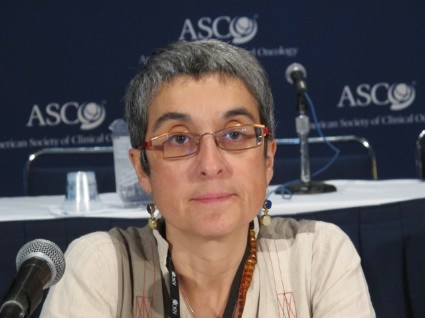
PVAG-14 trims chemotherapy toxicity in unfavorable Hodgkin’s lymphoma
MILAN – A new chemotherapy regimen of prednisone, vinblastine, doxorubicin, and gemcitabine provides tumor control with far less toxicity than standard therapy for early, unfavorable Hodgkin’s lymphoma, according to a phase II study.
After a median follow-up of 27 months, 95%, or all but 1 of the 41 patients, achieved complete remission (CR or CR unconfirmed) with PVAG-14 chemotherapy. The study had aimed for a CR rate of 50% or more. Grade 3/4 hematologic toxicity occurred in 9.8% of patients, markedly lower than the study’s target of 50% or less.

Any grade 3/4 toxicity was reported in 36.6% of patients. This also betters the 51% grade 3/4 toxicity rate reported with four cycles of standard ABVD (Adriamycin [doxorubicin], bleomycin, vinblastine, and dacarbazine) chemotherapy in the German Hodgkin Study Group’s HD14 trial, Dr. Diana Wongso reported at the annual congress of the European Hematology Association.
"PVAG-14 might be an effective and less toxic alternative to 2+2 [chemotherapy] and should be tested in a phase III trial," she said.
The German Hodgkin Study Group designed the PVAG-14 regimen because treatment for early, unfavorable disease with two cycles each of ABVD and BEACOPP (bleomycin, etoposide, doxorubicin, cyclophosphamide, vincristine, procarbazine, and prednisone) chemotherapy (2+2) is toxic, more cycles do not improve outcome, and gemcitabine (Gemzar) has shown promising activity in relapsed Hodgkin’s lymphoma, explained Dr. Wongso of the University Hospital of Cologne (Germany).
The phase II study randomized patients with stage I/II newly diagnosed Hodgkin’s lymphoma to receive eight cycles of prednisone 50 mg on days 1-3, vinblastine 6 mg/m2 on day 1, and gemcitabine 1,000 mg/m2 on day 1 with two different doses of doxorubicin (25 or 35 mg/m2 on day 1) followed by 30 Gy of involved-field radiotherapy. Pegfilgrastim (Neulasta) 6 mg was given on day 2 of each cycle.
The trial was designed to enroll 50 patients per arm, but recruitment was stopped because of poor accrual after 41 patients, she said.
Most patients (76%) had stage IIA disease and a WHO Activity Index of 0. A large mediastinal mass was present in 20% of patients, 61% had at least three nodal areas involved, and 51% had a high erythrocyte sedimentation rate. Patients’ median age was 38 years.
All but one patient received eight cycles of PVAG-14 with a median dose intensity of 97.6%, and 27 patients received pegfilgrastim in each cycle.
Grade 3/4 hematologic toxicity was 9.8% overall, 4.8% in patients receiving doxorubicin at the 25-mg dose, and 15% in those given the doxorubicin 35-mg dose, Dr. Wongso said.
The most common grade 3/4 toxicities were leucopenia in 9.8%, infection in 7.3%, nausea/vomiting in 7.3%, and skin toxicity in 7.3%. There was no treatment-associated anemia or thrombocytopenia.
Overall survival was 94.4% at 30 months, and 2-year progression-free survival was 94.2%. This is comparable with a progression-free survival rate of 93% in the HD14 trial and a rate of 97% reported with 2+2 chemotherapy, she said. Comparison with the different doxorubicin doses was not possible because of the low number of patients.
One patient progressed 5 months after the end of therapy, and one relapsed 15 months after completing therapy. One Hodgkin’s-related death occurred on study, 27 months after first diagnosis and 1 month after the diagnosis of a second relapse, Dr. Wongso reported on behalf of lead author and colleague Dr. Michael Fuchs.
Dr. Wongso disclosed that participation in the EHA Congress was financed by Takeda Pharmaceuticals. Dr. Fuchs reported no conflicting interests.
MILAN – A new chemotherapy regimen of prednisone, vinblastine, doxorubicin, and gemcitabine provides tumor control with far less toxicity than standard therapy for early, unfavorable Hodgkin’s lymphoma, according to a phase II study.
After a median follow-up of 27 months, 95%, or all but 1 of the 41 patients, achieved complete remission (CR or CR unconfirmed) with PVAG-14 chemotherapy. The study had aimed for a CR rate of 50% or more. Grade 3/4 hematologic toxicity occurred in 9.8% of patients, markedly lower than the study’s target of 50% or less.
Any grade 3/4 toxicity was reported in 36.6% of patients. This also betters the 51% grade 3/4 toxicity rate reported with four cycles of standard ABVD (Adriamycin [doxorubicin], bleomycin, vinblastine, and dacarbazine) chemotherapy in the German Hodgkin Study Group’s HD14 trial, Dr. Diana Wongso reported at the annual congress of the European Hematology Association.
"PVAG-14 might be an effective and less toxic alternative to 2+2 [chemotherapy] and should be tested in a phase III trial," she said.
The German Hodgkin Study Group designed the PVAG-14 regimen because treatment for early, unfavorable disease with two cycles each of ABVD and BEACOPP (bleomycin, etoposide, doxorubicin, cyclophosphamide, vincristine, procarbazine, and prednisone) chemotherapy (2+2) is toxic, more cycles do not improve outcome, and gemcitabine (Gemzar) has shown promising activity in relapsed Hodgkin’s lymphoma, explained Dr. Wongso of the University Hospital of Cologne (Germany).
The phase II study randomized patients with stage I/II newly diagnosed Hodgkin’s lymphoma to receive eight cycles of prednisone 50 mg on days 1-3, vinblastine 6 mg/m2 on day 1, and gemcitabine 1,000 mg/m2 on day 1 with two different doses of doxorubicin (25 or 35 mg/m2 on day 1) followed by 30 Gy of involved-field radiotherapy. Pegfilgrastim (Neulasta) 6 mg was given on day 2 of each cycle.
The trial was designed to enroll 50 patients per arm, but recruitment was stopped because of poor accrual after 41 patients, she said.
Most patients (76%) had stage IIA disease and a WHO Activity Index of 0. A large mediastinal mass was present in 20% of patients, 61% had at least three nodal areas involved, and 51% had a high erythrocyte sedimentation rate. Patients’ median age was 38 years.
All but one patient received eight cycles of PVAG-14 with a median dose intensity of 97.6%, and 27 patients received pegfilgrastim in each cycle.
Grade 3/4 hematologic toxicity was 9.8% overall, 4.8% in patients receiving doxorubicin at the 25-mg dose, and 15% in those given the doxorubicin 35-mg dose, Dr. Wongso said.
The most common grade 3/4 toxicities were leucopenia in 9.8%, infection in 7.3%, nausea/vomiting in 7.3%, and skin toxicity in 7.3%. There was no treatment-associated anemia or thrombocytopenia.
Overall survival was 94.4% at 30 months, and 2-year progression-free survival was 94.2%. This is comparable with a progression-free survival rate of 93% in the HD14 trial and a rate of 97% reported with 2+2 chemotherapy, she said. Comparison with the different doxorubicin doses was not possible because of the low number of patients.
One patient progressed 5 months after the end of therapy, and one relapsed 15 months after completing therapy. One Hodgkin’s-related death occurred on study, 27 months after first diagnosis and 1 month after the diagnosis of a second relapse, Dr. Wongso reported on behalf of lead author and colleague Dr. Michael Fuchs.
Dr. Wongso disclosed that participation in the EHA Congress was financed by Takeda Pharmaceuticals. Dr. Fuchs reported no conflicting interests.
MILAN – A new chemotherapy regimen of prednisone, vinblastine, doxorubicin, and gemcitabine provides tumor control with far less toxicity than standard therapy for early, unfavorable Hodgkin’s lymphoma, according to a phase II study.
After a median follow-up of 27 months, 95%, or all but 1 of the 41 patients, achieved complete remission (CR or CR unconfirmed) with PVAG-14 chemotherapy. The study had aimed for a CR rate of 50% or more. Grade 3/4 hematologic toxicity occurred in 9.8% of patients, markedly lower than the study’s target of 50% or less.
Any grade 3/4 toxicity was reported in 36.6% of patients. This also betters the 51% grade 3/4 toxicity rate reported with four cycles of standard ABVD (Adriamycin [doxorubicin], bleomycin, vinblastine, and dacarbazine) chemotherapy in the German Hodgkin Study Group’s HD14 trial, Dr. Diana Wongso reported at the annual congress of the European Hematology Association.
"PVAG-14 might be an effective and less toxic alternative to 2+2 [chemotherapy] and should be tested in a phase III trial," she said.
The German Hodgkin Study Group designed the PVAG-14 regimen because treatment for early, unfavorable disease with two cycles each of ABVD and BEACOPP (bleomycin, etoposide, doxorubicin, cyclophosphamide, vincristine, procarbazine, and prednisone) chemotherapy (2+2) is toxic, more cycles do not improve outcome, and gemcitabine (Gemzar) has shown promising activity in relapsed Hodgkin’s lymphoma, explained Dr. Wongso of the University Hospital of Cologne (Germany).
The phase II study randomized patients with stage I/II newly diagnosed Hodgkin’s lymphoma to receive eight cycles of prednisone 50 mg on days 1-3, vinblastine 6 mg/m2 on day 1, and gemcitabine 1,000 mg/m2 on day 1 with two different doses of doxorubicin (25 or 35 mg/m2 on day 1) followed by 30 Gy of involved-field radiotherapy. Pegfilgrastim (Neulasta) 6 mg was given on day 2 of each cycle.
The trial was designed to enroll 50 patients per arm, but recruitment was stopped because of poor accrual after 41 patients, she said.
Most patients (76%) had stage IIA disease and a WHO Activity Index of 0. A large mediastinal mass was present in 20% of patients, 61% had at least three nodal areas involved, and 51% had a high erythrocyte sedimentation rate. Patients’ median age was 38 years.
All but one patient received eight cycles of PVAG-14 with a median dose intensity of 97.6%, and 27 patients received pegfilgrastim in each cycle.
Grade 3/4 hematologic toxicity was 9.8% overall, 4.8% in patients receiving doxorubicin at the 25-mg dose, and 15% in those given the doxorubicin 35-mg dose, Dr. Wongso said.
The most common grade 3/4 toxicities were leucopenia in 9.8%, infection in 7.3%, nausea/vomiting in 7.3%, and skin toxicity in 7.3%. There was no treatment-associated anemia or thrombocytopenia.
Overall survival was 94.4% at 30 months, and 2-year progression-free survival was 94.2%. This is comparable with a progression-free survival rate of 93% in the HD14 trial and a rate of 97% reported with 2+2 chemotherapy, she said. Comparison with the different doxorubicin doses was not possible because of the low number of patients.
One patient progressed 5 months after the end of therapy, and one relapsed 15 months after completing therapy. One Hodgkin’s-related death occurred on study, 27 months after first diagnosis and 1 month after the diagnosis of a second relapse, Dr. Wongso reported on behalf of lead author and colleague Dr. Michael Fuchs.
Dr. Wongso disclosed that participation in the EHA Congress was financed by Takeda Pharmaceuticals. Dr. Fuchs reported no conflicting interests.
AT THE EHA CONGRESS
Major finding: Any grade 3/4 toxicity was reported in 36.6% of patients and grade 3/4 hematologic toxicity, in 9.8%.
Data source: A phase II study in 41 patients with early, unfavorable Hodgkin’s lymphoma.
Key clinical point: PVAG-14 may provide a less toxic alternative to 2+2 chemotherapy for early, unfavorable Hodgkin’s lymphoma.
Disclosures: Dr. Wongso disclosed that participation in the EHA Congress was financed by Takeda Pharmaceuticals. Dr. Fuchs reported no conflicting interests.

AG-221 sparked durable responses in hematologic cancers
MILAN – The investigational drug AG-221 induced responses in more than half of patients with advanced IDH2 mutation–positive hematologic cancers, updated phase I data showed.
Among 25 evaluable patients, 14 responded to treatment with AG-221: 6 had complete responses, 2 had complete responses with incomplete platelet count recovery, 1 had a complete response with incomplete hematologic recovery, and 5 had partial responses.
Twelve of 14 responses are ongoing, and five patients with stable disease remain on study.
Responses are seen in acute myelogenous leukemia, myelodysplastic syndromes, and chronic myelomonocytic leukemia, Dr. Stéphane de Botton said during a late-breaking abstract session at the annual congress of the European Hematology Association.
"Very interestingly, at least in five patients, the duration of the responses has reached greater than 2.5 months," he said.
AG-221 is a first-in-class inhibitor of the isocitrate dehydrogenase–2 (IDH2) protein and was just granted orphan drug status by the Food and Drug Administration for the treatment of acute myelogenous leukemia (AML).
About 15% of patients with AML carry an IDH2 mutation, as do 5% with myelodysplastic syndromes.
An initial report from this phase I, multicenter study showed five of seven patients evaluable at that time had a complete response or platelet count recovery after treatment with AG-221.
Of the 35 patients now enrolled, 27 had relapsed or refractory AML, 4 had myelodysplastic syndromes, 2 had untreated AML, 1 had chronic myelomonocytic leukemia, and 1 had granulocytic sarcoma. Patients’ mean age was 66 years, 31 had IDH2 R140Q mutations, and 4 had IDH2 R172K mutations.
Up to 100% plasma 2-hydroxyglutarate inhibition was seen after multiple doses in R140Q patients and up to 60% plasma 2-HG inhibition, in R172K patients, said Dr. de Botton, head of hematology, Institut Gustave Roussy, Villejuif, France.
Dose escalation has continued with single-agent oral dosing ranging from 30 mg twice daily to 150 mg once daily in 28-day cycles. The results were very similar with 50 mg b.i.d. and 100 mg every day.
AG-221 was also "remarkably well tolerated," with the maximum tolerated dose yet to be reached, he said.
The majority of adverse events are grade 1 and 2, notably edema, leukocytosis, nausea, sepsis, and thrombocytopenia.
Grade 3 or higher events in 18 evaluable patients included 3 cases each of thrombocytopenia and febrile neutropenia, 2 of leukocytosis, and 1 case each of diarrhea and rash, he said.
There have been four possible treatment-related serious adverse events: grade 3 confusion and grade 5 respiratory failure in a patient with severe sepsis, one case of grade 3 leukocytosis along with grade 3 anorexia and grade 1 nausea, one case of grade 3 diarrhea, and one case of grade 3 leukocytosis.
There have been seven deaths within 30 days of study drug termination: five stemming from complications of disease-related sepsis, one from complications of a humeral fracture not related to the study drug, and one from stroke, also unrelated to treatment, Dr. de Botton said.
"AG-221 is safe and well tolerated to date with durable clinical activity," he concluded.
Dr. de Botton reported research funding from Agios Pharmaceuticals, the study sponsor.
MILAN – The investigational drug AG-221 induced responses in more than half of patients with advanced IDH2 mutation–positive hematologic cancers, updated phase I data showed.
Among 25 evaluable patients, 14 responded to treatment with AG-221: 6 had complete responses, 2 had complete responses with incomplete platelet count recovery, 1 had a complete response with incomplete hematologic recovery, and 5 had partial responses.
Twelve of 14 responses are ongoing, and five patients with stable disease remain on study.
Responses are seen in acute myelogenous leukemia, myelodysplastic syndromes, and chronic myelomonocytic leukemia, Dr. Stéphane de Botton said during a late-breaking abstract session at the annual congress of the European Hematology Association.
"Very interestingly, at least in five patients, the duration of the responses has reached greater than 2.5 months," he said.
AG-221 is a first-in-class inhibitor of the isocitrate dehydrogenase–2 (IDH2) protein and was just granted orphan drug status by the Food and Drug Administration for the treatment of acute myelogenous leukemia (AML).
About 15% of patients with AML carry an IDH2 mutation, as do 5% with myelodysplastic syndromes.
An initial report from this phase I, multicenter study showed five of seven patients evaluable at that time had a complete response or platelet count recovery after treatment with AG-221.
Of the 35 patients now enrolled, 27 had relapsed or refractory AML, 4 had myelodysplastic syndromes, 2 had untreated AML, 1 had chronic myelomonocytic leukemia, and 1 had granulocytic sarcoma. Patients’ mean age was 66 years, 31 had IDH2 R140Q mutations, and 4 had IDH2 R172K mutations.
Up to 100% plasma 2-hydroxyglutarate inhibition was seen after multiple doses in R140Q patients and up to 60% plasma 2-HG inhibition, in R172K patients, said Dr. de Botton, head of hematology, Institut Gustave Roussy, Villejuif, France.
Dose escalation has continued with single-agent oral dosing ranging from 30 mg twice daily to 150 mg once daily in 28-day cycles. The results were very similar with 50 mg b.i.d. and 100 mg every day.
AG-221 was also "remarkably well tolerated," with the maximum tolerated dose yet to be reached, he said.
The majority of adverse events are grade 1 and 2, notably edema, leukocytosis, nausea, sepsis, and thrombocytopenia.
Grade 3 or higher events in 18 evaluable patients included 3 cases each of thrombocytopenia and febrile neutropenia, 2 of leukocytosis, and 1 case each of diarrhea and rash, he said.
There have been four possible treatment-related serious adverse events: grade 3 confusion and grade 5 respiratory failure in a patient with severe sepsis, one case of grade 3 leukocytosis along with grade 3 anorexia and grade 1 nausea, one case of grade 3 diarrhea, and one case of grade 3 leukocytosis.
There have been seven deaths within 30 days of study drug termination: five stemming from complications of disease-related sepsis, one from complications of a humeral fracture not related to the study drug, and one from stroke, also unrelated to treatment, Dr. de Botton said.
"AG-221 is safe and well tolerated to date with durable clinical activity," he concluded.
Dr. de Botton reported research funding from Agios Pharmaceuticals, the study sponsor.
MILAN – The investigational drug AG-221 induced responses in more than half of patients with advanced IDH2 mutation–positive hematologic cancers, updated phase I data showed.
Among 25 evaluable patients, 14 responded to treatment with AG-221: 6 had complete responses, 2 had complete responses with incomplete platelet count recovery, 1 had a complete response with incomplete hematologic recovery, and 5 had partial responses.
Twelve of 14 responses are ongoing, and five patients with stable disease remain on study.
Responses are seen in acute myelogenous leukemia, myelodysplastic syndromes, and chronic myelomonocytic leukemia, Dr. Stéphane de Botton said during a late-breaking abstract session at the annual congress of the European Hematology Association.
"Very interestingly, at least in five patients, the duration of the responses has reached greater than 2.5 months," he said.
AG-221 is a first-in-class inhibitor of the isocitrate dehydrogenase–2 (IDH2) protein and was just granted orphan drug status by the Food and Drug Administration for the treatment of acute myelogenous leukemia (AML).
About 15% of patients with AML carry an IDH2 mutation, as do 5% with myelodysplastic syndromes.
An initial report from this phase I, multicenter study showed five of seven patients evaluable at that time had a complete response or platelet count recovery after treatment with AG-221.
Of the 35 patients now enrolled, 27 had relapsed or refractory AML, 4 had myelodysplastic syndromes, 2 had untreated AML, 1 had chronic myelomonocytic leukemia, and 1 had granulocytic sarcoma. Patients’ mean age was 66 years, 31 had IDH2 R140Q mutations, and 4 had IDH2 R172K mutations.
Up to 100% plasma 2-hydroxyglutarate inhibition was seen after multiple doses in R140Q patients and up to 60% plasma 2-HG inhibition, in R172K patients, said Dr. de Botton, head of hematology, Institut Gustave Roussy, Villejuif, France.
Dose escalation has continued with single-agent oral dosing ranging from 30 mg twice daily to 150 mg once daily in 28-day cycles. The results were very similar with 50 mg b.i.d. and 100 mg every day.
AG-221 was also "remarkably well tolerated," with the maximum tolerated dose yet to be reached, he said.
The majority of adverse events are grade 1 and 2, notably edema, leukocytosis, nausea, sepsis, and thrombocytopenia.
Grade 3 or higher events in 18 evaluable patients included 3 cases each of thrombocytopenia and febrile neutropenia, 2 of leukocytosis, and 1 case each of diarrhea and rash, he said.
There have been four possible treatment-related serious adverse events: grade 3 confusion and grade 5 respiratory failure in a patient with severe sepsis, one case of grade 3 leukocytosis along with grade 3 anorexia and grade 1 nausea, one case of grade 3 diarrhea, and one case of grade 3 leukocytosis.
There have been seven deaths within 30 days of study drug termination: five stemming from complications of disease-related sepsis, one from complications of a humeral fracture not related to the study drug, and one from stroke, also unrelated to treatment, Dr. de Botton said.
"AG-221 is safe and well tolerated to date with durable clinical activity," he concluded.
Dr. de Botton reported research funding from Agios Pharmaceuticals, the study sponsor.
AT THE EHA CONGRESS
Key clinical point: AG-221 could shift the treatment for IDH2 mutation-positive hematologic cancers.
Major finding: Fourteen of 25 patients responded to treatment with AG-221.
Data source: A prospective phase I dose-escalation study in 35 patients with hematologic cancers.
Disclosures: Dr. de Botton reported research funding from Agios Pharmaceuticals, the study sponsor.
Idelalisib efficacy remains rock steady in relapsed CLL
MILAN – The benefits of combining idelalisib with rituximab remained unchanged in heavily pretreated, relapsed chronic lymphocytic leukemia unsuitable for chemotherapy in the second interim analysis of a phase III trial and extension study.
With 63% of events reported in Study 116, the primary endpoint of progression-free survival was 5.5 months with rituximab (Rituxan) plus placebo and had not been reached with rituximab and idelalisib.
These data were identical to those observed in the first interim analysis, save for an almost imperceptible shift in the hazard ratio from 0.15 to 0.18, with the same P value of less than .0001.
In the poor-prognosis subsets of patients with the 17p deletion and/or TP53 mutations or unmutated immunoglobulin heavy chain variable disease, median progression-free survival had also yet to be reached with the combination, compared with medians of 4.0 months (HR, 0.16) and 5.5 months (HR, 0.14) with single-agent rituximab, Dr. Steven Coutre said at the annual congress of the European Hematology Association.
As previously reported by this publication, Study 116 was stopped early after the first interim analysis and 50% of events reported due to overwhelming efficacy. The results also prompted the Food & Drug Administration to grant idelalisib, an oral phosphoinositide 3–kinase-delta inhibitor, breakthrough therapy designation for relapsed chronic lymphocytic leukemia (CLL).
In the second interim analysis, the addition of idelalisib to rituximab significantly increased the overall response rate from 15% to 77% (Odds ratio 17.3; P less than .0001) and number of patients achieving at least a 50% reduction in lymph nodes from 6% to 92% (OR, 165.5; P less than .0001), said Dr. Coutre, professor of medicine at Stanford (Calif.) University.
Median overall survival had yet to be reached at 18 months follow-up, but was significantly longer in the idelalisib arm (HR, 0.28; P = .003).
Adverse events were quite common in either arm, but "importantly, the combination demonstrated an acceptable and manageable safety profile," he said.
As previously seen, diarrhea, colitis, and grade 3/4 transaminase elevations were more common with idelalisib, but infusion site reactions were less frequent.
The 110 patients in the idelalisib arm, as compared with 108 controls, had more grade 3 or higher adverse events (AEs)(64% and 52%) and serious AEs (49% and 38%), but fewer AEs leading to treatment discontinuation (10% vs. 12%) or death (3% vs. 11%).
During a discussion of the results, the issue of the study’s comparator arm was raised once again. Dr. Coutre observed that while he is not a "big fan of single-agent rituximab" because "it is not particularly effective, certainly not in targeting the bone marrow, the reality in the United States is that it is probably the single most used regimen in this population ... so I think it is a very valid comparison."
Recruitment is currently underway for a phase II study, the first to evaluate idelalisib alone or combined with rituximab in untreated CLL and small lymphocytic lymphoma. Idelalisib has shown single-agent activity in relapsed or refractory CLL or small lymphocytic lymphoma, but Dr. Coutre said in an interview that "It is premature to consider idelalisib for front-line therapy. There are ongoing trials for this indication."
The study was supported by Gilead Sciences. Dr. Coutre reported personal fees from Gilead for a 1-day advisory board.
MILAN – The benefits of combining idelalisib with rituximab remained unchanged in heavily pretreated, relapsed chronic lymphocytic leukemia unsuitable for chemotherapy in the second interim analysis of a phase III trial and extension study.
With 63% of events reported in Study 116, the primary endpoint of progression-free survival was 5.5 months with rituximab (Rituxan) plus placebo and had not been reached with rituximab and idelalisib.
These data were identical to those observed in the first interim analysis, save for an almost imperceptible shift in the hazard ratio from 0.15 to 0.18, with the same P value of less than .0001.
In the poor-prognosis subsets of patients with the 17p deletion and/or TP53 mutations or unmutated immunoglobulin heavy chain variable disease, median progression-free survival had also yet to be reached with the combination, compared with medians of 4.0 months (HR, 0.16) and 5.5 months (HR, 0.14) with single-agent rituximab, Dr. Steven Coutre said at the annual congress of the European Hematology Association.
As previously reported by this publication, Study 116 was stopped early after the first interim analysis and 50% of events reported due to overwhelming efficacy. The results also prompted the Food & Drug Administration to grant idelalisib, an oral phosphoinositide 3–kinase-delta inhibitor, breakthrough therapy designation for relapsed chronic lymphocytic leukemia (CLL).
In the second interim analysis, the addition of idelalisib to rituximab significantly increased the overall response rate from 15% to 77% (Odds ratio 17.3; P less than .0001) and number of patients achieving at least a 50% reduction in lymph nodes from 6% to 92% (OR, 165.5; P less than .0001), said Dr. Coutre, professor of medicine at Stanford (Calif.) University.
Median overall survival had yet to be reached at 18 months follow-up, but was significantly longer in the idelalisib arm (HR, 0.28; P = .003).
Adverse events were quite common in either arm, but "importantly, the combination demonstrated an acceptable and manageable safety profile," he said.
As previously seen, diarrhea, colitis, and grade 3/4 transaminase elevations were more common with idelalisib, but infusion site reactions were less frequent.
The 110 patients in the idelalisib arm, as compared with 108 controls, had more grade 3 or higher adverse events (AEs)(64% and 52%) and serious AEs (49% and 38%), but fewer AEs leading to treatment discontinuation (10% vs. 12%) or death (3% vs. 11%).
During a discussion of the results, the issue of the study’s comparator arm was raised once again. Dr. Coutre observed that while he is not a "big fan of single-agent rituximab" because "it is not particularly effective, certainly not in targeting the bone marrow, the reality in the United States is that it is probably the single most used regimen in this population ... so I think it is a very valid comparison."
Recruitment is currently underway for a phase II study, the first to evaluate idelalisib alone or combined with rituximab in untreated CLL and small lymphocytic lymphoma. Idelalisib has shown single-agent activity in relapsed or refractory CLL or small lymphocytic lymphoma, but Dr. Coutre said in an interview that "It is premature to consider idelalisib for front-line therapy. There are ongoing trials for this indication."
The study was supported by Gilead Sciences. Dr. Coutre reported personal fees from Gilead for a 1-day advisory board.
MILAN – The benefits of combining idelalisib with rituximab remained unchanged in heavily pretreated, relapsed chronic lymphocytic leukemia unsuitable for chemotherapy in the second interim analysis of a phase III trial and extension study.
With 63% of events reported in Study 116, the primary endpoint of progression-free survival was 5.5 months with rituximab (Rituxan) plus placebo and had not been reached with rituximab and idelalisib.
These data were identical to those observed in the first interim analysis, save for an almost imperceptible shift in the hazard ratio from 0.15 to 0.18, with the same P value of less than .0001.
In the poor-prognosis subsets of patients with the 17p deletion and/or TP53 mutations or unmutated immunoglobulin heavy chain variable disease, median progression-free survival had also yet to be reached with the combination, compared with medians of 4.0 months (HR, 0.16) and 5.5 months (HR, 0.14) with single-agent rituximab, Dr. Steven Coutre said at the annual congress of the European Hematology Association.
As previously reported by this publication, Study 116 was stopped early after the first interim analysis and 50% of events reported due to overwhelming efficacy. The results also prompted the Food & Drug Administration to grant idelalisib, an oral phosphoinositide 3–kinase-delta inhibitor, breakthrough therapy designation for relapsed chronic lymphocytic leukemia (CLL).
In the second interim analysis, the addition of idelalisib to rituximab significantly increased the overall response rate from 15% to 77% (Odds ratio 17.3; P less than .0001) and number of patients achieving at least a 50% reduction in lymph nodes from 6% to 92% (OR, 165.5; P less than .0001), said Dr. Coutre, professor of medicine at Stanford (Calif.) University.
Median overall survival had yet to be reached at 18 months follow-up, but was significantly longer in the idelalisib arm (HR, 0.28; P = .003).
Adverse events were quite common in either arm, but "importantly, the combination demonstrated an acceptable and manageable safety profile," he said.
As previously seen, diarrhea, colitis, and grade 3/4 transaminase elevations were more common with idelalisib, but infusion site reactions were less frequent.
The 110 patients in the idelalisib arm, as compared with 108 controls, had more grade 3 or higher adverse events (AEs)(64% and 52%) and serious AEs (49% and 38%), but fewer AEs leading to treatment discontinuation (10% vs. 12%) or death (3% vs. 11%).
During a discussion of the results, the issue of the study’s comparator arm was raised once again. Dr. Coutre observed that while he is not a "big fan of single-agent rituximab" because "it is not particularly effective, certainly not in targeting the bone marrow, the reality in the United States is that it is probably the single most used regimen in this population ... so I think it is a very valid comparison."
Recruitment is currently underway for a phase II study, the first to evaluate idelalisib alone or combined with rituximab in untreated CLL and small lymphocytic lymphoma. Idelalisib has shown single-agent activity in relapsed or refractory CLL or small lymphocytic lymphoma, but Dr. Coutre said in an interview that "It is premature to consider idelalisib for front-line therapy. There are ongoing trials for this indication."
The study was supported by Gilead Sciences. Dr. Coutre reported personal fees from Gilead for a 1-day advisory board.
AT THE EHA CONGRESS
Major finding: Idelalisib and rituximab significantly increased progression-free survival (HR, 0.18; P less than .0001).
Data source: A prospective phase III study in 220 patients with relapsed CLL.
Key clinical point: Adding idelalisib to rituximab improves overall response rate, progression-free survival, and overall survival in heavily pretreated relapsed CLL.
Disclosures: The study was supported by Gilead Sciences. Dr. Coutre reported personal fees from Gilead for a 1-day advisory board.
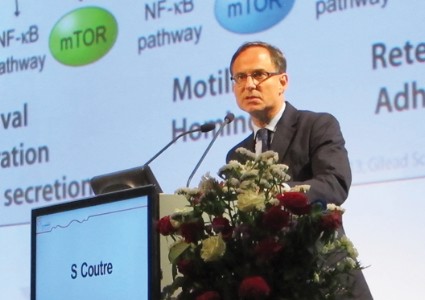
Palliative care at time of cancer diagnosis improves survival
CHICAGO – Early palliative care delivered almost exclusively by telephone improved survival among patients with advanced cancer in the ENABLE III study.
After a median follow-up of a little more than 1 year, 46% of patients receiving palliative care from the time of cancer diagnosis and 54% of those with delayed palliative care had died.
Overall median survival was 18.3 months for the immediate group and 11.9 months for the delayed group (P = .17).
In preplanned analyses, the risk of death at 1 year was significantly lower in the immediate group (hazard ratio 0.72; P = .003), with a catch-up effect thereafter, Marie Bakitas, DNSc, reported at the annual meeting of the American Society of Clinical Oncology.
"Enhanced medical care, reduced aggressive care and chemotherapy use, longer access to hospice, and biologic impacts of improved quality of life have all been proposed as mechanisms to explain this survival advantage," Dr. Bakitas said. "However, at the present time, we do not have the data to support a particular mechanism and we are actively exploring this question through secondary analyses."
ENABLE (Educate, Nurture, Advise, Before Life Ends) III is the first study to examine the timing of early palliative care, but not the first to identify a survival advantage.
A recent study (N. Engl. J. Med. 2010:363:733-42) found that patients with metastatic non–small cell lung cancer (NSCLC) who received palliative care at the time of randomization lived a significant 2.7 months longer than did those receiving standard oncologic care, despite receiving significantly less aggressive end-of-life care (33% vs. 54%).
In ENABLE III, 207 patients with advanced cancer, and their caregivers, were randomized as a dyad to begin usual cancer care plus the intervention at the time of diagnosis (immediate group) or usual care alone for 3 months followed by the intervention (delayed group).
The intervention consisted of a traditional outpatient palliative care consult and six weekly structured telephone calls with a nurse coach using a guidebook that covers such topics as problem solving, symptom management, communication, and advanced care planning, explained Dr. Bakitas, the Marie O’Koren Endowed Chair and Professor, School of Nursing, and associate director of the Center for Palliative and Supportive Care, University of Alabama, Birmingham.
Usual care included the clinical consult, but not the telephone intervention.
The participants’ mean age was 64 years, half were male, 60% lived in a rural area, and 65% were married or living with a partner. Lung cancer was the most common diagnosis at 42%.
At baseline, 75% of patients were receiving chemotherapy, 19% were undergoing radiation, and 43% had an advanced directive completed at diagnosis.
Unlike the group’s prior trial comparing palliative care to usual care at 3 months, immediate versus delayed palliative care did not lead to significant improvements in quality of life on the Functional Assessment of Chronic Illness Therapy-Palliative care scale (129.9 vs. 127.2; P = .34), mood on the Center for Epidemiologic Studies Depression scale (11.2 vs. 10.8; P = .33), or symptom impact on the Quality of Life at the End of Life symptom impact subscale (11.4 vs. 12.2; P = .09).
One plausible reason for the findings is that there may not have been enough care differences between the two groups, with 40% of the delayed group receiving their first palliative care contact an average of 30 days before they were scheduled to do so on day 84, Dr. Bakitas said.
Second, difficulties in accrual and decreased study power may have made it difficult to pick up between-group differences on the subjective instruments, resulting in a type 2 error.
"A 3-month delay is still very early," Dr. Bakitas said.
She noted that early intervention allowed the palliative care team to have contact with patients for 1 year on average (range 240-493 days), compared with a median of 41-90 days from referral to death reported for outpatient clinics in a national survey of 142 National Cancer Institute and non-NCI cancer centers (JAMA 2010;303:1054-61).
Resource and chemotherapy use in ENABLE III was also comparable in both groups. Decedents in the immediate and delayed groups spent a median of 5 and 6 days, respectively, in hospital in the 7-9 months preceding death, while 8% and 5% received chemotherapy in the last 2 weeks of life.
This compares favorably with a national average of more than 8 hospital days in the last 6 months of life observed in the 2014 Dartmouth Atlas of Health Care, and a chemotherapy rate of 17.5% reported in the previously noted NSCLC study, Dr. Bakitas said.
She called for more studies of early palliative care to determine the optimal timing, personnel, essential elements, and mechanisms of improved survival.
"While the benefits of these approaches have been demonstrated when provided early after a cancer diagnosis, in practice these potentially beneficial palliative care services are often provided very late, sometimes hours or weeks before death," Dr. Bakitas said. "This trend is likely to continue in the absence of clear direction on the very pragmatic questions of who, what, and when."
The study was funded by National Institute for Nursing Research. Dr. Bakitas reported having no relevant disclosures.
Palliative care support buoys caregivers of advanced cancer patients
Providing early palliative care support to caregivers of advanced cancer patients improves their quality of life, depression, and stress burden, the ENABLE III study found.
"Similar to patients, waiting to provide these caregiver services until patients are in their last weeks to days of life may not adequately address the distress that they experience," Nick Dionne-Odom, Ph.D., RN, said at the meeting.
Caregivers for the 13 million cancer patients in the United States living with advanced disease can spend up to 8 hours per day providing assistance in activities that include symptom management, emotional and spiritual support, meal preparation, arranging medical appointments, and transportation.
The combination of this burden and witnessing someone close to you struggle with illness can cause psychological distress equal to or sometimes greater than that experienced by the patient, said Dr. Dionne-Odom, a postdoctoral fellow at the University of Alabama at Birmingham.
In ENABLE III, 122 caregivers were randomized at the time of the patient’s cancer diagnosis or 12 weeks later to a palliative care intervention that consisted of three weekly structured educational telephone calls from an advanced practice nurse coach, monthly check-in calls to address new or ongoing issues, and a bereavement call for caregivers whose loved ones died.
Caregivers were not restricted to family members, but could include close friends and even neighbors. Their mean age was 60 years, 79% were female, 75% were spouses, and all had at least a high school education.
At 12 weeks from the start of the intervention, caregivers in the immediate versus delayed group had significantly better quality of life on the Caregiver Quality of Life Index–Cancer scale (mean 50.2 vs. 56.1; P = .02) and less depressive symptoms on the Center for Epidemiologic Studies Depression (CESD) scale (10.2 vs. 16.6; P = .0006), Dr. Dionne-Odom said. Notably, the delayed group surpassed the clinical cutoff for depression of 16 on the CESD scale, he added.
The intervention did not appear to change the perception among caregivers of what was demanded of them by the patient or their objective burden, though there was a trend among the immediate group for improved caregiver stress burden on the Montgomery Borgatta Caregiver Burden Scale (13.2 vs. 13.8; P = .10).
There was no significant difference between groups in depression or grief scores for caregivers of decedents. A difference may have been detected with a larger sample size, he said, adding that prior studies have shown that reducing caregiver stress before patients’ death is associated with better bereavement adjustment.
As for why caregivers appear to benefit more than the patients from the parallel palliative care interventions, Dr. Bakitas said in an interview it may be the timing of the assessments, adding that other studies have shown an impact of palliative care at 4 months, but not at 3 months.
CHICAGO – Early palliative care delivered almost exclusively by telephone improved survival among patients with advanced cancer in the ENABLE III study.
After a median follow-up of a little more than 1 year, 46% of patients receiving palliative care from the time of cancer diagnosis and 54% of those with delayed palliative care had died.
Overall median survival was 18.3 months for the immediate group and 11.9 months for the delayed group (P = .17).
In preplanned analyses, the risk of death at 1 year was significantly lower in the immediate group (hazard ratio 0.72; P = .003), with a catch-up effect thereafter, Marie Bakitas, DNSc, reported at the annual meeting of the American Society of Clinical Oncology.
"Enhanced medical care, reduced aggressive care and chemotherapy use, longer access to hospice, and biologic impacts of improved quality of life have all been proposed as mechanisms to explain this survival advantage," Dr. Bakitas said. "However, at the present time, we do not have the data to support a particular mechanism and we are actively exploring this question through secondary analyses."
ENABLE (Educate, Nurture, Advise, Before Life Ends) III is the first study to examine the timing of early palliative care, but not the first to identify a survival advantage.
A recent study (N. Engl. J. Med. 2010:363:733-42) found that patients with metastatic non–small cell lung cancer (NSCLC) who received palliative care at the time of randomization lived a significant 2.7 months longer than did those receiving standard oncologic care, despite receiving significantly less aggressive end-of-life care (33% vs. 54%).
In ENABLE III, 207 patients with advanced cancer, and their caregivers, were randomized as a dyad to begin usual cancer care plus the intervention at the time of diagnosis (immediate group) or usual care alone for 3 months followed by the intervention (delayed group).
The intervention consisted of a traditional outpatient palliative care consult and six weekly structured telephone calls with a nurse coach using a guidebook that covers such topics as problem solving, symptom management, communication, and advanced care planning, explained Dr. Bakitas, the Marie O’Koren Endowed Chair and Professor, School of Nursing, and associate director of the Center for Palliative and Supportive Care, University of Alabama, Birmingham.
Usual care included the clinical consult, but not the telephone intervention.
The participants’ mean age was 64 years, half were male, 60% lived in a rural area, and 65% were married or living with a partner. Lung cancer was the most common diagnosis at 42%.
At baseline, 75% of patients were receiving chemotherapy, 19% were undergoing radiation, and 43% had an advanced directive completed at diagnosis.
Unlike the group’s prior trial comparing palliative care to usual care at 3 months, immediate versus delayed palliative care did not lead to significant improvements in quality of life on the Functional Assessment of Chronic Illness Therapy-Palliative care scale (129.9 vs. 127.2; P = .34), mood on the Center for Epidemiologic Studies Depression scale (11.2 vs. 10.8; P = .33), or symptom impact on the Quality of Life at the End of Life symptom impact subscale (11.4 vs. 12.2; P = .09).
One plausible reason for the findings is that there may not have been enough care differences between the two groups, with 40% of the delayed group receiving their first palliative care contact an average of 30 days before they were scheduled to do so on day 84, Dr. Bakitas said.
Second, difficulties in accrual and decreased study power may have made it difficult to pick up between-group differences on the subjective instruments, resulting in a type 2 error.
"A 3-month delay is still very early," Dr. Bakitas said.
She noted that early intervention allowed the palliative care team to have contact with patients for 1 year on average (range 240-493 days), compared with a median of 41-90 days from referral to death reported for outpatient clinics in a national survey of 142 National Cancer Institute and non-NCI cancer centers (JAMA 2010;303:1054-61).
Resource and chemotherapy use in ENABLE III was also comparable in both groups. Decedents in the immediate and delayed groups spent a median of 5 and 6 days, respectively, in hospital in the 7-9 months preceding death, while 8% and 5% received chemotherapy in the last 2 weeks of life.
This compares favorably with a national average of more than 8 hospital days in the last 6 months of life observed in the 2014 Dartmouth Atlas of Health Care, and a chemotherapy rate of 17.5% reported in the previously noted NSCLC study, Dr. Bakitas said.
She called for more studies of early palliative care to determine the optimal timing, personnel, essential elements, and mechanisms of improved survival.
"While the benefits of these approaches have been demonstrated when provided early after a cancer diagnosis, in practice these potentially beneficial palliative care services are often provided very late, sometimes hours or weeks before death," Dr. Bakitas said. "This trend is likely to continue in the absence of clear direction on the very pragmatic questions of who, what, and when."
The study was funded by National Institute for Nursing Research. Dr. Bakitas reported having no relevant disclosures.
Palliative care support buoys caregivers of advanced cancer patients
Providing early palliative care support to caregivers of advanced cancer patients improves their quality of life, depression, and stress burden, the ENABLE III study found.
"Similar to patients, waiting to provide these caregiver services until patients are in their last weeks to days of life may not adequately address the distress that they experience," Nick Dionne-Odom, Ph.D., RN, said at the meeting.
Caregivers for the 13 million cancer patients in the United States living with advanced disease can spend up to 8 hours per day providing assistance in activities that include symptom management, emotional and spiritual support, meal preparation, arranging medical appointments, and transportation.
The combination of this burden and witnessing someone close to you struggle with illness can cause psychological distress equal to or sometimes greater than that experienced by the patient, said Dr. Dionne-Odom, a postdoctoral fellow at the University of Alabama at Birmingham.
In ENABLE III, 122 caregivers were randomized at the time of the patient’s cancer diagnosis or 12 weeks later to a palliative care intervention that consisted of three weekly structured educational telephone calls from an advanced practice nurse coach, monthly check-in calls to address new or ongoing issues, and a bereavement call for caregivers whose loved ones died.
Caregivers were not restricted to family members, but could include close friends and even neighbors. Their mean age was 60 years, 79% were female, 75% were spouses, and all had at least a high school education.
At 12 weeks from the start of the intervention, caregivers in the immediate versus delayed group had significantly better quality of life on the Caregiver Quality of Life Index–Cancer scale (mean 50.2 vs. 56.1; P = .02) and less depressive symptoms on the Center for Epidemiologic Studies Depression (CESD) scale (10.2 vs. 16.6; P = .0006), Dr. Dionne-Odom said. Notably, the delayed group surpassed the clinical cutoff for depression of 16 on the CESD scale, he added.
The intervention did not appear to change the perception among caregivers of what was demanded of them by the patient or their objective burden, though there was a trend among the immediate group for improved caregiver stress burden on the Montgomery Borgatta Caregiver Burden Scale (13.2 vs. 13.8; P = .10).
There was no significant difference between groups in depression or grief scores for caregivers of decedents. A difference may have been detected with a larger sample size, he said, adding that prior studies have shown that reducing caregiver stress before patients’ death is associated with better bereavement adjustment.
As for why caregivers appear to benefit more than the patients from the parallel palliative care interventions, Dr. Bakitas said in an interview it may be the timing of the assessments, adding that other studies have shown an impact of palliative care at 4 months, but not at 3 months.
CHICAGO – Early palliative care delivered almost exclusively by telephone improved survival among patients with advanced cancer in the ENABLE III study.
After a median follow-up of a little more than 1 year, 46% of patients receiving palliative care from the time of cancer diagnosis and 54% of those with delayed palliative care had died.
Overall median survival was 18.3 months for the immediate group and 11.9 months for the delayed group (P = .17).
In preplanned analyses, the risk of death at 1 year was significantly lower in the immediate group (hazard ratio 0.72; P = .003), with a catch-up effect thereafter, Marie Bakitas, DNSc, reported at the annual meeting of the American Society of Clinical Oncology.
"Enhanced medical care, reduced aggressive care and chemotherapy use, longer access to hospice, and biologic impacts of improved quality of life have all been proposed as mechanisms to explain this survival advantage," Dr. Bakitas said. "However, at the present time, we do not have the data to support a particular mechanism and we are actively exploring this question through secondary analyses."
ENABLE (Educate, Nurture, Advise, Before Life Ends) III is the first study to examine the timing of early palliative care, but not the first to identify a survival advantage.
A recent study (N. Engl. J. Med. 2010:363:733-42) found that patients with metastatic non–small cell lung cancer (NSCLC) who received palliative care at the time of randomization lived a significant 2.7 months longer than did those receiving standard oncologic care, despite receiving significantly less aggressive end-of-life care (33% vs. 54%).
In ENABLE III, 207 patients with advanced cancer, and their caregivers, were randomized as a dyad to begin usual cancer care plus the intervention at the time of diagnosis (immediate group) or usual care alone for 3 months followed by the intervention (delayed group).
The intervention consisted of a traditional outpatient palliative care consult and six weekly structured telephone calls with a nurse coach using a guidebook that covers such topics as problem solving, symptom management, communication, and advanced care planning, explained Dr. Bakitas, the Marie O’Koren Endowed Chair and Professor, School of Nursing, and associate director of the Center for Palliative and Supportive Care, University of Alabama, Birmingham.
Usual care included the clinical consult, but not the telephone intervention.
The participants’ mean age was 64 years, half were male, 60% lived in a rural area, and 65% were married or living with a partner. Lung cancer was the most common diagnosis at 42%.
At baseline, 75% of patients were receiving chemotherapy, 19% were undergoing radiation, and 43% had an advanced directive completed at diagnosis.
Unlike the group’s prior trial comparing palliative care to usual care at 3 months, immediate versus delayed palliative care did not lead to significant improvements in quality of life on the Functional Assessment of Chronic Illness Therapy-Palliative care scale (129.9 vs. 127.2; P = .34), mood on the Center for Epidemiologic Studies Depression scale (11.2 vs. 10.8; P = .33), or symptom impact on the Quality of Life at the End of Life symptom impact subscale (11.4 vs. 12.2; P = .09).
One plausible reason for the findings is that there may not have been enough care differences between the two groups, with 40% of the delayed group receiving their first palliative care contact an average of 30 days before they were scheduled to do so on day 84, Dr. Bakitas said.
Second, difficulties in accrual and decreased study power may have made it difficult to pick up between-group differences on the subjective instruments, resulting in a type 2 error.
"A 3-month delay is still very early," Dr. Bakitas said.
She noted that early intervention allowed the palliative care team to have contact with patients for 1 year on average (range 240-493 days), compared with a median of 41-90 days from referral to death reported for outpatient clinics in a national survey of 142 National Cancer Institute and non-NCI cancer centers (JAMA 2010;303:1054-61).
Resource and chemotherapy use in ENABLE III was also comparable in both groups. Decedents in the immediate and delayed groups spent a median of 5 and 6 days, respectively, in hospital in the 7-9 months preceding death, while 8% and 5% received chemotherapy in the last 2 weeks of life.
This compares favorably with a national average of more than 8 hospital days in the last 6 months of life observed in the 2014 Dartmouth Atlas of Health Care, and a chemotherapy rate of 17.5% reported in the previously noted NSCLC study, Dr. Bakitas said.
She called for more studies of early palliative care to determine the optimal timing, personnel, essential elements, and mechanisms of improved survival.
"While the benefits of these approaches have been demonstrated when provided early after a cancer diagnosis, in practice these potentially beneficial palliative care services are often provided very late, sometimes hours or weeks before death," Dr. Bakitas said. "This trend is likely to continue in the absence of clear direction on the very pragmatic questions of who, what, and when."
The study was funded by National Institute for Nursing Research. Dr. Bakitas reported having no relevant disclosures.
Palliative care support buoys caregivers of advanced cancer patients
Providing early palliative care support to caregivers of advanced cancer patients improves their quality of life, depression, and stress burden, the ENABLE III study found.
"Similar to patients, waiting to provide these caregiver services until patients are in their last weeks to days of life may not adequately address the distress that they experience," Nick Dionne-Odom, Ph.D., RN, said at the meeting.
Caregivers for the 13 million cancer patients in the United States living with advanced disease can spend up to 8 hours per day providing assistance in activities that include symptom management, emotional and spiritual support, meal preparation, arranging medical appointments, and transportation.
The combination of this burden and witnessing someone close to you struggle with illness can cause psychological distress equal to or sometimes greater than that experienced by the patient, said Dr. Dionne-Odom, a postdoctoral fellow at the University of Alabama at Birmingham.
In ENABLE III, 122 caregivers were randomized at the time of the patient’s cancer diagnosis or 12 weeks later to a palliative care intervention that consisted of three weekly structured educational telephone calls from an advanced practice nurse coach, monthly check-in calls to address new or ongoing issues, and a bereavement call for caregivers whose loved ones died.
Caregivers were not restricted to family members, but could include close friends and even neighbors. Their mean age was 60 years, 79% were female, 75% were spouses, and all had at least a high school education.
At 12 weeks from the start of the intervention, caregivers in the immediate versus delayed group had significantly better quality of life on the Caregiver Quality of Life Index–Cancer scale (mean 50.2 vs. 56.1; P = .02) and less depressive symptoms on the Center for Epidemiologic Studies Depression (CESD) scale (10.2 vs. 16.6; P = .0006), Dr. Dionne-Odom said. Notably, the delayed group surpassed the clinical cutoff for depression of 16 on the CESD scale, he added.
The intervention did not appear to change the perception among caregivers of what was demanded of them by the patient or their objective burden, though there was a trend among the immediate group for improved caregiver stress burden on the Montgomery Borgatta Caregiver Burden Scale (13.2 vs. 13.8; P = .10).
There was no significant difference between groups in depression or grief scores for caregivers of decedents. A difference may have been detected with a larger sample size, he said, adding that prior studies have shown that reducing caregiver stress before patients’ death is associated with better bereavement adjustment.
As for why caregivers appear to benefit more than the patients from the parallel palliative care interventions, Dr. Bakitas said in an interview it may be the timing of the assessments, adding that other studies have shown an impact of palliative care at 4 months, but not at 3 months.
AT THE ASCO ANNUAL MEETING 2014
Key clinical point: Palliative care delivered at the time of cancer diagnosis improves survival.
Major finding: The risk of death at 1 year was significantly lower in the immediate palliative care group versus the delayed palliative care group (hazard ratio 0.72; P = .003).
Data source: A randomized trial of palliative oncology care in 207 patients with advanced cancer and their caregivers.
Disclosures: The National Institute for Nursing Research funded the study. Dr. Bakitas reported having no relevant disclosures.