User login
Mitchel is a reporter for MDedge based in the Philadelphia area. He started with the company in 1992, when it was International Medical News Group (IMNG), and has since covered a range of medical specialties. Mitchel trained as a virologist at Roswell Park Memorial Institute in Buffalo, and then worked briefly as a researcher at Boston Children's Hospital before pivoting to journalism as a AAAS Mass Media Fellow in 1980. His first reporting job was with Science Digest magazine, and from the mid-1980s to early-1990s he was a reporter with Medical World News. @mitchelzoler
New BP guidelines synergize with transformed primary care
In mid-November, the American College of Cardiology, the American Heart Association, and nine other collaborating societies released a new and long-anticipated guideline for diagnosing and managing hypertension. The top-line, seismic change that the new guidelines called for – treating many patients with hypertension to a blood pressure below 130/80 mm Hg – rubbed the primary care community the wrong way, as described in Part 1 of this feature.
But the novel steps the guideline calls for, from including more careful and methodical measurement of BP, both in and out of the office, to increased reliance on lifestyle interventions, running a formal calculation to identify patients who warrant drug treatment, to a team approach to management, seem to dovetail nicely with the broader goals of primary care.
Part 2 of this feature explores how the approach to diagnosis and management of hypertension spelled out in the ACC/AHA guidelines fits into the protocol-driven, data-monitored, team-delivered primary care model that has come to dominate U.S. primary care in the decade following passage of the Affordable Care Act.
The importance of performance metrics
Regardless of what individual primary care physicians (PCPs) and other physicians and clinicians decide about the appropriate BP treatment target for hypertensive patients, their decisions these days are often strongly influenced by the standards set for population levels of BP control by the Centers for Medicare & Medicaid Services and other payers. In a trend traced by experts to the Affordable Care Act of 2009, many payers now emphasize value-based reimbursements and incentives based on health care organizations meeting performance-metric goals. One of the most common goals measured today in primary care is the percentage of patients with hypertension treated to a particular BP target that today is most commonly set as less than 140/90 mm Hg.
The “vast majority” of PCPs now work in practices that are subject to performance targets including levels of BP control, said Romsai T. Boonyasai, MD, an internist at Johns Hopkins Medicine in Baltimore who specializes in quality improvement research in hypertension and other chronic diseases and also works as a PCP.


Adoption of BP control to less than 130/80 mm Hg by groups such as the National Quality Forum (NQF), National Committee for Quality Assurance (NCQA), and America’s Health Insurance Plans (AHIP) “would add more pressure to comply, especially in an environment where there already is division of opinion between the ACC/AHA and American Association of Family Physicians,” agreed John P.A. Ioannidis, MD, professor of medicine and a preventive medicine specialist at Stanford (Calif.) University.
“The AHA is looking for endorsement from the metric groups,” noted Brent M. Egan, MD, vice president for research at the Care Coordination Institute in Greenville, S.C., and a consultant to the AHA.
But a new performance metric that reflects the ACC/AHA BP target won’t appear immediately. Step one is crafting performance measures based on the ACC/AHA guideline to submit to the NQF and similar groups, a process that will soon start, said Donald E. Casey Jr., MD, a member of the guideline-writing panel and chief clinical affairs officer at Medecision in Wayne, Pa.. He will chair a committee that will review existing hypertension management performance measures and as needed also write new measures based on the guideline, a process he expects to have completed by the end of 2018. After that comes field testing the measures, and if they prove effective and workable, the next step is to submit them to the performance metric groups for review and potential adoption, steps that may take another year. In short, performance metrics for hypertension management that call for a large segment of U.S. patients to be treated to a BP below 130/80 mm Hg likely won’t be in place until the end of 2019 or sometime in 2020 at the earliest, and of course only if the metric-setting groups decide to adopt the new measures as part of their standards.
“It takes a while for guidelines to go from publication to practice. Once [the new guideline] is systematized into performance measures it will help” adoption of what the new guideline recommends, Dr. Casey said in an interview.
Target:BP
Performance metrics are not the only path that could take U.S. medicine toward lower BP targets. Another active player is the Target:BP program, a voluntary quality-improvement program for increased U.S. hypertension awareness and better management launched in late 2015 as a collaboration between the AHA and the American Medical Association.
Given that both the new guideline and Target:BP were developed through partnerships involving the AHA, “it’s logical to connect [the guideline] to Target:BP, said Dr. Egan, an AHA spokesman for Target:BP and professor of medicine at the Medical University of South Carolina in Charleston.

Target:BP’s participants are health care organizations, including health systems, medical groups, community health centers, and physician practices. The program has two primary threads.
First, it functions as a recognition program that cites participating organizations if they achieve a prespecified level of BP control.
In 2017, the program released its initial list of successful participants, organizations that maintained at least 70% of their patients diagnosed with hypertension at a BP of less than 140/90 mm Hg. According to data reported by Willie E. Lawrence Jr., MD, during the AHA scientific sessions in November in Anaheim, Calif., 191 participating programs reached this level and won a “gold” designation from the program for their level of BP control during 2016, out of 310 participating organizations that submitted 2016 data to the program.
Dr. Lawrence also reported that nearly 1,200 total health care organizations were participating in Target:BP as of his presentation, and that the 310 programs that reported 2016 data cared for roughly 12 million people, numbers that extrapolate to more than 45 million Americans cared for in all 1,200 organizations now participating in Target:BP. Among all 310 organizations reporting 2016 data, the average level of hypertension control (patients with BPs maintained at less than 140/90 mm Hg) was 66%, said Dr. Lawrence, chief of cardiology at Research Medical Center in Kansas City, Mo. The cited “gold” programs averaged 76% of their hypertensive patients treated to less than 140/90 mm Hg.
The second thread of Target:BP’s program is to supply participating organizations with training and practice tools aimed at improving hypertension diagnosis and management. The core element of the tools the program currently promotes is the MAP checklists, which stands for Measure accurately, Act rapidly, and Partner with patients, families, and communities (J Clin Hypertens. 2017 Jul;19[7]:684-94).
Target:BP’s focus on a recognition program for organizational success in BP management is very reminiscent of the Get With the Guidelines programs that the AHA previously launched for the management of various cardiovascular diseases such as ischemic stroke. Get With the Guidelines–Stroke, begun in the early 2000s, helped achieve recent success in improving the rates at which U.S. stroke patients receive timely intervention with tissue plasminogen activator, demonstrating the power a recognition program can have for improving patient care.
Target:BP moved quickly to embrace the new ACC/AHA guideline BP targets, posting a treatment target of less than 130/80 mm Hg on its website by December 2017, scant weeks after the guideline’s release in mid-November. But for the time being, Target:BP will continue to use the NQF BP quality metric as the basis for its recognition program, according to an AMA spokesperson for the program. “While the AHA and AMA will keep our joint recognition program in accordance with the NQF measure, we will simultaneously build resources, including an updated treatment algorithm, that align with the new blood pressure guideline,” according to an AMA statement.
Part of the thinking about the timing for revising the BP recognition goal in Target:BP is that it would be too confusing and challenging for participating organizations to attend to two different treatment goals at once, one for Target:BP recognition and a different one for NQF compliance, Dr. Egan explained.
Development of the MAP checklists and several other tools promoted by Target:BP came into existence through a research program sponsored by the AMA in collaboration with researchers at Johns Hopkins Medicine (led by Dr. Boonyasai), and with Dr. Egan and the Care Coordination Institute. Some of these tools also received endorsement in the ACC/AHA guideline, such as the call for more accurate BP measurement. This link means that the experiences physicians have had implementing the Target:BP program provides a degree of foreshadowing for what U.S. physicians might face if they attempt to follow what the ACC/AHA guideline calls for.
Dr. Amofah and his colleagues at Community Health of South Florida, which serves about 76,000 patients with some 90 practitioners, started implementing Target:BP in the Spring of 2016. “Step one was adopting our own, customized algorithm that our entire staff could accept. Many of our clinicians practiced differently, so developing an algorithm yielded a lot of results. We gave clinicians a flow sheet for a hypertension visit,” Dr. Amofah said in an interview.
“We also pushed a program to measure BP accurately. Target:BP provided the training. Patient self-measurement of blood pressure is another key part of Target:BP. We pushed patient self-measurement, accurate measurement, and nurse-run blood pressure clinics. All these made a big difference in our success. Having a structured approach to blood pressure measurement was a major change for us.” Other “major changes” were quickly responding to uncontrolled BP, and empowering patients, he said. All of these also appear as practice recommendations in the new guideline.
When Community Health began participating in Target:BP, it had a 59% hypertension control rate (less than 140/90 mm Hg). By September 2017, roughly 18 months after starting with Target:BP, this had risen to 65%: a significant improvement, but still short of the program’s goal of 70%. Community Health had hoped to reach 70% by the end of 2017 – though as of January 2018 it remained unclear whether this had been achieved – and 80% control by the end of 2018. Reaching these goals is not completely unrealistic, but it’s challenging, Dr. Amofah said, because many of the patients at Community Health of South Florida are underserved, have poor access to medicine, have other survival priorities in their life, and have comorbidities that require attention and complicate their lives.
Dr. Amofah also serves as medical director for Health Choice Network, which includes 44 health organizations in 21 states with about 1 million patients. Of these 44 organizations, 16 have decided to participate in Target:BP, he said. The nonparticipating organizations decided to not be part of a structured program such as Target:BP and many also lacked the infrastructure that implementing Target:BP requires. But he has still tried to sell his colleagues at the nonparticipating organizations on the Target:BP approach, even if they don’t formally participate.
“Not having the support that Target:BP provides can prevent an organization from achieving its best potential,” he said. With Target:BP you get support and reinforcement. “It makes a difference; it creates a focus” Dr. Amofah said.
“Target:BP provides a lot of important guidance and tools that can help providers implement necessary changes” to aid BP control, said Jordana B. Cohen, MD, a nephrologist and hypertension researcher at the University of Pennsylvania in Philadelphia. Her practice does not participate in Target:BP, but she said that she is planning to look into joining.
Systematizing blood pressure management
“Hypertension is a microcosm of the changes that are already happening in U.S. medicine. A lot of what is now going on [in U.S. medicine] is reflected in the guideline,” said Dr. Casey. “Population medicine is now a big deal.”
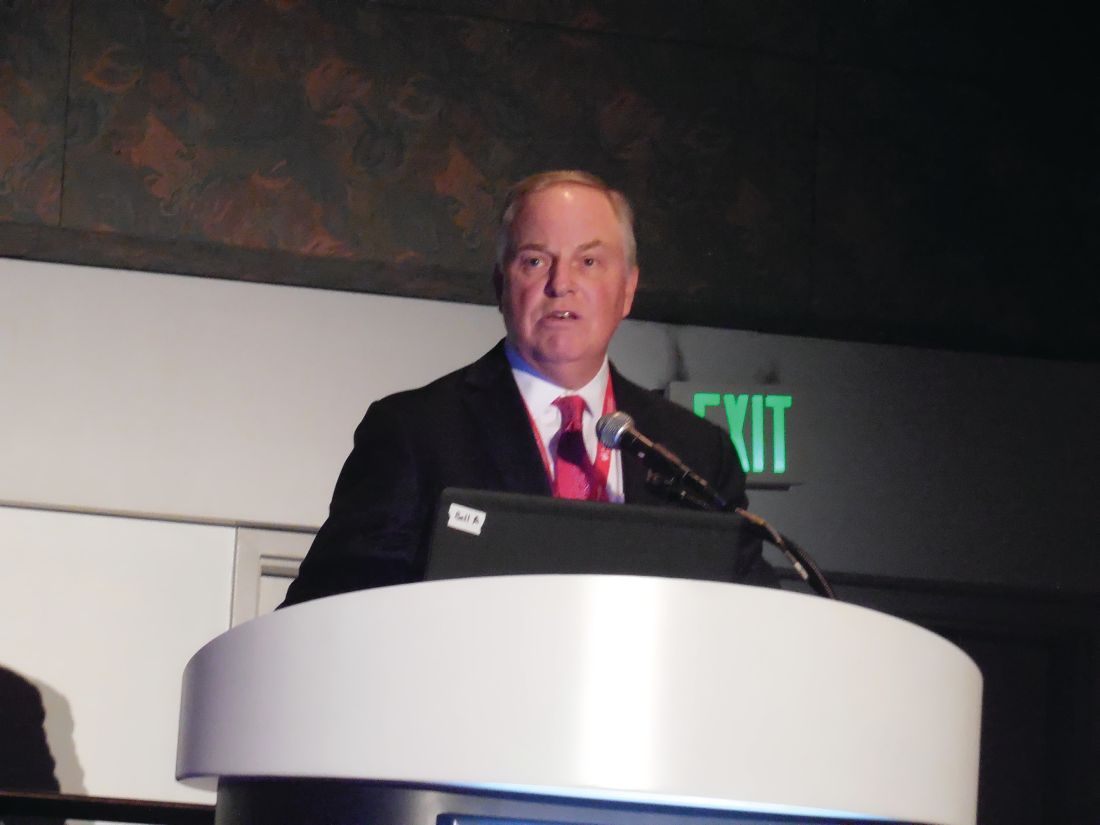
Several experts trace the start of systematized U.S. primary care medicine to the advent of patient-centered medical homes, which date to 2007 (JAMA. 2009 May 20;301[19]:2038-40) and rapidly expanded with the quality demands of the Affordable Care Act (Health Aff [Millwood]. 2014 Oct;33[10]:1823-31).
These days, the systematization of U.S. primary care transcends the patient-centered medical home model and appears in several forms. Some of the unifying themes are health care organizations that monitor care through quality metrics, apply quality improvement methods, and provide integrated care through multidisciplinary teams of PCPs, various physician specialists, and an array of nonphysician clinicians, The new ACC/AHA guideline, with its call for new methods of BP measurement, home measurement, lifestyle interventions, team-based care, and use of telemedicine when needed both fits into the patient-centered medical home model and provides an added impetus for primary care medicine to move further down this road.
“The patient-centered medical home has been focused on managing diabetes, so I believe that a patient-centered medical home could be easily designed to deliver better hypertension care,” Dr. Casey noted.
When Paul K. Whelton, MD, chair of the ACC/AHA guideline panel, introduced the guideline during the AHA scientific sessions in November, he cited Kaiser Permanente Northern California and the VA Health System as examples of health care organizations that have already achieved high levels of BP control (at the less than 140/90 mm Hg level) in hypertensive patients. Clinicians at Kaiser Permanente Northern California reported that by 2013 they had reached 90% control in their hypertensive patients (J Clin Hypertens. 2016 Apr;18[4]:260-1).
“Primary care systems like Kaiser Permanente and Geisinger have had the most success in controlling hypertension due to their underlying infrastructures and multidisciplinary, team-based approach to blood pressure measurement and management,” noted Dr. Cohen of the University of Pennsylvania. “I am not certain that these [ACC/AHA] guidelines are enough to drive PCPs into different health systems from where they are now established to achieve these measures. Such a shift in practice would potentially leave certain high-risk populations with a greater dearth of care providers that already exists. Ideally, there needs to be more support from Medicare and Medicaid and for those who care for uninsured patients to aid them in implementing these changes broadly into practice.”
But other experts envision the guidelines either promoting further tweaks to existing systems, or providing a further push on PCP practices into more organized systems that can marshal greater resources.
“At the most recent meeting of the clinical practice committee of the Johns Hopkins Community Physicians [which includes about 200 PCPs], I presented the new guideline, and I expected some pushback. I was shocked” by the uniform acceptance the guideline received, said Dr. Boonyasai. “The consensus of our physicians was that the only way to do this is to keep building out our team-based care models, because we can’t do it all ourselves.
“The physicians were brainstorming ways to do it. The guidelines are a discussion point around this general trend toward team-based care that has been going on for a while. We’re trying to figure out how to make it work, at Hopkins and at primary care practices everywhere. The principles of team care also work for diabetes, chronic kidney disease, etc. What we struggle to figure out is how to engage patients so that they take an active role. We can prescribe medications, but if patients don’t take them their blood pressure won’t change. They also need to eat a DASH diet and lose weight. But we need to do more than just tell patients to lose weight. We need to help them do it and we’re looking for ways to help them do this, and that means involving our medical systems with education, follow-up, and patient involvement,” Dr. Boonyasai explained.
“The question is, how does a small practice do team care with their staffing? Where do you get the staff and how do you train them? The guideline spurs us to think more creatively about how we can take better care of more patients,” he said.
“A transition is occurring in U.S. medicine,” noted Dr. Egan. “What we are generally seeing is integration of small practices into larger groups. Larger groups have quality improvement specialists who help redesign the practice to have more efficient delivery of integrated care. Recognition that our health care system was not optimal for a lot of people in terms of results led us to a different model in which the health care system pays attention to a lot of social determinant of health. Not every practice has all the people to deliver this care, but collectively a system does,” noted Dr. Egan.
“Health care systems are reimbursed for quality; that provides some of the money to ensure that extra resources exist” to improve the quality and breadth of care, he said. Introduction of new technologies means “it does not require face-to-face visits to assist in lifestyle changes. The transition in health care is making it easier to do this. Succeeding in managing patients with multiple chronic diseases requires better integration of support services. Part of the barrier to success in implementing evidence-based guidelines is they involve too much work for one person to do. Even practices in remote locations are combining into groups so that their ability to get these resources through scaling is improving.”
Dr. Egan described his own experience consulting with variously sized local practices. “I’ve worked with practices in South Carolina for 18 years, and I’ve seen the majority now become part of health care systems. When a small practice is in a rural area, it shares electronic health records with a larger group, and they get access to a network of specialists and a broader range of resources. That’s the advantage to larger networks. They get access to treatment for medical and behavioral problems in pretty close to real time. The technology is spreading rapidly and is being used. I’ve seen groups with 20 practices that have the resources to hire three PharmDs, who then rotate to meet with patients [from all the practices] to do drug reconciliation and education. An individual practice couldn’t afford something like this. This is happening to treat things like depression and opioid addiction.”
“Hypertension management is no longer a patient going to see a doctor for 15 minutes, getting their blood pressure checked, and then leaving with a prescription,” said Dr. Casey. “We are not doing a good enough job measuring, diagnosing, and treating high blood pressure. We have to come up with better ways to do it. We think that the guideline provides the pathway forward for this.”
Just after the ACC/AHA guidelines had their introduction in November, Target:BP in collaboration with TEDMED organized a panel discussion of the new guideline that included Thomas H. Lee, MD, chief medical officer of Press Ganey in Boston and a practicing internal medicine physician at Brigham and Women’s Hospital in Boston.
During the webcast discussion, Dr. Lee delivered this message to U.S. PCPs and other physicians and health care providers about the future of U.S. hypertension management:
“Physicians and other providers will need to adapt, even those in systems. If we don’t adapt, someone else will fill the space. Patients will find someone else who can help them.
“If providers really are about the health of their patients, then they have a responsibility to try to do better. We need to measure our outcomes and put it out there.” If a health care provider responds, ‘I can’t do it in my current practice model,’ then they should think about how their model must change.”
Dr. Egan has been a consultant to AstraZeneca, Medtronic, and Valencia, has received honoraria from Merck Serono and Emcore, received royalties from UpToDate, and received research support from Medtronic and Quintiles. Dr. Lawrence has an ownership interest in Heka Health. Dr. Casey, Dr. Cohen, Dr. Ioannidis, Dr. Boonyasai, and Dr. Amofah had no disclosures.
In mid-November, the American College of Cardiology, the American Heart Association, and nine other collaborating societies released a new and long-anticipated guideline for diagnosing and managing hypertension. The top-line, seismic change that the new guidelines called for – treating many patients with hypertension to a blood pressure below 130/80 mm Hg – rubbed the primary care community the wrong way, as described in Part 1 of this feature.
But the novel steps the guideline calls for, from including more careful and methodical measurement of BP, both in and out of the office, to increased reliance on lifestyle interventions, running a formal calculation to identify patients who warrant drug treatment, to a team approach to management, seem to dovetail nicely with the broader goals of primary care.
Part 2 of this feature explores how the approach to diagnosis and management of hypertension spelled out in the ACC/AHA guidelines fits into the protocol-driven, data-monitored, team-delivered primary care model that has come to dominate U.S. primary care in the decade following passage of the Affordable Care Act.
The importance of performance metrics
Regardless of what individual primary care physicians (PCPs) and other physicians and clinicians decide about the appropriate BP treatment target for hypertensive patients, their decisions these days are often strongly influenced by the standards set for population levels of BP control by the Centers for Medicare & Medicaid Services and other payers. In a trend traced by experts to the Affordable Care Act of 2009, many payers now emphasize value-based reimbursements and incentives based on health care organizations meeting performance-metric goals. One of the most common goals measured today in primary care is the percentage of patients with hypertension treated to a particular BP target that today is most commonly set as less than 140/90 mm Hg.
The “vast majority” of PCPs now work in practices that are subject to performance targets including levels of BP control, said Romsai T. Boonyasai, MD, an internist at Johns Hopkins Medicine in Baltimore who specializes in quality improvement research in hypertension and other chronic diseases and also works as a PCP.
Adoption of BP control to less than 130/80 mm Hg by groups such as the National Quality Forum (NQF), National Committee for Quality Assurance (NCQA), and America’s Health Insurance Plans (AHIP) “would add more pressure to comply, especially in an environment where there already is division of opinion between the ACC/AHA and American Association of Family Physicians,” agreed John P.A. Ioannidis, MD, professor of medicine and a preventive medicine specialist at Stanford (Calif.) University.
“The AHA is looking for endorsement from the metric groups,” noted Brent M. Egan, MD, vice president for research at the Care Coordination Institute in Greenville, S.C., and a consultant to the AHA.
But a new performance metric that reflects the ACC/AHA BP target won’t appear immediately. Step one is crafting performance measures based on the ACC/AHA guideline to submit to the NQF and similar groups, a process that will soon start, said Donald E. Casey Jr., MD, a member of the guideline-writing panel and chief clinical affairs officer at Medecision in Wayne, Pa.. He will chair a committee that will review existing hypertension management performance measures and as needed also write new measures based on the guideline, a process he expects to have completed by the end of 2018. After that comes field testing the measures, and if they prove effective and workable, the next step is to submit them to the performance metric groups for review and potential adoption, steps that may take another year. In short, performance metrics for hypertension management that call for a large segment of U.S. patients to be treated to a BP below 130/80 mm Hg likely won’t be in place until the end of 2019 or sometime in 2020 at the earliest, and of course only if the metric-setting groups decide to adopt the new measures as part of their standards.
“It takes a while for guidelines to go from publication to practice. Once [the new guideline] is systematized into performance measures it will help” adoption of what the new guideline recommends, Dr. Casey said in an interview.
Target:BP
Performance metrics are not the only path that could take U.S. medicine toward lower BP targets. Another active player is the Target:BP program, a voluntary quality-improvement program for increased U.S. hypertension awareness and better management launched in late 2015 as a collaboration between the AHA and the American Medical Association.
Given that both the new guideline and Target:BP were developed through partnerships involving the AHA, “it’s logical to connect [the guideline] to Target:BP, said Dr. Egan, an AHA spokesman for Target:BP and professor of medicine at the Medical University of South Carolina in Charleston.
Target:BP’s participants are health care organizations, including health systems, medical groups, community health centers, and physician practices. The program has two primary threads.
First, it functions as a recognition program that cites participating organizations if they achieve a prespecified level of BP control.
In 2017, the program released its initial list of successful participants, organizations that maintained at least 70% of their patients diagnosed with hypertension at a BP of less than 140/90 mm Hg. According to data reported by Willie E. Lawrence Jr., MD, during the AHA scientific sessions in November in Anaheim, Calif., 191 participating programs reached this level and won a “gold” designation from the program for their level of BP control during 2016, out of 310 participating organizations that submitted 2016 data to the program.
Dr. Lawrence also reported that nearly 1,200 total health care organizations were participating in Target:BP as of his presentation, and that the 310 programs that reported 2016 data cared for roughly 12 million people, numbers that extrapolate to more than 45 million Americans cared for in all 1,200 organizations now participating in Target:BP. Among all 310 organizations reporting 2016 data, the average level of hypertension control (patients with BPs maintained at less than 140/90 mm Hg) was 66%, said Dr. Lawrence, chief of cardiology at Research Medical Center in Kansas City, Mo. The cited “gold” programs averaged 76% of their hypertensive patients treated to less than 140/90 mm Hg.
The second thread of Target:BP’s program is to supply participating organizations with training and practice tools aimed at improving hypertension diagnosis and management. The core element of the tools the program currently promotes is the MAP checklists, which stands for Measure accurately, Act rapidly, and Partner with patients, families, and communities (J Clin Hypertens. 2017 Jul;19[7]:684-94).
Target:BP’s focus on a recognition program for organizational success in BP management is very reminiscent of the Get With the Guidelines programs that the AHA previously launched for the management of various cardiovascular diseases such as ischemic stroke. Get With the Guidelines–Stroke, begun in the early 2000s, helped achieve recent success in improving the rates at which U.S. stroke patients receive timely intervention with tissue plasminogen activator, demonstrating the power a recognition program can have for improving patient care.
Target:BP moved quickly to embrace the new ACC/AHA guideline BP targets, posting a treatment target of less than 130/80 mm Hg on its website by December 2017, scant weeks after the guideline’s release in mid-November. But for the time being, Target:BP will continue to use the NQF BP quality metric as the basis for its recognition program, according to an AMA spokesperson for the program. “While the AHA and AMA will keep our joint recognition program in accordance with the NQF measure, we will simultaneously build resources, including an updated treatment algorithm, that align with the new blood pressure guideline,” according to an AMA statement.
Part of the thinking about the timing for revising the BP recognition goal in Target:BP is that it would be too confusing and challenging for participating organizations to attend to two different treatment goals at once, one for Target:BP recognition and a different one for NQF compliance, Dr. Egan explained.
Development of the MAP checklists and several other tools promoted by Target:BP came into existence through a research program sponsored by the AMA in collaboration with researchers at Johns Hopkins Medicine (led by Dr. Boonyasai), and with Dr. Egan and the Care Coordination Institute. Some of these tools also received endorsement in the ACC/AHA guideline, such as the call for more accurate BP measurement. This link means that the experiences physicians have had implementing the Target:BP program provides a degree of foreshadowing for what U.S. physicians might face if they attempt to follow what the ACC/AHA guideline calls for.
Dr. Amofah and his colleagues at Community Health of South Florida, which serves about 76,000 patients with some 90 practitioners, started implementing Target:BP in the Spring of 2016. “Step one was adopting our own, customized algorithm that our entire staff could accept. Many of our clinicians practiced differently, so developing an algorithm yielded a lot of results. We gave clinicians a flow sheet for a hypertension visit,” Dr. Amofah said in an interview.
“We also pushed a program to measure BP accurately. Target:BP provided the training. Patient self-measurement of blood pressure is another key part of Target:BP. We pushed patient self-measurement, accurate measurement, and nurse-run blood pressure clinics. All these made a big difference in our success. Having a structured approach to blood pressure measurement was a major change for us.” Other “major changes” were quickly responding to uncontrolled BP, and empowering patients, he said. All of these also appear as practice recommendations in the new guideline.
When Community Health began participating in Target:BP, it had a 59% hypertension control rate (less than 140/90 mm Hg). By September 2017, roughly 18 months after starting with Target:BP, this had risen to 65%: a significant improvement, but still short of the program’s goal of 70%. Community Health had hoped to reach 70% by the end of 2017 – though as of January 2018 it remained unclear whether this had been achieved – and 80% control by the end of 2018. Reaching these goals is not completely unrealistic, but it’s challenging, Dr. Amofah said, because many of the patients at Community Health of South Florida are underserved, have poor access to medicine, have other survival priorities in their life, and have comorbidities that require attention and complicate their lives.
Dr. Amofah also serves as medical director for Health Choice Network, which includes 44 health organizations in 21 states with about 1 million patients. Of these 44 organizations, 16 have decided to participate in Target:BP, he said. The nonparticipating organizations decided to not be part of a structured program such as Target:BP and many also lacked the infrastructure that implementing Target:BP requires. But he has still tried to sell his colleagues at the nonparticipating organizations on the Target:BP approach, even if they don’t formally participate.
“Not having the support that Target:BP provides can prevent an organization from achieving its best potential,” he said. With Target:BP you get support and reinforcement. “It makes a difference; it creates a focus” Dr. Amofah said.
“Target:BP provides a lot of important guidance and tools that can help providers implement necessary changes” to aid BP control, said Jordana B. Cohen, MD, a nephrologist and hypertension researcher at the University of Pennsylvania in Philadelphia. Her practice does not participate in Target:BP, but she said that she is planning to look into joining.
Systematizing blood pressure management
“Hypertension is a microcosm of the changes that are already happening in U.S. medicine. A lot of what is now going on [in U.S. medicine] is reflected in the guideline,” said Dr. Casey. “Population medicine is now a big deal.”
Several experts trace the start of systematized U.S. primary care medicine to the advent of patient-centered medical homes, which date to 2007 (JAMA. 2009 May 20;301[19]:2038-40) and rapidly expanded with the quality demands of the Affordable Care Act (Health Aff [Millwood]. 2014 Oct;33[10]:1823-31).
These days, the systematization of U.S. primary care transcends the patient-centered medical home model and appears in several forms. Some of the unifying themes are health care organizations that monitor care through quality metrics, apply quality improvement methods, and provide integrated care through multidisciplinary teams of PCPs, various physician specialists, and an array of nonphysician clinicians, The new ACC/AHA guideline, with its call for new methods of BP measurement, home measurement, lifestyle interventions, team-based care, and use of telemedicine when needed both fits into the patient-centered medical home model and provides an added impetus for primary care medicine to move further down this road.
“The patient-centered medical home has been focused on managing diabetes, so I believe that a patient-centered medical home could be easily designed to deliver better hypertension care,” Dr. Casey noted.
When Paul K. Whelton, MD, chair of the ACC/AHA guideline panel, introduced the guideline during the AHA scientific sessions in November, he cited Kaiser Permanente Northern California and the VA Health System as examples of health care organizations that have already achieved high levels of BP control (at the less than 140/90 mm Hg level) in hypertensive patients. Clinicians at Kaiser Permanente Northern California reported that by 2013 they had reached 90% control in their hypertensive patients (J Clin Hypertens. 2016 Apr;18[4]:260-1).
“Primary care systems like Kaiser Permanente and Geisinger have had the most success in controlling hypertension due to their underlying infrastructures and multidisciplinary, team-based approach to blood pressure measurement and management,” noted Dr. Cohen of the University of Pennsylvania. “I am not certain that these [ACC/AHA] guidelines are enough to drive PCPs into different health systems from where they are now established to achieve these measures. Such a shift in practice would potentially leave certain high-risk populations with a greater dearth of care providers that already exists. Ideally, there needs to be more support from Medicare and Medicaid and for those who care for uninsured patients to aid them in implementing these changes broadly into practice.”
But other experts envision the guidelines either promoting further tweaks to existing systems, or providing a further push on PCP practices into more organized systems that can marshal greater resources.
“At the most recent meeting of the clinical practice committee of the Johns Hopkins Community Physicians [which includes about 200 PCPs], I presented the new guideline, and I expected some pushback. I was shocked” by the uniform acceptance the guideline received, said Dr. Boonyasai. “The consensus of our physicians was that the only way to do this is to keep building out our team-based care models, because we can’t do it all ourselves.
“The physicians were brainstorming ways to do it. The guidelines are a discussion point around this general trend toward team-based care that has been going on for a while. We’re trying to figure out how to make it work, at Hopkins and at primary care practices everywhere. The principles of team care also work for diabetes, chronic kidney disease, etc. What we struggle to figure out is how to engage patients so that they take an active role. We can prescribe medications, but if patients don’t take them their blood pressure won’t change. They also need to eat a DASH diet and lose weight. But we need to do more than just tell patients to lose weight. We need to help them do it and we’re looking for ways to help them do this, and that means involving our medical systems with education, follow-up, and patient involvement,” Dr. Boonyasai explained.
“The question is, how does a small practice do team care with their staffing? Where do you get the staff and how do you train them? The guideline spurs us to think more creatively about how we can take better care of more patients,” he said.
“A transition is occurring in U.S. medicine,” noted Dr. Egan. “What we are generally seeing is integration of small practices into larger groups. Larger groups have quality improvement specialists who help redesign the practice to have more efficient delivery of integrated care. Recognition that our health care system was not optimal for a lot of people in terms of results led us to a different model in which the health care system pays attention to a lot of social determinant of health. Not every practice has all the people to deliver this care, but collectively a system does,” noted Dr. Egan.
“Health care systems are reimbursed for quality; that provides some of the money to ensure that extra resources exist” to improve the quality and breadth of care, he said. Introduction of new technologies means “it does not require face-to-face visits to assist in lifestyle changes. The transition in health care is making it easier to do this. Succeeding in managing patients with multiple chronic diseases requires better integration of support services. Part of the barrier to success in implementing evidence-based guidelines is they involve too much work for one person to do. Even practices in remote locations are combining into groups so that their ability to get these resources through scaling is improving.”
Dr. Egan described his own experience consulting with variously sized local practices. “I’ve worked with practices in South Carolina for 18 years, and I’ve seen the majority now become part of health care systems. When a small practice is in a rural area, it shares electronic health records with a larger group, and they get access to a network of specialists and a broader range of resources. That’s the advantage to larger networks. They get access to treatment for medical and behavioral problems in pretty close to real time. The technology is spreading rapidly and is being used. I’ve seen groups with 20 practices that have the resources to hire three PharmDs, who then rotate to meet with patients [from all the practices] to do drug reconciliation and education. An individual practice couldn’t afford something like this. This is happening to treat things like depression and opioid addiction.”
“Hypertension management is no longer a patient going to see a doctor for 15 minutes, getting their blood pressure checked, and then leaving with a prescription,” said Dr. Casey. “We are not doing a good enough job measuring, diagnosing, and treating high blood pressure. We have to come up with better ways to do it. We think that the guideline provides the pathway forward for this.”
Just after the ACC/AHA guidelines had their introduction in November, Target:BP in collaboration with TEDMED organized a panel discussion of the new guideline that included Thomas H. Lee, MD, chief medical officer of Press Ganey in Boston and a practicing internal medicine physician at Brigham and Women’s Hospital in Boston.
During the webcast discussion, Dr. Lee delivered this message to U.S. PCPs and other physicians and health care providers about the future of U.S. hypertension management:
“Physicians and other providers will need to adapt, even those in systems. If we don’t adapt, someone else will fill the space. Patients will find someone else who can help them.
“If providers really are about the health of their patients, then they have a responsibility to try to do better. We need to measure our outcomes and put it out there.” If a health care provider responds, ‘I can’t do it in my current practice model,’ then they should think about how their model must change.”
Dr. Egan has been a consultant to AstraZeneca, Medtronic, and Valencia, has received honoraria from Merck Serono and Emcore, received royalties from UpToDate, and received research support from Medtronic and Quintiles. Dr. Lawrence has an ownership interest in Heka Health. Dr. Casey, Dr. Cohen, Dr. Ioannidis, Dr. Boonyasai, and Dr. Amofah had no disclosures.
In mid-November, the American College of Cardiology, the American Heart Association, and nine other collaborating societies released a new and long-anticipated guideline for diagnosing and managing hypertension. The top-line, seismic change that the new guidelines called for – treating many patients with hypertension to a blood pressure below 130/80 mm Hg – rubbed the primary care community the wrong way, as described in Part 1 of this feature.
But the novel steps the guideline calls for, from including more careful and methodical measurement of BP, both in and out of the office, to increased reliance on lifestyle interventions, running a formal calculation to identify patients who warrant drug treatment, to a team approach to management, seem to dovetail nicely with the broader goals of primary care.
Part 2 of this feature explores how the approach to diagnosis and management of hypertension spelled out in the ACC/AHA guidelines fits into the protocol-driven, data-monitored, team-delivered primary care model that has come to dominate U.S. primary care in the decade following passage of the Affordable Care Act.
The importance of performance metrics
Regardless of what individual primary care physicians (PCPs) and other physicians and clinicians decide about the appropriate BP treatment target for hypertensive patients, their decisions these days are often strongly influenced by the standards set for population levels of BP control by the Centers for Medicare & Medicaid Services and other payers. In a trend traced by experts to the Affordable Care Act of 2009, many payers now emphasize value-based reimbursements and incentives based on health care organizations meeting performance-metric goals. One of the most common goals measured today in primary care is the percentage of patients with hypertension treated to a particular BP target that today is most commonly set as less than 140/90 mm Hg.
The “vast majority” of PCPs now work in practices that are subject to performance targets including levels of BP control, said Romsai T. Boonyasai, MD, an internist at Johns Hopkins Medicine in Baltimore who specializes in quality improvement research in hypertension and other chronic diseases and also works as a PCP.
Adoption of BP control to less than 130/80 mm Hg by groups such as the National Quality Forum (NQF), National Committee for Quality Assurance (NCQA), and America’s Health Insurance Plans (AHIP) “would add more pressure to comply, especially in an environment where there already is division of opinion between the ACC/AHA and American Association of Family Physicians,” agreed John P.A. Ioannidis, MD, professor of medicine and a preventive medicine specialist at Stanford (Calif.) University.
“The AHA is looking for endorsement from the metric groups,” noted Brent M. Egan, MD, vice president for research at the Care Coordination Institute in Greenville, S.C., and a consultant to the AHA.
But a new performance metric that reflects the ACC/AHA BP target won’t appear immediately. Step one is crafting performance measures based on the ACC/AHA guideline to submit to the NQF and similar groups, a process that will soon start, said Donald E. Casey Jr., MD, a member of the guideline-writing panel and chief clinical affairs officer at Medecision in Wayne, Pa.. He will chair a committee that will review existing hypertension management performance measures and as needed also write new measures based on the guideline, a process he expects to have completed by the end of 2018. After that comes field testing the measures, and if they prove effective and workable, the next step is to submit them to the performance metric groups for review and potential adoption, steps that may take another year. In short, performance metrics for hypertension management that call for a large segment of U.S. patients to be treated to a BP below 130/80 mm Hg likely won’t be in place until the end of 2019 or sometime in 2020 at the earliest, and of course only if the metric-setting groups decide to adopt the new measures as part of their standards.
“It takes a while for guidelines to go from publication to practice. Once [the new guideline] is systematized into performance measures it will help” adoption of what the new guideline recommends, Dr. Casey said in an interview.
Target:BP
Performance metrics are not the only path that could take U.S. medicine toward lower BP targets. Another active player is the Target:BP program, a voluntary quality-improvement program for increased U.S. hypertension awareness and better management launched in late 2015 as a collaboration between the AHA and the American Medical Association.
Given that both the new guideline and Target:BP were developed through partnerships involving the AHA, “it’s logical to connect [the guideline] to Target:BP, said Dr. Egan, an AHA spokesman for Target:BP and professor of medicine at the Medical University of South Carolina in Charleston.
Target:BP’s participants are health care organizations, including health systems, medical groups, community health centers, and physician practices. The program has two primary threads.
First, it functions as a recognition program that cites participating organizations if they achieve a prespecified level of BP control.
In 2017, the program released its initial list of successful participants, organizations that maintained at least 70% of their patients diagnosed with hypertension at a BP of less than 140/90 mm Hg. According to data reported by Willie E. Lawrence Jr., MD, during the AHA scientific sessions in November in Anaheim, Calif., 191 participating programs reached this level and won a “gold” designation from the program for their level of BP control during 2016, out of 310 participating organizations that submitted 2016 data to the program.
Dr. Lawrence also reported that nearly 1,200 total health care organizations were participating in Target:BP as of his presentation, and that the 310 programs that reported 2016 data cared for roughly 12 million people, numbers that extrapolate to more than 45 million Americans cared for in all 1,200 organizations now participating in Target:BP. Among all 310 organizations reporting 2016 data, the average level of hypertension control (patients with BPs maintained at less than 140/90 mm Hg) was 66%, said Dr. Lawrence, chief of cardiology at Research Medical Center in Kansas City, Mo. The cited “gold” programs averaged 76% of their hypertensive patients treated to less than 140/90 mm Hg.
The second thread of Target:BP’s program is to supply participating organizations with training and practice tools aimed at improving hypertension diagnosis and management. The core element of the tools the program currently promotes is the MAP checklists, which stands for Measure accurately, Act rapidly, and Partner with patients, families, and communities (J Clin Hypertens. 2017 Jul;19[7]:684-94).
Target:BP’s focus on a recognition program for organizational success in BP management is very reminiscent of the Get With the Guidelines programs that the AHA previously launched for the management of various cardiovascular diseases such as ischemic stroke. Get With the Guidelines–Stroke, begun in the early 2000s, helped achieve recent success in improving the rates at which U.S. stroke patients receive timely intervention with tissue plasminogen activator, demonstrating the power a recognition program can have for improving patient care.
Target:BP moved quickly to embrace the new ACC/AHA guideline BP targets, posting a treatment target of less than 130/80 mm Hg on its website by December 2017, scant weeks after the guideline’s release in mid-November. But for the time being, Target:BP will continue to use the NQF BP quality metric as the basis for its recognition program, according to an AMA spokesperson for the program. “While the AHA and AMA will keep our joint recognition program in accordance with the NQF measure, we will simultaneously build resources, including an updated treatment algorithm, that align with the new blood pressure guideline,” according to an AMA statement.
Part of the thinking about the timing for revising the BP recognition goal in Target:BP is that it would be too confusing and challenging for participating organizations to attend to two different treatment goals at once, one for Target:BP recognition and a different one for NQF compliance, Dr. Egan explained.
Development of the MAP checklists and several other tools promoted by Target:BP came into existence through a research program sponsored by the AMA in collaboration with researchers at Johns Hopkins Medicine (led by Dr. Boonyasai), and with Dr. Egan and the Care Coordination Institute. Some of these tools also received endorsement in the ACC/AHA guideline, such as the call for more accurate BP measurement. This link means that the experiences physicians have had implementing the Target:BP program provides a degree of foreshadowing for what U.S. physicians might face if they attempt to follow what the ACC/AHA guideline calls for.
Dr. Amofah and his colleagues at Community Health of South Florida, which serves about 76,000 patients with some 90 practitioners, started implementing Target:BP in the Spring of 2016. “Step one was adopting our own, customized algorithm that our entire staff could accept. Many of our clinicians practiced differently, so developing an algorithm yielded a lot of results. We gave clinicians a flow sheet for a hypertension visit,” Dr. Amofah said in an interview.
“We also pushed a program to measure BP accurately. Target:BP provided the training. Patient self-measurement of blood pressure is another key part of Target:BP. We pushed patient self-measurement, accurate measurement, and nurse-run blood pressure clinics. All these made a big difference in our success. Having a structured approach to blood pressure measurement was a major change for us.” Other “major changes” were quickly responding to uncontrolled BP, and empowering patients, he said. All of these also appear as practice recommendations in the new guideline.
When Community Health began participating in Target:BP, it had a 59% hypertension control rate (less than 140/90 mm Hg). By September 2017, roughly 18 months after starting with Target:BP, this had risen to 65%: a significant improvement, but still short of the program’s goal of 70%. Community Health had hoped to reach 70% by the end of 2017 – though as of January 2018 it remained unclear whether this had been achieved – and 80% control by the end of 2018. Reaching these goals is not completely unrealistic, but it’s challenging, Dr. Amofah said, because many of the patients at Community Health of South Florida are underserved, have poor access to medicine, have other survival priorities in their life, and have comorbidities that require attention and complicate their lives.
Dr. Amofah also serves as medical director for Health Choice Network, which includes 44 health organizations in 21 states with about 1 million patients. Of these 44 organizations, 16 have decided to participate in Target:BP, he said. The nonparticipating organizations decided to not be part of a structured program such as Target:BP and many also lacked the infrastructure that implementing Target:BP requires. But he has still tried to sell his colleagues at the nonparticipating organizations on the Target:BP approach, even if they don’t formally participate.
“Not having the support that Target:BP provides can prevent an organization from achieving its best potential,” he said. With Target:BP you get support and reinforcement. “It makes a difference; it creates a focus” Dr. Amofah said.
“Target:BP provides a lot of important guidance and tools that can help providers implement necessary changes” to aid BP control, said Jordana B. Cohen, MD, a nephrologist and hypertension researcher at the University of Pennsylvania in Philadelphia. Her practice does not participate in Target:BP, but she said that she is planning to look into joining.
Systematizing blood pressure management
“Hypertension is a microcosm of the changes that are already happening in U.S. medicine. A lot of what is now going on [in U.S. medicine] is reflected in the guideline,” said Dr. Casey. “Population medicine is now a big deal.”
Several experts trace the start of systematized U.S. primary care medicine to the advent of patient-centered medical homes, which date to 2007 (JAMA. 2009 May 20;301[19]:2038-40) and rapidly expanded with the quality demands of the Affordable Care Act (Health Aff [Millwood]. 2014 Oct;33[10]:1823-31).
These days, the systematization of U.S. primary care transcends the patient-centered medical home model and appears in several forms. Some of the unifying themes are health care organizations that monitor care through quality metrics, apply quality improvement methods, and provide integrated care through multidisciplinary teams of PCPs, various physician specialists, and an array of nonphysician clinicians, The new ACC/AHA guideline, with its call for new methods of BP measurement, home measurement, lifestyle interventions, team-based care, and use of telemedicine when needed both fits into the patient-centered medical home model and provides an added impetus for primary care medicine to move further down this road.
“The patient-centered medical home has been focused on managing diabetes, so I believe that a patient-centered medical home could be easily designed to deliver better hypertension care,” Dr. Casey noted.
When Paul K. Whelton, MD, chair of the ACC/AHA guideline panel, introduced the guideline during the AHA scientific sessions in November, he cited Kaiser Permanente Northern California and the VA Health System as examples of health care organizations that have already achieved high levels of BP control (at the less than 140/90 mm Hg level) in hypertensive patients. Clinicians at Kaiser Permanente Northern California reported that by 2013 they had reached 90% control in their hypertensive patients (J Clin Hypertens. 2016 Apr;18[4]:260-1).
“Primary care systems like Kaiser Permanente and Geisinger have had the most success in controlling hypertension due to their underlying infrastructures and multidisciplinary, team-based approach to blood pressure measurement and management,” noted Dr. Cohen of the University of Pennsylvania. “I am not certain that these [ACC/AHA] guidelines are enough to drive PCPs into different health systems from where they are now established to achieve these measures. Such a shift in practice would potentially leave certain high-risk populations with a greater dearth of care providers that already exists. Ideally, there needs to be more support from Medicare and Medicaid and for those who care for uninsured patients to aid them in implementing these changes broadly into practice.”
But other experts envision the guidelines either promoting further tweaks to existing systems, or providing a further push on PCP practices into more organized systems that can marshal greater resources.
“At the most recent meeting of the clinical practice committee of the Johns Hopkins Community Physicians [which includes about 200 PCPs], I presented the new guideline, and I expected some pushback. I was shocked” by the uniform acceptance the guideline received, said Dr. Boonyasai. “The consensus of our physicians was that the only way to do this is to keep building out our team-based care models, because we can’t do it all ourselves.
“The physicians were brainstorming ways to do it. The guidelines are a discussion point around this general trend toward team-based care that has been going on for a while. We’re trying to figure out how to make it work, at Hopkins and at primary care practices everywhere. The principles of team care also work for diabetes, chronic kidney disease, etc. What we struggle to figure out is how to engage patients so that they take an active role. We can prescribe medications, but if patients don’t take them their blood pressure won’t change. They also need to eat a DASH diet and lose weight. But we need to do more than just tell patients to lose weight. We need to help them do it and we’re looking for ways to help them do this, and that means involving our medical systems with education, follow-up, and patient involvement,” Dr. Boonyasai explained.
“The question is, how does a small practice do team care with their staffing? Where do you get the staff and how do you train them? The guideline spurs us to think more creatively about how we can take better care of more patients,” he said.
“A transition is occurring in U.S. medicine,” noted Dr. Egan. “What we are generally seeing is integration of small practices into larger groups. Larger groups have quality improvement specialists who help redesign the practice to have more efficient delivery of integrated care. Recognition that our health care system was not optimal for a lot of people in terms of results led us to a different model in which the health care system pays attention to a lot of social determinant of health. Not every practice has all the people to deliver this care, but collectively a system does,” noted Dr. Egan.
“Health care systems are reimbursed for quality; that provides some of the money to ensure that extra resources exist” to improve the quality and breadth of care, he said. Introduction of new technologies means “it does not require face-to-face visits to assist in lifestyle changes. The transition in health care is making it easier to do this. Succeeding in managing patients with multiple chronic diseases requires better integration of support services. Part of the barrier to success in implementing evidence-based guidelines is they involve too much work for one person to do. Even practices in remote locations are combining into groups so that their ability to get these resources through scaling is improving.”
Dr. Egan described his own experience consulting with variously sized local practices. “I’ve worked with practices in South Carolina for 18 years, and I’ve seen the majority now become part of health care systems. When a small practice is in a rural area, it shares electronic health records with a larger group, and they get access to a network of specialists and a broader range of resources. That’s the advantage to larger networks. They get access to treatment for medical and behavioral problems in pretty close to real time. The technology is spreading rapidly and is being used. I’ve seen groups with 20 practices that have the resources to hire three PharmDs, who then rotate to meet with patients [from all the practices] to do drug reconciliation and education. An individual practice couldn’t afford something like this. This is happening to treat things like depression and opioid addiction.”
“Hypertension management is no longer a patient going to see a doctor for 15 minutes, getting their blood pressure checked, and then leaving with a prescription,” said Dr. Casey. “We are not doing a good enough job measuring, diagnosing, and treating high blood pressure. We have to come up with better ways to do it. We think that the guideline provides the pathway forward for this.”
Just after the ACC/AHA guidelines had their introduction in November, Target:BP in collaboration with TEDMED organized a panel discussion of the new guideline that included Thomas H. Lee, MD, chief medical officer of Press Ganey in Boston and a practicing internal medicine physician at Brigham and Women’s Hospital in Boston.
During the webcast discussion, Dr. Lee delivered this message to U.S. PCPs and other physicians and health care providers about the future of U.S. hypertension management:
“Physicians and other providers will need to adapt, even those in systems. If we don’t adapt, someone else will fill the space. Patients will find someone else who can help them.
“If providers really are about the health of their patients, then they have a responsibility to try to do better. We need to measure our outcomes and put it out there.” If a health care provider responds, ‘I can’t do it in my current practice model,’ then they should think about how their model must change.”
Dr. Egan has been a consultant to AstraZeneca, Medtronic, and Valencia, has received honoraria from Merck Serono and Emcore, received royalties from UpToDate, and received research support from Medtronic and Quintiles. Dr. Lawrence has an ownership interest in Heka Health. Dr. Casey, Dr. Cohen, Dr. Ioannidis, Dr. Boonyasai, and Dr. Amofah had no disclosures.
Formula gets high marks for predicting suicide risk among Apache youth
WASHINGTON – Using machine learning and data from 2,466 Apache tribal members, researchers developed a formula for predicting suicide attempts among youths aged 15-24 years with a “pretty high” level of accuracy, Emily E. Haroz, PhD, said at the annual conference of the American Association of Suicidology.
The area under the receiver operating characteristic curve for the best performing predictive model was 0.806, said Dr. Haroz, a psychiatric epidemiologist at Johns Hopkins University in Baltimore. This compared with an area under the curve of 0.57 for prediction based solely on prior attempts, which is a “very low” predictive score, Dr. Haroz noted. The area under the curve is a performance measure used widely to make predictions.
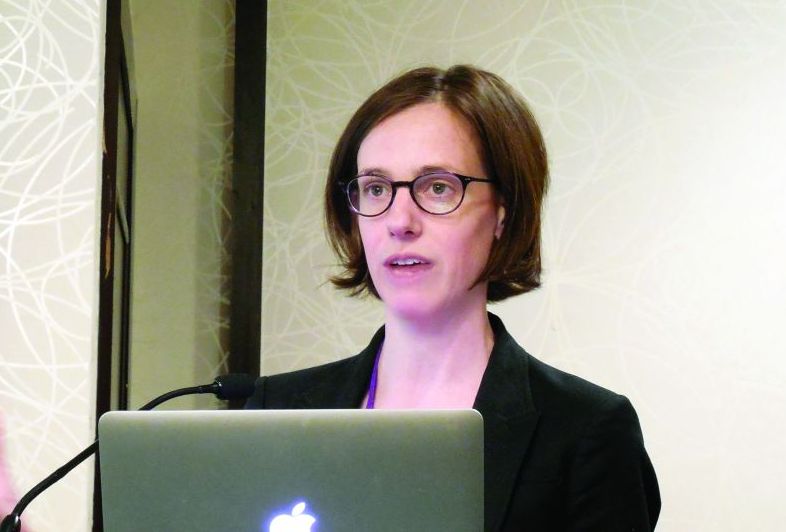
Previously, colleagues of Dr. Haroz from the Johns Hopkins Center for American Indian Health reported that implementation of the Celebrating Life surveillance system in 2007 strongly linked with a dramatic reduction in suicide deaths on the Apache reservation during 2007-2012, compared with 2001-2006. Overall, Apache suicide deaths fell from 40/100,000 during the earlier period to 25/100,000 after the Celebrating Life program began, a 38% relative reduction (Am J Public Health. 2016. Dec; 106[12]:183-9). Among youths aged 15-24 years old, the suicide death rate dropped from 129/100,000 to 99/100,000, a 23% relative decrease.
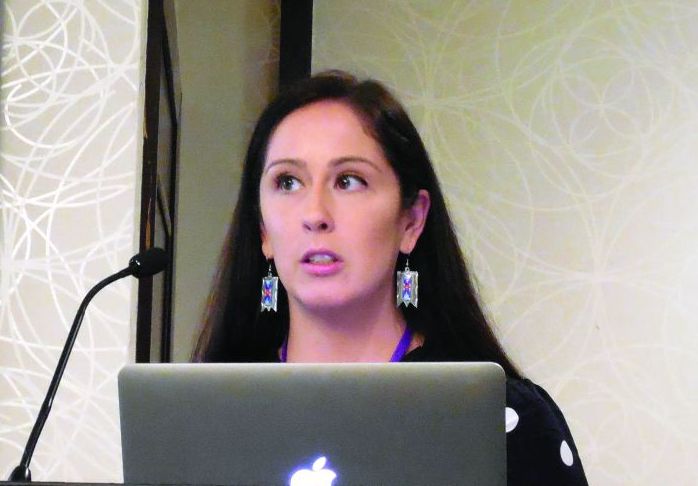
“We don’t really know much about how to predict suicide risk,” Dr. Haroz noted, and most of what’s known has been based on retrospective data from hospital-based surveillance. Improved prediction models can help case managers more quickly identify and focus on people who are at highest risk, she added.
Other researchers from the Johns Hopkins Center for American Indian Health described a new intervention program they have developed in collaboration with the Apache tribal leaders that uses tribal elders to teach tribal culture, values, and beliefs to students 11-15 years old. Begun in 2015, “we see this as upstream suicide prevention,” said Victoria O’Keefe, PhD, a clinical psychologist with the Johns Hopkins program. “What is unique about the program is that the elders go into the classrooms,” for 45- to 60-minute sessions done monthly.
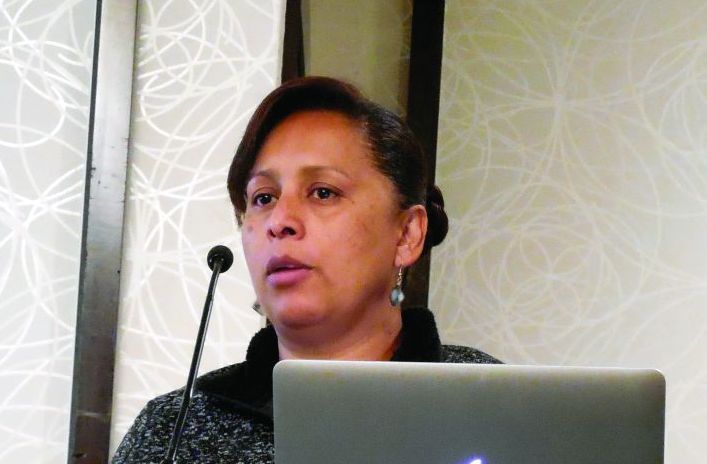
Questionnaires completed by participating students at the start of the program highlighted how ubiquitous suicide remains in the Apache community. A quarter of the students said they had a family member who had attempted suicide, more than a third knew a friend who had attempted suicide, and 15% reported losing a friend, sibling, or parent to suicide. In addition, roughly half of the students said that they knew an adult who was important in their life with a substance abuse problem, that they had no strong sense of belonging to an ethnic culture, and that they had not spent time learning about their culture, Dr. O’Keefe said.
Initial data from questionnaires completed at the end of the elders program showed high levels of enjoyment among the students and high levels of retention of some information. For example, after the elders’ program, 96% could identify their clan, and 96% could say what is sacred about the Apache land, she noted. Further data analysis is in progress, Dr. O’Keefe said, and she and her associates are adapting the elders program for use by other Native communities.
Dr. Haroz, Dr. O’Keefe, Ms. Goklish, and Dr. Cwik had no disclosures.
WASHINGTON – Using machine learning and data from 2,466 Apache tribal members, researchers developed a formula for predicting suicide attempts among youths aged 15-24 years with a “pretty high” level of accuracy, Emily E. Haroz, PhD, said at the annual conference of the American Association of Suicidology.
The area under the receiver operating characteristic curve for the best performing predictive model was 0.806, said Dr. Haroz, a psychiatric epidemiologist at Johns Hopkins University in Baltimore. This compared with an area under the curve of 0.57 for prediction based solely on prior attempts, which is a “very low” predictive score, Dr. Haroz noted. The area under the curve is a performance measure used widely to make predictions.
Previously, colleagues of Dr. Haroz from the Johns Hopkins Center for American Indian Health reported that implementation of the Celebrating Life surveillance system in 2007 strongly linked with a dramatic reduction in suicide deaths on the Apache reservation during 2007-2012, compared with 2001-2006. Overall, Apache suicide deaths fell from 40/100,000 during the earlier period to 25/100,000 after the Celebrating Life program began, a 38% relative reduction (Am J Public Health. 2016. Dec; 106[12]:183-9). Among youths aged 15-24 years old, the suicide death rate dropped from 129/100,000 to 99/100,000, a 23% relative decrease.
“We don’t really know much about how to predict suicide risk,” Dr. Haroz noted, and most of what’s known has been based on retrospective data from hospital-based surveillance. Improved prediction models can help case managers more quickly identify and focus on people who are at highest risk, she added.
Other researchers from the Johns Hopkins Center for American Indian Health described a new intervention program they have developed in collaboration with the Apache tribal leaders that uses tribal elders to teach tribal culture, values, and beliefs to students 11-15 years old. Begun in 2015, “we see this as upstream suicide prevention,” said Victoria O’Keefe, PhD, a clinical psychologist with the Johns Hopkins program. “What is unique about the program is that the elders go into the classrooms,” for 45- to 60-minute sessions done monthly.
Questionnaires completed by participating students at the start of the program highlighted how ubiquitous suicide remains in the Apache community. A quarter of the students said they had a family member who had attempted suicide, more than a third knew a friend who had attempted suicide, and 15% reported losing a friend, sibling, or parent to suicide. In addition, roughly half of the students said that they knew an adult who was important in their life with a substance abuse problem, that they had no strong sense of belonging to an ethnic culture, and that they had not spent time learning about their culture, Dr. O’Keefe said.
Initial data from questionnaires completed at the end of the elders program showed high levels of enjoyment among the students and high levels of retention of some information. For example, after the elders’ program, 96% could identify their clan, and 96% could say what is sacred about the Apache land, she noted. Further data analysis is in progress, Dr. O’Keefe said, and she and her associates are adapting the elders program for use by other Native communities.
Dr. Haroz, Dr. O’Keefe, Ms. Goklish, and Dr. Cwik had no disclosures.
WASHINGTON – Using machine learning and data from 2,466 Apache tribal members, researchers developed a formula for predicting suicide attempts among youths aged 15-24 years with a “pretty high” level of accuracy, Emily E. Haroz, PhD, said at the annual conference of the American Association of Suicidology.
The area under the receiver operating characteristic curve for the best performing predictive model was 0.806, said Dr. Haroz, a psychiatric epidemiologist at Johns Hopkins University in Baltimore. This compared with an area under the curve of 0.57 for prediction based solely on prior attempts, which is a “very low” predictive score, Dr. Haroz noted. The area under the curve is a performance measure used widely to make predictions.
Previously, colleagues of Dr. Haroz from the Johns Hopkins Center for American Indian Health reported that implementation of the Celebrating Life surveillance system in 2007 strongly linked with a dramatic reduction in suicide deaths on the Apache reservation during 2007-2012, compared with 2001-2006. Overall, Apache suicide deaths fell from 40/100,000 during the earlier period to 25/100,000 after the Celebrating Life program began, a 38% relative reduction (Am J Public Health. 2016. Dec; 106[12]:183-9). Among youths aged 15-24 years old, the suicide death rate dropped from 129/100,000 to 99/100,000, a 23% relative decrease.
“We don’t really know much about how to predict suicide risk,” Dr. Haroz noted, and most of what’s known has been based on retrospective data from hospital-based surveillance. Improved prediction models can help case managers more quickly identify and focus on people who are at highest risk, she added.
Other researchers from the Johns Hopkins Center for American Indian Health described a new intervention program they have developed in collaboration with the Apache tribal leaders that uses tribal elders to teach tribal culture, values, and beliefs to students 11-15 years old. Begun in 2015, “we see this as upstream suicide prevention,” said Victoria O’Keefe, PhD, a clinical psychologist with the Johns Hopkins program. “What is unique about the program is that the elders go into the classrooms,” for 45- to 60-minute sessions done monthly.
Questionnaires completed by participating students at the start of the program highlighted how ubiquitous suicide remains in the Apache community. A quarter of the students said they had a family member who had attempted suicide, more than a third knew a friend who had attempted suicide, and 15% reported losing a friend, sibling, or parent to suicide. In addition, roughly half of the students said that they knew an adult who was important in their life with a substance abuse problem, that they had no strong sense of belonging to an ethnic culture, and that they had not spent time learning about their culture, Dr. O’Keefe said.
Initial data from questionnaires completed at the end of the elders program showed high levels of enjoyment among the students and high levels of retention of some information. For example, after the elders’ program, 96% could identify their clan, and 96% could say what is sacred about the Apache land, she noted. Further data analysis is in progress, Dr. O’Keefe said, and she and her associates are adapting the elders program for use by other Native communities.
Dr. Haroz, Dr. O’Keefe, Ms. Goklish, and Dr. Cwik had no disclosures.
Key clinical point: The machine-learning process used data collected through the prospective surveillance program on suicide ideation, nonsuicidal self-injury, suicide attempts, binge substance use, and suicide deaths.
Major finding: The new formula produced an area under the receiver operating characteristic curve of 0.806 for predicting youth suicide attempts.
Study details: Development of the prediction formula used data from 2,466 members of the Apache tribe.
Disclosures: Dr. Haroz, Dr. O’Keefe, Ms. Goklish, and Dr. Cwik had no disclosures.
Suicide prevention starts with the patient’s narrative
WASHINGTON – An effective approach to suicide prevention engages the patient in a therapeutic relationship that starts with the patient’s narrative, Katherine A. Comtois, PhD, said at the American Association of Suicidality annual conference.
“The narrative should be the first touch” with the patient, advised Dr. Comtois, professor of psychiatry at the University of Washington, Seattle. “Start the narrative and form a connection, and then get to the other stuff.” She also recommended that therapists place themselves next to the patient, “court” the patient, be persistent, give positive reinforcement, and “give it all you’ve got.”
She endorsed the Aeschi model for suicide prevention, the treatment approaches recommended in The Way Forward, published in 2014 by the National Action Alliance for Suicide Prevention, and application of dialectical behavior therapy.
Dr. Comtois subdivided therapeutic interventions into two broad categories: management and treatment.
Management uses interventions aimed at modifying risk factors and reducing risks that relate to suicide, such as connectedness, treatment of the diagnosis, means safety, and safety planning; external factors that affect suicide risk. Although a collaborative approach between the therapist and patient is ideal for achieving management goals, it is not mandatory.
Treatment involves interventions that get at the internal factors that intrinsically drive a patient to suicide and aims to resolve the risk they pose. By necessity, treatment is a collaborative process. Ideally over time, the collaboration allows the patients gain confidence and take responsibility for self-managing their internal suicide risks.
She stressed the importance of a therapist orienting a patient to the management style to expect, “so what you do is not a surprise.” The therapist should listen to the patient’s goals, and carefully review expectations and a step-by-step plan. If the patient identifies potential problems and limitations, Dr. Comtois suggested commiserating with the patient about difficulties but not justifying them. For example, reviewing with patients how likely you will be to answer their phone call, what would likely happen during and as a result of a call, and offer the patients your advice on what to do if you can’t answer their call.
Dr. Comtois acknowledged that some clinicians fear managing and treating a suicidal patient, and advised “getting past your fear to help the client find a path forward. If you can get past your fear” the intervention often boils down to “clinical common sense: Things you would know how to handle if suicide weren’t involved.” If clinicians feel they can’t help, she suggested learning new skills to make assistance possible, or referring the patient to someone else who could help. “Negligence is not making a wrong decision; it’s doing nothing. Liability risk is often a huge fear,” but if the clinician at least makes a consult, that reduces the risk of potential negligence. She warned against referring suicidal patients to a hospital emergency department. “In this day and age, the emergency department is not a source of treatment; it’s a gatekeeper.”
While published evidence documents the efficacy of dialectical behavior therapy and case management for preventing suicide and self-harm biological treatments, including antidepressants, lithium, and other psychopharmacology have not been effective, she said.
Dr. Comtois had no disclosures.
WASHINGTON – An effective approach to suicide prevention engages the patient in a therapeutic relationship that starts with the patient’s narrative, Katherine A. Comtois, PhD, said at the American Association of Suicidality annual conference.
“The narrative should be the first touch” with the patient, advised Dr. Comtois, professor of psychiatry at the University of Washington, Seattle. “Start the narrative and form a connection, and then get to the other stuff.” She also recommended that therapists place themselves next to the patient, “court” the patient, be persistent, give positive reinforcement, and “give it all you’ve got.”
She endorsed the Aeschi model for suicide prevention, the treatment approaches recommended in The Way Forward, published in 2014 by the National Action Alliance for Suicide Prevention, and application of dialectical behavior therapy.
Dr. Comtois subdivided therapeutic interventions into two broad categories: management and treatment.
Management uses interventions aimed at modifying risk factors and reducing risks that relate to suicide, such as connectedness, treatment of the diagnosis, means safety, and safety planning; external factors that affect suicide risk. Although a collaborative approach between the therapist and patient is ideal for achieving management goals, it is not mandatory.
Treatment involves interventions that get at the internal factors that intrinsically drive a patient to suicide and aims to resolve the risk they pose. By necessity, treatment is a collaborative process. Ideally over time, the collaboration allows the patients gain confidence and take responsibility for self-managing their internal suicide risks.
She stressed the importance of a therapist orienting a patient to the management style to expect, “so what you do is not a surprise.” The therapist should listen to the patient’s goals, and carefully review expectations and a step-by-step plan. If the patient identifies potential problems and limitations, Dr. Comtois suggested commiserating with the patient about difficulties but not justifying them. For example, reviewing with patients how likely you will be to answer their phone call, what would likely happen during and as a result of a call, and offer the patients your advice on what to do if you can’t answer their call.
Dr. Comtois acknowledged that some clinicians fear managing and treating a suicidal patient, and advised “getting past your fear to help the client find a path forward. If you can get past your fear” the intervention often boils down to “clinical common sense: Things you would know how to handle if suicide weren’t involved.” If clinicians feel they can’t help, she suggested learning new skills to make assistance possible, or referring the patient to someone else who could help. “Negligence is not making a wrong decision; it’s doing nothing. Liability risk is often a huge fear,” but if the clinician at least makes a consult, that reduces the risk of potential negligence. She warned against referring suicidal patients to a hospital emergency department. “In this day and age, the emergency department is not a source of treatment; it’s a gatekeeper.”
While published evidence documents the efficacy of dialectical behavior therapy and case management for preventing suicide and self-harm biological treatments, including antidepressants, lithium, and other psychopharmacology have not been effective, she said.
Dr. Comtois had no disclosures.
WASHINGTON – An effective approach to suicide prevention engages the patient in a therapeutic relationship that starts with the patient’s narrative, Katherine A. Comtois, PhD, said at the American Association of Suicidality annual conference.
“The narrative should be the first touch” with the patient, advised Dr. Comtois, professor of psychiatry at the University of Washington, Seattle. “Start the narrative and form a connection, and then get to the other stuff.” She also recommended that therapists place themselves next to the patient, “court” the patient, be persistent, give positive reinforcement, and “give it all you’ve got.”
She endorsed the Aeschi model for suicide prevention, the treatment approaches recommended in The Way Forward, published in 2014 by the National Action Alliance for Suicide Prevention, and application of dialectical behavior therapy.
Dr. Comtois subdivided therapeutic interventions into two broad categories: management and treatment.
Management uses interventions aimed at modifying risk factors and reducing risks that relate to suicide, such as connectedness, treatment of the diagnosis, means safety, and safety planning; external factors that affect suicide risk. Although a collaborative approach between the therapist and patient is ideal for achieving management goals, it is not mandatory.
Treatment involves interventions that get at the internal factors that intrinsically drive a patient to suicide and aims to resolve the risk they pose. By necessity, treatment is a collaborative process. Ideally over time, the collaboration allows the patients gain confidence and take responsibility for self-managing their internal suicide risks.
She stressed the importance of a therapist orienting a patient to the management style to expect, “so what you do is not a surprise.” The therapist should listen to the patient’s goals, and carefully review expectations and a step-by-step plan. If the patient identifies potential problems and limitations, Dr. Comtois suggested commiserating with the patient about difficulties but not justifying them. For example, reviewing with patients how likely you will be to answer their phone call, what would likely happen during and as a result of a call, and offer the patients your advice on what to do if you can’t answer their call.
Dr. Comtois acknowledged that some clinicians fear managing and treating a suicidal patient, and advised “getting past your fear to help the client find a path forward. If you can get past your fear” the intervention often boils down to “clinical common sense: Things you would know how to handle if suicide weren’t involved.” If clinicians feel they can’t help, she suggested learning new skills to make assistance possible, or referring the patient to someone else who could help. “Negligence is not making a wrong decision; it’s doing nothing. Liability risk is often a huge fear,” but if the clinician at least makes a consult, that reduces the risk of potential negligence. She warned against referring suicidal patients to a hospital emergency department. “In this day and age, the emergency department is not a source of treatment; it’s a gatekeeper.”
While published evidence documents the efficacy of dialectical behavior therapy and case management for preventing suicide and self-harm biological treatments, including antidepressants, lithium, and other psychopharmacology have not been effective, she said.
Dr. Comtois had no disclosures.
U.S. youth suicide prevention saved nearly 900 lives
WASHINGTON – A U.S. grant program that was started in 2004 to fund youth suicide prevention efforts throughout the country was linked with nearly 900 youth suicide deaths prevented by 2015, according to a matched, case-control analysis.
U.S. counties with a youth suicide prevention effort funded by a grant from the federal Garrett Lee Smith (GLS) Memorial Suicide Prevention program had an average 1.09 fewer youth suicide deaths per 100,000 youths (10-24 years old) 2 years after ongoing funding began, when compared with matched U.S. counties without a GLS-funded program, said Mr. Garraza, an analyst with ICF International in New York. Counties that had GLS-funded programs operating for 3 years showed an average reduction in youth suicide death of roughly 2 fewer deaths per 100,000 population, compared with control counties, and counties with programs in operation for 4 years showed a reduction of roughly 3 fewer deaths per 100,000 population.
“These extremely important data show convincingly that if we want to save lives, suicide prevention can’t be a one-and-done. said Richard McKeon, PhD, chief of the Suicide Prevention Branch of the Substance Abuse and Mental Health Services Administration, the U.S. agency that administers the GLS grant program and commissioned ICF International to analyze the grant program’s effects.

As of October 2017, the GLS grant initiative had made nearly 200 awards to youth suicide prevention programs that operated in all 50 states, the District of Columbia, one territory, and among 49 Native American tribes, Mr. Garraza said.
To assess the effects of the GLS grants on suicide death rates in people aged 10-24 years, Mr. Garraza and his associates used U.S. suicide data collected in 2,095 counties throughout the country that each had more than 3,000 resident youths, including 1,126 counties that had, as of 2015, been exposed to at least 1 year of a program sponsored by a GLS grant that began before 2010 and 969 counties without any GLS-grant exposure. After the counties in each subgroup were propensity-score matched using several criteria, including numbers of youth by specific age, race, household income, employment rates, health insurance status, and urbanization, the researchers analyzed suicide death rates in 481 counties with 1-4 years of exposure of a GLS-funded prevention program and in 851 counties with no exposure.
Their analysis estimated that 882 fewer suicide deaths occurred among youths in counties with GLS-funded programs, compared with the expected suicide mortality based on the unexposed counties.
In addition to showing statistically significant mortality reductions among youths in the counties with GLS-funded programs, compared with the counties with no such programs, the analysis showed, as expected, no difference between the intervention and control counties in rates of suicide deaths among adults and no difference in youth-mortality from causes other than suicide, which indicated that the observed differences linked with GLS funding were specific for youth suicides.
The current analysis looking at the effects of GLS funding on youth suicide deaths rates follows a prior report from the same researchers with similar findings using data collected through 2010 (Am J Public Health. 2015 May;105[5]:986-93). They also published two prior reports that used a similar analysis to assess the effects of GLS-funded suicide prevention programs on suicide attempt rates. One of those reports showed that GLS-funded programs linked with a cut in suicide attempts of nearly 5 per 1,000 population (JAMA Psychiatry. 2015 Nov;72[11]:1143-9), and the second showed that this effect on suicide attempts was cost effective when the cost of the grants was compared with the money saved from avoided emergency department visits and hospitalizations (Suicide Life Threat Behav. 2018 Feb;48[1]:3-11).
WASHINGTON – A U.S. grant program that was started in 2004 to fund youth suicide prevention efforts throughout the country was linked with nearly 900 youth suicide deaths prevented by 2015, according to a matched, case-control analysis.
U.S. counties with a youth suicide prevention effort funded by a grant from the federal Garrett Lee Smith (GLS) Memorial Suicide Prevention program had an average 1.09 fewer youth suicide deaths per 100,000 youths (10-24 years old) 2 years after ongoing funding began, when compared with matched U.S. counties without a GLS-funded program, said Mr. Garraza, an analyst with ICF International in New York. Counties that had GLS-funded programs operating for 3 years showed an average reduction in youth suicide death of roughly 2 fewer deaths per 100,000 population, compared with control counties, and counties with programs in operation for 4 years showed a reduction of roughly 3 fewer deaths per 100,000 population.
“These extremely important data show convincingly that if we want to save lives, suicide prevention can’t be a one-and-done. said Richard McKeon, PhD, chief of the Suicide Prevention Branch of the Substance Abuse and Mental Health Services Administration, the U.S. agency that administers the GLS grant program and commissioned ICF International to analyze the grant program’s effects.
As of October 2017, the GLS grant initiative had made nearly 200 awards to youth suicide prevention programs that operated in all 50 states, the District of Columbia, one territory, and among 49 Native American tribes, Mr. Garraza said.
To assess the effects of the GLS grants on suicide death rates in people aged 10-24 years, Mr. Garraza and his associates used U.S. suicide data collected in 2,095 counties throughout the country that each had more than 3,000 resident youths, including 1,126 counties that had, as of 2015, been exposed to at least 1 year of a program sponsored by a GLS grant that began before 2010 and 969 counties without any GLS-grant exposure. After the counties in each subgroup were propensity-score matched using several criteria, including numbers of youth by specific age, race, household income, employment rates, health insurance status, and urbanization, the researchers analyzed suicide death rates in 481 counties with 1-4 years of exposure of a GLS-funded prevention program and in 851 counties with no exposure.
Their analysis estimated that 882 fewer suicide deaths occurred among youths in counties with GLS-funded programs, compared with the expected suicide mortality based on the unexposed counties.
In addition to showing statistically significant mortality reductions among youths in the counties with GLS-funded programs, compared with the counties with no such programs, the analysis showed, as expected, no difference between the intervention and control counties in rates of suicide deaths among adults and no difference in youth-mortality from causes other than suicide, which indicated that the observed differences linked with GLS funding were specific for youth suicides.
The current analysis looking at the effects of GLS funding on youth suicide deaths rates follows a prior report from the same researchers with similar findings using data collected through 2010 (Am J Public Health. 2015 May;105[5]:986-93). They also published two prior reports that used a similar analysis to assess the effects of GLS-funded suicide prevention programs on suicide attempt rates. One of those reports showed that GLS-funded programs linked with a cut in suicide attempts of nearly 5 per 1,000 population (JAMA Psychiatry. 2015 Nov;72[11]:1143-9), and the second showed that this effect on suicide attempts was cost effective when the cost of the grants was compared with the money saved from avoided emergency department visits and hospitalizations (Suicide Life Threat Behav. 2018 Feb;48[1]:3-11).
WASHINGTON – A U.S. grant program that was started in 2004 to fund youth suicide prevention efforts throughout the country was linked with nearly 900 youth suicide deaths prevented by 2015, according to a matched, case-control analysis.
U.S. counties with a youth suicide prevention effort funded by a grant from the federal Garrett Lee Smith (GLS) Memorial Suicide Prevention program had an average 1.09 fewer youth suicide deaths per 100,000 youths (10-24 years old) 2 years after ongoing funding began, when compared with matched U.S. counties without a GLS-funded program, said Mr. Garraza, an analyst with ICF International in New York. Counties that had GLS-funded programs operating for 3 years showed an average reduction in youth suicide death of roughly 2 fewer deaths per 100,000 population, compared with control counties, and counties with programs in operation for 4 years showed a reduction of roughly 3 fewer deaths per 100,000 population.
“These extremely important data show convincingly that if we want to save lives, suicide prevention can’t be a one-and-done. said Richard McKeon, PhD, chief of the Suicide Prevention Branch of the Substance Abuse and Mental Health Services Administration, the U.S. agency that administers the GLS grant program and commissioned ICF International to analyze the grant program’s effects.
As of October 2017, the GLS grant initiative had made nearly 200 awards to youth suicide prevention programs that operated in all 50 states, the District of Columbia, one territory, and among 49 Native American tribes, Mr. Garraza said.
To assess the effects of the GLS grants on suicide death rates in people aged 10-24 years, Mr. Garraza and his associates used U.S. suicide data collected in 2,095 counties throughout the country that each had more than 3,000 resident youths, including 1,126 counties that had, as of 2015, been exposed to at least 1 year of a program sponsored by a GLS grant that began before 2010 and 969 counties without any GLS-grant exposure. After the counties in each subgroup were propensity-score matched using several criteria, including numbers of youth by specific age, race, household income, employment rates, health insurance status, and urbanization, the researchers analyzed suicide death rates in 481 counties with 1-4 years of exposure of a GLS-funded prevention program and in 851 counties with no exposure.
Their analysis estimated that 882 fewer suicide deaths occurred among youths in counties with GLS-funded programs, compared with the expected suicide mortality based on the unexposed counties.
In addition to showing statistically significant mortality reductions among youths in the counties with GLS-funded programs, compared with the counties with no such programs, the analysis showed, as expected, no difference between the intervention and control counties in rates of suicide deaths among adults and no difference in youth-mortality from causes other than suicide, which indicated that the observed differences linked with GLS funding were specific for youth suicides.
The current analysis looking at the effects of GLS funding on youth suicide deaths rates follows a prior report from the same researchers with similar findings using data collected through 2010 (Am J Public Health. 2015 May;105[5]:986-93). They also published two prior reports that used a similar analysis to assess the effects of GLS-funded suicide prevention programs on suicide attempt rates. One of those reports showed that GLS-funded programs linked with a cut in suicide attempts of nearly 5 per 1,000 population (JAMA Psychiatry. 2015 Nov;72[11]:1143-9), and the second showed that this effect on suicide attempts was cost effective when the cost of the grants was compared with the money saved from avoided emergency department visits and hospitalizations (Suicide Life Threat Behav. 2018 Feb;48[1]:3-11).
REPORTING FROM THE AAS ANNUAL CONFERENCE
Key clinical point: A U.S. youth suicide prevention grant program seems to be making a difference.
Major finding: During 2007-2015, U.S. counties with youth suicide prevention funding had 882 fewer deaths than expected.
Study details: A case-control analysis of U.S. counties that received federal funding for youth-suicide prevention.
Disclosures: Mr. Garraza and Dr. McKeon had no disclosures.
Is medical aid in dying suicide?
WASHINGTON – Medical aid in dying is not the same as suicide; it is a way to give people with terminal illness and facing imminent death a way to die better and avoid the terrible, drawn-out deaths from chronic disease that often now occur, Margaret P. Battin, PhD, said at the annual conference of the American Association of Suicidology.

and is allowed now by law in Colorado, Hawaii, Montana, Oregon, Vermont, Washington, the District of Columbia, and by court decision in California. It’s also a legal option in Belgium, Canada, Luxembourg, the Netherlands, Switzerland, and parts of Germany, she said. Dr. Battin attributed the spread of legalized MAiD to the frequent terrible and protracted deaths people in industrialized countries face from chronic diseases such as cancer, heart disease, organ failure, dementia, stroke, and other neurologic disorders, and the comforting option of choice that MAiD offers these terminally ill patients. All the laws that have legalized MAiD draw distinctions between it and suicide, she noted.
“Even it the patient doesn’t act on this, someone facing death can find comfort knowing that if things get too bad, there is a way to avoid it, that they can have some control over their death. People want to remain in control, and this gives people a sense of control” that is not pathologic; it’s reassuring. “It can also make bereavement easier for others,” she said. Medical aid in dying “ helps people with terminal illness reduce their confusion, despair, and sense of impotence. When we can’t prevent death, this can make it better.” Dr. Battin also cited the restrictions these laws make to rule out people with mental illness or psychiatric problems that influence their choice of MAiD. That plus cultural and societal attitudes toward self-directed death mean that very few people actually wind up taking MAiD to completion.
But Thomas Joiner, PhD, dissented that the MAiD process successfully winnows out people who are acting on a desire for suicide in the traditional sense.
Another major problem with MAiD is that it focuses too much on self-determination and autonomy and downplays the importance of the social reverberations that this form of death has on others, he explained. “The social dimension is an afterthought [of MAiD], and that’s a problem.”
The American Association of Suicidality statement “has evolved, and Professor Battin had a lot to do with that, and I respect” the writing process. It shows better balance between autonomy and social connections, but I believe that [MAiD] is often an expression of [traditional] suicide,” Dr. Joiner said. MAiD has become more acceptable, “but that doesn’t make it right. It is trying to dodge the stigma of suicide.”
Dr. Battin and Dr. Joiner had no disclosures.
WASHINGTON – Medical aid in dying is not the same as suicide; it is a way to give people with terminal illness and facing imminent death a way to die better and avoid the terrible, drawn-out deaths from chronic disease that often now occur, Margaret P. Battin, PhD, said at the annual conference of the American Association of Suicidology.
and is allowed now by law in Colorado, Hawaii, Montana, Oregon, Vermont, Washington, the District of Columbia, and by court decision in California. It’s also a legal option in Belgium, Canada, Luxembourg, the Netherlands, Switzerland, and parts of Germany, she said. Dr. Battin attributed the spread of legalized MAiD to the frequent terrible and protracted deaths people in industrialized countries face from chronic diseases such as cancer, heart disease, organ failure, dementia, stroke, and other neurologic disorders, and the comforting option of choice that MAiD offers these terminally ill patients. All the laws that have legalized MAiD draw distinctions between it and suicide, she noted.
“Even it the patient doesn’t act on this, someone facing death can find comfort knowing that if things get too bad, there is a way to avoid it, that they can have some control over their death. People want to remain in control, and this gives people a sense of control” that is not pathologic; it’s reassuring. “It can also make bereavement easier for others,” she said. Medical aid in dying “ helps people with terminal illness reduce their confusion, despair, and sense of impotence. When we can’t prevent death, this can make it better.” Dr. Battin also cited the restrictions these laws make to rule out people with mental illness or psychiatric problems that influence their choice of MAiD. That plus cultural and societal attitudes toward self-directed death mean that very few people actually wind up taking MAiD to completion.
But Thomas Joiner, PhD, dissented that the MAiD process successfully winnows out people who are acting on a desire for suicide in the traditional sense.
Another major problem with MAiD is that it focuses too much on self-determination and autonomy and downplays the importance of the social reverberations that this form of death has on others, he explained. “The social dimension is an afterthought [of MAiD], and that’s a problem.”
The American Association of Suicidality statement “has evolved, and Professor Battin had a lot to do with that, and I respect” the writing process. It shows better balance between autonomy and social connections, but I believe that [MAiD] is often an expression of [traditional] suicide,” Dr. Joiner said. MAiD has become more acceptable, “but that doesn’t make it right. It is trying to dodge the stigma of suicide.”
Dr. Battin and Dr. Joiner had no disclosures.
WASHINGTON – Medical aid in dying is not the same as suicide; it is a way to give people with terminal illness and facing imminent death a way to die better and avoid the terrible, drawn-out deaths from chronic disease that often now occur, Margaret P. Battin, PhD, said at the annual conference of the American Association of Suicidology.
and is allowed now by law in Colorado, Hawaii, Montana, Oregon, Vermont, Washington, the District of Columbia, and by court decision in California. It’s also a legal option in Belgium, Canada, Luxembourg, the Netherlands, Switzerland, and parts of Germany, she said. Dr. Battin attributed the spread of legalized MAiD to the frequent terrible and protracted deaths people in industrialized countries face from chronic diseases such as cancer, heart disease, organ failure, dementia, stroke, and other neurologic disorders, and the comforting option of choice that MAiD offers these terminally ill patients. All the laws that have legalized MAiD draw distinctions between it and suicide, she noted.
“Even it the patient doesn’t act on this, someone facing death can find comfort knowing that if things get too bad, there is a way to avoid it, that they can have some control over their death. People want to remain in control, and this gives people a sense of control” that is not pathologic; it’s reassuring. “It can also make bereavement easier for others,” she said. Medical aid in dying “ helps people with terminal illness reduce their confusion, despair, and sense of impotence. When we can’t prevent death, this can make it better.” Dr. Battin also cited the restrictions these laws make to rule out people with mental illness or psychiatric problems that influence their choice of MAiD. That plus cultural and societal attitudes toward self-directed death mean that very few people actually wind up taking MAiD to completion.
But Thomas Joiner, PhD, dissented that the MAiD process successfully winnows out people who are acting on a desire for suicide in the traditional sense.
Another major problem with MAiD is that it focuses too much on self-determination and autonomy and downplays the importance of the social reverberations that this form of death has on others, he explained. “The social dimension is an afterthought [of MAiD], and that’s a problem.”
The American Association of Suicidality statement “has evolved, and Professor Battin had a lot to do with that, and I respect” the writing process. It shows better balance between autonomy and social connections, but I believe that [MAiD] is often an expression of [traditional] suicide,” Dr. Joiner said. MAiD has become more acceptable, “but that doesn’t make it right. It is trying to dodge the stigma of suicide.”
Dr. Battin and Dr. Joiner had no disclosures.
REPORTING FROM THE AAS ANNUAL CONFERENCE
Suicidality assessment of people with autism needs better tools
WASHINGTON – People with autism spectrum disorder face a double whammy on suicide risk: They have cognitive, social, and emotional behaviors that increase their vulnerability to suicide, but they also often find it difficult to communicate their depression and suicidality and so may often go unrecognized as suicidal. Or if they are identified, conventional prevention interventions might be less effective.
To try to address this, clinicians are trying to develop a suicide screening questionnaire that is better geared for use on people with autism spectrum disorder (ASD), Jacqueline Wynn, PhD said at the annual conference of the American Association of Suicidology.

Many people with ASD “have impaired language capabilities” that make their expressions of depression and suicide ideation more complex, she observed.
“The point is that we need better measures in the ASQ,” said John P. Ackerman, PhD, a clinical psychologist and suicide prevention coordinator at the Center for Suicide Prevention and Research at Nationwide Children’s. “There is a misperception that because people with autism don’t express their emotions and can’t always access the words they don’t have suicide ideation. They do,” he declared in an interview.
People with ASD have high rates of depression and anxiety, decreased inhibitory control and emotional regulation, rigidity or thought, and difficulty asking for help or accepting help. Youth with ASD undergo psychiatric hospitalization more than 10-fold more often than similarly aged youth without a psychiatric diagnosis, Dr. Ackerman noted. In one recent study of 374 adults with Asperger’s syndrome, two-thirds reported having suicidal ideation and one-third self-reported a planned or attempted suicide (Lancet Psychiatry. 2014 Jul;1[2]:142-7).
The risks that people with ASD have for depression and suicide contrasts with the way clinicians currently address this issue. “There are many gaps” in suicide-risk assessment and prevention interventions aimed at people with ASD, he said. For example, a depression symptom checklist that asks whether someone is withdrawn or feeling disconnected focuses on commonplace characteristics among people with ASD.
The recognition that people with ASD need tailored methods for both identifying and intervening with suicidality appears to be part of an emerging appreciation by clinicians who work on suicide prevention of the “need to meet people where they are,” Dr. Ackerman said. Similar approaches might be needed for various ethnic and racial groups, gays, transgender people, those who are hearing impaired, and others who might respond better to novel approaches.
Dr. Wynn and Dr. Ackerman had no disclosures.
WASHINGTON – People with autism spectrum disorder face a double whammy on suicide risk: They have cognitive, social, and emotional behaviors that increase their vulnerability to suicide, but they also often find it difficult to communicate their depression and suicidality and so may often go unrecognized as suicidal. Or if they are identified, conventional prevention interventions might be less effective.
To try to address this, clinicians are trying to develop a suicide screening questionnaire that is better geared for use on people with autism spectrum disorder (ASD), Jacqueline Wynn, PhD said at the annual conference of the American Association of Suicidology.
Many people with ASD “have impaired language capabilities” that make their expressions of depression and suicide ideation more complex, she observed.
“The point is that we need better measures in the ASQ,” said John P. Ackerman, PhD, a clinical psychologist and suicide prevention coordinator at the Center for Suicide Prevention and Research at Nationwide Children’s. “There is a misperception that because people with autism don’t express their emotions and can’t always access the words they don’t have suicide ideation. They do,” he declared in an interview.
People with ASD have high rates of depression and anxiety, decreased inhibitory control and emotional regulation, rigidity or thought, and difficulty asking for help or accepting help. Youth with ASD undergo psychiatric hospitalization more than 10-fold more often than similarly aged youth without a psychiatric diagnosis, Dr. Ackerman noted. In one recent study of 374 adults with Asperger’s syndrome, two-thirds reported having suicidal ideation and one-third self-reported a planned or attempted suicide (Lancet Psychiatry. 2014 Jul;1[2]:142-7).
The risks that people with ASD have for depression and suicide contrasts with the way clinicians currently address this issue. “There are many gaps” in suicide-risk assessment and prevention interventions aimed at people with ASD, he said. For example, a depression symptom checklist that asks whether someone is withdrawn or feeling disconnected focuses on commonplace characteristics among people with ASD.
The recognition that people with ASD need tailored methods for both identifying and intervening with suicidality appears to be part of an emerging appreciation by clinicians who work on suicide prevention of the “need to meet people where they are,” Dr. Ackerman said. Similar approaches might be needed for various ethnic and racial groups, gays, transgender people, those who are hearing impaired, and others who might respond better to novel approaches.
Dr. Wynn and Dr. Ackerman had no disclosures.
WASHINGTON – People with autism spectrum disorder face a double whammy on suicide risk: They have cognitive, social, and emotional behaviors that increase their vulnerability to suicide, but they also often find it difficult to communicate their depression and suicidality and so may often go unrecognized as suicidal. Or if they are identified, conventional prevention interventions might be less effective.
To try to address this, clinicians are trying to develop a suicide screening questionnaire that is better geared for use on people with autism spectrum disorder (ASD), Jacqueline Wynn, PhD said at the annual conference of the American Association of Suicidology.
Many people with ASD “have impaired language capabilities” that make their expressions of depression and suicide ideation more complex, she observed.
“The point is that we need better measures in the ASQ,” said John P. Ackerman, PhD, a clinical psychologist and suicide prevention coordinator at the Center for Suicide Prevention and Research at Nationwide Children’s. “There is a misperception that because people with autism don’t express their emotions and can’t always access the words they don’t have suicide ideation. They do,” he declared in an interview.
People with ASD have high rates of depression and anxiety, decreased inhibitory control and emotional regulation, rigidity or thought, and difficulty asking for help or accepting help. Youth with ASD undergo psychiatric hospitalization more than 10-fold more often than similarly aged youth without a psychiatric diagnosis, Dr. Ackerman noted. In one recent study of 374 adults with Asperger’s syndrome, two-thirds reported having suicidal ideation and one-third self-reported a planned or attempted suicide (Lancet Psychiatry. 2014 Jul;1[2]:142-7).
The risks that people with ASD have for depression and suicide contrasts with the way clinicians currently address this issue. “There are many gaps” in suicide-risk assessment and prevention interventions aimed at people with ASD, he said. For example, a depression symptom checklist that asks whether someone is withdrawn or feeling disconnected focuses on commonplace characteristics among people with ASD.
The recognition that people with ASD need tailored methods for both identifying and intervening with suicidality appears to be part of an emerging appreciation by clinicians who work on suicide prevention of the “need to meet people where they are,” Dr. Ackerman said. Similar approaches might be needed for various ethnic and racial groups, gays, transgender people, those who are hearing impaired, and others who might respond better to novel approaches.
Dr. Wynn and Dr. Ackerman had no disclosures.
REPORTING FROM THE AAS ANNUAL CONFERENCE
Leg lymphedema after gynecologic lymphadenectomy exceeds expectations
NEW ORLEANS – Leg lymphedema occurred in 19%-40% of women with a gynecologic cancer who underwent surgery with lymphadenectomy in a prospective study of 821 U.S. patients.
The incidence of lymphedema of the lower extremity (LLE) during 2 years of follow-up was 18% among 672 endometrial cancer patients, 25% among 124 cervical cancer patients, and 40% among 24 vulvar cancer patients, Jay W. Carlson, DO, said at the annual meeting of the Society of Gynecologic Oncology.
Although the study followed patients for 2 years after surgery, 84% of the LLE events occurred within the first 6 months after surgery, and 95% within the first 12 months. The robust incidence rates documented in this study contrasted with a general perception that LLE is relatively uncommon, leading Dr. Carlson to note that the new data show “the incidence of LLE is under recognized.” The findings also bucked conventional wisdom by showing no link between the incidence of LLE and number of lymph nodes dissected or with use of radiation treatment, said Dr. Carlson, a gynecologic oncologist at Mercy Clinic Women’s Oncology in Springfield, Mo.
To better define the incidence of LLE after lymphadenectomy for gynecologic cancers, the Gynecologic Oncology Group organized the Lymphedema and Gynecologic Cancer (LEG) study, run at more than 70 U.S. centers during June 2012–November 2014. The study enrolled patients scheduled for surgery to treat endometrial, cervical, or vulvar cancer, and applied systematic leg measurement to patients just before and at several prespecified times following surgery through 2 years of follow-up.
The study began with a total of 1,054 patients, but the final analysis that Dr. Carlson presented excluded patients who did not actually undergo lymphadenectomy during their surgery, did not have leg volume data available both before and after their surgery, or had a comorbidity or change in body mass that could have caused the change in leg size. The researchers also required patients identified with LLE to have completed the Gynecologic Cancer Lymphedema Questionnaire (Gynecol Oncol. 2010 May;117[2]:317-23) and tallied a score of at least 4, and to have at least a 10% increase in leg volume at the time of diagnosis, compared with the presurgical volume.
The exclusions yielded a total of 672 patients with endometrial cancer, including 127 who developed LLE (19%); 124 patients with cervical cancer, including 31 who developed LLE (25%); and 25 patients with vulvar cancer, including 10 who developed LLE (40%), Dr. Carlson reported.
Analysis of the patients who developed LLE showed no significant association with type of surgery (open, robotic, or laparoscopic), and no significant associations with several patient-specific factors including age, race, cancer stage, surgical blood loss, or serum albumin, he said.
[email protected]
On Twitter @mitchelzoler
SOURCE: Carlson J et al. SGO 2018, Abstract 11.
NEW ORLEANS – Leg lymphedema occurred in 19%-40% of women with a gynecologic cancer who underwent surgery with lymphadenectomy in a prospective study of 821 U.S. patients.
The incidence of lymphedema of the lower extremity (LLE) during 2 years of follow-up was 18% among 672 endometrial cancer patients, 25% among 124 cervical cancer patients, and 40% among 24 vulvar cancer patients, Jay W. Carlson, DO, said at the annual meeting of the Society of Gynecologic Oncology.
Although the study followed patients for 2 years after surgery, 84% of the LLE events occurred within the first 6 months after surgery, and 95% within the first 12 months. The robust incidence rates documented in this study contrasted with a general perception that LLE is relatively uncommon, leading Dr. Carlson to note that the new data show “the incidence of LLE is under recognized.” The findings also bucked conventional wisdom by showing no link between the incidence of LLE and number of lymph nodes dissected or with use of radiation treatment, said Dr. Carlson, a gynecologic oncologist at Mercy Clinic Women’s Oncology in Springfield, Mo.
To better define the incidence of LLE after lymphadenectomy for gynecologic cancers, the Gynecologic Oncology Group organized the Lymphedema and Gynecologic Cancer (LEG) study, run at more than 70 U.S. centers during June 2012–November 2014. The study enrolled patients scheduled for surgery to treat endometrial, cervical, or vulvar cancer, and applied systematic leg measurement to patients just before and at several prespecified times following surgery through 2 years of follow-up.
The study began with a total of 1,054 patients, but the final analysis that Dr. Carlson presented excluded patients who did not actually undergo lymphadenectomy during their surgery, did not have leg volume data available both before and after their surgery, or had a comorbidity or change in body mass that could have caused the change in leg size. The researchers also required patients identified with LLE to have completed the Gynecologic Cancer Lymphedema Questionnaire (Gynecol Oncol. 2010 May;117[2]:317-23) and tallied a score of at least 4, and to have at least a 10% increase in leg volume at the time of diagnosis, compared with the presurgical volume.
The exclusions yielded a total of 672 patients with endometrial cancer, including 127 who developed LLE (19%); 124 patients with cervical cancer, including 31 who developed LLE (25%); and 25 patients with vulvar cancer, including 10 who developed LLE (40%), Dr. Carlson reported.
Analysis of the patients who developed LLE showed no significant association with type of surgery (open, robotic, or laparoscopic), and no significant associations with several patient-specific factors including age, race, cancer stage, surgical blood loss, or serum albumin, he said.
[email protected]
On Twitter @mitchelzoler
SOURCE: Carlson J et al. SGO 2018, Abstract 11.
NEW ORLEANS – Leg lymphedema occurred in 19%-40% of women with a gynecologic cancer who underwent surgery with lymphadenectomy in a prospective study of 821 U.S. patients.
The incidence of lymphedema of the lower extremity (LLE) during 2 years of follow-up was 18% among 672 endometrial cancer patients, 25% among 124 cervical cancer patients, and 40% among 24 vulvar cancer patients, Jay W. Carlson, DO, said at the annual meeting of the Society of Gynecologic Oncology.
Although the study followed patients for 2 years after surgery, 84% of the LLE events occurred within the first 6 months after surgery, and 95% within the first 12 months. The robust incidence rates documented in this study contrasted with a general perception that LLE is relatively uncommon, leading Dr. Carlson to note that the new data show “the incidence of LLE is under recognized.” The findings also bucked conventional wisdom by showing no link between the incidence of LLE and number of lymph nodes dissected or with use of radiation treatment, said Dr. Carlson, a gynecologic oncologist at Mercy Clinic Women’s Oncology in Springfield, Mo.
To better define the incidence of LLE after lymphadenectomy for gynecologic cancers, the Gynecologic Oncology Group organized the Lymphedema and Gynecologic Cancer (LEG) study, run at more than 70 U.S. centers during June 2012–November 2014. The study enrolled patients scheduled for surgery to treat endometrial, cervical, or vulvar cancer, and applied systematic leg measurement to patients just before and at several prespecified times following surgery through 2 years of follow-up.
The study began with a total of 1,054 patients, but the final analysis that Dr. Carlson presented excluded patients who did not actually undergo lymphadenectomy during their surgery, did not have leg volume data available both before and after their surgery, or had a comorbidity or change in body mass that could have caused the change in leg size. The researchers also required patients identified with LLE to have completed the Gynecologic Cancer Lymphedema Questionnaire (Gynecol Oncol. 2010 May;117[2]:317-23) and tallied a score of at least 4, and to have at least a 10% increase in leg volume at the time of diagnosis, compared with the presurgical volume.
The exclusions yielded a total of 672 patients with endometrial cancer, including 127 who developed LLE (19%); 124 patients with cervical cancer, including 31 who developed LLE (25%); and 25 patients with vulvar cancer, including 10 who developed LLE (40%), Dr. Carlson reported.
Analysis of the patients who developed LLE showed no significant association with type of surgery (open, robotic, or laparoscopic), and no significant associations with several patient-specific factors including age, race, cancer stage, surgical blood loss, or serum albumin, he said.
[email protected]
On Twitter @mitchelzoler
SOURCE: Carlson J et al. SGO 2018, Abstract 11.
REPORTING FROM SGO 2018
Key clinical point: Leg lymphedema is common following lymphadenectomy for a gynecologic cancer.
Major finding: Leg lymphedema incidence was 19%-40% during 2-year follow-up after lymphadenectomy during gynecologic cancer surgery.
Study details: LEG, a multicenter, U.S. prospective study with 821 gynecologic cancer patients in the final analysis.
Disclosures: LEG had no commercial funding. Dr. Carlson had no disclosures.
Source: Carlson J et al. SGO 2018, Abstract 11.
VIDEO: National suicide hotline could result from pending U.S. law
WASHINGTON – A bill working its way through the U.S. Congress that would mandate study of the feasibility of a three-digit phone number for suicide prevention and mental health crisis has the potential to establish not only a much-needed national hotline, but more broadly “reboot U.S. crisis care,” Michael F. Hogan, PhD, said at the annual conference of the American Association of Suicidology.
“If we get this legislation passed and some funding, it is a remarkable opportunity to get it right,” said Dr. Hogan, a mental health policy consultant based in Delmar, N.Y., and former commissioner of the New York State Office of Mental Health. A single, “N11,” three-digit phone number for suicide prevention, substance abuse, and mental health crises would “provide a skeleton for a whole new system of crisis centers.”
The pending legislation, the National Suicide Hotline Improvement Act of 2017, “would create parity between brain health and heart health,” Dr. Hogan noted in a video interview. The bill passed the Senate in November 2017, and in late March 2018 had a positive hearing before the Energy and Commerce Committee of the House of Representatives. “The prospects are pretty good,” he said.
Currently, U.S. services are “a mess,” bemoaned Dr. Hogan, who attributed the problem to abandonment of a national program starting in 1981 because of funding changes introduced by the Reagan administration. The centerpiece of the current U.S. system, the National Suicide Prevention Lifeline, receives limited and indirect federal support and relies on coordination among more than 160 local crisis line operations across the country that get no federal funding. Many calls into the Lifeline are, by necessity, answered outside of the locality or even the state from where the call was placed. Inadequacies in the resources available to help people who are suicidal or having other mental health crises have placed the response burden on police departments and emergency departments, “the worst place to go” for mental health care, Dr. Hogan said.
“The primary way around the country to address the problem is cops and EDs; that’s expensive and bad. When you don’t have good crisis services, people go to emergency departments where it’s ‘go upstairs or go home,’ ” he lamented.
Establishment of a centralized and funded U.S. crisis call system would tie into other measures aimed at transforming national crisis services called for by the Crisis Now program of the National Association of State Mental Health Program Directors, Dr. Hogan said.
Dr. Hogan had no disclosures.
WASHINGTON – A bill working its way through the U.S. Congress that would mandate study of the feasibility of a three-digit phone number for suicide prevention and mental health crisis has the potential to establish not only a much-needed national hotline, but more broadly “reboot U.S. crisis care,” Michael F. Hogan, PhD, said at the annual conference of the American Association of Suicidology.
“If we get this legislation passed and some funding, it is a remarkable opportunity to get it right,” said Dr. Hogan, a mental health policy consultant based in Delmar, N.Y., and former commissioner of the New York State Office of Mental Health. A single, “N11,” three-digit phone number for suicide prevention, substance abuse, and mental health crises would “provide a skeleton for a whole new system of crisis centers.”
The pending legislation, the National Suicide Hotline Improvement Act of 2017, “would create parity between brain health and heart health,” Dr. Hogan noted in a video interview. The bill passed the Senate in November 2017, and in late March 2018 had a positive hearing before the Energy and Commerce Committee of the House of Representatives. “The prospects are pretty good,” he said.
Currently, U.S. services are “a mess,” bemoaned Dr. Hogan, who attributed the problem to abandonment of a national program starting in 1981 because of funding changes introduced by the Reagan administration. The centerpiece of the current U.S. system, the National Suicide Prevention Lifeline, receives limited and indirect federal support and relies on coordination among more than 160 local crisis line operations across the country that get no federal funding. Many calls into the Lifeline are, by necessity, answered outside of the locality or even the state from where the call was placed. Inadequacies in the resources available to help people who are suicidal or having other mental health crises have placed the response burden on police departments and emergency departments, “the worst place to go” for mental health care, Dr. Hogan said.
“The primary way around the country to address the problem is cops and EDs; that’s expensive and bad. When you don’t have good crisis services, people go to emergency departments where it’s ‘go upstairs or go home,’ ” he lamented.
Establishment of a centralized and funded U.S. crisis call system would tie into other measures aimed at transforming national crisis services called for by the Crisis Now program of the National Association of State Mental Health Program Directors, Dr. Hogan said.
Dr. Hogan had no disclosures.
WASHINGTON – A bill working its way through the U.S. Congress that would mandate study of the feasibility of a three-digit phone number for suicide prevention and mental health crisis has the potential to establish not only a much-needed national hotline, but more broadly “reboot U.S. crisis care,” Michael F. Hogan, PhD, said at the annual conference of the American Association of Suicidology.
“If we get this legislation passed and some funding, it is a remarkable opportunity to get it right,” said Dr. Hogan, a mental health policy consultant based in Delmar, N.Y., and former commissioner of the New York State Office of Mental Health. A single, “N11,” three-digit phone number for suicide prevention, substance abuse, and mental health crises would “provide a skeleton for a whole new system of crisis centers.”
The pending legislation, the National Suicide Hotline Improvement Act of 2017, “would create parity between brain health and heart health,” Dr. Hogan noted in a video interview. The bill passed the Senate in November 2017, and in late March 2018 had a positive hearing before the Energy and Commerce Committee of the House of Representatives. “The prospects are pretty good,” he said.
Currently, U.S. services are “a mess,” bemoaned Dr. Hogan, who attributed the problem to abandonment of a national program starting in 1981 because of funding changes introduced by the Reagan administration. The centerpiece of the current U.S. system, the National Suicide Prevention Lifeline, receives limited and indirect federal support and relies on coordination among more than 160 local crisis line operations across the country that get no federal funding. Many calls into the Lifeline are, by necessity, answered outside of the locality or even the state from where the call was placed. Inadequacies in the resources available to help people who are suicidal or having other mental health crises have placed the response burden on police departments and emergency departments, “the worst place to go” for mental health care, Dr. Hogan said.
“The primary way around the country to address the problem is cops and EDs; that’s expensive and bad. When you don’t have good crisis services, people go to emergency departments where it’s ‘go upstairs or go home,’ ” he lamented.
Establishment of a centralized and funded U.S. crisis call system would tie into other measures aimed at transforming national crisis services called for by the Crisis Now program of the National Association of State Mental Health Program Directors, Dr. Hogan said.
Dr. Hogan had no disclosures.
REPORTING FROM THE AAS ANNUAL CONFERENCE

Impaired kidney function no problem for dabigatran reversal
ORLANDO – Idarucizumab, the reversal agent for the anticoagulant dabigatran, appeared as effective in quickly reversing dabigatran’s effects in patients with severe renal dysfunction as in patients with normally working kidneys, in a post hoc analysis of data collected in the drug’s pivotal trial.
A standard dose of idarucizumab “works just as well in patients with bad kidney function as it does in patients with preserved kidney function,” John W. Eikelboom, MD, said at the annual meeting of the American College of Cardiology. “The time to cessation of bleeding and the degree of normal hemostasis achieved was consistent” across the entire range of renal function examined, from severe renal dysfunction, with a creatinine clearance rate of less than 30 mL/min, to normal function, with an estimated rate of 80 mL/min or greater.

The ability of idarucizumab (Praxbind), conditionally approved by the Food and Drug Administration in 2015 and then fully approved in April 2018, to work in patients with impaired renal function has been an open question and concern because dabigatran (Pradaxa) is excreted renally, so it builds to unusually high levels in patients with poor kidney function. “Plasma dabigatran levels might be sky high, so a standard dose of idarucizumab might not work. That’s been a fear of clinicians,” explained Dr. Eikelboom, a hematologist at McMaster University in Hamilton, Ont.
To examine whether idarucizumab’s activity varied by renal function he used data from the patients enrolled in the RE-VERSE AD (Reversal Effects of Idarucizumab on Active Dabigatran) study, the pivotal dataset that led to idarucizumab’s U.S. approval. The new, post hoc analysis divided patients into four subgroups based on their kidney function, and focused on the 489 patients for whom renal data were available out of the 503 patients in the study (N Engl J Med. 2017 Aug 3;377[5]:431-41). The subgroups included 91 patients with severe dysfunction with a creatinine clearance rate of less than 30 mL/min; 127 with moderate dysfunction and a clearance rate of 30-49 mL/min; 163 with mild dysfunction and a clearance rate of 50-79 mL/min; and 108 with normal function and a creatinine clearance of at least 80 mL/min.
Patients in the subgroup with severe renal dysfunction had the worst clinical profile overall, and as predicted, had a markedly elevated average plasma level of dabigatran, 231 ng/mL, nearly five times higher than the 47-ng/mL average level in patients with normal renal function.
The ability of a single, standard dose of idarucizumab to reverse the anticoagulant effects of dabigatran were essentially identical across the four strata of renal activity, with 98% of patients in both the severely impaired subgroup and the normal subgroup having 100% reversal within 4 hours of treatment, Dr. Eikelboom reported. Every patient included in the analysis had more than 50% reversal.
The study followed patients to 12-24 hours after they received idarucizumab, and 55% of patients with severe renal dysfunction showed a plasma dabigatran level that crept back toward a clinically meaningful level and so might need a second idarucizumab dose. In contrast, this happened in 8% of patients with normal renal function.
In patients with severe renal dysfunction given idarucizumab, “be alert for a recurrent bleed,” which could require a second dose of idarucizumab, Dr. Eikelboom suggested.
SOURCE: Eikelboom JW et al. ACC 18, Abstract 1231M-11.
ORLANDO – Idarucizumab, the reversal agent for the anticoagulant dabigatran, appeared as effective in quickly reversing dabigatran’s effects in patients with severe renal dysfunction as in patients with normally working kidneys, in a post hoc analysis of data collected in the drug’s pivotal trial.
A standard dose of idarucizumab “works just as well in patients with bad kidney function as it does in patients with preserved kidney function,” John W. Eikelboom, MD, said at the annual meeting of the American College of Cardiology. “The time to cessation of bleeding and the degree of normal hemostasis achieved was consistent” across the entire range of renal function examined, from severe renal dysfunction, with a creatinine clearance rate of less than 30 mL/min, to normal function, with an estimated rate of 80 mL/min or greater.
The ability of idarucizumab (Praxbind), conditionally approved by the Food and Drug Administration in 2015 and then fully approved in April 2018, to work in patients with impaired renal function has been an open question and concern because dabigatran (Pradaxa) is excreted renally, so it builds to unusually high levels in patients with poor kidney function. “Plasma dabigatran levels might be sky high, so a standard dose of idarucizumab might not work. That’s been a fear of clinicians,” explained Dr. Eikelboom, a hematologist at McMaster University in Hamilton, Ont.
To examine whether idarucizumab’s activity varied by renal function he used data from the patients enrolled in the RE-VERSE AD (Reversal Effects of Idarucizumab on Active Dabigatran) study, the pivotal dataset that led to idarucizumab’s U.S. approval. The new, post hoc analysis divided patients into four subgroups based on their kidney function, and focused on the 489 patients for whom renal data were available out of the 503 patients in the study (N Engl J Med. 2017 Aug 3;377[5]:431-41). The subgroups included 91 patients with severe dysfunction with a creatinine clearance rate of less than 30 mL/min; 127 with moderate dysfunction and a clearance rate of 30-49 mL/min; 163 with mild dysfunction and a clearance rate of 50-79 mL/min; and 108 with normal function and a creatinine clearance of at least 80 mL/min.
Patients in the subgroup with severe renal dysfunction had the worst clinical profile overall, and as predicted, had a markedly elevated average plasma level of dabigatran, 231 ng/mL, nearly five times higher than the 47-ng/mL average level in patients with normal renal function.
The ability of a single, standard dose of idarucizumab to reverse the anticoagulant effects of dabigatran were essentially identical across the four strata of renal activity, with 98% of patients in both the severely impaired subgroup and the normal subgroup having 100% reversal within 4 hours of treatment, Dr. Eikelboom reported. Every patient included in the analysis had more than 50% reversal.
The study followed patients to 12-24 hours after they received idarucizumab, and 55% of patients with severe renal dysfunction showed a plasma dabigatran level that crept back toward a clinically meaningful level and so might need a second idarucizumab dose. In contrast, this happened in 8% of patients with normal renal function.
In patients with severe renal dysfunction given idarucizumab, “be alert for a recurrent bleed,” which could require a second dose of idarucizumab, Dr. Eikelboom suggested.
SOURCE: Eikelboom JW et al. ACC 18, Abstract 1231M-11.
ORLANDO – Idarucizumab, the reversal agent for the anticoagulant dabigatran, appeared as effective in quickly reversing dabigatran’s effects in patients with severe renal dysfunction as in patients with normally working kidneys, in a post hoc analysis of data collected in the drug’s pivotal trial.
A standard dose of idarucizumab “works just as well in patients with bad kidney function as it does in patients with preserved kidney function,” John W. Eikelboom, MD, said at the annual meeting of the American College of Cardiology. “The time to cessation of bleeding and the degree of normal hemostasis achieved was consistent” across the entire range of renal function examined, from severe renal dysfunction, with a creatinine clearance rate of less than 30 mL/min, to normal function, with an estimated rate of 80 mL/min or greater.
The ability of idarucizumab (Praxbind), conditionally approved by the Food and Drug Administration in 2015 and then fully approved in April 2018, to work in patients with impaired renal function has been an open question and concern because dabigatran (Pradaxa) is excreted renally, so it builds to unusually high levels in patients with poor kidney function. “Plasma dabigatran levels might be sky high, so a standard dose of idarucizumab might not work. That’s been a fear of clinicians,” explained Dr. Eikelboom, a hematologist at McMaster University in Hamilton, Ont.
To examine whether idarucizumab’s activity varied by renal function he used data from the patients enrolled in the RE-VERSE AD (Reversal Effects of Idarucizumab on Active Dabigatran) study, the pivotal dataset that led to idarucizumab’s U.S. approval. The new, post hoc analysis divided patients into four subgroups based on their kidney function, and focused on the 489 patients for whom renal data were available out of the 503 patients in the study (N Engl J Med. 2017 Aug 3;377[5]:431-41). The subgroups included 91 patients with severe dysfunction with a creatinine clearance rate of less than 30 mL/min; 127 with moderate dysfunction and a clearance rate of 30-49 mL/min; 163 with mild dysfunction and a clearance rate of 50-79 mL/min; and 108 with normal function and a creatinine clearance of at least 80 mL/min.
Patients in the subgroup with severe renal dysfunction had the worst clinical profile overall, and as predicted, had a markedly elevated average plasma level of dabigatran, 231 ng/mL, nearly five times higher than the 47-ng/mL average level in patients with normal renal function.
The ability of a single, standard dose of idarucizumab to reverse the anticoagulant effects of dabigatran were essentially identical across the four strata of renal activity, with 98% of patients in both the severely impaired subgroup and the normal subgroup having 100% reversal within 4 hours of treatment, Dr. Eikelboom reported. Every patient included in the analysis had more than 50% reversal.
The study followed patients to 12-24 hours after they received idarucizumab, and 55% of patients with severe renal dysfunction showed a plasma dabigatran level that crept back toward a clinically meaningful level and so might need a second idarucizumab dose. In contrast, this happened in 8% of patients with normal renal function.
In patients with severe renal dysfunction given idarucizumab, “be alert for a recurrent bleed,” which could require a second dose of idarucizumab, Dr. Eikelboom suggested.
SOURCE: Eikelboom JW et al. ACC 18, Abstract 1231M-11.
REPORTING FROM ACC 18
Key clinical point: Renal function had no impact on idarucizumab’s efficacy for dabigatran reversal.
Major finding: Complete dabigatran reversal occurred in 98% of patients with severe renal dysfunction who received idarucizumab.
Study details: Post hoc analysis of data from RE-VERSE AD, idarucizumab’s pivotal trial with 503 patients.
Disclosures: RE-VERSE AD was funded by Boehringer Ingelheim, the company that markets idarucizumab (Praxbind) and dabigatran (Pradaxa). Dr. Eikelboom has been a consultant to and has received research support from Boehringer Ingelheim, as well as from Bayer, Bristol-Myers Squibb, Daiichi-Sankyo, Janssen, and Pfizer.
Source: Eikelboom JW et al. ACC 18, Abstract 1231M-11.
Therapy targets ICU ‘teachable moment’ of suicide-attempt survivors
WASHINGTON – in a pair of controlled pilot studies with a total of 87 patients.
In the more recent study, the 32 patients who received this “teachable moment brief intervention” (TMBI) plus usual care tallied an overall satisfaction score of 3.88 on a 1-4 scale and showed a trend to higher motivation scores than patients managed with usual care alone, Stephen S. O’Connor, PhD, said at the annual conference of the American Association of Suicidology.
The TMBI was designed to help suicide-attempt survivors “wrap their head around what happened in a nonshaming way at a sensitive time. We try to help the patient understand what was the purpose of their attempt and what moving forward will look like,” Dr. O’Connor said in an interview.
The TMBI usually lasts about 30-45 minutes, and Dr. O’Connor described the general outline of the conversation: After the therapist establishes a rapport with the patient, the discussion moves to a functional analysis of what drove the patient to this action and why the suicide attempt seemed to make sense at the time. The therapist asks the patient what he or she sees as having been gained and lost by the event, and what the patient has gleaned from the experience. The goal is to help the patient understand what happened and its purpose, and also to discuss issues that need to be addressed going forward. “In a respectful, nonshaming way we get the patient to talk about what happened and how they got there,” he said.
The TMBI is a “drop in the ocean” of talk therapy that the patient will eventually receive, he said, but it is “all about the context.” In usual care, although the suicide attempter in the ICU may see a therapist, the conversation is generally about risk management and discharge planning.
In the initial test of the efficacy of this approach, Dr. O’Connor randomized 30 suicide survivors in the ICU to usual care or usual care plus the TMBI. The results showed a high level of patient satisfaction with the intervention and statistically significant improvements in readiness to change and in reasons for living, compared with controls (Gen Hosp Psychiatry. 2015 Sept-Oct;37[5]:427-33).
In a second pilot study that has not yet been published, Dr. O’Connor and his associates at Vanderbilt University in Nashville treated 32 patients with the TMBI and usual care and 25 with usual care only, with the study primarily designed to assess feasibility and acceptability to patients. Once again, patients who received the TMBI reported a high level of satisfaction with the encounter, including an average 3.96 rating (1-4 scale) of how likely they were to return to the service for future needs. Patients who received the extra intervention also showed trends toward a higher level of motivation after 3 months and less suicide ideation.
Further small-scale studies of the TMBI are now underway at two U.S. centers, and Dr. O’Connor said that a larger-scale test of the approach is now appropriate. One of the current limiting factors in dissemination is the training needed to perform a TMBI. One way to better leverage trained therapists might be to have the intervention occur remotely through telemedicine, with the patient encounter happening on a hand-held device.
The evidence collected so far on the TMBI has not yet proven its efficacy, Dr. O’Connor stressed. “We need to see to what degree this makes a difference. But there is clearly need for more engagement” with patients when they are in the ICU immediately after a suicide attempt. “Maybe it’s not the intervention, but just having someone being kind to the patient and sitting with them,” he suggested.
SOURCE: O’Connor S et al. American Association of Suicidology annual conference.
WASHINGTON – in a pair of controlled pilot studies with a total of 87 patients.
In the more recent study, the 32 patients who received this “teachable moment brief intervention” (TMBI) plus usual care tallied an overall satisfaction score of 3.88 on a 1-4 scale and showed a trend to higher motivation scores than patients managed with usual care alone, Stephen S. O’Connor, PhD, said at the annual conference of the American Association of Suicidology.
The TMBI was designed to help suicide-attempt survivors “wrap their head around what happened in a nonshaming way at a sensitive time. We try to help the patient understand what was the purpose of their attempt and what moving forward will look like,” Dr. O’Connor said in an interview.
The TMBI usually lasts about 30-45 minutes, and Dr. O’Connor described the general outline of the conversation: After the therapist establishes a rapport with the patient, the discussion moves to a functional analysis of what drove the patient to this action and why the suicide attempt seemed to make sense at the time. The therapist asks the patient what he or she sees as having been gained and lost by the event, and what the patient has gleaned from the experience. The goal is to help the patient understand what happened and its purpose, and also to discuss issues that need to be addressed going forward. “In a respectful, nonshaming way we get the patient to talk about what happened and how they got there,” he said.
The TMBI is a “drop in the ocean” of talk therapy that the patient will eventually receive, he said, but it is “all about the context.” In usual care, although the suicide attempter in the ICU may see a therapist, the conversation is generally about risk management and discharge planning.
In the initial test of the efficacy of this approach, Dr. O’Connor randomized 30 suicide survivors in the ICU to usual care or usual care plus the TMBI. The results showed a high level of patient satisfaction with the intervention and statistically significant improvements in readiness to change and in reasons for living, compared with controls (Gen Hosp Psychiatry. 2015 Sept-Oct;37[5]:427-33).
In a second pilot study that has not yet been published, Dr. O’Connor and his associates at Vanderbilt University in Nashville treated 32 patients with the TMBI and usual care and 25 with usual care only, with the study primarily designed to assess feasibility and acceptability to patients. Once again, patients who received the TMBI reported a high level of satisfaction with the encounter, including an average 3.96 rating (1-4 scale) of how likely they were to return to the service for future needs. Patients who received the extra intervention also showed trends toward a higher level of motivation after 3 months and less suicide ideation.
Further small-scale studies of the TMBI are now underway at two U.S. centers, and Dr. O’Connor said that a larger-scale test of the approach is now appropriate. One of the current limiting factors in dissemination is the training needed to perform a TMBI. One way to better leverage trained therapists might be to have the intervention occur remotely through telemedicine, with the patient encounter happening on a hand-held device.
The evidence collected so far on the TMBI has not yet proven its efficacy, Dr. O’Connor stressed. “We need to see to what degree this makes a difference. But there is clearly need for more engagement” with patients when they are in the ICU immediately after a suicide attempt. “Maybe it’s not the intervention, but just having someone being kind to the patient and sitting with them,” he suggested.
SOURCE: O’Connor S et al. American Association of Suicidology annual conference.
WASHINGTON – in a pair of controlled pilot studies with a total of 87 patients.
In the more recent study, the 32 patients who received this “teachable moment brief intervention” (TMBI) plus usual care tallied an overall satisfaction score of 3.88 on a 1-4 scale and showed a trend to higher motivation scores than patients managed with usual care alone, Stephen S. O’Connor, PhD, said at the annual conference of the American Association of Suicidology.
The TMBI was designed to help suicide-attempt survivors “wrap their head around what happened in a nonshaming way at a sensitive time. We try to help the patient understand what was the purpose of their attempt and what moving forward will look like,” Dr. O’Connor said in an interview.
The TMBI usually lasts about 30-45 minutes, and Dr. O’Connor described the general outline of the conversation: After the therapist establishes a rapport with the patient, the discussion moves to a functional analysis of what drove the patient to this action and why the suicide attempt seemed to make sense at the time. The therapist asks the patient what he or she sees as having been gained and lost by the event, and what the patient has gleaned from the experience. The goal is to help the patient understand what happened and its purpose, and also to discuss issues that need to be addressed going forward. “In a respectful, nonshaming way we get the patient to talk about what happened and how they got there,” he said.
The TMBI is a “drop in the ocean” of talk therapy that the patient will eventually receive, he said, but it is “all about the context.” In usual care, although the suicide attempter in the ICU may see a therapist, the conversation is generally about risk management and discharge planning.
In the initial test of the efficacy of this approach, Dr. O’Connor randomized 30 suicide survivors in the ICU to usual care or usual care plus the TMBI. The results showed a high level of patient satisfaction with the intervention and statistically significant improvements in readiness to change and in reasons for living, compared with controls (Gen Hosp Psychiatry. 2015 Sept-Oct;37[5]:427-33).
In a second pilot study that has not yet been published, Dr. O’Connor and his associates at Vanderbilt University in Nashville treated 32 patients with the TMBI and usual care and 25 with usual care only, with the study primarily designed to assess feasibility and acceptability to patients. Once again, patients who received the TMBI reported a high level of satisfaction with the encounter, including an average 3.96 rating (1-4 scale) of how likely they were to return to the service for future needs. Patients who received the extra intervention also showed trends toward a higher level of motivation after 3 months and less suicide ideation.
Further small-scale studies of the TMBI are now underway at two U.S. centers, and Dr. O’Connor said that a larger-scale test of the approach is now appropriate. One of the current limiting factors in dissemination is the training needed to perform a TMBI. One way to better leverage trained therapists might be to have the intervention occur remotely through telemedicine, with the patient encounter happening on a hand-held device.
The evidence collected so far on the TMBI has not yet proven its efficacy, Dr. O’Connor stressed. “We need to see to what degree this makes a difference. But there is clearly need for more engagement” with patients when they are in the ICU immediately after a suicide attempt. “Maybe it’s not the intervention, but just having someone being kind to the patient and sitting with them,” he suggested.
SOURCE: O’Connor S et al. American Association of Suicidology annual conference.
REPORTING FROM THE AAS ANNUAL CONFERENCE
Key clinical point: A 30- to 45-minute conversation was feasible and acceptable to suicide-attempt survivors in the ICU.
Major finding: Overall patient satisfaction with the intervention was rated 3.88 on a 1-4 scale.
Study details: Single-center randomized study with 57 patients.
Disclosures: Dr. O’Connor had no disclosures.
Source: O’Connor S et al. American Association of Suicidology annual conference.