User login
FDA clears 5-minute test for early dementia
The U.S. Food and Drug Administration has given marketing clearance to CognICA, an artificial intelligence–powered integrated cognitive assessment for the early detection of dementia.
Developed by Cognetivity Neurosciences, CognICA is a 5-minute, computerized cognitive assessment that is completed using an iPad. The test offers several advantages over traditional pen-and-paper–based cognitive tests, the company said in a news release.
“These include its high sensitivity to early-stage cognitive impairment, avoidance of cultural or educational bias, and absence of learning effect upon repeat testing,” the company notes.
Because the test runs on a computer, it can support remote, self-administered testing at scale and is geared toward seamless integration with existing electronic health record systems, they add.
According to the latest Alzheimer’s Disease Facts and Figures, published by the Alzheimer’s Association, more than 6 million Americans are now living with Alzheimer’s disease. That number is projected to increase to 12.7 million by 2050.
“We’re excited about the opportunity to revolutionize the way cognitive impairment is assessed and managed in the U.S. and make a positive impact on the health and wellbeing of millions of Americans,” Sina Habibi, PhD, cofounder and CEO of Cognetivity, said in the news release.
The test has already received European regulatory approval as a CE-marked medical device and has been deployed in both primary and specialist clinical care in the U.K.’s National Health Service.
A version of this article first appeared on Medscape.com.
The U.S. Food and Drug Administration has given marketing clearance to CognICA, an artificial intelligence–powered integrated cognitive assessment for the early detection of dementia.
Developed by Cognetivity Neurosciences, CognICA is a 5-minute, computerized cognitive assessment that is completed using an iPad. The test offers several advantages over traditional pen-and-paper–based cognitive tests, the company said in a news release.
“These include its high sensitivity to early-stage cognitive impairment, avoidance of cultural or educational bias, and absence of learning effect upon repeat testing,” the company notes.
Because the test runs on a computer, it can support remote, self-administered testing at scale and is geared toward seamless integration with existing electronic health record systems, they add.
According to the latest Alzheimer’s Disease Facts and Figures, published by the Alzheimer’s Association, more than 6 million Americans are now living with Alzheimer’s disease. That number is projected to increase to 12.7 million by 2050.
“We’re excited about the opportunity to revolutionize the way cognitive impairment is assessed and managed in the U.S. and make a positive impact on the health and wellbeing of millions of Americans,” Sina Habibi, PhD, cofounder and CEO of Cognetivity, said in the news release.
The test has already received European regulatory approval as a CE-marked medical device and has been deployed in both primary and specialist clinical care in the U.K.’s National Health Service.
A version of this article first appeared on Medscape.com.
The U.S. Food and Drug Administration has given marketing clearance to CognICA, an artificial intelligence–powered integrated cognitive assessment for the early detection of dementia.
Developed by Cognetivity Neurosciences, CognICA is a 5-minute, computerized cognitive assessment that is completed using an iPad. The test offers several advantages over traditional pen-and-paper–based cognitive tests, the company said in a news release.
“These include its high sensitivity to early-stage cognitive impairment, avoidance of cultural or educational bias, and absence of learning effect upon repeat testing,” the company notes.
Because the test runs on a computer, it can support remote, self-administered testing at scale and is geared toward seamless integration with existing electronic health record systems, they add.
According to the latest Alzheimer’s Disease Facts and Figures, published by the Alzheimer’s Association, more than 6 million Americans are now living with Alzheimer’s disease. That number is projected to increase to 12.7 million by 2050.
“We’re excited about the opportunity to revolutionize the way cognitive impairment is assessed and managed in the U.S. and make a positive impact on the health and wellbeing of millions of Americans,” Sina Habibi, PhD, cofounder and CEO of Cognetivity, said in the news release.
The test has already received European regulatory approval as a CE-marked medical device and has been deployed in both primary and specialist clinical care in the U.K.’s National Health Service.
A version of this article first appeared on Medscape.com.
No benefit from lower temps for out-of-hospital cardiac arrest
The results “do not support the use of moderate therapeutic hypothermia to improve neurologic outcomes in comatose survivors of out-of-hospital cardiac arrest,” write the investigators led by Michel Le May, MD, from the University of Ottawa Heart Institute, Ontario, Canada.
The CAPITAL CHILL results were first presented at the American College of Cardiology (ACC) 2021 Scientific Sessions in May.
They have now been published online, October 19, in JAMA.
High rates of brain injury and death
Comatose survivors of OHCA have high rates of severe brain injury and death. Current guidelines recommend targeted temperature management at 32°C to 36°C for 24 hours. However, small studies have suggested a potential benefit of targeting lower body temperatures.
In the CAPITAL CHILL study of 367 OHCA patients who were comatose on admission, there were no statistically significant differences in the primary composite outcome of all-cause mortality or poor neurologic outcome at 180 days with mild-versus-moderate hypothermia.
The primary composite outcome occurred in 89 of 184 (48.4%) patients in the moderate hypothermia group and 83 of 183 (45.4%) patients in the mild hypothermia group — a risk difference of 3.0% (95% confidence interval [CI], 7.2% - 13.2%) and relative risk of 1.07 (95% CI, 0.86 - 1.33; P = .56).
There was also no significant difference when looking at the individual components of mortality (43.5% vs 41.0%) and poor neurologic outcome (Disability Rating Scale score >5: 4.9% vs 4.4%).
The baseline characteristics of patients were similar in the moderate and mild hypothermia groups. The lack of a significant difference in the primary outcome was consistent after adjusting for baseline covariates as well as across all subgroups.
The rates of secondary outcomes were also similar between the two groups, except for a longer length of stay in the intensive care unit in the moderate hypothermia group compared with the mild hypothermia group, which would likely add to overall costs.
The researchers note that the Targeted Hypothermia vs Targeted Normothermia After Out-of-Hospital Cardiac Arrest (TTM2) trial recently reported that targeted hypothermia at 33°C did not improve survival at 180 days compared with targeted normothermia at 37.5°C or less.
The CAPITAL CHILL study “adds to the spectrum of target temperature management, as it did not find any benefit of even further lowering temperatures to 31°C,” the study team says.
They caution that most patients in the trial had cardiac arrest secondary to a primary cardiac etiology and therefore the findings may not be applicable to cardiac arrest of all etiologies.
It’s also possible that the trial was underpowered to detect clinically important differences between moderate and mild hypothermia. Also, the number of patients presenting with a nonshockable rhythm was relatively small, and further study may be worthwhile in this subgroup, they say.
For now, however, the CAPITAL CHILL results provide no support for a lower target temperature of 31°C to improve outcomes in OHCA patients, Dr. Le May and colleagues conclude.
CAPITAL CHILL was an investigator-initiated study and funding was provided by the University of Ottawa Heart Institute Cardiac Arrest Program. Dr. Le May has disclosed no relevant financial relationships.
A version of this article first appeared on Medscape.com.
The results “do not support the use of moderate therapeutic hypothermia to improve neurologic outcomes in comatose survivors of out-of-hospital cardiac arrest,” write the investigators led by Michel Le May, MD, from the University of Ottawa Heart Institute, Ontario, Canada.
The CAPITAL CHILL results were first presented at the American College of Cardiology (ACC) 2021 Scientific Sessions in May.
They have now been published online, October 19, in JAMA.
High rates of brain injury and death
Comatose survivors of OHCA have high rates of severe brain injury and death. Current guidelines recommend targeted temperature management at 32°C to 36°C for 24 hours. However, small studies have suggested a potential benefit of targeting lower body temperatures.
In the CAPITAL CHILL study of 367 OHCA patients who were comatose on admission, there were no statistically significant differences in the primary composite outcome of all-cause mortality or poor neurologic outcome at 180 days with mild-versus-moderate hypothermia.
The primary composite outcome occurred in 89 of 184 (48.4%) patients in the moderate hypothermia group and 83 of 183 (45.4%) patients in the mild hypothermia group — a risk difference of 3.0% (95% confidence interval [CI], 7.2% - 13.2%) and relative risk of 1.07 (95% CI, 0.86 - 1.33; P = .56).
There was also no significant difference when looking at the individual components of mortality (43.5% vs 41.0%) and poor neurologic outcome (Disability Rating Scale score >5: 4.9% vs 4.4%).
The baseline characteristics of patients were similar in the moderate and mild hypothermia groups. The lack of a significant difference in the primary outcome was consistent after adjusting for baseline covariates as well as across all subgroups.
The rates of secondary outcomes were also similar between the two groups, except for a longer length of stay in the intensive care unit in the moderate hypothermia group compared with the mild hypothermia group, which would likely add to overall costs.
The researchers note that the Targeted Hypothermia vs Targeted Normothermia After Out-of-Hospital Cardiac Arrest (TTM2) trial recently reported that targeted hypothermia at 33°C did not improve survival at 180 days compared with targeted normothermia at 37.5°C or less.
The CAPITAL CHILL study “adds to the spectrum of target temperature management, as it did not find any benefit of even further lowering temperatures to 31°C,” the study team says.
They caution that most patients in the trial had cardiac arrest secondary to a primary cardiac etiology and therefore the findings may not be applicable to cardiac arrest of all etiologies.
It’s also possible that the trial was underpowered to detect clinically important differences between moderate and mild hypothermia. Also, the number of patients presenting with a nonshockable rhythm was relatively small, and further study may be worthwhile in this subgroup, they say.
For now, however, the CAPITAL CHILL results provide no support for a lower target temperature of 31°C to improve outcomes in OHCA patients, Dr. Le May and colleagues conclude.
CAPITAL CHILL was an investigator-initiated study and funding was provided by the University of Ottawa Heart Institute Cardiac Arrest Program. Dr. Le May has disclosed no relevant financial relationships.
A version of this article first appeared on Medscape.com.
The results “do not support the use of moderate therapeutic hypothermia to improve neurologic outcomes in comatose survivors of out-of-hospital cardiac arrest,” write the investigators led by Michel Le May, MD, from the University of Ottawa Heart Institute, Ontario, Canada.
The CAPITAL CHILL results were first presented at the American College of Cardiology (ACC) 2021 Scientific Sessions in May.
They have now been published online, October 19, in JAMA.
High rates of brain injury and death
Comatose survivors of OHCA have high rates of severe brain injury and death. Current guidelines recommend targeted temperature management at 32°C to 36°C for 24 hours. However, small studies have suggested a potential benefit of targeting lower body temperatures.
In the CAPITAL CHILL study of 367 OHCA patients who were comatose on admission, there were no statistically significant differences in the primary composite outcome of all-cause mortality or poor neurologic outcome at 180 days with mild-versus-moderate hypothermia.
The primary composite outcome occurred in 89 of 184 (48.4%) patients in the moderate hypothermia group and 83 of 183 (45.4%) patients in the mild hypothermia group — a risk difference of 3.0% (95% confidence interval [CI], 7.2% - 13.2%) and relative risk of 1.07 (95% CI, 0.86 - 1.33; P = .56).
There was also no significant difference when looking at the individual components of mortality (43.5% vs 41.0%) and poor neurologic outcome (Disability Rating Scale score >5: 4.9% vs 4.4%).
The baseline characteristics of patients were similar in the moderate and mild hypothermia groups. The lack of a significant difference in the primary outcome was consistent after adjusting for baseline covariates as well as across all subgroups.
The rates of secondary outcomes were also similar between the two groups, except for a longer length of stay in the intensive care unit in the moderate hypothermia group compared with the mild hypothermia group, which would likely add to overall costs.
The researchers note that the Targeted Hypothermia vs Targeted Normothermia After Out-of-Hospital Cardiac Arrest (TTM2) trial recently reported that targeted hypothermia at 33°C did not improve survival at 180 days compared with targeted normothermia at 37.5°C or less.
The CAPITAL CHILL study “adds to the spectrum of target temperature management, as it did not find any benefit of even further lowering temperatures to 31°C,” the study team says.
They caution that most patients in the trial had cardiac arrest secondary to a primary cardiac etiology and therefore the findings may not be applicable to cardiac arrest of all etiologies.
It’s also possible that the trial was underpowered to detect clinically important differences between moderate and mild hypothermia. Also, the number of patients presenting with a nonshockable rhythm was relatively small, and further study may be worthwhile in this subgroup, they say.
For now, however, the CAPITAL CHILL results provide no support for a lower target temperature of 31°C to improve outcomes in OHCA patients, Dr. Le May and colleagues conclude.
CAPITAL CHILL was an investigator-initiated study and funding was provided by the University of Ottawa Heart Institute Cardiac Arrest Program. Dr. Le May has disclosed no relevant financial relationships.
A version of this article first appeared on Medscape.com.
FDA approves combo pill for severe, acute pain
enough to require an opioid analgesic and for which alternative treatments fail to provide adequate pain relief.

Celecoxib is a nonsteroidal anti-inflammatory drug and tramadol is an opioid agonist. Seglentis contains 56 mg of celecoxib and 44 mg of tramadol.
“The unique co-crystal formulation of Seglentis provides effective pain relief via a multimodal approach,” Craig A. Sponseller, MD, chief medical officer of Kowa Pharmaceuticals America, said in a news release.
Esteve Pharmaceuticals has entered into an agreement with Kowa Pharmaceuticals America to commercialize the pain medicine in the United States, with a launch planned for early 2022.
“Seglentis uses four different and complementary mechanisms of analgesia and offers healthcare providers an important option to treat acute pain in adults that is severe enough to require opioid treatment and for which alternative treatments are inadequate,” Dr. Sponseller said.
Because of the risks of addiction, abuse, and misuse with opioids, even at recommended doses, the FDA will require a Risk Evaluation and Mitigation Strategy (REMS) for Seglentis.
The label states that the drug should be initiated as two tablets every 12 hours as needed and should be prescribed for the shortest duration consistent with individual patient treatment goals.
Patients should be monitored for respiratory depression, especially within the first 24 to 72 hours of initiating therapy with Seglentis.
Prescribers should discuss naloxone (Narcan) with patients and consider prescribing the opioid antagonist naloxone based on the patient’s risk factors for overdose.
Full prescribing information is available online.
A version of this article was first published on Medscape.com.
enough to require an opioid analgesic and for which alternative treatments fail to provide adequate pain relief.
Celecoxib is a nonsteroidal anti-inflammatory drug and tramadol is an opioid agonist. Seglentis contains 56 mg of celecoxib and 44 mg of tramadol.
“The unique co-crystal formulation of Seglentis provides effective pain relief via a multimodal approach,” Craig A. Sponseller, MD, chief medical officer of Kowa Pharmaceuticals America, said in a news release.
Esteve Pharmaceuticals has entered into an agreement with Kowa Pharmaceuticals America to commercialize the pain medicine in the United States, with a launch planned for early 2022.
“Seglentis uses four different and complementary mechanisms of analgesia and offers healthcare providers an important option to treat acute pain in adults that is severe enough to require opioid treatment and for which alternative treatments are inadequate,” Dr. Sponseller said.
Because of the risks of addiction, abuse, and misuse with opioids, even at recommended doses, the FDA will require a Risk Evaluation and Mitigation Strategy (REMS) for Seglentis.
The label states that the drug should be initiated as two tablets every 12 hours as needed and should be prescribed for the shortest duration consistent with individual patient treatment goals.
Patients should be monitored for respiratory depression, especially within the first 24 to 72 hours of initiating therapy with Seglentis.
Prescribers should discuss naloxone (Narcan) with patients and consider prescribing the opioid antagonist naloxone based on the patient’s risk factors for overdose.
Full prescribing information is available online.
A version of this article was first published on Medscape.com.
enough to require an opioid analgesic and for which alternative treatments fail to provide adequate pain relief.
Celecoxib is a nonsteroidal anti-inflammatory drug and tramadol is an opioid agonist. Seglentis contains 56 mg of celecoxib and 44 mg of tramadol.
“The unique co-crystal formulation of Seglentis provides effective pain relief via a multimodal approach,” Craig A. Sponseller, MD, chief medical officer of Kowa Pharmaceuticals America, said in a news release.
Esteve Pharmaceuticals has entered into an agreement with Kowa Pharmaceuticals America to commercialize the pain medicine in the United States, with a launch planned for early 2022.
“Seglentis uses four different and complementary mechanisms of analgesia and offers healthcare providers an important option to treat acute pain in adults that is severe enough to require opioid treatment and for which alternative treatments are inadequate,” Dr. Sponseller said.
Because of the risks of addiction, abuse, and misuse with opioids, even at recommended doses, the FDA will require a Risk Evaluation and Mitigation Strategy (REMS) for Seglentis.
The label states that the drug should be initiated as two tablets every 12 hours as needed and should be prescribed for the shortest duration consistent with individual patient treatment goals.
Patients should be monitored for respiratory depression, especially within the first 24 to 72 hours of initiating therapy with Seglentis.
Prescribers should discuss naloxone (Narcan) with patients and consider prescribing the opioid antagonist naloxone based on the patient’s risk factors for overdose.
Full prescribing information is available online.
A version of this article was first published on Medscape.com.
FDA OKs new high-dose naloxone product for opioid overdose
ZIMHI from Adamis Pharmaceuticals is administered using a single-dose, prefilled syringe that delivers 5 mg of naloxone hydrochloride solution through intramuscular or subcutaneous injection.
Naloxone is an opioid antagonist that works by blocking or reversing the effects of the opioid, including extreme drowsiness, slowed breathing, or loss of consciousness.
Opioid-related overdose deaths — driven partly by prescription drug overdoses — remain a leading cause of death in the United States.
ZIMHI “provides an additional option in the treatment of opioid overdoses,” the FDA said in a statement announcing approval.
In a statement from Adamis Pharmaceuticals, Jeffrey Galinkin, MD, an anesthesiologist and former member of the FDA advisory committee for analgesics and addiction products, said he is “pleased to see this much-needed, high-dose naloxone product will become part of the treatment tool kit as a countermeasure to the continued surge in fentanyl related deaths.”
“The higher intramuscular doses of naloxone in ZIMHI should result in more rapid and higher levels of naloxone in the systemic circulation, which in turn, should result in more successful resuscitations,” Dr. Galinkin said.
Last spring the FDA approved a higher-dose naloxone hydrochloride nasal spray (Kloxxado) for the emergency treatment of opioid overdose.
Kloxxado delivers 8 mg of naloxone into the nasal cavity, which is twice as much as the 4 mg of naloxone contained in Narcan nasal spray.
The FDA approved ZIMHI (and Kloxxado) through the 505(b)(2) regulatory pathway, which allows the agency to refer to previous findings of safety and efficacy for an already-approved product, as well as to review findings from further studies of the product.
The company plans to launch ZIMHI in the first quarter of 2022.
A version of this article first appeared on Medscape.com.
ZIMHI from Adamis Pharmaceuticals is administered using a single-dose, prefilled syringe that delivers 5 mg of naloxone hydrochloride solution through intramuscular or subcutaneous injection.
Naloxone is an opioid antagonist that works by blocking or reversing the effects of the opioid, including extreme drowsiness, slowed breathing, or loss of consciousness.
Opioid-related overdose deaths — driven partly by prescription drug overdoses — remain a leading cause of death in the United States.
ZIMHI “provides an additional option in the treatment of opioid overdoses,” the FDA said in a statement announcing approval.
In a statement from Adamis Pharmaceuticals, Jeffrey Galinkin, MD, an anesthesiologist and former member of the FDA advisory committee for analgesics and addiction products, said he is “pleased to see this much-needed, high-dose naloxone product will become part of the treatment tool kit as a countermeasure to the continued surge in fentanyl related deaths.”
“The higher intramuscular doses of naloxone in ZIMHI should result in more rapid and higher levels of naloxone in the systemic circulation, which in turn, should result in more successful resuscitations,” Dr. Galinkin said.
Last spring the FDA approved a higher-dose naloxone hydrochloride nasal spray (Kloxxado) for the emergency treatment of opioid overdose.
Kloxxado delivers 8 mg of naloxone into the nasal cavity, which is twice as much as the 4 mg of naloxone contained in Narcan nasal spray.
The FDA approved ZIMHI (and Kloxxado) through the 505(b)(2) regulatory pathway, which allows the agency to refer to previous findings of safety and efficacy for an already-approved product, as well as to review findings from further studies of the product.
The company plans to launch ZIMHI in the first quarter of 2022.
A version of this article first appeared on Medscape.com.
ZIMHI from Adamis Pharmaceuticals is administered using a single-dose, prefilled syringe that delivers 5 mg of naloxone hydrochloride solution through intramuscular or subcutaneous injection.
Naloxone is an opioid antagonist that works by blocking or reversing the effects of the opioid, including extreme drowsiness, slowed breathing, or loss of consciousness.
Opioid-related overdose deaths — driven partly by prescription drug overdoses — remain a leading cause of death in the United States.
ZIMHI “provides an additional option in the treatment of opioid overdoses,” the FDA said in a statement announcing approval.
In a statement from Adamis Pharmaceuticals, Jeffrey Galinkin, MD, an anesthesiologist and former member of the FDA advisory committee for analgesics and addiction products, said he is “pleased to see this much-needed, high-dose naloxone product will become part of the treatment tool kit as a countermeasure to the continued surge in fentanyl related deaths.”
“The higher intramuscular doses of naloxone in ZIMHI should result in more rapid and higher levels of naloxone in the systemic circulation, which in turn, should result in more successful resuscitations,” Dr. Galinkin said.
Last spring the FDA approved a higher-dose naloxone hydrochloride nasal spray (Kloxxado) for the emergency treatment of opioid overdose.
Kloxxado delivers 8 mg of naloxone into the nasal cavity, which is twice as much as the 4 mg of naloxone contained in Narcan nasal spray.
The FDA approved ZIMHI (and Kloxxado) through the 505(b)(2) regulatory pathway, which allows the agency to refer to previous findings of safety and efficacy for an already-approved product, as well as to review findings from further studies of the product.
The company plans to launch ZIMHI in the first quarter of 2022.
A version of this article first appeared on Medscape.com.
Telehealth a game changer for addiction treatment?
Providing addiction treatment remotely via telehealth has the potential to boost patients’ engagement in treatment by improving access and convenience. However, whether telehealth results in better retention or other outcomes than in-person treatment remains an open question, new research indicates.
“Telehealth really might be a game changer for getting people into addiction treatment, but we still need more research to confirm the benefits of telehealth and to determine under what conditions telehealth is best used,” study investigator Tami L. Mark, PhD, said during a press briefing held by the American Psychiatric Association.
The study was published online October 13 in Psychiatric Services ahead of the organization’s first-ever Mental Health Services Conference, which will be held online October 14-15.

COVID turned on the telehealth light switch
“COVID-19 was like turning on a light switch for telehealth,” said Dr. Mark, with the nonprofit research institute RTI International, in Rockville, Maryland.
“Before the COVID-19 public health emergency and stay-at-home order that the governor of California issued in March of 2020, only about 1 in 4 addiction service providers in California offered any type of telehealth. By July 2020, almost 100% were offering telehealth,” she noted.
This was possible through relaxation of federal and state regulations that had previously constrained use of telehealth for addiction treatment. Policymakers and payers are now considering which of these changes should be maintained.
For the study, investigators used mixed qualitative and quantitative methods to assess the efficacy of telehealth for addiction treatment and to gain insights from practitioners regarding their experiences during the pandemic.
They reviewed eight published studies that compared addiction treatment via telehealth with in-person treatment.
Seven found telehealth treatment to be as effective but not more effective than in-person treatment in terms of retention, satisfaction with treatment, therapeutic alliance, and substance use. Most of the studies were small (less than 150 patients).
However, one large study from Canada showed that telehealth facilitated methadone prescribing and improved retention.
The researchers also conducted an online survey in 2020 of 100 California addiction treatment practitioners and interviewed 30 California addiction professionals and other stakeholders.
Survey respondents indicated that more than 50% of their patients were being treated via telehealth for intensive outpatient treatment, individual counseling, group counseling, and intake assessment.
They were less sure about the relative effectiveness of managing medication via telehealth, group counseling, and intake assessments.
Remote challenges
Many of the practitioners interviewed for the study noted that telehealth reduces the time and cost to patients of participating in treatment and that it offers an opportunity for clinicians to observe patients’ home environment and engage patients’ families.
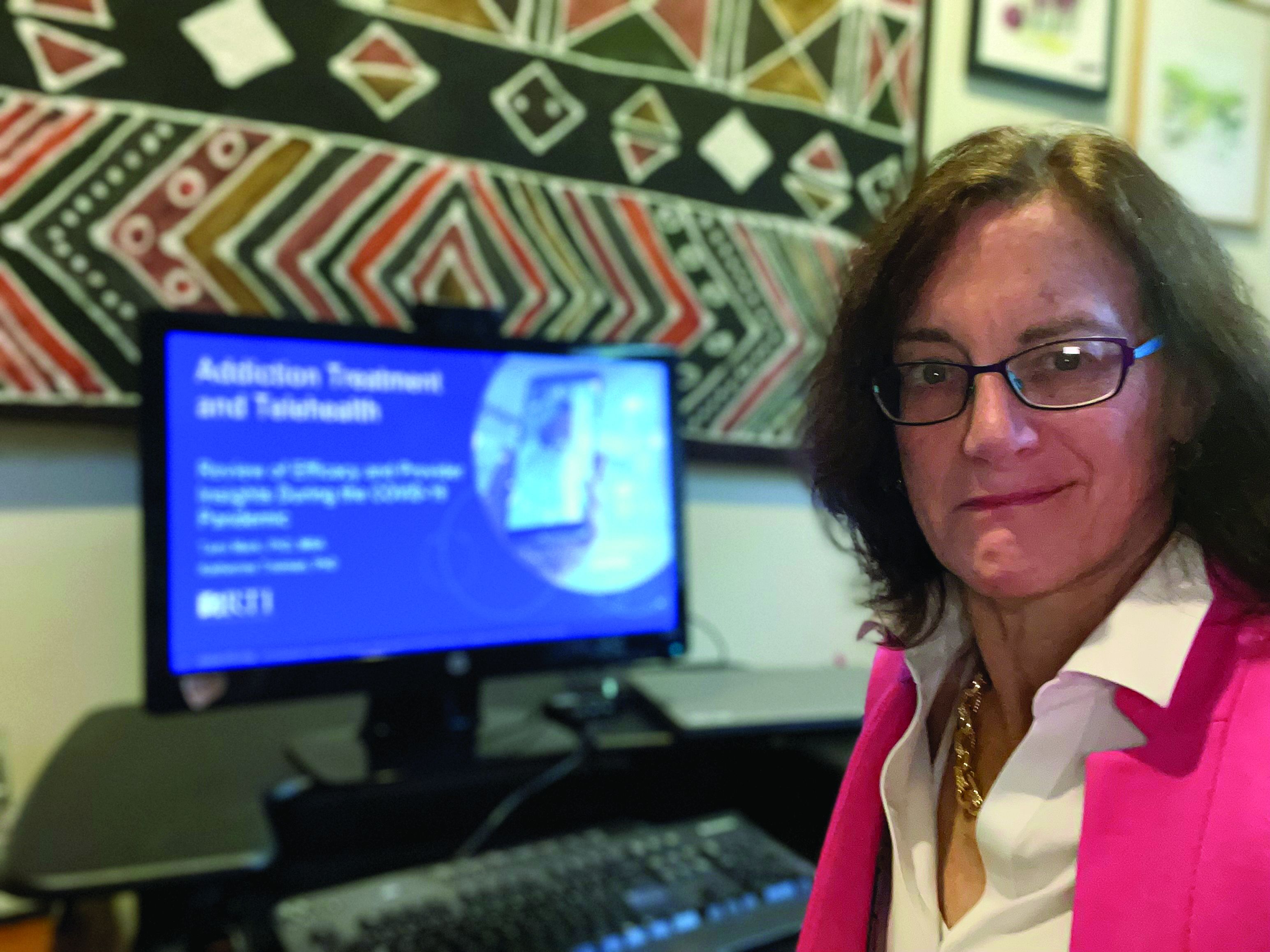
Others felt strongly that patients with substance use disorders need personal relationships and connectedness, which are hard to establish virtually.
They also noted that it is more difficult to sense how a patient is doing when meeting virtually and that it can be challenging to keep patients focused online.
“Providers seem to be moving to a hybrid approach where telehealth is used for some patients and some services but not others,” Dr. Mark said.
“Additional research is needed to determine how best to tailor telehealth to each patient’s circumstances and the best mix of in-person and telehealth services,” she added.
Speaking at the briefing, Lisa Dixon, MD, MPH, editor of Psychiatric Services, said the research “tackles arguably the most important issue in psychiatry today – telehealth.”
“The pandemic brought it to the forefront more quickly than otherwise, but appreciation of its potential positive and negative impacts, I think, was inevitable,” said Dr. Dixon.
“Research has taught us a lot, as has our experience, but we have a long way to go in understanding telehealth and addiction treatment. I really like this article because it appreciates some of the unique issues with the treatment for substance use as opposed to other mental health challenges,” said Dr. Dixon.
Funding for the study was provided by the Patient-Centered Outcomes Research Institute. Dr. Mark and Dr. Dixon have disclosed no relevant financial relationships.
A version of this article first appeared on Medscape.com.
Providing addiction treatment remotely via telehealth has the potential to boost patients’ engagement in treatment by improving access and convenience. However, whether telehealth results in better retention or other outcomes than in-person treatment remains an open question, new research indicates.
“Telehealth really might be a game changer for getting people into addiction treatment, but we still need more research to confirm the benefits of telehealth and to determine under what conditions telehealth is best used,” study investigator Tami L. Mark, PhD, said during a press briefing held by the American Psychiatric Association.
The study was published online October 13 in Psychiatric Services ahead of the organization’s first-ever Mental Health Services Conference, which will be held online October 14-15.
COVID turned on the telehealth light switch
“COVID-19 was like turning on a light switch for telehealth,” said Dr. Mark, with the nonprofit research institute RTI International, in Rockville, Maryland.
“Before the COVID-19 public health emergency and stay-at-home order that the governor of California issued in March of 2020, only about 1 in 4 addiction service providers in California offered any type of telehealth. By July 2020, almost 100% were offering telehealth,” she noted.
This was possible through relaxation of federal and state regulations that had previously constrained use of telehealth for addiction treatment. Policymakers and payers are now considering which of these changes should be maintained.
For the study, investigators used mixed qualitative and quantitative methods to assess the efficacy of telehealth for addiction treatment and to gain insights from practitioners regarding their experiences during the pandemic.
They reviewed eight published studies that compared addiction treatment via telehealth with in-person treatment.
Seven found telehealth treatment to be as effective but not more effective than in-person treatment in terms of retention, satisfaction with treatment, therapeutic alliance, and substance use. Most of the studies were small (less than 150 patients).
However, one large study from Canada showed that telehealth facilitated methadone prescribing and improved retention.
The researchers also conducted an online survey in 2020 of 100 California addiction treatment practitioners and interviewed 30 California addiction professionals and other stakeholders.
Survey respondents indicated that more than 50% of their patients were being treated via telehealth for intensive outpatient treatment, individual counseling, group counseling, and intake assessment.
They were less sure about the relative effectiveness of managing medication via telehealth, group counseling, and intake assessments.
Remote challenges
Many of the practitioners interviewed for the study noted that telehealth reduces the time and cost to patients of participating in treatment and that it offers an opportunity for clinicians to observe patients’ home environment and engage patients’ families.
Others felt strongly that patients with substance use disorders need personal relationships and connectedness, which are hard to establish virtually.
They also noted that it is more difficult to sense how a patient is doing when meeting virtually and that it can be challenging to keep patients focused online.
“Providers seem to be moving to a hybrid approach where telehealth is used for some patients and some services but not others,” Dr. Mark said.
“Additional research is needed to determine how best to tailor telehealth to each patient’s circumstances and the best mix of in-person and telehealth services,” she added.
Speaking at the briefing, Lisa Dixon, MD, MPH, editor of Psychiatric Services, said the research “tackles arguably the most important issue in psychiatry today – telehealth.”
“The pandemic brought it to the forefront more quickly than otherwise, but appreciation of its potential positive and negative impacts, I think, was inevitable,” said Dr. Dixon.
“Research has taught us a lot, as has our experience, but we have a long way to go in understanding telehealth and addiction treatment. I really like this article because it appreciates some of the unique issues with the treatment for substance use as opposed to other mental health challenges,” said Dr. Dixon.
Funding for the study was provided by the Patient-Centered Outcomes Research Institute. Dr. Mark and Dr. Dixon have disclosed no relevant financial relationships.
A version of this article first appeared on Medscape.com.
Providing addiction treatment remotely via telehealth has the potential to boost patients’ engagement in treatment by improving access and convenience. However, whether telehealth results in better retention or other outcomes than in-person treatment remains an open question, new research indicates.
“Telehealth really might be a game changer for getting people into addiction treatment, but we still need more research to confirm the benefits of telehealth and to determine under what conditions telehealth is best used,” study investigator Tami L. Mark, PhD, said during a press briefing held by the American Psychiatric Association.
The study was published online October 13 in Psychiatric Services ahead of the organization’s first-ever Mental Health Services Conference, which will be held online October 14-15.
COVID turned on the telehealth light switch
“COVID-19 was like turning on a light switch for telehealth,” said Dr. Mark, with the nonprofit research institute RTI International, in Rockville, Maryland.
“Before the COVID-19 public health emergency and stay-at-home order that the governor of California issued in March of 2020, only about 1 in 4 addiction service providers in California offered any type of telehealth. By July 2020, almost 100% were offering telehealth,” she noted.
This was possible through relaxation of federal and state regulations that had previously constrained use of telehealth for addiction treatment. Policymakers and payers are now considering which of these changes should be maintained.
For the study, investigators used mixed qualitative and quantitative methods to assess the efficacy of telehealth for addiction treatment and to gain insights from practitioners regarding their experiences during the pandemic.
They reviewed eight published studies that compared addiction treatment via telehealth with in-person treatment.
Seven found telehealth treatment to be as effective but not more effective than in-person treatment in terms of retention, satisfaction with treatment, therapeutic alliance, and substance use. Most of the studies were small (less than 150 patients).
However, one large study from Canada showed that telehealth facilitated methadone prescribing and improved retention.
The researchers also conducted an online survey in 2020 of 100 California addiction treatment practitioners and interviewed 30 California addiction professionals and other stakeholders.
Survey respondents indicated that more than 50% of their patients were being treated via telehealth for intensive outpatient treatment, individual counseling, group counseling, and intake assessment.
They were less sure about the relative effectiveness of managing medication via telehealth, group counseling, and intake assessments.
Remote challenges
Many of the practitioners interviewed for the study noted that telehealth reduces the time and cost to patients of participating in treatment and that it offers an opportunity for clinicians to observe patients’ home environment and engage patients’ families.
Others felt strongly that patients with substance use disorders need personal relationships and connectedness, which are hard to establish virtually.
They also noted that it is more difficult to sense how a patient is doing when meeting virtually and that it can be challenging to keep patients focused online.
“Providers seem to be moving to a hybrid approach where telehealth is used for some patients and some services but not others,” Dr. Mark said.
“Additional research is needed to determine how best to tailor telehealth to each patient’s circumstances and the best mix of in-person and telehealth services,” she added.
Speaking at the briefing, Lisa Dixon, MD, MPH, editor of Psychiatric Services, said the research “tackles arguably the most important issue in psychiatry today – telehealth.”
“The pandemic brought it to the forefront more quickly than otherwise, but appreciation of its potential positive and negative impacts, I think, was inevitable,” said Dr. Dixon.
“Research has taught us a lot, as has our experience, but we have a long way to go in understanding telehealth and addiction treatment. I really like this article because it appreciates some of the unique issues with the treatment for substance use as opposed to other mental health challenges,” said Dr. Dixon.
Funding for the study was provided by the Patient-Centered Outcomes Research Institute. Dr. Mark and Dr. Dixon have disclosed no relevant financial relationships.
A version of this article first appeared on Medscape.com.
Many scientists face serious threats for speaking about COVID: Survey
, according to a survey published in Nature.
The survey of 321 scientists, largely from the United States, the United Kingdom, and Germany, found that 22% were threatened with physical or sexual violence and that 15% received death threats.
More than one quarter of scientists surveyed said they “always” or “usually” received comments from trolls or were personally attacked after speaking out about COVID-19. More than 40% suffered emotional or psychological distress as a result.
Some scientists said the experience of being trolled online or receiving personal attacks had a chilling effect on their willingness to speak to the media in the future.
Even scientists who had a high profile before the COVID-19 pandemic said in the Nature article that the abuse was a “new and unwelcome phenomenon tied to the pandemic.”
Some scientists reported anonymously that they were hesitant to speak about some topics after witnessing the abuse received by others.
“Shocking” results require action
An editorial in Nature calls the results of the survey “shocking” and says institutions at all levels must do more to “protect and defend scientists, and to condemn intimidation.
“Intimidation is unacceptable on any scale, and the findings should be of concern to all those who care about scientists’ well-being. Such behavior also risks discouraging researchers from contributing to public discussion — which would be a huge loss, given their expertise, during the pandemic,” the editorial states.
“Scientists and health officials should expect their research to be questioned and challenged, and should welcome critical feedback that is given in good faith. But threats of violence and extreme online abuse do nothing to encourage debate — and risk undermining science communication at a time when it has never mattered more,” the editorial concludes.
A number of scientists weighed in on the survey in a statement from the U.K. nonprofit organization, Science Media Center.
“Undoubtedly there is a danger that scientists who have themselves been, or had colleagues who have been attacked in ways that disturb one’s equilibrium, may decide to disengage from the media. This will be sad and result in overall harm,” warned Stephen Evans, MSc, with the London School of Hygiene and Tropical Medicine.
Simon Clarke, PhD, with the University of Reading, who responded to the Nature survey, said he is “glad to see so many fellow scientists took the time to reflect on their experiences.”
Dr. Clarke said he is “shocked and saddened to hear that so many fellow scientists have experienced death threats or threats of physical or sexual violence, simply for doing their job trying to communicate the scientific facts that are so important for society in understanding and responding to this global health emergency.”
Dr. Clarke said he too has had some “bad experiences after appearing in the media, particularly after calling out conspiracy theorists and some politicians, who seem to dislike having their pet theories debunked. I have on occasion been threatened with various forms of death, violence and lifelong imprisonment. I am fortunate to have felt able to ignore the threats I’ve received, but I know that some colleagues have had far worse experiences.”
Michael Head, PhD, with the University of Southampton, said there’s been “a huge amount of abuse aimed at everyone contributing to the pandemic response. This has included NHS frontline staff, and also scientists and academics providing thoughts and explanatory comments to the public.
“I myself have received plenty of abuse throughout the pandemic. For those of us who have been pulling apart anti-vaccine misinformation from pre-pandemic times, the presence of these attempts at intimidation is very wearying, but not surprising,” said Dr. Head.
“As a white, male academic, I would imagine I’m far less likely to receive abuse than a scientist making similar points but from a different demographic,” he said.
Susan Michie, FMedSci, with the University College London, said the findings of harassment and abuse of scientists during the pandemic align closely with what she and many U.K. women colleagues who have been prominent in speaking to the media have endured.
“The online abuse occurs most intensively after media engagements and especially after those that address restrictions to social mixing, the wearing of face masks or vaccination,” Dr. Michie said.
“This abuse has not put off many women colleagues I know from speaking to the media,” she said. “I think this is because they are well established in their careers and/or brave and very committed to communicating scientific understanding.
“They have also set up a variety of networks to support each other. However, I am concerned that it discourages early career scientists, especially young women and young women from minoritized ethnic backgrounds, from engaging with the media,” she said.
A version of this article first appeared on Medscape.com.
, according to a survey published in Nature.
The survey of 321 scientists, largely from the United States, the United Kingdom, and Germany, found that 22% were threatened with physical or sexual violence and that 15% received death threats.
More than one quarter of scientists surveyed said they “always” or “usually” received comments from trolls or were personally attacked after speaking out about COVID-19. More than 40% suffered emotional or psychological distress as a result.
Some scientists said the experience of being trolled online or receiving personal attacks had a chilling effect on their willingness to speak to the media in the future.
Even scientists who had a high profile before the COVID-19 pandemic said in the Nature article that the abuse was a “new and unwelcome phenomenon tied to the pandemic.”
Some scientists reported anonymously that they were hesitant to speak about some topics after witnessing the abuse received by others.
“Shocking” results require action
An editorial in Nature calls the results of the survey “shocking” and says institutions at all levels must do more to “protect and defend scientists, and to condemn intimidation.
“Intimidation is unacceptable on any scale, and the findings should be of concern to all those who care about scientists’ well-being. Such behavior also risks discouraging researchers from contributing to public discussion — which would be a huge loss, given their expertise, during the pandemic,” the editorial states.
“Scientists and health officials should expect their research to be questioned and challenged, and should welcome critical feedback that is given in good faith. But threats of violence and extreme online abuse do nothing to encourage debate — and risk undermining science communication at a time when it has never mattered more,” the editorial concludes.
A number of scientists weighed in on the survey in a statement from the U.K. nonprofit organization, Science Media Center.
“Undoubtedly there is a danger that scientists who have themselves been, or had colleagues who have been attacked in ways that disturb one’s equilibrium, may decide to disengage from the media. This will be sad and result in overall harm,” warned Stephen Evans, MSc, with the London School of Hygiene and Tropical Medicine.
Simon Clarke, PhD, with the University of Reading, who responded to the Nature survey, said he is “glad to see so many fellow scientists took the time to reflect on their experiences.”
Dr. Clarke said he is “shocked and saddened to hear that so many fellow scientists have experienced death threats or threats of physical or sexual violence, simply for doing their job trying to communicate the scientific facts that are so important for society in understanding and responding to this global health emergency.”
Dr. Clarke said he too has had some “bad experiences after appearing in the media, particularly after calling out conspiracy theorists and some politicians, who seem to dislike having their pet theories debunked. I have on occasion been threatened with various forms of death, violence and lifelong imprisonment. I am fortunate to have felt able to ignore the threats I’ve received, but I know that some colleagues have had far worse experiences.”
Michael Head, PhD, with the University of Southampton, said there’s been “a huge amount of abuse aimed at everyone contributing to the pandemic response. This has included NHS frontline staff, and also scientists and academics providing thoughts and explanatory comments to the public.
“I myself have received plenty of abuse throughout the pandemic. For those of us who have been pulling apart anti-vaccine misinformation from pre-pandemic times, the presence of these attempts at intimidation is very wearying, but not surprising,” said Dr. Head.
“As a white, male academic, I would imagine I’m far less likely to receive abuse than a scientist making similar points but from a different demographic,” he said.
Susan Michie, FMedSci, with the University College London, said the findings of harassment and abuse of scientists during the pandemic align closely with what she and many U.K. women colleagues who have been prominent in speaking to the media have endured.
“The online abuse occurs most intensively after media engagements and especially after those that address restrictions to social mixing, the wearing of face masks or vaccination,” Dr. Michie said.
“This abuse has not put off many women colleagues I know from speaking to the media,” she said. “I think this is because they are well established in their careers and/or brave and very committed to communicating scientific understanding.
“They have also set up a variety of networks to support each other. However, I am concerned that it discourages early career scientists, especially young women and young women from minoritized ethnic backgrounds, from engaging with the media,” she said.
A version of this article first appeared on Medscape.com.
, according to a survey published in Nature.
The survey of 321 scientists, largely from the United States, the United Kingdom, and Germany, found that 22% were threatened with physical or sexual violence and that 15% received death threats.
More than one quarter of scientists surveyed said they “always” or “usually” received comments from trolls or were personally attacked after speaking out about COVID-19. More than 40% suffered emotional or psychological distress as a result.
Some scientists said the experience of being trolled online or receiving personal attacks had a chilling effect on their willingness to speak to the media in the future.
Even scientists who had a high profile before the COVID-19 pandemic said in the Nature article that the abuse was a “new and unwelcome phenomenon tied to the pandemic.”
Some scientists reported anonymously that they were hesitant to speak about some topics after witnessing the abuse received by others.
“Shocking” results require action
An editorial in Nature calls the results of the survey “shocking” and says institutions at all levels must do more to “protect and defend scientists, and to condemn intimidation.
“Intimidation is unacceptable on any scale, and the findings should be of concern to all those who care about scientists’ well-being. Such behavior also risks discouraging researchers from contributing to public discussion — which would be a huge loss, given their expertise, during the pandemic,” the editorial states.
“Scientists and health officials should expect their research to be questioned and challenged, and should welcome critical feedback that is given in good faith. But threats of violence and extreme online abuse do nothing to encourage debate — and risk undermining science communication at a time when it has never mattered more,” the editorial concludes.
A number of scientists weighed in on the survey in a statement from the U.K. nonprofit organization, Science Media Center.
“Undoubtedly there is a danger that scientists who have themselves been, or had colleagues who have been attacked in ways that disturb one’s equilibrium, may decide to disengage from the media. This will be sad and result in overall harm,” warned Stephen Evans, MSc, with the London School of Hygiene and Tropical Medicine.
Simon Clarke, PhD, with the University of Reading, who responded to the Nature survey, said he is “glad to see so many fellow scientists took the time to reflect on their experiences.”
Dr. Clarke said he is “shocked and saddened to hear that so many fellow scientists have experienced death threats or threats of physical or sexual violence, simply for doing their job trying to communicate the scientific facts that are so important for society in understanding and responding to this global health emergency.”
Dr. Clarke said he too has had some “bad experiences after appearing in the media, particularly after calling out conspiracy theorists and some politicians, who seem to dislike having their pet theories debunked. I have on occasion been threatened with various forms of death, violence and lifelong imprisonment. I am fortunate to have felt able to ignore the threats I’ve received, but I know that some colleagues have had far worse experiences.”
Michael Head, PhD, with the University of Southampton, said there’s been “a huge amount of abuse aimed at everyone contributing to the pandemic response. This has included NHS frontline staff, and also scientists and academics providing thoughts and explanatory comments to the public.
“I myself have received plenty of abuse throughout the pandemic. For those of us who have been pulling apart anti-vaccine misinformation from pre-pandemic times, the presence of these attempts at intimidation is very wearying, but not surprising,” said Dr. Head.
“As a white, male academic, I would imagine I’m far less likely to receive abuse than a scientist making similar points but from a different demographic,” he said.
Susan Michie, FMedSci, with the University College London, said the findings of harassment and abuse of scientists during the pandemic align closely with what she and many U.K. women colleagues who have been prominent in speaking to the media have endured.
“The online abuse occurs most intensively after media engagements and especially after those that address restrictions to social mixing, the wearing of face masks or vaccination,” Dr. Michie said.
“This abuse has not put off many women colleagues I know from speaking to the media,” she said. “I think this is because they are well established in their careers and/or brave and very committed to communicating scientific understanding.
“They have also set up a variety of networks to support each other. However, I am concerned that it discourages early career scientists, especially young women and young women from minoritized ethnic backgrounds, from engaging with the media,” she said.
A version of this article first appeared on Medscape.com.
‘Fascinating’ link between Alzheimer’s and COVID-19
The findings could lead to new treatment targets to slow progression and severity of both diseases.
Investigators found that a single genetic variant in the oligoadenylate synthetase 1 (OAS1) gene increases the risk for AD and that related variants in the same gene increase the likelihood of severe COVID-19 outcomes.
“These findings may allow us to identify new drug targets to slow progression of both diseases and reduce their severity,” Dervis Salih, PhD, senior research associate, UK Dementia Research Institute, University College London, said in an interview.
“Our work also suggests new approaches to treat both diseases with the same drugs,” Dr. Salih added.
The study was published online Oct. 7 in Brain.
Shared genetic network
The OAS1 gene is expressed in microglia, a type of immune cell that makes up around 10% of all cells in the brain.
In earlier work, investigators found evidence suggesting a link between the OAS1 gene and AD, but the function of the gene in microglia was unknown.
To further investigate the gene’s link to AD, they sequenced genetic data from 2,547 people – half with AD, and half without.
The genotyping analysis confirmed that the single-nucleotide polymorphism (SNP) rs1131454 within OAS1 is significantly associated with AD.
Given that the same OAS1 locus has recently been linked with severe COVID-19 outcomes, the researchers investigated four variants on the OAS1 gene.
Results indicate that SNPs within OAS1 associated with AD also show linkage to SNP variants associated with critical illness in COVID-19.
The rs1131454 (risk allele A) and rs4766676 (risk allele T) are associated with AD, and rs10735079 (risk allele A) and rs6489867 (risk allele T) are associated with critical illness with COVID-19, the investigators reported. All of these risk alleles dampen expression of OAS1.
“This study also provides strong new evidence that interferon signaling by the innate immune system plays a substantial role in the progression of Alzheimer’s,” said Dr. Salih.
“Identifying this shared genetic network in innate immune cells will allow us with future work to identify new biomarkers to track disease progression and also predict disease risk better for both disorders,” he added.
‘Fascinating’ link
In a statement from the UK nonprofit organization, Science Media Center, Kenneth Baillie, MBChB, with the University of Edinburgh, said this study builds on a discovery he and his colleagues made last year that OAS1 variants are associated with severe COVID-19.
“In the ISARIC4C study, we recently found that this is probably due to a change in the way cell membranes detect viruses, but this mechanism doesn’t explain the fascinating association with Alzheimer’s disease reported in this new work,” Dr. Baillie said.
“It is often the case that the same gene can have different roles in different parts of the body. Importantly, it doesn’t mean that having COVID-19 has any effect on your risk of Alzheimer’s,” he added.
Also weighing in on the new study, Jonathan Schott, MD, professor of neurology, University College London, noted that dementia is the “main preexisting health condition associated with COVID-19 mortality, accounting for about one in four deaths from COVID-19 between March and June 2020.
“While some of this excessive mortality may relate to people with dementia being overrepresented in care homes, which were particularly hard hit by the pandemic, or due to general increased vulnerability to infections, there have been questions as to whether there are common factors that might increase susceptibility both to developing dementia and to dying from COVID-19,” Dr. Schott explained.
This “elegant paper” provides evidence for the latter, “suggesting a common genetic mechanism both for Alzheimer’s disease and for severe COVID-19 infection,” Dr. Schott said.
“The identification of a genetic risk factor and elucidation of inflammatory pathways through which it may increase risk has important implications for our understanding of both diseases, with potential implications for novel treatments,” he added.
The study was funded by the UK Dementia Research Institute. The authors have disclosed no relevant financial relationships. Dr. Schott serves as chief medical officer for Alzheimer’s Research UK and is clinical adviser to the UK Dementia Research Institute. Dr. Baillie has disclosed no relevant financial relationships.
A version of this article first appeared on Medscape.com.
The findings could lead to new treatment targets to slow progression and severity of both diseases.
Investigators found that a single genetic variant in the oligoadenylate synthetase 1 (OAS1) gene increases the risk for AD and that related variants in the same gene increase the likelihood of severe COVID-19 outcomes.
“These findings may allow us to identify new drug targets to slow progression of both diseases and reduce their severity,” Dervis Salih, PhD, senior research associate, UK Dementia Research Institute, University College London, said in an interview.
“Our work also suggests new approaches to treat both diseases with the same drugs,” Dr. Salih added.
The study was published online Oct. 7 in Brain.
Shared genetic network
The OAS1 gene is expressed in microglia, a type of immune cell that makes up around 10% of all cells in the brain.
In earlier work, investigators found evidence suggesting a link between the OAS1 gene and AD, but the function of the gene in microglia was unknown.
To further investigate the gene’s link to AD, they sequenced genetic data from 2,547 people – half with AD, and half without.
The genotyping analysis confirmed that the single-nucleotide polymorphism (SNP) rs1131454 within OAS1 is significantly associated with AD.
Given that the same OAS1 locus has recently been linked with severe COVID-19 outcomes, the researchers investigated four variants on the OAS1 gene.
Results indicate that SNPs within OAS1 associated with AD also show linkage to SNP variants associated with critical illness in COVID-19.
The rs1131454 (risk allele A) and rs4766676 (risk allele T) are associated with AD, and rs10735079 (risk allele A) and rs6489867 (risk allele T) are associated with critical illness with COVID-19, the investigators reported. All of these risk alleles dampen expression of OAS1.
“This study also provides strong new evidence that interferon signaling by the innate immune system plays a substantial role in the progression of Alzheimer’s,” said Dr. Salih.
“Identifying this shared genetic network in innate immune cells will allow us with future work to identify new biomarkers to track disease progression and also predict disease risk better for both disorders,” he added.
‘Fascinating’ link
In a statement from the UK nonprofit organization, Science Media Center, Kenneth Baillie, MBChB, with the University of Edinburgh, said this study builds on a discovery he and his colleagues made last year that OAS1 variants are associated with severe COVID-19.
“In the ISARIC4C study, we recently found that this is probably due to a change in the way cell membranes detect viruses, but this mechanism doesn’t explain the fascinating association with Alzheimer’s disease reported in this new work,” Dr. Baillie said.
“It is often the case that the same gene can have different roles in different parts of the body. Importantly, it doesn’t mean that having COVID-19 has any effect on your risk of Alzheimer’s,” he added.
Also weighing in on the new study, Jonathan Schott, MD, professor of neurology, University College London, noted that dementia is the “main preexisting health condition associated with COVID-19 mortality, accounting for about one in four deaths from COVID-19 between March and June 2020.
“While some of this excessive mortality may relate to people with dementia being overrepresented in care homes, which were particularly hard hit by the pandemic, or due to general increased vulnerability to infections, there have been questions as to whether there are common factors that might increase susceptibility both to developing dementia and to dying from COVID-19,” Dr. Schott explained.
This “elegant paper” provides evidence for the latter, “suggesting a common genetic mechanism both for Alzheimer’s disease and for severe COVID-19 infection,” Dr. Schott said.
“The identification of a genetic risk factor and elucidation of inflammatory pathways through which it may increase risk has important implications for our understanding of both diseases, with potential implications for novel treatments,” he added.
The study was funded by the UK Dementia Research Institute. The authors have disclosed no relevant financial relationships. Dr. Schott serves as chief medical officer for Alzheimer’s Research UK and is clinical adviser to the UK Dementia Research Institute. Dr. Baillie has disclosed no relevant financial relationships.
A version of this article first appeared on Medscape.com.
The findings could lead to new treatment targets to slow progression and severity of both diseases.
Investigators found that a single genetic variant in the oligoadenylate synthetase 1 (OAS1) gene increases the risk for AD and that related variants in the same gene increase the likelihood of severe COVID-19 outcomes.
“These findings may allow us to identify new drug targets to slow progression of both diseases and reduce their severity,” Dervis Salih, PhD, senior research associate, UK Dementia Research Institute, University College London, said in an interview.
“Our work also suggests new approaches to treat both diseases with the same drugs,” Dr. Salih added.
The study was published online Oct. 7 in Brain.
Shared genetic network
The OAS1 gene is expressed in microglia, a type of immune cell that makes up around 10% of all cells in the brain.
In earlier work, investigators found evidence suggesting a link between the OAS1 gene and AD, but the function of the gene in microglia was unknown.
To further investigate the gene’s link to AD, they sequenced genetic data from 2,547 people – half with AD, and half without.
The genotyping analysis confirmed that the single-nucleotide polymorphism (SNP) rs1131454 within OAS1 is significantly associated with AD.
Given that the same OAS1 locus has recently been linked with severe COVID-19 outcomes, the researchers investigated four variants on the OAS1 gene.
Results indicate that SNPs within OAS1 associated with AD also show linkage to SNP variants associated with critical illness in COVID-19.
The rs1131454 (risk allele A) and rs4766676 (risk allele T) are associated with AD, and rs10735079 (risk allele A) and rs6489867 (risk allele T) are associated with critical illness with COVID-19, the investigators reported. All of these risk alleles dampen expression of OAS1.
“This study also provides strong new evidence that interferon signaling by the innate immune system plays a substantial role in the progression of Alzheimer’s,” said Dr. Salih.
“Identifying this shared genetic network in innate immune cells will allow us with future work to identify new biomarkers to track disease progression and also predict disease risk better for both disorders,” he added.
‘Fascinating’ link
In a statement from the UK nonprofit organization, Science Media Center, Kenneth Baillie, MBChB, with the University of Edinburgh, said this study builds on a discovery he and his colleagues made last year that OAS1 variants are associated with severe COVID-19.
“In the ISARIC4C study, we recently found that this is probably due to a change in the way cell membranes detect viruses, but this mechanism doesn’t explain the fascinating association with Alzheimer’s disease reported in this new work,” Dr. Baillie said.
“It is often the case that the same gene can have different roles in different parts of the body. Importantly, it doesn’t mean that having COVID-19 has any effect on your risk of Alzheimer’s,” he added.
Also weighing in on the new study, Jonathan Schott, MD, professor of neurology, University College London, noted that dementia is the “main preexisting health condition associated with COVID-19 mortality, accounting for about one in four deaths from COVID-19 between March and June 2020.
“While some of this excessive mortality may relate to people with dementia being overrepresented in care homes, which were particularly hard hit by the pandemic, or due to general increased vulnerability to infections, there have been questions as to whether there are common factors that might increase susceptibility both to developing dementia and to dying from COVID-19,” Dr. Schott explained.
This “elegant paper” provides evidence for the latter, “suggesting a common genetic mechanism both for Alzheimer’s disease and for severe COVID-19 infection,” Dr. Schott said.
“The identification of a genetic risk factor and elucidation of inflammatory pathways through which it may increase risk has important implications for our understanding of both diseases, with potential implications for novel treatments,” he added.
The study was funded by the UK Dementia Research Institute. The authors have disclosed no relevant financial relationships. Dr. Schott serves as chief medical officer for Alzheimer’s Research UK and is clinical adviser to the UK Dementia Research Institute. Dr. Baillie has disclosed no relevant financial relationships.
A version of this article first appeared on Medscape.com.
New FDA guidance aims to cut sodium in processed foods
The Food and Drug Administration has issued voluntary, short-term sodium reduction targets for food manufacturers, chain restaurants, and food service operators for processed, packaged, and prepared foods, with an eye toward reducing diet-related conditions such as heart disease and obesity.
The new targets seek to decrease average sodium intake from approximately 3,400 mg/day to 3,000 mg/day, about a 12% reduction, over the next 2.5 years, acting FDA Commissioner Janet Woodcock, MD, and Susan Mayne, PhD, director of the FDA’s Center for Food Safety and Applied Nutrition, said in joint statement.
Although this reduction keeps the average intake above the recommended limit of 2,300 mg/day for individuals 14 years and older as per the Dietary Guidelines for Americans, “we know that even these modest reductions made slowly over the next few years will substantially decrease diet-related diseases,” they added.
The FDA first proposed recommendations for reducing sodium content in draft guidance released in 2016.
Since, then a number of companies in the food industry have already made changes to sodium content in their products, “which is encouraging, but additional support across all types of foods to help consumers meet recommended sodium limits is needed,” Dr. Woodcock and Dr. Mayne said.
They emphasized that the new guidance represents short-term goals that the food industry should work to meet as soon as possible to help optimize public health.
“We will continue our discussions with the food industry as we monitor the sodium content of the food supply to evaluate progress. In the future, we plan to issue revised, subsequent targets to further lower the sodium content incrementally and continue to help reduce sodium intake,” Dr. Woodcock and Dr. Mayne said.
AHA: A good first step that does not go far enough
In a statement, the American Heart Association said the new targets will play “a critical role in helping people across the country achieve healthier levels of sodium and improved well-being overall. These targets will be an important driver to reduce sodium consumption, which can have significant health benefits and lead to lower medical costs.”
“Lowering sodium levels in the food supply would reduce risk of hypertension, heart disease, stroke, heart attack, and death in addition to saving billions of dollars in health care costs over the next decade,” the AHA said.
But the AHA also said lowering sodium intake to 3,000 mg/day is not enough.
“Lowering sodium further to 2,300 mg could prevent an estimated 450,000 cases of cardiovascular disease, gain 2 million quality-adjusted life-years, and save approximately $40 billion in health care costs over a 20-year period,” the AHA said.
The AHA is urging the FDA to “follow [this] action with additional targets to further lower the amount of sodium in the food supply and help people in America attain an appropriate sodium intake.”
A version of this article first appeared on Medscape.com.
The Food and Drug Administration has issued voluntary, short-term sodium reduction targets for food manufacturers, chain restaurants, and food service operators for processed, packaged, and prepared foods, with an eye toward reducing diet-related conditions such as heart disease and obesity.
The new targets seek to decrease average sodium intake from approximately 3,400 mg/day to 3,000 mg/day, about a 12% reduction, over the next 2.5 years, acting FDA Commissioner Janet Woodcock, MD, and Susan Mayne, PhD, director of the FDA’s Center for Food Safety and Applied Nutrition, said in joint statement.
Although this reduction keeps the average intake above the recommended limit of 2,300 mg/day for individuals 14 years and older as per the Dietary Guidelines for Americans, “we know that even these modest reductions made slowly over the next few years will substantially decrease diet-related diseases,” they added.
The FDA first proposed recommendations for reducing sodium content in draft guidance released in 2016.
Since, then a number of companies in the food industry have already made changes to sodium content in their products, “which is encouraging, but additional support across all types of foods to help consumers meet recommended sodium limits is needed,” Dr. Woodcock and Dr. Mayne said.
They emphasized that the new guidance represents short-term goals that the food industry should work to meet as soon as possible to help optimize public health.
“We will continue our discussions with the food industry as we monitor the sodium content of the food supply to evaluate progress. In the future, we plan to issue revised, subsequent targets to further lower the sodium content incrementally and continue to help reduce sodium intake,” Dr. Woodcock and Dr. Mayne said.
AHA: A good first step that does not go far enough
In a statement, the American Heart Association said the new targets will play “a critical role in helping people across the country achieve healthier levels of sodium and improved well-being overall. These targets will be an important driver to reduce sodium consumption, which can have significant health benefits and lead to lower medical costs.”
“Lowering sodium levels in the food supply would reduce risk of hypertension, heart disease, stroke, heart attack, and death in addition to saving billions of dollars in health care costs over the next decade,” the AHA said.
But the AHA also said lowering sodium intake to 3,000 mg/day is not enough.
“Lowering sodium further to 2,300 mg could prevent an estimated 450,000 cases of cardiovascular disease, gain 2 million quality-adjusted life-years, and save approximately $40 billion in health care costs over a 20-year period,” the AHA said.
The AHA is urging the FDA to “follow [this] action with additional targets to further lower the amount of sodium in the food supply and help people in America attain an appropriate sodium intake.”
A version of this article first appeared on Medscape.com.
The Food and Drug Administration has issued voluntary, short-term sodium reduction targets for food manufacturers, chain restaurants, and food service operators for processed, packaged, and prepared foods, with an eye toward reducing diet-related conditions such as heart disease and obesity.
The new targets seek to decrease average sodium intake from approximately 3,400 mg/day to 3,000 mg/day, about a 12% reduction, over the next 2.5 years, acting FDA Commissioner Janet Woodcock, MD, and Susan Mayne, PhD, director of the FDA’s Center for Food Safety and Applied Nutrition, said in joint statement.
Although this reduction keeps the average intake above the recommended limit of 2,300 mg/day for individuals 14 years and older as per the Dietary Guidelines for Americans, “we know that even these modest reductions made slowly over the next few years will substantially decrease diet-related diseases,” they added.
The FDA first proposed recommendations for reducing sodium content in draft guidance released in 2016.
Since, then a number of companies in the food industry have already made changes to sodium content in their products, “which is encouraging, but additional support across all types of foods to help consumers meet recommended sodium limits is needed,” Dr. Woodcock and Dr. Mayne said.
They emphasized that the new guidance represents short-term goals that the food industry should work to meet as soon as possible to help optimize public health.
“We will continue our discussions with the food industry as we monitor the sodium content of the food supply to evaluate progress. In the future, we plan to issue revised, subsequent targets to further lower the sodium content incrementally and continue to help reduce sodium intake,” Dr. Woodcock and Dr. Mayne said.
AHA: A good first step that does not go far enough
In a statement, the American Heart Association said the new targets will play “a critical role in helping people across the country achieve healthier levels of sodium and improved well-being overall. These targets will be an important driver to reduce sodium consumption, which can have significant health benefits and lead to lower medical costs.”
“Lowering sodium levels in the food supply would reduce risk of hypertension, heart disease, stroke, heart attack, and death in addition to saving billions of dollars in health care costs over the next decade,” the AHA said.
But the AHA also said lowering sodium intake to 3,000 mg/day is not enough.
“Lowering sodium further to 2,300 mg could prevent an estimated 450,000 cases of cardiovascular disease, gain 2 million quality-adjusted life-years, and save approximately $40 billion in health care costs over a 20-year period,” the AHA said.
The AHA is urging the FDA to “follow [this] action with additional targets to further lower the amount of sodium in the food supply and help people in America attain an appropriate sodium intake.”
A version of this article first appeared on Medscape.com.
High-dose omega-3s tied to higher AFib risk
Taking high-doses of marine omega-3 fatty acids, more than 1 gram daily, may raise the risk for atrial fibrillation (AFib), according to a meta-analysis of relevant research.

However, the risk of developing AFib appears to be “relatively small” for those taking 1 gram or less of fish oil per day, Christine M. Albert, MD, chair of the department of cardiology at the Smidt Heart Institute at Cedars-Sinai, Los Angeles, told this news organization.
The study was published online Oct. 6 in the journal Circulation.
It’s estimated that 7.8% of U.S. adults – almost 19 million in all – take fish oil supplements, often unbeknownst to their health care providers, the researchers noted. Yet, the literature on the effects of omega-3 fatty acid supplementation on cardiovascular outcomes are mixed.
“Some, but not all” large-scale randomized controlled trials investigating the effects of marine omega-3 fatty acid supplements on cardiovascular outcomes have reported increased risks for AFib. The potential reasons for differing findings may be dose related, the authors note in their paper.
The goal of this meta-analysis was to “bring clarity, answers, and actionable information” to doctors and patients, said Dr. Albert. The results suggest, however, that there may not be a “straightforward answer” to whether fish oil is good or bad for AFib. Instead, the answer may depend on the dose, she added.
Pooled data
After screening 4,049 articles and abstracts, the researchers included in their analysis seven large-scale randomized controlled trials reporting cardiovascular outcomes of marine omega-3 fatty acids.
The trials reported results for AFib, either as prespecified outcome, adverse event, or a reason for hospitalization. Each had a minimum of 500 patients and a median follow-up of at least 1 year.
Trials examining the effects of omega-3 fatty acids on recurrent AFib in patients with established AFib or postoperative AFib were excluded.
The seven trials enrolled a total of 81,210 patients (mean age, 65 years; 39% women); 72.6% of participants were enrolled in clinical trials testing ≤1 gram of marine omega-3 fatty acids per day and 27.4% were enrolled in clinical trials testing >1 gram of the supplement per day. The weighted average follow-up was 4.9 years.
Overall, use of omega-3 fatty acids was associated with a 25% increased risk for AFib (hazard ratio, 1.25; 95% confidence interval, 1.07-1.46; P = .013).
In analyses stratified by dose, the risk for AFib was “significantly more pronounced” in trials testing high doses of marine omega-3 fatty acid supplements (>1 gram per day: HR, 1.49; 95% CI, 1.04-2.15; P = .042) compared with those testing lower doses (≤1 gram per day: HR, 1.12; 95% CI, 1.03-1.22; P = .024; P for interaction < .001).
In meta-regression, the HR for AFib increased per 1 gram increase in daily omega-3 fatty acid dose (HR. 1.11; 95% CI, 1.06-1.15; P = .001).
Risk-benefit balance
“This meta-analysis adds new evidence regarding the risk of AFib in patients taking marine omega-3 fatty acid supplements,” wrote Dr. Albert and colleagues.
“Since the benefit of omega-3 fatty acids also appears to be dose dependent, the associated risk of AFib should be balanced against the benefit on atherosclerotic cardiovascular outcomes,” they suggested.
They cautioned that the meta-analysis pooled aggregate-level trial data, not individual patient data. Therefore, subgroup analyses by age or other patient level characteristics were not possible.
The risk of developing AFib increases with advancing age and is more common in men than in women. Additional risk factors include elevated blood pressure, coronary artery disease, heart failure, heart valve defects, obesity, and diabetes.
The authors said the potential risk of developing AFib with high doses of omega-3 fatty acid supplements should be discussed with patients and they should know the signs and symptoms of the condition.
The study had no specific funding. Dr. Albert has received grants from St. Jude Medical, Abbott, and Roche Diagnostics.
A version of this article first appeared on Medscape.com.
Taking high-doses of marine omega-3 fatty acids, more than 1 gram daily, may raise the risk for atrial fibrillation (AFib), according to a meta-analysis of relevant research.
However, the risk of developing AFib appears to be “relatively small” for those taking 1 gram or less of fish oil per day, Christine M. Albert, MD, chair of the department of cardiology at the Smidt Heart Institute at Cedars-Sinai, Los Angeles, told this news organization.
The study was published online Oct. 6 in the journal Circulation.
It’s estimated that 7.8% of U.S. adults – almost 19 million in all – take fish oil supplements, often unbeknownst to their health care providers, the researchers noted. Yet, the literature on the effects of omega-3 fatty acid supplementation on cardiovascular outcomes are mixed.
“Some, but not all” large-scale randomized controlled trials investigating the effects of marine omega-3 fatty acid supplements on cardiovascular outcomes have reported increased risks for AFib. The potential reasons for differing findings may be dose related, the authors note in their paper.
The goal of this meta-analysis was to “bring clarity, answers, and actionable information” to doctors and patients, said Dr. Albert. The results suggest, however, that there may not be a “straightforward answer” to whether fish oil is good or bad for AFib. Instead, the answer may depend on the dose, she added.
Pooled data
After screening 4,049 articles and abstracts, the researchers included in their analysis seven large-scale randomized controlled trials reporting cardiovascular outcomes of marine omega-3 fatty acids.
The trials reported results for AFib, either as prespecified outcome, adverse event, or a reason for hospitalization. Each had a minimum of 500 patients and a median follow-up of at least 1 year.
Trials examining the effects of omega-3 fatty acids on recurrent AFib in patients with established AFib or postoperative AFib were excluded.
The seven trials enrolled a total of 81,210 patients (mean age, 65 years; 39% women); 72.6% of participants were enrolled in clinical trials testing ≤1 gram of marine omega-3 fatty acids per day and 27.4% were enrolled in clinical trials testing >1 gram of the supplement per day. The weighted average follow-up was 4.9 years.
Overall, use of omega-3 fatty acids was associated with a 25% increased risk for AFib (hazard ratio, 1.25; 95% confidence interval, 1.07-1.46; P = .013).
In analyses stratified by dose, the risk for AFib was “significantly more pronounced” in trials testing high doses of marine omega-3 fatty acid supplements (>1 gram per day: HR, 1.49; 95% CI, 1.04-2.15; P = .042) compared with those testing lower doses (≤1 gram per day: HR, 1.12; 95% CI, 1.03-1.22; P = .024; P for interaction < .001).
In meta-regression, the HR for AFib increased per 1 gram increase in daily omega-3 fatty acid dose (HR. 1.11; 95% CI, 1.06-1.15; P = .001).
Risk-benefit balance
“This meta-analysis adds new evidence regarding the risk of AFib in patients taking marine omega-3 fatty acid supplements,” wrote Dr. Albert and colleagues.
“Since the benefit of omega-3 fatty acids also appears to be dose dependent, the associated risk of AFib should be balanced against the benefit on atherosclerotic cardiovascular outcomes,” they suggested.
They cautioned that the meta-analysis pooled aggregate-level trial data, not individual patient data. Therefore, subgroup analyses by age or other patient level characteristics were not possible.
The risk of developing AFib increases with advancing age and is more common in men than in women. Additional risk factors include elevated blood pressure, coronary artery disease, heart failure, heart valve defects, obesity, and diabetes.
The authors said the potential risk of developing AFib with high doses of omega-3 fatty acid supplements should be discussed with patients and they should know the signs and symptoms of the condition.
The study had no specific funding. Dr. Albert has received grants from St. Jude Medical, Abbott, and Roche Diagnostics.
A version of this article first appeared on Medscape.com.
Taking high-doses of marine omega-3 fatty acids, more than 1 gram daily, may raise the risk for atrial fibrillation (AFib), according to a meta-analysis of relevant research.
However, the risk of developing AFib appears to be “relatively small” for those taking 1 gram or less of fish oil per day, Christine M. Albert, MD, chair of the department of cardiology at the Smidt Heart Institute at Cedars-Sinai, Los Angeles, told this news organization.
The study was published online Oct. 6 in the journal Circulation.
It’s estimated that 7.8% of U.S. adults – almost 19 million in all – take fish oil supplements, often unbeknownst to their health care providers, the researchers noted. Yet, the literature on the effects of omega-3 fatty acid supplementation on cardiovascular outcomes are mixed.
“Some, but not all” large-scale randomized controlled trials investigating the effects of marine omega-3 fatty acid supplements on cardiovascular outcomes have reported increased risks for AFib. The potential reasons for differing findings may be dose related, the authors note in their paper.
The goal of this meta-analysis was to “bring clarity, answers, and actionable information” to doctors and patients, said Dr. Albert. The results suggest, however, that there may not be a “straightforward answer” to whether fish oil is good or bad for AFib. Instead, the answer may depend on the dose, she added.
Pooled data
After screening 4,049 articles and abstracts, the researchers included in their analysis seven large-scale randomized controlled trials reporting cardiovascular outcomes of marine omega-3 fatty acids.
The trials reported results for AFib, either as prespecified outcome, adverse event, or a reason for hospitalization. Each had a minimum of 500 patients and a median follow-up of at least 1 year.
Trials examining the effects of omega-3 fatty acids on recurrent AFib in patients with established AFib or postoperative AFib were excluded.
The seven trials enrolled a total of 81,210 patients (mean age, 65 years; 39% women); 72.6% of participants were enrolled in clinical trials testing ≤1 gram of marine omega-3 fatty acids per day and 27.4% were enrolled in clinical trials testing >1 gram of the supplement per day. The weighted average follow-up was 4.9 years.
Overall, use of omega-3 fatty acids was associated with a 25% increased risk for AFib (hazard ratio, 1.25; 95% confidence interval, 1.07-1.46; P = .013).
In analyses stratified by dose, the risk for AFib was “significantly more pronounced” in trials testing high doses of marine omega-3 fatty acid supplements (>1 gram per day: HR, 1.49; 95% CI, 1.04-2.15; P = .042) compared with those testing lower doses (≤1 gram per day: HR, 1.12; 95% CI, 1.03-1.22; P = .024; P for interaction < .001).
In meta-regression, the HR for AFib increased per 1 gram increase in daily omega-3 fatty acid dose (HR. 1.11; 95% CI, 1.06-1.15; P = .001).
Risk-benefit balance
“This meta-analysis adds new evidence regarding the risk of AFib in patients taking marine omega-3 fatty acid supplements,” wrote Dr. Albert and colleagues.
“Since the benefit of omega-3 fatty acids also appears to be dose dependent, the associated risk of AFib should be balanced against the benefit on atherosclerotic cardiovascular outcomes,” they suggested.
They cautioned that the meta-analysis pooled aggregate-level trial data, not individual patient data. Therefore, subgroup analyses by age or other patient level characteristics were not possible.
The risk of developing AFib increases with advancing age and is more common in men than in women. Additional risk factors include elevated blood pressure, coronary artery disease, heart failure, heart valve defects, obesity, and diabetes.
The authors said the potential risk of developing AFib with high doses of omega-3 fatty acid supplements should be discussed with patients and they should know the signs and symptoms of the condition.
The study had no specific funding. Dr. Albert has received grants from St. Jude Medical, Abbott, and Roche Diagnostics.
A version of this article first appeared on Medscape.com.
Lie down for orthostatic hypotension assessment
New research shows that supine orthostatic hypotension is more common and better predicts falls and orthostatic symptoms than seated OH, supporting a supine OH protocol in clinical practice, the researchers say.

“Older adults at risk for falls undergoing assessment for OH should lie supine rather than sitting prior to standing to get the most informative OH assessment,” study author Stephen Juraschek, MD, PhD, Beth Israel Deaconess Medical Center/Harvard Medical School, Boston, said in an interview.
“The findings call for a change in current practice,” Dr. Juraschek said.
He presented the study Sept. 29 at the joint scientific sessions of the American Heart Association Council on Hypertension, AHA Council on Kidney in Cardiovascular Disease, and American Society of Hypertension.
The seated position for detecting OH is “commonly used for convenience. Since many clinics already perform a seated blood pressure, it saves time for people to stand shortly afterward,” he explained.
“It has also been thought that the two are interchangeable [i.e., the change in blood pressure from seated to standing was just a lower magnitude than the change from supine to standing]. However, we showed that the physiology is on average quite different, questioning prior perspectives on the interchangeability of the two protocols,” he added.
The researchers studied 522 adults (mean age, 76 years; 42% women) at high risk for falls and with vitamin D levels in the insufficient/deficient range participating in the Study to Understand Fall Reduction and Vitamin D (STURDY).
The study showed that vitamin D supplementation was not associated with OH or the main study outcome of falls.
The study used two different OH assessment protocols – seated to standing and supine to standing – and Dr. Juraschek’s team used the data to gauge the impact of supine and seated positions on OH prevalence and its relation with fall risk and orthostatic symptoms.
OH was defined as a drop in systolic BP of at least 20 mm Hg or diastolic BP of at least 10 mm Hg.
At baseline, mean BP was 129/68 mm Hg. Mean BP increased 3.4/2.6 mm Hg after sitting, but decreased 3.7/0.7 mm Hg after lying supine.
Of the 953 OH assessments (supine and seated), OH was detected in 14.8% of the supine measurements but in only 2.2% of the seated measures.
Supine OH better predicted falls (hazard ratio, 1.60; 95% CI, 0.98-2.61; P = .06) than seated OH (HR, 0.70; 95% CI, 0.30-1.60; P = .39).
Although both were nonsignificant, “potentially due to power,” the association with falls was stronger for supine OH than for seated OH, Dr. Juraschek said.
In addition, seated OH was not associated with orthostatic symptoms, whereas supine OH was significantly associated with a greater risk of fainting, blacking out, seeing spots, room spinning, and headache in the previous month (P = .048-.002).
Useful study confirms anecdotal evidence
This is a “useful study” from a “reputable” group, “and the results reveal what I would have expected,” Robert Carey, MD, University of Virginia, Charlottesville, who wasn’t involved in the study, said in an interview.

The findings, Dr. Carey said, show that measuring supine, compared with standing, “actually correlates much better with the untoward effects of orthostatic hypotension which are falls and symptoms such as dizziness and spots before your eyes.”
“Seated BP is mostly used for convenience and a little bit shorter protocol. Most clinical trials do seated orthostatic hypotension measurements. I’ve always taught my medical students and others to use the supine to standing because I’ve just anecdotally felt that this was a much better way of detecting true orthostatic hypotension and that’s how we do it at the University of Virginia Hospital,” Dr. Carey said.
The study had no funding. Dr. Juraschek and Dr. Carey have no relevant conflicts of interest.
A version of this article first appeared on Medscape.com.
New research shows that supine orthostatic hypotension is more common and better predicts falls and orthostatic symptoms than seated OH, supporting a supine OH protocol in clinical practice, the researchers say.
“Older adults at risk for falls undergoing assessment for OH should lie supine rather than sitting prior to standing to get the most informative OH assessment,” study author Stephen Juraschek, MD, PhD, Beth Israel Deaconess Medical Center/Harvard Medical School, Boston, said in an interview.
“The findings call for a change in current practice,” Dr. Juraschek said.
He presented the study Sept. 29 at the joint scientific sessions of the American Heart Association Council on Hypertension, AHA Council on Kidney in Cardiovascular Disease, and American Society of Hypertension.
The seated position for detecting OH is “commonly used for convenience. Since many clinics already perform a seated blood pressure, it saves time for people to stand shortly afterward,” he explained.
“It has also been thought that the two are interchangeable [i.e., the change in blood pressure from seated to standing was just a lower magnitude than the change from supine to standing]. However, we showed that the physiology is on average quite different, questioning prior perspectives on the interchangeability of the two protocols,” he added.
The researchers studied 522 adults (mean age, 76 years; 42% women) at high risk for falls and with vitamin D levels in the insufficient/deficient range participating in the Study to Understand Fall Reduction and Vitamin D (STURDY).
The study showed that vitamin D supplementation was not associated with OH or the main study outcome of falls.
The study used two different OH assessment protocols – seated to standing and supine to standing – and Dr. Juraschek’s team used the data to gauge the impact of supine and seated positions on OH prevalence and its relation with fall risk and orthostatic symptoms.
OH was defined as a drop in systolic BP of at least 20 mm Hg or diastolic BP of at least 10 mm Hg.
At baseline, mean BP was 129/68 mm Hg. Mean BP increased 3.4/2.6 mm Hg after sitting, but decreased 3.7/0.7 mm Hg after lying supine.
Of the 953 OH assessments (supine and seated), OH was detected in 14.8% of the supine measurements but in only 2.2% of the seated measures.
Supine OH better predicted falls (hazard ratio, 1.60; 95% CI, 0.98-2.61; P = .06) than seated OH (HR, 0.70; 95% CI, 0.30-1.60; P = .39).
Although both were nonsignificant, “potentially due to power,” the association with falls was stronger for supine OH than for seated OH, Dr. Juraschek said.
In addition, seated OH was not associated with orthostatic symptoms, whereas supine OH was significantly associated with a greater risk of fainting, blacking out, seeing spots, room spinning, and headache in the previous month (P = .048-.002).
Useful study confirms anecdotal evidence
This is a “useful study” from a “reputable” group, “and the results reveal what I would have expected,” Robert Carey, MD, University of Virginia, Charlottesville, who wasn’t involved in the study, said in an interview.
The findings, Dr. Carey said, show that measuring supine, compared with standing, “actually correlates much better with the untoward effects of orthostatic hypotension which are falls and symptoms such as dizziness and spots before your eyes.”
“Seated BP is mostly used for convenience and a little bit shorter protocol. Most clinical trials do seated orthostatic hypotension measurements. I’ve always taught my medical students and others to use the supine to standing because I’ve just anecdotally felt that this was a much better way of detecting true orthostatic hypotension and that’s how we do it at the University of Virginia Hospital,” Dr. Carey said.
The study had no funding. Dr. Juraschek and Dr. Carey have no relevant conflicts of interest.
A version of this article first appeared on Medscape.com.
New research shows that supine orthostatic hypotension is more common and better predicts falls and orthostatic symptoms than seated OH, supporting a supine OH protocol in clinical practice, the researchers say.
“Older adults at risk for falls undergoing assessment for OH should lie supine rather than sitting prior to standing to get the most informative OH assessment,” study author Stephen Juraschek, MD, PhD, Beth Israel Deaconess Medical Center/Harvard Medical School, Boston, said in an interview.
“The findings call for a change in current practice,” Dr. Juraschek said.
He presented the study Sept. 29 at the joint scientific sessions of the American Heart Association Council on Hypertension, AHA Council on Kidney in Cardiovascular Disease, and American Society of Hypertension.
The seated position for detecting OH is “commonly used for convenience. Since many clinics already perform a seated blood pressure, it saves time for people to stand shortly afterward,” he explained.
“It has also been thought that the two are interchangeable [i.e., the change in blood pressure from seated to standing was just a lower magnitude than the change from supine to standing]. However, we showed that the physiology is on average quite different, questioning prior perspectives on the interchangeability of the two protocols,” he added.
The researchers studied 522 adults (mean age, 76 years; 42% women) at high risk for falls and with vitamin D levels in the insufficient/deficient range participating in the Study to Understand Fall Reduction and Vitamin D (STURDY).
The study showed that vitamin D supplementation was not associated with OH or the main study outcome of falls.
The study used two different OH assessment protocols – seated to standing and supine to standing – and Dr. Juraschek’s team used the data to gauge the impact of supine and seated positions on OH prevalence and its relation with fall risk and orthostatic symptoms.
OH was defined as a drop in systolic BP of at least 20 mm Hg or diastolic BP of at least 10 mm Hg.
At baseline, mean BP was 129/68 mm Hg. Mean BP increased 3.4/2.6 mm Hg after sitting, but decreased 3.7/0.7 mm Hg after lying supine.
Of the 953 OH assessments (supine and seated), OH was detected in 14.8% of the supine measurements but in only 2.2% of the seated measures.
Supine OH better predicted falls (hazard ratio, 1.60; 95% CI, 0.98-2.61; P = .06) than seated OH (HR, 0.70; 95% CI, 0.30-1.60; P = .39).
Although both were nonsignificant, “potentially due to power,” the association with falls was stronger for supine OH than for seated OH, Dr. Juraschek said.
In addition, seated OH was not associated with orthostatic symptoms, whereas supine OH was significantly associated with a greater risk of fainting, blacking out, seeing spots, room spinning, and headache in the previous month (P = .048-.002).
Useful study confirms anecdotal evidence
This is a “useful study” from a “reputable” group, “and the results reveal what I would have expected,” Robert Carey, MD, University of Virginia, Charlottesville, who wasn’t involved in the study, said in an interview.
The findings, Dr. Carey said, show that measuring supine, compared with standing, “actually correlates much better with the untoward effects of orthostatic hypotension which are falls and symptoms such as dizziness and spots before your eyes.”
“Seated BP is mostly used for convenience and a little bit shorter protocol. Most clinical trials do seated orthostatic hypotension measurements. I’ve always taught my medical students and others to use the supine to standing because I’ve just anecdotally felt that this was a much better way of detecting true orthostatic hypotension and that’s how we do it at the University of Virginia Hospital,” Dr. Carey said.
The study had no funding. Dr. Juraschek and Dr. Carey have no relevant conflicts of interest.
A version of this article first appeared on Medscape.com.