User login
Dr. William J. Gradishar shares breast cancer take-aways from ASCO 2018
CHICAGO – William J. Gradishar, MD, discussed the clinical impact of breast cancer research presented at the annual meeting of the American Society of Clinical Oncology.
In a video interview, Dr. Gradishar, the Betsy Bramsen Professor of Breast Oncology at Northwestern University, Chicago, said TAILORx was a “big win” in that it has no doubt diminished the number of women with early-stage breast cancer who will require chemotherapy. However, although the trial has provided some clarity, it also has left some questions open, particularly for patients under 50 years of age, he said.
Dr. Gradishar also discussed the results of combination trials of targeted therapy with either endocrine therapy or chemotherapy. In discussing SANDPIPER, which evaluated whether a phosphoinositide 3-kinase inhibitor could enhance the effect of anti-hormonal therapy, he said that although it was a positive trial, “from a clinician’s standpoint, it’s probably not sufficient in my mind to get really excited about.”
CHICAGO – William J. Gradishar, MD, discussed the clinical impact of breast cancer research presented at the annual meeting of the American Society of Clinical Oncology.
In a video interview, Dr. Gradishar, the Betsy Bramsen Professor of Breast Oncology at Northwestern University, Chicago, said TAILORx was a “big win” in that it has no doubt diminished the number of women with early-stage breast cancer who will require chemotherapy. However, although the trial has provided some clarity, it also has left some questions open, particularly for patients under 50 years of age, he said.
Dr. Gradishar also discussed the results of combination trials of targeted therapy with either endocrine therapy or chemotherapy. In discussing SANDPIPER, which evaluated whether a phosphoinositide 3-kinase inhibitor could enhance the effect of anti-hormonal therapy, he said that although it was a positive trial, “from a clinician’s standpoint, it’s probably not sufficient in my mind to get really excited about.”
CHICAGO – William J. Gradishar, MD, discussed the clinical impact of breast cancer research presented at the annual meeting of the American Society of Clinical Oncology.
In a video interview, Dr. Gradishar, the Betsy Bramsen Professor of Breast Oncology at Northwestern University, Chicago, said TAILORx was a “big win” in that it has no doubt diminished the number of women with early-stage breast cancer who will require chemotherapy. However, although the trial has provided some clarity, it also has left some questions open, particularly for patients under 50 years of age, he said.
Dr. Gradishar also discussed the results of combination trials of targeted therapy with either endocrine therapy or chemotherapy. In discussing SANDPIPER, which evaluated whether a phosphoinositide 3-kinase inhibitor could enhance the effect of anti-hormonal therapy, he said that although it was a positive trial, “from a clinician’s standpoint, it’s probably not sufficient in my mind to get really excited about.”
REPORTING FROM ASCO 2018

What do the genes GDF15 and IGFBP7 mean for the future of hyperemesis gravidarum treatment?
The video associated with this article is no longer available on this site. Please view all of our videos on the MDedge YouTube channel
The video associated with this article is no longer available on this site. Please view all of our videos on the MDedge YouTube channel
The video associated with this article is no longer available on this site. Please view all of our videos on the MDedge YouTube channel
WHAT DOES THIS MEAN FOR PRACTICE?
Genes GDF15 and IGFBP7 have been associated with hyperemesis gravidarum
The association may allow for future techniques in the prediction, prevention, and treatment of hyperemesis gravidarum

IMPACT study: Matched targeted therapy improves survival in advanced cancer
CHICAGO – according to findings from a retrospective analysis of molecularly profiled patients.
Of 3,743 patients tested as part of IMPACT (Initiative for Molecular Profiling and Advanced Cancer Therapy), 1,307 (34.9%) had at least one targetable molecular alteration. Of those, 711 (54.4%) received either matched targeted therapy that was being tested in a clinical trial or – in a small number of cases – therapy with an approved treatment used off label, and 596 (45.6%) received nonmatched therapy, Apostolia-Maria Tsimberidou, MD, reported during a press briefing at the annual meeting of the American Society of Clinical Oncology.
The objective response rates in 697 evaluable matched therapy patients was 16.2% versus 5.4% in 571 evaluable nonmatched patients, and stable disease for at least 6 months occurred in 18.7% and 14.7% of patients, respectively, for an overall disease control rate of 34.9% versus 20.1%, said Dr. Tsimberidou, a professor at the University of Texas MD Anderson Cancer Center, Houston.
Median progression-free survival in those who received matched versus nonmatched therapy was 4.0 months and 2.8 months, respectively (hazard ratio, 0.67), and median overall survival was 9.3 and 7.3 months, respectively (HR, 0.72), she said.
The 3-year overall survival rate was 15% versus 7%, respectively, and 10-year survival was 6% and 1%, respectively.
Patients included in IMPACT had a mean age of 57 years, and 39% were men. They were heavily pretreated (mean number of prior therapies was 4); only 2.8% of patients had no prior treatment. Cancers included gastrointestinal (24.2%), gynecologic (19.4%), breast (13.5%), melanoma (11.9%) and lung (8.7%).
In this video interview, Dr. Tsimberidou describes the rationale, methodology, and findings of IMPACT, including the use of a prognostic scoring system developed as part of the study to predict overall survival based on baseline characteristics, such as baseline p13K/AKT/mTOR pathway molecular alterations, which were shown on multivariate analysis in IMPACT to predict shorter overall survival versus other alterations. Other predictors of shorter survival included liver metastases, elevated lactate dehydrogenase levels, poor functional status, low albumin levels, elevated platelet counts, and age of 60 years or older.
“We [also] wanted to see if adding the intervention ... would hold significance in this multivariate model, and we found that ... nonmatched therapy was associated with adverse survival; it was an independent factor associated with worse survival,” she said. “Therefore, matched targeted therapy is associated with longer survival.”
In the randomized, phase 2 trial IMPACT 2, progression-free survival will be compared in patients with and without matched targeted therapy, and the prognostic scoring system developed as part of IMPACT to predict overall survival based on baseline characteristics will be further evaluated, she said.
During a discussion of the findings during the press briefing, ASCO Expert Catherine M. Diefenbach, MD, said the type of precision medicine studied in IMPACT is “the wave of the future.
“Large scale efforts such as ASCO’s TAPUR or the NCI-MATCH trial will bring these efforts to many, many more patients, and hopefully usher in a new way of treating advanced cancer patients that will improve overall survival for many more patients,” said Dr. Diefenbach, of New York University.
Dr. Tsimberidou reported a consulting or advisory role with Roche, as well as research funding to her institution from EMD Serono, Baxter, Foundation Medicine, ONYX, Bayer, Boston Biomedical, Placon, IMMATICS, Karus Therapeutics, and StemCells.
SOURCE: Tsimberidou AM et al. ASCO 2018, Abstract LBA 2553.
CHICAGO – according to findings from a retrospective analysis of molecularly profiled patients.
Of 3,743 patients tested as part of IMPACT (Initiative for Molecular Profiling and Advanced Cancer Therapy), 1,307 (34.9%) had at least one targetable molecular alteration. Of those, 711 (54.4%) received either matched targeted therapy that was being tested in a clinical trial or – in a small number of cases – therapy with an approved treatment used off label, and 596 (45.6%) received nonmatched therapy, Apostolia-Maria Tsimberidou, MD, reported during a press briefing at the annual meeting of the American Society of Clinical Oncology.
The objective response rates in 697 evaluable matched therapy patients was 16.2% versus 5.4% in 571 evaluable nonmatched patients, and stable disease for at least 6 months occurred in 18.7% and 14.7% of patients, respectively, for an overall disease control rate of 34.9% versus 20.1%, said Dr. Tsimberidou, a professor at the University of Texas MD Anderson Cancer Center, Houston.
Median progression-free survival in those who received matched versus nonmatched therapy was 4.0 months and 2.8 months, respectively (hazard ratio, 0.67), and median overall survival was 9.3 and 7.3 months, respectively (HR, 0.72), she said.
The 3-year overall survival rate was 15% versus 7%, respectively, and 10-year survival was 6% and 1%, respectively.
Patients included in IMPACT had a mean age of 57 years, and 39% were men. They were heavily pretreated (mean number of prior therapies was 4); only 2.8% of patients had no prior treatment. Cancers included gastrointestinal (24.2%), gynecologic (19.4%), breast (13.5%), melanoma (11.9%) and lung (8.7%).
In this video interview, Dr. Tsimberidou describes the rationale, methodology, and findings of IMPACT, including the use of a prognostic scoring system developed as part of the study to predict overall survival based on baseline characteristics, such as baseline p13K/AKT/mTOR pathway molecular alterations, which were shown on multivariate analysis in IMPACT to predict shorter overall survival versus other alterations. Other predictors of shorter survival included liver metastases, elevated lactate dehydrogenase levels, poor functional status, low albumin levels, elevated platelet counts, and age of 60 years or older.
“We [also] wanted to see if adding the intervention ... would hold significance in this multivariate model, and we found that ... nonmatched therapy was associated with adverse survival; it was an independent factor associated with worse survival,” she said. “Therefore, matched targeted therapy is associated with longer survival.”
In the randomized, phase 2 trial IMPACT 2, progression-free survival will be compared in patients with and without matched targeted therapy, and the prognostic scoring system developed as part of IMPACT to predict overall survival based on baseline characteristics will be further evaluated, she said.
During a discussion of the findings during the press briefing, ASCO Expert Catherine M. Diefenbach, MD, said the type of precision medicine studied in IMPACT is “the wave of the future.
“Large scale efforts such as ASCO’s TAPUR or the NCI-MATCH trial will bring these efforts to many, many more patients, and hopefully usher in a new way of treating advanced cancer patients that will improve overall survival for many more patients,” said Dr. Diefenbach, of New York University.
Dr. Tsimberidou reported a consulting or advisory role with Roche, as well as research funding to her institution from EMD Serono, Baxter, Foundation Medicine, ONYX, Bayer, Boston Biomedical, Placon, IMMATICS, Karus Therapeutics, and StemCells.
SOURCE: Tsimberidou AM et al. ASCO 2018, Abstract LBA 2553.
CHICAGO – according to findings from a retrospective analysis of molecularly profiled patients.
Of 3,743 patients tested as part of IMPACT (Initiative for Molecular Profiling and Advanced Cancer Therapy), 1,307 (34.9%) had at least one targetable molecular alteration. Of those, 711 (54.4%) received either matched targeted therapy that was being tested in a clinical trial or – in a small number of cases – therapy with an approved treatment used off label, and 596 (45.6%) received nonmatched therapy, Apostolia-Maria Tsimberidou, MD, reported during a press briefing at the annual meeting of the American Society of Clinical Oncology.
The objective response rates in 697 evaluable matched therapy patients was 16.2% versus 5.4% in 571 evaluable nonmatched patients, and stable disease for at least 6 months occurred in 18.7% and 14.7% of patients, respectively, for an overall disease control rate of 34.9% versus 20.1%, said Dr. Tsimberidou, a professor at the University of Texas MD Anderson Cancer Center, Houston.
Median progression-free survival in those who received matched versus nonmatched therapy was 4.0 months and 2.8 months, respectively (hazard ratio, 0.67), and median overall survival was 9.3 and 7.3 months, respectively (HR, 0.72), she said.
The 3-year overall survival rate was 15% versus 7%, respectively, and 10-year survival was 6% and 1%, respectively.
Patients included in IMPACT had a mean age of 57 years, and 39% were men. They were heavily pretreated (mean number of prior therapies was 4); only 2.8% of patients had no prior treatment. Cancers included gastrointestinal (24.2%), gynecologic (19.4%), breast (13.5%), melanoma (11.9%) and lung (8.7%).
In this video interview, Dr. Tsimberidou describes the rationale, methodology, and findings of IMPACT, including the use of a prognostic scoring system developed as part of the study to predict overall survival based on baseline characteristics, such as baseline p13K/AKT/mTOR pathway molecular alterations, which were shown on multivariate analysis in IMPACT to predict shorter overall survival versus other alterations. Other predictors of shorter survival included liver metastases, elevated lactate dehydrogenase levels, poor functional status, low albumin levels, elevated platelet counts, and age of 60 years or older.
“We [also] wanted to see if adding the intervention ... would hold significance in this multivariate model, and we found that ... nonmatched therapy was associated with adverse survival; it was an independent factor associated with worse survival,” she said. “Therefore, matched targeted therapy is associated with longer survival.”
In the randomized, phase 2 trial IMPACT 2, progression-free survival will be compared in patients with and without matched targeted therapy, and the prognostic scoring system developed as part of IMPACT to predict overall survival based on baseline characteristics will be further evaluated, she said.
During a discussion of the findings during the press briefing, ASCO Expert Catherine M. Diefenbach, MD, said the type of precision medicine studied in IMPACT is “the wave of the future.
“Large scale efforts such as ASCO’s TAPUR or the NCI-MATCH trial will bring these efforts to many, many more patients, and hopefully usher in a new way of treating advanced cancer patients that will improve overall survival for many more patients,” said Dr. Diefenbach, of New York University.
Dr. Tsimberidou reported a consulting or advisory role with Roche, as well as research funding to her institution from EMD Serono, Baxter, Foundation Medicine, ONYX, Bayer, Boston Biomedical, Placon, IMMATICS, Karus Therapeutics, and StemCells.
SOURCE: Tsimberidou AM et al. ASCO 2018, Abstract LBA 2553.
REPORTING FROM ASCO 2018
Key clinical point: Matched targeted therapy improved survival in patients with advanced cancer.
Major finding: The 3-yearoverall survival rate with matched versus nonmatched therapy was 15% and 7%, respectively.
Study details: A retrospective analysis (IMPACT) of 3,743 molecularly profiled advanced cancer patients.
Disclosures: Dr. Tsimberidou reported a consulting or advisory role with Roche, as well as research funding to her institution from EMD Serono, Baxter, Foundation Medicine, ONYX Medical, Bayer, Boston Biomedical, Placon, IMMATICS, Karus Therapeutics, and StemCells.
Source: Tsimberidou AM et al. ASCO 2018, Abstract LBA 2553.
Maintenance chemo boosts survival for youth with high-risk rhabdomyosarcoma
The video associated with this article is no longer available on this site. Please view all of our videos on the MDedge YouTube channel
CHICAGO – Maintenance chemotherapy is life-prolonging for youth with high-risk rhabdomyosarcoma, finds a trial of 371 patients aged 0 to 21 years who had completed standard intensive therapy.
The 5-year rate of overall survival was 86.5% for those who received maintenance therapy with the combination of low-dose intravenous vinorelbine and oral cyclophosphamide, compared with 73.7% for those who did not, translating to a near halving of the risk of death (hazard ratio, 0.52; P = .0111). The regimen was well tolerated.
In an interview at the annual meeting of the American Society of Clinical Oncology, lead study author Gianni Bisogno, MD, PhD, discussed the risk-benefit profile of maintenance chemotherapy and the practice-changing nature of the new data. Dr. Bisogno, a professor at the University Hospital of Padova in Italy and chair of the European Paediatric Soft tissue Sarcoma Study Group, also described plans for a new trial that will explore alternate maintenance schedules and collaboration with colleagues in North America to further improve pediatric rhabdomyosarcoma outcomes.
The video associated with this article is no longer available on this site. Please view all of our videos on the MDedge YouTube channel
CHICAGO – Maintenance chemotherapy is life-prolonging for youth with high-risk rhabdomyosarcoma, finds a trial of 371 patients aged 0 to 21 years who had completed standard intensive therapy.
The 5-year rate of overall survival was 86.5% for those who received maintenance therapy with the combination of low-dose intravenous vinorelbine and oral cyclophosphamide, compared with 73.7% for those who did not, translating to a near halving of the risk of death (hazard ratio, 0.52; P = .0111). The regimen was well tolerated.
In an interview at the annual meeting of the American Society of Clinical Oncology, lead study author Gianni Bisogno, MD, PhD, discussed the risk-benefit profile of maintenance chemotherapy and the practice-changing nature of the new data. Dr. Bisogno, a professor at the University Hospital of Padova in Italy and chair of the European Paediatric Soft tissue Sarcoma Study Group, also described plans for a new trial that will explore alternate maintenance schedules and collaboration with colleagues in North America to further improve pediatric rhabdomyosarcoma outcomes.
The video associated with this article is no longer available on this site. Please view all of our videos on the MDedge YouTube channel
CHICAGO – Maintenance chemotherapy is life-prolonging for youth with high-risk rhabdomyosarcoma, finds a trial of 371 patients aged 0 to 21 years who had completed standard intensive therapy.
The 5-year rate of overall survival was 86.5% for those who received maintenance therapy with the combination of low-dose intravenous vinorelbine and oral cyclophosphamide, compared with 73.7% for those who did not, translating to a near halving of the risk of death (hazard ratio, 0.52; P = .0111). The regimen was well tolerated.
In an interview at the annual meeting of the American Society of Clinical Oncology, lead study author Gianni Bisogno, MD, PhD, discussed the risk-benefit profile of maintenance chemotherapy and the practice-changing nature of the new data. Dr. Bisogno, a professor at the University Hospital of Padova in Italy and chair of the European Paediatric Soft tissue Sarcoma Study Group, also described plans for a new trial that will explore alternate maintenance schedules and collaboration with colleagues in North America to further improve pediatric rhabdomyosarcoma outcomes.
REPORTING FROM ASCO 2018
TAILORx: Most women with intermediate risk ER+ breast cancer can safely skip chemo
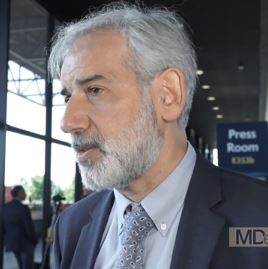
CHICAGO – New data from the TAILORx trial are welcome news for women with HR-positive, HER2-negative, axillary node–negative early-stage breast cancer and their oncologists caught in the gray area surrounding the need for adjuvant chemotherapy.
Results of the noninferiority phase 3 trial—the largest adjuvant breast cancer treatment trial ever conducted—show that among the 6,711 women with an intermediate Oncotype DX Breast Recurrence Score (11-25), those who received only endocrine therapy and skipped adjuvant chemotherapy did not have worse invasive disease-free survival than counterparts who received both (hazard ratio, 1.08; P=.26).
The 9-year rate of invasive disease–free survival was 83.3% with endocrine therapy alone and 84.3% with both chemotherapy and endocrine therapy, and the pattern was essentially the same for freedom from any recurrence and distant recurrence, and overall survival.
The findings are practice changing, according to lead study author Joseph A. Sparano, MD, associate director for clinical research at the Albert Einstein Cancer Center and Montefiore Health System in New York, and vice-chair of the ECOG-ACRIN Cancer Research Group.
In a video interview at the annual meeting of the American Society of Clinical Oncology, he discussed implications of the new data for decision making, results of interaction analyses showing that one size does not fit all and certain women with intermediate recurrence scores do derive benefit from adjuvant chemotherapy, as well as plans to use the tumor samples for future analyses on those that do recur.
CHICAGO – New data from the TAILORx trial are welcome news for women with HR-positive, HER2-negative, axillary node–negative early-stage breast cancer and their oncologists caught in the gray area surrounding the need for adjuvant chemotherapy.
Results of the noninferiority phase 3 trial—the largest adjuvant breast cancer treatment trial ever conducted—show that among the 6,711 women with an intermediate Oncotype DX Breast Recurrence Score (11-25), those who received only endocrine therapy and skipped adjuvant chemotherapy did not have worse invasive disease-free survival than counterparts who received both (hazard ratio, 1.08; P=.26).
The 9-year rate of invasive disease–free survival was 83.3% with endocrine therapy alone and 84.3% with both chemotherapy and endocrine therapy, and the pattern was essentially the same for freedom from any recurrence and distant recurrence, and overall survival.
The findings are practice changing, according to lead study author Joseph A. Sparano, MD, associate director for clinical research at the Albert Einstein Cancer Center and Montefiore Health System in New York, and vice-chair of the ECOG-ACRIN Cancer Research Group.
In a video interview at the annual meeting of the American Society of Clinical Oncology, he discussed implications of the new data for decision making, results of interaction analyses showing that one size does not fit all and certain women with intermediate recurrence scores do derive benefit from adjuvant chemotherapy, as well as plans to use the tumor samples for future analyses on those that do recur.
CHICAGO – New data from the TAILORx trial are welcome news for women with HR-positive, HER2-negative, axillary node–negative early-stage breast cancer and their oncologists caught in the gray area surrounding the need for adjuvant chemotherapy.
Results of the noninferiority phase 3 trial—the largest adjuvant breast cancer treatment trial ever conducted—show that among the 6,711 women with an intermediate Oncotype DX Breast Recurrence Score (11-25), those who received only endocrine therapy and skipped adjuvant chemotherapy did not have worse invasive disease-free survival than counterparts who received both (hazard ratio, 1.08; P=.26).
The 9-year rate of invasive disease–free survival was 83.3% with endocrine therapy alone and 84.3% with both chemotherapy and endocrine therapy, and the pattern was essentially the same for freedom from any recurrence and distant recurrence, and overall survival.
The findings are practice changing, according to lead study author Joseph A. Sparano, MD, associate director for clinical research at the Albert Einstein Cancer Center and Montefiore Health System in New York, and vice-chair of the ECOG-ACRIN Cancer Research Group.
In a video interview at the annual meeting of the American Society of Clinical Oncology, he discussed implications of the new data for decision making, results of interaction analyses showing that one size does not fit all and certain women with intermediate recurrence scores do derive benefit from adjuvant chemotherapy, as well as plans to use the tumor samples for future analyses on those that do recur.
REPORTING FROM ASCO 2018

App monitoring improves quality of IBD care
WASHINGTON – in a single-center randomized study with 320 patients.
The video associated with this article is no longer available on this site. Please view all of our videos on the MDedge YouTube channel
Based on this success, the app will soon be made available to all of the roughly 5,000 inflammatory bowel disease (IBD) patients managed at Mount Sinai Medical Center in New York as well as IBD patients at several other North American centers that plan to adopt the app, Ashish Atreja, MD, said at the annual Digestive Disease Week.®
Home monitoring of IBD patients “is feasible with high adoption,” said Dr. Atreja, a gastroenterologist at Mount Sinai who directs the Sinai AppLab. The 162 IBD patients randomized to regularly use the HealthPROMISE app had their quality-of-care metric rise from 50% at baseline to 84% after an average follow-up of 575 days (19 months), a statistically significant improvement over the 158 control patients whose metric rose from 50% to 65% for the study’s primary endpoint, he reported. The results also showed a trend toward improved quality of life among the patients using the HealthPROMISE app, compared with the controls, who used an IBD educational app that produced less patient engagement than did the HealthPROMISE app, Dr Atreja said.
Dr. Atreja and his associates modeled the app on remote monitoring methods developed for patients with other types of chronic disease, such as diabetes and heart failure.
“You can’t provide proactive IBD care without remote monitoring,” Dr. Atreja explained in a video interview. “Reactive care is not best practice anymore. The only way to do treat-to-target is with remote monitoring.”
Care coordinators monitor the entries that IBD patients send in via the app. Dr. Atreja estimated that about five care coordinators will be able to track the inputs from the roughly 5,000 IBD patients at Mount Sinai who will soon begin using the app. The financial feasibility of this approach depends in part on the $45/patient per month reimbursement that U.S. health insurers now provide to centers that run remote monitoring programs, he said.
“The direction for managing chronic diseases is increasingly looking at home monitoring as a way to streamline costs and improve patient care,” commented Gil Y. Melmed, MD, director of Clinical Inflammatory Bowel Disease at Cedars-Sinai Medical Center in Los Angeles. The results that Dr. Atreja reported came from “a highly selected population that was well educated and largely white.” The study needs replication in different patient groups to establish its reproducibility and generalizability, Dr. Melmed said in an interview.
Dr. Melmed had no relevant disclosures.
[email protected]
On Twitter @mitchelzoler
SOURCE: Atreja A et al. Digestive Disease Week 2018 abstract 17.
*This story was updated on June 7, 2018.
WASHINGTON – in a single-center randomized study with 320 patients.
The video associated with this article is no longer available on this site. Please view all of our videos on the MDedge YouTube channel
Based on this success, the app will soon be made available to all of the roughly 5,000 inflammatory bowel disease (IBD) patients managed at Mount Sinai Medical Center in New York as well as IBD patients at several other North American centers that plan to adopt the app, Ashish Atreja, MD, said at the annual Digestive Disease Week.®
Home monitoring of IBD patients “is feasible with high adoption,” said Dr. Atreja, a gastroenterologist at Mount Sinai who directs the Sinai AppLab. The 162 IBD patients randomized to regularly use the HealthPROMISE app had their quality-of-care metric rise from 50% at baseline to 84% after an average follow-up of 575 days (19 months), a statistically significant improvement over the 158 control patients whose metric rose from 50% to 65% for the study’s primary endpoint, he reported. The results also showed a trend toward improved quality of life among the patients using the HealthPROMISE app, compared with the controls, who used an IBD educational app that produced less patient engagement than did the HealthPROMISE app, Dr Atreja said.
Dr. Atreja and his associates modeled the app on remote monitoring methods developed for patients with other types of chronic disease, such as diabetes and heart failure.
“You can’t provide proactive IBD care without remote monitoring,” Dr. Atreja explained in a video interview. “Reactive care is not best practice anymore. The only way to do treat-to-target is with remote monitoring.”
Care coordinators monitor the entries that IBD patients send in via the app. Dr. Atreja estimated that about five care coordinators will be able to track the inputs from the roughly 5,000 IBD patients at Mount Sinai who will soon begin using the app. The financial feasibility of this approach depends in part on the $45/patient per month reimbursement that U.S. health insurers now provide to centers that run remote monitoring programs, he said.
“The direction for managing chronic diseases is increasingly looking at home monitoring as a way to streamline costs and improve patient care,” commented Gil Y. Melmed, MD, director of Clinical Inflammatory Bowel Disease at Cedars-Sinai Medical Center in Los Angeles. The results that Dr. Atreja reported came from “a highly selected population that was well educated and largely white.” The study needs replication in different patient groups to establish its reproducibility and generalizability, Dr. Melmed said in an interview.
Dr. Melmed had no relevant disclosures.
[email protected]
On Twitter @mitchelzoler
SOURCE: Atreja A et al. Digestive Disease Week 2018 abstract 17.
*This story was updated on June 7, 2018.
WASHINGTON – in a single-center randomized study with 320 patients.
The video associated with this article is no longer available on this site. Please view all of our videos on the MDedge YouTube channel
Based on this success, the app will soon be made available to all of the roughly 5,000 inflammatory bowel disease (IBD) patients managed at Mount Sinai Medical Center in New York as well as IBD patients at several other North American centers that plan to adopt the app, Ashish Atreja, MD, said at the annual Digestive Disease Week.®
Home monitoring of IBD patients “is feasible with high adoption,” said Dr. Atreja, a gastroenterologist at Mount Sinai who directs the Sinai AppLab. The 162 IBD patients randomized to regularly use the HealthPROMISE app had their quality-of-care metric rise from 50% at baseline to 84% after an average follow-up of 575 days (19 months), a statistically significant improvement over the 158 control patients whose metric rose from 50% to 65% for the study’s primary endpoint, he reported. The results also showed a trend toward improved quality of life among the patients using the HealthPROMISE app, compared with the controls, who used an IBD educational app that produced less patient engagement than did the HealthPROMISE app, Dr Atreja said.
Dr. Atreja and his associates modeled the app on remote monitoring methods developed for patients with other types of chronic disease, such as diabetes and heart failure.
“You can’t provide proactive IBD care without remote monitoring,” Dr. Atreja explained in a video interview. “Reactive care is not best practice anymore. The only way to do treat-to-target is with remote monitoring.”
Care coordinators monitor the entries that IBD patients send in via the app. Dr. Atreja estimated that about five care coordinators will be able to track the inputs from the roughly 5,000 IBD patients at Mount Sinai who will soon begin using the app. The financial feasibility of this approach depends in part on the $45/patient per month reimbursement that U.S. health insurers now provide to centers that run remote monitoring programs, he said.
“The direction for managing chronic diseases is increasingly looking at home monitoring as a way to streamline costs and improve patient care,” commented Gil Y. Melmed, MD, director of Clinical Inflammatory Bowel Disease at Cedars-Sinai Medical Center in Los Angeles. The results that Dr. Atreja reported came from “a highly selected population that was well educated and largely white.” The study needs replication in different patient groups to establish its reproducibility and generalizability, Dr. Melmed said in an interview.
Dr. Melmed had no relevant disclosures.
[email protected]
On Twitter @mitchelzoler
SOURCE: Atreja A et al. Digestive Disease Week 2018 abstract 17.
*This story was updated on June 7, 2018.
REPORTING FROM DDW 2018
Key clinical point: Regular remote monitoring of IBD patients improved the medical care they received.
Major finding: Quality of care rose from 50% at baseline to 84% in app-monitored patients and to 65% in controls.
Study details: A single-center randomized study with 320 IBD patients.
Disclosures: The study had no commercial funding. Dr. Atreja had no disclosures.
Source: Atreja A et al. Digestive Disease Week 2018 abstract 17.

A blood test to detect lung cancer inches toward the clinic
The video associated with this article is no longer available on this site. Please view all of our videos on the MDedge YouTube channel
CHICAGO - Uptake of recommended low-dose CT for lung cancer screening has been dismal. Blood-based assays are an attractive alternative being explored by the Circulating Cell–Free Genome Atlas (CCGA) project. Interim results of a CCGA study of 561 individuals without cancer and 118 patients with lung cancers of all stages have found that a trio of assays searching for molecular signatures in plasma cell-free DNA achieved roughly 50% sensitivity for detection of early-stage (stage I-IIIA) lung cancers and 91% sensitivity for detection of late-stage (stage IIIB-IV) lung cancers.
In this video interview from the annual meeting of the American Society of Clinical Oncology, lead study author Geoffrey R. Oxnard, MD, of the Dana-Farber Cancer Institute, Boston, discusses the science behind these assays, how they may fill an unmet medical need, and ongoing work to bring them into the clinic.
The video associated with this article is no longer available on this site. Please view all of our videos on the MDedge YouTube channel
CHICAGO - Uptake of recommended low-dose CT for lung cancer screening has been dismal. Blood-based assays are an attractive alternative being explored by the Circulating Cell–Free Genome Atlas (CCGA) project. Interim results of a CCGA study of 561 individuals without cancer and 118 patients with lung cancers of all stages have found that a trio of assays searching for molecular signatures in plasma cell-free DNA achieved roughly 50% sensitivity for detection of early-stage (stage I-IIIA) lung cancers and 91% sensitivity for detection of late-stage (stage IIIB-IV) lung cancers.
In this video interview from the annual meeting of the American Society of Clinical Oncology, lead study author Geoffrey R. Oxnard, MD, of the Dana-Farber Cancer Institute, Boston, discusses the science behind these assays, how they may fill an unmet medical need, and ongoing work to bring them into the clinic.
The video associated with this article is no longer available on this site. Please view all of our videos on the MDedge YouTube channel
CHICAGO - Uptake of recommended low-dose CT for lung cancer screening has been dismal. Blood-based assays are an attractive alternative being explored by the Circulating Cell–Free Genome Atlas (CCGA) project. Interim results of a CCGA study of 561 individuals without cancer and 118 patients with lung cancers of all stages have found that a trio of assays searching for molecular signatures in plasma cell-free DNA achieved roughly 50% sensitivity for detection of early-stage (stage I-IIIA) lung cancers and 91% sensitivity for detection of late-stage (stage IIIB-IV) lung cancers.
In this video interview from the annual meeting of the American Society of Clinical Oncology, lead study author Geoffrey R. Oxnard, MD, of the Dana-Farber Cancer Institute, Boston, discusses the science behind these assays, how they may fill an unmet medical need, and ongoing work to bring them into the clinic.
REPORTING FROM ASCO 2018

Heading down the wrong pathway in advanced breast cancer?
The video associated with this article is no longer available on this site. Please view all of our videos on the MDedge YouTube channel
CHICAGO – In the SANDPIPER trial, the combination of the phosphatidylinositol 3-kinase (PI3K) inhibitor taselisib and the selective estrogen receptor modifier fulvestrant (Faslodex) was associated with a small but significant progression-free survival (PFS) benefit, compared with fulvestrant alone in women with advanced estrogen-receptor positive, HER2-negative breast cancer.
That 2-month PFS benefit, described as “modest” by investigators, came at the cost of significant toxicities, with nearly 50% of patients treated with the combination having grade 3 or greater toxicities, compared with 16% of patients treated with fulvestrant alone.
In this video interview from the annual meeting of the American Society of Clinical Oncology, ASCO expert Harold Burstein, MD, PhD, from the Dana-Farber Cancer Institute in Boston, questions whether the PI3K pathway, shown to be targetable in hematologic malignancies, is worth continuing to pursue in breast cancer.
Dr. Burstein had no disclosures.
The video associated with this article is no longer available on this site. Please view all of our videos on the MDedge YouTube channel
CHICAGO – In the SANDPIPER trial, the combination of the phosphatidylinositol 3-kinase (PI3K) inhibitor taselisib and the selective estrogen receptor modifier fulvestrant (Faslodex) was associated with a small but significant progression-free survival (PFS) benefit, compared with fulvestrant alone in women with advanced estrogen-receptor positive, HER2-negative breast cancer.
That 2-month PFS benefit, described as “modest” by investigators, came at the cost of significant toxicities, with nearly 50% of patients treated with the combination having grade 3 or greater toxicities, compared with 16% of patients treated with fulvestrant alone.
In this video interview from the annual meeting of the American Society of Clinical Oncology, ASCO expert Harold Burstein, MD, PhD, from the Dana-Farber Cancer Institute in Boston, questions whether the PI3K pathway, shown to be targetable in hematologic malignancies, is worth continuing to pursue in breast cancer.
Dr. Burstein had no disclosures.
The video associated with this article is no longer available on this site. Please view all of our videos on the MDedge YouTube channel
CHICAGO – In the SANDPIPER trial, the combination of the phosphatidylinositol 3-kinase (PI3K) inhibitor taselisib and the selective estrogen receptor modifier fulvestrant (Faslodex) was associated with a small but significant progression-free survival (PFS) benefit, compared with fulvestrant alone in women with advanced estrogen-receptor positive, HER2-negative breast cancer.
That 2-month PFS benefit, described as “modest” by investigators, came at the cost of significant toxicities, with nearly 50% of patients treated with the combination having grade 3 or greater toxicities, compared with 16% of patients treated with fulvestrant alone.
In this video interview from the annual meeting of the American Society of Clinical Oncology, ASCO expert Harold Burstein, MD, PhD, from the Dana-Farber Cancer Institute in Boston, questions whether the PI3K pathway, shown to be targetable in hematologic malignancies, is worth continuing to pursue in breast cancer.
Dr. Burstein had no disclosures.
REPORTING FROM ASCO 2018

Global MS trends: A chaotic picture with risk as the central theme
NASHVILLE, Tenn. – Recent epidemiologic studies of multiple sclerosis from around the globe paint a confusing picture, with incidence up in some countries and down in others, latitudinal associations strong in some regions and waning in others, and an overall lack of well-managed databases to bring order to these findings.
Alberto Ascherio, MD, who moderated a global epidemiology session during the annual meeting of the Consortium of Multiple Sclerosis Centers, said it’s tough to draw firm conclusions from the vastly varied studies assessing epidemiologic patterns of MS around the world. Most researchers are trying to extrapolate population data from smaller groups – a process always fraught with the potential for misinterpretation.
Global data, however, converge on some of the most well-established risk factors for the disease, he said. “There seems to be no doubt that vitamin D deficiency, teenager obesity, Epstein-Barr virus infection, and smoking remain strong risk factors for MS in every database in every country that has examined this,” said Dr. Ascherio, a professor of epidemiology and nutrition at Harvard University, Boston.
He sat down for a video interview to pick apart some of the findings from studies in Australia, New Zealand, Western Europe, Canada, and the United States.
Dr. Ascherio had no financial disclosures.
NASHVILLE, Tenn. – Recent epidemiologic studies of multiple sclerosis from around the globe paint a confusing picture, with incidence up in some countries and down in others, latitudinal associations strong in some regions and waning in others, and an overall lack of well-managed databases to bring order to these findings.
Alberto Ascherio, MD, who moderated a global epidemiology session during the annual meeting of the Consortium of Multiple Sclerosis Centers, said it’s tough to draw firm conclusions from the vastly varied studies assessing epidemiologic patterns of MS around the world. Most researchers are trying to extrapolate population data from smaller groups – a process always fraught with the potential for misinterpretation.
Global data, however, converge on some of the most well-established risk factors for the disease, he said. “There seems to be no doubt that vitamin D deficiency, teenager obesity, Epstein-Barr virus infection, and smoking remain strong risk factors for MS in every database in every country that has examined this,” said Dr. Ascherio, a professor of epidemiology and nutrition at Harvard University, Boston.
He sat down for a video interview to pick apart some of the findings from studies in Australia, New Zealand, Western Europe, Canada, and the United States.
Dr. Ascherio had no financial disclosures.
NASHVILLE, Tenn. – Recent epidemiologic studies of multiple sclerosis from around the globe paint a confusing picture, with incidence up in some countries and down in others, latitudinal associations strong in some regions and waning in others, and an overall lack of well-managed databases to bring order to these findings.
Alberto Ascherio, MD, who moderated a global epidemiology session during the annual meeting of the Consortium of Multiple Sclerosis Centers, said it’s tough to draw firm conclusions from the vastly varied studies assessing epidemiologic patterns of MS around the world. Most researchers are trying to extrapolate population data from smaller groups – a process always fraught with the potential for misinterpretation.
Global data, however, converge on some of the most well-established risk factors for the disease, he said. “There seems to be no doubt that vitamin D deficiency, teenager obesity, Epstein-Barr virus infection, and smoking remain strong risk factors for MS in every database in every country that has examined this,” said Dr. Ascherio, a professor of epidemiology and nutrition at Harvard University, Boston.
He sat down for a video interview to pick apart some of the findings from studies in Australia, New Zealand, Western Europe, Canada, and the United States.
Dr. Ascherio had no financial disclosures.
REPORTING FROM THE CMSC ANNUAL MEETING
Focus on preventing comorbidities in MS, physician urges
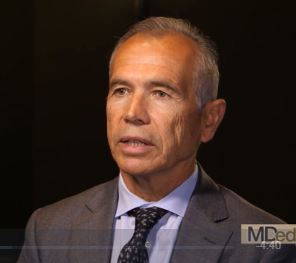
NASHVILLE, TENN. – Some patients use multiple sclerosis as an excuse to make poor health choices, but Allen C. Bowling, MD, PhD, of the Colorado Neurological Institute has seen another kind of story unfold. Fifteen to 20 years ago, Dr. Bowling said, he treated patients who took the development of MS in their 20s as a sign they needed to take better care of themselves. “They said MS was the best thing that happened to them ‘because it motivated me to make these healthy lifestyle changes I wouldn’t have made otherwise.’ ”
These patients have maintained their lifestyle changes, he said, lowering their risk of comorbidities and – perhaps – changing the course of their MS for the better.
“It’s all one machine, and sometimes we lose sight of that in our sub-sub-specialized world of treating MS ... You’re caring for a whole person. If you start thinking about that, it does make you think differently about how you treat the person, how you try to prevent disease in terms of certain pathways,” Dr. Bowling said in an interview at the annual meeting of the Consortium of Multiple Sclerosis Centers, where he spoke to colleagues about the importance of helping patients to adopt lifestyle changes.
According to Dr. Bowling, there’s evidence linking lifestyle-related comorbidities, poorer food quality, and tobacco use to higher levels of overall MS risk, relapses, disability, and symptoms.
Researchers have also linked other life factors to higher MS risks: obesity (linked to overall MS risk, disability, symptoms); lack of physical activity (linked to relapses, disability, symptoms); emotional factors (relapses, symptoms); and alcohol overuse (linked to overall risk, disability, symptoms).
“Data is mild to moderate to strong in all those areas for lifestyle approaches like diet, physical activity, emotional health, alcohol in moderation or less, and no tobacco smoking,” Dr. Bowling said.
He said he believes physical activity leads to “much higher and earlier success than diet” in MS patients, although there’s no confirmed “best exercise.”
As for nutrition, he said vitamins D and B12 are possibly beneficial. But he cautioned against the potential for harm from supplements and added that there’s no proven best diet for MS.
As for finding time to address these issues in clinic, Dr. Bowling recommended mentioning various lifestyle issues over multiple office visits.
“Some of the effort should be switched to the primary care doctor,” he said, “but you can use a strong collection of words to convey to the person with MS that this is serious: ‘It’s not MS, but it’s a serious issue, and you must see your primary care doctor.’ ”
He believes that this approach can have a significant impact, “especially for those aged 20-40, because the doctor they pay the most attention to may be their MS clinician.”
Dr. Bowling said that he receives royalties from a book he authored, “Optimal Health With Multiple Sclerosis.”
NASHVILLE, TENN. – Some patients use multiple sclerosis as an excuse to make poor health choices, but Allen C. Bowling, MD, PhD, of the Colorado Neurological Institute has seen another kind of story unfold. Fifteen to 20 years ago, Dr. Bowling said, he treated patients who took the development of MS in their 20s as a sign they needed to take better care of themselves. “They said MS was the best thing that happened to them ‘because it motivated me to make these healthy lifestyle changes I wouldn’t have made otherwise.’ ”
These patients have maintained their lifestyle changes, he said, lowering their risk of comorbidities and – perhaps – changing the course of their MS for the better.
“It’s all one machine, and sometimes we lose sight of that in our sub-sub-specialized world of treating MS ... You’re caring for a whole person. If you start thinking about that, it does make you think differently about how you treat the person, how you try to prevent disease in terms of certain pathways,” Dr. Bowling said in an interview at the annual meeting of the Consortium of Multiple Sclerosis Centers, where he spoke to colleagues about the importance of helping patients to adopt lifestyle changes.
According to Dr. Bowling, there’s evidence linking lifestyle-related comorbidities, poorer food quality, and tobacco use to higher levels of overall MS risk, relapses, disability, and symptoms.
Researchers have also linked other life factors to higher MS risks: obesity (linked to overall MS risk, disability, symptoms); lack of physical activity (linked to relapses, disability, symptoms); emotional factors (relapses, symptoms); and alcohol overuse (linked to overall risk, disability, symptoms).
“Data is mild to moderate to strong in all those areas for lifestyle approaches like diet, physical activity, emotional health, alcohol in moderation or less, and no tobacco smoking,” Dr. Bowling said.
He said he believes physical activity leads to “much higher and earlier success than diet” in MS patients, although there’s no confirmed “best exercise.”
As for nutrition, he said vitamins D and B12 are possibly beneficial. But he cautioned against the potential for harm from supplements and added that there’s no proven best diet for MS.
As for finding time to address these issues in clinic, Dr. Bowling recommended mentioning various lifestyle issues over multiple office visits.
“Some of the effort should be switched to the primary care doctor,” he said, “but you can use a strong collection of words to convey to the person with MS that this is serious: ‘It’s not MS, but it’s a serious issue, and you must see your primary care doctor.’ ”
He believes that this approach can have a significant impact, “especially for those aged 20-40, because the doctor they pay the most attention to may be their MS clinician.”
Dr. Bowling said that he receives royalties from a book he authored, “Optimal Health With Multiple Sclerosis.”
NASHVILLE, TENN. – Some patients use multiple sclerosis as an excuse to make poor health choices, but Allen C. Bowling, MD, PhD, of the Colorado Neurological Institute has seen another kind of story unfold. Fifteen to 20 years ago, Dr. Bowling said, he treated patients who took the development of MS in their 20s as a sign they needed to take better care of themselves. “They said MS was the best thing that happened to them ‘because it motivated me to make these healthy lifestyle changes I wouldn’t have made otherwise.’ ”
These patients have maintained their lifestyle changes, he said, lowering their risk of comorbidities and – perhaps – changing the course of their MS for the better.
“It’s all one machine, and sometimes we lose sight of that in our sub-sub-specialized world of treating MS ... You’re caring for a whole person. If you start thinking about that, it does make you think differently about how you treat the person, how you try to prevent disease in terms of certain pathways,” Dr. Bowling said in an interview at the annual meeting of the Consortium of Multiple Sclerosis Centers, where he spoke to colleagues about the importance of helping patients to adopt lifestyle changes.
According to Dr. Bowling, there’s evidence linking lifestyle-related comorbidities, poorer food quality, and tobacco use to higher levels of overall MS risk, relapses, disability, and symptoms.
Researchers have also linked other life factors to higher MS risks: obesity (linked to overall MS risk, disability, symptoms); lack of physical activity (linked to relapses, disability, symptoms); emotional factors (relapses, symptoms); and alcohol overuse (linked to overall risk, disability, symptoms).
“Data is mild to moderate to strong in all those areas for lifestyle approaches like diet, physical activity, emotional health, alcohol in moderation or less, and no tobacco smoking,” Dr. Bowling said.
He said he believes physical activity leads to “much higher and earlier success than diet” in MS patients, although there’s no confirmed “best exercise.”
As for nutrition, he said vitamins D and B12 are possibly beneficial. But he cautioned against the potential for harm from supplements and added that there’s no proven best diet for MS.
As for finding time to address these issues in clinic, Dr. Bowling recommended mentioning various lifestyle issues over multiple office visits.
“Some of the effort should be switched to the primary care doctor,” he said, “but you can use a strong collection of words to convey to the person with MS that this is serious: ‘It’s not MS, but it’s a serious issue, and you must see your primary care doctor.’ ”
He believes that this approach can have a significant impact, “especially for those aged 20-40, because the doctor they pay the most attention to may be their MS clinician.”
Dr. Bowling said that he receives royalties from a book he authored, “Optimal Health With Multiple Sclerosis.”
REPORTING FROM THE CMSC ANNUAL MEETING