User login
Palliative Care for Patients With Head and Neck Cancer
Mark Klein, MD, and his team of fellow researchers came to the 2014 AVAHO Meeting to present their poster presentation, Incorporation of Palliative Care with Chemotherapy and Radiation in Patients Treated for Head and Neck Cancer.
To hear Dr. Klein discuss his research, watch the video below.
Mark Klein, MD, and his team of fellow researchers came to the 2014 AVAHO Meeting to present their poster presentation, Incorporation of Palliative Care with Chemotherapy and Radiation in Patients Treated for Head and Neck Cancer.
To hear Dr. Klein discuss his research, watch the video below.
Mark Klein, MD, and his team of fellow researchers came to the 2014 AVAHO Meeting to present their poster presentation, Incorporation of Palliative Care with Chemotherapy and Radiation in Patients Treated for Head and Neck Cancer.
To hear Dr. Klein discuss his research, watch the video below.
VIDEO: Grants launch large-scale collaboration against progressive MS
BOSTON – The International Progressive MS Alliance has announced the first round of grants to fund groundbreaking research on progressive forms of multiple sclerosis.
A panel of more than 40 experts in multiple sclerosis (MS) reviewed 195 research proposals received from 22 countries. The panel chose to make 22 “challenge” grants to researchers in nine countries. The grants will fund 1- to 2-year pilot studies that represent the first steps in a program that will cumulatively invest nearly $30 million over a 5-year period.
“This is the first time we’ve had a truly global, international initiative,” said Dr. Alan Thompson, chair of the alliance’s scientific steering committee and a neurologist and professor at University College London Faculty on Brain Sciences. “It’s much more about being a catalyst to bring together the best institutions worldwide.”
The announcement was made at a press conference held during the joint meeting of the European and Americas Committees for Treatment and Research in Multiple Sclerosis, although the press conference was not officially part of the meeting.
Seven of the grants were made to researchers investigating potential new treatments as well as biomarkers and outcome measures that could be used to track disease progression in clinical trials. Another seven funded studies will seek to understand the underlying cause of progressive disease. One grant-winning study aims to discover biomarkers that reflect progression pathophysiology for primary progressive MS.
Three studies will investigate the genetics of progressive subtypes of MS. Two will be used to develop animal models of progressive MS. Two will investigate new rehabilitative methods for patients with progressive disease.
The next step is for the alliance to provide 4 years of funding for a global, collaborative research network of about 10 centers. The next call for research proposals will come at the beginning of November 2014.
In a video interview, we spoke with one of the grant award winners, Francisco Quintana, Ph.D., of Brigham and Women’s Hospital, Boston, about his research proposal and views on the initiative.
The video associated with this article is no longer available on this site. Please view all of our videos on the MDedge YouTube channel
BOSTON – The International Progressive MS Alliance has announced the first round of grants to fund groundbreaking research on progressive forms of multiple sclerosis.
A panel of more than 40 experts in multiple sclerosis (MS) reviewed 195 research proposals received from 22 countries. The panel chose to make 22 “challenge” grants to researchers in nine countries. The grants will fund 1- to 2-year pilot studies that represent the first steps in a program that will cumulatively invest nearly $30 million over a 5-year period.
“This is the first time we’ve had a truly global, international initiative,” said Dr. Alan Thompson, chair of the alliance’s scientific steering committee and a neurologist and professor at University College London Faculty on Brain Sciences. “It’s much more about being a catalyst to bring together the best institutions worldwide.”
The announcement was made at a press conference held during the joint meeting of the European and Americas Committees for Treatment and Research in Multiple Sclerosis, although the press conference was not officially part of the meeting.
Seven of the grants were made to researchers investigating potential new treatments as well as biomarkers and outcome measures that could be used to track disease progression in clinical trials. Another seven funded studies will seek to understand the underlying cause of progressive disease. One grant-winning study aims to discover biomarkers that reflect progression pathophysiology for primary progressive MS.
Three studies will investigate the genetics of progressive subtypes of MS. Two will be used to develop animal models of progressive MS. Two will investigate new rehabilitative methods for patients with progressive disease.
The next step is for the alliance to provide 4 years of funding for a global, collaborative research network of about 10 centers. The next call for research proposals will come at the beginning of November 2014.
In a video interview, we spoke with one of the grant award winners, Francisco Quintana, Ph.D., of Brigham and Women’s Hospital, Boston, about his research proposal and views on the initiative.
The video associated with this article is no longer available on this site. Please view all of our videos on the MDedge YouTube channel
BOSTON – The International Progressive MS Alliance has announced the first round of grants to fund groundbreaking research on progressive forms of multiple sclerosis.
A panel of more than 40 experts in multiple sclerosis (MS) reviewed 195 research proposals received from 22 countries. The panel chose to make 22 “challenge” grants to researchers in nine countries. The grants will fund 1- to 2-year pilot studies that represent the first steps in a program that will cumulatively invest nearly $30 million over a 5-year period.
“This is the first time we’ve had a truly global, international initiative,” said Dr. Alan Thompson, chair of the alliance’s scientific steering committee and a neurologist and professor at University College London Faculty on Brain Sciences. “It’s much more about being a catalyst to bring together the best institutions worldwide.”
The announcement was made at a press conference held during the joint meeting of the European and Americas Committees for Treatment and Research in Multiple Sclerosis, although the press conference was not officially part of the meeting.
Seven of the grants were made to researchers investigating potential new treatments as well as biomarkers and outcome measures that could be used to track disease progression in clinical trials. Another seven funded studies will seek to understand the underlying cause of progressive disease. One grant-winning study aims to discover biomarkers that reflect progression pathophysiology for primary progressive MS.
Three studies will investigate the genetics of progressive subtypes of MS. Two will be used to develop animal models of progressive MS. Two will investigate new rehabilitative methods for patients with progressive disease.
The next step is for the alliance to provide 4 years of funding for a global, collaborative research network of about 10 centers. The next call for research proposals will come at the beginning of November 2014.
In a video interview, we spoke with one of the grant award winners, Francisco Quintana, Ph.D., of Brigham and Women’s Hospital, Boston, about his research proposal and views on the initiative.
The video associated with this article is no longer available on this site. Please view all of our videos on the MDedge YouTube channel
VIDEO: Axial MRI better identifies extent of MS lesions in the cervical spinal cord
BOSTON – 3-Tesla axial MR imaging in patients with multiple sclerosis can reveal important information about the extent of lesions in the cervical spinal cord that differentiates milder forms of disease from progressive subtypes, according to new research presented by Dr. Hugh Kearney at the joint meeting of the European and Americas Committees for Treatment and Research in Multiple Sclerosis.
While most MRI studies of the cervical spinal cord have used sagittal views to determine the number of lesions, axial views can show the extent of lesions and the involvement of gray matter that goes unseen with sagittal views, Dr. Kearney, a researcher at the University College London Institute of Neurology, said in a video interview.
In a study of 120 patients, Dr. Kearney and his colleagues found that this MRI technique, which used a fine resolution of 0.5-by-0.5 mm2, detected extensive focal lesions involving multiple white matter columns significantly more often among patients with progressive subtypes of MS, whereas patients with relapsing remitting disease or clinically isolated syndrome tended to have lesions usually limited to a single spinal cord column. Patients with progressive subtypes also more commonly had involvement of the gray matter and diffuse abnormalities. The presence of lateral column lesions involving gray matter and the number of columns involved was an independent predictor of disability on the Expanded Disability Status Scale.
The video associated with this article is no longer available on this site. Please view all of our videos on the MDedge YouTube channel
BOSTON – 3-Tesla axial MR imaging in patients with multiple sclerosis can reveal important information about the extent of lesions in the cervical spinal cord that differentiates milder forms of disease from progressive subtypes, according to new research presented by Dr. Hugh Kearney at the joint meeting of the European and Americas Committees for Treatment and Research in Multiple Sclerosis.
While most MRI studies of the cervical spinal cord have used sagittal views to determine the number of lesions, axial views can show the extent of lesions and the involvement of gray matter that goes unseen with sagittal views, Dr. Kearney, a researcher at the University College London Institute of Neurology, said in a video interview.
In a study of 120 patients, Dr. Kearney and his colleagues found that this MRI technique, which used a fine resolution of 0.5-by-0.5 mm2, detected extensive focal lesions involving multiple white matter columns significantly more often among patients with progressive subtypes of MS, whereas patients with relapsing remitting disease or clinically isolated syndrome tended to have lesions usually limited to a single spinal cord column. Patients with progressive subtypes also more commonly had involvement of the gray matter and diffuse abnormalities. The presence of lateral column lesions involving gray matter and the number of columns involved was an independent predictor of disability on the Expanded Disability Status Scale.
The video associated with this article is no longer available on this site. Please view all of our videos on the MDedge YouTube channel
BOSTON – 3-Tesla axial MR imaging in patients with multiple sclerosis can reveal important information about the extent of lesions in the cervical spinal cord that differentiates milder forms of disease from progressive subtypes, according to new research presented by Dr. Hugh Kearney at the joint meeting of the European and Americas Committees for Treatment and Research in Multiple Sclerosis.
While most MRI studies of the cervical spinal cord have used sagittal views to determine the number of lesions, axial views can show the extent of lesions and the involvement of gray matter that goes unseen with sagittal views, Dr. Kearney, a researcher at the University College London Institute of Neurology, said in a video interview.
In a study of 120 patients, Dr. Kearney and his colleagues found that this MRI technique, which used a fine resolution of 0.5-by-0.5 mm2, detected extensive focal lesions involving multiple white matter columns significantly more often among patients with progressive subtypes of MS, whereas patients with relapsing remitting disease or clinically isolated syndrome tended to have lesions usually limited to a single spinal cord column. Patients with progressive subtypes also more commonly had involvement of the gray matter and diffuse abnormalities. The presence of lateral column lesions involving gray matter and the number of columns involved was an independent predictor of disability on the Expanded Disability Status Scale.
The video associated with this article is no longer available on this site. Please view all of our videos on the MDedge YouTube channel
AT MSBOSTON 2014

VIDEO: Genetic, environmental, clinical data converge on cause of multiple sclerosis
BOSTON – A model for explaining the pathogenesis of multiple sclerosis is beginning to come together faster than ever before thanks to a wide range of methods that have allowed researchers to find disease-associated gene variants and examine their interaction with environmental factors, according to Dr. David A. Hafler, professor of neurology and immunobiology at Yale University in New Haven, Conn.
Researchers in the International MS Genetics Consortium have used new techniques to analyze the genomes of large cohorts of patients with MS and revealed many single-nucleotide polymorphism variants that affect immune activation that had not been considered before, allowing researchers to identify which immune cells are involved in the disease, Dr. Hafler said in a video interview at the joint meeting of the European and Americas Committees for Treatment and Research in Multiple Sclerosis.
He and his colleagues also recently have found that areas of the genome that are open to transcription in the T and B cells of patients with MS involve transcription factors that interact with environmental stimuli -- such as smoking, salt intake, lower vitamin D, higher body mass index, and exposure to Epstein-Barr virus -- to lower the threshold of T-cell activation in genetically susceptible individuals, leading to the development of myelin-reactive T cells that secrete pro-inflammatory cytokines such as interleukin-17.
Additional evidence to support the role of immune dysregulation comes from clinical trials in MS that have involved blocking interleukin-17 with the investigational secukinumab and blocking the traffic of T cells to the central nervous system with drugs like fingolimod and natalizumab.
But even with all the knowledge that’s been acquired, Dr. Hafler said there is still much to discover, including how many and which environmental factors play a role; how disease susceptibility variants drive the activation of T cells; and what drives the disease process in secondary progressive MS.
The video associated with this article is no longer available on this site. Please view all of our videos on the MDedge YouTube channel
BOSTON – A model for explaining the pathogenesis of multiple sclerosis is beginning to come together faster than ever before thanks to a wide range of methods that have allowed researchers to find disease-associated gene variants and examine their interaction with environmental factors, according to Dr. David A. Hafler, professor of neurology and immunobiology at Yale University in New Haven, Conn.
Researchers in the International MS Genetics Consortium have used new techniques to analyze the genomes of large cohorts of patients with MS and revealed many single-nucleotide polymorphism variants that affect immune activation that had not been considered before, allowing researchers to identify which immune cells are involved in the disease, Dr. Hafler said in a video interview at the joint meeting of the European and Americas Committees for Treatment and Research in Multiple Sclerosis.
He and his colleagues also recently have found that areas of the genome that are open to transcription in the T and B cells of patients with MS involve transcription factors that interact with environmental stimuli -- such as smoking, salt intake, lower vitamin D, higher body mass index, and exposure to Epstein-Barr virus -- to lower the threshold of T-cell activation in genetically susceptible individuals, leading to the development of myelin-reactive T cells that secrete pro-inflammatory cytokines such as interleukin-17.
Additional evidence to support the role of immune dysregulation comes from clinical trials in MS that have involved blocking interleukin-17 with the investigational secukinumab and blocking the traffic of T cells to the central nervous system with drugs like fingolimod and natalizumab.
But even with all the knowledge that’s been acquired, Dr. Hafler said there is still much to discover, including how many and which environmental factors play a role; how disease susceptibility variants drive the activation of T cells; and what drives the disease process in secondary progressive MS.
The video associated with this article is no longer available on this site. Please view all of our videos on the MDedge YouTube channel
BOSTON – A model for explaining the pathogenesis of multiple sclerosis is beginning to come together faster than ever before thanks to a wide range of methods that have allowed researchers to find disease-associated gene variants and examine their interaction with environmental factors, according to Dr. David A. Hafler, professor of neurology and immunobiology at Yale University in New Haven, Conn.
Researchers in the International MS Genetics Consortium have used new techniques to analyze the genomes of large cohorts of patients with MS and revealed many single-nucleotide polymorphism variants that affect immune activation that had not been considered before, allowing researchers to identify which immune cells are involved in the disease, Dr. Hafler said in a video interview at the joint meeting of the European and Americas Committees for Treatment and Research in Multiple Sclerosis.
He and his colleagues also recently have found that areas of the genome that are open to transcription in the T and B cells of patients with MS involve transcription factors that interact with environmental stimuli -- such as smoking, salt intake, lower vitamin D, higher body mass index, and exposure to Epstein-Barr virus -- to lower the threshold of T-cell activation in genetically susceptible individuals, leading to the development of myelin-reactive T cells that secrete pro-inflammatory cytokines such as interleukin-17.
Additional evidence to support the role of immune dysregulation comes from clinical trials in MS that have involved blocking interleukin-17 with the investigational secukinumab and blocking the traffic of T cells to the central nervous system with drugs like fingolimod and natalizumab.
But even with all the knowledge that’s been acquired, Dr. Hafler said there is still much to discover, including how many and which environmental factors play a role; how disease susceptibility variants drive the activation of T cells; and what drives the disease process in secondary progressive MS.
The video associated with this article is no longer available on this site. Please view all of our videos on the MDedge YouTube channel
AT MSBOSTON 2014
VIDEO: Cognitive impairment may affect pediatric- and adult-onset MS patients similarly
BOSTON – The cognitive outcomes of patients with pediatric-onset or adult-onset relapsing-remitting multiple sclerosis were similar in a small cross-sectional study of patients matched for age, educational level, and physical disability.
The results indicate that despite children’s vulnerability to cognitive deficits during brain maturation, those with pediatric-onset multiple sclerosis (MS) appear to have enough brain plasticity to compensate for the detrimental effects of the disease on cognition, according to Dr. Bahia Hakiki of the University of Florence in Italy.
She and her colleagues found that although 14 patients with pediatric-onset disease had longer mean disease duration than did 30 patients with adult-onset disease (9.8 years vs. 3.7 years) -- as was expected -- they had similar performances on Rao’s Brief Repeatable battery -- commonly used in MS cognitive assessment – and the Stroop test. There also was no difference in the percentage of patients who were classified as cognitively impaired (14% with pediatric onset vs. 30% with adult onset).
Brain MR imaging in a subset of patients found no difference in whole-brain volume, supporting the view that patients with pediatric-onset MS have the ability to compensate for the detrimental effects of MS on cognition, Dr. Hakiki said in a video interview at the joint meeting of the European and Americas Committees for Treatment and Research in Multiple Sclerosis. However, she noted that it will be important to study the impact of age at onset on this ability to recover and if it is a risk factor for worse cognitive impairment in adulthood.
The video associated with this article is no longer available on this site. Please view all of our videos on the MDedge YouTube channel
BOSTON – The cognitive outcomes of patients with pediatric-onset or adult-onset relapsing-remitting multiple sclerosis were similar in a small cross-sectional study of patients matched for age, educational level, and physical disability.
The results indicate that despite children’s vulnerability to cognitive deficits during brain maturation, those with pediatric-onset multiple sclerosis (MS) appear to have enough brain plasticity to compensate for the detrimental effects of the disease on cognition, according to Dr. Bahia Hakiki of the University of Florence in Italy.
She and her colleagues found that although 14 patients with pediatric-onset disease had longer mean disease duration than did 30 patients with adult-onset disease (9.8 years vs. 3.7 years) -- as was expected -- they had similar performances on Rao’s Brief Repeatable battery -- commonly used in MS cognitive assessment – and the Stroop test. There also was no difference in the percentage of patients who were classified as cognitively impaired (14% with pediatric onset vs. 30% with adult onset).
Brain MR imaging in a subset of patients found no difference in whole-brain volume, supporting the view that patients with pediatric-onset MS have the ability to compensate for the detrimental effects of MS on cognition, Dr. Hakiki said in a video interview at the joint meeting of the European and Americas Committees for Treatment and Research in Multiple Sclerosis. However, she noted that it will be important to study the impact of age at onset on this ability to recover and if it is a risk factor for worse cognitive impairment in adulthood.
The video associated with this article is no longer available on this site. Please view all of our videos on the MDedge YouTube channel
BOSTON – The cognitive outcomes of patients with pediatric-onset or adult-onset relapsing-remitting multiple sclerosis were similar in a small cross-sectional study of patients matched for age, educational level, and physical disability.
The results indicate that despite children’s vulnerability to cognitive deficits during brain maturation, those with pediatric-onset multiple sclerosis (MS) appear to have enough brain plasticity to compensate for the detrimental effects of the disease on cognition, according to Dr. Bahia Hakiki of the University of Florence in Italy.
She and her colleagues found that although 14 patients with pediatric-onset disease had longer mean disease duration than did 30 patients with adult-onset disease (9.8 years vs. 3.7 years) -- as was expected -- they had similar performances on Rao’s Brief Repeatable battery -- commonly used in MS cognitive assessment – and the Stroop test. There also was no difference in the percentage of patients who were classified as cognitively impaired (14% with pediatric onset vs. 30% with adult onset).
Brain MR imaging in a subset of patients found no difference in whole-brain volume, supporting the view that patients with pediatric-onset MS have the ability to compensate for the detrimental effects of MS on cognition, Dr. Hakiki said in a video interview at the joint meeting of the European and Americas Committees for Treatment and Research in Multiple Sclerosis. However, she noted that it will be important to study the impact of age at onset on this ability to recover and if it is a risk factor for worse cognitive impairment in adulthood.
The video associated with this article is no longer available on this site. Please view all of our videos on the MDedge YouTube channel
AT MSBOSTON 2014
VIDEO: Breast cancer symposium take-home messages, Day 1
SAN FRANCISCO – Dr. Eleftherios (Terry) Mamounas reviews the first day of the annual breast cancer symposium sponsored by the American Society of Clinical Oncology.
Key sessions covered the increasingly complex topic of genetic risk assessment and stirred up the debate about management of ductal carcinoma in situ (DCIS). Dr. Mamounas, professor of surgery at the University of Central Florida and medical director of the comprehensive breast program at the University of Florida Health Cancer Center, both in Orlando, discusses the significance of atypical hyperplasia, including new data suggesting that the fourfold increased risk of developing breast cancer in women with ductal carcinoma in situ (DCIS) is not further worsened by having a family history of DCIS.
Among the top oral presentations, one study suggested that a nomogram helped predict the risk of locoregional recurrence in patients treated for breast cancer using accelerated partial-breast irradiation. Another study examined the effect of hormone receptor status and local treatment on overall survival for patients with early-stage breast cancer.
Dr. Mamounas also discusses his own study, which he presented at the meeting, showing lower rates of locoregional recurrence in patients who have a pathologic complete response to neoadjuvant therapy. He puts the findings in context with tips on how to incorporate pathologic complete response data into clinical practice.
A separate study reported some of the first data on complication rates after unilateral or bilateral mastectomy and reconstruction. Dr. Mamounas wraps up the day’s review by discussing sessions on the effect of luteinizing hormone-releasing hormone agonists during chemotherapy in preserving ovarian function, and on breast cancer prevention, including the use of aromatase inhibitors.
For more of the meeting’s highlights, see our video interviews with Dr. Hope S. Rugo discussing the events of the second and third days of the Breast Cancer Symposium. Dr. Rugo is director of the Breast Oncology Clinical Trials Program at the University of California, San Francisco, Helen Diller Family Comprehensive Cancer Center.
Dr. Mamounas reported financial associations with Genomic Health, Genentech/Roche, Pfizer, GlaxoSmithKline, Eisai, Celgene, and GE Healthcare.
The video associated with this article is no longer available on this site. Please view all of our videos on the MDedge YouTube channel
On Twitter @sherryboschert
SAN FRANCISCO – Dr. Eleftherios (Terry) Mamounas reviews the first day of the annual breast cancer symposium sponsored by the American Society of Clinical Oncology.
Key sessions covered the increasingly complex topic of genetic risk assessment and stirred up the debate about management of ductal carcinoma in situ (DCIS). Dr. Mamounas, professor of surgery at the University of Central Florida and medical director of the comprehensive breast program at the University of Florida Health Cancer Center, both in Orlando, discusses the significance of atypical hyperplasia, including new data suggesting that the fourfold increased risk of developing breast cancer in women with ductal carcinoma in situ (DCIS) is not further worsened by having a family history of DCIS.
Among the top oral presentations, one study suggested that a nomogram helped predict the risk of locoregional recurrence in patients treated for breast cancer using accelerated partial-breast irradiation. Another study examined the effect of hormone receptor status and local treatment on overall survival for patients with early-stage breast cancer.
Dr. Mamounas also discusses his own study, which he presented at the meeting, showing lower rates of locoregional recurrence in patients who have a pathologic complete response to neoadjuvant therapy. He puts the findings in context with tips on how to incorporate pathologic complete response data into clinical practice.
A separate study reported some of the first data on complication rates after unilateral or bilateral mastectomy and reconstruction. Dr. Mamounas wraps up the day’s review by discussing sessions on the effect of luteinizing hormone-releasing hormone agonists during chemotherapy in preserving ovarian function, and on breast cancer prevention, including the use of aromatase inhibitors.
For more of the meeting’s highlights, see our video interviews with Dr. Hope S. Rugo discussing the events of the second and third days of the Breast Cancer Symposium. Dr. Rugo is director of the Breast Oncology Clinical Trials Program at the University of California, San Francisco, Helen Diller Family Comprehensive Cancer Center.
Dr. Mamounas reported financial associations with Genomic Health, Genentech/Roche, Pfizer, GlaxoSmithKline, Eisai, Celgene, and GE Healthcare.
The video associated with this article is no longer available on this site. Please view all of our videos on the MDedge YouTube channel
On Twitter @sherryboschert
SAN FRANCISCO – Dr. Eleftherios (Terry) Mamounas reviews the first day of the annual breast cancer symposium sponsored by the American Society of Clinical Oncology.
Key sessions covered the increasingly complex topic of genetic risk assessment and stirred up the debate about management of ductal carcinoma in situ (DCIS). Dr. Mamounas, professor of surgery at the University of Central Florida and medical director of the comprehensive breast program at the University of Florida Health Cancer Center, both in Orlando, discusses the significance of atypical hyperplasia, including new data suggesting that the fourfold increased risk of developing breast cancer in women with ductal carcinoma in situ (DCIS) is not further worsened by having a family history of DCIS.
Among the top oral presentations, one study suggested that a nomogram helped predict the risk of locoregional recurrence in patients treated for breast cancer using accelerated partial-breast irradiation. Another study examined the effect of hormone receptor status and local treatment on overall survival for patients with early-stage breast cancer.
Dr. Mamounas also discusses his own study, which he presented at the meeting, showing lower rates of locoregional recurrence in patients who have a pathologic complete response to neoadjuvant therapy. He puts the findings in context with tips on how to incorporate pathologic complete response data into clinical practice.
A separate study reported some of the first data on complication rates after unilateral or bilateral mastectomy and reconstruction. Dr. Mamounas wraps up the day’s review by discussing sessions on the effect of luteinizing hormone-releasing hormone agonists during chemotherapy in preserving ovarian function, and on breast cancer prevention, including the use of aromatase inhibitors.
For more of the meeting’s highlights, see our video interviews with Dr. Hope S. Rugo discussing the events of the second and third days of the Breast Cancer Symposium. Dr. Rugo is director of the Breast Oncology Clinical Trials Program at the University of California, San Francisco, Helen Diller Family Comprehensive Cancer Center.
Dr. Mamounas reported financial associations with Genomic Health, Genentech/Roche, Pfizer, GlaxoSmithKline, Eisai, Celgene, and GE Healthcare.
The video associated with this article is no longer available on this site. Please view all of our videos on the MDedge YouTube channel
On Twitter @sherryboschert
AT THE ASCO BREAST CANCER SYMPOSIUM
VIDEO: Dr. Hope S. Rugo on breast cancer symposium hot topics, Day 2
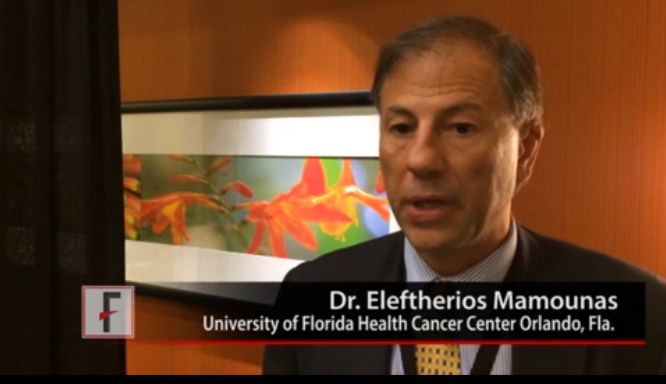
SAN FRANCISCO – Dr. Hope S. Rugo reviews the highlights of Day 2 at the breast cancer symposium sponsored by the American Society of Clinical Oncology, including presentations on new directions in neoadjuvant therapy. Data on pathologic complete response, immune modulation, and postneoadjuvant therapy are modifying oncology, with potential for significant changes in the near future. "I think that we’re seeing a whole new era of drugs in the postneoadjuvant setting," says Dr. Rugo, director of the Breast Oncology Clinical Trials Program at the University of California, San Francisco.
She describes a lively discussion in one session about when to apply data on neoadjuvant therapy to clinical practice.
A "great series of discussions" about managing survivors of breast cancer included a look at when advice on lifestyle modifications goes overboard, she says. For example, survivors do not need to avoid alcohol entirely. "It’s okay for a breast cancer survivor to have a couple of glasses of wine. It’s not the end of the world by any means," Dr. Rugo says.
Clinicians also can go overboard on surveillance after breast cancer treatment, according to Dr. Rugo, and she gives examples from a session debating intensive vs. nonintensive surveillance.
She finishes her recap of the day’s highlights with thoughts on breast reconstruction.
Dr. Rugo disclosed financial associations with Genomic Health, Plexxikon, Merck, and Novartis.
The video associated with this article is no longer available on this site. Please view all of our videos on the MDedge YouTube channel
On Twitter @sherryboschert
SAN FRANCISCO – Dr. Hope S. Rugo reviews the highlights of Day 2 at the breast cancer symposium sponsored by the American Society of Clinical Oncology, including presentations on new directions in neoadjuvant therapy. Data on pathologic complete response, immune modulation, and postneoadjuvant therapy are modifying oncology, with potential for significant changes in the near future. "I think that we’re seeing a whole new era of drugs in the postneoadjuvant setting," says Dr. Rugo, director of the Breast Oncology Clinical Trials Program at the University of California, San Francisco.
She describes a lively discussion in one session about when to apply data on neoadjuvant therapy to clinical practice.
A "great series of discussions" about managing survivors of breast cancer included a look at when advice on lifestyle modifications goes overboard, she says. For example, survivors do not need to avoid alcohol entirely. "It’s okay for a breast cancer survivor to have a couple of glasses of wine. It’s not the end of the world by any means," Dr. Rugo says.
Clinicians also can go overboard on surveillance after breast cancer treatment, according to Dr. Rugo, and she gives examples from a session debating intensive vs. nonintensive surveillance.
She finishes her recap of the day’s highlights with thoughts on breast reconstruction.
Dr. Rugo disclosed financial associations with Genomic Health, Plexxikon, Merck, and Novartis.
The video associated with this article is no longer available on this site. Please view all of our videos on the MDedge YouTube channel
On Twitter @sherryboschert
SAN FRANCISCO – Dr. Hope S. Rugo reviews the highlights of Day 2 at the breast cancer symposium sponsored by the American Society of Clinical Oncology, including presentations on new directions in neoadjuvant therapy. Data on pathologic complete response, immune modulation, and postneoadjuvant therapy are modifying oncology, with potential for significant changes in the near future. "I think that we’re seeing a whole new era of drugs in the postneoadjuvant setting," says Dr. Rugo, director of the Breast Oncology Clinical Trials Program at the University of California, San Francisco.
She describes a lively discussion in one session about when to apply data on neoadjuvant therapy to clinical practice.
A "great series of discussions" about managing survivors of breast cancer included a look at when advice on lifestyle modifications goes overboard, she says. For example, survivors do not need to avoid alcohol entirely. "It’s okay for a breast cancer survivor to have a couple of glasses of wine. It’s not the end of the world by any means," Dr. Rugo says.
Clinicians also can go overboard on surveillance after breast cancer treatment, according to Dr. Rugo, and she gives examples from a session debating intensive vs. nonintensive surveillance.
She finishes her recap of the day’s highlights with thoughts on breast reconstruction.
Dr. Rugo disclosed financial associations with Genomic Health, Plexxikon, Merck, and Novartis.
The video associated with this article is no longer available on this site. Please view all of our videos on the MDedge YouTube channel
On Twitter @sherryboschert
AT THE ASCO BREAST CANCER SYMPOSIUM
VIDEO: Study gathers insights on effects of cognitive rehab in MS
BOSTON – Brain-training with a video game appears to improve cognitive abilities in multiple sclerosis patients with cognitive impairment by increasing thalamo-cortical connectivity in the brain, according to Dr. Laura De Giglio.
She and her colleagues at Sapienza University of Rome conducted functional MRI scans of patients before and after 8 weeks of using "Dr. Kawashima's Brain Training" video game and compared them against patients who had been assigned to a wait-list group in a small, pilot, randomized study. They found improvements in processing speed and some aspects of working memory that correlated with increased functional connectivity between the thalamus and parts of the cortex.
In a video interview at the joint meeting of the European and Americas Committees for Treatment and Research in Multiple Sclerosis, Dr. De Giglio explained the rationale behind the study and how it might be applied further.
The video associated with this article is no longer available on this site. Please view all of our videos on the MDedge YouTube channel
BOSTON – Brain-training with a video game appears to improve cognitive abilities in multiple sclerosis patients with cognitive impairment by increasing thalamo-cortical connectivity in the brain, according to Dr. Laura De Giglio.
She and her colleagues at Sapienza University of Rome conducted functional MRI scans of patients before and after 8 weeks of using "Dr. Kawashima's Brain Training" video game and compared them against patients who had been assigned to a wait-list group in a small, pilot, randomized study. They found improvements in processing speed and some aspects of working memory that correlated with increased functional connectivity between the thalamus and parts of the cortex.
In a video interview at the joint meeting of the European and Americas Committees for Treatment and Research in Multiple Sclerosis, Dr. De Giglio explained the rationale behind the study and how it might be applied further.
The video associated with this article is no longer available on this site. Please view all of our videos on the MDedge YouTube channel
BOSTON – Brain-training with a video game appears to improve cognitive abilities in multiple sclerosis patients with cognitive impairment by increasing thalamo-cortical connectivity in the brain, according to Dr. Laura De Giglio.
She and her colleagues at Sapienza University of Rome conducted functional MRI scans of patients before and after 8 weeks of using "Dr. Kawashima's Brain Training" video game and compared them against patients who had been assigned to a wait-list group in a small, pilot, randomized study. They found improvements in processing speed and some aspects of working memory that correlated with increased functional connectivity between the thalamus and parts of the cortex.
In a video interview at the joint meeting of the European and Americas Committees for Treatment and Research in Multiple Sclerosis, Dr. De Giglio explained the rationale behind the study and how it might be applied further.
The video associated with this article is no longer available on this site. Please view all of our videos on the MDedge YouTube channel
AT MSBOSTON 2014
VIDEO: Complications increase with bilateral mastectomy and reconstruction
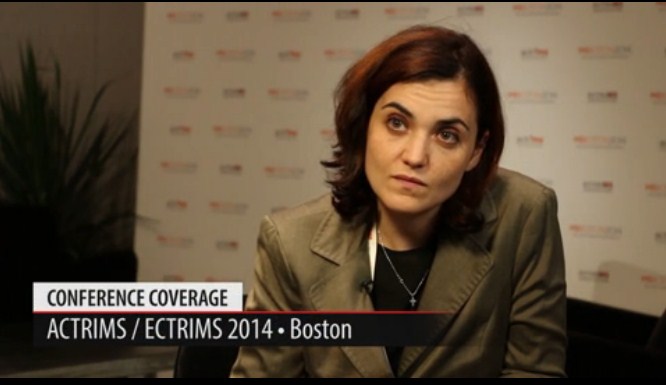
SAN FRANCISCO – Women undergoing mastectomy and breast reconstruction for the treatment of breast cancer are more likely to develop perioperative complications if they opt for prophylactic mastectomy of the other breast at the same time, a study of 18,229 cases found.
Compared with women who had a unilateral mastectomy and reconstruction, the 36% of patients who chose bilateral mastectomy and reconstruction were 55% more likely to lose a breast implant (if implants were used for reconstruction), twice as likely to need a transfusion regardless of whether the reconstruction used implants or autologous material, and twice as likely to remain hospitalized for at least 2 days regardless of reconstruction method, Dr. Amanda K. Silva and her associates reported in a poster presentation at a breast cancer symposium sponsored by the American Society of Clinical Oncology.
The reconstruction used implants in 89% of women undergoing bilateral mastectomy and 79% of those getting unilateral mastectomy, Dr. Silva and her colleagues reported.
The overall rate of complications was low, however, averaging 5%, said Dr. Silva, a surgeon at the University of Chicago, and her associates.
In this video interview, Dr. Silva discusses factors that physicians and patients should consider when choosing unilateral or bilateral mastectomy and reconstruction.
Previous studies have compared the risks of unilateral versus bilateral mastectomy without reconstruction, she said, and this study provides some of the first data of risks from either type of mastectomy with reconstruction.
Dr. Silva reported having no financial disclosures.
The video associated with this article is no longer available on this site. Please view all of our videos on the MDedge YouTube channel
On Twitter @sherryboschert
SAN FRANCISCO – Women undergoing mastectomy and breast reconstruction for the treatment of breast cancer are more likely to develop perioperative complications if they opt for prophylactic mastectomy of the other breast at the same time, a study of 18,229 cases found.
Compared with women who had a unilateral mastectomy and reconstruction, the 36% of patients who chose bilateral mastectomy and reconstruction were 55% more likely to lose a breast implant (if implants were used for reconstruction), twice as likely to need a transfusion regardless of whether the reconstruction used implants or autologous material, and twice as likely to remain hospitalized for at least 2 days regardless of reconstruction method, Dr. Amanda K. Silva and her associates reported in a poster presentation at a breast cancer symposium sponsored by the American Society of Clinical Oncology.
The reconstruction used implants in 89% of women undergoing bilateral mastectomy and 79% of those getting unilateral mastectomy, Dr. Silva and her colleagues reported.
The overall rate of complications was low, however, averaging 5%, said Dr. Silva, a surgeon at the University of Chicago, and her associates.
In this video interview, Dr. Silva discusses factors that physicians and patients should consider when choosing unilateral or bilateral mastectomy and reconstruction.
Previous studies have compared the risks of unilateral versus bilateral mastectomy without reconstruction, she said, and this study provides some of the first data of risks from either type of mastectomy with reconstruction.
Dr. Silva reported having no financial disclosures.
The video associated with this article is no longer available on this site. Please view all of our videos on the MDedge YouTube channel
On Twitter @sherryboschert
SAN FRANCISCO – Women undergoing mastectomy and breast reconstruction for the treatment of breast cancer are more likely to develop perioperative complications if they opt for prophylactic mastectomy of the other breast at the same time, a study of 18,229 cases found.
Compared with women who had a unilateral mastectomy and reconstruction, the 36% of patients who chose bilateral mastectomy and reconstruction were 55% more likely to lose a breast implant (if implants were used for reconstruction), twice as likely to need a transfusion regardless of whether the reconstruction used implants or autologous material, and twice as likely to remain hospitalized for at least 2 days regardless of reconstruction method, Dr. Amanda K. Silva and her associates reported in a poster presentation at a breast cancer symposium sponsored by the American Society of Clinical Oncology.
The reconstruction used implants in 89% of women undergoing bilateral mastectomy and 79% of those getting unilateral mastectomy, Dr. Silva and her colleagues reported.
The overall rate of complications was low, however, averaging 5%, said Dr. Silva, a surgeon at the University of Chicago, and her associates.
In this video interview, Dr. Silva discusses factors that physicians and patients should consider when choosing unilateral or bilateral mastectomy and reconstruction.
Previous studies have compared the risks of unilateral versus bilateral mastectomy without reconstruction, she said, and this study provides some of the first data of risks from either type of mastectomy with reconstruction.
Dr. Silva reported having no financial disclosures.
The video associated with this article is no longer available on this site. Please view all of our videos on the MDedge YouTube channel
On Twitter @sherryboschert
AT THE ASCO BREAST CANCER SYMPOSIUM
VIDEO: Access to mental health care a ‘civil rights’ issue
WASHINGTON – Laws that mandate mental illness should be covered by insurance in the same way as any other illness should be viewed on par with the Civil Rights Act, and they should be enforced with the same dedication, according to the former federal lawmaker who authored the Mental Health Parity and Addiction Equity Act of 2008.
Biases against mental illness are built into society at virtually every level, former U.S. Rep. Patrick J. Kennedy (D-R.I.) noted. Although it’s important to "avoid pathologizing" the human experience, he added, recognizing that mental illness affects all Americans at some level will not only save money, but will also make the nation healthier overall.
In a video interview at the annual meeting of the National Alliance on Mental Illness, Mr. Kennedy also shared what he believes are the necessary tools to start – and finish – a health care revolution, tools that already exist or are soon to be developed.
On Twitter @whitneymcknight
The video associated with this article is no longer available on this site. Please view all of our videos on the MDedge YouTube channel
WASHINGTON – Laws that mandate mental illness should be covered by insurance in the same way as any other illness should be viewed on par with the Civil Rights Act, and they should be enforced with the same dedication, according to the former federal lawmaker who authored the Mental Health Parity and Addiction Equity Act of 2008.
Biases against mental illness are built into society at virtually every level, former U.S. Rep. Patrick J. Kennedy (D-R.I.) noted. Although it’s important to "avoid pathologizing" the human experience, he added, recognizing that mental illness affects all Americans at some level will not only save money, but will also make the nation healthier overall.
In a video interview at the annual meeting of the National Alliance on Mental Illness, Mr. Kennedy also shared what he believes are the necessary tools to start – and finish – a health care revolution, tools that already exist or are soon to be developed.
On Twitter @whitneymcknight
The video associated with this article is no longer available on this site. Please view all of our videos on the MDedge YouTube channel
WASHINGTON – Laws that mandate mental illness should be covered by insurance in the same way as any other illness should be viewed on par with the Civil Rights Act, and they should be enforced with the same dedication, according to the former federal lawmaker who authored the Mental Health Parity and Addiction Equity Act of 2008.
Biases against mental illness are built into society at virtually every level, former U.S. Rep. Patrick J. Kennedy (D-R.I.) noted. Although it’s important to "avoid pathologizing" the human experience, he added, recognizing that mental illness affects all Americans at some level will not only save money, but will also make the nation healthier overall.
In a video interview at the annual meeting of the National Alliance on Mental Illness, Mr. Kennedy also shared what he believes are the necessary tools to start – and finish – a health care revolution, tools that already exist or are soon to be developed.
On Twitter @whitneymcknight
The video associated with this article is no longer available on this site. Please view all of our videos on the MDedge YouTube channel
AT THE NAMI ANNUAL MEETING