User login
VIDEO: Episode-bundling program generates success, satisfaction in Arkansas
CHICAGO – Bundled care payments are a hot topic among physicians as the Centers for Medicare and Medicaid Services continues to roll out its bundled payment pilot program.
But does the method really improve quality and enhance care delivery?
Physician leaders with the Arkansas Health Care Payment Improvement Initiative may have the answer. Arkansas was the first to implement a statewide payment reform initiative that rewards doctors for quality care and enables them to access data about overall care quality delivered during a set time period.
Dr. William Golden, medical director of the Arkansas Division of Medical Services, Department of Human Services, spoke about the initiative and its impact at the annual meeting of the Healthcare Information and Management Systems Society.
The initiative was launched in 2011 and includes partnerships between the Arkansas Department of Human Services, Arkansas Blue Cross and Blue Shield, and QualChoice of Arkansas.
The program enables physicians to share in the savings or excess costs of an episode, depending on their performance for each episode. For some episodes, health providers submit information through the billing system’s provider portal, a HIPAA-compliant online tool that collects data about overall care and performance. The portal allows hospitals, physicians, and other providers to submit a set of quality metrics data that will to be tied to the initiative’s financial incentives.
The tool also allows doctors designated as principal accountable providers to access reports about their average quality, costs, and utilization for care episodes.
During the payment initiative’s first phase, insurers introduced five episodes of care, including upper respiratory infections, total hip and knee replacements, congestive heart failure, attention deficit/hyperactivity disorder, and perinatal.
In a video interview, Dr. Golden discusses the initiative, the road to build its design, and how the program has affected physicians and patients.
The video associated with this article is no longer available on this site. Please view all of our videos on the MDedge YouTube channel
On Twitter @legal_med
CHICAGO – Bundled care payments are a hot topic among physicians as the Centers for Medicare and Medicaid Services continues to roll out its bundled payment pilot program.
But does the method really improve quality and enhance care delivery?
Physician leaders with the Arkansas Health Care Payment Improvement Initiative may have the answer. Arkansas was the first to implement a statewide payment reform initiative that rewards doctors for quality care and enables them to access data about overall care quality delivered during a set time period.
Dr. William Golden, medical director of the Arkansas Division of Medical Services, Department of Human Services, spoke about the initiative and its impact at the annual meeting of the Healthcare Information and Management Systems Society.
The initiative was launched in 2011 and includes partnerships between the Arkansas Department of Human Services, Arkansas Blue Cross and Blue Shield, and QualChoice of Arkansas.
The program enables physicians to share in the savings or excess costs of an episode, depending on their performance for each episode. For some episodes, health providers submit information through the billing system’s provider portal, a HIPAA-compliant online tool that collects data about overall care and performance. The portal allows hospitals, physicians, and other providers to submit a set of quality metrics data that will to be tied to the initiative’s financial incentives.
The tool also allows doctors designated as principal accountable providers to access reports about their average quality, costs, and utilization for care episodes.
During the payment initiative’s first phase, insurers introduced five episodes of care, including upper respiratory infections, total hip and knee replacements, congestive heart failure, attention deficit/hyperactivity disorder, and perinatal.
In a video interview, Dr. Golden discusses the initiative, the road to build its design, and how the program has affected physicians and patients.
The video associated with this article is no longer available on this site. Please view all of our videos on the MDedge YouTube channel
On Twitter @legal_med
CHICAGO – Bundled care payments are a hot topic among physicians as the Centers for Medicare and Medicaid Services continues to roll out its bundled payment pilot program.
But does the method really improve quality and enhance care delivery?
Physician leaders with the Arkansas Health Care Payment Improvement Initiative may have the answer. Arkansas was the first to implement a statewide payment reform initiative that rewards doctors for quality care and enables them to access data about overall care quality delivered during a set time period.
Dr. William Golden, medical director of the Arkansas Division of Medical Services, Department of Human Services, spoke about the initiative and its impact at the annual meeting of the Healthcare Information and Management Systems Society.
The initiative was launched in 2011 and includes partnerships between the Arkansas Department of Human Services, Arkansas Blue Cross and Blue Shield, and QualChoice of Arkansas.
The program enables physicians to share in the savings or excess costs of an episode, depending on their performance for each episode. For some episodes, health providers submit information through the billing system’s provider portal, a HIPAA-compliant online tool that collects data about overall care and performance. The portal allows hospitals, physicians, and other providers to submit a set of quality metrics data that will to be tied to the initiative’s financial incentives.
The tool also allows doctors designated as principal accountable providers to access reports about their average quality, costs, and utilization for care episodes.
During the payment initiative’s first phase, insurers introduced five episodes of care, including upper respiratory infections, total hip and knee replacements, congestive heart failure, attention deficit/hyperactivity disorder, and perinatal.
In a video interview, Dr. Golden discusses the initiative, the road to build its design, and how the program has affected physicians and patients.
The video associated with this article is no longer available on this site. Please view all of our videos on the MDedge YouTube channel
On Twitter @legal_med
AT HIMSS15

Update on Biologics: Report From the AAD Meeting
At the 73rd Annual Meeting of the American Academy of Dermatology in San Francisco, California, Dr. Jashin J. Wu spoke about the risk for cancer, infection, and MACE (major adverse cardiovascular events) in psoriasis patients on a biologic. Dr. Wu provides an overview of the data evaluating biologics versus nonbiologic therapies. He discusses biologics such as infliximab, ustekinumab, etanercept, and adalimumab, as well as tumor necrosis factor inhibitors.
At the 73rd Annual Meeting of the American Academy of Dermatology in San Francisco, California, Dr. Jashin J. Wu spoke about the risk for cancer, infection, and MACE (major adverse cardiovascular events) in psoriasis patients on a biologic. Dr. Wu provides an overview of the data evaluating biologics versus nonbiologic therapies. He discusses biologics such as infliximab, ustekinumab, etanercept, and adalimumab, as well as tumor necrosis factor inhibitors.
At the 73rd Annual Meeting of the American Academy of Dermatology in San Francisco, California, Dr. Jashin J. Wu spoke about the risk for cancer, infection, and MACE (major adverse cardiovascular events) in psoriasis patients on a biologic. Dr. Wu provides an overview of the data evaluating biologics versus nonbiologic therapies. He discusses biologics such as infliximab, ustekinumab, etanercept, and adalimumab, as well as tumor necrosis factor inhibitors.

VIDEO: TKIs merit broader use as NSCLC adjuvant
GENEVA – It’s time for oncologists to radically expand their use of adjuvant treatment with a tyrosine-kinase inhibitor in patients with stage IB-III non–small cell lung cancer that has a suitable mutation who have undergone surgical resection and received adjuvant chemotherapy along with, when appropriate, adjuvant radiation therapy, Dr. Mark G. Kris said in a video interview at the European Lung Cancer Congress.
Giving such patients prolonged treatment with a tyrosine-kinase inhibitor when their tumor carries a mutation in the epidermal growth factor receptor gene boosts their chance for complete cure, increases survival, and should be much more widely used than it’s been up until now, said Dr. Kris of Memorial Sloan Kettering Cancer Center, New York.
“The time is ripe,” to treat these patients with gefitinib (Iressa), erlotinib (Tarceva), or afatinib (Gilotrif) because they give patients a good prospect for benefit while posing little risk for causing significant adverse effects. More than 100 patients have been documented on treatment with gefitinib for more than 10 years with no concerning adverse effects, Dr. Kris noted. Even though the evidence for the efficacy of these drugs in this setting is not completely airtight with no phase III trial results, the risk-to-benefit ratio “strongly favors” using a tyrosine-kinase inhibitor, he said.
Dr. Kris has been a consultant to AstraZeneca, Roche, Genentech/Roche, Clovis and Novartis, and he has received research grants from Pfizer and Puma.
The video associated with this article is no longer available on this site. Please view all of our videos on the MDedge YouTube channel
On Twitter @mitchelzoler
GENEVA – It’s time for oncologists to radically expand their use of adjuvant treatment with a tyrosine-kinase inhibitor in patients with stage IB-III non–small cell lung cancer that has a suitable mutation who have undergone surgical resection and received adjuvant chemotherapy along with, when appropriate, adjuvant radiation therapy, Dr. Mark G. Kris said in a video interview at the European Lung Cancer Congress.
Giving such patients prolonged treatment with a tyrosine-kinase inhibitor when their tumor carries a mutation in the epidermal growth factor receptor gene boosts their chance for complete cure, increases survival, and should be much more widely used than it’s been up until now, said Dr. Kris of Memorial Sloan Kettering Cancer Center, New York.
“The time is ripe,” to treat these patients with gefitinib (Iressa), erlotinib (Tarceva), or afatinib (Gilotrif) because they give patients a good prospect for benefit while posing little risk for causing significant adverse effects. More than 100 patients have been documented on treatment with gefitinib for more than 10 years with no concerning adverse effects, Dr. Kris noted. Even though the evidence for the efficacy of these drugs in this setting is not completely airtight with no phase III trial results, the risk-to-benefit ratio “strongly favors” using a tyrosine-kinase inhibitor, he said.
Dr. Kris has been a consultant to AstraZeneca, Roche, Genentech/Roche, Clovis and Novartis, and he has received research grants from Pfizer and Puma.
The video associated with this article is no longer available on this site. Please view all of our videos on the MDedge YouTube channel
On Twitter @mitchelzoler
GENEVA – It’s time for oncologists to radically expand their use of adjuvant treatment with a tyrosine-kinase inhibitor in patients with stage IB-III non–small cell lung cancer that has a suitable mutation who have undergone surgical resection and received adjuvant chemotherapy along with, when appropriate, adjuvant radiation therapy, Dr. Mark G. Kris said in a video interview at the European Lung Cancer Congress.
Giving such patients prolonged treatment with a tyrosine-kinase inhibitor when their tumor carries a mutation in the epidermal growth factor receptor gene boosts their chance for complete cure, increases survival, and should be much more widely used than it’s been up until now, said Dr. Kris of Memorial Sloan Kettering Cancer Center, New York.
“The time is ripe,” to treat these patients with gefitinib (Iressa), erlotinib (Tarceva), or afatinib (Gilotrif) because they give patients a good prospect for benefit while posing little risk for causing significant adverse effects. More than 100 patients have been documented on treatment with gefitinib for more than 10 years with no concerning adverse effects, Dr. Kris noted. Even though the evidence for the efficacy of these drugs in this setting is not completely airtight with no phase III trial results, the risk-to-benefit ratio “strongly favors” using a tyrosine-kinase inhibitor, he said.
Dr. Kris has been a consultant to AstraZeneca, Roche, Genentech/Roche, Clovis and Novartis, and he has received research grants from Pfizer and Puma.
The video associated with this article is no longer available on this site. Please view all of our videos on the MDedge YouTube channel
On Twitter @mitchelzoler
EXPERT ANALYSIS FROM ELCC 2015
VIDEO: Treating heart failure congestion improved hyperglycemia
SAN DIEGO – Congestion secondary to advanced heart failure appears to cause type 2 diabetes in a significant subgroup of patients, based on suggestive findings from a series of recently reported studies, Dr. Maya Guglin said during an interview at the annual meeting of the American College of Cardiology.
Dr. Guglin reviewed convergent findings from several groups of patients who received left ventricular assist devices to treat advanced heart failure. The analyses all showed that many, though not a majority, of those patients also had type 2 diabetes. Soon after patients received an assist device, the type 2 diabetes uniformly improved – and in many cases, glycemic control normalized.
Dr. Guglin, who has named this condition “cardiogenic diabetes,” said that reducing congestion with an assist device or with diuretic treatment seems the best way to both reduce congestion and improve or resolve the diabetes.
Those treatments will “improve quality of life, reduce hospital admissions for heart failure, and also improve the course of diabetes,” said Dr. Guglin, professor of medicine and medical director of the ventricular assist device program at the University of Kentucky in Lexington.
Dr. Guglin had no disclosures.
The video associated with this article is no longer available on this site. Please view all of our videos on the MDedge YouTube channel
On Twitter @mitchelzoler
SAN DIEGO – Congestion secondary to advanced heart failure appears to cause type 2 diabetes in a significant subgroup of patients, based on suggestive findings from a series of recently reported studies, Dr. Maya Guglin said during an interview at the annual meeting of the American College of Cardiology.
Dr. Guglin reviewed convergent findings from several groups of patients who received left ventricular assist devices to treat advanced heart failure. The analyses all showed that many, though not a majority, of those patients also had type 2 diabetes. Soon after patients received an assist device, the type 2 diabetes uniformly improved – and in many cases, glycemic control normalized.
Dr. Guglin, who has named this condition “cardiogenic diabetes,” said that reducing congestion with an assist device or with diuretic treatment seems the best way to both reduce congestion and improve or resolve the diabetes.
Those treatments will “improve quality of life, reduce hospital admissions for heart failure, and also improve the course of diabetes,” said Dr. Guglin, professor of medicine and medical director of the ventricular assist device program at the University of Kentucky in Lexington.
Dr. Guglin had no disclosures.
The video associated with this article is no longer available on this site. Please view all of our videos on the MDedge YouTube channel
On Twitter @mitchelzoler
SAN DIEGO – Congestion secondary to advanced heart failure appears to cause type 2 diabetes in a significant subgroup of patients, based on suggestive findings from a series of recently reported studies, Dr. Maya Guglin said during an interview at the annual meeting of the American College of Cardiology.
Dr. Guglin reviewed convergent findings from several groups of patients who received left ventricular assist devices to treat advanced heart failure. The analyses all showed that many, though not a majority, of those patients also had type 2 diabetes. Soon after patients received an assist device, the type 2 diabetes uniformly improved – and in many cases, glycemic control normalized.
Dr. Guglin, who has named this condition “cardiogenic diabetes,” said that reducing congestion with an assist device or with diuretic treatment seems the best way to both reduce congestion and improve or resolve the diabetes.
Those treatments will “improve quality of life, reduce hospital admissions for heart failure, and also improve the course of diabetes,” said Dr. Guglin, professor of medicine and medical director of the ventricular assist device program at the University of Kentucky in Lexington.
Dr. Guglin had no disclosures.
The video associated with this article is no longer available on this site. Please view all of our videos on the MDedge YouTube channel
On Twitter @mitchelzoler
EXPERT ANALYSIS FROM ACC 15
Update on Melanoma Guidelines: Report From the AAD Meeting
Melanoma was an important topic at multiple sessions of the 73rd Annual Meeting of the American Academy of Dermatology (AAD) in San Francisco, California. Dr. Susan M. Swetter reviews the AAD and National Comprehensive Cancer Network recommendations for biopsy of pigmented suspicious lesions. She also discusses when sentinel lymph node biopsies are recommended and factors that would indicate a patient needs a sentinel lymph node biopsy. Dr. Swetter also outlines surgical margins for melanoma and emphasizes that these are clinical margins taken at the time of surgery, not histologic margins. She concludes with a review of the melanoma subtype lentigo maligna.
Melanoma was an important topic at multiple sessions of the 73rd Annual Meeting of the American Academy of Dermatology (AAD) in San Francisco, California. Dr. Susan M. Swetter reviews the AAD and National Comprehensive Cancer Network recommendations for biopsy of pigmented suspicious lesions. She also discusses when sentinel lymph node biopsies are recommended and factors that would indicate a patient needs a sentinel lymph node biopsy. Dr. Swetter also outlines surgical margins for melanoma and emphasizes that these are clinical margins taken at the time of surgery, not histologic margins. She concludes with a review of the melanoma subtype lentigo maligna.
Melanoma was an important topic at multiple sessions of the 73rd Annual Meeting of the American Academy of Dermatology (AAD) in San Francisco, California. Dr. Susan M. Swetter reviews the AAD and National Comprehensive Cancer Network recommendations for biopsy of pigmented suspicious lesions. She also discusses when sentinel lymph node biopsies are recommended and factors that would indicate a patient needs a sentinel lymph node biopsy. Dr. Swetter also outlines surgical margins for melanoma and emphasizes that these are clinical margins taken at the time of surgery, not histologic margins. She concludes with a review of the melanoma subtype lentigo maligna.
VIDEO: Interventions improve social functioning in schizophrenia
COLORADO SPRINGS – What kinds of early social interventions and cognitive remediation work to improve outcomes in schizophrenia? What’s the importance of stable medication regimens and psychoeducation for family members? Learn the answers to these questions and more in this discussion between Dr. S. Charles Schulz, head of the department of psychiatry at the University of Minnesota, Minneapolis, and his colleague Michael F. Green, Ph.D., who is head of the Green Lab at the University of California, Los Angeles, which was recorded at the International Congress on Schizophrenia Research.
The video associated with this article is no longer available on this site. Please view all of our videos on the MDedge YouTube channel
On Twitter @whitneymcknight
COLORADO SPRINGS – What kinds of early social interventions and cognitive remediation work to improve outcomes in schizophrenia? What’s the importance of stable medication regimens and psychoeducation for family members? Learn the answers to these questions and more in this discussion between Dr. S. Charles Schulz, head of the department of psychiatry at the University of Minnesota, Minneapolis, and his colleague Michael F. Green, Ph.D., who is head of the Green Lab at the University of California, Los Angeles, which was recorded at the International Congress on Schizophrenia Research.
The video associated with this article is no longer available on this site. Please view all of our videos on the MDedge YouTube channel
On Twitter @whitneymcknight
COLORADO SPRINGS – What kinds of early social interventions and cognitive remediation work to improve outcomes in schizophrenia? What’s the importance of stable medication regimens and psychoeducation for family members? Learn the answers to these questions and more in this discussion between Dr. S. Charles Schulz, head of the department of psychiatry at the University of Minnesota, Minneapolis, and his colleague Michael F. Green, Ph.D., who is head of the Green Lab at the University of California, Los Angeles, which was recorded at the International Congress on Schizophrenia Research.
The video associated with this article is no longer available on this site. Please view all of our videos on the MDedge YouTube channel
On Twitter @whitneymcknight
EXPERT ANALYSIS FROM THE ICSR BIENNIAL MEETING

VIDEO – ‘Significant recovery’ possible in schizophrenia with cognitive interventions
COLORADO SPRINGS– Many clinicians are unaware that nonpharmacologic interventions can lead to positive results for patients with schizophrenia, according to Dr. Sophia Vinogradov and Dr. Joshua Woolley, psychiatrists from the University of California, San Francisco.
“The one message we have is that there is hope,” Dr. Woolley says in this interview, which was recorded at the biennial meeting of the 15th International Congress on Schizophrenia Research. Patients with schizophrenia can still “live a fulfilling life and have a significant recovery.”
Dr. Vinogradov and Dr. Woolley discuss how clinicians can use cognitive training techniques, cognitive-behavioral therapy, social media, and mobile technology to help ensure positive outcomes where patients see their disease not as a reason to withdraw from society but as an opportunity to engage with others who share similar struggles.
On Twitter @whitneymcknight
COLORADO SPRINGS– Many clinicians are unaware that nonpharmacologic interventions can lead to positive results for patients with schizophrenia, according to Dr. Sophia Vinogradov and Dr. Joshua Woolley, psychiatrists from the University of California, San Francisco.
“The one message we have is that there is hope,” Dr. Woolley says in this interview, which was recorded at the biennial meeting of the 15th International Congress on Schizophrenia Research. Patients with schizophrenia can still “live a fulfilling life and have a significant recovery.”
Dr. Vinogradov and Dr. Woolley discuss how clinicians can use cognitive training techniques, cognitive-behavioral therapy, social media, and mobile technology to help ensure positive outcomes where patients see their disease not as a reason to withdraw from society but as an opportunity to engage with others who share similar struggles.
On Twitter @whitneymcknight
COLORADO SPRINGS– Many clinicians are unaware that nonpharmacologic interventions can lead to positive results for patients with schizophrenia, according to Dr. Sophia Vinogradov and Dr. Joshua Woolley, psychiatrists from the University of California, San Francisco.
“The one message we have is that there is hope,” Dr. Woolley says in this interview, which was recorded at the biennial meeting of the 15th International Congress on Schizophrenia Research. Patients with schizophrenia can still “live a fulfilling life and have a significant recovery.”
Dr. Vinogradov and Dr. Woolley discuss how clinicians can use cognitive training techniques, cognitive-behavioral therapy, social media, and mobile technology to help ensure positive outcomes where patients see their disease not as a reason to withdraw from society but as an opportunity to engage with others who share similar struggles.
On Twitter @whitneymcknight
AT THE INTERNATIONAL CONGRESS ON SCHIZOPHRENIA RESEARCH

VIDEO – ‘Clear’ link between cannabis use and schizophrenia
COLORADO SPRINGS – Not all people who use cannabis will become psychotic, but for those with just the right constellation of risk factors, cannabis can lead to “chronic schizophrenia,” according to Sir Robin M. Murray, professor of psychiatric research at the Institute of Psychiatry at King’s College London.
And although Dr. Murray says “old-fashioned” cannabis can lead to psychosis, it’s the newer, more potent kinds manufactured in the last decade that pose the greatest risk.
In this interview, recorded at the International Congress on Schizophrenia Research, Dr. Murray discusses the evidence establishing the links between psychosis, schizophrenia, and cannabis, and what clinicians can do to help patients who might be at risk. He warns, however, that not everyone will be able to reverse the damage to the brain that cannabis can cause.
The video associated with this article is no longer available on this site. Please view all of our videos on the MDedge YouTube channel
On Twitter @whitneymcknight
COLORADO SPRINGS – Not all people who use cannabis will become psychotic, but for those with just the right constellation of risk factors, cannabis can lead to “chronic schizophrenia,” according to Sir Robin M. Murray, professor of psychiatric research at the Institute of Psychiatry at King’s College London.
And although Dr. Murray says “old-fashioned” cannabis can lead to psychosis, it’s the newer, more potent kinds manufactured in the last decade that pose the greatest risk.
In this interview, recorded at the International Congress on Schizophrenia Research, Dr. Murray discusses the evidence establishing the links between psychosis, schizophrenia, and cannabis, and what clinicians can do to help patients who might be at risk. He warns, however, that not everyone will be able to reverse the damage to the brain that cannabis can cause.
The video associated with this article is no longer available on this site. Please view all of our videos on the MDedge YouTube channel
On Twitter @whitneymcknight
COLORADO SPRINGS – Not all people who use cannabis will become psychotic, but for those with just the right constellation of risk factors, cannabis can lead to “chronic schizophrenia,” according to Sir Robin M. Murray, professor of psychiatric research at the Institute of Psychiatry at King’s College London.
And although Dr. Murray says “old-fashioned” cannabis can lead to psychosis, it’s the newer, more potent kinds manufactured in the last decade that pose the greatest risk.
In this interview, recorded at the International Congress on Schizophrenia Research, Dr. Murray discusses the evidence establishing the links between psychosis, schizophrenia, and cannabis, and what clinicians can do to help patients who might be at risk. He warns, however, that not everyone will be able to reverse the damage to the brain that cannabis can cause.
The video associated with this article is no longer available on this site. Please view all of our videos on the MDedge YouTube channel
On Twitter @whitneymcknight
AT THE INTERNATIONAL CONGRESS ON SCHIZOPHRENIA RESEARCH

VIDEO: Hospitalists should build better communication with primary care physicians
NATIONAL HARBOR, MD.– Communication between hospitalists and primary care physicians is not always easy, but doctors should strive to overcome barriers to the interactions, Dr. Roy I. Sittig said during the Society of Hospital Medicine annual meeting.
“We need to do a better job communicating with each other,” explained Dr. Sittig, hospitalist director and associate chief for clinical affairs at the University of Connecticut Health Center, Farmington, during a rapid-fire panel at the meeting. “You should communicate with the [primary care physician] whenever you can.”
Different primary care physicians may prefer different methods of communication, Dr. Sittig noted, and efforts by hospitalists to communicate may not always be well received. However, hospitalists should get to know their patients’ primary care physicians and build the relationship, he said.
In a video interview, Dr. Sittig discussed why communications between hospitalists and primary care physicians is vital. He also spoke about the benefits of physician engagement and how to strengthen such engagement at hospitals.
The video associated with this article is no longer available on this site. Please view all of our videos on the MDedge YouTube channel
On Twitter @legal_med
NATIONAL HARBOR, MD.– Communication between hospitalists and primary care physicians is not always easy, but doctors should strive to overcome barriers to the interactions, Dr. Roy I. Sittig said during the Society of Hospital Medicine annual meeting.
“We need to do a better job communicating with each other,” explained Dr. Sittig, hospitalist director and associate chief for clinical affairs at the University of Connecticut Health Center, Farmington, during a rapid-fire panel at the meeting. “You should communicate with the [primary care physician] whenever you can.”
Different primary care physicians may prefer different methods of communication, Dr. Sittig noted, and efforts by hospitalists to communicate may not always be well received. However, hospitalists should get to know their patients’ primary care physicians and build the relationship, he said.
In a video interview, Dr. Sittig discussed why communications between hospitalists and primary care physicians is vital. He also spoke about the benefits of physician engagement and how to strengthen such engagement at hospitals.
The video associated with this article is no longer available on this site. Please view all of our videos on the MDedge YouTube channel
On Twitter @legal_med
NATIONAL HARBOR, MD.– Communication between hospitalists and primary care physicians is not always easy, but doctors should strive to overcome barriers to the interactions, Dr. Roy I. Sittig said during the Society of Hospital Medicine annual meeting.
“We need to do a better job communicating with each other,” explained Dr. Sittig, hospitalist director and associate chief for clinical affairs at the University of Connecticut Health Center, Farmington, during a rapid-fire panel at the meeting. “You should communicate with the [primary care physician] whenever you can.”
Different primary care physicians may prefer different methods of communication, Dr. Sittig noted, and efforts by hospitalists to communicate may not always be well received. However, hospitalists should get to know their patients’ primary care physicians and build the relationship, he said.
In a video interview, Dr. Sittig discussed why communications between hospitalists and primary care physicians is vital. He also spoke about the benefits of physician engagement and how to strengthen such engagement at hospitals.
The video associated with this article is no longer available on this site. Please view all of our videos on the MDedge YouTube channel
On Twitter @legal_med
AT THE ANNUAL MEETING OF THE SOCIETY OF HOSPITAL MEDICINE
VIDEO: AGA Center for GI Innovation and Technology is a supply chain referee
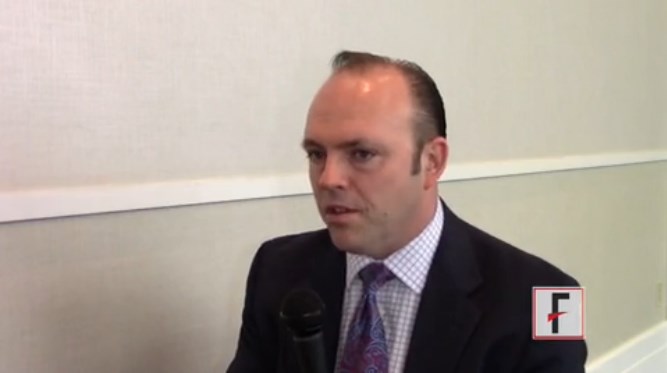
SAN FRANCISCO – Adopting a new GI device means getting it passed through a supply chain at a clinic or a hospital committee. With increasing health care consolidation, it has become harder for new technology to get a foothold. The AGA Center for GI Innovation and Technology can work with manufacturers, physicians, or a facility to help manage the process of pushing a new product along the supply chain. Dr. Joel V. Brill, who serves on the executive committee for the center, explains in this video interview.
The video associated with this article is no longer available on this site. Please view all of our videos on the MDedge YouTube channel
SAN FRANCISCO – Adopting a new GI device means getting it passed through a supply chain at a clinic or a hospital committee. With increasing health care consolidation, it has become harder for new technology to get a foothold. The AGA Center for GI Innovation and Technology can work with manufacturers, physicians, or a facility to help manage the process of pushing a new product along the supply chain. Dr. Joel V. Brill, who serves on the executive committee for the center, explains in this video interview.
The video associated with this article is no longer available on this site. Please view all of our videos on the MDedge YouTube channel
SAN FRANCISCO – Adopting a new GI device means getting it passed through a supply chain at a clinic or a hospital committee. With increasing health care consolidation, it has become harder for new technology to get a foothold. The AGA Center for GI Innovation and Technology can work with manufacturers, physicians, or a facility to help manage the process of pushing a new product along the supply chain. Dr. Joel V. Brill, who serves on the executive committee for the center, explains in this video interview.
The video associated with this article is no longer available on this site. Please view all of our videos on the MDedge YouTube channel
AT THE 2015 AGA TECH SUMMIT