User login
Policy Segment 3: When depression is the differential diagnosis for distress
The video associated with this article is no longer available on this site. Please view all of our videos on the MDedge YouTube channel
People in this video: Dr. James Griffith, the Leon M. Yochelson Professor of Psychiatry and Behavioral Sciences, and chair of psychiatry and psychosomatic medicine at George Washington University School of Medicine, Washington; Whitney McKnight, cohost and producer of Mental Health Consult.
Whitney: I think we need to step back and define mental illness. For that, I’m going to go to you, Griff, because I think it’s important that we remember not all primary care doctors really do have an understanding of the nuances to definitions of mental health.
You and I were having a discussion about “How do you define depression?” There’s clinical diagnosis of it, but then there are other ways that it gets used.
Dr. James Griffith: There’s a big push in medical education to shorten it, to do more in less time, but this is complex. There has not been much acknowledgment of the complexity. I’ll give you two difficult scenarios.
“Huge numbers of people treated in primary care who would have high scores on the PHQ-9 are in fact just lonely.” – Dr. James GriffithOne is disorder versus distress. If you simply download a Patient Health Questionnaire-9 off the Internet, give it to people: They have a high score; we say they’re depressed, give them an antidepressant. Huge numbers of people in primary care who would have high depression scores, in fact, are lonely; they’re in abusive relationships; they’re grieving losses; they are demoralized because their aspirations in life won’t take place – none of these problems are helped by an antidepressant.
Medical students, or for that matter, psychiatry residents, are not well taught in how to distinguish disorder from distress. All of these are solvable problems. There’s sort of a myth of the depressed patient that if only we would recognize depressed people, give them a prescription, everything would be okay, but it doesn’t.
Whitney: How do you teach that, then? What is missing in the curriculum?
Dr. Griffith: It’s a little bit like what Dr. Kirschner said about money and teams. You don’t have teams, if you don’t have funding. You don’t have teaching, if you don’t have time, and that’s one of our first issues.
The video associated with this article is no longer available on this site. Please view all of our videos on the MDedge YouTube channel
People in this video: Dr. James Griffith, the Leon M. Yochelson Professor of Psychiatry and Behavioral Sciences, and chair of psychiatry and psychosomatic medicine at George Washington University School of Medicine, Washington; Whitney McKnight, cohost and producer of Mental Health Consult.
Whitney: I think we need to step back and define mental illness. For that, I’m going to go to you, Griff, because I think it’s important that we remember not all primary care doctors really do have an understanding of the nuances to definitions of mental health.
You and I were having a discussion about “How do you define depression?” There’s clinical diagnosis of it, but then there are other ways that it gets used.
Dr. James Griffith: There’s a big push in medical education to shorten it, to do more in less time, but this is complex. There has not been much acknowledgment of the complexity. I’ll give you two difficult scenarios.
“Huge numbers of people treated in primary care who would have high scores on the PHQ-9 are in fact just lonely.” – Dr. James GriffithOne is disorder versus distress. If you simply download a Patient Health Questionnaire-9 off the Internet, give it to people: They have a high score; we say they’re depressed, give them an antidepressant. Huge numbers of people in primary care who would have high depression scores, in fact, are lonely; they’re in abusive relationships; they’re grieving losses; they are demoralized because their aspirations in life won’t take place – none of these problems are helped by an antidepressant.
Medical students, or for that matter, psychiatry residents, are not well taught in how to distinguish disorder from distress. All of these are solvable problems. There’s sort of a myth of the depressed patient that if only we would recognize depressed people, give them a prescription, everything would be okay, but it doesn’t.
Whitney: How do you teach that, then? What is missing in the curriculum?
Dr. Griffith: It’s a little bit like what Dr. Kirschner said about money and teams. You don’t have teams, if you don’t have funding. You don’t have teaching, if you don’t have time, and that’s one of our first issues.
The video associated with this article is no longer available on this site. Please view all of our videos on the MDedge YouTube channel
People in this video: Dr. James Griffith, the Leon M. Yochelson Professor of Psychiatry and Behavioral Sciences, and chair of psychiatry and psychosomatic medicine at George Washington University School of Medicine, Washington; Whitney McKnight, cohost and producer of Mental Health Consult.
Whitney: I think we need to step back and define mental illness. For that, I’m going to go to you, Griff, because I think it’s important that we remember not all primary care doctors really do have an understanding of the nuances to definitions of mental health.
You and I were having a discussion about “How do you define depression?” There’s clinical diagnosis of it, but then there are other ways that it gets used.
Dr. James Griffith: There’s a big push in medical education to shorten it, to do more in less time, but this is complex. There has not been much acknowledgment of the complexity. I’ll give you two difficult scenarios.
“Huge numbers of people treated in primary care who would have high scores on the PHQ-9 are in fact just lonely.” – Dr. James GriffithOne is disorder versus distress. If you simply download a Patient Health Questionnaire-9 off the Internet, give it to people: They have a high score; we say they’re depressed, give them an antidepressant. Huge numbers of people in primary care who would have high depression scores, in fact, are lonely; they’re in abusive relationships; they’re grieving losses; they are demoralized because their aspirations in life won’t take place – none of these problems are helped by an antidepressant.
Medical students, or for that matter, psychiatry residents, are not well taught in how to distinguish disorder from distress. All of these are solvable problems. There’s sort of a myth of the depressed patient that if only we would recognize depressed people, give them a prescription, everything would be okay, but it doesn’t.
Whitney: How do you teach that, then? What is missing in the curriculum?
Dr. Griffith: It’s a little bit like what Dr. Kirschner said about money and teams. You don’t have teams, if you don’t have funding. You don’t have teaching, if you don’t have time, and that’s one of our first issues.
Clinical Segment 3: Should you add a psychiatrist to your practice?
The video associated with this article is no longer available on this site. Please view all of our videos on the MDedge YouTube channel
People in this video: Whitney McKnight, cohost and producer of Mental Health Consult; Dr. Lorenzo Norris, editorial board member of Clinical Psychiatry News and cohost of Mental Health Consult, and assistant professor of psychiatry and behavioral sciences, assistant dean of student affairs at G.W. University School of Medicine & Health Sciences, and the medical director of psychiatric and behavioral services at G.W.U. Hospital, Washington; Dr. Lillian Beard, pediatrician with Children’s National Hospital Network, Washington, and a Pediatric News editorial board member; Dr. David Pickar, adjunct professor of psychiatry at Johns Hopkins University School of Medicine, Baltimore, and at the Uniformed Services University of the Health Sciences in Bethesda, Md.; Dr. April Barbour, an associate professor of medicine and the director of general internal medicine and of the primary care residency program at G.W.U. School of Medicine, Washington.
Dr. Beard: This is one of the major frustrations. You've hit it right on the head. I will take anywhere from 45-50 minutes to do this, and I will have others who are waiting in my reception area or I will have a tap on the door. It takes that kind of time and the unfortunate thing is, I am never adequately reimbursed for the time that it really takes. Often, what I do is ask my front desk to screen patients when they call. If they say it is a routine check-up, the front desk knows to ask, "Are there any particular concerns that you have this year. Anything you would like the doctor to focus on?" If they do, then what I have to do is block out three of my regular times and that is very costly.
Whitney: As we move into a world in which it is not fee-for-service—based and “I think if it’s possible to have a mental health professional on site [in your practice], it is a win-win situation.” – Dr. Lillian Beardwe have to create these new metrics, I say “we,” but the health care system is moving toward setting up new accountable care organizations or other sorts of bundle payments. When we have the new legislation take effect, the MACRA (Medicaid Access and CHIP Reauthorization Act) legislation, are you building into the metrics that you are going to be reimbursed through your third-party payers to include these 50-minute sessions or is there no way to do that?
Dr. Beard: I do not know of a way to do it. I really do not.
Whitney: How is that going to impact outcomes and reimbursement?
Dr. Beard: Well, it is definitely going to impact outcomes. One of the areas of interest that I have is the feasibility of having a mental health specialist in my actual primary care site. Even if it is for a few segments a week, it would be a tremendous help. Just having that individual present removes certain barriers. For example, there are times that, even during the primary care encounter, the mental health specialist is able to say to the patient’s parents, “We’ll be glad to make an appointment and discuss that with you at a future time, so we can go more in depth.” Just that introduction lowers the barrier. Otherwise, there is more resistance if I say, “I am going to refer you to Dr. Pickar he is an associate who…” They object, and want to know, “Well, what kind of doctor is Dr. Pickar? He is a psychiatrist?” It depends on what association they have with the word “psychiatrist.” The parents might object, “My kid’s not crazy.” I have to explain that this is a mental health disorder that we can do something about, and the psychiatrist is going to assist us with that.
Dr. Pickar: That is a great model.
Whitney: Yes but is it feasible with all the new legislation that is coming down the line?
Dr. Barbour: I think there are very dramatic differences between the pediatric model of care, which tends to be more wraparound care that you are describing; (should this be “that” or “than”?) and the adult model of care, which is more consumer driven and in which we expect a lot of our patients. We find particularly that young people transitioning to their early 20s often have a hard time understanding how to interact in the adult model of care. Particularly the patients that we have worked on have had significant health problems, many of which include mental health disorders. The program that we put in place has some psychiatric services available in the clinic. That is not feasible – I think – in our current payment structure to do that everywhere, in all adult medicine clinics.
I think these patients are particularly vulnerable. They do not understand the health care systems. They come in with these diagnoses. You bring up ADHD and that is something an internist is not as comfortable in providing care for as you are, and that I think causes a lot of roadblocks for patients to get the medicines they need. It has worked well for them, but the new doctor is not as comfortable prescribing the medicine or making the diagnosis. There are issues around that.
Dr. Norris: This is one of points of the roundtable. Who should be delivering this treatment? If you can create a team based atmosphere where what Dr. Beard illustrated, just the introduction. "I want to introduce you to my colleague so that we can start treatment." That one element, just starting that can make a huge difference, but how do you make that fiscally viable? In the George Washington University Hospital Thriving After Cancer clinic, we used resident psychiatrist in training. These are senior-level residents who are very good at that or are supervised by a psychiatrist. If you were to put a psychiatrist in the TAC clinic and bill for their hours, it just would not work, Dr. Barbour is shaking her head like no way.
Dr. Barbour: I could not afford it.
Dr. Beard: What I am thinking is that this other professional, be it a psychiatrist or psychologist, a licensed clinical social worker, whatever, will have the capability of billing for his or her services. I think if it is possible to have that professional in your site it is a win/win situation.
The video associated with this article is no longer available on this site. Please view all of our videos on the MDedge YouTube channel
People in this video: Whitney McKnight, cohost and producer of Mental Health Consult; Dr. Lorenzo Norris, editorial board member of Clinical Psychiatry News and cohost of Mental Health Consult, and assistant professor of psychiatry and behavioral sciences, assistant dean of student affairs at G.W. University School of Medicine & Health Sciences, and the medical director of psychiatric and behavioral services at G.W.U. Hospital, Washington; Dr. Lillian Beard, pediatrician with Children’s National Hospital Network, Washington, and a Pediatric News editorial board member; Dr. David Pickar, adjunct professor of psychiatry at Johns Hopkins University School of Medicine, Baltimore, and at the Uniformed Services University of the Health Sciences in Bethesda, Md.; Dr. April Barbour, an associate professor of medicine and the director of general internal medicine and of the primary care residency program at G.W.U. School of Medicine, Washington.
Dr. Beard: This is one of the major frustrations. You've hit it right on the head. I will take anywhere from 45-50 minutes to do this, and I will have others who are waiting in my reception area or I will have a tap on the door. It takes that kind of time and the unfortunate thing is, I am never adequately reimbursed for the time that it really takes. Often, what I do is ask my front desk to screen patients when they call. If they say it is a routine check-up, the front desk knows to ask, "Are there any particular concerns that you have this year. Anything you would like the doctor to focus on?" If they do, then what I have to do is block out three of my regular times and that is very costly.
Whitney: As we move into a world in which it is not fee-for-service—based and “I think if it’s possible to have a mental health professional on site [in your practice], it is a win-win situation.” – Dr. Lillian Beardwe have to create these new metrics, I say “we,” but the health care system is moving toward setting up new accountable care organizations or other sorts of bundle payments. When we have the new legislation take effect, the MACRA (Medicaid Access and CHIP Reauthorization Act) legislation, are you building into the metrics that you are going to be reimbursed through your third-party payers to include these 50-minute sessions or is there no way to do that?
Dr. Beard: I do not know of a way to do it. I really do not.
Whitney: How is that going to impact outcomes and reimbursement?
Dr. Beard: Well, it is definitely going to impact outcomes. One of the areas of interest that I have is the feasibility of having a mental health specialist in my actual primary care site. Even if it is for a few segments a week, it would be a tremendous help. Just having that individual present removes certain barriers. For example, there are times that, even during the primary care encounter, the mental health specialist is able to say to the patient’s parents, “We’ll be glad to make an appointment and discuss that with you at a future time, so we can go more in depth.” Just that introduction lowers the barrier. Otherwise, there is more resistance if I say, “I am going to refer you to Dr. Pickar he is an associate who…” They object, and want to know, “Well, what kind of doctor is Dr. Pickar? He is a psychiatrist?” It depends on what association they have with the word “psychiatrist.” The parents might object, “My kid’s not crazy.” I have to explain that this is a mental health disorder that we can do something about, and the psychiatrist is going to assist us with that.
Dr. Pickar: That is a great model.
Whitney: Yes but is it feasible with all the new legislation that is coming down the line?
Dr. Barbour: I think there are very dramatic differences between the pediatric model of care, which tends to be more wraparound care that you are describing; (should this be “that” or “than”?) and the adult model of care, which is more consumer driven and in which we expect a lot of our patients. We find particularly that young people transitioning to their early 20s often have a hard time understanding how to interact in the adult model of care. Particularly the patients that we have worked on have had significant health problems, many of which include mental health disorders. The program that we put in place has some psychiatric services available in the clinic. That is not feasible – I think – in our current payment structure to do that everywhere, in all adult medicine clinics.
I think these patients are particularly vulnerable. They do not understand the health care systems. They come in with these diagnoses. You bring up ADHD and that is something an internist is not as comfortable in providing care for as you are, and that I think causes a lot of roadblocks for patients to get the medicines they need. It has worked well for them, but the new doctor is not as comfortable prescribing the medicine or making the diagnosis. There are issues around that.
Dr. Norris: This is one of points of the roundtable. Who should be delivering this treatment? If you can create a team based atmosphere where what Dr. Beard illustrated, just the introduction. "I want to introduce you to my colleague so that we can start treatment." That one element, just starting that can make a huge difference, but how do you make that fiscally viable? In the George Washington University Hospital Thriving After Cancer clinic, we used resident psychiatrist in training. These are senior-level residents who are very good at that or are supervised by a psychiatrist. If you were to put a psychiatrist in the TAC clinic and bill for their hours, it just would not work, Dr. Barbour is shaking her head like no way.
Dr. Barbour: I could not afford it.
Dr. Beard: What I am thinking is that this other professional, be it a psychiatrist or psychologist, a licensed clinical social worker, whatever, will have the capability of billing for his or her services. I think if it is possible to have that professional in your site it is a win/win situation.
The video associated with this article is no longer available on this site. Please view all of our videos on the MDedge YouTube channel
People in this video: Whitney McKnight, cohost and producer of Mental Health Consult; Dr. Lorenzo Norris, editorial board member of Clinical Psychiatry News and cohost of Mental Health Consult, and assistant professor of psychiatry and behavioral sciences, assistant dean of student affairs at G.W. University School of Medicine & Health Sciences, and the medical director of psychiatric and behavioral services at G.W.U. Hospital, Washington; Dr. Lillian Beard, pediatrician with Children’s National Hospital Network, Washington, and a Pediatric News editorial board member; Dr. David Pickar, adjunct professor of psychiatry at Johns Hopkins University School of Medicine, Baltimore, and at the Uniformed Services University of the Health Sciences in Bethesda, Md.; Dr. April Barbour, an associate professor of medicine and the director of general internal medicine and of the primary care residency program at G.W.U. School of Medicine, Washington.
Dr. Beard: This is one of the major frustrations. You've hit it right on the head. I will take anywhere from 45-50 minutes to do this, and I will have others who are waiting in my reception area or I will have a tap on the door. It takes that kind of time and the unfortunate thing is, I am never adequately reimbursed for the time that it really takes. Often, what I do is ask my front desk to screen patients when they call. If they say it is a routine check-up, the front desk knows to ask, "Are there any particular concerns that you have this year. Anything you would like the doctor to focus on?" If they do, then what I have to do is block out three of my regular times and that is very costly.
Whitney: As we move into a world in which it is not fee-for-service—based and “I think if it’s possible to have a mental health professional on site [in your practice], it is a win-win situation.” – Dr. Lillian Beardwe have to create these new metrics, I say “we,” but the health care system is moving toward setting up new accountable care organizations or other sorts of bundle payments. When we have the new legislation take effect, the MACRA (Medicaid Access and CHIP Reauthorization Act) legislation, are you building into the metrics that you are going to be reimbursed through your third-party payers to include these 50-minute sessions or is there no way to do that?
Dr. Beard: I do not know of a way to do it. I really do not.
Whitney: How is that going to impact outcomes and reimbursement?
Dr. Beard: Well, it is definitely going to impact outcomes. One of the areas of interest that I have is the feasibility of having a mental health specialist in my actual primary care site. Even if it is for a few segments a week, it would be a tremendous help. Just having that individual present removes certain barriers. For example, there are times that, even during the primary care encounter, the mental health specialist is able to say to the patient’s parents, “We’ll be glad to make an appointment and discuss that with you at a future time, so we can go more in depth.” Just that introduction lowers the barrier. Otherwise, there is more resistance if I say, “I am going to refer you to Dr. Pickar he is an associate who…” They object, and want to know, “Well, what kind of doctor is Dr. Pickar? He is a psychiatrist?” It depends on what association they have with the word “psychiatrist.” The parents might object, “My kid’s not crazy.” I have to explain that this is a mental health disorder that we can do something about, and the psychiatrist is going to assist us with that.
Dr. Pickar: That is a great model.
Whitney: Yes but is it feasible with all the new legislation that is coming down the line?
Dr. Barbour: I think there are very dramatic differences between the pediatric model of care, which tends to be more wraparound care that you are describing; (should this be “that” or “than”?) and the adult model of care, which is more consumer driven and in which we expect a lot of our patients. We find particularly that young people transitioning to their early 20s often have a hard time understanding how to interact in the adult model of care. Particularly the patients that we have worked on have had significant health problems, many of which include mental health disorders. The program that we put in place has some psychiatric services available in the clinic. That is not feasible – I think – in our current payment structure to do that everywhere, in all adult medicine clinics.
I think these patients are particularly vulnerable. They do not understand the health care systems. They come in with these diagnoses. You bring up ADHD and that is something an internist is not as comfortable in providing care for as you are, and that I think causes a lot of roadblocks for patients to get the medicines they need. It has worked well for them, but the new doctor is not as comfortable prescribing the medicine or making the diagnosis. There are issues around that.
Dr. Norris: This is one of points of the roundtable. Who should be delivering this treatment? If you can create a team based atmosphere where what Dr. Beard illustrated, just the introduction. "I want to introduce you to my colleague so that we can start treatment." That one element, just starting that can make a huge difference, but how do you make that fiscally viable? In the George Washington University Hospital Thriving After Cancer clinic, we used resident psychiatrist in training. These are senior-level residents who are very good at that or are supervised by a psychiatrist. If you were to put a psychiatrist in the TAC clinic and bill for their hours, it just would not work, Dr. Barbour is shaking her head like no way.
Dr. Barbour: I could not afford it.
Dr. Beard: What I am thinking is that this other professional, be it a psychiatrist or psychologist, a licensed clinical social worker, whatever, will have the capability of billing for his or her services. I think if it is possible to have that professional in your site it is a win/win situation.
New VA Under Secretary of Health Focuses on Access, Employee Engagement
In an address at the 2015 AMSUS meeting last week, VA Under Secretary of Health David J. Shulkin, MD, outlined his plans for improving both health care quality and employee morale across the VA, which has been sapped by recent scandals.
In June 2015, Shulkin was sworn in to the position that had been empty for more than a year following the resignation of Robert Petzel, MD, in the wake of the Phoenix wait-time controversy. Carolyn M. Clancy, MD, had filled the position on an interim basis.
Related: Committed to Showing Results at the VA
Access issues remain a top concern for the VA. “The first priority is access for the VA,” Shulkin insisted in his address. “For me, this is the most important thing. I would not be here today if it weren’t for this crisis. It really shook the confidence of the country in what the VA was doing.”
Shulkin also recognized the unique nature of VA care. “The care that is delivered in the VA is different from community care,” he said. “Only 1 in 5 physicians in the private community have any real competency in military culture… and only 13% of community-based mental health providers have any real knowledge about military deployment issues.” The VA, he noted, now delivers personalized health plans to every patient and is far more focused on posttraumatic stress disorder, substance abuse, and other conditions that impact veterans disproportionately.
Related: Senate Confirms New VA Under Secretary for Health
While increasing access to care was his top priority, Shulkin also focused on employee satisfaction. Although health care providers at the VA are extremely satisfied with some aspects of their work, many also report increasing frustration in other areas. According to the data that VA has collected, VA providers are “highly passionate about their work, they think that serving veterans is important, and they are really engaged.” But Shulkin admitted that providers remain frustrated by other workplace issues, such as dealing with poor performers, recognition for good work, and rewards for creativity and innovation. “We have to get our employees to feel better and more satisfied about working at the VA, we have to address [these issues] and that means that people need to feel better about their actual work environment… This is a road map for me in my priorities. I am trying to improve employee engagement.”
Shulkin also touted VA’s commitment to technology to improve access. “I don’t think people realize that VA is the leader in telehealth,” he argued. “Nobody is doing telehealth on the level of the VA: 2.1 million visits in 2014.” The VA has also developed an app store (https://mobile.va.gov/) and patient self-care text message system.
Related: 10 Apps for Veterans to Improve Health and Wellness
According to Shulkin, he came to the VA with a sense of opportunity. “I recognized that all these things that I felt were lacking in the private sector all come together in the VA. Whether we can take advantage of this… that’s what I am excited about.”
In addition to the presentation, Shulkin also sat down with Federal Practitioner for a conversation about his priorities and the challenge of maintaining the VA’s unique mission with increased use of private health care through the Veterans Choice Act. Here, Dr. Shulkin discusses the challenge of maintaining employee engagement at the VA and working with private health care providers.
In an address at the 2015 AMSUS meeting last week, VA Under Secretary of Health David J. Shulkin, MD, outlined his plans for improving both health care quality and employee morale across the VA, which has been sapped by recent scandals.
In June 2015, Shulkin was sworn in to the position that had been empty for more than a year following the resignation of Robert Petzel, MD, in the wake of the Phoenix wait-time controversy. Carolyn M. Clancy, MD, had filled the position on an interim basis.
Related: Committed to Showing Results at the VA
Access issues remain a top concern for the VA. “The first priority is access for the VA,” Shulkin insisted in his address. “For me, this is the most important thing. I would not be here today if it weren’t for this crisis. It really shook the confidence of the country in what the VA was doing.”
Shulkin also recognized the unique nature of VA care. “The care that is delivered in the VA is different from community care,” he said. “Only 1 in 5 physicians in the private community have any real competency in military culture… and only 13% of community-based mental health providers have any real knowledge about military deployment issues.” The VA, he noted, now delivers personalized health plans to every patient and is far more focused on posttraumatic stress disorder, substance abuse, and other conditions that impact veterans disproportionately.
Related: Senate Confirms New VA Under Secretary for Health
While increasing access to care was his top priority, Shulkin also focused on employee satisfaction. Although health care providers at the VA are extremely satisfied with some aspects of their work, many also report increasing frustration in other areas. According to the data that VA has collected, VA providers are “highly passionate about their work, they think that serving veterans is important, and they are really engaged.” But Shulkin admitted that providers remain frustrated by other workplace issues, such as dealing with poor performers, recognition for good work, and rewards for creativity and innovation. “We have to get our employees to feel better and more satisfied about working at the VA, we have to address [these issues] and that means that people need to feel better about their actual work environment… This is a road map for me in my priorities. I am trying to improve employee engagement.”
Shulkin also touted VA’s commitment to technology to improve access. “I don’t think people realize that VA is the leader in telehealth,” he argued. “Nobody is doing telehealth on the level of the VA: 2.1 million visits in 2014.” The VA has also developed an app store (https://mobile.va.gov/) and patient self-care text message system.
Related: 10 Apps for Veterans to Improve Health and Wellness
According to Shulkin, he came to the VA with a sense of opportunity. “I recognized that all these things that I felt were lacking in the private sector all come together in the VA. Whether we can take advantage of this… that’s what I am excited about.”
In addition to the presentation, Shulkin also sat down with Federal Practitioner for a conversation about his priorities and the challenge of maintaining the VA’s unique mission with increased use of private health care through the Veterans Choice Act. Here, Dr. Shulkin discusses the challenge of maintaining employee engagement at the VA and working with private health care providers.
In an address at the 2015 AMSUS meeting last week, VA Under Secretary of Health David J. Shulkin, MD, outlined his plans for improving both health care quality and employee morale across the VA, which has been sapped by recent scandals.
In June 2015, Shulkin was sworn in to the position that had been empty for more than a year following the resignation of Robert Petzel, MD, in the wake of the Phoenix wait-time controversy. Carolyn M. Clancy, MD, had filled the position on an interim basis.
Related: Committed to Showing Results at the VA
Access issues remain a top concern for the VA. “The first priority is access for the VA,” Shulkin insisted in his address. “For me, this is the most important thing. I would not be here today if it weren’t for this crisis. It really shook the confidence of the country in what the VA was doing.”
Shulkin also recognized the unique nature of VA care. “The care that is delivered in the VA is different from community care,” he said. “Only 1 in 5 physicians in the private community have any real competency in military culture… and only 13% of community-based mental health providers have any real knowledge about military deployment issues.” The VA, he noted, now delivers personalized health plans to every patient and is far more focused on posttraumatic stress disorder, substance abuse, and other conditions that impact veterans disproportionately.
Related: Senate Confirms New VA Under Secretary for Health
While increasing access to care was his top priority, Shulkin also focused on employee satisfaction. Although health care providers at the VA are extremely satisfied with some aspects of their work, many also report increasing frustration in other areas. According to the data that VA has collected, VA providers are “highly passionate about their work, they think that serving veterans is important, and they are really engaged.” But Shulkin admitted that providers remain frustrated by other workplace issues, such as dealing with poor performers, recognition for good work, and rewards for creativity and innovation. “We have to get our employees to feel better and more satisfied about working at the VA, we have to address [these issues] and that means that people need to feel better about their actual work environment… This is a road map for me in my priorities. I am trying to improve employee engagement.”
Shulkin also touted VA’s commitment to technology to improve access. “I don’t think people realize that VA is the leader in telehealth,” he argued. “Nobody is doing telehealth on the level of the VA: 2.1 million visits in 2014.” The VA has also developed an app store (https://mobile.va.gov/) and patient self-care text message system.
Related: 10 Apps for Veterans to Improve Health and Wellness
According to Shulkin, he came to the VA with a sense of opportunity. “I recognized that all these things that I felt were lacking in the private sector all come together in the VA. Whether we can take advantage of this… that’s what I am excited about.”
In addition to the presentation, Shulkin also sat down with Federal Practitioner for a conversation about his priorities and the challenge of maintaining the VA’s unique mission with increased use of private health care through the Veterans Choice Act. Here, Dr. Shulkin discusses the challenge of maintaining employee engagement at the VA and working with private health care providers.

Video: Eltrombopag boosted standard therapy in severe, newly-diagnosed aplastic anemia
ORLANDO – Adding eltrombopag to standard immunosuppressive treatment for newly-diagnosed severe aplastic anemia boosted overall response rates from around 65% to over 90%, based on a late-breaker study presented by Dr. Danielle M. Townsley at the annual meeting of the American Society of Hematology.
Dr. Townsley said that starting the combination treatment immediately at diagnosis, rather than waiting to introduce eltrombopag at either 2 weeks or 3 months after initiating standard immunosuppressive therapy, was associated with better outcomes. As a result of the findings, a cohort extension of the trial will continue and is enrolling patients.
In our video interview, Dr. Townsley discusses the top-level results and says that it’s too early to introduce the protocol into practice outside a clinical trial. She urges hematologists to enroll their patients in the ongoing cohort study.
On Twitter @maryjodales
The video associated with this article is no longer available on this site. Please view all of our videos on the MDedge YouTube channel
ORLANDO – Adding eltrombopag to standard immunosuppressive treatment for newly-diagnosed severe aplastic anemia boosted overall response rates from around 65% to over 90%, based on a late-breaker study presented by Dr. Danielle M. Townsley at the annual meeting of the American Society of Hematology.
Dr. Townsley said that starting the combination treatment immediately at diagnosis, rather than waiting to introduce eltrombopag at either 2 weeks or 3 months after initiating standard immunosuppressive therapy, was associated with better outcomes. As a result of the findings, a cohort extension of the trial will continue and is enrolling patients.
In our video interview, Dr. Townsley discusses the top-level results and says that it’s too early to introduce the protocol into practice outside a clinical trial. She urges hematologists to enroll their patients in the ongoing cohort study.
On Twitter @maryjodales
The video associated with this article is no longer available on this site. Please view all of our videos on the MDedge YouTube channel
ORLANDO – Adding eltrombopag to standard immunosuppressive treatment for newly-diagnosed severe aplastic anemia boosted overall response rates from around 65% to over 90%, based on a late-breaker study presented by Dr. Danielle M. Townsley at the annual meeting of the American Society of Hematology.
Dr. Townsley said that starting the combination treatment immediately at diagnosis, rather than waiting to introduce eltrombopag at either 2 weeks or 3 months after initiating standard immunosuppressive therapy, was associated with better outcomes. As a result of the findings, a cohort extension of the trial will continue and is enrolling patients.
In our video interview, Dr. Townsley discusses the top-level results and says that it’s too early to introduce the protocol into practice outside a clinical trial. She urges hematologists to enroll their patients in the ongoing cohort study.
On Twitter @maryjodales
The video associated with this article is no longer available on this site. Please view all of our videos on the MDedge YouTube channel
AT ASH 2015
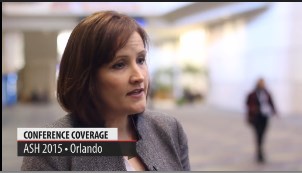
VIDEO: High-intensity conditioning stands ground in MDS, AML
ORLANDO – Reduced-intensity conditioning regimens failed to show a significant survival benefit over high-intensity regimens in myelodysplastic syndrome or acute myeloid leukemia in the phase III MAVERICK trial.
Pretransplant reduced intensity conditioning (RIC) also resulted in a significantly higher risk of relapse and inferior relapse-free survival vs. myeloablative conditioning (MAC).
The findings, reported in the late-breaking abstract (LBA-8) session at the annual meeting of the American Society of Hematology, generated a lively debate over the study construct and whether its conclusion that MAC remain “the treatment of choice” in appropriate candidates should be applied to both diseases.
Session comoderator Dr. David P. Steensma, a myelodysplasia physician at the Dana-Farber Cancer Institute in Boston, said in an interview that the data will not change his practice and that physicians should continue to “push the envelope” and provide as intense a conditioning regimen as their patients can tolerate.
“The take-home message is that using a reduced conditioning regimen whatever your choice might be, even though it is gentler on the patient and may be easier for them to go through the transplant, the biggest risk is still the disease, the underlying leukemia or myelodysplasia coming back. And the benefit from reduced intensity is not enough to outweigh that risk.”
To sort out this complex trial, we spoke with study author Dr. Bart L. Scott of the Fred Hutchinson Cancer Research Center at the University of Washington, Seattle.
The video associated with this article is no longer available on this site. Please view all of our videos on the MDedge YouTube channel
ORLANDO – Reduced-intensity conditioning regimens failed to show a significant survival benefit over high-intensity regimens in myelodysplastic syndrome or acute myeloid leukemia in the phase III MAVERICK trial.
Pretransplant reduced intensity conditioning (RIC) also resulted in a significantly higher risk of relapse and inferior relapse-free survival vs. myeloablative conditioning (MAC).
The findings, reported in the late-breaking abstract (LBA-8) session at the annual meeting of the American Society of Hematology, generated a lively debate over the study construct and whether its conclusion that MAC remain “the treatment of choice” in appropriate candidates should be applied to both diseases.
Session comoderator Dr. David P. Steensma, a myelodysplasia physician at the Dana-Farber Cancer Institute in Boston, said in an interview that the data will not change his practice and that physicians should continue to “push the envelope” and provide as intense a conditioning regimen as their patients can tolerate.
“The take-home message is that using a reduced conditioning regimen whatever your choice might be, even though it is gentler on the patient and may be easier for them to go through the transplant, the biggest risk is still the disease, the underlying leukemia or myelodysplasia coming back. And the benefit from reduced intensity is not enough to outweigh that risk.”
To sort out this complex trial, we spoke with study author Dr. Bart L. Scott of the Fred Hutchinson Cancer Research Center at the University of Washington, Seattle.
The video associated with this article is no longer available on this site. Please view all of our videos on the MDedge YouTube channel
ORLANDO – Reduced-intensity conditioning regimens failed to show a significant survival benefit over high-intensity regimens in myelodysplastic syndrome or acute myeloid leukemia in the phase III MAVERICK trial.
Pretransplant reduced intensity conditioning (RIC) also resulted in a significantly higher risk of relapse and inferior relapse-free survival vs. myeloablative conditioning (MAC).
The findings, reported in the late-breaking abstract (LBA-8) session at the annual meeting of the American Society of Hematology, generated a lively debate over the study construct and whether its conclusion that MAC remain “the treatment of choice” in appropriate candidates should be applied to both diseases.
Session comoderator Dr. David P. Steensma, a myelodysplasia physician at the Dana-Farber Cancer Institute in Boston, said in an interview that the data will not change his practice and that physicians should continue to “push the envelope” and provide as intense a conditioning regimen as their patients can tolerate.
“The take-home message is that using a reduced conditioning regimen whatever your choice might be, even though it is gentler on the patient and may be easier for them to go through the transplant, the biggest risk is still the disease, the underlying leukemia or myelodysplasia coming back. And the benefit from reduced intensity is not enough to outweigh that risk.”
To sort out this complex trial, we spoke with study author Dr. Bart L. Scott of the Fred Hutchinson Cancer Research Center at the University of Washington, Seattle.
The video associated with this article is no longer available on this site. Please view all of our videos on the MDedge YouTube channel
AT ASH 2015

VIDEO: Top-line results from Tourmaline in multiple myeloma, plus ongoing trials and treatment selection
ORLANDO – The combination of the oral proteasome inhibitor ixazomib (Ninlaro, recently approved by the Food and Drug Administration) with lenalidomide and dexamethasone was associated with a 35% improvement in progression free survival in the Tourmaline trial.
In a video interview, Tourmaline investigator Dr. Shaji Kumar, professor of medicine at the Mayo Clinic, Rochester, Minn., discussed the top-line study results, the status of ongoing trials with ixazomib in other combination regimens, and the decision rationales that will need to be considered in selecting one of the newly approved multiple myeloma therapies.
Dr. Kumar has received funding from Takeda, the makers of ixazomib; he has also received funding from Celgene, Onyx, Janssen, and Sanofi.
The video associated with this article is no longer available on this site. Please view all of our videos on the MDedge YouTube channel
ORLANDO – The combination of the oral proteasome inhibitor ixazomib (Ninlaro, recently approved by the Food and Drug Administration) with lenalidomide and dexamethasone was associated with a 35% improvement in progression free survival in the Tourmaline trial.
In a video interview, Tourmaline investigator Dr. Shaji Kumar, professor of medicine at the Mayo Clinic, Rochester, Minn., discussed the top-line study results, the status of ongoing trials with ixazomib in other combination regimens, and the decision rationales that will need to be considered in selecting one of the newly approved multiple myeloma therapies.
Dr. Kumar has received funding from Takeda, the makers of ixazomib; he has also received funding from Celgene, Onyx, Janssen, and Sanofi.
The video associated with this article is no longer available on this site. Please view all of our videos on the MDedge YouTube channel
ORLANDO – The combination of the oral proteasome inhibitor ixazomib (Ninlaro, recently approved by the Food and Drug Administration) with lenalidomide and dexamethasone was associated with a 35% improvement in progression free survival in the Tourmaline trial.
In a video interview, Tourmaline investigator Dr. Shaji Kumar, professor of medicine at the Mayo Clinic, Rochester, Minn., discussed the top-line study results, the status of ongoing trials with ixazomib in other combination regimens, and the decision rationales that will need to be considered in selecting one of the newly approved multiple myeloma therapies.
Dr. Kumar has received funding from Takeda, the makers of ixazomib; he has also received funding from Celgene, Onyx, Janssen, and Sanofi.
The video associated with this article is no longer available on this site. Please view all of our videos on the MDedge YouTube channel
AT ASH 2015

VIDEO: Novel GBT440 improves blood parameters in sickle cell disease
ORLANDO – A novel small molecule agent improved hematologic parameters and was associated with significant reduction in sickling of red blood cells in patients with sickle cell disease.
The drug was shown to increase hemoglobin in both healthy volunteers and patients, reduce reticulocytosis, and improve biomarkers of hemolysis and inflammation.
In an interview, Dr. Claire Hemmaway of Queens Hospital in Romford, England, discusses early results from a phase I/II randomized, double-blind, placebo-controlled, parallel-group trial.
The video associated with this article is no longer available on this site. Please view all of our videos on the MDedge YouTube channel
ORLANDO – A novel small molecule agent improved hematologic parameters and was associated with significant reduction in sickling of red blood cells in patients with sickle cell disease.
The drug was shown to increase hemoglobin in both healthy volunteers and patients, reduce reticulocytosis, and improve biomarkers of hemolysis and inflammation.
In an interview, Dr. Claire Hemmaway of Queens Hospital in Romford, England, discusses early results from a phase I/II randomized, double-blind, placebo-controlled, parallel-group trial.
The video associated with this article is no longer available on this site. Please view all of our videos on the MDedge YouTube channel
ORLANDO – A novel small molecule agent improved hematologic parameters and was associated with significant reduction in sickling of red blood cells in patients with sickle cell disease.
The drug was shown to increase hemoglobin in both healthy volunteers and patients, reduce reticulocytosis, and improve biomarkers of hemolysis and inflammation.
In an interview, Dr. Claire Hemmaway of Queens Hospital in Romford, England, discusses early results from a phase I/II randomized, double-blind, placebo-controlled, parallel-group trial.
The video associated with this article is no longer available on this site. Please view all of our videos on the MDedge YouTube channel
AT ASH 2015
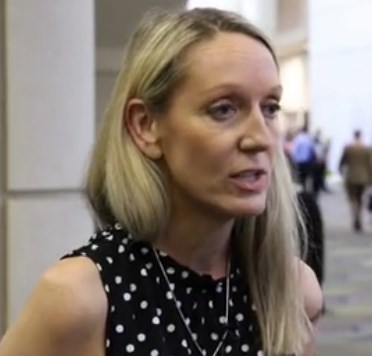
VIDEO: Top hits from 2015 World Diabetes Congress
VANCOUVER, B.C. – So far, just one of the newer diabetes drugs has been shown to cut cardiovascular risk in type 2 diabetes.
Dr. Bernard Zinman, chairman of the meeting’s program committee, explained which one it is, and also shared other highlights from this year’s World Diabetes Congress.
In an interview at the meeting, Dr. Zinman offered new insights on beta-cell preservation, diabetes prevention, pancreas imaging, the microbiome, and the best combination therapies for early intervention.
“Diabetes is a very complex disease,” said Dr. Zinman, also the director of the diabetes center at Mount Sinai Hospital in Toronto and a professor of medicine at the University of Toronto. “To imagine that there’s one therapy or one magic bullet” that’s going to take care of all the problems in diabetes, “is very naive.”
The video associated with this article is no longer available on this site. Please view all of our videos on the MDedge YouTube channel
VANCOUVER, B.C. – So far, just one of the newer diabetes drugs has been shown to cut cardiovascular risk in type 2 diabetes.
Dr. Bernard Zinman, chairman of the meeting’s program committee, explained which one it is, and also shared other highlights from this year’s World Diabetes Congress.
In an interview at the meeting, Dr. Zinman offered new insights on beta-cell preservation, diabetes prevention, pancreas imaging, the microbiome, and the best combination therapies for early intervention.
“Diabetes is a very complex disease,” said Dr. Zinman, also the director of the diabetes center at Mount Sinai Hospital in Toronto and a professor of medicine at the University of Toronto. “To imagine that there’s one therapy or one magic bullet” that’s going to take care of all the problems in diabetes, “is very naive.”
The video associated with this article is no longer available on this site. Please view all of our videos on the MDedge YouTube channel
VANCOUVER, B.C. – So far, just one of the newer diabetes drugs has been shown to cut cardiovascular risk in type 2 diabetes.
Dr. Bernard Zinman, chairman of the meeting’s program committee, explained which one it is, and also shared other highlights from this year’s World Diabetes Congress.
In an interview at the meeting, Dr. Zinman offered new insights on beta-cell preservation, diabetes prevention, pancreas imaging, the microbiome, and the best combination therapies for early intervention.
“Diabetes is a very complex disease,” said Dr. Zinman, also the director of the diabetes center at Mount Sinai Hospital in Toronto and a professor of medicine at the University of Toronto. “To imagine that there’s one therapy or one magic bullet” that’s going to take care of all the problems in diabetes, “is very naive.”
The video associated with this article is no longer available on this site. Please view all of our videos on the MDedge YouTube channel
EXPERT ANALYSIS FROM THE WORLD DIABETES CONGRESS

VIDEO: Midostaurin hits mark in FLT3-mutated AML
ORLANDO – The oral multikinase inhibitor midostaurin improved overall survival by 23% when added to standard chemotherapy and given as maintenance therapy for 1 year in newly diagnosed patients with FLT3-mutated acute myeloid leukemia (AML) in the global phase III CALGB 10603/RATIFY trial.
The results struck a chord at the annual meeting of the American Society of Hematology because the benefits of targeted therapy have so far eluded AML patients despite transforming the treatment of other blood cancers. Currently, there are no approved, targeted treatments for AML.
CALGB 10603/RATIFY is the first large, controlled trial to show an overall survival benefit in the roughly 30% of AML patients with a mutation in the FLT3 gene.
“This is exciting because we haven’t had a new treatment in AML for 30 years,” Dr. Robert Hromas of the University of Florida, Gainesville, said while moderating a press conference highlighting the plenary abstract.
The results were a decade in the making after midostaurin failed previously when used in all AML patients rather than the subset with the FLT3 mutation. But the persistence of researchers, the international collaboration, and funding in cancer research paid off, Dr. Hromas said.
Study author Dr. Richard M. Stone, chief of staff at Dana-Farber Cancer Institute in Boston, reviewed the results of CALGB 10603/RATIFY in an interview.
CALGB 10603/RATIFY was sponsored by the Cancer Therapy Evaluation Program. Dr. Stone reported financial relationships with several drug companies including Novartis, which provided the study drug and sponsored the trial outside North America. Dr. Hromas disclosed serving as an uncompensated advisory board member without equity for Cloud Pharmaceuticals.
The video associated with this article is no longer available on this site. Please view all of our videos on the MDedge YouTube channel
ORLANDO – The oral multikinase inhibitor midostaurin improved overall survival by 23% when added to standard chemotherapy and given as maintenance therapy for 1 year in newly diagnosed patients with FLT3-mutated acute myeloid leukemia (AML) in the global phase III CALGB 10603/RATIFY trial.
The results struck a chord at the annual meeting of the American Society of Hematology because the benefits of targeted therapy have so far eluded AML patients despite transforming the treatment of other blood cancers. Currently, there are no approved, targeted treatments for AML.
CALGB 10603/RATIFY is the first large, controlled trial to show an overall survival benefit in the roughly 30% of AML patients with a mutation in the FLT3 gene.
“This is exciting because we haven’t had a new treatment in AML for 30 years,” Dr. Robert Hromas of the University of Florida, Gainesville, said while moderating a press conference highlighting the plenary abstract.
The results were a decade in the making after midostaurin failed previously when used in all AML patients rather than the subset with the FLT3 mutation. But the persistence of researchers, the international collaboration, and funding in cancer research paid off, Dr. Hromas said.
Study author Dr. Richard M. Stone, chief of staff at Dana-Farber Cancer Institute in Boston, reviewed the results of CALGB 10603/RATIFY in an interview.
CALGB 10603/RATIFY was sponsored by the Cancer Therapy Evaluation Program. Dr. Stone reported financial relationships with several drug companies including Novartis, which provided the study drug and sponsored the trial outside North America. Dr. Hromas disclosed serving as an uncompensated advisory board member without equity for Cloud Pharmaceuticals.
The video associated with this article is no longer available on this site. Please view all of our videos on the MDedge YouTube channel
ORLANDO – The oral multikinase inhibitor midostaurin improved overall survival by 23% when added to standard chemotherapy and given as maintenance therapy for 1 year in newly diagnosed patients with FLT3-mutated acute myeloid leukemia (AML) in the global phase III CALGB 10603/RATIFY trial.
The results struck a chord at the annual meeting of the American Society of Hematology because the benefits of targeted therapy have so far eluded AML patients despite transforming the treatment of other blood cancers. Currently, there are no approved, targeted treatments for AML.
CALGB 10603/RATIFY is the first large, controlled trial to show an overall survival benefit in the roughly 30% of AML patients with a mutation in the FLT3 gene.
“This is exciting because we haven’t had a new treatment in AML for 30 years,” Dr. Robert Hromas of the University of Florida, Gainesville, said while moderating a press conference highlighting the plenary abstract.
The results were a decade in the making after midostaurin failed previously when used in all AML patients rather than the subset with the FLT3 mutation. But the persistence of researchers, the international collaboration, and funding in cancer research paid off, Dr. Hromas said.
Study author Dr. Richard M. Stone, chief of staff at Dana-Farber Cancer Institute in Boston, reviewed the results of CALGB 10603/RATIFY in an interview.
CALGB 10603/RATIFY was sponsored by the Cancer Therapy Evaluation Program. Dr. Stone reported financial relationships with several drug companies including Novartis, which provided the study drug and sponsored the trial outside North America. Dr. Hromas disclosed serving as an uncompensated advisory board member without equity for Cloud Pharmaceuticals.
The video associated with this article is no longer available on this site. Please view all of our videos on the MDedge YouTube channel
AT ASH 2015
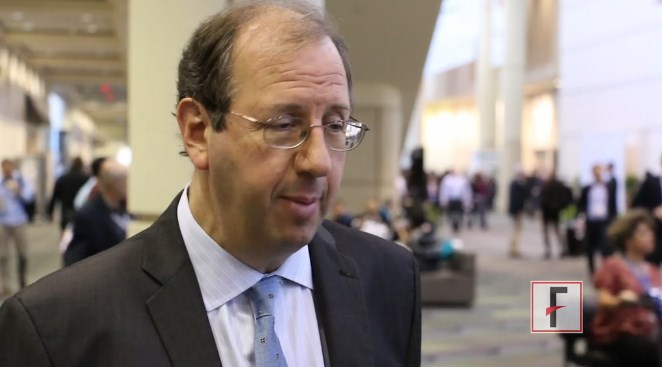
VIDEO: Targeted agent, len/dex combo perform ‘impressively’ in advanced multiple myeloma
ORLANDO – A combination of daratumumab (Darzalex) with lenalidomide and dexamethasone (len/dex) was associated with a high overall response rate, including stringent complete responses, in patients with heavily pretreated relapsed/refractory multiple myeloma.
Daratumumab was recently approved by the Food and Drug Administration as monotherapy in patients with relapsed/refractory multiple myeloma.
Dr. Torben Plesner of Vejle Hospital and the University of Southern Denmark in Vejle, who dosed the first patient with daratumumab in 2007, discusses updated findings from a phase I/II trial of the daratumumab and len/dex combination.
The video associated with this article is no longer available on this site. Please view all of our videos on the MDedge YouTube channel
ORLANDO – A combination of daratumumab (Darzalex) with lenalidomide and dexamethasone (len/dex) was associated with a high overall response rate, including stringent complete responses, in patients with heavily pretreated relapsed/refractory multiple myeloma.
Daratumumab was recently approved by the Food and Drug Administration as monotherapy in patients with relapsed/refractory multiple myeloma.
Dr. Torben Plesner of Vejle Hospital and the University of Southern Denmark in Vejle, who dosed the first patient with daratumumab in 2007, discusses updated findings from a phase I/II trial of the daratumumab and len/dex combination.
The video associated with this article is no longer available on this site. Please view all of our videos on the MDedge YouTube channel
ORLANDO – A combination of daratumumab (Darzalex) with lenalidomide and dexamethasone (len/dex) was associated with a high overall response rate, including stringent complete responses, in patients with heavily pretreated relapsed/refractory multiple myeloma.
Daratumumab was recently approved by the Food and Drug Administration as monotherapy in patients with relapsed/refractory multiple myeloma.
Dr. Torben Plesner of Vejle Hospital and the University of Southern Denmark in Vejle, who dosed the first patient with daratumumab in 2007, discusses updated findings from a phase I/II trial of the daratumumab and len/dex combination.
The video associated with this article is no longer available on this site. Please view all of our videos on the MDedge YouTube channel
AT ASH 2015