User login
Official Newspaper of the American College of Surgeons
HHS Secretary-nominee avoids specifics on Medicaid funding during second hearing
WASHINGTON – Rep. Tom Price, MD (R-Ga.), dodged specifics on Medicaid reform and the issue of block grants for funding Medicaid during a hearing Jan. 24 before the Senate Financing Committee.
The committee will be voting to move forward to the full Senate his nomination as secretary of the Department of Health & Human Services.
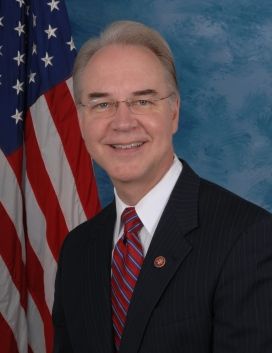
Sen. Robert Casey (D-Penn.) queried Rep. Price about guarantees as to whether people with disabilities covered by Medicaid would continue to be covered under a block grant program. Rep. Price responded that the “metrics that we will use ... [are] the quality of care and whether or not they are receiving that care.”
Rep. Price added that he is committed “to make it so they have that [current level of existing] coverage or greater.” Sen. Casey questioned whether that goal could be achieved, considering the amount of funding that could potentially be lost to a block grant program.
When further pressed on the 2017 budget he prepared as House Budget Committee chairman that included block grants for Medicaid, Rep. Price would not state clearly his promotion of the concept. Instead, he said he was committed to creating a system that is affordable, accessible, of high quality, and responsive to patient needs, as well as one that incentivizes innovation and provides choice.
Rep. Price was also pressed on his advocacy of high-risk pools, particularly for those who have high-cost, preexisting conditions and might not be able to get coverage in other areas of the reformed market. He voiced his support for such pools as well as for pools that would allow people without a common economic link, such as an employer, to band together for insurance coverage.
Sen. Debbie Stabenow (D-Mich.) noted that the history of high-risk pools has been less than stellar, with insurance rates typically 150%-200% higher than the rates of other plans and, typically, lifetime caps on coverage.
Rep. Price additionally called for a “better” system that puts patients at the center of health care decisions. In response to discussion with Sen. Chuck Grassley (R-Iowa), Rep. Price said transparency, specifically in relation to the Physician Payments Sunshine Act, was “vital,” and expanded the notion of transparency to include outcomes and pricing so that patients could have the best information to make decisions about their own health care.
It is “virtually impossible” for patients to know their true health care costs, Rep. Price said. To be informed, patients need better outcome measures, which would be “a priority” if he is confirmed as secretary.
Rep. Price also agreed that the Children’s Health Insurance Plan should be extended, and when asked about extending the program for 5 years, he responded that “8 years would be better.”
In the area of mental health, he suggested treatment models similar to those used to address physical health.
Rep. Price was not grilled on his investments at the Finance Committee hearing as he was at the Health, Education, Labor and Pensions Committee hearing, where he maintained he did nothing unethical or against the rules of the Senate.
Separate from the hearing, eight Democratic senators, led by Ranking Member Patty Murray of Washington, sent a Jan. 23 letter to the U.S. Securities and Exchange Commission to investigate whether Rep. Price potentially engaged in insider trading or other violations in relation to his specific purchase of stock in Innate Immunotherapeutics.
WASHINGTON – Rep. Tom Price, MD (R-Ga.), dodged specifics on Medicaid reform and the issue of block grants for funding Medicaid during a hearing Jan. 24 before the Senate Financing Committee.
The committee will be voting to move forward to the full Senate his nomination as secretary of the Department of Health & Human Services.
Sen. Robert Casey (D-Penn.) queried Rep. Price about guarantees as to whether people with disabilities covered by Medicaid would continue to be covered under a block grant program. Rep. Price responded that the “metrics that we will use ... [are] the quality of care and whether or not they are receiving that care.”
Rep. Price added that he is committed “to make it so they have that [current level of existing] coverage or greater.” Sen. Casey questioned whether that goal could be achieved, considering the amount of funding that could potentially be lost to a block grant program.
When further pressed on the 2017 budget he prepared as House Budget Committee chairman that included block grants for Medicaid, Rep. Price would not state clearly his promotion of the concept. Instead, he said he was committed to creating a system that is affordable, accessible, of high quality, and responsive to patient needs, as well as one that incentivizes innovation and provides choice.
Rep. Price was also pressed on his advocacy of high-risk pools, particularly for those who have high-cost, preexisting conditions and might not be able to get coverage in other areas of the reformed market. He voiced his support for such pools as well as for pools that would allow people without a common economic link, such as an employer, to band together for insurance coverage.
Sen. Debbie Stabenow (D-Mich.) noted that the history of high-risk pools has been less than stellar, with insurance rates typically 150%-200% higher than the rates of other plans and, typically, lifetime caps on coverage.
Rep. Price additionally called for a “better” system that puts patients at the center of health care decisions. In response to discussion with Sen. Chuck Grassley (R-Iowa), Rep. Price said transparency, specifically in relation to the Physician Payments Sunshine Act, was “vital,” and expanded the notion of transparency to include outcomes and pricing so that patients could have the best information to make decisions about their own health care.
It is “virtually impossible” for patients to know their true health care costs, Rep. Price said. To be informed, patients need better outcome measures, which would be “a priority” if he is confirmed as secretary.
Rep. Price also agreed that the Children’s Health Insurance Plan should be extended, and when asked about extending the program for 5 years, he responded that “8 years would be better.”
In the area of mental health, he suggested treatment models similar to those used to address physical health.
Rep. Price was not grilled on his investments at the Finance Committee hearing as he was at the Health, Education, Labor and Pensions Committee hearing, where he maintained he did nothing unethical or against the rules of the Senate.
Separate from the hearing, eight Democratic senators, led by Ranking Member Patty Murray of Washington, sent a Jan. 23 letter to the U.S. Securities and Exchange Commission to investigate whether Rep. Price potentially engaged in insider trading or other violations in relation to his specific purchase of stock in Innate Immunotherapeutics.
WASHINGTON – Rep. Tom Price, MD (R-Ga.), dodged specifics on Medicaid reform and the issue of block grants for funding Medicaid during a hearing Jan. 24 before the Senate Financing Committee.
The committee will be voting to move forward to the full Senate his nomination as secretary of the Department of Health & Human Services.
Sen. Robert Casey (D-Penn.) queried Rep. Price about guarantees as to whether people with disabilities covered by Medicaid would continue to be covered under a block grant program. Rep. Price responded that the “metrics that we will use ... [are] the quality of care and whether or not they are receiving that care.”
Rep. Price added that he is committed “to make it so they have that [current level of existing] coverage or greater.” Sen. Casey questioned whether that goal could be achieved, considering the amount of funding that could potentially be lost to a block grant program.
When further pressed on the 2017 budget he prepared as House Budget Committee chairman that included block grants for Medicaid, Rep. Price would not state clearly his promotion of the concept. Instead, he said he was committed to creating a system that is affordable, accessible, of high quality, and responsive to patient needs, as well as one that incentivizes innovation and provides choice.
Rep. Price was also pressed on his advocacy of high-risk pools, particularly for those who have high-cost, preexisting conditions and might not be able to get coverage in other areas of the reformed market. He voiced his support for such pools as well as for pools that would allow people without a common economic link, such as an employer, to band together for insurance coverage.
Sen. Debbie Stabenow (D-Mich.) noted that the history of high-risk pools has been less than stellar, with insurance rates typically 150%-200% higher than the rates of other plans and, typically, lifetime caps on coverage.
Rep. Price additionally called for a “better” system that puts patients at the center of health care decisions. In response to discussion with Sen. Chuck Grassley (R-Iowa), Rep. Price said transparency, specifically in relation to the Physician Payments Sunshine Act, was “vital,” and expanded the notion of transparency to include outcomes and pricing so that patients could have the best information to make decisions about their own health care.
It is “virtually impossible” for patients to know their true health care costs, Rep. Price said. To be informed, patients need better outcome measures, which would be “a priority” if he is confirmed as secretary.
Rep. Price also agreed that the Children’s Health Insurance Plan should be extended, and when asked about extending the program for 5 years, he responded that “8 years would be better.”
In the area of mental health, he suggested treatment models similar to those used to address physical health.
Rep. Price was not grilled on his investments at the Finance Committee hearing as he was at the Health, Education, Labor and Pensions Committee hearing, where he maintained he did nothing unethical or against the rules of the Senate.
Separate from the hearing, eight Democratic senators, led by Ranking Member Patty Murray of Washington, sent a Jan. 23 letter to the U.S. Securities and Exchange Commission to investigate whether Rep. Price potentially engaged in insider trading or other violations in relation to his specific purchase of stock in Innate Immunotherapeutics.
Interval cholecystectomy may be a risky business
HOLLYWOOD, FLA – Interval cholecystectomy remains a challenging procedure, with longer operative times and ICU stays, greater blood loss, more biliary and bowel injuries, and even hints of increased mortality, compared with immediate cholecystectomy, according to the findings from a retrospective study of 404 patients.
The staged procedure, completed after antibiotic therapy and percutaneous cholecystostomy, has been increasing in frequency over the past 10 years, but has not been rigorously studied, James Ackerman, MD, said at the annual scientific assembly of the Eastern Association for the Surgery of Trauma.

“Looking at Medicare data over the past decade, we see a 50% increase in this procedure, which is marked by some striking regional variation,” from 5% of acute cholecystitis cases in the Northeast to less than 1% in some other regions. “This shows that as a group, we really don’t know what to do with this procedure.”
The revised Tokyo Guidelines for the management of acute cholangitis and cholecystitis aren’t hugely helpful either, noted Dr. Ackerman of the University of Pittsburgh Medical Center. While the guidelines are fairly straightforward for patients with grade 1 and grade 3 disease, “there’s a lot of gray area in grade 2.”
Treatment for these patients should include biliary drainage with antibiotics, but, he said, the recommendations for surgery, and whether it should be elective, immediate, or delayed, can be confusing for this group.
Dr. Ackerman’s retrospective analysis comprised 177 patients with acute cholecystitis who underwent an interval cholecystectomy (IC) after percutaneous cholecystostomy, and 227 controls who underwent an immediate cholecystectomy. The analysis spanned 2008-2013 and used data from seven hospitals in one health care system.
Patients who had the IC were older (70 vs. 55 years), had a worse American Society of Anesthesiologists class (3 vs. 2.5), and a worse Tokyo Grade (2 vs. 1).
Most of the IC procedures (119) were laparoscopic. There were 43 conversions to open and 15 were planned open surgeries. Among the immediate cholecystectomies, most (192) were laparoscopic. There were 28 conversions to open and six planned open surgeries.
The conversion rate was significantly higher among the IC group (28% vs.13%). The most common reasons for conversion were hostile abdomen (48% vs. 16%) and hostile right upper quadrant (34% vs. 58%).
Operating time was significantly longer in the IC group (121 vs. 90 minutes). Estimated blood loss was also significantly higher (30 vs. 15 cc). Total hospital stay was significantly longer (7 vs. 5 days), as was ICU stay (1 vs. 0.1 day).
There were no biliary tract injuries in the cholecystectomy group, while 5.7% of IC patients sustained such an injury. Bowel injuries, most often serosal, were also more common in the IC group (6% vs. 0.4%). The IC group had more surgical site infections as well (12% vs. 0.44%).
There was no significant difference in 30-day mortality, but at 1 year, IC patients were significantly more likely to have died (15% vs. 0.44%).
The ongoing CHOCOLATE trial (Acute cholecystitis in high risk surgical patients: percutaneous cholecystostomy versus laparoscopic cholecystectomy) may help clarify the issue further, Dr. Ackerman said. The study being conducted in the Netherlands is randomizing high-risk cholecystitis patients to either laparoscopic cholecystectomy or percutaneous drainage.
Dr. Ackerman had no financial disclosures.
[email protected]
On Twitter @Alz_Gal
HOLLYWOOD, FLA – Interval cholecystectomy remains a challenging procedure, with longer operative times and ICU stays, greater blood loss, more biliary and bowel injuries, and even hints of increased mortality, compared with immediate cholecystectomy, according to the findings from a retrospective study of 404 patients.
The staged procedure, completed after antibiotic therapy and percutaneous cholecystostomy, has been increasing in frequency over the past 10 years, but has not been rigorously studied, James Ackerman, MD, said at the annual scientific assembly of the Eastern Association for the Surgery of Trauma.
“Looking at Medicare data over the past decade, we see a 50% increase in this procedure, which is marked by some striking regional variation,” from 5% of acute cholecystitis cases in the Northeast to less than 1% in some other regions. “This shows that as a group, we really don’t know what to do with this procedure.”
The revised Tokyo Guidelines for the management of acute cholangitis and cholecystitis aren’t hugely helpful either, noted Dr. Ackerman of the University of Pittsburgh Medical Center. While the guidelines are fairly straightforward for patients with grade 1 and grade 3 disease, “there’s a lot of gray area in grade 2.”
Treatment for these patients should include biliary drainage with antibiotics, but, he said, the recommendations for surgery, and whether it should be elective, immediate, or delayed, can be confusing for this group.
Dr. Ackerman’s retrospective analysis comprised 177 patients with acute cholecystitis who underwent an interval cholecystectomy (IC) after percutaneous cholecystostomy, and 227 controls who underwent an immediate cholecystectomy. The analysis spanned 2008-2013 and used data from seven hospitals in one health care system.
Patients who had the IC were older (70 vs. 55 years), had a worse American Society of Anesthesiologists class (3 vs. 2.5), and a worse Tokyo Grade (2 vs. 1).
Most of the IC procedures (119) were laparoscopic. There were 43 conversions to open and 15 were planned open surgeries. Among the immediate cholecystectomies, most (192) were laparoscopic. There were 28 conversions to open and six planned open surgeries.
The conversion rate was significantly higher among the IC group (28% vs.13%). The most common reasons for conversion were hostile abdomen (48% vs. 16%) and hostile right upper quadrant (34% vs. 58%).
Operating time was significantly longer in the IC group (121 vs. 90 minutes). Estimated blood loss was also significantly higher (30 vs. 15 cc). Total hospital stay was significantly longer (7 vs. 5 days), as was ICU stay (1 vs. 0.1 day).
There were no biliary tract injuries in the cholecystectomy group, while 5.7% of IC patients sustained such an injury. Bowel injuries, most often serosal, were also more common in the IC group (6% vs. 0.4%). The IC group had more surgical site infections as well (12% vs. 0.44%).
There was no significant difference in 30-day mortality, but at 1 year, IC patients were significantly more likely to have died (15% vs. 0.44%).
The ongoing CHOCOLATE trial (Acute cholecystitis in high risk surgical patients: percutaneous cholecystostomy versus laparoscopic cholecystectomy) may help clarify the issue further, Dr. Ackerman said. The study being conducted in the Netherlands is randomizing high-risk cholecystitis patients to either laparoscopic cholecystectomy or percutaneous drainage.
Dr. Ackerman had no financial disclosures.
[email protected]
On Twitter @Alz_Gal
HOLLYWOOD, FLA – Interval cholecystectomy remains a challenging procedure, with longer operative times and ICU stays, greater blood loss, more biliary and bowel injuries, and even hints of increased mortality, compared with immediate cholecystectomy, according to the findings from a retrospective study of 404 patients.
The staged procedure, completed after antibiotic therapy and percutaneous cholecystostomy, has been increasing in frequency over the past 10 years, but has not been rigorously studied, James Ackerman, MD, said at the annual scientific assembly of the Eastern Association for the Surgery of Trauma.
“Looking at Medicare data over the past decade, we see a 50% increase in this procedure, which is marked by some striking regional variation,” from 5% of acute cholecystitis cases in the Northeast to less than 1% in some other regions. “This shows that as a group, we really don’t know what to do with this procedure.”
The revised Tokyo Guidelines for the management of acute cholangitis and cholecystitis aren’t hugely helpful either, noted Dr. Ackerman of the University of Pittsburgh Medical Center. While the guidelines are fairly straightforward for patients with grade 1 and grade 3 disease, “there’s a lot of gray area in grade 2.”
Treatment for these patients should include biliary drainage with antibiotics, but, he said, the recommendations for surgery, and whether it should be elective, immediate, or delayed, can be confusing for this group.
Dr. Ackerman’s retrospective analysis comprised 177 patients with acute cholecystitis who underwent an interval cholecystectomy (IC) after percutaneous cholecystostomy, and 227 controls who underwent an immediate cholecystectomy. The analysis spanned 2008-2013 and used data from seven hospitals in one health care system.
Patients who had the IC were older (70 vs. 55 years), had a worse American Society of Anesthesiologists class (3 vs. 2.5), and a worse Tokyo Grade (2 vs. 1).
Most of the IC procedures (119) were laparoscopic. There were 43 conversions to open and 15 were planned open surgeries. Among the immediate cholecystectomies, most (192) were laparoscopic. There were 28 conversions to open and six planned open surgeries.
The conversion rate was significantly higher among the IC group (28% vs.13%). The most common reasons for conversion were hostile abdomen (48% vs. 16%) and hostile right upper quadrant (34% vs. 58%).
Operating time was significantly longer in the IC group (121 vs. 90 minutes). Estimated blood loss was also significantly higher (30 vs. 15 cc). Total hospital stay was significantly longer (7 vs. 5 days), as was ICU stay (1 vs. 0.1 day).
There were no biliary tract injuries in the cholecystectomy group, while 5.7% of IC patients sustained such an injury. Bowel injuries, most often serosal, were also more common in the IC group (6% vs. 0.4%). The IC group had more surgical site infections as well (12% vs. 0.44%).
There was no significant difference in 30-day mortality, but at 1 year, IC patients were significantly more likely to have died (15% vs. 0.44%).
The ongoing CHOCOLATE trial (Acute cholecystitis in high risk surgical patients: percutaneous cholecystostomy versus laparoscopic cholecystectomy) may help clarify the issue further, Dr. Ackerman said. The study being conducted in the Netherlands is randomizing high-risk cholecystitis patients to either laparoscopic cholecystectomy or percutaneous drainage.
Dr. Ackerman had no financial disclosures.
[email protected]
On Twitter @Alz_Gal
AT THE EAST ANNUAL SCIENTIFIC ASSEMBLY
Key clinical point:
Major finding: Interval cholecystectomy was associated with greater blood loss, more conversions to open surgery, bowel and biliary injuries, and even higher 1-year mortality (15% vs. 0.44%).
Data source: A retrospective review comparing 177 patients with interval surgery to 227 who had immediate surgery.
Disclosures: Dr. Ackerman had no financial disclosures.
One GOP plan says states that like their Obamacare can keep it
Some states could keep their federally funded insurance exchange with consumer protections intact under a proposal unveiled Monday by two Republican U.S. senators.
Sen. Bill Cassidy (R-La.) and Sen. Susan Collins (R-Maine) said their proposed legislation would allow states that embraced the Affordable Care Act to keep operating under many of the current federal rules.
Another option is for states to pursue a less-regulated alternative to Obamacare under the Patient Freedom Act. Or they could reject federal dollars completely in favor of a new state solution for health coverage.
“We give states the option,” Sen. Cassidy said at press conference Jan. 23.
Some health law supporters say the Cassidy-Collins proposal, one of several in the GOP-controlled Congress, could represent a lifeline for states such as California that have invested heavily in expanding coverage under the ACA.
But many Democrats at the state and national level criticized the plan as potentially harmful to millions of Americans who rely on the health law because it does not promise sufficient funding and consumer protections.
“It provides a somewhat illusory option to stay in the ACA without the guarantee of federal assistance necessary to allow states to maintain the level of coverage they are currently providing,” California Insurance Commissioner Dave Jones, an elected Democrat, said in an interview.
California fully implemented the health law by expanding Medicaid coverage to millions of low-income people and creating its own insurance exchange, which ultimately covered 1.3 million enrollees. Supporters have held the state up as proof that the health law can work as intended – and as a counterpoint to Republican contentions that Obamacare is collapsing nationally.
Sen. Cassidy said his legislation promotes the Republican doctrine of states’ rights while avoiding the one-size-fits-all approach from Washington.
Sen. Collins echoed that sentiment, saying she favors letting states that had success with the health law maintain the status quo. She described it as “reimplementation of the ACA” in those states.
“If a state chooses to remain covered by the ACA, exchange policies will continue to be eligible for cost-sharing subsidies and advance premium tax credits,” she said in a Senate floor speech Jan. 23. “The insurance market will still be subject to ACA requirements, and the individual mandate and employer mandate will also remain in place in that state.”
Sen. Cassidy and Sen. Collins acknowledged that details of their bill haven’t been worked out, nor is it clear how it will mesh with other proposals. Competing plans in Congress don’t envision these state options, and it’s unclear what approach President Donald Trump and his nascent administration will take in crafting a replacement plan.
Still, some industry experts and analysts say the Cassidy-Collins proposal is intriguing.
“The advantage to a state like California is we could protect what we have accomplished already,” said Howard Kahn, former chief executive of L.A. Care Health Plan, an insurer on the Covered California exchange. The large managed care plan serves patients in Medi-Cal, the state’s Medicaid program.
“Cassidy’s proposal could work for California better than other alternatives in the short term. The question is whether they maintain federal funding for the longer term,” Mr. Kahn said. “My feeling is you do have to engage with the rational Republicans who are trying to find something that doesn’t tear it all apart.”
Federal funding is a key issue for states. In a summary of the bill posted by Sen. Collins, it said states choosing to retain Obamacare or pick the Republican alternative could receive “funding equal to 95% of federal premium tax credits and cost-sharing subsidies, as well as the federal match for Medicaid expansion.”
Dylan H. Roby, of the department of health services administration at the University of Maryland School of Public Health, College Park, said “California would still have to absorb a 5% cut, at least, in the premium tax credits and cost-sharing subsidies.”
Republicans will need 60 votes in the U.S. Senate to pass a full replacement for the ACA. Sen. Cassidy said his compromise approach is designed to win over some Democrats and reach that 60-vote majority.
In her speech on the Senate floor, Sen. Collins said children could still stay on their parents’ health plans until they are 26 years old. There would be no discrimination against preexisting conditions and no caps on annual or lifetime coverage, she said.
Other key features of the legislation include a provision allowing states to automatically enroll eligible people in health plans unless they opt out. The plan also promotes health savings accounts and price transparency requiring hospitals and other providers to disclose costs so consumers can shop around for the best price.
This story was produced by Kaiser Health News, which publishes California Healthline, an editorially independent service of the California Health Care Foundation.
Some states could keep their federally funded insurance exchange with consumer protections intact under a proposal unveiled Monday by two Republican U.S. senators.
Sen. Bill Cassidy (R-La.) and Sen. Susan Collins (R-Maine) said their proposed legislation would allow states that embraced the Affordable Care Act to keep operating under many of the current federal rules.
Another option is for states to pursue a less-regulated alternative to Obamacare under the Patient Freedom Act. Or they could reject federal dollars completely in favor of a new state solution for health coverage.
“We give states the option,” Sen. Cassidy said at press conference Jan. 23.
Some health law supporters say the Cassidy-Collins proposal, one of several in the GOP-controlled Congress, could represent a lifeline for states such as California that have invested heavily in expanding coverage under the ACA.
But many Democrats at the state and national level criticized the plan as potentially harmful to millions of Americans who rely on the health law because it does not promise sufficient funding and consumer protections.
“It provides a somewhat illusory option to stay in the ACA without the guarantee of federal assistance necessary to allow states to maintain the level of coverage they are currently providing,” California Insurance Commissioner Dave Jones, an elected Democrat, said in an interview.
California fully implemented the health law by expanding Medicaid coverage to millions of low-income people and creating its own insurance exchange, which ultimately covered 1.3 million enrollees. Supporters have held the state up as proof that the health law can work as intended – and as a counterpoint to Republican contentions that Obamacare is collapsing nationally.
Sen. Cassidy said his legislation promotes the Republican doctrine of states’ rights while avoiding the one-size-fits-all approach from Washington.
Sen. Collins echoed that sentiment, saying she favors letting states that had success with the health law maintain the status quo. She described it as “reimplementation of the ACA” in those states.
“If a state chooses to remain covered by the ACA, exchange policies will continue to be eligible for cost-sharing subsidies and advance premium tax credits,” she said in a Senate floor speech Jan. 23. “The insurance market will still be subject to ACA requirements, and the individual mandate and employer mandate will also remain in place in that state.”
Sen. Cassidy and Sen. Collins acknowledged that details of their bill haven’t been worked out, nor is it clear how it will mesh with other proposals. Competing plans in Congress don’t envision these state options, and it’s unclear what approach President Donald Trump and his nascent administration will take in crafting a replacement plan.
Still, some industry experts and analysts say the Cassidy-Collins proposal is intriguing.
“The advantage to a state like California is we could protect what we have accomplished already,” said Howard Kahn, former chief executive of L.A. Care Health Plan, an insurer on the Covered California exchange. The large managed care plan serves patients in Medi-Cal, the state’s Medicaid program.
“Cassidy’s proposal could work for California better than other alternatives in the short term. The question is whether they maintain federal funding for the longer term,” Mr. Kahn said. “My feeling is you do have to engage with the rational Republicans who are trying to find something that doesn’t tear it all apart.”
Federal funding is a key issue for states. In a summary of the bill posted by Sen. Collins, it said states choosing to retain Obamacare or pick the Republican alternative could receive “funding equal to 95% of federal premium tax credits and cost-sharing subsidies, as well as the federal match for Medicaid expansion.”
Dylan H. Roby, of the department of health services administration at the University of Maryland School of Public Health, College Park, said “California would still have to absorb a 5% cut, at least, in the premium tax credits and cost-sharing subsidies.”
Republicans will need 60 votes in the U.S. Senate to pass a full replacement for the ACA. Sen. Cassidy said his compromise approach is designed to win over some Democrats and reach that 60-vote majority.
In her speech on the Senate floor, Sen. Collins said children could still stay on their parents’ health plans until they are 26 years old. There would be no discrimination against preexisting conditions and no caps on annual or lifetime coverage, she said.
Other key features of the legislation include a provision allowing states to automatically enroll eligible people in health plans unless they opt out. The plan also promotes health savings accounts and price transparency requiring hospitals and other providers to disclose costs so consumers can shop around for the best price.
This story was produced by Kaiser Health News, which publishes California Healthline, an editorially independent service of the California Health Care Foundation.
Some states could keep their federally funded insurance exchange with consumer protections intact under a proposal unveiled Monday by two Republican U.S. senators.
Sen. Bill Cassidy (R-La.) and Sen. Susan Collins (R-Maine) said their proposed legislation would allow states that embraced the Affordable Care Act to keep operating under many of the current federal rules.
Another option is for states to pursue a less-regulated alternative to Obamacare under the Patient Freedom Act. Or they could reject federal dollars completely in favor of a new state solution for health coverage.
“We give states the option,” Sen. Cassidy said at press conference Jan. 23.
Some health law supporters say the Cassidy-Collins proposal, one of several in the GOP-controlled Congress, could represent a lifeline for states such as California that have invested heavily in expanding coverage under the ACA.
But many Democrats at the state and national level criticized the plan as potentially harmful to millions of Americans who rely on the health law because it does not promise sufficient funding and consumer protections.
“It provides a somewhat illusory option to stay in the ACA without the guarantee of federal assistance necessary to allow states to maintain the level of coverage they are currently providing,” California Insurance Commissioner Dave Jones, an elected Democrat, said in an interview.
California fully implemented the health law by expanding Medicaid coverage to millions of low-income people and creating its own insurance exchange, which ultimately covered 1.3 million enrollees. Supporters have held the state up as proof that the health law can work as intended – and as a counterpoint to Republican contentions that Obamacare is collapsing nationally.
Sen. Cassidy said his legislation promotes the Republican doctrine of states’ rights while avoiding the one-size-fits-all approach from Washington.
Sen. Collins echoed that sentiment, saying she favors letting states that had success with the health law maintain the status quo. She described it as “reimplementation of the ACA” in those states.
“If a state chooses to remain covered by the ACA, exchange policies will continue to be eligible for cost-sharing subsidies and advance premium tax credits,” she said in a Senate floor speech Jan. 23. “The insurance market will still be subject to ACA requirements, and the individual mandate and employer mandate will also remain in place in that state.”
Sen. Cassidy and Sen. Collins acknowledged that details of their bill haven’t been worked out, nor is it clear how it will mesh with other proposals. Competing plans in Congress don’t envision these state options, and it’s unclear what approach President Donald Trump and his nascent administration will take in crafting a replacement plan.
Still, some industry experts and analysts say the Cassidy-Collins proposal is intriguing.
“The advantage to a state like California is we could protect what we have accomplished already,” said Howard Kahn, former chief executive of L.A. Care Health Plan, an insurer on the Covered California exchange. The large managed care plan serves patients in Medi-Cal, the state’s Medicaid program.
“Cassidy’s proposal could work for California better than other alternatives in the short term. The question is whether they maintain federal funding for the longer term,” Mr. Kahn said. “My feeling is you do have to engage with the rational Republicans who are trying to find something that doesn’t tear it all apart.”
Federal funding is a key issue for states. In a summary of the bill posted by Sen. Collins, it said states choosing to retain Obamacare or pick the Republican alternative could receive “funding equal to 95% of federal premium tax credits and cost-sharing subsidies, as well as the federal match for Medicaid expansion.”
Dylan H. Roby, of the department of health services administration at the University of Maryland School of Public Health, College Park, said “California would still have to absorb a 5% cut, at least, in the premium tax credits and cost-sharing subsidies.”
Republicans will need 60 votes in the U.S. Senate to pass a full replacement for the ACA. Sen. Cassidy said his compromise approach is designed to win over some Democrats and reach that 60-vote majority.
In her speech on the Senate floor, Sen. Collins said children could still stay on their parents’ health plans until they are 26 years old. There would be no discrimination against preexisting conditions and no caps on annual or lifetime coverage, she said.
Other key features of the legislation include a provision allowing states to automatically enroll eligible people in health plans unless they opt out. The plan also promotes health savings accounts and price transparency requiring hospitals and other providers to disclose costs so consumers can shop around for the best price.
This story was produced by Kaiser Health News, which publishes California Healthline, an editorially independent service of the California Health Care Foundation.
Judge blocks Aetna-Humana merger
A federal judge has blocked a megamerger between health insurance giants Aetna and Humana, ruling that the consolidation would violate antitrust laws and reduce competition.
In a Jan. 23 decision, Judge John D. Bates of the U.S. District Court for the District of Columbia denied Aetna’s $37 billion plan to purchase Humana, following a month-long trial that began in early December. The court was unpersuaded that the efficiencies generated by the merger would be “sufficient to mitigate the anticompetitive effects for consumers in the challenged markets,” Judge Bates said in his opinion.
The U.S. Department of Justice, which challenged the merger, called the ruling a victory for patients, particularly seniors and working families.
“Competition spurs health insurers to offer higher quality and more affordable health insurance to seniors who choose Medicare Advantage plans and to low-income families and individuals who purchase insurance from public exchanges,” Brent Snyder, deputy assistant attorney general, said in a statement. “Aetna attempted to buy a formidable rival, Humana, instead of competing independently to win customers. Millions of consumers have benefited from competition between Aetna and Humana, and will continue to benefit because of today’s decision to block this merger.”
The Department of Justice, eight states, and the District of Columbia sued Aetna and Humana after an investigation into their proposed July 2015 merger. The government argued that the companies compete head-to-head in the Medicare Advantage and public exchange markets, and that such competition would be lost following the merger to the significant detriment of patients. Aetna and Humana argued their proposed merger would not substantially lessen competition because of the government’s regulatory authority over Medicare Advantage, the threat of entry by new competitors, and the defendants’ proposed divestiture of a portion of their Medicare Advantage business to insurer Molina Healthcare. The insurers also asserted that no current competition between the two companies exists in the 17 complaint counties because Aetna has decided not to compete in those counties in 2017. Judge Bates disagreed.
“The merger would likely substantially lessen competition in the market for individual Medicare Advantage in all 364 complaint counties,” Judge Bates said in his opinion. “This conclusion is based on identification of the proper product market, the overwhelming market concentration figures generated by the merger, and the considerable evidence of valuable head-to-head competition between Aetna and Humana, which the merger would eliminate. The companies’ rebuttal arguments are unpersuasive.”
The American Medical Association praised the ruling.
“Elderly patients were the big winners today as a federal court imposed an injunction on Aetna’s $37 billion acquisition of Humana,” AMA president Andrew W. Gurman, MD, said in a statement. “Aetna’s strategy to eliminate head-to-head competition with rival Humana posed a clear and present threat to the quality, accessibility, and affordability of health care for millions of seniors. The AMA applauds the extraordinarily well-documented, comprehensive, fact-based ruling of U.S. District Judge John D. Bates, which acknowledged that meaningful action was needed to preserve competition and protect high-quality medical care from unprecedented market power that Aetna would acquire from the merger deal.”
Another ruling is expected soon in the $48 billion planned merger between Anthem and Cigna, which is also being challenged by the Justice department. A trial in that case wrapped up in late December in front of U.S. District Court for the District of Columbia Judge Amy Berman.
[email protected]
On Twitter @legal_med
A federal judge has blocked a megamerger between health insurance giants Aetna and Humana, ruling that the consolidation would violate antitrust laws and reduce competition.
In a Jan. 23 decision, Judge John D. Bates of the U.S. District Court for the District of Columbia denied Aetna’s $37 billion plan to purchase Humana, following a month-long trial that began in early December. The court was unpersuaded that the efficiencies generated by the merger would be “sufficient to mitigate the anticompetitive effects for consumers in the challenged markets,” Judge Bates said in his opinion.
The U.S. Department of Justice, which challenged the merger, called the ruling a victory for patients, particularly seniors and working families.
“Competition spurs health insurers to offer higher quality and more affordable health insurance to seniors who choose Medicare Advantage plans and to low-income families and individuals who purchase insurance from public exchanges,” Brent Snyder, deputy assistant attorney general, said in a statement. “Aetna attempted to buy a formidable rival, Humana, instead of competing independently to win customers. Millions of consumers have benefited from competition between Aetna and Humana, and will continue to benefit because of today’s decision to block this merger.”
The Department of Justice, eight states, and the District of Columbia sued Aetna and Humana after an investigation into their proposed July 2015 merger. The government argued that the companies compete head-to-head in the Medicare Advantage and public exchange markets, and that such competition would be lost following the merger to the significant detriment of patients. Aetna and Humana argued their proposed merger would not substantially lessen competition because of the government’s regulatory authority over Medicare Advantage, the threat of entry by new competitors, and the defendants’ proposed divestiture of a portion of their Medicare Advantage business to insurer Molina Healthcare. The insurers also asserted that no current competition between the two companies exists in the 17 complaint counties because Aetna has decided not to compete in those counties in 2017. Judge Bates disagreed.
“The merger would likely substantially lessen competition in the market for individual Medicare Advantage in all 364 complaint counties,” Judge Bates said in his opinion. “This conclusion is based on identification of the proper product market, the overwhelming market concentration figures generated by the merger, and the considerable evidence of valuable head-to-head competition between Aetna and Humana, which the merger would eliminate. The companies’ rebuttal arguments are unpersuasive.”
The American Medical Association praised the ruling.
“Elderly patients were the big winners today as a federal court imposed an injunction on Aetna’s $37 billion acquisition of Humana,” AMA president Andrew W. Gurman, MD, said in a statement. “Aetna’s strategy to eliminate head-to-head competition with rival Humana posed a clear and present threat to the quality, accessibility, and affordability of health care for millions of seniors. The AMA applauds the extraordinarily well-documented, comprehensive, fact-based ruling of U.S. District Judge John D. Bates, which acknowledged that meaningful action was needed to preserve competition and protect high-quality medical care from unprecedented market power that Aetna would acquire from the merger deal.”
Another ruling is expected soon in the $48 billion planned merger between Anthem and Cigna, which is also being challenged by the Justice department. A trial in that case wrapped up in late December in front of U.S. District Court for the District of Columbia Judge Amy Berman.
[email protected]
On Twitter @legal_med
A federal judge has blocked a megamerger between health insurance giants Aetna and Humana, ruling that the consolidation would violate antitrust laws and reduce competition.
In a Jan. 23 decision, Judge John D. Bates of the U.S. District Court for the District of Columbia denied Aetna’s $37 billion plan to purchase Humana, following a month-long trial that began in early December. The court was unpersuaded that the efficiencies generated by the merger would be “sufficient to mitigate the anticompetitive effects for consumers in the challenged markets,” Judge Bates said in his opinion.
The U.S. Department of Justice, which challenged the merger, called the ruling a victory for patients, particularly seniors and working families.
“Competition spurs health insurers to offer higher quality and more affordable health insurance to seniors who choose Medicare Advantage plans and to low-income families and individuals who purchase insurance from public exchanges,” Brent Snyder, deputy assistant attorney general, said in a statement. “Aetna attempted to buy a formidable rival, Humana, instead of competing independently to win customers. Millions of consumers have benefited from competition between Aetna and Humana, and will continue to benefit because of today’s decision to block this merger.”
The Department of Justice, eight states, and the District of Columbia sued Aetna and Humana after an investigation into their proposed July 2015 merger. The government argued that the companies compete head-to-head in the Medicare Advantage and public exchange markets, and that such competition would be lost following the merger to the significant detriment of patients. Aetna and Humana argued their proposed merger would not substantially lessen competition because of the government’s regulatory authority over Medicare Advantage, the threat of entry by new competitors, and the defendants’ proposed divestiture of a portion of their Medicare Advantage business to insurer Molina Healthcare. The insurers also asserted that no current competition between the two companies exists in the 17 complaint counties because Aetna has decided not to compete in those counties in 2017. Judge Bates disagreed.
“The merger would likely substantially lessen competition in the market for individual Medicare Advantage in all 364 complaint counties,” Judge Bates said in his opinion. “This conclusion is based on identification of the proper product market, the overwhelming market concentration figures generated by the merger, and the considerable evidence of valuable head-to-head competition between Aetna and Humana, which the merger would eliminate. The companies’ rebuttal arguments are unpersuasive.”
The American Medical Association praised the ruling.
“Elderly patients were the big winners today as a federal court imposed an injunction on Aetna’s $37 billion acquisition of Humana,” AMA president Andrew W. Gurman, MD, said in a statement. “Aetna’s strategy to eliminate head-to-head competition with rival Humana posed a clear and present threat to the quality, accessibility, and affordability of health care for millions of seniors. The AMA applauds the extraordinarily well-documented, comprehensive, fact-based ruling of U.S. District Judge John D. Bates, which acknowledged that meaningful action was needed to preserve competition and protect high-quality medical care from unprecedented market power that Aetna would acquire from the merger deal.”
Another ruling is expected soon in the $48 billion planned merger between Anthem and Cigna, which is also being challenged by the Justice department. A trial in that case wrapped up in late December in front of U.S. District Court for the District of Columbia Judge Amy Berman.
[email protected]
On Twitter @legal_med

Mortality may be reduced when surgical ablation for AF is done with mitral operations
HOUSTON – At the time of mitral valve repair or replacement operations, the addition of surgical ablation to treat atrial fibrillation (AF) can be performed without increased risk of mortality, results from a large cohort study has demonstrated.
“Surgical ablation for atrial fibrillation performed concomitant to mitral valve repair or replacement is accepted to reduce long-term AF rates and improve quality of life, and has recently attained a class I, level of evidence A recommendation in the recent Society of Thoracic Surgeons Guidelines,” Vinay Badhwar, MD, said in an interview. Dr. Badhwar is the lead author of the STS Guidelines and senior author of the current study on mortality following surgical ablation of AF. “Nevertheless, the direct impact of surgical ablation on operative mortality has not been studied on a large scale using robust registry data.”
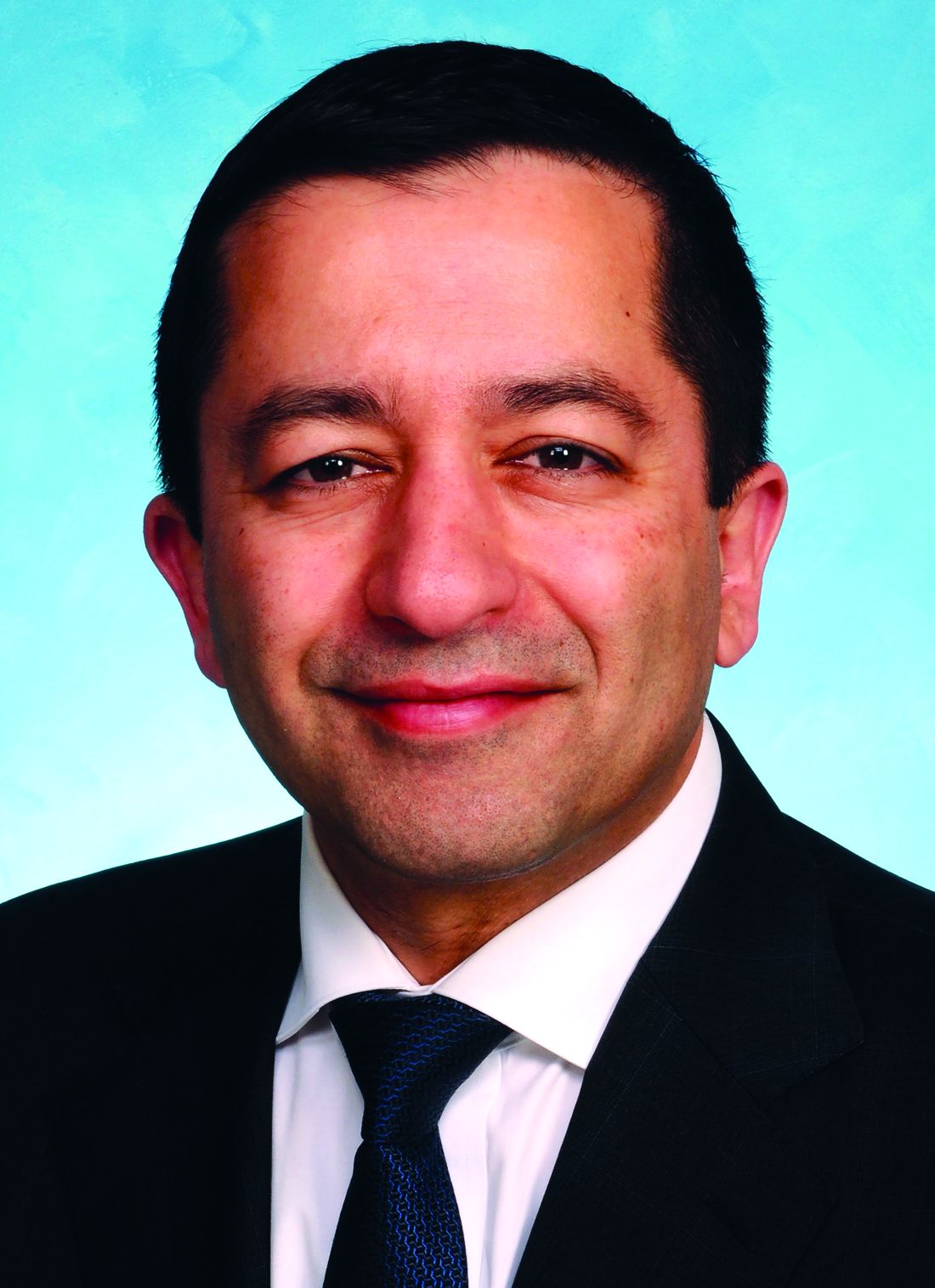
In an effort to examine the impact of performing or not performing surgical ablation (SA) on mortality of contemporary mitral valve repair or replacement (MVRR) operations, Dr. Badhwar, Gordon F. Murray Professor and Chair, department of cardiovascular and thoracic surgery at West Virginia University, Morgantown, W.Va., and his associates at eight other leading centers nationwide evaluated the medical records of 88,765 MVRR patients in the STS Adult Cardiac Surgery Database between July 2011 and June 2014.
The research, presented as the Richard E. Clark award winning paper in adult cardiac surgery by study leader J. Scott Rankin, MD, professor of surgery in the department of cardiovascular and thoracic surgery at West Virginia University, included cases of tricuspid repair and coronary artery bypass grafting and assessed all STS comorbid risk variables and mitral etiology for predictors of mortality. After performing multivariable logistic regression, the researchers compared risk-adjusted odds ratios for mortality by AF type at operation and SA performance: group 1 (no AF plus no SA), group 2 (no AF plus SA), group 3 (AF plus no SA), group 4 (AF plus SA), group 5 (persistent AF plus no SA), and group 6 (persistent AF plus SA).
The median age of patients ranged from 63 to 72 years. Compared with their counterparts in other groups, patients in groups 3 and 5 were older (median age of 71 and 72 years, respectively), had worse symptoms (50% in each group had NYHA class III or IV disease), had more reoperations (30% vs. 32%), and had higher unadjusted mortalities (6.7% vs. 6.6%).
Following multivariable risk adjustment, groups 2-6 with AF history plus or minus SA were referenced to group 1 patients without AF or SA. Groups 2-4 represented the overall population, and groups 5 and 6 were patients with persistent AF. Patients with AF at the time of operation not receiving SA (groups 3 and 5) had odds ratios of 1.16 and 1.17, respectively, or an increase of 16% and 17% in relative risk of mortality (P = .004 and P = .01, respectively). In groups 4 and 6, concomitant SA reduced the AF-related mortality to a level that was statistically comparable to reference baseline group 1 without a history of AF (P = .13 and P = .21, respectively).
“The present study appears to clearly illustrate the adverse effects of AF on operative mortality following MVRR,” Dr. Badhwar said. “After thorough risk adjustment, we were impressed to learn that the relative mortality risk of mitral procedures increased by nearly 15% for either paroxysmal or persistent AF, and results were similar for the two AF types. A remote history of AF with preoperative sinus rhythm immediately prior to surgery had little effect on prognosis, and these patients appeared to have outcomes more like those without AF. In patients with active AF at the time of mitral operation, SA reduced the AF-related mortality and decreased operative mortality to levels not statistically different from patients without AF.” He added that the findings of this study support the recent STS Guidelines on Surgical Ablation published in the January 2017 edition of Annals of Thoracic Surgery (Ann Thorac Surg. 2017 Jan;103[1]:329-41). “However, the ultimate decision on whether or not to add surgical ablation must always remain between the surgeon and the patient,” he said.
Dr. Badhwar acknowledged that the study is limited by the information available in version 2.73 of the STS Adult Cardiac Surgery Database. “This does highlight the ongoing need for participants in the database to provide as much complete information as possible for all patients undergoing cardiac operations, especially those involving surgical ablation,” he said.
Dr. Badhwar reported having no financial disclosures. Dr. Rankin disclosed ties with Admedus, AtriCure, and BioStable Science and Engineering.
HOUSTON – At the time of mitral valve repair or replacement operations, the addition of surgical ablation to treat atrial fibrillation (AF) can be performed without increased risk of mortality, results from a large cohort study has demonstrated.
“Surgical ablation for atrial fibrillation performed concomitant to mitral valve repair or replacement is accepted to reduce long-term AF rates and improve quality of life, and has recently attained a class I, level of evidence A recommendation in the recent Society of Thoracic Surgeons Guidelines,” Vinay Badhwar, MD, said in an interview. Dr. Badhwar is the lead author of the STS Guidelines and senior author of the current study on mortality following surgical ablation of AF. “Nevertheless, the direct impact of surgical ablation on operative mortality has not been studied on a large scale using robust registry data.”
In an effort to examine the impact of performing or not performing surgical ablation (SA) on mortality of contemporary mitral valve repair or replacement (MVRR) operations, Dr. Badhwar, Gordon F. Murray Professor and Chair, department of cardiovascular and thoracic surgery at West Virginia University, Morgantown, W.Va., and his associates at eight other leading centers nationwide evaluated the medical records of 88,765 MVRR patients in the STS Adult Cardiac Surgery Database between July 2011 and June 2014.
The research, presented as the Richard E. Clark award winning paper in adult cardiac surgery by study leader J. Scott Rankin, MD, professor of surgery in the department of cardiovascular and thoracic surgery at West Virginia University, included cases of tricuspid repair and coronary artery bypass grafting and assessed all STS comorbid risk variables and mitral etiology for predictors of mortality. After performing multivariable logistic regression, the researchers compared risk-adjusted odds ratios for mortality by AF type at operation and SA performance: group 1 (no AF plus no SA), group 2 (no AF plus SA), group 3 (AF plus no SA), group 4 (AF plus SA), group 5 (persistent AF plus no SA), and group 6 (persistent AF plus SA).
The median age of patients ranged from 63 to 72 years. Compared with their counterparts in other groups, patients in groups 3 and 5 were older (median age of 71 and 72 years, respectively), had worse symptoms (50% in each group had NYHA class III or IV disease), had more reoperations (30% vs. 32%), and had higher unadjusted mortalities (6.7% vs. 6.6%).
Following multivariable risk adjustment, groups 2-6 with AF history plus or minus SA were referenced to group 1 patients without AF or SA. Groups 2-4 represented the overall population, and groups 5 and 6 were patients with persistent AF. Patients with AF at the time of operation not receiving SA (groups 3 and 5) had odds ratios of 1.16 and 1.17, respectively, or an increase of 16% and 17% in relative risk of mortality (P = .004 and P = .01, respectively). In groups 4 and 6, concomitant SA reduced the AF-related mortality to a level that was statistically comparable to reference baseline group 1 without a history of AF (P = .13 and P = .21, respectively).
“The present study appears to clearly illustrate the adverse effects of AF on operative mortality following MVRR,” Dr. Badhwar said. “After thorough risk adjustment, we were impressed to learn that the relative mortality risk of mitral procedures increased by nearly 15% for either paroxysmal or persistent AF, and results were similar for the two AF types. A remote history of AF with preoperative sinus rhythm immediately prior to surgery had little effect on prognosis, and these patients appeared to have outcomes more like those without AF. In patients with active AF at the time of mitral operation, SA reduced the AF-related mortality and decreased operative mortality to levels not statistically different from patients without AF.” He added that the findings of this study support the recent STS Guidelines on Surgical Ablation published in the January 2017 edition of Annals of Thoracic Surgery (Ann Thorac Surg. 2017 Jan;103[1]:329-41). “However, the ultimate decision on whether or not to add surgical ablation must always remain between the surgeon and the patient,” he said.
Dr. Badhwar acknowledged that the study is limited by the information available in version 2.73 of the STS Adult Cardiac Surgery Database. “This does highlight the ongoing need for participants in the database to provide as much complete information as possible for all patients undergoing cardiac operations, especially those involving surgical ablation,” he said.
Dr. Badhwar reported having no financial disclosures. Dr. Rankin disclosed ties with Admedus, AtriCure, and BioStable Science and Engineering.
HOUSTON – At the time of mitral valve repair or replacement operations, the addition of surgical ablation to treat atrial fibrillation (AF) can be performed without increased risk of mortality, results from a large cohort study has demonstrated.
“Surgical ablation for atrial fibrillation performed concomitant to mitral valve repair or replacement is accepted to reduce long-term AF rates and improve quality of life, and has recently attained a class I, level of evidence A recommendation in the recent Society of Thoracic Surgeons Guidelines,” Vinay Badhwar, MD, said in an interview. Dr. Badhwar is the lead author of the STS Guidelines and senior author of the current study on mortality following surgical ablation of AF. “Nevertheless, the direct impact of surgical ablation on operative mortality has not been studied on a large scale using robust registry data.”
In an effort to examine the impact of performing or not performing surgical ablation (SA) on mortality of contemporary mitral valve repair or replacement (MVRR) operations, Dr. Badhwar, Gordon F. Murray Professor and Chair, department of cardiovascular and thoracic surgery at West Virginia University, Morgantown, W.Va., and his associates at eight other leading centers nationwide evaluated the medical records of 88,765 MVRR patients in the STS Adult Cardiac Surgery Database between July 2011 and June 2014.
The research, presented as the Richard E. Clark award winning paper in adult cardiac surgery by study leader J. Scott Rankin, MD, professor of surgery in the department of cardiovascular and thoracic surgery at West Virginia University, included cases of tricuspid repair and coronary artery bypass grafting and assessed all STS comorbid risk variables and mitral etiology for predictors of mortality. After performing multivariable logistic regression, the researchers compared risk-adjusted odds ratios for mortality by AF type at operation and SA performance: group 1 (no AF plus no SA), group 2 (no AF plus SA), group 3 (AF plus no SA), group 4 (AF plus SA), group 5 (persistent AF plus no SA), and group 6 (persistent AF plus SA).
The median age of patients ranged from 63 to 72 years. Compared with their counterparts in other groups, patients in groups 3 and 5 were older (median age of 71 and 72 years, respectively), had worse symptoms (50% in each group had NYHA class III or IV disease), had more reoperations (30% vs. 32%), and had higher unadjusted mortalities (6.7% vs. 6.6%).
Following multivariable risk adjustment, groups 2-6 with AF history plus or minus SA were referenced to group 1 patients without AF or SA. Groups 2-4 represented the overall population, and groups 5 and 6 were patients with persistent AF. Patients with AF at the time of operation not receiving SA (groups 3 and 5) had odds ratios of 1.16 and 1.17, respectively, or an increase of 16% and 17% in relative risk of mortality (P = .004 and P = .01, respectively). In groups 4 and 6, concomitant SA reduced the AF-related mortality to a level that was statistically comparable to reference baseline group 1 without a history of AF (P = .13 and P = .21, respectively).
“The present study appears to clearly illustrate the adverse effects of AF on operative mortality following MVRR,” Dr. Badhwar said. “After thorough risk adjustment, we were impressed to learn that the relative mortality risk of mitral procedures increased by nearly 15% for either paroxysmal or persistent AF, and results were similar for the two AF types. A remote history of AF with preoperative sinus rhythm immediately prior to surgery had little effect on prognosis, and these patients appeared to have outcomes more like those without AF. In patients with active AF at the time of mitral operation, SA reduced the AF-related mortality and decreased operative mortality to levels not statistically different from patients without AF.” He added that the findings of this study support the recent STS Guidelines on Surgical Ablation published in the January 2017 edition of Annals of Thoracic Surgery (Ann Thorac Surg. 2017 Jan;103[1]:329-41). “However, the ultimate decision on whether or not to add surgical ablation must always remain between the surgeon and the patient,” he said.
Dr. Badhwar acknowledged that the study is limited by the information available in version 2.73 of the STS Adult Cardiac Surgery Database. “This does highlight the ongoing need for participants in the database to provide as much complete information as possible for all patients undergoing cardiac operations, especially those involving surgical ablation,” he said.
Dr. Badhwar reported having no financial disclosures. Dr. Rankin disclosed ties with Admedus, AtriCure, and BioStable Science and Engineering.
AT THE STS ANNUAL MEETING
Key clinical point:
Major finding: Adding surgical ablation to treat AF at the time of MVRR reduced the AF-related mortality to a rate that was comparable to a reference baseline group that had no history of AF.
Data source: An analysis of medical records from 88,765 MVRR patients in the STS Adult Cardiac Surgery Database between July 2011 and June 2014.
Disclosures: Dr. Badhwar reported having no financial disclosures. Dr. Rankin disclosed ties with Admedus, AtriCure, and BioStable Science and Engineering.
Early, in-hospital shunt failure common among infants
HOUSTON – Among neonates and infants who underwent shunt construction as a source of pulmonary blood flow, early, in-hospital shunt failure occurred in 7.3% of cases, results from a large retrospective study showed.
“Approximately one in seven patients who experiences cardiac surgery in the first year of life undergoes construction of a systemic to pulmonary artery shunt of some type,” one of the study investigators, Marshall L. Jacobs, MD, said in an interview. The study was presented at the annual meeting of the Society of Thoracic Surgeons.
“Early failure of such shunts is an incompletely understood phenomenon which accounts for important morbidity and mortality among infants and neonates. Much of what is known about shunt failure is based on experiences reported from individual institutions. The few multicenter studies to date have been clinical trials that focused primarily on pharmacologic strategies intended to reduce the risk of shunt failure due to thrombosis. Their utility for guiding clinical decision making has been limited. Some have been underpowered; some have had limited risk adjustment of subjects.”

Dr. Do, who presented the findings at the meeting and is currently a Congenital Heart Surgery Fellow at the Children’s Hospital of Philadelphia, and a team of 11 other investigators utilized the STS Congenital Heart Surgery Database to identify 9,172 neonates and infants who underwent shunt construction as a source of pulmonary blood flow at 118 institutions from 2010 to 2015. Criteria for shunt failure included a documented diagnosis of in-hospital shunt failure, shunt revision, or catheter-based shunt intervention. The investigators used multivariable logistic regression to evaluate risk factors for in-hospital shunt failure.
Of the 9,172 at-risk neonates and infants, 674 (7.3%) experienced early, in-hospital shunt failure. “The observed rate of early shunt failure varied across the many specific types of shunts, and was lower with systemic ventricle to pulmonary artery shunts (as in the Sano modification of the Norwood procedure) than with the systemic artery to pulmonary artery shunts,” said Dr. Jacobs, who is a cardiothoracic surgeon at Johns Hopkins University, Baltimore.
In multivariable analysis, risk factors for in-hospital shunt failure included lower weight at operation for both neonates and infants, preoperative hypercoagulable state, and the collective presence of any other STS Congenital Heart Surgery Database preoperative risk factors. Neither cardiopulmonary bypass nor single ventricle diagnosis were risk factors for shunt failure. The investigators also observed that patients with in-hospital shunt failure had significantly higher rates of operative mortality (31.9% vs. 11.1%) and major morbidity (84.4% vs. 29.4%), and longer postoperative length of stay among survivors (a median of 45 vs. 22 days).
“Understanding the characteristics of the patient groups found to be at highest risk for early shunt failure is helpful in identifying individual patients that may warrant expectant surveillance, enhanced pharmacologic management, or other strategies to reduce the risk of shunt failure,” Dr. Jacobs concluded.
“But perhaps more importantly it provides key information that may be helpful in the design and development of future clinical trials and/or collaborative quality improvement initiatives designed to reduce the cost in lives and resources that is associated with early shunt dysfunction.”
He acknowledged certain limitations of the study, including its retrospective observational design and the voluntary nature of the STS Congenital Heart Surgery Database. “In addition, some potentially important variables, such as detailed data concerning preoperative test results of coagulation assays are not collected in the STS Congenital Heart Surgery Database,” he said.
The research was supported by the STS Access & Publications Research program. The investigators reported having no financial disclosures.
HOUSTON – Among neonates and infants who underwent shunt construction as a source of pulmonary blood flow, early, in-hospital shunt failure occurred in 7.3% of cases, results from a large retrospective study showed.
“Approximately one in seven patients who experiences cardiac surgery in the first year of life undergoes construction of a systemic to pulmonary artery shunt of some type,” one of the study investigators, Marshall L. Jacobs, MD, said in an interview. The study was presented at the annual meeting of the Society of Thoracic Surgeons.
“Early failure of such shunts is an incompletely understood phenomenon which accounts for important morbidity and mortality among infants and neonates. Much of what is known about shunt failure is based on experiences reported from individual institutions. The few multicenter studies to date have been clinical trials that focused primarily on pharmacologic strategies intended to reduce the risk of shunt failure due to thrombosis. Their utility for guiding clinical decision making has been limited. Some have been underpowered; some have had limited risk adjustment of subjects.”
Dr. Do, who presented the findings at the meeting and is currently a Congenital Heart Surgery Fellow at the Children’s Hospital of Philadelphia, and a team of 11 other investigators utilized the STS Congenital Heart Surgery Database to identify 9,172 neonates and infants who underwent shunt construction as a source of pulmonary blood flow at 118 institutions from 2010 to 2015. Criteria for shunt failure included a documented diagnosis of in-hospital shunt failure, shunt revision, or catheter-based shunt intervention. The investigators used multivariable logistic regression to evaluate risk factors for in-hospital shunt failure.
Of the 9,172 at-risk neonates and infants, 674 (7.3%) experienced early, in-hospital shunt failure. “The observed rate of early shunt failure varied across the many specific types of shunts, and was lower with systemic ventricle to pulmonary artery shunts (as in the Sano modification of the Norwood procedure) than with the systemic artery to pulmonary artery shunts,” said Dr. Jacobs, who is a cardiothoracic surgeon at Johns Hopkins University, Baltimore.
In multivariable analysis, risk factors for in-hospital shunt failure included lower weight at operation for both neonates and infants, preoperative hypercoagulable state, and the collective presence of any other STS Congenital Heart Surgery Database preoperative risk factors. Neither cardiopulmonary bypass nor single ventricle diagnosis were risk factors for shunt failure. The investigators also observed that patients with in-hospital shunt failure had significantly higher rates of operative mortality (31.9% vs. 11.1%) and major morbidity (84.4% vs. 29.4%), and longer postoperative length of stay among survivors (a median of 45 vs. 22 days).
“Understanding the characteristics of the patient groups found to be at highest risk for early shunt failure is helpful in identifying individual patients that may warrant expectant surveillance, enhanced pharmacologic management, or other strategies to reduce the risk of shunt failure,” Dr. Jacobs concluded.
“But perhaps more importantly it provides key information that may be helpful in the design and development of future clinical trials and/or collaborative quality improvement initiatives designed to reduce the cost in lives and resources that is associated with early shunt dysfunction.”
He acknowledged certain limitations of the study, including its retrospective observational design and the voluntary nature of the STS Congenital Heart Surgery Database. “In addition, some potentially important variables, such as detailed data concerning preoperative test results of coagulation assays are not collected in the STS Congenital Heart Surgery Database,” he said.
The research was supported by the STS Access & Publications Research program. The investigators reported having no financial disclosures.
HOUSTON – Among neonates and infants who underwent shunt construction as a source of pulmonary blood flow, early, in-hospital shunt failure occurred in 7.3% of cases, results from a large retrospective study showed.
“Approximately one in seven patients who experiences cardiac surgery in the first year of life undergoes construction of a systemic to pulmonary artery shunt of some type,” one of the study investigators, Marshall L. Jacobs, MD, said in an interview. The study was presented at the annual meeting of the Society of Thoracic Surgeons.
“Early failure of such shunts is an incompletely understood phenomenon which accounts for important morbidity and mortality among infants and neonates. Much of what is known about shunt failure is based on experiences reported from individual institutions. The few multicenter studies to date have been clinical trials that focused primarily on pharmacologic strategies intended to reduce the risk of shunt failure due to thrombosis. Their utility for guiding clinical decision making has been limited. Some have been underpowered; some have had limited risk adjustment of subjects.”
Dr. Do, who presented the findings at the meeting and is currently a Congenital Heart Surgery Fellow at the Children’s Hospital of Philadelphia, and a team of 11 other investigators utilized the STS Congenital Heart Surgery Database to identify 9,172 neonates and infants who underwent shunt construction as a source of pulmonary blood flow at 118 institutions from 2010 to 2015. Criteria for shunt failure included a documented diagnosis of in-hospital shunt failure, shunt revision, or catheter-based shunt intervention. The investigators used multivariable logistic regression to evaluate risk factors for in-hospital shunt failure.
Of the 9,172 at-risk neonates and infants, 674 (7.3%) experienced early, in-hospital shunt failure. “The observed rate of early shunt failure varied across the many specific types of shunts, and was lower with systemic ventricle to pulmonary artery shunts (as in the Sano modification of the Norwood procedure) than with the systemic artery to pulmonary artery shunts,” said Dr. Jacobs, who is a cardiothoracic surgeon at Johns Hopkins University, Baltimore.
In multivariable analysis, risk factors for in-hospital shunt failure included lower weight at operation for both neonates and infants, preoperative hypercoagulable state, and the collective presence of any other STS Congenital Heart Surgery Database preoperative risk factors. Neither cardiopulmonary bypass nor single ventricle diagnosis were risk factors for shunt failure. The investigators also observed that patients with in-hospital shunt failure had significantly higher rates of operative mortality (31.9% vs. 11.1%) and major morbidity (84.4% vs. 29.4%), and longer postoperative length of stay among survivors (a median of 45 vs. 22 days).
“Understanding the characteristics of the patient groups found to be at highest risk for early shunt failure is helpful in identifying individual patients that may warrant expectant surveillance, enhanced pharmacologic management, or other strategies to reduce the risk of shunt failure,” Dr. Jacobs concluded.
“But perhaps more importantly it provides key information that may be helpful in the design and development of future clinical trials and/or collaborative quality improvement initiatives designed to reduce the cost in lives and resources that is associated with early shunt dysfunction.”
He acknowledged certain limitations of the study, including its retrospective observational design and the voluntary nature of the STS Congenital Heart Surgery Database. “In addition, some potentially important variables, such as detailed data concerning preoperative test results of coagulation assays are not collected in the STS Congenital Heart Surgery Database,” he said.
The research was supported by the STS Access & Publications Research program. The investigators reported having no financial disclosures.
AT THE STS ANNUAL MEETING
Key clinical point:
Major finding: Among neonates and infants who underwent shunt operations, 7.3% experienced early, in-hospital shunt failure.
Data source: A retrospective analysis of 9,172 neonates and infants who underwent shunt construction as a source of pulmonary blood flow at 118 institutions from 2010 to 2015.
Disclosures: The research was supported by the STS Access & Publications Research program. The investigators reported having no financial disclosures.
Resective epilepsy surgery found OK in septuagenarians
HOUSTON – With careful selection, patients in their 70s with refractory epilepsy may be offered resective epilepsy surgery, results from a small single-center study demonstrated.
The findings “were a surprise to us,” lead study author Ahmed Abdelkader, MD, said in an interview at the annual meeting of the American Epilepsy Society. “We expected that complications would be higher because this is a vulnerable age group with multiple comorbidities.”

Dr. Abdelkader and his associates searched the database of the Cleveland Clinic Epilepsy Center to identify patients aged 70 years and older who underwent respective epilepsy surgery between Jan. 1, 2000, and Sept. 30, 2015. They limited the analysis to seven patients who had at least one year of post-surgical follow-up. The mean age of the patients at surgery was 73 and the age of epilepsy onset ranged from 24-71 years, with a monthly frequency of 4.2 seizures. Their mean Charlson Combined Comorbidity Index score was 4, which translated into a 10-year mean survival probability of 53%. Four of the patients (57%) had a history of significant injuries due to seizures, while all but one had a positive MRI. Three of the patients had hippocampal sclerosis, “which is unique because most cases of hippocampal sclerosis are in younger age groups,” said Dr. Abdelkader, who is currently a research fellow at University Hospitals Case Medical Center, Cleveland.
All patients underwent anterior temporal lobectomy, four on the left side. None had a surgical complication. Six of the seven patients had a good surgical outcome, defined as a Class I or II on the Engel Epilepsy Surgery Outcome Scale, with four being completed free of seizures at one year of follow-up. One of the patients underwent two respective epilepsy surgeries: the first at age 72 and the second at age 75. He died of natural causes, 11 years after his first surgery, and was the only patient to pass away during the follow-up period.
In their abstract, the researchers called for future multi-center collaborative studies “to prospectively study factors influencing respective epilepsy surgery recommendation and its outcome in this rapidly growing population.”
Dr. Abdelkader reported having no financial disclosures.
HOUSTON – With careful selection, patients in their 70s with refractory epilepsy may be offered resective epilepsy surgery, results from a small single-center study demonstrated.
The findings “were a surprise to us,” lead study author Ahmed Abdelkader, MD, said in an interview at the annual meeting of the American Epilepsy Society. “We expected that complications would be higher because this is a vulnerable age group with multiple comorbidities.”
Dr. Abdelkader and his associates searched the database of the Cleveland Clinic Epilepsy Center to identify patients aged 70 years and older who underwent respective epilepsy surgery between Jan. 1, 2000, and Sept. 30, 2015. They limited the analysis to seven patients who had at least one year of post-surgical follow-up. The mean age of the patients at surgery was 73 and the age of epilepsy onset ranged from 24-71 years, with a monthly frequency of 4.2 seizures. Their mean Charlson Combined Comorbidity Index score was 4, which translated into a 10-year mean survival probability of 53%. Four of the patients (57%) had a history of significant injuries due to seizures, while all but one had a positive MRI. Three of the patients had hippocampal sclerosis, “which is unique because most cases of hippocampal sclerosis are in younger age groups,” said Dr. Abdelkader, who is currently a research fellow at University Hospitals Case Medical Center, Cleveland.
All patients underwent anterior temporal lobectomy, four on the left side. None had a surgical complication. Six of the seven patients had a good surgical outcome, defined as a Class I or II on the Engel Epilepsy Surgery Outcome Scale, with four being completed free of seizures at one year of follow-up. One of the patients underwent two respective epilepsy surgeries: the first at age 72 and the second at age 75. He died of natural causes, 11 years after his first surgery, and was the only patient to pass away during the follow-up period.
In their abstract, the researchers called for future multi-center collaborative studies “to prospectively study factors influencing respective epilepsy surgery recommendation and its outcome in this rapidly growing population.”
Dr. Abdelkader reported having no financial disclosures.
HOUSTON – With careful selection, patients in their 70s with refractory epilepsy may be offered resective epilepsy surgery, results from a small single-center study demonstrated.
The findings “were a surprise to us,” lead study author Ahmed Abdelkader, MD, said in an interview at the annual meeting of the American Epilepsy Society. “We expected that complications would be higher because this is a vulnerable age group with multiple comorbidities.”
Dr. Abdelkader and his associates searched the database of the Cleveland Clinic Epilepsy Center to identify patients aged 70 years and older who underwent respective epilepsy surgery between Jan. 1, 2000, and Sept. 30, 2015. They limited the analysis to seven patients who had at least one year of post-surgical follow-up. The mean age of the patients at surgery was 73 and the age of epilepsy onset ranged from 24-71 years, with a monthly frequency of 4.2 seizures. Their mean Charlson Combined Comorbidity Index score was 4, which translated into a 10-year mean survival probability of 53%. Four of the patients (57%) had a history of significant injuries due to seizures, while all but one had a positive MRI. Three of the patients had hippocampal sclerosis, “which is unique because most cases of hippocampal sclerosis are in younger age groups,” said Dr. Abdelkader, who is currently a research fellow at University Hospitals Case Medical Center, Cleveland.
All patients underwent anterior temporal lobectomy, four on the left side. None had a surgical complication. Six of the seven patients had a good surgical outcome, defined as a Class I or II on the Engel Epilepsy Surgery Outcome Scale, with four being completed free of seizures at one year of follow-up. One of the patients underwent two respective epilepsy surgeries: the first at age 72 and the second at age 75. He died of natural causes, 11 years after his first surgery, and was the only patient to pass away during the follow-up period.
In their abstract, the researchers called for future multi-center collaborative studies “to prospectively study factors influencing respective epilepsy surgery recommendation and its outcome in this rapidly growing population.”
Dr. Abdelkader reported having no financial disclosures.
AT AES 2016
Key clinical point:
Major finding: Six of the seven patients achieved good surgical outcome, with four being completed free of seizures at one year of follow-up.
Data source: A retrospective review of seven patients who underwent resective epilepsy surgery in their 70s.
Disclosures: Dr. Abdelkader reported having no financial disclosures.
Age and disease stage predict long-term survival in elderly lung cancer patients
AT THE STS ANNUAL MEETING
HOUSTON – Although certain medical factors predict long-term survival in patients over age 65 years with lung cancer, advanced age and disease stage are especially strong predictors, results from a large analysis of national data demonstrated.
The findings, which were presented by Mark Onaitis, MD, at the annual meeting of the Society of Thoracic Surgeons, come from a novel effort to pair Medicare data with files from the STS General Thoracic Surgery Database (GTSD).

For the current study, he and his associates linked GTSD data to Medicare data on 29,899 patients who underwent lung cancer resection from 2002 to 2013. They used Cox proportional hazards modeling to create a long-term survival model and used statistically significant univariate factors and known clinical predictors of outcome to perform variable selection.
Dr. Onaitis reported that the median age of patients was 73 years and that 52% were female. Of the 29,899 patients, 805 had a missing pathologic stage. Of the 29,094 patients not missing a pathologic stage, 69% were stage I, 18% stage II, 11% stage III, and 2% stage IV. Two-thirds of patients (66%) underwent lobectomy, followed by wedge resection (17%), segmentectomy (7%), bilobectomy (3%), pneumonectomy (3%), and sleeve lobectomy (1%). A thoracoscopic approach was performed in nearly half of resections (47%).
Cox analysis revealed the following strong negative predictors of long-term survival: having stage III or IV-V disease (hazard ratio, 1.23 and 1.37, respectively), being age 70-74 (HR, 1.19), 75-80 (HR, 1.40), or 80 and older (HR, 1.90).
After controlling for disease stage, the following procedures were associated with increased hazard of death, compared with lobectomy: wedge resection (HR, 1.22), segmentectomy (HR, 1.10), bilobectomy (HR, 1.30), and pneumonectomy (HR, 1.58). In addition, video-assisted thoracoscopic surgery was associated with improved long-term survival, compared with thoracotomy (HR, 0.86).
“Given the large number of patients and the excellent quality of the data, it was not surprising that age and stage and known medical conditions affect long-term survival,” Dr. Onaitis commented. “The deleterious effects of sublobar operations and open [as opposed to thoracoscopic or VATS] approach were more pronounced than expected.”
Other modifiable predictive factors include being a past or current smoker (HR, 1.35 and HR, 1.54, respectively) and having a body mass index below 18.5 kg/m2 (HR, 1.58).
Dr. Onaitis acknowledged certain limitations of the study, including its retrospective design. “Because the study involves linkage of STS data to Medicare data, the findings may not be applicable to patients less than 65 years of age,” he added. He reported having no financial disclosures.
AT THE STS ANNUAL MEETING
HOUSTON – Although certain medical factors predict long-term survival in patients over age 65 years with lung cancer, advanced age and disease stage are especially strong predictors, results from a large analysis of national data demonstrated.
The findings, which were presented by Mark Onaitis, MD, at the annual meeting of the Society of Thoracic Surgeons, come from a novel effort to pair Medicare data with files from the STS General Thoracic Surgery Database (GTSD).
For the current study, he and his associates linked GTSD data to Medicare data on 29,899 patients who underwent lung cancer resection from 2002 to 2013. They used Cox proportional hazards modeling to create a long-term survival model and used statistically significant univariate factors and known clinical predictors of outcome to perform variable selection.
Dr. Onaitis reported that the median age of patients was 73 years and that 52% were female. Of the 29,899 patients, 805 had a missing pathologic stage. Of the 29,094 patients not missing a pathologic stage, 69% were stage I, 18% stage II, 11% stage III, and 2% stage IV. Two-thirds of patients (66%) underwent lobectomy, followed by wedge resection (17%), segmentectomy (7%), bilobectomy (3%), pneumonectomy (3%), and sleeve lobectomy (1%). A thoracoscopic approach was performed in nearly half of resections (47%).
Cox analysis revealed the following strong negative predictors of long-term survival: having stage III or IV-V disease (hazard ratio, 1.23 and 1.37, respectively), being age 70-74 (HR, 1.19), 75-80 (HR, 1.40), or 80 and older (HR, 1.90).
After controlling for disease stage, the following procedures were associated with increased hazard of death, compared with lobectomy: wedge resection (HR, 1.22), segmentectomy (HR, 1.10), bilobectomy (HR, 1.30), and pneumonectomy (HR, 1.58). In addition, video-assisted thoracoscopic surgery was associated with improved long-term survival, compared with thoracotomy (HR, 0.86).
“Given the large number of patients and the excellent quality of the data, it was not surprising that age and stage and known medical conditions affect long-term survival,” Dr. Onaitis commented. “The deleterious effects of sublobar operations and open [as opposed to thoracoscopic or VATS] approach were more pronounced than expected.”
Other modifiable predictive factors include being a past or current smoker (HR, 1.35 and HR, 1.54, respectively) and having a body mass index below 18.5 kg/m2 (HR, 1.58).
Dr. Onaitis acknowledged certain limitations of the study, including its retrospective design. “Because the study involves linkage of STS data to Medicare data, the findings may not be applicable to patients less than 65 years of age,” he added. He reported having no financial disclosures.
AT THE STS ANNUAL MEETING
HOUSTON – Although certain medical factors predict long-term survival in patients over age 65 years with lung cancer, advanced age and disease stage are especially strong predictors, results from a large analysis of national data demonstrated.
The findings, which were presented by Mark Onaitis, MD, at the annual meeting of the Society of Thoracic Surgeons, come from a novel effort to pair Medicare data with files from the STS General Thoracic Surgery Database (GTSD).
For the current study, he and his associates linked GTSD data to Medicare data on 29,899 patients who underwent lung cancer resection from 2002 to 2013. They used Cox proportional hazards modeling to create a long-term survival model and used statistically significant univariate factors and known clinical predictors of outcome to perform variable selection.
Dr. Onaitis reported that the median age of patients was 73 years and that 52% were female. Of the 29,899 patients, 805 had a missing pathologic stage. Of the 29,094 patients not missing a pathologic stage, 69% were stage I, 18% stage II, 11% stage III, and 2% stage IV. Two-thirds of patients (66%) underwent lobectomy, followed by wedge resection (17%), segmentectomy (7%), bilobectomy (3%), pneumonectomy (3%), and sleeve lobectomy (1%). A thoracoscopic approach was performed in nearly half of resections (47%).
Cox analysis revealed the following strong negative predictors of long-term survival: having stage III or IV-V disease (hazard ratio, 1.23 and 1.37, respectively), being age 70-74 (HR, 1.19), 75-80 (HR, 1.40), or 80 and older (HR, 1.90).
After controlling for disease stage, the following procedures were associated with increased hazard of death, compared with lobectomy: wedge resection (HR, 1.22), segmentectomy (HR, 1.10), bilobectomy (HR, 1.30), and pneumonectomy (HR, 1.58). In addition, video-assisted thoracoscopic surgery was associated with improved long-term survival, compared with thoracotomy (HR, 0.86).
“Given the large number of patients and the excellent quality of the data, it was not surprising that age and stage and known medical conditions affect long-term survival,” Dr. Onaitis commented. “The deleterious effects of sublobar operations and open [as opposed to thoracoscopic or VATS] approach were more pronounced than expected.”
Other modifiable predictive factors include being a past or current smoker (HR, 1.35 and HR, 1.54, respectively) and having a body mass index below 18.5 kg/m2 (HR, 1.58).
Dr. Onaitis acknowledged certain limitations of the study, including its retrospective design. “Because the study involves linkage of STS data to Medicare data, the findings may not be applicable to patients less than 65 years of age,” he added. He reported having no financial disclosures.
Key clinical point:
Major finding: Strong negative predictors of long-term survival included having stage III or IV-V disease (HR, 1.23 and 1.37, respectively), being age 70-74 (HR, 1.19), 75-80 (HR, 1.40), or 80 and older (HR, 1.90).
Data source: A retrospective analysis of 29,899 patients over age 65 who underwent lung cancer resection from 2002 to 2013.
Disclosures: Dr. Onaitis reported having no financial disclosures.
Study IDs risk factors for ideal timing of stage 2 palliation following Norwood
HOUSTON – The optimal timing of stage 2 palliation after the Norwood operation depends on certain patient-specific risk factors, but in most cases should be done around 3-4 months of age, results from a multi-center study show.
While previous studies have investigated whether early stage-2 palliation (S2P) can be performed without increased post-S2P mortality, the effect of the timing of S2P on post-Norwood mortality remains unknown, Robert “Jake” Jaquiss, MD, said in an interview in advance of the annual meeting of the Society of Thoracic Surgeons.
“There has been a lot of dispute about how early is too early for S2P,” said Dr. Jaquiss, the study’s senior author, who is professor and division chief of pediatric cardiothoracic surgery at the University of Texas Southwestern Medical Center. “That is one of the few things that is in the control of the doctor. Most of the rest of the decisions are based entirely on the condition of the patient and the patient’s specific anatomy. So the timing of S2P is something that we can truly define most always. What we want to find out is, what is the ideal timing? How early is too early? Is there such a thing as too late?”
In an effort to determine the optimal timing of S2P that both minimizes pre-S2P attrition and maximizes long-term post-S2P survival, Dr. Jaquiss and his associates at 19 other institutions evaluated data from 534 neonates diagnosed with left ventricular outflow tract obstruction that precluded adequate systemic cardiac output through the aortic valve who initially underwent a Norwood operation from 2005 to 2016.
S2P was performed in 377 patients (71%) at a mean age of 5.4 months, while 115 (22%) died after Norwood, and the rest underwent biventricular repair or heart transplantation. After S2P, 38 (10%) died, 248 (66%) underwent Fontan, and the rest were alive awaiting Fontan or underwent heart transplantation.
Risk factors for death after Norwood included requiring pre-Norwood extracorporeal membrane oxygenation (P less than .0001), birth weight of less than 2.5 kg (P less than .0001), modified Blalock-Taussig shunt vs. a right ventricle to pulmonary artery conduit (P = .0003), larger baseline right pulmonary artery diameter (P = .0002), smaller baseline mitral valve diameter (P = .0002), smaller baseline tricuspid valve diameter (P = .0001), and nonwhite race (P = .03).
Risk factors for death after S2P included lower oxygen saturation at pre-S2P clinic visit (P = .02), having moderate or severe pre-S2P right ventricular dysfunction (P = .007), younger age at S2P (P = .03), and longer post-Norwood hospital length of stay (P = .03).
The risk-adjusted, 4-year, post-Norwood survival was 72%, with a confidence interval of 67%-75%. When plotted vs. the age at S2P, risk-adjusted, 4-year, post-Norwood survival for the 534 patients was maximized by S2P at 3-6 months of age. At the same time, risk-adjusted, 4-year survival in low-risk infants was compromised only by undergoing S2P earlier than 3 months of age. In high-risk infants, survival was severely compromised, especially when undergoing S2P earlier than 6 months of age.
“The results reinforced intuitions or expectations that most of the investigators already had,” Dr. Jaquiss said. “But we are in an era where evidence-based medicine is much preferable to intuition-based medicine. I’m very confident in the findings we have. I feel more confident in suggesting that we should be planning these surgeries around 3-4 months of age in usual-risk children and also more confident in suggesting that we need to consider transplantation earlier in children who are perceived to be at high risk. There is some hope [by clinicians in] some centers that you can convert a high-risk prognosis to a lower or intermediate risk prognosis by doing the S2P earlier or at some alternative time. Our data suggests that would not be helpful.”
Dr. Jaquiss and Dr. Meza reported having no financial disclosures.
HOUSTON – The optimal timing of stage 2 palliation after the Norwood operation depends on certain patient-specific risk factors, but in most cases should be done around 3-4 months of age, results from a multi-center study show.
While previous studies have investigated whether early stage-2 palliation (S2P) can be performed without increased post-S2P mortality, the effect of the timing of S2P on post-Norwood mortality remains unknown, Robert “Jake” Jaquiss, MD, said in an interview in advance of the annual meeting of the Society of Thoracic Surgeons.
“There has been a lot of dispute about how early is too early for S2P,” said Dr. Jaquiss, the study’s senior author, who is professor and division chief of pediatric cardiothoracic surgery at the University of Texas Southwestern Medical Center. “That is one of the few things that is in the control of the doctor. Most of the rest of the decisions are based entirely on the condition of the patient and the patient’s specific anatomy. So the timing of S2P is something that we can truly define most always. What we want to find out is, what is the ideal timing? How early is too early? Is there such a thing as too late?”
In an effort to determine the optimal timing of S2P that both minimizes pre-S2P attrition and maximizes long-term post-S2P survival, Dr. Jaquiss and his associates at 19 other institutions evaluated data from 534 neonates diagnosed with left ventricular outflow tract obstruction that precluded adequate systemic cardiac output through the aortic valve who initially underwent a Norwood operation from 2005 to 2016.
S2P was performed in 377 patients (71%) at a mean age of 5.4 months, while 115 (22%) died after Norwood, and the rest underwent biventricular repair or heart transplantation. After S2P, 38 (10%) died, 248 (66%) underwent Fontan, and the rest were alive awaiting Fontan or underwent heart transplantation.
Risk factors for death after Norwood included requiring pre-Norwood extracorporeal membrane oxygenation (P less than .0001), birth weight of less than 2.5 kg (P less than .0001), modified Blalock-Taussig shunt vs. a right ventricle to pulmonary artery conduit (P = .0003), larger baseline right pulmonary artery diameter (P = .0002), smaller baseline mitral valve diameter (P = .0002), smaller baseline tricuspid valve diameter (P = .0001), and nonwhite race (P = .03).
Risk factors for death after S2P included lower oxygen saturation at pre-S2P clinic visit (P = .02), having moderate or severe pre-S2P right ventricular dysfunction (P = .007), younger age at S2P (P = .03), and longer post-Norwood hospital length of stay (P = .03).
The risk-adjusted, 4-year, post-Norwood survival was 72%, with a confidence interval of 67%-75%. When plotted vs. the age at S2P, risk-adjusted, 4-year, post-Norwood survival for the 534 patients was maximized by S2P at 3-6 months of age. At the same time, risk-adjusted, 4-year survival in low-risk infants was compromised only by undergoing S2P earlier than 3 months of age. In high-risk infants, survival was severely compromised, especially when undergoing S2P earlier than 6 months of age.
“The results reinforced intuitions or expectations that most of the investigators already had,” Dr. Jaquiss said. “But we are in an era where evidence-based medicine is much preferable to intuition-based medicine. I’m very confident in the findings we have. I feel more confident in suggesting that we should be planning these surgeries around 3-4 months of age in usual-risk children and also more confident in suggesting that we need to consider transplantation earlier in children who are perceived to be at high risk. There is some hope [by clinicians in] some centers that you can convert a high-risk prognosis to a lower or intermediate risk prognosis by doing the S2P earlier or at some alternative time. Our data suggests that would not be helpful.”
Dr. Jaquiss and Dr. Meza reported having no financial disclosures.
HOUSTON – The optimal timing of stage 2 palliation after the Norwood operation depends on certain patient-specific risk factors, but in most cases should be done around 3-4 months of age, results from a multi-center study show.
While previous studies have investigated whether early stage-2 palliation (S2P) can be performed without increased post-S2P mortality, the effect of the timing of S2P on post-Norwood mortality remains unknown, Robert “Jake” Jaquiss, MD, said in an interview in advance of the annual meeting of the Society of Thoracic Surgeons.
“There has been a lot of dispute about how early is too early for S2P,” said Dr. Jaquiss, the study’s senior author, who is professor and division chief of pediatric cardiothoracic surgery at the University of Texas Southwestern Medical Center. “That is one of the few things that is in the control of the doctor. Most of the rest of the decisions are based entirely on the condition of the patient and the patient’s specific anatomy. So the timing of S2P is something that we can truly define most always. What we want to find out is, what is the ideal timing? How early is too early? Is there such a thing as too late?”
In an effort to determine the optimal timing of S2P that both minimizes pre-S2P attrition and maximizes long-term post-S2P survival, Dr. Jaquiss and his associates at 19 other institutions evaluated data from 534 neonates diagnosed with left ventricular outflow tract obstruction that precluded adequate systemic cardiac output through the aortic valve who initially underwent a Norwood operation from 2005 to 2016.
S2P was performed in 377 patients (71%) at a mean age of 5.4 months, while 115 (22%) died after Norwood, and the rest underwent biventricular repair or heart transplantation. After S2P, 38 (10%) died, 248 (66%) underwent Fontan, and the rest were alive awaiting Fontan or underwent heart transplantation.
Risk factors for death after Norwood included requiring pre-Norwood extracorporeal membrane oxygenation (P less than .0001), birth weight of less than 2.5 kg (P less than .0001), modified Blalock-Taussig shunt vs. a right ventricle to pulmonary artery conduit (P = .0003), larger baseline right pulmonary artery diameter (P = .0002), smaller baseline mitral valve diameter (P = .0002), smaller baseline tricuspid valve diameter (P = .0001), and nonwhite race (P = .03).
Risk factors for death after S2P included lower oxygen saturation at pre-S2P clinic visit (P = .02), having moderate or severe pre-S2P right ventricular dysfunction (P = .007), younger age at S2P (P = .03), and longer post-Norwood hospital length of stay (P = .03).
The risk-adjusted, 4-year, post-Norwood survival was 72%, with a confidence interval of 67%-75%. When plotted vs. the age at S2P, risk-adjusted, 4-year, post-Norwood survival for the 534 patients was maximized by S2P at 3-6 months of age. At the same time, risk-adjusted, 4-year survival in low-risk infants was compromised only by undergoing S2P earlier than 3 months of age. In high-risk infants, survival was severely compromised, especially when undergoing S2P earlier than 6 months of age.
“The results reinforced intuitions or expectations that most of the investigators already had,” Dr. Jaquiss said. “But we are in an era where evidence-based medicine is much preferable to intuition-based medicine. I’m very confident in the findings we have. I feel more confident in suggesting that we should be planning these surgeries around 3-4 months of age in usual-risk children and also more confident in suggesting that we need to consider transplantation earlier in children who are perceived to be at high risk. There is some hope [by clinicians in] some centers that you can convert a high-risk prognosis to a lower or intermediate risk prognosis by doing the S2P earlier or at some alternative time. Our data suggests that would not be helpful.”
Dr. Jaquiss and Dr. Meza reported having no financial disclosures.
Key clinical point:
Major finding: When plotted vs. the age at stage 2 palliation, risk-adjusted, 4-year, post-Norwood survival for the 534 patients was maximized by S2P at 3-6 months of age.
Data source: A multi-institutional analysis of 534 neonates diagnosed with left ventricular outflow tract obstruction that precluded adequate systemic cardiac output through the aortic valve who initially underwent a Norwood operation from 2005 to 2016.
Disclosures: Dr. Jaquiss and Dr. Meza reported having no financial disclosures.
New thinking on septal myectomy vs. alcohol ablation for obstructive cardiomyopathy
SNOWMASS, COLO. – The first-ever national study of the impact of hospital volume on outcomes of septal myectomy versus alcohol septal ablation for treatment of obstructive hypertrophic cardiomyopathy deserves to be practice-changing, Rick A. Nishimura, MD, said at the Annual Cardiovascular Conference at Snowmass.
Prior to release of these eye-opening data, conventional thinking held that referral for percutaneous septal ablation was the preferred option for elderly, sedentary patients with lots of comorbid conditions and a limited remaining lifespan, while surgical septal myectomy was the best fix for young, active, relatively healthy patients because of its impressive durability of benefit.

Similarly, 80% of alcohol ablations took place at centers doing less than 20 cases over 9 years. But the success of the percutaneous procedure was less dependent upon large institutional volumes. Only at the lowest-volume centers, where a total of fewer than 10 of the procedures were done over 9 years, was procedural mortality significantly higher – indeed, three- to fourfold higher – than at mid- or high-volume institutions or centers of excellence, all of which had similar mortality rates. The same was true for rates of postoperative complete heart block requiring a permanent pacemaker: significantly higher only at the lowest-volume institutions, according to the investigators from Weill Cornell Medical College in New York (JAMA Cardiol. 2016 Jun 1;1[3]:324-32).
“I think the bottom line is this: for the patient who is severely symptomatic with obstruction on optimal medical therapy, septal myectomy probably offers the best chance of excellent long-term symptomatic improvement, but the mortality depends on the center and the surgical expertise there, and complications do, too. This is something good to know that we never had data on before, that if you can’t get to a center with an experienced surgeon doing myectomies, it’s reasonable to go to a center doing ablations as long as there is some experience with the procedure there,” said Dr. Nishimura, professor of cardiovascular diseases and hypertension at the Mayo Clinic in Rochester, Minn.
Of the 11,248 patients treated for obstructive hypertrophic cardiomyopathy identified by the Cornell investigators using the Agency for Healthcare Research and Quality National Inpatient Sample database, 57% got myectomy and 43% underwent ablation. During the study years ablation increased in popularity by about 50%, rising from an annual rate of 1.6 to 2.5 procedures per million per year, while myectomy declined from 2.0 to 1.5 cases per million population per year. But that’s not what’s happened at the Mayo Clinic and other hypertrophic cardiomyopathy centers of excellence.
At the Mayo Clinic, for example, the volume of septal myectomies climbed from roughly 50 procedures per year in 2000 to close to 250 in 2015. Meanwhile the rate of alcohol septal ablation procedures remained steady at fewer than 20 per year.
“With shared decision making at Mayo, surgery has gone way up,” said Dr. Nishimura. “In an experienced surgeon’s hands, operative mortality is 0.8%, the gradient improves to 3%, and 94% of patients are postoperative New York Heart Association class I or II. This lasts for decades. We have 20-, 30-, and 40-year follow-up data now showing that over 90% of patients will have an excellent symptomatic benefit and be able to return to a normal lifestyle. The septum doesn’t come back. They’re good for life. So it’s a wonderful operation.”
In contrast, catheter-based septal ablation has a 4-year rate of survival free of death, NYHA class III or IV, or myectomy of 76%.
“One in four treated patients will not benefit,” the cardiologist emphasized.
The percutaneous procedure entails instilling alcohol into the septal perforator artery supplying the area of obstruction in order to cause a localized MI. Over a period of several weeks this causes the septum to shrink, thereby relieving the outflow tract obstruction.
When the procedure fails to bring about improvement, it’s often because the patient had a very long septal perforator artery and instilling the alcohol caused a large MI, making things worse. Or the patient didn’t have a septal perforator artery, or had one with so many branches that the cardiologist couldn’t identify the right one to treat to target the septum.
Dr. Nishimura reported having no financial conflicts.
SNOWMASS, COLO. – The first-ever national study of the impact of hospital volume on outcomes of septal myectomy versus alcohol septal ablation for treatment of obstructive hypertrophic cardiomyopathy deserves to be practice-changing, Rick A. Nishimura, MD, said at the Annual Cardiovascular Conference at Snowmass.
Prior to release of these eye-opening data, conventional thinking held that referral for percutaneous septal ablation was the preferred option for elderly, sedentary patients with lots of comorbid conditions and a limited remaining lifespan, while surgical septal myectomy was the best fix for young, active, relatively healthy patients because of its impressive durability of benefit.
Similarly, 80% of alcohol ablations took place at centers doing less than 20 cases over 9 years. But the success of the percutaneous procedure was less dependent upon large institutional volumes. Only at the lowest-volume centers, where a total of fewer than 10 of the procedures were done over 9 years, was procedural mortality significantly higher – indeed, three- to fourfold higher – than at mid- or high-volume institutions or centers of excellence, all of which had similar mortality rates. The same was true for rates of postoperative complete heart block requiring a permanent pacemaker: significantly higher only at the lowest-volume institutions, according to the investigators from Weill Cornell Medical College in New York (JAMA Cardiol. 2016 Jun 1;1[3]:324-32).
“I think the bottom line is this: for the patient who is severely symptomatic with obstruction on optimal medical therapy, septal myectomy probably offers the best chance of excellent long-term symptomatic improvement, but the mortality depends on the center and the surgical expertise there, and complications do, too. This is something good to know that we never had data on before, that if you can’t get to a center with an experienced surgeon doing myectomies, it’s reasonable to go to a center doing ablations as long as there is some experience with the procedure there,” said Dr. Nishimura, professor of cardiovascular diseases and hypertension at the Mayo Clinic in Rochester, Minn.
Of the 11,248 patients treated for obstructive hypertrophic cardiomyopathy identified by the Cornell investigators using the Agency for Healthcare Research and Quality National Inpatient Sample database, 57% got myectomy and 43% underwent ablation. During the study years ablation increased in popularity by about 50%, rising from an annual rate of 1.6 to 2.5 procedures per million per year, while myectomy declined from 2.0 to 1.5 cases per million population per year. But that’s not what’s happened at the Mayo Clinic and other hypertrophic cardiomyopathy centers of excellence.
At the Mayo Clinic, for example, the volume of septal myectomies climbed from roughly 50 procedures per year in 2000 to close to 250 in 2015. Meanwhile the rate of alcohol septal ablation procedures remained steady at fewer than 20 per year.
“With shared decision making at Mayo, surgery has gone way up,” said Dr. Nishimura. “In an experienced surgeon’s hands, operative mortality is 0.8%, the gradient improves to 3%, and 94% of patients are postoperative New York Heart Association class I or II. This lasts for decades. We have 20-, 30-, and 40-year follow-up data now showing that over 90% of patients will have an excellent symptomatic benefit and be able to return to a normal lifestyle. The septum doesn’t come back. They’re good for life. So it’s a wonderful operation.”
In contrast, catheter-based septal ablation has a 4-year rate of survival free of death, NYHA class III or IV, or myectomy of 76%.
“One in four treated patients will not benefit,” the cardiologist emphasized.
The percutaneous procedure entails instilling alcohol into the septal perforator artery supplying the area of obstruction in order to cause a localized MI. Over a period of several weeks this causes the septum to shrink, thereby relieving the outflow tract obstruction.
When the procedure fails to bring about improvement, it’s often because the patient had a very long septal perforator artery and instilling the alcohol caused a large MI, making things worse. Or the patient didn’t have a septal perforator artery, or had one with so many branches that the cardiologist couldn’t identify the right one to treat to target the septum.
Dr. Nishimura reported having no financial conflicts.
SNOWMASS, COLO. – The first-ever national study of the impact of hospital volume on outcomes of septal myectomy versus alcohol septal ablation for treatment of obstructive hypertrophic cardiomyopathy deserves to be practice-changing, Rick A. Nishimura, MD, said at the Annual Cardiovascular Conference at Snowmass.
Prior to release of these eye-opening data, conventional thinking held that referral for percutaneous septal ablation was the preferred option for elderly, sedentary patients with lots of comorbid conditions and a limited remaining lifespan, while surgical septal myectomy was the best fix for young, active, relatively healthy patients because of its impressive durability of benefit.
Similarly, 80% of alcohol ablations took place at centers doing less than 20 cases over 9 years. But the success of the percutaneous procedure was less dependent upon large institutional volumes. Only at the lowest-volume centers, where a total of fewer than 10 of the procedures were done over 9 years, was procedural mortality significantly higher – indeed, three- to fourfold higher – than at mid- or high-volume institutions or centers of excellence, all of which had similar mortality rates. The same was true for rates of postoperative complete heart block requiring a permanent pacemaker: significantly higher only at the lowest-volume institutions, according to the investigators from Weill Cornell Medical College in New York (JAMA Cardiol. 2016 Jun 1;1[3]:324-32).
“I think the bottom line is this: for the patient who is severely symptomatic with obstruction on optimal medical therapy, septal myectomy probably offers the best chance of excellent long-term symptomatic improvement, but the mortality depends on the center and the surgical expertise there, and complications do, too. This is something good to know that we never had data on before, that if you can’t get to a center with an experienced surgeon doing myectomies, it’s reasonable to go to a center doing ablations as long as there is some experience with the procedure there,” said Dr. Nishimura, professor of cardiovascular diseases and hypertension at the Mayo Clinic in Rochester, Minn.
Of the 11,248 patients treated for obstructive hypertrophic cardiomyopathy identified by the Cornell investigators using the Agency for Healthcare Research and Quality National Inpatient Sample database, 57% got myectomy and 43% underwent ablation. During the study years ablation increased in popularity by about 50%, rising from an annual rate of 1.6 to 2.5 procedures per million per year, while myectomy declined from 2.0 to 1.5 cases per million population per year. But that’s not what’s happened at the Mayo Clinic and other hypertrophic cardiomyopathy centers of excellence.
At the Mayo Clinic, for example, the volume of septal myectomies climbed from roughly 50 procedures per year in 2000 to close to 250 in 2015. Meanwhile the rate of alcohol septal ablation procedures remained steady at fewer than 20 per year.
“With shared decision making at Mayo, surgery has gone way up,” said Dr. Nishimura. “In an experienced surgeon’s hands, operative mortality is 0.8%, the gradient improves to 3%, and 94% of patients are postoperative New York Heart Association class I or II. This lasts for decades. We have 20-, 30-, and 40-year follow-up data now showing that over 90% of patients will have an excellent symptomatic benefit and be able to return to a normal lifestyle. The septum doesn’t come back. They’re good for life. So it’s a wonderful operation.”
In contrast, catheter-based septal ablation has a 4-year rate of survival free of death, NYHA class III or IV, or myectomy of 76%.
“One in four treated patients will not benefit,” the cardiologist emphasized.
The percutaneous procedure entails instilling alcohol into the septal perforator artery supplying the area of obstruction in order to cause a localized MI. Over a period of several weeks this causes the septum to shrink, thereby relieving the outflow tract obstruction.
When the procedure fails to bring about improvement, it’s often because the patient had a very long septal perforator artery and instilling the alcohol caused a large MI, making things worse. Or the patient didn’t have a septal perforator artery, or had one with so many branches that the cardiologist couldn’t identify the right one to treat to target the septum.
Dr. Nishimura reported having no financial conflicts.