User login
Avoid costly billing errors: Register for the 2014 Coding Course
Attend an intensive, two-day program in Chicago this October 10-11 that addresses the most pressing issues about coding and reimbursement, including:
• Proposed updates for 2015
• How the global surgical package affects billing and reimbursement
• Changes to endovascular stent placement outside the lower extremity
• PQRS
• Coding for intravascular embolization and retrograde intrathoracic carotid stenting
Click here to find out more.
Attend an intensive, two-day program in Chicago this October 10-11 that addresses the most pressing issues about coding and reimbursement, including:
• Proposed updates for 2015
• How the global surgical package affects billing and reimbursement
• Changes to endovascular stent placement outside the lower extremity
• PQRS
• Coding for intravascular embolization and retrograde intrathoracic carotid stenting
Click here to find out more.
Attend an intensive, two-day program in Chicago this October 10-11 that addresses the most pressing issues about coding and reimbursement, including:
• Proposed updates for 2015
• How the global surgical package affects billing and reimbursement
• Changes to endovascular stent placement outside the lower extremity
• PQRS
• Coding for intravascular embolization and retrograde intrathoracic carotid stenting
Click here to find out more.
Rep. Burgess, MD (R-TX), encouraged SVS members to get involved at SVS PAC reception
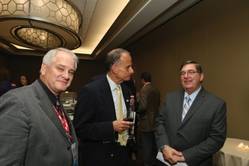
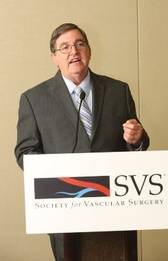
Representative Michael Burgess was the special guest for the SVS PAC reception held during the Vascular Annual Meeting in Boston on June 5. Guests included SVS members who had contributed to the PAC in the past year.
Rep. Burgess was first elected to Congress in 2002 and serves as Vice Chair of the prestigious House of Representatives Energy and Commerce Health Subcommittee. He is also an active member of the House GOP Doctors Caucus. He practiced medicine for almost three decades prior to his election to Congress.
His remarks focused on repeal and reform of the Sustainable Growth Rate (SGR) formula for Medicare physician payment. He is the sponsor of H.R. 4015, SGR Repeal and Medicare Provider Payment Modernization Act of 2014, which passed the House in March, and includes the following provisions:
1. SGR would be repealed immediately.
2. Positive updates of 0.5 percent would be provided for five years.
3. No change would be made to the current system for four years.
4. Physician Quality Reporting System, Value-Based Modifier and EHR Meaningful Use would be replaced by a Merit-Based Incentive Payment System (MIPS) beginning in 2018.
5. MIPS would set performance thresholds that would allow all physicians to be "winners" by receiving positive payment adjustments if they score above the threshold.
The House used a five-year delay for the individual mandate in the Affordable Care Act to pay for it.
The Senate introduced similar legislation, S. 2000, but was unable to determine how to pay for it before March 31 when the SGR patch expired. Because of this, Congress enacted another patch that will expire on March 31, 2015, which averted a 24 percent decrease in Medicare physician payment.
Rep. Burgess was optimistic about getting this legislation passed during the lame duck session of Congress following the November elections. He is supportive of the Senate using Overseas Contingency Operations discretionary funds, along with health care and other funds just to get the legislation voted out of the Senate. A conference committee would be necessary to determine the provisions in the final bill and how it would be financed over the next 10 years.
Rep. Burgess encouraged SVS members to meet with their Senators during the August recess, particularly Sen. Harry Reid (D-NV) who is the Majority Leader of the Senate, emphasizing the importance of this legislation for both physicians and patients.
Representative Michael Burgess was the special guest for the SVS PAC reception held during the Vascular Annual Meeting in Boston on June 5. Guests included SVS members who had contributed to the PAC in the past year.
Rep. Burgess was first elected to Congress in 2002 and serves as Vice Chair of the prestigious House of Representatives Energy and Commerce Health Subcommittee. He is also an active member of the House GOP Doctors Caucus. He practiced medicine for almost three decades prior to his election to Congress.
His remarks focused on repeal and reform of the Sustainable Growth Rate (SGR) formula for Medicare physician payment. He is the sponsor of H.R. 4015, SGR Repeal and Medicare Provider Payment Modernization Act of 2014, which passed the House in March, and includes the following provisions:
1. SGR would be repealed immediately.
2. Positive updates of 0.5 percent would be provided for five years.
3. No change would be made to the current system for four years.
4. Physician Quality Reporting System, Value-Based Modifier and EHR Meaningful Use would be replaced by a Merit-Based Incentive Payment System (MIPS) beginning in 2018.
5. MIPS would set performance thresholds that would allow all physicians to be "winners" by receiving positive payment adjustments if they score above the threshold.
The House used a five-year delay for the individual mandate in the Affordable Care Act to pay for it.
The Senate introduced similar legislation, S. 2000, but was unable to determine how to pay for it before March 31 when the SGR patch expired. Because of this, Congress enacted another patch that will expire on March 31, 2015, which averted a 24 percent decrease in Medicare physician payment.
Rep. Burgess was optimistic about getting this legislation passed during the lame duck session of Congress following the November elections. He is supportive of the Senate using Overseas Contingency Operations discretionary funds, along with health care and other funds just to get the legislation voted out of the Senate. A conference committee would be necessary to determine the provisions in the final bill and how it would be financed over the next 10 years.
Rep. Burgess encouraged SVS members to meet with their Senators during the August recess, particularly Sen. Harry Reid (D-NV) who is the Majority Leader of the Senate, emphasizing the importance of this legislation for both physicians and patients.
Representative Michael Burgess was the special guest for the SVS PAC reception held during the Vascular Annual Meeting in Boston on June 5. Guests included SVS members who had contributed to the PAC in the past year.
Rep. Burgess was first elected to Congress in 2002 and serves as Vice Chair of the prestigious House of Representatives Energy and Commerce Health Subcommittee. He is also an active member of the House GOP Doctors Caucus. He practiced medicine for almost three decades prior to his election to Congress.
His remarks focused on repeal and reform of the Sustainable Growth Rate (SGR) formula for Medicare physician payment. He is the sponsor of H.R. 4015, SGR Repeal and Medicare Provider Payment Modernization Act of 2014, which passed the House in March, and includes the following provisions:
1. SGR would be repealed immediately.
2. Positive updates of 0.5 percent would be provided for five years.
3. No change would be made to the current system for four years.
4. Physician Quality Reporting System, Value-Based Modifier and EHR Meaningful Use would be replaced by a Merit-Based Incentive Payment System (MIPS) beginning in 2018.
5. MIPS would set performance thresholds that would allow all physicians to be "winners" by receiving positive payment adjustments if they score above the threshold.
The House used a five-year delay for the individual mandate in the Affordable Care Act to pay for it.
The Senate introduced similar legislation, S. 2000, but was unable to determine how to pay for it before March 31 when the SGR patch expired. Because of this, Congress enacted another patch that will expire on March 31, 2015, which averted a 24 percent decrease in Medicare physician payment.
Rep. Burgess was optimistic about getting this legislation passed during the lame duck session of Congress following the November elections. He is supportive of the Senate using Overseas Contingency Operations discretionary funds, along with health care and other funds just to get the legislation voted out of the Senate. A conference committee would be necessary to determine the provisions in the final bill and how it would be financed over the next 10 years.
Rep. Burgess encouraged SVS members to meet with their Senators during the August recess, particularly Sen. Harry Reid (D-NV) who is the Majority Leader of the Senate, emphasizing the importance of this legislation for both physicians and patients.
Julie Ann Freischlag, MD, named the new SVS Foundation Chair
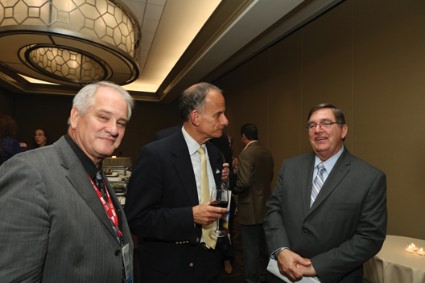
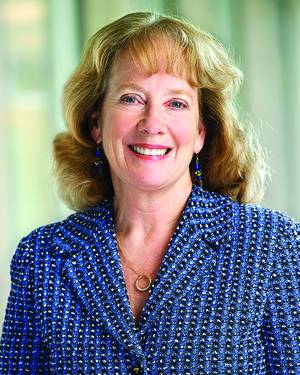
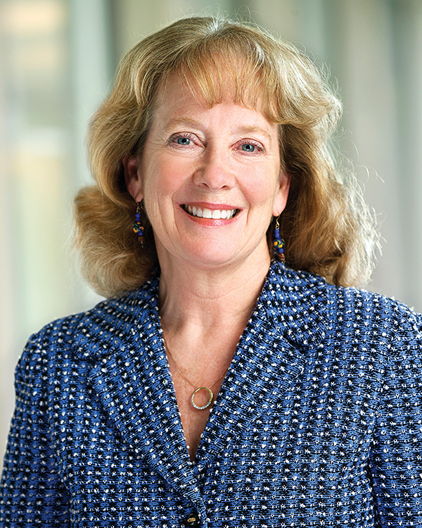
The SVS Foundation announced Dr. Julie Ann Freischlag as the new SVS Foundation Chair. Dr. Freischlag follows in the footsteps of Dr. Peter Gloviczki, who successfully led the Foundation to increased participation from SVS members. SVS Past Presidents move into the SVS Foundation Chair position at the end of their term.
"We are so impressed with Dr. Gloviczki’s vision for the Foundation," said Dr. Freischlag.
"With his leadership, individual contributions have increased; more vascular surgical societies are committed; the Legacy Program was formed; and a new co-sponsored Vascular Cures Wylie Scholarship Program was established. I plan to work with the SVS Foundation Board of Directors and Development Committee, led by Ali AbuRahma, MD, to build on these successes."
Collaboration with the vascular health care community has reached a milestone. The following societies share the Foundation’s belief that quality vascular research is critical to the specialty’s goal to provide the best care possible to all vascular patients:
• American College of Surgeons
• American Podiatric Medical Association
• Eastern Vascular Society
• Midwestern Vascular Surgical Society
• New England Vascular Surgical Society
• Society for Clinical Vascular Surgery
• Southern Association for Vascular Surgery
• Vascular & Endovascular Surgery Society
• Western Vascular Society
"To reach this goal, we must develop and support the work of vascular research leaders. Those doing the research will keep vascular surgery at the forefront of medicine. All vascular surgeons benefit from their work, but most importantly, all vascular patients will continue to receive the highest quality care," said Dr. Freischlag.
Please make a contribution to the SVS Foundation at svsfoundationsite.org.
The SVS Foundation announced Dr. Julie Ann Freischlag as the new SVS Foundation Chair. Dr. Freischlag follows in the footsteps of Dr. Peter Gloviczki, who successfully led the Foundation to increased participation from SVS members. SVS Past Presidents move into the SVS Foundation Chair position at the end of their term.
"We are so impressed with Dr. Gloviczki’s vision for the Foundation," said Dr. Freischlag.
"With his leadership, individual contributions have increased; more vascular surgical societies are committed; the Legacy Program was formed; and a new co-sponsored Vascular Cures Wylie Scholarship Program was established. I plan to work with the SVS Foundation Board of Directors and Development Committee, led by Ali AbuRahma, MD, to build on these successes."
Collaboration with the vascular health care community has reached a milestone. The following societies share the Foundation’s belief that quality vascular research is critical to the specialty’s goal to provide the best care possible to all vascular patients:
• American College of Surgeons
• American Podiatric Medical Association
• Eastern Vascular Society
• Midwestern Vascular Surgical Society
• New England Vascular Surgical Society
• Society for Clinical Vascular Surgery
• Southern Association for Vascular Surgery
• Vascular & Endovascular Surgery Society
• Western Vascular Society
"To reach this goal, we must develop and support the work of vascular research leaders. Those doing the research will keep vascular surgery at the forefront of medicine. All vascular surgeons benefit from their work, but most importantly, all vascular patients will continue to receive the highest quality care," said Dr. Freischlag.
Please make a contribution to the SVS Foundation at svsfoundationsite.org.
The SVS Foundation announced Dr. Julie Ann Freischlag as the new SVS Foundation Chair. Dr. Freischlag follows in the footsteps of Dr. Peter Gloviczki, who successfully led the Foundation to increased participation from SVS members. SVS Past Presidents move into the SVS Foundation Chair position at the end of their term.
"We are so impressed with Dr. Gloviczki’s vision for the Foundation," said Dr. Freischlag.
"With his leadership, individual contributions have increased; more vascular surgical societies are committed; the Legacy Program was formed; and a new co-sponsored Vascular Cures Wylie Scholarship Program was established. I plan to work with the SVS Foundation Board of Directors and Development Committee, led by Ali AbuRahma, MD, to build on these successes."
Collaboration with the vascular health care community has reached a milestone. The following societies share the Foundation’s belief that quality vascular research is critical to the specialty’s goal to provide the best care possible to all vascular patients:
• American College of Surgeons
• American Podiatric Medical Association
• Eastern Vascular Society
• Midwestern Vascular Surgical Society
• New England Vascular Surgical Society
• Society for Clinical Vascular Surgery
• Southern Association for Vascular Surgery
• Vascular & Endovascular Surgery Society
• Western Vascular Society
"To reach this goal, we must develop and support the work of vascular research leaders. Those doing the research will keep vascular surgery at the forefront of medicine. All vascular surgeons benefit from their work, but most importantly, all vascular patients will continue to receive the highest quality care," said Dr. Freischlag.
Please make a contribution to the SVS Foundation at svsfoundationsite.org.
Future vascular surgeons could face training gap
The combination of healthier patients, stricter work-hour limits, and the increase in minimally invasive procedures could create a training gap among vascular surgeons, particularly for complex open procedures. That topic was discussed during the Vascular Annual Meeting.
In 2013, a study published in The Annals of Surgery examined the readiness of general surgery residents entering subspecialty fellowships in North America. It found that one in five (21 percent) fellows were unprepared for the operating room and two-thirds (66 percent) were unable to operate independently. Another quarter (24 percent) could not recognize early signs of complications.
Test scores raise similar concerns. A 2013 study of thoracic surgery examinations, for instance, found that the failure rate for oral exams administered by the American Board of Thoracic Surgery doubled from 14.4 percent in 2000 to 30 percent in 2012.
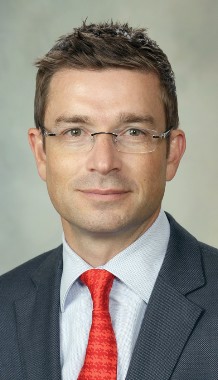
The last point is especially significant, according to Gustavo Oderich, MD, Mayo Clinic. While fewer patients require open surgeries, those who do are especially vulnerable to complications.
"There has been a significant decrease in the number of open cases but the open cases that remain are the most difficult ones," Oderich said.
Even though they’re performing fewer open procedures, surgeons therefore need superior open skills. Without opportunities to develop such skills, a training gap emerges, putting patients with complex vascular disease at risk.
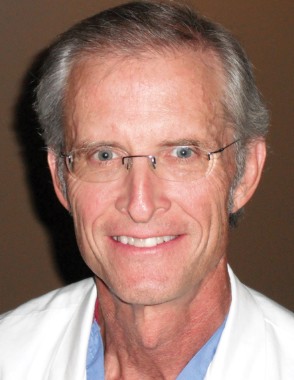
Vascular surgeon John Eidt, MD, chair of the Vascular Surgery Board of the American Board of Surgery, said that instead of a gap in training, the specialty is undergoing an evolution.
"I wouldn’t say there’s a training crisis," Dr. Eidt said. "We are, however, adjusting to new endovascular technologies. In response, I expect there will be a continued evolution of vascular surgery training."
Although they disagree on the nature of the challenge, Eidt and Oderich agree on potential solutions, including:
• Relaxing duty hour restrictions on residents and fellows.
• Increasing the availability and quality of surgical simulations.
• Offering "super fellowships" with the opportunity to develop complex skills during an extra year or two of specialized education between surgical residency and independent practice.
• Performing complex open procedures only at select "Centers of Excellence" where the volume of cases is large enough to provide residents, fellows and surgeons with the experience they need to become experts.
"Vascular surgeons are as well trained now as they ever have been," Eidt said. "In virtually every domain where we look at the quality of surgical care — stroke rates, death rates, amputation rates – patient outcomes are better today than ever before."
Still, reforms are needed to keep it that way.
"The generation that’s being trained now is going to have an impact on patient care within five to 10 years," Oderich says. "The biggest shift, however, is going to be in 20 to 30 years, when there will be no one left from the old generation that was trained in the open-surgery era."
The combination of healthier patients, stricter work-hour limits, and the increase in minimally invasive procedures could create a training gap among vascular surgeons, particularly for complex open procedures. That topic was discussed during the Vascular Annual Meeting.
In 2013, a study published in The Annals of Surgery examined the readiness of general surgery residents entering subspecialty fellowships in North America. It found that one in five (21 percent) fellows were unprepared for the operating room and two-thirds (66 percent) were unable to operate independently. Another quarter (24 percent) could not recognize early signs of complications.
Test scores raise similar concerns. A 2013 study of thoracic surgery examinations, for instance, found that the failure rate for oral exams administered by the American Board of Thoracic Surgery doubled from 14.4 percent in 2000 to 30 percent in 2012.
The last point is especially significant, according to Gustavo Oderich, MD, Mayo Clinic. While fewer patients require open surgeries, those who do are especially vulnerable to complications.
"There has been a significant decrease in the number of open cases but the open cases that remain are the most difficult ones," Oderich said.
Even though they’re performing fewer open procedures, surgeons therefore need superior open skills. Without opportunities to develop such skills, a training gap emerges, putting patients with complex vascular disease at risk.
Vascular surgeon John Eidt, MD, chair of the Vascular Surgery Board of the American Board of Surgery, said that instead of a gap in training, the specialty is undergoing an evolution.
"I wouldn’t say there’s a training crisis," Dr. Eidt said. "We are, however, adjusting to new endovascular technologies. In response, I expect there will be a continued evolution of vascular surgery training."
Although they disagree on the nature of the challenge, Eidt and Oderich agree on potential solutions, including:
• Relaxing duty hour restrictions on residents and fellows.
• Increasing the availability and quality of surgical simulations.
• Offering "super fellowships" with the opportunity to develop complex skills during an extra year or two of specialized education between surgical residency and independent practice.
• Performing complex open procedures only at select "Centers of Excellence" where the volume of cases is large enough to provide residents, fellows and surgeons with the experience they need to become experts.
"Vascular surgeons are as well trained now as they ever have been," Eidt said. "In virtually every domain where we look at the quality of surgical care — stroke rates, death rates, amputation rates – patient outcomes are better today than ever before."
Still, reforms are needed to keep it that way.
"The generation that’s being trained now is going to have an impact on patient care within five to 10 years," Oderich says. "The biggest shift, however, is going to be in 20 to 30 years, when there will be no one left from the old generation that was trained in the open-surgery era."
The combination of healthier patients, stricter work-hour limits, and the increase in minimally invasive procedures could create a training gap among vascular surgeons, particularly for complex open procedures. That topic was discussed during the Vascular Annual Meeting.
In 2013, a study published in The Annals of Surgery examined the readiness of general surgery residents entering subspecialty fellowships in North America. It found that one in five (21 percent) fellows were unprepared for the operating room and two-thirds (66 percent) were unable to operate independently. Another quarter (24 percent) could not recognize early signs of complications.
Test scores raise similar concerns. A 2013 study of thoracic surgery examinations, for instance, found that the failure rate for oral exams administered by the American Board of Thoracic Surgery doubled from 14.4 percent in 2000 to 30 percent in 2012.
The last point is especially significant, according to Gustavo Oderich, MD, Mayo Clinic. While fewer patients require open surgeries, those who do are especially vulnerable to complications.
"There has been a significant decrease in the number of open cases but the open cases that remain are the most difficult ones," Oderich said.
Even though they’re performing fewer open procedures, surgeons therefore need superior open skills. Without opportunities to develop such skills, a training gap emerges, putting patients with complex vascular disease at risk.
Vascular surgeon John Eidt, MD, chair of the Vascular Surgery Board of the American Board of Surgery, said that instead of a gap in training, the specialty is undergoing an evolution.
"I wouldn’t say there’s a training crisis," Dr. Eidt said. "We are, however, adjusting to new endovascular technologies. In response, I expect there will be a continued evolution of vascular surgery training."
Although they disagree on the nature of the challenge, Eidt and Oderich agree on potential solutions, including:
• Relaxing duty hour restrictions on residents and fellows.
• Increasing the availability and quality of surgical simulations.
• Offering "super fellowships" with the opportunity to develop complex skills during an extra year or two of specialized education between surgical residency and independent practice.
• Performing complex open procedures only at select "Centers of Excellence" where the volume of cases is large enough to provide residents, fellows and surgeons with the experience they need to become experts.
"Vascular surgeons are as well trained now as they ever have been," Eidt said. "In virtually every domain where we look at the quality of surgical care — stroke rates, death rates, amputation rates – patient outcomes are better today than ever before."
Still, reforms are needed to keep it that way.
"The generation that’s being trained now is going to have an impact on patient care within five to 10 years," Oderich says. "The biggest shift, however, is going to be in 20 to 30 years, when there will be no one left from the old generation that was trained in the open-surgery era."
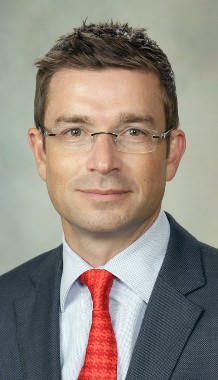
2014 SVS Awards Presentations
SVS Women’s Leadership Training Grants Winners:
Manju Kalra, MBBS
Mayo Clinic
Rochester, Minnesota
Caron Rockman, MD
New York University Medical Center
New York, NY
Ulka Sachdev, MD
University of Pittsburgh Medical Center
Pittsburgh, PA
SVS Women’s Leadership Training Grants Winners:
Manju Kalra, MBBS
Mayo Clinic
Rochester, Minnesota
Caron Rockman, MD
New York University Medical Center
New York, NY
Ulka Sachdev, MD
University of Pittsburgh Medical Center
Pittsburgh, PA
SVS Women’s Leadership Training Grants Winners:
Manju Kalra, MBBS
Mayo Clinic
Rochester, Minnesota
Caron Rockman, MD
New York University Medical Center
New York, NY
Ulka Sachdev, MD
University of Pittsburgh Medical Center
Pittsburgh, PA
Vascular Annual Meeting offered education and networking opportunities
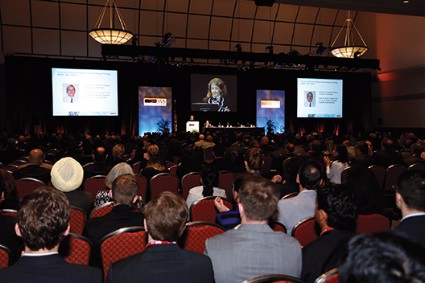
Vascular health professionals from around the world gathered in Boston earlier this month to learn more about the specialty’s cutting-edge research, catch up with colleagues, and view the latest trends and technology at the recent Vascular Annual Meeting. The meeting’s attendance figures of approximately 1,500 included a large international contingent representing about 40 countries.
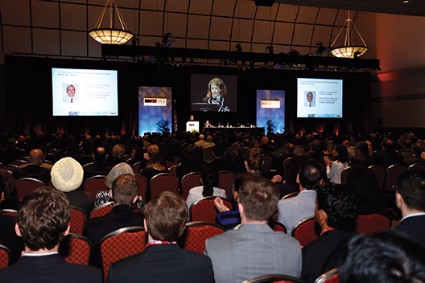
The SVS ranks swelled as more than 200 vascular health professionals were approved for membership at the Annual Business Meeting, growing the Society to approximately 4,800 members. Efforts to provide medical students and general surgery residents with exposure to the specialty were also evident by the number of young people in attendance. More than 200 students and general surgery residents matched with mentors as part of a welcome buddy/mentor program. A record number of programs, nearly 70, participated in this year’s Residency Fair.
During the Vascular Annual Meeting’s opening ceremony, SVS President Julie Ann Freischlag discussed why she’s been proud to lead the Society this past year.
"We are not the field of quick fixes, we take care of people across the years, through complicated illnesses and conditions," Dr. Freischlag said. "We help people live longer, healthier lives so they can do the things they love–spend time with their families, grandchildren, spouses, or simply enjoy a walk on a sunny day."
Vascular Live, an interactive event that showcased state-of-the-art techniques in vascular surgery, had standing room only crowds at many sessions in the Exhibit Hall.
The new mobile app was downloaded by 1,100 people and allowed attendees to share status updates and photos with colleagues, as well as plan agendas and view abstracts.
"It was great to see many old friends–that’s the best part of meetings like this," said Dr. Rocco Ciocca, meeting attendee and vascular surgeon from Seattle.
The Vascular Annual Meeting offered 31.75 AMA PRA Category 1 Credit(s)(tm). Those attending educational sessions during the Vascular Annual Meeting will have until June 7, 2015, to claim the CME at vsweb.org/cme2014.
Vascular health professionals from around the world gathered in Boston earlier this month to learn more about the specialty’s cutting-edge research, catch up with colleagues, and view the latest trends and technology at the recent Vascular Annual Meeting. The meeting’s attendance figures of approximately 1,500 included a large international contingent representing about 40 countries.
The SVS ranks swelled as more than 200 vascular health professionals were approved for membership at the Annual Business Meeting, growing the Society to approximately 4,800 members. Efforts to provide medical students and general surgery residents with exposure to the specialty were also evident by the number of young people in attendance. More than 200 students and general surgery residents matched with mentors as part of a welcome buddy/mentor program. A record number of programs, nearly 70, participated in this year’s Residency Fair.
During the Vascular Annual Meeting’s opening ceremony, SVS President Julie Ann Freischlag discussed why she’s been proud to lead the Society this past year.
"We are not the field of quick fixes, we take care of people across the years, through complicated illnesses and conditions," Dr. Freischlag said. "We help people live longer, healthier lives so they can do the things they love–spend time with their families, grandchildren, spouses, or simply enjoy a walk on a sunny day."
Vascular Live, an interactive event that showcased state-of-the-art techniques in vascular surgery, had standing room only crowds at many sessions in the Exhibit Hall.
The new mobile app was downloaded by 1,100 people and allowed attendees to share status updates and photos with colleagues, as well as plan agendas and view abstracts.
"It was great to see many old friends–that’s the best part of meetings like this," said Dr. Rocco Ciocca, meeting attendee and vascular surgeon from Seattle.
The Vascular Annual Meeting offered 31.75 AMA PRA Category 1 Credit(s)(tm). Those attending educational sessions during the Vascular Annual Meeting will have until June 7, 2015, to claim the CME at vsweb.org/cme2014.
Vascular health professionals from around the world gathered in Boston earlier this month to learn more about the specialty’s cutting-edge research, catch up with colleagues, and view the latest trends and technology at the recent Vascular Annual Meeting. The meeting’s attendance figures of approximately 1,500 included a large international contingent representing about 40 countries.
The SVS ranks swelled as more than 200 vascular health professionals were approved for membership at the Annual Business Meeting, growing the Society to approximately 4,800 members. Efforts to provide medical students and general surgery residents with exposure to the specialty were also evident by the number of young people in attendance. More than 200 students and general surgery residents matched with mentors as part of a welcome buddy/mentor program. A record number of programs, nearly 70, participated in this year’s Residency Fair.
During the Vascular Annual Meeting’s opening ceremony, SVS President Julie Ann Freischlag discussed why she’s been proud to lead the Society this past year.
"We are not the field of quick fixes, we take care of people across the years, through complicated illnesses and conditions," Dr. Freischlag said. "We help people live longer, healthier lives so they can do the things they love–spend time with their families, grandchildren, spouses, or simply enjoy a walk on a sunny day."
Vascular Live, an interactive event that showcased state-of-the-art techniques in vascular surgery, had standing room only crowds at many sessions in the Exhibit Hall.
The new mobile app was downloaded by 1,100 people and allowed attendees to share status updates and photos with colleagues, as well as plan agendas and view abstracts.
"It was great to see many old friends–that’s the best part of meetings like this," said Dr. Rocco Ciocca, meeting attendee and vascular surgeon from Seattle.
The Vascular Annual Meeting offered 31.75 AMA PRA Category 1 Credit(s)(tm). Those attending educational sessions during the Vascular Annual Meeting will have until June 7, 2015, to claim the CME at vsweb.org/cme2014.
Journal of Vascular Surgery Web Site Enhancements
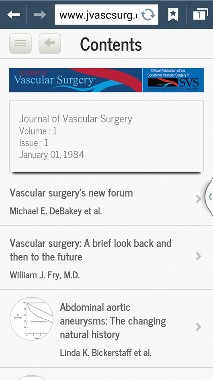
The Journal of Vascular Surgery (JVS) has migrated to a new web platform, providing readers with improved search capabilities and mobile-friendly content. The full site version for JVS now allows users to search within a single issue, collection, and by article type. It also uses a "Smart Search" feature that proposes search words once the user begins to enter text into a search box.
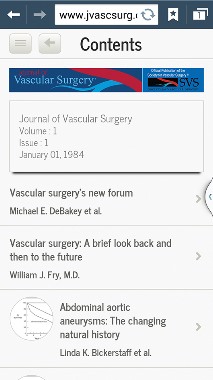
"The website offers readers a simple way to browse back issues," said senior editor Dr. Bruce A. Perler. "Rather than requiring the user to select the publication year, volume, and issue number of the Journal they want to access, users can now view all Journals from a single page."
In addition to these search features, the full-text article view has been upgraded to include a more relevant list of related articles, selected by medical concept rather than keyword.
The mobile view allows users to access every issue of JVS from Volume 1, Issue 1. Mobile users may also download content to read offline, post articles to social media accounts, and browse articles in press.
"We are happy to offer the readership improved access to the Journal of Vascular Surgery on their mobile devices. This new platform is easy to navigate and our content is easy to read on smaller devices," said editor-in-chief, Dr. Anton N. Sidawy.
These new features for the Journal of Vascular Surgery: Venous and Lymphatic Disorders are expected to be available in the fall.
The Journal of Vascular Surgery (JVS) has migrated to a new web platform, providing readers with improved search capabilities and mobile-friendly content. The full site version for JVS now allows users to search within a single issue, collection, and by article type. It also uses a "Smart Search" feature that proposes search words once the user begins to enter text into a search box.
"The website offers readers a simple way to browse back issues," said senior editor Dr. Bruce A. Perler. "Rather than requiring the user to select the publication year, volume, and issue number of the Journal they want to access, users can now view all Journals from a single page."
In addition to these search features, the full-text article view has been upgraded to include a more relevant list of related articles, selected by medical concept rather than keyword.
The mobile view allows users to access every issue of JVS from Volume 1, Issue 1. Mobile users may also download content to read offline, post articles to social media accounts, and browse articles in press.
"We are happy to offer the readership improved access to the Journal of Vascular Surgery on their mobile devices. This new platform is easy to navigate and our content is easy to read on smaller devices," said editor-in-chief, Dr. Anton N. Sidawy.
These new features for the Journal of Vascular Surgery: Venous and Lymphatic Disorders are expected to be available in the fall.
The Journal of Vascular Surgery (JVS) has migrated to a new web platform, providing readers with improved search capabilities and mobile-friendly content. The full site version for JVS now allows users to search within a single issue, collection, and by article type. It also uses a "Smart Search" feature that proposes search words once the user begins to enter text into a search box.
"The website offers readers a simple way to browse back issues," said senior editor Dr. Bruce A. Perler. "Rather than requiring the user to select the publication year, volume, and issue number of the Journal they want to access, users can now view all Journals from a single page."
In addition to these search features, the full-text article view has been upgraded to include a more relevant list of related articles, selected by medical concept rather than keyword.
The mobile view allows users to access every issue of JVS from Volume 1, Issue 1. Mobile users may also download content to read offline, post articles to social media accounts, and browse articles in press.
"We are happy to offer the readership improved access to the Journal of Vascular Surgery on their mobile devices. This new platform is easy to navigate and our content is easy to read on smaller devices," said editor-in-chief, Dr. Anton N. Sidawy.
These new features for the Journal of Vascular Surgery: Venous and Lymphatic Disorders are expected to be available in the fall.
President Freischlag Urges Members to 'Take a Chance'
When SVS President Julie Ann Freischlag, MD, went off to college at the University of Illinois, her goal was to become a high school biology teacher. Instead, she became the sixth woman to receive a certificate in vascular surgery, served as the first female president of SVS, and recently was named the vice chancellor for human health sciences and dean of the school of medicine at the University of California, Davis.
"All of this happened because of something we don't typically do in vascular surgery--take chances," Dr. Freischlag said. "I served as SVS president because the membership gave me a chance, and I took it. We all need to take chances. Imagine where you want be in 15 years and then think about how you will get there."
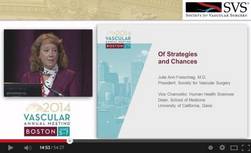
In Dr. Freischlag's presidential address, "Of Strategies and Chances," she urged the audience to take a chance. "Take a chance on yourself, on those around you, and on those you do not yet know," she said.
During her speech, Dr. Freischlag acknowledged her family and colleagues whose support she values.
"Sometimes we forget that most of the personal sacrifices we make also cause someone else to make a personal sacrifice," she added.
In her address, Dr. Freischlag detailed the Society's recent accomplishments, including the growth of the Vascular Quality Initiative, additional practice guidelines and quality measures, increased emphasis on vascular research, and "ownership" of 13 quality measures, of which CMS chose eight for the PQRS program.
In the area of education, SVS diversified the methods used to deliver educational content to members, broadened the opportunities to stay current on new procedures and devices, provided self-assessment offerings for MOC re-credentialing requirements, and developed strategies for CME tracking. In addition, mentoring opportunities were expanded for medical students and new programs were developed to attract candidates to vascular training.
Led by the chair, Cynthia Shortell, MD, the Education Committee's accomplishments included SVS offering two online webinars and more than 100 scholarships given to medical students and residents to attend the Vascular Annual Meeting.
The Society has also made an effort to expand knowledge of vascular surgery to relevant audiences. This includes the "Conditions, Tests and Treatment" section on VascularWeb, which has nearly 1million visitors each year, a reinvigorated SVS Facebook page, and special media outreach programs in Boston to cover the Vascular Annual Meeting.
SVS will also be collaborating with other societies and encouraging the NHLBI to establish PADnet, similar to the CTSnet program. SVS and the Society of Interventional Radiology are sponsoring the FDA-approved study of IVC filters, which is expected to start in mid-2014. The SVS Foundation will continue to support young researchers through its collaboration with the NHLBI on K08 and K23 awards. In addition, SVS collaborates with the American Heart Association on an annual conference that focuses on vascular research initiatives.
She pointed out that SVS has had significant successes in the area of sustainability, including a positive operating margin for the last four years, and total assets more than doubling from 2007 to 2013, from $4 million to over $8 million.
Continuing her "take a chance" theme, Dr. Freischlag urged members to learn a new surgical or research procedure, take on a new responsibility, consider new positions, and most especially consider taking a chance on others. This last recommendation is particularly important for getting more women to participate in the field, especially in areas of leadership.
"There are 3,083 board-certified vascular surgeons in the country who are men and 233 who are women," Dr. Freischlag said. "We certified 199 men and 42 women this year. Much progress has been made, but more needs to be done."
She showed a picture of the team on her first case at the University of California, Davis. "By chance, all four surgeons are women," said Dr. Freischlag. "The women are in this picture because someone gave them a chance. They took that chance, they were rewarded, and now they can give patients a chance."
When SVS President Julie Ann Freischlag, MD, went off to college at the University of Illinois, her goal was to become a high school biology teacher. Instead, she became the sixth woman to receive a certificate in vascular surgery, served as the first female president of SVS, and recently was named the vice chancellor for human health sciences and dean of the school of medicine at the University of California, Davis.
"All of this happened because of something we don't typically do in vascular surgery--take chances," Dr. Freischlag said. "I served as SVS president because the membership gave me a chance, and I took it. We all need to take chances. Imagine where you want be in 15 years and then think about how you will get there."
In Dr. Freischlag's presidential address, "Of Strategies and Chances," she urged the audience to take a chance. "Take a chance on yourself, on those around you, and on those you do not yet know," she said.
During her speech, Dr. Freischlag acknowledged her family and colleagues whose support she values.
"Sometimes we forget that most of the personal sacrifices we make also cause someone else to make a personal sacrifice," she added.
In her address, Dr. Freischlag detailed the Society's recent accomplishments, including the growth of the Vascular Quality Initiative, additional practice guidelines and quality measures, increased emphasis on vascular research, and "ownership" of 13 quality measures, of which CMS chose eight for the PQRS program.
In the area of education, SVS diversified the methods used to deliver educational content to members, broadened the opportunities to stay current on new procedures and devices, provided self-assessment offerings for MOC re-credentialing requirements, and developed strategies for CME tracking. In addition, mentoring opportunities were expanded for medical students and new programs were developed to attract candidates to vascular training.
Led by the chair, Cynthia Shortell, MD, the Education Committee's accomplishments included SVS offering two online webinars and more than 100 scholarships given to medical students and residents to attend the Vascular Annual Meeting.
The Society has also made an effort to expand knowledge of vascular surgery to relevant audiences. This includes the "Conditions, Tests and Treatment" section on VascularWeb, which has nearly 1million visitors each year, a reinvigorated SVS Facebook page, and special media outreach programs in Boston to cover the Vascular Annual Meeting.
SVS will also be collaborating with other societies and encouraging the NHLBI to establish PADnet, similar to the CTSnet program. SVS and the Society of Interventional Radiology are sponsoring the FDA-approved study of IVC filters, which is expected to start in mid-2014. The SVS Foundation will continue to support young researchers through its collaboration with the NHLBI on K08 and K23 awards. In addition, SVS collaborates with the American Heart Association on an annual conference that focuses on vascular research initiatives.
She pointed out that SVS has had significant successes in the area of sustainability, including a positive operating margin for the last four years, and total assets more than doubling from 2007 to 2013, from $4 million to over $8 million.
Continuing her "take a chance" theme, Dr. Freischlag urged members to learn a new surgical or research procedure, take on a new responsibility, consider new positions, and most especially consider taking a chance on others. This last recommendation is particularly important for getting more women to participate in the field, especially in areas of leadership.
"There are 3,083 board-certified vascular surgeons in the country who are men and 233 who are women," Dr. Freischlag said. "We certified 199 men and 42 women this year. Much progress has been made, but more needs to be done."
She showed a picture of the team on her first case at the University of California, Davis. "By chance, all four surgeons are women," said Dr. Freischlag. "The women are in this picture because someone gave them a chance. They took that chance, they were rewarded, and now they can give patients a chance."
When SVS President Julie Ann Freischlag, MD, went off to college at the University of Illinois, her goal was to become a high school biology teacher. Instead, she became the sixth woman to receive a certificate in vascular surgery, served as the first female president of SVS, and recently was named the vice chancellor for human health sciences and dean of the school of medicine at the University of California, Davis.
"All of this happened because of something we don't typically do in vascular surgery--take chances," Dr. Freischlag said. "I served as SVS president because the membership gave me a chance, and I took it. We all need to take chances. Imagine where you want be in 15 years and then think about how you will get there."
In Dr. Freischlag's presidential address, "Of Strategies and Chances," she urged the audience to take a chance. "Take a chance on yourself, on those around you, and on those you do not yet know," she said.
During her speech, Dr. Freischlag acknowledged her family and colleagues whose support she values.
"Sometimes we forget that most of the personal sacrifices we make also cause someone else to make a personal sacrifice," she added.
In her address, Dr. Freischlag detailed the Society's recent accomplishments, including the growth of the Vascular Quality Initiative, additional practice guidelines and quality measures, increased emphasis on vascular research, and "ownership" of 13 quality measures, of which CMS chose eight for the PQRS program.
In the area of education, SVS diversified the methods used to deliver educational content to members, broadened the opportunities to stay current on new procedures and devices, provided self-assessment offerings for MOC re-credentialing requirements, and developed strategies for CME tracking. In addition, mentoring opportunities were expanded for medical students and new programs were developed to attract candidates to vascular training.
Led by the chair, Cynthia Shortell, MD, the Education Committee's accomplishments included SVS offering two online webinars and more than 100 scholarships given to medical students and residents to attend the Vascular Annual Meeting.
The Society has also made an effort to expand knowledge of vascular surgery to relevant audiences. This includes the "Conditions, Tests and Treatment" section on VascularWeb, which has nearly 1million visitors each year, a reinvigorated SVS Facebook page, and special media outreach programs in Boston to cover the Vascular Annual Meeting.
SVS will also be collaborating with other societies and encouraging the NHLBI to establish PADnet, similar to the CTSnet program. SVS and the Society of Interventional Radiology are sponsoring the FDA-approved study of IVC filters, which is expected to start in mid-2014. The SVS Foundation will continue to support young researchers through its collaboration with the NHLBI on K08 and K23 awards. In addition, SVS collaborates with the American Heart Association on an annual conference that focuses on vascular research initiatives.
She pointed out that SVS has had significant successes in the area of sustainability, including a positive operating margin for the last four years, and total assets more than doubling from 2007 to 2013, from $4 million to over $8 million.
Continuing her "take a chance" theme, Dr. Freischlag urged members to learn a new surgical or research procedure, take on a new responsibility, consider new positions, and most especially consider taking a chance on others. This last recommendation is particularly important for getting more women to participate in the field, especially in areas of leadership.
"There are 3,083 board-certified vascular surgeons in the country who are men and 233 who are women," Dr. Freischlag said. "We certified 199 men and 42 women this year. Much progress has been made, but more needs to be done."
She showed a picture of the team on her first case at the University of California, Davis. "By chance, all four surgeons are women," said Dr. Freischlag. "The women are in this picture because someone gave them a chance. They took that chance, they were rewarded, and now they can give patients a chance."
John Mannick, MD, Receives Lifetime Achievement Award
An actual flip of a coin was responsible for bringing John Mannick, MD, into the field of vascular surgery. But it was more than a matter of chance that he received the Lifetime Achievement Award at yesterday’s awards presentation.
"Dr. Mannick has been described as one of the giants in vascular surgery during the formative years of our specialty as we differentiated ourselves from general and cardiac surgery," said SVS President Julie Freischlag, MD. "His accomplishments as a surgeon, scientist, and educator have inspired many and his legacy continues to be a source of inspiration in the specialty today."
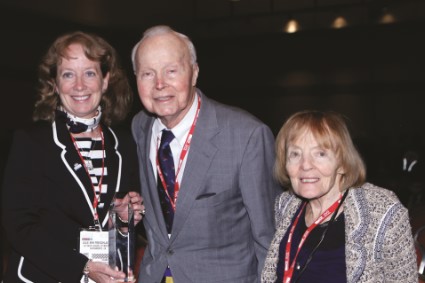
When Dr. Mannick was a student at Harvard Medical School, he was mistakenly assigned to a second three-month rotation with one of vascular surgery’s pioneers, Robert Linton, MD. During his first post-resident position, a coin was tossed regarding specialties, and Dr. Mannick was assigned to vascular surgery.
"I would see that Dr. Linton’s absolute attention to detail led him to be successful in difficult surgeries where many others were not," Dr. Mannick said. "After serving as a flight surgeon in the Air Force, I went on to the Medical College of Virginia. The area had a huge population of patients in danger of limb loss and it was very gratifying to me to use Dr. Linton’s technique to help people keep their legs."
He also considers himself fortunate to have worked with E. Donnall Thomas, MD, who received the Nobel Prize in 1990.
"He was a great teacher and an inspiration," Dr. Mannick said. "He taught me how to plan experiments and evaluate data. I originally did not want an academic career, but eventually found it more interesting to contribute new information to the specialty."
In the areas of vascular basic science and clinical research, Dr. Mannick is considered one of the pre-eminent American surgeon-scientists of the last 50 years, making numerous important contributions to advance the basic and clinical science of surgery. His key basic science investigations have focused on the arena of surgical immunology and inflammation, ranging from transplantation science and fundamental observations on immune tolerance to a molecular understanding of the host response to injury, infection, and shock.
He was one of the early leaders in promoting the use of autogenous vein bypass grafting for the treatment of advanced limb ischemia, beginning in the early 1960s. He helped to develop and perfect the techniques of distal bypass surgery in the leg, and made numerous contributions to this arena by his careful analysis of long-term results and modes of failure. Throughout his career, his commitment to critical analysis and continuous improvement permeated his own work and that of his many trainees.
Dr. Mannick also played a key role in the development and maturation of the Lifeline Foundation, serving as its president from 1996-2002. He was instrumental in developing the joint NIH/Lifeline Mentored Clinical Scientist Development Award by securing funding from the William J. von Liebig Foundation. The program was the first of its kind to support the early career development of surgeon scientists, and has been emulated by several other leading supported programs.
Dr. Mannick also made great contributions to professional organizations and has served as president of the SVS, the International Society for Vascular Surgery, the New England Society for Vascular Surgery, and the American Surgical Association. He has been a prolific contributor to biomedical literature, authoring nearly 400 total publications.
Dr. Mannick spent most of his career in Boston, originally at the Boston University School of Medicine and later at Harvard Medical School and Brigham and Women’s Hospital. He retired from clinical work in 1994, but continued to run his research lab until 2010. Even now he attends the weekly luncheons and continues to serve as a grant consultant.
"I think I’ve proven that if you stay alive long enough, you keep getting awards," he said. "I’m pleased and honored to receive the SVS Lifetime Achievement Award."
An actual flip of a coin was responsible for bringing John Mannick, MD, into the field of vascular surgery. But it was more than a matter of chance that he received the Lifetime Achievement Award at yesterday’s awards presentation.
"Dr. Mannick has been described as one of the giants in vascular surgery during the formative years of our specialty as we differentiated ourselves from general and cardiac surgery," said SVS President Julie Freischlag, MD. "His accomplishments as a surgeon, scientist, and educator have inspired many and his legacy continues to be a source of inspiration in the specialty today."
When Dr. Mannick was a student at Harvard Medical School, he was mistakenly assigned to a second three-month rotation with one of vascular surgery’s pioneers, Robert Linton, MD. During his first post-resident position, a coin was tossed regarding specialties, and Dr. Mannick was assigned to vascular surgery.
"I would see that Dr. Linton’s absolute attention to detail led him to be successful in difficult surgeries where many others were not," Dr. Mannick said. "After serving as a flight surgeon in the Air Force, I went on to the Medical College of Virginia. The area had a huge population of patients in danger of limb loss and it was very gratifying to me to use Dr. Linton’s technique to help people keep their legs."
He also considers himself fortunate to have worked with E. Donnall Thomas, MD, who received the Nobel Prize in 1990.
"He was a great teacher and an inspiration," Dr. Mannick said. "He taught me how to plan experiments and evaluate data. I originally did not want an academic career, but eventually found it more interesting to contribute new information to the specialty."
In the areas of vascular basic science and clinical research, Dr. Mannick is considered one of the pre-eminent American surgeon-scientists of the last 50 years, making numerous important contributions to advance the basic and clinical science of surgery. His key basic science investigations have focused on the arena of surgical immunology and inflammation, ranging from transplantation science and fundamental observations on immune tolerance to a molecular understanding of the host response to injury, infection, and shock.
He was one of the early leaders in promoting the use of autogenous vein bypass grafting for the treatment of advanced limb ischemia, beginning in the early 1960s. He helped to develop and perfect the techniques of distal bypass surgery in the leg, and made numerous contributions to this arena by his careful analysis of long-term results and modes of failure. Throughout his career, his commitment to critical analysis and continuous improvement permeated his own work and that of his many trainees.
Dr. Mannick also played a key role in the development and maturation of the Lifeline Foundation, serving as its president from 1996-2002. He was instrumental in developing the joint NIH/Lifeline Mentored Clinical Scientist Development Award by securing funding from the William J. von Liebig Foundation. The program was the first of its kind to support the early career development of surgeon scientists, and has been emulated by several other leading supported programs.
Dr. Mannick also made great contributions to professional organizations and has served as president of the SVS, the International Society for Vascular Surgery, the New England Society for Vascular Surgery, and the American Surgical Association. He has been a prolific contributor to biomedical literature, authoring nearly 400 total publications.
Dr. Mannick spent most of his career in Boston, originally at the Boston University School of Medicine and later at Harvard Medical School and Brigham and Women’s Hospital. He retired from clinical work in 1994, but continued to run his research lab until 2010. Even now he attends the weekly luncheons and continues to serve as a grant consultant.
"I think I’ve proven that if you stay alive long enough, you keep getting awards," he said. "I’m pleased and honored to receive the SVS Lifetime Achievement Award."
An actual flip of a coin was responsible for bringing John Mannick, MD, into the field of vascular surgery. But it was more than a matter of chance that he received the Lifetime Achievement Award at yesterday’s awards presentation.
"Dr. Mannick has been described as one of the giants in vascular surgery during the formative years of our specialty as we differentiated ourselves from general and cardiac surgery," said SVS President Julie Freischlag, MD. "His accomplishments as a surgeon, scientist, and educator have inspired many and his legacy continues to be a source of inspiration in the specialty today."
When Dr. Mannick was a student at Harvard Medical School, he was mistakenly assigned to a second three-month rotation with one of vascular surgery’s pioneers, Robert Linton, MD. During his first post-resident position, a coin was tossed regarding specialties, and Dr. Mannick was assigned to vascular surgery.
"I would see that Dr. Linton’s absolute attention to detail led him to be successful in difficult surgeries where many others were not," Dr. Mannick said. "After serving as a flight surgeon in the Air Force, I went on to the Medical College of Virginia. The area had a huge population of patients in danger of limb loss and it was very gratifying to me to use Dr. Linton’s technique to help people keep their legs."
He also considers himself fortunate to have worked with E. Donnall Thomas, MD, who received the Nobel Prize in 1990.
"He was a great teacher and an inspiration," Dr. Mannick said. "He taught me how to plan experiments and evaluate data. I originally did not want an academic career, but eventually found it more interesting to contribute new information to the specialty."
In the areas of vascular basic science and clinical research, Dr. Mannick is considered one of the pre-eminent American surgeon-scientists of the last 50 years, making numerous important contributions to advance the basic and clinical science of surgery. His key basic science investigations have focused on the arena of surgical immunology and inflammation, ranging from transplantation science and fundamental observations on immune tolerance to a molecular understanding of the host response to injury, infection, and shock.
He was one of the early leaders in promoting the use of autogenous vein bypass grafting for the treatment of advanced limb ischemia, beginning in the early 1960s. He helped to develop and perfect the techniques of distal bypass surgery in the leg, and made numerous contributions to this arena by his careful analysis of long-term results and modes of failure. Throughout his career, his commitment to critical analysis and continuous improvement permeated his own work and that of his many trainees.
Dr. Mannick also played a key role in the development and maturation of the Lifeline Foundation, serving as its president from 1996-2002. He was instrumental in developing the joint NIH/Lifeline Mentored Clinical Scientist Development Award by securing funding from the William J. von Liebig Foundation. The program was the first of its kind to support the early career development of surgeon scientists, and has been emulated by several other leading supported programs.
Dr. Mannick also made great contributions to professional organizations and has served as president of the SVS, the International Society for Vascular Surgery, the New England Society for Vascular Surgery, and the American Surgical Association. He has been a prolific contributor to biomedical literature, authoring nearly 400 total publications.
Dr. Mannick spent most of his career in Boston, originally at the Boston University School of Medicine and later at Harvard Medical School and Brigham and Women’s Hospital. He retired from clinical work in 1994, but continued to run his research lab until 2010. Even now he attends the weekly luncheons and continues to serve as a grant consultant.
"I think I’ve proven that if you stay alive long enough, you keep getting awards," he said. "I’m pleased and honored to receive the SVS Lifetime Achievement Award."
Release of new Rutherford edition
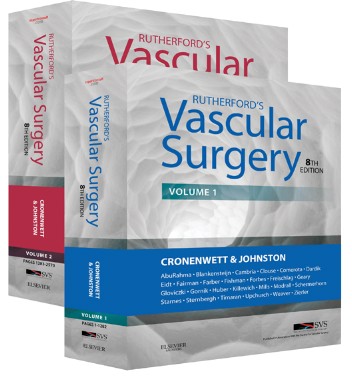
Rutherford’s Vascular Surgery, 8th Edition, a comprehensive two-volume reference has recently been released.
"Rutherford’s Vascular Surgery is the definitive medical reference for vascular surgeons, interventionalists and vascular medicine specialists," said Jack L. Cronenwett, M.D., who is professor of surgery, Dartmouth-Hitchcock Medical Center, and the book’s co-editor. "A number of vascular surgery experts joined forces to integrate information on medical, endovascular and surgical treatments with updated insights on diagnostic technique and decision-making and vascular biology."
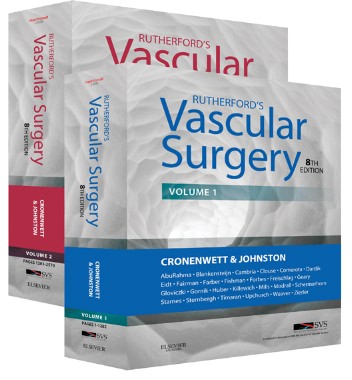
This new edition of Rutherford’s Vascular Surgery features 164 chapters organized into 27 sections, including basic science, clinical and laboratory evaluation, vascular imaging, atherosclerotic risk factors, perioperative care, bleeding and clotting, venous thromboembolic and venous Insufficiency and occlusion.
New to the 8th Edition are chapters on dialysis catheters, endovascular disease and management of branches, along with fresh coverage of endovascular procedures, renovascular disease, vascular surgery technique, vascular imaging, angiography, computed tomography and magnetic resonance imaging.
"We’re proud to partner with Elsevier on the latest edition of Rutherford’s Vascular Surgery," said Julie Freischlag, MD, who is the President of the Society for Vascular Surgery.
"The release of this new edition supports our joint efforts to bring vascular surgeons the highest quality news, information and expert guidance on vascular conditions and treatment," she noted.
A significant highlight of the 8th Edition is the introduction of an enhanced eBook available on the newly re-launched Expert Consult platform. Integrated with the eBook will be features like enhanced images, self-assessment questions, updated references and abstracts and procedural video.
Additionally, Rutherford’s will once again be available through major medical institutions via Elsevier’s ClinicalKey platform, which delivers access to clinical content, including 500-plus journals, 100-plus books, drug information, guidelines, MEDLINE and ExitCare patient education. To order go to www.vsweb.org/Rutherford.
A Q&A session with the authors will be held at the Elsevier booth (#1105) during the Vascular Annual Meeting on June 5 from 5:30 to 6:30 pm.
Rutherford’s Vascular Surgery, 8th Edition, a comprehensive two-volume reference has recently been released.
"Rutherford’s Vascular Surgery is the definitive medical reference for vascular surgeons, interventionalists and vascular medicine specialists," said Jack L. Cronenwett, M.D., who is professor of surgery, Dartmouth-Hitchcock Medical Center, and the book’s co-editor. "A number of vascular surgery experts joined forces to integrate information on medical, endovascular and surgical treatments with updated insights on diagnostic technique and decision-making and vascular biology."
This new edition of Rutherford’s Vascular Surgery features 164 chapters organized into 27 sections, including basic science, clinical and laboratory evaluation, vascular imaging, atherosclerotic risk factors, perioperative care, bleeding and clotting, venous thromboembolic and venous Insufficiency and occlusion.
New to the 8th Edition are chapters on dialysis catheters, endovascular disease and management of branches, along with fresh coverage of endovascular procedures, renovascular disease, vascular surgery technique, vascular imaging, angiography, computed tomography and magnetic resonance imaging.
"We’re proud to partner with Elsevier on the latest edition of Rutherford’s Vascular Surgery," said Julie Freischlag, MD, who is the President of the Society for Vascular Surgery.
"The release of this new edition supports our joint efforts to bring vascular surgeons the highest quality news, information and expert guidance on vascular conditions and treatment," she noted.
A significant highlight of the 8th Edition is the introduction of an enhanced eBook available on the newly re-launched Expert Consult platform. Integrated with the eBook will be features like enhanced images, self-assessment questions, updated references and abstracts and procedural video.
Additionally, Rutherford’s will once again be available through major medical institutions via Elsevier’s ClinicalKey platform, which delivers access to clinical content, including 500-plus journals, 100-plus books, drug information, guidelines, MEDLINE and ExitCare patient education. To order go to www.vsweb.org/Rutherford.
A Q&A session with the authors will be held at the Elsevier booth (#1105) during the Vascular Annual Meeting on June 5 from 5:30 to 6:30 pm.
Rutherford’s Vascular Surgery, 8th Edition, a comprehensive two-volume reference has recently been released.
"Rutherford’s Vascular Surgery is the definitive medical reference for vascular surgeons, interventionalists and vascular medicine specialists," said Jack L. Cronenwett, M.D., who is professor of surgery, Dartmouth-Hitchcock Medical Center, and the book’s co-editor. "A number of vascular surgery experts joined forces to integrate information on medical, endovascular and surgical treatments with updated insights on diagnostic technique and decision-making and vascular biology."
This new edition of Rutherford’s Vascular Surgery features 164 chapters organized into 27 sections, including basic science, clinical and laboratory evaluation, vascular imaging, atherosclerotic risk factors, perioperative care, bleeding and clotting, venous thromboembolic and venous Insufficiency and occlusion.
New to the 8th Edition are chapters on dialysis catheters, endovascular disease and management of branches, along with fresh coverage of endovascular procedures, renovascular disease, vascular surgery technique, vascular imaging, angiography, computed tomography and magnetic resonance imaging.
"We’re proud to partner with Elsevier on the latest edition of Rutherford’s Vascular Surgery," said Julie Freischlag, MD, who is the President of the Society for Vascular Surgery.
"The release of this new edition supports our joint efforts to bring vascular surgeons the highest quality news, information and expert guidance on vascular conditions and treatment," she noted.
A significant highlight of the 8th Edition is the introduction of an enhanced eBook available on the newly re-launched Expert Consult platform. Integrated with the eBook will be features like enhanced images, self-assessment questions, updated references and abstracts and procedural video.
Additionally, Rutherford’s will once again be available through major medical institutions via Elsevier’s ClinicalKey platform, which delivers access to clinical content, including 500-plus journals, 100-plus books, drug information, guidelines, MEDLINE and ExitCare patient education. To order go to www.vsweb.org/Rutherford.
A Q&A session with the authors will be held at the Elsevier booth (#1105) during the Vascular Annual Meeting on June 5 from 5:30 to 6:30 pm.