User login
Choose colonoscopy over sigmoidoscopy for screening of proximal advanced serrated lesions
Screening colonoscopy is more effective than sigmoidoscopy for the detection of colorectal cancer by picking up proximal advanced serrated lesions, according to the results of a study published in the February issue of Clinical Gastroenterology and Hepatology.
“Colonoscopy allows the detection and removal of precursor polyps during the same session and is the final common pathway for other screening modalities,” wrote lead author Dr. Charles J. Kahi of Indiana University, Indianapolis, adding that “sigmoidoscopy is an attractive option because it is more straightforward to perform, is less burdensome, and is associated with lower risk for harm than colonoscopy.”
In a retrospective, cross-sectional study, Dr. Kahi and his associates culled data on 1,910 patients who underwent an average-risk screening colonoscopy from August 2005 through April 2012 at Indiana University Hospital and an associated ambulatory surgery center. All patients included were at least 50 years of age, with an average age of 59.3 years ± 8.0 years, and women represented 53.8% of the population (Clin. Gastroenterol. Hepatol. 2015 February [doi:10.1016/j.cgh.2014.07.044]).
All subjects had colonoscopies performed by an endoscopist with “documented high adenoma and serrated polyp detection rates;” when found, tissue samples of all serrated polyps – hyperplastic (HP), sessile serrated adenoma/polyp (SSA/P), or traditional serrated adenoma – were also proximal to the sigmoid colon and serrated polyps larger than 5 mm in the rectum or sigmoid colon were also taken and “reviewed by a gastrointestinal pathologist and reclassified on the basis of World Health Organization [WHO] criteria.”
The WHO classifications for serrated polyps fall into HP, SSA/P with cytologic dysplasia, sessile serrated polyp with cytologic dysplasia (SSA/P-CD) of at least 10 mm, and traditional serrated adenoma (TSA). Advanced conventional adenomatous neoplasia (ACN) was defined as tubular adenoma of at least 10 mm, villous histology, high-grade dysplasia, or cancer. The prevalence of both proximal advanced serrated lesion (ASL) and ACN was calculated based on distal colorectal findings; investigators also performed multivariable logistic regression analysis to determine age-adjusted and sex-adjusted odds of advanced proximal adenomatous and serrated lesions, while “secondary analyses were performed to examine the effect of variable ASL definitions.”
Results indicated that of the 1,910 subjects in the study population, 52 (2.7%) were found to have proximal ASL, while 99 (5.2%) had proximal ACN. Of the 52 individuals with proximal ASL, 27 (52%) had no distal polyps, while 40 (40%) of the 99 subjects with proximal ACN also had no distal polyps. A total of 1,675 patients (87.7%) had no family history of colorectal cancer (CRC); of the remaining 235 patients, 212 (11.1%) had a first-degree relative and 23 (1.2%) had a distant relative with the condition.
Age and type of distal neoplasia, with the exception of nonadvanced serrated lesions, were associated with proximal ACN; however, only patient age was significantly associated with proximal ASL. Investigators found no significant associations between distal polyps and proximal ASL, and in secondary analyses, presence of a distal SSA/P was the lone factor associated with a proximal SSA/P. The authors also found no significant associations with either age or sex.
“These findings are relevant for CRC screening strategies that use sigmoidoscopy as a ‘gateway’ test and triage patients to colonoscopy on the basis of findings at sigmoidoscopy,” the authors note, adding that “for example, a patient with no polyps at sigmoidoscopy who is not referred for a follow-up colonoscopy exclusively on the basis of the estimated risk of advanced ACN could be harboring significant serrated lesions in the proximal colon that would go undetected.”
Funding was provided by a gift from Scott and Kay Schurz of Bloomington, Ind. No financial conflicts of interests were reported.
The findings of this paper confirm prior work linking distal neoplastic findings with conventional proximal advanced neoplasia. For example, those with distal nonadvanced neoplasia are over two times more likely to have advanced proximal conventional neoplasia. More importantly, the study extends our knowledge of the importance of distal neoplastic findings in predicting significant proximal serrated lesions. Interestingly, no strong associations were found. In fact, over half of those with significant proximal serrated neoplasia (i.e., large or those with dysplastic features) had no distal adenomatous marker lesion.

|
| Dr. Douglas Robertson |
The authors contend that the results favor colonoscopy as a primary screening strategy relative to sigmoidoscopy, since many with advanced proximal serrated lesions will have no distal marker lesion to prompt full colonoscopy. Perhaps, but the fact remains that large randomized trials utilizing sigmoidoscopy as a screening tool have uniformly shown marked reductions in colorectal cancer incidence and mortality. The relative importance of this factor (i.e., improved proximal serrated neoplasia detection with colonoscopy) would have to be considered relative to other factors that drive the success of screening programs (e.g., patient compliance, low complication rates) and likely could be fully understood only through direct comparative effectiveness studies.
Even beyond the implications of this study to inform our understanding of these two screening modalities (colonoscopy and sigmoidoscopy) is the contribution to our rapidly growing knowledge about serrated neoplasia. Inarguably, the serrated pathway is an important one in carcinogenesis. This paper is further evidence that what we have previously learned about conventional adenomas cannot directly be applied to serrated lesions. Additional high-quality epidemiologic work like this will be required to understand the important differences.
Dr. Douglas J. Robertson is associate professor of medicine at the Geisel School of Medicine at Dartmouth and the Dartmouth Institute, and chief of Gastroenterology at the VA Medical Center, White River Junction, Vt. He has no conflicts of interest.
The findings of this paper confirm prior work linking distal neoplastic findings with conventional proximal advanced neoplasia. For example, those with distal nonadvanced neoplasia are over two times more likely to have advanced proximal conventional neoplasia. More importantly, the study extends our knowledge of the importance of distal neoplastic findings in predicting significant proximal serrated lesions. Interestingly, no strong associations were found. In fact, over half of those with significant proximal serrated neoplasia (i.e., large or those with dysplastic features) had no distal adenomatous marker lesion.
|
|
| Dr. Douglas Robertson |
The authors contend that the results favor colonoscopy as a primary screening strategy relative to sigmoidoscopy, since many with advanced proximal serrated lesions will have no distal marker lesion to prompt full colonoscopy. Perhaps, but the fact remains that large randomized trials utilizing sigmoidoscopy as a screening tool have uniformly shown marked reductions in colorectal cancer incidence and mortality. The relative importance of this factor (i.e., improved proximal serrated neoplasia detection with colonoscopy) would have to be considered relative to other factors that drive the success of screening programs (e.g., patient compliance, low complication rates) and likely could be fully understood only through direct comparative effectiveness studies.
Even beyond the implications of this study to inform our understanding of these two screening modalities (colonoscopy and sigmoidoscopy) is the contribution to our rapidly growing knowledge about serrated neoplasia. Inarguably, the serrated pathway is an important one in carcinogenesis. This paper is further evidence that what we have previously learned about conventional adenomas cannot directly be applied to serrated lesions. Additional high-quality epidemiologic work like this will be required to understand the important differences.
Dr. Douglas J. Robertson is associate professor of medicine at the Geisel School of Medicine at Dartmouth and the Dartmouth Institute, and chief of Gastroenterology at the VA Medical Center, White River Junction, Vt. He has no conflicts of interest.
The findings of this paper confirm prior work linking distal neoplastic findings with conventional proximal advanced neoplasia. For example, those with distal nonadvanced neoplasia are over two times more likely to have advanced proximal conventional neoplasia. More importantly, the study extends our knowledge of the importance of distal neoplastic findings in predicting significant proximal serrated lesions. Interestingly, no strong associations were found. In fact, over half of those with significant proximal serrated neoplasia (i.e., large or those with dysplastic features) had no distal adenomatous marker lesion.
|
|
| Dr. Douglas Robertson |
The authors contend that the results favor colonoscopy as a primary screening strategy relative to sigmoidoscopy, since many with advanced proximal serrated lesions will have no distal marker lesion to prompt full colonoscopy. Perhaps, but the fact remains that large randomized trials utilizing sigmoidoscopy as a screening tool have uniformly shown marked reductions in colorectal cancer incidence and mortality. The relative importance of this factor (i.e., improved proximal serrated neoplasia detection with colonoscopy) would have to be considered relative to other factors that drive the success of screening programs (e.g., patient compliance, low complication rates) and likely could be fully understood only through direct comparative effectiveness studies.
Even beyond the implications of this study to inform our understanding of these two screening modalities (colonoscopy and sigmoidoscopy) is the contribution to our rapidly growing knowledge about serrated neoplasia. Inarguably, the serrated pathway is an important one in carcinogenesis. This paper is further evidence that what we have previously learned about conventional adenomas cannot directly be applied to serrated lesions. Additional high-quality epidemiologic work like this will be required to understand the important differences.
Dr. Douglas J. Robertson is associate professor of medicine at the Geisel School of Medicine at Dartmouth and the Dartmouth Institute, and chief of Gastroenterology at the VA Medical Center, White River Junction, Vt. He has no conflicts of interest.
Screening colonoscopy is more effective than sigmoidoscopy for the detection of colorectal cancer by picking up proximal advanced serrated lesions, according to the results of a study published in the February issue of Clinical Gastroenterology and Hepatology.
“Colonoscopy allows the detection and removal of precursor polyps during the same session and is the final common pathway for other screening modalities,” wrote lead author Dr. Charles J. Kahi of Indiana University, Indianapolis, adding that “sigmoidoscopy is an attractive option because it is more straightforward to perform, is less burdensome, and is associated with lower risk for harm than colonoscopy.”
In a retrospective, cross-sectional study, Dr. Kahi and his associates culled data on 1,910 patients who underwent an average-risk screening colonoscopy from August 2005 through April 2012 at Indiana University Hospital and an associated ambulatory surgery center. All patients included were at least 50 years of age, with an average age of 59.3 years ± 8.0 years, and women represented 53.8% of the population (Clin. Gastroenterol. Hepatol. 2015 February [doi:10.1016/j.cgh.2014.07.044]).
All subjects had colonoscopies performed by an endoscopist with “documented high adenoma and serrated polyp detection rates;” when found, tissue samples of all serrated polyps – hyperplastic (HP), sessile serrated adenoma/polyp (SSA/P), or traditional serrated adenoma – were also proximal to the sigmoid colon and serrated polyps larger than 5 mm in the rectum or sigmoid colon were also taken and “reviewed by a gastrointestinal pathologist and reclassified on the basis of World Health Organization [WHO] criteria.”
The WHO classifications for serrated polyps fall into HP, SSA/P with cytologic dysplasia, sessile serrated polyp with cytologic dysplasia (SSA/P-CD) of at least 10 mm, and traditional serrated adenoma (TSA). Advanced conventional adenomatous neoplasia (ACN) was defined as tubular adenoma of at least 10 mm, villous histology, high-grade dysplasia, or cancer. The prevalence of both proximal advanced serrated lesion (ASL) and ACN was calculated based on distal colorectal findings; investigators also performed multivariable logistic regression analysis to determine age-adjusted and sex-adjusted odds of advanced proximal adenomatous and serrated lesions, while “secondary analyses were performed to examine the effect of variable ASL definitions.”
Results indicated that of the 1,910 subjects in the study population, 52 (2.7%) were found to have proximal ASL, while 99 (5.2%) had proximal ACN. Of the 52 individuals with proximal ASL, 27 (52%) had no distal polyps, while 40 (40%) of the 99 subjects with proximal ACN also had no distal polyps. A total of 1,675 patients (87.7%) had no family history of colorectal cancer (CRC); of the remaining 235 patients, 212 (11.1%) had a first-degree relative and 23 (1.2%) had a distant relative with the condition.
Age and type of distal neoplasia, with the exception of nonadvanced serrated lesions, were associated with proximal ACN; however, only patient age was significantly associated with proximal ASL. Investigators found no significant associations between distal polyps and proximal ASL, and in secondary analyses, presence of a distal SSA/P was the lone factor associated with a proximal SSA/P. The authors also found no significant associations with either age or sex.
“These findings are relevant for CRC screening strategies that use sigmoidoscopy as a ‘gateway’ test and triage patients to colonoscopy on the basis of findings at sigmoidoscopy,” the authors note, adding that “for example, a patient with no polyps at sigmoidoscopy who is not referred for a follow-up colonoscopy exclusively on the basis of the estimated risk of advanced ACN could be harboring significant serrated lesions in the proximal colon that would go undetected.”
Funding was provided by a gift from Scott and Kay Schurz of Bloomington, Ind. No financial conflicts of interests were reported.
Screening colonoscopy is more effective than sigmoidoscopy for the detection of colorectal cancer by picking up proximal advanced serrated lesions, according to the results of a study published in the February issue of Clinical Gastroenterology and Hepatology.
“Colonoscopy allows the detection and removal of precursor polyps during the same session and is the final common pathway for other screening modalities,” wrote lead author Dr. Charles J. Kahi of Indiana University, Indianapolis, adding that “sigmoidoscopy is an attractive option because it is more straightforward to perform, is less burdensome, and is associated with lower risk for harm than colonoscopy.”
In a retrospective, cross-sectional study, Dr. Kahi and his associates culled data on 1,910 patients who underwent an average-risk screening colonoscopy from August 2005 through April 2012 at Indiana University Hospital and an associated ambulatory surgery center. All patients included were at least 50 years of age, with an average age of 59.3 years ± 8.0 years, and women represented 53.8% of the population (Clin. Gastroenterol. Hepatol. 2015 February [doi:10.1016/j.cgh.2014.07.044]).
All subjects had colonoscopies performed by an endoscopist with “documented high adenoma and serrated polyp detection rates;” when found, tissue samples of all serrated polyps – hyperplastic (HP), sessile serrated adenoma/polyp (SSA/P), or traditional serrated adenoma – were also proximal to the sigmoid colon and serrated polyps larger than 5 mm in the rectum or sigmoid colon were also taken and “reviewed by a gastrointestinal pathologist and reclassified on the basis of World Health Organization [WHO] criteria.”
The WHO classifications for serrated polyps fall into HP, SSA/P with cytologic dysplasia, sessile serrated polyp with cytologic dysplasia (SSA/P-CD) of at least 10 mm, and traditional serrated adenoma (TSA). Advanced conventional adenomatous neoplasia (ACN) was defined as tubular adenoma of at least 10 mm, villous histology, high-grade dysplasia, or cancer. The prevalence of both proximal advanced serrated lesion (ASL) and ACN was calculated based on distal colorectal findings; investigators also performed multivariable logistic regression analysis to determine age-adjusted and sex-adjusted odds of advanced proximal adenomatous and serrated lesions, while “secondary analyses were performed to examine the effect of variable ASL definitions.”
Results indicated that of the 1,910 subjects in the study population, 52 (2.7%) were found to have proximal ASL, while 99 (5.2%) had proximal ACN. Of the 52 individuals with proximal ASL, 27 (52%) had no distal polyps, while 40 (40%) of the 99 subjects with proximal ACN also had no distal polyps. A total of 1,675 patients (87.7%) had no family history of colorectal cancer (CRC); of the remaining 235 patients, 212 (11.1%) had a first-degree relative and 23 (1.2%) had a distant relative with the condition.
Age and type of distal neoplasia, with the exception of nonadvanced serrated lesions, were associated with proximal ACN; however, only patient age was significantly associated with proximal ASL. Investigators found no significant associations between distal polyps and proximal ASL, and in secondary analyses, presence of a distal SSA/P was the lone factor associated with a proximal SSA/P. The authors also found no significant associations with either age or sex.
“These findings are relevant for CRC screening strategies that use sigmoidoscopy as a ‘gateway’ test and triage patients to colonoscopy on the basis of findings at sigmoidoscopy,” the authors note, adding that “for example, a patient with no polyps at sigmoidoscopy who is not referred for a follow-up colonoscopy exclusively on the basis of the estimated risk of advanced ACN could be harboring significant serrated lesions in the proximal colon that would go undetected.”
Funding was provided by a gift from Scott and Kay Schurz of Bloomington, Ind. No financial conflicts of interests were reported.
FROM CLINICAL GASTROENTEROLOGY AND HEPATOLOGY
Key clinical point: Screening colonoscopy is more effective than sigmoidoscopy for detection of proximal advanced serrated lesions and, consequently, colorectal cancer, particularly in elderly patients.
Major finding: In a population of 1,910 subjects, 52 (2.7%) had proximal ASL, 27 of whom (52%) had no distal polyps. Of the 1,910 population, 99 subjects (5.2%) had proximal advanced conventional adenomatous neoplasia, 40 (40%) of whom had no distal polyps.
Data source: Retrospective, cross-sectional study.
Disclosures: Funding was provided by a gift from Scott and Kay Schurz of Bloomington, Ind. No financial conflicts of interests were reported.
Cassidy becomes GI’s first U.S. Senator
Bill Cassidy (R-La.), defeated Sen. Mary Landrieu (D) in a runoff election to become the first gastroenterologist in the U.S. Senate, increasing the Republican majority in the Senate to 54 seats.
Cassidy has been a champion of AGA during his tenure in the House, especially on key issues, such as increasing transparency at CMS when making changes to medical codes. Rep. Cassidy was instrumental in organizing a letter with 46 of his colleagues in the House urging CMS to publish any changes to physician services in the proposed rule to give physicians the opportunity to participate in the regulatory process and to prepare their practices for any major changes. Because of Rep. Cassidy’s support, CMS not only changed their policy to provide more transparency, but also decided to delay the implementation of any new values to colonoscopy codes until they can benefit from this new policy.

“AGA congratulates Rep. Cassidy on his Senate win,” said John I. Allen, MD, MBA, AGAF, AGA, Institute president (pictured at left with Rep. Cassidy). “We look forward to continuing working together and renewing our conversations around health care reform and other key policy priorities, including Medicare physician payment reform, fair reimbursement for services, and adequate federal support for digestive disease research.”
Cassidy’s victory represents the largest pick up of seats by either party since the Republicans gained a dozen seats in a landslide election in 1980. With the gain of the majority through nine new Senate seats, only half of the Senators who voted for the Affordable Care Act remain in the Senate. With this dynamic, the Republican leadership will undoubtedly try to vote to repeal and replace the president’s signature achievement. However, the Republicans in the Senate will still have trouble getting the 60 votes necessary to override an expected presidential veto, and so will look to repeal individual parts of the law, such as the medical device tax, defining the work week to 40 hours, and, possibly, the individual mandate.
Bill Cassidy (R-La.), defeated Sen. Mary Landrieu (D) in a runoff election to become the first gastroenterologist in the U.S. Senate, increasing the Republican majority in the Senate to 54 seats.
Cassidy has been a champion of AGA during his tenure in the House, especially on key issues, such as increasing transparency at CMS when making changes to medical codes. Rep. Cassidy was instrumental in organizing a letter with 46 of his colleagues in the House urging CMS to publish any changes to physician services in the proposed rule to give physicians the opportunity to participate in the regulatory process and to prepare their practices for any major changes. Because of Rep. Cassidy’s support, CMS not only changed their policy to provide more transparency, but also decided to delay the implementation of any new values to colonoscopy codes until they can benefit from this new policy.
“AGA congratulates Rep. Cassidy on his Senate win,” said John I. Allen, MD, MBA, AGAF, AGA, Institute president (pictured at left with Rep. Cassidy). “We look forward to continuing working together and renewing our conversations around health care reform and other key policy priorities, including Medicare physician payment reform, fair reimbursement for services, and adequate federal support for digestive disease research.”
Cassidy’s victory represents the largest pick up of seats by either party since the Republicans gained a dozen seats in a landslide election in 1980. With the gain of the majority through nine new Senate seats, only half of the Senators who voted for the Affordable Care Act remain in the Senate. With this dynamic, the Republican leadership will undoubtedly try to vote to repeal and replace the president’s signature achievement. However, the Republicans in the Senate will still have trouble getting the 60 votes necessary to override an expected presidential veto, and so will look to repeal individual parts of the law, such as the medical device tax, defining the work week to 40 hours, and, possibly, the individual mandate.
Bill Cassidy (R-La.), defeated Sen. Mary Landrieu (D) in a runoff election to become the first gastroenterologist in the U.S. Senate, increasing the Republican majority in the Senate to 54 seats.
Cassidy has been a champion of AGA during his tenure in the House, especially on key issues, such as increasing transparency at CMS when making changes to medical codes. Rep. Cassidy was instrumental in organizing a letter with 46 of his colleagues in the House urging CMS to publish any changes to physician services in the proposed rule to give physicians the opportunity to participate in the regulatory process and to prepare their practices for any major changes. Because of Rep. Cassidy’s support, CMS not only changed their policy to provide more transparency, but also decided to delay the implementation of any new values to colonoscopy codes until they can benefit from this new policy.
“AGA congratulates Rep. Cassidy on his Senate win,” said John I. Allen, MD, MBA, AGAF, AGA, Institute president (pictured at left with Rep. Cassidy). “We look forward to continuing working together and renewing our conversations around health care reform and other key policy priorities, including Medicare physician payment reform, fair reimbursement for services, and adequate federal support for digestive disease research.”
Cassidy’s victory represents the largest pick up of seats by either party since the Republicans gained a dozen seats in a landslide election in 1980. With the gain of the majority through nine new Senate seats, only half of the Senators who voted for the Affordable Care Act remain in the Senate. With this dynamic, the Republican leadership will undoubtedly try to vote to repeal and replace the president’s signature achievement. However, the Republicans in the Senate will still have trouble getting the 60 votes necessary to override an expected presidential veto, and so will look to repeal individual parts of the law, such as the medical device tax, defining the work week to 40 hours, and, possibly, the individual mandate.
AGA meets with NIDDK leaders
In December, AGA member Sonia S. Kupfer, MD, and staff joined other organizational stakeholders in a meeting with key NIDDK leaders as part of a kickoff of the Friends of NIDDK coalition. The Friends of NIDDK was recently formed to elevate the profile of NIDDK’s robust research portfolio so that policy makers will more fully understand the need to provide more stable funding for the institute’s research.
Dr. Kupfer, who chairs the research advocacy subcommittee of the AGA’s Government Affairs Committee, and other attendees, heard a presentation from NIDDK director Griffin Rodgers, MD. who noted that the institute is the principal source of obesity and microbiome research. Dr. Rodgers also indicated that the NIDDK was very focused on retaining young investigators.
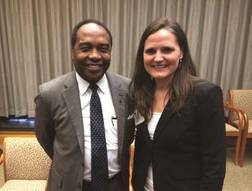
Stephen P. James, MD, director of the division of digestive diseases and nutrition, provided an update on research initiatives under his purview. He noted that the division was focused on five key areas of research: alimentary tract, liver, basic and clinical nutrition, exocrine pancreas, and clinical obesity.Dr. James also indicated that the division supports large-scale research projects in the areas of intestinal stem cells, gene therapies, gastroparesis and ulcerative colitis in adults and children. A new RFA has been released on chronic pancreatic disease in adults and children.
The Friends of NIDDK members met later in the day to discuss how to translate the educational information gleaned from NIDDK into initiatives to help educate policy makers on this important research.
AGA intends to play an active role in the Friends of NIDDK coalition, which is currently comprised of 36 member organizations. Please stay tuned for further information on how you can help educate your legislators on the importance of providing robust funding for NIDDK.
In December, AGA member Sonia S. Kupfer, MD, and staff joined other organizational stakeholders in a meeting with key NIDDK leaders as part of a kickoff of the Friends of NIDDK coalition. The Friends of NIDDK was recently formed to elevate the profile of NIDDK’s robust research portfolio so that policy makers will more fully understand the need to provide more stable funding for the institute’s research.
Dr. Kupfer, who chairs the research advocacy subcommittee of the AGA’s Government Affairs Committee, and other attendees, heard a presentation from NIDDK director Griffin Rodgers, MD. who noted that the institute is the principal source of obesity and microbiome research. Dr. Rodgers also indicated that the NIDDK was very focused on retaining young investigators.
Stephen P. James, MD, director of the division of digestive diseases and nutrition, provided an update on research initiatives under his purview. He noted that the division was focused on five key areas of research: alimentary tract, liver, basic and clinical nutrition, exocrine pancreas, and clinical obesity.Dr. James also indicated that the division supports large-scale research projects in the areas of intestinal stem cells, gene therapies, gastroparesis and ulcerative colitis in adults and children. A new RFA has been released on chronic pancreatic disease in adults and children.
The Friends of NIDDK members met later in the day to discuss how to translate the educational information gleaned from NIDDK into initiatives to help educate policy makers on this important research.
AGA intends to play an active role in the Friends of NIDDK coalition, which is currently comprised of 36 member organizations. Please stay tuned for further information on how you can help educate your legislators on the importance of providing robust funding for NIDDK.
In December, AGA member Sonia S. Kupfer, MD, and staff joined other organizational stakeholders in a meeting with key NIDDK leaders as part of a kickoff of the Friends of NIDDK coalition. The Friends of NIDDK was recently formed to elevate the profile of NIDDK’s robust research portfolio so that policy makers will more fully understand the need to provide more stable funding for the institute’s research.
Dr. Kupfer, who chairs the research advocacy subcommittee of the AGA’s Government Affairs Committee, and other attendees, heard a presentation from NIDDK director Griffin Rodgers, MD. who noted that the institute is the principal source of obesity and microbiome research. Dr. Rodgers also indicated that the NIDDK was very focused on retaining young investigators.
Stephen P. James, MD, director of the division of digestive diseases and nutrition, provided an update on research initiatives under his purview. He noted that the division was focused on five key areas of research: alimentary tract, liver, basic and clinical nutrition, exocrine pancreas, and clinical obesity.Dr. James also indicated that the division supports large-scale research projects in the areas of intestinal stem cells, gene therapies, gastroparesis and ulcerative colitis in adults and children. A new RFA has been released on chronic pancreatic disease in adults and children.
The Friends of NIDDK members met later in the day to discuss how to translate the educational information gleaned from NIDDK into initiatives to help educate policy makers on this important research.
AGA intends to play an active role in the Friends of NIDDK coalition, which is currently comprised of 36 member organizations. Please stay tuned for further information on how you can help educate your legislators on the importance of providing robust funding for NIDDK.
AGA’s GERD registry enrolls first patients
The AGA Center for GI Innovation and Technology is pleased to announce that the first two enrollees in the STAR Registry – which seeks to compare laparoscopic surgery to an incisionless procedure to treat gastroesophageal reflux disease (GERD) – have undergone treatment.
“This is an important milestone in AGA’s endeavor to develop national observational registries to help bring new medical devices and treatments to physicians and their patients in an efficient, safe, and meaningful way,” said Ashish Atreja, MD, MPH, chair of the registry oversight subcommittee of the AGA Center for GI Innovation and Technology. “With each patient, we will collect valuable data evaluating safety, efficacy, and comparative outcomes. The goal of this registry is to provide the entire health care system – patients, payors, purchasers, and providers – with evidence to back future technology decisions.”
As a neutral objective broker, the AGA Center for GI Innovation and Technology has partnered with EndoGastric Solutions® to establish the STAR Registry [Laparoscopic Nissen Fundoplication (LNF) Surgery Versus Transoral Incisionless Fundoplication (TIF®): Anti-Reflux Treatment Registry]. The STAR Registry will provide the first real-world data observing patient outcomes following laparoscopic surgery and transoral fundoplication with the EsophyX® device.
Transoral fundoplication is an incisionless procedure that allows physicians to reshape the anti-reflux valve that prevents stomach acid and contents from flowing up into the esophagus. Both of the procedures for GERD examined in the STAR Registry are performed with FDA–cleared devices and techniques.
The first two patients, who underwent incisionless fundoplication, were treated at:
• Lenox Hill Hospital in New York, under the care of Anthony A. Starpoli, MD, and Gregory B. Haber, MD.
• SurgOne Foregut Institute in Englewood, CO, under the care of Reginald Bell, MD.
“GERD is a deceptively complex condition and the most commonly used treatment options may not adequately serve all patients,” said Dr. Starpoli, associate director of esophageal endotherapy at Lenox Hill Hospital. “I’m honored to support the collection of data that will be used to evaluate the durability and safety of this technology, which could provide a new evidence-based treatment option for patients suffering from GERD.”“By participating in this national observational registry, we are collecting important data that will improve the future of GERD treatment,” said Dr. Bell, founder of SurgOne Foregut Institute. “I’m thrilled to know that I will have access to long-term efficacy data about patients who choose surgical therapy for GERD, which is invaluable to patient care decisions.”
As with all registry patients, data from the first two patients will be collected from standard follow-up appointments, and registry staff will check in with the patients every 6 months for approximately 3 years following the GERD procedure. Researchers will use these data to compare effectiveness, safety, postoperative side effects, or postprocedure costs associated with care and any ensuing complications.
The STAR Registry is AGA’s first national observational registry. The AGA Center for GI Innovation and Technology does not endorse any product or service, develop guidelines, nor make any guarantees about FDA approval or coverage from public or private payors.
The AGA Center for GI Innovation and Technology is pleased to announce that the first two enrollees in the STAR Registry – which seeks to compare laparoscopic surgery to an incisionless procedure to treat gastroesophageal reflux disease (GERD) – have undergone treatment.
“This is an important milestone in AGA’s endeavor to develop national observational registries to help bring new medical devices and treatments to physicians and their patients in an efficient, safe, and meaningful way,” said Ashish Atreja, MD, MPH, chair of the registry oversight subcommittee of the AGA Center for GI Innovation and Technology. “With each patient, we will collect valuable data evaluating safety, efficacy, and comparative outcomes. The goal of this registry is to provide the entire health care system – patients, payors, purchasers, and providers – with evidence to back future technology decisions.”
As a neutral objective broker, the AGA Center for GI Innovation and Technology has partnered with EndoGastric Solutions® to establish the STAR Registry [Laparoscopic Nissen Fundoplication (LNF) Surgery Versus Transoral Incisionless Fundoplication (TIF®): Anti-Reflux Treatment Registry]. The STAR Registry will provide the first real-world data observing patient outcomes following laparoscopic surgery and transoral fundoplication with the EsophyX® device.
Transoral fundoplication is an incisionless procedure that allows physicians to reshape the anti-reflux valve that prevents stomach acid and contents from flowing up into the esophagus. Both of the procedures for GERD examined in the STAR Registry are performed with FDA–cleared devices and techniques.
The first two patients, who underwent incisionless fundoplication, were treated at:
• Lenox Hill Hospital in New York, under the care of Anthony A. Starpoli, MD, and Gregory B. Haber, MD.
• SurgOne Foregut Institute in Englewood, CO, under the care of Reginald Bell, MD.
“GERD is a deceptively complex condition and the most commonly used treatment options may not adequately serve all patients,” said Dr. Starpoli, associate director of esophageal endotherapy at Lenox Hill Hospital. “I’m honored to support the collection of data that will be used to evaluate the durability and safety of this technology, which could provide a new evidence-based treatment option for patients suffering from GERD.”“By participating in this national observational registry, we are collecting important data that will improve the future of GERD treatment,” said Dr. Bell, founder of SurgOne Foregut Institute. “I’m thrilled to know that I will have access to long-term efficacy data about patients who choose surgical therapy for GERD, which is invaluable to patient care decisions.”
As with all registry patients, data from the first two patients will be collected from standard follow-up appointments, and registry staff will check in with the patients every 6 months for approximately 3 years following the GERD procedure. Researchers will use these data to compare effectiveness, safety, postoperative side effects, or postprocedure costs associated with care and any ensuing complications.
The STAR Registry is AGA’s first national observational registry. The AGA Center for GI Innovation and Technology does not endorse any product or service, develop guidelines, nor make any guarantees about FDA approval or coverage from public or private payors.
The AGA Center for GI Innovation and Technology is pleased to announce that the first two enrollees in the STAR Registry – which seeks to compare laparoscopic surgery to an incisionless procedure to treat gastroesophageal reflux disease (GERD) – have undergone treatment.
“This is an important milestone in AGA’s endeavor to develop national observational registries to help bring new medical devices and treatments to physicians and their patients in an efficient, safe, and meaningful way,” said Ashish Atreja, MD, MPH, chair of the registry oversight subcommittee of the AGA Center for GI Innovation and Technology. “With each patient, we will collect valuable data evaluating safety, efficacy, and comparative outcomes. The goal of this registry is to provide the entire health care system – patients, payors, purchasers, and providers – with evidence to back future technology decisions.”
As a neutral objective broker, the AGA Center for GI Innovation and Technology has partnered with EndoGastric Solutions® to establish the STAR Registry [Laparoscopic Nissen Fundoplication (LNF) Surgery Versus Transoral Incisionless Fundoplication (TIF®): Anti-Reflux Treatment Registry]. The STAR Registry will provide the first real-world data observing patient outcomes following laparoscopic surgery and transoral fundoplication with the EsophyX® device.
Transoral fundoplication is an incisionless procedure that allows physicians to reshape the anti-reflux valve that prevents stomach acid and contents from flowing up into the esophagus. Both of the procedures for GERD examined in the STAR Registry are performed with FDA–cleared devices and techniques.
The first two patients, who underwent incisionless fundoplication, were treated at:
• Lenox Hill Hospital in New York, under the care of Anthony A. Starpoli, MD, and Gregory B. Haber, MD.
• SurgOne Foregut Institute in Englewood, CO, under the care of Reginald Bell, MD.
“GERD is a deceptively complex condition and the most commonly used treatment options may not adequately serve all patients,” said Dr. Starpoli, associate director of esophageal endotherapy at Lenox Hill Hospital. “I’m honored to support the collection of data that will be used to evaluate the durability and safety of this technology, which could provide a new evidence-based treatment option for patients suffering from GERD.”“By participating in this national observational registry, we are collecting important data that will improve the future of GERD treatment,” said Dr. Bell, founder of SurgOne Foregut Institute. “I’m thrilled to know that I will have access to long-term efficacy data about patients who choose surgical therapy for GERD, which is invaluable to patient care decisions.”
As with all registry patients, data from the first two patients will be collected from standard follow-up appointments, and registry staff will check in with the patients every 6 months for approximately 3 years following the GERD procedure. Researchers will use these data to compare effectiveness, safety, postoperative side effects, or postprocedure costs associated with care and any ensuing complications.
The STAR Registry is AGA’s first national observational registry. The AGA Center for GI Innovation and Technology does not endorse any product or service, develop guidelines, nor make any guarantees about FDA approval or coverage from public or private payors.
AGA comment on specialty certification, recertification, and maintenance of certification
AGA recognizes that the new American Board of Internal Medicine recertification process poses significant challenges for already busy gastroenterologists.
As leaders of the AGA, we want you to know that AGA is pushing ABIM to make significant improvements to the current system of maintenance of certification (MOC). The process must be relevant to your educational and clinical needs while not unduly burdensome or costly. We agree with ABIM that MOC is voluntary and will fight efforts to link recertification and MOC with medical licensure, specialty credentialing, payment, network participation or employment.

We do believe that continuing education and demonstrating competency are important for high-quality clinical care and to reassure the public that specialty designation such as “gastroenterology” carries significant and recognized expertise and training. AGA has convened a task force to consider the question: What is the ideal pathway for specialty certification, MOC and assessment of physician competency? Gastroenterologists need a process that is truly educational and relates to our personal subspecialty practice.
As always, we welcome feedback from members and invite your comments sent to [email protected]
- John I. Allen, MD, MBA, AGAF, AGA Institute President, Michael Camilleri, MD, AGAF, AGA Institute President Elect, and Timothy C. Wang, MD, AGAF, AGA Institute Vice President
AGA recognizes that the new American Board of Internal Medicine recertification process poses significant challenges for already busy gastroenterologists.
As leaders of the AGA, we want you to know that AGA is pushing ABIM to make significant improvements to the current system of maintenance of certification (MOC). The process must be relevant to your educational and clinical needs while not unduly burdensome or costly. We agree with ABIM that MOC is voluntary and will fight efforts to link recertification and MOC with medical licensure, specialty credentialing, payment, network participation or employment.
We do believe that continuing education and demonstrating competency are important for high-quality clinical care and to reassure the public that specialty designation such as “gastroenterology” carries significant and recognized expertise and training. AGA has convened a task force to consider the question: What is the ideal pathway for specialty certification, MOC and assessment of physician competency? Gastroenterologists need a process that is truly educational and relates to our personal subspecialty practice.
As always, we welcome feedback from members and invite your comments sent to [email protected]
- John I. Allen, MD, MBA, AGAF, AGA Institute President, Michael Camilleri, MD, AGAF, AGA Institute President Elect, and Timothy C. Wang, MD, AGAF, AGA Institute Vice President
AGA recognizes that the new American Board of Internal Medicine recertification process poses significant challenges for already busy gastroenterologists.
As leaders of the AGA, we want you to know that AGA is pushing ABIM to make significant improvements to the current system of maintenance of certification (MOC). The process must be relevant to your educational and clinical needs while not unduly burdensome or costly. We agree with ABIM that MOC is voluntary and will fight efforts to link recertification and MOC with medical licensure, specialty credentialing, payment, network participation or employment.
We do believe that continuing education and demonstrating competency are important for high-quality clinical care and to reassure the public that specialty designation such as “gastroenterology” carries significant and recognized expertise and training. AGA has convened a task force to consider the question: What is the ideal pathway for specialty certification, MOC and assessment of physician competency? Gastroenterologists need a process that is truly educational and relates to our personal subspecialty practice.
As always, we welcome feedback from members and invite your comments sent to [email protected]
- John I. Allen, MD, MBA, AGAF, AGA Institute President, Michael Camilleri, MD, AGAF, AGA Institute President Elect, and Timothy C. Wang, MD, AGAF, AGA Institute Vice President

AMA updates maintenance of certification policy
The American Medical Association’s updated policy on maintenance of certification is generating discussion, particularly as it relates to MOC’s role in licensure and credentialing.
According to the new policy, recently approved by delegates during the 2014 AMA Interim Meeting in Dallas, “the MOC program should not be a mandated requirement for licensure, credentialing, payment, network participation, or employment.” The American Gastroenterological Association agrees with AMA’s position.
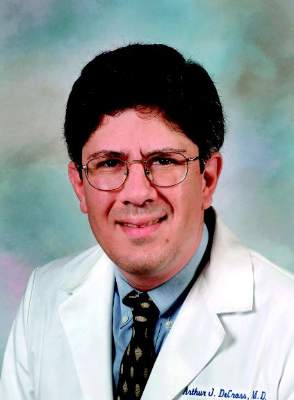
Dr. Arthur J. DeCross, AGAF, chair of the AGA Institute’s MOC Subcommittee and associate professor of medicine at the University of Rochester (N.Y.) Medical Center, said in an interview. “Maintenance of certification is really about life-long continuing medical education. It is really a way of saying it is not enough to pass a test, a board exam, when you graduate medical training and be grandfathered into several decades of clinical practice without ever having your certification updated or without demonstrating ... that you are current and competent in medical practice.”

AMA said in a statement to this news organization that the recent change in policy was “introduced in relation to an increase in the frequency of requirements for one or more [American Board of Medical Specialties member boards’] programs and concerns about the relevance of selected MOC activities to physician clinical practice.”
The AGA will continue to work productively with the American Board of Internal Medicine to ensure that the process is relevant to the needs of our members and is not unduly burdensome or costly. The AGA governing board is convening a task force to study these issues and identify the ideal pathway to recertification and assessment of physician competency.
Other MOC policy updates call for a process based on evidence and designed to identify performance gaps and unmet needs, providing direction and guidance for improvement in physician performance and delivery of care; that is examined periodically to evaluate physician satisfaction, knowledge uptake, and intent to maintain or change practice; and that is a tool for continued improvement.
AMA also is calling for practicing physicians to be well represented on specialty boards developing MOC programs, and those programs should include activities and measurements that are relevant to clinical practice and not be cost prohibitive or present barriers to patient care.
Delegates also voted to encourage specialty boards to investigate alternative approaches to MOC and directed the organization to report annually on the MOC process.
Specialty boards, “should have no financial interest in the [MOC] process,” according to an AMA document on the resolutions from the meeting.
The American Medical Association’s updated policy on maintenance of certification is generating discussion, particularly as it relates to MOC’s role in licensure and credentialing.
According to the new policy, recently approved by delegates during the 2014 AMA Interim Meeting in Dallas, “the MOC program should not be a mandated requirement for licensure, credentialing, payment, network participation, or employment.” The American Gastroenterological Association agrees with AMA’s position.
Dr. Arthur J. DeCross, AGAF, chair of the AGA Institute’s MOC Subcommittee and associate professor of medicine at the University of Rochester (N.Y.) Medical Center, said in an interview. “Maintenance of certification is really about life-long continuing medical education. It is really a way of saying it is not enough to pass a test, a board exam, when you graduate medical training and be grandfathered into several decades of clinical practice without ever having your certification updated or without demonstrating ... that you are current and competent in medical practice.”
AMA said in a statement to this news organization that the recent change in policy was “introduced in relation to an increase in the frequency of requirements for one or more [American Board of Medical Specialties member boards’] programs and concerns about the relevance of selected MOC activities to physician clinical practice.”
The AGA will continue to work productively with the American Board of Internal Medicine to ensure that the process is relevant to the needs of our members and is not unduly burdensome or costly. The AGA governing board is convening a task force to study these issues and identify the ideal pathway to recertification and assessment of physician competency.
Other MOC policy updates call for a process based on evidence and designed to identify performance gaps and unmet needs, providing direction and guidance for improvement in physician performance and delivery of care; that is examined periodically to evaluate physician satisfaction, knowledge uptake, and intent to maintain or change practice; and that is a tool for continued improvement.
AMA also is calling for practicing physicians to be well represented on specialty boards developing MOC programs, and those programs should include activities and measurements that are relevant to clinical practice and not be cost prohibitive or present barriers to patient care.
Delegates also voted to encourage specialty boards to investigate alternative approaches to MOC and directed the organization to report annually on the MOC process.
Specialty boards, “should have no financial interest in the [MOC] process,” according to an AMA document on the resolutions from the meeting.
The American Medical Association’s updated policy on maintenance of certification is generating discussion, particularly as it relates to MOC’s role in licensure and credentialing.
According to the new policy, recently approved by delegates during the 2014 AMA Interim Meeting in Dallas, “the MOC program should not be a mandated requirement for licensure, credentialing, payment, network participation, or employment.” The American Gastroenterological Association agrees with AMA’s position.
Dr. Arthur J. DeCross, AGAF, chair of the AGA Institute’s MOC Subcommittee and associate professor of medicine at the University of Rochester (N.Y.) Medical Center, said in an interview. “Maintenance of certification is really about life-long continuing medical education. It is really a way of saying it is not enough to pass a test, a board exam, when you graduate medical training and be grandfathered into several decades of clinical practice without ever having your certification updated or without demonstrating ... that you are current and competent in medical practice.”
AMA said in a statement to this news organization that the recent change in policy was “introduced in relation to an increase in the frequency of requirements for one or more [American Board of Medical Specialties member boards’] programs and concerns about the relevance of selected MOC activities to physician clinical practice.”
The AGA will continue to work productively with the American Board of Internal Medicine to ensure that the process is relevant to the needs of our members and is not unduly burdensome or costly. The AGA governing board is convening a task force to study these issues and identify the ideal pathway to recertification and assessment of physician competency.
Other MOC policy updates call for a process based on evidence and designed to identify performance gaps and unmet needs, providing direction and guidance for improvement in physician performance and delivery of care; that is examined periodically to evaluate physician satisfaction, knowledge uptake, and intent to maintain or change practice; and that is a tool for continued improvement.
AMA also is calling for practicing physicians to be well represented on specialty boards developing MOC programs, and those programs should include activities and measurements that are relevant to clinical practice and not be cost prohibitive or present barriers to patient care.
Delegates also voted to encourage specialty boards to investigate alternative approaches to MOC and directed the organization to report annually on the MOC process.
Specialty boards, “should have no financial interest in the [MOC] process,” according to an AMA document on the resolutions from the meeting.
AGA President provides perspective on the Medicare Final Rule
CMS recently announced that they are delaying alteration of colonoscopy relative value units (RVUs) as part of the Medicare Physician Fee Schedule Final Rule for 2015, which is welcome news. More information on this decision is available in the December issue of GI & Hepatology News.
AGA believes that CMS acted in response to an intensive educational effort coordinated among multiple medical and surgical societies. Six societies involved in colonoscopy all worked together to educate CMS about the importance of maintaining fair reimbursement for a cancer prevention procedure that has helped lower the annual incidence of colon cancer by 30% over the last decade. This effort was launched last year after the announcement of the reduction in value for upper endoscopy codes in the 2014 final rule. We all understood that the entire family of endoscopy codes was to be reviewed by the AMA’s Relative Value Update Committee (RUC), with recommendations submitted to CMS for a final decision.

Through intensive work with CMS and the RUC, GI RUC/CPT representatives convinced the RUC to first focus on upper endoscopy, and then lower endoscopy codes. When the upper endoscopy codes were submitted by the RUC, we were disappointed in the interim final values, but then were further astounded by the fact that CMS rejected 78% of the RUC recommendations and further reduced upper GI endoscopy RVU levels. This was historically unprecedented. To put it in perspective, CMS accepted the RUC recommendations for nearly 90% of all other codes reviewed by the RUC for the 2014 MPFS fee schedule. It was a clear wake-up call for us to mobilize an educational campaign. We also were dismayed that the upper endoscopy codes were not published until the final rule, which was delayed in 2014 due to the government shutdown. This only allowed a month for GIs to prepare their practices for the reduced codes.
We approached several congressmen, urging them to reach out and encourage CMS to adopt a more transparent process when re-valuing significant codes such as this. This effort, which was led by Rep. Bill Cassidy (R-La.), and Sen. Kelly Ayotte (R-N.H.), garnered the support of 46 representatives in the House and 11 senators. AGA, ACG, and ASGE also arranged several meetings with CMS, including a joint meeting between our presidents (and senior staff) and Marilynn Tavenner, CMS administrator, on May 22. Ms. Tavenner was very polite and open to our urging to delay implementation of the colonoscopy code changes. The three societies also worked together to launch an intense campaign (http://www.valueofcolonoscopy.org) to educate legislators, patients, and other key stakeholders about the importance of following a fair and transparent valuation process and maintaining fair reimbursement for this life-saving procedure.
I personally am proud to have partnered with Dr. Harry Sarles, ACG president, and Dr. Colleen Schmitt, ASGE president, in jointly working on these communications. This effort was a clear demonstration of the importance of our society leadership and advocacy efforts and the power of partnership.
CMS recently announced that they are delaying alteration of colonoscopy relative value units (RVUs) as part of the Medicare Physician Fee Schedule Final Rule for 2015, which is welcome news. More information on this decision is available in the December issue of GI & Hepatology News.
AGA believes that CMS acted in response to an intensive educational effort coordinated among multiple medical and surgical societies. Six societies involved in colonoscopy all worked together to educate CMS about the importance of maintaining fair reimbursement for a cancer prevention procedure that has helped lower the annual incidence of colon cancer by 30% over the last decade. This effort was launched last year after the announcement of the reduction in value for upper endoscopy codes in the 2014 final rule. We all understood that the entire family of endoscopy codes was to be reviewed by the AMA’s Relative Value Update Committee (RUC), with recommendations submitted to CMS for a final decision.
Through intensive work with CMS and the RUC, GI RUC/CPT representatives convinced the RUC to first focus on upper endoscopy, and then lower endoscopy codes. When the upper endoscopy codes were submitted by the RUC, we were disappointed in the interim final values, but then were further astounded by the fact that CMS rejected 78% of the RUC recommendations and further reduced upper GI endoscopy RVU levels. This was historically unprecedented. To put it in perspective, CMS accepted the RUC recommendations for nearly 90% of all other codes reviewed by the RUC for the 2014 MPFS fee schedule. It was a clear wake-up call for us to mobilize an educational campaign. We also were dismayed that the upper endoscopy codes were not published until the final rule, which was delayed in 2014 due to the government shutdown. This only allowed a month for GIs to prepare their practices for the reduced codes.
We approached several congressmen, urging them to reach out and encourage CMS to adopt a more transparent process when re-valuing significant codes such as this. This effort, which was led by Rep. Bill Cassidy (R-La.), and Sen. Kelly Ayotte (R-N.H.), garnered the support of 46 representatives in the House and 11 senators. AGA, ACG, and ASGE also arranged several meetings with CMS, including a joint meeting between our presidents (and senior staff) and Marilynn Tavenner, CMS administrator, on May 22. Ms. Tavenner was very polite and open to our urging to delay implementation of the colonoscopy code changes. The three societies also worked together to launch an intense campaign (http://www.valueofcolonoscopy.org) to educate legislators, patients, and other key stakeholders about the importance of following a fair and transparent valuation process and maintaining fair reimbursement for this life-saving procedure.
I personally am proud to have partnered with Dr. Harry Sarles, ACG president, and Dr. Colleen Schmitt, ASGE president, in jointly working on these communications. This effort was a clear demonstration of the importance of our society leadership and advocacy efforts and the power of partnership.
CMS recently announced that they are delaying alteration of colonoscopy relative value units (RVUs) as part of the Medicare Physician Fee Schedule Final Rule for 2015, which is welcome news. More information on this decision is available in the December issue of GI & Hepatology News.
AGA believes that CMS acted in response to an intensive educational effort coordinated among multiple medical and surgical societies. Six societies involved in colonoscopy all worked together to educate CMS about the importance of maintaining fair reimbursement for a cancer prevention procedure that has helped lower the annual incidence of colon cancer by 30% over the last decade. This effort was launched last year after the announcement of the reduction in value for upper endoscopy codes in the 2014 final rule. We all understood that the entire family of endoscopy codes was to be reviewed by the AMA’s Relative Value Update Committee (RUC), with recommendations submitted to CMS for a final decision.
Through intensive work with CMS and the RUC, GI RUC/CPT representatives convinced the RUC to first focus on upper endoscopy, and then lower endoscopy codes. When the upper endoscopy codes were submitted by the RUC, we were disappointed in the interim final values, but then were further astounded by the fact that CMS rejected 78% of the RUC recommendations and further reduced upper GI endoscopy RVU levels. This was historically unprecedented. To put it in perspective, CMS accepted the RUC recommendations for nearly 90% of all other codes reviewed by the RUC for the 2014 MPFS fee schedule. It was a clear wake-up call for us to mobilize an educational campaign. We also were dismayed that the upper endoscopy codes were not published until the final rule, which was delayed in 2014 due to the government shutdown. This only allowed a month for GIs to prepare their practices for the reduced codes.
We approached several congressmen, urging them to reach out and encourage CMS to adopt a more transparent process when re-valuing significant codes such as this. This effort, which was led by Rep. Bill Cassidy (R-La.), and Sen. Kelly Ayotte (R-N.H.), garnered the support of 46 representatives in the House and 11 senators. AGA, ACG, and ASGE also arranged several meetings with CMS, including a joint meeting between our presidents (and senior staff) and Marilynn Tavenner, CMS administrator, on May 22. Ms. Tavenner was very polite and open to our urging to delay implementation of the colonoscopy code changes. The three societies also worked together to launch an intense campaign (http://www.valueofcolonoscopy.org) to educate legislators, patients, and other key stakeholders about the importance of following a fair and transparent valuation process and maintaining fair reimbursement for this life-saving procedure.
I personally am proud to have partnered with Dr. Harry Sarles, ACG president, and Dr. Colleen Schmitt, ASGE president, in jointly working on these communications. This effort was a clear demonstration of the importance of our society leadership and advocacy efforts and the power of partnership.
AGA’s new IBS guideline
A new AGA guideline provides direction to GIs and their inflammatory bowel syndrome patients when trying to identify an effective drug therapy. The guideline and accompanying technical review are published in the November issue of Gastroenterology.
The new guideline was developed using GRADE methodology. AGA conducted a rigorous, evidenced-based review of the extensive body of literature on describing pharmacologic therapy for IBS. Review of this guideline plus the associated technical review will, it is hoped, promote effective shared decision making with patients for this common, chronic set of symptoms.
To see this guideline, as well as all other AGA guidelines, visit www.gastro.org/guidelines.
A new AGA guideline provides direction to GIs and their inflammatory bowel syndrome patients when trying to identify an effective drug therapy. The guideline and accompanying technical review are published in the November issue of Gastroenterology.
The new guideline was developed using GRADE methodology. AGA conducted a rigorous, evidenced-based review of the extensive body of literature on describing pharmacologic therapy for IBS. Review of this guideline plus the associated technical review will, it is hoped, promote effective shared decision making with patients for this common, chronic set of symptoms.
To see this guideline, as well as all other AGA guidelines, visit www.gastro.org/guidelines.
A new AGA guideline provides direction to GIs and their inflammatory bowel syndrome patients when trying to identify an effective drug therapy. The guideline and accompanying technical review are published in the November issue of Gastroenterology.
The new guideline was developed using GRADE methodology. AGA conducted a rigorous, evidenced-based review of the extensive body of literature on describing pharmacologic therapy for IBS. Review of this guideline plus the associated technical review will, it is hoped, promote effective shared decision making with patients for this common, chronic set of symptoms.
To see this guideline, as well as all other AGA guidelines, visit www.gastro.org/guidelines.
AGA builds relationship with Chinese society
As part of our international focus, AGA President John I. Allen, AGAF, recently traveled to China as part of an eight-member AGA delegation participating in educational events in Beijing, Hangzhou, and Shanghai. While in Beijing, Dr. Allen and the AGA delegation met with a delegation from the Chinese Society of Gastroenterology (CSG), including CSG President Professor Yang Yunsheng. Dr. Allen and Professor Yang signed a memorandum of understanding establishing a special relationship between the two societies and identifying joint initiatives that will include an AGA presence at future CSG meetings in China, as well as other AGA/CSG education and training projects in both China and the U.S.

The delegation included AGA members John Chen, M.D, Ph.D.; William Chey, M.D.; Martin Freeman, M.D.; John Kao, M.D.; Chung Owyang, M.D.; James Scheiman, M.D.; and Field Willingham, M.D., MPH. They met with Xiujun Cai, M.D., president of the Sir Run Run Shaw Hospital (SRRSH), and leaders from the Zhejiang Digestive Diseases Societies while in Hangzhou. Dr. Allen and Dr. Cai signed a memorandum of understanding outlining potential collaborations between AGA and SRRSH, a teaching hospital founded as a joint effort with Loma Linda (Calif.) University and affiliated with the Zhejiang (China) University. In 2006, SRRSH was the first public hospital in China to receive accreditation from the Joint Commission International, the international arm of the Joint Commission (formerly the Joint Commission on Accreditation of Healthcare Organizations).
The trip also included an educational component. The AGA delegation presented lectures during the Gastroenterology International Frontier meeting held in Beijing as well as the first AGA Professional Conference in China, held in Hangzhou in conjunction with the 9th SRRSH International Academic Week and the 7th Zhejiang Digestive Disease Academic Conference. Dr. Allen also led a roundtable discussion in Shanghai on GI research with several AGA representatives and key opinion leaders from Taiwan and Korea. Funding for this trip was provided by Takeda China.
As part of our international focus, AGA President John I. Allen, AGAF, recently traveled to China as part of an eight-member AGA delegation participating in educational events in Beijing, Hangzhou, and Shanghai. While in Beijing, Dr. Allen and the AGA delegation met with a delegation from the Chinese Society of Gastroenterology (CSG), including CSG President Professor Yang Yunsheng. Dr. Allen and Professor Yang signed a memorandum of understanding establishing a special relationship between the two societies and identifying joint initiatives that will include an AGA presence at future CSG meetings in China, as well as other AGA/CSG education and training projects in both China and the U.S.
The delegation included AGA members John Chen, M.D, Ph.D.; William Chey, M.D.; Martin Freeman, M.D.; John Kao, M.D.; Chung Owyang, M.D.; James Scheiman, M.D.; and Field Willingham, M.D., MPH. They met with Xiujun Cai, M.D., president of the Sir Run Run Shaw Hospital (SRRSH), and leaders from the Zhejiang Digestive Diseases Societies while in Hangzhou. Dr. Allen and Dr. Cai signed a memorandum of understanding outlining potential collaborations between AGA and SRRSH, a teaching hospital founded as a joint effort with Loma Linda (Calif.) University and affiliated with the Zhejiang (China) University. In 2006, SRRSH was the first public hospital in China to receive accreditation from the Joint Commission International, the international arm of the Joint Commission (formerly the Joint Commission on Accreditation of Healthcare Organizations).
The trip also included an educational component. The AGA delegation presented lectures during the Gastroenterology International Frontier meeting held in Beijing as well as the first AGA Professional Conference in China, held in Hangzhou in conjunction with the 9th SRRSH International Academic Week and the 7th Zhejiang Digestive Disease Academic Conference. Dr. Allen also led a roundtable discussion in Shanghai on GI research with several AGA representatives and key opinion leaders from Taiwan and Korea. Funding for this trip was provided by Takeda China.
As part of our international focus, AGA President John I. Allen, AGAF, recently traveled to China as part of an eight-member AGA delegation participating in educational events in Beijing, Hangzhou, and Shanghai. While in Beijing, Dr. Allen and the AGA delegation met with a delegation from the Chinese Society of Gastroenterology (CSG), including CSG President Professor Yang Yunsheng. Dr. Allen and Professor Yang signed a memorandum of understanding establishing a special relationship between the two societies and identifying joint initiatives that will include an AGA presence at future CSG meetings in China, as well as other AGA/CSG education and training projects in both China and the U.S.
The delegation included AGA members John Chen, M.D, Ph.D.; William Chey, M.D.; Martin Freeman, M.D.; John Kao, M.D.; Chung Owyang, M.D.; James Scheiman, M.D.; and Field Willingham, M.D., MPH. They met with Xiujun Cai, M.D., president of the Sir Run Run Shaw Hospital (SRRSH), and leaders from the Zhejiang Digestive Diseases Societies while in Hangzhou. Dr. Allen and Dr. Cai signed a memorandum of understanding outlining potential collaborations between AGA and SRRSH, a teaching hospital founded as a joint effort with Loma Linda (Calif.) University and affiliated with the Zhejiang (China) University. In 2006, SRRSH was the first public hospital in China to receive accreditation from the Joint Commission International, the international arm of the Joint Commission (formerly the Joint Commission on Accreditation of Healthcare Organizations).
The trip also included an educational component. The AGA delegation presented lectures during the Gastroenterology International Frontier meeting held in Beijing as well as the first AGA Professional Conference in China, held in Hangzhou in conjunction with the 9th SRRSH International Academic Week and the 7th Zhejiang Digestive Disease Academic Conference. Dr. Allen also led a roundtable discussion in Shanghai on GI research with several AGA representatives and key opinion leaders from Taiwan and Korea. Funding for this trip was provided by Takeda China.

Looking Forward: Giving Back endowment campaign
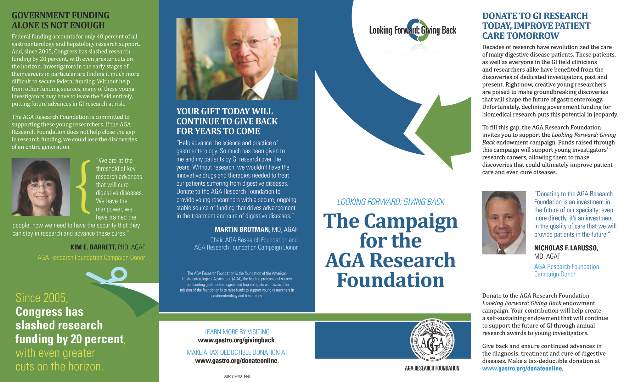
Real progress in the diagnosis, treatment, and cure of digestive disease is at risk. Research funding from traditional sources, like NIH, is shrinking and even greater cuts are on the horizon. Talented young investigators in the early stages of their careers are particularly hard hit. They are finding it much more difficult to secure needed federal funding. As a result, many of these investigators are walking away from GI research frustrated by a lack of support.
Research has revolutionized the care of many digestive disease patients. These patients, as well as everyone in the GI field, clinicians and researchers alike, have benefited from the discoveries of passionate investigators.
AGA Research Foundation grants are critical to continuing the GI pipeline. The research awards program helps researchers take new directions and discover new treatments to better patient care. Help us fund more researchers by supporting the AGA Research Foundation Looking Forward: Giving Back endowment campaign. Funds raised through this campaign will support young investigators’ research careers and help ensure research is continued.
“Donating to the AGA Research Foundation is an investment in the future of our specialty; even more directly, it’s an investment in the quality of care that we will provide patients in the future,” states Dr. Nicholas F. LaRusso, AGA Research Foundation Campaign Donor.
By joining your colleagues in supporting the AGA Research Foundation, you will ensure that young researchers have opportunities to continue their life-saving work. Learn more or make a contribution at www.gastro.org/givingback.
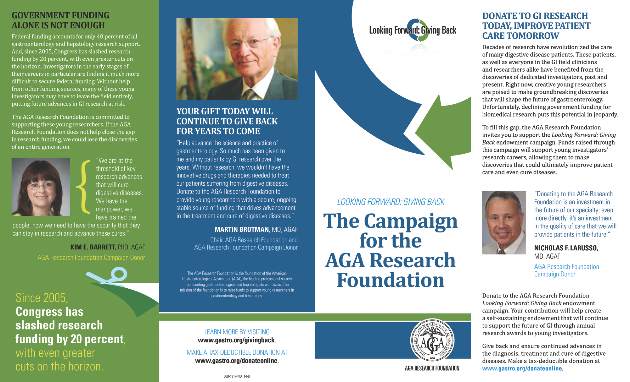
Support the Looking Forward: Giving Back endowment campaign
Be gracious, generous, and giving to the future of the GI specialty this holiday season. Now more than ever, the AGA Research Foundation needs your help. Make a tax-deductible donation online at www.gastro.org/donateonline. AGA will match individual gifts of $5,000 or more and contributors will be recognized at the fully matched amount. Join us!
Real progress in the diagnosis, treatment, and cure of digestive disease is at risk. Research funding from traditional sources, like NIH, is shrinking and even greater cuts are on the horizon. Talented young investigators in the early stages of their careers are particularly hard hit. They are finding it much more difficult to secure needed federal funding. As a result, many of these investigators are walking away from GI research frustrated by a lack of support.
Research has revolutionized the care of many digestive disease patients. These patients, as well as everyone in the GI field, clinicians and researchers alike, have benefited from the discoveries of passionate investigators.
AGA Research Foundation grants are critical to continuing the GI pipeline. The research awards program helps researchers take new directions and discover new treatments to better patient care. Help us fund more researchers by supporting the AGA Research Foundation Looking Forward: Giving Back endowment campaign. Funds raised through this campaign will support young investigators’ research careers and help ensure research is continued.
“Donating to the AGA Research Foundation is an investment in the future of our specialty; even more directly, it’s an investment in the quality of care that we will provide patients in the future,” states Dr. Nicholas F. LaRusso, AGA Research Foundation Campaign Donor.
By joining your colleagues in supporting the AGA Research Foundation, you will ensure that young researchers have opportunities to continue their life-saving work. Learn more or make a contribution at www.gastro.org/givingback.
Support the Looking Forward: Giving Back endowment campaign
Be gracious, generous, and giving to the future of the GI specialty this holiday season. Now more than ever, the AGA Research Foundation needs your help. Make a tax-deductible donation online at www.gastro.org/donateonline. AGA will match individual gifts of $5,000 or more and contributors will be recognized at the fully matched amount. Join us!
Real progress in the diagnosis, treatment, and cure of digestive disease is at risk. Research funding from traditional sources, like NIH, is shrinking and even greater cuts are on the horizon. Talented young investigators in the early stages of their careers are particularly hard hit. They are finding it much more difficult to secure needed federal funding. As a result, many of these investigators are walking away from GI research frustrated by a lack of support.
Research has revolutionized the care of many digestive disease patients. These patients, as well as everyone in the GI field, clinicians and researchers alike, have benefited from the discoveries of passionate investigators.
AGA Research Foundation grants are critical to continuing the GI pipeline. The research awards program helps researchers take new directions and discover new treatments to better patient care. Help us fund more researchers by supporting the AGA Research Foundation Looking Forward: Giving Back endowment campaign. Funds raised through this campaign will support young investigators’ research careers and help ensure research is continued.
“Donating to the AGA Research Foundation is an investment in the future of our specialty; even more directly, it’s an investment in the quality of care that we will provide patients in the future,” states Dr. Nicholas F. LaRusso, AGA Research Foundation Campaign Donor.
By joining your colleagues in supporting the AGA Research Foundation, you will ensure that young researchers have opportunities to continue their life-saving work. Learn more or make a contribution at www.gastro.org/givingback.
Support the Looking Forward: Giving Back endowment campaign
Be gracious, generous, and giving to the future of the GI specialty this holiday season. Now more than ever, the AGA Research Foundation needs your help. Make a tax-deductible donation online at www.gastro.org/donateonline. AGA will match individual gifts of $5,000 or more and contributors will be recognized at the fully matched amount. Join us!