User login
Alleged delay in diagnosis of ovarian cancer
After 3 normal visits to her ObGyn over a span of 8 months, and a negative sonogram, a woman presented complaining of pain in the adnexal region. A sonogram at this time led to the diagnosis of ovarian cancer. The woman underwent chemotherapy and a hysterectomy.
In suing, the woman asserted that her ObGyn should have suspected ovarian cancer and that earlier detection would have led to less invasive surgery and could have obviated the need for chemotherapy.
The physician claimed that an earlier sonogram was unnecessary because the woman had no complaints of pain. The ObGyn also asserted that the treatment course would have been the same.
- The jury returned a defense verdict.
After 3 normal visits to her ObGyn over a span of 8 months, and a negative sonogram, a woman presented complaining of pain in the adnexal region. A sonogram at this time led to the diagnosis of ovarian cancer. The woman underwent chemotherapy and a hysterectomy.
In suing, the woman asserted that her ObGyn should have suspected ovarian cancer and that earlier detection would have led to less invasive surgery and could have obviated the need for chemotherapy.
The physician claimed that an earlier sonogram was unnecessary because the woman had no complaints of pain. The ObGyn also asserted that the treatment course would have been the same.
- The jury returned a defense verdict.
After 3 normal visits to her ObGyn over a span of 8 months, and a negative sonogram, a woman presented complaining of pain in the adnexal region. A sonogram at this time led to the diagnosis of ovarian cancer. The woman underwent chemotherapy and a hysterectomy.
In suing, the woman asserted that her ObGyn should have suspected ovarian cancer and that earlier detection would have led to less invasive surgery and could have obviated the need for chemotherapy.
The physician claimed that an earlier sonogram was unnecessary because the woman had no complaints of pain. The ObGyn also asserted that the treatment course would have been the same.
- The jury returned a defense verdict.
Care costs awarded for wrongful birth
A 31-year-old woman had first-trimester and third-trimester bleeding, although results from 2 early ultrasounds were normal, as was a 20-week ultrasound.
Out of town about 3 weeks before her delivery date, the woman began profuse bleeding. Her physician told her to proceed to a local emergency department, which transferred her to another facility, where she learned for the first time that the fetus had intrauterine growth retardation.
Amniocentesis performed at a third facility revealed fetal chromosomal abnormality and Wolf-Hirschhorn syndrome. She was told the infant would eventually have mental retardation, physical disfigurement, hearing loss, an inability to speak, and respiratory and feeding difficulties. The woman remained hospitalized and under strict bed rest until delivery. The infant was hospitalized for 4 months and then institutionalized because of the impending profound disabilities.
The woman filed suit for wrongful birth, claiming she would have had an abortion if she had known her infant’s prognosis. She claimed her local physicians failed to properly monitor the pregnancy; failed to inform her that first-trimester bleeding indicates a chance of chromosomal damage; inappropriately advised her not to have alpha fetoprotein testing; failed to inform her or follow up on the 20-week ultrasound showing a 2-week discrepancy between her estimated due date and fetal development; and failed to obtain fundal heights measurements.
The defendants asserted they had no knowledge of the woman as their patient at the time of the trial. They also contended that they believed the woman would not have aborted the pregnancy under any condition.
- The jury awarded the plaintiff $3.8 million (the estimated cost of care until age 21).
A 31-year-old woman had first-trimester and third-trimester bleeding, although results from 2 early ultrasounds were normal, as was a 20-week ultrasound.
Out of town about 3 weeks before her delivery date, the woman began profuse bleeding. Her physician told her to proceed to a local emergency department, which transferred her to another facility, where she learned for the first time that the fetus had intrauterine growth retardation.
Amniocentesis performed at a third facility revealed fetal chromosomal abnormality and Wolf-Hirschhorn syndrome. She was told the infant would eventually have mental retardation, physical disfigurement, hearing loss, an inability to speak, and respiratory and feeding difficulties. The woman remained hospitalized and under strict bed rest until delivery. The infant was hospitalized for 4 months and then institutionalized because of the impending profound disabilities.
The woman filed suit for wrongful birth, claiming she would have had an abortion if she had known her infant’s prognosis. She claimed her local physicians failed to properly monitor the pregnancy; failed to inform her that first-trimester bleeding indicates a chance of chromosomal damage; inappropriately advised her not to have alpha fetoprotein testing; failed to inform her or follow up on the 20-week ultrasound showing a 2-week discrepancy between her estimated due date and fetal development; and failed to obtain fundal heights measurements.
The defendants asserted they had no knowledge of the woman as their patient at the time of the trial. They also contended that they believed the woman would not have aborted the pregnancy under any condition.
- The jury awarded the plaintiff $3.8 million (the estimated cost of care until age 21).
A 31-year-old woman had first-trimester and third-trimester bleeding, although results from 2 early ultrasounds were normal, as was a 20-week ultrasound.
Out of town about 3 weeks before her delivery date, the woman began profuse bleeding. Her physician told her to proceed to a local emergency department, which transferred her to another facility, where she learned for the first time that the fetus had intrauterine growth retardation.
Amniocentesis performed at a third facility revealed fetal chromosomal abnormality and Wolf-Hirschhorn syndrome. She was told the infant would eventually have mental retardation, physical disfigurement, hearing loss, an inability to speak, and respiratory and feeding difficulties. The woman remained hospitalized and under strict bed rest until delivery. The infant was hospitalized for 4 months and then institutionalized because of the impending profound disabilities.
The woman filed suit for wrongful birth, claiming she would have had an abortion if she had known her infant’s prognosis. She claimed her local physicians failed to properly monitor the pregnancy; failed to inform her that first-trimester bleeding indicates a chance of chromosomal damage; inappropriately advised her not to have alpha fetoprotein testing; failed to inform her or follow up on the 20-week ultrasound showing a 2-week discrepancy between her estimated due date and fetal development; and failed to obtain fundal heights measurements.
The defendants asserted they had no knowledge of the woman as their patient at the time of the trial. They also contended that they believed the woman would not have aborted the pregnancy under any condition.
- The jury awarded the plaintiff $3.8 million (the estimated cost of care until age 21).
Bladder fistula follows hysterectomy
During a laparoscopic-assisted vaginal hysterectomy on a 32-year-old woman, the surgeon found extensive varicosities on the bladder flap. Bleeding was stopped by cauterization.
Three weeks later, the woman complained of leaking urine from her bladder. A small hole in her bladder had developed into a fistula.
In suing, the woman claimed the bladder was damaged during the cauterization and that the surgeon should have converted the operation to an open laparotomy to properly handle the vascular problems.
The defense contended cauterization was not near the bladder, and that fistulas can occur during hysterectomies without negligence.
- The jury returned a defense verdict.
During a laparoscopic-assisted vaginal hysterectomy on a 32-year-old woman, the surgeon found extensive varicosities on the bladder flap. Bleeding was stopped by cauterization.
Three weeks later, the woman complained of leaking urine from her bladder. A small hole in her bladder had developed into a fistula.
In suing, the woman claimed the bladder was damaged during the cauterization and that the surgeon should have converted the operation to an open laparotomy to properly handle the vascular problems.
The defense contended cauterization was not near the bladder, and that fistulas can occur during hysterectomies without negligence.
- The jury returned a defense verdict.
During a laparoscopic-assisted vaginal hysterectomy on a 32-year-old woman, the surgeon found extensive varicosities on the bladder flap. Bleeding was stopped by cauterization.
Three weeks later, the woman complained of leaking urine from her bladder. A small hole in her bladder had developed into a fistula.
In suing, the woman claimed the bladder was damaged during the cauterization and that the surgeon should have converted the operation to an open laparotomy to properly handle the vascular problems.
The defense contended cauterization was not near the bladder, and that fistulas can occur during hysterectomies without negligence.
- The jury returned a defense verdict.
Would heparin have prevented death?
A 46-year-old woman underwent a 3-hour-long vaginal hysterectomy. Before surgery and during recovery, an intermittent pneumatic cuff was used to minimize the risk of deep venous thrombosis.
A week after the surgery, 2 days after discharge, she reported extreme fatigue and trouble standing up. Despite the ObGyn’s advice to walk around, she stayed in bed. A few hours later she died suddenly of a pulmonary embolus. In suing, the woman’s family claimed the physician failed to prescribe heparin in response to the risk of pulmonary embolism, given the woman’s age and long duration of surgery.
Although the ObGyn admitted the woman was at high risk of pulmonary embolism, he contended that application of the pneumatic cuff was sufficient and that prophylactic heparin was not necessary.
- The jury returned a defense verdict.
A 46-year-old woman underwent a 3-hour-long vaginal hysterectomy. Before surgery and during recovery, an intermittent pneumatic cuff was used to minimize the risk of deep venous thrombosis.
A week after the surgery, 2 days after discharge, she reported extreme fatigue and trouble standing up. Despite the ObGyn’s advice to walk around, she stayed in bed. A few hours later she died suddenly of a pulmonary embolus. In suing, the woman’s family claimed the physician failed to prescribe heparin in response to the risk of pulmonary embolism, given the woman’s age and long duration of surgery.
Although the ObGyn admitted the woman was at high risk of pulmonary embolism, he contended that application of the pneumatic cuff was sufficient and that prophylactic heparin was not necessary.
- The jury returned a defense verdict.
A 46-year-old woman underwent a 3-hour-long vaginal hysterectomy. Before surgery and during recovery, an intermittent pneumatic cuff was used to minimize the risk of deep venous thrombosis.
A week after the surgery, 2 days after discharge, she reported extreme fatigue and trouble standing up. Despite the ObGyn’s advice to walk around, she stayed in bed. A few hours later she died suddenly of a pulmonary embolus. In suing, the woman’s family claimed the physician failed to prescribe heparin in response to the risk of pulmonary embolism, given the woman’s age and long duration of surgery.
Although the ObGyn admitted the woman was at high risk of pulmonary embolism, he contended that application of the pneumatic cuff was sufficient and that prophylactic heparin was not necessary.
- The jury returned a defense verdict.
Contraindicated drug causes DVT
<court>Roanoke (Va) City Circuit Court</court>
After a 41-year-old woman underwent a hysterectomy, her physician prescribed conjugated estrogens, despite the woman’s history of deep venous thrombosis and the “black box warning” against use of conjugated estrogens in such individuals.
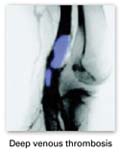
Shortly thereafter, deep venous thrombosis developed, leading to permanent partial loss of use of the left leg.
In suing, the woman asserted the physician should not have prescribed the medication when it was contraindicated.
The physician maintained the woman had not had an episode of deep venous thrombosis in more than 20 years, and that the medication was indicated because more than 90% of women who undergo oophorectomy require hormone treatment. The defense added that the woman had no evidence of permanent injury.
- The case settled for $500,000.
The cases in this column are selected by the editors of OBG Management from Medical Malpractice Verdicts, Settlements & Experts, with permission of the editor, Lewis Laska, of Nashville, Tenn (www.verdictslaska.com). The available information about the cases presented here is sometimes incomplete; thus, pertinent details of a given situation may be unavailable. Moreover, the cases may or may not have merit. Nevertheless, these cases represent the types of clinical situations that typically result in litigation and are meant to illustrate nationwide variation in jury verdicts and awards.
<court>Roanoke (Va) City Circuit Court</court>
After a 41-year-old woman underwent a hysterectomy, her physician prescribed conjugated estrogens, despite the woman’s history of deep venous thrombosis and the “black box warning” against use of conjugated estrogens in such individuals.
Shortly thereafter, deep venous thrombosis developed, leading to permanent partial loss of use of the left leg.
In suing, the woman asserted the physician should not have prescribed the medication when it was contraindicated.
The physician maintained the woman had not had an episode of deep venous thrombosis in more than 20 years, and that the medication was indicated because more than 90% of women who undergo oophorectomy require hormone treatment. The defense added that the woman had no evidence of permanent injury.
- The case settled for $500,000.
The cases in this column are selected by the editors of OBG Management from Medical Malpractice Verdicts, Settlements & Experts, with permission of the editor, Lewis Laska, of Nashville, Tenn (www.verdictslaska.com). The available information about the cases presented here is sometimes incomplete; thus, pertinent details of a given situation may be unavailable. Moreover, the cases may or may not have merit. Nevertheless, these cases represent the types of clinical situations that typically result in litigation and are meant to illustrate nationwide variation in jury verdicts and awards.
<court>Roanoke (Va) City Circuit Court</court>
After a 41-year-old woman underwent a hysterectomy, her physician prescribed conjugated estrogens, despite the woman’s history of deep venous thrombosis and the “black box warning” against use of conjugated estrogens in such individuals.
Shortly thereafter, deep venous thrombosis developed, leading to permanent partial loss of use of the left leg.
In suing, the woman asserted the physician should not have prescribed the medication when it was contraindicated.
The physician maintained the woman had not had an episode of deep venous thrombosis in more than 20 years, and that the medication was indicated because more than 90% of women who undergo oophorectomy require hormone treatment. The defense added that the woman had no evidence of permanent injury.
- The case settled for $500,000.
The cases in this column are selected by the editors of OBG Management from Medical Malpractice Verdicts, Settlements & Experts, with permission of the editor, Lewis Laska, of Nashville, Tenn (www.verdictslaska.com). The available information about the cases presented here is sometimes incomplete; thus, pertinent details of a given situation may be unavailable. Moreover, the cases may or may not have merit. Nevertheless, these cases represent the types of clinical situations that typically result in litigation and are meant to illustrate nationwide variation in jury verdicts and awards.
Severe shoulder dystocia associated with neurological injury
A woman presented to the hospital in labor at full term. After rupture of membranes, meconium-stained fluid was noted. The woman was fully dilated in 2 hours without anesthesia.
At delivery a severe shoulder dystocia was encountered. The first obstetrician tried multiple maneuvers, including a Zavanelli maneuver, but they were all unsuccessful. A second obstetrician who arrived then cut a fourth-degree episiotomy and rotated the fetus’s head, which led to vaginal delivery within 30 seconds. The infant was neurologically devastated and died at 9.5 months.
In suing, the family claimed the physician failed to factor in the infant’s weight, more than 10 pounds, when deciding on a delivery method and was negligent in the failure to perform an immediate cesarean section when meconium staining was encountered.
- The case settled for $765,908.
A woman presented to the hospital in labor at full term. After rupture of membranes, meconium-stained fluid was noted. The woman was fully dilated in 2 hours without anesthesia.
At delivery a severe shoulder dystocia was encountered. The first obstetrician tried multiple maneuvers, including a Zavanelli maneuver, but they were all unsuccessful. A second obstetrician who arrived then cut a fourth-degree episiotomy and rotated the fetus’s head, which led to vaginal delivery within 30 seconds. The infant was neurologically devastated and died at 9.5 months.
In suing, the family claimed the physician failed to factor in the infant’s weight, more than 10 pounds, when deciding on a delivery method and was negligent in the failure to perform an immediate cesarean section when meconium staining was encountered.
- The case settled for $765,908.
A woman presented to the hospital in labor at full term. After rupture of membranes, meconium-stained fluid was noted. The woman was fully dilated in 2 hours without anesthesia.
At delivery a severe shoulder dystocia was encountered. The first obstetrician tried multiple maneuvers, including a Zavanelli maneuver, but they were all unsuccessful. A second obstetrician who arrived then cut a fourth-degree episiotomy and rotated the fetus’s head, which led to vaginal delivery within 30 seconds. The infant was neurologically devastated and died at 9.5 months.
In suing, the family claimed the physician failed to factor in the infant’s weight, more than 10 pounds, when deciding on a delivery method and was negligent in the failure to perform an immediate cesarean section when meconium staining was encountered.
- The case settled for $765,908.
Did c-section delay cause infant death?
A 30-year-old woman presented for a vaginal birth after cesarean section. Immediately after the woman had intense burning pain with bright red blood and the fetal heart monitor recorded a precipitous drop in fetal heart rate, the Ob attempted a vacuum delivery, which was unsuccessful because the infant’s head had moved upwards. An emergency cesarean section ensued. The infant was acidotic, depressed, with very low Apgar scores, and was diagnosed with global hypoxic ischemic encephalopathy and died 10 weeks later.
In suing, the woman asserted that the physician waited too long to perform the cesarean section; failed to inform her during prenatal care of the risks of VBAC; and failed to recognize that the fetal monitor strips indicated an impending uterine rupture.
The physician claimed the cesarean section was performed within 30 minutes of the decision to go that route, a delay that is within ACOG guidelines. Additionally, the physician contended the woman was likely aware of the risks of VBAC, as this was her 3rd such delivery.
- The jury returned a defense verdict.
A 30-year-old woman presented for a vaginal birth after cesarean section. Immediately after the woman had intense burning pain with bright red blood and the fetal heart monitor recorded a precipitous drop in fetal heart rate, the Ob attempted a vacuum delivery, which was unsuccessful because the infant’s head had moved upwards. An emergency cesarean section ensued. The infant was acidotic, depressed, with very low Apgar scores, and was diagnosed with global hypoxic ischemic encephalopathy and died 10 weeks later.
In suing, the woman asserted that the physician waited too long to perform the cesarean section; failed to inform her during prenatal care of the risks of VBAC; and failed to recognize that the fetal monitor strips indicated an impending uterine rupture.
The physician claimed the cesarean section was performed within 30 minutes of the decision to go that route, a delay that is within ACOG guidelines. Additionally, the physician contended the woman was likely aware of the risks of VBAC, as this was her 3rd such delivery.
- The jury returned a defense verdict.
A 30-year-old woman presented for a vaginal birth after cesarean section. Immediately after the woman had intense burning pain with bright red blood and the fetal heart monitor recorded a precipitous drop in fetal heart rate, the Ob attempted a vacuum delivery, which was unsuccessful because the infant’s head had moved upwards. An emergency cesarean section ensued. The infant was acidotic, depressed, with very low Apgar scores, and was diagnosed with global hypoxic ischemic encephalopathy and died 10 weeks later.
In suing, the woman asserted that the physician waited too long to perform the cesarean section; failed to inform her during prenatal care of the risks of VBAC; and failed to recognize that the fetal monitor strips indicated an impending uterine rupture.
The physician claimed the cesarean section was performed within 30 minutes of the decision to go that route, a delay that is within ACOG guidelines. Additionally, the physician contended the woman was likely aware of the risks of VBAC, as this was her 3rd such delivery.
- The jury returned a defense verdict.
Was lack of cesarean cause of injury?
A 33-year-old woman gave birth via forceps delivery to an infant with cerebral palsy.
In suing, the family claimed an occult prolapse of the umbilical cord during delivery caused hypoxia and the resulting brain damage. They asserted that the infant had umbilical cord depression and oxygen deprivation during delivery, along with 2 decelerations in fetal heart rate, which should have led to an emergency cesarean section. They also noted that the delivery should have occurred sooner than a half hour after the prolapse was noted. They faulted the nurses for failing to communicate important information to the physician. They also claimed the administration of misoprostol and oxytocin hyperstimulated the uterus.
The defense contended a cesarean section was not indicated prior to the prolapse and that ordering one at that point would not have resulted in an earlier delivery.
- The jury returned a defense verdict.
A 33-year-old woman gave birth via forceps delivery to an infant with cerebral palsy.
In suing, the family claimed an occult prolapse of the umbilical cord during delivery caused hypoxia and the resulting brain damage. They asserted that the infant had umbilical cord depression and oxygen deprivation during delivery, along with 2 decelerations in fetal heart rate, which should have led to an emergency cesarean section. They also noted that the delivery should have occurred sooner than a half hour after the prolapse was noted. They faulted the nurses for failing to communicate important information to the physician. They also claimed the administration of misoprostol and oxytocin hyperstimulated the uterus.
The defense contended a cesarean section was not indicated prior to the prolapse and that ordering one at that point would not have resulted in an earlier delivery.
- The jury returned a defense verdict.
A 33-year-old woman gave birth via forceps delivery to an infant with cerebral palsy.
In suing, the family claimed an occult prolapse of the umbilical cord during delivery caused hypoxia and the resulting brain damage. They asserted that the infant had umbilical cord depression and oxygen deprivation during delivery, along with 2 decelerations in fetal heart rate, which should have led to an emergency cesarean section. They also noted that the delivery should have occurred sooner than a half hour after the prolapse was noted. They faulted the nurses for failing to communicate important information to the physician. They also claimed the administration of misoprostol and oxytocin hyperstimulated the uterus.
The defense contended a cesarean section was not indicated prior to the prolapse and that ordering one at that point would not have resulted in an earlier delivery.
- The jury returned a defense verdict.
$22 million awarded for cerebral palsy
At more than 40 weeks’ gestation, a woman was admitted to a hospital for labor induction. Oxytocin was administered in increasing doses because of slow progress, but 10 hours after admission the infant was still not delivered. After failed vaginal delivery with vacuum forceps, the infant was eventually delivered by cesarean section.
The infant has spastic quadriplegia with severe speech and motor deficits, and is now confined to a wheelchair, requiring 24-hour care.
In suing, the woman contended the oxytocin caused uterine hyperstimulation and that the nurses failed to note that the oxytocin was not working. She claimed vaginal delivery should not have been attempted. She asserted the hospital was negligent in credentialing the physician, who was given full privileges without monitoring despite having been in practice for only a month at the time of the delivery.
The hospital countered that the woman and her infant had responded well to the oxytocin and that the hypoxic event resulted from unforeseeable and unpreventable movement by the fetus, which restricted the umbilical cord.
- The physician settled for a confidential amount prior to trial. The jury awarded the plaintiff $22 million; posttrial motions are pending.
At more than 40 weeks’ gestation, a woman was admitted to a hospital for labor induction. Oxytocin was administered in increasing doses because of slow progress, but 10 hours after admission the infant was still not delivered. After failed vaginal delivery with vacuum forceps, the infant was eventually delivered by cesarean section.
The infant has spastic quadriplegia with severe speech and motor deficits, and is now confined to a wheelchair, requiring 24-hour care.
In suing, the woman contended the oxytocin caused uterine hyperstimulation and that the nurses failed to note that the oxytocin was not working. She claimed vaginal delivery should not have been attempted. She asserted the hospital was negligent in credentialing the physician, who was given full privileges without monitoring despite having been in practice for only a month at the time of the delivery.
The hospital countered that the woman and her infant had responded well to the oxytocin and that the hypoxic event resulted from unforeseeable and unpreventable movement by the fetus, which restricted the umbilical cord.
- The physician settled for a confidential amount prior to trial. The jury awarded the plaintiff $22 million; posttrial motions are pending.
At more than 40 weeks’ gestation, a woman was admitted to a hospital for labor induction. Oxytocin was administered in increasing doses because of slow progress, but 10 hours after admission the infant was still not delivered. After failed vaginal delivery with vacuum forceps, the infant was eventually delivered by cesarean section.
The infant has spastic quadriplegia with severe speech and motor deficits, and is now confined to a wheelchair, requiring 24-hour care.
In suing, the woman contended the oxytocin caused uterine hyperstimulation and that the nurses failed to note that the oxytocin was not working. She claimed vaginal delivery should not have been attempted. She asserted the hospital was negligent in credentialing the physician, who was given full privileges without monitoring despite having been in practice for only a month at the time of the delivery.
The hospital countered that the woman and her infant had responded well to the oxytocin and that the hypoxic event resulted from unforeseeable and unpreventable movement by the fetus, which restricted the umbilical cord.
- The physician settled for a confidential amount prior to trial. The jury awarded the plaintiff $22 million; posttrial motions are pending.
Updated CPT codes: Few (and overdue), but mighty
Changes in procedural terminology (CPT) codes for 2006 include only 2 new codes and 1 revised code that directly affect ObGyn practices. Besides needing to know about the addition of a code for the revision of a vaginal graft and a new “add-on” code for reporting an endometrial biopsy with colposcopy, ObGyn practices will need to amend any encounter forms containing codes for confirmatory consultations or follow-up inpatient consultations, because all of these code sets will be deleted effective January 1, 2006.

Barbara S. Levy, MD
Obg Management
Board of Editors
Dr. Levy represents ACOG on the AMA-RBRVS Update Committee, and is ex-officio, ACOG Coding and Nomenclature committee.
At last, ACOG has succeeded in capturing the additional work of performing endometrial biopsy at the time of colposcopy with biopsies and/or endocervical curettage. The Centers for Medicare and Medicaid services had been bundling the work of endometrial sampling into the broader code for colposcopy with biopsies. The bundled code meant we did not get paid for these biopsies. Although that policy was clearly inappropriate, the fix was long in coming. Beginning January 1, 2006, we can use a new add-on code (+58110) when endometrial biopsy is performed with colposcopy (usually for patients with atypical glandular cells on Pap smear). It will be important to train ourselves and our staff to use the new code rather than attempt to use a modifier on the code for typical endometrial biopsy (58100).
New complications and misadventures sometimes ride in on the coattails of new technology, and must be corrected surgically. Along with the use of mesh to enhance pelvic reconstructive surgery has come the problem of mesh erosion. Removal of infected or eroding mesh is a nasty experience that, until now, had only an unspecified code, necessitating letters back and forth to payers and difficulty obtaining reimbursement. A new code properly describes the work performed in these difficult dissections: 57295.
No more “second opinion” codes.
Several redundant and difficult codes have been discarded. One of the last remnants of managed care, the confirmatory consultation (“second opinion”), has been removed from CPT.
In addition, follow-up consultations in the hospital were determined to be indistinguishable from subsequent hospital visits and therefore this category of codes was also eliminated.
Dr. Levy is Medical Director, Women’s Health Center, Franciscan Health System, Federal Way, Wash.
REVISION OF VAGINAL GRAFTNEW CODE: 57295
Ms. Ahad a cystocele repair 6 months ago. Her pubocervical fascia was so weak that a surgical mesh was placed to keep the bladder in position. She now complains of vaginal pain and discharge. Examination reveals the mesh has eroded into the vagina, and surgical repair is required. How would you code this situation?
In 2005, the only way to code this situation was to use the unlisted code 58999 because the existing code for revision of a graft (57287) is reserved for revision of a urethral sling for stress urinary incontinence.
The good news is that starting January 1, a new code (57295) can be used for revision (including removal) of prosthetic vaginal graft, vaginal approach. This code will apply when the original surgery that resulted in the complication with the graft was reported with any of the following codes: the add-on code 57267 (insertion of mesh or other prosthesis for repair of pelvic floor defect, each site), one of the colporrhaphy codes (54250–56265), the rectocele repair code 45560, or the abdominal approach colpopexy code 57280.
ENDOMETRIAL BIOPSYNEW CODE: 58110
Last month, Mrs. B’s Pap test found “AGC - atypical glandular cells”(ICD-9-CM code 795.00). Because of this finding, the physician will perform colposcopy and obtain endocervical and endometrial biopsies. How would you code this situation?
Unfortunately, until the end of 2005, the ObGyn can be paid only for the endocervical curettage because the endometrial biopsy code (58100) was bundled with the colposcopy codes, in the National Correct Coding Initiative rules.
An “add-on” code for endometrial biopsy can be reported when the procedure is performed at the time of colposcopy. The new code, +58110, endometrial sampling performed in conjunction with colposcopy (list separately in addition to the code for the primary procedure), is valued under the resource-based relative value scale for the intraservice work only.
Notes added under the colposcopy codes 57420, 57421, and 57452–57461 indicate that if endometrial biopsy is also performed, the new code 58110 should be added to the colposcopy code. Because 58110 is an “add-on” code, no modifier is required when billed with 1 of the colposcopy codes.
Vagina and cervical biopsies also unbundled.
Because of the addition of the new 58110 code, CPT also revised code 57421 to clarify that it is only for biopsy of the vagina and cervix (if performed), and not an endometrial biopsy.
2ndOPINION CODE KAPUTRELATIVE VALUE UNITS RAISED
Confirmatory consultation codes (99271–99275) will disappear on January 1—a welcome change for most practices because confirmatory consultation codes could not be used when counseling or coordinating care dominated the visit.
In the future, if the patient is seen for a confirmatory consultation, the physician should bill an inpatient or outpatient evaluation and management (E/M) code rather than a consultation. The rationale is that confirmatory consultations are requested by the patient, rather than by a qualified health care provider. If the second opinion is requested by a third party, for example to confirm that recommended surgery was medically indicated, adding modifier 32 (mandated services) is appropriate.
The follow-up inpatient consultation codes (99261–99263) will also be eliminated in 2006. The CPT guidelines for 2006 instruct the physician to report the subsequent hospital care codes (99231–99233) if the patient requires a follow-up visit after the initial inpatient consultation. This change is a positive one for ObGyns, however, because the relative value units for the hospital care codes are slightly higher than were the follow-up consultation codes.
Changes in procedural terminology (CPT) codes for 2006 include only 2 new codes and 1 revised code that directly affect ObGyn practices. Besides needing to know about the addition of a code for the revision of a vaginal graft and a new “add-on” code for reporting an endometrial biopsy with colposcopy, ObGyn practices will need to amend any encounter forms containing codes for confirmatory consultations or follow-up inpatient consultations, because all of these code sets will be deleted effective January 1, 2006.
Barbara S. Levy, MD
Obg Management
Board of Editors
Dr. Levy represents ACOG on the AMA-RBRVS Update Committee, and is ex-officio, ACOG Coding and Nomenclature committee.
At last, ACOG has succeeded in capturing the additional work of performing endometrial biopsy at the time of colposcopy with biopsies and/or endocervical curettage. The Centers for Medicare and Medicaid services had been bundling the work of endometrial sampling into the broader code for colposcopy with biopsies. The bundled code meant we did not get paid for these biopsies. Although that policy was clearly inappropriate, the fix was long in coming. Beginning January 1, 2006, we can use a new add-on code (+58110) when endometrial biopsy is performed with colposcopy (usually for patients with atypical glandular cells on Pap smear). It will be important to train ourselves and our staff to use the new code rather than attempt to use a modifier on the code for typical endometrial biopsy (58100).
New complications and misadventures sometimes ride in on the coattails of new technology, and must be corrected surgically. Along with the use of mesh to enhance pelvic reconstructive surgery has come the problem of mesh erosion. Removal of infected or eroding mesh is a nasty experience that, until now, had only an unspecified code, necessitating letters back and forth to payers and difficulty obtaining reimbursement. A new code properly describes the work performed in these difficult dissections: 57295.
No more “second opinion” codes.
Several redundant and difficult codes have been discarded. One of the last remnants of managed care, the confirmatory consultation (“second opinion”), has been removed from CPT.
In addition, follow-up consultations in the hospital were determined to be indistinguishable from subsequent hospital visits and therefore this category of codes was also eliminated.
Dr. Levy is Medical Director, Women’s Health Center, Franciscan Health System, Federal Way, Wash.
REVISION OF VAGINAL GRAFTNEW CODE: 57295
Ms. Ahad a cystocele repair 6 months ago. Her pubocervical fascia was so weak that a surgical mesh was placed to keep the bladder in position. She now complains of vaginal pain and discharge. Examination reveals the mesh has eroded into the vagina, and surgical repair is required. How would you code this situation?
In 2005, the only way to code this situation was to use the unlisted code 58999 because the existing code for revision of a graft (57287) is reserved for revision of a urethral sling for stress urinary incontinence.
The good news is that starting January 1, a new code (57295) can be used for revision (including removal) of prosthetic vaginal graft, vaginal approach. This code will apply when the original surgery that resulted in the complication with the graft was reported with any of the following codes: the add-on code 57267 (insertion of mesh or other prosthesis for repair of pelvic floor defect, each site), one of the colporrhaphy codes (54250–56265), the rectocele repair code 45560, or the abdominal approach colpopexy code 57280.
ENDOMETRIAL BIOPSYNEW CODE: 58110
Last month, Mrs. B’s Pap test found “AGC - atypical glandular cells”(ICD-9-CM code 795.00). Because of this finding, the physician will perform colposcopy and obtain endocervical and endometrial biopsies. How would you code this situation?
Unfortunately, until the end of 2005, the ObGyn can be paid only for the endocervical curettage because the endometrial biopsy code (58100) was bundled with the colposcopy codes, in the National Correct Coding Initiative rules.
An “add-on” code for endometrial biopsy can be reported when the procedure is performed at the time of colposcopy. The new code, +58110, endometrial sampling performed in conjunction with colposcopy (list separately in addition to the code for the primary procedure), is valued under the resource-based relative value scale for the intraservice work only.
Notes added under the colposcopy codes 57420, 57421, and 57452–57461 indicate that if endometrial biopsy is also performed, the new code 58110 should be added to the colposcopy code. Because 58110 is an “add-on” code, no modifier is required when billed with 1 of the colposcopy codes.
Vagina and cervical biopsies also unbundled.
Because of the addition of the new 58110 code, CPT also revised code 57421 to clarify that it is only for biopsy of the vagina and cervix (if performed), and not an endometrial biopsy.
2ndOPINION CODE KAPUTRELATIVE VALUE UNITS RAISED
Confirmatory consultation codes (99271–99275) will disappear on January 1—a welcome change for most practices because confirmatory consultation codes could not be used when counseling or coordinating care dominated the visit.
In the future, if the patient is seen for a confirmatory consultation, the physician should bill an inpatient or outpatient evaluation and management (E/M) code rather than a consultation. The rationale is that confirmatory consultations are requested by the patient, rather than by a qualified health care provider. If the second opinion is requested by a third party, for example to confirm that recommended surgery was medically indicated, adding modifier 32 (mandated services) is appropriate.
The follow-up inpatient consultation codes (99261–99263) will also be eliminated in 2006. The CPT guidelines for 2006 instruct the physician to report the subsequent hospital care codes (99231–99233) if the patient requires a follow-up visit after the initial inpatient consultation. This change is a positive one for ObGyns, however, because the relative value units for the hospital care codes are slightly higher than were the follow-up consultation codes.
Changes in procedural terminology (CPT) codes for 2006 include only 2 new codes and 1 revised code that directly affect ObGyn practices. Besides needing to know about the addition of a code for the revision of a vaginal graft and a new “add-on” code for reporting an endometrial biopsy with colposcopy, ObGyn practices will need to amend any encounter forms containing codes for confirmatory consultations or follow-up inpatient consultations, because all of these code sets will be deleted effective January 1, 2006.
Barbara S. Levy, MD
Obg Management
Board of Editors
Dr. Levy represents ACOG on the AMA-RBRVS Update Committee, and is ex-officio, ACOG Coding and Nomenclature committee.
At last, ACOG has succeeded in capturing the additional work of performing endometrial biopsy at the time of colposcopy with biopsies and/or endocervical curettage. The Centers for Medicare and Medicaid services had been bundling the work of endometrial sampling into the broader code for colposcopy with biopsies. The bundled code meant we did not get paid for these biopsies. Although that policy was clearly inappropriate, the fix was long in coming. Beginning January 1, 2006, we can use a new add-on code (+58110) when endometrial biopsy is performed with colposcopy (usually for patients with atypical glandular cells on Pap smear). It will be important to train ourselves and our staff to use the new code rather than attempt to use a modifier on the code for typical endometrial biopsy (58100).
New complications and misadventures sometimes ride in on the coattails of new technology, and must be corrected surgically. Along with the use of mesh to enhance pelvic reconstructive surgery has come the problem of mesh erosion. Removal of infected or eroding mesh is a nasty experience that, until now, had only an unspecified code, necessitating letters back and forth to payers and difficulty obtaining reimbursement. A new code properly describes the work performed in these difficult dissections: 57295.
No more “second opinion” codes.
Several redundant and difficult codes have been discarded. One of the last remnants of managed care, the confirmatory consultation (“second opinion”), has been removed from CPT.
In addition, follow-up consultations in the hospital were determined to be indistinguishable from subsequent hospital visits and therefore this category of codes was also eliminated.
Dr. Levy is Medical Director, Women’s Health Center, Franciscan Health System, Federal Way, Wash.
REVISION OF VAGINAL GRAFTNEW CODE: 57295
Ms. Ahad a cystocele repair 6 months ago. Her pubocervical fascia was so weak that a surgical mesh was placed to keep the bladder in position. She now complains of vaginal pain and discharge. Examination reveals the mesh has eroded into the vagina, and surgical repair is required. How would you code this situation?
In 2005, the only way to code this situation was to use the unlisted code 58999 because the existing code for revision of a graft (57287) is reserved for revision of a urethral sling for stress urinary incontinence.
The good news is that starting January 1, a new code (57295) can be used for revision (including removal) of prosthetic vaginal graft, vaginal approach. This code will apply when the original surgery that resulted in the complication with the graft was reported with any of the following codes: the add-on code 57267 (insertion of mesh or other prosthesis for repair of pelvic floor defect, each site), one of the colporrhaphy codes (54250–56265), the rectocele repair code 45560, or the abdominal approach colpopexy code 57280.
ENDOMETRIAL BIOPSYNEW CODE: 58110
Last month, Mrs. B’s Pap test found “AGC - atypical glandular cells”(ICD-9-CM code 795.00). Because of this finding, the physician will perform colposcopy and obtain endocervical and endometrial biopsies. How would you code this situation?
Unfortunately, until the end of 2005, the ObGyn can be paid only for the endocervical curettage because the endometrial biopsy code (58100) was bundled with the colposcopy codes, in the National Correct Coding Initiative rules.
An “add-on” code for endometrial biopsy can be reported when the procedure is performed at the time of colposcopy. The new code, +58110, endometrial sampling performed in conjunction with colposcopy (list separately in addition to the code for the primary procedure), is valued under the resource-based relative value scale for the intraservice work only.
Notes added under the colposcopy codes 57420, 57421, and 57452–57461 indicate that if endometrial biopsy is also performed, the new code 58110 should be added to the colposcopy code. Because 58110 is an “add-on” code, no modifier is required when billed with 1 of the colposcopy codes.
Vagina and cervical biopsies also unbundled.
Because of the addition of the new 58110 code, CPT also revised code 57421 to clarify that it is only for biopsy of the vagina and cervix (if performed), and not an endometrial biopsy.
2ndOPINION CODE KAPUTRELATIVE VALUE UNITS RAISED
Confirmatory consultation codes (99271–99275) will disappear on January 1—a welcome change for most practices because confirmatory consultation codes could not be used when counseling or coordinating care dominated the visit.
In the future, if the patient is seen for a confirmatory consultation, the physician should bill an inpatient or outpatient evaluation and management (E/M) code rather than a consultation. The rationale is that confirmatory consultations are requested by the patient, rather than by a qualified health care provider. If the second opinion is requested by a third party, for example to confirm that recommended surgery was medically indicated, adding modifier 32 (mandated services) is appropriate.
The follow-up inpatient consultation codes (99261–99263) will also be eliminated in 2006. The CPT guidelines for 2006 instruct the physician to report the subsequent hospital care codes (99231–99233) if the patient requires a follow-up visit after the initial inpatient consultation. This change is a positive one for ObGyns, however, because the relative value units for the hospital care codes are slightly higher than were the follow-up consultation codes.