User login
The Official Newspaper of the American Association for Thoracic Surgery
TAVR degeneration estimated at 50% after 8 years
PARIS – The first-ever study of the long-term durability of transcatheter bioprosthetic aortic valves has documented a disturbing rise in the valve degeneration rate occurring 5-7 years post implant.
Prior consistently reassuring follow-up studies have been intermediate in length, with a maximum of 5 years. The PARTNER 2A trial, which generated enormous enthusiasm for moving TAVR to intermediate-risk patients on the basis of positive results presented at the 2016 meeting of the American College of Cardiology, reported 2-year results.

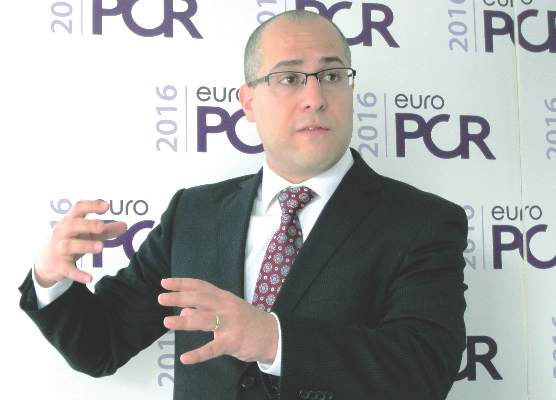
“We found, as have others, that there’s very little degeneration in the first 4 years: 94% freedom from degeneration. But at 6 years, it’s 82%, and we estimate that by 8 years, it’s about 50%,” Dr. Danny Dvir reported at the annual congress of the European Association of Percutaneous Cardiovascular Interventions.
“We need to be cautious: This is our first look at the data. But we have a signal for a problem,” said Dr. Dvir of St. Paul’s Hospital in Vancouver.
He presented a retrospective study of 378 patients who underwent TAVR 5-14 years ago at two pioneering centers for the procedure: St. Paul’s and Charles Nicolle Hospital in Rouen, France. Patients’ average age at the time of TAVR was 82.3 years, with an STS score of 8.3%. The study featured serial echocardiography conducted during house calls in this frail elderly population.
Thirty-five patients developed prosthetic valve degeneration, defined by at least moderate regurgitation and/or a mean gradient of at least 20 mm Hg in 23 cases and stenosis in 12. The risk of degeneration was unrelated to the use of warfarin, a finding that suggests the valve deterioration issue is unrelated to clotting. The strongest risk factor for transcatheter valve degeneration in this study was baseline renal failure at the time of TAVR.
Dr. Dvir’s presentation was the talk of the meeting, and it cast a pall over the proceedings. The red flag raised by the study regarding valve durability has major implications regarding the current enthusiasm among many interventional cardiologists to routinely extend TAVR to intermediate and even lower-risk patients. As one audience member later confessed, “I have felt sick since hearing that presentation.”
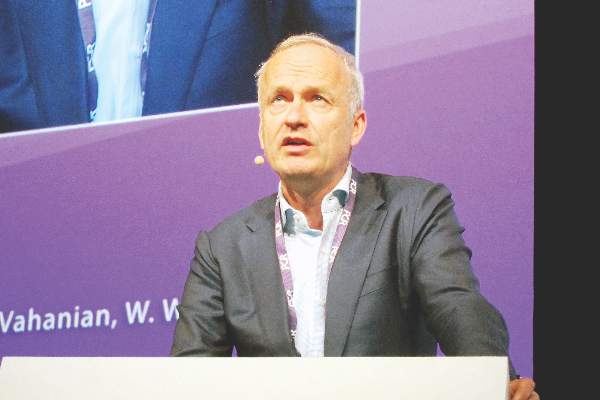
Discussant Dr. A. Pieter Kappetein observed that transcatheter heart valve durability was a hot topic of discussion about 4 years ago but subsequently faded below the radar as a concern – until Dr. Dvir’s study.
“This is a very important study that puts transcatheter heart valve implantation in a little bit different light,” said Dr. Kappetein, professor of cardiothoracic surgery at Erasmus University in Rotterdam, the Netherlands.
He noted that the surgical aortic valve replacement (SAVR) literature shows that the rate of structural valve deterioration is age related. It’s higher in 75-year-olds than in 85-year-olds, and higher still in 65-year-olds.
“Valve degeneration didn’t play a major role when we were doing TAVR in 80- and 85-year-olds because of their limited life expectancy, but it will play a role in younger patients. So I think we have to be careful before we move toward lower-risk patients,” the surgeon continued.
Dr. Jean-Francois Obadia, who performs both SAVR and TAVR, noted that the median duration of freedom from valve degeneration for Edwards Lifescience’s Carpentier surgical aortic valve is a hefty 17.9 years.
“This should be the gold standard,” declared Dr. Obadia, head of the department of adult cardiovascular surgery and heart transplantation at the Louis Pradel Cardiothoracic Hospital of Claude Bernard University in Lyon, France.
“Dr. Dvir’s study is one of the key messages we all should take back home: a 50% rate of valve deterioration at 8 years. Valve deterioration is the Achilles’ heel of bioprostheses. There is a lot of improvement left to do for the TAVR,” he said.
Dr. Dvir and others were quick to note that his long-term study was of necessity restricted to early-generation, balloon-expandable devices: the Cribier Edwards, Edwards Sapien, and Sapien XT valves. Contemporary valves, patient selection methods, and procedural techniques are far advanced in comparison.
“The Sapien 3 has much less paravalvular leakage than earlier-generation valves. Maybe with less paravalvular leakage and better hemodynamics there will be a decreased rate of degeneration. It could be. We need to see. We have to wait a few more years to see if later-generation transcatheter heart valves are more durable,” Dr. Dvir said.
To gain a better understanding of the full dimensions of the valve degeneration issue, he and his coinvestigators have formed the VALID (VAlve Long-term Durability International Data) registry. Operators interested in contributing patients to what is hoped will be a very large and informative data base are encouraged to contact Dr. Dvir ([email protected]).
In the meantime, he has reservations about extending TAVR to intermediate-risk patients outside of the rigorous clinical trial setting. He added that he’d feel far more comfortable in performing TAVR in intermediate-risk 70- to 75-year-olds if there was a tried and true valve-in-valve replacement method, something that doesn’t yet exist. The major limitation of current attempts at valve-in-valve replacement is underexpansion because the former valve doesn’t allow sufficient room for the new one to expand fully, resulting in residual stenosis.
“If you tell me that you can implant a platform that will enable a safe valve-in-valve procedure in 5, 7, 10 years – a less invasive bailout for a failed prosthetic valve – if you can do that safely and effectively I would be more keen to do TAVR even in a young patient,” the interventional cardiologist said.
He and others are working on this unmet need. Dr. Dvir’s novel valve, being developed with Edwards Lifesciences, has performed well in valve-in-valve procedures in cadavers and animals. The first clinical trials are being planned.
“We need to think always that a bioprosthetic valve is not a cure, it’s a palliation. We treat the patients, they feel better, but we leave them with some kind of a chronic disease that’s prone to thrombosis, prone to degeneration and failure, prone to many different things,” he reflected.
The study was conducted without commercial support. Dr. Dvir reported serving as a consultant to Edwards Lifesciences, Medtronic, and St. Jude Medical.
PARIS – The first-ever study of the long-term durability of transcatheter bioprosthetic aortic valves has documented a disturbing rise in the valve degeneration rate occurring 5-7 years post implant.
Prior consistently reassuring follow-up studies have been intermediate in length, with a maximum of 5 years. The PARTNER 2A trial, which generated enormous enthusiasm for moving TAVR to intermediate-risk patients on the basis of positive results presented at the 2016 meeting of the American College of Cardiology, reported 2-year results.
“We found, as have others, that there’s very little degeneration in the first 4 years: 94% freedom from degeneration. But at 6 years, it’s 82%, and we estimate that by 8 years, it’s about 50%,” Dr. Danny Dvir reported at the annual congress of the European Association of Percutaneous Cardiovascular Interventions.
“We need to be cautious: This is our first look at the data. But we have a signal for a problem,” said Dr. Dvir of St. Paul’s Hospital in Vancouver.
He presented a retrospective study of 378 patients who underwent TAVR 5-14 years ago at two pioneering centers for the procedure: St. Paul’s and Charles Nicolle Hospital in Rouen, France. Patients’ average age at the time of TAVR was 82.3 years, with an STS score of 8.3%. The study featured serial echocardiography conducted during house calls in this frail elderly population.
Thirty-five patients developed prosthetic valve degeneration, defined by at least moderate regurgitation and/or a mean gradient of at least 20 mm Hg in 23 cases and stenosis in 12. The risk of degeneration was unrelated to the use of warfarin, a finding that suggests the valve deterioration issue is unrelated to clotting. The strongest risk factor for transcatheter valve degeneration in this study was baseline renal failure at the time of TAVR.
Dr. Dvir’s presentation was the talk of the meeting, and it cast a pall over the proceedings. The red flag raised by the study regarding valve durability has major implications regarding the current enthusiasm among many interventional cardiologists to routinely extend TAVR to intermediate and even lower-risk patients. As one audience member later confessed, “I have felt sick since hearing that presentation.”
Discussant Dr. A. Pieter Kappetein observed that transcatheter heart valve durability was a hot topic of discussion about 4 years ago but subsequently faded below the radar as a concern – until Dr. Dvir’s study.
“This is a very important study that puts transcatheter heart valve implantation in a little bit different light,” said Dr. Kappetein, professor of cardiothoracic surgery at Erasmus University in Rotterdam, the Netherlands.
He noted that the surgical aortic valve replacement (SAVR) literature shows that the rate of structural valve deterioration is age related. It’s higher in 75-year-olds than in 85-year-olds, and higher still in 65-year-olds.
“Valve degeneration didn’t play a major role when we were doing TAVR in 80- and 85-year-olds because of their limited life expectancy, but it will play a role in younger patients. So I think we have to be careful before we move toward lower-risk patients,” the surgeon continued.
Dr. Jean-Francois Obadia, who performs both SAVR and TAVR, noted that the median duration of freedom from valve degeneration for Edwards Lifescience’s Carpentier surgical aortic valve is a hefty 17.9 years.
“This should be the gold standard,” declared Dr. Obadia, head of the department of adult cardiovascular surgery and heart transplantation at the Louis Pradel Cardiothoracic Hospital of Claude Bernard University in Lyon, France.
“Dr. Dvir’s study is one of the key messages we all should take back home: a 50% rate of valve deterioration at 8 years. Valve deterioration is the Achilles’ heel of bioprostheses. There is a lot of improvement left to do for the TAVR,” he said.
Dr. Dvir and others were quick to note that his long-term study was of necessity restricted to early-generation, balloon-expandable devices: the Cribier Edwards, Edwards Sapien, and Sapien XT valves. Contemporary valves, patient selection methods, and procedural techniques are far advanced in comparison.
“The Sapien 3 has much less paravalvular leakage than earlier-generation valves. Maybe with less paravalvular leakage and better hemodynamics there will be a decreased rate of degeneration. It could be. We need to see. We have to wait a few more years to see if later-generation transcatheter heart valves are more durable,” Dr. Dvir said.
To gain a better understanding of the full dimensions of the valve degeneration issue, he and his coinvestigators have formed the VALID (VAlve Long-term Durability International Data) registry. Operators interested in contributing patients to what is hoped will be a very large and informative data base are encouraged to contact Dr. Dvir ([email protected]).
In the meantime, he has reservations about extending TAVR to intermediate-risk patients outside of the rigorous clinical trial setting. He added that he’d feel far more comfortable in performing TAVR in intermediate-risk 70- to 75-year-olds if there was a tried and true valve-in-valve replacement method, something that doesn’t yet exist. The major limitation of current attempts at valve-in-valve replacement is underexpansion because the former valve doesn’t allow sufficient room for the new one to expand fully, resulting in residual stenosis.
“If you tell me that you can implant a platform that will enable a safe valve-in-valve procedure in 5, 7, 10 years – a less invasive bailout for a failed prosthetic valve – if you can do that safely and effectively I would be more keen to do TAVR even in a young patient,” the interventional cardiologist said.
He and others are working on this unmet need. Dr. Dvir’s novel valve, being developed with Edwards Lifesciences, has performed well in valve-in-valve procedures in cadavers and animals. The first clinical trials are being planned.
“We need to think always that a bioprosthetic valve is not a cure, it’s a palliation. We treat the patients, they feel better, but we leave them with some kind of a chronic disease that’s prone to thrombosis, prone to degeneration and failure, prone to many different things,” he reflected.
The study was conducted without commercial support. Dr. Dvir reported serving as a consultant to Edwards Lifesciences, Medtronic, and St. Jude Medical.
PARIS – The first-ever study of the long-term durability of transcatheter bioprosthetic aortic valves has documented a disturbing rise in the valve degeneration rate occurring 5-7 years post implant.
Prior consistently reassuring follow-up studies have been intermediate in length, with a maximum of 5 years. The PARTNER 2A trial, which generated enormous enthusiasm for moving TAVR to intermediate-risk patients on the basis of positive results presented at the 2016 meeting of the American College of Cardiology, reported 2-year results.
“We found, as have others, that there’s very little degeneration in the first 4 years: 94% freedom from degeneration. But at 6 years, it’s 82%, and we estimate that by 8 years, it’s about 50%,” Dr. Danny Dvir reported at the annual congress of the European Association of Percutaneous Cardiovascular Interventions.
“We need to be cautious: This is our first look at the data. But we have a signal for a problem,” said Dr. Dvir of St. Paul’s Hospital in Vancouver.
He presented a retrospective study of 378 patients who underwent TAVR 5-14 years ago at two pioneering centers for the procedure: St. Paul’s and Charles Nicolle Hospital in Rouen, France. Patients’ average age at the time of TAVR was 82.3 years, with an STS score of 8.3%. The study featured serial echocardiography conducted during house calls in this frail elderly population.
Thirty-five patients developed prosthetic valve degeneration, defined by at least moderate regurgitation and/or a mean gradient of at least 20 mm Hg in 23 cases and stenosis in 12. The risk of degeneration was unrelated to the use of warfarin, a finding that suggests the valve deterioration issue is unrelated to clotting. The strongest risk factor for transcatheter valve degeneration in this study was baseline renal failure at the time of TAVR.
Dr. Dvir’s presentation was the talk of the meeting, and it cast a pall over the proceedings. The red flag raised by the study regarding valve durability has major implications regarding the current enthusiasm among many interventional cardiologists to routinely extend TAVR to intermediate and even lower-risk patients. As one audience member later confessed, “I have felt sick since hearing that presentation.”
Discussant Dr. A. Pieter Kappetein observed that transcatheter heart valve durability was a hot topic of discussion about 4 years ago but subsequently faded below the radar as a concern – until Dr. Dvir’s study.
“This is a very important study that puts transcatheter heart valve implantation in a little bit different light,” said Dr. Kappetein, professor of cardiothoracic surgery at Erasmus University in Rotterdam, the Netherlands.
He noted that the surgical aortic valve replacement (SAVR) literature shows that the rate of structural valve deterioration is age related. It’s higher in 75-year-olds than in 85-year-olds, and higher still in 65-year-olds.
“Valve degeneration didn’t play a major role when we were doing TAVR in 80- and 85-year-olds because of their limited life expectancy, but it will play a role in younger patients. So I think we have to be careful before we move toward lower-risk patients,” the surgeon continued.
Dr. Jean-Francois Obadia, who performs both SAVR and TAVR, noted that the median duration of freedom from valve degeneration for Edwards Lifescience’s Carpentier surgical aortic valve is a hefty 17.9 years.
“This should be the gold standard,” declared Dr. Obadia, head of the department of adult cardiovascular surgery and heart transplantation at the Louis Pradel Cardiothoracic Hospital of Claude Bernard University in Lyon, France.
“Dr. Dvir’s study is one of the key messages we all should take back home: a 50% rate of valve deterioration at 8 years. Valve deterioration is the Achilles’ heel of bioprostheses. There is a lot of improvement left to do for the TAVR,” he said.
Dr. Dvir and others were quick to note that his long-term study was of necessity restricted to early-generation, balloon-expandable devices: the Cribier Edwards, Edwards Sapien, and Sapien XT valves. Contemporary valves, patient selection methods, and procedural techniques are far advanced in comparison.
“The Sapien 3 has much less paravalvular leakage than earlier-generation valves. Maybe with less paravalvular leakage and better hemodynamics there will be a decreased rate of degeneration. It could be. We need to see. We have to wait a few more years to see if later-generation transcatheter heart valves are more durable,” Dr. Dvir said.
To gain a better understanding of the full dimensions of the valve degeneration issue, he and his coinvestigators have formed the VALID (VAlve Long-term Durability International Data) registry. Operators interested in contributing patients to what is hoped will be a very large and informative data base are encouraged to contact Dr. Dvir ([email protected]).
In the meantime, he has reservations about extending TAVR to intermediate-risk patients outside of the rigorous clinical trial setting. He added that he’d feel far more comfortable in performing TAVR in intermediate-risk 70- to 75-year-olds if there was a tried and true valve-in-valve replacement method, something that doesn’t yet exist. The major limitation of current attempts at valve-in-valve replacement is underexpansion because the former valve doesn’t allow sufficient room for the new one to expand fully, resulting in residual stenosis.
“If you tell me that you can implant a platform that will enable a safe valve-in-valve procedure in 5, 7, 10 years – a less invasive bailout for a failed prosthetic valve – if you can do that safely and effectively I would be more keen to do TAVR even in a young patient,” the interventional cardiologist said.
He and others are working on this unmet need. Dr. Dvir’s novel valve, being developed with Edwards Lifesciences, has performed well in valve-in-valve procedures in cadavers and animals. The first clinical trials are being planned.
“We need to think always that a bioprosthetic valve is not a cure, it’s a palliation. We treat the patients, they feel better, but we leave them with some kind of a chronic disease that’s prone to thrombosis, prone to degeneration and failure, prone to many different things,” he reflected.
The study was conducted without commercial support. Dr. Dvir reported serving as a consultant to Edwards Lifesciences, Medtronic, and St. Jude Medical.
AT EUROPCR 2016
Key clinical point: The first study to examine transcatheter aortic bioprosthetic valve performance beyond 5 years has found a 50% rate of valve degeneration 8 years post TAVR.
Major finding: A sharp increase in the incidence of degeneration of these early-generation valves occurred 5-7 years post TAVR.
Data source: This retrospective study featured serial home echocardiography in 378 patients who underwent TAVR 5-14 years ago at two pioneering centers for the procedure.
Disclosures: The presenter of this study, conducted without commercial support, serves as a consultant to Edwards Lifesciences, Medtronic, and St. Jude Medical.
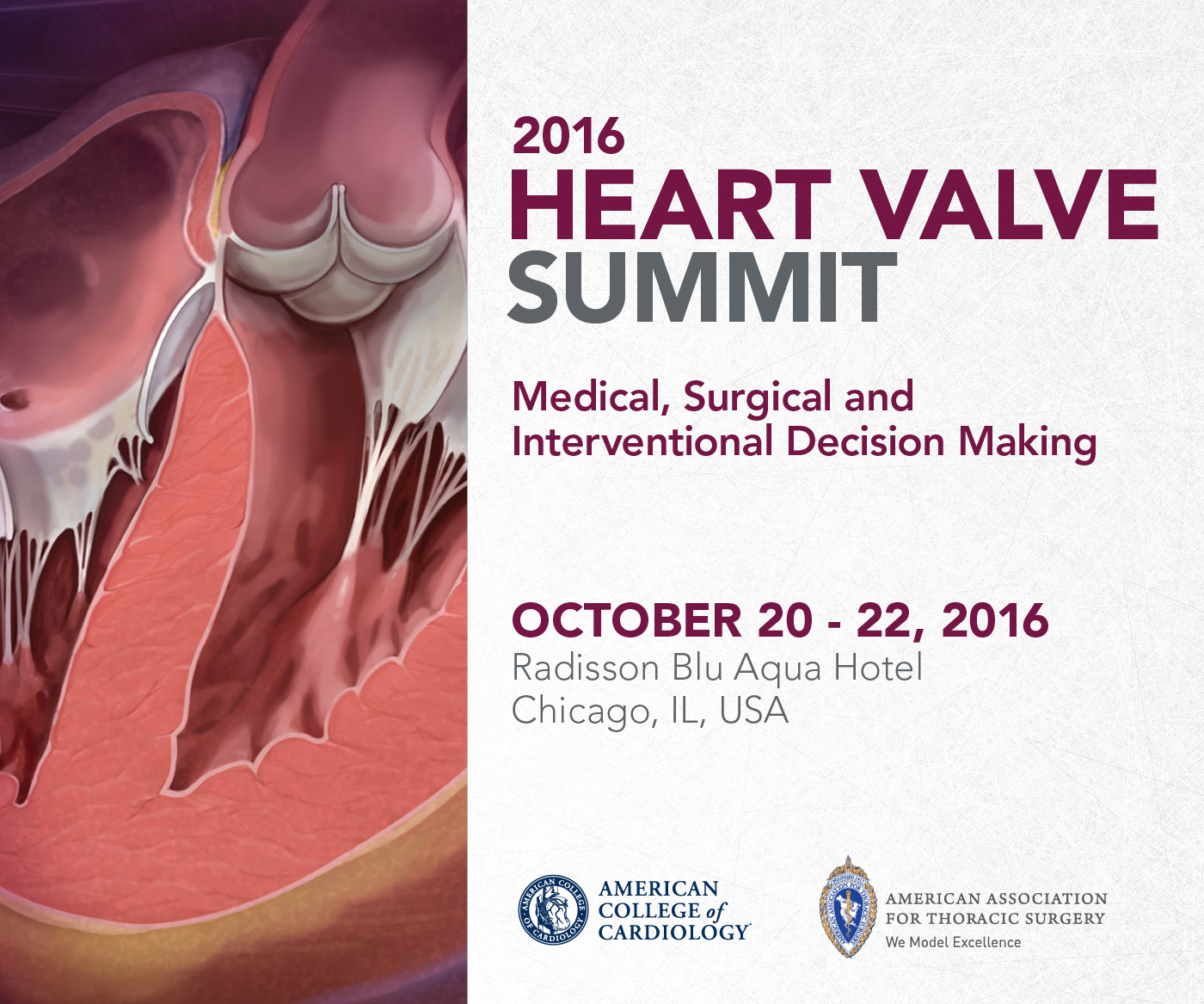
Don’t Miss the 2016 Heart Valve Summit: Medical, Surgical & Interventional Decision Making
October 20-22, 2016
Radisson Blu Aqua Hotel
Chicago, IL
Course Directors
David H. Adams
Steven F. Bolling
Robert O. Bonow
Howard C. Herrmann
Nurse Planner
Michele Mistovich
Course Overview
The American College of Cardiology and the American Association for Thoracic Surgery are again partnering to bring together cardiologists and surgeons in a cooperative, case-based course to address the rapid advances in the treatment of valvular heart disease (VHD).
Focusing on interactivity and practical decision-making, this unique conference will engage participants in discussions, debates and potential controversies using real-world cases. Its renowned faculty will include experts on the cutting edge of clinically relevant VHD data.
The interdisciplinary course emphasizes clinical decision-making with medical, surgical and interventional options for patient care, taking into account that constantly changing management tools can impact the surgical team. There will be breakout sessions for cardiologists, cardiac surgeons, nurses and physician assistants designed to help specialists manage their unique challenges from a team perspective.
Target Audience
Cardiologists, interventional cardiologists, cardiothoracic surgeons, internists, nurses, physician assistants and health care professionals involved in VHD evaluation, diagnosis and/or management.
October 20-22, 2016
Radisson Blu Aqua Hotel
Chicago, IL
Course Directors
David H. Adams
Steven F. Bolling
Robert O. Bonow
Howard C. Herrmann
Nurse Planner
Michele Mistovich
Course Overview
The American College of Cardiology and the American Association for Thoracic Surgery are again partnering to bring together cardiologists and surgeons in a cooperative, case-based course to address the rapid advances in the treatment of valvular heart disease (VHD).
Focusing on interactivity and practical decision-making, this unique conference will engage participants in discussions, debates and potential controversies using real-world cases. Its renowned faculty will include experts on the cutting edge of clinically relevant VHD data.
The interdisciplinary course emphasizes clinical decision-making with medical, surgical and interventional options for patient care, taking into account that constantly changing management tools can impact the surgical team. There will be breakout sessions for cardiologists, cardiac surgeons, nurses and physician assistants designed to help specialists manage their unique challenges from a team perspective.
Target Audience
Cardiologists, interventional cardiologists, cardiothoracic surgeons, internists, nurses, physician assistants and health care professionals involved in VHD evaluation, diagnosis and/or management.
October 20-22, 2016
Radisson Blu Aqua Hotel
Chicago, IL
Course Directors
David H. Adams
Steven F. Bolling
Robert O. Bonow
Howard C. Herrmann
Nurse Planner
Michele Mistovich
Course Overview
The American College of Cardiology and the American Association for Thoracic Surgery are again partnering to bring together cardiologists and surgeons in a cooperative, case-based course to address the rapid advances in the treatment of valvular heart disease (VHD).
Focusing on interactivity and practical decision-making, this unique conference will engage participants in discussions, debates and potential controversies using real-world cases. Its renowned faculty will include experts on the cutting edge of clinically relevant VHD data.
The interdisciplinary course emphasizes clinical decision-making with medical, surgical and interventional options for patient care, taking into account that constantly changing management tools can impact the surgical team. There will be breakout sessions for cardiologists, cardiac surgeons, nurses and physician assistants designed to help specialists manage their unique challenges from a team perspective.
Target Audience
Cardiologists, interventional cardiologists, cardiothoracic surgeons, internists, nurses, physician assistants and health care professionals involved in VHD evaluation, diagnosis and/or management.
AATS Focus on Thoracic Surgery: Current and Future Challenges
View Preliminary Program & Register
October 28-29, 2016
Westin Boston Waterfront Hotel
Boston, MA, USA
Program Directors
G. Alexander Patterson
David J. Sugarbaker
Program Committee
Thomas A. D’Amico
Shaf Keshavjee
James D. Luketich
Bryan F. Meyers
Scott J. Swanson
Overview
Currently practicing surgeons will be able to improve patient outcomes by enriching their knowledge and technical skills in the definition, diagnosis and resolution of thoracic surgical difficulties and post-operative complications. Expert faculty will provide state-of-the-art solutions to challenges in the field. Attendees will augment their overall understanding of thoracic diseases, upgrade their competency and ability to formulate new clinical strategies, and enhance their diagnosis and surgical treatment of thoracic diseases.
View Preliminary Program & Register
October 28-29, 2016
Westin Boston Waterfront Hotel
Boston, MA, USA
Program Directors
G. Alexander Patterson
David J. Sugarbaker
Program Committee
Thomas A. D’Amico
Shaf Keshavjee
James D. Luketich
Bryan F. Meyers
Scott J. Swanson
Overview
Currently practicing surgeons will be able to improve patient outcomes by enriching their knowledge and technical skills in the definition, diagnosis and resolution of thoracic surgical difficulties and post-operative complications. Expert faculty will provide state-of-the-art solutions to challenges in the field. Attendees will augment their overall understanding of thoracic diseases, upgrade their competency and ability to formulate new clinical strategies, and enhance their diagnosis and surgical treatment of thoracic diseases.
View Preliminary Program & Register
October 28-29, 2016
Westin Boston Waterfront Hotel
Boston, MA, USA
Program Directors
G. Alexander Patterson
David J. Sugarbaker
Program Committee
Thomas A. D’Amico
Shaf Keshavjee
James D. Luketich
Bryan F. Meyers
Scott J. Swanson
Overview
Currently practicing surgeons will be able to improve patient outcomes by enriching their knowledge and technical skills in the definition, diagnosis and resolution of thoracic surgical difficulties and post-operative complications. Expert faculty will provide state-of-the-art solutions to challenges in the field. Attendees will augment their overall understanding of thoracic diseases, upgrade their competency and ability to formulate new clinical strategies, and enhance their diagnosis and surgical treatment of thoracic diseases.
Registration and Housing Now Open: AATS Clinical Trials Methods Course 2016
October 20-22, 2016
Hyatt Regency O’Hare
Chicago, IL
Program Directors
David H. Harpole, Jr.
Marco A. Zenati
This course will provide an intensive and interactive training program for cardiothoracic surgeons across all subspecialties to acquire the critical skills required in effective clinical trial design and implementation. This course is particularly suited to help professionals who are considering applying for clinical trial funding to better understand the complex nature of preparing and submitting clinical trial proposals.
Invited faculty includes currently funded clinical trial leading investigators and experts in the field of biostatistics and health sciences research. The program will offer a process in which the clinical trial protocol development can be streamlined. Interactive features will include hands-on focus groups and mock study sessions.
Register Today! Space available for only 40 participants.
October 20-22, 2016
Hyatt Regency O’Hare
Chicago, IL
Program Directors
David H. Harpole, Jr.
Marco A. Zenati
This course will provide an intensive and interactive training program for cardiothoracic surgeons across all subspecialties to acquire the critical skills required in effective clinical trial design and implementation. This course is particularly suited to help professionals who are considering applying for clinical trial funding to better understand the complex nature of preparing and submitting clinical trial proposals.
Invited faculty includes currently funded clinical trial leading investigators and experts in the field of biostatistics and health sciences research. The program will offer a process in which the clinical trial protocol development can be streamlined. Interactive features will include hands-on focus groups and mock study sessions.
Register Today! Space available for only 40 participants.
October 20-22, 2016
Hyatt Regency O’Hare
Chicago, IL
Program Directors
David H. Harpole, Jr.
Marco A. Zenati
This course will provide an intensive and interactive training program for cardiothoracic surgeons across all subspecialties to acquire the critical skills required in effective clinical trial design and implementation. This course is particularly suited to help professionals who are considering applying for clinical trial funding to better understand the complex nature of preparing and submitting clinical trial proposals.
Invited faculty includes currently funded clinical trial leading investigators and experts in the field of biostatistics and health sciences research. The program will offer a process in which the clinical trial protocol development can be streamlined. Interactive features will include hands-on focus groups and mock study sessions.
Register Today! Space available for only 40 participants.
Register Today: Inaugural Patient Safety Course
June 24-25, 2016
Renaissance Boston Waterfront Hotel
Boston, MA
Co-Directors
Thoralf M. Sundt, III
Steven Yule
Program Committee
David J. Bunnell (APACVS)
David C. Fitzgerald (AMSECT)
Jake Jaquiss
M. Blair Marshall
Shannon Pengel
Kenneth Shann (AMSECT)
Marco Zenati
Patient Safety is essential for successful surgical care — in cardiothoracic surgery — and all disciplines. In the more than 10 years since the Institute of Medicine made patient safety a priority, little progress has been made in changing culture and practice on the front lines.
This two-day course — including team training and simulation experiences — will make a difference, offering surgical team members practical safety behaviors for improving patient outcomes.
Special Benefits for Team Registration!
Housing Closes June 2nd.
June 24-25, 2016
Renaissance Boston Waterfront Hotel
Boston, MA
Co-Directors
Thoralf M. Sundt, III
Steven Yule
Program Committee
David J. Bunnell (APACVS)
David C. Fitzgerald (AMSECT)
Jake Jaquiss
M. Blair Marshall
Shannon Pengel
Kenneth Shann (AMSECT)
Marco Zenati
Patient Safety is essential for successful surgical care — in cardiothoracic surgery — and all disciplines. In the more than 10 years since the Institute of Medicine made patient safety a priority, little progress has been made in changing culture and practice on the front lines.
This two-day course — including team training and simulation experiences — will make a difference, offering surgical team members practical safety behaviors for improving patient outcomes.
Special Benefits for Team Registration!
Housing Closes June 2nd.
June 24-25, 2016
Renaissance Boston Waterfront Hotel
Boston, MA
Co-Directors
Thoralf M. Sundt, III
Steven Yule
Program Committee
David J. Bunnell (APACVS)
David C. Fitzgerald (AMSECT)
Jake Jaquiss
M. Blair Marshall
Shannon Pengel
Kenneth Shann (AMSECT)
Marco Zenati
Patient Safety is essential for successful surgical care — in cardiothoracic surgery — and all disciplines. In the more than 10 years since the Institute of Medicine made patient safety a priority, little progress has been made in changing culture and practice on the front lines.
This two-day course — including team training and simulation experiences — will make a difference, offering surgical team members practical safety behaviors for improving patient outcomes.
Special Benefits for Team Registration!
Housing Closes June 2nd.
VIDEO: TAVR may soon eclipse surgery for aortic stenosis patients
BALTIMORE – A study comparing the causes and timing of death in high-risk patients with severe, symptomatic aortic stenosis suggests that transcatheter aortic valve replacement (TAVR) may have significant advantages over surgical aortic valve replacement (SAVR).
The research team, presenting their findings at the annual meeting of the American Association for Thoracic Surgery, revealed that death rates in the TAVR and SAVR cohorts in the CoreValve US Pivotal Trial High Risk Study were similar at 0-30 days and 91-365 days post procedure, but found that more SAVR patients died from day 31-90 related to bleeding, frailty, and comorbid diseases. The investigators concluded that this finding reflected the impact of the added strain of surgery over intravascular intervention for aortic valve replacement.
Dr. Craig Smith, chair of the department of surgery at NewYork–Presbyterian Hospital/Columbia University Medical Center, and a discussant on the paper, said this study is the only randomized clinical trial to show inferiority of surgery to TAVR.
“The difference seems to reside in the recovery phase mortality, which they showed very well,” Dr. Smith said in a video interview. He predicted that the trial results would add to the momentum making TAVR the first choice for any patient who is high risk and at least an equivalent choice for patients who are considered intermediate risk.
“The big question on the horizon is what is the best thing to recommend to patients who we classify as low risk,” Dr. Smith said. “Unless something happens to the impressive results that TAVR is racking up, in a few years … approval will be granted for those who are low risk.”
Dr. Smith reported no relevant financial disclosures.
The video associated with this article is no longer available on this site. Please view all of our videos on the MDedge YouTube channel
On Twitter @richpizzi
BALTIMORE – A study comparing the causes and timing of death in high-risk patients with severe, symptomatic aortic stenosis suggests that transcatheter aortic valve replacement (TAVR) may have significant advantages over surgical aortic valve replacement (SAVR).
The research team, presenting their findings at the annual meeting of the American Association for Thoracic Surgery, revealed that death rates in the TAVR and SAVR cohorts in the CoreValve US Pivotal Trial High Risk Study were similar at 0-30 days and 91-365 days post procedure, but found that more SAVR patients died from day 31-90 related to bleeding, frailty, and comorbid diseases. The investigators concluded that this finding reflected the impact of the added strain of surgery over intravascular intervention for aortic valve replacement.
Dr. Craig Smith, chair of the department of surgery at NewYork–Presbyterian Hospital/Columbia University Medical Center, and a discussant on the paper, said this study is the only randomized clinical trial to show inferiority of surgery to TAVR.
“The difference seems to reside in the recovery phase mortality, which they showed very well,” Dr. Smith said in a video interview. He predicted that the trial results would add to the momentum making TAVR the first choice for any patient who is high risk and at least an equivalent choice for patients who are considered intermediate risk.
“The big question on the horizon is what is the best thing to recommend to patients who we classify as low risk,” Dr. Smith said. “Unless something happens to the impressive results that TAVR is racking up, in a few years … approval will be granted for those who are low risk.”
Dr. Smith reported no relevant financial disclosures.
The video associated with this article is no longer available on this site. Please view all of our videos on the MDedge YouTube channel
On Twitter @richpizzi
BALTIMORE – A study comparing the causes and timing of death in high-risk patients with severe, symptomatic aortic stenosis suggests that transcatheter aortic valve replacement (TAVR) may have significant advantages over surgical aortic valve replacement (SAVR).
The research team, presenting their findings at the annual meeting of the American Association for Thoracic Surgery, revealed that death rates in the TAVR and SAVR cohorts in the CoreValve US Pivotal Trial High Risk Study were similar at 0-30 days and 91-365 days post procedure, but found that more SAVR patients died from day 31-90 related to bleeding, frailty, and comorbid diseases. The investigators concluded that this finding reflected the impact of the added strain of surgery over intravascular intervention for aortic valve replacement.
Dr. Craig Smith, chair of the department of surgery at NewYork–Presbyterian Hospital/Columbia University Medical Center, and a discussant on the paper, said this study is the only randomized clinical trial to show inferiority of surgery to TAVR.
“The difference seems to reside in the recovery phase mortality, which they showed very well,” Dr. Smith said in a video interview. He predicted that the trial results would add to the momentum making TAVR the first choice for any patient who is high risk and at least an equivalent choice for patients who are considered intermediate risk.
“The big question on the horizon is what is the best thing to recommend to patients who we classify as low risk,” Dr. Smith said. “Unless something happens to the impressive results that TAVR is racking up, in a few years … approval will be granted for those who are low risk.”
Dr. Smith reported no relevant financial disclosures.
The video associated with this article is no longer available on this site. Please view all of our videos on the MDedge YouTube channel
On Twitter @richpizzi
AT THE AATS ANNUAL MEETING
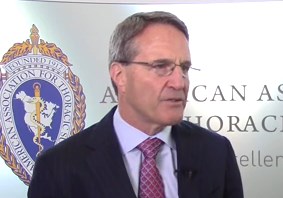
VIDEO: EVLP may extend lung preservation, quality for transplants
BALTIMORE – The use of ex vivo lung perfusion (EVLP) may allow for the safe transplantation of lungs preserved for more than 12 hours, according to a study presented at the annual meeting of the American Association for Thoracic Surgery.
A research team at the University of Toronto evaluated the outcomes of transplant patients who received a lung with a preservation time of over 12 hours between January 2006 and April 2015 and compared them to the general lung transplant population. Median hospital and ICU length of stay were similar between the two groups, and Kaplan-Meier survival curves between the two groups did not show any difference. Preservation time, donor PO2, and use of EVLP were not significant variables affecting survival.
Dr. Bartley P. Griffith, chief of cardiac surgery at the University of Maryland, Baltimore, and a discussant on the paper at the meeting, said that the findings of the study open up the possibility of a more “planned” approach to transplantation.
“Anything that not only extends preservation time, but perhaps even improves quality of preservation, would be a godsend,” Dr. Griffith said in a video interview. He cautioned that the “devil is in the details,” and that the data had to be examined closely. Nevertheless, Dr. Griffith said transplant surgeons should be grateful for the important work done by the University of Toronto team.
Dr. Griffith reported no relevant financial disclosures.
The video associated with this article is no longer available on this site. Please view all of our videos on the MDedge YouTube channel
On Twitter @richpizzi
BALTIMORE – The use of ex vivo lung perfusion (EVLP) may allow for the safe transplantation of lungs preserved for more than 12 hours, according to a study presented at the annual meeting of the American Association for Thoracic Surgery.
A research team at the University of Toronto evaluated the outcomes of transplant patients who received a lung with a preservation time of over 12 hours between January 2006 and April 2015 and compared them to the general lung transplant population. Median hospital and ICU length of stay were similar between the two groups, and Kaplan-Meier survival curves between the two groups did not show any difference. Preservation time, donor PO2, and use of EVLP were not significant variables affecting survival.
Dr. Bartley P. Griffith, chief of cardiac surgery at the University of Maryland, Baltimore, and a discussant on the paper at the meeting, said that the findings of the study open up the possibility of a more “planned” approach to transplantation.
“Anything that not only extends preservation time, but perhaps even improves quality of preservation, would be a godsend,” Dr. Griffith said in a video interview. He cautioned that the “devil is in the details,” and that the data had to be examined closely. Nevertheless, Dr. Griffith said transplant surgeons should be grateful for the important work done by the University of Toronto team.
Dr. Griffith reported no relevant financial disclosures.
The video associated with this article is no longer available on this site. Please view all of our videos on the MDedge YouTube channel
On Twitter @richpizzi
BALTIMORE – The use of ex vivo lung perfusion (EVLP) may allow for the safe transplantation of lungs preserved for more than 12 hours, according to a study presented at the annual meeting of the American Association for Thoracic Surgery.
A research team at the University of Toronto evaluated the outcomes of transplant patients who received a lung with a preservation time of over 12 hours between January 2006 and April 2015 and compared them to the general lung transplant population. Median hospital and ICU length of stay were similar between the two groups, and Kaplan-Meier survival curves between the two groups did not show any difference. Preservation time, donor PO2, and use of EVLP were not significant variables affecting survival.
Dr. Bartley P. Griffith, chief of cardiac surgery at the University of Maryland, Baltimore, and a discussant on the paper at the meeting, said that the findings of the study open up the possibility of a more “planned” approach to transplantation.
“Anything that not only extends preservation time, but perhaps even improves quality of preservation, would be a godsend,” Dr. Griffith said in a video interview. He cautioned that the “devil is in the details,” and that the data had to be examined closely. Nevertheless, Dr. Griffith said transplant surgeons should be grateful for the important work done by the University of Toronto team.
Dr. Griffith reported no relevant financial disclosures.
The video associated with this article is no longer available on this site. Please view all of our videos on the MDedge YouTube channel
On Twitter @richpizzi
AT THE AATS ANNUAL MEETING
VIDEO: Identifying patients who will benefit from pulmonary metastasectomy
BALTIMORE – New research from Memorial Sloan Kettering Cancer Center in New York could help surgeons better determine which patients with soft tissue sarcoma may benefit most from pulmonary metastasectomy.
The results of the research, presented at the annual meeting of the American Association for Thoracic Surgery, suggest that preoperative factors such as primary tumor histology and size, number of metastases, time from initial resection of the primary, absence of extrapulmonary disease, and thoracoscopic resection are associated with improved survival in STS patients.
Dr. Garrett L. Walsh, professor of surgery at the University of Texas MD Anderson Cancer Center, Houston, and a discussant on the paper at the meeting, said the study was important because it showed the power of a prospective surgical database, retrospectively viewed in this particular case. He said that the Sloan Kettering research was likely “as good as it’s going to get,” given that a randomized controlled trial is unlikely ever to occur with STS patients.
“Trying to select the patients we think are going to do well with surgery has always been one of the challenging aspects of thoracic surgery,” Dr. Walsh said in a video interview. “This paper may help with better selection of patients from that large cohort who are referred to us for pulmonary metastasectomy.”
Dr. Walsh reported no relevant financial disclosures.
The video associated with this article is no longer available on this site. Please view all of our videos on the MDedge YouTube channel
On Twitter @richpizzi
BALTIMORE – New research from Memorial Sloan Kettering Cancer Center in New York could help surgeons better determine which patients with soft tissue sarcoma may benefit most from pulmonary metastasectomy.
The results of the research, presented at the annual meeting of the American Association for Thoracic Surgery, suggest that preoperative factors such as primary tumor histology and size, number of metastases, time from initial resection of the primary, absence of extrapulmonary disease, and thoracoscopic resection are associated with improved survival in STS patients.
Dr. Garrett L. Walsh, professor of surgery at the University of Texas MD Anderson Cancer Center, Houston, and a discussant on the paper at the meeting, said the study was important because it showed the power of a prospective surgical database, retrospectively viewed in this particular case. He said that the Sloan Kettering research was likely “as good as it’s going to get,” given that a randomized controlled trial is unlikely ever to occur with STS patients.
“Trying to select the patients we think are going to do well with surgery has always been one of the challenging aspects of thoracic surgery,” Dr. Walsh said in a video interview. “This paper may help with better selection of patients from that large cohort who are referred to us for pulmonary metastasectomy.”
Dr. Walsh reported no relevant financial disclosures.
The video associated with this article is no longer available on this site. Please view all of our videos on the MDedge YouTube channel
On Twitter @richpizzi
BALTIMORE – New research from Memorial Sloan Kettering Cancer Center in New York could help surgeons better determine which patients with soft tissue sarcoma may benefit most from pulmonary metastasectomy.
The results of the research, presented at the annual meeting of the American Association for Thoracic Surgery, suggest that preoperative factors such as primary tumor histology and size, number of metastases, time from initial resection of the primary, absence of extrapulmonary disease, and thoracoscopic resection are associated with improved survival in STS patients.
Dr. Garrett L. Walsh, professor of surgery at the University of Texas MD Anderson Cancer Center, Houston, and a discussant on the paper at the meeting, said the study was important because it showed the power of a prospective surgical database, retrospectively viewed in this particular case. He said that the Sloan Kettering research was likely “as good as it’s going to get,” given that a randomized controlled trial is unlikely ever to occur with STS patients.
“Trying to select the patients we think are going to do well with surgery has always been one of the challenging aspects of thoracic surgery,” Dr. Walsh said in a video interview. “This paper may help with better selection of patients from that large cohort who are referred to us for pulmonary metastasectomy.”
Dr. Walsh reported no relevant financial disclosures.
The video associated with this article is no longer available on this site. Please view all of our videos on the MDedge YouTube channel
On Twitter @richpizzi
AT THE AATS ANNUAL MEETING
VIDEO: Two good options for mitral valve repair
BALTIMORE – Degenerative mitral regurgitation due to anterior or bileaflet prolapse can be treated with excellent results by both the traditional double orifice edge-to-edge repair or the implantation of artificial chordae, combined with ring annuloplasty, according to a study presented at the annual meeting of the American Association for Thoracic Surgery.
Researchers at San Raffaele University Hospital in Milan undertook a long-term comparison between the two methods of degenerative MR repair and found no differences in outcomes in cases of bileaflet prolapse, whereas in isolated anterior leaflet prolapse, the double orifice repair actually appeared to be more effective.
Mitral valve repair is a very well-accepted modality to fix posterior leaflet prolapse, according to Dr. Marc Ruel, chief of cardiac surgery at the University of Ottawa Heart Institute and a discussant on the paper at the meeting. But anterior mitral leaflet prolapse is a much more challenging operation, he said, and surgeons are looking for a “foolproof” way to address it.
“The double orifice repair, for most surgeons, is a much simpler procedure than doing artificial chordae, so this is good news,” Dr. Ruel said. “It shows that a fairly reproducible way of repairing the mitral valve seems to work as well, and likely better in some lesions, than the more complex way of addressing it.”
Dr. Ruel, who discusses the study in this video interview, reported no relevant financial disclosures.
The video associated with this article is no longer available on this site. Please view all of our videos on the MDedge YouTube channel
On Twitter @richpizzi
BALTIMORE – Degenerative mitral regurgitation due to anterior or bileaflet prolapse can be treated with excellent results by both the traditional double orifice edge-to-edge repair or the implantation of artificial chordae, combined with ring annuloplasty, according to a study presented at the annual meeting of the American Association for Thoracic Surgery.
Researchers at San Raffaele University Hospital in Milan undertook a long-term comparison between the two methods of degenerative MR repair and found no differences in outcomes in cases of bileaflet prolapse, whereas in isolated anterior leaflet prolapse, the double orifice repair actually appeared to be more effective.
Mitral valve repair is a very well-accepted modality to fix posterior leaflet prolapse, according to Dr. Marc Ruel, chief of cardiac surgery at the University of Ottawa Heart Institute and a discussant on the paper at the meeting. But anterior mitral leaflet prolapse is a much more challenging operation, he said, and surgeons are looking for a “foolproof” way to address it.
“The double orifice repair, for most surgeons, is a much simpler procedure than doing artificial chordae, so this is good news,” Dr. Ruel said. “It shows that a fairly reproducible way of repairing the mitral valve seems to work as well, and likely better in some lesions, than the more complex way of addressing it.”
Dr. Ruel, who discusses the study in this video interview, reported no relevant financial disclosures.
The video associated with this article is no longer available on this site. Please view all of our videos on the MDedge YouTube channel
On Twitter @richpizzi
BALTIMORE – Degenerative mitral regurgitation due to anterior or bileaflet prolapse can be treated with excellent results by both the traditional double orifice edge-to-edge repair or the implantation of artificial chordae, combined with ring annuloplasty, according to a study presented at the annual meeting of the American Association for Thoracic Surgery.
Researchers at San Raffaele University Hospital in Milan undertook a long-term comparison between the two methods of degenerative MR repair and found no differences in outcomes in cases of bileaflet prolapse, whereas in isolated anterior leaflet prolapse, the double orifice repair actually appeared to be more effective.
Mitral valve repair is a very well-accepted modality to fix posterior leaflet prolapse, according to Dr. Marc Ruel, chief of cardiac surgery at the University of Ottawa Heart Institute and a discussant on the paper at the meeting. But anterior mitral leaflet prolapse is a much more challenging operation, he said, and surgeons are looking for a “foolproof” way to address it.
“The double orifice repair, for most surgeons, is a much simpler procedure than doing artificial chordae, so this is good news,” Dr. Ruel said. “It shows that a fairly reproducible way of repairing the mitral valve seems to work as well, and likely better in some lesions, than the more complex way of addressing it.”
Dr. Ruel, who discusses the study in this video interview, reported no relevant financial disclosures.
The video associated with this article is no longer available on this site. Please view all of our videos on the MDedge YouTube channel
On Twitter @richpizzi
AT THE AATS ANNUAL MEETING
Invest in the Future of CT Surgery: Support the AATS Graham Foundation
Thank You for Investing in the Future of CT Surgery
Last year, the Foundation provided research and fellowship opportunities to 134 young surgeons from five continents, launched eight new programs and the Academic Excellence Award, while maintaining our core programs. We also increased revenue by almost $900,000, allowing us to grow program funding by 39 percent.
This wouldn’t have been possible without our individual donors and corporate/organizational partners.
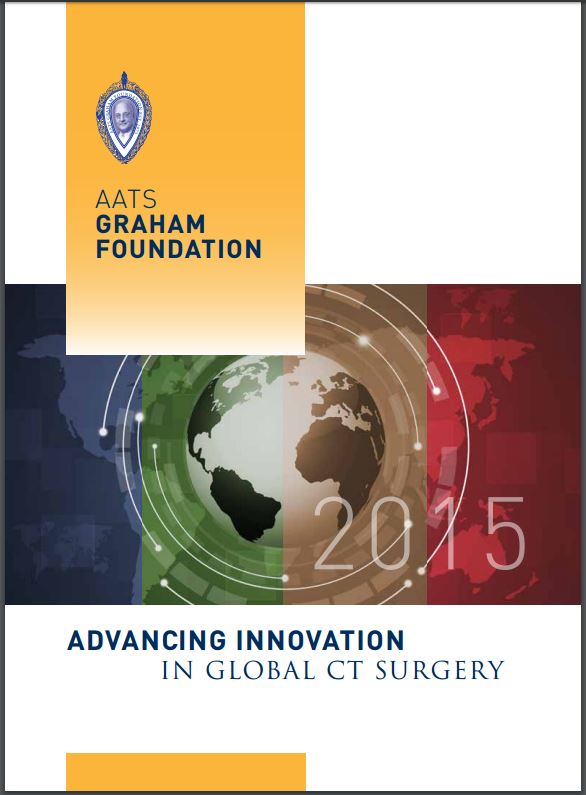
Read the 2015 Graham Foundation Annual Report
The AATS Graham Foundation has been hard at work over this past year to advance its mission of driving leadership in research and education through clinical and research fellowship programs. These spectacular programs are only possible with the support of our individual donors, institutional and foundation contributors, and industry partners. Read the report here.
Check out the Donor Honor Roll
Your support is key. Help us ensure the future of the specialty.
Thank You for Investing in the Future of CT Surgery
Last year, the Foundation provided research and fellowship opportunities to 134 young surgeons from five continents, launched eight new programs and the Academic Excellence Award, while maintaining our core programs. We also increased revenue by almost $900,000, allowing us to grow program funding by 39 percent.
This wouldn’t have been possible without our individual donors and corporate/organizational partners.
Read the 2015 Graham Foundation Annual Report
The AATS Graham Foundation has been hard at work over this past year to advance its mission of driving leadership in research and education through clinical and research fellowship programs. These spectacular programs are only possible with the support of our individual donors, institutional and foundation contributors, and industry partners. Read the report here.
Check out the Donor Honor Roll
Your support is key. Help us ensure the future of the specialty.
Thank You for Investing in the Future of CT Surgery
Last year, the Foundation provided research and fellowship opportunities to 134 young surgeons from five continents, launched eight new programs and the Academic Excellence Award, while maintaining our core programs. We also increased revenue by almost $900,000, allowing us to grow program funding by 39 percent.
This wouldn’t have been possible without our individual donors and corporate/organizational partners.
Read the 2015 Graham Foundation Annual Report
The AATS Graham Foundation has been hard at work over this past year to advance its mission of driving leadership in research and education through clinical and research fellowship programs. These spectacular programs are only possible with the support of our individual donors, institutional and foundation contributors, and industry partners. Read the report here.
Check out the Donor Honor Roll
Your support is key. Help us ensure the future of the specialty.