User login
American Academy of Pediatrics (AAP): 2011 National Conference and Exhibition
Hypertension, Diabetes Shouldn't Keep Obese Kids on the Couch
BOSTON – Obese children with type 2 diabetes and those with hypertension can safely engage in moderate to strenuous physical activity, with a few modifications and some common sense.
Heat-related illness and glucose regulation are the top issues for pediatricians who prescribe exercise for such patients – and these small athletes need supervision by an adult who can monitor them. But almost always, exercise is more beneficial than it is risky, Dr. Claire LeBlanc said at the annual meeting of the American Academy of Pediatrics.
"As long as their conditions are well controlled [and there is no organ damage], we want them to do lifestyle modification and get 60 minutes per day of moderate to vigorous physical activity," said Dr. LeBlanc, a pediatric rheumatologist at the University of Alberta, Edmonton.
But, she added, it’s important to loop in other physicians on the child’s care team. "Include your specialists, like cardiologists, especially if there are issues," and a child is becoming symptomatic.
A few basics are in order for any hypertensive child who begins to exercise, she said. "Obese children have a higher risk of poor heat tolerance and heat illness, so it’s important to consider acclimatization and conditioning." Use caution if children are exercising in a hot or humid environment, and make sure they are well hydrated. Although sodium is a concern with hypertension, these children might actually need a little extra salt if they are exercising strenuously.
Activity recommendations vary with the disease stage:
• Prehypertension. Any competitive sport is okay; the goal is 60 minutes per day of moderate to vigorous exercise. Encourage parents to keep children on a well-balanced diet and monitor blood pressure about twice a year.
• Stage 1 hypertension with no organ damage. Again, there’s no limit on eligibility for competitive sports. But if the child becomes symptomatic during exercise or if the blood pressure is persistently elevated, it’s time to check in with a cardiologist. Dietary modification is also a must.
• Stage 2 hypertension with no organ damage. Unless the blood pressure is stabilized by lifestyle modifications and/or drug therapy, these children shouldn’t engage in high-static sports (A high-static exercise is when there are high levels of isometric muscle contraction, when the muscle fires but there is no movement at a joint. Examples include gymnastics, yoga, rock climbing, and downhill skiing). Sports like boxing, weight lifting, and wrestling can cause acute increases in systolic, diastolic, and mean arterial pressures. A specialist should check out the new athlete after 1 week of exercise if all is going well, but be called immediately if the child becomes symptomatic.
• Hypertension plus cardiovascular disease. Competitive sports might not be out of the question based on the type of heart disease and its severity, but consult with a specialist before advising.
Children with type 2 diabetes can reap huge benefits from exercise, but there are still a few things to keep in mind before setting them loose on the playground or hockey field.
"These children can develop hypoglycemia during exercise, especially if they’re on insulin or oral agents," Dr. LeBlanc said. "To avoid hypoglycemia, be careful about the timing of insulin and exercise," avoiding exercise at the peak of insulin action.
Glucose should be tested before, during, and after exercise. Carbohydrate intake might need adjustment, and emergency glucose needs to be available to treat any emergent hypoglycemia. Adequate hydration is a must.
Hyperglycemia also can be a problem. "There should be no vigorous exercise if the blood glucose is above 250 mg/dL and there is also ketonuria or ketonemia," she said.
As with any diabetes patient, foot care is king. "Make sure there are no blisters or cuts that can become infected and cause problems," Dr. LeBlanc advised. This might mean putting limits on weight-bearing exercise, if the child has early signs of peripheral neuropathy.
"A medic alert bracelet [identifying the child as having diabetes] is always a good thing," she said. "But if the diabetes is under control and there are no serious complications, there are really no restrictions on physical activity."
Dr. LeBlanc said she had no relevant financial disclosures.
BOSTON – Obese children with type 2 diabetes and those with hypertension can safely engage in moderate to strenuous physical activity, with a few modifications and some common sense.
Heat-related illness and glucose regulation are the top issues for pediatricians who prescribe exercise for such patients – and these small athletes need supervision by an adult who can monitor them. But almost always, exercise is more beneficial than it is risky, Dr. Claire LeBlanc said at the annual meeting of the American Academy of Pediatrics.
"As long as their conditions are well controlled [and there is no organ damage], we want them to do lifestyle modification and get 60 minutes per day of moderate to vigorous physical activity," said Dr. LeBlanc, a pediatric rheumatologist at the University of Alberta, Edmonton.
But, she added, it’s important to loop in other physicians on the child’s care team. "Include your specialists, like cardiologists, especially if there are issues," and a child is becoming symptomatic.
A few basics are in order for any hypertensive child who begins to exercise, she said. "Obese children have a higher risk of poor heat tolerance and heat illness, so it’s important to consider acclimatization and conditioning." Use caution if children are exercising in a hot or humid environment, and make sure they are well hydrated. Although sodium is a concern with hypertension, these children might actually need a little extra salt if they are exercising strenuously.
Activity recommendations vary with the disease stage:
• Prehypertension. Any competitive sport is okay; the goal is 60 minutes per day of moderate to vigorous exercise. Encourage parents to keep children on a well-balanced diet and monitor blood pressure about twice a year.
• Stage 1 hypertension with no organ damage. Again, there’s no limit on eligibility for competitive sports. But if the child becomes symptomatic during exercise or if the blood pressure is persistently elevated, it’s time to check in with a cardiologist. Dietary modification is also a must.
• Stage 2 hypertension with no organ damage. Unless the blood pressure is stabilized by lifestyle modifications and/or drug therapy, these children shouldn’t engage in high-static sports (A high-static exercise is when there are high levels of isometric muscle contraction, when the muscle fires but there is no movement at a joint. Examples include gymnastics, yoga, rock climbing, and downhill skiing). Sports like boxing, weight lifting, and wrestling can cause acute increases in systolic, diastolic, and mean arterial pressures. A specialist should check out the new athlete after 1 week of exercise if all is going well, but be called immediately if the child becomes symptomatic.
• Hypertension plus cardiovascular disease. Competitive sports might not be out of the question based on the type of heart disease and its severity, but consult with a specialist before advising.
Children with type 2 diabetes can reap huge benefits from exercise, but there are still a few things to keep in mind before setting them loose on the playground or hockey field.
"These children can develop hypoglycemia during exercise, especially if they’re on insulin or oral agents," Dr. LeBlanc said. "To avoid hypoglycemia, be careful about the timing of insulin and exercise," avoiding exercise at the peak of insulin action.
Glucose should be tested before, during, and after exercise. Carbohydrate intake might need adjustment, and emergency glucose needs to be available to treat any emergent hypoglycemia. Adequate hydration is a must.
Hyperglycemia also can be a problem. "There should be no vigorous exercise if the blood glucose is above 250 mg/dL and there is also ketonuria or ketonemia," she said.
As with any diabetes patient, foot care is king. "Make sure there are no blisters or cuts that can become infected and cause problems," Dr. LeBlanc advised. This might mean putting limits on weight-bearing exercise, if the child has early signs of peripheral neuropathy.
"A medic alert bracelet [identifying the child as having diabetes] is always a good thing," she said. "But if the diabetes is under control and there are no serious complications, there are really no restrictions on physical activity."
Dr. LeBlanc said she had no relevant financial disclosures.
BOSTON – Obese children with type 2 diabetes and those with hypertension can safely engage in moderate to strenuous physical activity, with a few modifications and some common sense.
Heat-related illness and glucose regulation are the top issues for pediatricians who prescribe exercise for such patients – and these small athletes need supervision by an adult who can monitor them. But almost always, exercise is more beneficial than it is risky, Dr. Claire LeBlanc said at the annual meeting of the American Academy of Pediatrics.
"As long as their conditions are well controlled [and there is no organ damage], we want them to do lifestyle modification and get 60 minutes per day of moderate to vigorous physical activity," said Dr. LeBlanc, a pediatric rheumatologist at the University of Alberta, Edmonton.
But, she added, it’s important to loop in other physicians on the child’s care team. "Include your specialists, like cardiologists, especially if there are issues," and a child is becoming symptomatic.
A few basics are in order for any hypertensive child who begins to exercise, she said. "Obese children have a higher risk of poor heat tolerance and heat illness, so it’s important to consider acclimatization and conditioning." Use caution if children are exercising in a hot or humid environment, and make sure they are well hydrated. Although sodium is a concern with hypertension, these children might actually need a little extra salt if they are exercising strenuously.
Activity recommendations vary with the disease stage:
• Prehypertension. Any competitive sport is okay; the goal is 60 minutes per day of moderate to vigorous exercise. Encourage parents to keep children on a well-balanced diet and monitor blood pressure about twice a year.
• Stage 1 hypertension with no organ damage. Again, there’s no limit on eligibility for competitive sports. But if the child becomes symptomatic during exercise or if the blood pressure is persistently elevated, it’s time to check in with a cardiologist. Dietary modification is also a must.
• Stage 2 hypertension with no organ damage. Unless the blood pressure is stabilized by lifestyle modifications and/or drug therapy, these children shouldn’t engage in high-static sports (A high-static exercise is when there are high levels of isometric muscle contraction, when the muscle fires but there is no movement at a joint. Examples include gymnastics, yoga, rock climbing, and downhill skiing). Sports like boxing, weight lifting, and wrestling can cause acute increases in systolic, diastolic, and mean arterial pressures. A specialist should check out the new athlete after 1 week of exercise if all is going well, but be called immediately if the child becomes symptomatic.
• Hypertension plus cardiovascular disease. Competitive sports might not be out of the question based on the type of heart disease and its severity, but consult with a specialist before advising.
Children with type 2 diabetes can reap huge benefits from exercise, but there are still a few things to keep in mind before setting them loose on the playground or hockey field.
"These children can develop hypoglycemia during exercise, especially if they’re on insulin or oral agents," Dr. LeBlanc said. "To avoid hypoglycemia, be careful about the timing of insulin and exercise," avoiding exercise at the peak of insulin action.
Glucose should be tested before, during, and after exercise. Carbohydrate intake might need adjustment, and emergency glucose needs to be available to treat any emergent hypoglycemia. Adequate hydration is a must.
Hyperglycemia also can be a problem. "There should be no vigorous exercise if the blood glucose is above 250 mg/dL and there is also ketonuria or ketonemia," she said.
As with any diabetes patient, foot care is king. "Make sure there are no blisters or cuts that can become infected and cause problems," Dr. LeBlanc advised. This might mean putting limits on weight-bearing exercise, if the child has early signs of peripheral neuropathy.
"A medic alert bracelet [identifying the child as having diabetes] is always a good thing," she said. "But if the diabetes is under control and there are no serious complications, there are really no restrictions on physical activity."
Dr. LeBlanc said she had no relevant financial disclosures.
EXPERT OPINION FROM THE ANNUAL MEETING OF THE AMERICAN ACADEMY OF PEDIATRICS
Iron for Childhood Anemia: It's Elemental
BOSTON – Popeye’s prescription won’t restore iron levels in a child with frank anemia.
By the time iron-deficiency anemia has developed, no amount of spinach – or any other iron-rich food – can bring iron levels back up to normal, at least without the assistance of medical iron therapy.
"You can give a child three steaks a day and you won’t be able to get enough iron in to normalize the level," Dr. George Buchanan said at the annual meeting of the American Academy of Pediatrics. "Iron-rich foods can prevent iron deficiency, but they cannot treat it."
The reason lies in the body’s tightly controlled iron homeostasis. Just 10% of dietary iron is absorbed, and that amount varies widely because bioavailability differs among foods.
Breast milk, while relatively low in iron, has a very high bioavailability of 50%, said Dr. Buchanan, professor of pediatrics at the University of Texas Southwestern Medical Center, Dallas. Cow’s milk contains the same amount of iron – about 1 mg/L – but humans absorb very little of it.
So while cow’s milk is a perfect food for little bovines, it’s an imperfect food for little humans. "There’s not much iron in it, it’s poorly absorbed, and when the child’s stomach is full of cow’s milk, the appetite for other foods is not good. It’s not like we want to ban it – it’s a good source of vitamin D and calcium – but 24 ounces a day is all a toddler needs."
Overreliance on cow’s milk is only one possible contributor to childhood anemia, Dr. Buchanan said. Occult bleeding from the gastrointestinal tract, esophagus, lungs, or kidneys can be just enough to tip an infant, especially a preemie, into anemia. Nosebleeds and menorrhagia contribute to anemia in older children, as can sports activity. "Teens are in a stage of rapid growth and often poor diet, combined with an increase in physical activity," Dr. Buchanan said. Jogging or other vigorous activity can cause just enough minor intestinal trauma to leach away precious hemoglobin.
Genetic diseases also can underlie anemia. Pediatricians are familiar with thalassemia, but might not know about the recently described iron-refractory iron-deficiency anemia (IRIDA).
Children with a mutation in the TMPRSS6 gene produce too much hepcidin, a protein that regulates intracellular iron transport. Its normal function is to protect cells from taking up too much iron; an excess prevents iron from migrating into cells, keeping it in storage.
Proton pump inhibitors and H2 receptor antagonists can also interfere with iron absorption.
No matter what the cause, frank anemia is the last stage of iron depletion. The process starts when stored iron isn’t replaced, leading to iron-deficient erythropoeisis. Iron-deficiency anemia is the final stage of the process.
Various tests can identify each stage of the disorder, "But it may not be feasible or practical to do all of these," Dr. Buchanan said. The iron absorption test is the simplest way to quantify the stage of iron depletion, and to differentiate dietary deficiency from malabsorption syndromes.
"All of these factors can be screened for with this underutilized test," which consists of a single oral dose of 1 mg/kg iron. Serum iron is measured at baseline and 2 hours after the dosing. "The level in a normal child without iron deficiency will increase only slightly. In a child with a poor diet, it will be markedly increased. And in a child with malabsorption, the level won’t change at all."
Treatment seems simple – elemental iron in any of several forms. But each preparation has benefits and drawbacks, and each contains different amounts of iron. "Ferrous sulfate is well absorbed but has a reputation for the most side effects; but it’s the least costly. Iron polysaccharide is not as well absorbed but has fewer side effects – and costs more," he said.
Even different types of the same iron preparation can have different concentrations. For instance, ferrous sulfate drops can range from 15 mg/0.6 mL to 15 or 25 mg/mL. "It’s all over the place, so the best thing is to get to know one or two and stick with them," he said.
Getting the iron in is often more complicated than figuring out how it vanished. "It tastes bad and toddlers spit it out. Maybe parents don’t give it the way you instruct. And it’s a lengthy course of treatment: 3-4 months given twice a day, and multiple prescription refills."
Intravenous iron might someday solve the problem of compliance. Early data from a cohort of Dr. Buchanan’s patients suggest that it benefits toddlers and teens who don’t respond to oral therapy because of compliance issues. "We gave 1-7 IV doses of iron sucrose to 38 children. The toxicity was minimal, it was done in an outpatient setting, and all of them responded well," he said.
The trial prompted a now-ongoing prospective study of IV low-molecular-weight iron dextrin, given as a single dose over 1 hour to children and teens. Data on the first 22 patients will soon be presented.
"They all responded, with only some minor reactions," Dr. Buchanan said. "This is very preliminary, and I’m not recommending it. But it may be that someday we can give a single short infusion in the office or clinic and take care of the problem right away."
Dr. Buchanan said he had no relevant financial disclosures.
BOSTON – Popeye’s prescription won’t restore iron levels in a child with frank anemia.
By the time iron-deficiency anemia has developed, no amount of spinach – or any other iron-rich food – can bring iron levels back up to normal, at least without the assistance of medical iron therapy.
"You can give a child three steaks a day and you won’t be able to get enough iron in to normalize the level," Dr. George Buchanan said at the annual meeting of the American Academy of Pediatrics. "Iron-rich foods can prevent iron deficiency, but they cannot treat it."
The reason lies in the body’s tightly controlled iron homeostasis. Just 10% of dietary iron is absorbed, and that amount varies widely because bioavailability differs among foods.
Breast milk, while relatively low in iron, has a very high bioavailability of 50%, said Dr. Buchanan, professor of pediatrics at the University of Texas Southwestern Medical Center, Dallas. Cow’s milk contains the same amount of iron – about 1 mg/L – but humans absorb very little of it.
So while cow’s milk is a perfect food for little bovines, it’s an imperfect food for little humans. "There’s not much iron in it, it’s poorly absorbed, and when the child’s stomach is full of cow’s milk, the appetite for other foods is not good. It’s not like we want to ban it – it’s a good source of vitamin D and calcium – but 24 ounces a day is all a toddler needs."
Overreliance on cow’s milk is only one possible contributor to childhood anemia, Dr. Buchanan said. Occult bleeding from the gastrointestinal tract, esophagus, lungs, or kidneys can be just enough to tip an infant, especially a preemie, into anemia. Nosebleeds and menorrhagia contribute to anemia in older children, as can sports activity. "Teens are in a stage of rapid growth and often poor diet, combined with an increase in physical activity," Dr. Buchanan said. Jogging or other vigorous activity can cause just enough minor intestinal trauma to leach away precious hemoglobin.
Genetic diseases also can underlie anemia. Pediatricians are familiar with thalassemia, but might not know about the recently described iron-refractory iron-deficiency anemia (IRIDA).
Children with a mutation in the TMPRSS6 gene produce too much hepcidin, a protein that regulates intracellular iron transport. Its normal function is to protect cells from taking up too much iron; an excess prevents iron from migrating into cells, keeping it in storage.
Proton pump inhibitors and H2 receptor antagonists can also interfere with iron absorption.
No matter what the cause, frank anemia is the last stage of iron depletion. The process starts when stored iron isn’t replaced, leading to iron-deficient erythropoeisis. Iron-deficiency anemia is the final stage of the process.
Various tests can identify each stage of the disorder, "But it may not be feasible or practical to do all of these," Dr. Buchanan said. The iron absorption test is the simplest way to quantify the stage of iron depletion, and to differentiate dietary deficiency from malabsorption syndromes.
"All of these factors can be screened for with this underutilized test," which consists of a single oral dose of 1 mg/kg iron. Serum iron is measured at baseline and 2 hours after the dosing. "The level in a normal child without iron deficiency will increase only slightly. In a child with a poor diet, it will be markedly increased. And in a child with malabsorption, the level won’t change at all."
Treatment seems simple – elemental iron in any of several forms. But each preparation has benefits and drawbacks, and each contains different amounts of iron. "Ferrous sulfate is well absorbed but has a reputation for the most side effects; but it’s the least costly. Iron polysaccharide is not as well absorbed but has fewer side effects – and costs more," he said.
Even different types of the same iron preparation can have different concentrations. For instance, ferrous sulfate drops can range from 15 mg/0.6 mL to 15 or 25 mg/mL. "It’s all over the place, so the best thing is to get to know one or two and stick with them," he said.
Getting the iron in is often more complicated than figuring out how it vanished. "It tastes bad and toddlers spit it out. Maybe parents don’t give it the way you instruct. And it’s a lengthy course of treatment: 3-4 months given twice a day, and multiple prescription refills."
Intravenous iron might someday solve the problem of compliance. Early data from a cohort of Dr. Buchanan’s patients suggest that it benefits toddlers and teens who don’t respond to oral therapy because of compliance issues. "We gave 1-7 IV doses of iron sucrose to 38 children. The toxicity was minimal, it was done in an outpatient setting, and all of them responded well," he said.
The trial prompted a now-ongoing prospective study of IV low-molecular-weight iron dextrin, given as a single dose over 1 hour to children and teens. Data on the first 22 patients will soon be presented.
"They all responded, with only some minor reactions," Dr. Buchanan said. "This is very preliminary, and I’m not recommending it. But it may be that someday we can give a single short infusion in the office or clinic and take care of the problem right away."
Dr. Buchanan said he had no relevant financial disclosures.
BOSTON – Popeye’s prescription won’t restore iron levels in a child with frank anemia.
By the time iron-deficiency anemia has developed, no amount of spinach – or any other iron-rich food – can bring iron levels back up to normal, at least without the assistance of medical iron therapy.
"You can give a child three steaks a day and you won’t be able to get enough iron in to normalize the level," Dr. George Buchanan said at the annual meeting of the American Academy of Pediatrics. "Iron-rich foods can prevent iron deficiency, but they cannot treat it."
The reason lies in the body’s tightly controlled iron homeostasis. Just 10% of dietary iron is absorbed, and that amount varies widely because bioavailability differs among foods.
Breast milk, while relatively low in iron, has a very high bioavailability of 50%, said Dr. Buchanan, professor of pediatrics at the University of Texas Southwestern Medical Center, Dallas. Cow’s milk contains the same amount of iron – about 1 mg/L – but humans absorb very little of it.
So while cow’s milk is a perfect food for little bovines, it’s an imperfect food for little humans. "There’s not much iron in it, it’s poorly absorbed, and when the child’s stomach is full of cow’s milk, the appetite for other foods is not good. It’s not like we want to ban it – it’s a good source of vitamin D and calcium – but 24 ounces a day is all a toddler needs."
Overreliance on cow’s milk is only one possible contributor to childhood anemia, Dr. Buchanan said. Occult bleeding from the gastrointestinal tract, esophagus, lungs, or kidneys can be just enough to tip an infant, especially a preemie, into anemia. Nosebleeds and menorrhagia contribute to anemia in older children, as can sports activity. "Teens are in a stage of rapid growth and often poor diet, combined with an increase in physical activity," Dr. Buchanan said. Jogging or other vigorous activity can cause just enough minor intestinal trauma to leach away precious hemoglobin.
Genetic diseases also can underlie anemia. Pediatricians are familiar with thalassemia, but might not know about the recently described iron-refractory iron-deficiency anemia (IRIDA).
Children with a mutation in the TMPRSS6 gene produce too much hepcidin, a protein that regulates intracellular iron transport. Its normal function is to protect cells from taking up too much iron; an excess prevents iron from migrating into cells, keeping it in storage.
Proton pump inhibitors and H2 receptor antagonists can also interfere with iron absorption.
No matter what the cause, frank anemia is the last stage of iron depletion. The process starts when stored iron isn’t replaced, leading to iron-deficient erythropoeisis. Iron-deficiency anemia is the final stage of the process.
Various tests can identify each stage of the disorder, "But it may not be feasible or practical to do all of these," Dr. Buchanan said. The iron absorption test is the simplest way to quantify the stage of iron depletion, and to differentiate dietary deficiency from malabsorption syndromes.
"All of these factors can be screened for with this underutilized test," which consists of a single oral dose of 1 mg/kg iron. Serum iron is measured at baseline and 2 hours after the dosing. "The level in a normal child without iron deficiency will increase only slightly. In a child with a poor diet, it will be markedly increased. And in a child with malabsorption, the level won’t change at all."
Treatment seems simple – elemental iron in any of several forms. But each preparation has benefits and drawbacks, and each contains different amounts of iron. "Ferrous sulfate is well absorbed but has a reputation for the most side effects; but it’s the least costly. Iron polysaccharide is not as well absorbed but has fewer side effects – and costs more," he said.
Even different types of the same iron preparation can have different concentrations. For instance, ferrous sulfate drops can range from 15 mg/0.6 mL to 15 or 25 mg/mL. "It’s all over the place, so the best thing is to get to know one or two and stick with them," he said.
Getting the iron in is often more complicated than figuring out how it vanished. "It tastes bad and toddlers spit it out. Maybe parents don’t give it the way you instruct. And it’s a lengthy course of treatment: 3-4 months given twice a day, and multiple prescription refills."
Intravenous iron might someday solve the problem of compliance. Early data from a cohort of Dr. Buchanan’s patients suggest that it benefits toddlers and teens who don’t respond to oral therapy because of compliance issues. "We gave 1-7 IV doses of iron sucrose to 38 children. The toxicity was minimal, it was done in an outpatient setting, and all of them responded well," he said.
The trial prompted a now-ongoing prospective study of IV low-molecular-weight iron dextrin, given as a single dose over 1 hour to children and teens. Data on the first 22 patients will soon be presented.
"They all responded, with only some minor reactions," Dr. Buchanan said. "This is very preliminary, and I’m not recommending it. But it may be that someday we can give a single short infusion in the office or clinic and take care of the problem right away."
Dr. Buchanan said he had no relevant financial disclosures.
EXPERT ANALYSIS FROM THE ANNUAL MEETING OF THE AMERICAN ACADEMY OF PEDIATRICS
AAP's New SIDS Stoppers: Cleared Cribs, No Cosleeping
BOSTON – Plush, soft, fuzzy, warm, and cuddly – those seem like the perfect attributes for a newborn nursery.
Except if you’re the newborn.
A new policy from the American Academy of Pediatrics says that babies who sleep on their back on a firm, flat surface – in their own unadorned crib – are most protected from sudden infant death syndrome (SIDS) and the deadly related tragedies of suffocation, asphyxiation, and entrapment.

The AAP released its newest guidelines Oct. 18 for infant sleep safety and SIDS risk reduction (Pediatrics 2011 Oct. 17;doi:10.1542/peds.2011-2285). The take-home message for pediatricians and parents alike is a simple one, Dr. Rachel Moon said at a press briefing.
"Put baby on the back for every sleep. Use a firm sleep surface designed for infants, with no soft objects, wedges, positioners," or any other fashionable accoutrements such as ruffles, blankets, crib drapes, or bumper pads.
The ideal sleeping set-up? A crib, bassinet, or portable crib/play-yard in mom and dad’s room, with a firm mattress, a tight-fitting bottom sheet, and no blanket or other baby-dangerous decorative items.
Although such adornments may satisfy a parent’s fashion sense, they make no safety sense at all, said Dr. Moon, the policy’s primary author and a pediatrician at the Children’s National Medical Center, Washington.
Since 1992, when the AAP first launched its "Back to Sleep" campaign, SIDS cases in the United States have decreased by 50%. "But we’ve seen an alarming increase in other deaths," Dr. Moon said. "There has been a quadrupling of infant deaths due to suffocation and entrapment, and a lot of this is attributable to inappropriate bedding and to cosleeping" with parents.
Those deaths – grouped together as sudden unexplained infant deaths (SUID) – can’t always be distinguished from SIDS, she noted. SIDS infants probably have some vulnerability that predisposes them to an unexplained death, whether that is an inborn error of metabolism, prematurity, or exposure to cigarette smoke. SUID may occur either among those infants or among those who have no identifiable risk factors. Other than a coroner’s exam – almost universally unhelpful – there’s no way to tell these deaths apart.
The safest course is to make sure that infants have the safest possible sleep accommodations. The bare crib eliminates a number of dangerous factors that can cause an accidental infant death.
The new policy also tackles the controversial subject of cosleeping. The family bed has been promoted among many circles as the most natural way to care for a newborn. Some groups – and even physicians – have suggested that cosleeping may help prevent SIDS.
There are no data to support those claims, Dr. Moon said. In fact, cosleeping can put the infant at risk of smothering under heavy covers, airway obstruction if an adult limb falls across its face, and even overheating – a recognized SIDS risk factor.
Bed sharing is even more dangerous with adults who are medicated or have consumed alcohol or drugs, Dr. Moon added. Those adults will be less aware of their movements and whether they might endanger the sleeping infant.
"There has been a quadrupling of infant deaths due to suffocation and entrapment, and a lot of this is attributable to inappropriate bedding and to cosleeping."
Parents shouldn’t worry that babies might choke on their own secretions when sleeping on their backs, Dr. Moon said. Babies have built-in protective physical guards against choking. There’s also no evidence that placing newborns on their sides helps drain amniotic fluid or other secretions from their lungs. Moms who choose rooming-in after delivery should also put their baby to sleep in the supine position and request that nurses do the same.
Preterm babies and those with low birth weights are especially at risk for SIDS, Dr. Moon said. Even infants in the neonatal intensive care unit should sleep supine as soon as they are medically stable.
The AAP policy stresses the protective influence of breastfeeding, but notes that infants who come to the adults’ bed for nighttime nursing should go back to their own crib after feeding.
"Because of the extremely high risk of SIDS and suffocation on couches and armchairs, infants should never be fed on a couch or armchair when there is a high risk that the parent might fall asleep," according to the policy’s authors.
The AAP policy gives the pacifier its proper place as well. Pacifiers seem to protect against SIDS, although the mechanism isn’t really understood, Dr. Moon said. "It seems to have something to do with stimulating arousal," as the babies suck during sleep.
But if the plug comes unplugged during the night, don’t worry, she said. "Parents don’t need to worry about putting the pacifier back in the baby’s mouth, especially if the baby doesn’t seem to want it."
But Dr. Moon warned parents to never, ever attach a pacifier to an infant’s clothing in any way, especially with a string or ribbon around the baby’s neck.
Immunizations also protect against SIDS, so it’s critical to keep babies up to date with vaccinations, she said. And adults should never smoke around infants. Infants exposed to cigarette smoke are at a significantly increased risk of unexplained infant death.
Despite all the talk of supine positioning, supervised "tummy time" in which infants are allowed to lie prone for some time is also important, Dr. Moon added. Tummy time is an important way for infants to develop neck, back, and arm muscles, and prevent positional plagiocephaly.
BOSTON – Plush, soft, fuzzy, warm, and cuddly – those seem like the perfect attributes for a newborn nursery.
Except if you’re the newborn.
A new policy from the American Academy of Pediatrics says that babies who sleep on their back on a firm, flat surface – in their own unadorned crib – are most protected from sudden infant death syndrome (SIDS) and the deadly related tragedies of suffocation, asphyxiation, and entrapment.
The AAP released its newest guidelines Oct. 18 for infant sleep safety and SIDS risk reduction (Pediatrics 2011 Oct. 17;doi:10.1542/peds.2011-2285). The take-home message for pediatricians and parents alike is a simple one, Dr. Rachel Moon said at a press briefing.
"Put baby on the back for every sleep. Use a firm sleep surface designed for infants, with no soft objects, wedges, positioners," or any other fashionable accoutrements such as ruffles, blankets, crib drapes, or bumper pads.
The ideal sleeping set-up? A crib, bassinet, or portable crib/play-yard in mom and dad’s room, with a firm mattress, a tight-fitting bottom sheet, and no blanket or other baby-dangerous decorative items.
Although such adornments may satisfy a parent’s fashion sense, they make no safety sense at all, said Dr. Moon, the policy’s primary author and a pediatrician at the Children’s National Medical Center, Washington.
Since 1992, when the AAP first launched its "Back to Sleep" campaign, SIDS cases in the United States have decreased by 50%. "But we’ve seen an alarming increase in other deaths," Dr. Moon said. "There has been a quadrupling of infant deaths due to suffocation and entrapment, and a lot of this is attributable to inappropriate bedding and to cosleeping" with parents.
Those deaths – grouped together as sudden unexplained infant deaths (SUID) – can’t always be distinguished from SIDS, she noted. SIDS infants probably have some vulnerability that predisposes them to an unexplained death, whether that is an inborn error of metabolism, prematurity, or exposure to cigarette smoke. SUID may occur either among those infants or among those who have no identifiable risk factors. Other than a coroner’s exam – almost universally unhelpful – there’s no way to tell these deaths apart.
The safest course is to make sure that infants have the safest possible sleep accommodations. The bare crib eliminates a number of dangerous factors that can cause an accidental infant death.
The new policy also tackles the controversial subject of cosleeping. The family bed has been promoted among many circles as the most natural way to care for a newborn. Some groups – and even physicians – have suggested that cosleeping may help prevent SIDS.
There are no data to support those claims, Dr. Moon said. In fact, cosleeping can put the infant at risk of smothering under heavy covers, airway obstruction if an adult limb falls across its face, and even overheating – a recognized SIDS risk factor.
Bed sharing is even more dangerous with adults who are medicated or have consumed alcohol or drugs, Dr. Moon added. Those adults will be less aware of their movements and whether they might endanger the sleeping infant.
"There has been a quadrupling of infant deaths due to suffocation and entrapment, and a lot of this is attributable to inappropriate bedding and to cosleeping."
Parents shouldn’t worry that babies might choke on their own secretions when sleeping on their backs, Dr. Moon said. Babies have built-in protective physical guards against choking. There’s also no evidence that placing newborns on their sides helps drain amniotic fluid or other secretions from their lungs. Moms who choose rooming-in after delivery should also put their baby to sleep in the supine position and request that nurses do the same.
Preterm babies and those with low birth weights are especially at risk for SIDS, Dr. Moon said. Even infants in the neonatal intensive care unit should sleep supine as soon as they are medically stable.
The AAP policy stresses the protective influence of breastfeeding, but notes that infants who come to the adults’ bed for nighttime nursing should go back to their own crib after feeding.
"Because of the extremely high risk of SIDS and suffocation on couches and armchairs, infants should never be fed on a couch or armchair when there is a high risk that the parent might fall asleep," according to the policy’s authors.
The AAP policy gives the pacifier its proper place as well. Pacifiers seem to protect against SIDS, although the mechanism isn’t really understood, Dr. Moon said. "It seems to have something to do with stimulating arousal," as the babies suck during sleep.
But if the plug comes unplugged during the night, don’t worry, she said. "Parents don’t need to worry about putting the pacifier back in the baby’s mouth, especially if the baby doesn’t seem to want it."
But Dr. Moon warned parents to never, ever attach a pacifier to an infant’s clothing in any way, especially with a string or ribbon around the baby’s neck.
Immunizations also protect against SIDS, so it’s critical to keep babies up to date with vaccinations, she said. And adults should never smoke around infants. Infants exposed to cigarette smoke are at a significantly increased risk of unexplained infant death.
Despite all the talk of supine positioning, supervised "tummy time" in which infants are allowed to lie prone for some time is also important, Dr. Moon added. Tummy time is an important way for infants to develop neck, back, and arm muscles, and prevent positional plagiocephaly.
BOSTON – Plush, soft, fuzzy, warm, and cuddly – those seem like the perfect attributes for a newborn nursery.
Except if you’re the newborn.
A new policy from the American Academy of Pediatrics says that babies who sleep on their back on a firm, flat surface – in their own unadorned crib – are most protected from sudden infant death syndrome (SIDS) and the deadly related tragedies of suffocation, asphyxiation, and entrapment.
The AAP released its newest guidelines Oct. 18 for infant sleep safety and SIDS risk reduction (Pediatrics 2011 Oct. 17;doi:10.1542/peds.2011-2285). The take-home message for pediatricians and parents alike is a simple one, Dr. Rachel Moon said at a press briefing.
"Put baby on the back for every sleep. Use a firm sleep surface designed for infants, with no soft objects, wedges, positioners," or any other fashionable accoutrements such as ruffles, blankets, crib drapes, or bumper pads.
The ideal sleeping set-up? A crib, bassinet, or portable crib/play-yard in mom and dad’s room, with a firm mattress, a tight-fitting bottom sheet, and no blanket or other baby-dangerous decorative items.
Although such adornments may satisfy a parent’s fashion sense, they make no safety sense at all, said Dr. Moon, the policy’s primary author and a pediatrician at the Children’s National Medical Center, Washington.
Since 1992, when the AAP first launched its "Back to Sleep" campaign, SIDS cases in the United States have decreased by 50%. "But we’ve seen an alarming increase in other deaths," Dr. Moon said. "There has been a quadrupling of infant deaths due to suffocation and entrapment, and a lot of this is attributable to inappropriate bedding and to cosleeping" with parents.
Those deaths – grouped together as sudden unexplained infant deaths (SUID) – can’t always be distinguished from SIDS, she noted. SIDS infants probably have some vulnerability that predisposes them to an unexplained death, whether that is an inborn error of metabolism, prematurity, or exposure to cigarette smoke. SUID may occur either among those infants or among those who have no identifiable risk factors. Other than a coroner’s exam – almost universally unhelpful – there’s no way to tell these deaths apart.
The safest course is to make sure that infants have the safest possible sleep accommodations. The bare crib eliminates a number of dangerous factors that can cause an accidental infant death.
The new policy also tackles the controversial subject of cosleeping. The family bed has been promoted among many circles as the most natural way to care for a newborn. Some groups – and even physicians – have suggested that cosleeping may help prevent SIDS.
There are no data to support those claims, Dr. Moon said. In fact, cosleeping can put the infant at risk of smothering under heavy covers, airway obstruction if an adult limb falls across its face, and even overheating – a recognized SIDS risk factor.
Bed sharing is even more dangerous with adults who are medicated or have consumed alcohol or drugs, Dr. Moon added. Those adults will be less aware of their movements and whether they might endanger the sleeping infant.
"There has been a quadrupling of infant deaths due to suffocation and entrapment, and a lot of this is attributable to inappropriate bedding and to cosleeping."
Parents shouldn’t worry that babies might choke on their own secretions when sleeping on their backs, Dr. Moon said. Babies have built-in protective physical guards against choking. There’s also no evidence that placing newborns on their sides helps drain amniotic fluid or other secretions from their lungs. Moms who choose rooming-in after delivery should also put their baby to sleep in the supine position and request that nurses do the same.
Preterm babies and those with low birth weights are especially at risk for SIDS, Dr. Moon said. Even infants in the neonatal intensive care unit should sleep supine as soon as they are medically stable.
The AAP policy stresses the protective influence of breastfeeding, but notes that infants who come to the adults’ bed for nighttime nursing should go back to their own crib after feeding.
"Because of the extremely high risk of SIDS and suffocation on couches and armchairs, infants should never be fed on a couch or armchair when there is a high risk that the parent might fall asleep," according to the policy’s authors.
The AAP policy gives the pacifier its proper place as well. Pacifiers seem to protect against SIDS, although the mechanism isn’t really understood, Dr. Moon said. "It seems to have something to do with stimulating arousal," as the babies suck during sleep.
But if the plug comes unplugged during the night, don’t worry, she said. "Parents don’t need to worry about putting the pacifier back in the baby’s mouth, especially if the baby doesn’t seem to want it."
But Dr. Moon warned parents to never, ever attach a pacifier to an infant’s clothing in any way, especially with a string or ribbon around the baby’s neck.
Immunizations also protect against SIDS, so it’s critical to keep babies up to date with vaccinations, she said. And adults should never smoke around infants. Infants exposed to cigarette smoke are at a significantly increased risk of unexplained infant death.
Despite all the talk of supine positioning, supervised "tummy time" in which infants are allowed to lie prone for some time is also important, Dr. Moon added. Tummy time is an important way for infants to develop neck, back, and arm muscles, and prevent positional plagiocephaly.
FROM THE ANNUAL MEETING OF THE AMERICAN ACADEMY OF PEDIATRICS
Toys or TV? AAP Says It's a 'No Brainer'
BOSTON – Can videos create Baby Einstein? Not likely at all. New research on babies and toddlers suggests that media screen time will never replace play time with toys or interactions with actual human beings.
The American Academy of Pediatrics is taking a strong stance on this issue, releasing a new policy statement that warns against exposing little people to the big screen.
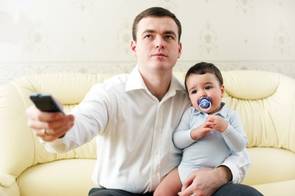
According to the policy, released Oct. 18, TV programs and videos – even those touted as educational – are likely to do more harm than good for young children. Screen time can limit creative play time and reduce interactions with parents and other children and disrupt sleep and meal routines – all critical processes in a baby’s developmental journey, said Dr. Ari Brown, the paper’s primary author.
"The key concerns here are that infants and toddlers who get ‘screen time’ get less ‘talk time,’ " Dr. Brown said during a press briefing. "Even though parents may view videos and programs as safe, educational and entertaining, these are marketing claims," without data to back them up. "Studies have already shown that 84% of parents talk less to their babies when the television is on and that they use 74% fewer new words," a pattern that definitely affects language development, she said.
Dr. Brown, a pediatrician from Austin, Tx., stressed the paper’s take-home message: Unstructured play time is the best way to stimulate the developing brain. "When babies are engaged in unstructured free play with toys, they are learning to problem-solve, to think creatively, and develop reasoning and motor skills," she said. "Free play also teaches children how to entertain themselves, which is certainly a valuable skill."
In an achievement-driven society, parents often feel pressured to provide their child with every possible "leg up" on intellectual development. But videos don’t fit that bill – at least for babies younger than 2 years.
She cited a study in which children aged 6, 12, and 18 months watched a "Teletubbies" video both forward and backward. The younger children watched the video with the same attention whichever direction it played, showing that they made no real cognitive connection. "Only the 18-month-olds started following it more as the video went forward, paying attention to some content, and to the fades and special effects," Dr. Brown said. Around 2 years, children may actually begin to learn from a program that has a proven educational benefit," especially if watched with an engaged adult.
"Studies have found that TV as part of [the] bedtime routine can shorten sleep duration and provoke irregular sleep cycles."
Household media use also decreases reading time, the report noted. Children in households with lots of media use get an average of 25% less time reading with an adult and have a lower likelihood of being able to read, compared with children from households with lower media use.
The policy also addressed unsupervised screen time in bedrooms. By age 3 years, about a third of American children have TVs in their bedrooms, with many parents considering a bedtime video to be a calming sleep aid (Pediatrics 2011 [doi:10.1542/peds.2011-1753]).
Not so, said Dr. Brown, asserting that TVs have no place in babies’ bedrooms. "Studies have found that TV as part of [the] bedtime routine can shorten sleep duration and provoke irregular sleep cycles."
Among the new policy’s other key recommendations:
• Although AAP discourages the use of any media for children younger than 2, parents who use it should set strong limits and have a strategy for sticking to them.
• Instead of screen time, opt for supervised – but independent – play during the time when an adult is present.
• Recognize that adult media use can have a negative impact on children. "Even if the program isn’t intended for children to watch, research has found that children playing nearby will look up from their play about three times each minute instead of focusing on their own activity, and they interact less with adults when a TV is on, perhaps because the adult’s attention is focused on the program."
While pediatricians can stress all of these points to parents, they can also offer an alternative to worried moms and dads: Don’t feel guilty about putting your child down on the floor with toys.
"Look, we all live in reality. If you want your child to learn and do well, give [her] the skill set of learning through play. Not only is it OK to put your child in a room with toys, it is a good thing. Don’t feel guilty about it. We know you can’t be with [your child] 24 hours a day, and now we know there is real value in this independent play."
BOSTON – Can videos create Baby Einstein? Not likely at all. New research on babies and toddlers suggests that media screen time will never replace play time with toys or interactions with actual human beings.
The American Academy of Pediatrics is taking a strong stance on this issue, releasing a new policy statement that warns against exposing little people to the big screen.
According to the policy, released Oct. 18, TV programs and videos – even those touted as educational – are likely to do more harm than good for young children. Screen time can limit creative play time and reduce interactions with parents and other children and disrupt sleep and meal routines – all critical processes in a baby’s developmental journey, said Dr. Ari Brown, the paper’s primary author.
"The key concerns here are that infants and toddlers who get ‘screen time’ get less ‘talk time,’ " Dr. Brown said during a press briefing. "Even though parents may view videos and programs as safe, educational and entertaining, these are marketing claims," without data to back them up. "Studies have already shown that 84% of parents talk less to their babies when the television is on and that they use 74% fewer new words," a pattern that definitely affects language development, she said.
Dr. Brown, a pediatrician from Austin, Tx., stressed the paper’s take-home message: Unstructured play time is the best way to stimulate the developing brain. "When babies are engaged in unstructured free play with toys, they are learning to problem-solve, to think creatively, and develop reasoning and motor skills," she said. "Free play also teaches children how to entertain themselves, which is certainly a valuable skill."
In an achievement-driven society, parents often feel pressured to provide their child with every possible "leg up" on intellectual development. But videos don’t fit that bill – at least for babies younger than 2 years.
She cited a study in which children aged 6, 12, and 18 months watched a "Teletubbies" video both forward and backward. The younger children watched the video with the same attention whichever direction it played, showing that they made no real cognitive connection. "Only the 18-month-olds started following it more as the video went forward, paying attention to some content, and to the fades and special effects," Dr. Brown said. Around 2 years, children may actually begin to learn from a program that has a proven educational benefit," especially if watched with an engaged adult.
"Studies have found that TV as part of [the] bedtime routine can shorten sleep duration and provoke irregular sleep cycles."
Household media use also decreases reading time, the report noted. Children in households with lots of media use get an average of 25% less time reading with an adult and have a lower likelihood of being able to read, compared with children from households with lower media use.
The policy also addressed unsupervised screen time in bedrooms. By age 3 years, about a third of American children have TVs in their bedrooms, with many parents considering a bedtime video to be a calming sleep aid (Pediatrics 2011 [doi:10.1542/peds.2011-1753]).
Not so, said Dr. Brown, asserting that TVs have no place in babies’ bedrooms. "Studies have found that TV as part of [the] bedtime routine can shorten sleep duration and provoke irregular sleep cycles."
Among the new policy’s other key recommendations:
• Although AAP discourages the use of any media for children younger than 2, parents who use it should set strong limits and have a strategy for sticking to them.
• Instead of screen time, opt for supervised – but independent – play during the time when an adult is present.
• Recognize that adult media use can have a negative impact on children. "Even if the program isn’t intended for children to watch, research has found that children playing nearby will look up from their play about three times each minute instead of focusing on their own activity, and they interact less with adults when a TV is on, perhaps because the adult’s attention is focused on the program."
While pediatricians can stress all of these points to parents, they can also offer an alternative to worried moms and dads: Don’t feel guilty about putting your child down on the floor with toys.
"Look, we all live in reality. If you want your child to learn and do well, give [her] the skill set of learning through play. Not only is it OK to put your child in a room with toys, it is a good thing. Don’t feel guilty about it. We know you can’t be with [your child] 24 hours a day, and now we know there is real value in this independent play."
BOSTON – Can videos create Baby Einstein? Not likely at all. New research on babies and toddlers suggests that media screen time will never replace play time with toys or interactions with actual human beings.
The American Academy of Pediatrics is taking a strong stance on this issue, releasing a new policy statement that warns against exposing little people to the big screen.
According to the policy, released Oct. 18, TV programs and videos – even those touted as educational – are likely to do more harm than good for young children. Screen time can limit creative play time and reduce interactions with parents and other children and disrupt sleep and meal routines – all critical processes in a baby’s developmental journey, said Dr. Ari Brown, the paper’s primary author.
"The key concerns here are that infants and toddlers who get ‘screen time’ get less ‘talk time,’ " Dr. Brown said during a press briefing. "Even though parents may view videos and programs as safe, educational and entertaining, these are marketing claims," without data to back them up. "Studies have already shown that 84% of parents talk less to their babies when the television is on and that they use 74% fewer new words," a pattern that definitely affects language development, she said.
Dr. Brown, a pediatrician from Austin, Tx., stressed the paper’s take-home message: Unstructured play time is the best way to stimulate the developing brain. "When babies are engaged in unstructured free play with toys, they are learning to problem-solve, to think creatively, and develop reasoning and motor skills," she said. "Free play also teaches children how to entertain themselves, which is certainly a valuable skill."
In an achievement-driven society, parents often feel pressured to provide their child with every possible "leg up" on intellectual development. But videos don’t fit that bill – at least for babies younger than 2 years.
She cited a study in which children aged 6, 12, and 18 months watched a "Teletubbies" video both forward and backward. The younger children watched the video with the same attention whichever direction it played, showing that they made no real cognitive connection. "Only the 18-month-olds started following it more as the video went forward, paying attention to some content, and to the fades and special effects," Dr. Brown said. Around 2 years, children may actually begin to learn from a program that has a proven educational benefit," especially if watched with an engaged adult.
"Studies have found that TV as part of [the] bedtime routine can shorten sleep duration and provoke irregular sleep cycles."
Household media use also decreases reading time, the report noted. Children in households with lots of media use get an average of 25% less time reading with an adult and have a lower likelihood of being able to read, compared with children from households with lower media use.
The policy also addressed unsupervised screen time in bedrooms. By age 3 years, about a third of American children have TVs in their bedrooms, with many parents considering a bedtime video to be a calming sleep aid (Pediatrics 2011 [doi:10.1542/peds.2011-1753]).
Not so, said Dr. Brown, asserting that TVs have no place in babies’ bedrooms. "Studies have found that TV as part of [the] bedtime routine can shorten sleep duration and provoke irregular sleep cycles."
Among the new policy’s other key recommendations:
• Although AAP discourages the use of any media for children younger than 2, parents who use it should set strong limits and have a strategy for sticking to them.
• Instead of screen time, opt for supervised – but independent – play during the time when an adult is present.
• Recognize that adult media use can have a negative impact on children. "Even if the program isn’t intended for children to watch, research has found that children playing nearby will look up from their play about three times each minute instead of focusing on their own activity, and they interact less with adults when a TV is on, perhaps because the adult’s attention is focused on the program."
While pediatricians can stress all of these points to parents, they can also offer an alternative to worried moms and dads: Don’t feel guilty about putting your child down on the floor with toys.
"Look, we all live in reality. If you want your child to learn and do well, give [her] the skill set of learning through play. Not only is it OK to put your child in a room with toys, it is a good thing. Don’t feel guilty about it. We know you can’t be with [your child] 24 hours a day, and now we know there is real value in this independent play."
FROM THE ANNUAL MEETING OF THE AMERICAN ACADEMY OF PEDIATRICS