User login
For MD-IQ use only
Low-calorie tastes sweeter with a little salt
Low-calorie tastes sweeter with a little salt
Diet and sugar-free foods and drinks seem like a good idea, but it’s hard to get past that strange aftertaste, right? It’s the calling card for the noncaloric aspartame- and stevia-containing sweeteners that we consume to make us feel like we can have the best of both worlds.
That weird lingering taste can be a total turn-off for some (raises hand), but researchers have found an almost facepalm solution to the not-so-sweet problem, and it’s salt.
Now, the concept of sweet and salty is not a far-fetched partnership when it comes to snack consumption (try M&Ms in your popcorn). The researchers at Almendra, a manufacturer of stevia sweeteners, put that iconic flavor pair to the test by adding mineral salts that have some nutritional value to lessen the effect of a stevia compound, rebaudioside A, found in noncaloric sweeteners.
The researchers added in magnesium chloride, calcium chloride, and potassium chloride separately to lessen rebaudioside A’s intensity, but they needed so much salt that it killed the sweet taste completely. A blend of the three mineral salts, however, reduced the lingering taste by 79% and improved the real sugar-like taste. The researchers tried this blend in reduced-calorie orange juice and a citrus-flavored soft drink, improving the taste in both.
The salty and sweet match comes in for the win once again. This time helping against the fight of obesity instead of making it worse.
Pseudomonas’ Achilles’ heel is more of an Achilles’ genetic switch
Today, on the long-awaited return of “Bacteria vs. the World,” we meet one of the rock stars of infectious disease.
LOTME: Through the use of imaginary technology, we’re talking to Pseudomonas aeruginosa. Thanks for joining us on such short notice, after Neisseria gonorrhoeae canceled at the last minute.
P. aeruginosa: No problem. I think we can all guess what that little devil is up to.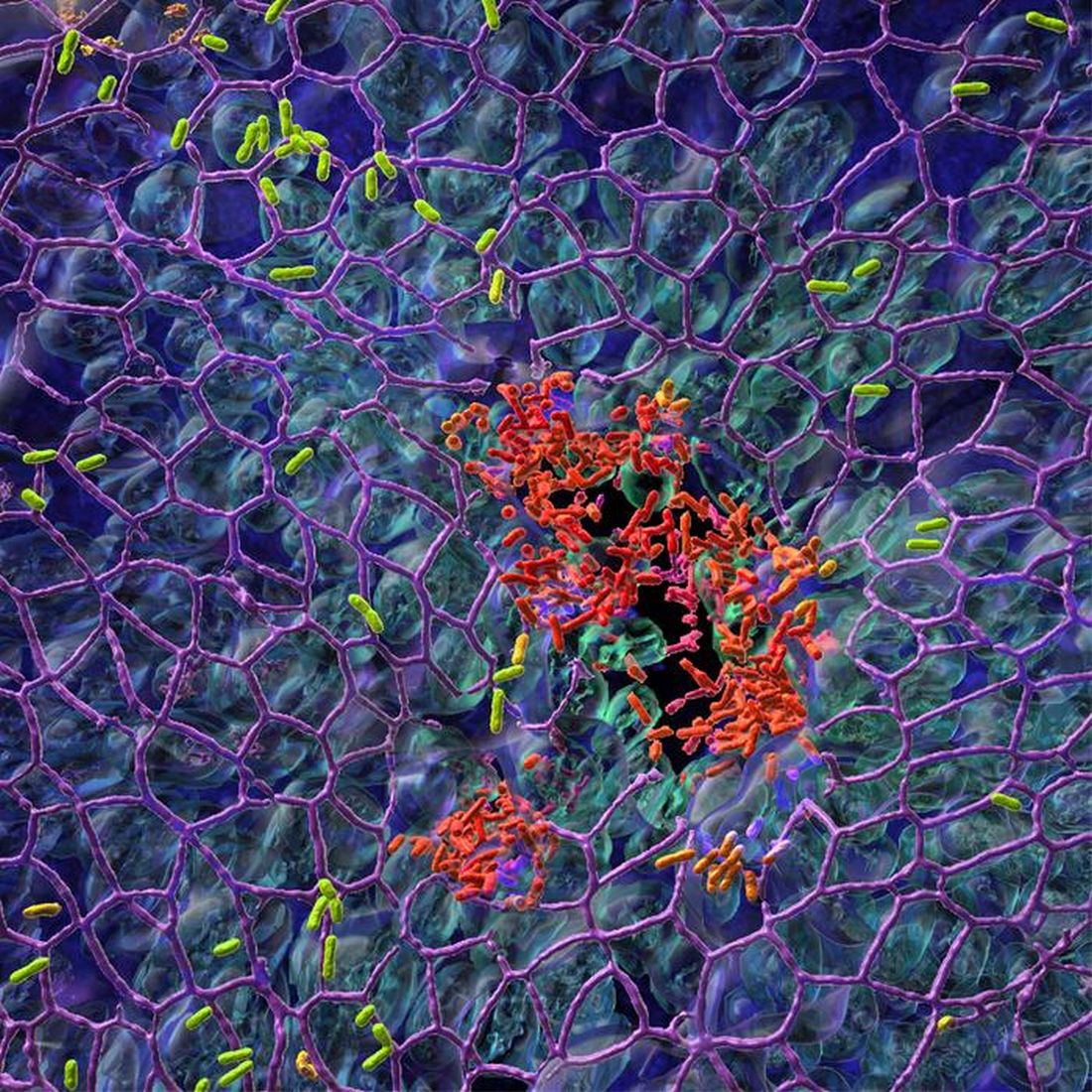
LOTME: Bacterial resistance to antibiotics is a huge problem for our species. What makes you so hard to fight?
P. aeruginosa: We’ve been trying to keep that a secret, actually, but now that researchers in Switzerland and Denmark seem to have figured it out, I guess it’s okay for me to spill the beans.
LOTME: Beans? What do beans have to do with it?
P. aeruginosa: Nothing, it’s just a colloquial expression that means I’m sharing previously private information.
LOTME: Sure, we knew that. Please, continue your spilling.
P. aeruginosa: The secret is … Well, let’s just say we were a little worried when the Clash released “Should I Stay or Should I Go” back in the 1980s.
LOTME: The Clash? Now we’re really confused.
P. aeruginosa: The answer to their question, “Should I stay or should I go? is yes. Successful invasion of a human is all about division of labor. “While one fraction of the bacterial population adheres to the mucosal surface and forms a biofilm, the other subpopulation spreads to distant tissue sites,” is how the investigators described it. We can increase surface colonization by using a “job-sharing” process, they said, and even resist antibiotics because most of us remain in the protective biofilm.
LOTME: And they say you guys don’t have brains.
P. aeruginosa: But wait, there’s more. We don’t just divide the labor randomly. After the initial colonization we form two functionally distinct subpopulations. One has high levels of the bacterial signaling molecule c-di-GMP and stays put to work on the biofilm. The other group, with low levels of c-di-GMP, heads out to the surrounding tissue to continue the colonization. As project leader Urs Jenal put it, “By identifying the genetic switch, we have tracked down the Achilles heel of the pathogen.”
LOTME: Pretty clever stuff, for humans, anyway.
P. aeruginosa: We agree, but now that you know our secret, we can’t let you share it.
LOTME: Wait! The journal article’s already been published. Your secret is out. You can’t stop that by infecting me.
P. aeruginosa: True enough, but are you familiar with the fable of the scorpion and the frog? It’s our nature.
LOTME: Nooooo! N. gonorrhoeae wouldn’t have done this!
What a pain in the Butt
Businesses rise and businesses fall. We all know that one cursed location, that spot in town where we see businesses move in and close up in a matter of months. At the same time, though, there are also businesses that have been around as long as anyone can remember, pillars of the community.
Corydon, IN., likely has a few such long-lived shops, but it is officially down one 70-year-old family business as of late April, with the unfortunate passing of beloved local pharmacy Butt Drugs. Prescription pick-up in rear.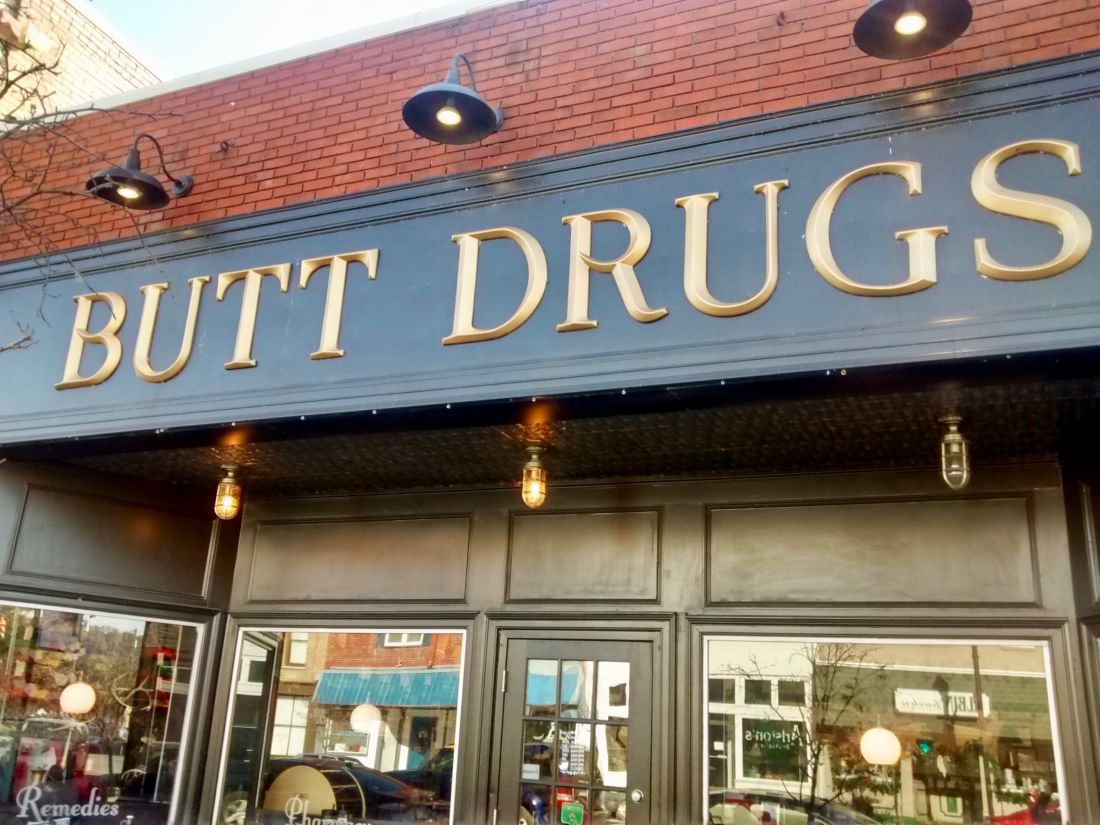
The business dates back to 1952, when it was founded as William H. Butt Drugs. We’re sure William Butt was never teased about his last name. Nope. No one would ever do that. After he passed the store to his children, it underwent a stint as Butt Rexall Drugs. When the shop was passed down to its third-generation and ultimately final owner, Katie Butt Beckort, she decided to simplify the name. Get right down to the bottom of things, as it were.
Butt Drugs was a popular spot, featuring an old-school soda fountain and themed souvenirs. According to Ms. Butt Beckort, people would come from miles away to buy “I love Butt Drugs” T-shirts, magnets, and so on. Yes, they knew perfectly well what they were sitting on.
So, if was such a hit, why did it close? Butt Drugs may have a hilarious name and merchandise to match, but the pharmacy portion of the pharmacy had been losing money for years. You know, the actual point of the business. As with so many things, we can blame it on the insurance companies. More than half the drugs that passed through Butt Drugs’ doors were sold at a loss, because the insurance companies refused to reimburse the store more than the wholesale price of the drug. Not even a good butt drug could clear up that financial diarrhea.
And so, we’ve lost Butt Drugs forever. Spicy food enthusiasts, coffee drinkers, and all patrons of Taco Bell, take a moment to reflect and mourn on what you’ve lost. No more Butt Drugs to relieve your suffering. A true kick in the butt indeed.
Low-calorie tastes sweeter with a little salt
Diet and sugar-free foods and drinks seem like a good idea, but it’s hard to get past that strange aftertaste, right? It’s the calling card for the noncaloric aspartame- and stevia-containing sweeteners that we consume to make us feel like we can have the best of both worlds.
That weird lingering taste can be a total turn-off for some (raises hand), but researchers have found an almost facepalm solution to the not-so-sweet problem, and it’s salt.
Now, the concept of sweet and salty is not a far-fetched partnership when it comes to snack consumption (try M&Ms in your popcorn). The researchers at Almendra, a manufacturer of stevia sweeteners, put that iconic flavor pair to the test by adding mineral salts that have some nutritional value to lessen the effect of a stevia compound, rebaudioside A, found in noncaloric sweeteners.
The researchers added in magnesium chloride, calcium chloride, and potassium chloride separately to lessen rebaudioside A’s intensity, but they needed so much salt that it killed the sweet taste completely. A blend of the three mineral salts, however, reduced the lingering taste by 79% and improved the real sugar-like taste. The researchers tried this blend in reduced-calorie orange juice and a citrus-flavored soft drink, improving the taste in both.
The salty and sweet match comes in for the win once again. This time helping against the fight of obesity instead of making it worse.
Pseudomonas’ Achilles’ heel is more of an Achilles’ genetic switch
Today, on the long-awaited return of “Bacteria vs. the World,” we meet one of the rock stars of infectious disease.
LOTME: Through the use of imaginary technology, we’re talking to Pseudomonas aeruginosa. Thanks for joining us on such short notice, after Neisseria gonorrhoeae canceled at the last minute.
P. aeruginosa: No problem. I think we can all guess what that little devil is up to.
LOTME: Bacterial resistance to antibiotics is a huge problem for our species. What makes you so hard to fight?
P. aeruginosa: We’ve been trying to keep that a secret, actually, but now that researchers in Switzerland and Denmark seem to have figured it out, I guess it’s okay for me to spill the beans.
LOTME: Beans? What do beans have to do with it?
P. aeruginosa: Nothing, it’s just a colloquial expression that means I’m sharing previously private information.
LOTME: Sure, we knew that. Please, continue your spilling.
P. aeruginosa: The secret is … Well, let’s just say we were a little worried when the Clash released “Should I Stay or Should I Go” back in the 1980s.
LOTME: The Clash? Now we’re really confused.
P. aeruginosa: The answer to their question, “Should I stay or should I go? is yes. Successful invasion of a human is all about division of labor. “While one fraction of the bacterial population adheres to the mucosal surface and forms a biofilm, the other subpopulation spreads to distant tissue sites,” is how the investigators described it. We can increase surface colonization by using a “job-sharing” process, they said, and even resist antibiotics because most of us remain in the protective biofilm.
LOTME: And they say you guys don’t have brains.
P. aeruginosa: But wait, there’s more. We don’t just divide the labor randomly. After the initial colonization we form two functionally distinct subpopulations. One has high levels of the bacterial signaling molecule c-di-GMP and stays put to work on the biofilm. The other group, with low levels of c-di-GMP, heads out to the surrounding tissue to continue the colonization. As project leader Urs Jenal put it, “By identifying the genetic switch, we have tracked down the Achilles heel of the pathogen.”
LOTME: Pretty clever stuff, for humans, anyway.
P. aeruginosa: We agree, but now that you know our secret, we can’t let you share it.
LOTME: Wait! The journal article’s already been published. Your secret is out. You can’t stop that by infecting me.
P. aeruginosa: True enough, but are you familiar with the fable of the scorpion and the frog? It’s our nature.
LOTME: Nooooo! N. gonorrhoeae wouldn’t have done this!
What a pain in the Butt
Businesses rise and businesses fall. We all know that one cursed location, that spot in town where we see businesses move in and close up in a matter of months. At the same time, though, there are also businesses that have been around as long as anyone can remember, pillars of the community.
Corydon, IN., likely has a few such long-lived shops, but it is officially down one 70-year-old family business as of late April, with the unfortunate passing of beloved local pharmacy Butt Drugs. Prescription pick-up in rear.
The business dates back to 1952, when it was founded as William H. Butt Drugs. We’re sure William Butt was never teased about his last name. Nope. No one would ever do that. After he passed the store to his children, it underwent a stint as Butt Rexall Drugs. When the shop was passed down to its third-generation and ultimately final owner, Katie Butt Beckort, she decided to simplify the name. Get right down to the bottom of things, as it were.
Butt Drugs was a popular spot, featuring an old-school soda fountain and themed souvenirs. According to Ms. Butt Beckort, people would come from miles away to buy “I love Butt Drugs” T-shirts, magnets, and so on. Yes, they knew perfectly well what they were sitting on.
So, if was such a hit, why did it close? Butt Drugs may have a hilarious name and merchandise to match, but the pharmacy portion of the pharmacy had been losing money for years. You know, the actual point of the business. As with so many things, we can blame it on the insurance companies. More than half the drugs that passed through Butt Drugs’ doors were sold at a loss, because the insurance companies refused to reimburse the store more than the wholesale price of the drug. Not even a good butt drug could clear up that financial diarrhea.
And so, we’ve lost Butt Drugs forever. Spicy food enthusiasts, coffee drinkers, and all patrons of Taco Bell, take a moment to reflect and mourn on what you’ve lost. No more Butt Drugs to relieve your suffering. A true kick in the butt indeed.
Low-calorie tastes sweeter with a little salt
Diet and sugar-free foods and drinks seem like a good idea, but it’s hard to get past that strange aftertaste, right? It’s the calling card for the noncaloric aspartame- and stevia-containing sweeteners that we consume to make us feel like we can have the best of both worlds.
That weird lingering taste can be a total turn-off for some (raises hand), but researchers have found an almost facepalm solution to the not-so-sweet problem, and it’s salt.
Now, the concept of sweet and salty is not a far-fetched partnership when it comes to snack consumption (try M&Ms in your popcorn). The researchers at Almendra, a manufacturer of stevia sweeteners, put that iconic flavor pair to the test by adding mineral salts that have some nutritional value to lessen the effect of a stevia compound, rebaudioside A, found in noncaloric sweeteners.
The researchers added in magnesium chloride, calcium chloride, and potassium chloride separately to lessen rebaudioside A’s intensity, but they needed so much salt that it killed the sweet taste completely. A blend of the three mineral salts, however, reduced the lingering taste by 79% and improved the real sugar-like taste. The researchers tried this blend in reduced-calorie orange juice and a citrus-flavored soft drink, improving the taste in both.
The salty and sweet match comes in for the win once again. This time helping against the fight of obesity instead of making it worse.
Pseudomonas’ Achilles’ heel is more of an Achilles’ genetic switch
Today, on the long-awaited return of “Bacteria vs. the World,” we meet one of the rock stars of infectious disease.
LOTME: Through the use of imaginary technology, we’re talking to Pseudomonas aeruginosa. Thanks for joining us on such short notice, after Neisseria gonorrhoeae canceled at the last minute.
P. aeruginosa: No problem. I think we can all guess what that little devil is up to.
LOTME: Bacterial resistance to antibiotics is a huge problem for our species. What makes you so hard to fight?
P. aeruginosa: We’ve been trying to keep that a secret, actually, but now that researchers in Switzerland and Denmark seem to have figured it out, I guess it’s okay for me to spill the beans.
LOTME: Beans? What do beans have to do with it?
P. aeruginosa: Nothing, it’s just a colloquial expression that means I’m sharing previously private information.
LOTME: Sure, we knew that. Please, continue your spilling.
P. aeruginosa: The secret is … Well, let’s just say we were a little worried when the Clash released “Should I Stay or Should I Go” back in the 1980s.
LOTME: The Clash? Now we’re really confused.
P. aeruginosa: The answer to their question, “Should I stay or should I go? is yes. Successful invasion of a human is all about division of labor. “While one fraction of the bacterial population adheres to the mucosal surface and forms a biofilm, the other subpopulation spreads to distant tissue sites,” is how the investigators described it. We can increase surface colonization by using a “job-sharing” process, they said, and even resist antibiotics because most of us remain in the protective biofilm.
LOTME: And they say you guys don’t have brains.
P. aeruginosa: But wait, there’s more. We don’t just divide the labor randomly. After the initial colonization we form two functionally distinct subpopulations. One has high levels of the bacterial signaling molecule c-di-GMP and stays put to work on the biofilm. The other group, with low levels of c-di-GMP, heads out to the surrounding tissue to continue the colonization. As project leader Urs Jenal put it, “By identifying the genetic switch, we have tracked down the Achilles heel of the pathogen.”
LOTME: Pretty clever stuff, for humans, anyway.
P. aeruginosa: We agree, but now that you know our secret, we can’t let you share it.
LOTME: Wait! The journal article’s already been published. Your secret is out. You can’t stop that by infecting me.
P. aeruginosa: True enough, but are you familiar with the fable of the scorpion and the frog? It’s our nature.
LOTME: Nooooo! N. gonorrhoeae wouldn’t have done this!
What a pain in the Butt
Businesses rise and businesses fall. We all know that one cursed location, that spot in town where we see businesses move in and close up in a matter of months. At the same time, though, there are also businesses that have been around as long as anyone can remember, pillars of the community.
Corydon, IN., likely has a few such long-lived shops, but it is officially down one 70-year-old family business as of late April, with the unfortunate passing of beloved local pharmacy Butt Drugs. Prescription pick-up in rear.
The business dates back to 1952, when it was founded as William H. Butt Drugs. We’re sure William Butt was never teased about his last name. Nope. No one would ever do that. After he passed the store to his children, it underwent a stint as Butt Rexall Drugs. When the shop was passed down to its third-generation and ultimately final owner, Katie Butt Beckort, she decided to simplify the name. Get right down to the bottom of things, as it were.
Butt Drugs was a popular spot, featuring an old-school soda fountain and themed souvenirs. According to Ms. Butt Beckort, people would come from miles away to buy “I love Butt Drugs” T-shirts, magnets, and so on. Yes, they knew perfectly well what they were sitting on.
So, if was such a hit, why did it close? Butt Drugs may have a hilarious name and merchandise to match, but the pharmacy portion of the pharmacy had been losing money for years. You know, the actual point of the business. As with so many things, we can blame it on the insurance companies. More than half the drugs that passed through Butt Drugs’ doors were sold at a loss, because the insurance companies refused to reimburse the store more than the wholesale price of the drug. Not even a good butt drug could clear up that financial diarrhea.
And so, we’ve lost Butt Drugs forever. Spicy food enthusiasts, coffee drinkers, and all patrons of Taco Bell, take a moment to reflect and mourn on what you’ve lost. No more Butt Drugs to relieve your suffering. A true kick in the butt indeed.
Should you have a chaperone in the exam room? Many say yes
This transcript has been edited for clarity.
I’m Art Caplan, PhD. I’m at the division of medical ethics at NYU’s Grossman School of Medicine.
, such as breasts, genitalia, and the perianal area.
In some institutions, there has been a movement toward saying a chaperone must be present, that it’s mandatory. I know that is true at Yale’s health care centers and clinics. Others do so when the patient requests it. An interesting situation sometimes occurs when the hospital or the clinic requires a chaperone but the patient says, “I don’t want a chaperone. I want my privacy. I want the gynecologist or the urologist only. I don’t want anyone else to be seeing me. I’m not comfortable with anyone other than the doctor in the room.”
Complicating this issue of when is a chaperone appropriate and when can it be refused, if ever, is the fact that the role of chaperone is ill defined. For example, there isn’t really agreement on who can be a chaperone. Could it be a medical student? Could it be a nurse? Could it be another doctor? Should it be someone who at least has finished nursing school or medical school? Can it be a patient representative? There are no standards about who can play the role.
Should the chaperone be available to be seen when they’re in the room? Should they stay behind a curtain or somewhere where they’re not, so to speak, intrusive into what’s going on in the exam room? Do they sit in a chair? Do they stand? How do they behave, if you will? There’s no agreement.
There’s still no agreement on the training that a chaperone should have. Do we charge them with trying to represent what’s going on with the patient or trying to protect the doctor against any accusations that are ill founded about inappropriate conduct? Are they supposed to do both? How do they obtain consent, if they do, from the patient undergoing an examination in a sensitive part of their body or one that they’re sensitive about?
This area really requires some hard thinking if you’re considering having chaperones present. I think there are some online courses that offer some training. I haven’t looked at them, but they might be worth a look to see if they make you more comfortable about getting a chaperone oriented. I think it’s probably important to set a policy saying a chaperone must always be present for these kinds of examinations and list them, or one can be requested no matter what is going on in terms of the kind of exam being conducted.
There needs to be some statement saying that you have permission to either accept them or refuse them – or you don’t. Should they always be present, for example, with patients who are minors, adolescents or children? Does that extend that far out where a guardian, parent, or someone has to give permission?
In this area, I think we can all understand why chaperones have come to the fore, including allegations of misconduct and inappropriate touching, and considering comfort levels of patients to just put them more at ease. It’s obvious that we haven’t, as a nation or a medical profession, thought it through to the degree to which we have to.
I’m certainly not anti-chaperone, and I believe that if patients are more comfortable having one present, or a doctor is more comfortable having one present, or if we all agree that there are certain patients – kids – where certain types of examinations require or ought to expect the chaperone to be present, that’s wonderful.
We’ve got to lay out the rights of the doctors. We’ve got to lay out the rights of the institutions. We’ve got to lay out the rights of the patients. We should agree on who these people are. We should agree on how they’re trained.
We’ve got some work ahead of us if we’re going to have chaperones become a standard part of the medical examination.
Dr. Kaplan reported conflicts of interest with the Franklin Institute, Tengion, Biogen Idec, Johnson & Johnson, and PriCara.
A version of this article first appeared on Medscape.com.
This transcript has been edited for clarity.
I’m Art Caplan, PhD. I’m at the division of medical ethics at NYU’s Grossman School of Medicine.
, such as breasts, genitalia, and the perianal area.
In some institutions, there has been a movement toward saying a chaperone must be present, that it’s mandatory. I know that is true at Yale’s health care centers and clinics. Others do so when the patient requests it. An interesting situation sometimes occurs when the hospital or the clinic requires a chaperone but the patient says, “I don’t want a chaperone. I want my privacy. I want the gynecologist or the urologist only. I don’t want anyone else to be seeing me. I’m not comfortable with anyone other than the doctor in the room.”
Complicating this issue of when is a chaperone appropriate and when can it be refused, if ever, is the fact that the role of chaperone is ill defined. For example, there isn’t really agreement on who can be a chaperone. Could it be a medical student? Could it be a nurse? Could it be another doctor? Should it be someone who at least has finished nursing school or medical school? Can it be a patient representative? There are no standards about who can play the role.
Should the chaperone be available to be seen when they’re in the room? Should they stay behind a curtain or somewhere where they’re not, so to speak, intrusive into what’s going on in the exam room? Do they sit in a chair? Do they stand? How do they behave, if you will? There’s no agreement.
There’s still no agreement on the training that a chaperone should have. Do we charge them with trying to represent what’s going on with the patient or trying to protect the doctor against any accusations that are ill founded about inappropriate conduct? Are they supposed to do both? How do they obtain consent, if they do, from the patient undergoing an examination in a sensitive part of their body or one that they’re sensitive about?
This area really requires some hard thinking if you’re considering having chaperones present. I think there are some online courses that offer some training. I haven’t looked at them, but they might be worth a look to see if they make you more comfortable about getting a chaperone oriented. I think it’s probably important to set a policy saying a chaperone must always be present for these kinds of examinations and list them, or one can be requested no matter what is going on in terms of the kind of exam being conducted.
There needs to be some statement saying that you have permission to either accept them or refuse them – or you don’t. Should they always be present, for example, with patients who are minors, adolescents or children? Does that extend that far out where a guardian, parent, or someone has to give permission?
In this area, I think we can all understand why chaperones have come to the fore, including allegations of misconduct and inappropriate touching, and considering comfort levels of patients to just put them more at ease. It’s obvious that we haven’t, as a nation or a medical profession, thought it through to the degree to which we have to.
I’m certainly not anti-chaperone, and I believe that if patients are more comfortable having one present, or a doctor is more comfortable having one present, or if we all agree that there are certain patients – kids – where certain types of examinations require or ought to expect the chaperone to be present, that’s wonderful.
We’ve got to lay out the rights of the doctors. We’ve got to lay out the rights of the institutions. We’ve got to lay out the rights of the patients. We should agree on who these people are. We should agree on how they’re trained.
We’ve got some work ahead of us if we’re going to have chaperones become a standard part of the medical examination.
Dr. Kaplan reported conflicts of interest with the Franklin Institute, Tengion, Biogen Idec, Johnson & Johnson, and PriCara.
A version of this article first appeared on Medscape.com.
This transcript has been edited for clarity.
I’m Art Caplan, PhD. I’m at the division of medical ethics at NYU’s Grossman School of Medicine.
, such as breasts, genitalia, and the perianal area.
In some institutions, there has been a movement toward saying a chaperone must be present, that it’s mandatory. I know that is true at Yale’s health care centers and clinics. Others do so when the patient requests it. An interesting situation sometimes occurs when the hospital or the clinic requires a chaperone but the patient says, “I don’t want a chaperone. I want my privacy. I want the gynecologist or the urologist only. I don’t want anyone else to be seeing me. I’m not comfortable with anyone other than the doctor in the room.”
Complicating this issue of when is a chaperone appropriate and when can it be refused, if ever, is the fact that the role of chaperone is ill defined. For example, there isn’t really agreement on who can be a chaperone. Could it be a medical student? Could it be a nurse? Could it be another doctor? Should it be someone who at least has finished nursing school or medical school? Can it be a patient representative? There are no standards about who can play the role.
Should the chaperone be available to be seen when they’re in the room? Should they stay behind a curtain or somewhere where they’re not, so to speak, intrusive into what’s going on in the exam room? Do they sit in a chair? Do they stand? How do they behave, if you will? There’s no agreement.
There’s still no agreement on the training that a chaperone should have. Do we charge them with trying to represent what’s going on with the patient or trying to protect the doctor against any accusations that are ill founded about inappropriate conduct? Are they supposed to do both? How do they obtain consent, if they do, from the patient undergoing an examination in a sensitive part of their body or one that they’re sensitive about?
This area really requires some hard thinking if you’re considering having chaperones present. I think there are some online courses that offer some training. I haven’t looked at them, but they might be worth a look to see if they make you more comfortable about getting a chaperone oriented. I think it’s probably important to set a policy saying a chaperone must always be present for these kinds of examinations and list them, or one can be requested no matter what is going on in terms of the kind of exam being conducted.
There needs to be some statement saying that you have permission to either accept them or refuse them – or you don’t. Should they always be present, for example, with patients who are minors, adolescents or children? Does that extend that far out where a guardian, parent, or someone has to give permission?
In this area, I think we can all understand why chaperones have come to the fore, including allegations of misconduct and inappropriate touching, and considering comfort levels of patients to just put them more at ease. It’s obvious that we haven’t, as a nation or a medical profession, thought it through to the degree to which we have to.
I’m certainly not anti-chaperone, and I believe that if patients are more comfortable having one present, or a doctor is more comfortable having one present, or if we all agree that there are certain patients – kids – where certain types of examinations require or ought to expect the chaperone to be present, that’s wonderful.
We’ve got to lay out the rights of the doctors. We’ve got to lay out the rights of the institutions. We’ve got to lay out the rights of the patients. We should agree on who these people are. We should agree on how they’re trained.
We’ve got some work ahead of us if we’re going to have chaperones become a standard part of the medical examination.
Dr. Kaplan reported conflicts of interest with the Franklin Institute, Tengion, Biogen Idec, Johnson & Johnson, and PriCara.
A version of this article first appeared on Medscape.com.
New tool uses nanotechnology to speed up diagnostic testing of infectious disease
A new tool promises to expedite detection of infectious disease, according to researchers from McGill University, Montreal.
The diagnostic platform, called The device was tested for several respiratory viruses and bacteria, including the H1N1 influenza virus and SARS-CoV-2. It achieved 95% accuracy at identifying COVID-19 and its variants in 48 human saliva samples.
“COVID was something that opened our eyes, and now we have to think more seriously about point-of-care diagnostics,” Sara Mahshid, PhD, assistant professor of biomedical engineering and Canada Research Chair in Nano-Biosensing Devices at McGill University, said in an interview. The technology could become important for a range of medical applications, especially in low-resource areas.
The development was detailed in an article in Nature Nanotechnology.
Nonclinical setting
The COVID-19 pandemic has demonstrated the need for fast and accurate testing that can be used outside of a clinical setting. The gold-standard diagnostic method is PCR testing, but its accuracy comes with a trade-off. PCR testing involves a lengthy protocol and requires a centralized testing facility.
With QolorEX, the investigators aimed to develop a new test that achieves the accuracy of PCR in an automated tool that can be used outside of a testing facility or hospital setting. Dr. Mahshid noted a particular need for a tool that could be used in congregate settings, such as airports, schools, or restaurants.
The device is compact enough to sit on a tabletop or bench and can be used easily in group settings, according to Dr. Mahshid. In the future, she hopes to further miniaturize the device to make it more scalable for widespread use.
Requiring only a saliva sample, the tool is easy to use. Unlike current COVID-19 rapid tests, which involve several steps, the system is automated and does not require manually mixing reagents. After collecting a sample, a user taps a button in a smartphone or computer application. The device handles the rest.
“We’re not chemists who understand how to mix these solutions,” Dr. Mahshid said. Avoiding those extra steps may reduce the false positives and false negatives caused by user error.
Fast results
QolorEX can return results in 13 minutes, like a rapid antigen test does. Like a PCR test, the device uses nucleic acid amplification. But PCR tests typically take much longer. The sample analysis alone takes 1.5-2 hours.
The new test accelerates the reaction by injecting light-excited “hot” electrons from the surface of a nanoplasmonic sensor. The device then uses imaging and a machine learning algorithm to quantify a color transformation that occurs when a pathogen is present.
The fast, reliable results make the system potentially appropriate for use in places such as airports. Previously, passengers had to wait 24 hours for a negative COVID test before boarding a plane. A device such as QolorEX would allow screening on site.
The ability of the tool to distinguish between bacterial and viral infections so quickly is “an application that is both important and extremely difficult to achieve,” according to Nikhil Bhalla, PhD, in a research briefing. Dr. Bhalla is a lecturer in electronic engineering at Ulster University, Belfast, Ireland.
The researchers hope that by delivering results quickly, the device will help reduce the spread of respiratory diseases and possibly save lives.
‘Sensitive and specific’
The primary benefit of the tool is its ability to return results quickly while having low false positive and false negative rates, according to Leyla Soleymani, PhD, of McMaster University, Hamilton, Ont. “It is hard to come by rapid tests that are both sensitive and specific, compared to PCR,” Dr. Soleymani told this news organization.
Although QolorEX was developed to detect COVID-19 and other infectious diseases, the uses of the device are not limited to the pathogens tested. The tool can be applied to a range of tests that currently use PCR technology. Dr. Mahshid and her team are considering several other applications of the technology, such as analyzing therapeutics for antimicrobial-resistant pathogens prioritized by the World Health Organization. The technology may also have potential for detecting cancer and bacterial infections, Dr. Mahshid said in an interview.
But to Dr. Soleymani, the most exciting application remains its use in diagnosing infectious diseases. She noted, however, that it’s unclear whether the price of the device will be too high for widespread home use. It may be more practical for family physician clinics and other facilities.
Before the device becomes commercially available, more testing is needed to validate the results, which are based on a limited number of samples that were available in a research setting.
The study was supported by the MI4 Emergency COVID-19 Research Funding, Natural Sciences and Engineering Research Council of Canada, Canadian Institutes of Health Research, Canada Foundation for Innovation, and McGill University. Dr. Mahshid and Dr. Soleymani reported no relevant financial relationships.
A version of this article originally appeared on Medscape.com.
A new tool promises to expedite detection of infectious disease, according to researchers from McGill University, Montreal.
The diagnostic platform, called The device was tested for several respiratory viruses and bacteria, including the H1N1 influenza virus and SARS-CoV-2. It achieved 95% accuracy at identifying COVID-19 and its variants in 48 human saliva samples.
“COVID was something that opened our eyes, and now we have to think more seriously about point-of-care diagnostics,” Sara Mahshid, PhD, assistant professor of biomedical engineering and Canada Research Chair in Nano-Biosensing Devices at McGill University, said in an interview. The technology could become important for a range of medical applications, especially in low-resource areas.
The development was detailed in an article in Nature Nanotechnology.
Nonclinical setting
The COVID-19 pandemic has demonstrated the need for fast and accurate testing that can be used outside of a clinical setting. The gold-standard diagnostic method is PCR testing, but its accuracy comes with a trade-off. PCR testing involves a lengthy protocol and requires a centralized testing facility.
With QolorEX, the investigators aimed to develop a new test that achieves the accuracy of PCR in an automated tool that can be used outside of a testing facility or hospital setting. Dr. Mahshid noted a particular need for a tool that could be used in congregate settings, such as airports, schools, or restaurants.
The device is compact enough to sit on a tabletop or bench and can be used easily in group settings, according to Dr. Mahshid. In the future, she hopes to further miniaturize the device to make it more scalable for widespread use.
Requiring only a saliva sample, the tool is easy to use. Unlike current COVID-19 rapid tests, which involve several steps, the system is automated and does not require manually mixing reagents. After collecting a sample, a user taps a button in a smartphone or computer application. The device handles the rest.
“We’re not chemists who understand how to mix these solutions,” Dr. Mahshid said. Avoiding those extra steps may reduce the false positives and false negatives caused by user error.
Fast results
QolorEX can return results in 13 minutes, like a rapid antigen test does. Like a PCR test, the device uses nucleic acid amplification. But PCR tests typically take much longer. The sample analysis alone takes 1.5-2 hours.
The new test accelerates the reaction by injecting light-excited “hot” electrons from the surface of a nanoplasmonic sensor. The device then uses imaging and a machine learning algorithm to quantify a color transformation that occurs when a pathogen is present.
The fast, reliable results make the system potentially appropriate for use in places such as airports. Previously, passengers had to wait 24 hours for a negative COVID test before boarding a plane. A device such as QolorEX would allow screening on site.
The ability of the tool to distinguish between bacterial and viral infections so quickly is “an application that is both important and extremely difficult to achieve,” according to Nikhil Bhalla, PhD, in a research briefing. Dr. Bhalla is a lecturer in electronic engineering at Ulster University, Belfast, Ireland.
The researchers hope that by delivering results quickly, the device will help reduce the spread of respiratory diseases and possibly save lives.
‘Sensitive and specific’
The primary benefit of the tool is its ability to return results quickly while having low false positive and false negative rates, according to Leyla Soleymani, PhD, of McMaster University, Hamilton, Ont. “It is hard to come by rapid tests that are both sensitive and specific, compared to PCR,” Dr. Soleymani told this news organization.
Although QolorEX was developed to detect COVID-19 and other infectious diseases, the uses of the device are not limited to the pathogens tested. The tool can be applied to a range of tests that currently use PCR technology. Dr. Mahshid and her team are considering several other applications of the technology, such as analyzing therapeutics for antimicrobial-resistant pathogens prioritized by the World Health Organization. The technology may also have potential for detecting cancer and bacterial infections, Dr. Mahshid said in an interview.
But to Dr. Soleymani, the most exciting application remains its use in diagnosing infectious diseases. She noted, however, that it’s unclear whether the price of the device will be too high for widespread home use. It may be more practical for family physician clinics and other facilities.
Before the device becomes commercially available, more testing is needed to validate the results, which are based on a limited number of samples that were available in a research setting.
The study was supported by the MI4 Emergency COVID-19 Research Funding, Natural Sciences and Engineering Research Council of Canada, Canadian Institutes of Health Research, Canada Foundation for Innovation, and McGill University. Dr. Mahshid and Dr. Soleymani reported no relevant financial relationships.
A version of this article originally appeared on Medscape.com.
A new tool promises to expedite detection of infectious disease, according to researchers from McGill University, Montreal.
The diagnostic platform, called The device was tested for several respiratory viruses and bacteria, including the H1N1 influenza virus and SARS-CoV-2. It achieved 95% accuracy at identifying COVID-19 and its variants in 48 human saliva samples.
“COVID was something that opened our eyes, and now we have to think more seriously about point-of-care diagnostics,” Sara Mahshid, PhD, assistant professor of biomedical engineering and Canada Research Chair in Nano-Biosensing Devices at McGill University, said in an interview. The technology could become important for a range of medical applications, especially in low-resource areas.
The development was detailed in an article in Nature Nanotechnology.
Nonclinical setting
The COVID-19 pandemic has demonstrated the need for fast and accurate testing that can be used outside of a clinical setting. The gold-standard diagnostic method is PCR testing, but its accuracy comes with a trade-off. PCR testing involves a lengthy protocol and requires a centralized testing facility.
With QolorEX, the investigators aimed to develop a new test that achieves the accuracy of PCR in an automated tool that can be used outside of a testing facility or hospital setting. Dr. Mahshid noted a particular need for a tool that could be used in congregate settings, such as airports, schools, or restaurants.
The device is compact enough to sit on a tabletop or bench and can be used easily in group settings, according to Dr. Mahshid. In the future, she hopes to further miniaturize the device to make it more scalable for widespread use.
Requiring only a saliva sample, the tool is easy to use. Unlike current COVID-19 rapid tests, which involve several steps, the system is automated and does not require manually mixing reagents. After collecting a sample, a user taps a button in a smartphone or computer application. The device handles the rest.
“We’re not chemists who understand how to mix these solutions,” Dr. Mahshid said. Avoiding those extra steps may reduce the false positives and false negatives caused by user error.
Fast results
QolorEX can return results in 13 minutes, like a rapid antigen test does. Like a PCR test, the device uses nucleic acid amplification. But PCR tests typically take much longer. The sample analysis alone takes 1.5-2 hours.
The new test accelerates the reaction by injecting light-excited “hot” electrons from the surface of a nanoplasmonic sensor. The device then uses imaging and a machine learning algorithm to quantify a color transformation that occurs when a pathogen is present.
The fast, reliable results make the system potentially appropriate for use in places such as airports. Previously, passengers had to wait 24 hours for a negative COVID test before boarding a plane. A device such as QolorEX would allow screening on site.
The ability of the tool to distinguish between bacterial and viral infections so quickly is “an application that is both important and extremely difficult to achieve,” according to Nikhil Bhalla, PhD, in a research briefing. Dr. Bhalla is a lecturer in electronic engineering at Ulster University, Belfast, Ireland.
The researchers hope that by delivering results quickly, the device will help reduce the spread of respiratory diseases and possibly save lives.
‘Sensitive and specific’
The primary benefit of the tool is its ability to return results quickly while having low false positive and false negative rates, according to Leyla Soleymani, PhD, of McMaster University, Hamilton, Ont. “It is hard to come by rapid tests that are both sensitive and specific, compared to PCR,” Dr. Soleymani told this news organization.
Although QolorEX was developed to detect COVID-19 and other infectious diseases, the uses of the device are not limited to the pathogens tested. The tool can be applied to a range of tests that currently use PCR technology. Dr. Mahshid and her team are considering several other applications of the technology, such as analyzing therapeutics for antimicrobial-resistant pathogens prioritized by the World Health Organization. The technology may also have potential for detecting cancer and bacterial infections, Dr. Mahshid said in an interview.
But to Dr. Soleymani, the most exciting application remains its use in diagnosing infectious diseases. She noted, however, that it’s unclear whether the price of the device will be too high for widespread home use. It may be more practical for family physician clinics and other facilities.
Before the device becomes commercially available, more testing is needed to validate the results, which are based on a limited number of samples that were available in a research setting.
The study was supported by the MI4 Emergency COVID-19 Research Funding, Natural Sciences and Engineering Research Council of Canada, Canadian Institutes of Health Research, Canada Foundation for Innovation, and McGill University. Dr. Mahshid and Dr. Soleymani reported no relevant financial relationships.
A version of this article originally appeared on Medscape.com.
FROM NATURE NANOTECHNOLOGY
How physician-inventors create new, life-saving products
WakeMed emergency department physician and medical director, Graham Snyder, MD, has seen his fair share of deaths: an average of one or two per day. That’s part of the job. Some of the deaths were the result of risky behavior, ongoing health problems, and other natural causes.
But what he didn’t find acceptable was losing a 6-year-old girl in a backyard pool drowning at what was meant to be a celebratory birthday party and family reunion.
“There were aunts and uncles and brothers and sisters and cousins, and the pool was packed, and they’re having a great time. One of the parents looked over and saw that she was swimming around underneath but acting weird. A relative pulled her up by the arm, and she was dead,” he said. “What nobody could tell me, and what they’ll live with the rest of their life, is how long was she under water?”
So Dr. Snyder invented a solution. The catch: The goal: Improving systemic and “unsolvable” issues that harm society.
The cool part: Any MD with an idea can get in on the game.
Keeping little heads above water
Drowning is the leading cause of death in young children ages 1-4 years, and the second leading cause for children ages 5-14 years. The issue, Dr. Snyder explained, is not that rescuers couldn’t get to these children in time. “It’s that nobody knew to start looking.”
Dr. Snyder created a collar that alerts those around the swimmer that they are in trouble. The SEAL SwimSafe drowning prevention technology sets off an alarm system if a child is under water for too long. The necklace has been used to protect more than 10,000 children, including at larger swim facilities, such as the YMCA.
When Dr. Snyder first started pursuing his invention, he asked himself two key questions: “Has someone already tried this? And if they did, why did they not succeed?” These questions help counteract the potential arrogance, he says, with imagining that you are the first person to have a certain idea. And using whatever reason others didn’t succeed as your “secret sauce” helps lead to more success. He also had to consider obstacles. People might resist wearing a collar or necklace while swimming or putting one on their child, like the reluctance around wearing bicycle helmets when they gained popularity in the 1980s. He concluded that the collars would work best at larger facilities, where they were mandated.
Another obstacle was false alarms. “It was possible to trigger a false alarm, and that could really scare people,” Dr. Snyder said. He is still considering systems to prevent the collars from being stolen or from “13-year-old boys hiding them in the water drain and making everyone really scared when an alarm is going off.”
The demand is real, however, and is based on alarming data. Safe Kids has reported that 66% of natural water drownings and around half of pool drownings happened with an adult supervising. They added, however, that supervision is often lacking or insufficient, such as a parent not being within arm’s reach of a young kid. As Dr. Snyder told reporters in a 2018 story, even the most well-intentioned parents still “miss something” sometimes, and this technology is for that moment.
“This is a completely solvable problem, but not a flip-a-switch, one and done,” he said, pointing to his product as a part of a more comprehensive approach, such as in Europe, where mandated public school swimming lessons are helping to decrease drowning deaths.
The pandemic slowed progress for the SEAL SwimSafe collar, which is currently waiting on a new funder or investor to take the reins. But the concept is alive and well with competitors pursuing related ideas. Dr. Snyder is holding out hope that entrepreneurs, scientists, public health workers, researchers, and others will be interested in continuing this work.
Eliminating the stigma of incontinence
Ever had an accident before making it to the bathroom? So have two-thirds of adult women, and almost one-third of older men. Incontinence is linked to a wide variety of conditions, from pelvic-floor trauma to neurological issues to diabetes, and others. Urologist Jessica Lubahn, MD, in Portland, Ore., saw one too many patients feeling this type of shame, unaware that the condition was so common. In addition, she personally experienced childbirth-related incontinence, and helped a relative who was having incontinence after prostate cancer surgery.
“He had a great result, but he had confided in me ... it was one of the only times in his life that he’s been truly depressed,” Dr. Lubahn said. “It’s not even the amount of leakage, but the smell, the stigma is so embarrassing, that not only is it an inconvenience, but [it affects] your entire psyche.” She thought there had to be a better solution than the “demeaning” act of wearing adult diapers.
Noting the explosion of the period panty industry in the past decade, Dr. Lubahn wanted to “destigmatize” incontinence in the same way menstruation education and products have been. She created ONDR incontinence underwear, specifically meant for urine, to ease the mental and physical burden on her patients and many others.
Dr. Lubahn said a process happens when you decide to start talking about the product you want to make rather than trying to find answers on your own. “A lot of people are so afraid to talk about their ideas because they’re afraid it’s going to get stolen or scooped, or it might fail,” she said. “I just openly discussed it, kind of like cocktail party conversation – ‘Wouldn’t it be funny if you just pee into your underwear?’ ” She noticed each connection led to finding more people to help her along her journey.
Dr. Lubahn studied the apparel industry, learning that overseas manufacturers were more helpful and cost-effective. She navigated issues such as a special stitch that prevented leakage and other details. She was also intent on using eco-friendly products that offset the environmental impact of pads, liners, and diapers. She said there’s a strong entrepreneurship community that can help other physician-inventors get grants, be part of accelerator programs, and receive support.
Six years after the original idea, Dr. Lubahn’s product was released in 2020. She now sells eight types of underwear for women and men’s boxer briefs. She wears them herself daily.
Deterring carjackers, saving lives
In 2022, carjackings tripled in Chicago and Memphis. The areas have the highest rates in 30 cities that the Council on Criminal Justice analyzed in a report on pandemic crime rates. According to the report, nearly 40% of offenders used a firearm, more than a quarter of victims were injured, and only around half of the vehicles taken were recovered. In addition, vehicles are sometimes used in secondary crimes, such as drive-by shootings. William Yates, MD, former trauma surgeon, now turned hair restoration surgeon in Chicago, saw the evidence of those crimes daily.
“I was perplexed by carjacking because there wasn’t any answer, and it just kept getting worse and worse. A lot of innocent people were being affected,” he said. “I was seeing deaths – needless. If you give them any push back at all, they will shoot you.”
As a deterrent to counter this “easy crime,” he invented the Yates Device, an alarm system designed to prevent or interrupt carjacking. The driver can activate a switch located beneath the foot pedal or an app on the phone to trigger a programmed high-decibel alarm. Critically, it allows the carjacker to drive a safe distance away from the victim before it starts going off.
The alarm “turns your car into a very noisy Christmas tree on a time delay,” Dr. Yates explained. An external siren blares “stolen vehicle” repeatedly. A camera records everything in the car. Lights flash. Only the original driver can turn off the system. Later, once the car is abandoned, the police can help recover the vehicle.
In Dr. Yates’ experience, the invention process takes longer than you think. He worked through earlier iterations with strobe lights, but these could lead to bystanders getting hurt if the carjacker couldn’t see, for example. Developing the final product and applying for patents was a two-part process.
“The first is part is a pending patent phase, which secures your place in line,” he said. “After 1 year, we filed the utility patent as the final documentation that the invention is truly unique. That has been in process for a year now and the attorneys say we should receive approval soon.”
The product has initially been tested in seven cars for about 1 year. Dr. Yates is measuring how the system performs in all types of weather, including Chicago’s below-zero temperatures. The product is not available to the public for purchase yet because Dr. Yates is still seeking funding to have it mass produced, but it is currently being evaluated by Korean automakers for their car manufacturers.
“Everybody was saying ‘Let’s do something about this,’ but I didn’t see anybody doing anything yet,” Dr. Yates recalled. In the surgeon’s lounge, everybody has ideas. “You go around the room, and every doctor would have five ideas that would make them the richest doctor, but nobody takes it beyond that stage – talk. You have to synthesize that into a plan, to take action.”
Dr. Yates said that many doctors have the intellect to invent, but they aren’t in a network like entrepreneurs to bring their ideas to life.
For Dr. Yates, it takes a curious mindset to solve these daunting problems. “I’m always curious, always looking for how to improve something, to get better outcomes you have to be asking questions and just never let it go.”
A version of this article originally appeared on Medscape.com.
WakeMed emergency department physician and medical director, Graham Snyder, MD, has seen his fair share of deaths: an average of one or two per day. That’s part of the job. Some of the deaths were the result of risky behavior, ongoing health problems, and other natural causes.
But what he didn’t find acceptable was losing a 6-year-old girl in a backyard pool drowning at what was meant to be a celebratory birthday party and family reunion.
“There were aunts and uncles and brothers and sisters and cousins, and the pool was packed, and they’re having a great time. One of the parents looked over and saw that she was swimming around underneath but acting weird. A relative pulled her up by the arm, and she was dead,” he said. “What nobody could tell me, and what they’ll live with the rest of their life, is how long was she under water?”
So Dr. Snyder invented a solution. The catch: The goal: Improving systemic and “unsolvable” issues that harm society.
The cool part: Any MD with an idea can get in on the game.
Keeping little heads above water
Drowning is the leading cause of death in young children ages 1-4 years, and the second leading cause for children ages 5-14 years. The issue, Dr. Snyder explained, is not that rescuers couldn’t get to these children in time. “It’s that nobody knew to start looking.”
Dr. Snyder created a collar that alerts those around the swimmer that they are in trouble. The SEAL SwimSafe drowning prevention technology sets off an alarm system if a child is under water for too long. The necklace has been used to protect more than 10,000 children, including at larger swim facilities, such as the YMCA.
When Dr. Snyder first started pursuing his invention, he asked himself two key questions: “Has someone already tried this? And if they did, why did they not succeed?” These questions help counteract the potential arrogance, he says, with imagining that you are the first person to have a certain idea. And using whatever reason others didn’t succeed as your “secret sauce” helps lead to more success. He also had to consider obstacles. People might resist wearing a collar or necklace while swimming or putting one on their child, like the reluctance around wearing bicycle helmets when they gained popularity in the 1980s. He concluded that the collars would work best at larger facilities, where they were mandated.
Another obstacle was false alarms. “It was possible to trigger a false alarm, and that could really scare people,” Dr. Snyder said. He is still considering systems to prevent the collars from being stolen or from “13-year-old boys hiding them in the water drain and making everyone really scared when an alarm is going off.”
The demand is real, however, and is based on alarming data. Safe Kids has reported that 66% of natural water drownings and around half of pool drownings happened with an adult supervising. They added, however, that supervision is often lacking or insufficient, such as a parent not being within arm’s reach of a young kid. As Dr. Snyder told reporters in a 2018 story, even the most well-intentioned parents still “miss something” sometimes, and this technology is for that moment.
“This is a completely solvable problem, but not a flip-a-switch, one and done,” he said, pointing to his product as a part of a more comprehensive approach, such as in Europe, where mandated public school swimming lessons are helping to decrease drowning deaths.
The pandemic slowed progress for the SEAL SwimSafe collar, which is currently waiting on a new funder or investor to take the reins. But the concept is alive and well with competitors pursuing related ideas. Dr. Snyder is holding out hope that entrepreneurs, scientists, public health workers, researchers, and others will be interested in continuing this work.
Eliminating the stigma of incontinence
Ever had an accident before making it to the bathroom? So have two-thirds of adult women, and almost one-third of older men. Incontinence is linked to a wide variety of conditions, from pelvic-floor trauma to neurological issues to diabetes, and others. Urologist Jessica Lubahn, MD, in Portland, Ore., saw one too many patients feeling this type of shame, unaware that the condition was so common. In addition, she personally experienced childbirth-related incontinence, and helped a relative who was having incontinence after prostate cancer surgery.
“He had a great result, but he had confided in me ... it was one of the only times in his life that he’s been truly depressed,” Dr. Lubahn said. “It’s not even the amount of leakage, but the smell, the stigma is so embarrassing, that not only is it an inconvenience, but [it affects] your entire psyche.” She thought there had to be a better solution than the “demeaning” act of wearing adult diapers.
Noting the explosion of the period panty industry in the past decade, Dr. Lubahn wanted to “destigmatize” incontinence in the same way menstruation education and products have been. She created ONDR incontinence underwear, specifically meant for urine, to ease the mental and physical burden on her patients and many others.
Dr. Lubahn said a process happens when you decide to start talking about the product you want to make rather than trying to find answers on your own. “A lot of people are so afraid to talk about their ideas because they’re afraid it’s going to get stolen or scooped, or it might fail,” she said. “I just openly discussed it, kind of like cocktail party conversation – ‘Wouldn’t it be funny if you just pee into your underwear?’ ” She noticed each connection led to finding more people to help her along her journey.
Dr. Lubahn studied the apparel industry, learning that overseas manufacturers were more helpful and cost-effective. She navigated issues such as a special stitch that prevented leakage and other details. She was also intent on using eco-friendly products that offset the environmental impact of pads, liners, and diapers. She said there’s a strong entrepreneurship community that can help other physician-inventors get grants, be part of accelerator programs, and receive support.
Six years after the original idea, Dr. Lubahn’s product was released in 2020. She now sells eight types of underwear for women and men’s boxer briefs. She wears them herself daily.
Deterring carjackers, saving lives
In 2022, carjackings tripled in Chicago and Memphis. The areas have the highest rates in 30 cities that the Council on Criminal Justice analyzed in a report on pandemic crime rates. According to the report, nearly 40% of offenders used a firearm, more than a quarter of victims were injured, and only around half of the vehicles taken were recovered. In addition, vehicles are sometimes used in secondary crimes, such as drive-by shootings. William Yates, MD, former trauma surgeon, now turned hair restoration surgeon in Chicago, saw the evidence of those crimes daily.
“I was perplexed by carjacking because there wasn’t any answer, and it just kept getting worse and worse. A lot of innocent people were being affected,” he said. “I was seeing deaths – needless. If you give them any push back at all, they will shoot you.”
As a deterrent to counter this “easy crime,” he invented the Yates Device, an alarm system designed to prevent or interrupt carjacking. The driver can activate a switch located beneath the foot pedal or an app on the phone to trigger a programmed high-decibel alarm. Critically, it allows the carjacker to drive a safe distance away from the victim before it starts going off.
The alarm “turns your car into a very noisy Christmas tree on a time delay,” Dr. Yates explained. An external siren blares “stolen vehicle” repeatedly. A camera records everything in the car. Lights flash. Only the original driver can turn off the system. Later, once the car is abandoned, the police can help recover the vehicle.
In Dr. Yates’ experience, the invention process takes longer than you think. He worked through earlier iterations with strobe lights, but these could lead to bystanders getting hurt if the carjacker couldn’t see, for example. Developing the final product and applying for patents was a two-part process.
“The first is part is a pending patent phase, which secures your place in line,” he said. “After 1 year, we filed the utility patent as the final documentation that the invention is truly unique. That has been in process for a year now and the attorneys say we should receive approval soon.”
The product has initially been tested in seven cars for about 1 year. Dr. Yates is measuring how the system performs in all types of weather, including Chicago’s below-zero temperatures. The product is not available to the public for purchase yet because Dr. Yates is still seeking funding to have it mass produced, but it is currently being evaluated by Korean automakers for their car manufacturers.
“Everybody was saying ‘Let’s do something about this,’ but I didn’t see anybody doing anything yet,” Dr. Yates recalled. In the surgeon’s lounge, everybody has ideas. “You go around the room, and every doctor would have five ideas that would make them the richest doctor, but nobody takes it beyond that stage – talk. You have to synthesize that into a plan, to take action.”
Dr. Yates said that many doctors have the intellect to invent, but they aren’t in a network like entrepreneurs to bring their ideas to life.
For Dr. Yates, it takes a curious mindset to solve these daunting problems. “I’m always curious, always looking for how to improve something, to get better outcomes you have to be asking questions and just never let it go.”
A version of this article originally appeared on Medscape.com.
WakeMed emergency department physician and medical director, Graham Snyder, MD, has seen his fair share of deaths: an average of one or two per day. That’s part of the job. Some of the deaths were the result of risky behavior, ongoing health problems, and other natural causes.
But what he didn’t find acceptable was losing a 6-year-old girl in a backyard pool drowning at what was meant to be a celebratory birthday party and family reunion.
“There were aunts and uncles and brothers and sisters and cousins, and the pool was packed, and they’re having a great time. One of the parents looked over and saw that she was swimming around underneath but acting weird. A relative pulled her up by the arm, and she was dead,” he said. “What nobody could tell me, and what they’ll live with the rest of their life, is how long was she under water?”
So Dr. Snyder invented a solution. The catch: The goal: Improving systemic and “unsolvable” issues that harm society.
The cool part: Any MD with an idea can get in on the game.
Keeping little heads above water
Drowning is the leading cause of death in young children ages 1-4 years, and the second leading cause for children ages 5-14 years. The issue, Dr. Snyder explained, is not that rescuers couldn’t get to these children in time. “It’s that nobody knew to start looking.”
Dr. Snyder created a collar that alerts those around the swimmer that they are in trouble. The SEAL SwimSafe drowning prevention technology sets off an alarm system if a child is under water for too long. The necklace has been used to protect more than 10,000 children, including at larger swim facilities, such as the YMCA.
When Dr. Snyder first started pursuing his invention, he asked himself two key questions: “Has someone already tried this? And if they did, why did they not succeed?” These questions help counteract the potential arrogance, he says, with imagining that you are the first person to have a certain idea. And using whatever reason others didn’t succeed as your “secret sauce” helps lead to more success. He also had to consider obstacles. People might resist wearing a collar or necklace while swimming or putting one on their child, like the reluctance around wearing bicycle helmets when they gained popularity in the 1980s. He concluded that the collars would work best at larger facilities, where they were mandated.
Another obstacle was false alarms. “It was possible to trigger a false alarm, and that could really scare people,” Dr. Snyder said. He is still considering systems to prevent the collars from being stolen or from “13-year-old boys hiding them in the water drain and making everyone really scared when an alarm is going off.”
The demand is real, however, and is based on alarming data. Safe Kids has reported that 66% of natural water drownings and around half of pool drownings happened with an adult supervising. They added, however, that supervision is often lacking or insufficient, such as a parent not being within arm’s reach of a young kid. As Dr. Snyder told reporters in a 2018 story, even the most well-intentioned parents still “miss something” sometimes, and this technology is for that moment.
“This is a completely solvable problem, but not a flip-a-switch, one and done,” he said, pointing to his product as a part of a more comprehensive approach, such as in Europe, where mandated public school swimming lessons are helping to decrease drowning deaths.
The pandemic slowed progress for the SEAL SwimSafe collar, which is currently waiting on a new funder or investor to take the reins. But the concept is alive and well with competitors pursuing related ideas. Dr. Snyder is holding out hope that entrepreneurs, scientists, public health workers, researchers, and others will be interested in continuing this work.
Eliminating the stigma of incontinence
Ever had an accident before making it to the bathroom? So have two-thirds of adult women, and almost one-third of older men. Incontinence is linked to a wide variety of conditions, from pelvic-floor trauma to neurological issues to diabetes, and others. Urologist Jessica Lubahn, MD, in Portland, Ore., saw one too many patients feeling this type of shame, unaware that the condition was so common. In addition, she personally experienced childbirth-related incontinence, and helped a relative who was having incontinence after prostate cancer surgery.
“He had a great result, but he had confided in me ... it was one of the only times in his life that he’s been truly depressed,” Dr. Lubahn said. “It’s not even the amount of leakage, but the smell, the stigma is so embarrassing, that not only is it an inconvenience, but [it affects] your entire psyche.” She thought there had to be a better solution than the “demeaning” act of wearing adult diapers.
Noting the explosion of the period panty industry in the past decade, Dr. Lubahn wanted to “destigmatize” incontinence in the same way menstruation education and products have been. She created ONDR incontinence underwear, specifically meant for urine, to ease the mental and physical burden on her patients and many others.
Dr. Lubahn said a process happens when you decide to start talking about the product you want to make rather than trying to find answers on your own. “A lot of people are so afraid to talk about their ideas because they’re afraid it’s going to get stolen or scooped, or it might fail,” she said. “I just openly discussed it, kind of like cocktail party conversation – ‘Wouldn’t it be funny if you just pee into your underwear?’ ” She noticed each connection led to finding more people to help her along her journey.
Dr. Lubahn studied the apparel industry, learning that overseas manufacturers were more helpful and cost-effective. She navigated issues such as a special stitch that prevented leakage and other details. She was also intent on using eco-friendly products that offset the environmental impact of pads, liners, and diapers. She said there’s a strong entrepreneurship community that can help other physician-inventors get grants, be part of accelerator programs, and receive support.
Six years after the original idea, Dr. Lubahn’s product was released in 2020. She now sells eight types of underwear for women and men’s boxer briefs. She wears them herself daily.
Deterring carjackers, saving lives
In 2022, carjackings tripled in Chicago and Memphis. The areas have the highest rates in 30 cities that the Council on Criminal Justice analyzed in a report on pandemic crime rates. According to the report, nearly 40% of offenders used a firearm, more than a quarter of victims were injured, and only around half of the vehicles taken were recovered. In addition, vehicles are sometimes used in secondary crimes, such as drive-by shootings. William Yates, MD, former trauma surgeon, now turned hair restoration surgeon in Chicago, saw the evidence of those crimes daily.
“I was perplexed by carjacking because there wasn’t any answer, and it just kept getting worse and worse. A lot of innocent people were being affected,” he said. “I was seeing deaths – needless. If you give them any push back at all, they will shoot you.”
As a deterrent to counter this “easy crime,” he invented the Yates Device, an alarm system designed to prevent or interrupt carjacking. The driver can activate a switch located beneath the foot pedal or an app on the phone to trigger a programmed high-decibel alarm. Critically, it allows the carjacker to drive a safe distance away from the victim before it starts going off.
The alarm “turns your car into a very noisy Christmas tree on a time delay,” Dr. Yates explained. An external siren blares “stolen vehicle” repeatedly. A camera records everything in the car. Lights flash. Only the original driver can turn off the system. Later, once the car is abandoned, the police can help recover the vehicle.
In Dr. Yates’ experience, the invention process takes longer than you think. He worked through earlier iterations with strobe lights, but these could lead to bystanders getting hurt if the carjacker couldn’t see, for example. Developing the final product and applying for patents was a two-part process.
“The first is part is a pending patent phase, which secures your place in line,” he said. “After 1 year, we filed the utility patent as the final documentation that the invention is truly unique. That has been in process for a year now and the attorneys say we should receive approval soon.”
The product has initially been tested in seven cars for about 1 year. Dr. Yates is measuring how the system performs in all types of weather, including Chicago’s below-zero temperatures. The product is not available to the public for purchase yet because Dr. Yates is still seeking funding to have it mass produced, but it is currently being evaluated by Korean automakers for their car manufacturers.
“Everybody was saying ‘Let’s do something about this,’ but I didn’t see anybody doing anything yet,” Dr. Yates recalled. In the surgeon’s lounge, everybody has ideas. “You go around the room, and every doctor would have five ideas that would make them the richest doctor, but nobody takes it beyond that stage – talk. You have to synthesize that into a plan, to take action.”
Dr. Yates said that many doctors have the intellect to invent, but they aren’t in a network like entrepreneurs to bring their ideas to life.
For Dr. Yates, it takes a curious mindset to solve these daunting problems. “I’m always curious, always looking for how to improve something, to get better outcomes you have to be asking questions and just never let it go.”
A version of this article originally appeared on Medscape.com.
Cutting-edge nasal tech could usher in a new era of medicine
Noses are like caverns – twisting, turning, no two exactly the same. But if you nose past anyone’s nostrils, you’ll discover a surprisingly sprawling space.
“The size of the nasal cavity is about the same as a large handkerchief,” said Hugh Smyth, PhD, a professor of molecular pharmaceutics and drug delivery at the University of Texas at Austin.
“It’s very accessible tissue, and it has a lot of blood flow,” said Dr. Smyth. “The speed of onset can often be as fast as injections, sometimes even faster.”
It’s nothing new to get medicines via your nose. For decades, we’ve squirted various sprays into our nostrils to treat local maladies like allergies or infections. Even the ancients saw wisdom in the nasal route.
But recently, the nose has gained scientific attention as a gateway to the rest of the body – even the brain, a notoriously difficult target.
The upshot: Someday, inhaling therapies could be as routine as swallowing pills.
The nasal route is quick, needle free, and user friendly, and it often requires a smaller dose than other methods, since the drug doesn’t have to pass through the digestive tract, losing potency during digestion.
But there are challenges.
How hard can it be?
Old-school nasal sprayers, mostly unchanged since the 1800s, aren’t cut out for deep-nose delivery. “The technology is relatively limited because you’ve just got a single spray nozzle,” said Michael Hindle, PhD, a professor of pharmaceutics at Virginia Commonwealth University, Richmond.
These traditional devices (similar to perfume sprayers) don’t consistently push meds past the lower to middle sections inside the nose, called the nasal valve – if they do so at all: In a 2020 Rhinology study (doi: 10.4193/Rhin18.304) conventional nasal sprays only reached this first segment of the nose, a less-than-ideal spot to land.
Inside the nasal valve, the surface is skin-like and doesn’t absorb very well. Its narrow design slows airflow, preventing particles from moving to deeper regions, where tissue is vascular and porous like the lungs. And even if this structural roadblock is surpassed, other hurdles remain.
The nose is designed to keep stuff out. Nose hair, cilia, mucus, sneezing, coughing – all make “distributing drugs evenly across the nasal cavity difficult,” said Dr. Smyth. “The spray gets filtered out before it reaches those deeper zones,” potentially dripping out of the nostrils instead of being absorbed.
Complicating matters is how every person’s nose is different. In a 2018 study, Dr. Smyth and a research team created three dimensional–printed models of people’s nasal cavities. They varied widely. “Nasal cavities are very different in size, length, and internal geometry,” he said. “This makes it challenging to target specific areas.”
Although carefully positioning the spray nozzle can help, even something as minor as sniffing too hard (constricting the nostrils) can keep sprays from reaching the absorptive deeper regions.
Still, the benefits are enough to compel researchers to find a way in.
“This really is a drug delivery challenge we’ve been wrestling with,” said Dr. Hindle. “It’s not new formulations we hear about. It’s new devices and delivery methods trying to target the different nasal regions.”
Delivering the goods
In the late aughts, John Hoekman was a graduate student in the University of Washington’s pharmaceutics program, studying nasal drug delivery. In his experiments, he noticed that drugs distributed differently, depending on the region targeted – aiming for the upper nasal cavity led to a spike in absorption.
The results convinced Mr. Hoekman to stake his future on nasal drug delivery.
In 2008, while still in graduate school, he started his own company, now known as Impel Pharmaceuticals. In 2021, Impel released its first product: Trudhesa, a nasal spray for migraines. Although the drug itself – dihydroergotamine mesylate – was hardly novel, used for migraine relief since 1946 (Headache. 2020 Jan;60[1]:40-57), it was usually delivered through an intravenous line, often in the ED.
But with Mr. Hoekman’s POD device – short for precision olfactory delivery – the drug can be given by the patient, via the nose. This generally means faster, more reliable relief, with fewer side effects. “We were able to lower the dose and improve the overall absorption,” said Mr. Hoekman.
The POD’s nozzle is engineered to spray a soft, narrow plume. It’s gas propelled, so patients don’t have to breathe in any special way to ensure delivery. The drug can zip right through the nasal valve into the upper nasal cavity.
Another company – OptiNose – has a “bidirectional” delivery method that propels drugs, either liquid or dry powder, deep into the nose.
“You insert the nozzle into your nose, and as you blow through the mouthpiece, your soft palate closes,” said Dr. Hindle. With the throat sealed off, “the only place for the drug to go is into one nostril and out the other, coating both sides of the nasal passageways.”
The device is only available for Onzetra Xsail, a powder for migraines. But another application is on its way.
In May, OptiNose announced that the FDA is reviewing Xhance, which uses the system to direct a steroid to the sinuses. In a clinical trial, patients with chronic sinusitis who tried the drug-device combo saw a decline in congestion, facial pain, and inflammation.
Targeting the brain
Both of those migraine drugs – Trudhesa and Onzetra Xsail – are thought to penetrate the upper nasal cavity. That’s where you’ll find the olfactory zone, a sheet of neurons that connects to the olfactory bulb. Located behind the eyes, these two nerve bundles detect odors.
“The olfactory region is almost like a back door to the brain,” said Mr. Hoekman.
By bypassing the blood-brain barrier, it offers a direct pathway – the only direct pathway, actually – between an exposed area of the body and the brain. Meaning it can ferry drugs straight from the nasal cavity to the central nervous system.
Nose-to-brain treatments could be game-changing for central nervous system disorders, such as Parkinson’s disease, Alzheimer’s, or anxiety.
But reaching the olfactory zone is notoriously hard. “The vasculature in your nose is like a big freeway, and the olfactory tract is like a side alley,” explained Mr. Hoekman. “It’s very limiting in what it will allow through.” The region is also small, occupying only 3%-10% of the nasal cavity’s surface area.
Again, POD means “precision olfactory delivery.” But the device isn’t quite as laser focused on the region as its name implies. “We’re not at the stage where we’re able to exclusively deliver to one target site in the nose,” said Dr. Hindle.
While wending its way toward the olfactory zone, some of the drug will be absorbed by other regions, then circulate throughout the body.
“About 59% of the drug that we put into the upper nasal space gets absorbed into the bloodstream,” said Mr. Hoekman.
Janssen Pharmaceuticals’ Spravato – a nasal spray for drug-resistant depression – is thought to work similarly: Some goes straight to the brain via the olfactory nerves, while the rest takes a more roundabout route, passing through the blood vessels to circulate in your system.
A needle-free option
Sometimes, the bloodstream is the main target. Because the nose’s middle and upper stretches are so vascular, drugs can be rapidly absorbed.
This is especially valuable for time-sensitive conditions. “If you give something nasally, you can have peak uptake in 15-30 minutes,” said Mr. Hoekman.
Take Narcan nasal spray, which delivers a burst of naloxone to quickly reverse the effects of opioid an overdose. Or Noctiva nasal spray. Taken just half an hour before bed, it can prevent frequent nighttime urination.
There’s also a group of seizure-stopping sprays, known as “rescue treatments.” One works by temporarily loosening the space between nasal cells, allowing the seizure drug to be quickly absorbed through the vessels.
This systemic access also has potential for drugs that would otherwise have to be injected, such as biologics.
The same goes for vaccines. Mucosal tissue inside the nasal cavity offers direct access to the infection-fighting lymphatic system, making the nose a prime target for inoculation against certain viruses.
Inhaling protection against viruses
Despite the recent surge of interest, nasal vaccines faced a rocky start. After the first nasal flu vaccine hit the market in 2001, it was pulled due to potential toxicity and reports of Bell’s palsy, a type of facial paralysis.
FluMist came in 2003 and has been plagued by problems ever since. Because it contains a weakened live virus, flu-like side effects can occur. And it doesn’t always work. During the 2016-2017 flu season, FluMist protected only 3% of kids, prompting the Centers for Disease Control and Prevention to advise against the nasal route that year.
Why FluMist can be so hit-or-miss is poorly understood. But generally, the nose can pose an effectiveness challenge. “The nose is highly cycling,” said Dr. Hindle. “Anything we deposit usually gets transported out within 15-20 minutes.”
For kids – big fans of not using needles – chronically runny noses can be an issue. “You squirt it in the nose, and it will probably just come back out in their snot,” said Jay Kolls, MD, a professor of medicine and pediatrics at Tulane University, New Orleans, who is developing an intranasal pneumonia vaccine.
Even so, nasal vaccines became a hot topic among researchers after the world was shut down by a virus that invades through the nose.
“We realized that intramuscular vaccines were effective at preventing severe disease, but they weren’t that effective at preventing transmission,” said Michael Diamond, MD, PhD, an immunologist at Washington University in St. Louis.
Nasal vaccines could solve that problem by putting an immune barrier at the point of entry, denying access to the rest of the body. “You squash the infection early enough that it not only prevents disease,” said Dr. Kolls, “but potentially prevents transmission.”
And yes, a nasal COVID vaccine is on the way
In March 2020, Dr. Diamond’s team began exploring a nasal COVID vaccine. Promising results in animals prompted a vaccine development company to license the technology. The resulting nasal vaccine – the first for COVID – has been approved in India, both as a primary vaccine and a booster.
It works by stimulating an influx of IgA, a type of antibody found in the nasal passages, and production of resident memory T cells, immune cells on standby just beneath the surface tissue in the nose.
By contrast, injected vaccines generate mostly IgG antibodies, which struggle to enter the respiratory tract. Only a tiny fraction – an estimated 1% – typically reach the nose.
Nasal vaccines could also be used along with shots. The latter could prime the whole body to fight back, while a nasal spritz could pull that immune protection to the mucosal surfaces.
Nasal technology could yield more effective vaccines for infections like tuberculosis or malaria, or even safeguard against new – sometimes surprising – conditions.
In a 2021 Nature study, an intranasal vaccine derived from fentanyl was better at preventing overdose than an injected vaccine. “Through some clever chemistry, the drug [in the vaccine] isn’t fentanyl anymore,” said study author Elizabeth Norton, PhD, an assistant professor of microbiology and immunology at Tulane University. “But the immune system still has an antibody response to it.”
Novel applications like this represent the future of nasal drug delivery.
“We’re not going to innovate in asthma or COPD. We’re not going to innovate in local delivery to the nose,” said Dr. Hindle. “Innovation will only come if we look to treat new conditions.”
A version of this article originally appeared on WebMD.com.
Noses are like caverns – twisting, turning, no two exactly the same. But if you nose past anyone’s nostrils, you’ll discover a surprisingly sprawling space.
“The size of the nasal cavity is about the same as a large handkerchief,” said Hugh Smyth, PhD, a professor of molecular pharmaceutics and drug delivery at the University of Texas at Austin.
“It’s very accessible tissue, and it has a lot of blood flow,” said Dr. Smyth. “The speed of onset can often be as fast as injections, sometimes even faster.”
It’s nothing new to get medicines via your nose. For decades, we’ve squirted various sprays into our nostrils to treat local maladies like allergies or infections. Even the ancients saw wisdom in the nasal route.
But recently, the nose has gained scientific attention as a gateway to the rest of the body – even the brain, a notoriously difficult target.
The upshot: Someday, inhaling therapies could be as routine as swallowing pills.
The nasal route is quick, needle free, and user friendly, and it often requires a smaller dose than other methods, since the drug doesn’t have to pass through the digestive tract, losing potency during digestion.
But there are challenges.
How hard can it be?
Old-school nasal sprayers, mostly unchanged since the 1800s, aren’t cut out for deep-nose delivery. “The technology is relatively limited because you’ve just got a single spray nozzle,” said Michael Hindle, PhD, a professor of pharmaceutics at Virginia Commonwealth University, Richmond.
These traditional devices (similar to perfume sprayers) don’t consistently push meds past the lower to middle sections inside the nose, called the nasal valve – if they do so at all: In a 2020 Rhinology study (doi: 10.4193/Rhin18.304) conventional nasal sprays only reached this first segment of the nose, a less-than-ideal spot to land.
Inside the nasal valve, the surface is skin-like and doesn’t absorb very well. Its narrow design slows airflow, preventing particles from moving to deeper regions, where tissue is vascular and porous like the lungs. And even if this structural roadblock is surpassed, other hurdles remain.
The nose is designed to keep stuff out. Nose hair, cilia, mucus, sneezing, coughing – all make “distributing drugs evenly across the nasal cavity difficult,” said Dr. Smyth. “The spray gets filtered out before it reaches those deeper zones,” potentially dripping out of the nostrils instead of being absorbed.
Complicating matters is how every person’s nose is different. In a 2018 study, Dr. Smyth and a research team created three dimensional–printed models of people’s nasal cavities. They varied widely. “Nasal cavities are very different in size, length, and internal geometry,” he said. “This makes it challenging to target specific areas.”
Although carefully positioning the spray nozzle can help, even something as minor as sniffing too hard (constricting the nostrils) can keep sprays from reaching the absorptive deeper regions.
Still, the benefits are enough to compel researchers to find a way in.
“This really is a drug delivery challenge we’ve been wrestling with,” said Dr. Hindle. “It’s not new formulations we hear about. It’s new devices and delivery methods trying to target the different nasal regions.”
Delivering the goods
In the late aughts, John Hoekman was a graduate student in the University of Washington’s pharmaceutics program, studying nasal drug delivery. In his experiments, he noticed that drugs distributed differently, depending on the region targeted – aiming for the upper nasal cavity led to a spike in absorption.
The results convinced Mr. Hoekman to stake his future on nasal drug delivery.
In 2008, while still in graduate school, he started his own company, now known as Impel Pharmaceuticals. In 2021, Impel released its first product: Trudhesa, a nasal spray for migraines. Although the drug itself – dihydroergotamine mesylate – was hardly novel, used for migraine relief since 1946 (Headache. 2020 Jan;60[1]:40-57), it was usually delivered through an intravenous line, often in the ED.
But with Mr. Hoekman’s POD device – short for precision olfactory delivery – the drug can be given by the patient, via the nose. This generally means faster, more reliable relief, with fewer side effects. “We were able to lower the dose and improve the overall absorption,” said Mr. Hoekman.
The POD’s nozzle is engineered to spray a soft, narrow plume. It’s gas propelled, so patients don’t have to breathe in any special way to ensure delivery. The drug can zip right through the nasal valve into the upper nasal cavity.
Another company – OptiNose – has a “bidirectional” delivery method that propels drugs, either liquid or dry powder, deep into the nose.
“You insert the nozzle into your nose, and as you blow through the mouthpiece, your soft palate closes,” said Dr. Hindle. With the throat sealed off, “the only place for the drug to go is into one nostril and out the other, coating both sides of the nasal passageways.”
The device is only available for Onzetra Xsail, a powder for migraines. But another application is on its way.
In May, OptiNose announced that the FDA is reviewing Xhance, which uses the system to direct a steroid to the sinuses. In a clinical trial, patients with chronic sinusitis who tried the drug-device combo saw a decline in congestion, facial pain, and inflammation.
Targeting the brain
Both of those migraine drugs – Trudhesa and Onzetra Xsail – are thought to penetrate the upper nasal cavity. That’s where you’ll find the olfactory zone, a sheet of neurons that connects to the olfactory bulb. Located behind the eyes, these two nerve bundles detect odors.
“The olfactory region is almost like a back door to the brain,” said Mr. Hoekman.
By bypassing the blood-brain barrier, it offers a direct pathway – the only direct pathway, actually – between an exposed area of the body and the brain. Meaning it can ferry drugs straight from the nasal cavity to the central nervous system.
Nose-to-brain treatments could be game-changing for central nervous system disorders, such as Parkinson’s disease, Alzheimer’s, or anxiety.
But reaching the olfactory zone is notoriously hard. “The vasculature in your nose is like a big freeway, and the olfactory tract is like a side alley,” explained Mr. Hoekman. “It’s very limiting in what it will allow through.” The region is also small, occupying only 3%-10% of the nasal cavity’s surface area.
Again, POD means “precision olfactory delivery.” But the device isn’t quite as laser focused on the region as its name implies. “We’re not at the stage where we’re able to exclusively deliver to one target site in the nose,” said Dr. Hindle.
While wending its way toward the olfactory zone, some of the drug will be absorbed by other regions, then circulate throughout the body.
“About 59% of the drug that we put into the upper nasal space gets absorbed into the bloodstream,” said Mr. Hoekman.
Janssen Pharmaceuticals’ Spravato – a nasal spray for drug-resistant depression – is thought to work similarly: Some goes straight to the brain via the olfactory nerves, while the rest takes a more roundabout route, passing through the blood vessels to circulate in your system.
A needle-free option
Sometimes, the bloodstream is the main target. Because the nose’s middle and upper stretches are so vascular, drugs can be rapidly absorbed.
This is especially valuable for time-sensitive conditions. “If you give something nasally, you can have peak uptake in 15-30 minutes,” said Mr. Hoekman.
Take Narcan nasal spray, which delivers a burst of naloxone to quickly reverse the effects of opioid an overdose. Or Noctiva nasal spray. Taken just half an hour before bed, it can prevent frequent nighttime urination.
There’s also a group of seizure-stopping sprays, known as “rescue treatments.” One works by temporarily loosening the space between nasal cells, allowing the seizure drug to be quickly absorbed through the vessels.
This systemic access also has potential for drugs that would otherwise have to be injected, such as biologics.
The same goes for vaccines. Mucosal tissue inside the nasal cavity offers direct access to the infection-fighting lymphatic system, making the nose a prime target for inoculation against certain viruses.
Inhaling protection against viruses
Despite the recent surge of interest, nasal vaccines faced a rocky start. After the first nasal flu vaccine hit the market in 2001, it was pulled due to potential toxicity and reports of Bell’s palsy, a type of facial paralysis.
FluMist came in 2003 and has been plagued by problems ever since. Because it contains a weakened live virus, flu-like side effects can occur. And it doesn’t always work. During the 2016-2017 flu season, FluMist protected only 3% of kids, prompting the Centers for Disease Control and Prevention to advise against the nasal route that year.
Why FluMist can be so hit-or-miss is poorly understood. But generally, the nose can pose an effectiveness challenge. “The nose is highly cycling,” said Dr. Hindle. “Anything we deposit usually gets transported out within 15-20 minutes.”
For kids – big fans of not using needles – chronically runny noses can be an issue. “You squirt it in the nose, and it will probably just come back out in their snot,” said Jay Kolls, MD, a professor of medicine and pediatrics at Tulane University, New Orleans, who is developing an intranasal pneumonia vaccine.
Even so, nasal vaccines became a hot topic among researchers after the world was shut down by a virus that invades through the nose.
“We realized that intramuscular vaccines were effective at preventing severe disease, but they weren’t that effective at preventing transmission,” said Michael Diamond, MD, PhD, an immunologist at Washington University in St. Louis.
Nasal vaccines could solve that problem by putting an immune barrier at the point of entry, denying access to the rest of the body. “You squash the infection early enough that it not only prevents disease,” said Dr. Kolls, “but potentially prevents transmission.”
And yes, a nasal COVID vaccine is on the way
In March 2020, Dr. Diamond’s team began exploring a nasal COVID vaccine. Promising results in animals prompted a vaccine development company to license the technology. The resulting nasal vaccine – the first for COVID – has been approved in India, both as a primary vaccine and a booster.
It works by stimulating an influx of IgA, a type of antibody found in the nasal passages, and production of resident memory T cells, immune cells on standby just beneath the surface tissue in the nose.
By contrast, injected vaccines generate mostly IgG antibodies, which struggle to enter the respiratory tract. Only a tiny fraction – an estimated 1% – typically reach the nose.
Nasal vaccines could also be used along with shots. The latter could prime the whole body to fight back, while a nasal spritz could pull that immune protection to the mucosal surfaces.
Nasal technology could yield more effective vaccines for infections like tuberculosis or malaria, or even safeguard against new – sometimes surprising – conditions.
In a 2021 Nature study, an intranasal vaccine derived from fentanyl was better at preventing overdose than an injected vaccine. “Through some clever chemistry, the drug [in the vaccine] isn’t fentanyl anymore,” said study author Elizabeth Norton, PhD, an assistant professor of microbiology and immunology at Tulane University. “But the immune system still has an antibody response to it.”
Novel applications like this represent the future of nasal drug delivery.
“We’re not going to innovate in asthma or COPD. We’re not going to innovate in local delivery to the nose,” said Dr. Hindle. “Innovation will only come if we look to treat new conditions.”
A version of this article originally appeared on WebMD.com.
Noses are like caverns – twisting, turning, no two exactly the same. But if you nose past anyone’s nostrils, you’ll discover a surprisingly sprawling space.
“The size of the nasal cavity is about the same as a large handkerchief,” said Hugh Smyth, PhD, a professor of molecular pharmaceutics and drug delivery at the University of Texas at Austin.
“It’s very accessible tissue, and it has a lot of blood flow,” said Dr. Smyth. “The speed of onset can often be as fast as injections, sometimes even faster.”
It’s nothing new to get medicines via your nose. For decades, we’ve squirted various sprays into our nostrils to treat local maladies like allergies or infections. Even the ancients saw wisdom in the nasal route.
But recently, the nose has gained scientific attention as a gateway to the rest of the body – even the brain, a notoriously difficult target.
The upshot: Someday, inhaling therapies could be as routine as swallowing pills.
The nasal route is quick, needle free, and user friendly, and it often requires a smaller dose than other methods, since the drug doesn’t have to pass through the digestive tract, losing potency during digestion.
But there are challenges.
How hard can it be?
Old-school nasal sprayers, mostly unchanged since the 1800s, aren’t cut out for deep-nose delivery. “The technology is relatively limited because you’ve just got a single spray nozzle,” said Michael Hindle, PhD, a professor of pharmaceutics at Virginia Commonwealth University, Richmond.
These traditional devices (similar to perfume sprayers) don’t consistently push meds past the lower to middle sections inside the nose, called the nasal valve – if they do so at all: In a 2020 Rhinology study (doi: 10.4193/Rhin18.304) conventional nasal sprays only reached this first segment of the nose, a less-than-ideal spot to land.
Inside the nasal valve, the surface is skin-like and doesn’t absorb very well. Its narrow design slows airflow, preventing particles from moving to deeper regions, where tissue is vascular and porous like the lungs. And even if this structural roadblock is surpassed, other hurdles remain.
The nose is designed to keep stuff out. Nose hair, cilia, mucus, sneezing, coughing – all make “distributing drugs evenly across the nasal cavity difficult,” said Dr. Smyth. “The spray gets filtered out before it reaches those deeper zones,” potentially dripping out of the nostrils instead of being absorbed.
Complicating matters is how every person’s nose is different. In a 2018 study, Dr. Smyth and a research team created three dimensional–printed models of people’s nasal cavities. They varied widely. “Nasal cavities are very different in size, length, and internal geometry,” he said. “This makes it challenging to target specific areas.”
Although carefully positioning the spray nozzle can help, even something as minor as sniffing too hard (constricting the nostrils) can keep sprays from reaching the absorptive deeper regions.
Still, the benefits are enough to compel researchers to find a way in.
“This really is a drug delivery challenge we’ve been wrestling with,” said Dr. Hindle. “It’s not new formulations we hear about. It’s new devices and delivery methods trying to target the different nasal regions.”
Delivering the goods
In the late aughts, John Hoekman was a graduate student in the University of Washington’s pharmaceutics program, studying nasal drug delivery. In his experiments, he noticed that drugs distributed differently, depending on the region targeted – aiming for the upper nasal cavity led to a spike in absorption.
The results convinced Mr. Hoekman to stake his future on nasal drug delivery.
In 2008, while still in graduate school, he started his own company, now known as Impel Pharmaceuticals. In 2021, Impel released its first product: Trudhesa, a nasal spray for migraines. Although the drug itself – dihydroergotamine mesylate – was hardly novel, used for migraine relief since 1946 (Headache. 2020 Jan;60[1]:40-57), it was usually delivered through an intravenous line, often in the ED.
But with Mr. Hoekman’s POD device – short for precision olfactory delivery – the drug can be given by the patient, via the nose. This generally means faster, more reliable relief, with fewer side effects. “We were able to lower the dose and improve the overall absorption,” said Mr. Hoekman.
The POD’s nozzle is engineered to spray a soft, narrow plume. It’s gas propelled, so patients don’t have to breathe in any special way to ensure delivery. The drug can zip right through the nasal valve into the upper nasal cavity.
Another company – OptiNose – has a “bidirectional” delivery method that propels drugs, either liquid or dry powder, deep into the nose.
“You insert the nozzle into your nose, and as you blow through the mouthpiece, your soft palate closes,” said Dr. Hindle. With the throat sealed off, “the only place for the drug to go is into one nostril and out the other, coating both sides of the nasal passageways.”
The device is only available for Onzetra Xsail, a powder for migraines. But another application is on its way.
In May, OptiNose announced that the FDA is reviewing Xhance, which uses the system to direct a steroid to the sinuses. In a clinical trial, patients with chronic sinusitis who tried the drug-device combo saw a decline in congestion, facial pain, and inflammation.
Targeting the brain
Both of those migraine drugs – Trudhesa and Onzetra Xsail – are thought to penetrate the upper nasal cavity. That’s where you’ll find the olfactory zone, a sheet of neurons that connects to the olfactory bulb. Located behind the eyes, these two nerve bundles detect odors.
“The olfactory region is almost like a back door to the brain,” said Mr. Hoekman.
By bypassing the blood-brain barrier, it offers a direct pathway – the only direct pathway, actually – between an exposed area of the body and the brain. Meaning it can ferry drugs straight from the nasal cavity to the central nervous system.
Nose-to-brain treatments could be game-changing for central nervous system disorders, such as Parkinson’s disease, Alzheimer’s, or anxiety.
But reaching the olfactory zone is notoriously hard. “The vasculature in your nose is like a big freeway, and the olfactory tract is like a side alley,” explained Mr. Hoekman. “It’s very limiting in what it will allow through.” The region is also small, occupying only 3%-10% of the nasal cavity’s surface area.
Again, POD means “precision olfactory delivery.” But the device isn’t quite as laser focused on the region as its name implies. “We’re not at the stage where we’re able to exclusively deliver to one target site in the nose,” said Dr. Hindle.
While wending its way toward the olfactory zone, some of the drug will be absorbed by other regions, then circulate throughout the body.
“About 59% of the drug that we put into the upper nasal space gets absorbed into the bloodstream,” said Mr. Hoekman.
Janssen Pharmaceuticals’ Spravato – a nasal spray for drug-resistant depression – is thought to work similarly: Some goes straight to the brain via the olfactory nerves, while the rest takes a more roundabout route, passing through the blood vessels to circulate in your system.
A needle-free option
Sometimes, the bloodstream is the main target. Because the nose’s middle and upper stretches are so vascular, drugs can be rapidly absorbed.
This is especially valuable for time-sensitive conditions. “If you give something nasally, you can have peak uptake in 15-30 minutes,” said Mr. Hoekman.
Take Narcan nasal spray, which delivers a burst of naloxone to quickly reverse the effects of opioid an overdose. Or Noctiva nasal spray. Taken just half an hour before bed, it can prevent frequent nighttime urination.
There’s also a group of seizure-stopping sprays, known as “rescue treatments.” One works by temporarily loosening the space between nasal cells, allowing the seizure drug to be quickly absorbed through the vessels.
This systemic access also has potential for drugs that would otherwise have to be injected, such as biologics.
The same goes for vaccines. Mucosal tissue inside the nasal cavity offers direct access to the infection-fighting lymphatic system, making the nose a prime target for inoculation against certain viruses.
Inhaling protection against viruses
Despite the recent surge of interest, nasal vaccines faced a rocky start. After the first nasal flu vaccine hit the market in 2001, it was pulled due to potential toxicity and reports of Bell’s palsy, a type of facial paralysis.
FluMist came in 2003 and has been plagued by problems ever since. Because it contains a weakened live virus, flu-like side effects can occur. And it doesn’t always work. During the 2016-2017 flu season, FluMist protected only 3% of kids, prompting the Centers for Disease Control and Prevention to advise against the nasal route that year.
Why FluMist can be so hit-or-miss is poorly understood. But generally, the nose can pose an effectiveness challenge. “The nose is highly cycling,” said Dr. Hindle. “Anything we deposit usually gets transported out within 15-20 minutes.”
For kids – big fans of not using needles – chronically runny noses can be an issue. “You squirt it in the nose, and it will probably just come back out in their snot,” said Jay Kolls, MD, a professor of medicine and pediatrics at Tulane University, New Orleans, who is developing an intranasal pneumonia vaccine.
Even so, nasal vaccines became a hot topic among researchers after the world was shut down by a virus that invades through the nose.
“We realized that intramuscular vaccines were effective at preventing severe disease, but they weren’t that effective at preventing transmission,” said Michael Diamond, MD, PhD, an immunologist at Washington University in St. Louis.
Nasal vaccines could solve that problem by putting an immune barrier at the point of entry, denying access to the rest of the body. “You squash the infection early enough that it not only prevents disease,” said Dr. Kolls, “but potentially prevents transmission.”
And yes, a nasal COVID vaccine is on the way
In March 2020, Dr. Diamond’s team began exploring a nasal COVID vaccine. Promising results in animals prompted a vaccine development company to license the technology. The resulting nasal vaccine – the first for COVID – has been approved in India, both as a primary vaccine and a booster.
It works by stimulating an influx of IgA, a type of antibody found in the nasal passages, and production of resident memory T cells, immune cells on standby just beneath the surface tissue in the nose.
By contrast, injected vaccines generate mostly IgG antibodies, which struggle to enter the respiratory tract. Only a tiny fraction – an estimated 1% – typically reach the nose.
Nasal vaccines could also be used along with shots. The latter could prime the whole body to fight back, while a nasal spritz could pull that immune protection to the mucosal surfaces.
Nasal technology could yield more effective vaccines for infections like tuberculosis or malaria, or even safeguard against new – sometimes surprising – conditions.
In a 2021 Nature study, an intranasal vaccine derived from fentanyl was better at preventing overdose than an injected vaccine. “Through some clever chemistry, the drug [in the vaccine] isn’t fentanyl anymore,” said study author Elizabeth Norton, PhD, an assistant professor of microbiology and immunology at Tulane University. “But the immune system still has an antibody response to it.”
Novel applications like this represent the future of nasal drug delivery.
“We’re not going to innovate in asthma or COPD. We’re not going to innovate in local delivery to the nose,” said Dr. Hindle. “Innovation will only come if we look to treat new conditions.”
A version of this article originally appeared on WebMD.com.
West Nile virus cases rising nationwide amid mosquito season
In the past 2 weeks, new cases have been reported in Iowa and Nebraska, adding to previous 2023 reports from Arizona, Georgia, Illinois, Louisiana, Oregon, Pennsylvania, and Wyoming. A mosquito at a monitoring site near Houston tested positive last week for the potentially fatal virus, prompting local health officials to begin evening spray operations in the area where the mosquito was found, according to an announcement from Harris County Public Health.
According to the CDC, which compiles local reports, there have been 13 human cases of West Nile virus in 2023. In 2022, there were 1,126 cases, including 90 deaths.
Among this year’s 13 cases reported to the CDC so far, eight people add severe neuroinvasive disease, which means the disease spread to the nervous system. Such severe symptoms typically occur in 1 in every 150 cases of West Nile virus and can include encephalitis, which is inflammation of the brain, or meningitis, which is inflammation of the membranes that surround the brain and spinal cord. Three of the neuroinvasive cases occurred earlier this year amid an outbreak in Maricopa County, Arizona, where the disease is considered endemic, according to an April 28 report from the CDC.
The CDC says West Nile virus is the most common disease spread by mosquitoes in the continental United States. Local health officials sample mosquitoes to guide mosquito control strategies. So far this year, the CDC has received 28 reports of mosquitoes testing positive. Those mosquito testing reports came from Arizona, California, Florida, Indiana, Louisiana, and Texas.
West Nile virus is transmitted to people by the bite of an infected mosquito, but it can also be spread to humans if they handle a dead bird that is infected. The CDC says there are no medications to treat the virus in people. Most people who are infected do not feel sick, and 1 in 5 people infected develop a fever and other symptoms like headache, body ache, or a rash.
Prevention strategies are to wear insect repellent and to wear long-sleeved shirts and long pants to avoid mosquito bites.
A version of this article originally appeared on WebMD.com.
In the past 2 weeks, new cases have been reported in Iowa and Nebraska, adding to previous 2023 reports from Arizona, Georgia, Illinois, Louisiana, Oregon, Pennsylvania, and Wyoming. A mosquito at a monitoring site near Houston tested positive last week for the potentially fatal virus, prompting local health officials to begin evening spray operations in the area where the mosquito was found, according to an announcement from Harris County Public Health.
According to the CDC, which compiles local reports, there have been 13 human cases of West Nile virus in 2023. In 2022, there were 1,126 cases, including 90 deaths.
Among this year’s 13 cases reported to the CDC so far, eight people add severe neuroinvasive disease, which means the disease spread to the nervous system. Such severe symptoms typically occur in 1 in every 150 cases of West Nile virus and can include encephalitis, which is inflammation of the brain, or meningitis, which is inflammation of the membranes that surround the brain and spinal cord. Three of the neuroinvasive cases occurred earlier this year amid an outbreak in Maricopa County, Arizona, where the disease is considered endemic, according to an April 28 report from the CDC.
The CDC says West Nile virus is the most common disease spread by mosquitoes in the continental United States. Local health officials sample mosquitoes to guide mosquito control strategies. So far this year, the CDC has received 28 reports of mosquitoes testing positive. Those mosquito testing reports came from Arizona, California, Florida, Indiana, Louisiana, and Texas.
West Nile virus is transmitted to people by the bite of an infected mosquito, but it can also be spread to humans if they handle a dead bird that is infected. The CDC says there are no medications to treat the virus in people. Most people who are infected do not feel sick, and 1 in 5 people infected develop a fever and other symptoms like headache, body ache, or a rash.
Prevention strategies are to wear insect repellent and to wear long-sleeved shirts and long pants to avoid mosquito bites.
A version of this article originally appeared on WebMD.com.
In the past 2 weeks, new cases have been reported in Iowa and Nebraska, adding to previous 2023 reports from Arizona, Georgia, Illinois, Louisiana, Oregon, Pennsylvania, and Wyoming. A mosquito at a monitoring site near Houston tested positive last week for the potentially fatal virus, prompting local health officials to begin evening spray operations in the area where the mosquito was found, according to an announcement from Harris County Public Health.
According to the CDC, which compiles local reports, there have been 13 human cases of West Nile virus in 2023. In 2022, there were 1,126 cases, including 90 deaths.
Among this year’s 13 cases reported to the CDC so far, eight people add severe neuroinvasive disease, which means the disease spread to the nervous system. Such severe symptoms typically occur in 1 in every 150 cases of West Nile virus and can include encephalitis, which is inflammation of the brain, or meningitis, which is inflammation of the membranes that surround the brain and spinal cord. Three of the neuroinvasive cases occurred earlier this year amid an outbreak in Maricopa County, Arizona, where the disease is considered endemic, according to an April 28 report from the CDC.
The CDC says West Nile virus is the most common disease spread by mosquitoes in the continental United States. Local health officials sample mosquitoes to guide mosquito control strategies. So far this year, the CDC has received 28 reports of mosquitoes testing positive. Those mosquito testing reports came from Arizona, California, Florida, Indiana, Louisiana, and Texas.
West Nile virus is transmitted to people by the bite of an infected mosquito, but it can also be spread to humans if they handle a dead bird that is infected. The CDC says there are no medications to treat the virus in people. Most people who are infected do not feel sick, and 1 in 5 people infected develop a fever and other symptoms like headache, body ache, or a rash.
Prevention strategies are to wear insect repellent and to wear long-sleeved shirts and long pants to avoid mosquito bites.
A version of this article originally appeared on WebMD.com.
Prognostic factors of SCCs in organ transplant recipients worse compared with general population
, results from a dual cohort study demonstrated.
The findings build on previous research and underscore the need for early diagnosis and aggressive surveillance in this patient population, corresponding author Adele C. Green, MBBS, PhD, professor and senior scientist at the QIMR Berghofer Medical Research Institute, Brisbane, Queensland, Australia, and colleagues wrote in the study, which was published online in JAMA Dermatology. “Squamous cell carcinomas (SCCs) of the skin develop up to 77 times more frequently in immunosuppressed organ transplant recipients (OTRs) than the general population,” they wrote. “Because SCCs cause substantially more morbidity and death in the former, they are postulated to be innately more aggressive than in immunocompetent patients, but OTRs’ higher SCC mortality may simply reflect greater SCC tumor burdens per patient.”
In what is believed to be the first study of its kind, Dr. Green and colleagues drew data from two cohort studies to evaluate five key clinicopathologic indicators of poor SCC outcomes in organ transplant recipients, and in those from the general population in Queensland, Australia: cephalic location, perineural invasion, invasion to/beyond subcutaneous fat, poor differentiation, and tumor size greater than 20 mm. The study population included organ transplant recipients at high risk of skin cancer, who were enrolled in the Skin Tumours in Allograft Recipients (STAR) study, and those from a population-based cohort, the QSkin Sun and Health Study. STAR consisted of lung transplant recipients and kidney and liver transplant recipients at high risk of skin cancer who were recruited from tertiary centers and diagnosed with histopathologically confirmed SCC from 2012 to 2015. QSkin consisted of individuals from Queensland’s general adult population diagnosed with SCCs from 2012 to 2015.
SCC cases in QSkin were ascertained through Australia’s universal health insurance agency and linked with histopathology records. Next, the researchers performed data analysis from both cohort studies to determine the prevalence ratio (PR) of head/neck location, perineural invasion, tumor invasion to/beyond subcutaneous fat, poor cellular differentiation, and tumor diameter greater than 20 mm among SCCs among organ transplant recipients compared with the general population.
After combining the two studies, the researchers compared 741 SCCs excised from 191 organ transplant recipients and 2,558 SCCs excised from 1,507 individuals in the general population. Their median ages were similar (62.7 and 63.7 years, respectively) and most were male (78% and 63.4%, respectively).
As for site of involvement, SCCs developed most often on the head and neck in the transplant recipients (38.6%) and on the arms and hands in the general population (35.2%). After adjustment for age and sex, perineural invasion of SCCs was more than twice as common in transplant recipients than among cases in the general population, as was invasion to/beyond subcutaneous fat (PR of 2.37 for both associations).
In other findings, compared with SCCs in the general population, poorly vs. well-differentiated SCCs were more than threefold more common in transplant recipients (PR, 3.45), while the prevalence of tumors greater than 20 mm vs. 20 mm or smaller was moderately higher in transplant recipients (PR, 1.52).
“These findings are considered generalizable, confirming that OTRs’ poorer SCC outcomes are associated with not only their sheer numbers of SCC tumors, but also with a strong shift toward more invasive, less differentiated, and larger SCC tumors, in agreement with previous findings,” the researchers wrote. “This shift is likely associated with decreased immunosurveillance resulting from immunosuppressive therapy (since carcinogenesis decelerates with therapy cessation) interacting with effects of high UV radiation exposure.”
They acknowledged certain limitations of their analysis, chiefly the lack of central review of SCCs to ensure standard assessment of histopathologic features “including caliber of nerves with perineural invasion and cell differentiation; such a review would not have been feasible logistically.”
The study was supported by grants from the National Health and Medical Research Council of Australia. The researchers reported having no disclosures related to the submitted work.
, results from a dual cohort study demonstrated.
The findings build on previous research and underscore the need for early diagnosis and aggressive surveillance in this patient population, corresponding author Adele C. Green, MBBS, PhD, professor and senior scientist at the QIMR Berghofer Medical Research Institute, Brisbane, Queensland, Australia, and colleagues wrote in the study, which was published online in JAMA Dermatology. “Squamous cell carcinomas (SCCs) of the skin develop up to 77 times more frequently in immunosuppressed organ transplant recipients (OTRs) than the general population,” they wrote. “Because SCCs cause substantially more morbidity and death in the former, they are postulated to be innately more aggressive than in immunocompetent patients, but OTRs’ higher SCC mortality may simply reflect greater SCC tumor burdens per patient.”
In what is believed to be the first study of its kind, Dr. Green and colleagues drew data from two cohort studies to evaluate five key clinicopathologic indicators of poor SCC outcomes in organ transplant recipients, and in those from the general population in Queensland, Australia: cephalic location, perineural invasion, invasion to/beyond subcutaneous fat, poor differentiation, and tumor size greater than 20 mm. The study population included organ transplant recipients at high risk of skin cancer, who were enrolled in the Skin Tumours in Allograft Recipients (STAR) study, and those from a population-based cohort, the QSkin Sun and Health Study. STAR consisted of lung transplant recipients and kidney and liver transplant recipients at high risk of skin cancer who were recruited from tertiary centers and diagnosed with histopathologically confirmed SCC from 2012 to 2015. QSkin consisted of individuals from Queensland’s general adult population diagnosed with SCCs from 2012 to 2015.
SCC cases in QSkin were ascertained through Australia’s universal health insurance agency and linked with histopathology records. Next, the researchers performed data analysis from both cohort studies to determine the prevalence ratio (PR) of head/neck location, perineural invasion, tumor invasion to/beyond subcutaneous fat, poor cellular differentiation, and tumor diameter greater than 20 mm among SCCs among organ transplant recipients compared with the general population.
After combining the two studies, the researchers compared 741 SCCs excised from 191 organ transplant recipients and 2,558 SCCs excised from 1,507 individuals in the general population. Their median ages were similar (62.7 and 63.7 years, respectively) and most were male (78% and 63.4%, respectively).
As for site of involvement, SCCs developed most often on the head and neck in the transplant recipients (38.6%) and on the arms and hands in the general population (35.2%). After adjustment for age and sex, perineural invasion of SCCs was more than twice as common in transplant recipients than among cases in the general population, as was invasion to/beyond subcutaneous fat (PR of 2.37 for both associations).
In other findings, compared with SCCs in the general population, poorly vs. well-differentiated SCCs were more than threefold more common in transplant recipients (PR, 3.45), while the prevalence of tumors greater than 20 mm vs. 20 mm or smaller was moderately higher in transplant recipients (PR, 1.52).
“These findings are considered generalizable, confirming that OTRs’ poorer SCC outcomes are associated with not only their sheer numbers of SCC tumors, but also with a strong shift toward more invasive, less differentiated, and larger SCC tumors, in agreement with previous findings,” the researchers wrote. “This shift is likely associated with decreased immunosurveillance resulting from immunosuppressive therapy (since carcinogenesis decelerates with therapy cessation) interacting with effects of high UV radiation exposure.”
They acknowledged certain limitations of their analysis, chiefly the lack of central review of SCCs to ensure standard assessment of histopathologic features “including caliber of nerves with perineural invasion and cell differentiation; such a review would not have been feasible logistically.”
The study was supported by grants from the National Health and Medical Research Council of Australia. The researchers reported having no disclosures related to the submitted work.
, results from a dual cohort study demonstrated.
The findings build on previous research and underscore the need for early diagnosis and aggressive surveillance in this patient population, corresponding author Adele C. Green, MBBS, PhD, professor and senior scientist at the QIMR Berghofer Medical Research Institute, Brisbane, Queensland, Australia, and colleagues wrote in the study, which was published online in JAMA Dermatology. “Squamous cell carcinomas (SCCs) of the skin develop up to 77 times more frequently in immunosuppressed organ transplant recipients (OTRs) than the general population,” they wrote. “Because SCCs cause substantially more morbidity and death in the former, they are postulated to be innately more aggressive than in immunocompetent patients, but OTRs’ higher SCC mortality may simply reflect greater SCC tumor burdens per patient.”
In what is believed to be the first study of its kind, Dr. Green and colleagues drew data from two cohort studies to evaluate five key clinicopathologic indicators of poor SCC outcomes in organ transplant recipients, and in those from the general population in Queensland, Australia: cephalic location, perineural invasion, invasion to/beyond subcutaneous fat, poor differentiation, and tumor size greater than 20 mm. The study population included organ transplant recipients at high risk of skin cancer, who were enrolled in the Skin Tumours in Allograft Recipients (STAR) study, and those from a population-based cohort, the QSkin Sun and Health Study. STAR consisted of lung transplant recipients and kidney and liver transplant recipients at high risk of skin cancer who were recruited from tertiary centers and diagnosed with histopathologically confirmed SCC from 2012 to 2015. QSkin consisted of individuals from Queensland’s general adult population diagnosed with SCCs from 2012 to 2015.
SCC cases in QSkin were ascertained through Australia’s universal health insurance agency and linked with histopathology records. Next, the researchers performed data analysis from both cohort studies to determine the prevalence ratio (PR) of head/neck location, perineural invasion, tumor invasion to/beyond subcutaneous fat, poor cellular differentiation, and tumor diameter greater than 20 mm among SCCs among organ transplant recipients compared with the general population.
After combining the two studies, the researchers compared 741 SCCs excised from 191 organ transplant recipients and 2,558 SCCs excised from 1,507 individuals in the general population. Their median ages were similar (62.7 and 63.7 years, respectively) and most were male (78% and 63.4%, respectively).
As for site of involvement, SCCs developed most often on the head and neck in the transplant recipients (38.6%) and on the arms and hands in the general population (35.2%). After adjustment for age and sex, perineural invasion of SCCs was more than twice as common in transplant recipients than among cases in the general population, as was invasion to/beyond subcutaneous fat (PR of 2.37 for both associations).
In other findings, compared with SCCs in the general population, poorly vs. well-differentiated SCCs were more than threefold more common in transplant recipients (PR, 3.45), while the prevalence of tumors greater than 20 mm vs. 20 mm or smaller was moderately higher in transplant recipients (PR, 1.52).
“These findings are considered generalizable, confirming that OTRs’ poorer SCC outcomes are associated with not only their sheer numbers of SCC tumors, but also with a strong shift toward more invasive, less differentiated, and larger SCC tumors, in agreement with previous findings,” the researchers wrote. “This shift is likely associated with decreased immunosurveillance resulting from immunosuppressive therapy (since carcinogenesis decelerates with therapy cessation) interacting with effects of high UV radiation exposure.”
They acknowledged certain limitations of their analysis, chiefly the lack of central review of SCCs to ensure standard assessment of histopathologic features “including caliber of nerves with perineural invasion and cell differentiation; such a review would not have been feasible logistically.”
The study was supported by grants from the National Health and Medical Research Council of Australia. The researchers reported having no disclosures related to the submitted work.
FROM JAMA DERMATOLOGY
CMML: GM-CSF inhibitor lenzilumab shows early promise
There is currently no international standard of care for patients with CMML, but given its overlap with other myelodysplastic and myeloproliferative syndromes, CMML is usually treated with the hypomethylating agent azacitidine (Vidaza, Onureg), which is associated with objective response rates of 40%-50% and a complete response rate of less than 20%. Alternatively, some patients are treated with the antimetabolite hydroxurea in the palliative setting.
CMML is “insidious, it’s rare, but we think the incidence is increasing because more patients are now getting sequencing done by their doctors, and therapy [related] cases, patients that have survived chemo in the last 10 years, can also develop this disease,” said Daniel Thomas, MD, PhD, from the South Australian Health and Medical Research Institute, Adelaide, in an interview.
Dr. Thomas is a co-investigator of the ongoing phase 2/3 PREACH-M trial, which is testing a novel strategy of treating CMML with mutations in the RAS pathway with a combination of azacitidine and the investigational antibody lenzilumab, which is a targeted inhibitor of granulocyte-macrophage colony-stimulating factor (GM-CSF).
Preliminary results from the trial, reported at the European Hematology Association (EHA) annual meeting, showed that among 10 patients with CMML bearing mutations in the RAS pathway, the combination was associated with durable decreases in monocyte counts, increases in platelet counts and hemoglobin levels, and reductions in both spleen size and C-reactive protein level.
Targeting GM-CSF
More than 90% of cases of CMML carry somatic mutations that are thought to be leukemogenic, with an estimated 46%-60% of cases having mutations in TET2, a tumor suppressor, and an estimated 40% having mutations in KRAS, NRAS, or CBL, all of which are involved in cellular proliferation, and which, research suggests, are sensitive to GM-CSF inhibition.
“I was very surprised that the RAS-mutant arm – so, patients that have KRAS, NRAS, or CBL mutations – are just responding beautifully to [lenzilumab], ” Dr. Thomas said.
“It’s [in the] early days, but if what we’re seeing is durable across the next 10 patients, then I think we’re looking at a game changer,” he added.
Cameron Durrant, MD, DRCOG, MRCGP, chairman and CEO of lenzilumab’s maker Humanigen, said in an interview that the development of the antibody for CMML was spurred in part by research from investigators at the Mayo Clinic, showing that patients with mutations that increased sensitivity to GM-CSF seemed to have better clinical outcomes when the growth factor was blocked.
In addition, Dr. Durrant said, preclinical research from investigators at the Moffitt Cancer Center, Tampa, found that myeloid and monocytic progenitors “fed” on GM-CSF and were sensitive to GM-CSF signal inhibition.
“The biological idea that’s being explored here in the clinic in this study is that by blocking, or starving, if you will, those cells of that food, then you can prevent this overgrowth of certain blood cells that lead to chronic myelomonocytic leukemia,” he said.
PREACH-M details
Lenzilumab is an engineered human immunoglobulin G1-kappa monoclonal antibody with high affinity for human GM-CSF.
In the open label, nonrandomized PREACH-M trial, 72 patients with CMML were enrolled and were assigned to receive 24 monthly cycles of therapy depending on mutational status.
Patients with RAS pathway mutations were assigned to receive azacitidine delivered subcutaneously 75 mg/m2 for 7 days, plus intravenous lenzilumab 552 mg on days 1 and 15 of cycle 1 and on day 1 only of all subsequent cycles.
Patients with TET2 mutations only were assigned to receive azacitidine on the same schedule, plus IV sodium ascorbate 30 g for 7 days, with the first dose 15 g, and subsequent doses 30 g if there is no evidence of tumor lysis syndrome. Following IV administration, patients continue on oral sodium ascorbate 1.1 g on all other days.
The primary endpoint of complete and partial responses any time during the first 12 cycles is planned for reporting at the annual meeting of the American Society of Hematology in December, Dr. Thomas said.
At EHA 2023, the investigators reported available data on 10 patients enrolled in the lenzilumab arm and one enrolled in the azacitidine-sodium ascorbate arm.
Among patients in the lenzilumab arm there was a 5.1-fold decrease in monocyte counts (P = .03) and 2.4-fold decrease in blast counts (P = .04) at 12 months of follow-up.
In addition there was a trend toward increased platelet counts over baseline at 12 months, a significant increase in blood hemoglobin concentration (P = .024), a significant reduction in spleen size (P = .03) and a trend toward lower levels of the inflammatory marker C-reactive protein.
There were 21 grade 3 or 4 adverse events reported, of which 5 were deemed to be possibly related to lenzilumab.
Dr. Thomas told this news organization that the investigators have been “pleasantly surprised” at how well patients tolerated the monoclonal antibody.
“We haven’t had any infusion reactions, we haven’t had any pulmonary alveolar proteinosis, [and] we haven’t had any fevers from the infusion, from the antibody,” he said.
There were some instances of neutropenia and thrombocytopenia that the investigators think may have been related to azacitidine, he noted.
The study is sponsored by the National Health and Medical Research Council of Australia. Dr. Thomas reported no relevant financial relationships. Dr. Durrant is an employee and director of Humanigen.
A version of this article first appeared on Medscape.com.
There is currently no international standard of care for patients with CMML, but given its overlap with other myelodysplastic and myeloproliferative syndromes, CMML is usually treated with the hypomethylating agent azacitidine (Vidaza, Onureg), which is associated with objective response rates of 40%-50% and a complete response rate of less than 20%. Alternatively, some patients are treated with the antimetabolite hydroxurea in the palliative setting.
CMML is “insidious, it’s rare, but we think the incidence is increasing because more patients are now getting sequencing done by their doctors, and therapy [related] cases, patients that have survived chemo in the last 10 years, can also develop this disease,” said Daniel Thomas, MD, PhD, from the South Australian Health and Medical Research Institute, Adelaide, in an interview.
Dr. Thomas is a co-investigator of the ongoing phase 2/3 PREACH-M trial, which is testing a novel strategy of treating CMML with mutations in the RAS pathway with a combination of azacitidine and the investigational antibody lenzilumab, which is a targeted inhibitor of granulocyte-macrophage colony-stimulating factor (GM-CSF).
Preliminary results from the trial, reported at the European Hematology Association (EHA) annual meeting, showed that among 10 patients with CMML bearing mutations in the RAS pathway, the combination was associated with durable decreases in monocyte counts, increases in platelet counts and hemoglobin levels, and reductions in both spleen size and C-reactive protein level.
Targeting GM-CSF
More than 90% of cases of CMML carry somatic mutations that are thought to be leukemogenic, with an estimated 46%-60% of cases having mutations in TET2, a tumor suppressor, and an estimated 40% having mutations in KRAS, NRAS, or CBL, all of which are involved in cellular proliferation, and which, research suggests, are sensitive to GM-CSF inhibition.
“I was very surprised that the RAS-mutant arm – so, patients that have KRAS, NRAS, or CBL mutations – are just responding beautifully to [lenzilumab], ” Dr. Thomas said.
“It’s [in the] early days, but if what we’re seeing is durable across the next 10 patients, then I think we’re looking at a game changer,” he added.
Cameron Durrant, MD, DRCOG, MRCGP, chairman and CEO of lenzilumab’s maker Humanigen, said in an interview that the development of the antibody for CMML was spurred in part by research from investigators at the Mayo Clinic, showing that patients with mutations that increased sensitivity to GM-CSF seemed to have better clinical outcomes when the growth factor was blocked.
In addition, Dr. Durrant said, preclinical research from investigators at the Moffitt Cancer Center, Tampa, found that myeloid and monocytic progenitors “fed” on GM-CSF and were sensitive to GM-CSF signal inhibition.
“The biological idea that’s being explored here in the clinic in this study is that by blocking, or starving, if you will, those cells of that food, then you can prevent this overgrowth of certain blood cells that lead to chronic myelomonocytic leukemia,” he said.
PREACH-M details
Lenzilumab is an engineered human immunoglobulin G1-kappa monoclonal antibody with high affinity for human GM-CSF.
In the open label, nonrandomized PREACH-M trial, 72 patients with CMML were enrolled and were assigned to receive 24 monthly cycles of therapy depending on mutational status.
Patients with RAS pathway mutations were assigned to receive azacitidine delivered subcutaneously 75 mg/m2 for 7 days, plus intravenous lenzilumab 552 mg on days 1 and 15 of cycle 1 and on day 1 only of all subsequent cycles.
Patients with TET2 mutations only were assigned to receive azacitidine on the same schedule, plus IV sodium ascorbate 30 g for 7 days, with the first dose 15 g, and subsequent doses 30 g if there is no evidence of tumor lysis syndrome. Following IV administration, patients continue on oral sodium ascorbate 1.1 g on all other days.
The primary endpoint of complete and partial responses any time during the first 12 cycles is planned for reporting at the annual meeting of the American Society of Hematology in December, Dr. Thomas said.
At EHA 2023, the investigators reported available data on 10 patients enrolled in the lenzilumab arm and one enrolled in the azacitidine-sodium ascorbate arm.
Among patients in the lenzilumab arm there was a 5.1-fold decrease in monocyte counts (P = .03) and 2.4-fold decrease in blast counts (P = .04) at 12 months of follow-up.
In addition there was a trend toward increased platelet counts over baseline at 12 months, a significant increase in blood hemoglobin concentration (P = .024), a significant reduction in spleen size (P = .03) and a trend toward lower levels of the inflammatory marker C-reactive protein.
There were 21 grade 3 or 4 adverse events reported, of which 5 were deemed to be possibly related to lenzilumab.
Dr. Thomas told this news organization that the investigators have been “pleasantly surprised” at how well patients tolerated the monoclonal antibody.
“We haven’t had any infusion reactions, we haven’t had any pulmonary alveolar proteinosis, [and] we haven’t had any fevers from the infusion, from the antibody,” he said.
There were some instances of neutropenia and thrombocytopenia that the investigators think may have been related to azacitidine, he noted.
The study is sponsored by the National Health and Medical Research Council of Australia. Dr. Thomas reported no relevant financial relationships. Dr. Durrant is an employee and director of Humanigen.
A version of this article first appeared on Medscape.com.
There is currently no international standard of care for patients with CMML, but given its overlap with other myelodysplastic and myeloproliferative syndromes, CMML is usually treated with the hypomethylating agent azacitidine (Vidaza, Onureg), which is associated with objective response rates of 40%-50% and a complete response rate of less than 20%. Alternatively, some patients are treated with the antimetabolite hydroxurea in the palliative setting.
CMML is “insidious, it’s rare, but we think the incidence is increasing because more patients are now getting sequencing done by their doctors, and therapy [related] cases, patients that have survived chemo in the last 10 years, can also develop this disease,” said Daniel Thomas, MD, PhD, from the South Australian Health and Medical Research Institute, Adelaide, in an interview.
Dr. Thomas is a co-investigator of the ongoing phase 2/3 PREACH-M trial, which is testing a novel strategy of treating CMML with mutations in the RAS pathway with a combination of azacitidine and the investigational antibody lenzilumab, which is a targeted inhibitor of granulocyte-macrophage colony-stimulating factor (GM-CSF).
Preliminary results from the trial, reported at the European Hematology Association (EHA) annual meeting, showed that among 10 patients with CMML bearing mutations in the RAS pathway, the combination was associated with durable decreases in monocyte counts, increases in platelet counts and hemoglobin levels, and reductions in both spleen size and C-reactive protein level.
Targeting GM-CSF
More than 90% of cases of CMML carry somatic mutations that are thought to be leukemogenic, with an estimated 46%-60% of cases having mutations in TET2, a tumor suppressor, and an estimated 40% having mutations in KRAS, NRAS, or CBL, all of which are involved in cellular proliferation, and which, research suggests, are sensitive to GM-CSF inhibition.
“I was very surprised that the RAS-mutant arm – so, patients that have KRAS, NRAS, or CBL mutations – are just responding beautifully to [lenzilumab], ” Dr. Thomas said.
“It’s [in the] early days, but if what we’re seeing is durable across the next 10 patients, then I think we’re looking at a game changer,” he added.
Cameron Durrant, MD, DRCOG, MRCGP, chairman and CEO of lenzilumab’s maker Humanigen, said in an interview that the development of the antibody for CMML was spurred in part by research from investigators at the Mayo Clinic, showing that patients with mutations that increased sensitivity to GM-CSF seemed to have better clinical outcomes when the growth factor was blocked.
In addition, Dr. Durrant said, preclinical research from investigators at the Moffitt Cancer Center, Tampa, found that myeloid and monocytic progenitors “fed” on GM-CSF and were sensitive to GM-CSF signal inhibition.
“The biological idea that’s being explored here in the clinic in this study is that by blocking, or starving, if you will, those cells of that food, then you can prevent this overgrowth of certain blood cells that lead to chronic myelomonocytic leukemia,” he said.
PREACH-M details
Lenzilumab is an engineered human immunoglobulin G1-kappa monoclonal antibody with high affinity for human GM-CSF.
In the open label, nonrandomized PREACH-M trial, 72 patients with CMML were enrolled and were assigned to receive 24 monthly cycles of therapy depending on mutational status.
Patients with RAS pathway mutations were assigned to receive azacitidine delivered subcutaneously 75 mg/m2 for 7 days, plus intravenous lenzilumab 552 mg on days 1 and 15 of cycle 1 and on day 1 only of all subsequent cycles.
Patients with TET2 mutations only were assigned to receive azacitidine on the same schedule, plus IV sodium ascorbate 30 g for 7 days, with the first dose 15 g, and subsequent doses 30 g if there is no evidence of tumor lysis syndrome. Following IV administration, patients continue on oral sodium ascorbate 1.1 g on all other days.
The primary endpoint of complete and partial responses any time during the first 12 cycles is planned for reporting at the annual meeting of the American Society of Hematology in December, Dr. Thomas said.
At EHA 2023, the investigators reported available data on 10 patients enrolled in the lenzilumab arm and one enrolled in the azacitidine-sodium ascorbate arm.
Among patients in the lenzilumab arm there was a 5.1-fold decrease in monocyte counts (P = .03) and 2.4-fold decrease in blast counts (P = .04) at 12 months of follow-up.
In addition there was a trend toward increased platelet counts over baseline at 12 months, a significant increase in blood hemoglobin concentration (P = .024), a significant reduction in spleen size (P = .03) and a trend toward lower levels of the inflammatory marker C-reactive protein.
There were 21 grade 3 or 4 adverse events reported, of which 5 were deemed to be possibly related to lenzilumab.
Dr. Thomas told this news organization that the investigators have been “pleasantly surprised” at how well patients tolerated the monoclonal antibody.
“We haven’t had any infusion reactions, we haven’t had any pulmonary alveolar proteinosis, [and] we haven’t had any fevers from the infusion, from the antibody,” he said.
There were some instances of neutropenia and thrombocytopenia that the investigators think may have been related to azacitidine, he noted.
The study is sponsored by the National Health and Medical Research Council of Australia. Dr. Thomas reported no relevant financial relationships. Dr. Durrant is an employee and director of Humanigen.
A version of this article first appeared on Medscape.com.
FROM EHA 2023
Book review: “Sexual Citizens”
The Sexual Health Initiative to Foster Transformation (SHIFT)1 is a landmark study about sexual assault at college, which has generated 20 scientific articles and several chapters in books, but unfortunately, has not made its way into the psychiatric literature.
“Sexual Citizens: Sex, Power and Assault on Campus,” by Jennifer Hirsch and Shamus Khan, (available in audio book and paperback) was written as a follow up to the SHIFT study, so the rest of us can absorb the findings.2 This mixed-methods study included a survey of over 1,600 students aged 18-29 from Columbia University and Barnard College regarding their relationships and sexual histories, including assault. Data were collected using daily diaries, focus groups, and hundreds of hours of field work observation by young researchers. One- to 3-hour in-depth interviews exploring sexual experiences on campus were conducted with 151 students. These interviews are the focus of the book. It is a well-written, provocative story brimming with insights for those of us who lack the time to scour social science literature.
“Sexual Citizens” and the SHIFT study confirmed much of what we know. Sexual assault is common and has enduring effects. The study found that 36% of women and 15% of men had experienced unwanted, nonconsensual sexual contact by senior year. Twenty percent of women and 6% of men were rape survivors. Freshman, LGBTQ, and minority students were found at highest risk of assault. SHIFT reaffirmed that abstinence-only education is not a protective factor against college sexual assault, but neither was knowledge of affirmative consent (the practice of “ongoing and explicit” checking-in with partners) which few students ever employed. Encouragingly, students taught refusal skills were less likely to experience sexual assault.
Many of the book’s valuable lessons fall under the umbrella of failures of language and communication. For example, after drinking, they went to his room. She was expecting a social interaction, but with no other place to sit, they sat on his bed where she was coaxed or pressured into a sexual encounter. Afterward, she leaves, and it is never discussed again. One partner desires emotional intimacy, and the other, bragging rights in the fraternity or at the girls’ weekly brunch. Numerous personal stories like these, though at times heart wrenching, provide perspective on the barriers to addressing assault.
Subjects relayed experiences of assault by strangers or friends, and some provided details of their own actions as perpetrators. Stumbling around words and emotions, an avoidance of explicit language stemmed from shame, a fear of personal responsibility, the desire to maintain social cohesion, and concern for potential consequences for the perpetrator. Many subjects were resistant to calling nonconsensual sexual activity rape or even assault. Some who had perpetrated were unaware their behavior may have been experienced as assault, with recognition of this fact dawning during interviews.
This apparent limitation in self-reflective capacity may be in part due to the conceptualization of what assault is. Focus groups identified a discernible difference in how men and women understood assaults, with men believing rapes looked like a woman fighting back and screaming for help ... which is rarely what happens.
Notably absent among the interviewed are any flagrant perpetrators. The methodology section theorizes that individuals who intentionally harmed their peers were unlikely to choose to participate in this study. In addition, the characterization of assailants as “sociopathic predators” is based in a history of racialized imagery that leads us astray from the truth about campus sexual assault. Most assaults do not involve force, and SHIFT data showed 75% of victims knew their assailants. Ultimately, a major aim of the research was to study assault alongside healthy sex to “understand those pivotal moments when encounters change from being sex, to being assault.” Doing this requires understanding the where, how, and why students have sex, a more complicated undertaking than we may think.
In discussing their sexual lives, subjects frequently noted they did not have space to talk about their assaults. Though 81% of students discussed their experiences with someone, friend groups were often overburdened with stories, which minimized the victim’s experience. Furthermore, most had not sought help from the student counseling centers. Students navigating this complex field were frequently doing so in isolation. SHIFT found subjects to be eager to participate; they would often express thankfulness, and a sense of freedom in sharing with researchers. Commonly, students expressly did not want retribution for perpetrators, but simply a place to be heard without challenge. The current legal system precludes that possibility, leaving individuals without the option to confront perpetrators, and perpetrators often not knowing the extent of the damage they caused.
Where can psychiatrists have an impact right now? “Sexual Citizens” identifies four key areas for intervention to work toward a world with less sexual assault. These are:
- Improving diversity, inequality, and power distortions.
- Education about sex and sexual assault.
- Substance use.
- Mental health.
Substance use and mental health are especially relevant for psychiatrists (That substance use contributes to sexual assault is known by approximately ... everybody!). Unwanted sexual contact prior to college (20% of students) increased the odds of experiencing assault during college. Harm reduction strategies should be introduced before college, according to the SHIFT research, particularly in skills-based training on how to say “No” to unwanted sex. Psychiatrists are likely used to asking brief history questions related to sexual assault and rape. “Sexual Citizens” highlights the inadequacy of this blunt language and guides the reader toward a refined knowledge of the language needed to address sexual assault.
Dr. Whisler is a child and adolescent psychiatry fellow at the Stanford (Calif.) University. Dr. Higgins is affiliate associate professor of psychiatry and family medicine at the Medical University of South Carolina, Charleston.
References
1. Hirsch JS et al. Social dimensions of sexual consent among cisgender heterosexual college students: Insights from ethnographic research. J Adolesc Health. 2019 Jan;64(1):26-35. doi: 10.1016/j.jadohealth.2018.06.011.
2. Hirsch JS and Khan S. Sexual citizens: Sex, power, and assault on campus. New York: W.W. Norton & Company, 2020.
The Sexual Health Initiative to Foster Transformation (SHIFT)1 is a landmark study about sexual assault at college, which has generated 20 scientific articles and several chapters in books, but unfortunately, has not made its way into the psychiatric literature.
“Sexual Citizens: Sex, Power and Assault on Campus,” by Jennifer Hirsch and Shamus Khan, (available in audio book and paperback) was written as a follow up to the SHIFT study, so the rest of us can absorb the findings.2 This mixed-methods study included a survey of over 1,600 students aged 18-29 from Columbia University and Barnard College regarding their relationships and sexual histories, including assault. Data were collected using daily diaries, focus groups, and hundreds of hours of field work observation by young researchers. One- to 3-hour in-depth interviews exploring sexual experiences on campus were conducted with 151 students. These interviews are the focus of the book. It is a well-written, provocative story brimming with insights for those of us who lack the time to scour social science literature.
“Sexual Citizens” and the SHIFT study confirmed much of what we know. Sexual assault is common and has enduring effects. The study found that 36% of women and 15% of men had experienced unwanted, nonconsensual sexual contact by senior year. Twenty percent of women and 6% of men were rape survivors. Freshman, LGBTQ, and minority students were found at highest risk of assault. SHIFT reaffirmed that abstinence-only education is not a protective factor against college sexual assault, but neither was knowledge of affirmative consent (the practice of “ongoing and explicit” checking-in with partners) which few students ever employed. Encouragingly, students taught refusal skills were less likely to experience sexual assault.
Many of the book’s valuable lessons fall under the umbrella of failures of language and communication. For example, after drinking, they went to his room. She was expecting a social interaction, but with no other place to sit, they sat on his bed where she was coaxed or pressured into a sexual encounter. Afterward, she leaves, and it is never discussed again. One partner desires emotional intimacy, and the other, bragging rights in the fraternity or at the girls’ weekly brunch. Numerous personal stories like these, though at times heart wrenching, provide perspective on the barriers to addressing assault.
Subjects relayed experiences of assault by strangers or friends, and some provided details of their own actions as perpetrators. Stumbling around words and emotions, an avoidance of explicit language stemmed from shame, a fear of personal responsibility, the desire to maintain social cohesion, and concern for potential consequences for the perpetrator. Many subjects were resistant to calling nonconsensual sexual activity rape or even assault. Some who had perpetrated were unaware their behavior may have been experienced as assault, with recognition of this fact dawning during interviews.
This apparent limitation in self-reflective capacity may be in part due to the conceptualization of what assault is. Focus groups identified a discernible difference in how men and women understood assaults, with men believing rapes looked like a woman fighting back and screaming for help ... which is rarely what happens.
Notably absent among the interviewed are any flagrant perpetrators. The methodology section theorizes that individuals who intentionally harmed their peers were unlikely to choose to participate in this study. In addition, the characterization of assailants as “sociopathic predators” is based in a history of racialized imagery that leads us astray from the truth about campus sexual assault. Most assaults do not involve force, and SHIFT data showed 75% of victims knew their assailants. Ultimately, a major aim of the research was to study assault alongside healthy sex to “understand those pivotal moments when encounters change from being sex, to being assault.” Doing this requires understanding the where, how, and why students have sex, a more complicated undertaking than we may think.
In discussing their sexual lives, subjects frequently noted they did not have space to talk about their assaults. Though 81% of students discussed their experiences with someone, friend groups were often overburdened with stories, which minimized the victim’s experience. Furthermore, most had not sought help from the student counseling centers. Students navigating this complex field were frequently doing so in isolation. SHIFT found subjects to be eager to participate; they would often express thankfulness, and a sense of freedom in sharing with researchers. Commonly, students expressly did not want retribution for perpetrators, but simply a place to be heard without challenge. The current legal system precludes that possibility, leaving individuals without the option to confront perpetrators, and perpetrators often not knowing the extent of the damage they caused.
Where can psychiatrists have an impact right now? “Sexual Citizens” identifies four key areas for intervention to work toward a world with less sexual assault. These are:
- Improving diversity, inequality, and power distortions.
- Education about sex and sexual assault.
- Substance use.
- Mental health.
Substance use and mental health are especially relevant for psychiatrists (That substance use contributes to sexual assault is known by approximately ... everybody!). Unwanted sexual contact prior to college (20% of students) increased the odds of experiencing assault during college. Harm reduction strategies should be introduced before college, according to the SHIFT research, particularly in skills-based training on how to say “No” to unwanted sex. Psychiatrists are likely used to asking brief history questions related to sexual assault and rape. “Sexual Citizens” highlights the inadequacy of this blunt language and guides the reader toward a refined knowledge of the language needed to address sexual assault.
Dr. Whisler is a child and adolescent psychiatry fellow at the Stanford (Calif.) University. Dr. Higgins is affiliate associate professor of psychiatry and family medicine at the Medical University of South Carolina, Charleston.
References
1. Hirsch JS et al. Social dimensions of sexual consent among cisgender heterosexual college students: Insights from ethnographic research. J Adolesc Health. 2019 Jan;64(1):26-35. doi: 10.1016/j.jadohealth.2018.06.011.
2. Hirsch JS and Khan S. Sexual citizens: Sex, power, and assault on campus. New York: W.W. Norton & Company, 2020.
The Sexual Health Initiative to Foster Transformation (SHIFT)1 is a landmark study about sexual assault at college, which has generated 20 scientific articles and several chapters in books, but unfortunately, has not made its way into the psychiatric literature.
“Sexual Citizens: Sex, Power and Assault on Campus,” by Jennifer Hirsch and Shamus Khan, (available in audio book and paperback) was written as a follow up to the SHIFT study, so the rest of us can absorb the findings.2 This mixed-methods study included a survey of over 1,600 students aged 18-29 from Columbia University and Barnard College regarding their relationships and sexual histories, including assault. Data were collected using daily diaries, focus groups, and hundreds of hours of field work observation by young researchers. One- to 3-hour in-depth interviews exploring sexual experiences on campus were conducted with 151 students. These interviews are the focus of the book. It is a well-written, provocative story brimming with insights for those of us who lack the time to scour social science literature.
“Sexual Citizens” and the SHIFT study confirmed much of what we know. Sexual assault is common and has enduring effects. The study found that 36% of women and 15% of men had experienced unwanted, nonconsensual sexual contact by senior year. Twenty percent of women and 6% of men were rape survivors. Freshman, LGBTQ, and minority students were found at highest risk of assault. SHIFT reaffirmed that abstinence-only education is not a protective factor against college sexual assault, but neither was knowledge of affirmative consent (the practice of “ongoing and explicit” checking-in with partners) which few students ever employed. Encouragingly, students taught refusal skills were less likely to experience sexual assault.
Many of the book’s valuable lessons fall under the umbrella of failures of language and communication. For example, after drinking, they went to his room. She was expecting a social interaction, but with no other place to sit, they sat on his bed where she was coaxed or pressured into a sexual encounter. Afterward, she leaves, and it is never discussed again. One partner desires emotional intimacy, and the other, bragging rights in the fraternity or at the girls’ weekly brunch. Numerous personal stories like these, though at times heart wrenching, provide perspective on the barriers to addressing assault.
Subjects relayed experiences of assault by strangers or friends, and some provided details of their own actions as perpetrators. Stumbling around words and emotions, an avoidance of explicit language stemmed from shame, a fear of personal responsibility, the desire to maintain social cohesion, and concern for potential consequences for the perpetrator. Many subjects were resistant to calling nonconsensual sexual activity rape or even assault. Some who had perpetrated were unaware their behavior may have been experienced as assault, with recognition of this fact dawning during interviews.
This apparent limitation in self-reflective capacity may be in part due to the conceptualization of what assault is. Focus groups identified a discernible difference in how men and women understood assaults, with men believing rapes looked like a woman fighting back and screaming for help ... which is rarely what happens.
Notably absent among the interviewed are any flagrant perpetrators. The methodology section theorizes that individuals who intentionally harmed their peers were unlikely to choose to participate in this study. In addition, the characterization of assailants as “sociopathic predators” is based in a history of racialized imagery that leads us astray from the truth about campus sexual assault. Most assaults do not involve force, and SHIFT data showed 75% of victims knew their assailants. Ultimately, a major aim of the research was to study assault alongside healthy sex to “understand those pivotal moments when encounters change from being sex, to being assault.” Doing this requires understanding the where, how, and why students have sex, a more complicated undertaking than we may think.
In discussing their sexual lives, subjects frequently noted they did not have space to talk about their assaults. Though 81% of students discussed their experiences with someone, friend groups were often overburdened with stories, which minimized the victim’s experience. Furthermore, most had not sought help from the student counseling centers. Students navigating this complex field were frequently doing so in isolation. SHIFT found subjects to be eager to participate; they would often express thankfulness, and a sense of freedom in sharing with researchers. Commonly, students expressly did not want retribution for perpetrators, but simply a place to be heard without challenge. The current legal system precludes that possibility, leaving individuals without the option to confront perpetrators, and perpetrators often not knowing the extent of the damage they caused.
Where can psychiatrists have an impact right now? “Sexual Citizens” identifies four key areas for intervention to work toward a world with less sexual assault. These are:
- Improving diversity, inequality, and power distortions.
- Education about sex and sexual assault.
- Substance use.
- Mental health.
Substance use and mental health are especially relevant for psychiatrists (That substance use contributes to sexual assault is known by approximately ... everybody!). Unwanted sexual contact prior to college (20% of students) increased the odds of experiencing assault during college. Harm reduction strategies should be introduced before college, according to the SHIFT research, particularly in skills-based training on how to say “No” to unwanted sex. Psychiatrists are likely used to asking brief history questions related to sexual assault and rape. “Sexual Citizens” highlights the inadequacy of this blunt language and guides the reader toward a refined knowledge of the language needed to address sexual assault.
Dr. Whisler is a child and adolescent psychiatry fellow at the Stanford (Calif.) University. Dr. Higgins is affiliate associate professor of psychiatry and family medicine at the Medical University of South Carolina, Charleston.
References
1. Hirsch JS et al. Social dimensions of sexual consent among cisgender heterosexual college students: Insights from ethnographic research. J Adolesc Health. 2019 Jan;64(1):26-35. doi: 10.1016/j.jadohealth.2018.06.011.
2. Hirsch JS and Khan S. Sexual citizens: Sex, power, and assault on campus. New York: W.W. Norton & Company, 2020.
Aspirin warning: Anemia may increase with daily use
, according to results from a new randomized controlled trial.
In the study, which was published in Annals of Internal Medicine, investigators analyzed data from the Aspirin in Reducing Events in the Elderly (ASPREE) trial and examined hemoglobin concentrations among 19,114 healthy, community-dwelling older patients.
“We knew from large clinical trials, including our ASPREE trial, that daily low-dose aspirin increased the risk of clinically significant bleeding,” said Zoe McQuilten, MBBS, PhD, a hematologist at Monash University in Australia and the study’s lead author. “From our study, we found that low-dose aspirin also increased the risk of anemia during the trial, and this was most likely due to bleeding that was not clinically apparent.”
Anemia is common among elderly patients. It can cause fatigue, fast or irregular heartbeat, headache, chest pain, and pounding or whooshing sounds in the ear, according to the Cleveland Clinic. It can also worsen conditions such as heart failure, cognitive impairment, and depression in people aged 65 and older.
The U.S. Preventive Services Task Force changed its recommendation on aspirin for the primary prevention of cardiovascular disease in 2022, recommending against initiating low-dose aspirin for adults aged 60 years or older. For adults aged 40-59 who have a 10% or greater 10-year risk for cardiovascular disease, the agency recommends that patients and clinicians make the decision to initiate low-dose aspirin use on a case-by-case basis, as the net benefit is small.
Dr. McQuilten said she spent the last 5 years designing substages of anemia and conditions such as blood cancer. In many cases of anemia, doctors are unable to determine the underlying cause, she said. One study published in the Journal of American Geriatrics Society in 2021 found that in about one-third of anemia cases, the etiology was not clear.
About 50% of people older than 60 who were involved in the latest study took aspirin for prevention from 2011 to 2018. That number likely dropped after changes were made to the guidelines in 2022, according to Dr. McQuilten, but long-term use may have continued among older patients. The researchers also examined ferritin levels, which serve as a proxy for iron levels, at baseline and after 3 years.
The incidence of anemia was 51 events per 1,000 person-years in the aspirin group compared with 43 events per 1,000 person-years in the placebo group, according to the researchers. The estimated probability of experiencing anemia within 5 years was 23.5% (95% confidence interval [CI], 22.4%-24.6%) in the aspirin group and 20.3% (95% CI: 19.3% to 21.4%) in the placebo group. Aspirin therapy resulted in a 20% increase in the risk for anemia (95% CI, 1.12-1.29).
People who took aspirin were more likely to have lower serum levels of ferritin at the 3-year mark than were those who received placebo. The average decrease in ferritin among participants who took aspirin was 11.5% greater (95% CI, 9.3%-13.7%) than among those who took placebo.
Basil Eldadah, MD, PhD, supervisory medical officer at the National Institute on Aging, part of the National Institutes of Health, said the findings should encourage clinicians to pay closer attention to hemoglobin levels and have conversations with patients to discuss their need for taking aspirin.
“If somebody is already taking aspirin for any reason, keep an eye on hemoglobin,” said Dr. Eldadah, who was not involved in the study. “For somebody who’s taking aspirin and who’s older, and it’s not for an indication like cardiovascular disease, consider seriously whether that’s the best treatment option.”
The study did not examine the functional consequences of anemia on participants, which Dr. Eldadah said could be fodder for future research. The researchers said one limitation was that it was not clear whether anemia was sufficient to cause symptoms that affected participants’ quality of life or whether occult bleeding caused the anemia. The researchers also did not document whether patients saw their regular physicians and received treatment for anemia over the course of the trial.
The study was funded through grants from the National Health and Medical Research Council and the Bill and Melinda Gates Foundation. The authors reported receiving consulting fees, honoraria, and stock options, and have participated on data monitoring boards not related to the study for Vifor Pharma, ITL Biomedical, Pfizer, Boehringer Ingelheim, Bayer Healthcare, AbbVie, and Abbott Diagnostics.
A version of this article originally appeared on Medscape.com.
, according to results from a new randomized controlled trial.
In the study, which was published in Annals of Internal Medicine, investigators analyzed data from the Aspirin in Reducing Events in the Elderly (ASPREE) trial and examined hemoglobin concentrations among 19,114 healthy, community-dwelling older patients.
“We knew from large clinical trials, including our ASPREE trial, that daily low-dose aspirin increased the risk of clinically significant bleeding,” said Zoe McQuilten, MBBS, PhD, a hematologist at Monash University in Australia and the study’s lead author. “From our study, we found that low-dose aspirin also increased the risk of anemia during the trial, and this was most likely due to bleeding that was not clinically apparent.”
Anemia is common among elderly patients. It can cause fatigue, fast or irregular heartbeat, headache, chest pain, and pounding or whooshing sounds in the ear, according to the Cleveland Clinic. It can also worsen conditions such as heart failure, cognitive impairment, and depression in people aged 65 and older.
The U.S. Preventive Services Task Force changed its recommendation on aspirin for the primary prevention of cardiovascular disease in 2022, recommending against initiating low-dose aspirin for adults aged 60 years or older. For adults aged 40-59 who have a 10% or greater 10-year risk for cardiovascular disease, the agency recommends that patients and clinicians make the decision to initiate low-dose aspirin use on a case-by-case basis, as the net benefit is small.
Dr. McQuilten said she spent the last 5 years designing substages of anemia and conditions such as blood cancer. In many cases of anemia, doctors are unable to determine the underlying cause, she said. One study published in the Journal of American Geriatrics Society in 2021 found that in about one-third of anemia cases, the etiology was not clear.
About 50% of people older than 60 who were involved in the latest study took aspirin for prevention from 2011 to 2018. That number likely dropped after changes were made to the guidelines in 2022, according to Dr. McQuilten, but long-term use may have continued among older patients. The researchers also examined ferritin levels, which serve as a proxy for iron levels, at baseline and after 3 years.
The incidence of anemia was 51 events per 1,000 person-years in the aspirin group compared with 43 events per 1,000 person-years in the placebo group, according to the researchers. The estimated probability of experiencing anemia within 5 years was 23.5% (95% confidence interval [CI], 22.4%-24.6%) in the aspirin group and 20.3% (95% CI: 19.3% to 21.4%) in the placebo group. Aspirin therapy resulted in a 20% increase in the risk for anemia (95% CI, 1.12-1.29).
People who took aspirin were more likely to have lower serum levels of ferritin at the 3-year mark than were those who received placebo. The average decrease in ferritin among participants who took aspirin was 11.5% greater (95% CI, 9.3%-13.7%) than among those who took placebo.
Basil Eldadah, MD, PhD, supervisory medical officer at the National Institute on Aging, part of the National Institutes of Health, said the findings should encourage clinicians to pay closer attention to hemoglobin levels and have conversations with patients to discuss their need for taking aspirin.
“If somebody is already taking aspirin for any reason, keep an eye on hemoglobin,” said Dr. Eldadah, who was not involved in the study. “For somebody who’s taking aspirin and who’s older, and it’s not for an indication like cardiovascular disease, consider seriously whether that’s the best treatment option.”
The study did not examine the functional consequences of anemia on participants, which Dr. Eldadah said could be fodder for future research. The researchers said one limitation was that it was not clear whether anemia was sufficient to cause symptoms that affected participants’ quality of life or whether occult bleeding caused the anemia. The researchers also did not document whether patients saw their regular physicians and received treatment for anemia over the course of the trial.
The study was funded through grants from the National Health and Medical Research Council and the Bill and Melinda Gates Foundation. The authors reported receiving consulting fees, honoraria, and stock options, and have participated on data monitoring boards not related to the study for Vifor Pharma, ITL Biomedical, Pfizer, Boehringer Ingelheim, Bayer Healthcare, AbbVie, and Abbott Diagnostics.
A version of this article originally appeared on Medscape.com.
, according to results from a new randomized controlled trial.
In the study, which was published in Annals of Internal Medicine, investigators analyzed data from the Aspirin in Reducing Events in the Elderly (ASPREE) trial and examined hemoglobin concentrations among 19,114 healthy, community-dwelling older patients.
“We knew from large clinical trials, including our ASPREE trial, that daily low-dose aspirin increased the risk of clinically significant bleeding,” said Zoe McQuilten, MBBS, PhD, a hematologist at Monash University in Australia and the study’s lead author. “From our study, we found that low-dose aspirin also increased the risk of anemia during the trial, and this was most likely due to bleeding that was not clinically apparent.”
Anemia is common among elderly patients. It can cause fatigue, fast or irregular heartbeat, headache, chest pain, and pounding or whooshing sounds in the ear, according to the Cleveland Clinic. It can also worsen conditions such as heart failure, cognitive impairment, and depression in people aged 65 and older.
The U.S. Preventive Services Task Force changed its recommendation on aspirin for the primary prevention of cardiovascular disease in 2022, recommending against initiating low-dose aspirin for adults aged 60 years or older. For adults aged 40-59 who have a 10% or greater 10-year risk for cardiovascular disease, the agency recommends that patients and clinicians make the decision to initiate low-dose aspirin use on a case-by-case basis, as the net benefit is small.
Dr. McQuilten said she spent the last 5 years designing substages of anemia and conditions such as blood cancer. In many cases of anemia, doctors are unable to determine the underlying cause, she said. One study published in the Journal of American Geriatrics Society in 2021 found that in about one-third of anemia cases, the etiology was not clear.
About 50% of people older than 60 who were involved in the latest study took aspirin for prevention from 2011 to 2018. That number likely dropped after changes were made to the guidelines in 2022, according to Dr. McQuilten, but long-term use may have continued among older patients. The researchers also examined ferritin levels, which serve as a proxy for iron levels, at baseline and after 3 years.
The incidence of anemia was 51 events per 1,000 person-years in the aspirin group compared with 43 events per 1,000 person-years in the placebo group, according to the researchers. The estimated probability of experiencing anemia within 5 years was 23.5% (95% confidence interval [CI], 22.4%-24.6%) in the aspirin group and 20.3% (95% CI: 19.3% to 21.4%) in the placebo group. Aspirin therapy resulted in a 20% increase in the risk for anemia (95% CI, 1.12-1.29).
People who took aspirin were more likely to have lower serum levels of ferritin at the 3-year mark than were those who received placebo. The average decrease in ferritin among participants who took aspirin was 11.5% greater (95% CI, 9.3%-13.7%) than among those who took placebo.
Basil Eldadah, MD, PhD, supervisory medical officer at the National Institute on Aging, part of the National Institutes of Health, said the findings should encourage clinicians to pay closer attention to hemoglobin levels and have conversations with patients to discuss their need for taking aspirin.
“If somebody is already taking aspirin for any reason, keep an eye on hemoglobin,” said Dr. Eldadah, who was not involved in the study. “For somebody who’s taking aspirin and who’s older, and it’s not for an indication like cardiovascular disease, consider seriously whether that’s the best treatment option.”
The study did not examine the functional consequences of anemia on participants, which Dr. Eldadah said could be fodder for future research. The researchers said one limitation was that it was not clear whether anemia was sufficient to cause symptoms that affected participants’ quality of life or whether occult bleeding caused the anemia. The researchers also did not document whether patients saw their regular physicians and received treatment for anemia over the course of the trial.
The study was funded through grants from the National Health and Medical Research Council and the Bill and Melinda Gates Foundation. The authors reported receiving consulting fees, honoraria, and stock options, and have participated on data monitoring boards not related to the study for Vifor Pharma, ITL Biomedical, Pfizer, Boehringer Ingelheim, Bayer Healthcare, AbbVie, and Abbott Diagnostics.
A version of this article originally appeared on Medscape.com.
FROM ANNALS OF INTERNAL MEDICINE