User login
‘Green Whistle’ Provides Pain Relief -- But Not in the US
This discussion was recorded on March 29, 2024. The transcript has been edited for clarity.
Robert D. Glatter, MD: Joining me today to discuss the use of methoxyflurane (Penthrox), an inhaled nonopioid analgesic for the relief of acute pain, is Dr. William Kenneth (Ken) Milne, an emergency physician at Strathroy Middlesex General Hospital in Ontario, Canada, and the founder of the well-known podcast The Skeptics’ Guide to Emergency Medicine (SGEM).
Also joining me is Dr. Sergey Motov, an emergency physician and research director at Maimonides Medical Center in Brooklyn, New York, and an expert in pain management. I want to welcome both of you and thank you for joining me.
RAMPED Trial: Evaluating the Efficacy of Methoxyflurane
Dr. Glatter: Ken, your recent post on Twitter [now X] regarding the utility of Penthrox in the RAMPED trial really caught my attention. While the trial was from 2021, it really is relevant regarding the prehospital management of pain in the practice of emergency medicine, and certainly in-hospital practice. I was hoping you could review the study design but also get into the rationale behind the use of this novel agent.
William Kenneth (Ken) Milne, MD, MSc: Sure. I’d be happy to kick this episode off with talking about a study that was published in 2020 in Academic Emergency Medicine. It was an Australian study by Brichko et al., and they were doing a randomized controlled trial looking at methoxyflurane vs standard care.
They selected out a population of adults, which they defined as 18-75 years of age. They were in the prehospital setting and they had a pain score of greater than 8. They gave the participants methoxyflurane, which is also called the “green whistle.” They had the subjects take that for their prehospital pain, and they compared that with whatever your standard analgesic in the prehospital setting would be.
Their primary outcome was how many patients had at least 50% reduction in their pain score within 30 minutes. They recruited about 120 people, and they found that there was no statistical difference in the primary outcome between methoxyflurane and standard care. Again, that primary outcome was a reduction in pain score by greater than 50% at 30 minutes, and there wasn’t a statistical difference between the two.
There are obviously limits to any study, and it was a convenience sample. This was an unmasked trial, so people knew if they were getting this green whistle, which is popular in Australia. People would be familiar with this device, and they didn’t compare it with a sham or placebo group.
Pharmacology of Penthrox: Its Role and Mechanism of Action
Dr. Glatter: The primary outcome wasn’t met, but certainly secondary outcomes were. There was, again, a relatively small number of patients in this trial. That said, there was significant pain relief. I think there are issues with the trial, as with any trial limitations.
Getting to the pharmacology of Penthrox, can you describe this inhaled anesthetic and how we use it, specifically its role at the subanesthetic doses?
Sergey M. Motov, MD: Methoxyflurane is embedded in the green whistle package, and that whole contraption is called Penthrox. It’s an inhaled volatile fluorinated hydrocarbon anesthetic that was predominantly used, I’d say 40, 50 years ago, for general anesthesia and slowly but surely fell out of favor due to the fact that, when used for prolonged duration or in supratherapeutic doses, there were cases of severe or even fatal nephrotoxicity and hepatotoxicity.
In the late ‘70s and early ‘80s, all the fluranes came on board that are slightly different as general anesthetics, and methoxyflurane started slowly falling out of favor. Because of this paucity and then a subsequent slightly greater number of cases of nephrotoxicity and hepatotoxicity, [the US Food and Drug Administration] FDA made a decision to pull the drug off the market in 2005. FDA successfully accomplished its mission and since then has pretty much banned the use of inhaled methoxyflurane in any shape, form, or color in the United States.
Going back to the green whistle, it has been used in Australia probably for about 50-60 years, and has been used in Europe for probably 10-20 years. Ken can attest that it has been used in Canada for at least a decade and the track record is phenomenal.
We are using subanesthetic, even supratherapeutic doses that, based on available literature, has no incidence of this fatal hepatotoxicity or nephrotoxicity. We’re talking about 10 million doses administered worldwide, except in the United States. There are 40-plus randomized clinical trials with over 30,000 patients enrolled that prove efficacy and safety.
That’s where we are right now, in a conundrum. We have a great deal of data all over the world, except in the United States, that push for the use of this noninvasive, patient-controlled nonopioid inhaled anesthetic. We just don’t have the access in North America, with the exception of Canada.
Regulatory Hurdles: Challenges in FDA Approval
Dr. Glatter: Absolutely. The FDA wants to be cautious, but if you look at the evidence base of data on this, it really indicates otherwise. Do you think that these roadblocks can be somehow overcome?
Dr. Milne: In the 2000s and 2010s, everybody was focused on opioids and all the dangers and potential adverse events. Opioids are great drugs like many other drugs; it depends on dose and duration. If used properly, it’s an excellent drug. Well, here’s another excellent drug if it’s used properly, and the adverse events are dependent on their dose and duration. Penthrox, or methoxyflurane, is a subtherapeutic, small dose and there have been no reported cases of addiction or abuse related to these inhalers.
Dr. Glatter: That argues for the point — and I’ll turn this over to you, Sergey — of how can this not, in my mind, be an issue that the FDA can overcome.
Dr. Motov: I agree with you. It’s very hard for me to speak on behalf of the FDA, to allude to their thinking processes, but we need to be up to speed with the evidence. The first thing is, why don’t you study the drug in the United States? I’m not asking you to lift the ban, which you put in 2005, but why don’t you honor what has been done over two decades and at least open the door a little bit and let us do what we do best? Why don’t you allow us to do the research in a controlled setting with a carefully, properly selected group of patients without underlying renal or hepatic insufficiency and see where we’re at?
Let’s compare it against placebo. If that’s not ethical, let’s compare it against active comparators — God knows we have 15-20 drugs we can use — and let’s see where we’re at. Ken has been nothing short of superb when it comes to evidence. Let us put the evidence together.
Dr. Milne: If there were concerns decades ago, those need to be addressed. As science is iterative and as other information becomes available, the scientific method would say, Let’s reexamine this and let’s reexamine our position, and do that with evidence. To do that, it has to have validity within the US system. Someone like you doing the research, you are a pain research guru; you should be doing this research to say, “Does it work or not? Does this nonapproval still stand today in 2024?”
Dr. Motov: Thank you for the shout-out, and I agree with you. All of us, those who are interested, on the frontiers of emergency care — as present clinicians — we should be doing this. There is nothing that will convince the FDA more than properly and rightly conducted research, time to reassess the evidence, and time to be less rigid. I understand that you placed a ban 20 years ago, but let’s go with the science. We cannot be behind it.
Exploring the Ecological Footprint of Methoxyflurane
Dr. Milne: There was an Austrian study in 2022 and a very interesting study out of the UK looking at life-cycle impact assessment on the environment. If we’re not just concerned about patient care —obviously, we want to provide patients with a safe and effective product, compared with other products that are available that might not have as good a safety profile — this looks at the impact on the environment.
Dr. Glatter: Ken, can you tell me about some of your recent research regarding the environmental effects related to use of Penthrox, but also its utility pharmacologically and its mechanism of action?
Dr. Milne: There was a really interesting study published this year by Martindale in the Emergency Medicine Journal. It took a different approach to this question about could we be using this drug, and why should we be using this drug? Sergey and I have already talked about the potential benefits and the potential harms. I mentioned opioids and some of the concerns about that. For this drug, if we’re using it in the prehospital setting in this little green whistle, the potential benefits look really good, and we haven’t seen any of the potential harms come through in the literature.
This was another line of evidence of why this might be a good drug, because of the environmental impact of this low-dose methoxyflurane. They compared it with nitrous oxide and said, “Well, what about the life-cycle impact on the environment of using this and the overall cradle-to-grave environmental impacts?”
Obviously, Sergey and I are interested in patient care, and we treat patients one at a time. But we have a larger responsibility to social determinants of health, like our environment. If you look at the overall cradle-to-grave environmental impact of this drug, it was better than for nitrous oxide when looking specifically at climate-change impact. That might be another reason, another line of argument, that could be put forward in the United States to say, “We want to have a healthy environment and a healthy option for patients.”
I’ll let Sergey speak to mechanisms of action and those types of things.
Dr. Motov: As a general anesthetic and hydrocarbonated volatile ones, I’m just going to say that it causes this generalized diffuse cortical depression, and there are no particular channels, receptors, or enzymes we need to worry much about. In short, it’s an inhaled gas used to put patients or people to sleep.
Over the past 30 or 40 years — and I’ll go back to the past decade — there have been numerous studies in different countries (outside of the United States, of course), and with the recent study that Ken just cited, there were comparisons for managing predominantly acute traumatic injuries in pediatric and adult populations presenting to EDs in various regions of the world that compared Penthrox, or the green whistle, with either placebo or active comparators, which included parenteral opioids, oral opioids, and NSAIDs.
The recent systematic review by Fabbri, out of Italy, showed that for ultra–short-term pain — we’re talking about 5, 10, or 15 minutes — inhaled methoxyflurane was found to be equal or even superior to standard of care, primarily related to parenteral opioids, and safety was off the hook. Interestingly, with respect to analgesia, they found that geriatric patients seemed to be responding more, with respect to changing pain score, than younger adults — we’re talking about ages 18-64 vs 65 or older. Again, we need to make sure that we carefully select those elderly people without underlying renal or hepatic insufficiency.
To wrap this up, there is evidence clearly supporting its analgesic efficacy and safety, even in comparison to commonly used and traditionally accepted analgesic modalities that we use for managing acute pain.
US Military Use and Implications for Civilian Practice
Dr. Glatter: Do you think that methoxyflurane’s use in the military will help propel its use in clinical settings in the US, and possibly convince the FDA to look at this closer? The military is currently using it in deployed combat veterans in an ongoing fashion.
Dr. Motov: I’m excited that the Department of Defense in the United States has taken the lead, and they’re being very progressive. There are data that we’ve adapted to the civilian environment by use of intranasal opioids and intranasal ketamine with more doctors who came out of the military. In the military, it’s a kingdom within a kingdom. I don’t know their relationship with the FDA, but I support the military’s pharmacologic initiative by honoring and disseminating their research once it becomes available.
For us nonmilitary folks, we still need to work with the FDA. We need to convince the FDA to let us study the drug, and then we need to pile the evidence within the United States so that the FDA will start looking at this favorably. It wouldn’t hurt and it wouldn’t harm. Any piece of evidence will add to the existing body of literature that we need to allow this medication to be available to us.
Safety Considerations and Aerosolization Concerns
Dr. Glatter: Its safety in children is well established in Australia and throughout the world. I think it deserves a careful look, and the evidence that you’ve both presented argues for the use of this prehospital but also in hospital. I guess there was concern in the hospital with underventilation and healthcare workers being exposed to the fumes, and then getting headaches, dizziness, and so forth. I don’t know if that’s borne out, Ken, in any of your experience in Canada at all.
Dr. Milne: We currently don’t have it in our shop. It’s being used in British Columbia right now in the prehospital setting, and I’m not aware of anybody using it in their department. It’s used prehospital as far as I know.
Dr. Motov: I can attest to it, if I may, because I had familiarized myself with the device. I actually was able to hold it in my hands. I have not used it yet but I had the prototype. The way it’s set up, there is an activated charcoal chamber that sits right on top of the device, which serves as the scavenger for exhaled air that contains particles of methoxyflurane. In theory, but I’m telling how it is in practicality, it significantly reduces occupational exposure, based on data that lacks specifics.
Although most of the researchers did not measure the concentration of methoxyflurane in ambient air within the treatment room in the EDs, I believe the additional data sources clearly stating that it’s within or even below the detectable level that would cause any harm. Once again, we need to honor pathology. We need to make sure that pregnant women will not be exposed to it.
Dr. Milne: In 2024, we also need to be concerned about aerosolizing procedures and aerosolizing treatments, and just take that into account because we should be considering all the potential benefits and all the potential harms. Going through the COVID-19 pandemic, there was concern about transmission and whether or not it was droplet or aerosolized.
There was an observational study published in 2022 in Austria by Trimmel in BMC Emergency Medicine showing similar results. It seemed to work well and potential harms didn’t get picked up. They had to stop the study early because of COVID-19.
We need to always focus in on the potential benefits, the potential harms; where does the science land? Where do the data lie? Then we move forward from that and make informed decisions.
Final Thoughts
Dr. Glatter: Are there any key takeaways you’d like to share with our audience?
Dr. Milne: One of the takeaways from this whole conversation is that science is iterative and science changes. When new evidence becomes available, and we’ve seen it accumulate around the world, we as scientists, as a researcher, as somebody committed to great patient care should revisit our positions on this. Since there is a prohibition against this medication, I think it’s time to reassess that stance and move forward to see if it still is accurate today.
Dr. Motov: I wholeheartedly agree with this. Thank you, Ken, for bringing this up. Good point.
Dr. Glatter: This has been a really informative discussion. I think our audience will certainly embrace this. Thank you very much for your time; it’s much appreciated.
Dr. Glatter is an assistant professor of emergency medicine at Zucker School of Medicine at Hofstra/Northwell in Hempstead, New York. He is a medical adviser for Medscape and hosts the Hot Topics in EM series. Dr. Milne is an emergency physician at Strathroy Middlesex General Hospital in Ontario, Canada, and the founder of the well-known podcast The Skeptics’ Guide to Emergency Medicine (SGEM). Dr. Motov is professor of emergency medicine and director of research in the Department of Emergency Medicine at Maimonides Medical Center in Brooklyn, New York. He is passionate about safe and effective pain management in the emergency department, and has numerous publications on the subject of opioid alternatives in pain management. Dr. Glatter, Dr. Milne, and Dr. Motov had no conflicts of interest to disclose.
A version of this article appeared on Medscape.com.
This discussion was recorded on March 29, 2024. The transcript has been edited for clarity.
Robert D. Glatter, MD: Joining me today to discuss the use of methoxyflurane (Penthrox), an inhaled nonopioid analgesic for the relief of acute pain, is Dr. William Kenneth (Ken) Milne, an emergency physician at Strathroy Middlesex General Hospital in Ontario, Canada, and the founder of the well-known podcast The Skeptics’ Guide to Emergency Medicine (SGEM).
Also joining me is Dr. Sergey Motov, an emergency physician and research director at Maimonides Medical Center in Brooklyn, New York, and an expert in pain management. I want to welcome both of you and thank you for joining me.
RAMPED Trial: Evaluating the Efficacy of Methoxyflurane
Dr. Glatter: Ken, your recent post on Twitter [now X] regarding the utility of Penthrox in the RAMPED trial really caught my attention. While the trial was from 2021, it really is relevant regarding the prehospital management of pain in the practice of emergency medicine, and certainly in-hospital practice. I was hoping you could review the study design but also get into the rationale behind the use of this novel agent.
William Kenneth (Ken) Milne, MD, MSc: Sure. I’d be happy to kick this episode off with talking about a study that was published in 2020 in Academic Emergency Medicine. It was an Australian study by Brichko et al., and they were doing a randomized controlled trial looking at methoxyflurane vs standard care.
They selected out a population of adults, which they defined as 18-75 years of age. They were in the prehospital setting and they had a pain score of greater than 8. They gave the participants methoxyflurane, which is also called the “green whistle.” They had the subjects take that for their prehospital pain, and they compared that with whatever your standard analgesic in the prehospital setting would be.
Their primary outcome was how many patients had at least 50% reduction in their pain score within 30 minutes. They recruited about 120 people, and they found that there was no statistical difference in the primary outcome between methoxyflurane and standard care. Again, that primary outcome was a reduction in pain score by greater than 50% at 30 minutes, and there wasn’t a statistical difference between the two.
There are obviously limits to any study, and it was a convenience sample. This was an unmasked trial, so people knew if they were getting this green whistle, which is popular in Australia. People would be familiar with this device, and they didn’t compare it with a sham or placebo group.
Pharmacology of Penthrox: Its Role and Mechanism of Action
Dr. Glatter: The primary outcome wasn’t met, but certainly secondary outcomes were. There was, again, a relatively small number of patients in this trial. That said, there was significant pain relief. I think there are issues with the trial, as with any trial limitations.
Getting to the pharmacology of Penthrox, can you describe this inhaled anesthetic and how we use it, specifically its role at the subanesthetic doses?
Sergey M. Motov, MD: Methoxyflurane is embedded in the green whistle package, and that whole contraption is called Penthrox. It’s an inhaled volatile fluorinated hydrocarbon anesthetic that was predominantly used, I’d say 40, 50 years ago, for general anesthesia and slowly but surely fell out of favor due to the fact that, when used for prolonged duration or in supratherapeutic doses, there were cases of severe or even fatal nephrotoxicity and hepatotoxicity.
In the late ‘70s and early ‘80s, all the fluranes came on board that are slightly different as general anesthetics, and methoxyflurane started slowly falling out of favor. Because of this paucity and then a subsequent slightly greater number of cases of nephrotoxicity and hepatotoxicity, [the US Food and Drug Administration] FDA made a decision to pull the drug off the market in 2005. FDA successfully accomplished its mission and since then has pretty much banned the use of inhaled methoxyflurane in any shape, form, or color in the United States.
Going back to the green whistle, it has been used in Australia probably for about 50-60 years, and has been used in Europe for probably 10-20 years. Ken can attest that it has been used in Canada for at least a decade and the track record is phenomenal.
We are using subanesthetic, even supratherapeutic doses that, based on available literature, has no incidence of this fatal hepatotoxicity or nephrotoxicity. We’re talking about 10 million doses administered worldwide, except in the United States. There are 40-plus randomized clinical trials with over 30,000 patients enrolled that prove efficacy and safety.
That’s where we are right now, in a conundrum. We have a great deal of data all over the world, except in the United States, that push for the use of this noninvasive, patient-controlled nonopioid inhaled anesthetic. We just don’t have the access in North America, with the exception of Canada.
Regulatory Hurdles: Challenges in FDA Approval
Dr. Glatter: Absolutely. The FDA wants to be cautious, but if you look at the evidence base of data on this, it really indicates otherwise. Do you think that these roadblocks can be somehow overcome?
Dr. Milne: In the 2000s and 2010s, everybody was focused on opioids and all the dangers and potential adverse events. Opioids are great drugs like many other drugs; it depends on dose and duration. If used properly, it’s an excellent drug. Well, here’s another excellent drug if it’s used properly, and the adverse events are dependent on their dose and duration. Penthrox, or methoxyflurane, is a subtherapeutic, small dose and there have been no reported cases of addiction or abuse related to these inhalers.
Dr. Glatter: That argues for the point — and I’ll turn this over to you, Sergey — of how can this not, in my mind, be an issue that the FDA can overcome.
Dr. Motov: I agree with you. It’s very hard for me to speak on behalf of the FDA, to allude to their thinking processes, but we need to be up to speed with the evidence. The first thing is, why don’t you study the drug in the United States? I’m not asking you to lift the ban, which you put in 2005, but why don’t you honor what has been done over two decades and at least open the door a little bit and let us do what we do best? Why don’t you allow us to do the research in a controlled setting with a carefully, properly selected group of patients without underlying renal or hepatic insufficiency and see where we’re at?
Let’s compare it against placebo. If that’s not ethical, let’s compare it against active comparators — God knows we have 15-20 drugs we can use — and let’s see where we’re at. Ken has been nothing short of superb when it comes to evidence. Let us put the evidence together.
Dr. Milne: If there were concerns decades ago, those need to be addressed. As science is iterative and as other information becomes available, the scientific method would say, Let’s reexamine this and let’s reexamine our position, and do that with evidence. To do that, it has to have validity within the US system. Someone like you doing the research, you are a pain research guru; you should be doing this research to say, “Does it work or not? Does this nonapproval still stand today in 2024?”
Dr. Motov: Thank you for the shout-out, and I agree with you. All of us, those who are interested, on the frontiers of emergency care — as present clinicians — we should be doing this. There is nothing that will convince the FDA more than properly and rightly conducted research, time to reassess the evidence, and time to be less rigid. I understand that you placed a ban 20 years ago, but let’s go with the science. We cannot be behind it.
Exploring the Ecological Footprint of Methoxyflurane
Dr. Milne: There was an Austrian study in 2022 and a very interesting study out of the UK looking at life-cycle impact assessment on the environment. If we’re not just concerned about patient care —obviously, we want to provide patients with a safe and effective product, compared with other products that are available that might not have as good a safety profile — this looks at the impact on the environment.
Dr. Glatter: Ken, can you tell me about some of your recent research regarding the environmental effects related to use of Penthrox, but also its utility pharmacologically and its mechanism of action?
Dr. Milne: There was a really interesting study published this year by Martindale in the Emergency Medicine Journal. It took a different approach to this question about could we be using this drug, and why should we be using this drug? Sergey and I have already talked about the potential benefits and the potential harms. I mentioned opioids and some of the concerns about that. For this drug, if we’re using it in the prehospital setting in this little green whistle, the potential benefits look really good, and we haven’t seen any of the potential harms come through in the literature.
This was another line of evidence of why this might be a good drug, because of the environmental impact of this low-dose methoxyflurane. They compared it with nitrous oxide and said, “Well, what about the life-cycle impact on the environment of using this and the overall cradle-to-grave environmental impacts?”
Obviously, Sergey and I are interested in patient care, and we treat patients one at a time. But we have a larger responsibility to social determinants of health, like our environment. If you look at the overall cradle-to-grave environmental impact of this drug, it was better than for nitrous oxide when looking specifically at climate-change impact. That might be another reason, another line of argument, that could be put forward in the United States to say, “We want to have a healthy environment and a healthy option for patients.”
I’ll let Sergey speak to mechanisms of action and those types of things.
Dr. Motov: As a general anesthetic and hydrocarbonated volatile ones, I’m just going to say that it causes this generalized diffuse cortical depression, and there are no particular channels, receptors, or enzymes we need to worry much about. In short, it’s an inhaled gas used to put patients or people to sleep.
Over the past 30 or 40 years — and I’ll go back to the past decade — there have been numerous studies in different countries (outside of the United States, of course), and with the recent study that Ken just cited, there were comparisons for managing predominantly acute traumatic injuries in pediatric and adult populations presenting to EDs in various regions of the world that compared Penthrox, or the green whistle, with either placebo or active comparators, which included parenteral opioids, oral opioids, and NSAIDs.
The recent systematic review by Fabbri, out of Italy, showed that for ultra–short-term pain — we’re talking about 5, 10, or 15 minutes — inhaled methoxyflurane was found to be equal or even superior to standard of care, primarily related to parenteral opioids, and safety was off the hook. Interestingly, with respect to analgesia, they found that geriatric patients seemed to be responding more, with respect to changing pain score, than younger adults — we’re talking about ages 18-64 vs 65 or older. Again, we need to make sure that we carefully select those elderly people without underlying renal or hepatic insufficiency.
To wrap this up, there is evidence clearly supporting its analgesic efficacy and safety, even in comparison to commonly used and traditionally accepted analgesic modalities that we use for managing acute pain.
US Military Use and Implications for Civilian Practice
Dr. Glatter: Do you think that methoxyflurane’s use in the military will help propel its use in clinical settings in the US, and possibly convince the FDA to look at this closer? The military is currently using it in deployed combat veterans in an ongoing fashion.
Dr. Motov: I’m excited that the Department of Defense in the United States has taken the lead, and they’re being very progressive. There are data that we’ve adapted to the civilian environment by use of intranasal opioids and intranasal ketamine with more doctors who came out of the military. In the military, it’s a kingdom within a kingdom. I don’t know their relationship with the FDA, but I support the military’s pharmacologic initiative by honoring and disseminating their research once it becomes available.
For us nonmilitary folks, we still need to work with the FDA. We need to convince the FDA to let us study the drug, and then we need to pile the evidence within the United States so that the FDA will start looking at this favorably. It wouldn’t hurt and it wouldn’t harm. Any piece of evidence will add to the existing body of literature that we need to allow this medication to be available to us.
Safety Considerations and Aerosolization Concerns
Dr. Glatter: Its safety in children is well established in Australia and throughout the world. I think it deserves a careful look, and the evidence that you’ve both presented argues for the use of this prehospital but also in hospital. I guess there was concern in the hospital with underventilation and healthcare workers being exposed to the fumes, and then getting headaches, dizziness, and so forth. I don’t know if that’s borne out, Ken, in any of your experience in Canada at all.
Dr. Milne: We currently don’t have it in our shop. It’s being used in British Columbia right now in the prehospital setting, and I’m not aware of anybody using it in their department. It’s used prehospital as far as I know.
Dr. Motov: I can attest to it, if I may, because I had familiarized myself with the device. I actually was able to hold it in my hands. I have not used it yet but I had the prototype. The way it’s set up, there is an activated charcoal chamber that sits right on top of the device, which serves as the scavenger for exhaled air that contains particles of methoxyflurane. In theory, but I’m telling how it is in practicality, it significantly reduces occupational exposure, based on data that lacks specifics.
Although most of the researchers did not measure the concentration of methoxyflurane in ambient air within the treatment room in the EDs, I believe the additional data sources clearly stating that it’s within or even below the detectable level that would cause any harm. Once again, we need to honor pathology. We need to make sure that pregnant women will not be exposed to it.
Dr. Milne: In 2024, we also need to be concerned about aerosolizing procedures and aerosolizing treatments, and just take that into account because we should be considering all the potential benefits and all the potential harms. Going through the COVID-19 pandemic, there was concern about transmission and whether or not it was droplet or aerosolized.
There was an observational study published in 2022 in Austria by Trimmel in BMC Emergency Medicine showing similar results. It seemed to work well and potential harms didn’t get picked up. They had to stop the study early because of COVID-19.
We need to always focus in on the potential benefits, the potential harms; where does the science land? Where do the data lie? Then we move forward from that and make informed decisions.
Final Thoughts
Dr. Glatter: Are there any key takeaways you’d like to share with our audience?
Dr. Milne: One of the takeaways from this whole conversation is that science is iterative and science changes. When new evidence becomes available, and we’ve seen it accumulate around the world, we as scientists, as a researcher, as somebody committed to great patient care should revisit our positions on this. Since there is a prohibition against this medication, I think it’s time to reassess that stance and move forward to see if it still is accurate today.
Dr. Motov: I wholeheartedly agree with this. Thank you, Ken, for bringing this up. Good point.
Dr. Glatter: This has been a really informative discussion. I think our audience will certainly embrace this. Thank you very much for your time; it’s much appreciated.
Dr. Glatter is an assistant professor of emergency medicine at Zucker School of Medicine at Hofstra/Northwell in Hempstead, New York. He is a medical adviser for Medscape and hosts the Hot Topics in EM series. Dr. Milne is an emergency physician at Strathroy Middlesex General Hospital in Ontario, Canada, and the founder of the well-known podcast The Skeptics’ Guide to Emergency Medicine (SGEM). Dr. Motov is professor of emergency medicine and director of research in the Department of Emergency Medicine at Maimonides Medical Center in Brooklyn, New York. He is passionate about safe and effective pain management in the emergency department, and has numerous publications on the subject of opioid alternatives in pain management. Dr. Glatter, Dr. Milne, and Dr. Motov had no conflicts of interest to disclose.
A version of this article appeared on Medscape.com.
This discussion was recorded on March 29, 2024. The transcript has been edited for clarity.
Robert D. Glatter, MD: Joining me today to discuss the use of methoxyflurane (Penthrox), an inhaled nonopioid analgesic for the relief of acute pain, is Dr. William Kenneth (Ken) Milne, an emergency physician at Strathroy Middlesex General Hospital in Ontario, Canada, and the founder of the well-known podcast The Skeptics’ Guide to Emergency Medicine (SGEM).
Also joining me is Dr. Sergey Motov, an emergency physician and research director at Maimonides Medical Center in Brooklyn, New York, and an expert in pain management. I want to welcome both of you and thank you for joining me.
RAMPED Trial: Evaluating the Efficacy of Methoxyflurane
Dr. Glatter: Ken, your recent post on Twitter [now X] regarding the utility of Penthrox in the RAMPED trial really caught my attention. While the trial was from 2021, it really is relevant regarding the prehospital management of pain in the practice of emergency medicine, and certainly in-hospital practice. I was hoping you could review the study design but also get into the rationale behind the use of this novel agent.
William Kenneth (Ken) Milne, MD, MSc: Sure. I’d be happy to kick this episode off with talking about a study that was published in 2020 in Academic Emergency Medicine. It was an Australian study by Brichko et al., and they were doing a randomized controlled trial looking at methoxyflurane vs standard care.
They selected out a population of adults, which they defined as 18-75 years of age. They were in the prehospital setting and they had a pain score of greater than 8. They gave the participants methoxyflurane, which is also called the “green whistle.” They had the subjects take that for their prehospital pain, and they compared that with whatever your standard analgesic in the prehospital setting would be.
Their primary outcome was how many patients had at least 50% reduction in their pain score within 30 minutes. They recruited about 120 people, and they found that there was no statistical difference in the primary outcome between methoxyflurane and standard care. Again, that primary outcome was a reduction in pain score by greater than 50% at 30 minutes, and there wasn’t a statistical difference between the two.
There are obviously limits to any study, and it was a convenience sample. This was an unmasked trial, so people knew if they were getting this green whistle, which is popular in Australia. People would be familiar with this device, and they didn’t compare it with a sham or placebo group.
Pharmacology of Penthrox: Its Role and Mechanism of Action
Dr. Glatter: The primary outcome wasn’t met, but certainly secondary outcomes were. There was, again, a relatively small number of patients in this trial. That said, there was significant pain relief. I think there are issues with the trial, as with any trial limitations.
Getting to the pharmacology of Penthrox, can you describe this inhaled anesthetic and how we use it, specifically its role at the subanesthetic doses?
Sergey M. Motov, MD: Methoxyflurane is embedded in the green whistle package, and that whole contraption is called Penthrox. It’s an inhaled volatile fluorinated hydrocarbon anesthetic that was predominantly used, I’d say 40, 50 years ago, for general anesthesia and slowly but surely fell out of favor due to the fact that, when used for prolonged duration or in supratherapeutic doses, there were cases of severe or even fatal nephrotoxicity and hepatotoxicity.
In the late ‘70s and early ‘80s, all the fluranes came on board that are slightly different as general anesthetics, and methoxyflurane started slowly falling out of favor. Because of this paucity and then a subsequent slightly greater number of cases of nephrotoxicity and hepatotoxicity, [the US Food and Drug Administration] FDA made a decision to pull the drug off the market in 2005. FDA successfully accomplished its mission and since then has pretty much banned the use of inhaled methoxyflurane in any shape, form, or color in the United States.
Going back to the green whistle, it has been used in Australia probably for about 50-60 years, and has been used in Europe for probably 10-20 years. Ken can attest that it has been used in Canada for at least a decade and the track record is phenomenal.
We are using subanesthetic, even supratherapeutic doses that, based on available literature, has no incidence of this fatal hepatotoxicity or nephrotoxicity. We’re talking about 10 million doses administered worldwide, except in the United States. There are 40-plus randomized clinical trials with over 30,000 patients enrolled that prove efficacy and safety.
That’s where we are right now, in a conundrum. We have a great deal of data all over the world, except in the United States, that push for the use of this noninvasive, patient-controlled nonopioid inhaled anesthetic. We just don’t have the access in North America, with the exception of Canada.
Regulatory Hurdles: Challenges in FDA Approval
Dr. Glatter: Absolutely. The FDA wants to be cautious, but if you look at the evidence base of data on this, it really indicates otherwise. Do you think that these roadblocks can be somehow overcome?
Dr. Milne: In the 2000s and 2010s, everybody was focused on opioids and all the dangers and potential adverse events. Opioids are great drugs like many other drugs; it depends on dose and duration. If used properly, it’s an excellent drug. Well, here’s another excellent drug if it’s used properly, and the adverse events are dependent on their dose and duration. Penthrox, or methoxyflurane, is a subtherapeutic, small dose and there have been no reported cases of addiction or abuse related to these inhalers.
Dr. Glatter: That argues for the point — and I’ll turn this over to you, Sergey — of how can this not, in my mind, be an issue that the FDA can overcome.
Dr. Motov: I agree with you. It’s very hard for me to speak on behalf of the FDA, to allude to their thinking processes, but we need to be up to speed with the evidence. The first thing is, why don’t you study the drug in the United States? I’m not asking you to lift the ban, which you put in 2005, but why don’t you honor what has been done over two decades and at least open the door a little bit and let us do what we do best? Why don’t you allow us to do the research in a controlled setting with a carefully, properly selected group of patients without underlying renal or hepatic insufficiency and see where we’re at?
Let’s compare it against placebo. If that’s not ethical, let’s compare it against active comparators — God knows we have 15-20 drugs we can use — and let’s see where we’re at. Ken has been nothing short of superb when it comes to evidence. Let us put the evidence together.
Dr. Milne: If there were concerns decades ago, those need to be addressed. As science is iterative and as other information becomes available, the scientific method would say, Let’s reexamine this and let’s reexamine our position, and do that with evidence. To do that, it has to have validity within the US system. Someone like you doing the research, you are a pain research guru; you should be doing this research to say, “Does it work or not? Does this nonapproval still stand today in 2024?”
Dr. Motov: Thank you for the shout-out, and I agree with you. All of us, those who are interested, on the frontiers of emergency care — as present clinicians — we should be doing this. There is nothing that will convince the FDA more than properly and rightly conducted research, time to reassess the evidence, and time to be less rigid. I understand that you placed a ban 20 years ago, but let’s go with the science. We cannot be behind it.
Exploring the Ecological Footprint of Methoxyflurane
Dr. Milne: There was an Austrian study in 2022 and a very interesting study out of the UK looking at life-cycle impact assessment on the environment. If we’re not just concerned about patient care —obviously, we want to provide patients with a safe and effective product, compared with other products that are available that might not have as good a safety profile — this looks at the impact on the environment.
Dr. Glatter: Ken, can you tell me about some of your recent research regarding the environmental effects related to use of Penthrox, but also its utility pharmacologically and its mechanism of action?
Dr. Milne: There was a really interesting study published this year by Martindale in the Emergency Medicine Journal. It took a different approach to this question about could we be using this drug, and why should we be using this drug? Sergey and I have already talked about the potential benefits and the potential harms. I mentioned opioids and some of the concerns about that. For this drug, if we’re using it in the prehospital setting in this little green whistle, the potential benefits look really good, and we haven’t seen any of the potential harms come through in the literature.
This was another line of evidence of why this might be a good drug, because of the environmental impact of this low-dose methoxyflurane. They compared it with nitrous oxide and said, “Well, what about the life-cycle impact on the environment of using this and the overall cradle-to-grave environmental impacts?”
Obviously, Sergey and I are interested in patient care, and we treat patients one at a time. But we have a larger responsibility to social determinants of health, like our environment. If you look at the overall cradle-to-grave environmental impact of this drug, it was better than for nitrous oxide when looking specifically at climate-change impact. That might be another reason, another line of argument, that could be put forward in the United States to say, “We want to have a healthy environment and a healthy option for patients.”
I’ll let Sergey speak to mechanisms of action and those types of things.
Dr. Motov: As a general anesthetic and hydrocarbonated volatile ones, I’m just going to say that it causes this generalized diffuse cortical depression, and there are no particular channels, receptors, or enzymes we need to worry much about. In short, it’s an inhaled gas used to put patients or people to sleep.
Over the past 30 or 40 years — and I’ll go back to the past decade — there have been numerous studies in different countries (outside of the United States, of course), and with the recent study that Ken just cited, there were comparisons for managing predominantly acute traumatic injuries in pediatric and adult populations presenting to EDs in various regions of the world that compared Penthrox, or the green whistle, with either placebo or active comparators, which included parenteral opioids, oral opioids, and NSAIDs.
The recent systematic review by Fabbri, out of Italy, showed that for ultra–short-term pain — we’re talking about 5, 10, or 15 minutes — inhaled methoxyflurane was found to be equal or even superior to standard of care, primarily related to parenteral opioids, and safety was off the hook. Interestingly, with respect to analgesia, they found that geriatric patients seemed to be responding more, with respect to changing pain score, than younger adults — we’re talking about ages 18-64 vs 65 or older. Again, we need to make sure that we carefully select those elderly people without underlying renal or hepatic insufficiency.
To wrap this up, there is evidence clearly supporting its analgesic efficacy and safety, even in comparison to commonly used and traditionally accepted analgesic modalities that we use for managing acute pain.
US Military Use and Implications for Civilian Practice
Dr. Glatter: Do you think that methoxyflurane’s use in the military will help propel its use in clinical settings in the US, and possibly convince the FDA to look at this closer? The military is currently using it in deployed combat veterans in an ongoing fashion.
Dr. Motov: I’m excited that the Department of Defense in the United States has taken the lead, and they’re being very progressive. There are data that we’ve adapted to the civilian environment by use of intranasal opioids and intranasal ketamine with more doctors who came out of the military. In the military, it’s a kingdom within a kingdom. I don’t know their relationship with the FDA, but I support the military’s pharmacologic initiative by honoring and disseminating their research once it becomes available.
For us nonmilitary folks, we still need to work with the FDA. We need to convince the FDA to let us study the drug, and then we need to pile the evidence within the United States so that the FDA will start looking at this favorably. It wouldn’t hurt and it wouldn’t harm. Any piece of evidence will add to the existing body of literature that we need to allow this medication to be available to us.
Safety Considerations and Aerosolization Concerns
Dr. Glatter: Its safety in children is well established in Australia and throughout the world. I think it deserves a careful look, and the evidence that you’ve both presented argues for the use of this prehospital but also in hospital. I guess there was concern in the hospital with underventilation and healthcare workers being exposed to the fumes, and then getting headaches, dizziness, and so forth. I don’t know if that’s borne out, Ken, in any of your experience in Canada at all.
Dr. Milne: We currently don’t have it in our shop. It’s being used in British Columbia right now in the prehospital setting, and I’m not aware of anybody using it in their department. It’s used prehospital as far as I know.
Dr. Motov: I can attest to it, if I may, because I had familiarized myself with the device. I actually was able to hold it in my hands. I have not used it yet but I had the prototype. The way it’s set up, there is an activated charcoal chamber that sits right on top of the device, which serves as the scavenger for exhaled air that contains particles of methoxyflurane. In theory, but I’m telling how it is in practicality, it significantly reduces occupational exposure, based on data that lacks specifics.
Although most of the researchers did not measure the concentration of methoxyflurane in ambient air within the treatment room in the EDs, I believe the additional data sources clearly stating that it’s within or even below the detectable level that would cause any harm. Once again, we need to honor pathology. We need to make sure that pregnant women will not be exposed to it.
Dr. Milne: In 2024, we also need to be concerned about aerosolizing procedures and aerosolizing treatments, and just take that into account because we should be considering all the potential benefits and all the potential harms. Going through the COVID-19 pandemic, there was concern about transmission and whether or not it was droplet or aerosolized.
There was an observational study published in 2022 in Austria by Trimmel in BMC Emergency Medicine showing similar results. It seemed to work well and potential harms didn’t get picked up. They had to stop the study early because of COVID-19.
We need to always focus in on the potential benefits, the potential harms; where does the science land? Where do the data lie? Then we move forward from that and make informed decisions.
Final Thoughts
Dr. Glatter: Are there any key takeaways you’d like to share with our audience?
Dr. Milne: One of the takeaways from this whole conversation is that science is iterative and science changes. When new evidence becomes available, and we’ve seen it accumulate around the world, we as scientists, as a researcher, as somebody committed to great patient care should revisit our positions on this. Since there is a prohibition against this medication, I think it’s time to reassess that stance and move forward to see if it still is accurate today.
Dr. Motov: I wholeheartedly agree with this. Thank you, Ken, for bringing this up. Good point.
Dr. Glatter: This has been a really informative discussion. I think our audience will certainly embrace this. Thank you very much for your time; it’s much appreciated.
Dr. Glatter is an assistant professor of emergency medicine at Zucker School of Medicine at Hofstra/Northwell in Hempstead, New York. He is a medical adviser for Medscape and hosts the Hot Topics in EM series. Dr. Milne is an emergency physician at Strathroy Middlesex General Hospital in Ontario, Canada, and the founder of the well-known podcast The Skeptics’ Guide to Emergency Medicine (SGEM). Dr. Motov is professor of emergency medicine and director of research in the Department of Emergency Medicine at Maimonides Medical Center in Brooklyn, New York. He is passionate about safe and effective pain management in the emergency department, and has numerous publications on the subject of opioid alternatives in pain management. Dr. Glatter, Dr. Milne, and Dr. Motov had no conflicts of interest to disclose.
A version of this article appeared on Medscape.com.
PCP Compensation, Part 2
In my last column, I began to explore the factors affecting the compensation of primary care providers (PCPs). I described two apparent economic paradoxes. First, while most healthcare systems consider their primary care segments as loss leaders, they continue to seek and hire more PCPs. The second is while PCPs are in short supply, most of them feel that they are underpaid. Supply and demand doesn’t seem to be making them more valuable in the economic sense. The explanations for these nonintuitive observations are first, healthcare systems need the volume of patients stored in the practices of even unprofitable primary care physicians to feed the high-profit specialties in their businesses. Second, there is a limit to how large a gap between revenue and overhead the systems can accept for their primary care practices. Not surprisingly, this means that system administrators must continue to nudge those PCP practices closer toward profitability, usually by demanding higher productivity.

As I did in my last letter, I will continue to lean on a discussion for PCP compensation by a large international management consulting firm I found on the internet. I am not condoning the consultant’s advice, but merely using it as a scaffolding on which to hang the rather squishy topics of time, clinical quality, and patient satisfaction. I only intend to ask questions, and I promise no answers.
First, let me make it clear that I am defining PCPs as providers who are on a performance-based pathway, which is by far the most prevalent model. A fixed-salary arrangement hasn’t made sense to me since I was a 17-year-old lifeguard paid by the hour for sitting by a pool. Had I been paid by the rescue, I would have finished the summer empty handed. A fixed salary provided me a sense of security, but it offered no path for advancement and was boring as hell. The primary care provider I am talking about has an interest in developing relationships with his/her patients, building a practice, and offering some degree of continuity. In other words, I am not considering providers working in walk-in clinics as PCPs.
Size Matters
My high-powered management consultant is recommending to his healthcare system management clients that they emphasize panel size component as they craft their compensation packages for PCPs. Maybe even to the point of giving it more weight than the productivity piece. This, of course, makes perfect business sense if the primary value of a PCP to the system lies in the patients he/she brings into the system.
What does this emphasis on size mean for you as a provider? If your boss is following my consultant’s advice, then you would want to be growing your panel size to improve your compensation. You could do this by a marketing plan that makes you more popular. But, I can hear you muttering that you never wanted to be a contestant in a popularity contest. Although I must say that historically this was a fact of life in any community when new providers came to town.
A provider can choose his/her own definition of popularity. You can let it be known that you are a liberal prescription writer and fill your practice with drug-seeking patients. Or you could promote customer-friendly schedules and behaviors in your office staff. And, of course, you can simply exude an aura of caring, which has always been an effective practice-building tool.
On the other hand, you may believe that you have more patients than you can handle. You may fear that growing your practice runs the risk of putting the quality of your patients’ care and your own physical and mental health at risk.
Theoretically, you could keep your panel size unchanged and increase your productivity to enhance your value and therefore your compensation. In the next part of this miniseries we’ll look at the stumbling blocks that can make increasing productivity difficult.
Dr. Wilkoff practiced primary care pediatrics in Brunswick, Maine, for nearly 40 years. He has authored several books on behavioral pediatrics, including “How to Say No to Your Toddler.” Other than a Littman stethoscope he accepted as a first-year medical student in 1966, Dr. Wilkoff reports having nothing to disclose. Email him at [email protected].
In my last column, I began to explore the factors affecting the compensation of primary care providers (PCPs). I described two apparent economic paradoxes. First, while most healthcare systems consider their primary care segments as loss leaders, they continue to seek and hire more PCPs. The second is while PCPs are in short supply, most of them feel that they are underpaid. Supply and demand doesn’t seem to be making them more valuable in the economic sense. The explanations for these nonintuitive observations are first, healthcare systems need the volume of patients stored in the practices of even unprofitable primary care physicians to feed the high-profit specialties in their businesses. Second, there is a limit to how large a gap between revenue and overhead the systems can accept for their primary care practices. Not surprisingly, this means that system administrators must continue to nudge those PCP practices closer toward profitability, usually by demanding higher productivity.
As I did in my last letter, I will continue to lean on a discussion for PCP compensation by a large international management consulting firm I found on the internet. I am not condoning the consultant’s advice, but merely using it as a scaffolding on which to hang the rather squishy topics of time, clinical quality, and patient satisfaction. I only intend to ask questions, and I promise no answers.
First, let me make it clear that I am defining PCPs as providers who are on a performance-based pathway, which is by far the most prevalent model. A fixed-salary arrangement hasn’t made sense to me since I was a 17-year-old lifeguard paid by the hour for sitting by a pool. Had I been paid by the rescue, I would have finished the summer empty handed. A fixed salary provided me a sense of security, but it offered no path for advancement and was boring as hell. The primary care provider I am talking about has an interest in developing relationships with his/her patients, building a practice, and offering some degree of continuity. In other words, I am not considering providers working in walk-in clinics as PCPs.
Size Matters
My high-powered management consultant is recommending to his healthcare system management clients that they emphasize panel size component as they craft their compensation packages for PCPs. Maybe even to the point of giving it more weight than the productivity piece. This, of course, makes perfect business sense if the primary value of a PCP to the system lies in the patients he/she brings into the system.
What does this emphasis on size mean for you as a provider? If your boss is following my consultant’s advice, then you would want to be growing your panel size to improve your compensation. You could do this by a marketing plan that makes you more popular. But, I can hear you muttering that you never wanted to be a contestant in a popularity contest. Although I must say that historically this was a fact of life in any community when new providers came to town.
A provider can choose his/her own definition of popularity. You can let it be known that you are a liberal prescription writer and fill your practice with drug-seeking patients. Or you could promote customer-friendly schedules and behaviors in your office staff. And, of course, you can simply exude an aura of caring, which has always been an effective practice-building tool.
On the other hand, you may believe that you have more patients than you can handle. You may fear that growing your practice runs the risk of putting the quality of your patients’ care and your own physical and mental health at risk.
Theoretically, you could keep your panel size unchanged and increase your productivity to enhance your value and therefore your compensation. In the next part of this miniseries we’ll look at the stumbling blocks that can make increasing productivity difficult.
Dr. Wilkoff practiced primary care pediatrics in Brunswick, Maine, for nearly 40 years. He has authored several books on behavioral pediatrics, including “How to Say No to Your Toddler.” Other than a Littman stethoscope he accepted as a first-year medical student in 1966, Dr. Wilkoff reports having nothing to disclose. Email him at [email protected].
In my last column, I began to explore the factors affecting the compensation of primary care providers (PCPs). I described two apparent economic paradoxes. First, while most healthcare systems consider their primary care segments as loss leaders, they continue to seek and hire more PCPs. The second is while PCPs are in short supply, most of them feel that they are underpaid. Supply and demand doesn’t seem to be making them more valuable in the economic sense. The explanations for these nonintuitive observations are first, healthcare systems need the volume of patients stored in the practices of even unprofitable primary care physicians to feed the high-profit specialties in their businesses. Second, there is a limit to how large a gap between revenue and overhead the systems can accept for their primary care practices. Not surprisingly, this means that system administrators must continue to nudge those PCP practices closer toward profitability, usually by demanding higher productivity.
As I did in my last letter, I will continue to lean on a discussion for PCP compensation by a large international management consulting firm I found on the internet. I am not condoning the consultant’s advice, but merely using it as a scaffolding on which to hang the rather squishy topics of time, clinical quality, and patient satisfaction. I only intend to ask questions, and I promise no answers.
First, let me make it clear that I am defining PCPs as providers who are on a performance-based pathway, which is by far the most prevalent model. A fixed-salary arrangement hasn’t made sense to me since I was a 17-year-old lifeguard paid by the hour for sitting by a pool. Had I been paid by the rescue, I would have finished the summer empty handed. A fixed salary provided me a sense of security, but it offered no path for advancement and was boring as hell. The primary care provider I am talking about has an interest in developing relationships with his/her patients, building a practice, and offering some degree of continuity. In other words, I am not considering providers working in walk-in clinics as PCPs.
Size Matters
My high-powered management consultant is recommending to his healthcare system management clients that they emphasize panel size component as they craft their compensation packages for PCPs. Maybe even to the point of giving it more weight than the productivity piece. This, of course, makes perfect business sense if the primary value of a PCP to the system lies in the patients he/she brings into the system.
What does this emphasis on size mean for you as a provider? If your boss is following my consultant’s advice, then you would want to be growing your panel size to improve your compensation. You could do this by a marketing plan that makes you more popular. But, I can hear you muttering that you never wanted to be a contestant in a popularity contest. Although I must say that historically this was a fact of life in any community when new providers came to town.
A provider can choose his/her own definition of popularity. You can let it be known that you are a liberal prescription writer and fill your practice with drug-seeking patients. Or you could promote customer-friendly schedules and behaviors in your office staff. And, of course, you can simply exude an aura of caring, which has always been an effective practice-building tool.
On the other hand, you may believe that you have more patients than you can handle. You may fear that growing your practice runs the risk of putting the quality of your patients’ care and your own physical and mental health at risk.
Theoretically, you could keep your panel size unchanged and increase your productivity to enhance your value and therefore your compensation. In the next part of this miniseries we’ll look at the stumbling blocks that can make increasing productivity difficult.
Dr. Wilkoff practiced primary care pediatrics in Brunswick, Maine, for nearly 40 years. He has authored several books on behavioral pediatrics, including “How to Say No to Your Toddler.” Other than a Littman stethoscope he accepted as a first-year medical student in 1966, Dr. Wilkoff reports having nothing to disclose. Email him at [email protected].

Big Pharma, Small Payments
A recent review of the Open Payments database found that, over the last 10 years, the evil forces of Big Pharma have paid doctors $12.1 billion dollars.
That’s a lot.
Of course, there are also quite a few doctors out there, and the word “paid” is kind of a misnomer. Yes, some people did get paid directly — cash for research, speaking engagements, teaching other docs — but a lot of the money was really spent on marketing. It may show that Dr. Jones was “paid” $200 one day, when in reality that was the cost of providing lunch to her, her five-person office staff, and the medical student following her around that afternoon.

In the last 10 years, I’ve accepted “payments” of one pizza and three iced coffees, so I guess I’m on there, too.
When you actually break it down, this comes out to a national average of (drum roll) $48 per doctor over 10 years.
Let’s face it, if your prescribing habits can be bought for $4.80 a year ... that’s pretty sad. They say everyone has their price, but hopefully it’s not that of a Happy Meal.
I understand the reasons for tracking this sort of thing. The system certainly can be — and has been — gamed for abuse. If one doctor is getting a ridiculous amount of money for doing nothing but writing scripts for Walletgouge-XR, that certainly needs to be known. Something is rotten in the state of Denmark (or wherever).
But the headline, especially when used in the lay media, makes it sound like all docs are on payola, and further erodes trust in the medical field. The fact that it works out to $4.80 per doctor each year is going to buried deeper in the article, by which time most readers will have moved on to see what Taylor Swift is up to.
Perhaps I’ve taken it to an extreme, but since the pizza (2014) I haven’t done lunch at my office. I still meet with reps, but they’re told now that I don’t do lunch, or bagels, or even iced coffee anymore. Tell me what I need to know about the new drug, but at this point in my career I’d rather have time. By not meeting a rep over lunch, or coffee, it adds 30-60 minutes to my day to use for reviewing tests, returning calls, and typing up notes. Those are things I’m going to have to do at some point, so I’d rather do them at my office and have the extra time at home, even if it’s just to do a jigsaw puzzle with my daughter.
That’s worth more than $4.80 per year.
Dr. Block has a solo neurology practice in Scottsdale, Arizona.
A recent review of the Open Payments database found that, over the last 10 years, the evil forces of Big Pharma have paid doctors $12.1 billion dollars.
That’s a lot.
Of course, there are also quite a few doctors out there, and the word “paid” is kind of a misnomer. Yes, some people did get paid directly — cash for research, speaking engagements, teaching other docs — but a lot of the money was really spent on marketing. It may show that Dr. Jones was “paid” $200 one day, when in reality that was the cost of providing lunch to her, her five-person office staff, and the medical student following her around that afternoon.
In the last 10 years, I’ve accepted “payments” of one pizza and three iced coffees, so I guess I’m on there, too.
When you actually break it down, this comes out to a national average of (drum roll) $48 per doctor over 10 years.
Let’s face it, if your prescribing habits can be bought for $4.80 a year ... that’s pretty sad. They say everyone has their price, but hopefully it’s not that of a Happy Meal.
I understand the reasons for tracking this sort of thing. The system certainly can be — and has been — gamed for abuse. If one doctor is getting a ridiculous amount of money for doing nothing but writing scripts for Walletgouge-XR, that certainly needs to be known. Something is rotten in the state of Denmark (or wherever).
But the headline, especially when used in the lay media, makes it sound like all docs are on payola, and further erodes trust in the medical field. The fact that it works out to $4.80 per doctor each year is going to buried deeper in the article, by which time most readers will have moved on to see what Taylor Swift is up to.
Perhaps I’ve taken it to an extreme, but since the pizza (2014) I haven’t done lunch at my office. I still meet with reps, but they’re told now that I don’t do lunch, or bagels, or even iced coffee anymore. Tell me what I need to know about the new drug, but at this point in my career I’d rather have time. By not meeting a rep over lunch, or coffee, it adds 30-60 minutes to my day to use for reviewing tests, returning calls, and typing up notes. Those are things I’m going to have to do at some point, so I’d rather do them at my office and have the extra time at home, even if it’s just to do a jigsaw puzzle with my daughter.
That’s worth more than $4.80 per year.
Dr. Block has a solo neurology practice in Scottsdale, Arizona.
A recent review of the Open Payments database found that, over the last 10 years, the evil forces of Big Pharma have paid doctors $12.1 billion dollars.
That’s a lot.
Of course, there are also quite a few doctors out there, and the word “paid” is kind of a misnomer. Yes, some people did get paid directly — cash for research, speaking engagements, teaching other docs — but a lot of the money was really spent on marketing. It may show that Dr. Jones was “paid” $200 one day, when in reality that was the cost of providing lunch to her, her five-person office staff, and the medical student following her around that afternoon.
In the last 10 years, I’ve accepted “payments” of one pizza and three iced coffees, so I guess I’m on there, too.
When you actually break it down, this comes out to a national average of (drum roll) $48 per doctor over 10 years.
Let’s face it, if your prescribing habits can be bought for $4.80 a year ... that’s pretty sad. They say everyone has their price, but hopefully it’s not that of a Happy Meal.
I understand the reasons for tracking this sort of thing. The system certainly can be — and has been — gamed for abuse. If one doctor is getting a ridiculous amount of money for doing nothing but writing scripts for Walletgouge-XR, that certainly needs to be known. Something is rotten in the state of Denmark (or wherever).
But the headline, especially when used in the lay media, makes it sound like all docs are on payola, and further erodes trust in the medical field. The fact that it works out to $4.80 per doctor each year is going to buried deeper in the article, by which time most readers will have moved on to see what Taylor Swift is up to.
Perhaps I’ve taken it to an extreme, but since the pizza (2014) I haven’t done lunch at my office. I still meet with reps, but they’re told now that I don’t do lunch, or bagels, or even iced coffee anymore. Tell me what I need to know about the new drug, but at this point in my career I’d rather have time. By not meeting a rep over lunch, or coffee, it adds 30-60 minutes to my day to use for reviewing tests, returning calls, and typing up notes. Those are things I’m going to have to do at some point, so I’d rather do them at my office and have the extra time at home, even if it’s just to do a jigsaw puzzle with my daughter.
That’s worth more than $4.80 per year.
Dr. Block has a solo neurology practice in Scottsdale, Arizona.

COVID Vaccines and New-Onset Seizures: New Data
There is no association between the SARS-CoV-2 vaccine and the risk for new-onset seizure, data from a new meta-analysis of six randomized, placebo-controlled clinical trials (RCTs) showed.
Results of the pooled analysis that included 63,500 individuals vaccinated with SARS-CoV-2 and 55,000 who received a placebo vaccine showed there was no significant difference between the two groups with respect to new-onset seizures at 28- or 43-day follow-up.
Regarding new-onset seizures in the general population, there was no statistically significant difference in risk for seizure incidence among vaccinated individuals vs placebo recipients, according to our meta-analysis, wrote the investigators, led by Ali Rafati, MD, MPH, Iran University of Medical Sciences in Tehran.
The findings were published online in JAMA Neurology.
Mixed Results
Results from previous research have been mixed regarding the link between the SARS-CoV-2 vaccination and new-onset seizures, with some showing an association.
To learn more about the possible association between the vaccines and new-onset seizures, the researchers conducted a literature review and identified six RCTs that measured adverse events following SARS-CoV-2 vaccinations (including messenger RNA, viral vector, and inactivated virus) vs placebo or other vaccines.
While five of the studies defined new-onset seizures according to the Medical Dictionary for Regulatory Activities, trial investigators in the sixth RCT assessed and determined new-onset seizures in participants.
Participants received two vaccinations 28 days apart in five RCTs and only one vaccine in the sixth trial.
The research team searched the data for new-onset seizure in the 28 days following one or both COVID vaccinations.
No Link Found
After comparing the incidence of new-onset seizure between the 63,500 vaccine (nine new-onset seizures, 0.014%) and 55,000 placebo recipients (one new-onset seizure, 0.002%), investigators found no significant difference between the two groups (odds ratio [OR], 2.70; 95% CI, 0.76-9.57; P = .12)
Investigators also sliced the data several ways to see if it would yield different results. When they analyzed data by vaccine platform (viral vector) and age group (children), they didn’t observe significant differences in new-onset data.
The researchers also searched for data beyond the month following the injection to encompass the entire blinded phase, so they analyzed the results of three RCTs that reported adverse events up to 162 days after the vaccine.
After pooling the results from the three studies, investigators found no statistical difference between the vaccine and placebo groups in terms of the new-onset seizure (OR, 2.31; 95% CI, 0.86%-3.23; P > .99)
Study limitations included the missing information on vaccine doses or risk factors for the development of seizures. Also, the RCTs included in the meta-analysis were conducted at different times, so the SARS-CoV-2 vaccines may have differed in their composition and efficacy.
“The global vaccination drive against SARS-CoV-2 has been a monumental effort in combating the pandemic. SARS-CoV-2 vaccinations that are now available appear safe and appropriate,” the authors wrote.
There were no study funding sources or disclosures reported.
A version of this article appeared on Medscape.com.
There is no association between the SARS-CoV-2 vaccine and the risk for new-onset seizure, data from a new meta-analysis of six randomized, placebo-controlled clinical trials (RCTs) showed.
Results of the pooled analysis that included 63,500 individuals vaccinated with SARS-CoV-2 and 55,000 who received a placebo vaccine showed there was no significant difference between the two groups with respect to new-onset seizures at 28- or 43-day follow-up.
Regarding new-onset seizures in the general population, there was no statistically significant difference in risk for seizure incidence among vaccinated individuals vs placebo recipients, according to our meta-analysis, wrote the investigators, led by Ali Rafati, MD, MPH, Iran University of Medical Sciences in Tehran.
The findings were published online in JAMA Neurology.
Mixed Results
Results from previous research have been mixed regarding the link between the SARS-CoV-2 vaccination and new-onset seizures, with some showing an association.
To learn more about the possible association between the vaccines and new-onset seizures, the researchers conducted a literature review and identified six RCTs that measured adverse events following SARS-CoV-2 vaccinations (including messenger RNA, viral vector, and inactivated virus) vs placebo or other vaccines.
While five of the studies defined new-onset seizures according to the Medical Dictionary for Regulatory Activities, trial investigators in the sixth RCT assessed and determined new-onset seizures in participants.
Participants received two vaccinations 28 days apart in five RCTs and only one vaccine in the sixth trial.
The research team searched the data for new-onset seizure in the 28 days following one or both COVID vaccinations.
No Link Found
After comparing the incidence of new-onset seizure between the 63,500 vaccine (nine new-onset seizures, 0.014%) and 55,000 placebo recipients (one new-onset seizure, 0.002%), investigators found no significant difference between the two groups (odds ratio [OR], 2.70; 95% CI, 0.76-9.57; P = .12)
Investigators also sliced the data several ways to see if it would yield different results. When they analyzed data by vaccine platform (viral vector) and age group (children), they didn’t observe significant differences in new-onset data.
The researchers also searched for data beyond the month following the injection to encompass the entire blinded phase, so they analyzed the results of three RCTs that reported adverse events up to 162 days after the vaccine.
After pooling the results from the three studies, investigators found no statistical difference between the vaccine and placebo groups in terms of the new-onset seizure (OR, 2.31; 95% CI, 0.86%-3.23; P > .99)
Study limitations included the missing information on vaccine doses or risk factors for the development of seizures. Also, the RCTs included in the meta-analysis were conducted at different times, so the SARS-CoV-2 vaccines may have differed in their composition and efficacy.
“The global vaccination drive against SARS-CoV-2 has been a monumental effort in combating the pandemic. SARS-CoV-2 vaccinations that are now available appear safe and appropriate,” the authors wrote.
There were no study funding sources or disclosures reported.
A version of this article appeared on Medscape.com.
There is no association between the SARS-CoV-2 vaccine and the risk for new-onset seizure, data from a new meta-analysis of six randomized, placebo-controlled clinical trials (RCTs) showed.
Results of the pooled analysis that included 63,500 individuals vaccinated with SARS-CoV-2 and 55,000 who received a placebo vaccine showed there was no significant difference between the two groups with respect to new-onset seizures at 28- or 43-day follow-up.
Regarding new-onset seizures in the general population, there was no statistically significant difference in risk for seizure incidence among vaccinated individuals vs placebo recipients, according to our meta-analysis, wrote the investigators, led by Ali Rafati, MD, MPH, Iran University of Medical Sciences in Tehran.
The findings were published online in JAMA Neurology.
Mixed Results
Results from previous research have been mixed regarding the link between the SARS-CoV-2 vaccination and new-onset seizures, with some showing an association.
To learn more about the possible association between the vaccines and new-onset seizures, the researchers conducted a literature review and identified six RCTs that measured adverse events following SARS-CoV-2 vaccinations (including messenger RNA, viral vector, and inactivated virus) vs placebo or other vaccines.
While five of the studies defined new-onset seizures according to the Medical Dictionary for Regulatory Activities, trial investigators in the sixth RCT assessed and determined new-onset seizures in participants.
Participants received two vaccinations 28 days apart in five RCTs and only one vaccine in the sixth trial.
The research team searched the data for new-onset seizure in the 28 days following one or both COVID vaccinations.
No Link Found
After comparing the incidence of new-onset seizure between the 63,500 vaccine (nine new-onset seizures, 0.014%) and 55,000 placebo recipients (one new-onset seizure, 0.002%), investigators found no significant difference between the two groups (odds ratio [OR], 2.70; 95% CI, 0.76-9.57; P = .12)
Investigators also sliced the data several ways to see if it would yield different results. When they analyzed data by vaccine platform (viral vector) and age group (children), they didn’t observe significant differences in new-onset data.
The researchers also searched for data beyond the month following the injection to encompass the entire blinded phase, so they analyzed the results of three RCTs that reported adverse events up to 162 days after the vaccine.
After pooling the results from the three studies, investigators found no statistical difference between the vaccine and placebo groups in terms of the new-onset seizure (OR, 2.31; 95% CI, 0.86%-3.23; P > .99)
Study limitations included the missing information on vaccine doses or risk factors for the development of seizures. Also, the RCTs included in the meta-analysis were conducted at different times, so the SARS-CoV-2 vaccines may have differed in their composition and efficacy.
“The global vaccination drive against SARS-CoV-2 has been a monumental effort in combating the pandemic. SARS-CoV-2 vaccinations that are now available appear safe and appropriate,” the authors wrote.
There were no study funding sources or disclosures reported.
A version of this article appeared on Medscape.com.
A 6-Year-Old Female Presents With a Bruise-Like Lesion on the Lip, Tongue, and Chin Area Present Since Birth
Diagnosis: Venous Malformation
Although present at birth, they are not always clinically evident early in life. They also tend to grow with the child without spontaneous regression, causing potential cosmetic concerns or complications from impingement on surrounding tissue.
Venous malformations appear with a bluish color appearing beneath the skin and can vary significantly in size and severity. Venous malformations are compressible and characterized by low to stagnant blood flow, which can spontaneously thrombose. Clinically, this may cause pain, swelling, skin changes, tissue and limb overgrowth, or functional impairment depending on location and size.
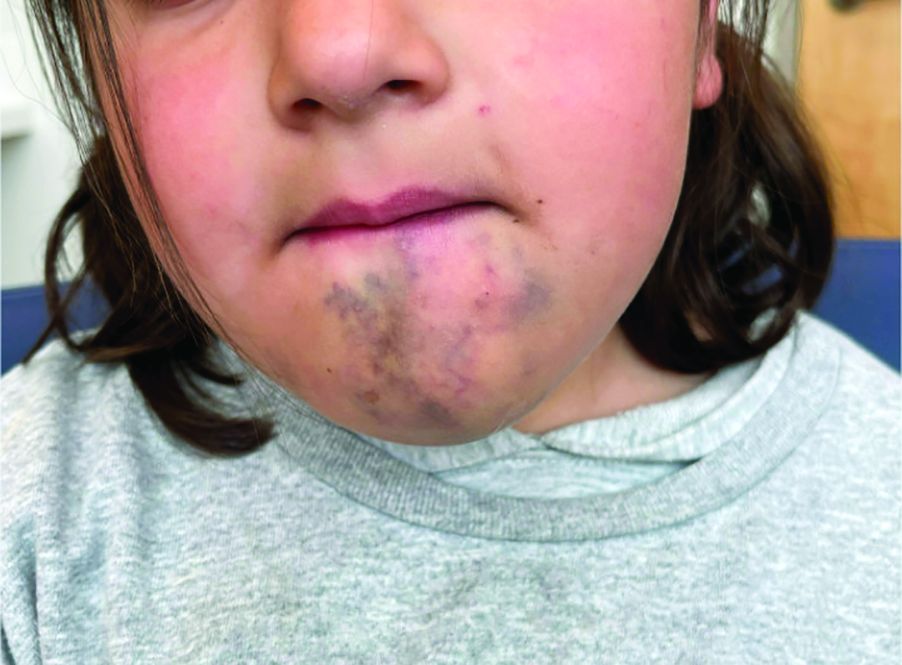
Venous malformations result from disorganized angiogenesis secondary to sporadic mutations in somatic cells. The most common implicated gene is TEK, a receptor tyrosine kinase. PIK3CA has also been involved. Both genes are involved in the PI3K/AKT/mTOR pathway, which regulates cell growth, proliferation, and angiogenesis. In venous endothelial cells, abnormal angiogenesis and vessel maturation may lead to venous malformation formation. Dysplastic vessels frequently separate from normal veins but may be contiguous with the deep venous system.
Diagnosis involves clinical history and physical examination. Imaging with ultrasound and magnetic resonance imaging (MRI) may be utilized. While ultrasound may be preferred for superficial venous malformations, MRI or MRI with MR angiography (MRA) is the preferred method for venous malformation assessment. Genetic testing may be appropriate for complex malformations, as classification of lesions by underlying mutation may allow targeted therapy.
This patient’s past MRI and MRA findings were consistent with a venous malformation.
Treatment
Venous malformations rarely regress spontaneously. Treatment is required if venous malformations are symptomatic, which may include pain, swelling, deformity, thrombosis, or interference with daily activities of living. Treatment plans require consideration of patient goals of care. The main categories of therapy are embolization/sclerotherapy, surgical resection, and molecular targeted therapy.

Sclerotherapy is a well-tolerated and efficacious first-line therapy. It can be used as either nonsurgical curative therapy or preoperative adjunct therapy to minimize blood loss before surgical resection. While surgical resection may cause scarring, multimodal approaches with sclerotherapy or laser therapy can decrease complications. Molecular therapies aim to reduce vascular proliferation and symptoms. Referral to hematology/oncology for evaluation and consideration of chemotherapeutic agents may be required. Sirolimus has been shown in mice models to inhibit an endothelial cell tyrosine kinase receptor that plays a role in venous malformation growth. Multiple studies have proved its efficacy in managing complicated vascular anomalies, including venous malformations. Alpelisib is an inhibitor of PI3KCA, which is part of the pathway that contributes to venous malformation formation. Dactolisib, a dual inhibitor of the PI3KA and mTOR pathways, and rebastinib, a TEK inhibitor, are being investigated.

Differential Diagnoses
The differential diagnosis includes dermal melanocytosis, nevus of Ota, hemangioma of infancy, and ashy dermatosis. In addition, venous malformations can be part of more complex vascular malformations.
Dermal melanocytosis, also known as Mongolian spots, are blue-gray patches of discoloration on the skin that appear at birth or shortly after. They result from the arrest of dermal melanocytes in the dermis during fetal life and tissue modeling. They are commonly observed in those of Asian or African descent with darker skin types. Most often, they are located in the lumbar or sacral-gluteal region. Unlike venous malformations, they are benign and do not involve vascular abnormalities. They typically fade over time.

Nevus of Ota is a benign congenital condition that presents with blue-gray or brown patches of pigmentation on the skin around the eyes, cheeks, and forehead. They are dermal melanocytes with a speckled instead of uniform appearance. Nevus of Ota primarily affects individuals of Asian descent and typically presents in the trigeminal nerve distribution region. Treatment can be done to minimize deformity, generally with pigmented laser surgery.
Hemangiomas of infancy are common benign tumors of infancy caused by endothelial cell proliferation. They are characterized by rapid growth followed by spontaneous involution within the first year of life and for several years. Hemangiomas can be superficial, deep, or mixed with features of both superficial and deep. Superficial hemangiomas present as raised, lobulated, and bright red while deep hemangiomas present as a bluish-hued nodule, plaque, or tumor. They are diagnosed clinically but skin biopsies and imaging can confirm the suspected diagnosis. While hemangiomas may self-resolve, complicated hemangiomas can be treated with topical timolol, oral propranolol, topical and intralesional corticosteroids, pulsed-dye laser, and surgical resection.
Ashy dermatosis is a term for asymptomatic, gray-blue or ashy patches distributed symmetrically on the trunk, head, neck, and upper extremities. It primarily affects individuals with darker skin types (Fitzpatrick III-V), and is more common in patients with Hispanic, Asian, or African backgrounds. The direct cause of ashy dermatosis is unknown but it is thought to be linked to drug ingestion, genetics, infection, and immune-mediated mechanisms. The general treatment includes topical corticosteroids, clofazimine, topical calcineurin inhibitors, oral dapsone, phototherapy, topical retinoids, or isotretinoin to reduce inflammation and pigmentation.
Danny Lee and Samuel Le serve as research fellows and Jolina Bui as research associate in the Pediatric Dermatology Division of the Department of Dermatology at the University of California, San Diego, and Rady Children’s Hospital, San Diego. Dr. Eichenfield is Distinguished Professor of Dermatology and Pediatrics and Vice-Chair of the Department of Dermatology at the University of California, San Diego, and Rady Children’s Hospital, San Diego. The authors have no relevant financial disclosures.
Suggested Reading
Agarwal P, Patel BC. Nevus of Ota and Ito. [Updated 2023 Jul 10]. In: StatPearls [Internet]. StatPearls Publishing; 2024.
Dompmartin A et al. The VASCERN-VASCA Working Group Diagnostic and Management Pathways for Venous Malformations. J Vasc Anom (Phila). 2023 Mar 23;4(2):e064.
Dompmartin A et al. Venous malformation: Update on aetiopathogenesis, diagnosis and management. Phlebology. 2010 Oct;25(5):224-235.
Gupta D, Thappa DM. Mongolian spots. Indian J Dermatol Venereol Leprol. 2013 Jul-Aug;79(4):469-478.
Krowchuk DP et al. Clinical Practice Guideline for the Management of Infantile Hemangiomas. Pediatrics. 2019 Jan;143(1):e20183475.
Nguyen K, Khachemoune A. Ashy dermatosis: A review. Dermatol Online J. 2019 May 15;25(5):13030/qt44f462s8.
Patel ND, Chong AT et al. Venous Malformations. Semin Intervent Radiol. 2022 Dec 20;39(5):498-507.
Diagnosis: Venous Malformation
Although present at birth, they are not always clinically evident early in life. They also tend to grow with the child without spontaneous regression, causing potential cosmetic concerns or complications from impingement on surrounding tissue.
Venous malformations appear with a bluish color appearing beneath the skin and can vary significantly in size and severity. Venous malformations are compressible and characterized by low to stagnant blood flow, which can spontaneously thrombose. Clinically, this may cause pain, swelling, skin changes, tissue and limb overgrowth, or functional impairment depending on location and size.
Venous malformations result from disorganized angiogenesis secondary to sporadic mutations in somatic cells. The most common implicated gene is TEK, a receptor tyrosine kinase. PIK3CA has also been involved. Both genes are involved in the PI3K/AKT/mTOR pathway, which regulates cell growth, proliferation, and angiogenesis. In venous endothelial cells, abnormal angiogenesis and vessel maturation may lead to venous malformation formation. Dysplastic vessels frequently separate from normal veins but may be contiguous with the deep venous system.
Diagnosis involves clinical history and physical examination. Imaging with ultrasound and magnetic resonance imaging (MRI) may be utilized. While ultrasound may be preferred for superficial venous malformations, MRI or MRI with MR angiography (MRA) is the preferred method for venous malformation assessment. Genetic testing may be appropriate for complex malformations, as classification of lesions by underlying mutation may allow targeted therapy.
This patient’s past MRI and MRA findings were consistent with a venous malformation.
Treatment
Venous malformations rarely regress spontaneously. Treatment is required if venous malformations are symptomatic, which may include pain, swelling, deformity, thrombosis, or interference with daily activities of living. Treatment plans require consideration of patient goals of care. The main categories of therapy are embolization/sclerotherapy, surgical resection, and molecular targeted therapy.
Sclerotherapy is a well-tolerated and efficacious first-line therapy. It can be used as either nonsurgical curative therapy or preoperative adjunct therapy to minimize blood loss before surgical resection. While surgical resection may cause scarring, multimodal approaches with sclerotherapy or laser therapy can decrease complications. Molecular therapies aim to reduce vascular proliferation and symptoms. Referral to hematology/oncology for evaluation and consideration of chemotherapeutic agents may be required. Sirolimus has been shown in mice models to inhibit an endothelial cell tyrosine kinase receptor that plays a role in venous malformation growth. Multiple studies have proved its efficacy in managing complicated vascular anomalies, including venous malformations. Alpelisib is an inhibitor of PI3KCA, which is part of the pathway that contributes to venous malformation formation. Dactolisib, a dual inhibitor of the PI3KA and mTOR pathways, and rebastinib, a TEK inhibitor, are being investigated.
Differential Diagnoses
The differential diagnosis includes dermal melanocytosis, nevus of Ota, hemangioma of infancy, and ashy dermatosis. In addition, venous malformations can be part of more complex vascular malformations.
Dermal melanocytosis, also known as Mongolian spots, are blue-gray patches of discoloration on the skin that appear at birth or shortly after. They result from the arrest of dermal melanocytes in the dermis during fetal life and tissue modeling. They are commonly observed in those of Asian or African descent with darker skin types. Most often, they are located in the lumbar or sacral-gluteal region. Unlike venous malformations, they are benign and do not involve vascular abnormalities. They typically fade over time.
Nevus of Ota is a benign congenital condition that presents with blue-gray or brown patches of pigmentation on the skin around the eyes, cheeks, and forehead. They are dermal melanocytes with a speckled instead of uniform appearance. Nevus of Ota primarily affects individuals of Asian descent and typically presents in the trigeminal nerve distribution region. Treatment can be done to minimize deformity, generally with pigmented laser surgery.
Hemangiomas of infancy are common benign tumors of infancy caused by endothelial cell proliferation. They are characterized by rapid growth followed by spontaneous involution within the first year of life and for several years. Hemangiomas can be superficial, deep, or mixed with features of both superficial and deep. Superficial hemangiomas present as raised, lobulated, and bright red while deep hemangiomas present as a bluish-hued nodule, plaque, or tumor. They are diagnosed clinically but skin biopsies and imaging can confirm the suspected diagnosis. While hemangiomas may self-resolve, complicated hemangiomas can be treated with topical timolol, oral propranolol, topical and intralesional corticosteroids, pulsed-dye laser, and surgical resection.
Ashy dermatosis is a term for asymptomatic, gray-blue or ashy patches distributed symmetrically on the trunk, head, neck, and upper extremities. It primarily affects individuals with darker skin types (Fitzpatrick III-V), and is more common in patients with Hispanic, Asian, or African backgrounds. The direct cause of ashy dermatosis is unknown but it is thought to be linked to drug ingestion, genetics, infection, and immune-mediated mechanisms. The general treatment includes topical corticosteroids, clofazimine, topical calcineurin inhibitors, oral dapsone, phototherapy, topical retinoids, or isotretinoin to reduce inflammation and pigmentation.
Danny Lee and Samuel Le serve as research fellows and Jolina Bui as research associate in the Pediatric Dermatology Division of the Department of Dermatology at the University of California, San Diego, and Rady Children’s Hospital, San Diego. Dr. Eichenfield is Distinguished Professor of Dermatology and Pediatrics and Vice-Chair of the Department of Dermatology at the University of California, San Diego, and Rady Children’s Hospital, San Diego. The authors have no relevant financial disclosures.
Suggested Reading
Agarwal P, Patel BC. Nevus of Ota and Ito. [Updated 2023 Jul 10]. In: StatPearls [Internet]. StatPearls Publishing; 2024.
Dompmartin A et al. The VASCERN-VASCA Working Group Diagnostic and Management Pathways for Venous Malformations. J Vasc Anom (Phila). 2023 Mar 23;4(2):e064.
Dompmartin A et al. Venous malformation: Update on aetiopathogenesis, diagnosis and management. Phlebology. 2010 Oct;25(5):224-235.
Gupta D, Thappa DM. Mongolian spots. Indian J Dermatol Venereol Leprol. 2013 Jul-Aug;79(4):469-478.
Krowchuk DP et al. Clinical Practice Guideline for the Management of Infantile Hemangiomas. Pediatrics. 2019 Jan;143(1):e20183475.
Nguyen K, Khachemoune A. Ashy dermatosis: A review. Dermatol Online J. 2019 May 15;25(5):13030/qt44f462s8.
Patel ND, Chong AT et al. Venous Malformations. Semin Intervent Radiol. 2022 Dec 20;39(5):498-507.
Diagnosis: Venous Malformation
Although present at birth, they are not always clinically evident early in life. They also tend to grow with the child without spontaneous regression, causing potential cosmetic concerns or complications from impingement on surrounding tissue.
Venous malformations appear with a bluish color appearing beneath the skin and can vary significantly in size and severity. Venous malformations are compressible and characterized by low to stagnant blood flow, which can spontaneously thrombose. Clinically, this may cause pain, swelling, skin changes, tissue and limb overgrowth, or functional impairment depending on location and size.
Venous malformations result from disorganized angiogenesis secondary to sporadic mutations in somatic cells. The most common implicated gene is TEK, a receptor tyrosine kinase. PIK3CA has also been involved. Both genes are involved in the PI3K/AKT/mTOR pathway, which regulates cell growth, proliferation, and angiogenesis. In venous endothelial cells, abnormal angiogenesis and vessel maturation may lead to venous malformation formation. Dysplastic vessels frequently separate from normal veins but may be contiguous with the deep venous system.
Diagnosis involves clinical history and physical examination. Imaging with ultrasound and magnetic resonance imaging (MRI) may be utilized. While ultrasound may be preferred for superficial venous malformations, MRI or MRI with MR angiography (MRA) is the preferred method for venous malformation assessment. Genetic testing may be appropriate for complex malformations, as classification of lesions by underlying mutation may allow targeted therapy.
This patient’s past MRI and MRA findings were consistent with a venous malformation.
Treatment
Venous malformations rarely regress spontaneously. Treatment is required if venous malformations are symptomatic, which may include pain, swelling, deformity, thrombosis, or interference with daily activities of living. Treatment plans require consideration of patient goals of care. The main categories of therapy are embolization/sclerotherapy, surgical resection, and molecular targeted therapy.
Sclerotherapy is a well-tolerated and efficacious first-line therapy. It can be used as either nonsurgical curative therapy or preoperative adjunct therapy to minimize blood loss before surgical resection. While surgical resection may cause scarring, multimodal approaches with sclerotherapy or laser therapy can decrease complications. Molecular therapies aim to reduce vascular proliferation and symptoms. Referral to hematology/oncology for evaluation and consideration of chemotherapeutic agents may be required. Sirolimus has been shown in mice models to inhibit an endothelial cell tyrosine kinase receptor that plays a role in venous malformation growth. Multiple studies have proved its efficacy in managing complicated vascular anomalies, including venous malformations. Alpelisib is an inhibitor of PI3KCA, which is part of the pathway that contributes to venous malformation formation. Dactolisib, a dual inhibitor of the PI3KA and mTOR pathways, and rebastinib, a TEK inhibitor, are being investigated.
Differential Diagnoses
The differential diagnosis includes dermal melanocytosis, nevus of Ota, hemangioma of infancy, and ashy dermatosis. In addition, venous malformations can be part of more complex vascular malformations.
Dermal melanocytosis, also known as Mongolian spots, are blue-gray patches of discoloration on the skin that appear at birth or shortly after. They result from the arrest of dermal melanocytes in the dermis during fetal life and tissue modeling. They are commonly observed in those of Asian or African descent with darker skin types. Most often, they are located in the lumbar or sacral-gluteal region. Unlike venous malformations, they are benign and do not involve vascular abnormalities. They typically fade over time.
Nevus of Ota is a benign congenital condition that presents with blue-gray or brown patches of pigmentation on the skin around the eyes, cheeks, and forehead. They are dermal melanocytes with a speckled instead of uniform appearance. Nevus of Ota primarily affects individuals of Asian descent and typically presents in the trigeminal nerve distribution region. Treatment can be done to minimize deformity, generally with pigmented laser surgery.
Hemangiomas of infancy are common benign tumors of infancy caused by endothelial cell proliferation. They are characterized by rapid growth followed by spontaneous involution within the first year of life and for several years. Hemangiomas can be superficial, deep, or mixed with features of both superficial and deep. Superficial hemangiomas present as raised, lobulated, and bright red while deep hemangiomas present as a bluish-hued nodule, plaque, or tumor. They are diagnosed clinically but skin biopsies and imaging can confirm the suspected diagnosis. While hemangiomas may self-resolve, complicated hemangiomas can be treated with topical timolol, oral propranolol, topical and intralesional corticosteroids, pulsed-dye laser, and surgical resection.
Ashy dermatosis is a term for asymptomatic, gray-blue or ashy patches distributed symmetrically on the trunk, head, neck, and upper extremities. It primarily affects individuals with darker skin types (Fitzpatrick III-V), and is more common in patients with Hispanic, Asian, or African backgrounds. The direct cause of ashy dermatosis is unknown but it is thought to be linked to drug ingestion, genetics, infection, and immune-mediated mechanisms. The general treatment includes topical corticosteroids, clofazimine, topical calcineurin inhibitors, oral dapsone, phototherapy, topical retinoids, or isotretinoin to reduce inflammation and pigmentation.
Danny Lee and Samuel Le serve as research fellows and Jolina Bui as research associate in the Pediatric Dermatology Division of the Department of Dermatology at the University of California, San Diego, and Rady Children’s Hospital, San Diego. Dr. Eichenfield is Distinguished Professor of Dermatology and Pediatrics and Vice-Chair of the Department of Dermatology at the University of California, San Diego, and Rady Children’s Hospital, San Diego. The authors have no relevant financial disclosures.
Suggested Reading
Agarwal P, Patel BC. Nevus of Ota and Ito. [Updated 2023 Jul 10]. In: StatPearls [Internet]. StatPearls Publishing; 2024.
Dompmartin A et al. The VASCERN-VASCA Working Group Diagnostic and Management Pathways for Venous Malformations. J Vasc Anom (Phila). 2023 Mar 23;4(2):e064.
Dompmartin A et al. Venous malformation: Update on aetiopathogenesis, diagnosis and management. Phlebology. 2010 Oct;25(5):224-235.
Gupta D, Thappa DM. Mongolian spots. Indian J Dermatol Venereol Leprol. 2013 Jul-Aug;79(4):469-478.
Krowchuk DP et al. Clinical Practice Guideline for the Management of Infantile Hemangiomas. Pediatrics. 2019 Jan;143(1):e20183475.
Nguyen K, Khachemoune A. Ashy dermatosis: A review. Dermatol Online J. 2019 May 15;25(5):13030/qt44f462s8.
Patel ND, Chong AT et al. Venous Malformations. Semin Intervent Radiol. 2022 Dec 20;39(5):498-507.
A 6-year-old girl presents with a bruise-like lesion on the lip, tongue, and chin area present since birth. The family states that her tongue has been increasing in size and is painful. On physical exam, she presents with left lower mucosal lip fullness and an overlying violaceous hue extending into the oral mucosa and onto the left tongue. The left portion of the dorsal tongue displays an increased thickness and bluish discoloration and there is a pink, smooth papule on the left anterolateral tongue.
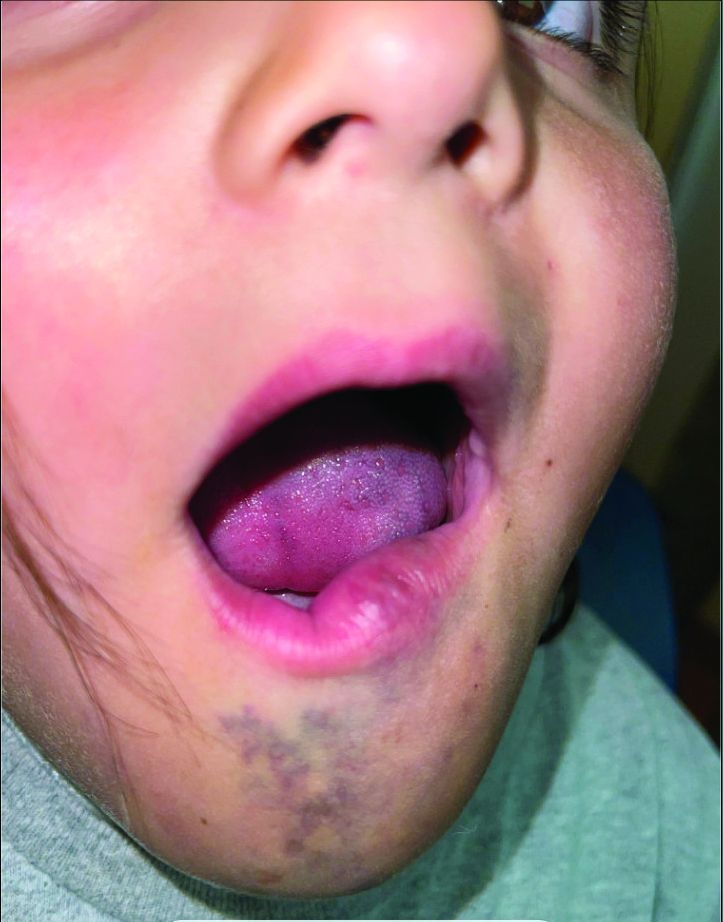
High-Dose Prednisone Can Reduce Rate of Pregnancy Post-Vasectomy
In the first randomized controlled trial of prednisone for postvasectomy reversals, fertility researchers found that a high dose of the steroid reduced the rate of subsequent pregnancy.
“This is the first time it’s been shown that high doses [of prednisone] can make someone infertile,” said Landon Trost, MD, director of the Male Fertility and Peyronie’s Clinic in Orem, Utah, and a faculty member at Mayo Clinic, in Rochester, Minnesota, who presented the study (Abstract MP42-19) on May 4 at the 2024 annual meeting of the American Urological Association (AUA) in San Antonio, Texas.
Dr. Trost called the findings “a real shock. I almost didn’t believe the data when I saw it. It opens up a whole new set of areas for research and exploration.”
Dr. Trost’s clinic performs 1200 reversals per year out of the estimated 20,000 performed annually in the United States, he said. He said his practice has stopped using high-dose prednisone as a result of the study, which he performed at his own expense to examine the varying protocols for vasectomy reversal.
William Berg, MD, director of the Stony Brook Urology Men’s Health Program, in Stony Brook, New York, said that the expected patency rate for modern postvasectomy reversals, if performed properly, can be as high as 98%. However, in some men, patency occurs initially, but the accumulation of scar tissue at the site of reversal causes sperm counts in ejaculate to drop to zero.
Since the 1970s, urologists — with limited research to back — the practice prescribed prednisone to patients with the goal of preventing scarring and blockages associated with vasectomy reversals. Dr. Berg called this practice “unsubstantiated” and noted that Dr. Trost’s study is the first prospective randomized controlled trial of this approach.
The study enrolled 75 men, with a mean age of roughly 38 years. The mean time since vasectomy was 6.6 years.
The low-dose arm (25 patients) received 5 mg of prednisone per week alternating with no treatment per week over 6 months. The high-dose arm (n = 14) received 20 mg of prednisone, tapered to 10 mg, 5 mg, and then off over 1 month, followed by every other month for 6 months. A prednisone-as-needed group (n = 11) received a tapered course of prednisone on the basis of whether they had decreasing or zero sperm counts. They received 20 mg for 5 days, 10 mg for 5 days, and 5 mg for 20 days.
A control arm (n = 25) received no prednisone.
Urologists typically use patency rates to measure success of vasectomy reversals. The patency rates at 12 months in Dr. Trost’s study were 100% in the control participants, prednisone-as-needed, and low-dose groups and 92% (13/14) in the high-dose group.
Dr. Trost said that the story was told in the pregnancy rates. At the 1-year mark, pregnancy rates were 67% in the low-risk group and 65% in the control group but 38% and 17% in the prednisone-as-needed and high-dose group, respectively (P = .02).
The mean maximum sperm concentration was 40 million per mL, ranging from 29.7 million per mL for men in the control group to 54.3 million per mL in the low-dose group.
Dr. Trost said that he immediately stopped using high doses of prednisone in his practice and predicted that other clinics would follow suit.
Dr. Berg said the drop in pregnancies with higher doses of prednisone is a first-time finding and suggests that a high dose may “be detrimental to sperm function in some way. I don’t think this ever has been described before.”
Dr. Trost financed the study himself. Dr. Berg reported no conflicts.
A version of this article first appeared on Medscape.com.
In the first randomized controlled trial of prednisone for postvasectomy reversals, fertility researchers found that a high dose of the steroid reduced the rate of subsequent pregnancy.
“This is the first time it’s been shown that high doses [of prednisone] can make someone infertile,” said Landon Trost, MD, director of the Male Fertility and Peyronie’s Clinic in Orem, Utah, and a faculty member at Mayo Clinic, in Rochester, Minnesota, who presented the study (Abstract MP42-19) on May 4 at the 2024 annual meeting of the American Urological Association (AUA) in San Antonio, Texas.
Dr. Trost called the findings “a real shock. I almost didn’t believe the data when I saw it. It opens up a whole new set of areas for research and exploration.”
Dr. Trost’s clinic performs 1200 reversals per year out of the estimated 20,000 performed annually in the United States, he said. He said his practice has stopped using high-dose prednisone as a result of the study, which he performed at his own expense to examine the varying protocols for vasectomy reversal.
William Berg, MD, director of the Stony Brook Urology Men’s Health Program, in Stony Brook, New York, said that the expected patency rate for modern postvasectomy reversals, if performed properly, can be as high as 98%. However, in some men, patency occurs initially, but the accumulation of scar tissue at the site of reversal causes sperm counts in ejaculate to drop to zero.
Since the 1970s, urologists — with limited research to back — the practice prescribed prednisone to patients with the goal of preventing scarring and blockages associated with vasectomy reversals. Dr. Berg called this practice “unsubstantiated” and noted that Dr. Trost’s study is the first prospective randomized controlled trial of this approach.
The study enrolled 75 men, with a mean age of roughly 38 years. The mean time since vasectomy was 6.6 years.
The low-dose arm (25 patients) received 5 mg of prednisone per week alternating with no treatment per week over 6 months. The high-dose arm (n = 14) received 20 mg of prednisone, tapered to 10 mg, 5 mg, and then off over 1 month, followed by every other month for 6 months. A prednisone-as-needed group (n = 11) received a tapered course of prednisone on the basis of whether they had decreasing or zero sperm counts. They received 20 mg for 5 days, 10 mg for 5 days, and 5 mg for 20 days.
A control arm (n = 25) received no prednisone.
Urologists typically use patency rates to measure success of vasectomy reversals. The patency rates at 12 months in Dr. Trost’s study were 100% in the control participants, prednisone-as-needed, and low-dose groups and 92% (13/14) in the high-dose group.
Dr. Trost said that the story was told in the pregnancy rates. At the 1-year mark, pregnancy rates were 67% in the low-risk group and 65% in the control group but 38% and 17% in the prednisone-as-needed and high-dose group, respectively (P = .02).
The mean maximum sperm concentration was 40 million per mL, ranging from 29.7 million per mL for men in the control group to 54.3 million per mL in the low-dose group.
Dr. Trost said that he immediately stopped using high doses of prednisone in his practice and predicted that other clinics would follow suit.
Dr. Berg said the drop in pregnancies with higher doses of prednisone is a first-time finding and suggests that a high dose may “be detrimental to sperm function in some way. I don’t think this ever has been described before.”
Dr. Trost financed the study himself. Dr. Berg reported no conflicts.
A version of this article first appeared on Medscape.com.
In the first randomized controlled trial of prednisone for postvasectomy reversals, fertility researchers found that a high dose of the steroid reduced the rate of subsequent pregnancy.
“This is the first time it’s been shown that high doses [of prednisone] can make someone infertile,” said Landon Trost, MD, director of the Male Fertility and Peyronie’s Clinic in Orem, Utah, and a faculty member at Mayo Clinic, in Rochester, Minnesota, who presented the study (Abstract MP42-19) on May 4 at the 2024 annual meeting of the American Urological Association (AUA) in San Antonio, Texas.
Dr. Trost called the findings “a real shock. I almost didn’t believe the data when I saw it. It opens up a whole new set of areas for research and exploration.”
Dr. Trost’s clinic performs 1200 reversals per year out of the estimated 20,000 performed annually in the United States, he said. He said his practice has stopped using high-dose prednisone as a result of the study, which he performed at his own expense to examine the varying protocols for vasectomy reversal.
William Berg, MD, director of the Stony Brook Urology Men’s Health Program, in Stony Brook, New York, said that the expected patency rate for modern postvasectomy reversals, if performed properly, can be as high as 98%. However, in some men, patency occurs initially, but the accumulation of scar tissue at the site of reversal causes sperm counts in ejaculate to drop to zero.
Since the 1970s, urologists — with limited research to back — the practice prescribed prednisone to patients with the goal of preventing scarring and blockages associated with vasectomy reversals. Dr. Berg called this practice “unsubstantiated” and noted that Dr. Trost’s study is the first prospective randomized controlled trial of this approach.
The study enrolled 75 men, with a mean age of roughly 38 years. The mean time since vasectomy was 6.6 years.
The low-dose arm (25 patients) received 5 mg of prednisone per week alternating with no treatment per week over 6 months. The high-dose arm (n = 14) received 20 mg of prednisone, tapered to 10 mg, 5 mg, and then off over 1 month, followed by every other month for 6 months. A prednisone-as-needed group (n = 11) received a tapered course of prednisone on the basis of whether they had decreasing or zero sperm counts. They received 20 mg for 5 days, 10 mg for 5 days, and 5 mg for 20 days.
A control arm (n = 25) received no prednisone.
Urologists typically use patency rates to measure success of vasectomy reversals. The patency rates at 12 months in Dr. Trost’s study were 100% in the control participants, prednisone-as-needed, and low-dose groups and 92% (13/14) in the high-dose group.
Dr. Trost said that the story was told in the pregnancy rates. At the 1-year mark, pregnancy rates were 67% in the low-risk group and 65% in the control group but 38% and 17% in the prednisone-as-needed and high-dose group, respectively (P = .02).
The mean maximum sperm concentration was 40 million per mL, ranging from 29.7 million per mL for men in the control group to 54.3 million per mL in the low-dose group.
Dr. Trost said that he immediately stopped using high doses of prednisone in his practice and predicted that other clinics would follow suit.
Dr. Berg said the drop in pregnancies with higher doses of prednisone is a first-time finding and suggests that a high dose may “be detrimental to sperm function in some way. I don’t think this ever has been described before.”
Dr. Trost financed the study himself. Dr. Berg reported no conflicts.
A version of this article first appeared on Medscape.com.
FROM AUA 2024
Starting Points if Patient Chooses Medication Abortion
An evolving legal landscape surrounding medication abortion has left physicians with as many questions as patients. A panel of clinicians at the annual meeting of the American College of Physicians offered guidance on how to help patients who choose medication abortion, which is available to women until 10 weeks of gestation.
Approved in 2000, abortion pills have become the most common method for terminating pregnancy in the United States, accounting for 63% of all abortions in 2023. The US Supreme Court is reviewing access to medication abortions, with a decision expected within months.
According to the Guttmacher Institute, 29 states as of February restrict access to medication abortion, either by limiting or banning the use of the drugs or by curtailing who can prescribe them and under what circumstances.
First, Determine Gestational Age
Cynthia Chuang, MD, MSc, an internist and professor of medicine at Penn State College of Medicine in Hershey, Pennsylvania, said in most cases, a woman can pinpoint the date of the first day of her last menstrual period, and the physician can confirm gestational age is 70 days or less. An ultrasound should be performed if the date of the last period is uncertain, she said, or if ectopic pregnancy is suspected, periods are irregular, or ultrasound is legally required in the state.
Women are not eligible for abortion pills if they have a bleeding or clotting disorder, have an intrauterine device, have adrenal insufficiency or chronic steroid use, or have porphyria or hemoglobin levels < 9 g/dL, she said.
“If the person has a known hemoglobin of less than 9, we would suggest that person have a procedural abortion,” Dr. Chuang said.
Components of Medication
Patients first receive 200 mg of oral mifepristone, which separates the pregnancy from the uterine wall. “Typically, people don’t experience side effects from the mifepristone alone,” Dr. Chaung said.
In the next 48 hours, the patient takes 800 mcg of misoprostol, either vaginally or buccally. “Patients can expect heavy cramping and bleeding 1-2 days after taking misoprostol,” she said. The bleeding should gradually subside over the following week or 2, she said. If the gestational age is 9 weeks or more, a second dose of misoprostol can be administered 3-6 hours after the first dose to improve efficacy.
If mifepristone is not available, misoprostol can be used alone in three doses spaced 3 hours apart, Dr. Chuang said.
The failure rate for mifepristone plus misoprostol has been calculated at 2% if the gestational age is less than 7 weeks. For misoprostol alone, the failure rate varies by the study, depending on gestational age and population analyzed, Dr. Chuang said. A 2023 meta-analysis in Contraception put the failure rate at 11%.
When to Call the Clinician
Dr. Chuang said clinicians should instruct women who have taken abortion pills to call the clinic if they are soaking through two sanitary pads an hour for more than 1 hour, if there is little to no bleeding, or if they think the medication isn’t working after taking the full regimen.
Mindy Sobota, MD, MS, an internist and associate professor of medicine at the Warren Alpert Medical School of Brown University in Providence, Rhode Island, recommended a continuing medical education site for evidence-based guidance on how best to talk with women about medication abortions.
She also recommended physicians and patients consult the Plan C website for guidance on telehealth services and price information on receiving abortion pills by mail in every state. “It’s a very reliable and safe clearing house,” Dr. Sobota said.
Internists should let patients know that whatever their choices are around pregnancy, they are open to discussing those choices and helping them through the process, Dr. Sobota said, adding that she makes those statements in annual visits.
Alexandra Bachorik, MD, EdM, director of education in the Women’s Health Unit and assistant professor of medicine at Boston University Chobanian & Avedisian School of Medicine, Boston, Massachusetts, said patients in restrictive states who need financial help related to obtaining abortion services in a less restricted state can visit the National Network of Abortion Funds, which can help people with travel or housing expenses.
Facilitating access to a clinic in a less restrictive state may be helpful to people approaching a gestational age limit, she said.
Adelaide McClintock, MD, an internist and assistant professor of general internal medicine at the University of Washington School of Medicine in Seattle, Washington, noted that even clinicians who cannot legally prescribe abortion pills can support their patients by providing resources and counseling on options before, during, and after pregnancy. Those who live in restrictive states also can provide support to women who have traveled to less restrictive states for an abortion if they have postabortion complications, she said.
She recommended the Reproductive Health Access Project website for a comprehensive guide for evidence-based care and counseling patients about all choices in reproductive healthcare.
Panelists urged clinicians to get familiar with abortion-access resources and keep them at their fingertips in practice. Patient requests for the services are common, she noted, as “one in four women will have an abortion by the age of 45.”
Dr. Chuang, Dr. McClintock, Dr. Sobota, and Dr. Bachorik reported no relevant financial conflicts of interest.
A version of this article appeared on Medscape.com.
An evolving legal landscape surrounding medication abortion has left physicians with as many questions as patients. A panel of clinicians at the annual meeting of the American College of Physicians offered guidance on how to help patients who choose medication abortion, which is available to women until 10 weeks of gestation.
Approved in 2000, abortion pills have become the most common method for terminating pregnancy in the United States, accounting for 63% of all abortions in 2023. The US Supreme Court is reviewing access to medication abortions, with a decision expected within months.
According to the Guttmacher Institute, 29 states as of February restrict access to medication abortion, either by limiting or banning the use of the drugs or by curtailing who can prescribe them and under what circumstances.
First, Determine Gestational Age
Cynthia Chuang, MD, MSc, an internist and professor of medicine at Penn State College of Medicine in Hershey, Pennsylvania, said in most cases, a woman can pinpoint the date of the first day of her last menstrual period, and the physician can confirm gestational age is 70 days or less. An ultrasound should be performed if the date of the last period is uncertain, she said, or if ectopic pregnancy is suspected, periods are irregular, or ultrasound is legally required in the state.
Women are not eligible for abortion pills if they have a bleeding or clotting disorder, have an intrauterine device, have adrenal insufficiency or chronic steroid use, or have porphyria or hemoglobin levels < 9 g/dL, she said.
“If the person has a known hemoglobin of less than 9, we would suggest that person have a procedural abortion,” Dr. Chuang said.
Components of Medication
Patients first receive 200 mg of oral mifepristone, which separates the pregnancy from the uterine wall. “Typically, people don’t experience side effects from the mifepristone alone,” Dr. Chaung said.
In the next 48 hours, the patient takes 800 mcg of misoprostol, either vaginally or buccally. “Patients can expect heavy cramping and bleeding 1-2 days after taking misoprostol,” she said. The bleeding should gradually subside over the following week or 2, she said. If the gestational age is 9 weeks or more, a second dose of misoprostol can be administered 3-6 hours after the first dose to improve efficacy.
If mifepristone is not available, misoprostol can be used alone in three doses spaced 3 hours apart, Dr. Chuang said.
The failure rate for mifepristone plus misoprostol has been calculated at 2% if the gestational age is less than 7 weeks. For misoprostol alone, the failure rate varies by the study, depending on gestational age and population analyzed, Dr. Chuang said. A 2023 meta-analysis in Contraception put the failure rate at 11%.
When to Call the Clinician
Dr. Chuang said clinicians should instruct women who have taken abortion pills to call the clinic if they are soaking through two sanitary pads an hour for more than 1 hour, if there is little to no bleeding, or if they think the medication isn’t working after taking the full regimen.
Mindy Sobota, MD, MS, an internist and associate professor of medicine at the Warren Alpert Medical School of Brown University in Providence, Rhode Island, recommended a continuing medical education site for evidence-based guidance on how best to talk with women about medication abortions.
She also recommended physicians and patients consult the Plan C website for guidance on telehealth services and price information on receiving abortion pills by mail in every state. “It’s a very reliable and safe clearing house,” Dr. Sobota said.
Internists should let patients know that whatever their choices are around pregnancy, they are open to discussing those choices and helping them through the process, Dr. Sobota said, adding that she makes those statements in annual visits.
Alexandra Bachorik, MD, EdM, director of education in the Women’s Health Unit and assistant professor of medicine at Boston University Chobanian & Avedisian School of Medicine, Boston, Massachusetts, said patients in restrictive states who need financial help related to obtaining abortion services in a less restricted state can visit the National Network of Abortion Funds, which can help people with travel or housing expenses.
Facilitating access to a clinic in a less restrictive state may be helpful to people approaching a gestational age limit, she said.
Adelaide McClintock, MD, an internist and assistant professor of general internal medicine at the University of Washington School of Medicine in Seattle, Washington, noted that even clinicians who cannot legally prescribe abortion pills can support their patients by providing resources and counseling on options before, during, and after pregnancy. Those who live in restrictive states also can provide support to women who have traveled to less restrictive states for an abortion if they have postabortion complications, she said.
She recommended the Reproductive Health Access Project website for a comprehensive guide for evidence-based care and counseling patients about all choices in reproductive healthcare.
Panelists urged clinicians to get familiar with abortion-access resources and keep them at their fingertips in practice. Patient requests for the services are common, she noted, as “one in four women will have an abortion by the age of 45.”
Dr. Chuang, Dr. McClintock, Dr. Sobota, and Dr. Bachorik reported no relevant financial conflicts of interest.
A version of this article appeared on Medscape.com.
An evolving legal landscape surrounding medication abortion has left physicians with as many questions as patients. A panel of clinicians at the annual meeting of the American College of Physicians offered guidance on how to help patients who choose medication abortion, which is available to women until 10 weeks of gestation.
Approved in 2000, abortion pills have become the most common method for terminating pregnancy in the United States, accounting for 63% of all abortions in 2023. The US Supreme Court is reviewing access to medication abortions, with a decision expected within months.
According to the Guttmacher Institute, 29 states as of February restrict access to medication abortion, either by limiting or banning the use of the drugs or by curtailing who can prescribe them and under what circumstances.
First, Determine Gestational Age
Cynthia Chuang, MD, MSc, an internist and professor of medicine at Penn State College of Medicine in Hershey, Pennsylvania, said in most cases, a woman can pinpoint the date of the first day of her last menstrual period, and the physician can confirm gestational age is 70 days or less. An ultrasound should be performed if the date of the last period is uncertain, she said, or if ectopic pregnancy is suspected, periods are irregular, or ultrasound is legally required in the state.
Women are not eligible for abortion pills if they have a bleeding or clotting disorder, have an intrauterine device, have adrenal insufficiency or chronic steroid use, or have porphyria or hemoglobin levels < 9 g/dL, she said.
“If the person has a known hemoglobin of less than 9, we would suggest that person have a procedural abortion,” Dr. Chuang said.
Components of Medication
Patients first receive 200 mg of oral mifepristone, which separates the pregnancy from the uterine wall. “Typically, people don’t experience side effects from the mifepristone alone,” Dr. Chaung said.
In the next 48 hours, the patient takes 800 mcg of misoprostol, either vaginally or buccally. “Patients can expect heavy cramping and bleeding 1-2 days after taking misoprostol,” she said. The bleeding should gradually subside over the following week or 2, she said. If the gestational age is 9 weeks or more, a second dose of misoprostol can be administered 3-6 hours after the first dose to improve efficacy.
If mifepristone is not available, misoprostol can be used alone in three doses spaced 3 hours apart, Dr. Chuang said.
The failure rate for mifepristone plus misoprostol has been calculated at 2% if the gestational age is less than 7 weeks. For misoprostol alone, the failure rate varies by the study, depending on gestational age and population analyzed, Dr. Chuang said. A 2023 meta-analysis in Contraception put the failure rate at 11%.
When to Call the Clinician
Dr. Chuang said clinicians should instruct women who have taken abortion pills to call the clinic if they are soaking through two sanitary pads an hour for more than 1 hour, if there is little to no bleeding, or if they think the medication isn’t working after taking the full regimen.
Mindy Sobota, MD, MS, an internist and associate professor of medicine at the Warren Alpert Medical School of Brown University in Providence, Rhode Island, recommended a continuing medical education site for evidence-based guidance on how best to talk with women about medication abortions.
She also recommended physicians and patients consult the Plan C website for guidance on telehealth services and price information on receiving abortion pills by mail in every state. “It’s a very reliable and safe clearing house,” Dr. Sobota said.
Internists should let patients know that whatever their choices are around pregnancy, they are open to discussing those choices and helping them through the process, Dr. Sobota said, adding that she makes those statements in annual visits.
Alexandra Bachorik, MD, EdM, director of education in the Women’s Health Unit and assistant professor of medicine at Boston University Chobanian & Avedisian School of Medicine, Boston, Massachusetts, said patients in restrictive states who need financial help related to obtaining abortion services in a less restricted state can visit the National Network of Abortion Funds, which can help people with travel or housing expenses.
Facilitating access to a clinic in a less restrictive state may be helpful to people approaching a gestational age limit, she said.
Adelaide McClintock, MD, an internist and assistant professor of general internal medicine at the University of Washington School of Medicine in Seattle, Washington, noted that even clinicians who cannot legally prescribe abortion pills can support their patients by providing resources and counseling on options before, during, and after pregnancy. Those who live in restrictive states also can provide support to women who have traveled to less restrictive states for an abortion if they have postabortion complications, she said.
She recommended the Reproductive Health Access Project website for a comprehensive guide for evidence-based care and counseling patients about all choices in reproductive healthcare.
Panelists urged clinicians to get familiar with abortion-access resources and keep them at their fingertips in practice. Patient requests for the services are common, she noted, as “one in four women will have an abortion by the age of 45.”
Dr. Chuang, Dr. McClintock, Dr. Sobota, and Dr. Bachorik reported no relevant financial conflicts of interest.
A version of this article appeared on Medscape.com.
FROM INTERNAL MEDICINE 2024
Office Procedure Found to Get Stone Fragments Rolling
An experimental handheld ultrasonic device used in an office setting was shown to guide residual kidney stone fragments out of the body and markedly reduce the risk for relapse, researchers reported (Abstract MP29-10) at the 2024 annual meeting of the American Urological Association AUA in San Antonio, Texas.
Mathew Sorensen, MD, MS, an associate professor of urology at the University of Washington, Seattle, and director of the Comprehensive Metabolic Stone Clinic at the Puget Sound VA, said that the risk for relapse of kidney stones was 70% lower in the treatment group than in the control group.
“This is an ultrasound-based propulsion procedure that is not like anything else that has ever existed. There’s nothing else that’s like it,” Dr. Sorensen said. “Essentially, in a session in the office with no anesthesia, we can use ultrasound energy to focus on those fragments and try to push them out of the unfavorable areas of the kidney.”
Roughly 20%-30% of patients who undergo surgery to remove kidney stones have residual fragments that can ultimately cause pain and send them to the emergency department or into hospital admission for treatment.
In the new study, 82 patients with stone fragments ≤ 5 mm were randomly assigned to receive the ultrasound treatment — which Dr. Sorensen and his colleagues developed over the past decade — or no procedure.
During a median follow-up of 2.6 years, 20% of patients in the treatment group experienced relapse of stones compared with 50% of patients in the control group.
Relapse was measured as the future occurrence of urgent medical visits for stone-related symptoms, surgeries, or growth of the residual fragments as measured on annual CT.
Dr. Sorensen and his colleagues found asymptomatic passage of fragments was twelvefold higher in the treatment group in the first 3 weeks (60% vs 5%). Asymptomatic passage was similar in both groups after 3 weeks.
Dr. Sorensen said that mild discomfort after the procedure was common, occurring in 38% of patients who underwent the treatment, but that it was short-lived and resolved without intervention; 8% of the treatment group and 7% of the control group had blood in the urine.
The propulsion device is available at two test sites in the University of Washington system; the manufacturer, SonoMotion Inc, a spinoff from the institution, is seeking US Food and Drug Administration approval for the technology, Dr. Sorensen said.
David Schulsinger, MD, an associate professor in the Department of Urology at Stony Brook University Hospital, Stony Brook, New York, said that patients with stone fragments currently have two options: follow-up surgery or active surveillance.
“With this new device, we actually have the potential for doing one other thing, and that is treating these patients noninvasively and without anesthesia,” Dr. Schulsinger said. “Once it’s ready for prime time, I think [ultrasonic propulsion] will be very well accepted among urologists to manage patients with asymptomatic residual stones.”
Dr. Sorensen is an advisor and equity holder in SonoMotion Inc. Dr. Schulsinger reported no relevant financial conflicts of interest.
A version of this article first appeared on Medscape.com.
An experimental handheld ultrasonic device used in an office setting was shown to guide residual kidney stone fragments out of the body and markedly reduce the risk for relapse, researchers reported (Abstract MP29-10) at the 2024 annual meeting of the American Urological Association AUA in San Antonio, Texas.
Mathew Sorensen, MD, MS, an associate professor of urology at the University of Washington, Seattle, and director of the Comprehensive Metabolic Stone Clinic at the Puget Sound VA, said that the risk for relapse of kidney stones was 70% lower in the treatment group than in the control group.
“This is an ultrasound-based propulsion procedure that is not like anything else that has ever existed. There’s nothing else that’s like it,” Dr. Sorensen said. “Essentially, in a session in the office with no anesthesia, we can use ultrasound energy to focus on those fragments and try to push them out of the unfavorable areas of the kidney.”
Roughly 20%-30% of patients who undergo surgery to remove kidney stones have residual fragments that can ultimately cause pain and send them to the emergency department or into hospital admission for treatment.
In the new study, 82 patients with stone fragments ≤ 5 mm were randomly assigned to receive the ultrasound treatment — which Dr. Sorensen and his colleagues developed over the past decade — or no procedure.
During a median follow-up of 2.6 years, 20% of patients in the treatment group experienced relapse of stones compared with 50% of patients in the control group.
Relapse was measured as the future occurrence of urgent medical visits for stone-related symptoms, surgeries, or growth of the residual fragments as measured on annual CT.
Dr. Sorensen and his colleagues found asymptomatic passage of fragments was twelvefold higher in the treatment group in the first 3 weeks (60% vs 5%). Asymptomatic passage was similar in both groups after 3 weeks.
Dr. Sorensen said that mild discomfort after the procedure was common, occurring in 38% of patients who underwent the treatment, but that it was short-lived and resolved without intervention; 8% of the treatment group and 7% of the control group had blood in the urine.
The propulsion device is available at two test sites in the University of Washington system; the manufacturer, SonoMotion Inc, a spinoff from the institution, is seeking US Food and Drug Administration approval for the technology, Dr. Sorensen said.
David Schulsinger, MD, an associate professor in the Department of Urology at Stony Brook University Hospital, Stony Brook, New York, said that patients with stone fragments currently have two options: follow-up surgery or active surveillance.
“With this new device, we actually have the potential for doing one other thing, and that is treating these patients noninvasively and without anesthesia,” Dr. Schulsinger said. “Once it’s ready for prime time, I think [ultrasonic propulsion] will be very well accepted among urologists to manage patients with asymptomatic residual stones.”
Dr. Sorensen is an advisor and equity holder in SonoMotion Inc. Dr. Schulsinger reported no relevant financial conflicts of interest.
A version of this article first appeared on Medscape.com.
An experimental handheld ultrasonic device used in an office setting was shown to guide residual kidney stone fragments out of the body and markedly reduce the risk for relapse, researchers reported (Abstract MP29-10) at the 2024 annual meeting of the American Urological Association AUA in San Antonio, Texas.
Mathew Sorensen, MD, MS, an associate professor of urology at the University of Washington, Seattle, and director of the Comprehensive Metabolic Stone Clinic at the Puget Sound VA, said that the risk for relapse of kidney stones was 70% lower in the treatment group than in the control group.
“This is an ultrasound-based propulsion procedure that is not like anything else that has ever existed. There’s nothing else that’s like it,” Dr. Sorensen said. “Essentially, in a session in the office with no anesthesia, we can use ultrasound energy to focus on those fragments and try to push them out of the unfavorable areas of the kidney.”
Roughly 20%-30% of patients who undergo surgery to remove kidney stones have residual fragments that can ultimately cause pain and send them to the emergency department or into hospital admission for treatment.
In the new study, 82 patients with stone fragments ≤ 5 mm were randomly assigned to receive the ultrasound treatment — which Dr. Sorensen and his colleagues developed over the past decade — or no procedure.
During a median follow-up of 2.6 years, 20% of patients in the treatment group experienced relapse of stones compared with 50% of patients in the control group.
Relapse was measured as the future occurrence of urgent medical visits for stone-related symptoms, surgeries, or growth of the residual fragments as measured on annual CT.
Dr. Sorensen and his colleagues found asymptomatic passage of fragments was twelvefold higher in the treatment group in the first 3 weeks (60% vs 5%). Asymptomatic passage was similar in both groups after 3 weeks.
Dr. Sorensen said that mild discomfort after the procedure was common, occurring in 38% of patients who underwent the treatment, but that it was short-lived and resolved without intervention; 8% of the treatment group and 7% of the control group had blood in the urine.
The propulsion device is available at two test sites in the University of Washington system; the manufacturer, SonoMotion Inc, a spinoff from the institution, is seeking US Food and Drug Administration approval for the technology, Dr. Sorensen said.
David Schulsinger, MD, an associate professor in the Department of Urology at Stony Brook University Hospital, Stony Brook, New York, said that patients with stone fragments currently have two options: follow-up surgery or active surveillance.
“With this new device, we actually have the potential for doing one other thing, and that is treating these patients noninvasively and without anesthesia,” Dr. Schulsinger said. “Once it’s ready for prime time, I think [ultrasonic propulsion] will be very well accepted among urologists to manage patients with asymptomatic residual stones.”
Dr. Sorensen is an advisor and equity holder in SonoMotion Inc. Dr. Schulsinger reported no relevant financial conflicts of interest.
A version of this article first appeared on Medscape.com.
FROM AUA 2024
Growing Periumbilical Plaque: A Case of Perforating Calcific Elastosis
To the Editor:
Pseudoxanthoma elasticum (PXE) is a genetic perforating dermatosis characterized by fragmentation and calcification of elastic fibers that most commonly manifests on the skin, eyes, gastrointestinal tract, or cardiovascular system.1 Classic skin findings include multiple symmetric yellowish papules favoring the flexural surfaces of the body and neck as well as the periumbilical and inguinal regions.1,2 Many life-threatening complications from this disease can occur due to calcification of elastic fibers in other parts of the body, such as the internal elastic lamina of arteries, which can cause gastrointestinal tract bleeding and accelerated cardiovascular disease including valvular disease.2,3 If PXE is localized to the skin only without systemic involvement or a family history, a diagnosis of perforating calcific elastosis (PCE) can be made. We report a case of PCE in a patient with a growing umbilical lesion.
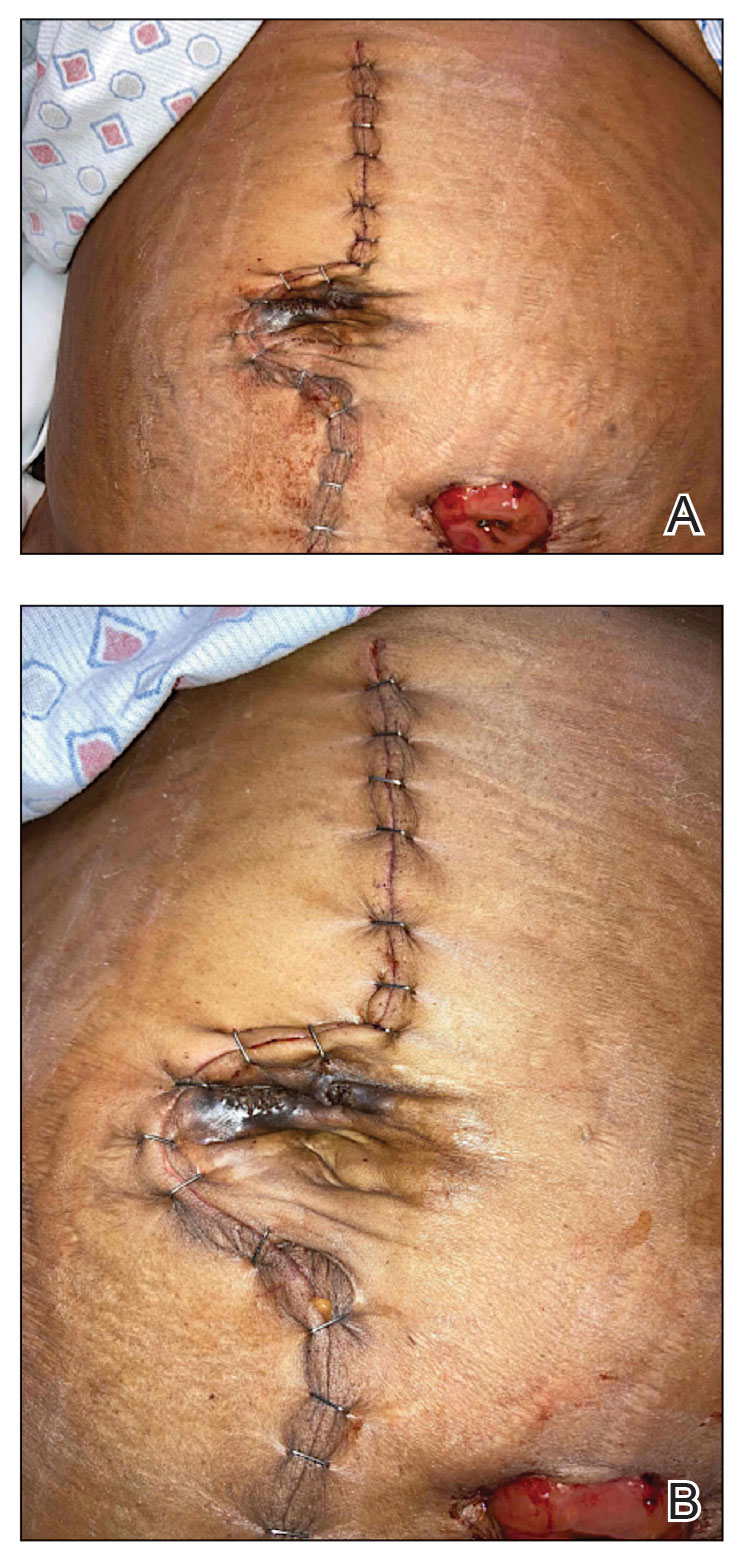
A 49-year-old multiparous (gravida 3, para 3) woman presented for evaluation of an evolving periumbilical lesion of 4 months’ duration. She denied pain, bleeding, or drainage from the area, as well as any systemic symptoms. The patient had a surgical history of a laparoscopic hysterectomy 7 years prior to the current presentation due to uterine fibroids, which resulted in a periumbilical scar. At the current presentation, physical examination revealed 2 hyperpigmented to violaceous periumbilical papules coalescing into a plaque with overlying hyperkeratosis and crusting (Figure 1). A punch biopsy was performed and histopathology showed diffuse dermal collections of degenerated eosinophilic distorted elastic fibers with calcification (Figure 2). Further sections showed a transepidermal channel in which the elastic fibers extruded from the dermis through the epidermis (Figure 3). The diagnosis of acquired PCE was made based on the clinical presentation, relevant medical history, and lack of underlying medical conditions or family history of PXE. No further workup was needed, and the patient reported no further progression and rather some improvement (decrease in size) of the lesion at 3-month follow-up.
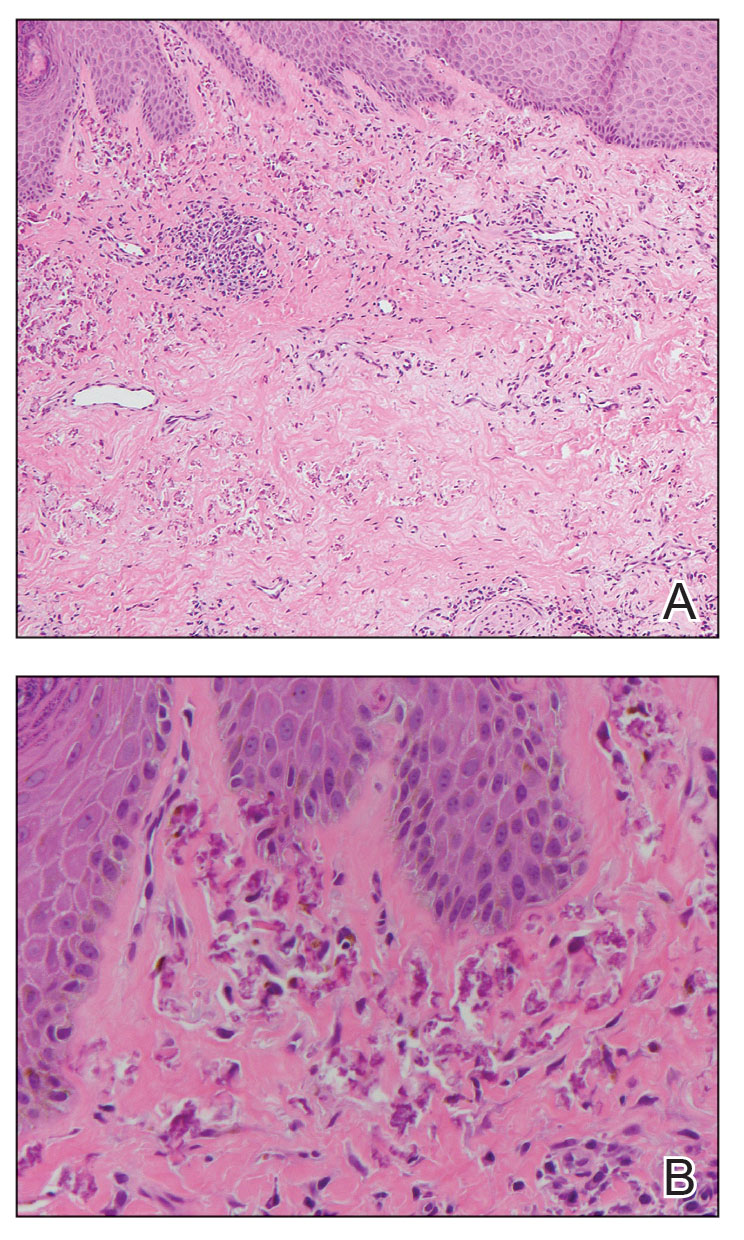
Perforating calcific elastosis (also known as periumbilical perforating PXE) is a rare acquired condition that is seen predominantly in multiparous middle-aged women.4-6 This diagnosis consists of degenerated calcified elastic fibers that may perforate the skin of the abdominal or periumbilical region. It clinically manifests as multiple painless hyperkeratotic papules surrounding the periumbilical region.4-6
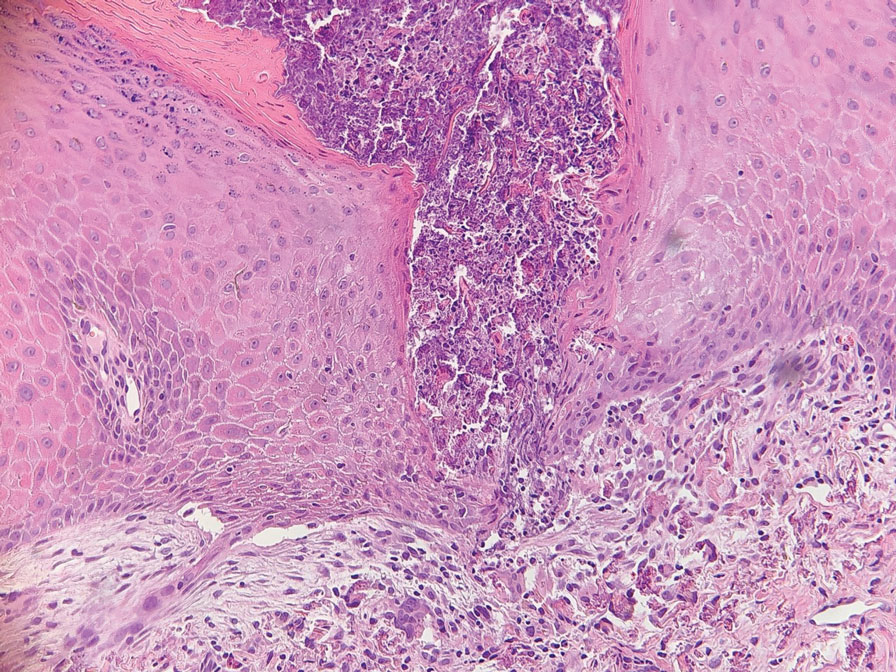
The etiology and pathogenesis of PCE have not been defined but have been attributed to recurrent stressing of elastic fibers due to repeat traumas,1 which is proposed to lead to degeneration of elastic fibers and calcification of damaged tissue.4-7 As a result, PCE most commonly manifests in multiparous, obese, middle-aged women and patients with multiple abdominal surgeries or ascites.1 It also has been reported in patients with renal failure due to deposition of abnormal calcium phosphate products onto elastic fibers.4 In our patient, the development of PCE was related to both multiparity and trauma from prior surgery.
The histopathologic findings of PCE and PXE are similar, warranting differentiation via thorough clinical examination as well as further investigation of the patient’s medical and family history. Both show degenerated, fragmented, curly elastic fibers with calcium deposition throughout the dermis and a transepidermal channel extruding these elastic fibers.7,8 The biopsies stain positive for elastic fibers and calcium deposition. Calcium staining can help to differentiate these entities from elastosis perforans serpiginosa, which lacks the presence of calcium staining.7
There are no definitive treatments for PCE. A single case report of a patient with PCE and renal failure showed regression with hemodialysis.9 In a study evaluating patients with inherited PXE, notable improvement was seen in skin lesions treated with bisphosphonates, possibly suggesting that regulating serum calcium may contribute to improvement of the disease.3 Most cases spontaneously resolve with atrophic plaques. Our patient required no additional treatment with no further progression and reported improvement of the lesion with spontaneous decrease in size.
- Jha AK, Zheeshan MD, Sinha BK, et al. Periumbilical perforating pseudoxanthoma elasticum: a rare case report. Dermatol Pract Concept. 2018;8:75-77. doi:10.5826/dpc.0802a02
- Ko JH, Shih YC, Huang YC, et al. Pseudoxanthoma elasticum. Lancet. 2013;381:565.
- Sherer DW, Singer G, Uribarri J, et al. Oral phosphate binders in the treatment of pseudoxanthoma elasticum. J Am Acad Dermatol. 2005;53:610-615.
- Lal NR, Bandyopadhyay D, Verma R, et al. Perforating calcific elastosis: revisiting a rare entity. Indian J Dermatol. 2018;63:186-188. doi:10.4103/ijd.IJD_111_17
- Kocatürk E, Kavala M, Zindanci I, et al. Periumbilical perforating pseudoxanthoma elasticum. Indian J Dermatol Venereol Leprol. 2009;75:329.
- Bressan AL, Vasconcelos BN, Silva RDS, et al. Periumbilical and periareolar perforating pseudoxanthoma elasticum. An Bras Dermatol. 2010;85:705-707. doi:10.1590/s0365-05962010000500018
- Hosen MJ, Lamoen A, De Paepe A, et al. Histopathology of pseudoxanthoma elasticum and related disorders: histological hallmarks and diagnostic clues. Scientifica (Cairo). 2012;2012:598262.
- Bathina M, Hedge SP, Shanavaz AA, et al. Pruritic periumbilical plaque as a presentation of rare perforating dermatosis. Indian Dermatol Online J. 2020;11:68-71. doi:10.4103/idoj.IDOJ_95_19
- Sapadin AN, Lebwohl MG, Teich SA, et al. Periumbilical pseudoxanthoma elasticum associated with chronic renal failure and angioid streaks—apparent regression with hemodialysis. J Am Acad Dermatol. 1998;39:338-344.
To the Editor:
Pseudoxanthoma elasticum (PXE) is a genetic perforating dermatosis characterized by fragmentation and calcification of elastic fibers that most commonly manifests on the skin, eyes, gastrointestinal tract, or cardiovascular system.1 Classic skin findings include multiple symmetric yellowish papules favoring the flexural surfaces of the body and neck as well as the periumbilical and inguinal regions.1,2 Many life-threatening complications from this disease can occur due to calcification of elastic fibers in other parts of the body, such as the internal elastic lamina of arteries, which can cause gastrointestinal tract bleeding and accelerated cardiovascular disease including valvular disease.2,3 If PXE is localized to the skin only without systemic involvement or a family history, a diagnosis of perforating calcific elastosis (PCE) can be made. We report a case of PCE in a patient with a growing umbilical lesion.
A 49-year-old multiparous (gravida 3, para 3) woman presented for evaluation of an evolving periumbilical lesion of 4 months’ duration. She denied pain, bleeding, or drainage from the area, as well as any systemic symptoms. The patient had a surgical history of a laparoscopic hysterectomy 7 years prior to the current presentation due to uterine fibroids, which resulted in a periumbilical scar. At the current presentation, physical examination revealed 2 hyperpigmented to violaceous periumbilical papules coalescing into a plaque with overlying hyperkeratosis and crusting (Figure 1). A punch biopsy was performed and histopathology showed diffuse dermal collections of degenerated eosinophilic distorted elastic fibers with calcification (Figure 2). Further sections showed a transepidermal channel in which the elastic fibers extruded from the dermis through the epidermis (Figure 3). The diagnosis of acquired PCE was made based on the clinical presentation, relevant medical history, and lack of underlying medical conditions or family history of PXE. No further workup was needed, and the patient reported no further progression and rather some improvement (decrease in size) of the lesion at 3-month follow-up.
Perforating calcific elastosis (also known as periumbilical perforating PXE) is a rare acquired condition that is seen predominantly in multiparous middle-aged women.4-6 This diagnosis consists of degenerated calcified elastic fibers that may perforate the skin of the abdominal or periumbilical region. It clinically manifests as multiple painless hyperkeratotic papules surrounding the periumbilical region.4-6
The etiology and pathogenesis of PCE have not been defined but have been attributed to recurrent stressing of elastic fibers due to repeat traumas,1 which is proposed to lead to degeneration of elastic fibers and calcification of damaged tissue.4-7 As a result, PCE most commonly manifests in multiparous, obese, middle-aged women and patients with multiple abdominal surgeries or ascites.1 It also has been reported in patients with renal failure due to deposition of abnormal calcium phosphate products onto elastic fibers.4 In our patient, the development of PCE was related to both multiparity and trauma from prior surgery.
The histopathologic findings of PCE and PXE are similar, warranting differentiation via thorough clinical examination as well as further investigation of the patient’s medical and family history. Both show degenerated, fragmented, curly elastic fibers with calcium deposition throughout the dermis and a transepidermal channel extruding these elastic fibers.7,8 The biopsies stain positive for elastic fibers and calcium deposition. Calcium staining can help to differentiate these entities from elastosis perforans serpiginosa, which lacks the presence of calcium staining.7
There are no definitive treatments for PCE. A single case report of a patient with PCE and renal failure showed regression with hemodialysis.9 In a study evaluating patients with inherited PXE, notable improvement was seen in skin lesions treated with bisphosphonates, possibly suggesting that regulating serum calcium may contribute to improvement of the disease.3 Most cases spontaneously resolve with atrophic plaques. Our patient required no additional treatment with no further progression and reported improvement of the lesion with spontaneous decrease in size.
To the Editor:
Pseudoxanthoma elasticum (PXE) is a genetic perforating dermatosis characterized by fragmentation and calcification of elastic fibers that most commonly manifests on the skin, eyes, gastrointestinal tract, or cardiovascular system.1 Classic skin findings include multiple symmetric yellowish papules favoring the flexural surfaces of the body and neck as well as the periumbilical and inguinal regions.1,2 Many life-threatening complications from this disease can occur due to calcification of elastic fibers in other parts of the body, such as the internal elastic lamina of arteries, which can cause gastrointestinal tract bleeding and accelerated cardiovascular disease including valvular disease.2,3 If PXE is localized to the skin only without systemic involvement or a family history, a diagnosis of perforating calcific elastosis (PCE) can be made. We report a case of PCE in a patient with a growing umbilical lesion.
A 49-year-old multiparous (gravida 3, para 3) woman presented for evaluation of an evolving periumbilical lesion of 4 months’ duration. She denied pain, bleeding, or drainage from the area, as well as any systemic symptoms. The patient had a surgical history of a laparoscopic hysterectomy 7 years prior to the current presentation due to uterine fibroids, which resulted in a periumbilical scar. At the current presentation, physical examination revealed 2 hyperpigmented to violaceous periumbilical papules coalescing into a plaque with overlying hyperkeratosis and crusting (Figure 1). A punch biopsy was performed and histopathology showed diffuse dermal collections of degenerated eosinophilic distorted elastic fibers with calcification (Figure 2). Further sections showed a transepidermal channel in which the elastic fibers extruded from the dermis through the epidermis (Figure 3). The diagnosis of acquired PCE was made based on the clinical presentation, relevant medical history, and lack of underlying medical conditions or family history of PXE. No further workup was needed, and the patient reported no further progression and rather some improvement (decrease in size) of the lesion at 3-month follow-up.
Perforating calcific elastosis (also known as periumbilical perforating PXE) is a rare acquired condition that is seen predominantly in multiparous middle-aged women.4-6 This diagnosis consists of degenerated calcified elastic fibers that may perforate the skin of the abdominal or periumbilical region. It clinically manifests as multiple painless hyperkeratotic papules surrounding the periumbilical region.4-6
The etiology and pathogenesis of PCE have not been defined but have been attributed to recurrent stressing of elastic fibers due to repeat traumas,1 which is proposed to lead to degeneration of elastic fibers and calcification of damaged tissue.4-7 As a result, PCE most commonly manifests in multiparous, obese, middle-aged women and patients with multiple abdominal surgeries or ascites.1 It also has been reported in patients with renal failure due to deposition of abnormal calcium phosphate products onto elastic fibers.4 In our patient, the development of PCE was related to both multiparity and trauma from prior surgery.
The histopathologic findings of PCE and PXE are similar, warranting differentiation via thorough clinical examination as well as further investigation of the patient’s medical and family history. Both show degenerated, fragmented, curly elastic fibers with calcium deposition throughout the dermis and a transepidermal channel extruding these elastic fibers.7,8 The biopsies stain positive for elastic fibers and calcium deposition. Calcium staining can help to differentiate these entities from elastosis perforans serpiginosa, which lacks the presence of calcium staining.7
There are no definitive treatments for PCE. A single case report of a patient with PCE and renal failure showed regression with hemodialysis.9 In a study evaluating patients with inherited PXE, notable improvement was seen in skin lesions treated with bisphosphonates, possibly suggesting that regulating serum calcium may contribute to improvement of the disease.3 Most cases spontaneously resolve with atrophic plaques. Our patient required no additional treatment with no further progression and reported improvement of the lesion with spontaneous decrease in size.
- Jha AK, Zheeshan MD, Sinha BK, et al. Periumbilical perforating pseudoxanthoma elasticum: a rare case report. Dermatol Pract Concept. 2018;8:75-77. doi:10.5826/dpc.0802a02
- Ko JH, Shih YC, Huang YC, et al. Pseudoxanthoma elasticum. Lancet. 2013;381:565.
- Sherer DW, Singer G, Uribarri J, et al. Oral phosphate binders in the treatment of pseudoxanthoma elasticum. J Am Acad Dermatol. 2005;53:610-615.
- Lal NR, Bandyopadhyay D, Verma R, et al. Perforating calcific elastosis: revisiting a rare entity. Indian J Dermatol. 2018;63:186-188. doi:10.4103/ijd.IJD_111_17
- Kocatürk E, Kavala M, Zindanci I, et al. Periumbilical perforating pseudoxanthoma elasticum. Indian J Dermatol Venereol Leprol. 2009;75:329.
- Bressan AL, Vasconcelos BN, Silva RDS, et al. Periumbilical and periareolar perforating pseudoxanthoma elasticum. An Bras Dermatol. 2010;85:705-707. doi:10.1590/s0365-05962010000500018
- Hosen MJ, Lamoen A, De Paepe A, et al. Histopathology of pseudoxanthoma elasticum and related disorders: histological hallmarks and diagnostic clues. Scientifica (Cairo). 2012;2012:598262.
- Bathina M, Hedge SP, Shanavaz AA, et al. Pruritic periumbilical plaque as a presentation of rare perforating dermatosis. Indian Dermatol Online J. 2020;11:68-71. doi:10.4103/idoj.IDOJ_95_19
- Sapadin AN, Lebwohl MG, Teich SA, et al. Periumbilical pseudoxanthoma elasticum associated with chronic renal failure and angioid streaks—apparent regression with hemodialysis. J Am Acad Dermatol. 1998;39:338-344.
- Jha AK, Zheeshan MD, Sinha BK, et al. Periumbilical perforating pseudoxanthoma elasticum: a rare case report. Dermatol Pract Concept. 2018;8:75-77. doi:10.5826/dpc.0802a02
- Ko JH, Shih YC, Huang YC, et al. Pseudoxanthoma elasticum. Lancet. 2013;381:565.
- Sherer DW, Singer G, Uribarri J, et al. Oral phosphate binders in the treatment of pseudoxanthoma elasticum. J Am Acad Dermatol. 2005;53:610-615.
- Lal NR, Bandyopadhyay D, Verma R, et al. Perforating calcific elastosis: revisiting a rare entity. Indian J Dermatol. 2018;63:186-188. doi:10.4103/ijd.IJD_111_17
- Kocatürk E, Kavala M, Zindanci I, et al. Periumbilical perforating pseudoxanthoma elasticum. Indian J Dermatol Venereol Leprol. 2009;75:329.
- Bressan AL, Vasconcelos BN, Silva RDS, et al. Periumbilical and periareolar perforating pseudoxanthoma elasticum. An Bras Dermatol. 2010;85:705-707. doi:10.1590/s0365-05962010000500018
- Hosen MJ, Lamoen A, De Paepe A, et al. Histopathology of pseudoxanthoma elasticum and related disorders: histological hallmarks and diagnostic clues. Scientifica (Cairo). 2012;2012:598262.
- Bathina M, Hedge SP, Shanavaz AA, et al. Pruritic periumbilical plaque as a presentation of rare perforating dermatosis. Indian Dermatol Online J. 2020;11:68-71. doi:10.4103/idoj.IDOJ_95_19
- Sapadin AN, Lebwohl MG, Teich SA, et al. Periumbilical pseudoxanthoma elasticum associated with chronic renal failure and angioid streaks—apparent regression with hemodialysis. J Am Acad Dermatol. 1998;39:338-344.
PRACTICE POINTS
- Perforating calcific elastosis (PCE) is a rare, localized, acquired variant of the inherited connective tissue disorder pseudoxanthoma elasticum (PXE).
- Histopathologic findings are identical for PCE and PXE, warranting differentiation via thorough clinical examination as well as further investigation of the patient’s medical and family history.
- Although there are no definitive treatments, most cases of PCE resolve spontaneously.
- Dermatologists should be aware of the importance of clinically differentiating PCE from PXE to prevent extensive workup, which can lead to unnecessary testing and increased morbidity in patients.

Early Treatment of Lyme Disease Prompted by Histopathologic Analysis of the Abdomen of an Engorged Tick
To the Editor:
Lyme disease is caused by spirochetes of the Borrelia burgdorferi sensu lato species complex and transmitted to humans by the bite of the Ixodes scapularis tick. It was first classified as a nationally notifiable disease in 1991, and the incidence has risen remarkably since then.1 More than 63,000 cases are reported annually to the Centers for Disease Control and Prevention; however, this number reflects severe underreporting, as the true incidence of the disease is projected to be closer to 476,000 cases per year.2 Additionally, 95% of US cases occur in the Northeast and upper Midwest.3 Given the pervasiveness of Lyme disease, early and reliable diagnostic methodology is critical, especially in cases in which the timeline of inoculation is unclear. We present a case of Lyme disease that was discovered during a routine dermatologic visit.
A 77-year-old White man with no relevant medical history presented to a dermatology clinic in west-central Virginia for a routine skin check. Physical examination revealed a well-appearing patient without overt skin abnormalities. However, on closer evaluation, a 0.2×0.1-cm engorged black I scapularis tick was visualized on the left lateral upper back. There was a surrounding zone of erythema that measured less than the 5-cm-diameter criterion for erythema migrans.1
Upon questioning, the patient reported that he was unaware of the tick and could not provide a timeline for inoculation. To ensure proper treatment, the tick was removed in the office and a specimen was sent for histopathology. The arthropod was formalin fixed and paraffin embedded, and it was examined using hematoxylin and eosin and Warthin-Starry stains. Histopathology of the specimen revealed a blood-engorged arthropod. Warthin-Starry stain of the abdomen of the tick highlighted tiny strandlike spirochetes within the gut that were compatible with B burgdorferi (Figure). This finding prompted treatment with a 3-week course of doxycycline. Following treatment, erythema resolved. The patient experienced no sequelae.

Lyme disease can cause a range of serious complications if left untreated, including arthritis, neurologic deficits, and heart block. During the early stages of disease, the sensitivity and specificity of diagnostic methods such as serologic testing are limited.4 The gold standard for the diagnosis of Lyme disease comprises culture and subsequent confirmation by polymerase chain reaction.1 However, cultivation of B burgdorferi is challenging.5 The Centers for Disease Control and Prevention recommends 2-tiered serologic antibody analysis, which has 27% sensitivity during the first week of cutaneous symptoms, and involves an enzyme-linked immunoassay followed by reflexive immunoblotting for positive or indeterminate cases.2,6 The precision of this method is limited by several variables; for example, seroconversion fails to occur in approximately 40% of cases, even after proven exposure to the spirochete.7 Furthermore, the sensitivity of the test is particularly low during the first 4 to 6 weeks of infection—before the body mounts a proper immune response; fewer than 50% of patients exhibit a positive response to the test at initial presentation.3
Clinical diagnosis of Lyme disease is possible, though the pathognomonic erythema migrans rash can be delayed for as long as 30 days and remains absent in 20% to 30% of patients.1 Prophylactic treatment can be offered to individuals who reside in a hyperendemic area and have a rash or have had an engorged Ixodes tick attached for longer than 36 hours.8
More definitive techniques for early diagnosis are needed to enable selective and accurate treatment. The standard of care for Lyme disease includes a 10-day course of doxycycline or a 14-day course of cefuroxime axetil or amoxicillin.9 Many patients tolerate treatment and achieve resolution of disease, but antibiotics are not benign, as some patients experience drug-related adverse effects such as photosensitivity, urticaria, diarrhea, nausea, vomiting, esophagitis, hepatotoxicity, and the Jarisch-Herxheimer reaction (fever, chills, rigors, nausea and vomiting, headache, tachycardia, hypotension, hyperventilation, flushing, myalgia, and exacerbation of lesions).10,11 In a group of 123 patients with Lyme disease, 30% treated with cefuroxime axetil and 32% treated with doxycycline had 1 or more drug-related adverse events.10 Additionally, avoidable antibiotic use is associated with increasing antibiotic resistance.12 Improved diagnostic accuracy would prevent unnecessary treatment. Galan and colleagues7 reported that Warthin-Starry staining of prepared sections of the abdomen of a tick allowed for detection of B burgdorferi with a sensitivity of 71% and specificity of 83%. This technique did not delay the final biopsy report and may be a promising adjunct to the diagnosis of early Lyme disease.7
Anecdotally, many patients who present with an attached and engorged tick are unaware of the timeline of their exposure. Histologic analysis of a removed tick could aid in early clinical decision-making—ie, when the diagnosis is unclear and treatment guidelines vary by region and circumstance. Improved sensitivity and specificity of diagnosis can prevent unnecessary antibiotic treatment, which is associated with adverse effects and escalation of antibiotic resistance.
- Borchers AT, Keen CL, Huntley AC, et al. Lyme disease: a rigorous review of diagnostic criteria and treatment. J Autoimmun. 2015;57:82-115. doi:10.1016/j.jaut.2014.09.004
- Centers for Disease Control and Prevention. Lyme disease: data and surveillance. February 14, 2024. Accessed March 5, 2024. https://www.cdc.gov/lyme/datasurveillance/index.html
- Marques AR. Laboratory diagnosis of Lyme disease. Infect Dis Clin North Am. 2015;29:295-307. doi:10.1016/j.idc.2015.02.005
- Bratton RL, Whiteside JW, Hovan MJ, et al. Diagnosis and treatment of Lyme disease. Mayo Clin Proc. 2008;83:566-571. doi:10.4065/83.5.566
- Berger B, Johnson R, Kodner C. Cultivation of Borrelia burgdorferi from human tick bite sites: a guide to the risk of infection. J Am Acad Dermatol. 1995;32(2 pt 1):184-187. doi:10.1016/0190-9622(95)90123-x
- Branda JA, Linskey K, Kim YA, et al. Two-tiered antibody testing for Lyme disease with use of 2 enzyme immunoassays, a whole-cell sonicate enzyme immunoassay followed by a VlsE C6 peptide enzyme immunoassay. Clin Infect Dis. 2011;53:541-547. doi:10.1093/cid/cir464
- Galan A, Kupernik P, Cowper SE. Detection of Borrelia in Ixodes scapularis ticks by silver stain, immunohistochemical and direct immunofluorescent methods. J Cutan Pathol. 2018;45:473-477. doi:10.1111/cup.13143
- Nadelman RB, Nowakowski J, Fish D, et al; Prophylaxis with single-dose doxycycline for the prevention of Lyme disease after an Ixodes scapularis tick bite. N Engl J Med. 2001;345:79-84. doi:10.1056/NEJM200107123450201
- Lantos PM, Rumbaugh J, Bockenstedt LK, et al. Clinical practice guidelines by the Infectious Diseases Society of America (IDSA), American Academy of Neurology (AAN), and American College of Rheumatology (ACR): 2020 guidelines for the prevention, diagnosis, and treatment of Lyme disease. Arthritis Rheumatol. 2021;73:12-20. doi:10.1002/art.41562
- Nadelman RB, Luger SW, Frank E, et al. Comparison of cefuroxime axetil and doxycycline in the treatment of early Lyme disease. Ann Intern Med. 1992;117:273-280. doi:10.7326/0003-4819-117-4-273
- Gresser U. Amoxicillin–clavulanic acid therapy may be associated with severe side effects—review of the literature. Eur J Med Res. 2001;6:139-149.
- Nathan C, Cars O. Antibiotic resistance—problems, progress, and prospects. N Engl J Med. 2014;371:1761-1763. doi:10.1056/NEJMp1408040
To the Editor:
Lyme disease is caused by spirochetes of the Borrelia burgdorferi sensu lato species complex and transmitted to humans by the bite of the Ixodes scapularis tick. It was first classified as a nationally notifiable disease in 1991, and the incidence has risen remarkably since then.1 More than 63,000 cases are reported annually to the Centers for Disease Control and Prevention; however, this number reflects severe underreporting, as the true incidence of the disease is projected to be closer to 476,000 cases per year.2 Additionally, 95% of US cases occur in the Northeast and upper Midwest.3 Given the pervasiveness of Lyme disease, early and reliable diagnostic methodology is critical, especially in cases in which the timeline of inoculation is unclear. We present a case of Lyme disease that was discovered during a routine dermatologic visit.
A 77-year-old White man with no relevant medical history presented to a dermatology clinic in west-central Virginia for a routine skin check. Physical examination revealed a well-appearing patient without overt skin abnormalities. However, on closer evaluation, a 0.2×0.1-cm engorged black I scapularis tick was visualized on the left lateral upper back. There was a surrounding zone of erythema that measured less than the 5-cm-diameter criterion for erythema migrans.1
Upon questioning, the patient reported that he was unaware of the tick and could not provide a timeline for inoculation. To ensure proper treatment, the tick was removed in the office and a specimen was sent for histopathology. The arthropod was formalin fixed and paraffin embedded, and it was examined using hematoxylin and eosin and Warthin-Starry stains. Histopathology of the specimen revealed a blood-engorged arthropod. Warthin-Starry stain of the abdomen of the tick highlighted tiny strandlike spirochetes within the gut that were compatible with B burgdorferi (Figure). This finding prompted treatment with a 3-week course of doxycycline. Following treatment, erythema resolved. The patient experienced no sequelae.
Lyme disease can cause a range of serious complications if left untreated, including arthritis, neurologic deficits, and heart block. During the early stages of disease, the sensitivity and specificity of diagnostic methods such as serologic testing are limited.4 The gold standard for the diagnosis of Lyme disease comprises culture and subsequent confirmation by polymerase chain reaction.1 However, cultivation of B burgdorferi is challenging.5 The Centers for Disease Control and Prevention recommends 2-tiered serologic antibody analysis, which has 27% sensitivity during the first week of cutaneous symptoms, and involves an enzyme-linked immunoassay followed by reflexive immunoblotting for positive or indeterminate cases.2,6 The precision of this method is limited by several variables; for example, seroconversion fails to occur in approximately 40% of cases, even after proven exposure to the spirochete.7 Furthermore, the sensitivity of the test is particularly low during the first 4 to 6 weeks of infection—before the body mounts a proper immune response; fewer than 50% of patients exhibit a positive response to the test at initial presentation.3
Clinical diagnosis of Lyme disease is possible, though the pathognomonic erythema migrans rash can be delayed for as long as 30 days and remains absent in 20% to 30% of patients.1 Prophylactic treatment can be offered to individuals who reside in a hyperendemic area and have a rash or have had an engorged Ixodes tick attached for longer than 36 hours.8
More definitive techniques for early diagnosis are needed to enable selective and accurate treatment. The standard of care for Lyme disease includes a 10-day course of doxycycline or a 14-day course of cefuroxime axetil or amoxicillin.9 Many patients tolerate treatment and achieve resolution of disease, but antibiotics are not benign, as some patients experience drug-related adverse effects such as photosensitivity, urticaria, diarrhea, nausea, vomiting, esophagitis, hepatotoxicity, and the Jarisch-Herxheimer reaction (fever, chills, rigors, nausea and vomiting, headache, tachycardia, hypotension, hyperventilation, flushing, myalgia, and exacerbation of lesions).10,11 In a group of 123 patients with Lyme disease, 30% treated with cefuroxime axetil and 32% treated with doxycycline had 1 or more drug-related adverse events.10 Additionally, avoidable antibiotic use is associated with increasing antibiotic resistance.12 Improved diagnostic accuracy would prevent unnecessary treatment. Galan and colleagues7 reported that Warthin-Starry staining of prepared sections of the abdomen of a tick allowed for detection of B burgdorferi with a sensitivity of 71% and specificity of 83%. This technique did not delay the final biopsy report and may be a promising adjunct to the diagnosis of early Lyme disease.7
Anecdotally, many patients who present with an attached and engorged tick are unaware of the timeline of their exposure. Histologic analysis of a removed tick could aid in early clinical decision-making—ie, when the diagnosis is unclear and treatment guidelines vary by region and circumstance. Improved sensitivity and specificity of diagnosis can prevent unnecessary antibiotic treatment, which is associated with adverse effects and escalation of antibiotic resistance.
To the Editor:
Lyme disease is caused by spirochetes of the Borrelia burgdorferi sensu lato species complex and transmitted to humans by the bite of the Ixodes scapularis tick. It was first classified as a nationally notifiable disease in 1991, and the incidence has risen remarkably since then.1 More than 63,000 cases are reported annually to the Centers for Disease Control and Prevention; however, this number reflects severe underreporting, as the true incidence of the disease is projected to be closer to 476,000 cases per year.2 Additionally, 95% of US cases occur in the Northeast and upper Midwest.3 Given the pervasiveness of Lyme disease, early and reliable diagnostic methodology is critical, especially in cases in which the timeline of inoculation is unclear. We present a case of Lyme disease that was discovered during a routine dermatologic visit.
A 77-year-old White man with no relevant medical history presented to a dermatology clinic in west-central Virginia for a routine skin check. Physical examination revealed a well-appearing patient without overt skin abnormalities. However, on closer evaluation, a 0.2×0.1-cm engorged black I scapularis tick was visualized on the left lateral upper back. There was a surrounding zone of erythema that measured less than the 5-cm-diameter criterion for erythema migrans.1
Upon questioning, the patient reported that he was unaware of the tick and could not provide a timeline for inoculation. To ensure proper treatment, the tick was removed in the office and a specimen was sent for histopathology. The arthropod was formalin fixed and paraffin embedded, and it was examined using hematoxylin and eosin and Warthin-Starry stains. Histopathology of the specimen revealed a blood-engorged arthropod. Warthin-Starry stain of the abdomen of the tick highlighted tiny strandlike spirochetes within the gut that were compatible with B burgdorferi (Figure). This finding prompted treatment with a 3-week course of doxycycline. Following treatment, erythema resolved. The patient experienced no sequelae.
Lyme disease can cause a range of serious complications if left untreated, including arthritis, neurologic deficits, and heart block. During the early stages of disease, the sensitivity and specificity of diagnostic methods such as serologic testing are limited.4 The gold standard for the diagnosis of Lyme disease comprises culture and subsequent confirmation by polymerase chain reaction.1 However, cultivation of B burgdorferi is challenging.5 The Centers for Disease Control and Prevention recommends 2-tiered serologic antibody analysis, which has 27% sensitivity during the first week of cutaneous symptoms, and involves an enzyme-linked immunoassay followed by reflexive immunoblotting for positive or indeterminate cases.2,6 The precision of this method is limited by several variables; for example, seroconversion fails to occur in approximately 40% of cases, even after proven exposure to the spirochete.7 Furthermore, the sensitivity of the test is particularly low during the first 4 to 6 weeks of infection—before the body mounts a proper immune response; fewer than 50% of patients exhibit a positive response to the test at initial presentation.3
Clinical diagnosis of Lyme disease is possible, though the pathognomonic erythema migrans rash can be delayed for as long as 30 days and remains absent in 20% to 30% of patients.1 Prophylactic treatment can be offered to individuals who reside in a hyperendemic area and have a rash or have had an engorged Ixodes tick attached for longer than 36 hours.8
More definitive techniques for early diagnosis are needed to enable selective and accurate treatment. The standard of care for Lyme disease includes a 10-day course of doxycycline or a 14-day course of cefuroxime axetil or amoxicillin.9 Many patients tolerate treatment and achieve resolution of disease, but antibiotics are not benign, as some patients experience drug-related adverse effects such as photosensitivity, urticaria, diarrhea, nausea, vomiting, esophagitis, hepatotoxicity, and the Jarisch-Herxheimer reaction (fever, chills, rigors, nausea and vomiting, headache, tachycardia, hypotension, hyperventilation, flushing, myalgia, and exacerbation of lesions).10,11 In a group of 123 patients with Lyme disease, 30% treated with cefuroxime axetil and 32% treated with doxycycline had 1 or more drug-related adverse events.10 Additionally, avoidable antibiotic use is associated with increasing antibiotic resistance.12 Improved diagnostic accuracy would prevent unnecessary treatment. Galan and colleagues7 reported that Warthin-Starry staining of prepared sections of the abdomen of a tick allowed for detection of B burgdorferi with a sensitivity of 71% and specificity of 83%. This technique did not delay the final biopsy report and may be a promising adjunct to the diagnosis of early Lyme disease.7
Anecdotally, many patients who present with an attached and engorged tick are unaware of the timeline of their exposure. Histologic analysis of a removed tick could aid in early clinical decision-making—ie, when the diagnosis is unclear and treatment guidelines vary by region and circumstance. Improved sensitivity and specificity of diagnosis can prevent unnecessary antibiotic treatment, which is associated with adverse effects and escalation of antibiotic resistance.
- Borchers AT, Keen CL, Huntley AC, et al. Lyme disease: a rigorous review of diagnostic criteria and treatment. J Autoimmun. 2015;57:82-115. doi:10.1016/j.jaut.2014.09.004
- Centers for Disease Control and Prevention. Lyme disease: data and surveillance. February 14, 2024. Accessed March 5, 2024. https://www.cdc.gov/lyme/datasurveillance/index.html
- Marques AR. Laboratory diagnosis of Lyme disease. Infect Dis Clin North Am. 2015;29:295-307. doi:10.1016/j.idc.2015.02.005
- Bratton RL, Whiteside JW, Hovan MJ, et al. Diagnosis and treatment of Lyme disease. Mayo Clin Proc. 2008;83:566-571. doi:10.4065/83.5.566
- Berger B, Johnson R, Kodner C. Cultivation of Borrelia burgdorferi from human tick bite sites: a guide to the risk of infection. J Am Acad Dermatol. 1995;32(2 pt 1):184-187. doi:10.1016/0190-9622(95)90123-x
- Branda JA, Linskey K, Kim YA, et al. Two-tiered antibody testing for Lyme disease with use of 2 enzyme immunoassays, a whole-cell sonicate enzyme immunoassay followed by a VlsE C6 peptide enzyme immunoassay. Clin Infect Dis. 2011;53:541-547. doi:10.1093/cid/cir464
- Galan A, Kupernik P, Cowper SE. Detection of Borrelia in Ixodes scapularis ticks by silver stain, immunohistochemical and direct immunofluorescent methods. J Cutan Pathol. 2018;45:473-477. doi:10.1111/cup.13143
- Nadelman RB, Nowakowski J, Fish D, et al; Prophylaxis with single-dose doxycycline for the prevention of Lyme disease after an Ixodes scapularis tick bite. N Engl J Med. 2001;345:79-84. doi:10.1056/NEJM200107123450201
- Lantos PM, Rumbaugh J, Bockenstedt LK, et al. Clinical practice guidelines by the Infectious Diseases Society of America (IDSA), American Academy of Neurology (AAN), and American College of Rheumatology (ACR): 2020 guidelines for the prevention, diagnosis, and treatment of Lyme disease. Arthritis Rheumatol. 2021;73:12-20. doi:10.1002/art.41562
- Nadelman RB, Luger SW, Frank E, et al. Comparison of cefuroxime axetil and doxycycline in the treatment of early Lyme disease. Ann Intern Med. 1992;117:273-280. doi:10.7326/0003-4819-117-4-273
- Gresser U. Amoxicillin–clavulanic acid therapy may be associated with severe side effects—review of the literature. Eur J Med Res. 2001;6:139-149.
- Nathan C, Cars O. Antibiotic resistance—problems, progress, and prospects. N Engl J Med. 2014;371:1761-1763. doi:10.1056/NEJMp1408040
- Borchers AT, Keen CL, Huntley AC, et al. Lyme disease: a rigorous review of diagnostic criteria and treatment. J Autoimmun. 2015;57:82-115. doi:10.1016/j.jaut.2014.09.004
- Centers for Disease Control and Prevention. Lyme disease: data and surveillance. February 14, 2024. Accessed March 5, 2024. https://www.cdc.gov/lyme/datasurveillance/index.html
- Marques AR. Laboratory diagnosis of Lyme disease. Infect Dis Clin North Am. 2015;29:295-307. doi:10.1016/j.idc.2015.02.005
- Bratton RL, Whiteside JW, Hovan MJ, et al. Diagnosis and treatment of Lyme disease. Mayo Clin Proc. 2008;83:566-571. doi:10.4065/83.5.566
- Berger B, Johnson R, Kodner C. Cultivation of Borrelia burgdorferi from human tick bite sites: a guide to the risk of infection. J Am Acad Dermatol. 1995;32(2 pt 1):184-187. doi:10.1016/0190-9622(95)90123-x
- Branda JA, Linskey K, Kim YA, et al. Two-tiered antibody testing for Lyme disease with use of 2 enzyme immunoassays, a whole-cell sonicate enzyme immunoassay followed by a VlsE C6 peptide enzyme immunoassay. Clin Infect Dis. 2011;53:541-547. doi:10.1093/cid/cir464
- Galan A, Kupernik P, Cowper SE. Detection of Borrelia in Ixodes scapularis ticks by silver stain, immunohistochemical and direct immunofluorescent methods. J Cutan Pathol. 2018;45:473-477. doi:10.1111/cup.13143
- Nadelman RB, Nowakowski J, Fish D, et al; Prophylaxis with single-dose doxycycline for the prevention of Lyme disease after an Ixodes scapularis tick bite. N Engl J Med. 2001;345:79-84. doi:10.1056/NEJM200107123450201
- Lantos PM, Rumbaugh J, Bockenstedt LK, et al. Clinical practice guidelines by the Infectious Diseases Society of America (IDSA), American Academy of Neurology (AAN), and American College of Rheumatology (ACR): 2020 guidelines for the prevention, diagnosis, and treatment of Lyme disease. Arthritis Rheumatol. 2021;73:12-20. doi:10.1002/art.41562
- Nadelman RB, Luger SW, Frank E, et al. Comparison of cefuroxime axetil and doxycycline in the treatment of early Lyme disease. Ann Intern Med. 1992;117:273-280. doi:10.7326/0003-4819-117-4-273
- Gresser U. Amoxicillin–clavulanic acid therapy may be associated with severe side effects—review of the literature. Eur J Med Res. 2001;6:139-149.
- Nathan C, Cars O. Antibiotic resistance—problems, progress, and prospects. N Engl J Med. 2014;371:1761-1763. doi:10.1056/NEJMp1408040
PRACTICE POINTS
- Lyme disease is increasingly common in the United States.
- Lyme disease can cause debilitating sequelae if left untreated, including arthritis, neurologic deficits, and heart block.
- Diagnostic methods for identifying early Lyme disease have limited sensitivity and specificity, necessitating alternative strategies for making an accurate diagnosis and initiating treatment.