User login
In skin lymphoma diagnosis, pathology must match clinical presentation
NEW YORK – Both dermatologists and pathologists can make the mistake of diagnosing a long list of pseudolymphomas as lymphomas, according to Dr. Antonio Subtil, who is an associate professor of dermatology and pathology at Yale University School of Medicine, New Haven, Connecticut.
The diagnosis is not trustworthy without agreement by a team of experts, he said. Most dermatologists do not have sufficient expertise in histopathology to interpret equivocal findings. Pathologists do not typically grasp subtleties in dermatologic presentations that may also be critical to reach an accurate diagnosis regardless of histopathology.
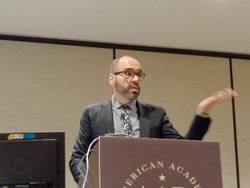
Mycosis fungoides (MF) represents almost 60% of cutaneous T-cell lymphomas (CTCL), but only a proportion of patients with MF have a classic presentation and the extensive array of other T-cell and B-cell lesions constitute a heterogeneous profile of lesions, according to Dr. Subtil, who spoke on skin lymphoma knowledge gaps at the summer meeting of the American Academy of Dermatology (AAD). The biases of the dermatologist and the pathologist in isolation can lead to misdiagnosis, which is the reason to insist on a clear correlation between pathologic and clinical findings.
Speaking as a dermatologist, Dr. Subtil cautioned that pathologists “do not understand our terminology” and are not facile in differentiating clinical descriptions of cutaneous lesions. Speaking as a pathologist, Dr. Subtil cautioned that “I cannot trust a pathological report by itself” without understanding the clinical context.
As an example, he recounted a case of an ulcerated nodule that proved to have a lymphoid infiltrate on biopsy. When cells in the infiltrate were found to be CD30+, the likely diagnosis appeared to be an anaplastic large cell lymphoma. Only further testing revealed molluscum contagiosum, which can have a similar appearance and also feature CD30+ cells. A course of unnecessary chemotherapy was narrowly averted.
A small sample of the pseudolymphomas that can fool the clinician include lymphomatoid drug eruption, cutaneous leishmaniasis, lymphomatoid lichenoid keratosis, and reactive lymphoid hyperplasia at the site of vaccination, according to Dr. Subtil. He outlined a series of challenges that should be recognized before settling on a diagnosis.
One of the most important of these challenges is the limited specificity and sensitivity of any clinical characteristic or diagnostic study in isolation, according to Dr. Subtil. Even tissue studies with polymerase chain reaction (PCR) are associated with false positive and false negative results and, like everything else, must be evaluated in the context of the pathological and clinical findings.
Another challenge to a definitive diagnosis is the overuse of the term “atypical” by both dermatologists and pathologists. Dr. Subtil called the propensity to use this label the “atypical syndrome” and cautioned that it may sometimes be an obstacle for seeking a more definitive description of the underlying pathology. Using a team approach, which Dr. Subtil suggested might also include a hematologist and an oncologist, to reach consensus about the diagnosis substantially reduces the risk of a misdiagnosis.
NEW YORK – Both dermatologists and pathologists can make the mistake of diagnosing a long list of pseudolymphomas as lymphomas, according to Dr. Antonio Subtil, who is an associate professor of dermatology and pathology at Yale University School of Medicine, New Haven, Connecticut.
The diagnosis is not trustworthy without agreement by a team of experts, he said. Most dermatologists do not have sufficient expertise in histopathology to interpret equivocal findings. Pathologists do not typically grasp subtleties in dermatologic presentations that may also be critical to reach an accurate diagnosis regardless of histopathology.
Mycosis fungoides (MF) represents almost 60% of cutaneous T-cell lymphomas (CTCL), but only a proportion of patients with MF have a classic presentation and the extensive array of other T-cell and B-cell lesions constitute a heterogeneous profile of lesions, according to Dr. Subtil, who spoke on skin lymphoma knowledge gaps at the summer meeting of the American Academy of Dermatology (AAD). The biases of the dermatologist and the pathologist in isolation can lead to misdiagnosis, which is the reason to insist on a clear correlation between pathologic and clinical findings.
Speaking as a dermatologist, Dr. Subtil cautioned that pathologists “do not understand our terminology” and are not facile in differentiating clinical descriptions of cutaneous lesions. Speaking as a pathologist, Dr. Subtil cautioned that “I cannot trust a pathological report by itself” without understanding the clinical context.
As an example, he recounted a case of an ulcerated nodule that proved to have a lymphoid infiltrate on biopsy. When cells in the infiltrate were found to be CD30+, the likely diagnosis appeared to be an anaplastic large cell lymphoma. Only further testing revealed molluscum contagiosum, which can have a similar appearance and also feature CD30+ cells. A course of unnecessary chemotherapy was narrowly averted.
A small sample of the pseudolymphomas that can fool the clinician include lymphomatoid drug eruption, cutaneous leishmaniasis, lymphomatoid lichenoid keratosis, and reactive lymphoid hyperplasia at the site of vaccination, according to Dr. Subtil. He outlined a series of challenges that should be recognized before settling on a diagnosis.
One of the most important of these challenges is the limited specificity and sensitivity of any clinical characteristic or diagnostic study in isolation, according to Dr. Subtil. Even tissue studies with polymerase chain reaction (PCR) are associated with false positive and false negative results and, like everything else, must be evaluated in the context of the pathological and clinical findings.
Another challenge to a definitive diagnosis is the overuse of the term “atypical” by both dermatologists and pathologists. Dr. Subtil called the propensity to use this label the “atypical syndrome” and cautioned that it may sometimes be an obstacle for seeking a more definitive description of the underlying pathology. Using a team approach, which Dr. Subtil suggested might also include a hematologist and an oncologist, to reach consensus about the diagnosis substantially reduces the risk of a misdiagnosis.
NEW YORK – Both dermatologists and pathologists can make the mistake of diagnosing a long list of pseudolymphomas as lymphomas, according to Dr. Antonio Subtil, who is an associate professor of dermatology and pathology at Yale University School of Medicine, New Haven, Connecticut.
The diagnosis is not trustworthy without agreement by a team of experts, he said. Most dermatologists do not have sufficient expertise in histopathology to interpret equivocal findings. Pathologists do not typically grasp subtleties in dermatologic presentations that may also be critical to reach an accurate diagnosis regardless of histopathology.
Mycosis fungoides (MF) represents almost 60% of cutaneous T-cell lymphomas (CTCL), but only a proportion of patients with MF have a classic presentation and the extensive array of other T-cell and B-cell lesions constitute a heterogeneous profile of lesions, according to Dr. Subtil, who spoke on skin lymphoma knowledge gaps at the summer meeting of the American Academy of Dermatology (AAD). The biases of the dermatologist and the pathologist in isolation can lead to misdiagnosis, which is the reason to insist on a clear correlation between pathologic and clinical findings.
Speaking as a dermatologist, Dr. Subtil cautioned that pathologists “do not understand our terminology” and are not facile in differentiating clinical descriptions of cutaneous lesions. Speaking as a pathologist, Dr. Subtil cautioned that “I cannot trust a pathological report by itself” without understanding the clinical context.
As an example, he recounted a case of an ulcerated nodule that proved to have a lymphoid infiltrate on biopsy. When cells in the infiltrate were found to be CD30+, the likely diagnosis appeared to be an anaplastic large cell lymphoma. Only further testing revealed molluscum contagiosum, which can have a similar appearance and also feature CD30+ cells. A course of unnecessary chemotherapy was narrowly averted.
A small sample of the pseudolymphomas that can fool the clinician include lymphomatoid drug eruption, cutaneous leishmaniasis, lymphomatoid lichenoid keratosis, and reactive lymphoid hyperplasia at the site of vaccination, according to Dr. Subtil. He outlined a series of challenges that should be recognized before settling on a diagnosis.
One of the most important of these challenges is the limited specificity and sensitivity of any clinical characteristic or diagnostic study in isolation, according to Dr. Subtil. Even tissue studies with polymerase chain reaction (PCR) are associated with false positive and false negative results and, like everything else, must be evaluated in the context of the pathological and clinical findings.
Another challenge to a definitive diagnosis is the overuse of the term “atypical” by both dermatologists and pathologists. Dr. Subtil called the propensity to use this label the “atypical syndrome” and cautioned that it may sometimes be an obstacle for seeking a more definitive description of the underlying pathology. Using a team approach, which Dr. Subtil suggested might also include a hematologist and an oncologist, to reach consensus about the diagnosis substantially reduces the risk of a misdiagnosis.
EXPERT ANALYSIS AT THE SUMMER MEETING OF THE AMERICAN ACADEMY OF DERMATOLOGY
AAD adds 5 new ‘Choosing Wisely’ recommendations
NEW YORK – Five new Choosing Wisely recommendations have been issued by the American Academy of Dermatology.
The five new recommendations are:
Don’t use oral or injected corticosteroids as a long-term treatment for dermatitis.
Don’t use skin prick tests or blood tests such as the radioallergosorbet test (RAST) for the routine evaluation of eczema.
Don’t routinely use microbiologic testing in the evaluation and management of acne.
Don’t routinely use antibiotics to treat bilateral swelling and redness of the lower leg unless there is clear evidence of infection.
Don't routinely prescribe antibiotics for inflamed epidermal cysts.
The release of the list provides evidence that the AAD is “committed to serving as good stewards of limited healthcare resources,” according to AAD President Dr. Mark Lebwohl. who is also chair of the department of dermatology at Icahn School of Medicine at Mount Sinai, New York.
These diagnostic tests and treatments are often performed but are not necessarily appropriate. Some of the procedures may be reasonable in specific situations, he said, and this list “can help patients with skin, hair, and nail conditions start a conversation with their dermatologists about what tests and treatments are right for them.”
The five Choosing Wisely recommendations join the five recommendations issued in 2013 by the AAD. The Choosing Wisely campaign was launched by the American Board of Internal Medicine Foundation in 2012 and now has participation from more than 70 professional healthcare organizations.
Each of the recommendations from the AAD was issued with a background explanation. For example, it was specified that the adverse effects of long-term systemic corticosteroids make a favorable benefit-to-risk ratio unlikely in patients with chronic dermatitis. Also, determining the type of bacteria in an acne lesion has little value because it would be unlikely to change management decisions.
The five recommendations from 2103 were to avoid oral antifungal therapy for suspected nail fungus until infection has been confirmed; to refrain from further staging studies, such as sentinel lymph node biopsy, in early stage, localized melanoma; to refrain from Mohs micrographic surgery in non-melanoma skin cancer of less than 1 cm in size; to avoid oral antibiotics for atopic dermatitis in the absence of clinical evidence of infection, and to avoid topical antibiotics for infection prophylaxis for clean surgical wounds.
All 10 of the Choosing Wisely recommendations from the AAD were selected by an AAD-organized workgroup of board-certified dermatologists seeking to identify practices that are common but impose a strong potential for poor use of healthcare resources. In some cases, there is evidence that the opportunity for harm exceeds the likelihood of benefit. In others, no added value is expected from procedures that add cost.
The AAD list of 10 recommendations is part of more than 400 tests and procedures now identified in the Choosing Wisely campaign by the participating professional organizations. Importantly, this list is not just distributed to those delivering care but is expressly made available to patients to encourage them to discuss options with their physicians and to participate in determining which care is unnecessary to them.
The goal of providing patients with information that can help them participate in decisions about appropriate care is consistent with the full transparency that the AAD endorses, Dr. Lebwohl said. “We want to empower our patients to make informed healthcare decisions.”
This article was updated 8/27/15.
NEW YORK – Five new Choosing Wisely recommendations have been issued by the American Academy of Dermatology.
The five new recommendations are:
Don’t use oral or injected corticosteroids as a long-term treatment for dermatitis.
Don’t use skin prick tests or blood tests such as the radioallergosorbet test (RAST) for the routine evaluation of eczema.
Don’t routinely use microbiologic testing in the evaluation and management of acne.
Don’t routinely use antibiotics to treat bilateral swelling and redness of the lower leg unless there is clear evidence of infection.
Don't routinely prescribe antibiotics for inflamed epidermal cysts.
The release of the list provides evidence that the AAD is “committed to serving as good stewards of limited healthcare resources,” according to AAD President Dr. Mark Lebwohl. who is also chair of the department of dermatology at Icahn School of Medicine at Mount Sinai, New York.
These diagnostic tests and treatments are often performed but are not necessarily appropriate. Some of the procedures may be reasonable in specific situations, he said, and this list “can help patients with skin, hair, and nail conditions start a conversation with their dermatologists about what tests and treatments are right for them.”
The five Choosing Wisely recommendations join the five recommendations issued in 2013 by the AAD. The Choosing Wisely campaign was launched by the American Board of Internal Medicine Foundation in 2012 and now has participation from more than 70 professional healthcare organizations.
Each of the recommendations from the AAD was issued with a background explanation. For example, it was specified that the adverse effects of long-term systemic corticosteroids make a favorable benefit-to-risk ratio unlikely in patients with chronic dermatitis. Also, determining the type of bacteria in an acne lesion has little value because it would be unlikely to change management decisions.
The five recommendations from 2103 were to avoid oral antifungal therapy for suspected nail fungus until infection has been confirmed; to refrain from further staging studies, such as sentinel lymph node biopsy, in early stage, localized melanoma; to refrain from Mohs micrographic surgery in non-melanoma skin cancer of less than 1 cm in size; to avoid oral antibiotics for atopic dermatitis in the absence of clinical evidence of infection, and to avoid topical antibiotics for infection prophylaxis for clean surgical wounds.
All 10 of the Choosing Wisely recommendations from the AAD were selected by an AAD-organized workgroup of board-certified dermatologists seeking to identify practices that are common but impose a strong potential for poor use of healthcare resources. In some cases, there is evidence that the opportunity for harm exceeds the likelihood of benefit. In others, no added value is expected from procedures that add cost.
The AAD list of 10 recommendations is part of more than 400 tests and procedures now identified in the Choosing Wisely campaign by the participating professional organizations. Importantly, this list is not just distributed to those delivering care but is expressly made available to patients to encourage them to discuss options with their physicians and to participate in determining which care is unnecessary to them.
The goal of providing patients with information that can help them participate in decisions about appropriate care is consistent with the full transparency that the AAD endorses, Dr. Lebwohl said. “We want to empower our patients to make informed healthcare decisions.”
This article was updated 8/27/15.
NEW YORK – Five new Choosing Wisely recommendations have been issued by the American Academy of Dermatology.
The five new recommendations are:
Don’t use oral or injected corticosteroids as a long-term treatment for dermatitis.
Don’t use skin prick tests or blood tests such as the radioallergosorbet test (RAST) for the routine evaluation of eczema.
Don’t routinely use microbiologic testing in the evaluation and management of acne.
Don’t routinely use antibiotics to treat bilateral swelling and redness of the lower leg unless there is clear evidence of infection.
Don't routinely prescribe antibiotics for inflamed epidermal cysts.
The release of the list provides evidence that the AAD is “committed to serving as good stewards of limited healthcare resources,” according to AAD President Dr. Mark Lebwohl. who is also chair of the department of dermatology at Icahn School of Medicine at Mount Sinai, New York.
These diagnostic tests and treatments are often performed but are not necessarily appropriate. Some of the procedures may be reasonable in specific situations, he said, and this list “can help patients with skin, hair, and nail conditions start a conversation with their dermatologists about what tests and treatments are right for them.”
The five Choosing Wisely recommendations join the five recommendations issued in 2013 by the AAD. The Choosing Wisely campaign was launched by the American Board of Internal Medicine Foundation in 2012 and now has participation from more than 70 professional healthcare organizations.
Each of the recommendations from the AAD was issued with a background explanation. For example, it was specified that the adverse effects of long-term systemic corticosteroids make a favorable benefit-to-risk ratio unlikely in patients with chronic dermatitis. Also, determining the type of bacteria in an acne lesion has little value because it would be unlikely to change management decisions.
The five recommendations from 2103 were to avoid oral antifungal therapy for suspected nail fungus until infection has been confirmed; to refrain from further staging studies, such as sentinel lymph node biopsy, in early stage, localized melanoma; to refrain from Mohs micrographic surgery in non-melanoma skin cancer of less than 1 cm in size; to avoid oral antibiotics for atopic dermatitis in the absence of clinical evidence of infection, and to avoid topical antibiotics for infection prophylaxis for clean surgical wounds.
All 10 of the Choosing Wisely recommendations from the AAD were selected by an AAD-organized workgroup of board-certified dermatologists seeking to identify practices that are common but impose a strong potential for poor use of healthcare resources. In some cases, there is evidence that the opportunity for harm exceeds the likelihood of benefit. In others, no added value is expected from procedures that add cost.
The AAD list of 10 recommendations is part of more than 400 tests and procedures now identified in the Choosing Wisely campaign by the participating professional organizations. Importantly, this list is not just distributed to those delivering care but is expressly made available to patients to encourage them to discuss options with their physicians and to participate in determining which care is unnecessary to them.
The goal of providing patients with information that can help them participate in decisions about appropriate care is consistent with the full transparency that the AAD endorses, Dr. Lebwohl said. “We want to empower our patients to make informed healthcare decisions.”
This article was updated 8/27/15.
AT THE SUMMER MEETING OF THE AMERICAN ACADEMY OF DERMATOLOGY
Daylight photodynamic therapy best for disseminated actinic keratoses
NEW YORK – For treating actinic keratoses appearing over large or disseminated surface areas, daylight is often a better strategy than artificial light is for activating photodynamic therapy (PDT), according to an update on strategies at the summer meeting of the American Academy of Dermatology.
The evidence that daylight is at least as effective as artificial light for grade 1 and 2 actinic keratoses has created a “really exciting new opportunity” for those with disseminated disease, according to Dr. Emily J. Fisher, director of Mohs surgery at Mercy Health Physicians, Cincinnati, Ohio. This approach is not only a more efficient way to treat large or multiple areas of skin, but it is better tolerated, further facilitating treatment of bigger surface areas.

Moreover, for physicians not currently equipped with blue or red artificial light, daylight activation “is a great way to incorporate PDT into your practice,” Dr. Fisher added. She suggested that PDT, which has been associated with clearance rates exceeding 70% with a single treatment in many studies, appears to be at least as effective as the topical treatments that are employed more often, such as 5-fluorouracil (5-FU) or imiquimod.
When comparing efficacy across studies, “PDT seems to have a higher response than [does] our topical treatments,” but Dr. Fisher cautioned that there are no high-quality, head-to-head comparisons, so there is no definitive evidence of the superiority of one over the other.
However, in patients with multiple actinic keratoses spread over a substantial area of the skin or who have lesions in more than one anatomical site, daylight PDT is a practical approach now widely used in Europe and several other parts of the world, according to Dr. Fisher. She reported that five randomized trials have demonstrated that daylight PDT is effective.
Most aspects of daylight PDT are the same as conventional PDT, according to Dr. Fisher. The skin is first prepared by removing scales and crusts to improve penetration of the photodynamic agent, whether aminolevulinate acid (ALA) or methyl aminolevulinate (MAL). Prior to light exposure, the occlusion time with the photodynamic agent is the same 3 hours. Also, light exposure in both cases should begin within 30 minutes, which may be a consideration for those depending on daylight.
“Patients really should not go indoors or into shade for more than 5 minutes at a time,” Dr. Fisher reported. The problem is that the activity of the intracellular photosensitizing chemicals can build up without light exposure, producing pain and reducing the tolerability of the treatment.
Consensus guidelines have been published for daylight PDT in Australia (J Eur Acad Dermatol Venereol. 2012 Jun;26[6]:673-9.). According to Dr. Fisher, the guidelines recommend a light intensity of greater than 130 W/m2, which is a dose provided by sunlight within the continental United States but not at distant points from the equator, such as Alaska. The guidelines also specify that sun exposure take place with a minimum temperature of 10° C. Dr. Fisher said that activity is diminished at lower temperatures.
“After 2 hours of exposure, patients should wash off the ALA and avoid further exposure for about 48 hours,” said Dr. Fisher, who recommended chemical sunscreens on areas of the skin not being treated.
“I think that over the next few years, this is going to have a big place in patient treatment. It is more convenient and better tolerated,” Dr. Fisher reported. She said that several modifications with the potential to enhance efficacy, such as pretreatment with retinoids or employing 5-FU after PDT, are strategies that have shown promise in small studies and may prove to be helpful through expanded clinical investigation.
NEW YORK – For treating actinic keratoses appearing over large or disseminated surface areas, daylight is often a better strategy than artificial light is for activating photodynamic therapy (PDT), according to an update on strategies at the summer meeting of the American Academy of Dermatology.
The evidence that daylight is at least as effective as artificial light for grade 1 and 2 actinic keratoses has created a “really exciting new opportunity” for those with disseminated disease, according to Dr. Emily J. Fisher, director of Mohs surgery at Mercy Health Physicians, Cincinnati, Ohio. This approach is not only a more efficient way to treat large or multiple areas of skin, but it is better tolerated, further facilitating treatment of bigger surface areas.
Moreover, for physicians not currently equipped with blue or red artificial light, daylight activation “is a great way to incorporate PDT into your practice,” Dr. Fisher added. She suggested that PDT, which has been associated with clearance rates exceeding 70% with a single treatment in many studies, appears to be at least as effective as the topical treatments that are employed more often, such as 5-fluorouracil (5-FU) or imiquimod.
When comparing efficacy across studies, “PDT seems to have a higher response than [does] our topical treatments,” but Dr. Fisher cautioned that there are no high-quality, head-to-head comparisons, so there is no definitive evidence of the superiority of one over the other.
However, in patients with multiple actinic keratoses spread over a substantial area of the skin or who have lesions in more than one anatomical site, daylight PDT is a practical approach now widely used in Europe and several other parts of the world, according to Dr. Fisher. She reported that five randomized trials have demonstrated that daylight PDT is effective.
Most aspects of daylight PDT are the same as conventional PDT, according to Dr. Fisher. The skin is first prepared by removing scales and crusts to improve penetration of the photodynamic agent, whether aminolevulinate acid (ALA) or methyl aminolevulinate (MAL). Prior to light exposure, the occlusion time with the photodynamic agent is the same 3 hours. Also, light exposure in both cases should begin within 30 minutes, which may be a consideration for those depending on daylight.
“Patients really should not go indoors or into shade for more than 5 minutes at a time,” Dr. Fisher reported. The problem is that the activity of the intracellular photosensitizing chemicals can build up without light exposure, producing pain and reducing the tolerability of the treatment.
Consensus guidelines have been published for daylight PDT in Australia (J Eur Acad Dermatol Venereol. 2012 Jun;26[6]:673-9.). According to Dr. Fisher, the guidelines recommend a light intensity of greater than 130 W/m2, which is a dose provided by sunlight within the continental United States but not at distant points from the equator, such as Alaska. The guidelines also specify that sun exposure take place with a minimum temperature of 10° C. Dr. Fisher said that activity is diminished at lower temperatures.
“After 2 hours of exposure, patients should wash off the ALA and avoid further exposure for about 48 hours,” said Dr. Fisher, who recommended chemical sunscreens on areas of the skin not being treated.
“I think that over the next few years, this is going to have a big place in patient treatment. It is more convenient and better tolerated,” Dr. Fisher reported. She said that several modifications with the potential to enhance efficacy, such as pretreatment with retinoids or employing 5-FU after PDT, are strategies that have shown promise in small studies and may prove to be helpful through expanded clinical investigation.
NEW YORK – For treating actinic keratoses appearing over large or disseminated surface areas, daylight is often a better strategy than artificial light is for activating photodynamic therapy (PDT), according to an update on strategies at the summer meeting of the American Academy of Dermatology.
The evidence that daylight is at least as effective as artificial light for grade 1 and 2 actinic keratoses has created a “really exciting new opportunity” for those with disseminated disease, according to Dr. Emily J. Fisher, director of Mohs surgery at Mercy Health Physicians, Cincinnati, Ohio. This approach is not only a more efficient way to treat large or multiple areas of skin, but it is better tolerated, further facilitating treatment of bigger surface areas.
Moreover, for physicians not currently equipped with blue or red artificial light, daylight activation “is a great way to incorporate PDT into your practice,” Dr. Fisher added. She suggested that PDT, which has been associated with clearance rates exceeding 70% with a single treatment in many studies, appears to be at least as effective as the topical treatments that are employed more often, such as 5-fluorouracil (5-FU) or imiquimod.
When comparing efficacy across studies, “PDT seems to have a higher response than [does] our topical treatments,” but Dr. Fisher cautioned that there are no high-quality, head-to-head comparisons, so there is no definitive evidence of the superiority of one over the other.
However, in patients with multiple actinic keratoses spread over a substantial area of the skin or who have lesions in more than one anatomical site, daylight PDT is a practical approach now widely used in Europe and several other parts of the world, according to Dr. Fisher. She reported that five randomized trials have demonstrated that daylight PDT is effective.
Most aspects of daylight PDT are the same as conventional PDT, according to Dr. Fisher. The skin is first prepared by removing scales and crusts to improve penetration of the photodynamic agent, whether aminolevulinate acid (ALA) or methyl aminolevulinate (MAL). Prior to light exposure, the occlusion time with the photodynamic agent is the same 3 hours. Also, light exposure in both cases should begin within 30 minutes, which may be a consideration for those depending on daylight.
“Patients really should not go indoors or into shade for more than 5 minutes at a time,” Dr. Fisher reported. The problem is that the activity of the intracellular photosensitizing chemicals can build up without light exposure, producing pain and reducing the tolerability of the treatment.
Consensus guidelines have been published for daylight PDT in Australia (J Eur Acad Dermatol Venereol. 2012 Jun;26[6]:673-9.). According to Dr. Fisher, the guidelines recommend a light intensity of greater than 130 W/m2, which is a dose provided by sunlight within the continental United States but not at distant points from the equator, such as Alaska. The guidelines also specify that sun exposure take place with a minimum temperature of 10° C. Dr. Fisher said that activity is diminished at lower temperatures.
“After 2 hours of exposure, patients should wash off the ALA and avoid further exposure for about 48 hours,” said Dr. Fisher, who recommended chemical sunscreens on areas of the skin not being treated.
“I think that over the next few years, this is going to have a big place in patient treatment. It is more convenient and better tolerated,” Dr. Fisher reported. She said that several modifications with the potential to enhance efficacy, such as pretreatment with retinoids or employing 5-FU after PDT, are strategies that have shown promise in small studies and may prove to be helpful through expanded clinical investigation.
AT THE SUMMER MEETING OF THE AMERICAN ACADEMY OF DERMATOLOGY
Key clinical point: For disseminated actinic keratoses, daylight is often the best way to activate photodynamic therapy.
Major finding: As effective as artificial light in five randomized trials, daylight photodynamic therapy for actinic keratoses is better tolerated and allows treatment of larger surface areas.
Data source: Review of data from randomized trials.
Disclosures: Dr. Fisher reported having no financial disclosures.

VIDEO: Primary care is pain care’s front line
ORLANDO – Primary care physicians need to be on the front line of pain care, explained Dr. Paul J. Christo.
The most important reason is the sheer volume of individuals with chronic pain, according to Dr. Christo, associate professor of anesthesiology at Johns Hopkins University, Baltimore.
In an interview at a meeting held by the American Pain Society and Global Academy for Medical Education, Dr. Christo discussed the trends driving pain cases into primary care offices and how primary care physicians can manage those cases in a busy practice.
Dr. Christo reported financial relationships with Algiatry, Egalet, Golin Harris, Purdue, Rahm, and Trevena. Global Academy and this news organization are owned the same company.
The video associated with this article is no longer available on this site. Please view all of our videos on the MDedge YouTube channel
ORLANDO – Primary care physicians need to be on the front line of pain care, explained Dr. Paul J. Christo.
The most important reason is the sheer volume of individuals with chronic pain, according to Dr. Christo, associate professor of anesthesiology at Johns Hopkins University, Baltimore.
In an interview at a meeting held by the American Pain Society and Global Academy for Medical Education, Dr. Christo discussed the trends driving pain cases into primary care offices and how primary care physicians can manage those cases in a busy practice.
Dr. Christo reported financial relationships with Algiatry, Egalet, Golin Harris, Purdue, Rahm, and Trevena. Global Academy and this news organization are owned the same company.
The video associated with this article is no longer available on this site. Please view all of our videos on the MDedge YouTube channel
ORLANDO – Primary care physicians need to be on the front line of pain care, explained Dr. Paul J. Christo.
The most important reason is the sheer volume of individuals with chronic pain, according to Dr. Christo, associate professor of anesthesiology at Johns Hopkins University, Baltimore.
In an interview at a meeting held by the American Pain Society and Global Academy for Medical Education, Dr. Christo discussed the trends driving pain cases into primary care offices and how primary care physicians can manage those cases in a busy practice.
Dr. Christo reported financial relationships with Algiatry, Egalet, Golin Harris, Purdue, Rahm, and Trevena. Global Academy and this news organization are owned the same company.
The video associated with this article is no longer available on this site. Please view all of our videos on the MDedge YouTube channel
EXPERT ANALYSIS FROM PAIN CARE FOR PRIMARY CARE
PCPC: Get Patients to Unlearn Cognitive Distortions That Sustain Pain
ORLANDO – Patients often create an internal narrative that serves to delay or prevent recovery from chronic pain, which is why cognitive-behavioral therapy should be routinely considered among chronic pain control strategies, an experienced pain clinician said.
“CBT is designed to teach patients to identify maladaptive assumptions, thoughts, ideas, expectations, and attitudes. By teaching patients to shift from self-defeating thought processes to strategies for coping, they can be given the motivation and tools for change,” said Daniel M. Doleys, Ph.D., a psychologist and director of a pain management practice in Birmingham, Ala.

Pain can be a conditioning process that patients reinforce with statements they tell themselves, such as: “I am disabled,” “I cannot function with pain,” and “There is nothing I can do for my pain,” according to Dr. Doleys, who spoke at the meeting, which was cosponsored by the Journal of Family Practice. These beliefs become self-established truths that might not change without an intervention that involves some form of retraining.
“CBT is an overarching term for a cluster of therapies,” Dr. Doleys said. Of these, acceptance and commitment therapy (ACT), which combines acceptance, mindfulness, and behavior-change strategies to increase psychological flexibility, is one example that is potentially useful in chronic pain patients, he said. Core principles, besides acceptance and heightened consciousness of one’s self within the current set of circumstances, include an emphasis on defining values and setting goals.
On the basis of these goals, patients can define a new narrative that they can use to replace thought processes that hold them back from change.
For some patients, the assertion that conditioned thoughts might be playing a role in sustained pain may come as “a bit of a shock,” Dr. Doleys said. Indeed, he suggested, patients need to understand these concepts and recognize their own motivation for change. In some cases, an unrecognized reward for enduring chronic pain, such as attention from others, can be a subtle but formidable obstacle to change.
“You cannot always know what is reinforcing to a patient,” Dr. Doleys noted. He indicated that even patients might not be aware of factors that contribute to a reluctance to take meaningful steps toward recovery. However, he cautioned that clinicians who never encourage their patients to address the psychological component could have the effect of “absolving patients from responsibility” for taking this step.
Characterizing chronic pain “as an experience, not an event,” Dr. Doleys suggested that one of the principles of CBT overall and mindfulness CBT strategies in particular is to change the orientation to adverse sensory signals. He cited work with animals in which fear conditioning can be unlearned. The data from these studies suggest new learning does not erase fear memories but changes the conditioned response.
There is a lengthening list of strategies, such as biofeedback, mindfulness training, and autogenic therapy, which have been used to help patients adapt to and eventually modify the impact of pain signaling. Dr. Doleys said individual studies of CBT for chronic pain have not been consistently supportive, but a 2013 Cochrane Reviews of CBT consolidating data from multiple studies does support a modest benefit overall. He suggested that CBT might not be a cure for chronic pain but part of a comprehensive strategy aimed at encouraging patients to focus on function and recovery rather than the narrower goal of pain control.
“Treat the patient, not the pain,” Dr. Doleys advised. In helping patients to work toward functional improvements, he suggested that patients must be given realistic expectations and enlisted to participate in their own recovery. CBT might be an important tool in this process.
Dr. Doleys reported financial relationships with Medtronic and Evzio. The meeting was held by the American Pain Society and Global Academy for Medical Education. Global Academy and this news organization are owned the same company.
ORLANDO – Patients often create an internal narrative that serves to delay or prevent recovery from chronic pain, which is why cognitive-behavioral therapy should be routinely considered among chronic pain control strategies, an experienced pain clinician said.
“CBT is designed to teach patients to identify maladaptive assumptions, thoughts, ideas, expectations, and attitudes. By teaching patients to shift from self-defeating thought processes to strategies for coping, they can be given the motivation and tools for change,” said Daniel M. Doleys, Ph.D., a psychologist and director of a pain management practice in Birmingham, Ala.
Pain can be a conditioning process that patients reinforce with statements they tell themselves, such as: “I am disabled,” “I cannot function with pain,” and “There is nothing I can do for my pain,” according to Dr. Doleys, who spoke at the meeting, which was cosponsored by the Journal of Family Practice. These beliefs become self-established truths that might not change without an intervention that involves some form of retraining.
“CBT is an overarching term for a cluster of therapies,” Dr. Doleys said. Of these, acceptance and commitment therapy (ACT), which combines acceptance, mindfulness, and behavior-change strategies to increase psychological flexibility, is one example that is potentially useful in chronic pain patients, he said. Core principles, besides acceptance and heightened consciousness of one’s self within the current set of circumstances, include an emphasis on defining values and setting goals.
On the basis of these goals, patients can define a new narrative that they can use to replace thought processes that hold them back from change.
For some patients, the assertion that conditioned thoughts might be playing a role in sustained pain may come as “a bit of a shock,” Dr. Doleys said. Indeed, he suggested, patients need to understand these concepts and recognize their own motivation for change. In some cases, an unrecognized reward for enduring chronic pain, such as attention from others, can be a subtle but formidable obstacle to change.
“You cannot always know what is reinforcing to a patient,” Dr. Doleys noted. He indicated that even patients might not be aware of factors that contribute to a reluctance to take meaningful steps toward recovery. However, he cautioned that clinicians who never encourage their patients to address the psychological component could have the effect of “absolving patients from responsibility” for taking this step.
Characterizing chronic pain “as an experience, not an event,” Dr. Doleys suggested that one of the principles of CBT overall and mindfulness CBT strategies in particular is to change the orientation to adverse sensory signals. He cited work with animals in which fear conditioning can be unlearned. The data from these studies suggest new learning does not erase fear memories but changes the conditioned response.
There is a lengthening list of strategies, such as biofeedback, mindfulness training, and autogenic therapy, which have been used to help patients adapt to and eventually modify the impact of pain signaling. Dr. Doleys said individual studies of CBT for chronic pain have not been consistently supportive, but a 2013 Cochrane Reviews of CBT consolidating data from multiple studies does support a modest benefit overall. He suggested that CBT might not be a cure for chronic pain but part of a comprehensive strategy aimed at encouraging patients to focus on function and recovery rather than the narrower goal of pain control.
“Treat the patient, not the pain,” Dr. Doleys advised. In helping patients to work toward functional improvements, he suggested that patients must be given realistic expectations and enlisted to participate in their own recovery. CBT might be an important tool in this process.
Dr. Doleys reported financial relationships with Medtronic and Evzio. The meeting was held by the American Pain Society and Global Academy for Medical Education. Global Academy and this news organization are owned the same company.
ORLANDO – Patients often create an internal narrative that serves to delay or prevent recovery from chronic pain, which is why cognitive-behavioral therapy should be routinely considered among chronic pain control strategies, an experienced pain clinician said.
“CBT is designed to teach patients to identify maladaptive assumptions, thoughts, ideas, expectations, and attitudes. By teaching patients to shift from self-defeating thought processes to strategies for coping, they can be given the motivation and tools for change,” said Daniel M. Doleys, Ph.D., a psychologist and director of a pain management practice in Birmingham, Ala.
Pain can be a conditioning process that patients reinforce with statements they tell themselves, such as: “I am disabled,” “I cannot function with pain,” and “There is nothing I can do for my pain,” according to Dr. Doleys, who spoke at the meeting, which was cosponsored by the Journal of Family Practice. These beliefs become self-established truths that might not change without an intervention that involves some form of retraining.
“CBT is an overarching term for a cluster of therapies,” Dr. Doleys said. Of these, acceptance and commitment therapy (ACT), which combines acceptance, mindfulness, and behavior-change strategies to increase psychological flexibility, is one example that is potentially useful in chronic pain patients, he said. Core principles, besides acceptance and heightened consciousness of one’s self within the current set of circumstances, include an emphasis on defining values and setting goals.
On the basis of these goals, patients can define a new narrative that they can use to replace thought processes that hold them back from change.
For some patients, the assertion that conditioned thoughts might be playing a role in sustained pain may come as “a bit of a shock,” Dr. Doleys said. Indeed, he suggested, patients need to understand these concepts and recognize their own motivation for change. In some cases, an unrecognized reward for enduring chronic pain, such as attention from others, can be a subtle but formidable obstacle to change.
“You cannot always know what is reinforcing to a patient,” Dr. Doleys noted. He indicated that even patients might not be aware of factors that contribute to a reluctance to take meaningful steps toward recovery. However, he cautioned that clinicians who never encourage their patients to address the psychological component could have the effect of “absolving patients from responsibility” for taking this step.
Characterizing chronic pain “as an experience, not an event,” Dr. Doleys suggested that one of the principles of CBT overall and mindfulness CBT strategies in particular is to change the orientation to adverse sensory signals. He cited work with animals in which fear conditioning can be unlearned. The data from these studies suggest new learning does not erase fear memories but changes the conditioned response.
There is a lengthening list of strategies, such as biofeedback, mindfulness training, and autogenic therapy, which have been used to help patients adapt to and eventually modify the impact of pain signaling. Dr. Doleys said individual studies of CBT for chronic pain have not been consistently supportive, but a 2013 Cochrane Reviews of CBT consolidating data from multiple studies does support a modest benefit overall. He suggested that CBT might not be a cure for chronic pain but part of a comprehensive strategy aimed at encouraging patients to focus on function and recovery rather than the narrower goal of pain control.
“Treat the patient, not the pain,” Dr. Doleys advised. In helping patients to work toward functional improvements, he suggested that patients must be given realistic expectations and enlisted to participate in their own recovery. CBT might be an important tool in this process.
Dr. Doleys reported financial relationships with Medtronic and Evzio. The meeting was held by the American Pain Society and Global Academy for Medical Education. Global Academy and this news organization are owned the same company.
AT THE PAIN CARE FOR PRIMARY CARE MEETING

PCPC: Get patients to unlearn cognitive distortions that sustain pain
ORLANDO – Patients often create an internal narrative that serves to delay or prevent recovery from chronic pain, which is why cognitive-behavioral therapy should be routinely considered among chronic pain control strategies, an experienced pain clinician said.
“CBT is designed to teach patients to identify maladaptive assumptions, thoughts, ideas, expectations, and attitudes. By teaching patients to shift from self-defeating thought processes to strategies for coping, they can be given the motivation and tools for change,” said Daniel M. Doleys, Ph.D., a psychologist and director of a pain management practice in Birmingham, Ala.

Pain can be a conditioning process that patients reinforce with statements they tell themselves, such as: “I am disabled,” “I cannot function with pain,” and “There is nothing I can do for my pain,” according to Dr. Doleys, who spoke at the meeting, which was cosponsored by the Journal of Family Practice. These beliefs become self-established truths that might not change without an intervention that involves some form of retraining.
“CBT is an overarching term for a cluster of therapies,” Dr. Doleys said. Of these, acceptance and commitment therapy (ACT), which combines acceptance, mindfulness, and behavior-change strategies to increase psychological flexibility, is one example that is potentially useful in chronic pain patients, he said. Core principles, besides acceptance and heightened consciousness of one’s self within the current set of circumstances, include an emphasis on defining values and setting goals.
On the basis of these goals, patients can define a new narrative that they can use to replace thought processes that hold them back from change.
For some patients, the assertion that conditioned thoughts might be playing a role in sustained pain may come as “a bit of a shock,” Dr. Doleys said. Indeed, he suggested, patients need to understand these concepts and recognize their own motivation for change. In some cases, an unrecognized reward for enduring chronic pain, such as attention from others, can be a subtle but formidable obstacle to change.
“You cannot always know what is reinforcing to a patient,” Dr. Doleys noted. He indicated that even patients might not be aware of factors that contribute to a reluctance to take meaningful steps toward recovery. However, he cautioned that clinicians who never encourage their patients to address the psychological component could have the effect of “absolving patients from responsibility” for taking this step.
Characterizing chronic pain “as an experience, not an event,” Dr. Doleys suggested that one of the principles of CBT overall and mindfulness CBT strategies in particular is to change the orientation to adverse sensory signals. He cited work with animals in which fear conditioning can be unlearned. The data from these studies suggest new learning does not erase fear memories but changes the conditioned response.
There is a lengthening list of strategies, such as biofeedback, mindfulness training, and autogenic therapy, which have been used to help patients adapt to and eventually modify the impact of pain signaling. Dr. Doleys said individual studies of CBT for chronic pain have not been consistently supportive, but a 2013 Cochrane Reviews of CBT consolidating data from multiple studies does support a modest benefit overall. He suggested that CBT might not be a cure for chronic pain but part of a comprehensive strategy aimed at encouraging patients to focus on function and recovery rather than the narrower goal of pain control.
“Treat the patient, not the pain,” Dr. Doleys advised. In helping patients to work toward functional improvements, he suggested that patients must be given realistic expectations and enlisted to participate in their own recovery. CBT might be an important tool in this process.
Dr. Doleys reported financial relationships with Medtronic and Evzio. The meeting was held by the American Pain Society and Global Academy for Medical Education. Global Academy and this news organization are owned the same company.
ORLANDO – Patients often create an internal narrative that serves to delay or prevent recovery from chronic pain, which is why cognitive-behavioral therapy should be routinely considered among chronic pain control strategies, an experienced pain clinician said.
“CBT is designed to teach patients to identify maladaptive assumptions, thoughts, ideas, expectations, and attitudes. By teaching patients to shift from self-defeating thought processes to strategies for coping, they can be given the motivation and tools for change,” said Daniel M. Doleys, Ph.D., a psychologist and director of a pain management practice in Birmingham, Ala.
Pain can be a conditioning process that patients reinforce with statements they tell themselves, such as: “I am disabled,” “I cannot function with pain,” and “There is nothing I can do for my pain,” according to Dr. Doleys, who spoke at the meeting, which was cosponsored by the Journal of Family Practice. These beliefs become self-established truths that might not change without an intervention that involves some form of retraining.
“CBT is an overarching term for a cluster of therapies,” Dr. Doleys said. Of these, acceptance and commitment therapy (ACT), which combines acceptance, mindfulness, and behavior-change strategies to increase psychological flexibility, is one example that is potentially useful in chronic pain patients, he said. Core principles, besides acceptance and heightened consciousness of one’s self within the current set of circumstances, include an emphasis on defining values and setting goals.
On the basis of these goals, patients can define a new narrative that they can use to replace thought processes that hold them back from change.
For some patients, the assertion that conditioned thoughts might be playing a role in sustained pain may come as “a bit of a shock,” Dr. Doleys said. Indeed, he suggested, patients need to understand these concepts and recognize their own motivation for change. In some cases, an unrecognized reward for enduring chronic pain, such as attention from others, can be a subtle but formidable obstacle to change.
“You cannot always know what is reinforcing to a patient,” Dr. Doleys noted. He indicated that even patients might not be aware of factors that contribute to a reluctance to take meaningful steps toward recovery. However, he cautioned that clinicians who never encourage their patients to address the psychological component could have the effect of “absolving patients from responsibility” for taking this step.
Characterizing chronic pain “as an experience, not an event,” Dr. Doleys suggested that one of the principles of CBT overall and mindfulness CBT strategies in particular is to change the orientation to adverse sensory signals. He cited work with animals in which fear conditioning can be unlearned. The data from these studies suggest new learning does not erase fear memories but changes the conditioned response.
There is a lengthening list of strategies, such as biofeedback, mindfulness training, and autogenic therapy, which have been used to help patients adapt to and eventually modify the impact of pain signaling. Dr. Doleys said individual studies of CBT for chronic pain have not been consistently supportive, but a 2013 Cochrane Reviews of CBT consolidating data from multiple studies does support a modest benefit overall. He suggested that CBT might not be a cure for chronic pain but part of a comprehensive strategy aimed at encouraging patients to focus on function and recovery rather than the narrower goal of pain control.
“Treat the patient, not the pain,” Dr. Doleys advised. In helping patients to work toward functional improvements, he suggested that patients must be given realistic expectations and enlisted to participate in their own recovery. CBT might be an important tool in this process.
Dr. Doleys reported financial relationships with Medtronic and Evzio. The meeting was held by the American Pain Society and Global Academy for Medical Education. Global Academy and this news organization are owned the same company.
ORLANDO – Patients often create an internal narrative that serves to delay or prevent recovery from chronic pain, which is why cognitive-behavioral therapy should be routinely considered among chronic pain control strategies, an experienced pain clinician said.
“CBT is designed to teach patients to identify maladaptive assumptions, thoughts, ideas, expectations, and attitudes. By teaching patients to shift from self-defeating thought processes to strategies for coping, they can be given the motivation and tools for change,” said Daniel M. Doleys, Ph.D., a psychologist and director of a pain management practice in Birmingham, Ala.
Pain can be a conditioning process that patients reinforce with statements they tell themselves, such as: “I am disabled,” “I cannot function with pain,” and “There is nothing I can do for my pain,” according to Dr. Doleys, who spoke at the meeting, which was cosponsored by the Journal of Family Practice. These beliefs become self-established truths that might not change without an intervention that involves some form of retraining.
“CBT is an overarching term for a cluster of therapies,” Dr. Doleys said. Of these, acceptance and commitment therapy (ACT), which combines acceptance, mindfulness, and behavior-change strategies to increase psychological flexibility, is one example that is potentially useful in chronic pain patients, he said. Core principles, besides acceptance and heightened consciousness of one’s self within the current set of circumstances, include an emphasis on defining values and setting goals.
On the basis of these goals, patients can define a new narrative that they can use to replace thought processes that hold them back from change.
For some patients, the assertion that conditioned thoughts might be playing a role in sustained pain may come as “a bit of a shock,” Dr. Doleys said. Indeed, he suggested, patients need to understand these concepts and recognize their own motivation for change. In some cases, an unrecognized reward for enduring chronic pain, such as attention from others, can be a subtle but formidable obstacle to change.
“You cannot always know what is reinforcing to a patient,” Dr. Doleys noted. He indicated that even patients might not be aware of factors that contribute to a reluctance to take meaningful steps toward recovery. However, he cautioned that clinicians who never encourage their patients to address the psychological component could have the effect of “absolving patients from responsibility” for taking this step.
Characterizing chronic pain “as an experience, not an event,” Dr. Doleys suggested that one of the principles of CBT overall and mindfulness CBT strategies in particular is to change the orientation to adverse sensory signals. He cited work with animals in which fear conditioning can be unlearned. The data from these studies suggest new learning does not erase fear memories but changes the conditioned response.
There is a lengthening list of strategies, such as biofeedback, mindfulness training, and autogenic therapy, which have been used to help patients adapt to and eventually modify the impact of pain signaling. Dr. Doleys said individual studies of CBT for chronic pain have not been consistently supportive, but a 2013 Cochrane Reviews of CBT consolidating data from multiple studies does support a modest benefit overall. He suggested that CBT might not be a cure for chronic pain but part of a comprehensive strategy aimed at encouraging patients to focus on function and recovery rather than the narrower goal of pain control.
“Treat the patient, not the pain,” Dr. Doleys advised. In helping patients to work toward functional improvements, he suggested that patients must be given realistic expectations and enlisted to participate in their own recovery. CBT might be an important tool in this process.
Dr. Doleys reported financial relationships with Medtronic and Evzio. The meeting was held by the American Pain Society and Global Academy for Medical Education. Global Academy and this news organization are owned the same company.
AT THE PAIN CARE FOR PRIMARY CARE MEETING
Key clinical point: Cognitive distortions often develop to sustain chronic pain, creating a hurdle to therapy independent of pain level.
Major finding: Cognitive-behavioral therapy should be considered in helping patients exit a circle of maladaptive reasoning.
Data source: An overview of clinical experience with support from published studies.
Disclosures: Dr. Doleys reported financial relationships with Medtronic and Evzio.

VIDEO: Tailor chronic pain interventions to patient’s clinical profile
ORLANDO – Address chronic pain with multiple modalities individualized by patient clinical profile, said Dr. Charles E. Argoff, professor of neurology and director of the Comprehensive Pain Center at Albany (N.Y.) Medical Center, in a video interview.
The neuroplastic changes that take place in the nervous system following a lesion or injury may respond in an aberrant manner in some patients, triggering chronic pain, and the clinician’s job is to find the right mix of interventions – pharmacologic, behavioral, and/or surgical – that best matches the patient’s clinical profile, he said at the meeting held by the American Pain Society and Global Academy for Medical Education. Global Academy and this news organization are owned by the same company.
Dr. Argoff reported financial relationships with Allergan, AstraZeneca, Depomed, Eli Lilly, Endo Pharmaceuticals, Forest Laboratories, Millennium Laboratories, Nektar Therapeutics, Pfizer, Xenoport, and Zogenix.
The video associated with this article is no longer available on this site. Please view all of our videos on the MDedge YouTube channel
ORLANDO – Address chronic pain with multiple modalities individualized by patient clinical profile, said Dr. Charles E. Argoff, professor of neurology and director of the Comprehensive Pain Center at Albany (N.Y.) Medical Center, in a video interview.
The neuroplastic changes that take place in the nervous system following a lesion or injury may respond in an aberrant manner in some patients, triggering chronic pain, and the clinician’s job is to find the right mix of interventions – pharmacologic, behavioral, and/or surgical – that best matches the patient’s clinical profile, he said at the meeting held by the American Pain Society and Global Academy for Medical Education. Global Academy and this news organization are owned by the same company.
Dr. Argoff reported financial relationships with Allergan, AstraZeneca, Depomed, Eli Lilly, Endo Pharmaceuticals, Forest Laboratories, Millennium Laboratories, Nektar Therapeutics, Pfizer, Xenoport, and Zogenix.
The video associated with this article is no longer available on this site. Please view all of our videos on the MDedge YouTube channel
ORLANDO – Address chronic pain with multiple modalities individualized by patient clinical profile, said Dr. Charles E. Argoff, professor of neurology and director of the Comprehensive Pain Center at Albany (N.Y.) Medical Center, in a video interview.
The neuroplastic changes that take place in the nervous system following a lesion or injury may respond in an aberrant manner in some patients, triggering chronic pain, and the clinician’s job is to find the right mix of interventions – pharmacologic, behavioral, and/or surgical – that best matches the patient’s clinical profile, he said at the meeting held by the American Pain Society and Global Academy for Medical Education. Global Academy and this news organization are owned by the same company.
Dr. Argoff reported financial relationships with Allergan, AstraZeneca, Depomed, Eli Lilly, Endo Pharmaceuticals, Forest Laboratories, Millennium Laboratories, Nektar Therapeutics, Pfizer, Xenoport, and Zogenix.
The video associated with this article is no longer available on this site. Please view all of our videos on the MDedge YouTube channel
EXPERT ANALYSIS FROM PAIN CARE FOR PRIMARY CARE

PCPC: Avoid these traps when prescribing medical marijuana
ORLANDO – Good data suggest that marijuana has legitimate medical indications, but smoking the drug is not the appropriate method of delivery, and clinicians without experience with marijuana should consider its many liabilities before issuing a prescription, according to an expert who said he is not antimarijuana and has prescribed this therapy himself.
“Dried cannabis is not a medication in any traditional sense of the word. That does not mean cannabinoids have no legitimate indication as therapeutic agents, but smoking anything for your health is something of an oxymoron,” Dr. Douglas L. Gourlay of the departments of anesthesiology and psychiatry at the University of Toronto said at the Pain Care for Primary Care meeting.

Cannabis, distinct from cannabinoids, is defined as the dried leaves of the marijuana plant. According to Dr. Gourlay, who spoke at the meeting, which was cosponsored by the Journal of Family Practice, the plant has more than 400 compounds, including more than 60 cannabinoids, which are chemicals that act on cannabinoid receptors, primarily in the central nervous system. For physicians wishing to deliver cannabinoids for a medical indication, the problem posed by cannabis is quality control.
“You are being asked to prescribe something for which you have no practical means of titrating the dose,” Dr. Gourlay said. Even ignoring the potential risks of exposing the lungs to a variety of oxidized chemicals with no known therapeutic benefit, the absence of quality control will be problematic if the patient or family members subsequently claim iatrogenic harm.

For recreational use of cannabis, the focus has been on the concentration of tetrahydrocannabinol (THC), which is the cannabinoid most closely associated with euphoric effects. However, the potential medical benefits of marijuana, such as relief of glaucoma symptoms, reduction of chemotherapy-induced nausea, or control of neuropathic pain, are not necessarily related to THC. Well-designed clinical studies aimed at determining which other cannabinoids and at which doses are most relevant for medical use have yet to be performed, Dr. Gourlay said.
For the clinician, legalization of medical marijuana in the absence of reliable data on best practice creates some potential risks. According to Dr. Gourlay, patients who harm themselves or others in an accident attributed to impaired judgment from medical marijuana might pursue legal action against the prescribing physician. The relative absence of standards regarding marijuana use would complicate the defense.
“Unless you can competently discuss the pros and cons of herbal cannabis, including indications and contraindications that are relevant to informed consent, you would be wise to consider carefully any decision to prescribe,” Dr. Gourlay suggested.
The problem for many clinicians, according to Dr. Gourlay, is that patients often are already using marijuana and employ a variety of strategies to induce the physician to provide a prescription to legitimize this activity. He outlined several familiar traps that he urged physicians to avoid. These include claims by patients that a prescription would protect them from legal problems for a drug they will be using in any event or that clinicians can provide a dosing regimen that can be the basis for a plan to eventually taper use.
“Once you start down this road, it will be very difficult to change course,” said Dr. Gourlay, noting that even a discussion of marijuana should be well documented so that there are no misinterpretations regarding instructions about use or avoiding use. In situations in which patients are insistent about their need for marijuana, “consider having a third party in the room,” he suggested.
In areas where cannabinoids are available in well-defined concentrations for oral delivery, a stronger case can be made for medicinal applications, but clinical studies still remain limited, Dr. Gourlay said. He said he hopes trials will eventually be conducted to gauge the benefit-to-risk ratio for specific indications.
“I am not anticannabinoids, but I have never prescribed cannabis to smoke,” Dr. Gourlay reported. Even though recent legislation now permits recreational use of marijuana in several states, Dr. Gourlay urged clinicians to employ a conservative approach to clinical use until more data clarify both the drug’s benefits and safety.
The Journal of Family Practice and this news organization are owned by the same company.
The meeting was held by the American Pain Society and Global Academy for Medical Education. Global Academy and this news organization are owned the same company.
This post has been updated 8/5/2015.
ORLANDO – Good data suggest that marijuana has legitimate medical indications, but smoking the drug is not the appropriate method of delivery, and clinicians without experience with marijuana should consider its many liabilities before issuing a prescription, according to an expert who said he is not antimarijuana and has prescribed this therapy himself.
“Dried cannabis is not a medication in any traditional sense of the word. That does not mean cannabinoids have no legitimate indication as therapeutic agents, but smoking anything for your health is something of an oxymoron,” Dr. Douglas L. Gourlay of the departments of anesthesiology and psychiatry at the University of Toronto said at the Pain Care for Primary Care meeting.
Cannabis, distinct from cannabinoids, is defined as the dried leaves of the marijuana plant. According to Dr. Gourlay, who spoke at the meeting, which was cosponsored by the Journal of Family Practice, the plant has more than 400 compounds, including more than 60 cannabinoids, which are chemicals that act on cannabinoid receptors, primarily in the central nervous system. For physicians wishing to deliver cannabinoids for a medical indication, the problem posed by cannabis is quality control.
“You are being asked to prescribe something for which you have no practical means of titrating the dose,” Dr. Gourlay said. Even ignoring the potential risks of exposing the lungs to a variety of oxidized chemicals with no known therapeutic benefit, the absence of quality control will be problematic if the patient or family members subsequently claim iatrogenic harm.
For recreational use of cannabis, the focus has been on the concentration of tetrahydrocannabinol (THC), which is the cannabinoid most closely associated with euphoric effects. However, the potential medical benefits of marijuana, such as relief of glaucoma symptoms, reduction of chemotherapy-induced nausea, or control of neuropathic pain, are not necessarily related to THC. Well-designed clinical studies aimed at determining which other cannabinoids and at which doses are most relevant for medical use have yet to be performed, Dr. Gourlay said.
For the clinician, legalization of medical marijuana in the absence of reliable data on best practice creates some potential risks. According to Dr. Gourlay, patients who harm themselves or others in an accident attributed to impaired judgment from medical marijuana might pursue legal action against the prescribing physician. The relative absence of standards regarding marijuana use would complicate the defense.
“Unless you can competently discuss the pros and cons of herbal cannabis, including indications and contraindications that are relevant to informed consent, you would be wise to consider carefully any decision to prescribe,” Dr. Gourlay suggested.
The problem for many clinicians, according to Dr. Gourlay, is that patients often are already using marijuana and employ a variety of strategies to induce the physician to provide a prescription to legitimize this activity. He outlined several familiar traps that he urged physicians to avoid. These include claims by patients that a prescription would protect them from legal problems for a drug they will be using in any event or that clinicians can provide a dosing regimen that can be the basis for a plan to eventually taper use.
“Once you start down this road, it will be very difficult to change course,” said Dr. Gourlay, noting that even a discussion of marijuana should be well documented so that there are no misinterpretations regarding instructions about use or avoiding use. In situations in which patients are insistent about their need for marijuana, “consider having a third party in the room,” he suggested.
In areas where cannabinoids are available in well-defined concentrations for oral delivery, a stronger case can be made for medicinal applications, but clinical studies still remain limited, Dr. Gourlay said. He said he hopes trials will eventually be conducted to gauge the benefit-to-risk ratio for specific indications.
“I am not anticannabinoids, but I have never prescribed cannabis to smoke,” Dr. Gourlay reported. Even though recent legislation now permits recreational use of marijuana in several states, Dr. Gourlay urged clinicians to employ a conservative approach to clinical use until more data clarify both the drug’s benefits and safety.
The Journal of Family Practice and this news organization are owned by the same company.
The meeting was held by the American Pain Society and Global Academy for Medical Education. Global Academy and this news organization are owned the same company.
This post has been updated 8/5/2015.
ORLANDO – Good data suggest that marijuana has legitimate medical indications, but smoking the drug is not the appropriate method of delivery, and clinicians without experience with marijuana should consider its many liabilities before issuing a prescription, according to an expert who said he is not antimarijuana and has prescribed this therapy himself.
“Dried cannabis is not a medication in any traditional sense of the word. That does not mean cannabinoids have no legitimate indication as therapeutic agents, but smoking anything for your health is something of an oxymoron,” Dr. Douglas L. Gourlay of the departments of anesthesiology and psychiatry at the University of Toronto said at the Pain Care for Primary Care meeting.
Cannabis, distinct from cannabinoids, is defined as the dried leaves of the marijuana plant. According to Dr. Gourlay, who spoke at the meeting, which was cosponsored by the Journal of Family Practice, the plant has more than 400 compounds, including more than 60 cannabinoids, which are chemicals that act on cannabinoid receptors, primarily in the central nervous system. For physicians wishing to deliver cannabinoids for a medical indication, the problem posed by cannabis is quality control.
“You are being asked to prescribe something for which you have no practical means of titrating the dose,” Dr. Gourlay said. Even ignoring the potential risks of exposing the lungs to a variety of oxidized chemicals with no known therapeutic benefit, the absence of quality control will be problematic if the patient or family members subsequently claim iatrogenic harm.
For recreational use of cannabis, the focus has been on the concentration of tetrahydrocannabinol (THC), which is the cannabinoid most closely associated with euphoric effects. However, the potential medical benefits of marijuana, such as relief of glaucoma symptoms, reduction of chemotherapy-induced nausea, or control of neuropathic pain, are not necessarily related to THC. Well-designed clinical studies aimed at determining which other cannabinoids and at which doses are most relevant for medical use have yet to be performed, Dr. Gourlay said.
For the clinician, legalization of medical marijuana in the absence of reliable data on best practice creates some potential risks. According to Dr. Gourlay, patients who harm themselves or others in an accident attributed to impaired judgment from medical marijuana might pursue legal action against the prescribing physician. The relative absence of standards regarding marijuana use would complicate the defense.
“Unless you can competently discuss the pros and cons of herbal cannabis, including indications and contraindications that are relevant to informed consent, you would be wise to consider carefully any decision to prescribe,” Dr. Gourlay suggested.
The problem for many clinicians, according to Dr. Gourlay, is that patients often are already using marijuana and employ a variety of strategies to induce the physician to provide a prescription to legitimize this activity. He outlined several familiar traps that he urged physicians to avoid. These include claims by patients that a prescription would protect them from legal problems for a drug they will be using in any event or that clinicians can provide a dosing regimen that can be the basis for a plan to eventually taper use.
“Once you start down this road, it will be very difficult to change course,” said Dr. Gourlay, noting that even a discussion of marijuana should be well documented so that there are no misinterpretations regarding instructions about use or avoiding use. In situations in which patients are insistent about their need for marijuana, “consider having a third party in the room,” he suggested.
In areas where cannabinoids are available in well-defined concentrations for oral delivery, a stronger case can be made for medicinal applications, but clinical studies still remain limited, Dr. Gourlay said. He said he hopes trials will eventually be conducted to gauge the benefit-to-risk ratio for specific indications.
“I am not anticannabinoids, but I have never prescribed cannabis to smoke,” Dr. Gourlay reported. Even though recent legislation now permits recreational use of marijuana in several states, Dr. Gourlay urged clinicians to employ a conservative approach to clinical use until more data clarify both the drug’s benefits and safety.
The Journal of Family Practice and this news organization are owned by the same company.
The meeting was held by the American Pain Society and Global Academy for Medical Education. Global Academy and this news organization are owned the same company.
This post has been updated 8/5/2015.
EXPERT ANALYSIS AT THE PAIN CARE FOR PRIMARY CARE MEETING

PCPC: Document illicit drug use in patients prescribed opioids
ORLANDO – Evidence of illicit drug use in patients prescribed opioids for chronic pain is a red flag that requires clinical action, but immediately discontinuing opioids is not essential, three experts who participated in a panel discussion agreed.
“Never ignore a positive urine, but document fully what course of action you plan to take,” Dr. Howard A. Heit of Georgetown University in Washington said at the meeting, cosponsored by the Journal of Family Practice.
Often, evidence of cocaine, marijuana, or other illicit drugs in the urine is a direct violation of the patient-prescriber agreement signed when opioids are initiated. Such a violation should be considered in the decision to continue opioid treatment, but sudden discontinuation of opioids carries its own set of risks. According to the assembled experts, the next clinical steps should be evaluated in the context of benefits and risks.

Specifically, withdrawal symptoms induced by sudden discontinuation of opioids impose their own health risks and should be minimized, according to the experts. Although recreational use of cocaine, marijuana, and other illicit drugs should be considered a red flag in a patient taking opioids for pain, illicit drug use is common in the general population and might not necessarily confirm a serious pattern of aberrant behavior.
Each situation is different, but a positive cocaine test “would probably make me want to impose more restrictions [on the prescription of opioids] and see the patient more frequently,” said Dr. Douglas L. Gourlay of the departments of anesthesiology and psychiatry at the University of Toronto. He, like the others, said he would discontinue opioids in patients who repeatedly tested positive for illicit drugs, but he noted that the control of chronic pain should not be abandoned as a therapeutic goal even if patients have addiction.
“You have to look at the whole clinical picture,” agreed Dr. Edwin A. Salsitz. “Like it or not, a lot of people think that smoking marijuana occasionally is not a big deal, so I think it is important to consider the whole case. Are they otherwise moving ahead in terms of job, family, etcetera,” asked Dr. Salsitz of the department of psychiatry at the Icahn School of Medicine at Mount Sinai in New York.
The answer to this question could be no, in which case illicit drug use should be considered an indicator of risk for opioid abuse. In these patients, opioids should be weaned rapidly, according to Dr. Heit, but he said that in these situations, “I am going to fire the molecule and not the patient.” He acknowledged that some patients may, in turn, “fire me because I will no longer give them the opioid,” but he suggested that physicians should be sensitive to both chronic pain and the disease of addiction when they are comorbidities. Efforts should be made to continue to address pain while helping the patient avoid the risks of drug abuse.
All three experts agreed that continued use of opioids is not illegal in a patient whose urinalysis tests positive for illicit drug use. They also agreed that this information cannot be ignored. Each repeatedly emphasized that the clinician’s medical record must acknowledge this positive result and outline the course of action that it has engendered, such as more rigorous monitoring.
“Use this as an opportunity to invoke change,” Dr. Gourlay said. He cautioned that overlooking a positive urine test poses medicolegal risks to the physician, but he also emphasized the need for physicians to consider how to manage chronic pain in the context of this new information.
Dr. Heit and Dr. Salsitz reported no relevant financial disclosures. Dr. Gourlay reported having a financial relationship with Millennium Health. The Journal of Family Practice and this news organization are owned by the same company.
The Journal of Family Practice and this news organization are owned by the same company.
The meeting was held by the American Pain Society and Global Academy for Medical Education. Global Academy and this news organization are owned the same company.
This post has been updated 8/5/2015.
ORLANDO – Evidence of illicit drug use in patients prescribed opioids for chronic pain is a red flag that requires clinical action, but immediately discontinuing opioids is not essential, three experts who participated in a panel discussion agreed.
“Never ignore a positive urine, but document fully what course of action you plan to take,” Dr. Howard A. Heit of Georgetown University in Washington said at the meeting, cosponsored by the Journal of Family Practice.
Often, evidence of cocaine, marijuana, or other illicit drugs in the urine is a direct violation of the patient-prescriber agreement signed when opioids are initiated. Such a violation should be considered in the decision to continue opioid treatment, but sudden discontinuation of opioids carries its own set of risks. According to the assembled experts, the next clinical steps should be evaluated in the context of benefits and risks.
Specifically, withdrawal symptoms induced by sudden discontinuation of opioids impose their own health risks and should be minimized, according to the experts. Although recreational use of cocaine, marijuana, and other illicit drugs should be considered a red flag in a patient taking opioids for pain, illicit drug use is common in the general population and might not necessarily confirm a serious pattern of aberrant behavior.
Each situation is different, but a positive cocaine test “would probably make me want to impose more restrictions [on the prescription of opioids] and see the patient more frequently,” said Dr. Douglas L. Gourlay of the departments of anesthesiology and psychiatry at the University of Toronto. He, like the others, said he would discontinue opioids in patients who repeatedly tested positive for illicit drugs, but he noted that the control of chronic pain should not be abandoned as a therapeutic goal even if patients have addiction.
“You have to look at the whole clinical picture,” agreed Dr. Edwin A. Salsitz. “Like it or not, a lot of people think that smoking marijuana occasionally is not a big deal, so I think it is important to consider the whole case. Are they otherwise moving ahead in terms of job, family, etcetera,” asked Dr. Salsitz of the department of psychiatry at the Icahn School of Medicine at Mount Sinai in New York.
The answer to this question could be no, in which case illicit drug use should be considered an indicator of risk for opioid abuse. In these patients, opioids should be weaned rapidly, according to Dr. Heit, but he said that in these situations, “I am going to fire the molecule and not the patient.” He acknowledged that some patients may, in turn, “fire me because I will no longer give them the opioid,” but he suggested that physicians should be sensitive to both chronic pain and the disease of addiction when they are comorbidities. Efforts should be made to continue to address pain while helping the patient avoid the risks of drug abuse.
All three experts agreed that continued use of opioids is not illegal in a patient whose urinalysis tests positive for illicit drug use. They also agreed that this information cannot be ignored. Each repeatedly emphasized that the clinician’s medical record must acknowledge this positive result and outline the course of action that it has engendered, such as more rigorous monitoring.
“Use this as an opportunity to invoke change,” Dr. Gourlay said. He cautioned that overlooking a positive urine test poses medicolegal risks to the physician, but he also emphasized the need for physicians to consider how to manage chronic pain in the context of this new information.
Dr. Heit and Dr. Salsitz reported no relevant financial disclosures. Dr. Gourlay reported having a financial relationship with Millennium Health. The Journal of Family Practice and this news organization are owned by the same company.
The Journal of Family Practice and this news organization are owned by the same company.
The meeting was held by the American Pain Society and Global Academy for Medical Education. Global Academy and this news organization are owned the same company.
This post has been updated 8/5/2015.
ORLANDO – Evidence of illicit drug use in patients prescribed opioids for chronic pain is a red flag that requires clinical action, but immediately discontinuing opioids is not essential, three experts who participated in a panel discussion agreed.
“Never ignore a positive urine, but document fully what course of action you plan to take,” Dr. Howard A. Heit of Georgetown University in Washington said at the meeting, cosponsored by the Journal of Family Practice.
Often, evidence of cocaine, marijuana, or other illicit drugs in the urine is a direct violation of the patient-prescriber agreement signed when opioids are initiated. Such a violation should be considered in the decision to continue opioid treatment, but sudden discontinuation of opioids carries its own set of risks. According to the assembled experts, the next clinical steps should be evaluated in the context of benefits and risks.
Specifically, withdrawal symptoms induced by sudden discontinuation of opioids impose their own health risks and should be minimized, according to the experts. Although recreational use of cocaine, marijuana, and other illicit drugs should be considered a red flag in a patient taking opioids for pain, illicit drug use is common in the general population and might not necessarily confirm a serious pattern of aberrant behavior.
Each situation is different, but a positive cocaine test “would probably make me want to impose more restrictions [on the prescription of opioids] and see the patient more frequently,” said Dr. Douglas L. Gourlay of the departments of anesthesiology and psychiatry at the University of Toronto. He, like the others, said he would discontinue opioids in patients who repeatedly tested positive for illicit drugs, but he noted that the control of chronic pain should not be abandoned as a therapeutic goal even if patients have addiction.
“You have to look at the whole clinical picture,” agreed Dr. Edwin A. Salsitz. “Like it or not, a lot of people think that smoking marijuana occasionally is not a big deal, so I think it is important to consider the whole case. Are they otherwise moving ahead in terms of job, family, etcetera,” asked Dr. Salsitz of the department of psychiatry at the Icahn School of Medicine at Mount Sinai in New York.
The answer to this question could be no, in which case illicit drug use should be considered an indicator of risk for opioid abuse. In these patients, opioids should be weaned rapidly, according to Dr. Heit, but he said that in these situations, “I am going to fire the molecule and not the patient.” He acknowledged that some patients may, in turn, “fire me because I will no longer give them the opioid,” but he suggested that physicians should be sensitive to both chronic pain and the disease of addiction when they are comorbidities. Efforts should be made to continue to address pain while helping the patient avoid the risks of drug abuse.
All three experts agreed that continued use of opioids is not illegal in a patient whose urinalysis tests positive for illicit drug use. They also agreed that this information cannot be ignored. Each repeatedly emphasized that the clinician’s medical record must acknowledge this positive result and outline the course of action that it has engendered, such as more rigorous monitoring.
“Use this as an opportunity to invoke change,” Dr. Gourlay said. He cautioned that overlooking a positive urine test poses medicolegal risks to the physician, but he also emphasized the need for physicians to consider how to manage chronic pain in the context of this new information.
Dr. Heit and Dr. Salsitz reported no relevant financial disclosures. Dr. Gourlay reported having a financial relationship with Millennium Health. The Journal of Family Practice and this news organization are owned by the same company.
The Journal of Family Practice and this news organization are owned by the same company.
The meeting was held by the American Pain Society and Global Academy for Medical Education. Global Academy and this news organization are owned the same company.
This post has been updated 8/5/2015.
EXPERT ANALYSIS AT THE PAIN CARE FOR PRIMARY CARE MEETING

Study establishes protocol for perioperative dabigatran discontinuation
TORONTO – In atrial fibrillation (AF) patients who must discontinue dabigatran for elective surgery, the risk of both stroke and major bleeding can be reduced to low levels using a formalized strategy for stopping and then restarting anticoagulation, according to results of a prospective study presented at the International Society on Thrombosis and Haemostasis Congress.
Among key findings presented at a press conference at the ISTH 2015 Congress, no strokes were recorded in more than 500 patients managed with the protocol, and the major bleeding rate was less than 2%, reported the study’s principal investigator, Dr. Sam Schulman, professor of hematology and thromboembolism, McMaster University, Hamilton, Ont.
Data from this study (Circulation 2015) were reported at the press conference alongside a second study of perioperative warfarin management. Both studies are potentially practice changing, because they supply evidence-based guidance for anticoagulation in patients with AF.

Based on the findings from these two studies, “it is important to get this message out” that there are now data available on which to base clinical decisions, reported Dr. Schulman, who is also president of the ISTH 2015 Congress. His data were presented alongside a study that found no benefit from heparin bridging in AF patients when warfarin was stopped 5 days in advance of surgery.
In the study presented by Dr. Schulman, 542 patients with AF who were on dabigatran and scheduled for elective surgery were managed on a prespecified protocol for risk assessment. The protocol provided a time for stopping dabigatran before surgery based on such factors as renal function and procedure-related bleeding risk. Dabigatran was restarted after surgery on prespecified measures of surgery complexity and severity of consequences if bleeding occurred.
The primary outcome evaluated in the study was major bleeding in the first 30 days. Other outcomes of interest included thromboembolic complications, death and minor bleeding.
Major bleeding was observed in 1.8% of patients, a rate that Dr. Schulman characterized as “low and acceptable” in the context of expected background bleeding rates. There were four deaths, but all were unrelated to either bleeding or arterial thromboembolism. The only thromboembolic complication was a single transient ischemic attack. Minor bleeding occurred in 5.2%.
On the basis of the protocol, about half of the patients discontinued dabigatran 24 hours before surgery. No patient discontinued therapy more than 96 hours prior to surgery. The median time to resumption of dabigatran after surgery was 1 day, but the point at which it was restarted ranged between hours and 2 days. Bridging, which describes the injection of heparin for short-term anticoagulation, was not employed preoperatively but was used in 1.7% of cases postoperatively.
At the press conference, data also were reported from the BRIDGE study. That study, published online in the New England Journal of Medicine (2015 June 22; epub ahead of print ), found that bridging was not an effective strategy in AF patients who discontinue warfarin prior to elective surgery. In the press conference, Dr. Thomas L. Ortel, hematology/oncology division, Duke University Medical Center, Durham, N.C., agreed with Dr. Schulman that this is an area where evidence is needed to guide care.
In the absence of data, “physicians do whatever they think is best,” Dr. Schulman noted at the press conference. Referring to strategies for stopping anticoagulants for surgery in patients with AF, Dr. Schulman said, “some of them stop the blood thinner too early because they are afraid that the patient is going to bleed during surgery and instead the patient can have a stroke. Some stop too late, and the patient can have bleeding.”
The data presented at the meeting provide an evidence base for clinical decisions. Dr. Schulman suggested that these data are meaningful for guiding care.
Dr. Ortel disclosed grant/research support from Eisai and Pfizer. Dr. Schulman had no disclosures.
TORONTO – In atrial fibrillation (AF) patients who must discontinue dabigatran for elective surgery, the risk of both stroke and major bleeding can be reduced to low levels using a formalized strategy for stopping and then restarting anticoagulation, according to results of a prospective study presented at the International Society on Thrombosis and Haemostasis Congress.
Among key findings presented at a press conference at the ISTH 2015 Congress, no strokes were recorded in more than 500 patients managed with the protocol, and the major bleeding rate was less than 2%, reported the study’s principal investigator, Dr. Sam Schulman, professor of hematology and thromboembolism, McMaster University, Hamilton, Ont.
Data from this study (Circulation 2015) were reported at the press conference alongside a second study of perioperative warfarin management. Both studies are potentially practice changing, because they supply evidence-based guidance for anticoagulation in patients with AF.
Based on the findings from these two studies, “it is important to get this message out” that there are now data available on which to base clinical decisions, reported Dr. Schulman, who is also president of the ISTH 2015 Congress. His data were presented alongside a study that found no benefit from heparin bridging in AF patients when warfarin was stopped 5 days in advance of surgery.
In the study presented by Dr. Schulman, 542 patients with AF who were on dabigatran and scheduled for elective surgery were managed on a prespecified protocol for risk assessment. The protocol provided a time for stopping dabigatran before surgery based on such factors as renal function and procedure-related bleeding risk. Dabigatran was restarted after surgery on prespecified measures of surgery complexity and severity of consequences if bleeding occurred.
The primary outcome evaluated in the study was major bleeding in the first 30 days. Other outcomes of interest included thromboembolic complications, death and minor bleeding.
Major bleeding was observed in 1.8% of patients, a rate that Dr. Schulman characterized as “low and acceptable” in the context of expected background bleeding rates. There were four deaths, but all were unrelated to either bleeding or arterial thromboembolism. The only thromboembolic complication was a single transient ischemic attack. Minor bleeding occurred in 5.2%.
On the basis of the protocol, about half of the patients discontinued dabigatran 24 hours before surgery. No patient discontinued therapy more than 96 hours prior to surgery. The median time to resumption of dabigatran after surgery was 1 day, but the point at which it was restarted ranged between hours and 2 days. Bridging, which describes the injection of heparin for short-term anticoagulation, was not employed preoperatively but was used in 1.7% of cases postoperatively.
At the press conference, data also were reported from the BRIDGE study. That study, published online in the New England Journal of Medicine (2015 June 22; epub ahead of print ), found that bridging was not an effective strategy in AF patients who discontinue warfarin prior to elective surgery. In the press conference, Dr. Thomas L. Ortel, hematology/oncology division, Duke University Medical Center, Durham, N.C., agreed with Dr. Schulman that this is an area where evidence is needed to guide care.
In the absence of data, “physicians do whatever they think is best,” Dr. Schulman noted at the press conference. Referring to strategies for stopping anticoagulants for surgery in patients with AF, Dr. Schulman said, “some of them stop the blood thinner too early because they are afraid that the patient is going to bleed during surgery and instead the patient can have a stroke. Some stop too late, and the patient can have bleeding.”
The data presented at the meeting provide an evidence base for clinical decisions. Dr. Schulman suggested that these data are meaningful for guiding care.
Dr. Ortel disclosed grant/research support from Eisai and Pfizer. Dr. Schulman had no disclosures.
TORONTO – In atrial fibrillation (AF) patients who must discontinue dabigatran for elective surgery, the risk of both stroke and major bleeding can be reduced to low levels using a formalized strategy for stopping and then restarting anticoagulation, according to results of a prospective study presented at the International Society on Thrombosis and Haemostasis Congress.
Among key findings presented at a press conference at the ISTH 2015 Congress, no strokes were recorded in more than 500 patients managed with the protocol, and the major bleeding rate was less than 2%, reported the study’s principal investigator, Dr. Sam Schulman, professor of hematology and thromboembolism, McMaster University, Hamilton, Ont.
Data from this study (Circulation 2015) were reported at the press conference alongside a second study of perioperative warfarin management. Both studies are potentially practice changing, because they supply evidence-based guidance for anticoagulation in patients with AF.
Based on the findings from these two studies, “it is important to get this message out” that there are now data available on which to base clinical decisions, reported Dr. Schulman, who is also president of the ISTH 2015 Congress. His data were presented alongside a study that found no benefit from heparin bridging in AF patients when warfarin was stopped 5 days in advance of surgery.
In the study presented by Dr. Schulman, 542 patients with AF who were on dabigatran and scheduled for elective surgery were managed on a prespecified protocol for risk assessment. The protocol provided a time for stopping dabigatran before surgery based on such factors as renal function and procedure-related bleeding risk. Dabigatran was restarted after surgery on prespecified measures of surgery complexity and severity of consequences if bleeding occurred.
The primary outcome evaluated in the study was major bleeding in the first 30 days. Other outcomes of interest included thromboembolic complications, death and minor bleeding.
Major bleeding was observed in 1.8% of patients, a rate that Dr. Schulman characterized as “low and acceptable” in the context of expected background bleeding rates. There were four deaths, but all were unrelated to either bleeding or arterial thromboembolism. The only thromboembolic complication was a single transient ischemic attack. Minor bleeding occurred in 5.2%.
On the basis of the protocol, about half of the patients discontinued dabigatran 24 hours before surgery. No patient discontinued therapy more than 96 hours prior to surgery. The median time to resumption of dabigatran after surgery was 1 day, but the point at which it was restarted ranged between hours and 2 days. Bridging, which describes the injection of heparin for short-term anticoagulation, was not employed preoperatively but was used in 1.7% of cases postoperatively.
At the press conference, data also were reported from the BRIDGE study. That study, published online in the New England Journal of Medicine (2015 June 22; epub ahead of print ), found that bridging was not an effective strategy in AF patients who discontinue warfarin prior to elective surgery. In the press conference, Dr. Thomas L. Ortel, hematology/oncology division, Duke University Medical Center, Durham, N.C., agreed with Dr. Schulman that this is an area where evidence is needed to guide care.
In the absence of data, “physicians do whatever they think is best,” Dr. Schulman noted at the press conference. Referring to strategies for stopping anticoagulants for surgery in patients with AF, Dr. Schulman said, “some of them stop the blood thinner too early because they are afraid that the patient is going to bleed during surgery and instead the patient can have a stroke. Some stop too late, and the patient can have bleeding.”
The data presented at the meeting provide an evidence base for clinical decisions. Dr. Schulman suggested that these data are meaningful for guiding care.
Dr. Ortel disclosed grant/research support from Eisai and Pfizer. Dr. Schulman had no disclosures.
AT 2015 ISTH CONGRESS
Key clinical point: The risk of stroke and major bleeding can be reduced to low levels using a formalized strategy for stopping and then restarting dabigatran.
Major finding: The protocol developed provided a time for stopping dabigatran before surgery based on such factors as renal function and procedure-related bleeding risk. Dabigatran was restarted after surgery on prespecified measures of surgery complexity and severity of consequences if bleeding occurred.
Data source: 542 patients with AF who were on dabigatran and scheduled for elective surgery were managed on a prespecified protocol for risk assessment.
Disclosures: Dr. Ortel disclosed grant/research support from Eisai and Pfizer. Dr. Schulman had no disclosures.