User login
Drug may be curative for certain HL patients

Photo from Business Wire
Five-year follow-up data from a phase 2 trial indicate that a subset of Hodgkin lymphoma (HL) patients who fail autologous stem cell transplant can achieve long-term disease control with single-agent brentuximab vedotin and may potentially be cured.
Thirty-three percent of patients in this trial achieved a complete remission (CR) with brentuximab vedotin, 13% remained in CR for more than 5 years, and 9% remained in CR without receiving a consolidative allogeneic transplant.
These results were published in Blood. The trial was sponsored by Seattle Genetics, Inc. and Takeda Pharmaceutical Company Limited, the companies developing brentuximab vedotin.
“At the time of trial initiation, historical outcomes for Hodgkin lymphoma patients who relapsed after an autologous stem cell transplant were poor, with median post-progression survival of 1.3 years, and the only long-term disease control option for these patients was considered to be an allogeneic stem cell transplant,” said study author Robert Chen, MD, of City of Hope National Medical Center in Duarte, California.
“The median survival of the patients on [brentuximab vedotin] monotherapy in this pivotal phase 2 trial exceeds these historic figures, and I am pleased to see the publication of the final data.”
Dr Chen previously reported results from this trial at the 2010 ASH Annual Meeting.
The single-arm trial, which supported the US approval of brentuximab vedotin in 2011, was conducted in 102 patients with relapsed or refractory classical HL. The patients’ median age was 31 (range, 15-77), they had an ECOG status of 0 or 1, and both genders were represented equally.
The patients had received a median of 3.5 chemotherapy regimens (range, 1-13), 66% had received prior radiation, and all patients had received an autologous transplant. Seventy-one percent of patients were refractory to frontline therapy, and 42% were refractory to their most recent treatment.
The patients received brentuximab vedotin intravenously at 1.8 mg/kg every 21 days for a maximum of 16 cycles.
Results
Thirty-four patients (33%) achieved a CR. At the 5-year follow-up and end of the study, the median duration of response was not reached.
Thirteen of the 34 patients (38%) who achieved a CR remained in remission at study closure. Of these patients, 4 underwent consolidative allogeneic stem cell transplants while in remission, and 9 received no further therapy.
Among the patients who achieved a CR, the estimated 5-year overall survival (OS) rate was 64%, and the estimated 5-year progression-free survival (PFS) rate was 52%.
For the entire study cohort, the median OS was 40.5 months, and the median PFS was 9.3 months. The estimated 5-year OS was 41%, and the estimated 5-year PFS was 22%.
The most common adverse events of any grade were peripheral sensory neuropathy, fatigue, nausea, neutropenia, and diarrhea.
Treatment-emergent peripheral neuropathy occurred in 56 patients (55%). Eighty-eight percent of these patients had an improvement in their symptoms, and 73% had complete resolution of peripheral neuropathy. 
Photo from Business Wire
Five-year follow-up data from a phase 2 trial indicate that a subset of Hodgkin lymphoma (HL) patients who fail autologous stem cell transplant can achieve long-term disease control with single-agent brentuximab vedotin and may potentially be cured.
Thirty-three percent of patients in this trial achieved a complete remission (CR) with brentuximab vedotin, 13% remained in CR for more than 5 years, and 9% remained in CR without receiving a consolidative allogeneic transplant.
These results were published in Blood. The trial was sponsored by Seattle Genetics, Inc. and Takeda Pharmaceutical Company Limited, the companies developing brentuximab vedotin.
“At the time of trial initiation, historical outcomes for Hodgkin lymphoma patients who relapsed after an autologous stem cell transplant were poor, with median post-progression survival of 1.3 years, and the only long-term disease control option for these patients was considered to be an allogeneic stem cell transplant,” said study author Robert Chen, MD, of City of Hope National Medical Center in Duarte, California.
“The median survival of the patients on [brentuximab vedotin] monotherapy in this pivotal phase 2 trial exceeds these historic figures, and I am pleased to see the publication of the final data.”
Dr Chen previously reported results from this trial at the 2010 ASH Annual Meeting.
The single-arm trial, which supported the US approval of brentuximab vedotin in 2011, was conducted in 102 patients with relapsed or refractory classical HL. The patients’ median age was 31 (range, 15-77), they had an ECOG status of 0 or 1, and both genders were represented equally.
The patients had received a median of 3.5 chemotherapy regimens (range, 1-13), 66% had received prior radiation, and all patients had received an autologous transplant. Seventy-one percent of patients were refractory to frontline therapy, and 42% were refractory to their most recent treatment.
The patients received brentuximab vedotin intravenously at 1.8 mg/kg every 21 days for a maximum of 16 cycles.
Results
Thirty-four patients (33%) achieved a CR. At the 5-year follow-up and end of the study, the median duration of response was not reached.
Thirteen of the 34 patients (38%) who achieved a CR remained in remission at study closure. Of these patients, 4 underwent consolidative allogeneic stem cell transplants while in remission, and 9 received no further therapy.
Among the patients who achieved a CR, the estimated 5-year overall survival (OS) rate was 64%, and the estimated 5-year progression-free survival (PFS) rate was 52%.
For the entire study cohort, the median OS was 40.5 months, and the median PFS was 9.3 months. The estimated 5-year OS was 41%, and the estimated 5-year PFS was 22%.
The most common adverse events of any grade were peripheral sensory neuropathy, fatigue, nausea, neutropenia, and diarrhea.
Treatment-emergent peripheral neuropathy occurred in 56 patients (55%). Eighty-eight percent of these patients had an improvement in their symptoms, and 73% had complete resolution of peripheral neuropathy.
Photo from Business Wire
Five-year follow-up data from a phase 2 trial indicate that a subset of Hodgkin lymphoma (HL) patients who fail autologous stem cell transplant can achieve long-term disease control with single-agent brentuximab vedotin and may potentially be cured.
Thirty-three percent of patients in this trial achieved a complete remission (CR) with brentuximab vedotin, 13% remained in CR for more than 5 years, and 9% remained in CR without receiving a consolidative allogeneic transplant.
These results were published in Blood. The trial was sponsored by Seattle Genetics, Inc. and Takeda Pharmaceutical Company Limited, the companies developing brentuximab vedotin.
“At the time of trial initiation, historical outcomes for Hodgkin lymphoma patients who relapsed after an autologous stem cell transplant were poor, with median post-progression survival of 1.3 years, and the only long-term disease control option for these patients was considered to be an allogeneic stem cell transplant,” said study author Robert Chen, MD, of City of Hope National Medical Center in Duarte, California.
“The median survival of the patients on [brentuximab vedotin] monotherapy in this pivotal phase 2 trial exceeds these historic figures, and I am pleased to see the publication of the final data.”
Dr Chen previously reported results from this trial at the 2010 ASH Annual Meeting.
The single-arm trial, which supported the US approval of brentuximab vedotin in 2011, was conducted in 102 patients with relapsed or refractory classical HL. The patients’ median age was 31 (range, 15-77), they had an ECOG status of 0 or 1, and both genders were represented equally.
The patients had received a median of 3.5 chemotherapy regimens (range, 1-13), 66% had received prior radiation, and all patients had received an autologous transplant. Seventy-one percent of patients were refractory to frontline therapy, and 42% were refractory to their most recent treatment.
The patients received brentuximab vedotin intravenously at 1.8 mg/kg every 21 days for a maximum of 16 cycles.
Results
Thirty-four patients (33%) achieved a CR. At the 5-year follow-up and end of the study, the median duration of response was not reached.
Thirteen of the 34 patients (38%) who achieved a CR remained in remission at study closure. Of these patients, 4 underwent consolidative allogeneic stem cell transplants while in remission, and 9 received no further therapy.
Among the patients who achieved a CR, the estimated 5-year overall survival (OS) rate was 64%, and the estimated 5-year progression-free survival (PFS) rate was 52%.
For the entire study cohort, the median OS was 40.5 months, and the median PFS was 9.3 months. The estimated 5-year OS was 41%, and the estimated 5-year PFS was 22%.
The most common adverse events of any grade were peripheral sensory neuropathy, fatigue, nausea, neutropenia, and diarrhea.
Treatment-emergent peripheral neuropathy occurred in 56 patients (55%). Eighty-eight percent of these patients had an improvement in their symptoms, and 73% had complete resolution of peripheral neuropathy.
Combo doesn’t improve PFS in DLBCL
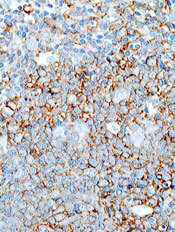
Results of a phase 3 study suggest that obinutuzumab may not confer a benefit over standard therapy in patients with previously untreated diffuse large B-cell lymphoma (DLBCL).
The data showed that obinutuzumab plus CHOP chemotherapy does not improve progression-free survival (PFS) in DLBCL patients, when compared to rituximab plus CHOP.
Adverse events with both treatment regimens were consistent with those seen in previous clinical trials, according to Genentech and Biogen, the companies developing obinutuzumab.
The companies have not released any data from this trial, known as GOYA, but they said results will be presented at an upcoming medical meeting.
“Two previous studies showed [obinutuzumab] helped people with previously untreated follicular lymphoma or chronic lymphocytic leukemia live longer without their disease worsening compared to [rituximab], when each was combined with chemotherapy,” said Sandra Horning, MD, chief medical officer and head of global product development at Genentech.
“We were hopeful we could show a similar result for people with diffuse large B-cell lymphoma and once again improve on the standard of care. We will continue to analyze the GOYA data to better understand the results, and to study other investigational treatments in this disease with the goal of further helping these patients.”
The GOYA trial enrolled 1418 previously untreated patients with CD20-positive DLBCL. The patients were randomized to receive obinutuzumab at 1000 mg every 21 days or rituximab at 375 mg/m2 every 21 days for 8 cycles, in addition to 6 to 8 cycles of CHOP (cyclophosphamide, doxorubicin, vincristine, and prednisolone) every 21 days.
The primary endpoint of the study is investigator-assessed PFS, with secondary endpoints including PFS assessed by an independent review committee, response rate, overall survival, disease-free survival, and safety profile.
Obinutuzumab is an engineered monoclonal antibody designed to attach to CD20, a protein found on certain B cells. The drug is thought to work by attacking targeted cells both directly and together with the immune system.
In the US and the European Union (EU), obinutuzumab is approved for use in combination with chlorambucil to treat adults with previously untreated chronic lymphocytic leukemia.
Obinutuzumab is also approved in the US and the EU to treat patients with follicular lymphoma. The drug can be given, first in combination with bendamustine and then alone as maintenance therapy, to adults with follicular lymphoma who did not respond to a rituximab-containing regimen or whose disease returned after such treatment.
Obinutuzumab is marketed as Gazyvaro in the EU and Switzerland and Gazyva in the rest of the world.
Results of a phase 3 study suggest that obinutuzumab may not confer a benefit over standard therapy in patients with previously untreated diffuse large B-cell lymphoma (DLBCL).
The data showed that obinutuzumab plus CHOP chemotherapy does not improve progression-free survival (PFS) in DLBCL patients, when compared to rituximab plus CHOP.
Adverse events with both treatment regimens were consistent with those seen in previous clinical trials, according to Genentech and Biogen, the companies developing obinutuzumab.
The companies have not released any data from this trial, known as GOYA, but they said results will be presented at an upcoming medical meeting.
“Two previous studies showed [obinutuzumab] helped people with previously untreated follicular lymphoma or chronic lymphocytic leukemia live longer without their disease worsening compared to [rituximab], when each was combined with chemotherapy,” said Sandra Horning, MD, chief medical officer and head of global product development at Genentech.
“We were hopeful we could show a similar result for people with diffuse large B-cell lymphoma and once again improve on the standard of care. We will continue to analyze the GOYA data to better understand the results, and to study other investigational treatments in this disease with the goal of further helping these patients.”
The GOYA trial enrolled 1418 previously untreated patients with CD20-positive DLBCL. The patients were randomized to receive obinutuzumab at 1000 mg every 21 days or rituximab at 375 mg/m2 every 21 days for 8 cycles, in addition to 6 to 8 cycles of CHOP (cyclophosphamide, doxorubicin, vincristine, and prednisolone) every 21 days.
The primary endpoint of the study is investigator-assessed PFS, with secondary endpoints including PFS assessed by an independent review committee, response rate, overall survival, disease-free survival, and safety profile.
Obinutuzumab is an engineered monoclonal antibody designed to attach to CD20, a protein found on certain B cells. The drug is thought to work by attacking targeted cells both directly and together with the immune system.
In the US and the European Union (EU), obinutuzumab is approved for use in combination with chlorambucil to treat adults with previously untreated chronic lymphocytic leukemia.
Obinutuzumab is also approved in the US and the EU to treat patients with follicular lymphoma. The drug can be given, first in combination with bendamustine and then alone as maintenance therapy, to adults with follicular lymphoma who did not respond to a rituximab-containing regimen or whose disease returned after such treatment.
Obinutuzumab is marketed as Gazyvaro in the EU and Switzerland and Gazyva in the rest of the world.
Results of a phase 3 study suggest that obinutuzumab may not confer a benefit over standard therapy in patients with previously untreated diffuse large B-cell lymphoma (DLBCL).
The data showed that obinutuzumab plus CHOP chemotherapy does not improve progression-free survival (PFS) in DLBCL patients, when compared to rituximab plus CHOP.
Adverse events with both treatment regimens were consistent with those seen in previous clinical trials, according to Genentech and Biogen, the companies developing obinutuzumab.
The companies have not released any data from this trial, known as GOYA, but they said results will be presented at an upcoming medical meeting.
“Two previous studies showed [obinutuzumab] helped people with previously untreated follicular lymphoma or chronic lymphocytic leukemia live longer without their disease worsening compared to [rituximab], when each was combined with chemotherapy,” said Sandra Horning, MD, chief medical officer and head of global product development at Genentech.
“We were hopeful we could show a similar result for people with diffuse large B-cell lymphoma and once again improve on the standard of care. We will continue to analyze the GOYA data to better understand the results, and to study other investigational treatments in this disease with the goal of further helping these patients.”
The GOYA trial enrolled 1418 previously untreated patients with CD20-positive DLBCL. The patients were randomized to receive obinutuzumab at 1000 mg every 21 days or rituximab at 375 mg/m2 every 21 days for 8 cycles, in addition to 6 to 8 cycles of CHOP (cyclophosphamide, doxorubicin, vincristine, and prednisolone) every 21 days.
The primary endpoint of the study is investigator-assessed PFS, with secondary endpoints including PFS assessed by an independent review committee, response rate, overall survival, disease-free survival, and safety profile.
Obinutuzumab is an engineered monoclonal antibody designed to attach to CD20, a protein found on certain B cells. The drug is thought to work by attacking targeted cells both directly and together with the immune system.
In the US and the European Union (EU), obinutuzumab is approved for use in combination with chlorambucil to treat adults with previously untreated chronic lymphocytic leukemia.
Obinutuzumab is also approved in the US and the EU to treat patients with follicular lymphoma. The drug can be given, first in combination with bendamustine and then alone as maintenance therapy, to adults with follicular lymphoma who did not respond to a rituximab-containing regimen or whose disease returned after such treatment.
Obinutuzumab is marketed as Gazyvaro in the EU and Switzerland and Gazyva in the rest of the world.
Guidelines cut costs, reduce waste of donated blood

Photo courtesy of UAB Hospital
SAN DIEGO—Blood management guidelines can save millions of dollars and drastically reduce the waste of donated blood, according to a group of investigators.
A team at Vanderbilt University Medical Center in Nashville, Tennessee, developed blood utilization practice guidelines that resulted in $2 million in savings and a 30% reduction in blood use from 2011 to 2015.
The investigators presented these results in a poster at the 2016 American College of Surgeons National Surgical Quality Improvement Program (ACS NSQIP®) Conference.
“The transfusion committee at Vanderbilt was interested in evaluating how we could implement evidence-based guidelines around restrictive transfusion,” said investigator Barbara J. Martin, RN.
To that end, the team first decided to change the standard practice of ordering 2 units of blood per patient. The investigators modified the medical center’s computerized provider order entry system to allow for blood ordering to be based on a specific assessment of each case, rather than a standard order of 2 units.
This change reduced red blood cell transfusions by more than 30%—from 675 units per 1000 discharges in 2011 to 432 units per 1000 discharges in 2015.
The investigators also noted that, for general and vascular surgery patients who underwent NSQIP- targeted procedures—including colectomy, proctectomy, ventral hernia, and appendectomy—between 5% and 6% were transfused with an average of 2.4 units of blood per patient in 2015.
In comparison, 11% of such patients were transfused with an average of 4.6 units of blood per patient in 2011.
“We found that, in that particular population, many of whom are transfused for acute blood loss, we still saw a significant decrease in the number of units transfused into the patient,” Martin said.
In addition to addressing blood utilization, the investigators developed guidelines to reduce waste. These guidelines state that, when more than 1 unit of blood is ordered, it must be sent in a cooler rather than the pneumatic tube. Coolers were reconfigured to optimize temperature management.
Furthermore, a specific member of the staff is tasked with “ownership” of the blood products, including returning unused product to the blood bank. Finally, individual unit wastage is reported to clinical leaders for review, and aggregate data are reported monthly.
The use of these guidelines resulted in fewer than 80 units of blood being wasted in 2015, down from 300 units in 2011.
Martin said the guidelines she and her colleagues developed could easily be implemented at other medical centers.
“Blood is a limited resource,” she noted, “and we have a responsibility as a healthcare provider to optimize the use of a resource that is difficult to get and only available through altruistic donations.”
Photo courtesy of UAB Hospital
SAN DIEGO—Blood management guidelines can save millions of dollars and drastically reduce the waste of donated blood, according to a group of investigators.
A team at Vanderbilt University Medical Center in Nashville, Tennessee, developed blood utilization practice guidelines that resulted in $2 million in savings and a 30% reduction in blood use from 2011 to 2015.
The investigators presented these results in a poster at the 2016 American College of Surgeons National Surgical Quality Improvement Program (ACS NSQIP®) Conference.
“The transfusion committee at Vanderbilt was interested in evaluating how we could implement evidence-based guidelines around restrictive transfusion,” said investigator Barbara J. Martin, RN.
To that end, the team first decided to change the standard practice of ordering 2 units of blood per patient. The investigators modified the medical center’s computerized provider order entry system to allow for blood ordering to be based on a specific assessment of each case, rather than a standard order of 2 units.
This change reduced red blood cell transfusions by more than 30%—from 675 units per 1000 discharges in 2011 to 432 units per 1000 discharges in 2015.
The investigators also noted that, for general and vascular surgery patients who underwent NSQIP- targeted procedures—including colectomy, proctectomy, ventral hernia, and appendectomy—between 5% and 6% were transfused with an average of 2.4 units of blood per patient in 2015.
In comparison, 11% of such patients were transfused with an average of 4.6 units of blood per patient in 2011.
“We found that, in that particular population, many of whom are transfused for acute blood loss, we still saw a significant decrease in the number of units transfused into the patient,” Martin said.
In addition to addressing blood utilization, the investigators developed guidelines to reduce waste. These guidelines state that, when more than 1 unit of blood is ordered, it must be sent in a cooler rather than the pneumatic tube. Coolers were reconfigured to optimize temperature management.
Furthermore, a specific member of the staff is tasked with “ownership” of the blood products, including returning unused product to the blood bank. Finally, individual unit wastage is reported to clinical leaders for review, and aggregate data are reported monthly.
The use of these guidelines resulted in fewer than 80 units of blood being wasted in 2015, down from 300 units in 2011.
Martin said the guidelines she and her colleagues developed could easily be implemented at other medical centers.
“Blood is a limited resource,” she noted, “and we have a responsibility as a healthcare provider to optimize the use of a resource that is difficult to get and only available through altruistic donations.”
Photo courtesy of UAB Hospital
SAN DIEGO—Blood management guidelines can save millions of dollars and drastically reduce the waste of donated blood, according to a group of investigators.
A team at Vanderbilt University Medical Center in Nashville, Tennessee, developed blood utilization practice guidelines that resulted in $2 million in savings and a 30% reduction in blood use from 2011 to 2015.
The investigators presented these results in a poster at the 2016 American College of Surgeons National Surgical Quality Improvement Program (ACS NSQIP®) Conference.
“The transfusion committee at Vanderbilt was interested in evaluating how we could implement evidence-based guidelines around restrictive transfusion,” said investigator Barbara J. Martin, RN.
To that end, the team first decided to change the standard practice of ordering 2 units of blood per patient. The investigators modified the medical center’s computerized provider order entry system to allow for blood ordering to be based on a specific assessment of each case, rather than a standard order of 2 units.
This change reduced red blood cell transfusions by more than 30%—from 675 units per 1000 discharges in 2011 to 432 units per 1000 discharges in 2015.
The investigators also noted that, for general and vascular surgery patients who underwent NSQIP- targeted procedures—including colectomy, proctectomy, ventral hernia, and appendectomy—between 5% and 6% were transfused with an average of 2.4 units of blood per patient in 2015.
In comparison, 11% of such patients were transfused with an average of 4.6 units of blood per patient in 2011.
“We found that, in that particular population, many of whom are transfused for acute blood loss, we still saw a significant decrease in the number of units transfused into the patient,” Martin said.
In addition to addressing blood utilization, the investigators developed guidelines to reduce waste. These guidelines state that, when more than 1 unit of blood is ordered, it must be sent in a cooler rather than the pneumatic tube. Coolers were reconfigured to optimize temperature management.
Furthermore, a specific member of the staff is tasked with “ownership” of the blood products, including returning unused product to the blood bank. Finally, individual unit wastage is reported to clinical leaders for review, and aggregate data are reported monthly.
The use of these guidelines resulted in fewer than 80 units of blood being wasted in 2015, down from 300 units in 2011.
Martin said the guidelines she and her colleagues developed could easily be implemented at other medical centers.
“Blood is a limited resource,” she noted, “and we have a responsibility as a healthcare provider to optimize the use of a resource that is difficult to get and only available through altruistic donations.”
Compounds can kill multidrug-resistant lymphoma cells
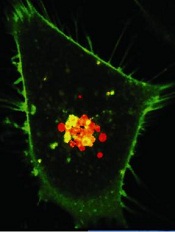
Image courtesy of PNAS
A class of newly discovered compounds can kill multidrug-resistant lymphoma cells by blocking the cells’ defenses against drugs, according to a study published in Bioorganic & Medicinal Chemistry Letters.
Researchers found this class of molecules—called selenocompounds—could kill multidrug-resistant murine T-lymphoma cells.
In fact, 4 of the compounds triggered apoptotic events in more than 80% of the cells.
“Our research reports a new way to fight multidrug resistance in cancer,” said study author Enrique Domínguez-Álvarez, PhD, of the University of Navarra in Pamplona, Spain.
“We are realistic, and we know that much more research needs to be done, but we are excited about these promising results that open new and unexplored possibilities.”
In previous studies, Dr Domínguez-Álvarez and his colleagues discovered 57 new molecules— selenocompounds—that prevented the growth of, and even killed, cancer cells.
While reading up on similar compounds, the researchers found that some could enhance the potency of chemotherapy drugs, so they decided to investigate.
When faced with aggressive treatment, cancer cells can sometimes develop a defense mechanism called an efflux pump—a protein in the cell membrane that can push the drug back out of the cancer cell to protect it. One such protein is called ABCB1.
Dr Domínguez-Álvarez and his colleagues tested the selenocompounds to see if they stopped this mechanism from working and found that the compounds do block the ABCB1 pump, effectively shutting down the defense mechanism.
In fact, 4 of the compounds were stronger inhibitors of the ABCB1 pump than the reference inhibitor the team tested, verapamil (1.7–3.6-fold stronger).
These 4 compounds were also significantly more cytotoxic than verapamil or thioridazine. The compounds triggered apoptotic events in more than 80% of the examined multidrug-resistant mouse T-lymphoma cells.
Dr Domínguez-Álvarez and his colleagues said the next step for this research will be to synthesize similar compounds to determine the most promising derivatives.
Dependent on funding, the team will consider further steps as well, such as testing the compounds in vivo.
Image courtesy of PNAS
A class of newly discovered compounds can kill multidrug-resistant lymphoma cells by blocking the cells’ defenses against drugs, according to a study published in Bioorganic & Medicinal Chemistry Letters.
Researchers found this class of molecules—called selenocompounds—could kill multidrug-resistant murine T-lymphoma cells.
In fact, 4 of the compounds triggered apoptotic events in more than 80% of the cells.
“Our research reports a new way to fight multidrug resistance in cancer,” said study author Enrique Domínguez-Álvarez, PhD, of the University of Navarra in Pamplona, Spain.
“We are realistic, and we know that much more research needs to be done, but we are excited about these promising results that open new and unexplored possibilities.”
In previous studies, Dr Domínguez-Álvarez and his colleagues discovered 57 new molecules— selenocompounds—that prevented the growth of, and even killed, cancer cells.
While reading up on similar compounds, the researchers found that some could enhance the potency of chemotherapy drugs, so they decided to investigate.
When faced with aggressive treatment, cancer cells can sometimes develop a defense mechanism called an efflux pump—a protein in the cell membrane that can push the drug back out of the cancer cell to protect it. One such protein is called ABCB1.
Dr Domínguez-Álvarez and his colleagues tested the selenocompounds to see if they stopped this mechanism from working and found that the compounds do block the ABCB1 pump, effectively shutting down the defense mechanism.
In fact, 4 of the compounds were stronger inhibitors of the ABCB1 pump than the reference inhibitor the team tested, verapamil (1.7–3.6-fold stronger).
These 4 compounds were also significantly more cytotoxic than verapamil or thioridazine. The compounds triggered apoptotic events in more than 80% of the examined multidrug-resistant mouse T-lymphoma cells.
Dr Domínguez-Álvarez and his colleagues said the next step for this research will be to synthesize similar compounds to determine the most promising derivatives.
Dependent on funding, the team will consider further steps as well, such as testing the compounds in vivo.
Image courtesy of PNAS
A class of newly discovered compounds can kill multidrug-resistant lymphoma cells by blocking the cells’ defenses against drugs, according to a study published in Bioorganic & Medicinal Chemistry Letters.
Researchers found this class of molecules—called selenocompounds—could kill multidrug-resistant murine T-lymphoma cells.
In fact, 4 of the compounds triggered apoptotic events in more than 80% of the cells.
“Our research reports a new way to fight multidrug resistance in cancer,” said study author Enrique Domínguez-Álvarez, PhD, of the University of Navarra in Pamplona, Spain.
“We are realistic, and we know that much more research needs to be done, but we are excited about these promising results that open new and unexplored possibilities.”
In previous studies, Dr Domínguez-Álvarez and his colleagues discovered 57 new molecules— selenocompounds—that prevented the growth of, and even killed, cancer cells.
While reading up on similar compounds, the researchers found that some could enhance the potency of chemotherapy drugs, so they decided to investigate.
When faced with aggressive treatment, cancer cells can sometimes develop a defense mechanism called an efflux pump—a protein in the cell membrane that can push the drug back out of the cancer cell to protect it. One such protein is called ABCB1.
Dr Domínguez-Álvarez and his colleagues tested the selenocompounds to see if they stopped this mechanism from working and found that the compounds do block the ABCB1 pump, effectively shutting down the defense mechanism.
In fact, 4 of the compounds were stronger inhibitors of the ABCB1 pump than the reference inhibitor the team tested, verapamil (1.7–3.6-fold stronger).
These 4 compounds were also significantly more cytotoxic than verapamil or thioridazine. The compounds triggered apoptotic events in more than 80% of the examined multidrug-resistant mouse T-lymphoma cells.
Dr Domínguez-Álvarez and his colleagues said the next step for this research will be to synthesize similar compounds to determine the most promising derivatives.
Dependent on funding, the team will consider further steps as well, such as testing the compounds in vivo.
Potential target for enhancing cancer immunotherapy
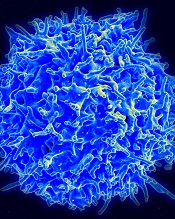
micrograph of a T cell
Image from NIAID
The “asymmetric division” of T cells could provide new ways to enhance cancer immunotherapy, according to researchers.
When a T cell divides, the activity of the enzyme mTORC1, which controls protein production, splits unevenly between the progeny.
Results of a new study suggest this uneven division reprograms the daughter cells so that one goes on to become an effector T cell and the other becomes a memory T cell.
This study was published in Nature Immunology.
“One of the critical steps needed to improve cancer immunotherapy, in general, is finding out ways to make antitumor T cells persist or hang around in the body longer,” said study author Jonathan Powell, MD, PhD, of the Johns Hopkins University School of Medicine in Baltimore, Maryland.
With that in mind, Dr Powell and his colleagues analyzed murine T cells. They found that when a “mother” T cell that is naïve to immune threats encounters such a threat and divides, one of its daughter cells inherits far more mTORC1 activity than the other daughter cell.
The researchers activated mouse T cells using a virus. Once the T cells divided, the team used antibodies to detect mTORC1 activity in each of the daughter cells.
Then, the researchers sorted the daughter cells and examined their function by injecting them into mice given two identical infections and tracking the cells’ activity.
The team found the difference in mTORC1 activity levels between the daughter cells varied depending on the population of cells studied.
And the lopsided distribution of mTORC1 activity appeared to reprogram the use of energy and other metabolic activities of each daughter cell.
The cells with high levels of mTORC1 activity were found to be potently activated, killer/effector T cells, while the cells with low mTORC1 levels behaved like memory T cells, persisting for long periods of time and rapidly activating upon reinfection.
The researchers said this finding could be used to improve immunotherapy, but another aspect of this discovery is the prospect that asymmetric partitioning of mTORC1 might be widespread across cells in many biological systems.
Dr Powell said it’s possible the mechanism may help explain how stem cells develop into more specialized cells in the bone marrow, for instance, or how cells differentiate to become hair, skin, or brain cells in a growing embryo.
“We think there will be implications for biology well beyond the immune system,” he concluded.
micrograph of a T cell
Image from NIAID
The “asymmetric division” of T cells could provide new ways to enhance cancer immunotherapy, according to researchers.
When a T cell divides, the activity of the enzyme mTORC1, which controls protein production, splits unevenly between the progeny.
Results of a new study suggest this uneven division reprograms the daughter cells so that one goes on to become an effector T cell and the other becomes a memory T cell.
This study was published in Nature Immunology.
“One of the critical steps needed to improve cancer immunotherapy, in general, is finding out ways to make antitumor T cells persist or hang around in the body longer,” said study author Jonathan Powell, MD, PhD, of the Johns Hopkins University School of Medicine in Baltimore, Maryland.
With that in mind, Dr Powell and his colleagues analyzed murine T cells. They found that when a “mother” T cell that is naïve to immune threats encounters such a threat and divides, one of its daughter cells inherits far more mTORC1 activity than the other daughter cell.
The researchers activated mouse T cells using a virus. Once the T cells divided, the team used antibodies to detect mTORC1 activity in each of the daughter cells.
Then, the researchers sorted the daughter cells and examined their function by injecting them into mice given two identical infections and tracking the cells’ activity.
The team found the difference in mTORC1 activity levels between the daughter cells varied depending on the population of cells studied.
And the lopsided distribution of mTORC1 activity appeared to reprogram the use of energy and other metabolic activities of each daughter cell.
The cells with high levels of mTORC1 activity were found to be potently activated, killer/effector T cells, while the cells with low mTORC1 levels behaved like memory T cells, persisting for long periods of time and rapidly activating upon reinfection.
The researchers said this finding could be used to improve immunotherapy, but another aspect of this discovery is the prospect that asymmetric partitioning of mTORC1 might be widespread across cells in many biological systems.
Dr Powell said it’s possible the mechanism may help explain how stem cells develop into more specialized cells in the bone marrow, for instance, or how cells differentiate to become hair, skin, or brain cells in a growing embryo.
“We think there will be implications for biology well beyond the immune system,” he concluded.
micrograph of a T cell
Image from NIAID
The “asymmetric division” of T cells could provide new ways to enhance cancer immunotherapy, according to researchers.
When a T cell divides, the activity of the enzyme mTORC1, which controls protein production, splits unevenly between the progeny.
Results of a new study suggest this uneven division reprograms the daughter cells so that one goes on to become an effector T cell and the other becomes a memory T cell.
This study was published in Nature Immunology.
“One of the critical steps needed to improve cancer immunotherapy, in general, is finding out ways to make antitumor T cells persist or hang around in the body longer,” said study author Jonathan Powell, MD, PhD, of the Johns Hopkins University School of Medicine in Baltimore, Maryland.
With that in mind, Dr Powell and his colleagues analyzed murine T cells. They found that when a “mother” T cell that is naïve to immune threats encounters such a threat and divides, one of its daughter cells inherits far more mTORC1 activity than the other daughter cell.
The researchers activated mouse T cells using a virus. Once the T cells divided, the team used antibodies to detect mTORC1 activity in each of the daughter cells.
Then, the researchers sorted the daughter cells and examined their function by injecting them into mice given two identical infections and tracking the cells’ activity.
The team found the difference in mTORC1 activity levels between the daughter cells varied depending on the population of cells studied.
And the lopsided distribution of mTORC1 activity appeared to reprogram the use of energy and other metabolic activities of each daughter cell.
The cells with high levels of mTORC1 activity were found to be potently activated, killer/effector T cells, while the cells with low mTORC1 levels behaved like memory T cells, persisting for long periods of time and rapidly activating upon reinfection.
The researchers said this finding could be used to improve immunotherapy, but another aspect of this discovery is the prospect that asymmetric partitioning of mTORC1 might be widespread across cells in many biological systems.
Dr Powell said it’s possible the mechanism may help explain how stem cells develop into more specialized cells in the bone marrow, for instance, or how cells differentiate to become hair, skin, or brain cells in a growing embryo.
“We think there will be implications for biology well beyond the immune system,” he concluded.
Automated cell counter approved for use in US

The US Food and Drug Administration has granted 510(k) clearance for the GloCyte Automated Cell Counter System and GloCyte Low and High Level Controls.
The GloCyte Automated Cell Counter System is intended for use by trained healthcare professionals in clinical laboratories to quantify red blood cells (RBCs) and total nucleated cells (TNCs) in cerebrospinal fluid collected from adult and pediatric patients.
Low and High Level Controls are assayed hematology controls designed to monitor the performance of the GloCyte system.
The GloCyte system is designed to provide accurate cell counts at clinically relevant low levels to assist the diagnosis of infections, inflammatory processes, hemorrhage, leukemia, and malignancies that may involve the central nervous system.
“To date, there has not been a way to provide dependable, low cell counts,” said John Coughlin, president and CEO of Advanced Instruments, Inc., makers of the GloCyte system.
“We use a novel combination of fluorescence, microscopy with digital image analysis principles, highly specific reagents, and an intelligent counting algorithm to provide accurate and precise cell counts.”
The GloCyte system includes the GloCyte instrument, computer (hardware and software), vacuum station, sample preparation tray, barcode reader, pipettes (10 and 30 μL), test cartridge, TNC and RBC reagents, and Low and High Level Controls.
The test method uses 1 of 2 reagents to stain TNCs (propidium iodide with detergent) or RBCs (fluorochrome labeled anti-human RBC antibody in buffer with stabilizers) and a digital imaging system to count the cells. The image is captured by a digital CCD camera, and the fluorescent stained cells are counted via digital image processing.
The GloCyte system requires 30 μL of sample per test, and it uses disposable test cartridges to ensure no sample carryover. The system also includes Levey-Jennings charts and an audit table.
Advanced Instruments expects to begin shipping the GloCyte system in September. For more information about the system, visit aicompanies.com/glocyte.
The US Food and Drug Administration has granted 510(k) clearance for the GloCyte Automated Cell Counter System and GloCyte Low and High Level Controls.
The GloCyte Automated Cell Counter System is intended for use by trained healthcare professionals in clinical laboratories to quantify red blood cells (RBCs) and total nucleated cells (TNCs) in cerebrospinal fluid collected from adult and pediatric patients.
Low and High Level Controls are assayed hematology controls designed to monitor the performance of the GloCyte system.
The GloCyte system is designed to provide accurate cell counts at clinically relevant low levels to assist the diagnosis of infections, inflammatory processes, hemorrhage, leukemia, and malignancies that may involve the central nervous system.
“To date, there has not been a way to provide dependable, low cell counts,” said John Coughlin, president and CEO of Advanced Instruments, Inc., makers of the GloCyte system.
“We use a novel combination of fluorescence, microscopy with digital image analysis principles, highly specific reagents, and an intelligent counting algorithm to provide accurate and precise cell counts.”
The GloCyte system includes the GloCyte instrument, computer (hardware and software), vacuum station, sample preparation tray, barcode reader, pipettes (10 and 30 μL), test cartridge, TNC and RBC reagents, and Low and High Level Controls.
The test method uses 1 of 2 reagents to stain TNCs (propidium iodide with detergent) or RBCs (fluorochrome labeled anti-human RBC antibody in buffer with stabilizers) and a digital imaging system to count the cells. The image is captured by a digital CCD camera, and the fluorescent stained cells are counted via digital image processing.
The GloCyte system requires 30 μL of sample per test, and it uses disposable test cartridges to ensure no sample carryover. The system also includes Levey-Jennings charts and an audit table.
Advanced Instruments expects to begin shipping the GloCyte system in September. For more information about the system, visit aicompanies.com/glocyte.
The US Food and Drug Administration has granted 510(k) clearance for the GloCyte Automated Cell Counter System and GloCyte Low and High Level Controls.
The GloCyte Automated Cell Counter System is intended for use by trained healthcare professionals in clinical laboratories to quantify red blood cells (RBCs) and total nucleated cells (TNCs) in cerebrospinal fluid collected from adult and pediatric patients.
Low and High Level Controls are assayed hematology controls designed to monitor the performance of the GloCyte system.
The GloCyte system is designed to provide accurate cell counts at clinically relevant low levels to assist the diagnosis of infections, inflammatory processes, hemorrhage, leukemia, and malignancies that may involve the central nervous system.
“To date, there has not been a way to provide dependable, low cell counts,” said John Coughlin, president and CEO of Advanced Instruments, Inc., makers of the GloCyte system.
“We use a novel combination of fluorescence, microscopy with digital image analysis principles, highly specific reagents, and an intelligent counting algorithm to provide accurate and precise cell counts.”
The GloCyte system includes the GloCyte instrument, computer (hardware and software), vacuum station, sample preparation tray, barcode reader, pipettes (10 and 30 μL), test cartridge, TNC and RBC reagents, and Low and High Level Controls.
The test method uses 1 of 2 reagents to stain TNCs (propidium iodide with detergent) or RBCs (fluorochrome labeled anti-human RBC antibody in buffer with stabilizers) and a digital imaging system to count the cells. The image is captured by a digital CCD camera, and the fluorescent stained cells are counted via digital image processing.
The GloCyte system requires 30 μL of sample per test, and it uses disposable test cartridges to ensure no sample carryover. The system also includes Levey-Jennings charts and an audit table.
Advanced Instruments expects to begin shipping the GloCyte system in September. For more information about the system, visit aicompanies.com/glocyte.
EC approves lenalidomide for rel/ref MCL
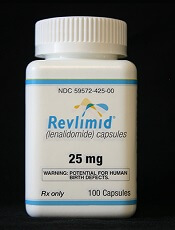
Photo courtesy of Celgene
The European Commission (EC) has approved lenalidomide (Revlimid®) for the treatment of adults with relapsed or refractory mantle cell lymphoma (MCL).
The EC previously approved lenalidomide as a single agent to treat adults with newly diagnosed multiple myeloma who are not eligible for transplant and in combination with dexamethasone to treat adults with multiple myeloma who have received at least 1 prior therapy.
The EC also approved lenalidomide for the treatment of patients with transfusion-dependent anemia due to low- or intermediate-1-risk myelodysplastic syndromes associated with an isolated deletion 5q cytogenetic abnormality when other therapeutic options are insufficient or inadequate.
Lenalidomide is a product of Celgene Corporation.
The EC’s decision to approve lenalidomide for MCL was based on data from a phase 2 trial known as SPRINT or MCL-002. The study included 254 MCL patients who were refractory to their last treatment or had relapsed 1 to 3 times.
The patients were randomized (2:1) to receive lenalidomide (n=170) or a single-agent therapy of the investigator’s choice (n=84), which included rituximab, gemcitabine, fludarabine, chlorambucil, and cytarabine. Patients who progressed on investigator’s choice could cross over to the lenalidomide arm.
At a median follow-up of 15.9 months, the overall response rate was 40% in the lenalidomide arm and 11% in the investigator’s choice arm (P<0.001).
The complete response rates were 5% and 0%, respectively (P=0.04). The median duration of response was 16 months and 10.4 months, respectively.
Lenalidomide significantly prolonged progression-free survival. The median was 8.7 months in the lenalidomide arm and 5.2 months in the investigator’s choice arm (P=0.004).
However, there was no significant difference in overall survival between the treatment arms. The median was 27.8 months in the lenalidomide arm and 21.2 months in the investigator’s choice arm (P=0.45).
The incidence of treatment-related adverse events was 84% in the lenalidomide arm and 60% in the investigator’s choice arm.
Common adverse events that occurred more frequently in the lenalidomide arm than the investigator’s choice arm were neutropenia (51%), anemia (29%), diarrhea (23%), fatigue (21%), constipation (17%), pyrexia (17%), and rash (16%).
Photo courtesy of Celgene
The European Commission (EC) has approved lenalidomide (Revlimid®) for the treatment of adults with relapsed or refractory mantle cell lymphoma (MCL).
The EC previously approved lenalidomide as a single agent to treat adults with newly diagnosed multiple myeloma who are not eligible for transplant and in combination with dexamethasone to treat adults with multiple myeloma who have received at least 1 prior therapy.
The EC also approved lenalidomide for the treatment of patients with transfusion-dependent anemia due to low- or intermediate-1-risk myelodysplastic syndromes associated with an isolated deletion 5q cytogenetic abnormality when other therapeutic options are insufficient or inadequate.
Lenalidomide is a product of Celgene Corporation.
The EC’s decision to approve lenalidomide for MCL was based on data from a phase 2 trial known as SPRINT or MCL-002. The study included 254 MCL patients who were refractory to their last treatment or had relapsed 1 to 3 times.
The patients were randomized (2:1) to receive lenalidomide (n=170) or a single-agent therapy of the investigator’s choice (n=84), which included rituximab, gemcitabine, fludarabine, chlorambucil, and cytarabine. Patients who progressed on investigator’s choice could cross over to the lenalidomide arm.
At a median follow-up of 15.9 months, the overall response rate was 40% in the lenalidomide arm and 11% in the investigator’s choice arm (P<0.001).
The complete response rates were 5% and 0%, respectively (P=0.04). The median duration of response was 16 months and 10.4 months, respectively.
Lenalidomide significantly prolonged progression-free survival. The median was 8.7 months in the lenalidomide arm and 5.2 months in the investigator’s choice arm (P=0.004).
However, there was no significant difference in overall survival between the treatment arms. The median was 27.8 months in the lenalidomide arm and 21.2 months in the investigator’s choice arm (P=0.45).
The incidence of treatment-related adverse events was 84% in the lenalidomide arm and 60% in the investigator’s choice arm.
Common adverse events that occurred more frequently in the lenalidomide arm than the investigator’s choice arm were neutropenia (51%), anemia (29%), diarrhea (23%), fatigue (21%), constipation (17%), pyrexia (17%), and rash (16%).
Photo courtesy of Celgene
The European Commission (EC) has approved lenalidomide (Revlimid®) for the treatment of adults with relapsed or refractory mantle cell lymphoma (MCL).
The EC previously approved lenalidomide as a single agent to treat adults with newly diagnosed multiple myeloma who are not eligible for transplant and in combination with dexamethasone to treat adults with multiple myeloma who have received at least 1 prior therapy.
The EC also approved lenalidomide for the treatment of patients with transfusion-dependent anemia due to low- or intermediate-1-risk myelodysplastic syndromes associated with an isolated deletion 5q cytogenetic abnormality when other therapeutic options are insufficient or inadequate.
Lenalidomide is a product of Celgene Corporation.
The EC’s decision to approve lenalidomide for MCL was based on data from a phase 2 trial known as SPRINT or MCL-002. The study included 254 MCL patients who were refractory to their last treatment or had relapsed 1 to 3 times.
The patients were randomized (2:1) to receive lenalidomide (n=170) or a single-agent therapy of the investigator’s choice (n=84), which included rituximab, gemcitabine, fludarabine, chlorambucil, and cytarabine. Patients who progressed on investigator’s choice could cross over to the lenalidomide arm.
At a median follow-up of 15.9 months, the overall response rate was 40% in the lenalidomide arm and 11% in the investigator’s choice arm (P<0.001).
The complete response rates were 5% and 0%, respectively (P=0.04). The median duration of response was 16 months and 10.4 months, respectively.
Lenalidomide significantly prolonged progression-free survival. The median was 8.7 months in the lenalidomide arm and 5.2 months in the investigator’s choice arm (P=0.004).
However, there was no significant difference in overall survival between the treatment arms. The median was 27.8 months in the lenalidomide arm and 21.2 months in the investigator’s choice arm (P=0.45).
The incidence of treatment-related adverse events was 84% in the lenalidomide arm and 60% in the investigator’s choice arm.
Common adverse events that occurred more frequently in the lenalidomide arm than the investigator’s choice arm were neutropenia (51%), anemia (29%), diarrhea (23%), fatigue (21%), constipation (17%), pyrexia (17%), and rash (16%).
Switch may increase supply of HSCs from cord blood
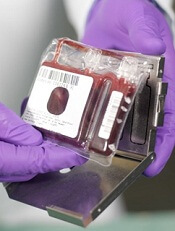
Photo courtesy of NHS
Researchers have discovered a genetic switch that could increase the supply of hematopoietic stem cells (HSCs) derived from cord blood, according to a paper published in Cell Stem Cell.
However, experiments in mice suggest that flipping the switch may also spur the development of myeloproliferative disease.
The researchers explained that, when an HSC divides, it produces multipotent progenitor (MPP) cells immediately downstream that retain the ability to differentiate but have lost the ability to self-renew.
By analyzing murine and human models of hematopoiesis, the team discovered that a microRNA, miR-125a, controls self-renewal and is normally switched on in HSCs but turned off in MPPs.
“Our work shows that if we artificially throw the switch on in those downstream cells [MPPs], we can endow them with stemness, and they basically become stem cells and can be maintained over the long term,” said study author John Dick, PhD, of Princess Margaret Cancer Centre at University Health Network in Toronto, Ontario, Canada.
Specifically, Dr Dick and his colleagues found that overexpression of miR-125a induced stem cell potential in both human MPPs and an as-yet-unidentified population within the CD34+38+ committed progenitor compartment.
Overexpression of miR-125a had a similar effect in murine MPPs. When the researchers transplanted these MPPs into recipient mice, the cells exhibited increased self-renewal and generated high levels of multi-lineage reconstitution for up to 16 weeks after transplant.
Unfortunately, when the miR-125a-overexpressed MPPs were transplanted into secondary and tertiary recipient mice, the animals developed symptoms of a myeloproliferative disease.
The researchers said this result is in line with findings from previous studies and has been shown to be dependent upon sustained expression of miR-125a and dosage.
The current study suggested that the miR-125a-induced myeloproliferative disease occurs, in part, as a function of replicative stress.
The researchers therefore speculated that, with careful titration of miR-125a levels, it may be possible to reap the beneficial self-renewal effects of miR-125a without inducing myeloproliferative disease.
In fact, the team hopes that, in the future, approaches combining miR-125a-modified MPPs with existing small-molecule compounds will enable the expansion of cord blood units for transplant.
Photo courtesy of NHS
Researchers have discovered a genetic switch that could increase the supply of hematopoietic stem cells (HSCs) derived from cord blood, according to a paper published in Cell Stem Cell.
However, experiments in mice suggest that flipping the switch may also spur the development of myeloproliferative disease.
The researchers explained that, when an HSC divides, it produces multipotent progenitor (MPP) cells immediately downstream that retain the ability to differentiate but have lost the ability to self-renew.
By analyzing murine and human models of hematopoiesis, the team discovered that a microRNA, miR-125a, controls self-renewal and is normally switched on in HSCs but turned off in MPPs.
“Our work shows that if we artificially throw the switch on in those downstream cells [MPPs], we can endow them with stemness, and they basically become stem cells and can be maintained over the long term,” said study author John Dick, PhD, of Princess Margaret Cancer Centre at University Health Network in Toronto, Ontario, Canada.
Specifically, Dr Dick and his colleagues found that overexpression of miR-125a induced stem cell potential in both human MPPs and an as-yet-unidentified population within the CD34+38+ committed progenitor compartment.
Overexpression of miR-125a had a similar effect in murine MPPs. When the researchers transplanted these MPPs into recipient mice, the cells exhibited increased self-renewal and generated high levels of multi-lineage reconstitution for up to 16 weeks after transplant.
Unfortunately, when the miR-125a-overexpressed MPPs were transplanted into secondary and tertiary recipient mice, the animals developed symptoms of a myeloproliferative disease.
The researchers said this result is in line with findings from previous studies and has been shown to be dependent upon sustained expression of miR-125a and dosage.
The current study suggested that the miR-125a-induced myeloproliferative disease occurs, in part, as a function of replicative stress.
The researchers therefore speculated that, with careful titration of miR-125a levels, it may be possible to reap the beneficial self-renewal effects of miR-125a without inducing myeloproliferative disease.
In fact, the team hopes that, in the future, approaches combining miR-125a-modified MPPs with existing small-molecule compounds will enable the expansion of cord blood units for transplant.
Photo courtesy of NHS
Researchers have discovered a genetic switch that could increase the supply of hematopoietic stem cells (HSCs) derived from cord blood, according to a paper published in Cell Stem Cell.
However, experiments in mice suggest that flipping the switch may also spur the development of myeloproliferative disease.
The researchers explained that, when an HSC divides, it produces multipotent progenitor (MPP) cells immediately downstream that retain the ability to differentiate but have lost the ability to self-renew.
By analyzing murine and human models of hematopoiesis, the team discovered that a microRNA, miR-125a, controls self-renewal and is normally switched on in HSCs but turned off in MPPs.
“Our work shows that if we artificially throw the switch on in those downstream cells [MPPs], we can endow them with stemness, and they basically become stem cells and can be maintained over the long term,” said study author John Dick, PhD, of Princess Margaret Cancer Centre at University Health Network in Toronto, Ontario, Canada.
Specifically, Dr Dick and his colleagues found that overexpression of miR-125a induced stem cell potential in both human MPPs and an as-yet-unidentified population within the CD34+38+ committed progenitor compartment.
Overexpression of miR-125a had a similar effect in murine MPPs. When the researchers transplanted these MPPs into recipient mice, the cells exhibited increased self-renewal and generated high levels of multi-lineage reconstitution for up to 16 weeks after transplant.
Unfortunately, when the miR-125a-overexpressed MPPs were transplanted into secondary and tertiary recipient mice, the animals developed symptoms of a myeloproliferative disease.
The researchers said this result is in line with findings from previous studies and has been shown to be dependent upon sustained expression of miR-125a and dosage.
The current study suggested that the miR-125a-induced myeloproliferative disease occurs, in part, as a function of replicative stress.
The researchers therefore speculated that, with careful titration of miR-125a levels, it may be possible to reap the beneficial self-renewal effects of miR-125a without inducing myeloproliferative disease.
In fact, the team hopes that, in the future, approaches combining miR-125a-modified MPPs with existing small-molecule compounds will enable the expansion of cord blood units for transplant.
Cancer patients and docs disagree about prognosis

patient and her father
Photo by Rhoda Baer
In a survey of advanced cancer patients and their oncologists, differing opinions about prognosis were common.
And the vast majority of patients didn’t know their doctors held different opinions about how long the patients might live.
Results of the survey were published in JAMA Oncology.
“We’ve discovered 2 important things happening between oncologists and patients with advanced cancer,” said study author Ronald M. Epstein, MD, of the University of Rochester Medical Center in Rochester, New York.
“First, some patients might know the doctor’s prognosis estimate, but the patient chooses to disagree, often because they believe other sources. And, second, some patients think that their doctor agrees with their opinion about prognosis but, in fact, the doctor doesn’t.”
Dr Epstein and his colleagues surveyed 236 patients with stage 3 or 4 cancer. According to medical evidence, fewer than 5% of these patients would be expected to live for 5 years.
The 38 oncologists who treated these patients were also surveyed. The doctors were asked,“What do you believe are the chances that this patient will live for 2 years or more?” And the patients were asked, “What do you believe are the chances that you will live for 2 years or more?”
Additional survey questions gauged whether patients knew their prognosis opinions differed from their doctors and to what extent treatment options were discussed in the context of life expectancy.
Among the 236 patients, 68% rated their survival prognosis differently than their oncologists, and 89% of these patients did not realize their opinions differed from their oncologists. In nearly all cases (96%), the patients were more optimistic than their doctors.
“Of course, it’s only possible for doctors to provide a ball-park estimate about life expectancy, and some people do beat the odds,” Dr Epstein noted. “But when a patient with very advanced cancer says that he has a 90% to 100% chance of being alive in 2 years and his oncologist believes that chance is more like 10%, there’s a problem.”
The challenge, according to Dr Epstein and his colleagues, is that talking about a cancer prognosis is not a straightforward exchange of information. It occurs in the context of fear, confusion, and uncertainty.
The researchers said prognosis should be addressed in several conversations about personal values and treatment goals. When doctor-patient communication is poor, it can result in mutual regret about end-of-life circumstances.
For example, nearly all of the patients surveyed said they wanted to be involved in treatment decisions. And 70% said they preferred supportive care at the end of their lives as opposed to aggressive therapy. However, as the researchers pointed out, making an informed decision requires knowing when death is approaching.
“When people think they’ll live a very long time with cancer, despite evidence to the contrary, they may end up taking more aggressive chemotherapy and agreeing to be placed on ventilators or dialysis, paradoxically reducing their quality of life, keeping them from enjoying time with family, and sometimes even shortening their lives,” Dr Epstein said. “So it’s very important for doctors and patients to be on the same page.”
patient and her father
Photo by Rhoda Baer
In a survey of advanced cancer patients and their oncologists, differing opinions about prognosis were common.
And the vast majority of patients didn’t know their doctors held different opinions about how long the patients might live.
Results of the survey were published in JAMA Oncology.
“We’ve discovered 2 important things happening between oncologists and patients with advanced cancer,” said study author Ronald M. Epstein, MD, of the University of Rochester Medical Center in Rochester, New York.
“First, some patients might know the doctor’s prognosis estimate, but the patient chooses to disagree, often because they believe other sources. And, second, some patients think that their doctor agrees with their opinion about prognosis but, in fact, the doctor doesn’t.”
Dr Epstein and his colleagues surveyed 236 patients with stage 3 or 4 cancer. According to medical evidence, fewer than 5% of these patients would be expected to live for 5 years.
The 38 oncologists who treated these patients were also surveyed. The doctors were asked,“What do you believe are the chances that this patient will live for 2 years or more?” And the patients were asked, “What do you believe are the chances that you will live for 2 years or more?”
Additional survey questions gauged whether patients knew their prognosis opinions differed from their doctors and to what extent treatment options were discussed in the context of life expectancy.
Among the 236 patients, 68% rated their survival prognosis differently than their oncologists, and 89% of these patients did not realize their opinions differed from their oncologists. In nearly all cases (96%), the patients were more optimistic than their doctors.
“Of course, it’s only possible for doctors to provide a ball-park estimate about life expectancy, and some people do beat the odds,” Dr Epstein noted. “But when a patient with very advanced cancer says that he has a 90% to 100% chance of being alive in 2 years and his oncologist believes that chance is more like 10%, there’s a problem.”
The challenge, according to Dr Epstein and his colleagues, is that talking about a cancer prognosis is not a straightforward exchange of information. It occurs in the context of fear, confusion, and uncertainty.
The researchers said prognosis should be addressed in several conversations about personal values and treatment goals. When doctor-patient communication is poor, it can result in mutual regret about end-of-life circumstances.
For example, nearly all of the patients surveyed said they wanted to be involved in treatment decisions. And 70% said they preferred supportive care at the end of their lives as opposed to aggressive therapy. However, as the researchers pointed out, making an informed decision requires knowing when death is approaching.
“When people think they’ll live a very long time with cancer, despite evidence to the contrary, they may end up taking more aggressive chemotherapy and agreeing to be placed on ventilators or dialysis, paradoxically reducing their quality of life, keeping them from enjoying time with family, and sometimes even shortening their lives,” Dr Epstein said. “So it’s very important for doctors and patients to be on the same page.”
patient and her father
Photo by Rhoda Baer
In a survey of advanced cancer patients and their oncologists, differing opinions about prognosis were common.
And the vast majority of patients didn’t know their doctors held different opinions about how long the patients might live.
Results of the survey were published in JAMA Oncology.
“We’ve discovered 2 important things happening between oncologists and patients with advanced cancer,” said study author Ronald M. Epstein, MD, of the University of Rochester Medical Center in Rochester, New York.
“First, some patients might know the doctor’s prognosis estimate, but the patient chooses to disagree, often because they believe other sources. And, second, some patients think that their doctor agrees with their opinion about prognosis but, in fact, the doctor doesn’t.”
Dr Epstein and his colleagues surveyed 236 patients with stage 3 or 4 cancer. According to medical evidence, fewer than 5% of these patients would be expected to live for 5 years.
The 38 oncologists who treated these patients were also surveyed. The doctors were asked,“What do you believe are the chances that this patient will live for 2 years or more?” And the patients were asked, “What do you believe are the chances that you will live for 2 years or more?”
Additional survey questions gauged whether patients knew their prognosis opinions differed from their doctors and to what extent treatment options were discussed in the context of life expectancy.
Among the 236 patients, 68% rated their survival prognosis differently than their oncologists, and 89% of these patients did not realize their opinions differed from their oncologists. In nearly all cases (96%), the patients were more optimistic than their doctors.
“Of course, it’s only possible for doctors to provide a ball-park estimate about life expectancy, and some people do beat the odds,” Dr Epstein noted. “But when a patient with very advanced cancer says that he has a 90% to 100% chance of being alive in 2 years and his oncologist believes that chance is more like 10%, there’s a problem.”
The challenge, according to Dr Epstein and his colleagues, is that talking about a cancer prognosis is not a straightforward exchange of information. It occurs in the context of fear, confusion, and uncertainty.
The researchers said prognosis should be addressed in several conversations about personal values and treatment goals. When doctor-patient communication is poor, it can result in mutual regret about end-of-life circumstances.
For example, nearly all of the patients surveyed said they wanted to be involved in treatment decisions. And 70% said they preferred supportive care at the end of their lives as opposed to aggressive therapy. However, as the researchers pointed out, making an informed decision requires knowing when death is approaching.
“When people think they’ll live a very long time with cancer, despite evidence to the contrary, they may end up taking more aggressive chemotherapy and agreeing to be placed on ventilators or dialysis, paradoxically reducing their quality of life, keeping them from enjoying time with family, and sometimes even shortening their lives,” Dr Epstein said. “So it’s very important for doctors and patients to be on the same page.”
Weight loss lowers levels of cancer-associated proteins

A study of more than 400 women suggests that losing weight can reduce levels of cancer-promoting proteins in the blood.
Overweight or obese women who lost weight over a 12-month period—through diet alone or both diet and exercise—significantly lowered their levels of proteins that play a role in angiogenesis.
Researchers say this finding suggests that losing weight might help reduce the risk of developing certain cancers.
“We know that being overweight and having a sedentary lifestyle is associated with an increase in risk for developing certain types of cancer,” said Catherine Duggan, PhD, of the Fred Hutchinson Cancer Research Center in Seattle, Washington.
“However, we don’t know exactly why. We wanted to investigate how levels of some biomarkers associated with angiogenesis were altered when overweight, sedentary, postmenopausal women enrolled in a research study lost weight and/or became physically active over the course of a year.”
Dr Duggan and her colleagues described this investigation in Cancer Research.
The team studied 439 women who were postmenopausal and overweight or obese but were otherwise healthy and ranged in age from 50 to 75.
The women were randomized to 1 of 4 study arms:
- A diet arm, in which women restricted their calorie intake to no more than 2000 kcal per day that included less than 30% of fat calories
- An aerobic exercise arm, in which women performed 45 minutes of moderate to vigorous exercise 5 days a week
- A combined diet and exercise arm
- A control arm.
The researchers collected blood samples at baseline and at 12 months, measuring levels of the angiogenesis-related proteins VEGF, PAI-1, and PEDF.
They also measured weight loss at 12 months and found that women in all 3 intervention arms had a significantly higher mean weight loss than women in the control arm.
The mean weight loss was 0.8% of body weight for women in the control arm, 2.4% for women in the exercise arm (P=0.03), 8.5% for women in the diet arm (P<0.001), and 10.8% for women in the diet and exercise arm (P<0.001).
Compared with women in the control arm, those in the diet-only arm and the diet and exercise arm had significantly lower levels of the angiogenesis-related proteins at 12 months. However, such effects were not apparent among women in the exercise-only arm.
Specifically, women in the diet and exercise arm had a significantly greater reduction in PAI-1 at 12 months than women in the control arm (-19.3% and +3.48%, respectively, P<0.0001).
Women in the diet-only arm and the diet and exercise arm had significantly greater reductions in PEDF than controls (-9.20%, -9.90%, and +0.18%, respectively, both P<0.0001).
And women in the diet-only arm (-8.25%, P=0.0005) and the diet and exercise arm (-9.98%, P<0.0001) had significantly greater reductions in VEGF than controls (-1.21%).
The researchers also observed a linear trend in the reductions. So the more weight loss the women experienced, the greater the reduction in angiogenesis-related protein levels.
“Our study shows that weight loss is a safe and effective method of improving the angiogenic profile in healthy individuals,” Dr Duggan said. “We were surprised by the magnitude of change in these biomarkers with weight loss.”
“While we can’t say for certain that reducing the circulating levels of angiogenic factors through weight loss would impact the growth of tumors, it is possible that they might be associated with a less favorable milieu for tumor growth and proliferation.”
Dr Duggan and her colleagues said limitations of this study include the fact that the researchers only measured 3 angiogenic factors and did not measure them in adipose or other tissues.
A study of more than 400 women suggests that losing weight can reduce levels of cancer-promoting proteins in the blood.
Overweight or obese women who lost weight over a 12-month period—through diet alone or both diet and exercise—significantly lowered their levels of proteins that play a role in angiogenesis.
Researchers say this finding suggests that losing weight might help reduce the risk of developing certain cancers.
“We know that being overweight and having a sedentary lifestyle is associated with an increase in risk for developing certain types of cancer,” said Catherine Duggan, PhD, of the Fred Hutchinson Cancer Research Center in Seattle, Washington.
“However, we don’t know exactly why. We wanted to investigate how levels of some biomarkers associated with angiogenesis were altered when overweight, sedentary, postmenopausal women enrolled in a research study lost weight and/or became physically active over the course of a year.”
Dr Duggan and her colleagues described this investigation in Cancer Research.
The team studied 439 women who were postmenopausal and overweight or obese but were otherwise healthy and ranged in age from 50 to 75.
The women were randomized to 1 of 4 study arms:
- A diet arm, in which women restricted their calorie intake to no more than 2000 kcal per day that included less than 30% of fat calories
- An aerobic exercise arm, in which women performed 45 minutes of moderate to vigorous exercise 5 days a week
- A combined diet and exercise arm
- A control arm.
The researchers collected blood samples at baseline and at 12 months, measuring levels of the angiogenesis-related proteins VEGF, PAI-1, and PEDF.
They also measured weight loss at 12 months and found that women in all 3 intervention arms had a significantly higher mean weight loss than women in the control arm.
The mean weight loss was 0.8% of body weight for women in the control arm, 2.4% for women in the exercise arm (P=0.03), 8.5% for women in the diet arm (P<0.001), and 10.8% for women in the diet and exercise arm (P<0.001).
Compared with women in the control arm, those in the diet-only arm and the diet and exercise arm had significantly lower levels of the angiogenesis-related proteins at 12 months. However, such effects were not apparent among women in the exercise-only arm.
Specifically, women in the diet and exercise arm had a significantly greater reduction in PAI-1 at 12 months than women in the control arm (-19.3% and +3.48%, respectively, P<0.0001).
Women in the diet-only arm and the diet and exercise arm had significantly greater reductions in PEDF than controls (-9.20%, -9.90%, and +0.18%, respectively, both P<0.0001).
And women in the diet-only arm (-8.25%, P=0.0005) and the diet and exercise arm (-9.98%, P<0.0001) had significantly greater reductions in VEGF than controls (-1.21%).
The researchers also observed a linear trend in the reductions. So the more weight loss the women experienced, the greater the reduction in angiogenesis-related protein levels.
“Our study shows that weight loss is a safe and effective method of improving the angiogenic profile in healthy individuals,” Dr Duggan said. “We were surprised by the magnitude of change in these biomarkers with weight loss.”
“While we can’t say for certain that reducing the circulating levels of angiogenic factors through weight loss would impact the growth of tumors, it is possible that they might be associated with a less favorable milieu for tumor growth and proliferation.”
Dr Duggan and her colleagues said limitations of this study include the fact that the researchers only measured 3 angiogenic factors and did not measure them in adipose or other tissues.
A study of more than 400 women suggests that losing weight can reduce levels of cancer-promoting proteins in the blood.
Overweight or obese women who lost weight over a 12-month period—through diet alone or both diet and exercise—significantly lowered their levels of proteins that play a role in angiogenesis.
Researchers say this finding suggests that losing weight might help reduce the risk of developing certain cancers.
“We know that being overweight and having a sedentary lifestyle is associated with an increase in risk for developing certain types of cancer,” said Catherine Duggan, PhD, of the Fred Hutchinson Cancer Research Center in Seattle, Washington.
“However, we don’t know exactly why. We wanted to investigate how levels of some biomarkers associated with angiogenesis were altered when overweight, sedentary, postmenopausal women enrolled in a research study lost weight and/or became physically active over the course of a year.”
Dr Duggan and her colleagues described this investigation in Cancer Research.
The team studied 439 women who were postmenopausal and overweight or obese but were otherwise healthy and ranged in age from 50 to 75.
The women were randomized to 1 of 4 study arms:
- A diet arm, in which women restricted their calorie intake to no more than 2000 kcal per day that included less than 30% of fat calories
- An aerobic exercise arm, in which women performed 45 minutes of moderate to vigorous exercise 5 days a week
- A combined diet and exercise arm
- A control arm.
The researchers collected blood samples at baseline and at 12 months, measuring levels of the angiogenesis-related proteins VEGF, PAI-1, and PEDF.
They also measured weight loss at 12 months and found that women in all 3 intervention arms had a significantly higher mean weight loss than women in the control arm.
The mean weight loss was 0.8% of body weight for women in the control arm, 2.4% for women in the exercise arm (P=0.03), 8.5% for women in the diet arm (P<0.001), and 10.8% for women in the diet and exercise arm (P<0.001).
Compared with women in the control arm, those in the diet-only arm and the diet and exercise arm had significantly lower levels of the angiogenesis-related proteins at 12 months. However, such effects were not apparent among women in the exercise-only arm.
Specifically, women in the diet and exercise arm had a significantly greater reduction in PAI-1 at 12 months than women in the control arm (-19.3% and +3.48%, respectively, P<0.0001).
Women in the diet-only arm and the diet and exercise arm had significantly greater reductions in PEDF than controls (-9.20%, -9.90%, and +0.18%, respectively, both P<0.0001).
And women in the diet-only arm (-8.25%, P=0.0005) and the diet and exercise arm (-9.98%, P<0.0001) had significantly greater reductions in VEGF than controls (-1.21%).
The researchers also observed a linear trend in the reductions. So the more weight loss the women experienced, the greater the reduction in angiogenesis-related protein levels.
“Our study shows that weight loss is a safe and effective method of improving the angiogenic profile in healthy individuals,” Dr Duggan said. “We were surprised by the magnitude of change in these biomarkers with weight loss.”
“While we can’t say for certain that reducing the circulating levels of angiogenic factors through weight loss would impact the growth of tumors, it is possible that they might be associated with a less favorable milieu for tumor growth and proliferation.”
Dr Duggan and her colleagues said limitations of this study include the fact that the researchers only measured 3 angiogenic factors and did not measure them in adipose or other tissues.