User login
Compounds can fight lymphoma, other cancers
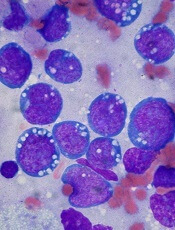
Image by Ed Uthman
Preclinical research suggests a novel class of compounds are effective against pediatric and adult cancers, including lymphoma.
The compounds are amphiphilic amines (RCn) based on a tricyclic amine hydrophilic head and a hydrophobic linear alkyl tail of variable length.
The RCn compounds proved cytotoxic in a range of cancer cell lines, including the Burkitt lymphoma cell line Ramos.
The lead compound, RC16, exhibited antitumor effects in vivo and enhanced the in vitro activity of 3 other anticancer agents.
Timothy Cripe, MD, PhD, of Nationwide Children’s Hospital in Columbus, Ohio, and his colleagues reported these results in Pharmaceutical Research.
The investigators first evaluated the RCn compounds for cytotoxicity and mechanism of cell death in several adult and pediatric cancer cell lines.
“We tested RCn’s tumor killing efficacy in cell lines of numerous cancers, including sarcomas, lymphoma, and neuroblastoma,” Dr Cripe said. “We observed anticancer activity of the RCn amines in all the cancer cell lines analyzed.”
The investigators also found that RC16 was 10 times more effective in harming tumor cells than normal cells, including keratinocytes, fibroblasts, and umbilical vein endothelial cells.
In addition, RC16 demonstrated “significant antitumor effects” in several mouse models of malignancy, both when given intravenously and orally.
Because of the amphiphilic molecular structure of RC16, it self-assembled into micelles in water. This chemical structure allowed complexation of the anticancer drugs doxorubicin, etoposide, and paclitaxel.
The micelles significantly improved the in vitro antitumor activity of these drugs by enhancing their solubility in water.
“The antitumor activity of lipophilic amines was interesting because of its action on the mitochondria and lysosomes of cells,” said study author Isabella Orienti, PhD, of the University of Bologna in Italy.
“Moreover, their amphiphilic character improves their bioavailability. We correctly hypothesized these amphiphilic amines would have high antitumor activity and high bioavailability.”
“We are in the process of determining our next steps with testing this new drug,” Dr Cripe added. “This is a promising new therapy for adult and pediatric cancers, and we look forward to further testing its merits.” 
Image by Ed Uthman
Preclinical research suggests a novel class of compounds are effective against pediatric and adult cancers, including lymphoma.
The compounds are amphiphilic amines (RCn) based on a tricyclic amine hydrophilic head and a hydrophobic linear alkyl tail of variable length.
The RCn compounds proved cytotoxic in a range of cancer cell lines, including the Burkitt lymphoma cell line Ramos.
The lead compound, RC16, exhibited antitumor effects in vivo and enhanced the in vitro activity of 3 other anticancer agents.
Timothy Cripe, MD, PhD, of Nationwide Children’s Hospital in Columbus, Ohio, and his colleagues reported these results in Pharmaceutical Research.
The investigators first evaluated the RCn compounds for cytotoxicity and mechanism of cell death in several adult and pediatric cancer cell lines.
“We tested RCn’s tumor killing efficacy in cell lines of numerous cancers, including sarcomas, lymphoma, and neuroblastoma,” Dr Cripe said. “We observed anticancer activity of the RCn amines in all the cancer cell lines analyzed.”
The investigators also found that RC16 was 10 times more effective in harming tumor cells than normal cells, including keratinocytes, fibroblasts, and umbilical vein endothelial cells.
In addition, RC16 demonstrated “significant antitumor effects” in several mouse models of malignancy, both when given intravenously and orally.
Because of the amphiphilic molecular structure of RC16, it self-assembled into micelles in water. This chemical structure allowed complexation of the anticancer drugs doxorubicin, etoposide, and paclitaxel.
The micelles significantly improved the in vitro antitumor activity of these drugs by enhancing their solubility in water.
“The antitumor activity of lipophilic amines was interesting because of its action on the mitochondria and lysosomes of cells,” said study author Isabella Orienti, PhD, of the University of Bologna in Italy.
“Moreover, their amphiphilic character improves their bioavailability. We correctly hypothesized these amphiphilic amines would have high antitumor activity and high bioavailability.”
“We are in the process of determining our next steps with testing this new drug,” Dr Cripe added. “This is a promising new therapy for adult and pediatric cancers, and we look forward to further testing its merits.”
Image by Ed Uthman
Preclinical research suggests a novel class of compounds are effective against pediatric and adult cancers, including lymphoma.
The compounds are amphiphilic amines (RCn) based on a tricyclic amine hydrophilic head and a hydrophobic linear alkyl tail of variable length.
The RCn compounds proved cytotoxic in a range of cancer cell lines, including the Burkitt lymphoma cell line Ramos.
The lead compound, RC16, exhibited antitumor effects in vivo and enhanced the in vitro activity of 3 other anticancer agents.
Timothy Cripe, MD, PhD, of Nationwide Children’s Hospital in Columbus, Ohio, and his colleagues reported these results in Pharmaceutical Research.
The investigators first evaluated the RCn compounds for cytotoxicity and mechanism of cell death in several adult and pediatric cancer cell lines.
“We tested RCn’s tumor killing efficacy in cell lines of numerous cancers, including sarcomas, lymphoma, and neuroblastoma,” Dr Cripe said. “We observed anticancer activity of the RCn amines in all the cancer cell lines analyzed.”
The investigators also found that RC16 was 10 times more effective in harming tumor cells than normal cells, including keratinocytes, fibroblasts, and umbilical vein endothelial cells.
In addition, RC16 demonstrated “significant antitumor effects” in several mouse models of malignancy, both when given intravenously and orally.
Because of the amphiphilic molecular structure of RC16, it self-assembled into micelles in water. This chemical structure allowed complexation of the anticancer drugs doxorubicin, etoposide, and paclitaxel.
The micelles significantly improved the in vitro antitumor activity of these drugs by enhancing their solubility in water.
“The antitumor activity of lipophilic amines was interesting because of its action on the mitochondria and lysosomes of cells,” said study author Isabella Orienti, PhD, of the University of Bologna in Italy.
“Moreover, their amphiphilic character improves their bioavailability. We correctly hypothesized these amphiphilic amines would have high antitumor activity and high bioavailability.”
“We are in the process of determining our next steps with testing this new drug,” Dr Cripe added. “This is a promising new therapy for adult and pediatric cancers, and we look forward to further testing its merits.”
Patients can safely receive less FVIII, study suggests

ORLANDO—It may be possible for hemophilia patients to receive less factor VIII (FVIII) without increasing their risk of bleeding, according to a study presented at the World Federation of Hemophilia 2016 World Congress.
The study1 showed that hemophilia A patients who received prophylactic FVIII from the home infusion provider Option Care received 6 fewer units of FVIII per week than patients receiving prophylactic FVIII from specialty pharmacies.
This translated to a cost savings of more than $20,000 per patient each year.
The home infusion patients also had a lower annual bleed rate (ABR) than what is typically observed with intensive prophylaxis protocols in hemophilia, according to previous studies.
“By working with prescribers to closely monitor bleeds and collaborate on clinically appropriate optimization of treatment dose, Option Care’s utilization of factor VIII is less than the average with excellent outcomes,” said Joan Couden, RN, national program director for Option Care’s Bleeding Disorders Program.
“Our findings show we can save payers, including Medicare, Medicaid, and managed care insurers, significant costs without negatively impacting annual bleed rates.”
For this study, Couden and her colleagues conducted a retrospective analysis using dispensing data records from Option Care spanning the period from July 2015 through December 2015. The team compared these data to aggregate specialty pharmacy records from November 2013 through March 2014, which were analyzed in a previous study.2
In both data sets, patients receiving any FVIII product for prophylactic therapy were included. Patients being treated episodically or for immune tolerance induction were excluded, as were patients with extremely abnormal weights (40% below the 5th percentile or 40% above the 95th percentile based on weight-for-age charts from the US Centers for Disease Control and Prevention).
The researchers calculated a patient’s weekly dose of FVIII by multiplying the prescribed infusion dose by the dose frequency and dividing the product by the patient’s weight. Patients with an overall mean weekly dose greater than 2 standard deviations from the mean were excluded.
There were 77 home infusion patients and 520 specialty pharmacy patients.
The home infusion patients had a mean FVIII dose of 102 units/kg/week, compared to a mean of 108 units/kg/week for the specialty pharmacy patients.
This difference translates to savings of $21,166 per patient per year among the home infusion patients.
Couden and her colleagues could not compare the ABR between the 2 data sets because the ABR was not measured in the specialty pharmacy patients. However, they said the ABR in the home infusion patients was favorable when compared to ABRs in published studies.
The mean ABR for the home infusion patients was 1.70. And, according to a recent review of research on hemophilia treatment strategies, mean ABRs range from 2 to 5 for intensive treatment protocols.3
ORLANDO—It may be possible for hemophilia patients to receive less factor VIII (FVIII) without increasing their risk of bleeding, according to a study presented at the World Federation of Hemophilia 2016 World Congress.
The study1 showed that hemophilia A patients who received prophylactic FVIII from the home infusion provider Option Care received 6 fewer units of FVIII per week than patients receiving prophylactic FVIII from specialty pharmacies.
This translated to a cost savings of more than $20,000 per patient each year.
The home infusion patients also had a lower annual bleed rate (ABR) than what is typically observed with intensive prophylaxis protocols in hemophilia, according to previous studies.
“By working with prescribers to closely monitor bleeds and collaborate on clinically appropriate optimization of treatment dose, Option Care’s utilization of factor VIII is less than the average with excellent outcomes,” said Joan Couden, RN, national program director for Option Care’s Bleeding Disorders Program.
“Our findings show we can save payers, including Medicare, Medicaid, and managed care insurers, significant costs without negatively impacting annual bleed rates.”
For this study, Couden and her colleagues conducted a retrospective analysis using dispensing data records from Option Care spanning the period from July 2015 through December 2015. The team compared these data to aggregate specialty pharmacy records from November 2013 through March 2014, which were analyzed in a previous study.2
In both data sets, patients receiving any FVIII product for prophylactic therapy were included. Patients being treated episodically or for immune tolerance induction were excluded, as were patients with extremely abnormal weights (40% below the 5th percentile or 40% above the 95th percentile based on weight-for-age charts from the US Centers for Disease Control and Prevention).
The researchers calculated a patient’s weekly dose of FVIII by multiplying the prescribed infusion dose by the dose frequency and dividing the product by the patient’s weight. Patients with an overall mean weekly dose greater than 2 standard deviations from the mean were excluded.
There were 77 home infusion patients and 520 specialty pharmacy patients.
The home infusion patients had a mean FVIII dose of 102 units/kg/week, compared to a mean of 108 units/kg/week for the specialty pharmacy patients.
This difference translates to savings of $21,166 per patient per year among the home infusion patients.
Couden and her colleagues could not compare the ABR between the 2 data sets because the ABR was not measured in the specialty pharmacy patients. However, they said the ABR in the home infusion patients was favorable when compared to ABRs in published studies.
The mean ABR for the home infusion patients was 1.70. And, according to a recent review of research on hemophilia treatment strategies, mean ABRs range from 2 to 5 for intensive treatment protocols.3
ORLANDO—It may be possible for hemophilia patients to receive less factor VIII (FVIII) without increasing their risk of bleeding, according to a study presented at the World Federation of Hemophilia 2016 World Congress.
The study1 showed that hemophilia A patients who received prophylactic FVIII from the home infusion provider Option Care received 6 fewer units of FVIII per week than patients receiving prophylactic FVIII from specialty pharmacies.
This translated to a cost savings of more than $20,000 per patient each year.
The home infusion patients also had a lower annual bleed rate (ABR) than what is typically observed with intensive prophylaxis protocols in hemophilia, according to previous studies.
“By working with prescribers to closely monitor bleeds and collaborate on clinically appropriate optimization of treatment dose, Option Care’s utilization of factor VIII is less than the average with excellent outcomes,” said Joan Couden, RN, national program director for Option Care’s Bleeding Disorders Program.
“Our findings show we can save payers, including Medicare, Medicaid, and managed care insurers, significant costs without negatively impacting annual bleed rates.”
For this study, Couden and her colleagues conducted a retrospective analysis using dispensing data records from Option Care spanning the period from July 2015 through December 2015. The team compared these data to aggregate specialty pharmacy records from November 2013 through March 2014, which were analyzed in a previous study.2
In both data sets, patients receiving any FVIII product for prophylactic therapy were included. Patients being treated episodically or for immune tolerance induction were excluded, as were patients with extremely abnormal weights (40% below the 5th percentile or 40% above the 95th percentile based on weight-for-age charts from the US Centers for Disease Control and Prevention).
The researchers calculated a patient’s weekly dose of FVIII by multiplying the prescribed infusion dose by the dose frequency and dividing the product by the patient’s weight. Patients with an overall mean weekly dose greater than 2 standard deviations from the mean were excluded.
There were 77 home infusion patients and 520 specialty pharmacy patients.
The home infusion patients had a mean FVIII dose of 102 units/kg/week, compared to a mean of 108 units/kg/week for the specialty pharmacy patients.
This difference translates to savings of $21,166 per patient per year among the home infusion patients.
Couden and her colleagues could not compare the ABR between the 2 data sets because the ABR was not measured in the specialty pharmacy patients. However, they said the ABR in the home infusion patients was favorable when compared to ABRs in published studies.
The mean ABR for the home infusion patients was 1.70. And, according to a recent review of research on hemophilia treatment strategies, mean ABRs range from 2 to 5 for intensive treatment protocols.3
Therapy seems safe, effective in kids with hemophilia
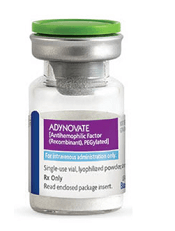
Photo courtesy of Baxalta
ORLANDO—Results of a phase 3 study suggest the full-length recombinant factor VIII therapy Adynovate (BAX 855) can be safe and effective as twice-weekly prophylaxis and to control bleeding in children with hemophilia A.
None of the patients in this study developed inhibitory antibodies, and there were no product-related adverse events.
The median annualized bleeding rate (ABR) was 2.0, and nearly 40% of patients did not have any bleeding episodes.
These results were presented at the World Federation of Hemophilia 2016 World Congress.* The study was funded by Baxalta, now part of Shire.
The study enrolled previously treated children younger than 12 years of age with no history of factor VIII inhibitors. The patients received twice-weekly prophylaxis with Adynovate (50 ± 10 IU/kg) for at least 6 months or 50 exposure days, whichever occurred last.
There were 66 evaluable patients with a median age of 6 (range, 1-11). Overall, 4,467,796 IU of Adynovate were infused. The mean number of exposure days was 53.98 per patient.
Safety
There was no indication of persistent binding antibodies against factor VIII, and none of the patients developed antibodies to host cell (Chinese hamster ovary) proteins.
There were 156 adverse events in 43 patients (65.2%), but none were considered related to Adynovate.
There were 4 unrelated serious adverse events in 3 patients—febrile neutropenia, pancytopenia, acute gastritis, and abdominal pain.
Efficacy
Patients received a median dose of 51.3 IU/kg per prophylactic infusion at a median frequency of 1.9 infusions per week.
Ninety-one percent of patients did not require dose adjustments. Reasons for dose adjustment included factor VIII trough levels less than 1%, increased risk of bleeding, and bleeding episodes.
Thirty-eight percent of patients did not experience bleeding events, 73% did not experience hemarthroses, and 67% did not experience spontaneous bleeding events.
The mean ABR was 3.0, and the median was 2.0. The mean joint ABR was 1.1, and the median was 0. The mean spontaneous ABR was 1.2, and the median was 0. The mean interval between bleeding episodes was 2.4 months.
There were a total of 70 bleeding episodes in 34 patients. All of these episodes were minor or moderate. Ninety-one percent of treated bleeding events were treated with 1 or 2 infusions. And 90% of bleeding events received treatment ratings of “excellent” or “good.”
Photo courtesy of Baxalta
ORLANDO—Results of a phase 3 study suggest the full-length recombinant factor VIII therapy Adynovate (BAX 855) can be safe and effective as twice-weekly prophylaxis and to control bleeding in children with hemophilia A.
None of the patients in this study developed inhibitory antibodies, and there were no product-related adverse events.
The median annualized bleeding rate (ABR) was 2.0, and nearly 40% of patients did not have any bleeding episodes.
These results were presented at the World Federation of Hemophilia 2016 World Congress.* The study was funded by Baxalta, now part of Shire.
The study enrolled previously treated children younger than 12 years of age with no history of factor VIII inhibitors. The patients received twice-weekly prophylaxis with Adynovate (50 ± 10 IU/kg) for at least 6 months or 50 exposure days, whichever occurred last.
There were 66 evaluable patients with a median age of 6 (range, 1-11). Overall, 4,467,796 IU of Adynovate were infused. The mean number of exposure days was 53.98 per patient.
Safety
There was no indication of persistent binding antibodies against factor VIII, and none of the patients developed antibodies to host cell (Chinese hamster ovary) proteins.
There were 156 adverse events in 43 patients (65.2%), but none were considered related to Adynovate.
There were 4 unrelated serious adverse events in 3 patients—febrile neutropenia, pancytopenia, acute gastritis, and abdominal pain.
Efficacy
Patients received a median dose of 51.3 IU/kg per prophylactic infusion at a median frequency of 1.9 infusions per week.
Ninety-one percent of patients did not require dose adjustments. Reasons for dose adjustment included factor VIII trough levels less than 1%, increased risk of bleeding, and bleeding episodes.
Thirty-eight percent of patients did not experience bleeding events, 73% did not experience hemarthroses, and 67% did not experience spontaneous bleeding events.
The mean ABR was 3.0, and the median was 2.0. The mean joint ABR was 1.1, and the median was 0. The mean spontaneous ABR was 1.2, and the median was 0. The mean interval between bleeding episodes was 2.4 months.
There were a total of 70 bleeding episodes in 34 patients. All of these episodes were minor or moderate. Ninety-one percent of treated bleeding events were treated with 1 or 2 infusions. And 90% of bleeding events received treatment ratings of “excellent” or “good.”
Photo courtesy of Baxalta
ORLANDO—Results of a phase 3 study suggest the full-length recombinant factor VIII therapy Adynovate (BAX 855) can be safe and effective as twice-weekly prophylaxis and to control bleeding in children with hemophilia A.
None of the patients in this study developed inhibitory antibodies, and there were no product-related adverse events.
The median annualized bleeding rate (ABR) was 2.0, and nearly 40% of patients did not have any bleeding episodes.
These results were presented at the World Federation of Hemophilia 2016 World Congress.* The study was funded by Baxalta, now part of Shire.
The study enrolled previously treated children younger than 12 years of age with no history of factor VIII inhibitors. The patients received twice-weekly prophylaxis with Adynovate (50 ± 10 IU/kg) for at least 6 months or 50 exposure days, whichever occurred last.
There were 66 evaluable patients with a median age of 6 (range, 1-11). Overall, 4,467,796 IU of Adynovate were infused. The mean number of exposure days was 53.98 per patient.
Safety
There was no indication of persistent binding antibodies against factor VIII, and none of the patients developed antibodies to host cell (Chinese hamster ovary) proteins.
There were 156 adverse events in 43 patients (65.2%), but none were considered related to Adynovate.
There were 4 unrelated serious adverse events in 3 patients—febrile neutropenia, pancytopenia, acute gastritis, and abdominal pain.
Efficacy
Patients received a median dose of 51.3 IU/kg per prophylactic infusion at a median frequency of 1.9 infusions per week.
Ninety-one percent of patients did not require dose adjustments. Reasons for dose adjustment included factor VIII trough levels less than 1%, increased risk of bleeding, and bleeding episodes.
Thirty-eight percent of patients did not experience bleeding events, 73% did not experience hemarthroses, and 67% did not experience spontaneous bleeding events.
The mean ABR was 3.0, and the median was 2.0. The mean joint ABR was 1.1, and the median was 0. The mean spontaneous ABR was 1.2, and the median was 0. The mean interval between bleeding episodes was 2.4 months.
There were a total of 70 bleeding episodes in 34 patients. All of these episodes were minor or moderate. Ninety-one percent of treated bleeding events were treated with 1 or 2 infusions. And 90% of bleeding events received treatment ratings of “excellent” or “good.”
Team identifies mutations contributing to APL

Image from the Armed Forces
Institute of Pathology
Researchers have identified genetic mutations that contribute to the onset of acute promyelocytic leukemia (APL), according to a paper published in Leukemia.
The team analyzed patient samples to identify somatic mutations that cooperate with the PML-RARA fusion gene in the pathogenesis of APL.
They performed whole-exome and targeted sequencing on 242 samples from APL patients, 165 who were newly diagnosed and 77 who had relapsed.
Samples from patients with newly diagnosed APL had recurrent mutations in FLT3, WT1, NRAS, and KRAS but rarely had mutations in other genes commonly mutated in myeloid leukemia.
The newly diagnosed samples also had loss-of-function mutations in ARID1A and ARID1B (members of a chromatin remodeling complex), which had not previously been identified in APL.
The researchers said the ARID1A and ARID1B mutations indicate dysregulation of epigenetic machinery in APL, and the mutations provide a subset of previously uncharacterized genes in leukemogenesis.
The team also found that knocking down ARID1B in the APL cell line NB4 resulted in large-scale activation of gene expression and reduced in vitro differentiation potential.
In the relapsed APL samples, the researchers discovered a set of mutations that were not observed in the newly diagnosed samples. Most prominently, mutations in RARA and PML were found to be exclusive to relapsed samples.
The team also found these mutations were largely acquired in 2 distinct patient groups—those treated at initial diagnosis with all-trans retinoic acid and those treated with arsenic trioxide.
“Our comprehensive study on the mutational landscape in a large cohort of primary and relapsed APL cases has enabled us to establish the molecular roadmap for APL, which is distinct from other subtypes of [acute myeloid leukemia],” said study author H. Phillip Koeffler, MD, of the Cancer Science Institute of Singapore.
“With an enhanced knowledge of the disease biology, we will be conducting further research to uncover the consequences of the novel mutations discovered, with an eventual goal of developing improved and targeted therapeutics.”
Image from the Armed Forces
Institute of Pathology
Researchers have identified genetic mutations that contribute to the onset of acute promyelocytic leukemia (APL), according to a paper published in Leukemia.
The team analyzed patient samples to identify somatic mutations that cooperate with the PML-RARA fusion gene in the pathogenesis of APL.
They performed whole-exome and targeted sequencing on 242 samples from APL patients, 165 who were newly diagnosed and 77 who had relapsed.
Samples from patients with newly diagnosed APL had recurrent mutations in FLT3, WT1, NRAS, and KRAS but rarely had mutations in other genes commonly mutated in myeloid leukemia.
The newly diagnosed samples also had loss-of-function mutations in ARID1A and ARID1B (members of a chromatin remodeling complex), which had not previously been identified in APL.
The researchers said the ARID1A and ARID1B mutations indicate dysregulation of epigenetic machinery in APL, and the mutations provide a subset of previously uncharacterized genes in leukemogenesis.
The team also found that knocking down ARID1B in the APL cell line NB4 resulted in large-scale activation of gene expression and reduced in vitro differentiation potential.
In the relapsed APL samples, the researchers discovered a set of mutations that were not observed in the newly diagnosed samples. Most prominently, mutations in RARA and PML were found to be exclusive to relapsed samples.
The team also found these mutations were largely acquired in 2 distinct patient groups—those treated at initial diagnosis with all-trans retinoic acid and those treated with arsenic trioxide.
“Our comprehensive study on the mutational landscape in a large cohort of primary and relapsed APL cases has enabled us to establish the molecular roadmap for APL, which is distinct from other subtypes of [acute myeloid leukemia],” said study author H. Phillip Koeffler, MD, of the Cancer Science Institute of Singapore.
“With an enhanced knowledge of the disease biology, we will be conducting further research to uncover the consequences of the novel mutations discovered, with an eventual goal of developing improved and targeted therapeutics.”
Image from the Armed Forces
Institute of Pathology
Researchers have identified genetic mutations that contribute to the onset of acute promyelocytic leukemia (APL), according to a paper published in Leukemia.
The team analyzed patient samples to identify somatic mutations that cooperate with the PML-RARA fusion gene in the pathogenesis of APL.
They performed whole-exome and targeted sequencing on 242 samples from APL patients, 165 who were newly diagnosed and 77 who had relapsed.
Samples from patients with newly diagnosed APL had recurrent mutations in FLT3, WT1, NRAS, and KRAS but rarely had mutations in other genes commonly mutated in myeloid leukemia.
The newly diagnosed samples also had loss-of-function mutations in ARID1A and ARID1B (members of a chromatin remodeling complex), which had not previously been identified in APL.
The researchers said the ARID1A and ARID1B mutations indicate dysregulation of epigenetic machinery in APL, and the mutations provide a subset of previously uncharacterized genes in leukemogenesis.
The team also found that knocking down ARID1B in the APL cell line NB4 resulted in large-scale activation of gene expression and reduced in vitro differentiation potential.
In the relapsed APL samples, the researchers discovered a set of mutations that were not observed in the newly diagnosed samples. Most prominently, mutations in RARA and PML were found to be exclusive to relapsed samples.
The team also found these mutations were largely acquired in 2 distinct patient groups—those treated at initial diagnosis with all-trans retinoic acid and those treated with arsenic trioxide.
“Our comprehensive study on the mutational landscape in a large cohort of primary and relapsed APL cases has enabled us to establish the molecular roadmap for APL, which is distinct from other subtypes of [acute myeloid leukemia],” said study author H. Phillip Koeffler, MD, of the Cancer Science Institute of Singapore.
“With an enhanced knowledge of the disease biology, we will be conducting further research to uncover the consequences of the novel mutations discovered, with an eventual goal of developing improved and targeted therapeutics.”
Long-term outcomes with CBT better than with MUD
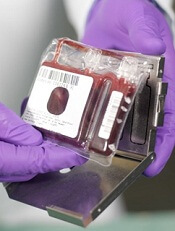
Photo courtesy of NHS
A single-center study suggests that long-term outcomes may be better among patients who receive a double cord blood transplant (CBT) than those who receive a peripheral blood stem cell transplant from a matched, unrelated donor (MUD).
At 3-years post-transplant, the incidence of chronic graft-versus-host disease (cGVHD) was significantly lower among the CBT recipients studied.
In addition, patients who received CBTs were less likely to be re-hospitalized and more likely to discontinue immunosuppressive therapy.
However, there was no significant difference in relapse, transplant-related mortality, or overall survival between CBT recipients and patients who received MUD transplants.
These results were published in Bone Marrow Transplantation.
“Historically, doctors have reserved cord blood for patients without a match,” said study author Jonathan Gutman, MD, of the University of Colorado Denver in Aurora, Colorado.
“A lot of centers reserved cord blood transplants for their worst cases, and so it got an early reputation for being less successful. It also costs a bit more; it takes cord blood cells a little longer to get going, and so patients need to be supported a little longer. However, when you look past the first 100 days—a point at which many centers stop collecting data—there is clear evidence that cord blood outperforms cells from matched, unrelated donors.”
To uncover such evidence, Dr Gutman and his colleagues analyzed adult patients with hematologic malignancies who underwent transplants at the University of Colorado Denver from 2009 to 2014. The team compared 51 consecutive patients receiving double CBT with 57 consecutive patients receiving MUD transplants.
At 3 years post-transplant, the overall rates of cGVHD were 68% following MUD and 32% following CBT (P=0.0017). The rates of severe cGVHD were 44% and 8%, respectively (P=0.0006).
CBT recipients had been off immunosuppression since a median of 268 days from transplant, while patients who received MUD transplants had not ceased immunosuppression to a degree that allowed researchers to determine the median (P<0.0001).
Late hospitalization was significantly reduced among CBT recipients, and there was a trend toward fewer late infections for these patients.
Excluding patients who died during the follow-up period, the relative risk of late infection episode on a per-infection level was 0.77 (P=0.10), and the relative risk of late hospitalization was 0.74 (P<0.001).
The 3-year relapse, transplant-related mortality, and overall survival rates were similar following CBT and MUD transplant.
The cumulative incidence of relapse was 22% for CBT and 24% for MUD (P=0.86). Transplant-related mortality was 25% for CBT and 24% for MUD (P=0.73). And overall survival was 54% for CBT and 52% for MUD (P=0.68).
Dr Gutman said that, due to these results, the University of Colorado Denver has chosen to use cord blood as the first choice for transplant cases where a matched, related donor is unavailable.
Photo courtesy of NHS
A single-center study suggests that long-term outcomes may be better among patients who receive a double cord blood transplant (CBT) than those who receive a peripheral blood stem cell transplant from a matched, unrelated donor (MUD).
At 3-years post-transplant, the incidence of chronic graft-versus-host disease (cGVHD) was significantly lower among the CBT recipients studied.
In addition, patients who received CBTs were less likely to be re-hospitalized and more likely to discontinue immunosuppressive therapy.
However, there was no significant difference in relapse, transplant-related mortality, or overall survival between CBT recipients and patients who received MUD transplants.
These results were published in Bone Marrow Transplantation.
“Historically, doctors have reserved cord blood for patients without a match,” said study author Jonathan Gutman, MD, of the University of Colorado Denver in Aurora, Colorado.
“A lot of centers reserved cord blood transplants for their worst cases, and so it got an early reputation for being less successful. It also costs a bit more; it takes cord blood cells a little longer to get going, and so patients need to be supported a little longer. However, when you look past the first 100 days—a point at which many centers stop collecting data—there is clear evidence that cord blood outperforms cells from matched, unrelated donors.”
To uncover such evidence, Dr Gutman and his colleagues analyzed adult patients with hematologic malignancies who underwent transplants at the University of Colorado Denver from 2009 to 2014. The team compared 51 consecutive patients receiving double CBT with 57 consecutive patients receiving MUD transplants.
At 3 years post-transplant, the overall rates of cGVHD were 68% following MUD and 32% following CBT (P=0.0017). The rates of severe cGVHD were 44% and 8%, respectively (P=0.0006).
CBT recipients had been off immunosuppression since a median of 268 days from transplant, while patients who received MUD transplants had not ceased immunosuppression to a degree that allowed researchers to determine the median (P<0.0001).
Late hospitalization was significantly reduced among CBT recipients, and there was a trend toward fewer late infections for these patients.
Excluding patients who died during the follow-up period, the relative risk of late infection episode on a per-infection level was 0.77 (P=0.10), and the relative risk of late hospitalization was 0.74 (P<0.001).
The 3-year relapse, transplant-related mortality, and overall survival rates were similar following CBT and MUD transplant.
The cumulative incidence of relapse was 22% for CBT and 24% for MUD (P=0.86). Transplant-related mortality was 25% for CBT and 24% for MUD (P=0.73). And overall survival was 54% for CBT and 52% for MUD (P=0.68).
Dr Gutman said that, due to these results, the University of Colorado Denver has chosen to use cord blood as the first choice for transplant cases where a matched, related donor is unavailable.
Photo courtesy of NHS
A single-center study suggests that long-term outcomes may be better among patients who receive a double cord blood transplant (CBT) than those who receive a peripheral blood stem cell transplant from a matched, unrelated donor (MUD).
At 3-years post-transplant, the incidence of chronic graft-versus-host disease (cGVHD) was significantly lower among the CBT recipients studied.
In addition, patients who received CBTs were less likely to be re-hospitalized and more likely to discontinue immunosuppressive therapy.
However, there was no significant difference in relapse, transplant-related mortality, or overall survival between CBT recipients and patients who received MUD transplants.
These results were published in Bone Marrow Transplantation.
“Historically, doctors have reserved cord blood for patients without a match,” said study author Jonathan Gutman, MD, of the University of Colorado Denver in Aurora, Colorado.
“A lot of centers reserved cord blood transplants for their worst cases, and so it got an early reputation for being less successful. It also costs a bit more; it takes cord blood cells a little longer to get going, and so patients need to be supported a little longer. However, when you look past the first 100 days—a point at which many centers stop collecting data—there is clear evidence that cord blood outperforms cells from matched, unrelated donors.”
To uncover such evidence, Dr Gutman and his colleagues analyzed adult patients with hematologic malignancies who underwent transplants at the University of Colorado Denver from 2009 to 2014. The team compared 51 consecutive patients receiving double CBT with 57 consecutive patients receiving MUD transplants.
At 3 years post-transplant, the overall rates of cGVHD were 68% following MUD and 32% following CBT (P=0.0017). The rates of severe cGVHD were 44% and 8%, respectively (P=0.0006).
CBT recipients had been off immunosuppression since a median of 268 days from transplant, while patients who received MUD transplants had not ceased immunosuppression to a degree that allowed researchers to determine the median (P<0.0001).
Late hospitalization was significantly reduced among CBT recipients, and there was a trend toward fewer late infections for these patients.
Excluding patients who died during the follow-up period, the relative risk of late infection episode on a per-infection level was 0.77 (P=0.10), and the relative risk of late hospitalization was 0.74 (P<0.001).
The 3-year relapse, transplant-related mortality, and overall survival rates were similar following CBT and MUD transplant.
The cumulative incidence of relapse was 22% for CBT and 24% for MUD (P=0.86). Transplant-related mortality was 25% for CBT and 24% for MUD (P=0.73). And overall survival was 54% for CBT and 52% for MUD (P=0.68).
Dr Gutman said that, due to these results, the University of Colorado Denver has chosen to use cord blood as the first choice for transplant cases where a matched, related donor is unavailable.
TV time linked to risk of death from PE

Photo courtesy of LG
The amount of TV a person watches each day may influence his risk of dying from pulmonary embolism (PE), according to research published in Circulation.
Researchers evaluated more than 80,000 people in Japan and found the risk of PE death rose as TV viewing time increased.
People who watched TV for 2.5 to 4.9 hours each day had a 70% greater risk of dying from PE than people who watched less than 2.5 hours of TV a day.
For each additional 2 hours of TV watched each day, a person’s risk of PE death increased by 40%.
“Pulmonary embolism occurs at a lower rate in Japan than it does in Western countries, but it may be on the rise,” said study author Hiroyasu Iso, MD, PhD, of Osaka University Graduate School of Medicine.
“The Japanese people are increasingly adopting sedentary lifestyles, which we believe is putting them at increased risk.”
To assess the link between TV viewing and PE death in Japan, Dr Iso and colleagues analyzed information on 86,024 subjects participating in the JACC study. This included 50,017 women and 36,007 men, ranging in age from 40 to 79.
From 1988 to 1990, the subjects completed a questionnaire that included information about average time spent watching TV each day.
The subjects were followed for a median of 19.2 years, until 2009. Mortality from PE was determined from death certificates. In all, 59 of the subjects died of PE.
The researchers calculated the risk of death from PE according to the amount of TV watched after adjusting for subjects’ age at baseline, sex, body mass index, history of hypertension, history of diabetes mellitus, smoking status, perceived mental stress, educational level, walking activity, and sports activity.
Compared to subjects who watched less than 2.5 hours of TV per day, those who watched 2.5 to 4.9 hours had an increased risk of PE death, with a hazard ratio of 1.7.
The risk was greater among subjects whose average TV viewing time was more than 5 hours per day, with a hazard ratio of 2.5.
The researchers said the actual risk of PE death may be higher because PE can be difficult to diagnose. They also pointed out that this study was conducted before computers, tablets, and smartphones became popular sources of information and entertainment.
“Nowadays, with online video streaming, the term ‘binge-watching’ to describe viewing multiple episodes of television programs in one sitting has become popular,” said study author Toru Shirakawa, MD, of Osaka University Graduate School of Medicine. “This popularity may reflect a rapidly growing habit.”
Earlier results from this study were presented at the ESC Congress 2015.
Photo courtesy of LG
The amount of TV a person watches each day may influence his risk of dying from pulmonary embolism (PE), according to research published in Circulation.
Researchers evaluated more than 80,000 people in Japan and found the risk of PE death rose as TV viewing time increased.
People who watched TV for 2.5 to 4.9 hours each day had a 70% greater risk of dying from PE than people who watched less than 2.5 hours of TV a day.
For each additional 2 hours of TV watched each day, a person’s risk of PE death increased by 40%.
“Pulmonary embolism occurs at a lower rate in Japan than it does in Western countries, but it may be on the rise,” said study author Hiroyasu Iso, MD, PhD, of Osaka University Graduate School of Medicine.
“The Japanese people are increasingly adopting sedentary lifestyles, which we believe is putting them at increased risk.”
To assess the link between TV viewing and PE death in Japan, Dr Iso and colleagues analyzed information on 86,024 subjects participating in the JACC study. This included 50,017 women and 36,007 men, ranging in age from 40 to 79.
From 1988 to 1990, the subjects completed a questionnaire that included information about average time spent watching TV each day.
The subjects were followed for a median of 19.2 years, until 2009. Mortality from PE was determined from death certificates. In all, 59 of the subjects died of PE.
The researchers calculated the risk of death from PE according to the amount of TV watched after adjusting for subjects’ age at baseline, sex, body mass index, history of hypertension, history of diabetes mellitus, smoking status, perceived mental stress, educational level, walking activity, and sports activity.
Compared to subjects who watched less than 2.5 hours of TV per day, those who watched 2.5 to 4.9 hours had an increased risk of PE death, with a hazard ratio of 1.7.
The risk was greater among subjects whose average TV viewing time was more than 5 hours per day, with a hazard ratio of 2.5.
The researchers said the actual risk of PE death may be higher because PE can be difficult to diagnose. They also pointed out that this study was conducted before computers, tablets, and smartphones became popular sources of information and entertainment.
“Nowadays, with online video streaming, the term ‘binge-watching’ to describe viewing multiple episodes of television programs in one sitting has become popular,” said study author Toru Shirakawa, MD, of Osaka University Graduate School of Medicine. “This popularity may reflect a rapidly growing habit.”
Earlier results from this study were presented at the ESC Congress 2015.
Photo courtesy of LG
The amount of TV a person watches each day may influence his risk of dying from pulmonary embolism (PE), according to research published in Circulation.
Researchers evaluated more than 80,000 people in Japan and found the risk of PE death rose as TV viewing time increased.
People who watched TV for 2.5 to 4.9 hours each day had a 70% greater risk of dying from PE than people who watched less than 2.5 hours of TV a day.
For each additional 2 hours of TV watched each day, a person’s risk of PE death increased by 40%.
“Pulmonary embolism occurs at a lower rate in Japan than it does in Western countries, but it may be on the rise,” said study author Hiroyasu Iso, MD, PhD, of Osaka University Graduate School of Medicine.
“The Japanese people are increasingly adopting sedentary lifestyles, which we believe is putting them at increased risk.”
To assess the link between TV viewing and PE death in Japan, Dr Iso and colleagues analyzed information on 86,024 subjects participating in the JACC study. This included 50,017 women and 36,007 men, ranging in age from 40 to 79.
From 1988 to 1990, the subjects completed a questionnaire that included information about average time spent watching TV each day.
The subjects were followed for a median of 19.2 years, until 2009. Mortality from PE was determined from death certificates. In all, 59 of the subjects died of PE.
The researchers calculated the risk of death from PE according to the amount of TV watched after adjusting for subjects’ age at baseline, sex, body mass index, history of hypertension, history of diabetes mellitus, smoking status, perceived mental stress, educational level, walking activity, and sports activity.
Compared to subjects who watched less than 2.5 hours of TV per day, those who watched 2.5 to 4.9 hours had an increased risk of PE death, with a hazard ratio of 1.7.
The risk was greater among subjects whose average TV viewing time was more than 5 hours per day, with a hazard ratio of 2.5.
The researchers said the actual risk of PE death may be higher because PE can be difficult to diagnose. They also pointed out that this study was conducted before computers, tablets, and smartphones became popular sources of information and entertainment.
“Nowadays, with online video streaming, the term ‘binge-watching’ to describe viewing multiple episodes of television programs in one sitting has become popular,” said study author Toru Shirakawa, MD, of Osaka University Graduate School of Medicine. “This popularity may reflect a rapidly growing habit.”
Earlier results from this study were presented at the ESC Congress 2015.
ASCO issues guideline on chronic pain management in adult cancer survivors

Photo courtesy of NIH
The American Society of Clinical Oncology (ASCO) has issued a new clinical practice guideline on the management of chronic pain in adult cancer survivors.
ASCO’s recommendations comprise both long-standing and new approaches, including routine screening for chronic pain, the use of alternative pain management approaches, the use of medical cannabis in certain settings where it is legal, and assessing the potential for opioid overuse.
“Many oncologists and primary care physicians are not trained to recognize or treat long-term pain associated with cancer,” said Judith A. Paice, PhD, RN, a co-chair of the ASCO expert panel that developed the guideline.
“This guideline will help clinicians identify pain early and develop comprehensive treatment plans, using a broad range of approaches.”
The guideline recommendations were developed by a multidisciplinary panel of experts in medical oncology, hematology/oncology, pain medicine, palliative care, hospice, radiation oncology, social work, symptom management research, rehabilitation, psychology, and anesthesiology, as well as a patient representative.
The panel conducted a systematic review of the medical literature published from 1996 to 2015. The resulting guideline includes the following key recommendations.
Clinicians should screen for pain at each encounter with a patient. Recurrent disease, second malignancy, or late-onset treatment effects should be evaluated, treated, and monitored.
Clinicians may prescribe non-pharmacologic interventions such as physical medicine and rehabilitation, integrative therapies (eg, acupuncture and massage), interventional therapies, and psychological approaches (eg, guided imagery, hypnosis, and meditation).
Systemic non-opioid analgesics (NSAIDS, acetaminophen) and adjuvant analgesics (selected antidepressants and anticonvulsants) may be prescribed to relieve chronic pain and/or improve physical function.
Clinicians may follow specific state regulations that allow access to medical cannabis or cannabinoids for patients with chronic pain after considering the potential benefits and risks of the available formulations.
Clinicians may prescribe a trial of opioids in carefully selected cancer patients who do not respond to more conservative pain management and who continue to experience pain-related distress or impairment of physical function.
Clinicians should assess the risk of adverse effects of opioids used in pain management and incorporate universal precautions to minimize abuse, addiction, and adverse consequences.
“Of great importance is the attention to appropriate assessment, not only of the individual’s pain, but also of their potential for over-reliance on opioids,” Dr Paice said. “This guideline outlines precautions that help ensure cancer survivors with persistent pain use opioids safely and effectively, while limiting access to those who are struggling with addiction.”
Photo courtesy of NIH
The American Society of Clinical Oncology (ASCO) has issued a new clinical practice guideline on the management of chronic pain in adult cancer survivors.
ASCO’s recommendations comprise both long-standing and new approaches, including routine screening for chronic pain, the use of alternative pain management approaches, the use of medical cannabis in certain settings where it is legal, and assessing the potential for opioid overuse.
“Many oncologists and primary care physicians are not trained to recognize or treat long-term pain associated with cancer,” said Judith A. Paice, PhD, RN, a co-chair of the ASCO expert panel that developed the guideline.
“This guideline will help clinicians identify pain early and develop comprehensive treatment plans, using a broad range of approaches.”
The guideline recommendations were developed by a multidisciplinary panel of experts in medical oncology, hematology/oncology, pain medicine, palliative care, hospice, radiation oncology, social work, symptom management research, rehabilitation, psychology, and anesthesiology, as well as a patient representative.
The panel conducted a systematic review of the medical literature published from 1996 to 2015. The resulting guideline includes the following key recommendations.
Clinicians should screen for pain at each encounter with a patient. Recurrent disease, second malignancy, or late-onset treatment effects should be evaluated, treated, and monitored.
Clinicians may prescribe non-pharmacologic interventions such as physical medicine and rehabilitation, integrative therapies (eg, acupuncture and massage), interventional therapies, and psychological approaches (eg, guided imagery, hypnosis, and meditation).
Systemic non-opioid analgesics (NSAIDS, acetaminophen) and adjuvant analgesics (selected antidepressants and anticonvulsants) may be prescribed to relieve chronic pain and/or improve physical function.
Clinicians may follow specific state regulations that allow access to medical cannabis or cannabinoids for patients with chronic pain after considering the potential benefits and risks of the available formulations.
Clinicians may prescribe a trial of opioids in carefully selected cancer patients who do not respond to more conservative pain management and who continue to experience pain-related distress or impairment of physical function.
Clinicians should assess the risk of adverse effects of opioids used in pain management and incorporate universal precautions to minimize abuse, addiction, and adverse consequences.
“Of great importance is the attention to appropriate assessment, not only of the individual’s pain, but also of their potential for over-reliance on opioids,” Dr Paice said. “This guideline outlines precautions that help ensure cancer survivors with persistent pain use opioids safely and effectively, while limiting access to those who are struggling with addiction.”
Photo courtesy of NIH
The American Society of Clinical Oncology (ASCO) has issued a new clinical practice guideline on the management of chronic pain in adult cancer survivors.
ASCO’s recommendations comprise both long-standing and new approaches, including routine screening for chronic pain, the use of alternative pain management approaches, the use of medical cannabis in certain settings where it is legal, and assessing the potential for opioid overuse.
“Many oncologists and primary care physicians are not trained to recognize or treat long-term pain associated with cancer,” said Judith A. Paice, PhD, RN, a co-chair of the ASCO expert panel that developed the guideline.
“This guideline will help clinicians identify pain early and develop comprehensive treatment plans, using a broad range of approaches.”
The guideline recommendations were developed by a multidisciplinary panel of experts in medical oncology, hematology/oncology, pain medicine, palliative care, hospice, radiation oncology, social work, symptom management research, rehabilitation, psychology, and anesthesiology, as well as a patient representative.
The panel conducted a systematic review of the medical literature published from 1996 to 2015. The resulting guideline includes the following key recommendations.
Clinicians should screen for pain at each encounter with a patient. Recurrent disease, second malignancy, or late-onset treatment effects should be evaluated, treated, and monitored.
Clinicians may prescribe non-pharmacologic interventions such as physical medicine and rehabilitation, integrative therapies (eg, acupuncture and massage), interventional therapies, and psychological approaches (eg, guided imagery, hypnosis, and meditation).
Systemic non-opioid analgesics (NSAIDS, acetaminophen) and adjuvant analgesics (selected antidepressants and anticonvulsants) may be prescribed to relieve chronic pain and/or improve physical function.
Clinicians may follow specific state regulations that allow access to medical cannabis or cannabinoids for patients with chronic pain after considering the potential benefits and risks of the available formulations.
Clinicians may prescribe a trial of opioids in carefully selected cancer patients who do not respond to more conservative pain management and who continue to experience pain-related distress or impairment of physical function.
Clinicians should assess the risk of adverse effects of opioids used in pain management and incorporate universal precautions to minimize abuse, addiction, and adverse consequences.
“Of great importance is the attention to appropriate assessment, not only of the individual’s pain, but also of their potential for over-reliance on opioids,” Dr Paice said. “This guideline outlines precautions that help ensure cancer survivors with persistent pain use opioids safely and effectively, while limiting access to those who are struggling with addiction.”
Lenalidomide maintenance doesn’t improve OS in DLBCL
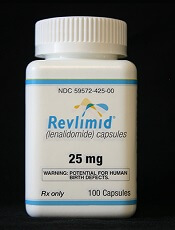
Photo courtesy of Celgene
Initial results from the phase 3 REMARC study suggest that lenalidomide (Revlimid) maintenance does not prolong overall survival (OS) in patients with diffuse large B-cell lymphoma (DLBCL) who have responded to first-line treatment with R-CHOP.
Based on these results, Celgene Corporation, the company developing lenalidomide, said it does not plan to seek approval for the drug for this indication.
REMARC is a randomized, double-blind study designed to compare lenalidomide maintenance to placebo in 650 patients responding to induction therapy with R-CHOP (rituximab, cyclophosphamide, doxorubicin, vincristine, and prednisone).
Patients in REMARC had received 6 to 8 cycles of the R-CHOP-14 regimen, 6 to 8 cycles of the R-CHOP-21 regimen, or 6 cycles of R-CHOP-14/R-CHOP-21 completed by 2 cycles of rituximab alone.
The primary endpoint of the study—a significant improvement in progression-free survival for patients receiving lenalidomide—was met.
However, the interim analysis of OS showed no benefit for patients in the lenalidomide arm.
Celgene said that, based on these results, the company is not planning to seek approval for lenalidomide as maintenance in this patient population.
“We are continuing to partner with LYSA [Lymphoma Study Association] to complete the analyses of the REMARC study,” said Michael Pehl, of Celgene.
“We remain committed to finishing the 4 ongoing phase 3 trials evaluating Revlimid and are confident about its potential as a treatment option across different settings in lymphoma.”
The REMARC study is part of a research program focused on non-Hodgkin lymphoma. In addition to the REMARC study, lenalidomide is also being evaluated in:
- The RELEVANCE study—in combination with rituximab in previously untreated follicular lymphoma (FL)
- The AUGMENT study—in combination with rituximab in relapsed/refractory FL and marginal zone lymphoma
- The MAGNIFY study—in combination with rituximab in relapsed/refractory FL, marginal zone lymphoma, and mantle cell lymphoma
- The ROBUST study—in combination with R-CHOP in previously untreated ABC-subtype DLBCL.
Data from RELEVANCE and AUGMENT are expected in the first and second half of 2017, respectively.
Photo courtesy of Celgene
Initial results from the phase 3 REMARC study suggest that lenalidomide (Revlimid) maintenance does not prolong overall survival (OS) in patients with diffuse large B-cell lymphoma (DLBCL) who have responded to first-line treatment with R-CHOP.
Based on these results, Celgene Corporation, the company developing lenalidomide, said it does not plan to seek approval for the drug for this indication.
REMARC is a randomized, double-blind study designed to compare lenalidomide maintenance to placebo in 650 patients responding to induction therapy with R-CHOP (rituximab, cyclophosphamide, doxorubicin, vincristine, and prednisone).
Patients in REMARC had received 6 to 8 cycles of the R-CHOP-14 regimen, 6 to 8 cycles of the R-CHOP-21 regimen, or 6 cycles of R-CHOP-14/R-CHOP-21 completed by 2 cycles of rituximab alone.
The primary endpoint of the study—a significant improvement in progression-free survival for patients receiving lenalidomide—was met.
However, the interim analysis of OS showed no benefit for patients in the lenalidomide arm.
Celgene said that, based on these results, the company is not planning to seek approval for lenalidomide as maintenance in this patient population.
“We are continuing to partner with LYSA [Lymphoma Study Association] to complete the analyses of the REMARC study,” said Michael Pehl, of Celgene.
“We remain committed to finishing the 4 ongoing phase 3 trials evaluating Revlimid and are confident about its potential as a treatment option across different settings in lymphoma.”
The REMARC study is part of a research program focused on non-Hodgkin lymphoma. In addition to the REMARC study, lenalidomide is also being evaluated in:
- The RELEVANCE study—in combination with rituximab in previously untreated follicular lymphoma (FL)
- The AUGMENT study—in combination with rituximab in relapsed/refractory FL and marginal zone lymphoma
- The MAGNIFY study—in combination with rituximab in relapsed/refractory FL, marginal zone lymphoma, and mantle cell lymphoma
- The ROBUST study—in combination with R-CHOP in previously untreated ABC-subtype DLBCL.
Data from RELEVANCE and AUGMENT are expected in the first and second half of 2017, respectively.
Photo courtesy of Celgene
Initial results from the phase 3 REMARC study suggest that lenalidomide (Revlimid) maintenance does not prolong overall survival (OS) in patients with diffuse large B-cell lymphoma (DLBCL) who have responded to first-line treatment with R-CHOP.
Based on these results, Celgene Corporation, the company developing lenalidomide, said it does not plan to seek approval for the drug for this indication.
REMARC is a randomized, double-blind study designed to compare lenalidomide maintenance to placebo in 650 patients responding to induction therapy with R-CHOP (rituximab, cyclophosphamide, doxorubicin, vincristine, and prednisone).
Patients in REMARC had received 6 to 8 cycles of the R-CHOP-14 regimen, 6 to 8 cycles of the R-CHOP-21 regimen, or 6 cycles of R-CHOP-14/R-CHOP-21 completed by 2 cycles of rituximab alone.
The primary endpoint of the study—a significant improvement in progression-free survival for patients receiving lenalidomide—was met.
However, the interim analysis of OS showed no benefit for patients in the lenalidomide arm.
Celgene said that, based on these results, the company is not planning to seek approval for lenalidomide as maintenance in this patient population.
“We are continuing to partner with LYSA [Lymphoma Study Association] to complete the analyses of the REMARC study,” said Michael Pehl, of Celgene.
“We remain committed to finishing the 4 ongoing phase 3 trials evaluating Revlimid and are confident about its potential as a treatment option across different settings in lymphoma.”
The REMARC study is part of a research program focused on non-Hodgkin lymphoma. In addition to the REMARC study, lenalidomide is also being evaluated in:
- The RELEVANCE study—in combination with rituximab in previously untreated follicular lymphoma (FL)
- The AUGMENT study—in combination with rituximab in relapsed/refractory FL and marginal zone lymphoma
- The MAGNIFY study—in combination with rituximab in relapsed/refractory FL, marginal zone lymphoma, and mantle cell lymphoma
- The ROBUST study—in combination with R-CHOP in previously untreated ABC-subtype DLBCL.
Data from RELEVANCE and AUGMENT are expected in the first and second half of 2017, respectively.
mAb granted breakthrough designation for MM
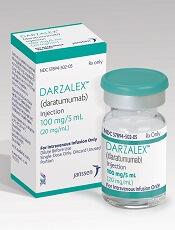
Photo courtesy of Janssen
The US Food and Drug Administration (FDA) has granted breakthrough therapy designation for daratumumab (Darzalex), a CD38-directed monoclonal antibody (mAb), as part of combination therapy for patients with multiple myeloma (MM).
The designation is for daratumumab in combination with lenalidomide and dexamethasone or bortezomib and dexamethasone for the treatment of MM patients who have received at least 1 prior therapy.
This is the second breakthrough designation the FDA has granted to daratumumab.
The FDA’s breakthrough designation is intended to expedite the development and review of new therapies for serious or life-threatening conditions.
To earn the designation, a treatment must show encouraging early clinical results demonstrating substantial improvement over available therapies with regard to a clinically significant endpoint, or it must fulfill an unmet need.
In May 2013, the FDA granted daratumumab breakthrough designation for the treatment of MM patients who have received at least 3 prior lines of therapy, including a proteasome inhibitor and an immunomodulatory agent, or who are double-refractory to a proteasome inhibitor and an immunomodulatory agent.
In November 2015, daratumumab received accelerated approval from the FDA for this indication. Continued approval of the mAb may be contingent upon verification and description of clinical benefit in a confirmatory trial.
Phase 3 trials
The newest breakthrough designation for daratumumab was based on data from two phase 3 studies—CASTOR (MMY3004) and POLLUX (MMY3003). Both studies were sponsored by Janssen Biotech, Inc., the company developing daratumumab.
In the CASTOR trial, researchers compared daratumumab-bortezomib-dexamethasone to bortezomib-dexamethasone in MM patients who had received at least 1 prior therapy.
The researchers said the addition of daratumumab significantly improved progression-free survival without increasing the cumulative toxicity or the toxicity of the bortezomib-dexamethasone combination.
Results from this trial were presented at the 2016 ASCO Annual Meeting.
In the POLLUX trial, researchers compared daratumumab-lenalidomide-dexamethasone to lenalidomide-dexamethasone in MM patients who had received at least 1 prior therapy.
According to the researchers, daratumumab-lenalidomide-dexamethasone conferred the highest response rate reported to date in the treatment of relapsed/refractory MM, significantly improved progression-free survival compared to lenalidomide-dexamethasone, and had a manageable safety profile.
These results were presented at the 21st Congress of the European Hematology Association.
Photo courtesy of Janssen
The US Food and Drug Administration (FDA) has granted breakthrough therapy designation for daratumumab (Darzalex), a CD38-directed monoclonal antibody (mAb), as part of combination therapy for patients with multiple myeloma (MM).
The designation is for daratumumab in combination with lenalidomide and dexamethasone or bortezomib and dexamethasone for the treatment of MM patients who have received at least 1 prior therapy.
This is the second breakthrough designation the FDA has granted to daratumumab.
The FDA’s breakthrough designation is intended to expedite the development and review of new therapies for serious or life-threatening conditions.
To earn the designation, a treatment must show encouraging early clinical results demonstrating substantial improvement over available therapies with regard to a clinically significant endpoint, or it must fulfill an unmet need.
In May 2013, the FDA granted daratumumab breakthrough designation for the treatment of MM patients who have received at least 3 prior lines of therapy, including a proteasome inhibitor and an immunomodulatory agent, or who are double-refractory to a proteasome inhibitor and an immunomodulatory agent.
In November 2015, daratumumab received accelerated approval from the FDA for this indication. Continued approval of the mAb may be contingent upon verification and description of clinical benefit in a confirmatory trial.
Phase 3 trials
The newest breakthrough designation for daratumumab was based on data from two phase 3 studies—CASTOR (MMY3004) and POLLUX (MMY3003). Both studies were sponsored by Janssen Biotech, Inc., the company developing daratumumab.
In the CASTOR trial, researchers compared daratumumab-bortezomib-dexamethasone to bortezomib-dexamethasone in MM patients who had received at least 1 prior therapy.
The researchers said the addition of daratumumab significantly improved progression-free survival without increasing the cumulative toxicity or the toxicity of the bortezomib-dexamethasone combination.
Results from this trial were presented at the 2016 ASCO Annual Meeting.
In the POLLUX trial, researchers compared daratumumab-lenalidomide-dexamethasone to lenalidomide-dexamethasone in MM patients who had received at least 1 prior therapy.
According to the researchers, daratumumab-lenalidomide-dexamethasone conferred the highest response rate reported to date in the treatment of relapsed/refractory MM, significantly improved progression-free survival compared to lenalidomide-dexamethasone, and had a manageable safety profile.
These results were presented at the 21st Congress of the European Hematology Association.
Photo courtesy of Janssen
The US Food and Drug Administration (FDA) has granted breakthrough therapy designation for daratumumab (Darzalex), a CD38-directed monoclonal antibody (mAb), as part of combination therapy for patients with multiple myeloma (MM).
The designation is for daratumumab in combination with lenalidomide and dexamethasone or bortezomib and dexamethasone for the treatment of MM patients who have received at least 1 prior therapy.
This is the second breakthrough designation the FDA has granted to daratumumab.
The FDA’s breakthrough designation is intended to expedite the development and review of new therapies for serious or life-threatening conditions.
To earn the designation, a treatment must show encouraging early clinical results demonstrating substantial improvement over available therapies with regard to a clinically significant endpoint, or it must fulfill an unmet need.
In May 2013, the FDA granted daratumumab breakthrough designation for the treatment of MM patients who have received at least 3 prior lines of therapy, including a proteasome inhibitor and an immunomodulatory agent, or who are double-refractory to a proteasome inhibitor and an immunomodulatory agent.
In November 2015, daratumumab received accelerated approval from the FDA for this indication. Continued approval of the mAb may be contingent upon verification and description of clinical benefit in a confirmatory trial.
Phase 3 trials
The newest breakthrough designation for daratumumab was based on data from two phase 3 studies—CASTOR (MMY3004) and POLLUX (MMY3003). Both studies were sponsored by Janssen Biotech, Inc., the company developing daratumumab.
In the CASTOR trial, researchers compared daratumumab-bortezomib-dexamethasone to bortezomib-dexamethasone in MM patients who had received at least 1 prior therapy.
The researchers said the addition of daratumumab significantly improved progression-free survival without increasing the cumulative toxicity or the toxicity of the bortezomib-dexamethasone combination.
Results from this trial were presented at the 2016 ASCO Annual Meeting.
In the POLLUX trial, researchers compared daratumumab-lenalidomide-dexamethasone to lenalidomide-dexamethasone in MM patients who had received at least 1 prior therapy.
According to the researchers, daratumumab-lenalidomide-dexamethasone conferred the highest response rate reported to date in the treatment of relapsed/refractory MM, significantly improved progression-free survival compared to lenalidomide-dexamethasone, and had a manageable safety profile.
These results were presented at the 21st Congress of the European Hematology Association.
Long-term health burden of Hodgkin lymphoma treatment

Photo courtesy of St. Jude
Children’s Research Hospital
and Seth Dixon
New research has shown that survivors of pediatric Hodgkin lymphoma (HL) are more likely to have chronic cardiovascular conditions than adults who did not have cancer in childhood.
And cardiovascular conditions are more severe among HL survivors than the general population.
Investigators believe this research, published in The Lancet Oncology, should aid efforts to reduce and better manage the late effects of cancer treatment.
For this study, the investigators used a measurement called “cumulative burden” to better capture the distribution and magnitude of chronic disease in childhood cancer survivors.
The metric showed that, by age 50, HL survivors had more than twice as many cardiovascular problems as adults who had not had cancer as children. HL survivors were also 5 times more likely to have severe, life-threatening, or fatal heart conditions.
“With cure rates for pediatric cancer at historic highs, the question becomes, ‘What is the legacy of that cure?’” said study author Nickhill Bhakta, MD, of St. Jude Children’s Research Hospital in Memphis, Tennessee.
“We are doing a better job of keeping patients alive, but are we doing a better job at addressing the chronic diseases that are sometimes the price of that cure? Cumulative burden is a new tool for studying chronic illness in childhood cancer survivors or any patient population with significant morbidity, such as diabetes or HIV/AIDS.”
Unlike statistical methods that count health conditions once at diagnosis, cumulative burden tracks individuals’ multiple, recurring treatment-related health conditions.
Dr Bhakta and his colleagues focused on calculating the cumulative burden of cardiovascular disease in 670 pediatric HL survivors. The subjects were at least 18 years old and had survived at least 10 years beyond their cancer diagnoses.
The participants had been assessed for 22 chronic cardiovascular conditions, including heart attacks, hypertension, arrhythmias, and structural heart defects. Investigators used those and other clinical findings to calculate the cumulative burden by tracking the incidence and severity of cardiovascular disease.
The team also determined the cumulative burden for a comparison group of 272 community volunteers who underwent the same health assessments. The volunteers were similar in age and gender to the HL survivors but had no history of childhood cancer.
The analysis showed that the cumulative burden of cardiovascular disease, including severe and life-threatening conditions, was greater among HL survivors at 30 and 50 years of age than among the comparison group. In fact, the cumulative burden of the most serious heart problems, including heart attacks, was similar for 30-year-old HL survivors and 50-year-old community volunteers.
At age 50, 45.5% of HL survivors had developed at least one grade 3-5 cardiovascular condition, compared to 15.7% of the control subjects.
The HL survivors had a cumulative burden of 430.6 grade 1-5 cardiovascular conditions per 100 individuals and 100.8 grade 3-5 cardiovascular conditions per 100 individuals. In comparison, controls had 227.4 grade 1-5 conditions and 17.0 grade 3-5 conditions per 100 individuals.
The investigators noted that severe, chronic heart conditions became more common with age in both groups, but serious problems accumulated more rapidly in HL survivors.
“Survivors tended to have more severe disease across the lifespan and likely need an individualized screening and treatment plan,” Dr Bhakta said.
He added that the results of this study highlight trade-offs to consider in designing future clinical trials. For example, the investigators found that reducing the dose of anthracyclines will lower the rate, but not the severity, of cardiovascular disease in pediatric and young adult HL survivors.
In contrast, lowering the heart radiation dose will not significantly lower the rate of cardiovascular disease, but it will reduce the severity.
“Cumulative burden provides us with a global view of tradeoffs between different treatment late effects that must be considered when designing new interventions,” Dr Bhakta concluded.
Photo courtesy of St. Jude
Children’s Research Hospital
and Seth Dixon
New research has shown that survivors of pediatric Hodgkin lymphoma (HL) are more likely to have chronic cardiovascular conditions than adults who did not have cancer in childhood.
And cardiovascular conditions are more severe among HL survivors than the general population.
Investigators believe this research, published in The Lancet Oncology, should aid efforts to reduce and better manage the late effects of cancer treatment.
For this study, the investigators used a measurement called “cumulative burden” to better capture the distribution and magnitude of chronic disease in childhood cancer survivors.
The metric showed that, by age 50, HL survivors had more than twice as many cardiovascular problems as adults who had not had cancer as children. HL survivors were also 5 times more likely to have severe, life-threatening, or fatal heart conditions.
“With cure rates for pediatric cancer at historic highs, the question becomes, ‘What is the legacy of that cure?’” said study author Nickhill Bhakta, MD, of St. Jude Children’s Research Hospital in Memphis, Tennessee.
“We are doing a better job of keeping patients alive, but are we doing a better job at addressing the chronic diseases that are sometimes the price of that cure? Cumulative burden is a new tool for studying chronic illness in childhood cancer survivors or any patient population with significant morbidity, such as diabetes or HIV/AIDS.”
Unlike statistical methods that count health conditions once at diagnosis, cumulative burden tracks individuals’ multiple, recurring treatment-related health conditions.
Dr Bhakta and his colleagues focused on calculating the cumulative burden of cardiovascular disease in 670 pediatric HL survivors. The subjects were at least 18 years old and had survived at least 10 years beyond their cancer diagnoses.
The participants had been assessed for 22 chronic cardiovascular conditions, including heart attacks, hypertension, arrhythmias, and structural heart defects. Investigators used those and other clinical findings to calculate the cumulative burden by tracking the incidence and severity of cardiovascular disease.
The team also determined the cumulative burden for a comparison group of 272 community volunteers who underwent the same health assessments. The volunteers were similar in age and gender to the HL survivors but had no history of childhood cancer.
The analysis showed that the cumulative burden of cardiovascular disease, including severe and life-threatening conditions, was greater among HL survivors at 30 and 50 years of age than among the comparison group. In fact, the cumulative burden of the most serious heart problems, including heart attacks, was similar for 30-year-old HL survivors and 50-year-old community volunteers.
At age 50, 45.5% of HL survivors had developed at least one grade 3-5 cardiovascular condition, compared to 15.7% of the control subjects.
The HL survivors had a cumulative burden of 430.6 grade 1-5 cardiovascular conditions per 100 individuals and 100.8 grade 3-5 cardiovascular conditions per 100 individuals. In comparison, controls had 227.4 grade 1-5 conditions and 17.0 grade 3-5 conditions per 100 individuals.
The investigators noted that severe, chronic heart conditions became more common with age in both groups, but serious problems accumulated more rapidly in HL survivors.
“Survivors tended to have more severe disease across the lifespan and likely need an individualized screening and treatment plan,” Dr Bhakta said.
He added that the results of this study highlight trade-offs to consider in designing future clinical trials. For example, the investigators found that reducing the dose of anthracyclines will lower the rate, but not the severity, of cardiovascular disease in pediatric and young adult HL survivors.
In contrast, lowering the heart radiation dose will not significantly lower the rate of cardiovascular disease, but it will reduce the severity.
“Cumulative burden provides us with a global view of tradeoffs between different treatment late effects that must be considered when designing new interventions,” Dr Bhakta concluded.
Photo courtesy of St. Jude
Children’s Research Hospital
and Seth Dixon
New research has shown that survivors of pediatric Hodgkin lymphoma (HL) are more likely to have chronic cardiovascular conditions than adults who did not have cancer in childhood.
And cardiovascular conditions are more severe among HL survivors than the general population.
Investigators believe this research, published in The Lancet Oncology, should aid efforts to reduce and better manage the late effects of cancer treatment.
For this study, the investigators used a measurement called “cumulative burden” to better capture the distribution and magnitude of chronic disease in childhood cancer survivors.
The metric showed that, by age 50, HL survivors had more than twice as many cardiovascular problems as adults who had not had cancer as children. HL survivors were also 5 times more likely to have severe, life-threatening, or fatal heart conditions.
“With cure rates for pediatric cancer at historic highs, the question becomes, ‘What is the legacy of that cure?’” said study author Nickhill Bhakta, MD, of St. Jude Children’s Research Hospital in Memphis, Tennessee.
“We are doing a better job of keeping patients alive, but are we doing a better job at addressing the chronic diseases that are sometimes the price of that cure? Cumulative burden is a new tool for studying chronic illness in childhood cancer survivors or any patient population with significant morbidity, such as diabetes or HIV/AIDS.”
Unlike statistical methods that count health conditions once at diagnosis, cumulative burden tracks individuals’ multiple, recurring treatment-related health conditions.
Dr Bhakta and his colleagues focused on calculating the cumulative burden of cardiovascular disease in 670 pediatric HL survivors. The subjects were at least 18 years old and had survived at least 10 years beyond their cancer diagnoses.
The participants had been assessed for 22 chronic cardiovascular conditions, including heart attacks, hypertension, arrhythmias, and structural heart defects. Investigators used those and other clinical findings to calculate the cumulative burden by tracking the incidence and severity of cardiovascular disease.
The team also determined the cumulative burden for a comparison group of 272 community volunteers who underwent the same health assessments. The volunteers were similar in age and gender to the HL survivors but had no history of childhood cancer.
The analysis showed that the cumulative burden of cardiovascular disease, including severe and life-threatening conditions, was greater among HL survivors at 30 and 50 years of age than among the comparison group. In fact, the cumulative burden of the most serious heart problems, including heart attacks, was similar for 30-year-old HL survivors and 50-year-old community volunteers.
At age 50, 45.5% of HL survivors had developed at least one grade 3-5 cardiovascular condition, compared to 15.7% of the control subjects.
The HL survivors had a cumulative burden of 430.6 grade 1-5 cardiovascular conditions per 100 individuals and 100.8 grade 3-5 cardiovascular conditions per 100 individuals. In comparison, controls had 227.4 grade 1-5 conditions and 17.0 grade 3-5 conditions per 100 individuals.
The investigators noted that severe, chronic heart conditions became more common with age in both groups, but serious problems accumulated more rapidly in HL survivors.
“Survivors tended to have more severe disease across the lifespan and likely need an individualized screening and treatment plan,” Dr Bhakta said.
He added that the results of this study highlight trade-offs to consider in designing future clinical trials. For example, the investigators found that reducing the dose of anthracyclines will lower the rate, but not the severity, of cardiovascular disease in pediatric and young adult HL survivors.
In contrast, lowering the heart radiation dose will not significantly lower the rate of cardiovascular disease, but it will reduce the severity.
“Cumulative burden provides us with a global view of tradeoffs between different treatment late effects that must be considered when designing new interventions,” Dr Bhakta concluded.