User login
-
RaDonda Vaught: Victim, felon, or both?
For 4 and a half years, I have followed the RaDonda Vaught medication error that led to the unfortunate death of a human being. I am not alone. Nurses across the country have followed the case with anxiety and fear, knowing a guilty verdict might have the potential to challenge basic tenets of care.
According to Kaiser Health News, nurses are “raging and quitting” following the announcement of a guilty verdict for two felonies: criminally negligent homicide and gross neglect of an impaired adult.
Thousands of nurses have claimed they could arrive in Nashville, Tenn., on May 13, the day Ms. Vaught is to be sentenced, to protest the conviction. Others have stated they believe justice is being conducted, as their sympathies lie with the victim, Charlene Murphey, who died 12 hours after being unable to draw breath, paralyzed from the inadvertent dose of vecuronium given intravenously by her nurse.
How should we feel as clinicians? according to sentencing guidelines?
My belief is that it is understandable to feel passionately about this case, including what it could mean to an era of “just culture” that nursing organizations have promoted. The concept of just culture looks at medication/nursing errors as opportunities for growth to avoid future errors, not as scenarios for punitive action. With the guilty verdict in Ms. Vaught’s case, nurses (and facilities) fear that nurses will avoid coming forward after mistakes, leading to cover-ups and a culture perspective.
Will nurses be hesitant to report errors (especially significant errors) that lead to patient harm? Will we fear retribution and reprisal for being truthful?
I believe that Ms. Vaught’s criminal case has changed little in the political landscape of caregiving. Before you let loose with a loud expletive (or two), hear me out.
When a patient dies from unintentional harm, someone must be held accountable. Society needs a scapegoat, and unfortunately, excrement slides downhill to the lowest common denominator, which may be the nurse. Initially, Ms. Vaught was contacted by her state licensing board (Tennessee) and informed there would be no professional repercussions for her mistake. That decision did not hold. She was later indicted criminally for the death of her patient. She also had her nursing license revoked.
Why? The hospital where she worked was threatened with Medicare reprisal if systemic issues were not addressed following the incident; for example, a bar-coding device was not available for Ms. Vaught to use prior to administering the vecuronium, and paralytic agents were stored unsafely in a Pyxis MedStation, readily available for any nurse to obtain via override.
In fact, the number of overrides performed by all nurses caring for Ms. Murphey in the days leading to her death was alarming, leading reviewers to assume that time to acquire medication for inpatients was a problem.
Ms. Vaught herself, stating the obvious on talk shows, said she should not have performed an override, that the situation was “not an emergency” and she should have taken time to check that Versed (midazolam) was available by the generic name and not the “VE” she entered as a search mechanism into the machine. She also stated she was “distracted” by a trainee assigned to her at the time.
We have all been there, feeling rushed to perform a task under stressful situations, skipping safety guidelines to sedate a patient while radiology is waiting. Someone is always on our a**, waiting to get to the next task, the next patient, the next admission, the next pseudo-emergency called nursing workload.
It never ends.
Which is why I wish to emphasize what the Ms. Vaught guilty verdict really means for nurses.
It means we must never forget that our actions have the potential to harm, even kill, our patients.
We must never forget that repercussions and reprisal may occur, whether personal guilt that may prove more damaging than the prison sentence Ms. Vaught might receive, or problems that could result if nurses attempt to hide or subvert medication issues.
In Ms. Vaught’s case, she did not document the medication that had been given to Ms. Murphey, facts the prosecution seized on to proclaim her guilt. Why? We can only guess at this point. But her claims of truthfulness need to be balanced by what occurred, and the facts are that she did not document the error after administering vecuronium that night.
When reflecting on this verdict, we need to remember a patient died, and she did so horribly, being unable to draw breath. This should never happen during our watch, ever, and as clinicians, we need to be vigilant.
In summary, protest if you believe justice has been too harsh or unfair, and that nurses may be fearful as a result. But please spare a moment to realize that someone should protest for Ms. Murphey as well. We cannot bring her back, nor can we right the system issues that may have led to her death.
But we should protest for safer systems, for improved staffing, for a need to catch our collective breaths, and a day to work and nurture patients when someone is not constantly on our a**. Only then will nurses be protected from unjust reprisal, from needing to be the lowest common denominator of guilt.
Ms. Goodman is a researcher and consultant in Libertyville, Ill. She disclosed no conflicts of interest.
A version of this article first appeared on Medscape.com.
For 4 and a half years, I have followed the RaDonda Vaught medication error that led to the unfortunate death of a human being. I am not alone. Nurses across the country have followed the case with anxiety and fear, knowing a guilty verdict might have the potential to challenge basic tenets of care.
According to Kaiser Health News, nurses are “raging and quitting” following the announcement of a guilty verdict for two felonies: criminally negligent homicide and gross neglect of an impaired adult.
Thousands of nurses have claimed they could arrive in Nashville, Tenn., on May 13, the day Ms. Vaught is to be sentenced, to protest the conviction. Others have stated they believe justice is being conducted, as their sympathies lie with the victim, Charlene Murphey, who died 12 hours after being unable to draw breath, paralyzed from the inadvertent dose of vecuronium given intravenously by her nurse.
How should we feel as clinicians? according to sentencing guidelines?
My belief is that it is understandable to feel passionately about this case, including what it could mean to an era of “just culture” that nursing organizations have promoted. The concept of just culture looks at medication/nursing errors as opportunities for growth to avoid future errors, not as scenarios for punitive action. With the guilty verdict in Ms. Vaught’s case, nurses (and facilities) fear that nurses will avoid coming forward after mistakes, leading to cover-ups and a culture perspective.
Will nurses be hesitant to report errors (especially significant errors) that lead to patient harm? Will we fear retribution and reprisal for being truthful?
I believe that Ms. Vaught’s criminal case has changed little in the political landscape of caregiving. Before you let loose with a loud expletive (or two), hear me out.
When a patient dies from unintentional harm, someone must be held accountable. Society needs a scapegoat, and unfortunately, excrement slides downhill to the lowest common denominator, which may be the nurse. Initially, Ms. Vaught was contacted by her state licensing board (Tennessee) and informed there would be no professional repercussions for her mistake. That decision did not hold. She was later indicted criminally for the death of her patient. She also had her nursing license revoked.
Why? The hospital where she worked was threatened with Medicare reprisal if systemic issues were not addressed following the incident; for example, a bar-coding device was not available for Ms. Vaught to use prior to administering the vecuronium, and paralytic agents were stored unsafely in a Pyxis MedStation, readily available for any nurse to obtain via override.
In fact, the number of overrides performed by all nurses caring for Ms. Murphey in the days leading to her death was alarming, leading reviewers to assume that time to acquire medication for inpatients was a problem.
Ms. Vaught herself, stating the obvious on talk shows, said she should not have performed an override, that the situation was “not an emergency” and she should have taken time to check that Versed (midazolam) was available by the generic name and not the “VE” she entered as a search mechanism into the machine. She also stated she was “distracted” by a trainee assigned to her at the time.
We have all been there, feeling rushed to perform a task under stressful situations, skipping safety guidelines to sedate a patient while radiology is waiting. Someone is always on our a**, waiting to get to the next task, the next patient, the next admission, the next pseudo-emergency called nursing workload.
It never ends.
Which is why I wish to emphasize what the Ms. Vaught guilty verdict really means for nurses.
It means we must never forget that our actions have the potential to harm, even kill, our patients.
We must never forget that repercussions and reprisal may occur, whether personal guilt that may prove more damaging than the prison sentence Ms. Vaught might receive, or problems that could result if nurses attempt to hide or subvert medication issues.
In Ms. Vaught’s case, she did not document the medication that had been given to Ms. Murphey, facts the prosecution seized on to proclaim her guilt. Why? We can only guess at this point. But her claims of truthfulness need to be balanced by what occurred, and the facts are that she did not document the error after administering vecuronium that night.
When reflecting on this verdict, we need to remember a patient died, and she did so horribly, being unable to draw breath. This should never happen during our watch, ever, and as clinicians, we need to be vigilant.
In summary, protest if you believe justice has been too harsh or unfair, and that nurses may be fearful as a result. But please spare a moment to realize that someone should protest for Ms. Murphey as well. We cannot bring her back, nor can we right the system issues that may have led to her death.
But we should protest for safer systems, for improved staffing, for a need to catch our collective breaths, and a day to work and nurture patients when someone is not constantly on our a**. Only then will nurses be protected from unjust reprisal, from needing to be the lowest common denominator of guilt.
Ms. Goodman is a researcher and consultant in Libertyville, Ill. She disclosed no conflicts of interest.
A version of this article first appeared on Medscape.com.
For 4 and a half years, I have followed the RaDonda Vaught medication error that led to the unfortunate death of a human being. I am not alone. Nurses across the country have followed the case with anxiety and fear, knowing a guilty verdict might have the potential to challenge basic tenets of care.
According to Kaiser Health News, nurses are “raging and quitting” following the announcement of a guilty verdict for two felonies: criminally negligent homicide and gross neglect of an impaired adult.
Thousands of nurses have claimed they could arrive in Nashville, Tenn., on May 13, the day Ms. Vaught is to be sentenced, to protest the conviction. Others have stated they believe justice is being conducted, as their sympathies lie with the victim, Charlene Murphey, who died 12 hours after being unable to draw breath, paralyzed from the inadvertent dose of vecuronium given intravenously by her nurse.
How should we feel as clinicians? according to sentencing guidelines?
My belief is that it is understandable to feel passionately about this case, including what it could mean to an era of “just culture” that nursing organizations have promoted. The concept of just culture looks at medication/nursing errors as opportunities for growth to avoid future errors, not as scenarios for punitive action. With the guilty verdict in Ms. Vaught’s case, nurses (and facilities) fear that nurses will avoid coming forward after mistakes, leading to cover-ups and a culture perspective.
Will nurses be hesitant to report errors (especially significant errors) that lead to patient harm? Will we fear retribution and reprisal for being truthful?
I believe that Ms. Vaught’s criminal case has changed little in the political landscape of caregiving. Before you let loose with a loud expletive (or two), hear me out.
When a patient dies from unintentional harm, someone must be held accountable. Society needs a scapegoat, and unfortunately, excrement slides downhill to the lowest common denominator, which may be the nurse. Initially, Ms. Vaught was contacted by her state licensing board (Tennessee) and informed there would be no professional repercussions for her mistake. That decision did not hold. She was later indicted criminally for the death of her patient. She also had her nursing license revoked.
Why? The hospital where she worked was threatened with Medicare reprisal if systemic issues were not addressed following the incident; for example, a bar-coding device was not available for Ms. Vaught to use prior to administering the vecuronium, and paralytic agents were stored unsafely in a Pyxis MedStation, readily available for any nurse to obtain via override.
In fact, the number of overrides performed by all nurses caring for Ms. Murphey in the days leading to her death was alarming, leading reviewers to assume that time to acquire medication for inpatients was a problem.
Ms. Vaught herself, stating the obvious on talk shows, said she should not have performed an override, that the situation was “not an emergency” and she should have taken time to check that Versed (midazolam) was available by the generic name and not the “VE” she entered as a search mechanism into the machine. She also stated she was “distracted” by a trainee assigned to her at the time.
We have all been there, feeling rushed to perform a task under stressful situations, skipping safety guidelines to sedate a patient while radiology is waiting. Someone is always on our a**, waiting to get to the next task, the next patient, the next admission, the next pseudo-emergency called nursing workload.
It never ends.
Which is why I wish to emphasize what the Ms. Vaught guilty verdict really means for nurses.
It means we must never forget that our actions have the potential to harm, even kill, our patients.
We must never forget that repercussions and reprisal may occur, whether personal guilt that may prove more damaging than the prison sentence Ms. Vaught might receive, or problems that could result if nurses attempt to hide or subvert medication issues.
In Ms. Vaught’s case, she did not document the medication that had been given to Ms. Murphey, facts the prosecution seized on to proclaim her guilt. Why? We can only guess at this point. But her claims of truthfulness need to be balanced by what occurred, and the facts are that she did not document the error after administering vecuronium that night.
When reflecting on this verdict, we need to remember a patient died, and she did so horribly, being unable to draw breath. This should never happen during our watch, ever, and as clinicians, we need to be vigilant.
In summary, protest if you believe justice has been too harsh or unfair, and that nurses may be fearful as a result. But please spare a moment to realize that someone should protest for Ms. Murphey as well. We cannot bring her back, nor can we right the system issues that may have led to her death.
But we should protest for safer systems, for improved staffing, for a need to catch our collective breaths, and a day to work and nurture patients when someone is not constantly on our a**. Only then will nurses be protected from unjust reprisal, from needing to be the lowest common denominator of guilt.
Ms. Goodman is a researcher and consultant in Libertyville, Ill. She disclosed no conflicts of interest.
A version of this article first appeared on Medscape.com.
30% of COVID patients in study developed long COVID
University of California, Los Angeles, researchers said in a study published in the Journal of General Internal Medicine.
The UCLA researchers studied 1,038 people enrolled in the UCLA COVID Ambulatory Program between April 2020 and February 2021 and found that 309 developed long COVID.
A long-COVID diagnosis came if a patient answering a questionnaire reported persistent symptoms 60-90 days after they were infected or hospitalized. The most persistent symptoms were fatigue (31%) and shortness of breath (15%) in hospitalized participants. Among outpatients, 16% reported losing sense of smell.
The study’s findings differ from earlier research. The University of California, Davis, for example, estimated that 10% of COVID-19 patients develop long-haul symptoms. A 2021 study from Penn State University found that more than half of worldwide COVID-19 patients would develop long COVID.
Part of the discrepancy can blamed on the fact there is no official, widely accepted definition of long COVID. The Centers for Disease Control and Prevention has said it means patients who experience “new, returning, or ongoing health problems 4 or more weeks after an initial infection” the coronavirus. The UCLA study, meanwhile, included patients still having symptoms 60-90 days after infection.
Still, the UCLA research team looked at demographics and clinical characteristics in an attempt to develop effective treatments.
People with a history of hospitalization, diabetes, and higher body mass index were most likely to develop long COVID, the researchers said. The kind of insurance the patients had also seemed to be a factor, though the researchers didn’t offer a reason why.
“Surprisingly, patients with commercial insurance had double the likelihood of developing [long COVID] compared to patients with Medicaid,” they wrote. “This association will be important to explore further to understand if insurance status in this group is representing unmeasured demographic factors or exposures.”
Older age and socioeconomic status were not associated with long COVID in the study – a surprise because those characteristics are often linked with severe illness and higher risk of death from COVID-19.
Weaknesses in the study included the subjective nature of how patients rated their symptoms and the limited number of symptoms evaluated.
“This study illustrates the need to follow diverse patient populations ... to understand the long COVID disease trajectory and evaluate how individual factors such as preexisting comorbidities, sociodemographic factors, vaccination status and virus variant type affect type and persistence of long COVID symptoms,” said Sun Yoo, MD, health sciences assistant clinical professor at UCLA.
A version of this article first appeared on WebMD.com.
University of California, Los Angeles, researchers said in a study published in the Journal of General Internal Medicine.
The UCLA researchers studied 1,038 people enrolled in the UCLA COVID Ambulatory Program between April 2020 and February 2021 and found that 309 developed long COVID.
A long-COVID diagnosis came if a patient answering a questionnaire reported persistent symptoms 60-90 days after they were infected or hospitalized. The most persistent symptoms were fatigue (31%) and shortness of breath (15%) in hospitalized participants. Among outpatients, 16% reported losing sense of smell.
The study’s findings differ from earlier research. The University of California, Davis, for example, estimated that 10% of COVID-19 patients develop long-haul symptoms. A 2021 study from Penn State University found that more than half of worldwide COVID-19 patients would develop long COVID.
Part of the discrepancy can blamed on the fact there is no official, widely accepted definition of long COVID. The Centers for Disease Control and Prevention has said it means patients who experience “new, returning, or ongoing health problems 4 or more weeks after an initial infection” the coronavirus. The UCLA study, meanwhile, included patients still having symptoms 60-90 days after infection.
Still, the UCLA research team looked at demographics and clinical characteristics in an attempt to develop effective treatments.
People with a history of hospitalization, diabetes, and higher body mass index were most likely to develop long COVID, the researchers said. The kind of insurance the patients had also seemed to be a factor, though the researchers didn’t offer a reason why.
“Surprisingly, patients with commercial insurance had double the likelihood of developing [long COVID] compared to patients with Medicaid,” they wrote. “This association will be important to explore further to understand if insurance status in this group is representing unmeasured demographic factors or exposures.”
Older age and socioeconomic status were not associated with long COVID in the study – a surprise because those characteristics are often linked with severe illness and higher risk of death from COVID-19.
Weaknesses in the study included the subjective nature of how patients rated their symptoms and the limited number of symptoms evaluated.
“This study illustrates the need to follow diverse patient populations ... to understand the long COVID disease trajectory and evaluate how individual factors such as preexisting comorbidities, sociodemographic factors, vaccination status and virus variant type affect type and persistence of long COVID symptoms,” said Sun Yoo, MD, health sciences assistant clinical professor at UCLA.
A version of this article first appeared on WebMD.com.
University of California, Los Angeles, researchers said in a study published in the Journal of General Internal Medicine.
The UCLA researchers studied 1,038 people enrolled in the UCLA COVID Ambulatory Program between April 2020 and February 2021 and found that 309 developed long COVID.
A long-COVID diagnosis came if a patient answering a questionnaire reported persistent symptoms 60-90 days after they were infected or hospitalized. The most persistent symptoms were fatigue (31%) and shortness of breath (15%) in hospitalized participants. Among outpatients, 16% reported losing sense of smell.
The study’s findings differ from earlier research. The University of California, Davis, for example, estimated that 10% of COVID-19 patients develop long-haul symptoms. A 2021 study from Penn State University found that more than half of worldwide COVID-19 patients would develop long COVID.
Part of the discrepancy can blamed on the fact there is no official, widely accepted definition of long COVID. The Centers for Disease Control and Prevention has said it means patients who experience “new, returning, or ongoing health problems 4 or more weeks after an initial infection” the coronavirus. The UCLA study, meanwhile, included patients still having symptoms 60-90 days after infection.
Still, the UCLA research team looked at demographics and clinical characteristics in an attempt to develop effective treatments.
People with a history of hospitalization, diabetes, and higher body mass index were most likely to develop long COVID, the researchers said. The kind of insurance the patients had also seemed to be a factor, though the researchers didn’t offer a reason why.
“Surprisingly, patients with commercial insurance had double the likelihood of developing [long COVID] compared to patients with Medicaid,” they wrote. “This association will be important to explore further to understand if insurance status in this group is representing unmeasured demographic factors or exposures.”
Older age and socioeconomic status were not associated with long COVID in the study – a surprise because those characteristics are often linked with severe illness and higher risk of death from COVID-19.
Weaknesses in the study included the subjective nature of how patients rated their symptoms and the limited number of symptoms evaluated.
“This study illustrates the need to follow diverse patient populations ... to understand the long COVID disease trajectory and evaluate how individual factors such as preexisting comorbidities, sociodemographic factors, vaccination status and virus variant type affect type and persistence of long COVID symptoms,” said Sun Yoo, MD, health sciences assistant clinical professor at UCLA.
A version of this article first appeared on WebMD.com.
FROM THE JOURNAL OF GENERAL INTERNAL MEDICINE
The Empire strikes out against one physician’s homemade star fighter
The force is with Ukraine, always
Of all the things we could want from Star Wars, a lightsaber is at the top of the list. And someone is working on that. But second is probably the iconic X-wing. It was used to blow up the Death Star after all: Who wouldn’t want one?
A real-life star fighter may be outside our technological capabilities, but Dr. Akaki Lekiachvili of Atlanta has done the next best thing and constructed a two-thirds scale model to encourage kids to enter the sciences and, with the advent of the war in Ukraine, raise money for medical supplies to assist doctors in the embattled country. Perhaps unsurprisingly, Dr. Lekiachvili, originally from Georgia (the country, former Soviet republic, and previous target of Russian aggression in 2008), takes a dim view toward the invasion of Ukraine: “Russia is like the Evil Empire and Ukraine the Rebel Alliance.”
It’s been a long road finishing the X-Wing, as Dr. Lekiachvili started the project in 2016 and spent $60,000 on it, posting numerous updates on social media over that time, even attracting the attention of Luke Skywalker himself, actor Mark Hamill. Now that he’s done, he’s brought his model out to the public multiple times, delighting kids and adults alike. It can’t fly, but it has an engine and wheels so it can move, the wings can lock into attack position, the thrusters light up, and the voices of Obi-Wan Kenobi and R2-D2 guide children along as they sit in the cockpit.
Dr. Lekiachvili hopes to auction off his creation to a collector and donate the proceeds to Ukrainian charities, and we’re sure he’ll receive far more than the $60,000 he spent building his masterpiece. Now, if you’ll excuse us, we’re off to raid our bank accounts. We have a Death Star to destroy.
I’m a doctor, not a hologram
Telemedicine got a big boost during the early phase of the pandemic when hospitals and medical offices were off limits to anyone without COVID-19, but things have cooled off, telemedically speaking, since then. Well, NASA may have heated them up again. Or maybe it was Starfleet. Hmm, wait a second while we check. … No, it was NASA.

The space agency used the Microsoft Hololens Kinect camera and a personal computer with custom software from Aexa Aerospace to “holoport” NASA flight surgeon Josef Schmid up to the International Space Station, where he had a conversation with European Space Agency astronaut Thomas Pesquet, who wore an augmented reality headset that allowed him to see, hear, and interact with a 3D representation of the earthbound medical provider.
“Holoportation has been in use since at least 2016 by Microsoft, but this is the first use in such an extreme and remote environment such as space,” NASA said in a recent written statement, noting that the extreme house call took place on Oct. 8, 2021.
They seem to be forgetting about Star Trek, but we’ll let them slide on that one. Anyway, NASA didn’t share any details of the medical holoconversation – which may have strained the limits of HIPAA’s portability provisions – but Dr. Schmid described it as “a brand-new way of human exploration, where our human entity is able to travel off the planet. Our physical body is not there, but our human entity absolutely is there.”
Boldly doctoring where no doctor has gone before, you might say. You also might notice from the photo that Dr. Schmid went full Trekkie with a genuine Vulcan salute. Live long and prosper, Dr. Schmid. Live long and prosper.
Add electricity for umami
Salt makes everything taste better. Unfortunately, excess salt can cause problems for our bodies down the line, starting with high blood pressure and continuing on to heart disease and strokes. So how do we enjoy our deliciously salty foods without putting ourselves at risk? One answer may be electricity.

Researchers at Meiji University in Tokyo partnered with food and beverage maker Kirin to develop a set of electric chopsticks to boost the taste of salt in foods without the extra sodium. According to codeveloper and Meiji University professor Homei Miyashita, the device, worn like a watch with a wire attached to one of the chopsticks, “uses a weak electrical current to transmit sodium ions from food, through the chopsticks, to the mouth where they create a sense of saltines,” Reuters said.
In a country like Japan, where a lot of food is made with heavily sodium-based ingredients like miso and soy sauce, the average adult consumes 10 g of salt a day. That’s twice the recommended amount proposed by the World Health Organization. To not sacrifice bland food for better health, this device, which enhances the saltiness of the food consumed by 1.5 times, offers a fairly easy solution to a big public health crisis.
The chopsticks were tested by giving participants reduced-sodium miso soup. They told the researchers that the food was improved in “richness, sweetness, and overall tastiness,” the Guardian said.
Worried about having something electric in your mouth? Don’t worry. Kirin said in a statement that the electricity is very weak and not enough to affect the body.
The chopsticks are still in a prototype stage, but you may be able to get your pair as soon as next year. Until then, maybe be a little mindful of the salt.
Pet poop works in mysterious ways
We usually see it as a burden when our pets poop and pee in the house, but those bodily excretions may be able to tell us something about cancer-causing toxins running rampant in our homes.

Those toxins, known as aromatic amines, can be found in tobacco smoke and dyes used in make-up, textiles, and plastics. “Our findings suggest that pets are coming into contact with aromatic amines that leach from products in their household environment,” lead author Sridhar Chinthakindi, PhD, of NYU Langone Health, said in a statement from the university. “As these substances have been tied to bladder, colorectal, and other forms of cancer, our results may help explain why so many dogs and cats develop such diseases.”
Tobacco smoke was not the main source of the aromatic amines found in the poop and urine, but 70% of dogs and 80% of cats had these chemicals in their waste. The researchers looked for 30 types of aromatic amines plus nicotine in the sample and found 8. The chemical concentrations were much higher in cats than in dogs, possibly because of differences in exposure and metabolism between the two species, they suggested.
“If [pets] are getting exposed to toxins in our homes, then we had better take a closer look at our own exposure,” said senior author Kurunthachalam Kannan, PhD, of NYU Langone.
So the next time your pet poops or pees in the house, don’t get mad. Maybe they’re just trying to help you out by supplying some easy-to-collect samples.
The force is with Ukraine, always
Of all the things we could want from Star Wars, a lightsaber is at the top of the list. And someone is working on that. But second is probably the iconic X-wing. It was used to blow up the Death Star after all: Who wouldn’t want one?
A real-life star fighter may be outside our technological capabilities, but Dr. Akaki Lekiachvili of Atlanta has done the next best thing and constructed a two-thirds scale model to encourage kids to enter the sciences and, with the advent of the war in Ukraine, raise money for medical supplies to assist doctors in the embattled country. Perhaps unsurprisingly, Dr. Lekiachvili, originally from Georgia (the country, former Soviet republic, and previous target of Russian aggression in 2008), takes a dim view toward the invasion of Ukraine: “Russia is like the Evil Empire and Ukraine the Rebel Alliance.”
It’s been a long road finishing the X-Wing, as Dr. Lekiachvili started the project in 2016 and spent $60,000 on it, posting numerous updates on social media over that time, even attracting the attention of Luke Skywalker himself, actor Mark Hamill. Now that he’s done, he’s brought his model out to the public multiple times, delighting kids and adults alike. It can’t fly, but it has an engine and wheels so it can move, the wings can lock into attack position, the thrusters light up, and the voices of Obi-Wan Kenobi and R2-D2 guide children along as they sit in the cockpit.
Dr. Lekiachvili hopes to auction off his creation to a collector and donate the proceeds to Ukrainian charities, and we’re sure he’ll receive far more than the $60,000 he spent building his masterpiece. Now, if you’ll excuse us, we’re off to raid our bank accounts. We have a Death Star to destroy.
I’m a doctor, not a hologram
Telemedicine got a big boost during the early phase of the pandemic when hospitals and medical offices were off limits to anyone without COVID-19, but things have cooled off, telemedically speaking, since then. Well, NASA may have heated them up again. Or maybe it was Starfleet. Hmm, wait a second while we check. … No, it was NASA.
The space agency used the Microsoft Hololens Kinect camera and a personal computer with custom software from Aexa Aerospace to “holoport” NASA flight surgeon Josef Schmid up to the International Space Station, where he had a conversation with European Space Agency astronaut Thomas Pesquet, who wore an augmented reality headset that allowed him to see, hear, and interact with a 3D representation of the earthbound medical provider.
“Holoportation has been in use since at least 2016 by Microsoft, but this is the first use in such an extreme and remote environment such as space,” NASA said in a recent written statement, noting that the extreme house call took place on Oct. 8, 2021.
They seem to be forgetting about Star Trek, but we’ll let them slide on that one. Anyway, NASA didn’t share any details of the medical holoconversation – which may have strained the limits of HIPAA’s portability provisions – but Dr. Schmid described it as “a brand-new way of human exploration, where our human entity is able to travel off the planet. Our physical body is not there, but our human entity absolutely is there.”
Boldly doctoring where no doctor has gone before, you might say. You also might notice from the photo that Dr. Schmid went full Trekkie with a genuine Vulcan salute. Live long and prosper, Dr. Schmid. Live long and prosper.
Add electricity for umami
Salt makes everything taste better. Unfortunately, excess salt can cause problems for our bodies down the line, starting with high blood pressure and continuing on to heart disease and strokes. So how do we enjoy our deliciously salty foods without putting ourselves at risk? One answer may be electricity.
Researchers at Meiji University in Tokyo partnered with food and beverage maker Kirin to develop a set of electric chopsticks to boost the taste of salt in foods without the extra sodium. According to codeveloper and Meiji University professor Homei Miyashita, the device, worn like a watch with a wire attached to one of the chopsticks, “uses a weak electrical current to transmit sodium ions from food, through the chopsticks, to the mouth where they create a sense of saltines,” Reuters said.
In a country like Japan, where a lot of food is made with heavily sodium-based ingredients like miso and soy sauce, the average adult consumes 10 g of salt a day. That’s twice the recommended amount proposed by the World Health Organization. To not sacrifice bland food for better health, this device, which enhances the saltiness of the food consumed by 1.5 times, offers a fairly easy solution to a big public health crisis.
The chopsticks were tested by giving participants reduced-sodium miso soup. They told the researchers that the food was improved in “richness, sweetness, and overall tastiness,” the Guardian said.
Worried about having something electric in your mouth? Don’t worry. Kirin said in a statement that the electricity is very weak and not enough to affect the body.
The chopsticks are still in a prototype stage, but you may be able to get your pair as soon as next year. Until then, maybe be a little mindful of the salt.
Pet poop works in mysterious ways
We usually see it as a burden when our pets poop and pee in the house, but those bodily excretions may be able to tell us something about cancer-causing toxins running rampant in our homes.
Those toxins, known as aromatic amines, can be found in tobacco smoke and dyes used in make-up, textiles, and plastics. “Our findings suggest that pets are coming into contact with aromatic amines that leach from products in their household environment,” lead author Sridhar Chinthakindi, PhD, of NYU Langone Health, said in a statement from the university. “As these substances have been tied to bladder, colorectal, and other forms of cancer, our results may help explain why so many dogs and cats develop such diseases.”
Tobacco smoke was not the main source of the aromatic amines found in the poop and urine, but 70% of dogs and 80% of cats had these chemicals in their waste. The researchers looked for 30 types of aromatic amines plus nicotine in the sample and found 8. The chemical concentrations were much higher in cats than in dogs, possibly because of differences in exposure and metabolism between the two species, they suggested.
“If [pets] are getting exposed to toxins in our homes, then we had better take a closer look at our own exposure,” said senior author Kurunthachalam Kannan, PhD, of NYU Langone.
So the next time your pet poops or pees in the house, don’t get mad. Maybe they’re just trying to help you out by supplying some easy-to-collect samples.
The force is with Ukraine, always
Of all the things we could want from Star Wars, a lightsaber is at the top of the list. And someone is working on that. But second is probably the iconic X-wing. It was used to blow up the Death Star after all: Who wouldn’t want one?
A real-life star fighter may be outside our technological capabilities, but Dr. Akaki Lekiachvili of Atlanta has done the next best thing and constructed a two-thirds scale model to encourage kids to enter the sciences and, with the advent of the war in Ukraine, raise money for medical supplies to assist doctors in the embattled country. Perhaps unsurprisingly, Dr. Lekiachvili, originally from Georgia (the country, former Soviet republic, and previous target of Russian aggression in 2008), takes a dim view toward the invasion of Ukraine: “Russia is like the Evil Empire and Ukraine the Rebel Alliance.”
It’s been a long road finishing the X-Wing, as Dr. Lekiachvili started the project in 2016 and spent $60,000 on it, posting numerous updates on social media over that time, even attracting the attention of Luke Skywalker himself, actor Mark Hamill. Now that he’s done, he’s brought his model out to the public multiple times, delighting kids and adults alike. It can’t fly, but it has an engine and wheels so it can move, the wings can lock into attack position, the thrusters light up, and the voices of Obi-Wan Kenobi and R2-D2 guide children along as they sit in the cockpit.
Dr. Lekiachvili hopes to auction off his creation to a collector and donate the proceeds to Ukrainian charities, and we’re sure he’ll receive far more than the $60,000 he spent building his masterpiece. Now, if you’ll excuse us, we’re off to raid our bank accounts. We have a Death Star to destroy.
I’m a doctor, not a hologram
Telemedicine got a big boost during the early phase of the pandemic when hospitals and medical offices were off limits to anyone without COVID-19, but things have cooled off, telemedically speaking, since then. Well, NASA may have heated them up again. Or maybe it was Starfleet. Hmm, wait a second while we check. … No, it was NASA.
The space agency used the Microsoft Hololens Kinect camera and a personal computer with custom software from Aexa Aerospace to “holoport” NASA flight surgeon Josef Schmid up to the International Space Station, where he had a conversation with European Space Agency astronaut Thomas Pesquet, who wore an augmented reality headset that allowed him to see, hear, and interact with a 3D representation of the earthbound medical provider.
“Holoportation has been in use since at least 2016 by Microsoft, but this is the first use in such an extreme and remote environment such as space,” NASA said in a recent written statement, noting that the extreme house call took place on Oct. 8, 2021.
They seem to be forgetting about Star Trek, but we’ll let them slide on that one. Anyway, NASA didn’t share any details of the medical holoconversation – which may have strained the limits of HIPAA’s portability provisions – but Dr. Schmid described it as “a brand-new way of human exploration, where our human entity is able to travel off the planet. Our physical body is not there, but our human entity absolutely is there.”
Boldly doctoring where no doctor has gone before, you might say. You also might notice from the photo that Dr. Schmid went full Trekkie with a genuine Vulcan salute. Live long and prosper, Dr. Schmid. Live long and prosper.
Add electricity for umami
Salt makes everything taste better. Unfortunately, excess salt can cause problems for our bodies down the line, starting with high blood pressure and continuing on to heart disease and strokes. So how do we enjoy our deliciously salty foods without putting ourselves at risk? One answer may be electricity.
Researchers at Meiji University in Tokyo partnered with food and beverage maker Kirin to develop a set of electric chopsticks to boost the taste of salt in foods without the extra sodium. According to codeveloper and Meiji University professor Homei Miyashita, the device, worn like a watch with a wire attached to one of the chopsticks, “uses a weak electrical current to transmit sodium ions from food, through the chopsticks, to the mouth where they create a sense of saltines,” Reuters said.
In a country like Japan, where a lot of food is made with heavily sodium-based ingredients like miso and soy sauce, the average adult consumes 10 g of salt a day. That’s twice the recommended amount proposed by the World Health Organization. To not sacrifice bland food for better health, this device, which enhances the saltiness of the food consumed by 1.5 times, offers a fairly easy solution to a big public health crisis.
The chopsticks were tested by giving participants reduced-sodium miso soup. They told the researchers that the food was improved in “richness, sweetness, and overall tastiness,” the Guardian said.
Worried about having something electric in your mouth? Don’t worry. Kirin said in a statement that the electricity is very weak and not enough to affect the body.
The chopsticks are still in a prototype stage, but you may be able to get your pair as soon as next year. Until then, maybe be a little mindful of the salt.
Pet poop works in mysterious ways
We usually see it as a burden when our pets poop and pee in the house, but those bodily excretions may be able to tell us something about cancer-causing toxins running rampant in our homes.
Those toxins, known as aromatic amines, can be found in tobacco smoke and dyes used in make-up, textiles, and plastics. “Our findings suggest that pets are coming into contact with aromatic amines that leach from products in their household environment,” lead author Sridhar Chinthakindi, PhD, of NYU Langone Health, said in a statement from the university. “As these substances have been tied to bladder, colorectal, and other forms of cancer, our results may help explain why so many dogs and cats develop such diseases.”
Tobacco smoke was not the main source of the aromatic amines found in the poop and urine, but 70% of dogs and 80% of cats had these chemicals in their waste. The researchers looked for 30 types of aromatic amines plus nicotine in the sample and found 8. The chemical concentrations were much higher in cats than in dogs, possibly because of differences in exposure and metabolism between the two species, they suggested.
“If [pets] are getting exposed to toxins in our homes, then we had better take a closer look at our own exposure,” said senior author Kurunthachalam Kannan, PhD, of NYU Langone.
So the next time your pet poops or pees in the house, don’t get mad. Maybe they’re just trying to help you out by supplying some easy-to-collect samples.
Michigan COVID cases possibly the first from animals in U.S.
The cluster, which previously included three cases, marks the first known instance of likely animal-to-human “spillover” of the virus in the United States, according to the New York Times. All four people fully recovered.
Two of the infected people were employees of a mink farm in Michigan that had an outbreak in October 2020. The other two people didn’t have known links to the farm, which may mean that the coronavirus variant among mink may have been circulating more widely among residents in that area during that time.
Virus samples from all four people contained two mutations that may show signs of an adaptation to mink. The mutations have also been documented in farmed mink in Europe and people with connections to those farms.
“This, in addition to the mink farmworkers testing positive for COVID-19 after the mink herd had begun experiencing illness and increased mortality, suggests that the most likely hypothesis is that the workers were infected after contact with mink on the farm,” Casey Barton Behravesh, DVM, who directs the Centers for Disease Control and Prevention’s One Health Office, told the newspaper.
But researchers are unable to prove the cause, she noted.
“Because there are few genetic sequences available from the communities around the farm, it is impossible to know for sure whether the mutations came from mink on the farm or were already circulating in the community,” she said.
In August 2020, the U.S. Department of Agriculture announced the first confirmed COVID-19 case in mink at farms in Utah, followed by a case in Wisconsin. Worldwide, the coronavirus has been detected in mink on farms in the Netherlands, Denmark, Poland, and Spain.
In early October 2020, Michigan officials announced that the coronavirus had been detected in mink on a local farm. Several of the animals had died. The CDC helped to investigate the outbreak by collecting samples from animals, farmworkers, and residents in the community.
By March 2021, the CDC had updated its website to note that a “small number of people” had contracted a coronavirus variant that “contained unique mink-related mutations.”
In April 2021, the Detroit Free Press and the Documenting COVID-19 project first reported on the first three cases – two farmworkers and a taxidermist who didn’t have a connection to the mink farm. This week, the news outlets reported an update that the fourth case was the taxidermist’s wife.
Earlier this month, National Geographic first reported on the fourth human case based on government documents about the mink farm outbreak.
Overall, animal-to-human transmission is rare, but the CDC is continuing to monitor potential coronavirus cases in wildlife, livestock, and zoo animals for new variants and virus reservoirs, the Times reported.
“These results highlight the importance of routinely studying the genetic material of SARS-CoV-2 in susceptible animal populations like mink, as well as in people,” the CDC wrote.
A version of this article first appeared on WebMD.com.
The cluster, which previously included three cases, marks the first known instance of likely animal-to-human “spillover” of the virus in the United States, according to the New York Times. All four people fully recovered.
Two of the infected people were employees of a mink farm in Michigan that had an outbreak in October 2020. The other two people didn’t have known links to the farm, which may mean that the coronavirus variant among mink may have been circulating more widely among residents in that area during that time.
Virus samples from all four people contained two mutations that may show signs of an adaptation to mink. The mutations have also been documented in farmed mink in Europe and people with connections to those farms.
“This, in addition to the mink farmworkers testing positive for COVID-19 after the mink herd had begun experiencing illness and increased mortality, suggests that the most likely hypothesis is that the workers were infected after contact with mink on the farm,” Casey Barton Behravesh, DVM, who directs the Centers for Disease Control and Prevention’s One Health Office, told the newspaper.
But researchers are unable to prove the cause, she noted.
“Because there are few genetic sequences available from the communities around the farm, it is impossible to know for sure whether the mutations came from mink on the farm or were already circulating in the community,” she said.
In August 2020, the U.S. Department of Agriculture announced the first confirmed COVID-19 case in mink at farms in Utah, followed by a case in Wisconsin. Worldwide, the coronavirus has been detected in mink on farms in the Netherlands, Denmark, Poland, and Spain.
In early October 2020, Michigan officials announced that the coronavirus had been detected in mink on a local farm. Several of the animals had died. The CDC helped to investigate the outbreak by collecting samples from animals, farmworkers, and residents in the community.
By March 2021, the CDC had updated its website to note that a “small number of people” had contracted a coronavirus variant that “contained unique mink-related mutations.”
In April 2021, the Detroit Free Press and the Documenting COVID-19 project first reported on the first three cases – two farmworkers and a taxidermist who didn’t have a connection to the mink farm. This week, the news outlets reported an update that the fourth case was the taxidermist’s wife.
Earlier this month, National Geographic first reported on the fourth human case based on government documents about the mink farm outbreak.
Overall, animal-to-human transmission is rare, but the CDC is continuing to monitor potential coronavirus cases in wildlife, livestock, and zoo animals for new variants and virus reservoirs, the Times reported.
“These results highlight the importance of routinely studying the genetic material of SARS-CoV-2 in susceptible animal populations like mink, as well as in people,” the CDC wrote.
A version of this article first appeared on WebMD.com.
The cluster, which previously included three cases, marks the first known instance of likely animal-to-human “spillover” of the virus in the United States, according to the New York Times. All four people fully recovered.
Two of the infected people were employees of a mink farm in Michigan that had an outbreak in October 2020. The other two people didn’t have known links to the farm, which may mean that the coronavirus variant among mink may have been circulating more widely among residents in that area during that time.
Virus samples from all four people contained two mutations that may show signs of an adaptation to mink. The mutations have also been documented in farmed mink in Europe and people with connections to those farms.
“This, in addition to the mink farmworkers testing positive for COVID-19 after the mink herd had begun experiencing illness and increased mortality, suggests that the most likely hypothesis is that the workers were infected after contact with mink on the farm,” Casey Barton Behravesh, DVM, who directs the Centers for Disease Control and Prevention’s One Health Office, told the newspaper.
But researchers are unable to prove the cause, she noted.
“Because there are few genetic sequences available from the communities around the farm, it is impossible to know for sure whether the mutations came from mink on the farm or were already circulating in the community,” she said.
In August 2020, the U.S. Department of Agriculture announced the first confirmed COVID-19 case in mink at farms in Utah, followed by a case in Wisconsin. Worldwide, the coronavirus has been detected in mink on farms in the Netherlands, Denmark, Poland, and Spain.
In early October 2020, Michigan officials announced that the coronavirus had been detected in mink on a local farm. Several of the animals had died. The CDC helped to investigate the outbreak by collecting samples from animals, farmworkers, and residents in the community.
By March 2021, the CDC had updated its website to note that a “small number of people” had contracted a coronavirus variant that “contained unique mink-related mutations.”
In April 2021, the Detroit Free Press and the Documenting COVID-19 project first reported on the first three cases – two farmworkers and a taxidermist who didn’t have a connection to the mink farm. This week, the news outlets reported an update that the fourth case was the taxidermist’s wife.
Earlier this month, National Geographic first reported on the fourth human case based on government documents about the mink farm outbreak.
Overall, animal-to-human transmission is rare, but the CDC is continuing to monitor potential coronavirus cases in wildlife, livestock, and zoo animals for new variants and virus reservoirs, the Times reported.
“These results highlight the importance of routinely studying the genetic material of SARS-CoV-2 in susceptible animal populations like mink, as well as in people,” the CDC wrote.
A version of this article first appeared on WebMD.com.
The work after work
Across the country, taxes unite us. Not that we all share the same, rather that we all have to do them. It was recently tax weekend in our house: The Saturday and Sunday that cap off weeks of hunting and gathering faded receipts and sorting through reams of credit card bills to find all the dollars we spent on work. The task is more tedious than all the Wednesdays of taking out trash bins combined, and equally as exciting. But wait, that’s not all.
This weekend I’ve been chatting with bots from a solar company trying to solve our drop in energy production and sat on terminal hold with apparently one person who answers the phone for Amazon. There’s also an homeowner’s association meeting to prepare for and research to be done on ceiling fans.
“Life admin” is a crisp phrase coined by Elizabeth Emens, JD, PhD, that captures the never-ending to-do list that comes with running a household. An accomplished law professor at Columbia University, New York, Dr. Emens noticed the negative impact this life admin has on our quality of life. Reading her book, “Life Admin: How I Learned to Do Less, Do Better, and Live More” (New York: HarperOne, 2019), your eyes widen as she magically makes salient all this hidden work that is stealing our time. Life admin, kidmin, mom and dadmin, just rattling them off feels like donning x-ray glasses allowing us to see how much work we do outside of our work. As doctors, I would add “family house calls,” as a contributing factor: Random family and friends who want to talk for a minute about their knee replacement or what drug the ICU should give Uncle Larry who is fighting COVID. (I only know ivermectin, but it would only help if he just had scabies).
By all accounts, the amount of life admin is growing insidiously, worsened by the great pandemic. There are events to plan and reply to, more DIY customer service to fix your own problems, more work to find a VRBO for a weekend getaway at the beach. (There are none on the entire coast of California this summer, so I just saved you time there. You’re welcome.)
There is no good time to do this work and combined with the heavy burden of our responsibilities as physicians, it can feel like fuel feeding the burnout fire.
Dr. Emens has some top tips to help. First up, know your admin type. Are you a super doer, reluctant doer, admin denier, or admin avoider? I’m mostly in the avoider quadrant, dropping into reluctant doer when consequences loom. Next, choose strategies that fit you. Instead of avoiding, there are some things I might deflect. For example, When your aunt in Peoria asks where she can get a COVID test, you can use LMGTFY.com to generate a link that will show them how to use Google to help with their question. Dr. Emens is joking, but the point rang true. We can lighten the load a bit if we delegate or push back the excessive or undue requests. For some tasks, we’d be better off paying someone to take it over. Last tip here, try doing life admin with a partner, be it spouse, friend, or colleague. This is particularly useful when your partner is a super doer, as mine is. Not only can they make the work lighter, but also less dreary.
We physicians are focused on fixing physician burnout. Maybe we should also be looking at what happens in the “second shift” at home. Tax season is over, but will be back soon.
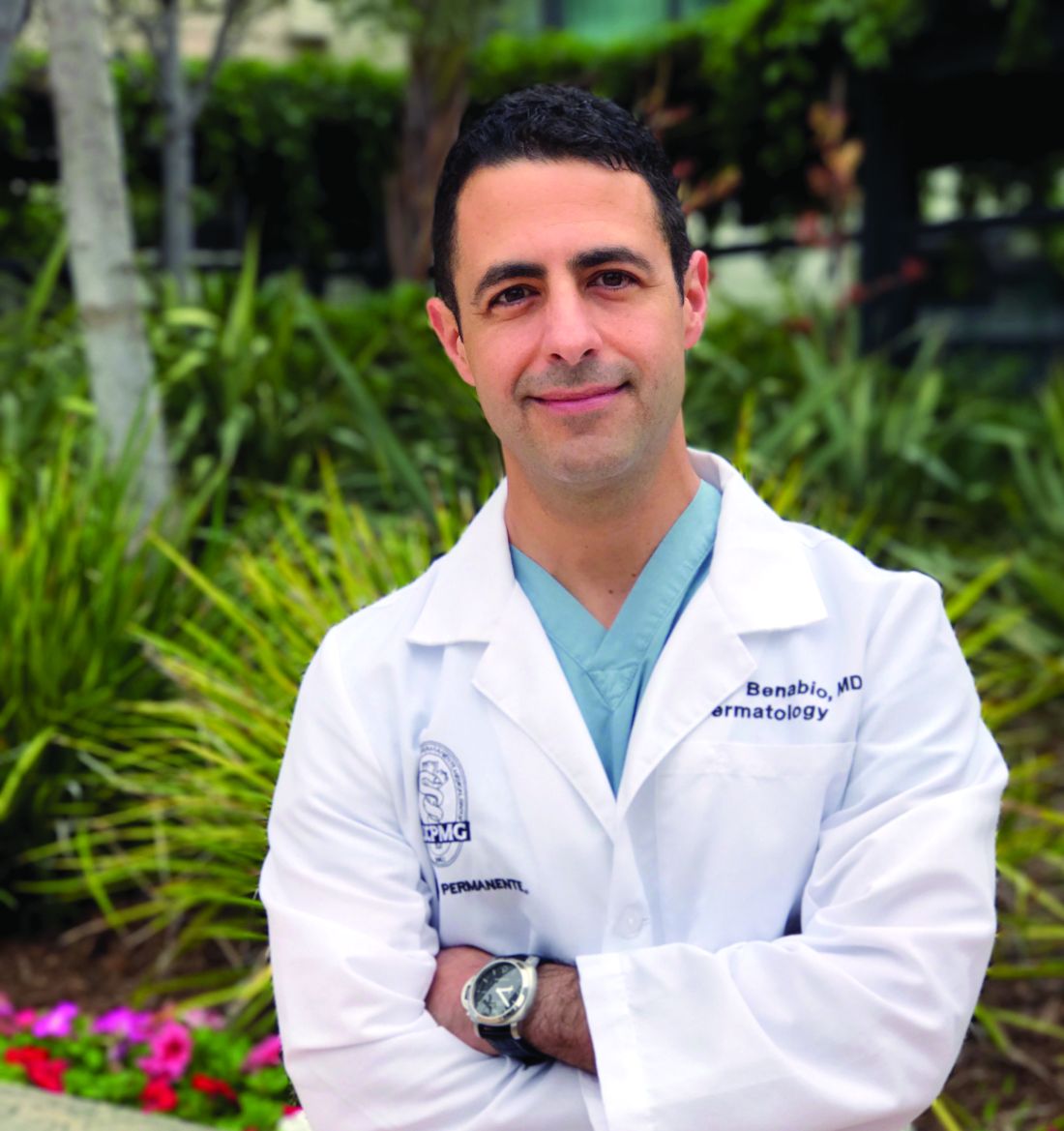
Dr. Benabio is director of Healthcare Transformation and chief of dermatology at Kaiser Permanente San Diego. The opinions expressed in this column are his own and do not represent those of Kaiser Permanente. Dr. Benabio is @Dermdoc on Twitter. Write to him at [email protected]
Across the country, taxes unite us. Not that we all share the same, rather that we all have to do them. It was recently tax weekend in our house: The Saturday and Sunday that cap off weeks of hunting and gathering faded receipts and sorting through reams of credit card bills to find all the dollars we spent on work. The task is more tedious than all the Wednesdays of taking out trash bins combined, and equally as exciting. But wait, that’s not all.
This weekend I’ve been chatting with bots from a solar company trying to solve our drop in energy production and sat on terminal hold with apparently one person who answers the phone for Amazon. There’s also an homeowner’s association meeting to prepare for and research to be done on ceiling fans.
“Life admin” is a crisp phrase coined by Elizabeth Emens, JD, PhD, that captures the never-ending to-do list that comes with running a household. An accomplished law professor at Columbia University, New York, Dr. Emens noticed the negative impact this life admin has on our quality of life. Reading her book, “Life Admin: How I Learned to Do Less, Do Better, and Live More” (New York: HarperOne, 2019), your eyes widen as she magically makes salient all this hidden work that is stealing our time. Life admin, kidmin, mom and dadmin, just rattling them off feels like donning x-ray glasses allowing us to see how much work we do outside of our work. As doctors, I would add “family house calls,” as a contributing factor: Random family and friends who want to talk for a minute about their knee replacement or what drug the ICU should give Uncle Larry who is fighting COVID. (I only know ivermectin, but it would only help if he just had scabies).
By all accounts, the amount of life admin is growing insidiously, worsened by the great pandemic. There are events to plan and reply to, more DIY customer service to fix your own problems, more work to find a VRBO for a weekend getaway at the beach. (There are none on the entire coast of California this summer, so I just saved you time there. You’re welcome.)
There is no good time to do this work and combined with the heavy burden of our responsibilities as physicians, it can feel like fuel feeding the burnout fire.
Dr. Emens has some top tips to help. First up, know your admin type. Are you a super doer, reluctant doer, admin denier, or admin avoider? I’m mostly in the avoider quadrant, dropping into reluctant doer when consequences loom. Next, choose strategies that fit you. Instead of avoiding, there are some things I might deflect. For example, When your aunt in Peoria asks where she can get a COVID test, you can use LMGTFY.com to generate a link that will show them how to use Google to help with their question. Dr. Emens is joking, but the point rang true. We can lighten the load a bit if we delegate or push back the excessive or undue requests. For some tasks, we’d be better off paying someone to take it over. Last tip here, try doing life admin with a partner, be it spouse, friend, or colleague. This is particularly useful when your partner is a super doer, as mine is. Not only can they make the work lighter, but also less dreary.
We physicians are focused on fixing physician burnout. Maybe we should also be looking at what happens in the “second shift” at home. Tax season is over, but will be back soon.
Dr. Benabio is director of Healthcare Transformation and chief of dermatology at Kaiser Permanente San Diego. The opinions expressed in this column are his own and do not represent those of Kaiser Permanente. Dr. Benabio is @Dermdoc on Twitter. Write to him at [email protected]
Across the country, taxes unite us. Not that we all share the same, rather that we all have to do them. It was recently tax weekend in our house: The Saturday and Sunday that cap off weeks of hunting and gathering faded receipts and sorting through reams of credit card bills to find all the dollars we spent on work. The task is more tedious than all the Wednesdays of taking out trash bins combined, and equally as exciting. But wait, that’s not all.
This weekend I’ve been chatting with bots from a solar company trying to solve our drop in energy production and sat on terminal hold with apparently one person who answers the phone for Amazon. There’s also an homeowner’s association meeting to prepare for and research to be done on ceiling fans.
“Life admin” is a crisp phrase coined by Elizabeth Emens, JD, PhD, that captures the never-ending to-do list that comes with running a household. An accomplished law professor at Columbia University, New York, Dr. Emens noticed the negative impact this life admin has on our quality of life. Reading her book, “Life Admin: How I Learned to Do Less, Do Better, and Live More” (New York: HarperOne, 2019), your eyes widen as she magically makes salient all this hidden work that is stealing our time. Life admin, kidmin, mom and dadmin, just rattling them off feels like donning x-ray glasses allowing us to see how much work we do outside of our work. As doctors, I would add “family house calls,” as a contributing factor: Random family and friends who want to talk for a minute about their knee replacement or what drug the ICU should give Uncle Larry who is fighting COVID. (I only know ivermectin, but it would only help if he just had scabies).
By all accounts, the amount of life admin is growing insidiously, worsened by the great pandemic. There are events to plan and reply to, more DIY customer service to fix your own problems, more work to find a VRBO for a weekend getaway at the beach. (There are none on the entire coast of California this summer, so I just saved you time there. You’re welcome.)
There is no good time to do this work and combined with the heavy burden of our responsibilities as physicians, it can feel like fuel feeding the burnout fire.
Dr. Emens has some top tips to help. First up, know your admin type. Are you a super doer, reluctant doer, admin denier, or admin avoider? I’m mostly in the avoider quadrant, dropping into reluctant doer when consequences loom. Next, choose strategies that fit you. Instead of avoiding, there are some things I might deflect. For example, When your aunt in Peoria asks where she can get a COVID test, you can use LMGTFY.com to generate a link that will show them how to use Google to help with their question. Dr. Emens is joking, but the point rang true. We can lighten the load a bit if we delegate or push back the excessive or undue requests. For some tasks, we’d be better off paying someone to take it over. Last tip here, try doing life admin with a partner, be it spouse, friend, or colleague. This is particularly useful when your partner is a super doer, as mine is. Not only can they make the work lighter, but also less dreary.
We physicians are focused on fixing physician burnout. Maybe we should also be looking at what happens in the “second shift” at home. Tax season is over, but will be back soon.
Dr. Benabio is director of Healthcare Transformation and chief of dermatology at Kaiser Permanente San Diego. The opinions expressed in this column are his own and do not represent those of Kaiser Permanente. Dr. Benabio is @Dermdoc on Twitter. Write to him at [email protected]
Med school to pay $1.2 million to students in refunds and debt cancellation in FTC settlement
Although it disputed the allegations, The complaint referenced the school’s medical license exam test pass rate and residency matches along with violations of rules that protect consumers, including those dealing with credit contracts.
The school, based in the Caribbean with operations in Illinois, agreed to pay $1.2 million toward refunds and debt cancellation for students harmed by the marketing in the past 5 years.
“While we strongly disagree with the FTC’s approach to this matter, we did not want a lengthy legal process to distract from our mission of providing a quality medical education at an affordable cost,” Kaushik Guha, executive vice president of the parent of the school, Human Resources Development Services, said in a YouTube statement posted on the school’s website.
“Saint James lured students by lying about their chances of success,” Samuel Levine, director of the FTC’s Bureau of Consumer Protection, said in a press release. The settlement agreement was with HRDS, which bills itself as providing students from “non-traditional backgrounds the opportunity to pursue a medical degree and practice in the U.S. or Canada,” according to the school’s statement.
The complaint alleges that, since at least April 2018, the school, HRDS, and its operator Mr. Guha has lured students using “phony claims about the standardized test pass rate and students’ residency or job prospects. They lured consumers with false guarantees of student success at passing a critical medical school standardized test, the United States Medical Licensing Examination Step 1 Exam.”
For example, a brochure distributed at open houses claimed a first-time Step 1 pass rate of about 96.8%. The brochure further claimed: “Saint James is the first and only medical school to offer a USMLE Step 1 Pass Guarantee,” according to the FTC complaint.
The FTC said the USMLE rate is lower than touted and lower than reported by other U.S. and Canadian medical schools. “Since 2017, only 35% of Saint James students who have completed the necessary coursework to take the USMLE Step 1 exam passed the test.”
The school also misrepresented the residency match rate as “the same” as American medical schools, according to the complaint. For example, the school instructed telemarketers to tell consumers that the match rate for the school’s students was 85%-90%. The school stated on its website that the residency match rate for Saint James students was 83%. “In fact, the match rate for SJSM students is lower than touted and lower than that reported by U.S. medical schools. Since 2018, defendants’ average match rate has been 63%.”
The FTC also claims the school used illegal credit contracts when marketing financing for tuition and living expenses for students. “The financing contracts contained language attempting to waive consumers’ rights under federal law and omit legally mandated disclosures.”
Saint James’ tuition ranges from about $6,650 to $9,859 per trimester, depending on campus and course study, the complaint states. Between 2016 and 2020, about 1,300 students were enrolled each year in Saint James’ schools. Students who attended the schools between 2016 and 2022 are eligible for a refund under the settlement.
Saint James is required to notify consumers whose debts are being canceled through Delta Financial Solutions, Saint James’ financing partner. The debt will also be deleted from consumers’ credit reports.
“We have chosen to settle with the FTC over its allegations that disclosures on our website and in Delta’s loan agreements were insufficient,” Mr. Guha stated on the school website. “However, we have added additional language and clarifications any time the USMLE pass rate and placement rates are mentioned.”
He said he hopes the school will be “an industry leader for transparency and accountability” and that the school’s “efforts will lead to lasting change throughout the for-profit educational industry.”
Mr. Guha added that more than 600 of the school’s alumni are serving as doctors, including many “working to bridge the health equity gap in underserved areas in North America.”
The FTC has been cracking down on deceptive practices by for-profit institutions. In October, the FTC put 70 for-profit colleges on notice that it would investigate false promises the schools make about their graduates’ job prospects, expected earnings, and other educational outcomes and would levy significant financial penalties against violators. Saint James was not on that list, which included several of the largest for-profit universities in the nation, including Capella University, DeVry University, Strayer University, and Walden University.
A version of this article first appeared on Medscape.com.
Although it disputed the allegations, The complaint referenced the school’s medical license exam test pass rate and residency matches along with violations of rules that protect consumers, including those dealing with credit contracts.
The school, based in the Caribbean with operations in Illinois, agreed to pay $1.2 million toward refunds and debt cancellation for students harmed by the marketing in the past 5 years.
“While we strongly disagree with the FTC’s approach to this matter, we did not want a lengthy legal process to distract from our mission of providing a quality medical education at an affordable cost,” Kaushik Guha, executive vice president of the parent of the school, Human Resources Development Services, said in a YouTube statement posted on the school’s website.
“Saint James lured students by lying about their chances of success,” Samuel Levine, director of the FTC’s Bureau of Consumer Protection, said in a press release. The settlement agreement was with HRDS, which bills itself as providing students from “non-traditional backgrounds the opportunity to pursue a medical degree and practice in the U.S. or Canada,” according to the school’s statement.
The complaint alleges that, since at least April 2018, the school, HRDS, and its operator Mr. Guha has lured students using “phony claims about the standardized test pass rate and students’ residency or job prospects. They lured consumers with false guarantees of student success at passing a critical medical school standardized test, the United States Medical Licensing Examination Step 1 Exam.”
For example, a brochure distributed at open houses claimed a first-time Step 1 pass rate of about 96.8%. The brochure further claimed: “Saint James is the first and only medical school to offer a USMLE Step 1 Pass Guarantee,” according to the FTC complaint.
The FTC said the USMLE rate is lower than touted and lower than reported by other U.S. and Canadian medical schools. “Since 2017, only 35% of Saint James students who have completed the necessary coursework to take the USMLE Step 1 exam passed the test.”
The school also misrepresented the residency match rate as “the same” as American medical schools, according to the complaint. For example, the school instructed telemarketers to tell consumers that the match rate for the school’s students was 85%-90%. The school stated on its website that the residency match rate for Saint James students was 83%. “In fact, the match rate for SJSM students is lower than touted and lower than that reported by U.S. medical schools. Since 2018, defendants’ average match rate has been 63%.”
The FTC also claims the school used illegal credit contracts when marketing financing for tuition and living expenses for students. “The financing contracts contained language attempting to waive consumers’ rights under federal law and omit legally mandated disclosures.”
Saint James’ tuition ranges from about $6,650 to $9,859 per trimester, depending on campus and course study, the complaint states. Between 2016 and 2020, about 1,300 students were enrolled each year in Saint James’ schools. Students who attended the schools between 2016 and 2022 are eligible for a refund under the settlement.
Saint James is required to notify consumers whose debts are being canceled through Delta Financial Solutions, Saint James’ financing partner. The debt will also be deleted from consumers’ credit reports.
“We have chosen to settle with the FTC over its allegations that disclosures on our website and in Delta’s loan agreements were insufficient,” Mr. Guha stated on the school website. “However, we have added additional language and clarifications any time the USMLE pass rate and placement rates are mentioned.”
He said he hopes the school will be “an industry leader for transparency and accountability” and that the school’s “efforts will lead to lasting change throughout the for-profit educational industry.”
Mr. Guha added that more than 600 of the school’s alumni are serving as doctors, including many “working to bridge the health equity gap in underserved areas in North America.”
The FTC has been cracking down on deceptive practices by for-profit institutions. In October, the FTC put 70 for-profit colleges on notice that it would investigate false promises the schools make about their graduates’ job prospects, expected earnings, and other educational outcomes and would levy significant financial penalties against violators. Saint James was not on that list, which included several of the largest for-profit universities in the nation, including Capella University, DeVry University, Strayer University, and Walden University.
A version of this article first appeared on Medscape.com.
Although it disputed the allegations, The complaint referenced the school’s medical license exam test pass rate and residency matches along with violations of rules that protect consumers, including those dealing with credit contracts.
The school, based in the Caribbean with operations in Illinois, agreed to pay $1.2 million toward refunds and debt cancellation for students harmed by the marketing in the past 5 years.
“While we strongly disagree with the FTC’s approach to this matter, we did not want a lengthy legal process to distract from our mission of providing a quality medical education at an affordable cost,” Kaushik Guha, executive vice president of the parent of the school, Human Resources Development Services, said in a YouTube statement posted on the school’s website.
“Saint James lured students by lying about their chances of success,” Samuel Levine, director of the FTC’s Bureau of Consumer Protection, said in a press release. The settlement agreement was with HRDS, which bills itself as providing students from “non-traditional backgrounds the opportunity to pursue a medical degree and practice in the U.S. or Canada,” according to the school’s statement.
The complaint alleges that, since at least April 2018, the school, HRDS, and its operator Mr. Guha has lured students using “phony claims about the standardized test pass rate and students’ residency or job prospects. They lured consumers with false guarantees of student success at passing a critical medical school standardized test, the United States Medical Licensing Examination Step 1 Exam.”
For example, a brochure distributed at open houses claimed a first-time Step 1 pass rate of about 96.8%. The brochure further claimed: “Saint James is the first and only medical school to offer a USMLE Step 1 Pass Guarantee,” according to the FTC complaint.
The FTC said the USMLE rate is lower than touted and lower than reported by other U.S. and Canadian medical schools. “Since 2017, only 35% of Saint James students who have completed the necessary coursework to take the USMLE Step 1 exam passed the test.”
The school also misrepresented the residency match rate as “the same” as American medical schools, according to the complaint. For example, the school instructed telemarketers to tell consumers that the match rate for the school’s students was 85%-90%. The school stated on its website that the residency match rate for Saint James students was 83%. “In fact, the match rate for SJSM students is lower than touted and lower than that reported by U.S. medical schools. Since 2018, defendants’ average match rate has been 63%.”
The FTC also claims the school used illegal credit contracts when marketing financing for tuition and living expenses for students. “The financing contracts contained language attempting to waive consumers’ rights under federal law and omit legally mandated disclosures.”
Saint James’ tuition ranges from about $6,650 to $9,859 per trimester, depending on campus and course study, the complaint states. Between 2016 and 2020, about 1,300 students were enrolled each year in Saint James’ schools. Students who attended the schools between 2016 and 2022 are eligible for a refund under the settlement.
Saint James is required to notify consumers whose debts are being canceled through Delta Financial Solutions, Saint James’ financing partner. The debt will also be deleted from consumers’ credit reports.
“We have chosen to settle with the FTC over its allegations that disclosures on our website and in Delta’s loan agreements were insufficient,” Mr. Guha stated on the school website. “However, we have added additional language and clarifications any time the USMLE pass rate and placement rates are mentioned.”
He said he hopes the school will be “an industry leader for transparency and accountability” and that the school’s “efforts will lead to lasting change throughout the for-profit educational industry.”
Mr. Guha added that more than 600 of the school’s alumni are serving as doctors, including many “working to bridge the health equity gap in underserved areas in North America.”
The FTC has been cracking down on deceptive practices by for-profit institutions. In October, the FTC put 70 for-profit colleges on notice that it would investigate false promises the schools make about their graduates’ job prospects, expected earnings, and other educational outcomes and would levy significant financial penalties against violators. Saint James was not on that list, which included several of the largest for-profit universities in the nation, including Capella University, DeVry University, Strayer University, and Walden University.
A version of this article first appeared on Medscape.com.
Zanubrutinib shows worth against standard CLL drugs
MANCHESTER, ENGLAND – A new treatment option may soon be available for patients with chronic lymphocytic leukemia (CLL)/small lymphocytic lymphoma (SLL).
Zanubrutinib (Brukinsa), an irreversible, next-generation Bruton tyrosine kinase (BTK) inhibitor, is designed to minimize the off-target cardiovascular toxicities, such as atrial fibrillation and hypertension, seen with the first-generation ibrutinib (Imbruvica).
Zanubrutinib is already approved for use in mantle cell and marginal zone lymphomas and Waldenström’s macroglobulinemia.
Now it has also shown efficacy in CLL.
However, experts question whether the drug will find its place in an increasingly crowded space for the management of CLL.
Data from two phase 3 trials
The new data from two phase 3 clinical trials were presented recently at the British Society for Haematology 62nd annual scientific meeting, held in Manchester, England.
The ALPINE trial compared zanubrutinib with ibrutinib in 415 patients with CLL/SLL and showed that the novel drug was associated with a significant improvement in overall response rate, at 78% versus 63%.
This first interim analysis also showed that there was an increase in progression-free survival (PFS) with zanubrutinib, and crucially, it was associated with a lower atrial fibrillation/flutter rate than ibrutinib.
“These data support that more selective BTK inhibition, with more complete and sustained BTK occupancy, results in improved efficacy and safety outcomes,” said lead author Peter Hillmen, MBChB, FRCP, PhD, St. James’s University Hospital, Leeds, England.
The SEQUOIA study looked at zanubrutinib versus bendamustine plus rituximab in patients with untreated CLL/SLL with a 17p deletion and showed that PFS was improved with zanubrutinib by 58%.
Zanubrutinib was also associated with improved overall response rates and was well tolerated.
The results therefore “support the potential utility of zanubrutinib in the frontline management of patients with previously untreated CLL/SLL,” said lead author Talha Munir, MBBS, also of St. James’s University Hospital.
Improvement over ibrutinib
Ibrutinib, the first BTK inhibitor, “truly revolutionized the way we treat CLL,” commented Renata Walewska, MRCP, PhD, consultant hematologist at the Royal Bournemouth (England) Hospital and chair of the UKCLL Forum.
“But it has got quite a lot of, especially cardiac, problems, with atrial fibrillation and hypertension,” she said in an interview. The problem is that it acts not only as an inhibitor of Bruton kinase, but also affects other kinases, she explained.
Zanubrutinib is “much cleaner,” continued Dr. Walewska, who was lead author of the recently published British Society of Haematology guideline for the treatment of CLL.
However, the drug “is not that groundbreaking,” she commented, as acalabrutinib (Calquence), another next-generation BTK inhibitor, is already available for use in the clinic.
“We’re really lucky in CLL,” Dr. Walewska said, “we’ve got so many new drugs available, and it’s getting quite crowded. Trying to find a place for zanubrutinib is going be tricky.”
Lee Greenberger, PhD, chief scientific officer at the Leukemia & Lymphoma Society, commented that he “gives a lot of credit” to BeiGene, the company behind zanubrutinib, for “taking on these big studies.”
He said that, with the improvements in PFS and reduced atrial fibrillation with the drug, “there will be many clinicians paying attention to this and zanubrutinib could be preferred over conventional options.”
However, he agreed that it will have to compete with acalabrutinib, adding that, beyond BTK inhibitors, there are “a lot of options” for patients with CLL.
“That makes it very difficult for physicians to figure out what is the best type of therapy” to use in these patients, he added.
Dr. Greenberger told this news organization that further studies will need to demonstrate that zanubrutinib is associated with extended survival, which is “just not possible to show” at the moment with the current follow-up period.
He also noted that, in 10 years, ibrutinib will be off-patent, but zanubrutinib will not, at which point the “substantial” cost of the medication, which is a source of “hardship to patients,” will be increasingly relevant.
Study details
The phase 3 ALPINE study involved 415 adults with CLL/SLL refractory to one or more prior systemic therapies and measurable lymphadenopathy on imaging.
They were randomized 1:1 to zanubrutinib or ibrutinib until disease progression or withdrawal from the study.
Most patients had Binet stage A/B or Ann Arbor stage I/II disease, and 7.3% of patients treated with zanubrutinib and 10.1% of those assigned to ibrutinib had received more than three prior lines of therapy.
Over 60% of patients were aged 65 years or older and around 70% were men, with no significant differences between treatment groups.
Patients were randomized 1:1 to zanubrutinib or ibrutinib until disease progression or study withdrawal.
After a median follow-up of 15 months, the overall response rate was significantly higher with zanubrutinib than ibrutinib, at 78.3% versus 62.5% (P = .0006).
Subgroup analysis confirmed that the effect was seen regardless of age, sex, disease stage, number of prior lines of therapy, mutation status, or bulky disease.
Over a median follow-up of 14 months, the investigator-assessed 12-month PFS was 94.9% for zanubrutinib and 84.0% for ibrutinib (P = .0007). Overall survival at 12 months was 97% versus 92.7%, but the difference was not significant (P = .1081).
Patients treated with zanubrutinib experienced more grade 3 or higher adverse events than those given ibrutinib, at 55.9% versus 51.2%, although they had fewer adverse events leading to treatment discontinuation, at 7.8% versus 13.0%.
More importantly, there were fewer cardiac disorders of any grade with zanubrutinib versus ibrutinib, and any-grade atrial fibrillation was significantly less common, at 2.5% versus 10.1% (P = .0014).
Rates of hypertension and hemorrhage were similar between the two treatments, while rates of neutropenia were higher with zanubrutinib versus ibrutinib, at 28.4% versus 21.7%.
The phase 3 SEQUOIA study looked at an earlier stage of disease and included patients with previously untreated CLL/SLL (without 17p depletion) who were unsuitable for treatment with fludarabine, cyclophosphamide, and rituximab.
This trial involved 479 patients randomized to zanubrutinib or bendamustine (days 1 and 2) plus rituximab for six cycles of 28 days each (B+R).
The median age of patients was 70 years, and approximately 80% were at least 65 years old. Just over 60% were men and most (over 70%) were from Europe.
After a median of 26.2 months, independent review committee–assessed PFS was significantly longer with zanubrutinib versus B+R (hazard ratio, 0.42; P < .0001), with an estimated 24-month PFS of 85.5% versus 69.5%.
These results held whether patients were stratified by age, Binet stage, bulky disease, or 11q deletion status, and for patients with an unmutated, but not mutated, immunoglobulin heavy chain gene.
The overall response rate with zanubrutinib was 94.6% versus 85.3% with B+R, and estimated 24-month overall survival was 94.3% versus 94.6%.
Rates of adverse events of any grade were similar between the two treatment groups, although B+R was associated with a higher (grade ≥ 3) adverse event rate, at 79.7%, versus 52.5% for zanubrutinib, and a higher rate of treatment discontinuation because of adverse events, at 13.7% versus 8.3%.
Interestingly, any-grade hypertension was more common with zanubrutinib versus B+R, at 14.2% versus 10.6%, but much lower rates of neutropenia were more common with zanubrutinib, at 15.8% versus 56.8%.
The studies were sponsored by BeiGene. Dr. Hillmen has reported relationships with Janssen, AbbVie, Pharmacyclics, Roche, Gilead, AstraZeneca, SOBI, and BeiGene. Dr. Munir has reported relationships with AbbVie, AstraZeneca, Roche, Alexion, Janssen, MorphoSys, and SOBI. Other authors have also declared numerous relationships.
A version of this article first appeared on Medscape.com.
MANCHESTER, ENGLAND – A new treatment option may soon be available for patients with chronic lymphocytic leukemia (CLL)/small lymphocytic lymphoma (SLL).
Zanubrutinib (Brukinsa), an irreversible, next-generation Bruton tyrosine kinase (BTK) inhibitor, is designed to minimize the off-target cardiovascular toxicities, such as atrial fibrillation and hypertension, seen with the first-generation ibrutinib (Imbruvica).
Zanubrutinib is already approved for use in mantle cell and marginal zone lymphomas and Waldenström’s macroglobulinemia.
Now it has also shown efficacy in CLL.
However, experts question whether the drug will find its place in an increasingly crowded space for the management of CLL.
Data from two phase 3 trials
The new data from two phase 3 clinical trials were presented recently at the British Society for Haematology 62nd annual scientific meeting, held in Manchester, England.
The ALPINE trial compared zanubrutinib with ibrutinib in 415 patients with CLL/SLL and showed that the novel drug was associated with a significant improvement in overall response rate, at 78% versus 63%.
This first interim analysis also showed that there was an increase in progression-free survival (PFS) with zanubrutinib, and crucially, it was associated with a lower atrial fibrillation/flutter rate than ibrutinib.
“These data support that more selective BTK inhibition, with more complete and sustained BTK occupancy, results in improved efficacy and safety outcomes,” said lead author Peter Hillmen, MBChB, FRCP, PhD, St. James’s University Hospital, Leeds, England.
The SEQUOIA study looked at zanubrutinib versus bendamustine plus rituximab in patients with untreated CLL/SLL with a 17p deletion and showed that PFS was improved with zanubrutinib by 58%.
Zanubrutinib was also associated with improved overall response rates and was well tolerated.
The results therefore “support the potential utility of zanubrutinib in the frontline management of patients with previously untreated CLL/SLL,” said lead author Talha Munir, MBBS, also of St. James’s University Hospital.
Improvement over ibrutinib
Ibrutinib, the first BTK inhibitor, “truly revolutionized the way we treat CLL,” commented Renata Walewska, MRCP, PhD, consultant hematologist at the Royal Bournemouth (England) Hospital and chair of the UKCLL Forum.
“But it has got quite a lot of, especially cardiac, problems, with atrial fibrillation and hypertension,” she said in an interview. The problem is that it acts not only as an inhibitor of Bruton kinase, but also affects other kinases, she explained.
Zanubrutinib is “much cleaner,” continued Dr. Walewska, who was lead author of the recently published British Society of Haematology guideline for the treatment of CLL.
However, the drug “is not that groundbreaking,” she commented, as acalabrutinib (Calquence), another next-generation BTK inhibitor, is already available for use in the clinic.
“We’re really lucky in CLL,” Dr. Walewska said, “we’ve got so many new drugs available, and it’s getting quite crowded. Trying to find a place for zanubrutinib is going be tricky.”
Lee Greenberger, PhD, chief scientific officer at the Leukemia & Lymphoma Society, commented that he “gives a lot of credit” to BeiGene, the company behind zanubrutinib, for “taking on these big studies.”
He said that, with the improvements in PFS and reduced atrial fibrillation with the drug, “there will be many clinicians paying attention to this and zanubrutinib could be preferred over conventional options.”
However, he agreed that it will have to compete with acalabrutinib, adding that, beyond BTK inhibitors, there are “a lot of options” for patients with CLL.
“That makes it very difficult for physicians to figure out what is the best type of therapy” to use in these patients, he added.
Dr. Greenberger told this news organization that further studies will need to demonstrate that zanubrutinib is associated with extended survival, which is “just not possible to show” at the moment with the current follow-up period.
He also noted that, in 10 years, ibrutinib will be off-patent, but zanubrutinib will not, at which point the “substantial” cost of the medication, which is a source of “hardship to patients,” will be increasingly relevant.
Study details
The phase 3 ALPINE study involved 415 adults with CLL/SLL refractory to one or more prior systemic therapies and measurable lymphadenopathy on imaging.
They were randomized 1:1 to zanubrutinib or ibrutinib until disease progression or withdrawal from the study.
Most patients had Binet stage A/B or Ann Arbor stage I/II disease, and 7.3% of patients treated with zanubrutinib and 10.1% of those assigned to ibrutinib had received more than three prior lines of therapy.
Over 60% of patients were aged 65 years or older and around 70% were men, with no significant differences between treatment groups.
Patients were randomized 1:1 to zanubrutinib or ibrutinib until disease progression or study withdrawal.
After a median follow-up of 15 months, the overall response rate was significantly higher with zanubrutinib than ibrutinib, at 78.3% versus 62.5% (P = .0006).
Subgroup analysis confirmed that the effect was seen regardless of age, sex, disease stage, number of prior lines of therapy, mutation status, or bulky disease.
Over a median follow-up of 14 months, the investigator-assessed 12-month PFS was 94.9% for zanubrutinib and 84.0% for ibrutinib (P = .0007). Overall survival at 12 months was 97% versus 92.7%, but the difference was not significant (P = .1081).
Patients treated with zanubrutinib experienced more grade 3 or higher adverse events than those given ibrutinib, at 55.9% versus 51.2%, although they had fewer adverse events leading to treatment discontinuation, at 7.8% versus 13.0%.
More importantly, there were fewer cardiac disorders of any grade with zanubrutinib versus ibrutinib, and any-grade atrial fibrillation was significantly less common, at 2.5% versus 10.1% (P = .0014).
Rates of hypertension and hemorrhage were similar between the two treatments, while rates of neutropenia were higher with zanubrutinib versus ibrutinib, at 28.4% versus 21.7%.
The phase 3 SEQUOIA study looked at an earlier stage of disease and included patients with previously untreated CLL/SLL (without 17p depletion) who were unsuitable for treatment with fludarabine, cyclophosphamide, and rituximab.
This trial involved 479 patients randomized to zanubrutinib or bendamustine (days 1 and 2) plus rituximab for six cycles of 28 days each (B+R).
The median age of patients was 70 years, and approximately 80% were at least 65 years old. Just over 60% were men and most (over 70%) were from Europe.
After a median of 26.2 months, independent review committee–assessed PFS was significantly longer with zanubrutinib versus B+R (hazard ratio, 0.42; P < .0001), with an estimated 24-month PFS of 85.5% versus 69.5%.
These results held whether patients were stratified by age, Binet stage, bulky disease, or 11q deletion status, and for patients with an unmutated, but not mutated, immunoglobulin heavy chain gene.
The overall response rate with zanubrutinib was 94.6% versus 85.3% with B+R, and estimated 24-month overall survival was 94.3% versus 94.6%.
Rates of adverse events of any grade were similar between the two treatment groups, although B+R was associated with a higher (grade ≥ 3) adverse event rate, at 79.7%, versus 52.5% for zanubrutinib, and a higher rate of treatment discontinuation because of adverse events, at 13.7% versus 8.3%.
Interestingly, any-grade hypertension was more common with zanubrutinib versus B+R, at 14.2% versus 10.6%, but much lower rates of neutropenia were more common with zanubrutinib, at 15.8% versus 56.8%.
The studies were sponsored by BeiGene. Dr. Hillmen has reported relationships with Janssen, AbbVie, Pharmacyclics, Roche, Gilead, AstraZeneca, SOBI, and BeiGene. Dr. Munir has reported relationships with AbbVie, AstraZeneca, Roche, Alexion, Janssen, MorphoSys, and SOBI. Other authors have also declared numerous relationships.
A version of this article first appeared on Medscape.com.
MANCHESTER, ENGLAND – A new treatment option may soon be available for patients with chronic lymphocytic leukemia (CLL)/small lymphocytic lymphoma (SLL).
Zanubrutinib (Brukinsa), an irreversible, next-generation Bruton tyrosine kinase (BTK) inhibitor, is designed to minimize the off-target cardiovascular toxicities, such as atrial fibrillation and hypertension, seen with the first-generation ibrutinib (Imbruvica).
Zanubrutinib is already approved for use in mantle cell and marginal zone lymphomas and Waldenström’s macroglobulinemia.
Now it has also shown efficacy in CLL.
However, experts question whether the drug will find its place in an increasingly crowded space for the management of CLL.
Data from two phase 3 trials
The new data from two phase 3 clinical trials were presented recently at the British Society for Haematology 62nd annual scientific meeting, held in Manchester, England.
The ALPINE trial compared zanubrutinib with ibrutinib in 415 patients with CLL/SLL and showed that the novel drug was associated with a significant improvement in overall response rate, at 78% versus 63%.
This first interim analysis also showed that there was an increase in progression-free survival (PFS) with zanubrutinib, and crucially, it was associated with a lower atrial fibrillation/flutter rate than ibrutinib.
“These data support that more selective BTK inhibition, with more complete and sustained BTK occupancy, results in improved efficacy and safety outcomes,” said lead author Peter Hillmen, MBChB, FRCP, PhD, St. James’s University Hospital, Leeds, England.
The SEQUOIA study looked at zanubrutinib versus bendamustine plus rituximab in patients with untreated CLL/SLL with a 17p deletion and showed that PFS was improved with zanubrutinib by 58%.
Zanubrutinib was also associated with improved overall response rates and was well tolerated.
The results therefore “support the potential utility of zanubrutinib in the frontline management of patients with previously untreated CLL/SLL,” said lead author Talha Munir, MBBS, also of St. James’s University Hospital.
Improvement over ibrutinib
Ibrutinib, the first BTK inhibitor, “truly revolutionized the way we treat CLL,” commented Renata Walewska, MRCP, PhD, consultant hematologist at the Royal Bournemouth (England) Hospital and chair of the UKCLL Forum.
“But it has got quite a lot of, especially cardiac, problems, with atrial fibrillation and hypertension,” she said in an interview. The problem is that it acts not only as an inhibitor of Bruton kinase, but also affects other kinases, she explained.
Zanubrutinib is “much cleaner,” continued Dr. Walewska, who was lead author of the recently published British Society of Haematology guideline for the treatment of CLL.
However, the drug “is not that groundbreaking,” she commented, as acalabrutinib (Calquence), another next-generation BTK inhibitor, is already available for use in the clinic.
“We’re really lucky in CLL,” Dr. Walewska said, “we’ve got so many new drugs available, and it’s getting quite crowded. Trying to find a place for zanubrutinib is going be tricky.”
Lee Greenberger, PhD, chief scientific officer at the Leukemia & Lymphoma Society, commented that he “gives a lot of credit” to BeiGene, the company behind zanubrutinib, for “taking on these big studies.”
He said that, with the improvements in PFS and reduced atrial fibrillation with the drug, “there will be many clinicians paying attention to this and zanubrutinib could be preferred over conventional options.”
However, he agreed that it will have to compete with acalabrutinib, adding that, beyond BTK inhibitors, there are “a lot of options” for patients with CLL.
“That makes it very difficult for physicians to figure out what is the best type of therapy” to use in these patients, he added.
Dr. Greenberger told this news organization that further studies will need to demonstrate that zanubrutinib is associated with extended survival, which is “just not possible to show” at the moment with the current follow-up period.
He also noted that, in 10 years, ibrutinib will be off-patent, but zanubrutinib will not, at which point the “substantial” cost of the medication, which is a source of “hardship to patients,” will be increasingly relevant.
Study details
The phase 3 ALPINE study involved 415 adults with CLL/SLL refractory to one or more prior systemic therapies and measurable lymphadenopathy on imaging.
They were randomized 1:1 to zanubrutinib or ibrutinib until disease progression or withdrawal from the study.
Most patients had Binet stage A/B or Ann Arbor stage I/II disease, and 7.3% of patients treated with zanubrutinib and 10.1% of those assigned to ibrutinib had received more than three prior lines of therapy.
Over 60% of patients were aged 65 years or older and around 70% were men, with no significant differences between treatment groups.
Patients were randomized 1:1 to zanubrutinib or ibrutinib until disease progression or study withdrawal.
After a median follow-up of 15 months, the overall response rate was significantly higher with zanubrutinib than ibrutinib, at 78.3% versus 62.5% (P = .0006).
Subgroup analysis confirmed that the effect was seen regardless of age, sex, disease stage, number of prior lines of therapy, mutation status, or bulky disease.
Over a median follow-up of 14 months, the investigator-assessed 12-month PFS was 94.9% for zanubrutinib and 84.0% for ibrutinib (P = .0007). Overall survival at 12 months was 97% versus 92.7%, but the difference was not significant (P = .1081).
Patients treated with zanubrutinib experienced more grade 3 or higher adverse events than those given ibrutinib, at 55.9% versus 51.2%, although they had fewer adverse events leading to treatment discontinuation, at 7.8% versus 13.0%.
More importantly, there were fewer cardiac disorders of any grade with zanubrutinib versus ibrutinib, and any-grade atrial fibrillation was significantly less common, at 2.5% versus 10.1% (P = .0014).
Rates of hypertension and hemorrhage were similar between the two treatments, while rates of neutropenia were higher with zanubrutinib versus ibrutinib, at 28.4% versus 21.7%.
The phase 3 SEQUOIA study looked at an earlier stage of disease and included patients with previously untreated CLL/SLL (without 17p depletion) who were unsuitable for treatment with fludarabine, cyclophosphamide, and rituximab.
This trial involved 479 patients randomized to zanubrutinib or bendamustine (days 1 and 2) plus rituximab for six cycles of 28 days each (B+R).
The median age of patients was 70 years, and approximately 80% were at least 65 years old. Just over 60% were men and most (over 70%) were from Europe.
After a median of 26.2 months, independent review committee–assessed PFS was significantly longer with zanubrutinib versus B+R (hazard ratio, 0.42; P < .0001), with an estimated 24-month PFS of 85.5% versus 69.5%.
These results held whether patients were stratified by age, Binet stage, bulky disease, or 11q deletion status, and for patients with an unmutated, but not mutated, immunoglobulin heavy chain gene.
The overall response rate with zanubrutinib was 94.6% versus 85.3% with B+R, and estimated 24-month overall survival was 94.3% versus 94.6%.
Rates of adverse events of any grade were similar between the two treatment groups, although B+R was associated with a higher (grade ≥ 3) adverse event rate, at 79.7%, versus 52.5% for zanubrutinib, and a higher rate of treatment discontinuation because of adverse events, at 13.7% versus 8.3%.
Interestingly, any-grade hypertension was more common with zanubrutinib versus B+R, at 14.2% versus 10.6%, but much lower rates of neutropenia were more common with zanubrutinib, at 15.8% versus 56.8%.
The studies were sponsored by BeiGene. Dr. Hillmen has reported relationships with Janssen, AbbVie, Pharmacyclics, Roche, Gilead, AstraZeneca, SOBI, and BeiGene. Dr. Munir has reported relationships with AbbVie, AstraZeneca, Roche, Alexion, Janssen, MorphoSys, and SOBI. Other authors have also declared numerous relationships.
A version of this article first appeared on Medscape.com.
‘Time is blood’: Researchers devise shortcut to AHA diagnosis
“A simple algorithm for unexplained bleeding might be helpful to emergency department physicians and other frontline workers to improve recognition of the disease,” said Amar Kelkar, MD, a fellow at the Dana-Farber Cancer Institute, Boston, and corresponding author of “Time is blood: The impact of diagnostic delays on acquired hemophilia A,” a report that appeared in the journal Cureus.
According to Dr. Kelkar, AHA is an autoimmune disease caused by the formation of autoantibodies against factor VIII (FVIII). “Classically, patients present with various forms of bleeding symptoms, including extensive bruising, spontaneous prolonged or persistent bleeding, and blood in the urine. These symptoms are usually accompanied by a prolonged activated partial thromboplastin time (aPTT) test,” he said in an interview. “While this is a rare diagnosis to be seen in primary, critical, or emergency care, it’s a disease that most hematologists should have seen and managed before.”
For the new study, researchers retrospectively tracked patients with AHA at the OSF Healthcare System in Illinois from 2010 to 2017. They focused on six patients (mean age, 79.5; male = 5). Cancer was considered a cause in four cases, and autoimmune disease in one. The sixth case was idiopathic. Five of the six patients died, with all but one death related to bleeding.
The researchers note that they saw more cases than expected (6 per 2.1 million vs. an estimated incidence of 1.48 per 1 million per year), although they attributed this high incidence to the population being made up of older hospitalized patients. In fact, Dr. Kelkar said, researchers believe this is an undercount reflecting diagnostic misses.
The median time to diagnosis was 14 days, the authors report, reflecting other studies that have also shown delays. Pseudo-thrombosis and preexisting anticoagulant therapy likely contribute to the diagnostic delays, they write.
In their new report, the authors developed an algorithm to speed diagnosis.
“The initial step is the identification of a patient with new, unexplained bleeding,” they write. “In the setting of unexplained bleeding, a detailed clinical history, including medication use, along with a thorough physical examination is critical. Prompt primary laboratory testing should include a complete blood count, a metabolic panel including creatinine and bilirubin, and coagulation testing including aPTT and prothrombin time with international normalized ratio (PT/INR). A resulting isolated aPTT elevation will initiate subsequent steps. Early inpatient hematology consultation is recommended.”
The authors add: “An important point to highlight is that we recommend concurrently ordering an aPTT mixing study and a factor VIII activity (FVIII:C) once a prolonged aPTT is confirmed. This may decrease the time to initiate treatment and improve patient outcomes. If the mixing study result is abnormal with low FVIII:C, hemostatic treatment could be initiated with concurrent confirmatory Bethesda assay or anti-FVIII ELISA, preventing further delay in patient recovery and hopefully reducing potential complications. If there is limited availability of specialty testing or prolonged delays in getting test results, such as for FVIII:C, or an inability to confirm a diagnosis at any stage of the algorithm, transferring the patient to a higher level of care with these laboratory and hematology services should be strongly considered.”
The authors also note that “when the diagnostic delay is greater than 1 month, there will be a significant increase in the days that the patient is required to be on hemostatic therapy, compared to diagnosis before 1 month (23.8 ± 13 vs. 7.6 ± 5.7 days, respectively; P = .003).”
The algorithm is meant to be widely available, Dr. Kelkar said. “That is why we targeted an open-source, general medicine journal like Cureus.”
Jerome Teitel, MD, a hematologist with St. Michael’s Hospital in Toronto, said in an interview that the algorithm “might be a useful guide for initial investigation at community hospitals.”
However, he recommended against emphasizing the use of mixing studies. They are “often ambiguous and just delay ordering the definitive tests (FVIII activity and inhibitor assay), which will need to be done regardless,” he said. “The most important message should be that patients with AHA should be referred to, or at least comanaged with, a hematologist who has specific experience and expertise in the field, and who will likely have access to specialized coagulation tests with short turnaround times.”
Another hematologist, George M. Rodgers III, MD, of the University of Utah, Salt Lake City, said in an interview that the algorithm is appropriate for the evaluation of possible AHA. “Patients with the disorder who present with minor bleeding are not evaluated with high priority by physicians,” he said. “Patients with bleeding and a prolonged PTT should be taken very seriously because AHA patients can develop spontaneous fatal bleeding.”
No study funding is reported. The authors, Dr. Teitel, and Dr. Rodgers report no relevant disclosures.
“A simple algorithm for unexplained bleeding might be helpful to emergency department physicians and other frontline workers to improve recognition of the disease,” said Amar Kelkar, MD, a fellow at the Dana-Farber Cancer Institute, Boston, and corresponding author of “Time is blood: The impact of diagnostic delays on acquired hemophilia A,” a report that appeared in the journal Cureus.
According to Dr. Kelkar, AHA is an autoimmune disease caused by the formation of autoantibodies against factor VIII (FVIII). “Classically, patients present with various forms of bleeding symptoms, including extensive bruising, spontaneous prolonged or persistent bleeding, and blood in the urine. These symptoms are usually accompanied by a prolonged activated partial thromboplastin time (aPTT) test,” he said in an interview. “While this is a rare diagnosis to be seen in primary, critical, or emergency care, it’s a disease that most hematologists should have seen and managed before.”
For the new study, researchers retrospectively tracked patients with AHA at the OSF Healthcare System in Illinois from 2010 to 2017. They focused on six patients (mean age, 79.5; male = 5). Cancer was considered a cause in four cases, and autoimmune disease in one. The sixth case was idiopathic. Five of the six patients died, with all but one death related to bleeding.
The researchers note that they saw more cases than expected (6 per 2.1 million vs. an estimated incidence of 1.48 per 1 million per year), although they attributed this high incidence to the population being made up of older hospitalized patients. In fact, Dr. Kelkar said, researchers believe this is an undercount reflecting diagnostic misses.
The median time to diagnosis was 14 days, the authors report, reflecting other studies that have also shown delays. Pseudo-thrombosis and preexisting anticoagulant therapy likely contribute to the diagnostic delays, they write.
In their new report, the authors developed an algorithm to speed diagnosis.
“The initial step is the identification of a patient with new, unexplained bleeding,” they write. “In the setting of unexplained bleeding, a detailed clinical history, including medication use, along with a thorough physical examination is critical. Prompt primary laboratory testing should include a complete blood count, a metabolic panel including creatinine and bilirubin, and coagulation testing including aPTT and prothrombin time with international normalized ratio (PT/INR). A resulting isolated aPTT elevation will initiate subsequent steps. Early inpatient hematology consultation is recommended.”
The authors add: “An important point to highlight is that we recommend concurrently ordering an aPTT mixing study and a factor VIII activity (FVIII:C) once a prolonged aPTT is confirmed. This may decrease the time to initiate treatment and improve patient outcomes. If the mixing study result is abnormal with low FVIII:C, hemostatic treatment could be initiated with concurrent confirmatory Bethesda assay or anti-FVIII ELISA, preventing further delay in patient recovery and hopefully reducing potential complications. If there is limited availability of specialty testing or prolonged delays in getting test results, such as for FVIII:C, or an inability to confirm a diagnosis at any stage of the algorithm, transferring the patient to a higher level of care with these laboratory and hematology services should be strongly considered.”
The authors also note that “when the diagnostic delay is greater than 1 month, there will be a significant increase in the days that the patient is required to be on hemostatic therapy, compared to diagnosis before 1 month (23.8 ± 13 vs. 7.6 ± 5.7 days, respectively; P = .003).”
The algorithm is meant to be widely available, Dr. Kelkar said. “That is why we targeted an open-source, general medicine journal like Cureus.”
Jerome Teitel, MD, a hematologist with St. Michael’s Hospital in Toronto, said in an interview that the algorithm “might be a useful guide for initial investigation at community hospitals.”
However, he recommended against emphasizing the use of mixing studies. They are “often ambiguous and just delay ordering the definitive tests (FVIII activity and inhibitor assay), which will need to be done regardless,” he said. “The most important message should be that patients with AHA should be referred to, or at least comanaged with, a hematologist who has specific experience and expertise in the field, and who will likely have access to specialized coagulation tests with short turnaround times.”
Another hematologist, George M. Rodgers III, MD, of the University of Utah, Salt Lake City, said in an interview that the algorithm is appropriate for the evaluation of possible AHA. “Patients with the disorder who present with minor bleeding are not evaluated with high priority by physicians,” he said. “Patients with bleeding and a prolonged PTT should be taken very seriously because AHA patients can develop spontaneous fatal bleeding.”
No study funding is reported. The authors, Dr. Teitel, and Dr. Rodgers report no relevant disclosures.
“A simple algorithm for unexplained bleeding might be helpful to emergency department physicians and other frontline workers to improve recognition of the disease,” said Amar Kelkar, MD, a fellow at the Dana-Farber Cancer Institute, Boston, and corresponding author of “Time is blood: The impact of diagnostic delays on acquired hemophilia A,” a report that appeared in the journal Cureus.
According to Dr. Kelkar, AHA is an autoimmune disease caused by the formation of autoantibodies against factor VIII (FVIII). “Classically, patients present with various forms of bleeding symptoms, including extensive bruising, spontaneous prolonged or persistent bleeding, and blood in the urine. These symptoms are usually accompanied by a prolonged activated partial thromboplastin time (aPTT) test,” he said in an interview. “While this is a rare diagnosis to be seen in primary, critical, or emergency care, it’s a disease that most hematologists should have seen and managed before.”
For the new study, researchers retrospectively tracked patients with AHA at the OSF Healthcare System in Illinois from 2010 to 2017. They focused on six patients (mean age, 79.5; male = 5). Cancer was considered a cause in four cases, and autoimmune disease in one. The sixth case was idiopathic. Five of the six patients died, with all but one death related to bleeding.
The researchers note that they saw more cases than expected (6 per 2.1 million vs. an estimated incidence of 1.48 per 1 million per year), although they attributed this high incidence to the population being made up of older hospitalized patients. In fact, Dr. Kelkar said, researchers believe this is an undercount reflecting diagnostic misses.
The median time to diagnosis was 14 days, the authors report, reflecting other studies that have also shown delays. Pseudo-thrombosis and preexisting anticoagulant therapy likely contribute to the diagnostic delays, they write.
In their new report, the authors developed an algorithm to speed diagnosis.
“The initial step is the identification of a patient with new, unexplained bleeding,” they write. “In the setting of unexplained bleeding, a detailed clinical history, including medication use, along with a thorough physical examination is critical. Prompt primary laboratory testing should include a complete blood count, a metabolic panel including creatinine and bilirubin, and coagulation testing including aPTT and prothrombin time with international normalized ratio (PT/INR). A resulting isolated aPTT elevation will initiate subsequent steps. Early inpatient hematology consultation is recommended.”
The authors add: “An important point to highlight is that we recommend concurrently ordering an aPTT mixing study and a factor VIII activity (FVIII:C) once a prolonged aPTT is confirmed. This may decrease the time to initiate treatment and improve patient outcomes. If the mixing study result is abnormal with low FVIII:C, hemostatic treatment could be initiated with concurrent confirmatory Bethesda assay or anti-FVIII ELISA, preventing further delay in patient recovery and hopefully reducing potential complications. If there is limited availability of specialty testing or prolonged delays in getting test results, such as for FVIII:C, or an inability to confirm a diagnosis at any stage of the algorithm, transferring the patient to a higher level of care with these laboratory and hematology services should be strongly considered.”
The authors also note that “when the diagnostic delay is greater than 1 month, there will be a significant increase in the days that the patient is required to be on hemostatic therapy, compared to diagnosis before 1 month (23.8 ± 13 vs. 7.6 ± 5.7 days, respectively; P = .003).”
The algorithm is meant to be widely available, Dr. Kelkar said. “That is why we targeted an open-source, general medicine journal like Cureus.”
Jerome Teitel, MD, a hematologist with St. Michael’s Hospital in Toronto, said in an interview that the algorithm “might be a useful guide for initial investigation at community hospitals.”
However, he recommended against emphasizing the use of mixing studies. They are “often ambiguous and just delay ordering the definitive tests (FVIII activity and inhibitor assay), which will need to be done regardless,” he said. “The most important message should be that patients with AHA should be referred to, or at least comanaged with, a hematologist who has specific experience and expertise in the field, and who will likely have access to specialized coagulation tests with short turnaround times.”
Another hematologist, George M. Rodgers III, MD, of the University of Utah, Salt Lake City, said in an interview that the algorithm is appropriate for the evaluation of possible AHA. “Patients with the disorder who present with minor bleeding are not evaluated with high priority by physicians,” he said. “Patients with bleeding and a prolonged PTT should be taken very seriously because AHA patients can develop spontaneous fatal bleeding.”
No study funding is reported. The authors, Dr. Teitel, and Dr. Rodgers report no relevant disclosures.
FROM CUREUS
Judge strikes down Biden mask mandate for planes, transit
The mandate, enacted in February 2021, is unconstitutional because Congress never granted the Centers for Disease Control and Prevention the power to create such a requirement, U.S. District Judge Kathryn Kimball Mizelle said in her order issued April 18.
“Congress addressed whether the CDC may enact preventative measures that condition the interstate travel of an entire population to CDC dictates. It may not,” the order says.
While the government argued that the definition of “sanitation” in federal law allows it to create travel restrictions like the use of masks, Judge Mizelle disagreed.
“A power to improve ‘sanitation’ would easily extend to requiring vaccinations against COVID-19, the seasonal flu, or other diseases. Or to mandatory social distancing, coughing-into-elbows, and daily multivitamins,” she wrote.
The Biden administration has extended the mask mandate several times since it was first announced. Most recently, the mandate was extended last week and was set to end May 3.
The rule has been alternately praised and criticized by airlines, pilots, and flight attendants. Lawsuits have been filed over the mandate, but Judge Mizelle ruled in favor of two people and the Health Freedom Defense Fund, who filed suit in July 2021.
It is not yet clear if the Biden administration will appeal the decision.
A version of this article first appeared on WebMD.com.
The mandate, enacted in February 2021, is unconstitutional because Congress never granted the Centers for Disease Control and Prevention the power to create such a requirement, U.S. District Judge Kathryn Kimball Mizelle said in her order issued April 18.
“Congress addressed whether the CDC may enact preventative measures that condition the interstate travel of an entire population to CDC dictates. It may not,” the order says.
While the government argued that the definition of “sanitation” in federal law allows it to create travel restrictions like the use of masks, Judge Mizelle disagreed.
“A power to improve ‘sanitation’ would easily extend to requiring vaccinations against COVID-19, the seasonal flu, or other diseases. Or to mandatory social distancing, coughing-into-elbows, and daily multivitamins,” she wrote.
The Biden administration has extended the mask mandate several times since it was first announced. Most recently, the mandate was extended last week and was set to end May 3.
The rule has been alternately praised and criticized by airlines, pilots, and flight attendants. Lawsuits have been filed over the mandate, but Judge Mizelle ruled in favor of two people and the Health Freedom Defense Fund, who filed suit in July 2021.
It is not yet clear if the Biden administration will appeal the decision.
A version of this article first appeared on WebMD.com.
The mandate, enacted in February 2021, is unconstitutional because Congress never granted the Centers for Disease Control and Prevention the power to create such a requirement, U.S. District Judge Kathryn Kimball Mizelle said in her order issued April 18.
“Congress addressed whether the CDC may enact preventative measures that condition the interstate travel of an entire population to CDC dictates. It may not,” the order says.
While the government argued that the definition of “sanitation” in federal law allows it to create travel restrictions like the use of masks, Judge Mizelle disagreed.
“A power to improve ‘sanitation’ would easily extend to requiring vaccinations against COVID-19, the seasonal flu, or other diseases. Or to mandatory social distancing, coughing-into-elbows, and daily multivitamins,” she wrote.
The Biden administration has extended the mask mandate several times since it was first announced. Most recently, the mandate was extended last week and was set to end May 3.
The rule has been alternately praised and criticized by airlines, pilots, and flight attendants. Lawsuits have been filed over the mandate, but Judge Mizelle ruled in favor of two people and the Health Freedom Defense Fund, who filed suit in July 2021.
It is not yet clear if the Biden administration will appeal the decision.
A version of this article first appeared on WebMD.com.
More medical schools build training in transgender care
Klay Noto wants to be the kind of doctor he never had when he began to question his gender identity.
A second-year student at Tulane University in New Orleans, he wants to listen compassionately to patients’ concerns and recognize the hurt when they question who they are. He will be the kind of doctor who knows that a breast exam can be traumatizing if someone has been breast binding or that instructing a patient to take everything off and put on a gown can be triggering for someone with gender dysphoria.
Being in the room for hard conversations is part of why he pursued med school. “There aren’t many LGBT people in medicine and as I started to understand all the dynamics that go into it, I started to see that I could do it and I could be that different kind of doctor,” he told this news organization.
Mr. Noto, who transitioned after college, wants to see more transgender people like himself teaching gender medicine, and for all medical students to be trained in what it means to be transgender and how to give compassionate and comprehensive care to all patients.
Gains have been made in providing curriculum in transgender care that trains medical students in such concepts as how to approach gender identity with sensitivity and how to manage hormone therapy and surgery for transitioning patients who request that, according to those interviewed for this story.
But they agree there’s a long way to go to having widespread medical school integration of the health care needs of about 1.4 million transgender people in the United States.
According to the Association of American Medical Colleges (AAMC) Curriculum Inventory data collected from 131 U.S. medical schools, more than 65% offered some form of transgender-related education in 2018, and more than 80% of those provided such curriculum in required courses.
Lack of transgender, nonbinary faculty
Jason Klein, MD, is a pediatric endocrinologist and medical director of the Transgender Youth Health Program at New York (N.Y.) University.
He said in an interview that the number of programs nationally that have gender medicine as a structured part of their curriculum has increased over the last 5-10 years, but that education is not standardized from program to program.
The program at NYU includes lecture-style learning, case presentations, real-world conversations with people in the community, group discussions, and patient care, Dr. Klein said. There are formal lectures as part of adolescent medicine where students learn the differences between gender and sexual identity, and education on medical treatment of transgender and nonbinary adolescents, starting with puberty blockers and moving into affirming hormones.
Doctors also learn to know their limits and decide when to refer patients to a specialist.
“The focus is really about empathic and supportive care,” said Dr. Klein, assistant professor in the department of pediatrics at Hassenfeld Children’s Hospital at NYU Langone Health. “It’s about communication and understanding and the language we use and how to deliver affirming care in a health care setting in general.”
Imagine the potential stressors, he said, of a transgender person entering a typical health care setting. The electronic health record may only have room for the legal name of a person and not the name a person may currently be using. The intake form typically asks patients to check either male or female. The bathrooms give the same two choices.
“Every physician should know how to speak with, treat, emote with, and empathize with care for the trans and nonbinary individual,” Dr. Klein said.
Dr. Klein noted there is a glaring shortage of trans and nonbinary physicians to lead efforts to expand education on integrating the medical, psychological, and psychosocial care that patients will receive.
Currently, gender medicine is not included on board exams for adolescent medicine or endocrinology, he said.
“Adding formal training in gender medicine to board exams would really help solidify the importance of this arena of medicine,” he noted.
First AAMC standards
In 2014, the AAMC released the first standards to guide curricula across medical school and residency to support training doctors to be competent in caring for transgender patients.
The standards include recommending that all doctors be able to communicate with patients related to their gender identity and understand how to deliver high-quality care to transgender and gender-diverse patients within their specialty, Kristen L. Eckstrand, MD, a coauthor of the guidelines, told this news organization.
“Many medical schools have developed their own curricula to meet these standards,” said Dr. Eckstrand, medical director for LGBTQIA+ Health at the University of Pittsburgh Medical Center.
Norma Poll-Hunter, PhD, AAMC’s senior director for workforce diversity, noted that the organization recently released its diversity, equity, and inclusion competencies that guide the medical education of students, residents, and faculty.
Dr. Poll-Hunter told this news organization that AAMC partners with the Building the Next Generation of Academic Physicians LGBT Health Workforce Conference “to support safe spaces for scholarly efforts and mentorship to advance this area of work.”
Team approach at Rutgers
Among the medical schools that incorporate comprehensive transgender care into the curriculum is Rutgers University’s Robert Wood Johnson Medical School in New Brunswick, N.J.
Gloria Bachmann, MD, is professor of obstetrics and gynecology at the school and medical director of its partner, the PROUD Gender Center of New Jersey. PROUD stands for “Promoting Respect, Outreach, Understanding, and Dignity,” and the center provides comprehensive care for transgender and nonbinary patients in one location.
Dr. Bachmann said Rutgers takes a team approach with both instructors and learners teaching medical students about transgender care. The teachers are not only professors in traditional classroom lectures, but patient navigators and nurses at the PROUD center, established as part of the medical school in 2020. Students learn from the navigators, for instance, how to help patients through the spectrum of inpatient and outpatient care.
“All of our learners do get to care for individuals who identify as transgender,” said Dr. Bachmann.
Among the improvements in educating students on transgender care over the years, she said, is the emphasis on social determinants of health. In the transgender population, initial questions may include whether the person is able to access care through insurance as laws vary widely on what care and procedures are covered.
As another example, Dr. Bachmann cites: “If they are seen on an emergency basis and are sent home with medication and follow-up, can they afford it?”
Another consideration is whether there is a home to which they can return.
“Many individuals who are transgender may not have a home. Their family may not be accepting of them. Therefore, it’s the social determinants of health as well as their transgender identity that have to be put into the equation of best care,” she said.
Giving back to the trans community
Mr. Noto doesn’t know whether he will specialize in gender medicine, but he is committed to serving the transgender community in whatever physician path he chooses.
He said he realizes he is fortunate to have strong family support and good insurance and that he can afford fees, such as the copay to see transgender care specialists. Many in the community do not have those resources and are likely to get care “only if they have to.”
At Tulane, training in transgender care starts during orientation week and continues on different levels, with different options, throughout medical school and residency, he added.
Mr. Noto said he would like to see more mandatory learning such as a “queer-centered exam, where you have to give an organ inventory and you have to ask patients if it’s OK to talk about X, Y, and Z.” He’d also like more opportunities for clinical interaction with transgender patients, such as queer-centered rotations.
When physicians aren’t well trained in transgender care, you have patients educating the doctors, which, Mr. Noto said, should not be acceptable.
“People come to you on their worst day. And to not be informed about them in my mind is negligent. In what other population can you choose not to learn about someone just because you don’t want to?” he said.
A version of this article first appeared on Medscape.com.
Klay Noto wants to be the kind of doctor he never had when he began to question his gender identity.
A second-year student at Tulane University in New Orleans, he wants to listen compassionately to patients’ concerns and recognize the hurt when they question who they are. He will be the kind of doctor who knows that a breast exam can be traumatizing if someone has been breast binding or that instructing a patient to take everything off and put on a gown can be triggering for someone with gender dysphoria.
Being in the room for hard conversations is part of why he pursued med school. “There aren’t many LGBT people in medicine and as I started to understand all the dynamics that go into it, I started to see that I could do it and I could be that different kind of doctor,” he told this news organization.
Mr. Noto, who transitioned after college, wants to see more transgender people like himself teaching gender medicine, and for all medical students to be trained in what it means to be transgender and how to give compassionate and comprehensive care to all patients.
Gains have been made in providing curriculum in transgender care that trains medical students in such concepts as how to approach gender identity with sensitivity and how to manage hormone therapy and surgery for transitioning patients who request that, according to those interviewed for this story.
But they agree there’s a long way to go to having widespread medical school integration of the health care needs of about 1.4 million transgender people in the United States.
According to the Association of American Medical Colleges (AAMC) Curriculum Inventory data collected from 131 U.S. medical schools, more than 65% offered some form of transgender-related education in 2018, and more than 80% of those provided such curriculum in required courses.
Lack of transgender, nonbinary faculty
Jason Klein, MD, is a pediatric endocrinologist and medical director of the Transgender Youth Health Program at New York (N.Y.) University.
He said in an interview that the number of programs nationally that have gender medicine as a structured part of their curriculum has increased over the last 5-10 years, but that education is not standardized from program to program.
The program at NYU includes lecture-style learning, case presentations, real-world conversations with people in the community, group discussions, and patient care, Dr. Klein said. There are formal lectures as part of adolescent medicine where students learn the differences between gender and sexual identity, and education on medical treatment of transgender and nonbinary adolescents, starting with puberty blockers and moving into affirming hormones.
Doctors also learn to know their limits and decide when to refer patients to a specialist.
“The focus is really about empathic and supportive care,” said Dr. Klein, assistant professor in the department of pediatrics at Hassenfeld Children’s Hospital at NYU Langone Health. “It’s about communication and understanding and the language we use and how to deliver affirming care in a health care setting in general.”
Imagine the potential stressors, he said, of a transgender person entering a typical health care setting. The electronic health record may only have room for the legal name of a person and not the name a person may currently be using. The intake form typically asks patients to check either male or female. The bathrooms give the same two choices.
“Every physician should know how to speak with, treat, emote with, and empathize with care for the trans and nonbinary individual,” Dr. Klein said.
Dr. Klein noted there is a glaring shortage of trans and nonbinary physicians to lead efforts to expand education on integrating the medical, psychological, and psychosocial care that patients will receive.
Currently, gender medicine is not included on board exams for adolescent medicine or endocrinology, he said.
“Adding formal training in gender medicine to board exams would really help solidify the importance of this arena of medicine,” he noted.
First AAMC standards
In 2014, the AAMC released the first standards to guide curricula across medical school and residency to support training doctors to be competent in caring for transgender patients.
The standards include recommending that all doctors be able to communicate with patients related to their gender identity and understand how to deliver high-quality care to transgender and gender-diverse patients within their specialty, Kristen L. Eckstrand, MD, a coauthor of the guidelines, told this news organization.
“Many medical schools have developed their own curricula to meet these standards,” said Dr. Eckstrand, medical director for LGBTQIA+ Health at the University of Pittsburgh Medical Center.
Norma Poll-Hunter, PhD, AAMC’s senior director for workforce diversity, noted that the organization recently released its diversity, equity, and inclusion competencies that guide the medical education of students, residents, and faculty.
Dr. Poll-Hunter told this news organization that AAMC partners with the Building the Next Generation of Academic Physicians LGBT Health Workforce Conference “to support safe spaces for scholarly efforts and mentorship to advance this area of work.”
Team approach at Rutgers
Among the medical schools that incorporate comprehensive transgender care into the curriculum is Rutgers University’s Robert Wood Johnson Medical School in New Brunswick, N.J.
Gloria Bachmann, MD, is professor of obstetrics and gynecology at the school and medical director of its partner, the PROUD Gender Center of New Jersey. PROUD stands for “Promoting Respect, Outreach, Understanding, and Dignity,” and the center provides comprehensive care for transgender and nonbinary patients in one location.
Dr. Bachmann said Rutgers takes a team approach with both instructors and learners teaching medical students about transgender care. The teachers are not only professors in traditional classroom lectures, but patient navigators and nurses at the PROUD center, established as part of the medical school in 2020. Students learn from the navigators, for instance, how to help patients through the spectrum of inpatient and outpatient care.
“All of our learners do get to care for individuals who identify as transgender,” said Dr. Bachmann.
Among the improvements in educating students on transgender care over the years, she said, is the emphasis on social determinants of health. In the transgender population, initial questions may include whether the person is able to access care through insurance as laws vary widely on what care and procedures are covered.
As another example, Dr. Bachmann cites: “If they are seen on an emergency basis and are sent home with medication and follow-up, can they afford it?”
Another consideration is whether there is a home to which they can return.
“Many individuals who are transgender may not have a home. Their family may not be accepting of them. Therefore, it’s the social determinants of health as well as their transgender identity that have to be put into the equation of best care,” she said.
Giving back to the trans community
Mr. Noto doesn’t know whether he will specialize in gender medicine, but he is committed to serving the transgender community in whatever physician path he chooses.
He said he realizes he is fortunate to have strong family support and good insurance and that he can afford fees, such as the copay to see transgender care specialists. Many in the community do not have those resources and are likely to get care “only if they have to.”
At Tulane, training in transgender care starts during orientation week and continues on different levels, with different options, throughout medical school and residency, he added.
Mr. Noto said he would like to see more mandatory learning such as a “queer-centered exam, where you have to give an organ inventory and you have to ask patients if it’s OK to talk about X, Y, and Z.” He’d also like more opportunities for clinical interaction with transgender patients, such as queer-centered rotations.
When physicians aren’t well trained in transgender care, you have patients educating the doctors, which, Mr. Noto said, should not be acceptable.
“People come to you on their worst day. And to not be informed about them in my mind is negligent. In what other population can you choose not to learn about someone just because you don’t want to?” he said.
A version of this article first appeared on Medscape.com.
Klay Noto wants to be the kind of doctor he never had when he began to question his gender identity.
A second-year student at Tulane University in New Orleans, he wants to listen compassionately to patients’ concerns and recognize the hurt when they question who they are. He will be the kind of doctor who knows that a breast exam can be traumatizing if someone has been breast binding or that instructing a patient to take everything off and put on a gown can be triggering for someone with gender dysphoria.
Being in the room for hard conversations is part of why he pursued med school. “There aren’t many LGBT people in medicine and as I started to understand all the dynamics that go into it, I started to see that I could do it and I could be that different kind of doctor,” he told this news organization.
Mr. Noto, who transitioned after college, wants to see more transgender people like himself teaching gender medicine, and for all medical students to be trained in what it means to be transgender and how to give compassionate and comprehensive care to all patients.
Gains have been made in providing curriculum in transgender care that trains medical students in such concepts as how to approach gender identity with sensitivity and how to manage hormone therapy and surgery for transitioning patients who request that, according to those interviewed for this story.
But they agree there’s a long way to go to having widespread medical school integration of the health care needs of about 1.4 million transgender people in the United States.
According to the Association of American Medical Colleges (AAMC) Curriculum Inventory data collected from 131 U.S. medical schools, more than 65% offered some form of transgender-related education in 2018, and more than 80% of those provided such curriculum in required courses.
Lack of transgender, nonbinary faculty
Jason Klein, MD, is a pediatric endocrinologist and medical director of the Transgender Youth Health Program at New York (N.Y.) University.
He said in an interview that the number of programs nationally that have gender medicine as a structured part of their curriculum has increased over the last 5-10 years, but that education is not standardized from program to program.
The program at NYU includes lecture-style learning, case presentations, real-world conversations with people in the community, group discussions, and patient care, Dr. Klein said. There are formal lectures as part of adolescent medicine where students learn the differences between gender and sexual identity, and education on medical treatment of transgender and nonbinary adolescents, starting with puberty blockers and moving into affirming hormones.
Doctors also learn to know their limits and decide when to refer patients to a specialist.
“The focus is really about empathic and supportive care,” said Dr. Klein, assistant professor in the department of pediatrics at Hassenfeld Children’s Hospital at NYU Langone Health. “It’s about communication and understanding and the language we use and how to deliver affirming care in a health care setting in general.”
Imagine the potential stressors, he said, of a transgender person entering a typical health care setting. The electronic health record may only have room for the legal name of a person and not the name a person may currently be using. The intake form typically asks patients to check either male or female. The bathrooms give the same two choices.
“Every physician should know how to speak with, treat, emote with, and empathize with care for the trans and nonbinary individual,” Dr. Klein said.
Dr. Klein noted there is a glaring shortage of trans and nonbinary physicians to lead efforts to expand education on integrating the medical, psychological, and psychosocial care that patients will receive.
Currently, gender medicine is not included on board exams for adolescent medicine or endocrinology, he said.
“Adding formal training in gender medicine to board exams would really help solidify the importance of this arena of medicine,” he noted.
First AAMC standards
In 2014, the AAMC released the first standards to guide curricula across medical school and residency to support training doctors to be competent in caring for transgender patients.
The standards include recommending that all doctors be able to communicate with patients related to their gender identity and understand how to deliver high-quality care to transgender and gender-diverse patients within their specialty, Kristen L. Eckstrand, MD, a coauthor of the guidelines, told this news organization.
“Many medical schools have developed their own curricula to meet these standards,” said Dr. Eckstrand, medical director for LGBTQIA+ Health at the University of Pittsburgh Medical Center.
Norma Poll-Hunter, PhD, AAMC’s senior director for workforce diversity, noted that the organization recently released its diversity, equity, and inclusion competencies that guide the medical education of students, residents, and faculty.
Dr. Poll-Hunter told this news organization that AAMC partners with the Building the Next Generation of Academic Physicians LGBT Health Workforce Conference “to support safe spaces for scholarly efforts and mentorship to advance this area of work.”
Team approach at Rutgers
Among the medical schools that incorporate comprehensive transgender care into the curriculum is Rutgers University’s Robert Wood Johnson Medical School in New Brunswick, N.J.
Gloria Bachmann, MD, is professor of obstetrics and gynecology at the school and medical director of its partner, the PROUD Gender Center of New Jersey. PROUD stands for “Promoting Respect, Outreach, Understanding, and Dignity,” and the center provides comprehensive care for transgender and nonbinary patients in one location.
Dr. Bachmann said Rutgers takes a team approach with both instructors and learners teaching medical students about transgender care. The teachers are not only professors in traditional classroom lectures, but patient navigators and nurses at the PROUD center, established as part of the medical school in 2020. Students learn from the navigators, for instance, how to help patients through the spectrum of inpatient and outpatient care.
“All of our learners do get to care for individuals who identify as transgender,” said Dr. Bachmann.
Among the improvements in educating students on transgender care over the years, she said, is the emphasis on social determinants of health. In the transgender population, initial questions may include whether the person is able to access care through insurance as laws vary widely on what care and procedures are covered.
As another example, Dr. Bachmann cites: “If they are seen on an emergency basis and are sent home with medication and follow-up, can they afford it?”
Another consideration is whether there is a home to which they can return.
“Many individuals who are transgender may not have a home. Their family may not be accepting of them. Therefore, it’s the social determinants of health as well as their transgender identity that have to be put into the equation of best care,” she said.
Giving back to the trans community
Mr. Noto doesn’t know whether he will specialize in gender medicine, but he is committed to serving the transgender community in whatever physician path he chooses.
He said he realizes he is fortunate to have strong family support and good insurance and that he can afford fees, such as the copay to see transgender care specialists. Many in the community do not have those resources and are likely to get care “only if they have to.”
At Tulane, training in transgender care starts during orientation week and continues on different levels, with different options, throughout medical school and residency, he added.
Mr. Noto said he would like to see more mandatory learning such as a “queer-centered exam, where you have to give an organ inventory and you have to ask patients if it’s OK to talk about X, Y, and Z.” He’d also like more opportunities for clinical interaction with transgender patients, such as queer-centered rotations.
When physicians aren’t well trained in transgender care, you have patients educating the doctors, which, Mr. Noto said, should not be acceptable.
“People come to you on their worst day. And to not be informed about them in my mind is negligent. In what other population can you choose not to learn about someone just because you don’t want to?” he said.
A version of this article first appeared on Medscape.com.