User login
A nursing home had caught fire. That was the first news that the physicians in the emergency department at Hillcrest Baptist Medical Center in Waco, Tex., heard about the West Fertilizer Co. explosion in nearby West, Tex. Based on that preliminary information relayed from persons on the scene, the emergency department team expected an influx of elderly patients, said Dr. Randy J. Hartman, interim medical director for the emergency medicine department at the hospital.
"There weren’t a lot of details; there was a lot of chaos," said Dr. Hartman in an interview.
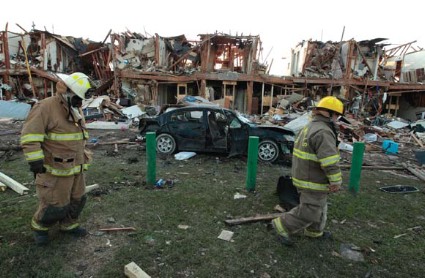
Then as word trickled in about homes being blown apart, Dr. Hartman and his colleagues realized they were going to be caring for the victims of a mass casualty explosion disaster. The April 17 blast in the small town of West, just north of Waco, killed 15 people, including several volunteer firefighters.
"We were expecting anywhere up to 200 people, and we tried to prepare for that as much as possible," said Dr. Hartman.
The hospital put out a call to physicians in the surrounding area to come and help. Soon, the emergency room had 50 physicians on hand to treat patients, including a plastic surgeon who treated laceration injuries and family medicine residents who treated patients with minor injuries sitting in the waiting room.
The emergency department also made sure its decontamination room was ready to rinse chemical residue from the skin and clothes of patients.
The first patients arrived about 7 p.m., and by 1 a.m. the emergency department had treated about 100 patients, said Dr. Hartman. He said that the patients’ injuries were typical of those often seen in explosion disasters: pulmonary contusions (blast lung injury), ruptured eardrums, soft tissue injuries, and pneumothoraxes. After the first wave of patients at Hillcrest subsided, the hospital experienced a slower second wave of patients over the next few days, said Dr. Hartman. Many of those patients were people who had assisted neighbors whose homes had been destroyed. While helping their friends clear the rubble, these patients had strained their backs or developed upper respiratory problems.
Care for explosion victims has its own peculiar considerations. In explosions such as that in West, in addition to patients with ruptured eardrums, emergency medicine physicians treating explosion victims may also see patients with temporary hearing loss from the noise of the explosion, said Dr. Paul Pepe, the Riggs Family Chair in Emergency Medicine at the University of Texas Southwestern Medical Center, Dallas, and director of emergency medical services in Dallas. This can complicate the process of caring for injured people because they may not be able to hear questions or instructions from first responders or physicians.
"If you ask people, ‘How are you?’ they can’t hear or aren’t sure of what you said," said Dr. Pepe.
Blast injuries are grouped into four categories, according to ACEP’s "Explosions and Blast Injuries: A Primer for Clinicians."
• Primary blast injuries caused by the blast wave, including blast lung injury, ruptured tympanic membranes, abdominal hemorrhaging, and concussions. These injuries are more likely to be severe when the explosion occurs in an enclosed space, such as a mine or building.
• Secondary blast injuries – penetrating wounds, lacerations, and abrasions – from flying debris.
• Tertiary blast injuries, such as amputations and brain injuries, which occur when the blast wind tosses victims.
• Quaternary injuries, such as burns, crush injuries, and breathing difficulties from inhaling dust or chemicals.
The first patients to arrive at a hospital after an explosion disaster often have only minor injuries because those patients are the ones well enough to drive, walk, or take public transportation to nearby hospitals, said Dr. Pepe. More seriously injured patients usually arrive later by ambulance.
However, many people with primary or tertiary blast injuries die on the scene or soon afterward, noted Dr. Harry W. Severance.
It’s important to have a decontamination procedure in place for patients injured in explosions, noted Dr. Severance, author of the article "Emergency Management of Blast Injuries," which appeared in the April 2006 issue of Critical Decisions in Emergency Medicine, ACEP’s CME journal (Critical Decisions in Emergency Medicine 2006;20;8:2-11).
"If the blast is contaminated by toxins, such as in an industrial blast, or if a terrorist has placed toxins in the blast materials, the walking wounded and worried well will be vectors to spread these toxins far and wide," Dr. Severance added in an online interview.
It’s also important to observe patients who only have mild injuries, but who physicians suspect may have been exposed to the blast wave, because they might have primary blast injuries that may not initially cause symptoms, noted Dr. Severance.
As for the tragedy in West, Tex., reflecting on the experience, Dr. Hartman said that caring for people hurt in the explosion underscored for him the importance of hospitals being prepared and having practiced for mass casualty disasters.
None of the doctors interviewed for this article had any relevant conflicts.
A nursing home had caught fire. That was the first news that the physicians in the emergency department at Hillcrest Baptist Medical Center in Waco, Tex., heard about the West Fertilizer Co. explosion in nearby West, Tex. Based on that preliminary information relayed from persons on the scene, the emergency department team expected an influx of elderly patients, said Dr. Randy J. Hartman, interim medical director for the emergency medicine department at the hospital.
"There weren’t a lot of details; there was a lot of chaos," said Dr. Hartman in an interview.
Then as word trickled in about homes being blown apart, Dr. Hartman and his colleagues realized they were going to be caring for the victims of a mass casualty explosion disaster. The April 17 blast in the small town of West, just north of Waco, killed 15 people, including several volunteer firefighters.
"We were expecting anywhere up to 200 people, and we tried to prepare for that as much as possible," said Dr. Hartman.
The hospital put out a call to physicians in the surrounding area to come and help. Soon, the emergency room had 50 physicians on hand to treat patients, including a plastic surgeon who treated laceration injuries and family medicine residents who treated patients with minor injuries sitting in the waiting room.
The emergency department also made sure its decontamination room was ready to rinse chemical residue from the skin and clothes of patients.
The first patients arrived about 7 p.m., and by 1 a.m. the emergency department had treated about 100 patients, said Dr. Hartman. He said that the patients’ injuries were typical of those often seen in explosion disasters: pulmonary contusions (blast lung injury), ruptured eardrums, soft tissue injuries, and pneumothoraxes. After the first wave of patients at Hillcrest subsided, the hospital experienced a slower second wave of patients over the next few days, said Dr. Hartman. Many of those patients were people who had assisted neighbors whose homes had been destroyed. While helping their friends clear the rubble, these patients had strained their backs or developed upper respiratory problems.
Care for explosion victims has its own peculiar considerations. In explosions such as that in West, in addition to patients with ruptured eardrums, emergency medicine physicians treating explosion victims may also see patients with temporary hearing loss from the noise of the explosion, said Dr. Paul Pepe, the Riggs Family Chair in Emergency Medicine at the University of Texas Southwestern Medical Center, Dallas, and director of emergency medical services in Dallas. This can complicate the process of caring for injured people because they may not be able to hear questions or instructions from first responders or physicians.
"If you ask people, ‘How are you?’ they can’t hear or aren’t sure of what you said," said Dr. Pepe.
Blast injuries are grouped into four categories, according to ACEP’s "Explosions and Blast Injuries: A Primer for Clinicians."
• Primary blast injuries caused by the blast wave, including blast lung injury, ruptured tympanic membranes, abdominal hemorrhaging, and concussions. These injuries are more likely to be severe when the explosion occurs in an enclosed space, such as a mine or building.
• Secondary blast injuries – penetrating wounds, lacerations, and abrasions – from flying debris.
• Tertiary blast injuries, such as amputations and brain injuries, which occur when the blast wind tosses victims.
• Quaternary injuries, such as burns, crush injuries, and breathing difficulties from inhaling dust or chemicals.
The first patients to arrive at a hospital after an explosion disaster often have only minor injuries because those patients are the ones well enough to drive, walk, or take public transportation to nearby hospitals, said Dr. Pepe. More seriously injured patients usually arrive later by ambulance.
However, many people with primary or tertiary blast injuries die on the scene or soon afterward, noted Dr. Harry W. Severance.
It’s important to have a decontamination procedure in place for patients injured in explosions, noted Dr. Severance, author of the article "Emergency Management of Blast Injuries," which appeared in the April 2006 issue of Critical Decisions in Emergency Medicine, ACEP’s CME journal (Critical Decisions in Emergency Medicine 2006;20;8:2-11).
"If the blast is contaminated by toxins, such as in an industrial blast, or if a terrorist has placed toxins in the blast materials, the walking wounded and worried well will be vectors to spread these toxins far and wide," Dr. Severance added in an online interview.
It’s also important to observe patients who only have mild injuries, but who physicians suspect may have been exposed to the blast wave, because they might have primary blast injuries that may not initially cause symptoms, noted Dr. Severance.
As for the tragedy in West, Tex., reflecting on the experience, Dr. Hartman said that caring for people hurt in the explosion underscored for him the importance of hospitals being prepared and having practiced for mass casualty disasters.
None of the doctors interviewed for this article had any relevant conflicts.
A nursing home had caught fire. That was the first news that the physicians in the emergency department at Hillcrest Baptist Medical Center in Waco, Tex., heard about the West Fertilizer Co. explosion in nearby West, Tex. Based on that preliminary information relayed from persons on the scene, the emergency department team expected an influx of elderly patients, said Dr. Randy J. Hartman, interim medical director for the emergency medicine department at the hospital.
"There weren’t a lot of details; there was a lot of chaos," said Dr. Hartman in an interview.
Then as word trickled in about homes being blown apart, Dr. Hartman and his colleagues realized they were going to be caring for the victims of a mass casualty explosion disaster. The April 17 blast in the small town of West, just north of Waco, killed 15 people, including several volunteer firefighters.
"We were expecting anywhere up to 200 people, and we tried to prepare for that as much as possible," said Dr. Hartman.
The hospital put out a call to physicians in the surrounding area to come and help. Soon, the emergency room had 50 physicians on hand to treat patients, including a plastic surgeon who treated laceration injuries and family medicine residents who treated patients with minor injuries sitting in the waiting room.
The emergency department also made sure its decontamination room was ready to rinse chemical residue from the skin and clothes of patients.
The first patients arrived about 7 p.m., and by 1 a.m. the emergency department had treated about 100 patients, said Dr. Hartman. He said that the patients’ injuries were typical of those often seen in explosion disasters: pulmonary contusions (blast lung injury), ruptured eardrums, soft tissue injuries, and pneumothoraxes. After the first wave of patients at Hillcrest subsided, the hospital experienced a slower second wave of patients over the next few days, said Dr. Hartman. Many of those patients were people who had assisted neighbors whose homes had been destroyed. While helping their friends clear the rubble, these patients had strained their backs or developed upper respiratory problems.
Care for explosion victims has its own peculiar considerations. In explosions such as that in West, in addition to patients with ruptured eardrums, emergency medicine physicians treating explosion victims may also see patients with temporary hearing loss from the noise of the explosion, said Dr. Paul Pepe, the Riggs Family Chair in Emergency Medicine at the University of Texas Southwestern Medical Center, Dallas, and director of emergency medical services in Dallas. This can complicate the process of caring for injured people because they may not be able to hear questions or instructions from first responders or physicians.
"If you ask people, ‘How are you?’ they can’t hear or aren’t sure of what you said," said Dr. Pepe.
Blast injuries are grouped into four categories, according to ACEP’s "Explosions and Blast Injuries: A Primer for Clinicians."
• Primary blast injuries caused by the blast wave, including blast lung injury, ruptured tympanic membranes, abdominal hemorrhaging, and concussions. These injuries are more likely to be severe when the explosion occurs in an enclosed space, such as a mine or building.
• Secondary blast injuries – penetrating wounds, lacerations, and abrasions – from flying debris.
• Tertiary blast injuries, such as amputations and brain injuries, which occur when the blast wind tosses victims.
• Quaternary injuries, such as burns, crush injuries, and breathing difficulties from inhaling dust or chemicals.
The first patients to arrive at a hospital after an explosion disaster often have only minor injuries because those patients are the ones well enough to drive, walk, or take public transportation to nearby hospitals, said Dr. Pepe. More seriously injured patients usually arrive later by ambulance.
However, many people with primary or tertiary blast injuries die on the scene or soon afterward, noted Dr. Harry W. Severance.
It’s important to have a decontamination procedure in place for patients injured in explosions, noted Dr. Severance, author of the article "Emergency Management of Blast Injuries," which appeared in the April 2006 issue of Critical Decisions in Emergency Medicine, ACEP’s CME journal (Critical Decisions in Emergency Medicine 2006;20;8:2-11).
"If the blast is contaminated by toxins, such as in an industrial blast, or if a terrorist has placed toxins in the blast materials, the walking wounded and worried well will be vectors to spread these toxins far and wide," Dr. Severance added in an online interview.
It’s also important to observe patients who only have mild injuries, but who physicians suspect may have been exposed to the blast wave, because they might have primary blast injuries that may not initially cause symptoms, noted Dr. Severance.
As for the tragedy in West, Tex., reflecting on the experience, Dr. Hartman said that caring for people hurt in the explosion underscored for him the importance of hospitals being prepared and having practiced for mass casualty disasters.
None of the doctors interviewed for this article had any relevant conflicts.