User login
Preventable admissions have limited impact on spending
Preventable emergency department visits and hospitalizations account for only a small portion of spending on high-cost Medicare patients, and strategies to control costs for these patients should be expanded to include efforts to reduce costs per episode of ED visits and hospitalizations, according to a study published in JAMA.
Most inpatient spending for high-cost Medicare patients is due to cancer, myocardial infarction, sepsis, and stroke, as well as orthopedic procedures such as hip replacement and spine surgery.
"Only a small percentage of costs appeared to be related to preventable ED visits and hospitalizations. The ability to lower costs for these patients through better outpatient care may be limited," stated Dr. Karen E. Joynt of Brigham and Women’s Hospital, Boston, and her colleagues.

The authors examined data from more than 1.1 million Medicare fee-for-service patients aged 65 years and older. They defined patients whose health care costs were in the highest decile in 2010 as high-cost patients; those with health care costs in the top decile for both 2010 and 2009 were categorized as persistently high-cost patients (JAMA 2013;309:2572-8).
Patients in the high-cost Medicare group were, on average, older than Medicare patients overall (78 vs. 77 years), and they were more likely to have chronic health conditions, including congestive heart failure (44% vs. 11%), diabetes (44% vs. 27%), and lung disease (38% vs. 13%). In addition, the high-cost patients were more likely to be male (45% vs. 42%) and African-American (9% vs. 7%).
To examine costs of preventable ED visits and hospitalizations, the authors used validated Agency for Healthcare Research and Quality (AHRQ) prevention quality algorithms. They concluded that high-cost Medicare patients accounted for 79% of overall inpatient costs of Medicare patients. In addition, the researchers discovered that 43% of ED visits by high-cost Medicare patients were considered preventable, compared with 44% of ED visits by the rest of the Medicare population. These preventable ED visits constituted 41% of ED costs for high-cost Medicare patients and 43% of ED costs for all other Medicare patients. Among the persistently high-cost patients, proportions of preventable ED spending and inpatient spending (43% and 14%, respectively) were comparable to those of high-cost patients.
Only 10% of hospital admissions for high-cost Medicare patients were due to preventable causes, compared with 17% of hospitalizations for the non–high-cost population. When the researchers combined costs of ED visits and hospitalizations, they concluded that only 10% of the costs for high-cost patients were categorized as preventable. The rest of the costs were due to what the authors described as "catastrophic events," such as myocardial infarction, sepsis, and stroke, as well as cancer, hip replacement, and spine surgery.
"Strategies [that are] focused on enhanced outpatient management of chronic disease, while critically important, may not be focused on the biggest and most expensive problems plaguing Medicare’s high-cost patients," the authors concluded.
These findings may explain why programs to improve outpatient services for patients with complex medical conditions have failed to reduce health care costs, the authors noted. "While disease management may yield cost savings, even a substantial reduction in these preventable hospitalizations is unlikely to have a large effect on overall spending levels within this cohort."
The authors also examined regional variability of health care spending for preventable acute care. They looked at costs for preventable acute care spending in various hospital referral regions (HRRs). They discovered that HRRs with the lowest supply of primary care physicians had average preventable acute care costs of $1,954 per capita, while HRRs with the highest supply of primary care physicians had average preventable acute care costs of $2,186 per capita. It was unclear whether this difference was due to a greater demand for ED visits and hospitalizations in areas with an ample supply of primary care physicians, or whether the greater supply of primary care physicians was a result of a sicker population of patients driving increased physician availability, Dr. Joynt and her colleagues stated.
They concluded that clinical leaders at health care systems may need to focus both on reducing preventable admissions and on lowering hospital costs for episodes of catastrophic and acute care in order to achieve meaningful savings in health care costs.
The Rx Foundation and the West Wireless Foundation funded the study. One coauthor, Dr. Atul A. Gawande, reported receiving income for teaching and lecturing on health care quality and safety topics, as well as earning royalties on books, other publications, and a documentary on health care system quality and performance. None of the other authors reported any conflicts of interest.
Even though avoiding some emergency department use and hospital admissions might not save much money – and certainly not enough to declare victory in controlling health spending – preventing such use when possible would be of substantial benefit to patients, both those who would otherwise use these services and those who have their care delayed because of overburdened emergency department and hospital resources. Even with no cost savings, reducing preventable use of high-intensity and capacity-constrained care would enhance efficiency. Improvements to quality are not always substantial cost savers but still may be worthwhile.
Dr. Aaron E. Carroll and Dr. Austin B. Frakt made their remarks in an accompanying editorial. Dr. Carroll is director of the Center for Health Policy and Professionalism Research at Indiana University School of Medicine. Dr. Frakt is an associate professor of health policy and management at Boston University School of Public Health. Neither author reported any conflicts of interest.
Even though avoiding some emergency department use and hospital admissions might not save much money – and certainly not enough to declare victory in controlling health spending – preventing such use when possible would be of substantial benefit to patients, both those who would otherwise use these services and those who have their care delayed because of overburdened emergency department and hospital resources. Even with no cost savings, reducing preventable use of high-intensity and capacity-constrained care would enhance efficiency. Improvements to quality are not always substantial cost savers but still may be worthwhile.
Dr. Aaron E. Carroll and Dr. Austin B. Frakt made their remarks in an accompanying editorial. Dr. Carroll is director of the Center for Health Policy and Professionalism Research at Indiana University School of Medicine. Dr. Frakt is an associate professor of health policy and management at Boston University School of Public Health. Neither author reported any conflicts of interest.
Even though avoiding some emergency department use and hospital admissions might not save much money – and certainly not enough to declare victory in controlling health spending – preventing such use when possible would be of substantial benefit to patients, both those who would otherwise use these services and those who have their care delayed because of overburdened emergency department and hospital resources. Even with no cost savings, reducing preventable use of high-intensity and capacity-constrained care would enhance efficiency. Improvements to quality are not always substantial cost savers but still may be worthwhile.
Dr. Aaron E. Carroll and Dr. Austin B. Frakt made their remarks in an accompanying editorial. Dr. Carroll is director of the Center for Health Policy and Professionalism Research at Indiana University School of Medicine. Dr. Frakt is an associate professor of health policy and management at Boston University School of Public Health. Neither author reported any conflicts of interest.
Preventable emergency department visits and hospitalizations account for only a small portion of spending on high-cost Medicare patients, and strategies to control costs for these patients should be expanded to include efforts to reduce costs per episode of ED visits and hospitalizations, according to a study published in JAMA.
Most inpatient spending for high-cost Medicare patients is due to cancer, myocardial infarction, sepsis, and stroke, as well as orthopedic procedures such as hip replacement and spine surgery.
"Only a small percentage of costs appeared to be related to preventable ED visits and hospitalizations. The ability to lower costs for these patients through better outpatient care may be limited," stated Dr. Karen E. Joynt of Brigham and Women’s Hospital, Boston, and her colleagues.
The authors examined data from more than 1.1 million Medicare fee-for-service patients aged 65 years and older. They defined patients whose health care costs were in the highest decile in 2010 as high-cost patients; those with health care costs in the top decile for both 2010 and 2009 were categorized as persistently high-cost patients (JAMA 2013;309:2572-8).
Patients in the high-cost Medicare group were, on average, older than Medicare patients overall (78 vs. 77 years), and they were more likely to have chronic health conditions, including congestive heart failure (44% vs. 11%), diabetes (44% vs. 27%), and lung disease (38% vs. 13%). In addition, the high-cost patients were more likely to be male (45% vs. 42%) and African-American (9% vs. 7%).
To examine costs of preventable ED visits and hospitalizations, the authors used validated Agency for Healthcare Research and Quality (AHRQ) prevention quality algorithms. They concluded that high-cost Medicare patients accounted for 79% of overall inpatient costs of Medicare patients. In addition, the researchers discovered that 43% of ED visits by high-cost Medicare patients were considered preventable, compared with 44% of ED visits by the rest of the Medicare population. These preventable ED visits constituted 41% of ED costs for high-cost Medicare patients and 43% of ED costs for all other Medicare patients. Among the persistently high-cost patients, proportions of preventable ED spending and inpatient spending (43% and 14%, respectively) were comparable to those of high-cost patients.
Only 10% of hospital admissions for high-cost Medicare patients were due to preventable causes, compared with 17% of hospitalizations for the non–high-cost population. When the researchers combined costs of ED visits and hospitalizations, they concluded that only 10% of the costs for high-cost patients were categorized as preventable. The rest of the costs were due to what the authors described as "catastrophic events," such as myocardial infarction, sepsis, and stroke, as well as cancer, hip replacement, and spine surgery.
"Strategies [that are] focused on enhanced outpatient management of chronic disease, while critically important, may not be focused on the biggest and most expensive problems plaguing Medicare’s high-cost patients," the authors concluded.
These findings may explain why programs to improve outpatient services for patients with complex medical conditions have failed to reduce health care costs, the authors noted. "While disease management may yield cost savings, even a substantial reduction in these preventable hospitalizations is unlikely to have a large effect on overall spending levels within this cohort."
The authors also examined regional variability of health care spending for preventable acute care. They looked at costs for preventable acute care spending in various hospital referral regions (HRRs). They discovered that HRRs with the lowest supply of primary care physicians had average preventable acute care costs of $1,954 per capita, while HRRs with the highest supply of primary care physicians had average preventable acute care costs of $2,186 per capita. It was unclear whether this difference was due to a greater demand for ED visits and hospitalizations in areas with an ample supply of primary care physicians, or whether the greater supply of primary care physicians was a result of a sicker population of patients driving increased physician availability, Dr. Joynt and her colleagues stated.
They concluded that clinical leaders at health care systems may need to focus both on reducing preventable admissions and on lowering hospital costs for episodes of catastrophic and acute care in order to achieve meaningful savings in health care costs.
The Rx Foundation and the West Wireless Foundation funded the study. One coauthor, Dr. Atul A. Gawande, reported receiving income for teaching and lecturing on health care quality and safety topics, as well as earning royalties on books, other publications, and a documentary on health care system quality and performance. None of the other authors reported any conflicts of interest.
Preventable emergency department visits and hospitalizations account for only a small portion of spending on high-cost Medicare patients, and strategies to control costs for these patients should be expanded to include efforts to reduce costs per episode of ED visits and hospitalizations, according to a study published in JAMA.
Most inpatient spending for high-cost Medicare patients is due to cancer, myocardial infarction, sepsis, and stroke, as well as orthopedic procedures such as hip replacement and spine surgery.
"Only a small percentage of costs appeared to be related to preventable ED visits and hospitalizations. The ability to lower costs for these patients through better outpatient care may be limited," stated Dr. Karen E. Joynt of Brigham and Women’s Hospital, Boston, and her colleagues.
The authors examined data from more than 1.1 million Medicare fee-for-service patients aged 65 years and older. They defined patients whose health care costs were in the highest decile in 2010 as high-cost patients; those with health care costs in the top decile for both 2010 and 2009 were categorized as persistently high-cost patients (JAMA 2013;309:2572-8).
Patients in the high-cost Medicare group were, on average, older than Medicare patients overall (78 vs. 77 years), and they were more likely to have chronic health conditions, including congestive heart failure (44% vs. 11%), diabetes (44% vs. 27%), and lung disease (38% vs. 13%). In addition, the high-cost patients were more likely to be male (45% vs. 42%) and African-American (9% vs. 7%).
To examine costs of preventable ED visits and hospitalizations, the authors used validated Agency for Healthcare Research and Quality (AHRQ) prevention quality algorithms. They concluded that high-cost Medicare patients accounted for 79% of overall inpatient costs of Medicare patients. In addition, the researchers discovered that 43% of ED visits by high-cost Medicare patients were considered preventable, compared with 44% of ED visits by the rest of the Medicare population. These preventable ED visits constituted 41% of ED costs for high-cost Medicare patients and 43% of ED costs for all other Medicare patients. Among the persistently high-cost patients, proportions of preventable ED spending and inpatient spending (43% and 14%, respectively) were comparable to those of high-cost patients.
Only 10% of hospital admissions for high-cost Medicare patients were due to preventable causes, compared with 17% of hospitalizations for the non–high-cost population. When the researchers combined costs of ED visits and hospitalizations, they concluded that only 10% of the costs for high-cost patients were categorized as preventable. The rest of the costs were due to what the authors described as "catastrophic events," such as myocardial infarction, sepsis, and stroke, as well as cancer, hip replacement, and spine surgery.
"Strategies [that are] focused on enhanced outpatient management of chronic disease, while critically important, may not be focused on the biggest and most expensive problems plaguing Medicare’s high-cost patients," the authors concluded.
These findings may explain why programs to improve outpatient services for patients with complex medical conditions have failed to reduce health care costs, the authors noted. "While disease management may yield cost savings, even a substantial reduction in these preventable hospitalizations is unlikely to have a large effect on overall spending levels within this cohort."
The authors also examined regional variability of health care spending for preventable acute care. They looked at costs for preventable acute care spending in various hospital referral regions (HRRs). They discovered that HRRs with the lowest supply of primary care physicians had average preventable acute care costs of $1,954 per capita, while HRRs with the highest supply of primary care physicians had average preventable acute care costs of $2,186 per capita. It was unclear whether this difference was due to a greater demand for ED visits and hospitalizations in areas with an ample supply of primary care physicians, or whether the greater supply of primary care physicians was a result of a sicker population of patients driving increased physician availability, Dr. Joynt and her colleagues stated.
They concluded that clinical leaders at health care systems may need to focus both on reducing preventable admissions and on lowering hospital costs for episodes of catastrophic and acute care in order to achieve meaningful savings in health care costs.
The Rx Foundation and the West Wireless Foundation funded the study. One coauthor, Dr. Atul A. Gawande, reported receiving income for teaching and lecturing on health care quality and safety topics, as well as earning royalties on books, other publications, and a documentary on health care system quality and performance. None of the other authors reported any conflicts of interest.
FROM JAMA
Major finding: ED visits were considered preventable in 43% of high-cost Medicare patients and in 44% of the rest of the Medicare population.
Data source: The authors used data from 1,114,469 Medicare fee-for-service patients for inpatient and outpatient services for 2009 and 2010. Patients with health care costs in the highest 10% for 2010 were classified as high-cost Medicare patients.
Disclosures: The Rx Foundation and the West Wireless Foundation funded the study. One coauthor, Dr. Atul A. Gawande, reported receiving income for teaching and lecturing on health care quality and safety topics, as well as earning royalties on books, other publications, and a documentary on health care system quality and performance. None of the other authors reported any conflicts of interest.

Waco hospital treated range of explosion injuries
A nursing home had caught fire. That was the first news that the physicians in the emergency department at Hillcrest Baptist Medical Center in Waco, Tex., heard about the West Fertilizer Co. explosion in nearby West, Tex. Based on that preliminary information relayed from persons on the scene, the emergency department team expected an influx of elderly patients, said Dr. Randy J. Hartman, interim medical director for the emergency medicine department at the hospital.
"There weren’t a lot of details; there was a lot of chaos," said Dr. Hartman in an interview.
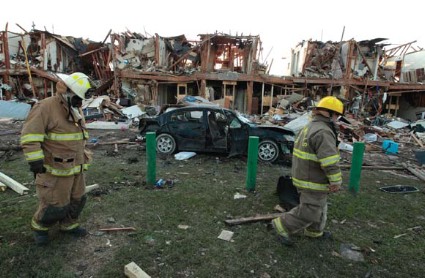
Then as word trickled in about homes being blown apart, Dr. Hartman and his colleagues realized they were going to be caring for the victims of a mass casualty explosion disaster. The April 17 blast in the small town of West, just north of Waco, killed 15 people, including several volunteer firefighters.
"We were expecting anywhere up to 200 people, and we tried to prepare for that as much as possible," said Dr. Hartman.
The hospital put out a call to physicians in the surrounding area to come and help. Soon, the emergency room had 50 physicians on hand to treat patients, including a plastic surgeon who treated laceration injuries and family medicine residents who treated patients with minor injuries sitting in the waiting room.
The emergency department also made sure its decontamination room was ready to rinse chemical residue from the skin and clothes of patients.
The first patients arrived about 7 p.m., and by 1 a.m. the emergency department had treated about 100 patients, said Dr. Hartman. He said that the patients’ injuries were typical of those often seen in explosion disasters: pulmonary contusions (blast lung injury), ruptured eardrums, soft tissue injuries, and pneumothoraxes. After the first wave of patients at Hillcrest subsided, the hospital experienced a slower second wave of patients over the next few days, said Dr. Hartman. Many of those patients were people who had assisted neighbors whose homes had been destroyed. While helping their friends clear the rubble, these patients had strained their backs or developed upper respiratory problems.
Care for explosion victims has its own peculiar considerations. In explosions such as that in West, in addition to patients with ruptured eardrums, emergency medicine physicians treating explosion victims may also see patients with temporary hearing loss from the noise of the explosion, said Dr. Paul Pepe, the Riggs Family Chair in Emergency Medicine at the University of Texas Southwestern Medical Center, Dallas, and director of emergency medical services in Dallas. This can complicate the process of caring for injured people because they may not be able to hear questions or instructions from first responders or physicians.
"If you ask people, ‘How are you?’ they can’t hear or aren’t sure of what you said," said Dr. Pepe.
Blast injuries are grouped into four categories, according to ACEP’s "Explosions and Blast Injuries: A Primer for Clinicians."
• Primary blast injuries caused by the blast wave, including blast lung injury, ruptured tympanic membranes, abdominal hemorrhaging, and concussions. These injuries are more likely to be severe when the explosion occurs in an enclosed space, such as a mine or building.
• Secondary blast injuries – penetrating wounds, lacerations, and abrasions – from flying debris.
• Tertiary blast injuries, such as amputations and brain injuries, which occur when the blast wind tosses victims.
• Quaternary injuries, such as burns, crush injuries, and breathing difficulties from inhaling dust or chemicals.
The first patients to arrive at a hospital after an explosion disaster often have only minor injuries because those patients are the ones well enough to drive, walk, or take public transportation to nearby hospitals, said Dr. Pepe. More seriously injured patients usually arrive later by ambulance.
However, many people with primary or tertiary blast injuries die on the scene or soon afterward, noted Dr. Harry W. Severance.
It’s important to have a decontamination procedure in place for patients injured in explosions, noted Dr. Severance, author of the article "Emergency Management of Blast Injuries," which appeared in the April 2006 issue of Critical Decisions in Emergency Medicine, ACEP’s CME journal (Critical Decisions in Emergency Medicine 2006;20;8:2-11).
"If the blast is contaminated by toxins, such as in an industrial blast, or if a terrorist has placed toxins in the blast materials, the walking wounded and worried well will be vectors to spread these toxins far and wide," Dr. Severance added in an online interview.
It’s also important to observe patients who only have mild injuries, but who physicians suspect may have been exposed to the blast wave, because they might have primary blast injuries that may not initially cause symptoms, noted Dr. Severance.
As for the tragedy in West, Tex., reflecting on the experience, Dr. Hartman said that caring for people hurt in the explosion underscored for him the importance of hospitals being prepared and having practiced for mass casualty disasters.
None of the doctors interviewed for this article had any relevant conflicts.
A nursing home had caught fire. That was the first news that the physicians in the emergency department at Hillcrest Baptist Medical Center in Waco, Tex., heard about the West Fertilizer Co. explosion in nearby West, Tex. Based on that preliminary information relayed from persons on the scene, the emergency department team expected an influx of elderly patients, said Dr. Randy J. Hartman, interim medical director for the emergency medicine department at the hospital.
"There weren’t a lot of details; there was a lot of chaos," said Dr. Hartman in an interview.
Then as word trickled in about homes being blown apart, Dr. Hartman and his colleagues realized they were going to be caring for the victims of a mass casualty explosion disaster. The April 17 blast in the small town of West, just north of Waco, killed 15 people, including several volunteer firefighters.
"We were expecting anywhere up to 200 people, and we tried to prepare for that as much as possible," said Dr. Hartman.
The hospital put out a call to physicians in the surrounding area to come and help. Soon, the emergency room had 50 physicians on hand to treat patients, including a plastic surgeon who treated laceration injuries and family medicine residents who treated patients with minor injuries sitting in the waiting room.
The emergency department also made sure its decontamination room was ready to rinse chemical residue from the skin and clothes of patients.
The first patients arrived about 7 p.m., and by 1 a.m. the emergency department had treated about 100 patients, said Dr. Hartman. He said that the patients’ injuries were typical of those often seen in explosion disasters: pulmonary contusions (blast lung injury), ruptured eardrums, soft tissue injuries, and pneumothoraxes. After the first wave of patients at Hillcrest subsided, the hospital experienced a slower second wave of patients over the next few days, said Dr. Hartman. Many of those patients were people who had assisted neighbors whose homes had been destroyed. While helping their friends clear the rubble, these patients had strained their backs or developed upper respiratory problems.
Care for explosion victims has its own peculiar considerations. In explosions such as that in West, in addition to patients with ruptured eardrums, emergency medicine physicians treating explosion victims may also see patients with temporary hearing loss from the noise of the explosion, said Dr. Paul Pepe, the Riggs Family Chair in Emergency Medicine at the University of Texas Southwestern Medical Center, Dallas, and director of emergency medical services in Dallas. This can complicate the process of caring for injured people because they may not be able to hear questions or instructions from first responders or physicians.
"If you ask people, ‘How are you?’ they can’t hear or aren’t sure of what you said," said Dr. Pepe.
Blast injuries are grouped into four categories, according to ACEP’s "Explosions and Blast Injuries: A Primer for Clinicians."
• Primary blast injuries caused by the blast wave, including blast lung injury, ruptured tympanic membranes, abdominal hemorrhaging, and concussions. These injuries are more likely to be severe when the explosion occurs in an enclosed space, such as a mine or building.
• Secondary blast injuries – penetrating wounds, lacerations, and abrasions – from flying debris.
• Tertiary blast injuries, such as amputations and brain injuries, which occur when the blast wind tosses victims.
• Quaternary injuries, such as burns, crush injuries, and breathing difficulties from inhaling dust or chemicals.
The first patients to arrive at a hospital after an explosion disaster often have only minor injuries because those patients are the ones well enough to drive, walk, or take public transportation to nearby hospitals, said Dr. Pepe. More seriously injured patients usually arrive later by ambulance.
However, many people with primary or tertiary blast injuries die on the scene or soon afterward, noted Dr. Harry W. Severance.
It’s important to have a decontamination procedure in place for patients injured in explosions, noted Dr. Severance, author of the article "Emergency Management of Blast Injuries," which appeared in the April 2006 issue of Critical Decisions in Emergency Medicine, ACEP’s CME journal (Critical Decisions in Emergency Medicine 2006;20;8:2-11).
"If the blast is contaminated by toxins, such as in an industrial blast, or if a terrorist has placed toxins in the blast materials, the walking wounded and worried well will be vectors to spread these toxins far and wide," Dr. Severance added in an online interview.
It’s also important to observe patients who only have mild injuries, but who physicians suspect may have been exposed to the blast wave, because they might have primary blast injuries that may not initially cause symptoms, noted Dr. Severance.
As for the tragedy in West, Tex., reflecting on the experience, Dr. Hartman said that caring for people hurt in the explosion underscored for him the importance of hospitals being prepared and having practiced for mass casualty disasters.
None of the doctors interviewed for this article had any relevant conflicts.
A nursing home had caught fire. That was the first news that the physicians in the emergency department at Hillcrest Baptist Medical Center in Waco, Tex., heard about the West Fertilizer Co. explosion in nearby West, Tex. Based on that preliminary information relayed from persons on the scene, the emergency department team expected an influx of elderly patients, said Dr. Randy J. Hartman, interim medical director for the emergency medicine department at the hospital.
"There weren’t a lot of details; there was a lot of chaos," said Dr. Hartman in an interview.
Then as word trickled in about homes being blown apart, Dr. Hartman and his colleagues realized they were going to be caring for the victims of a mass casualty explosion disaster. The April 17 blast in the small town of West, just north of Waco, killed 15 people, including several volunteer firefighters.
"We were expecting anywhere up to 200 people, and we tried to prepare for that as much as possible," said Dr. Hartman.
The hospital put out a call to physicians in the surrounding area to come and help. Soon, the emergency room had 50 physicians on hand to treat patients, including a plastic surgeon who treated laceration injuries and family medicine residents who treated patients with minor injuries sitting in the waiting room.
The emergency department also made sure its decontamination room was ready to rinse chemical residue from the skin and clothes of patients.
The first patients arrived about 7 p.m., and by 1 a.m. the emergency department had treated about 100 patients, said Dr. Hartman. He said that the patients’ injuries were typical of those often seen in explosion disasters: pulmonary contusions (blast lung injury), ruptured eardrums, soft tissue injuries, and pneumothoraxes. After the first wave of patients at Hillcrest subsided, the hospital experienced a slower second wave of patients over the next few days, said Dr. Hartman. Many of those patients were people who had assisted neighbors whose homes had been destroyed. While helping their friends clear the rubble, these patients had strained their backs or developed upper respiratory problems.
Care for explosion victims has its own peculiar considerations. In explosions such as that in West, in addition to patients with ruptured eardrums, emergency medicine physicians treating explosion victims may also see patients with temporary hearing loss from the noise of the explosion, said Dr. Paul Pepe, the Riggs Family Chair in Emergency Medicine at the University of Texas Southwestern Medical Center, Dallas, and director of emergency medical services in Dallas. This can complicate the process of caring for injured people because they may not be able to hear questions or instructions from first responders or physicians.
"If you ask people, ‘How are you?’ they can’t hear or aren’t sure of what you said," said Dr. Pepe.
Blast injuries are grouped into four categories, according to ACEP’s "Explosions and Blast Injuries: A Primer for Clinicians."
• Primary blast injuries caused by the blast wave, including blast lung injury, ruptured tympanic membranes, abdominal hemorrhaging, and concussions. These injuries are more likely to be severe when the explosion occurs in an enclosed space, such as a mine or building.
• Secondary blast injuries – penetrating wounds, lacerations, and abrasions – from flying debris.
• Tertiary blast injuries, such as amputations and brain injuries, which occur when the blast wind tosses victims.
• Quaternary injuries, such as burns, crush injuries, and breathing difficulties from inhaling dust or chemicals.
The first patients to arrive at a hospital after an explosion disaster often have only minor injuries because those patients are the ones well enough to drive, walk, or take public transportation to nearby hospitals, said Dr. Pepe. More seriously injured patients usually arrive later by ambulance.
However, many people with primary or tertiary blast injuries die on the scene or soon afterward, noted Dr. Harry W. Severance.
It’s important to have a decontamination procedure in place for patients injured in explosions, noted Dr. Severance, author of the article "Emergency Management of Blast Injuries," which appeared in the April 2006 issue of Critical Decisions in Emergency Medicine, ACEP’s CME journal (Critical Decisions in Emergency Medicine 2006;20;8:2-11).
"If the blast is contaminated by toxins, such as in an industrial blast, or if a terrorist has placed toxins in the blast materials, the walking wounded and worried well will be vectors to spread these toxins far and wide," Dr. Severance added in an online interview.
It’s also important to observe patients who only have mild injuries, but who physicians suspect may have been exposed to the blast wave, because they might have primary blast injuries that may not initially cause symptoms, noted Dr. Severance.
As for the tragedy in West, Tex., reflecting on the experience, Dr. Hartman said that caring for people hurt in the explosion underscored for him the importance of hospitals being prepared and having practiced for mass casualty disasters.
None of the doctors interviewed for this article had any relevant conflicts.