User login
Simple postural exercises may reduce depressive symptoms
NEW YORK – Postural exercises that take only a few minutes but are performed several times a day produced large reductions in symptoms of depression and increased the rate of remission at 12 weeks, according to results of a randomized study presented at the annual meeting of the American Psychiatric Association.
“These were very marked symptom improvements seen at the end of 12 weeks in those randomized to the exercises when compared to the controls who received antidepressants alone,” reported Martin Furman, MD, a researcher in psychiatry at the University of Maimónides, Buenos Aires.
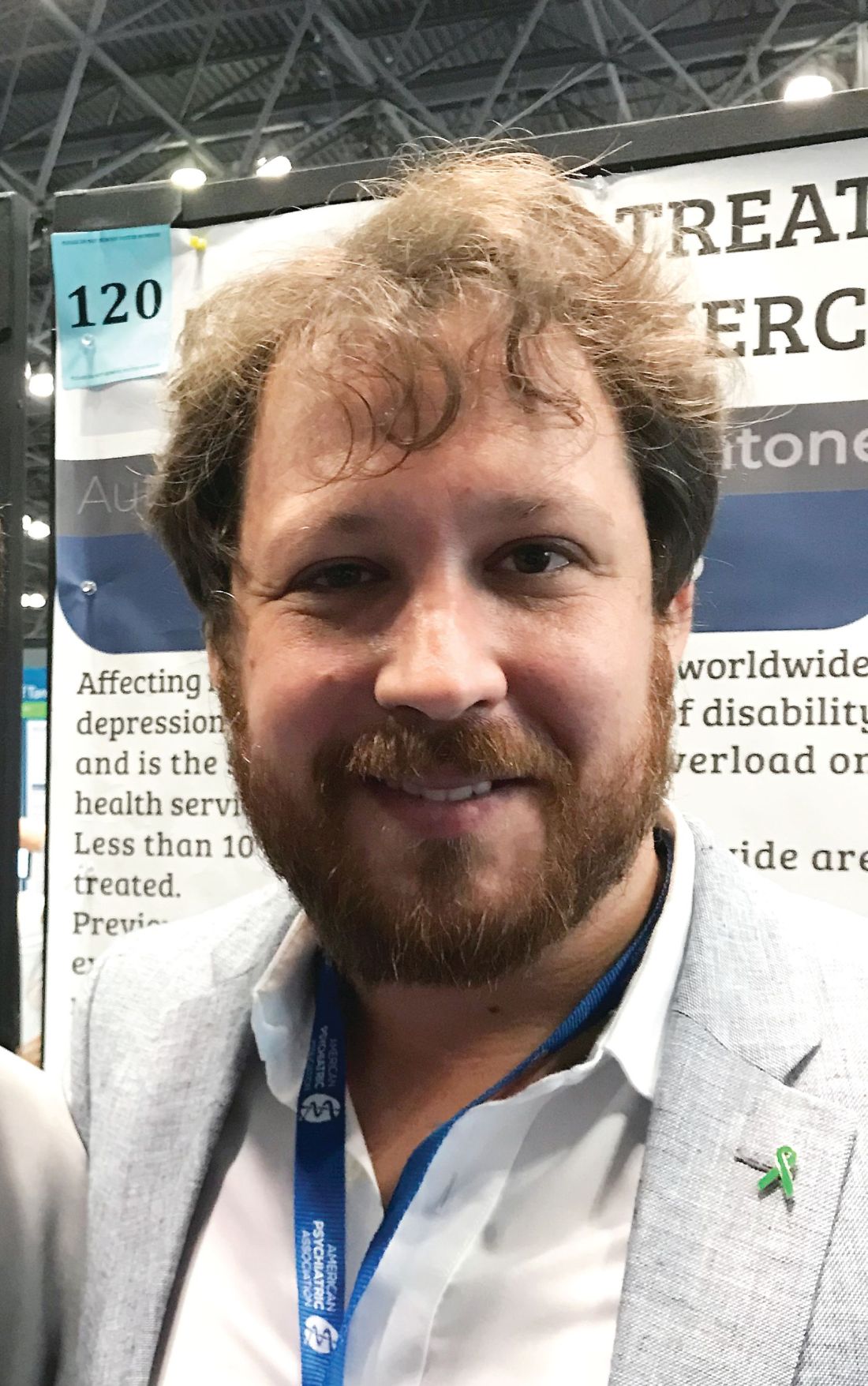
The patients in this study all continued on their baseline SSRI dose but were randomized to start postural exercises or to remain on an SSRI alone. The two sets of exercises, which took only a couple of minutes, were repeated four to six times per day with at least 2 hours of separation.
The equilibrium exercises involved raised arms with flexing of first one lower limb then the other. Each flex was maintained for 15 seconds. In a separate exercise, patients were instructed to hold a pencil between the teeth and smile for 1 minute, a technique that activates facial skin afferents, according to Dr. Furman.
“In previous studies, posture and balance have been linked to a reduction in anxiety and moderate depression,” Dr. Furman explained. “Feedback of the muscular and facial skin afferents has been associated with modulation of neural activity within the central circuit of emotions.”
Much of this work was pioneered by Tomás Ortiz Alonso, MD, PhD, director of the department of psychiatry at Universidad Complutense de Madrid, according to Dr. Furman. While working to complete his PhD, Dr. Furman is collaborating with Dr. Ortiz Alonso.
Patients participating in the study were evaluated with the Beck Depression Inventory (BDI) and the 17-item Hamilton Depression Rating Scale (HDRS-17) at baseline and the end of 12 weeks. Response for both scales was defined as at least a 50% score reduction from baseline. Remission of depression was defined as HDRS-17 score of less than 7.
At 12 weeks, 86% of those in the experimental arm versus 28.5% of those in the control arm achieved a response on the HDRS-17 tool. For the BDI tool, the response rates were 71.5% and 19%, respectively. The remission rates as defined by HDRS-17 score of less than 7 were 66.6% and 19%. All differences were statistically significant (P less than .05).
“The exercises are simple and take very little time,” said Dr. Furman, who reported that compliance was good in the study arm according to patient self-report.
There are numerous published studies suggesting that exercise improves mood in a variety of circumstances, including the treatment of depression, and Dr. Furman said these exercises are not physically demanding. If larger studies validate the results of this initial trial, this might prove to be a highly cost-effective tool for depression treatment.
“Further studies are needed to determine whether these exercises are most effective as adjunctive treatment to pharmacotherapy or can be used alone without medications,” he said.
In addition to larger efficacy studies, Dr. Furman reported that efforts to understand the mechanism of benefit are being considered, such as studies with functional MRI or EEG to evaluate the effect of the exercises on brain activity.
“We are excited about these results. ,” he said.
Dr. Furman reports no potential conflicts of interest related to this topic.
NEW YORK – Postural exercises that take only a few minutes but are performed several times a day produced large reductions in symptoms of depression and increased the rate of remission at 12 weeks, according to results of a randomized study presented at the annual meeting of the American Psychiatric Association.
“These were very marked symptom improvements seen at the end of 12 weeks in those randomized to the exercises when compared to the controls who received antidepressants alone,” reported Martin Furman, MD, a researcher in psychiatry at the University of Maimónides, Buenos Aires.
The patients in this study all continued on their baseline SSRI dose but were randomized to start postural exercises or to remain on an SSRI alone. The two sets of exercises, which took only a couple of minutes, were repeated four to six times per day with at least 2 hours of separation.
The equilibrium exercises involved raised arms with flexing of first one lower limb then the other. Each flex was maintained for 15 seconds. In a separate exercise, patients were instructed to hold a pencil between the teeth and smile for 1 minute, a technique that activates facial skin afferents, according to Dr. Furman.
“In previous studies, posture and balance have been linked to a reduction in anxiety and moderate depression,” Dr. Furman explained. “Feedback of the muscular and facial skin afferents has been associated with modulation of neural activity within the central circuit of emotions.”
Much of this work was pioneered by Tomás Ortiz Alonso, MD, PhD, director of the department of psychiatry at Universidad Complutense de Madrid, according to Dr. Furman. While working to complete his PhD, Dr. Furman is collaborating with Dr. Ortiz Alonso.
Patients participating in the study were evaluated with the Beck Depression Inventory (BDI) and the 17-item Hamilton Depression Rating Scale (HDRS-17) at baseline and the end of 12 weeks. Response for both scales was defined as at least a 50% score reduction from baseline. Remission of depression was defined as HDRS-17 score of less than 7.
At 12 weeks, 86% of those in the experimental arm versus 28.5% of those in the control arm achieved a response on the HDRS-17 tool. For the BDI tool, the response rates were 71.5% and 19%, respectively. The remission rates as defined by HDRS-17 score of less than 7 were 66.6% and 19%. All differences were statistically significant (P less than .05).
“The exercises are simple and take very little time,” said Dr. Furman, who reported that compliance was good in the study arm according to patient self-report.
There are numerous published studies suggesting that exercise improves mood in a variety of circumstances, including the treatment of depression, and Dr. Furman said these exercises are not physically demanding. If larger studies validate the results of this initial trial, this might prove to be a highly cost-effective tool for depression treatment.
“Further studies are needed to determine whether these exercises are most effective as adjunctive treatment to pharmacotherapy or can be used alone without medications,” he said.
In addition to larger efficacy studies, Dr. Furman reported that efforts to understand the mechanism of benefit are being considered, such as studies with functional MRI or EEG to evaluate the effect of the exercises on brain activity.
“We are excited about these results. ,” he said.
Dr. Furman reports no potential conflicts of interest related to this topic.
NEW YORK – Postural exercises that take only a few minutes but are performed several times a day produced large reductions in symptoms of depression and increased the rate of remission at 12 weeks, according to results of a randomized study presented at the annual meeting of the American Psychiatric Association.
“These were very marked symptom improvements seen at the end of 12 weeks in those randomized to the exercises when compared to the controls who received antidepressants alone,” reported Martin Furman, MD, a researcher in psychiatry at the University of Maimónides, Buenos Aires.
The patients in this study all continued on their baseline SSRI dose but were randomized to start postural exercises or to remain on an SSRI alone. The two sets of exercises, which took only a couple of minutes, were repeated four to six times per day with at least 2 hours of separation.
The equilibrium exercises involved raised arms with flexing of first one lower limb then the other. Each flex was maintained for 15 seconds. In a separate exercise, patients were instructed to hold a pencil between the teeth and smile for 1 minute, a technique that activates facial skin afferents, according to Dr. Furman.
“In previous studies, posture and balance have been linked to a reduction in anxiety and moderate depression,” Dr. Furman explained. “Feedback of the muscular and facial skin afferents has been associated with modulation of neural activity within the central circuit of emotions.”
Much of this work was pioneered by Tomás Ortiz Alonso, MD, PhD, director of the department of psychiatry at Universidad Complutense de Madrid, according to Dr. Furman. While working to complete his PhD, Dr. Furman is collaborating with Dr. Ortiz Alonso.
Patients participating in the study were evaluated with the Beck Depression Inventory (BDI) and the 17-item Hamilton Depression Rating Scale (HDRS-17) at baseline and the end of 12 weeks. Response for both scales was defined as at least a 50% score reduction from baseline. Remission of depression was defined as HDRS-17 score of less than 7.
At 12 weeks, 86% of those in the experimental arm versus 28.5% of those in the control arm achieved a response on the HDRS-17 tool. For the BDI tool, the response rates were 71.5% and 19%, respectively. The remission rates as defined by HDRS-17 score of less than 7 were 66.6% and 19%. All differences were statistically significant (P less than .05).
“The exercises are simple and take very little time,” said Dr. Furman, who reported that compliance was good in the study arm according to patient self-report.
There are numerous published studies suggesting that exercise improves mood in a variety of circumstances, including the treatment of depression, and Dr. Furman said these exercises are not physically demanding. If larger studies validate the results of this initial trial, this might prove to be a highly cost-effective tool for depression treatment.
“Further studies are needed to determine whether these exercises are most effective as adjunctive treatment to pharmacotherapy or can be used alone without medications,” he said.
In addition to larger efficacy studies, Dr. Furman reported that efforts to understand the mechanism of benefit are being considered, such as studies with functional MRI or EEG to evaluate the effect of the exercises on brain activity.
“We are excited about these results. ,” he said.
Dr. Furman reports no potential conflicts of interest related to this topic.
REPORTING FROM APA
Key clinical point: In patients with major depression, a simple set of daily postural exercises appears effective for improving symptom control.
Major finding: After 12 weeks, 67% of those performing exercises versus 19% of controls (P less than .05) met criteria for depression remission.
Study details: Randomized, controlled trial of 42 patients who met DSM-5 criteria for major depressive disorder.
Disclosures: Dr. Furman reports no potential conflicts of interest related to this topic.
Cultural humility beats competence in psychotherapeutic settings
The emphasis on cultural context of diagnosis and treatment of psychiatric disorders was expanded in the DSM-5, but the commonly used term for this orientation, “cultural competence,” is potentially misleading, according to a panel of experienced clinicians participating in a workshop at the annual meeting of the American Psychiatric Association.
“I am not even sure how competent I am in my own culture,” said Richa Bhatia, MD, medical director of the Child and Adolescent OCD Institute at McLean Hospital, Belmont, Mass.. The remark was representative; like other panelists in a workshop developed by the Association of Women Psychiatrists, she de-emphasized the importance of becoming fluent in the specifics of a culture relative to simply being sensitive to variations in cultural landmarks and milestones.

However, she, like others, expressed concern about the label “competence.” “Cultural humility is really a much better term,” Dr. Olarte said. The reason is that Furthermore, it encourages clinicians to consider and manage their own prejudices, values, and biases in order to allow them to be effective in the therapeutic interaction.
In the DSM-5, a systematic outline is provided for eliciting culturally relevant information from the diagnostic interview and incorporating it into a therapeutic plan. Cultural competence is important for communication and for building patient trust, but the panelists uniformly agreed that it is not necessary to be fluent in the culture of the patient to be an effective clinician.
“Cultural identification is fluid, and patients have multiple identities,” said Lourdes M. Dominguez, MD, associate professor of psychiatry at Columbia University, New York. Recounting her work with first responders to the Sept. 11, 2001, World Trade Center attack, Dr. Dominguez offered care to police officers associated with a variety of cultures. In addition to different ethnicities and sexual orientations, this included the culture of law enforcement itself. The key for all patients was an ability to convey the message that the patient was being heard.
“The us-versus-them mentality in law enforcement limits the options when fellow officers are not providing the support they need,” Dr. Dominguez explained. “First, you need to win their trust.”
Familiarity with cultural milestones can be reassuring to patients, but Sherry P. Katz-Bearnot, MD, assistant clinical professor of psychiatry at Columbia University, cautioned that there is counterproductive underside to cultural competence. While recognizing the significance of cultural milestones, such as a bar mitvah or quinceañera, can be reassuring to patients, Dr. Katz-Bearnot emphasized that clinicians must remain sensitive to the personal responses to those events.
“If you know too much, there is a risk of glossing over the issues unique to the individual in front of you,” Dr. Katz-Bearnot said. She emphasized that those cultural landmarks do not necessarily mean the same thing to all members of a community. Sensitivity to personal issues trumps cultural familiarity.
The same statement could be made for delivering care to transgender patients, judging from a presentation by Courtney Saw, MD, a PGY3 resident in the department of psychiatry at the University of Pennsylvania, Philadelphia. Quoting a survey that found most transgender individuals consider health care professionals inadequately trained to manage their health issues, she stressed the importance of how questions are phrased.
“Every patient’s gender journey is unique,” Dr. Saw said. For example, specific questions about gender anatomy should be supplanted by open questions about gender transition, allowing patients to respond at their own level of comfort. This, according to Dr. Saw, is essential for “building a therapeutic collaboration.”
Embracing the concept of cultural humility, all of the panelists agreed that it is far less important to have cultural expertise than it is to be open, curious, and accepting. Sensitivity is more important than competence when specific cultural issues are relevant to treatment.
“We don’t have to have all the answers. We just need to be good at listening so that we can help patients work their way towards the answers,” Dr. Saw suggested. Others agreed.
Dr. Bhatia, Dr. Olarte, Dr. Dominguez, Dr. Katz-Bearnot, and Dr. Saw reported no potential conflicts of interest related to this topic.
The emphasis on cultural context of diagnosis and treatment of psychiatric disorders was expanded in the DSM-5, but the commonly used term for this orientation, “cultural competence,” is potentially misleading, according to a panel of experienced clinicians participating in a workshop at the annual meeting of the American Psychiatric Association.
“I am not even sure how competent I am in my own culture,” said Richa Bhatia, MD, medical director of the Child and Adolescent OCD Institute at McLean Hospital, Belmont, Mass.. The remark was representative; like other panelists in a workshop developed by the Association of Women Psychiatrists, she de-emphasized the importance of becoming fluent in the specifics of a culture relative to simply being sensitive to variations in cultural landmarks and milestones.
However, she, like others, expressed concern about the label “competence.” “Cultural humility is really a much better term,” Dr. Olarte said. The reason is that Furthermore, it encourages clinicians to consider and manage their own prejudices, values, and biases in order to allow them to be effective in the therapeutic interaction.
In the DSM-5, a systematic outline is provided for eliciting culturally relevant information from the diagnostic interview and incorporating it into a therapeutic plan. Cultural competence is important for communication and for building patient trust, but the panelists uniformly agreed that it is not necessary to be fluent in the culture of the patient to be an effective clinician.
“Cultural identification is fluid, and patients have multiple identities,” said Lourdes M. Dominguez, MD, associate professor of psychiatry at Columbia University, New York. Recounting her work with first responders to the Sept. 11, 2001, World Trade Center attack, Dr. Dominguez offered care to police officers associated with a variety of cultures. In addition to different ethnicities and sexual orientations, this included the culture of law enforcement itself. The key for all patients was an ability to convey the message that the patient was being heard.
“The us-versus-them mentality in law enforcement limits the options when fellow officers are not providing the support they need,” Dr. Dominguez explained. “First, you need to win their trust.”
Familiarity with cultural milestones can be reassuring to patients, but Sherry P. Katz-Bearnot, MD, assistant clinical professor of psychiatry at Columbia University, cautioned that there is counterproductive underside to cultural competence. While recognizing the significance of cultural milestones, such as a bar mitvah or quinceañera, can be reassuring to patients, Dr. Katz-Bearnot emphasized that clinicians must remain sensitive to the personal responses to those events.
“If you know too much, there is a risk of glossing over the issues unique to the individual in front of you,” Dr. Katz-Bearnot said. She emphasized that those cultural landmarks do not necessarily mean the same thing to all members of a community. Sensitivity to personal issues trumps cultural familiarity.
The same statement could be made for delivering care to transgender patients, judging from a presentation by Courtney Saw, MD, a PGY3 resident in the department of psychiatry at the University of Pennsylvania, Philadelphia. Quoting a survey that found most transgender individuals consider health care professionals inadequately trained to manage their health issues, she stressed the importance of how questions are phrased.
“Every patient’s gender journey is unique,” Dr. Saw said. For example, specific questions about gender anatomy should be supplanted by open questions about gender transition, allowing patients to respond at their own level of comfort. This, according to Dr. Saw, is essential for “building a therapeutic collaboration.”
Embracing the concept of cultural humility, all of the panelists agreed that it is far less important to have cultural expertise than it is to be open, curious, and accepting. Sensitivity is more important than competence when specific cultural issues are relevant to treatment.
“We don’t have to have all the answers. We just need to be good at listening so that we can help patients work their way towards the answers,” Dr. Saw suggested. Others agreed.
Dr. Bhatia, Dr. Olarte, Dr. Dominguez, Dr. Katz-Bearnot, and Dr. Saw reported no potential conflicts of interest related to this topic.
The emphasis on cultural context of diagnosis and treatment of psychiatric disorders was expanded in the DSM-5, but the commonly used term for this orientation, “cultural competence,” is potentially misleading, according to a panel of experienced clinicians participating in a workshop at the annual meeting of the American Psychiatric Association.
“I am not even sure how competent I am in my own culture,” said Richa Bhatia, MD, medical director of the Child and Adolescent OCD Institute at McLean Hospital, Belmont, Mass.. The remark was representative; like other panelists in a workshop developed by the Association of Women Psychiatrists, she de-emphasized the importance of becoming fluent in the specifics of a culture relative to simply being sensitive to variations in cultural landmarks and milestones.
However, she, like others, expressed concern about the label “competence.” “Cultural humility is really a much better term,” Dr. Olarte said. The reason is that Furthermore, it encourages clinicians to consider and manage their own prejudices, values, and biases in order to allow them to be effective in the therapeutic interaction.
In the DSM-5, a systematic outline is provided for eliciting culturally relevant information from the diagnostic interview and incorporating it into a therapeutic plan. Cultural competence is important for communication and for building patient trust, but the panelists uniformly agreed that it is not necessary to be fluent in the culture of the patient to be an effective clinician.
“Cultural identification is fluid, and patients have multiple identities,” said Lourdes M. Dominguez, MD, associate professor of psychiatry at Columbia University, New York. Recounting her work with first responders to the Sept. 11, 2001, World Trade Center attack, Dr. Dominguez offered care to police officers associated with a variety of cultures. In addition to different ethnicities and sexual orientations, this included the culture of law enforcement itself. The key for all patients was an ability to convey the message that the patient was being heard.
“The us-versus-them mentality in law enforcement limits the options when fellow officers are not providing the support they need,” Dr. Dominguez explained. “First, you need to win their trust.”
Familiarity with cultural milestones can be reassuring to patients, but Sherry P. Katz-Bearnot, MD, assistant clinical professor of psychiatry at Columbia University, cautioned that there is counterproductive underside to cultural competence. While recognizing the significance of cultural milestones, such as a bar mitvah or quinceañera, can be reassuring to patients, Dr. Katz-Bearnot emphasized that clinicians must remain sensitive to the personal responses to those events.
“If you know too much, there is a risk of glossing over the issues unique to the individual in front of you,” Dr. Katz-Bearnot said. She emphasized that those cultural landmarks do not necessarily mean the same thing to all members of a community. Sensitivity to personal issues trumps cultural familiarity.
The same statement could be made for delivering care to transgender patients, judging from a presentation by Courtney Saw, MD, a PGY3 resident in the department of psychiatry at the University of Pennsylvania, Philadelphia. Quoting a survey that found most transgender individuals consider health care professionals inadequately trained to manage their health issues, she stressed the importance of how questions are phrased.
“Every patient’s gender journey is unique,” Dr. Saw said. For example, specific questions about gender anatomy should be supplanted by open questions about gender transition, allowing patients to respond at their own level of comfort. This, according to Dr. Saw, is essential for “building a therapeutic collaboration.”
Embracing the concept of cultural humility, all of the panelists agreed that it is far less important to have cultural expertise than it is to be open, curious, and accepting. Sensitivity is more important than competence when specific cultural issues are relevant to treatment.
“We don’t have to have all the answers. We just need to be good at listening so that we can help patients work their way towards the answers,” Dr. Saw suggested. Others agreed.
Dr. Bhatia, Dr. Olarte, Dr. Dominguez, Dr. Katz-Bearnot, and Dr. Saw reported no potential conflicts of interest related to this topic.
EXPERT ANALYSIS FROM APA
Cognitive-behavioral therapy modified for maximum efficacy in the elderly
NEW YORK – For elderly individuals with depression exacerbated by physical limitations and personal losses, cognitive-behavioral therapy is a powerful tool for improving quality of life, according to the faculty of a workshop on this topic at the annual meeting of the American Psychiatric Association.
“The focus is on coping skills. It is about how to persevere in the face of adversity,” explained David A. Casey, MD, professor and chair of the department of psychiatry and behavioral sciences at University of Louisville (Ky.).

“It is not always a fair characterization, but CBT is often perceived as a strategy to address negative thoughts that are not real – but many of my elderly patients have losses and difficulties that are very real,” Dr. Casey said.
In the elderly who become increasingly isolated because of the loss of spouses, friends, and siblings while contending with medical problems that cause pain and limit activities, depression can engender withdrawal, a common coping mechanism, he said.
“Withdrawal may be an unexamined response to a sense of helplessness created by the problems of aging, but it can create a vicious cycle when depression contributes to lack of physical activity and further withdrawal,” explained Dr. Casey, who believes that mild cognitive impairment does not preclude the use of CBT.
CBT provides a “here-and-now” approach in which patients are reconnected to daily life by first identifying the activities that once provided pleasure or satisfaction and then developing a plan to reintroduce them into daily life. Except for its value in identifying activities meaningful to the patient, the history that preceded depression or psychological distress is less important than developing an immediate strategy to rebuilding an active life.
“Some patients are essentially immobilized by their withdrawal and convinced that their problems are unsolvable, but most will improve their quality of life through CBT,” he maintained.
There are data to support this contention, according to Jesse H. Wright III, MD, PhD, director of the Depression Center at the University of Louisville. He cited controlled studies demonstrating the efficacy of CBT relative to no CBT in relieving depression in the elderly.
“The evidence suggests that combining CBT with pharmacotherapy is better than either alone for managing depression in this age group,” Dr. Wright said.
In developing a therapeutic plan through CBT, patients are given assignments designed to develop participation in meaningful activities. These must be realistic within physical limitations and within the patient’s readiness to engage. Small steps toward a goal might be needed. At each therapeutic encounter, goals are set, and progress should be evaluated at the subsequent therapeutic encounter.
Dr. Casey cautioned. He said a rehearsal of the actions needed to achieve the assigned goals might be helpful before the patient leaves the treatment session. This allows the clinician to recognize and address potential obstacles, including practical issues, such as mobility, or psychological issues, such as fear of physical activities.
Developing persistence in the face of high levels of negativity can be a challenge not only for the patient but also for the physician. According to Dr. Casey, maintaining a positive attitude can be challenging after treating a series of highly withdrawn and discouraged patients. But he emphasized the need for a professional orientation, recognizing that incremental gains in patient well-being, not cure, should be considered a reasonable goal.
“If I can improve the patient’s quality of life, this is a significant success,” he said. He believes it is sometimes necessary to distract patients from potential problems to focus on expected benefits.
“Patients can have a view of their limitations that is accurate but unhelpful,” Dr. Casey said. The goal of CBT is to move the focus to strategies that can restore lost interest and pleasure in daily life.
Dr. Casey and Dr. Wright reported no potential conflicts of interest related to this topic.
NEW YORK – For elderly individuals with depression exacerbated by physical limitations and personal losses, cognitive-behavioral therapy is a powerful tool for improving quality of life, according to the faculty of a workshop on this topic at the annual meeting of the American Psychiatric Association.
“The focus is on coping skills. It is about how to persevere in the face of adversity,” explained David A. Casey, MD, professor and chair of the department of psychiatry and behavioral sciences at University of Louisville (Ky.).
“It is not always a fair characterization, but CBT is often perceived as a strategy to address negative thoughts that are not real – but many of my elderly patients have losses and difficulties that are very real,” Dr. Casey said.
In the elderly who become increasingly isolated because of the loss of spouses, friends, and siblings while contending with medical problems that cause pain and limit activities, depression can engender withdrawal, a common coping mechanism, he said.
“Withdrawal may be an unexamined response to a sense of helplessness created by the problems of aging, but it can create a vicious cycle when depression contributes to lack of physical activity and further withdrawal,” explained Dr. Casey, who believes that mild cognitive impairment does not preclude the use of CBT.
CBT provides a “here-and-now” approach in which patients are reconnected to daily life by first identifying the activities that once provided pleasure or satisfaction and then developing a plan to reintroduce them into daily life. Except for its value in identifying activities meaningful to the patient, the history that preceded depression or psychological distress is less important than developing an immediate strategy to rebuilding an active life.
“Some patients are essentially immobilized by their withdrawal and convinced that their problems are unsolvable, but most will improve their quality of life through CBT,” he maintained.
There are data to support this contention, according to Jesse H. Wright III, MD, PhD, director of the Depression Center at the University of Louisville. He cited controlled studies demonstrating the efficacy of CBT relative to no CBT in relieving depression in the elderly.
“The evidence suggests that combining CBT with pharmacotherapy is better than either alone for managing depression in this age group,” Dr. Wright said.
In developing a therapeutic plan through CBT, patients are given assignments designed to develop participation in meaningful activities. These must be realistic within physical limitations and within the patient’s readiness to engage. Small steps toward a goal might be needed. At each therapeutic encounter, goals are set, and progress should be evaluated at the subsequent therapeutic encounter.
Dr. Casey cautioned. He said a rehearsal of the actions needed to achieve the assigned goals might be helpful before the patient leaves the treatment session. This allows the clinician to recognize and address potential obstacles, including practical issues, such as mobility, or psychological issues, such as fear of physical activities.
Developing persistence in the face of high levels of negativity can be a challenge not only for the patient but also for the physician. According to Dr. Casey, maintaining a positive attitude can be challenging after treating a series of highly withdrawn and discouraged patients. But he emphasized the need for a professional orientation, recognizing that incremental gains in patient well-being, not cure, should be considered a reasonable goal.
“If I can improve the patient’s quality of life, this is a significant success,” he said. He believes it is sometimes necessary to distract patients from potential problems to focus on expected benefits.
“Patients can have a view of their limitations that is accurate but unhelpful,” Dr. Casey said. The goal of CBT is to move the focus to strategies that can restore lost interest and pleasure in daily life.
Dr. Casey and Dr. Wright reported no potential conflicts of interest related to this topic.
NEW YORK – For elderly individuals with depression exacerbated by physical limitations and personal losses, cognitive-behavioral therapy is a powerful tool for improving quality of life, according to the faculty of a workshop on this topic at the annual meeting of the American Psychiatric Association.
“The focus is on coping skills. It is about how to persevere in the face of adversity,” explained David A. Casey, MD, professor and chair of the department of psychiatry and behavioral sciences at University of Louisville (Ky.).
“It is not always a fair characterization, but CBT is often perceived as a strategy to address negative thoughts that are not real – but many of my elderly patients have losses and difficulties that are very real,” Dr. Casey said.
In the elderly who become increasingly isolated because of the loss of spouses, friends, and siblings while contending with medical problems that cause pain and limit activities, depression can engender withdrawal, a common coping mechanism, he said.
“Withdrawal may be an unexamined response to a sense of helplessness created by the problems of aging, but it can create a vicious cycle when depression contributes to lack of physical activity and further withdrawal,” explained Dr. Casey, who believes that mild cognitive impairment does not preclude the use of CBT.
CBT provides a “here-and-now” approach in which patients are reconnected to daily life by first identifying the activities that once provided pleasure or satisfaction and then developing a plan to reintroduce them into daily life. Except for its value in identifying activities meaningful to the patient, the history that preceded depression or psychological distress is less important than developing an immediate strategy to rebuilding an active life.
“Some patients are essentially immobilized by their withdrawal and convinced that their problems are unsolvable, but most will improve their quality of life through CBT,” he maintained.
There are data to support this contention, according to Jesse H. Wright III, MD, PhD, director of the Depression Center at the University of Louisville. He cited controlled studies demonstrating the efficacy of CBT relative to no CBT in relieving depression in the elderly.
“The evidence suggests that combining CBT with pharmacotherapy is better than either alone for managing depression in this age group,” Dr. Wright said.
In developing a therapeutic plan through CBT, patients are given assignments designed to develop participation in meaningful activities. These must be realistic within physical limitations and within the patient’s readiness to engage. Small steps toward a goal might be needed. At each therapeutic encounter, goals are set, and progress should be evaluated at the subsequent therapeutic encounter.
Dr. Casey cautioned. He said a rehearsal of the actions needed to achieve the assigned goals might be helpful before the patient leaves the treatment session. This allows the clinician to recognize and address potential obstacles, including practical issues, such as mobility, or psychological issues, such as fear of physical activities.
Developing persistence in the face of high levels of negativity can be a challenge not only for the patient but also for the physician. According to Dr. Casey, maintaining a positive attitude can be challenging after treating a series of highly withdrawn and discouraged patients. But he emphasized the need for a professional orientation, recognizing that incremental gains in patient well-being, not cure, should be considered a reasonable goal.
“If I can improve the patient’s quality of life, this is a significant success,” he said. He believes it is sometimes necessary to distract patients from potential problems to focus on expected benefits.
“Patients can have a view of their limitations that is accurate but unhelpful,” Dr. Casey said. The goal of CBT is to move the focus to strategies that can restore lost interest and pleasure in daily life.
Dr. Casey and Dr. Wright reported no potential conflicts of interest related to this topic.
EXPERT ANALYSIS FROM APA
Design limitations may have compromised DVT intervention trial
WASHINGTON – On the basis of a large randomized trial called ATTRACT, many clinicians have concluded that pharmacomechanical intervention is ineffective for preventing postthrombotic syndrome (PTS) in patients with deep venous thrombosis (DVT). But weaknesses in the study design challenge this conclusion, according to several experts in a DVT symposium at the 2018 Cardiovascular Research Technologies (CRT) meeting.
“The diagnosis and evaluation of DVT must be performed with IVUS [intravascular ultrasound], not with venography,” said Peter A. Soukas, MD, director of vascular medicine at Miriam Hospital in Providence, R.I. “You cannot know whether you successfully treated the clot if you cannot see it.”

“There were lots of limitations to that study. Here are some,” said Dr. Soukas, who then listed on a list of several considerations, including the fact that venograms – rather than IVUS, which Dr. Soukas labeled the “current gold standard” – were taken to evaluate procedure success. Another was that only half of patients had a moderate to severe DVT based on a Villalta score.
“If you look at the subgroup with a Villalta score of 10 or greater, the benefit [of pharmacomechanical intervention] was statistically significant,” he said.
In addition, the study enrolled a substantial number of patients with femoral-popliteal DVTs even though iliofemoral DVTs pose the greatest risk of postthrombotic syndrome. Dr. Soukas suggested these would have been a more appropriate focus of a study exploring the benefits of an intervention.
The limitations of the ATTRACT trial, which was conceived more than 5 years ago, have arisen primarily from advances in the field rather than problems with the design, Dr. Soukas explained. IVUS was not the preferred method for deep vein thrombosis evaluation then as it is now, and there have been several advances in current models of pharmacomechanical devices, which involve catheter-directed delivery of fibrinolytic therapy into the thrombus along with mechanical destruction of the clot.
Although further steps beyond clot lysis, such as stenting, were encouraged in ATTRACT to maintain venous patency, Dr. Soukas questioned whether these were employed sufficiently. For example, the rate of stenting in the experimental arm was 28%, a rate that “is not what we currently do” for patients at high risk of PTS, Dr. Soukas said.
In ATTRACT, major bleeding events were significantly higher in the experimental group (1.7% vs. 0.3%; P = .049). The authors cited this finding when they concluded that the experimental intervention was ineffective. Dr. Soukas acknowledged that bleeding risk is an important factor to consider, but he also emphasized the serious risks for failing to treat patients at high risk for PTS.
“PTS is devastating for patients, both functionally and economically,” Dr. Soukas said. He called the morbidity of deep vein thrombosis “staggering,” with in-hospital mortality in some series exceeding 10% and a risk of late development of postthrombotic syndrome persisting for up to 5 years. For those with proximal iliofemoral DVT, the PTS rate can reach 90%, about 15% of which can develop claudication with ulcerations, according to Dr. Soukas.
A large trial that was published in a prominent journal, ATTRACT has the potential to dissuade clinicians from considering pharmacomechanical intervention in high-risk patients who could benefit, Dr. Soukas said. Others speaking during the same symposium about advances in this field, such as John Fritz Angle, MD, director of the division of vascular and interventional radiology at the University of Virginia, Charlottesville, agreed with this assessment. Although other studies underway will reexamine this issue, there was consensus from several speakers at the CRT symposium that the results of ATTRACT should not preclude intervention in patients at high risk of PTS.
“I believe there is a role for DVT intervention for symptomatic patients with an extensive [proximal iliofemoral] clot provided they have a low bleeding risk,” Dr. Soukas said.
Dr. Soukas reported no potential conflicts of interest.
WASHINGTON – On the basis of a large randomized trial called ATTRACT, many clinicians have concluded that pharmacomechanical intervention is ineffective for preventing postthrombotic syndrome (PTS) in patients with deep venous thrombosis (DVT). But weaknesses in the study design challenge this conclusion, according to several experts in a DVT symposium at the 2018 Cardiovascular Research Technologies (CRT) meeting.
“The diagnosis and evaluation of DVT must be performed with IVUS [intravascular ultrasound], not with venography,” said Peter A. Soukas, MD, director of vascular medicine at Miriam Hospital in Providence, R.I. “You cannot know whether you successfully treated the clot if you cannot see it.”
“There were lots of limitations to that study. Here are some,” said Dr. Soukas, who then listed on a list of several considerations, including the fact that venograms – rather than IVUS, which Dr. Soukas labeled the “current gold standard” – were taken to evaluate procedure success. Another was that only half of patients had a moderate to severe DVT based on a Villalta score.
“If you look at the subgroup with a Villalta score of 10 or greater, the benefit [of pharmacomechanical intervention] was statistically significant,” he said.
In addition, the study enrolled a substantial number of patients with femoral-popliteal DVTs even though iliofemoral DVTs pose the greatest risk of postthrombotic syndrome. Dr. Soukas suggested these would have been a more appropriate focus of a study exploring the benefits of an intervention.
The limitations of the ATTRACT trial, which was conceived more than 5 years ago, have arisen primarily from advances in the field rather than problems with the design, Dr. Soukas explained. IVUS was not the preferred method for deep vein thrombosis evaluation then as it is now, and there have been several advances in current models of pharmacomechanical devices, which involve catheter-directed delivery of fibrinolytic therapy into the thrombus along with mechanical destruction of the clot.
Although further steps beyond clot lysis, such as stenting, were encouraged in ATTRACT to maintain venous patency, Dr. Soukas questioned whether these were employed sufficiently. For example, the rate of stenting in the experimental arm was 28%, a rate that “is not what we currently do” for patients at high risk of PTS, Dr. Soukas said.
In ATTRACT, major bleeding events were significantly higher in the experimental group (1.7% vs. 0.3%; P = .049). The authors cited this finding when they concluded that the experimental intervention was ineffective. Dr. Soukas acknowledged that bleeding risk is an important factor to consider, but he also emphasized the serious risks for failing to treat patients at high risk for PTS.
“PTS is devastating for patients, both functionally and economically,” Dr. Soukas said. He called the morbidity of deep vein thrombosis “staggering,” with in-hospital mortality in some series exceeding 10% and a risk of late development of postthrombotic syndrome persisting for up to 5 years. For those with proximal iliofemoral DVT, the PTS rate can reach 90%, about 15% of which can develop claudication with ulcerations, according to Dr. Soukas.
A large trial that was published in a prominent journal, ATTRACT has the potential to dissuade clinicians from considering pharmacomechanical intervention in high-risk patients who could benefit, Dr. Soukas said. Others speaking during the same symposium about advances in this field, such as John Fritz Angle, MD, director of the division of vascular and interventional radiology at the University of Virginia, Charlottesville, agreed with this assessment. Although other studies underway will reexamine this issue, there was consensus from several speakers at the CRT symposium that the results of ATTRACT should not preclude intervention in patients at high risk of PTS.
“I believe there is a role for DVT intervention for symptomatic patients with an extensive [proximal iliofemoral] clot provided they have a low bleeding risk,” Dr. Soukas said.
Dr. Soukas reported no potential conflicts of interest.
WASHINGTON – On the basis of a large randomized trial called ATTRACT, many clinicians have concluded that pharmacomechanical intervention is ineffective for preventing postthrombotic syndrome (PTS) in patients with deep venous thrombosis (DVT). But weaknesses in the study design challenge this conclusion, according to several experts in a DVT symposium at the 2018 Cardiovascular Research Technologies (CRT) meeting.
“The diagnosis and evaluation of DVT must be performed with IVUS [intravascular ultrasound], not with venography,” said Peter A. Soukas, MD, director of vascular medicine at Miriam Hospital in Providence, R.I. “You cannot know whether you successfully treated the clot if you cannot see it.”
“There were lots of limitations to that study. Here are some,” said Dr. Soukas, who then listed on a list of several considerations, including the fact that venograms – rather than IVUS, which Dr. Soukas labeled the “current gold standard” – were taken to evaluate procedure success. Another was that only half of patients had a moderate to severe DVT based on a Villalta score.
“If you look at the subgroup with a Villalta score of 10 or greater, the benefit [of pharmacomechanical intervention] was statistically significant,” he said.
In addition, the study enrolled a substantial number of patients with femoral-popliteal DVTs even though iliofemoral DVTs pose the greatest risk of postthrombotic syndrome. Dr. Soukas suggested these would have been a more appropriate focus of a study exploring the benefits of an intervention.
The limitations of the ATTRACT trial, which was conceived more than 5 years ago, have arisen primarily from advances in the field rather than problems with the design, Dr. Soukas explained. IVUS was not the preferred method for deep vein thrombosis evaluation then as it is now, and there have been several advances in current models of pharmacomechanical devices, which involve catheter-directed delivery of fibrinolytic therapy into the thrombus along with mechanical destruction of the clot.
Although further steps beyond clot lysis, such as stenting, were encouraged in ATTRACT to maintain venous patency, Dr. Soukas questioned whether these were employed sufficiently. For example, the rate of stenting in the experimental arm was 28%, a rate that “is not what we currently do” for patients at high risk of PTS, Dr. Soukas said.
In ATTRACT, major bleeding events were significantly higher in the experimental group (1.7% vs. 0.3%; P = .049). The authors cited this finding when they concluded that the experimental intervention was ineffective. Dr. Soukas acknowledged that bleeding risk is an important factor to consider, but he also emphasized the serious risks for failing to treat patients at high risk for PTS.
“PTS is devastating for patients, both functionally and economically,” Dr. Soukas said. He called the morbidity of deep vein thrombosis “staggering,” with in-hospital mortality in some series exceeding 10% and a risk of late development of postthrombotic syndrome persisting for up to 5 years. For those with proximal iliofemoral DVT, the PTS rate can reach 90%, about 15% of which can develop claudication with ulcerations, according to Dr. Soukas.
A large trial that was published in a prominent journal, ATTRACT has the potential to dissuade clinicians from considering pharmacomechanical intervention in high-risk patients who could benefit, Dr. Soukas said. Others speaking during the same symposium about advances in this field, such as John Fritz Angle, MD, director of the division of vascular and interventional radiology at the University of Virginia, Charlottesville, agreed with this assessment. Although other studies underway will reexamine this issue, there was consensus from several speakers at the CRT symposium that the results of ATTRACT should not preclude intervention in patients at high risk of PTS.
“I believe there is a role for DVT intervention for symptomatic patients with an extensive [proximal iliofemoral] clot provided they have a low bleeding risk,” Dr. Soukas said.
Dr. Soukas reported no potential conflicts of interest.
EXPERT ANALYSIS FROM THE 2018 CRT MEETING
Pursuing violators seen as way to achieving mental health parity
NEW YORK – The Mental Health Parity and Addiction Equity Act, passed in 2008 and strengthened within the Affordable Care Act, continues to be routinely violated, but there are avenues for complaint that can help keep pressure on third-party payers, according to an update on this topic presented at the annual meeting of the American Psychiatric Association.
“There are basically two approaches: One is the top-down approach, which is actual government enforcement; the other is the bottom-up approach, which is to work through the courts with class action suits,” reported Daniel Knoepflmacher, MD, assistant professor of clinical psychiatry at Cornell University, New York.

Some of the enforcement falls to the Employment Benefits Security Administration (EBSA), which is an agency within the Department of Labor. EBSA, which recently published a report on mental health parity violations spanning 2016-2017, steps in because health insurance is commonly an employee benefit, Dr. Knoepflmacher explained.
In the EBSA report, 136 mental health parity violations were documented, said Dr. Knoepflmacher, who summarized the findings. These were not single denials of coverage but 136 cases of insurance company policy violations that covered thousands or even hundreds of thousands of participants.
For example, one denial of coverage occurred for chronic behavioral disorders. This is a violation of parity, because there are no such restrictions on coverage of chronic physical disorders. In another example, coverage of mental health disorders was provided only when a treatment plan had been submitted.
“Requiring a treatment plan is one of the ways often used to create more onerous requirements for mental health or substance use providers,” Dr. Knoepflmacher said. “What makes this a parity violation is that there is no equivalent restriction for providing medical or surgical benefits.”
Both of these examples, which were found in insurance plans each covering about 300,000 individuals, represented nonquantitative treatment limitations, which Dr. Knoepflmacher said are often more difficult to identify than quantitative limitations, such as a cap on patient consultations or access to medications.
Another example of a nonquantitative limitation is low reimbursement when different types of services make parity difficult to establish. Recently, a firm that evaluates employee benefits compared the reimbursement received by psychiatrists with that received by primary care physicians for CPT code 99213 claims. This is a code applied for behavioral assessment. Based on national data, the report found that primary care clinicians received a 20% higher reimbursement on average than did mental health specialists. The disparity was greatest in Connecticut, and Nebraska was the only state offering similar reimbursement. In all other states, psychiatrists received less.
“This is an apples-to-apples comparison,” Dr. Knoepflmacher said. “What does this difference create? This leads to a reality that is familiar to many of us, which is that a large number of psychiatrists are working out of network.”
This is highly relevant to parity for mental health services: Reduced numbers of mental health specialists working in network mean patients face greater barriers to finding a clinician at an affordable cost.
EBSA provides a hotline (866-444-3722) for reporting parity violations. It also provides information on its website for steps to take when violations occur, Dr. Knoepflmacher said. However, Dr. Knoepflmacher conceded that establishing parity is a moving target because third-party payers alter policies and use their own criteria to establish which mental health services represent necessary care.
“Most psychiatrists I have spoken to have experienced some sort of denial of coverage,” Dr. Knoepflmacher noted. Not all may be a violation of parity, but Dr. Knoepflmacher suggested that psychiatrists should be proactive in order to preserve mental health and substance use services for those who need them.
NEW YORK – The Mental Health Parity and Addiction Equity Act, passed in 2008 and strengthened within the Affordable Care Act, continues to be routinely violated, but there are avenues for complaint that can help keep pressure on third-party payers, according to an update on this topic presented at the annual meeting of the American Psychiatric Association.
“There are basically two approaches: One is the top-down approach, which is actual government enforcement; the other is the bottom-up approach, which is to work through the courts with class action suits,” reported Daniel Knoepflmacher, MD, assistant professor of clinical psychiatry at Cornell University, New York.
Some of the enforcement falls to the Employment Benefits Security Administration (EBSA), which is an agency within the Department of Labor. EBSA, which recently published a report on mental health parity violations spanning 2016-2017, steps in because health insurance is commonly an employee benefit, Dr. Knoepflmacher explained.
In the EBSA report, 136 mental health parity violations were documented, said Dr. Knoepflmacher, who summarized the findings. These were not single denials of coverage but 136 cases of insurance company policy violations that covered thousands or even hundreds of thousands of participants.
For example, one denial of coverage occurred for chronic behavioral disorders. This is a violation of parity, because there are no such restrictions on coverage of chronic physical disorders. In another example, coverage of mental health disorders was provided only when a treatment plan had been submitted.
“Requiring a treatment plan is one of the ways often used to create more onerous requirements for mental health or substance use providers,” Dr. Knoepflmacher said. “What makes this a parity violation is that there is no equivalent restriction for providing medical or surgical benefits.”
Both of these examples, which were found in insurance plans each covering about 300,000 individuals, represented nonquantitative treatment limitations, which Dr. Knoepflmacher said are often more difficult to identify than quantitative limitations, such as a cap on patient consultations or access to medications.
Another example of a nonquantitative limitation is low reimbursement when different types of services make parity difficult to establish. Recently, a firm that evaluates employee benefits compared the reimbursement received by psychiatrists with that received by primary care physicians for CPT code 99213 claims. This is a code applied for behavioral assessment. Based on national data, the report found that primary care clinicians received a 20% higher reimbursement on average than did mental health specialists. The disparity was greatest in Connecticut, and Nebraska was the only state offering similar reimbursement. In all other states, psychiatrists received less.
“This is an apples-to-apples comparison,” Dr. Knoepflmacher said. “What does this difference create? This leads to a reality that is familiar to many of us, which is that a large number of psychiatrists are working out of network.”
This is highly relevant to parity for mental health services: Reduced numbers of mental health specialists working in network mean patients face greater barriers to finding a clinician at an affordable cost.
EBSA provides a hotline (866-444-3722) for reporting parity violations. It also provides information on its website for steps to take when violations occur, Dr. Knoepflmacher said. However, Dr. Knoepflmacher conceded that establishing parity is a moving target because third-party payers alter policies and use their own criteria to establish which mental health services represent necessary care.
“Most psychiatrists I have spoken to have experienced some sort of denial of coverage,” Dr. Knoepflmacher noted. Not all may be a violation of parity, but Dr. Knoepflmacher suggested that psychiatrists should be proactive in order to preserve mental health and substance use services for those who need them.
NEW YORK – The Mental Health Parity and Addiction Equity Act, passed in 2008 and strengthened within the Affordable Care Act, continues to be routinely violated, but there are avenues for complaint that can help keep pressure on third-party payers, according to an update on this topic presented at the annual meeting of the American Psychiatric Association.
“There are basically two approaches: One is the top-down approach, which is actual government enforcement; the other is the bottom-up approach, which is to work through the courts with class action suits,” reported Daniel Knoepflmacher, MD, assistant professor of clinical psychiatry at Cornell University, New York.
Some of the enforcement falls to the Employment Benefits Security Administration (EBSA), which is an agency within the Department of Labor. EBSA, which recently published a report on mental health parity violations spanning 2016-2017, steps in because health insurance is commonly an employee benefit, Dr. Knoepflmacher explained.
In the EBSA report, 136 mental health parity violations were documented, said Dr. Knoepflmacher, who summarized the findings. These were not single denials of coverage but 136 cases of insurance company policy violations that covered thousands or even hundreds of thousands of participants.
For example, one denial of coverage occurred for chronic behavioral disorders. This is a violation of parity, because there are no such restrictions on coverage of chronic physical disorders. In another example, coverage of mental health disorders was provided only when a treatment plan had been submitted.
“Requiring a treatment plan is one of the ways often used to create more onerous requirements for mental health or substance use providers,” Dr. Knoepflmacher said. “What makes this a parity violation is that there is no equivalent restriction for providing medical or surgical benefits.”
Both of these examples, which were found in insurance plans each covering about 300,000 individuals, represented nonquantitative treatment limitations, which Dr. Knoepflmacher said are often more difficult to identify than quantitative limitations, such as a cap on patient consultations or access to medications.
Another example of a nonquantitative limitation is low reimbursement when different types of services make parity difficult to establish. Recently, a firm that evaluates employee benefits compared the reimbursement received by psychiatrists with that received by primary care physicians for CPT code 99213 claims. This is a code applied for behavioral assessment. Based on national data, the report found that primary care clinicians received a 20% higher reimbursement on average than did mental health specialists. The disparity was greatest in Connecticut, and Nebraska was the only state offering similar reimbursement. In all other states, psychiatrists received less.
“This is an apples-to-apples comparison,” Dr. Knoepflmacher said. “What does this difference create? This leads to a reality that is familiar to many of us, which is that a large number of psychiatrists are working out of network.”
This is highly relevant to parity for mental health services: Reduced numbers of mental health specialists working in network mean patients face greater barriers to finding a clinician at an affordable cost.
EBSA provides a hotline (866-444-3722) for reporting parity violations. It also provides information on its website for steps to take when violations occur, Dr. Knoepflmacher said. However, Dr. Knoepflmacher conceded that establishing parity is a moving target because third-party payers alter policies and use their own criteria to establish which mental health services represent necessary care.
“Most psychiatrists I have spoken to have experienced some sort of denial of coverage,” Dr. Knoepflmacher noted. Not all may be a violation of parity, but Dr. Knoepflmacher suggested that psychiatrists should be proactive in order to preserve mental health and substance use services for those who need them.
REPORTING FROM APA
Comorbidities provide possible path to schizophrenia subtypes
NEW YORK – Psychiatric disorders comorbid with schizophrenia often pose a diagnostic challenge, but they can be the key for improving outcomes when they are addressed along with the core schizophrenia symptoms, according to a workshop on treatment-refractory disease at the American Psychiatric Association annual meeting.
Looking for comorbidities such as depression, panic disorder, and obsessive-compulsive disorder (OCD) is important, because treatment directed at those conditions “can have a significant effect on the psychosis as well,” reported Jeffrey P. Kahn, MD, clinical associate professor of psychiatry, Cornell University, New York.
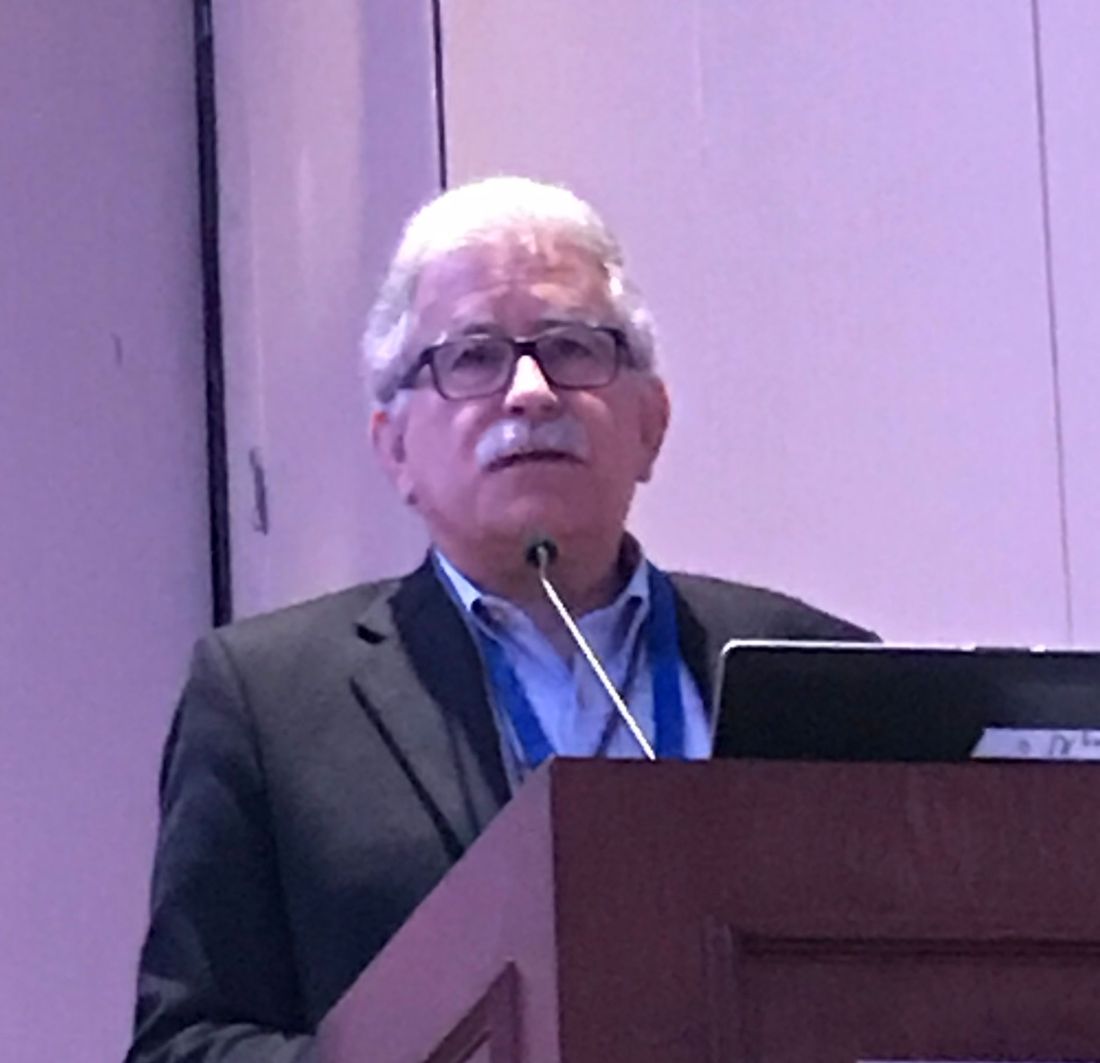
“Schizophrenia is a syndrome. It is a collection of symptoms, not a disease,” explained Michael Y. Hwang, MD, an attending physician at Veterans Affairs Hudson Valley Healthcare System, Montrose, N.Y. He believes that comorbid OCD, like comorbid panic disorder, might identify a subtype of schizophrenia that requires distinct therapeutic strategies.
The principle that schizophrenia represents a group of distinct illnesses with similar presentations is several decades old. Both Dr. Kahn and Dr. Hwang, who have published on this topic, acknowledged that efforts so far to identify those distinct diseases have failed. However, they suggested that the presence of comorbidities probably establishes clinically relevant subtypes.
Among psychiatric comorbidities, major depression is the most common, identified in more than half of patients with schizophrenia in some studies, according to Dr. Hwang. He reported that diagnostic criteria for OCD is met by about 12%, while Dr. Kahn estimated the prevalence of panic disorder in individuals with schizophrenia at about 20%.
In an individual with active positive symptoms of schizophrenia, isolating comorbid OCD or panic disorder often is a challenge. In older textbooks and guidelines on schizophrenia, comorbidities were not even discussed, Dr. Hwang said. Although the DSM-5 now acknowledges elevated rates of OCD and panic disorder in individuals with schizophrenia, Dr. Hwang and Dr. Kahn each indicated that the comorbidities still are not receiving adequate attention from clinicians.
“In general, individuals with schizophrenia who have comorbid OCD tend to do worse,” said Dr. Hwang, explaining the rationale for both looking for and treating OCD. He presented data from several studies, including his own, suggesting that symptoms of OCD can be improved with individualized pharmacotherapy. In addition to such considerations as the potential for interactions between OCD therapies and concurrent atypical antipsychotics, heterogeneity in response underlies the recommendation for individualized therapy. He added that in those with preserved executive functioning, cognitive-behavioral therapy “is always more helpful that pharmacotherapy alone.”
Comorbid panic disorder also can be difficult to recognize, particularly in individuals with active symptoms of schizophrenia, according to Dr. Kahn. . He advised against trivializing the importance of panic disorder symptoms.
“The tendency is to think, so what if the patient has symptoms of panic. Wouldn’t you if you had schizophrenia?” Dr. Kahn noted. However, identifying and then treating the panic has implications for better control of schizophrenia, he said. For the panic symptoms, there is evidence to suggest that clonazepam is effective, he said, but he advised a slow upward titration to avoid sedation and other risks that include addiction. He, like Dr. Hwang, also advised that the value of psychotherapy should not be underestimated.
“It is very important, particularly with outpatients, to spend time with that patient in order to build a therapeutic alliance and from there, progress to supportive psychotherapy,” Dr. Kahn said.
Dr. Kahn and Dr. Hwang reported no potential conflicts of interest related to this topic.
NEW YORK – Psychiatric disorders comorbid with schizophrenia often pose a diagnostic challenge, but they can be the key for improving outcomes when they are addressed along with the core schizophrenia symptoms, according to a workshop on treatment-refractory disease at the American Psychiatric Association annual meeting.
Looking for comorbidities such as depression, panic disorder, and obsessive-compulsive disorder (OCD) is important, because treatment directed at those conditions “can have a significant effect on the psychosis as well,” reported Jeffrey P. Kahn, MD, clinical associate professor of psychiatry, Cornell University, New York.
“Schizophrenia is a syndrome. It is a collection of symptoms, not a disease,” explained Michael Y. Hwang, MD, an attending physician at Veterans Affairs Hudson Valley Healthcare System, Montrose, N.Y. He believes that comorbid OCD, like comorbid panic disorder, might identify a subtype of schizophrenia that requires distinct therapeutic strategies.
The principle that schizophrenia represents a group of distinct illnesses with similar presentations is several decades old. Both Dr. Kahn and Dr. Hwang, who have published on this topic, acknowledged that efforts so far to identify those distinct diseases have failed. However, they suggested that the presence of comorbidities probably establishes clinically relevant subtypes.
Among psychiatric comorbidities, major depression is the most common, identified in more than half of patients with schizophrenia in some studies, according to Dr. Hwang. He reported that diagnostic criteria for OCD is met by about 12%, while Dr. Kahn estimated the prevalence of panic disorder in individuals with schizophrenia at about 20%.
In an individual with active positive symptoms of schizophrenia, isolating comorbid OCD or panic disorder often is a challenge. In older textbooks and guidelines on schizophrenia, comorbidities were not even discussed, Dr. Hwang said. Although the DSM-5 now acknowledges elevated rates of OCD and panic disorder in individuals with schizophrenia, Dr. Hwang and Dr. Kahn each indicated that the comorbidities still are not receiving adequate attention from clinicians.
“In general, individuals with schizophrenia who have comorbid OCD tend to do worse,” said Dr. Hwang, explaining the rationale for both looking for and treating OCD. He presented data from several studies, including his own, suggesting that symptoms of OCD can be improved with individualized pharmacotherapy. In addition to such considerations as the potential for interactions between OCD therapies and concurrent atypical antipsychotics, heterogeneity in response underlies the recommendation for individualized therapy. He added that in those with preserved executive functioning, cognitive-behavioral therapy “is always more helpful that pharmacotherapy alone.”
Comorbid panic disorder also can be difficult to recognize, particularly in individuals with active symptoms of schizophrenia, according to Dr. Kahn. . He advised against trivializing the importance of panic disorder symptoms.
“The tendency is to think, so what if the patient has symptoms of panic. Wouldn’t you if you had schizophrenia?” Dr. Kahn noted. However, identifying and then treating the panic has implications for better control of schizophrenia, he said. For the panic symptoms, there is evidence to suggest that clonazepam is effective, he said, but he advised a slow upward titration to avoid sedation and other risks that include addiction. He, like Dr. Hwang, also advised that the value of psychotherapy should not be underestimated.
“It is very important, particularly with outpatients, to spend time with that patient in order to build a therapeutic alliance and from there, progress to supportive psychotherapy,” Dr. Kahn said.
Dr. Kahn and Dr. Hwang reported no potential conflicts of interest related to this topic.
NEW YORK – Psychiatric disorders comorbid with schizophrenia often pose a diagnostic challenge, but they can be the key for improving outcomes when they are addressed along with the core schizophrenia symptoms, according to a workshop on treatment-refractory disease at the American Psychiatric Association annual meeting.
Looking for comorbidities such as depression, panic disorder, and obsessive-compulsive disorder (OCD) is important, because treatment directed at those conditions “can have a significant effect on the psychosis as well,” reported Jeffrey P. Kahn, MD, clinical associate professor of psychiatry, Cornell University, New York.
“Schizophrenia is a syndrome. It is a collection of symptoms, not a disease,” explained Michael Y. Hwang, MD, an attending physician at Veterans Affairs Hudson Valley Healthcare System, Montrose, N.Y. He believes that comorbid OCD, like comorbid panic disorder, might identify a subtype of schizophrenia that requires distinct therapeutic strategies.
The principle that schizophrenia represents a group of distinct illnesses with similar presentations is several decades old. Both Dr. Kahn and Dr. Hwang, who have published on this topic, acknowledged that efforts so far to identify those distinct diseases have failed. However, they suggested that the presence of comorbidities probably establishes clinically relevant subtypes.
Among psychiatric comorbidities, major depression is the most common, identified in more than half of patients with schizophrenia in some studies, according to Dr. Hwang. He reported that diagnostic criteria for OCD is met by about 12%, while Dr. Kahn estimated the prevalence of panic disorder in individuals with schizophrenia at about 20%.
In an individual with active positive symptoms of schizophrenia, isolating comorbid OCD or panic disorder often is a challenge. In older textbooks and guidelines on schizophrenia, comorbidities were not even discussed, Dr. Hwang said. Although the DSM-5 now acknowledges elevated rates of OCD and panic disorder in individuals with schizophrenia, Dr. Hwang and Dr. Kahn each indicated that the comorbidities still are not receiving adequate attention from clinicians.
“In general, individuals with schizophrenia who have comorbid OCD tend to do worse,” said Dr. Hwang, explaining the rationale for both looking for and treating OCD. He presented data from several studies, including his own, suggesting that symptoms of OCD can be improved with individualized pharmacotherapy. In addition to such considerations as the potential for interactions between OCD therapies and concurrent atypical antipsychotics, heterogeneity in response underlies the recommendation for individualized therapy. He added that in those with preserved executive functioning, cognitive-behavioral therapy “is always more helpful that pharmacotherapy alone.”
Comorbid panic disorder also can be difficult to recognize, particularly in individuals with active symptoms of schizophrenia, according to Dr. Kahn. . He advised against trivializing the importance of panic disorder symptoms.
“The tendency is to think, so what if the patient has symptoms of panic. Wouldn’t you if you had schizophrenia?” Dr. Kahn noted. However, identifying and then treating the panic has implications for better control of schizophrenia, he said. For the panic symptoms, there is evidence to suggest that clonazepam is effective, he said, but he advised a slow upward titration to avoid sedation and other risks that include addiction. He, like Dr. Hwang, also advised that the value of psychotherapy should not be underestimated.
“It is very important, particularly with outpatients, to spend time with that patient in order to build a therapeutic alliance and from there, progress to supportive psychotherapy,” Dr. Kahn said.
Dr. Kahn and Dr. Hwang reported no potential conflicts of interest related to this topic.
REPORTING FROM APA
Psychiatrists urged to take lead in recognizing physician burnout
NEW YORK – The proportion of physicians who commit suicide each year is greater than the proportion of Americans who die of an opioid overdose, according to a series of sobering statistics on physician burnout presented at the American Psychiatric Association annual meeting.
“There are about 400 physician suicides very year, which is proportional rate that is about twice the suicide rate in the general population,” reported Darrell G. Kirch, MD, president and chief executive officer of the Association of American Medical Colleges, Washington.
Burnout is variably defined, but characterizations typically include emotional exhaustion, a high sense of depersonalization, and a low sense of personal accomplishment. In the 2015 study, the overall rate of burnout when assessed via the Maslach Burnout Inventory was 54.4%.
At 40%, the rate of burnout found among psychiatrists is lower than the mean and places them toward the bottom of the list in the rank order among specialists. Yet, 40% is still a large proportion. Moreover, Dr. Kirch believes that psychiatrists have an important role to play in recognizing and addressing this condition in others.
“ in the organization you work in,” Dr. Kirch said. The campaign to which he referred was a call to action launched last year by the National Academy of Medicine (NAM), the Association of American Medical Colleges, and the Accreditation Council for Graduate Medical Education. Led by NAM, it is called the Action Collaborative on Clinician Well-Being and Resilience.
In the 18 months since it was launched, “more than 150 organizations, including the APA, have made commitment statements and are supporting the work of the collaborative around improving clinician well-being,” Dr. Kirch reported.
Many tools already generated by this collaboration can be found in the NAM website at nam.edu/clinicianwellbeing. This section of the website not only includes data about burnout as well as presentation slides for download on the topic, but it is expected to be “a growing repository for solutions that work,” Dr. Kirch said.

This was not news to those who attended the APA symposium. When Dr. Kirch asked the audience who had treated a colleague for burnout, almost every hand was raised. This would not be surprising, except that the leaders in this field so far have typically not been psychiatrists, Dr. Kirch said.
For example, an increasing number of medical centers are following the lead of Stanford (Calif.) University, which appointed Tate D. Shanafelt, MD, as its first chief wellness officer. However, to the knowledge of Dr. Kirch, none of the appointments have gone to a psychiatrist.
“It strikes me that if you need a chief wellness officer who not only can understand the dynamics of burnout but can understand what a short path it is from being burned out to being depressed, suicidal, or addicted, who would be better suited than a psychiatrist? I really think that in many ways, this may be a career path for psychiatrists,” Dr. Kirch said.
Even with the appointment of chief wellness officers, the problem will not soon go away. Although Dr. Kirch believes interventions are needed from the beginning of medical training, he acknowledged that eliminating burnout “is a heavy lift, because there is no single solution.” Listing regulatory burdens, administrative burdens, lack of support staff, and a sense of isolation among documented causes of burnout, he believes identifying all of the solutions to relieve stress and improve clinical satisfaction “will be a journey.”
Dr. Kirch reported no potential conflicts of interest.
NEW YORK – The proportion of physicians who commit suicide each year is greater than the proportion of Americans who die of an opioid overdose, according to a series of sobering statistics on physician burnout presented at the American Psychiatric Association annual meeting.
“There are about 400 physician suicides very year, which is proportional rate that is about twice the suicide rate in the general population,” reported Darrell G. Kirch, MD, president and chief executive officer of the Association of American Medical Colleges, Washington.
Burnout is variably defined, but characterizations typically include emotional exhaustion, a high sense of depersonalization, and a low sense of personal accomplishment. In the 2015 study, the overall rate of burnout when assessed via the Maslach Burnout Inventory was 54.4%.
At 40%, the rate of burnout found among psychiatrists is lower than the mean and places them toward the bottom of the list in the rank order among specialists. Yet, 40% is still a large proportion. Moreover, Dr. Kirch believes that psychiatrists have an important role to play in recognizing and addressing this condition in others.
“ in the organization you work in,” Dr. Kirch said. The campaign to which he referred was a call to action launched last year by the National Academy of Medicine (NAM), the Association of American Medical Colleges, and the Accreditation Council for Graduate Medical Education. Led by NAM, it is called the Action Collaborative on Clinician Well-Being and Resilience.
In the 18 months since it was launched, “more than 150 organizations, including the APA, have made commitment statements and are supporting the work of the collaborative around improving clinician well-being,” Dr. Kirch reported.
Many tools already generated by this collaboration can be found in the NAM website at nam.edu/clinicianwellbeing. This section of the website not only includes data about burnout as well as presentation slides for download on the topic, but it is expected to be “a growing repository for solutions that work,” Dr. Kirch said.
This was not news to those who attended the APA symposium. When Dr. Kirch asked the audience who had treated a colleague for burnout, almost every hand was raised. This would not be surprising, except that the leaders in this field so far have typically not been psychiatrists, Dr. Kirch said.
For example, an increasing number of medical centers are following the lead of Stanford (Calif.) University, which appointed Tate D. Shanafelt, MD, as its first chief wellness officer. However, to the knowledge of Dr. Kirch, none of the appointments have gone to a psychiatrist.
“It strikes me that if you need a chief wellness officer who not only can understand the dynamics of burnout but can understand what a short path it is from being burned out to being depressed, suicidal, or addicted, who would be better suited than a psychiatrist? I really think that in many ways, this may be a career path for psychiatrists,” Dr. Kirch said.
Even with the appointment of chief wellness officers, the problem will not soon go away. Although Dr. Kirch believes interventions are needed from the beginning of medical training, he acknowledged that eliminating burnout “is a heavy lift, because there is no single solution.” Listing regulatory burdens, administrative burdens, lack of support staff, and a sense of isolation among documented causes of burnout, he believes identifying all of the solutions to relieve stress and improve clinical satisfaction “will be a journey.”
Dr. Kirch reported no potential conflicts of interest.
NEW YORK – The proportion of physicians who commit suicide each year is greater than the proportion of Americans who die of an opioid overdose, according to a series of sobering statistics on physician burnout presented at the American Psychiatric Association annual meeting.
“There are about 400 physician suicides very year, which is proportional rate that is about twice the suicide rate in the general population,” reported Darrell G. Kirch, MD, president and chief executive officer of the Association of American Medical Colleges, Washington.
Burnout is variably defined, but characterizations typically include emotional exhaustion, a high sense of depersonalization, and a low sense of personal accomplishment. In the 2015 study, the overall rate of burnout when assessed via the Maslach Burnout Inventory was 54.4%.
At 40%, the rate of burnout found among psychiatrists is lower than the mean and places them toward the bottom of the list in the rank order among specialists. Yet, 40% is still a large proportion. Moreover, Dr. Kirch believes that psychiatrists have an important role to play in recognizing and addressing this condition in others.
“ in the organization you work in,” Dr. Kirch said. The campaign to which he referred was a call to action launched last year by the National Academy of Medicine (NAM), the Association of American Medical Colleges, and the Accreditation Council for Graduate Medical Education. Led by NAM, it is called the Action Collaborative on Clinician Well-Being and Resilience.
In the 18 months since it was launched, “more than 150 organizations, including the APA, have made commitment statements and are supporting the work of the collaborative around improving clinician well-being,” Dr. Kirch reported.
Many tools already generated by this collaboration can be found in the NAM website at nam.edu/clinicianwellbeing. This section of the website not only includes data about burnout as well as presentation slides for download on the topic, but it is expected to be “a growing repository for solutions that work,” Dr. Kirch said.
This was not news to those who attended the APA symposium. When Dr. Kirch asked the audience who had treated a colleague for burnout, almost every hand was raised. This would not be surprising, except that the leaders in this field so far have typically not been psychiatrists, Dr. Kirch said.
For example, an increasing number of medical centers are following the lead of Stanford (Calif.) University, which appointed Tate D. Shanafelt, MD, as its first chief wellness officer. However, to the knowledge of Dr. Kirch, none of the appointments have gone to a psychiatrist.
“It strikes me that if you need a chief wellness officer who not only can understand the dynamics of burnout but can understand what a short path it is from being burned out to being depressed, suicidal, or addicted, who would be better suited than a psychiatrist? I really think that in many ways, this may be a career path for psychiatrists,” Dr. Kirch said.
Even with the appointment of chief wellness officers, the problem will not soon go away. Although Dr. Kirch believes interventions are needed from the beginning of medical training, he acknowledged that eliminating burnout “is a heavy lift, because there is no single solution.” Listing regulatory burdens, administrative burdens, lack of support staff, and a sense of isolation among documented causes of burnout, he believes identifying all of the solutions to relieve stress and improve clinical satisfaction “will be a journey.”
Dr. Kirch reported no potential conflicts of interest.
REPORTING FROM APA

Climate change expected to impose major burden on mental health
NEW YORK – Of the broad range of direct and indirect threats to public health anticipated from climate change, those involving mental health will place psychiatrists on the front lines of efforts to mitigate the impact, a member of the Climate Psychiatry Alliance said at the annual meeting of the American Psychiatric Association.
“One thing climate changes mean for us in psychiatry is more work,” reported Janet L. Lewis, MD, an assistant clinical professor of psychiatry at the University of Rochester (N.Y.).
Mental health is sensitive to climate. “Psychiatric patients can be particularly vulnerable to the medical effects of climate change,” Dr. Lewis said. “People with schizophrenia exhibit impaired thermoregulatory functioning, and many of our medications can impair the body’s normal heat regulation.”
The evidence of increased death rates among schizophrenia patients during heat waves has been attributed to this phenomenon as well as to the failure of patients with mental disorders to seek or obtain relief from heat, according to Dr. Lewis, but she noted that These links are true for the individual, and they affect trends in communities.
As a cause of societal stresses, such as food and water insecurity, climate change also has the very real potential of producing traumatic disruptions commensurate with disasters such as hurricanes or earthquakes. Noting that the rate of PTSD after such natural disasters typically runs at around 30%, Dr. Lewis suggested that psychiatrists might face large challenges from major upheavals induced by climate change.
However, even in the absence of catastrophic consequences, significant psychiatric morbidity may be generated by climate change in the form of “ecoanxieties” or “solastalgia,” a term coined about 10 years ago to describe psychic anxiety induced by environmental change. While many individuals continue to function normally despite fear or anxiety about climate change, Dr. Lewis said that there are many reports in the literature now show that psychoterratic illness, another term for this phenomenon, is associated with degraded or threatened environments linked to climate change.
The Climate Psychiatry Alliance is one of several professional psychiatry groups that is engaged in evaluating how psychiatry as a profession should react to climate change. The Climate Psychiatry committee of the Group for the Advancement of Psychiatry is another. Dr. Lewis, addressing the potential criticism that climate is a political issue, said that “we bring some very particular things to this 21st-century disaster … hopefully, everything I have said about the mental effects of climate change convinces you that it is not just a political problem.”
It is, however, a problem that is complex. Differentiating complex problems from complicated problems – which can be solved eventually with sufficient information – Dr. Lewis explained that complex problems are dynamic with an interplay between components that make solutions uncertain without experimentation and continual reassessment. She believes both mitigation of the problem and adaption to the inevitability of rising temperatures will be necessary.
This is relevant for psychiatrists who also must adapt to the environmental changes and develop resilience that will help them deal objectively with the mental health consequences of climate change. She noted that environmentalists recognize two traps in approaching solutions to climate change. The first is proposing overly simplistic solutions that fail to address the profound implications of climate change. The second is being rendered inactive by the overwhelming complexity of this growing problem.
Ultimately, Dr. Lewis called for psychiatrists to be proactive in dealing the mental health consequences of climate change. She noted that the APA issued a position statement in 2017, which emphasized that individuals with mental health disorders are disproportionately affected by climate change.
“We as psychiatrists know what it is to deal with complex systems, and we understand through our own work with traumatized patients how to manage patients with trauma responses and how to get empowered and engaged in the rebuilding of realistic lives,” Dr. Lewis said. She believes those skills will be important as the impact of climate change on mental health unfolds.
NEW YORK – Of the broad range of direct and indirect threats to public health anticipated from climate change, those involving mental health will place psychiatrists on the front lines of efforts to mitigate the impact, a member of the Climate Psychiatry Alliance said at the annual meeting of the American Psychiatric Association.
“One thing climate changes mean for us in psychiatry is more work,” reported Janet L. Lewis, MD, an assistant clinical professor of psychiatry at the University of Rochester (N.Y.).
Mental health is sensitive to climate. “Psychiatric patients can be particularly vulnerable to the medical effects of climate change,” Dr. Lewis said. “People with schizophrenia exhibit impaired thermoregulatory functioning, and many of our medications can impair the body’s normal heat regulation.”
The evidence of increased death rates among schizophrenia patients during heat waves has been attributed to this phenomenon as well as to the failure of patients with mental disorders to seek or obtain relief from heat, according to Dr. Lewis, but she noted that These links are true for the individual, and they affect trends in communities.
As a cause of societal stresses, such as food and water insecurity, climate change also has the very real potential of producing traumatic disruptions commensurate with disasters such as hurricanes or earthquakes. Noting that the rate of PTSD after such natural disasters typically runs at around 30%, Dr. Lewis suggested that psychiatrists might face large challenges from major upheavals induced by climate change.
However, even in the absence of catastrophic consequences, significant psychiatric morbidity may be generated by climate change in the form of “ecoanxieties” or “solastalgia,” a term coined about 10 years ago to describe psychic anxiety induced by environmental change. While many individuals continue to function normally despite fear or anxiety about climate change, Dr. Lewis said that there are many reports in the literature now show that psychoterratic illness, another term for this phenomenon, is associated with degraded or threatened environments linked to climate change.
The Climate Psychiatry Alliance is one of several professional psychiatry groups that is engaged in evaluating how psychiatry as a profession should react to climate change. The Climate Psychiatry committee of the Group for the Advancement of Psychiatry is another. Dr. Lewis, addressing the potential criticism that climate is a political issue, said that “we bring some very particular things to this 21st-century disaster … hopefully, everything I have said about the mental effects of climate change convinces you that it is not just a political problem.”
It is, however, a problem that is complex. Differentiating complex problems from complicated problems – which can be solved eventually with sufficient information – Dr. Lewis explained that complex problems are dynamic with an interplay between components that make solutions uncertain without experimentation and continual reassessment. She believes both mitigation of the problem and adaption to the inevitability of rising temperatures will be necessary.
This is relevant for psychiatrists who also must adapt to the environmental changes and develop resilience that will help them deal objectively with the mental health consequences of climate change. She noted that environmentalists recognize two traps in approaching solutions to climate change. The first is proposing overly simplistic solutions that fail to address the profound implications of climate change. The second is being rendered inactive by the overwhelming complexity of this growing problem.
Ultimately, Dr. Lewis called for psychiatrists to be proactive in dealing the mental health consequences of climate change. She noted that the APA issued a position statement in 2017, which emphasized that individuals with mental health disorders are disproportionately affected by climate change.
“We as psychiatrists know what it is to deal with complex systems, and we understand through our own work with traumatized patients how to manage patients with trauma responses and how to get empowered and engaged in the rebuilding of realistic lives,” Dr. Lewis said. She believes those skills will be important as the impact of climate change on mental health unfolds.
NEW YORK – Of the broad range of direct and indirect threats to public health anticipated from climate change, those involving mental health will place psychiatrists on the front lines of efforts to mitigate the impact, a member of the Climate Psychiatry Alliance said at the annual meeting of the American Psychiatric Association.
“One thing climate changes mean for us in psychiatry is more work,” reported Janet L. Lewis, MD, an assistant clinical professor of psychiatry at the University of Rochester (N.Y.).
Mental health is sensitive to climate. “Psychiatric patients can be particularly vulnerable to the medical effects of climate change,” Dr. Lewis said. “People with schizophrenia exhibit impaired thermoregulatory functioning, and many of our medications can impair the body’s normal heat regulation.”
The evidence of increased death rates among schizophrenia patients during heat waves has been attributed to this phenomenon as well as to the failure of patients with mental disorders to seek or obtain relief from heat, according to Dr. Lewis, but she noted that These links are true for the individual, and they affect trends in communities.
As a cause of societal stresses, such as food and water insecurity, climate change also has the very real potential of producing traumatic disruptions commensurate with disasters such as hurricanes or earthquakes. Noting that the rate of PTSD after such natural disasters typically runs at around 30%, Dr. Lewis suggested that psychiatrists might face large challenges from major upheavals induced by climate change.
However, even in the absence of catastrophic consequences, significant psychiatric morbidity may be generated by climate change in the form of “ecoanxieties” or “solastalgia,” a term coined about 10 years ago to describe psychic anxiety induced by environmental change. While many individuals continue to function normally despite fear or anxiety about climate change, Dr. Lewis said that there are many reports in the literature now show that psychoterratic illness, another term for this phenomenon, is associated with degraded or threatened environments linked to climate change.
The Climate Psychiatry Alliance is one of several professional psychiatry groups that is engaged in evaluating how psychiatry as a profession should react to climate change. The Climate Psychiatry committee of the Group for the Advancement of Psychiatry is another. Dr. Lewis, addressing the potential criticism that climate is a political issue, said that “we bring some very particular things to this 21st-century disaster … hopefully, everything I have said about the mental effects of climate change convinces you that it is not just a political problem.”
It is, however, a problem that is complex. Differentiating complex problems from complicated problems – which can be solved eventually with sufficient information – Dr. Lewis explained that complex problems are dynamic with an interplay between components that make solutions uncertain without experimentation and continual reassessment. She believes both mitigation of the problem and adaption to the inevitability of rising temperatures will be necessary.
This is relevant for psychiatrists who also must adapt to the environmental changes and develop resilience that will help them deal objectively with the mental health consequences of climate change. She noted that environmentalists recognize two traps in approaching solutions to climate change. The first is proposing overly simplistic solutions that fail to address the profound implications of climate change. The second is being rendered inactive by the overwhelming complexity of this growing problem.
Ultimately, Dr. Lewis called for psychiatrists to be proactive in dealing the mental health consequences of climate change. She noted that the APA issued a position statement in 2017, which emphasized that individuals with mental health disorders are disproportionately affected by climate change.
“We as psychiatrists know what it is to deal with complex systems, and we understand through our own work with traumatized patients how to manage patients with trauma responses and how to get empowered and engaged in the rebuilding of realistic lives,” Dr. Lewis said. She believes those skills will be important as the impact of climate change on mental health unfolds.
Endovascular interventions associated with large benefits in peripheral artery disease
WASHINGTON – An all-comer observational study associated endovascular treatment of lower limb peripheral artery disease (PAD) with low event rates and substantial improvements in quality of life at 18 months, even in Rutherford stage 6 patients.
Although the proportion of patients with Rutherford stage 6 PAD was relatively small, the study results showed that peripheral vascular intervention “can be successful in this patient population as evidenced by a high freedom from major amputation,” reported William Gray, MD, system chief of the division of cardiovascular disease at the Lankenau Heart Group, Wynnewood, Pa., at CRT 2018, sponsored by the Cardiovascular Research Institute at Washington Hospital Center.
“Many of the patients in this trial, particularly the Rutherford 6 patients, would never be included in the pivotal trial for endovascular devices,” Dr. Gray said. He called this “a unique study” in that it had almost no exclusions.
The study enrolled 1,204 patients with peripheral artery disease at 51 participating sites. After 18 months, follow-up data were available on 793 patients. These were divided by Rutherford classifications into three groups: 374 patients in the combined Rutherford 2 and 3 classifications (R2/3); 371 in the combined Rutherford 4 and 5 classifications (R4/5); and 48 in the Rutherford 6 classification (R6). Patients treated with any Food and Drug Administration–approved technology for treatment of claudication and critical limb ischemia for PAD were eligible.
The endpoints considered at 18 months included procedural and lesion success, major adverse events, and quality of life. Four core laboratories were responsible for an independent analysis of outcomes. A follow-up of 5 years is planned and will include an economic analysis.
The procedural success rates for were 84.4% for the R2/3 group, 76.9% for the R4/5 group, and 70.2% for the R6 group. Almost all of those in the R2/3 and R4/5 groups were discharged immediately after treatment. In the R6 group, approximately 25% of patients were held for complications or additional care.
At 18 months of follow-up, freedom from major adverse events, defined as death, major amputation, or a target vessel revascularization, was achieved by 76.9% of those in the R2/3 group, 68.2% of those in the R4/5 group, and 52.8% of those in the R6 group. The analysis also looked at specific events: The rates for freedom from amputation were 99.3%, 95.3%, and 81.7% in the R2/3, R4/5, and R6 groups, respectively; the freedom from death was 93.9%, 85.5%, and 76.2%; and the freedom from target vessel revascularization was 77.5%, 70.6%, ad 65.7%.
Those in R2/3 maintained the improvement in Rutherford classification observed at 30 days for the subsequent 12 months. Those in R2/3 and R4/5 showed continued improvement in Rutherford classification. For example, R4 represented approximately 50% of the patients in R3/4 classification at baseline but less than 20% of this group at 18 months.
The change in Rutherford classification was reflected in quality of life (QOL) analyses. As far as total QOL scores, the R6 group, which had lower scores at baseline, was no longer significantly different at 18 months from the R4/5 group. On the pain subdomain QOL score, which was incrementally worse at baseline for increased PAD severity, there were no differences at 18 months after improvements in all groups.
Overall, the LIBERTY 360 study “supports aggressive management” with endovascular procedures in symptomatic patients with PAD. This is important because PAD often is inadequately treated or left untreated, according to Dr. Gray. He cited data suggesting that up to 50% of patients who undergo amputation because of lower limb claudication never even undergo a vascular evaluation.
Although there was no control group to evaluate outcomes in patients not treated or treated with another intervention, such as surgery, Dr. Gray suggested that there are encouraging results in a study that was conducted to enroll patients “with as many confounders as possible.”
Dr. Gray reported financial relationships with Abbott Vascular, Cordis, Medtronic, WL Gore, and a number of other device manufacturers.
WASHINGTON – An all-comer observational study associated endovascular treatment of lower limb peripheral artery disease (PAD) with low event rates and substantial improvements in quality of life at 18 months, even in Rutherford stage 6 patients.
Although the proportion of patients with Rutherford stage 6 PAD was relatively small, the study results showed that peripheral vascular intervention “can be successful in this patient population as evidenced by a high freedom from major amputation,” reported William Gray, MD, system chief of the division of cardiovascular disease at the Lankenau Heart Group, Wynnewood, Pa., at CRT 2018, sponsored by the Cardiovascular Research Institute at Washington Hospital Center.
“Many of the patients in this trial, particularly the Rutherford 6 patients, would never be included in the pivotal trial for endovascular devices,” Dr. Gray said. He called this “a unique study” in that it had almost no exclusions.
The study enrolled 1,204 patients with peripheral artery disease at 51 participating sites. After 18 months, follow-up data were available on 793 patients. These were divided by Rutherford classifications into three groups: 374 patients in the combined Rutherford 2 and 3 classifications (R2/3); 371 in the combined Rutherford 4 and 5 classifications (R4/5); and 48 in the Rutherford 6 classification (R6). Patients treated with any Food and Drug Administration–approved technology for treatment of claudication and critical limb ischemia for PAD were eligible.
The endpoints considered at 18 months included procedural and lesion success, major adverse events, and quality of life. Four core laboratories were responsible for an independent analysis of outcomes. A follow-up of 5 years is planned and will include an economic analysis.
The procedural success rates for were 84.4% for the R2/3 group, 76.9% for the R4/5 group, and 70.2% for the R6 group. Almost all of those in the R2/3 and R4/5 groups were discharged immediately after treatment. In the R6 group, approximately 25% of patients were held for complications or additional care.
At 18 months of follow-up, freedom from major adverse events, defined as death, major amputation, or a target vessel revascularization, was achieved by 76.9% of those in the R2/3 group, 68.2% of those in the R4/5 group, and 52.8% of those in the R6 group. The analysis also looked at specific events: The rates for freedom from amputation were 99.3%, 95.3%, and 81.7% in the R2/3, R4/5, and R6 groups, respectively; the freedom from death was 93.9%, 85.5%, and 76.2%; and the freedom from target vessel revascularization was 77.5%, 70.6%, ad 65.7%.
Those in R2/3 maintained the improvement in Rutherford classification observed at 30 days for the subsequent 12 months. Those in R2/3 and R4/5 showed continued improvement in Rutherford classification. For example, R4 represented approximately 50% of the patients in R3/4 classification at baseline but less than 20% of this group at 18 months.
The change in Rutherford classification was reflected in quality of life (QOL) analyses. As far as total QOL scores, the R6 group, which had lower scores at baseline, was no longer significantly different at 18 months from the R4/5 group. On the pain subdomain QOL score, which was incrementally worse at baseline for increased PAD severity, there were no differences at 18 months after improvements in all groups.
Overall, the LIBERTY 360 study “supports aggressive management” with endovascular procedures in symptomatic patients with PAD. This is important because PAD often is inadequately treated or left untreated, according to Dr. Gray. He cited data suggesting that up to 50% of patients who undergo amputation because of lower limb claudication never even undergo a vascular evaluation.
Although there was no control group to evaluate outcomes in patients not treated or treated with another intervention, such as surgery, Dr. Gray suggested that there are encouraging results in a study that was conducted to enroll patients “with as many confounders as possible.”
Dr. Gray reported financial relationships with Abbott Vascular, Cordis, Medtronic, WL Gore, and a number of other device manufacturers.
WASHINGTON – An all-comer observational study associated endovascular treatment of lower limb peripheral artery disease (PAD) with low event rates and substantial improvements in quality of life at 18 months, even in Rutherford stage 6 patients.
Although the proportion of patients with Rutherford stage 6 PAD was relatively small, the study results showed that peripheral vascular intervention “can be successful in this patient population as evidenced by a high freedom from major amputation,” reported William Gray, MD, system chief of the division of cardiovascular disease at the Lankenau Heart Group, Wynnewood, Pa., at CRT 2018, sponsored by the Cardiovascular Research Institute at Washington Hospital Center.
“Many of the patients in this trial, particularly the Rutherford 6 patients, would never be included in the pivotal trial for endovascular devices,” Dr. Gray said. He called this “a unique study” in that it had almost no exclusions.
The study enrolled 1,204 patients with peripheral artery disease at 51 participating sites. After 18 months, follow-up data were available on 793 patients. These were divided by Rutherford classifications into three groups: 374 patients in the combined Rutherford 2 and 3 classifications (R2/3); 371 in the combined Rutherford 4 and 5 classifications (R4/5); and 48 in the Rutherford 6 classification (R6). Patients treated with any Food and Drug Administration–approved technology for treatment of claudication and critical limb ischemia for PAD were eligible.
The endpoints considered at 18 months included procedural and lesion success, major adverse events, and quality of life. Four core laboratories were responsible for an independent analysis of outcomes. A follow-up of 5 years is planned and will include an economic analysis.
The procedural success rates for were 84.4% for the R2/3 group, 76.9% for the R4/5 group, and 70.2% for the R6 group. Almost all of those in the R2/3 and R4/5 groups were discharged immediately after treatment. In the R6 group, approximately 25% of patients were held for complications or additional care.
At 18 months of follow-up, freedom from major adverse events, defined as death, major amputation, or a target vessel revascularization, was achieved by 76.9% of those in the R2/3 group, 68.2% of those in the R4/5 group, and 52.8% of those in the R6 group. The analysis also looked at specific events: The rates for freedom from amputation were 99.3%, 95.3%, and 81.7% in the R2/3, R4/5, and R6 groups, respectively; the freedom from death was 93.9%, 85.5%, and 76.2%; and the freedom from target vessel revascularization was 77.5%, 70.6%, ad 65.7%.
Those in R2/3 maintained the improvement in Rutherford classification observed at 30 days for the subsequent 12 months. Those in R2/3 and R4/5 showed continued improvement in Rutherford classification. For example, R4 represented approximately 50% of the patients in R3/4 classification at baseline but less than 20% of this group at 18 months.
The change in Rutherford classification was reflected in quality of life (QOL) analyses. As far as total QOL scores, the R6 group, which had lower scores at baseline, was no longer significantly different at 18 months from the R4/5 group. On the pain subdomain QOL score, which was incrementally worse at baseline for increased PAD severity, there were no differences at 18 months after improvements in all groups.
Overall, the LIBERTY 360 study “supports aggressive management” with endovascular procedures in symptomatic patients with PAD. This is important because PAD often is inadequately treated or left untreated, according to Dr. Gray. He cited data suggesting that up to 50% of patients who undergo amputation because of lower limb claudication never even undergo a vascular evaluation.
Although there was no control group to evaluate outcomes in patients not treated or treated with another intervention, such as surgery, Dr. Gray suggested that there are encouraging results in a study that was conducted to enroll patients “with as many confounders as possible.”
Dr. Gray reported financial relationships with Abbott Vascular, Cordis, Medtronic, WL Gore, and a number of other device manufacturers.
Key clinical point: An observational study supports endovascular strategies even in the most advanced cases of peripheral artery disease (PAD).
Major finding: In Rutherford stage 6 patients, low amputation rates and large improvements in quality of life were observed at 18 months of follow-up.
Data source: Prospective, observational multicenter study.
Disclosures: Dr. Gray reports financial relationships with Abbott Vascular, BioCardia, Boston Scientific, Cardiovascular Systems, Coherex Medical, Contego Cook, Cordis, Medtronic, Shockwave Medical, Silk Road Medical, and WL Gore.
Evidence is essential but not sufficient to move guidelines
BOSTON – For those considering how to navigate their innovative health care strategy into a position that will lead to an eventual guideline recommendation, it is important to think beyond demonstration of efficacy and safety in the design of randomized trials, according to an overview of how guideline committees currently function.
“In the old days, it was only the strength of the evidence. Now, in addition to the evidence, we have three other issues we look at to form the strength of a recommendation,” John M. Inadomi, MD, AGAF, head of the division of gastroenterology, University of Washington, Seattle, said at the 2018 AGA Tech Summit, sponsored by the AGA Center for GI Innovation and Technology.

“I think the big thing is that we are trying to move away from is just-the-evidence [approach],” Dr. Inadomi explained to an audience that included physician entrepreneurs and investors with an interest in how to establish a new diagnostic tool or treatment device as a standard of care.
There is no doubt that randomized controlled trial data are critical for objectively establishing safety and efficacy, but there has been an evolutionary change. According to Dr. Inadomi, guideline committees are posing more pointed questions about the practical value of one strategy relative to others. They also have increased their scrutiny of the quality and consistency of the RCT data in relation to the specific indication being considered.
“The implication of a strong recommendation is that most people in the situation would want the recommended course of action and that only a small proportion would not,” Dr. Inadomi explained. On the basis of this criterion, an inconvenient, costly, or poorly accepted therapy may not receive a strong recommendation even if effective. Strong recommendations typically set a standard.
“For the health care provider, that means that most patients should receive that course of action,” Dr. Inadomi said. Conversely, “for a weak recommendation, it implies that the majority of people would want this, but many would not.”
Strong versus weak recommendations have an impact on health care policy, Dr. Inadomi added. Those measuring quality of care might, in some cases, evaluate the frequency with which patients receive guideline-based care that has been given a 1A rating, which identifies the strongest recommendation. Weak recommendations encourage a greater emphasis on shared decision making that recognizes alternative treatment strategies in the context of patient preferences and values.
A reorientation that considers the limits of objective data by itself is reflected in a less restrictive view on the source of the data used in guideline deliberations, according to Dr. Inadomi. “It was once thought that all RCTs are good and observational studies are bad,” he said, adding that this view has changed with greater appreciation of publication bias and RCT study limitations, such as enrollment of nonrepresentative patient populations. While RCT data are preferred, he contended that observational studies are influential to guideline committees when there is a large effect size and there is consistency of evidence.
The move away from evidence-only guidelines is driven by a greater appreciation of value, Dr. Inadomi suggested. For entrepreneurs who hope to shepherd their devices or tools into a central position in clinical medicine, safety and efficacy are critical but may no longer be sufficient.
Dr. Inadomi has no disclosures relevant to this topic.
BOSTON – For those considering how to navigate their innovative health care strategy into a position that will lead to an eventual guideline recommendation, it is important to think beyond demonstration of efficacy and safety in the design of randomized trials, according to an overview of how guideline committees currently function.
“In the old days, it was only the strength of the evidence. Now, in addition to the evidence, we have three other issues we look at to form the strength of a recommendation,” John M. Inadomi, MD, AGAF, head of the division of gastroenterology, University of Washington, Seattle, said at the 2018 AGA Tech Summit, sponsored by the AGA Center for GI Innovation and Technology.
“I think the big thing is that we are trying to move away from is just-the-evidence [approach],” Dr. Inadomi explained to an audience that included physician entrepreneurs and investors with an interest in how to establish a new diagnostic tool or treatment device as a standard of care.
There is no doubt that randomized controlled trial data are critical for objectively establishing safety and efficacy, but there has been an evolutionary change. According to Dr. Inadomi, guideline committees are posing more pointed questions about the practical value of one strategy relative to others. They also have increased their scrutiny of the quality and consistency of the RCT data in relation to the specific indication being considered.
“The implication of a strong recommendation is that most people in the situation would want the recommended course of action and that only a small proportion would not,” Dr. Inadomi explained. On the basis of this criterion, an inconvenient, costly, or poorly accepted therapy may not receive a strong recommendation even if effective. Strong recommendations typically set a standard.
“For the health care provider, that means that most patients should receive that course of action,” Dr. Inadomi said. Conversely, “for a weak recommendation, it implies that the majority of people would want this, but many would not.”
Strong versus weak recommendations have an impact on health care policy, Dr. Inadomi added. Those measuring quality of care might, in some cases, evaluate the frequency with which patients receive guideline-based care that has been given a 1A rating, which identifies the strongest recommendation. Weak recommendations encourage a greater emphasis on shared decision making that recognizes alternative treatment strategies in the context of patient preferences and values.
A reorientation that considers the limits of objective data by itself is reflected in a less restrictive view on the source of the data used in guideline deliberations, according to Dr. Inadomi. “It was once thought that all RCTs are good and observational studies are bad,” he said, adding that this view has changed with greater appreciation of publication bias and RCT study limitations, such as enrollment of nonrepresentative patient populations. While RCT data are preferred, he contended that observational studies are influential to guideline committees when there is a large effect size and there is consistency of evidence.
The move away from evidence-only guidelines is driven by a greater appreciation of value, Dr. Inadomi suggested. For entrepreneurs who hope to shepherd their devices or tools into a central position in clinical medicine, safety and efficacy are critical but may no longer be sufficient.
Dr. Inadomi has no disclosures relevant to this topic.
BOSTON – For those considering how to navigate their innovative health care strategy into a position that will lead to an eventual guideline recommendation, it is important to think beyond demonstration of efficacy and safety in the design of randomized trials, according to an overview of how guideline committees currently function.
“In the old days, it was only the strength of the evidence. Now, in addition to the evidence, we have three other issues we look at to form the strength of a recommendation,” John M. Inadomi, MD, AGAF, head of the division of gastroenterology, University of Washington, Seattle, said at the 2018 AGA Tech Summit, sponsored by the AGA Center for GI Innovation and Technology.
“I think the big thing is that we are trying to move away from is just-the-evidence [approach],” Dr. Inadomi explained to an audience that included physician entrepreneurs and investors with an interest in how to establish a new diagnostic tool or treatment device as a standard of care.
There is no doubt that randomized controlled trial data are critical for objectively establishing safety and efficacy, but there has been an evolutionary change. According to Dr. Inadomi, guideline committees are posing more pointed questions about the practical value of one strategy relative to others. They also have increased their scrutiny of the quality and consistency of the RCT data in relation to the specific indication being considered.
“The implication of a strong recommendation is that most people in the situation would want the recommended course of action and that only a small proportion would not,” Dr. Inadomi explained. On the basis of this criterion, an inconvenient, costly, or poorly accepted therapy may not receive a strong recommendation even if effective. Strong recommendations typically set a standard.
“For the health care provider, that means that most patients should receive that course of action,” Dr. Inadomi said. Conversely, “for a weak recommendation, it implies that the majority of people would want this, but many would not.”
Strong versus weak recommendations have an impact on health care policy, Dr. Inadomi added. Those measuring quality of care might, in some cases, evaluate the frequency with which patients receive guideline-based care that has been given a 1A rating, which identifies the strongest recommendation. Weak recommendations encourage a greater emphasis on shared decision making that recognizes alternative treatment strategies in the context of patient preferences and values.
A reorientation that considers the limits of objective data by itself is reflected in a less restrictive view on the source of the data used in guideline deliberations, according to Dr. Inadomi. “It was once thought that all RCTs are good and observational studies are bad,” he said, adding that this view has changed with greater appreciation of publication bias and RCT study limitations, such as enrollment of nonrepresentative patient populations. While RCT data are preferred, he contended that observational studies are influential to guideline committees when there is a large effect size and there is consistency of evidence.
The move away from evidence-only guidelines is driven by a greater appreciation of value, Dr. Inadomi suggested. For entrepreneurs who hope to shepherd their devices or tools into a central position in clinical medicine, safety and efficacy are critical but may no longer be sufficient.
Dr. Inadomi has no disclosures relevant to this topic.
EXPERT ANALYSIS FROM 2018 AGA TECH SUMMIT