User login
Tests can identify leukemia risk in newborns with Down syndrome
SAN DIEGO – Research into hundreds of babies with Down syndrome is providing valuable insight into the genetic roots of leukemia and offering a route to identify newborns at high risk.

“We can now identify children at high risk of developing myeloid leukemia within 4 years” through blood or genetic tests, Irene Roberts, MD, a pediatric hematologist at the University of Oxford’s (England) MRC Weatherall Institute of Molecular Medicine, said at the annual meeting of the American Society of Hematology.
About 2%-3% of children with Down syndrome will develop acute lymphocytic leukemia (ALL) or acute myeloid leukemia (AML), according to the National Cancer Institute, rates that are much higher than in the general population.
Research suggests that among children aged 0-4 years with Down syndrome, the standardized incidence ratio (SIR) of AML is 114, compared with other children, Dr. Roberts said. The SIR of ALL is 27 in children aged 1-4 years, she said.
For people with Down syndrome aged 0-60 years, the SIRs are 12 and 13 in AML and ALL, respectively, she said.
In her presentation, Dr. Roberts focused on AML that appears before age 4 years and is preceded by a neonatal preleukemia – transient abnormal myelopoiesis (TAM) – that only occurs in Down syndrome. In most cases, TAM, which occurs with GATA1 mutations, resolves on its own after birth, she said. But in others, the GATA1 mutations continue and cause AML to develop.
Dr. Roberts highlighted her institution’s Oxford Down Syndrome Cohort Study and offered an update to a 2013 report (Blood. 2013 Dec 5;122[24]:3908–17). The study recruited 471 neonates with Down syndrome and followed them for up to 4 years: 341 with no GATA1 mutation and 130 (28%) with the mutation. Dr. Roberts called the latter number a “very high frequency.”
Of those with the mutation, 7 patients (5%) developed AML at a median age of 16 months. None of those without the mutation developed AML.
Also, among the 130 neonates with the mutation, 42% were considered to have “clinical” TAM (more than 10% blasts) and 58% were considered to have “silent” TAM (fewer than 10% blasts).
“We predicted that these babies with clinical TAM would have more severe clinical disease ... and that in fact turned out to be the case,” Dr. Roberts said.
Why is the GATA1 mutation so significant? Research suggests that platelet production is abnormal in neonates with Down syndrome, compared with neonates without it, regardless of whether they have the mutation, Dr. Roberts said.
The mutation doesn’t reduce further platelet count, but does disrupt megakaryopoiesis – the process of the production of platelets. As a result, giant platelets and megakaryocyte fragments are more common, she explained.
Moving forward, research data can be used to identify which children are most at risk, Dr. Roberts said. Newborns with Down syndrome are more likely to survive without leukemia if they have silent TAM, compared with those who have clinical TAM, and if they have an estimated variant allele frequency above 15%, according to findings from the Oxford study.
Children at high risk of AML before age 4 years can be identified by analyzing the percentage of blasts on a smear and/or by analyzing mutation of GATA1, according to Dr. Roberts. However, this cannot be accomplished by the use of a complete blood count (CBC) test, she said, which is used to check for leukemia.
Dr. Roberts called for the development of more guidelines for screening newborns with Down syndrome for leukemia risk. The British Society for Haematology issued testing guidelines, coauthored by Dr. Roberts, in 2018 (Br J Haematol. 2018 Jul;182[2]:200-11).
Dr. Roberts reported having no financial disclosures.
SAN DIEGO – Research into hundreds of babies with Down syndrome is providing valuable insight into the genetic roots of leukemia and offering a route to identify newborns at high risk.
“We can now identify children at high risk of developing myeloid leukemia within 4 years” through blood or genetic tests, Irene Roberts, MD, a pediatric hematologist at the University of Oxford’s (England) MRC Weatherall Institute of Molecular Medicine, said at the annual meeting of the American Society of Hematology.
About 2%-3% of children with Down syndrome will develop acute lymphocytic leukemia (ALL) or acute myeloid leukemia (AML), according to the National Cancer Institute, rates that are much higher than in the general population.
Research suggests that among children aged 0-4 years with Down syndrome, the standardized incidence ratio (SIR) of AML is 114, compared with other children, Dr. Roberts said. The SIR of ALL is 27 in children aged 1-4 years, she said.
For people with Down syndrome aged 0-60 years, the SIRs are 12 and 13 in AML and ALL, respectively, she said.
In her presentation, Dr. Roberts focused on AML that appears before age 4 years and is preceded by a neonatal preleukemia – transient abnormal myelopoiesis (TAM) – that only occurs in Down syndrome. In most cases, TAM, which occurs with GATA1 mutations, resolves on its own after birth, she said. But in others, the GATA1 mutations continue and cause AML to develop.
Dr. Roberts highlighted her institution’s Oxford Down Syndrome Cohort Study and offered an update to a 2013 report (Blood. 2013 Dec 5;122[24]:3908–17). The study recruited 471 neonates with Down syndrome and followed them for up to 4 years: 341 with no GATA1 mutation and 130 (28%) with the mutation. Dr. Roberts called the latter number a “very high frequency.”
Of those with the mutation, 7 patients (5%) developed AML at a median age of 16 months. None of those without the mutation developed AML.
Also, among the 130 neonates with the mutation, 42% were considered to have “clinical” TAM (more than 10% blasts) and 58% were considered to have “silent” TAM (fewer than 10% blasts).
“We predicted that these babies with clinical TAM would have more severe clinical disease ... and that in fact turned out to be the case,” Dr. Roberts said.
Why is the GATA1 mutation so significant? Research suggests that platelet production is abnormal in neonates with Down syndrome, compared with neonates without it, regardless of whether they have the mutation, Dr. Roberts said.
The mutation doesn’t reduce further platelet count, but does disrupt megakaryopoiesis – the process of the production of platelets. As a result, giant platelets and megakaryocyte fragments are more common, she explained.
Moving forward, research data can be used to identify which children are most at risk, Dr. Roberts said. Newborns with Down syndrome are more likely to survive without leukemia if they have silent TAM, compared with those who have clinical TAM, and if they have an estimated variant allele frequency above 15%, according to findings from the Oxford study.
Children at high risk of AML before age 4 years can be identified by analyzing the percentage of blasts on a smear and/or by analyzing mutation of GATA1, according to Dr. Roberts. However, this cannot be accomplished by the use of a complete blood count (CBC) test, she said, which is used to check for leukemia.
Dr. Roberts called for the development of more guidelines for screening newborns with Down syndrome for leukemia risk. The British Society for Haematology issued testing guidelines, coauthored by Dr. Roberts, in 2018 (Br J Haematol. 2018 Jul;182[2]:200-11).
Dr. Roberts reported having no financial disclosures.
SAN DIEGO – Research into hundreds of babies with Down syndrome is providing valuable insight into the genetic roots of leukemia and offering a route to identify newborns at high risk.
“We can now identify children at high risk of developing myeloid leukemia within 4 years” through blood or genetic tests, Irene Roberts, MD, a pediatric hematologist at the University of Oxford’s (England) MRC Weatherall Institute of Molecular Medicine, said at the annual meeting of the American Society of Hematology.
About 2%-3% of children with Down syndrome will develop acute lymphocytic leukemia (ALL) or acute myeloid leukemia (AML), according to the National Cancer Institute, rates that are much higher than in the general population.
Research suggests that among children aged 0-4 years with Down syndrome, the standardized incidence ratio (SIR) of AML is 114, compared with other children, Dr. Roberts said. The SIR of ALL is 27 in children aged 1-4 years, she said.
For people with Down syndrome aged 0-60 years, the SIRs are 12 and 13 in AML and ALL, respectively, she said.
In her presentation, Dr. Roberts focused on AML that appears before age 4 years and is preceded by a neonatal preleukemia – transient abnormal myelopoiesis (TAM) – that only occurs in Down syndrome. In most cases, TAM, which occurs with GATA1 mutations, resolves on its own after birth, she said. But in others, the GATA1 mutations continue and cause AML to develop.
Dr. Roberts highlighted her institution’s Oxford Down Syndrome Cohort Study and offered an update to a 2013 report (Blood. 2013 Dec 5;122[24]:3908–17). The study recruited 471 neonates with Down syndrome and followed them for up to 4 years: 341 with no GATA1 mutation and 130 (28%) with the mutation. Dr. Roberts called the latter number a “very high frequency.”
Of those with the mutation, 7 patients (5%) developed AML at a median age of 16 months. None of those without the mutation developed AML.
Also, among the 130 neonates with the mutation, 42% were considered to have “clinical” TAM (more than 10% blasts) and 58% were considered to have “silent” TAM (fewer than 10% blasts).
“We predicted that these babies with clinical TAM would have more severe clinical disease ... and that in fact turned out to be the case,” Dr. Roberts said.
Why is the GATA1 mutation so significant? Research suggests that platelet production is abnormal in neonates with Down syndrome, compared with neonates without it, regardless of whether they have the mutation, Dr. Roberts said.
The mutation doesn’t reduce further platelet count, but does disrupt megakaryopoiesis – the process of the production of platelets. As a result, giant platelets and megakaryocyte fragments are more common, she explained.
Moving forward, research data can be used to identify which children are most at risk, Dr. Roberts said. Newborns with Down syndrome are more likely to survive without leukemia if they have silent TAM, compared with those who have clinical TAM, and if they have an estimated variant allele frequency above 15%, according to findings from the Oxford study.
Children at high risk of AML before age 4 years can be identified by analyzing the percentage of blasts on a smear and/or by analyzing mutation of GATA1, according to Dr. Roberts. However, this cannot be accomplished by the use of a complete blood count (CBC) test, she said, which is used to check for leukemia.
Dr. Roberts called for the development of more guidelines for screening newborns with Down syndrome for leukemia risk. The British Society for Haematology issued testing guidelines, coauthored by Dr. Roberts, in 2018 (Br J Haematol. 2018 Jul;182[2]:200-11).
Dr. Roberts reported having no financial disclosures.
EXPERT ANALYSIS FROM ASH 2018
Synthetic opioids drive spike in U.S. fatal drug overdoses
New federal statistics suggest that the opioid epidemic in the United States is evolving as physicians crack down on the use of prescription painkillers: Fatal drug overdose deaths rose by 12% from 2016 to 2017, boosted by a wave of fatalities linked to illicit synthetic opioids like fentanyl that are now linked to an estimated 60% of opioid-related deaths.

“Overall, the overdose epidemic continues to worsen, and it has grown increasingly complex by coinvolvement of prescription and illicit drugs,” Lawrence Scholl, PhD, MPH, and his associates at the Centers for Disease Control & Prevention wrote in the Morbidity and Mortality Weekly Report.
The new statistics provide more evidence that 2017 marked “a sharp increase in what has characterized as the third wave of the opioid epidemic,” said drug and health policy researcher Stephen Crystal, PhD, of Rutgers University, New Brunswick, N.J., in an interview. He was referring to a wave that experts believe started in 2013 amid a spike in U.S. overdose deaths from fentanyl and other synthetic opioids.
The new report analyzes fatal drug overdose data from 2013 to 2017. According to the findings, the total number of those overdoses rose to 70,237 in 2017, up from 63,632 in 2016. The highest drug overdose death rates in 2017 were in West Virginia, followed by Ohio, Pennsylvania, and the District of Columbia.
Some statistics did not change much from 2016 to 2017: About two-thirds of the drug overdose deaths were linked to opioids in both years, and the death rate of cases linked to prescription drugs and heroin remained steady. (Death rates in the report were age adjusted.)
However, the percentage of fatal overdose cases linked to synthetic opioids grew 45% from 2016 to 2017. Overall, 60% of opioid-related fatal overdoses in 2017 involved synthetic opioids.
The report identifies increases in several areas from 2016 to 2017. Opioid-related drug overdose deaths among black people rose by 25%, and an analysis of data from 34 states and the District of Columbia found the highest increases in death rates in North Carolina (29%), Ohio (19%), and Maine (19%).
In regard to deaths linked to synthetic opioids specifically, the highest death rates in 2017 were in West Virginia (37 per 100,000), Ohio (32 per 100,000), and New Hampshire (30 per 100,000).
“Part of what we’re seeing in these increased numbers are individuals who have pain, can’t get prescribed opioids, and turn to street drugs,” Dr. Crystal said, adding that “abruptly cutting patients off is not good, and leaving patients with a lot of untreated pain is not good. If people are going to be discontinued [from opioids] or have their doses reduced, the taper needs to be done very slowly and carefully.”
Synthetic opioids were not the only drugs that are driving up fatal overdoses, as the death rates of cases linked to cocaine and psychostimulants (such as methamphetamine) jumped by more than a third in 2017.
“The most important thing these numbers are telling me is that it’s becoming more and more attractive to drug dealers to put fentanyl in the heroin, cocaine, and other drugs they sell,” Dr. Crystal said. “When that happens, dependence on street drugs becomes much more deadly. It’s almost impossible to get the dose right. Every time you shoot up, you’re taking a chance that you’ll overdose.”
The report had limitations, including the fact that details about drug use were missing from 12% (2016) and 15% (2017) of death certificates in fatal overdose cases. By state, the percentages of those death certificates that included drug information ranged from as little as 55% to 99%.
There’s some possible positive news: The report points to preliminary data from 2018 suggesting that the number of annual drug overdose deaths may be leveling off – although it says more analysis is needed to confirm the trend.
Dr. Crystal, however, is not celebrating. “I don’t see this as a good news story, really,” he said, adding that there’s “a little too much of people patting themselves on the back” because they’re proud of cutbacks in opioid prescriptions.
“This doesn’t have to do with the huge number of people who got started with opioids years ago” and are now at risk of using street drugs, he said. “We haven’t engaged that population at the rate we need to. And flattening out at 70,000 drug overdoses a year is not a good news story.”
Dr. Crystal reported no relevant disclosures.
SOURCE: Scholl L et al. MMWR. 2019 Jan 4;67(5152):1419-27.
New federal statistics suggest that the opioid epidemic in the United States is evolving as physicians crack down on the use of prescription painkillers: Fatal drug overdose deaths rose by 12% from 2016 to 2017, boosted by a wave of fatalities linked to illicit synthetic opioids like fentanyl that are now linked to an estimated 60% of opioid-related deaths.
“Overall, the overdose epidemic continues to worsen, and it has grown increasingly complex by coinvolvement of prescription and illicit drugs,” Lawrence Scholl, PhD, MPH, and his associates at the Centers for Disease Control & Prevention wrote in the Morbidity and Mortality Weekly Report.
The new statistics provide more evidence that 2017 marked “a sharp increase in what has characterized as the third wave of the opioid epidemic,” said drug and health policy researcher Stephen Crystal, PhD, of Rutgers University, New Brunswick, N.J., in an interview. He was referring to a wave that experts believe started in 2013 amid a spike in U.S. overdose deaths from fentanyl and other synthetic opioids.
The new report analyzes fatal drug overdose data from 2013 to 2017. According to the findings, the total number of those overdoses rose to 70,237 in 2017, up from 63,632 in 2016. The highest drug overdose death rates in 2017 were in West Virginia, followed by Ohio, Pennsylvania, and the District of Columbia.
Some statistics did not change much from 2016 to 2017: About two-thirds of the drug overdose deaths were linked to opioids in both years, and the death rate of cases linked to prescription drugs and heroin remained steady. (Death rates in the report were age adjusted.)
However, the percentage of fatal overdose cases linked to synthetic opioids grew 45% from 2016 to 2017. Overall, 60% of opioid-related fatal overdoses in 2017 involved synthetic opioids.
The report identifies increases in several areas from 2016 to 2017. Opioid-related drug overdose deaths among black people rose by 25%, and an analysis of data from 34 states and the District of Columbia found the highest increases in death rates in North Carolina (29%), Ohio (19%), and Maine (19%).
In regard to deaths linked to synthetic opioids specifically, the highest death rates in 2017 were in West Virginia (37 per 100,000), Ohio (32 per 100,000), and New Hampshire (30 per 100,000).
“Part of what we’re seeing in these increased numbers are individuals who have pain, can’t get prescribed opioids, and turn to street drugs,” Dr. Crystal said, adding that “abruptly cutting patients off is not good, and leaving patients with a lot of untreated pain is not good. If people are going to be discontinued [from opioids] or have their doses reduced, the taper needs to be done very slowly and carefully.”
Synthetic opioids were not the only drugs that are driving up fatal overdoses, as the death rates of cases linked to cocaine and psychostimulants (such as methamphetamine) jumped by more than a third in 2017.
“The most important thing these numbers are telling me is that it’s becoming more and more attractive to drug dealers to put fentanyl in the heroin, cocaine, and other drugs they sell,” Dr. Crystal said. “When that happens, dependence on street drugs becomes much more deadly. It’s almost impossible to get the dose right. Every time you shoot up, you’re taking a chance that you’ll overdose.”
The report had limitations, including the fact that details about drug use were missing from 12% (2016) and 15% (2017) of death certificates in fatal overdose cases. By state, the percentages of those death certificates that included drug information ranged from as little as 55% to 99%.
There’s some possible positive news: The report points to preliminary data from 2018 suggesting that the number of annual drug overdose deaths may be leveling off – although it says more analysis is needed to confirm the trend.
Dr. Crystal, however, is not celebrating. “I don’t see this as a good news story, really,” he said, adding that there’s “a little too much of people patting themselves on the back” because they’re proud of cutbacks in opioid prescriptions.
“This doesn’t have to do with the huge number of people who got started with opioids years ago” and are now at risk of using street drugs, he said. “We haven’t engaged that population at the rate we need to. And flattening out at 70,000 drug overdoses a year is not a good news story.”
Dr. Crystal reported no relevant disclosures.
SOURCE: Scholl L et al. MMWR. 2019 Jan 4;67(5152):1419-27.
New federal statistics suggest that the opioid epidemic in the United States is evolving as physicians crack down on the use of prescription painkillers: Fatal drug overdose deaths rose by 12% from 2016 to 2017, boosted by a wave of fatalities linked to illicit synthetic opioids like fentanyl that are now linked to an estimated 60% of opioid-related deaths.
“Overall, the overdose epidemic continues to worsen, and it has grown increasingly complex by coinvolvement of prescription and illicit drugs,” Lawrence Scholl, PhD, MPH, and his associates at the Centers for Disease Control & Prevention wrote in the Morbidity and Mortality Weekly Report.
The new statistics provide more evidence that 2017 marked “a sharp increase in what has characterized as the third wave of the opioid epidemic,” said drug and health policy researcher Stephen Crystal, PhD, of Rutgers University, New Brunswick, N.J., in an interview. He was referring to a wave that experts believe started in 2013 amid a spike in U.S. overdose deaths from fentanyl and other synthetic opioids.
The new report analyzes fatal drug overdose data from 2013 to 2017. According to the findings, the total number of those overdoses rose to 70,237 in 2017, up from 63,632 in 2016. The highest drug overdose death rates in 2017 were in West Virginia, followed by Ohio, Pennsylvania, and the District of Columbia.
Some statistics did not change much from 2016 to 2017: About two-thirds of the drug overdose deaths were linked to opioids in both years, and the death rate of cases linked to prescription drugs and heroin remained steady. (Death rates in the report were age adjusted.)
However, the percentage of fatal overdose cases linked to synthetic opioids grew 45% from 2016 to 2017. Overall, 60% of opioid-related fatal overdoses in 2017 involved synthetic opioids.
The report identifies increases in several areas from 2016 to 2017. Opioid-related drug overdose deaths among black people rose by 25%, and an analysis of data from 34 states and the District of Columbia found the highest increases in death rates in North Carolina (29%), Ohio (19%), and Maine (19%).
In regard to deaths linked to synthetic opioids specifically, the highest death rates in 2017 were in West Virginia (37 per 100,000), Ohio (32 per 100,000), and New Hampshire (30 per 100,000).
“Part of what we’re seeing in these increased numbers are individuals who have pain, can’t get prescribed opioids, and turn to street drugs,” Dr. Crystal said, adding that “abruptly cutting patients off is not good, and leaving patients with a lot of untreated pain is not good. If people are going to be discontinued [from opioids] or have their doses reduced, the taper needs to be done very slowly and carefully.”
Synthetic opioids were not the only drugs that are driving up fatal overdoses, as the death rates of cases linked to cocaine and psychostimulants (such as methamphetamine) jumped by more than a third in 2017.
“The most important thing these numbers are telling me is that it’s becoming more and more attractive to drug dealers to put fentanyl in the heroin, cocaine, and other drugs they sell,” Dr. Crystal said. “When that happens, dependence on street drugs becomes much more deadly. It’s almost impossible to get the dose right. Every time you shoot up, you’re taking a chance that you’ll overdose.”
The report had limitations, including the fact that details about drug use were missing from 12% (2016) and 15% (2017) of death certificates in fatal overdose cases. By state, the percentages of those death certificates that included drug information ranged from as little as 55% to 99%.
There’s some possible positive news: The report points to preliminary data from 2018 suggesting that the number of annual drug overdose deaths may be leveling off – although it says more analysis is needed to confirm the trend.
Dr. Crystal, however, is not celebrating. “I don’t see this as a good news story, really,” he said, adding that there’s “a little too much of people patting themselves on the back” because they’re proud of cutbacks in opioid prescriptions.
“This doesn’t have to do with the huge number of people who got started with opioids years ago” and are now at risk of using street drugs, he said. “We haven’t engaged that population at the rate we need to. And flattening out at 70,000 drug overdoses a year is not a good news story.”
Dr. Crystal reported no relevant disclosures.
SOURCE: Scholl L et al. MMWR. 2019 Jan 4;67(5152):1419-27.
FROM MMWR
Mothers may play role in depression link between fathers and daughters
Researchers say they’ve gained new insight into possible links between paternal depression after birth and depression in the fathers’ offspring at age 18 years. In girls, the depression risk seems to rise if their mothers also were depressed shortly after birth and if the girls show conduct problems at age 42 months, reported Leticia Gutiérrez-Galve, PhD, and her associates.
“Overall, Dr. Gutiérrez-Galve of the Center for Psychiatry at Imperial College, London, and her associates wrote in JAMA Psychiatry.
Previous research has linked postnatal depression in less-educated mothers and fathers to a higher risk of depression in children at the age of 18 years.
For the new study, Dr. Gutiérrez-Galve and her associates analyzed data about father-child pairs from the Avon Longitudinal Study of Parents and Children. The project, also known as Children of the ’90s, has tracked thousands of British children born in 1991 and 1992 and their parents. In a subset of 3,165 father-child pairs, the researchers found that the adolescent offspring were more likely to be depressed at age 18 years if their fathers were depressed at 8 weeks after birth (odds ratio, 1.52; 95% confidence interval, 0.78-2.98).
Another analysis tracked 3,176 father-child pairs. In girls, they found two factors mediated the risk of depression among those whose fathers were depressed postnatally: maternal depression at 8 months after birth and conduct problems of the child at age 42 months. “The mediating effect of maternal depression at 8 months explains one-fifth of the total association of paternal depression in the postnatal period with offspring depression, and conduct problems at age 3.5 years explains almost one-tenth of this association,” Dr. Gutiérrez-Galve and her associates wrote. Those factors did not boost the risk of depression in boys. In addition, they found that two other factors – couple conflict and paternal involvement – did not play mediation roles.
The findings on the possible effects of paternal depression on offspring depression at age 18 years contrast with the potential influence of maternal depression. The link between maternal depression and depression in children “may be better explained by other factors, including the association of depression with mother-infant interaction, genetic loading, and transmission of negative cognitions,” said Dr. Gutiérrez-Galve and her associates.
They cited several limitations. One is that paternal depression was assessed not by a diagnostic interview but by self-report. As a strength of the study, Dr. Gutiérrez-Galve cited the large sample size. Also, the first measure of paternal depression was taken 18 years earlier than the offspring depression measure, making reverse causality implausible, they wrote.
The study was funded by the U.K. Medical Research Council/Wellcome Trust and the University Hospitals Bristol (England) National Health Service Foundation Trust. The University of Bristol provided core support for the Avon Longitudinal Study of Parents and Children. One of the study authors disclosed funding from the National Institute of Health Research U.K. and the LEGO Foundation. No other disclosures were reported.
SOURCE: Gutiérrez-Galve L et al. JAMA Psychiatry. 2018 Dec 26. doi: 10.1001/jamapsychiatry.2018.3667.
Researchers say they’ve gained new insight into possible links between paternal depression after birth and depression in the fathers’ offspring at age 18 years. In girls, the depression risk seems to rise if their mothers also were depressed shortly after birth and if the girls show conduct problems at age 42 months, reported Leticia Gutiérrez-Galve, PhD, and her associates.
“Overall, Dr. Gutiérrez-Galve of the Center for Psychiatry at Imperial College, London, and her associates wrote in JAMA Psychiatry.
Previous research has linked postnatal depression in less-educated mothers and fathers to a higher risk of depression in children at the age of 18 years.
For the new study, Dr. Gutiérrez-Galve and her associates analyzed data about father-child pairs from the Avon Longitudinal Study of Parents and Children. The project, also known as Children of the ’90s, has tracked thousands of British children born in 1991 and 1992 and their parents. In a subset of 3,165 father-child pairs, the researchers found that the adolescent offspring were more likely to be depressed at age 18 years if their fathers were depressed at 8 weeks after birth (odds ratio, 1.52; 95% confidence interval, 0.78-2.98).
Another analysis tracked 3,176 father-child pairs. In girls, they found two factors mediated the risk of depression among those whose fathers were depressed postnatally: maternal depression at 8 months after birth and conduct problems of the child at age 42 months. “The mediating effect of maternal depression at 8 months explains one-fifth of the total association of paternal depression in the postnatal period with offspring depression, and conduct problems at age 3.5 years explains almost one-tenth of this association,” Dr. Gutiérrez-Galve and her associates wrote. Those factors did not boost the risk of depression in boys. In addition, they found that two other factors – couple conflict and paternal involvement – did not play mediation roles.
The findings on the possible effects of paternal depression on offspring depression at age 18 years contrast with the potential influence of maternal depression. The link between maternal depression and depression in children “may be better explained by other factors, including the association of depression with mother-infant interaction, genetic loading, and transmission of negative cognitions,” said Dr. Gutiérrez-Galve and her associates.
They cited several limitations. One is that paternal depression was assessed not by a diagnostic interview but by self-report. As a strength of the study, Dr. Gutiérrez-Galve cited the large sample size. Also, the first measure of paternal depression was taken 18 years earlier than the offspring depression measure, making reverse causality implausible, they wrote.
The study was funded by the U.K. Medical Research Council/Wellcome Trust and the University Hospitals Bristol (England) National Health Service Foundation Trust. The University of Bristol provided core support for the Avon Longitudinal Study of Parents and Children. One of the study authors disclosed funding from the National Institute of Health Research U.K. and the LEGO Foundation. No other disclosures were reported.
SOURCE: Gutiérrez-Galve L et al. JAMA Psychiatry. 2018 Dec 26. doi: 10.1001/jamapsychiatry.2018.3667.
Researchers say they’ve gained new insight into possible links between paternal depression after birth and depression in the fathers’ offspring at age 18 years. In girls, the depression risk seems to rise if their mothers also were depressed shortly after birth and if the girls show conduct problems at age 42 months, reported Leticia Gutiérrez-Galve, PhD, and her associates.
“Overall, Dr. Gutiérrez-Galve of the Center for Psychiatry at Imperial College, London, and her associates wrote in JAMA Psychiatry.
Previous research has linked postnatal depression in less-educated mothers and fathers to a higher risk of depression in children at the age of 18 years.
For the new study, Dr. Gutiérrez-Galve and her associates analyzed data about father-child pairs from the Avon Longitudinal Study of Parents and Children. The project, also known as Children of the ’90s, has tracked thousands of British children born in 1991 and 1992 and their parents. In a subset of 3,165 father-child pairs, the researchers found that the adolescent offspring were more likely to be depressed at age 18 years if their fathers were depressed at 8 weeks after birth (odds ratio, 1.52; 95% confidence interval, 0.78-2.98).
Another analysis tracked 3,176 father-child pairs. In girls, they found two factors mediated the risk of depression among those whose fathers were depressed postnatally: maternal depression at 8 months after birth and conduct problems of the child at age 42 months. “The mediating effect of maternal depression at 8 months explains one-fifth of the total association of paternal depression in the postnatal period with offspring depression, and conduct problems at age 3.5 years explains almost one-tenth of this association,” Dr. Gutiérrez-Galve and her associates wrote. Those factors did not boost the risk of depression in boys. In addition, they found that two other factors – couple conflict and paternal involvement – did not play mediation roles.
The findings on the possible effects of paternal depression on offspring depression at age 18 years contrast with the potential influence of maternal depression. The link between maternal depression and depression in children “may be better explained by other factors, including the association of depression with mother-infant interaction, genetic loading, and transmission of negative cognitions,” said Dr. Gutiérrez-Galve and her associates.
They cited several limitations. One is that paternal depression was assessed not by a diagnostic interview but by self-report. As a strength of the study, Dr. Gutiérrez-Galve cited the large sample size. Also, the first measure of paternal depression was taken 18 years earlier than the offspring depression measure, making reverse causality implausible, they wrote.
The study was funded by the U.K. Medical Research Council/Wellcome Trust and the University Hospitals Bristol (England) National Health Service Foundation Trust. The University of Bristol provided core support for the Avon Longitudinal Study of Parents and Children. One of the study authors disclosed funding from the National Institute of Health Research U.K. and the LEGO Foundation. No other disclosures were reported.
SOURCE: Gutiérrez-Galve L et al. JAMA Psychiatry. 2018 Dec 26. doi: 10.1001/jamapsychiatry.2018.3667.
FROM JAMA PSYCHIATRY
Key clinical point: Offspring at age 18 years are more likely to be depressed if their fathers were depressed postnatally, and girls seem to face even more risk linked to conduct problems and maternal depression.
Major finding: Maternal depression at 8 months after birth and offspring’s conduct problems at age 42 months mediated the risk of depression at age 18 years in women whose fathers were depressed postnatally.
Study details: Analysis of data from the Avon Longitudinal Study of Parents and Children, a prospective study of 3,176 children born in 1991 and 1992 and their parents.
Disclosures: The study was funded by the U.K. Medical Research Council/Wellcome Trust and the University Hospitals Bristol (England) National Health Service Foundation Trust. The University of Bristol provides core support for the Avon Longitudinal Study of Parents and Children. One of the study authors disclosed funding from the National Institute of Health Research U.K. and the LEGO Foundation. No other disclosures were reported.
Source: Gutiérrez-Galve L et al. JAMA Psychiatry. 2018 Dec 26. doi: 10.1001/jamapsychiatry.2018.3667.
Hematologists are outliers in care at the end of life
SAN DIEGO – When it comes to aggressive care at the end of life, hematologists stand alone.

Hematology patients are more likely than are other patients to undergo chemotherapy and visit emergency departments and intensive care units when they’re near death, and they’re less likely to be referred for palliative care, according to David Hui, MD, an oncologist and palliative care specialist at the MD Anderson Cancer Center in Houston.
An analysis at the center, for example, found that 43% of hematology cancer patients received chemotherapy within the last 30 days of life, compared with 14% of patients with solid tumors.
“That’s not a number we’re proud of,” Dr. Hui said at the annual meeting of the American Society of Hematology. “Ultimately, at the end of life, do we want our patients to be in this setting? There is room for improvement.”
The cancer center isn’t an outlier on this front, Dr. Hui said. Data from other institutions in the United States and internationally confirm that hematologic oncologists tend to provide more aggressive care at the end of a patient’s life, compared with other cancer specialists.
“If you’re one of those patients, this is a very big deal,” said Dr. Hui, especially in light of data that suggest hematology patients get fewer referrals to palliative care than do other cancer patients. “Oncologists are optimistic, and hematologic oncologists especially,” he said.
Dr. Hui led a 2014 study of 816 adult cancer patients who died while under care at MD Anderson Cancer Center during 6 months in 2009 and 2010 (Cancer. 2014 May 15; 120[10]:1572-8).
“We found that patients with hematological malignancies were more likely to have multiple emergency room visits, intensive care unit admissions and death, and cancer treatments in the last weeks of life compared to patients with solid tumors,” the study authors wrote. “We also identified a relative lack of palliative care involvement in hematologic patients.”
Specifically, hematology cancer patients were much more likely to get aggressive end-of-life care than were the other cancer patients (odds ratio, 6.63, P less than .001).
Dr. Hui had led an earlier study that looked at the same 816 cancer patients and found that 45% had received palliative care consultations. But the researchers also found that patients with hematologic malignancies had significantly fewer palliative care referrals, the longest time between an advanced cancer diagnosis and a palliative care consultation, and one of the largest numbers of medical team encounters – a median of 38 – before palliative care (Oncologist. 2012;17[12]:1574-80).
In light of these numbers, policies at MD Anderson Cancer Center “are evolving rapidly,” Dr. Hui said.
He urged colleagues to think about the wishes of their patients. “What do patients really want? Good symptom control, time with family, not being a burden, not a prolonging dying process, having a sense of control during the middle of the turmoil.”
Dr. Hui added that the attitudes of oncologists regarding palliative care can affect whether patients get timely referrals to consultations. He led a 2016 study that surveyed 182 oncologists about end-of-life care and found that “many oncologists have a favorable attitude toward EOL care; this, in turn, was associated with greater provision of primary palliative care and higher rates of referral to specialist palliative care.”
However, “we found that hematologic oncology specialists expressed lower comfort levels compared with their solid tumor counterparts,” a finding that reflects the results of other studies, the study authors wrote (Oncologist. 2016 Sep;21[9]:1149-55).
The stigma surrounding palliative care is a sticking point, Dr. Hui said, and has sparked a “rebranding” effort. Negative feelings about palliative decrease when it’s called “supportive care,” he said, and the new term is being adopted worldwide.
Dr. Hui reported having no financial disclosures.
SAN DIEGO – When it comes to aggressive care at the end of life, hematologists stand alone.
Hematology patients are more likely than are other patients to undergo chemotherapy and visit emergency departments and intensive care units when they’re near death, and they’re less likely to be referred for palliative care, according to David Hui, MD, an oncologist and palliative care specialist at the MD Anderson Cancer Center in Houston.
An analysis at the center, for example, found that 43% of hematology cancer patients received chemotherapy within the last 30 days of life, compared with 14% of patients with solid tumors.
“That’s not a number we’re proud of,” Dr. Hui said at the annual meeting of the American Society of Hematology. “Ultimately, at the end of life, do we want our patients to be in this setting? There is room for improvement.”
The cancer center isn’t an outlier on this front, Dr. Hui said. Data from other institutions in the United States and internationally confirm that hematologic oncologists tend to provide more aggressive care at the end of a patient’s life, compared with other cancer specialists.
“If you’re one of those patients, this is a very big deal,” said Dr. Hui, especially in light of data that suggest hematology patients get fewer referrals to palliative care than do other cancer patients. “Oncologists are optimistic, and hematologic oncologists especially,” he said.
Dr. Hui led a 2014 study of 816 adult cancer patients who died while under care at MD Anderson Cancer Center during 6 months in 2009 and 2010 (Cancer. 2014 May 15; 120[10]:1572-8).
“We found that patients with hematological malignancies were more likely to have multiple emergency room visits, intensive care unit admissions and death, and cancer treatments in the last weeks of life compared to patients with solid tumors,” the study authors wrote. “We also identified a relative lack of palliative care involvement in hematologic patients.”
Specifically, hematology cancer patients were much more likely to get aggressive end-of-life care than were the other cancer patients (odds ratio, 6.63, P less than .001).
Dr. Hui had led an earlier study that looked at the same 816 cancer patients and found that 45% had received palliative care consultations. But the researchers also found that patients with hematologic malignancies had significantly fewer palliative care referrals, the longest time between an advanced cancer diagnosis and a palliative care consultation, and one of the largest numbers of medical team encounters – a median of 38 – before palliative care (Oncologist. 2012;17[12]:1574-80).
In light of these numbers, policies at MD Anderson Cancer Center “are evolving rapidly,” Dr. Hui said.
He urged colleagues to think about the wishes of their patients. “What do patients really want? Good symptom control, time with family, not being a burden, not a prolonging dying process, having a sense of control during the middle of the turmoil.”
Dr. Hui added that the attitudes of oncologists regarding palliative care can affect whether patients get timely referrals to consultations. He led a 2016 study that surveyed 182 oncologists about end-of-life care and found that “many oncologists have a favorable attitude toward EOL care; this, in turn, was associated with greater provision of primary palliative care and higher rates of referral to specialist palliative care.”
However, “we found that hematologic oncology specialists expressed lower comfort levels compared with their solid tumor counterparts,” a finding that reflects the results of other studies, the study authors wrote (Oncologist. 2016 Sep;21[9]:1149-55).
The stigma surrounding palliative care is a sticking point, Dr. Hui said, and has sparked a “rebranding” effort. Negative feelings about palliative decrease when it’s called “supportive care,” he said, and the new term is being adopted worldwide.
Dr. Hui reported having no financial disclosures.
SAN DIEGO – When it comes to aggressive care at the end of life, hematologists stand alone.
Hematology patients are more likely than are other patients to undergo chemotherapy and visit emergency departments and intensive care units when they’re near death, and they’re less likely to be referred for palliative care, according to David Hui, MD, an oncologist and palliative care specialist at the MD Anderson Cancer Center in Houston.
An analysis at the center, for example, found that 43% of hematology cancer patients received chemotherapy within the last 30 days of life, compared with 14% of patients with solid tumors.
“That’s not a number we’re proud of,” Dr. Hui said at the annual meeting of the American Society of Hematology. “Ultimately, at the end of life, do we want our patients to be in this setting? There is room for improvement.”
The cancer center isn’t an outlier on this front, Dr. Hui said. Data from other institutions in the United States and internationally confirm that hematologic oncologists tend to provide more aggressive care at the end of a patient’s life, compared with other cancer specialists.
“If you’re one of those patients, this is a very big deal,” said Dr. Hui, especially in light of data that suggest hematology patients get fewer referrals to palliative care than do other cancer patients. “Oncologists are optimistic, and hematologic oncologists especially,” he said.
Dr. Hui led a 2014 study of 816 adult cancer patients who died while under care at MD Anderson Cancer Center during 6 months in 2009 and 2010 (Cancer. 2014 May 15; 120[10]:1572-8).
“We found that patients with hematological malignancies were more likely to have multiple emergency room visits, intensive care unit admissions and death, and cancer treatments in the last weeks of life compared to patients with solid tumors,” the study authors wrote. “We also identified a relative lack of palliative care involvement in hematologic patients.”
Specifically, hematology cancer patients were much more likely to get aggressive end-of-life care than were the other cancer patients (odds ratio, 6.63, P less than .001).
Dr. Hui had led an earlier study that looked at the same 816 cancer patients and found that 45% had received palliative care consultations. But the researchers also found that patients with hematologic malignancies had significantly fewer palliative care referrals, the longest time between an advanced cancer diagnosis and a palliative care consultation, and one of the largest numbers of medical team encounters – a median of 38 – before palliative care (Oncologist. 2012;17[12]:1574-80).
In light of these numbers, policies at MD Anderson Cancer Center “are evolving rapidly,” Dr. Hui said.
He urged colleagues to think about the wishes of their patients. “What do patients really want? Good symptom control, time with family, not being a burden, not a prolonging dying process, having a sense of control during the middle of the turmoil.”
Dr. Hui added that the attitudes of oncologists regarding palliative care can affect whether patients get timely referrals to consultations. He led a 2016 study that surveyed 182 oncologists about end-of-life care and found that “many oncologists have a favorable attitude toward EOL care; this, in turn, was associated with greater provision of primary palliative care and higher rates of referral to specialist palliative care.”
However, “we found that hematologic oncology specialists expressed lower comfort levels compared with their solid tumor counterparts,” a finding that reflects the results of other studies, the study authors wrote (Oncologist. 2016 Sep;21[9]:1149-55).
The stigma surrounding palliative care is a sticking point, Dr. Hui said, and has sparked a “rebranding” effort. Negative feelings about palliative decrease when it’s called “supportive care,” he said, and the new term is being adopted worldwide.
Dr. Hui reported having no financial disclosures.
EXPERT ANALYSIS FROM ASH 2018
Beware “The Great Mimicker” that can lurk in the vulva
LAS VEGAS – Officially a type of precancerous lesion is known as vulvar intraepithelial neoplasia (VIN); unofficially, an obstetrician-gynecologist calls it something else: “The Great Mimicker.” That’s because symptoms of VIN can fool physicians into thinking they’re seeing other vulvar conditions. The good news: A biopsy can offer crucial insight and should be performed on any dysplastic or unusual lesion on the vulva.

Amanda Nickles Fader, MD, of Johns Hopkins Hospital in Baltimore, offered this advice and other tips about this type of precancerous vulvar lesion in a presentation at the Pelvic Anatomy and Gynecologic Surgery Symposium.
According to Dr. Nickles Fader, vulvar cancer accounts for 5% of all gynecologic malignancies, and it appears most in women aged 65-75 years. However, about 15% of all vulvar cancers appear in women under the age of 40 years. “We’re seeing a greater number of premenopausal women with this condition, probably due to HPV [human papillomavirus],” she said, adding that HPV vaccines are crucial to prevention.
The VIN form of precancerous lesion is most common in premenopausal women (75%) and – like vulvar cancer – is linked to HPV infection, HIV infection, cigarette smoking, and weakened or suppressed immune systems, Dr. Nickles Faber said at the meeting jointly provided by Global Academy for Medical Education and the University of Cincinnati. Global Academy and this news organization are owned by the same company.
VIN presents with symptoms such as pruritus, altered vulvar appearance at the site of the lesion, palpable abnormality, and perineal pain or burning. About 40% of cases do not show symptoms and are diagnosed by gynecologists at annual visits.
It’s important to biopsy these lesions, she said, because they can mimic other conditions such as vulvar cancer, condyloma acuminatum (genital warts), lichen sclerosus, lichen planus, and condyloma latum (a lesion linked to syphilis).
“Biopsy, biopsy, biopsy,” she urged.
In fact, one form of VIN – differentiated VIN – is associated with dermatologic conditions such as lichen sclerosus, and treatment of these conditions can prevent development of this VIN type.
As for treatment, Dr. Nickles Faber said surgery is the mainstay. About 90% of the time, wide local excision is the “go-to” approach, although the skinning vulvectomy procedure may be appropriate in lesions that are more extensive or multifocal and confluent. “It’s a lot more disfiguring.”
Laser ablation is a “very reasonable” option when cancer has been eliminated as a possibility, she said. It may be appropriate in multifocal or extensive lesions and can have important cosmetic advantages when excision would be inappropriate.
Off-label use of imiquimod 5%, a topical immune response modifier, can be appropriate in multifocal high-grade VINs, but it’s crucial to exclude invasive squamous cell carcinoma. As she noted, imiquimod is Food and Drug Administration–approved for anogenital warts but not for VIN. Beware of toxicity over the long term.
Dr. Nickles Fader reported no relevant financial disclosures.
LAS VEGAS – Officially a type of precancerous lesion is known as vulvar intraepithelial neoplasia (VIN); unofficially, an obstetrician-gynecologist calls it something else: “The Great Mimicker.” That’s because symptoms of VIN can fool physicians into thinking they’re seeing other vulvar conditions. The good news: A biopsy can offer crucial insight and should be performed on any dysplastic or unusual lesion on the vulva.
Amanda Nickles Fader, MD, of Johns Hopkins Hospital in Baltimore, offered this advice and other tips about this type of precancerous vulvar lesion in a presentation at the Pelvic Anatomy and Gynecologic Surgery Symposium.
According to Dr. Nickles Fader, vulvar cancer accounts for 5% of all gynecologic malignancies, and it appears most in women aged 65-75 years. However, about 15% of all vulvar cancers appear in women under the age of 40 years. “We’re seeing a greater number of premenopausal women with this condition, probably due to HPV [human papillomavirus],” she said, adding that HPV vaccines are crucial to prevention.
The VIN form of precancerous lesion is most common in premenopausal women (75%) and – like vulvar cancer – is linked to HPV infection, HIV infection, cigarette smoking, and weakened or suppressed immune systems, Dr. Nickles Faber said at the meeting jointly provided by Global Academy for Medical Education and the University of Cincinnati. Global Academy and this news organization are owned by the same company.
VIN presents with symptoms such as pruritus, altered vulvar appearance at the site of the lesion, palpable abnormality, and perineal pain or burning. About 40% of cases do not show symptoms and are diagnosed by gynecologists at annual visits.
It’s important to biopsy these lesions, she said, because they can mimic other conditions such as vulvar cancer, condyloma acuminatum (genital warts), lichen sclerosus, lichen planus, and condyloma latum (a lesion linked to syphilis).
“Biopsy, biopsy, biopsy,” she urged.
In fact, one form of VIN – differentiated VIN – is associated with dermatologic conditions such as lichen sclerosus, and treatment of these conditions can prevent development of this VIN type.
As for treatment, Dr. Nickles Faber said surgery is the mainstay. About 90% of the time, wide local excision is the “go-to” approach, although the skinning vulvectomy procedure may be appropriate in lesions that are more extensive or multifocal and confluent. “It’s a lot more disfiguring.”
Laser ablation is a “very reasonable” option when cancer has been eliminated as a possibility, she said. It may be appropriate in multifocal or extensive lesions and can have important cosmetic advantages when excision would be inappropriate.
Off-label use of imiquimod 5%, a topical immune response modifier, can be appropriate in multifocal high-grade VINs, but it’s crucial to exclude invasive squamous cell carcinoma. As she noted, imiquimod is Food and Drug Administration–approved for anogenital warts but not for VIN. Beware of toxicity over the long term.
Dr. Nickles Fader reported no relevant financial disclosures.
LAS VEGAS – Officially a type of precancerous lesion is known as vulvar intraepithelial neoplasia (VIN); unofficially, an obstetrician-gynecologist calls it something else: “The Great Mimicker.” That’s because symptoms of VIN can fool physicians into thinking they’re seeing other vulvar conditions. The good news: A biopsy can offer crucial insight and should be performed on any dysplastic or unusual lesion on the vulva.
Amanda Nickles Fader, MD, of Johns Hopkins Hospital in Baltimore, offered this advice and other tips about this type of precancerous vulvar lesion in a presentation at the Pelvic Anatomy and Gynecologic Surgery Symposium.
According to Dr. Nickles Fader, vulvar cancer accounts for 5% of all gynecologic malignancies, and it appears most in women aged 65-75 years. However, about 15% of all vulvar cancers appear in women under the age of 40 years. “We’re seeing a greater number of premenopausal women with this condition, probably due to HPV [human papillomavirus],” she said, adding that HPV vaccines are crucial to prevention.
The VIN form of precancerous lesion is most common in premenopausal women (75%) and – like vulvar cancer – is linked to HPV infection, HIV infection, cigarette smoking, and weakened or suppressed immune systems, Dr. Nickles Faber said at the meeting jointly provided by Global Academy for Medical Education and the University of Cincinnati. Global Academy and this news organization are owned by the same company.
VIN presents with symptoms such as pruritus, altered vulvar appearance at the site of the lesion, palpable abnormality, and perineal pain or burning. About 40% of cases do not show symptoms and are diagnosed by gynecologists at annual visits.
It’s important to biopsy these lesions, she said, because they can mimic other conditions such as vulvar cancer, condyloma acuminatum (genital warts), lichen sclerosus, lichen planus, and condyloma latum (a lesion linked to syphilis).
“Biopsy, biopsy, biopsy,” she urged.
In fact, one form of VIN – differentiated VIN – is associated with dermatologic conditions such as lichen sclerosus, and treatment of these conditions can prevent development of this VIN type.
As for treatment, Dr. Nickles Faber said surgery is the mainstay. About 90% of the time, wide local excision is the “go-to” approach, although the skinning vulvectomy procedure may be appropriate in lesions that are more extensive or multifocal and confluent. “It’s a lot more disfiguring.”
Laser ablation is a “very reasonable” option when cancer has been eliminated as a possibility, she said. It may be appropriate in multifocal or extensive lesions and can have important cosmetic advantages when excision would be inappropriate.
Off-label use of imiquimod 5%, a topical immune response modifier, can be appropriate in multifocal high-grade VINs, but it’s crucial to exclude invasive squamous cell carcinoma. As she noted, imiquimod is Food and Drug Administration–approved for anogenital warts but not for VIN. Beware of toxicity over the long term.
Dr. Nickles Fader reported no relevant financial disclosures.
EXPERT ANALYSIS FROM PAGS
New diabetes guidelines downgrade insulin as first-line injectable treatment
The American Diabetes Association is out with new standard-of-care guidelines that – among other things – reject injectable insulin as the main first-line treatment for type 2 diabetes mellitus (T2DM), debut a cardiac risk calculator, and offer new recommendations regarding medications for patients with kidney disease, clogged arteries, and heart failure.
The ADA’s newly released 2019 Standards of Medical Care in Diabetes “emphasize a patient-centered approach that considers the multiple health and life factors of each person living with diabetes,” said William T. Cefalu, MD, the ADA’s chief scientific, medical, and mission officer, in a statement.
The 193-page guidelines are now available online at the Diabetes Care website and will be available via an app and the print edition of the journal.
Here’s a closer look at a few of the many new and revised recommendations in the 2019 Standards of Care.
Diabetes treatment
In a new guideline, the standards of care says glucagonlike peptide–1 (GLP-1) receptor agonists should be “a first-line treatment” – ahead of insulin – “for most [type 2] patients who need the greater efficacy of an injectable medication.”
However, the recommendations note that the “high costs and tolerability issues are important barriers to the use of GLP-1 receptor agonists.”
A new recommendation suggests the use of sodium-glucose cotransporter 2 inhibitors or GLP-1 receptor agonists “with demonstrated cardiovascular disease benefit” in patients with type 2 diabetes who have confirmed atherosclerotic cardiovascular disease.
A related new recommendation says sodium-glucose cotransporter 2 inhibitors are the preferred treatment for these patients who have heart failure or are at high risk of developing it.
In a new recommendation, the ADA suggests that patients with type 2 diabetes and chronic kidney disease potentially take a sodium-glucose cotransporter 2 inhibitor or a GLP-1 receptor agonist, which has been shown to reduce the risk of chronic kidney disease progression, cardiac events, or both.
There’s a greater focus on insulin as the preferred treatment for hyperglycemia in gestational diabetes mellitus “as it does not cross the placenta to a measurable extent.” The ADA also warns against metformin and glyburide as first-line agents because they “both cross the placenta to the fetus.”
Diabetes monitoring and screening
The ADA now recommends use of the American College of Cardiology’s atherosclerotic cardiovascular disease risk calculator, the ASCVD Risk Estimator Plus. The calculator assesses the risk of this disease over 10 years and is “generally a useful tool.”
The ACA recommends screening for cardiac risk factors at least once a year in patients with diabetes.
Physicians are no longer advised to check the feet of patients with diabetes at every visit; now the recommendation is for those at high risk of ulceration only. However, an annual examination of feet is recommended for all patients with diabetes.
The ADA now recommends that patients with type 2 diabetes or prediabetes undergo screening for nonalcoholic steatohepatitis and liver fibrosis if they have elevated liver enzymes or an ultrasound examination shows signs of fatty liver.
Gabapentin is now listed along with pregabalin and duloxetine as first-line drug treatments for neuropathic pain in diabetes.
The American Diabetes Association is out with new standard-of-care guidelines that – among other things – reject injectable insulin as the main first-line treatment for type 2 diabetes mellitus (T2DM), debut a cardiac risk calculator, and offer new recommendations regarding medications for patients with kidney disease, clogged arteries, and heart failure.
The ADA’s newly released 2019 Standards of Medical Care in Diabetes “emphasize a patient-centered approach that considers the multiple health and life factors of each person living with diabetes,” said William T. Cefalu, MD, the ADA’s chief scientific, medical, and mission officer, in a statement.
The 193-page guidelines are now available online at the Diabetes Care website and will be available via an app and the print edition of the journal.
Here’s a closer look at a few of the many new and revised recommendations in the 2019 Standards of Care.
Diabetes treatment
In a new guideline, the standards of care says glucagonlike peptide–1 (GLP-1) receptor agonists should be “a first-line treatment” – ahead of insulin – “for most [type 2] patients who need the greater efficacy of an injectable medication.”
However, the recommendations note that the “high costs and tolerability issues are important barriers to the use of GLP-1 receptor agonists.”
A new recommendation suggests the use of sodium-glucose cotransporter 2 inhibitors or GLP-1 receptor agonists “with demonstrated cardiovascular disease benefit” in patients with type 2 diabetes who have confirmed atherosclerotic cardiovascular disease.
A related new recommendation says sodium-glucose cotransporter 2 inhibitors are the preferred treatment for these patients who have heart failure or are at high risk of developing it.
In a new recommendation, the ADA suggests that patients with type 2 diabetes and chronic kidney disease potentially take a sodium-glucose cotransporter 2 inhibitor or a GLP-1 receptor agonist, which has been shown to reduce the risk of chronic kidney disease progression, cardiac events, or both.
There’s a greater focus on insulin as the preferred treatment for hyperglycemia in gestational diabetes mellitus “as it does not cross the placenta to a measurable extent.” The ADA also warns against metformin and glyburide as first-line agents because they “both cross the placenta to the fetus.”
Diabetes monitoring and screening
The ADA now recommends use of the American College of Cardiology’s atherosclerotic cardiovascular disease risk calculator, the ASCVD Risk Estimator Plus. The calculator assesses the risk of this disease over 10 years and is “generally a useful tool.”
The ACA recommends screening for cardiac risk factors at least once a year in patients with diabetes.
Physicians are no longer advised to check the feet of patients with diabetes at every visit; now the recommendation is for those at high risk of ulceration only. However, an annual examination of feet is recommended for all patients with diabetes.
The ADA now recommends that patients with type 2 diabetes or prediabetes undergo screening for nonalcoholic steatohepatitis and liver fibrosis if they have elevated liver enzymes or an ultrasound examination shows signs of fatty liver.
Gabapentin is now listed along with pregabalin and duloxetine as first-line drug treatments for neuropathic pain in diabetes.
The American Diabetes Association is out with new standard-of-care guidelines that – among other things – reject injectable insulin as the main first-line treatment for type 2 diabetes mellitus (T2DM), debut a cardiac risk calculator, and offer new recommendations regarding medications for patients with kidney disease, clogged arteries, and heart failure.
The ADA’s newly released 2019 Standards of Medical Care in Diabetes “emphasize a patient-centered approach that considers the multiple health and life factors of each person living with diabetes,” said William T. Cefalu, MD, the ADA’s chief scientific, medical, and mission officer, in a statement.
The 193-page guidelines are now available online at the Diabetes Care website and will be available via an app and the print edition of the journal.
Here’s a closer look at a few of the many new and revised recommendations in the 2019 Standards of Care.
Diabetes treatment
In a new guideline, the standards of care says glucagonlike peptide–1 (GLP-1) receptor agonists should be “a first-line treatment” – ahead of insulin – “for most [type 2] patients who need the greater efficacy of an injectable medication.”
However, the recommendations note that the “high costs and tolerability issues are important barriers to the use of GLP-1 receptor agonists.”
A new recommendation suggests the use of sodium-glucose cotransporter 2 inhibitors or GLP-1 receptor agonists “with demonstrated cardiovascular disease benefit” in patients with type 2 diabetes who have confirmed atherosclerotic cardiovascular disease.
A related new recommendation says sodium-glucose cotransporter 2 inhibitors are the preferred treatment for these patients who have heart failure or are at high risk of developing it.
In a new recommendation, the ADA suggests that patients with type 2 diabetes and chronic kidney disease potentially take a sodium-glucose cotransporter 2 inhibitor or a GLP-1 receptor agonist, which has been shown to reduce the risk of chronic kidney disease progression, cardiac events, or both.
There’s a greater focus on insulin as the preferred treatment for hyperglycemia in gestational diabetes mellitus “as it does not cross the placenta to a measurable extent.” The ADA also warns against metformin and glyburide as first-line agents because they “both cross the placenta to the fetus.”
Diabetes monitoring and screening
The ADA now recommends use of the American College of Cardiology’s atherosclerotic cardiovascular disease risk calculator, the ASCVD Risk Estimator Plus. The calculator assesses the risk of this disease over 10 years and is “generally a useful tool.”
The ACA recommends screening for cardiac risk factors at least once a year in patients with diabetes.
Physicians are no longer advised to check the feet of patients with diabetes at every visit; now the recommendation is for those at high risk of ulceration only. However, an annual examination of feet is recommended for all patients with diabetes.
The ADA now recommends that patients with type 2 diabetes or prediabetes undergo screening for nonalcoholic steatohepatitis and liver fibrosis if they have elevated liver enzymes or an ultrasound examination shows signs of fatty liver.
Gabapentin is now listed along with pregabalin and duloxetine as first-line drug treatments for neuropathic pain in diabetes.
FROM DIABETES CARE
Wasp-stung lung bugs, fat clay, Botoxed Vulcans, and ‘GOT’ mortality risk
The wonderful world of wasps

Never thought you’d be thankful for wasps, did you? Neither did we. Using mice as test subjects, scientists at MIT found that a tiny peptide in the venom was able to completely eliminate Pseudomonas aeruginosa, which causes respiratory infections and is often resistant to antibiotics. Now if you’re sick, all you have to do is go outside and get stung by a bunch of wasps!
Wait, no, that’s not right. The researchers at MIT engineered a molecule that can be used to create an antibiotic that’s safe for humans. While most insect venom is chock full of compounds that are toxic to humans, the scientists were able to transform their tiny peptide into a bacteria-defeating machine. This is a big victory in the war against antibiotic-resistant bacteria. Go, wasps!
Live long and Botox
Talk about highly illogical! Botox patients sometimes return for follow-up visits with dermatologist Kelly Stankiewicz, MD, and haven’t noticed they’ve “Spocked,” even though it may be obvious to just about everyone else.
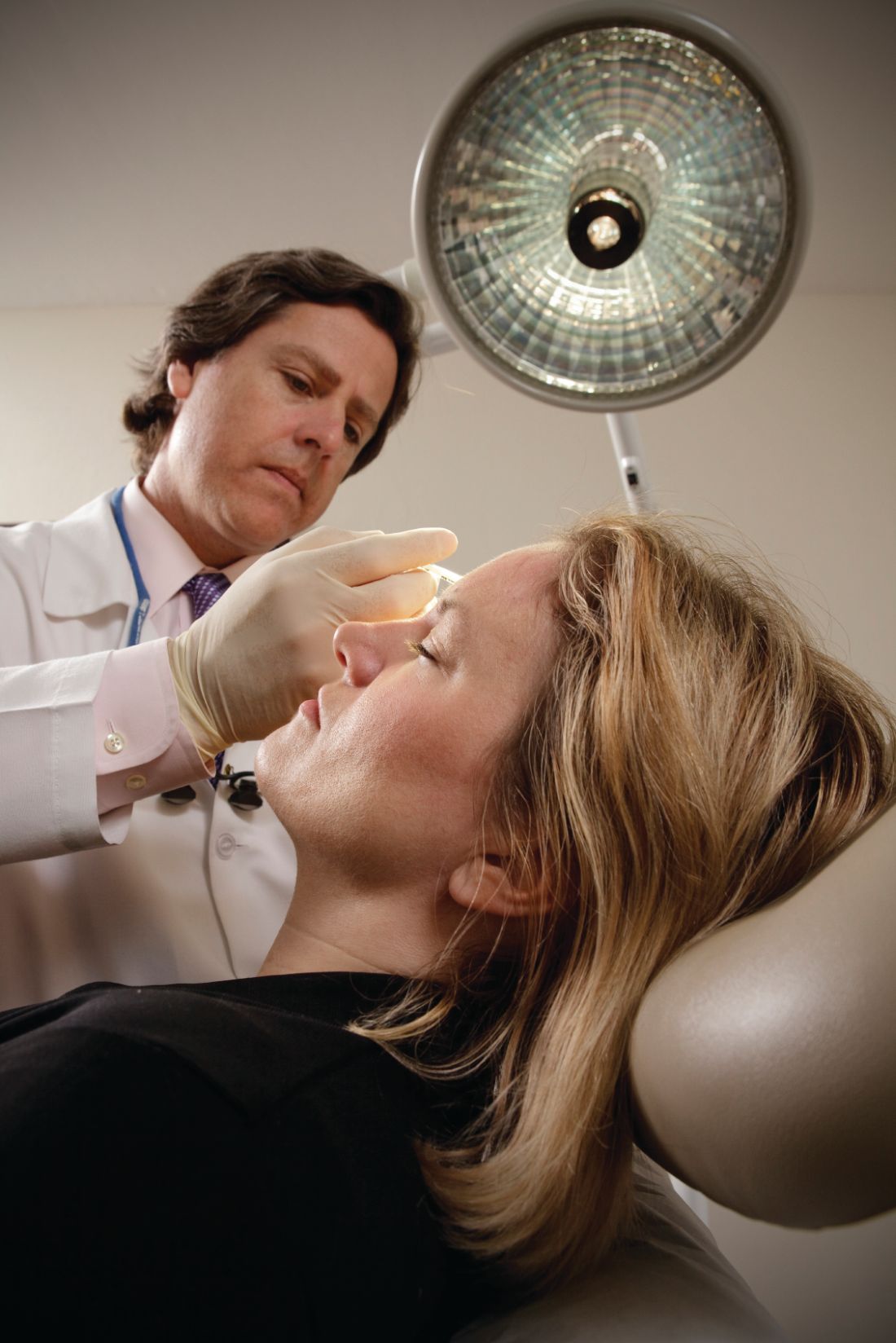
But other Botox patients are most certainly aware that their eyebrows have arched up on the right and left sides – just like those of a certain Vulcan character on “Star Trek.” And they want to be beamed out of that uncomfortable situation pronto.
Dr. Stankiewicz, who works in Park City, Utah, explained the “Spocking” phenomenon in a presentation about facial treatments at the recent Las Vegas Dermatology Symposium. Spocking can occur in patents who get Botox treatment to eliminate the “11 line” – two vertical wrinkles – between the eyebrows, Dr. Stankiewicz said. It occurs “when the middle of the forehead doesn’t move but the outside does,” she said, causing an unsightly outwardly arched eyebrow look.
The solution to Spocking is easy, she said: “Put a tiny bit of Botox in the forehead muscle right where the eyebrow is peaking the most.”
Leonard Nimoy, the original Mr. Spock, is not available for comment, given that he died in 2015. But Dr. Stankiewicz does have a perspective on Mr. Spock’s trademark look: “It’s like the people who drew his brow knew that Botox was on the horizon.”
Add the dirt, lose the fat
Lots of things are supposed to be stronger than dirt, but it looks like obesity might not be one of them. Investigators who were trying to improve drug delivery using a type of clay – spray-dried smectite clay particles, to be exact – discovered that it has “a unique ability to ‘soak up’ fat droplets in the gut,” according to a statement from the University of South Australia, Adelaide.

“Not only were the clay materials trapping the fats within their particle structure, but they were also preventing them from being absorbed by the body, ensuring that fat simply passed through the digestive system,” researcher Tahnee J. Dening said.
In the study, the smectite outperformed the weight-loss drug orlistat in rats fed a high-fat diet for 2 weeks (Pharm Res. 2019;36:21 doi: 10.1007/s11095-018-2552-9). Even better, smectite is already widely used in foods and nutraceuticals and is considered to be safe. Even even better, smectite is a really fun word to say. And with the prevalence of obesity such as it is, we’re sure that physicians will prescribe smectite just so they can say “smectite” to their patients. Smectite.
When you play the game of thrones …

… You conduct an evidence-based analysis of mortality across the Seven Kingdoms. In celebration of the approaching final season, two researchers published a study of mortality and survival in HBO’s “Game of Thrones” series. They examined data on sociodemographic factors and circumstances of death to identify predictors of mortality.
After looking at 330 characters from the show (186 who suffered death), the authors determined that being male, lowborn, and loyal had the highest correlation with mortality. Poor men who never switched their allegiance from one side to the other had the lowest chance of survival. In addition, the probability of dying in the first hour after appearing on screen was 14%. Not a good statistic if you’re trying to become famous in Westeros. And a mortality risk rivaling even that of Mr. Spock’s red-shirted shipmates down in engineering.
Nurse, sand wedge, STAT!
There really is no sport like golf. The wide green spaces, the fresh air, the thrill of launching a 300-yard drive down the fairway, the fun of double-bogeying the last three holes to shoot yet another 93; golf is a noble pursuit, indeed. And a sport everyone knows doctors love. Right?
In research published in the Christmas edition of the BMJ, a group of doctors from Massachusetts sought to find out just how accurate the stereotype was. Their answer? Doctors really do enjoy teeing it up.
Well, male doctors.
Well, old male doctors.
Using a database of about a million physicians, the researchers found that 5.5% of male physicians and 1.3% of female physicians – or 4.1% overall – maintained an official United States Golf Association handicap. Male physicians aged 61-70 years were most likely to play, and female physicians aged 31-35 years were least likely.
However, while golf is certainly a common pastime among doctors, they aren’t exactly very good at it, as the average doctor is actually slightly worse than the average nondoctor. Surgeons presented a notable exception, possessing significantly lower handicaps than their colleagues while, perhaps not coincidentally, also playing more often. We’re sure there’s a joke about overpaid surgeons in narrow specialties having too much time on their hands, and we’ll get right back to you with it after our 12 o’clock tee time.
The wonderful world of wasps
Never thought you’d be thankful for wasps, did you? Neither did we. Using mice as test subjects, scientists at MIT found that a tiny peptide in the venom was able to completely eliminate Pseudomonas aeruginosa, which causes respiratory infections and is often resistant to antibiotics. Now if you’re sick, all you have to do is go outside and get stung by a bunch of wasps!
Wait, no, that’s not right. The researchers at MIT engineered a molecule that can be used to create an antibiotic that’s safe for humans. While most insect venom is chock full of compounds that are toxic to humans, the scientists were able to transform their tiny peptide into a bacteria-defeating machine. This is a big victory in the war against antibiotic-resistant bacteria. Go, wasps!
Live long and Botox
Talk about highly illogical! Botox patients sometimes return for follow-up visits with dermatologist Kelly Stankiewicz, MD, and haven’t noticed they’ve “Spocked,” even though it may be obvious to just about everyone else.
But other Botox patients are most certainly aware that their eyebrows have arched up on the right and left sides – just like those of a certain Vulcan character on “Star Trek.” And they want to be beamed out of that uncomfortable situation pronto.
Dr. Stankiewicz, who works in Park City, Utah, explained the “Spocking” phenomenon in a presentation about facial treatments at the recent Las Vegas Dermatology Symposium. Spocking can occur in patents who get Botox treatment to eliminate the “11 line” – two vertical wrinkles – between the eyebrows, Dr. Stankiewicz said. It occurs “when the middle of the forehead doesn’t move but the outside does,” she said, causing an unsightly outwardly arched eyebrow look.
The solution to Spocking is easy, she said: “Put a tiny bit of Botox in the forehead muscle right where the eyebrow is peaking the most.”
Leonard Nimoy, the original Mr. Spock, is not available for comment, given that he died in 2015. But Dr. Stankiewicz does have a perspective on Mr. Spock’s trademark look: “It’s like the people who drew his brow knew that Botox was on the horizon.”
Add the dirt, lose the fat
Lots of things are supposed to be stronger than dirt, but it looks like obesity might not be one of them. Investigators who were trying to improve drug delivery using a type of clay – spray-dried smectite clay particles, to be exact – discovered that it has “a unique ability to ‘soak up’ fat droplets in the gut,” according to a statement from the University of South Australia, Adelaide.
“Not only were the clay materials trapping the fats within their particle structure, but they were also preventing them from being absorbed by the body, ensuring that fat simply passed through the digestive system,” researcher Tahnee J. Dening said.
In the study, the smectite outperformed the weight-loss drug orlistat in rats fed a high-fat diet for 2 weeks (Pharm Res. 2019;36:21 doi: 10.1007/s11095-018-2552-9). Even better, smectite is already widely used in foods and nutraceuticals and is considered to be safe. Even even better, smectite is a really fun word to say. And with the prevalence of obesity such as it is, we’re sure that physicians will prescribe smectite just so they can say “smectite” to their patients. Smectite.
When you play the game of thrones …
… You conduct an evidence-based analysis of mortality across the Seven Kingdoms. In celebration of the approaching final season, two researchers published a study of mortality and survival in HBO’s “Game of Thrones” series. They examined data on sociodemographic factors and circumstances of death to identify predictors of mortality.
After looking at 330 characters from the show (186 who suffered death), the authors determined that being male, lowborn, and loyal had the highest correlation with mortality. Poor men who never switched their allegiance from one side to the other had the lowest chance of survival. In addition, the probability of dying in the first hour after appearing on screen was 14%. Not a good statistic if you’re trying to become famous in Westeros. And a mortality risk rivaling even that of Mr. Spock’s red-shirted shipmates down in engineering.
Nurse, sand wedge, STAT!
There really is no sport like golf. The wide green spaces, the fresh air, the thrill of launching a 300-yard drive down the fairway, the fun of double-bogeying the last three holes to shoot yet another 93; golf is a noble pursuit, indeed. And a sport everyone knows doctors love. Right?
In research published in the Christmas edition of the BMJ, a group of doctors from Massachusetts sought to find out just how accurate the stereotype was. Their answer? Doctors really do enjoy teeing it up.
Well, male doctors.
Well, old male doctors.
Using a database of about a million physicians, the researchers found that 5.5% of male physicians and 1.3% of female physicians – or 4.1% overall – maintained an official United States Golf Association handicap. Male physicians aged 61-70 years were most likely to play, and female physicians aged 31-35 years were least likely.
However, while golf is certainly a common pastime among doctors, they aren’t exactly very good at it, as the average doctor is actually slightly worse than the average nondoctor. Surgeons presented a notable exception, possessing significantly lower handicaps than their colleagues while, perhaps not coincidentally, also playing more often. We’re sure there’s a joke about overpaid surgeons in narrow specialties having too much time on their hands, and we’ll get right back to you with it after our 12 o’clock tee time.
The wonderful world of wasps
Never thought you’d be thankful for wasps, did you? Neither did we. Using mice as test subjects, scientists at MIT found that a tiny peptide in the venom was able to completely eliminate Pseudomonas aeruginosa, which causes respiratory infections and is often resistant to antibiotics. Now if you’re sick, all you have to do is go outside and get stung by a bunch of wasps!
Wait, no, that’s not right. The researchers at MIT engineered a molecule that can be used to create an antibiotic that’s safe for humans. While most insect venom is chock full of compounds that are toxic to humans, the scientists were able to transform their tiny peptide into a bacteria-defeating machine. This is a big victory in the war against antibiotic-resistant bacteria. Go, wasps!
Live long and Botox
Talk about highly illogical! Botox patients sometimes return for follow-up visits with dermatologist Kelly Stankiewicz, MD, and haven’t noticed they’ve “Spocked,” even though it may be obvious to just about everyone else.
But other Botox patients are most certainly aware that their eyebrows have arched up on the right and left sides – just like those of a certain Vulcan character on “Star Trek.” And they want to be beamed out of that uncomfortable situation pronto.
Dr. Stankiewicz, who works in Park City, Utah, explained the “Spocking” phenomenon in a presentation about facial treatments at the recent Las Vegas Dermatology Symposium. Spocking can occur in patents who get Botox treatment to eliminate the “11 line” – two vertical wrinkles – between the eyebrows, Dr. Stankiewicz said. It occurs “when the middle of the forehead doesn’t move but the outside does,” she said, causing an unsightly outwardly arched eyebrow look.
The solution to Spocking is easy, she said: “Put a tiny bit of Botox in the forehead muscle right where the eyebrow is peaking the most.”
Leonard Nimoy, the original Mr. Spock, is not available for comment, given that he died in 2015. But Dr. Stankiewicz does have a perspective on Mr. Spock’s trademark look: “It’s like the people who drew his brow knew that Botox was on the horizon.”
Add the dirt, lose the fat
Lots of things are supposed to be stronger than dirt, but it looks like obesity might not be one of them. Investigators who were trying to improve drug delivery using a type of clay – spray-dried smectite clay particles, to be exact – discovered that it has “a unique ability to ‘soak up’ fat droplets in the gut,” according to a statement from the University of South Australia, Adelaide.
“Not only were the clay materials trapping the fats within their particle structure, but they were also preventing them from being absorbed by the body, ensuring that fat simply passed through the digestive system,” researcher Tahnee J. Dening said.
In the study, the smectite outperformed the weight-loss drug orlistat in rats fed a high-fat diet for 2 weeks (Pharm Res. 2019;36:21 doi: 10.1007/s11095-018-2552-9). Even better, smectite is already widely used in foods and nutraceuticals and is considered to be safe. Even even better, smectite is a really fun word to say. And with the prevalence of obesity such as it is, we’re sure that physicians will prescribe smectite just so they can say “smectite” to their patients. Smectite.
When you play the game of thrones …
… You conduct an evidence-based analysis of mortality across the Seven Kingdoms. In celebration of the approaching final season, two researchers published a study of mortality and survival in HBO’s “Game of Thrones” series. They examined data on sociodemographic factors and circumstances of death to identify predictors of mortality.
After looking at 330 characters from the show (186 who suffered death), the authors determined that being male, lowborn, and loyal had the highest correlation with mortality. Poor men who never switched their allegiance from one side to the other had the lowest chance of survival. In addition, the probability of dying in the first hour after appearing on screen was 14%. Not a good statistic if you’re trying to become famous in Westeros. And a mortality risk rivaling even that of Mr. Spock’s red-shirted shipmates down in engineering.
Nurse, sand wedge, STAT!
There really is no sport like golf. The wide green spaces, the fresh air, the thrill of launching a 300-yard drive down the fairway, the fun of double-bogeying the last three holes to shoot yet another 93; golf is a noble pursuit, indeed. And a sport everyone knows doctors love. Right?
In research published in the Christmas edition of the BMJ, a group of doctors from Massachusetts sought to find out just how accurate the stereotype was. Their answer? Doctors really do enjoy teeing it up.
Well, male doctors.
Well, old male doctors.
Using a database of about a million physicians, the researchers found that 5.5% of male physicians and 1.3% of female physicians – or 4.1% overall – maintained an official United States Golf Association handicap. Male physicians aged 61-70 years were most likely to play, and female physicians aged 31-35 years were least likely.
However, while golf is certainly a common pastime among doctors, they aren’t exactly very good at it, as the average doctor is actually slightly worse than the average nondoctor. Surgeons presented a notable exception, possessing significantly lower handicaps than their colleagues while, perhaps not coincidentally, also playing more often. We’re sure there’s a joke about overpaid surgeons in narrow specialties having too much time on their hands, and we’ll get right back to you with it after our 12 o’clock tee time.
NCI director: Data failures cost lives
SAN DIEGO – A couple years ago, hematologist-oncologist Norman E. “Ned” Sharpless, MD, was gobsmacked by a groundbreaking study into treatments for acute myeloid leukemia. While the findings offered valuable new insight into the best drug options, they left Dr. Sharpless quaking, and not with delight. “I can recall that my knees buckled,” he said.

Why? Because the findings, he told colleagues at the annual meeting of the American Society of Hematology, came too late for many patients to benefit. “One could say that’s great news, this is medical progress,” he said. “But I saw this as a clear failure of data aggregation.”
Now, Dr. Sharpless is in a position to do more than fume and speak out. He became the director of the National Cancer Institute in 2017 and he’s made “big data” one of his four priorities for the NCI under his leadership.
“While data security is crucial, there are also costs to not aggregating data and sharing it,” he said. “It means giving patients the wrong drug, it means patients having to die.”
While Dr. Sharpless said he’s disappointed by the progress on data in medicine, he had praise to offer, too. In conversations over his first year-plus on the job, he said, he’s learned that “it’s a great time to be a cancer scientist and a cancer doctor in the United States. ... It’s undeniably a great time to be a blood doctor or blood scientist. We’re making progress at a rate that is faster and greater than at any point in my career as an oncologist. Just look at all the new stuff we’ve got!”
In hematology, great strides are being made in areas such as the treatment of leukemia and lymphoma, he said. Progress is also boosting treatment in areas such as melanoma and lung, breast, ovarian, and head and neck cancer.
“Some of you will correctly point out that this progress is not enough. In some cases, treatments are moderately effective and not curative. These are singles or even doubles, but we still need home runs. We still have too many patients dying of cancer, including blood cancer,” he said. “From my perspective, it’s important to be very clear-eyed. While we have a long way to go to end suffering in all patients, we have to be willing to admit that progress has been impressive.”
Dr. Sharpless touted the Cancer Moonshot, which will allocate $1.8 billion in federal funds for cancer research over 7 years. And he mentioned his four priority areas at NCI: Workforce development, basic science, big data, and clinical trials. Initiatives in these areas include prioritization of research by early-career investigators and increased funding for trials, he said.
As for data, he said, “I’ve been trying to explain to congressional leaders why getting control of our data is important.”
Dr. Sharpless likes to point to his own encounter in his kitchen in 2016 – the one that buckled his knees – with an issue of the New England Journal of Medicine. There he found a study that examined molecular determinants of response to decitabine in acute myeloid leukemia and myelodysplastic syndromes (N Engl J Med. 2016 Nov 24;375[21]:2023-36).
“I can still close my eyes now and literally see the faces of patients whom I gave ... a very toxic regimen, some of whom had very bad outcomes,” he said. “I know in retrospect, based on certain statistics, I probably used the wrong drug in some of these patients. If we’d been aggregating data in a deliberate way, from the get-go of AML, a result like this would have fallen out immediately. I’m concerned we’re still making these types of mistakes for other cancer subtypes today.”
Moving forward, he said, the goal is “to create large, multimodal data sets ... And put them in the cloud and make them available to the research community in the most useful format possible, in a way that’s safe and secure. We have to do these things because the costs of not harnessing data are too great.”
Dr. Sharpless reported several past financial relationships with G1 Therapeutics, Healthspan Diagnostics, and Unity Biotechnology.
SAN DIEGO – A couple years ago, hematologist-oncologist Norman E. “Ned” Sharpless, MD, was gobsmacked by a groundbreaking study into treatments for acute myeloid leukemia. While the findings offered valuable new insight into the best drug options, they left Dr. Sharpless quaking, and not with delight. “I can recall that my knees buckled,” he said.
Why? Because the findings, he told colleagues at the annual meeting of the American Society of Hematology, came too late for many patients to benefit. “One could say that’s great news, this is medical progress,” he said. “But I saw this as a clear failure of data aggregation.”
Now, Dr. Sharpless is in a position to do more than fume and speak out. He became the director of the National Cancer Institute in 2017 and he’s made “big data” one of his four priorities for the NCI under his leadership.
“While data security is crucial, there are also costs to not aggregating data and sharing it,” he said. “It means giving patients the wrong drug, it means patients having to die.”
While Dr. Sharpless said he’s disappointed by the progress on data in medicine, he had praise to offer, too. In conversations over his first year-plus on the job, he said, he’s learned that “it’s a great time to be a cancer scientist and a cancer doctor in the United States. ... It’s undeniably a great time to be a blood doctor or blood scientist. We’re making progress at a rate that is faster and greater than at any point in my career as an oncologist. Just look at all the new stuff we’ve got!”
In hematology, great strides are being made in areas such as the treatment of leukemia and lymphoma, he said. Progress is also boosting treatment in areas such as melanoma and lung, breast, ovarian, and head and neck cancer.
“Some of you will correctly point out that this progress is not enough. In some cases, treatments are moderately effective and not curative. These are singles or even doubles, but we still need home runs. We still have too many patients dying of cancer, including blood cancer,” he said. “From my perspective, it’s important to be very clear-eyed. While we have a long way to go to end suffering in all patients, we have to be willing to admit that progress has been impressive.”
Dr. Sharpless touted the Cancer Moonshot, which will allocate $1.8 billion in federal funds for cancer research over 7 years. And he mentioned his four priority areas at NCI: Workforce development, basic science, big data, and clinical trials. Initiatives in these areas include prioritization of research by early-career investigators and increased funding for trials, he said.
As for data, he said, “I’ve been trying to explain to congressional leaders why getting control of our data is important.”
Dr. Sharpless likes to point to his own encounter in his kitchen in 2016 – the one that buckled his knees – with an issue of the New England Journal of Medicine. There he found a study that examined molecular determinants of response to decitabine in acute myeloid leukemia and myelodysplastic syndromes (N Engl J Med. 2016 Nov 24;375[21]:2023-36).
“I can still close my eyes now and literally see the faces of patients whom I gave ... a very toxic regimen, some of whom had very bad outcomes,” he said. “I know in retrospect, based on certain statistics, I probably used the wrong drug in some of these patients. If we’d been aggregating data in a deliberate way, from the get-go of AML, a result like this would have fallen out immediately. I’m concerned we’re still making these types of mistakes for other cancer subtypes today.”
Moving forward, he said, the goal is “to create large, multimodal data sets ... And put them in the cloud and make them available to the research community in the most useful format possible, in a way that’s safe and secure. We have to do these things because the costs of not harnessing data are too great.”
Dr. Sharpless reported several past financial relationships with G1 Therapeutics, Healthspan Diagnostics, and Unity Biotechnology.
SAN DIEGO – A couple years ago, hematologist-oncologist Norman E. “Ned” Sharpless, MD, was gobsmacked by a groundbreaking study into treatments for acute myeloid leukemia. While the findings offered valuable new insight into the best drug options, they left Dr. Sharpless quaking, and not with delight. “I can recall that my knees buckled,” he said.
Why? Because the findings, he told colleagues at the annual meeting of the American Society of Hematology, came too late for many patients to benefit. “One could say that’s great news, this is medical progress,” he said. “But I saw this as a clear failure of data aggregation.”
Now, Dr. Sharpless is in a position to do more than fume and speak out. He became the director of the National Cancer Institute in 2017 and he’s made “big data” one of his four priorities for the NCI under his leadership.
“While data security is crucial, there are also costs to not aggregating data and sharing it,” he said. “It means giving patients the wrong drug, it means patients having to die.”
While Dr. Sharpless said he’s disappointed by the progress on data in medicine, he had praise to offer, too. In conversations over his first year-plus on the job, he said, he’s learned that “it’s a great time to be a cancer scientist and a cancer doctor in the United States. ... It’s undeniably a great time to be a blood doctor or blood scientist. We’re making progress at a rate that is faster and greater than at any point in my career as an oncologist. Just look at all the new stuff we’ve got!”
In hematology, great strides are being made in areas such as the treatment of leukemia and lymphoma, he said. Progress is also boosting treatment in areas such as melanoma and lung, breast, ovarian, and head and neck cancer.
“Some of you will correctly point out that this progress is not enough. In some cases, treatments are moderately effective and not curative. These are singles or even doubles, but we still need home runs. We still have too many patients dying of cancer, including blood cancer,” he said. “From my perspective, it’s important to be very clear-eyed. While we have a long way to go to end suffering in all patients, we have to be willing to admit that progress has been impressive.”
Dr. Sharpless touted the Cancer Moonshot, which will allocate $1.8 billion in federal funds for cancer research over 7 years. And he mentioned his four priority areas at NCI: Workforce development, basic science, big data, and clinical trials. Initiatives in these areas include prioritization of research by early-career investigators and increased funding for trials, he said.
As for data, he said, “I’ve been trying to explain to congressional leaders why getting control of our data is important.”
Dr. Sharpless likes to point to his own encounter in his kitchen in 2016 – the one that buckled his knees – with an issue of the New England Journal of Medicine. There he found a study that examined molecular determinants of response to decitabine in acute myeloid leukemia and myelodysplastic syndromes (N Engl J Med. 2016 Nov 24;375[21]:2023-36).
“I can still close my eyes now and literally see the faces of patients whom I gave ... a very toxic regimen, some of whom had very bad outcomes,” he said. “I know in retrospect, based on certain statistics, I probably used the wrong drug in some of these patients. If we’d been aggregating data in a deliberate way, from the get-go of AML, a result like this would have fallen out immediately. I’m concerned we’re still making these types of mistakes for other cancer subtypes today.”
Moving forward, he said, the goal is “to create large, multimodal data sets ... And put them in the cloud and make them available to the research community in the most useful format possible, in a way that’s safe and secure. We have to do these things because the costs of not harnessing data are too great.”
Dr. Sharpless reported several past financial relationships with G1 Therapeutics, Healthspan Diagnostics, and Unity Biotechnology.
REPORTING FROM ASH 2018
NSAIDs can play major role in pre- and postoperative hysterectomy pain
LAS VEGAS – An ob.gyn. has some handy hysterectomy-related pain management tips for her colleagues: Don’t assume patients know how to titrate between NSAIDs and opioids after surgery. Consider neuropathic medications alone in patients undergoing minimally invasive hysterectomies. And
Sawsan As-Sanie, MD, MPH, director of the University of Michigan Endometriosis Center, Ann Arbor, offered these and other recommendations about hysterectomy-related pain at the Pelvic Anatomy and Gynecologic Surgery Symposium.
Try acetaminophen and an NSAID
In the preoperative period, a combination of acetaminophen (Tylenol) and an NSAID can provide significant postop relief, Dr. As-Sanie said.
She highlighted a 2010 systematic review of 21 studies that included 1,909 patients and found acetaminophen/NSAID combinations improved pain intensity by about 35% in positive studies when compared with either acetaminophen or NSAID alone. The painkiller combination was positive – more effective than a solo agent – in 85% of studies of combo versus acetaminophen alone and 64% of studies of combo versus NSAID alone (Anesth Analg. 2010 Apr 1;110[4]:1170-9).
Another study, she said, found that there’s no clear advantage to IV administration for acetaminophen if patients can take the drug orally (Can J Hosp Pharm. 2015 May-Jun;68[3]:238-47).
Consider gabapentin, but not postoperatively
Dr. As-Sanie pointed to a 2014 systematic review and meta-analysis that suggested the use of preoperative gabapentin in abdominal hysterectomy reduces pain and opioid use. However, adding postoperative doses of gabapentin, she said, don’t appear to produce a greater effect (Obstet Gynecol. 2014 Jun;123[6]:1221-9).
Consider neuropathics for minimally invasive hysterectomy
Two studies, one in 2004 and the other in 2008, suggest that gabapentin (on a postop basis) and pregabalin (perioperatively) can reduce postop opioid use. (Pregabalin also was linked to more adverse effects.) “Even if they’re having a little bit of pain, they’re using fewer opioids,” she said (Pain. 2004 Jul;110[1-2]:175-81; Pain. 2008 Jan;134[1-2]:106-12).
Educate patients about postop painkiller use
Don’t assume that patients know how to adjust their over-the-counter painkiller use after surgery, Dr. As-Sanie said at the meeting jointly provided by Global Academy for Medical Education and the University of Cincinnati. Global Academy and this news organization are owned by the same company. “While we as physicians think that knowledge about the use of ibuprofen and Tylenol is something everyone should be born with, it’s not obvious to most patients and families.”
It’s important to teach patients to start with NSAIDs or Tylenol postoperatively, and if that doesn’t control pain, “you add opioids and use medications to control constipation as needed. As you recover, you reduce the amount of opioids first and then reduce the NSAIDs or Tylenol,” she said. “That education can be very helpful for the vast majority of patients, and it’s one of the most important things we can provide.”
Don’t over-prescribe opioids
For a 2017 study, Dr. As-Sanie and colleagues tracked hysterectomy patients and surveyed them about their postop opioid use. “When asked 2 weeks after surgery, most used far less than half of what they prescribed,” Dr. As-Sanie said. “If we gave them about 40 pills, they had between 13-15 pills left after the surgery on average. Nearly 50% didn’t use any of their medication” (Obstet Gynecol. 2017 Dec;130[6]:1261-8).
Dr. As-Sanie urged colleagues to remember the lesson of the rise of super-sized portions at fast-food restaurants: Give people more of something and they’ll eat (or use) more of it. And the reverse is true: “If you give people fewer pills, they will use fewer pills.”
Dr. As-Sanie highlighted the recommendations about opioid prescription levels for various surgical procedures, including different types of hysterectomies, at www.opioidprescribing.info. The recommendations are provided by the Michigan Opioid Prescribing Engagement Network. They’re designed for opioid-naive patients and suggest the lowest doses for vaginal hysterectomy and the highest for abdominal hysterectomy, with recommended doses for laparoscopic and robotic hysterectomy in between.
Dr. As-Sanie disclosed she is a consultant for AbbVie and Myovant.
LAS VEGAS – An ob.gyn. has some handy hysterectomy-related pain management tips for her colleagues: Don’t assume patients know how to titrate between NSAIDs and opioids after surgery. Consider neuropathic medications alone in patients undergoing minimally invasive hysterectomies. And
Sawsan As-Sanie, MD, MPH, director of the University of Michigan Endometriosis Center, Ann Arbor, offered these and other recommendations about hysterectomy-related pain at the Pelvic Anatomy and Gynecologic Surgery Symposium.
Try acetaminophen and an NSAID
In the preoperative period, a combination of acetaminophen (Tylenol) and an NSAID can provide significant postop relief, Dr. As-Sanie said.
She highlighted a 2010 systematic review of 21 studies that included 1,909 patients and found acetaminophen/NSAID combinations improved pain intensity by about 35% in positive studies when compared with either acetaminophen or NSAID alone. The painkiller combination was positive – more effective than a solo agent – in 85% of studies of combo versus acetaminophen alone and 64% of studies of combo versus NSAID alone (Anesth Analg. 2010 Apr 1;110[4]:1170-9).
Another study, she said, found that there’s no clear advantage to IV administration for acetaminophen if patients can take the drug orally (Can J Hosp Pharm. 2015 May-Jun;68[3]:238-47).
Consider gabapentin, but not postoperatively
Dr. As-Sanie pointed to a 2014 systematic review and meta-analysis that suggested the use of preoperative gabapentin in abdominal hysterectomy reduces pain and opioid use. However, adding postoperative doses of gabapentin, she said, don’t appear to produce a greater effect (Obstet Gynecol. 2014 Jun;123[6]:1221-9).
Consider neuropathics for minimally invasive hysterectomy
Two studies, one in 2004 and the other in 2008, suggest that gabapentin (on a postop basis) and pregabalin (perioperatively) can reduce postop opioid use. (Pregabalin also was linked to more adverse effects.) “Even if they’re having a little bit of pain, they’re using fewer opioids,” she said (Pain. 2004 Jul;110[1-2]:175-81; Pain. 2008 Jan;134[1-2]:106-12).
Educate patients about postop painkiller use
Don’t assume that patients know how to adjust their over-the-counter painkiller use after surgery, Dr. As-Sanie said at the meeting jointly provided by Global Academy for Medical Education and the University of Cincinnati. Global Academy and this news organization are owned by the same company. “While we as physicians think that knowledge about the use of ibuprofen and Tylenol is something everyone should be born with, it’s not obvious to most patients and families.”
It’s important to teach patients to start with NSAIDs or Tylenol postoperatively, and if that doesn’t control pain, “you add opioids and use medications to control constipation as needed. As you recover, you reduce the amount of opioids first and then reduce the NSAIDs or Tylenol,” she said. “That education can be very helpful for the vast majority of patients, and it’s one of the most important things we can provide.”
Don’t over-prescribe opioids
For a 2017 study, Dr. As-Sanie and colleagues tracked hysterectomy patients and surveyed them about their postop opioid use. “When asked 2 weeks after surgery, most used far less than half of what they prescribed,” Dr. As-Sanie said. “If we gave them about 40 pills, they had between 13-15 pills left after the surgery on average. Nearly 50% didn’t use any of their medication” (Obstet Gynecol. 2017 Dec;130[6]:1261-8).
Dr. As-Sanie urged colleagues to remember the lesson of the rise of super-sized portions at fast-food restaurants: Give people more of something and they’ll eat (or use) more of it. And the reverse is true: “If you give people fewer pills, they will use fewer pills.”
Dr. As-Sanie highlighted the recommendations about opioid prescription levels for various surgical procedures, including different types of hysterectomies, at www.opioidprescribing.info. The recommendations are provided by the Michigan Opioid Prescribing Engagement Network. They’re designed for opioid-naive patients and suggest the lowest doses for vaginal hysterectomy and the highest for abdominal hysterectomy, with recommended doses for laparoscopic and robotic hysterectomy in between.
Dr. As-Sanie disclosed she is a consultant for AbbVie and Myovant.
LAS VEGAS – An ob.gyn. has some handy hysterectomy-related pain management tips for her colleagues: Don’t assume patients know how to titrate between NSAIDs and opioids after surgery. Consider neuropathic medications alone in patients undergoing minimally invasive hysterectomies. And
Sawsan As-Sanie, MD, MPH, director of the University of Michigan Endometriosis Center, Ann Arbor, offered these and other recommendations about hysterectomy-related pain at the Pelvic Anatomy and Gynecologic Surgery Symposium.
Try acetaminophen and an NSAID
In the preoperative period, a combination of acetaminophen (Tylenol) and an NSAID can provide significant postop relief, Dr. As-Sanie said.
She highlighted a 2010 systematic review of 21 studies that included 1,909 patients and found acetaminophen/NSAID combinations improved pain intensity by about 35% in positive studies when compared with either acetaminophen or NSAID alone. The painkiller combination was positive – more effective than a solo agent – in 85% of studies of combo versus acetaminophen alone and 64% of studies of combo versus NSAID alone (Anesth Analg. 2010 Apr 1;110[4]:1170-9).
Another study, she said, found that there’s no clear advantage to IV administration for acetaminophen if patients can take the drug orally (Can J Hosp Pharm. 2015 May-Jun;68[3]:238-47).
Consider gabapentin, but not postoperatively
Dr. As-Sanie pointed to a 2014 systematic review and meta-analysis that suggested the use of preoperative gabapentin in abdominal hysterectomy reduces pain and opioid use. However, adding postoperative doses of gabapentin, she said, don’t appear to produce a greater effect (Obstet Gynecol. 2014 Jun;123[6]:1221-9).
Consider neuropathics for minimally invasive hysterectomy
Two studies, one in 2004 and the other in 2008, suggest that gabapentin (on a postop basis) and pregabalin (perioperatively) can reduce postop opioid use. (Pregabalin also was linked to more adverse effects.) “Even if they’re having a little bit of pain, they’re using fewer opioids,” she said (Pain. 2004 Jul;110[1-2]:175-81; Pain. 2008 Jan;134[1-2]:106-12).
Educate patients about postop painkiller use
Don’t assume that patients know how to adjust their over-the-counter painkiller use after surgery, Dr. As-Sanie said at the meeting jointly provided by Global Academy for Medical Education and the University of Cincinnati. Global Academy and this news organization are owned by the same company. “While we as physicians think that knowledge about the use of ibuprofen and Tylenol is something everyone should be born with, it’s not obvious to most patients and families.”
It’s important to teach patients to start with NSAIDs or Tylenol postoperatively, and if that doesn’t control pain, “you add opioids and use medications to control constipation as needed. As you recover, you reduce the amount of opioids first and then reduce the NSAIDs or Tylenol,” she said. “That education can be very helpful for the vast majority of patients, and it’s one of the most important things we can provide.”
Don’t over-prescribe opioids
For a 2017 study, Dr. As-Sanie and colleagues tracked hysterectomy patients and surveyed them about their postop opioid use. “When asked 2 weeks after surgery, most used far less than half of what they prescribed,” Dr. As-Sanie said. “If we gave them about 40 pills, they had between 13-15 pills left after the surgery on average. Nearly 50% didn’t use any of their medication” (Obstet Gynecol. 2017 Dec;130[6]:1261-8).
Dr. As-Sanie urged colleagues to remember the lesson of the rise of super-sized portions at fast-food restaurants: Give people more of something and they’ll eat (or use) more of it. And the reverse is true: “If you give people fewer pills, they will use fewer pills.”
Dr. As-Sanie highlighted the recommendations about opioid prescription levels for various surgical procedures, including different types of hysterectomies, at www.opioidprescribing.info. The recommendations are provided by the Michigan Opioid Prescribing Engagement Network. They’re designed for opioid-naive patients and suggest the lowest doses for vaginal hysterectomy and the highest for abdominal hysterectomy, with recommended doses for laparoscopic and robotic hysterectomy in between.
Dr. As-Sanie disclosed she is a consultant for AbbVie and Myovant.
EXPERT ANALYSIS FROM PAGS
Gap in care: Female patients with incontinence
LAS VEGAS – A pelvic surgeon brought a bold message to a gathering of gynecologists: There’s a great gap in American care for pelvic floor disorders such as urinary incontinence, and they’re the right physicians to make a difference by treating these common conditions.

“There are never going to be enough specialists to deal with these problems. This is a natural progression for many of you,” said urogynecologist and pelvic surgeon Mickey M. Karram, MD, in a joint presentation at the Pelvic Anatomy and Gynecologic Surgery Symposium. In fact, he said, “there’s so much disease out there to fix that you may become more overwhelmed.”
Dr. Karram, who has offices in Cincinnati, Beverly Hills, and Orange County, Calif., spoke about female urinary incontinence with obstetrician-gynecologist Beri M. Ridgeway, MD, of Cleveland Clinic. They offered these tips:
Test for stress incontinence
Dr. Karram recommends using a “quick and easy” cystometrogram (CMG) test to “corroborate or refute what the patient thinks is going on” in regard to urinary function. “With this simple test, you’ll get a clear understanding of sensation [to urinate] and of what their fullness and capacity numbers are,” he said. And if you have the patient cough or strain during the test, “you should be able to duplicate a sign of stress incontinence 90% of the time.”
If patients don’t leak when they take this test, there may be another problem such as overactive bladder, a condition that can’t be duplicated via the test, he said.
Ask the right questions
When it comes to identifying when they have urinary difficulties, some patients “say yes to every question we ask,” said Dr. Ridgeway, and they may not be able to distinguish between urgency and leakage.
A better approach is to ask women to provide specific examples of when they have continence issues, she said. It’s also useful to ask patients about what bothers them the most if they have multiple symptoms: Is it urgency (“Gotta go; gotta go”)? Leakage during certain situations like coughing and laughing? “That helps me decide how to go about treating them first and foremost,” she said. “It doesn’t mean you won’t treat both [problems], but it really gives you a reference point of where to start.”
Research suggests that women tend to be more bothered by urge incontinence than stress incontinence, she said, because they can regulate their activities or avoid the stress form.
Beware of acute incontinence cases
“If a woman walks in and says ‘Everything was great until a week or two ago, but now I’m living in pads,’ it could be a fecal impaction or a pelvic mass,” Dr. Karram said at the meeting jointly provided by Global Academy for Medical Education and the University of Cincinnati. Global Academy and this news organization are owned by the same company.
Discuss the many treatment options
In some cases of incontinence, Dr. Ridgeway said she’ll mention “the array of treatment options, such as pelvic floor physical therapy, bladder retraining, vaginal estrogen, medications, and Botox.”
She added: “I explain that we’ll work together, and sometimes it will take a couple tries, or we’ll try a couple things at once.”
Dr. Ridgeway disclosed consulting for Coloplast and serving as an independent contractor (legal) for Ethicon. Dr. Karram disclosed speaking for Allergan, Astellas Pharma, Coloplast, and Cynosure/Hologic; consulting for Coloplast and Cynosure/Hologic; and receiving royalties from BihlerMed.
LAS VEGAS – A pelvic surgeon brought a bold message to a gathering of gynecologists: There’s a great gap in American care for pelvic floor disorders such as urinary incontinence, and they’re the right physicians to make a difference by treating these common conditions.
“There are never going to be enough specialists to deal with these problems. This is a natural progression for many of you,” said urogynecologist and pelvic surgeon Mickey M. Karram, MD, in a joint presentation at the Pelvic Anatomy and Gynecologic Surgery Symposium. In fact, he said, “there’s so much disease out there to fix that you may become more overwhelmed.”
Dr. Karram, who has offices in Cincinnati, Beverly Hills, and Orange County, Calif., spoke about female urinary incontinence with obstetrician-gynecologist Beri M. Ridgeway, MD, of Cleveland Clinic. They offered these tips:
Test for stress incontinence
Dr. Karram recommends using a “quick and easy” cystometrogram (CMG) test to “corroborate or refute what the patient thinks is going on” in regard to urinary function. “With this simple test, you’ll get a clear understanding of sensation [to urinate] and of what their fullness and capacity numbers are,” he said. And if you have the patient cough or strain during the test, “you should be able to duplicate a sign of stress incontinence 90% of the time.”
If patients don’t leak when they take this test, there may be another problem such as overactive bladder, a condition that can’t be duplicated via the test, he said.
Ask the right questions
When it comes to identifying when they have urinary difficulties, some patients “say yes to every question we ask,” said Dr. Ridgeway, and they may not be able to distinguish between urgency and leakage.
A better approach is to ask women to provide specific examples of when they have continence issues, she said. It’s also useful to ask patients about what bothers them the most if they have multiple symptoms: Is it urgency (“Gotta go; gotta go”)? Leakage during certain situations like coughing and laughing? “That helps me decide how to go about treating them first and foremost,” she said. “It doesn’t mean you won’t treat both [problems], but it really gives you a reference point of where to start.”
Research suggests that women tend to be more bothered by urge incontinence than stress incontinence, she said, because they can regulate their activities or avoid the stress form.
Beware of acute incontinence cases
“If a woman walks in and says ‘Everything was great until a week or two ago, but now I’m living in pads,’ it could be a fecal impaction or a pelvic mass,” Dr. Karram said at the meeting jointly provided by Global Academy for Medical Education and the University of Cincinnati. Global Academy and this news organization are owned by the same company.
Discuss the many treatment options
In some cases of incontinence, Dr. Ridgeway said she’ll mention “the array of treatment options, such as pelvic floor physical therapy, bladder retraining, vaginal estrogen, medications, and Botox.”
She added: “I explain that we’ll work together, and sometimes it will take a couple tries, or we’ll try a couple things at once.”
Dr. Ridgeway disclosed consulting for Coloplast and serving as an independent contractor (legal) for Ethicon. Dr. Karram disclosed speaking for Allergan, Astellas Pharma, Coloplast, and Cynosure/Hologic; consulting for Coloplast and Cynosure/Hologic; and receiving royalties from BihlerMed.
LAS VEGAS – A pelvic surgeon brought a bold message to a gathering of gynecologists: There’s a great gap in American care for pelvic floor disorders such as urinary incontinence, and they’re the right physicians to make a difference by treating these common conditions.
“There are never going to be enough specialists to deal with these problems. This is a natural progression for many of you,” said urogynecologist and pelvic surgeon Mickey M. Karram, MD, in a joint presentation at the Pelvic Anatomy and Gynecologic Surgery Symposium. In fact, he said, “there’s so much disease out there to fix that you may become more overwhelmed.”
Dr. Karram, who has offices in Cincinnati, Beverly Hills, and Orange County, Calif., spoke about female urinary incontinence with obstetrician-gynecologist Beri M. Ridgeway, MD, of Cleveland Clinic. They offered these tips:
Test for stress incontinence
Dr. Karram recommends using a “quick and easy” cystometrogram (CMG) test to “corroborate or refute what the patient thinks is going on” in regard to urinary function. “With this simple test, you’ll get a clear understanding of sensation [to urinate] and of what their fullness and capacity numbers are,” he said. And if you have the patient cough or strain during the test, “you should be able to duplicate a sign of stress incontinence 90% of the time.”
If patients don’t leak when they take this test, there may be another problem such as overactive bladder, a condition that can’t be duplicated via the test, he said.
Ask the right questions
When it comes to identifying when they have urinary difficulties, some patients “say yes to every question we ask,” said Dr. Ridgeway, and they may not be able to distinguish between urgency and leakage.
A better approach is to ask women to provide specific examples of when they have continence issues, she said. It’s also useful to ask patients about what bothers them the most if they have multiple symptoms: Is it urgency (“Gotta go; gotta go”)? Leakage during certain situations like coughing and laughing? “That helps me decide how to go about treating them first and foremost,” she said. “It doesn’t mean you won’t treat both [problems], but it really gives you a reference point of where to start.”
Research suggests that women tend to be more bothered by urge incontinence than stress incontinence, she said, because they can regulate their activities or avoid the stress form.
Beware of acute incontinence cases
“If a woman walks in and says ‘Everything was great until a week or two ago, but now I’m living in pads,’ it could be a fecal impaction or a pelvic mass,” Dr. Karram said at the meeting jointly provided by Global Academy for Medical Education and the University of Cincinnati. Global Academy and this news organization are owned by the same company.
Discuss the many treatment options
In some cases of incontinence, Dr. Ridgeway said she’ll mention “the array of treatment options, such as pelvic floor physical therapy, bladder retraining, vaginal estrogen, medications, and Botox.”
She added: “I explain that we’ll work together, and sometimes it will take a couple tries, or we’ll try a couple things at once.”
Dr. Ridgeway disclosed consulting for Coloplast and serving as an independent contractor (legal) for Ethicon. Dr. Karram disclosed speaking for Allergan, Astellas Pharma, Coloplast, and Cynosure/Hologic; consulting for Coloplast and Cynosure/Hologic; and receiving royalties from BihlerMed.
EXPERT ANALYSIS FROM PAGS