User login
M. Alexander Otto began his reporting career early in 1999 covering the pharmaceutical industry for a national pharmacists' magazine and freelancing for the Washington Post and other newspapers. He then joined BNA, now part of Bloomberg News, covering health law and the protection of people and animals in medical research. Alex next worked for the McClatchy Company. Based on his work, Alex won a year-long Knight Science Journalism Fellowship to MIT in 2008-2009. He joined the company shortly thereafter. Alex has a newspaper journalism degree from Syracuse (N.Y.) University and a master's degree in medical science -- a physician assistant degree -- from George Washington University. Alex is based in Seattle.
Hypothyroidism less common with preemptive levothyroxine after Graves’ treatment
San Diego – Preemptive levothyroxine seems to help prevent hypothyroidism after radioactive iodine treatment for Graves’ disease, according to an interim analysis of an ongoing randomized, placebo-controlled trial at the Mayo Clinic in Rochester, Minn.
Following iodine treatment, the team is randomizing adult patients to levothyroxine 25 mcg/day or placebo at 4 weeks, then increasing the levothyroxine dose to 50 mcg/day at 6 weeks. The enrollment goal is 60 patients; the team presented results for the first 17 at the Endocrine Society annual meeting.
At 8 weeks, six of 11 (54.5%) levothyroxine patients – but four of the six (66.7%) placebo patients – had overt hypothyroidism.

Hyperthyroidism is the main concern with preemptive levothyroxine, but that hasn’t been a problem so far; in fact, the levothyroxine group has had lower rates of hyperthyroidism (18.2%) than the placebo group (33.3%). Quality of life indicators haven’t separated much; at 8 weeks, thyroid Specific Questionnaire scores were about 12 in both groups, and levothyroxine patients did slightly worse on the hypothyroid–Health Related Quality of Life survey (46 vs. 36).
Given the low numbers, you can’t put too much stock in the findings yet, but the prevention trends are moving in the right direction, said lead investigator Dr. Spyridoula Maraka, a Mayo endocrinology fellow.
“As expected, none of the analyses reached statistical significance given that the sample size is 25% of the planned population,” but “it is reassuring that initiating low-dose levothyroxine 4 weeks after [Graves’ treatment] appears safe, without an increased prevalence of hyperthyroidism. There is an encouraging trend for prevention of overt hypothyroidism .... Accordingly, we plan to continue the trial to completion,” she said.
The work is important because, in many places, the first follow-up visit after Graves’ treatment is at 2 or even 3 months. By then, the majority of patients are hypothyroid, and may even have new or worsened Graves’ orbitopathy. The hope is that pre-emptive levothyroxine will counter the problem.
The fact that more than half of the levothyroxine subjects developed hypothryroidism suggests that “maybe we need a higher dose,” Dr. Maraka said.
If nothing else, the findings argue for earlier follow-up after radioactive iodine treatment, when there’s still a chance of catching nascent hypothyroidism before symptoms set in. “Try to see your patients earlier than week 8.” Six weeks might be a good goal, Dr. Maraka said.
There were no significant baseline differences between the placebo and levothyroxine arms of the study. In both, patients were in their mid-50s, on average, with thyroids of about 30 grams; about two-thirds of patients in both arms were women.
There’s been one adverse event so far; a levothyroxine patient with a history of atrial fibrillation had heart palpitations after quitting her beta-blocker, and dropped out of the study.
Pre-emptive levothyroxine has been studied before, but only retrospectively.
Dr. Maraka has no disclosures, and there was no outside funding for the work.
San Diego – Preemptive levothyroxine seems to help prevent hypothyroidism after radioactive iodine treatment for Graves’ disease, according to an interim analysis of an ongoing randomized, placebo-controlled trial at the Mayo Clinic in Rochester, Minn.
Following iodine treatment, the team is randomizing adult patients to levothyroxine 25 mcg/day or placebo at 4 weeks, then increasing the levothyroxine dose to 50 mcg/day at 6 weeks. The enrollment goal is 60 patients; the team presented results for the first 17 at the Endocrine Society annual meeting.
At 8 weeks, six of 11 (54.5%) levothyroxine patients – but four of the six (66.7%) placebo patients – had overt hypothyroidism.
Hyperthyroidism is the main concern with preemptive levothyroxine, but that hasn’t been a problem so far; in fact, the levothyroxine group has had lower rates of hyperthyroidism (18.2%) than the placebo group (33.3%). Quality of life indicators haven’t separated much; at 8 weeks, thyroid Specific Questionnaire scores were about 12 in both groups, and levothyroxine patients did slightly worse on the hypothyroid–Health Related Quality of Life survey (46 vs. 36).
Given the low numbers, you can’t put too much stock in the findings yet, but the prevention trends are moving in the right direction, said lead investigator Dr. Spyridoula Maraka, a Mayo endocrinology fellow.
“As expected, none of the analyses reached statistical significance given that the sample size is 25% of the planned population,” but “it is reassuring that initiating low-dose levothyroxine 4 weeks after [Graves’ treatment] appears safe, without an increased prevalence of hyperthyroidism. There is an encouraging trend for prevention of overt hypothyroidism .... Accordingly, we plan to continue the trial to completion,” she said.
The work is important because, in many places, the first follow-up visit after Graves’ treatment is at 2 or even 3 months. By then, the majority of patients are hypothyroid, and may even have new or worsened Graves’ orbitopathy. The hope is that pre-emptive levothyroxine will counter the problem.
The fact that more than half of the levothyroxine subjects developed hypothryroidism suggests that “maybe we need a higher dose,” Dr. Maraka said.
If nothing else, the findings argue for earlier follow-up after radioactive iodine treatment, when there’s still a chance of catching nascent hypothyroidism before symptoms set in. “Try to see your patients earlier than week 8.” Six weeks might be a good goal, Dr. Maraka said.
There were no significant baseline differences between the placebo and levothyroxine arms of the study. In both, patients were in their mid-50s, on average, with thyroids of about 30 grams; about two-thirds of patients in both arms were women.
There’s been one adverse event so far; a levothyroxine patient with a history of atrial fibrillation had heart palpitations after quitting her beta-blocker, and dropped out of the study.
Pre-emptive levothyroxine has been studied before, but only retrospectively.
Dr. Maraka has no disclosures, and there was no outside funding for the work.
San Diego – Preemptive levothyroxine seems to help prevent hypothyroidism after radioactive iodine treatment for Graves’ disease, according to an interim analysis of an ongoing randomized, placebo-controlled trial at the Mayo Clinic in Rochester, Minn.
Following iodine treatment, the team is randomizing adult patients to levothyroxine 25 mcg/day or placebo at 4 weeks, then increasing the levothyroxine dose to 50 mcg/day at 6 weeks. The enrollment goal is 60 patients; the team presented results for the first 17 at the Endocrine Society annual meeting.
At 8 weeks, six of 11 (54.5%) levothyroxine patients – but four of the six (66.7%) placebo patients – had overt hypothyroidism.
Hyperthyroidism is the main concern with preemptive levothyroxine, but that hasn’t been a problem so far; in fact, the levothyroxine group has had lower rates of hyperthyroidism (18.2%) than the placebo group (33.3%). Quality of life indicators haven’t separated much; at 8 weeks, thyroid Specific Questionnaire scores were about 12 in both groups, and levothyroxine patients did slightly worse on the hypothyroid–Health Related Quality of Life survey (46 vs. 36).
Given the low numbers, you can’t put too much stock in the findings yet, but the prevention trends are moving in the right direction, said lead investigator Dr. Spyridoula Maraka, a Mayo endocrinology fellow.
“As expected, none of the analyses reached statistical significance given that the sample size is 25% of the planned population,” but “it is reassuring that initiating low-dose levothyroxine 4 weeks after [Graves’ treatment] appears safe, without an increased prevalence of hyperthyroidism. There is an encouraging trend for prevention of overt hypothyroidism .... Accordingly, we plan to continue the trial to completion,” she said.
The work is important because, in many places, the first follow-up visit after Graves’ treatment is at 2 or even 3 months. By then, the majority of patients are hypothyroid, and may even have new or worsened Graves’ orbitopathy. The hope is that pre-emptive levothyroxine will counter the problem.
The fact that more than half of the levothyroxine subjects developed hypothryroidism suggests that “maybe we need a higher dose,” Dr. Maraka said.
If nothing else, the findings argue for earlier follow-up after radioactive iodine treatment, when there’s still a chance of catching nascent hypothyroidism before symptoms set in. “Try to see your patients earlier than week 8.” Six weeks might be a good goal, Dr. Maraka said.
There were no significant baseline differences between the placebo and levothyroxine arms of the study. In both, patients were in their mid-50s, on average, with thyroids of about 30 grams; about two-thirds of patients in both arms were women.
There’s been one adverse event so far; a levothyroxine patient with a history of atrial fibrillation had heart palpitations after quitting her beta-blocker, and dropped out of the study.
Pre-emptive levothyroxine has been studied before, but only retrospectively.
Dr. Maraka has no disclosures, and there was no outside funding for the work.
AT ENDO 2015
Key clinical point: Don’t wait 8 weeks to see Graves’ patients after radioactive iodine treatment.
Major finding: Eight weeks following radioactive iodine treatment for Graves’ disease, 54.5% of patients started preemptively on levothyroxine at 4 weeks had overt hypothyroidism, versus 66.7% of placebo patients.
Data source: First 17 patients of a randomized, controlled clinical trial at the Mayo Clinic in Rochester, Minn.
Disclosures: There was no outside funding for the work, and the lead investigator has no disclosures.
VIDEO: Metabolic syndrome less likely in kids who eat nuts
SAN DIEGO – Encourage teens with metabolic syndrome to snack on nuts; it just might improve their health.
Investigators from the University of Texas Southwestern Medical Center, in Dallas, found that children who ate 12.9 g of nuts per day – the equivalent of a small handful of peanuts, almonds, walnuts, and the like 3 times a week – had less than half the risk of metabolic syndrome, compared with those who did not, when age, sex, race, household income, and daily intake of sugar, fruits, and vegetables were controlled for (odds ratio, 0.43; 95% confidence interval, 0.20-0.92). The benefit persisted up to about 50 g/day, then tapered off, perhaps because the extra calories offset the metabolic benefit.
Adolescents who ate nuts a few times a week also had lower body mass index z scores, smaller waists, lower systolic blood pressure, and higher HDL cholesterol levels. Similar benefits have been found in adults.
The data come from the 2003-2010 National Health and Nutrition Examination Survey (NHANES) of 2,233 12- to 19-year-olds; nut consumption was self-reported.
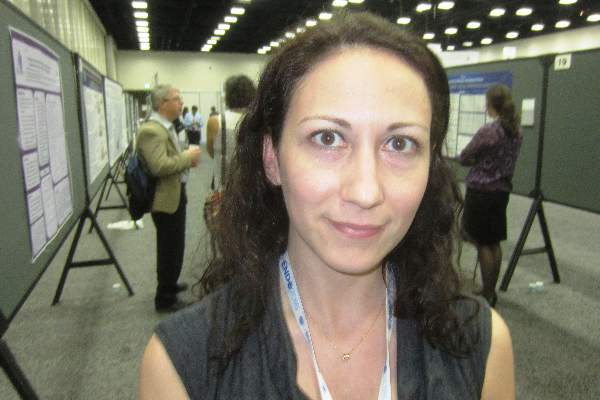
Pediatrician and lead investigator Dr. Roy Kim stressed that the correlations don’t prove cause and effect. Still, he said he now encourages his patients to eat nuts. He explained why in an interview at a meeting of the Endocrine Society.
The video associated with this article is no longer available on this site. Please view all of our videos on the MDedge YouTube channel
SAN DIEGO – Encourage teens with metabolic syndrome to snack on nuts; it just might improve their health.
Investigators from the University of Texas Southwestern Medical Center, in Dallas, found that children who ate 12.9 g of nuts per day – the equivalent of a small handful of peanuts, almonds, walnuts, and the like 3 times a week – had less than half the risk of metabolic syndrome, compared with those who did not, when age, sex, race, household income, and daily intake of sugar, fruits, and vegetables were controlled for (odds ratio, 0.43; 95% confidence interval, 0.20-0.92). The benefit persisted up to about 50 g/day, then tapered off, perhaps because the extra calories offset the metabolic benefit.
Adolescents who ate nuts a few times a week also had lower body mass index z scores, smaller waists, lower systolic blood pressure, and higher HDL cholesterol levels. Similar benefits have been found in adults.
The data come from the 2003-2010 National Health and Nutrition Examination Survey (NHANES) of 2,233 12- to 19-year-olds; nut consumption was self-reported.
Pediatrician and lead investigator Dr. Roy Kim stressed that the correlations don’t prove cause and effect. Still, he said he now encourages his patients to eat nuts. He explained why in an interview at a meeting of the Endocrine Society.
The video associated with this article is no longer available on this site. Please view all of our videos on the MDedge YouTube channel
SAN DIEGO – Encourage teens with metabolic syndrome to snack on nuts; it just might improve their health.
Investigators from the University of Texas Southwestern Medical Center, in Dallas, found that children who ate 12.9 g of nuts per day – the equivalent of a small handful of peanuts, almonds, walnuts, and the like 3 times a week – had less than half the risk of metabolic syndrome, compared with those who did not, when age, sex, race, household income, and daily intake of sugar, fruits, and vegetables were controlled for (odds ratio, 0.43; 95% confidence interval, 0.20-0.92). The benefit persisted up to about 50 g/day, then tapered off, perhaps because the extra calories offset the metabolic benefit.
Adolescents who ate nuts a few times a week also had lower body mass index z scores, smaller waists, lower systolic blood pressure, and higher HDL cholesterol levels. Similar benefits have been found in adults.
The data come from the 2003-2010 National Health and Nutrition Examination Survey (NHANES) of 2,233 12- to 19-year-olds; nut consumption was self-reported.
Pediatrician and lead investigator Dr. Roy Kim stressed that the correlations don’t prove cause and effect. Still, he said he now encourages his patients to eat nuts. He explained why in an interview at a meeting of the Endocrine Society.
The video associated with this article is no longer available on this site. Please view all of our videos on the MDedge YouTube channel
AT ENDO 2015
Gout management best practices require getting around misconceptions
MAUI, HAWAII – Urate-lowering therapy doesn’t have to be suspended while gout patients are treated for acute attacks, according to rheumatologist Orrin Troum of Santa Monica, Calif.
In fact, there are arguments against it; stopping allopurinol or other urate-lowering therapies (ULTs) during an attack doesn’t seem to help, and there’s a chance that patients might have another attack when it’s reintroduced. Still, the practice persists despite evidence and recommendations to the contrary, Dr. Troum said at the 2015 Rheumatology Winter Clinical Symposium.
Gout is a curable or at least eminently manageable condition, but it remains a tricky problem to treat. Part of that is because referring physicians might be using an out-of-date playbook before sending patients for a rheumatology consult; another issue is that optimal care requires follow-up visits, which might not always be possible.
Gout management guidelines from the European League Against Rheumatism (Ann. Rheum. Dis. 2006;65:1312-24) and the American College of Rheumatology (Arthritis Care Res. 2012;64:1431-46) now largely concur on how best to handle the condition, which might help bring uniformity to gout management if their message filters through to other branches of medicine, said rheumatologist and copresenter Martin Bergman of the department of rheumatology at Drexel University in Philadelphia.
Another persistent misconception is that ULT can’t be started during an acute attack. “There are some very good studies showing” that it can so long as antiflare drugs are on board and patients follow up to check for hypersensitivity reactions and other potential ULT problems, said Dr. Bergman, also chief of rheumatology at Taylor Hospital in Ridley Park, Pa.
Starting low and going slow, a key concept with ULT, hasn’t fully taken hold outside the rheumatology community, either. With allopurinol, that means starting at 100 mg/day – and 50 mg/day in those with chronic kidney disease – then titrating up slowly over several follow-up visits to an effective serum uric acid (SUA)–lowering dose. The idea is to lower serum uric acid slowly, to avoid precipitating an acute attack.
Even so, patients are still sometimes started on 300 mg/day, and although more than half will need more than 300 mg/day to reach SUA targets, that dose is still sometimes considered to be the maximum allowable.
Overall, the consensus on both sides of the Atlantic is that gout patients need to have serum urate levels below 6 mg/dL, and below 5 mg/dL if they have tophi.
“So the next question is, ‘How low do you go?’ ” It’s recently been found that “lifelong maintenance on very low levels of uric acid might actually increase the risk of neurodegenerative diseases, such as Parkinson’s, multiple sclerosis, and dementia.” Uric acid is a strong antioxidant that, perhaps, has protective effects in the central nervous system, Dr. Troum said.
It might be best to go below 5 mg/dL in severe gout for only 3-5 years, then loosen the target to 5-6 mg/dL (Nat. Rev. Rheumatol. 2014;10:271-83), he added.
Among other recent developments, it’s now known that psoriasis and psoriatic arthritis substantially increase the risk of gout (Ann. Rheum. Dis. 2014 March 20 [doi:10.1136/annrheumdis-2014-205212]), so it’s important to check for gout crystals when aspirating inflamed joints in those conditions. It remains unclear, however, if psoriasis or gout should take precedence when crystals are found, Dr. Bergman said.
Also, it makes sense to screen patients for their HLA-B genotype. Carriers of the variant allele HLA-B*5801 are at high risk for severe cutaneous adverse reactions with allopurinol, so another ULT is probably a better option. The variant is most common in individuals of Korean, Han Chinese, or Thai descent (Clin. Pharmacol. Ther. 2013;93:153-8).
Dr. Troum is an adviser, consultant, speaker, or grant recipient for several companies, including AbbVie, Amgen, Bristol-Myers Squibb, Centocor, Novartis, Pfizer, and Roche. He holds shares in Theralogix. Dr. Bergman is an adviser, speaker, or consultant for several companies, as well, including AbbVie, Celgene, Amgen, and Roche. He holds shares in Bristol-Myers Squibb, Pfizer, and Johnson & Johnson.
MAUI, HAWAII – Urate-lowering therapy doesn’t have to be suspended while gout patients are treated for acute attacks, according to rheumatologist Orrin Troum of Santa Monica, Calif.
In fact, there are arguments against it; stopping allopurinol or other urate-lowering therapies (ULTs) during an attack doesn’t seem to help, and there’s a chance that patients might have another attack when it’s reintroduced. Still, the practice persists despite evidence and recommendations to the contrary, Dr. Troum said at the 2015 Rheumatology Winter Clinical Symposium.
Gout is a curable or at least eminently manageable condition, but it remains a tricky problem to treat. Part of that is because referring physicians might be using an out-of-date playbook before sending patients for a rheumatology consult; another issue is that optimal care requires follow-up visits, which might not always be possible.
Gout management guidelines from the European League Against Rheumatism (Ann. Rheum. Dis. 2006;65:1312-24) and the American College of Rheumatology (Arthritis Care Res. 2012;64:1431-46) now largely concur on how best to handle the condition, which might help bring uniformity to gout management if their message filters through to other branches of medicine, said rheumatologist and copresenter Martin Bergman of the department of rheumatology at Drexel University in Philadelphia.
Another persistent misconception is that ULT can’t be started during an acute attack. “There are some very good studies showing” that it can so long as antiflare drugs are on board and patients follow up to check for hypersensitivity reactions and other potential ULT problems, said Dr. Bergman, also chief of rheumatology at Taylor Hospital in Ridley Park, Pa.
Starting low and going slow, a key concept with ULT, hasn’t fully taken hold outside the rheumatology community, either. With allopurinol, that means starting at 100 mg/day – and 50 mg/day in those with chronic kidney disease – then titrating up slowly over several follow-up visits to an effective serum uric acid (SUA)–lowering dose. The idea is to lower serum uric acid slowly, to avoid precipitating an acute attack.
Even so, patients are still sometimes started on 300 mg/day, and although more than half will need more than 300 mg/day to reach SUA targets, that dose is still sometimes considered to be the maximum allowable.
Overall, the consensus on both sides of the Atlantic is that gout patients need to have serum urate levels below 6 mg/dL, and below 5 mg/dL if they have tophi.
“So the next question is, ‘How low do you go?’ ” It’s recently been found that “lifelong maintenance on very low levels of uric acid might actually increase the risk of neurodegenerative diseases, such as Parkinson’s, multiple sclerosis, and dementia.” Uric acid is a strong antioxidant that, perhaps, has protective effects in the central nervous system, Dr. Troum said.
It might be best to go below 5 mg/dL in severe gout for only 3-5 years, then loosen the target to 5-6 mg/dL (Nat. Rev. Rheumatol. 2014;10:271-83), he added.
Among other recent developments, it’s now known that psoriasis and psoriatic arthritis substantially increase the risk of gout (Ann. Rheum. Dis. 2014 March 20 [doi:10.1136/annrheumdis-2014-205212]), so it’s important to check for gout crystals when aspirating inflamed joints in those conditions. It remains unclear, however, if psoriasis or gout should take precedence when crystals are found, Dr. Bergman said.
Also, it makes sense to screen patients for their HLA-B genotype. Carriers of the variant allele HLA-B*5801 are at high risk for severe cutaneous adverse reactions with allopurinol, so another ULT is probably a better option. The variant is most common in individuals of Korean, Han Chinese, or Thai descent (Clin. Pharmacol. Ther. 2013;93:153-8).
Dr. Troum is an adviser, consultant, speaker, or grant recipient for several companies, including AbbVie, Amgen, Bristol-Myers Squibb, Centocor, Novartis, Pfizer, and Roche. He holds shares in Theralogix. Dr. Bergman is an adviser, speaker, or consultant for several companies, as well, including AbbVie, Celgene, Amgen, and Roche. He holds shares in Bristol-Myers Squibb, Pfizer, and Johnson & Johnson.
MAUI, HAWAII – Urate-lowering therapy doesn’t have to be suspended while gout patients are treated for acute attacks, according to rheumatologist Orrin Troum of Santa Monica, Calif.
In fact, there are arguments against it; stopping allopurinol or other urate-lowering therapies (ULTs) during an attack doesn’t seem to help, and there’s a chance that patients might have another attack when it’s reintroduced. Still, the practice persists despite evidence and recommendations to the contrary, Dr. Troum said at the 2015 Rheumatology Winter Clinical Symposium.
Gout is a curable or at least eminently manageable condition, but it remains a tricky problem to treat. Part of that is because referring physicians might be using an out-of-date playbook before sending patients for a rheumatology consult; another issue is that optimal care requires follow-up visits, which might not always be possible.
Gout management guidelines from the European League Against Rheumatism (Ann. Rheum. Dis. 2006;65:1312-24) and the American College of Rheumatology (Arthritis Care Res. 2012;64:1431-46) now largely concur on how best to handle the condition, which might help bring uniformity to gout management if their message filters through to other branches of medicine, said rheumatologist and copresenter Martin Bergman of the department of rheumatology at Drexel University in Philadelphia.
Another persistent misconception is that ULT can’t be started during an acute attack. “There are some very good studies showing” that it can so long as antiflare drugs are on board and patients follow up to check for hypersensitivity reactions and other potential ULT problems, said Dr. Bergman, also chief of rheumatology at Taylor Hospital in Ridley Park, Pa.
Starting low and going slow, a key concept with ULT, hasn’t fully taken hold outside the rheumatology community, either. With allopurinol, that means starting at 100 mg/day – and 50 mg/day in those with chronic kidney disease – then titrating up slowly over several follow-up visits to an effective serum uric acid (SUA)–lowering dose. The idea is to lower serum uric acid slowly, to avoid precipitating an acute attack.
Even so, patients are still sometimes started on 300 mg/day, and although more than half will need more than 300 mg/day to reach SUA targets, that dose is still sometimes considered to be the maximum allowable.
Overall, the consensus on both sides of the Atlantic is that gout patients need to have serum urate levels below 6 mg/dL, and below 5 mg/dL if they have tophi.
“So the next question is, ‘How low do you go?’ ” It’s recently been found that “lifelong maintenance on very low levels of uric acid might actually increase the risk of neurodegenerative diseases, such as Parkinson’s, multiple sclerosis, and dementia.” Uric acid is a strong antioxidant that, perhaps, has protective effects in the central nervous system, Dr. Troum said.
It might be best to go below 5 mg/dL in severe gout for only 3-5 years, then loosen the target to 5-6 mg/dL (Nat. Rev. Rheumatol. 2014;10:271-83), he added.
Among other recent developments, it’s now known that psoriasis and psoriatic arthritis substantially increase the risk of gout (Ann. Rheum. Dis. 2014 March 20 [doi:10.1136/annrheumdis-2014-205212]), so it’s important to check for gout crystals when aspirating inflamed joints in those conditions. It remains unclear, however, if psoriasis or gout should take precedence when crystals are found, Dr. Bergman said.
Also, it makes sense to screen patients for their HLA-B genotype. Carriers of the variant allele HLA-B*5801 are at high risk for severe cutaneous adverse reactions with allopurinol, so another ULT is probably a better option. The variant is most common in individuals of Korean, Han Chinese, or Thai descent (Clin. Pharmacol. Ther. 2013;93:153-8).
Dr. Troum is an adviser, consultant, speaker, or grant recipient for several companies, including AbbVie, Amgen, Bristol-Myers Squibb, Centocor, Novartis, Pfizer, and Roche. He holds shares in Theralogix. Dr. Bergman is an adviser, speaker, or consultant for several companies, as well, including AbbVie, Celgene, Amgen, and Roche. He holds shares in Bristol-Myers Squibb, Pfizer, and Johnson & Johnson.
EXPERT ANALYSIS AT RWCS 2015
VIDEO: SLE diagnosis takes more than high ANA levels
MAUI, Hawaii – Do not diagnose systemic lupus erythematosus based on vague clinical symptoms and an elevated antinuclear antibody blood test.
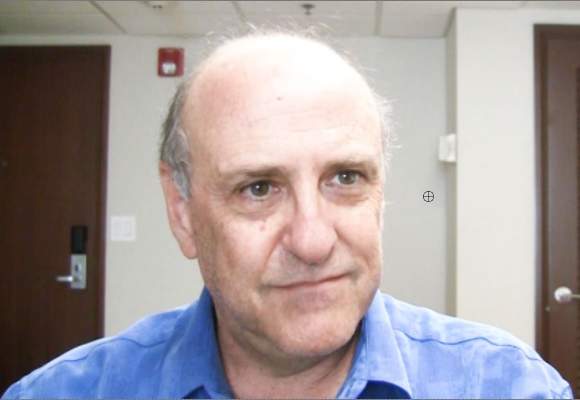
As incredible as it seems, Dr. Alvin Wells, director of the Rheumatology and Immunotherapy Center in Franklin, Wis., said he sees doctors doing that all the time in his practice.
SLE is a serious and tricky diagnosis that has long-standing consequences for patients, he said.
Even road rage before an appointment can throw off blood tests. Also, SLE doesn’t seem to be one disease, so drugs have to be picked based on manifestations. Belimumab is a good example of that. Dr. Wells explained those and other insights at the Rheumatology Winter Clinical Symposium.
The video associated with this article is no longer available on this site. Please view all of our videos on the MDedge YouTube channel
MAUI, Hawaii – Do not diagnose systemic lupus erythematosus based on vague clinical symptoms and an elevated antinuclear antibody blood test.
As incredible as it seems, Dr. Alvin Wells, director of the Rheumatology and Immunotherapy Center in Franklin, Wis., said he sees doctors doing that all the time in his practice.
SLE is a serious and tricky diagnosis that has long-standing consequences for patients, he said.
Even road rage before an appointment can throw off blood tests. Also, SLE doesn’t seem to be one disease, so drugs have to be picked based on manifestations. Belimumab is a good example of that. Dr. Wells explained those and other insights at the Rheumatology Winter Clinical Symposium.
The video associated with this article is no longer available on this site. Please view all of our videos on the MDedge YouTube channel
MAUI, Hawaii – Do not diagnose systemic lupus erythematosus based on vague clinical symptoms and an elevated antinuclear antibody blood test.
As incredible as it seems, Dr. Alvin Wells, director of the Rheumatology and Immunotherapy Center in Franklin, Wis., said he sees doctors doing that all the time in his practice.
SLE is a serious and tricky diagnosis that has long-standing consequences for patients, he said.
Even road rage before an appointment can throw off blood tests. Also, SLE doesn’t seem to be one disease, so drugs have to be picked based on manifestations. Belimumab is a good example of that. Dr. Wells explained those and other insights at the Rheumatology Winter Clinical Symposium.
The video associated with this article is no longer available on this site. Please view all of our videos on the MDedge YouTube channel
AT RWCS 2015

VIDEO: True remission necessary before tapering or discontinuing RA drugs
MAUI, HAWAII– Discontinuing medications when rheumatoid arthritis patients are doing well is a hot topic in rheumatology lately, but it’s tricky.
The idea is to give patients a break from the costs and side effects of steroids, methotrexate, and biologics. Whether or not doing so is a good idea has a lot to do with how you define remission, and the odds of recapturing patients if they flare.
Advice from Dr. Roy Fleischmann, a clinical professor of rheumatology at the University of Texas Southwestern Medical Center in Dallas, might help. At the 2015 Rheumatology Winter Clinical Symposium, he shared his know-how about tapering and discontinuing treatments, culled from his professional experience and the literature on the subject in a video interview.
The video associated with this article is no longer available on this site. Please view all of our videos on the MDedge YouTube channel
MAUI, HAWAII– Discontinuing medications when rheumatoid arthritis patients are doing well is a hot topic in rheumatology lately, but it’s tricky.
The idea is to give patients a break from the costs and side effects of steroids, methotrexate, and biologics. Whether or not doing so is a good idea has a lot to do with how you define remission, and the odds of recapturing patients if they flare.
Advice from Dr. Roy Fleischmann, a clinical professor of rheumatology at the University of Texas Southwestern Medical Center in Dallas, might help. At the 2015 Rheumatology Winter Clinical Symposium, he shared his know-how about tapering and discontinuing treatments, culled from his professional experience and the literature on the subject in a video interview.
The video associated with this article is no longer available on this site. Please view all of our videos on the MDedge YouTube channel
MAUI, HAWAII– Discontinuing medications when rheumatoid arthritis patients are doing well is a hot topic in rheumatology lately, but it’s tricky.
The idea is to give patients a break from the costs and side effects of steroids, methotrexate, and biologics. Whether or not doing so is a good idea has a lot to do with how you define remission, and the odds of recapturing patients if they flare.
Advice from Dr. Roy Fleischmann, a clinical professor of rheumatology at the University of Texas Southwestern Medical Center in Dallas, might help. At the 2015 Rheumatology Winter Clinical Symposium, he shared his know-how about tapering and discontinuing treatments, culled from his professional experience and the literature on the subject in a video interview.
The video associated with this article is no longer available on this site. Please view all of our videos on the MDedge YouTube channel
AT RWCS 2015
VIDEO: Homeopathic injectables topped placebo for knee osteoarthritis
MAUI, HAWAII – Two homeopathic injectables, as well as the familiar combination of glucosamine and chondroitin, showed promise in two studies of alternative treatments for osteoarthritis.
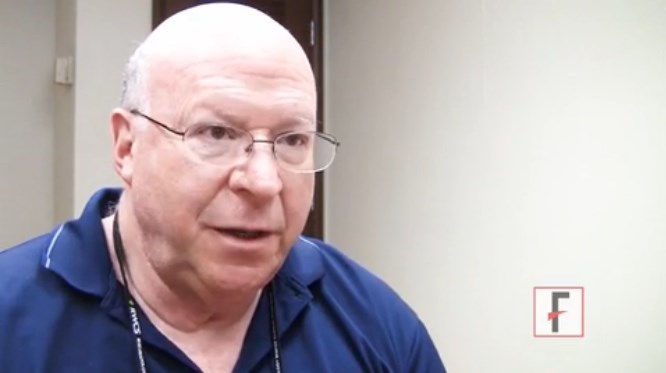
In an interview at the 2015 Rheumatology Winter Clinical Symposium, Dr. Martin J. Bergman, of the department of rheumatology at Drexel University in Philadelphia, shared the recent results from the two investigations.
The first pitted intra-articular injections of two homeopathic products, Traumeel and Zeel, against placebo saline injections for knee osteoarthritis; the work was sponsored by the products’ German maker, Biologische Heilmittel Heel.
In the second trial, glucosamine and chondroitin sulfate went head to head against celecoxib (Celebrex), also for knee OA. The work was sponsored by Bioibérica, a Spanish company that makes chondroitin and glucosamine, and the investigators reported financial ties to the company.
Traumeel and Zeel may sound exotic, but they aren’t unknown in the rheumatology world – some U.S. rheumatologists are using them, Dr. Bergman, also chief of rheumatology at Taylor Hospital in Ridley Park, Pa., said.
Dr. Bergman disclosed that he has served as an advisor, speaker, or consultant for AbbVie, Amgen, Celgene, and Roche, and holds shares in Bristol-Myers Squibb, Johnson & Johnson, and Pfizer.
The video associated with this article is no longer available on this site. Please view all of our videos on the MDedge YouTube channel
MAUI, HAWAII – Two homeopathic injectables, as well as the familiar combination of glucosamine and chondroitin, showed promise in two studies of alternative treatments for osteoarthritis.
In an interview at the 2015 Rheumatology Winter Clinical Symposium, Dr. Martin J. Bergman, of the department of rheumatology at Drexel University in Philadelphia, shared the recent results from the two investigations.
The first pitted intra-articular injections of two homeopathic products, Traumeel and Zeel, against placebo saline injections for knee osteoarthritis; the work was sponsored by the products’ German maker, Biologische Heilmittel Heel.
In the second trial, glucosamine and chondroitin sulfate went head to head against celecoxib (Celebrex), also for knee OA. The work was sponsored by Bioibérica, a Spanish company that makes chondroitin and glucosamine, and the investigators reported financial ties to the company.
Traumeel and Zeel may sound exotic, but they aren’t unknown in the rheumatology world – some U.S. rheumatologists are using them, Dr. Bergman, also chief of rheumatology at Taylor Hospital in Ridley Park, Pa., said.
Dr. Bergman disclosed that he has served as an advisor, speaker, or consultant for AbbVie, Amgen, Celgene, and Roche, and holds shares in Bristol-Myers Squibb, Johnson & Johnson, and Pfizer.
The video associated with this article is no longer available on this site. Please view all of our videos on the MDedge YouTube channel
MAUI, HAWAII – Two homeopathic injectables, as well as the familiar combination of glucosamine and chondroitin, showed promise in two studies of alternative treatments for osteoarthritis.
In an interview at the 2015 Rheumatology Winter Clinical Symposium, Dr. Martin J. Bergman, of the department of rheumatology at Drexel University in Philadelphia, shared the recent results from the two investigations.
The first pitted intra-articular injections of two homeopathic products, Traumeel and Zeel, against placebo saline injections for knee osteoarthritis; the work was sponsored by the products’ German maker, Biologische Heilmittel Heel.
In the second trial, glucosamine and chondroitin sulfate went head to head against celecoxib (Celebrex), also for knee OA. The work was sponsored by Bioibérica, a Spanish company that makes chondroitin and glucosamine, and the investigators reported financial ties to the company.
Traumeel and Zeel may sound exotic, but they aren’t unknown in the rheumatology world – some U.S. rheumatologists are using them, Dr. Bergman, also chief of rheumatology at Taylor Hospital in Ridley Park, Pa., said.
Dr. Bergman disclosed that he has served as an advisor, speaker, or consultant for AbbVie, Amgen, Celgene, and Roche, and holds shares in Bristol-Myers Squibb, Johnson & Johnson, and Pfizer.
The video associated with this article is no longer available on this site. Please view all of our videos on the MDedge YouTube channel
AT RWCS 2015
VIDEO: Ask patients about metal-on-metal hip implants
MAUI, HAWAII – Rheumatologists and other providers need to ask patients if they’ve had metal-on-metal hip implants.
That goes for hip resurfacing – which by definition is metal on metal – as well as actual metal-on-metal hips. Signs of trouble can be as subtle as mental status changes, and they go well beyond the traditional issues with worn-out artificial joints.
During a video interview at the 2015 Rheumatology Winter Clinical Symposium, Dr. Bill Bugbee, an orthopedic surgeon and professor at the University of California, San Diego, explained the problems and the warning signs for which physicians should watch.
The video associated with this article is no longer available on this site. Please view all of our videos on the MDedge YouTube channel
MAUI, HAWAII – Rheumatologists and other providers need to ask patients if they’ve had metal-on-metal hip implants.
That goes for hip resurfacing – which by definition is metal on metal – as well as actual metal-on-metal hips. Signs of trouble can be as subtle as mental status changes, and they go well beyond the traditional issues with worn-out artificial joints.
During a video interview at the 2015 Rheumatology Winter Clinical Symposium, Dr. Bill Bugbee, an orthopedic surgeon and professor at the University of California, San Diego, explained the problems and the warning signs for which physicians should watch.
The video associated with this article is no longer available on this site. Please view all of our videos on the MDedge YouTube channel
MAUI, HAWAII – Rheumatologists and other providers need to ask patients if they’ve had metal-on-metal hip implants.
That goes for hip resurfacing – which by definition is metal on metal – as well as actual metal-on-metal hips. Signs of trouble can be as subtle as mental status changes, and they go well beyond the traditional issues with worn-out artificial joints.
During a video interview at the 2015 Rheumatology Winter Clinical Symposium, Dr. Bill Bugbee, an orthopedic surgeon and professor at the University of California, San Diego, explained the problems and the warning signs for which physicians should watch.
The video associated with this article is no longer available on this site. Please view all of our videos on the MDedge YouTube channel
AT RWCS 2015

VIDEO: As biosimilars arrive in U.S., treatment questions arise
MAUI, HAWAII – There’s been fairly brisk uptake of biosimilar infliximab in Europe, both for new patients and as a possible switch from Remicade.
That biosimilar infliximab, Remsima, was submitted for U.S. approval in 2014, and a Food and Drug Administration advisory panel recently recommended approval of a biosimilar for filgrastim (Neupogen).
The agents are in the vanguard of what is sure to be an expanding market in the United States as biologics come off patent. Additional infliximab replacements are in the works, as well as biosimilars for etanercept, adalimumab, rituximab, and others.
For rheumatologists, that could mean less expensive treatments for patients, but it’s also likely to make treatment more complicated. Given the complexity of the molecules, the differences between biosimilars and familiar brands could be a bit more marked than those between small-molecule generics and their branded counterparts.
In a video interview at the 2015 Rheumatology Winter Clinical Symposium, Dr. Arthur F. Kavanaugh, a rheumatology professor at the University of California, San Diego, outlined the latest developments and shared his thoughts on the rapidly evolving field.
The video associated with this article is no longer available on this site. Please view all of our videos on the MDedge YouTube channel
MAUI, HAWAII – There’s been fairly brisk uptake of biosimilar infliximab in Europe, both for new patients and as a possible switch from Remicade.
That biosimilar infliximab, Remsima, was submitted for U.S. approval in 2014, and a Food and Drug Administration advisory panel recently recommended approval of a biosimilar for filgrastim (Neupogen).
The agents are in the vanguard of what is sure to be an expanding market in the United States as biologics come off patent. Additional infliximab replacements are in the works, as well as biosimilars for etanercept, adalimumab, rituximab, and others.
For rheumatologists, that could mean less expensive treatments for patients, but it’s also likely to make treatment more complicated. Given the complexity of the molecules, the differences between biosimilars and familiar brands could be a bit more marked than those between small-molecule generics and their branded counterparts.
In a video interview at the 2015 Rheumatology Winter Clinical Symposium, Dr. Arthur F. Kavanaugh, a rheumatology professor at the University of California, San Diego, outlined the latest developments and shared his thoughts on the rapidly evolving field.
The video associated with this article is no longer available on this site. Please view all of our videos on the MDedge YouTube channel
MAUI, HAWAII – There’s been fairly brisk uptake of biosimilar infliximab in Europe, both for new patients and as a possible switch from Remicade.
That biosimilar infliximab, Remsima, was submitted for U.S. approval in 2014, and a Food and Drug Administration advisory panel recently recommended approval of a biosimilar for filgrastim (Neupogen).
The agents are in the vanguard of what is sure to be an expanding market in the United States as biologics come off patent. Additional infliximab replacements are in the works, as well as biosimilars for etanercept, adalimumab, rituximab, and others.
For rheumatologists, that could mean less expensive treatments for patients, but it’s also likely to make treatment more complicated. Given the complexity of the molecules, the differences between biosimilars and familiar brands could be a bit more marked than those between small-molecule generics and their branded counterparts.
In a video interview at the 2015 Rheumatology Winter Clinical Symposium, Dr. Arthur F. Kavanaugh, a rheumatology professor at the University of California, San Diego, outlined the latest developments and shared his thoughts on the rapidly evolving field.
The video associated with this article is no longer available on this site. Please view all of our videos on the MDedge YouTube channel
AT RWCS 2015

VIDEO: Biologics Slowly Taming Metastatic Melanoma
MAUI, HAWAII – Though costly, newer biologics increase 1-year survival with metastatic melanoma from perhaps 40% to more than 70%.
Among the latest are nivolumab and pembrolizumab, antibodies against PD-1 (programmed cell death) cell surface receptors that were approved in 2014 for unresectable melanoma no longer responding to other drugs; another anti-PD-1 is in development.
In this video interview at the 2015 Rheumatology Winter Clinical Symposium, Dr. George Martin of the Dermatology and Laser Center of Maui explains the latest developments and shares his excitement about them.
The video associated with this article is no longer available on this site. Please view all of our videos on the MDedge YouTube channel
MAUI, HAWAII – Though costly, newer biologics increase 1-year survival with metastatic melanoma from perhaps 40% to more than 70%.
Among the latest are nivolumab and pembrolizumab, antibodies against PD-1 (programmed cell death) cell surface receptors that were approved in 2014 for unresectable melanoma no longer responding to other drugs; another anti-PD-1 is in development.
In this video interview at the 2015 Rheumatology Winter Clinical Symposium, Dr. George Martin of the Dermatology and Laser Center of Maui explains the latest developments and shares his excitement about them.
The video associated with this article is no longer available on this site. Please view all of our videos on the MDedge YouTube channel
MAUI, HAWAII – Though costly, newer biologics increase 1-year survival with metastatic melanoma from perhaps 40% to more than 70%.
Among the latest are nivolumab and pembrolizumab, antibodies against PD-1 (programmed cell death) cell surface receptors that were approved in 2014 for unresectable melanoma no longer responding to other drugs; another anti-PD-1 is in development.
In this video interview at the 2015 Rheumatology Winter Clinical Symposium, Dr. George Martin of the Dermatology and Laser Center of Maui explains the latest developments and shares his excitement about them.
The video associated with this article is no longer available on this site. Please view all of our videos on the MDedge YouTube channel
AT RWCS 2015

VIDEO: Biologics slowly taming metastatic melanoma
MAUI, HAWAII – Though costly, newer biologics increase 1-year survival with metastatic melanoma from perhaps 40% to more than 70%.
Among the latest are nivolumab and pembrolizumab, antibodies against PD-1 (programmed cell death) cell surface receptors that were approved in 2014 for unresectable melanoma no longer responding to other drugs; another anti-PD-1 is in development.
In this video interview at the 2015 Rheumatology Winter Clinical Symposium, Dr. George Martin of the Dermatology and Laser Center of Maui explains the latest developments and shares his excitement about them.
The video associated with this article is no longer available on this site. Please view all of our videos on the MDedge YouTube channel
MAUI, HAWAII – Though costly, newer biologics increase 1-year survival with metastatic melanoma from perhaps 40% to more than 70%.
Among the latest are nivolumab and pembrolizumab, antibodies against PD-1 (programmed cell death) cell surface receptors that were approved in 2014 for unresectable melanoma no longer responding to other drugs; another anti-PD-1 is in development.
In this video interview at the 2015 Rheumatology Winter Clinical Symposium, Dr. George Martin of the Dermatology and Laser Center of Maui explains the latest developments and shares his excitement about them.
The video associated with this article is no longer available on this site. Please view all of our videos on the MDedge YouTube channel
MAUI, HAWAII – Though costly, newer biologics increase 1-year survival with metastatic melanoma from perhaps 40% to more than 70%.
Among the latest are nivolumab and pembrolizumab, antibodies against PD-1 (programmed cell death) cell surface receptors that were approved in 2014 for unresectable melanoma no longer responding to other drugs; another anti-PD-1 is in development.
In this video interview at the 2015 Rheumatology Winter Clinical Symposium, Dr. George Martin of the Dermatology and Laser Center of Maui explains the latest developments and shares his excitement about them.
The video associated with this article is no longer available on this site. Please view all of our videos on the MDedge YouTube channel
AT RWCS 2015