User login
About one-third of anxiety patients relapse after stopping antidepressants
SAN FRANCISCO – Relapse is more likely in the absence of medication and, if they resume their antidepressant after relapse, some patients experience adverse events or drug resistance.
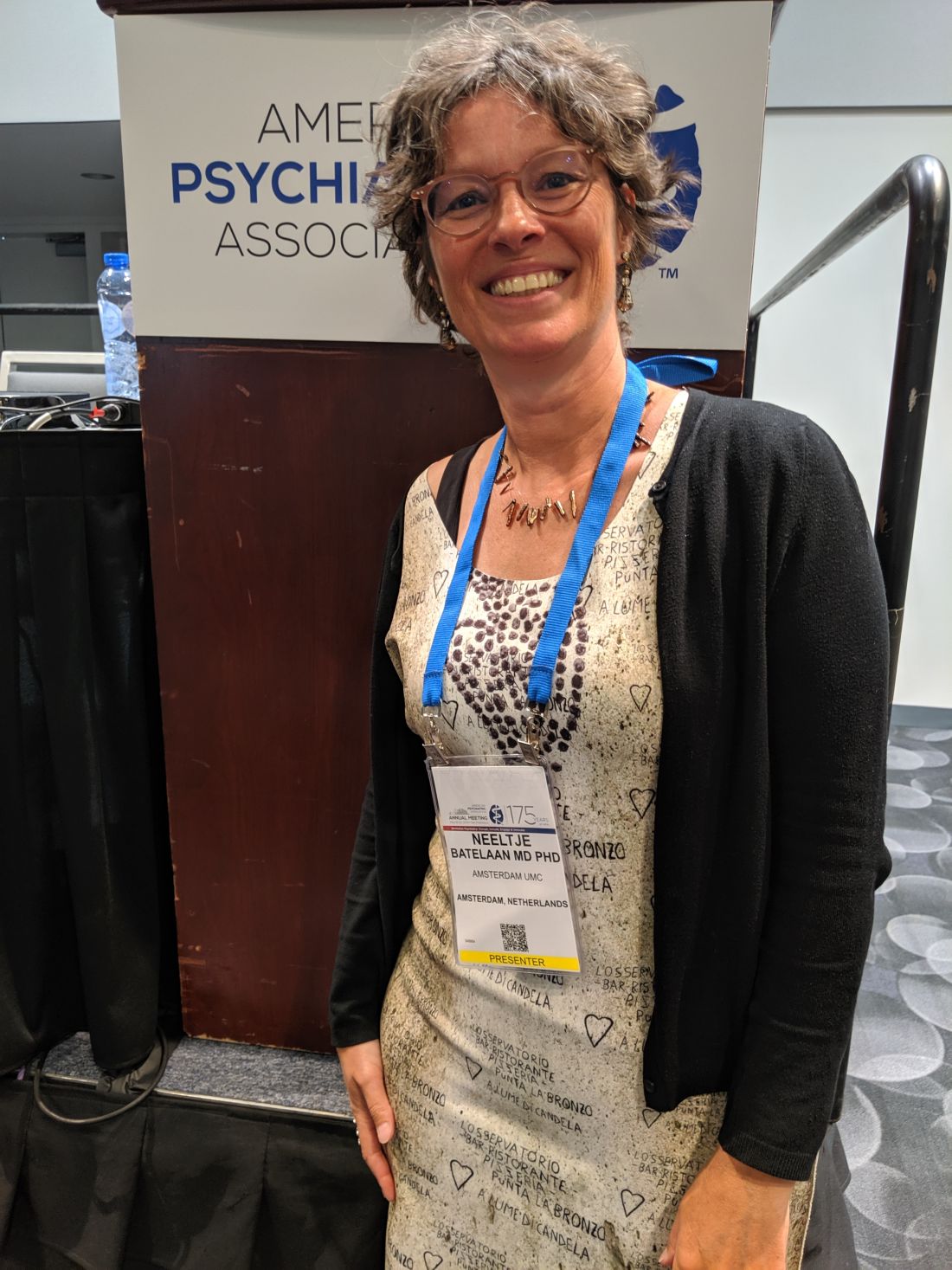
“It’s important that we realize that anxiety disorders can be treated effectively in the short term, but it’s very difficult to treat them for the long term. We know that within a year, it’s better to continue the medication. There’s a lack of data to give evidence-based advice after 1 year,” Neeltje Batelaan, MD, PhD, a psychiatrist and senior researcher at VU University Medical Center, Amsterdam, said in an interview.
Dr. Batelaan moderated a session at the annual meeting of the American Psychiatric Association on discontinuation of antidepressant medications in these patients.
Anxiety disorders can often be successfully treated with antidepressants, but their adverse effects can become less tolerable over time, especially after patients go into remission. When patients begin treatment, they are willing to endure side effects in the service of resolving their symptoms. But when they go into remission, “they want to get on with their lives, so their sexual side effects or their weight gain rates a lot worse,” Dr. Batelaan said.
A meta-analysis of 28 studies, with follow-up periods ranging from 8 to 52 weeks, found that the anxiety relapse risk after discontinuation of antidepressants was 36.4%, compared with 16.4% in those who stayed on medication. Even continuing antidepressants isn’t completely protective, she noted. The study found a number needed to treat of five to prevent one relapse.
Researchers at the VU University Medical Center developed a cognitive-behavioral therapy (CBT) regimen aimed at reducing anxiety relapses. In their study, 87 patients with a remitted anxiety disorder who wanted to stop their antidepressants were randomized to do so either with or without CBT intervention.
Unfortunately, the study had to be stopped when an interim analysis showed a lack of efficacy. In fact, patients who received CBT actually had higher relapse rates. Surprisingly, just 37% of patients succeeded in completely discontinuing medication, which hints at the inherent challenges of the transition.
“Unfortunately, building a CBT relapse prevention did not come true, but we learned some valuable lessons that will guide further studies,” Willemijn Scholten, PhD, a postdoc researcher at VU University Medical Center, said during one of the presentations.
In his presentation, Anton (Ton) Van Balkom, MD, PhD, professor of psychiatry at VU University Medical Center, recounted the case of a woman who had been functioning well with an antidepressant but grew tired of the sexual side effects. She carefully discontinued her medication under his guidance, but in 2 months she experienced her first panic attack in 30 years. Reintroducing the medication failed to resolve the issue, and it took years of effort before cognitive behavioral therapy resulted in a remission.
Further, a meta-analysis of nine studies showed that 17% of patients with remitted anxiety who went off and then restarted their antidepressants experienced tachycardia.
To help reduce tachycardia, Dr. Van Balkom suggested alternative options to antidepressants in less-complicated patients with anxiety, and to anticipate long-term use of antidepressants once those medications are employed.
Dr. Batelaan agreed with that assessment, drawing an analogy with type 2 diabetes. “You first start with a diet, and advise the patient to lose weight, and then if that’s not successful you go to [medication] and you realize it’s lifelong. Maybe we have to differentiate antidepressant therapies and [not start them until necessary]. But if you have to start them, realize that there’s a difficult decision waiting ahead.”
SAN FRANCISCO – Relapse is more likely in the absence of medication and, if they resume their antidepressant after relapse, some patients experience adverse events or drug resistance.
“It’s important that we realize that anxiety disorders can be treated effectively in the short term, but it’s very difficult to treat them for the long term. We know that within a year, it’s better to continue the medication. There’s a lack of data to give evidence-based advice after 1 year,” Neeltje Batelaan, MD, PhD, a psychiatrist and senior researcher at VU University Medical Center, Amsterdam, said in an interview.
Dr. Batelaan moderated a session at the annual meeting of the American Psychiatric Association on discontinuation of antidepressant medications in these patients.
Anxiety disorders can often be successfully treated with antidepressants, but their adverse effects can become less tolerable over time, especially after patients go into remission. When patients begin treatment, they are willing to endure side effects in the service of resolving their symptoms. But when they go into remission, “they want to get on with their lives, so their sexual side effects or their weight gain rates a lot worse,” Dr. Batelaan said.
A meta-analysis of 28 studies, with follow-up periods ranging from 8 to 52 weeks, found that the anxiety relapse risk after discontinuation of antidepressants was 36.4%, compared with 16.4% in those who stayed on medication. Even continuing antidepressants isn’t completely protective, she noted. The study found a number needed to treat of five to prevent one relapse.
Researchers at the VU University Medical Center developed a cognitive-behavioral therapy (CBT) regimen aimed at reducing anxiety relapses. In their study, 87 patients with a remitted anxiety disorder who wanted to stop their antidepressants were randomized to do so either with or without CBT intervention.
Unfortunately, the study had to be stopped when an interim analysis showed a lack of efficacy. In fact, patients who received CBT actually had higher relapse rates. Surprisingly, just 37% of patients succeeded in completely discontinuing medication, which hints at the inherent challenges of the transition.
“Unfortunately, building a CBT relapse prevention did not come true, but we learned some valuable lessons that will guide further studies,” Willemijn Scholten, PhD, a postdoc researcher at VU University Medical Center, said during one of the presentations.
In his presentation, Anton (Ton) Van Balkom, MD, PhD, professor of psychiatry at VU University Medical Center, recounted the case of a woman who had been functioning well with an antidepressant but grew tired of the sexual side effects. She carefully discontinued her medication under his guidance, but in 2 months she experienced her first panic attack in 30 years. Reintroducing the medication failed to resolve the issue, and it took years of effort before cognitive behavioral therapy resulted in a remission.
Further, a meta-analysis of nine studies showed that 17% of patients with remitted anxiety who went off and then restarted their antidepressants experienced tachycardia.
To help reduce tachycardia, Dr. Van Balkom suggested alternative options to antidepressants in less-complicated patients with anxiety, and to anticipate long-term use of antidepressants once those medications are employed.
Dr. Batelaan agreed with that assessment, drawing an analogy with type 2 diabetes. “You first start with a diet, and advise the patient to lose weight, and then if that’s not successful you go to [medication] and you realize it’s lifelong. Maybe we have to differentiate antidepressant therapies and [not start them until necessary]. But if you have to start them, realize that there’s a difficult decision waiting ahead.”
SAN FRANCISCO – Relapse is more likely in the absence of medication and, if they resume their antidepressant after relapse, some patients experience adverse events or drug resistance.
“It’s important that we realize that anxiety disorders can be treated effectively in the short term, but it’s very difficult to treat them for the long term. We know that within a year, it’s better to continue the medication. There’s a lack of data to give evidence-based advice after 1 year,” Neeltje Batelaan, MD, PhD, a psychiatrist and senior researcher at VU University Medical Center, Amsterdam, said in an interview.
Dr. Batelaan moderated a session at the annual meeting of the American Psychiatric Association on discontinuation of antidepressant medications in these patients.
Anxiety disorders can often be successfully treated with antidepressants, but their adverse effects can become less tolerable over time, especially after patients go into remission. When patients begin treatment, they are willing to endure side effects in the service of resolving their symptoms. But when they go into remission, “they want to get on with their lives, so their sexual side effects or their weight gain rates a lot worse,” Dr. Batelaan said.
A meta-analysis of 28 studies, with follow-up periods ranging from 8 to 52 weeks, found that the anxiety relapse risk after discontinuation of antidepressants was 36.4%, compared with 16.4% in those who stayed on medication. Even continuing antidepressants isn’t completely protective, she noted. The study found a number needed to treat of five to prevent one relapse.
Researchers at the VU University Medical Center developed a cognitive-behavioral therapy (CBT) regimen aimed at reducing anxiety relapses. In their study, 87 patients with a remitted anxiety disorder who wanted to stop their antidepressants were randomized to do so either with or without CBT intervention.
Unfortunately, the study had to be stopped when an interim analysis showed a lack of efficacy. In fact, patients who received CBT actually had higher relapse rates. Surprisingly, just 37% of patients succeeded in completely discontinuing medication, which hints at the inherent challenges of the transition.
“Unfortunately, building a CBT relapse prevention did not come true, but we learned some valuable lessons that will guide further studies,” Willemijn Scholten, PhD, a postdoc researcher at VU University Medical Center, said during one of the presentations.
In his presentation, Anton (Ton) Van Balkom, MD, PhD, professor of psychiatry at VU University Medical Center, recounted the case of a woman who had been functioning well with an antidepressant but grew tired of the sexual side effects. She carefully discontinued her medication under his guidance, but in 2 months she experienced her first panic attack in 30 years. Reintroducing the medication failed to resolve the issue, and it took years of effort before cognitive behavioral therapy resulted in a remission.
Further, a meta-analysis of nine studies showed that 17% of patients with remitted anxiety who went off and then restarted their antidepressants experienced tachycardia.
To help reduce tachycardia, Dr. Van Balkom suggested alternative options to antidepressants in less-complicated patients with anxiety, and to anticipate long-term use of antidepressants once those medications are employed.
Dr. Batelaan agreed with that assessment, drawing an analogy with type 2 diabetes. “You first start with a diet, and advise the patient to lose weight, and then if that’s not successful you go to [medication] and you realize it’s lifelong. Maybe we have to differentiate antidepressant therapies and [not start them until necessary]. But if you have to start them, realize that there’s a difficult decision waiting ahead.”
REPORTING FROM APA 2019
Looking ahead: Gastroenterology devices over the next decade
SAN FRANCISCO – The gastroenterology device field has matured technically in recent years, with plenty of innovation in applications to antireflux, obesity, and colorectal polyp detection, among others, but barriers to adoption remain. The most pressing is reimbursement, which is a process that is often opaque and off-putting, especially for small companies that lack the capital to bull their way through the obstacles.

Reimbursement decisions get made on a case-by-case basis, “and a lot of times there’s a finite number of dollars in the health care system, and CMS [Centers for Medicare & Medicaid Services] and other entities are trying to limit how many things we can have. They look at data and summaries that can be somewhat biased. Plus the way the methodology works in surveying physicians is not very clear, so the overall process needs more clarity,” said Sri Komanduri, MD, AGAF, professor of medicine and surgery at Northwestern University, Chicago, and vice chair of the AGA Center for GI Innovation and Technology, in an interview at the 2019 AGA Tech Summit sponsored by the AGA Center for GI Innovation and Technology.
The 2019 summit highlighted new technologies in its annual Shark Tank competition and brought experts from industry, academia, and regulatory agencies to San Francisco for 2 days of presentations on the challenges and opportunities in gastroenterology devices.
Lack of clarity is indeed a key challenge, agreed V. Raman Muthusamy, MD, AGAF, director of endoscopy at the University of California, Los Angeles, Health System, professor of clinical medicine at UCLA, and chair of the AGA Center for GI Innovation and Technology. “Maybe you designed a trial that you think will be adequate but the person who is ultimately making the decision on coverage doesn’t think it’s adequate, so having societies and payers really speak together with industry and innovators to get this information early rather than late could save a lot of time and money, and ultimately get these products to patients sooner,” Dr. Muthusamy said in an interview.
And he insists that the technology is ready, as evidenced in part by the Shark Tank contestants and this year’s winner. There is more to come. In the immediate future, Dr. Muthusamy anticipates use of artificial intelligence to enhance polyp detection, and perhaps assessing larger polyps. “Computers can aid us in reading things, particularly in analyzing large amounts of data which may look similar to finding a needle in a haystack, whether that’s dysplasia in a field of normal tissue, or it’s identifying a small locus of blood in an otherwise bloodless field.”
He also expects more expansion of technologies that will allow endoscopists to perform techniques that were once limited to surgeons, such as making endoscopic submucosal dissection easier to perform. “We continue to see development of endoscopic platforms that are going to allow us to become endoscopic surgeons,” said Dr. Muthusamy.
Interventional ultrasound should continue to gain traction, and Dr. Muthusamy hopes to see an endoscopic antireflux device that could provide patients a middle-ground option between medication and surgery.
But these innovations still face many obstacles to reaching patients. Getting Food and Drug Administration approval, getting a code, and reimbursement are all daunting roadblocks. “You clear one hurdle only to run into another, and if you get one of these steps wrong, and they say you have to redo a trial, you’re talking potentially millions of dollars and several years,” said Dr. Muthusamy.
That could stifle innovation, particularly among small companies. “That may be why you see a lot of smaller companies get acquired early – they don’t have the sort of capital to sustain the long road to the finish,” he said.
However, Dr. Muthusamy believes there is room for optimism, as evidenced by progress at the FDA. “If we can make the level of changes in the next decade in the reimbursement process that we’ve made in the regulatory process in the last decade, we’ll have made some real progress.”
The AGA Center for GI Innovation and Technology is working behind the scenes to guide the FDA, payers, and industry in overcoming the overcoming the obstacles inherent in the device development, approval, and adoption process. The center’s goal is to continue to advance innovation in GI, while making sure the needs of gastroenterologists and patients are met with each new technology that comes to market.
SAN FRANCISCO – The gastroenterology device field has matured technically in recent years, with plenty of innovation in applications to antireflux, obesity, and colorectal polyp detection, among others, but barriers to adoption remain. The most pressing is reimbursement, which is a process that is often opaque and off-putting, especially for small companies that lack the capital to bull their way through the obstacles.
Reimbursement decisions get made on a case-by-case basis, “and a lot of times there’s a finite number of dollars in the health care system, and CMS [Centers for Medicare & Medicaid Services] and other entities are trying to limit how many things we can have. They look at data and summaries that can be somewhat biased. Plus the way the methodology works in surveying physicians is not very clear, so the overall process needs more clarity,” said Sri Komanduri, MD, AGAF, professor of medicine and surgery at Northwestern University, Chicago, and vice chair of the AGA Center for GI Innovation and Technology, in an interview at the 2019 AGA Tech Summit sponsored by the AGA Center for GI Innovation and Technology.
The 2019 summit highlighted new technologies in its annual Shark Tank competition and brought experts from industry, academia, and regulatory agencies to San Francisco for 2 days of presentations on the challenges and opportunities in gastroenterology devices.
Lack of clarity is indeed a key challenge, agreed V. Raman Muthusamy, MD, AGAF, director of endoscopy at the University of California, Los Angeles, Health System, professor of clinical medicine at UCLA, and chair of the AGA Center for GI Innovation and Technology. “Maybe you designed a trial that you think will be adequate but the person who is ultimately making the decision on coverage doesn’t think it’s adequate, so having societies and payers really speak together with industry and innovators to get this information early rather than late could save a lot of time and money, and ultimately get these products to patients sooner,” Dr. Muthusamy said in an interview.
And he insists that the technology is ready, as evidenced in part by the Shark Tank contestants and this year’s winner. There is more to come. In the immediate future, Dr. Muthusamy anticipates use of artificial intelligence to enhance polyp detection, and perhaps assessing larger polyps. “Computers can aid us in reading things, particularly in analyzing large amounts of data which may look similar to finding a needle in a haystack, whether that’s dysplasia in a field of normal tissue, or it’s identifying a small locus of blood in an otherwise bloodless field.”
He also expects more expansion of technologies that will allow endoscopists to perform techniques that were once limited to surgeons, such as making endoscopic submucosal dissection easier to perform. “We continue to see development of endoscopic platforms that are going to allow us to become endoscopic surgeons,” said Dr. Muthusamy.
Interventional ultrasound should continue to gain traction, and Dr. Muthusamy hopes to see an endoscopic antireflux device that could provide patients a middle-ground option between medication and surgery.
But these innovations still face many obstacles to reaching patients. Getting Food and Drug Administration approval, getting a code, and reimbursement are all daunting roadblocks. “You clear one hurdle only to run into another, and if you get one of these steps wrong, and they say you have to redo a trial, you’re talking potentially millions of dollars and several years,” said Dr. Muthusamy.
That could stifle innovation, particularly among small companies. “That may be why you see a lot of smaller companies get acquired early – they don’t have the sort of capital to sustain the long road to the finish,” he said.
However, Dr. Muthusamy believes there is room for optimism, as evidenced by progress at the FDA. “If we can make the level of changes in the next decade in the reimbursement process that we’ve made in the regulatory process in the last decade, we’ll have made some real progress.”
The AGA Center for GI Innovation and Technology is working behind the scenes to guide the FDA, payers, and industry in overcoming the overcoming the obstacles inherent in the device development, approval, and adoption process. The center’s goal is to continue to advance innovation in GI, while making sure the needs of gastroenterologists and patients are met with each new technology that comes to market.
SAN FRANCISCO – The gastroenterology device field has matured technically in recent years, with plenty of innovation in applications to antireflux, obesity, and colorectal polyp detection, among others, but barriers to adoption remain. The most pressing is reimbursement, which is a process that is often opaque and off-putting, especially for small companies that lack the capital to bull their way through the obstacles.
Reimbursement decisions get made on a case-by-case basis, “and a lot of times there’s a finite number of dollars in the health care system, and CMS [Centers for Medicare & Medicaid Services] and other entities are trying to limit how many things we can have. They look at data and summaries that can be somewhat biased. Plus the way the methodology works in surveying physicians is not very clear, so the overall process needs more clarity,” said Sri Komanduri, MD, AGAF, professor of medicine and surgery at Northwestern University, Chicago, and vice chair of the AGA Center for GI Innovation and Technology, in an interview at the 2019 AGA Tech Summit sponsored by the AGA Center for GI Innovation and Technology.
The 2019 summit highlighted new technologies in its annual Shark Tank competition and brought experts from industry, academia, and regulatory agencies to San Francisco for 2 days of presentations on the challenges and opportunities in gastroenterology devices.
Lack of clarity is indeed a key challenge, agreed V. Raman Muthusamy, MD, AGAF, director of endoscopy at the University of California, Los Angeles, Health System, professor of clinical medicine at UCLA, and chair of the AGA Center for GI Innovation and Technology. “Maybe you designed a trial that you think will be adequate but the person who is ultimately making the decision on coverage doesn’t think it’s adequate, so having societies and payers really speak together with industry and innovators to get this information early rather than late could save a lot of time and money, and ultimately get these products to patients sooner,” Dr. Muthusamy said in an interview.
And he insists that the technology is ready, as evidenced in part by the Shark Tank contestants and this year’s winner. There is more to come. In the immediate future, Dr. Muthusamy anticipates use of artificial intelligence to enhance polyp detection, and perhaps assessing larger polyps. “Computers can aid us in reading things, particularly in analyzing large amounts of data which may look similar to finding a needle in a haystack, whether that’s dysplasia in a field of normal tissue, or it’s identifying a small locus of blood in an otherwise bloodless field.”
He also expects more expansion of technologies that will allow endoscopists to perform techniques that were once limited to surgeons, such as making endoscopic submucosal dissection easier to perform. “We continue to see development of endoscopic platforms that are going to allow us to become endoscopic surgeons,” said Dr. Muthusamy.
Interventional ultrasound should continue to gain traction, and Dr. Muthusamy hopes to see an endoscopic antireflux device that could provide patients a middle-ground option between medication and surgery.
But these innovations still face many obstacles to reaching patients. Getting Food and Drug Administration approval, getting a code, and reimbursement are all daunting roadblocks. “You clear one hurdle only to run into another, and if you get one of these steps wrong, and they say you have to redo a trial, you’re talking potentially millions of dollars and several years,” said Dr. Muthusamy.
That could stifle innovation, particularly among small companies. “That may be why you see a lot of smaller companies get acquired early – they don’t have the sort of capital to sustain the long road to the finish,” he said.
However, Dr. Muthusamy believes there is room for optimism, as evidenced by progress at the FDA. “If we can make the level of changes in the next decade in the reimbursement process that we’ve made in the regulatory process in the last decade, we’ll have made some real progress.”
The AGA Center for GI Innovation and Technology is working behind the scenes to guide the FDA, payers, and industry in overcoming the overcoming the obstacles inherent in the device development, approval, and adoption process. The center’s goal is to continue to advance innovation in GI, while making sure the needs of gastroenterologists and patients are met with each new technology that comes to market.
EXPERT ANALYSIS FROM THE 2019 AGA TECH SUMMIT
Enhanced recovery also enhances unplanned patient contact
TUCSON, ARIZ. – A retrospective study at the Mayo Clinic Arizona found a near doubling in the percentage of patients who had contact with the medical system in the 2 weeks following surgery.
“That’s a big change and a burden for the clinician, so they need to anticipate that,” Rachael Haverland, MD, a fellow at Mayo Clinic Arizona, Phoenix, said in an interview at the annual scientific meeting of the Society of Gynecologic Surgeons.
“A lot of research has gone into the safety profile of ERAS, the cost-effectiveness of ERAS, and the effects on the patient, but there has not been a lot of research on how it affects the clinician’s practice. I think it’s very important for physicians to know that so that they can plan ahead, maybe add more clinical staff to help with some of these phone calls, and maybe setting aside special clinic time for unscheduled visits to address some of these patient concerns,” she added.
The most common issues revolve around pain management – how to take medications and how to manage pain in the context of few restrictions – suggesting that preoperative counseling could help. “Setting expectations for pain, going through their medication regimen after surgery so they know what medications they can take, how to control their pain, and their restrictions. We don’t have many restrictions. We want them walking even the same day, and there are no dietary restrictions. Just reiterating some of those facts, because it’s still new, especially to patients. They’re not used to having limited restrictions,” Dr. Haverland said.
Other patient concerns included dysuria and frequency of urination following surgery. The least common questions were related to activity restrictions, according to Dr. Haverland.
The researchers are developing a preoperative video for ERAS that they hope will improve matters. It aims to anticipate patient questions before and after surgery, and they plan to track its impact on clinician burden. “I’m hoping that when we do our next set of data that it cuts down on some of those unscheduled patient hours,” she said.
The researchers examined data from 200 hysterectomy patients. A total of 90 underwent surgery in 2012, before ERAS was implemented, and 110 in 2014, 1 year after ERAS was begun. They looked at patient phone calls, ED visits, and unscheduled postoperative visits.
Before ERAS, in the 2 weeks after surgery, 42.2% of patients had any medical care. That rose to 74.5% after ERAS. The difference seemed to be driven by phone calls, which rose from 38.9% before ERAS to 68.2% after (P less than .0001). There also was a trend toward more in-person visits (12.2% vs. 21.8%; odds ratio, 2.00; P = .08) and unscheduled office visits (10.0% vs. 18.2%; P = .01).
Patients undergoing a concomitant sling procedure were more likely to seek in-person medical care within 2 weeks regardless of ERAS protocol (OR, 3.16; P = .04). The researchers found no significant differences in readmission rates, operative time, blood loss, or ED visits.
The study received no funding. Dr. Haverland reported no relevant financial disclosures.
SOURCE: Haverland R et al. SGS 2019, Oral Poster 05.
TUCSON, ARIZ. – A retrospective study at the Mayo Clinic Arizona found a near doubling in the percentage of patients who had contact with the medical system in the 2 weeks following surgery.
“That’s a big change and a burden for the clinician, so they need to anticipate that,” Rachael Haverland, MD, a fellow at Mayo Clinic Arizona, Phoenix, said in an interview at the annual scientific meeting of the Society of Gynecologic Surgeons.
“A lot of research has gone into the safety profile of ERAS, the cost-effectiveness of ERAS, and the effects on the patient, but there has not been a lot of research on how it affects the clinician’s practice. I think it’s very important for physicians to know that so that they can plan ahead, maybe add more clinical staff to help with some of these phone calls, and maybe setting aside special clinic time for unscheduled visits to address some of these patient concerns,” she added.
The most common issues revolve around pain management – how to take medications and how to manage pain in the context of few restrictions – suggesting that preoperative counseling could help. “Setting expectations for pain, going through their medication regimen after surgery so they know what medications they can take, how to control their pain, and their restrictions. We don’t have many restrictions. We want them walking even the same day, and there are no dietary restrictions. Just reiterating some of those facts, because it’s still new, especially to patients. They’re not used to having limited restrictions,” Dr. Haverland said.
Other patient concerns included dysuria and frequency of urination following surgery. The least common questions were related to activity restrictions, according to Dr. Haverland.
The researchers are developing a preoperative video for ERAS that they hope will improve matters. It aims to anticipate patient questions before and after surgery, and they plan to track its impact on clinician burden. “I’m hoping that when we do our next set of data that it cuts down on some of those unscheduled patient hours,” she said.
The researchers examined data from 200 hysterectomy patients. A total of 90 underwent surgery in 2012, before ERAS was implemented, and 110 in 2014, 1 year after ERAS was begun. They looked at patient phone calls, ED visits, and unscheduled postoperative visits.
Before ERAS, in the 2 weeks after surgery, 42.2% of patients had any medical care. That rose to 74.5% after ERAS. The difference seemed to be driven by phone calls, which rose from 38.9% before ERAS to 68.2% after (P less than .0001). There also was a trend toward more in-person visits (12.2% vs. 21.8%; odds ratio, 2.00; P = .08) and unscheduled office visits (10.0% vs. 18.2%; P = .01).
Patients undergoing a concomitant sling procedure were more likely to seek in-person medical care within 2 weeks regardless of ERAS protocol (OR, 3.16; P = .04). The researchers found no significant differences in readmission rates, operative time, blood loss, or ED visits.
The study received no funding. Dr. Haverland reported no relevant financial disclosures.
SOURCE: Haverland R et al. SGS 2019, Oral Poster 05.
TUCSON, ARIZ. – A retrospective study at the Mayo Clinic Arizona found a near doubling in the percentage of patients who had contact with the medical system in the 2 weeks following surgery.
“That’s a big change and a burden for the clinician, so they need to anticipate that,” Rachael Haverland, MD, a fellow at Mayo Clinic Arizona, Phoenix, said in an interview at the annual scientific meeting of the Society of Gynecologic Surgeons.
“A lot of research has gone into the safety profile of ERAS, the cost-effectiveness of ERAS, and the effects on the patient, but there has not been a lot of research on how it affects the clinician’s practice. I think it’s very important for physicians to know that so that they can plan ahead, maybe add more clinical staff to help with some of these phone calls, and maybe setting aside special clinic time for unscheduled visits to address some of these patient concerns,” she added.
The most common issues revolve around pain management – how to take medications and how to manage pain in the context of few restrictions – suggesting that preoperative counseling could help. “Setting expectations for pain, going through their medication regimen after surgery so they know what medications they can take, how to control their pain, and their restrictions. We don’t have many restrictions. We want them walking even the same day, and there are no dietary restrictions. Just reiterating some of those facts, because it’s still new, especially to patients. They’re not used to having limited restrictions,” Dr. Haverland said.
Other patient concerns included dysuria and frequency of urination following surgery. The least common questions were related to activity restrictions, according to Dr. Haverland.
The researchers are developing a preoperative video for ERAS that they hope will improve matters. It aims to anticipate patient questions before and after surgery, and they plan to track its impact on clinician burden. “I’m hoping that when we do our next set of data that it cuts down on some of those unscheduled patient hours,” she said.
The researchers examined data from 200 hysterectomy patients. A total of 90 underwent surgery in 2012, before ERAS was implemented, and 110 in 2014, 1 year after ERAS was begun. They looked at patient phone calls, ED visits, and unscheduled postoperative visits.
Before ERAS, in the 2 weeks after surgery, 42.2% of patients had any medical care. That rose to 74.5% after ERAS. The difference seemed to be driven by phone calls, which rose from 38.9% before ERAS to 68.2% after (P less than .0001). There also was a trend toward more in-person visits (12.2% vs. 21.8%; odds ratio, 2.00; P = .08) and unscheduled office visits (10.0% vs. 18.2%; P = .01).
Patients undergoing a concomitant sling procedure were more likely to seek in-person medical care within 2 weeks regardless of ERAS protocol (OR, 3.16; P = .04). The researchers found no significant differences in readmission rates, operative time, blood loss, or ED visits.
The study received no funding. Dr. Haverland reported no relevant financial disclosures.
SOURCE: Haverland R et al. SGS 2019, Oral Poster 05.
REPORTING FROM SGS 2019
Telemedicine proving to be an efficient platform for delivering nutritional services
SAN FRANCISCO – A telemedicine platform that connects patients to registered dietitians is providing a solution for a number of interrelated unmet needs, according to a description at the 2019 AGA Tech Summit, sponsored by the AGA Center for GI Innovation and Technology.
Although not limited to patients with gastrointestinal diseases, the applications of this platform are illustrative of the value to both patients and the physicians who prescribe diet as part of the management of chronic conditions, according to Jonah Cohen, MD, who is a founder of the digital therapeutics company Nutrimedy, which created the platform for virtual nutritional counseling.
“As gastroenterologists, we are experts in the function of the gastrointestinal tract but not necessarily in nutrition. Most physicians get very little training in this area,” said Dr. Cohen, who is a gastroenterologist affiliated with Harvard Medical School and Beth Israel Deaconess Medical Center in Boston.
Even for those physicians who have expertise and an interest in nutrition, dietary counseling requires a substantial investment of time and continuity to affect behavior change. Helping patients develop an effective diet and implementation strategy to which they are willing to adhere is not a simple task. It requires recognizing and managing nuanced preferences and tastes. For most patients, frequent engagement with an expert is essential to remain on track.
“Nutrimedy’s proprietary matching system connects patients to their ideal dietitian who will help establish a specific nutrition plan for their medical conditions through video visits, unlimited messaging, photo food logs, recipes, and biometric trackers,” Dr. Cohen explained. “The key to the success of these relationships is based on the ease of clinical touch points we’re able to achieve through telenutrition when patients can ask questions, make modifications, and get positive feedback on their own time.”
Launched in 2016, Nutrimedy now has over 1,000 dietitians on its roster and a HIPAA-compliant device-agnostic platform to deliver best-in-class nutritional care remotely.
“The breadth of expertise of our providers enables us to provide medical nutrition therapy across a range of conditions, including irritable bowel syndrome (IBS), celiac disease, acid reflux, fatty liver disease, and gastroparesis to name just several, for patients anytime, anywhere,” according to Dr. Cohen.
In many places within the United States, there are few expert nutritionists with the specific expertise needed to manage a disease condition like IBS through low FODMAP (fermentable oligosaccharides, disaccharides, monosaccharides, and polyols) diet, and thus appointments are often hard to get for these providers, according to Dr. Cohen. Moreover, he explained that office visits are not just inconvenient but can be an obstacle to a successfully implemented dietary plan.
Other challenges may include cultural or language barriers. Dr. Cohen gave the example of Sophia, a busy mother of two with IBS, who is vegetarian, eats predominantly Spanish cuisine, lives in rural Massachusetts, and speaks Spanish. She prefers not to take medications and hopes to better manage her condition with a low FODMAP diet.
Nutrimedy draws on its roster of registered dietitians to find a good match for patients like Sophia. “Our vision is that everyone deserves to have an expert literally in their back pocket to help them on their journey to better health through food as medicine,” Dr. Cohen explained. He called Nutrimedy “a turn-key solution for GI practices who want to improve medical nutrition therapy for their patients.”
According to Dr. Cohen, Nutrimedy has already proven effective for its core mission of making effective nutritional counseling easier to obtain, and is now working to extend its reach. For example, Dr. Cohen said that the company has actively engaged with employers to provide corporate wellness solutions, and it is partnering with pharmaceutical and other life sciences companies who offer therapies relevant to nutritional health where Nutrimedy has potential to serve as a digital therapeutic companion.
“In almost every chronic condition, diet plays an important role in disease prevention or management,” said Dr. Cohen who believes his company is participating in the effort to reduce the burden of chronic disease related to poor diet. “I feel that in 2019 we’re at a tipping point where health care entities are finally recognizing that we can transform wellness in America through healthier eating.” He believes that Nutrimedy is poised “to play a part in this revolution.
SAN FRANCISCO – A telemedicine platform that connects patients to registered dietitians is providing a solution for a number of interrelated unmet needs, according to a description at the 2019 AGA Tech Summit, sponsored by the AGA Center for GI Innovation and Technology.
Although not limited to patients with gastrointestinal diseases, the applications of this platform are illustrative of the value to both patients and the physicians who prescribe diet as part of the management of chronic conditions, according to Jonah Cohen, MD, who is a founder of the digital therapeutics company Nutrimedy, which created the platform for virtual nutritional counseling.
“As gastroenterologists, we are experts in the function of the gastrointestinal tract but not necessarily in nutrition. Most physicians get very little training in this area,” said Dr. Cohen, who is a gastroenterologist affiliated with Harvard Medical School and Beth Israel Deaconess Medical Center in Boston.
Even for those physicians who have expertise and an interest in nutrition, dietary counseling requires a substantial investment of time and continuity to affect behavior change. Helping patients develop an effective diet and implementation strategy to which they are willing to adhere is not a simple task. It requires recognizing and managing nuanced preferences and tastes. For most patients, frequent engagement with an expert is essential to remain on track.
“Nutrimedy’s proprietary matching system connects patients to their ideal dietitian who will help establish a specific nutrition plan for their medical conditions through video visits, unlimited messaging, photo food logs, recipes, and biometric trackers,” Dr. Cohen explained. “The key to the success of these relationships is based on the ease of clinical touch points we’re able to achieve through telenutrition when patients can ask questions, make modifications, and get positive feedback on their own time.”
Launched in 2016, Nutrimedy now has over 1,000 dietitians on its roster and a HIPAA-compliant device-agnostic platform to deliver best-in-class nutritional care remotely.
“The breadth of expertise of our providers enables us to provide medical nutrition therapy across a range of conditions, including irritable bowel syndrome (IBS), celiac disease, acid reflux, fatty liver disease, and gastroparesis to name just several, for patients anytime, anywhere,” according to Dr. Cohen.
In many places within the United States, there are few expert nutritionists with the specific expertise needed to manage a disease condition like IBS through low FODMAP (fermentable oligosaccharides, disaccharides, monosaccharides, and polyols) diet, and thus appointments are often hard to get for these providers, according to Dr. Cohen. Moreover, he explained that office visits are not just inconvenient but can be an obstacle to a successfully implemented dietary plan.
Other challenges may include cultural or language barriers. Dr. Cohen gave the example of Sophia, a busy mother of two with IBS, who is vegetarian, eats predominantly Spanish cuisine, lives in rural Massachusetts, and speaks Spanish. She prefers not to take medications and hopes to better manage her condition with a low FODMAP diet.
Nutrimedy draws on its roster of registered dietitians to find a good match for patients like Sophia. “Our vision is that everyone deserves to have an expert literally in their back pocket to help them on their journey to better health through food as medicine,” Dr. Cohen explained. He called Nutrimedy “a turn-key solution for GI practices who want to improve medical nutrition therapy for their patients.”
According to Dr. Cohen, Nutrimedy has already proven effective for its core mission of making effective nutritional counseling easier to obtain, and is now working to extend its reach. For example, Dr. Cohen said that the company has actively engaged with employers to provide corporate wellness solutions, and it is partnering with pharmaceutical and other life sciences companies who offer therapies relevant to nutritional health where Nutrimedy has potential to serve as a digital therapeutic companion.
“In almost every chronic condition, diet plays an important role in disease prevention or management,” said Dr. Cohen who believes his company is participating in the effort to reduce the burden of chronic disease related to poor diet. “I feel that in 2019 we’re at a tipping point where health care entities are finally recognizing that we can transform wellness in America through healthier eating.” He believes that Nutrimedy is poised “to play a part in this revolution.
SAN FRANCISCO – A telemedicine platform that connects patients to registered dietitians is providing a solution for a number of interrelated unmet needs, according to a description at the 2019 AGA Tech Summit, sponsored by the AGA Center for GI Innovation and Technology.
Although not limited to patients with gastrointestinal diseases, the applications of this platform are illustrative of the value to both patients and the physicians who prescribe diet as part of the management of chronic conditions, according to Jonah Cohen, MD, who is a founder of the digital therapeutics company Nutrimedy, which created the platform for virtual nutritional counseling.
“As gastroenterologists, we are experts in the function of the gastrointestinal tract but not necessarily in nutrition. Most physicians get very little training in this area,” said Dr. Cohen, who is a gastroenterologist affiliated with Harvard Medical School and Beth Israel Deaconess Medical Center in Boston.
Even for those physicians who have expertise and an interest in nutrition, dietary counseling requires a substantial investment of time and continuity to affect behavior change. Helping patients develop an effective diet and implementation strategy to which they are willing to adhere is not a simple task. It requires recognizing and managing nuanced preferences and tastes. For most patients, frequent engagement with an expert is essential to remain on track.
“Nutrimedy’s proprietary matching system connects patients to their ideal dietitian who will help establish a specific nutrition plan for their medical conditions through video visits, unlimited messaging, photo food logs, recipes, and biometric trackers,” Dr. Cohen explained. “The key to the success of these relationships is based on the ease of clinical touch points we’re able to achieve through telenutrition when patients can ask questions, make modifications, and get positive feedback on their own time.”
Launched in 2016, Nutrimedy now has over 1,000 dietitians on its roster and a HIPAA-compliant device-agnostic platform to deliver best-in-class nutritional care remotely.
“The breadth of expertise of our providers enables us to provide medical nutrition therapy across a range of conditions, including irritable bowel syndrome (IBS), celiac disease, acid reflux, fatty liver disease, and gastroparesis to name just several, for patients anytime, anywhere,” according to Dr. Cohen.
In many places within the United States, there are few expert nutritionists with the specific expertise needed to manage a disease condition like IBS through low FODMAP (fermentable oligosaccharides, disaccharides, monosaccharides, and polyols) diet, and thus appointments are often hard to get for these providers, according to Dr. Cohen. Moreover, he explained that office visits are not just inconvenient but can be an obstacle to a successfully implemented dietary plan.
Other challenges may include cultural or language barriers. Dr. Cohen gave the example of Sophia, a busy mother of two with IBS, who is vegetarian, eats predominantly Spanish cuisine, lives in rural Massachusetts, and speaks Spanish. She prefers not to take medications and hopes to better manage her condition with a low FODMAP diet.
Nutrimedy draws on its roster of registered dietitians to find a good match for patients like Sophia. “Our vision is that everyone deserves to have an expert literally in their back pocket to help them on their journey to better health through food as medicine,” Dr. Cohen explained. He called Nutrimedy “a turn-key solution for GI practices who want to improve medical nutrition therapy for their patients.”
According to Dr. Cohen, Nutrimedy has already proven effective for its core mission of making effective nutritional counseling easier to obtain, and is now working to extend its reach. For example, Dr. Cohen said that the company has actively engaged with employers to provide corporate wellness solutions, and it is partnering with pharmaceutical and other life sciences companies who offer therapies relevant to nutritional health where Nutrimedy has potential to serve as a digital therapeutic companion.
“In almost every chronic condition, diet plays an important role in disease prevention or management,” said Dr. Cohen who believes his company is participating in the effort to reduce the burden of chronic disease related to poor diet. “I feel that in 2019 we’re at a tipping point where health care entities are finally recognizing that we can transform wellness in America through healthier eating.” He believes that Nutrimedy is poised “to play a part in this revolution.
EXPERT ANALYSIS FROM 2019 AGA TECH SUMMIT
Evidence for endoscopic GERD treatments approaching critical mass
SAN FRANCISCO – It is now reasonable to conclude that many of the endoscopic devices and procedures developed for the treatment of gastroesophageal reflux disease (GERD) offer good short-term efficacy, leaving only the task to understand how these fit with competing options to improve quality of life long term, according to a state-of-the-art summary at the 2019 AGA Tech Summit, sponsored by the AGA Center for GI Innovation and Technology.
“The quality of the data for many of these devices has improved substantially, putting us in a much better place than we were in 4 or 5 years ago in considering their role,” reported Michael F. Vaezi, MD, PhD, professor of medicine, Vanderbilt University, Nashville, Tenn.
Over the past 15 years, an array of endoscopic approaches to treatment of GERD has received FDA approval. Examples of the very different techniques include plication devices that can suture, staple, or otherwise prevent reflux at the gastroesophageal junction (GEJ), and interventions aimed at the lower esophageal sphincter (LES), where placement of magnets or radiofrequency ablation has been employed to achieve a tighter defense against transient reflux episodes.
Despite FDA approval, the supportive evidence for many of these endoscopic interventions was criticized. In some cases, the number of patients evaluated in pivotal studies was considered too small. In others, there were objections to methodology, particularly to the choice of control arm. In all cases, there has been concern that follow-up was insufficient to confirm persistent benefit. Many of these criticisms are dissipating under the weight of more data.
“For most of the currently available, FDA-approved devices, there is now a substantial body of at least short-term data showing efficacy and safety,” reported Dr. Vaezi, who is a coauthor of an expert review now being prepared for publication. “This includes evidence that they improve quality of life, reduce the need for acid-suppressing therapy, and reduce esophageal acid exposure.”
Additional follow-up represents the final hurdle for understanding how these endoscopic interventions fit for extended symptom control. The long-term efficacy of the current standards of chronic proton pump inhibitor (PPI) therapy and surgical fundoplication has been established. Among these options, the choice is indefinite pharmacologic therapy or a surgical procedure. Endoscopic devices add additional options, but not with clear conclusions to be drawn on persistence of benefit.
Patient selection is an important consideration. Dr. Vaezi outlined three groups of patients: Patients who have responded to once-daily PPIs and are doing well, but would prefer not to take them indefinitely; PPI non-responders; and patients with improved heartburn but no improvement in regurgitation. Responders are reasonable candidates for endoscopic interventions, but non-responders are not, according to Dr. Vaezi. “You’re exposing the patient to the risk without the benefit, because they don’t have reflux. It’s something else,” he said.
Patients with improved heartburn but no change in regurgitation may be a candidate for endoscopic devices, as long as the clinician rules out non-reflux causes such as achalasia or gastroparesis.
“In patients being considered for alternative nonmedical therapy, it is essential to show that their symptoms are acid related. Those who do not respond to a PPI have traditionally not been good surgical candidates because the lack of a response suggests that acid reflux is not the source of their complaints. For patients being considered for an endoscopic treatment, we must apply the same time proven strategy. At this point, what is uncertain about the device therapies is the long-term durability for reflux control,” Dr. Vaezi said.
PPIs are effective for acid control, so the reason to consider an invasive treatment strategy is to avoid chronic PPI treatment. This is an increasingly attractive goal for many patients as a result of well-publicized case-control studies associating PPI use with a variety of increased risks, such as osteoporosis, chronic kidney disease, and gastrointestinal infections, but many gastroenterologists have been slow to recommend endoscopic interventions due to enduring concerns about safety and efficacy.
From his survey of the evidence, Dr. Vaezi characterized himself as “cautiously optimistic” that many of the endoscopic interventions will be included among standard options for durable GERD treatment.
SAN FRANCISCO – It is now reasonable to conclude that many of the endoscopic devices and procedures developed for the treatment of gastroesophageal reflux disease (GERD) offer good short-term efficacy, leaving only the task to understand how these fit with competing options to improve quality of life long term, according to a state-of-the-art summary at the 2019 AGA Tech Summit, sponsored by the AGA Center for GI Innovation and Technology.
“The quality of the data for many of these devices has improved substantially, putting us in a much better place than we were in 4 or 5 years ago in considering their role,” reported Michael F. Vaezi, MD, PhD, professor of medicine, Vanderbilt University, Nashville, Tenn.
Over the past 15 years, an array of endoscopic approaches to treatment of GERD has received FDA approval. Examples of the very different techniques include plication devices that can suture, staple, or otherwise prevent reflux at the gastroesophageal junction (GEJ), and interventions aimed at the lower esophageal sphincter (LES), where placement of magnets or radiofrequency ablation has been employed to achieve a tighter defense against transient reflux episodes.
Despite FDA approval, the supportive evidence for many of these endoscopic interventions was criticized. In some cases, the number of patients evaluated in pivotal studies was considered too small. In others, there were objections to methodology, particularly to the choice of control arm. In all cases, there has been concern that follow-up was insufficient to confirm persistent benefit. Many of these criticisms are dissipating under the weight of more data.
“For most of the currently available, FDA-approved devices, there is now a substantial body of at least short-term data showing efficacy and safety,” reported Dr. Vaezi, who is a coauthor of an expert review now being prepared for publication. “This includes evidence that they improve quality of life, reduce the need for acid-suppressing therapy, and reduce esophageal acid exposure.”
Additional follow-up represents the final hurdle for understanding how these endoscopic interventions fit for extended symptom control. The long-term efficacy of the current standards of chronic proton pump inhibitor (PPI) therapy and surgical fundoplication has been established. Among these options, the choice is indefinite pharmacologic therapy or a surgical procedure. Endoscopic devices add additional options, but not with clear conclusions to be drawn on persistence of benefit.
Patient selection is an important consideration. Dr. Vaezi outlined three groups of patients: Patients who have responded to once-daily PPIs and are doing well, but would prefer not to take them indefinitely; PPI non-responders; and patients with improved heartburn but no improvement in regurgitation. Responders are reasonable candidates for endoscopic interventions, but non-responders are not, according to Dr. Vaezi. “You’re exposing the patient to the risk without the benefit, because they don’t have reflux. It’s something else,” he said.
Patients with improved heartburn but no change in regurgitation may be a candidate for endoscopic devices, as long as the clinician rules out non-reflux causes such as achalasia or gastroparesis.
“In patients being considered for alternative nonmedical therapy, it is essential to show that their symptoms are acid related. Those who do not respond to a PPI have traditionally not been good surgical candidates because the lack of a response suggests that acid reflux is not the source of their complaints. For patients being considered for an endoscopic treatment, we must apply the same time proven strategy. At this point, what is uncertain about the device therapies is the long-term durability for reflux control,” Dr. Vaezi said.
PPIs are effective for acid control, so the reason to consider an invasive treatment strategy is to avoid chronic PPI treatment. This is an increasingly attractive goal for many patients as a result of well-publicized case-control studies associating PPI use with a variety of increased risks, such as osteoporosis, chronic kidney disease, and gastrointestinal infections, but many gastroenterologists have been slow to recommend endoscopic interventions due to enduring concerns about safety and efficacy.
From his survey of the evidence, Dr. Vaezi characterized himself as “cautiously optimistic” that many of the endoscopic interventions will be included among standard options for durable GERD treatment.
SAN FRANCISCO – It is now reasonable to conclude that many of the endoscopic devices and procedures developed for the treatment of gastroesophageal reflux disease (GERD) offer good short-term efficacy, leaving only the task to understand how these fit with competing options to improve quality of life long term, according to a state-of-the-art summary at the 2019 AGA Tech Summit, sponsored by the AGA Center for GI Innovation and Technology.
“The quality of the data for many of these devices has improved substantially, putting us in a much better place than we were in 4 or 5 years ago in considering their role,” reported Michael F. Vaezi, MD, PhD, professor of medicine, Vanderbilt University, Nashville, Tenn.
Over the past 15 years, an array of endoscopic approaches to treatment of GERD has received FDA approval. Examples of the very different techniques include plication devices that can suture, staple, or otherwise prevent reflux at the gastroesophageal junction (GEJ), and interventions aimed at the lower esophageal sphincter (LES), where placement of magnets or radiofrequency ablation has been employed to achieve a tighter defense against transient reflux episodes.
Despite FDA approval, the supportive evidence for many of these endoscopic interventions was criticized. In some cases, the number of patients evaluated in pivotal studies was considered too small. In others, there were objections to methodology, particularly to the choice of control arm. In all cases, there has been concern that follow-up was insufficient to confirm persistent benefit. Many of these criticisms are dissipating under the weight of more data.
“For most of the currently available, FDA-approved devices, there is now a substantial body of at least short-term data showing efficacy and safety,” reported Dr. Vaezi, who is a coauthor of an expert review now being prepared for publication. “This includes evidence that they improve quality of life, reduce the need for acid-suppressing therapy, and reduce esophageal acid exposure.”
Additional follow-up represents the final hurdle for understanding how these endoscopic interventions fit for extended symptom control. The long-term efficacy of the current standards of chronic proton pump inhibitor (PPI) therapy and surgical fundoplication has been established. Among these options, the choice is indefinite pharmacologic therapy or a surgical procedure. Endoscopic devices add additional options, but not with clear conclusions to be drawn on persistence of benefit.
Patient selection is an important consideration. Dr. Vaezi outlined three groups of patients: Patients who have responded to once-daily PPIs and are doing well, but would prefer not to take them indefinitely; PPI non-responders; and patients with improved heartburn but no improvement in regurgitation. Responders are reasonable candidates for endoscopic interventions, but non-responders are not, according to Dr. Vaezi. “You’re exposing the patient to the risk without the benefit, because they don’t have reflux. It’s something else,” he said.
Patients with improved heartburn but no change in regurgitation may be a candidate for endoscopic devices, as long as the clinician rules out non-reflux causes such as achalasia or gastroparesis.
“In patients being considered for alternative nonmedical therapy, it is essential to show that their symptoms are acid related. Those who do not respond to a PPI have traditionally not been good surgical candidates because the lack of a response suggests that acid reflux is not the source of their complaints. For patients being considered for an endoscopic treatment, we must apply the same time proven strategy. At this point, what is uncertain about the device therapies is the long-term durability for reflux control,” Dr. Vaezi said.
PPIs are effective for acid control, so the reason to consider an invasive treatment strategy is to avoid chronic PPI treatment. This is an increasingly attractive goal for many patients as a result of well-publicized case-control studies associating PPI use with a variety of increased risks, such as osteoporosis, chronic kidney disease, and gastrointestinal infections, but many gastroenterologists have been slow to recommend endoscopic interventions due to enduring concerns about safety and efficacy.
From his survey of the evidence, Dr. Vaezi characterized himself as “cautiously optimistic” that many of the endoscopic interventions will be included among standard options for durable GERD treatment.
EXPERT ANALYSIS FROM 2019 AGA TECH SUMMIT
The promise of endoscopy simulation–based training and gaps as targets for innovation
SAN FRANCISCO – The growing sophistication of simulation technology has the potential to improve training and assessment of skills in gastrointestinal endoscopy, but there are gaps between the promise and evidence, according to an overview of this form of training at the 2019 AGA Tech Summit, sponsored by the AGA Center for GI Innovation and Technology.
For endoscopy, the term simulator encompasses a broad expanse of tools that can range from a simple physical model with holes used to practice endoscope navigation skills to a complex virtual world that challenges technical skills as well as decision-making processes. In 2012, the American Society of Gastrointestinal Endoscopy (ASGE) issued a statement encouraging endoscopy simulation-based training in the context of other strategies to gain skills, but Catharine Walsh, MD, MEd, PhD, of the University of Toronto, warned of the current limits as well as the advantages of simulation training.
“There are many companies making simulators of varying price and complexity. For early skill acquisition, more expensive devices may not necessarily be better,” Dr. Walsh said. She highlighted that “one’s choice of simulator should be based on the educational goals as opposed to technology, as the effectiveness of simulation depends highly on a close match between the training goals and the simulation tool.” A longstanding issue in the field of simulation relates to cost and access. Simulation will not have widespread impact unless it is accessible. “There is a need for future development of inexpensive, portable simulators targeting specific skills to help facilitate uptake of simulation across endoscopy units and training programs,” said Dr. Walsh. Other strategies to increase uptake include specific learning modules designed to complement simulators.
Although simulators are increasingly being used during training to help endoscopists develop basic endoscopic skills, Dr. Walsh focused on the gap in development of simulator devices targeting practicing endoscopists and research examining their use for training new skills within practice, preventing skills decay, and remediating performance deficits. She explained that “currently, there is a lack of evidence that simulation adoption by practicing endoscopists leads to better patient outcomes. This remains a priority area for simulation education, research, and development.” It also remains to be seen how cost-effective simulators are compared with other reaching modalities, she said.
“The potential is certainly there, but it is essential to develop simulators targeting training for low-volume, higher stakes therapeutic techniques, emerging procedures, and techniques and advanced endoscopic procedures, and perform well-controlled studies to demonstrate their effectiveness in practice,” Dr. Walsh said. “Embedding assessments within emerging simulation technology is key as it permits identification of skills requiring further practice and can form the basis of virtual coaching employing endoscopic simulation to improve skills and outcomes.”
Simulators offer the very important advantage of giving the physician the chance to acquire skills before participating in a clinical case and allowing errors to occur in a risk-free environment, suggesting that this type of training will only grow. For example, Dr. Walsh described emerging simulation-based team training that allows endoscopy teams to practice both technical skills as well as nontechnical skills, such as communication and decision making, which may be particularly important in the event of a crisis. Gamification is also being pursued as a potential adjunct strategy to help improve engagement and skill acquisition.
Current simulators are limited in their ability to train and assess cognitive and nontechnical skills. Development of simulation-based cognitive training tools for key areas such as lesion recognition, classification, and management decision-making skills is also a promising area to pursue. Such education could be delivered via portable electronic devices and incorporate assessment and feedback to facilitate skills acquisition.
“There remains a substantial gap between the promise of many types of simulation training and objective evidence that these are helping endoscopists gain skills,” Dr. Walsh said. This in no way diminishes the enormous promise of new simulation technology to be an effective and safe approach for clinicians to learn and maintain performance of endoscopic skills, but Dr. Walsh focused on the need for the development of new simulation technologies and controlled studies that will render these approaches evidence based.
SAN FRANCISCO – The growing sophistication of simulation technology has the potential to improve training and assessment of skills in gastrointestinal endoscopy, but there are gaps between the promise and evidence, according to an overview of this form of training at the 2019 AGA Tech Summit, sponsored by the AGA Center for GI Innovation and Technology.
For endoscopy, the term simulator encompasses a broad expanse of tools that can range from a simple physical model with holes used to practice endoscope navigation skills to a complex virtual world that challenges technical skills as well as decision-making processes. In 2012, the American Society of Gastrointestinal Endoscopy (ASGE) issued a statement encouraging endoscopy simulation-based training in the context of other strategies to gain skills, but Catharine Walsh, MD, MEd, PhD, of the University of Toronto, warned of the current limits as well as the advantages of simulation training.
“There are many companies making simulators of varying price and complexity. For early skill acquisition, more expensive devices may not necessarily be better,” Dr. Walsh said. She highlighted that “one’s choice of simulator should be based on the educational goals as opposed to technology, as the effectiveness of simulation depends highly on a close match between the training goals and the simulation tool.” A longstanding issue in the field of simulation relates to cost and access. Simulation will not have widespread impact unless it is accessible. “There is a need for future development of inexpensive, portable simulators targeting specific skills to help facilitate uptake of simulation across endoscopy units and training programs,” said Dr. Walsh. Other strategies to increase uptake include specific learning modules designed to complement simulators.
Although simulators are increasingly being used during training to help endoscopists develop basic endoscopic skills, Dr. Walsh focused on the gap in development of simulator devices targeting practicing endoscopists and research examining their use for training new skills within practice, preventing skills decay, and remediating performance deficits. She explained that “currently, there is a lack of evidence that simulation adoption by practicing endoscopists leads to better patient outcomes. This remains a priority area for simulation education, research, and development.” It also remains to be seen how cost-effective simulators are compared with other reaching modalities, she said.
“The potential is certainly there, but it is essential to develop simulators targeting training for low-volume, higher stakes therapeutic techniques, emerging procedures, and techniques and advanced endoscopic procedures, and perform well-controlled studies to demonstrate their effectiveness in practice,” Dr. Walsh said. “Embedding assessments within emerging simulation technology is key as it permits identification of skills requiring further practice and can form the basis of virtual coaching employing endoscopic simulation to improve skills and outcomes.”
Simulators offer the very important advantage of giving the physician the chance to acquire skills before participating in a clinical case and allowing errors to occur in a risk-free environment, suggesting that this type of training will only grow. For example, Dr. Walsh described emerging simulation-based team training that allows endoscopy teams to practice both technical skills as well as nontechnical skills, such as communication and decision making, which may be particularly important in the event of a crisis. Gamification is also being pursued as a potential adjunct strategy to help improve engagement and skill acquisition.
Current simulators are limited in their ability to train and assess cognitive and nontechnical skills. Development of simulation-based cognitive training tools for key areas such as lesion recognition, classification, and management decision-making skills is also a promising area to pursue. Such education could be delivered via portable electronic devices and incorporate assessment and feedback to facilitate skills acquisition.
“There remains a substantial gap between the promise of many types of simulation training and objective evidence that these are helping endoscopists gain skills,” Dr. Walsh said. This in no way diminishes the enormous promise of new simulation technology to be an effective and safe approach for clinicians to learn and maintain performance of endoscopic skills, but Dr. Walsh focused on the need for the development of new simulation technologies and controlled studies that will render these approaches evidence based.
SAN FRANCISCO – The growing sophistication of simulation technology has the potential to improve training and assessment of skills in gastrointestinal endoscopy, but there are gaps between the promise and evidence, according to an overview of this form of training at the 2019 AGA Tech Summit, sponsored by the AGA Center for GI Innovation and Technology.
For endoscopy, the term simulator encompasses a broad expanse of tools that can range from a simple physical model with holes used to practice endoscope navigation skills to a complex virtual world that challenges technical skills as well as decision-making processes. In 2012, the American Society of Gastrointestinal Endoscopy (ASGE) issued a statement encouraging endoscopy simulation-based training in the context of other strategies to gain skills, but Catharine Walsh, MD, MEd, PhD, of the University of Toronto, warned of the current limits as well as the advantages of simulation training.
“There are many companies making simulators of varying price and complexity. For early skill acquisition, more expensive devices may not necessarily be better,” Dr. Walsh said. She highlighted that “one’s choice of simulator should be based on the educational goals as opposed to technology, as the effectiveness of simulation depends highly on a close match between the training goals and the simulation tool.” A longstanding issue in the field of simulation relates to cost and access. Simulation will not have widespread impact unless it is accessible. “There is a need for future development of inexpensive, portable simulators targeting specific skills to help facilitate uptake of simulation across endoscopy units and training programs,” said Dr. Walsh. Other strategies to increase uptake include specific learning modules designed to complement simulators.
Although simulators are increasingly being used during training to help endoscopists develop basic endoscopic skills, Dr. Walsh focused on the gap in development of simulator devices targeting practicing endoscopists and research examining their use for training new skills within practice, preventing skills decay, and remediating performance deficits. She explained that “currently, there is a lack of evidence that simulation adoption by practicing endoscopists leads to better patient outcomes. This remains a priority area for simulation education, research, and development.” It also remains to be seen how cost-effective simulators are compared with other reaching modalities, she said.
“The potential is certainly there, but it is essential to develop simulators targeting training for low-volume, higher stakes therapeutic techniques, emerging procedures, and techniques and advanced endoscopic procedures, and perform well-controlled studies to demonstrate their effectiveness in practice,” Dr. Walsh said. “Embedding assessments within emerging simulation technology is key as it permits identification of skills requiring further practice and can form the basis of virtual coaching employing endoscopic simulation to improve skills and outcomes.”
Simulators offer the very important advantage of giving the physician the chance to acquire skills before participating in a clinical case and allowing errors to occur in a risk-free environment, suggesting that this type of training will only grow. For example, Dr. Walsh described emerging simulation-based team training that allows endoscopy teams to practice both technical skills as well as nontechnical skills, such as communication and decision making, which may be particularly important in the event of a crisis. Gamification is also being pursued as a potential adjunct strategy to help improve engagement and skill acquisition.
Current simulators are limited in their ability to train and assess cognitive and nontechnical skills. Development of simulation-based cognitive training tools for key areas such as lesion recognition, classification, and management decision-making skills is also a promising area to pursue. Such education could be delivered via portable electronic devices and incorporate assessment and feedback to facilitate skills acquisition.
“There remains a substantial gap between the promise of many types of simulation training and objective evidence that these are helping endoscopists gain skills,” Dr. Walsh said. This in no way diminishes the enormous promise of new simulation technology to be an effective and safe approach for clinicians to learn and maintain performance of endoscopic skills, but Dr. Walsh focused on the need for the development of new simulation technologies and controlled studies that will render these approaches evidence based.
REPORTING FROM 2019 AGA TECH SUMMIT
AI boosts gastroendoscopy, supports clinicians
SAN FRANCISCO – Artificial intelligence (AI) can improve video recording and physician support during colonoscopy procedures, and the data being collected could eventually pave the way to AI systems powerful enough to detect polyps on their own.
AI has been touted as a means to reduce costs and improve patient outcomes, but there’s another benefit that is sometimes overlooked – physician satisfaction. Examining colonoscopy after colonoscopy can get a little overwhelming. “There’s only so much the human eye can see, and when you’re doing multiple colonoscopies a day, there’s a possibility that you’re just seeing too much. [AI] could help lessen the burden in making those diagnoses,” said Kurt Heine in an interview.
Mr. Heine is vice president of the endoscopy division at Olympus America. He joined other speakers at a panel on artificial intelligence at the 2019 AGA Tech Summit sponsored by the AGA Center for GI Innovation and Technology.
Physicians are under an increasing burden with the aging population and recommendations from the American Cancer Society that colonoscopies should begin at age 45. “We need a more efficient way to perform colonoscopies. Ideally AI would aid in the adenoma detection rate and perhaps someday in diagnosis. We’re trying to build a support tool to assist in that procedure,” said Heine.
That point was echoed by Matt Schwartz, CEO of Virgo, which specializes in video recording of colonoscopies. In an effort to ease physician burden, it is automating some simple tasks, like starting and stopping video recording during a procedure. That’s a time-consuming process, and “it’s the sort of task that AI is really good at, so it’s a natural fit to get our first foray of AI on the market,” said Mr. Schwartz in an interview. Virgo currently provides a small, Apple TV–sized box that connects directly to an existing endoscopy system that independently records procedures.
The system uploads captured video into the cloud, and automatically creates highlights for easy viewing. That feature is available now. In the future, Virgo hopes to offer advanced analysis of withdrawal time, cecal intubation rate, and other features. “We want to provide video analytics that can help doctors and physician groups make informed decisions on how to improve quality,” said Mr. Schwartz.
Developing AI poses distinct challenges, and can be costly and time-consuming, said Jason Tucker-Schwartz, PhD, director of marketing for NinePoint Medical. During the session, he outlined the development of the AI component of the company’s NvisionVLE Imaging System, which is the only Food and Drug Administration–approved AI product for upper GI imaging. It reveals layers inside the esophageal tissue wall with high resolution, where 90% of cancers begin.
“It’s a new type of data that gastroenterologists are not used to seeing,” said Dr. Tucker-Schwartz. But that has presented a challenge to physicians attempting to identify and process all that novel information.
That called for AI, but because NinePoint is a small company with limited resources, it needed to control development costs. To streamline matters, they developed a system that focuses on three features that are most useful in making esophageal diagnoses. “The AI algorithms find those features as a function of depth so we can flatten them and use them to create a roadmap that physicians can use to guide their [interpretation],” said Dr. Tucker-Schwartz.
The resulting system has garnered lots of positive feedback, according to Dr. Tucker-Schwartz. The experience highlights the need to incorporate physician input into product development. “You need to involve them in all the steps along the path to end with a product that meets not only their goals but your business goals as well,” he said.
The electric dream
The long-term goal for AI in colonoscopy is automated polyp detection, a so-called optical biopsy, but that vision lies well in the future, said Mr. Schwartz. The primary issue is that only still images are available as training sets, and these don’t capture the diversity of patients, endoscopy systems, and operators that will be required to create a robust, generalizable polyp detection system. Existing efforts have shown promise on training sets, but struggle in real-world tests. “AI is good at tricking you into thinking it’s a working system when it’s only looking at retrospective data,” said Mr. Schwartz.
Olympus signed an agreement last year with ai4gi, a commercial initiative applying deep learning to gastrointestinal cancer, to combine its AI systems with Olympus’ colonoscopy line, but Mr. Heine agreed that optical biopsies won’t appear any time soon: “We’re not ready right now to launch anything that’s making a diagnosis claim. It’s not about optical biopsies at this point. It’s about supporting the physician,” he said.
Along with improving video capture and quality-control efforts, Mr. Schwartz believes that Virgo’s systems can help solve the problem of limited training data. By capturing and storing video data from a wide range of procedures, it is generating a resource that could boost the field and may one day make optical biopsies a reality. “It becomes the training set to build the AI video systems of the future,” he said.
Mr. Heine is an employee of Olympus. Dr. Tucker-Schwartz is an employee of NinePoint Medical. Mr. Schwartz is an employee of Virgo.
SAN FRANCISCO – Artificial intelligence (AI) can improve video recording and physician support during colonoscopy procedures, and the data being collected could eventually pave the way to AI systems powerful enough to detect polyps on their own.
AI has been touted as a means to reduce costs and improve patient outcomes, but there’s another benefit that is sometimes overlooked – physician satisfaction. Examining colonoscopy after colonoscopy can get a little overwhelming. “There’s only so much the human eye can see, and when you’re doing multiple colonoscopies a day, there’s a possibility that you’re just seeing too much. [AI] could help lessen the burden in making those diagnoses,” said Kurt Heine in an interview.
Mr. Heine is vice president of the endoscopy division at Olympus America. He joined other speakers at a panel on artificial intelligence at the 2019 AGA Tech Summit sponsored by the AGA Center for GI Innovation and Technology.
Physicians are under an increasing burden with the aging population and recommendations from the American Cancer Society that colonoscopies should begin at age 45. “We need a more efficient way to perform colonoscopies. Ideally AI would aid in the adenoma detection rate and perhaps someday in diagnosis. We’re trying to build a support tool to assist in that procedure,” said Heine.
That point was echoed by Matt Schwartz, CEO of Virgo, which specializes in video recording of colonoscopies. In an effort to ease physician burden, it is automating some simple tasks, like starting and stopping video recording during a procedure. That’s a time-consuming process, and “it’s the sort of task that AI is really good at, so it’s a natural fit to get our first foray of AI on the market,” said Mr. Schwartz in an interview. Virgo currently provides a small, Apple TV–sized box that connects directly to an existing endoscopy system that independently records procedures.
The system uploads captured video into the cloud, and automatically creates highlights for easy viewing. That feature is available now. In the future, Virgo hopes to offer advanced analysis of withdrawal time, cecal intubation rate, and other features. “We want to provide video analytics that can help doctors and physician groups make informed decisions on how to improve quality,” said Mr. Schwartz.
Developing AI poses distinct challenges, and can be costly and time-consuming, said Jason Tucker-Schwartz, PhD, director of marketing for NinePoint Medical. During the session, he outlined the development of the AI component of the company’s NvisionVLE Imaging System, which is the only Food and Drug Administration–approved AI product for upper GI imaging. It reveals layers inside the esophageal tissue wall with high resolution, where 90% of cancers begin.
“It’s a new type of data that gastroenterologists are not used to seeing,” said Dr. Tucker-Schwartz. But that has presented a challenge to physicians attempting to identify and process all that novel information.
That called for AI, but because NinePoint is a small company with limited resources, it needed to control development costs. To streamline matters, they developed a system that focuses on three features that are most useful in making esophageal diagnoses. “The AI algorithms find those features as a function of depth so we can flatten them and use them to create a roadmap that physicians can use to guide their [interpretation],” said Dr. Tucker-Schwartz.
The resulting system has garnered lots of positive feedback, according to Dr. Tucker-Schwartz. The experience highlights the need to incorporate physician input into product development. “You need to involve them in all the steps along the path to end with a product that meets not only their goals but your business goals as well,” he said.
The electric dream
The long-term goal for AI in colonoscopy is automated polyp detection, a so-called optical biopsy, but that vision lies well in the future, said Mr. Schwartz. The primary issue is that only still images are available as training sets, and these don’t capture the diversity of patients, endoscopy systems, and operators that will be required to create a robust, generalizable polyp detection system. Existing efforts have shown promise on training sets, but struggle in real-world tests. “AI is good at tricking you into thinking it’s a working system when it’s only looking at retrospective data,” said Mr. Schwartz.
Olympus signed an agreement last year with ai4gi, a commercial initiative applying deep learning to gastrointestinal cancer, to combine its AI systems with Olympus’ colonoscopy line, but Mr. Heine agreed that optical biopsies won’t appear any time soon: “We’re not ready right now to launch anything that’s making a diagnosis claim. It’s not about optical biopsies at this point. It’s about supporting the physician,” he said.
Along with improving video capture and quality-control efforts, Mr. Schwartz believes that Virgo’s systems can help solve the problem of limited training data. By capturing and storing video data from a wide range of procedures, it is generating a resource that could boost the field and may one day make optical biopsies a reality. “It becomes the training set to build the AI video systems of the future,” he said.
Mr. Heine is an employee of Olympus. Dr. Tucker-Schwartz is an employee of NinePoint Medical. Mr. Schwartz is an employee of Virgo.
SAN FRANCISCO – Artificial intelligence (AI) can improve video recording and physician support during colonoscopy procedures, and the data being collected could eventually pave the way to AI systems powerful enough to detect polyps on their own.
AI has been touted as a means to reduce costs and improve patient outcomes, but there’s another benefit that is sometimes overlooked – physician satisfaction. Examining colonoscopy after colonoscopy can get a little overwhelming. “There’s only so much the human eye can see, and when you’re doing multiple colonoscopies a day, there’s a possibility that you’re just seeing too much. [AI] could help lessen the burden in making those diagnoses,” said Kurt Heine in an interview.
Mr. Heine is vice president of the endoscopy division at Olympus America. He joined other speakers at a panel on artificial intelligence at the 2019 AGA Tech Summit sponsored by the AGA Center for GI Innovation and Technology.
Physicians are under an increasing burden with the aging population and recommendations from the American Cancer Society that colonoscopies should begin at age 45. “We need a more efficient way to perform colonoscopies. Ideally AI would aid in the adenoma detection rate and perhaps someday in diagnosis. We’re trying to build a support tool to assist in that procedure,” said Heine.
That point was echoed by Matt Schwartz, CEO of Virgo, which specializes in video recording of colonoscopies. In an effort to ease physician burden, it is automating some simple tasks, like starting and stopping video recording during a procedure. That’s a time-consuming process, and “it’s the sort of task that AI is really good at, so it’s a natural fit to get our first foray of AI on the market,” said Mr. Schwartz in an interview. Virgo currently provides a small, Apple TV–sized box that connects directly to an existing endoscopy system that independently records procedures.
The system uploads captured video into the cloud, and automatically creates highlights for easy viewing. That feature is available now. In the future, Virgo hopes to offer advanced analysis of withdrawal time, cecal intubation rate, and other features. “We want to provide video analytics that can help doctors and physician groups make informed decisions on how to improve quality,” said Mr. Schwartz.
Developing AI poses distinct challenges, and can be costly and time-consuming, said Jason Tucker-Schwartz, PhD, director of marketing for NinePoint Medical. During the session, he outlined the development of the AI component of the company’s NvisionVLE Imaging System, which is the only Food and Drug Administration–approved AI product for upper GI imaging. It reveals layers inside the esophageal tissue wall with high resolution, where 90% of cancers begin.
“It’s a new type of data that gastroenterologists are not used to seeing,” said Dr. Tucker-Schwartz. But that has presented a challenge to physicians attempting to identify and process all that novel information.
That called for AI, but because NinePoint is a small company with limited resources, it needed to control development costs. To streamline matters, they developed a system that focuses on three features that are most useful in making esophageal diagnoses. “The AI algorithms find those features as a function of depth so we can flatten them and use them to create a roadmap that physicians can use to guide their [interpretation],” said Dr. Tucker-Schwartz.
The resulting system has garnered lots of positive feedback, according to Dr. Tucker-Schwartz. The experience highlights the need to incorporate physician input into product development. “You need to involve them in all the steps along the path to end with a product that meets not only their goals but your business goals as well,” he said.
The electric dream
The long-term goal for AI in colonoscopy is automated polyp detection, a so-called optical biopsy, but that vision lies well in the future, said Mr. Schwartz. The primary issue is that only still images are available as training sets, and these don’t capture the diversity of patients, endoscopy systems, and operators that will be required to create a robust, generalizable polyp detection system. Existing efforts have shown promise on training sets, but struggle in real-world tests. “AI is good at tricking you into thinking it’s a working system when it’s only looking at retrospective data,” said Mr. Schwartz.
Olympus signed an agreement last year with ai4gi, a commercial initiative applying deep learning to gastrointestinal cancer, to combine its AI systems with Olympus’ colonoscopy line, but Mr. Heine agreed that optical biopsies won’t appear any time soon: “We’re not ready right now to launch anything that’s making a diagnosis claim. It’s not about optical biopsies at this point. It’s about supporting the physician,” he said.
Along with improving video capture and quality-control efforts, Mr. Schwartz believes that Virgo’s systems can help solve the problem of limited training data. By capturing and storing video data from a wide range of procedures, it is generating a resource that could boost the field and may one day make optical biopsies a reality. “It becomes the training set to build the AI video systems of the future,” he said.
Mr. Heine is an employee of Olympus. Dr. Tucker-Schwartz is an employee of NinePoint Medical. Mr. Schwartz is an employee of Virgo.
REPORTING FROM THE 2019 AGA TECH SUMMIT
Dolutegravir passes late pregnancy test
SEATTLE – In HIV-positive pregnant women who had not previously been on antiretroviral therapy (ART), initiation of treatment with dolutegravir during the third trimester led to lower viral loads at delivery and reduced HIV transmission to offspring compared to treatment with efavirenz. The result comes from a study conducted in South Africa and Uganda. Both drugs were combined with two nucleoside reverse transcriptase inhibitors (NRTIs).

ART-naive women who start ART during the third trimester often do not achieve sufficient reduction of viral load, and the researchers believed that integrase inhibitors like dolutegravir may lead to greater success because they can lead to viral clearance faster than other classes of drugs, which aren’t powerful enough to get viral loads to undetectable levels by the time of delivery. In fact, women who start therapy in the third trimester are at a 600% higher risk of transmitting the virus to offspring, and infant mortality is doubled in the first year of life, according to Saye Khoo, MD, professor of molecular and clinical pharmacology at the University of Liverpool (England).
“Clearly the viral load and undetectable viral load at the time of delivery is the best proxy for the lowest risk of mother to child transmission,” Dr. Khoo said at the Conference on Retroviruses & Opportunistic Infections. “This study clearly showed that there were big differences between dolutegravir and efavirenz. Viral load was undetectable in 74% in the dolutegravir group compared to 43% in efavirenz, which was highly significant.”
In the open-label DolPHIN-2 study, 268 women were randomized after week 28 of their pregnancy (median, 31 weeks) to receive dolutegravir or efavirenz plus two NRTIs. The dolutegravir group was more likely to achieve viral load less than 50 copies/mL at delivery (74% vs. 43%; adjusted risk ratio, 1.66; 95% confidence interval, 1.32-2.09). The trend occurred across subanalyses that included baseline viral load, baseline CD4 count, and gestation at initiation. 93% of the women in the dolutegravir group had a viral load less than 1,000 copies/mL, compared with 83% in the efavirenz group (RR, 1.11; 95% CI, 1.00-1.23).
There were no differences between the two groups with respect to frequency of severe adverse events, organ class of severe adverse events, gestational age at delivery, births earlier than 34 weeks, or births earlier than 37 weeks.
Four stillbirths occurred in the dolutegravir arm, and none in the efavirenz group. “Each of these was examined in great detail, as you might imagine. There were clear explanations for the cause of death, and it was related to maternal infection in two cases and obstetric complications in the other two,” said Dr. Khoo. There were no observations of neural tube defects – a concern that has been raised in the use of dolutegravir at the time of conception.
“I think we did see clear differences in virologic response in the arms, and so that would argue that dolutegravir certainly could be considered in these high-risk scenarios,” said Dr. Khoo.
The study was funded by the University of Liverpool. Dr. Khoo reported consulting for and receiving research funding from ViiV.
SOURCE: Khoo S et al. CROI 2019, Abstract 40 LB.
SEATTLE – In HIV-positive pregnant women who had not previously been on antiretroviral therapy (ART), initiation of treatment with dolutegravir during the third trimester led to lower viral loads at delivery and reduced HIV transmission to offspring compared to treatment with efavirenz. The result comes from a study conducted in South Africa and Uganda. Both drugs were combined with two nucleoside reverse transcriptase inhibitors (NRTIs).
ART-naive women who start ART during the third trimester often do not achieve sufficient reduction of viral load, and the researchers believed that integrase inhibitors like dolutegravir may lead to greater success because they can lead to viral clearance faster than other classes of drugs, which aren’t powerful enough to get viral loads to undetectable levels by the time of delivery. In fact, women who start therapy in the third trimester are at a 600% higher risk of transmitting the virus to offspring, and infant mortality is doubled in the first year of life, according to Saye Khoo, MD, professor of molecular and clinical pharmacology at the University of Liverpool (England).
“Clearly the viral load and undetectable viral load at the time of delivery is the best proxy for the lowest risk of mother to child transmission,” Dr. Khoo said at the Conference on Retroviruses & Opportunistic Infections. “This study clearly showed that there were big differences between dolutegravir and efavirenz. Viral load was undetectable in 74% in the dolutegravir group compared to 43% in efavirenz, which was highly significant.”
In the open-label DolPHIN-2 study, 268 women were randomized after week 28 of their pregnancy (median, 31 weeks) to receive dolutegravir or efavirenz plus two NRTIs. The dolutegravir group was more likely to achieve viral load less than 50 copies/mL at delivery (74% vs. 43%; adjusted risk ratio, 1.66; 95% confidence interval, 1.32-2.09). The trend occurred across subanalyses that included baseline viral load, baseline CD4 count, and gestation at initiation. 93% of the women in the dolutegravir group had a viral load less than 1,000 copies/mL, compared with 83% in the efavirenz group (RR, 1.11; 95% CI, 1.00-1.23).
There were no differences between the two groups with respect to frequency of severe adverse events, organ class of severe adverse events, gestational age at delivery, births earlier than 34 weeks, or births earlier than 37 weeks.
Four stillbirths occurred in the dolutegravir arm, and none in the efavirenz group. “Each of these was examined in great detail, as you might imagine. There were clear explanations for the cause of death, and it was related to maternal infection in two cases and obstetric complications in the other two,” said Dr. Khoo. There were no observations of neural tube defects – a concern that has been raised in the use of dolutegravir at the time of conception.
“I think we did see clear differences in virologic response in the arms, and so that would argue that dolutegravir certainly could be considered in these high-risk scenarios,” said Dr. Khoo.
The study was funded by the University of Liverpool. Dr. Khoo reported consulting for and receiving research funding from ViiV.
SOURCE: Khoo S et al. CROI 2019, Abstract 40 LB.
SEATTLE – In HIV-positive pregnant women who had not previously been on antiretroviral therapy (ART), initiation of treatment with dolutegravir during the third trimester led to lower viral loads at delivery and reduced HIV transmission to offspring compared to treatment with efavirenz. The result comes from a study conducted in South Africa and Uganda. Both drugs were combined with two nucleoside reverse transcriptase inhibitors (NRTIs).
ART-naive women who start ART during the third trimester often do not achieve sufficient reduction of viral load, and the researchers believed that integrase inhibitors like dolutegravir may lead to greater success because they can lead to viral clearance faster than other classes of drugs, which aren’t powerful enough to get viral loads to undetectable levels by the time of delivery. In fact, women who start therapy in the third trimester are at a 600% higher risk of transmitting the virus to offspring, and infant mortality is doubled in the first year of life, according to Saye Khoo, MD, professor of molecular and clinical pharmacology at the University of Liverpool (England).
“Clearly the viral load and undetectable viral load at the time of delivery is the best proxy for the lowest risk of mother to child transmission,” Dr. Khoo said at the Conference on Retroviruses & Opportunistic Infections. “This study clearly showed that there were big differences between dolutegravir and efavirenz. Viral load was undetectable in 74% in the dolutegravir group compared to 43% in efavirenz, which was highly significant.”
In the open-label DolPHIN-2 study, 268 women were randomized after week 28 of their pregnancy (median, 31 weeks) to receive dolutegravir or efavirenz plus two NRTIs. The dolutegravir group was more likely to achieve viral load less than 50 copies/mL at delivery (74% vs. 43%; adjusted risk ratio, 1.66; 95% confidence interval, 1.32-2.09). The trend occurred across subanalyses that included baseline viral load, baseline CD4 count, and gestation at initiation. 93% of the women in the dolutegravir group had a viral load less than 1,000 copies/mL, compared with 83% in the efavirenz group (RR, 1.11; 95% CI, 1.00-1.23).
There were no differences between the two groups with respect to frequency of severe adverse events, organ class of severe adverse events, gestational age at delivery, births earlier than 34 weeks, or births earlier than 37 weeks.
Four stillbirths occurred in the dolutegravir arm, and none in the efavirenz group. “Each of these was examined in great detail, as you might imagine. There were clear explanations for the cause of death, and it was related to maternal infection in two cases and obstetric complications in the other two,” said Dr. Khoo. There were no observations of neural tube defects – a concern that has been raised in the use of dolutegravir at the time of conception.
“I think we did see clear differences in virologic response in the arms, and so that would argue that dolutegravir certainly could be considered in these high-risk scenarios,” said Dr. Khoo.
The study was funded by the University of Liverpool. Dr. Khoo reported consulting for and receiving research funding from ViiV.
SOURCE: Khoo S et al. CROI 2019, Abstract 40 LB.
REPORTING FROM CROI 2019
Furosemide speeds ureteral patency confirmation, but is time savings worth the risk?
TUCSON, ARIZ. – according to results from a new randomized, controlled trial.
“It does make a difference, but is that really a [meaningful] difference? Every medication has adverse effects, so is it worth that extra time [savings] to take on that potential for side effects? It highlights the importance of statistical significance versus clinical significance, and I think [the clinical significance] can just be answered by each individual physician,” Simon Patton, MD, said in an interview.
Dr. Patton is a urogynecologist at Ascension Via Christi Medical Group in Wichita, Kan. He presented the study, which was conducted during his time as a fellow at the University of South Florida, Tampa, at the annual scientific meeting of the Society of Gynecologic Surgeons. Dr. Patton isn’t sure just how often physicians use furosemide during routine cystoscopy. “It would be great to do a survey to find out how many people use it in their practice,” he said.
Cystoscopy is used to during a surgery to ensure that no injury has been done to the bladder or the urethra, and the American Urogynecological Society recommends that it be performed during any pelvic reconstructive surgery. A key element of the test is confirming that the ureters are open. By increasing urine flow, furosemide can reduce the time to confirmation. But after conferring with a colleague who used the procedure, Dr. Patton looked for some data to support the practice and couldn’t find any.
Although the cystoscopy itself generally is safe, furosemide can cause hypotension, change in renal function, and even dehydration at higher doses. During the question-and-answer period, one attendee noted these issues and pointed out that furosemide can potentiate renal failure, especially among patients taking cephalosporins. “If you’re going to do this sort of trial, you have to consider potential adverse events. A single dose is probably not going to [cause an issue], but in the context of a study you want to monitor the adverse events that have been reported,” this attendee said.
The researchers did not observe any of these adverse events during the study, but Dr. Patton noted that the study was not powered to detect them. “We felt that with the low-dose, single-time [exposure], it was appropriate to not worry too much about those side effects,” he replied.
Another potential concern is that the increased urine flow could mask a kink in the ureter by forcing it open.
In the study, his team randomized 145 patients with a planned cystoscopy as part of a procedure to receive 10-mg furosemide (1 cc) or saline (1 cc) during a cystoscopy performed by an attending or a fellow. The median time to confirmation of ureteral patency was 86.5 seconds in the furosemide group, compared with 165.0 seconds in the saline group (difference, 78.5 seconds; P less than .001). The time to the first ureteral jet was 59 seconds versus 74 seconds, respectively (P less than .006). A Kaplan-Meier survival curve analysis also showed a significant improvement in time to ureteral patency confirmation (log-rank P less than .001).
The study was not funded. Dr. Patton has no relevant financial disclosures.
SOURCE: Patton S et al. SGS 2019, Abstract 10.
TUCSON, ARIZ. – according to results from a new randomized, controlled trial.
“It does make a difference, but is that really a [meaningful] difference? Every medication has adverse effects, so is it worth that extra time [savings] to take on that potential for side effects? It highlights the importance of statistical significance versus clinical significance, and I think [the clinical significance] can just be answered by each individual physician,” Simon Patton, MD, said in an interview.
Dr. Patton is a urogynecologist at Ascension Via Christi Medical Group in Wichita, Kan. He presented the study, which was conducted during his time as a fellow at the University of South Florida, Tampa, at the annual scientific meeting of the Society of Gynecologic Surgeons. Dr. Patton isn’t sure just how often physicians use furosemide during routine cystoscopy. “It would be great to do a survey to find out how many people use it in their practice,” he said.
Cystoscopy is used to during a surgery to ensure that no injury has been done to the bladder or the urethra, and the American Urogynecological Society recommends that it be performed during any pelvic reconstructive surgery. A key element of the test is confirming that the ureters are open. By increasing urine flow, furosemide can reduce the time to confirmation. But after conferring with a colleague who used the procedure, Dr. Patton looked for some data to support the practice and couldn’t find any.
Although the cystoscopy itself generally is safe, furosemide can cause hypotension, change in renal function, and even dehydration at higher doses. During the question-and-answer period, one attendee noted these issues and pointed out that furosemide can potentiate renal failure, especially among patients taking cephalosporins. “If you’re going to do this sort of trial, you have to consider potential adverse events. A single dose is probably not going to [cause an issue], but in the context of a study you want to monitor the adverse events that have been reported,” this attendee said.
The researchers did not observe any of these adverse events during the study, but Dr. Patton noted that the study was not powered to detect them. “We felt that with the low-dose, single-time [exposure], it was appropriate to not worry too much about those side effects,” he replied.
Another potential concern is that the increased urine flow could mask a kink in the ureter by forcing it open.
In the study, his team randomized 145 patients with a planned cystoscopy as part of a procedure to receive 10-mg furosemide (1 cc) or saline (1 cc) during a cystoscopy performed by an attending or a fellow. The median time to confirmation of ureteral patency was 86.5 seconds in the furosemide group, compared with 165.0 seconds in the saline group (difference, 78.5 seconds; P less than .001). The time to the first ureteral jet was 59 seconds versus 74 seconds, respectively (P less than .006). A Kaplan-Meier survival curve analysis also showed a significant improvement in time to ureteral patency confirmation (log-rank P less than .001).
The study was not funded. Dr. Patton has no relevant financial disclosures.
SOURCE: Patton S et al. SGS 2019, Abstract 10.
TUCSON, ARIZ. – according to results from a new randomized, controlled trial.
“It does make a difference, but is that really a [meaningful] difference? Every medication has adverse effects, so is it worth that extra time [savings] to take on that potential for side effects? It highlights the importance of statistical significance versus clinical significance, and I think [the clinical significance] can just be answered by each individual physician,” Simon Patton, MD, said in an interview.
Dr. Patton is a urogynecologist at Ascension Via Christi Medical Group in Wichita, Kan. He presented the study, which was conducted during his time as a fellow at the University of South Florida, Tampa, at the annual scientific meeting of the Society of Gynecologic Surgeons. Dr. Patton isn’t sure just how often physicians use furosemide during routine cystoscopy. “It would be great to do a survey to find out how many people use it in their practice,” he said.
Cystoscopy is used to during a surgery to ensure that no injury has been done to the bladder or the urethra, and the American Urogynecological Society recommends that it be performed during any pelvic reconstructive surgery. A key element of the test is confirming that the ureters are open. By increasing urine flow, furosemide can reduce the time to confirmation. But after conferring with a colleague who used the procedure, Dr. Patton looked for some data to support the practice and couldn’t find any.
Although the cystoscopy itself generally is safe, furosemide can cause hypotension, change in renal function, and even dehydration at higher doses. During the question-and-answer period, one attendee noted these issues and pointed out that furosemide can potentiate renal failure, especially among patients taking cephalosporins. “If you’re going to do this sort of trial, you have to consider potential adverse events. A single dose is probably not going to [cause an issue], but in the context of a study you want to monitor the adverse events that have been reported,” this attendee said.
The researchers did not observe any of these adverse events during the study, but Dr. Patton noted that the study was not powered to detect them. “We felt that with the low-dose, single-time [exposure], it was appropriate to not worry too much about those side effects,” he replied.
Another potential concern is that the increased urine flow could mask a kink in the ureter by forcing it open.
In the study, his team randomized 145 patients with a planned cystoscopy as part of a procedure to receive 10-mg furosemide (1 cc) or saline (1 cc) during a cystoscopy performed by an attending or a fellow. The median time to confirmation of ureteral patency was 86.5 seconds in the furosemide group, compared with 165.0 seconds in the saline group (difference, 78.5 seconds; P less than .001). The time to the first ureteral jet was 59 seconds versus 74 seconds, respectively (P less than .006). A Kaplan-Meier survival curve analysis also showed a significant improvement in time to ureteral patency confirmation (log-rank P less than .001).
The study was not funded. Dr. Patton has no relevant financial disclosures.
SOURCE: Patton S et al. SGS 2019, Abstract 10.
REPORTING FROM SGS 2019
SUI cure definition may need updating
TUCSON, ARIZ. – The definition of a surgical cure for stress urinary incontinence (SUI) varies significantly from one clinical trial to another, but the best choice might be an International Consultation on Incontinence Questionnaire (ICIQ) score of 5 or less, according to a study that correlated a patient’s definition of success with various measures of success or failure.

Adoption of a standard definition could make clinical trial results easier to interpret, as well as improve consistency in clinical practice.
The study was a planned secondary analysis of a randomized, controlled trial that compared midurethral sling to Burch colpopexy in women undergoing abdominal sacrocolpopexy. The original study found no difference in outcomes between the two approaches with respect to stress-specific incontinence rates at 6 months, although the midurethral sling was associated with better secondary, patient-reported outcomes.
That incongruity between objective and subjective outcomes raised questions. “I would frequently have the nurse tell me that a patient didn’t do well [on the stress incontinence test], but you would talk to the patient, and she was happy as could be. She wasn’t using pads, she was perfectly dry. So I thought there was a little bit of a disconnect between the definitions we were using, and what the patients wanted from the procedure,” Emanuel Trabuco, MD, said in an interview.
Dr. Trabuco is a consultant and the chair of the division of urogynecology at Mayo Clinic in Rochester, Minn. He presented the study at the annual scientific meeting of the Society of Gynecologic Surgeons.
because as things currently stand, different clinical trials use a range of different outcomes, and as the nurse’s experience shows, an objective outcome might not match patient perception. In fact, objective urinary incontinence tests may not be so objective at all.
“Urodynamics is inherently [challenging]. You can have women that come in with stress incontinence symptoms asking for treatment, and we do urodynamics and they don’t leak. It’s a false negative. Conversely, other women presenting with other issues like overactive bladder – you do urodynamics, and they leak. So that’s a false positive. We have this desire for objectivity, but the tests we have are neither sensitive nor specific,” said Dr. Trabuco.
The researchers examined 13 different methods of determining SUI cure, and then linked them to answers to two questions from 104 trial participants. The first question: “In your opinion, how successful has treatment for your urinary leakage been?” Responses ranged from 0 (not at all) to 10 (very successful). The second question: “Compared to how you were before your recent surgery, how are your urinary leakage symptoms now?” Responses ranged from 0 (much worse) to 10 (much better).
At 6 months, the largest Cohen’s d value for patient perception of symptom improvement was associated with ICIQ score greater than or equal to 5 (–13.5, mean ratings of 9.7 versus 4.6), which was better than definitions based on a negative cough stress test (–6.5) and the strict composite definition, which included a negative cough stress test, ICIQ = 0, and no retreatment (–6.4).
The researchers examined the correlation between each definition of SUI cure and the answers to the above questions, and found that the highest Cohen’s d values for agreement with patient’s perception of symptom improvement were: ICIQ score greater than or equal to 5 (Cohen’s d at 6 months, 12 months, and 24 months; –13.5; –13.0; –12.6, respectively); ICIQ score less than or equal to 5 with no (“not-at-all” or “somewhat”) SUI symptoms on Urinary Distress Inventory, Short Form (UDI-6) (–7.2; –7.2; and –8.1); and ICIQ score less than or equal to 5 with no SUI symptoms (never or rarely) on Medical, Epidemiologic, and Social aspects of Aging (MESA) urinary incontinence questionnaire (–7.0, –7.0, –6.4).
The results argue against the use of cough stress test, said Dr. Trabuco. “If you think about the time commitment that our patients give us to participate in a trial, we should make that participation as least onerous as we can. If the cough stress test doesn’t really add anything to patient perception of surgical success and improvement, why put the poor patient through a catheterization and a cough test and a prolonged visit? For all of those reasons, I hope this is something that others will look at and try to standardize,” said Dr. Trabuco.
Mayo Medical School, Rochester, Minn., funded the study. Dr. Trabuco has no relevant financial disclosures.
SOURCE: Trabuco E et al. SGS 2019, oral poster 14.
TUCSON, ARIZ. – The definition of a surgical cure for stress urinary incontinence (SUI) varies significantly from one clinical trial to another, but the best choice might be an International Consultation on Incontinence Questionnaire (ICIQ) score of 5 or less, according to a study that correlated a patient’s definition of success with various measures of success or failure.
Adoption of a standard definition could make clinical trial results easier to interpret, as well as improve consistency in clinical practice.
The study was a planned secondary analysis of a randomized, controlled trial that compared midurethral sling to Burch colpopexy in women undergoing abdominal sacrocolpopexy. The original study found no difference in outcomes between the two approaches with respect to stress-specific incontinence rates at 6 months, although the midurethral sling was associated with better secondary, patient-reported outcomes.
That incongruity between objective and subjective outcomes raised questions. “I would frequently have the nurse tell me that a patient didn’t do well [on the stress incontinence test], but you would talk to the patient, and she was happy as could be. She wasn’t using pads, she was perfectly dry. So I thought there was a little bit of a disconnect between the definitions we were using, and what the patients wanted from the procedure,” Emanuel Trabuco, MD, said in an interview.
Dr. Trabuco is a consultant and the chair of the division of urogynecology at Mayo Clinic in Rochester, Minn. He presented the study at the annual scientific meeting of the Society of Gynecologic Surgeons.
because as things currently stand, different clinical trials use a range of different outcomes, and as the nurse’s experience shows, an objective outcome might not match patient perception. In fact, objective urinary incontinence tests may not be so objective at all.
“Urodynamics is inherently [challenging]. You can have women that come in with stress incontinence symptoms asking for treatment, and we do urodynamics and they don’t leak. It’s a false negative. Conversely, other women presenting with other issues like overactive bladder – you do urodynamics, and they leak. So that’s a false positive. We have this desire for objectivity, but the tests we have are neither sensitive nor specific,” said Dr. Trabuco.
The researchers examined 13 different methods of determining SUI cure, and then linked them to answers to two questions from 104 trial participants. The first question: “In your opinion, how successful has treatment for your urinary leakage been?” Responses ranged from 0 (not at all) to 10 (very successful). The second question: “Compared to how you were before your recent surgery, how are your urinary leakage symptoms now?” Responses ranged from 0 (much worse) to 10 (much better).
At 6 months, the largest Cohen’s d value for patient perception of symptom improvement was associated with ICIQ score greater than or equal to 5 (–13.5, mean ratings of 9.7 versus 4.6), which was better than definitions based on a negative cough stress test (–6.5) and the strict composite definition, which included a negative cough stress test, ICIQ = 0, and no retreatment (–6.4).
The researchers examined the correlation between each definition of SUI cure and the answers to the above questions, and found that the highest Cohen’s d values for agreement with patient’s perception of symptom improvement were: ICIQ score greater than or equal to 5 (Cohen’s d at 6 months, 12 months, and 24 months; –13.5; –13.0; –12.6, respectively); ICIQ score less than or equal to 5 with no (“not-at-all” or “somewhat”) SUI symptoms on Urinary Distress Inventory, Short Form (UDI-6) (–7.2; –7.2; and –8.1); and ICIQ score less than or equal to 5 with no SUI symptoms (never or rarely) on Medical, Epidemiologic, and Social aspects of Aging (MESA) urinary incontinence questionnaire (–7.0, –7.0, –6.4).
The results argue against the use of cough stress test, said Dr. Trabuco. “If you think about the time commitment that our patients give us to participate in a trial, we should make that participation as least onerous as we can. If the cough stress test doesn’t really add anything to patient perception of surgical success and improvement, why put the poor patient through a catheterization and a cough test and a prolonged visit? For all of those reasons, I hope this is something that others will look at and try to standardize,” said Dr. Trabuco.
Mayo Medical School, Rochester, Minn., funded the study. Dr. Trabuco has no relevant financial disclosures.
SOURCE: Trabuco E et al. SGS 2019, oral poster 14.
TUCSON, ARIZ. – The definition of a surgical cure for stress urinary incontinence (SUI) varies significantly from one clinical trial to another, but the best choice might be an International Consultation on Incontinence Questionnaire (ICIQ) score of 5 or less, according to a study that correlated a patient’s definition of success with various measures of success or failure.
Adoption of a standard definition could make clinical trial results easier to interpret, as well as improve consistency in clinical practice.
The study was a planned secondary analysis of a randomized, controlled trial that compared midurethral sling to Burch colpopexy in women undergoing abdominal sacrocolpopexy. The original study found no difference in outcomes between the two approaches with respect to stress-specific incontinence rates at 6 months, although the midurethral sling was associated with better secondary, patient-reported outcomes.
That incongruity between objective and subjective outcomes raised questions. “I would frequently have the nurse tell me that a patient didn’t do well [on the stress incontinence test], but you would talk to the patient, and she was happy as could be. She wasn’t using pads, she was perfectly dry. So I thought there was a little bit of a disconnect between the definitions we were using, and what the patients wanted from the procedure,” Emanuel Trabuco, MD, said in an interview.
Dr. Trabuco is a consultant and the chair of the division of urogynecology at Mayo Clinic in Rochester, Minn. He presented the study at the annual scientific meeting of the Society of Gynecologic Surgeons.
because as things currently stand, different clinical trials use a range of different outcomes, and as the nurse’s experience shows, an objective outcome might not match patient perception. In fact, objective urinary incontinence tests may not be so objective at all.
“Urodynamics is inherently [challenging]. You can have women that come in with stress incontinence symptoms asking for treatment, and we do urodynamics and they don’t leak. It’s a false negative. Conversely, other women presenting with other issues like overactive bladder – you do urodynamics, and they leak. So that’s a false positive. We have this desire for objectivity, but the tests we have are neither sensitive nor specific,” said Dr. Trabuco.
The researchers examined 13 different methods of determining SUI cure, and then linked them to answers to two questions from 104 trial participants. The first question: “In your opinion, how successful has treatment for your urinary leakage been?” Responses ranged from 0 (not at all) to 10 (very successful). The second question: “Compared to how you were before your recent surgery, how are your urinary leakage symptoms now?” Responses ranged from 0 (much worse) to 10 (much better).
At 6 months, the largest Cohen’s d value for patient perception of symptom improvement was associated with ICIQ score greater than or equal to 5 (–13.5, mean ratings of 9.7 versus 4.6), which was better than definitions based on a negative cough stress test (–6.5) and the strict composite definition, which included a negative cough stress test, ICIQ = 0, and no retreatment (–6.4).
The researchers examined the correlation between each definition of SUI cure and the answers to the above questions, and found that the highest Cohen’s d values for agreement with patient’s perception of symptom improvement were: ICIQ score greater than or equal to 5 (Cohen’s d at 6 months, 12 months, and 24 months; –13.5; –13.0; –12.6, respectively); ICIQ score less than or equal to 5 with no (“not-at-all” or “somewhat”) SUI symptoms on Urinary Distress Inventory, Short Form (UDI-6) (–7.2; –7.2; and –8.1); and ICIQ score less than or equal to 5 with no SUI symptoms (never or rarely) on Medical, Epidemiologic, and Social aspects of Aging (MESA) urinary incontinence questionnaire (–7.0, –7.0, –6.4).
The results argue against the use of cough stress test, said Dr. Trabuco. “If you think about the time commitment that our patients give us to participate in a trial, we should make that participation as least onerous as we can. If the cough stress test doesn’t really add anything to patient perception of surgical success and improvement, why put the poor patient through a catheterization and a cough test and a prolonged visit? For all of those reasons, I hope this is something that others will look at and try to standardize,” said Dr. Trabuco.
Mayo Medical School, Rochester, Minn., funded the study. Dr. Trabuco has no relevant financial disclosures.
SOURCE: Trabuco E et al. SGS 2019, oral poster 14.
REPORTING FROM SGS 2019