User login
VIDEO: Vitrification makes oocyte banking a reality
MUNICH – Quick freezing of oocytes without ice formation–vitrification–has been a "breakthrough" for oocyte banking for both autologous fertility preservation and for oocyte donations, Ana Cobo, Ph.D., said in a video interview during the annual meeting of the European Society of Human Reproduction and Embryology.
Results of studies done by Dr. Cobo and her associates have shown that children born from vitrified oocytes have similar outcomes compared with children born from fresh oocytes. Many women who receive embryos made from donated oocytes are older and may have age-related obstetric complications, but these have no relationship to vitrification itself. Nor are their complications exacerbated by vitrification, said Dr. Cobo, director of the cryopreservation laboratory at the Instituto Valenciano de Infertilidad in Valencia, Spain.
A major advantage of using vitrified oocytes instead of fresh is that cryopreservation makes it much easier to synchronize placement of an appropriately aged embryo with the optimal period of receptivity during the recipient’s cycle, Dr. Cobo said.
Dr. Cobo had no disclosures.
The video associated with this article is no longer available on this site. Please view all of our videos on the MDedge YouTube channel
On Twitter @mitchelzoler
MUNICH – Quick freezing of oocytes without ice formation–vitrification–has been a "breakthrough" for oocyte banking for both autologous fertility preservation and for oocyte donations, Ana Cobo, Ph.D., said in a video interview during the annual meeting of the European Society of Human Reproduction and Embryology.
Results of studies done by Dr. Cobo and her associates have shown that children born from vitrified oocytes have similar outcomes compared with children born from fresh oocytes. Many women who receive embryos made from donated oocytes are older and may have age-related obstetric complications, but these have no relationship to vitrification itself. Nor are their complications exacerbated by vitrification, said Dr. Cobo, director of the cryopreservation laboratory at the Instituto Valenciano de Infertilidad in Valencia, Spain.
A major advantage of using vitrified oocytes instead of fresh is that cryopreservation makes it much easier to synchronize placement of an appropriately aged embryo with the optimal period of receptivity during the recipient’s cycle, Dr. Cobo said.
Dr. Cobo had no disclosures.
The video associated with this article is no longer available on this site. Please view all of our videos on the MDedge YouTube channel
On Twitter @mitchelzoler
MUNICH – Quick freezing of oocytes without ice formation–vitrification–has been a "breakthrough" for oocyte banking for both autologous fertility preservation and for oocyte donations, Ana Cobo, Ph.D., said in a video interview during the annual meeting of the European Society of Human Reproduction and Embryology.
Results of studies done by Dr. Cobo and her associates have shown that children born from vitrified oocytes have similar outcomes compared with children born from fresh oocytes. Many women who receive embryos made from donated oocytes are older and may have age-related obstetric complications, but these have no relationship to vitrification itself. Nor are their complications exacerbated by vitrification, said Dr. Cobo, director of the cryopreservation laboratory at the Instituto Valenciano de Infertilidad in Valencia, Spain.
A major advantage of using vitrified oocytes instead of fresh is that cryopreservation makes it much easier to synchronize placement of an appropriately aged embryo with the optimal period of receptivity during the recipient’s cycle, Dr. Cobo said.
Dr. Cobo had no disclosures.
The video associated with this article is no longer available on this site. Please view all of our videos on the MDedge YouTube channel
On Twitter @mitchelzoler
AT ESHRE 2014

VIDEO: Future direction for AADE and diabetes education
ORLANDO – The field of diabetes education is evolving, especially as health reform is slowly changing the country’s health care landscape.
Deborah Greenwood, Ph.D., the 2014 president-elect for American Association of Diabetes Educators, talked with us during the AADE annual meeting about how the organization is assessing the changes and what it has planned.
On Twitter @naseemmiller
The video associated with this article is no longer available on this site. Please view all of our videos on the MDedge YouTube channel
ORLANDO – The field of diabetes education is evolving, especially as health reform is slowly changing the country’s health care landscape.
Deborah Greenwood, Ph.D., the 2014 president-elect for American Association of Diabetes Educators, talked with us during the AADE annual meeting about how the organization is assessing the changes and what it has planned.
On Twitter @naseemmiller
The video associated with this article is no longer available on this site. Please view all of our videos on the MDedge YouTube channel
ORLANDO – The field of diabetes education is evolving, especially as health reform is slowly changing the country’s health care landscape.
Deborah Greenwood, Ph.D., the 2014 president-elect for American Association of Diabetes Educators, talked with us during the AADE annual meeting about how the organization is assessing the changes and what it has planned.
On Twitter @naseemmiller
The video associated with this article is no longer available on this site. Please view all of our videos on the MDedge YouTube channel
AT AADE 2014
Obesity: The Latest Skinny on Fat
The video associated with this article is no longer available on this site. Please view all of our videos on the MDedge YouTube channel
The video associated with this article is no longer available on this site. Please view all of our videos on the MDedge YouTube channel
The video associated with this article is no longer available on this site. Please view all of our videos on the MDedge YouTube channel
VIDEO: DAWN2 shows need for patient-centered care in diabetes
ORLANDO – Nearly a decade after the results of the Diabetes Attitudes Wishes and Needs (DAWN) trial showed that the emotional health of patients with diabetes was not being adequately addressed, findings from the DAWN2 trial show that not much has changed in that regard.
Almost half of the more than 8,500 patients with diabetes who participated in the multinational DAWN2 trial reported experiencing emotional distress as a result of their diabetes, and 14% had likely clinical depression. The results also show that most patients with diabetes want to improve self-management, and that having a large social support network is associated with better psychosocial outcomes.
At the annual meeting of the American Association of Diabetes Educators, Martha Funnell, a certified diabetes educator, associate research scientist at the University of Michigan, Ann Arbor, and a member of the advisory committee for the Novo Nordisk–sponsored DAWN trials, discussed the findings and their clinical implications.
The video associated with this article is no longer available on this site. Please view all of our videos on the MDedge YouTube channel
ORLANDO – Nearly a decade after the results of the Diabetes Attitudes Wishes and Needs (DAWN) trial showed that the emotional health of patients with diabetes was not being adequately addressed, findings from the DAWN2 trial show that not much has changed in that regard.
Almost half of the more than 8,500 patients with diabetes who participated in the multinational DAWN2 trial reported experiencing emotional distress as a result of their diabetes, and 14% had likely clinical depression. The results also show that most patients with diabetes want to improve self-management, and that having a large social support network is associated with better psychosocial outcomes.
At the annual meeting of the American Association of Diabetes Educators, Martha Funnell, a certified diabetes educator, associate research scientist at the University of Michigan, Ann Arbor, and a member of the advisory committee for the Novo Nordisk–sponsored DAWN trials, discussed the findings and their clinical implications.
The video associated with this article is no longer available on this site. Please view all of our videos on the MDedge YouTube channel
ORLANDO – Nearly a decade after the results of the Diabetes Attitudes Wishes and Needs (DAWN) trial showed that the emotional health of patients with diabetes was not being adequately addressed, findings from the DAWN2 trial show that not much has changed in that regard.
Almost half of the more than 8,500 patients with diabetes who participated in the multinational DAWN2 trial reported experiencing emotional distress as a result of their diabetes, and 14% had likely clinical depression. The results also show that most patients with diabetes want to improve self-management, and that having a large social support network is associated with better psychosocial outcomes.
At the annual meeting of the American Association of Diabetes Educators, Martha Funnell, a certified diabetes educator, associate research scientist at the University of Michigan, Ann Arbor, and a member of the advisory committee for the Novo Nordisk–sponsored DAWN trials, discussed the findings and their clinical implications.
The video associated with this article is no longer available on this site. Please view all of our videos on the MDedge YouTube channel
AT AADE 14
VIDEO: Tips from AADE’s Diabetes Educator of the Year
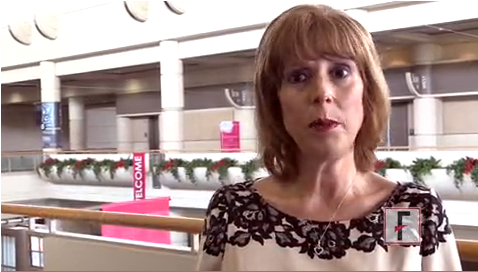
ORLANDO – Susan Weiner has been on the diabetes education front line for nearly 25 years, and she was just elected as Educator of the Year for her "special contributions to the field through dedication, innovation, and sensitivity in patient care" at the annual meeting of the American Association of Diabetes Educators.
Ms. Weiner, who is in private practice in Long Island, New York, also recently wrote a book, "The Complete Diabetes Organizer," to help patients organize various aspects of their lives so that they can successfully manage their diabetes.
In a video interview, Ms. Weiner shares some of her advice with physicians.
On Twitter @naseemmiller
The video associated with this article is no longer available on this site. Please view all of our videos on the MDedge YouTube channel
ORLANDO – Susan Weiner has been on the diabetes education front line for nearly 25 years, and she was just elected as Educator of the Year for her "special contributions to the field through dedication, innovation, and sensitivity in patient care" at the annual meeting of the American Association of Diabetes Educators.
Ms. Weiner, who is in private practice in Long Island, New York, also recently wrote a book, "The Complete Diabetes Organizer," to help patients organize various aspects of their lives so that they can successfully manage their diabetes.
In a video interview, Ms. Weiner shares some of her advice with physicians.
On Twitter @naseemmiller
The video associated with this article is no longer available on this site. Please view all of our videos on the MDedge YouTube channel
ORLANDO – Susan Weiner has been on the diabetes education front line for nearly 25 years, and she was just elected as Educator of the Year for her "special contributions to the field through dedication, innovation, and sensitivity in patient care" at the annual meeting of the American Association of Diabetes Educators.
Ms. Weiner, who is in private practice in Long Island, New York, also recently wrote a book, "The Complete Diabetes Organizer," to help patients organize various aspects of their lives so that they can successfully manage their diabetes.
In a video interview, Ms. Weiner shares some of her advice with physicians.
On Twitter @naseemmiller
The video associated with this article is no longer available on this site. Please view all of our videos on the MDedge YouTube channel
AT AADE 2014
Recertification Looming? Get the Endocrine Education you Need
The video associated with this article is no longer available on this site. Please view all of our videos on the MDedge YouTube channel
“I will be able to take this back to my practice and use it in the educational aspect of my job” – Kerri Smith, PA - Attendee
The video associated with this article is no longer available on this site. Please view all of our videos on the MDedge YouTube channel
“I will be able to take this back to my practice and use it in the educational aspect of my job” – Kerri Smith, PA - Attendee
The video associated with this article is no longer available on this site. Please view all of our videos on the MDedge YouTube channel
“I will be able to take this back to my practice and use it in the educational aspect of my job” – Kerri Smith, PA - Attendee
For NPs/PAs, by NPs/PAs
The video associated with this article is no longer available on this site. Please view all of our videos on the MDedge YouTube channel
“The MEDS faculty is knowledgeable, very friendly, and easily approached. They are always willing to share their knowledge and expertise with us.” – Myrtle Henry, NP - Attendee
The video associated with this article is no longer available on this site. Please view all of our videos on the MDedge YouTube channel
“The MEDS faculty is knowledgeable, very friendly, and easily approached. They are always willing to share their knowledge and expertise with us.” – Myrtle Henry, NP - Attendee
The video associated with this article is no longer available on this site. Please view all of our videos on the MDedge YouTube channel
“The MEDS faculty is knowledgeable, very friendly, and easily approached. They are always willing to share their knowledge and expertise with us.” – Myrtle Henry, NP - Attendee
Build Your Metabolic and Endocrine Disease Skills
The video associated with this article is no longer available on this site. Please view all of our videos on the MDedge YouTube channel
“I have gained so much from MEDS—I feel very confident going back to my practice in the hospital.” – Ruth Taggart, NP - Attendee
The video associated with this article is no longer available on this site. Please view all of our videos on the MDedge YouTube channel
“I have gained so much from MEDS—I feel very confident going back to my practice in the hospital.” – Ruth Taggart, NP - Attendee
The video associated with this article is no longer available on this site. Please view all of our videos on the MDedge YouTube channel
“I have gained so much from MEDS—I feel very confident going back to my practice in the hospital.” – Ruth Taggart, NP - Attendee
VIDEO: Mindfulness potential tool for diabetes patients to cope with stress
ORLANDO – A small, 3-month feasibility study, conducted at the Veterans Affairs Pittsburgh Healthcare System, showed that teaching patients mindfulness meditation was associated with a 41% drop in their diabetes-related stress, and a roughly 1% drop in their hemoglobin A1c.
In a video interview, Monica DiNardo, Ph.D., a nurse practitioner and diabetes educator at the VA Pittsburgh, discusses the study’s findings and the implications on caring for patients with diabetes.
The video associated with this article is no longer available on this site. Please view all of our videos on the MDedge YouTube channel
On Twitter @naseemmiller
ORLANDO – A small, 3-month feasibility study, conducted at the Veterans Affairs Pittsburgh Healthcare System, showed that teaching patients mindfulness meditation was associated with a 41% drop in their diabetes-related stress, and a roughly 1% drop in their hemoglobin A1c.
In a video interview, Monica DiNardo, Ph.D., a nurse practitioner and diabetes educator at the VA Pittsburgh, discusses the study’s findings and the implications on caring for patients with diabetes.
The video associated with this article is no longer available on this site. Please view all of our videos on the MDedge YouTube channel
On Twitter @naseemmiller
ORLANDO – A small, 3-month feasibility study, conducted at the Veterans Affairs Pittsburgh Healthcare System, showed that teaching patients mindfulness meditation was associated with a 41% drop in their diabetes-related stress, and a roughly 1% drop in their hemoglobin A1c.
In a video interview, Monica DiNardo, Ph.D., a nurse practitioner and diabetes educator at the VA Pittsburgh, discusses the study’s findings and the implications on caring for patients with diabetes.
The video associated with this article is no longer available on this site. Please view all of our videos on the MDedge YouTube channel
On Twitter @naseemmiller
AT AADE 2014