User login
Over-the-scope hemoclip prevails for upper GI bleeding
SAN ANTONIO – Use of a large over-the-scope hemoclip for initial endoscopic treatment of severe nonvariceal upper gastrointestinal bleeding resulted in a markedly lower 30-day rebleeding rate compared with standard endoscopic hemostasis in the first-ever randomized prospective clinical trial addressing the issue, Dennis M. Jensen, MD, reported at the annual meeting of the American College of Gastroenterology.
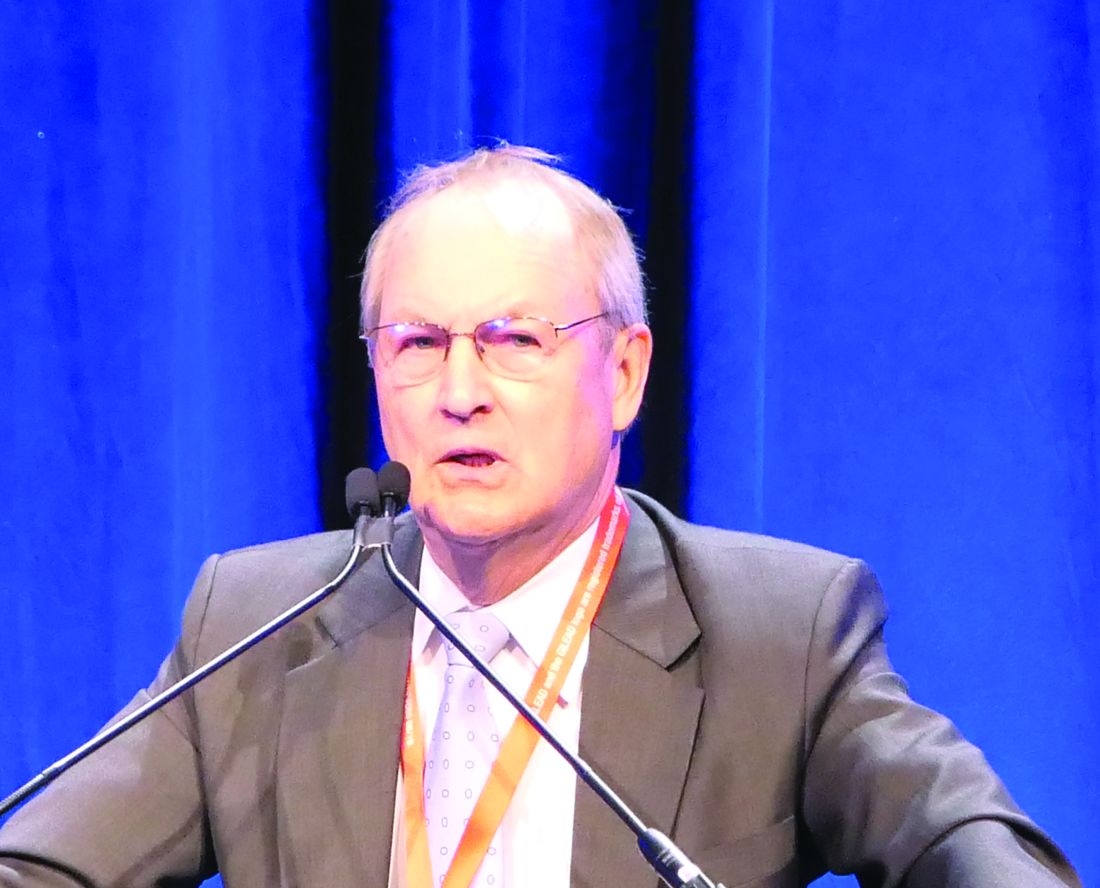
The over-the-scope clip also resulted in significantly fewer complications and cut the red blood cell transfusion rate in half, added Dr. Jensen, professor of medicine at the University of California, Los Angeles.
“The results appear to relate to the clip’s superior ability to obliterate critical arterial blood flow underneath the stigmata of hemorrhage and thereby reduce lesion rebleeding,” according to Dr. Jensen.
However, he emphasized a couple of caveats regarding this highly effective intervention.
First, it’s best reserved for patients with major stigmata of hemorrhage: that is, active arterial bleeding, a nonbleeding visible vessel, and/or adherent clot. That’s where all the benefit lies. Study participants with minor stigmata of hemorrhage – mere oozing bleeding or flat spots with arterial flow by Doppler – did just fine with standard endoscopic hemostasis, and in that setting the over-the-scope clip offered no additional benefit.
Second, there’s a significant learning curve involved in successful use of the clip.
“If someone’s going to be using this they have to get additional training. There’s a lot of tricks to using this,” the gastroenterologist cautioned.
The two-center prospective trial included 49 patients with severe nonvariceal upper GI bleeding who were randomized double-blind to the over-the-scope clip or standard hemostasis with hemoclips and/or application of a multipolar probe with epinephrine pre-injection as initial therapy. The severe bleeding was due to peptic ulcers in 40 patients and Dieulafoy’s lesions in the rest. All participants received high-dose proton pump inhibitor therapy after randomization.
The primary endpoint was clinically significant rebleeding within 30 days following initial therapy. This occurred in 7 of 25 patients (28%) on standard treatment and in 1 of 24 (4%) treated with the over-the-scope clip. This translated to an 85% relative risk reduction, with an impressive low number-needed-to-treat of 4.2.
Among the 35 patients with major stigmata of hemorrhage, the rebleeding rate was 35% in the over-the-scope clip group, compared with 6.3% with standard therapy, with a number-needed-to-treat of 3.5.
All four severe complications – a stroke, aspiration pneumonia, a case of severe heart failure, and a bleeding ischemic ulcer secondary to angiographic embolization – occurred in the standard therapy group. Patients in that group also averaged a 1.3-day-longer hospital length of stay and 2.8 more days in the ICU; however, those trends didn’t achieve statistical significance because of the small study size.
One audience member leapt to his feet to declare: “This is the study we’ve all been waiting for.” He pressed Dr. Jensen for technical details about the procedure.
Dr. Jensen explained that the large clip goes over an 11-mm-diameter endoscope with a 3-mm hood and no teeth. But he cautioned that some gastroenterologists in a busy community practice may find the procedure too time- and labor-intensive for their liking.
“It really takes two people to treat a duodenal ulcer. Somebody has to push quite firmly and suction very hard as you try to deploy this. By suctioning hard, the clip will burrow in so long as it’s centered on the stigmata of hemorrhage; that’s really key,” according to Dr. Jensen.
The procedure takes longer than standard endoscopic hemostasis because the over-the-scope clip limits visualization. So the patient must be scoped twice: the first time with a clipless diagnostic endoscope, so the operator can get his or her bearings; then that scope needs to be taken out, the patient is reintubated, and the over-the-scope clip is brought to bear.
“You shouldn’t just grab this off the shelf and try to use it in an emergency. You’ll really have problems. People have to be taught with porcine models and they need to review the stigmata,” Dr. Jensen said.
He reported having no financial conflicts regarding this study, conducted free of commercial support.
SOURCE: Jensen DM. ACG 2019, Abstract 8.
SAN ANTONIO – Use of a large over-the-scope hemoclip for initial endoscopic treatment of severe nonvariceal upper gastrointestinal bleeding resulted in a markedly lower 30-day rebleeding rate compared with standard endoscopic hemostasis in the first-ever randomized prospective clinical trial addressing the issue, Dennis M. Jensen, MD, reported at the annual meeting of the American College of Gastroenterology.
The over-the-scope clip also resulted in significantly fewer complications and cut the red blood cell transfusion rate in half, added Dr. Jensen, professor of medicine at the University of California, Los Angeles.
“The results appear to relate to the clip’s superior ability to obliterate critical arterial blood flow underneath the stigmata of hemorrhage and thereby reduce lesion rebleeding,” according to Dr. Jensen.
However, he emphasized a couple of caveats regarding this highly effective intervention.
First, it’s best reserved for patients with major stigmata of hemorrhage: that is, active arterial bleeding, a nonbleeding visible vessel, and/or adherent clot. That’s where all the benefit lies. Study participants with minor stigmata of hemorrhage – mere oozing bleeding or flat spots with arterial flow by Doppler – did just fine with standard endoscopic hemostasis, and in that setting the over-the-scope clip offered no additional benefit.
Second, there’s a significant learning curve involved in successful use of the clip.
“If someone’s going to be using this they have to get additional training. There’s a lot of tricks to using this,” the gastroenterologist cautioned.
The two-center prospective trial included 49 patients with severe nonvariceal upper GI bleeding who were randomized double-blind to the over-the-scope clip or standard hemostasis with hemoclips and/or application of a multipolar probe with epinephrine pre-injection as initial therapy. The severe bleeding was due to peptic ulcers in 40 patients and Dieulafoy’s lesions in the rest. All participants received high-dose proton pump inhibitor therapy after randomization.
The primary endpoint was clinically significant rebleeding within 30 days following initial therapy. This occurred in 7 of 25 patients (28%) on standard treatment and in 1 of 24 (4%) treated with the over-the-scope clip. This translated to an 85% relative risk reduction, with an impressive low number-needed-to-treat of 4.2.
Among the 35 patients with major stigmata of hemorrhage, the rebleeding rate was 35% in the over-the-scope clip group, compared with 6.3% with standard therapy, with a number-needed-to-treat of 3.5.
All four severe complications – a stroke, aspiration pneumonia, a case of severe heart failure, and a bleeding ischemic ulcer secondary to angiographic embolization – occurred in the standard therapy group. Patients in that group also averaged a 1.3-day-longer hospital length of stay and 2.8 more days in the ICU; however, those trends didn’t achieve statistical significance because of the small study size.
One audience member leapt to his feet to declare: “This is the study we’ve all been waiting for.” He pressed Dr. Jensen for technical details about the procedure.
Dr. Jensen explained that the large clip goes over an 11-mm-diameter endoscope with a 3-mm hood and no teeth. But he cautioned that some gastroenterologists in a busy community practice may find the procedure too time- and labor-intensive for their liking.
“It really takes two people to treat a duodenal ulcer. Somebody has to push quite firmly and suction very hard as you try to deploy this. By suctioning hard, the clip will burrow in so long as it’s centered on the stigmata of hemorrhage; that’s really key,” according to Dr. Jensen.
The procedure takes longer than standard endoscopic hemostasis because the over-the-scope clip limits visualization. So the patient must be scoped twice: the first time with a clipless diagnostic endoscope, so the operator can get his or her bearings; then that scope needs to be taken out, the patient is reintubated, and the over-the-scope clip is brought to bear.
“You shouldn’t just grab this off the shelf and try to use it in an emergency. You’ll really have problems. People have to be taught with porcine models and they need to review the stigmata,” Dr. Jensen said.
He reported having no financial conflicts regarding this study, conducted free of commercial support.
SOURCE: Jensen DM. ACG 2019, Abstract 8.
SAN ANTONIO – Use of a large over-the-scope hemoclip for initial endoscopic treatment of severe nonvariceal upper gastrointestinal bleeding resulted in a markedly lower 30-day rebleeding rate compared with standard endoscopic hemostasis in the first-ever randomized prospective clinical trial addressing the issue, Dennis M. Jensen, MD, reported at the annual meeting of the American College of Gastroenterology.
The over-the-scope clip also resulted in significantly fewer complications and cut the red blood cell transfusion rate in half, added Dr. Jensen, professor of medicine at the University of California, Los Angeles.
“The results appear to relate to the clip’s superior ability to obliterate critical arterial blood flow underneath the stigmata of hemorrhage and thereby reduce lesion rebleeding,” according to Dr. Jensen.
However, he emphasized a couple of caveats regarding this highly effective intervention.
First, it’s best reserved for patients with major stigmata of hemorrhage: that is, active arterial bleeding, a nonbleeding visible vessel, and/or adherent clot. That’s where all the benefit lies. Study participants with minor stigmata of hemorrhage – mere oozing bleeding or flat spots with arterial flow by Doppler – did just fine with standard endoscopic hemostasis, and in that setting the over-the-scope clip offered no additional benefit.
Second, there’s a significant learning curve involved in successful use of the clip.
“If someone’s going to be using this they have to get additional training. There’s a lot of tricks to using this,” the gastroenterologist cautioned.
The two-center prospective trial included 49 patients with severe nonvariceal upper GI bleeding who were randomized double-blind to the over-the-scope clip or standard hemostasis with hemoclips and/or application of a multipolar probe with epinephrine pre-injection as initial therapy. The severe bleeding was due to peptic ulcers in 40 patients and Dieulafoy’s lesions in the rest. All participants received high-dose proton pump inhibitor therapy after randomization.
The primary endpoint was clinically significant rebleeding within 30 days following initial therapy. This occurred in 7 of 25 patients (28%) on standard treatment and in 1 of 24 (4%) treated with the over-the-scope clip. This translated to an 85% relative risk reduction, with an impressive low number-needed-to-treat of 4.2.
Among the 35 patients with major stigmata of hemorrhage, the rebleeding rate was 35% in the over-the-scope clip group, compared with 6.3% with standard therapy, with a number-needed-to-treat of 3.5.
All four severe complications – a stroke, aspiration pneumonia, a case of severe heart failure, and a bleeding ischemic ulcer secondary to angiographic embolization – occurred in the standard therapy group. Patients in that group also averaged a 1.3-day-longer hospital length of stay and 2.8 more days in the ICU; however, those trends didn’t achieve statistical significance because of the small study size.
One audience member leapt to his feet to declare: “This is the study we’ve all been waiting for.” He pressed Dr. Jensen for technical details about the procedure.
Dr. Jensen explained that the large clip goes over an 11-mm-diameter endoscope with a 3-mm hood and no teeth. But he cautioned that some gastroenterologists in a busy community practice may find the procedure too time- and labor-intensive for their liking.
“It really takes two people to treat a duodenal ulcer. Somebody has to push quite firmly and suction very hard as you try to deploy this. By suctioning hard, the clip will burrow in so long as it’s centered on the stigmata of hemorrhage; that’s really key,” according to Dr. Jensen.
The procedure takes longer than standard endoscopic hemostasis because the over-the-scope clip limits visualization. So the patient must be scoped twice: the first time with a clipless diagnostic endoscope, so the operator can get his or her bearings; then that scope needs to be taken out, the patient is reintubated, and the over-the-scope clip is brought to bear.
“You shouldn’t just grab this off the shelf and try to use it in an emergency. You’ll really have problems. People have to be taught with porcine models and they need to review the stigmata,” Dr. Jensen said.
He reported having no financial conflicts regarding this study, conducted free of commercial support.
SOURCE: Jensen DM. ACG 2019, Abstract 8.
REPORTING FROM ACG 2019
Topical budesonide effective for eosinophilic esophagitis in pivotal trial
SAN ANTONIO – An investigational muco-adherent swallowed formulation of budesonide developed specifically for treatment of eosinophilic esophagitis aced all primary and secondary endpoints in a pivotal, phase 3, double-blind, placebo-controlled randomized trial, Ikuo Hirano, MD, reported at the annual scientific meeting of the American College of Gastroenterology.

This is welcome news for patients with this chronic immune-mediated disease, for which no Food and Drug Administration–approved drug therapy exists yet.
“This is the first phase 3 trial to demonstrate efficacy using the validated Dysphagia Symptom Questionnaire, the first completed phase 3 trial of any medical therapeutic for eosinophilic esophagitis, and the largest clinical trial for eosinophilic esophagitis conducted to date,” declared Dr. Hirano, professor of medicine at Northwestern University in Chicago.
This was a 12-week induction therapy study including 318 adolescents and adults randomized 2:1 to 2 mg of budesonide oral suspension (BOS) or placebo twice daily. Patients were instructed not to eat or drink anything for 30 minutes afterward to avoid washing away the medication.
This was a severely affected patient population with high-level inflammatory activity: their mean baseline peak eosinophil count was 75 cells per high-power field, well above the diagnostic threshold of 50 eosinophils per high-power field. In keeping with a requirement for study participation, all patients had failed to respond to at least 6 weeks of high-dose proton pump inhibitor therapy. They also had to experience solid food dysphagia on at least 4 days per 2 weeks. More than 40% of subjects had previously undergone esophageal dilation.
One coprimary endpoint addressed histologic response, defined as 6 or fewer eosinophils per high-power field after 12 weeks of double-blind treatment. The histologic response rate was 53% in the BOS group and 1% in placebo-treated controls.
The other coprimary endpoint was symptom response as defined by at least a 30% reduction from baseline in the Dysphagia Symptom Questionnaire score. This was achieved in 53% of patients on BOS and 39% of controls.
The prespecified key secondary endpoint was the absolute reduction in Dysphagia Symptom Questionnaire score through week 12. From a mean baseline score of 30 out of a possible 84, the swallowed steroid recipients experienced a mean 13-point improvement, compared with a 9.1-improvement for those on placebo.
The topical budesonide group also did significantly better than placebo in terms of all other secondary endpoints. Endoscopic improvement as reflected in the mean Eosinophilic Esophagitis Reference Score was greater in the BOS group by a margin of 4 versus 2.2 points. A high-bar histologic response rate of no more than a single eosinophil per high-power field at week 12 was achieved in one-third of the BOS group and zero controls. The overall peak eosinophil count from baseline to week 12 dropped by an average of 55.2 cells per high-power field in the budesonide group, compared to a 7.6-eosinophil decrease in controls. And the proportion of patients with no more than 15 eosinophils per high-power field at week 12 was 62% with BOS, compared with 1% with placebo.
Treatment-emergent adverse events were similar in the two study arms and were mild to moderate in severity. Of note, however, the 3.8% incidence of esophageal candidiasis rate in the topical corticosteroid group was twice that seen in the placebo arm. Adrenal function as assessed by ACTH stimulation testing at baseline and 12 weeks was normal in 88% of the BOS group and 94% of controls.
Dr. Hirano noted that adrenal function will continue to be carefully monitored during an ongoing, phase 3, double-blind, placebo-controlled BOS maintenance study.
He reported receiving research funding from and serving as a consultant to Takeda, the study sponsor, as well as a handful of other pharmaceutical companies.
This is an exciting abstract from Hirano et al. highlighting the results of the first phase 3 trial for an eosinophilic esophagitis (EoE) treatment. Furthermore, the trial design, which included histologic and symptom-based endpoints, may be critical to attaining Food and Drug Administration approval. Given the lack of any FDA-approved therapies for EoE, the results of this trial are welcome news for clinicians who treat patients with EoE.
This study of a topical muco-adherent steroid formulation (budesonide oral suspension) specifically designed to treat EoE significantly improved histologic, symptom, and endoscopic endpoints, compared with placebo. Of note, 62% of patients on the drug achieved a histologic response of less than 15 eosinophils per high-power field (53% achieved less than 6), compared with 1% in the placebo group. This study supplements the existing data supporting the use of swallowed topical steroids in EoE.
It is important to note that the subjects in this study had fairly severe disease, with more than 40% having previously undergone esophageal dilation and all patients experiencing dysphagia, on average, multiple times per week. Given the disease severity in the subject population, there can be even greater enthusiasm regarding the response rates for the budesonide group. Also notable is the relatively high dose of budesonide used in this study (2 mg twice daily), which may have contributed to the 3.8% incidence of esophageal candidiasis. Importantly, adrenal function was assessed during the study and will be monitored during the ongoing maintenance portion of the study.
These last points do highlight the challenges of treating more severe EoE given 38% of patients did not achieve histologic remission (less than 15 eosinophils per high-power field) despite the doses of budesonide used in this study. This emphasizes the need for other treatment options for steroid nonresponders.
Taken together, these results are very exciting and will lead to an FDA-approved EoE treatment in short order.
Paul Menard-Katcher, MD, is associate professor of medicine in the division of gastroenterology and hepatology at the University of Colorado at Denver, Aurora. He has no conflicts of interest.
This is an exciting abstract from Hirano et al. highlighting the results of the first phase 3 trial for an eosinophilic esophagitis (EoE) treatment. Furthermore, the trial design, which included histologic and symptom-based endpoints, may be critical to attaining Food and Drug Administration approval. Given the lack of any FDA-approved therapies for EoE, the results of this trial are welcome news for clinicians who treat patients with EoE.
This study of a topical muco-adherent steroid formulation (budesonide oral suspension) specifically designed to treat EoE significantly improved histologic, symptom, and endoscopic endpoints, compared with placebo. Of note, 62% of patients on the drug achieved a histologic response of less than 15 eosinophils per high-power field (53% achieved less than 6), compared with 1% in the placebo group. This study supplements the existing data supporting the use of swallowed topical steroids in EoE.
It is important to note that the subjects in this study had fairly severe disease, with more than 40% having previously undergone esophageal dilation and all patients experiencing dysphagia, on average, multiple times per week. Given the disease severity in the subject population, there can be even greater enthusiasm regarding the response rates for the budesonide group. Also notable is the relatively high dose of budesonide used in this study (2 mg twice daily), which may have contributed to the 3.8% incidence of esophageal candidiasis. Importantly, adrenal function was assessed during the study and will be monitored during the ongoing maintenance portion of the study.
These last points do highlight the challenges of treating more severe EoE given 38% of patients did not achieve histologic remission (less than 15 eosinophils per high-power field) despite the doses of budesonide used in this study. This emphasizes the need for other treatment options for steroid nonresponders.
Taken together, these results are very exciting and will lead to an FDA-approved EoE treatment in short order.
Paul Menard-Katcher, MD, is associate professor of medicine in the division of gastroenterology and hepatology at the University of Colorado at Denver, Aurora. He has no conflicts of interest.
This is an exciting abstract from Hirano et al. highlighting the results of the first phase 3 trial for an eosinophilic esophagitis (EoE) treatment. Furthermore, the trial design, which included histologic and symptom-based endpoints, may be critical to attaining Food and Drug Administration approval. Given the lack of any FDA-approved therapies for EoE, the results of this trial are welcome news for clinicians who treat patients with EoE.
This study of a topical muco-adherent steroid formulation (budesonide oral suspension) specifically designed to treat EoE significantly improved histologic, symptom, and endoscopic endpoints, compared with placebo. Of note, 62% of patients on the drug achieved a histologic response of less than 15 eosinophils per high-power field (53% achieved less than 6), compared with 1% in the placebo group. This study supplements the existing data supporting the use of swallowed topical steroids in EoE.
It is important to note that the subjects in this study had fairly severe disease, with more than 40% having previously undergone esophageal dilation and all patients experiencing dysphagia, on average, multiple times per week. Given the disease severity in the subject population, there can be even greater enthusiasm regarding the response rates for the budesonide group. Also notable is the relatively high dose of budesonide used in this study (2 mg twice daily), which may have contributed to the 3.8% incidence of esophageal candidiasis. Importantly, adrenal function was assessed during the study and will be monitored during the ongoing maintenance portion of the study.
These last points do highlight the challenges of treating more severe EoE given 38% of patients did not achieve histologic remission (less than 15 eosinophils per high-power field) despite the doses of budesonide used in this study. This emphasizes the need for other treatment options for steroid nonresponders.
Taken together, these results are very exciting and will lead to an FDA-approved EoE treatment in short order.
Paul Menard-Katcher, MD, is associate professor of medicine in the division of gastroenterology and hepatology at the University of Colorado at Denver, Aurora. He has no conflicts of interest.
SAN ANTONIO – An investigational muco-adherent swallowed formulation of budesonide developed specifically for treatment of eosinophilic esophagitis aced all primary and secondary endpoints in a pivotal, phase 3, double-blind, placebo-controlled randomized trial, Ikuo Hirano, MD, reported at the annual scientific meeting of the American College of Gastroenterology.
This is welcome news for patients with this chronic immune-mediated disease, for which no Food and Drug Administration–approved drug therapy exists yet.
“This is the first phase 3 trial to demonstrate efficacy using the validated Dysphagia Symptom Questionnaire, the first completed phase 3 trial of any medical therapeutic for eosinophilic esophagitis, and the largest clinical trial for eosinophilic esophagitis conducted to date,” declared Dr. Hirano, professor of medicine at Northwestern University in Chicago.
This was a 12-week induction therapy study including 318 adolescents and adults randomized 2:1 to 2 mg of budesonide oral suspension (BOS) or placebo twice daily. Patients were instructed not to eat or drink anything for 30 minutes afterward to avoid washing away the medication.
This was a severely affected patient population with high-level inflammatory activity: their mean baseline peak eosinophil count was 75 cells per high-power field, well above the diagnostic threshold of 50 eosinophils per high-power field. In keeping with a requirement for study participation, all patients had failed to respond to at least 6 weeks of high-dose proton pump inhibitor therapy. They also had to experience solid food dysphagia on at least 4 days per 2 weeks. More than 40% of subjects had previously undergone esophageal dilation.
One coprimary endpoint addressed histologic response, defined as 6 or fewer eosinophils per high-power field after 12 weeks of double-blind treatment. The histologic response rate was 53% in the BOS group and 1% in placebo-treated controls.
The other coprimary endpoint was symptom response as defined by at least a 30% reduction from baseline in the Dysphagia Symptom Questionnaire score. This was achieved in 53% of patients on BOS and 39% of controls.
The prespecified key secondary endpoint was the absolute reduction in Dysphagia Symptom Questionnaire score through week 12. From a mean baseline score of 30 out of a possible 84, the swallowed steroid recipients experienced a mean 13-point improvement, compared with a 9.1-improvement for those on placebo.
The topical budesonide group also did significantly better than placebo in terms of all other secondary endpoints. Endoscopic improvement as reflected in the mean Eosinophilic Esophagitis Reference Score was greater in the BOS group by a margin of 4 versus 2.2 points. A high-bar histologic response rate of no more than a single eosinophil per high-power field at week 12 was achieved in one-third of the BOS group and zero controls. The overall peak eosinophil count from baseline to week 12 dropped by an average of 55.2 cells per high-power field in the budesonide group, compared to a 7.6-eosinophil decrease in controls. And the proportion of patients with no more than 15 eosinophils per high-power field at week 12 was 62% with BOS, compared with 1% with placebo.
Treatment-emergent adverse events were similar in the two study arms and were mild to moderate in severity. Of note, however, the 3.8% incidence of esophageal candidiasis rate in the topical corticosteroid group was twice that seen in the placebo arm. Adrenal function as assessed by ACTH stimulation testing at baseline and 12 weeks was normal in 88% of the BOS group and 94% of controls.
Dr. Hirano noted that adrenal function will continue to be carefully monitored during an ongoing, phase 3, double-blind, placebo-controlled BOS maintenance study.
He reported receiving research funding from and serving as a consultant to Takeda, the study sponsor, as well as a handful of other pharmaceutical companies.
SAN ANTONIO – An investigational muco-adherent swallowed formulation of budesonide developed specifically for treatment of eosinophilic esophagitis aced all primary and secondary endpoints in a pivotal, phase 3, double-blind, placebo-controlled randomized trial, Ikuo Hirano, MD, reported at the annual scientific meeting of the American College of Gastroenterology.
This is welcome news for patients with this chronic immune-mediated disease, for which no Food and Drug Administration–approved drug therapy exists yet.
“This is the first phase 3 trial to demonstrate efficacy using the validated Dysphagia Symptom Questionnaire, the first completed phase 3 trial of any medical therapeutic for eosinophilic esophagitis, and the largest clinical trial for eosinophilic esophagitis conducted to date,” declared Dr. Hirano, professor of medicine at Northwestern University in Chicago.
This was a 12-week induction therapy study including 318 adolescents and adults randomized 2:1 to 2 mg of budesonide oral suspension (BOS) or placebo twice daily. Patients were instructed not to eat or drink anything for 30 minutes afterward to avoid washing away the medication.
This was a severely affected patient population with high-level inflammatory activity: their mean baseline peak eosinophil count was 75 cells per high-power field, well above the diagnostic threshold of 50 eosinophils per high-power field. In keeping with a requirement for study participation, all patients had failed to respond to at least 6 weeks of high-dose proton pump inhibitor therapy. They also had to experience solid food dysphagia on at least 4 days per 2 weeks. More than 40% of subjects had previously undergone esophageal dilation.
One coprimary endpoint addressed histologic response, defined as 6 or fewer eosinophils per high-power field after 12 weeks of double-blind treatment. The histologic response rate was 53% in the BOS group and 1% in placebo-treated controls.
The other coprimary endpoint was symptom response as defined by at least a 30% reduction from baseline in the Dysphagia Symptom Questionnaire score. This was achieved in 53% of patients on BOS and 39% of controls.
The prespecified key secondary endpoint was the absolute reduction in Dysphagia Symptom Questionnaire score through week 12. From a mean baseline score of 30 out of a possible 84, the swallowed steroid recipients experienced a mean 13-point improvement, compared with a 9.1-improvement for those on placebo.
The topical budesonide group also did significantly better than placebo in terms of all other secondary endpoints. Endoscopic improvement as reflected in the mean Eosinophilic Esophagitis Reference Score was greater in the BOS group by a margin of 4 versus 2.2 points. A high-bar histologic response rate of no more than a single eosinophil per high-power field at week 12 was achieved in one-third of the BOS group and zero controls. The overall peak eosinophil count from baseline to week 12 dropped by an average of 55.2 cells per high-power field in the budesonide group, compared to a 7.6-eosinophil decrease in controls. And the proportion of patients with no more than 15 eosinophils per high-power field at week 12 was 62% with BOS, compared with 1% with placebo.
Treatment-emergent adverse events were similar in the two study arms and were mild to moderate in severity. Of note, however, the 3.8% incidence of esophageal candidiasis rate in the topical corticosteroid group was twice that seen in the placebo arm. Adrenal function as assessed by ACTH stimulation testing at baseline and 12 weeks was normal in 88% of the BOS group and 94% of controls.
Dr. Hirano noted that adrenal function will continue to be carefully monitored during an ongoing, phase 3, double-blind, placebo-controlled BOS maintenance study.
He reported receiving research funding from and serving as a consultant to Takeda, the study sponsor, as well as a handful of other pharmaceutical companies.
REPORTING FROM ACG 2019
Three companies issue recall for ranitidine because of NDMA impurities
The Food and Drug Administration has issued an alert to health care providers and patients about voluntary recalls of ranitidine (Zantac) from three separate companies because of the potential of N-nitrosodimethylamine (NDMA) in the medicine.

According to the FDA alert, Perrigo is recalling over-the-counter ranitidine tablets of all sizes, Novitium Pharma is recalling all unexpired quantities and lots of ranitidine hydrochloride capsules, and Lannett is recalling all unexpired lots of prescription ranitidine syrup (ranitidine oral solution (15 mg/mL).
Patients who are using over-the-counter ranitidine should consider switching to an alternative, such as famotidine, cimetidine, esomeprazole, lansoprazole, and omeprazole, the FDA noted. None of these medications have shown evidence of containing NDMA.
The alert is the fifth update on ranitidine since the initial FDA announcement that NDMA had been found in ranitidine on Sept. 13, 2019.
The recent FDA safety alerts on ranitidine might be causing concern among your patients about their heartburn treatment. AGA offers key points that you can share with your patients at www.gastro.org/news/talking-to-your-patients-about-ranitidine.
The Food and Drug Administration has issued an alert to health care providers and patients about voluntary recalls of ranitidine (Zantac) from three separate companies because of the potential of N-nitrosodimethylamine (NDMA) in the medicine.
According to the FDA alert, Perrigo is recalling over-the-counter ranitidine tablets of all sizes, Novitium Pharma is recalling all unexpired quantities and lots of ranitidine hydrochloride capsules, and Lannett is recalling all unexpired lots of prescription ranitidine syrup (ranitidine oral solution (15 mg/mL).
Patients who are using over-the-counter ranitidine should consider switching to an alternative, such as famotidine, cimetidine, esomeprazole, lansoprazole, and omeprazole, the FDA noted. None of these medications have shown evidence of containing NDMA.
The alert is the fifth update on ranitidine since the initial FDA announcement that NDMA had been found in ranitidine on Sept. 13, 2019.
The recent FDA safety alerts on ranitidine might be causing concern among your patients about their heartburn treatment. AGA offers key points that you can share with your patients at www.gastro.org/news/talking-to-your-patients-about-ranitidine.
The Food and Drug Administration has issued an alert to health care providers and patients about voluntary recalls of ranitidine (Zantac) from three separate companies because of the potential of N-nitrosodimethylamine (NDMA) in the medicine.
According to the FDA alert, Perrigo is recalling over-the-counter ranitidine tablets of all sizes, Novitium Pharma is recalling all unexpired quantities and lots of ranitidine hydrochloride capsules, and Lannett is recalling all unexpired lots of prescription ranitidine syrup (ranitidine oral solution (15 mg/mL).
Patients who are using over-the-counter ranitidine should consider switching to an alternative, such as famotidine, cimetidine, esomeprazole, lansoprazole, and omeprazole, the FDA noted. None of these medications have shown evidence of containing NDMA.
The alert is the fifth update on ranitidine since the initial FDA announcement that NDMA had been found in ranitidine on Sept. 13, 2019.
The recent FDA safety alerts on ranitidine might be causing concern among your patients about their heartburn treatment. AGA offers key points that you can share with your patients at www.gastro.org/news/talking-to-your-patients-about-ranitidine.
Updated international consensus recommendations on management of acute upper GI bleeding
Guidelines on the management of acute upper gastrointestinal bleeding have been updated, including recommendations on managing patients on antiplatelet or anticoagulant therapy and on use of endoscopy and new therapeutic approaches.
Writing in Annals of Internal Medicine, an international group of experts published an update to the 2010 International Consensus Recommendations on the Management of Patients With Nonvariceal Upper Gastrointestinal Bleeding, with a focus on resuscitation and risk assessment; pre-endoscopic, endoscopic, and pharmacologic management; and secondary prophylaxis.
Alan N. Barkun, MDCM, MSc, from McGill University, Montreal, and coauthors first recommended that fluid resuscitation should be initiated in patients with acute upper gastrointestinal bleeding and hemodynamic instability to avoid hemorrhagic shock and restore end-organ perfusion and tissue oxygenation while the bleeding is brought under control.
They acknowledged the uncertainty around whether colloid or crystalloid fluid should be used, but suggested routine use of colloids was not justified because they were more expensive and did not appear to increase survival.
On the question of whether the resuscitation should be aggressive or restrictive in its timing and rate, the group said there was not enough evidence to support a recommendation on this. “The important issue in patients with hemorrhagic shock due to trauma or UGIB [upper gastrointestinal bleeding] is to stop the bleeding while minimizing hemodynamic compromise,” they wrote.
They also advised blood transfusions in patients with a hemoglobin level below 80 g/L who did not have underlying cardiovascular disease, but suggested a higher hemoglobin threshold for those with underlying cardiovascular disease.
The second recommendation was that patients with a Glasgow Blatchford score of 1 or less were at very low risk for rebleeding and mortality, and these patients may therefore not need hospitalization or inpatient endoscopy. They advised against using the AIMS65 prognostic score for this purpose because it was designed to identify patients at high risk of death, not those at low risk for safe discharge.
In regard to endoscopic management, they advocated that all patients with acute upper gastrointestinal bleeding – whether low or high risk – undergo endoscopy within 24 hours of presentation. This was even more urgent in patients being treated with anticoagulants. “Because of the recognized benefits of early endoscopy, coagulopathy should be treated as necessary but endoscopy should not be delayed,” they wrote.
Patients with acutely bleeding ulcers with high-risk stigmata should undergo endoscopic therapy preferably with thermocoagulation or sclerosant injection, or with hemoclips depending on the bleeding location and patient characteristics.
The group also included two conditional recommendations, based on very-low-quality evidence, that patients with actively bleeding ulcers receive TC-325 hemostatic powder as temporizing therapy to stop the bleeding if conventional endoscopic therapies aren’t available or fail. However, they stressed that TC-325 should not be used as a single therapeutic strategy.
Because of a lack of efficacy data and low availability of expertise in the technology, the authors said they could not make a recommendation for or against using a Doppler endoscopic probe (DEP) to assess the need for further endoscopic therapy.
“The group generally agreed that although making a recommendation for or against using DEP to manage UGIB is premature, DEP has the potential to alter the usual approach to visually assessing bleeding lesion risk when evaluating the need for, and adequacy of, endoscopic hemostasis.”
The guidelines also addressed the issue of pharmacologic management of acute upper gastrointestinal bleeding. They strongly recommended that patients with bleeding ulcers and high-risk stigmata who have undergone successful endoscopic therapy should then receive an intravenous loading dose of proton pump inhibitor (PPI) therapy, followed by continuous intravenous infusion.
“Cost-effectiveness studies have suggested that high-dose intravenous PPIs after successful endoscopic hemostasis improve outcomes at a modest cost increase relative to non–high-dose intravenous or oral PPI strategies,” they wrote.
A second conditional recommendation, based on very-low-quality evidence, was that patients with a bleeding ulcer who were at high risk for rebleeding be also treated twice-daily with oral PPIs for 2 weeks, then once-daily. They also recommended patients on cardiovascular prophylaxis with single or dual antiplatelet therapy or anticoagulant therapy be given PPIs.
“The consensus group concluded that, for high-risk patients with an ongoing need for anticoagulants, the evidence suggests that the benefits of secondary prophylaxis outweigh the risks.”
The group was supported by a grant from CIHR Institute of Nutrition, Metabolism and Diabetes and from the Saudi Gastroenterology Association. Nine authors declared grants, personal fees, honoraria and other funding from the pharmaceutical and medical device sector outside the submitted work. No other conflicts of interest were declared.
SOURCE: Barkun A et al. Ann Intern Med 2019, October 22. doi: 10.7326/M19-1795.
These updated consensus guidelines provide a rigorous review of evidence on managing nonvariceal upper gastrointestinal bleeding. The recommendations for patients on anticoagulant or antiplatelet therapy will be particularly helpful because of increasing use of these medications. The advice on proton pump inhibitor therapy in patients on these drugs who have had previous ulcer bleeding can help allay concerns about possible integrations between PPIs and clopidogrel.
While the guidelines recommend using the Glasgow Blatchford scale to guide hospitalization decisions, prognostic scores are not commonly used in the emergency department, and many patients present with a Glasgow Blatchford score greater than 1, so this tool may have little impact on hospitalization rates. More studies are needed to compare clinical judgment with these prognostic scores.
Angel Lanas, MD, is from the University Clinic Hospital at the University of Zaragoza (Spain). These comments are adapted from an accompanying editorial (Ann Intern Med 2019, October 22. doi: 10.7326/M19-2789). Dr. Lanas declared unrelated personal fees from the pharmaceutical sector.
These updated consensus guidelines provide a rigorous review of evidence on managing nonvariceal upper gastrointestinal bleeding. The recommendations for patients on anticoagulant or antiplatelet therapy will be particularly helpful because of increasing use of these medications. The advice on proton pump inhibitor therapy in patients on these drugs who have had previous ulcer bleeding can help allay concerns about possible integrations between PPIs and clopidogrel.
While the guidelines recommend using the Glasgow Blatchford scale to guide hospitalization decisions, prognostic scores are not commonly used in the emergency department, and many patients present with a Glasgow Blatchford score greater than 1, so this tool may have little impact on hospitalization rates. More studies are needed to compare clinical judgment with these prognostic scores.
Angel Lanas, MD, is from the University Clinic Hospital at the University of Zaragoza (Spain). These comments are adapted from an accompanying editorial (Ann Intern Med 2019, October 22. doi: 10.7326/M19-2789). Dr. Lanas declared unrelated personal fees from the pharmaceutical sector.
These updated consensus guidelines provide a rigorous review of evidence on managing nonvariceal upper gastrointestinal bleeding. The recommendations for patients on anticoagulant or antiplatelet therapy will be particularly helpful because of increasing use of these medications. The advice on proton pump inhibitor therapy in patients on these drugs who have had previous ulcer bleeding can help allay concerns about possible integrations between PPIs and clopidogrel.
While the guidelines recommend using the Glasgow Blatchford scale to guide hospitalization decisions, prognostic scores are not commonly used in the emergency department, and many patients present with a Glasgow Blatchford score greater than 1, so this tool may have little impact on hospitalization rates. More studies are needed to compare clinical judgment with these prognostic scores.
Angel Lanas, MD, is from the University Clinic Hospital at the University of Zaragoza (Spain). These comments are adapted from an accompanying editorial (Ann Intern Med 2019, October 22. doi: 10.7326/M19-2789). Dr. Lanas declared unrelated personal fees from the pharmaceutical sector.
Guidelines on the management of acute upper gastrointestinal bleeding have been updated, including recommendations on managing patients on antiplatelet or anticoagulant therapy and on use of endoscopy and new therapeutic approaches.
Writing in Annals of Internal Medicine, an international group of experts published an update to the 2010 International Consensus Recommendations on the Management of Patients With Nonvariceal Upper Gastrointestinal Bleeding, with a focus on resuscitation and risk assessment; pre-endoscopic, endoscopic, and pharmacologic management; and secondary prophylaxis.
Alan N. Barkun, MDCM, MSc, from McGill University, Montreal, and coauthors first recommended that fluid resuscitation should be initiated in patients with acute upper gastrointestinal bleeding and hemodynamic instability to avoid hemorrhagic shock and restore end-organ perfusion and tissue oxygenation while the bleeding is brought under control.
They acknowledged the uncertainty around whether colloid or crystalloid fluid should be used, but suggested routine use of colloids was not justified because they were more expensive and did not appear to increase survival.
On the question of whether the resuscitation should be aggressive or restrictive in its timing and rate, the group said there was not enough evidence to support a recommendation on this. “The important issue in patients with hemorrhagic shock due to trauma or UGIB [upper gastrointestinal bleeding] is to stop the bleeding while minimizing hemodynamic compromise,” they wrote.
They also advised blood transfusions in patients with a hemoglobin level below 80 g/L who did not have underlying cardiovascular disease, but suggested a higher hemoglobin threshold for those with underlying cardiovascular disease.
The second recommendation was that patients with a Glasgow Blatchford score of 1 or less were at very low risk for rebleeding and mortality, and these patients may therefore not need hospitalization or inpatient endoscopy. They advised against using the AIMS65 prognostic score for this purpose because it was designed to identify patients at high risk of death, not those at low risk for safe discharge.
In regard to endoscopic management, they advocated that all patients with acute upper gastrointestinal bleeding – whether low or high risk – undergo endoscopy within 24 hours of presentation. This was even more urgent in patients being treated with anticoagulants. “Because of the recognized benefits of early endoscopy, coagulopathy should be treated as necessary but endoscopy should not be delayed,” they wrote.
Patients with acutely bleeding ulcers with high-risk stigmata should undergo endoscopic therapy preferably with thermocoagulation or sclerosant injection, or with hemoclips depending on the bleeding location and patient characteristics.
The group also included two conditional recommendations, based on very-low-quality evidence, that patients with actively bleeding ulcers receive TC-325 hemostatic powder as temporizing therapy to stop the bleeding if conventional endoscopic therapies aren’t available or fail. However, they stressed that TC-325 should not be used as a single therapeutic strategy.
Because of a lack of efficacy data and low availability of expertise in the technology, the authors said they could not make a recommendation for or against using a Doppler endoscopic probe (DEP) to assess the need for further endoscopic therapy.
“The group generally agreed that although making a recommendation for or against using DEP to manage UGIB is premature, DEP has the potential to alter the usual approach to visually assessing bleeding lesion risk when evaluating the need for, and adequacy of, endoscopic hemostasis.”
The guidelines also addressed the issue of pharmacologic management of acute upper gastrointestinal bleeding. They strongly recommended that patients with bleeding ulcers and high-risk stigmata who have undergone successful endoscopic therapy should then receive an intravenous loading dose of proton pump inhibitor (PPI) therapy, followed by continuous intravenous infusion.
“Cost-effectiveness studies have suggested that high-dose intravenous PPIs after successful endoscopic hemostasis improve outcomes at a modest cost increase relative to non–high-dose intravenous or oral PPI strategies,” they wrote.
A second conditional recommendation, based on very-low-quality evidence, was that patients with a bleeding ulcer who were at high risk for rebleeding be also treated twice-daily with oral PPIs for 2 weeks, then once-daily. They also recommended patients on cardiovascular prophylaxis with single or dual antiplatelet therapy or anticoagulant therapy be given PPIs.
“The consensus group concluded that, for high-risk patients with an ongoing need for anticoagulants, the evidence suggests that the benefits of secondary prophylaxis outweigh the risks.”
The group was supported by a grant from CIHR Institute of Nutrition, Metabolism and Diabetes and from the Saudi Gastroenterology Association. Nine authors declared grants, personal fees, honoraria and other funding from the pharmaceutical and medical device sector outside the submitted work. No other conflicts of interest were declared.
SOURCE: Barkun A et al. Ann Intern Med 2019, October 22. doi: 10.7326/M19-1795.
Guidelines on the management of acute upper gastrointestinal bleeding have been updated, including recommendations on managing patients on antiplatelet or anticoagulant therapy and on use of endoscopy and new therapeutic approaches.
Writing in Annals of Internal Medicine, an international group of experts published an update to the 2010 International Consensus Recommendations on the Management of Patients With Nonvariceal Upper Gastrointestinal Bleeding, with a focus on resuscitation and risk assessment; pre-endoscopic, endoscopic, and pharmacologic management; and secondary prophylaxis.
Alan N. Barkun, MDCM, MSc, from McGill University, Montreal, and coauthors first recommended that fluid resuscitation should be initiated in patients with acute upper gastrointestinal bleeding and hemodynamic instability to avoid hemorrhagic shock and restore end-organ perfusion and tissue oxygenation while the bleeding is brought under control.
They acknowledged the uncertainty around whether colloid or crystalloid fluid should be used, but suggested routine use of colloids was not justified because they were more expensive and did not appear to increase survival.
On the question of whether the resuscitation should be aggressive or restrictive in its timing and rate, the group said there was not enough evidence to support a recommendation on this. “The important issue in patients with hemorrhagic shock due to trauma or UGIB [upper gastrointestinal bleeding] is to stop the bleeding while minimizing hemodynamic compromise,” they wrote.
They also advised blood transfusions in patients with a hemoglobin level below 80 g/L who did not have underlying cardiovascular disease, but suggested a higher hemoglobin threshold for those with underlying cardiovascular disease.
The second recommendation was that patients with a Glasgow Blatchford score of 1 or less were at very low risk for rebleeding and mortality, and these patients may therefore not need hospitalization or inpatient endoscopy. They advised against using the AIMS65 prognostic score for this purpose because it was designed to identify patients at high risk of death, not those at low risk for safe discharge.
In regard to endoscopic management, they advocated that all patients with acute upper gastrointestinal bleeding – whether low or high risk – undergo endoscopy within 24 hours of presentation. This was even more urgent in patients being treated with anticoagulants. “Because of the recognized benefits of early endoscopy, coagulopathy should be treated as necessary but endoscopy should not be delayed,” they wrote.
Patients with acutely bleeding ulcers with high-risk stigmata should undergo endoscopic therapy preferably with thermocoagulation or sclerosant injection, or with hemoclips depending on the bleeding location and patient characteristics.
The group also included two conditional recommendations, based on very-low-quality evidence, that patients with actively bleeding ulcers receive TC-325 hemostatic powder as temporizing therapy to stop the bleeding if conventional endoscopic therapies aren’t available or fail. However, they stressed that TC-325 should not be used as a single therapeutic strategy.
Because of a lack of efficacy data and low availability of expertise in the technology, the authors said they could not make a recommendation for or against using a Doppler endoscopic probe (DEP) to assess the need for further endoscopic therapy.
“The group generally agreed that although making a recommendation for or against using DEP to manage UGIB is premature, DEP has the potential to alter the usual approach to visually assessing bleeding lesion risk when evaluating the need for, and adequacy of, endoscopic hemostasis.”
The guidelines also addressed the issue of pharmacologic management of acute upper gastrointestinal bleeding. They strongly recommended that patients with bleeding ulcers and high-risk stigmata who have undergone successful endoscopic therapy should then receive an intravenous loading dose of proton pump inhibitor (PPI) therapy, followed by continuous intravenous infusion.
“Cost-effectiveness studies have suggested that high-dose intravenous PPIs after successful endoscopic hemostasis improve outcomes at a modest cost increase relative to non–high-dose intravenous or oral PPI strategies,” they wrote.
A second conditional recommendation, based on very-low-quality evidence, was that patients with a bleeding ulcer who were at high risk for rebleeding be also treated twice-daily with oral PPIs for 2 weeks, then once-daily. They also recommended patients on cardiovascular prophylaxis with single or dual antiplatelet therapy or anticoagulant therapy be given PPIs.
“The consensus group concluded that, for high-risk patients with an ongoing need for anticoagulants, the evidence suggests that the benefits of secondary prophylaxis outweigh the risks.”
The group was supported by a grant from CIHR Institute of Nutrition, Metabolism and Diabetes and from the Saudi Gastroenterology Association. Nine authors declared grants, personal fees, honoraria and other funding from the pharmaceutical and medical device sector outside the submitted work. No other conflicts of interest were declared.
SOURCE: Barkun A et al. Ann Intern Med 2019, October 22. doi: 10.7326/M19-1795.
FROM ANNALS OF INTERNAL MEDICINE

Surgery better than medical therapy in some GERD patients
Surgery may be more effective than medical therapy, according to results from a randomized trial in 78 patients with reflux-related heartburn refractory to proton pump inhibitors (PPIs).
Stuart J. Spechler, MD, from Baylor University Medical Center, Dallas, and coauthors wrote in the New England Journal of Medicine that, for these patients, there were no medical treatment options that had been shown to have long-term benefit, so PPIs were often continued despite not offering adequate symptom relief. Other medical options such as baclofen and neuromodulators often have unacceptable side effects, and studies of their efficacy were few and of short duration.
In this study, patients were randomized either to laparoscopic Nissen fundoplication, treatment with omeprazole plus baclofen with desipramine depending on symptoms, or a control treatment of omeprazole plus placebo.
At 1 year, researchers saw a significantly higher rate of treatment success – defined as 50% or greater improvement in gastroesophageal reflux disease health-related quality of life score – in the surgery group (67%), compared with the medical-treatment group (28%) and control-medical group (12%).
This translated to an unadjusted 138% greater chance of treatment success with surgery, compared with active medical treatment, and a greater than 400% increase for surgery, compared with the control medical treatment.
Researchers also did a prespecified subgroup analysis among people with reflex hypersensitivity or abnormal acid reflux, and found the incidence of success with surgery was 71% and 62%, respectively.
They described this finding as “noteworthy,” given that reflux hypersensitivity was considered a functional disorder that would not be expected to improve with a procedure that didn’t alter abnormal esophageal pain perception.
However, they acknowledged that, as the study did not include a sham-surgery group, they couldn’t determine how much the placebo effect might have contributed to the treatment success of surgery.
They also stressed that the randomized group was a highly selected group of patients, and that the systematic work-up including esophageal multichannel intraluminal impedance pH monitoring could identify a subgroup that might have a better response to surgery than to medical treatment.
Four patients in the surgery group experienced a total of five serious adverse events, including one patients who had a herniated fundoplication treated with repeat surgery; four patients in the active-medical group experienced four serious adverse events; and three patients in the control-medical group experienced five serious adverse events.
The authors noted that 366 patients with PPI-refractory heartburn were originally enrolled in the study, then treated with 20 mg of omeprazole twice daily for 2 weeks with strict instructions to take 20 minutes before breakfast and dinner. Of these patients, 42 had their symptoms relieved by the omeprazole treatment and so were excluded from the randomization.
The “strict instructions” on how to take omeprazole were important, because PPIs only bind to gastric proton pumps that are actively secreting acid, the authors wrote. They also commented that the relative potencies of individual PPIs can vary, so patients not on omeprazole before the study may have responded better to this than other PPIs.
Before randomizations, patients also underwent endoscopy, esophageal biopsy, esophageal manometry, and multichannel intraluminal impedance pH monitoring. This excluded another 23 patients who were found to have non–gastroesophageal reflux disease, including eosinophilic esophagitis, other endoscopic or histologic abnormalities, and manometric abnormalities.
“This trial highlights the critical importance of systematic evaluation, similar to that recommended by Gyawali and Fass for managing the care of patients with PPI-refractory heartburn,” they wrote. “Many patients would not complete this rigorous evaluation, and among those who did, the cause of heartburn in most of them was not [gastroesophageal reflux disease].”
The study was funded by the Department of Veterans Affairs Cooperative Studies Program. Four authors declared consultancies with and/or grants from the pharmaceutical sector.
SOURCE: Spechler SJ et al. N Engl J Med. 2019 Oct 16. doi: 10.1056/NEJMoa1811424.
Around 40% of troublesome heartburn fails to respond to proton pump inhibitor therapy, which may reflect a diverse range of underlying causes of the condition. Therefore we cannot treat it as a single disease process that will respond to higher and higher doses of acid suppression.
The results of a study of surgical intervention in a carefully selected group of patients are striking in showing surgery’s superiority to medical treatment, but it is important to note that 79% of patients enrolled in the study did not meet the criteria for surgery. Therefore these findings cannot be generalized to all patients with refractory heartburn, and each case should only be considered for surgery after extended trials of medical therapy.
Nicholas J. Talley, MD, PhD, is from the faculty of health and medicine at the University of Newcastle (Australia) and Hunter Medical Research Institute, also in Newcastle. These comments are adapted from an accompanying editorial (N Engl J Med. 2019 Oct 17. doi: 10.1056/NEJMe1911623). Dr. Talley declared a range of consultancies, grants, personal fees, and patents unrelated to the study.
Around 40% of troublesome heartburn fails to respond to proton pump inhibitor therapy, which may reflect a diverse range of underlying causes of the condition. Therefore we cannot treat it as a single disease process that will respond to higher and higher doses of acid suppression.
The results of a study of surgical intervention in a carefully selected group of patients are striking in showing surgery’s superiority to medical treatment, but it is important to note that 79% of patients enrolled in the study did not meet the criteria for surgery. Therefore these findings cannot be generalized to all patients with refractory heartburn, and each case should only be considered for surgery after extended trials of medical therapy.
Nicholas J. Talley, MD, PhD, is from the faculty of health and medicine at the University of Newcastle (Australia) and Hunter Medical Research Institute, also in Newcastle. These comments are adapted from an accompanying editorial (N Engl J Med. 2019 Oct 17. doi: 10.1056/NEJMe1911623). Dr. Talley declared a range of consultancies, grants, personal fees, and patents unrelated to the study.
Around 40% of troublesome heartburn fails to respond to proton pump inhibitor therapy, which may reflect a diverse range of underlying causes of the condition. Therefore we cannot treat it as a single disease process that will respond to higher and higher doses of acid suppression.
The results of a study of surgical intervention in a carefully selected group of patients are striking in showing surgery’s superiority to medical treatment, but it is important to note that 79% of patients enrolled in the study did not meet the criteria for surgery. Therefore these findings cannot be generalized to all patients with refractory heartburn, and each case should only be considered for surgery after extended trials of medical therapy.
Nicholas J. Talley, MD, PhD, is from the faculty of health and medicine at the University of Newcastle (Australia) and Hunter Medical Research Institute, also in Newcastle. These comments are adapted from an accompanying editorial (N Engl J Med. 2019 Oct 17. doi: 10.1056/NEJMe1911623). Dr. Talley declared a range of consultancies, grants, personal fees, and patents unrelated to the study.
Surgery may be more effective than medical therapy, according to results from a randomized trial in 78 patients with reflux-related heartburn refractory to proton pump inhibitors (PPIs).
Stuart J. Spechler, MD, from Baylor University Medical Center, Dallas, and coauthors wrote in the New England Journal of Medicine that, for these patients, there were no medical treatment options that had been shown to have long-term benefit, so PPIs were often continued despite not offering adequate symptom relief. Other medical options such as baclofen and neuromodulators often have unacceptable side effects, and studies of their efficacy were few and of short duration.
In this study, patients were randomized either to laparoscopic Nissen fundoplication, treatment with omeprazole plus baclofen with desipramine depending on symptoms, or a control treatment of omeprazole plus placebo.
At 1 year, researchers saw a significantly higher rate of treatment success – defined as 50% or greater improvement in gastroesophageal reflux disease health-related quality of life score – in the surgery group (67%), compared with the medical-treatment group (28%) and control-medical group (12%).
This translated to an unadjusted 138% greater chance of treatment success with surgery, compared with active medical treatment, and a greater than 400% increase for surgery, compared with the control medical treatment.
Researchers also did a prespecified subgroup analysis among people with reflex hypersensitivity or abnormal acid reflux, and found the incidence of success with surgery was 71% and 62%, respectively.
They described this finding as “noteworthy,” given that reflux hypersensitivity was considered a functional disorder that would not be expected to improve with a procedure that didn’t alter abnormal esophageal pain perception.
However, they acknowledged that, as the study did not include a sham-surgery group, they couldn’t determine how much the placebo effect might have contributed to the treatment success of surgery.
They also stressed that the randomized group was a highly selected group of patients, and that the systematic work-up including esophageal multichannel intraluminal impedance pH monitoring could identify a subgroup that might have a better response to surgery than to medical treatment.
Four patients in the surgery group experienced a total of five serious adverse events, including one patients who had a herniated fundoplication treated with repeat surgery; four patients in the active-medical group experienced four serious adverse events; and three patients in the control-medical group experienced five serious adverse events.
The authors noted that 366 patients with PPI-refractory heartburn were originally enrolled in the study, then treated with 20 mg of omeprazole twice daily for 2 weeks with strict instructions to take 20 minutes before breakfast and dinner. Of these patients, 42 had their symptoms relieved by the omeprazole treatment and so were excluded from the randomization.
The “strict instructions” on how to take omeprazole were important, because PPIs only bind to gastric proton pumps that are actively secreting acid, the authors wrote. They also commented that the relative potencies of individual PPIs can vary, so patients not on omeprazole before the study may have responded better to this than other PPIs.
Before randomizations, patients also underwent endoscopy, esophageal biopsy, esophageal manometry, and multichannel intraluminal impedance pH monitoring. This excluded another 23 patients who were found to have non–gastroesophageal reflux disease, including eosinophilic esophagitis, other endoscopic or histologic abnormalities, and manometric abnormalities.
“This trial highlights the critical importance of systematic evaluation, similar to that recommended by Gyawali and Fass for managing the care of patients with PPI-refractory heartburn,” they wrote. “Many patients would not complete this rigorous evaluation, and among those who did, the cause of heartburn in most of them was not [gastroesophageal reflux disease].”
The study was funded by the Department of Veterans Affairs Cooperative Studies Program. Four authors declared consultancies with and/or grants from the pharmaceutical sector.
SOURCE: Spechler SJ et al. N Engl J Med. 2019 Oct 16. doi: 10.1056/NEJMoa1811424.
Surgery may be more effective than medical therapy, according to results from a randomized trial in 78 patients with reflux-related heartburn refractory to proton pump inhibitors (PPIs).
Stuart J. Spechler, MD, from Baylor University Medical Center, Dallas, and coauthors wrote in the New England Journal of Medicine that, for these patients, there were no medical treatment options that had been shown to have long-term benefit, so PPIs were often continued despite not offering adequate symptom relief. Other medical options such as baclofen and neuromodulators often have unacceptable side effects, and studies of their efficacy were few and of short duration.
In this study, patients were randomized either to laparoscopic Nissen fundoplication, treatment with omeprazole plus baclofen with desipramine depending on symptoms, or a control treatment of omeprazole plus placebo.
At 1 year, researchers saw a significantly higher rate of treatment success – defined as 50% or greater improvement in gastroesophageal reflux disease health-related quality of life score – in the surgery group (67%), compared with the medical-treatment group (28%) and control-medical group (12%).
This translated to an unadjusted 138% greater chance of treatment success with surgery, compared with active medical treatment, and a greater than 400% increase for surgery, compared with the control medical treatment.
Researchers also did a prespecified subgroup analysis among people with reflex hypersensitivity or abnormal acid reflux, and found the incidence of success with surgery was 71% and 62%, respectively.
They described this finding as “noteworthy,” given that reflux hypersensitivity was considered a functional disorder that would not be expected to improve with a procedure that didn’t alter abnormal esophageal pain perception.
However, they acknowledged that, as the study did not include a sham-surgery group, they couldn’t determine how much the placebo effect might have contributed to the treatment success of surgery.
They also stressed that the randomized group was a highly selected group of patients, and that the systematic work-up including esophageal multichannel intraluminal impedance pH monitoring could identify a subgroup that might have a better response to surgery than to medical treatment.
Four patients in the surgery group experienced a total of five serious adverse events, including one patients who had a herniated fundoplication treated with repeat surgery; four patients in the active-medical group experienced four serious adverse events; and three patients in the control-medical group experienced five serious adverse events.
The authors noted that 366 patients with PPI-refractory heartburn were originally enrolled in the study, then treated with 20 mg of omeprazole twice daily for 2 weeks with strict instructions to take 20 minutes before breakfast and dinner. Of these patients, 42 had their symptoms relieved by the omeprazole treatment and so were excluded from the randomization.
The “strict instructions” on how to take omeprazole were important, because PPIs only bind to gastric proton pumps that are actively secreting acid, the authors wrote. They also commented that the relative potencies of individual PPIs can vary, so patients not on omeprazole before the study may have responded better to this than other PPIs.
Before randomizations, patients also underwent endoscopy, esophageal biopsy, esophageal manometry, and multichannel intraluminal impedance pH monitoring. This excluded another 23 patients who were found to have non–gastroesophageal reflux disease, including eosinophilic esophagitis, other endoscopic or histologic abnormalities, and manometric abnormalities.
“This trial highlights the critical importance of systematic evaluation, similar to that recommended by Gyawali and Fass for managing the care of patients with PPI-refractory heartburn,” they wrote. “Many patients would not complete this rigorous evaluation, and among those who did, the cause of heartburn in most of them was not [gastroesophageal reflux disease].”
The study was funded by the Department of Veterans Affairs Cooperative Studies Program. Four authors declared consultancies with and/or grants from the pharmaceutical sector.
SOURCE: Spechler SJ et al. N Engl J Med. 2019 Oct 16. doi: 10.1056/NEJMoa1811424.
FROM THE NEW ENGLAND JOURNAL OF MEDICINE
Key clinical point: Surgery may be more effective than medical therapy in some patients with treatment-refractory gastroesophageal reflux disease.
Major finding: Patients with treatment-refractory gastroesophageal reflux disease treated with surgery were 2.38 times more likely to respond to surgery than medical treatment.
Study details: A randomized, controlled trial in 78 patients with gastroesophageal reflux disease.
Disclosures: The study was funded by the Department of Veterans Affairs Cooperative Studies Program. Four authors declared consultancies with and/or grants from the pharmaceutical sector.
Source: Spechler SJ et al. N Engl J Med. 2019 Oct 16. doi: 10.1056/NEJMoa1811424.
Dupilumab may reduce dysphagia in adults with eosinophilic esophagitis
Dupilumab (Dupixent) significantly reduced patient-reported dysphagia among adults with eosinophilic esophagitis enrolled in a randomized trial, investigators reported.
Treatment with this monoclonal antibody also improved histologic disease features and abnormal endoscopic features, compared with placebo, according to investigators in the phase 2 trial, which included 47 patients enrolled at 14 U.S. study sites.
Injection-site erythema and nasopharyngitis were more common among dupilumab-treated versus placebo-treated patients, and there were no serious adverse events or deaths observed, according to cofirst authors Ikuo Hirano, MD, of Northwestern University, Chicago, and Evan S. Dellon, MD, MPH, of the University of North Carolina at Chapel Hill.
“Dupilumab is the first targeted biologic agent to improve dysphagia, histologic and endoscopic measures of disease, as well as esophageal function, and have an acceptable safety profile in adult patients with active eosinophilic esophagitis,” said Dr. Hirano and Dr. Dellon and associates in the journal Gastroenterology.
The report on the phase 2 trial included 47 adults with active eosinophilic esophagitis randomized to weekly subcutaneous injections of dupilumab at a dose of 300 mg or placebo. All participants had a score of 5 or higher on the Straumann Dysphagia Instrument (SDI), a patient-reported outcome measure.
Change in SDI score from baseline to week 10, the study primary endpoint, was significantly improved for dupilumab, according to investigators, who reported a least-squares mean change of –3.0 from baseline, versus –1.3 for placebo (P = .0304).
The original plan was to measure dupilumab’s effect on SDI out to week 12 of treatment, but because of technical problems with an electronic diary system used in the trial, there was significant data loss, and this primary endpoint was instead evaluated at week 10, investigators said in their report.
Improvements in SDI scores were apparent as early as week 1 after dupilumab treatment started, they added, noting that 39% of dupilumab-treated patients had an improvement in SDI score of at least 3, compared with just 13% of placebo-treated patients (P = .490).
Dupilumab also improved outcomes measured by the eosinophilic esophagitis histology scoring system (EoE-HSS), including a 68.3% improvement in severity and 54.6% in extent of disease from baseline to week 12, investigators said.
Likewise, dupilumab improved endoscopic outcomes at week 12 as measured by the eosinophilic esophagitis Endoscopic Reference Score (EREFS), and improved esophageal distensibility plateau, a measure of esophageal function, by 18%, compared with placebo, according to the report.
The Food and Drug Administration has approved dupilumab for use in atopic dermatitis, asthma, and chronic rhinosinusitis with nasal polyposis, and has granted orphan drug designation for its use in the treatment of eosinophilic esophagitis, according to Sanofi and Regeneron Pharmaceuticals.
Dupilumab antagonizes the interleukin (IL)–4 receptor-alpha component of the type 2 receptor, thereby inhibiting signaling of IL-4 and IL-13, the investigators noted in their report.
“These results demonstrate that interleukin-4 and interleukin-13 are central pathological mediators of esophageal inflammation and dysfunction in adult patients with active eosinophilic esophagitis,” said investigators in their report.
The anti-IgE monoclonal antibody omalizumab (Xolair) failed to improve dysphagia and histologic features of eosinophilic esophagitis, suggesting the pathogenesis of this disease is not mediated by IgE, they added.
A number of other targeted biologic agents, including the anti–IL-5 agents mepolizumab and reslizumab, have failed to significantly improve dysphagia versus placebo in patients with eosinophilic esophagitis, they added.
The research was sponsored by Sanofi and Regeneron. Several study coauthors indicated that they were current or former employees of those companies. Other study authors provided disclosures related to Adare, Allakos, Banner, Calypso, Enumeral, EsoCap, GlaxoSmithKline, Meritage, Regeneron, Robarts, and Shire, and among others.
SOURCE: Hirano I et al. Gastroenterology. 2019 Oct 5. doi: 10.1053/j.gastro.2019.09.042.
AGA patient education on eosinophilic esophagitis can help your patients better understand the condition. Visit https://www.gastro.org/practice-guidance/gi-patient-center/topic/eosinophilic-esophagitis-eoe.
Dupilumab (Dupixent) significantly reduced patient-reported dysphagia among adults with eosinophilic esophagitis enrolled in a randomized trial, investigators reported.
Treatment with this monoclonal antibody also improved histologic disease features and abnormal endoscopic features, compared with placebo, according to investigators in the phase 2 trial, which included 47 patients enrolled at 14 U.S. study sites.
Injection-site erythema and nasopharyngitis were more common among dupilumab-treated versus placebo-treated patients, and there were no serious adverse events or deaths observed, according to cofirst authors Ikuo Hirano, MD, of Northwestern University, Chicago, and Evan S. Dellon, MD, MPH, of the University of North Carolina at Chapel Hill.
“Dupilumab is the first targeted biologic agent to improve dysphagia, histologic and endoscopic measures of disease, as well as esophageal function, and have an acceptable safety profile in adult patients with active eosinophilic esophagitis,” said Dr. Hirano and Dr. Dellon and associates in the journal Gastroenterology.
The report on the phase 2 trial included 47 adults with active eosinophilic esophagitis randomized to weekly subcutaneous injections of dupilumab at a dose of 300 mg or placebo. All participants had a score of 5 or higher on the Straumann Dysphagia Instrument (SDI), a patient-reported outcome measure.
Change in SDI score from baseline to week 10, the study primary endpoint, was significantly improved for dupilumab, according to investigators, who reported a least-squares mean change of –3.0 from baseline, versus –1.3 for placebo (P = .0304).
The original plan was to measure dupilumab’s effect on SDI out to week 12 of treatment, but because of technical problems with an electronic diary system used in the trial, there was significant data loss, and this primary endpoint was instead evaluated at week 10, investigators said in their report.
Improvements in SDI scores were apparent as early as week 1 after dupilumab treatment started, they added, noting that 39% of dupilumab-treated patients had an improvement in SDI score of at least 3, compared with just 13% of placebo-treated patients (P = .490).
Dupilumab also improved outcomes measured by the eosinophilic esophagitis histology scoring system (EoE-HSS), including a 68.3% improvement in severity and 54.6% in extent of disease from baseline to week 12, investigators said.
Likewise, dupilumab improved endoscopic outcomes at week 12 as measured by the eosinophilic esophagitis Endoscopic Reference Score (EREFS), and improved esophageal distensibility plateau, a measure of esophageal function, by 18%, compared with placebo, according to the report.
The Food and Drug Administration has approved dupilumab for use in atopic dermatitis, asthma, and chronic rhinosinusitis with nasal polyposis, and has granted orphan drug designation for its use in the treatment of eosinophilic esophagitis, according to Sanofi and Regeneron Pharmaceuticals.
Dupilumab antagonizes the interleukin (IL)–4 receptor-alpha component of the type 2 receptor, thereby inhibiting signaling of IL-4 and IL-13, the investigators noted in their report.
“These results demonstrate that interleukin-4 and interleukin-13 are central pathological mediators of esophageal inflammation and dysfunction in adult patients with active eosinophilic esophagitis,” said investigators in their report.
The anti-IgE monoclonal antibody omalizumab (Xolair) failed to improve dysphagia and histologic features of eosinophilic esophagitis, suggesting the pathogenesis of this disease is not mediated by IgE, they added.
A number of other targeted biologic agents, including the anti–IL-5 agents mepolizumab and reslizumab, have failed to significantly improve dysphagia versus placebo in patients with eosinophilic esophagitis, they added.
The research was sponsored by Sanofi and Regeneron. Several study coauthors indicated that they were current or former employees of those companies. Other study authors provided disclosures related to Adare, Allakos, Banner, Calypso, Enumeral, EsoCap, GlaxoSmithKline, Meritage, Regeneron, Robarts, and Shire, and among others.
SOURCE: Hirano I et al. Gastroenterology. 2019 Oct 5. doi: 10.1053/j.gastro.2019.09.042.
AGA patient education on eosinophilic esophagitis can help your patients better understand the condition. Visit https://www.gastro.org/practice-guidance/gi-patient-center/topic/eosinophilic-esophagitis-eoe.
Dupilumab (Dupixent) significantly reduced patient-reported dysphagia among adults with eosinophilic esophagitis enrolled in a randomized trial, investigators reported.
Treatment with this monoclonal antibody also improved histologic disease features and abnormal endoscopic features, compared with placebo, according to investigators in the phase 2 trial, which included 47 patients enrolled at 14 U.S. study sites.
Injection-site erythema and nasopharyngitis were more common among dupilumab-treated versus placebo-treated patients, and there were no serious adverse events or deaths observed, according to cofirst authors Ikuo Hirano, MD, of Northwestern University, Chicago, and Evan S. Dellon, MD, MPH, of the University of North Carolina at Chapel Hill.
“Dupilumab is the first targeted biologic agent to improve dysphagia, histologic and endoscopic measures of disease, as well as esophageal function, and have an acceptable safety profile in adult patients with active eosinophilic esophagitis,” said Dr. Hirano and Dr. Dellon and associates in the journal Gastroenterology.
The report on the phase 2 trial included 47 adults with active eosinophilic esophagitis randomized to weekly subcutaneous injections of dupilumab at a dose of 300 mg or placebo. All participants had a score of 5 or higher on the Straumann Dysphagia Instrument (SDI), a patient-reported outcome measure.
Change in SDI score from baseline to week 10, the study primary endpoint, was significantly improved for dupilumab, according to investigators, who reported a least-squares mean change of –3.0 from baseline, versus –1.3 for placebo (P = .0304).
The original plan was to measure dupilumab’s effect on SDI out to week 12 of treatment, but because of technical problems with an electronic diary system used in the trial, there was significant data loss, and this primary endpoint was instead evaluated at week 10, investigators said in their report.
Improvements in SDI scores were apparent as early as week 1 after dupilumab treatment started, they added, noting that 39% of dupilumab-treated patients had an improvement in SDI score of at least 3, compared with just 13% of placebo-treated patients (P = .490).
Dupilumab also improved outcomes measured by the eosinophilic esophagitis histology scoring system (EoE-HSS), including a 68.3% improvement in severity and 54.6% in extent of disease from baseline to week 12, investigators said.
Likewise, dupilumab improved endoscopic outcomes at week 12 as measured by the eosinophilic esophagitis Endoscopic Reference Score (EREFS), and improved esophageal distensibility plateau, a measure of esophageal function, by 18%, compared with placebo, according to the report.
The Food and Drug Administration has approved dupilumab for use in atopic dermatitis, asthma, and chronic rhinosinusitis with nasal polyposis, and has granted orphan drug designation for its use in the treatment of eosinophilic esophagitis, according to Sanofi and Regeneron Pharmaceuticals.
Dupilumab antagonizes the interleukin (IL)–4 receptor-alpha component of the type 2 receptor, thereby inhibiting signaling of IL-4 and IL-13, the investigators noted in their report.
“These results demonstrate that interleukin-4 and interleukin-13 are central pathological mediators of esophageal inflammation and dysfunction in adult patients with active eosinophilic esophagitis,” said investigators in their report.
The anti-IgE monoclonal antibody omalizumab (Xolair) failed to improve dysphagia and histologic features of eosinophilic esophagitis, suggesting the pathogenesis of this disease is not mediated by IgE, they added.
A number of other targeted biologic agents, including the anti–IL-5 agents mepolizumab and reslizumab, have failed to significantly improve dysphagia versus placebo in patients with eosinophilic esophagitis, they added.
The research was sponsored by Sanofi and Regeneron. Several study coauthors indicated that they were current or former employees of those companies. Other study authors provided disclosures related to Adare, Allakos, Banner, Calypso, Enumeral, EsoCap, GlaxoSmithKline, Meritage, Regeneron, Robarts, and Shire, and among others.
SOURCE: Hirano I et al. Gastroenterology. 2019 Oct 5. doi: 10.1053/j.gastro.2019.09.042.
AGA patient education on eosinophilic esophagitis can help your patients better understand the condition. Visit https://www.gastro.org/practice-guidance/gi-patient-center/topic/eosinophilic-esophagitis-eoe.
FROM GASTROENTEROLOGY
Key clinical point: Dupilumab (Dupixent) significantly reduced patient-reported dysphagia among adults with eosinophilic esophagitis.
Major finding: Change in the Straumann Dysphagia Instrument (SDI) score from baseline to week 10, the study primary endpoint, was significantly improved for dupilumab (least squares mean change of –3.0 from baseline, versus –1.3 for placebo; P = .0304).
Study details: A phase 2 trial including 47 adults with EoE randomized to dupilumab or placebo.
Disclosures: The research was sponsored by Sanofi and Regeneron Pharmaceuticals. Several study coauthors indicated that they were current or former employees of those companies. Other study authors provided disclosures related to Regeneron, Adare, Allakos, Receptos/Celgene, Meritage, Shire, Alivio, Banner, Calypso, Enumeral, EsoCap, Glax-oSmithKline, and Robarts, among others.
Source: Hirano I et al. Gastroenterology. 2019 Oct 5. doi: 10.1053/j.gastro.2019.09.042.
Both POEM approaches successful, safe as treatment for achalasia
Despite theoretical preferences for either the anterior or the posterior approach to peroral endoscopic myotomy (POEM) in patients with achalasia, a new study has found no significant difference between the two in regard to clinical success or safety.
“Both approaches are equivalently safe when performed by experienced operators,” wrote Mouen A. Khashab, MD, of Johns Hopkins Medicine in Baltimore and coauthors, adding that the most notable difference was “closure was rated as easier during the posterior approach,” and fewer clips were needed. The study was published in Gastrointestinal Endoscopy.
To analyze and compare the efficacy of the two POEM approaches, the researchers conducted a multicenter controlled clinical trial of 150 patients with achalasia. They were randomized into two groups: those receiving POEM with the anterior approach (n = 73) or the posterior approach (n = 77). Of those patients, 148 received POEM and 138 completed 1-year follow-up. At 3, 6, and 12 months’ follow-up by phone call, patients were evaluated via outcomes that included Eckardt and dysphagia scores, quality of life scales, and gastroesophageal reflux disease questionnaire score.
Technical success was achieved in all 77 patients in the posterior group compared with 71 patients (97.3%) in the anterior group (P = .23). Both groups had a median length of hospital stay post procedure of 2 days. Adverse events occurred in seven patients (9%) in the posterior group and in eight patients (11%) in the anterior group (P = .703).
Though no significant differences were found between the two groups in time to perform mucosal incision, submucosal tunneling, myotomy, or closure, the median difficulty of closure in the posterior group was lower than in the anterior group (P = .002). In addition, fewer clips were needed during closure in the posterior approach.
After per-protocol analysis, clinical success at 1 year was achieved in 89% of patients in the posterior group (95% confidence interval, 81%-96%) and 90% of patients in the anterior group (95% CI, 82%-97%). At 1-year follow-up, both groups had an Eckardt score of 0 (P = .994) and their median gastroesophageal reflux disease score was 6 (P = .73). All patients who completed quality of life questionnaires reported improvements, with a median change in pain of 23 in the anterior group and 34 in the posterior group (P = .49). The posterior group also reported a greater median change in social functioning (50 vs. 38; P = .02).
The authors noted their study’s potential limitations, including relying on the Eckardt scoring system – one that was recently questioned in terms of validity – to determine clinical success. However, they also offered an argument in favor of clinical scoring because of “the importance of symptom improvement from the patient perspective.” Also, because of the lack of prestudy data comparing the anterior and posterior approaches, they chose 15% as the noninferiority margin for clinical efficacy, which could be regarded as a limitation as well.
Four of the authors reported potential conflicts of interest, including serving as consultants for various medical companies, serving on medical advisory boards, and receiving research support and personal fees. The other authors reported no conflicts of interest.
SOURCE: Khashab MA et al. Gastrointest Endosc. 2019 Aug 10. doi: 10.1016/j.gie.2019.07.034.
The AGA Center for GI Innovation and Technology supports innovation and the development of new technology in gastroenterology, hepatology, nutrition and obesity by guiding medical device and therapeutics innovators through the technology development and adoption process. To learn more visit www.gastro.org/CIGT.
Despite theoretical preferences for either the anterior or the posterior approach to peroral endoscopic myotomy (POEM) in patients with achalasia, a new study has found no significant difference between the two in regard to clinical success or safety.
“Both approaches are equivalently safe when performed by experienced operators,” wrote Mouen A. Khashab, MD, of Johns Hopkins Medicine in Baltimore and coauthors, adding that the most notable difference was “closure was rated as easier during the posterior approach,” and fewer clips were needed. The study was published in Gastrointestinal Endoscopy.
To analyze and compare the efficacy of the two POEM approaches, the researchers conducted a multicenter controlled clinical trial of 150 patients with achalasia. They were randomized into two groups: those receiving POEM with the anterior approach (n = 73) or the posterior approach (n = 77). Of those patients, 148 received POEM and 138 completed 1-year follow-up. At 3, 6, and 12 months’ follow-up by phone call, patients were evaluated via outcomes that included Eckardt and dysphagia scores, quality of life scales, and gastroesophageal reflux disease questionnaire score.
Technical success was achieved in all 77 patients in the posterior group compared with 71 patients (97.3%) in the anterior group (P = .23). Both groups had a median length of hospital stay post procedure of 2 days. Adverse events occurred in seven patients (9%) in the posterior group and in eight patients (11%) in the anterior group (P = .703).
Though no significant differences were found between the two groups in time to perform mucosal incision, submucosal tunneling, myotomy, or closure, the median difficulty of closure in the posterior group was lower than in the anterior group (P = .002). In addition, fewer clips were needed during closure in the posterior approach.
After per-protocol analysis, clinical success at 1 year was achieved in 89% of patients in the posterior group (95% confidence interval, 81%-96%) and 90% of patients in the anterior group (95% CI, 82%-97%). At 1-year follow-up, both groups had an Eckardt score of 0 (P = .994) and their median gastroesophageal reflux disease score was 6 (P = .73). All patients who completed quality of life questionnaires reported improvements, with a median change in pain of 23 in the anterior group and 34 in the posterior group (P = .49). The posterior group also reported a greater median change in social functioning (50 vs. 38; P = .02).
The authors noted their study’s potential limitations, including relying on the Eckardt scoring system – one that was recently questioned in terms of validity – to determine clinical success. However, they also offered an argument in favor of clinical scoring because of “the importance of symptom improvement from the patient perspective.” Also, because of the lack of prestudy data comparing the anterior and posterior approaches, they chose 15% as the noninferiority margin for clinical efficacy, which could be regarded as a limitation as well.
Four of the authors reported potential conflicts of interest, including serving as consultants for various medical companies, serving on medical advisory boards, and receiving research support and personal fees. The other authors reported no conflicts of interest.
SOURCE: Khashab MA et al. Gastrointest Endosc. 2019 Aug 10. doi: 10.1016/j.gie.2019.07.034.
The AGA Center for GI Innovation and Technology supports innovation and the development of new technology in gastroenterology, hepatology, nutrition and obesity by guiding medical device and therapeutics innovators through the technology development and adoption process. To learn more visit www.gastro.org/CIGT.
Despite theoretical preferences for either the anterior or the posterior approach to peroral endoscopic myotomy (POEM) in patients with achalasia, a new study has found no significant difference between the two in regard to clinical success or safety.
“Both approaches are equivalently safe when performed by experienced operators,” wrote Mouen A. Khashab, MD, of Johns Hopkins Medicine in Baltimore and coauthors, adding that the most notable difference was “closure was rated as easier during the posterior approach,” and fewer clips were needed. The study was published in Gastrointestinal Endoscopy.
To analyze and compare the efficacy of the two POEM approaches, the researchers conducted a multicenter controlled clinical trial of 150 patients with achalasia. They were randomized into two groups: those receiving POEM with the anterior approach (n = 73) or the posterior approach (n = 77). Of those patients, 148 received POEM and 138 completed 1-year follow-up. At 3, 6, and 12 months’ follow-up by phone call, patients were evaluated via outcomes that included Eckardt and dysphagia scores, quality of life scales, and gastroesophageal reflux disease questionnaire score.
Technical success was achieved in all 77 patients in the posterior group compared with 71 patients (97.3%) in the anterior group (P = .23). Both groups had a median length of hospital stay post procedure of 2 days. Adverse events occurred in seven patients (9%) in the posterior group and in eight patients (11%) in the anterior group (P = .703).
Though no significant differences were found between the two groups in time to perform mucosal incision, submucosal tunneling, myotomy, or closure, the median difficulty of closure in the posterior group was lower than in the anterior group (P = .002). In addition, fewer clips were needed during closure in the posterior approach.
After per-protocol analysis, clinical success at 1 year was achieved in 89% of patients in the posterior group (95% confidence interval, 81%-96%) and 90% of patients in the anterior group (95% CI, 82%-97%). At 1-year follow-up, both groups had an Eckardt score of 0 (P = .994) and their median gastroesophageal reflux disease score was 6 (P = .73). All patients who completed quality of life questionnaires reported improvements, with a median change in pain of 23 in the anterior group and 34 in the posterior group (P = .49). The posterior group also reported a greater median change in social functioning (50 vs. 38; P = .02).
The authors noted their study’s potential limitations, including relying on the Eckardt scoring system – one that was recently questioned in terms of validity – to determine clinical success. However, they also offered an argument in favor of clinical scoring because of “the importance of symptom improvement from the patient perspective.” Also, because of the lack of prestudy data comparing the anterior and posterior approaches, they chose 15% as the noninferiority margin for clinical efficacy, which could be regarded as a limitation as well.
Four of the authors reported potential conflicts of interest, including serving as consultants for various medical companies, serving on medical advisory boards, and receiving research support and personal fees. The other authors reported no conflicts of interest.
SOURCE: Khashab MA et al. Gastrointest Endosc. 2019 Aug 10. doi: 10.1016/j.gie.2019.07.034.
The AGA Center for GI Innovation and Technology supports innovation and the development of new technology in gastroenterology, hepatology, nutrition and obesity by guiding medical device and therapeutics innovators through the technology development and adoption process. To learn more visit www.gastro.org/CIGT.
FROM GASTROINTESTINAL ENDOSCOPY
AGA Clinical Practice Update on the utility of endoscopic submucosal dissection in T1b esophageal cancer: Expert review
Endoscopic submucosal dissection (ESD) is a viable treatment option for patients with submucosal (T1b) esophageal cancer who have a low risk of lymph node metastasis, according to an expert review.
Among patients with T1b esophageal cancer, ideal candidates for ESD have small (less than 2 cm), well-differentiated tumors that do not invade beyond the superficial submucosa (SM1) and lack lymphovascular invasion, reported lead author Mohamed O. Othman, MD, of Baylor College of Medicine in Houston, and colleagues. The literature review was recently commissioned by the American Gastroenterological Association (AGA), because of high clinical relevance.
“[ESD] has been gaining momentum as an alternative to surgery in treating early gastrointestinal neoplasms,” the investigators wrote in Clinical Gastroenterology and Hepatology.
Most patients who undergo surgical resection develop gastroesophageal reflux, the investigators noted, and many others develop serious complications or do not survive the procedure.
“Even a high-volume center such as Mayo Clinic reported a surgical mortality of 4% for T1a esophageal cancer,” the investigators wrote. “Moreover, 34% of patients developed postoperative complications such as anastomotic leaks, anastomotic strictures, cardiopulmonary complications, and feeding jejunostomy leaks. ... Therefore, a less-invasive alternative to esophagectomy would be extremely valuable in the management of early stage [esophageal cancer] if proven effective.”
The investigators reviewed studies evaluating safety and efficacy of surgical and endoscopic techniques, as well as available data for chemoradiation and radiofrequency ablation combinations, which could potentially optimize outcomes of endoscopic resection.
They concluded that most patients with esophageal cancer that does not extend beyond the mucosa (T1a) can be cured with endoscopic resection, based on 5-year survival rates from several Japanese trials. For patients with T1b disease, however, ESD is best suited for those with a low risk of lymph node metastasis. Unfortunately, identifying these candidates can be challenging, according to the investigators.
“The risk of lymph node metastasis depends on the depth of invasion, histologic type, and molecular characterization of the tumor,” the investigators explained, noting that depth of invasion is the trickiest to discern. Although endoscopic ultrasound (EUS) is still recommended for submucosal imaging, the review showed that EUS may overstage cancer in Barrett’s esophagus. The investigators suggested that volume laser endoscopy with infrared light could be a more accurate alternative, but it is not yet a clinical reality.
The review also showed potential for combining ESD with other modalities. For example, a study by Hamada and colleagues involving 66 patients with submucosal (T1b) esophageal squamous cell carcinoma found that a combination of ESD with chemoradiation led to similar 3- and 5-year survival rates as radical esophagectomy. The investigators highlighted the importance of lymph node metastasis in this study, as none of the 30 patients lacking lymph node involvement had metastatic recurrence, compared with 6 of the 36 patients who exhibited lymph node metastasis. According to the investigators, promising data are also anticipated for this combination among those with adenocarcinoma. And for patients with intestinal metaplasia and/or dysplasia, adding radiofrequency ablation after ESD appears to be an effective option; one recent study by Sharmila Subramaniam, BMBS, and colleagues found that this strategy led to clearance rates of 85% and 96% for metaplasia and dysplasia, respectively.
“Additional treatment should be determined by factors such as tumor grade, status of lymphovascular invasion, and depth of tumor, which have a direct influence on metastatic potential,” the investigators wrote.
The investigators suggested that, in the future, better diagnostics will be needed to characterize T1b disease, as this could streamline patient selection. “Future research should focus on novel biological and immunohistochemistry markers that can aid in the prediction of tumor behavior and [lymph node metastasis] in T1b esophageal cancer,” they concluded.
The study was commissioned by the American Gastroenterological Association. The investigators disclosed additional relationships with Boston Scientific, Olympus, Lumendi, and others.
SOURCE: Othman MO et al. CGH. 2019 Jun 4. doi: 10.1016/j.cgh.2019.05.045.
Endoscopic submucosal dissection (ESD) is a viable treatment option for patients with submucosal (T1b) esophageal cancer who have a low risk of lymph node metastasis, according to an expert review.
Among patients with T1b esophageal cancer, ideal candidates for ESD have small (less than 2 cm), well-differentiated tumors that do not invade beyond the superficial submucosa (SM1) and lack lymphovascular invasion, reported lead author Mohamed O. Othman, MD, of Baylor College of Medicine in Houston, and colleagues. The literature review was recently commissioned by the American Gastroenterological Association (AGA), because of high clinical relevance.
“[ESD] has been gaining momentum as an alternative to surgery in treating early gastrointestinal neoplasms,” the investigators wrote in Clinical Gastroenterology and Hepatology.
Most patients who undergo surgical resection develop gastroesophageal reflux, the investigators noted, and many others develop serious complications or do not survive the procedure.
“Even a high-volume center such as Mayo Clinic reported a surgical mortality of 4% for T1a esophageal cancer,” the investigators wrote. “Moreover, 34% of patients developed postoperative complications such as anastomotic leaks, anastomotic strictures, cardiopulmonary complications, and feeding jejunostomy leaks. ... Therefore, a less-invasive alternative to esophagectomy would be extremely valuable in the management of early stage [esophageal cancer] if proven effective.”
The investigators reviewed studies evaluating safety and efficacy of surgical and endoscopic techniques, as well as available data for chemoradiation and radiofrequency ablation combinations, which could potentially optimize outcomes of endoscopic resection.
They concluded that most patients with esophageal cancer that does not extend beyond the mucosa (T1a) can be cured with endoscopic resection, based on 5-year survival rates from several Japanese trials. For patients with T1b disease, however, ESD is best suited for those with a low risk of lymph node metastasis. Unfortunately, identifying these candidates can be challenging, according to the investigators.
“The risk of lymph node metastasis depends on the depth of invasion, histologic type, and molecular characterization of the tumor,” the investigators explained, noting that depth of invasion is the trickiest to discern. Although endoscopic ultrasound (EUS) is still recommended for submucosal imaging, the review showed that EUS may overstage cancer in Barrett’s esophagus. The investigators suggested that volume laser endoscopy with infrared light could be a more accurate alternative, but it is not yet a clinical reality.
The review also showed potential for combining ESD with other modalities. For example, a study by Hamada and colleagues involving 66 patients with submucosal (T1b) esophageal squamous cell carcinoma found that a combination of ESD with chemoradiation led to similar 3- and 5-year survival rates as radical esophagectomy. The investigators highlighted the importance of lymph node metastasis in this study, as none of the 30 patients lacking lymph node involvement had metastatic recurrence, compared with 6 of the 36 patients who exhibited lymph node metastasis. According to the investigators, promising data are also anticipated for this combination among those with adenocarcinoma. And for patients with intestinal metaplasia and/or dysplasia, adding radiofrequency ablation after ESD appears to be an effective option; one recent study by Sharmila Subramaniam, BMBS, and colleagues found that this strategy led to clearance rates of 85% and 96% for metaplasia and dysplasia, respectively.
“Additional treatment should be determined by factors such as tumor grade, status of lymphovascular invasion, and depth of tumor, which have a direct influence on metastatic potential,” the investigators wrote.
The investigators suggested that, in the future, better diagnostics will be needed to characterize T1b disease, as this could streamline patient selection. “Future research should focus on novel biological and immunohistochemistry markers that can aid in the prediction of tumor behavior and [lymph node metastasis] in T1b esophageal cancer,” they concluded.
The study was commissioned by the American Gastroenterological Association. The investigators disclosed additional relationships with Boston Scientific, Olympus, Lumendi, and others.
SOURCE: Othman MO et al. CGH. 2019 Jun 4. doi: 10.1016/j.cgh.2019.05.045.
Endoscopic submucosal dissection (ESD) is a viable treatment option for patients with submucosal (T1b) esophageal cancer who have a low risk of lymph node metastasis, according to an expert review.
Among patients with T1b esophageal cancer, ideal candidates for ESD have small (less than 2 cm), well-differentiated tumors that do not invade beyond the superficial submucosa (SM1) and lack lymphovascular invasion, reported lead author Mohamed O. Othman, MD, of Baylor College of Medicine in Houston, and colleagues. The literature review was recently commissioned by the American Gastroenterological Association (AGA), because of high clinical relevance.
“[ESD] has been gaining momentum as an alternative to surgery in treating early gastrointestinal neoplasms,” the investigators wrote in Clinical Gastroenterology and Hepatology.
Most patients who undergo surgical resection develop gastroesophageal reflux, the investigators noted, and many others develop serious complications or do not survive the procedure.
“Even a high-volume center such as Mayo Clinic reported a surgical mortality of 4% for T1a esophageal cancer,” the investigators wrote. “Moreover, 34% of patients developed postoperative complications such as anastomotic leaks, anastomotic strictures, cardiopulmonary complications, and feeding jejunostomy leaks. ... Therefore, a less-invasive alternative to esophagectomy would be extremely valuable in the management of early stage [esophageal cancer] if proven effective.”
The investigators reviewed studies evaluating safety and efficacy of surgical and endoscopic techniques, as well as available data for chemoradiation and radiofrequency ablation combinations, which could potentially optimize outcomes of endoscopic resection.
They concluded that most patients with esophageal cancer that does not extend beyond the mucosa (T1a) can be cured with endoscopic resection, based on 5-year survival rates from several Japanese trials. For patients with T1b disease, however, ESD is best suited for those with a low risk of lymph node metastasis. Unfortunately, identifying these candidates can be challenging, according to the investigators.
“The risk of lymph node metastasis depends on the depth of invasion, histologic type, and molecular characterization of the tumor,” the investigators explained, noting that depth of invasion is the trickiest to discern. Although endoscopic ultrasound (EUS) is still recommended for submucosal imaging, the review showed that EUS may overstage cancer in Barrett’s esophagus. The investigators suggested that volume laser endoscopy with infrared light could be a more accurate alternative, but it is not yet a clinical reality.
The review also showed potential for combining ESD with other modalities. For example, a study by Hamada and colleagues involving 66 patients with submucosal (T1b) esophageal squamous cell carcinoma found that a combination of ESD with chemoradiation led to similar 3- and 5-year survival rates as radical esophagectomy. The investigators highlighted the importance of lymph node metastasis in this study, as none of the 30 patients lacking lymph node involvement had metastatic recurrence, compared with 6 of the 36 patients who exhibited lymph node metastasis. According to the investigators, promising data are also anticipated for this combination among those with adenocarcinoma. And for patients with intestinal metaplasia and/or dysplasia, adding radiofrequency ablation after ESD appears to be an effective option; one recent study by Sharmila Subramaniam, BMBS, and colleagues found that this strategy led to clearance rates of 85% and 96% for metaplasia and dysplasia, respectively.
“Additional treatment should be determined by factors such as tumor grade, status of lymphovascular invasion, and depth of tumor, which have a direct influence on metastatic potential,” the investigators wrote.
The investigators suggested that, in the future, better diagnostics will be needed to characterize T1b disease, as this could streamline patient selection. “Future research should focus on novel biological and immunohistochemistry markers that can aid in the prediction of tumor behavior and [lymph node metastasis] in T1b esophageal cancer,” they concluded.
The study was commissioned by the American Gastroenterological Association. The investigators disclosed additional relationships with Boston Scientific, Olympus, Lumendi, and others.
SOURCE: Othman MO et al. CGH. 2019 Jun 4. doi: 10.1016/j.cgh.2019.05.045.
FROM CLINICAL GASTROENTEROLOGY AND HEPATOLOGY
Magnetic sphincter augmentation controls regurgitation
Adults with moderate to severe regurgitation showed significant improvement after magnetic sphincter augmentation, compared with increased proton pump inhibitor therapy, based on data from 152 patients.
Proton pump inhibitors (PPIs) are often prescribed for patients with refractory gastroesophageal reflux disease (GERD), but these medications do not address the weakness in the lower esophageal sphincter that often contributes to refractory regurgitative GERD, wrote Reginald Bell, MD, of the Institute of Esophageal and Reflux Surgery in Englewood, Colo., and colleagues.
Magnetic sphincter augmentation (MSA) is “an alternative to fundoplication that uses magnetic attraction from inside a series of titanium beads to augment the weak [lower esophageal sphincter] and reestablish the body’s natural barrier to reflux,” the researchers wrote.
In the CALIBER study, published in Clinical Gastroenterology and Hepatology, the researchers randomized 102 patients to twice-daily PPI (20 mg omeprazole) and 50 patients to laparoscopic MSA. Treatment was assessed at 6 months, and patients in the PPI group with persistent regurgitation were invited to cross into the MSA group, with 25 patients doing so. The patients were spread across 20 sites and treated between July 2015 and February 2017. Outcomes including regurgitation, foregut scores, esophageal acid exposure, and adverse events were assessed after 1 year.
MSA controlled regurgitation in 72 of 75 patients (96%) at 1 year, while 8 of 43 PPI patients (19%) reported control of regurgitation. In addition, 81% of the MSA patients reported improvement in GERD health-related quality of life, and 91% discontinued daily use of PPIs. Significant numbers of patients in the MSA group reported decreased dysphagia, bloating, and esophageal acid exposure, and 70% had normal pH levels at the end of the study.
No serious perioperative adverse events occurred in either group during the study period; 19 original MSA patients and 10 MSA crossover patients reported dysphagia, but they reported less at 6 months and 12 months, compared with baseline.
The study findings were limited by several factors, including the relatively short follow-up period and the different methods of pH testing at 6 months (transnasal impedance) and at 12 months (telemetry capsule), the researchers noted. However, the results support MSA as an effective option for patients with medically refractory regurgitative GERD that was superior to PPI for controlling regurgitation.
“Regurgitation and associated heartburn symptoms responded to MSA even when completely nonresponsive to PPI therapy, in line with the mechanical, volume origin of regurgitative symptoms,” they concluded.
Dr. Bell and several coauthors disclosed honoraria from Ethicon for teaching services. The study was supported in part by Ethicon.
SOURCE: Bell R et al. Clin Gastroenterol Hepatol. 2019. doi: 10.1016/j.cgh.2019.08.056.
Adults with moderate to severe regurgitation showed significant improvement after magnetic sphincter augmentation, compared with increased proton pump inhibitor therapy, based on data from 152 patients.
Proton pump inhibitors (PPIs) are often prescribed for patients with refractory gastroesophageal reflux disease (GERD), but these medications do not address the weakness in the lower esophageal sphincter that often contributes to refractory regurgitative GERD, wrote Reginald Bell, MD, of the Institute of Esophageal and Reflux Surgery in Englewood, Colo., and colleagues.
Magnetic sphincter augmentation (MSA) is “an alternative to fundoplication that uses magnetic attraction from inside a series of titanium beads to augment the weak [lower esophageal sphincter] and reestablish the body’s natural barrier to reflux,” the researchers wrote.
In the CALIBER study, published in Clinical Gastroenterology and Hepatology, the researchers randomized 102 patients to twice-daily PPI (20 mg omeprazole) and 50 patients to laparoscopic MSA. Treatment was assessed at 6 months, and patients in the PPI group with persistent regurgitation were invited to cross into the MSA group, with 25 patients doing so. The patients were spread across 20 sites and treated between July 2015 and February 2017. Outcomes including regurgitation, foregut scores, esophageal acid exposure, and adverse events were assessed after 1 year.
MSA controlled regurgitation in 72 of 75 patients (96%) at 1 year, while 8 of 43 PPI patients (19%) reported control of regurgitation. In addition, 81% of the MSA patients reported improvement in GERD health-related quality of life, and 91% discontinued daily use of PPIs. Significant numbers of patients in the MSA group reported decreased dysphagia, bloating, and esophageal acid exposure, and 70% had normal pH levels at the end of the study.
No serious perioperative adverse events occurred in either group during the study period; 19 original MSA patients and 10 MSA crossover patients reported dysphagia, but they reported less at 6 months and 12 months, compared with baseline.
The study findings were limited by several factors, including the relatively short follow-up period and the different methods of pH testing at 6 months (transnasal impedance) and at 12 months (telemetry capsule), the researchers noted. However, the results support MSA as an effective option for patients with medically refractory regurgitative GERD that was superior to PPI for controlling regurgitation.
“Regurgitation and associated heartburn symptoms responded to MSA even when completely nonresponsive to PPI therapy, in line with the mechanical, volume origin of regurgitative symptoms,” they concluded.
Dr. Bell and several coauthors disclosed honoraria from Ethicon for teaching services. The study was supported in part by Ethicon.
SOURCE: Bell R et al. Clin Gastroenterol Hepatol. 2019. doi: 10.1016/j.cgh.2019.08.056.
Adults with moderate to severe regurgitation showed significant improvement after magnetic sphincter augmentation, compared with increased proton pump inhibitor therapy, based on data from 152 patients.
Proton pump inhibitors (PPIs) are often prescribed for patients with refractory gastroesophageal reflux disease (GERD), but these medications do not address the weakness in the lower esophageal sphincter that often contributes to refractory regurgitative GERD, wrote Reginald Bell, MD, of the Institute of Esophageal and Reflux Surgery in Englewood, Colo., and colleagues.
Magnetic sphincter augmentation (MSA) is “an alternative to fundoplication that uses magnetic attraction from inside a series of titanium beads to augment the weak [lower esophageal sphincter] and reestablish the body’s natural barrier to reflux,” the researchers wrote.
In the CALIBER study, published in Clinical Gastroenterology and Hepatology, the researchers randomized 102 patients to twice-daily PPI (20 mg omeprazole) and 50 patients to laparoscopic MSA. Treatment was assessed at 6 months, and patients in the PPI group with persistent regurgitation were invited to cross into the MSA group, with 25 patients doing so. The patients were spread across 20 sites and treated between July 2015 and February 2017. Outcomes including regurgitation, foregut scores, esophageal acid exposure, and adverse events were assessed after 1 year.
MSA controlled regurgitation in 72 of 75 patients (96%) at 1 year, while 8 of 43 PPI patients (19%) reported control of regurgitation. In addition, 81% of the MSA patients reported improvement in GERD health-related quality of life, and 91% discontinued daily use of PPIs. Significant numbers of patients in the MSA group reported decreased dysphagia, bloating, and esophageal acid exposure, and 70% had normal pH levels at the end of the study.
No serious perioperative adverse events occurred in either group during the study period; 19 original MSA patients and 10 MSA crossover patients reported dysphagia, but they reported less at 6 months and 12 months, compared with baseline.
The study findings were limited by several factors, including the relatively short follow-up period and the different methods of pH testing at 6 months (transnasal impedance) and at 12 months (telemetry capsule), the researchers noted. However, the results support MSA as an effective option for patients with medically refractory regurgitative GERD that was superior to PPI for controlling regurgitation.
“Regurgitation and associated heartburn symptoms responded to MSA even when completely nonresponsive to PPI therapy, in line with the mechanical, volume origin of regurgitative symptoms,” they concluded.
Dr. Bell and several coauthors disclosed honoraria from Ethicon for teaching services. The study was supported in part by Ethicon.
SOURCE: Bell R et al. Clin Gastroenterol Hepatol. 2019. doi: 10.1016/j.cgh.2019.08.056.
FROM CLINICAL GASTROENTEROLOGY AND HEPATOLOGY
FDA: Sandoz recalls ranitidine capsules with NDMA
, according to a news release from the agency.

The recall applies to 14 lots in which NDMA, a probable human carcinogen and nitrosamine impurity formed as a byproduct of several industrial and natural processes, has been detected at levels above those set by the FDA, according to a company announcement on Sept. 23 from Sandoz. According to the announcement, which also specifies the affected lots, the company has not received any reports of adverse events related to use of the products in the recall.
According to the FDA release, so far, only the specified lots of ranitidine are known to be contaminated, and patients can continue taking this stomach acid–reducing histamine2 blocker from lots that are not affected by the recall.
“When we identify lapses in the quality of drugs that pose potential risks for patients, the FDA makes all efforts to understand the issue and provide our best recommendation to the public as quickly and accurately as possible,” said acting FDA Commissioner Norman E. Sharpless, MD.
As part of this ongoing investigation, the FDA recently posted a testing protocol for detecting NDMA in ranitidine; the agency hopes regulators and industry will use this protocol to begin their own laboratory testing as well and send samples to the FDA for further testing.
More information about the recall, as well as instructions for patients and health care professionals, can be found in the full news release on the FDA website. The agency also encourages any adverse reactions be reported to its MedWatch program.
, according to a news release from the agency.
The recall applies to 14 lots in which NDMA, a probable human carcinogen and nitrosamine impurity formed as a byproduct of several industrial and natural processes, has been detected at levels above those set by the FDA, according to a company announcement on Sept. 23 from Sandoz. According to the announcement, which also specifies the affected lots, the company has not received any reports of adverse events related to use of the products in the recall.
According to the FDA release, so far, only the specified lots of ranitidine are known to be contaminated, and patients can continue taking this stomach acid–reducing histamine2 blocker from lots that are not affected by the recall.
“When we identify lapses in the quality of drugs that pose potential risks for patients, the FDA makes all efforts to understand the issue and provide our best recommendation to the public as quickly and accurately as possible,” said acting FDA Commissioner Norman E. Sharpless, MD.
As part of this ongoing investigation, the FDA recently posted a testing protocol for detecting NDMA in ranitidine; the agency hopes regulators and industry will use this protocol to begin their own laboratory testing as well and send samples to the FDA for further testing.
More information about the recall, as well as instructions for patients and health care professionals, can be found in the full news release on the FDA website. The agency also encourages any adverse reactions be reported to its MedWatch program.
, according to a news release from the agency.
The recall applies to 14 lots in which NDMA, a probable human carcinogen and nitrosamine impurity formed as a byproduct of several industrial and natural processes, has been detected at levels above those set by the FDA, according to a company announcement on Sept. 23 from Sandoz. According to the announcement, which also specifies the affected lots, the company has not received any reports of adverse events related to use of the products in the recall.
According to the FDA release, so far, only the specified lots of ranitidine are known to be contaminated, and patients can continue taking this stomach acid–reducing histamine2 blocker from lots that are not affected by the recall.
“When we identify lapses in the quality of drugs that pose potential risks for patients, the FDA makes all efforts to understand the issue and provide our best recommendation to the public as quickly and accurately as possible,” said acting FDA Commissioner Norman E. Sharpless, MD.
As part of this ongoing investigation, the FDA recently posted a testing protocol for detecting NDMA in ranitidine; the agency hopes regulators and industry will use this protocol to begin their own laboratory testing as well and send samples to the FDA for further testing.
More information about the recall, as well as instructions for patients and health care professionals, can be found in the full news release on the FDA website. The agency also encourages any adverse reactions be reported to its MedWatch program.