User login
Think DEB, not BMS, with high bleeding risk
PARIS – Treatment with a drug-eluting balloon rather than bare-metal stent provided superior outcomes in patients at high bleeding risk with large-vessel coronary lesions, according to the results of the randomized DEBUT study.

“PCI with a drug-eluting balloon, with the possibility of bailout stenting if needed, is a safe and efficient novel option in patients with high bleeding risk,” Tuomas T. Rissanen, MD, PhD, said in presenting the results of the trial at the annual meeting of the European Association of Percutaneous Cardiovascular Interventions.
“The major advantage of the drug-eluting balloon–only strategy is that DAPT [dual-antiplatelet therapy] duration is short – usually 1 month – and positive remodeling of the treated vessel may occur because there is no metallic material present,” added Dr. Rissanen, head of the Heart Center at the University of Eastern Finland in Joensuu.
DEBUT (Drug-Eluting Balloon in Stable and Unstable Angina in a Randomized Controlled Noninferiority Trial) was a five-center, single-blind Finnish study in which patients at elevated bleeding risk – most often because they required oral anticoagulation and were over age 80 – were randomized to a paclitaxel-coated drug-eluting balloon (DEB) applied for a minimum of 30 seconds or a bare-metal stent (BMS). They were placed on DAPT for 1 month if they had stable coronary artery disease and 6 months after an acute coronary syndrome.
Participants had to have a target vessel diameter amenable for PCI with a DEB: that is, 2.5-4.0 mm. Patients with in-stent restenosis, an unprotected left main lesion, ST-elevation MI, chronic total occlusion, a dissection sufficient to reduce flow, greater than 30% recoil after predilation, or a bifurcation lesion requiring side branch stenting were excluded.
The impetus for the DEBUT trial was a recognition that, while the use of DEBs is recommended for treatment of in-stent restenosis by European Society of Cardiology guidelines, until DEBUT there were no high-quality randomized trial data regarding the use of such devices in de novo coronary lesions, the cardiologist noted.
The study results were unequivocal. Indeed, DEBUT, planned for 530 patients, was halted after enrollment of only 208 because an interim analysis showed clear superiority for the DEB strategy.
To wit, the primary endpoint – a composite of cardiovascular death, nonfatal MI, or target lesion revascularization at 9 months post PCI – occurred in 1.9% of the DEB group, compared with 12.4% of BMS recipients. This absolute 10.5% difference in risk translated to an 85% relative risk reduction.
Target lesion revascularization, a major secondary outcome, occurred in none of the DEB group and 4.8% of the BMS group. Bleeding Academic Research Consortium (BARC) type 2 bleeding rates were similar at 11%-12% in the two groups.
Four percent of the DEB group required bailout stenting.
“Importantly, at 9 months, there were two definite stent thrombosis cases in the BMS group and no vessel closures in the DEB group,” Dr. Rissanen observed.
Discussant Antonio Colombo, MD, said, “I think a strategy with a drug-eluting balloon makes sense.”
Even though the 2-year results of the LEADERS FREE trial have shown that the BioFreedom polymer-free drug-coated stent proved safer and more effective than a BMS in high–bleeding risk patients with 1 month of DAPT (J Am Coll Cardiol. 2017 Jan 17;69[2]:162-71), not all PCI centers have access to the BioFreedom stent.
“Why do you need to place a stent in everyone? If you have a good result with the DEB, there is no reason to. Maybe you should use fractional flow reserve [FFR] to give reassurance that the result is really good, but I am in favor of this strategy. I think if you find a small dissection, and the residual lumen is large, it’s okay. It will usually heal. I think a dissection is problematic when the residual lumen is not large,” said Dr. Colombo, chief of invasive cardiology at San Raffaele Hospital in Milan.
There is a practical problem with the DEB-only strategy, however: “Many operators are uncomfortable in not using a stent in a large vessel, even when they have a good result,” he noted.
His fellow discussant Marc Bosiers, MD, said interventional cardiologists need to get over that hangup, which isn’t evidence based.
“We have the same experience in the periphery: We leave arteries as is after DEB therapy with only small Type A, B, and even C dissections, and we have fantastic results. We have total vessel remodeling. In many cases we see the patients back after 6 months or a year and do follow-up angiography, and you’ll be surprised at what you see with DEB alone,” according to Dr. Bosiers, head of the department of vascular surgery at St. Blasius Hospital in Dendermonde, Belgium.
Dr. Rissanen said that, for their next research project, he and his coinvestigators plan to mount a multicenter randomized trial of DEB versus a drug-eluting stent rather than a BMS in high–bleeding risk patients with de novo coronary lesions. And they’re considering ditching the 1 month of DAPT in the DEB patients.
“What is this 1-month DAPT for DEB based on, anyway? I don’t think we need it at all. We could use single-antiplatelet therapy or only the loading dose of the second agent,” he asserted.
But, as one of the discussants responded, that may well be true, and perhaps in the future a course of post-DEB therapy with a single antiplatelet agent or a direct-acting oral anticoagulant will be the routine strategy, but before clinical practice is revised such novel proposals will need to be well-grounded in proof of safety and efficacy. Dr. Rissanen reported having no financial conflicts regarding the DEBUT study, conducted free of commercial support.
PARIS – Treatment with a drug-eluting balloon rather than bare-metal stent provided superior outcomes in patients at high bleeding risk with large-vessel coronary lesions, according to the results of the randomized DEBUT study.
“PCI with a drug-eluting balloon, with the possibility of bailout stenting if needed, is a safe and efficient novel option in patients with high bleeding risk,” Tuomas T. Rissanen, MD, PhD, said in presenting the results of the trial at the annual meeting of the European Association of Percutaneous Cardiovascular Interventions.
“The major advantage of the drug-eluting balloon–only strategy is that DAPT [dual-antiplatelet therapy] duration is short – usually 1 month – and positive remodeling of the treated vessel may occur because there is no metallic material present,” added Dr. Rissanen, head of the Heart Center at the University of Eastern Finland in Joensuu.
DEBUT (Drug-Eluting Balloon in Stable and Unstable Angina in a Randomized Controlled Noninferiority Trial) was a five-center, single-blind Finnish study in which patients at elevated bleeding risk – most often because they required oral anticoagulation and were over age 80 – were randomized to a paclitaxel-coated drug-eluting balloon (DEB) applied for a minimum of 30 seconds or a bare-metal stent (BMS). They were placed on DAPT for 1 month if they had stable coronary artery disease and 6 months after an acute coronary syndrome.
Participants had to have a target vessel diameter amenable for PCI with a DEB: that is, 2.5-4.0 mm. Patients with in-stent restenosis, an unprotected left main lesion, ST-elevation MI, chronic total occlusion, a dissection sufficient to reduce flow, greater than 30% recoil after predilation, or a bifurcation lesion requiring side branch stenting were excluded.
The impetus for the DEBUT trial was a recognition that, while the use of DEBs is recommended for treatment of in-stent restenosis by European Society of Cardiology guidelines, until DEBUT there were no high-quality randomized trial data regarding the use of such devices in de novo coronary lesions, the cardiologist noted.
The study results were unequivocal. Indeed, DEBUT, planned for 530 patients, was halted after enrollment of only 208 because an interim analysis showed clear superiority for the DEB strategy.
To wit, the primary endpoint – a composite of cardiovascular death, nonfatal MI, or target lesion revascularization at 9 months post PCI – occurred in 1.9% of the DEB group, compared with 12.4% of BMS recipients. This absolute 10.5% difference in risk translated to an 85% relative risk reduction.
Target lesion revascularization, a major secondary outcome, occurred in none of the DEB group and 4.8% of the BMS group. Bleeding Academic Research Consortium (BARC) type 2 bleeding rates were similar at 11%-12% in the two groups.
Four percent of the DEB group required bailout stenting.
“Importantly, at 9 months, there were two definite stent thrombosis cases in the BMS group and no vessel closures in the DEB group,” Dr. Rissanen observed.
Discussant Antonio Colombo, MD, said, “I think a strategy with a drug-eluting balloon makes sense.”
Even though the 2-year results of the LEADERS FREE trial have shown that the BioFreedom polymer-free drug-coated stent proved safer and more effective than a BMS in high–bleeding risk patients with 1 month of DAPT (J Am Coll Cardiol. 2017 Jan 17;69[2]:162-71), not all PCI centers have access to the BioFreedom stent.
“Why do you need to place a stent in everyone? If you have a good result with the DEB, there is no reason to. Maybe you should use fractional flow reserve [FFR] to give reassurance that the result is really good, but I am in favor of this strategy. I think if you find a small dissection, and the residual lumen is large, it’s okay. It will usually heal. I think a dissection is problematic when the residual lumen is not large,” said Dr. Colombo, chief of invasive cardiology at San Raffaele Hospital in Milan.
There is a practical problem with the DEB-only strategy, however: “Many operators are uncomfortable in not using a stent in a large vessel, even when they have a good result,” he noted.
His fellow discussant Marc Bosiers, MD, said interventional cardiologists need to get over that hangup, which isn’t evidence based.
“We have the same experience in the periphery: We leave arteries as is after DEB therapy with only small Type A, B, and even C dissections, and we have fantastic results. We have total vessel remodeling. In many cases we see the patients back after 6 months or a year and do follow-up angiography, and you’ll be surprised at what you see with DEB alone,” according to Dr. Bosiers, head of the department of vascular surgery at St. Blasius Hospital in Dendermonde, Belgium.
Dr. Rissanen said that, for their next research project, he and his coinvestigators plan to mount a multicenter randomized trial of DEB versus a drug-eluting stent rather than a BMS in high–bleeding risk patients with de novo coronary lesions. And they’re considering ditching the 1 month of DAPT in the DEB patients.
“What is this 1-month DAPT for DEB based on, anyway? I don’t think we need it at all. We could use single-antiplatelet therapy or only the loading dose of the second agent,” he asserted.
But, as one of the discussants responded, that may well be true, and perhaps in the future a course of post-DEB therapy with a single antiplatelet agent or a direct-acting oral anticoagulant will be the routine strategy, but before clinical practice is revised such novel proposals will need to be well-grounded in proof of safety and efficacy. Dr. Rissanen reported having no financial conflicts regarding the DEBUT study, conducted free of commercial support.
PARIS – Treatment with a drug-eluting balloon rather than bare-metal stent provided superior outcomes in patients at high bleeding risk with large-vessel coronary lesions, according to the results of the randomized DEBUT study.
“PCI with a drug-eluting balloon, with the possibility of bailout stenting if needed, is a safe and efficient novel option in patients with high bleeding risk,” Tuomas T. Rissanen, MD, PhD, said in presenting the results of the trial at the annual meeting of the European Association of Percutaneous Cardiovascular Interventions.
“The major advantage of the drug-eluting balloon–only strategy is that DAPT [dual-antiplatelet therapy] duration is short – usually 1 month – and positive remodeling of the treated vessel may occur because there is no metallic material present,” added Dr. Rissanen, head of the Heart Center at the University of Eastern Finland in Joensuu.
DEBUT (Drug-Eluting Balloon in Stable and Unstable Angina in a Randomized Controlled Noninferiority Trial) was a five-center, single-blind Finnish study in which patients at elevated bleeding risk – most often because they required oral anticoagulation and were over age 80 – were randomized to a paclitaxel-coated drug-eluting balloon (DEB) applied for a minimum of 30 seconds or a bare-metal stent (BMS). They were placed on DAPT for 1 month if they had stable coronary artery disease and 6 months after an acute coronary syndrome.
Participants had to have a target vessel diameter amenable for PCI with a DEB: that is, 2.5-4.0 mm. Patients with in-stent restenosis, an unprotected left main lesion, ST-elevation MI, chronic total occlusion, a dissection sufficient to reduce flow, greater than 30% recoil after predilation, or a bifurcation lesion requiring side branch stenting were excluded.
The impetus for the DEBUT trial was a recognition that, while the use of DEBs is recommended for treatment of in-stent restenosis by European Society of Cardiology guidelines, until DEBUT there were no high-quality randomized trial data regarding the use of such devices in de novo coronary lesions, the cardiologist noted.
The study results were unequivocal. Indeed, DEBUT, planned for 530 patients, was halted after enrollment of only 208 because an interim analysis showed clear superiority for the DEB strategy.
To wit, the primary endpoint – a composite of cardiovascular death, nonfatal MI, or target lesion revascularization at 9 months post PCI – occurred in 1.9% of the DEB group, compared with 12.4% of BMS recipients. This absolute 10.5% difference in risk translated to an 85% relative risk reduction.
Target lesion revascularization, a major secondary outcome, occurred in none of the DEB group and 4.8% of the BMS group. Bleeding Academic Research Consortium (BARC) type 2 bleeding rates were similar at 11%-12% in the two groups.
Four percent of the DEB group required bailout stenting.
“Importantly, at 9 months, there were two definite stent thrombosis cases in the BMS group and no vessel closures in the DEB group,” Dr. Rissanen observed.
Discussant Antonio Colombo, MD, said, “I think a strategy with a drug-eluting balloon makes sense.”
Even though the 2-year results of the LEADERS FREE trial have shown that the BioFreedom polymer-free drug-coated stent proved safer and more effective than a BMS in high–bleeding risk patients with 1 month of DAPT (J Am Coll Cardiol. 2017 Jan 17;69[2]:162-71), not all PCI centers have access to the BioFreedom stent.
“Why do you need to place a stent in everyone? If you have a good result with the DEB, there is no reason to. Maybe you should use fractional flow reserve [FFR] to give reassurance that the result is really good, but I am in favor of this strategy. I think if you find a small dissection, and the residual lumen is large, it’s okay. It will usually heal. I think a dissection is problematic when the residual lumen is not large,” said Dr. Colombo, chief of invasive cardiology at San Raffaele Hospital in Milan.
There is a practical problem with the DEB-only strategy, however: “Many operators are uncomfortable in not using a stent in a large vessel, even when they have a good result,” he noted.
His fellow discussant Marc Bosiers, MD, said interventional cardiologists need to get over that hangup, which isn’t evidence based.
“We have the same experience in the periphery: We leave arteries as is after DEB therapy with only small Type A, B, and even C dissections, and we have fantastic results. We have total vessel remodeling. In many cases we see the patients back after 6 months or a year and do follow-up angiography, and you’ll be surprised at what you see with DEB alone,” according to Dr. Bosiers, head of the department of vascular surgery at St. Blasius Hospital in Dendermonde, Belgium.
Dr. Rissanen said that, for their next research project, he and his coinvestigators plan to mount a multicenter randomized trial of DEB versus a drug-eluting stent rather than a BMS in high–bleeding risk patients with de novo coronary lesions. And they’re considering ditching the 1 month of DAPT in the DEB patients.
“What is this 1-month DAPT for DEB based on, anyway? I don’t think we need it at all. We could use single-antiplatelet therapy or only the loading dose of the second agent,” he asserted.
But, as one of the discussants responded, that may well be true, and perhaps in the future a course of post-DEB therapy with a single antiplatelet agent or a direct-acting oral anticoagulant will be the routine strategy, but before clinical practice is revised such novel proposals will need to be well-grounded in proof of safety and efficacy. Dr. Rissanen reported having no financial conflicts regarding the DEBUT study, conducted free of commercial support.
REPORTING FROM EUROPCR 2018
Key clinical point:
Major finding: The 9-month MACE rate was 1.9% in the drug-eluting balloon group versus 12.4% with a bare-metal stent.
Study details: This prospective, multicenter, single-blind trial randomized 208 high–bleeding risk patients with de novo lesions in large coronary vessels to PCI with a drug-eluting balloon-only or a bare-metal stent.
Disclosures: The presenter reported having no financial conflicts regarding the DEBUT study, conducted free of commercial support.
New stroke intervention guidelines stress volume
A consensus working group from numerous international societies has published new guidelines for standards of practice in the treatment of acute ischemic stroke (AIS). The new guidelines differ somewhat from the Joint Commission guideline, released in 2015, primarily by raising the bar for the number of mechanical thrombectomy (MT) procedures that level 1 and level 2 stroke centers should perform annually in order to maintain a minimum safety threshold.

Previous studies have shown lower mortality in high-volume centers, but setting minimum standards can be a challenge, especially in under-served countries and localities. The authors, led by first author Laurent Pierot, MD, PhD, of University Hospital Reims (France), acknowledge that newly established level 2 centers may struggle to meet the minimum requirement for MT procedures, but that this is acceptable as long as the volume is expected to meet the minimum within 12-24 months.
The guidelines were created by a working group of delegates from 13 international societies, including the American Society of Neuroradiology, European Stroke Organization, World Stroke Organization, and the Society of NeuroInterventional Surgery.
The publication in 2015 of studies showing the efficacy of MT in anterior circulation emergent large-vessel occlusion (ELVO) stroke patients reverberated through the stroke care community, but posed a challenge in delivering this therapy to populations in diverse localities that have no access to level 1 stroke centers.
The guidelines, published online in the Journal of NeuroInterventional Surgery, aim to ensure that facilities can handle not only the MT procedure, but also the medical management before, during, and after the procedure.
According to the new guidelines, level 2 centers should handle cases when a level 1 center cannot be reached within 2 hours. Level 2 centers should care for at least 100 AIS patients per year and should also have a relationship with a level 1 center to maintain staff training, teleconsultations, referrals, and other collaborations.
Previous studies have identified 35 or 36 MT procedures annually as a threshold to be considered “high volume,” a category that led to lower mortality. The new recommendations fall below that threshold because they are intended to apply broadly, to regions that may be under-served. In highly developed countries, stroke centers should follow regional or national guidelines that have higher limits.
Level 2 centers should perform at least 50 intracranial thrombectomy procedures for ELVO, and a total of 120 diagnostic or interventional neuroendovascular procedures per year. Individual interventionists should conduct at least 15 intracranial thrombectomy and 50 interventional neuroendovascular procedures per year.
Other recommendations cover additional details about personnel, as well as community and emergency medical services outreach.
In many ways, the recommendations are in line with the Joint Commission (TJC), according to David Tirschwell, MD, who is the medical director for the UW Medicine* Comprehensive Stroke Center at Harborview Medical Center, Seattle. He was not involved in the development of the new guidelines.
Dr. Tirschwell noted one key difference with respect to the number of MT procedures required to qualify. TJC offered no minimum annual procedures for Comprehensive Stroke Centers (equivalent to level 1), and only 15 for Thrombectomy Capable Stroke Centers (level 2), versus 50 in the new guidelines. The minimum procedure numbers are also higher for individual clinicians.
The guidelines also recommend that level 2 centers have at least three interventionalists on staff available at all times, while TJC does not address this element of staffing.
“The higher minimum number of procedures in the new international recommendations is a substantial difference and would make it harder for many hospitals to qualify, compared to the TJC requirements. As such, a lower number of hospitals may qualify, and such a barrier could prevent access to mechanical thrombectomy for many patients. On the other hand, the higher minimum number may ensure a higher quality of care, which can be seen as a strong positive feature,” Dr. Tirschwell said.
A spokesman for the Joint Commission and the American Heart Association indicated that they will review the new guidelines and consider whether to make changes to their 2015 guidelines.
SOURCE: Pierot Laurent et al. J Neurointervent Surg. 2018 Aug 28. doi: 10.1136/neurintsurg-2018-014287.
*Updated Sept. 14, 2018.
A consensus working group from numerous international societies has published new guidelines for standards of practice in the treatment of acute ischemic stroke (AIS). The new guidelines differ somewhat from the Joint Commission guideline, released in 2015, primarily by raising the bar for the number of mechanical thrombectomy (MT) procedures that level 1 and level 2 stroke centers should perform annually in order to maintain a minimum safety threshold.
Previous studies have shown lower mortality in high-volume centers, but setting minimum standards can be a challenge, especially in under-served countries and localities. The authors, led by first author Laurent Pierot, MD, PhD, of University Hospital Reims (France), acknowledge that newly established level 2 centers may struggle to meet the minimum requirement for MT procedures, but that this is acceptable as long as the volume is expected to meet the minimum within 12-24 months.
The guidelines were created by a working group of delegates from 13 international societies, including the American Society of Neuroradiology, European Stroke Organization, World Stroke Organization, and the Society of NeuroInterventional Surgery.
The publication in 2015 of studies showing the efficacy of MT in anterior circulation emergent large-vessel occlusion (ELVO) stroke patients reverberated through the stroke care community, but posed a challenge in delivering this therapy to populations in diverse localities that have no access to level 1 stroke centers.
The guidelines, published online in the Journal of NeuroInterventional Surgery, aim to ensure that facilities can handle not only the MT procedure, but also the medical management before, during, and after the procedure.
According to the new guidelines, level 2 centers should handle cases when a level 1 center cannot be reached within 2 hours. Level 2 centers should care for at least 100 AIS patients per year and should also have a relationship with a level 1 center to maintain staff training, teleconsultations, referrals, and other collaborations.
Previous studies have identified 35 or 36 MT procedures annually as a threshold to be considered “high volume,” a category that led to lower mortality. The new recommendations fall below that threshold because they are intended to apply broadly, to regions that may be under-served. In highly developed countries, stroke centers should follow regional or national guidelines that have higher limits.
Level 2 centers should perform at least 50 intracranial thrombectomy procedures for ELVO, and a total of 120 diagnostic or interventional neuroendovascular procedures per year. Individual interventionists should conduct at least 15 intracranial thrombectomy and 50 interventional neuroendovascular procedures per year.
Other recommendations cover additional details about personnel, as well as community and emergency medical services outreach.
In many ways, the recommendations are in line with the Joint Commission (TJC), according to David Tirschwell, MD, who is the medical director for the UW Medicine* Comprehensive Stroke Center at Harborview Medical Center, Seattle. He was not involved in the development of the new guidelines.
Dr. Tirschwell noted one key difference with respect to the number of MT procedures required to qualify. TJC offered no minimum annual procedures for Comprehensive Stroke Centers (equivalent to level 1), and only 15 for Thrombectomy Capable Stroke Centers (level 2), versus 50 in the new guidelines. The minimum procedure numbers are also higher for individual clinicians.
The guidelines also recommend that level 2 centers have at least three interventionalists on staff available at all times, while TJC does not address this element of staffing.
“The higher minimum number of procedures in the new international recommendations is a substantial difference and would make it harder for many hospitals to qualify, compared to the TJC requirements. As such, a lower number of hospitals may qualify, and such a barrier could prevent access to mechanical thrombectomy for many patients. On the other hand, the higher minimum number may ensure a higher quality of care, which can be seen as a strong positive feature,” Dr. Tirschwell said.
A spokesman for the Joint Commission and the American Heart Association indicated that they will review the new guidelines and consider whether to make changes to their 2015 guidelines.
SOURCE: Pierot Laurent et al. J Neurointervent Surg. 2018 Aug 28. doi: 10.1136/neurintsurg-2018-014287.
*Updated Sept. 14, 2018.
A consensus working group from numerous international societies has published new guidelines for standards of practice in the treatment of acute ischemic stroke (AIS). The new guidelines differ somewhat from the Joint Commission guideline, released in 2015, primarily by raising the bar for the number of mechanical thrombectomy (MT) procedures that level 1 and level 2 stroke centers should perform annually in order to maintain a minimum safety threshold.
Previous studies have shown lower mortality in high-volume centers, but setting minimum standards can be a challenge, especially in under-served countries and localities. The authors, led by first author Laurent Pierot, MD, PhD, of University Hospital Reims (France), acknowledge that newly established level 2 centers may struggle to meet the minimum requirement for MT procedures, but that this is acceptable as long as the volume is expected to meet the minimum within 12-24 months.
The guidelines were created by a working group of delegates from 13 international societies, including the American Society of Neuroradiology, European Stroke Organization, World Stroke Organization, and the Society of NeuroInterventional Surgery.
The publication in 2015 of studies showing the efficacy of MT in anterior circulation emergent large-vessel occlusion (ELVO) stroke patients reverberated through the stroke care community, but posed a challenge in delivering this therapy to populations in diverse localities that have no access to level 1 stroke centers.
The guidelines, published online in the Journal of NeuroInterventional Surgery, aim to ensure that facilities can handle not only the MT procedure, but also the medical management before, during, and after the procedure.
According to the new guidelines, level 2 centers should handle cases when a level 1 center cannot be reached within 2 hours. Level 2 centers should care for at least 100 AIS patients per year and should also have a relationship with a level 1 center to maintain staff training, teleconsultations, referrals, and other collaborations.
Previous studies have identified 35 or 36 MT procedures annually as a threshold to be considered “high volume,” a category that led to lower mortality. The new recommendations fall below that threshold because they are intended to apply broadly, to regions that may be under-served. In highly developed countries, stroke centers should follow regional or national guidelines that have higher limits.
Level 2 centers should perform at least 50 intracranial thrombectomy procedures for ELVO, and a total of 120 diagnostic or interventional neuroendovascular procedures per year. Individual interventionists should conduct at least 15 intracranial thrombectomy and 50 interventional neuroendovascular procedures per year.
Other recommendations cover additional details about personnel, as well as community and emergency medical services outreach.
In many ways, the recommendations are in line with the Joint Commission (TJC), according to David Tirschwell, MD, who is the medical director for the UW Medicine* Comprehensive Stroke Center at Harborview Medical Center, Seattle. He was not involved in the development of the new guidelines.
Dr. Tirschwell noted one key difference with respect to the number of MT procedures required to qualify. TJC offered no minimum annual procedures for Comprehensive Stroke Centers (equivalent to level 1), and only 15 for Thrombectomy Capable Stroke Centers (level 2), versus 50 in the new guidelines. The minimum procedure numbers are also higher for individual clinicians.
The guidelines also recommend that level 2 centers have at least three interventionalists on staff available at all times, while TJC does not address this element of staffing.
“The higher minimum number of procedures in the new international recommendations is a substantial difference and would make it harder for many hospitals to qualify, compared to the TJC requirements. As such, a lower number of hospitals may qualify, and such a barrier could prevent access to mechanical thrombectomy for many patients. On the other hand, the higher minimum number may ensure a higher quality of care, which can be seen as a strong positive feature,” Dr. Tirschwell said.
A spokesman for the Joint Commission and the American Heart Association indicated that they will review the new guidelines and consider whether to make changes to their 2015 guidelines.
SOURCE: Pierot Laurent et al. J Neurointervent Surg. 2018 Aug 28. doi: 10.1136/neurintsurg-2018-014287.
*Updated Sept. 14, 2018.
FROM THE JOURNAL OF NEUROINTERVENTIONAL SURGERY
Hemophilia B drug available in larger vial

CSL Behring has announced that Idelvion (Coagulation Factor IX [Recombinant], Albumin Fusion Protein) is now available in a 3500 IU vial size.
Idelvion is also available in 250 IU, 500 IU, 1000 IU, and 2000 IU vial sizes.
For some patients requiring high doses of Idelvion, the new 3500 IU vial size will reduce the reconstitution time needed to prepare multiple vials for a similar dose.
Idelvion is a fusion protein linking recombinant coagulation factor IX with recombinant albumin, and it is approved by the U.S. Food and Drug Administration to treat children and adults with hemophilia B.
Idelvion can be used as routine prophylaxis to prevent or reduce the frequency of bleeding episodes, for on-demand control and prevention of bleeding episodes, and for the perioperative management of bleeding.
Idelvion is approved for up to 14-day dosing in appropriate patients.
For more details on Idelvion, see the prescribing information.
CSL Behring has announced that Idelvion (Coagulation Factor IX [Recombinant], Albumin Fusion Protein) is now available in a 3500 IU vial size.
Idelvion is also available in 250 IU, 500 IU, 1000 IU, and 2000 IU vial sizes.
For some patients requiring high doses of Idelvion, the new 3500 IU vial size will reduce the reconstitution time needed to prepare multiple vials for a similar dose.
Idelvion is a fusion protein linking recombinant coagulation factor IX with recombinant albumin, and it is approved by the U.S. Food and Drug Administration to treat children and adults with hemophilia B.
Idelvion can be used as routine prophylaxis to prevent or reduce the frequency of bleeding episodes, for on-demand control and prevention of bleeding episodes, and for the perioperative management of bleeding.
Idelvion is approved for up to 14-day dosing in appropriate patients.
For more details on Idelvion, see the prescribing information.
CSL Behring has announced that Idelvion (Coagulation Factor IX [Recombinant], Albumin Fusion Protein) is now available in a 3500 IU vial size.
Idelvion is also available in 250 IU, 500 IU, 1000 IU, and 2000 IU vial sizes.
For some patients requiring high doses of Idelvion, the new 3500 IU vial size will reduce the reconstitution time needed to prepare multiple vials for a similar dose.
Idelvion is a fusion protein linking recombinant coagulation factor IX with recombinant albumin, and it is approved by the U.S. Food and Drug Administration to treat children and adults with hemophilia B.
Idelvion can be used as routine prophylaxis to prevent or reduce the frequency of bleeding episodes, for on-demand control and prevention of bleeding episodes, and for the perioperative management of bleeding.
Idelvion is approved for up to 14-day dosing in appropriate patients.
For more details on Idelvion, see the prescribing information.
Factor Xa inhibitors versus vitamin K antagonists for preventing embolism in AF patients
Clinical question: Do factor Xa inhibitors reduce the incidence of strokes and systemic embolic events, compared with warfarin, in people with atrial fibrillation?
Background: Factor Xa inhibitors, called DOACs or direct-acting anticoagulants, and vitamin K antagonists (VKAs) are part of treatment guidelines for preventing stroke and systemic embolic events in people with atrial fibrillation (AF). This study assessed the effectiveness and safety of treatment with factor Xa inhibitors versus VKAs for preventing cerebral or systemic embolic events in AF.
Study design: Cochrane Review update.

Setting: Data obtained from trial registers of the Cochrane Central Register of Controlled Trials (August 2017), the Cochrane Heart Group and the Cochrane Stroke Group (September 2016), Embase (1980 to April 2017), and MEDLINE (1950 to April 2017). Authors also screened reference lists and contacted pharmaceutical companies, authors, and sponsors of relevant published trials.
Synopsis: The study included 42,084 participants from 10 trials with a diagnosis of AF who were eligible for long-term anticoagulation with warfarin (target INR 2-3).
The trials directly compared dose-adjusted warfarin with factor Xa inhibitors. Median follow-up ranged from 12 weeks to 1.9 years, and composite primary endpoint was all strokes (both ischemic and hemorrhagic) and non–central nervous systemic embolic events. Factor Xa inhibitor significantly decreased the number of strokes and systemic embolic events, compared with dose-adjusted warfarin (odds ratio, 0.81; 95% confidence interval, 0.72-0.91), reduced the number of major bleeding events (OR, 0.92; 95% CI, 0.63-1.34), and significantly reduced the risk of intracranial hemorrhage (OR, 0.56; 95% CI, 0.45-0.70). They also significantly reduced the number of all-cause deaths (OR, 0.88; 95% CI, 0.81-0.97). One limitation of this study is the heterogeneity and hence lower quality of evidence. This study shows a small net clinical benefit of using factor Xa inhibitors in AF because of a reduction in strokes and systemic embolic events and also a lower risk of bleeding (including intracranial hemorrhages), compared with using warfarin.
Bottom line: Patients with AF have a lower incidence of strokes and systemic embolic events when treated with factor Xa inhibitors, compared with those treated with warfarin.
Citation: Bruins Slot KM et al. Factor Xa inhibitors versus vitamin K antagonists for preventing cerebral or systemic embolism in patients with atrial fibrillation. Cochrane Database Syst Rev. 2018 Mar 6. doi: 10.1002/14651858.CD008980.pub3.
Dr. Veedu is a hospitalist and instructor in the division of hospital medicine at the University of Kentucky, Lexington.
Clinical question: Do factor Xa inhibitors reduce the incidence of strokes and systemic embolic events, compared with warfarin, in people with atrial fibrillation?
Background: Factor Xa inhibitors, called DOACs or direct-acting anticoagulants, and vitamin K antagonists (VKAs) are part of treatment guidelines for preventing stroke and systemic embolic events in people with atrial fibrillation (AF). This study assessed the effectiveness and safety of treatment with factor Xa inhibitors versus VKAs for preventing cerebral or systemic embolic events in AF.
Study design: Cochrane Review update.
Setting: Data obtained from trial registers of the Cochrane Central Register of Controlled Trials (August 2017), the Cochrane Heart Group and the Cochrane Stroke Group (September 2016), Embase (1980 to April 2017), and MEDLINE (1950 to April 2017). Authors also screened reference lists and contacted pharmaceutical companies, authors, and sponsors of relevant published trials.
Synopsis: The study included 42,084 participants from 10 trials with a diagnosis of AF who were eligible for long-term anticoagulation with warfarin (target INR 2-3).
The trials directly compared dose-adjusted warfarin with factor Xa inhibitors. Median follow-up ranged from 12 weeks to 1.9 years, and composite primary endpoint was all strokes (both ischemic and hemorrhagic) and non–central nervous systemic embolic events. Factor Xa inhibitor significantly decreased the number of strokes and systemic embolic events, compared with dose-adjusted warfarin (odds ratio, 0.81; 95% confidence interval, 0.72-0.91), reduced the number of major bleeding events (OR, 0.92; 95% CI, 0.63-1.34), and significantly reduced the risk of intracranial hemorrhage (OR, 0.56; 95% CI, 0.45-0.70). They also significantly reduced the number of all-cause deaths (OR, 0.88; 95% CI, 0.81-0.97). One limitation of this study is the heterogeneity and hence lower quality of evidence. This study shows a small net clinical benefit of using factor Xa inhibitors in AF because of a reduction in strokes and systemic embolic events and also a lower risk of bleeding (including intracranial hemorrhages), compared with using warfarin.
Bottom line: Patients with AF have a lower incidence of strokes and systemic embolic events when treated with factor Xa inhibitors, compared with those treated with warfarin.
Citation: Bruins Slot KM et al. Factor Xa inhibitors versus vitamin K antagonists for preventing cerebral or systemic embolism in patients with atrial fibrillation. Cochrane Database Syst Rev. 2018 Mar 6. doi: 10.1002/14651858.CD008980.pub3.
Dr. Veedu is a hospitalist and instructor in the division of hospital medicine at the University of Kentucky, Lexington.
Clinical question: Do factor Xa inhibitors reduce the incidence of strokes and systemic embolic events, compared with warfarin, in people with atrial fibrillation?
Background: Factor Xa inhibitors, called DOACs or direct-acting anticoagulants, and vitamin K antagonists (VKAs) are part of treatment guidelines for preventing stroke and systemic embolic events in people with atrial fibrillation (AF). This study assessed the effectiveness and safety of treatment with factor Xa inhibitors versus VKAs for preventing cerebral or systemic embolic events in AF.
Study design: Cochrane Review update.
Setting: Data obtained from trial registers of the Cochrane Central Register of Controlled Trials (August 2017), the Cochrane Heart Group and the Cochrane Stroke Group (September 2016), Embase (1980 to April 2017), and MEDLINE (1950 to April 2017). Authors also screened reference lists and contacted pharmaceutical companies, authors, and sponsors of relevant published trials.
Synopsis: The study included 42,084 participants from 10 trials with a diagnosis of AF who were eligible for long-term anticoagulation with warfarin (target INR 2-3).
The trials directly compared dose-adjusted warfarin with factor Xa inhibitors. Median follow-up ranged from 12 weeks to 1.9 years, and composite primary endpoint was all strokes (both ischemic and hemorrhagic) and non–central nervous systemic embolic events. Factor Xa inhibitor significantly decreased the number of strokes and systemic embolic events, compared with dose-adjusted warfarin (odds ratio, 0.81; 95% confidence interval, 0.72-0.91), reduced the number of major bleeding events (OR, 0.92; 95% CI, 0.63-1.34), and significantly reduced the risk of intracranial hemorrhage (OR, 0.56; 95% CI, 0.45-0.70). They also significantly reduced the number of all-cause deaths (OR, 0.88; 95% CI, 0.81-0.97). One limitation of this study is the heterogeneity and hence lower quality of evidence. This study shows a small net clinical benefit of using factor Xa inhibitors in AF because of a reduction in strokes and systemic embolic events and also a lower risk of bleeding (including intracranial hemorrhages), compared with using warfarin.
Bottom line: Patients with AF have a lower incidence of strokes and systemic embolic events when treated with factor Xa inhibitors, compared with those treated with warfarin.
Citation: Bruins Slot KM et al. Factor Xa inhibitors versus vitamin K antagonists for preventing cerebral or systemic embolism in patients with atrial fibrillation. Cochrane Database Syst Rev. 2018 Mar 6. doi: 10.1002/14651858.CD008980.pub3.
Dr. Veedu is a hospitalist and instructor in the division of hospital medicine at the University of Kentucky, Lexington.
Caplacizumab approved to treat aTTP

The European Commission has granted marketing authorization for caplacizumab (Cablivi™), a humanized bivalent nanobody that inhibits the interaction between von Willebrand factor and platelets.
Caplacizumab is now approved to treat adults with acquired thrombotic thrombocytopenic purpura (aTTP) in all member countries of the European Union as well as Norway, Iceland, and Liechtenstein.
Sanofi Genzyme said it will work with relevant local authorities to make caplacizumab available in countries across Europe.
“The approval of Cablivi provides an important addition to the standard-of-care treatment for patients with aTTP in Europe because it can significantly reduce time to platelet count normalization and induce a clinically meaningful reduction in recurrences,” said Marie Scully, MD, of University College Hospital in London, UK.
The European Commission’s approval of caplacizumab is supported by data from the phase 2 TITAN study and the phase 3 HERCULES study.
TITAN
Results from the TITAN trial were published in The New England Journal of Medicine in 2016.
The study included 75 aTTP patients who were randomized to caplacizumab (n=36) or placebo (n=39), with all patients receiving the current standard of care—daily plasma exchange and immunosuppressive therapy.
The study’s primary endpoint was time to response, which was defined as platelet count normalization (150,000/mm3 or higher).
Patients in the caplacizumab arm had a 39% reduction in the median time to response compared to patients in the placebo arm (P=0.005).
Among the 69 patients who had not undergone a plasma exchange session before enrollment, the median time to response was 3.0 days in the caplacizumab arm and 4.9 days in the placebo arm.
Among the 6 patients who did undergo a plasma exchange session before enrollment, the median time to a response was 2.4 days in the caplacizumab arm and 4.3 days in the placebo arm.
The rate of confirmed response was 86.1% (n=31) in the caplacizumab arm and 71.8% (n=28) in the placebo arm.
There were 541 adverse events (AEs) in 34 of the 35 evaluable patients receiving caplacizumab (97%) and 522 AEs in all 37 evaluable patients receiving placebo (100%). TTP exacerbations and relapses were not included as AEs.
The rate of AEs thought to be related to the study drug was 17% in the caplacizumab arm and 11% in the placebo arm. The rate of AEs that were possibly related was 54% and 8%, respectively. The rate of serious AEs was 37% and 32%, respectively.
There were no deaths in the caplacizumab arm and two in the placebo arm. One death was due to severe, refractory TTP, and the other was due to cerebral hemorrhage.
HERCULES
Results from the HERCULES trial were presented at the 2017 ASH Annual Meeting.
The study enrolled patients with an acute episode of aTTP. They were randomized to receive caplacizumab (n=72) or placebo (n=73) in addition to standard care—plasma exchange and immunosuppression.
The study’s primary endpoint was the time to platelet count response (normalization), which was defined as an initial platelet count of at least 150 x 109/L with subsequent stop of daily plasma exchange within 5 days.
There was a significant reduction in time to platelet count response in the caplacizumab arm compared to the placebo arm. The platelet normalization rate ratio was 1.55 (P<0.01).
A secondary endpoint was the combination of aTTP-related death, aTTP recurrence, and at least one major thromboembolic event during study treatment. The incidence of this combined endpoint was 12.7% (n=9) in the caplacizumab arm and 49.3% (n=36) in the placebo arm (P<0.0001).
The incidence of aTTP-related death was 0% (n=0) in the caplacizumab arm and 4.1% (n=3) in the placebo arm. The incidence of aTTP recurrence was 4.2% (n=3) and 38.4% (n=28), respectively. The incidence of at least one major thromboembolic event was 8.5% (n=6) and 8.2% (n=6), respectively.
The proportion of patients with at least one study-drug-related AE was 57.7% in the caplacizumab arm and 43.8% in the placebo arm. The proportion of patients with at least one study-drug-related serious AE was 14.1% (n=10) and 5.5% (n=4), respectively. The rate of discontinuation due to at least one AE was 7.0% and 12.3%, respectively.
During the treatment period, there were no deaths in the caplacizumab arm and three deaths in the placebo arm. There was one death in the caplacizumab arm during the follow-up period, but it was considered unrelated to caplacizumab.
The European Commission has granted marketing authorization for caplacizumab (Cablivi™), a humanized bivalent nanobody that inhibits the interaction between von Willebrand factor and platelets.
Caplacizumab is now approved to treat adults with acquired thrombotic thrombocytopenic purpura (aTTP) in all member countries of the European Union as well as Norway, Iceland, and Liechtenstein.
Sanofi Genzyme said it will work with relevant local authorities to make caplacizumab available in countries across Europe.
“The approval of Cablivi provides an important addition to the standard-of-care treatment for patients with aTTP in Europe because it can significantly reduce time to platelet count normalization and induce a clinically meaningful reduction in recurrences,” said Marie Scully, MD, of University College Hospital in London, UK.
The European Commission’s approval of caplacizumab is supported by data from the phase 2 TITAN study and the phase 3 HERCULES study.
TITAN
Results from the TITAN trial were published in The New England Journal of Medicine in 2016.
The study included 75 aTTP patients who were randomized to caplacizumab (n=36) or placebo (n=39), with all patients receiving the current standard of care—daily plasma exchange and immunosuppressive therapy.
The study’s primary endpoint was time to response, which was defined as platelet count normalization (150,000/mm3 or higher).
Patients in the caplacizumab arm had a 39% reduction in the median time to response compared to patients in the placebo arm (P=0.005).
Among the 69 patients who had not undergone a plasma exchange session before enrollment, the median time to response was 3.0 days in the caplacizumab arm and 4.9 days in the placebo arm.
Among the 6 patients who did undergo a plasma exchange session before enrollment, the median time to a response was 2.4 days in the caplacizumab arm and 4.3 days in the placebo arm.
The rate of confirmed response was 86.1% (n=31) in the caplacizumab arm and 71.8% (n=28) in the placebo arm.
There were 541 adverse events (AEs) in 34 of the 35 evaluable patients receiving caplacizumab (97%) and 522 AEs in all 37 evaluable patients receiving placebo (100%). TTP exacerbations and relapses were not included as AEs.
The rate of AEs thought to be related to the study drug was 17% in the caplacizumab arm and 11% in the placebo arm. The rate of AEs that were possibly related was 54% and 8%, respectively. The rate of serious AEs was 37% and 32%, respectively.
There were no deaths in the caplacizumab arm and two in the placebo arm. One death was due to severe, refractory TTP, and the other was due to cerebral hemorrhage.
HERCULES
Results from the HERCULES trial were presented at the 2017 ASH Annual Meeting.
The study enrolled patients with an acute episode of aTTP. They were randomized to receive caplacizumab (n=72) or placebo (n=73) in addition to standard care—plasma exchange and immunosuppression.
The study’s primary endpoint was the time to platelet count response (normalization), which was defined as an initial platelet count of at least 150 x 109/L with subsequent stop of daily plasma exchange within 5 days.
There was a significant reduction in time to platelet count response in the caplacizumab arm compared to the placebo arm. The platelet normalization rate ratio was 1.55 (P<0.01).
A secondary endpoint was the combination of aTTP-related death, aTTP recurrence, and at least one major thromboembolic event during study treatment. The incidence of this combined endpoint was 12.7% (n=9) in the caplacizumab arm and 49.3% (n=36) in the placebo arm (P<0.0001).
The incidence of aTTP-related death was 0% (n=0) in the caplacizumab arm and 4.1% (n=3) in the placebo arm. The incidence of aTTP recurrence was 4.2% (n=3) and 38.4% (n=28), respectively. The incidence of at least one major thromboembolic event was 8.5% (n=6) and 8.2% (n=6), respectively.
The proportion of patients with at least one study-drug-related AE was 57.7% in the caplacizumab arm and 43.8% in the placebo arm. The proportion of patients with at least one study-drug-related serious AE was 14.1% (n=10) and 5.5% (n=4), respectively. The rate of discontinuation due to at least one AE was 7.0% and 12.3%, respectively.
During the treatment period, there were no deaths in the caplacizumab arm and three deaths in the placebo arm. There was one death in the caplacizumab arm during the follow-up period, but it was considered unrelated to caplacizumab.
The European Commission has granted marketing authorization for caplacizumab (Cablivi™), a humanized bivalent nanobody that inhibits the interaction between von Willebrand factor and platelets.
Caplacizumab is now approved to treat adults with acquired thrombotic thrombocytopenic purpura (aTTP) in all member countries of the European Union as well as Norway, Iceland, and Liechtenstein.
Sanofi Genzyme said it will work with relevant local authorities to make caplacizumab available in countries across Europe.
“The approval of Cablivi provides an important addition to the standard-of-care treatment for patients with aTTP in Europe because it can significantly reduce time to platelet count normalization and induce a clinically meaningful reduction in recurrences,” said Marie Scully, MD, of University College Hospital in London, UK.
The European Commission’s approval of caplacizumab is supported by data from the phase 2 TITAN study and the phase 3 HERCULES study.
TITAN
Results from the TITAN trial were published in The New England Journal of Medicine in 2016.
The study included 75 aTTP patients who were randomized to caplacizumab (n=36) or placebo (n=39), with all patients receiving the current standard of care—daily plasma exchange and immunosuppressive therapy.
The study’s primary endpoint was time to response, which was defined as platelet count normalization (150,000/mm3 or higher).
Patients in the caplacizumab arm had a 39% reduction in the median time to response compared to patients in the placebo arm (P=0.005).
Among the 69 patients who had not undergone a plasma exchange session before enrollment, the median time to response was 3.0 days in the caplacizumab arm and 4.9 days in the placebo arm.
Among the 6 patients who did undergo a plasma exchange session before enrollment, the median time to a response was 2.4 days in the caplacizumab arm and 4.3 days in the placebo arm.
The rate of confirmed response was 86.1% (n=31) in the caplacizumab arm and 71.8% (n=28) in the placebo arm.
There were 541 adverse events (AEs) in 34 of the 35 evaluable patients receiving caplacizumab (97%) and 522 AEs in all 37 evaluable patients receiving placebo (100%). TTP exacerbations and relapses were not included as AEs.
The rate of AEs thought to be related to the study drug was 17% in the caplacizumab arm and 11% in the placebo arm. The rate of AEs that were possibly related was 54% and 8%, respectively. The rate of serious AEs was 37% and 32%, respectively.
There were no deaths in the caplacizumab arm and two in the placebo arm. One death was due to severe, refractory TTP, and the other was due to cerebral hemorrhage.
HERCULES
Results from the HERCULES trial were presented at the 2017 ASH Annual Meeting.
The study enrolled patients with an acute episode of aTTP. They were randomized to receive caplacizumab (n=72) or placebo (n=73) in addition to standard care—plasma exchange and immunosuppression.
The study’s primary endpoint was the time to platelet count response (normalization), which was defined as an initial platelet count of at least 150 x 109/L with subsequent stop of daily plasma exchange within 5 days.
There was a significant reduction in time to platelet count response in the caplacizumab arm compared to the placebo arm. The platelet normalization rate ratio was 1.55 (P<0.01).
A secondary endpoint was the combination of aTTP-related death, aTTP recurrence, and at least one major thromboembolic event during study treatment. The incidence of this combined endpoint was 12.7% (n=9) in the caplacizumab arm and 49.3% (n=36) in the placebo arm (P<0.0001).
The incidence of aTTP-related death was 0% (n=0) in the caplacizumab arm and 4.1% (n=3) in the placebo arm. The incidence of aTTP recurrence was 4.2% (n=3) and 38.4% (n=28), respectively. The incidence of at least one major thromboembolic event was 8.5% (n=6) and 8.2% (n=6), respectively.
The proportion of patients with at least one study-drug-related AE was 57.7% in the caplacizumab arm and 43.8% in the placebo arm. The proportion of patients with at least one study-drug-related serious AE was 14.1% (n=10) and 5.5% (n=4), respectively. The rate of discontinuation due to at least one AE was 7.0% and 12.3%, respectively.
During the treatment period, there were no deaths in the caplacizumab arm and three deaths in the placebo arm. There was one death in the caplacizumab arm during the follow-up period, but it was considered unrelated to caplacizumab.
Rivaroxaban has ‘favorable’ benefit-risk profile
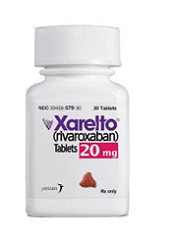
Both low-dose and full-dose rivaroxaban had superior benefit-risk profiles for extended venous thromboembolism (VTE) treatment when compared to aspirin, according to investigators.
The team found the combined outcome of recurrent VTE and major bleeding was less likely to occur in patients treated with rivaroxaban at 20 mg or 10 mg than in patients treated with aspirin.
Paolo Prandoni, MD, of the University of Padua in Italy, and his colleagues reported these results in Thrombosis Research.
The investigators analyzed data from the EINSTEIN-CHOICE trial, a double-blind, randomized study of 3,365 patients age 18 or older with deep vein thrombosis (DVT) or pulmonary embolism (PE) who had previously received anticoagulant treatment for 6 to 12 months.
Patients were given once-daily rivaroxaban at a low dose (10 mg), once-daily rivaroxaban at the full dose (20 mg), or once-daily aspirin at a dose of 100 mg.
The incidence of the combined outcome of recurrent VTE and major bleeding was 2.8% lower in the 20 mg rivaroxaban arm and 3.4% lower in the 10 mg rivaroxaban arm than in the aspirin arm.
The cumulative incidence of recurrent VTE was 1.9% in the 20 mg rivaroxaban arm, 1.6% in the 10 mg rivaroxaban arm, and 5.0% in the aspirin arm.
The cumulative incidence of major bleeding was 0.7%, 0.4%, and 0.5%, respectively.
Benefit-risk profile
Benefit and risk were calculated using “excess numbers of events,” or the difference in cumulative incidences in a hypothetical population of 10,000 VTE patients treated for 1 year.
Excess numbers of events were defined as the number of patients in this hypothetical population who would experience a particular event when treated with rivaroxaban (at either dose), minus that in the same population treated with aspirin.
In patients treated with 20 mg of rivaroxaban instead of aspirin, there would be 123 fewer episodes of PE (95% confidence interval [CI], 21-226) and 198 fewer episodes of DVT (95% CI, 62-333).
In patients given 10 mg of rivaroxaban instead of aspirin, there would be 121 fewer episodes of PE (95% CI, 4-238) and 217 fewer episodes of DVT (95% CI, 92-342).
Net clinical benefit was defined as the composite of symptomatic recurrent VTE and major bleeding events. It occurred in 23 patients in the 20 mg rivaroxaban arm, 17 patients in the 10 mg rivaroxaban arm, and 53 patients in the aspirin arm.
For 10,000 patients treated for 1 year with rivaroxaban instead of aspirin, there would be 284 fewer net clinical benefit outcomes for the 20 mg dose (95% CI, 106-462) and 339 fewer (95% CI, 165-512) for the 10 mg dose.
This means that one additional symptomatic recurrent VTE or major bleed would be avoided for every 36 patients treated with rivaroxaban at 20 mg or every 30 patients treated with rivaroxaban at 10 mg.
The investigators therefore concluded that rivaroxaban “provides a clinically important benefit in terms of reduction in recurrent VTE” and has a favorable benefit-risk profile relative to aspirin.
In fact, the team said there is “no longer a place” for extended VTE treatment with aspirin.
Bayer AG funded this study. Dr. Prandoni reported financial relationships with Bayer, Sanofi, Daiichi Sankyo, and Pfizer.
Both low-dose and full-dose rivaroxaban had superior benefit-risk profiles for extended venous thromboembolism (VTE) treatment when compared to aspirin, according to investigators.
The team found the combined outcome of recurrent VTE and major bleeding was less likely to occur in patients treated with rivaroxaban at 20 mg or 10 mg than in patients treated with aspirin.
Paolo Prandoni, MD, of the University of Padua in Italy, and his colleagues reported these results in Thrombosis Research.
The investigators analyzed data from the EINSTEIN-CHOICE trial, a double-blind, randomized study of 3,365 patients age 18 or older with deep vein thrombosis (DVT) or pulmonary embolism (PE) who had previously received anticoagulant treatment for 6 to 12 months.
Patients were given once-daily rivaroxaban at a low dose (10 mg), once-daily rivaroxaban at the full dose (20 mg), or once-daily aspirin at a dose of 100 mg.
The incidence of the combined outcome of recurrent VTE and major bleeding was 2.8% lower in the 20 mg rivaroxaban arm and 3.4% lower in the 10 mg rivaroxaban arm than in the aspirin arm.
The cumulative incidence of recurrent VTE was 1.9% in the 20 mg rivaroxaban arm, 1.6% in the 10 mg rivaroxaban arm, and 5.0% in the aspirin arm.
The cumulative incidence of major bleeding was 0.7%, 0.4%, and 0.5%, respectively.
Benefit-risk profile
Benefit and risk were calculated using “excess numbers of events,” or the difference in cumulative incidences in a hypothetical population of 10,000 VTE patients treated for 1 year.
Excess numbers of events were defined as the number of patients in this hypothetical population who would experience a particular event when treated with rivaroxaban (at either dose), minus that in the same population treated with aspirin.
In patients treated with 20 mg of rivaroxaban instead of aspirin, there would be 123 fewer episodes of PE (95% confidence interval [CI], 21-226) and 198 fewer episodes of DVT (95% CI, 62-333).
In patients given 10 mg of rivaroxaban instead of aspirin, there would be 121 fewer episodes of PE (95% CI, 4-238) and 217 fewer episodes of DVT (95% CI, 92-342).
Net clinical benefit was defined as the composite of symptomatic recurrent VTE and major bleeding events. It occurred in 23 patients in the 20 mg rivaroxaban arm, 17 patients in the 10 mg rivaroxaban arm, and 53 patients in the aspirin arm.
For 10,000 patients treated for 1 year with rivaroxaban instead of aspirin, there would be 284 fewer net clinical benefit outcomes for the 20 mg dose (95% CI, 106-462) and 339 fewer (95% CI, 165-512) for the 10 mg dose.
This means that one additional symptomatic recurrent VTE or major bleed would be avoided for every 36 patients treated with rivaroxaban at 20 mg or every 30 patients treated with rivaroxaban at 10 mg.
The investigators therefore concluded that rivaroxaban “provides a clinically important benefit in terms of reduction in recurrent VTE” and has a favorable benefit-risk profile relative to aspirin.
In fact, the team said there is “no longer a place” for extended VTE treatment with aspirin.
Bayer AG funded this study. Dr. Prandoni reported financial relationships with Bayer, Sanofi, Daiichi Sankyo, and Pfizer.
Both low-dose and full-dose rivaroxaban had superior benefit-risk profiles for extended venous thromboembolism (VTE) treatment when compared to aspirin, according to investigators.
The team found the combined outcome of recurrent VTE and major bleeding was less likely to occur in patients treated with rivaroxaban at 20 mg or 10 mg than in patients treated with aspirin.
Paolo Prandoni, MD, of the University of Padua in Italy, and his colleagues reported these results in Thrombosis Research.
The investigators analyzed data from the EINSTEIN-CHOICE trial, a double-blind, randomized study of 3,365 patients age 18 or older with deep vein thrombosis (DVT) or pulmonary embolism (PE) who had previously received anticoagulant treatment for 6 to 12 months.
Patients were given once-daily rivaroxaban at a low dose (10 mg), once-daily rivaroxaban at the full dose (20 mg), or once-daily aspirin at a dose of 100 mg.
The incidence of the combined outcome of recurrent VTE and major bleeding was 2.8% lower in the 20 mg rivaroxaban arm and 3.4% lower in the 10 mg rivaroxaban arm than in the aspirin arm.
The cumulative incidence of recurrent VTE was 1.9% in the 20 mg rivaroxaban arm, 1.6% in the 10 mg rivaroxaban arm, and 5.0% in the aspirin arm.
The cumulative incidence of major bleeding was 0.7%, 0.4%, and 0.5%, respectively.
Benefit-risk profile
Benefit and risk were calculated using “excess numbers of events,” or the difference in cumulative incidences in a hypothetical population of 10,000 VTE patients treated for 1 year.
Excess numbers of events were defined as the number of patients in this hypothetical population who would experience a particular event when treated with rivaroxaban (at either dose), minus that in the same population treated with aspirin.
In patients treated with 20 mg of rivaroxaban instead of aspirin, there would be 123 fewer episodes of PE (95% confidence interval [CI], 21-226) and 198 fewer episodes of DVT (95% CI, 62-333).
In patients given 10 mg of rivaroxaban instead of aspirin, there would be 121 fewer episodes of PE (95% CI, 4-238) and 217 fewer episodes of DVT (95% CI, 92-342).
Net clinical benefit was defined as the composite of symptomatic recurrent VTE and major bleeding events. It occurred in 23 patients in the 20 mg rivaroxaban arm, 17 patients in the 10 mg rivaroxaban arm, and 53 patients in the aspirin arm.
For 10,000 patients treated for 1 year with rivaroxaban instead of aspirin, there would be 284 fewer net clinical benefit outcomes for the 20 mg dose (95% CI, 106-462) and 339 fewer (95% CI, 165-512) for the 10 mg dose.
This means that one additional symptomatic recurrent VTE or major bleed would be avoided for every 36 patients treated with rivaroxaban at 20 mg or every 30 patients treated with rivaroxaban at 10 mg.
The investigators therefore concluded that rivaroxaban “provides a clinically important benefit in terms of reduction in recurrent VTE” and has a favorable benefit-risk profile relative to aspirin.
In fact, the team said there is “no longer a place” for extended VTE treatment with aspirin.
Bayer AG funded this study. Dr. Prandoni reported financial relationships with Bayer, Sanofi, Daiichi Sankyo, and Pfizer.
Factor VIII product approved for hemophilia A
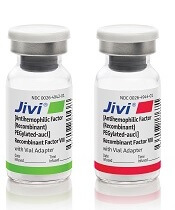
The US Food and Drug Administration (FDA) has approved Jivi® (antihemophilic factor [recombinant] PEGylated-aucl) for the treatment of hemophilia A.
Jivi (formerly BAY94-9027) is a DNA-derived, factor VIII concentrate approved for use in previously treated adults and adolescents (age 12 and older) with hemophilia A.
The product is approved for on-demand treatment and control of bleeding episodes, for perioperative management of bleeding, and as routine prophylaxis to reduce the frequency of bleeding episodes.
The initial recommended prophylactic regimen is dosing twice weekly (30-40 IU/kg) with the ability to dose every 5 days (45-60 IU/kg) and further individually adjust to less or more frequent dosing based on bleeding episodes.
The FDA’s approval of Jivi is based on results from the phase 2/3 PROTECT VIII trial. Some results from this trial were published in the Journal of Thrombosis and Haemostasis in 2016. Additional results are available in the prescribing information for Jivi.
PROTECT VIII enrolled previously treated adults and adolescents (ages 12 to 65) with severe hemophilia A.
In part A, researchers evaluated different dosing regimens for Jivi used as prophylaxis and on-demand treatment. An optional extension study was available to patients who completed part A.
In part B, researchers evaluated Jivi for perioperative management.
Efficacy
In part A, there were 132 patients in the intent‐to‐treat population—112 in the prophylaxis group and 20 in the on-demand group.
Patients received Jivi for 36 weeks. For the first 10 weeks, patients in the prophylaxis group received twice-weekly dosing at 25 IU/kg.
Patients with more than one bleed during this time went on to receive 30–40 IU/kg twice weekly. Patients with one or fewer bleeds were eligible for randomization to dosing every 5 days (45–60 IU/kg) or every 7 days (60 IU/kg).
The median annualized bleeding rate (ABR) was 4.1 for the patients who were treated twice weekly and were not eligible for randomization (n=13) and 1.9 for patients who were eligible for randomization but continued on twice-weekly treatment (n=11).
The median ABR was 1.9 for patients who were randomized to treatment every 5 days (n=43) and 0.96 for patients who completed prophylaxis with dosing every 7 days (32/43).
The median ABR for patients treated on demand was 24.1.
There were 388 treated bleeds in the on-demand group and 317 treated bleeds in the prophylaxis group. Overall, 73.3% of responses to treatment were considered “excellent” or “good,” 23.3% were considered “moderate,” and 3.3% were considered “poor.”
There were 17 patients who underwent 20 major surgeries in part B or the extension study and 10 patients who underwent minor surgeries in part A. Jivi provided “good” or “excellent” hemostatic control during all surgeries.
Safety
Safety data are available for 148 patients age 12 and older.
Adverse events in these patients included abdominal pain (3%), nausea (5%), vomiting (3%), injection site reactions (1%), pyrexia (5%), hypersensitivity (2%), dizziness (2%), headache (14%), insomnia (3%), cough (7%), erythema (1%), pruritus (1%), rash (2%), and flushing (1%).
A factor VIII inhibitor was reported in one adult patient, but repeat testing did not confirm the report.
One adult with asthma had a clinical hypersensitivity reaction and a transient increase of IgM anti-PEG antibody titer, which was negative upon retesting.
The US Food and Drug Administration (FDA) has approved Jivi® (antihemophilic factor [recombinant] PEGylated-aucl) for the treatment of hemophilia A.
Jivi (formerly BAY94-9027) is a DNA-derived, factor VIII concentrate approved for use in previously treated adults and adolescents (age 12 and older) with hemophilia A.
The product is approved for on-demand treatment and control of bleeding episodes, for perioperative management of bleeding, and as routine prophylaxis to reduce the frequency of bleeding episodes.
The initial recommended prophylactic regimen is dosing twice weekly (30-40 IU/kg) with the ability to dose every 5 days (45-60 IU/kg) and further individually adjust to less or more frequent dosing based on bleeding episodes.
The FDA’s approval of Jivi is based on results from the phase 2/3 PROTECT VIII trial. Some results from this trial were published in the Journal of Thrombosis and Haemostasis in 2016. Additional results are available in the prescribing information for Jivi.
PROTECT VIII enrolled previously treated adults and adolescents (ages 12 to 65) with severe hemophilia A.
In part A, researchers evaluated different dosing regimens for Jivi used as prophylaxis and on-demand treatment. An optional extension study was available to patients who completed part A.
In part B, researchers evaluated Jivi for perioperative management.
Efficacy
In part A, there were 132 patients in the intent‐to‐treat population—112 in the prophylaxis group and 20 in the on-demand group.
Patients received Jivi for 36 weeks. For the first 10 weeks, patients in the prophylaxis group received twice-weekly dosing at 25 IU/kg.
Patients with more than one bleed during this time went on to receive 30–40 IU/kg twice weekly. Patients with one or fewer bleeds were eligible for randomization to dosing every 5 days (45–60 IU/kg) or every 7 days (60 IU/kg).
The median annualized bleeding rate (ABR) was 4.1 for the patients who were treated twice weekly and were not eligible for randomization (n=13) and 1.9 for patients who were eligible for randomization but continued on twice-weekly treatment (n=11).
The median ABR was 1.9 for patients who were randomized to treatment every 5 days (n=43) and 0.96 for patients who completed prophylaxis with dosing every 7 days (32/43).
The median ABR for patients treated on demand was 24.1.
There were 388 treated bleeds in the on-demand group and 317 treated bleeds in the prophylaxis group. Overall, 73.3% of responses to treatment were considered “excellent” or “good,” 23.3% were considered “moderate,” and 3.3% were considered “poor.”
There were 17 patients who underwent 20 major surgeries in part B or the extension study and 10 patients who underwent minor surgeries in part A. Jivi provided “good” or “excellent” hemostatic control during all surgeries.
Safety
Safety data are available for 148 patients age 12 and older.
Adverse events in these patients included abdominal pain (3%), nausea (5%), vomiting (3%), injection site reactions (1%), pyrexia (5%), hypersensitivity (2%), dizziness (2%), headache (14%), insomnia (3%), cough (7%), erythema (1%), pruritus (1%), rash (2%), and flushing (1%).
A factor VIII inhibitor was reported in one adult patient, but repeat testing did not confirm the report.
One adult with asthma had a clinical hypersensitivity reaction and a transient increase of IgM anti-PEG antibody titer, which was negative upon retesting.
The US Food and Drug Administration (FDA) has approved Jivi® (antihemophilic factor [recombinant] PEGylated-aucl) for the treatment of hemophilia A.
Jivi (formerly BAY94-9027) is a DNA-derived, factor VIII concentrate approved for use in previously treated adults and adolescents (age 12 and older) with hemophilia A.
The product is approved for on-demand treatment and control of bleeding episodes, for perioperative management of bleeding, and as routine prophylaxis to reduce the frequency of bleeding episodes.
The initial recommended prophylactic regimen is dosing twice weekly (30-40 IU/kg) with the ability to dose every 5 days (45-60 IU/kg) and further individually adjust to less or more frequent dosing based on bleeding episodes.
The FDA’s approval of Jivi is based on results from the phase 2/3 PROTECT VIII trial. Some results from this trial were published in the Journal of Thrombosis and Haemostasis in 2016. Additional results are available in the prescribing information for Jivi.
PROTECT VIII enrolled previously treated adults and adolescents (ages 12 to 65) with severe hemophilia A.
In part A, researchers evaluated different dosing regimens for Jivi used as prophylaxis and on-demand treatment. An optional extension study was available to patients who completed part A.
In part B, researchers evaluated Jivi for perioperative management.
Efficacy
In part A, there were 132 patients in the intent‐to‐treat population—112 in the prophylaxis group and 20 in the on-demand group.
Patients received Jivi for 36 weeks. For the first 10 weeks, patients in the prophylaxis group received twice-weekly dosing at 25 IU/kg.
Patients with more than one bleed during this time went on to receive 30–40 IU/kg twice weekly. Patients with one or fewer bleeds were eligible for randomization to dosing every 5 days (45–60 IU/kg) or every 7 days (60 IU/kg).
The median annualized bleeding rate (ABR) was 4.1 for the patients who were treated twice weekly and were not eligible for randomization (n=13) and 1.9 for patients who were eligible for randomization but continued on twice-weekly treatment (n=11).
The median ABR was 1.9 for patients who were randomized to treatment every 5 days (n=43) and 0.96 for patients who completed prophylaxis with dosing every 7 days (32/43).
The median ABR for patients treated on demand was 24.1.
There were 388 treated bleeds in the on-demand group and 317 treated bleeds in the prophylaxis group. Overall, 73.3% of responses to treatment were considered “excellent” or “good,” 23.3% were considered “moderate,” and 3.3% were considered “poor.”
There were 17 patients who underwent 20 major surgeries in part B or the extension study and 10 patients who underwent minor surgeries in part A. Jivi provided “good” or “excellent” hemostatic control during all surgeries.
Safety
Safety data are available for 148 patients age 12 and older.
Adverse events in these patients included abdominal pain (3%), nausea (5%), vomiting (3%), injection site reactions (1%), pyrexia (5%), hypersensitivity (2%), dizziness (2%), headache (14%), insomnia (3%), cough (7%), erythema (1%), pruritus (1%), rash (2%), and flushing (1%).
A factor VIII inhibitor was reported in one adult patient, but repeat testing did not confirm the report.
One adult with asthma had a clinical hypersensitivity reaction and a transient increase of IgM anti-PEG antibody titer, which was negative upon retesting.
A new standard of care in hemophilia A?
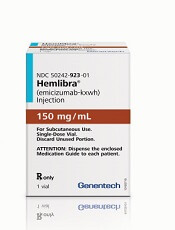
Results of a phase 3 trial showed that prophylaxis with emicizumab significantly reduced bleeds, compared to no prophylaxis, in patients with hemophilia A without inhibitors.
Emicizumab also reduced bleeds when compared to prior factor VIII prophylaxis.
The most common adverse events (AEs) in this trial were injection site reactions, arthralgia, nasopharyngitis, headache, upper respiratory tract infection, and influenza.
Johnny Mahlangu, MBBCh, of the University of the Witwatersrand and NHLS in Johannesburg, South Africa, and his colleagues reported these results, from the HAVEN 3 trial, in NEJM.
The trial was sponsored by F. Hoffmann–La Roche and Chugai Pharmaceutical.
“In the HAVEN 3 study, [emicizumab] showed a significant and clinically meaningful reduction in bleeds in people with hemophilia A without factor VIII inhibitors, while offering multiple subcutaneous dosing options,” Dr. Mahlangu said.
“The publication of these results . . . represents a major advance for hemophilia research and reinforces the potential of [emicizumab] to change the standard of care for people with hemophilia A.”
HAVEN 3 included 152 patients with hemophilia A (age 12 and older) who were previously treated with factor VIII therapy either on-demand or for prophylaxis.
Patients previously treated with on-demand factor VIII were randomized in a 2:2:1 fashion to receive:
- Emicizumab prophylaxis at 3 mg/kg/wk for 4 weeks, followed by 1.5 mg/kg/wk for at least 24 weeks (arm A)
- Emicizumab prophylaxis at 3 mg/kg/wk for 4 weeks, followed by 3 mg/kg/2wks for at least 24 weeks (arm B)
- No prophylaxis for at least 24 weeks (arm C).
Patients previously treated with factor VIII prophylaxis received emicizumab prophylaxis at 3 mg/kg/wk for 4 weeks, followed by 1.5 mg/kg/wk until the end of study (arm D).
Episodic treatment of breakthrough bleeds with factor VIII therapy was allowed per protocol.
Efficacy
Emicizumab reduced treated bleeds by 96% (rate ratio [RR]=0.04; P<0.0001) when given every week and 97% (RR=0.03; P<0.001) when given every 2 weeks, compared to no prophylaxis. The annualized bleeding rate (ABR) was 1.5, 1.3, and 38.2, respectively.
Emicizumab reduced all bleeds by 95% (RR=0.05; P<0.001) when given every week and 94% (RR=0.06; P<0.001) when given every 2 weeks, compared to no prophylaxis. The ABR was 2.5, 2.6, and 47.6, respectively.
There were zero treated bleeds in 55.6% of patients who received emicizumab every week and 60% of patients who received emicizumab every 2 weeks, compared to 0% of patients who did not receive prophylaxis.
In an intra-patient comparison of people who previously received factor VIII prophylaxis in a prospective non-interventional study and switched to emicizumab prophylaxis, emicizumab reduced treated bleeds by 68% (RR=0.32; P<0.001).
The ABR was 1.5 when patients were on emicizumab and 4.8 when they were on prior prophylaxis.
Safety
The most common AEs were injection site reactions (25%), upper respiratory tract infection (11%), nasopharyngitis (12%), arthralgia (19%), headache (11%), and influenza (6%).
One patient in group B stopped treatment due to multiple low-grade AEs considered related to emicizumab. The AEs were insomnia (grade 2), alopecia (grade 1), nightmare (grade 2), lethargy (grade 2), pruritus (grade 1), headache (grade 1), and depressed mood (grade 1).
Serious AEs included bleeding events (n=4), cardiac disorder (n=1), infection (n=3), musculoskeletal disorders (n=3), loosening of an orthopedic device (n=1), psychiatric disorder (n=1), and trauma (n=1). One patient experienced nephrolithiasis after a dose increase to 3 mg/kg/wk.
None of the serious AEs were considered related to emicizumab.
There were no deaths, cases of thrombotic microangiopathy, thrombotic events, or new cases of factor VIII inhibitors.
Two patients had detectable inhibitors at baseline, but titers declined spontaneously during the trial. Another patient had a detectable inhibitor titer at week 13 that spontaneously declined at week 25.
Results of a phase 3 trial showed that prophylaxis with emicizumab significantly reduced bleeds, compared to no prophylaxis, in patients with hemophilia A without inhibitors.
Emicizumab also reduced bleeds when compared to prior factor VIII prophylaxis.
The most common adverse events (AEs) in this trial were injection site reactions, arthralgia, nasopharyngitis, headache, upper respiratory tract infection, and influenza.
Johnny Mahlangu, MBBCh, of the University of the Witwatersrand and NHLS in Johannesburg, South Africa, and his colleagues reported these results, from the HAVEN 3 trial, in NEJM.
The trial was sponsored by F. Hoffmann–La Roche and Chugai Pharmaceutical.
“In the HAVEN 3 study, [emicizumab] showed a significant and clinically meaningful reduction in bleeds in people with hemophilia A without factor VIII inhibitors, while offering multiple subcutaneous dosing options,” Dr. Mahlangu said.
“The publication of these results . . . represents a major advance for hemophilia research and reinforces the potential of [emicizumab] to change the standard of care for people with hemophilia A.”
HAVEN 3 included 152 patients with hemophilia A (age 12 and older) who were previously treated with factor VIII therapy either on-demand or for prophylaxis.
Patients previously treated with on-demand factor VIII were randomized in a 2:2:1 fashion to receive:
- Emicizumab prophylaxis at 3 mg/kg/wk for 4 weeks, followed by 1.5 mg/kg/wk for at least 24 weeks (arm A)
- Emicizumab prophylaxis at 3 mg/kg/wk for 4 weeks, followed by 3 mg/kg/2wks for at least 24 weeks (arm B)
- No prophylaxis for at least 24 weeks (arm C).
Patients previously treated with factor VIII prophylaxis received emicizumab prophylaxis at 3 mg/kg/wk for 4 weeks, followed by 1.5 mg/kg/wk until the end of study (arm D).
Episodic treatment of breakthrough bleeds with factor VIII therapy was allowed per protocol.
Efficacy
Emicizumab reduced treated bleeds by 96% (rate ratio [RR]=0.04; P<0.0001) when given every week and 97% (RR=0.03; P<0.001) when given every 2 weeks, compared to no prophylaxis. The annualized bleeding rate (ABR) was 1.5, 1.3, and 38.2, respectively.
Emicizumab reduced all bleeds by 95% (RR=0.05; P<0.001) when given every week and 94% (RR=0.06; P<0.001) when given every 2 weeks, compared to no prophylaxis. The ABR was 2.5, 2.6, and 47.6, respectively.
There were zero treated bleeds in 55.6% of patients who received emicizumab every week and 60% of patients who received emicizumab every 2 weeks, compared to 0% of patients who did not receive prophylaxis.
In an intra-patient comparison of people who previously received factor VIII prophylaxis in a prospective non-interventional study and switched to emicizumab prophylaxis, emicizumab reduced treated bleeds by 68% (RR=0.32; P<0.001).
The ABR was 1.5 when patients were on emicizumab and 4.8 when they were on prior prophylaxis.
Safety
The most common AEs were injection site reactions (25%), upper respiratory tract infection (11%), nasopharyngitis (12%), arthralgia (19%), headache (11%), and influenza (6%).
One patient in group B stopped treatment due to multiple low-grade AEs considered related to emicizumab. The AEs were insomnia (grade 2), alopecia (grade 1), nightmare (grade 2), lethargy (grade 2), pruritus (grade 1), headache (grade 1), and depressed mood (grade 1).
Serious AEs included bleeding events (n=4), cardiac disorder (n=1), infection (n=3), musculoskeletal disorders (n=3), loosening of an orthopedic device (n=1), psychiatric disorder (n=1), and trauma (n=1). One patient experienced nephrolithiasis after a dose increase to 3 mg/kg/wk.
None of the serious AEs were considered related to emicizumab.
There were no deaths, cases of thrombotic microangiopathy, thrombotic events, or new cases of factor VIII inhibitors.
Two patients had detectable inhibitors at baseline, but titers declined spontaneously during the trial. Another patient had a detectable inhibitor titer at week 13 that spontaneously declined at week 25.
Results of a phase 3 trial showed that prophylaxis with emicizumab significantly reduced bleeds, compared to no prophylaxis, in patients with hemophilia A without inhibitors.
Emicizumab also reduced bleeds when compared to prior factor VIII prophylaxis.
The most common adverse events (AEs) in this trial were injection site reactions, arthralgia, nasopharyngitis, headache, upper respiratory tract infection, and influenza.
Johnny Mahlangu, MBBCh, of the University of the Witwatersrand and NHLS in Johannesburg, South Africa, and his colleagues reported these results, from the HAVEN 3 trial, in NEJM.
The trial was sponsored by F. Hoffmann–La Roche and Chugai Pharmaceutical.
“In the HAVEN 3 study, [emicizumab] showed a significant and clinically meaningful reduction in bleeds in people with hemophilia A without factor VIII inhibitors, while offering multiple subcutaneous dosing options,” Dr. Mahlangu said.
“The publication of these results . . . represents a major advance for hemophilia research and reinforces the potential of [emicizumab] to change the standard of care for people with hemophilia A.”
HAVEN 3 included 152 patients with hemophilia A (age 12 and older) who were previously treated with factor VIII therapy either on-demand or for prophylaxis.
Patients previously treated with on-demand factor VIII were randomized in a 2:2:1 fashion to receive:
- Emicizumab prophylaxis at 3 mg/kg/wk for 4 weeks, followed by 1.5 mg/kg/wk for at least 24 weeks (arm A)
- Emicizumab prophylaxis at 3 mg/kg/wk for 4 weeks, followed by 3 mg/kg/2wks for at least 24 weeks (arm B)
- No prophylaxis for at least 24 weeks (arm C).
Patients previously treated with factor VIII prophylaxis received emicizumab prophylaxis at 3 mg/kg/wk for 4 weeks, followed by 1.5 mg/kg/wk until the end of study (arm D).
Episodic treatment of breakthrough bleeds with factor VIII therapy was allowed per protocol.
Efficacy
Emicizumab reduced treated bleeds by 96% (rate ratio [RR]=0.04; P<0.0001) when given every week and 97% (RR=0.03; P<0.001) when given every 2 weeks, compared to no prophylaxis. The annualized bleeding rate (ABR) was 1.5, 1.3, and 38.2, respectively.
Emicizumab reduced all bleeds by 95% (RR=0.05; P<0.001) when given every week and 94% (RR=0.06; P<0.001) when given every 2 weeks, compared to no prophylaxis. The ABR was 2.5, 2.6, and 47.6, respectively.
There were zero treated bleeds in 55.6% of patients who received emicizumab every week and 60% of patients who received emicizumab every 2 weeks, compared to 0% of patients who did not receive prophylaxis.
In an intra-patient comparison of people who previously received factor VIII prophylaxis in a prospective non-interventional study and switched to emicizumab prophylaxis, emicizumab reduced treated bleeds by 68% (RR=0.32; P<0.001).
The ABR was 1.5 when patients were on emicizumab and 4.8 when they were on prior prophylaxis.
Safety
The most common AEs were injection site reactions (25%), upper respiratory tract infection (11%), nasopharyngitis (12%), arthralgia (19%), headache (11%), and influenza (6%).
One patient in group B stopped treatment due to multiple low-grade AEs considered related to emicizumab. The AEs were insomnia (grade 2), alopecia (grade 1), nightmare (grade 2), lethargy (grade 2), pruritus (grade 1), headache (grade 1), and depressed mood (grade 1).
Serious AEs included bleeding events (n=4), cardiac disorder (n=1), infection (n=3), musculoskeletal disorders (n=3), loosening of an orthopedic device (n=1), psychiatric disorder (n=1), and trauma (n=1). One patient experienced nephrolithiasis after a dose increase to 3 mg/kg/wk.
None of the serious AEs were considered related to emicizumab.
There were no deaths, cases of thrombotic microangiopathy, thrombotic events, or new cases of factor VIII inhibitors.
Two patients had detectable inhibitors at baseline, but titers declined spontaneously during the trial. Another patient had a detectable inhibitor titer at week 13 that spontaneously declined at week 25.
Rivaroxaban superior to aspirin for extended VTE treatment
Both low-dose and full-dose rivaroxaban had superior benefit-risk profiles for extended venous thromboembolism (VTE) treatment compared with aspirin, according to results published in Thrombosis Research.

Incidences of the combined outcome of recurrent VTE and major bleeding were 2.8% and 3.4% lower for patients treated with rivaroxaban at 20 mg and 10 mg, respectively, than for those treated with aspirin, reported Paolo Prandoni, MD, of the department of cardiothoracic and vascular sciences at the University of Padua, Italy, and his coauthors.
Investigators analyzed data from the EINSTEIN-CHOICE trial, a double-blind, randomized study of 3,365 patients aged 18 years or older with deep vein thrombosis or pulmonary embolism who had previously received anticoagulant treatment for 6-12 months. Patients were given either once-daily rivaroxaban at a low dose (10 mg), once-daily rivaroxaban at full dose (20 mg), or once- daily aspirin at a dose of 100 mg.
Benefit and risk were calculated using “excess numbers of events,” or the difference in cumulative incidences in a hypothetical population of 10,000 VTE patients treated for 1 year. Excess numbers of events were defined as the number of patients in this hypothetical population who would experience a particular event when treated with rivaroxaban (at either dose), minus that in the same population treated with aspirin.
The cumulative incidences of recurrent VTE in the full-dose rivaroxaban, low-dose rivaroxaban, and aspirin groups were 1.9%, 1.6%, and 5.0%, respectively. The cumulative incidences of major bleeding in these groups were 0.7%, 0.4% and 0.5%, respectively.
In patients treated with 20 mg of rivaroxaban instead of aspirin, there would be 123 fewer episodes of pulmonary embolism (95% confidence interval, 21-226) and 198 fewer episodes of deep vein thrombosis (95% CI, 62-333).
In patients given 10 mg of rivaroxaban instead of aspirin, there would be 121 fewer episodes of pulmonary embolism (95% CI, 4-238) and 217 fewer episodes of deep vein thrombosis (95% CI, 92-342), Dr. Prandoni and his colleagues wrote.
Net clinical benefit was defined as the composite of symptomatic recurrent VTE and major bleeding events, and occurred in 23 patients in the full-dose rivaroxaban group, 17 patients in the low-dose rivaroxaban group, and 53 patients in the aspirin group.
For 10,000 patients treated for 1 year with rivaroxaban instead of aspirin, there would be 284 fewer net clinical benefit outcomes for the 20-mg dose (95% CI, 106-462) and 339 fewer (95% CI, 165-512) for the 10-mg dose. “Thus, compared with aspirin, one additional symptomatic recurrent VTE or major bleed would be avoided for every 36 or 30 patients treated with rivaroxaban 20 mg or 10 mg, respectively,” the investigators wrote.
The findings indicate that there is “no longer a place” for extended VTE treatment with aspirin, the investigators said.
“Extended anticoagulation with once daily rivaroxaban ... provides a clinically important benefit in terms of reduction in recurrent VTE,” they wrote. “Regardless of which dose is chosen ... rivaroxaban has a favourable benefit-risk profile relative to aspirin.”
Bayer AG funded the study. Dr. Prandoni reported financial relationships with Bayer, Sanofi, Daiichi Sankyo, and Pfizer.
SOURCE: Prandoni P et al. Thromb Res. 2018 Aug;168:121-9.
Both low-dose and full-dose rivaroxaban had superior benefit-risk profiles for extended venous thromboembolism (VTE) treatment compared with aspirin, according to results published in Thrombosis Research.
Incidences of the combined outcome of recurrent VTE and major bleeding were 2.8% and 3.4% lower for patients treated with rivaroxaban at 20 mg and 10 mg, respectively, than for those treated with aspirin, reported Paolo Prandoni, MD, of the department of cardiothoracic and vascular sciences at the University of Padua, Italy, and his coauthors.
Investigators analyzed data from the EINSTEIN-CHOICE trial, a double-blind, randomized study of 3,365 patients aged 18 years or older with deep vein thrombosis or pulmonary embolism who had previously received anticoagulant treatment for 6-12 months. Patients were given either once-daily rivaroxaban at a low dose (10 mg), once-daily rivaroxaban at full dose (20 mg), or once- daily aspirin at a dose of 100 mg.
Benefit and risk were calculated using “excess numbers of events,” or the difference in cumulative incidences in a hypothetical population of 10,000 VTE patients treated for 1 year. Excess numbers of events were defined as the number of patients in this hypothetical population who would experience a particular event when treated with rivaroxaban (at either dose), minus that in the same population treated with aspirin.
The cumulative incidences of recurrent VTE in the full-dose rivaroxaban, low-dose rivaroxaban, and aspirin groups were 1.9%, 1.6%, and 5.0%, respectively. The cumulative incidences of major bleeding in these groups were 0.7%, 0.4% and 0.5%, respectively.
In patients treated with 20 mg of rivaroxaban instead of aspirin, there would be 123 fewer episodes of pulmonary embolism (95% confidence interval, 21-226) and 198 fewer episodes of deep vein thrombosis (95% CI, 62-333).
In patients given 10 mg of rivaroxaban instead of aspirin, there would be 121 fewer episodes of pulmonary embolism (95% CI, 4-238) and 217 fewer episodes of deep vein thrombosis (95% CI, 92-342), Dr. Prandoni and his colleagues wrote.
Net clinical benefit was defined as the composite of symptomatic recurrent VTE and major bleeding events, and occurred in 23 patients in the full-dose rivaroxaban group, 17 patients in the low-dose rivaroxaban group, and 53 patients in the aspirin group.
For 10,000 patients treated for 1 year with rivaroxaban instead of aspirin, there would be 284 fewer net clinical benefit outcomes for the 20-mg dose (95% CI, 106-462) and 339 fewer (95% CI, 165-512) for the 10-mg dose. “Thus, compared with aspirin, one additional symptomatic recurrent VTE or major bleed would be avoided for every 36 or 30 patients treated with rivaroxaban 20 mg or 10 mg, respectively,” the investigators wrote.
The findings indicate that there is “no longer a place” for extended VTE treatment with aspirin, the investigators said.
“Extended anticoagulation with once daily rivaroxaban ... provides a clinically important benefit in terms of reduction in recurrent VTE,” they wrote. “Regardless of which dose is chosen ... rivaroxaban has a favourable benefit-risk profile relative to aspirin.”
Bayer AG funded the study. Dr. Prandoni reported financial relationships with Bayer, Sanofi, Daiichi Sankyo, and Pfizer.
SOURCE: Prandoni P et al. Thromb Res. 2018 Aug;168:121-9.
Both low-dose and full-dose rivaroxaban had superior benefit-risk profiles for extended venous thromboembolism (VTE) treatment compared with aspirin, according to results published in Thrombosis Research.
Incidences of the combined outcome of recurrent VTE and major bleeding were 2.8% and 3.4% lower for patients treated with rivaroxaban at 20 mg and 10 mg, respectively, than for those treated with aspirin, reported Paolo Prandoni, MD, of the department of cardiothoracic and vascular sciences at the University of Padua, Italy, and his coauthors.
Investigators analyzed data from the EINSTEIN-CHOICE trial, a double-blind, randomized study of 3,365 patients aged 18 years or older with deep vein thrombosis or pulmonary embolism who had previously received anticoagulant treatment for 6-12 months. Patients were given either once-daily rivaroxaban at a low dose (10 mg), once-daily rivaroxaban at full dose (20 mg), or once- daily aspirin at a dose of 100 mg.
Benefit and risk were calculated using “excess numbers of events,” or the difference in cumulative incidences in a hypothetical population of 10,000 VTE patients treated for 1 year. Excess numbers of events were defined as the number of patients in this hypothetical population who would experience a particular event when treated with rivaroxaban (at either dose), minus that in the same population treated with aspirin.
The cumulative incidences of recurrent VTE in the full-dose rivaroxaban, low-dose rivaroxaban, and aspirin groups were 1.9%, 1.6%, and 5.0%, respectively. The cumulative incidences of major bleeding in these groups were 0.7%, 0.4% and 0.5%, respectively.
In patients treated with 20 mg of rivaroxaban instead of aspirin, there would be 123 fewer episodes of pulmonary embolism (95% confidence interval, 21-226) and 198 fewer episodes of deep vein thrombosis (95% CI, 62-333).
In patients given 10 mg of rivaroxaban instead of aspirin, there would be 121 fewer episodes of pulmonary embolism (95% CI, 4-238) and 217 fewer episodes of deep vein thrombosis (95% CI, 92-342), Dr. Prandoni and his colleagues wrote.
Net clinical benefit was defined as the composite of symptomatic recurrent VTE and major bleeding events, and occurred in 23 patients in the full-dose rivaroxaban group, 17 patients in the low-dose rivaroxaban group, and 53 patients in the aspirin group.
For 10,000 patients treated for 1 year with rivaroxaban instead of aspirin, there would be 284 fewer net clinical benefit outcomes for the 20-mg dose (95% CI, 106-462) and 339 fewer (95% CI, 165-512) for the 10-mg dose. “Thus, compared with aspirin, one additional symptomatic recurrent VTE or major bleed would be avoided for every 36 or 30 patients treated with rivaroxaban 20 mg or 10 mg, respectively,” the investigators wrote.
The findings indicate that there is “no longer a place” for extended VTE treatment with aspirin, the investigators said.
“Extended anticoagulation with once daily rivaroxaban ... provides a clinically important benefit in terms of reduction in recurrent VTE,” they wrote. “Regardless of which dose is chosen ... rivaroxaban has a favourable benefit-risk profile relative to aspirin.”
Bayer AG funded the study. Dr. Prandoni reported financial relationships with Bayer, Sanofi, Daiichi Sankyo, and Pfizer.
SOURCE: Prandoni P et al. Thromb Res. 2018 Aug;168:121-9.
FROM THROMBOSIS RESEARCH
Key clinical point:
Major finding: Incidences of the combined outcome of recurrent VTE and major bleeding were 2.8% and 3.4% lower in the rivaroxaban 20-mg and 10-mg groups, respectively, than in the aspirin group.
Study details: Analysis of data from 3,365 patients in the EINSTEIN-CHOICE trial, a double-blind, randomized study comparing rivaroxaban with aspirin for extended treatment of VTE.
Disclosures: Bayer AG funded the study. Dr. Prandoni disclosed financial relationships with Bayer, Sanofi, Daiichi Sankyo, and Pfizer.
Source: Prandoni P et al. Thromb Res. 2018 Aug;168:121-9.
Outcomes of patients with subsegmental PE with and without anticoagulation
Clinical question: Should patients with subsegmental pulmonary embolism be anticoagulated?
Background: A recent CHEST clinical guideline suggests it is reasonable to withhold anticoagulation for subsegmental pulmonary embolism. This has been a topic of controversy given the lack of a systematic review.
Study design: Systematic review and meta-analysis.

Setting: A comprehensive literature search was performed by a medical librarian in Ovid, MEDLINE, PubMed, Embase, the Cochrane Library, Scopus, Web of Science, ClinicalTrials.gov, and Google Scholar.
Synopsis: After 1,512 papers were screened, 14 studies were included in the review and analysis. Primary outcomes were frequency of bleeding, venous thromboembolism recurrence, and death for patients with subsegmental pulmonary embolism with and without treatment. Because of a lack of precision in pooled data and high heterogeneity of outcomes, no inferences could be made about benefit or harm with either approach.
The conclusions were limited because of the small numbers, imprecision, and lack of controlled trials. There is a need for a randomized controlled trial regarding subsegmental pulmonary embolism.
Bottom line: The decision to treat or not treat a patient with subsegmental pulmonary embolism should be done based on clinical judgment and a shared decision-making model with the patient.
Citation: Bariteau A et al. Systematic review and meta-analysis of outcomes of patients with subsegmental pulmonary embolism with and without anticoagulation treatment. Acad Emerg Med. 2018 Mar 2. doi: 10.1111/acem.13399.
Dr. Chadha is an assistant professor in the division of hospital medicine at the University of Kentucky, Lexington.
Clinical question: Should patients with subsegmental pulmonary embolism be anticoagulated?
Background: A recent CHEST clinical guideline suggests it is reasonable to withhold anticoagulation for subsegmental pulmonary embolism. This has been a topic of controversy given the lack of a systematic review.
Study design: Systematic review and meta-analysis.
Setting: A comprehensive literature search was performed by a medical librarian in Ovid, MEDLINE, PubMed, Embase, the Cochrane Library, Scopus, Web of Science, ClinicalTrials.gov, and Google Scholar.
Synopsis: After 1,512 papers were screened, 14 studies were included in the review and analysis. Primary outcomes were frequency of bleeding, venous thromboembolism recurrence, and death for patients with subsegmental pulmonary embolism with and without treatment. Because of a lack of precision in pooled data and high heterogeneity of outcomes, no inferences could be made about benefit or harm with either approach.
The conclusions were limited because of the small numbers, imprecision, and lack of controlled trials. There is a need for a randomized controlled trial regarding subsegmental pulmonary embolism.
Bottom line: The decision to treat or not treat a patient with subsegmental pulmonary embolism should be done based on clinical judgment and a shared decision-making model with the patient.
Citation: Bariteau A et al. Systematic review and meta-analysis of outcomes of patients with subsegmental pulmonary embolism with and without anticoagulation treatment. Acad Emerg Med. 2018 Mar 2. doi: 10.1111/acem.13399.
Dr. Chadha is an assistant professor in the division of hospital medicine at the University of Kentucky, Lexington.
Clinical question: Should patients with subsegmental pulmonary embolism be anticoagulated?
Background: A recent CHEST clinical guideline suggests it is reasonable to withhold anticoagulation for subsegmental pulmonary embolism. This has been a topic of controversy given the lack of a systematic review.
Study design: Systematic review and meta-analysis.
Setting: A comprehensive literature search was performed by a medical librarian in Ovid, MEDLINE, PubMed, Embase, the Cochrane Library, Scopus, Web of Science, ClinicalTrials.gov, and Google Scholar.
Synopsis: After 1,512 papers were screened, 14 studies were included in the review and analysis. Primary outcomes were frequency of bleeding, venous thromboembolism recurrence, and death for patients with subsegmental pulmonary embolism with and without treatment. Because of a lack of precision in pooled data and high heterogeneity of outcomes, no inferences could be made about benefit or harm with either approach.
The conclusions were limited because of the small numbers, imprecision, and lack of controlled trials. There is a need for a randomized controlled trial regarding subsegmental pulmonary embolism.
Bottom line: The decision to treat or not treat a patient with subsegmental pulmonary embolism should be done based on clinical judgment and a shared decision-making model with the patient.
Citation: Bariteau A et al. Systematic review and meta-analysis of outcomes of patients with subsegmental pulmonary embolism with and without anticoagulation treatment. Acad Emerg Med. 2018 Mar 2. doi: 10.1111/acem.13399.
Dr. Chadha is an assistant professor in the division of hospital medicine at the University of Kentucky, Lexington.