User login
This month in CHEST Editor’s picks
G iants Chest Medicine
Paul M. O’Byrne, MBBCh, FCCP. By S.E. Wenzel, MD.
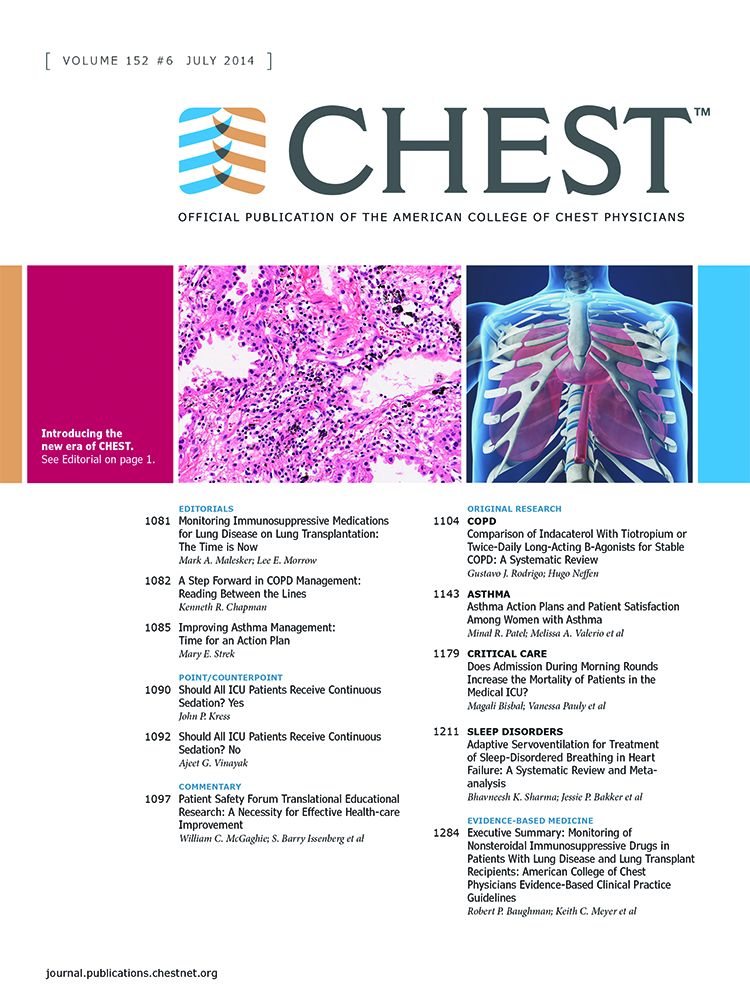
O riginal Research
Prevalence and Localization of Pulmonary Embolism in Unexplained Acute Exacerbations of COPD: A Systematic Review and Meta-Analysis. By F.E. Aleva, MD, et al.
Commentary
The American College of Radiology Lung Imaging Reporting and Data System: Potential Drawbacks and Need for Revision. By H. J. Mehta, MD, et al.
Special Feature
Improving the Management of COPD in Women. By C.R. Jenkins, MD, et al.
G iants Chest Medicine
Paul M. O’Byrne, MBBCh, FCCP. By S.E. Wenzel, MD.
O riginal Research
Prevalence and Localization of Pulmonary Embolism in Unexplained Acute Exacerbations of COPD: A Systematic Review and Meta-Analysis. By F.E. Aleva, MD, et al.
Commentary
The American College of Radiology Lung Imaging Reporting and Data System: Potential Drawbacks and Need for Revision. By H. J. Mehta, MD, et al.
Special Feature
Improving the Management of COPD in Women. By C.R. Jenkins, MD, et al.
G iants Chest Medicine
Paul M. O’Byrne, MBBCh, FCCP. By S.E. Wenzel, MD.
O riginal Research
Prevalence and Localization of Pulmonary Embolism in Unexplained Acute Exacerbations of COPD: A Systematic Review and Meta-Analysis. By F.E. Aleva, MD, et al.
Commentary
The American College of Radiology Lung Imaging Reporting and Data System: Potential Drawbacks and Need for Revision. By H. J. Mehta, MD, et al.
Special Feature
Improving the Management of COPD in Women. By C.R. Jenkins, MD, et al.
President’s report Strategic planning, travel ban, CHEST 2017
Dear Colleagues,
It doesn’t seem possible, but I have just completed the first quarter of my term as your 79th President and recently returned from chairing my first board meeting – a scary experience to be sure. All in all, it went well. We officially offered Steve Welch the position of Executive Vice President, thereby ushering in one of our own to lead the organization. Steve has successfully served as CHEST’s interim EVP/CEO since May 2016, after 22 years of service with this organization, most recently as Senior Vice President of Publications and Digital Content. I am utterly and completely confident in our choice and want you to know he has the full backing of the board, the Past Presidents, and nearly every doctor he has come in contact with.
One of our strategic areas of focus for the past 5 years is how we serve our international members. CHEST is now truly a global organization. Our international membership continues to grow, and that impacts all areas of the College. In 2016, we provided education for more than 4,300 international members through our national meeting and courses provided all around the globe. In addition, the College has, in partnership with Chinese CHEST leadership and ministry of health officials, led the effort to begin the first pulmonary and critical care fellowship training programs in China. This was an amazing undertaking. The first four graduates were introduced and honored at CHEST 2016, and 20 more are scheduled to graduate next year. An additional 25 more fellowship training programs are to start this next year, and the Chinese National Health and Family Planning Commission recently approved the program as one of only three official fellowship training programs in China. I firmly believe we will look back on this endeavor as one of the greatest accomplishments in our organization’s long and storied history. Countless lives of patients with pulmonary diseases and critical illness are likely to be saved or extended in that country because of this work.
This brings me to CHEST’s position on the travel ban recently imposed and currently on hold in the United States. We, along with 11 other medical societies, sent a letter to the Secretary of Homeland Security underscoring our concern for such a ban, as it could most definitely adversely affect health-care delivery worldwide in ways not previously contemplated. For example, international medical graduates reportedly make up 25% of our physician workforce and provide a disproportionate amount of care to underserved communities. Should we not allow them to come and train here, we could be putting patients in those areas at risk. The ban could result in patients who need specialized health care being denied entrance to the country. We worry that our global physician colleagues will be unable to travel to the United States for educational programs meant to provide them with the tools they need to care for their patients back home. I encourage you to read the full letter if you are interested.
On a brighter note, the program committee is busy planning CHEST 2017, which will be held in Toronto, Oct 28 to Nov 1. Our theme is Team-Based: Patient-Centered. Our advanced practice providers, critical care nurses, and respiratory therapists, among others, will participate in the planning and help shape different aspects of the program. We encourage our physician members to invite a friend, and come and enjoy the meeting. The traditional CHEST program with simulation and interactive, interdisciplinary symposia will be back by popular demand. There will be something in this meeting for everyone. I would be remiss if I didn’t mention that we are working closely with the American Board of Internal Medicine on Maintenance of Certification (MOC) and getting credit by using CHEST products, such as CHEST SEEK, e-learning modules, and live learning opportunities. In fact, CHEST 2016 made getting MOC points easy. Much of the program this year will qualify for MOC, and I would encourage you to take advantage of it. For those who I have had the pleasure of working with and hearing from this year, I thank you for your comments, welcome all opinions, and hope to hear from any member who has something CHEST-related on their mind.
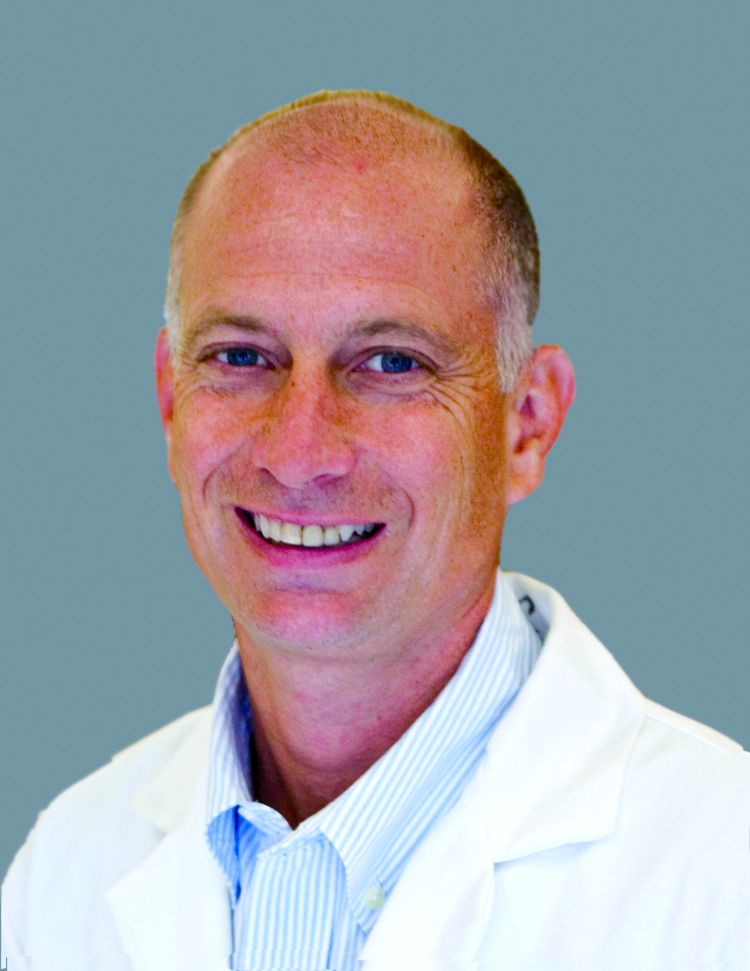
Gerard A. Silvestri, MD, MS, FCCP
President
Dear Colleagues,
It doesn’t seem possible, but I have just completed the first quarter of my term as your 79th President and recently returned from chairing my first board meeting – a scary experience to be sure. All in all, it went well. We officially offered Steve Welch the position of Executive Vice President, thereby ushering in one of our own to lead the organization. Steve has successfully served as CHEST’s interim EVP/CEO since May 2016, after 22 years of service with this organization, most recently as Senior Vice President of Publications and Digital Content. I am utterly and completely confident in our choice and want you to know he has the full backing of the board, the Past Presidents, and nearly every doctor he has come in contact with.
One of our strategic areas of focus for the past 5 years is how we serve our international members. CHEST is now truly a global organization. Our international membership continues to grow, and that impacts all areas of the College. In 2016, we provided education for more than 4,300 international members through our national meeting and courses provided all around the globe. In addition, the College has, in partnership with Chinese CHEST leadership and ministry of health officials, led the effort to begin the first pulmonary and critical care fellowship training programs in China. This was an amazing undertaking. The first four graduates were introduced and honored at CHEST 2016, and 20 more are scheduled to graduate next year. An additional 25 more fellowship training programs are to start this next year, and the Chinese National Health and Family Planning Commission recently approved the program as one of only three official fellowship training programs in China. I firmly believe we will look back on this endeavor as one of the greatest accomplishments in our organization’s long and storied history. Countless lives of patients with pulmonary diseases and critical illness are likely to be saved or extended in that country because of this work.
This brings me to CHEST’s position on the travel ban recently imposed and currently on hold in the United States. We, along with 11 other medical societies, sent a letter to the Secretary of Homeland Security underscoring our concern for such a ban, as it could most definitely adversely affect health-care delivery worldwide in ways not previously contemplated. For example, international medical graduates reportedly make up 25% of our physician workforce and provide a disproportionate amount of care to underserved communities. Should we not allow them to come and train here, we could be putting patients in those areas at risk. The ban could result in patients who need specialized health care being denied entrance to the country. We worry that our global physician colleagues will be unable to travel to the United States for educational programs meant to provide them with the tools they need to care for their patients back home. I encourage you to read the full letter if you are interested.
On a brighter note, the program committee is busy planning CHEST 2017, which will be held in Toronto, Oct 28 to Nov 1. Our theme is Team-Based: Patient-Centered. Our advanced practice providers, critical care nurses, and respiratory therapists, among others, will participate in the planning and help shape different aspects of the program. We encourage our physician members to invite a friend, and come and enjoy the meeting. The traditional CHEST program with simulation and interactive, interdisciplinary symposia will be back by popular demand. There will be something in this meeting for everyone. I would be remiss if I didn’t mention that we are working closely with the American Board of Internal Medicine on Maintenance of Certification (MOC) and getting credit by using CHEST products, such as CHEST SEEK, e-learning modules, and live learning opportunities. In fact, CHEST 2016 made getting MOC points easy. Much of the program this year will qualify for MOC, and I would encourage you to take advantage of it. For those who I have had the pleasure of working with and hearing from this year, I thank you for your comments, welcome all opinions, and hope to hear from any member who has something CHEST-related on their mind.
Gerard A. Silvestri, MD, MS, FCCP
President
Dear Colleagues,
It doesn’t seem possible, but I have just completed the first quarter of my term as your 79th President and recently returned from chairing my first board meeting – a scary experience to be sure. All in all, it went well. We officially offered Steve Welch the position of Executive Vice President, thereby ushering in one of our own to lead the organization. Steve has successfully served as CHEST’s interim EVP/CEO since May 2016, after 22 years of service with this organization, most recently as Senior Vice President of Publications and Digital Content. I am utterly and completely confident in our choice and want you to know he has the full backing of the board, the Past Presidents, and nearly every doctor he has come in contact with.
One of our strategic areas of focus for the past 5 years is how we serve our international members. CHEST is now truly a global organization. Our international membership continues to grow, and that impacts all areas of the College. In 2016, we provided education for more than 4,300 international members through our national meeting and courses provided all around the globe. In addition, the College has, in partnership with Chinese CHEST leadership and ministry of health officials, led the effort to begin the first pulmonary and critical care fellowship training programs in China. This was an amazing undertaking. The first four graduates were introduced and honored at CHEST 2016, and 20 more are scheduled to graduate next year. An additional 25 more fellowship training programs are to start this next year, and the Chinese National Health and Family Planning Commission recently approved the program as one of only three official fellowship training programs in China. I firmly believe we will look back on this endeavor as one of the greatest accomplishments in our organization’s long and storied history. Countless lives of patients with pulmonary diseases and critical illness are likely to be saved or extended in that country because of this work.
This brings me to CHEST’s position on the travel ban recently imposed and currently on hold in the United States. We, along with 11 other medical societies, sent a letter to the Secretary of Homeland Security underscoring our concern for such a ban, as it could most definitely adversely affect health-care delivery worldwide in ways not previously contemplated. For example, international medical graduates reportedly make up 25% of our physician workforce and provide a disproportionate amount of care to underserved communities. Should we not allow them to come and train here, we could be putting patients in those areas at risk. The ban could result in patients who need specialized health care being denied entrance to the country. We worry that our global physician colleagues will be unable to travel to the United States for educational programs meant to provide them with the tools they need to care for their patients back home. I encourage you to read the full letter if you are interested.
On a brighter note, the program committee is busy planning CHEST 2017, which will be held in Toronto, Oct 28 to Nov 1. Our theme is Team-Based: Patient-Centered. Our advanced practice providers, critical care nurses, and respiratory therapists, among others, will participate in the planning and help shape different aspects of the program. We encourage our physician members to invite a friend, and come and enjoy the meeting. The traditional CHEST program with simulation and interactive, interdisciplinary symposia will be back by popular demand. There will be something in this meeting for everyone. I would be remiss if I didn’t mention that we are working closely with the American Board of Internal Medicine on Maintenance of Certification (MOC) and getting credit by using CHEST products, such as CHEST SEEK, e-learning modules, and live learning opportunities. In fact, CHEST 2016 made getting MOC points easy. Much of the program this year will qualify for MOC, and I would encourage you to take advantage of it. For those who I have had the pleasure of working with and hearing from this year, I thank you for your comments, welcome all opinions, and hope to hear from any member who has something CHEST-related on their mind.
Gerard A. Silvestri, MD, MS, FCCP
President
Encourage Vascular Nurses, Techs to Attend SVN Convention
For all members who work with vascular nurses: please encourage them to attend the upcoming Society for Vascular Nursing’s 35th Annual Conference in Nashville, Tenn. The education is sure to benefit the entire office.
Be sure to forward information along to any and all vascular nurses and techs in your organization. The convention will be April 4-7 at the Loews Vanderbilt Hotel and is geared to vascular nurses, nurse practitioners, vascular techs, cardiovascular nurses and nurses/techs working in cath labs, angio suites or endovascular operating rooms. Read more about the convention here.
For all members who work with vascular nurses: please encourage them to attend the upcoming Society for Vascular Nursing’s 35th Annual Conference in Nashville, Tenn. The education is sure to benefit the entire office.
Be sure to forward information along to any and all vascular nurses and techs in your organization. The convention will be April 4-7 at the Loews Vanderbilt Hotel and is geared to vascular nurses, nurse practitioners, vascular techs, cardiovascular nurses and nurses/techs working in cath labs, angio suites or endovascular operating rooms. Read more about the convention here.
For all members who work with vascular nurses: please encourage them to attend the upcoming Society for Vascular Nursing’s 35th Annual Conference in Nashville, Tenn. The education is sure to benefit the entire office.
Be sure to forward information along to any and all vascular nurses and techs in your organization. The convention will be April 4-7 at the Loews Vanderbilt Hotel and is geared to vascular nurses, nurse practitioners, vascular techs, cardiovascular nurses and nurses/techs working in cath labs, angio suites or endovascular operating rooms. Read more about the convention here.
VAM Registration, Housing Now Open
Registration and housing for the 2017 Vascular Annual Meeting is now open. VAM will be held May 31-June 3 in San Diego, with plenaries and exhibits open June 1-3. Register here and make housing reservations here.
Registration and housing for the 2017 Vascular Annual Meeting is now open. VAM will be held May 31-June 3 in San Diego, with plenaries and exhibits open June 1-3. Register here and make housing reservations here.
Registration and housing for the 2017 Vascular Annual Meeting is now open. VAM will be held May 31-June 3 in San Diego, with plenaries and exhibits open June 1-3. Register here and make housing reservations here.
SVS Launches Expanded Member Benefits Portfolio
The Society for Vascular Surgery is proud to announce the launch of its very own member affinity program, offering members access to best-in-class products and services coupled with special member discounts.
The portfolio includes a number of insurance, financial and private-practice related products that will assist members in their day-to-day lives. The result: a selection of financial and practice solutions to protect and benefit your families, incomes, practices, offices and staff – even your own slice of cyberspace.
For more information, visit vsweb.org/AffinityProgram or email [email protected].
The Society for Vascular Surgery is proud to announce the launch of its very own member affinity program, offering members access to best-in-class products and services coupled with special member discounts.
The portfolio includes a number of insurance, financial and private-practice related products that will assist members in their day-to-day lives. The result: a selection of financial and practice solutions to protect and benefit your families, incomes, practices, offices and staff – even your own slice of cyberspace.
For more information, visit vsweb.org/AffinityProgram or email [email protected].
The Society for Vascular Surgery is proud to announce the launch of its very own member affinity program, offering members access to best-in-class products and services coupled with special member discounts.
The portfolio includes a number of insurance, financial and private-practice related products that will assist members in their day-to-day lives. The result: a selection of financial and practice solutions to protect and benefit your families, incomes, practices, offices and staff – even your own slice of cyberspace.
For more information, visit vsweb.org/AffinityProgram or email [email protected].
Washington Update: Task Force formed to create APMs
The SVS has begun work on creating an Alternative Payment Model for SVS members to use for reimbursement under the new Quality Payment Program. A task force has been named and an operational plan drawn up, under the supervision of the SVS Executive Committee.
An APM is one of two options physicians have for payments authorized by the Medicare Access and CHIP Reauthorization Act of 2015, which replaced the Medicare Sustainable Growth Rate. The second is the Merit-based Incentive Payment System; both became effective in 2017, with bonuses awarded/penalties imposed in 2019.
APMs need to be created by medical societies and health care organizations because of a lack of existing infrastructure. Presently, there are no APMs for vascular surgery.
The APM Task Force will work toward developing APMs for “the various diseases treated and services provided by SVS members.” An APM will provide members with the resources needed both to be successful and to ensure access to high-quality care for their patients.
In addition, SVS will explore how the Vascular Quality Initiative can be incorporated into the model to meet both the quality performance and practice capability requirements demanded of the models.
Members anticipate it will take 12 to 18 months to develop an APM.
Dr. Yazan Duwayri of the Quality and Performance Measures Committee (QPMC) chairs the APM Development Group. Other members, and the committees on which they serve, are:
QPMC: Robert Larson, MD, Patrick Ryan, MD, and Karen Woo, MD; Government Relations: Matthew Mell, MD, Reagan Quan, MD, and Megan Tracci, MD; Coding: Francesco Aiello, MD, Matthew Sideman, MD, and Robert Zwolak, MD; Clinical Practice: Mark Davies, MD, Natalia Glebova, MD, and Ying Wei Lum, MD; Community Practice: John Adams, MD, Daniel McDevitt, MD, and William Shutze, MD.
The complete operational plan is available at vsweb.org/TBD.
The SVS has begun work on creating an Alternative Payment Model for SVS members to use for reimbursement under the new Quality Payment Program. A task force has been named and an operational plan drawn up, under the supervision of the SVS Executive Committee.
An APM is one of two options physicians have for payments authorized by the Medicare Access and CHIP Reauthorization Act of 2015, which replaced the Medicare Sustainable Growth Rate. The second is the Merit-based Incentive Payment System; both became effective in 2017, with bonuses awarded/penalties imposed in 2019.
APMs need to be created by medical societies and health care organizations because of a lack of existing infrastructure. Presently, there are no APMs for vascular surgery.
The APM Task Force will work toward developing APMs for “the various diseases treated and services provided by SVS members.” An APM will provide members with the resources needed both to be successful and to ensure access to high-quality care for their patients.
In addition, SVS will explore how the Vascular Quality Initiative can be incorporated into the model to meet both the quality performance and practice capability requirements demanded of the models.
Members anticipate it will take 12 to 18 months to develop an APM.
Dr. Yazan Duwayri of the Quality and Performance Measures Committee (QPMC) chairs the APM Development Group. Other members, and the committees on which they serve, are:
QPMC: Robert Larson, MD, Patrick Ryan, MD, and Karen Woo, MD; Government Relations: Matthew Mell, MD, Reagan Quan, MD, and Megan Tracci, MD; Coding: Francesco Aiello, MD, Matthew Sideman, MD, and Robert Zwolak, MD; Clinical Practice: Mark Davies, MD, Natalia Glebova, MD, and Ying Wei Lum, MD; Community Practice: John Adams, MD, Daniel McDevitt, MD, and William Shutze, MD.
The complete operational plan is available at vsweb.org/TBD.
The SVS has begun work on creating an Alternative Payment Model for SVS members to use for reimbursement under the new Quality Payment Program. A task force has been named and an operational plan drawn up, under the supervision of the SVS Executive Committee.
An APM is one of two options physicians have for payments authorized by the Medicare Access and CHIP Reauthorization Act of 2015, which replaced the Medicare Sustainable Growth Rate. The second is the Merit-based Incentive Payment System; both became effective in 2017, with bonuses awarded/penalties imposed in 2019.
APMs need to be created by medical societies and health care organizations because of a lack of existing infrastructure. Presently, there are no APMs for vascular surgery.
The APM Task Force will work toward developing APMs for “the various diseases treated and services provided by SVS members.” An APM will provide members with the resources needed both to be successful and to ensure access to high-quality care for their patients.
In addition, SVS will explore how the Vascular Quality Initiative can be incorporated into the model to meet both the quality performance and practice capability requirements demanded of the models.
Members anticipate it will take 12 to 18 months to develop an APM.
Dr. Yazan Duwayri of the Quality and Performance Measures Committee (QPMC) chairs the APM Development Group. Other members, and the committees on which they serve, are:
QPMC: Robert Larson, MD, Patrick Ryan, MD, and Karen Woo, MD; Government Relations: Matthew Mell, MD, Reagan Quan, MD, and Megan Tracci, MD; Coding: Francesco Aiello, MD, Matthew Sideman, MD, and Robert Zwolak, MD; Clinical Practice: Mark Davies, MD, Natalia Glebova, MD, and Ying Wei Lum, MD; Community Practice: John Adams, MD, Daniel McDevitt, MD, and William Shutze, MD.
The complete operational plan is available at vsweb.org/TBD.
Member Feedback Integral to Committee’s VAM Plans
Peter Gloviczki, MD, Peter Lawrence, MD, Frank Veith, MD, and Mike Dalsing, MD, all have something in common: They’ve faced a serious complication in surgery, managed it and learned lessons from the experience.
With several others, these surgeons will relate their stories at a postgraduate session at the 2017 Vascular Annual Meeting.
Kellie Brown, MD, chair of the SVS Postgraduate Education Committee, anticipates this course will be hugely popular. “My Worst Complication: How it was Managed and Lessons Learned” is set for 10:15 a.m. to 1:15 p.m. Wednesday, May 31.
It is one of six postgraduate courses, 14 concurrent sessions, six breakfast sessions and several workshops the committee is guiding from concept to completion for VAM 2017. This year’s meeting will be May 31 to June 3 in San Diego, with plenaries and exhibits from June 1 to 3.
Though the committee may develop educational courses outside of the annual meeting, most of its work is related to VAM programming, said Dr. Brown.
“We listen very carefully to membership feedback and revamp offerings based on that feedback,” said Dr. Brown. Attendees commented last year that they felt 90 minutes was too long for several workshop topics. So workshops have been restructured into 30-minute sessions in a two-hour time frame with the opportunity to rotate among workshops during a session. Each block of sessions costs $100.
Feedback from one year also can provide topics for the next. Several workshops this year arose from member requests, including a clinic on coding and billing, Dr. Brown said. “We tried to put topics we felt would be more interactive and conducive to small-group settings, such as coding and billing, into the workshops,” she said.
A breakfast session on aging surgeons, meanwhile, “was not on my radar at all. It was a committee suggestion,” Dr. Brown said. The Friday morning session will cover possible effects of aging on clinical performance, burnout, managing the transition to retirement and more.
For the first time, SVS also called for topic proposals from the general membership. Some VAM sessions, including a breakfast session on dialysis, are a result of that outreach. In fact, VAM will feature three sessions on that topic. “Members told us in feedback they want significant programming on hemodialysis,” explained Dr. Brown.
For 2017, the Postgraduate Committee added several concurrent sessions, including seven with partner societies. Such sessions were enthusiastically received last year and highlight the multidisciplinary approach to vascular care.
“What we want to do is make VAM as relevant to as many members of our constituency as possible,” Dr. Brown said of her committee’s focus. “We want to address situations they see every day as well as ones that are more uncommon but important to be able to manage. We want our information to be useful, so it’s got to be something new and something they need to know.”
Peter Gloviczki, MD, Peter Lawrence, MD, Frank Veith, MD, and Mike Dalsing, MD, all have something in common: They’ve faced a serious complication in surgery, managed it and learned lessons from the experience.
With several others, these surgeons will relate their stories at a postgraduate session at the 2017 Vascular Annual Meeting.
Kellie Brown, MD, chair of the SVS Postgraduate Education Committee, anticipates this course will be hugely popular. “My Worst Complication: How it was Managed and Lessons Learned” is set for 10:15 a.m. to 1:15 p.m. Wednesday, May 31.
It is one of six postgraduate courses, 14 concurrent sessions, six breakfast sessions and several workshops the committee is guiding from concept to completion for VAM 2017. This year’s meeting will be May 31 to June 3 in San Diego, with plenaries and exhibits from June 1 to 3.
Though the committee may develop educational courses outside of the annual meeting, most of its work is related to VAM programming, said Dr. Brown.
“We listen very carefully to membership feedback and revamp offerings based on that feedback,” said Dr. Brown. Attendees commented last year that they felt 90 minutes was too long for several workshop topics. So workshops have been restructured into 30-minute sessions in a two-hour time frame with the opportunity to rotate among workshops during a session. Each block of sessions costs $100.
Feedback from one year also can provide topics for the next. Several workshops this year arose from member requests, including a clinic on coding and billing, Dr. Brown said. “We tried to put topics we felt would be more interactive and conducive to small-group settings, such as coding and billing, into the workshops,” she said.
A breakfast session on aging surgeons, meanwhile, “was not on my radar at all. It was a committee suggestion,” Dr. Brown said. The Friday morning session will cover possible effects of aging on clinical performance, burnout, managing the transition to retirement and more.
For the first time, SVS also called for topic proposals from the general membership. Some VAM sessions, including a breakfast session on dialysis, are a result of that outreach. In fact, VAM will feature three sessions on that topic. “Members told us in feedback they want significant programming on hemodialysis,” explained Dr. Brown.
For 2017, the Postgraduate Committee added several concurrent sessions, including seven with partner societies. Such sessions were enthusiastically received last year and highlight the multidisciplinary approach to vascular care.
“What we want to do is make VAM as relevant to as many members of our constituency as possible,” Dr. Brown said of her committee’s focus. “We want to address situations they see every day as well as ones that are more uncommon but important to be able to manage. We want our information to be useful, so it’s got to be something new and something they need to know.”
Peter Gloviczki, MD, Peter Lawrence, MD, Frank Veith, MD, and Mike Dalsing, MD, all have something in common: They’ve faced a serious complication in surgery, managed it and learned lessons from the experience.
With several others, these surgeons will relate their stories at a postgraduate session at the 2017 Vascular Annual Meeting.
Kellie Brown, MD, chair of the SVS Postgraduate Education Committee, anticipates this course will be hugely popular. “My Worst Complication: How it was Managed and Lessons Learned” is set for 10:15 a.m. to 1:15 p.m. Wednesday, May 31.
It is one of six postgraduate courses, 14 concurrent sessions, six breakfast sessions and several workshops the committee is guiding from concept to completion for VAM 2017. This year’s meeting will be May 31 to June 3 in San Diego, with plenaries and exhibits from June 1 to 3.
Though the committee may develop educational courses outside of the annual meeting, most of its work is related to VAM programming, said Dr. Brown.
“We listen very carefully to membership feedback and revamp offerings based on that feedback,” said Dr. Brown. Attendees commented last year that they felt 90 minutes was too long for several workshop topics. So workshops have been restructured into 30-minute sessions in a two-hour time frame with the opportunity to rotate among workshops during a session. Each block of sessions costs $100.
Feedback from one year also can provide topics for the next. Several workshops this year arose from member requests, including a clinic on coding and billing, Dr. Brown said. “We tried to put topics we felt would be more interactive and conducive to small-group settings, such as coding and billing, into the workshops,” she said.
A breakfast session on aging surgeons, meanwhile, “was not on my radar at all. It was a committee suggestion,” Dr. Brown said. The Friday morning session will cover possible effects of aging on clinical performance, burnout, managing the transition to retirement and more.
For the first time, SVS also called for topic proposals from the general membership. Some VAM sessions, including a breakfast session on dialysis, are a result of that outreach. In fact, VAM will feature three sessions on that topic. “Members told us in feedback they want significant programming on hemodialysis,” explained Dr. Brown.
For 2017, the Postgraduate Committee added several concurrent sessions, including seven with partner societies. Such sessions were enthusiastically received last year and highlight the multidisciplinary approach to vascular care.
“What we want to do is make VAM as relevant to as many members of our constituency as possible,” Dr. Brown said of her committee’s focus. “We want to address situations they see every day as well as ones that are more uncommon but important to be able to manage. We want our information to be useful, so it’s got to be something new and something they need to know.”
Washington Update: SVS Washington Office Works to Help Members, Patients
The SVS Government Relations office on Capitol Hill helps members and their patients through not only its legislative and regulatory work but also oversight of the SVS Political Action Committee (PAC).
The SVS PAC is an independent entity established in 2002 to raise funds and make contributions to Congressional candidates, with the PAC targeting members of Congress and non-incumbent candidates to advocate for important vascular surgery issues.
This year, SVS staff has already attended fundraisers with influential members of Congress, including House Speaker Paul Ryan (R-WI), to discuss such issues as possible Medicare cuts and Affordable Care Act changes. 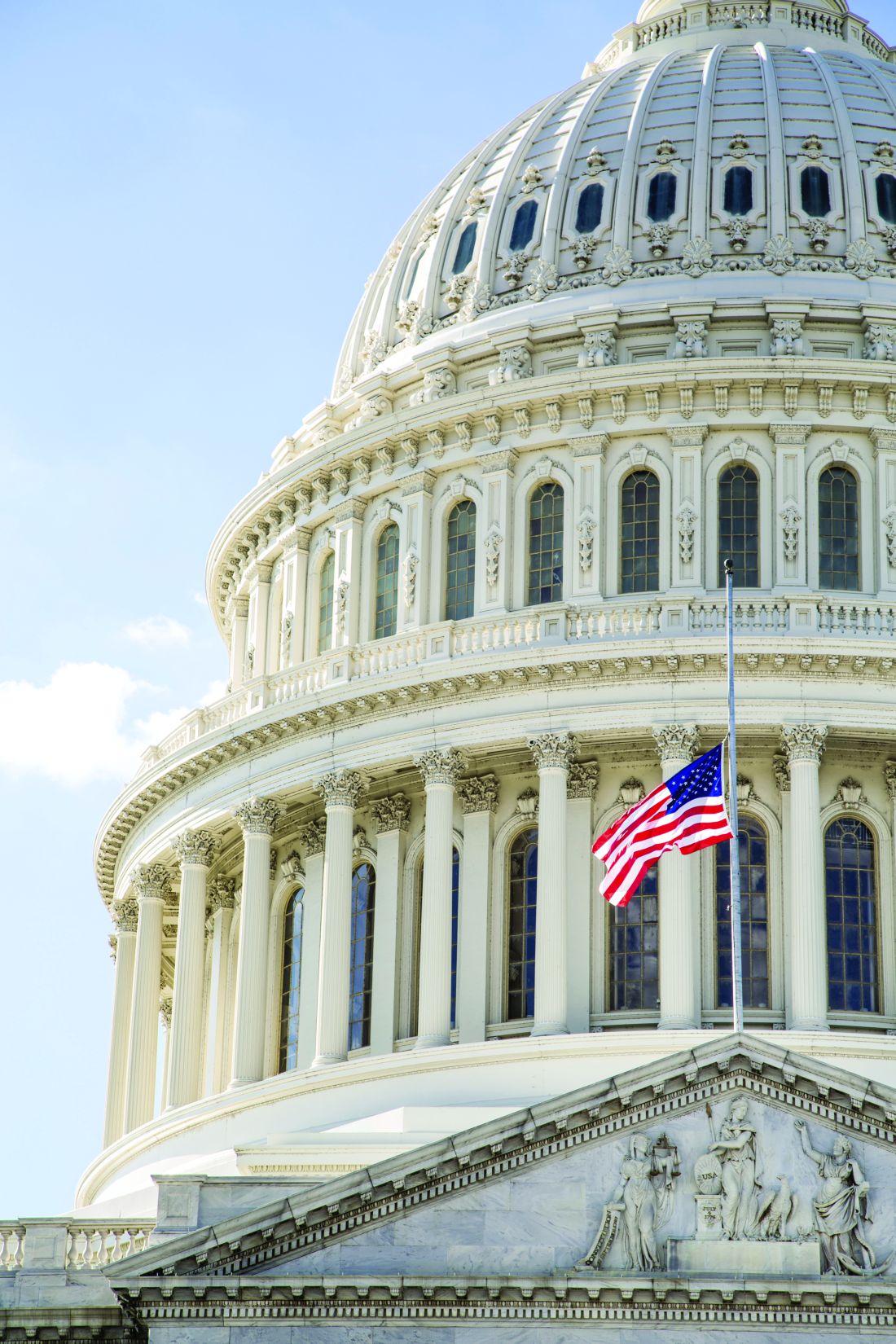
In 2016, SVS members and staff advocated for vascular surgery issues at more than 40 fundraising events. A total of 91 percent of candidates who received SVS PAC contributions in 2015-16 were elected or re-elected to Congress.
SVS members who are U.S. citizens or hold green cards can contribute to SVS PAC at vascular.org/pac-donation.
In the legislative arena, a major success after 10 years of advocacy was the repeal of the Sustainable Growth Rate formula, part of the Medicare Access and CHIP Reauthorization Act (MACRA) of 2015. This law also reformed Medicare physician payment by creating two payment options that became effective this year.
The Washington staff was also a leader in a successful coalition effort to prevent the elimination of 10- and 90-day Global Surgical Packages, included in MACRA.
In the regulatory arena: Working with members of several SVS committees, Washington staff produces comments on Centers for Medicare and Medicaid Services (CMS) Proposed and Final Rules. Comments on several important issues last year helped result in significant positive changes for vascular surgeons, particularly in the MACRA Final Rules.
Washington staff also coordinated SVS participation in three Medicare Evidence Development and Coverage Advisory Committee meetings in 2012, 2015 and 2016. SVS members were chosen to present public comments on Management of Carotid Atherosclerosis, PAD and Chronic Venous Disease.
Staff also reviews the Federal Register that publishes Proposed and Final Rules, signs onto comments with other physician groups, asks Congressional members to contact administrative agencies on issues and meets with agency officials.
The SVS Government Relations office on Capitol Hill helps members and their patients through not only its legislative and regulatory work but also oversight of the SVS Political Action Committee (PAC).
The SVS PAC is an independent entity established in 2002 to raise funds and make contributions to Congressional candidates, with the PAC targeting members of Congress and non-incumbent candidates to advocate for important vascular surgery issues.
This year, SVS staff has already attended fundraisers with influential members of Congress, including House Speaker Paul Ryan (R-WI), to discuss such issues as possible Medicare cuts and Affordable Care Act changes.
In 2016, SVS members and staff advocated for vascular surgery issues at more than 40 fundraising events. A total of 91 percent of candidates who received SVS PAC contributions in 2015-16 were elected or re-elected to Congress.
SVS members who are U.S. citizens or hold green cards can contribute to SVS PAC at vascular.org/pac-donation.
In the legislative arena, a major success after 10 years of advocacy was the repeal of the Sustainable Growth Rate formula, part of the Medicare Access and CHIP Reauthorization Act (MACRA) of 2015. This law also reformed Medicare physician payment by creating two payment options that became effective this year.
The Washington staff was also a leader in a successful coalition effort to prevent the elimination of 10- and 90-day Global Surgical Packages, included in MACRA.
In the regulatory arena: Working with members of several SVS committees, Washington staff produces comments on Centers for Medicare and Medicaid Services (CMS) Proposed and Final Rules. Comments on several important issues last year helped result in significant positive changes for vascular surgeons, particularly in the MACRA Final Rules.
Washington staff also coordinated SVS participation in three Medicare Evidence Development and Coverage Advisory Committee meetings in 2012, 2015 and 2016. SVS members were chosen to present public comments on Management of Carotid Atherosclerosis, PAD and Chronic Venous Disease.
Staff also reviews the Federal Register that publishes Proposed and Final Rules, signs onto comments with other physician groups, asks Congressional members to contact administrative agencies on issues and meets with agency officials.
The SVS Government Relations office on Capitol Hill helps members and their patients through not only its legislative and regulatory work but also oversight of the SVS Political Action Committee (PAC).
The SVS PAC is an independent entity established in 2002 to raise funds and make contributions to Congressional candidates, with the PAC targeting members of Congress and non-incumbent candidates to advocate for important vascular surgery issues.
This year, SVS staff has already attended fundraisers with influential members of Congress, including House Speaker Paul Ryan (R-WI), to discuss such issues as possible Medicare cuts and Affordable Care Act changes.
In 2016, SVS members and staff advocated for vascular surgery issues at more than 40 fundraising events. A total of 91 percent of candidates who received SVS PAC contributions in 2015-16 were elected or re-elected to Congress.
SVS members who are U.S. citizens or hold green cards can contribute to SVS PAC at vascular.org/pac-donation.
In the legislative arena, a major success after 10 years of advocacy was the repeal of the Sustainable Growth Rate formula, part of the Medicare Access and CHIP Reauthorization Act (MACRA) of 2015. This law also reformed Medicare physician payment by creating two payment options that became effective this year.
The Washington staff was also a leader in a successful coalition effort to prevent the elimination of 10- and 90-day Global Surgical Packages, included in MACRA.
In the regulatory arena: Working with members of several SVS committees, Washington staff produces comments on Centers for Medicare and Medicaid Services (CMS) Proposed and Final Rules. Comments on several important issues last year helped result in significant positive changes for vascular surgeons, particularly in the MACRA Final Rules.
Washington staff also coordinated SVS participation in three Medicare Evidence Development and Coverage Advisory Committee meetings in 2012, 2015 and 2016. SVS members were chosen to present public comments on Management of Carotid Atherosclerosis, PAD and Chronic Venous Disease.
Staff also reviews the Federal Register that publishes Proposed and Final Rules, signs onto comments with other physician groups, asks Congressional members to contact administrative agencies on issues and meets with agency officials.
Education: Register Now for the 2017 VAM
The topic is vascular care. The subjects to be covered are nearly too numerous to count. And the clock is ticking for signing up.
Registration and housing will open in early March for the 2017 Vascular Annual Meeting, set for May 31 to June 3 in San Diego, Calif., with plenaries and exhibits from June 1 to 3. This premier meeting of vascular specialists will be held at the San Diego Convention Center. The headquarters hotel, the Marriott Marquis San Diego Marina Hotel, adjoins the center.
There is plenty going on.
Free postgraduate courses for SVS members: Once again, all SVS member-registrants receive free admittance to the six Wednesday postgraduate courses, a savings of $300. Non-members plus anyone registering only for the postgraduate courses must pay the appropriate registration fee. Self-assessment credit is available to all physician attendees.
SVS/STS Summit: New this year, and a highlight for Saturday, is the SVS/STS Summit: Advances and Controversies in the Management of Complex Thoracoabdominal Aneurysmal Diseases and Type B Aortic Dissection. This program will take place from 1 to 5 p.m. and is co-sponsored by the Society of Thoracic Surgeons. An additional fee is required. 
Revamped workshops: Wednesday’s workshops will feature a new format, with four separate two-hour timeslots, and the opportunity to rotate between sessions in each time period. Each workshop will be offered three times during the two-hour time slot. Cost is $100 for each timeslot and registration is required. Attendance is limited to 15 registrants per workshop; register early for the best selection.
Expanded international programming: A new session has been added to Wednesday’s International program: “International Consortium of Vascular Registries: Quality Improvement in Vascular Surgery Goes Global.” This presentation will be held from 8 to 10 a.m. and kicks off a full day of international events.
VQI @ VAM – VQI’s Second Annual Meeting: Vascular Quality Initiative’s second Annual Meeting has expanded to 1 ½ days, beginning Tuesday afternoon, May 30, and continuing all day Wednesday. Also new this year are a poster session and networking reception. Registration and a separate $200 fee are required.
Exhibit Hall: Learn first-hand from our industry partners about the latest devices, products and services. The Exhibit Hall also hosts the Opening Reception, box lunches and coffee breaks Thursday through Saturday. Industry participation in the exhibits underwrites a signification portion of VAM – allowing us to keep registration fees at lower rates than other industry meetings – so please support our industry partners.
And more: VAM also will include: breakfast sessions; a discount for the On-Demand Library; texting of questions; Interactive Poster Session, programming for fellows, residents and students; the Physician Vascular Interpretation Examination Review course; SVS Member Business Luncheon, with the election of officers plus the presentation of SVS and SVS Foundation awards; Vascular Live sessions highlighting the latest products and developments; plus socializing, with alumni receptions and other events.
For information and to register, visit vsweb.org/VAM17.
The topic is vascular care. The subjects to be covered are nearly too numerous to count. And the clock is ticking for signing up.
Registration and housing will open in early March for the 2017 Vascular Annual Meeting, set for May 31 to June 3 in San Diego, Calif., with plenaries and exhibits from June 1 to 3. This premier meeting of vascular specialists will be held at the San Diego Convention Center. The headquarters hotel, the Marriott Marquis San Diego Marina Hotel, adjoins the center.
There is plenty going on.
Free postgraduate courses for SVS members: Once again, all SVS member-registrants receive free admittance to the six Wednesday postgraduate courses, a savings of $300. Non-members plus anyone registering only for the postgraduate courses must pay the appropriate registration fee. Self-assessment credit is available to all physician attendees.
SVS/STS Summit: New this year, and a highlight for Saturday, is the SVS/STS Summit: Advances and Controversies in the Management of Complex Thoracoabdominal Aneurysmal Diseases and Type B Aortic Dissection. This program will take place from 1 to 5 p.m. and is co-sponsored by the Society of Thoracic Surgeons. An additional fee is required.
Revamped workshops: Wednesday’s workshops will feature a new format, with four separate two-hour timeslots, and the opportunity to rotate between sessions in each time period. Each workshop will be offered three times during the two-hour time slot. Cost is $100 for each timeslot and registration is required. Attendance is limited to 15 registrants per workshop; register early for the best selection.
Expanded international programming: A new session has been added to Wednesday’s International program: “International Consortium of Vascular Registries: Quality Improvement in Vascular Surgery Goes Global.” This presentation will be held from 8 to 10 a.m. and kicks off a full day of international events.
VQI @ VAM – VQI’s Second Annual Meeting: Vascular Quality Initiative’s second Annual Meeting has expanded to 1 ½ days, beginning Tuesday afternoon, May 30, and continuing all day Wednesday. Also new this year are a poster session and networking reception. Registration and a separate $200 fee are required.
Exhibit Hall: Learn first-hand from our industry partners about the latest devices, products and services. The Exhibit Hall also hosts the Opening Reception, box lunches and coffee breaks Thursday through Saturday. Industry participation in the exhibits underwrites a signification portion of VAM – allowing us to keep registration fees at lower rates than other industry meetings – so please support our industry partners.
And more: VAM also will include: breakfast sessions; a discount for the On-Demand Library; texting of questions; Interactive Poster Session, programming for fellows, residents and students; the Physician Vascular Interpretation Examination Review course; SVS Member Business Luncheon, with the election of officers plus the presentation of SVS and SVS Foundation awards; Vascular Live sessions highlighting the latest products and developments; plus socializing, with alumni receptions and other events.
For information and to register, visit vsweb.org/VAM17.
The topic is vascular care. The subjects to be covered are nearly too numerous to count. And the clock is ticking for signing up.
Registration and housing will open in early March for the 2017 Vascular Annual Meeting, set for May 31 to June 3 in San Diego, Calif., with plenaries and exhibits from June 1 to 3. This premier meeting of vascular specialists will be held at the San Diego Convention Center. The headquarters hotel, the Marriott Marquis San Diego Marina Hotel, adjoins the center.
There is plenty going on.
Free postgraduate courses for SVS members: Once again, all SVS member-registrants receive free admittance to the six Wednesday postgraduate courses, a savings of $300. Non-members plus anyone registering only for the postgraduate courses must pay the appropriate registration fee. Self-assessment credit is available to all physician attendees.
SVS/STS Summit: New this year, and a highlight for Saturday, is the SVS/STS Summit: Advances and Controversies in the Management of Complex Thoracoabdominal Aneurysmal Diseases and Type B Aortic Dissection. This program will take place from 1 to 5 p.m. and is co-sponsored by the Society of Thoracic Surgeons. An additional fee is required.
Revamped workshops: Wednesday’s workshops will feature a new format, with four separate two-hour timeslots, and the opportunity to rotate between sessions in each time period. Each workshop will be offered three times during the two-hour time slot. Cost is $100 for each timeslot and registration is required. Attendance is limited to 15 registrants per workshop; register early for the best selection.
Expanded international programming: A new session has been added to Wednesday’s International program: “International Consortium of Vascular Registries: Quality Improvement in Vascular Surgery Goes Global.” This presentation will be held from 8 to 10 a.m. and kicks off a full day of international events.
VQI @ VAM – VQI’s Second Annual Meeting: Vascular Quality Initiative’s second Annual Meeting has expanded to 1 ½ days, beginning Tuesday afternoon, May 30, and continuing all day Wednesday. Also new this year are a poster session and networking reception. Registration and a separate $200 fee are required.
Exhibit Hall: Learn first-hand from our industry partners about the latest devices, products and services. The Exhibit Hall also hosts the Opening Reception, box lunches and coffee breaks Thursday through Saturday. Industry participation in the exhibits underwrites a signification portion of VAM – allowing us to keep registration fees at lower rates than other industry meetings – so please support our industry partners.
And more: VAM also will include: breakfast sessions; a discount for the On-Demand Library; texting of questions; Interactive Poster Session, programming for fellows, residents and students; the Physician Vascular Interpretation Examination Review course; SVS Member Business Luncheon, with the election of officers plus the presentation of SVS and SVS Foundation awards; Vascular Live sessions highlighting the latest products and developments; plus socializing, with alumni receptions and other events.
For information and to register, visit vsweb.org/VAM17.
News from JVS: Western Vascular Society Adopts Transfer Guidelines
Because of challenges involved in transferring patients with ruptured abdominal aortic aneurysms from one facility to another, the Western Vascular Society has adopted a set of 15 guidelines on how to make that decision and help standardize care.
Read about the guidelines plus the selection and development process behind them in the March issue of the Journal of Vascular Surgery.
Some patients with a ruptured AAA initially come to a facility that is “ill-equipped to provide care,” the Journal authors wrote. And in the western United States, long travel distances and times provide challenges and barriers to getting the prompt, appropriate care the patient needs, they said.
These guidelines are widely applicable and are particularly important in “areas with significant geographic distance between the sending and receiving institutions,” authors said.
Because of challenges involved in transferring patients with ruptured abdominal aortic aneurysms from one facility to another, the Western Vascular Society has adopted a set of 15 guidelines on how to make that decision and help standardize care.
Read about the guidelines plus the selection and development process behind them in the March issue of the Journal of Vascular Surgery.
Some patients with a ruptured AAA initially come to a facility that is “ill-equipped to provide care,” the Journal authors wrote. And in the western United States, long travel distances and times provide challenges and barriers to getting the prompt, appropriate care the patient needs, they said.
These guidelines are widely applicable and are particularly important in “areas with significant geographic distance between the sending and receiving institutions,” authors said.
Because of challenges involved in transferring patients with ruptured abdominal aortic aneurysms from one facility to another, the Western Vascular Society has adopted a set of 15 guidelines on how to make that decision and help standardize care.
Read about the guidelines plus the selection and development process behind them in the March issue of the Journal of Vascular Surgery.
Some patients with a ruptured AAA initially come to a facility that is “ill-equipped to provide care,” the Journal authors wrote. And in the western United States, long travel distances and times provide challenges and barriers to getting the prompt, appropriate care the patient needs, they said.
These guidelines are widely applicable and are particularly important in “areas with significant geographic distance between the sending and receiving institutions,” authors said.