User login
Single-Incision Laparoscopic Colectomy Offers Benefits Beyond Cosmesis
CHICAGO – Single-incision laparoscopy is a safe approach for right colectomy and reduces both length of stay and early postoperative pain, compared with established laparoscopic techniques, according to Dr. Harry T. Papaconstantinou.

"I had one patient ask if he could do sit-ups the day after surgery," the physician said. "These patients were actually asking me to go home."
Although single-incision laparoscopy (SIL) is gaining momentum as an advance in laparoscopic colectomy, direct comparisons of outcomes between SIL and established techniques are lacking.
Dr. Papaconstantinou and his colleagues at Scott & White Memorial Hospital in Temple, Tex., compared their first 29 SIL right colectomy cases to an equivalent number of standard laparoscopic (LAP) and hand-assisted laparoscopic (HAL) cases matched for age, sex, body mass index (BMI), American Society of Anesthesiologists score, and pathology.
Operating time was similar for SIL, LAP, and HAL (128.8 min. vs. 128.3 min. vs. 116.2 min., respectively), as was estimated blood loss (60 mL, 90 mL, and 71 mL), Dr. Papaconstantinou reported at the annual meeting of the Western Surgical Association.
Although the mean incision length was similar for the SIL and LAP groups (4.5 cm and 5.1 cm), both had significantly shorter incisions than the HAL patients at 7.2 cm (P less than .001).
"Our operating times are a little longer and incision length larger, but I don’t think it should dissuade an experienced laparoscopist from doing a colectomy single incision," he said.
One SIL patient (3.4%) was converted to the HAL technique, and four conversions occurred in both the LAP group (two to HAL and two to open surgery) and HAL group (four to open surgery).
The median length of stay was 1 day shorter at 3 days in the SIL group, compared with 4 days for both the LAP and HAL groups (P less than .05), said Dr. Papaconstantinou, chief of colon and rectal surgery at Scott & White Memorial Hospital.
Maximum pain scores on a 10-point visual analog scale were significantly higher in the LAP and HAL groups than in the SIL group on postoperative day 1 (6.0 vs. 6.0 vs. 4.7, respectively) and on post-op day 2 (5.1 vs. 5.0 vs. 3.8); however, pain at the time of discharge was similar among the LAP, HAL, and SIL groups (1.6 vs. 1.4 vs. 1.0).
Four SIL patients were readmitted, compared with two in the LAP group and three in the HAL group. The reasons for SIL readmissions included one anastomotic leak, one presumed ileus that resolved after a bowel movement, and two cases of nonocclusive portal vein thrombus that were treated with anticoagulation. These patients had other risk factors for venous thrombosis including a BMI greater than 30 kg/m2 and visceral malignancy. No patients in any of the groups died.
Dr. Papaconstantinou acknowledged having initial concerns about impaired visualization and triangulation during the technically demanding surgery, but said that SIL is safe and feasible, even in obese patients. He said he routinely extends the incision to reduce traction on the mesenteric vessels in larger patients, and has found that curved instruments actually hinder, rather than facilitate, the operation.
"One of the things that is critical is a flexible-tip 5-mm camera because it allows you to move the camera driver away from the surgeon’s hands," he said. "Then you can actually come in at an angle, so you get a side view rather than an on-axis view [of the operative field]."
Using instruments of variable length (standard and bariatric length), and maintaining the instrument handles in a different orientation and plane, also avoids collision.
Invited discussant Dr. Alessandro Fichera, with the University of Chicago Medical Center, said, "There is no doubt in my mind that single-incision laparoscopy is here to stay and that it provides advantages that go way beyond cosmesis, including decreased postoperative pain, narcotic use, and length of stay."
He said that the retrospective nature of the study may introduce a selection bias, and asked who the authors would recommend as candidates for SIL.
"I’ve done all comers, including those with a BMI greater than 40 [kg/m2]," said Dr. Papaconstantinou. Patients in the study had an average age of about 60 years, 55% were women, the average BMI was about 30 kg/m2, and one-third had a history of previous abdominal surgery. Cases included 15 with adenocarcinomas, 12 with polyps, and 2 with Crohn’s disease.
Dr. Papaconstantinou reported receiving honoraria from Covidien for speaking and teaching activities.
CHICAGO – Single-incision laparoscopy is a safe approach for right colectomy and reduces both length of stay and early postoperative pain, compared with established laparoscopic techniques, according to Dr. Harry T. Papaconstantinou.
"I had one patient ask if he could do sit-ups the day after surgery," the physician said. "These patients were actually asking me to go home."
Although single-incision laparoscopy (SIL) is gaining momentum as an advance in laparoscopic colectomy, direct comparisons of outcomes between SIL and established techniques are lacking.
Dr. Papaconstantinou and his colleagues at Scott & White Memorial Hospital in Temple, Tex., compared their first 29 SIL right colectomy cases to an equivalent number of standard laparoscopic (LAP) and hand-assisted laparoscopic (HAL) cases matched for age, sex, body mass index (BMI), American Society of Anesthesiologists score, and pathology.
Operating time was similar for SIL, LAP, and HAL (128.8 min. vs. 128.3 min. vs. 116.2 min., respectively), as was estimated blood loss (60 mL, 90 mL, and 71 mL), Dr. Papaconstantinou reported at the annual meeting of the Western Surgical Association.
Although the mean incision length was similar for the SIL and LAP groups (4.5 cm and 5.1 cm), both had significantly shorter incisions than the HAL patients at 7.2 cm (P less than .001).
"Our operating times are a little longer and incision length larger, but I don’t think it should dissuade an experienced laparoscopist from doing a colectomy single incision," he said.
One SIL patient (3.4%) was converted to the HAL technique, and four conversions occurred in both the LAP group (two to HAL and two to open surgery) and HAL group (four to open surgery).
The median length of stay was 1 day shorter at 3 days in the SIL group, compared with 4 days for both the LAP and HAL groups (P less than .05), said Dr. Papaconstantinou, chief of colon and rectal surgery at Scott & White Memorial Hospital.
Maximum pain scores on a 10-point visual analog scale were significantly higher in the LAP and HAL groups than in the SIL group on postoperative day 1 (6.0 vs. 6.0 vs. 4.7, respectively) and on post-op day 2 (5.1 vs. 5.0 vs. 3.8); however, pain at the time of discharge was similar among the LAP, HAL, and SIL groups (1.6 vs. 1.4 vs. 1.0).
Four SIL patients were readmitted, compared with two in the LAP group and three in the HAL group. The reasons for SIL readmissions included one anastomotic leak, one presumed ileus that resolved after a bowel movement, and two cases of nonocclusive portal vein thrombus that were treated with anticoagulation. These patients had other risk factors for venous thrombosis including a BMI greater than 30 kg/m2 and visceral malignancy. No patients in any of the groups died.
Dr. Papaconstantinou acknowledged having initial concerns about impaired visualization and triangulation during the technically demanding surgery, but said that SIL is safe and feasible, even in obese patients. He said he routinely extends the incision to reduce traction on the mesenteric vessels in larger patients, and has found that curved instruments actually hinder, rather than facilitate, the operation.
"One of the things that is critical is a flexible-tip 5-mm camera because it allows you to move the camera driver away from the surgeon’s hands," he said. "Then you can actually come in at an angle, so you get a side view rather than an on-axis view [of the operative field]."
Using instruments of variable length (standard and bariatric length), and maintaining the instrument handles in a different orientation and plane, also avoids collision.
Invited discussant Dr. Alessandro Fichera, with the University of Chicago Medical Center, said, "There is no doubt in my mind that single-incision laparoscopy is here to stay and that it provides advantages that go way beyond cosmesis, including decreased postoperative pain, narcotic use, and length of stay."
He said that the retrospective nature of the study may introduce a selection bias, and asked who the authors would recommend as candidates for SIL.
"I’ve done all comers, including those with a BMI greater than 40 [kg/m2]," said Dr. Papaconstantinou. Patients in the study had an average age of about 60 years, 55% were women, the average BMI was about 30 kg/m2, and one-third had a history of previous abdominal surgery. Cases included 15 with adenocarcinomas, 12 with polyps, and 2 with Crohn’s disease.
Dr. Papaconstantinou reported receiving honoraria from Covidien for speaking and teaching activities.
CHICAGO – Single-incision laparoscopy is a safe approach for right colectomy and reduces both length of stay and early postoperative pain, compared with established laparoscopic techniques, according to Dr. Harry T. Papaconstantinou.
"I had one patient ask if he could do sit-ups the day after surgery," the physician said. "These patients were actually asking me to go home."
Although single-incision laparoscopy (SIL) is gaining momentum as an advance in laparoscopic colectomy, direct comparisons of outcomes between SIL and established techniques are lacking.
Dr. Papaconstantinou and his colleagues at Scott & White Memorial Hospital in Temple, Tex., compared their first 29 SIL right colectomy cases to an equivalent number of standard laparoscopic (LAP) and hand-assisted laparoscopic (HAL) cases matched for age, sex, body mass index (BMI), American Society of Anesthesiologists score, and pathology.
Operating time was similar for SIL, LAP, and HAL (128.8 min. vs. 128.3 min. vs. 116.2 min., respectively), as was estimated blood loss (60 mL, 90 mL, and 71 mL), Dr. Papaconstantinou reported at the annual meeting of the Western Surgical Association.
Although the mean incision length was similar for the SIL and LAP groups (4.5 cm and 5.1 cm), both had significantly shorter incisions than the HAL patients at 7.2 cm (P less than .001).
"Our operating times are a little longer and incision length larger, but I don’t think it should dissuade an experienced laparoscopist from doing a colectomy single incision," he said.
One SIL patient (3.4%) was converted to the HAL technique, and four conversions occurred in both the LAP group (two to HAL and two to open surgery) and HAL group (four to open surgery).
The median length of stay was 1 day shorter at 3 days in the SIL group, compared with 4 days for both the LAP and HAL groups (P less than .05), said Dr. Papaconstantinou, chief of colon and rectal surgery at Scott & White Memorial Hospital.
Maximum pain scores on a 10-point visual analog scale were significantly higher in the LAP and HAL groups than in the SIL group on postoperative day 1 (6.0 vs. 6.0 vs. 4.7, respectively) and on post-op day 2 (5.1 vs. 5.0 vs. 3.8); however, pain at the time of discharge was similar among the LAP, HAL, and SIL groups (1.6 vs. 1.4 vs. 1.0).
Four SIL patients were readmitted, compared with two in the LAP group and three in the HAL group. The reasons for SIL readmissions included one anastomotic leak, one presumed ileus that resolved after a bowel movement, and two cases of nonocclusive portal vein thrombus that were treated with anticoagulation. These patients had other risk factors for venous thrombosis including a BMI greater than 30 kg/m2 and visceral malignancy. No patients in any of the groups died.
Dr. Papaconstantinou acknowledged having initial concerns about impaired visualization and triangulation during the technically demanding surgery, but said that SIL is safe and feasible, even in obese patients. He said he routinely extends the incision to reduce traction on the mesenteric vessels in larger patients, and has found that curved instruments actually hinder, rather than facilitate, the operation.
"One of the things that is critical is a flexible-tip 5-mm camera because it allows you to move the camera driver away from the surgeon’s hands," he said. "Then you can actually come in at an angle, so you get a side view rather than an on-axis view [of the operative field]."
Using instruments of variable length (standard and bariatric length), and maintaining the instrument handles in a different orientation and plane, also avoids collision.
Invited discussant Dr. Alessandro Fichera, with the University of Chicago Medical Center, said, "There is no doubt in my mind that single-incision laparoscopy is here to stay and that it provides advantages that go way beyond cosmesis, including decreased postoperative pain, narcotic use, and length of stay."
He said that the retrospective nature of the study may introduce a selection bias, and asked who the authors would recommend as candidates for SIL.
"I’ve done all comers, including those with a BMI greater than 40 [kg/m2]," said Dr. Papaconstantinou. Patients in the study had an average age of about 60 years, 55% were women, the average BMI was about 30 kg/m2, and one-third had a history of previous abdominal surgery. Cases included 15 with adenocarcinomas, 12 with polyps, and 2 with Crohn’s disease.
Dr. Papaconstantinou reported receiving honoraria from Covidien for speaking and teaching activities.
FROM THE ANNUAL MEETING OF THE WESTERN SURGICAL ASSOCIATION
Operative Time Plays a Big Role in Hysterectomy Cost
LAS VEGAS – Vaginal hysterectomy was the least costly approach in one tertiary hospital’s experience with over a thousand cases.
Operative time was the greatest contributor to overall cost among 1,067 consecutive hysterectomy procedures performed in 2009 at Brigham and Women’s Hospital, an urban academic tertiary care center. The analysis examined operative and overall costs for abdominal, laparoscopic, vaginal, and robotic procedures, including about 150 performed for ovarian cancer, said Dr. Kelly N. Wright, a fellow at the hospital and Harvard Medical School, both in Boston.
Of the 1,067 total hysterectomies, 36% were abdominal, 13% vaginal, 45% laparoscopic, and 6% robotic. Operating time was the longest for robotic (267 minutes) and shortest for vaginal hysterectomy (155 minutes). Intraoperative complications were most common for abdominal (8.8%) and least common with robotic hysterectomy (just 0.4%). Complication rates did not vary significantly among the three minimally invasive methods, Dr. Wright said at the annual meeting of the AAGL.
Operative time was strongly correlated with operative cost, with robotic hysterectomy being the most expensive ($46,065) and vaginal the least ($26,619). In all, operative time accounted for 96% of the variation in operative costs, and charges based on operative time were up to 190-fold greater than were operative charges from equipment costs.
Other patient characteristics that significantly influenced operative time were body mass index, adhesions, and cancer indications, whereas uterine weight and age did not influence operative time.
A "cost minimization analysis" was done using cost to society, which included inpatient stay, lost wages, and time to recovery, in addition to the operative costs. This time, abdominal hysterectomy was the most costly ($58,959) because of the significantly greater length of stay (3.6 days vs. 1.2-1.3 days for the other methods). Vaginal hysterectomy was again the least expensive at $34,933.
But the cost of laparoscopic hysterectomy approached that of vaginal when it was performed in less than 140 minutes, and laparoscopic hysterectomy always was less costly than either abdominal or robotic, Dr. Wright pointed out.
Conversion of all the abdominal hysterectomies done at Brigham and Women’s Hospital in 2009 to laparoscopic would have saved over $7.8 billion, and conversion to robotic, over $1.9 billion. On the other hand, if all the laparoscopic procedures had been done robotically, $934 million would have been lost.
"There is room for savings in the health care system when we appropriately select the correct method of hysterectomy," she concluded.
Dr. Wright said that she had no financial disclosures.
LAS VEGAS – Vaginal hysterectomy was the least costly approach in one tertiary hospital’s experience with over a thousand cases.
Operative time was the greatest contributor to overall cost among 1,067 consecutive hysterectomy procedures performed in 2009 at Brigham and Women’s Hospital, an urban academic tertiary care center. The analysis examined operative and overall costs for abdominal, laparoscopic, vaginal, and robotic procedures, including about 150 performed for ovarian cancer, said Dr. Kelly N. Wright, a fellow at the hospital and Harvard Medical School, both in Boston.
Of the 1,067 total hysterectomies, 36% were abdominal, 13% vaginal, 45% laparoscopic, and 6% robotic. Operating time was the longest for robotic (267 minutes) and shortest for vaginal hysterectomy (155 minutes). Intraoperative complications were most common for abdominal (8.8%) and least common with robotic hysterectomy (just 0.4%). Complication rates did not vary significantly among the three minimally invasive methods, Dr. Wright said at the annual meeting of the AAGL.
Operative time was strongly correlated with operative cost, with robotic hysterectomy being the most expensive ($46,065) and vaginal the least ($26,619). In all, operative time accounted for 96% of the variation in operative costs, and charges based on operative time were up to 190-fold greater than were operative charges from equipment costs.
Other patient characteristics that significantly influenced operative time were body mass index, adhesions, and cancer indications, whereas uterine weight and age did not influence operative time.
A "cost minimization analysis" was done using cost to society, which included inpatient stay, lost wages, and time to recovery, in addition to the operative costs. This time, abdominal hysterectomy was the most costly ($58,959) because of the significantly greater length of stay (3.6 days vs. 1.2-1.3 days for the other methods). Vaginal hysterectomy was again the least expensive at $34,933.
But the cost of laparoscopic hysterectomy approached that of vaginal when it was performed in less than 140 minutes, and laparoscopic hysterectomy always was less costly than either abdominal or robotic, Dr. Wright pointed out.
Conversion of all the abdominal hysterectomies done at Brigham and Women’s Hospital in 2009 to laparoscopic would have saved over $7.8 billion, and conversion to robotic, over $1.9 billion. On the other hand, if all the laparoscopic procedures had been done robotically, $934 million would have been lost.
"There is room for savings in the health care system when we appropriately select the correct method of hysterectomy," she concluded.
Dr. Wright said that she had no financial disclosures.
LAS VEGAS – Vaginal hysterectomy was the least costly approach in one tertiary hospital’s experience with over a thousand cases.
Operative time was the greatest contributor to overall cost among 1,067 consecutive hysterectomy procedures performed in 2009 at Brigham and Women’s Hospital, an urban academic tertiary care center. The analysis examined operative and overall costs for abdominal, laparoscopic, vaginal, and robotic procedures, including about 150 performed for ovarian cancer, said Dr. Kelly N. Wright, a fellow at the hospital and Harvard Medical School, both in Boston.
Of the 1,067 total hysterectomies, 36% were abdominal, 13% vaginal, 45% laparoscopic, and 6% robotic. Operating time was the longest for robotic (267 minutes) and shortest for vaginal hysterectomy (155 minutes). Intraoperative complications were most common for abdominal (8.8%) and least common with robotic hysterectomy (just 0.4%). Complication rates did not vary significantly among the three minimally invasive methods, Dr. Wright said at the annual meeting of the AAGL.
Operative time was strongly correlated with operative cost, with robotic hysterectomy being the most expensive ($46,065) and vaginal the least ($26,619). In all, operative time accounted for 96% of the variation in operative costs, and charges based on operative time were up to 190-fold greater than were operative charges from equipment costs.
Other patient characteristics that significantly influenced operative time were body mass index, adhesions, and cancer indications, whereas uterine weight and age did not influence operative time.
A "cost minimization analysis" was done using cost to society, which included inpatient stay, lost wages, and time to recovery, in addition to the operative costs. This time, abdominal hysterectomy was the most costly ($58,959) because of the significantly greater length of stay (3.6 days vs. 1.2-1.3 days for the other methods). Vaginal hysterectomy was again the least expensive at $34,933.
But the cost of laparoscopic hysterectomy approached that of vaginal when it was performed in less than 140 minutes, and laparoscopic hysterectomy always was less costly than either abdominal or robotic, Dr. Wright pointed out.
Conversion of all the abdominal hysterectomies done at Brigham and Women’s Hospital in 2009 to laparoscopic would have saved over $7.8 billion, and conversion to robotic, over $1.9 billion. On the other hand, if all the laparoscopic procedures had been done robotically, $934 million would have been lost.
"There is room for savings in the health care system when we appropriately select the correct method of hysterectomy," she concluded.
Dr. Wright said that she had no financial disclosures.
Robotic Hysterectomy Results Comparable to Other Approaches
LAS VEGAS – Robotic-assisted total laparoscopic hysterectomy produced comparable outcomes to other minimally invasive methods of hysterectomy without increasing the risk for conversion or complications in a retrospective chart analysis of nearly 300 women.

The data suggested that robotic hysterectomy (RH) may even be associated with a slightly lower risk for blood loss and minor complications, and may be particularly useful in patients with large uterine size or a high body mass index. "Thus, the robot provides an additional tool, allowing a minimally invasive approach to hysterectomies in cases when a surgeon may be tempted to resort to an abdominal approach," said Dr. Mona E. Orady of the Henry Ford Health System, Detroit.
The study population included 297 women who underwent any form of minimally invasive hysterectomy between January 2006 and May 2010 at one of two Henry Ford campuses. Emergent and supracervical hysterectomies were excluded, as were hysterectomies performed for malignancy or concomitantly with urogynecologic procedures.
In all, 135 patients underwent RH procedures and 162 had nonrobotic minimally invasive procedures, including total laparoscopic hysterectomy (TLH), vaginal hysterectomy (VH), or laparoscopic-assisted vaginal hysterectomy (LAVH). The two groups did not differ in age (mean, 45 years), and about two-thirds of each group were black. Body mass index was comparable in the two groups, with fewer than 25% of all patients being at or below normal weight.
However, patients in the robotic group did have significantly larger uteri (mean, 262 g), compared with 197 g for the nonrobotic group, Dr. Orady reported at the annual meeting of the AAGL.
Procedure duration was significantly increased with RH, by a median of 25 minutes longer than the other minimally invasive procedures combined. However, the difference in duration between RH and conventional TLH did not differ significantly (169 vs. 194 minutes). The main difference was in comparison with VH, which had a median of just 98.5 minutes.
Estimated blood loss was significantly less for RH (median, just 50 mL), compared with all of the nonrobotic hysterectomy procedures (150 mL for both TLH and VH; 250 mL for LAVH). This coincided with drops in hemoglobin, "thus confirming that the findings are real and not just perceived," she noted.
Overall length of stay was a median of 1 day for the robotic group and all other minimally invasive groups except LAVH, which had a median stay of 2 days.
Major complication rates (defined as any visceral injury or complication that caused increased hospital stay, readmission, or reoperation) were nearly the same between RH and the other minimally invasive procedures at 11.1% and 10.5%, respectively. However, there were significantly fewer minor complications with RH, compared with the other procedures (8.9% vs. 21.6%), and those consisted primarily of vaginal cuff granulation, cellulitis, or bleeding.
Interestingly, vaginal cuff issues are often attributed to robotic procedures in the literature, Dr. Orady commented.
All attempted robotic TLH procedures were completed, even among obese patients and those with very large uteri. In contrast, three conversions to abdominal procedures occurred with the other minimally invasive procedures: One was secondary to a hemorrhage in a patient with a 780-g uterus, another resulted from an inability to gain intraperitoneal access and visualization in a patient with a BMI of 53 kg/m2, and a third involved an inability to remove a 280-g uterus vaginally.
"The data suggest that the robotic approach may allow surgeons to overcome conversions associated with obesity or extremely large uteri, but further data are required," Dr. Orady concluded.
Dr. Orady stated that she had no financial disclosures.
LAS VEGAS – Robotic-assisted total laparoscopic hysterectomy produced comparable outcomes to other minimally invasive methods of hysterectomy without increasing the risk for conversion or complications in a retrospective chart analysis of nearly 300 women.
The data suggested that robotic hysterectomy (RH) may even be associated with a slightly lower risk for blood loss and minor complications, and may be particularly useful in patients with large uterine size or a high body mass index. "Thus, the robot provides an additional tool, allowing a minimally invasive approach to hysterectomies in cases when a surgeon may be tempted to resort to an abdominal approach," said Dr. Mona E. Orady of the Henry Ford Health System, Detroit.
The study population included 297 women who underwent any form of minimally invasive hysterectomy between January 2006 and May 2010 at one of two Henry Ford campuses. Emergent and supracervical hysterectomies were excluded, as were hysterectomies performed for malignancy or concomitantly with urogynecologic procedures.
In all, 135 patients underwent RH procedures and 162 had nonrobotic minimally invasive procedures, including total laparoscopic hysterectomy (TLH), vaginal hysterectomy (VH), or laparoscopic-assisted vaginal hysterectomy (LAVH). The two groups did not differ in age (mean, 45 years), and about two-thirds of each group were black. Body mass index was comparable in the two groups, with fewer than 25% of all patients being at or below normal weight.
However, patients in the robotic group did have significantly larger uteri (mean, 262 g), compared with 197 g for the nonrobotic group, Dr. Orady reported at the annual meeting of the AAGL.
Procedure duration was significantly increased with RH, by a median of 25 minutes longer than the other minimally invasive procedures combined. However, the difference in duration between RH and conventional TLH did not differ significantly (169 vs. 194 minutes). The main difference was in comparison with VH, which had a median of just 98.5 minutes.
Estimated blood loss was significantly less for RH (median, just 50 mL), compared with all of the nonrobotic hysterectomy procedures (150 mL for both TLH and VH; 250 mL for LAVH). This coincided with drops in hemoglobin, "thus confirming that the findings are real and not just perceived," she noted.
Overall length of stay was a median of 1 day for the robotic group and all other minimally invasive groups except LAVH, which had a median stay of 2 days.
Major complication rates (defined as any visceral injury or complication that caused increased hospital stay, readmission, or reoperation) were nearly the same between RH and the other minimally invasive procedures at 11.1% and 10.5%, respectively. However, there were significantly fewer minor complications with RH, compared with the other procedures (8.9% vs. 21.6%), and those consisted primarily of vaginal cuff granulation, cellulitis, or bleeding.
Interestingly, vaginal cuff issues are often attributed to robotic procedures in the literature, Dr. Orady commented.
All attempted robotic TLH procedures were completed, even among obese patients and those with very large uteri. In contrast, three conversions to abdominal procedures occurred with the other minimally invasive procedures: One was secondary to a hemorrhage in a patient with a 780-g uterus, another resulted from an inability to gain intraperitoneal access and visualization in a patient with a BMI of 53 kg/m2, and a third involved an inability to remove a 280-g uterus vaginally.
"The data suggest that the robotic approach may allow surgeons to overcome conversions associated with obesity or extremely large uteri, but further data are required," Dr. Orady concluded.
Dr. Orady stated that she had no financial disclosures.
LAS VEGAS – Robotic-assisted total laparoscopic hysterectomy produced comparable outcomes to other minimally invasive methods of hysterectomy without increasing the risk for conversion or complications in a retrospective chart analysis of nearly 300 women.
The data suggested that robotic hysterectomy (RH) may even be associated with a slightly lower risk for blood loss and minor complications, and may be particularly useful in patients with large uterine size or a high body mass index. "Thus, the robot provides an additional tool, allowing a minimally invasive approach to hysterectomies in cases when a surgeon may be tempted to resort to an abdominal approach," said Dr. Mona E. Orady of the Henry Ford Health System, Detroit.
The study population included 297 women who underwent any form of minimally invasive hysterectomy between January 2006 and May 2010 at one of two Henry Ford campuses. Emergent and supracervical hysterectomies were excluded, as were hysterectomies performed for malignancy or concomitantly with urogynecologic procedures.
In all, 135 patients underwent RH procedures and 162 had nonrobotic minimally invasive procedures, including total laparoscopic hysterectomy (TLH), vaginal hysterectomy (VH), or laparoscopic-assisted vaginal hysterectomy (LAVH). The two groups did not differ in age (mean, 45 years), and about two-thirds of each group were black. Body mass index was comparable in the two groups, with fewer than 25% of all patients being at or below normal weight.
However, patients in the robotic group did have significantly larger uteri (mean, 262 g), compared with 197 g for the nonrobotic group, Dr. Orady reported at the annual meeting of the AAGL.
Procedure duration was significantly increased with RH, by a median of 25 minutes longer than the other minimally invasive procedures combined. However, the difference in duration between RH and conventional TLH did not differ significantly (169 vs. 194 minutes). The main difference was in comparison with VH, which had a median of just 98.5 minutes.
Estimated blood loss was significantly less for RH (median, just 50 mL), compared with all of the nonrobotic hysterectomy procedures (150 mL for both TLH and VH; 250 mL for LAVH). This coincided with drops in hemoglobin, "thus confirming that the findings are real and not just perceived," she noted.
Overall length of stay was a median of 1 day for the robotic group and all other minimally invasive groups except LAVH, which had a median stay of 2 days.
Major complication rates (defined as any visceral injury or complication that caused increased hospital stay, readmission, or reoperation) were nearly the same between RH and the other minimally invasive procedures at 11.1% and 10.5%, respectively. However, there were significantly fewer minor complications with RH, compared with the other procedures (8.9% vs. 21.6%), and those consisted primarily of vaginal cuff granulation, cellulitis, or bleeding.
Interestingly, vaginal cuff issues are often attributed to robotic procedures in the literature, Dr. Orady commented.
All attempted robotic TLH procedures were completed, even among obese patients and those with very large uteri. In contrast, three conversions to abdominal procedures occurred with the other minimally invasive procedures: One was secondary to a hemorrhage in a patient with a 780-g uterus, another resulted from an inability to gain intraperitoneal access and visualization in a patient with a BMI of 53 kg/m2, and a third involved an inability to remove a 280-g uterus vaginally.
"The data suggest that the robotic approach may allow surgeons to overcome conversions associated with obesity or extremely large uteri, but further data are required," Dr. Orady concluded.
Dr. Orady stated that she had no financial disclosures.
Role of Perioperative Oxygen Unclear in Wound Infections
SAN DIEGO – The benefit of giving a high perioperative oxygen fraction during surgery to prevent wound infections is not clear cut, judging by conflicting data from several studies.
Surgical site infections occur in 2%-3% of surgical patients. "They’re serious – the average infected patient stays in the hospital longer than they would otherwise" and the risk of being admitted to the ICU or dying doubles if surgical sites become infected, said Dr. Daniel I. Sessler said at a meeting of the American Society of Anesthesiologists.
High tissue oxygenation reduces the risk of wound infection by improving the efficacy of neutrophils to kill bacteria, so surgical patients often receive extra inspired oxygen to boost tissue oxygen. However, different results were seen in four randomized, controlled studies comparing surgical patients given a high inspiratory oxygen fraction (80%) with those who received a more conventional, lower oxygen fraction (30%) during surgery and for 2 hours afterward, said Dr. Sessler, professor and chair of outcomes research at the Cleveland Clinic.
One study randomized 500 patients undergoing colorectal resection and found surgical wound infections in 5% of the 80% oxygen group, less than half the 11% infection rate in the 30% oxygen group (New Engl. J. Med. 2000;342:161-7).
A separate study of 165 surgical patients reported that the wound infection rate more than doubled in the 80% oxygen group, compared with the 30% oxygen group – 25% vs. 11%, respectively (JAMA 2004;291:79-87).
In a separate study of 291 patients undergoing colorectal surgery, the surgical wound infection rate was lower in the 80% oxygen group than in the 30% oxygen group – 15% vs. 24%, respectively (JAMA 2005;294:2035-42).
The differences between groups in those studies were statistically significant, but no significant difference in infection rates between groups was seen in the most recent study, the PROXI trial. Among 1,386 adult patients undergoing abdominal surgery (acute or elective laparotomy) wound infection rates were 19% in the 80% oxygen group and 20% in the 30% oxygen group (JAMA 2009;302:1543-50).
"There are differences among the trials" Dr. Sessler noted. In the PROXI trial, for example, the investigators gave very little fluid to patients, so patients may have been well oxygenated but not well perfused. Factors like this may help explain their conflicting results.
"But, basically, we don’t know why this difference exists, and clearly additional research is necessary," he added.
Improving postanesthesia outcomes such as wound infections is an important goal, especially since the risk of mortality is so rare, Dr. Sessler said. "Twenty-five years ago, when I was an anesthesiology resident, anesthetic mortality was about 1 in 10,000 people, making anesthesia more dangerous than surgery in most cases," he recalled. "Now, preventable anesthetic mortality is probably about 1 in 100,000 cases," thanks to improvements in equipment, drugs and training.
Dr. Sessler has had financial relationships with Arizant, Dynatherm, Aspect Medical System (Covidien), Hutchinson Technology, Merck Pharmaceuticals, Cardinal Health, King Systems, and Velomedix.
SAN DIEGO – The benefit of giving a high perioperative oxygen fraction during surgery to prevent wound infections is not clear cut, judging by conflicting data from several studies.
Surgical site infections occur in 2%-3% of surgical patients. "They’re serious – the average infected patient stays in the hospital longer than they would otherwise" and the risk of being admitted to the ICU or dying doubles if surgical sites become infected, said Dr. Daniel I. Sessler said at a meeting of the American Society of Anesthesiologists.
High tissue oxygenation reduces the risk of wound infection by improving the efficacy of neutrophils to kill bacteria, so surgical patients often receive extra inspired oxygen to boost tissue oxygen. However, different results were seen in four randomized, controlled studies comparing surgical patients given a high inspiratory oxygen fraction (80%) with those who received a more conventional, lower oxygen fraction (30%) during surgery and for 2 hours afterward, said Dr. Sessler, professor and chair of outcomes research at the Cleveland Clinic.
One study randomized 500 patients undergoing colorectal resection and found surgical wound infections in 5% of the 80% oxygen group, less than half the 11% infection rate in the 30% oxygen group (New Engl. J. Med. 2000;342:161-7).
A separate study of 165 surgical patients reported that the wound infection rate more than doubled in the 80% oxygen group, compared with the 30% oxygen group – 25% vs. 11%, respectively (JAMA 2004;291:79-87).
In a separate study of 291 patients undergoing colorectal surgery, the surgical wound infection rate was lower in the 80% oxygen group than in the 30% oxygen group – 15% vs. 24%, respectively (JAMA 2005;294:2035-42).
The differences between groups in those studies were statistically significant, but no significant difference in infection rates between groups was seen in the most recent study, the PROXI trial. Among 1,386 adult patients undergoing abdominal surgery (acute or elective laparotomy) wound infection rates were 19% in the 80% oxygen group and 20% in the 30% oxygen group (JAMA 2009;302:1543-50).
"There are differences among the trials" Dr. Sessler noted. In the PROXI trial, for example, the investigators gave very little fluid to patients, so patients may have been well oxygenated but not well perfused. Factors like this may help explain their conflicting results.
"But, basically, we don’t know why this difference exists, and clearly additional research is necessary," he added.
Improving postanesthesia outcomes such as wound infections is an important goal, especially since the risk of mortality is so rare, Dr. Sessler said. "Twenty-five years ago, when I was an anesthesiology resident, anesthetic mortality was about 1 in 10,000 people, making anesthesia more dangerous than surgery in most cases," he recalled. "Now, preventable anesthetic mortality is probably about 1 in 100,000 cases," thanks to improvements in equipment, drugs and training.
Dr. Sessler has had financial relationships with Arizant, Dynatherm, Aspect Medical System (Covidien), Hutchinson Technology, Merck Pharmaceuticals, Cardinal Health, King Systems, and Velomedix.
SAN DIEGO – The benefit of giving a high perioperative oxygen fraction during surgery to prevent wound infections is not clear cut, judging by conflicting data from several studies.
Surgical site infections occur in 2%-3% of surgical patients. "They’re serious – the average infected patient stays in the hospital longer than they would otherwise" and the risk of being admitted to the ICU or dying doubles if surgical sites become infected, said Dr. Daniel I. Sessler said at a meeting of the American Society of Anesthesiologists.
High tissue oxygenation reduces the risk of wound infection by improving the efficacy of neutrophils to kill bacteria, so surgical patients often receive extra inspired oxygen to boost tissue oxygen. However, different results were seen in four randomized, controlled studies comparing surgical patients given a high inspiratory oxygen fraction (80%) with those who received a more conventional, lower oxygen fraction (30%) during surgery and for 2 hours afterward, said Dr. Sessler, professor and chair of outcomes research at the Cleveland Clinic.
One study randomized 500 patients undergoing colorectal resection and found surgical wound infections in 5% of the 80% oxygen group, less than half the 11% infection rate in the 30% oxygen group (New Engl. J. Med. 2000;342:161-7).
A separate study of 165 surgical patients reported that the wound infection rate more than doubled in the 80% oxygen group, compared with the 30% oxygen group – 25% vs. 11%, respectively (JAMA 2004;291:79-87).
In a separate study of 291 patients undergoing colorectal surgery, the surgical wound infection rate was lower in the 80% oxygen group than in the 30% oxygen group – 15% vs. 24%, respectively (JAMA 2005;294:2035-42).
The differences between groups in those studies were statistically significant, but no significant difference in infection rates between groups was seen in the most recent study, the PROXI trial. Among 1,386 adult patients undergoing abdominal surgery (acute or elective laparotomy) wound infection rates were 19% in the 80% oxygen group and 20% in the 30% oxygen group (JAMA 2009;302:1543-50).
"There are differences among the trials" Dr. Sessler noted. In the PROXI trial, for example, the investigators gave very little fluid to patients, so patients may have been well oxygenated but not well perfused. Factors like this may help explain their conflicting results.
"But, basically, we don’t know why this difference exists, and clearly additional research is necessary," he added.
Improving postanesthesia outcomes such as wound infections is an important goal, especially since the risk of mortality is so rare, Dr. Sessler said. "Twenty-five years ago, when I was an anesthesiology resident, anesthetic mortality was about 1 in 10,000 people, making anesthesia more dangerous than surgery in most cases," he recalled. "Now, preventable anesthetic mortality is probably about 1 in 100,000 cases," thanks to improvements in equipment, drugs and training.
Dr. Sessler has had financial relationships with Arizant, Dynatherm, Aspect Medical System (Covidien), Hutchinson Technology, Merck Pharmaceuticals, Cardinal Health, King Systems, and Velomedix.
ANNUAL MEETING OF THE AMERICAN SOCIETY OF ANESTHESIOLOGISTS
Minimally Invasive Approaches Urged for Hysterectomies for Benign Disease
Minimally invasive approaches should be the "procedures of choice" for nearly all women undergoing hysterectomy to treat benign uterine disease, according to a new position statement from AAGL.
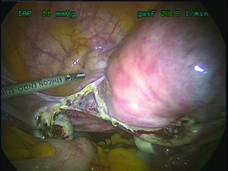
Currently, more than two-thirds of the 600,000 hysterectomies performed annually in the United States are done through an abdominal incision, despite the availability of less-invasive vaginal and laparoscopic approaches, which are associated with reduced morbidity, faster recovery, and lower cost. The AAGL Advancing Minimally Invasive Gynecology Worldwide (formerly known as the American Association of Gynecologic Laparoscopists) has now issued a strongly worded statement advising that abdominal hysterectomies be limited to only a few specific, defined circumstances.
"When hysterectomy is necessary, the demonstrated safety, efficacy, and cost-effectiveness of vaginal hysterectomy (VH) and laparoscopic hysterectomy (LH) mandate that they be the procedures of choice. When hysterectomy is performed without laparotomy, early institutional discharge is feasible and safe, in many cases within the first 24 hours," the AAGL said in the statement, posted online in November and due to be published in the January issue of the Journal of Minimally Invasive Gynecology.
The statement went on to advise that, "Surgeons without the requisite training and skills required for the safe performance of VH or LH should enlist the aid of colleagues who do or should refer patients requiring hysterectomy to such individuals for their surgical care."
The short list of contraindications given for LH include medical conditions in which the risk of either general anesthesia or increased peritoneal pressure are deemed unacceptable, or where morcellation may be required or uterine malignancy is known or suspected. For both VH and LH, the only contraindications are when there is no access to an experienced surgeon or the necessary facilities, or where the anatomy is so distorted that neither a laparoscopic nor vaginal approach is deemed safe.
Other clinical situations such as obesity or previous cesarean section should not be considered contraindications to minimally invasive procedures, AAGL said. Obesity may be associated with longer operative times but otherwise does not impair safety or efficacy of minimally invasive procedures, and the risks of inadvertent cystotomy and other complications with LH in women with previous Cesarean section is low (J. Minim. Invasive Gynecol. 2010;17:186-91).
The statement is aimed at several constituencies, AAGL executive vice president and medical director Dr. Franklin Loffer said in an interview. "We want patients to know, insurance companies to pay attention, and we want doctors to either learn how to do the procedures, get someone to help them, or just refer. I don’t think it’s justified doing an abdominal hysterectomy simply because you can’t do anything else. That’s not in the patient’s benefit."
He added, "We wish to point out that our specialty needs to do a better job of educating people to do these procedures."
In calling for a dramatic reduction in the number of abdominal hysterectomies, the AAGL position is in line with that of the American College of Obstetricians and Gynecologists, issued in a committee opinion paper "Choosing the Route of Hysterectomy for Benign Disease" in November 2009 (#444). But ACOG differed from AAGL in that it deemed the vaginal approach as the procedure of choice, with the laparoscopic approach second and abdominal approach as a last resort. Also, ACOG did not recommend referring patients to specialists as AAGL did.
According to Dr. Cheryl B. Iglesia, chair of the ACOG Committee on Gynecologic Practice, which wrote the opinion paper, "We do agree that for the most part hysterectomy should be done minimally invasively, and the least invasive [approach] is vaginal over laparoscopic. It’s associated with less operator time, less pain, less cost, and less potential injury. But, there are some technical skills to be developed," she said in an interview.
As for the referral issue, "We have lots of constituents, and we have to look at what’s practical. If you’re the only doctor in a big rural setting for 300 miles, you’re going to do whatever is safest in your hands. We try to be very practical at ACOG," said Dr. Iglesia, who is section director for female pelvic medicine and reconstructive surgery at Washington Hospital Center and is also in the ob.gyn. department at Georgetown University, Washington.
Dr. Loffer noted that the ACOG evidence base included a Cochrane review (Cochrane Database Syst. Rev. 2009 [doi:10.1002/14651858.CD003677.pub4]) containing data from the earliest laparoscopic procedures when there were more complications as surgeons acquired the skills, and that now the complication rates are approximately equal to that of vaginal hysterectomy. But, he said with regard to the two organizations’ positions in general, "I don’t think we’re that far apart."
Indeed, both AAGL and ACOG – as well as the American Board of Obstetrics and Gynecology – are exploring ways to improve training at the residency level, where currently the amount of exposure to minimally invasive hysterectomy procedures varies considerably from one program to the next, and is often quite low. This contrasts with general surgery, where completion of a didactic and clinical program "Fundamentals of Laparoscopic Surgery" is now a requirement of residency training.
"Developing something similar for gynecology is one of the AAGL’s current initiatives," Dr. Loffer said.
Movement also could come from the payer side. AAGL has had discussions with private insurers expressing interest in such approaches as "incentivizing" patients via lower co-pay to choose surgeons who do minimally invasive procedures. The AAGL provides a registry of qualified surgeons, the Council of Gynecologic Endoscopy, but it is relatively recent.

Dr. Iglesia noted that on the Medicare side, a recent change in the hysterectomy CPT codes giving a greater relative value unit for removal of uteri greater than 250 grams either vaginally or laparoscopically means higher payment. "That should incentivize a bit. ... They are trying."
According to the AAGL statement, the 66% abdominal hysterectomy rate in the United States contrasts dramatically with some European countries in which the proportion is less than 25%. Some insight to the attitudes of American practitioners can be found in the results of an online/paper survey conducted by Dr. Jon I. Einarsson of Brigham and Women’s Hospital, Boston, and his associates (J. Minim. Invasive Gynecol. 2010;17:167-75).
Of the 1,500 randomly sampled practicing obstetrician-gynecologists surveyed, 376 responded. Among those, the most commonly performed hysterectomy procedure in the previous year was AH (84%), followed by VH (76%). But when asked to rank which hysterectomy approach they would prefer for themselves or their partner, 56% ranked VH as their first choice and 41% ranked LH as their first choice, with only 8% opting for AH.
When asked about barriers to performing minimally invasive procedures, the most common ones reported for VH included technical difficulty, potential for complications, and personal caseload. For LH, respondents cited lack of training, technical difficulty, personal surgical experience, and operating time as barriers.
Nonetheless, when asked about their ideal goal for mode of access, the respondents felt on average that minimally invasive techniques should comprise 79% of all hysterectomy procedures.
Not surprisingly, the survey also revealed that gynecologic surgeons who had a high surgical volume were more likely to feel comfortable offering a minimally invasive hysterectomy to their patients. "This suggests that more emphasis needs to be placed on training opportunities ... given the desire among practicing gynecologists to change their surgical mode of access," Dr. Einarsson and his associates concluded.
Dr. Loffer declared that he owns stock in Johnson & Johnson and Interlace Medical Inc. Dr. Iglesia, and Dr. Einarsson and his coauthors all stated that they had no disclosures.
Minimally invasive approaches should be the "procedures of choice" for nearly all women undergoing hysterectomy to treat benign uterine disease, according to a new position statement from AAGL.
Currently, more than two-thirds of the 600,000 hysterectomies performed annually in the United States are done through an abdominal incision, despite the availability of less-invasive vaginal and laparoscopic approaches, which are associated with reduced morbidity, faster recovery, and lower cost. The AAGL Advancing Minimally Invasive Gynecology Worldwide (formerly known as the American Association of Gynecologic Laparoscopists) has now issued a strongly worded statement advising that abdominal hysterectomies be limited to only a few specific, defined circumstances.
"When hysterectomy is necessary, the demonstrated safety, efficacy, and cost-effectiveness of vaginal hysterectomy (VH) and laparoscopic hysterectomy (LH) mandate that they be the procedures of choice. When hysterectomy is performed without laparotomy, early institutional discharge is feasible and safe, in many cases within the first 24 hours," the AAGL said in the statement, posted online in November and due to be published in the January issue of the Journal of Minimally Invasive Gynecology.
The statement went on to advise that, "Surgeons without the requisite training and skills required for the safe performance of VH or LH should enlist the aid of colleagues who do or should refer patients requiring hysterectomy to such individuals for their surgical care."
The short list of contraindications given for LH include medical conditions in which the risk of either general anesthesia or increased peritoneal pressure are deemed unacceptable, or where morcellation may be required or uterine malignancy is known or suspected. For both VH and LH, the only contraindications are when there is no access to an experienced surgeon or the necessary facilities, or where the anatomy is so distorted that neither a laparoscopic nor vaginal approach is deemed safe.
Other clinical situations such as obesity or previous cesarean section should not be considered contraindications to minimally invasive procedures, AAGL said. Obesity may be associated with longer operative times but otherwise does not impair safety or efficacy of minimally invasive procedures, and the risks of inadvertent cystotomy and other complications with LH in women with previous Cesarean section is low (J. Minim. Invasive Gynecol. 2010;17:186-91).
The statement is aimed at several constituencies, AAGL executive vice president and medical director Dr. Franklin Loffer said in an interview. "We want patients to know, insurance companies to pay attention, and we want doctors to either learn how to do the procedures, get someone to help them, or just refer. I don’t think it’s justified doing an abdominal hysterectomy simply because you can’t do anything else. That’s not in the patient’s benefit."
He added, "We wish to point out that our specialty needs to do a better job of educating people to do these procedures."
In calling for a dramatic reduction in the number of abdominal hysterectomies, the AAGL position is in line with that of the American College of Obstetricians and Gynecologists, issued in a committee opinion paper "Choosing the Route of Hysterectomy for Benign Disease" in November 2009 (#444). But ACOG differed from AAGL in that it deemed the vaginal approach as the procedure of choice, with the laparoscopic approach second and abdominal approach as a last resort. Also, ACOG did not recommend referring patients to specialists as AAGL did.
According to Dr. Cheryl B. Iglesia, chair of the ACOG Committee on Gynecologic Practice, which wrote the opinion paper, "We do agree that for the most part hysterectomy should be done minimally invasively, and the least invasive [approach] is vaginal over laparoscopic. It’s associated with less operator time, less pain, less cost, and less potential injury. But, there are some technical skills to be developed," she said in an interview.
As for the referral issue, "We have lots of constituents, and we have to look at what’s practical. If you’re the only doctor in a big rural setting for 300 miles, you’re going to do whatever is safest in your hands. We try to be very practical at ACOG," said Dr. Iglesia, who is section director for female pelvic medicine and reconstructive surgery at Washington Hospital Center and is also in the ob.gyn. department at Georgetown University, Washington.
Dr. Loffer noted that the ACOG evidence base included a Cochrane review (Cochrane Database Syst. Rev. 2009 [doi:10.1002/14651858.CD003677.pub4]) containing data from the earliest laparoscopic procedures when there were more complications as surgeons acquired the skills, and that now the complication rates are approximately equal to that of vaginal hysterectomy. But, he said with regard to the two organizations’ positions in general, "I don’t think we’re that far apart."
Indeed, both AAGL and ACOG – as well as the American Board of Obstetrics and Gynecology – are exploring ways to improve training at the residency level, where currently the amount of exposure to minimally invasive hysterectomy procedures varies considerably from one program to the next, and is often quite low. This contrasts with general surgery, where completion of a didactic and clinical program "Fundamentals of Laparoscopic Surgery" is now a requirement of residency training.
"Developing something similar for gynecology is one of the AAGL’s current initiatives," Dr. Loffer said.
Movement also could come from the payer side. AAGL has had discussions with private insurers expressing interest in such approaches as "incentivizing" patients via lower co-pay to choose surgeons who do minimally invasive procedures. The AAGL provides a registry of qualified surgeons, the Council of Gynecologic Endoscopy, but it is relatively recent.
Dr. Iglesia noted that on the Medicare side, a recent change in the hysterectomy CPT codes giving a greater relative value unit for removal of uteri greater than 250 grams either vaginally or laparoscopically means higher payment. "That should incentivize a bit. ... They are trying."
According to the AAGL statement, the 66% abdominal hysterectomy rate in the United States contrasts dramatically with some European countries in which the proportion is less than 25%. Some insight to the attitudes of American practitioners can be found in the results of an online/paper survey conducted by Dr. Jon I. Einarsson of Brigham and Women’s Hospital, Boston, and his associates (J. Minim. Invasive Gynecol. 2010;17:167-75).
Of the 1,500 randomly sampled practicing obstetrician-gynecologists surveyed, 376 responded. Among those, the most commonly performed hysterectomy procedure in the previous year was AH (84%), followed by VH (76%). But when asked to rank which hysterectomy approach they would prefer for themselves or their partner, 56% ranked VH as their first choice and 41% ranked LH as their first choice, with only 8% opting for AH.
When asked about barriers to performing minimally invasive procedures, the most common ones reported for VH included technical difficulty, potential for complications, and personal caseload. For LH, respondents cited lack of training, technical difficulty, personal surgical experience, and operating time as barriers.
Nonetheless, when asked about their ideal goal for mode of access, the respondents felt on average that minimally invasive techniques should comprise 79% of all hysterectomy procedures.
Not surprisingly, the survey also revealed that gynecologic surgeons who had a high surgical volume were more likely to feel comfortable offering a minimally invasive hysterectomy to their patients. "This suggests that more emphasis needs to be placed on training opportunities ... given the desire among practicing gynecologists to change their surgical mode of access," Dr. Einarsson and his associates concluded.
Dr. Loffer declared that he owns stock in Johnson & Johnson and Interlace Medical Inc. Dr. Iglesia, and Dr. Einarsson and his coauthors all stated that they had no disclosures.
Minimally invasive approaches should be the "procedures of choice" for nearly all women undergoing hysterectomy to treat benign uterine disease, according to a new position statement from AAGL.
Currently, more than two-thirds of the 600,000 hysterectomies performed annually in the United States are done through an abdominal incision, despite the availability of less-invasive vaginal and laparoscopic approaches, which are associated with reduced morbidity, faster recovery, and lower cost. The AAGL Advancing Minimally Invasive Gynecology Worldwide (formerly known as the American Association of Gynecologic Laparoscopists) has now issued a strongly worded statement advising that abdominal hysterectomies be limited to only a few specific, defined circumstances.
"When hysterectomy is necessary, the demonstrated safety, efficacy, and cost-effectiveness of vaginal hysterectomy (VH) and laparoscopic hysterectomy (LH) mandate that they be the procedures of choice. When hysterectomy is performed without laparotomy, early institutional discharge is feasible and safe, in many cases within the first 24 hours," the AAGL said in the statement, posted online in November and due to be published in the January issue of the Journal of Minimally Invasive Gynecology.
The statement went on to advise that, "Surgeons without the requisite training and skills required for the safe performance of VH or LH should enlist the aid of colleagues who do or should refer patients requiring hysterectomy to such individuals for their surgical care."
The short list of contraindications given for LH include medical conditions in which the risk of either general anesthesia or increased peritoneal pressure are deemed unacceptable, or where morcellation may be required or uterine malignancy is known or suspected. For both VH and LH, the only contraindications are when there is no access to an experienced surgeon or the necessary facilities, or where the anatomy is so distorted that neither a laparoscopic nor vaginal approach is deemed safe.
Other clinical situations such as obesity or previous cesarean section should not be considered contraindications to minimally invasive procedures, AAGL said. Obesity may be associated with longer operative times but otherwise does not impair safety or efficacy of minimally invasive procedures, and the risks of inadvertent cystotomy and other complications with LH in women with previous Cesarean section is low (J. Minim. Invasive Gynecol. 2010;17:186-91).
The statement is aimed at several constituencies, AAGL executive vice president and medical director Dr. Franklin Loffer said in an interview. "We want patients to know, insurance companies to pay attention, and we want doctors to either learn how to do the procedures, get someone to help them, or just refer. I don’t think it’s justified doing an abdominal hysterectomy simply because you can’t do anything else. That’s not in the patient’s benefit."
He added, "We wish to point out that our specialty needs to do a better job of educating people to do these procedures."
In calling for a dramatic reduction in the number of abdominal hysterectomies, the AAGL position is in line with that of the American College of Obstetricians and Gynecologists, issued in a committee opinion paper "Choosing the Route of Hysterectomy for Benign Disease" in November 2009 (#444). But ACOG differed from AAGL in that it deemed the vaginal approach as the procedure of choice, with the laparoscopic approach second and abdominal approach as a last resort. Also, ACOG did not recommend referring patients to specialists as AAGL did.
According to Dr. Cheryl B. Iglesia, chair of the ACOG Committee on Gynecologic Practice, which wrote the opinion paper, "We do agree that for the most part hysterectomy should be done minimally invasively, and the least invasive [approach] is vaginal over laparoscopic. It’s associated with less operator time, less pain, less cost, and less potential injury. But, there are some technical skills to be developed," she said in an interview.
As for the referral issue, "We have lots of constituents, and we have to look at what’s practical. If you’re the only doctor in a big rural setting for 300 miles, you’re going to do whatever is safest in your hands. We try to be very practical at ACOG," said Dr. Iglesia, who is section director for female pelvic medicine and reconstructive surgery at Washington Hospital Center and is also in the ob.gyn. department at Georgetown University, Washington.
Dr. Loffer noted that the ACOG evidence base included a Cochrane review (Cochrane Database Syst. Rev. 2009 [doi:10.1002/14651858.CD003677.pub4]) containing data from the earliest laparoscopic procedures when there were more complications as surgeons acquired the skills, and that now the complication rates are approximately equal to that of vaginal hysterectomy. But, he said with regard to the two organizations’ positions in general, "I don’t think we’re that far apart."
Indeed, both AAGL and ACOG – as well as the American Board of Obstetrics and Gynecology – are exploring ways to improve training at the residency level, where currently the amount of exposure to minimally invasive hysterectomy procedures varies considerably from one program to the next, and is often quite low. This contrasts with general surgery, where completion of a didactic and clinical program "Fundamentals of Laparoscopic Surgery" is now a requirement of residency training.
"Developing something similar for gynecology is one of the AAGL’s current initiatives," Dr. Loffer said.
Movement also could come from the payer side. AAGL has had discussions with private insurers expressing interest in such approaches as "incentivizing" patients via lower co-pay to choose surgeons who do minimally invasive procedures. The AAGL provides a registry of qualified surgeons, the Council of Gynecologic Endoscopy, but it is relatively recent.
Dr. Iglesia noted that on the Medicare side, a recent change in the hysterectomy CPT codes giving a greater relative value unit for removal of uteri greater than 250 grams either vaginally or laparoscopically means higher payment. "That should incentivize a bit. ... They are trying."
According to the AAGL statement, the 66% abdominal hysterectomy rate in the United States contrasts dramatically with some European countries in which the proportion is less than 25%. Some insight to the attitudes of American practitioners can be found in the results of an online/paper survey conducted by Dr. Jon I. Einarsson of Brigham and Women’s Hospital, Boston, and his associates (J. Minim. Invasive Gynecol. 2010;17:167-75).
Of the 1,500 randomly sampled practicing obstetrician-gynecologists surveyed, 376 responded. Among those, the most commonly performed hysterectomy procedure in the previous year was AH (84%), followed by VH (76%). But when asked to rank which hysterectomy approach they would prefer for themselves or their partner, 56% ranked VH as their first choice and 41% ranked LH as their first choice, with only 8% opting for AH.
When asked about barriers to performing minimally invasive procedures, the most common ones reported for VH included technical difficulty, potential for complications, and personal caseload. For LH, respondents cited lack of training, technical difficulty, personal surgical experience, and operating time as barriers.
Nonetheless, when asked about their ideal goal for mode of access, the respondents felt on average that minimally invasive techniques should comprise 79% of all hysterectomy procedures.
Not surprisingly, the survey also revealed that gynecologic surgeons who had a high surgical volume were more likely to feel comfortable offering a minimally invasive hysterectomy to their patients. "This suggests that more emphasis needs to be placed on training opportunities ... given the desire among practicing gynecologists to change their surgical mode of access," Dr. Einarsson and his associates concluded.
Dr. Loffer declared that he owns stock in Johnson & Johnson and Interlace Medical Inc. Dr. Iglesia, and Dr. Einarsson and his coauthors all stated that they had no disclosures.
Intraoperative Nitrous Oxide Tied to Lower Morbidity
SAN DIEGO – The risks for 30-day postoperative mortality and morbidity were lower in those whose general anesthesia contained nitrous oxide compared with matched patients who got intraoperative air, in a retrospective study of 37,609 adults undergoing major noncardiac surgery.
These findings contradict those of some previous reports, according to Dr. Ayako Shiba of the Cleveland Clinic.

She and her associates analyzed data on 37,609 procedures performed at the clinic between 2005 and 2009, and matched 12,773 patients who received nitrous oxide with 12,773 who did not get nitrous oxide by type of surgery and by a propensity score based on potential confounding variables at baseline.
They found no significant association between intraoperative administration of nitrous oxide and 30-day mortality, she reported at the annual meeting of the American Society of Anesthesiologists. In the nitrous oxide group, 0.6% died within 30 days compared with 0.8% in the air group (P = .08).
In a composite of in-hospital morbidity and mortality, the odds were significantly lower in the nitrous oxide group (8.2%) compared with the air group (9%), with an odds ratio of 0.90 in the nitrous oxide group (P = .017).
A secondary analysis looking at individual morbidities found that the risk for pulmonary/respiratory complications was significantly lower in the nitrous oxide group than in the air group (1.6% vs. 2.7%, P less than .001). Risks did not differ between groups for other individual morbidity categories, however, such as cardiac, hemorrhagic, infectious, neurologic, peripheral vascular, urinary/renal, or wound disruption, or for in-hospital mortality.
Dr. Shiba speculated that the lower rates of complications in the nitrous oxide group may have resulted from lower inspired oxygen concentrations – a direct beneficial effect of nitrous oxide – or a decrease in the use of volatile anesthetic agents.
A previous study – a randomized, controlled trial of 2,050 patients undergoing major surgery – reported that there were fewer complications in patients who did not receive perioperative nitrous oxide (Anesthesiology 2007;107:221-31).That study inspired an editorial titled, "Is It Time to Retire High-Concentration Nitrous Oxide?" (Anesthesiology 2007;107:200-1).
Although nitrous oxide has been used widely in clinical anesthesia for more than 150 years, concerns about the drug’s metabolic side effects, postoperative nausea and vomiting, and the greenhouse-gas effect have led to decreased usage in recent years, she said. An informal poll of the audience at her presentation showed that approximately three-quarters of those in attendance still use nitrous oxide as some component of anesthesia, and one-quarter have stopped using it completely.
"Considering all of the available data, we conclude that insufficient evidence supports the theory that nitrous oxide use increases the risk of either serious complications or mortality in surgical patients," she said.
The study excluded patients who needed emergency surgery or were American Society of Anesthesiology class V or VI. Pediatric cases and patients who were not under general anesthesia also were excluded.
Dr. Shiba said she has no relevant conflicts of interest.
SAN DIEGO – The risks for 30-day postoperative mortality and morbidity were lower in those whose general anesthesia contained nitrous oxide compared with matched patients who got intraoperative air, in a retrospective study of 37,609 adults undergoing major noncardiac surgery.
These findings contradict those of some previous reports, according to Dr. Ayako Shiba of the Cleveland Clinic.
She and her associates analyzed data on 37,609 procedures performed at the clinic between 2005 and 2009, and matched 12,773 patients who received nitrous oxide with 12,773 who did not get nitrous oxide by type of surgery and by a propensity score based on potential confounding variables at baseline.
They found no significant association between intraoperative administration of nitrous oxide and 30-day mortality, she reported at the annual meeting of the American Society of Anesthesiologists. In the nitrous oxide group, 0.6% died within 30 days compared with 0.8% in the air group (P = .08).
In a composite of in-hospital morbidity and mortality, the odds were significantly lower in the nitrous oxide group (8.2%) compared with the air group (9%), with an odds ratio of 0.90 in the nitrous oxide group (P = .017).
A secondary analysis looking at individual morbidities found that the risk for pulmonary/respiratory complications was significantly lower in the nitrous oxide group than in the air group (1.6% vs. 2.7%, P less than .001). Risks did not differ between groups for other individual morbidity categories, however, such as cardiac, hemorrhagic, infectious, neurologic, peripheral vascular, urinary/renal, or wound disruption, or for in-hospital mortality.
Dr. Shiba speculated that the lower rates of complications in the nitrous oxide group may have resulted from lower inspired oxygen concentrations – a direct beneficial effect of nitrous oxide – or a decrease in the use of volatile anesthetic agents.
A previous study – a randomized, controlled trial of 2,050 patients undergoing major surgery – reported that there were fewer complications in patients who did not receive perioperative nitrous oxide (Anesthesiology 2007;107:221-31).That study inspired an editorial titled, "Is It Time to Retire High-Concentration Nitrous Oxide?" (Anesthesiology 2007;107:200-1).
Although nitrous oxide has been used widely in clinical anesthesia for more than 150 years, concerns about the drug’s metabolic side effects, postoperative nausea and vomiting, and the greenhouse-gas effect have led to decreased usage in recent years, she said. An informal poll of the audience at her presentation showed that approximately three-quarters of those in attendance still use nitrous oxide as some component of anesthesia, and one-quarter have stopped using it completely.
"Considering all of the available data, we conclude that insufficient evidence supports the theory that nitrous oxide use increases the risk of either serious complications or mortality in surgical patients," she said.
The study excluded patients who needed emergency surgery or were American Society of Anesthesiology class V or VI. Pediatric cases and patients who were not under general anesthesia also were excluded.
Dr. Shiba said she has no relevant conflicts of interest.
SAN DIEGO – The risks for 30-day postoperative mortality and morbidity were lower in those whose general anesthesia contained nitrous oxide compared with matched patients who got intraoperative air, in a retrospective study of 37,609 adults undergoing major noncardiac surgery.
These findings contradict those of some previous reports, according to Dr. Ayako Shiba of the Cleveland Clinic.
She and her associates analyzed data on 37,609 procedures performed at the clinic between 2005 and 2009, and matched 12,773 patients who received nitrous oxide with 12,773 who did not get nitrous oxide by type of surgery and by a propensity score based on potential confounding variables at baseline.
They found no significant association between intraoperative administration of nitrous oxide and 30-day mortality, she reported at the annual meeting of the American Society of Anesthesiologists. In the nitrous oxide group, 0.6% died within 30 days compared with 0.8% in the air group (P = .08).
In a composite of in-hospital morbidity and mortality, the odds were significantly lower in the nitrous oxide group (8.2%) compared with the air group (9%), with an odds ratio of 0.90 in the nitrous oxide group (P = .017).
A secondary analysis looking at individual morbidities found that the risk for pulmonary/respiratory complications was significantly lower in the nitrous oxide group than in the air group (1.6% vs. 2.7%, P less than .001). Risks did not differ between groups for other individual morbidity categories, however, such as cardiac, hemorrhagic, infectious, neurologic, peripheral vascular, urinary/renal, or wound disruption, or for in-hospital mortality.
Dr. Shiba speculated that the lower rates of complications in the nitrous oxide group may have resulted from lower inspired oxygen concentrations – a direct beneficial effect of nitrous oxide – or a decrease in the use of volatile anesthetic agents.
A previous study – a randomized, controlled trial of 2,050 patients undergoing major surgery – reported that there were fewer complications in patients who did not receive perioperative nitrous oxide (Anesthesiology 2007;107:221-31).That study inspired an editorial titled, "Is It Time to Retire High-Concentration Nitrous Oxide?" (Anesthesiology 2007;107:200-1).
Although nitrous oxide has been used widely in clinical anesthesia for more than 150 years, concerns about the drug’s metabolic side effects, postoperative nausea and vomiting, and the greenhouse-gas effect have led to decreased usage in recent years, she said. An informal poll of the audience at her presentation showed that approximately three-quarters of those in attendance still use nitrous oxide as some component of anesthesia, and one-quarter have stopped using it completely.
"Considering all of the available data, we conclude that insufficient evidence supports the theory that nitrous oxide use increases the risk of either serious complications or mortality in surgical patients," she said.
The study excluded patients who needed emergency surgery or were American Society of Anesthesiology class V or VI. Pediatric cases and patients who were not under general anesthesia also were excluded.
Dr. Shiba said she has no relevant conflicts of interest.
FROM THE ANNUAL MEETING OF THE AMERICAN SOCIETY OF ANESTHESIOLOGISTS
Below-the-Ankle Angioplasty Examined
Traditional dogma states that the primary goal of infrapopliteal revascularization is the restoration of at least one straight line of pulsatile blood flow to the distal foot to reperfuse the ischemic tissue.
In diabetic patients, obstructive lesions tend to be located in the distal tibial arteries at the malleolus level and might extend below the ankle and involve the dorsalis pedis and plantar arteries. As a result, distal bypass can be technically challenging or even impossible to perform, mainly because there is no appropriate healthy vascular segment for distal anastomosis, according to Dr. Konstantinos Katsanos.

Because patency outcomes after angioplasty of the femoral artery are negatively affected by compromised and/or poor tibial runoff, infrapopliteal and distal outflow lesions must be treated accordingly. Published data regarding angioplasty or stenting of the arteries below the ankle are scarce, noted Dr. Katsanos at the Veith symposium on vascular medicine sponsored by the Cleveland Clinic.
He reported on the feasibility of percutaneous angioplasty and optional bail-out stenting of distal below-the-ankle arterial occlusive disease in patients with critical limb ischemia.
Dr. Katsanos, a lecturer of radiology at the department of radiology, Patras University Hospital, Rio, Greece, and his colleagues evaluated the long-term angiographic and clinical results of such interventions based on a retrospective analysis of 17 patients who underwent infrapopliteal endovascular procedures, including angioplasty and optional bailout stenting of the dorsalis pedis and/or the plantar arteries (20 lesions in 19 limbs).
Most patients (82%) were diabetic, and most had ischemic ulcers and tissue loss. About 75% of the lesions were calcified, and 40% were initial total occlusions.
Ultralow-profile 2.0- to 2.5-mm wide and 0.014-inch over-the-wire compatible long balloon platforms were applied. In 55% of the lesions, adjunctive bail-out stenting with balloon-expandable drug-eluting stents was also performed.
Results were encouraging: a cumulative limb salvage rate of 88% at up to 4 years’ follow-up and just two major amputations. Repeat angioplasty was needed in five cases (29%) because of recurrent symptoms.
Dr. Katsanos and his colleagues also evaluated stent integrity with x-ray imaging during regular follow-up and found four deformed and/or collapsed stents and one severe stent fracture. Primary patency of the distal below-the-ankle outflow lesion was significantly, positively correlated with sustained patency of the proximal infrapopliteal lesion. Median infrapopliteal primary patency was 14 months in the case of a patent runoff vessel vs. 7 months in the case of distal occlusion – a significant difference, Dr. Katsanos said.
He discussed the safety and feasibility of below-the-ankle angioplasty for limb salvage and the improved outflow runoff, which was associated with better patency rates of the proximally treated lesions.
"According to our findings, below-the-ankle placement of balloon-expandable stents should only be reserved for bailout in exceptional cases of suboptimal postangioplasty results because of the superficial anatomical location [which renders] them highly susceptible to external compression and occlusion (almost half of the stented cases in our series).
"Previous studies from our center have also shown increased stent deformity of balloon-expandable stents placed in the distal third of the anterior tibial artery. Therefore, if it is deemed necessary, we would generally recommend using self-expanding stents at the malleolar and inframalleolar level of the tibial vasculature," Dr. Katsanos said in an interview.
Traditional dogma states that the primary goal of infrapopliteal revascularization is the restoration of at least one straight line of pulsatile blood flow to the distal foot to reperfuse the ischemic tissue.
In diabetic patients, obstructive lesions tend to be located in the distal tibial arteries at the malleolus level and might extend below the ankle and involve the dorsalis pedis and plantar arteries. As a result, distal bypass can be technically challenging or even impossible to perform, mainly because there is no appropriate healthy vascular segment for distal anastomosis, according to Dr. Konstantinos Katsanos.
Because patency outcomes after angioplasty of the femoral artery are negatively affected by compromised and/or poor tibial runoff, infrapopliteal and distal outflow lesions must be treated accordingly. Published data regarding angioplasty or stenting of the arteries below the ankle are scarce, noted Dr. Katsanos at the Veith symposium on vascular medicine sponsored by the Cleveland Clinic.
He reported on the feasibility of percutaneous angioplasty and optional bail-out stenting of distal below-the-ankle arterial occlusive disease in patients with critical limb ischemia.
Dr. Katsanos, a lecturer of radiology at the department of radiology, Patras University Hospital, Rio, Greece, and his colleagues evaluated the long-term angiographic and clinical results of such interventions based on a retrospective analysis of 17 patients who underwent infrapopliteal endovascular procedures, including angioplasty and optional bailout stenting of the dorsalis pedis and/or the plantar arteries (20 lesions in 19 limbs).
Most patients (82%) were diabetic, and most had ischemic ulcers and tissue loss. About 75% of the lesions were calcified, and 40% were initial total occlusions.
Ultralow-profile 2.0- to 2.5-mm wide and 0.014-inch over-the-wire compatible long balloon platforms were applied. In 55% of the lesions, adjunctive bail-out stenting with balloon-expandable drug-eluting stents was also performed.
Results were encouraging: a cumulative limb salvage rate of 88% at up to 4 years’ follow-up and just two major amputations. Repeat angioplasty was needed in five cases (29%) because of recurrent symptoms.
Dr. Katsanos and his colleagues also evaluated stent integrity with x-ray imaging during regular follow-up and found four deformed and/or collapsed stents and one severe stent fracture. Primary patency of the distal below-the-ankle outflow lesion was significantly, positively correlated with sustained patency of the proximal infrapopliteal lesion. Median infrapopliteal primary patency was 14 months in the case of a patent runoff vessel vs. 7 months in the case of distal occlusion – a significant difference, Dr. Katsanos said.
He discussed the safety and feasibility of below-the-ankle angioplasty for limb salvage and the improved outflow runoff, which was associated with better patency rates of the proximally treated lesions.
"According to our findings, below-the-ankle placement of balloon-expandable stents should only be reserved for bailout in exceptional cases of suboptimal postangioplasty results because of the superficial anatomical location [which renders] them highly susceptible to external compression and occlusion (almost half of the stented cases in our series).
"Previous studies from our center have also shown increased stent deformity of balloon-expandable stents placed in the distal third of the anterior tibial artery. Therefore, if it is deemed necessary, we would generally recommend using self-expanding stents at the malleolar and inframalleolar level of the tibial vasculature," Dr. Katsanos said in an interview.
Traditional dogma states that the primary goal of infrapopliteal revascularization is the restoration of at least one straight line of pulsatile blood flow to the distal foot to reperfuse the ischemic tissue.
In diabetic patients, obstructive lesions tend to be located in the distal tibial arteries at the malleolus level and might extend below the ankle and involve the dorsalis pedis and plantar arteries. As a result, distal bypass can be technically challenging or even impossible to perform, mainly because there is no appropriate healthy vascular segment for distal anastomosis, according to Dr. Konstantinos Katsanos.
Because patency outcomes after angioplasty of the femoral artery are negatively affected by compromised and/or poor tibial runoff, infrapopliteal and distal outflow lesions must be treated accordingly. Published data regarding angioplasty or stenting of the arteries below the ankle are scarce, noted Dr. Katsanos at the Veith symposium on vascular medicine sponsored by the Cleveland Clinic.
He reported on the feasibility of percutaneous angioplasty and optional bail-out stenting of distal below-the-ankle arterial occlusive disease in patients with critical limb ischemia.
Dr. Katsanos, a lecturer of radiology at the department of radiology, Patras University Hospital, Rio, Greece, and his colleagues evaluated the long-term angiographic and clinical results of such interventions based on a retrospective analysis of 17 patients who underwent infrapopliteal endovascular procedures, including angioplasty and optional bailout stenting of the dorsalis pedis and/or the plantar arteries (20 lesions in 19 limbs).
Most patients (82%) were diabetic, and most had ischemic ulcers and tissue loss. About 75% of the lesions were calcified, and 40% were initial total occlusions.
Ultralow-profile 2.0- to 2.5-mm wide and 0.014-inch over-the-wire compatible long balloon platforms were applied. In 55% of the lesions, adjunctive bail-out stenting with balloon-expandable drug-eluting stents was also performed.
Results were encouraging: a cumulative limb salvage rate of 88% at up to 4 years’ follow-up and just two major amputations. Repeat angioplasty was needed in five cases (29%) because of recurrent symptoms.
Dr. Katsanos and his colleagues also evaluated stent integrity with x-ray imaging during regular follow-up and found four deformed and/or collapsed stents and one severe stent fracture. Primary patency of the distal below-the-ankle outflow lesion was significantly, positively correlated with sustained patency of the proximal infrapopliteal lesion. Median infrapopliteal primary patency was 14 months in the case of a patent runoff vessel vs. 7 months in the case of distal occlusion – a significant difference, Dr. Katsanos said.
He discussed the safety and feasibility of below-the-ankle angioplasty for limb salvage and the improved outflow runoff, which was associated with better patency rates of the proximally treated lesions.
"According to our findings, below-the-ankle placement of balloon-expandable stents should only be reserved for bailout in exceptional cases of suboptimal postangioplasty results because of the superficial anatomical location [which renders] them highly susceptible to external compression and occlusion (almost half of the stented cases in our series).
"Previous studies from our center have also shown increased stent deformity of balloon-expandable stents placed in the distal third of the anterior tibial artery. Therefore, if it is deemed necessary, we would generally recommend using self-expanding stents at the malleolar and inframalleolar level of the tibial vasculature," Dr. Katsanos said in an interview.
FROM THE VEITH SYMPOSIUM ON VASCULAR MEDICINE
Frailty Increases Likelihood of Postop Institutional Care
CHICAGO – One in three elderly veterans required discharge to an institutional care facility following major elective surgery in a prospective cohort study of 223 patients.

The chance of being discharged to an institution rose dramatically from 5% if an individual patient had 0 to 1 frailty traits to 21% with 2 or 3 traits, 76% with 4 or 5 traits, and 89% with 6 or 7 traits, lead author Dr. Thomas Robinson said at the annual meeting of the Western Surgical Association.
The comparisons were significant at a P value of .01, except for the 4 or 5 traits vs. 6 or 7 traits (P = .31).
On the basis of their research, Dr. Robinson and his colleagues are developing a preoperative frailty score that surgeons can use when counseling their patients.
"We have a standardized sheet that can be put up on the clinic door, and the surgeon can walk up and review the sheet and understand the burden of frailty of an individual patient and counsel them appropriately," he said.
The 223 veterans in the study had to be at least 65 years old, and their average age was 73. The majority were male (96%), and all had lived at home before undergoing an elective major operation requiring postoperative ICU admission at the Denver Veterans Affairs Medical Center. Surgical specialties included general, thoracic, vascular, and urology.
As shown in a univariate analysis, patients discharged to institutional care were significantly older than those who went home (77 vs. 72 years), and significantly more likely to have any functional dependence (76% vs. 16%), a get-up-and-go test time of at least 15 seconds (67% vs. 8%), a Charlson comorbidity index of 3 or more (86% vs. 42%), increased American Society of Anesthesiologists score (3.0 vs. 2.8), a hematocrit less than 35% (44% vs. 6%), an albumin less than 3.4 g/dL (66% vs. 10%), a Mini-Cog score of 3 or less, and at least one fall in the prior 6 months (61% vs. 17%).
The number of medications, body mass index, weight loss, and depression were not significantly associated with discharge institutionalization, said Dr. Robinson of the University of Colorado at Denver.
Intraoperative variables including length of operation, blood loss, transfusion, and type of surgery were also similar between groups.
On logistic regression analysis, two frailty characteristics were found to be most closely related to discharge to an institutional care facility: prolonged time on the get-up-and-go test of 15 seconds or more (odds ratio 13.0, P value less than .0001) and dependence in one or more activities of daily living (OR 5.7, P less than .0001), he said. The get-up-and-go test measures the time needed to rise unassisted from a chair, walk several feet, and return to the chair.
Mean length of institutional stay at a nursing home, skilled nursing facility, or rehabilitation facility was 25 days (range, 3-112 days).
During a discussion of the study, Dr. Charles Scoggins of the University of Louisville (Ky.), asked whether the score predicts postoperative complications.
"Yes, they absolutely do," responded Dr. Robinson. "We have groups of cardiac patients that were scored in complications and then validated in colorectal operations. I’d go one step further and say that frailty across surgical specialties can predict postoperative outcomes whether they be complications, dispensation to an institutional care facility, [or] in our previous paper, 6-month mortality."
In that study, the accumulation of four frailty markers predicted 6-month mortality with a sensitivity of 81% and specificity of 86%. In addition, the functional frailty characteristic of dependence in one or more activities of daily living was found to be most closely related to 6-month mortality, a finding reinforced by the current study. (Ann. Surg. 2009;250:338-47).
Invited discussant Dr. Travis Webb of the Medical College of Wisconsin, Milwaukee, said that increasing evidence points to factors beyond simple age as predictors of mortality, morbidity, and the need for skilled nursing care in the posthospitalization time period. He observed that the need for accurate information on these predictors will become increasingly important as the number of elderly surgery patients swells. It is estimated that 55% of all operations in the United States are being performed on patients aged 65 years and older.
Dr. Webb pointed out, however, that limiting the study to patients requiring ICU admission limits the generalizability of the results and asked whether surgeons or primary care providers should best screen patients for frailty. Dr. Robinson said screening is particularly valuable if done in the operative clinic and that screening results have changed the decision to have surgery, the scope of the surgery, and patient and family expectations.
The study was supported by the National Institute on Aging, American Geriatrics Society, and Hartford Foundation. The authors reported no conflicts.
CHICAGO – One in three elderly veterans required discharge to an institutional care facility following major elective surgery in a prospective cohort study of 223 patients.
The chance of being discharged to an institution rose dramatically from 5% if an individual patient had 0 to 1 frailty traits to 21% with 2 or 3 traits, 76% with 4 or 5 traits, and 89% with 6 or 7 traits, lead author Dr. Thomas Robinson said at the annual meeting of the Western Surgical Association.
The comparisons were significant at a P value of .01, except for the 4 or 5 traits vs. 6 or 7 traits (P = .31).
On the basis of their research, Dr. Robinson and his colleagues are developing a preoperative frailty score that surgeons can use when counseling their patients.
"We have a standardized sheet that can be put up on the clinic door, and the surgeon can walk up and review the sheet and understand the burden of frailty of an individual patient and counsel them appropriately," he said.
The 223 veterans in the study had to be at least 65 years old, and their average age was 73. The majority were male (96%), and all had lived at home before undergoing an elective major operation requiring postoperative ICU admission at the Denver Veterans Affairs Medical Center. Surgical specialties included general, thoracic, vascular, and urology.
As shown in a univariate analysis, patients discharged to institutional care were significantly older than those who went home (77 vs. 72 years), and significantly more likely to have any functional dependence (76% vs. 16%), a get-up-and-go test time of at least 15 seconds (67% vs. 8%), a Charlson comorbidity index of 3 or more (86% vs. 42%), increased American Society of Anesthesiologists score (3.0 vs. 2.8), a hematocrit less than 35% (44% vs. 6%), an albumin less than 3.4 g/dL (66% vs. 10%), a Mini-Cog score of 3 or less, and at least one fall in the prior 6 months (61% vs. 17%).
The number of medications, body mass index, weight loss, and depression were not significantly associated with discharge institutionalization, said Dr. Robinson of the University of Colorado at Denver.
Intraoperative variables including length of operation, blood loss, transfusion, and type of surgery were also similar between groups.
On logistic regression analysis, two frailty characteristics were found to be most closely related to discharge to an institutional care facility: prolonged time on the get-up-and-go test of 15 seconds or more (odds ratio 13.0, P value less than .0001) and dependence in one or more activities of daily living (OR 5.7, P less than .0001), he said. The get-up-and-go test measures the time needed to rise unassisted from a chair, walk several feet, and return to the chair.
Mean length of institutional stay at a nursing home, skilled nursing facility, or rehabilitation facility was 25 days (range, 3-112 days).
During a discussion of the study, Dr. Charles Scoggins of the University of Louisville (Ky.), asked whether the score predicts postoperative complications.
"Yes, they absolutely do," responded Dr. Robinson. "We have groups of cardiac patients that were scored in complications and then validated in colorectal operations. I’d go one step further and say that frailty across surgical specialties can predict postoperative outcomes whether they be complications, dispensation to an institutional care facility, [or] in our previous paper, 6-month mortality."
In that study, the accumulation of four frailty markers predicted 6-month mortality with a sensitivity of 81% and specificity of 86%. In addition, the functional frailty characteristic of dependence in one or more activities of daily living was found to be most closely related to 6-month mortality, a finding reinforced by the current study. (Ann. Surg. 2009;250:338-47).
Invited discussant Dr. Travis Webb of the Medical College of Wisconsin, Milwaukee, said that increasing evidence points to factors beyond simple age as predictors of mortality, morbidity, and the need for skilled nursing care in the posthospitalization time period. He observed that the need for accurate information on these predictors will become increasingly important as the number of elderly surgery patients swells. It is estimated that 55% of all operations in the United States are being performed on patients aged 65 years and older.
Dr. Webb pointed out, however, that limiting the study to patients requiring ICU admission limits the generalizability of the results and asked whether surgeons or primary care providers should best screen patients for frailty. Dr. Robinson said screening is particularly valuable if done in the operative clinic and that screening results have changed the decision to have surgery, the scope of the surgery, and patient and family expectations.
The study was supported by the National Institute on Aging, American Geriatrics Society, and Hartford Foundation. The authors reported no conflicts.
CHICAGO – One in three elderly veterans required discharge to an institutional care facility following major elective surgery in a prospective cohort study of 223 patients.
The chance of being discharged to an institution rose dramatically from 5% if an individual patient had 0 to 1 frailty traits to 21% with 2 or 3 traits, 76% with 4 or 5 traits, and 89% with 6 or 7 traits, lead author Dr. Thomas Robinson said at the annual meeting of the Western Surgical Association.
The comparisons were significant at a P value of .01, except for the 4 or 5 traits vs. 6 or 7 traits (P = .31).
On the basis of their research, Dr. Robinson and his colleagues are developing a preoperative frailty score that surgeons can use when counseling their patients.
"We have a standardized sheet that can be put up on the clinic door, and the surgeon can walk up and review the sheet and understand the burden of frailty of an individual patient and counsel them appropriately," he said.
The 223 veterans in the study had to be at least 65 years old, and their average age was 73. The majority were male (96%), and all had lived at home before undergoing an elective major operation requiring postoperative ICU admission at the Denver Veterans Affairs Medical Center. Surgical specialties included general, thoracic, vascular, and urology.
As shown in a univariate analysis, patients discharged to institutional care were significantly older than those who went home (77 vs. 72 years), and significantly more likely to have any functional dependence (76% vs. 16%), a get-up-and-go test time of at least 15 seconds (67% vs. 8%), a Charlson comorbidity index of 3 or more (86% vs. 42%), increased American Society of Anesthesiologists score (3.0 vs. 2.8), a hematocrit less than 35% (44% vs. 6%), an albumin less than 3.4 g/dL (66% vs. 10%), a Mini-Cog score of 3 or less, and at least one fall in the prior 6 months (61% vs. 17%).
The number of medications, body mass index, weight loss, and depression were not significantly associated with discharge institutionalization, said Dr. Robinson of the University of Colorado at Denver.
Intraoperative variables including length of operation, blood loss, transfusion, and type of surgery were also similar between groups.
On logistic regression analysis, two frailty characteristics were found to be most closely related to discharge to an institutional care facility: prolonged time on the get-up-and-go test of 15 seconds or more (odds ratio 13.0, P value less than .0001) and dependence in one or more activities of daily living (OR 5.7, P less than .0001), he said. The get-up-and-go test measures the time needed to rise unassisted from a chair, walk several feet, and return to the chair.
Mean length of institutional stay at a nursing home, skilled nursing facility, or rehabilitation facility was 25 days (range, 3-112 days).
During a discussion of the study, Dr. Charles Scoggins of the University of Louisville (Ky.), asked whether the score predicts postoperative complications.
"Yes, they absolutely do," responded Dr. Robinson. "We have groups of cardiac patients that were scored in complications and then validated in colorectal operations. I’d go one step further and say that frailty across surgical specialties can predict postoperative outcomes whether they be complications, dispensation to an institutional care facility, [or] in our previous paper, 6-month mortality."
In that study, the accumulation of four frailty markers predicted 6-month mortality with a sensitivity of 81% and specificity of 86%. In addition, the functional frailty characteristic of dependence in one or more activities of daily living was found to be most closely related to 6-month mortality, a finding reinforced by the current study. (Ann. Surg. 2009;250:338-47).
Invited discussant Dr. Travis Webb of the Medical College of Wisconsin, Milwaukee, said that increasing evidence points to factors beyond simple age as predictors of mortality, morbidity, and the need for skilled nursing care in the posthospitalization time period. He observed that the need for accurate information on these predictors will become increasingly important as the number of elderly surgery patients swells. It is estimated that 55% of all operations in the United States are being performed on patients aged 65 years and older.
Dr. Webb pointed out, however, that limiting the study to patients requiring ICU admission limits the generalizability of the results and asked whether surgeons or primary care providers should best screen patients for frailty. Dr. Robinson said screening is particularly valuable if done in the operative clinic and that screening results have changed the decision to have surgery, the scope of the surgery, and patient and family expectations.
The study was supported by the National Institute on Aging, American Geriatrics Society, and Hartford Foundation. The authors reported no conflicts.
FROM THE ANNUAL MEETING OF THE WESTERN SURGICAL ASSOCIATION
Fatigue, Sleep Issues Dominate Outpatient Cancer Care
CHICAGO - Nonpain symptoms, particularly fatigue, sleep disturbance, and drowsiness, were the most common moderate to severe symptoms among cancer patients undergoing treatment in a community ambulatory setting, according to new data from the Eastern Cooperative Oncology Group study of Symptom Outcomes and Practice Patterns.
The researchers had hypothesized that pain, fatigue, and emotional distress would surface as the most frequent problems in the sample of 3,123 patients (median age 61 years; 30% male) with solid breast (50%), colorectal (23%), lung (17%), and prostate tumors (10%).
The study also found that outpatients who were more ill and symptomatic at baseline were more likely to report benefiting from supportive oncology care at a 1-month follow-up visit, said Dr. Michael J. Fisch, director of the general medical oncology program at M.D. Anderson Cancer Center in Houston.
"It’s upside down of the way we think about treating cancer," Dr. Fisch said in a focus session on symptom management at the annual Chicago Supportive Oncology Conference. "The better off you are, the more likely you are to benefit from chemotherapy or aggressive therapy. But when it comes to symptom management, the sicker you are, the more likely you are to benefit. First of all, you have more room to improve ... but it probably also has something to do with the fact that the sicker you are, the more dedicated [physicians] are at making that problem better. We are not going to take aim at ... things that are more middle-of-the-road in severity."
The study was conducted at 7 academic and 32 community clinics to highlight the most prevalent and significant physical and psychological symptoms in the course of a visit and a follow-up visit in outpatient medical oncology practice, and to describe the pattern and magnitude of functional change in these symptoms.
"We weren’t just interested in patients who were highly symptomatic or patients who had advanced disease," he said. "We wanted to see how things really are as they flow through [the system]. We knew that solid tumor care dominates what really goes on in terms of the patterns and reflexes of care, so we restricted it to the four most common solid tumors. And we let people come as they were, whether they were there for their first visit, long-term follow-up, or third cycle chemotherapy."
Participants took the M.D. Anderson Symptom Inventory (MDASI), which asks patients to rate the severity of multiple symptoms over the previous 24 hours on a 0-10 scale. The inventory was administered again 1 month later. A 2-point change in numerical rating was used as the criterion for meaningful change in a symptom. Data were analyzed on 3,100 patients.
The most prevalent moderate to severe symptoms were fatigue (34%), disturbed sleep (27%) and drowsiness (22%). Other important symptoms in the moderate to severe range were pain, numbness/tingling, distress, dry mouth, and hair loss (19%), and anorexia/cachexia, depression, and cognitive disturbance (16-17%).
Less prevalent symptoms in the moderate to severe range were dyspnea (15%), constipation (13%), diarrhea (11%), coughing (10%), nausea (8%), rash/pruritis (6%), sore mouth (5%), and vomiting (3%).
"We’re always very interested in nausea and vomiting – it’s a big problem – but just in terms of the prevalence of moderate to severe nausea and vomiting in any given outpatient oncology day, it’s not as prevalent," said Dr. Fisch.
Overall, changes in the top symptoms at 1 month were not impressive. For example, fatigue improved in 20% of patients but worsened in 26% of patients after supportive care, and pain improved in 15% of patients but worsened in 18%.
These results are "a little bit humbling," said Dr. Fisch, "if you are comprehensively assessing people and then following up 4-5 weeks later" and are using patients’ ratings on the [MDASI] to plan care. "Overall, symptom burden remains substantial and difficult to resolve."
The largest improvements were seen in patients whose symptoms were moderate to severe. For example, vomiting improved in 78% of patients and worsened in only 2% of patients who reported moderate to severe problems with this symptom at baseline. Similarly, 52% of patients reported improvements in pain and 10% said their pain got worse.
"I had a sense that we would do better than that [with pain management] – that it might be more like 85%," Dr. Fisch said.
Colorectal cancer patients were the only group whose pain significantly improved. The improvement was significantly better than patients with lung cancer, even after adjustment for other variables. In addition, patients with poor performance status significantly improved their pain, and their improvement was significantly better than those with better performance status.
Dr. Fisch said he and his colleagues plan to make the data from this study available online so that clinicians can use it to plan care without having to wait for the results to be published.
Dr. Fisch reported having no disclosures.
CHICAGO - Nonpain symptoms, particularly fatigue, sleep disturbance, and drowsiness, were the most common moderate to severe symptoms among cancer patients undergoing treatment in a community ambulatory setting, according to new data from the Eastern Cooperative Oncology Group study of Symptom Outcomes and Practice Patterns.
The researchers had hypothesized that pain, fatigue, and emotional distress would surface as the most frequent problems in the sample of 3,123 patients (median age 61 years; 30% male) with solid breast (50%), colorectal (23%), lung (17%), and prostate tumors (10%).
The study also found that outpatients who were more ill and symptomatic at baseline were more likely to report benefiting from supportive oncology care at a 1-month follow-up visit, said Dr. Michael J. Fisch, director of the general medical oncology program at M.D. Anderson Cancer Center in Houston.
"It’s upside down of the way we think about treating cancer," Dr. Fisch said in a focus session on symptom management at the annual Chicago Supportive Oncology Conference. "The better off you are, the more likely you are to benefit from chemotherapy or aggressive therapy. But when it comes to symptom management, the sicker you are, the more likely you are to benefit. First of all, you have more room to improve ... but it probably also has something to do with the fact that the sicker you are, the more dedicated [physicians] are at making that problem better. We are not going to take aim at ... things that are more middle-of-the-road in severity."
The study was conducted at 7 academic and 32 community clinics to highlight the most prevalent and significant physical and psychological symptoms in the course of a visit and a follow-up visit in outpatient medical oncology practice, and to describe the pattern and magnitude of functional change in these symptoms.
"We weren’t just interested in patients who were highly symptomatic or patients who had advanced disease," he said. "We wanted to see how things really are as they flow through [the system]. We knew that solid tumor care dominates what really goes on in terms of the patterns and reflexes of care, so we restricted it to the four most common solid tumors. And we let people come as they were, whether they were there for their first visit, long-term follow-up, or third cycle chemotherapy."
Participants took the M.D. Anderson Symptom Inventory (MDASI), which asks patients to rate the severity of multiple symptoms over the previous 24 hours on a 0-10 scale. The inventory was administered again 1 month later. A 2-point change in numerical rating was used as the criterion for meaningful change in a symptom. Data were analyzed on 3,100 patients.
The most prevalent moderate to severe symptoms were fatigue (34%), disturbed sleep (27%) and drowsiness (22%). Other important symptoms in the moderate to severe range were pain, numbness/tingling, distress, dry mouth, and hair loss (19%), and anorexia/cachexia, depression, and cognitive disturbance (16-17%).
Less prevalent symptoms in the moderate to severe range were dyspnea (15%), constipation (13%), diarrhea (11%), coughing (10%), nausea (8%), rash/pruritis (6%), sore mouth (5%), and vomiting (3%).
"We’re always very interested in nausea and vomiting – it’s a big problem – but just in terms of the prevalence of moderate to severe nausea and vomiting in any given outpatient oncology day, it’s not as prevalent," said Dr. Fisch.
Overall, changes in the top symptoms at 1 month were not impressive. For example, fatigue improved in 20% of patients but worsened in 26% of patients after supportive care, and pain improved in 15% of patients but worsened in 18%.
These results are "a little bit humbling," said Dr. Fisch, "if you are comprehensively assessing people and then following up 4-5 weeks later" and are using patients’ ratings on the [MDASI] to plan care. "Overall, symptom burden remains substantial and difficult to resolve."
The largest improvements were seen in patients whose symptoms were moderate to severe. For example, vomiting improved in 78% of patients and worsened in only 2% of patients who reported moderate to severe problems with this symptom at baseline. Similarly, 52% of patients reported improvements in pain and 10% said their pain got worse.
"I had a sense that we would do better than that [with pain management] – that it might be more like 85%," Dr. Fisch said.
Colorectal cancer patients were the only group whose pain significantly improved. The improvement was significantly better than patients with lung cancer, even after adjustment for other variables. In addition, patients with poor performance status significantly improved their pain, and their improvement was significantly better than those with better performance status.
Dr. Fisch said he and his colleagues plan to make the data from this study available online so that clinicians can use it to plan care without having to wait for the results to be published.
Dr. Fisch reported having no disclosures.
CHICAGO - Nonpain symptoms, particularly fatigue, sleep disturbance, and drowsiness, were the most common moderate to severe symptoms among cancer patients undergoing treatment in a community ambulatory setting, according to new data from the Eastern Cooperative Oncology Group study of Symptom Outcomes and Practice Patterns.
The researchers had hypothesized that pain, fatigue, and emotional distress would surface as the most frequent problems in the sample of 3,123 patients (median age 61 years; 30% male) with solid breast (50%), colorectal (23%), lung (17%), and prostate tumors (10%).
The study also found that outpatients who were more ill and symptomatic at baseline were more likely to report benefiting from supportive oncology care at a 1-month follow-up visit, said Dr. Michael J. Fisch, director of the general medical oncology program at M.D. Anderson Cancer Center in Houston.
"It’s upside down of the way we think about treating cancer," Dr. Fisch said in a focus session on symptom management at the annual Chicago Supportive Oncology Conference. "The better off you are, the more likely you are to benefit from chemotherapy or aggressive therapy. But when it comes to symptom management, the sicker you are, the more likely you are to benefit. First of all, you have more room to improve ... but it probably also has something to do with the fact that the sicker you are, the more dedicated [physicians] are at making that problem better. We are not going to take aim at ... things that are more middle-of-the-road in severity."
The study was conducted at 7 academic and 32 community clinics to highlight the most prevalent and significant physical and psychological symptoms in the course of a visit and a follow-up visit in outpatient medical oncology practice, and to describe the pattern and magnitude of functional change in these symptoms.
"We weren’t just interested in patients who were highly symptomatic or patients who had advanced disease," he said. "We wanted to see how things really are as they flow through [the system]. We knew that solid tumor care dominates what really goes on in terms of the patterns and reflexes of care, so we restricted it to the four most common solid tumors. And we let people come as they were, whether they were there for their first visit, long-term follow-up, or third cycle chemotherapy."
Participants took the M.D. Anderson Symptom Inventory (MDASI), which asks patients to rate the severity of multiple symptoms over the previous 24 hours on a 0-10 scale. The inventory was administered again 1 month later. A 2-point change in numerical rating was used as the criterion for meaningful change in a symptom. Data were analyzed on 3,100 patients.
The most prevalent moderate to severe symptoms were fatigue (34%), disturbed sleep (27%) and drowsiness (22%). Other important symptoms in the moderate to severe range were pain, numbness/tingling, distress, dry mouth, and hair loss (19%), and anorexia/cachexia, depression, and cognitive disturbance (16-17%).
Less prevalent symptoms in the moderate to severe range were dyspnea (15%), constipation (13%), diarrhea (11%), coughing (10%), nausea (8%), rash/pruritis (6%), sore mouth (5%), and vomiting (3%).
"We’re always very interested in nausea and vomiting – it’s a big problem – but just in terms of the prevalence of moderate to severe nausea and vomiting in any given outpatient oncology day, it’s not as prevalent," said Dr. Fisch.
Overall, changes in the top symptoms at 1 month were not impressive. For example, fatigue improved in 20% of patients but worsened in 26% of patients after supportive care, and pain improved in 15% of patients but worsened in 18%.
These results are "a little bit humbling," said Dr. Fisch, "if you are comprehensively assessing people and then following up 4-5 weeks later" and are using patients’ ratings on the [MDASI] to plan care. "Overall, symptom burden remains substantial and difficult to resolve."
The largest improvements were seen in patients whose symptoms were moderate to severe. For example, vomiting improved in 78% of patients and worsened in only 2% of patients who reported moderate to severe problems with this symptom at baseline. Similarly, 52% of patients reported improvements in pain and 10% said their pain got worse.
"I had a sense that we would do better than that [with pain management] – that it might be more like 85%," Dr. Fisch said.
Colorectal cancer patients were the only group whose pain significantly improved. The improvement was significantly better than patients with lung cancer, even after adjustment for other variables. In addition, patients with poor performance status significantly improved their pain, and their improvement was significantly better than those with better performance status.
Dr. Fisch said he and his colleagues plan to make the data from this study available online so that clinicians can use it to plan care without having to wait for the results to be published.
Dr. Fisch reported having no disclosures.
FROM THE ANNUAL CHICAGO SUPPORTIVE ONCOLOGY CONFERENCE
Cutting Cardiac Events in Noncardiac Surgery Will Require Larger Trials
SAN DIEGO – Perioperative vascular complications may be the largest emerging epidemic in cardiology, and tackling it will require a shift in medical culture to demand larger clinical trials, according to Dr. Philip J. Devereaux.
Each year, 500,000-900,000 patients who undergo noncardiac surgery worldwide die from perioperative cardiac complications or develop nonfatal myocardial infarction, or nonfatal cardiac arrest. At the same time, the number of noncardiac surgeries is increasing, according to research by Dr. Devereaux, a clinical epidemiologist and biostatistician at McMaster University, Hamilton, Ont. (CMAJ 2005;173:627-34).

Speaking at the annual meeting of the American Society of Anesthesiologists, he associated these trends with perioperative medicine's overreliance on small clinical trials and lack of scrutiny regarding the large treatment effects reported by such trials.
"I personally am more concerned about small randomized, controlled trials than I am about observational studies," he said. "The reason is, people question the observational studies. People believe randomized, controlled trials. They're powerful when they're large. When they're not large, they're incredibly likely to mislead."
Small clinical trials dominate perioperative medicine, he said. Physicians who provide perioperative medicine should demand large clinical trials to help guide their decision making, just as large studies have informed other areas of cardiovascular medicine.
"This fundamentally is a cultural shift," he noted. "Twenty-five years ago in cardiology there wasn't a single large, randomized, controlled trial. Yet, today, almost every other week in some journal there is a large cardiology trial," said Dr. Devereaux, adding that such a standard could be a reality for perioperative medicine, too, if the demand were there.
In the meantime, however, he and his associates have developed the Absolute Fragility Index (AFI) to help physicians assess trial results. They hope to publish an article about it soon. The AFI is the minimum number of patients in the treatment group who would be required to switch from not having an "event" (such as an MI) to having an event in order for the results to be considered nonsignificant, as opposed to significant.
For example, he compared two hypothetical randomized, double-blind, placebo-controlled trials of a drug to prevent MI. In the first trial of 200 patients, one in the treatment group and nine in the placebo group develop MIs, a significant difference (P = .02). In the second trial of 8,000 patients, 200 in the treatment group and 250 on placebo develop MIs, a significant difference between groups that has the same P value as the first trial (P = .02). In the first trial, however, if just one more patient in the treatment group had had an MI, the difference between groups would have been nonsignificant, whereas it would take nine additional MIs in the treatment group of the second trial to consider the difference nonsignificant. The first trial had an AFI of 1, and the second trial had an AFI of 9.
"If your trial hinges on one or two patients switching events, it doesn't matter what the P value is. You should be extremely cautious about believing it," he said. And yet most trials in perioperative medicine have an AFI of 1 or 2.
Considering the AFI is more than just an academic exercise, he added. Previous studies of the most highly cited randomized trials in leading medical journals have shown that 16% were later substantively contradicted, and another 16% were shown to have extremely exaggerated treatment effects. The one identifiable factor that could explain these errors was the small size of the initial studies, he said.
Dr. Devereaux's interest in an AFI grew from his experience as a co–primary investigator in the POISE-1 (Perioperative Ischemic Evaluation) trial, the largest randomized, controlled study of cardiac outcomes in patients undergoing noncardiac surgery. Guidelines on the use of perioperative beta-blockers in noncardiac surgery had been based on a separate randomized trial of 112 patients in which two patients in the beta-blocker group and nine in the control group died, a statistically significant difference (P = .02). However, in the POISE-1 trial involving 8,351 patients, more patients died in the beta-blocker group (129) than in the placebo group (97), also a statistically significant difference (P = .03) (Lancet 2008;371:1839-47).
"I thought, there is something fundamentally wrong with how we understand statistics and how we're interpreting results" if these studies are considered equally significant, he said. "Some might say our dose was not safe, and I agree. But to believe that the other trial demonstrates that their dose is safe is foolish."
Clinicians and researchers need to start collaborating and thinking big and internationally about perioperative medicine in order to move the medical culture to large trials, Dr. Devereaux said. "We owe it to patients to be confident about our results."
Dr. Devereaux reported having no relevant conflicts of interest.
SAN DIEGO – Perioperative vascular complications may be the largest emerging epidemic in cardiology, and tackling it will require a shift in medical culture to demand larger clinical trials, according to Dr. Philip J. Devereaux.
Each year, 500,000-900,000 patients who undergo noncardiac surgery worldwide die from perioperative cardiac complications or develop nonfatal myocardial infarction, or nonfatal cardiac arrest. At the same time, the number of noncardiac surgeries is increasing, according to research by Dr. Devereaux, a clinical epidemiologist and biostatistician at McMaster University, Hamilton, Ont. (CMAJ 2005;173:627-34).
Speaking at the annual meeting of the American Society of Anesthesiologists, he associated these trends with perioperative medicine's overreliance on small clinical trials and lack of scrutiny regarding the large treatment effects reported by such trials.
"I personally am more concerned about small randomized, controlled trials than I am about observational studies," he said. "The reason is, people question the observational studies. People believe randomized, controlled trials. They're powerful when they're large. When they're not large, they're incredibly likely to mislead."
Small clinical trials dominate perioperative medicine, he said. Physicians who provide perioperative medicine should demand large clinical trials to help guide their decision making, just as large studies have informed other areas of cardiovascular medicine.
"This fundamentally is a cultural shift," he noted. "Twenty-five years ago in cardiology there wasn't a single large, randomized, controlled trial. Yet, today, almost every other week in some journal there is a large cardiology trial," said Dr. Devereaux, adding that such a standard could be a reality for perioperative medicine, too, if the demand were there.
In the meantime, however, he and his associates have developed the Absolute Fragility Index (AFI) to help physicians assess trial results. They hope to publish an article about it soon. The AFI is the minimum number of patients in the treatment group who would be required to switch from not having an "event" (such as an MI) to having an event in order for the results to be considered nonsignificant, as opposed to significant.
For example, he compared two hypothetical randomized, double-blind, placebo-controlled trials of a drug to prevent MI. In the first trial of 200 patients, one in the treatment group and nine in the placebo group develop MIs, a significant difference (P = .02). In the second trial of 8,000 patients, 200 in the treatment group and 250 on placebo develop MIs, a significant difference between groups that has the same P value as the first trial (P = .02). In the first trial, however, if just one more patient in the treatment group had had an MI, the difference between groups would have been nonsignificant, whereas it would take nine additional MIs in the treatment group of the second trial to consider the difference nonsignificant. The first trial had an AFI of 1, and the second trial had an AFI of 9.
"If your trial hinges on one or two patients switching events, it doesn't matter what the P value is. You should be extremely cautious about believing it," he said. And yet most trials in perioperative medicine have an AFI of 1 or 2.
Considering the AFI is more than just an academic exercise, he added. Previous studies of the most highly cited randomized trials in leading medical journals have shown that 16% were later substantively contradicted, and another 16% were shown to have extremely exaggerated treatment effects. The one identifiable factor that could explain these errors was the small size of the initial studies, he said.
Dr. Devereaux's interest in an AFI grew from his experience as a co–primary investigator in the POISE-1 (Perioperative Ischemic Evaluation) trial, the largest randomized, controlled study of cardiac outcomes in patients undergoing noncardiac surgery. Guidelines on the use of perioperative beta-blockers in noncardiac surgery had been based on a separate randomized trial of 112 patients in which two patients in the beta-blocker group and nine in the control group died, a statistically significant difference (P = .02). However, in the POISE-1 trial involving 8,351 patients, more patients died in the beta-blocker group (129) than in the placebo group (97), also a statistically significant difference (P = .03) (Lancet 2008;371:1839-47).
"I thought, there is something fundamentally wrong with how we understand statistics and how we're interpreting results" if these studies are considered equally significant, he said. "Some might say our dose was not safe, and I agree. But to believe that the other trial demonstrates that their dose is safe is foolish."
Clinicians and researchers need to start collaborating and thinking big and internationally about perioperative medicine in order to move the medical culture to large trials, Dr. Devereaux said. "We owe it to patients to be confident about our results."
Dr. Devereaux reported having no relevant conflicts of interest.
SAN DIEGO – Perioperative vascular complications may be the largest emerging epidemic in cardiology, and tackling it will require a shift in medical culture to demand larger clinical trials, according to Dr. Philip J. Devereaux.
Each year, 500,000-900,000 patients who undergo noncardiac surgery worldwide die from perioperative cardiac complications or develop nonfatal myocardial infarction, or nonfatal cardiac arrest. At the same time, the number of noncardiac surgeries is increasing, according to research by Dr. Devereaux, a clinical epidemiologist and biostatistician at McMaster University, Hamilton, Ont. (CMAJ 2005;173:627-34).
Speaking at the annual meeting of the American Society of Anesthesiologists, he associated these trends with perioperative medicine's overreliance on small clinical trials and lack of scrutiny regarding the large treatment effects reported by such trials.
"I personally am more concerned about small randomized, controlled trials than I am about observational studies," he said. "The reason is, people question the observational studies. People believe randomized, controlled trials. They're powerful when they're large. When they're not large, they're incredibly likely to mislead."
Small clinical trials dominate perioperative medicine, he said. Physicians who provide perioperative medicine should demand large clinical trials to help guide their decision making, just as large studies have informed other areas of cardiovascular medicine.
"This fundamentally is a cultural shift," he noted. "Twenty-five years ago in cardiology there wasn't a single large, randomized, controlled trial. Yet, today, almost every other week in some journal there is a large cardiology trial," said Dr. Devereaux, adding that such a standard could be a reality for perioperative medicine, too, if the demand were there.
In the meantime, however, he and his associates have developed the Absolute Fragility Index (AFI) to help physicians assess trial results. They hope to publish an article about it soon. The AFI is the minimum number of patients in the treatment group who would be required to switch from not having an "event" (such as an MI) to having an event in order for the results to be considered nonsignificant, as opposed to significant.
For example, he compared two hypothetical randomized, double-blind, placebo-controlled trials of a drug to prevent MI. In the first trial of 200 patients, one in the treatment group and nine in the placebo group develop MIs, a significant difference (P = .02). In the second trial of 8,000 patients, 200 in the treatment group and 250 on placebo develop MIs, a significant difference between groups that has the same P value as the first trial (P = .02). In the first trial, however, if just one more patient in the treatment group had had an MI, the difference between groups would have been nonsignificant, whereas it would take nine additional MIs in the treatment group of the second trial to consider the difference nonsignificant. The first trial had an AFI of 1, and the second trial had an AFI of 9.
"If your trial hinges on one or two patients switching events, it doesn't matter what the P value is. You should be extremely cautious about believing it," he said. And yet most trials in perioperative medicine have an AFI of 1 or 2.
Considering the AFI is more than just an academic exercise, he added. Previous studies of the most highly cited randomized trials in leading medical journals have shown that 16% were later substantively contradicted, and another 16% were shown to have extremely exaggerated treatment effects. The one identifiable factor that could explain these errors was the small size of the initial studies, he said.
Dr. Devereaux's interest in an AFI grew from his experience as a co–primary investigator in the POISE-1 (Perioperative Ischemic Evaluation) trial, the largest randomized, controlled study of cardiac outcomes in patients undergoing noncardiac surgery. Guidelines on the use of perioperative beta-blockers in noncardiac surgery had been based on a separate randomized trial of 112 patients in which two patients in the beta-blocker group and nine in the control group died, a statistically significant difference (P = .02). However, in the POISE-1 trial involving 8,351 patients, more patients died in the beta-blocker group (129) than in the placebo group (97), also a statistically significant difference (P = .03) (Lancet 2008;371:1839-47).
"I thought, there is something fundamentally wrong with how we understand statistics and how we're interpreting results" if these studies are considered equally significant, he said. "Some might say our dose was not safe, and I agree. But to believe that the other trial demonstrates that their dose is safe is foolish."
Clinicians and researchers need to start collaborating and thinking big and internationally about perioperative medicine in order to move the medical culture to large trials, Dr. Devereaux said. "We owe it to patients to be confident about our results."
Dr. Devereaux reported having no relevant conflicts of interest.
Expert Analysis From the Annual Meeting of the American Society of Anesthesiologists