User login
Developing new measurements for better MS outcomes
SEATTLE – , according to Jared Srinivasan.
Mr. Srinivasan, a research coordinator at South Shore Neurologic Associates in Patchogue, N.Y., sat down at the annual meeting of the Consortium of Multiple Sclerosis Centers for a video interview summarizing his work on new measurement tools for assessing disease status in MS patients with Mark Gudesblatt, MD, and other colleagues at South Shore Neurologic Associates.
“We are trying to find better ways of measuring disease status, rather than the EDSS [Expanded Disability Status Scale] ... It is not as sensitive as some other measures can be,” Mr. Srinivasan said. “We are trying to shed light on some new tools regarding objectively measuring cognition, manual dexterity, gait, and ocular coherence tomography.”
The overall goal, he said, “is to use a combination of these granular outcome measures to create a bigger picture of a patient’s disease so we can better treat them.”
One of the tools is called Neurotrax, which measures cognition in multiple dimensions (e.g., attention, information processing, motor skills, verbal functioning). With this and other new tools for manual dexterity and its cognitive aspects, as well as other dimensions of MS, the researchers are trying capture a fuller picture of MS in individual patients.
“The end goal of this is that if we can show that MS is such a complex disease that the current tools we are using do not quite capture the full nuances and granularity in it, then we can move toward using better measures that will capture that, which will move patient care forward.”
Mr. Srinivasan had nothing to disclose.
SEATTLE – , according to Jared Srinivasan.
Mr. Srinivasan, a research coordinator at South Shore Neurologic Associates in Patchogue, N.Y., sat down at the annual meeting of the Consortium of Multiple Sclerosis Centers for a video interview summarizing his work on new measurement tools for assessing disease status in MS patients with Mark Gudesblatt, MD, and other colleagues at South Shore Neurologic Associates.
“We are trying to find better ways of measuring disease status, rather than the EDSS [Expanded Disability Status Scale] ... It is not as sensitive as some other measures can be,” Mr. Srinivasan said. “We are trying to shed light on some new tools regarding objectively measuring cognition, manual dexterity, gait, and ocular coherence tomography.”
The overall goal, he said, “is to use a combination of these granular outcome measures to create a bigger picture of a patient’s disease so we can better treat them.”
One of the tools is called Neurotrax, which measures cognition in multiple dimensions (e.g., attention, information processing, motor skills, verbal functioning). With this and other new tools for manual dexterity and its cognitive aspects, as well as other dimensions of MS, the researchers are trying capture a fuller picture of MS in individual patients.
“The end goal of this is that if we can show that MS is such a complex disease that the current tools we are using do not quite capture the full nuances and granularity in it, then we can move toward using better measures that will capture that, which will move patient care forward.”
Mr. Srinivasan had nothing to disclose.
SEATTLE – , according to Jared Srinivasan.
Mr. Srinivasan, a research coordinator at South Shore Neurologic Associates in Patchogue, N.Y., sat down at the annual meeting of the Consortium of Multiple Sclerosis Centers for a video interview summarizing his work on new measurement tools for assessing disease status in MS patients with Mark Gudesblatt, MD, and other colleagues at South Shore Neurologic Associates.
“We are trying to find better ways of measuring disease status, rather than the EDSS [Expanded Disability Status Scale] ... It is not as sensitive as some other measures can be,” Mr. Srinivasan said. “We are trying to shed light on some new tools regarding objectively measuring cognition, manual dexterity, gait, and ocular coherence tomography.”
The overall goal, he said, “is to use a combination of these granular outcome measures to create a bigger picture of a patient’s disease so we can better treat them.”
One of the tools is called Neurotrax, which measures cognition in multiple dimensions (e.g., attention, information processing, motor skills, verbal functioning). With this and other new tools for manual dexterity and its cognitive aspects, as well as other dimensions of MS, the researchers are trying capture a fuller picture of MS in individual patients.
“The end goal of this is that if we can show that MS is such a complex disease that the current tools we are using do not quite capture the full nuances and granularity in it, then we can move toward using better measures that will capture that, which will move patient care forward.”
Mr. Srinivasan had nothing to disclose.
EXPERT ANALYSIS FROM CMSC 2019

Mindfulness meditation may boost cognition in MS
SEATTLE – a new report suggests.

“The present study demonstrated significant improvement in processing speed, a core area of impairment in individuals with MS, following 4 weeks of mindfulness meditation,” said lead author Heena R. Manglani, a graduate student at the Ohio State University, Columbus. She spoke in an interview and in a presentation about the study findings at the annual meeting of the Consortium of Multiple Sclerosis Centers.
An estimated 43%-70% of people with MS experience cognitive decline. This decline “has a sophisticated neuroanatomic and pathophysiologic background and disturbs such vital cognitive domains as speed of information processing, memory, attention, executive functions, and visual perceptual function,” reported the authors of a 2017 review (Rev Neurosci. 2017 Nov 27;28[8]:845-860).
For the new study, researchers tested two strategies for cognitive enhancement in patients with MS. All study participants were aged 31-59 years and relapse free within the previous 30 days; most had relapsing remitting MS, and most did not show signs of cognitive decline.
The researchers assigned 20 patients to a 4-week adaptive computerized cognitive training program and 20 patients to a 4-week mindfulness meditation training program. Another 21 patients were assigned to a control group.
The adaptive training program relied on computerized games designed to boost processing speed, attention, and working memory. The mindfulness training focused on components such as awareness of breathing and of bodily sensations.
Researchers found that “the magnitude of cognitive gain from pre- to post training was greatest in participants in the mindfulness group, who did better than participants in either of the other two groups,” Ms. Manglani said.
Compared with the adaptive cognitive training and the control group, she said, the mindfulness meditation group showed statistically significant improvement in processing speed per scores on the Symbol Digit Modalities Test, which rose from 52.2 before training to 58.4 post training.
The interventions did not appear to have any effect on Paced Auditory Serial Addition scores, which measure working memory.
The findings suggest that “less than 20 hours of mindfulness may be effective in significantly improving processing speed in MS,” Ms. Manglani said. “It is much shorter than a typically delivered program. We hypothesize that you are training attention with mindfulness training. Attention has a lot of overlap with processing speed.”
Ms. Manglani noted that this was a pilot study, and she acknowledged that fairly few participants – only five or six in each group – showed signs of cognitive decline. The study also did not explore whether cognitive improvements translated to real-life changes in cognition.
“This effect needs to be replicated in a larger sample,” Ms. Manglani said, “and future studies are needed to establish the lasting effects of such training and how improvements in cognitive function may generalize to greater engagement in vocational and leisure activities and higher quality of life.”
The study was funded by the National Multiple Sclerosis Society and the National Institutes of Health. The authors reported no relevant disclosures except for one coauthor who received honoraria from Sanofi Genzyme and funding from the National Multiple Sclerosis Society and the NIH.
SEATTLE – a new report suggests.
“The present study demonstrated significant improvement in processing speed, a core area of impairment in individuals with MS, following 4 weeks of mindfulness meditation,” said lead author Heena R. Manglani, a graduate student at the Ohio State University, Columbus. She spoke in an interview and in a presentation about the study findings at the annual meeting of the Consortium of Multiple Sclerosis Centers.
An estimated 43%-70% of people with MS experience cognitive decline. This decline “has a sophisticated neuroanatomic and pathophysiologic background and disturbs such vital cognitive domains as speed of information processing, memory, attention, executive functions, and visual perceptual function,” reported the authors of a 2017 review (Rev Neurosci. 2017 Nov 27;28[8]:845-860).
For the new study, researchers tested two strategies for cognitive enhancement in patients with MS. All study participants were aged 31-59 years and relapse free within the previous 30 days; most had relapsing remitting MS, and most did not show signs of cognitive decline.
The researchers assigned 20 patients to a 4-week adaptive computerized cognitive training program and 20 patients to a 4-week mindfulness meditation training program. Another 21 patients were assigned to a control group.
The adaptive training program relied on computerized games designed to boost processing speed, attention, and working memory. The mindfulness training focused on components such as awareness of breathing and of bodily sensations.
Researchers found that “the magnitude of cognitive gain from pre- to post training was greatest in participants in the mindfulness group, who did better than participants in either of the other two groups,” Ms. Manglani said.
Compared with the adaptive cognitive training and the control group, she said, the mindfulness meditation group showed statistically significant improvement in processing speed per scores on the Symbol Digit Modalities Test, which rose from 52.2 before training to 58.4 post training.
The interventions did not appear to have any effect on Paced Auditory Serial Addition scores, which measure working memory.
The findings suggest that “less than 20 hours of mindfulness may be effective in significantly improving processing speed in MS,” Ms. Manglani said. “It is much shorter than a typically delivered program. We hypothesize that you are training attention with mindfulness training. Attention has a lot of overlap with processing speed.”
Ms. Manglani noted that this was a pilot study, and she acknowledged that fairly few participants – only five or six in each group – showed signs of cognitive decline. The study also did not explore whether cognitive improvements translated to real-life changes in cognition.
“This effect needs to be replicated in a larger sample,” Ms. Manglani said, “and future studies are needed to establish the lasting effects of such training and how improvements in cognitive function may generalize to greater engagement in vocational and leisure activities and higher quality of life.”
The study was funded by the National Multiple Sclerosis Society and the National Institutes of Health. The authors reported no relevant disclosures except for one coauthor who received honoraria from Sanofi Genzyme and funding from the National Multiple Sclerosis Society and the NIH.
SEATTLE – a new report suggests.
“The present study demonstrated significant improvement in processing speed, a core area of impairment in individuals with MS, following 4 weeks of mindfulness meditation,” said lead author Heena R. Manglani, a graduate student at the Ohio State University, Columbus. She spoke in an interview and in a presentation about the study findings at the annual meeting of the Consortium of Multiple Sclerosis Centers.
An estimated 43%-70% of people with MS experience cognitive decline. This decline “has a sophisticated neuroanatomic and pathophysiologic background and disturbs such vital cognitive domains as speed of information processing, memory, attention, executive functions, and visual perceptual function,” reported the authors of a 2017 review (Rev Neurosci. 2017 Nov 27;28[8]:845-860).
For the new study, researchers tested two strategies for cognitive enhancement in patients with MS. All study participants were aged 31-59 years and relapse free within the previous 30 days; most had relapsing remitting MS, and most did not show signs of cognitive decline.
The researchers assigned 20 patients to a 4-week adaptive computerized cognitive training program and 20 patients to a 4-week mindfulness meditation training program. Another 21 patients were assigned to a control group.
The adaptive training program relied on computerized games designed to boost processing speed, attention, and working memory. The mindfulness training focused on components such as awareness of breathing and of bodily sensations.
Researchers found that “the magnitude of cognitive gain from pre- to post training was greatest in participants in the mindfulness group, who did better than participants in either of the other two groups,” Ms. Manglani said.
Compared with the adaptive cognitive training and the control group, she said, the mindfulness meditation group showed statistically significant improvement in processing speed per scores on the Symbol Digit Modalities Test, which rose from 52.2 before training to 58.4 post training.
The interventions did not appear to have any effect on Paced Auditory Serial Addition scores, which measure working memory.
The findings suggest that “less than 20 hours of mindfulness may be effective in significantly improving processing speed in MS,” Ms. Manglani said. “It is much shorter than a typically delivered program. We hypothesize that you are training attention with mindfulness training. Attention has a lot of overlap with processing speed.”
Ms. Manglani noted that this was a pilot study, and she acknowledged that fairly few participants – only five or six in each group – showed signs of cognitive decline. The study also did not explore whether cognitive improvements translated to real-life changes in cognition.
“This effect needs to be replicated in a larger sample,” Ms. Manglani said, “and future studies are needed to establish the lasting effects of such training and how improvements in cognitive function may generalize to greater engagement in vocational and leisure activities and higher quality of life.”
The study was funded by the National Multiple Sclerosis Society and the National Institutes of Health. The authors reported no relevant disclosures except for one coauthor who received honoraria from Sanofi Genzyme and funding from the National Multiple Sclerosis Society and the NIH.
REPORTING FROM CMSC 2019
Switching from interferon beta-1a to alemtuzumab improves MS outcomes
SEATTLE – , according to an analysis presented at the annual meeting of the Consortium of Multiple Sclerosis Centers. These outcomes may be maintained for 6 years without continuous treatment, said the investigators.
The CARE-MS II study demonstrated alemtuzumab’s superior efficacy, compared with subcutaneous interferon beta-1a, over 2 years in patients with active relapsing-remitting MS who had had an inadequate response to previous therapy. The trial was followed by a 4-year extension, during which patients who had received interferon beta-1a were given the option of discontinuing that therapy and initiating alemtuzumab. The alemtuzumab regimen for these patients was 12 mg/day for 5 consecutive days at baseline, and the same dose for 3 consecutive days at 1 year. Additional annual alemtuzumab as needed for disease activity was allowed. At investigators’ discretion, patients could receive other disease-modifying therapy (DMT) at any time. After the 4-year extension, patients could continue in the 5-year TOPAZ extension.
Carolina Ionete, MD, a neurologist at University of Massachusetts Memorial Medical Center in Worcester, and colleagues examined data from the TOPAZ extension study to evaluate the efficacy and safety of alemtuzumab over 6 years in patients with relapsing-remitting MS from CARE-MS II who discontinued interferon beta-1a. In TOPAZ, patients can receive additional alemtuzumab (12 mg/day on 3 consecutive days at 12 or more months after the most recent course) or other DMTs at any time at investigators’ discretion.
In all, 143 patients started alemtuzumab in the extension study. Of this group 117 patients (82%) completed year 2 of TOPAZ (i.e., year 6 after initiating alemtuzumab). The annualized relapse rate at year 6 was 0.19, and the annual rate of freedom from relapse ranged from 83% to 90% during years 1 through 6. At year 6, Expanded Disability Status Scale (EDSS) scores were stable (51%) or improved (17%) in 68% of patients, compared with the baseline of the main study. At year 6, the mean EDSS score change was 0.43. Over 6 years, 69% of patients were free from 6-month confirmed disability worsening, and 23% achieved 6-month confirmed disability improvement.
In addition, 69% of patients were free of MRI disease activity in year 6. The median percent cumulative brain volume loss from alemtuzumab initiation through year 6 was 0.53%, compared with 0.81% over 2 years with interferon beta-1a. Brain volume loss was 0.32% or less annually during years 2 through 6 after initiating alemtuzumab (0.04% at year 2, 0.15% at year 3, 0.14% at year 4, 0.07% at year 5, and 0.32% at year 6). These efficacy outcomes were observed as 57% of patients received neither additional alemtuzumab nor another DMT through year 6. Safety results were consistent with those for the alemtuzumab-treated patients in the core and extension studies.
Sanofi and Bayer HealthCare Pharmaceuticals supported this study. Dr. Ionete received research support from Biogen, Roche, and Sanofi. She reported receiving compensation for advisory board participation from Sanofi.
SEATTLE – , according to an analysis presented at the annual meeting of the Consortium of Multiple Sclerosis Centers. These outcomes may be maintained for 6 years without continuous treatment, said the investigators.
The CARE-MS II study demonstrated alemtuzumab’s superior efficacy, compared with subcutaneous interferon beta-1a, over 2 years in patients with active relapsing-remitting MS who had had an inadequate response to previous therapy. The trial was followed by a 4-year extension, during which patients who had received interferon beta-1a were given the option of discontinuing that therapy and initiating alemtuzumab. The alemtuzumab regimen for these patients was 12 mg/day for 5 consecutive days at baseline, and the same dose for 3 consecutive days at 1 year. Additional annual alemtuzumab as needed for disease activity was allowed. At investigators’ discretion, patients could receive other disease-modifying therapy (DMT) at any time. After the 4-year extension, patients could continue in the 5-year TOPAZ extension.
Carolina Ionete, MD, a neurologist at University of Massachusetts Memorial Medical Center in Worcester, and colleagues examined data from the TOPAZ extension study to evaluate the efficacy and safety of alemtuzumab over 6 years in patients with relapsing-remitting MS from CARE-MS II who discontinued interferon beta-1a. In TOPAZ, patients can receive additional alemtuzumab (12 mg/day on 3 consecutive days at 12 or more months after the most recent course) or other DMTs at any time at investigators’ discretion.
In all, 143 patients started alemtuzumab in the extension study. Of this group 117 patients (82%) completed year 2 of TOPAZ (i.e., year 6 after initiating alemtuzumab). The annualized relapse rate at year 6 was 0.19, and the annual rate of freedom from relapse ranged from 83% to 90% during years 1 through 6. At year 6, Expanded Disability Status Scale (EDSS) scores were stable (51%) or improved (17%) in 68% of patients, compared with the baseline of the main study. At year 6, the mean EDSS score change was 0.43. Over 6 years, 69% of patients were free from 6-month confirmed disability worsening, and 23% achieved 6-month confirmed disability improvement.
In addition, 69% of patients were free of MRI disease activity in year 6. The median percent cumulative brain volume loss from alemtuzumab initiation through year 6 was 0.53%, compared with 0.81% over 2 years with interferon beta-1a. Brain volume loss was 0.32% or less annually during years 2 through 6 after initiating alemtuzumab (0.04% at year 2, 0.15% at year 3, 0.14% at year 4, 0.07% at year 5, and 0.32% at year 6). These efficacy outcomes were observed as 57% of patients received neither additional alemtuzumab nor another DMT through year 6. Safety results were consistent with those for the alemtuzumab-treated patients in the core and extension studies.
Sanofi and Bayer HealthCare Pharmaceuticals supported this study. Dr. Ionete received research support from Biogen, Roche, and Sanofi. She reported receiving compensation for advisory board participation from Sanofi.
SEATTLE – , according to an analysis presented at the annual meeting of the Consortium of Multiple Sclerosis Centers. These outcomes may be maintained for 6 years without continuous treatment, said the investigators.
The CARE-MS II study demonstrated alemtuzumab’s superior efficacy, compared with subcutaneous interferon beta-1a, over 2 years in patients with active relapsing-remitting MS who had had an inadequate response to previous therapy. The trial was followed by a 4-year extension, during which patients who had received interferon beta-1a were given the option of discontinuing that therapy and initiating alemtuzumab. The alemtuzumab regimen for these patients was 12 mg/day for 5 consecutive days at baseline, and the same dose for 3 consecutive days at 1 year. Additional annual alemtuzumab as needed for disease activity was allowed. At investigators’ discretion, patients could receive other disease-modifying therapy (DMT) at any time. After the 4-year extension, patients could continue in the 5-year TOPAZ extension.
Carolina Ionete, MD, a neurologist at University of Massachusetts Memorial Medical Center in Worcester, and colleagues examined data from the TOPAZ extension study to evaluate the efficacy and safety of alemtuzumab over 6 years in patients with relapsing-remitting MS from CARE-MS II who discontinued interferon beta-1a. In TOPAZ, patients can receive additional alemtuzumab (12 mg/day on 3 consecutive days at 12 or more months after the most recent course) or other DMTs at any time at investigators’ discretion.
In all, 143 patients started alemtuzumab in the extension study. Of this group 117 patients (82%) completed year 2 of TOPAZ (i.e., year 6 after initiating alemtuzumab). The annualized relapse rate at year 6 was 0.19, and the annual rate of freedom from relapse ranged from 83% to 90% during years 1 through 6. At year 6, Expanded Disability Status Scale (EDSS) scores were stable (51%) or improved (17%) in 68% of patients, compared with the baseline of the main study. At year 6, the mean EDSS score change was 0.43. Over 6 years, 69% of patients were free from 6-month confirmed disability worsening, and 23% achieved 6-month confirmed disability improvement.
In addition, 69% of patients were free of MRI disease activity in year 6. The median percent cumulative brain volume loss from alemtuzumab initiation through year 6 was 0.53%, compared with 0.81% over 2 years with interferon beta-1a. Brain volume loss was 0.32% or less annually during years 2 through 6 after initiating alemtuzumab (0.04% at year 2, 0.15% at year 3, 0.14% at year 4, 0.07% at year 5, and 0.32% at year 6). These efficacy outcomes were observed as 57% of patients received neither additional alemtuzumab nor another DMT through year 6. Safety results were consistent with those for the alemtuzumab-treated patients in the core and extension studies.
Sanofi and Bayer HealthCare Pharmaceuticals supported this study. Dr. Ionete received research support from Biogen, Roche, and Sanofi. She reported receiving compensation for advisory board participation from Sanofi.
REPORTING FROM CMSC 2019
Even if successful, IVF may boost relapses in MS
SEATTLE – Failed in-vitro fertilization (IVF) treatment appears to boost the risk of relapse in women with multiple sclerosis (MS). Does successful IVF have the same effect? The preliminary results of a new study suggests it does, a finding that may influence how physicians track patients during pregnancy.
“We found that IVF can still cause a relapse even if it is successful,” study lead author Maria Claudia Manieri, a graduate student at Harvard Medical School’s Partners MS Center, said in an interview at the annual meeting of the Consortium of Multiple Sclerosis Centers, where she presented the findings.
Multiple studies have linked infertility treatment in women with MS to relapses. In a 2013 review, researchers analyzed several papers, and “all of them reported an increase in annualized relapse rate after ART [assisted reproductive treatment]. Furthermore, in a recent study, clinical worsening was associated with an increase in MRI activity” (Clin Immunol. 2013 Nov;149(2):219-24).
For the new report, based on statistics from the New England Multiple Sclerosis Pregnancy Prospective Cohort Study, Ms. Manieri and colleagues collected data on 91 women (mean age = 33). Eleven were unsuccessful in conceiving, and 80 successfully conceived.
Three of the 91 women (3%) used intrauterine insemination as a fertility treatment. Another 9 (10%) relied on ART; all used IVF except for 1 who underwent intracytoplasmic sperm injection.
The new report is a preliminary analysis of early data, Ms. Manieri said. The study has recruited about one-sixth of its participants, she said, and will track women beyond pregnancy to explore long-term outcomes in their children.
Eleven women relapsed during pregnancy, including 9 who were using fertility treatment (P = .003). Of those 9, 7 women (78%) used ART.
No other factor other than fertility treatment predicted intrapartum relapses. The relapses during pregnancy started at 21 weeks (± 12 weeks) of gestational age and lasted for 4 weeks (± 2 weeks).
Of those who successfully conceived, 4 of 5 (80%) who used fertility treatment relapsed, compared with 7 of 64 (11%) who didn’t use fertility treatment. Of women who did not successfully conceive, 2 of 3 (67%) relapsed among those who used fertility treatment vs. 1 of 7 (14%) of those who didn’t.
It’s not clear how infertility treatment may be boosting MS relapse in women, but the 2013 review offered these possibilities: “temporary interruption of disease modified therapies, stressful events associated with infertility, and immunological changes induced by hormones such as increase in pro-inflammatory cytokines and anti-MOG antibodies, as well as an increase in immune cell migration across the blood-brain-barrier.”
MS tends to improve during pregnancy, and it’s common for neurologists to not see patients for extended periods, Ms. Manieri said. In light of the findings, she said, it may be wise for neurologists to continue follow-up appointments during pregnancy. “Avoid delaying care and keep monitoring the patient,” she advised.
The study was funded by Sanofi Genzyme and a gift from Michelle and Christopher Rondeau. The study authors report no relevant disclosures.
SEATTLE – Failed in-vitro fertilization (IVF) treatment appears to boost the risk of relapse in women with multiple sclerosis (MS). Does successful IVF have the same effect? The preliminary results of a new study suggests it does, a finding that may influence how physicians track patients during pregnancy.
“We found that IVF can still cause a relapse even if it is successful,” study lead author Maria Claudia Manieri, a graduate student at Harvard Medical School’s Partners MS Center, said in an interview at the annual meeting of the Consortium of Multiple Sclerosis Centers, where she presented the findings.
Multiple studies have linked infertility treatment in women with MS to relapses. In a 2013 review, researchers analyzed several papers, and “all of them reported an increase in annualized relapse rate after ART [assisted reproductive treatment]. Furthermore, in a recent study, clinical worsening was associated with an increase in MRI activity” (Clin Immunol. 2013 Nov;149(2):219-24).
For the new report, based on statistics from the New England Multiple Sclerosis Pregnancy Prospective Cohort Study, Ms. Manieri and colleagues collected data on 91 women (mean age = 33). Eleven were unsuccessful in conceiving, and 80 successfully conceived.
Three of the 91 women (3%) used intrauterine insemination as a fertility treatment. Another 9 (10%) relied on ART; all used IVF except for 1 who underwent intracytoplasmic sperm injection.
The new report is a preliminary analysis of early data, Ms. Manieri said. The study has recruited about one-sixth of its participants, she said, and will track women beyond pregnancy to explore long-term outcomes in their children.
Eleven women relapsed during pregnancy, including 9 who were using fertility treatment (P = .003). Of those 9, 7 women (78%) used ART.
No other factor other than fertility treatment predicted intrapartum relapses. The relapses during pregnancy started at 21 weeks (± 12 weeks) of gestational age and lasted for 4 weeks (± 2 weeks).
Of those who successfully conceived, 4 of 5 (80%) who used fertility treatment relapsed, compared with 7 of 64 (11%) who didn’t use fertility treatment. Of women who did not successfully conceive, 2 of 3 (67%) relapsed among those who used fertility treatment vs. 1 of 7 (14%) of those who didn’t.
It’s not clear how infertility treatment may be boosting MS relapse in women, but the 2013 review offered these possibilities: “temporary interruption of disease modified therapies, stressful events associated with infertility, and immunological changes induced by hormones such as increase in pro-inflammatory cytokines and anti-MOG antibodies, as well as an increase in immune cell migration across the blood-brain-barrier.”
MS tends to improve during pregnancy, and it’s common for neurologists to not see patients for extended periods, Ms. Manieri said. In light of the findings, she said, it may be wise for neurologists to continue follow-up appointments during pregnancy. “Avoid delaying care and keep monitoring the patient,” she advised.
The study was funded by Sanofi Genzyme and a gift from Michelle and Christopher Rondeau. The study authors report no relevant disclosures.
SEATTLE – Failed in-vitro fertilization (IVF) treatment appears to boost the risk of relapse in women with multiple sclerosis (MS). Does successful IVF have the same effect? The preliminary results of a new study suggests it does, a finding that may influence how physicians track patients during pregnancy.
“We found that IVF can still cause a relapse even if it is successful,” study lead author Maria Claudia Manieri, a graduate student at Harvard Medical School’s Partners MS Center, said in an interview at the annual meeting of the Consortium of Multiple Sclerosis Centers, where she presented the findings.
Multiple studies have linked infertility treatment in women with MS to relapses. In a 2013 review, researchers analyzed several papers, and “all of them reported an increase in annualized relapse rate after ART [assisted reproductive treatment]. Furthermore, in a recent study, clinical worsening was associated with an increase in MRI activity” (Clin Immunol. 2013 Nov;149(2):219-24).
For the new report, based on statistics from the New England Multiple Sclerosis Pregnancy Prospective Cohort Study, Ms. Manieri and colleagues collected data on 91 women (mean age = 33). Eleven were unsuccessful in conceiving, and 80 successfully conceived.
Three of the 91 women (3%) used intrauterine insemination as a fertility treatment. Another 9 (10%) relied on ART; all used IVF except for 1 who underwent intracytoplasmic sperm injection.
The new report is a preliminary analysis of early data, Ms. Manieri said. The study has recruited about one-sixth of its participants, she said, and will track women beyond pregnancy to explore long-term outcomes in their children.
Eleven women relapsed during pregnancy, including 9 who were using fertility treatment (P = .003). Of those 9, 7 women (78%) used ART.
No other factor other than fertility treatment predicted intrapartum relapses. The relapses during pregnancy started at 21 weeks (± 12 weeks) of gestational age and lasted for 4 weeks (± 2 weeks).
Of those who successfully conceived, 4 of 5 (80%) who used fertility treatment relapsed, compared with 7 of 64 (11%) who didn’t use fertility treatment. Of women who did not successfully conceive, 2 of 3 (67%) relapsed among those who used fertility treatment vs. 1 of 7 (14%) of those who didn’t.
It’s not clear how infertility treatment may be boosting MS relapse in women, but the 2013 review offered these possibilities: “temporary interruption of disease modified therapies, stressful events associated with infertility, and immunological changes induced by hormones such as increase in pro-inflammatory cytokines and anti-MOG antibodies, as well as an increase in immune cell migration across the blood-brain-barrier.”
MS tends to improve during pregnancy, and it’s common for neurologists to not see patients for extended periods, Ms. Manieri said. In light of the findings, she said, it may be wise for neurologists to continue follow-up appointments during pregnancy. “Avoid delaying care and keep monitoring the patient,” she advised.
The study was funded by Sanofi Genzyme and a gift from Michelle and Christopher Rondeau. The study authors report no relevant disclosures.
REPORTING FROM CMSC 2019
MS patients pay big price for breaks from DMT
SEATTLE – Patients with multiple sclerosis (MS) who stopped taking their disease-modifying therapy (DMT) for more than 60 days had significantly higher rates of relapse, hospitalization, emergency department visits and outpatient visits, a new study finds. Their nonmedication health care costs were higher, too.

“This information will help to inform patients about downstream economic risks of being off therapy. This may also help to inform payers of the importance of making DMTs easily and quickly available to patients with MS to prevent greater costs of health care resource utilization down the road,” study lead author Jacqueline A. Nicholas, MD, MPH, a clinical neuroimmunologist at OhioHealth Multiple Sclerosis Center, said in an interview. She spoke prior to the presentation of the findings at the annual meeting of the Consortium of Multiple Sclerosis Centers.
Dr. Nicholas and her colleagues launched their study to better understand the economic and medical impacts of lapses in oral DMT.
The researchers used a claims database to track 8,779 patients with MS during 2011-2015 who had at least one claim for an oral DMT drug. The subjects were aged 18-63; 15% had a drug lapse of more than 60 days. After propensity matching, the subjects in both groups – 60-day lapse or not – had a mean age of 44 years.
An analysis found that “lapses in oral DMT use led to increased relapses, increased health care utilization, and higher costs incurred by individuals with MS,” Dr. Nicholas said.
Over an 18-month follow-up period, those with drug lapses of more than 60 days had 28% more relapses than did the other subjects (mean 1.2 vs. 0.8; P less than .0001).
Those with lapses greater than 60 days also had 40% more hospitalizations (0.2 vs. 0.1; P = .0003), 25% more emergency department visits (0.6 vs. 0.5; P = .0098), and 22% more outpatient visits (6.2 vs. 4.8; P less than .0001).
Nonmedication costs were 25% higher among patients with a greater than 60-day lapse ($16,012 vs. $12,092; P = .0006).
Moving forward, the researchers wrote, “more research is needed to better understand the reasons for lapses in therapy and the impact of lapse timing and lapse duration on outcomes in patients with MS receiving once- or twice-daily oral [disease-modifying drugs].”
The researchers noted that they don’t have information about the reasons why patients lapsed. They added that the information comes mainly from commercial insurers.
EMD Serono, a division of Merck KGaA, provided funding for the study. Dr. Nicholas disclosed grant support from EMD Serono, and two other study authors are employees of the company. Another two authors worked for a consulting firm that received funding from EMD Serono to conduct the study.
SEATTLE – Patients with multiple sclerosis (MS) who stopped taking their disease-modifying therapy (DMT) for more than 60 days had significantly higher rates of relapse, hospitalization, emergency department visits and outpatient visits, a new study finds. Their nonmedication health care costs were higher, too.
“This information will help to inform patients about downstream economic risks of being off therapy. This may also help to inform payers of the importance of making DMTs easily and quickly available to patients with MS to prevent greater costs of health care resource utilization down the road,” study lead author Jacqueline A. Nicholas, MD, MPH, a clinical neuroimmunologist at OhioHealth Multiple Sclerosis Center, said in an interview. She spoke prior to the presentation of the findings at the annual meeting of the Consortium of Multiple Sclerosis Centers.
Dr. Nicholas and her colleagues launched their study to better understand the economic and medical impacts of lapses in oral DMT.
The researchers used a claims database to track 8,779 patients with MS during 2011-2015 who had at least one claim for an oral DMT drug. The subjects were aged 18-63; 15% had a drug lapse of more than 60 days. After propensity matching, the subjects in both groups – 60-day lapse or not – had a mean age of 44 years.
An analysis found that “lapses in oral DMT use led to increased relapses, increased health care utilization, and higher costs incurred by individuals with MS,” Dr. Nicholas said.
Over an 18-month follow-up period, those with drug lapses of more than 60 days had 28% more relapses than did the other subjects (mean 1.2 vs. 0.8; P less than .0001).
Those with lapses greater than 60 days also had 40% more hospitalizations (0.2 vs. 0.1; P = .0003), 25% more emergency department visits (0.6 vs. 0.5; P = .0098), and 22% more outpatient visits (6.2 vs. 4.8; P less than .0001).
Nonmedication costs were 25% higher among patients with a greater than 60-day lapse ($16,012 vs. $12,092; P = .0006).
Moving forward, the researchers wrote, “more research is needed to better understand the reasons for lapses in therapy and the impact of lapse timing and lapse duration on outcomes in patients with MS receiving once- or twice-daily oral [disease-modifying drugs].”
The researchers noted that they don’t have information about the reasons why patients lapsed. They added that the information comes mainly from commercial insurers.
EMD Serono, a division of Merck KGaA, provided funding for the study. Dr. Nicholas disclosed grant support from EMD Serono, and two other study authors are employees of the company. Another two authors worked for a consulting firm that received funding from EMD Serono to conduct the study.
SEATTLE – Patients with multiple sclerosis (MS) who stopped taking their disease-modifying therapy (DMT) for more than 60 days had significantly higher rates of relapse, hospitalization, emergency department visits and outpatient visits, a new study finds. Their nonmedication health care costs were higher, too.
“This information will help to inform patients about downstream economic risks of being off therapy. This may also help to inform payers of the importance of making DMTs easily and quickly available to patients with MS to prevent greater costs of health care resource utilization down the road,” study lead author Jacqueline A. Nicholas, MD, MPH, a clinical neuroimmunologist at OhioHealth Multiple Sclerosis Center, said in an interview. She spoke prior to the presentation of the findings at the annual meeting of the Consortium of Multiple Sclerosis Centers.
Dr. Nicholas and her colleagues launched their study to better understand the economic and medical impacts of lapses in oral DMT.
The researchers used a claims database to track 8,779 patients with MS during 2011-2015 who had at least one claim for an oral DMT drug. The subjects were aged 18-63; 15% had a drug lapse of more than 60 days. After propensity matching, the subjects in both groups – 60-day lapse or not – had a mean age of 44 years.
An analysis found that “lapses in oral DMT use led to increased relapses, increased health care utilization, and higher costs incurred by individuals with MS,” Dr. Nicholas said.
Over an 18-month follow-up period, those with drug lapses of more than 60 days had 28% more relapses than did the other subjects (mean 1.2 vs. 0.8; P less than .0001).
Those with lapses greater than 60 days also had 40% more hospitalizations (0.2 vs. 0.1; P = .0003), 25% more emergency department visits (0.6 vs. 0.5; P = .0098), and 22% more outpatient visits (6.2 vs. 4.8; P less than .0001).
Nonmedication costs were 25% higher among patients with a greater than 60-day lapse ($16,012 vs. $12,092; P = .0006).
Moving forward, the researchers wrote, “more research is needed to better understand the reasons for lapses in therapy and the impact of lapse timing and lapse duration on outcomes in patients with MS receiving once- or twice-daily oral [disease-modifying drugs].”
The researchers noted that they don’t have information about the reasons why patients lapsed. They added that the information comes mainly from commercial insurers.
EMD Serono, a division of Merck KGaA, provided funding for the study. Dr. Nicholas disclosed grant support from EMD Serono, and two other study authors are employees of the company. Another two authors worked for a consulting firm that received funding from EMD Serono to conduct the study.
REPORTING FROM CMSC 2019
Evidence lacking in treatments for pain in MS
SEATTLE – When it comes to pain in patients with multiple sclerosis, two pain specialists offered this advice: Mind the gap. While pain is a major burden in MS, there’s a huge hole in research about the best treatments. That means medical professionals and patients can only rely on a few signposts for navigation.
But the medical literature does offer glimmers of insight into drug treatments, said Brett R. Stacey, MD, and Pamela Stitzlein Davies, MS, ARNP, FAANP, both of the University of Washington, Seattle, in presentations at the annual meeting of the Consortium of Multiple Sclerosis Centers.
An estimated 44%-66% of patients with MS report pain. Their experiences are similar to those of other patients with pain, Dr. Stacey said, although there are some exceptions. Trigeminal neuralgia is not uncommon in patients with MS, and level of pain fluctuates markedly in MS patients.
“There are no [Food and Drug Administration]–approved drugs specifically for painful MS. There are few clinical trials and no first-line evidence about first-choice medicine,” Dr. Stacey said. As a result, he said, all drug options are off-label.
Based on his experience, the best first-line options for pain in MS appear to be the antidepressants duloxetine (Cymbalta), venlafaxine (Effexor), nortriptyline (Pamelor), desipramine (Norpramin), and amitriptyline, as well as the nerve pain drugs pregabalin (Lyrica) and gabapentin.
In regard to antidepressants, “most patients you give these medications to are not going to have a meaningful response. None of them are typically a home run” for pain in MS, Dr. Stacey said.
Duloxetine, he added, is expensive even as a generic, and nausea is possible within the first few days. It’s time to try something else if nausea sticks around for 5 days, he said.
However, there is a special benefit for duloxetine, he said: “For lower back pain, nothing is better. But that doesn’t mean the evidence is fantastic.”
Gabapentin, he said, “is relatively benign in terms of serious adverse effects,” although significant weight gain is possible. “It does not work for pain that doesn’t have a sensitization element. A lot of people throw gabapentin at things for which it will never work.”
Pregabalin, on the other hand, “can be potentially effective when other things like gabapentin and tricyclics have failed,” he said.
Second-line treatments include the lidocaine patch, tramadol, and the capsaicin 8% patch (Qutenza). And third-line treatments include botulinum toxin A and opioids.
Ms. Davies, who focused her presentation on opioids and pain in MS, agreed about the appropriate role of opioids. “They should be considered third-line, fourth-line, fifth-line, further down,” she said. “There’s a limited role for them in pain related to MS,” she said, specifically in regard to neuropathic pain.
There’s very little research into opioids in MS, she added, and their role is limited by side effects and the possibility of overdose.
Another option is low-dose naltrexone (Revia, Vivitrol), a drug used to treat alcohol and drug dependence. “Here in our clinic, patient after patient asks about naltrexone for everything,” Dr. Stacey said.
The treatment requires the use of a compounding pharmacy, he said, and evidence in MS consists of small studies with mixed results.
Dr. Stacey also addressed trigeminal neuralgia, which affects an estimated 5%-10% of patients with MS. For this condition, he said, “everything works less well in MS patients than non-MS patients.” Drug treatments include the seizure/nerve pain medication carbamazepine (Equetro, Carbatrol, Tegretol) and the seizure medication oxcarbazepine (Oxtellar, Trileptal), he said. Surgery is also an option.
SEATTLE – When it comes to pain in patients with multiple sclerosis, two pain specialists offered this advice: Mind the gap. While pain is a major burden in MS, there’s a huge hole in research about the best treatments. That means medical professionals and patients can only rely on a few signposts for navigation.
But the medical literature does offer glimmers of insight into drug treatments, said Brett R. Stacey, MD, and Pamela Stitzlein Davies, MS, ARNP, FAANP, both of the University of Washington, Seattle, in presentations at the annual meeting of the Consortium of Multiple Sclerosis Centers.
An estimated 44%-66% of patients with MS report pain. Their experiences are similar to those of other patients with pain, Dr. Stacey said, although there are some exceptions. Trigeminal neuralgia is not uncommon in patients with MS, and level of pain fluctuates markedly in MS patients.
“There are no [Food and Drug Administration]–approved drugs specifically for painful MS. There are few clinical trials and no first-line evidence about first-choice medicine,” Dr. Stacey said. As a result, he said, all drug options are off-label.
Based on his experience, the best first-line options for pain in MS appear to be the antidepressants duloxetine (Cymbalta), venlafaxine (Effexor), nortriptyline (Pamelor), desipramine (Norpramin), and amitriptyline, as well as the nerve pain drugs pregabalin (Lyrica) and gabapentin.
In regard to antidepressants, “most patients you give these medications to are not going to have a meaningful response. None of them are typically a home run” for pain in MS, Dr. Stacey said.
Duloxetine, he added, is expensive even as a generic, and nausea is possible within the first few days. It’s time to try something else if nausea sticks around for 5 days, he said.
However, there is a special benefit for duloxetine, he said: “For lower back pain, nothing is better. But that doesn’t mean the evidence is fantastic.”
Gabapentin, he said, “is relatively benign in terms of serious adverse effects,” although significant weight gain is possible. “It does not work for pain that doesn’t have a sensitization element. A lot of people throw gabapentin at things for which it will never work.”
Pregabalin, on the other hand, “can be potentially effective when other things like gabapentin and tricyclics have failed,” he said.
Second-line treatments include the lidocaine patch, tramadol, and the capsaicin 8% patch (Qutenza). And third-line treatments include botulinum toxin A and opioids.
Ms. Davies, who focused her presentation on opioids and pain in MS, agreed about the appropriate role of opioids. “They should be considered third-line, fourth-line, fifth-line, further down,” she said. “There’s a limited role for them in pain related to MS,” she said, specifically in regard to neuropathic pain.
There’s very little research into opioids in MS, she added, and their role is limited by side effects and the possibility of overdose.
Another option is low-dose naltrexone (Revia, Vivitrol), a drug used to treat alcohol and drug dependence. “Here in our clinic, patient after patient asks about naltrexone for everything,” Dr. Stacey said.
The treatment requires the use of a compounding pharmacy, he said, and evidence in MS consists of small studies with mixed results.
Dr. Stacey also addressed trigeminal neuralgia, which affects an estimated 5%-10% of patients with MS. For this condition, he said, “everything works less well in MS patients than non-MS patients.” Drug treatments include the seizure/nerve pain medication carbamazepine (Equetro, Carbatrol, Tegretol) and the seizure medication oxcarbazepine (Oxtellar, Trileptal), he said. Surgery is also an option.
SEATTLE – When it comes to pain in patients with multiple sclerosis, two pain specialists offered this advice: Mind the gap. While pain is a major burden in MS, there’s a huge hole in research about the best treatments. That means medical professionals and patients can only rely on a few signposts for navigation.
But the medical literature does offer glimmers of insight into drug treatments, said Brett R. Stacey, MD, and Pamela Stitzlein Davies, MS, ARNP, FAANP, both of the University of Washington, Seattle, in presentations at the annual meeting of the Consortium of Multiple Sclerosis Centers.
An estimated 44%-66% of patients with MS report pain. Their experiences are similar to those of other patients with pain, Dr. Stacey said, although there are some exceptions. Trigeminal neuralgia is not uncommon in patients with MS, and level of pain fluctuates markedly in MS patients.
“There are no [Food and Drug Administration]–approved drugs specifically for painful MS. There are few clinical trials and no first-line evidence about first-choice medicine,” Dr. Stacey said. As a result, he said, all drug options are off-label.
Based on his experience, the best first-line options for pain in MS appear to be the antidepressants duloxetine (Cymbalta), venlafaxine (Effexor), nortriptyline (Pamelor), desipramine (Norpramin), and amitriptyline, as well as the nerve pain drugs pregabalin (Lyrica) and gabapentin.
In regard to antidepressants, “most patients you give these medications to are not going to have a meaningful response. None of them are typically a home run” for pain in MS, Dr. Stacey said.
Duloxetine, he added, is expensive even as a generic, and nausea is possible within the first few days. It’s time to try something else if nausea sticks around for 5 days, he said.
However, there is a special benefit for duloxetine, he said: “For lower back pain, nothing is better. But that doesn’t mean the evidence is fantastic.”
Gabapentin, he said, “is relatively benign in terms of serious adverse effects,” although significant weight gain is possible. “It does not work for pain that doesn’t have a sensitization element. A lot of people throw gabapentin at things for which it will never work.”
Pregabalin, on the other hand, “can be potentially effective when other things like gabapentin and tricyclics have failed,” he said.
Second-line treatments include the lidocaine patch, tramadol, and the capsaicin 8% patch (Qutenza). And third-line treatments include botulinum toxin A and opioids.
Ms. Davies, who focused her presentation on opioids and pain in MS, agreed about the appropriate role of opioids. “They should be considered third-line, fourth-line, fifth-line, further down,” she said. “There’s a limited role for them in pain related to MS,” she said, specifically in regard to neuropathic pain.
There’s very little research into opioids in MS, she added, and their role is limited by side effects and the possibility of overdose.
Another option is low-dose naltrexone (Revia, Vivitrol), a drug used to treat alcohol and drug dependence. “Here in our clinic, patient after patient asks about naltrexone for everything,” Dr. Stacey said.
The treatment requires the use of a compounding pharmacy, he said, and evidence in MS consists of small studies with mixed results.
Dr. Stacey also addressed trigeminal neuralgia, which affects an estimated 5%-10% of patients with MS. For this condition, he said, “everything works less well in MS patients than non-MS patients.” Drug treatments include the seizure/nerve pain medication carbamazepine (Equetro, Carbatrol, Tegretol) and the seizure medication oxcarbazepine (Oxtellar, Trileptal), he said. Surgery is also an option.
EXPERT ANALYSIS FROM CMSC 2019
Which interventions can treat cognitive fatigue?
SEATTLE – Cognitive fatigue in patients with neurologic disease is a common problem with few objectively studied treatments, according to a systematic review presented at the annual meeting of the Consortium of Multiple Sclerosis Centers., the review authors said.
One other objective trial found that Fampridine-SR (Ampyra) did not reduce cognitive fatigue in patients with multiple sclerosis (MS).
The researchers screened for studies across various neurologic conditions, and found that both trials were in patients with MS, “suggesting that more emphasis is given to this issue in this population,” said review author Alyssa Lindsay-Brown, a researcher at Ottawa Hospital Research Institute, and her collaborators. “This review highlighted the paucity of interventions designed to target objectively measured cognitive fatigability and demonstrates the need for further research in this area.”
Investigators have examined self-reported fatigue in patients with neurologic disease, but objective cognitive fatigability, the inability to maintain optimal task performance during a sustained cognitive task, is not well understood, and the best approach to treating cognitive fatigue is unclear, said Ms. Lindsay-Brown and colleagues. To determine how researchers objectively measure cognitive fatigability and summarize currently available treatments, they conducted a systematic literature review.
The researchers registered the review protocol with the PROSPERO international prospective register of systematic reviews and searched databases for studies that objectively measured cognitive fatigability in patients with neurologic disorders aged 18-65 years. They searched for randomized controlled trials, case-control studies, and case reports and case series published in English between 1980 and February 2019.
The authors reviewed the studies using a modified Cochrane Data Extraction Template and assessed their quality and risk of bias. They decided in advance to group studies according to whether they evaluated pharmacologic, procedural, or behavioral interventions.
The search initially yielded 431 records, and the authors assessed 28 full-text articles for possible inclusion. They ultimately included 2 studies in their qualitative synthesis.
A 2017 pharmacologic study by Morrow et al. sought to determine whether Fampridine-SR objectively improves cognitive fatigability in 60 patients with MS (Mult Scler Relat Disord. 2017 Jan;11:4-9.). This study compared the number of responses from the last third to the first third on the Paced Auditory Serial Addition Test (PASAT). Patients performed better with placebo than with Fampridine-SR.
A 2018 procedural study by Fiene at al. assessed tDCS over the prefrontal cortex in 15 patients with MS (J Neurol. 2018 Mar;265[3]:607-17.). The investigators objectively measured P300 event-related potential and reaction times on an alertness test. Compared with sham, anodal tDCS increased P300 amplitude and reduced fatigue-related decrements in reaction time.
The search did not identify any behavioral interventions for objective cognitive fatigability. “Given the known benefit of behavioral interventions at improving subjectively measured fatigue, future research should investigate whether these effects are transferable to objectively measured cognitive fatigability,” the review authors concluded. “If behavioral interventions demonstrate promise, then future studies should evaluate these against the beneficial, but preliminary, outcomes from tDCS.”
The authors had no disclosures.
SOURCE: Lindsay-Brown A et al. CMSC 2019, Abstract NNN10.
SEATTLE – Cognitive fatigue in patients with neurologic disease is a common problem with few objectively studied treatments, according to a systematic review presented at the annual meeting of the Consortium of Multiple Sclerosis Centers., the review authors said.
One other objective trial found that Fampridine-SR (Ampyra) did not reduce cognitive fatigue in patients with multiple sclerosis (MS).
The researchers screened for studies across various neurologic conditions, and found that both trials were in patients with MS, “suggesting that more emphasis is given to this issue in this population,” said review author Alyssa Lindsay-Brown, a researcher at Ottawa Hospital Research Institute, and her collaborators. “This review highlighted the paucity of interventions designed to target objectively measured cognitive fatigability and demonstrates the need for further research in this area.”
Investigators have examined self-reported fatigue in patients with neurologic disease, but objective cognitive fatigability, the inability to maintain optimal task performance during a sustained cognitive task, is not well understood, and the best approach to treating cognitive fatigue is unclear, said Ms. Lindsay-Brown and colleagues. To determine how researchers objectively measure cognitive fatigability and summarize currently available treatments, they conducted a systematic literature review.
The researchers registered the review protocol with the PROSPERO international prospective register of systematic reviews and searched databases for studies that objectively measured cognitive fatigability in patients with neurologic disorders aged 18-65 years. They searched for randomized controlled trials, case-control studies, and case reports and case series published in English between 1980 and February 2019.
The authors reviewed the studies using a modified Cochrane Data Extraction Template and assessed their quality and risk of bias. They decided in advance to group studies according to whether they evaluated pharmacologic, procedural, or behavioral interventions.
The search initially yielded 431 records, and the authors assessed 28 full-text articles for possible inclusion. They ultimately included 2 studies in their qualitative synthesis.
A 2017 pharmacologic study by Morrow et al. sought to determine whether Fampridine-SR objectively improves cognitive fatigability in 60 patients with MS (Mult Scler Relat Disord. 2017 Jan;11:4-9.). This study compared the number of responses from the last third to the first third on the Paced Auditory Serial Addition Test (PASAT). Patients performed better with placebo than with Fampridine-SR.
A 2018 procedural study by Fiene at al. assessed tDCS over the prefrontal cortex in 15 patients with MS (J Neurol. 2018 Mar;265[3]:607-17.). The investigators objectively measured P300 event-related potential and reaction times on an alertness test. Compared with sham, anodal tDCS increased P300 amplitude and reduced fatigue-related decrements in reaction time.
The search did not identify any behavioral interventions for objective cognitive fatigability. “Given the known benefit of behavioral interventions at improving subjectively measured fatigue, future research should investigate whether these effects are transferable to objectively measured cognitive fatigability,” the review authors concluded. “If behavioral interventions demonstrate promise, then future studies should evaluate these against the beneficial, but preliminary, outcomes from tDCS.”
The authors had no disclosures.
SOURCE: Lindsay-Brown A et al. CMSC 2019, Abstract NNN10.
SEATTLE – Cognitive fatigue in patients with neurologic disease is a common problem with few objectively studied treatments, according to a systematic review presented at the annual meeting of the Consortium of Multiple Sclerosis Centers., the review authors said.
One other objective trial found that Fampridine-SR (Ampyra) did not reduce cognitive fatigue in patients with multiple sclerosis (MS).
The researchers screened for studies across various neurologic conditions, and found that both trials were in patients with MS, “suggesting that more emphasis is given to this issue in this population,” said review author Alyssa Lindsay-Brown, a researcher at Ottawa Hospital Research Institute, and her collaborators. “This review highlighted the paucity of interventions designed to target objectively measured cognitive fatigability and demonstrates the need for further research in this area.”
Investigators have examined self-reported fatigue in patients with neurologic disease, but objective cognitive fatigability, the inability to maintain optimal task performance during a sustained cognitive task, is not well understood, and the best approach to treating cognitive fatigue is unclear, said Ms. Lindsay-Brown and colleagues. To determine how researchers objectively measure cognitive fatigability and summarize currently available treatments, they conducted a systematic literature review.
The researchers registered the review protocol with the PROSPERO international prospective register of systematic reviews and searched databases for studies that objectively measured cognitive fatigability in patients with neurologic disorders aged 18-65 years. They searched for randomized controlled trials, case-control studies, and case reports and case series published in English between 1980 and February 2019.
The authors reviewed the studies using a modified Cochrane Data Extraction Template and assessed their quality and risk of bias. They decided in advance to group studies according to whether they evaluated pharmacologic, procedural, or behavioral interventions.
The search initially yielded 431 records, and the authors assessed 28 full-text articles for possible inclusion. They ultimately included 2 studies in their qualitative synthesis.
A 2017 pharmacologic study by Morrow et al. sought to determine whether Fampridine-SR objectively improves cognitive fatigability in 60 patients with MS (Mult Scler Relat Disord. 2017 Jan;11:4-9.). This study compared the number of responses from the last third to the first third on the Paced Auditory Serial Addition Test (PASAT). Patients performed better with placebo than with Fampridine-SR.
A 2018 procedural study by Fiene at al. assessed tDCS over the prefrontal cortex in 15 patients with MS (J Neurol. 2018 Mar;265[3]:607-17.). The investigators objectively measured P300 event-related potential and reaction times on an alertness test. Compared with sham, anodal tDCS increased P300 amplitude and reduced fatigue-related decrements in reaction time.
The search did not identify any behavioral interventions for objective cognitive fatigability. “Given the known benefit of behavioral interventions at improving subjectively measured fatigue, future research should investigate whether these effects are transferable to objectively measured cognitive fatigability,” the review authors concluded. “If behavioral interventions demonstrate promise, then future studies should evaluate these against the beneficial, but preliminary, outcomes from tDCS.”
The authors had no disclosures.
SOURCE: Lindsay-Brown A et al. CMSC 2019, Abstract NNN10.
REPORTING FROM CMSC 2019
High-efficacy DMTs may reduce depressive symptoms in MS
SEATTLE – , according to an interim analysis described at the annual meeting of the Consortium of Multiple Sclerosis Centers.
Depression, a common psychiatric comorbidity in MS, is associated with excess morbidity and mortality in that population. Treatment with disease-modifying therapy (DMT) could influence the cause and symptoms of depression.
Youkyung S. Roh, a medical student at Johns Hopkins University in Baltimore, and colleagues hypothesized that lower-efficacy DMTs may increase the risk of depression, whereas higher-efficacy DMTs may have antidepressive properties, possibly because of their anti-inflammatory effects.
To test this hypothesis, Ms. Roh and her colleagues examined data from MS Partners Advancing Technology and Health Solutions (MS PATHS), an ongoing, 10-site, longitudinal study. They compared the rates of change in depressive symptom severity, as measured by the Quality of Life in Neurological Disorders (Neuro-QoL) depression subscale, between patients initiating a lower-efficacy DMT and those initiating a higher-efficacy DMT. Eligible participants had relapsing-remitting MS, were new initiators of DMTs, and completed baseline and follow-up Neuro-QoL depression scales. The researchers defined lower-efficacy DMTs as interferons, glatiramer acetate, fingolimod, and dimethyl fumarate. Higher-efficacy DMTs were defined as natalizumab, rituximab, ocrelizumab, and alemtuzumab.
The investigators used multivariable-adjusted, mixed-effects regression models to compare the rates of change in Neuro-QoL depression scores for patients with MS who were initiating higher-efficacy DMTs versus those initiating lower-efficacy DMTs. Secondary analyses excluded interferons from the lower-efficacy DMT category.
In addition, the investigators compared the rates of depression between therapies within each class of DMT efficacy. Other analyses were stratified by sex, race, disability status, and antidepressant use.
The investigators’ interim analyses included 1,501 participants who initiated a new therapy and who had baseline and follow-up Neuro-QoL depression scores. The mean age of the study population was 45.1 years, and 76% of participants were women. Average follow-up duration was just under 1 year.
In all, 922 participants initiated lower-efficacy DMTs, and 579 participants initiated higher-efficacy DMTs. In preliminary analyses, initiation of higher-efficacy DMT was associated with a multivariable-adjusted 0.58-points/year reduction in Neuro-QoL depression scores, compared with initiation of lower-efficacy DMT. The result was statistically significant.
In addition, results were consistent in analyses that excluded interferons from the category of lower-efficacy DMTs. In those analyses, the reduction in depression scores was 0.63 points/year, which was also statistically significant.
Analyses incorporating additional follow-up data from this cohort are ongoing, said the authors.
The study was not supported by outside funding. Ellen M. Mowry, MD, one of the investigators, reported having performed contracted research for Biogen, Genzyme, and Sun Pharma. Ms Youkyung and another two investigators reported no disclosures or conflicts of interest.
SEATTLE – , according to an interim analysis described at the annual meeting of the Consortium of Multiple Sclerosis Centers.
Depression, a common psychiatric comorbidity in MS, is associated with excess morbidity and mortality in that population. Treatment with disease-modifying therapy (DMT) could influence the cause and symptoms of depression.
Youkyung S. Roh, a medical student at Johns Hopkins University in Baltimore, and colleagues hypothesized that lower-efficacy DMTs may increase the risk of depression, whereas higher-efficacy DMTs may have antidepressive properties, possibly because of their anti-inflammatory effects.
To test this hypothesis, Ms. Roh and her colleagues examined data from MS Partners Advancing Technology and Health Solutions (MS PATHS), an ongoing, 10-site, longitudinal study. They compared the rates of change in depressive symptom severity, as measured by the Quality of Life in Neurological Disorders (Neuro-QoL) depression subscale, between patients initiating a lower-efficacy DMT and those initiating a higher-efficacy DMT. Eligible participants had relapsing-remitting MS, were new initiators of DMTs, and completed baseline and follow-up Neuro-QoL depression scales. The researchers defined lower-efficacy DMTs as interferons, glatiramer acetate, fingolimod, and dimethyl fumarate. Higher-efficacy DMTs were defined as natalizumab, rituximab, ocrelizumab, and alemtuzumab.
The investigators used multivariable-adjusted, mixed-effects regression models to compare the rates of change in Neuro-QoL depression scores for patients with MS who were initiating higher-efficacy DMTs versus those initiating lower-efficacy DMTs. Secondary analyses excluded interferons from the lower-efficacy DMT category.
In addition, the investigators compared the rates of depression between therapies within each class of DMT efficacy. Other analyses were stratified by sex, race, disability status, and antidepressant use.
The investigators’ interim analyses included 1,501 participants who initiated a new therapy and who had baseline and follow-up Neuro-QoL depression scores. The mean age of the study population was 45.1 years, and 76% of participants were women. Average follow-up duration was just under 1 year.
In all, 922 participants initiated lower-efficacy DMTs, and 579 participants initiated higher-efficacy DMTs. In preliminary analyses, initiation of higher-efficacy DMT was associated with a multivariable-adjusted 0.58-points/year reduction in Neuro-QoL depression scores, compared with initiation of lower-efficacy DMT. The result was statistically significant.
In addition, results were consistent in analyses that excluded interferons from the category of lower-efficacy DMTs. In those analyses, the reduction in depression scores was 0.63 points/year, which was also statistically significant.
Analyses incorporating additional follow-up data from this cohort are ongoing, said the authors.
The study was not supported by outside funding. Ellen M. Mowry, MD, one of the investigators, reported having performed contracted research for Biogen, Genzyme, and Sun Pharma. Ms Youkyung and another two investigators reported no disclosures or conflicts of interest.
SEATTLE – , according to an interim analysis described at the annual meeting of the Consortium of Multiple Sclerosis Centers.
Depression, a common psychiatric comorbidity in MS, is associated with excess morbidity and mortality in that population. Treatment with disease-modifying therapy (DMT) could influence the cause and symptoms of depression.
Youkyung S. Roh, a medical student at Johns Hopkins University in Baltimore, and colleagues hypothesized that lower-efficacy DMTs may increase the risk of depression, whereas higher-efficacy DMTs may have antidepressive properties, possibly because of their anti-inflammatory effects.
To test this hypothesis, Ms. Roh and her colleagues examined data from MS Partners Advancing Technology and Health Solutions (MS PATHS), an ongoing, 10-site, longitudinal study. They compared the rates of change in depressive symptom severity, as measured by the Quality of Life in Neurological Disorders (Neuro-QoL) depression subscale, between patients initiating a lower-efficacy DMT and those initiating a higher-efficacy DMT. Eligible participants had relapsing-remitting MS, were new initiators of DMTs, and completed baseline and follow-up Neuro-QoL depression scales. The researchers defined lower-efficacy DMTs as interferons, glatiramer acetate, fingolimod, and dimethyl fumarate. Higher-efficacy DMTs were defined as natalizumab, rituximab, ocrelizumab, and alemtuzumab.
The investigators used multivariable-adjusted, mixed-effects regression models to compare the rates of change in Neuro-QoL depression scores for patients with MS who were initiating higher-efficacy DMTs versus those initiating lower-efficacy DMTs. Secondary analyses excluded interferons from the lower-efficacy DMT category.
In addition, the investigators compared the rates of depression between therapies within each class of DMT efficacy. Other analyses were stratified by sex, race, disability status, and antidepressant use.
The investigators’ interim analyses included 1,501 participants who initiated a new therapy and who had baseline and follow-up Neuro-QoL depression scores. The mean age of the study population was 45.1 years, and 76% of participants were women. Average follow-up duration was just under 1 year.
In all, 922 participants initiated lower-efficacy DMTs, and 579 participants initiated higher-efficacy DMTs. In preliminary analyses, initiation of higher-efficacy DMT was associated with a multivariable-adjusted 0.58-points/year reduction in Neuro-QoL depression scores, compared with initiation of lower-efficacy DMT. The result was statistically significant.
In addition, results were consistent in analyses that excluded interferons from the category of lower-efficacy DMTs. In those analyses, the reduction in depression scores was 0.63 points/year, which was also statistically significant.
Analyses incorporating additional follow-up data from this cohort are ongoing, said the authors.
The study was not supported by outside funding. Ellen M. Mowry, MD, one of the investigators, reported having performed contracted research for Biogen, Genzyme, and Sun Pharma. Ms Youkyung and another two investigators reported no disclosures or conflicts of interest.
REPORTING FROM CMSC 2019
Patients with MS who consider using marijuana are more likely to engage in risky behaviors
SEATTLE – based on survey results presented at the annual meeting of the Consortium of Multiple Sclerosis Centers (CMSC).
“Discussing marijuana use with patients should include discussion of better health behaviors overall,” said Stacey S. Cofield, PhD, associate professor of biostatistics at the University of Alabama at Birmingham.
In August 2014, Dr. Cofield and colleagues invited 12,260 active participants in the North American Research Committee on Multiple Sclerosis (NARCOMS) registry to complete an online, anonymous questionnaire about current behaviors and attitudes regarding marijuana use and legality. Marijuana use was defined as smoking or ingesting marijuana, as well as using controlled substances derived from marijuana or synthetic marijuana. The questionnaire also asked participants about other potentially risky health behaviors, including alcohol consumption, smoking, and seat belt use.
About 78% of the 5,481 survey respondents were women. The median age at response time was 57 years, and median age at diagnosis was 37 years. In addition, 26.5% reported having active relapsing disease, 42.9% reported stable relapsing disease (that is, no relapse in at least 2 years), 20.9% reported progressive disease that formerly had been relapsing, and 9.8% reported progressive disease without relapses.
Most respondents (91.5%) thought that marijuana should be legal, 58.1% thought that it should require a prescription, and 52.9% considered using it for MS. Although 25.4% of respondents have used marijuana for their MS, 20.0% had discussed it with their doctor, and 16.1% were currently using some form of marijuana.
Nearly half of respondents, 48%, reported never using tobacco, 39.4% were former smokers, and 12.5% were current smokers. About 25% reported never consuming alcohol, with 32% consuming it monthly or less, 19% consuming it two to four times per month, and 24% consuming alcohol at least weekly. Approximately 93% of participants reported always wearing a seat belt, 4.7% nearly always used it, and more than 1% used it sometimes, seldom, or never, respectively.
When Dr. Cofield and colleagues adjusted the data for age and gender, they found that current marijuana users and those who said they had considered marijuana use were significantly more likely to be current tobacco users and to consume alcohol; they were nominally less likely to wear seat belts.
NARCOMS is funded in part by the CMSC and the Foundation of the CMSC. The present study had no funding support. Dr. Cofield reported receiving a consulting fee from the U.S. Department of Defense.
SEATTLE – based on survey results presented at the annual meeting of the Consortium of Multiple Sclerosis Centers (CMSC).
“Discussing marijuana use with patients should include discussion of better health behaviors overall,” said Stacey S. Cofield, PhD, associate professor of biostatistics at the University of Alabama at Birmingham.
In August 2014, Dr. Cofield and colleagues invited 12,260 active participants in the North American Research Committee on Multiple Sclerosis (NARCOMS) registry to complete an online, anonymous questionnaire about current behaviors and attitudes regarding marijuana use and legality. Marijuana use was defined as smoking or ingesting marijuana, as well as using controlled substances derived from marijuana or synthetic marijuana. The questionnaire also asked participants about other potentially risky health behaviors, including alcohol consumption, smoking, and seat belt use.
About 78% of the 5,481 survey respondents were women. The median age at response time was 57 years, and median age at diagnosis was 37 years. In addition, 26.5% reported having active relapsing disease, 42.9% reported stable relapsing disease (that is, no relapse in at least 2 years), 20.9% reported progressive disease that formerly had been relapsing, and 9.8% reported progressive disease without relapses.
Most respondents (91.5%) thought that marijuana should be legal, 58.1% thought that it should require a prescription, and 52.9% considered using it for MS. Although 25.4% of respondents have used marijuana for their MS, 20.0% had discussed it with their doctor, and 16.1% were currently using some form of marijuana.
Nearly half of respondents, 48%, reported never using tobacco, 39.4% were former smokers, and 12.5% were current smokers. About 25% reported never consuming alcohol, with 32% consuming it monthly or less, 19% consuming it two to four times per month, and 24% consuming alcohol at least weekly. Approximately 93% of participants reported always wearing a seat belt, 4.7% nearly always used it, and more than 1% used it sometimes, seldom, or never, respectively.
When Dr. Cofield and colleagues adjusted the data for age and gender, they found that current marijuana users and those who said they had considered marijuana use were significantly more likely to be current tobacco users and to consume alcohol; they were nominally less likely to wear seat belts.
NARCOMS is funded in part by the CMSC and the Foundation of the CMSC. The present study had no funding support. Dr. Cofield reported receiving a consulting fee from the U.S. Department of Defense.
SEATTLE – based on survey results presented at the annual meeting of the Consortium of Multiple Sclerosis Centers (CMSC).
“Discussing marijuana use with patients should include discussion of better health behaviors overall,” said Stacey S. Cofield, PhD, associate professor of biostatistics at the University of Alabama at Birmingham.
In August 2014, Dr. Cofield and colleagues invited 12,260 active participants in the North American Research Committee on Multiple Sclerosis (NARCOMS) registry to complete an online, anonymous questionnaire about current behaviors and attitudes regarding marijuana use and legality. Marijuana use was defined as smoking or ingesting marijuana, as well as using controlled substances derived from marijuana or synthetic marijuana. The questionnaire also asked participants about other potentially risky health behaviors, including alcohol consumption, smoking, and seat belt use.
About 78% of the 5,481 survey respondents were women. The median age at response time was 57 years, and median age at diagnosis was 37 years. In addition, 26.5% reported having active relapsing disease, 42.9% reported stable relapsing disease (that is, no relapse in at least 2 years), 20.9% reported progressive disease that formerly had been relapsing, and 9.8% reported progressive disease without relapses.
Most respondents (91.5%) thought that marijuana should be legal, 58.1% thought that it should require a prescription, and 52.9% considered using it for MS. Although 25.4% of respondents have used marijuana for their MS, 20.0% had discussed it with their doctor, and 16.1% were currently using some form of marijuana.
Nearly half of respondents, 48%, reported never using tobacco, 39.4% were former smokers, and 12.5% were current smokers. About 25% reported never consuming alcohol, with 32% consuming it monthly or less, 19% consuming it two to four times per month, and 24% consuming alcohol at least weekly. Approximately 93% of participants reported always wearing a seat belt, 4.7% nearly always used it, and more than 1% used it sometimes, seldom, or never, respectively.
When Dr. Cofield and colleagues adjusted the data for age and gender, they found that current marijuana users and those who said they had considered marijuana use were significantly more likely to be current tobacco users and to consume alcohol; they were nominally less likely to wear seat belts.
NARCOMS is funded in part by the CMSC and the Foundation of the CMSC. The present study had no funding support. Dr. Cofield reported receiving a consulting fee from the U.S. Department of Defense.
REPORTING FROM CMSC 2019
Mental illness in MS: ‘Follow the why’
SEATTLE – , a neuropsychiatrist cautioned colleagues who treat MS.
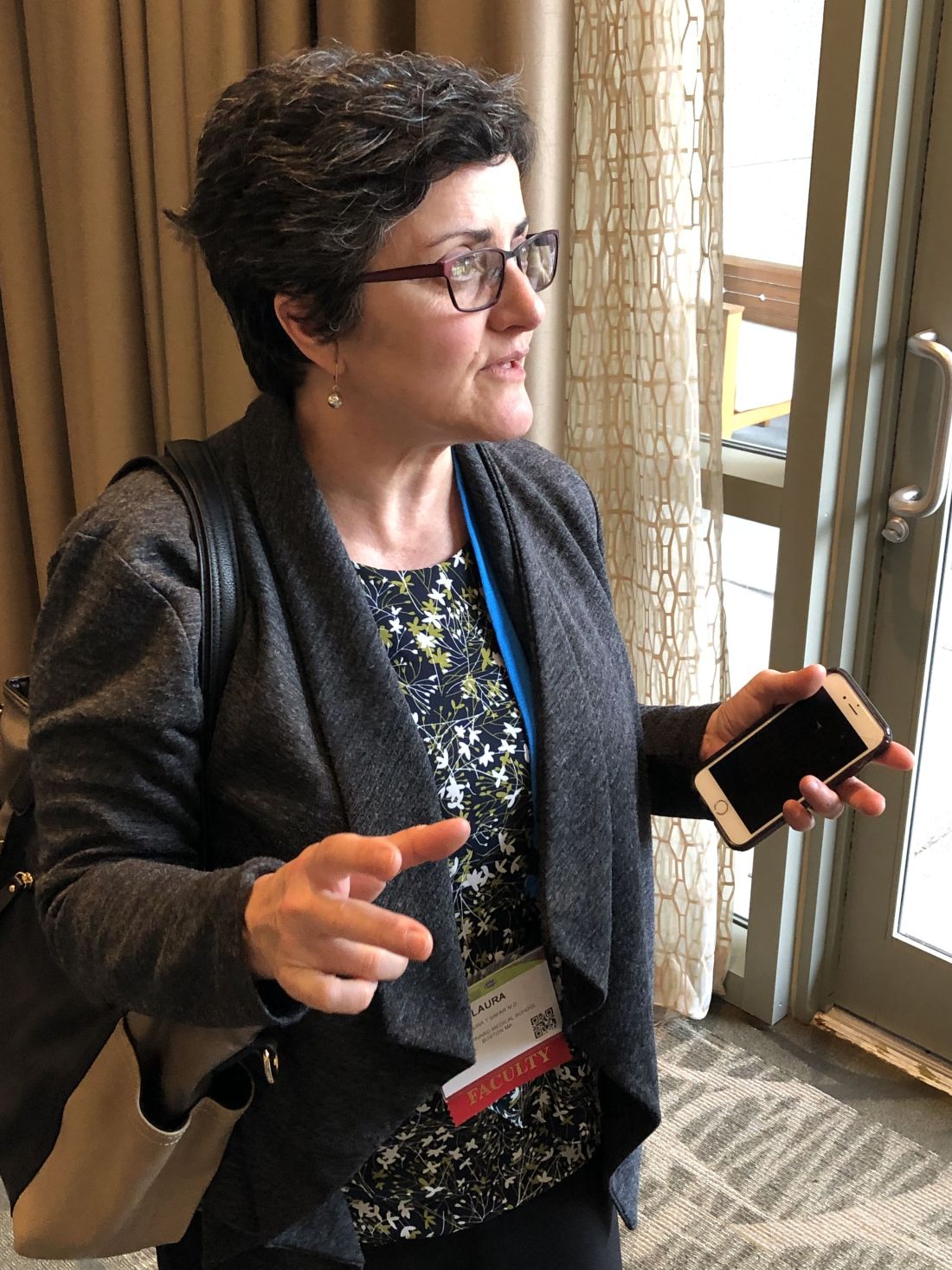
For example, depression may strike a patient as a primary condition, just as it could in anyone. But it may also be a manifestation of MS itself, or a side effect of an MS medication, or spurred by the fatigue and pain caused by MS, said Laura T. Safar, MD, a psychiatrist affiliated with Brigham and Women's Hospital, Boston*. As a result, popular psychiatric treatments such as SSRIs might not necessarily be the best approach, said Dr. Safar, who spoke in an interview and during a presentation at the annual meeting of the Consortium of Multiple Sclerosis Centers.
“You need to follow the why,” she said in the interview, adding that it is crucial to view neurologic and mental health as one and the same in MS. “More integration,” she said, “continues to be the way to go.”
Here are some pearls and tips from Dr. Safar’s presentation on treating psychiatric conditions in patients with MS:
Mental illness incidence
Depression is estimated to affect 25%-45% of people with MS over their lifetimes, while bipolar disorder is thought to affect 6% of patients and a quarter are estimated to have anxiety.
Researchers also believe as many as 10% of patients are affected by pathological laughing and crying during their lives.
Psychiatric side effects
Interferon drugs are notoriously linked to depression and psychosis. Glatiramer acetate (Copaxone) and natalizumab (Tysabri) are also thought to cause psychiatric side effects in some cases – anxiety and depression, respectively. But drug-modifying therapies can also provide relief on the psychiatric front, Dr. Safar said.
Meanwhile, dozens of other drugs used to treat aspects of MS such as spasticity, pain, and fatigue have possible psychiatric side effects.
Alternatives to SSRIs
SSRIs are often a first option in psychiatric patients, but those with MS may need another option because so many – an estimated 80% – also have fatigue, Dr. Safar said.
Alternatives for patients with MS include serotonin and norepinephrine reuptake inhibitors (SNRIs), which may have an advantage over SSRIs, she said. Specifically, SNRIs and bupropion (Wellbutrin) may be better for patients with fatigue and cognitive problems, she said, while vortioxetine (Trintellix) may benefit cognition.
Treating anxiety
There are no data regarding the best drug treatment for anxiety in patients with MS, she said, and SSRIs are typically the starting point. Consider SNRIs and duloxetine, respectively, when patients also have significant fatigue and cognitive symptoms. Use benzodiazepines only in occasional cases (such as anxiety regarding an MRI) and severe cases, she said.
MS-specific side effects
Beware of MS-specific side effects, Dr. Safar said. Some common psychiatric drugs, especially citalopram (Celexa) and escitalopram (Lexapro), may increase the QTc interval and shouldn’t be used in combination with the MS drug fingolimod (Gilenya).
And, she said, bupropion is “a very helpful agent” but poses a rare risk of seizures. Dr. Safar said she has seen this side effect a couple times over 10 years, but both were in patients with “other factors involved.” Still, “it’s something to keep in mind.”
Also understand that serotonergic agents can worsen restless legs syndrome, which is more common in patients with MS. Dr. Safar advises monitoring for the condition.
Pathological laughing, crying
Episodes of so-called pathological laughing, crying, or both tend to be brief, frequent, and intense. They may be sparked by nothing at all, and more often feature crying.
Certain SSRIs have proved helpful for the condition in MS, Dr. Safar said. Research also supports a combination of dextromethorphan (cough suppressant) and quinidine (a drug used to treat arrhythmias and malaria). The combination is sold together as Nuedexta.
Other agents such as venlafaxine (Effexor) and duloxetine (Cymbalta) have very limited data and shouldn’t be first-line treatment, she said.
Dr. Safar reports no relevant disclosures.
Correction, 5/31/19: An earlier version of this article misstated Dr. Safar's hospital affiliation.
SEATTLE – , a neuropsychiatrist cautioned colleagues who treat MS.
For example, depression may strike a patient as a primary condition, just as it could in anyone. But it may also be a manifestation of MS itself, or a side effect of an MS medication, or spurred by the fatigue and pain caused by MS, said Laura T. Safar, MD, a psychiatrist affiliated with Brigham and Women's Hospital, Boston*. As a result, popular psychiatric treatments such as SSRIs might not necessarily be the best approach, said Dr. Safar, who spoke in an interview and during a presentation at the annual meeting of the Consortium of Multiple Sclerosis Centers.
“You need to follow the why,” she said in the interview, adding that it is crucial to view neurologic and mental health as one and the same in MS. “More integration,” she said, “continues to be the way to go.”
Here are some pearls and tips from Dr. Safar’s presentation on treating psychiatric conditions in patients with MS:
Mental illness incidence
Depression is estimated to affect 25%-45% of people with MS over their lifetimes, while bipolar disorder is thought to affect 6% of patients and a quarter are estimated to have anxiety.
Researchers also believe as many as 10% of patients are affected by pathological laughing and crying during their lives.
Psychiatric side effects
Interferon drugs are notoriously linked to depression and psychosis. Glatiramer acetate (Copaxone) and natalizumab (Tysabri) are also thought to cause psychiatric side effects in some cases – anxiety and depression, respectively. But drug-modifying therapies can also provide relief on the psychiatric front, Dr. Safar said.
Meanwhile, dozens of other drugs used to treat aspects of MS such as spasticity, pain, and fatigue have possible psychiatric side effects.
Alternatives to SSRIs
SSRIs are often a first option in psychiatric patients, but those with MS may need another option because so many – an estimated 80% – also have fatigue, Dr. Safar said.
Alternatives for patients with MS include serotonin and norepinephrine reuptake inhibitors (SNRIs), which may have an advantage over SSRIs, she said. Specifically, SNRIs and bupropion (Wellbutrin) may be better for patients with fatigue and cognitive problems, she said, while vortioxetine (Trintellix) may benefit cognition.
Treating anxiety
There are no data regarding the best drug treatment for anxiety in patients with MS, she said, and SSRIs are typically the starting point. Consider SNRIs and duloxetine, respectively, when patients also have significant fatigue and cognitive symptoms. Use benzodiazepines only in occasional cases (such as anxiety regarding an MRI) and severe cases, she said.
MS-specific side effects
Beware of MS-specific side effects, Dr. Safar said. Some common psychiatric drugs, especially citalopram (Celexa) and escitalopram (Lexapro), may increase the QTc interval and shouldn’t be used in combination with the MS drug fingolimod (Gilenya).
And, she said, bupropion is “a very helpful agent” but poses a rare risk of seizures. Dr. Safar said she has seen this side effect a couple times over 10 years, but both were in patients with “other factors involved.” Still, “it’s something to keep in mind.”
Also understand that serotonergic agents can worsen restless legs syndrome, which is more common in patients with MS. Dr. Safar advises monitoring for the condition.
Pathological laughing, crying
Episodes of so-called pathological laughing, crying, or both tend to be brief, frequent, and intense. They may be sparked by nothing at all, and more often feature crying.
Certain SSRIs have proved helpful for the condition in MS, Dr. Safar said. Research also supports a combination of dextromethorphan (cough suppressant) and quinidine (a drug used to treat arrhythmias and malaria). The combination is sold together as Nuedexta.
Other agents such as venlafaxine (Effexor) and duloxetine (Cymbalta) have very limited data and shouldn’t be first-line treatment, she said.
Dr. Safar reports no relevant disclosures.
Correction, 5/31/19: An earlier version of this article misstated Dr. Safar's hospital affiliation.
SEATTLE – , a neuropsychiatrist cautioned colleagues who treat MS.
For example, depression may strike a patient as a primary condition, just as it could in anyone. But it may also be a manifestation of MS itself, or a side effect of an MS medication, or spurred by the fatigue and pain caused by MS, said Laura T. Safar, MD, a psychiatrist affiliated with Brigham and Women's Hospital, Boston*. As a result, popular psychiatric treatments such as SSRIs might not necessarily be the best approach, said Dr. Safar, who spoke in an interview and during a presentation at the annual meeting of the Consortium of Multiple Sclerosis Centers.
“You need to follow the why,” she said in the interview, adding that it is crucial to view neurologic and mental health as one and the same in MS. “More integration,” she said, “continues to be the way to go.”
Here are some pearls and tips from Dr. Safar’s presentation on treating psychiatric conditions in patients with MS:
Mental illness incidence
Depression is estimated to affect 25%-45% of people with MS over their lifetimes, while bipolar disorder is thought to affect 6% of patients and a quarter are estimated to have anxiety.
Researchers also believe as many as 10% of patients are affected by pathological laughing and crying during their lives.
Psychiatric side effects
Interferon drugs are notoriously linked to depression and psychosis. Glatiramer acetate (Copaxone) and natalizumab (Tysabri) are also thought to cause psychiatric side effects in some cases – anxiety and depression, respectively. But drug-modifying therapies can also provide relief on the psychiatric front, Dr. Safar said.
Meanwhile, dozens of other drugs used to treat aspects of MS such as spasticity, pain, and fatigue have possible psychiatric side effects.
Alternatives to SSRIs
SSRIs are often a first option in psychiatric patients, but those with MS may need another option because so many – an estimated 80% – also have fatigue, Dr. Safar said.
Alternatives for patients with MS include serotonin and norepinephrine reuptake inhibitors (SNRIs), which may have an advantage over SSRIs, she said. Specifically, SNRIs and bupropion (Wellbutrin) may be better for patients with fatigue and cognitive problems, she said, while vortioxetine (Trintellix) may benefit cognition.
Treating anxiety
There are no data regarding the best drug treatment for anxiety in patients with MS, she said, and SSRIs are typically the starting point. Consider SNRIs and duloxetine, respectively, when patients also have significant fatigue and cognitive symptoms. Use benzodiazepines only in occasional cases (such as anxiety regarding an MRI) and severe cases, she said.
MS-specific side effects
Beware of MS-specific side effects, Dr. Safar said. Some common psychiatric drugs, especially citalopram (Celexa) and escitalopram (Lexapro), may increase the QTc interval and shouldn’t be used in combination with the MS drug fingolimod (Gilenya).
And, she said, bupropion is “a very helpful agent” but poses a rare risk of seizures. Dr. Safar said she has seen this side effect a couple times over 10 years, but both were in patients with “other factors involved.” Still, “it’s something to keep in mind.”
Also understand that serotonergic agents can worsen restless legs syndrome, which is more common in patients with MS. Dr. Safar advises monitoring for the condition.
Pathological laughing, crying
Episodes of so-called pathological laughing, crying, or both tend to be brief, frequent, and intense. They may be sparked by nothing at all, and more often feature crying.
Certain SSRIs have proved helpful for the condition in MS, Dr. Safar said. Research also supports a combination of dextromethorphan (cough suppressant) and quinidine (a drug used to treat arrhythmias and malaria). The combination is sold together as Nuedexta.
Other agents such as venlafaxine (Effexor) and duloxetine (Cymbalta) have very limited data and shouldn’t be first-line treatment, she said.
Dr. Safar reports no relevant disclosures.
Correction, 5/31/19: An earlier version of this article misstated Dr. Safar's hospital affiliation.
EXPERT ANALYSIS FROM CMSC 2019