User login
LCAR-B38M CAR T therapy appears durable in myeloma
SAN DIEGO – The chimeric antigen receptor (CAR) T-cell therapy LCAR-B38M is in the race for approval in multiple myeloma following encouraging phase 1 results reported at the annual meeting of the American Society of Hematology.
In the LEGEND-2 phase 1/2 open study of 57 patients with advanced relapsed/refractory multiple myeloma treated with the investigational CAR T therapy, the overall response rate was 88% and the complete response rate was 74%. Among 42 patients who achieved complete response, 39 (68%) were negative for minimal residual disease (MRD).
With a median follow-up of 12 months, the median duration of response was 16 months and progression-free survival was 15 months. But in patients who achieved MRD-negative complete response, the median progression-free survival was extended to 24 months.
Pyrexia and cytokine release syndrome were reported in 90% or more of patients. Thrombocytopenia and leukopenia were reported in nearly half of patients.
The phase 1 study was conducted by researchers from the Second Affiliated Hospital of Xi’an Jiaotong University in Xi’an, China. The B-cell maturation antigen (BCMA)–directed CAR T-cell therapy is being jointly developed by Nanjing Legend Biotech and Janssen. A phase 2 study is currently being planned in China for LCAR-B38M. In parallel, Janssen and Legend are enrolling patients in a phase 1b/2 trial of the agent (also known as JNJ-68284528) in the United States.
The therapy joins a growing field of anti-BCMA CAR T-cell agents with promising initial trial results, including bb2121.
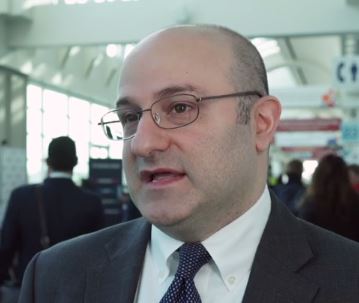
In a video interview at ASH, Sen Zhuang, MD, PhD, vice president of oncology clinical development at Janssen Research & Development, said this class of CAR T agents offers the potential for “very long remissions” and possibly even a “cure” for myeloma.
The LEGEND-2 study is sponsored by Nanjing Legend Biotech and two of the investigators reported employment with the company.
SAN DIEGO – The chimeric antigen receptor (CAR) T-cell therapy LCAR-B38M is in the race for approval in multiple myeloma following encouraging phase 1 results reported at the annual meeting of the American Society of Hematology.
In the LEGEND-2 phase 1/2 open study of 57 patients with advanced relapsed/refractory multiple myeloma treated with the investigational CAR T therapy, the overall response rate was 88% and the complete response rate was 74%. Among 42 patients who achieved complete response, 39 (68%) were negative for minimal residual disease (MRD).
With a median follow-up of 12 months, the median duration of response was 16 months and progression-free survival was 15 months. But in patients who achieved MRD-negative complete response, the median progression-free survival was extended to 24 months.
Pyrexia and cytokine release syndrome were reported in 90% or more of patients. Thrombocytopenia and leukopenia were reported in nearly half of patients.
The phase 1 study was conducted by researchers from the Second Affiliated Hospital of Xi’an Jiaotong University in Xi’an, China. The B-cell maturation antigen (BCMA)–directed CAR T-cell therapy is being jointly developed by Nanjing Legend Biotech and Janssen. A phase 2 study is currently being planned in China for LCAR-B38M. In parallel, Janssen and Legend are enrolling patients in a phase 1b/2 trial of the agent (also known as JNJ-68284528) in the United States.
The therapy joins a growing field of anti-BCMA CAR T-cell agents with promising initial trial results, including bb2121.
In a video interview at ASH, Sen Zhuang, MD, PhD, vice president of oncology clinical development at Janssen Research & Development, said this class of CAR T agents offers the potential for “very long remissions” and possibly even a “cure” for myeloma.
The LEGEND-2 study is sponsored by Nanjing Legend Biotech and two of the investigators reported employment with the company.
SAN DIEGO – The chimeric antigen receptor (CAR) T-cell therapy LCAR-B38M is in the race for approval in multiple myeloma following encouraging phase 1 results reported at the annual meeting of the American Society of Hematology.
In the LEGEND-2 phase 1/2 open study of 57 patients with advanced relapsed/refractory multiple myeloma treated with the investigational CAR T therapy, the overall response rate was 88% and the complete response rate was 74%. Among 42 patients who achieved complete response, 39 (68%) were negative for minimal residual disease (MRD).
With a median follow-up of 12 months, the median duration of response was 16 months and progression-free survival was 15 months. But in patients who achieved MRD-negative complete response, the median progression-free survival was extended to 24 months.
Pyrexia and cytokine release syndrome were reported in 90% or more of patients. Thrombocytopenia and leukopenia were reported in nearly half of patients.
The phase 1 study was conducted by researchers from the Second Affiliated Hospital of Xi’an Jiaotong University in Xi’an, China. The B-cell maturation antigen (BCMA)–directed CAR T-cell therapy is being jointly developed by Nanjing Legend Biotech and Janssen. A phase 2 study is currently being planned in China for LCAR-B38M. In parallel, Janssen and Legend are enrolling patients in a phase 1b/2 trial of the agent (also known as JNJ-68284528) in the United States.
The therapy joins a growing field of anti-BCMA CAR T-cell agents with promising initial trial results, including bb2121.
In a video interview at ASH, Sen Zhuang, MD, PhD, vice president of oncology clinical development at Janssen Research & Development, said this class of CAR T agents offers the potential for “very long remissions” and possibly even a “cure” for myeloma.
The LEGEND-2 study is sponsored by Nanjing Legend Biotech and two of the investigators reported employment with the company.
REPORTING FROM ASH 2018
Key clinical point:
Major finding: The complete response rate was 74% with median progression-free survival of 15 months.
Study details: A phase 1/2 study of 57 patients with advanced relapsed/refractory multiple myeloma.
Disclosures: The study is sponsored by Nanjing Legend Biotech. Two of the investigators reported employment with the company.
2018: A banner year for hematology drug approvals
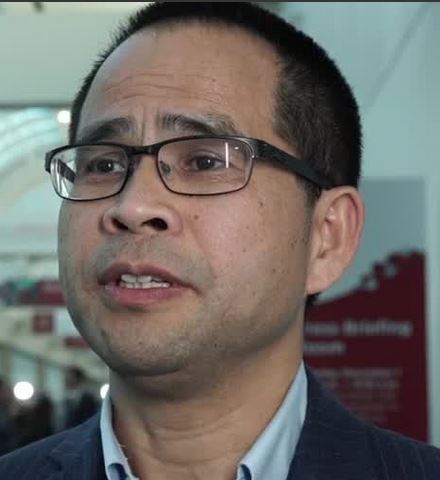
SAN DIEGO – It was banner year for new hematology drug approvals, according to R. Angelo de Claro, MD, of the Food and Drug Administration.
, including 12 first-time approvals, 5 new biosimilars, and 15 new indications for previously approved drugs, Dr. de Claro, clinical team leader in the FDA’s division of hematology products in Silver Spring, Md., said during an overview of the approvals at the annual meeting of the American Society of Hematology.
These include six new approvals for first-line treatment, and eight for pediatric indications, he said.
Highlights were discussed at two ASH-FDA joint symposia at the meeting, including one focused on the malignant hematology approvals, and another on the nonmalignant hematology approvals. In a video interview, Dr. de Claro provides some additional insight into their importance and about what might lie ahead.
“I think what’s exciting is that you have drug development occurring in more common conditions such as chronic lymphocytic leukemia, as well as in rare conditions, including hairy cell leukemia – and the first-ever approval in hemophagocytic lymphohistiocytosis,” he said. “It’s been very busy at the FDA; stay tuned ... the year’s not done yet. There could be more coming and we certainly anticipate more applications in the future.”
Dr. de Claro is an FDA employee. He reported having no other relevant disclosures.
SAN DIEGO – It was banner year for new hematology drug approvals, according to R. Angelo de Claro, MD, of the Food and Drug Administration.
, including 12 first-time approvals, 5 new biosimilars, and 15 new indications for previously approved drugs, Dr. de Claro, clinical team leader in the FDA’s division of hematology products in Silver Spring, Md., said during an overview of the approvals at the annual meeting of the American Society of Hematology.
These include six new approvals for first-line treatment, and eight for pediatric indications, he said.
Highlights were discussed at two ASH-FDA joint symposia at the meeting, including one focused on the malignant hematology approvals, and another on the nonmalignant hematology approvals. In a video interview, Dr. de Claro provides some additional insight into their importance and about what might lie ahead.
“I think what’s exciting is that you have drug development occurring in more common conditions such as chronic lymphocytic leukemia, as well as in rare conditions, including hairy cell leukemia – and the first-ever approval in hemophagocytic lymphohistiocytosis,” he said. “It’s been very busy at the FDA; stay tuned ... the year’s not done yet. There could be more coming and we certainly anticipate more applications in the future.”
Dr. de Claro is an FDA employee. He reported having no other relevant disclosures.
SAN DIEGO – It was banner year for new hematology drug approvals, according to R. Angelo de Claro, MD, of the Food and Drug Administration.
, including 12 first-time approvals, 5 new biosimilars, and 15 new indications for previously approved drugs, Dr. de Claro, clinical team leader in the FDA’s division of hematology products in Silver Spring, Md., said during an overview of the approvals at the annual meeting of the American Society of Hematology.
These include six new approvals for first-line treatment, and eight for pediatric indications, he said.
Highlights were discussed at two ASH-FDA joint symposia at the meeting, including one focused on the malignant hematology approvals, and another on the nonmalignant hematology approvals. In a video interview, Dr. de Claro provides some additional insight into their importance and about what might lie ahead.
“I think what’s exciting is that you have drug development occurring in more common conditions such as chronic lymphocytic leukemia, as well as in rare conditions, including hairy cell leukemia – and the first-ever approval in hemophagocytic lymphohistiocytosis,” he said. “It’s been very busy at the FDA; stay tuned ... the year’s not done yet. There could be more coming and we certainly anticipate more applications in the future.”
Dr. de Claro is an FDA employee. He reported having no other relevant disclosures.
REPORTING FROM ASH 2018
CLL resistance mechanism to venetoclax identified
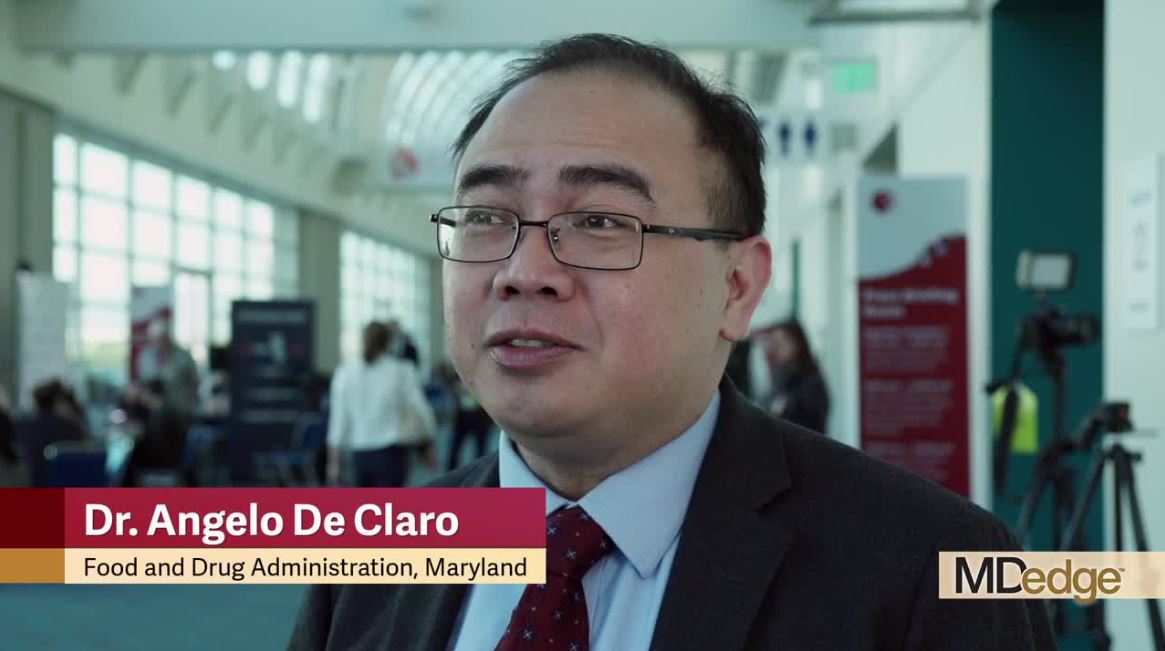
SAN DIEGO – A recurrent mutation in BCL2, the therapeutic target of venetoclax (Venclexta), appears to be a major contributor to drug resistance in patients with chronic lymphocytic leukemia (CLL), investigators reported.
The mutation has been detected in some patients with CLL up to 2 years before resistance to venetoclax actually develops, said lead author Piers Blombery, MBBS, from the Peter MacCallum Cancer Center in Melbourne.
“We have identified the first acquired BCL2 mutation developed in patients clinically treated with venetoclax,” he said in a late-breaking oral abstract session at the annual meeting of the American Society of Hematology.
The mutation, which the investigators have labeled BCL2 Gly101Val, “is a recurrent and frequent mediator of resistance and may be detected years before clinical relapse occurs,” he added.
The paper was published online in Cancer Discovery (2018 Dec 4. doi: 10.1158/2159-8290.CD-18-1119) to coincide with the presentation at ASH.
Despite the demonstrated efficacy of venetoclax as continuous therapy in patients with relapsed or refractory CLL, the majority of patients experience disease progression, prompting the investigators to explore molecular mechanisms of secondary resistance.
To do this, they analyzed paired samples from 15 patients with CLL, enrolled in clinical trials of venetoclax, collected both before the start of venetoclax therapy and at the time of disease progression.
In seven of the patients, they identified a novel mutation that showed up at the time of progression, but was absent from the pre-venetoclax samples. The mutation first became detectable from about 19 to 42 months after the start of therapy and preceded clinical progression by as much as 25 months, the investigators found.
They pinned the mutation down to the BH3-binding groove on BCL2, the same molecular site targeted by venetoclax. They found that the mutation was not present in samples from 96 patients with venetoclax-naive CLL nor in any other B-cell malignancies. Searches for references to the mutation in both a cancer database (COSMIC) and a population database (gnomAD) came up empty.
In other experiments, they determined that cell lines overexpressing BCL2 Gly101Val are resistant to venetoclax, and that in the presence of venetoclax in vitro, BCL2 Gly101Val-expressing cells have a growth advantage, compared with wild type cells.
Additionally, they showed that the mutation results in impaired venetoclax binding in vitro.
“BCL2 Gly101Val is observed subclonally, implicating multiple mechanisms of venetoclax resistance in the same patient,” Dr. Blombery said.
In an interview, Dr. Blombery said that the identification of the resistance mutation is a strong rationale for using combination therapy to treat patients with relapsed or refractory CLL to help prevent or attenuate selection pressures that lead to resistance.
The investigators were supported by the Wilson Center for Lymphoma Genomics, Snowdome Foundation, National Health Medical Research Council, Leukemia and Lymphoma Society, Leukemia Foundation, Cancer Council of Victoria, and Australian Cancer Research Foundation. Dr. Blombery reported having no relevant disclosures.
SOURCE: Blombery P et al. ASH 2018, Abstract LBA-7.
SAN DIEGO – A recurrent mutation in BCL2, the therapeutic target of venetoclax (Venclexta), appears to be a major contributor to drug resistance in patients with chronic lymphocytic leukemia (CLL), investigators reported.
The mutation has been detected in some patients with CLL up to 2 years before resistance to venetoclax actually develops, said lead author Piers Blombery, MBBS, from the Peter MacCallum Cancer Center in Melbourne.
“We have identified the first acquired BCL2 mutation developed in patients clinically treated with venetoclax,” he said in a late-breaking oral abstract session at the annual meeting of the American Society of Hematology.
The mutation, which the investigators have labeled BCL2 Gly101Val, “is a recurrent and frequent mediator of resistance and may be detected years before clinical relapse occurs,” he added.
The paper was published online in Cancer Discovery (2018 Dec 4. doi: 10.1158/2159-8290.CD-18-1119) to coincide with the presentation at ASH.
Despite the demonstrated efficacy of venetoclax as continuous therapy in patients with relapsed or refractory CLL, the majority of patients experience disease progression, prompting the investigators to explore molecular mechanisms of secondary resistance.
To do this, they analyzed paired samples from 15 patients with CLL, enrolled in clinical trials of venetoclax, collected both before the start of venetoclax therapy and at the time of disease progression.
In seven of the patients, they identified a novel mutation that showed up at the time of progression, but was absent from the pre-venetoclax samples. The mutation first became detectable from about 19 to 42 months after the start of therapy and preceded clinical progression by as much as 25 months, the investigators found.
They pinned the mutation down to the BH3-binding groove on BCL2, the same molecular site targeted by venetoclax. They found that the mutation was not present in samples from 96 patients with venetoclax-naive CLL nor in any other B-cell malignancies. Searches for references to the mutation in both a cancer database (COSMIC) and a population database (gnomAD) came up empty.
In other experiments, they determined that cell lines overexpressing BCL2 Gly101Val are resistant to venetoclax, and that in the presence of venetoclax in vitro, BCL2 Gly101Val-expressing cells have a growth advantage, compared with wild type cells.
Additionally, they showed that the mutation results in impaired venetoclax binding in vitro.
“BCL2 Gly101Val is observed subclonally, implicating multiple mechanisms of venetoclax resistance in the same patient,” Dr. Blombery said.
In an interview, Dr. Blombery said that the identification of the resistance mutation is a strong rationale for using combination therapy to treat patients with relapsed or refractory CLL to help prevent or attenuate selection pressures that lead to resistance.
The investigators were supported by the Wilson Center for Lymphoma Genomics, Snowdome Foundation, National Health Medical Research Council, Leukemia and Lymphoma Society, Leukemia Foundation, Cancer Council of Victoria, and Australian Cancer Research Foundation. Dr. Blombery reported having no relevant disclosures.
SOURCE: Blombery P et al. ASH 2018, Abstract LBA-7.
SAN DIEGO – A recurrent mutation in BCL2, the therapeutic target of venetoclax (Venclexta), appears to be a major contributor to drug resistance in patients with chronic lymphocytic leukemia (CLL), investigators reported.
The mutation has been detected in some patients with CLL up to 2 years before resistance to venetoclax actually develops, said lead author Piers Blombery, MBBS, from the Peter MacCallum Cancer Center in Melbourne.
“We have identified the first acquired BCL2 mutation developed in patients clinically treated with venetoclax,” he said in a late-breaking oral abstract session at the annual meeting of the American Society of Hematology.
The mutation, which the investigators have labeled BCL2 Gly101Val, “is a recurrent and frequent mediator of resistance and may be detected years before clinical relapse occurs,” he added.
The paper was published online in Cancer Discovery (2018 Dec 4. doi: 10.1158/2159-8290.CD-18-1119) to coincide with the presentation at ASH.
Despite the demonstrated efficacy of venetoclax as continuous therapy in patients with relapsed or refractory CLL, the majority of patients experience disease progression, prompting the investigators to explore molecular mechanisms of secondary resistance.
To do this, they analyzed paired samples from 15 patients with CLL, enrolled in clinical trials of venetoclax, collected both before the start of venetoclax therapy and at the time of disease progression.
In seven of the patients, they identified a novel mutation that showed up at the time of progression, but was absent from the pre-venetoclax samples. The mutation first became detectable from about 19 to 42 months after the start of therapy and preceded clinical progression by as much as 25 months, the investigators found.
They pinned the mutation down to the BH3-binding groove on BCL2, the same molecular site targeted by venetoclax. They found that the mutation was not present in samples from 96 patients with venetoclax-naive CLL nor in any other B-cell malignancies. Searches for references to the mutation in both a cancer database (COSMIC) and a population database (gnomAD) came up empty.
In other experiments, they determined that cell lines overexpressing BCL2 Gly101Val are resistant to venetoclax, and that in the presence of venetoclax in vitro, BCL2 Gly101Val-expressing cells have a growth advantage, compared with wild type cells.
Additionally, they showed that the mutation results in impaired venetoclax binding in vitro.
“BCL2 Gly101Val is observed subclonally, implicating multiple mechanisms of venetoclax resistance in the same patient,” Dr. Blombery said.
In an interview, Dr. Blombery said that the identification of the resistance mutation is a strong rationale for using combination therapy to treat patients with relapsed or refractory CLL to help prevent or attenuate selection pressures that lead to resistance.
The investigators were supported by the Wilson Center for Lymphoma Genomics, Snowdome Foundation, National Health Medical Research Council, Leukemia and Lymphoma Society, Leukemia Foundation, Cancer Council of Victoria, and Australian Cancer Research Foundation. Dr. Blombery reported having no relevant disclosures.
SOURCE: Blombery P et al. ASH 2018, Abstract LBA-7.
REPORTING FROM ASH 2018
Key clinical point:
Major finding: The mutation was identified in samples from seven patients after venetoclax therapy, but not in any of the pretherapy samples.
Study details: Genetic analysis of CLL mutations in 15 patients enrolled in clinical trials of venetoclax.
Disclosures: The investigators were supported by the Wilson Center for Lymphoma Genomics, Snowdome Foundation, National Health Medical Research Council, Leukemia and Lymphoma Society, Leukemia Foundation, Cancer Council of Victoria, and Australian Cancer Research Foundation. Dr. Blombery reported having no relevant disclosures.
Source: Blombery P et al. ASH 2018, Abstract LBA-7.

FLT3 inhibitor moves forward in newly diagnosed AML
SAN DIEGO – In an ongoing phase 1 study, the oral FMS-like tyrosine kinase 3
The dose escalation/expansion study coupled the oral agent with induction and consolidation chemotherapy and was aimed at establishing the dosing and safety of gilteritinib.
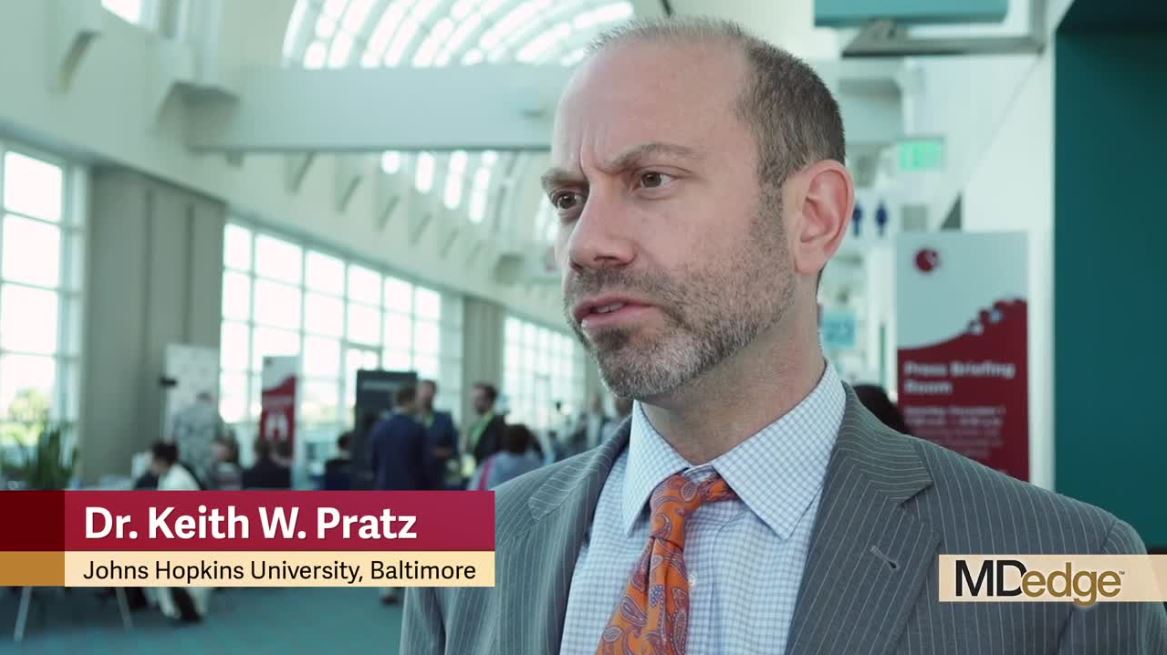
The findings – reported at the annual meeting of the American Society of Hematology – mean that the FLT3 inhibitor will next be compared with the current standard of care, which has a 60%-65% remission rate, according to Keith W. Pratz, MD, of Johns Hopkins University in Baltimore.
“The later-phase clinical studies that we will be doing with gilteritinib will look to compare midostaurin-based chemotherapy with gilteritinib and looking for outcomes, with hopes of improving upon this 60%-65% remission rate,” Dr. Pratz said in a video interview.
Gilteritinib was recently approved by the Food and Drug Administration for relapsed/refractory AML patients with FLT3 mutations.
Dr. Pratz said the approval will provide a needed new treatment option in that patient population, which has had a low response rate to conventional therapy, in the range of 10%-15%.
“There really wasn’t a standard approved therapy prior to this and this will be what is given to most patients who have a FLT3 mutation and relapse,” he said.
Dr. Pratz reported consultancy and research funding from Astellas, which markets gilteritinib, as well as other companies.
SAN DIEGO – In an ongoing phase 1 study, the oral FMS-like tyrosine kinase 3
The dose escalation/expansion study coupled the oral agent with induction and consolidation chemotherapy and was aimed at establishing the dosing and safety of gilteritinib.
The findings – reported at the annual meeting of the American Society of Hematology – mean that the FLT3 inhibitor will next be compared with the current standard of care, which has a 60%-65% remission rate, according to Keith W. Pratz, MD, of Johns Hopkins University in Baltimore.
“The later-phase clinical studies that we will be doing with gilteritinib will look to compare midostaurin-based chemotherapy with gilteritinib and looking for outcomes, with hopes of improving upon this 60%-65% remission rate,” Dr. Pratz said in a video interview.
Gilteritinib was recently approved by the Food and Drug Administration for relapsed/refractory AML patients with FLT3 mutations.
Dr. Pratz said the approval will provide a needed new treatment option in that patient population, which has had a low response rate to conventional therapy, in the range of 10%-15%.
“There really wasn’t a standard approved therapy prior to this and this will be what is given to most patients who have a FLT3 mutation and relapse,” he said.
Dr. Pratz reported consultancy and research funding from Astellas, which markets gilteritinib, as well as other companies.
SAN DIEGO – In an ongoing phase 1 study, the oral FMS-like tyrosine kinase 3
The dose escalation/expansion study coupled the oral agent with induction and consolidation chemotherapy and was aimed at establishing the dosing and safety of gilteritinib.
The findings – reported at the annual meeting of the American Society of Hematology – mean that the FLT3 inhibitor will next be compared with the current standard of care, which has a 60%-65% remission rate, according to Keith W. Pratz, MD, of Johns Hopkins University in Baltimore.
“The later-phase clinical studies that we will be doing with gilteritinib will look to compare midostaurin-based chemotherapy with gilteritinib and looking for outcomes, with hopes of improving upon this 60%-65% remission rate,” Dr. Pratz said in a video interview.
Gilteritinib was recently approved by the Food and Drug Administration for relapsed/refractory AML patients with FLT3 mutations.
Dr. Pratz said the approval will provide a needed new treatment option in that patient population, which has had a low response rate to conventional therapy, in the range of 10%-15%.
“There really wasn’t a standard approved therapy prior to this and this will be what is given to most patients who have a FLT3 mutation and relapse,” he said.
Dr. Pratz reported consultancy and research funding from Astellas, which markets gilteritinib, as well as other companies.
REPORTING FROM ASH 2018
DOAC pause yields favorable outcomes for AF patients
San Diego – In patients with atrial fibrillation who had direct oral anticoagulant (DOAC) interruption for an elective surgery, a simple and standardized management strategy yielded low rates of bleeding and thromboembolism, according to results of a prospective study of more than 3,000 patients.
Rates of major bleeding were less than 2% and rates of arterial thromboembolism were less than 1% in patients managed in accordance with the strategy, which foregoes heparin bridging and preoperative coagulation testing, according to investigator James D. Douketis, MD, of St. Joseph’s Healthcare and McMaster University, Hamilton, Ont.
“This is the first study to demonstrate the safety of a standardized perioperative management approach in a patients with atrial fibrillation who are taking a DOAC, and we hope will establish a standard and will have an effect on our clinical practice guidelines,” Dr. Douketis said during a press briefing at the annual meeting of the American Society of Hematology.
This trial offers the “most definitive evidence to date” that atrial fibrillation patients can – in an organized fashion based on bleeding risk – safely stop taking DOACs, said Mark Crowther, MD, chair and professor of medicine at McMaster University.
“This study will almost instantaneously establish a treatment practice and a treatment standard for the vast number of patients in North America and around the world who take these drugs,” added Dr. Crowther, who moderated the press briefing.
The PAUSE study included three parallel cohorts of atrial fibrillation patients taking DOACs (apixaban, dabigatran, or rivaroxaban) who required anticoagulant interruption for an elective surgery or procedure.
The DOAC interruptions were done using standardized protocols based on the pharmacokinetic properties of each DOAC, procedure-associated bleeding risk, and creatinine clearance, the investigators reported.
The interruptions occurred 1 day before and after low bleeding risk surgeries, and 2 days before and after high bleeding risk surgeries, while longer interruptions were used in patients receiving dabigatran who had a creatinine clearance below 50 mL/min.
A total of 3,007 patients at 23 sites in Canada, the United States, and Europe were managed by this approach in the PAUSE study – 1,257 patients receiving apixaban, 668 receiving dabigatran, and 1,082 receiving rivaroxaban – and were evaluated weekly for 30 days post-procedure.
PAUSE is the largest study to date that addresses how to manage the common problem of perioperative DOAC management. It is likely to have a practice-changing impact and will inform future practice guidelines in perioperative care.
The 30-day postoperative rate of major bleeding was low, according to investigators, at 1.35% (95% confidence interval, 0-2.00%) for apixaban, 0.90% (95% CI, 0-1.73%) for dabigatran, and 1.85% (95% CI, 0-2.65%) for rivaroxaban, Dr. Douketis reported.
Likewise, the rate of arterial thromboembolism was low at 0.16% (95% CI, 0-0.48%) for apixaban, 0.6% (95% CI, 0-1.33%) for dabigatran, and 0.37% (95% CI, 0-0.82%) for rivaroxaban, he said.
Most patients (greater than 90%) had minimal to no residual DOAC levels at the time of surgery, the investigator added.
The study was funded by the Canadian Institutes of Health Research and the H&S Foundation of Canada. Dr. Douketis reported disclosures related to Janssen, which makes rivaroxaban; Boehringer-Ingelheim, which makes dabigatran; and other companies. Dr. Crowther reported financial relationships with Bristol-Myers Squibb and other companies.
SOURCE: Douketis J et al. ASH 2018, Abstract LBA-5.
San Diego – In patients with atrial fibrillation who had direct oral anticoagulant (DOAC) interruption for an elective surgery, a simple and standardized management strategy yielded low rates of bleeding and thromboembolism, according to results of a prospective study of more than 3,000 patients.
Rates of major bleeding were less than 2% and rates of arterial thromboembolism were less than 1% in patients managed in accordance with the strategy, which foregoes heparin bridging and preoperative coagulation testing, according to investigator James D. Douketis, MD, of St. Joseph’s Healthcare and McMaster University, Hamilton, Ont.
“This is the first study to demonstrate the safety of a standardized perioperative management approach in a patients with atrial fibrillation who are taking a DOAC, and we hope will establish a standard and will have an effect on our clinical practice guidelines,” Dr. Douketis said during a press briefing at the annual meeting of the American Society of Hematology.
This trial offers the “most definitive evidence to date” that atrial fibrillation patients can – in an organized fashion based on bleeding risk – safely stop taking DOACs, said Mark Crowther, MD, chair and professor of medicine at McMaster University.
“This study will almost instantaneously establish a treatment practice and a treatment standard for the vast number of patients in North America and around the world who take these drugs,” added Dr. Crowther, who moderated the press briefing.
The PAUSE study included three parallel cohorts of atrial fibrillation patients taking DOACs (apixaban, dabigatran, or rivaroxaban) who required anticoagulant interruption for an elective surgery or procedure.
The DOAC interruptions were done using standardized protocols based on the pharmacokinetic properties of each DOAC, procedure-associated bleeding risk, and creatinine clearance, the investigators reported.
The interruptions occurred 1 day before and after low bleeding risk surgeries, and 2 days before and after high bleeding risk surgeries, while longer interruptions were used in patients receiving dabigatran who had a creatinine clearance below 50 mL/min.
A total of 3,007 patients at 23 sites in Canada, the United States, and Europe were managed by this approach in the PAUSE study – 1,257 patients receiving apixaban, 668 receiving dabigatran, and 1,082 receiving rivaroxaban – and were evaluated weekly for 30 days post-procedure.
PAUSE is the largest study to date that addresses how to manage the common problem of perioperative DOAC management. It is likely to have a practice-changing impact and will inform future practice guidelines in perioperative care.
The 30-day postoperative rate of major bleeding was low, according to investigators, at 1.35% (95% confidence interval, 0-2.00%) for apixaban, 0.90% (95% CI, 0-1.73%) for dabigatran, and 1.85% (95% CI, 0-2.65%) for rivaroxaban, Dr. Douketis reported.
Likewise, the rate of arterial thromboembolism was low at 0.16% (95% CI, 0-0.48%) for apixaban, 0.6% (95% CI, 0-1.33%) for dabigatran, and 0.37% (95% CI, 0-0.82%) for rivaroxaban, he said.
Most patients (greater than 90%) had minimal to no residual DOAC levels at the time of surgery, the investigator added.
The study was funded by the Canadian Institutes of Health Research and the H&S Foundation of Canada. Dr. Douketis reported disclosures related to Janssen, which makes rivaroxaban; Boehringer-Ingelheim, which makes dabigatran; and other companies. Dr. Crowther reported financial relationships with Bristol-Myers Squibb and other companies.
SOURCE: Douketis J et al. ASH 2018, Abstract LBA-5.
San Diego – In patients with atrial fibrillation who had direct oral anticoagulant (DOAC) interruption for an elective surgery, a simple and standardized management strategy yielded low rates of bleeding and thromboembolism, according to results of a prospective study of more than 3,000 patients.
Rates of major bleeding were less than 2% and rates of arterial thromboembolism were less than 1% in patients managed in accordance with the strategy, which foregoes heparin bridging and preoperative coagulation testing, according to investigator James D. Douketis, MD, of St. Joseph’s Healthcare and McMaster University, Hamilton, Ont.
“This is the first study to demonstrate the safety of a standardized perioperative management approach in a patients with atrial fibrillation who are taking a DOAC, and we hope will establish a standard and will have an effect on our clinical practice guidelines,” Dr. Douketis said during a press briefing at the annual meeting of the American Society of Hematology.
This trial offers the “most definitive evidence to date” that atrial fibrillation patients can – in an organized fashion based on bleeding risk – safely stop taking DOACs, said Mark Crowther, MD, chair and professor of medicine at McMaster University.
“This study will almost instantaneously establish a treatment practice and a treatment standard for the vast number of patients in North America and around the world who take these drugs,” added Dr. Crowther, who moderated the press briefing.
The PAUSE study included three parallel cohorts of atrial fibrillation patients taking DOACs (apixaban, dabigatran, or rivaroxaban) who required anticoagulant interruption for an elective surgery or procedure.
The DOAC interruptions were done using standardized protocols based on the pharmacokinetic properties of each DOAC, procedure-associated bleeding risk, and creatinine clearance, the investigators reported.
The interruptions occurred 1 day before and after low bleeding risk surgeries, and 2 days before and after high bleeding risk surgeries, while longer interruptions were used in patients receiving dabigatran who had a creatinine clearance below 50 mL/min.
A total of 3,007 patients at 23 sites in Canada, the United States, and Europe were managed by this approach in the PAUSE study – 1,257 patients receiving apixaban, 668 receiving dabigatran, and 1,082 receiving rivaroxaban – and were evaluated weekly for 30 days post-procedure.
PAUSE is the largest study to date that addresses how to manage the common problem of perioperative DOAC management. It is likely to have a practice-changing impact and will inform future practice guidelines in perioperative care.
The 30-day postoperative rate of major bleeding was low, according to investigators, at 1.35% (95% confidence interval, 0-2.00%) for apixaban, 0.90% (95% CI, 0-1.73%) for dabigatran, and 1.85% (95% CI, 0-2.65%) for rivaroxaban, Dr. Douketis reported.
Likewise, the rate of arterial thromboembolism was low at 0.16% (95% CI, 0-0.48%) for apixaban, 0.6% (95% CI, 0-1.33%) for dabigatran, and 0.37% (95% CI, 0-0.82%) for rivaroxaban, he said.
Most patients (greater than 90%) had minimal to no residual DOAC levels at the time of surgery, the investigator added.
The study was funded by the Canadian Institutes of Health Research and the H&S Foundation of Canada. Dr. Douketis reported disclosures related to Janssen, which makes rivaroxaban; Boehringer-Ingelheim, which makes dabigatran; and other companies. Dr. Crowther reported financial relationships with Bristol-Myers Squibb and other companies.
SOURCE: Douketis J et al. ASH 2018, Abstract LBA-5.
REPORTING FROM ASH 2018
Key clinical point:
Major finding: The 30-day postoperative rate of major bleeding was 1.35% (95% CI, 0-2.00%) for apixaban, 0.90% (95% CI, 0-1.73%) for dabigatran, and 1.85% (95% CI, 0-2.65%) for rivaroxaban.
Study details: A prospective study of more than 3,000 subjects with atrial fibrillation who underwent DOAC interruption due to an elective surgery or procedure.
Disclosures: The study was funded by the Canadian Institutes of Health Research and H&S Foundation of Canada. Dr. Douketis reported disclosures related to Janssen, which makes rivaroxaban; Boehringer-Ingelheim, which makes dabigatran; and other companies.
Source: Douketis J et al. ASH 2018, Abstract LBA-5.
Sickle cell disease guidelines release set for early 2019
, according to Robert Liem, MD, chair of the American Society of Hematology coordination panel for the initiative.
The new clinical practice recommendations will expand on 2014 guidelines published by the National Heart, Lung, and Blood Institute in a way that will help both hematologists and nonhematologists who take care of patients with sickle cell disease, Dr. Liem said in a video interview at the annual meeting of the American Society of Hematology.
Five different guidelines are under development to cover different aspects of acute and chronic complications of sickle cell disease, including pain, cardiopulmonary and kidney disease, cerebrovascular disease, transfusion support, and stem cell transplantation.
Watch the video to learn more about the guideline effort from the perspective of Dr. Liem, who is also the director of the Comprehensive Sickle Cell Program at the Ann & Robert H. Lurie Children’s Hospital of Chicago.
, according to Robert Liem, MD, chair of the American Society of Hematology coordination panel for the initiative.
The new clinical practice recommendations will expand on 2014 guidelines published by the National Heart, Lung, and Blood Institute in a way that will help both hematologists and nonhematologists who take care of patients with sickle cell disease, Dr. Liem said in a video interview at the annual meeting of the American Society of Hematology.
Five different guidelines are under development to cover different aspects of acute and chronic complications of sickle cell disease, including pain, cardiopulmonary and kidney disease, cerebrovascular disease, transfusion support, and stem cell transplantation.
Watch the video to learn more about the guideline effort from the perspective of Dr. Liem, who is also the director of the Comprehensive Sickle Cell Program at the Ann & Robert H. Lurie Children’s Hospital of Chicago.
, according to Robert Liem, MD, chair of the American Society of Hematology coordination panel for the initiative.
The new clinical practice recommendations will expand on 2014 guidelines published by the National Heart, Lung, and Blood Institute in a way that will help both hematologists and nonhematologists who take care of patients with sickle cell disease, Dr. Liem said in a video interview at the annual meeting of the American Society of Hematology.
Five different guidelines are under development to cover different aspects of acute and chronic complications of sickle cell disease, including pain, cardiopulmonary and kidney disease, cerebrovascular disease, transfusion support, and stem cell transplantation.
Watch the video to learn more about the guideline effort from the perspective of Dr. Liem, who is also the director of the Comprehensive Sickle Cell Program at the Ann & Robert H. Lurie Children’s Hospital of Chicago.
FROM ASH 2018
Model bests IPSS-R for predicting survival, risk for AML in myelodysplastic syndrome
SAN DIEGO – A newly developed personalized model that “harnesses the power of artificial intelligence” to predict overall survival and transformation to acute myeloid leukemia (AML) in patients with myelodysplastic syndromes outperforms both the original and revised International Prognostic Scoring Systems (IPSS, IPSS-R), according to Aziz Nazha, MD.
The machine learning model, which was built using clinical and genomic data derived from myelodysplastic syndrome (MDS) patients diagnosed according to 2008 World Health Organization criteria, incorporates information beyond that included in the IPSS and IPSS-R, and provides patient-specific survival probabilities at different time points, Dr. Nazha of Cleveland Clinic reported during a press briefing at the annual meeting of the American Society of Hematology.
The model was developed in a combined training cohort of 1,471 patients from the Cleveland Clinic and Munich Leukemia Laboratory and was validated in a separate cohort of 831 patients from the Moffitt Cancer Center in Tampa, Fla.
The concordance index – a measure for comparing the accuracy of the various models – was 0.80 for overall survival (OS), and 0.78 for AML transformation vs. 0.66 and 0.73, respectively, for IPSS, and 0.67 and 0.73, respectively, for IPSS-R, Dr. Nazha said. The new “geno-clinical” model also outperformed mutations-only analysis, mutations plus cytogenetics analysis, and mutations plus cytogenetics plus age analyses for both OS and AML transformation.
Adding mutational variant allelic frequency did not significantly improve prediction accuracy, he noted.
Dr. Nazha and his colleagues are developing a web application tool that can be used to run the trained model to calculate patient-specific, time-specific OS and AML transformation probabilities. He discussed the new model and its implications for personalized prognosis and treatment in this video interview.
Improved risk assessment helps patients understand their disease and “establish expectations about their journey with their disease,” and it is also extremely important for treating physicians, he said.
“All of our consensus guidelines and treatment recommendations are based on risk,” he explained, noting that the approach varies greatly for higher- and lower-risk patients.
This model represents a potential new focus on “personalized prediction” in addition to the increasing focus on personalized treatment and takes into account the heterogeneous outcomes seen in patients with MDS, he said.
Dr. Nazha reported consultancy for Karyopharma and Tolero, and data-monitoring committee membership for MEI.
SOURCE: Nazha A et al. ASH 2018, Abstract 793.
SAN DIEGO – A newly developed personalized model that “harnesses the power of artificial intelligence” to predict overall survival and transformation to acute myeloid leukemia (AML) in patients with myelodysplastic syndromes outperforms both the original and revised International Prognostic Scoring Systems (IPSS, IPSS-R), according to Aziz Nazha, MD.
The machine learning model, which was built using clinical and genomic data derived from myelodysplastic syndrome (MDS) patients diagnosed according to 2008 World Health Organization criteria, incorporates information beyond that included in the IPSS and IPSS-R, and provides patient-specific survival probabilities at different time points, Dr. Nazha of Cleveland Clinic reported during a press briefing at the annual meeting of the American Society of Hematology.
The model was developed in a combined training cohort of 1,471 patients from the Cleveland Clinic and Munich Leukemia Laboratory and was validated in a separate cohort of 831 patients from the Moffitt Cancer Center in Tampa, Fla.
The concordance index – a measure for comparing the accuracy of the various models – was 0.80 for overall survival (OS), and 0.78 for AML transformation vs. 0.66 and 0.73, respectively, for IPSS, and 0.67 and 0.73, respectively, for IPSS-R, Dr. Nazha said. The new “geno-clinical” model also outperformed mutations-only analysis, mutations plus cytogenetics analysis, and mutations plus cytogenetics plus age analyses for both OS and AML transformation.
Adding mutational variant allelic frequency did not significantly improve prediction accuracy, he noted.
Dr. Nazha and his colleagues are developing a web application tool that can be used to run the trained model to calculate patient-specific, time-specific OS and AML transformation probabilities. He discussed the new model and its implications for personalized prognosis and treatment in this video interview.
Improved risk assessment helps patients understand their disease and “establish expectations about their journey with their disease,” and it is also extremely important for treating physicians, he said.
“All of our consensus guidelines and treatment recommendations are based on risk,” he explained, noting that the approach varies greatly for higher- and lower-risk patients.
This model represents a potential new focus on “personalized prediction” in addition to the increasing focus on personalized treatment and takes into account the heterogeneous outcomes seen in patients with MDS, he said.
Dr. Nazha reported consultancy for Karyopharma and Tolero, and data-monitoring committee membership for MEI.
SOURCE: Nazha A et al. ASH 2018, Abstract 793.
SAN DIEGO – A newly developed personalized model that “harnesses the power of artificial intelligence” to predict overall survival and transformation to acute myeloid leukemia (AML) in patients with myelodysplastic syndromes outperforms both the original and revised International Prognostic Scoring Systems (IPSS, IPSS-R), according to Aziz Nazha, MD.
The machine learning model, which was built using clinical and genomic data derived from myelodysplastic syndrome (MDS) patients diagnosed according to 2008 World Health Organization criteria, incorporates information beyond that included in the IPSS and IPSS-R, and provides patient-specific survival probabilities at different time points, Dr. Nazha of Cleveland Clinic reported during a press briefing at the annual meeting of the American Society of Hematology.
The model was developed in a combined training cohort of 1,471 patients from the Cleveland Clinic and Munich Leukemia Laboratory and was validated in a separate cohort of 831 patients from the Moffitt Cancer Center in Tampa, Fla.
The concordance index – a measure for comparing the accuracy of the various models – was 0.80 for overall survival (OS), and 0.78 for AML transformation vs. 0.66 and 0.73, respectively, for IPSS, and 0.67 and 0.73, respectively, for IPSS-R, Dr. Nazha said. The new “geno-clinical” model also outperformed mutations-only analysis, mutations plus cytogenetics analysis, and mutations plus cytogenetics plus age analyses for both OS and AML transformation.
Adding mutational variant allelic frequency did not significantly improve prediction accuracy, he noted.
Dr. Nazha and his colleagues are developing a web application tool that can be used to run the trained model to calculate patient-specific, time-specific OS and AML transformation probabilities. He discussed the new model and its implications for personalized prognosis and treatment in this video interview.
Improved risk assessment helps patients understand their disease and “establish expectations about their journey with their disease,” and it is also extremely important for treating physicians, he said.
“All of our consensus guidelines and treatment recommendations are based on risk,” he explained, noting that the approach varies greatly for higher- and lower-risk patients.
This model represents a potential new focus on “personalized prediction” in addition to the increasing focus on personalized treatment and takes into account the heterogeneous outcomes seen in patients with MDS, he said.
Dr. Nazha reported consultancy for Karyopharma and Tolero, and data-monitoring committee membership for MEI.
SOURCE: Nazha A et al. ASH 2018, Abstract 793.
REPORTING FROM ASH 2018
JULIET: CAR T cells go the distance in r/r DLBCL
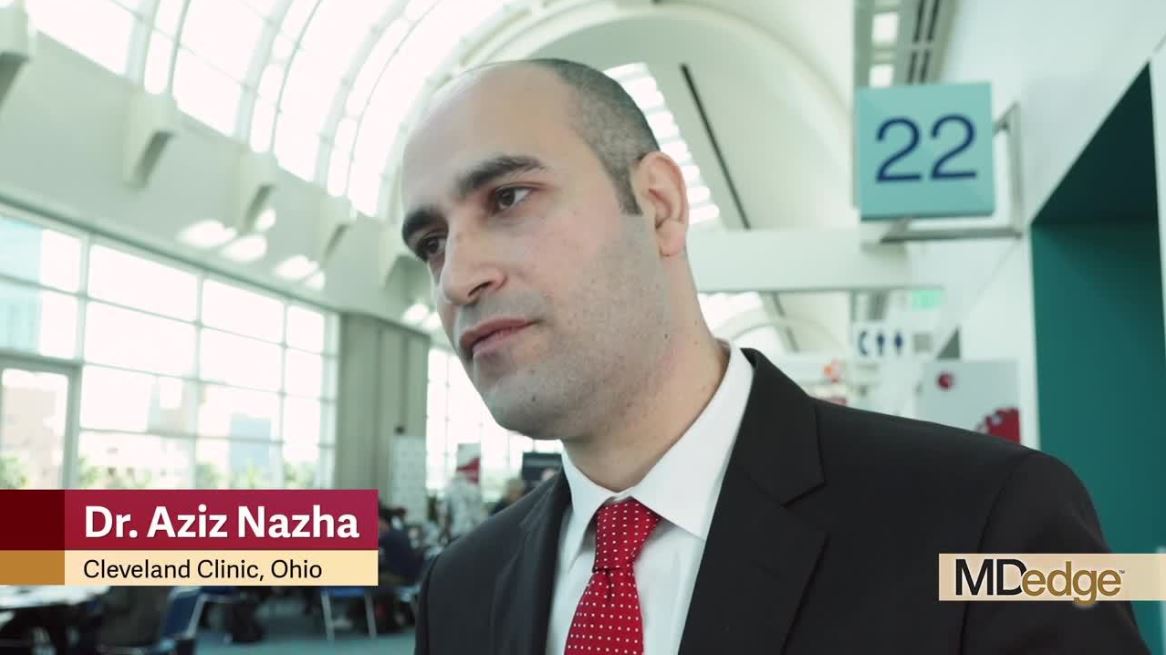
SAN DIEGO – Two-thirds of adults with relapsed or refractory diffuse large B-cell lymphoma who had early responses to chimeric antigen receptor T-cell (CAR T) therapy with tisagenlecleucel (Kymriah) remain in remission with no evidence of minimal residual disease, according to an updated analysis of the JULIET trial.
In the single-arm, open-label trial, the overall response rate after 19 months of follow-up was 54%, including 40% complete remissions and 14% partial remissions. The median duration of response had not been reached at the time of data cutoff, and the median overall survival had not been reached for patients with a complete remission. Overall survival in this heavily pretreated population as a whole (all patients who received CAR T-cell infusions) was 11.1 months.
Adverse events were similar to those previously reported and were manageable, according to investigator Richard Thomas Maziarz, MD, from the Oregon Health & Science Knight Cancer Institute in Portland.
In this video interview at the annual meeting of the American Society of Hematology, Dr. Maziarz discusses the promising results using CAR T cells in this difficult to treat population.
SAN DIEGO – Two-thirds of adults with relapsed or refractory diffuse large B-cell lymphoma who had early responses to chimeric antigen receptor T-cell (CAR T) therapy with tisagenlecleucel (Kymriah) remain in remission with no evidence of minimal residual disease, according to an updated analysis of the JULIET trial.
In the single-arm, open-label trial, the overall response rate after 19 months of follow-up was 54%, including 40% complete remissions and 14% partial remissions. The median duration of response had not been reached at the time of data cutoff, and the median overall survival had not been reached for patients with a complete remission. Overall survival in this heavily pretreated population as a whole (all patients who received CAR T-cell infusions) was 11.1 months.
Adverse events were similar to those previously reported and were manageable, according to investigator Richard Thomas Maziarz, MD, from the Oregon Health & Science Knight Cancer Institute in Portland.
In this video interview at the annual meeting of the American Society of Hematology, Dr. Maziarz discusses the promising results using CAR T cells in this difficult to treat population.
SAN DIEGO – Two-thirds of adults with relapsed or refractory diffuse large B-cell lymphoma who had early responses to chimeric antigen receptor T-cell (CAR T) therapy with tisagenlecleucel (Kymriah) remain in remission with no evidence of minimal residual disease, according to an updated analysis of the JULIET trial.
In the single-arm, open-label trial, the overall response rate after 19 months of follow-up was 54%, including 40% complete remissions and 14% partial remissions. The median duration of response had not been reached at the time of data cutoff, and the median overall survival had not been reached for patients with a complete remission. Overall survival in this heavily pretreated population as a whole (all patients who received CAR T-cell infusions) was 11.1 months.
Adverse events were similar to those previously reported and were manageable, according to investigator Richard Thomas Maziarz, MD, from the Oregon Health & Science Knight Cancer Institute in Portland.
In this video interview at the annual meeting of the American Society of Hematology, Dr. Maziarz discusses the promising results using CAR T cells in this difficult to treat population.
REPORTING FROM ASH 2018
Beat AML trial delivers genomic results in 7 days
SAN DIEGO – Investigators demonstrated the feasibility of delivering genomic results in 7 days in a population of older, newly diagnosed patients with acute myeloid leukemia (AML).
The Beat AML Master Trial is an ongoing umbrella study that harnesses cytogenetic information and next generation sequencing to match patients with targeted therapies across a number of substudies or outside of the trial’s multicenter network.
The researchers chose AML for this precision-medicine study because of its rapid onset and lethal nature, its heterogeneity, and the availability of more-targeted therapies, said Amy Burd, PhD, of the Leukemia & Lymphoma Society, which is sponsoring the study.
Initial data from the trial showed that more than 95% of patients were assigned to treatment in 7 days or less, based on their personalized genomic information.
Overall, 285 patients had usable genomic screening data and were assigned to treatment. Of those patients, 273 were assigned to a treatment within 7 days, Dr. Burd reported at the annual meeting of the American Society of Hematology.
The speed of delivering these results is critical, said Joseph Mikhael, MD, chief medical officer for the International Myeloma Foundation in Phoenix, who moderated a media briefing on personalized medicine.
“One of the greatest challenges we faced in the concept of personalized medicine is by the time you’ve determined what is best for that patient ... the horse is already out of the barn,” Dr. Mikhael said. “You have to have started the patient on treatment already or else their disease could have progressed quite rapidly.”
In the past, genomic results might come back a month after the patient started therapy. “It was really almost academic,” he said.
In the Beat AML study, more than half (146 patients) were treated based on their AML subtype. The remaining patients (139) were not treated: 2.5% of patients died within 7 days, 7% of patients chose an alternative treatment prior to assignment, 20% chose standard of care, 9.1% chose an alternative trial after assignment, 8.1% chose palliative care, and the remainder had a reason that was not specified.
“The treatment decisions are made for what’s best for the patient even if that means a study outside of Beat AML,” Dr. Burd said.
Currently, there are 11 substudies offering treatment to trial participants across 13 clinical sites. There has been promising efficacy in many of the treatment arms, Dr. Burd said.
In the future, the researchers are looking to expand the substudies to look into novel drug combinations for certain AML subtypes, specifically isocitrate dehydrogenase 2–mutated groups.
Dr. Burd is an employee of the Leukemia & Lymphoma Society. Other coinvestigators reported financial relationships with the pharmaceutical industry. Dr. Mikhael reported research funding from AbbVie, Celgene, Onyx Pharmaceuticals, and Sanofi.
SOURCE: Burd A et al. ASH 2018, Abstract 559.
SAN DIEGO – Investigators demonstrated the feasibility of delivering genomic results in 7 days in a population of older, newly diagnosed patients with acute myeloid leukemia (AML).
The Beat AML Master Trial is an ongoing umbrella study that harnesses cytogenetic information and next generation sequencing to match patients with targeted therapies across a number of substudies or outside of the trial’s multicenter network.
The researchers chose AML for this precision-medicine study because of its rapid onset and lethal nature, its heterogeneity, and the availability of more-targeted therapies, said Amy Burd, PhD, of the Leukemia & Lymphoma Society, which is sponsoring the study.
Initial data from the trial showed that more than 95% of patients were assigned to treatment in 7 days or less, based on their personalized genomic information.
Overall, 285 patients had usable genomic screening data and were assigned to treatment. Of those patients, 273 were assigned to a treatment within 7 days, Dr. Burd reported at the annual meeting of the American Society of Hematology.
The speed of delivering these results is critical, said Joseph Mikhael, MD, chief medical officer for the International Myeloma Foundation in Phoenix, who moderated a media briefing on personalized medicine.
“One of the greatest challenges we faced in the concept of personalized medicine is by the time you’ve determined what is best for that patient ... the horse is already out of the barn,” Dr. Mikhael said. “You have to have started the patient on treatment already or else their disease could have progressed quite rapidly.”
In the past, genomic results might come back a month after the patient started therapy. “It was really almost academic,” he said.
In the Beat AML study, more than half (146 patients) were treated based on their AML subtype. The remaining patients (139) were not treated: 2.5% of patients died within 7 days, 7% of patients chose an alternative treatment prior to assignment, 20% chose standard of care, 9.1% chose an alternative trial after assignment, 8.1% chose palliative care, and the remainder had a reason that was not specified.
“The treatment decisions are made for what’s best for the patient even if that means a study outside of Beat AML,” Dr. Burd said.
Currently, there are 11 substudies offering treatment to trial participants across 13 clinical sites. There has been promising efficacy in many of the treatment arms, Dr. Burd said.
In the future, the researchers are looking to expand the substudies to look into novel drug combinations for certain AML subtypes, specifically isocitrate dehydrogenase 2–mutated groups.
Dr. Burd is an employee of the Leukemia & Lymphoma Society. Other coinvestigators reported financial relationships with the pharmaceutical industry. Dr. Mikhael reported research funding from AbbVie, Celgene, Onyx Pharmaceuticals, and Sanofi.
SOURCE: Burd A et al. ASH 2018, Abstract 559.
SAN DIEGO – Investigators demonstrated the feasibility of delivering genomic results in 7 days in a population of older, newly diagnosed patients with acute myeloid leukemia (AML).
The Beat AML Master Trial is an ongoing umbrella study that harnesses cytogenetic information and next generation sequencing to match patients with targeted therapies across a number of substudies or outside of the trial’s multicenter network.
The researchers chose AML for this precision-medicine study because of its rapid onset and lethal nature, its heterogeneity, and the availability of more-targeted therapies, said Amy Burd, PhD, of the Leukemia & Lymphoma Society, which is sponsoring the study.
Initial data from the trial showed that more than 95% of patients were assigned to treatment in 7 days or less, based on their personalized genomic information.
Overall, 285 patients had usable genomic screening data and were assigned to treatment. Of those patients, 273 were assigned to a treatment within 7 days, Dr. Burd reported at the annual meeting of the American Society of Hematology.
The speed of delivering these results is critical, said Joseph Mikhael, MD, chief medical officer for the International Myeloma Foundation in Phoenix, who moderated a media briefing on personalized medicine.
“One of the greatest challenges we faced in the concept of personalized medicine is by the time you’ve determined what is best for that patient ... the horse is already out of the barn,” Dr. Mikhael said. “You have to have started the patient on treatment already or else their disease could have progressed quite rapidly.”
In the past, genomic results might come back a month after the patient started therapy. “It was really almost academic,” he said.
In the Beat AML study, more than half (146 patients) were treated based on their AML subtype. The remaining patients (139) were not treated: 2.5% of patients died within 7 days, 7% of patients chose an alternative treatment prior to assignment, 20% chose standard of care, 9.1% chose an alternative trial after assignment, 8.1% chose palliative care, and the remainder had a reason that was not specified.
“The treatment decisions are made for what’s best for the patient even if that means a study outside of Beat AML,” Dr. Burd said.
Currently, there are 11 substudies offering treatment to trial participants across 13 clinical sites. There has been promising efficacy in many of the treatment arms, Dr. Burd said.
In the future, the researchers are looking to expand the substudies to look into novel drug combinations for certain AML subtypes, specifically isocitrate dehydrogenase 2–mutated groups.
Dr. Burd is an employee of the Leukemia & Lymphoma Society. Other coinvestigators reported financial relationships with the pharmaceutical industry. Dr. Mikhael reported research funding from AbbVie, Celgene, Onyx Pharmaceuticals, and Sanofi.
SOURCE: Burd A et al. ASH 2018, Abstract 559.
REPORTING FROM ASH 2018
Key clinical point:
Major finding: More than 95% of patients in the trial were assigned to treatment within 7 days based on results of their genomic screening.
Study details: An umbrella study of 285 patients aged 60 years and older with newly diagnosed acute myeloid leukemia.
Disclosures: The study is sponsored by the Leukemia & Lymphoma Society. Dr. Burd is an employee of the Society and other investigators reported funding from multiple pharmaceutical companies.
Source: Burd A et al. ASH 2018, Abstract 559.
Gut bacteria influence HCT outcomes
A multinational study of intestinal microbiota in the United States, Europe, and Japan showed that in all four geographic regions patients scheduled for HCT had about a 100% lower median diversity of intestinal bacteria, compared with healthy volunteers, and that enterococcal species predominated in the transplant candidates, reported Jonathan U. Peled, MD, PhD, from the bone marrow transplantation service at Memorial Sloan Kettering Cancer Center in New York.
The investigators also found that intestinal microbial diversity was significantly associated with overall survival following an HCT.
In a video interview at the annual meeting of the American Society of Hematology, Dr. Peled elaborated on the study findings and described potential pre- and posttransplant interventions that could improve results and increase survival following HCT.
Dr. Peled reported current or prior relationships with Seres Therapeutics, the Parker Institute for Cancer Immunotherapy, and Merck/Society for Immunotherapy of Cancer.
A multinational study of intestinal microbiota in the United States, Europe, and Japan showed that in all four geographic regions patients scheduled for HCT had about a 100% lower median diversity of intestinal bacteria, compared with healthy volunteers, and that enterococcal species predominated in the transplant candidates, reported Jonathan U. Peled, MD, PhD, from the bone marrow transplantation service at Memorial Sloan Kettering Cancer Center in New York.
The investigators also found that intestinal microbial diversity was significantly associated with overall survival following an HCT.
In a video interview at the annual meeting of the American Society of Hematology, Dr. Peled elaborated on the study findings and described potential pre- and posttransplant interventions that could improve results and increase survival following HCT.
Dr. Peled reported current or prior relationships with Seres Therapeutics, the Parker Institute for Cancer Immunotherapy, and Merck/Society for Immunotherapy of Cancer.
A multinational study of intestinal microbiota in the United States, Europe, and Japan showed that in all four geographic regions patients scheduled for HCT had about a 100% lower median diversity of intestinal bacteria, compared with healthy volunteers, and that enterococcal species predominated in the transplant candidates, reported Jonathan U. Peled, MD, PhD, from the bone marrow transplantation service at Memorial Sloan Kettering Cancer Center in New York.
The investigators also found that intestinal microbial diversity was significantly associated with overall survival following an HCT.
In a video interview at the annual meeting of the American Society of Hematology, Dr. Peled elaborated on the study findings and described potential pre- and posttransplant interventions that could improve results and increase survival following HCT.
Dr. Peled reported current or prior relationships with Seres Therapeutics, the Parker Institute for Cancer Immunotherapy, and Merck/Society for Immunotherapy of Cancer.
REPORTING FROM ASH 2018