User login
Epigenetics is a hot topic at TCLF 2019
LA JOLLA, CALIF. –

In a video interview, meeting cochair Owen O’Connor, MD, PhD, of Columbia University Medical Center in New York, discussed a few presentations that addressed epigenetics in T-cell lymphomas.
Stephen Baylin, MD, of the Sidney Kimmel Comprehensive Cancer Center at Johns Hopkins in Baltimore, gave the meeting’s keynote address, which focused on the idea that epigenetic therapy can enhance immune checkpoint therapy.
Susan Bates, MD, of Columbia University Medical Center, presented data that suggest romidepsin and other histone deacetylase inhibitors fight cutaneous T-cell lymphoma via epigenetic effects on gene expression, as well as DNA damage.
And Enrica Marchi, MD, PhD, of Columbia University Medical Center, discussed the use of epigenetic-based combination therapies to improve responses in T-cell lymphomas.
The T-cell Lymphoma Forum is organized by Jonathan Wood & Associates, which is owned by the same company as this news organization.
LA JOLLA, CALIF. –
In a video interview, meeting cochair Owen O’Connor, MD, PhD, of Columbia University Medical Center in New York, discussed a few presentations that addressed epigenetics in T-cell lymphomas.
Stephen Baylin, MD, of the Sidney Kimmel Comprehensive Cancer Center at Johns Hopkins in Baltimore, gave the meeting’s keynote address, which focused on the idea that epigenetic therapy can enhance immune checkpoint therapy.
Susan Bates, MD, of Columbia University Medical Center, presented data that suggest romidepsin and other histone deacetylase inhibitors fight cutaneous T-cell lymphoma via epigenetic effects on gene expression, as well as DNA damage.
And Enrica Marchi, MD, PhD, of Columbia University Medical Center, discussed the use of epigenetic-based combination therapies to improve responses in T-cell lymphomas.
The T-cell Lymphoma Forum is organized by Jonathan Wood & Associates, which is owned by the same company as this news organization.
LA JOLLA, CALIF. –
In a video interview, meeting cochair Owen O’Connor, MD, PhD, of Columbia University Medical Center in New York, discussed a few presentations that addressed epigenetics in T-cell lymphomas.
Stephen Baylin, MD, of the Sidney Kimmel Comprehensive Cancer Center at Johns Hopkins in Baltimore, gave the meeting’s keynote address, which focused on the idea that epigenetic therapy can enhance immune checkpoint therapy.
Susan Bates, MD, of Columbia University Medical Center, presented data that suggest romidepsin and other histone deacetylase inhibitors fight cutaneous T-cell lymphoma via epigenetic effects on gene expression, as well as DNA damage.
And Enrica Marchi, MD, PhD, of Columbia University Medical Center, discussed the use of epigenetic-based combination therapies to improve responses in T-cell lymphomas.
The T-cell Lymphoma Forum is organized by Jonathan Wood & Associates, which is owned by the same company as this news organization.
REPORTING FROM TCLF 2019

P. Emanuela Voinescu, MD, PhD

ECHELON-2: BV-CHP boosts survival in PTCL
SAN DIEGO – A newly approved treatment regimen provides a survival benefit over standard therapy for patients with CD30-positive peripheral T-cell lymphomas (PTCLs), according to new research presented at the annual meeting of the American Society of Hematology.
In the ECHELON-2 trial, patients who received brentuximab vedotin (BV) plus cyclophosphamide, doxorubicin, and prednisone (CHP) had superior progression-free survival (PFS) and overall survival (OS), compared with patients who received standard treatment with cyclophosphamide, doxorubicin, vincristine, and prednisone (CHOP).
These results supported the recent U.S. approval of BV in combination with CHP for adults with previously untreated, systemic anaplastic large cell lymphoma or other CD30-expressing PTCLs.
“ECHELON-2 is the first prospective trial in peripheral T-cell lymphoma to show an overall survival benefit over CHOP,” said Steven M. Horwitz, MD, of Memorial Sloan Kettering Cancer Center, with locations in New York and New Jersey.
Dr. Horwitz presented data from this trial at the ASH meeting. Results were simultaneously published in the Lancet (2018 Dec 3. doi: 10.1016/S0140-6736[18]32984-2).
ECHELON-2 (NCT01777152) enrolled 452 patients with previously untreated, CD30-positive PTCL. Subtypes included ALK-positive or ALK-negative systemic anaplastic large-cell lymphoma, PTCL not otherwise specified, angioimmunoblastic T-cell lymphoma, enteropathy-associated T-cell lymphoma, and adult T-cell leukemia/lymphoma.
Patients were randomized to receive BV-CHP plus placebo (n = 226) or CHOP plus placebo (n = 226) every 3 weeks for six to eight cycles.
At baseline, the median age was 58 in the BV-CHP arm and the CHOP arm. The majority of patients were male – 59% in the BV-CHP arm and 67% in the CHOP arm – and most patients had stage III/IV disease, 81% and 80%, respectively.
In all, 89% of patients in the BV-CHP arm and 81% in the CHOP arm completed six or more cycles of their assigned treatment.
The overall response rate was 83% in the BV-CHP arm and 72% in the CHOP arm (P = .0032). The complete response rates were 68% and 56%, respectively (P = .0066).
At a median follow-up of 36.2 months, the median PFS was 48.2 months in the BV-CHP arm and 20.8 months in the CHOP arm. The rate of death or progression was 42% in the BV-CHP arm and 55% in the CHOP arm (hazard ratio = 0.71, P = .011).
At a median follow-up of 42.1 months, the median OS was not reached in either treatment arm. The rate of death was 23% in the BV-CHP arm and 32% in the CHOP arm (HR = 0.66, P = .0244).
Dr. Horwitz noted that this study was not powered to determine differences in PFS or OS by PTCL subtypes.
BV-CHP had a safety profile comparable with that of CHOP, Dr. Horwitz said.
The rate of adverse events (AEs) was 99% in the BV-CHP arm and 98% in the CHOP arm. Grade 3 or higher AEs occurred in 66% and 65% of patients, respectively. Serious AEs occurred in 39% and 38%, respectively.
Three percent of patients in the BV-CHP arm and 4% of those in the CHOP arm had fatal AEs.
The study was funded by Seattle Genetics, Millennium Pharmaceuticals, and the National Institutes of Health. Dr. Horwitz reported relationships with Seattle Genetics, Millennium Pharmaceuticals, and other companies.
SOURCE: Horwitz S et al. ASH 2018, Abstract 997.
SAN DIEGO – A newly approved treatment regimen provides a survival benefit over standard therapy for patients with CD30-positive peripheral T-cell lymphomas (PTCLs), according to new research presented at the annual meeting of the American Society of Hematology.
In the ECHELON-2 trial, patients who received brentuximab vedotin (BV) plus cyclophosphamide, doxorubicin, and prednisone (CHP) had superior progression-free survival (PFS) and overall survival (OS), compared with patients who received standard treatment with cyclophosphamide, doxorubicin, vincristine, and prednisone (CHOP).
These results supported the recent U.S. approval of BV in combination with CHP for adults with previously untreated, systemic anaplastic large cell lymphoma or other CD30-expressing PTCLs.
“ECHELON-2 is the first prospective trial in peripheral T-cell lymphoma to show an overall survival benefit over CHOP,” said Steven M. Horwitz, MD, of Memorial Sloan Kettering Cancer Center, with locations in New York and New Jersey.
Dr. Horwitz presented data from this trial at the ASH meeting. Results were simultaneously published in the Lancet (2018 Dec 3. doi: 10.1016/S0140-6736[18]32984-2).
ECHELON-2 (NCT01777152) enrolled 452 patients with previously untreated, CD30-positive PTCL. Subtypes included ALK-positive or ALK-negative systemic anaplastic large-cell lymphoma, PTCL not otherwise specified, angioimmunoblastic T-cell lymphoma, enteropathy-associated T-cell lymphoma, and adult T-cell leukemia/lymphoma.
Patients were randomized to receive BV-CHP plus placebo (n = 226) or CHOP plus placebo (n = 226) every 3 weeks for six to eight cycles.
At baseline, the median age was 58 in the BV-CHP arm and the CHOP arm. The majority of patients were male – 59% in the BV-CHP arm and 67% in the CHOP arm – and most patients had stage III/IV disease, 81% and 80%, respectively.
In all, 89% of patients in the BV-CHP arm and 81% in the CHOP arm completed six or more cycles of their assigned treatment.
The overall response rate was 83% in the BV-CHP arm and 72% in the CHOP arm (P = .0032). The complete response rates were 68% and 56%, respectively (P = .0066).
At a median follow-up of 36.2 months, the median PFS was 48.2 months in the BV-CHP arm and 20.8 months in the CHOP arm. The rate of death or progression was 42% in the BV-CHP arm and 55% in the CHOP arm (hazard ratio = 0.71, P = .011).
At a median follow-up of 42.1 months, the median OS was not reached in either treatment arm. The rate of death was 23% in the BV-CHP arm and 32% in the CHOP arm (HR = 0.66, P = .0244).
Dr. Horwitz noted that this study was not powered to determine differences in PFS or OS by PTCL subtypes.
BV-CHP had a safety profile comparable with that of CHOP, Dr. Horwitz said.
The rate of adverse events (AEs) was 99% in the BV-CHP arm and 98% in the CHOP arm. Grade 3 or higher AEs occurred in 66% and 65% of patients, respectively. Serious AEs occurred in 39% and 38%, respectively.
Three percent of patients in the BV-CHP arm and 4% of those in the CHOP arm had fatal AEs.
The study was funded by Seattle Genetics, Millennium Pharmaceuticals, and the National Institutes of Health. Dr. Horwitz reported relationships with Seattle Genetics, Millennium Pharmaceuticals, and other companies.
SOURCE: Horwitz S et al. ASH 2018, Abstract 997.
SAN DIEGO – A newly approved treatment regimen provides a survival benefit over standard therapy for patients with CD30-positive peripheral T-cell lymphomas (PTCLs), according to new research presented at the annual meeting of the American Society of Hematology.
In the ECHELON-2 trial, patients who received brentuximab vedotin (BV) plus cyclophosphamide, doxorubicin, and prednisone (CHP) had superior progression-free survival (PFS) and overall survival (OS), compared with patients who received standard treatment with cyclophosphamide, doxorubicin, vincristine, and prednisone (CHOP).
These results supported the recent U.S. approval of BV in combination with CHP for adults with previously untreated, systemic anaplastic large cell lymphoma or other CD30-expressing PTCLs.
“ECHELON-2 is the first prospective trial in peripheral T-cell lymphoma to show an overall survival benefit over CHOP,” said Steven M. Horwitz, MD, of Memorial Sloan Kettering Cancer Center, with locations in New York and New Jersey.
Dr. Horwitz presented data from this trial at the ASH meeting. Results were simultaneously published in the Lancet (2018 Dec 3. doi: 10.1016/S0140-6736[18]32984-2).
ECHELON-2 (NCT01777152) enrolled 452 patients with previously untreated, CD30-positive PTCL. Subtypes included ALK-positive or ALK-negative systemic anaplastic large-cell lymphoma, PTCL not otherwise specified, angioimmunoblastic T-cell lymphoma, enteropathy-associated T-cell lymphoma, and adult T-cell leukemia/lymphoma.
Patients were randomized to receive BV-CHP plus placebo (n = 226) or CHOP plus placebo (n = 226) every 3 weeks for six to eight cycles.
At baseline, the median age was 58 in the BV-CHP arm and the CHOP arm. The majority of patients were male – 59% in the BV-CHP arm and 67% in the CHOP arm – and most patients had stage III/IV disease, 81% and 80%, respectively.
In all, 89% of patients in the BV-CHP arm and 81% in the CHOP arm completed six or more cycles of their assigned treatment.
The overall response rate was 83% in the BV-CHP arm and 72% in the CHOP arm (P = .0032). The complete response rates were 68% and 56%, respectively (P = .0066).
At a median follow-up of 36.2 months, the median PFS was 48.2 months in the BV-CHP arm and 20.8 months in the CHOP arm. The rate of death or progression was 42% in the BV-CHP arm and 55% in the CHOP arm (hazard ratio = 0.71, P = .011).
At a median follow-up of 42.1 months, the median OS was not reached in either treatment arm. The rate of death was 23% in the BV-CHP arm and 32% in the CHOP arm (HR = 0.66, P = .0244).
Dr. Horwitz noted that this study was not powered to determine differences in PFS or OS by PTCL subtypes.
BV-CHP had a safety profile comparable with that of CHOP, Dr. Horwitz said.
The rate of adverse events (AEs) was 99% in the BV-CHP arm and 98% in the CHOP arm. Grade 3 or higher AEs occurred in 66% and 65% of patients, respectively. Serious AEs occurred in 39% and 38%, respectively.
Three percent of patients in the BV-CHP arm and 4% of those in the CHOP arm had fatal AEs.
The study was funded by Seattle Genetics, Millennium Pharmaceuticals, and the National Institutes of Health. Dr. Horwitz reported relationships with Seattle Genetics, Millennium Pharmaceuticals, and other companies.
SOURCE: Horwitz S et al. ASH 2018, Abstract 997.
REPORTING FROM ASH 2018
Key clinical point:
Major finding: The rate of death or progression was 42% in the BV-CHP arm and 55% in the CHOP arm (hazard ratio = 0.71, P = .011), while the rate of death alone was 23% and 32%, respectively (HR = 0.66, P = .0244).
Study details: A phase 3 trial of 452 patients with peripheral T-cell lymphoma.
Disclosures: The study was funded by Seattle Genetics, Millennium Pharmaceuticals, and the National Institutes of Health. Dr. Horwitz reported relationships with Seattle Genetics, Millennium Pharmaceuticals, and other companies.
Source: Horwitz S et al. ASH 2018, Abstract 997.
Dileep Nair, MD

CLL at ASH: A ‘mountain of data’ for targeted therapies
SAN DIEGO – There was a mountain of data presented at the annual meeting of the American Society of Hematology on the use of novel agents – both as frontline therapy and in combination – for the treatment of chronic lymphocytic leukemia (CLL).
In a video interview at the meeting, Brian T. Hill, MD, PhD, of the Cleveland Clinic and Anthony Mato, MD, of Memorial Sloan Kettering Cancer Center, New York, summed up the key studies and what they mean in practice. They also looked ahead at what data are still missing that could aid in making important treatment decisions.
Dr. Hill highlighted the late-breaking abstract on the ECOG-ACRIN Cancer Research Group E1912 trial comparing ibrutinib-rituximab to a chemotherapy regimen of fludarabine, cyclophosphamide, and rituximab (FCR) in previously untreated patients under age 70 years (Abstract LBA-4). Not only was there a progression-free survival benefit with the use of the ibrutinib regimen, but there was an overall survival benefit as well, he noted.
Dr. Mato pointed to notable results from the Alliance A041202 trial of older patients with previously untreated disease that compared ibrutinib alone or in combination with rituximab, with bendamustine plus rituximab (Abstract #6). The ibrutinib-containing regimens resulted in superior progression-free survival.
The two trials taken together show a movement away from chemotherapy in the frontline setting and toward targeted agents for CLL, Dr. Mato said. “What that agent or combination of agents will be, remains to be seen,” he said. “We have now a real message about the fact that we’re ending, potentially, the era of chemotherapy for patients with CLL, which is a very welcome change.”
Dr. Mato and Dr. Hill will be discussing these trials and more CLL data during a Twitter chat on Jan. 31, 2019, from 7 p.m. to 8 p.m. EST. Join in the conversation by using and following #MDedgeChats.
SAN DIEGO – There was a mountain of data presented at the annual meeting of the American Society of Hematology on the use of novel agents – both as frontline therapy and in combination – for the treatment of chronic lymphocytic leukemia (CLL).
In a video interview at the meeting, Brian T. Hill, MD, PhD, of the Cleveland Clinic and Anthony Mato, MD, of Memorial Sloan Kettering Cancer Center, New York, summed up the key studies and what they mean in practice. They also looked ahead at what data are still missing that could aid in making important treatment decisions.
Dr. Hill highlighted the late-breaking abstract on the ECOG-ACRIN Cancer Research Group E1912 trial comparing ibrutinib-rituximab to a chemotherapy regimen of fludarabine, cyclophosphamide, and rituximab (FCR) in previously untreated patients under age 70 years (Abstract LBA-4). Not only was there a progression-free survival benefit with the use of the ibrutinib regimen, but there was an overall survival benefit as well, he noted.
Dr. Mato pointed to notable results from the Alliance A041202 trial of older patients with previously untreated disease that compared ibrutinib alone or in combination with rituximab, with bendamustine plus rituximab (Abstract #6). The ibrutinib-containing regimens resulted in superior progression-free survival.
The two trials taken together show a movement away from chemotherapy in the frontline setting and toward targeted agents for CLL, Dr. Mato said. “What that agent or combination of agents will be, remains to be seen,” he said. “We have now a real message about the fact that we’re ending, potentially, the era of chemotherapy for patients with CLL, which is a very welcome change.”
Dr. Mato and Dr. Hill will be discussing these trials and more CLL data during a Twitter chat on Jan. 31, 2019, from 7 p.m. to 8 p.m. EST. Join in the conversation by using and following #MDedgeChats.
SAN DIEGO – There was a mountain of data presented at the annual meeting of the American Society of Hematology on the use of novel agents – both as frontline therapy and in combination – for the treatment of chronic lymphocytic leukemia (CLL).
In a video interview at the meeting, Brian T. Hill, MD, PhD, of the Cleveland Clinic and Anthony Mato, MD, of Memorial Sloan Kettering Cancer Center, New York, summed up the key studies and what they mean in practice. They also looked ahead at what data are still missing that could aid in making important treatment decisions.
Dr. Hill highlighted the late-breaking abstract on the ECOG-ACRIN Cancer Research Group E1912 trial comparing ibrutinib-rituximab to a chemotherapy regimen of fludarabine, cyclophosphamide, and rituximab (FCR) in previously untreated patients under age 70 years (Abstract LBA-4). Not only was there a progression-free survival benefit with the use of the ibrutinib regimen, but there was an overall survival benefit as well, he noted.
Dr. Mato pointed to notable results from the Alliance A041202 trial of older patients with previously untreated disease that compared ibrutinib alone or in combination with rituximab, with bendamustine plus rituximab (Abstract #6). The ibrutinib-containing regimens resulted in superior progression-free survival.
The two trials taken together show a movement away from chemotherapy in the frontline setting and toward targeted agents for CLL, Dr. Mato said. “What that agent or combination of agents will be, remains to be seen,” he said. “We have now a real message about the fact that we’re ending, potentially, the era of chemotherapy for patients with CLL, which is a very welcome change.”
Dr. Mato and Dr. Hill will be discussing these trials and more CLL data during a Twitter chat on Jan. 31, 2019, from 7 p.m. to 8 p.m. EST. Join in the conversation by using and following #MDedgeChats.
REPORTING FROM ASH 2018

MAIA: Daratumumab plus len-dex improves myeloma PFS
SAN DIEGO – Patients with newly diagnosed multiple myeloma who were ineligible for transplant had a 44% reduction in the risk of disease progression or death when they were treated with the anti-CD38 monoclonal antibody daratumumab (Darzalex) added to lenalidomide (Revlimid) and dexamethasone, compared with lenalidomide-dexamethasone alone, an interim analysis from the MAIA trial showed.
Among 737 patients in a phase 3 trial, median progression-free survival – the primary endpoint – had not been reached after a median follow-up of 28 months for patients randomized to daratumumab, lenalidomide, and dexamethasone (DRd), versus 31.9 months for patients randomized to lenalidomide and dexamethasone (Rd).
The 30-month PFS rate in the DRd arm was 71%, compared with 56% for the Rd arm. This difference translated into a hazard ratio (HR) for progression of 0.56 (P less than .0001), reported Thierry Facon, MD, of Hôpital Claude Huriez and the University of Lille, France.
“These results support DRd as a new standard of care for elderly patients with myeloma who are ineligible for transplant,” he said at the annual meeting of the American Society of Hematology.
Dr. Facon and his colleagues had previously shown in the FIRST trial that in newly diagnosed transplant-ineligible patients, continuous treatment with lenalidomide and low-dose dexamethasone was associated with significant overall survival and PFS benefits, compared with melphalan-prednisone-thalidomide.
In the POLLUX trial, investigators reported that in patients with multiple myeloma that was refractory or had relapsed after at least one prior line of therapy, the DRd combination was associated with a 63% reduction in the risk for disease progression or death, compared with Rd alone.
MAIA details
The MAIA trial is a pivotal, phase 3 study pitting DRd against Rd in transplant-ineligible patients with newly diagnosed multiple myeloma.
Patients with untreated disease who had Eastern Cooperative Oncology Group (ECOG) status of 0-2 and creatinine clearance rates of at least 30 mL/min were enrolled. Patients were randomly assigned to either DRd, with intravenous daratumumab 16 mg/kg weekly for cycles 1 and 2, every other week for cycles 3 through 6, and every 4 weeks from cycle 7 until disease progression, plus lenalidomide 25 mg orally per day on days 1-21 until disease progression, and dexamethasone 40 mg orally or intravenously weekly until disease progression; or to the same regimen without daratumumab.
The median patient age was 73 years and 99% of all patients were aged 65 years or older. Demographic and clinical characteristics were well balanced between the treatment arms.
The primary endpoint of progression-free survival was superior with DRd.
DRd also was associated with a significantly higher overall response rate (93% vs. 81%), complete response rate (48% vs. 25%), very good partial response or better rate (79% vs. 53%), and minimal residual disease (MRD) negativity rate (24% vs. 7%; P less than .0001 for all comparisons).
The DRd combination was associated with infusion-related reactions in 41% of patients, but only 3% were grade 3 or 4 in severity.
Hematologic treatment-emergent adverse events (TEAE) grade 3 or greater that were more common with DRd included neutropenia (50% vs. 35%) and lymphopenia (15% vs. 11%). Conversely, thrombocytopenia (7% vs. 9%, grade 3 or 4) and anemia (12% vs. 20%) were more frequent with Rd.
Nonhematologic TEAEs that were more frequent with DRd included diarrhea, constipation, fatigue, peripheral edema, and pneumonia. Rates of asthenia, back pain, nausea, and deep vein thrombosis/pulmonary embolism were similar between the study arms.
Janssen funded the study. Dr. Facon reported speakers bureau and advisory board participation for Celgene, Janssen, and Takeda; and advisory board participation for Sanofi, Amgen, Karyopharm, and Oncopeptides.
SOURCE: Facon T et al. ASH 2018, Abstract LBA-2.
SAN DIEGO – Patients with newly diagnosed multiple myeloma who were ineligible for transplant had a 44% reduction in the risk of disease progression or death when they were treated with the anti-CD38 monoclonal antibody daratumumab (Darzalex) added to lenalidomide (Revlimid) and dexamethasone, compared with lenalidomide-dexamethasone alone, an interim analysis from the MAIA trial showed.
Among 737 patients in a phase 3 trial, median progression-free survival – the primary endpoint – had not been reached after a median follow-up of 28 months for patients randomized to daratumumab, lenalidomide, and dexamethasone (DRd), versus 31.9 months for patients randomized to lenalidomide and dexamethasone (Rd).
The 30-month PFS rate in the DRd arm was 71%, compared with 56% for the Rd arm. This difference translated into a hazard ratio (HR) for progression of 0.56 (P less than .0001), reported Thierry Facon, MD, of Hôpital Claude Huriez and the University of Lille, France.
“These results support DRd as a new standard of care for elderly patients with myeloma who are ineligible for transplant,” he said at the annual meeting of the American Society of Hematology.
Dr. Facon and his colleagues had previously shown in the FIRST trial that in newly diagnosed transplant-ineligible patients, continuous treatment with lenalidomide and low-dose dexamethasone was associated with significant overall survival and PFS benefits, compared with melphalan-prednisone-thalidomide.
In the POLLUX trial, investigators reported that in patients with multiple myeloma that was refractory or had relapsed after at least one prior line of therapy, the DRd combination was associated with a 63% reduction in the risk for disease progression or death, compared with Rd alone.
MAIA details
The MAIA trial is a pivotal, phase 3 study pitting DRd against Rd in transplant-ineligible patients with newly diagnosed multiple myeloma.
Patients with untreated disease who had Eastern Cooperative Oncology Group (ECOG) status of 0-2 and creatinine clearance rates of at least 30 mL/min were enrolled. Patients were randomly assigned to either DRd, with intravenous daratumumab 16 mg/kg weekly for cycles 1 and 2, every other week for cycles 3 through 6, and every 4 weeks from cycle 7 until disease progression, plus lenalidomide 25 mg orally per day on days 1-21 until disease progression, and dexamethasone 40 mg orally or intravenously weekly until disease progression; or to the same regimen without daratumumab.
The median patient age was 73 years and 99% of all patients were aged 65 years or older. Demographic and clinical characteristics were well balanced between the treatment arms.
The primary endpoint of progression-free survival was superior with DRd.
DRd also was associated with a significantly higher overall response rate (93% vs. 81%), complete response rate (48% vs. 25%), very good partial response or better rate (79% vs. 53%), and minimal residual disease (MRD) negativity rate (24% vs. 7%; P less than .0001 for all comparisons).
The DRd combination was associated with infusion-related reactions in 41% of patients, but only 3% were grade 3 or 4 in severity.
Hematologic treatment-emergent adverse events (TEAE) grade 3 or greater that were more common with DRd included neutropenia (50% vs. 35%) and lymphopenia (15% vs. 11%). Conversely, thrombocytopenia (7% vs. 9%, grade 3 or 4) and anemia (12% vs. 20%) were more frequent with Rd.
Nonhematologic TEAEs that were more frequent with DRd included diarrhea, constipation, fatigue, peripheral edema, and pneumonia. Rates of asthenia, back pain, nausea, and deep vein thrombosis/pulmonary embolism were similar between the study arms.
Janssen funded the study. Dr. Facon reported speakers bureau and advisory board participation for Celgene, Janssen, and Takeda; and advisory board participation for Sanofi, Amgen, Karyopharm, and Oncopeptides.
SOURCE: Facon T et al. ASH 2018, Abstract LBA-2.
SAN DIEGO – Patients with newly diagnosed multiple myeloma who were ineligible for transplant had a 44% reduction in the risk of disease progression or death when they were treated with the anti-CD38 monoclonal antibody daratumumab (Darzalex) added to lenalidomide (Revlimid) and dexamethasone, compared with lenalidomide-dexamethasone alone, an interim analysis from the MAIA trial showed.
Among 737 patients in a phase 3 trial, median progression-free survival – the primary endpoint – had not been reached after a median follow-up of 28 months for patients randomized to daratumumab, lenalidomide, and dexamethasone (DRd), versus 31.9 months for patients randomized to lenalidomide and dexamethasone (Rd).
The 30-month PFS rate in the DRd arm was 71%, compared with 56% for the Rd arm. This difference translated into a hazard ratio (HR) for progression of 0.56 (P less than .0001), reported Thierry Facon, MD, of Hôpital Claude Huriez and the University of Lille, France.
“These results support DRd as a new standard of care for elderly patients with myeloma who are ineligible for transplant,” he said at the annual meeting of the American Society of Hematology.
Dr. Facon and his colleagues had previously shown in the FIRST trial that in newly diagnosed transplant-ineligible patients, continuous treatment with lenalidomide and low-dose dexamethasone was associated with significant overall survival and PFS benefits, compared with melphalan-prednisone-thalidomide.
In the POLLUX trial, investigators reported that in patients with multiple myeloma that was refractory or had relapsed after at least one prior line of therapy, the DRd combination was associated with a 63% reduction in the risk for disease progression or death, compared with Rd alone.
MAIA details
The MAIA trial is a pivotal, phase 3 study pitting DRd against Rd in transplant-ineligible patients with newly diagnosed multiple myeloma.
Patients with untreated disease who had Eastern Cooperative Oncology Group (ECOG) status of 0-2 and creatinine clearance rates of at least 30 mL/min were enrolled. Patients were randomly assigned to either DRd, with intravenous daratumumab 16 mg/kg weekly for cycles 1 and 2, every other week for cycles 3 through 6, and every 4 weeks from cycle 7 until disease progression, plus lenalidomide 25 mg orally per day on days 1-21 until disease progression, and dexamethasone 40 mg orally or intravenously weekly until disease progression; or to the same regimen without daratumumab.
The median patient age was 73 years and 99% of all patients were aged 65 years or older. Demographic and clinical characteristics were well balanced between the treatment arms.
The primary endpoint of progression-free survival was superior with DRd.
DRd also was associated with a significantly higher overall response rate (93% vs. 81%), complete response rate (48% vs. 25%), very good partial response or better rate (79% vs. 53%), and minimal residual disease (MRD) negativity rate (24% vs. 7%; P less than .0001 for all comparisons).
The DRd combination was associated with infusion-related reactions in 41% of patients, but only 3% were grade 3 or 4 in severity.
Hematologic treatment-emergent adverse events (TEAE) grade 3 or greater that were more common with DRd included neutropenia (50% vs. 35%) and lymphopenia (15% vs. 11%). Conversely, thrombocytopenia (7% vs. 9%, grade 3 or 4) and anemia (12% vs. 20%) were more frequent with Rd.
Nonhematologic TEAEs that were more frequent with DRd included diarrhea, constipation, fatigue, peripheral edema, and pneumonia. Rates of asthenia, back pain, nausea, and deep vein thrombosis/pulmonary embolism were similar between the study arms.
Janssen funded the study. Dr. Facon reported speakers bureau and advisory board participation for Celgene, Janssen, and Takeda; and advisory board participation for Sanofi, Amgen, Karyopharm, and Oncopeptides.
SOURCE: Facon T et al. ASH 2018, Abstract LBA-2.
REPORTING FROM ASH 2018
Key clinical point:
Major finding: At 30 months of follow-up, DRd was associated with a 44% reduction in the risk of death, compared with Rd.
Study details: Randomized phase 3 trial of 737 patients with newly diagnosed multiple myeloma who were ineligible for transplant.
Disclosures: Janssen funded the study. Dr. Facon reported speakers bureau and advisory board participation for Celgene, Janssen, and Takeda; and advisory board participation for Sanofi, Amgen, Karyopharm, and Oncopeptides.
Source: Facon T et al. ASH 2018, Abstract LBA-2.
Social media can help doctors stay up to date
SAN DIEGO –
“People want to see that you’re a person and not strictly a physician,” said Dr. Yates, a pediatric hematologist at Texas Children’s Hospital in Houston, who has had an active Twitter presence for the last few years.
Dr. Yates – whose Twitter handle is @sicklecelldoc – said she dipped a toe in the social media waters because she wanted to bring accurate medical information to patients in the arena where they are seeking information.
“I want families to understand their condition as well as they can on whatever level they can, and so I just found this to be another way to do that ... outside of my clinic,” she said during an interview at the annual meeting of the American Society of Hematology.
But beyond correcting misinformation and serving as an advocate for patients, Dr. Yates said she gets professional benefits from being on Twitter. For instance, she uses the platform to find relevant articles as soon as they publish, without wading through all the journals.
“It’s allowed me to kind of streamline what I read,” she said.
Dr. Yates said Twitter is her social media platform of choice because it provides a simple, succinct way to communicate and provide links to more in-depth resources.
While social media can be fun and rewarding for physicians, Dr. Yates said think before you post. Ask yourself, “would you tell your chairperson this?”
Dr. Yates reported having no relevant financial disclosures.
SAN DIEGO –
“People want to see that you’re a person and not strictly a physician,” said Dr. Yates, a pediatric hematologist at Texas Children’s Hospital in Houston, who has had an active Twitter presence for the last few years.
Dr. Yates – whose Twitter handle is @sicklecelldoc – said she dipped a toe in the social media waters because she wanted to bring accurate medical information to patients in the arena where they are seeking information.
“I want families to understand their condition as well as they can on whatever level they can, and so I just found this to be another way to do that ... outside of my clinic,” she said during an interview at the annual meeting of the American Society of Hematology.
But beyond correcting misinformation and serving as an advocate for patients, Dr. Yates said she gets professional benefits from being on Twitter. For instance, she uses the platform to find relevant articles as soon as they publish, without wading through all the journals.
“It’s allowed me to kind of streamline what I read,” she said.
Dr. Yates said Twitter is her social media platform of choice because it provides a simple, succinct way to communicate and provide links to more in-depth resources.
While social media can be fun and rewarding for physicians, Dr. Yates said think before you post. Ask yourself, “would you tell your chairperson this?”
Dr. Yates reported having no relevant financial disclosures.
SAN DIEGO –
“People want to see that you’re a person and not strictly a physician,” said Dr. Yates, a pediatric hematologist at Texas Children’s Hospital in Houston, who has had an active Twitter presence for the last few years.
Dr. Yates – whose Twitter handle is @sicklecelldoc – said she dipped a toe in the social media waters because she wanted to bring accurate medical information to patients in the arena where they are seeking information.
“I want families to understand their condition as well as they can on whatever level they can, and so I just found this to be another way to do that ... outside of my clinic,” she said during an interview at the annual meeting of the American Society of Hematology.
But beyond correcting misinformation and serving as an advocate for patients, Dr. Yates said she gets professional benefits from being on Twitter. For instance, she uses the platform to find relevant articles as soon as they publish, without wading through all the journals.
“It’s allowed me to kind of streamline what I read,” she said.
Dr. Yates said Twitter is her social media platform of choice because it provides a simple, succinct way to communicate and provide links to more in-depth resources.
While social media can be fun and rewarding for physicians, Dr. Yates said think before you post. Ask yourself, “would you tell your chairperson this?”
Dr. Yates reported having no relevant financial disclosures.
REPORTING FROM ASH 2018
Ibrutinib-rituximab ‘new standard of care’ in younger CLL patients
SAN DIEGO – The combination of ibrutinib and rituximab was associated with a two-thirds reduction in chronic lymphocytic leukemia (CLL) progression, compared with standard chemoimmunotherapy in patients younger than 70 years old, interim results of a phase 3 randomized trial showed.
Among 529 patients with previously untreated, symptomatic CLL randomly assigned to ibrutinib-rituximab (IR) or to chemoimmunotherapy with fludarabine, cyclophosphamide, and rituximab (FCR), the IR regimen was associated with a 65% reduction in risk for disease progression, which was the trial’s primary endpoint.
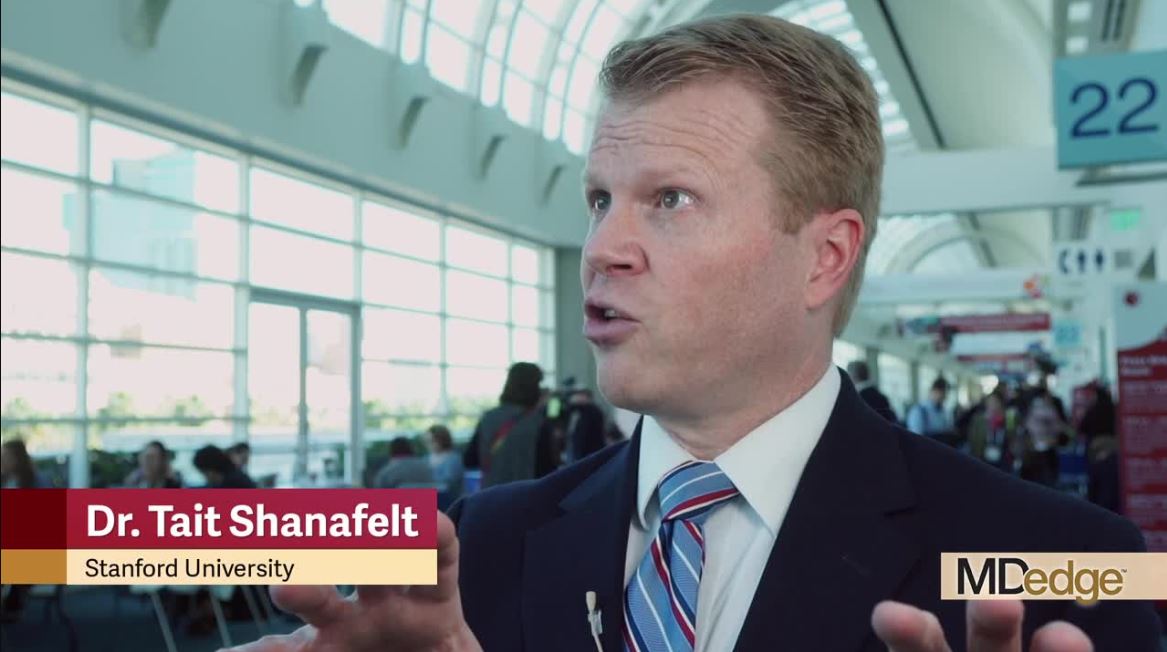
The IR regimen was also associated with better overall survival out to 4 years of follow-up, reported Tait D. Shanafelt, MD, of Stanford (Calif.) University.
“This establishes ibrutinib-based therapy as the most effective treatment tested to date in this disease for untreated patients,” he said at a media briefing prior at the annual meeting of the American Society of Hematology.
The study results are likely to dethrone FCR as the most active chemoimmunotherapy regimen against CLL, Dr. Shanafelt said.
In the ECOG-ACRIN Cancer Research Group E1912 trial, 529 patients aged 70 or younger with previously untreated CLL were enrolled and randomly assigned on a 2:1 basis to either standard therapy with six cycles of FCR according to standard protocols (175 patients), or IR, with ibrutinib 420 mg daily for each cycle, and rituximab delivered 50 mg/m2 intravenously on day 1 of cycle 2, and 325 mg/m2 on day 2 of the same cycle, and 500 mg/m2 on day 1 for all remaining cycles (354 patients).
From cycle 8 until progression, patients in the IR arm received daily ibrutinib 420 mg.
Dr. Shanafelt presented results from both an intention-to-treat analysis and a per-protocol analysis excluding 22 patients in the IR arm and 9 patients in the FCR arm who were randomized but later found not to meet eligibility criteria.
After a mean follow-up of 34 months, there were 37 PFS events in the IR arm, compared with 40 events in the FCR arm in an intention-to-treat analysis. The difference translated into a hazard ratio for progression of 0.35 with IR (P less than .00001).
The results were similar in the per-protocol analysis, with an HR of 0.32 favoring IR (P less than .00001).*
There were four deaths in the IR arm, compared with 10 in the FCR arm at the time of the data lock, translating into a hazard ratio (HR) for overall survival of 0.17 (P less than .0003) in the intention-to-treat analysis, and 0.13 in the per-protocol analysis (P less than .0001).
Dr. Shanafelt noted that although the overall number of deaths was relatively small, there were twice as many patients enrolled in the IR arm as in the FCR arm, meaning that the rate of deaths in the FCR arm was fivefold higher than in the IR arm.
In a subgroup analysis of PFS, IR was superior to FCR regardless of patient age, sex, performance status, disease stage, or the presence or absence of the 11q23.3 deletion.
PFS was also significantly better with IR in patients with unmutated immunoglobulin heavy chain variable (IGHV) regions (HR 0.26, P less than .00001), but not in patients with mutated IGHV.*
Grade 3 or greater treatment-related adverse events occurred in 58.5% of patients in the IR arm, compared with 72.1% of patients in the FCR arm. Specific events that occurred significantly less often with IR included neutropenia (22.7% vs. 43.7%), anemia (2.6% vs. 12.0%), thrombocytopenia (2.9% vs. 13.9%), any infection (7.1% vs. 19.0%), and neutropenic fever (2.3% vs. 15.8%; P less than .001 for all comparisons).
Events that occurred more frequently with IR than FCR included atrial fibrillation (2.9% vs. 0%, P = .04), and hypertension (7.4% vs. 1.9%, P = .01).
Dr. Shanafelt acknowledged that one possible barrier to the IR regimen is cost; the monthly cost of ibrutinib maintenance is about $10,000, he said, although he noted that cost considerations were not studied in the trial.
“Future trials testing novel agent combinations to see if we can eliminate the need for chronic therapy should be pursued,” he said.
The trial was sponsored by the National Cancer Institute with additional support from Pharmacyclics. Dr. Shanafelt reported patents and royalties from the Mayo Clinic, and research funding from Celgene, GlaxoSmithKline, Genentech, Abbvie, Pharmacyclics, and Janssen.
SOURCE: Shanafelt TD et al. ASH 2018, Abstract LBA-4.
*Correction, 12/12/2018: An earlier version of this story misstated the P value in two comparisons.
SAN DIEGO – The combination of ibrutinib and rituximab was associated with a two-thirds reduction in chronic lymphocytic leukemia (CLL) progression, compared with standard chemoimmunotherapy in patients younger than 70 years old, interim results of a phase 3 randomized trial showed.
Among 529 patients with previously untreated, symptomatic CLL randomly assigned to ibrutinib-rituximab (IR) or to chemoimmunotherapy with fludarabine, cyclophosphamide, and rituximab (FCR), the IR regimen was associated with a 65% reduction in risk for disease progression, which was the trial’s primary endpoint.
The IR regimen was also associated with better overall survival out to 4 years of follow-up, reported Tait D. Shanafelt, MD, of Stanford (Calif.) University.
“This establishes ibrutinib-based therapy as the most effective treatment tested to date in this disease for untreated patients,” he said at a media briefing prior at the annual meeting of the American Society of Hematology.
The study results are likely to dethrone FCR as the most active chemoimmunotherapy regimen against CLL, Dr. Shanafelt said.
In the ECOG-ACRIN Cancer Research Group E1912 trial, 529 patients aged 70 or younger with previously untreated CLL were enrolled and randomly assigned on a 2:1 basis to either standard therapy with six cycles of FCR according to standard protocols (175 patients), or IR, with ibrutinib 420 mg daily for each cycle, and rituximab delivered 50 mg/m2 intravenously on day 1 of cycle 2, and 325 mg/m2 on day 2 of the same cycle, and 500 mg/m2 on day 1 for all remaining cycles (354 patients).
From cycle 8 until progression, patients in the IR arm received daily ibrutinib 420 mg.
Dr. Shanafelt presented results from both an intention-to-treat analysis and a per-protocol analysis excluding 22 patients in the IR arm and 9 patients in the FCR arm who were randomized but later found not to meet eligibility criteria.
After a mean follow-up of 34 months, there were 37 PFS events in the IR arm, compared with 40 events in the FCR arm in an intention-to-treat analysis. The difference translated into a hazard ratio for progression of 0.35 with IR (P less than .00001).
The results were similar in the per-protocol analysis, with an HR of 0.32 favoring IR (P less than .00001).*
There were four deaths in the IR arm, compared with 10 in the FCR arm at the time of the data lock, translating into a hazard ratio (HR) for overall survival of 0.17 (P less than .0003) in the intention-to-treat analysis, and 0.13 in the per-protocol analysis (P less than .0001).
Dr. Shanafelt noted that although the overall number of deaths was relatively small, there were twice as many patients enrolled in the IR arm as in the FCR arm, meaning that the rate of deaths in the FCR arm was fivefold higher than in the IR arm.
In a subgroup analysis of PFS, IR was superior to FCR regardless of patient age, sex, performance status, disease stage, or the presence or absence of the 11q23.3 deletion.
PFS was also significantly better with IR in patients with unmutated immunoglobulin heavy chain variable (IGHV) regions (HR 0.26, P less than .00001), but not in patients with mutated IGHV.*
Grade 3 or greater treatment-related adverse events occurred in 58.5% of patients in the IR arm, compared with 72.1% of patients in the FCR arm. Specific events that occurred significantly less often with IR included neutropenia (22.7% vs. 43.7%), anemia (2.6% vs. 12.0%), thrombocytopenia (2.9% vs. 13.9%), any infection (7.1% vs. 19.0%), and neutropenic fever (2.3% vs. 15.8%; P less than .001 for all comparisons).
Events that occurred more frequently with IR than FCR included atrial fibrillation (2.9% vs. 0%, P = .04), and hypertension (7.4% vs. 1.9%, P = .01).
Dr. Shanafelt acknowledged that one possible barrier to the IR regimen is cost; the monthly cost of ibrutinib maintenance is about $10,000, he said, although he noted that cost considerations were not studied in the trial.
“Future trials testing novel agent combinations to see if we can eliminate the need for chronic therapy should be pursued,” he said.
The trial was sponsored by the National Cancer Institute with additional support from Pharmacyclics. Dr. Shanafelt reported patents and royalties from the Mayo Clinic, and research funding from Celgene, GlaxoSmithKline, Genentech, Abbvie, Pharmacyclics, and Janssen.
SOURCE: Shanafelt TD et al. ASH 2018, Abstract LBA-4.
*Correction, 12/12/2018: An earlier version of this story misstated the P value in two comparisons.
SAN DIEGO – The combination of ibrutinib and rituximab was associated with a two-thirds reduction in chronic lymphocytic leukemia (CLL) progression, compared with standard chemoimmunotherapy in patients younger than 70 years old, interim results of a phase 3 randomized trial showed.
Among 529 patients with previously untreated, symptomatic CLL randomly assigned to ibrutinib-rituximab (IR) or to chemoimmunotherapy with fludarabine, cyclophosphamide, and rituximab (FCR), the IR regimen was associated with a 65% reduction in risk for disease progression, which was the trial’s primary endpoint.
The IR regimen was also associated with better overall survival out to 4 years of follow-up, reported Tait D. Shanafelt, MD, of Stanford (Calif.) University.
“This establishes ibrutinib-based therapy as the most effective treatment tested to date in this disease for untreated patients,” he said at a media briefing prior at the annual meeting of the American Society of Hematology.
The study results are likely to dethrone FCR as the most active chemoimmunotherapy regimen against CLL, Dr. Shanafelt said.
In the ECOG-ACRIN Cancer Research Group E1912 trial, 529 patients aged 70 or younger with previously untreated CLL were enrolled and randomly assigned on a 2:1 basis to either standard therapy with six cycles of FCR according to standard protocols (175 patients), or IR, with ibrutinib 420 mg daily for each cycle, and rituximab delivered 50 mg/m2 intravenously on day 1 of cycle 2, and 325 mg/m2 on day 2 of the same cycle, and 500 mg/m2 on day 1 for all remaining cycles (354 patients).
From cycle 8 until progression, patients in the IR arm received daily ibrutinib 420 mg.
Dr. Shanafelt presented results from both an intention-to-treat analysis and a per-protocol analysis excluding 22 patients in the IR arm and 9 patients in the FCR arm who were randomized but later found not to meet eligibility criteria.
After a mean follow-up of 34 months, there were 37 PFS events in the IR arm, compared with 40 events in the FCR arm in an intention-to-treat analysis. The difference translated into a hazard ratio for progression of 0.35 with IR (P less than .00001).
The results were similar in the per-protocol analysis, with an HR of 0.32 favoring IR (P less than .00001).*
There were four deaths in the IR arm, compared with 10 in the FCR arm at the time of the data lock, translating into a hazard ratio (HR) for overall survival of 0.17 (P less than .0003) in the intention-to-treat analysis, and 0.13 in the per-protocol analysis (P less than .0001).
Dr. Shanafelt noted that although the overall number of deaths was relatively small, there were twice as many patients enrolled in the IR arm as in the FCR arm, meaning that the rate of deaths in the FCR arm was fivefold higher than in the IR arm.
In a subgroup analysis of PFS, IR was superior to FCR regardless of patient age, sex, performance status, disease stage, or the presence or absence of the 11q23.3 deletion.
PFS was also significantly better with IR in patients with unmutated immunoglobulin heavy chain variable (IGHV) regions (HR 0.26, P less than .00001), but not in patients with mutated IGHV.*
Grade 3 or greater treatment-related adverse events occurred in 58.5% of patients in the IR arm, compared with 72.1% of patients in the FCR arm. Specific events that occurred significantly less often with IR included neutropenia (22.7% vs. 43.7%), anemia (2.6% vs. 12.0%), thrombocytopenia (2.9% vs. 13.9%), any infection (7.1% vs. 19.0%), and neutropenic fever (2.3% vs. 15.8%; P less than .001 for all comparisons).
Events that occurred more frequently with IR than FCR included atrial fibrillation (2.9% vs. 0%, P = .04), and hypertension (7.4% vs. 1.9%, P = .01).
Dr. Shanafelt acknowledged that one possible barrier to the IR regimen is cost; the monthly cost of ibrutinib maintenance is about $10,000, he said, although he noted that cost considerations were not studied in the trial.
“Future trials testing novel agent combinations to see if we can eliminate the need for chronic therapy should be pursued,” he said.
The trial was sponsored by the National Cancer Institute with additional support from Pharmacyclics. Dr. Shanafelt reported patents and royalties from the Mayo Clinic, and research funding from Celgene, GlaxoSmithKline, Genentech, Abbvie, Pharmacyclics, and Janssen.
SOURCE: Shanafelt TD et al. ASH 2018, Abstract LBA-4.
*Correction, 12/12/2018: An earlier version of this story misstated the P value in two comparisons.
REPORTING FROM ASH 2018
Key clinical point:
Major finding: The hazard ratio for disease progression with IR versus FCR was 0.35 (P less than .00001).
Study details: Interim analysis of a phase 3 trial in 529 patients aged 70 or younger with newly diagnosed CLL.
Disclosures: The trial was sponsored by the National Cancer Institute with additional support from Pharmacyclics. Dr. Shanafelt reported patents and royalties from the Mayo Clinic, and research funding from Celgene, GlaxoSmithKline, Genentech, Abbvie, Pharmacyclics, and Janssen.
Source: Shanafelt TD et al. ASH 2018, Abstract LBA-4.
Rivaroxaban may reduce VTE risk in cancer patients
SAN DIEGO – Prophylaxis with rivaroxaban significantly reduced the rate of venous thromboembolism and associated death in high-risk ambulatory cancer patients receiving systemic therapy, results of a randomized trial show.
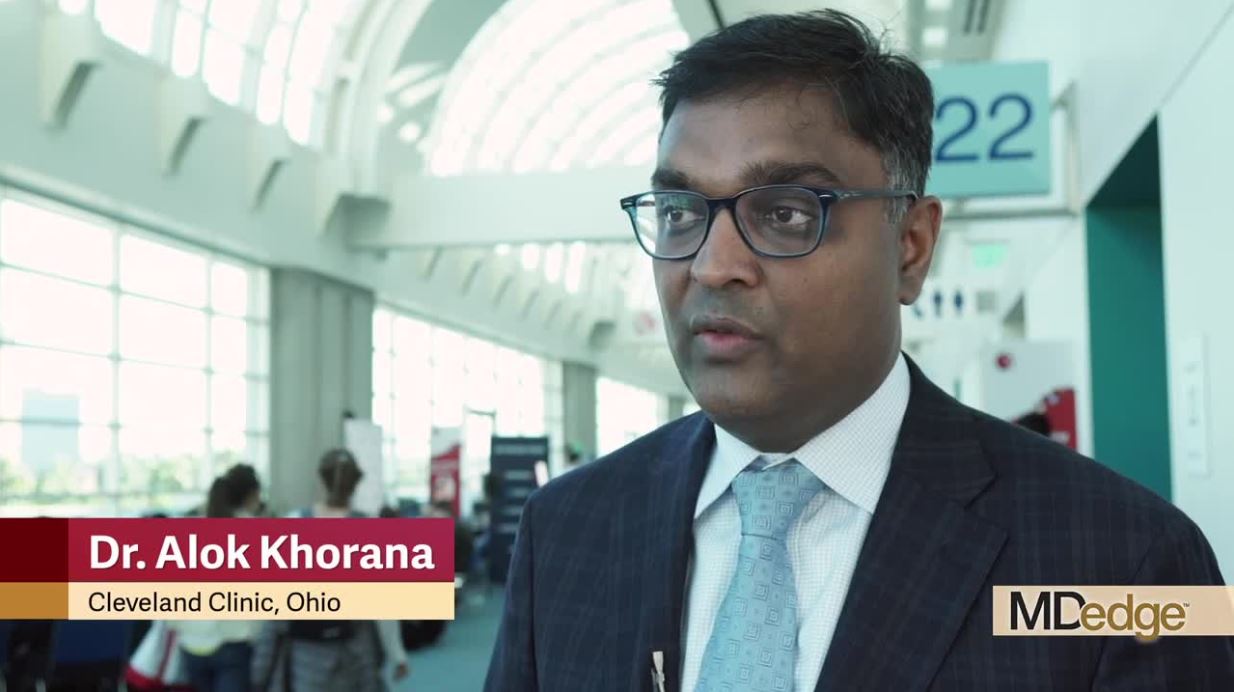
The reduction in venous thromboembolism (VTE) or VTE-related death was not statistically significant in the primary analysis, in part because a large proportion of patients stopped taking the direct oral anticoagulant, according to investigator Alok A. Khorana, MD, of the Cleveland Clinic.
However, the reduction in events was significant in a prespecified secondary analysis limited to the on-treatment period, Dr. Khorana reported at the annual meeting of the American Society of Hematology, adding that rates of major and nonmajor bleeding were low.
Results are “eagerly awaited” from a different prophylaxis trial – the AVERT study – looking at another direct oral anticoagulant in high-risk cancer patients, Dr. Khorana said in a late-breaking abstracts session.
“If the findings of that trial are consistent with ours, then we certainly hope that these findings should inform future recommendations regarding thromboprophylaxis for high-risk ambulatory cancer patients, and then the landscape of anticoagulation in the cancer population should start to shift from management of events to primary prevention,” he said.
In the study by Dr. Khorana and his colleagues, known as CASSINI, 841 patients with various solid tumors and lymphomas were randomized to either rivaroxaban 10 mg or placebo once daily. The patients, enrolled at 143 study centers in 11 countries, all had a Khorana risk score of 2 or greater.
In the primary analysis period of 180 days, the composite endpoint of VTE or VTE-related death occurred in 5.95% of the rivaroxaban-treated group and 8.79% of the placebo group (hazard ratio, 0.66; 95% confidence interval, 0.40-1.09; P = .101). However, a total of 177 patients (43.7%) stopped rivaroxaban earlier than 180 days, and likewise, 203 patients (50.2%) stopped placebo early.
In a prespecified secondary analysis looking just at the period of time when patients were actually taking rivaroxaban or placebo, rivaroxaban did significantly reduce risk of VTE or VTE-related death, Dr. Khorana said. The composite endpoint occurred in 2.62% of the rivaroxaban patients and 6.41% of placebo patients in that on-treatment analysis (HR, 0.40; 95% CI, 0.20-0.80; P = .007).
Rates of major bleeding and clinically relevant nonmajor bleeding were not significantly different between groups, according to results of a safety analysis. Major bleeding occurred in eight rivaroxaban patients and four placebo patients, or 1.98% and 0.99%, respectively (P = .265).
CASSINI was sponsored by Bayer and Janssen. Dr. Khorana reported disclosures related to Janssen, Bayer, PAREXEL, Sanofi, Pfizer, TriSalus Life Sciences, Halozyme, Seattle Genetics, AngioDynamics, and others.
SAN DIEGO – Prophylaxis with rivaroxaban significantly reduced the rate of venous thromboembolism and associated death in high-risk ambulatory cancer patients receiving systemic therapy, results of a randomized trial show.
The reduction in venous thromboembolism (VTE) or VTE-related death was not statistically significant in the primary analysis, in part because a large proportion of patients stopped taking the direct oral anticoagulant, according to investigator Alok A. Khorana, MD, of the Cleveland Clinic.
However, the reduction in events was significant in a prespecified secondary analysis limited to the on-treatment period, Dr. Khorana reported at the annual meeting of the American Society of Hematology, adding that rates of major and nonmajor bleeding were low.
Results are “eagerly awaited” from a different prophylaxis trial – the AVERT study – looking at another direct oral anticoagulant in high-risk cancer patients, Dr. Khorana said in a late-breaking abstracts session.
“If the findings of that trial are consistent with ours, then we certainly hope that these findings should inform future recommendations regarding thromboprophylaxis for high-risk ambulatory cancer patients, and then the landscape of anticoagulation in the cancer population should start to shift from management of events to primary prevention,” he said.
In the study by Dr. Khorana and his colleagues, known as CASSINI, 841 patients with various solid tumors and lymphomas were randomized to either rivaroxaban 10 mg or placebo once daily. The patients, enrolled at 143 study centers in 11 countries, all had a Khorana risk score of 2 or greater.
In the primary analysis period of 180 days, the composite endpoint of VTE or VTE-related death occurred in 5.95% of the rivaroxaban-treated group and 8.79% of the placebo group (hazard ratio, 0.66; 95% confidence interval, 0.40-1.09; P = .101). However, a total of 177 patients (43.7%) stopped rivaroxaban earlier than 180 days, and likewise, 203 patients (50.2%) stopped placebo early.
In a prespecified secondary analysis looking just at the period of time when patients were actually taking rivaroxaban or placebo, rivaroxaban did significantly reduce risk of VTE or VTE-related death, Dr. Khorana said. The composite endpoint occurred in 2.62% of the rivaroxaban patients and 6.41% of placebo patients in that on-treatment analysis (HR, 0.40; 95% CI, 0.20-0.80; P = .007).
Rates of major bleeding and clinically relevant nonmajor bleeding were not significantly different between groups, according to results of a safety analysis. Major bleeding occurred in eight rivaroxaban patients and four placebo patients, or 1.98% and 0.99%, respectively (P = .265).
CASSINI was sponsored by Bayer and Janssen. Dr. Khorana reported disclosures related to Janssen, Bayer, PAREXEL, Sanofi, Pfizer, TriSalus Life Sciences, Halozyme, Seattle Genetics, AngioDynamics, and others.
SAN DIEGO – Prophylaxis with rivaroxaban significantly reduced the rate of venous thromboembolism and associated death in high-risk ambulatory cancer patients receiving systemic therapy, results of a randomized trial show.
The reduction in venous thromboembolism (VTE) or VTE-related death was not statistically significant in the primary analysis, in part because a large proportion of patients stopped taking the direct oral anticoagulant, according to investigator Alok A. Khorana, MD, of the Cleveland Clinic.
However, the reduction in events was significant in a prespecified secondary analysis limited to the on-treatment period, Dr. Khorana reported at the annual meeting of the American Society of Hematology, adding that rates of major and nonmajor bleeding were low.
Results are “eagerly awaited” from a different prophylaxis trial – the AVERT study – looking at another direct oral anticoagulant in high-risk cancer patients, Dr. Khorana said in a late-breaking abstracts session.
“If the findings of that trial are consistent with ours, then we certainly hope that these findings should inform future recommendations regarding thromboprophylaxis for high-risk ambulatory cancer patients, and then the landscape of anticoagulation in the cancer population should start to shift from management of events to primary prevention,” he said.
In the study by Dr. Khorana and his colleagues, known as CASSINI, 841 patients with various solid tumors and lymphomas were randomized to either rivaroxaban 10 mg or placebo once daily. The patients, enrolled at 143 study centers in 11 countries, all had a Khorana risk score of 2 or greater.
In the primary analysis period of 180 days, the composite endpoint of VTE or VTE-related death occurred in 5.95% of the rivaroxaban-treated group and 8.79% of the placebo group (hazard ratio, 0.66; 95% confidence interval, 0.40-1.09; P = .101). However, a total of 177 patients (43.7%) stopped rivaroxaban earlier than 180 days, and likewise, 203 patients (50.2%) stopped placebo early.
In a prespecified secondary analysis looking just at the period of time when patients were actually taking rivaroxaban or placebo, rivaroxaban did significantly reduce risk of VTE or VTE-related death, Dr. Khorana said. The composite endpoint occurred in 2.62% of the rivaroxaban patients and 6.41% of placebo patients in that on-treatment analysis (HR, 0.40; 95% CI, 0.20-0.80; P = .007).
Rates of major bleeding and clinically relevant nonmajor bleeding were not significantly different between groups, according to results of a safety analysis. Major bleeding occurred in eight rivaroxaban patients and four placebo patients, or 1.98% and 0.99%, respectively (P = .265).
CASSINI was sponsored by Bayer and Janssen. Dr. Khorana reported disclosures related to Janssen, Bayer, PAREXEL, Sanofi, Pfizer, TriSalus Life Sciences, Halozyme, Seattle Genetics, AngioDynamics, and others.
REPORTING FROM ASH 2018
Key clinical point:
Major finding: In an on-treatment analysis, the composite endpoint occurred in 2.62% of the rivaroxaban patients and 6.41% of placebo patients (hazard ratio, 0.40; 95% confidence interval, 0.20-0.80; P = .007).
Study details: The results from CASSINI included 841 patients with various solid tumors and lymphomas randomized to rivaroxaban or placebo daily.
Disclosures: CASSINI was sponsored by Bayer and Janssen. Dr. Khorana reported disclosures related to Janssen, Bayer, PAREXEL, Sanofi, Pfizer, TriSalus Life Sciences, Halozyme, Seattle Genetics, AngioDynamics, and others.
Low-dose tamoxifen halves recurrence of breast intraepithelial neoplasia
SAN ANTONIO – New life for old medicine: Women aged under 75 years with breast intraepithelial neoplasms (IEN) who took tamoxifen for 3 years at a dose of 5 mg per day – one-fourth the standard dose – had a 50% reduction in risk of IEN recurrence and an even more remarkable 75% reduction in the risk of contralateral breast cancer, compared with women who took placebos in the TAMO1 study.
Despite concerns about the known side effects of tamoxifen, there were no significant differences in either the rate of endometrial cancer or of deep vein thrombosis/pulmonary embolism between groups, and there was only a borderline increase in hot flashes among patients randomized to tamoxifen, reported Dr. Andrea De Censi, MD, from Ospedali Galliera in Genoa, Italy.
In a video interview, Dr. De Censi discusses how tamoxifen, a decades-old, inexpensive drug still offers real clinical benefit in day-to-day practice for patients with IEN.
The TAM01 study was supported by the Italian Ministry of Health, Italian Association for Cancer Research, and the Italian League Against Cancer. Dr. De Censi and his coauthors reported having no direct conflicts of interest.
SAN ANTONIO – New life for old medicine: Women aged under 75 years with breast intraepithelial neoplasms (IEN) who took tamoxifen for 3 years at a dose of 5 mg per day – one-fourth the standard dose – had a 50% reduction in risk of IEN recurrence and an even more remarkable 75% reduction in the risk of contralateral breast cancer, compared with women who took placebos in the TAMO1 study.
Despite concerns about the known side effects of tamoxifen, there were no significant differences in either the rate of endometrial cancer or of deep vein thrombosis/pulmonary embolism between groups, and there was only a borderline increase in hot flashes among patients randomized to tamoxifen, reported Dr. Andrea De Censi, MD, from Ospedali Galliera in Genoa, Italy.
In a video interview, Dr. De Censi discusses how tamoxifen, a decades-old, inexpensive drug still offers real clinical benefit in day-to-day practice for patients with IEN.
The TAM01 study was supported by the Italian Ministry of Health, Italian Association for Cancer Research, and the Italian League Against Cancer. Dr. De Censi and his coauthors reported having no direct conflicts of interest.
SAN ANTONIO – New life for old medicine: Women aged under 75 years with breast intraepithelial neoplasms (IEN) who took tamoxifen for 3 years at a dose of 5 mg per day – one-fourth the standard dose – had a 50% reduction in risk of IEN recurrence and an even more remarkable 75% reduction in the risk of contralateral breast cancer, compared with women who took placebos in the TAMO1 study.
Despite concerns about the known side effects of tamoxifen, there were no significant differences in either the rate of endometrial cancer or of deep vein thrombosis/pulmonary embolism between groups, and there was only a borderline increase in hot flashes among patients randomized to tamoxifen, reported Dr. Andrea De Censi, MD, from Ospedali Galliera in Genoa, Italy.
In a video interview, Dr. De Censi discusses how tamoxifen, a decades-old, inexpensive drug still offers real clinical benefit in day-to-day practice for patients with IEN.
The TAM01 study was supported by the Italian Ministry of Health, Italian Association for Cancer Research, and the Italian League Against Cancer. Dr. De Censi and his coauthors reported having no direct conflicts of interest.
REPORTING FROM SABCS 2018