User login
Cellular and Molecular Gastroenterology and Hepatology
Published and anecdotal data show that basic research is critical to fuel subsequent advances. It has, however, become difficult to publish gastrointestinal, hepatobiliary, and pancreatology research without direct translational relevance. There are exceptional journals that publish outstanding basic research related to digestive health and disease, including Gastroenterology.
However, these journals have additional clinical and translational missions, so they often decline – based on publication priority – rigorous research lacking specific links to disease. As a result, researchers publish such high-quality work in journals associated with other fields, such as biochemistry, cell biology, immunology, or physiology. This limits dissemination of new information tothe investigators for whom the work is most relevant.
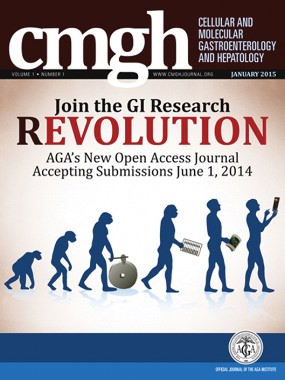
A new journal that fills this void and provides a high-quality venue for outstanding basic gastrointestinal, hepatobiliary, and pancreatology research is, therefore, urgently needed. We have the privilege to work with the AGA to inaugurate such a journal.
Cellular and Molecular Gastroenterology and Hepatology will publish studies related to a broad spectrum of themes. The work we aim to publish will be rigorous, hypothesis-driven, and mechanistically novel. We anticipate that CMGH will become a preferred venue to showcase outstanding integrative research that crosses traditional disciplinary boundaries.
We intend for CMGH to enhance communication within the greater gastrointestinal research community. We will, therefore, publish commentaries, editorials, and focused reviews in addition to full-length original articles and brief reports. CMGH will become a forum for discussions of major breakthroughs and a home for insightful debate.
CMGH will be a basic science sister journal to Gastroenterology and Clinical Gastroenterology and Hepatology, rounding out the AGA’s scholarly publishing portfolio. We will accept submissions starting June 1, 2014, and will publish the first issue in January, 2015. We will assess manuscripts in the most efficient and fair manner possible, which the AGA and their publishing partner, Elsevier, will facilitate using their extensive resources.
We see CMGH as an evolutionary advance in gastrointestinal, hepatobiliary, and pancreatology research publishing. To promote the availability of the breakthroughs reported in CMGH, articles will be available for free, without a subscription. Also, CMGH will be completely digital, which will allow readers to download individual articles, topic collections, or entire issues from the journal’s website or app. We will post articles within 72 hours of acceptance, integrate animated figures, the virtual microscope, and other interactive technologies.
Excerpted from Gastroenterology 2014;146:1143-4; to read the full commentary go to http://gastrojournal.org/article/S0016-5085(14)00358-8/pdf.
Published and anecdotal data show that basic research is critical to fuel subsequent advances. It has, however, become difficult to publish gastrointestinal, hepatobiliary, and pancreatology research without direct translational relevance. There are exceptional journals that publish outstanding basic research related to digestive health and disease, including Gastroenterology.
However, these journals have additional clinical and translational missions, so they often decline – based on publication priority – rigorous research lacking specific links to disease. As a result, researchers publish such high-quality work in journals associated with other fields, such as biochemistry, cell biology, immunology, or physiology. This limits dissemination of new information tothe investigators for whom the work is most relevant.
A new journal that fills this void and provides a high-quality venue for outstanding basic gastrointestinal, hepatobiliary, and pancreatology research is, therefore, urgently needed. We have the privilege to work with the AGA to inaugurate such a journal.
Cellular and Molecular Gastroenterology and Hepatology will publish studies related to a broad spectrum of themes. The work we aim to publish will be rigorous, hypothesis-driven, and mechanistically novel. We anticipate that CMGH will become a preferred venue to showcase outstanding integrative research that crosses traditional disciplinary boundaries.
We intend for CMGH to enhance communication within the greater gastrointestinal research community. We will, therefore, publish commentaries, editorials, and focused reviews in addition to full-length original articles and brief reports. CMGH will become a forum for discussions of major breakthroughs and a home for insightful debate.
CMGH will be a basic science sister journal to Gastroenterology and Clinical Gastroenterology and Hepatology, rounding out the AGA’s scholarly publishing portfolio. We will accept submissions starting June 1, 2014, and will publish the first issue in January, 2015. We will assess manuscripts in the most efficient and fair manner possible, which the AGA and their publishing partner, Elsevier, will facilitate using their extensive resources.
We see CMGH as an evolutionary advance in gastrointestinal, hepatobiliary, and pancreatology research publishing. To promote the availability of the breakthroughs reported in CMGH, articles will be available for free, without a subscription. Also, CMGH will be completely digital, which will allow readers to download individual articles, topic collections, or entire issues from the journal’s website or app. We will post articles within 72 hours of acceptance, integrate animated figures, the virtual microscope, and other interactive technologies.
Excerpted from Gastroenterology 2014;146:1143-4; to read the full commentary go to http://gastrojournal.org/article/S0016-5085(14)00358-8/pdf.
Published and anecdotal data show that basic research is critical to fuel subsequent advances. It has, however, become difficult to publish gastrointestinal, hepatobiliary, and pancreatology research without direct translational relevance. There are exceptional journals that publish outstanding basic research related to digestive health and disease, including Gastroenterology.
However, these journals have additional clinical and translational missions, so they often decline – based on publication priority – rigorous research lacking specific links to disease. As a result, researchers publish such high-quality work in journals associated with other fields, such as biochemistry, cell biology, immunology, or physiology. This limits dissemination of new information tothe investigators for whom the work is most relevant.
A new journal that fills this void and provides a high-quality venue for outstanding basic gastrointestinal, hepatobiliary, and pancreatology research is, therefore, urgently needed. We have the privilege to work with the AGA to inaugurate such a journal.
Cellular and Molecular Gastroenterology and Hepatology will publish studies related to a broad spectrum of themes. The work we aim to publish will be rigorous, hypothesis-driven, and mechanistically novel. We anticipate that CMGH will become a preferred venue to showcase outstanding integrative research that crosses traditional disciplinary boundaries.
We intend for CMGH to enhance communication within the greater gastrointestinal research community. We will, therefore, publish commentaries, editorials, and focused reviews in addition to full-length original articles and brief reports. CMGH will become a forum for discussions of major breakthroughs and a home for insightful debate.
CMGH will be a basic science sister journal to Gastroenterology and Clinical Gastroenterology and Hepatology, rounding out the AGA’s scholarly publishing portfolio. We will accept submissions starting June 1, 2014, and will publish the first issue in January, 2015. We will assess manuscripts in the most efficient and fair manner possible, which the AGA and their publishing partner, Elsevier, will facilitate using their extensive resources.
We see CMGH as an evolutionary advance in gastrointestinal, hepatobiliary, and pancreatology research publishing. To promote the availability of the breakthroughs reported in CMGH, articles will be available for free, without a subscription. Also, CMGH will be completely digital, which will allow readers to download individual articles, topic collections, or entire issues from the journal’s website or app. We will post articles within 72 hours of acceptance, integrate animated figures, the virtual microscope, and other interactive technologies.
Excerpted from Gastroenterology 2014;146:1143-4; to read the full commentary go to http://gastrojournal.org/article/S0016-5085(14)00358-8/pdf.
Vibrating capsule shows promising results in treating chronic constipation
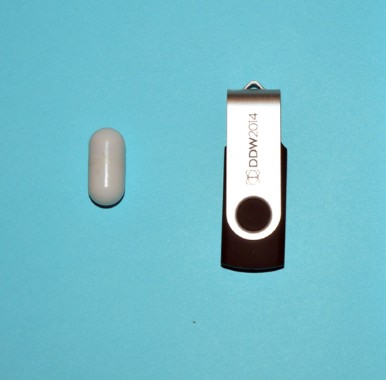
An oral capsule that vibrates as it moves through the digestive tract has shown notable promise as a non-harmacologic treatment for constipation, according to new research presented at an AGA poster session at Digestive Disease Week® (DDW) 2014. In the pilot study, the vibrating capsule was found to nearly double the weekly bowel movements of patients suffering from chronic idiopathic constipation (CIC) and irritable bowel syndrome with constipation (IBS-C).
"Despite the widespread use of medication to treat constipation, nearly 50% of patients are unsatisfied with the treatment either because of side effects, safety concerns about long-term use, or the fact that it simply doesn’t work," said Yishai Ron, MD, lead researcher for the study and director of Neurogastroenterology and Motility at Tel-Aviv Sourasky Medical Center’s Department of Gastroenterology and Hepatology.
Twenty-six patients took the vibrating capsule twice per week and responded to a daily bowel movement and laxative use questionnaire. All patients initially underwent a two-week preliminary period without the use of laxatives. Patients reported an increase in spontaneous bowel movements from two to four times per week, as well as a decrease in constipation symptoms, including reduction in the difficulty in passing stools and in incomplete evacuation. The study also found minimal side effects from the capsule use.
The capsule, which houses a small engine inside, is programmed to begin vibrating 6-8 hours after swallowing. The vibrations (mechanical stimulations) cause contractions in the intestine, which help move stool through the digestive tract.
Chronic constipation is a highly prevalent disorder that affects approximately 15% of the U.S. population. Symptoms can be burdensome, leading to a reduction in patients’ quality of life.
"Sometimes, drug therapies bring more issues than relief for these patients," Dr. Ron said. "The results of this study point to the potential for an alternative treatment that avoids the typical drug side effects, such as bloating and electrolyte imbalance, by imitating the body’s natural physiology."
Dr. Ron said he and his team plan to initiate a controlled, double blind study to expand on these findings and further explore the capsule’s potential.
An oral capsule that vibrates as it moves through the digestive tract has shown notable promise as a non-harmacologic treatment for constipation, according to new research presented at an AGA poster session at Digestive Disease Week® (DDW) 2014. In the pilot study, the vibrating capsule was found to nearly double the weekly bowel movements of patients suffering from chronic idiopathic constipation (CIC) and irritable bowel syndrome with constipation (IBS-C).
"Despite the widespread use of medication to treat constipation, nearly 50% of patients are unsatisfied with the treatment either because of side effects, safety concerns about long-term use, or the fact that it simply doesn’t work," said Yishai Ron, MD, lead researcher for the study and director of Neurogastroenterology and Motility at Tel-Aviv Sourasky Medical Center’s Department of Gastroenterology and Hepatology.
Twenty-six patients took the vibrating capsule twice per week and responded to a daily bowel movement and laxative use questionnaire. All patients initially underwent a two-week preliminary period without the use of laxatives. Patients reported an increase in spontaneous bowel movements from two to four times per week, as well as a decrease in constipation symptoms, including reduction in the difficulty in passing stools and in incomplete evacuation. The study also found minimal side effects from the capsule use.
The capsule, which houses a small engine inside, is programmed to begin vibrating 6-8 hours after swallowing. The vibrations (mechanical stimulations) cause contractions in the intestine, which help move stool through the digestive tract.
Chronic constipation is a highly prevalent disorder that affects approximately 15% of the U.S. population. Symptoms can be burdensome, leading to a reduction in patients’ quality of life.
"Sometimes, drug therapies bring more issues than relief for these patients," Dr. Ron said. "The results of this study point to the potential for an alternative treatment that avoids the typical drug side effects, such as bloating and electrolyte imbalance, by imitating the body’s natural physiology."
Dr. Ron said he and his team plan to initiate a controlled, double blind study to expand on these findings and further explore the capsule’s potential.
An oral capsule that vibrates as it moves through the digestive tract has shown notable promise as a non-harmacologic treatment for constipation, according to new research presented at an AGA poster session at Digestive Disease Week® (DDW) 2014. In the pilot study, the vibrating capsule was found to nearly double the weekly bowel movements of patients suffering from chronic idiopathic constipation (CIC) and irritable bowel syndrome with constipation (IBS-C).
"Despite the widespread use of medication to treat constipation, nearly 50% of patients are unsatisfied with the treatment either because of side effects, safety concerns about long-term use, or the fact that it simply doesn’t work," said Yishai Ron, MD, lead researcher for the study and director of Neurogastroenterology and Motility at Tel-Aviv Sourasky Medical Center’s Department of Gastroenterology and Hepatology.
Twenty-six patients took the vibrating capsule twice per week and responded to a daily bowel movement and laxative use questionnaire. All patients initially underwent a two-week preliminary period without the use of laxatives. Patients reported an increase in spontaneous bowel movements from two to four times per week, as well as a decrease in constipation symptoms, including reduction in the difficulty in passing stools and in incomplete evacuation. The study also found minimal side effects from the capsule use.
The capsule, which houses a small engine inside, is programmed to begin vibrating 6-8 hours after swallowing. The vibrations (mechanical stimulations) cause contractions in the intestine, which help move stool through the digestive tract.
Chronic constipation is a highly prevalent disorder that affects approximately 15% of the U.S. population. Symptoms can be burdensome, leading to a reduction in patients’ quality of life.
"Sometimes, drug therapies bring more issues than relief for these patients," Dr. Ron said. "The results of this study point to the potential for an alternative treatment that avoids the typical drug side effects, such as bloating and electrolyte imbalance, by imitating the body’s natural physiology."
Dr. Ron said he and his team plan to initiate a controlled, double blind study to expand on these findings and further explore the capsule’s potential.
GI practice thought leader becomes President of AGA Institute
John I. Allen, M.D., MBA, AGAF, of Yale University School of Medicine, will continue his service to the American Gastroenterological Association (AGA) and the broad GI community throughout the coming year in his new role as president of the AGA Institute. Dr. Allen’s term began at the conclusion of Digestive Disease Week® (DDW) 2014.
During his presidency, Dr. Allen plans to continue AGA’s tripartite mission of research, clinical practice, and education. All three pillars will be supported by robust advocacy and networking with national organizations that create health care law, regulations, and policies.

Important research endeavors include the growing endowment for research support targeted especially at investigators beginning their academic career (AGA Research Foundation) and the Center for GI Innovation and Technology. AGA education will transform into new, exciting modalities that speak to both beginning and advanced-career gastroenterologists.
"[Dr. Allen’s] vision for AGA is shaped by his personal experiences as a physician, clinical researcher, teacher, and patient," said Robert A. Ganz, M.D., a long-time colleague of Dr. Allen’s from Minnesota Gastroenterology, P.A. "He recognizes that the specialty of GI faces enormous challenges and is unwavering in his commitment to support AGA members in this new era of health care delivery."
Anticipating the coming changes in health care, Dr. Allen has led the AGA in developing a series of programs under the "Roadmap to the Future of GI," designed to provide a portfolio of tools that directly help practitioners thrive in a period of great change in health care. The goals of the Roadmap are to deliver high-quality care, demonstrate quality, and maximize revenue.
Over the past decade, Dr. Allen has served AGA in increasing capacities. In 2007, Dr. Allen was selected to chair the AGA Institute Clinical Practice Committee, a committee responsible for all aspects of clinical practice, including quality measures and practice management. In 2009, Dr. Allen was nominated and elected to be a community practice councillor to the AGA Governing Board.
"During his tenure, [Dr. Allen] was one of the hardest working, productive, and valuable members of the board, leading crucial efforts in practice-related initiatives," said Loren A. Laine, M.D., AGAF, professor of medicine, Yale School of Medicine, and past president, AGA Institute. "It was no surprise, and well-deserved, when [Dr. Allen] was elected vice president in 2012, with succession to president in 2014."
Dr. Allen graduated with honors from Rice University in Houston, TX, in 1973, and the University of New Mexico Medical School, Albuquerque, in 1977, completing internship, residency, and gastroenterology specialty training at the University of Minnesota, Minneapolis. Dr. Allen then spent 10 years as faculty in the department of medicine at University of Minnesota.
From 1991 through 2013, Dr. Allen helped build Minnesota Gastroenterology into a large single-specialty gastroenterology practice in the Twin Cities of Minnesota and develop their nationally known quality improvement program.
On April 1, 2013, Dr. Allen assumed the role of clinical chief of the section of digestive diseases and a professor of medicine at Yale University School of Medicine, New Haven, CT.
Dr. Allen and his wife Carolyn, an advanced endoscopy nurse, have two grown children: Jennifer and Josh.
The June issue of Gastroenterology provides an in-depth profile of Dr. Allen’s upbringing, education, career, and accomplishments.
John I. Allen, M.D., MBA, AGAF, of Yale University School of Medicine, will continue his service to the American Gastroenterological Association (AGA) and the broad GI community throughout the coming year in his new role as president of the AGA Institute. Dr. Allen’s term began at the conclusion of Digestive Disease Week® (DDW) 2014.
During his presidency, Dr. Allen plans to continue AGA’s tripartite mission of research, clinical practice, and education. All three pillars will be supported by robust advocacy and networking with national organizations that create health care law, regulations, and policies.
Important research endeavors include the growing endowment for research support targeted especially at investigators beginning their academic career (AGA Research Foundation) and the Center for GI Innovation and Technology. AGA education will transform into new, exciting modalities that speak to both beginning and advanced-career gastroenterologists.
"[Dr. Allen’s] vision for AGA is shaped by his personal experiences as a physician, clinical researcher, teacher, and patient," said Robert A. Ganz, M.D., a long-time colleague of Dr. Allen’s from Minnesota Gastroenterology, P.A. "He recognizes that the specialty of GI faces enormous challenges and is unwavering in his commitment to support AGA members in this new era of health care delivery."
Anticipating the coming changes in health care, Dr. Allen has led the AGA in developing a series of programs under the "Roadmap to the Future of GI," designed to provide a portfolio of tools that directly help practitioners thrive in a period of great change in health care. The goals of the Roadmap are to deliver high-quality care, demonstrate quality, and maximize revenue.
Over the past decade, Dr. Allen has served AGA in increasing capacities. In 2007, Dr. Allen was selected to chair the AGA Institute Clinical Practice Committee, a committee responsible for all aspects of clinical practice, including quality measures and practice management. In 2009, Dr. Allen was nominated and elected to be a community practice councillor to the AGA Governing Board.
"During his tenure, [Dr. Allen] was one of the hardest working, productive, and valuable members of the board, leading crucial efforts in practice-related initiatives," said Loren A. Laine, M.D., AGAF, professor of medicine, Yale School of Medicine, and past president, AGA Institute. "It was no surprise, and well-deserved, when [Dr. Allen] was elected vice president in 2012, with succession to president in 2014."
Dr. Allen graduated with honors from Rice University in Houston, TX, in 1973, and the University of New Mexico Medical School, Albuquerque, in 1977, completing internship, residency, and gastroenterology specialty training at the University of Minnesota, Minneapolis. Dr. Allen then spent 10 years as faculty in the department of medicine at University of Minnesota.
From 1991 through 2013, Dr. Allen helped build Minnesota Gastroenterology into a large single-specialty gastroenterology practice in the Twin Cities of Minnesota and develop their nationally known quality improvement program.
On April 1, 2013, Dr. Allen assumed the role of clinical chief of the section of digestive diseases and a professor of medicine at Yale University School of Medicine, New Haven, CT.
Dr. Allen and his wife Carolyn, an advanced endoscopy nurse, have two grown children: Jennifer and Josh.
The June issue of Gastroenterology provides an in-depth profile of Dr. Allen’s upbringing, education, career, and accomplishments.
John I. Allen, M.D., MBA, AGAF, of Yale University School of Medicine, will continue his service to the American Gastroenterological Association (AGA) and the broad GI community throughout the coming year in his new role as president of the AGA Institute. Dr. Allen’s term began at the conclusion of Digestive Disease Week® (DDW) 2014.
During his presidency, Dr. Allen plans to continue AGA’s tripartite mission of research, clinical practice, and education. All three pillars will be supported by robust advocacy and networking with national organizations that create health care law, regulations, and policies.
Important research endeavors include the growing endowment for research support targeted especially at investigators beginning their academic career (AGA Research Foundation) and the Center for GI Innovation and Technology. AGA education will transform into new, exciting modalities that speak to both beginning and advanced-career gastroenterologists.
"[Dr. Allen’s] vision for AGA is shaped by his personal experiences as a physician, clinical researcher, teacher, and patient," said Robert A. Ganz, M.D., a long-time colleague of Dr. Allen’s from Minnesota Gastroenterology, P.A. "He recognizes that the specialty of GI faces enormous challenges and is unwavering in his commitment to support AGA members in this new era of health care delivery."
Anticipating the coming changes in health care, Dr. Allen has led the AGA in developing a series of programs under the "Roadmap to the Future of GI," designed to provide a portfolio of tools that directly help practitioners thrive in a period of great change in health care. The goals of the Roadmap are to deliver high-quality care, demonstrate quality, and maximize revenue.
Over the past decade, Dr. Allen has served AGA in increasing capacities. In 2007, Dr. Allen was selected to chair the AGA Institute Clinical Practice Committee, a committee responsible for all aspects of clinical practice, including quality measures and practice management. In 2009, Dr. Allen was nominated and elected to be a community practice councillor to the AGA Governing Board.
"During his tenure, [Dr. Allen] was one of the hardest working, productive, and valuable members of the board, leading crucial efforts in practice-related initiatives," said Loren A. Laine, M.D., AGAF, professor of medicine, Yale School of Medicine, and past president, AGA Institute. "It was no surprise, and well-deserved, when [Dr. Allen] was elected vice president in 2012, with succession to president in 2014."
Dr. Allen graduated with honors from Rice University in Houston, TX, in 1973, and the University of New Mexico Medical School, Albuquerque, in 1977, completing internship, residency, and gastroenterology specialty training at the University of Minnesota, Minneapolis. Dr. Allen then spent 10 years as faculty in the department of medicine at University of Minnesota.
From 1991 through 2013, Dr. Allen helped build Minnesota Gastroenterology into a large single-specialty gastroenterology practice in the Twin Cities of Minnesota and develop their nationally known quality improvement program.
On April 1, 2013, Dr. Allen assumed the role of clinical chief of the section of digestive diseases and a professor of medicine at Yale University School of Medicine, New Haven, CT.
Dr. Allen and his wife Carolyn, an advanced endoscopy nurse, have two grown children: Jennifer and Josh.
The June issue of Gastroenterology provides an in-depth profile of Dr. Allen’s upbringing, education, career, and accomplishments.

AGA Research Foundation launches funding campaign
In response to declining research funding from corporate and government sources, the AGA Research Foundation has an endowment fund to support young investigators. The endowment will be used to fund the AGA Research Awards Program, which provides digestive disease research grants. The majority of the research grants support young investigators through the AGA Research Scholar Award program.
To ensure stable, secure funding to sustain research advancements for years to come, the foundation has also launched a campaign to raise funds for the endowment titled "Looking Forward: Giving Back."
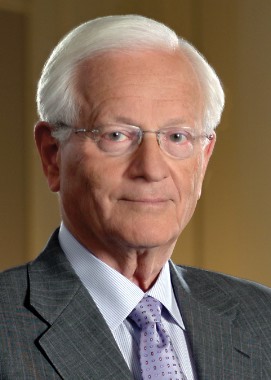
AGA Research Foundation Chair Martin Brotman, M.D., AGAF, said the foundation has always supported young investigators through their difficult early years before they’ve built a significant track record of publications to be competitive for the limited funding available. But in the past, he said, the foundation has been dependent on industry – particularly the pharmaceutical and device industries – to help provide funds for talented investigators through the AGA Research Scholar Awards.
"Industry is no longer able to grow or, in some cases, even to sustain their contributions to a sufficient level to guarantee funding will be available for these young investigators on a long-term basis," said Dr. Brotman, who also chairs the "Looking Forward: Giving Back" endowment campaign.
"The ‘Looking Forward’ part refers to a time – hopefully in the near future – when our brightest young minds won’t be at risk of leaving research for other fields," said Dr. Brotman, senior vice president for education, research, and philanthropy for Sutter Health in San Francisco, Calif. "We’re looking forward to stabilizing the careers of these young people, and looking forward to the incredible discoveries they’re going to make in the future.
"The ‘Giving Back’ part is something I’ve been talking about for many years," he continued. "Everyone in the field of gastroenterology has benefited from investigators. If you’re a private practitioner, virtually everything you do every day in the way of diagnosis and treatment is based on research done by others. If you’re a researcher, what you’re doing today is based on knowledge from researchers that came before you. No matter where you are in the field of digestive diseases, you owe something back to those who contributed to your success."
With that in mind, Dr. Brotman said the fundraising campaign is moving from a quiet, behind-the-scenes phase into a more public phase. The AGA Research Foundation will be approaching AGA members to give to the campaign and all contributions are tax deductible to the fullest extent of U.S. law.
"I don’t know anyone in GI today that can’t afford to give something," Dr. Brotman said. "Make a gift and feel good about supporting future research."
Before this year’s public rollout of the campaign, Dr. Brotman spent more than 2 years leading national efforts to secure contributions from large donors. The AGA contributed support from its reserves to match large donations.
"It takes $2.25 million to fund a 3-year Research Scholar Award," Dr. Brotman said. "Some donors just can’t afford to fund an entire award, so we’ve had several instances where donors have contributed $1.25 million and the AGA has matched that."
The foundation initially set out to raise $7.5 million. However, the large donor contributions were stronger than anticipated and the campaign has raised $8.4 million to date, prompting the AGA Institute Governing Board to increase the goal to $10 million.
"If they can’t find grant support, we are at great risk of losing them from GI research – not because they don’t want to stay in GI research but because they don’t have adequate funding during that vulnerable stage of their career," Dr. Brotman said.
For more information about the AGA Research Foundation’s efforts to fund young investigators or to donate to the "Looking Forward: Giving Back" campaign, visit www.gastro.org/givingback.
In response to declining research funding from corporate and government sources, the AGA Research Foundation has an endowment fund to support young investigators. The endowment will be used to fund the AGA Research Awards Program, which provides digestive disease research grants. The majority of the research grants support young investigators through the AGA Research Scholar Award program.
To ensure stable, secure funding to sustain research advancements for years to come, the foundation has also launched a campaign to raise funds for the endowment titled "Looking Forward: Giving Back."
AGA Research Foundation Chair Martin Brotman, M.D., AGAF, said the foundation has always supported young investigators through their difficult early years before they’ve built a significant track record of publications to be competitive for the limited funding available. But in the past, he said, the foundation has been dependent on industry – particularly the pharmaceutical and device industries – to help provide funds for talented investigators through the AGA Research Scholar Awards.
"Industry is no longer able to grow or, in some cases, even to sustain their contributions to a sufficient level to guarantee funding will be available for these young investigators on a long-term basis," said Dr. Brotman, who also chairs the "Looking Forward: Giving Back" endowment campaign.
"The ‘Looking Forward’ part refers to a time – hopefully in the near future – when our brightest young minds won’t be at risk of leaving research for other fields," said Dr. Brotman, senior vice president for education, research, and philanthropy for Sutter Health in San Francisco, Calif. "We’re looking forward to stabilizing the careers of these young people, and looking forward to the incredible discoveries they’re going to make in the future.
"The ‘Giving Back’ part is something I’ve been talking about for many years," he continued. "Everyone in the field of gastroenterology has benefited from investigators. If you’re a private practitioner, virtually everything you do every day in the way of diagnosis and treatment is based on research done by others. If you’re a researcher, what you’re doing today is based on knowledge from researchers that came before you. No matter where you are in the field of digestive diseases, you owe something back to those who contributed to your success."
With that in mind, Dr. Brotman said the fundraising campaign is moving from a quiet, behind-the-scenes phase into a more public phase. The AGA Research Foundation will be approaching AGA members to give to the campaign and all contributions are tax deductible to the fullest extent of U.S. law.
"I don’t know anyone in GI today that can’t afford to give something," Dr. Brotman said. "Make a gift and feel good about supporting future research."
Before this year’s public rollout of the campaign, Dr. Brotman spent more than 2 years leading national efforts to secure contributions from large donors. The AGA contributed support from its reserves to match large donations.
"It takes $2.25 million to fund a 3-year Research Scholar Award," Dr. Brotman said. "Some donors just can’t afford to fund an entire award, so we’ve had several instances where donors have contributed $1.25 million and the AGA has matched that."
The foundation initially set out to raise $7.5 million. However, the large donor contributions were stronger than anticipated and the campaign has raised $8.4 million to date, prompting the AGA Institute Governing Board to increase the goal to $10 million.
"If they can’t find grant support, we are at great risk of losing them from GI research – not because they don’t want to stay in GI research but because they don’t have adequate funding during that vulnerable stage of their career," Dr. Brotman said.
For more information about the AGA Research Foundation’s efforts to fund young investigators or to donate to the "Looking Forward: Giving Back" campaign, visit www.gastro.org/givingback.
In response to declining research funding from corporate and government sources, the AGA Research Foundation has an endowment fund to support young investigators. The endowment will be used to fund the AGA Research Awards Program, which provides digestive disease research grants. The majority of the research grants support young investigators through the AGA Research Scholar Award program.
To ensure stable, secure funding to sustain research advancements for years to come, the foundation has also launched a campaign to raise funds for the endowment titled "Looking Forward: Giving Back."
AGA Research Foundation Chair Martin Brotman, M.D., AGAF, said the foundation has always supported young investigators through their difficult early years before they’ve built a significant track record of publications to be competitive for the limited funding available. But in the past, he said, the foundation has been dependent on industry – particularly the pharmaceutical and device industries – to help provide funds for talented investigators through the AGA Research Scholar Awards.
"Industry is no longer able to grow or, in some cases, even to sustain their contributions to a sufficient level to guarantee funding will be available for these young investigators on a long-term basis," said Dr. Brotman, who also chairs the "Looking Forward: Giving Back" endowment campaign.
"The ‘Looking Forward’ part refers to a time – hopefully in the near future – when our brightest young minds won’t be at risk of leaving research for other fields," said Dr. Brotman, senior vice president for education, research, and philanthropy for Sutter Health in San Francisco, Calif. "We’re looking forward to stabilizing the careers of these young people, and looking forward to the incredible discoveries they’re going to make in the future.
"The ‘Giving Back’ part is something I’ve been talking about for many years," he continued. "Everyone in the field of gastroenterology has benefited from investigators. If you’re a private practitioner, virtually everything you do every day in the way of diagnosis and treatment is based on research done by others. If you’re a researcher, what you’re doing today is based on knowledge from researchers that came before you. No matter where you are in the field of digestive diseases, you owe something back to those who contributed to your success."
With that in mind, Dr. Brotman said the fundraising campaign is moving from a quiet, behind-the-scenes phase into a more public phase. The AGA Research Foundation will be approaching AGA members to give to the campaign and all contributions are tax deductible to the fullest extent of U.S. law.
"I don’t know anyone in GI today that can’t afford to give something," Dr. Brotman said. "Make a gift and feel good about supporting future research."
Before this year’s public rollout of the campaign, Dr. Brotman spent more than 2 years leading national efforts to secure contributions from large donors. The AGA contributed support from its reserves to match large donations.
"It takes $2.25 million to fund a 3-year Research Scholar Award," Dr. Brotman said. "Some donors just can’t afford to fund an entire award, so we’ve had several instances where donors have contributed $1.25 million and the AGA has matched that."
The foundation initially set out to raise $7.5 million. However, the large donor contributions were stronger than anticipated and the campaign has raised $8.4 million to date, prompting the AGA Institute Governing Board to increase the goal to $10 million.
"If they can’t find grant support, we are at great risk of losing them from GI research – not because they don’t want to stay in GI research but because they don’t have adequate funding during that vulnerable stage of their career," Dr. Brotman said.
For more information about the AGA Research Foundation’s efforts to fund young investigators or to donate to the "Looking Forward: Giving Back" campaign, visit www.gastro.org/givingback.
The 'Times They Are A-Changin'
What Bob Dylan said about the social times of the 1960s certainly applies to health care today. For the last 6 years, I have had the honor to serve as a member of the AGA Practice Management and Economics Committee (PMEC), spending the last 3 years as its chair.
Over this period, I have seen a significant shift in our employment settings and how challenging they are to track. Whereas in the past our group structures were fairly stable, today we are living in an era of change.

Practices are merging with other GI practices to form large mega groups or selling to hospitals. Ambulatory surgical centers formed years ago are being sold to large management companies. Traditional payor relationships are being disrupted by accountable-care organizations.
This has even affected academic medical centers where hospital mergers are progressing at a rapid pace. AGA is working hard to support you during these unpredictable times.
Before changes can be implemented and new tools developed, AGA needs to gather accurate, timely data on the status of your practices – that’s why the PMEC is preparing to launch a practice-benchmarking survey to gather key information about your practice settings. With this information, AGA will develop a practice management toolbox containing resources to support members in practice and your practice administrators.
The final results will help you understand how you compare or benchmark with your colleagues by geographic location, practice size, and many other important data points.
The work will not end there. AGA plans to conduct future surveys to track changes over time. Through the AGA Roadmap to the Future of GI, we will continue to develop new resources to help your practice thrive in the continually changing health care environment.
We will be reaching out to you over the summer to enlist your participation in this important survey. It’s imperative that we stay ahead of the ever-changing outside forces.
What Bob Dylan said about the social times of the 1960s certainly applies to health care today. For the last 6 years, I have had the honor to serve as a member of the AGA Practice Management and Economics Committee (PMEC), spending the last 3 years as its chair.
Over this period, I have seen a significant shift in our employment settings and how challenging they are to track. Whereas in the past our group structures were fairly stable, today we are living in an era of change.
Practices are merging with other GI practices to form large mega groups or selling to hospitals. Ambulatory surgical centers formed years ago are being sold to large management companies. Traditional payor relationships are being disrupted by accountable-care organizations.
This has even affected academic medical centers where hospital mergers are progressing at a rapid pace. AGA is working hard to support you during these unpredictable times.
Before changes can be implemented and new tools developed, AGA needs to gather accurate, timely data on the status of your practices – that’s why the PMEC is preparing to launch a practice-benchmarking survey to gather key information about your practice settings. With this information, AGA will develop a practice management toolbox containing resources to support members in practice and your practice administrators.
The final results will help you understand how you compare or benchmark with your colleagues by geographic location, practice size, and many other important data points.
The work will not end there. AGA plans to conduct future surveys to track changes over time. Through the AGA Roadmap to the Future of GI, we will continue to develop new resources to help your practice thrive in the continually changing health care environment.
We will be reaching out to you over the summer to enlist your participation in this important survey. It’s imperative that we stay ahead of the ever-changing outside forces.
What Bob Dylan said about the social times of the 1960s certainly applies to health care today. For the last 6 years, I have had the honor to serve as a member of the AGA Practice Management and Economics Committee (PMEC), spending the last 3 years as its chair.
Over this period, I have seen a significant shift in our employment settings and how challenging they are to track. Whereas in the past our group structures were fairly stable, today we are living in an era of change.
Practices are merging with other GI practices to form large mega groups or selling to hospitals. Ambulatory surgical centers formed years ago are being sold to large management companies. Traditional payor relationships are being disrupted by accountable-care organizations.
This has even affected academic medical centers where hospital mergers are progressing at a rapid pace. AGA is working hard to support you during these unpredictable times.
Before changes can be implemented and new tools developed, AGA needs to gather accurate, timely data on the status of your practices – that’s why the PMEC is preparing to launch a practice-benchmarking survey to gather key information about your practice settings. With this information, AGA will develop a practice management toolbox containing resources to support members in practice and your practice administrators.
The final results will help you understand how you compare or benchmark with your colleagues by geographic location, practice size, and many other important data points.
The work will not end there. AGA plans to conduct future surveys to track changes over time. Through the AGA Roadmap to the Future of GI, we will continue to develop new resources to help your practice thrive in the continually changing health care environment.
We will be reaching out to you over the summer to enlist your participation in this important survey. It’s imperative that we stay ahead of the ever-changing outside forces.

Applications are open for the 2015 AGA Fellows program
Each year, AGA honors distinguished clinicians and researchers around the world through the AGA Fellows program. Fellowships are awarded to members whose accomplishments and contributions demonstrate personal commitment to the field of gastroenterology.
AGA Fellows will be acknowledged in several ways, including a certificate commemorating their accomplishment and the privilege of using the designation "AGAF" in professional activities. They also receive recognition at Digestive Disease Week® and on the AGA website. View more information, including the full list of benefits and criteria for fellowship.
Complete the online application today. The deadline for submissions is Friday, July 25, 2014.
Each year, AGA honors distinguished clinicians and researchers around the world through the AGA Fellows program. Fellowships are awarded to members whose accomplishments and contributions demonstrate personal commitment to the field of gastroenterology.
AGA Fellows will be acknowledged in several ways, including a certificate commemorating their accomplishment and the privilege of using the designation "AGAF" in professional activities. They also receive recognition at Digestive Disease Week® and on the AGA website. View more information, including the full list of benefits and criteria for fellowship.
Complete the online application today. The deadline for submissions is Friday, July 25, 2014.
Each year, AGA honors distinguished clinicians and researchers around the world through the AGA Fellows program. Fellowships are awarded to members whose accomplishments and contributions demonstrate personal commitment to the field of gastroenterology.
AGA Fellows will be acknowledged in several ways, including a certificate commemorating their accomplishment and the privilege of using the designation "AGAF" in professional activities. They also receive recognition at Digestive Disease Week® and on the AGA website. View more information, including the full list of benefits and criteria for fellowship.
Complete the online application today. The deadline for submissions is Friday, July 25, 2014.
President Obama signs 1-year SGR patch legislation
President Obama signed H.R. 4302, the Protecting Access to Medicare Act of 2014, legislation that would provide a 1-year freeze in Medicare physician payments and prevent the 24% cut from being implemented on April 1. The legislation, which was opposed by AGA and almost the entire medical community, passed the House by voice vote and by a vote of 64-35 in the Senate. AGA opposed this temporary patch since it does nothing to fix the underlying problem with the Medicare physician payment system – it’s a temporary solution that finances the fix on the backs of specialty medicine.
AGA is extremely disappointed that Congress passed a patch since we were so close to finally enacting a permanent solution to the SGR. This action jeopardizes the chances of Congress enacting a long-term solution, and also continues to put specialties like gastroenterology in jeopardy by expanding the Centers for Medicare & Medicaid’s existing authority to identify misvalued codes. Since GI has already been resurveyed by CMS for both upper and lower procedures, we remain concerned that nothing in this legislation protects us from being targeted again by the agency.
AGA and the entire GI community will continue to advocate on behalf of gastroenterology to ensure that it is adequately compensated commensurate with the value that we provide to patients with digestive diseases
President Obama signed H.R. 4302, the Protecting Access to Medicare Act of 2014, legislation that would provide a 1-year freeze in Medicare physician payments and prevent the 24% cut from being implemented on April 1. The legislation, which was opposed by AGA and almost the entire medical community, passed the House by voice vote and by a vote of 64-35 in the Senate. AGA opposed this temporary patch since it does nothing to fix the underlying problem with the Medicare physician payment system – it’s a temporary solution that finances the fix on the backs of specialty medicine.
AGA is extremely disappointed that Congress passed a patch since we were so close to finally enacting a permanent solution to the SGR. This action jeopardizes the chances of Congress enacting a long-term solution, and also continues to put specialties like gastroenterology in jeopardy by expanding the Centers for Medicare & Medicaid’s existing authority to identify misvalued codes. Since GI has already been resurveyed by CMS for both upper and lower procedures, we remain concerned that nothing in this legislation protects us from being targeted again by the agency.
AGA and the entire GI community will continue to advocate on behalf of gastroenterology to ensure that it is adequately compensated commensurate with the value that we provide to patients with digestive diseases
President Obama signed H.R. 4302, the Protecting Access to Medicare Act of 2014, legislation that would provide a 1-year freeze in Medicare physician payments and prevent the 24% cut from being implemented on April 1. The legislation, which was opposed by AGA and almost the entire medical community, passed the House by voice vote and by a vote of 64-35 in the Senate. AGA opposed this temporary patch since it does nothing to fix the underlying problem with the Medicare physician payment system – it’s a temporary solution that finances the fix on the backs of specialty medicine.
AGA is extremely disappointed that Congress passed a patch since we were so close to finally enacting a permanent solution to the SGR. This action jeopardizes the chances of Congress enacting a long-term solution, and also continues to put specialties like gastroenterology in jeopardy by expanding the Centers for Medicare & Medicaid’s existing authority to identify misvalued codes. Since GI has already been resurveyed by CMS for both upper and lower procedures, we remain concerned that nothing in this legislation protects us from being targeted again by the agency.
AGA and the entire GI community will continue to advocate on behalf of gastroenterology to ensure that it is adequately compensated commensurate with the value that we provide to patients with digestive diseases
New AGA/GCF research grant to study the development of gastric cancer
The American Gastroenterological Association (AGA) Research Foundation and the Gastric Cancer Foundation (GCF) are pleased to announce that the first AGA–Gastric Cancer Foundation Research Scholar Award in Gastric and Esophageal Cancer will support Mohamed El-Zaatari, Ph.D., from the University of Michigan, as he conducts research into the role of myeloid cells in the transition from chronic inflammation to gastric preneoplasia.
Gastric (stomach) cancer is a deadly and frequently unheard of cancer. Worldwide, stomach cancer is the fourth most common type of cancer1, and the second leading cause of cancer deaths. In the U.S., gastric cancer is an often fatal disease with a relative 5-year overall survival rate of approximately 27%; and the disease receives just 0.4% of federal cancer research dollars.

"To find a cure for stomach cancer, basic science research is essential to understand the evolution of the disease and its underlying causes," said Martin Brotman, M.D., AGAF, chair, AGA Research Foundation. "We are proud to join with the Gastric Cancer Foundation to support Dr. El-Zaatari and his team as they work toward advancing the understanding of gastric cancer."
Dr. El-Zaatari’s research centers around determining the process by which chronic inflammation causes certain cells to become premalignant. Specifically, he aims to characterize changes in inflamed stomach microenvironment that lead to precancerous conditions. "We can use tools to look at the cell types and genes that are changing during the later stages of inflammation," he says. Ultimately, what Dr. El-Zaatari and his colleagues learn could point to new targets for drug development.
Beginning in July 2014, Dr. El-Zaatari will receive $90,000 per year for 3 years to carry out his research.
"The Gastric Cancer Foundation is working to increase the amount of funding and support dedicated to eradicating stomach cancer," said Wayne L. Feinstein, chairman of the board, GCF. "It is a significant milestone for us to partner with AGA and support Dr. El-Zaatari’s important research project. We look forward to seeing the new data he uncovers and are proud to contribute to his success."
The AGA Research Foundation announced its partnership with GCF in August 2013. The two organizations have come together to create a $2.25 million endowment to fund research that will enhance the fundamental understanding of gastric and esophageal cancer pathobiology in order to ultimately prevent or develop a cure for these diseases.
The AGA Research Foundation is the cornerstone of AGA’s effort to expand digestive disease research funding. Since 1984, the AGA, through its foundations, has provided more than $40 million in research grants to more than 770 scientists. The AGA Research Foundation serves as a bridge to the future of research in gastroenterology and hepatology by providing critical funding to advance the careers of young researchers between the end of training and the establishment of credentials that earn National Institutes of Health grants.
Since 2009, the Gastric Cancer Foundation (GCF) has led a call-to-action to build awareness of stomach cancer and to expand resources and understanding of the disease. In 2011, GCF launched the first national Gastric Cancer Registry, a data bank of information and tissue samples that fuels research to find new strategies for prevention, diagnosis and treatment. GCF is also primary contributor to a project that is creating a digital version of the gastric cancer genome based on DNA sequencing. GCF is devoted to funding stomach cancer research in pursuit of a cure. For more information about GCF or to make a donation, please visit www.gastriccancer.org.
For more information on the AGA Research Foundation, research awards program or to make a donation, please visit www.gastro.org/foundation.
The American Gastroenterological Association (AGA) Research Foundation and the Gastric Cancer Foundation (GCF) are pleased to announce that the first AGA–Gastric Cancer Foundation Research Scholar Award in Gastric and Esophageal Cancer will support Mohamed El-Zaatari, Ph.D., from the University of Michigan, as he conducts research into the role of myeloid cells in the transition from chronic inflammation to gastric preneoplasia.
Gastric (stomach) cancer is a deadly and frequently unheard of cancer. Worldwide, stomach cancer is the fourth most common type of cancer1, and the second leading cause of cancer deaths. In the U.S., gastric cancer is an often fatal disease with a relative 5-year overall survival rate of approximately 27%; and the disease receives just 0.4% of federal cancer research dollars.
"To find a cure for stomach cancer, basic science research is essential to understand the evolution of the disease and its underlying causes," said Martin Brotman, M.D., AGAF, chair, AGA Research Foundation. "We are proud to join with the Gastric Cancer Foundation to support Dr. El-Zaatari and his team as they work toward advancing the understanding of gastric cancer."
Dr. El-Zaatari’s research centers around determining the process by which chronic inflammation causes certain cells to become premalignant. Specifically, he aims to characterize changes in inflamed stomach microenvironment that lead to precancerous conditions. "We can use tools to look at the cell types and genes that are changing during the later stages of inflammation," he says. Ultimately, what Dr. El-Zaatari and his colleagues learn could point to new targets for drug development.
Beginning in July 2014, Dr. El-Zaatari will receive $90,000 per year for 3 years to carry out his research.
"The Gastric Cancer Foundation is working to increase the amount of funding and support dedicated to eradicating stomach cancer," said Wayne L. Feinstein, chairman of the board, GCF. "It is a significant milestone for us to partner with AGA and support Dr. El-Zaatari’s important research project. We look forward to seeing the new data he uncovers and are proud to contribute to his success."
The AGA Research Foundation announced its partnership with GCF in August 2013. The two organizations have come together to create a $2.25 million endowment to fund research that will enhance the fundamental understanding of gastric and esophageal cancer pathobiology in order to ultimately prevent or develop a cure for these diseases.
The AGA Research Foundation is the cornerstone of AGA’s effort to expand digestive disease research funding. Since 1984, the AGA, through its foundations, has provided more than $40 million in research grants to more than 770 scientists. The AGA Research Foundation serves as a bridge to the future of research in gastroenterology and hepatology by providing critical funding to advance the careers of young researchers between the end of training and the establishment of credentials that earn National Institutes of Health grants.
Since 2009, the Gastric Cancer Foundation (GCF) has led a call-to-action to build awareness of stomach cancer and to expand resources and understanding of the disease. In 2011, GCF launched the first national Gastric Cancer Registry, a data bank of information and tissue samples that fuels research to find new strategies for prevention, diagnosis and treatment. GCF is also primary contributor to a project that is creating a digital version of the gastric cancer genome based on DNA sequencing. GCF is devoted to funding stomach cancer research in pursuit of a cure. For more information about GCF or to make a donation, please visit www.gastriccancer.org.
For more information on the AGA Research Foundation, research awards program or to make a donation, please visit www.gastro.org/foundation.
The American Gastroenterological Association (AGA) Research Foundation and the Gastric Cancer Foundation (GCF) are pleased to announce that the first AGA–Gastric Cancer Foundation Research Scholar Award in Gastric and Esophageal Cancer will support Mohamed El-Zaatari, Ph.D., from the University of Michigan, as he conducts research into the role of myeloid cells in the transition from chronic inflammation to gastric preneoplasia.
Gastric (stomach) cancer is a deadly and frequently unheard of cancer. Worldwide, stomach cancer is the fourth most common type of cancer1, and the second leading cause of cancer deaths. In the U.S., gastric cancer is an often fatal disease with a relative 5-year overall survival rate of approximately 27%; and the disease receives just 0.4% of federal cancer research dollars.
"To find a cure for stomach cancer, basic science research is essential to understand the evolution of the disease and its underlying causes," said Martin Brotman, M.D., AGAF, chair, AGA Research Foundation. "We are proud to join with the Gastric Cancer Foundation to support Dr. El-Zaatari and his team as they work toward advancing the understanding of gastric cancer."
Dr. El-Zaatari’s research centers around determining the process by which chronic inflammation causes certain cells to become premalignant. Specifically, he aims to characterize changes in inflamed stomach microenvironment that lead to precancerous conditions. "We can use tools to look at the cell types and genes that are changing during the later stages of inflammation," he says. Ultimately, what Dr. El-Zaatari and his colleagues learn could point to new targets for drug development.
Beginning in July 2014, Dr. El-Zaatari will receive $90,000 per year for 3 years to carry out his research.
"The Gastric Cancer Foundation is working to increase the amount of funding and support dedicated to eradicating stomach cancer," said Wayne L. Feinstein, chairman of the board, GCF. "It is a significant milestone for us to partner with AGA and support Dr. El-Zaatari’s important research project. We look forward to seeing the new data he uncovers and are proud to contribute to his success."
The AGA Research Foundation announced its partnership with GCF in August 2013. The two organizations have come together to create a $2.25 million endowment to fund research that will enhance the fundamental understanding of gastric and esophageal cancer pathobiology in order to ultimately prevent or develop a cure for these diseases.
The AGA Research Foundation is the cornerstone of AGA’s effort to expand digestive disease research funding. Since 1984, the AGA, through its foundations, has provided more than $40 million in research grants to more than 770 scientists. The AGA Research Foundation serves as a bridge to the future of research in gastroenterology and hepatology by providing critical funding to advance the careers of young researchers between the end of training and the establishment of credentials that earn National Institutes of Health grants.
Since 2009, the Gastric Cancer Foundation (GCF) has led a call-to-action to build awareness of stomach cancer and to expand resources and understanding of the disease. In 2011, GCF launched the first national Gastric Cancer Registry, a data bank of information and tissue samples that fuels research to find new strategies for prevention, diagnosis and treatment. GCF is also primary contributor to a project that is creating a digital version of the gastric cancer genome based on DNA sequencing. GCF is devoted to funding stomach cancer research in pursuit of a cure. For more information about GCF or to make a donation, please visit www.gastriccancer.org.
For more information on the AGA Research Foundation, research awards program or to make a donation, please visit www.gastro.org/foundation.

AGA launches device registries initiative
The AGA Center for GI Innovation and Technology is pleased to announce the launch of an initiative to develop observational research registries to help bring new medical devices to gastroenterologists and your patients.
It can take 7-10 years from device inception to Food and Drug Administration approval, and then an additional 2-4 years or more before payers provide coverage. "That’s too long for patients to wait for innovations that could change lives. AGA wants to facilitate processes and programs to speed up those timelines," said Dr. Pankaj J. Pasricha, chair of the AGA Center for GI Innovation and Technology who is also with Johns Hopkins.
Over the last decade, several technologies that could have improved gastroenterology care failed due to lack of guidance and support. As a neutral, objective broker, AGA will establish registries to help companies gather the data needed by payers, purchasers, risk-bearing organizations, and regulatory agencies to support the approval, coverage, reimbursement, and adoption of new technologies, therapies, and procedures.
Registries can provide data to allow stakeholders to evaluate efficacy of a device and document safety and durability. Strict methodology and structures must be applied to an observational registry to balance the needs of health care professionals, companies, payers, purchasers, regulatory agencies, AGA, and patients.
Dr. Ashish Atreja, assistant professor of medicine at Mount Sinai Hospital, will chair a subcommittee of AGA members who will oversee the initiative.
The AGA Center for GI Innovation and Technology does not endorse any product or service, develop guidelines, nor does it make any guarantees about FDA approval or coverage from public or private payers.
More information on this program is available at: gastro.org/deviceregistries gastro.org/deviceregistries
The AGA Center for GI Innovation and Technology is pleased to announce the launch of an initiative to develop observational research registries to help bring new medical devices to gastroenterologists and your patients.
It can take 7-10 years from device inception to Food and Drug Administration approval, and then an additional 2-4 years or more before payers provide coverage. "That’s too long for patients to wait for innovations that could change lives. AGA wants to facilitate processes and programs to speed up those timelines," said Dr. Pankaj J. Pasricha, chair of the AGA Center for GI Innovation and Technology who is also with Johns Hopkins.
Over the last decade, several technologies that could have improved gastroenterology care failed due to lack of guidance and support. As a neutral, objective broker, AGA will establish registries to help companies gather the data needed by payers, purchasers, risk-bearing organizations, and regulatory agencies to support the approval, coverage, reimbursement, and adoption of new technologies, therapies, and procedures.
Registries can provide data to allow stakeholders to evaluate efficacy of a device and document safety and durability. Strict methodology and structures must be applied to an observational registry to balance the needs of health care professionals, companies, payers, purchasers, regulatory agencies, AGA, and patients.
Dr. Ashish Atreja, assistant professor of medicine at Mount Sinai Hospital, will chair a subcommittee of AGA members who will oversee the initiative.
The AGA Center for GI Innovation and Technology does not endorse any product or service, develop guidelines, nor does it make any guarantees about FDA approval or coverage from public or private payers.
More information on this program is available at: gastro.org/deviceregistries gastro.org/deviceregistries
The AGA Center for GI Innovation and Technology is pleased to announce the launch of an initiative to develop observational research registries to help bring new medical devices to gastroenterologists and your patients.
It can take 7-10 years from device inception to Food and Drug Administration approval, and then an additional 2-4 years or more before payers provide coverage. "That’s too long for patients to wait for innovations that could change lives. AGA wants to facilitate processes and programs to speed up those timelines," said Dr. Pankaj J. Pasricha, chair of the AGA Center for GI Innovation and Technology who is also with Johns Hopkins.
Over the last decade, several technologies that could have improved gastroenterology care failed due to lack of guidance and support. As a neutral, objective broker, AGA will establish registries to help companies gather the data needed by payers, purchasers, risk-bearing organizations, and regulatory agencies to support the approval, coverage, reimbursement, and adoption of new technologies, therapies, and procedures.
Registries can provide data to allow stakeholders to evaluate efficacy of a device and document safety and durability. Strict methodology and structures must be applied to an observational registry to balance the needs of health care professionals, companies, payers, purchasers, regulatory agencies, AGA, and patients.
Dr. Ashish Atreja, assistant professor of medicine at Mount Sinai Hospital, will chair a subcommittee of AGA members who will oversee the initiative.
The AGA Center for GI Innovation and Technology does not endorse any product or service, develop guidelines, nor does it make any guarantees about FDA approval or coverage from public or private payers.
More information on this program is available at: gastro.org/deviceregistries gastro.org/deviceregistries
GI societies partner on initiative for CRC screening and Hill briefing
On Feb. 26, 2014, the gastroenterology societies joined together to highlight the potential of colonoscopy to save lives as part of National Colorectal Cancer Awareness Month with a briefing on Capitol Hill.
The briefing – Progress and Challenges in Reducing Colorectal Cancer – utilized scientific data to showcase the potential life-saving value of colonoscopy and the unique skills and qualifications of gastroenterologists. This event kicked off the initiative – The Value of Colonoscopy: Saving Lives Through Expert Care – a unique partnership of AGA, ACG, and ASGE.
Rep. Donald Payne, Jr. (D-N.J.) discussed the personal impact colorectal cancer has had on his family. Dr. Howard K. Koh, assistant secretary for health for Health and Human Services, presented on the public health impact of colorectal cancer alongside a group of distinguished gastroenterologists, including:
• Gregory G. Ginsberg, M.D., FACG, FASGE, AGAF, professor of medicine, University of Pennsylvania Perelman School of Medicine; executive director of endoscopic services, Penn Medicine, gastroenterology division, Philadelphia.
• David A. Greenwald, M.D., FACG, FASGE, AGAF, professor of clinical medicine, Albert Einstein College of Medicine, Montefiore Medical Center, Bronx, NY.
• Mark B. Pochapin, M.D., FACG, FASGE, Sholtz-Leeds professor of gastroenterology, professor of medicine, and director of the Division of Gastroenterology at NYU Langone Medical Center, New York.
The societies were honored that two esteemed members of Congress, Rep. Payne and Rep. Joe Courtney (D-Conn.), were able to join us at the event to share their personal commitment to reducing the impact of colorectal cancer.
Read more about the event at: valueofcolonoscopy.org/hillbriefing.
On Feb. 26, 2014, the gastroenterology societies joined together to highlight the potential of colonoscopy to save lives as part of National Colorectal Cancer Awareness Month with a briefing on Capitol Hill.
The briefing – Progress and Challenges in Reducing Colorectal Cancer – utilized scientific data to showcase the potential life-saving value of colonoscopy and the unique skills and qualifications of gastroenterologists. This event kicked off the initiative – The Value of Colonoscopy: Saving Lives Through Expert Care – a unique partnership of AGA, ACG, and ASGE.
Rep. Donald Payne, Jr. (D-N.J.) discussed the personal impact colorectal cancer has had on his family. Dr. Howard K. Koh, assistant secretary for health for Health and Human Services, presented on the public health impact of colorectal cancer alongside a group of distinguished gastroenterologists, including:
• Gregory G. Ginsberg, M.D., FACG, FASGE, AGAF, professor of medicine, University of Pennsylvania Perelman School of Medicine; executive director of endoscopic services, Penn Medicine, gastroenterology division, Philadelphia.
• David A. Greenwald, M.D., FACG, FASGE, AGAF, professor of clinical medicine, Albert Einstein College of Medicine, Montefiore Medical Center, Bronx, NY.
• Mark B. Pochapin, M.D., FACG, FASGE, Sholtz-Leeds professor of gastroenterology, professor of medicine, and director of the Division of Gastroenterology at NYU Langone Medical Center, New York.
The societies were honored that two esteemed members of Congress, Rep. Payne and Rep. Joe Courtney (D-Conn.), were able to join us at the event to share their personal commitment to reducing the impact of colorectal cancer.
Read more about the event at: valueofcolonoscopy.org/hillbriefing.
On Feb. 26, 2014, the gastroenterology societies joined together to highlight the potential of colonoscopy to save lives as part of National Colorectal Cancer Awareness Month with a briefing on Capitol Hill.
The briefing – Progress and Challenges in Reducing Colorectal Cancer – utilized scientific data to showcase the potential life-saving value of colonoscopy and the unique skills and qualifications of gastroenterologists. This event kicked off the initiative – The Value of Colonoscopy: Saving Lives Through Expert Care – a unique partnership of AGA, ACG, and ASGE.
Rep. Donald Payne, Jr. (D-N.J.) discussed the personal impact colorectal cancer has had on his family. Dr. Howard K. Koh, assistant secretary for health for Health and Human Services, presented on the public health impact of colorectal cancer alongside a group of distinguished gastroenterologists, including:
• Gregory G. Ginsberg, M.D., FACG, FASGE, AGAF, professor of medicine, University of Pennsylvania Perelman School of Medicine; executive director of endoscopic services, Penn Medicine, gastroenterology division, Philadelphia.
• David A. Greenwald, M.D., FACG, FASGE, AGAF, professor of clinical medicine, Albert Einstein College of Medicine, Montefiore Medical Center, Bronx, NY.
• Mark B. Pochapin, M.D., FACG, FASGE, Sholtz-Leeds professor of gastroenterology, professor of medicine, and director of the Division of Gastroenterology at NYU Langone Medical Center, New York.
The societies were honored that two esteemed members of Congress, Rep. Payne and Rep. Joe Courtney (D-Conn.), were able to join us at the event to share their personal commitment to reducing the impact of colorectal cancer.
Read more about the event at: valueofcolonoscopy.org/hillbriefing.