User login
E & M Coding Blunders
Welcome to the first edition of The Office. Each column will feature an expert's advice for managing the business and politics of running an office. Appropriately, this first installment features coding expert Emily Hill's recommendations for avoiding costly coding blunders.
Dollars are at stake when evaluation and management service category definitions are not well understood. So, taking the time to read the Evaluation & Management Services Guidelines—and specifically the section that reviews patient definitions—is wise. Different categories of service have different relative value units, even for the same level of service. Each additional relative value unit (RVU) means additional reimbursement. For Medicare, each RVU is worth $37.90; for other payers, it's usually more. The additional reimbursement could add up fast. Following are details about some problematic areas:
▸ New versus established patients. How many times a day do you see a patient who comes into the office for the first time in 4 years? It's a common scenario for most family physicians. The problem is that 4 years is a tricky duration. Many physicians might clearly remember the individual and therefore make the mistake of classifying him or her as an established patient. But in this case, the physician can rightfully code the service as a new patient visit, which is billed at a higher RVU, because more than 3 years have elapsed. Most patients won't be affected financially, because the copayment will be the same regardless of E & M category.
▸ Call it a consult. Family physicians frequently miss the opportunity to code a visit as a consultation. A typical example is the physician who is called upon to clear a patient for a surgical procedure. The default may be to code such a visit as a new or established patient service. But doing so means being paid less. A level 3 new patient and a level 3 consultation require the same extent of history and medical decision making, but the consultation pays about $130 versus $97. The caveat: Consultation coding requires meeting the CPT definition for a consultation and some additional documentation requirements, but it's well worth it.
▸ Code PM. Not choosing a preventive medicine code when it is appropriate to do so might actually have a negative financial impact on the patient. Many physicians don't bill visits as preventive medicine because either they assume that patients won't have coverage for those services or they believe that they will be paid better for a problem visit. But often, the assumption or belief is inaccurate. The patient with coverage from a health savings account might have a very high deductible; however, most plans carve out preventive medicine or screening services from being applied to the deductible. If such services are coded as something other than preventive medicine, the patient bears full responsibility as opposed to having no out-of-pocket costs.
▸ Code for time. Family physicians frequently spend a lot of time speaking with patients, and when an encounter is predominately counseling, one can select services based on time. Often, this coding option pays better. As is frequently the case, however, a physician will do little history and feel that they should code at a lower level, such as 99212, because they haven't done what they think of as a problem visit. Yet in fact, they've been with the patient for 15 minutes and that would be a 99213. If the visit has been 25 minutes or longer, that's a 99214. When counseling or coordination of care dominates more than 50% of the visit, time can be the factor for determining level of E & M service, as long as the discussion is well documented.
P Limit use of the Goldilocks code. Overuse of 99213 can be a red flag for an auditor. Busy physicians will often use this code because they think that more extensive documentation will be needed for anything higher. At the same time, they believe 99213 is safe. It's not too high and not too low, and so the assumption is that the coding will go unnoticed. The problem is that physicians lose reimbursement when they get stuck on 99213. Alternatively, others make 99214 their default, and that's a problem too, because it's a flag for overcoding. One's risk for an audit is always higher when there is not a reasonable distribution of codes within a practice. If a single code is predominant, the assumption is that the physician isn't really coding for individual encounters. Figuring out coding patterns can easily be done by gathering data off the billing system, which will also allow a comparison with the nationalMedicare norms. Gather several years of data at first to see if there are any outliers or problems.
Welcome to the first edition of The Office. Each column will feature an expert's advice for managing the business and politics of running an office. Appropriately, this first installment features coding expert Emily Hill's recommendations for avoiding costly coding blunders.
Dollars are at stake when evaluation and management service category definitions are not well understood. So, taking the time to read the Evaluation & Management Services Guidelines—and specifically the section that reviews patient definitions—is wise. Different categories of service have different relative value units, even for the same level of service. Each additional relative value unit (RVU) means additional reimbursement. For Medicare, each RVU is worth $37.90; for other payers, it's usually more. The additional reimbursement could add up fast. Following are details about some problematic areas:
▸ New versus established patients. How many times a day do you see a patient who comes into the office for the first time in 4 years? It's a common scenario for most family physicians. The problem is that 4 years is a tricky duration. Many physicians might clearly remember the individual and therefore make the mistake of classifying him or her as an established patient. But in this case, the physician can rightfully code the service as a new patient visit, which is billed at a higher RVU, because more than 3 years have elapsed. Most patients won't be affected financially, because the copayment will be the same regardless of E & M category.
▸ Call it a consult. Family physicians frequently miss the opportunity to code a visit as a consultation. A typical example is the physician who is called upon to clear a patient for a surgical procedure. The default may be to code such a visit as a new or established patient service. But doing so means being paid less. A level 3 new patient and a level 3 consultation require the same extent of history and medical decision making, but the consultation pays about $130 versus $97. The caveat: Consultation coding requires meeting the CPT definition for a consultation and some additional documentation requirements, but it's well worth it.
▸ Code PM. Not choosing a preventive medicine code when it is appropriate to do so might actually have a negative financial impact on the patient. Many physicians don't bill visits as preventive medicine because either they assume that patients won't have coverage for those services or they believe that they will be paid better for a problem visit. But often, the assumption or belief is inaccurate. The patient with coverage from a health savings account might have a very high deductible; however, most plans carve out preventive medicine or screening services from being applied to the deductible. If such services are coded as something other than preventive medicine, the patient bears full responsibility as opposed to having no out-of-pocket costs.
▸ Code for time. Family physicians frequently spend a lot of time speaking with patients, and when an encounter is predominately counseling, one can select services based on time. Often, this coding option pays better. As is frequently the case, however, a physician will do little history and feel that they should code at a lower level, such as 99212, because they haven't done what they think of as a problem visit. Yet in fact, they've been with the patient for 15 minutes and that would be a 99213. If the visit has been 25 minutes or longer, that's a 99214. When counseling or coordination of care dominates more than 50% of the visit, time can be the factor for determining level of E & M service, as long as the discussion is well documented.
P Limit use of the Goldilocks code. Overuse of 99213 can be a red flag for an auditor. Busy physicians will often use this code because they think that more extensive documentation will be needed for anything higher. At the same time, they believe 99213 is safe. It's not too high and not too low, and so the assumption is that the coding will go unnoticed. The problem is that physicians lose reimbursement when they get stuck on 99213. Alternatively, others make 99214 their default, and that's a problem too, because it's a flag for overcoding. One's risk for an audit is always higher when there is not a reasonable distribution of codes within a practice. If a single code is predominant, the assumption is that the physician isn't really coding for individual encounters. Figuring out coding patterns can easily be done by gathering data off the billing system, which will also allow a comparison with the nationalMedicare norms. Gather several years of data at first to see if there are any outliers or problems.
Welcome to the first edition of The Office. Each column will feature an expert's advice for managing the business and politics of running an office. Appropriately, this first installment features coding expert Emily Hill's recommendations for avoiding costly coding blunders.
Dollars are at stake when evaluation and management service category definitions are not well understood. So, taking the time to read the Evaluation & Management Services Guidelines—and specifically the section that reviews patient definitions—is wise. Different categories of service have different relative value units, even for the same level of service. Each additional relative value unit (RVU) means additional reimbursement. For Medicare, each RVU is worth $37.90; for other payers, it's usually more. The additional reimbursement could add up fast. Following are details about some problematic areas:
▸ New versus established patients. How many times a day do you see a patient who comes into the office for the first time in 4 years? It's a common scenario for most family physicians. The problem is that 4 years is a tricky duration. Many physicians might clearly remember the individual and therefore make the mistake of classifying him or her as an established patient. But in this case, the physician can rightfully code the service as a new patient visit, which is billed at a higher RVU, because more than 3 years have elapsed. Most patients won't be affected financially, because the copayment will be the same regardless of E & M category.
▸ Call it a consult. Family physicians frequently miss the opportunity to code a visit as a consultation. A typical example is the physician who is called upon to clear a patient for a surgical procedure. The default may be to code such a visit as a new or established patient service. But doing so means being paid less. A level 3 new patient and a level 3 consultation require the same extent of history and medical decision making, but the consultation pays about $130 versus $97. The caveat: Consultation coding requires meeting the CPT definition for a consultation and some additional documentation requirements, but it's well worth it.
▸ Code PM. Not choosing a preventive medicine code when it is appropriate to do so might actually have a negative financial impact on the patient. Many physicians don't bill visits as preventive medicine because either they assume that patients won't have coverage for those services or they believe that they will be paid better for a problem visit. But often, the assumption or belief is inaccurate. The patient with coverage from a health savings account might have a very high deductible; however, most plans carve out preventive medicine or screening services from being applied to the deductible. If such services are coded as something other than preventive medicine, the patient bears full responsibility as opposed to having no out-of-pocket costs.
▸ Code for time. Family physicians frequently spend a lot of time speaking with patients, and when an encounter is predominately counseling, one can select services based on time. Often, this coding option pays better. As is frequently the case, however, a physician will do little history and feel that they should code at a lower level, such as 99212, because they haven't done what they think of as a problem visit. Yet in fact, they've been with the patient for 15 minutes and that would be a 99213. If the visit has been 25 minutes or longer, that's a 99214. When counseling or coordination of care dominates more than 50% of the visit, time can be the factor for determining level of E & M service, as long as the discussion is well documented.
P Limit use of the Goldilocks code. Overuse of 99213 can be a red flag for an auditor. Busy physicians will often use this code because they think that more extensive documentation will be needed for anything higher. At the same time, they believe 99213 is safe. It's not too high and not too low, and so the assumption is that the coding will go unnoticed. The problem is that physicians lose reimbursement when they get stuck on 99213. Alternatively, others make 99214 their default, and that's a problem too, because it's a flag for overcoding. One's risk for an audit is always higher when there is not a reasonable distribution of codes within a practice. If a single code is predominant, the assumption is that the physician isn't really coding for individual encounters. Figuring out coding patterns can easily be done by gathering data off the billing system, which will also allow a comparison with the nationalMedicare norms. Gather several years of data at first to see if there are any outliers or problems.
Bringing in Physician Extenders
Last year's column on recruiting an associate continues to generate a lot of feedback. (If you missed that column, go to www.skinandallergynews.com
The most common question goes something like this: “If, after going through your checklist, I conclude I can't afford an associate—or the right associate simply isn't available—what about a physician assistant or nurse practitioner?”
Speaking at a recent dermatology conference, Dr. Roger Ceilly of the University of Iowa in Iowa City, past president of the American Academy of Dermatology, outlined the basics of incorporating physician extenders into a practice.
Dr. Ceilly began to explore that option when he had difficulty recruiting physicians. “Young doctors are reluctant to settle in a non-sun belt, medium-sized metro area, even though Cedar Rapids is a wonderful place to live,” he told me.
To those who are hesitant to go the extender route, Dr. Ceilly says, “Every non-MD in your office is a physician extender to some degree. Your receptionists do triage.”
There are many advantages to incorporating PAs or NPs, he says. “My PAs handle a lot of the medical dermatology, allowing me to devote more time to surgery. PAs do a more thorough total cutaneous examination than most physicians do.”
There are other advantages as well. “Patients have better access to my care. They get more face time with caregivers, and they like that. They also benefit from a team approach. And I benefit from a decreased workload and less burnout. It's an efficient and cost-effective solution to an expanding office.”
Recruiting good extenders requires careful planning. “Take the time to write a detailed job description,” Dr. Ceilly advised. “An office procedure training manual, detailing all practice protocols, is a must. Make sure adequate reference materials, for dermatology and general medicine as well as coding and documentation, are available. And put mechanisms in place to allow extenders to learn from existing clinical staff.”
As with any employee, careful hiring is essential. “Hire the best PA. Take your time; don't settle for less.” Dr. Ceilly recommends a tiered interview process, as do I: an immediate superior, followed by management, and then a physician. He also suggests having the best candidates spend some time in the office shadowing physicians before a final decision is made.
Dr. Ceilly says he prefers to recruit extenders who have had experience in a general medical office. “They will be better equipped to recognize underlying medical problems. Besides, when they have worked with sick people, they appreciate what a good deal dermatology is.
“Prior experience in a dermatology practice is not important,” he added. “You're going to have to retrain them anyway.”
Dr. Ceilly personally trains his extenders. Each procedure in the training manual must be covered, and signed off three times: the first time after the procedure is observed, the second after assisting with it, and third after performing it.
“The most important thing is to make them your clones,” he said. Train them to know your practice style inside and out, so that your patients will be comfortable with them. “My PAs function much the way a resident would, except they can charge for their services.”
Compensation will depend on the going rate in your area, plus other factors. Dr. Ceilly factors in how well each extender interacts with staff, and with patients, and how much more productive they make the office's physicians.
All of his extenders sign a 2-year commitment to stay with the practice; if they leave early, they must repay all salary received during their training period.
He discourages the use of an incentive system. “You don't want them cherry picking the lucrative procedures, because then you're right back where you started,” he said.
Exactly what duties you delegate to your extenders, and how closely you supervise them, should be discussed carefully and decided upon in advance. To a certain extent, it will depend on the laws in your particular state. However, the policy of the AAD is that at least one physician should be physically present in the office where extenders are working; that physicians see all new patients; and that physicians see all new problems in established patients.
Last year's column on recruiting an associate continues to generate a lot of feedback. (If you missed that column, go to www.skinandallergynews.com
The most common question goes something like this: “If, after going through your checklist, I conclude I can't afford an associate—or the right associate simply isn't available—what about a physician assistant or nurse practitioner?”
Speaking at a recent dermatology conference, Dr. Roger Ceilly of the University of Iowa in Iowa City, past president of the American Academy of Dermatology, outlined the basics of incorporating physician extenders into a practice.
Dr. Ceilly began to explore that option when he had difficulty recruiting physicians. “Young doctors are reluctant to settle in a non-sun belt, medium-sized metro area, even though Cedar Rapids is a wonderful place to live,” he told me.
To those who are hesitant to go the extender route, Dr. Ceilly says, “Every non-MD in your office is a physician extender to some degree. Your receptionists do triage.”
There are many advantages to incorporating PAs or NPs, he says. “My PAs handle a lot of the medical dermatology, allowing me to devote more time to surgery. PAs do a more thorough total cutaneous examination than most physicians do.”
There are other advantages as well. “Patients have better access to my care. They get more face time with caregivers, and they like that. They also benefit from a team approach. And I benefit from a decreased workload and less burnout. It's an efficient and cost-effective solution to an expanding office.”
Recruiting good extenders requires careful planning. “Take the time to write a detailed job description,” Dr. Ceilly advised. “An office procedure training manual, detailing all practice protocols, is a must. Make sure adequate reference materials, for dermatology and general medicine as well as coding and documentation, are available. And put mechanisms in place to allow extenders to learn from existing clinical staff.”
As with any employee, careful hiring is essential. “Hire the best PA. Take your time; don't settle for less.” Dr. Ceilly recommends a tiered interview process, as do I: an immediate superior, followed by management, and then a physician. He also suggests having the best candidates spend some time in the office shadowing physicians before a final decision is made.
Dr. Ceilly says he prefers to recruit extenders who have had experience in a general medical office. “They will be better equipped to recognize underlying medical problems. Besides, when they have worked with sick people, they appreciate what a good deal dermatology is.
“Prior experience in a dermatology practice is not important,” he added. “You're going to have to retrain them anyway.”
Dr. Ceilly personally trains his extenders. Each procedure in the training manual must be covered, and signed off three times: the first time after the procedure is observed, the second after assisting with it, and third after performing it.
“The most important thing is to make them your clones,” he said. Train them to know your practice style inside and out, so that your patients will be comfortable with them. “My PAs function much the way a resident would, except they can charge for their services.”
Compensation will depend on the going rate in your area, plus other factors. Dr. Ceilly factors in how well each extender interacts with staff, and with patients, and how much more productive they make the office's physicians.
All of his extenders sign a 2-year commitment to stay with the practice; if they leave early, they must repay all salary received during their training period.
He discourages the use of an incentive system. “You don't want them cherry picking the lucrative procedures, because then you're right back where you started,” he said.
Exactly what duties you delegate to your extenders, and how closely you supervise them, should be discussed carefully and decided upon in advance. To a certain extent, it will depend on the laws in your particular state. However, the policy of the AAD is that at least one physician should be physically present in the office where extenders are working; that physicians see all new patients; and that physicians see all new problems in established patients.
Last year's column on recruiting an associate continues to generate a lot of feedback. (If you missed that column, go to www.skinandallergynews.com
The most common question goes something like this: “If, after going through your checklist, I conclude I can't afford an associate—or the right associate simply isn't available—what about a physician assistant or nurse practitioner?”
Speaking at a recent dermatology conference, Dr. Roger Ceilly of the University of Iowa in Iowa City, past president of the American Academy of Dermatology, outlined the basics of incorporating physician extenders into a practice.
Dr. Ceilly began to explore that option when he had difficulty recruiting physicians. “Young doctors are reluctant to settle in a non-sun belt, medium-sized metro area, even though Cedar Rapids is a wonderful place to live,” he told me.
To those who are hesitant to go the extender route, Dr. Ceilly says, “Every non-MD in your office is a physician extender to some degree. Your receptionists do triage.”
There are many advantages to incorporating PAs or NPs, he says. “My PAs handle a lot of the medical dermatology, allowing me to devote more time to surgery. PAs do a more thorough total cutaneous examination than most physicians do.”
There are other advantages as well. “Patients have better access to my care. They get more face time with caregivers, and they like that. They also benefit from a team approach. And I benefit from a decreased workload and less burnout. It's an efficient and cost-effective solution to an expanding office.”
Recruiting good extenders requires careful planning. “Take the time to write a detailed job description,” Dr. Ceilly advised. “An office procedure training manual, detailing all practice protocols, is a must. Make sure adequate reference materials, for dermatology and general medicine as well as coding and documentation, are available. And put mechanisms in place to allow extenders to learn from existing clinical staff.”
As with any employee, careful hiring is essential. “Hire the best PA. Take your time; don't settle for less.” Dr. Ceilly recommends a tiered interview process, as do I: an immediate superior, followed by management, and then a physician. He also suggests having the best candidates spend some time in the office shadowing physicians before a final decision is made.
Dr. Ceilly says he prefers to recruit extenders who have had experience in a general medical office. “They will be better equipped to recognize underlying medical problems. Besides, when they have worked with sick people, they appreciate what a good deal dermatology is.
“Prior experience in a dermatology practice is not important,” he added. “You're going to have to retrain them anyway.”
Dr. Ceilly personally trains his extenders. Each procedure in the training manual must be covered, and signed off three times: the first time after the procedure is observed, the second after assisting with it, and third after performing it.
“The most important thing is to make them your clones,” he said. Train them to know your practice style inside and out, so that your patients will be comfortable with them. “My PAs function much the way a resident would, except they can charge for their services.”
Compensation will depend on the going rate in your area, plus other factors. Dr. Ceilly factors in how well each extender interacts with staff, and with patients, and how much more productive they make the office's physicians.
All of his extenders sign a 2-year commitment to stay with the practice; if they leave early, they must repay all salary received during their training period.
He discourages the use of an incentive system. “You don't want them cherry picking the lucrative procedures, because then you're right back where you started,” he said.
Exactly what duties you delegate to your extenders, and how closely you supervise them, should be discussed carefully and decided upon in advance. To a certain extent, it will depend on the laws in your particular state. However, the policy of the AAD is that at least one physician should be physically present in the office where extenders are working; that physicians see all new patients; and that physicians see all new problems in established patients.
Medical Verdicts
Severe brain damage follows slow response to fetal distress
When a woman was admitted to the hospital for delivery, oxytocin was administered to induce labor; fetal monitoring was reportedly reassuring. Moderate decelerations in the fetal monitoring occurred and, after several hours, the monitor indicated severe variable decelerations. The infant was delivered by vacuum extraction and required resuscitation. Apgar score was 1 at 1 minute and 5 at 5 minutes. He was diagnosed with hypoxia and severe brain damage and requires 24-hour care.
PATIENT’S CLAIM Cesarean section should have been performed, oxytocin should have been discontinued when the nonreassuring fetal heart rate pattern occurred, and a neonatologist should have been present at delivery to resuscitate the infant immediately.
DOCTOR’S DEFENSE Not reported.
VERDICT A $14.25 million settlement was reached, which included $250,000 for the mother.
From a search for 1 cyst … to complete hysterectomy
A 37-year-old woman went for a laparoscopic evaluation. The ObGyn believed she might have a cyst on 1 ovary and advised her there was a remote chance the ovary might have to be removed. The doctor found the cyst was large and removed the ovary, and then found a small cyst on the other ovary and removed that ovary also. As the patient had no ovaries, the doctor removed the uterus to make the procedure a complete hysterectomy.
PATIENT’S CLAIM She alleged lack of informed consent.
DOCTOR’S DEFENSE Not reported.
VERDICT A $71,621 verdict was returned.
Repair surgery leaves unwanted scars
A 39-year-old woman underwent an elective postpartum tubal ligation by minilaparotomy. In the pelvic cavity, multiple adhesions of the small bowel prevented the physician from accessing the fallopian tubes, so he stopped the procedure instead of converting to a full laparotomy procedure. Two days later, the patient was discharged, but she returned to the emergency room the next day with fecal material leaking from the minilaparotomy incision. General surgery was consulted to repair a suspected perforation of the bowel, which led to 7 inches of small bowel being removed and hospitalization for about a week.
PATIENT’S CLAIM The doctor had caught part of the small bowel with his suture, which caused the perforation, and the second procedure left her with scars.
DOCTOR’S DEFENSE At the time of closure, the injured loop of bowel was adherent to the abdominal wall and lateral to his incision, so that it was outside his field of vision.
VERDICT Defense verdict.
The cases in this column are selected by the editors of OBG Management from Medical Malpractice Verdicts, Settlements & Experts, with permission of the editor, Lewis Laska, Nashville, Tenn (www.verdictslaska.com). The available information about the cases is sometimes incomplete; pertinent details may be unavailable. Moreover, the cases may or may not have merit. Still, these cases represent types of clinical situations that may result in litigation and are meant to illustrate variation in verdicts and awards. Any illustrations are generic and do not represent a specific legal case.
Severe brain damage follows slow response to fetal distress
When a woman was admitted to the hospital for delivery, oxytocin was administered to induce labor; fetal monitoring was reportedly reassuring. Moderate decelerations in the fetal monitoring occurred and, after several hours, the monitor indicated severe variable decelerations. The infant was delivered by vacuum extraction and required resuscitation. Apgar score was 1 at 1 minute and 5 at 5 minutes. He was diagnosed with hypoxia and severe brain damage and requires 24-hour care.
PATIENT’S CLAIM Cesarean section should have been performed, oxytocin should have been discontinued when the nonreassuring fetal heart rate pattern occurred, and a neonatologist should have been present at delivery to resuscitate the infant immediately.
DOCTOR’S DEFENSE Not reported.
VERDICT A $14.25 million settlement was reached, which included $250,000 for the mother.
From a search for 1 cyst … to complete hysterectomy
A 37-year-old woman went for a laparoscopic evaluation. The ObGyn believed she might have a cyst on 1 ovary and advised her there was a remote chance the ovary might have to be removed. The doctor found the cyst was large and removed the ovary, and then found a small cyst on the other ovary and removed that ovary also. As the patient had no ovaries, the doctor removed the uterus to make the procedure a complete hysterectomy.
PATIENT’S CLAIM She alleged lack of informed consent.
DOCTOR’S DEFENSE Not reported.
VERDICT A $71,621 verdict was returned.
Repair surgery leaves unwanted scars
A 39-year-old woman underwent an elective postpartum tubal ligation by minilaparotomy. In the pelvic cavity, multiple adhesions of the small bowel prevented the physician from accessing the fallopian tubes, so he stopped the procedure instead of converting to a full laparotomy procedure. Two days later, the patient was discharged, but she returned to the emergency room the next day with fecal material leaking from the minilaparotomy incision. General surgery was consulted to repair a suspected perforation of the bowel, which led to 7 inches of small bowel being removed and hospitalization for about a week.
PATIENT’S CLAIM The doctor had caught part of the small bowel with his suture, which caused the perforation, and the second procedure left her with scars.
DOCTOR’S DEFENSE At the time of closure, the injured loop of bowel was adherent to the abdominal wall and lateral to his incision, so that it was outside his field of vision.
VERDICT Defense verdict.
Severe brain damage follows slow response to fetal distress
When a woman was admitted to the hospital for delivery, oxytocin was administered to induce labor; fetal monitoring was reportedly reassuring. Moderate decelerations in the fetal monitoring occurred and, after several hours, the monitor indicated severe variable decelerations. The infant was delivered by vacuum extraction and required resuscitation. Apgar score was 1 at 1 minute and 5 at 5 minutes. He was diagnosed with hypoxia and severe brain damage and requires 24-hour care.
PATIENT’S CLAIM Cesarean section should have been performed, oxytocin should have been discontinued when the nonreassuring fetal heart rate pattern occurred, and a neonatologist should have been present at delivery to resuscitate the infant immediately.
DOCTOR’S DEFENSE Not reported.
VERDICT A $14.25 million settlement was reached, which included $250,000 for the mother.
From a search for 1 cyst … to complete hysterectomy
A 37-year-old woman went for a laparoscopic evaluation. The ObGyn believed she might have a cyst on 1 ovary and advised her there was a remote chance the ovary might have to be removed. The doctor found the cyst was large and removed the ovary, and then found a small cyst on the other ovary and removed that ovary also. As the patient had no ovaries, the doctor removed the uterus to make the procedure a complete hysterectomy.
PATIENT’S CLAIM She alleged lack of informed consent.
DOCTOR’S DEFENSE Not reported.
VERDICT A $71,621 verdict was returned.
Repair surgery leaves unwanted scars
A 39-year-old woman underwent an elective postpartum tubal ligation by minilaparotomy. In the pelvic cavity, multiple adhesions of the small bowel prevented the physician from accessing the fallopian tubes, so he stopped the procedure instead of converting to a full laparotomy procedure. Two days later, the patient was discharged, but she returned to the emergency room the next day with fecal material leaking from the minilaparotomy incision. General surgery was consulted to repair a suspected perforation of the bowel, which led to 7 inches of small bowel being removed and hospitalization for about a week.
PATIENT’S CLAIM The doctor had caught part of the small bowel with his suture, which caused the perforation, and the second procedure left her with scars.
DOCTOR’S DEFENSE At the time of closure, the injured loop of bowel was adherent to the abdominal wall and lateral to his incision, so that it was outside his field of vision.
VERDICT Defense verdict.
The cases in this column are selected by the editors of OBG Management from Medical Malpractice Verdicts, Settlements & Experts, with permission of the editor, Lewis Laska, Nashville, Tenn (www.verdictslaska.com). The available information about the cases is sometimes incomplete; pertinent details may be unavailable. Moreover, the cases may or may not have merit. Still, these cases represent types of clinical situations that may result in litigation and are meant to illustrate variation in verdicts and awards. Any illustrations are generic and do not represent a specific legal case.
The cases in this column are selected by the editors of OBG Management from Medical Malpractice Verdicts, Settlements & Experts, with permission of the editor, Lewis Laska, Nashville, Tenn (www.verdictslaska.com). The available information about the cases is sometimes incomplete; pertinent details may be unavailable. Moreover, the cases may or may not have merit. Still, these cases represent types of clinical situations that may result in litigation and are meant to illustrate variation in verdicts and awards. Any illustrations are generic and do not represent a specific legal case.
Lessons learned from failing to follow up
As pressures upon us increase, we have begun to build teams and systems that ensure the kind of care our patients demand. We may not be able to deliver personal continuity to every patient, but a team can approximate that continuity—after it meets several key challenges. Foremost: developing systems of communication that are consistent, reliable, accurate, and accessible to any member of the team.
There is another locus in the continuum of care that is often neglected: post-event follow-up for medical, psychosocial, or legal purposes. The following case illustrates this point.
CASE A lawsuit is filed despite comprehensive care
C.S., a 34-year-old G4P3, at 35 weeks’ gestation with suspected premature rupture of membranes, was referred to the tertiary-care center where I practice. She had reported a gush of fluid, and the referring physician had observed nitrazine-positive fluid at the introitus.
On initial speculum examination at the tertiary-care center, no fluid was observed coming from the cervix, and vaginal secretions were nitrazine-negative. The cervix was long, posterior, and patulous. Ultrasonographic examination of the uterus demonstrated a normal fetus of appropriate size for the reported gestational age and a maximum pocket of amniotic fluid greater than 10 cm in depth. The fetus was active, and the nonstress test was reactive. The patient’s urine was alkaline; a specimen sent for culture was found to be negative.
Despite the reassuring clinical assessment, this mature multipara’s description of events was credible. She was offered the option of overnight observation or amniocentesis with instillation of indigo carmine. Because her husband and 3 children would have had to stay in their car overnight if she remained in the hospital, the patient chose instillation.
Amniocentesis was performed under sonographic guidance, with a return of clear fluid. The fluid was sent to the lab for fetal lung maturity testing, which was negative. Ten cubic centimeters of indigo carmine dye were instilled, and a tampon was inserted. After 2 hours of ambulation, there was no dye on the tampon, and another nonstress test was reactive. The patient was discharged.
The next day, the patient reported to her family physician complaining of severe uterine pain, fever, and a loss of fetal movement. When fetal heart activity could not be detected by Doppler ultrasound, she was again referred to the tertiary-care center. There she was noted to be in extreme pain, with a temperature of 104°F, and bulging forewaters. There was copious fluid and no fetal heart motion on ultrasonography.
Amniotomy elicited a gush of clear, blue, odorless fluid. The cervix dilated completely, and the fetal head was expelled to the chin. Examination revealed a nuchal and shoulder cord tightly wrapped and tethering descent. The vaginal wall was retracted, and the cord was visualized and divided. A stillborn male was immediately expelled, and the placenta followed rapidly. Bleeding remained within normal limits.
Although there was no explanation for the fever, the patient was treated with antibiotics during her postpartum hospital stay. She recovered quickly. Cultures from mother, baby, and placenta detected no organisms. The patient was discharged on day 4.
Ten months later, the patient filed a lawsuit alleging a failure to diagnose amnionitis at the time of the first visit.
What prompted the lawsuit?
Clearly, this patient had a tragic loss. Just as clearly, there were multiple incongruities between her clinical presentation and the outcome. The patient and the care team were both aware of these truths.
Research has demonstrated that physicians who interact in a positive manner with their patients are less likely to be sued than those who fail to communicate warmth and caring. Patients of physicians who have a history of multiple lawsuits may consider them knowledgeable and competent—but they also are likely to describe them as unavailable, abrupt, and disinterested. Patients often characterize their experiences with such physicians as negative even when the clinical outcome is good. This negativity often prevails even when the office staff is skilled in communication, education, and support.1,2
The team performed well
In the case of C.S., the physicians, by nature and by intent, were attentive to the human needs of this grieving family. Here is what we did well:
- The same residents provided care through both labor and delivery and during postpartum care
- The attending physician (me) was present through all clinical milestones
- All members of the team openly expressed their sorrow to the family
- I visited with the patient daily—providing honest answers to the family’s questions and acknowledging gaps in the medical team’s understanding of what had happened
- A follow-up plan was established to provide autopsy results to the family
So what went wrong? Why did the family—and the members of the care team—have to suffer the ordeal of litigation?
Critical lapse uncovered
Note the last bulleted item, above. This was the critical lapse: I did not call the family to relay the results of the autopsy. Why not? I knew better, after all, and prided myself on my commitment to all dimensions of the care I provided. As with most lapses in medical care, failure was multifactorial—part system design, part human failing.
At the tertiary-care institution in question, maternal transport high-risk pregnancies are managed with a group of attending obstetricians on a week-by-week rotational schedule. This provides continuity of care through the calendar week but, by its very nature, relieves the attending of the previous week from clinical responsibilities. By happenstance, the monthly rotation of residents coincided with this patient’s hospitalization. Thus, no member of her care team had continuing direct responsibility for the OB service.
To complicate matters, I left town after the delivery for a conference, with vacation tacked on afterwards. When I returned to the office 10 days later, my head was refreshed but my memory had been purged, and I failed to follow through on my promise to contact the family.
About 3 months after the delivery, I overheard a secretary trying to calm a frustrated patient on the telephone. When I heard the secretary say, “I’m sorry, ma’am, but we just don’t have the autopsy results, maybe you should call pathology,” I realized which patient it was and took over the conversation. Abjectly apologetic, I promised to get the information for her within hours. The patient was reserved but accepted my offer.
The autopsy revealed a polymorphonuclear leukocyte infiltration throughout the body, but no organisms could be identified by culture or on histologic examination. The final pathologist’s report provided no definitive explanation of the sequence of events that led to fetal death. When I explained this to the patient during a telephone call, her demeanor turned icy and she hung up. Several months later, the lawsuit was served.
1. Build a solid foundation. We all know communication is important, but many of us fail to take the extra steps necessary to standardize communication so that the entire care team is apprised of the goals for a given patient—as well as exactly how much progress has been made toward those goals. Various systems have been designed to accomplish this aim, many of them derived from the aviation industry. A small investment in time can reap big rewards. A few examples:
- “Time-out”—A pause before an invasive procedure to confirm that you have the correct patient and will be performing the appropriate procedure.
- “Snapshot”—An overview of cases within a defined time period, including identification of the team’s priorities. For example: “This morning we have 3 patients scheduled for surgery, beginning with Mrs. ‘A,’ whose hysterectomy for a large myomatous uterus will likely be time-consuming.”
- “Turn-over”—A synopsis of cases at the time they are handed over to another team member or a different team. The information provided should include outstanding tasks and tests.
- “De-brief”—Time set aside after a case to discuss what happened, what could have been handled differently, and what the next steps are. These sessions provide immediate feedback to the team and influence the care of future patients.
2. Don’t leave warmth and caring to your staff. The evidence is in: Physicians who interact in a positive manner with their patients are less likely to be sued than those who fail to communicate warmth and concern. Given the competing demands on our time, it is all too easy to rush through patient visits or other aspects of care without attending to the human component. Take a few minutes to greet each patient by name, inquire about her family and any concerns she may have about her condition, and listen attentively to her response. Then document any important details that arise during this discussion, so the rest of your team knows about them, too.
3. Offer and follow through on an evidence-based explanation of events. At times of tragedy, pay attention to the needs of grieving patients—and their families. This begins with an acknowledgment of the shock and sorrow they are experiencing and includes reassurance that the reasons for the adverse event will be explored and reported. This should not be an empty promise. It is important that the physician offers as full an explanation of an event as possible—as soon as all the facts are in—and that this explanation is voluntary, not something the patient has to ask for repeatedly.
4. Implement an effective tracking system. The case of C.S. illustrates the need for a more comprehensive tracking system. In that case, my failure to relay the need for autopsy results to other team members, and my subsequent absence from the scene, allowed a critical detail to slip through the cracks.
Because patient files tend to be forgotten once they are stored away, a tickle file or similar system is a simple way to keep track of tests and communications that have not yet been performed.
To trial
The jury deliberated for 18 minutes after a 5-day trial, and returned a verdict for the defense. As one of the physician-defendants was leaving the courtroom, he overheard the patient’s husband comforting her about the verdict. Her response resonated: “That’s OK. All I wanted was to know the real reason Bobby died.”
This was a painful way to relearn an important lesson. Although OB patients and their families file suit for any number of reasons, 20% state that one driving force is the need for information, and 24% believe a cover-up occurred.3
Further, although a defense verdict was returned, legal fees and lost time amounted to roughly $250,000 in costs—a substantial loss that a timely telephone call could have prevented.
Loss of trust can be exponential
All the warmth the care team shared with this patient and her family during her hospitalization became irrelevant after the lapse in follow-up. The team let this patient down by failing to implement a system to track her human needs as well as her acute clinical issues. One individual’s limitations of memory led to several years of anguish for a grieving family.
We have learned the importance of keeping track of Pap smear results, quad screens, mammograms, and other tests that have direct, acute impact on patient care, but many offices lack a system for tracking the fulfillment of other needs.
Such a system need not be complex. In this case, a tickler file would have sufficed—ie, a calendar or accordion file that contains individual reminders of tasks that need to be performed and the date they are required, such as the need to obtain results or to touch base about personal issues. (The reminder should also include patient contact information, to eliminate the need to look it up again.) If the results are delayed, the reminder can be refiled or reposted for the following week.
“Out of sight, out of mind”
Some of us have a photo of each patient taped to the inside front cover of her chart—along with her nickname, children’s names, life-cycle events, and key personal information. These pieces are a prompt that allows us to humanize the relationship during office visits. That approach works well for the patient, and for us: We use the chart to make notes about the need for clinical and, perhaps, personal follow-up. But there is one fatal flaw: The chart has no value once it is put back in the file rack, where we won’t see it when we need to act.
As we confront the complexity and demands of practice in the 21st century, we cannot rely on our intrinsic good character, good will, and good intentions. And we certainly cannot depend on our memory or trust that the documents that will direct us to our next step will land on our desk when we need them. We owe it to ourselves, our partners, and, most important, our patients to take the time to develop systems for the “miscellaneous” tasks that remind us when it is time to do the right thing.
The author reports no financial relationships relevant to this article.
1. Hickson GB, Clayton EW, Entman SS, et al. Obstetricians’ prior malpractice experience and patients’ satisfaction with care. JAMA. 1994;272:1583-1587.
2. Entman SS, Glass CA, Hickson GB, et al. The relationship between malpractice claims history and subsequent obstetrical care. JAMA. 1994;272:1588-1591.
3. Hickson GB, Clayton EW, Githens PB, et al. Factors that prompted families to file medical malpractice claims following perinatal injuries. JAMA. 1994;267:1359-1363.
As pressures upon us increase, we have begun to build teams and systems that ensure the kind of care our patients demand. We may not be able to deliver personal continuity to every patient, but a team can approximate that continuity—after it meets several key challenges. Foremost: developing systems of communication that are consistent, reliable, accurate, and accessible to any member of the team.
There is another locus in the continuum of care that is often neglected: post-event follow-up for medical, psychosocial, or legal purposes. The following case illustrates this point.
CASE A lawsuit is filed despite comprehensive care
C.S., a 34-year-old G4P3, at 35 weeks’ gestation with suspected premature rupture of membranes, was referred to the tertiary-care center where I practice. She had reported a gush of fluid, and the referring physician had observed nitrazine-positive fluid at the introitus.
On initial speculum examination at the tertiary-care center, no fluid was observed coming from the cervix, and vaginal secretions were nitrazine-negative. The cervix was long, posterior, and patulous. Ultrasonographic examination of the uterus demonstrated a normal fetus of appropriate size for the reported gestational age and a maximum pocket of amniotic fluid greater than 10 cm in depth. The fetus was active, and the nonstress test was reactive. The patient’s urine was alkaline; a specimen sent for culture was found to be negative.
Despite the reassuring clinical assessment, this mature multipara’s description of events was credible. She was offered the option of overnight observation or amniocentesis with instillation of indigo carmine. Because her husband and 3 children would have had to stay in their car overnight if she remained in the hospital, the patient chose instillation.
Amniocentesis was performed under sonographic guidance, with a return of clear fluid. The fluid was sent to the lab for fetal lung maturity testing, which was negative. Ten cubic centimeters of indigo carmine dye were instilled, and a tampon was inserted. After 2 hours of ambulation, there was no dye on the tampon, and another nonstress test was reactive. The patient was discharged.
The next day, the patient reported to her family physician complaining of severe uterine pain, fever, and a loss of fetal movement. When fetal heart activity could not be detected by Doppler ultrasound, she was again referred to the tertiary-care center. There she was noted to be in extreme pain, with a temperature of 104°F, and bulging forewaters. There was copious fluid and no fetal heart motion on ultrasonography.
Amniotomy elicited a gush of clear, blue, odorless fluid. The cervix dilated completely, and the fetal head was expelled to the chin. Examination revealed a nuchal and shoulder cord tightly wrapped and tethering descent. The vaginal wall was retracted, and the cord was visualized and divided. A stillborn male was immediately expelled, and the placenta followed rapidly. Bleeding remained within normal limits.
Although there was no explanation for the fever, the patient was treated with antibiotics during her postpartum hospital stay. She recovered quickly. Cultures from mother, baby, and placenta detected no organisms. The patient was discharged on day 4.
Ten months later, the patient filed a lawsuit alleging a failure to diagnose amnionitis at the time of the first visit.
What prompted the lawsuit?
Clearly, this patient had a tragic loss. Just as clearly, there were multiple incongruities between her clinical presentation and the outcome. The patient and the care team were both aware of these truths.
Research has demonstrated that physicians who interact in a positive manner with their patients are less likely to be sued than those who fail to communicate warmth and caring. Patients of physicians who have a history of multiple lawsuits may consider them knowledgeable and competent—but they also are likely to describe them as unavailable, abrupt, and disinterested. Patients often characterize their experiences with such physicians as negative even when the clinical outcome is good. This negativity often prevails even when the office staff is skilled in communication, education, and support.1,2
The team performed well
In the case of C.S., the physicians, by nature and by intent, were attentive to the human needs of this grieving family. Here is what we did well:
- The same residents provided care through both labor and delivery and during postpartum care
- The attending physician (me) was present through all clinical milestones
- All members of the team openly expressed their sorrow to the family
- I visited with the patient daily—providing honest answers to the family’s questions and acknowledging gaps in the medical team’s understanding of what had happened
- A follow-up plan was established to provide autopsy results to the family
So what went wrong? Why did the family—and the members of the care team—have to suffer the ordeal of litigation?
Critical lapse uncovered
Note the last bulleted item, above. This was the critical lapse: I did not call the family to relay the results of the autopsy. Why not? I knew better, after all, and prided myself on my commitment to all dimensions of the care I provided. As with most lapses in medical care, failure was multifactorial—part system design, part human failing.
At the tertiary-care institution in question, maternal transport high-risk pregnancies are managed with a group of attending obstetricians on a week-by-week rotational schedule. This provides continuity of care through the calendar week but, by its very nature, relieves the attending of the previous week from clinical responsibilities. By happenstance, the monthly rotation of residents coincided with this patient’s hospitalization. Thus, no member of her care team had continuing direct responsibility for the OB service.
To complicate matters, I left town after the delivery for a conference, with vacation tacked on afterwards. When I returned to the office 10 days later, my head was refreshed but my memory had been purged, and I failed to follow through on my promise to contact the family.
About 3 months after the delivery, I overheard a secretary trying to calm a frustrated patient on the telephone. When I heard the secretary say, “I’m sorry, ma’am, but we just don’t have the autopsy results, maybe you should call pathology,” I realized which patient it was and took over the conversation. Abjectly apologetic, I promised to get the information for her within hours. The patient was reserved but accepted my offer.
The autopsy revealed a polymorphonuclear leukocyte infiltration throughout the body, but no organisms could be identified by culture or on histologic examination. The final pathologist’s report provided no definitive explanation of the sequence of events that led to fetal death. When I explained this to the patient during a telephone call, her demeanor turned icy and she hung up. Several months later, the lawsuit was served.
1. Build a solid foundation. We all know communication is important, but many of us fail to take the extra steps necessary to standardize communication so that the entire care team is apprised of the goals for a given patient—as well as exactly how much progress has been made toward those goals. Various systems have been designed to accomplish this aim, many of them derived from the aviation industry. A small investment in time can reap big rewards. A few examples:
- “Time-out”—A pause before an invasive procedure to confirm that you have the correct patient and will be performing the appropriate procedure.
- “Snapshot”—An overview of cases within a defined time period, including identification of the team’s priorities. For example: “This morning we have 3 patients scheduled for surgery, beginning with Mrs. ‘A,’ whose hysterectomy for a large myomatous uterus will likely be time-consuming.”
- “Turn-over”—A synopsis of cases at the time they are handed over to another team member or a different team. The information provided should include outstanding tasks and tests.
- “De-brief”—Time set aside after a case to discuss what happened, what could have been handled differently, and what the next steps are. These sessions provide immediate feedback to the team and influence the care of future patients.
2. Don’t leave warmth and caring to your staff. The evidence is in: Physicians who interact in a positive manner with their patients are less likely to be sued than those who fail to communicate warmth and concern. Given the competing demands on our time, it is all too easy to rush through patient visits or other aspects of care without attending to the human component. Take a few minutes to greet each patient by name, inquire about her family and any concerns she may have about her condition, and listen attentively to her response. Then document any important details that arise during this discussion, so the rest of your team knows about them, too.
3. Offer and follow through on an evidence-based explanation of events. At times of tragedy, pay attention to the needs of grieving patients—and their families. This begins with an acknowledgment of the shock and sorrow they are experiencing and includes reassurance that the reasons for the adverse event will be explored and reported. This should not be an empty promise. It is important that the physician offers as full an explanation of an event as possible—as soon as all the facts are in—and that this explanation is voluntary, not something the patient has to ask for repeatedly.
4. Implement an effective tracking system. The case of C.S. illustrates the need for a more comprehensive tracking system. In that case, my failure to relay the need for autopsy results to other team members, and my subsequent absence from the scene, allowed a critical detail to slip through the cracks.
Because patient files tend to be forgotten once they are stored away, a tickle file or similar system is a simple way to keep track of tests and communications that have not yet been performed.
To trial
The jury deliberated for 18 minutes after a 5-day trial, and returned a verdict for the defense. As one of the physician-defendants was leaving the courtroom, he overheard the patient’s husband comforting her about the verdict. Her response resonated: “That’s OK. All I wanted was to know the real reason Bobby died.”
This was a painful way to relearn an important lesson. Although OB patients and their families file suit for any number of reasons, 20% state that one driving force is the need for information, and 24% believe a cover-up occurred.3
Further, although a defense verdict was returned, legal fees and lost time amounted to roughly $250,000 in costs—a substantial loss that a timely telephone call could have prevented.
Loss of trust can be exponential
All the warmth the care team shared with this patient and her family during her hospitalization became irrelevant after the lapse in follow-up. The team let this patient down by failing to implement a system to track her human needs as well as her acute clinical issues. One individual’s limitations of memory led to several years of anguish for a grieving family.
We have learned the importance of keeping track of Pap smear results, quad screens, mammograms, and other tests that have direct, acute impact on patient care, but many offices lack a system for tracking the fulfillment of other needs.
Such a system need not be complex. In this case, a tickler file would have sufficed—ie, a calendar or accordion file that contains individual reminders of tasks that need to be performed and the date they are required, such as the need to obtain results or to touch base about personal issues. (The reminder should also include patient contact information, to eliminate the need to look it up again.) If the results are delayed, the reminder can be refiled or reposted for the following week.
“Out of sight, out of mind”
Some of us have a photo of each patient taped to the inside front cover of her chart—along with her nickname, children’s names, life-cycle events, and key personal information. These pieces are a prompt that allows us to humanize the relationship during office visits. That approach works well for the patient, and for us: We use the chart to make notes about the need for clinical and, perhaps, personal follow-up. But there is one fatal flaw: The chart has no value once it is put back in the file rack, where we won’t see it when we need to act.
As we confront the complexity and demands of practice in the 21st century, we cannot rely on our intrinsic good character, good will, and good intentions. And we certainly cannot depend on our memory or trust that the documents that will direct us to our next step will land on our desk when we need them. We owe it to ourselves, our partners, and, most important, our patients to take the time to develop systems for the “miscellaneous” tasks that remind us when it is time to do the right thing.
The author reports no financial relationships relevant to this article.
As pressures upon us increase, we have begun to build teams and systems that ensure the kind of care our patients demand. We may not be able to deliver personal continuity to every patient, but a team can approximate that continuity—after it meets several key challenges. Foremost: developing systems of communication that are consistent, reliable, accurate, and accessible to any member of the team.
There is another locus in the continuum of care that is often neglected: post-event follow-up for medical, psychosocial, or legal purposes. The following case illustrates this point.
CASE A lawsuit is filed despite comprehensive care
C.S., a 34-year-old G4P3, at 35 weeks’ gestation with suspected premature rupture of membranes, was referred to the tertiary-care center where I practice. She had reported a gush of fluid, and the referring physician had observed nitrazine-positive fluid at the introitus.
On initial speculum examination at the tertiary-care center, no fluid was observed coming from the cervix, and vaginal secretions were nitrazine-negative. The cervix was long, posterior, and patulous. Ultrasonographic examination of the uterus demonstrated a normal fetus of appropriate size for the reported gestational age and a maximum pocket of amniotic fluid greater than 10 cm in depth. The fetus was active, and the nonstress test was reactive. The patient’s urine was alkaline; a specimen sent for culture was found to be negative.
Despite the reassuring clinical assessment, this mature multipara’s description of events was credible. She was offered the option of overnight observation or amniocentesis with instillation of indigo carmine. Because her husband and 3 children would have had to stay in their car overnight if she remained in the hospital, the patient chose instillation.
Amniocentesis was performed under sonographic guidance, with a return of clear fluid. The fluid was sent to the lab for fetal lung maturity testing, which was negative. Ten cubic centimeters of indigo carmine dye were instilled, and a tampon was inserted. After 2 hours of ambulation, there was no dye on the tampon, and another nonstress test was reactive. The patient was discharged.
The next day, the patient reported to her family physician complaining of severe uterine pain, fever, and a loss of fetal movement. When fetal heart activity could not be detected by Doppler ultrasound, she was again referred to the tertiary-care center. There she was noted to be in extreme pain, with a temperature of 104°F, and bulging forewaters. There was copious fluid and no fetal heart motion on ultrasonography.
Amniotomy elicited a gush of clear, blue, odorless fluid. The cervix dilated completely, and the fetal head was expelled to the chin. Examination revealed a nuchal and shoulder cord tightly wrapped and tethering descent. The vaginal wall was retracted, and the cord was visualized and divided. A stillborn male was immediately expelled, and the placenta followed rapidly. Bleeding remained within normal limits.
Although there was no explanation for the fever, the patient was treated with antibiotics during her postpartum hospital stay. She recovered quickly. Cultures from mother, baby, and placenta detected no organisms. The patient was discharged on day 4.
Ten months later, the patient filed a lawsuit alleging a failure to diagnose amnionitis at the time of the first visit.
What prompted the lawsuit?
Clearly, this patient had a tragic loss. Just as clearly, there were multiple incongruities between her clinical presentation and the outcome. The patient and the care team were both aware of these truths.
Research has demonstrated that physicians who interact in a positive manner with their patients are less likely to be sued than those who fail to communicate warmth and caring. Patients of physicians who have a history of multiple lawsuits may consider them knowledgeable and competent—but they also are likely to describe them as unavailable, abrupt, and disinterested. Patients often characterize their experiences with such physicians as negative even when the clinical outcome is good. This negativity often prevails even when the office staff is skilled in communication, education, and support.1,2
The team performed well
In the case of C.S., the physicians, by nature and by intent, were attentive to the human needs of this grieving family. Here is what we did well:
- The same residents provided care through both labor and delivery and during postpartum care
- The attending physician (me) was present through all clinical milestones
- All members of the team openly expressed their sorrow to the family
- I visited with the patient daily—providing honest answers to the family’s questions and acknowledging gaps in the medical team’s understanding of what had happened
- A follow-up plan was established to provide autopsy results to the family
So what went wrong? Why did the family—and the members of the care team—have to suffer the ordeal of litigation?
Critical lapse uncovered
Note the last bulleted item, above. This was the critical lapse: I did not call the family to relay the results of the autopsy. Why not? I knew better, after all, and prided myself on my commitment to all dimensions of the care I provided. As with most lapses in medical care, failure was multifactorial—part system design, part human failing.
At the tertiary-care institution in question, maternal transport high-risk pregnancies are managed with a group of attending obstetricians on a week-by-week rotational schedule. This provides continuity of care through the calendar week but, by its very nature, relieves the attending of the previous week from clinical responsibilities. By happenstance, the monthly rotation of residents coincided with this patient’s hospitalization. Thus, no member of her care team had continuing direct responsibility for the OB service.
To complicate matters, I left town after the delivery for a conference, with vacation tacked on afterwards. When I returned to the office 10 days later, my head was refreshed but my memory had been purged, and I failed to follow through on my promise to contact the family.
About 3 months after the delivery, I overheard a secretary trying to calm a frustrated patient on the telephone. When I heard the secretary say, “I’m sorry, ma’am, but we just don’t have the autopsy results, maybe you should call pathology,” I realized which patient it was and took over the conversation. Abjectly apologetic, I promised to get the information for her within hours. The patient was reserved but accepted my offer.
The autopsy revealed a polymorphonuclear leukocyte infiltration throughout the body, but no organisms could be identified by culture or on histologic examination. The final pathologist’s report provided no definitive explanation of the sequence of events that led to fetal death. When I explained this to the patient during a telephone call, her demeanor turned icy and she hung up. Several months later, the lawsuit was served.
1. Build a solid foundation. We all know communication is important, but many of us fail to take the extra steps necessary to standardize communication so that the entire care team is apprised of the goals for a given patient—as well as exactly how much progress has been made toward those goals. Various systems have been designed to accomplish this aim, many of them derived from the aviation industry. A small investment in time can reap big rewards. A few examples:
- “Time-out”—A pause before an invasive procedure to confirm that you have the correct patient and will be performing the appropriate procedure.
- “Snapshot”—An overview of cases within a defined time period, including identification of the team’s priorities. For example: “This morning we have 3 patients scheduled for surgery, beginning with Mrs. ‘A,’ whose hysterectomy for a large myomatous uterus will likely be time-consuming.”
- “Turn-over”—A synopsis of cases at the time they are handed over to another team member or a different team. The information provided should include outstanding tasks and tests.
- “De-brief”—Time set aside after a case to discuss what happened, what could have been handled differently, and what the next steps are. These sessions provide immediate feedback to the team and influence the care of future patients.
2. Don’t leave warmth and caring to your staff. The evidence is in: Physicians who interact in a positive manner with their patients are less likely to be sued than those who fail to communicate warmth and concern. Given the competing demands on our time, it is all too easy to rush through patient visits or other aspects of care without attending to the human component. Take a few minutes to greet each patient by name, inquire about her family and any concerns she may have about her condition, and listen attentively to her response. Then document any important details that arise during this discussion, so the rest of your team knows about them, too.
3. Offer and follow through on an evidence-based explanation of events. At times of tragedy, pay attention to the needs of grieving patients—and their families. This begins with an acknowledgment of the shock and sorrow they are experiencing and includes reassurance that the reasons for the adverse event will be explored and reported. This should not be an empty promise. It is important that the physician offers as full an explanation of an event as possible—as soon as all the facts are in—and that this explanation is voluntary, not something the patient has to ask for repeatedly.
4. Implement an effective tracking system. The case of C.S. illustrates the need for a more comprehensive tracking system. In that case, my failure to relay the need for autopsy results to other team members, and my subsequent absence from the scene, allowed a critical detail to slip through the cracks.
Because patient files tend to be forgotten once they are stored away, a tickle file or similar system is a simple way to keep track of tests and communications that have not yet been performed.
To trial
The jury deliberated for 18 minutes after a 5-day trial, and returned a verdict for the defense. As one of the physician-defendants was leaving the courtroom, he overheard the patient’s husband comforting her about the verdict. Her response resonated: “That’s OK. All I wanted was to know the real reason Bobby died.”
This was a painful way to relearn an important lesson. Although OB patients and their families file suit for any number of reasons, 20% state that one driving force is the need for information, and 24% believe a cover-up occurred.3
Further, although a defense verdict was returned, legal fees and lost time amounted to roughly $250,000 in costs—a substantial loss that a timely telephone call could have prevented.
Loss of trust can be exponential
All the warmth the care team shared with this patient and her family during her hospitalization became irrelevant after the lapse in follow-up. The team let this patient down by failing to implement a system to track her human needs as well as her acute clinical issues. One individual’s limitations of memory led to several years of anguish for a grieving family.
We have learned the importance of keeping track of Pap smear results, quad screens, mammograms, and other tests that have direct, acute impact on patient care, but many offices lack a system for tracking the fulfillment of other needs.
Such a system need not be complex. In this case, a tickler file would have sufficed—ie, a calendar or accordion file that contains individual reminders of tasks that need to be performed and the date they are required, such as the need to obtain results or to touch base about personal issues. (The reminder should also include patient contact information, to eliminate the need to look it up again.) If the results are delayed, the reminder can be refiled or reposted for the following week.
“Out of sight, out of mind”
Some of us have a photo of each patient taped to the inside front cover of her chart—along with her nickname, children’s names, life-cycle events, and key personal information. These pieces are a prompt that allows us to humanize the relationship during office visits. That approach works well for the patient, and for us: We use the chart to make notes about the need for clinical and, perhaps, personal follow-up. But there is one fatal flaw: The chart has no value once it is put back in the file rack, where we won’t see it when we need to act.
As we confront the complexity and demands of practice in the 21st century, we cannot rely on our intrinsic good character, good will, and good intentions. And we certainly cannot depend on our memory or trust that the documents that will direct us to our next step will land on our desk when we need them. We owe it to ourselves, our partners, and, most important, our patients to take the time to develop systems for the “miscellaneous” tasks that remind us when it is time to do the right thing.
The author reports no financial relationships relevant to this article.
1. Hickson GB, Clayton EW, Entman SS, et al. Obstetricians’ prior malpractice experience and patients’ satisfaction with care. JAMA. 1994;272:1583-1587.
2. Entman SS, Glass CA, Hickson GB, et al. The relationship between malpractice claims history and subsequent obstetrical care. JAMA. 1994;272:1588-1591.
3. Hickson GB, Clayton EW, Githens PB, et al. Factors that prompted families to file medical malpractice claims following perinatal injuries. JAMA. 1994;267:1359-1363.
1. Hickson GB, Clayton EW, Entman SS, et al. Obstetricians’ prior malpractice experience and patients’ satisfaction with care. JAMA. 1994;272:1583-1587.
2. Entman SS, Glass CA, Hickson GB, et al. The relationship between malpractice claims history and subsequent obstetrical care. JAMA. 1994;272:1588-1591.
3. Hickson GB, Clayton EW, Githens PB, et al. Factors that prompted families to file medical malpractice claims following perinatal injuries. JAMA. 1994;267:1359-1363.
Avoid confusion over terms when billing McCall culdoplasty ... Complete and transvaginal US scan must be specified
Your code choices are:
58263 Vaginal hysterectomy, for uterus 250 g or less; with removal of tube(s), and/or ovary(s), with repair of enterocele
58270 Vaginal hysterectomy, for uterus 250 g or less; with repair of enterocele
58292 Vaginal hysterectomy, for uterus greater than 250 g; with removal of tube(s) and/or ovary(s), with repair of enterocele
58294 Vaginal hysterectomy, for uterus greater than 250 g; with repair of enterocele
Don’t blame your billing staff if this is what occurred. The term “McCall culdoplasty” appears nowhere in the CPT book, so your billers would need to know that you actually performed an enterocele repair.
Correctly communicating what you did is an important step in getting the claim paid in a timely manner. Refile with the correct code!
Read a description of the technique of McCall culdoplasty.
Complete and transvaginal US scan must be specified
Your code choices are:
58263 Vaginal hysterectomy, for uterus 250 g or less; with removal of tube(s), and/or ovary(s), with repair of enterocele
58270 Vaginal hysterectomy, for uterus 250 g or less; with repair of enterocele
58292 Vaginal hysterectomy, for uterus greater than 250 g; with removal of tube(s) and/or ovary(s), with repair of enterocele
58294 Vaginal hysterectomy, for uterus greater than 250 g; with repair of enterocele
Don’t blame your billing staff if this is what occurred. The term “McCall culdoplasty” appears nowhere in the CPT book, so your billers would need to know that you actually performed an enterocele repair.
Correctly communicating what you did is an important step in getting the claim paid in a timely manner. Refile with the correct code!
Read a description of the technique of McCall culdoplasty.
Complete and transvaginal US scan must be specified
Your code choices are:
58263 Vaginal hysterectomy, for uterus 250 g or less; with removal of tube(s), and/or ovary(s), with repair of enterocele
58270 Vaginal hysterectomy, for uterus 250 g or less; with repair of enterocele
58292 Vaginal hysterectomy, for uterus greater than 250 g; with removal of tube(s) and/or ovary(s), with repair of enterocele
58294 Vaginal hysterectomy, for uterus greater than 250 g; with repair of enterocele
Don’t blame your billing staff if this is what occurred. The term “McCall culdoplasty” appears nowhere in the CPT book, so your billers would need to know that you actually performed an enterocele repair.
Correctly communicating what you did is an important step in getting the claim paid in a timely manner. Refile with the correct code!
Read a description of the technique of McCall culdoplasty.
Complete and transvaginal US scan must be specified
Time to Review OSHA Standards
Early in the year is a good time to get out your Occupational Safety and Health Administration logs, walk through your office, and confirm that you remain in compliance with all the applicable OSHA regulations. Even if you hold regular safety meetings (which all too often is not the case), the occasional comprehensive review is always a good idea, and could save you a bundle in fines.
Your review should include each of the six OSHA standards (seven if you have an x-ray machine) that apply to all physician offices, whatever their size.
Start with the official OSHA poster—enumerating employee rights and explaining how to file complaints—which must be displayed in a conspicuous place in your office. It's the first thing an OSHA inspector will look for. You can download it from OSHA's Web site (www.osha.gov/Publications/poster.html
Next, check out your building's exits. Everyone must be able to evacuate your office quickly in case of fire or other emergencies. At minimum, you (or the building's owner) are expected to establish exit routes to accommodate all employees and to post easily visible evacuation diagrams.
Examine all electrical devices and their power sources. All electrically powered equipment—medical, clerical, or anything else in the office—must operate safely. Pay particular attention to the way wall outlets are set up. Make sure each outlet has sufficient power to run the equipment plugged into it, and that circuit breakers are functioning. And beware the common situation of too many gadgets running off a single circuit.
Now, review your list of hazardous chemicals, which all employees have a right to know about. Keep in mind that OSHA's list contains many substances—alcohol, disinfectants, even hydrogen peroxide—that you might not consider to be particularly dangerous, but must nevertheless be on your written list of hazardous chemicals. For each of these substances, your employees must also have access to the manufacturer-supplied material safety data sheet, which outlines the proper procedures for working with a specific substance and for handling and containing it in a spill or other emergency.
The blood-borne pathogen rules are aimed at reducing occupational exposure to blood-borne diseases such as HIV, hepatitis B, and hepatitis C. In 2000, Congress added the Needlestick Safety and Prevention Act in an attempt to reduce the risk of needlestick and other sharps injuries.
The basic requirements include a written exposure control plan, updated annually to reflect changes in technology. You need not evaluate or purchase every new device on the market, but you should document which safety devices you are using, and why. Also, be sure to document the input of all employees involved in the selection process.
For example, you and your employees may decide not to purchase a newly available safety needle because you don't think it will improve safety, or because you think that it will be more trouble than it's worth, but you should document how you arrived at your decision and what you plan to use instead.
Your plan should document your use of such protective equipment as gloves, face and eye protection, and gowns, and your implementation of universal precautions.
You must provide all at-risk employees with hepatitis B vaccine at no cost to them. You also must provide and pay for appropriate medical treatment and follow-up after any exposure to a dangerous pathogen.
Other components of the rule include proper containment of regulated medical waste, identification of regulated-waste containers, sharps disposal boxes, and periodic employee training regarding all of those things.
Federal OSHA regulations do not require medical and dental offices to keep an injury and illness log, as other businesses must. However, your state may have such a regulation which supersedes the federal law. Check with your state or with your local OSHA office regarding any such requirements.
For x-ray therapy, there are separate rules regulating such equipment, including area restriction to minimize employee exposure, the use of film badges, and appropriate caution signs.
It is a mistake to take OSHA regulations lightly; failure to comply with them can result in stiff penalties that could total many thousands of dollars.
How can you be certain you are complying with all the rules? The easiest and cheapest way is to call your local OSHA office and request an inspection. Why would you want to do that? Because in return for agreeing to have your office inspected, OSHA will agree not to cite you for any violations—providing you correct them, of course.
Early in the year is a good time to get out your Occupational Safety and Health Administration logs, walk through your office, and confirm that you remain in compliance with all the applicable OSHA regulations. Even if you hold regular safety meetings (which all too often is not the case), the occasional comprehensive review is always a good idea, and could save you a bundle in fines.
Your review should include each of the six OSHA standards (seven if you have an x-ray machine) that apply to all physician offices, whatever their size.
Start with the official OSHA poster—enumerating employee rights and explaining how to file complaints—which must be displayed in a conspicuous place in your office. It's the first thing an OSHA inspector will look for. You can download it from OSHA's Web site (www.osha.gov/Publications/poster.html
Next, check out your building's exits. Everyone must be able to evacuate your office quickly in case of fire or other emergencies. At minimum, you (or the building's owner) are expected to establish exit routes to accommodate all employees and to post easily visible evacuation diagrams.
Examine all electrical devices and their power sources. All electrically powered equipment—medical, clerical, or anything else in the office—must operate safely. Pay particular attention to the way wall outlets are set up. Make sure each outlet has sufficient power to run the equipment plugged into it, and that circuit breakers are functioning. And beware the common situation of too many gadgets running off a single circuit.
Now, review your list of hazardous chemicals, which all employees have a right to know about. Keep in mind that OSHA's list contains many substances—alcohol, disinfectants, even hydrogen peroxide—that you might not consider to be particularly dangerous, but must nevertheless be on your written list of hazardous chemicals. For each of these substances, your employees must also have access to the manufacturer-supplied material safety data sheet, which outlines the proper procedures for working with a specific substance and for handling and containing it in a spill or other emergency.
The blood-borne pathogen rules are aimed at reducing occupational exposure to blood-borne diseases such as HIV, hepatitis B, and hepatitis C. In 2000, Congress added the Needlestick Safety and Prevention Act in an attempt to reduce the risk of needlestick and other sharps injuries.
The basic requirements include a written exposure control plan, updated annually to reflect changes in technology. You need not evaluate or purchase every new device on the market, but you should document which safety devices you are using, and why. Also, be sure to document the input of all employees involved in the selection process.
For example, you and your employees may decide not to purchase a newly available safety needle because you don't think it will improve safety, or because you think that it will be more trouble than it's worth, but you should document how you arrived at your decision and what you plan to use instead.
Your plan should document your use of such protective equipment as gloves, face and eye protection, and gowns, and your implementation of universal precautions.
You must provide all at-risk employees with hepatitis B vaccine at no cost to them. You also must provide and pay for appropriate medical treatment and follow-up after any exposure to a dangerous pathogen.
Other components of the rule include proper containment of regulated medical waste, identification of regulated-waste containers, sharps disposal boxes, and periodic employee training regarding all of those things.
Federal OSHA regulations do not require medical and dental offices to keep an injury and illness log, as other businesses must. However, your state may have such a regulation which supersedes the federal law. Check with your state or with your local OSHA office regarding any such requirements.
For x-ray therapy, there are separate rules regulating such equipment, including area restriction to minimize employee exposure, the use of film badges, and appropriate caution signs.
It is a mistake to take OSHA regulations lightly; failure to comply with them can result in stiff penalties that could total many thousands of dollars.
How can you be certain you are complying with all the rules? The easiest and cheapest way is to call your local OSHA office and request an inspection. Why would you want to do that? Because in return for agreeing to have your office inspected, OSHA will agree not to cite you for any violations—providing you correct them, of course.
Early in the year is a good time to get out your Occupational Safety and Health Administration logs, walk through your office, and confirm that you remain in compliance with all the applicable OSHA regulations. Even if you hold regular safety meetings (which all too often is not the case), the occasional comprehensive review is always a good idea, and could save you a bundle in fines.
Your review should include each of the six OSHA standards (seven if you have an x-ray machine) that apply to all physician offices, whatever their size.
Start with the official OSHA poster—enumerating employee rights and explaining how to file complaints—which must be displayed in a conspicuous place in your office. It's the first thing an OSHA inspector will look for. You can download it from OSHA's Web site (www.osha.gov/Publications/poster.html
Next, check out your building's exits. Everyone must be able to evacuate your office quickly in case of fire or other emergencies. At minimum, you (or the building's owner) are expected to establish exit routes to accommodate all employees and to post easily visible evacuation diagrams.
Examine all electrical devices and their power sources. All electrically powered equipment—medical, clerical, or anything else in the office—must operate safely. Pay particular attention to the way wall outlets are set up. Make sure each outlet has sufficient power to run the equipment plugged into it, and that circuit breakers are functioning. And beware the common situation of too many gadgets running off a single circuit.
Now, review your list of hazardous chemicals, which all employees have a right to know about. Keep in mind that OSHA's list contains many substances—alcohol, disinfectants, even hydrogen peroxide—that you might not consider to be particularly dangerous, but must nevertheless be on your written list of hazardous chemicals. For each of these substances, your employees must also have access to the manufacturer-supplied material safety data sheet, which outlines the proper procedures for working with a specific substance and for handling and containing it in a spill or other emergency.
The blood-borne pathogen rules are aimed at reducing occupational exposure to blood-borne diseases such as HIV, hepatitis B, and hepatitis C. In 2000, Congress added the Needlestick Safety and Prevention Act in an attempt to reduce the risk of needlestick and other sharps injuries.
The basic requirements include a written exposure control plan, updated annually to reflect changes in technology. You need not evaluate or purchase every new device on the market, but you should document which safety devices you are using, and why. Also, be sure to document the input of all employees involved in the selection process.
For example, you and your employees may decide not to purchase a newly available safety needle because you don't think it will improve safety, or because you think that it will be more trouble than it's worth, but you should document how you arrived at your decision and what you plan to use instead.
Your plan should document your use of such protective equipment as gloves, face and eye protection, and gowns, and your implementation of universal precautions.
You must provide all at-risk employees with hepatitis B vaccine at no cost to them. You also must provide and pay for appropriate medical treatment and follow-up after any exposure to a dangerous pathogen.
Other components of the rule include proper containment of regulated medical waste, identification of regulated-waste containers, sharps disposal boxes, and periodic employee training regarding all of those things.
Federal OSHA regulations do not require medical and dental offices to keep an injury and illness log, as other businesses must. However, your state may have such a regulation which supersedes the federal law. Check with your state or with your local OSHA office regarding any such requirements.
For x-ray therapy, there are separate rules regulating such equipment, including area restriction to minimize employee exposure, the use of film badges, and appropriate caution signs.
It is a mistake to take OSHA regulations lightly; failure to comply with them can result in stiff penalties that could total many thousands of dollars.
How can you be certain you are complying with all the rules? The easiest and cheapest way is to call your local OSHA office and request an inspection. Why would you want to do that? Because in return for agreeing to have your office inspected, OSHA will agree not to cite you for any violations—providing you correct them, of course.
CPT 2007: What’s in it for you?
ObGyns stand to benefit from new Current Procedural Terminology (CPT) codes that capture more of the specifics of procedures such as laparoscopic hysterectomy, and provide codes for newer kinds of services such as prenatal nuchal translucency screening and genetic counseling. A downside for 2007—getting accustomed to the renumbered codes for bone density and breast imaging.
Laparoscopic hysterectomy codes get specific
58541 Laparoscopy, surgical, supracervical hysterectomy, for uterus 250 g or less
58542 …with removal of tube(s) and/or ovary(s)
58543 Laparoscopy, surgical, supracervical hysterectomy, for uterus greater than
250 g
58544 …with removal of tube(s) and/or ovary(s)
Nuchal translucency: Document the detail
76813 Ultrasound, pregnant uterus, real time with image documentation, 1st-trimester fetal nuchal translucency measurement, transabdominal or transvaginal approach; single or 1st gestation
76814 …each additional gestation
Reimbursement should become routine for 1st-trimester nuchal translucency ultrasound imaging.
Coding has been a challenge; in fact, ACOG only recommended reporting the unlisted code 76999 (unlisted ultrasound procedure [eg, diagnostic, interventional]), which requires submission of documentation to make the case for payment. The test is normally performed between 11 and 13 weeks’ gestation.
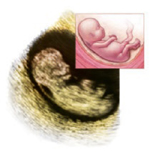
When measured correctly, nuchal translucency thickness is a powerful marker in Down syndrome screening in the late first trimester
Even when the payer does not require it, documentation is important. Nuchal translucency ultrasound documentation should include:
- the fetal crown–rump length
- verification of the sagittal view of the fetal spine
- 3 measurements of the maximum thickness of the subcutaneous translucency between the skin and the soft tissue overlying the cervical spine
- as with all ultrasound procedures, image documentation and a final written report
Special training is required by the sonographer or physician who performs this measurement. So be aware that the payer may have rules to ensure such training.
Different codes for initial and recurrent cancer
58950 Resection (initial) of ovarian, tubal or primary peritoneal malignancy with bilateral salpingo-oophorectomy and omentectomy
Primary malignancy resections will continue to be reported with the existing code numbers 58950 through 58952. To make the point clear, CPT revised the wording of the base code, 58950, to specify the initial operation.
58957 Resection (tumor debulking) of recurrent ovarian, tubal, primary peritoneal, uterine malignancy (intra-abdominal, retroperitoneal tumors), with omentectomy, if performed
58958 …with pelvic lymphadenectomy
Unlike other codes for malignancy in the female genitourinary section of CPT, the above 2 new codes specify a broader range of cancers to include uterine malignancy.
Previously, code 49200 or code 49201 (excision or destruction, open, intra-abdominal or retroperitoneal tumors or cysts or endometriomas) would have been as reported for recurrent uterine malignancy.
Do not report these codes in addition: 38770 and 38780 (removal of pelvic or retroperitoneal lymph nodes), 44005 (enterolysis), 49000 (exploratory laparotomy), 49200–49215 (open excision of tumors), 49255 (omentectomy), or 58900–58960 (removal of tubes and ovaries).
New technologies
Uterine artery embolization
37210 Uterine artery embolization
The new code includes vascular access, vessel selection, injection of the material, intraprocedure mapping, and all radiological supervision and interpretation, including image guidance.
Genetic counseling
96040 Medical genetics and genetic counseling services, each 30 minutes face-to-face with patient/family
This code is good news for practices that use the services of a genetic counselor. Need, content, and total time must be documented in the report. However, Medicare has assigned no physician relative value units to this new code because they consider it bundled into any E/M service. Check with your payers about separate reimbursement for this service.
| OLD | NEW | |
| BONE DENSITY | ||
| CT, bone mineral density study 1 or more sites | ||
| Axial skeleton (eg, hips, pelvis, spine) | 76060 | 77078 |
| Appendicular skeleton (peripheral) (eg, radius, wrist, heel) | 76061 | 77079 |
| Dual-energy X-ray absorptiometry, bone-density study 1 or more sites | ||
| Axial skeleton | 76065 | 77080 |
| Appendicular skeleton | 76067 | 77081 |
| Vertebral fracture assessment | 76077 | 77082 |
| Radiographic absorptiometry (eg, photodensitometry, radiogrammetry) 1 or more sites | 76078 | 77083 |
| MAMMOGRAPHY | ||
| Unilateral | 76090 | 77055 |
| Bilateral | 76091 | 77056 |
| Screening mammography, bilateral (2-view film study of each breast) | 76092 | 77057 |
| INTRAOPERATIVE ULTRASOUND | ||
| Ultrasound guidance, intraoperative | 76986 | 76998 |

Elizabeth W. Woodcock
Atlanta-based Elizabeth W. Woodcock is a speaker, trainer, and author specializing in practice management. Among her recent books is Mastering Patient Flow.
It’s likely you counsel your patients about smoking cessation at least once a day, if not more. Do you know that you can be reimbursed for this important service? Medicare and Medicaid pay for 8 visits annually in a 12-month period, and other payers are rapidly following suit. In 2005, the Centers for Medicare and Medicaid Services (CMS) added procedure codes for intermediate and intensive smoking cessation visits:
G0375 Smoking and tobacco-use cessation counseling visit; intermediate, greater than 3 minutes up to 10 minutes.
Short descriptor Smoke/tobacco counseling 3-10
G0376 Smoking and tobacco-use cessation visit; intensive, greater than 10 minutes.
Short descriptor Smoke/tobacco counseling greater than 10
G0375 pays approximately $13; G0376 pays approximately $25. The exact payment depends on your geographic practice cost index (GPCI) as determined by CMS.
These codes do not modify coverage for minimal smoking cessation counseling (3 minutes or less in duration), which is considered covered as part of each evaluation and management (E/M) visit, and therefore is not separately billable.
ObGyns stand to benefit from new Current Procedural Terminology (CPT) codes that capture more of the specifics of procedures such as laparoscopic hysterectomy, and provide codes for newer kinds of services such as prenatal nuchal translucency screening and genetic counseling. A downside for 2007—getting accustomed to the renumbered codes for bone density and breast imaging.
Laparoscopic hysterectomy codes get specific
58541 Laparoscopy, surgical, supracervical hysterectomy, for uterus 250 g or less
58542 …with removal of tube(s) and/or ovary(s)
58543 Laparoscopy, surgical, supracervical hysterectomy, for uterus greater than
250 g
58544 …with removal of tube(s) and/or ovary(s)
Nuchal translucency: Document the detail
76813 Ultrasound, pregnant uterus, real time with image documentation, 1st-trimester fetal nuchal translucency measurement, transabdominal or transvaginal approach; single or 1st gestation
76814 …each additional gestation
Reimbursement should become routine for 1st-trimester nuchal translucency ultrasound imaging.
Coding has been a challenge; in fact, ACOG only recommended reporting the unlisted code 76999 (unlisted ultrasound procedure [eg, diagnostic, interventional]), which requires submission of documentation to make the case for payment. The test is normally performed between 11 and 13 weeks’ gestation.
When measured correctly, nuchal translucency thickness is a powerful marker in Down syndrome screening in the late first trimester
Even when the payer does not require it, documentation is important. Nuchal translucency ultrasound documentation should include:
- the fetal crown–rump length
- verification of the sagittal view of the fetal spine
- 3 measurements of the maximum thickness of the subcutaneous translucency between the skin and the soft tissue overlying the cervical spine
- as with all ultrasound procedures, image documentation and a final written report
Special training is required by the sonographer or physician who performs this measurement. So be aware that the payer may have rules to ensure such training.
Different codes for initial and recurrent cancer
58950 Resection (initial) of ovarian, tubal or primary peritoneal malignancy with bilateral salpingo-oophorectomy and omentectomy
Primary malignancy resections will continue to be reported with the existing code numbers 58950 through 58952. To make the point clear, CPT revised the wording of the base code, 58950, to specify the initial operation.
58957 Resection (tumor debulking) of recurrent ovarian, tubal, primary peritoneal, uterine malignancy (intra-abdominal, retroperitoneal tumors), with omentectomy, if performed
58958 …with pelvic lymphadenectomy
Unlike other codes for malignancy in the female genitourinary section of CPT, the above 2 new codes specify a broader range of cancers to include uterine malignancy.
Previously, code 49200 or code 49201 (excision or destruction, open, intra-abdominal or retroperitoneal tumors or cysts or endometriomas) would have been as reported for recurrent uterine malignancy.
Do not report these codes in addition: 38770 and 38780 (removal of pelvic or retroperitoneal lymph nodes), 44005 (enterolysis), 49000 (exploratory laparotomy), 49200–49215 (open excision of tumors), 49255 (omentectomy), or 58900–58960 (removal of tubes and ovaries).
New technologies
Uterine artery embolization
37210 Uterine artery embolization
The new code includes vascular access, vessel selection, injection of the material, intraprocedure mapping, and all radiological supervision and interpretation, including image guidance.
Genetic counseling
96040 Medical genetics and genetic counseling services, each 30 minutes face-to-face with patient/family
This code is good news for practices that use the services of a genetic counselor. Need, content, and total time must be documented in the report. However, Medicare has assigned no physician relative value units to this new code because they consider it bundled into any E/M service. Check with your payers about separate reimbursement for this service.
| OLD | NEW | |
| BONE DENSITY | ||
| CT, bone mineral density study 1 or more sites | ||
| Axial skeleton (eg, hips, pelvis, spine) | 76060 | 77078 |
| Appendicular skeleton (peripheral) (eg, radius, wrist, heel) | 76061 | 77079 |
| Dual-energy X-ray absorptiometry, bone-density study 1 or more sites | ||
| Axial skeleton | 76065 | 77080 |
| Appendicular skeleton | 76067 | 77081 |
| Vertebral fracture assessment | 76077 | 77082 |
| Radiographic absorptiometry (eg, photodensitometry, radiogrammetry) 1 or more sites | 76078 | 77083 |
| MAMMOGRAPHY | ||
| Unilateral | 76090 | 77055 |
| Bilateral | 76091 | 77056 |
| Screening mammography, bilateral (2-view film study of each breast) | 76092 | 77057 |
| INTRAOPERATIVE ULTRASOUND | ||
| Ultrasound guidance, intraoperative | 76986 | 76998 |
Elizabeth W. Woodcock
Atlanta-based Elizabeth W. Woodcock is a speaker, trainer, and author specializing in practice management. Among her recent books is Mastering Patient Flow.
It’s likely you counsel your patients about smoking cessation at least once a day, if not more. Do you know that you can be reimbursed for this important service? Medicare and Medicaid pay for 8 visits annually in a 12-month period, and other payers are rapidly following suit. In 2005, the Centers for Medicare and Medicaid Services (CMS) added procedure codes for intermediate and intensive smoking cessation visits:
G0375 Smoking and tobacco-use cessation counseling visit; intermediate, greater than 3 minutes up to 10 minutes.
Short descriptor Smoke/tobacco counseling 3-10
G0376 Smoking and tobacco-use cessation visit; intensive, greater than 10 minutes.
Short descriptor Smoke/tobacco counseling greater than 10
G0375 pays approximately $13; G0376 pays approximately $25. The exact payment depends on your geographic practice cost index (GPCI) as determined by CMS.
These codes do not modify coverage for minimal smoking cessation counseling (3 minutes or less in duration), which is considered covered as part of each evaluation and management (E/M) visit, and therefore is not separately billable.
ObGyns stand to benefit from new Current Procedural Terminology (CPT) codes that capture more of the specifics of procedures such as laparoscopic hysterectomy, and provide codes for newer kinds of services such as prenatal nuchal translucency screening and genetic counseling. A downside for 2007—getting accustomed to the renumbered codes for bone density and breast imaging.
Laparoscopic hysterectomy codes get specific
58541 Laparoscopy, surgical, supracervical hysterectomy, for uterus 250 g or less
58542 …with removal of tube(s) and/or ovary(s)
58543 Laparoscopy, surgical, supracervical hysterectomy, for uterus greater than
250 g
58544 …with removal of tube(s) and/or ovary(s)
Nuchal translucency: Document the detail
76813 Ultrasound, pregnant uterus, real time with image documentation, 1st-trimester fetal nuchal translucency measurement, transabdominal or transvaginal approach; single or 1st gestation
76814 …each additional gestation
Reimbursement should become routine for 1st-trimester nuchal translucency ultrasound imaging.
Coding has been a challenge; in fact, ACOG only recommended reporting the unlisted code 76999 (unlisted ultrasound procedure [eg, diagnostic, interventional]), which requires submission of documentation to make the case for payment. The test is normally performed between 11 and 13 weeks’ gestation.
When measured correctly, nuchal translucency thickness is a powerful marker in Down syndrome screening in the late first trimester
Even when the payer does not require it, documentation is important. Nuchal translucency ultrasound documentation should include:
- the fetal crown–rump length
- verification of the sagittal view of the fetal spine
- 3 measurements of the maximum thickness of the subcutaneous translucency between the skin and the soft tissue overlying the cervical spine
- as with all ultrasound procedures, image documentation and a final written report
Special training is required by the sonographer or physician who performs this measurement. So be aware that the payer may have rules to ensure such training.
Different codes for initial and recurrent cancer
58950 Resection (initial) of ovarian, tubal or primary peritoneal malignancy with bilateral salpingo-oophorectomy and omentectomy
Primary malignancy resections will continue to be reported with the existing code numbers 58950 through 58952. To make the point clear, CPT revised the wording of the base code, 58950, to specify the initial operation.
58957 Resection (tumor debulking) of recurrent ovarian, tubal, primary peritoneal, uterine malignancy (intra-abdominal, retroperitoneal tumors), with omentectomy, if performed
58958 …with pelvic lymphadenectomy
Unlike other codes for malignancy in the female genitourinary section of CPT, the above 2 new codes specify a broader range of cancers to include uterine malignancy.
Previously, code 49200 or code 49201 (excision or destruction, open, intra-abdominal or retroperitoneal tumors or cysts or endometriomas) would have been as reported for recurrent uterine malignancy.
Do not report these codes in addition: 38770 and 38780 (removal of pelvic or retroperitoneal lymph nodes), 44005 (enterolysis), 49000 (exploratory laparotomy), 49200–49215 (open excision of tumors), 49255 (omentectomy), or 58900–58960 (removal of tubes and ovaries).
New technologies
Uterine artery embolization
37210 Uterine artery embolization
The new code includes vascular access, vessel selection, injection of the material, intraprocedure mapping, and all radiological supervision and interpretation, including image guidance.
Genetic counseling
96040 Medical genetics and genetic counseling services, each 30 minutes face-to-face with patient/family
This code is good news for practices that use the services of a genetic counselor. Need, content, and total time must be documented in the report. However, Medicare has assigned no physician relative value units to this new code because they consider it bundled into any E/M service. Check with your payers about separate reimbursement for this service.
| OLD | NEW | |
| BONE DENSITY | ||
| CT, bone mineral density study 1 or more sites | ||
| Axial skeleton (eg, hips, pelvis, spine) | 76060 | 77078 |
| Appendicular skeleton (peripheral) (eg, radius, wrist, heel) | 76061 | 77079 |
| Dual-energy X-ray absorptiometry, bone-density study 1 or more sites | ||
| Axial skeleton | 76065 | 77080 |
| Appendicular skeleton | 76067 | 77081 |
| Vertebral fracture assessment | 76077 | 77082 |
| Radiographic absorptiometry (eg, photodensitometry, radiogrammetry) 1 or more sites | 76078 | 77083 |
| MAMMOGRAPHY | ||
| Unilateral | 76090 | 77055 |
| Bilateral | 76091 | 77056 |
| Screening mammography, bilateral (2-view film study of each breast) | 76092 | 77057 |
| INTRAOPERATIVE ULTRASOUND | ||
| Ultrasound guidance, intraoperative | 76986 | 76998 |
Elizabeth W. Woodcock
Atlanta-based Elizabeth W. Woodcock is a speaker, trainer, and author specializing in practice management. Among her recent books is Mastering Patient Flow.
It’s likely you counsel your patients about smoking cessation at least once a day, if not more. Do you know that you can be reimbursed for this important service? Medicare and Medicaid pay for 8 visits annually in a 12-month period, and other payers are rapidly following suit. In 2005, the Centers for Medicare and Medicaid Services (CMS) added procedure codes for intermediate and intensive smoking cessation visits:
G0375 Smoking and tobacco-use cessation counseling visit; intermediate, greater than 3 minutes up to 10 minutes.
Short descriptor Smoke/tobacco counseling 3-10
G0376 Smoking and tobacco-use cessation visit; intensive, greater than 10 minutes.
Short descriptor Smoke/tobacco counseling greater than 10
G0375 pays approximately $13; G0376 pays approximately $25. The exact payment depends on your geographic practice cost index (GPCI) as determined by CMS.
These codes do not modify coverage for minimal smoking cessation counseling (3 minutes or less in duration), which is considered covered as part of each evaluation and management (E/M) visit, and therefore is not separately billable.
Medical Verdicts
Did delay in delivery cause adverse outcome?
An obstetrician and a perinatologist administered magnesium sulfate to a woman in premature labor, but contractions continued and the plaintiff child was delivered at 29 weeks—limp, cyanotic, and suffering respiratory failure. She was stabilized and diagnosed with periventricular leukomalacia. She suffers from spastic diplegia.
PATIENT’S CLAIM The doctors were negligent for not delivering the child more quickly. Nonreassuring fetal heart monitoring that should have prompted an immediate cesarean section was ignored.
DOCTOR’S DEFENSE Fetal heart monitoring was reassuring, and proper treatment was given.
VERDICT A verdict for the plaintiff found the obstetrician to be 65% at fault and the hospital 35%, with damages assessed at $29.3 million. Settlements recovered $5 million from the hospital and $2.3 million from the obstetrician.
For more on magnesium sulfate tocolysis, see Dr. Barbieri’s Editorial.
Oophorectomy and so much more
A laparoscopic oophorectomy, performed on a 51-year-old woman by 2 gynecologists, included removal of 1 ovary and the lysis of adhesions. The patient was released from the hospital the same day. Four days later, she presented to the emergency room with septic shock. Surgery the following day indicated peritonitis due to perforation of the sigmoid colon. A sigmoid colectomy was performed and an end colostomy created. Following surgery, the patient suffered respiratory failure and required a tracheotomy. She remained hospitalized for 4 weeks. When the colostomy was reversed 2 months later, the patient developed an infection and dehiscence of the surgical wound and was hospitalized for 12 days. Three years later, when she reported abdominal pain and a bowel obstruction was diagnosed, she underwent an appendectomy, oophorectomy of the remaining ovary, and lysis of adhesions. She was hospitalized for 2 days. When she reported abdominal pain 4 days after that, surgery indicated peritonitis resulting from perforation of the sigmoid colon.
PATIENT’S CLAIM The doctors were negligent when they performed the original oophorectomy.
DOCTOR’S DEFENSE The injuries were known risks of the procedure.
VERDICT A $700,000 settlement was reached.
Surprise twin discovered 1 hour after 1st was born
An OB and resident waited 45 minutes after a woman had given birth to 1 baby for the placenta to be expelled. A pelvic exam at that time showed a 2nd fetus. At birth, the 2nd twin had seizure-like activity and was treated with phenobarbital. This child has mild spasticity in the left leg, left foot turning in, moderate language delay, mild to moderate cognitive delay, and mild motor dysfunction.
PATIENT’S CLAIM A radiologist interpreting a prenatal sonogram failed to report findings indicating a 2nd fetus.
DOCTOR’S DEFENSE The radiologist did not misinterpret a prenatal sonogram. Also, hypoxic encephalopathy could have occurred during 2 periods: during the 3rd trimester and immediately before delivery, and the episode prior to delivery was not related to the child’s encephalopathy. As the child’s injuries were not permanent, they would resolve once the child received appropriate medication and underwent physical, occupational, and speech therapy.
VERDICT A $1.85 million settlement was reached.
Tubal ligation—and two bladder perforations
While performing an elective laparoscopic tubal ligation, an ObGyn perforated the patient’s bladder in 2 locations. The next day, the patient presented to the emergency room with abdominal pain and the inability to urinate. She was catheterized and blood was discovered in her urine. Cystoscopy performed by a urologist confirmed the perforations. After repair surgery, the patient developed renal failure, pleural effusions, and respiratory problems. She was discharged 5 days later, but required a catheter in the bladder for a few weeks.
PATIENT’S CLAIM Injury to the bladder should not have occurred.
DOCTOR’S DEFENSE The injury is a known risk of the procedure.
VERDICT Defense verdict.
Did forceps cause brain damage?
Twelve hours after the plaintiff child was delivered with the use of forceps, she began to have seizures. She was diagnosed with an occipital skull fracture, and a hematoma was found near the fracture location. She has suffered seizures and other complications related to a brain injury and is moderately retarded.
PATIENT’S CLAIM The injuries were caused by the ObGyn during use of the forceps, leading to the skull fracture and resulting brain damage.
DOCTOR’S DEFENSE The delivery was properly managed and use of forceps was proper. The defendant questioned whether there really was a fracture and argued that hematoma was a common injury during labor.
VERDICT Defense verdict.
No O2 to fetus while mother in cardiac arrest
During labor, a woman experienced erratic fluctuations in her blood pressure and went into cardiac arrest. Her child has cerebral palsy and cannot speak or walk.
PATIENT’S CLAIM When the patient went into cardiac arrest, the fetus was deprived of oxygen for 10 minutes, leading to cerebral palsy. The failure to provide adequate oxygen was negligent.
DOCTOR’S DEFENSE Not reported.
VERDICT A $1 million settlement was reached with the delivering physician and hospital, and a $1.5 million settlement with the nurses.
Woman with untreated preeclampsia dies
A 36-year-old woman pregnant with her 2nd child was diagnosed with hypertension by her obstetrician. She was sent to the hospital, where the child was delivered by cesarean section. After suffering convulsions, the mother went into a coma the same day. She was transferred to another hospital and died 6 days later.
PATIENT’S CLAIM Untreated preeclampsia led to eclampsia and death.
DOCTOR’S DEFENSE The patient was monitored properly, but suffered a sudden, unexpected decline.
VERDICT $2.6 million settlement.
The cases in this column are selected by the editors of OBG Management from Medical Malpractice Verdicts, Settlements & Experts, with permission of the editor, Lewis Laska, Nashville, Tenn (www.verdictslaska.com). The available information about the cases is sometimes incomplete; pertinent details may be unavailable. Moreover, the cases may or may not have merit. Still, these cases represent types of clinical situations that may result in litigation and are meant to illustrate variation in verdicts and awards. Any illustrations are generic and do not represent a specific legal case.
Did delay in delivery cause adverse outcome?
An obstetrician and a perinatologist administered magnesium sulfate to a woman in premature labor, but contractions continued and the plaintiff child was delivered at 29 weeks—limp, cyanotic, and suffering respiratory failure. She was stabilized and diagnosed with periventricular leukomalacia. She suffers from spastic diplegia.
PATIENT’S CLAIM The doctors were negligent for not delivering the child more quickly. Nonreassuring fetal heart monitoring that should have prompted an immediate cesarean section was ignored.
DOCTOR’S DEFENSE Fetal heart monitoring was reassuring, and proper treatment was given.
VERDICT A verdict for the plaintiff found the obstetrician to be 65% at fault and the hospital 35%, with damages assessed at $29.3 million. Settlements recovered $5 million from the hospital and $2.3 million from the obstetrician.
For more on magnesium sulfate tocolysis, see Dr. Barbieri’s Editorial.
Oophorectomy and so much more
A laparoscopic oophorectomy, performed on a 51-year-old woman by 2 gynecologists, included removal of 1 ovary and the lysis of adhesions. The patient was released from the hospital the same day. Four days later, she presented to the emergency room with septic shock. Surgery the following day indicated peritonitis due to perforation of the sigmoid colon. A sigmoid colectomy was performed and an end colostomy created. Following surgery, the patient suffered respiratory failure and required a tracheotomy. She remained hospitalized for 4 weeks. When the colostomy was reversed 2 months later, the patient developed an infection and dehiscence of the surgical wound and was hospitalized for 12 days. Three years later, when she reported abdominal pain and a bowel obstruction was diagnosed, she underwent an appendectomy, oophorectomy of the remaining ovary, and lysis of adhesions. She was hospitalized for 2 days. When she reported abdominal pain 4 days after that, surgery indicated peritonitis resulting from perforation of the sigmoid colon.
PATIENT’S CLAIM The doctors were negligent when they performed the original oophorectomy.
DOCTOR’S DEFENSE The injuries were known risks of the procedure.
VERDICT A $700,000 settlement was reached.
Surprise twin discovered 1 hour after 1st was born
An OB and resident waited 45 minutes after a woman had given birth to 1 baby for the placenta to be expelled. A pelvic exam at that time showed a 2nd fetus. At birth, the 2nd twin had seizure-like activity and was treated with phenobarbital. This child has mild spasticity in the left leg, left foot turning in, moderate language delay, mild to moderate cognitive delay, and mild motor dysfunction.
PATIENT’S CLAIM A radiologist interpreting a prenatal sonogram failed to report findings indicating a 2nd fetus.
DOCTOR’S DEFENSE The radiologist did not misinterpret a prenatal sonogram. Also, hypoxic encephalopathy could have occurred during 2 periods: during the 3rd trimester and immediately before delivery, and the episode prior to delivery was not related to the child’s encephalopathy. As the child’s injuries were not permanent, they would resolve once the child received appropriate medication and underwent physical, occupational, and speech therapy.
VERDICT A $1.85 million settlement was reached.
Tubal ligation—and two bladder perforations
While performing an elective laparoscopic tubal ligation, an ObGyn perforated the patient’s bladder in 2 locations. The next day, the patient presented to the emergency room with abdominal pain and the inability to urinate. She was catheterized and blood was discovered in her urine. Cystoscopy performed by a urologist confirmed the perforations. After repair surgery, the patient developed renal failure, pleural effusions, and respiratory problems. She was discharged 5 days later, but required a catheter in the bladder for a few weeks.
PATIENT’S CLAIM Injury to the bladder should not have occurred.
DOCTOR’S DEFENSE The injury is a known risk of the procedure.
VERDICT Defense verdict.
Did forceps cause brain damage?
Twelve hours after the plaintiff child was delivered with the use of forceps, she began to have seizures. She was diagnosed with an occipital skull fracture, and a hematoma was found near the fracture location. She has suffered seizures and other complications related to a brain injury and is moderately retarded.
PATIENT’S CLAIM The injuries were caused by the ObGyn during use of the forceps, leading to the skull fracture and resulting brain damage.
DOCTOR’S DEFENSE The delivery was properly managed and use of forceps was proper. The defendant questioned whether there really was a fracture and argued that hematoma was a common injury during labor.
VERDICT Defense verdict.
No O2 to fetus while mother in cardiac arrest
During labor, a woman experienced erratic fluctuations in her blood pressure and went into cardiac arrest. Her child has cerebral palsy and cannot speak or walk.
PATIENT’S CLAIM When the patient went into cardiac arrest, the fetus was deprived of oxygen for 10 minutes, leading to cerebral palsy. The failure to provide adequate oxygen was negligent.
DOCTOR’S DEFENSE Not reported.
VERDICT A $1 million settlement was reached with the delivering physician and hospital, and a $1.5 million settlement with the nurses.
Woman with untreated preeclampsia dies
A 36-year-old woman pregnant with her 2nd child was diagnosed with hypertension by her obstetrician. She was sent to the hospital, where the child was delivered by cesarean section. After suffering convulsions, the mother went into a coma the same day. She was transferred to another hospital and died 6 days later.
PATIENT’S CLAIM Untreated preeclampsia led to eclampsia and death.
DOCTOR’S DEFENSE The patient was monitored properly, but suffered a sudden, unexpected decline.
VERDICT $2.6 million settlement.
The cases in this column are selected by the editors of OBG Management from Medical Malpractice Verdicts, Settlements & Experts, with permission of the editor, Lewis Laska, Nashville, Tenn (www.verdictslaska.com). The available information about the cases is sometimes incomplete; pertinent details may be unavailable. Moreover, the cases may or may not have merit. Still, these cases represent types of clinical situations that may result in litigation and are meant to illustrate variation in verdicts and awards. Any illustrations are generic and do not represent a specific legal case.
Did delay in delivery cause adverse outcome?
An obstetrician and a perinatologist administered magnesium sulfate to a woman in premature labor, but contractions continued and the plaintiff child was delivered at 29 weeks—limp, cyanotic, and suffering respiratory failure. She was stabilized and diagnosed with periventricular leukomalacia. She suffers from spastic diplegia.
PATIENT’S CLAIM The doctors were negligent for not delivering the child more quickly. Nonreassuring fetal heart monitoring that should have prompted an immediate cesarean section was ignored.
DOCTOR’S DEFENSE Fetal heart monitoring was reassuring, and proper treatment was given.
VERDICT A verdict for the plaintiff found the obstetrician to be 65% at fault and the hospital 35%, with damages assessed at $29.3 million. Settlements recovered $5 million from the hospital and $2.3 million from the obstetrician.
For more on magnesium sulfate tocolysis, see Dr. Barbieri’s Editorial.
Oophorectomy and so much more
A laparoscopic oophorectomy, performed on a 51-year-old woman by 2 gynecologists, included removal of 1 ovary and the lysis of adhesions. The patient was released from the hospital the same day. Four days later, she presented to the emergency room with septic shock. Surgery the following day indicated peritonitis due to perforation of the sigmoid colon. A sigmoid colectomy was performed and an end colostomy created. Following surgery, the patient suffered respiratory failure and required a tracheotomy. She remained hospitalized for 4 weeks. When the colostomy was reversed 2 months later, the patient developed an infection and dehiscence of the surgical wound and was hospitalized for 12 days. Three years later, when she reported abdominal pain and a bowel obstruction was diagnosed, she underwent an appendectomy, oophorectomy of the remaining ovary, and lysis of adhesions. She was hospitalized for 2 days. When she reported abdominal pain 4 days after that, surgery indicated peritonitis resulting from perforation of the sigmoid colon.
PATIENT’S CLAIM The doctors were negligent when they performed the original oophorectomy.
DOCTOR’S DEFENSE The injuries were known risks of the procedure.
VERDICT A $700,000 settlement was reached.
Surprise twin discovered 1 hour after 1st was born
An OB and resident waited 45 minutes after a woman had given birth to 1 baby for the placenta to be expelled. A pelvic exam at that time showed a 2nd fetus. At birth, the 2nd twin had seizure-like activity and was treated with phenobarbital. This child has mild spasticity in the left leg, left foot turning in, moderate language delay, mild to moderate cognitive delay, and mild motor dysfunction.
PATIENT’S CLAIM A radiologist interpreting a prenatal sonogram failed to report findings indicating a 2nd fetus.
DOCTOR’S DEFENSE The radiologist did not misinterpret a prenatal sonogram. Also, hypoxic encephalopathy could have occurred during 2 periods: during the 3rd trimester and immediately before delivery, and the episode prior to delivery was not related to the child’s encephalopathy. As the child’s injuries were not permanent, they would resolve once the child received appropriate medication and underwent physical, occupational, and speech therapy.
VERDICT A $1.85 million settlement was reached.
Tubal ligation—and two bladder perforations
While performing an elective laparoscopic tubal ligation, an ObGyn perforated the patient’s bladder in 2 locations. The next day, the patient presented to the emergency room with abdominal pain and the inability to urinate. She was catheterized and blood was discovered in her urine. Cystoscopy performed by a urologist confirmed the perforations. After repair surgery, the patient developed renal failure, pleural effusions, and respiratory problems. She was discharged 5 days later, but required a catheter in the bladder for a few weeks.
PATIENT’S CLAIM Injury to the bladder should not have occurred.
DOCTOR’S DEFENSE The injury is a known risk of the procedure.
VERDICT Defense verdict.
Did forceps cause brain damage?
Twelve hours after the plaintiff child was delivered with the use of forceps, she began to have seizures. She was diagnosed with an occipital skull fracture, and a hematoma was found near the fracture location. She has suffered seizures and other complications related to a brain injury and is moderately retarded.
PATIENT’S CLAIM The injuries were caused by the ObGyn during use of the forceps, leading to the skull fracture and resulting brain damage.
DOCTOR’S DEFENSE The delivery was properly managed and use of forceps was proper. The defendant questioned whether there really was a fracture and argued that hematoma was a common injury during labor.
VERDICT Defense verdict.
No O2 to fetus while mother in cardiac arrest
During labor, a woman experienced erratic fluctuations in her blood pressure and went into cardiac arrest. Her child has cerebral palsy and cannot speak or walk.
PATIENT’S CLAIM When the patient went into cardiac arrest, the fetus was deprived of oxygen for 10 minutes, leading to cerebral palsy. The failure to provide adequate oxygen was negligent.
DOCTOR’S DEFENSE Not reported.
VERDICT A $1 million settlement was reached with the delivering physician and hospital, and a $1.5 million settlement with the nurses.
Woman with untreated preeclampsia dies
A 36-year-old woman pregnant with her 2nd child was diagnosed with hypertension by her obstetrician. She was sent to the hospital, where the child was delivered by cesarean section. After suffering convulsions, the mother went into a coma the same day. She was transferred to another hospital and died 6 days later.
PATIENT’S CLAIM Untreated preeclampsia led to eclampsia and death.
DOCTOR’S DEFENSE The patient was monitored properly, but suffered a sudden, unexpected decline.
VERDICT $2.6 million settlement.
The cases in this column are selected by the editors of OBG Management from Medical Malpractice Verdicts, Settlements & Experts, with permission of the editor, Lewis Laska, Nashville, Tenn (www.verdictslaska.com). The available information about the cases is sometimes incomplete; pertinent details may be unavailable. Moreover, the cases may or may not have merit. Still, these cases represent types of clinical situations that may result in litigation and are meant to illustrate variation in verdicts and awards. Any illustrations are generic and do not represent a specific legal case.
Dealing With Deadbeats
Unfortunately, every practice has its share of deadbeats, whom I define not as patients who fall on hard times and are unable to pay, but those who are able to pay and do not.
The worst kinds of deadbeats are the ones who not only don't pay you, but accept checks from insurance companies and then spend the money themselves. Such crooks must be pursued aggressively, with all the means at your disposal.
The best way to deal with them, however, is to prevent them from owing you money in the first place.

Whenever possible, require all payments at the time of service. In the case of elective surgeries, require a substantial deposit in advance, with balance due at the time of service. When that is impossible, maximize the chances you will be paid by ensuring all available payment mechanisms are in place.
In two previous columns I've described how hotels, rental car companies, and other businesses record credit card information to ensure that they will be paid, and I've shown you how to do the same thing. (If you missed those columns, go to www.skinandallergynews.com
For big-ticket cosmetic procedures where you anticipate the fees will exceed credit card limits, arrange a realistic payment schedule in advance, and have the patient complete a credit application. You can find forms for this online at allbusiness.comlawdog.com
In some cases, it may be worth the trouble to run a background check. There are easy and affordable ways to do this. Dunn & Bradstreet, for example, will furnish a report containing payment records and details of any lawsuits, liens, and other legal actions for as little as $30. The more financial information you have on file, the more leverage you have if a patient later balks at paying his or her balance.
Always take before and after photos, and have all patients sign a written consent giving permission for the procedure, assuming full financial responsibility, and acknowledging that no guarantees have been given or implied. This defuses the common deadbeat tactics of professing ignorance of personal financial obligation and/or dissatisfaction with results.
Despite all your precautions, deadbeats inevitably will slip through on occasion. However, even then you have options in dealing with them.
Collection agencies are the traditional first line of attack for most medical practices. Ideally, your agency should specialize in handling medical accounts, so it will know exactly how much pressure to exert to avoid charges of harassment. Delinquent accounts should be submitted earlier rather than later to maximize the chances of success; my manager never allows accounts to age more than 90 days, and, if circumstances dictate, she refers them sooner than that.
When collection agencies fail, think about small claims court. You'll need to learn the rules for filing in your state, but most charge a nominal fee and place a limit of $5,000 or so on claims. No attorneys are involved. If your paperwork is in order the court will nearly always rule in your favor, but it will not provide the means for collection. In other words, you'll still have to persuade the deadbeat to pay up. However, in many states a court order will give you the authority to attach a lien to property, or garnish wages, which often provides enough leverage to force payment.
What about the deadbeats who rip you off twice—by refusing to pay and then stealing the insurance check, too? First, check your third-party contract; sometimes the insurance company or HMO will be compelled to pay you directly and then go after the patient to get back its money. (They won't volunteer this service, however. You'll have to ask for it.)
If that's not an option, consider reporting the misdirected payment to the Internal Revenue Service as income to the patient, by submitting a 1099-miscellaneous income form. Be sure to notify the deadbeat that you will be doing this. More often than not, the threat of such action will persuade the patient to pay up; but if not, at least you'll have the satisfaction of knowing he or she will have to pay taxes on the money.
Unfortunately, every practice has its share of deadbeats, whom I define not as patients who fall on hard times and are unable to pay, but those who are able to pay and do not.
The worst kinds of deadbeats are the ones who not only don't pay you, but accept checks from insurance companies and then spend the money themselves. Such crooks must be pursued aggressively, with all the means at your disposal.
The best way to deal with them, however, is to prevent them from owing you money in the first place.
Whenever possible, require all payments at the time of service. In the case of elective surgeries, require a substantial deposit in advance, with balance due at the time of service. When that is impossible, maximize the chances you will be paid by ensuring all available payment mechanisms are in place.
In two previous columns I've described how hotels, rental car companies, and other businesses record credit card information to ensure that they will be paid, and I've shown you how to do the same thing. (If you missed those columns, go to www.skinandallergynews.com
For big-ticket cosmetic procedures where you anticipate the fees will exceed credit card limits, arrange a realistic payment schedule in advance, and have the patient complete a credit application. You can find forms for this online at allbusiness.comlawdog.com
In some cases, it may be worth the trouble to run a background check. There are easy and affordable ways to do this. Dunn & Bradstreet, for example, will furnish a report containing payment records and details of any lawsuits, liens, and other legal actions for as little as $30. The more financial information you have on file, the more leverage you have if a patient later balks at paying his or her balance.
Always take before and after photos, and have all patients sign a written consent giving permission for the procedure, assuming full financial responsibility, and acknowledging that no guarantees have been given or implied. This defuses the common deadbeat tactics of professing ignorance of personal financial obligation and/or dissatisfaction with results.
Despite all your precautions, deadbeats inevitably will slip through on occasion. However, even then you have options in dealing with them.
Collection agencies are the traditional first line of attack for most medical practices. Ideally, your agency should specialize in handling medical accounts, so it will know exactly how much pressure to exert to avoid charges of harassment. Delinquent accounts should be submitted earlier rather than later to maximize the chances of success; my manager never allows accounts to age more than 90 days, and, if circumstances dictate, she refers them sooner than that.
When collection agencies fail, think about small claims court. You'll need to learn the rules for filing in your state, but most charge a nominal fee and place a limit of $5,000 or so on claims. No attorneys are involved. If your paperwork is in order the court will nearly always rule in your favor, but it will not provide the means for collection. In other words, you'll still have to persuade the deadbeat to pay up. However, in many states a court order will give you the authority to attach a lien to property, or garnish wages, which often provides enough leverage to force payment.
What about the deadbeats who rip you off twice—by refusing to pay and then stealing the insurance check, too? First, check your third-party contract; sometimes the insurance company or HMO will be compelled to pay you directly and then go after the patient to get back its money. (They won't volunteer this service, however. You'll have to ask for it.)
If that's not an option, consider reporting the misdirected payment to the Internal Revenue Service as income to the patient, by submitting a 1099-miscellaneous income form. Be sure to notify the deadbeat that you will be doing this. More often than not, the threat of such action will persuade the patient to pay up; but if not, at least you'll have the satisfaction of knowing he or she will have to pay taxes on the money.
Unfortunately, every practice has its share of deadbeats, whom I define not as patients who fall on hard times and are unable to pay, but those who are able to pay and do not.
The worst kinds of deadbeats are the ones who not only don't pay you, but accept checks from insurance companies and then spend the money themselves. Such crooks must be pursued aggressively, with all the means at your disposal.
The best way to deal with them, however, is to prevent them from owing you money in the first place.
Whenever possible, require all payments at the time of service. In the case of elective surgeries, require a substantial deposit in advance, with balance due at the time of service. When that is impossible, maximize the chances you will be paid by ensuring all available payment mechanisms are in place.
In two previous columns I've described how hotels, rental car companies, and other businesses record credit card information to ensure that they will be paid, and I've shown you how to do the same thing. (If you missed those columns, go to www.skinandallergynews.com
For big-ticket cosmetic procedures where you anticipate the fees will exceed credit card limits, arrange a realistic payment schedule in advance, and have the patient complete a credit application. You can find forms for this online at allbusiness.comlawdog.com
In some cases, it may be worth the trouble to run a background check. There are easy and affordable ways to do this. Dunn & Bradstreet, for example, will furnish a report containing payment records and details of any lawsuits, liens, and other legal actions for as little as $30. The more financial information you have on file, the more leverage you have if a patient later balks at paying his or her balance.
Always take before and after photos, and have all patients sign a written consent giving permission for the procedure, assuming full financial responsibility, and acknowledging that no guarantees have been given or implied. This defuses the common deadbeat tactics of professing ignorance of personal financial obligation and/or dissatisfaction with results.
Despite all your precautions, deadbeats inevitably will slip through on occasion. However, even then you have options in dealing with them.
Collection agencies are the traditional first line of attack for most medical practices. Ideally, your agency should specialize in handling medical accounts, so it will know exactly how much pressure to exert to avoid charges of harassment. Delinquent accounts should be submitted earlier rather than later to maximize the chances of success; my manager never allows accounts to age more than 90 days, and, if circumstances dictate, she refers them sooner than that.
When collection agencies fail, think about small claims court. You'll need to learn the rules for filing in your state, but most charge a nominal fee and place a limit of $5,000 or so on claims. No attorneys are involved. If your paperwork is in order the court will nearly always rule in your favor, but it will not provide the means for collection. In other words, you'll still have to persuade the deadbeat to pay up. However, in many states a court order will give you the authority to attach a lien to property, or garnish wages, which often provides enough leverage to force payment.
What about the deadbeats who rip you off twice—by refusing to pay and then stealing the insurance check, too? First, check your third-party contract; sometimes the insurance company or HMO will be compelled to pay you directly and then go after the patient to get back its money. (They won't volunteer this service, however. You'll have to ask for it.)
If that's not an option, consider reporting the misdirected payment to the Internal Revenue Service as income to the patient, by submitting a 1099-miscellaneous income form. Be sure to notify the deadbeat that you will be doing this. More often than not, the threat of such action will persuade the patient to pay up; but if not, at least you'll have the satisfaction of knowing he or she will have to pay taxes on the money.
Medical Verdicts
Could hypoxic injury have been avoided?
A woman at full term contacted her ObGyn when she experienced a spontaneous membrane rupture with release of brownish-green fluid. She was advised to go to bed and call back later. Several hours later, she went to the hospital, where a nurse attended to her care. Fetal monitoring showed recurrent late decelerations and reduced variability. Meconium was observed on a pad under the woman, who asked for and received medication for pain. While she was left unattended for 1.5 hours, the fetal monitor continued to indicate different levels of fetal distress. The infant, delivered by cesarean section, required rigorous resuscitation and was placed in the NICU in critical condition. A positive Kleihauer–Betke test significant for fetomaternal bleed indicated the infant had suffered a severe hypoxic injury. The child was diagnosed with multiple neurological deficits.
PATIENT’S CLAIM Failure to promptly respond to signs of fetal distress and perform a timely cesarean section was negligent, and led to hypoxic ischemic encephalopathy, hypotension, hypoglycemia, metabolic acidosis, cerebral palsy, right hemiparesis, and developmental delays. The mother should have been admitted to the hospital when the membranes ruptured; fetal distress was not recognized; fetal well-being was not properly assessed; and emergent c-section should have been performed. Also, the mother should not have been given the pain medication when the heart tracings were nonreassuring.
DOCTOR’S DEFENSE There was no negligence. The child’s injuries were due to anemia resulting from severe chronic fetomaternal hemorrhage that occurred before hospitalization. Also, the child’s Apgar score did not indicate an acute hypoxic event during labor and delivery.
VERDICT $2,747,000 settlement.
Was bowel perforated during or after surgery?
A 35-year-old woman was referred to an ObGyn for an urgent hysterectomy at hospital 1. Three days after the surgery, she had follow-up repair surgery performed at hospital 2. She underwent 4 surgical procedures, including colostomy and colostomy reversal, and was hospitalized for 4 weeks.
PATIENT’S CLAIM The ObGyn negligently perforated her bowel during the initial surgery, and 3 days later fecal matter spilled into her abdomen.
DOCTOR’S DEFENSE The bowel perforation could have occurred either during surgery or afterwards due to the patient’s underlying pathology. Bowel perforation was a known risk of the procedure.
VERDICT Defense verdict.
Maternal hypertension, placental abruption, and brain-damaged newborn
A woman with elevated blood pressure gave birth to a brain-damaged child, who will need lifelong care.
PATIENT’S CLAIM The ObGyn should have admitted the woman to the hospital at 28.5 weeks because of elevated blood pressure and other clinical symptoms.
DOCTOR’S DEFENSE A thorough workup of the patient, including monitoring over a 4-hour period, laboratory studies, and fetal heart monitoring, was done, and the patient was referred for a biophysical profile the next morning. An emergency cesarean section was performed 4 days later because of an acute placental abruption, and earlier hospitalization would have been of no benefit.
VERDICT A defense verdict was returned for the ObGyn. The hospital settled for an undisclosed amount prior to trial, after the court directed a finding of negligence against it for failing to timely monitor for fetal distress.
Gestational diabetes led to macrosomia and permanent Erb’s palsy
A woman with a history of gestational diabetes was diagnosed once again with gestational diabetes 21 weeks into a 2nd pregnancy. Her primary care physician put her on a restricted diet, but did not order insulin therapy. At 42 weeks, the patient was admitted to the hospital for labor induction. The estimated fetal weight was 8 lb. The medical group’s on-call physician, who had never seen the patient, encountered shoulder dystocia while delivering the infant, who actually weighed 10 lb. The child, who had brachial plexus paralysis of the right arm, underwent sural nerve graft surgery.
PATIENT’S CLAIM The on-call doctor performing the delivery did not use the proper maneuvers to safely deliver the child when shoulder dystocia was encountered, resulting in brachial plexus paralysis. Also, the primary care physician did not monitor her gestational diabetes properly, which allowed the infant to become macrosomic, thus increasing the likelihood of shoulder dystocia.
DOCTOR’S DEFENSE There was no negligence.
VERDICT A $1,221,780 present value was returned. A $1,000,000 settlement was reached after the verdict, with the minor’s portion placed in a structured settlement.
Was cesarean section delayed after abnormal biophysical profile?
A diabetic woman with a twin pregnancy had an ultrasound showing twin size discordancy, which was not charted. Near term, she presented in late morning to her prenatal treating office with decreased fetal movement. A nonstress test was nonreactive, with a nonreassuring pattern. In midafternoon, an ultrasound biophysical profile exam performed at the hospital was abnormal. Two repeat tests over the next few hours yielded borderline and abnormal results. A cesarean section was performed in early evening. One twin was born without injury, but the other twin had cerebral palsy and mental retardation.
PATIENT’S CLAIM A bedside ultrasound biophysical profile should have been obtained promptly in the hospital. The initial abnormal results, possible twin discordancy, decreased fetal movement, and nonreactive nonstress test with nonreassuring pattern should have prompted an earlier c-section.
DOCTOR’S DEFENSE Not reported.
VERDICT $1,000,050 settlement.
“Patient knew ureteral injury was a risk”
A 39-year-old woman underwent a hysterectomy, during which a ureteral injury occurred. A urologist was brought in to reimplant the right ureter.
PATIENT’S CLAIM The ObGyn was negligent for causing the ureteral injury.
DOCTOR’S DEFENSE The patient had been informed that bladder tear was a known risk of the surgery.
VERDICT Defense verdict.
The cases in this column are selected by the editors of OBG Management from Medical Malpractice Verdicts, Settlements & Experts, with permission of the editor, Lewis Laska, Nashville, Tenn (www.verdictslaska.com). The available information about the cases is sometimes incomplete; pertinent details may be unavailable. Moreover, the cases may or may not have merit. Still, these cases represent types of clinical situations that may result in litigation and are meant to illustrate variation in verdicts and awards. Any illustrations are generic and do not represent a specific legal case.
Could hypoxic injury have been avoided?
A woman at full term contacted her ObGyn when she experienced a spontaneous membrane rupture with release of brownish-green fluid. She was advised to go to bed and call back later. Several hours later, she went to the hospital, where a nurse attended to her care. Fetal monitoring showed recurrent late decelerations and reduced variability. Meconium was observed on a pad under the woman, who asked for and received medication for pain. While she was left unattended for 1.5 hours, the fetal monitor continued to indicate different levels of fetal distress. The infant, delivered by cesarean section, required rigorous resuscitation and was placed in the NICU in critical condition. A positive Kleihauer–Betke test significant for fetomaternal bleed indicated the infant had suffered a severe hypoxic injury. The child was diagnosed with multiple neurological deficits.
PATIENT’S CLAIM Failure to promptly respond to signs of fetal distress and perform a timely cesarean section was negligent, and led to hypoxic ischemic encephalopathy, hypotension, hypoglycemia, metabolic acidosis, cerebral palsy, right hemiparesis, and developmental delays. The mother should have been admitted to the hospital when the membranes ruptured; fetal distress was not recognized; fetal well-being was not properly assessed; and emergent c-section should have been performed. Also, the mother should not have been given the pain medication when the heart tracings were nonreassuring.
DOCTOR’S DEFENSE There was no negligence. The child’s injuries were due to anemia resulting from severe chronic fetomaternal hemorrhage that occurred before hospitalization. Also, the child’s Apgar score did not indicate an acute hypoxic event during labor and delivery.
VERDICT $2,747,000 settlement.
Was bowel perforated during or after surgery?
A 35-year-old woman was referred to an ObGyn for an urgent hysterectomy at hospital 1. Three days after the surgery, she had follow-up repair surgery performed at hospital 2. She underwent 4 surgical procedures, including colostomy and colostomy reversal, and was hospitalized for 4 weeks.
PATIENT’S CLAIM The ObGyn negligently perforated her bowel during the initial surgery, and 3 days later fecal matter spilled into her abdomen.
DOCTOR’S DEFENSE The bowel perforation could have occurred either during surgery or afterwards due to the patient’s underlying pathology. Bowel perforation was a known risk of the procedure.
VERDICT Defense verdict.
Maternal hypertension, placental abruption, and brain-damaged newborn
A woman with elevated blood pressure gave birth to a brain-damaged child, who will need lifelong care.
PATIENT’S CLAIM The ObGyn should have admitted the woman to the hospital at 28.5 weeks because of elevated blood pressure and other clinical symptoms.
DOCTOR’S DEFENSE A thorough workup of the patient, including monitoring over a 4-hour period, laboratory studies, and fetal heart monitoring, was done, and the patient was referred for a biophysical profile the next morning. An emergency cesarean section was performed 4 days later because of an acute placental abruption, and earlier hospitalization would have been of no benefit.
VERDICT A defense verdict was returned for the ObGyn. The hospital settled for an undisclosed amount prior to trial, after the court directed a finding of negligence against it for failing to timely monitor for fetal distress.
Gestational diabetes led to macrosomia and permanent Erb’s palsy
A woman with a history of gestational diabetes was diagnosed once again with gestational diabetes 21 weeks into a 2nd pregnancy. Her primary care physician put her on a restricted diet, but did not order insulin therapy. At 42 weeks, the patient was admitted to the hospital for labor induction. The estimated fetal weight was 8 lb. The medical group’s on-call physician, who had never seen the patient, encountered shoulder dystocia while delivering the infant, who actually weighed 10 lb. The child, who had brachial plexus paralysis of the right arm, underwent sural nerve graft surgery.
PATIENT’S CLAIM The on-call doctor performing the delivery did not use the proper maneuvers to safely deliver the child when shoulder dystocia was encountered, resulting in brachial plexus paralysis. Also, the primary care physician did not monitor her gestational diabetes properly, which allowed the infant to become macrosomic, thus increasing the likelihood of shoulder dystocia.
DOCTOR’S DEFENSE There was no negligence.
VERDICT A $1,221,780 present value was returned. A $1,000,000 settlement was reached after the verdict, with the minor’s portion placed in a structured settlement.
Was cesarean section delayed after abnormal biophysical profile?
A diabetic woman with a twin pregnancy had an ultrasound showing twin size discordancy, which was not charted. Near term, she presented in late morning to her prenatal treating office with decreased fetal movement. A nonstress test was nonreactive, with a nonreassuring pattern. In midafternoon, an ultrasound biophysical profile exam performed at the hospital was abnormal. Two repeat tests over the next few hours yielded borderline and abnormal results. A cesarean section was performed in early evening. One twin was born without injury, but the other twin had cerebral palsy and mental retardation.
PATIENT’S CLAIM A bedside ultrasound biophysical profile should have been obtained promptly in the hospital. The initial abnormal results, possible twin discordancy, decreased fetal movement, and nonreactive nonstress test with nonreassuring pattern should have prompted an earlier c-section.
DOCTOR’S DEFENSE Not reported.
VERDICT $1,000,050 settlement.
“Patient knew ureteral injury was a risk”
A 39-year-old woman underwent a hysterectomy, during which a ureteral injury occurred. A urologist was brought in to reimplant the right ureter.
PATIENT’S CLAIM The ObGyn was negligent for causing the ureteral injury.
DOCTOR’S DEFENSE The patient had been informed that bladder tear was a known risk of the surgery.
VERDICT Defense verdict.
The cases in this column are selected by the editors of OBG Management from Medical Malpractice Verdicts, Settlements & Experts, with permission of the editor, Lewis Laska, Nashville, Tenn (www.verdictslaska.com). The available information about the cases is sometimes incomplete; pertinent details may be unavailable. Moreover, the cases may or may not have merit. Still, these cases represent types of clinical situations that may result in litigation and are meant to illustrate variation in verdicts and awards. Any illustrations are generic and do not represent a specific legal case.
Could hypoxic injury have been avoided?
A woman at full term contacted her ObGyn when she experienced a spontaneous membrane rupture with release of brownish-green fluid. She was advised to go to bed and call back later. Several hours later, she went to the hospital, where a nurse attended to her care. Fetal monitoring showed recurrent late decelerations and reduced variability. Meconium was observed on a pad under the woman, who asked for and received medication for pain. While she was left unattended for 1.5 hours, the fetal monitor continued to indicate different levels of fetal distress. The infant, delivered by cesarean section, required rigorous resuscitation and was placed in the NICU in critical condition. A positive Kleihauer–Betke test significant for fetomaternal bleed indicated the infant had suffered a severe hypoxic injury. The child was diagnosed with multiple neurological deficits.
PATIENT’S CLAIM Failure to promptly respond to signs of fetal distress and perform a timely cesarean section was negligent, and led to hypoxic ischemic encephalopathy, hypotension, hypoglycemia, metabolic acidosis, cerebral palsy, right hemiparesis, and developmental delays. The mother should have been admitted to the hospital when the membranes ruptured; fetal distress was not recognized; fetal well-being was not properly assessed; and emergent c-section should have been performed. Also, the mother should not have been given the pain medication when the heart tracings were nonreassuring.
DOCTOR’S DEFENSE There was no negligence. The child’s injuries were due to anemia resulting from severe chronic fetomaternal hemorrhage that occurred before hospitalization. Also, the child’s Apgar score did not indicate an acute hypoxic event during labor and delivery.
VERDICT $2,747,000 settlement.
Was bowel perforated during or after surgery?
A 35-year-old woman was referred to an ObGyn for an urgent hysterectomy at hospital 1. Three days after the surgery, she had follow-up repair surgery performed at hospital 2. She underwent 4 surgical procedures, including colostomy and colostomy reversal, and was hospitalized for 4 weeks.
PATIENT’S CLAIM The ObGyn negligently perforated her bowel during the initial surgery, and 3 days later fecal matter spilled into her abdomen.
DOCTOR’S DEFENSE The bowel perforation could have occurred either during surgery or afterwards due to the patient’s underlying pathology. Bowel perforation was a known risk of the procedure.
VERDICT Defense verdict.
Maternal hypertension, placental abruption, and brain-damaged newborn
A woman with elevated blood pressure gave birth to a brain-damaged child, who will need lifelong care.
PATIENT’S CLAIM The ObGyn should have admitted the woman to the hospital at 28.5 weeks because of elevated blood pressure and other clinical symptoms.
DOCTOR’S DEFENSE A thorough workup of the patient, including monitoring over a 4-hour period, laboratory studies, and fetal heart monitoring, was done, and the patient was referred for a biophysical profile the next morning. An emergency cesarean section was performed 4 days later because of an acute placental abruption, and earlier hospitalization would have been of no benefit.
VERDICT A defense verdict was returned for the ObGyn. The hospital settled for an undisclosed amount prior to trial, after the court directed a finding of negligence against it for failing to timely monitor for fetal distress.
Gestational diabetes led to macrosomia and permanent Erb’s palsy
A woman with a history of gestational diabetes was diagnosed once again with gestational diabetes 21 weeks into a 2nd pregnancy. Her primary care physician put her on a restricted diet, but did not order insulin therapy. At 42 weeks, the patient was admitted to the hospital for labor induction. The estimated fetal weight was 8 lb. The medical group’s on-call physician, who had never seen the patient, encountered shoulder dystocia while delivering the infant, who actually weighed 10 lb. The child, who had brachial plexus paralysis of the right arm, underwent sural nerve graft surgery.
PATIENT’S CLAIM The on-call doctor performing the delivery did not use the proper maneuvers to safely deliver the child when shoulder dystocia was encountered, resulting in brachial plexus paralysis. Also, the primary care physician did not monitor her gestational diabetes properly, which allowed the infant to become macrosomic, thus increasing the likelihood of shoulder dystocia.
DOCTOR’S DEFENSE There was no negligence.
VERDICT A $1,221,780 present value was returned. A $1,000,000 settlement was reached after the verdict, with the minor’s portion placed in a structured settlement.
Was cesarean section delayed after abnormal biophysical profile?
A diabetic woman with a twin pregnancy had an ultrasound showing twin size discordancy, which was not charted. Near term, she presented in late morning to her prenatal treating office with decreased fetal movement. A nonstress test was nonreactive, with a nonreassuring pattern. In midafternoon, an ultrasound biophysical profile exam performed at the hospital was abnormal. Two repeat tests over the next few hours yielded borderline and abnormal results. A cesarean section was performed in early evening. One twin was born without injury, but the other twin had cerebral palsy and mental retardation.
PATIENT’S CLAIM A bedside ultrasound biophysical profile should have been obtained promptly in the hospital. The initial abnormal results, possible twin discordancy, decreased fetal movement, and nonreactive nonstress test with nonreassuring pattern should have prompted an earlier c-section.
DOCTOR’S DEFENSE Not reported.
VERDICT $1,000,050 settlement.
“Patient knew ureteral injury was a risk”
A 39-year-old woman underwent a hysterectomy, during which a ureteral injury occurred. A urologist was brought in to reimplant the right ureter.
PATIENT’S CLAIM The ObGyn was negligent for causing the ureteral injury.
DOCTOR’S DEFENSE The patient had been informed that bladder tear was a known risk of the surgery.
VERDICT Defense verdict.
The cases in this column are selected by the editors of OBG Management from Medical Malpractice Verdicts, Settlements & Experts, with permission of the editor, Lewis Laska, Nashville, Tenn (www.verdictslaska.com). The available information about the cases is sometimes incomplete; pertinent details may be unavailable. Moreover, the cases may or may not have merit. Still, these cases represent types of clinical situations that may result in litigation and are meant to illustrate variation in verdicts and awards. Any illustrations are generic and do not represent a specific legal case.