User login
Bringing you the latest news, research and reviews, exclusive interviews, podcasts, quizzes, and more.
div[contains(@class, 'header__large-screen')]
div[contains(@class, 'read-next-article')]
div[contains(@class, 'main-prefix')]
div[contains(@class, 'nav-primary')]
nav[contains(@class, 'nav-primary')]
section[contains(@class, 'footer-nav-section-wrapper')]
footer[@id='footer']
section[contains(@class, 'nav-hidden')]
div[contains(@class, 'ce-card-content')]
nav[contains(@class, 'nav-ce-stack')]
div[contains(@class, 'view-medstat-quiz-listing-panes')]
div[contains(@class, 'pane-article-sidebar-latest-news')]
div[contains(@class, 'medstat-accordion-set article-series')]
When physicians are the plaintiffs
Have you experienced malpractice?
No, I’m not asking whether you have experienced litigation. I’m asking whether you, as a physician, have actually experienced substandard care from a colleague. I have heard many such experiences over the years, and mistreatment doesn’t seem to be getting any less frequent.
The first is that, unlike the Pope, who has a dedicated confessor trained to minister to his spiritual needs, no one formally trains physicians to treat physicians. As a result, most of us feel slightly uneasy at treating other physicians. We naturally wish to keep our colleagues well, but at the same time realize that our clinical skills are being very closely scrutinized. What if they are found to be wanting? This discomfiture can make a physician treating a physician overly compulsive, or worse, overtly dismissive.
Second, we physicians are famously poor patients. We pretend we don’t need the advice we give others, to monitor our health and promptly seek care when something feels amiss. And, for the period during which we delay a medical encounter, we often attempt to diagnose and treat ourselves.
Sometimes we are successful, which reinforces this approach. Other times, we fail at being our own caregiver and present to someone else either too late, or with avoidable complications. In the former instance, we congratulate ourselves and learn nothing from the experience. In the latter, we may heap shame upon ourselves for our folly, and we may learn; but it could be a lethal lesson. In the worst scenario, our colleague gives in to frustration (or angst), and heaps even more shame onto their late-presenting physician patient.
Third, when we do submit to being a patient, we often demand VIP treatment. This is probably in response to our anxiety that some of the worst things we have seen happen to patients might happen to us if we are not vigilant to ensure we receive a higher level of care. But of course, such hypervigilance can lead to excessive care and testing, with all the attendant hazards, or alternatively to dilution of care if our caregivers decide we are just too much trouble.
Fourth, as a fifth-generation physician myself, I am convinced that physicians and physician family members are either prone to unusual manifestations of common diseases or unusual diseases, or that rare disease entities and complications are actually more common than literature suggests, and they simply aren’t pursued or diagnosed in nonphysician families.
No matter how we may have arrived in a position to need medical care, how often is such care substandard? And how do we respond when we suspect, or know, this to be the case? Are physicians more, or less, likely to take legal action in the face of it?
I certainly don’t know any statistics. Physicians are in an excellent position to take such action, because judges and juries will likely believe that a doctor can recognize negligence when we fall victim to it. But we may also be reluctant to publicly admit the way (or ways) in which we may have contributed to substandard care or outcome.
Based on decades of working with physician clients who have been sued, and having been sued myself (thus witnessing and also experiencing the effects of litigation), I am probably more reluctant than normal patients or physicians to consider taking legal action. This, despite the fact that I am also a lawyer and (through organized medicine) know many colleagues in all specialties who might serve as expert witnesses.
I have experienced serial substandard care, which has left me highly conflicted about the efficacy of my chosen profession. As a resident, I had my first odd pain condition and consulted an “elder statesperson” from my institution, whom I assumed to be a “doctor’s doctor” because he was a superb teacher (wrong!)
He completely missed the diagnosis and further belittled (indeed, libeled) me in the medical record. (Some years later, I learned that, during that period, he was increasingly demented and tended to view all female patients as having “wandering uterus” equivalents.) Fortunately, I found a better diagnostician, or at least one more willing to lend credence to my complaints, who successfully removed the first of several “zebra” lesions I have experienced.
As a young faculty member, I had an odd presentation of a recurring gynecologic condition, which was treated surgically, successfully, except that my fertility was cut in half – a possibility about which I had not been informed when giving operative consent. Would I have sued this fellow faculty member for that? Never, because she invariably treated me with respect as a colleague.
Later in my career after leaving academia, the same condition recurred in a new location. My old-school gynecologist desired to do an extensive procedure, to which I demurred unless specific pathology was found intraoperatively. Affronted, he subjected me to laparoscopy, did nothing but look, and then left the hospital leaving me and the PACU nurse to try to decipher his instructions (which said, basically, “I didn’t find anything; don’t bother me again.”). Several years of pain later, a younger gynecologist performed the correct procedure to address my problem, which has never recurred. Would I have sued him? No, because I believe he had a disability.
At age 59, I developed a new mole. My beloved general practitioner, in the waning years of his practice, forgot to consult a colleague to remove it for several months. When I forced the issue, the mole was removed and turned out to be a rare pediatric condition considered a precursor to melanoma. The same general practitioner had told me I needn’t worry about my “mild hypercalcemia.”
Ten years later I diagnosed my own parathyroid adenoma, in the interim losing 10% of my bone density. Would I have sued him? No, for he always showed he cared. (Though maybe, if I had fractured my spine or hip.)
If you have been the victim of physician malpractice, how did you respond?
Do we serve our profession well by how we handle substandard care – upon ourselves (or our loved ones)?
Dr. Andrew is a former assistant professor in the department of emergency medicine, Johns Hopkins University, Baltimore, and founder and principal of MDMentor, Victoria, B.C.
A version of this article first appeared on Medscape.com.
Have you experienced malpractice?
No, I’m not asking whether you have experienced litigation. I’m asking whether you, as a physician, have actually experienced substandard care from a colleague. I have heard many such experiences over the years, and mistreatment doesn’t seem to be getting any less frequent.
The first is that, unlike the Pope, who has a dedicated confessor trained to minister to his spiritual needs, no one formally trains physicians to treat physicians. As a result, most of us feel slightly uneasy at treating other physicians. We naturally wish to keep our colleagues well, but at the same time realize that our clinical skills are being very closely scrutinized. What if they are found to be wanting? This discomfiture can make a physician treating a physician overly compulsive, or worse, overtly dismissive.
Second, we physicians are famously poor patients. We pretend we don’t need the advice we give others, to monitor our health and promptly seek care when something feels amiss. And, for the period during which we delay a medical encounter, we often attempt to diagnose and treat ourselves.
Sometimes we are successful, which reinforces this approach. Other times, we fail at being our own caregiver and present to someone else either too late, or with avoidable complications. In the former instance, we congratulate ourselves and learn nothing from the experience. In the latter, we may heap shame upon ourselves for our folly, and we may learn; but it could be a lethal lesson. In the worst scenario, our colleague gives in to frustration (or angst), and heaps even more shame onto their late-presenting physician patient.
Third, when we do submit to being a patient, we often demand VIP treatment. This is probably in response to our anxiety that some of the worst things we have seen happen to patients might happen to us if we are not vigilant to ensure we receive a higher level of care. But of course, such hypervigilance can lead to excessive care and testing, with all the attendant hazards, or alternatively to dilution of care if our caregivers decide we are just too much trouble.
Fourth, as a fifth-generation physician myself, I am convinced that physicians and physician family members are either prone to unusual manifestations of common diseases or unusual diseases, or that rare disease entities and complications are actually more common than literature suggests, and they simply aren’t pursued or diagnosed in nonphysician families.
No matter how we may have arrived in a position to need medical care, how often is such care substandard? And how do we respond when we suspect, or know, this to be the case? Are physicians more, or less, likely to take legal action in the face of it?
I certainly don’t know any statistics. Physicians are in an excellent position to take such action, because judges and juries will likely believe that a doctor can recognize negligence when we fall victim to it. But we may also be reluctant to publicly admit the way (or ways) in which we may have contributed to substandard care or outcome.
Based on decades of working with physician clients who have been sued, and having been sued myself (thus witnessing and also experiencing the effects of litigation), I am probably more reluctant than normal patients or physicians to consider taking legal action. This, despite the fact that I am also a lawyer and (through organized medicine) know many colleagues in all specialties who might serve as expert witnesses.
I have experienced serial substandard care, which has left me highly conflicted about the efficacy of my chosen profession. As a resident, I had my first odd pain condition and consulted an “elder statesperson” from my institution, whom I assumed to be a “doctor’s doctor” because he was a superb teacher (wrong!)
He completely missed the diagnosis and further belittled (indeed, libeled) me in the medical record. (Some years later, I learned that, during that period, he was increasingly demented and tended to view all female patients as having “wandering uterus” equivalents.) Fortunately, I found a better diagnostician, or at least one more willing to lend credence to my complaints, who successfully removed the first of several “zebra” lesions I have experienced.
As a young faculty member, I had an odd presentation of a recurring gynecologic condition, which was treated surgically, successfully, except that my fertility was cut in half – a possibility about which I had not been informed when giving operative consent. Would I have sued this fellow faculty member for that? Never, because she invariably treated me with respect as a colleague.
Later in my career after leaving academia, the same condition recurred in a new location. My old-school gynecologist desired to do an extensive procedure, to which I demurred unless specific pathology was found intraoperatively. Affronted, he subjected me to laparoscopy, did nothing but look, and then left the hospital leaving me and the PACU nurse to try to decipher his instructions (which said, basically, “I didn’t find anything; don’t bother me again.”). Several years of pain later, a younger gynecologist performed the correct procedure to address my problem, which has never recurred. Would I have sued him? No, because I believe he had a disability.
At age 59, I developed a new mole. My beloved general practitioner, in the waning years of his practice, forgot to consult a colleague to remove it for several months. When I forced the issue, the mole was removed and turned out to be a rare pediatric condition considered a precursor to melanoma. The same general practitioner had told me I needn’t worry about my “mild hypercalcemia.”
Ten years later I diagnosed my own parathyroid adenoma, in the interim losing 10% of my bone density. Would I have sued him? No, for he always showed he cared. (Though maybe, if I had fractured my spine or hip.)
If you have been the victim of physician malpractice, how did you respond?
Do we serve our profession well by how we handle substandard care – upon ourselves (or our loved ones)?
Dr. Andrew is a former assistant professor in the department of emergency medicine, Johns Hopkins University, Baltimore, and founder and principal of MDMentor, Victoria, B.C.
A version of this article first appeared on Medscape.com.
Have you experienced malpractice?
No, I’m not asking whether you have experienced litigation. I’m asking whether you, as a physician, have actually experienced substandard care from a colleague. I have heard many such experiences over the years, and mistreatment doesn’t seem to be getting any less frequent.
The first is that, unlike the Pope, who has a dedicated confessor trained to minister to his spiritual needs, no one formally trains physicians to treat physicians. As a result, most of us feel slightly uneasy at treating other physicians. We naturally wish to keep our colleagues well, but at the same time realize that our clinical skills are being very closely scrutinized. What if they are found to be wanting? This discomfiture can make a physician treating a physician overly compulsive, or worse, overtly dismissive.
Second, we physicians are famously poor patients. We pretend we don’t need the advice we give others, to monitor our health and promptly seek care when something feels amiss. And, for the period during which we delay a medical encounter, we often attempt to diagnose and treat ourselves.
Sometimes we are successful, which reinforces this approach. Other times, we fail at being our own caregiver and present to someone else either too late, or with avoidable complications. In the former instance, we congratulate ourselves and learn nothing from the experience. In the latter, we may heap shame upon ourselves for our folly, and we may learn; but it could be a lethal lesson. In the worst scenario, our colleague gives in to frustration (or angst), and heaps even more shame onto their late-presenting physician patient.
Third, when we do submit to being a patient, we often demand VIP treatment. This is probably in response to our anxiety that some of the worst things we have seen happen to patients might happen to us if we are not vigilant to ensure we receive a higher level of care. But of course, such hypervigilance can lead to excessive care and testing, with all the attendant hazards, or alternatively to dilution of care if our caregivers decide we are just too much trouble.
Fourth, as a fifth-generation physician myself, I am convinced that physicians and physician family members are either prone to unusual manifestations of common diseases or unusual diseases, or that rare disease entities and complications are actually more common than literature suggests, and they simply aren’t pursued or diagnosed in nonphysician families.
No matter how we may have arrived in a position to need medical care, how often is such care substandard? And how do we respond when we suspect, or know, this to be the case? Are physicians more, or less, likely to take legal action in the face of it?
I certainly don’t know any statistics. Physicians are in an excellent position to take such action, because judges and juries will likely believe that a doctor can recognize negligence when we fall victim to it. But we may also be reluctant to publicly admit the way (or ways) in which we may have contributed to substandard care or outcome.
Based on decades of working with physician clients who have been sued, and having been sued myself (thus witnessing and also experiencing the effects of litigation), I am probably more reluctant than normal patients or physicians to consider taking legal action. This, despite the fact that I am also a lawyer and (through organized medicine) know many colleagues in all specialties who might serve as expert witnesses.
I have experienced serial substandard care, which has left me highly conflicted about the efficacy of my chosen profession. As a resident, I had my first odd pain condition and consulted an “elder statesperson” from my institution, whom I assumed to be a “doctor’s doctor” because he was a superb teacher (wrong!)
He completely missed the diagnosis and further belittled (indeed, libeled) me in the medical record. (Some years later, I learned that, during that period, he was increasingly demented and tended to view all female patients as having “wandering uterus” equivalents.) Fortunately, I found a better diagnostician, or at least one more willing to lend credence to my complaints, who successfully removed the first of several “zebra” lesions I have experienced.
As a young faculty member, I had an odd presentation of a recurring gynecologic condition, which was treated surgically, successfully, except that my fertility was cut in half – a possibility about which I had not been informed when giving operative consent. Would I have sued this fellow faculty member for that? Never, because she invariably treated me with respect as a colleague.
Later in my career after leaving academia, the same condition recurred in a new location. My old-school gynecologist desired to do an extensive procedure, to which I demurred unless specific pathology was found intraoperatively. Affronted, he subjected me to laparoscopy, did nothing but look, and then left the hospital leaving me and the PACU nurse to try to decipher his instructions (which said, basically, “I didn’t find anything; don’t bother me again.”). Several years of pain later, a younger gynecologist performed the correct procedure to address my problem, which has never recurred. Would I have sued him? No, because I believe he had a disability.
At age 59, I developed a new mole. My beloved general practitioner, in the waning years of his practice, forgot to consult a colleague to remove it for several months. When I forced the issue, the mole was removed and turned out to be a rare pediatric condition considered a precursor to melanoma. The same general practitioner had told me I needn’t worry about my “mild hypercalcemia.”
Ten years later I diagnosed my own parathyroid adenoma, in the interim losing 10% of my bone density. Would I have sued him? No, for he always showed he cared. (Though maybe, if I had fractured my spine or hip.)
If you have been the victim of physician malpractice, how did you respond?
Do we serve our profession well by how we handle substandard care – upon ourselves (or our loved ones)?
Dr. Andrew is a former assistant professor in the department of emergency medicine, Johns Hopkins University, Baltimore, and founder and principal of MDMentor, Victoria, B.C.
A version of this article first appeared on Medscape.com.
Rheumatology patients seek guidance on CBD, cannabis products
Although there is a lack of evidence for use of cannabidiol (CBD) products and cannabis in rheumatology, many patients are using them anyway and want to discuss the use of these products with their rheumatologists, according to a speaker at the 2022 Rheumatology Winter Clinical Symposium.
While cannabis is still regulated as a Schedule I drug in the United States, CBD products are “all over the place,” Orrin Troum, MD, a rheumatologist at the University of Southern California, Los Angeles, said in his presentation. “You can get it at the pharmacy; you can get it at the dispensaries.”
Patients in rheumatology are also increasingly using cannabis across the United States, Dr. Troum said. In an abstract from the 2019 American College of Rheumatology annual meeting, researchers examined data from FORWARD, the National Databank for Rheumatic Diseases, and found 17.6% of 11,006 respondents reported using cannabis in 2017, an increase from 6.3% of respondents in 2014.
“Putting your personal biases aside, you have to be able to discuss this, and I try to do that openly with my patients,” he said.
According to a 2018 report from the World Health Organization, CBD is “generally well tolerated with a good safety profile.” While CBD itself is safe, CBD products offered over the counter as pills, lotions, foods, drinks, shampoos, cosmetics, oils, and other products carry the risk of being manufactured with “unverified contents” because they are not subject to regulatory oversight.
“There may be heavy metals, pesticides, microbes, [and] mycotoxins that are in these substances that you’re recommending to patients,” Dr. Troum said. There may also be tetrahydrocannabinol (THC) in certain CBD products, he added. Other concerns about CBD products include potential drug-drug interactions with medications used in rheumatology, and potential inhibition of drug metabolism through the CYP450 pathway.
Rheumatologists should be careful when recommending CBD products for this reason, Dr. Troum cautioned. In the absence of products approved by the Food and Drug Administration, “try to get at least products that have a good manufacturing practices certification.”
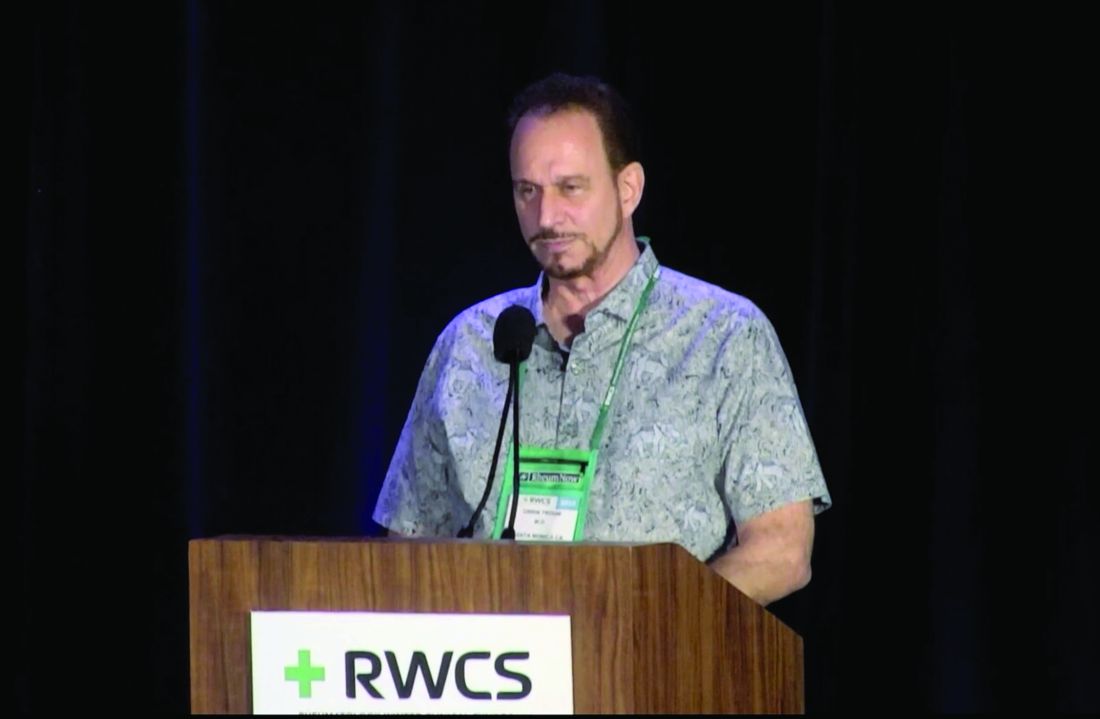
Dr. Troum highlighted the additional problem of dispensaries recommending specific products, and emphasized that treatment shouldn’t be managed by dispensary personnel without a medical background. “Our patients are being promoted this, either from the dispensaries or even in some clinicians’ offices, without the real true knowledge as to what we’re dealing with,” he said.
Evidence of health effects of CBD, cannabis
When it comes to actual evidence of clinical benefit, “I can tell you there’s lacking data for the majority of what we’re being asked every day in our practices,” Dr. Troum said.
The greatest evidence for the health benefits of cannabinoids appears to be for chronic pain, according to a 2017 report from the National Academies of Sciences, Engineering, and Medicine. Within rheumatology, a position statement released by the Canadian Rheumatology Association in 2019 found insufficient evidence to recommend cannabinoids for use in fibromyalgia, osteoarthritis, RA, or back pain, but acknowledged medical cannabis may relieve symptoms based on evidence from other conditions.
There is some preliminary evidence that cannabis can be used as a substitute for opioids when treating chronic pain, to improve symptoms of fibromyalgia and inflammatory bowel disease, and although a trial of patients with Crohn’s disease failed its primary outcome of disease remission, 10 of 11 patients who smoked cigarettes with THC saw significant improvements in clinical outcomes (P = .028).
In RA, “clinical research focusing on the cannabinoids’ disease-modifying qualities is still lacking,” Dr. Troum said, although an active randomized, controlled trial led by researchers at the University of California, Los Angeles, is testing patients for clinical response to CBD. A separate randomized, double-blind, placebo-controlled trial in Denmark is evaluating whether CBD, followed by open-label add-on of THC, improves chronic pain for patients with RA or ankylosing spondylitis.
The lack of data in this area largely has to do with how cannabis is regulated at the federal level and the differing regulations between U.S. states. “There’s a lot of hurdles you have to go through, and therefore, I think, really has decreased the availability of good studies,” he said.
Overarching principles for medical cannabis in rheumatology
For the rheumatologist counseling a patient who either is self-medicating or wants to start using medical cannabis, the Canadian Rheumatology Association created overarching principles as part of their position statement to guide decision-making for clinicians.
First, clinicians should know that cannabis shouldn’t be used as an alternative treatment for standard of care in rheumatology, and the CRA noted that patients aged under 25 years should not use cannabis. CRA also recommended that clinicians try currently available treatment strategies for common reasons patients seek to use medical cannabis, such as pain relief or a sleep aid, before attempting to use medical cannabis. The CRA noted long-term effects of medical cannabis are not known for patients with rheumatic diseases.
In an interview, Arthur Kavanaugh, MD, professor of medicine at the University of California, San Diego, and director of RWCS, said that CBD and cannabis “come up quite frequently” at his clinic. “Many patients have already tried CBD, especially the topical formulation, prior to discussing it with me. In general, I do not dissuade patients from trying CBD, especially topical.”
Typically, he said his practice situation gives him access to a counselor from the anesthesia department with “significant expertise” in dosing and formulations. “It would be great if there were proper controlled trials of specific formulations to allow us to have real scientific data that may help the patients make optimal choices.”
One issue that is brought up by patients is cost. “These preparations can be relatively expensive,” Dr. Kavanaugh said, but noted that this is also a consideration when patients decide to use any therapy.
Dr. Troum reported having financial relationships with eight pharmaceutical companies.
Although there is a lack of evidence for use of cannabidiol (CBD) products and cannabis in rheumatology, many patients are using them anyway and want to discuss the use of these products with their rheumatologists, according to a speaker at the 2022 Rheumatology Winter Clinical Symposium.
While cannabis is still regulated as a Schedule I drug in the United States, CBD products are “all over the place,” Orrin Troum, MD, a rheumatologist at the University of Southern California, Los Angeles, said in his presentation. “You can get it at the pharmacy; you can get it at the dispensaries.”
Patients in rheumatology are also increasingly using cannabis across the United States, Dr. Troum said. In an abstract from the 2019 American College of Rheumatology annual meeting, researchers examined data from FORWARD, the National Databank for Rheumatic Diseases, and found 17.6% of 11,006 respondents reported using cannabis in 2017, an increase from 6.3% of respondents in 2014.
“Putting your personal biases aside, you have to be able to discuss this, and I try to do that openly with my patients,” he said.
According to a 2018 report from the World Health Organization, CBD is “generally well tolerated with a good safety profile.” While CBD itself is safe, CBD products offered over the counter as pills, lotions, foods, drinks, shampoos, cosmetics, oils, and other products carry the risk of being manufactured with “unverified contents” because they are not subject to regulatory oversight.
“There may be heavy metals, pesticides, microbes, [and] mycotoxins that are in these substances that you’re recommending to patients,” Dr. Troum said. There may also be tetrahydrocannabinol (THC) in certain CBD products, he added. Other concerns about CBD products include potential drug-drug interactions with medications used in rheumatology, and potential inhibition of drug metabolism through the CYP450 pathway.
Rheumatologists should be careful when recommending CBD products for this reason, Dr. Troum cautioned. In the absence of products approved by the Food and Drug Administration, “try to get at least products that have a good manufacturing practices certification.”
Dr. Troum highlighted the additional problem of dispensaries recommending specific products, and emphasized that treatment shouldn’t be managed by dispensary personnel without a medical background. “Our patients are being promoted this, either from the dispensaries or even in some clinicians’ offices, without the real true knowledge as to what we’re dealing with,” he said.
Evidence of health effects of CBD, cannabis
When it comes to actual evidence of clinical benefit, “I can tell you there’s lacking data for the majority of what we’re being asked every day in our practices,” Dr. Troum said.
The greatest evidence for the health benefits of cannabinoids appears to be for chronic pain, according to a 2017 report from the National Academies of Sciences, Engineering, and Medicine. Within rheumatology, a position statement released by the Canadian Rheumatology Association in 2019 found insufficient evidence to recommend cannabinoids for use in fibromyalgia, osteoarthritis, RA, or back pain, but acknowledged medical cannabis may relieve symptoms based on evidence from other conditions.
There is some preliminary evidence that cannabis can be used as a substitute for opioids when treating chronic pain, to improve symptoms of fibromyalgia and inflammatory bowel disease, and although a trial of patients with Crohn’s disease failed its primary outcome of disease remission, 10 of 11 patients who smoked cigarettes with THC saw significant improvements in clinical outcomes (P = .028).
In RA, “clinical research focusing on the cannabinoids’ disease-modifying qualities is still lacking,” Dr. Troum said, although an active randomized, controlled trial led by researchers at the University of California, Los Angeles, is testing patients for clinical response to CBD. A separate randomized, double-blind, placebo-controlled trial in Denmark is evaluating whether CBD, followed by open-label add-on of THC, improves chronic pain for patients with RA or ankylosing spondylitis.
The lack of data in this area largely has to do with how cannabis is regulated at the federal level and the differing regulations between U.S. states. “There’s a lot of hurdles you have to go through, and therefore, I think, really has decreased the availability of good studies,” he said.
Overarching principles for medical cannabis in rheumatology
For the rheumatologist counseling a patient who either is self-medicating or wants to start using medical cannabis, the Canadian Rheumatology Association created overarching principles as part of their position statement to guide decision-making for clinicians.
First, clinicians should know that cannabis shouldn’t be used as an alternative treatment for standard of care in rheumatology, and the CRA noted that patients aged under 25 years should not use cannabis. CRA also recommended that clinicians try currently available treatment strategies for common reasons patients seek to use medical cannabis, such as pain relief or a sleep aid, before attempting to use medical cannabis. The CRA noted long-term effects of medical cannabis are not known for patients with rheumatic diseases.
In an interview, Arthur Kavanaugh, MD, professor of medicine at the University of California, San Diego, and director of RWCS, said that CBD and cannabis “come up quite frequently” at his clinic. “Many patients have already tried CBD, especially the topical formulation, prior to discussing it with me. In general, I do not dissuade patients from trying CBD, especially topical.”
Typically, he said his practice situation gives him access to a counselor from the anesthesia department with “significant expertise” in dosing and formulations. “It would be great if there were proper controlled trials of specific formulations to allow us to have real scientific data that may help the patients make optimal choices.”
One issue that is brought up by patients is cost. “These preparations can be relatively expensive,” Dr. Kavanaugh said, but noted that this is also a consideration when patients decide to use any therapy.
Dr. Troum reported having financial relationships with eight pharmaceutical companies.
Although there is a lack of evidence for use of cannabidiol (CBD) products and cannabis in rheumatology, many patients are using them anyway and want to discuss the use of these products with their rheumatologists, according to a speaker at the 2022 Rheumatology Winter Clinical Symposium.
While cannabis is still regulated as a Schedule I drug in the United States, CBD products are “all over the place,” Orrin Troum, MD, a rheumatologist at the University of Southern California, Los Angeles, said in his presentation. “You can get it at the pharmacy; you can get it at the dispensaries.”
Patients in rheumatology are also increasingly using cannabis across the United States, Dr. Troum said. In an abstract from the 2019 American College of Rheumatology annual meeting, researchers examined data from FORWARD, the National Databank for Rheumatic Diseases, and found 17.6% of 11,006 respondents reported using cannabis in 2017, an increase from 6.3% of respondents in 2014.
“Putting your personal biases aside, you have to be able to discuss this, and I try to do that openly with my patients,” he said.
According to a 2018 report from the World Health Organization, CBD is “generally well tolerated with a good safety profile.” While CBD itself is safe, CBD products offered over the counter as pills, lotions, foods, drinks, shampoos, cosmetics, oils, and other products carry the risk of being manufactured with “unverified contents” because they are not subject to regulatory oversight.
“There may be heavy metals, pesticides, microbes, [and] mycotoxins that are in these substances that you’re recommending to patients,” Dr. Troum said. There may also be tetrahydrocannabinol (THC) in certain CBD products, he added. Other concerns about CBD products include potential drug-drug interactions with medications used in rheumatology, and potential inhibition of drug metabolism through the CYP450 pathway.
Rheumatologists should be careful when recommending CBD products for this reason, Dr. Troum cautioned. In the absence of products approved by the Food and Drug Administration, “try to get at least products that have a good manufacturing practices certification.”
Dr. Troum highlighted the additional problem of dispensaries recommending specific products, and emphasized that treatment shouldn’t be managed by dispensary personnel without a medical background. “Our patients are being promoted this, either from the dispensaries or even in some clinicians’ offices, without the real true knowledge as to what we’re dealing with,” he said.
Evidence of health effects of CBD, cannabis
When it comes to actual evidence of clinical benefit, “I can tell you there’s lacking data for the majority of what we’re being asked every day in our practices,” Dr. Troum said.
The greatest evidence for the health benefits of cannabinoids appears to be for chronic pain, according to a 2017 report from the National Academies of Sciences, Engineering, and Medicine. Within rheumatology, a position statement released by the Canadian Rheumatology Association in 2019 found insufficient evidence to recommend cannabinoids for use in fibromyalgia, osteoarthritis, RA, or back pain, but acknowledged medical cannabis may relieve symptoms based on evidence from other conditions.
There is some preliminary evidence that cannabis can be used as a substitute for opioids when treating chronic pain, to improve symptoms of fibromyalgia and inflammatory bowel disease, and although a trial of patients with Crohn’s disease failed its primary outcome of disease remission, 10 of 11 patients who smoked cigarettes with THC saw significant improvements in clinical outcomes (P = .028).
In RA, “clinical research focusing on the cannabinoids’ disease-modifying qualities is still lacking,” Dr. Troum said, although an active randomized, controlled trial led by researchers at the University of California, Los Angeles, is testing patients for clinical response to CBD. A separate randomized, double-blind, placebo-controlled trial in Denmark is evaluating whether CBD, followed by open-label add-on of THC, improves chronic pain for patients with RA or ankylosing spondylitis.
The lack of data in this area largely has to do with how cannabis is regulated at the federal level and the differing regulations between U.S. states. “There’s a lot of hurdles you have to go through, and therefore, I think, really has decreased the availability of good studies,” he said.
Overarching principles for medical cannabis in rheumatology
For the rheumatologist counseling a patient who either is self-medicating or wants to start using medical cannabis, the Canadian Rheumatology Association created overarching principles as part of their position statement to guide decision-making for clinicians.
First, clinicians should know that cannabis shouldn’t be used as an alternative treatment for standard of care in rheumatology, and the CRA noted that patients aged under 25 years should not use cannabis. CRA also recommended that clinicians try currently available treatment strategies for common reasons patients seek to use medical cannabis, such as pain relief or a sleep aid, before attempting to use medical cannabis. The CRA noted long-term effects of medical cannabis are not known for patients with rheumatic diseases.
In an interview, Arthur Kavanaugh, MD, professor of medicine at the University of California, San Diego, and director of RWCS, said that CBD and cannabis “come up quite frequently” at his clinic. “Many patients have already tried CBD, especially the topical formulation, prior to discussing it with me. In general, I do not dissuade patients from trying CBD, especially topical.”
Typically, he said his practice situation gives him access to a counselor from the anesthesia department with “significant expertise” in dosing and formulations. “It would be great if there were proper controlled trials of specific formulations to allow us to have real scientific data that may help the patients make optimal choices.”
One issue that is brought up by patients is cost. “These preparations can be relatively expensive,” Dr. Kavanaugh said, but noted that this is also a consideration when patients decide to use any therapy.
Dr. Troum reported having financial relationships with eight pharmaceutical companies.
FROM RWCS 2022

EULAR CVD management guidance focuses on gout, lupus, vasculitis
New recommendations from the European Alliance of Associations for Rheumatology provide both broad and detailed advice for cardiovascular risk management in various rheumatic and musculoskeletal diseases (RMDs), many of which can lead to an increased possibility of cardiovascular disease (CVD).
“The panel believes that these recommendations will enable health care providers and patients to mutually engage in a long-term care pathway tailored to patients’ needs and expectations for improving cardiovascular health in RMDs,” write George C. Drosos, National and Kapodistrian University of Athens, and colleagues. The recommendations were published in February in Annals of the Rheumatic Diseases).

EULAR assembled a task force to generate best practices for preventing CVD in patients with gout, vasculitis, systemic sclerosis (SSc), myositis, mixed connective tissue disease (MCTD), Sjögren syndrome (SS), systemic lupus erythematosus (SLE), and antiphospholipid syndrome (APS).
The cardiovascular risk management of patients with rheumatoid arthritis, ankylosing spondylitis, and psoriatic arthritis was covered in prior EULAR recommendations.
The task force included 20 members from 11 European countries, including 12 rheumatologists, 2 cardiologists, 1 metabolic medicine physician, 1 health care professional, 2 patient representatives, and 2 EMEUNET (Emerging EULAR Network) members. One group of task force members conducted a systematic literature review of 105 articles about gout, vasculitis, SSc, myositis, MCTD, and SS, and another group evaluated 75 articles about SLE and APS. Together, they decided on four overarching principles:
Clinicians need to be aware of increased cardiovascular risk in patients with RMDs, with disease reduction likely decreasing risk.
Rheumatologists – in tandem with other health care providers – are responsible for their patients’ cardiovascular risk assessment and management.
Screening for cardiovascular risk should be performed regularly in all patients with RMDs, with an emphasis on factors like smoking and blood pressure management.
Patient education and counseling on cardiovascular risk, including important lifestyle modifications, is key for RMD patients.
Specific recommendations from the gout, vasculitis, SSc, myositis, MCTD, and SS group include deploying existing cardiovascular prediction tools as they are used in the general population, with the European Vasculitis Society model suggesting to supplement the Framingham Risk Score for patients with antineutrophil cytoplasmic antibody–associated vasculitis. They also recommended avoiding diuretics in patients with gout and beta-blockers in patients with SSc, as well as following the same blood pressure and lipid management strategies that are used among the general population.
Recommendations from the SLE and APS group include thoroughly assessing traditional cardiovascular risk factors in all patients, following typical blood pressure management strategies in patients with APS, and setting a blood pressure target of less than 130/80 mm Hg in patients with SLE. They also recommended administering the lowest possible glucocorticoid dose in patients with SLE, along with treatment with hydroxychloroquine – unless contraindicated – and even common preventive strategies like low-dose aspirin if it suits their cardiovascular risk profile.
As for next steps, the task force noted several areas where additional focus is needed, such as identifying patient subgroups with increased cardiovascular risk. This could include patients with a longer disease duration or more flare-ups, older patients, and those with certain disease characteristics like antiphospholipid positivity in SLE.
Can EULAR’s recommendations be implemented in U.S. rheumatology practices?
“We have been hearing for years that patients with rheumatic diseases have an increased risk of cardiovascular disease,” Ali A. Duarte Garcia, MD, a rheumatologist at the Mayo Clinic in Rochester, Minn., told this news organization. “That has been consistently published for more than a decade now. But any further guidance about it has not been issued. I think there was a void there.”

“Certainly, cardiovascular disease risk in rheumatoid and psoriatic arthritis has been front of mind for the last decade or so,” Christie M. Bartels, MD, chief of the division of rheumatology at the University of Wisconsin, Madison, said when asked to comment on the recommendations. “But in some of these other conditions, it hasn’t been.”
When asked if rheumatologists would be ready and willing to implement these recommendations, Dr. Duarte Garcia acknowledged that it could be challenging for some.
“It’s a different workflow,” he said. “You’ve been trained traditionally to assess inflammation, to keep the disease under control, which is something they recommend, by the way. If you control the disease, patients do better. But I think lipid screening, for example, and testing for cholesterol, smoking cessation, those well-established programs are harder to bring to a rheumatology clinic. It’s doable, but it’s something that needs to be implemented within the current workflows and could take a few years to take hold.”
Dr. Bartels, however, noted that her group has done extensive work over the last 5 years incorporating certain interventions into practice, including sending patients with high blood pressure back to primary care.
“It’s a sustainable intervention in our clinic that basically our medical assistants and nurses do as a routine operation,” she said. “Our primary care providers are grateful to get these patients back. Our patients are grateful because otherwise when they come to the rheumatologist, get their blood pressure measured, and don’t get feedback, they assume they’re OK. So, we’re giving them a false signal.
“We have a similar intervention with smoking,” she added. “Often our patients aren’t even aware that they’re at increased risk of cardiovascular disease or that smoking might make their rheumatic disease and their cardiovascular outcomes worse. No one has had that conversation with them. They really welcome engaging in those discussions.
“Our tobacco intervention takes 90 seconds at point of care. Our blood pressure intervention at point of care, we’ve timed it, takes 3 minutes. There are ways that we can hardwire this into care.”
Along those lines, Dr. Duarte Garcia stated that the recommendations – although released by EULAR – are largely intuitive and should be very adaptable to an American health care context. He also recognized this moment as an opportunity for rheumatologists to consider patient outcomes beyond what they usually encounter firsthand.
“I don’t think we have many rheumatologists with patients who get a stroke or heart attack because if that happens, it’s in a hospital context or they go see a cardiologist,” he said. “You may see it once it happens if they survive and come and see you – or perhaps if you’re in a more integrated practice – but I don’t think it’s as apparent in our clinics because it is a predominantly outpatient practice and many times those are emergencies or inpatient complications.
“The bottom line,” he added, “is these are practical guidelines. It’s a push in the right direction, but there is still work to be done. And hopefully some of the recommendations, like measuring high blood pressure and addressing it just as in the general population, are something we can start to implement.”
Dr. Duarte Garcia reported receiving grant funding from the Rheumatology Research Foundation and the Centers for Disease Control and Prevention. Dr. Bartels reported that her group’s tobacco cessation work is funded by Pfizer’s Independent Grants for Learning and Change.
A version of this article first appeared on Medscape.com.
New recommendations from the European Alliance of Associations for Rheumatology provide both broad and detailed advice for cardiovascular risk management in various rheumatic and musculoskeletal diseases (RMDs), many of which can lead to an increased possibility of cardiovascular disease (CVD).
“The panel believes that these recommendations will enable health care providers and patients to mutually engage in a long-term care pathway tailored to patients’ needs and expectations for improving cardiovascular health in RMDs,” write George C. Drosos, National and Kapodistrian University of Athens, and colleagues. The recommendations were published in February in Annals of the Rheumatic Diseases).
EULAR assembled a task force to generate best practices for preventing CVD in patients with gout, vasculitis, systemic sclerosis (SSc), myositis, mixed connective tissue disease (MCTD), Sjögren syndrome (SS), systemic lupus erythematosus (SLE), and antiphospholipid syndrome (APS).
The cardiovascular risk management of patients with rheumatoid arthritis, ankylosing spondylitis, and psoriatic arthritis was covered in prior EULAR recommendations.
The task force included 20 members from 11 European countries, including 12 rheumatologists, 2 cardiologists, 1 metabolic medicine physician, 1 health care professional, 2 patient representatives, and 2 EMEUNET (Emerging EULAR Network) members. One group of task force members conducted a systematic literature review of 105 articles about gout, vasculitis, SSc, myositis, MCTD, and SS, and another group evaluated 75 articles about SLE and APS. Together, they decided on four overarching principles:
Clinicians need to be aware of increased cardiovascular risk in patients with RMDs, with disease reduction likely decreasing risk.
Rheumatologists – in tandem with other health care providers – are responsible for their patients’ cardiovascular risk assessment and management.
Screening for cardiovascular risk should be performed regularly in all patients with RMDs, with an emphasis on factors like smoking and blood pressure management.
Patient education and counseling on cardiovascular risk, including important lifestyle modifications, is key for RMD patients.
Specific recommendations from the gout, vasculitis, SSc, myositis, MCTD, and SS group include deploying existing cardiovascular prediction tools as they are used in the general population, with the European Vasculitis Society model suggesting to supplement the Framingham Risk Score for patients with antineutrophil cytoplasmic antibody–associated vasculitis. They also recommended avoiding diuretics in patients with gout and beta-blockers in patients with SSc, as well as following the same blood pressure and lipid management strategies that are used among the general population.
Recommendations from the SLE and APS group include thoroughly assessing traditional cardiovascular risk factors in all patients, following typical blood pressure management strategies in patients with APS, and setting a blood pressure target of less than 130/80 mm Hg in patients with SLE. They also recommended administering the lowest possible glucocorticoid dose in patients with SLE, along with treatment with hydroxychloroquine – unless contraindicated – and even common preventive strategies like low-dose aspirin if it suits their cardiovascular risk profile.
As for next steps, the task force noted several areas where additional focus is needed, such as identifying patient subgroups with increased cardiovascular risk. This could include patients with a longer disease duration or more flare-ups, older patients, and those with certain disease characteristics like antiphospholipid positivity in SLE.
Can EULAR’s recommendations be implemented in U.S. rheumatology practices?
“We have been hearing for years that patients with rheumatic diseases have an increased risk of cardiovascular disease,” Ali A. Duarte Garcia, MD, a rheumatologist at the Mayo Clinic in Rochester, Minn., told this news organization. “That has been consistently published for more than a decade now. But any further guidance about it has not been issued. I think there was a void there.”
“Certainly, cardiovascular disease risk in rheumatoid and psoriatic arthritis has been front of mind for the last decade or so,” Christie M. Bartels, MD, chief of the division of rheumatology at the University of Wisconsin, Madison, said when asked to comment on the recommendations. “But in some of these other conditions, it hasn’t been.”
When asked if rheumatologists would be ready and willing to implement these recommendations, Dr. Duarte Garcia acknowledged that it could be challenging for some.
“It’s a different workflow,” he said. “You’ve been trained traditionally to assess inflammation, to keep the disease under control, which is something they recommend, by the way. If you control the disease, patients do better. But I think lipid screening, for example, and testing for cholesterol, smoking cessation, those well-established programs are harder to bring to a rheumatology clinic. It’s doable, but it’s something that needs to be implemented within the current workflows and could take a few years to take hold.”
Dr. Bartels, however, noted that her group has done extensive work over the last 5 years incorporating certain interventions into practice, including sending patients with high blood pressure back to primary care.
“It’s a sustainable intervention in our clinic that basically our medical assistants and nurses do as a routine operation,” she said. “Our primary care providers are grateful to get these patients back. Our patients are grateful because otherwise when they come to the rheumatologist, get their blood pressure measured, and don’t get feedback, they assume they’re OK. So, we’re giving them a false signal.
“We have a similar intervention with smoking,” she added. “Often our patients aren’t even aware that they’re at increased risk of cardiovascular disease or that smoking might make their rheumatic disease and their cardiovascular outcomes worse. No one has had that conversation with them. They really welcome engaging in those discussions.
“Our tobacco intervention takes 90 seconds at point of care. Our blood pressure intervention at point of care, we’ve timed it, takes 3 minutes. There are ways that we can hardwire this into care.”
Along those lines, Dr. Duarte Garcia stated that the recommendations – although released by EULAR – are largely intuitive and should be very adaptable to an American health care context. He also recognized this moment as an opportunity for rheumatologists to consider patient outcomes beyond what they usually encounter firsthand.
“I don’t think we have many rheumatologists with patients who get a stroke or heart attack because if that happens, it’s in a hospital context or they go see a cardiologist,” he said. “You may see it once it happens if they survive and come and see you – or perhaps if you’re in a more integrated practice – but I don’t think it’s as apparent in our clinics because it is a predominantly outpatient practice and many times those are emergencies or inpatient complications.
“The bottom line,” he added, “is these are practical guidelines. It’s a push in the right direction, but there is still work to be done. And hopefully some of the recommendations, like measuring high blood pressure and addressing it just as in the general population, are something we can start to implement.”
Dr. Duarte Garcia reported receiving grant funding from the Rheumatology Research Foundation and the Centers for Disease Control and Prevention. Dr. Bartels reported that her group’s tobacco cessation work is funded by Pfizer’s Independent Grants for Learning and Change.
A version of this article first appeared on Medscape.com.
New recommendations from the European Alliance of Associations for Rheumatology provide both broad and detailed advice for cardiovascular risk management in various rheumatic and musculoskeletal diseases (RMDs), many of which can lead to an increased possibility of cardiovascular disease (CVD).
“The panel believes that these recommendations will enable health care providers and patients to mutually engage in a long-term care pathway tailored to patients’ needs and expectations for improving cardiovascular health in RMDs,” write George C. Drosos, National and Kapodistrian University of Athens, and colleagues. The recommendations were published in February in Annals of the Rheumatic Diseases).
EULAR assembled a task force to generate best practices for preventing CVD in patients with gout, vasculitis, systemic sclerosis (SSc), myositis, mixed connective tissue disease (MCTD), Sjögren syndrome (SS), systemic lupus erythematosus (SLE), and antiphospholipid syndrome (APS).
The cardiovascular risk management of patients with rheumatoid arthritis, ankylosing spondylitis, and psoriatic arthritis was covered in prior EULAR recommendations.
The task force included 20 members from 11 European countries, including 12 rheumatologists, 2 cardiologists, 1 metabolic medicine physician, 1 health care professional, 2 patient representatives, and 2 EMEUNET (Emerging EULAR Network) members. One group of task force members conducted a systematic literature review of 105 articles about gout, vasculitis, SSc, myositis, MCTD, and SS, and another group evaluated 75 articles about SLE and APS. Together, they decided on four overarching principles:
Clinicians need to be aware of increased cardiovascular risk in patients with RMDs, with disease reduction likely decreasing risk.
Rheumatologists – in tandem with other health care providers – are responsible for their patients’ cardiovascular risk assessment and management.
Screening for cardiovascular risk should be performed regularly in all patients with RMDs, with an emphasis on factors like smoking and blood pressure management.
Patient education and counseling on cardiovascular risk, including important lifestyle modifications, is key for RMD patients.
Specific recommendations from the gout, vasculitis, SSc, myositis, MCTD, and SS group include deploying existing cardiovascular prediction tools as they are used in the general population, with the European Vasculitis Society model suggesting to supplement the Framingham Risk Score for patients with antineutrophil cytoplasmic antibody–associated vasculitis. They also recommended avoiding diuretics in patients with gout and beta-blockers in patients with SSc, as well as following the same blood pressure and lipid management strategies that are used among the general population.
Recommendations from the SLE and APS group include thoroughly assessing traditional cardiovascular risk factors in all patients, following typical blood pressure management strategies in patients with APS, and setting a blood pressure target of less than 130/80 mm Hg in patients with SLE. They also recommended administering the lowest possible glucocorticoid dose in patients with SLE, along with treatment with hydroxychloroquine – unless contraindicated – and even common preventive strategies like low-dose aspirin if it suits their cardiovascular risk profile.
As for next steps, the task force noted several areas where additional focus is needed, such as identifying patient subgroups with increased cardiovascular risk. This could include patients with a longer disease duration or more flare-ups, older patients, and those with certain disease characteristics like antiphospholipid positivity in SLE.
Can EULAR’s recommendations be implemented in U.S. rheumatology practices?
“We have been hearing for years that patients with rheumatic diseases have an increased risk of cardiovascular disease,” Ali A. Duarte Garcia, MD, a rheumatologist at the Mayo Clinic in Rochester, Minn., told this news organization. “That has been consistently published for more than a decade now. But any further guidance about it has not been issued. I think there was a void there.”
“Certainly, cardiovascular disease risk in rheumatoid and psoriatic arthritis has been front of mind for the last decade or so,” Christie M. Bartels, MD, chief of the division of rheumatology at the University of Wisconsin, Madison, said when asked to comment on the recommendations. “But in some of these other conditions, it hasn’t been.”
When asked if rheumatologists would be ready and willing to implement these recommendations, Dr. Duarte Garcia acknowledged that it could be challenging for some.
“It’s a different workflow,” he said. “You’ve been trained traditionally to assess inflammation, to keep the disease under control, which is something they recommend, by the way. If you control the disease, patients do better. But I think lipid screening, for example, and testing for cholesterol, smoking cessation, those well-established programs are harder to bring to a rheumatology clinic. It’s doable, but it’s something that needs to be implemented within the current workflows and could take a few years to take hold.”
Dr. Bartels, however, noted that her group has done extensive work over the last 5 years incorporating certain interventions into practice, including sending patients with high blood pressure back to primary care.
“It’s a sustainable intervention in our clinic that basically our medical assistants and nurses do as a routine operation,” she said. “Our primary care providers are grateful to get these patients back. Our patients are grateful because otherwise when they come to the rheumatologist, get their blood pressure measured, and don’t get feedback, they assume they’re OK. So, we’re giving them a false signal.
“We have a similar intervention with smoking,” she added. “Often our patients aren’t even aware that they’re at increased risk of cardiovascular disease or that smoking might make their rheumatic disease and their cardiovascular outcomes worse. No one has had that conversation with them. They really welcome engaging in those discussions.
“Our tobacco intervention takes 90 seconds at point of care. Our blood pressure intervention at point of care, we’ve timed it, takes 3 minutes. There are ways that we can hardwire this into care.”
Along those lines, Dr. Duarte Garcia stated that the recommendations – although released by EULAR – are largely intuitive and should be very adaptable to an American health care context. He also recognized this moment as an opportunity for rheumatologists to consider patient outcomes beyond what they usually encounter firsthand.
“I don’t think we have many rheumatologists with patients who get a stroke or heart attack because if that happens, it’s in a hospital context or they go see a cardiologist,” he said. “You may see it once it happens if they survive and come and see you – or perhaps if you’re in a more integrated practice – but I don’t think it’s as apparent in our clinics because it is a predominantly outpatient practice and many times those are emergencies or inpatient complications.
“The bottom line,” he added, “is these are practical guidelines. It’s a push in the right direction, but there is still work to be done. And hopefully some of the recommendations, like measuring high blood pressure and addressing it just as in the general population, are something we can start to implement.”
Dr. Duarte Garcia reported receiving grant funding from the Rheumatology Research Foundation and the Centers for Disease Control and Prevention. Dr. Bartels reported that her group’s tobacco cessation work is funded by Pfizer’s Independent Grants for Learning and Change.
A version of this article first appeared on Medscape.com.
FROM ANNALS OF THE RHEUMATIC DISEASES
Rheumatoid arthritis: Baricitinib more effective than TNF inhibitors in real world
Key clinical point: In patients with rheumatoid arthritis (RA), baricitinib showed better treatment responses than tumor necrosis factor (TNF) inhibitors, whereas treatment response for tofacitinib was not significantly different vs. baricitinib or biological disease-modifying antirheumatic drugs (bDMARD).
Major finding: At 1 year, TNFi vs. baricitinib showed lower European Alliance of Associations for Rheumatology (difference −4.3%; 95% CI −8.7% to 0.1%), Health Assessment Questionnaire-Disability Index improvement (difference −9.9%; 95% CI −14.4% to −5.4%), and Clinical Disease Activity Index remission (difference −6%; 95% CI −9.8% to −2.2%). Tofacitinib showed similar treatment responses vs. bDMARDs or baricitinib.
Study details: This was a nationwide cohort study involving patients with RA who initiated baricitinib (n = 1,420), tofacitinib (n = 316), abatacept (n = 1,050), interleukin-6 inhibitors (n = 849), rituximab (n = 1,101), or TNF inhibitors (n = 6,036).
Disclosures: This work was supported by the Swedish Research Council and others. J Askling, K Chatzidionysiou, and C Turesson reported receiving research grants and consulting and speaker fees from various sources. A Kastbom reported being employed by Sanofi.
Source: Barbulescu A et al. Rheumatology (Oxford). 2022 (Feb 3). Doi: 10.1093/rheumatology/keac068
Key clinical point: In patients with rheumatoid arthritis (RA), baricitinib showed better treatment responses than tumor necrosis factor (TNF) inhibitors, whereas treatment response for tofacitinib was not significantly different vs. baricitinib or biological disease-modifying antirheumatic drugs (bDMARD).
Major finding: At 1 year, TNFi vs. baricitinib showed lower European Alliance of Associations for Rheumatology (difference −4.3%; 95% CI −8.7% to 0.1%), Health Assessment Questionnaire-Disability Index improvement (difference −9.9%; 95% CI −14.4% to −5.4%), and Clinical Disease Activity Index remission (difference −6%; 95% CI −9.8% to −2.2%). Tofacitinib showed similar treatment responses vs. bDMARDs or baricitinib.
Study details: This was a nationwide cohort study involving patients with RA who initiated baricitinib (n = 1,420), tofacitinib (n = 316), abatacept (n = 1,050), interleukin-6 inhibitors (n = 849), rituximab (n = 1,101), or TNF inhibitors (n = 6,036).
Disclosures: This work was supported by the Swedish Research Council and others. J Askling, K Chatzidionysiou, and C Turesson reported receiving research grants and consulting and speaker fees from various sources. A Kastbom reported being employed by Sanofi.
Source: Barbulescu A et al. Rheumatology (Oxford). 2022 (Feb 3). Doi: 10.1093/rheumatology/keac068
Key clinical point: In patients with rheumatoid arthritis (RA), baricitinib showed better treatment responses than tumor necrosis factor (TNF) inhibitors, whereas treatment response for tofacitinib was not significantly different vs. baricitinib or biological disease-modifying antirheumatic drugs (bDMARD).
Major finding: At 1 year, TNFi vs. baricitinib showed lower European Alliance of Associations for Rheumatology (difference −4.3%; 95% CI −8.7% to 0.1%), Health Assessment Questionnaire-Disability Index improvement (difference −9.9%; 95% CI −14.4% to −5.4%), and Clinical Disease Activity Index remission (difference −6%; 95% CI −9.8% to −2.2%). Tofacitinib showed similar treatment responses vs. bDMARDs or baricitinib.
Study details: This was a nationwide cohort study involving patients with RA who initiated baricitinib (n = 1,420), tofacitinib (n = 316), abatacept (n = 1,050), interleukin-6 inhibitors (n = 849), rituximab (n = 1,101), or TNF inhibitors (n = 6,036).
Disclosures: This work was supported by the Swedish Research Council and others. J Askling, K Chatzidionysiou, and C Turesson reported receiving research grants and consulting and speaker fees from various sources. A Kastbom reported being employed by Sanofi.
Source: Barbulescu A et al. Rheumatology (Oxford). 2022 (Feb 3). Doi: 10.1093/rheumatology/keac068
No link between vitamin D levels at birth and early adulthood RA risk
Key clinical point: Vitamin D concentration at birth was not associated with the risk of developing rheumatoid arthritis (RA) in early adulthood.
Major finding: The risk of developing RA in individuals aged 18-33.9 years was not significantly different among those in the highest vs. lowest vitamin D quintile (adjusted hazard ratio 1.21; 95% CI 0.90-1.63).
Study details: This was a registry-based case-cohort study involving 805 patients with RA with onset in early adulthood and 2,416 individuals from a random subcohort.
Disclosures: This research was supported by the Danish Rheumatism Association and others. The authors declared no conflicts of interest.
Source: Cardoso I et al. Nutrients. 2022;14(3):447 (Jan 20). Doi: 10.3390/nu14030447
Key clinical point: Vitamin D concentration at birth was not associated with the risk of developing rheumatoid arthritis (RA) in early adulthood.
Major finding: The risk of developing RA in individuals aged 18-33.9 years was not significantly different among those in the highest vs. lowest vitamin D quintile (adjusted hazard ratio 1.21; 95% CI 0.90-1.63).
Study details: This was a registry-based case-cohort study involving 805 patients with RA with onset in early adulthood and 2,416 individuals from a random subcohort.
Disclosures: This research was supported by the Danish Rheumatism Association and others. The authors declared no conflicts of interest.
Source: Cardoso I et al. Nutrients. 2022;14(3):447 (Jan 20). Doi: 10.3390/nu14030447
Key clinical point: Vitamin D concentration at birth was not associated with the risk of developing rheumatoid arthritis (RA) in early adulthood.
Major finding: The risk of developing RA in individuals aged 18-33.9 years was not significantly different among those in the highest vs. lowest vitamin D quintile (adjusted hazard ratio 1.21; 95% CI 0.90-1.63).
Study details: This was a registry-based case-cohort study involving 805 patients with RA with onset in early adulthood and 2,416 individuals from a random subcohort.
Disclosures: This research was supported by the Danish Rheumatism Association and others. The authors declared no conflicts of interest.
Source: Cardoso I et al. Nutrients. 2022;14(3):447 (Jan 20). Doi: 10.3390/nu14030447
Low disease activity tied to increased bone mineral density in RA
Key clinical point: In patients with rheumatoid arthritis (RA), low cumulative disease activity was associated with an increased femoral neck bone mineral density (BMD), irrespective of established osteoporosis risk factors.
Major finding: Low cumulative disease activity as measured by Disease Activity Score in 28 Joints with erythrocyte sedimentation rate was independently associated with higher femoral neck BMD compared with moderate/high disease activity (β 0.071; P = .020).
Study details: The findings come from an observational cohort study involving 161 patients with RA.
Disclosures: This study was funded by the Rheumatology Research Foundation Scientist Development Award, National Institute of Aging, and others. The authors declared no conflicts of interest.
Source: Wysham KD et al. Semin Arthritis Rheum. 2022;53:151972 (Jan 31). Doi: 10.1016/j.semarthrit.2022.151972
Key clinical point: In patients with rheumatoid arthritis (RA), low cumulative disease activity was associated with an increased femoral neck bone mineral density (BMD), irrespective of established osteoporosis risk factors.
Major finding: Low cumulative disease activity as measured by Disease Activity Score in 28 Joints with erythrocyte sedimentation rate was independently associated with higher femoral neck BMD compared with moderate/high disease activity (β 0.071; P = .020).
Study details: The findings come from an observational cohort study involving 161 patients with RA.
Disclosures: This study was funded by the Rheumatology Research Foundation Scientist Development Award, National Institute of Aging, and others. The authors declared no conflicts of interest.
Source: Wysham KD et al. Semin Arthritis Rheum. 2022;53:151972 (Jan 31). Doi: 10.1016/j.semarthrit.2022.151972
Key clinical point: In patients with rheumatoid arthritis (RA), low cumulative disease activity was associated with an increased femoral neck bone mineral density (BMD), irrespective of established osteoporosis risk factors.
Major finding: Low cumulative disease activity as measured by Disease Activity Score in 28 Joints with erythrocyte sedimentation rate was independently associated with higher femoral neck BMD compared with moderate/high disease activity (β 0.071; P = .020).
Study details: The findings come from an observational cohort study involving 161 patients with RA.
Disclosures: This study was funded by the Rheumatology Research Foundation Scientist Development Award, National Institute of Aging, and others. The authors declared no conflicts of interest.
Source: Wysham KD et al. Semin Arthritis Rheum. 2022;53:151972 (Jan 31). Doi: 10.1016/j.semarthrit.2022.151972
DMARDs or corticosteroids use may not explain reduced risk for Parkinson disease in RA
Key clinical point: The use of disease-modifying antirheumatic drugs (DMARD) or corticosteroids did not affect the risk for Parkinson's disease (PD) in patients with rheumatoid arthritis (RA), except for chloroquine/hydroxychloroquine, which may be potentially associated with a reduced PD risk.
Major finding: At 3 years, the use of DMARDs or corticosteroids was not associated with the risk for PD, except for chloroquine/hydroxychloroquine, which was associated with a decreased risk (adjusted odds ratio 0.74; 95% CI 0.56-0.97).
Study details: The findings come from the nested nationwide, case-control study including 315 cases with RA diagnosed at least 3 years before the diagnosis of PD. Cases were matched to 1,571 control participants without PD but with RA.
Disclosures: The study was funded by the Michael J. Fox Foundation for Parkinson's Research. The authors declared no conflicts of interest.
Source: Paakinaho A et al. Neurology. 2022 (Jan 21). Doi: 10.1212/WNL.0000000000013303
Key clinical point: The use of disease-modifying antirheumatic drugs (DMARD) or corticosteroids did not affect the risk for Parkinson's disease (PD) in patients with rheumatoid arthritis (RA), except for chloroquine/hydroxychloroquine, which may be potentially associated with a reduced PD risk.
Major finding: At 3 years, the use of DMARDs or corticosteroids was not associated with the risk for PD, except for chloroquine/hydroxychloroquine, which was associated with a decreased risk (adjusted odds ratio 0.74; 95% CI 0.56-0.97).
Study details: The findings come from the nested nationwide, case-control study including 315 cases with RA diagnosed at least 3 years before the diagnosis of PD. Cases were matched to 1,571 control participants without PD but with RA.
Disclosures: The study was funded by the Michael J. Fox Foundation for Parkinson's Research. The authors declared no conflicts of interest.
Source: Paakinaho A et al. Neurology. 2022 (Jan 21). Doi: 10.1212/WNL.0000000000013303
Key clinical point: The use of disease-modifying antirheumatic drugs (DMARD) or corticosteroids did not affect the risk for Parkinson's disease (PD) in patients with rheumatoid arthritis (RA), except for chloroquine/hydroxychloroquine, which may be potentially associated with a reduced PD risk.
Major finding: At 3 years, the use of DMARDs or corticosteroids was not associated with the risk for PD, except for chloroquine/hydroxychloroquine, which was associated with a decreased risk (adjusted odds ratio 0.74; 95% CI 0.56-0.97).
Study details: The findings come from the nested nationwide, case-control study including 315 cases with RA diagnosed at least 3 years before the diagnosis of PD. Cases were matched to 1,571 control participants without PD but with RA.
Disclosures: The study was funded by the Michael J. Fox Foundation for Parkinson's Research. The authors declared no conflicts of interest.
Source: Paakinaho A et al. Neurology. 2022 (Jan 21). Doi: 10.1212/WNL.0000000000013303
A healthy lifestyle may prevent the development of RA
Key clinical point: A healthy lifestyle was associated with a reduced risk of developing rheumatoid arthritis (RA) overall, as well as for seropositive and seronegative RA.
Major finding: Each unit increase in healthy lifestyle index score was associated with a reduced risk for overall RA (hazard ratio [HR] 0.86; P < .0001), seropositive RA (HR 0.85; P < .0001), and seronegative RA (HR 0.87; P < .001).
Study details: The findings come from an analysis of 2 large prospective cohorts including 107,092 women, among which 1,219 cases of incident RA (seropositive, 776; seronegative, 443) were identified.
Disclosures: The study was supported by the National Institutes of Health and Rheumatology Research Foundation Career Development Bridge Award. The authors declared no conflicts of interest.
Source: Hahn J et al. Arthritis Care Res (Hoboken). 2022 (Jan 18). Doi: 10.1002/acr.24862
Key clinical point: A healthy lifestyle was associated with a reduced risk of developing rheumatoid arthritis (RA) overall, as well as for seropositive and seronegative RA.
Major finding: Each unit increase in healthy lifestyle index score was associated with a reduced risk for overall RA (hazard ratio [HR] 0.86; P < .0001), seropositive RA (HR 0.85; P < .0001), and seronegative RA (HR 0.87; P < .001).
Study details: The findings come from an analysis of 2 large prospective cohorts including 107,092 women, among which 1,219 cases of incident RA (seropositive, 776; seronegative, 443) were identified.
Disclosures: The study was supported by the National Institutes of Health and Rheumatology Research Foundation Career Development Bridge Award. The authors declared no conflicts of interest.
Source: Hahn J et al. Arthritis Care Res (Hoboken). 2022 (Jan 18). Doi: 10.1002/acr.24862
Key clinical point: A healthy lifestyle was associated with a reduced risk of developing rheumatoid arthritis (RA) overall, as well as for seropositive and seronegative RA.
Major finding: Each unit increase in healthy lifestyle index score was associated with a reduced risk for overall RA (hazard ratio [HR] 0.86; P < .0001), seropositive RA (HR 0.85; P < .0001), and seronegative RA (HR 0.87; P < .001).
Study details: The findings come from an analysis of 2 large prospective cohorts including 107,092 women, among which 1,219 cases of incident RA (seropositive, 776; seronegative, 443) were identified.
Disclosures: The study was supported by the National Institutes of Health and Rheumatology Research Foundation Career Development Bridge Award. The authors declared no conflicts of interest.
Source: Hahn J et al. Arthritis Care Res (Hoboken). 2022 (Jan 18). Doi: 10.1002/acr.24862
Early RA: Prevalence and factors associated with methotrexate-related adverse events
Key clinical point: Adverse events (AE), most being nonserious, are common within the first year of treatment with methotrexate in patients with early rheumatoid arthritis (RA), with gastrointestinal AEs being most common and women more likely to report AEs compared with men.
Major finding: At least 1 AE within the first year of methotrexate initiation was reported by 77.5% of patients, with gastrointestinal AEs being the most common (42%) and nausea being the most reported single event (31.2%). Women vs. men were more likely to report gastrointestinal AEs (odds ratio 2.03; 95% CI 1.49-2.75).
Study details: The findings come from a prospective cohort of 1,069 patients with RA who initiated methotrexate therapy.
Disclosures: This work was supported by the Versus Arthritis and NIHR Manchester Biomedical Research Centre. All the authors declared no conflicts of interest.
Source: Sherbini AA et al. Rheumatology (Oxford). 2022 (Jan 25). Doi: 10.1093/rheumatology/keab917
Key clinical point: Adverse events (AE), most being nonserious, are common within the first year of treatment with methotrexate in patients with early rheumatoid arthritis (RA), with gastrointestinal AEs being most common and women more likely to report AEs compared with men.
Major finding: At least 1 AE within the first year of methotrexate initiation was reported by 77.5% of patients, with gastrointestinal AEs being the most common (42%) and nausea being the most reported single event (31.2%). Women vs. men were more likely to report gastrointestinal AEs (odds ratio 2.03; 95% CI 1.49-2.75).
Study details: The findings come from a prospective cohort of 1,069 patients with RA who initiated methotrexate therapy.
Disclosures: This work was supported by the Versus Arthritis and NIHR Manchester Biomedical Research Centre. All the authors declared no conflicts of interest.
Source: Sherbini AA et al. Rheumatology (Oxford). 2022 (Jan 25). Doi: 10.1093/rheumatology/keab917
Key clinical point: Adverse events (AE), most being nonserious, are common within the first year of treatment with methotrexate in patients with early rheumatoid arthritis (RA), with gastrointestinal AEs being most common and women more likely to report AEs compared with men.
Major finding: At least 1 AE within the first year of methotrexate initiation was reported by 77.5% of patients, with gastrointestinal AEs being the most common (42%) and nausea being the most reported single event (31.2%). Women vs. men were more likely to report gastrointestinal AEs (odds ratio 2.03; 95% CI 1.49-2.75).
Study details: The findings come from a prospective cohort of 1,069 patients with RA who initiated methotrexate therapy.
Disclosures: This work was supported by the Versus Arthritis and NIHR Manchester Biomedical Research Centre. All the authors declared no conflicts of interest.
Source: Sherbini AA et al. Rheumatology (Oxford). 2022 (Jan 25). Doi: 10.1093/rheumatology/keab917
A real-world analysis finds no evidence of increased CV risk with tofacitinib vs. TNFi in RA
Key clinical point: Under real-world settings, tofacitinib was not associated with a higher risk for cardiovascular (CV) outcomes compared with tumor necrosis factor inhibitors (TNFi) in patients with rheumatoid arthritis (RA); however, the risk could not be ruled out in patients with prior CV disease.
Major finding: Tofacitinib vs. TNFi was not linked with a higher risk for composite CV outcome (pooled weighted hazard ratio [pwHR] 1.01; 95% CI 0.83-1.23); however, the pwHR for patients with and without prior CV disease was 1.27 (95% CI, 0.95-1.70) and 0.81 (95% CI 0.61-1.07), respectively.
Study details: STAR-RA is a multidatabase, population-based study including 1,02,263 patients with RA who initiated treatment with tofacitinib or TNFi.
Disclosures: This study was funded by the Division of Pharmacoepidemiology and Pharmacoeconomics, Brigham and Women’s Hospital & Harvard Medical School, Boston, MA, USA. RJ Desai and SC Kim reported receiving research grants from various sources. All the other authors reported no conflicts of interest.
Source: Khosrow-Khavar F et al. Ann Rheum Dis. 2022 (Jan 13). Doi: 10.1136/annrheumdis-2021-221915
Key clinical point: Under real-world settings, tofacitinib was not associated with a higher risk for cardiovascular (CV) outcomes compared with tumor necrosis factor inhibitors (TNFi) in patients with rheumatoid arthritis (RA); however, the risk could not be ruled out in patients with prior CV disease.
Major finding: Tofacitinib vs. TNFi was not linked with a higher risk for composite CV outcome (pooled weighted hazard ratio [pwHR] 1.01; 95% CI 0.83-1.23); however, the pwHR for patients with and without prior CV disease was 1.27 (95% CI, 0.95-1.70) and 0.81 (95% CI 0.61-1.07), respectively.
Study details: STAR-RA is a multidatabase, population-based study including 1,02,263 patients with RA who initiated treatment with tofacitinib or TNFi.
Disclosures: This study was funded by the Division of Pharmacoepidemiology and Pharmacoeconomics, Brigham and Women’s Hospital & Harvard Medical School, Boston, MA, USA. RJ Desai and SC Kim reported receiving research grants from various sources. All the other authors reported no conflicts of interest.
Source: Khosrow-Khavar F et al. Ann Rheum Dis. 2022 (Jan 13). Doi: 10.1136/annrheumdis-2021-221915
Key clinical point: Under real-world settings, tofacitinib was not associated with a higher risk for cardiovascular (CV) outcomes compared with tumor necrosis factor inhibitors (TNFi) in patients with rheumatoid arthritis (RA); however, the risk could not be ruled out in patients with prior CV disease.
Major finding: Tofacitinib vs. TNFi was not linked with a higher risk for composite CV outcome (pooled weighted hazard ratio [pwHR] 1.01; 95% CI 0.83-1.23); however, the pwHR for patients with and without prior CV disease was 1.27 (95% CI, 0.95-1.70) and 0.81 (95% CI 0.61-1.07), respectively.
Study details: STAR-RA is a multidatabase, population-based study including 1,02,263 patients with RA who initiated treatment with tofacitinib or TNFi.
Disclosures: This study was funded by the Division of Pharmacoepidemiology and Pharmacoeconomics, Brigham and Women’s Hospital & Harvard Medical School, Boston, MA, USA. RJ Desai and SC Kim reported receiving research grants from various sources. All the other authors reported no conflicts of interest.
Source: Khosrow-Khavar F et al. Ann Rheum Dis. 2022 (Jan 13). Doi: 10.1136/annrheumdis-2021-221915