User login
Hemophilia A gene therapy under FDA review
Hemophilia A (a deficiency of clotting Factor X) is the most common form of the disease, accounting for about 85% of patients.
The other type is hemophilia B (deficiency of clotting Factor VIII), and a gene therapy for this form of the disease has recently been launched – etranacogene dezaparvovec (Hemgenix), at the enormous price tag of $3.5 million.
Both products are comprised of a one-off intravenous IV infusion that delivers a functional gene via an adeno-associated virus that instructs the body to make the missing clotting factor. The hope is that this one-off infusion will act as a ‘cure’ and that the individual will be freed from life-long prophylaxis and/or treatment.
The new clinical data on valoctocogene roxaparvovec, published online in the New England Journal of Medicine, show that the beneficial effects from the gene are largely durable at 2 years, but they are anticipated to fade with time.
Two years after the one-time infusion, there remained “a significant reduction in the annualized bleeding rates” among 132 men who, at baseline, had severe hemophilia A requiring ongoing factor VIII prophylaxis, said the investigators, led by hematologist Johnny Mahlangu, MBBCh, MMed, of the University of the Witwatersrand, Johannesburg, South Africa.
However, the team predicted that median factor VIII activity would decrease below 10% of normal by year 3 or 5 depending on measurement technique, which would still translate to mild disease with an annualized bleeding rate of less than 1 episode per year.
“Although valoctocogene roxaparvovec may not eliminate bleeding, it potentially provides more consistent protection than factor VIII prophylaxis with less treatment burden,” the team said.
New questions
Data from the study “will directly inform therapeutic decision-making” in Europe, where valoctocogene roxaparvovec is already conditionally approved, and the United States, where it is awaiting approval by the FDA, says Lindsey George, MD, a hematologist and gene therapy specialist at Children’s Hospital of Philadelphia, in an accompanying editorial.
The study speaks to an ongoing concern about the durability of gene therapy for hemophilia but also raises new questions, she said.
For instance, while some patients had normal Factor VIII production and activity at 2 years, activity had dropped substantially in others, including in six men who resumed prophylaxis. “The cause of the decrease in factor VIII expression is an unanswered question,” and despite an anticipated U.S. price tag of around $2.5 million per treatment, “it is not possible [at the moment] to predict where an individual patient may fall within this range,” she writes.
Also, some subjects had elevations in liver aminotransferase levels that lasted for several months, including 2 years after infusion in 29% of subjects. Elevations in liver aminotransferase levels were treated with immune suppression for a median of 33 weeks.
“This is a unique finding with an undefined cause and long-term safety implications,” Dr. George said.
Getting to the bottom of such issues will be necessary for hemophilia gene therapy to fulfill its promise as “a one-time, lifelong, disease-ameliorating” fix for the condition, she asserted.
Study details
The new report followed up on the initial trial in 134 men who were treated with a single infusion of 6 × 10¹³ vector genomes per kilogram of body weight.
Among the 132 subjects available for 2-year evaluation, median factor VIII activity was in the range of mild hemophilia (6%-49% of normal) with an 84.5% reduction in bleeding events from baseline.
More than 80% of participants had no bleeding events requiring treatment, and there was a 98% reduction from baseline in mean use of exogenous factor VIII.
Overall, at year 2, 4.5% of subjects had factor VIII activity consistent with severe hemophilia A; 9.1% had activity consistent with moderate disease; 59.8% had activity consistent with mild disease; and 26.5% had activity in the normal range above 40 IU/dL. The investigators estimated that the typical half-life of the transgene-derived factor VIII production system is 123 weeks.
Among the six men who resumed prophylaxis, most had fewer bleeding events than when they were on prophylaxis before the infusion, investigators noted.
All the subjects developed antibodies to the virus delivery vector, precluding retreatment.
The work was funded by valoctocogene roxaparvovec maker BioMarin Pharmaceuticals. Several investigators are employees. Others reported ties to BioMarin and other companies; Dr. Mahlangu, for instance, reported research grants from BioMarin, Roche, Novo Nordisk, Pfizer, and others. Dr. George reported a research grant from Asklepios Biopharmaceutical and having a patent licensed to the company. The full list of author disclosures can be found with the original article.
A version of this article first appeared on Medscape.com.
Hemophilia A (a deficiency of clotting Factor X) is the most common form of the disease, accounting for about 85% of patients.
The other type is hemophilia B (deficiency of clotting Factor VIII), and a gene therapy for this form of the disease has recently been launched – etranacogene dezaparvovec (Hemgenix), at the enormous price tag of $3.5 million.
Both products are comprised of a one-off intravenous IV infusion that delivers a functional gene via an adeno-associated virus that instructs the body to make the missing clotting factor. The hope is that this one-off infusion will act as a ‘cure’ and that the individual will be freed from life-long prophylaxis and/or treatment.
The new clinical data on valoctocogene roxaparvovec, published online in the New England Journal of Medicine, show that the beneficial effects from the gene are largely durable at 2 years, but they are anticipated to fade with time.
Two years after the one-time infusion, there remained “a significant reduction in the annualized bleeding rates” among 132 men who, at baseline, had severe hemophilia A requiring ongoing factor VIII prophylaxis, said the investigators, led by hematologist Johnny Mahlangu, MBBCh, MMed, of the University of the Witwatersrand, Johannesburg, South Africa.
However, the team predicted that median factor VIII activity would decrease below 10% of normal by year 3 or 5 depending on measurement technique, which would still translate to mild disease with an annualized bleeding rate of less than 1 episode per year.
“Although valoctocogene roxaparvovec may not eliminate bleeding, it potentially provides more consistent protection than factor VIII prophylaxis with less treatment burden,” the team said.
New questions
Data from the study “will directly inform therapeutic decision-making” in Europe, where valoctocogene roxaparvovec is already conditionally approved, and the United States, where it is awaiting approval by the FDA, says Lindsey George, MD, a hematologist and gene therapy specialist at Children’s Hospital of Philadelphia, in an accompanying editorial.
The study speaks to an ongoing concern about the durability of gene therapy for hemophilia but also raises new questions, she said.
For instance, while some patients had normal Factor VIII production and activity at 2 years, activity had dropped substantially in others, including in six men who resumed prophylaxis. “The cause of the decrease in factor VIII expression is an unanswered question,” and despite an anticipated U.S. price tag of around $2.5 million per treatment, “it is not possible [at the moment] to predict where an individual patient may fall within this range,” she writes.
Also, some subjects had elevations in liver aminotransferase levels that lasted for several months, including 2 years after infusion in 29% of subjects. Elevations in liver aminotransferase levels were treated with immune suppression for a median of 33 weeks.
“This is a unique finding with an undefined cause and long-term safety implications,” Dr. George said.
Getting to the bottom of such issues will be necessary for hemophilia gene therapy to fulfill its promise as “a one-time, lifelong, disease-ameliorating” fix for the condition, she asserted.
Study details
The new report followed up on the initial trial in 134 men who were treated with a single infusion of 6 × 10¹³ vector genomes per kilogram of body weight.
Among the 132 subjects available for 2-year evaluation, median factor VIII activity was in the range of mild hemophilia (6%-49% of normal) with an 84.5% reduction in bleeding events from baseline.
More than 80% of participants had no bleeding events requiring treatment, and there was a 98% reduction from baseline in mean use of exogenous factor VIII.
Overall, at year 2, 4.5% of subjects had factor VIII activity consistent with severe hemophilia A; 9.1% had activity consistent with moderate disease; 59.8% had activity consistent with mild disease; and 26.5% had activity in the normal range above 40 IU/dL. The investigators estimated that the typical half-life of the transgene-derived factor VIII production system is 123 weeks.
Among the six men who resumed prophylaxis, most had fewer bleeding events than when they were on prophylaxis before the infusion, investigators noted.
All the subjects developed antibodies to the virus delivery vector, precluding retreatment.
The work was funded by valoctocogene roxaparvovec maker BioMarin Pharmaceuticals. Several investigators are employees. Others reported ties to BioMarin and other companies; Dr. Mahlangu, for instance, reported research grants from BioMarin, Roche, Novo Nordisk, Pfizer, and others. Dr. George reported a research grant from Asklepios Biopharmaceutical and having a patent licensed to the company. The full list of author disclosures can be found with the original article.
A version of this article first appeared on Medscape.com.
Hemophilia A (a deficiency of clotting Factor X) is the most common form of the disease, accounting for about 85% of patients.
The other type is hemophilia B (deficiency of clotting Factor VIII), and a gene therapy for this form of the disease has recently been launched – etranacogene dezaparvovec (Hemgenix), at the enormous price tag of $3.5 million.
Both products are comprised of a one-off intravenous IV infusion that delivers a functional gene via an adeno-associated virus that instructs the body to make the missing clotting factor. The hope is that this one-off infusion will act as a ‘cure’ and that the individual will be freed from life-long prophylaxis and/or treatment.
The new clinical data on valoctocogene roxaparvovec, published online in the New England Journal of Medicine, show that the beneficial effects from the gene are largely durable at 2 years, but they are anticipated to fade with time.
Two years after the one-time infusion, there remained “a significant reduction in the annualized bleeding rates” among 132 men who, at baseline, had severe hemophilia A requiring ongoing factor VIII prophylaxis, said the investigators, led by hematologist Johnny Mahlangu, MBBCh, MMed, of the University of the Witwatersrand, Johannesburg, South Africa.
However, the team predicted that median factor VIII activity would decrease below 10% of normal by year 3 or 5 depending on measurement technique, which would still translate to mild disease with an annualized bleeding rate of less than 1 episode per year.
“Although valoctocogene roxaparvovec may not eliminate bleeding, it potentially provides more consistent protection than factor VIII prophylaxis with less treatment burden,” the team said.
New questions
Data from the study “will directly inform therapeutic decision-making” in Europe, where valoctocogene roxaparvovec is already conditionally approved, and the United States, where it is awaiting approval by the FDA, says Lindsey George, MD, a hematologist and gene therapy specialist at Children’s Hospital of Philadelphia, in an accompanying editorial.
The study speaks to an ongoing concern about the durability of gene therapy for hemophilia but also raises new questions, she said.
For instance, while some patients had normal Factor VIII production and activity at 2 years, activity had dropped substantially in others, including in six men who resumed prophylaxis. “The cause of the decrease in factor VIII expression is an unanswered question,” and despite an anticipated U.S. price tag of around $2.5 million per treatment, “it is not possible [at the moment] to predict where an individual patient may fall within this range,” she writes.
Also, some subjects had elevations in liver aminotransferase levels that lasted for several months, including 2 years after infusion in 29% of subjects. Elevations in liver aminotransferase levels were treated with immune suppression for a median of 33 weeks.
“This is a unique finding with an undefined cause and long-term safety implications,” Dr. George said.
Getting to the bottom of such issues will be necessary for hemophilia gene therapy to fulfill its promise as “a one-time, lifelong, disease-ameliorating” fix for the condition, she asserted.
Study details
The new report followed up on the initial trial in 134 men who were treated with a single infusion of 6 × 10¹³ vector genomes per kilogram of body weight.
Among the 132 subjects available for 2-year evaluation, median factor VIII activity was in the range of mild hemophilia (6%-49% of normal) with an 84.5% reduction in bleeding events from baseline.
More than 80% of participants had no bleeding events requiring treatment, and there was a 98% reduction from baseline in mean use of exogenous factor VIII.
Overall, at year 2, 4.5% of subjects had factor VIII activity consistent with severe hemophilia A; 9.1% had activity consistent with moderate disease; 59.8% had activity consistent with mild disease; and 26.5% had activity in the normal range above 40 IU/dL. The investigators estimated that the typical half-life of the transgene-derived factor VIII production system is 123 weeks.
Among the six men who resumed prophylaxis, most had fewer bleeding events than when they were on prophylaxis before the infusion, investigators noted.
All the subjects developed antibodies to the virus delivery vector, precluding retreatment.
The work was funded by valoctocogene roxaparvovec maker BioMarin Pharmaceuticals. Several investigators are employees. Others reported ties to BioMarin and other companies; Dr. Mahlangu, for instance, reported research grants from BioMarin, Roche, Novo Nordisk, Pfizer, and others. Dr. George reported a research grant from Asklepios Biopharmaceutical and having a patent licensed to the company. The full list of author disclosures can be found with the original article.
A version of this article first appeared on Medscape.com.
FROM THE NEW ENGLAND JOURNAL OF MEDICINE
Efanesoctocog alfa treatment: ‘Victory’ over hemophilia A
One injection of efanesoctocog alfa, a factor VIII therapy, resolved almost all bleeding episodes (97%) in the overall patient population, and weekly prophylaxis provided mean factor VIII activity in the normal or near-normal range (> 40 IU/dL) for most of the week.
Efanesoctocog alfa is currently under priority review by the U.S. Food and Drug Administration, and the target action date for the approval decision was set for Tuesday, February 28.
“Currently, [patients] often need to make trade-offs between bleed protection and dosing frequency,” study researcher Angela Weyand, MD, of Michigan Medicine, said in a press release. The current phase 3 XTEND-1 results assessing efanesoctocog alfa demonstrate that “we have the opportunity to provide near normal factor activity levels for an extended period of time (the majority of a week) with a single dose, which is a first for hemophilia A.”
According to the researchers, efanesoctocog alfa is also the first investigational treatment for hemophilia A to surpass the von Willebrand factor half-life ceiling, which imposes a half-life limitation on current factor VIII therapies.
The study, which was funded by drugmakers Sanofi and Sobi, was published online in the New England Journal of Medicine.
Hemophilia A is a rare genetic disorder caused by a lack of blood clotting factor VIII. Normalizing factor VIII levels can help protect patients from spontaneous and traumatic bleeding but maintaining factor VIII levels in the normal (50-150 IU/dL) or close-to-normal range (> 40 to < 50 IU/dL) with currently available factor VIII therapies requires frequent administration, the study authors explained.
In the phase 3, open-label trial, the authors evaluated the efficacy, safety, and pharmacokinetics of efanesoctocog alfa for routine prophylaxis, treatment of bleeding episodes, and perioperative management in previously treated patients with severe hemophilia A.
Patients were 12 years of age or older with endogenous factor VIII activity of less than 1 IU/dL or a genotype known to produce severe hemophilia A. Patients were required to have had at least 150 previous exposure days to recombinant or plasma-derived factor VIII concentrates or cryoprecipitate.
Overall, 133 patients received once-weekly prophylaxis doses of 50 IU per kg of intravenous efanesoctocog alfa for 52 weeks (group A), and 26 patients received on-demand efanesoctocog alfa treatment for 26 weeks, followed by once-weekly prophylaxis with the medication for 26 weeks at the same 50 IU per kg dosage (group B). The primary endpoint was the mean annualized bleeding rate in group A.
Among those in group A, the annualized bleeding rate was 0 (interquartile range, 0-1.04) and the estimated mean annualized bleeding rate was 0.71. Overall, 65% of these patients (86 of 133) had no bleeding episodes and 93% had 0-2 bleeding episodes.
As for spontaneous bleeding, no episodes were reported in 80% of patients in group A (107 of 133) and 85% of patients (22 of 26) during the prophylaxis period in group B.
A total of 362 bleeding events occurred during the study, with most (268 of 362, or 74%) occurring in group B during the on-demand treatment period.
Among those in group A, switching from the prestudy standard of care to efanesoctocog alfa prophylaxis reduced the mean annualized bleeding rate from 2.96 to 0.69, a decrease of 77%. In group B, the mean annualized bleeding rate also decreased when patients switched from on-demand efanesoctocog alfa to prophylaxis (21.42 vs. 0.69).
Scores of physical health, joint health, and pain intensity were significantly improved within the 52 weeks. In patients with target joints at baseline, 100% of the target joints were resolved after at least 12 months of continuous prophylaxis.
In other words, not only did the treatment stop bleeding, but efanesoctocog alfa also improved the overall quality of life for patients, said lead author Annette von Drygalski MD, PharmD, of the University of California, San Diego.
“[Efanesoctocog] alfa’s half-life and clotting factor activity levels truly translated into a number of other patient outcomes,” Dr. von Drygalski told this news organization. “All these reductions in parameters, pain improvement, improvement in joint health, reduction in pain, and of course reduction of infusions really resulted in improved quality of life for most patients, and so that’s remarkable.”
In addition, no patients developed inhibitors to factor VIII and there were no reports of serious allergic reactions, anaphylaxis, or vascular thrombotic events.
Of the 159 patients who received at least one dose of efanesoctocog alfa, 123 (77%) had at least one adverse event that developed or worsened during the treatment period. The most common adverse events were headache, arthralgia, fall, and back pain.
In an accompanying editorial, Cindy Leissinger, MD, called efanesoctocog alfa a “victory” for patients with hemophilia A.
“In a crowded field of transformative therapies for hemophilia, efanesoctocog alfa stands out as a winner – a major therapeutic advance that achieves highly protective factor VIII levels with a once-weekly infusion,” writes Dr. Leissinger, director of the Louisiana Center for Bleeding and Clotting Disorders at Tulane University, New Orleans.
The study was supported by Sanofi and Sobi. Both Dr. von Drygalski and Dr. Leissinger disclosed serving as consultants for Sanofi, among other disclosures. Other authors provided a range of disclosures, including serving as consultants for Sanofi and Sobi.
A version of this article first appeared on Medscape.com.
One injection of efanesoctocog alfa, a factor VIII therapy, resolved almost all bleeding episodes (97%) in the overall patient population, and weekly prophylaxis provided mean factor VIII activity in the normal or near-normal range (> 40 IU/dL) for most of the week.
Efanesoctocog alfa is currently under priority review by the U.S. Food and Drug Administration, and the target action date for the approval decision was set for Tuesday, February 28.
“Currently, [patients] often need to make trade-offs between bleed protection and dosing frequency,” study researcher Angela Weyand, MD, of Michigan Medicine, said in a press release. The current phase 3 XTEND-1 results assessing efanesoctocog alfa demonstrate that “we have the opportunity to provide near normal factor activity levels for an extended period of time (the majority of a week) with a single dose, which is a first for hemophilia A.”
According to the researchers, efanesoctocog alfa is also the first investigational treatment for hemophilia A to surpass the von Willebrand factor half-life ceiling, which imposes a half-life limitation on current factor VIII therapies.
The study, which was funded by drugmakers Sanofi and Sobi, was published online in the New England Journal of Medicine.
Hemophilia A is a rare genetic disorder caused by a lack of blood clotting factor VIII. Normalizing factor VIII levels can help protect patients from spontaneous and traumatic bleeding but maintaining factor VIII levels in the normal (50-150 IU/dL) or close-to-normal range (> 40 to < 50 IU/dL) with currently available factor VIII therapies requires frequent administration, the study authors explained.
In the phase 3, open-label trial, the authors evaluated the efficacy, safety, and pharmacokinetics of efanesoctocog alfa for routine prophylaxis, treatment of bleeding episodes, and perioperative management in previously treated patients with severe hemophilia A.
Patients were 12 years of age or older with endogenous factor VIII activity of less than 1 IU/dL or a genotype known to produce severe hemophilia A. Patients were required to have had at least 150 previous exposure days to recombinant or plasma-derived factor VIII concentrates or cryoprecipitate.
Overall, 133 patients received once-weekly prophylaxis doses of 50 IU per kg of intravenous efanesoctocog alfa for 52 weeks (group A), and 26 patients received on-demand efanesoctocog alfa treatment for 26 weeks, followed by once-weekly prophylaxis with the medication for 26 weeks at the same 50 IU per kg dosage (group B). The primary endpoint was the mean annualized bleeding rate in group A.
Among those in group A, the annualized bleeding rate was 0 (interquartile range, 0-1.04) and the estimated mean annualized bleeding rate was 0.71. Overall, 65% of these patients (86 of 133) had no bleeding episodes and 93% had 0-2 bleeding episodes.
As for spontaneous bleeding, no episodes were reported in 80% of patients in group A (107 of 133) and 85% of patients (22 of 26) during the prophylaxis period in group B.
A total of 362 bleeding events occurred during the study, with most (268 of 362, or 74%) occurring in group B during the on-demand treatment period.
Among those in group A, switching from the prestudy standard of care to efanesoctocog alfa prophylaxis reduced the mean annualized bleeding rate from 2.96 to 0.69, a decrease of 77%. In group B, the mean annualized bleeding rate also decreased when patients switched from on-demand efanesoctocog alfa to prophylaxis (21.42 vs. 0.69).
Scores of physical health, joint health, and pain intensity were significantly improved within the 52 weeks. In patients with target joints at baseline, 100% of the target joints were resolved after at least 12 months of continuous prophylaxis.
In other words, not only did the treatment stop bleeding, but efanesoctocog alfa also improved the overall quality of life for patients, said lead author Annette von Drygalski MD, PharmD, of the University of California, San Diego.
“[Efanesoctocog] alfa’s half-life and clotting factor activity levels truly translated into a number of other patient outcomes,” Dr. von Drygalski told this news organization. “All these reductions in parameters, pain improvement, improvement in joint health, reduction in pain, and of course reduction of infusions really resulted in improved quality of life for most patients, and so that’s remarkable.”
In addition, no patients developed inhibitors to factor VIII and there were no reports of serious allergic reactions, anaphylaxis, or vascular thrombotic events.
Of the 159 patients who received at least one dose of efanesoctocog alfa, 123 (77%) had at least one adverse event that developed or worsened during the treatment period. The most common adverse events were headache, arthralgia, fall, and back pain.
In an accompanying editorial, Cindy Leissinger, MD, called efanesoctocog alfa a “victory” for patients with hemophilia A.
“In a crowded field of transformative therapies for hemophilia, efanesoctocog alfa stands out as a winner – a major therapeutic advance that achieves highly protective factor VIII levels with a once-weekly infusion,” writes Dr. Leissinger, director of the Louisiana Center for Bleeding and Clotting Disorders at Tulane University, New Orleans.
The study was supported by Sanofi and Sobi. Both Dr. von Drygalski and Dr. Leissinger disclosed serving as consultants for Sanofi, among other disclosures. Other authors provided a range of disclosures, including serving as consultants for Sanofi and Sobi.
A version of this article first appeared on Medscape.com.
One injection of efanesoctocog alfa, a factor VIII therapy, resolved almost all bleeding episodes (97%) in the overall patient population, and weekly prophylaxis provided mean factor VIII activity in the normal or near-normal range (> 40 IU/dL) for most of the week.
Efanesoctocog alfa is currently under priority review by the U.S. Food and Drug Administration, and the target action date for the approval decision was set for Tuesday, February 28.
“Currently, [patients] often need to make trade-offs between bleed protection and dosing frequency,” study researcher Angela Weyand, MD, of Michigan Medicine, said in a press release. The current phase 3 XTEND-1 results assessing efanesoctocog alfa demonstrate that “we have the opportunity to provide near normal factor activity levels for an extended period of time (the majority of a week) with a single dose, which is a first for hemophilia A.”
According to the researchers, efanesoctocog alfa is also the first investigational treatment for hemophilia A to surpass the von Willebrand factor half-life ceiling, which imposes a half-life limitation on current factor VIII therapies.
The study, which was funded by drugmakers Sanofi and Sobi, was published online in the New England Journal of Medicine.
Hemophilia A is a rare genetic disorder caused by a lack of blood clotting factor VIII. Normalizing factor VIII levels can help protect patients from spontaneous and traumatic bleeding but maintaining factor VIII levels in the normal (50-150 IU/dL) or close-to-normal range (> 40 to < 50 IU/dL) with currently available factor VIII therapies requires frequent administration, the study authors explained.
In the phase 3, open-label trial, the authors evaluated the efficacy, safety, and pharmacokinetics of efanesoctocog alfa for routine prophylaxis, treatment of bleeding episodes, and perioperative management in previously treated patients with severe hemophilia A.
Patients were 12 years of age or older with endogenous factor VIII activity of less than 1 IU/dL or a genotype known to produce severe hemophilia A. Patients were required to have had at least 150 previous exposure days to recombinant or plasma-derived factor VIII concentrates or cryoprecipitate.
Overall, 133 patients received once-weekly prophylaxis doses of 50 IU per kg of intravenous efanesoctocog alfa for 52 weeks (group A), and 26 patients received on-demand efanesoctocog alfa treatment for 26 weeks, followed by once-weekly prophylaxis with the medication for 26 weeks at the same 50 IU per kg dosage (group B). The primary endpoint was the mean annualized bleeding rate in group A.
Among those in group A, the annualized bleeding rate was 0 (interquartile range, 0-1.04) and the estimated mean annualized bleeding rate was 0.71. Overall, 65% of these patients (86 of 133) had no bleeding episodes and 93% had 0-2 bleeding episodes.
As for spontaneous bleeding, no episodes were reported in 80% of patients in group A (107 of 133) and 85% of patients (22 of 26) during the prophylaxis period in group B.
A total of 362 bleeding events occurred during the study, with most (268 of 362, or 74%) occurring in group B during the on-demand treatment period.
Among those in group A, switching from the prestudy standard of care to efanesoctocog alfa prophylaxis reduced the mean annualized bleeding rate from 2.96 to 0.69, a decrease of 77%. In group B, the mean annualized bleeding rate also decreased when patients switched from on-demand efanesoctocog alfa to prophylaxis (21.42 vs. 0.69).
Scores of physical health, joint health, and pain intensity were significantly improved within the 52 weeks. In patients with target joints at baseline, 100% of the target joints were resolved after at least 12 months of continuous prophylaxis.
In other words, not only did the treatment stop bleeding, but efanesoctocog alfa also improved the overall quality of life for patients, said lead author Annette von Drygalski MD, PharmD, of the University of California, San Diego.
“[Efanesoctocog] alfa’s half-life and clotting factor activity levels truly translated into a number of other patient outcomes,” Dr. von Drygalski told this news organization. “All these reductions in parameters, pain improvement, improvement in joint health, reduction in pain, and of course reduction of infusions really resulted in improved quality of life for most patients, and so that’s remarkable.”
In addition, no patients developed inhibitors to factor VIII and there were no reports of serious allergic reactions, anaphylaxis, or vascular thrombotic events.
Of the 159 patients who received at least one dose of efanesoctocog alfa, 123 (77%) had at least one adverse event that developed or worsened during the treatment period. The most common adverse events were headache, arthralgia, fall, and back pain.
In an accompanying editorial, Cindy Leissinger, MD, called efanesoctocog alfa a “victory” for patients with hemophilia A.
“In a crowded field of transformative therapies for hemophilia, efanesoctocog alfa stands out as a winner – a major therapeutic advance that achieves highly protective factor VIII levels with a once-weekly infusion,” writes Dr. Leissinger, director of the Louisiana Center for Bleeding and Clotting Disorders at Tulane University, New Orleans.
The study was supported by Sanofi and Sobi. Both Dr. von Drygalski and Dr. Leissinger disclosed serving as consultants for Sanofi, among other disclosures. Other authors provided a range of disclosures, including serving as consultants for Sanofi and Sobi.
A version of this article first appeared on Medscape.com.
FROM THE NEW ENGLAND JOURNAL OF MEDICINE
Europe approves first gene therapy for hemophilia B
The approval means that the product will now be available in all the countries of the European Union as well as the European Economic Area.
The gene therapy was approved in the United States in November 2022. It was launched with a price tag of $3.5 million, making it the most expensive treatment to date.
The treatment comprises a one-time infusion of a functional gene that acts as a blueprint for coagulation factor IX, a protein important for blood clotting, stated the manufacturer, CSL.
People living with hemophilia B currently require lifelong treatment of intravenous infusions of factor IX to maintain sufficient levels, which can have a significant impact on their quality of life and well-being, the company explained in its press release.
The approval was based on findings from the pivotal HOPE-B trial, a single-arm, open-label study of 54 men who relied on factor IX replacement therapy; first results from this trial were reported at the 2020 annual meeting of the American Society of Hematology.
The results showed that patients with hemophilia B treated with the gene therapy demonstrated stable and durable increases in mean factor IX activity (with a mean factor IX activity of 36.9%), which led to an adjusted annualized bleeding rate reduction of 64%.
After receiving the gene therapy, 96% of patients discontinued routine factor IX prophylaxis and mean factor IX consumption was reduced by 97% at 18 months post treatment compared with the lead-in period, the company noted.
“Data from the HOPE-B study demonstrate the potential of Hemgenix to remove the need for routine prophylaxis by providing durable factor IX activity, as well as improved bleeding outcomes and quality of life for people with hemophilia B,” said one of the trialists, Wolfgang Miesbach, MD, PHD, head of coagulation disorders at the Comprehensive Care Center, University Hospital of Frankfurt, Germany.
This European approval “marks an important step forward in the treatment of hemophilia B, which could be transformative for people who are debilitated by bleeds into their muscles, joints, and internal organs, alleviating the burden of lifelong intravenous infusions of factor IX products,” Dr. Miesbach said in the company press release.
A version of this article first appeared on Medscape.com.
The approval means that the product will now be available in all the countries of the European Union as well as the European Economic Area.
The gene therapy was approved in the United States in November 2022. It was launched with a price tag of $3.5 million, making it the most expensive treatment to date.
The treatment comprises a one-time infusion of a functional gene that acts as a blueprint for coagulation factor IX, a protein important for blood clotting, stated the manufacturer, CSL.
People living with hemophilia B currently require lifelong treatment of intravenous infusions of factor IX to maintain sufficient levels, which can have a significant impact on their quality of life and well-being, the company explained in its press release.
The approval was based on findings from the pivotal HOPE-B trial, a single-arm, open-label study of 54 men who relied on factor IX replacement therapy; first results from this trial were reported at the 2020 annual meeting of the American Society of Hematology.
The results showed that patients with hemophilia B treated with the gene therapy demonstrated stable and durable increases in mean factor IX activity (with a mean factor IX activity of 36.9%), which led to an adjusted annualized bleeding rate reduction of 64%.
After receiving the gene therapy, 96% of patients discontinued routine factor IX prophylaxis and mean factor IX consumption was reduced by 97% at 18 months post treatment compared with the lead-in period, the company noted.
“Data from the HOPE-B study demonstrate the potential of Hemgenix to remove the need for routine prophylaxis by providing durable factor IX activity, as well as improved bleeding outcomes and quality of life for people with hemophilia B,” said one of the trialists, Wolfgang Miesbach, MD, PHD, head of coagulation disorders at the Comprehensive Care Center, University Hospital of Frankfurt, Germany.
This European approval “marks an important step forward in the treatment of hemophilia B, which could be transformative for people who are debilitated by bleeds into their muscles, joints, and internal organs, alleviating the burden of lifelong intravenous infusions of factor IX products,” Dr. Miesbach said in the company press release.
A version of this article first appeared on Medscape.com.
The approval means that the product will now be available in all the countries of the European Union as well as the European Economic Area.
The gene therapy was approved in the United States in November 2022. It was launched with a price tag of $3.5 million, making it the most expensive treatment to date.
The treatment comprises a one-time infusion of a functional gene that acts as a blueprint for coagulation factor IX, a protein important for blood clotting, stated the manufacturer, CSL.
People living with hemophilia B currently require lifelong treatment of intravenous infusions of factor IX to maintain sufficient levels, which can have a significant impact on their quality of life and well-being, the company explained in its press release.
The approval was based on findings from the pivotal HOPE-B trial, a single-arm, open-label study of 54 men who relied on factor IX replacement therapy; first results from this trial were reported at the 2020 annual meeting of the American Society of Hematology.
The results showed that patients with hemophilia B treated with the gene therapy demonstrated stable and durable increases in mean factor IX activity (with a mean factor IX activity of 36.9%), which led to an adjusted annualized bleeding rate reduction of 64%.
After receiving the gene therapy, 96% of patients discontinued routine factor IX prophylaxis and mean factor IX consumption was reduced by 97% at 18 months post treatment compared with the lead-in period, the company noted.
“Data from the HOPE-B study demonstrate the potential of Hemgenix to remove the need for routine prophylaxis by providing durable factor IX activity, as well as improved bleeding outcomes and quality of life for people with hemophilia B,” said one of the trialists, Wolfgang Miesbach, MD, PHD, head of coagulation disorders at the Comprehensive Care Center, University Hospital of Frankfurt, Germany.
This European approval “marks an important step forward in the treatment of hemophilia B, which could be transformative for people who are debilitated by bleeds into their muscles, joints, and internal organs, alleviating the burden of lifelong intravenous infusions of factor IX products,” Dr. Miesbach said in the company press release.
A version of this article first appeared on Medscape.com.
Comment & Controversy
Drospirenone vs norethindrone progestin-only pills. Is there a clear winner?
ROBERT L. BARBIERI, MD (FEBRUARY 2022)
Contraception queries
Dr. Barbieri, addressing your editorial on drospirenone and norethindrone pills, can you tell me why there are 4 placebo pills in Slynd? In addition, why did Exeltis choose a 24/4 regimen instead of a continuous regimen? And are there data on bleeding patterns with continuous drospirenone versus 24/4?
Meredith S. Cassidy, MD
Colorado Springs, Colorado
Dr. Barbieri responds
I thank Dr. Cassidy for the excellent question! The purpose of the 4 placebo pills in the Slynd (drospirenone 4 mg) 24/4 progestin-only contraceptive is to induce scheduled bleeding and reduce the number of days of unscheduled uterine bleeding. In a study of 858 patients, compared with a continuous progestin-only desogestrel contraceptive, Slynd with 4 placebo pills, was associated with significantly fewer days of unscheduled bleeding, 22 days versus 35 days (P<.0003) over 8 months of contraceptive use.1
The norethindrone progestin-only pill (POP) , which is available in the United States has very weak anti-ovulatory properties. If there were 4 placebo pills in the norethindrone POP, ovulation rates would increase, leading to reduced contraceptive efficacy. In contrast, Slynd with 4 placebo pills has excellent anti-ovulatory efficacy.
Reference
1. Palacios S, Colli E, Regidor PA. Bleeding profile of women using a drospirenone-ony 4 mg over nine cycles in comparison with desogestrel 0.075 mg. PLoS ONE. 2020;15:e0231856.
Should every scheduled cesarean birth use an Enhanced Recovery After Surgery (ERAS) pathway?
ROBERT L. BARBIERI, MD (NOVEMBER 2022)
ERAS for all cesarean deliveries
In Dr. Barbieri’s editorial “Should every scheduled cesarean birth use an Enhanced Recovery After Surgery (ERAS) pathway?”, he and Dr. Schantz-Dunn outline several reasons why the answer is a resounding, “Yes!”
I would suggest that ERAS principles should be used for all cesarean deliveries (CDs), not only scheduled ones. Many components of CD ERAS pathways are equally applicable to scheduled and unscheduled CDs, specifically those components that apply to intraoperative care (antibiotic prophylaxis, skin preparation, surgical technique, uterotonic administration, normothermia, and multimodal anesthesia) and postoperative care (VTE prophylaxis, gum chewing, early oral intake, early ambulation, early removal of bladder catheter, predischarge patient education, scheduled analgesic prophylaxis with acetaminophen, and NSAIDS). Although scheduled CDs have the additional advantage of the pre-hospital components (breastfeeding education, shortened fasting interval, carbohydrate loading, anemia prevention, and physiologic optimization), most of the benefit of ERAS for CD is likely attributable to the intraoperative and postoperative components.
For example, in our CD ERAS program, the median postoperative opioid consumption was reduced from a baseline of more than 100 morphine mg equivalents (MME) in both scheduled CDs (23 MME, interquartile range [IQR], 0-70) and unscheduled CDs (23 MME, IQR, 0-75).1 Remarkably, 29% of patients in the ERAS pathway used no postoperative opioids at all, a testament to the efficacy of neuraxial morphine and postoperative acetaminophen and NSAIDS. In another program, ERAS was associated with decreased postpartum length of stay and reduced direct costs in both scheduled and unscheduled CDs.2
References
- Combs CA, Robinson T, Mekis C, et al. Enhanced recovery after cesarean: impact on postoperative opioid use and length of stay. Am J Obstet Gynecol. 2021;224:237-239.
- Fay EE, Hitti JE, Delgado CM, et al. An enhanced recovery after surgery pathway for cesarean delivery decreases hospital stay and cost. Am J Obstet Gynecol. 2019;221:349.e1-e9.
C. Andrew Combs, MD, PhD
Sunrise, Florida
Dr. Barbieri responds
I am grateful to Dr. Combs’ advocacy for applying ERAS principles to all CD births, including scheduled and unscheduled operations. Dr. Combs notes that the intraoperative and postoperative components of ERAS can be used for both scheduled and unscheduled CD births. Of particular note is the marked reduction in opioid medication use achieved among Dr. Combs’ patients who were on an ERAS pathway. Hopefully, due to Dr. Combs clinical and research leadership many more patients will benefit from the use of an ERAS pathway.
ObGyns united in a divided post-Dobbs America
ERIN TRACY BRADLEY, MD, MPH, AND MEGAN L. EVANS,MD, MPH (DECEMBER 2022)
ObGyns are not united on this issue
I just finished reading the article by Drs. Bradley and Evans in the December edition of
The unborn seem not to have advocates like Drs. Bradley and Evans. In fact, those who hold pro-life opinions are regularly silenced in publications and on social media. The Facebooks and Twitters of the world tend to hold us in derision when they are not silencing us. There used to be a detente in our field where we each respected the viewpoint of the other, but now it is nonstop advocacy for abortion. Some authors want to accelerate and intensify that advocacy. I suspect that the pro-life views like mine will continue to be silenced. I just want the authors to know that we are not united in this post-Dobbs world. Many of us want appropriate limits on termination. We are not in favor of the unlimited right to abort a fetus up to the moment of delivery.
Steven G. Nelson
Phoenix, Arizona
Drospirenone vs norethindrone progestin-only pills. Is there a clear winner?
ROBERT L. BARBIERI, MD (FEBRUARY 2022)
Contraception queries
Dr. Barbieri, addressing your editorial on drospirenone and norethindrone pills, can you tell me why there are 4 placebo pills in Slynd? In addition, why did Exeltis choose a 24/4 regimen instead of a continuous regimen? And are there data on bleeding patterns with continuous drospirenone versus 24/4?
Meredith S. Cassidy, MD
Colorado Springs, Colorado
Dr. Barbieri responds
I thank Dr. Cassidy for the excellent question! The purpose of the 4 placebo pills in the Slynd (drospirenone 4 mg) 24/4 progestin-only contraceptive is to induce scheduled bleeding and reduce the number of days of unscheduled uterine bleeding. In a study of 858 patients, compared with a continuous progestin-only desogestrel contraceptive, Slynd with 4 placebo pills, was associated with significantly fewer days of unscheduled bleeding, 22 days versus 35 days (P<.0003) over 8 months of contraceptive use.1
The norethindrone progestin-only pill (POP) , which is available in the United States has very weak anti-ovulatory properties. If there were 4 placebo pills in the norethindrone POP, ovulation rates would increase, leading to reduced contraceptive efficacy. In contrast, Slynd with 4 placebo pills has excellent anti-ovulatory efficacy.
Reference
1. Palacios S, Colli E, Regidor PA. Bleeding profile of women using a drospirenone-ony 4 mg over nine cycles in comparison with desogestrel 0.075 mg. PLoS ONE. 2020;15:e0231856.
Should every scheduled cesarean birth use an Enhanced Recovery After Surgery (ERAS) pathway?
ROBERT L. BARBIERI, MD (NOVEMBER 2022)
ERAS for all cesarean deliveries
In Dr. Barbieri’s editorial “Should every scheduled cesarean birth use an Enhanced Recovery After Surgery (ERAS) pathway?”, he and Dr. Schantz-Dunn outline several reasons why the answer is a resounding, “Yes!”
I would suggest that ERAS principles should be used for all cesarean deliveries (CDs), not only scheduled ones. Many components of CD ERAS pathways are equally applicable to scheduled and unscheduled CDs, specifically those components that apply to intraoperative care (antibiotic prophylaxis, skin preparation, surgical technique, uterotonic administration, normothermia, and multimodal anesthesia) and postoperative care (VTE prophylaxis, gum chewing, early oral intake, early ambulation, early removal of bladder catheter, predischarge patient education, scheduled analgesic prophylaxis with acetaminophen, and NSAIDS). Although scheduled CDs have the additional advantage of the pre-hospital components (breastfeeding education, shortened fasting interval, carbohydrate loading, anemia prevention, and physiologic optimization), most of the benefit of ERAS for CD is likely attributable to the intraoperative and postoperative components.
For example, in our CD ERAS program, the median postoperative opioid consumption was reduced from a baseline of more than 100 morphine mg equivalents (MME) in both scheduled CDs (23 MME, interquartile range [IQR], 0-70) and unscheduled CDs (23 MME, IQR, 0-75).1 Remarkably, 29% of patients in the ERAS pathway used no postoperative opioids at all, a testament to the efficacy of neuraxial morphine and postoperative acetaminophen and NSAIDS. In another program, ERAS was associated with decreased postpartum length of stay and reduced direct costs in both scheduled and unscheduled CDs.2
References
- Combs CA, Robinson T, Mekis C, et al. Enhanced recovery after cesarean: impact on postoperative opioid use and length of stay. Am J Obstet Gynecol. 2021;224:237-239.
- Fay EE, Hitti JE, Delgado CM, et al. An enhanced recovery after surgery pathway for cesarean delivery decreases hospital stay and cost. Am J Obstet Gynecol. 2019;221:349.e1-e9.
C. Andrew Combs, MD, PhD
Sunrise, Florida
Dr. Barbieri responds
I am grateful to Dr. Combs’ advocacy for applying ERAS principles to all CD births, including scheduled and unscheduled operations. Dr. Combs notes that the intraoperative and postoperative components of ERAS can be used for both scheduled and unscheduled CD births. Of particular note is the marked reduction in opioid medication use achieved among Dr. Combs’ patients who were on an ERAS pathway. Hopefully, due to Dr. Combs clinical and research leadership many more patients will benefit from the use of an ERAS pathway.
ObGyns united in a divided post-Dobbs America
ERIN TRACY BRADLEY, MD, MPH, AND MEGAN L. EVANS,MD, MPH (DECEMBER 2022)
ObGyns are not united on this issue
I just finished reading the article by Drs. Bradley and Evans in the December edition of
The unborn seem not to have advocates like Drs. Bradley and Evans. In fact, those who hold pro-life opinions are regularly silenced in publications and on social media. The Facebooks and Twitters of the world tend to hold us in derision when they are not silencing us. There used to be a detente in our field where we each respected the viewpoint of the other, but now it is nonstop advocacy for abortion. Some authors want to accelerate and intensify that advocacy. I suspect that the pro-life views like mine will continue to be silenced. I just want the authors to know that we are not united in this post-Dobbs world. Many of us want appropriate limits on termination. We are not in favor of the unlimited right to abort a fetus up to the moment of delivery.
Steven G. Nelson
Phoenix, Arizona
Drospirenone vs norethindrone progestin-only pills. Is there a clear winner?
ROBERT L. BARBIERI, MD (FEBRUARY 2022)
Contraception queries
Dr. Barbieri, addressing your editorial on drospirenone and norethindrone pills, can you tell me why there are 4 placebo pills in Slynd? In addition, why did Exeltis choose a 24/4 regimen instead of a continuous regimen? And are there data on bleeding patterns with continuous drospirenone versus 24/4?
Meredith S. Cassidy, MD
Colorado Springs, Colorado
Dr. Barbieri responds
I thank Dr. Cassidy for the excellent question! The purpose of the 4 placebo pills in the Slynd (drospirenone 4 mg) 24/4 progestin-only contraceptive is to induce scheduled bleeding and reduce the number of days of unscheduled uterine bleeding. In a study of 858 patients, compared with a continuous progestin-only desogestrel contraceptive, Slynd with 4 placebo pills, was associated with significantly fewer days of unscheduled bleeding, 22 days versus 35 days (P<.0003) over 8 months of contraceptive use.1
The norethindrone progestin-only pill (POP) , which is available in the United States has very weak anti-ovulatory properties. If there were 4 placebo pills in the norethindrone POP, ovulation rates would increase, leading to reduced contraceptive efficacy. In contrast, Slynd with 4 placebo pills has excellent anti-ovulatory efficacy.
Reference
1. Palacios S, Colli E, Regidor PA. Bleeding profile of women using a drospirenone-ony 4 mg over nine cycles in comparison with desogestrel 0.075 mg. PLoS ONE. 2020;15:e0231856.
Should every scheduled cesarean birth use an Enhanced Recovery After Surgery (ERAS) pathway?
ROBERT L. BARBIERI, MD (NOVEMBER 2022)
ERAS for all cesarean deliveries
In Dr. Barbieri’s editorial “Should every scheduled cesarean birth use an Enhanced Recovery After Surgery (ERAS) pathway?”, he and Dr. Schantz-Dunn outline several reasons why the answer is a resounding, “Yes!”
I would suggest that ERAS principles should be used for all cesarean deliveries (CDs), not only scheduled ones. Many components of CD ERAS pathways are equally applicable to scheduled and unscheduled CDs, specifically those components that apply to intraoperative care (antibiotic prophylaxis, skin preparation, surgical technique, uterotonic administration, normothermia, and multimodal anesthesia) and postoperative care (VTE prophylaxis, gum chewing, early oral intake, early ambulation, early removal of bladder catheter, predischarge patient education, scheduled analgesic prophylaxis with acetaminophen, and NSAIDS). Although scheduled CDs have the additional advantage of the pre-hospital components (breastfeeding education, shortened fasting interval, carbohydrate loading, anemia prevention, and physiologic optimization), most of the benefit of ERAS for CD is likely attributable to the intraoperative and postoperative components.
For example, in our CD ERAS program, the median postoperative opioid consumption was reduced from a baseline of more than 100 morphine mg equivalents (MME) in both scheduled CDs (23 MME, interquartile range [IQR], 0-70) and unscheduled CDs (23 MME, IQR, 0-75).1 Remarkably, 29% of patients in the ERAS pathway used no postoperative opioids at all, a testament to the efficacy of neuraxial morphine and postoperative acetaminophen and NSAIDS. In another program, ERAS was associated with decreased postpartum length of stay and reduced direct costs in both scheduled and unscheduled CDs.2
References
- Combs CA, Robinson T, Mekis C, et al. Enhanced recovery after cesarean: impact on postoperative opioid use and length of stay. Am J Obstet Gynecol. 2021;224:237-239.
- Fay EE, Hitti JE, Delgado CM, et al. An enhanced recovery after surgery pathway for cesarean delivery decreases hospital stay and cost. Am J Obstet Gynecol. 2019;221:349.e1-e9.
C. Andrew Combs, MD, PhD
Sunrise, Florida
Dr. Barbieri responds
I am grateful to Dr. Combs’ advocacy for applying ERAS principles to all CD births, including scheduled and unscheduled operations. Dr. Combs notes that the intraoperative and postoperative components of ERAS can be used for both scheduled and unscheduled CD births. Of particular note is the marked reduction in opioid medication use achieved among Dr. Combs’ patients who were on an ERAS pathway. Hopefully, due to Dr. Combs clinical and research leadership many more patients will benefit from the use of an ERAS pathway.
ObGyns united in a divided post-Dobbs America
ERIN TRACY BRADLEY, MD, MPH, AND MEGAN L. EVANS,MD, MPH (DECEMBER 2022)
ObGyns are not united on this issue
I just finished reading the article by Drs. Bradley and Evans in the December edition of
The unborn seem not to have advocates like Drs. Bradley and Evans. In fact, those who hold pro-life opinions are regularly silenced in publications and on social media. The Facebooks and Twitters of the world tend to hold us in derision when they are not silencing us. There used to be a detente in our field where we each respected the viewpoint of the other, but now it is nonstop advocacy for abortion. Some authors want to accelerate and intensify that advocacy. I suspect that the pro-life views like mine will continue to be silenced. I just want the authors to know that we are not united in this post-Dobbs world. Many of us want appropriate limits on termination. We are not in favor of the unlimited right to abort a fetus up to the moment of delivery.
Steven G. Nelson
Phoenix, Arizona
Addressing OR sustainability: How we can decrease waste and emissions
In 2009, the Lancet called climate change the biggest global health threat of the 21st century, the effects of which will be experienced in our lifetimes.1 Significant amounts of data have demonstrated the negative health effects of heat, air pollution, and exposure to toxic substances.2,3 These effects have been seen in every geographic region of the United States, and in multiple organ systems and specialties, including obstetrics, pediatrics, and even cardiopulmonary and bariatric surgery.2-5
Although it does not receive the scrutiny of other industries, the global health care industry accounts for almost double the amount of carbon emissions as global aviation, and the United States accounts for 27% of this footprint despite only having 4% of the world’s population.6 It therefore serves that our own industry is an excellent target for reducing the carbon emissions that contribute to climate change. Consider the climate impact of hysterectomy, the second-most common surgery that women undergo. In this article, we will use the example of a 50-year-old woman with fibroids who plans to undergo definitive treatment via total laparoscopic hysterectomy (TLH).
Climate impact of US health care
Hospital buildings in the United States are energy intensive, consuming 10% of the energy used in commercial buildings every year, accounting for over $8 billion. Operating rooms (ORs) account for a third of this usage.7 Hospitals also use more water than any other type of commercial building, for necessary actions like cooling, sterilization, and laundry.8 Further, US hospitals generate 14,000 tons of waste per day, with a third of this coming from the ORs. Sadly, up to 15% is food waste, as we are not very good about selecting and proportioning healthy food for our staff and inpatients.6
While health care is utility intensive, the majority of emissions are created through the production, transport, and disposal of goods coming through our supply chain.6 Hospitals are significant consumers of single-use objects, the majority of which are petroleum-derived plastics—accounting for an estimated 71% of emissions coming from the health care sector. Supply chain is the second largest expense in health care, but with current shortages, it is estimated to overtake labor costs by this year. The United States is also the largest consumer of pharmaceuticals worldwide, supporting a $20 billion packaging industry,9 which creates a significant amount of waste.
Climate impact of the OR
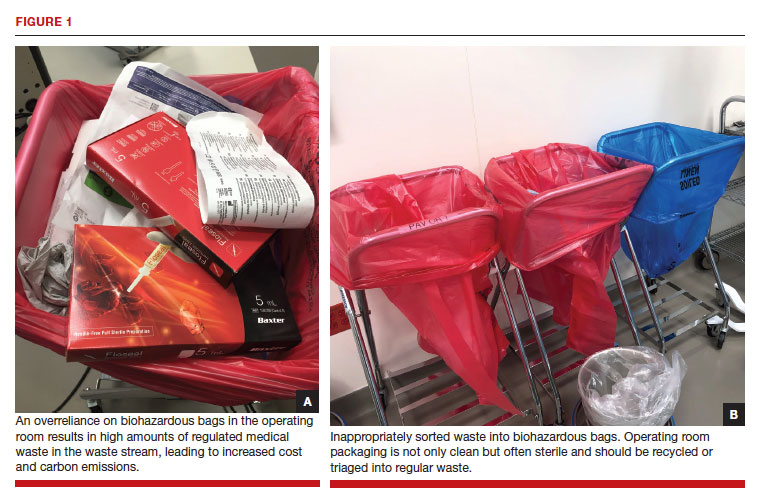
Although ORs only account for a small portion of hospital square footage, they account for a significant amount of health care’s carbon footprint through high waste production and excessive consumption of single-use items. Just one surgical procedure in a hospital is estimated to produce about the same amount of waste as a typical family of 4 would in an entire week.10 Furthermore, the majority of these single-use items, including sterile packaging, are sorted inappropriately as regulated medical waste (RMW, “biohazardous” or “red bag” waste) (FIGURE 1a). RMW has significant effects on the environment since it must be incinerated or steam autoclaved prior to transport to the landfill, leading to high amounts of air pollution and energy usage.
We all notice the visible impacts of waste in the OR, but other contributors to carbon emissions are invisible. Energy consumption is a huge contributor to the overall carbon footprint of surgery. Heating, ventilation, and air conditioning [HVAC] is responsible for 52% of hospital energy needs but accounts for 99% of OR energy consumption.11 Despite the large energy requirements of the ORs, they are largely unoccupied in the evenings and on weekends, and thermostats are not adjusted accordingly.
Anesthetic gases are another powerful contributor to greenhouse gas emissions from the OR. Anesthetic gases alone contribute about 25% of the overall carbon footprint of the OR, and US health care emits 660,000 tons of carbon equivalents from anesthetic gas use per year.12 Desflurane is 1,600 times more potent than carbon dioxide (CO2) in its global warming potential followed by isoflurane and sevoflurane;13 this underscores the importance of working with our anesthesia colleagues on the differences between the anesthetic gases they use. Enhanced recovery after surgery recommendations in gynecology already recommend avoiding the use of volatile anesthetic gases in favor of propofol to reduce postoperative nausea and vomiting.14
In the context of a patient undergoing a TLH, the estimated carbon footprint in the United States is about 560 kg of CO2 equivalents—roughly the same as driving 1,563 miles in a gas-powered car.
Continue to: Climate impact on our patients...
Climate impact on our patients
The data in obstetrics and gynecology is clear that climate change is affecting patient outcomes, both globally and in our own country. A systematic review of 32 million births found that air pollution and heat exposure were associated with preterm birth and low birth weight, and these effects were seen in all geographic regions across the United States.1 A study of 5.9 million births in California found that patients who lived near coal- and oil-power plants had up to a 27% reduction in preterm births when those power plants closed and air pollution decreased.15 A study in Nature Sustainability on 250,000 pregnancies that ended in missed abortions at 14 weeks or less found the odds ratio of missed abortion increased with the cumulative exposure to air pollution.16 When air pollution was examined in comparison to other factors, neighborhood air pollution better predicted preterm birth, very preterm birth, and small for gestational age more than race, ethnicity, or any other socio-economic factor.17 The effects of air pollution have been demonstrated in other fields as well, including increased mortality after cardiac transplantation with exposure to air pollution,4 and for patients undergoing bariatric surgery who live near major roadways, decreased weight loss, less improvement in hemoglobin A1c, and less change in lipids compared with those with less exposure to roadway pollution.5
Air pollution and heat are not the only factors that influence health. Endocrine disrupting chemicals (EDCs) and single-use plastic polymers, which are used in significant supply in US health care, have been found in human blood,18 intestine, and all portions of the placenta.19 Phthalates, an EDC found in medical use plastics and medications to control delivery, have been associated with increasing fibroid burden in patients undergoing hysterectomy and myomectomy.20 The example case patient with fibroids undergoing TLH may have had her condition worsened by exposure to phthalates.
Specific areas for improvement
There is a huge opportunity for improvement to reduce the total carbon footprint of a TLH.
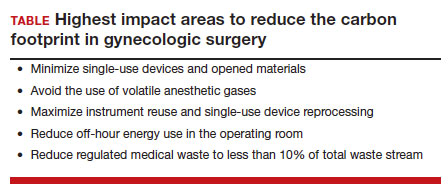
A lifecycle assessment of hysterectomy in the United States concluded that an 80% reduction in carbon emissions could be achieved by minimizing opened materials, using reusable and reprocessed instruments, reducing off-hour energy use in the OR (HVAC setbacks), and avoiding the use of volatile anesthetic gases.21 The sterilization and re-processing of reusable instruments represented the smallest proportion of carbon emissions from a TLH. Data on patient safety supports these interventions, as current practices have more to do with hospital culture and processes than evidence.
Despite a push to use single-use objects by industry and regulatory agencies in the name of patient safety, data demonstrate that single-use objects are in actuality not safer for patients and may be associated with increased surgical site infections (SSIs). A study from a cancer center in California found that when single-use head covers, shoe covers, and facemasks were eliminated due to supply shortages during the pandemic, SSIs went down by half, despite an increase in surgical volume and an increase in the number of contaminated cases.22 The authors reported an increase in hand hygiene throughout the hospital, which likely contributed to the success of reducing SSIs.
Similarly, a systematic review found no evidence to support single-use instruments over reusable or reprocessed instruments when considering instrument function, ease of use, patient safety, SSIs, or long-term patient outcomes.23 While it may be easy for regulatory agencies to focus on disposing objects as paramount to reducing infections, the Centers for Disease Control and Prevention states that the biggest factors affecting SSIs are appropriate use of prophylactic antibiotics, skin antisepsis, and patient metabolic control.24 Disposing of single-use objects in the name of patient safety will worsen patient health outcomes when considering patient proximity to waste, pollution, and EDCs.
The sterilization process for reusable items is often called out by the medical supply industry as wasteful and energy intensive; however, data refute these claims. A Swedish study researching reusable versus single-use trocars found that a reusable trocar system offers a robust opportunity to reduce both the environmental and financial costs for laparoscopic surgery.25 We can further decrease the environmental impact of reusable instruments by using sets instead of individually packed instruments and packing autoclaves more efficiently. By using rigid sterilization containers, there was an 85% reduction in carbon footprint as compared with the blue wrap system.
Electricity use can be easily reduced across all surgical spaces by performing HVAC setbacks during low occupancy times of day. On nights and weekends, when there are very few surgical cases occurring, one study found that by decreasing the ventilation rate, turning off lights, and performing the minimum temperature control in unused ORs, electricity use was cut in half.11
Waste triage and recycling
Reducing regulated medical waste is another area where hospitals can make a huge impact on carbon emissions and costs with little more than education and process change. Guidelines for regulated medical waste sorting developed out of the HIV epidemic due to the fear of blood products. Although studies show that regulated medical waste is not more infectious than household waste, state departments of public health have kept these guidelines in place for sorting fluid blood and tissue into RMW containers and bags.26 The best hospital performers keep RMW below 10% of the total waste stream, while many ORs send close to 100% of their waste as RMW (FIGURE 1b). ORs can work with nursing and environmental services staff to assess processes and divert waste into recycling and regular waste. Many OR staff are acutely aware of the huge amount of waste produced and want to make a positive impact. Success in this small area often builds momentum to tackle harder sustainability practices throughout the hospital.
Continue to: Removal of EDCs from medical products...
Removal of EDCs from medical products
Single-use medical supplies are not only wasteful but also contain harmful EDCs, such as phthalates, bisphenol A (BPA), parabens, perfluoroalkyl substances, and triclosan. Phthalates, for example, account for 30% to 40% of the weight of medical-use plastics, and parabens are ubiquitously found in ultrasound gel.3 Studies looking at exposure to EDCs within the neonatal intensive care unit reveal substantial BPA, phthalate, and paraben levels within biologic samples from premature infants, thought to be above toxicity limits. While we do not know the full extent to which EDCs can affect neonatal development, there is already mounting evidence that EDCs are associated with endocrine, metabolic, and neurodevelopmental disorders throughout our lifespan.3
30-day climate challenge
Although the example case patient undergoing TLH for fibroids will never need care for her fibroids again, the climate impact of her time in the OR represents the most carbon-intensive care she will ever need. Surgery as practiced in the United States today is unsustainable.
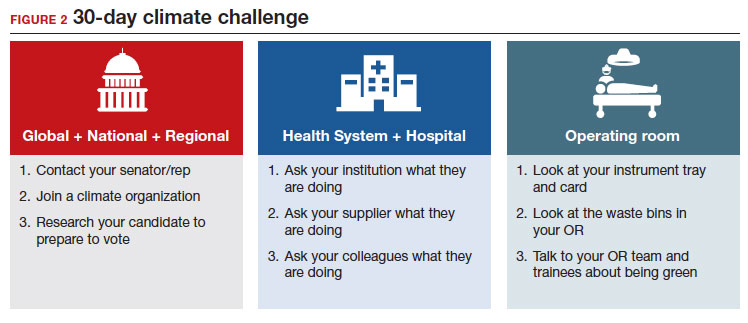
In 2021, the Biden administration issued an executive order requiring all federal facilities, including health care facilities and hospitals, to be carbon neutral by 2035. In order to make meaningful changes industry-wide, we should be petitioning lawmakers for stricter environmental regulations in health care, similar to regulations in the manufacturing and airline industries. We recommend a 30-day climate challenge (FIGURE 2) for bringing awareness to your circles of influence. Physicians have an ethical duty to advocate for change at the local, regional, and national level if we want to see a better future for our patients, their children, and even ourselves. Organizations such as Practice Greenhealth, Health Care without Harm, and Citizens’ Climate Lobby can help amplify our voices to reach the right people to implement sweeping policy changes. ●
- Costello A, Abbas M, Allen et al. Managing the health effects of climate change: Lancet and University College London Institute for Global Health Commission. Lancet. 2009;373:1693-1733. doi: 10.1016/S0140-6736(09)60935-1.
- Bekkar B, Pacheco S, Basu R, et al. Association of air pollution and heat exposure with preterm birth, low birth weight, and stillbirth in the US: a systematic review. JAMA Netw Open. 2020;3. doi:10.1001/JAMANETWORKOPEN.2020.8243.
- Genco M, Anderson-Shaw L, Sargis RM. Unwitting accomplices: endocrine disruptors confounding clinical care. J Clin Endocrinol Metab. 2020;105:e3822–7. doi: 10.1210/cline2. m/dgaa358.
- Al-Kindi SG, Sarode A, Zullo M, et al. Ambient air pollution and mortality after cardiac transplantation. J Am Coll Cardiol. 2019;74:3026-3035. doi: 10.1016/j.jacc.2019.09.066.
- Ghosh R, Gauderman WJ, Minor H, et al. Air pollution, weight loss and metabolic benefits of bariatric surgery: a potential model for study of metabolic effects of environmental exposures. Pediatr Obes. 2018;13:312-320. doi: 10.1111/ijpo.12210.
- Health Care’s Climate Footprint. Health care without harm climate-smart health care series, Green Paper Number one. September 2019. https://www.noharm.org/
ClimateFootprintReport. Accessed December 11, 2022. - Healthcare Energy End-Use Monitoring. US Department of Energy. https://www.energy.gov/eere/
buildings/downloads/ healthcare-energy-end-use- monitoring. Accessed December 11, 2022. - 2012 Commercial Buildings Energy Consumption Survey: Water Consumption in Large Buildings Summary. U.S Energy Information Administration. https://www.eia.gov/
consumption/commercial/ reports/2012/water. Accessed December 11, 2022. - Belkhir L, Elmeligi A. Carbon footprint of the global pharmaceutical industry and relative implact of its major players. J Cleaner Production. 2019;214:185-194. doi: 10.1016 /j.jclearpro.2019.11.204.
- Esaki RK, Macario A. Wastage of Supplies and Drugs in the Operating Room. 2015:8-13.
- MacNeill AJ, et al. The Impact of Surgery on Global Climate: A Carbon Footprinting Study of Operating Theatres in Three Health Systems. Lancet Planet Health.2017;1:e360–367. doi:10.1016/S2542-5196(17)30162-6.
- Shoham MA, Baker NM, Peterson ME, et al. The environmental impact of surgery: a systematic review. 2022;172:897-905. doi:10.1016/j.surg.2022.04.010.
- Ryan SM, Nielsen CJ. Global warming potential of inhaled anesthetics: application to clinical use. Anesth Analg. 2010;111:92-98. doi:10.1213/ANE.0B013E3181E058D7.
- Kalogera E, Dowdy SC. Enhanced recovery pathway in gynecologic surgery: improving outcomes through evidence-based medicine. Obstet Gynecol Clin North Am. 2016;43:551-573. doi: 10.1016/j.ogc.2016.04.006.
- Casey JA, Karasek D, Ogburn EL, et al. Retirements of coal and oil power plants in California: association with reduced preterm birth among populations nearby. Am J Epidemiol. 2018;187:1586-1594. doi: 10.1093/aje/kwy110.
- Zhang L, Liu W, Hou K, et al. Air pollution-induced missed abortion risk for pregnancies. Nat Sustain. 2019:1011–1017.
- Benmarhnia T, Huang J, Basu R, et al. Decomposition analysis of Black-White disparities in birth outcomes: the relative contribution of air pollution and social factors in California. Environ Health Perspect. 2017;125:107003. doi: 10.1289/EHP490.
- Leslie HA, van Velzen MJM, Brandsma SH, et al. Discovery and quantification of plastic particle pollution in human blood. Environ Int. 2022;163:107199. doi: 10.1016/j.envint.2022.107199.
- Ragusa A, Svelato A, Santacroce C, et al. Plasticenta: first evidence of microplastics in human placenta. Environ Int. 2021;146:106274. doi: 10.1016/j.envint.2020.106274.
- Zota AR, Geller RJ, Calafat AM, et al. Phthalates exposure and uterine fibroid burden among women undergoing surgical treatment for fibroids: a preliminary study. Fertil Steril. 2019;111:112-121. doi: 10.1016/j.fertnstert.2018.09.009.
- Thiel CL, Eckelman M, Guido R, et al. Environmental impacts of surgical procedures: life cycle assessment of hysterectomy in the United States. Environ Sci Technol. 2015;49:1779-1786. doi: 10.1021/es504719g.
- Malhotra GK, Tran T, Stewart C, et al. Pandemic operating room supply shortage and surgical site infection: considerations as we emerge from the Coronavirus Disease 2019 Pandemic. J Am Coll Surg. 2022;234:571-578. doi: 10.1097/XCS.0000000000000087.
- Siu J, Hill AG, MacCormick AD. Systematic review of reusable versus disposable laparoscopic instruments: costs and safety. ANZ J Surg. 2017;87:28-33. doi:10.1111/ANS.13856.
- Berríos-Torres SI, Umscheid CA, Bratzler DW, et al; Healthcare Infection Control Practices Advisory Committee. Centers for Disease Control and Prevention Guideline for the Prevention of Surgical Site Infection, 2017 [published correction appears in: JAMA Surg. 2017;152:803]. JAMA Surg. 2017;152:784-791. doi: 10.1001/jamasurg.2017.0904.
- Rizan, Chantelle, Lillywhite, et al. Minimising carbon and financial costs of steam sterilisation and packaging of reusable surgical instruments. Br J Surg. 2022;109:200-210. doi:10.1093/BJS/ZNAB406.
- Sustainability Benchmarking Report, 2010. Practice Greenhealth. https://www.practicegreenhealth.org. Accessed December 11, 2022.
Dr. Wright is the Director of the Division of Minimally Invasive Gynecologic Surgery and Associate Professor, Department of Obstetrics and Gynecology, Cedars-Sinai Medical Center, Los Angeles, California

Dr. Schwartz is a fourth-year resident in the OB/GYN & Women’s Health Institute, Department of Obstetrics and Gynecology, Cleveland Clinic Foundation, Cleveland, Ohio
Dr. Wright reports being a consultant for Aqua Therapeutics, Ethicon, Hologic, and Karl Storz. Dr. Schwartz reports no conflicts of interest.
Dr. Wright is the Director of the Division of Minimally Invasive Gynecologic Surgery and Associate Professor, Department of Obstetrics and Gynecology, Cedars-Sinai Medical Center, Los Angeles, California
Dr. Schwartz is a fourth-year resident in the OB/GYN & Women’s Health Institute, Department of Obstetrics and Gynecology, Cleveland Clinic Foundation, Cleveland, Ohio
Dr. Wright reports being a consultant for Aqua Therapeutics, Ethicon, Hologic, and Karl Storz. Dr. Schwartz reports no conflicts of interest.
Dr. Wright is the Director of the Division of Minimally Invasive Gynecologic Surgery and Associate Professor, Department of Obstetrics and Gynecology, Cedars-Sinai Medical Center, Los Angeles, California
Dr. Schwartz is a fourth-year resident in the OB/GYN & Women’s Health Institute, Department of Obstetrics and Gynecology, Cleveland Clinic Foundation, Cleveland, Ohio
Dr. Wright reports being a consultant for Aqua Therapeutics, Ethicon, Hologic, and Karl Storz. Dr. Schwartz reports no conflicts of interest.
In 2009, the Lancet called climate change the biggest global health threat of the 21st century, the effects of which will be experienced in our lifetimes.1 Significant amounts of data have demonstrated the negative health effects of heat, air pollution, and exposure to toxic substances.2,3 These effects have been seen in every geographic region of the United States, and in multiple organ systems and specialties, including obstetrics, pediatrics, and even cardiopulmonary and bariatric surgery.2-5
Although it does not receive the scrutiny of other industries, the global health care industry accounts for almost double the amount of carbon emissions as global aviation, and the United States accounts for 27% of this footprint despite only having 4% of the world’s population.6 It therefore serves that our own industry is an excellent target for reducing the carbon emissions that contribute to climate change. Consider the climate impact of hysterectomy, the second-most common surgery that women undergo. In this article, we will use the example of a 50-year-old woman with fibroids who plans to undergo definitive treatment via total laparoscopic hysterectomy (TLH).
Climate impact of US health care
Hospital buildings in the United States are energy intensive, consuming 10% of the energy used in commercial buildings every year, accounting for over $8 billion. Operating rooms (ORs) account for a third of this usage.7 Hospitals also use more water than any other type of commercial building, for necessary actions like cooling, sterilization, and laundry.8 Further, US hospitals generate 14,000 tons of waste per day, with a third of this coming from the ORs. Sadly, up to 15% is food waste, as we are not very good about selecting and proportioning healthy food for our staff and inpatients.6
While health care is utility intensive, the majority of emissions are created through the production, transport, and disposal of goods coming through our supply chain.6 Hospitals are significant consumers of single-use objects, the majority of which are petroleum-derived plastics—accounting for an estimated 71% of emissions coming from the health care sector. Supply chain is the second largest expense in health care, but with current shortages, it is estimated to overtake labor costs by this year. The United States is also the largest consumer of pharmaceuticals worldwide, supporting a $20 billion packaging industry,9 which creates a significant amount of waste.
Climate impact of the OR
Although ORs only account for a small portion of hospital square footage, they account for a significant amount of health care’s carbon footprint through high waste production and excessive consumption of single-use items. Just one surgical procedure in a hospital is estimated to produce about the same amount of waste as a typical family of 4 would in an entire week.10 Furthermore, the majority of these single-use items, including sterile packaging, are sorted inappropriately as regulated medical waste (RMW, “biohazardous” or “red bag” waste) (FIGURE 1a). RMW has significant effects on the environment since it must be incinerated or steam autoclaved prior to transport to the landfill, leading to high amounts of air pollution and energy usage.
We all notice the visible impacts of waste in the OR, but other contributors to carbon emissions are invisible. Energy consumption is a huge contributor to the overall carbon footprint of surgery. Heating, ventilation, and air conditioning [HVAC] is responsible for 52% of hospital energy needs but accounts for 99% of OR energy consumption.11 Despite the large energy requirements of the ORs, they are largely unoccupied in the evenings and on weekends, and thermostats are not adjusted accordingly.
Anesthetic gases are another powerful contributor to greenhouse gas emissions from the OR. Anesthetic gases alone contribute about 25% of the overall carbon footprint of the OR, and US health care emits 660,000 tons of carbon equivalents from anesthetic gas use per year.12 Desflurane is 1,600 times more potent than carbon dioxide (CO2) in its global warming potential followed by isoflurane and sevoflurane;13 this underscores the importance of working with our anesthesia colleagues on the differences between the anesthetic gases they use. Enhanced recovery after surgery recommendations in gynecology already recommend avoiding the use of volatile anesthetic gases in favor of propofol to reduce postoperative nausea and vomiting.14
In the context of a patient undergoing a TLH, the estimated carbon footprint in the United States is about 560 kg of CO2 equivalents—roughly the same as driving 1,563 miles in a gas-powered car.
Continue to: Climate impact on our patients...
Climate impact on our patients
The data in obstetrics and gynecology is clear that climate change is affecting patient outcomes, both globally and in our own country. A systematic review of 32 million births found that air pollution and heat exposure were associated with preterm birth and low birth weight, and these effects were seen in all geographic regions across the United States.1 A study of 5.9 million births in California found that patients who lived near coal- and oil-power plants had up to a 27% reduction in preterm births when those power plants closed and air pollution decreased.15 A study in Nature Sustainability on 250,000 pregnancies that ended in missed abortions at 14 weeks or less found the odds ratio of missed abortion increased with the cumulative exposure to air pollution.16 When air pollution was examined in comparison to other factors, neighborhood air pollution better predicted preterm birth, very preterm birth, and small for gestational age more than race, ethnicity, or any other socio-economic factor.17 The effects of air pollution have been demonstrated in other fields as well, including increased mortality after cardiac transplantation with exposure to air pollution,4 and for patients undergoing bariatric surgery who live near major roadways, decreased weight loss, less improvement in hemoglobin A1c, and less change in lipids compared with those with less exposure to roadway pollution.5
Air pollution and heat are not the only factors that influence health. Endocrine disrupting chemicals (EDCs) and single-use plastic polymers, which are used in significant supply in US health care, have been found in human blood,18 intestine, and all portions of the placenta.19 Phthalates, an EDC found in medical use plastics and medications to control delivery, have been associated with increasing fibroid burden in patients undergoing hysterectomy and myomectomy.20 The example case patient with fibroids undergoing TLH may have had her condition worsened by exposure to phthalates.
Specific areas for improvement
There is a huge opportunity for improvement to reduce the total carbon footprint of a TLH.
A lifecycle assessment of hysterectomy in the United States concluded that an 80% reduction in carbon emissions could be achieved by minimizing opened materials, using reusable and reprocessed instruments, reducing off-hour energy use in the OR (HVAC setbacks), and avoiding the use of volatile anesthetic gases.21 The sterilization and re-processing of reusable instruments represented the smallest proportion of carbon emissions from a TLH. Data on patient safety supports these interventions, as current practices have more to do with hospital culture and processes than evidence.
Despite a push to use single-use objects by industry and regulatory agencies in the name of patient safety, data demonstrate that single-use objects are in actuality not safer for patients and may be associated with increased surgical site infections (SSIs). A study from a cancer center in California found that when single-use head covers, shoe covers, and facemasks were eliminated due to supply shortages during the pandemic, SSIs went down by half, despite an increase in surgical volume and an increase in the number of contaminated cases.22 The authors reported an increase in hand hygiene throughout the hospital, which likely contributed to the success of reducing SSIs.
Similarly, a systematic review found no evidence to support single-use instruments over reusable or reprocessed instruments when considering instrument function, ease of use, patient safety, SSIs, or long-term patient outcomes.23 While it may be easy for regulatory agencies to focus on disposing objects as paramount to reducing infections, the Centers for Disease Control and Prevention states that the biggest factors affecting SSIs are appropriate use of prophylactic antibiotics, skin antisepsis, and patient metabolic control.24 Disposing of single-use objects in the name of patient safety will worsen patient health outcomes when considering patient proximity to waste, pollution, and EDCs.
The sterilization process for reusable items is often called out by the medical supply industry as wasteful and energy intensive; however, data refute these claims. A Swedish study researching reusable versus single-use trocars found that a reusable trocar system offers a robust opportunity to reduce both the environmental and financial costs for laparoscopic surgery.25 We can further decrease the environmental impact of reusable instruments by using sets instead of individually packed instruments and packing autoclaves more efficiently. By using rigid sterilization containers, there was an 85% reduction in carbon footprint as compared with the blue wrap system.
Electricity use can be easily reduced across all surgical spaces by performing HVAC setbacks during low occupancy times of day. On nights and weekends, when there are very few surgical cases occurring, one study found that by decreasing the ventilation rate, turning off lights, and performing the minimum temperature control in unused ORs, electricity use was cut in half.11
Waste triage and recycling
Reducing regulated medical waste is another area where hospitals can make a huge impact on carbon emissions and costs with little more than education and process change. Guidelines for regulated medical waste sorting developed out of the HIV epidemic due to the fear of blood products. Although studies show that regulated medical waste is not more infectious than household waste, state departments of public health have kept these guidelines in place for sorting fluid blood and tissue into RMW containers and bags.26 The best hospital performers keep RMW below 10% of the total waste stream, while many ORs send close to 100% of their waste as RMW (FIGURE 1b). ORs can work with nursing and environmental services staff to assess processes and divert waste into recycling and regular waste. Many OR staff are acutely aware of the huge amount of waste produced and want to make a positive impact. Success in this small area often builds momentum to tackle harder sustainability practices throughout the hospital.
Continue to: Removal of EDCs from medical products...
Removal of EDCs from medical products
Single-use medical supplies are not only wasteful but also contain harmful EDCs, such as phthalates, bisphenol A (BPA), parabens, perfluoroalkyl substances, and triclosan. Phthalates, for example, account for 30% to 40% of the weight of medical-use plastics, and parabens are ubiquitously found in ultrasound gel.3 Studies looking at exposure to EDCs within the neonatal intensive care unit reveal substantial BPA, phthalate, and paraben levels within biologic samples from premature infants, thought to be above toxicity limits. While we do not know the full extent to which EDCs can affect neonatal development, there is already mounting evidence that EDCs are associated with endocrine, metabolic, and neurodevelopmental disorders throughout our lifespan.3
30-day climate challenge
Although the example case patient undergoing TLH for fibroids will never need care for her fibroids again, the climate impact of her time in the OR represents the most carbon-intensive care she will ever need. Surgery as practiced in the United States today is unsustainable.
In 2021, the Biden administration issued an executive order requiring all federal facilities, including health care facilities and hospitals, to be carbon neutral by 2035. In order to make meaningful changes industry-wide, we should be petitioning lawmakers for stricter environmental regulations in health care, similar to regulations in the manufacturing and airline industries. We recommend a 30-day climate challenge (FIGURE 2) for bringing awareness to your circles of influence. Physicians have an ethical duty to advocate for change at the local, regional, and national level if we want to see a better future for our patients, their children, and even ourselves. Organizations such as Practice Greenhealth, Health Care without Harm, and Citizens’ Climate Lobby can help amplify our voices to reach the right people to implement sweeping policy changes. ●
In 2009, the Lancet called climate change the biggest global health threat of the 21st century, the effects of which will be experienced in our lifetimes.1 Significant amounts of data have demonstrated the negative health effects of heat, air pollution, and exposure to toxic substances.2,3 These effects have been seen in every geographic region of the United States, and in multiple organ systems and specialties, including obstetrics, pediatrics, and even cardiopulmonary and bariatric surgery.2-5
Although it does not receive the scrutiny of other industries, the global health care industry accounts for almost double the amount of carbon emissions as global aviation, and the United States accounts for 27% of this footprint despite only having 4% of the world’s population.6 It therefore serves that our own industry is an excellent target for reducing the carbon emissions that contribute to climate change. Consider the climate impact of hysterectomy, the second-most common surgery that women undergo. In this article, we will use the example of a 50-year-old woman with fibroids who plans to undergo definitive treatment via total laparoscopic hysterectomy (TLH).
Climate impact of US health care
Hospital buildings in the United States are energy intensive, consuming 10% of the energy used in commercial buildings every year, accounting for over $8 billion. Operating rooms (ORs) account for a third of this usage.7 Hospitals also use more water than any other type of commercial building, for necessary actions like cooling, sterilization, and laundry.8 Further, US hospitals generate 14,000 tons of waste per day, with a third of this coming from the ORs. Sadly, up to 15% is food waste, as we are not very good about selecting and proportioning healthy food for our staff and inpatients.6
While health care is utility intensive, the majority of emissions are created through the production, transport, and disposal of goods coming through our supply chain.6 Hospitals are significant consumers of single-use objects, the majority of which are petroleum-derived plastics—accounting for an estimated 71% of emissions coming from the health care sector. Supply chain is the second largest expense in health care, but with current shortages, it is estimated to overtake labor costs by this year. The United States is also the largest consumer of pharmaceuticals worldwide, supporting a $20 billion packaging industry,9 which creates a significant amount of waste.
Climate impact of the OR
Although ORs only account for a small portion of hospital square footage, they account for a significant amount of health care’s carbon footprint through high waste production and excessive consumption of single-use items. Just one surgical procedure in a hospital is estimated to produce about the same amount of waste as a typical family of 4 would in an entire week.10 Furthermore, the majority of these single-use items, including sterile packaging, are sorted inappropriately as regulated medical waste (RMW, “biohazardous” or “red bag” waste) (FIGURE 1a). RMW has significant effects on the environment since it must be incinerated or steam autoclaved prior to transport to the landfill, leading to high amounts of air pollution and energy usage.
We all notice the visible impacts of waste in the OR, but other contributors to carbon emissions are invisible. Energy consumption is a huge contributor to the overall carbon footprint of surgery. Heating, ventilation, and air conditioning [HVAC] is responsible for 52% of hospital energy needs but accounts for 99% of OR energy consumption.11 Despite the large energy requirements of the ORs, they are largely unoccupied in the evenings and on weekends, and thermostats are not adjusted accordingly.
Anesthetic gases are another powerful contributor to greenhouse gas emissions from the OR. Anesthetic gases alone contribute about 25% of the overall carbon footprint of the OR, and US health care emits 660,000 tons of carbon equivalents from anesthetic gas use per year.12 Desflurane is 1,600 times more potent than carbon dioxide (CO2) in its global warming potential followed by isoflurane and sevoflurane;13 this underscores the importance of working with our anesthesia colleagues on the differences between the anesthetic gases they use. Enhanced recovery after surgery recommendations in gynecology already recommend avoiding the use of volatile anesthetic gases in favor of propofol to reduce postoperative nausea and vomiting.14
In the context of a patient undergoing a TLH, the estimated carbon footprint in the United States is about 560 kg of CO2 equivalents—roughly the same as driving 1,563 miles in a gas-powered car.
Continue to: Climate impact on our patients...
Climate impact on our patients
The data in obstetrics and gynecology is clear that climate change is affecting patient outcomes, both globally and in our own country. A systematic review of 32 million births found that air pollution and heat exposure were associated with preterm birth and low birth weight, and these effects were seen in all geographic regions across the United States.1 A study of 5.9 million births in California found that patients who lived near coal- and oil-power plants had up to a 27% reduction in preterm births when those power plants closed and air pollution decreased.15 A study in Nature Sustainability on 250,000 pregnancies that ended in missed abortions at 14 weeks or less found the odds ratio of missed abortion increased with the cumulative exposure to air pollution.16 When air pollution was examined in comparison to other factors, neighborhood air pollution better predicted preterm birth, very preterm birth, and small for gestational age more than race, ethnicity, or any other socio-economic factor.17 The effects of air pollution have been demonstrated in other fields as well, including increased mortality after cardiac transplantation with exposure to air pollution,4 and for patients undergoing bariatric surgery who live near major roadways, decreased weight loss, less improvement in hemoglobin A1c, and less change in lipids compared with those with less exposure to roadway pollution.5
Air pollution and heat are not the only factors that influence health. Endocrine disrupting chemicals (EDCs) and single-use plastic polymers, which are used in significant supply in US health care, have been found in human blood,18 intestine, and all portions of the placenta.19 Phthalates, an EDC found in medical use plastics and medications to control delivery, have been associated with increasing fibroid burden in patients undergoing hysterectomy and myomectomy.20 The example case patient with fibroids undergoing TLH may have had her condition worsened by exposure to phthalates.
Specific areas for improvement
There is a huge opportunity for improvement to reduce the total carbon footprint of a TLH.
A lifecycle assessment of hysterectomy in the United States concluded that an 80% reduction in carbon emissions could be achieved by minimizing opened materials, using reusable and reprocessed instruments, reducing off-hour energy use in the OR (HVAC setbacks), and avoiding the use of volatile anesthetic gases.21 The sterilization and re-processing of reusable instruments represented the smallest proportion of carbon emissions from a TLH. Data on patient safety supports these interventions, as current practices have more to do with hospital culture and processes than evidence.
Despite a push to use single-use objects by industry and regulatory agencies in the name of patient safety, data demonstrate that single-use objects are in actuality not safer for patients and may be associated with increased surgical site infections (SSIs). A study from a cancer center in California found that when single-use head covers, shoe covers, and facemasks were eliminated due to supply shortages during the pandemic, SSIs went down by half, despite an increase in surgical volume and an increase in the number of contaminated cases.22 The authors reported an increase in hand hygiene throughout the hospital, which likely contributed to the success of reducing SSIs.
Similarly, a systematic review found no evidence to support single-use instruments over reusable or reprocessed instruments when considering instrument function, ease of use, patient safety, SSIs, or long-term patient outcomes.23 While it may be easy for regulatory agencies to focus on disposing objects as paramount to reducing infections, the Centers for Disease Control and Prevention states that the biggest factors affecting SSIs are appropriate use of prophylactic antibiotics, skin antisepsis, and patient metabolic control.24 Disposing of single-use objects in the name of patient safety will worsen patient health outcomes when considering patient proximity to waste, pollution, and EDCs.
The sterilization process for reusable items is often called out by the medical supply industry as wasteful and energy intensive; however, data refute these claims. A Swedish study researching reusable versus single-use trocars found that a reusable trocar system offers a robust opportunity to reduce both the environmental and financial costs for laparoscopic surgery.25 We can further decrease the environmental impact of reusable instruments by using sets instead of individually packed instruments and packing autoclaves more efficiently. By using rigid sterilization containers, there was an 85% reduction in carbon footprint as compared with the blue wrap system.
Electricity use can be easily reduced across all surgical spaces by performing HVAC setbacks during low occupancy times of day. On nights and weekends, when there are very few surgical cases occurring, one study found that by decreasing the ventilation rate, turning off lights, and performing the minimum temperature control in unused ORs, electricity use was cut in half.11
Waste triage and recycling
Reducing regulated medical waste is another area where hospitals can make a huge impact on carbon emissions and costs with little more than education and process change. Guidelines for regulated medical waste sorting developed out of the HIV epidemic due to the fear of blood products. Although studies show that regulated medical waste is not more infectious than household waste, state departments of public health have kept these guidelines in place for sorting fluid blood and tissue into RMW containers and bags.26 The best hospital performers keep RMW below 10% of the total waste stream, while many ORs send close to 100% of their waste as RMW (FIGURE 1b). ORs can work with nursing and environmental services staff to assess processes and divert waste into recycling and regular waste. Many OR staff are acutely aware of the huge amount of waste produced and want to make a positive impact. Success in this small area often builds momentum to tackle harder sustainability practices throughout the hospital.
Continue to: Removal of EDCs from medical products...
Removal of EDCs from medical products
Single-use medical supplies are not only wasteful but also contain harmful EDCs, such as phthalates, bisphenol A (BPA), parabens, perfluoroalkyl substances, and triclosan. Phthalates, for example, account for 30% to 40% of the weight of medical-use plastics, and parabens are ubiquitously found in ultrasound gel.3 Studies looking at exposure to EDCs within the neonatal intensive care unit reveal substantial BPA, phthalate, and paraben levels within biologic samples from premature infants, thought to be above toxicity limits. While we do not know the full extent to which EDCs can affect neonatal development, there is already mounting evidence that EDCs are associated with endocrine, metabolic, and neurodevelopmental disorders throughout our lifespan.3
30-day climate challenge
Although the example case patient undergoing TLH for fibroids will never need care for her fibroids again, the climate impact of her time in the OR represents the most carbon-intensive care she will ever need. Surgery as practiced in the United States today is unsustainable.
In 2021, the Biden administration issued an executive order requiring all federal facilities, including health care facilities and hospitals, to be carbon neutral by 2035. In order to make meaningful changes industry-wide, we should be petitioning lawmakers for stricter environmental regulations in health care, similar to regulations in the manufacturing and airline industries. We recommend a 30-day climate challenge (FIGURE 2) for bringing awareness to your circles of influence. Physicians have an ethical duty to advocate for change at the local, regional, and national level if we want to see a better future for our patients, their children, and even ourselves. Organizations such as Practice Greenhealth, Health Care without Harm, and Citizens’ Climate Lobby can help amplify our voices to reach the right people to implement sweeping policy changes. ●
- Costello A, Abbas M, Allen et al. Managing the health effects of climate change: Lancet and University College London Institute for Global Health Commission. Lancet. 2009;373:1693-1733. doi: 10.1016/S0140-6736(09)60935-1.
- Bekkar B, Pacheco S, Basu R, et al. Association of air pollution and heat exposure with preterm birth, low birth weight, and stillbirth in the US: a systematic review. JAMA Netw Open. 2020;3. doi:10.1001/JAMANETWORKOPEN.2020.8243.
- Genco M, Anderson-Shaw L, Sargis RM. Unwitting accomplices: endocrine disruptors confounding clinical care. J Clin Endocrinol Metab. 2020;105:e3822–7. doi: 10.1210/cline2. m/dgaa358.
- Al-Kindi SG, Sarode A, Zullo M, et al. Ambient air pollution and mortality after cardiac transplantation. J Am Coll Cardiol. 2019;74:3026-3035. doi: 10.1016/j.jacc.2019.09.066.
- Ghosh R, Gauderman WJ, Minor H, et al. Air pollution, weight loss and metabolic benefits of bariatric surgery: a potential model for study of metabolic effects of environmental exposures. Pediatr Obes. 2018;13:312-320. doi: 10.1111/ijpo.12210.
- Health Care’s Climate Footprint. Health care without harm climate-smart health care series, Green Paper Number one. September 2019. https://www.noharm.org/
ClimateFootprintReport. Accessed December 11, 2022. - Healthcare Energy End-Use Monitoring. US Department of Energy. https://www.energy.gov/eere/
buildings/downloads/ healthcare-energy-end-use- monitoring. Accessed December 11, 2022. - 2012 Commercial Buildings Energy Consumption Survey: Water Consumption in Large Buildings Summary. U.S Energy Information Administration. https://www.eia.gov/
consumption/commercial/ reports/2012/water. Accessed December 11, 2022. - Belkhir L, Elmeligi A. Carbon footprint of the global pharmaceutical industry and relative implact of its major players. J Cleaner Production. 2019;214:185-194. doi: 10.1016 /j.jclearpro.2019.11.204.
- Esaki RK, Macario A. Wastage of Supplies and Drugs in the Operating Room. 2015:8-13.
- MacNeill AJ, et al. The Impact of Surgery on Global Climate: A Carbon Footprinting Study of Operating Theatres in Three Health Systems. Lancet Planet Health.2017;1:e360–367. doi:10.1016/S2542-5196(17)30162-6.
- Shoham MA, Baker NM, Peterson ME, et al. The environmental impact of surgery: a systematic review. 2022;172:897-905. doi:10.1016/j.surg.2022.04.010.
- Ryan SM, Nielsen CJ. Global warming potential of inhaled anesthetics: application to clinical use. Anesth Analg. 2010;111:92-98. doi:10.1213/ANE.0B013E3181E058D7.
- Kalogera E, Dowdy SC. Enhanced recovery pathway in gynecologic surgery: improving outcomes through evidence-based medicine. Obstet Gynecol Clin North Am. 2016;43:551-573. doi: 10.1016/j.ogc.2016.04.006.
- Casey JA, Karasek D, Ogburn EL, et al. Retirements of coal and oil power plants in California: association with reduced preterm birth among populations nearby. Am J Epidemiol. 2018;187:1586-1594. doi: 10.1093/aje/kwy110.
- Zhang L, Liu W, Hou K, et al. Air pollution-induced missed abortion risk for pregnancies. Nat Sustain. 2019:1011–1017.
- Benmarhnia T, Huang J, Basu R, et al. Decomposition analysis of Black-White disparities in birth outcomes: the relative contribution of air pollution and social factors in California. Environ Health Perspect. 2017;125:107003. doi: 10.1289/EHP490.
- Leslie HA, van Velzen MJM, Brandsma SH, et al. Discovery and quantification of plastic particle pollution in human blood. Environ Int. 2022;163:107199. doi: 10.1016/j.envint.2022.107199.
- Ragusa A, Svelato A, Santacroce C, et al. Plasticenta: first evidence of microplastics in human placenta. Environ Int. 2021;146:106274. doi: 10.1016/j.envint.2020.106274.
- Zota AR, Geller RJ, Calafat AM, et al. Phthalates exposure and uterine fibroid burden among women undergoing surgical treatment for fibroids: a preliminary study. Fertil Steril. 2019;111:112-121. doi: 10.1016/j.fertnstert.2018.09.009.
- Thiel CL, Eckelman M, Guido R, et al. Environmental impacts of surgical procedures: life cycle assessment of hysterectomy in the United States. Environ Sci Technol. 2015;49:1779-1786. doi: 10.1021/es504719g.
- Malhotra GK, Tran T, Stewart C, et al. Pandemic operating room supply shortage and surgical site infection: considerations as we emerge from the Coronavirus Disease 2019 Pandemic. J Am Coll Surg. 2022;234:571-578. doi: 10.1097/XCS.0000000000000087.
- Siu J, Hill AG, MacCormick AD. Systematic review of reusable versus disposable laparoscopic instruments: costs and safety. ANZ J Surg. 2017;87:28-33. doi:10.1111/ANS.13856.
- Berríos-Torres SI, Umscheid CA, Bratzler DW, et al; Healthcare Infection Control Practices Advisory Committee. Centers for Disease Control and Prevention Guideline for the Prevention of Surgical Site Infection, 2017 [published correction appears in: JAMA Surg. 2017;152:803]. JAMA Surg. 2017;152:784-791. doi: 10.1001/jamasurg.2017.0904.
- Rizan, Chantelle, Lillywhite, et al. Minimising carbon and financial costs of steam sterilisation and packaging of reusable surgical instruments. Br J Surg. 2022;109:200-210. doi:10.1093/BJS/ZNAB406.
- Sustainability Benchmarking Report, 2010. Practice Greenhealth. https://www.practicegreenhealth.org. Accessed December 11, 2022.
- Costello A, Abbas M, Allen et al. Managing the health effects of climate change: Lancet and University College London Institute for Global Health Commission. Lancet. 2009;373:1693-1733. doi: 10.1016/S0140-6736(09)60935-1.
- Bekkar B, Pacheco S, Basu R, et al. Association of air pollution and heat exposure with preterm birth, low birth weight, and stillbirth in the US: a systematic review. JAMA Netw Open. 2020;3. doi:10.1001/JAMANETWORKOPEN.2020.8243.
- Genco M, Anderson-Shaw L, Sargis RM. Unwitting accomplices: endocrine disruptors confounding clinical care. J Clin Endocrinol Metab. 2020;105:e3822–7. doi: 10.1210/cline2. m/dgaa358.
- Al-Kindi SG, Sarode A, Zullo M, et al. Ambient air pollution and mortality after cardiac transplantation. J Am Coll Cardiol. 2019;74:3026-3035. doi: 10.1016/j.jacc.2019.09.066.
- Ghosh R, Gauderman WJ, Minor H, et al. Air pollution, weight loss and metabolic benefits of bariatric surgery: a potential model for study of metabolic effects of environmental exposures. Pediatr Obes. 2018;13:312-320. doi: 10.1111/ijpo.12210.
- Health Care’s Climate Footprint. Health care without harm climate-smart health care series, Green Paper Number one. September 2019. https://www.noharm.org/
ClimateFootprintReport. Accessed December 11, 2022. - Healthcare Energy End-Use Monitoring. US Department of Energy. https://www.energy.gov/eere/
buildings/downloads/ healthcare-energy-end-use- monitoring. Accessed December 11, 2022. - 2012 Commercial Buildings Energy Consumption Survey: Water Consumption in Large Buildings Summary. U.S Energy Information Administration. https://www.eia.gov/
consumption/commercial/ reports/2012/water. Accessed December 11, 2022. - Belkhir L, Elmeligi A. Carbon footprint of the global pharmaceutical industry and relative implact of its major players. J Cleaner Production. 2019;214:185-194. doi: 10.1016 /j.jclearpro.2019.11.204.
- Esaki RK, Macario A. Wastage of Supplies and Drugs in the Operating Room. 2015:8-13.
- MacNeill AJ, et al. The Impact of Surgery on Global Climate: A Carbon Footprinting Study of Operating Theatres in Three Health Systems. Lancet Planet Health.2017;1:e360–367. doi:10.1016/S2542-5196(17)30162-6.
- Shoham MA, Baker NM, Peterson ME, et al. The environmental impact of surgery: a systematic review. 2022;172:897-905. doi:10.1016/j.surg.2022.04.010.
- Ryan SM, Nielsen CJ. Global warming potential of inhaled anesthetics: application to clinical use. Anesth Analg. 2010;111:92-98. doi:10.1213/ANE.0B013E3181E058D7.
- Kalogera E, Dowdy SC. Enhanced recovery pathway in gynecologic surgery: improving outcomes through evidence-based medicine. Obstet Gynecol Clin North Am. 2016;43:551-573. doi: 10.1016/j.ogc.2016.04.006.
- Casey JA, Karasek D, Ogburn EL, et al. Retirements of coal and oil power plants in California: association with reduced preterm birth among populations nearby. Am J Epidemiol. 2018;187:1586-1594. doi: 10.1093/aje/kwy110.
- Zhang L, Liu W, Hou K, et al. Air pollution-induced missed abortion risk for pregnancies. Nat Sustain. 2019:1011–1017.
- Benmarhnia T, Huang J, Basu R, et al. Decomposition analysis of Black-White disparities in birth outcomes: the relative contribution of air pollution and social factors in California. Environ Health Perspect. 2017;125:107003. doi: 10.1289/EHP490.
- Leslie HA, van Velzen MJM, Brandsma SH, et al. Discovery and quantification of plastic particle pollution in human blood. Environ Int. 2022;163:107199. doi: 10.1016/j.envint.2022.107199.
- Ragusa A, Svelato A, Santacroce C, et al. Plasticenta: first evidence of microplastics in human placenta. Environ Int. 2021;146:106274. doi: 10.1016/j.envint.2020.106274.
- Zota AR, Geller RJ, Calafat AM, et al. Phthalates exposure and uterine fibroid burden among women undergoing surgical treatment for fibroids: a preliminary study. Fertil Steril. 2019;111:112-121. doi: 10.1016/j.fertnstert.2018.09.009.
- Thiel CL, Eckelman M, Guido R, et al. Environmental impacts of surgical procedures: life cycle assessment of hysterectomy in the United States. Environ Sci Technol. 2015;49:1779-1786. doi: 10.1021/es504719g.
- Malhotra GK, Tran T, Stewart C, et al. Pandemic operating room supply shortage and surgical site infection: considerations as we emerge from the Coronavirus Disease 2019 Pandemic. J Am Coll Surg. 2022;234:571-578. doi: 10.1097/XCS.0000000000000087.
- Siu J, Hill AG, MacCormick AD. Systematic review of reusable versus disposable laparoscopic instruments: costs and safety. ANZ J Surg. 2017;87:28-33. doi:10.1111/ANS.13856.
- Berríos-Torres SI, Umscheid CA, Bratzler DW, et al; Healthcare Infection Control Practices Advisory Committee. Centers for Disease Control and Prevention Guideline for the Prevention of Surgical Site Infection, 2017 [published correction appears in: JAMA Surg. 2017;152:803]. JAMA Surg. 2017;152:784-791. doi: 10.1001/jamasurg.2017.0904.
- Rizan, Chantelle, Lillywhite, et al. Minimising carbon and financial costs of steam sterilisation and packaging of reusable surgical instruments. Br J Surg. 2022;109:200-210. doi:10.1093/BJS/ZNAB406.
- Sustainability Benchmarking Report, 2010. Practice Greenhealth. https://www.practicegreenhealth.org. Accessed December 11, 2022.

Diagnosis to treatment interval: A crucial prognostic factor in newly diagnosed mantle cell lymphoma
Key clinical point: Diagnosis to treatment interval (DTI; time in days from the diagnosis date to therapy initiation) is strongly associated with poor survival outcomes in patients with newly diagnosed mantle cell lymphoma (MCL).
Major finding: Patients with a short vs long DTI had significantly shorter median overall (7.8 vs 11.8 years) and progression-free (2.5 vs 4.8 years) survival (both log-rank P < .0001). A short vs long DTI was associated with significantly poorer overall (adjusted hazard ratio [aHR] 1.57) and progression-free (aHR 1.50) survival (both P < .001).
Study details: This pooled analysis of three large datasets included 1097 patients with newly diagnosed MCL and available DTI data, of which 300 had a short (0-14 days) and 797 had a long (15-60 days) DTI.
Disclosures: One of the datasets, Molecular Epidemiology Resource, was supported by grants from the US National Cancer Institute. Some authors reported ties with various organizations.
Source: Epperla N et al. Impact of diagnosis to treatment interval in patients with newly diagnosed mantle cell lymphoma. Blood Adv. 2022 (Dec 14). Doi: 10.1182/bloodadvances.2022009225
Key clinical point: Diagnosis to treatment interval (DTI; time in days from the diagnosis date to therapy initiation) is strongly associated with poor survival outcomes in patients with newly diagnosed mantle cell lymphoma (MCL).
Major finding: Patients with a short vs long DTI had significantly shorter median overall (7.8 vs 11.8 years) and progression-free (2.5 vs 4.8 years) survival (both log-rank P < .0001). A short vs long DTI was associated with significantly poorer overall (adjusted hazard ratio [aHR] 1.57) and progression-free (aHR 1.50) survival (both P < .001).
Study details: This pooled analysis of three large datasets included 1097 patients with newly diagnosed MCL and available DTI data, of which 300 had a short (0-14 days) and 797 had a long (15-60 days) DTI.
Disclosures: One of the datasets, Molecular Epidemiology Resource, was supported by grants from the US National Cancer Institute. Some authors reported ties with various organizations.
Source: Epperla N et al. Impact of diagnosis to treatment interval in patients with newly diagnosed mantle cell lymphoma. Blood Adv. 2022 (Dec 14). Doi: 10.1182/bloodadvances.2022009225
Key clinical point: Diagnosis to treatment interval (DTI; time in days from the diagnosis date to therapy initiation) is strongly associated with poor survival outcomes in patients with newly diagnosed mantle cell lymphoma (MCL).
Major finding: Patients with a short vs long DTI had significantly shorter median overall (7.8 vs 11.8 years) and progression-free (2.5 vs 4.8 years) survival (both log-rank P < .0001). A short vs long DTI was associated with significantly poorer overall (adjusted hazard ratio [aHR] 1.57) and progression-free (aHR 1.50) survival (both P < .001).
Study details: This pooled analysis of three large datasets included 1097 patients with newly diagnosed MCL and available DTI data, of which 300 had a short (0-14 days) and 797 had a long (15-60 days) DTI.
Disclosures: One of the datasets, Molecular Epidemiology Resource, was supported by grants from the US National Cancer Institute. Some authors reported ties with various organizations.
Source: Epperla N et al. Impact of diagnosis to treatment interval in patients with newly diagnosed mantle cell lymphoma. Blood Adv. 2022 (Dec 14). Doi: 10.1182/bloodadvances.2022009225
Diffuse large B-cell lymphoma: No impact of lenalidomide after R-CHOP on unfavorable prognosis of low NK-cell counts
Key clinical point: Low natural killer (NK) cell counts (NKCC; <100 cells/μL) at diagnosis predict poor outcomes in patients with diffuse large B-cell lymphoma (DLBCL), and lenalidomide maintenance therapy has no impact on this unfavorable prognosis.
Major finding: Low baseline NKCC were associated with shorter progression-free (hazard ratio [HR] 2.2) and overall (HR 2.8) survival (both P < .001), independently of age-adjusted International Prognostic Index scores, and with a higher risk for progression or relapse (P = .0025). Lenalidomide maintenance therapy did not affect the prognostic value of low NKCC at diagnosis or random assignment (P = .6349).
Study details: This prospective ancillary study of the REMARC trial included 335 elderly patients with DLBCL treated with rituximab, cyclophosphamide, doxorubicin, vincristine, and prednisone who underwent flow cytometric peripheral blood lymphocyte analysis at diagnosis, at random assignment to the lenalidomide or placebo arm, or at 6 months after random assignment.
Disclosures: This study was funded by Celgene. Some authors reported ties with various organizations, including Celgene.
Source: Beldi-Ferchiou A et al. Lenalidomide maintenance fails to overcome the unfavourable prognosis of low NK-cell counts in rituximab–chemotherapy responsive elderly DLBCL patients: A LYSA group study. Br J Haematol. 2023 (Feb 6). Doi: 10.1111/bjh.18642
Key clinical point: Low natural killer (NK) cell counts (NKCC; <100 cells/μL) at diagnosis predict poor outcomes in patients with diffuse large B-cell lymphoma (DLBCL), and lenalidomide maintenance therapy has no impact on this unfavorable prognosis.
Major finding: Low baseline NKCC were associated with shorter progression-free (hazard ratio [HR] 2.2) and overall (HR 2.8) survival (both P < .001), independently of age-adjusted International Prognostic Index scores, and with a higher risk for progression or relapse (P = .0025). Lenalidomide maintenance therapy did not affect the prognostic value of low NKCC at diagnosis or random assignment (P = .6349).
Study details: This prospective ancillary study of the REMARC trial included 335 elderly patients with DLBCL treated with rituximab, cyclophosphamide, doxorubicin, vincristine, and prednisone who underwent flow cytometric peripheral blood lymphocyte analysis at diagnosis, at random assignment to the lenalidomide or placebo arm, or at 6 months after random assignment.
Disclosures: This study was funded by Celgene. Some authors reported ties with various organizations, including Celgene.
Source: Beldi-Ferchiou A et al. Lenalidomide maintenance fails to overcome the unfavourable prognosis of low NK-cell counts in rituximab–chemotherapy responsive elderly DLBCL patients: A LYSA group study. Br J Haematol. 2023 (Feb 6). Doi: 10.1111/bjh.18642
Key clinical point: Low natural killer (NK) cell counts (NKCC; <100 cells/μL) at diagnosis predict poor outcomes in patients with diffuse large B-cell lymphoma (DLBCL), and lenalidomide maintenance therapy has no impact on this unfavorable prognosis.
Major finding: Low baseline NKCC were associated with shorter progression-free (hazard ratio [HR] 2.2) and overall (HR 2.8) survival (both P < .001), independently of age-adjusted International Prognostic Index scores, and with a higher risk for progression or relapse (P = .0025). Lenalidomide maintenance therapy did not affect the prognostic value of low NKCC at diagnosis or random assignment (P = .6349).
Study details: This prospective ancillary study of the REMARC trial included 335 elderly patients with DLBCL treated with rituximab, cyclophosphamide, doxorubicin, vincristine, and prednisone who underwent flow cytometric peripheral blood lymphocyte analysis at diagnosis, at random assignment to the lenalidomide or placebo arm, or at 6 months after random assignment.
Disclosures: This study was funded by Celgene. Some authors reported ties with various organizations, including Celgene.
Source: Beldi-Ferchiou A et al. Lenalidomide maintenance fails to overcome the unfavourable prognosis of low NK-cell counts in rituximab–chemotherapy responsive elderly DLBCL patients: A LYSA group study. Br J Haematol. 2023 (Feb 6). Doi: 10.1111/bjh.18642
Ibrutinib shows long-term benefits in chronic lymphocytic leukemia/small lymphocytic lymphoma in RESONATE-2
Key clinical point: Ibrutinib continued to benefit most treatment-naive patients (58%) with chronic lymphocytic leukemia (CLL) or small lymphocytic lymphoma (SLL) in the RESONATE-2 study for ≥5 years, irrespective of baseline characteristics.
Major finding: At a median follow-up of 89.2 months, the median progression-free survival (PFS) and overall survival (OS) were not reached; the 7-year PFS and OS rates were 82% and 94%, respectively. Complete response rates increased from 10% at 1 year to 42% at 5 years and 46% at 7 years. No new safety signals were observed.
Study details: This study analyzed the data of 79 treatment-naive patients aged ≥65 years with CLL or SLL who were randomly assigned to receive ibrutinib in the phase 3 RESONATE-2 trial and its extension study and had continued the treatment for ≥5 years.
Disclosures: This study was sponsored by Pharmacyclics LLC, an AbbVie Company. Some authors reported ties with various organizations, including Pharmacyclics. Two authors declared being employees of, holding stocks in, or having other ownership interests in Pharmacyclics/AbbVie.
Source: Woyach JA et al. Characteristics and clinical outcomes of patients with chronic lymphocytic leukemia/small lymphocytic lymphoma receiving ibrutinib for ≥5 years in the RESONATE-2 study. Cancers (Basel). 2023;15(2):507 (Jan 13). Doi: 10.3390/cancers15020507
Key clinical point: Ibrutinib continued to benefit most treatment-naive patients (58%) with chronic lymphocytic leukemia (CLL) or small lymphocytic lymphoma (SLL) in the RESONATE-2 study for ≥5 years, irrespective of baseline characteristics.
Major finding: At a median follow-up of 89.2 months, the median progression-free survival (PFS) and overall survival (OS) were not reached; the 7-year PFS and OS rates were 82% and 94%, respectively. Complete response rates increased from 10% at 1 year to 42% at 5 years and 46% at 7 years. No new safety signals were observed.
Study details: This study analyzed the data of 79 treatment-naive patients aged ≥65 years with CLL or SLL who were randomly assigned to receive ibrutinib in the phase 3 RESONATE-2 trial and its extension study and had continued the treatment for ≥5 years.
Disclosures: This study was sponsored by Pharmacyclics LLC, an AbbVie Company. Some authors reported ties with various organizations, including Pharmacyclics. Two authors declared being employees of, holding stocks in, or having other ownership interests in Pharmacyclics/AbbVie.
Source: Woyach JA et al. Characteristics and clinical outcomes of patients with chronic lymphocytic leukemia/small lymphocytic lymphoma receiving ibrutinib for ≥5 years in the RESONATE-2 study. Cancers (Basel). 2023;15(2):507 (Jan 13). Doi: 10.3390/cancers15020507
Key clinical point: Ibrutinib continued to benefit most treatment-naive patients (58%) with chronic lymphocytic leukemia (CLL) or small lymphocytic lymphoma (SLL) in the RESONATE-2 study for ≥5 years, irrespective of baseline characteristics.
Major finding: At a median follow-up of 89.2 months, the median progression-free survival (PFS) and overall survival (OS) were not reached; the 7-year PFS and OS rates were 82% and 94%, respectively. Complete response rates increased from 10% at 1 year to 42% at 5 years and 46% at 7 years. No new safety signals were observed.
Study details: This study analyzed the data of 79 treatment-naive patients aged ≥65 years with CLL or SLL who were randomly assigned to receive ibrutinib in the phase 3 RESONATE-2 trial and its extension study and had continued the treatment for ≥5 years.
Disclosures: This study was sponsored by Pharmacyclics LLC, an AbbVie Company. Some authors reported ties with various organizations, including Pharmacyclics. Two authors declared being employees of, holding stocks in, or having other ownership interests in Pharmacyclics/AbbVie.
Source: Woyach JA et al. Characteristics and clinical outcomes of patients with chronic lymphocytic leukemia/small lymphocytic lymphoma receiving ibrutinib for ≥5 years in the RESONATE-2 study. Cancers (Basel). 2023;15(2):507 (Jan 13). Doi: 10.3390/cancers15020507
Relapsed follicular lymphoma: Autologous stem cell transplantation shows long-term curative effects
Key clinical point: Autologous stem cell transplantation (ASCT) leads to high durable remission rates in patients with relapsed follicular lymphoma (FL), with the functional cure rate elucidated by long-term follow-up being >50%.
Major finding: At a median follow-up of 12.5 years, the 12-year time-to-progression (TTP), time-to-next-treatment, progression-free survival, and overall survival rates were 57% (95% CI 49%-65%), 61% (95% CI 52%-69%), 51% (95% CI 42%-59%), and 69% (95% CI 60%-76%), respectively. The TTP curve achieved a plateau at 57% starting 9 years after ASCT with no relapses after this timepoint; 10 patients remained alive without recurrence for ≥20 years after ASCT.
Study details: This retrospective multicenter study included 162 adult patients with relapsed FL who underwent ASCT.
Disclosures: This study did not receive any funding. Some authors declared receiving honoraria from various sources.
Source: Puckrin R et al. Long-term follow-up demonstrates curative potential of autologous stem cell transplantation for relapsed follicular lymphoma. Br J Haematol. 2023 (Jan 10). Doi: 10.1111/bjh.18640
Key clinical point: Autologous stem cell transplantation (ASCT) leads to high durable remission rates in patients with relapsed follicular lymphoma (FL), with the functional cure rate elucidated by long-term follow-up being >50%.
Major finding: At a median follow-up of 12.5 years, the 12-year time-to-progression (TTP), time-to-next-treatment, progression-free survival, and overall survival rates were 57% (95% CI 49%-65%), 61% (95% CI 52%-69%), 51% (95% CI 42%-59%), and 69% (95% CI 60%-76%), respectively. The TTP curve achieved a plateau at 57% starting 9 years after ASCT with no relapses after this timepoint; 10 patients remained alive without recurrence for ≥20 years after ASCT.
Study details: This retrospective multicenter study included 162 adult patients with relapsed FL who underwent ASCT.
Disclosures: This study did not receive any funding. Some authors declared receiving honoraria from various sources.
Source: Puckrin R et al. Long-term follow-up demonstrates curative potential of autologous stem cell transplantation for relapsed follicular lymphoma. Br J Haematol. 2023 (Jan 10). Doi: 10.1111/bjh.18640
Key clinical point: Autologous stem cell transplantation (ASCT) leads to high durable remission rates in patients with relapsed follicular lymphoma (FL), with the functional cure rate elucidated by long-term follow-up being >50%.
Major finding: At a median follow-up of 12.5 years, the 12-year time-to-progression (TTP), time-to-next-treatment, progression-free survival, and overall survival rates were 57% (95% CI 49%-65%), 61% (95% CI 52%-69%), 51% (95% CI 42%-59%), and 69% (95% CI 60%-76%), respectively. The TTP curve achieved a plateau at 57% starting 9 years after ASCT with no relapses after this timepoint; 10 patients remained alive without recurrence for ≥20 years after ASCT.
Study details: This retrospective multicenter study included 162 adult patients with relapsed FL who underwent ASCT.
Disclosures: This study did not receive any funding. Some authors declared receiving honoraria from various sources.
Source: Puckrin R et al. Long-term follow-up demonstrates curative potential of autologous stem cell transplantation for relapsed follicular lymphoma. Br J Haematol. 2023 (Jan 10). Doi: 10.1111/bjh.18640