User login
Bringing you the latest news, research and reviews, exclusive interviews, podcasts, quizzes, and more.
div[contains(@class, 'header__large-screen')]
div[contains(@class, 'read-next-article')]
div[contains(@class, 'nav-primary')]
nav[contains(@class, 'nav-primary')]
section[contains(@class, 'footer-nav-section-wrapper')]
footer[@id='footer']
div[contains(@class, 'main-prefix')]
section[contains(@class, 'nav-hidden')]
div[contains(@class, 'ce-card-content')]
nav[contains(@class, 'nav-ce-stack')]
Migraine Drug Reduces Rosacea Flushing, Erythema in Small Study
In. Skin-related quality-of-life (QOL) measures also improved, albeit modestly.
The study was published in JAMA Dermatology.
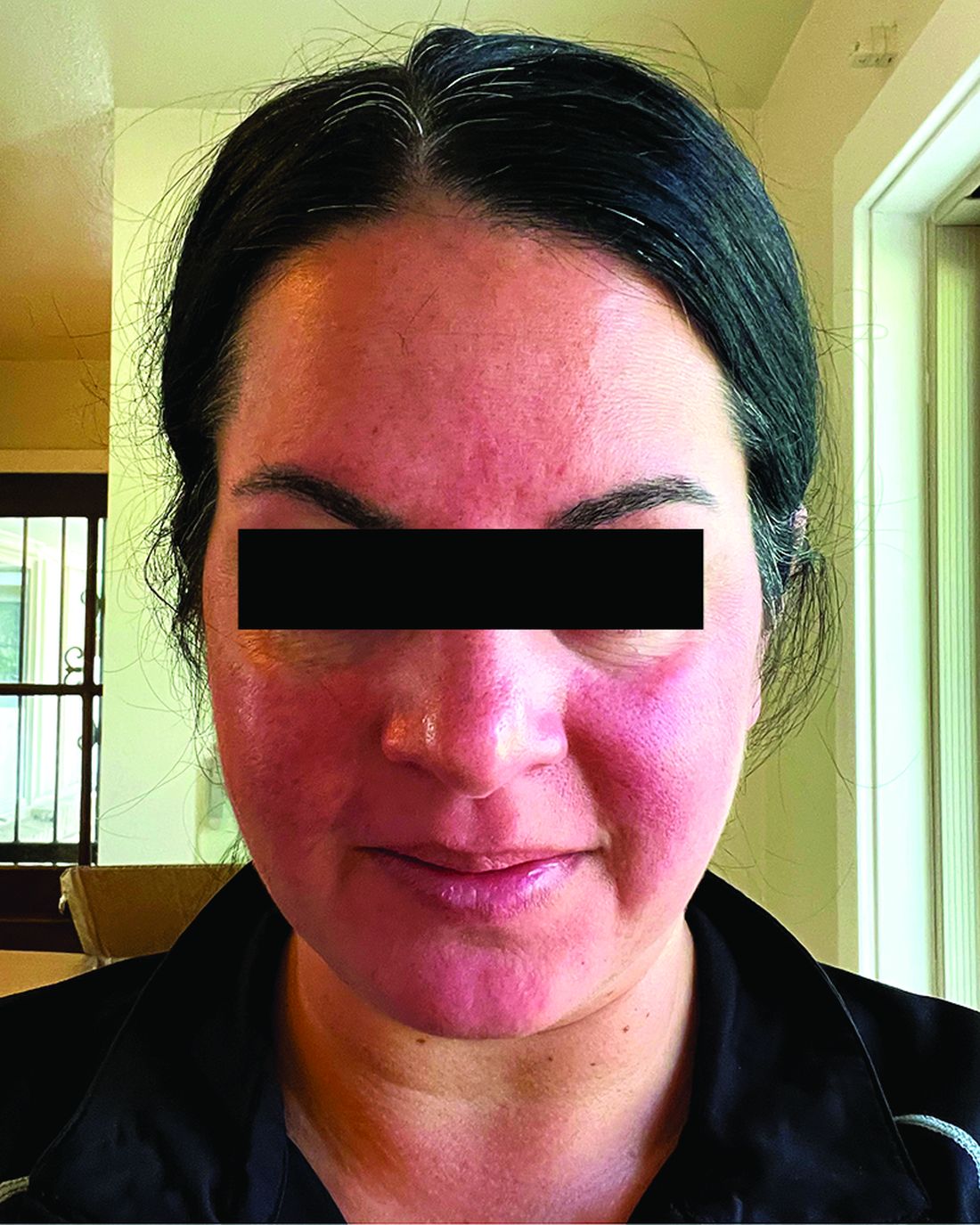
“The transient erythema of rosacea is one of the most challenging rosacea symptoms to treat,” Emmy Graber, MD, MBA, who was not involved with the study, said in an interview. “As flushing can adversely impact quality of life in our rosacea patients, it is important to find therapeutic options for our patients. This study is exciting, not only because the treatment was successful for a notable number of patients, but also because it involved a drug with a novel mode of action in rosacea.” Dr. Graber practices in Boston and is an affiliate clinical instructor at Northeastern University, Boston.

Guy F. Webster, MD, PhD, clinical professor of dermatology, Sidney Kimmel Medical College, Thomas Jefferson University, Philadelphia, added, “The interesting thing about this study is that it gives us a new target to think about for therapy. But it’s a long way from saying we can use it tomorrow.” He was not involved with the study but was also asked to comment on the findings.
Spotlight on CGRP
Rosacea’s pathophysiology remains incompletely understood, wrote Nita K.F. Wienholtz, MD, PhD, Department of Dermatology, Bispebjerg and Frederiksberg Hospital, University of Copenhagen, Denmark, and coinvestigators. However, they added, mounting evidence suggests a possible role for CGRP. For example, a study published in JAMA Dermatology in 2015 revealed elevated CGRP levels in facial skin biopsies from patients with rosacea.
For the present study, the investigators enrolled 30 adults (including 23 women) with rosacea who experienced at least 15 days of moderate to severe erythema or extreme flushing during a 4-week, treatment-free run-in period. Most participants (87%) had previously failed one or more rosacea treatments because of a lack of efficacy or adverse reactions, and 43% had failed three or more treatments.
Participants received 3-monthly 140-mg doses of erenumab, which is approved by the Food and Drug Administration for migraine prevention. Patients recorded scores on the Patient Self-Assessment (PSA) and item 2 of the Flushing Assessment Tool online daily and made a final follow-up visit 12 weeks after the third dose.
Among the 27 patients who completed the study, the mean number of days with moderate to severe flushing from week 9 to week 12 fell by 6.9 from 23.6 days over 4 weeks at baseline (P < .001). Patients most severely affected by flushing at baseline experienced an 81% decline in days with severe to extreme flushing. Overall, 26% of patients experienced at least 50% reductions in moderate to extreme flushing days. The number of days with moderate to severe erythema as measured by PSA fell by 8.1 (mean) from baseline, and 56% of patients experienced at least 50% reductions in PSA scores. No unexpected safety signals emerged.
Questions Over QOL Data
“Although there were significant decreases in flushing and erythema,” wrote John S. Barbieri, MD, MBA, in an accompanying Editor’s Note, “the present study had relatively modest improvements in quality of life.” He is director of the Advanced Acne Therapeutics Clinic, Brigham and Women’s Hospital, Boston, and associate editor and evidence-based practice editor of JAMA Dermatology.
Compared with baseline (6.22), mean Dermatology Life Quality Index scores fell 2.08 points and 2.73 points at weeks 8 and 20, respectively (P = .004 and .003). At the same intervals, the mean baseline Rosacea Quality of Life score (48.22) decreased by 2.58 points and 4.14 points, respectively (P = .04 and .02).
No significant changes appeared in gauges of anxiety and depression. These findings, authors wrote, could stem from their decision to omit a follow-up visit at week 12 — where they may have seen mental-health effects which disappeared by week 20 — in response to patients’ logistical concerns.
However, Dr. Webster questioned the value of QOL measurements in rosacea. “Quality-of-life measures are blunt instruments,” he explained, and reducing severe itching or chronic pain improves the lives of affected patients. “But what question are you going to ask to tease out whether being less red-cheeked has made someone’s life easier? It’s not a problem that lends itself to quality-of-life assessments.” Moreover, he said, regulators who increasingly require such measures in clinical trials ignore this point, creating challenges for drug developers and researchers.
Because the study was neither blinded nor controlled, Dr. Webster suggested considering it a tantalizing proof of concept. “If I were putting money into a CGRP inhibitor, I’d want at least a small, placebo-controlled, double-blinded study.”
Study authors and Dr. Barbieri recommended larger randomized studies involving different populations and erenumab doses. For now, Dr. Barbieri wrote, CGRP inhibition represents a promising potential strategy for patients who have rosacea with comorbid migraine or recalcitrant flushing and erythema.
Dr. Wienholtz reported no relevant financial interests. Dr. Barbieri had no related disclosures. Dr. Webster reported no relevant financial interests. Dr. Graber reported no conflicts related to erenumab but consults for other companies with rosacea-related products including Galderma. The study was supported by and conducted in collaboration with Novartis Pharma AG. Additional funding came from the Novo Nordisk Foundation and the Lundbeck Foundation.
A version of this article appeared on Medscape.com.
In. Skin-related quality-of-life (QOL) measures also improved, albeit modestly.
The study was published in JAMA Dermatology.
“The transient erythema of rosacea is one of the most challenging rosacea symptoms to treat,” Emmy Graber, MD, MBA, who was not involved with the study, said in an interview. “As flushing can adversely impact quality of life in our rosacea patients, it is important to find therapeutic options for our patients. This study is exciting, not only because the treatment was successful for a notable number of patients, but also because it involved a drug with a novel mode of action in rosacea.” Dr. Graber practices in Boston and is an affiliate clinical instructor at Northeastern University, Boston.
Guy F. Webster, MD, PhD, clinical professor of dermatology, Sidney Kimmel Medical College, Thomas Jefferson University, Philadelphia, added, “The interesting thing about this study is that it gives us a new target to think about for therapy. But it’s a long way from saying we can use it tomorrow.” He was not involved with the study but was also asked to comment on the findings.
Spotlight on CGRP
Rosacea’s pathophysiology remains incompletely understood, wrote Nita K.F. Wienholtz, MD, PhD, Department of Dermatology, Bispebjerg and Frederiksberg Hospital, University of Copenhagen, Denmark, and coinvestigators. However, they added, mounting evidence suggests a possible role for CGRP. For example, a study published in JAMA Dermatology in 2015 revealed elevated CGRP levels in facial skin biopsies from patients with rosacea.
For the present study, the investigators enrolled 30 adults (including 23 women) with rosacea who experienced at least 15 days of moderate to severe erythema or extreme flushing during a 4-week, treatment-free run-in period. Most participants (87%) had previously failed one or more rosacea treatments because of a lack of efficacy or adverse reactions, and 43% had failed three or more treatments.
Participants received 3-monthly 140-mg doses of erenumab, which is approved by the Food and Drug Administration for migraine prevention. Patients recorded scores on the Patient Self-Assessment (PSA) and item 2 of the Flushing Assessment Tool online daily and made a final follow-up visit 12 weeks after the third dose.
Among the 27 patients who completed the study, the mean number of days with moderate to severe flushing from week 9 to week 12 fell by 6.9 from 23.6 days over 4 weeks at baseline (P < .001). Patients most severely affected by flushing at baseline experienced an 81% decline in days with severe to extreme flushing. Overall, 26% of patients experienced at least 50% reductions in moderate to extreme flushing days. The number of days with moderate to severe erythema as measured by PSA fell by 8.1 (mean) from baseline, and 56% of patients experienced at least 50% reductions in PSA scores. No unexpected safety signals emerged.
Questions Over QOL Data
“Although there were significant decreases in flushing and erythema,” wrote John S. Barbieri, MD, MBA, in an accompanying Editor’s Note, “the present study had relatively modest improvements in quality of life.” He is director of the Advanced Acne Therapeutics Clinic, Brigham and Women’s Hospital, Boston, and associate editor and evidence-based practice editor of JAMA Dermatology.
Compared with baseline (6.22), mean Dermatology Life Quality Index scores fell 2.08 points and 2.73 points at weeks 8 and 20, respectively (P = .004 and .003). At the same intervals, the mean baseline Rosacea Quality of Life score (48.22) decreased by 2.58 points and 4.14 points, respectively (P = .04 and .02).
No significant changes appeared in gauges of anxiety and depression. These findings, authors wrote, could stem from their decision to omit a follow-up visit at week 12 — where they may have seen mental-health effects which disappeared by week 20 — in response to patients’ logistical concerns.
However, Dr. Webster questioned the value of QOL measurements in rosacea. “Quality-of-life measures are blunt instruments,” he explained, and reducing severe itching or chronic pain improves the lives of affected patients. “But what question are you going to ask to tease out whether being less red-cheeked has made someone’s life easier? It’s not a problem that lends itself to quality-of-life assessments.” Moreover, he said, regulators who increasingly require such measures in clinical trials ignore this point, creating challenges for drug developers and researchers.
Because the study was neither blinded nor controlled, Dr. Webster suggested considering it a tantalizing proof of concept. “If I were putting money into a CGRP inhibitor, I’d want at least a small, placebo-controlled, double-blinded study.”
Study authors and Dr. Barbieri recommended larger randomized studies involving different populations and erenumab doses. For now, Dr. Barbieri wrote, CGRP inhibition represents a promising potential strategy for patients who have rosacea with comorbid migraine or recalcitrant flushing and erythema.
Dr. Wienholtz reported no relevant financial interests. Dr. Barbieri had no related disclosures. Dr. Webster reported no relevant financial interests. Dr. Graber reported no conflicts related to erenumab but consults for other companies with rosacea-related products including Galderma. The study was supported by and conducted in collaboration with Novartis Pharma AG. Additional funding came from the Novo Nordisk Foundation and the Lundbeck Foundation.
A version of this article appeared on Medscape.com.
In. Skin-related quality-of-life (QOL) measures also improved, albeit modestly.
The study was published in JAMA Dermatology.
“The transient erythema of rosacea is one of the most challenging rosacea symptoms to treat,” Emmy Graber, MD, MBA, who was not involved with the study, said in an interview. “As flushing can adversely impact quality of life in our rosacea patients, it is important to find therapeutic options for our patients. This study is exciting, not only because the treatment was successful for a notable number of patients, but also because it involved a drug with a novel mode of action in rosacea.” Dr. Graber practices in Boston and is an affiliate clinical instructor at Northeastern University, Boston.
Guy F. Webster, MD, PhD, clinical professor of dermatology, Sidney Kimmel Medical College, Thomas Jefferson University, Philadelphia, added, “The interesting thing about this study is that it gives us a new target to think about for therapy. But it’s a long way from saying we can use it tomorrow.” He was not involved with the study but was also asked to comment on the findings.
Spotlight on CGRP
Rosacea’s pathophysiology remains incompletely understood, wrote Nita K.F. Wienholtz, MD, PhD, Department of Dermatology, Bispebjerg and Frederiksberg Hospital, University of Copenhagen, Denmark, and coinvestigators. However, they added, mounting evidence suggests a possible role for CGRP. For example, a study published in JAMA Dermatology in 2015 revealed elevated CGRP levels in facial skin biopsies from patients with rosacea.
For the present study, the investigators enrolled 30 adults (including 23 women) with rosacea who experienced at least 15 days of moderate to severe erythema or extreme flushing during a 4-week, treatment-free run-in period. Most participants (87%) had previously failed one or more rosacea treatments because of a lack of efficacy or adverse reactions, and 43% had failed three or more treatments.
Participants received 3-monthly 140-mg doses of erenumab, which is approved by the Food and Drug Administration for migraine prevention. Patients recorded scores on the Patient Self-Assessment (PSA) and item 2 of the Flushing Assessment Tool online daily and made a final follow-up visit 12 weeks after the third dose.
Among the 27 patients who completed the study, the mean number of days with moderate to severe flushing from week 9 to week 12 fell by 6.9 from 23.6 days over 4 weeks at baseline (P < .001). Patients most severely affected by flushing at baseline experienced an 81% decline in days with severe to extreme flushing. Overall, 26% of patients experienced at least 50% reductions in moderate to extreme flushing days. The number of days with moderate to severe erythema as measured by PSA fell by 8.1 (mean) from baseline, and 56% of patients experienced at least 50% reductions in PSA scores. No unexpected safety signals emerged.
Questions Over QOL Data
“Although there were significant decreases in flushing and erythema,” wrote John S. Barbieri, MD, MBA, in an accompanying Editor’s Note, “the present study had relatively modest improvements in quality of life.” He is director of the Advanced Acne Therapeutics Clinic, Brigham and Women’s Hospital, Boston, and associate editor and evidence-based practice editor of JAMA Dermatology.
Compared with baseline (6.22), mean Dermatology Life Quality Index scores fell 2.08 points and 2.73 points at weeks 8 and 20, respectively (P = .004 and .003). At the same intervals, the mean baseline Rosacea Quality of Life score (48.22) decreased by 2.58 points and 4.14 points, respectively (P = .04 and .02).
No significant changes appeared in gauges of anxiety and depression. These findings, authors wrote, could stem from their decision to omit a follow-up visit at week 12 — where they may have seen mental-health effects which disappeared by week 20 — in response to patients’ logistical concerns.
However, Dr. Webster questioned the value of QOL measurements in rosacea. “Quality-of-life measures are blunt instruments,” he explained, and reducing severe itching or chronic pain improves the lives of affected patients. “But what question are you going to ask to tease out whether being less red-cheeked has made someone’s life easier? It’s not a problem that lends itself to quality-of-life assessments.” Moreover, he said, regulators who increasingly require such measures in clinical trials ignore this point, creating challenges for drug developers and researchers.
Because the study was neither blinded nor controlled, Dr. Webster suggested considering it a tantalizing proof of concept. “If I were putting money into a CGRP inhibitor, I’d want at least a small, placebo-controlled, double-blinded study.”
Study authors and Dr. Barbieri recommended larger randomized studies involving different populations and erenumab doses. For now, Dr. Barbieri wrote, CGRP inhibition represents a promising potential strategy for patients who have rosacea with comorbid migraine or recalcitrant flushing and erythema.
Dr. Wienholtz reported no relevant financial interests. Dr. Barbieri had no related disclosures. Dr. Webster reported no relevant financial interests. Dr. Graber reported no conflicts related to erenumab but consults for other companies with rosacea-related products including Galderma. The study was supported by and conducted in collaboration with Novartis Pharma AG. Additional funding came from the Novo Nordisk Foundation and the Lundbeck Foundation.
A version of this article appeared on Medscape.com.
FROM JAMA DERMATOLOGY
Lentigines: Study Finds Less PIH With Modified Laser Treatment
BALTIMORE — Laser treatment for solar lentigines in individuals with darker skin types has long been associated with a higher risk of postinflammatory hyperpigmentation (PIH), but.
The study enrolled 27 patients with solar lentigines and Fitzpatrick skin types (FSTs) III-IV, Woraphong Manuskiatti, MD, professor of dermatology at Siriraj Hospital, Mahidol University, Bangkok, reported at the annual meeting of the American Society for Laser Medicine and Surgery. They received the fractional beam treatment on one side of the face and the full-beam on the other side. At 6 months, the incidence of PIH was about 81% lower on the fractional-beam side, Dr. Manuskiatti said.
“In the past, when we used laser to treat pigmented lesions, we used the so-called full-beam technique on the pigmented area,” Dr. Manuskiatti told this news organization. “From the study, we found that you don’t need to treat it at 100%. You can fractionally treat the pigmented lesion and get a really comparable treatment outcome and, at that reduced beam, less incidence of postinflammatory hyperpigmentation.”
Study Design and Results
Of the 27 patients in the study, 12 were FST III (44%), 14 were FST IV (52%), and one was FST V (4%). On the fractional-beam side, the laser was delivered through a 9-mm spot size with an average fluence of 0.47 J/cm² at a frequency of 2 Hz for a total of two passes without pulse overlapping. On the full-beam side, the laser was operated with a 4.5-mm handpiece, with fluence ranging from 0.3 to 0.7 J/cm² (using an endpoint of slight darkening of the pigmented lesion) at 2 Hz.
The patients received a single treatment and had a clinical evaluation and color reading assessments at 2 weeks, 1 month, 3 months, and 6 months after the treatment. Twenty-five patients completed the study.
The researchers found no statistically significant differences in lesional clearance between the two techniques at any of the follow-up assessments, Dr. Manuskiatti said. “This might be one of the alternative treatments of treating solar lentigines in dark-skinned patients,” he said when presenting the study results.
He reported the rates of PIH on the full-beam and fractional-beam sides, respectively, at the following intervals were: 64% and 8% at 2 weeks, 80% and 32% at 1 month, 96% and 36% at 3 months, and 88% and 16% at 6 months.
“The incidence of PIH on the full-beam side was statistically higher than that on the fractional-beam side throughout the follow-up period,” he said. Transient and mild hypopigmentation was observed in one patient (4%) on the fractional-beam side and in five (20%) on the full-beam side. Dr. Manuskiatti added that no other adverse effects were documented during the study.
“ Normally when you use laser to treat skin type I or II, you don’t have … PIH or darkening of the skin,” Dr. Manuskiatti told this news organization, “but when you have skin type III and above, you run into a really high incidence of postinflammatory hyperpigmentation — and treating that with fractional beam can lead to a reduced incidence of darkening of the skin afterward.”
A Lower-Cost Option
This study showed that the 532-nm picosecond laser with fractional beam MLA is a useful option for patients with darker skin types, Kelly Stankiewicz, MD, a dermatologist who practices in Park City, Utah, and moderated the session where these results were presented, told this news organization.
“The most challenging thing about treating lentigines in darker skin types is preventing potential side effects, mainly dyspigmentation,” she said after the meeting. “These side effects are, for the most part, temporary, but they can take 6-18 months to resolve, so it’s important to prevent them in the first place.”
She noted that the 532-nm and 1064-nm wavelengths are the most commonly available for picosecond lasers and that they’re easier to produce and less expensive. “There are picosecond lasers with middle wavelengths in the red light to near-infrared range (650-785 nm) that are better for darker skin types because they are more gentle yet still effective at targeting pigment, but these lasers are more expensive and less widely available,” Dr. Stankiewicz said.
“The microlens array, used in this study with the 532-nm wavelength, is an inexpensive piece that fits at the end of the laser,” she added. “So, to have an option that turns a 532-nm laser into a safer device for the treatment of lentigines in darker skin types is very helpful.”
Dr. Manuskiatti and Dr. Stankiewicz had no relevant disclosures to report.
A version of this article first appeared on Medscape.com.
BALTIMORE — Laser treatment for solar lentigines in individuals with darker skin types has long been associated with a higher risk of postinflammatory hyperpigmentation (PIH), but.
The study enrolled 27 patients with solar lentigines and Fitzpatrick skin types (FSTs) III-IV, Woraphong Manuskiatti, MD, professor of dermatology at Siriraj Hospital, Mahidol University, Bangkok, reported at the annual meeting of the American Society for Laser Medicine and Surgery. They received the fractional beam treatment on one side of the face and the full-beam on the other side. At 6 months, the incidence of PIH was about 81% lower on the fractional-beam side, Dr. Manuskiatti said.
“In the past, when we used laser to treat pigmented lesions, we used the so-called full-beam technique on the pigmented area,” Dr. Manuskiatti told this news organization. “From the study, we found that you don’t need to treat it at 100%. You can fractionally treat the pigmented lesion and get a really comparable treatment outcome and, at that reduced beam, less incidence of postinflammatory hyperpigmentation.”
Study Design and Results
Of the 27 patients in the study, 12 were FST III (44%), 14 were FST IV (52%), and one was FST V (4%). On the fractional-beam side, the laser was delivered through a 9-mm spot size with an average fluence of 0.47 J/cm² at a frequency of 2 Hz for a total of two passes without pulse overlapping. On the full-beam side, the laser was operated with a 4.5-mm handpiece, with fluence ranging from 0.3 to 0.7 J/cm² (using an endpoint of slight darkening of the pigmented lesion) at 2 Hz.
The patients received a single treatment and had a clinical evaluation and color reading assessments at 2 weeks, 1 month, 3 months, and 6 months after the treatment. Twenty-five patients completed the study.
The researchers found no statistically significant differences in lesional clearance between the two techniques at any of the follow-up assessments, Dr. Manuskiatti said. “This might be one of the alternative treatments of treating solar lentigines in dark-skinned patients,” he said when presenting the study results.
He reported the rates of PIH on the full-beam and fractional-beam sides, respectively, at the following intervals were: 64% and 8% at 2 weeks, 80% and 32% at 1 month, 96% and 36% at 3 months, and 88% and 16% at 6 months.
“The incidence of PIH on the full-beam side was statistically higher than that on the fractional-beam side throughout the follow-up period,” he said. Transient and mild hypopigmentation was observed in one patient (4%) on the fractional-beam side and in five (20%) on the full-beam side. Dr. Manuskiatti added that no other adverse effects were documented during the study.
“ Normally when you use laser to treat skin type I or II, you don’t have … PIH or darkening of the skin,” Dr. Manuskiatti told this news organization, “but when you have skin type III and above, you run into a really high incidence of postinflammatory hyperpigmentation — and treating that with fractional beam can lead to a reduced incidence of darkening of the skin afterward.”
A Lower-Cost Option
This study showed that the 532-nm picosecond laser with fractional beam MLA is a useful option for patients with darker skin types, Kelly Stankiewicz, MD, a dermatologist who practices in Park City, Utah, and moderated the session where these results were presented, told this news organization.
“The most challenging thing about treating lentigines in darker skin types is preventing potential side effects, mainly dyspigmentation,” she said after the meeting. “These side effects are, for the most part, temporary, but they can take 6-18 months to resolve, so it’s important to prevent them in the first place.”
She noted that the 532-nm and 1064-nm wavelengths are the most commonly available for picosecond lasers and that they’re easier to produce and less expensive. “There are picosecond lasers with middle wavelengths in the red light to near-infrared range (650-785 nm) that are better for darker skin types because they are more gentle yet still effective at targeting pigment, but these lasers are more expensive and less widely available,” Dr. Stankiewicz said.
“The microlens array, used in this study with the 532-nm wavelength, is an inexpensive piece that fits at the end of the laser,” she added. “So, to have an option that turns a 532-nm laser into a safer device for the treatment of lentigines in darker skin types is very helpful.”
Dr. Manuskiatti and Dr. Stankiewicz had no relevant disclosures to report.
A version of this article first appeared on Medscape.com.
BALTIMORE — Laser treatment for solar lentigines in individuals with darker skin types has long been associated with a higher risk of postinflammatory hyperpigmentation (PIH), but.
The study enrolled 27 patients with solar lentigines and Fitzpatrick skin types (FSTs) III-IV, Woraphong Manuskiatti, MD, professor of dermatology at Siriraj Hospital, Mahidol University, Bangkok, reported at the annual meeting of the American Society for Laser Medicine and Surgery. They received the fractional beam treatment on one side of the face and the full-beam on the other side. At 6 months, the incidence of PIH was about 81% lower on the fractional-beam side, Dr. Manuskiatti said.
“In the past, when we used laser to treat pigmented lesions, we used the so-called full-beam technique on the pigmented area,” Dr. Manuskiatti told this news organization. “From the study, we found that you don’t need to treat it at 100%. You can fractionally treat the pigmented lesion and get a really comparable treatment outcome and, at that reduced beam, less incidence of postinflammatory hyperpigmentation.”
Study Design and Results
Of the 27 patients in the study, 12 were FST III (44%), 14 were FST IV (52%), and one was FST V (4%). On the fractional-beam side, the laser was delivered through a 9-mm spot size with an average fluence of 0.47 J/cm² at a frequency of 2 Hz for a total of two passes without pulse overlapping. On the full-beam side, the laser was operated with a 4.5-mm handpiece, with fluence ranging from 0.3 to 0.7 J/cm² (using an endpoint of slight darkening of the pigmented lesion) at 2 Hz.
The patients received a single treatment and had a clinical evaluation and color reading assessments at 2 weeks, 1 month, 3 months, and 6 months after the treatment. Twenty-five patients completed the study.
The researchers found no statistically significant differences in lesional clearance between the two techniques at any of the follow-up assessments, Dr. Manuskiatti said. “This might be one of the alternative treatments of treating solar lentigines in dark-skinned patients,” he said when presenting the study results.
He reported the rates of PIH on the full-beam and fractional-beam sides, respectively, at the following intervals were: 64% and 8% at 2 weeks, 80% and 32% at 1 month, 96% and 36% at 3 months, and 88% and 16% at 6 months.
“The incidence of PIH on the full-beam side was statistically higher than that on the fractional-beam side throughout the follow-up period,” he said. Transient and mild hypopigmentation was observed in one patient (4%) on the fractional-beam side and in five (20%) on the full-beam side. Dr. Manuskiatti added that no other adverse effects were documented during the study.
“ Normally when you use laser to treat skin type I or II, you don’t have … PIH or darkening of the skin,” Dr. Manuskiatti told this news organization, “but when you have skin type III and above, you run into a really high incidence of postinflammatory hyperpigmentation — and treating that with fractional beam can lead to a reduced incidence of darkening of the skin afterward.”
A Lower-Cost Option
This study showed that the 532-nm picosecond laser with fractional beam MLA is a useful option for patients with darker skin types, Kelly Stankiewicz, MD, a dermatologist who practices in Park City, Utah, and moderated the session where these results were presented, told this news organization.
“The most challenging thing about treating lentigines in darker skin types is preventing potential side effects, mainly dyspigmentation,” she said after the meeting. “These side effects are, for the most part, temporary, but they can take 6-18 months to resolve, so it’s important to prevent them in the first place.”
She noted that the 532-nm and 1064-nm wavelengths are the most commonly available for picosecond lasers and that they’re easier to produce and less expensive. “There are picosecond lasers with middle wavelengths in the red light to near-infrared range (650-785 nm) that are better for darker skin types because they are more gentle yet still effective at targeting pigment, but these lasers are more expensive and less widely available,” Dr. Stankiewicz said.
“The microlens array, used in this study with the 532-nm wavelength, is an inexpensive piece that fits at the end of the laser,” she added. “So, to have an option that turns a 532-nm laser into a safer device for the treatment of lentigines in darker skin types is very helpful.”
Dr. Manuskiatti and Dr. Stankiewicz had no relevant disclosures to report.
A version of this article first appeared on Medscape.com.
FROM ASLMS 2024
How These Young MDs Impressed the Hell Out of Their Bosses
Safe to say that anyone undertaking the physician journey does so with intense motivation and book smarts. Still, it can be incredibly hard to stand out. Everyone’s a go-getter, but what’s the X factor?
Here’s what they said ...
Lesson #1: Never Be Scared to Ask
Brien Barnewolt, MD, chairman and chief of the Department of Emergency Medicine at Tufts Medical Center, was very much surprised when a resident named Scott G. Weiner did something unexpected: Go after a job in the fall of his junior year residency instead of following the typical senior year trajectory.
“It’s very unusual for a trainee to apply for a job virtually a year ahead of schedule. But he knew what he wanted,” said Dr. Barnewolt. “I’d never had anybody come to me in that same scenario, and I’ve been doing this a long time.”
Under normal circumstances it would’ve been easy for Dr. Barnewolt to say no. But the unexpected request made him and his colleagues take a closer look, and they were impressed with Dr. Weiner’s skills. That, paired with his ambition and demeanor, compelled them to offer him an early job. But there’s more.
As the next year approached, Dr. Weiner explained he had an opportunity to work in emergency medicine in Tuscany and asked if he could take a 1-year delayed start for the position he applied a year early for.
The department held his position, and upon his return, Dr. Weiner made a lasting impact at Tufts before eventually moving on. “He outgrew us, which is nice to see,” Dr. Barnewolt said. (Dr. Weiner is currently McGraw Distinguished Chair in Emergency Medicine at Brigham and Women’s Hospital and associate professor at Harvard Medical School.)
Bottom line: Why did Dr. Barnewolt and his colleagues do so much to accommodate a young candidate? Yes, Dr. Weiner was talented, but he was also up-front about his ambitions from the get-go. Dr. Barnewolt said that kind of initiative can only be looked at positively.
“My advice would be, if you see an opportunity or a potential place where you might want to work, put out those feelers, start those conversations,” he said. “It’s not too early, especially in certain specialties, where the job market is very tight. Then, when circumstances change, be open about it and have that conversation. The worst that somebody can say is no, so it never hurts to be honest and open about where you want to go and what you want to be.”
Lesson #2: Chase Your Passion ‘Relentlessly’
Vance G. Fowler, MD, MHS, an infectious disease specialist at Duke University School of Medicine, runs a laboratory that researches methicillin-resistant Staphylococcus aureus (MRSA). Over the years, he’s mentored many doctors but understands the ambitions of young trainees don’t always align with the little free time that they have. “Many of them drop away when you give them a [side] project,” he said.
So when Tori Kinamon asked him to work on an MRSA project — in her first year — he gave her one that focused on researching vertebral osteomyelitis, a bone infection that can coincide with S aureus. What Dr. Fowler didn’t know: Kinamon (now MD) had been a competitive gymnast at Brown and battled her own life-threatening infection with MRSA.
“To my absolute astonishment, not only did she stick to it, but she was able to compile a presentation on the science and gave an oral presentation within a year of walking in the door,” said Dr. Fowler.
She went on to lead an initiative between the National Institutes of Health and US Food and Drug Administration to create endpoints for clinical drug trials, all of which occurred before starting her residency, which she’s about to embark upon.
Dr. Kinamon’s a good example, he said, of what happens when you add genuine passion to book smarts. Those who do always stand out because you can’t fake that. “Find your passion, and then chase it down relentlessly,” he said. “Once you’ve found your passion, things get easy because it stops being work and it starts being something else.”
If you haven’t identified a focus area, Dr. Fowler said to “be agnostic and observant. Keep your eyes open and your options open because you may surprise yourself. It may turn out that you end up liking something a whole lot more than you thought you did.”
Lesson #3: When You Say You’ve Always Wanted to Do Something, Do Something
As the chief of pulmonary and critical care medicine at the Northwestern Medicine Canning Thoracic Institute, Scott Budinger, MD, often hears lip service from doctors who want to put their skills to use in their local communities. One of his students actually did it.
Justin Fiala, MD, a pulmonary, critical care, and sleep specialist at Northwestern Medicine, joined Northwestern as a pulmonary fellow with a big interest in addressing health equity issues.
Dr. Fiala began volunteering with CommunityHealth during his fellowship and saw that many patients of the free Chicago-area clinic needed help with sleep disorders. He launched the organization’s first sleep clinic and its Patient-Centered Apnea Protocols Initiative.
“He developed a plan with some of the partners of the sleep apnea equipment to do home sleep testing for these patients that’s free of cost,” said Dr. Budinger.
Dr. Fiala goes in on Saturdays and runs a free clinic conducting sleep studies for patients and outfits them with devices that they need to improve their conditions, said Dr. Budinger.
“And these patients are the severest of the severe patients,” he said. “These are people that have severe sleep apnea that are driving around the roads, oftentimes don’t have insurance because they’re also precluded from having auto insurance. So, this is really something that not just benefits these patients but benefits our whole community.”
The fact that Dr. Fiala followed through on something that all doctors aspire to do — and in the middle of a very busy training program — is something that Dr. Budinger said makes him stand out in a big way.
“If you talk to any of our trainees or young faculty, everybody’s interested in addressing the issue of health disparities,” said Dr. Budinger. “Justin looked at that and said, ‘Well, you know, I’m not interested in talking about it. What can I do about this problem? And how can I actually get boots on the ground and help?’ That requires a big activation energy that many people don’t have.”
Lesson #4: Be a People-Person and a Patient-Person
When hiring employees at American Family Care in Portland, Oregon, Andrew Miller, MD, director of provider training, is always on the lookout for young MDs with emotional intelligence and a good bedside manner. He has been recently blown away, however, by a young physician’s assistant named Joseph Van Bindsbergen, PA-C, who was described as “all-around wonderful” during his reference check.
“Having less than 6 months of experience out of school, he is our highest ranked provider, whether it’s a nurse practitioner, PA, or doctor, in terms of patient satisfaction,” said Dr. Miller. The young PA has an “unprecedented perfect score” on his NPS rating.
Why? Patients said they’ve never felt as heard as they felt with Van Bindsbergen.
“That’s the thing I think that the up-and-coming providers should be focusing on is making your patients feel heard,” explained Dr. Miller. Van Bindsbergen is great at building rapport with a patient, whether they are 6 or 96. “He doesn’t just ask about sore throat symptoms. He asks, ‘what is the impact on your life of the sore throat? How does it affect your family or your work? What do you think this could be besides just strep? What are your concerns?’ ”
Dr. Miller said the magic of Van Bindsbergen is that he has an innate ability to look at patients “not just as a diagnosis but as a person, which they love.”
Lesson #5: Remember to Make That Difference With Each Patient
Doctors are used to swooping in and seeing a patient, ordering further testing if needed, and then moving on to the next patient. But one young intern at the start of his medical career broke this mold by giving a very anxious patient some much-needed support.
“There was a resident who was working overnight, and this poor young woman came in who had a new diagnosis of an advanced illness and a lot of anxiety around her condition, the newness of it, and the impact this is going to have on her family and her life,” said Elizabeth Horn Prsic, MD, assistant professor at Yale School of Medicine and firm chief for medical oncology and the director of Adult Inpatient Palliative Care.
Dr. Prsic found out the next morning that this trainee accompanied the patient to the MRI and held her hand as much as he was allowed to throughout the entire experience. “I was like, ‘wait you went down with her to radiology?’ And he’s like, ‘Yes, I was there the whole time,’ ” she recalled.
This gesture not only helped the patient feel calmer after receiving a potentially life-altering diagnosis but also helped ensure the test results were as clear as possible.
“If the study is not done well and a patient is moving or uncomfortable, it has to be stopped early or paused,” said Dr. Prsic. “Then the study is not very useful. In situations like these, medical decisions may be made based on imperfect data. The fact that we had this full complete good quality scan helped us get the care that she needed in a much timelier manner to help her and to move along the care that she that was medically appropriate for her.”
Dr. Prsic got emotional reflecting on the experience. Working at Yale, she saw a ton of intelligent doctors come through the ranks. But this gesture, she said, should serve as a reminder that “you don’t need to be the smartest person in the room to just be there for a patient. It was pure empathic presence and human connection. It gave me hope in the next generation of physicians.”
A version of this article appeared on Medscape.com.
Safe to say that anyone undertaking the physician journey does so with intense motivation and book smarts. Still, it can be incredibly hard to stand out. Everyone’s a go-getter, but what’s the X factor?
Here’s what they said ...
Lesson #1: Never Be Scared to Ask
Brien Barnewolt, MD, chairman and chief of the Department of Emergency Medicine at Tufts Medical Center, was very much surprised when a resident named Scott G. Weiner did something unexpected: Go after a job in the fall of his junior year residency instead of following the typical senior year trajectory.
“It’s very unusual for a trainee to apply for a job virtually a year ahead of schedule. But he knew what he wanted,” said Dr. Barnewolt. “I’d never had anybody come to me in that same scenario, and I’ve been doing this a long time.”
Under normal circumstances it would’ve been easy for Dr. Barnewolt to say no. But the unexpected request made him and his colleagues take a closer look, and they were impressed with Dr. Weiner’s skills. That, paired with his ambition and demeanor, compelled them to offer him an early job. But there’s more.
As the next year approached, Dr. Weiner explained he had an opportunity to work in emergency medicine in Tuscany and asked if he could take a 1-year delayed start for the position he applied a year early for.
The department held his position, and upon his return, Dr. Weiner made a lasting impact at Tufts before eventually moving on. “He outgrew us, which is nice to see,” Dr. Barnewolt said. (Dr. Weiner is currently McGraw Distinguished Chair in Emergency Medicine at Brigham and Women’s Hospital and associate professor at Harvard Medical School.)
Bottom line: Why did Dr. Barnewolt and his colleagues do so much to accommodate a young candidate? Yes, Dr. Weiner was talented, but he was also up-front about his ambitions from the get-go. Dr. Barnewolt said that kind of initiative can only be looked at positively.
“My advice would be, if you see an opportunity or a potential place where you might want to work, put out those feelers, start those conversations,” he said. “It’s not too early, especially in certain specialties, where the job market is very tight. Then, when circumstances change, be open about it and have that conversation. The worst that somebody can say is no, so it never hurts to be honest and open about where you want to go and what you want to be.”
Lesson #2: Chase Your Passion ‘Relentlessly’
Vance G. Fowler, MD, MHS, an infectious disease specialist at Duke University School of Medicine, runs a laboratory that researches methicillin-resistant Staphylococcus aureus (MRSA). Over the years, he’s mentored many doctors but understands the ambitions of young trainees don’t always align with the little free time that they have. “Many of them drop away when you give them a [side] project,” he said.
So when Tori Kinamon asked him to work on an MRSA project — in her first year — he gave her one that focused on researching vertebral osteomyelitis, a bone infection that can coincide with S aureus. What Dr. Fowler didn’t know: Kinamon (now MD) had been a competitive gymnast at Brown and battled her own life-threatening infection with MRSA.
“To my absolute astonishment, not only did she stick to it, but she was able to compile a presentation on the science and gave an oral presentation within a year of walking in the door,” said Dr. Fowler.
She went on to lead an initiative between the National Institutes of Health and US Food and Drug Administration to create endpoints for clinical drug trials, all of which occurred before starting her residency, which she’s about to embark upon.
Dr. Kinamon’s a good example, he said, of what happens when you add genuine passion to book smarts. Those who do always stand out because you can’t fake that. “Find your passion, and then chase it down relentlessly,” he said. “Once you’ve found your passion, things get easy because it stops being work and it starts being something else.”
If you haven’t identified a focus area, Dr. Fowler said to “be agnostic and observant. Keep your eyes open and your options open because you may surprise yourself. It may turn out that you end up liking something a whole lot more than you thought you did.”
Lesson #3: When You Say You’ve Always Wanted to Do Something, Do Something
As the chief of pulmonary and critical care medicine at the Northwestern Medicine Canning Thoracic Institute, Scott Budinger, MD, often hears lip service from doctors who want to put their skills to use in their local communities. One of his students actually did it.
Justin Fiala, MD, a pulmonary, critical care, and sleep specialist at Northwestern Medicine, joined Northwestern as a pulmonary fellow with a big interest in addressing health equity issues.
Dr. Fiala began volunteering with CommunityHealth during his fellowship and saw that many patients of the free Chicago-area clinic needed help with sleep disorders. He launched the organization’s first sleep clinic and its Patient-Centered Apnea Protocols Initiative.
“He developed a plan with some of the partners of the sleep apnea equipment to do home sleep testing for these patients that’s free of cost,” said Dr. Budinger.
Dr. Fiala goes in on Saturdays and runs a free clinic conducting sleep studies for patients and outfits them with devices that they need to improve their conditions, said Dr. Budinger.
“And these patients are the severest of the severe patients,” he said. “These are people that have severe sleep apnea that are driving around the roads, oftentimes don’t have insurance because they’re also precluded from having auto insurance. So, this is really something that not just benefits these patients but benefits our whole community.”
The fact that Dr. Fiala followed through on something that all doctors aspire to do — and in the middle of a very busy training program — is something that Dr. Budinger said makes him stand out in a big way.
“If you talk to any of our trainees or young faculty, everybody’s interested in addressing the issue of health disparities,” said Dr. Budinger. “Justin looked at that and said, ‘Well, you know, I’m not interested in talking about it. What can I do about this problem? And how can I actually get boots on the ground and help?’ That requires a big activation energy that many people don’t have.”
Lesson #4: Be a People-Person and a Patient-Person
When hiring employees at American Family Care in Portland, Oregon, Andrew Miller, MD, director of provider training, is always on the lookout for young MDs with emotional intelligence and a good bedside manner. He has been recently blown away, however, by a young physician’s assistant named Joseph Van Bindsbergen, PA-C, who was described as “all-around wonderful” during his reference check.
“Having less than 6 months of experience out of school, he is our highest ranked provider, whether it’s a nurse practitioner, PA, or doctor, in terms of patient satisfaction,” said Dr. Miller. The young PA has an “unprecedented perfect score” on his NPS rating.
Why? Patients said they’ve never felt as heard as they felt with Van Bindsbergen.
“That’s the thing I think that the up-and-coming providers should be focusing on is making your patients feel heard,” explained Dr. Miller. Van Bindsbergen is great at building rapport with a patient, whether they are 6 or 96. “He doesn’t just ask about sore throat symptoms. He asks, ‘what is the impact on your life of the sore throat? How does it affect your family or your work? What do you think this could be besides just strep? What are your concerns?’ ”
Dr. Miller said the magic of Van Bindsbergen is that he has an innate ability to look at patients “not just as a diagnosis but as a person, which they love.”
Lesson #5: Remember to Make That Difference With Each Patient
Doctors are used to swooping in and seeing a patient, ordering further testing if needed, and then moving on to the next patient. But one young intern at the start of his medical career broke this mold by giving a very anxious patient some much-needed support.
“There was a resident who was working overnight, and this poor young woman came in who had a new diagnosis of an advanced illness and a lot of anxiety around her condition, the newness of it, and the impact this is going to have on her family and her life,” said Elizabeth Horn Prsic, MD, assistant professor at Yale School of Medicine and firm chief for medical oncology and the director of Adult Inpatient Palliative Care.
Dr. Prsic found out the next morning that this trainee accompanied the patient to the MRI and held her hand as much as he was allowed to throughout the entire experience. “I was like, ‘wait you went down with her to radiology?’ And he’s like, ‘Yes, I was there the whole time,’ ” she recalled.
This gesture not only helped the patient feel calmer after receiving a potentially life-altering diagnosis but also helped ensure the test results were as clear as possible.
“If the study is not done well and a patient is moving or uncomfortable, it has to be stopped early or paused,” said Dr. Prsic. “Then the study is not very useful. In situations like these, medical decisions may be made based on imperfect data. The fact that we had this full complete good quality scan helped us get the care that she needed in a much timelier manner to help her and to move along the care that she that was medically appropriate for her.”
Dr. Prsic got emotional reflecting on the experience. Working at Yale, she saw a ton of intelligent doctors come through the ranks. But this gesture, she said, should serve as a reminder that “you don’t need to be the smartest person in the room to just be there for a patient. It was pure empathic presence and human connection. It gave me hope in the next generation of physicians.”
A version of this article appeared on Medscape.com.
Safe to say that anyone undertaking the physician journey does so with intense motivation and book smarts. Still, it can be incredibly hard to stand out. Everyone’s a go-getter, but what’s the X factor?
Here’s what they said ...
Lesson #1: Never Be Scared to Ask
Brien Barnewolt, MD, chairman and chief of the Department of Emergency Medicine at Tufts Medical Center, was very much surprised when a resident named Scott G. Weiner did something unexpected: Go after a job in the fall of his junior year residency instead of following the typical senior year trajectory.
“It’s very unusual for a trainee to apply for a job virtually a year ahead of schedule. But he knew what he wanted,” said Dr. Barnewolt. “I’d never had anybody come to me in that same scenario, and I’ve been doing this a long time.”
Under normal circumstances it would’ve been easy for Dr. Barnewolt to say no. But the unexpected request made him and his colleagues take a closer look, and they were impressed with Dr. Weiner’s skills. That, paired with his ambition and demeanor, compelled them to offer him an early job. But there’s more.
As the next year approached, Dr. Weiner explained he had an opportunity to work in emergency medicine in Tuscany and asked if he could take a 1-year delayed start for the position he applied a year early for.
The department held his position, and upon his return, Dr. Weiner made a lasting impact at Tufts before eventually moving on. “He outgrew us, which is nice to see,” Dr. Barnewolt said. (Dr. Weiner is currently McGraw Distinguished Chair in Emergency Medicine at Brigham and Women’s Hospital and associate professor at Harvard Medical School.)
Bottom line: Why did Dr. Barnewolt and his colleagues do so much to accommodate a young candidate? Yes, Dr. Weiner was talented, but he was also up-front about his ambitions from the get-go. Dr. Barnewolt said that kind of initiative can only be looked at positively.
“My advice would be, if you see an opportunity or a potential place where you might want to work, put out those feelers, start those conversations,” he said. “It’s not too early, especially in certain specialties, where the job market is very tight. Then, when circumstances change, be open about it and have that conversation. The worst that somebody can say is no, so it never hurts to be honest and open about where you want to go and what you want to be.”
Lesson #2: Chase Your Passion ‘Relentlessly’
Vance G. Fowler, MD, MHS, an infectious disease specialist at Duke University School of Medicine, runs a laboratory that researches methicillin-resistant Staphylococcus aureus (MRSA). Over the years, he’s mentored many doctors but understands the ambitions of young trainees don’t always align with the little free time that they have. “Many of them drop away when you give them a [side] project,” he said.
So when Tori Kinamon asked him to work on an MRSA project — in her first year — he gave her one that focused on researching vertebral osteomyelitis, a bone infection that can coincide with S aureus. What Dr. Fowler didn’t know: Kinamon (now MD) had been a competitive gymnast at Brown and battled her own life-threatening infection with MRSA.
“To my absolute astonishment, not only did she stick to it, but she was able to compile a presentation on the science and gave an oral presentation within a year of walking in the door,” said Dr. Fowler.
She went on to lead an initiative between the National Institutes of Health and US Food and Drug Administration to create endpoints for clinical drug trials, all of which occurred before starting her residency, which she’s about to embark upon.
Dr. Kinamon’s a good example, he said, of what happens when you add genuine passion to book smarts. Those who do always stand out because you can’t fake that. “Find your passion, and then chase it down relentlessly,” he said. “Once you’ve found your passion, things get easy because it stops being work and it starts being something else.”
If you haven’t identified a focus area, Dr. Fowler said to “be agnostic and observant. Keep your eyes open and your options open because you may surprise yourself. It may turn out that you end up liking something a whole lot more than you thought you did.”
Lesson #3: When You Say You’ve Always Wanted to Do Something, Do Something
As the chief of pulmonary and critical care medicine at the Northwestern Medicine Canning Thoracic Institute, Scott Budinger, MD, often hears lip service from doctors who want to put their skills to use in their local communities. One of his students actually did it.
Justin Fiala, MD, a pulmonary, critical care, and sleep specialist at Northwestern Medicine, joined Northwestern as a pulmonary fellow with a big interest in addressing health equity issues.
Dr. Fiala began volunteering with CommunityHealth during his fellowship and saw that many patients of the free Chicago-area clinic needed help with sleep disorders. He launched the organization’s first sleep clinic and its Patient-Centered Apnea Protocols Initiative.
“He developed a plan with some of the partners of the sleep apnea equipment to do home sleep testing for these patients that’s free of cost,” said Dr. Budinger.
Dr. Fiala goes in on Saturdays and runs a free clinic conducting sleep studies for patients and outfits them with devices that they need to improve their conditions, said Dr. Budinger.
“And these patients are the severest of the severe patients,” he said. “These are people that have severe sleep apnea that are driving around the roads, oftentimes don’t have insurance because they’re also precluded from having auto insurance. So, this is really something that not just benefits these patients but benefits our whole community.”
The fact that Dr. Fiala followed through on something that all doctors aspire to do — and in the middle of a very busy training program — is something that Dr. Budinger said makes him stand out in a big way.
“If you talk to any of our trainees or young faculty, everybody’s interested in addressing the issue of health disparities,” said Dr. Budinger. “Justin looked at that and said, ‘Well, you know, I’m not interested in talking about it. What can I do about this problem? And how can I actually get boots on the ground and help?’ That requires a big activation energy that many people don’t have.”
Lesson #4: Be a People-Person and a Patient-Person
When hiring employees at American Family Care in Portland, Oregon, Andrew Miller, MD, director of provider training, is always on the lookout for young MDs with emotional intelligence and a good bedside manner. He has been recently blown away, however, by a young physician’s assistant named Joseph Van Bindsbergen, PA-C, who was described as “all-around wonderful” during his reference check.
“Having less than 6 months of experience out of school, he is our highest ranked provider, whether it’s a nurse practitioner, PA, or doctor, in terms of patient satisfaction,” said Dr. Miller. The young PA has an “unprecedented perfect score” on his NPS rating.
Why? Patients said they’ve never felt as heard as they felt with Van Bindsbergen.
“That’s the thing I think that the up-and-coming providers should be focusing on is making your patients feel heard,” explained Dr. Miller. Van Bindsbergen is great at building rapport with a patient, whether they are 6 or 96. “He doesn’t just ask about sore throat symptoms. He asks, ‘what is the impact on your life of the sore throat? How does it affect your family or your work? What do you think this could be besides just strep? What are your concerns?’ ”
Dr. Miller said the magic of Van Bindsbergen is that he has an innate ability to look at patients “not just as a diagnosis but as a person, which they love.”
Lesson #5: Remember to Make That Difference With Each Patient
Doctors are used to swooping in and seeing a patient, ordering further testing if needed, and then moving on to the next patient. But one young intern at the start of his medical career broke this mold by giving a very anxious patient some much-needed support.
“There was a resident who was working overnight, and this poor young woman came in who had a new diagnosis of an advanced illness and a lot of anxiety around her condition, the newness of it, and the impact this is going to have on her family and her life,” said Elizabeth Horn Prsic, MD, assistant professor at Yale School of Medicine and firm chief for medical oncology and the director of Adult Inpatient Palliative Care.
Dr. Prsic found out the next morning that this trainee accompanied the patient to the MRI and held her hand as much as he was allowed to throughout the entire experience. “I was like, ‘wait you went down with her to radiology?’ And he’s like, ‘Yes, I was there the whole time,’ ” she recalled.
This gesture not only helped the patient feel calmer after receiving a potentially life-altering diagnosis but also helped ensure the test results were as clear as possible.
“If the study is not done well and a patient is moving or uncomfortable, it has to be stopped early or paused,” said Dr. Prsic. “Then the study is not very useful. In situations like these, medical decisions may be made based on imperfect data. The fact that we had this full complete good quality scan helped us get the care that she needed in a much timelier manner to help her and to move along the care that she that was medically appropriate for her.”
Dr. Prsic got emotional reflecting on the experience. Working at Yale, she saw a ton of intelligent doctors come through the ranks. But this gesture, she said, should serve as a reminder that “you don’t need to be the smartest person in the room to just be there for a patient. It was pure empathic presence and human connection. It gave me hope in the next generation of physicians.”
A version of this article appeared on Medscape.com.
ADHD Behavioral Patterns Linked to Prurigo Nodularis Development in Children With Atopic Dermatitis
Key clinical point: Specific behavioral patterns of attention-deficit/hyperactivity disorder, such as impulsivity and hyperactivity, were associated with the development of prurigo nodularis (PN) in children with atopic dermatitis (AD), regardless of AD severity.
Major finding: Among children with AD, the impulsivity/hyperactivity score was significantly higher in those with vs without PN (5.5 ± 4.2 vs 2.9 ± 2.9; P = .038); no significant differences were observed in Eczema Area Severity Index scores, itch numeric rating scale scores, or other AD outcomes in children with vs without PN (P > .05).
Study details: This cross-sectional study included 39 children with AD who did (n = 21) or did not (n = 18) have PN.
Disclosures: This study did not receive any funding. The authors declared no conflicts of interest.
Source: Kim Y, Lee J, Shin K, et al. Association between prurigo nodularis and behavioural patterns of attention-deficit/hyperactivity disorder in children with atopic dermatitis: A cross-sectional study. J Eur Acad Dermatol Venereol. 2024(Mar 27). doi: 10.1111/jdv.19967 Source
Key clinical point: Specific behavioral patterns of attention-deficit/hyperactivity disorder, such as impulsivity and hyperactivity, were associated with the development of prurigo nodularis (PN) in children with atopic dermatitis (AD), regardless of AD severity.
Major finding: Among children with AD, the impulsivity/hyperactivity score was significantly higher in those with vs without PN (5.5 ± 4.2 vs 2.9 ± 2.9; P = .038); no significant differences were observed in Eczema Area Severity Index scores, itch numeric rating scale scores, or other AD outcomes in children with vs without PN (P > .05).
Study details: This cross-sectional study included 39 children with AD who did (n = 21) or did not (n = 18) have PN.
Disclosures: This study did not receive any funding. The authors declared no conflicts of interest.
Source: Kim Y, Lee J, Shin K, et al. Association between prurigo nodularis and behavioural patterns of attention-deficit/hyperactivity disorder in children with atopic dermatitis: A cross-sectional study. J Eur Acad Dermatol Venereol. 2024(Mar 27). doi: 10.1111/jdv.19967 Source
Key clinical point: Specific behavioral patterns of attention-deficit/hyperactivity disorder, such as impulsivity and hyperactivity, were associated with the development of prurigo nodularis (PN) in children with atopic dermatitis (AD), regardless of AD severity.
Major finding: Among children with AD, the impulsivity/hyperactivity score was significantly higher in those with vs without PN (5.5 ± 4.2 vs 2.9 ± 2.9; P = .038); no significant differences were observed in Eczema Area Severity Index scores, itch numeric rating scale scores, or other AD outcomes in children with vs without PN (P > .05).
Study details: This cross-sectional study included 39 children with AD who did (n = 21) or did not (n = 18) have PN.
Disclosures: This study did not receive any funding. The authors declared no conflicts of interest.
Source: Kim Y, Lee J, Shin K, et al. Association between prurigo nodularis and behavioural patterns of attention-deficit/hyperactivity disorder in children with atopic dermatitis: A cross-sectional study. J Eur Acad Dermatol Venereol. 2024(Mar 27). doi: 10.1111/jdv.19967 Source
Upadacitinib Improved Patient-Reported Outcomes in Atopic Dermatitis
Key clinical point: Upadacitinib treatment rapidly and sustainably improved multiple patient-reported outcomes, including itch, in adults and adolescents with moderate to severe atopic dermatitis (AD).
Major finding: At week 1, more than 10% and 15% of patients receiving 15 and 30 mg upadacitinib, respectively, experienced improvements in itch; thereafter, response rates increased steadily and sustainably through week 52. Similar improvements were observed for pain and other skin symptoms.
Study details: This pooled analysis included 1609 adults and adolescents with moderate to severe AD from the phase 3 Measure Up 1 and Measure Up 2 studies who had received upadacitinib (15 mg n = 557; 30 mg n = 567) or placebo (followed by upadacitinib 15 or 30 mg after 16 weeks; n = 485).
Disclosures: This study was funded by AbbVie, Inc. Eight authors declared being employees of or holding stock or stock options in AbbVie. The other authors declared serving as speakers for, receiving consulting fees, or having other ties with various sources, including AbbVie.
Source: Silverberg JI, Gooderham MJ, Paller AS, et al. Early and sustained improvements in symptoms and quality of life with upadacitinib in adults and adolescents with moderate-to-severe atopic dermatitis: 52-week results from two phase III randomized clinical trials (Measure Up 1 and Measure Up 2). Am J Clin Dermatol. 2024 (Mar 25). doi: 10.1007/s40257-024-00853-4 Source
Key clinical point: Upadacitinib treatment rapidly and sustainably improved multiple patient-reported outcomes, including itch, in adults and adolescents with moderate to severe atopic dermatitis (AD).
Major finding: At week 1, more than 10% and 15% of patients receiving 15 and 30 mg upadacitinib, respectively, experienced improvements in itch; thereafter, response rates increased steadily and sustainably through week 52. Similar improvements were observed for pain and other skin symptoms.
Study details: This pooled analysis included 1609 adults and adolescents with moderate to severe AD from the phase 3 Measure Up 1 and Measure Up 2 studies who had received upadacitinib (15 mg n = 557; 30 mg n = 567) or placebo (followed by upadacitinib 15 or 30 mg after 16 weeks; n = 485).
Disclosures: This study was funded by AbbVie, Inc. Eight authors declared being employees of or holding stock or stock options in AbbVie. The other authors declared serving as speakers for, receiving consulting fees, or having other ties with various sources, including AbbVie.
Source: Silverberg JI, Gooderham MJ, Paller AS, et al. Early and sustained improvements in symptoms and quality of life with upadacitinib in adults and adolescents with moderate-to-severe atopic dermatitis: 52-week results from two phase III randomized clinical trials (Measure Up 1 and Measure Up 2). Am J Clin Dermatol. 2024 (Mar 25). doi: 10.1007/s40257-024-00853-4 Source
Key clinical point: Upadacitinib treatment rapidly and sustainably improved multiple patient-reported outcomes, including itch, in adults and adolescents with moderate to severe atopic dermatitis (AD).
Major finding: At week 1, more than 10% and 15% of patients receiving 15 and 30 mg upadacitinib, respectively, experienced improvements in itch; thereafter, response rates increased steadily and sustainably through week 52. Similar improvements were observed for pain and other skin symptoms.
Study details: This pooled analysis included 1609 adults and adolescents with moderate to severe AD from the phase 3 Measure Up 1 and Measure Up 2 studies who had received upadacitinib (15 mg n = 557; 30 mg n = 567) or placebo (followed by upadacitinib 15 or 30 mg after 16 weeks; n = 485).
Disclosures: This study was funded by AbbVie, Inc. Eight authors declared being employees of or holding stock or stock options in AbbVie. The other authors declared serving as speakers for, receiving consulting fees, or having other ties with various sources, including AbbVie.
Source: Silverberg JI, Gooderham MJ, Paller AS, et al. Early and sustained improvements in symptoms and quality of life with upadacitinib in adults and adolescents with moderate-to-severe atopic dermatitis: 52-week results from two phase III randomized clinical trials (Measure Up 1 and Measure Up 2). Am J Clin Dermatol. 2024 (Mar 25). doi: 10.1007/s40257-024-00853-4 Source
Dupilumab Treatment for Atopic Dermatitis Increases Risk for Cutaneous T-Cell Lymphoma
Key clinical point: Patients with atopic dermatitis (AD) treated with dupilumab have an increased risk for cutaneous T-cell lymphoma (CTCL) compared with those not treated with dupilumab.
Major finding: Patients with AD who did vs did not receive dupilumab had a significantly higher risk of developing CTCL (odds ratio [OR] 4.1003; 95% CI 2.055-8.192). The risk for CTCL persisted in those with no prior exposure to disease-modifying antirheumatic drugs (OR 3.202; 95% CI 1.573-6.514).
Study details: This retrospective cohort study included patients with AD who did (n = 22,888) or did not (n = 22,871) receive dupilumab treatment and did not have a preexisting diagnosis for CTCL, Hodgkin lymphoma, non-Hodgkin lymphoma, nonfollicular lymphoma, leukemia, malignant melanoma, squamous cell carcinoma, or basal cell carcinoma.
Disclosures: This study did not receive any funding. The authors declared no conflicts of interest.
Source: Hasan I, Parsons L, Duran S, Zinn Z. Dupilumab therapy for atopic dermatitis is associated with increased risk of cutaneous T cell lymphoma: A retrospective cohort study. J Am Acad Dermatol. 2024 (Apr 6). doi: 10.1016/j.jaad.2024.03.039 Source
Key clinical point: Patients with atopic dermatitis (AD) treated with dupilumab have an increased risk for cutaneous T-cell lymphoma (CTCL) compared with those not treated with dupilumab.
Major finding: Patients with AD who did vs did not receive dupilumab had a significantly higher risk of developing CTCL (odds ratio [OR] 4.1003; 95% CI 2.055-8.192). The risk for CTCL persisted in those with no prior exposure to disease-modifying antirheumatic drugs (OR 3.202; 95% CI 1.573-6.514).
Study details: This retrospective cohort study included patients with AD who did (n = 22,888) or did not (n = 22,871) receive dupilumab treatment and did not have a preexisting diagnosis for CTCL, Hodgkin lymphoma, non-Hodgkin lymphoma, nonfollicular lymphoma, leukemia, malignant melanoma, squamous cell carcinoma, or basal cell carcinoma.
Disclosures: This study did not receive any funding. The authors declared no conflicts of interest.
Source: Hasan I, Parsons L, Duran S, Zinn Z. Dupilumab therapy for atopic dermatitis is associated with increased risk of cutaneous T cell lymphoma: A retrospective cohort study. J Am Acad Dermatol. 2024 (Apr 6). doi: 10.1016/j.jaad.2024.03.039 Source
Key clinical point: Patients with atopic dermatitis (AD) treated with dupilumab have an increased risk for cutaneous T-cell lymphoma (CTCL) compared with those not treated with dupilumab.
Major finding: Patients with AD who did vs did not receive dupilumab had a significantly higher risk of developing CTCL (odds ratio [OR] 4.1003; 95% CI 2.055-8.192). The risk for CTCL persisted in those with no prior exposure to disease-modifying antirheumatic drugs (OR 3.202; 95% CI 1.573-6.514).
Study details: This retrospective cohort study included patients with AD who did (n = 22,888) or did not (n = 22,871) receive dupilumab treatment and did not have a preexisting diagnosis for CTCL, Hodgkin lymphoma, non-Hodgkin lymphoma, nonfollicular lymphoma, leukemia, malignant melanoma, squamous cell carcinoma, or basal cell carcinoma.
Disclosures: This study did not receive any funding. The authors declared no conflicts of interest.
Source: Hasan I, Parsons L, Duran S, Zinn Z. Dupilumab therapy for atopic dermatitis is associated with increased risk of cutaneous T cell lymphoma: A retrospective cohort study. J Am Acad Dermatol. 2024 (Apr 6). doi: 10.1016/j.jaad.2024.03.039 Source
Filaggrin Loss-of-Function Variants Associated With Atopic Dermatitis Outcomes
Key clinical point: Established and new atopic dermatitis (AD)-associated filaggrin loss-of-function variants are associated with increased risks for clinical AD outcomes and disruption of skin barrier integrity in lesional and nonlesional skin of children with AD.
Major finding: Twenty variants were identified, including one novel variant. The presence of one or more variants was associated with a higher risk for moderate or severe AD vs mild AD (odds ratio 2.00; corrected P = .0394), a higher Scoring AD score (corrected P = .0394), and transepidermal water loss in both lesional (P = .018) and nonlesional (P = .015) skin.
Study details: This study included 438 children with AD (age ≤ 2 years; gestation period ≥ 36 weeks) from the early-life Mechanisms of Progression of Atopic Dermatitis to Asthma in Children cohort without a comorbid lung condition or dependence on immunosuppression or oral steroids for a condition except asthma.
Disclosures: This study was funded by the US National Institutes of Health. Matthew S. Hestand declared being an employee and shareholder of Pacific Biosciences. The other authors declared no conflicts of interest.
Source: Virolainen SJ, Satish L, Biagini JM, et al. Filaggrin loss-of-function variants are associated with atopic dermatitis phenotypes in a diverse, early life prospective cohort. JCI Insight. 2024 (Apr 2). doi: 10.1172/jci.insight.178258 Source
Key clinical point: Established and new atopic dermatitis (AD)-associated filaggrin loss-of-function variants are associated with increased risks for clinical AD outcomes and disruption of skin barrier integrity in lesional and nonlesional skin of children with AD.
Major finding: Twenty variants were identified, including one novel variant. The presence of one or more variants was associated with a higher risk for moderate or severe AD vs mild AD (odds ratio 2.00; corrected P = .0394), a higher Scoring AD score (corrected P = .0394), and transepidermal water loss in both lesional (P = .018) and nonlesional (P = .015) skin.
Study details: This study included 438 children with AD (age ≤ 2 years; gestation period ≥ 36 weeks) from the early-life Mechanisms of Progression of Atopic Dermatitis to Asthma in Children cohort without a comorbid lung condition or dependence on immunosuppression or oral steroids for a condition except asthma.
Disclosures: This study was funded by the US National Institutes of Health. Matthew S. Hestand declared being an employee and shareholder of Pacific Biosciences. The other authors declared no conflicts of interest.
Source: Virolainen SJ, Satish L, Biagini JM, et al. Filaggrin loss-of-function variants are associated with atopic dermatitis phenotypes in a diverse, early life prospective cohort. JCI Insight. 2024 (Apr 2). doi: 10.1172/jci.insight.178258 Source
Key clinical point: Established and new atopic dermatitis (AD)-associated filaggrin loss-of-function variants are associated with increased risks for clinical AD outcomes and disruption of skin barrier integrity in lesional and nonlesional skin of children with AD.
Major finding: Twenty variants were identified, including one novel variant. The presence of one or more variants was associated with a higher risk for moderate or severe AD vs mild AD (odds ratio 2.00; corrected P = .0394), a higher Scoring AD score (corrected P = .0394), and transepidermal water loss in both lesional (P = .018) and nonlesional (P = .015) skin.
Study details: This study included 438 children with AD (age ≤ 2 years; gestation period ≥ 36 weeks) from the early-life Mechanisms of Progression of Atopic Dermatitis to Asthma in Children cohort without a comorbid lung condition or dependence on immunosuppression or oral steroids for a condition except asthma.
Disclosures: This study was funded by the US National Institutes of Health. Matthew S. Hestand declared being an employee and shareholder of Pacific Biosciences. The other authors declared no conflicts of interest.
Source: Virolainen SJ, Satish L, Biagini JM, et al. Filaggrin loss-of-function variants are associated with atopic dermatitis phenotypes in a diverse, early life prospective cohort. JCI Insight. 2024 (Apr 2). doi: 10.1172/jci.insight.178258 Source
Real-World Study Confirms Efficacy of Baricitinib in Atopic Dermatitis
Key clinical point: Baricitinib treatment was effective and well-tolerated in patients with moderate to severe atopic dermatitis (AD) who were followed-up for 3 months in real-world settings.
Major finding: Baricitinib led to a significant reduction in the Eczema Area Severity Index (21.5 ± 13.2 vs 9.3 ± 9.0) and objective Scoring AD (45.9 ± 12.3 vs 28.2 ± 15.5) scores at 3 months vs start visit (both P < .001). The treatment discontinuation rate was 16.7%, with two patients discontinuing baricitinib due to adverse events.
Study details: This was an interim analysis of the TREATgermany registry that included 81 adult patients with moderate to severe AD who received baricitinib and concomitant topical treatment, of whom 49 had initiated baricitinib at a registry visit; 26 of these did not switch from a previous systemic drug and had their first follow-up visit at 3 months.
Disclosures: TREATgermany is supported by AbbVie Deutschland GmbH & Co. KG, Galderma S.A., and others. Six authors declared serving as consultants, lecturers, etc., for or having other ties with various organizations, including the sponsors of TREATgermany. The other authors declared no conflicts of interest.
Source: Traidl S, Heinrich L, Siegels D, et al, and the TREATgermany study group. Treatment of moderate-to-severe atopic dermatitis with baricitinib: Results from an interim analysis of the TREATgermany registry. J Eur Acad Dermatol Venereol. 2024 (Mar 28). doi: 10.1111/jdv.19979 Source
Key clinical point: Baricitinib treatment was effective and well-tolerated in patients with moderate to severe atopic dermatitis (AD) who were followed-up for 3 months in real-world settings.
Major finding: Baricitinib led to a significant reduction in the Eczema Area Severity Index (21.5 ± 13.2 vs 9.3 ± 9.0) and objective Scoring AD (45.9 ± 12.3 vs 28.2 ± 15.5) scores at 3 months vs start visit (both P < .001). The treatment discontinuation rate was 16.7%, with two patients discontinuing baricitinib due to adverse events.
Study details: This was an interim analysis of the TREATgermany registry that included 81 adult patients with moderate to severe AD who received baricitinib and concomitant topical treatment, of whom 49 had initiated baricitinib at a registry visit; 26 of these did not switch from a previous systemic drug and had their first follow-up visit at 3 months.
Disclosures: TREATgermany is supported by AbbVie Deutschland GmbH & Co. KG, Galderma S.A., and others. Six authors declared serving as consultants, lecturers, etc., for or having other ties with various organizations, including the sponsors of TREATgermany. The other authors declared no conflicts of interest.
Source: Traidl S, Heinrich L, Siegels D, et al, and the TREATgermany study group. Treatment of moderate-to-severe atopic dermatitis with baricitinib: Results from an interim analysis of the TREATgermany registry. J Eur Acad Dermatol Venereol. 2024 (Mar 28). doi: 10.1111/jdv.19979 Source
Key clinical point: Baricitinib treatment was effective and well-tolerated in patients with moderate to severe atopic dermatitis (AD) who were followed-up for 3 months in real-world settings.
Major finding: Baricitinib led to a significant reduction in the Eczema Area Severity Index (21.5 ± 13.2 vs 9.3 ± 9.0) and objective Scoring AD (45.9 ± 12.3 vs 28.2 ± 15.5) scores at 3 months vs start visit (both P < .001). The treatment discontinuation rate was 16.7%, with two patients discontinuing baricitinib due to adverse events.
Study details: This was an interim analysis of the TREATgermany registry that included 81 adult patients with moderate to severe AD who received baricitinib and concomitant topical treatment, of whom 49 had initiated baricitinib at a registry visit; 26 of these did not switch from a previous systemic drug and had their first follow-up visit at 3 months.
Disclosures: TREATgermany is supported by AbbVie Deutschland GmbH & Co. KG, Galderma S.A., and others. Six authors declared serving as consultants, lecturers, etc., for or having other ties with various organizations, including the sponsors of TREATgermany. The other authors declared no conflicts of interest.
Source: Traidl S, Heinrich L, Siegels D, et al, and the TREATgermany study group. Treatment of moderate-to-severe atopic dermatitis with baricitinib: Results from an interim analysis of the TREATgermany registry. J Eur Acad Dermatol Venereol. 2024 (Mar 28). doi: 10.1111/jdv.19979 Source
Atopic Dermatitis Increases the Risk for Lymphoma
Key clinical point: Patients with atopic dermatitis (AD) have a significantly increased risk of developing lymphoma.
Major finding: Patients with AD vs control individuals showed a significantly increased likelihood of developing noncutaneous T-cell lymphoma (odds ratio [OR] 2.52; 95% CI 1.37-4.62), with similar outcomes for the peripheral T-cell lymphoma subtype (OR 4.00; 95% CI 1.50-10.66).
Study details: Findings are from a nested case-control study including 6425 adult patients with AD and 25,700 matched control individuals without AD from electronic health records.
Disclosures: This study did not receive any funding. Benjamin Ungar reported being an employee of Mount Sinai and receiving research funds from and serving as a consultant for various organizations.
Source: Powers CM, Piontkowski AJ, Orloff J, et al. Risk of lymphoma in patients with atopic dermatitis: A case-control study in the All of Us database. J Am Acad Dermatol. 2024 (Apr 4). doi: 10.1016/j.jaad.2024.03.038 Source
Key clinical point: Patients with atopic dermatitis (AD) have a significantly increased risk of developing lymphoma.
Major finding: Patients with AD vs control individuals showed a significantly increased likelihood of developing noncutaneous T-cell lymphoma (odds ratio [OR] 2.52; 95% CI 1.37-4.62), with similar outcomes for the peripheral T-cell lymphoma subtype (OR 4.00; 95% CI 1.50-10.66).
Study details: Findings are from a nested case-control study including 6425 adult patients with AD and 25,700 matched control individuals without AD from electronic health records.
Disclosures: This study did not receive any funding. Benjamin Ungar reported being an employee of Mount Sinai and receiving research funds from and serving as a consultant for various organizations.
Source: Powers CM, Piontkowski AJ, Orloff J, et al. Risk of lymphoma in patients with atopic dermatitis: A case-control study in the All of Us database. J Am Acad Dermatol. 2024 (Apr 4). doi: 10.1016/j.jaad.2024.03.038 Source
Key clinical point: Patients with atopic dermatitis (AD) have a significantly increased risk of developing lymphoma.
Major finding: Patients with AD vs control individuals showed a significantly increased likelihood of developing noncutaneous T-cell lymphoma (odds ratio [OR] 2.52; 95% CI 1.37-4.62), with similar outcomes for the peripheral T-cell lymphoma subtype (OR 4.00; 95% CI 1.50-10.66).
Study details: Findings are from a nested case-control study including 6425 adult patients with AD and 25,700 matched control individuals without AD from electronic health records.
Disclosures: This study did not receive any funding. Benjamin Ungar reported being an employee of Mount Sinai and receiving research funds from and serving as a consultant for various organizations.
Source: Powers CM, Piontkowski AJ, Orloff J, et al. Risk of lymphoma in patients with atopic dermatitis: A case-control study in the All of Us database. J Am Acad Dermatol. 2024 (Apr 4). doi: 10.1016/j.jaad.2024.03.038 Source
Passive Smoking May Increase the Risk for Atopic Dermatitis in Offspring
Key clinical point: Passive smoking during pregnancy is associated with an increased risk for atopic dermatitis (AD) in offspring; however, the association between active smoking during pregnancy and AD in offspring remains unestablished.
Major finding: Passive smoking during pregnancy led to a higher risk for AD in offspring (odds ratio [OR] 1.52; 95% CI 1.36-1.70); however, active smoking during pregnancy did not increase the risk for AD in offspring (OR 0.96; 95% CI 0.86-1.07).
Study details: This meta-analysis of 15 observational studies included children or mother-child pairs who underwent either questionnaire-based or physician assessment for AD diagnosis and questionnaire-based assessment or cotinine level measurement for evaluating exposure to active or passive smoking.
Disclosures: This study was supported by the Key Scientific and Technological Research Projects of Henan Province and the Key Scientific Research Projects in Universities of Henan Province, China. The authors declared no conflicts of interest.
Source: Chao L, Liang W, Zhao X, et al. Maternal tobacco exposure during pregnancy and atopic dermatitis in offspring: A systematic review and meta-analysis. J Eur Acad Dermatol Venereol. 2024 (Ma 14). doi: 10.1111/jdv.19958 Source
Key clinical point: Passive smoking during pregnancy is associated with an increased risk for atopic dermatitis (AD) in offspring; however, the association between active smoking during pregnancy and AD in offspring remains unestablished.
Major finding: Passive smoking during pregnancy led to a higher risk for AD in offspring (odds ratio [OR] 1.52; 95% CI 1.36-1.70); however, active smoking during pregnancy did not increase the risk for AD in offspring (OR 0.96; 95% CI 0.86-1.07).
Study details: This meta-analysis of 15 observational studies included children or mother-child pairs who underwent either questionnaire-based or physician assessment for AD diagnosis and questionnaire-based assessment or cotinine level measurement for evaluating exposure to active or passive smoking.
Disclosures: This study was supported by the Key Scientific and Technological Research Projects of Henan Province and the Key Scientific Research Projects in Universities of Henan Province, China. The authors declared no conflicts of interest.
Source: Chao L, Liang W, Zhao X, et al. Maternal tobacco exposure during pregnancy and atopic dermatitis in offspring: A systematic review and meta-analysis. J Eur Acad Dermatol Venereol. 2024 (Ma 14). doi: 10.1111/jdv.19958 Source
Key clinical point: Passive smoking during pregnancy is associated with an increased risk for atopic dermatitis (AD) in offspring; however, the association between active smoking during pregnancy and AD in offspring remains unestablished.
Major finding: Passive smoking during pregnancy led to a higher risk for AD in offspring (odds ratio [OR] 1.52; 95% CI 1.36-1.70); however, active smoking during pregnancy did not increase the risk for AD in offspring (OR 0.96; 95% CI 0.86-1.07).
Study details: This meta-analysis of 15 observational studies included children or mother-child pairs who underwent either questionnaire-based or physician assessment for AD diagnosis and questionnaire-based assessment or cotinine level measurement for evaluating exposure to active or passive smoking.
Disclosures: This study was supported by the Key Scientific and Technological Research Projects of Henan Province and the Key Scientific Research Projects in Universities of Henan Province, China. The authors declared no conflicts of interest.
Source: Chao L, Liang W, Zhao X, et al. Maternal tobacco exposure during pregnancy and atopic dermatitis in offspring: A systematic review and meta-analysis. J Eur Acad Dermatol Venereol. 2024 (Ma 14). doi: 10.1111/jdv.19958 Source