User login
Another acronym is working its way into the rheumatology office, but instead of representing just one more thing to which patients passively submit, PROMIS intends to make them active partners in both clinical assessment and treatment.
The Patient-Reported Outcomes Measurement Information System (PROMIS) was created by the National Institutes of Health in 2004 as way of integrating direct patient input into both clinical care and research. Now rheumatologists are validating PROMIS measures for use in rheumatic diseases for adults and children, and envision a time when the computerized health assessments will become a routine part of their care.

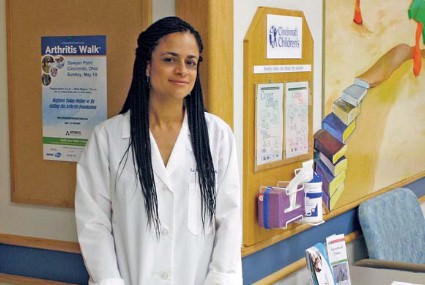
"The insights we gain from PROMIS answers are often things that our standard patient interviews don’t elicit," said Dr. Morgan DeWitt, a pediatric rheumatologist at the Cincinnati Children’s Hospital Medical Center who’s validating some of the tool’s pediatric question banks. "It’s complementary to our history and physical – another way to get the information we need to better serve our patients."
PROMIS is a publicly available Web-based system that uses questions driven by computer adaptive technology to qualify patient descriptions of health status in a number of very specific physical and psychological domains, including several applicable to the rheumatologic illnesses: gastrointestinal health including symptoms, pain, fatigue, depression and anxiety, and physical function.
The banks are not disease-specific, but domain specific – a design that increases their clinical flexibility and carves out for them a space in research and clinical trials. In a paper published just last month describing PROMIS progress, Dr. DeWitt and her coauthors explained how important this is: "The domain-specific approach is based on the perspective that health attributes are not unique to a specific disease, although disorders may have characteristic profiles within domains. The creation of item banks that are not disease-specific permits the comparison of measurements across diseases. Such an approach allows an investigator to determine, for example, the impact of a new medication on fatigue for patients with chronic fatigue syndrome, multiple sclerosis, and cancer. Moreover, it allows for pragmatic research with patients with several diseases, measuring outcomes for domains regardless of specific disease contribution."
PROMIS leads patients through an adaptive response pattern, in which each question presented relies on the answer to the prior question. At the end of each series, the instrument provides a score, compared against normative U.S. population data.
PROMIS and similar outcome measures add an invaluable patient viewpoint to the usual history and physical exam that focuses on specific clinical characteristics, said Dr. Dinesh Khanna, director of the University of Michigan Scleroderma Program, Ann Arbor.
"Physicians tend to believe – whether rightly or wrongly – that our objective measurements are more appropriate and superior ways to measure patients’ disease severity response than the patient’s own subjective complaints. We may be interested in seeing changes in specific things, like joint swelling or tenderness, or an acute phase reactant. But the patient may be much more interested in getting pain and fatigue under control."
Tools like PROMIS encourage physicians to lock onto the problems that are really interfering with patients’ health-related quality of life at the time of each visit, Dr. Khanna said in an interview. "When the patient walks in, I can glance through the questions and their responses – especially the GI topics – and say ‘Okay, today your problem seems to be bloating and reflux, so let’s focus on that.’ I can get right to what is bothering the patient," rather than run through an entire exam or health assessment that might cover irrelevant items.
Unlike some other patient-reported assessments, which are static and need to be completed in their totality, such as the Health Assessment Questionnaire, PROMIS assessments can be tailored to hone in on issues that are specifically meaningful to a unique group of patients. Other assessments "ask a lot of general questions that might not be valid or pertain to that patient, or don’t provide you much insight into physical function, especially in a healthy individual," Dr. Khanna said. As an example, patients with scleroderma took just over a minute to complete each item bank providing information about their physical, mental, and social well-being.

Unlike paper-and-pencil forms, PROMIS has the ability to be fully integrated into existing electronic health record systems. Computer technology teams at Dr. DeWitt’s institution created their own hybrid platform. But a leading EHR developer, Epic, has incorporated PRO libraries – including some of the PROMIS question banks – into its newest EHR software, she said. Physicians can also include their own patient-related outcomes measures if they desire.
Epic’s new system allows patients to access a patient portal section of the EHR in which they can complete their health surveys before an appointment; they can also access "events," which are upcoming surgeries, appointments, or time-bound clinical goals. The system sends patients e-mail reminders to complete their tasks.
The more targeted approach of PROMIS and other patient reported outcome measures translates into a more efficient visit, Dr. DeWitt said in an interview. "You are really limited in your time with each patient. There are only so many things you can ask. Patient report tools can pick up on things that a typical exam, even lab reports, might not reveal. Sometimes labs can come back normal, for instance, when a patient feels really ill."
PROMIS is just one of these types of tools. In fact, Dr. Khanna is the creator of another, the UCLA Scleroderma Clinical Trial Consortium Gastrointestinal Tract Instrument (GIT).
The GIT assesses how a patient’s gastrointestinal health affects functional, psychological, and social well-being. But unlike the GIT and other disease-specific outcome measures, PROMIS offers a large menu of question banks that interrogate a wealth of health issues. Each bank is separately and freely available, allowing clinicians to pick and choose the topics most relevant to their patients. Each bank can be used in its entirety, or in a short form. The pediatric banks are designed for children to self-assess, but there are also a number designed for adult proxies to complete. Most are also available as PDFs that can be used for paper/pencil data collection.
In addition to PROMIS, Dr. DeWitt uses a variety of health assessments, including the Childhood Health Assessment Questionnaire. But in general, those are most useful when patients have serious disabilities. "They pick those problems up well, but as function improves, it becomes harder to differentiate and to track subtle change."
PROMIS offers an improvement in that area, she believes. "I always use the review of systems with patients to identify health concerns. But patients also have problems and limitations that don’t routinely get asked about, and they can be surprising. Without a survey with meaningful items they can report on, you might not get all the information."
Also, she added, "Patient-reported outcomes are a quantifiable way of assessing health outcomes and tracing a patient’s progress over time."
Pain interference is a good example, she said. "You can get the patient to give you a pain intensity score of 0-10, but you don’t see what the impact of that is on their day-to-day functioning."
Ongoing validation studies continue to support and refine the PROMIS measures, Dr. Khanna said. Although PROMIS can be integrated into clinical practice, clinicians need to be able to translate the results into real life decision making. Just how that can be done isn’t yet completely clear.
"The question really is how do you interpret the results and then what do you do about it? This is a problem with any patient-reported outcome measure early in its development," he said. "If I take your blood pressure and it’s 150/90, I see this as an abnormal sign, and I know how to interpret it and what to do. But if you complete a patient report and your score is 40, compared with the normative score of 50 for the U.S. population norm, what does that mean? I know it’s bad, but how bad is it? When do I take action? I have no metric in my mind that corresponds to it."
Validation studies continue to address this, he said. He and his team will soon present their initial interpretation schema for four rheumatology-related question banks at the upcoming annual meeting of the American College of Rheumatology.
Rheumatologist focus groups at the University of Michigan reviewed a series of PROMIS reports completed by rheumatology patients, assessing physical function, pain intensity, fatigue, and depression. Based on the groups’ input, Dr. Khanna and his team adapted the PROMIS heat map, which has a unique, color-coded pictorial representation of how the scores could interact with clinical decision making.
Instead of just looking at raw scores, the group endorsed a "thermal map" in which the population norm is in the center, colored light green. As percentiles decrease, indicating better scores, the colors fade down through blue to dark purple. Increasing percentiles, indicating worsening scores, corresponded to ever-warmer colors, from yellow to orange to red.
A key point of the map is the baseline comparison, which doesn’t use the U.S. norm as the comparator, Dr. Khanna said. "We already know our patients are doing worse than the average person, so why do we want to compare them that way? We want to know how the patient compares with other patients with the same issues for clinical decision making and provide a reference point for discussion with the patient."
"These kinds of things are growing pains," he said. "It just takes some time to work them out. But the rheumatology community is making great strides to in incorporating these into clinical practice."
Both Dr. DeWitt and Dr. Khanna are investigators in studies developing PROMIS question banks for rheumatic diseases.
On Twitter @Alz_Gal
Another acronym is working its way into the rheumatology office, but instead of representing just one more thing to which patients passively submit, PROMIS intends to make them active partners in both clinical assessment and treatment.
The Patient-Reported Outcomes Measurement Information System (PROMIS) was created by the National Institutes of Health in 2004 as way of integrating direct patient input into both clinical care and research. Now rheumatologists are validating PROMIS measures for use in rheumatic diseases for adults and children, and envision a time when the computerized health assessments will become a routine part of their care.
"The insights we gain from PROMIS answers are often things that our standard patient interviews don’t elicit," said Dr. Morgan DeWitt, a pediatric rheumatologist at the Cincinnati Children’s Hospital Medical Center who’s validating some of the tool’s pediatric question banks. "It’s complementary to our history and physical – another way to get the information we need to better serve our patients."
PROMIS is a publicly available Web-based system that uses questions driven by computer adaptive technology to qualify patient descriptions of health status in a number of very specific physical and psychological domains, including several applicable to the rheumatologic illnesses: gastrointestinal health including symptoms, pain, fatigue, depression and anxiety, and physical function.
The banks are not disease-specific, but domain specific – a design that increases their clinical flexibility and carves out for them a space in research and clinical trials. In a paper published just last month describing PROMIS progress, Dr. DeWitt and her coauthors explained how important this is: "The domain-specific approach is based on the perspective that health attributes are not unique to a specific disease, although disorders may have characteristic profiles within domains. The creation of item banks that are not disease-specific permits the comparison of measurements across diseases. Such an approach allows an investigator to determine, for example, the impact of a new medication on fatigue for patients with chronic fatigue syndrome, multiple sclerosis, and cancer. Moreover, it allows for pragmatic research with patients with several diseases, measuring outcomes for domains regardless of specific disease contribution."
PROMIS leads patients through an adaptive response pattern, in which each question presented relies on the answer to the prior question. At the end of each series, the instrument provides a score, compared against normative U.S. population data.
PROMIS and similar outcome measures add an invaluable patient viewpoint to the usual history and physical exam that focuses on specific clinical characteristics, said Dr. Dinesh Khanna, director of the University of Michigan Scleroderma Program, Ann Arbor.
"Physicians tend to believe – whether rightly or wrongly – that our objective measurements are more appropriate and superior ways to measure patients’ disease severity response than the patient’s own subjective complaints. We may be interested in seeing changes in specific things, like joint swelling or tenderness, or an acute phase reactant. But the patient may be much more interested in getting pain and fatigue under control."
Tools like PROMIS encourage physicians to lock onto the problems that are really interfering with patients’ health-related quality of life at the time of each visit, Dr. Khanna said in an interview. "When the patient walks in, I can glance through the questions and their responses – especially the GI topics – and say ‘Okay, today your problem seems to be bloating and reflux, so let’s focus on that.’ I can get right to what is bothering the patient," rather than run through an entire exam or health assessment that might cover irrelevant items.
Unlike some other patient-reported assessments, which are static and need to be completed in their totality, such as the Health Assessment Questionnaire, PROMIS assessments can be tailored to hone in on issues that are specifically meaningful to a unique group of patients. Other assessments "ask a lot of general questions that might not be valid or pertain to that patient, or don’t provide you much insight into physical function, especially in a healthy individual," Dr. Khanna said. As an example, patients with scleroderma took just over a minute to complete each item bank providing information about their physical, mental, and social well-being.
Unlike paper-and-pencil forms, PROMIS has the ability to be fully integrated into existing electronic health record systems. Computer technology teams at Dr. DeWitt’s institution created their own hybrid platform. But a leading EHR developer, Epic, has incorporated PRO libraries – including some of the PROMIS question banks – into its newest EHR software, she said. Physicians can also include their own patient-related outcomes measures if they desire.
Epic’s new system allows patients to access a patient portal section of the EHR in which they can complete their health surveys before an appointment; they can also access "events," which are upcoming surgeries, appointments, or time-bound clinical goals. The system sends patients e-mail reminders to complete their tasks.
The more targeted approach of PROMIS and other patient reported outcome measures translates into a more efficient visit, Dr. DeWitt said in an interview. "You are really limited in your time with each patient. There are only so many things you can ask. Patient report tools can pick up on things that a typical exam, even lab reports, might not reveal. Sometimes labs can come back normal, for instance, when a patient feels really ill."
PROMIS is just one of these types of tools. In fact, Dr. Khanna is the creator of another, the UCLA Scleroderma Clinical Trial Consortium Gastrointestinal Tract Instrument (GIT).
The GIT assesses how a patient’s gastrointestinal health affects functional, psychological, and social well-being. But unlike the GIT and other disease-specific outcome measures, PROMIS offers a large menu of question banks that interrogate a wealth of health issues. Each bank is separately and freely available, allowing clinicians to pick and choose the topics most relevant to their patients. Each bank can be used in its entirety, or in a short form. The pediatric banks are designed for children to self-assess, but there are also a number designed for adult proxies to complete. Most are also available as PDFs that can be used for paper/pencil data collection.
In addition to PROMIS, Dr. DeWitt uses a variety of health assessments, including the Childhood Health Assessment Questionnaire. But in general, those are most useful when patients have serious disabilities. "They pick those problems up well, but as function improves, it becomes harder to differentiate and to track subtle change."
PROMIS offers an improvement in that area, she believes. "I always use the review of systems with patients to identify health concerns. But patients also have problems and limitations that don’t routinely get asked about, and they can be surprising. Without a survey with meaningful items they can report on, you might not get all the information."
Also, she added, "Patient-reported outcomes are a quantifiable way of assessing health outcomes and tracing a patient’s progress over time."
Pain interference is a good example, she said. "You can get the patient to give you a pain intensity score of 0-10, but you don’t see what the impact of that is on their day-to-day functioning."
Ongoing validation studies continue to support and refine the PROMIS measures, Dr. Khanna said. Although PROMIS can be integrated into clinical practice, clinicians need to be able to translate the results into real life decision making. Just how that can be done isn’t yet completely clear.
"The question really is how do you interpret the results and then what do you do about it? This is a problem with any patient-reported outcome measure early in its development," he said. "If I take your blood pressure and it’s 150/90, I see this as an abnormal sign, and I know how to interpret it and what to do. But if you complete a patient report and your score is 40, compared with the normative score of 50 for the U.S. population norm, what does that mean? I know it’s bad, but how bad is it? When do I take action? I have no metric in my mind that corresponds to it."
Validation studies continue to address this, he said. He and his team will soon present their initial interpretation schema for four rheumatology-related question banks at the upcoming annual meeting of the American College of Rheumatology.
Rheumatologist focus groups at the University of Michigan reviewed a series of PROMIS reports completed by rheumatology patients, assessing physical function, pain intensity, fatigue, and depression. Based on the groups’ input, Dr. Khanna and his team adapted the PROMIS heat map, which has a unique, color-coded pictorial representation of how the scores could interact with clinical decision making.
Instead of just looking at raw scores, the group endorsed a "thermal map" in which the population norm is in the center, colored light green. As percentiles decrease, indicating better scores, the colors fade down through blue to dark purple. Increasing percentiles, indicating worsening scores, corresponded to ever-warmer colors, from yellow to orange to red.
A key point of the map is the baseline comparison, which doesn’t use the U.S. norm as the comparator, Dr. Khanna said. "We already know our patients are doing worse than the average person, so why do we want to compare them that way? We want to know how the patient compares with other patients with the same issues for clinical decision making and provide a reference point for discussion with the patient."
"These kinds of things are growing pains," he said. "It just takes some time to work them out. But the rheumatology community is making great strides to in incorporating these into clinical practice."
Both Dr. DeWitt and Dr. Khanna are investigators in studies developing PROMIS question banks for rheumatic diseases.
On Twitter @Alz_Gal
Another acronym is working its way into the rheumatology office, but instead of representing just one more thing to which patients passively submit, PROMIS intends to make them active partners in both clinical assessment and treatment.
The Patient-Reported Outcomes Measurement Information System (PROMIS) was created by the National Institutes of Health in 2004 as way of integrating direct patient input into both clinical care and research. Now rheumatologists are validating PROMIS measures for use in rheumatic diseases for adults and children, and envision a time when the computerized health assessments will become a routine part of their care.
"The insights we gain from PROMIS answers are often things that our standard patient interviews don’t elicit," said Dr. Morgan DeWitt, a pediatric rheumatologist at the Cincinnati Children’s Hospital Medical Center who’s validating some of the tool’s pediatric question banks. "It’s complementary to our history and physical – another way to get the information we need to better serve our patients."
PROMIS is a publicly available Web-based system that uses questions driven by computer adaptive technology to qualify patient descriptions of health status in a number of very specific physical and psychological domains, including several applicable to the rheumatologic illnesses: gastrointestinal health including symptoms, pain, fatigue, depression and anxiety, and physical function.
The banks are not disease-specific, but domain specific – a design that increases their clinical flexibility and carves out for them a space in research and clinical trials. In a paper published just last month describing PROMIS progress, Dr. DeWitt and her coauthors explained how important this is: "The domain-specific approach is based on the perspective that health attributes are not unique to a specific disease, although disorders may have characteristic profiles within domains. The creation of item banks that are not disease-specific permits the comparison of measurements across diseases. Such an approach allows an investigator to determine, for example, the impact of a new medication on fatigue for patients with chronic fatigue syndrome, multiple sclerosis, and cancer. Moreover, it allows for pragmatic research with patients with several diseases, measuring outcomes for domains regardless of specific disease contribution."
PROMIS leads patients through an adaptive response pattern, in which each question presented relies on the answer to the prior question. At the end of each series, the instrument provides a score, compared against normative U.S. population data.
PROMIS and similar outcome measures add an invaluable patient viewpoint to the usual history and physical exam that focuses on specific clinical characteristics, said Dr. Dinesh Khanna, director of the University of Michigan Scleroderma Program, Ann Arbor.
"Physicians tend to believe – whether rightly or wrongly – that our objective measurements are more appropriate and superior ways to measure patients’ disease severity response than the patient’s own subjective complaints. We may be interested in seeing changes in specific things, like joint swelling or tenderness, or an acute phase reactant. But the patient may be much more interested in getting pain and fatigue under control."
Tools like PROMIS encourage physicians to lock onto the problems that are really interfering with patients’ health-related quality of life at the time of each visit, Dr. Khanna said in an interview. "When the patient walks in, I can glance through the questions and their responses – especially the GI topics – and say ‘Okay, today your problem seems to be bloating and reflux, so let’s focus on that.’ I can get right to what is bothering the patient," rather than run through an entire exam or health assessment that might cover irrelevant items.
Unlike some other patient-reported assessments, which are static and need to be completed in their totality, such as the Health Assessment Questionnaire, PROMIS assessments can be tailored to hone in on issues that are specifically meaningful to a unique group of patients. Other assessments "ask a lot of general questions that might not be valid or pertain to that patient, or don’t provide you much insight into physical function, especially in a healthy individual," Dr. Khanna said. As an example, patients with scleroderma took just over a minute to complete each item bank providing information about their physical, mental, and social well-being.
Unlike paper-and-pencil forms, PROMIS has the ability to be fully integrated into existing electronic health record systems. Computer technology teams at Dr. DeWitt’s institution created their own hybrid platform. But a leading EHR developer, Epic, has incorporated PRO libraries – including some of the PROMIS question banks – into its newest EHR software, she said. Physicians can also include their own patient-related outcomes measures if they desire.
Epic’s new system allows patients to access a patient portal section of the EHR in which they can complete their health surveys before an appointment; they can also access "events," which are upcoming surgeries, appointments, or time-bound clinical goals. The system sends patients e-mail reminders to complete their tasks.
The more targeted approach of PROMIS and other patient reported outcome measures translates into a more efficient visit, Dr. DeWitt said in an interview. "You are really limited in your time with each patient. There are only so many things you can ask. Patient report tools can pick up on things that a typical exam, even lab reports, might not reveal. Sometimes labs can come back normal, for instance, when a patient feels really ill."
PROMIS is just one of these types of tools. In fact, Dr. Khanna is the creator of another, the UCLA Scleroderma Clinical Trial Consortium Gastrointestinal Tract Instrument (GIT).
The GIT assesses how a patient’s gastrointestinal health affects functional, psychological, and social well-being. But unlike the GIT and other disease-specific outcome measures, PROMIS offers a large menu of question banks that interrogate a wealth of health issues. Each bank is separately and freely available, allowing clinicians to pick and choose the topics most relevant to their patients. Each bank can be used in its entirety, or in a short form. The pediatric banks are designed for children to self-assess, but there are also a number designed for adult proxies to complete. Most are also available as PDFs that can be used for paper/pencil data collection.
In addition to PROMIS, Dr. DeWitt uses a variety of health assessments, including the Childhood Health Assessment Questionnaire. But in general, those are most useful when patients have serious disabilities. "They pick those problems up well, but as function improves, it becomes harder to differentiate and to track subtle change."
PROMIS offers an improvement in that area, she believes. "I always use the review of systems with patients to identify health concerns. But patients also have problems and limitations that don’t routinely get asked about, and they can be surprising. Without a survey with meaningful items they can report on, you might not get all the information."
Also, she added, "Patient-reported outcomes are a quantifiable way of assessing health outcomes and tracing a patient’s progress over time."
Pain interference is a good example, she said. "You can get the patient to give you a pain intensity score of 0-10, but you don’t see what the impact of that is on their day-to-day functioning."
Ongoing validation studies continue to support and refine the PROMIS measures, Dr. Khanna said. Although PROMIS can be integrated into clinical practice, clinicians need to be able to translate the results into real life decision making. Just how that can be done isn’t yet completely clear.
"The question really is how do you interpret the results and then what do you do about it? This is a problem with any patient-reported outcome measure early in its development," he said. "If I take your blood pressure and it’s 150/90, I see this as an abnormal sign, and I know how to interpret it and what to do. But if you complete a patient report and your score is 40, compared with the normative score of 50 for the U.S. population norm, what does that mean? I know it’s bad, but how bad is it? When do I take action? I have no metric in my mind that corresponds to it."
Validation studies continue to address this, he said. He and his team will soon present their initial interpretation schema for four rheumatology-related question banks at the upcoming annual meeting of the American College of Rheumatology.
Rheumatologist focus groups at the University of Michigan reviewed a series of PROMIS reports completed by rheumatology patients, assessing physical function, pain intensity, fatigue, and depression. Based on the groups’ input, Dr. Khanna and his team adapted the PROMIS heat map, which has a unique, color-coded pictorial representation of how the scores could interact with clinical decision making.
Instead of just looking at raw scores, the group endorsed a "thermal map" in which the population norm is in the center, colored light green. As percentiles decrease, indicating better scores, the colors fade down through blue to dark purple. Increasing percentiles, indicating worsening scores, corresponded to ever-warmer colors, from yellow to orange to red.
A key point of the map is the baseline comparison, which doesn’t use the U.S. norm as the comparator, Dr. Khanna said. "We already know our patients are doing worse than the average person, so why do we want to compare them that way? We want to know how the patient compares with other patients with the same issues for clinical decision making and provide a reference point for discussion with the patient."
"These kinds of things are growing pains," he said. "It just takes some time to work them out. But the rheumatology community is making great strides to in incorporating these into clinical practice."
Both Dr. DeWitt and Dr. Khanna are investigators in studies developing PROMIS question banks for rheumatic diseases.
On Twitter @Alz_Gal