User login
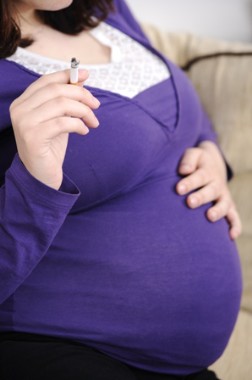
Prenatal smoking by mothers and fathers was associated with a 29%-83% increase in the risk of pediatric attention-deficit/hyperactivity disorder, compared with children of nonsmoking parents, investigators reported online July 21 in Pediatrics.
"The association was consistently stronger for maternal smoking than for paternal smoking and was also found for mother’s use of nicotine replacement during pregnancy," wrote Jin Liang Zhu, Ph.D., of Aarhus University in Denmark and his associates.
The cohort study included data from 84,803 children from the Danish National Birth Cohort. A total of 2,009 (2.4%) children had been diagnosed with attention-deficit/hyperactivity disorder (ADHD) or had received medication for ADHD during the 7-year follow-up period, the researchers said (Pediatrics 2014;134:e382-8 [doi: 10.1542/peds.2014-0213]).
Compared with children of nonsmoking parents, children were at significantly increased risk of ADHD when both parents smoked (adjusted hazard ratio, 1.83), when only the mother smoked (aHR, 1.63), and when only the father smoked (aHR, 1.29), the investigators reported. However, children of smoking mothers and nonsmoking fathers had a higher risk of ADHD (aHR, 1.26) than did children of nonsmoking mothers and smoking fathers, the researchers said.
Information on parental smoking was self-reported, and relatively few mothers had used nicotine replacement therapy, leading to unstable estimates and wide confidence intervals, the researchers noted. In addition, the response rate to follow-up questions about ADHD was moderate, which could have led to selection bias, Dr. Zhu and his associates said.
The Tryg Foundation and the European Research Council funded the study. The authors reporting having no conflicts of interest.
Prenatal smoking by mothers and fathers was associated with a 29%-83% increase in the risk of pediatric attention-deficit/hyperactivity disorder, compared with children of nonsmoking parents, investigators reported online July 21 in Pediatrics.
"The association was consistently stronger for maternal smoking than for paternal smoking and was also found for mother’s use of nicotine replacement during pregnancy," wrote Jin Liang Zhu, Ph.D., of Aarhus University in Denmark and his associates.
The cohort study included data from 84,803 children from the Danish National Birth Cohort. A total of 2,009 (2.4%) children had been diagnosed with attention-deficit/hyperactivity disorder (ADHD) or had received medication for ADHD during the 7-year follow-up period, the researchers said (Pediatrics 2014;134:e382-8 [doi: 10.1542/peds.2014-0213]).
Compared with children of nonsmoking parents, children were at significantly increased risk of ADHD when both parents smoked (adjusted hazard ratio, 1.83), when only the mother smoked (aHR, 1.63), and when only the father smoked (aHR, 1.29), the investigators reported. However, children of smoking mothers and nonsmoking fathers had a higher risk of ADHD (aHR, 1.26) than did children of nonsmoking mothers and smoking fathers, the researchers said.
Information on parental smoking was self-reported, and relatively few mothers had used nicotine replacement therapy, leading to unstable estimates and wide confidence intervals, the researchers noted. In addition, the response rate to follow-up questions about ADHD was moderate, which could have led to selection bias, Dr. Zhu and his associates said.
The Tryg Foundation and the European Research Council funded the study. The authors reporting having no conflicts of interest.
Prenatal smoking by mothers and fathers was associated with a 29%-83% increase in the risk of pediatric attention-deficit/hyperactivity disorder, compared with children of nonsmoking parents, investigators reported online July 21 in Pediatrics.
"The association was consistently stronger for maternal smoking than for paternal smoking and was also found for mother’s use of nicotine replacement during pregnancy," wrote Jin Liang Zhu, Ph.D., of Aarhus University in Denmark and his associates.
The cohort study included data from 84,803 children from the Danish National Birth Cohort. A total of 2,009 (2.4%) children had been diagnosed with attention-deficit/hyperactivity disorder (ADHD) or had received medication for ADHD during the 7-year follow-up period, the researchers said (Pediatrics 2014;134:e382-8 [doi: 10.1542/peds.2014-0213]).
Compared with children of nonsmoking parents, children were at significantly increased risk of ADHD when both parents smoked (adjusted hazard ratio, 1.83), when only the mother smoked (aHR, 1.63), and when only the father smoked (aHR, 1.29), the investigators reported. However, children of smoking mothers and nonsmoking fathers had a higher risk of ADHD (aHR, 1.26) than did children of nonsmoking mothers and smoking fathers, the researchers said.
Information on parental smoking was self-reported, and relatively few mothers had used nicotine replacement therapy, leading to unstable estimates and wide confidence intervals, the researchers noted. In addition, the response rate to follow-up questions about ADHD was moderate, which could have led to selection bias, Dr. Zhu and his associates said.
The Tryg Foundation and the European Research Council funded the study. The authors reporting having no conflicts of interest.
FROM PEDIATRICS
Key clinical point: Prenatal nicotine exposure may increase the risk of pediatric attention-deficit/hyperactivity disorder.
Major finding: Children of smoking mothers and nonsmoking fathers had a higher risk of ADHD (adjusted hazard ratio, 1.26) than did children of nonsmoking mothers and smoking fathers.
Data source: Cohort study of 84,803 children from the Danish National Birth Cohort.
Disclosures: The Tryg Foundation and the European Research Council funded the study. The authors reporting having no conflicts of interest.