User login
The new era of health care delivery: Can gastroenterologists survive and thrive?
Although no one can predict the future of health care delivery and finance with confidence, transformation is certain, and physician success will depend on understanding the key environmental drivers of change and responding by adding value.
Health care cost inflation at three times the rate of overall inflation and workers’ earnings, and a rapidly increasing health insurance premium cost share paid by workers, are no longer acceptable to the public or employers. Our increasingly well-informed patients are demanding affordable health care, participation in treatment decisions, and access to physicians who understand and comprehensively address their needs. They are willing to abandon long-time physician relationships, direct access to specialists, choice of hospitals, and access to prestigious institutions. Employers expect quality care for their employees and will not pay significantly more for it. They will not pay for the reputation of providers; they do value location of physician offices and mostly seek low costs.

Our future success depends on the value equation:
Value = Quality (safety, outcomes, patient experience, transparency)/Price
There will be a progressive shift from volume/fee-for-service to value. Employers will shift from costly defined benefit plans to defined contribution plans. Employees will thus become price-sensitive shoppers. Some employers will discontinue health benefits and pay the (lower-cost) fines while their employees shift to exchanges, perhaps at Medicare (or even Medicaid) provider reimbursement rates. Employees will choose high-deductible plans and decrease their elective health care utilization as they find they have to go into their own wallets first.
Physician providers will, through various payment methods such as capitation, accept risk; specialists and hospitals will become cost centers, and hospitals could become commodities.
Providers will progressively integrate and physicians will accept salaries, seeking income security, affordable responsive management, and scale-driven partnerships. The jury is still out on the affordability, scalability, and efficacy of patient-centered medical homes, accountable care organizations, etc.
Employers will increasingly become catalysts of change in health care delivery, having lost confidence in delivery system motivation, health plan strategies, managed care, potentially monopolistic integration and consolidation, and the government’s ability to lead the essential bending of the health care cost curve.
Employers will push for health plan–sponsored markets that drive market share to "high-performing provider organizations." They will demand integrated, coordinated multidisciplinary team care, with smooth transitions among providers, proactive care to promote wellness, patient-centered care with patient and family involvement, and transparent, electronically documented quality outcomes. They will tie their defined contributions to the price of the highest-value systems, and will support narrow networks to facilitate the cost-effectiveness of scale. There will be few negotiations and "deals"; systems of providers will compete based on objective measurements. Large employers are selecting, and will increasingly select the highest-value specialty providers and will send all of their employees with high-cost needs to a small number of such providers, regardless of geographic proximity, with all expenses paid. Employers will use their expertise in managing retail unit costs to enter and compete in the health care markets as disruptive innovative providers.
How will gastroenterologists survive and thrive? Accept the reality of transformation; accept that historic success and good will are not part of the value equation; spend time defining how we will add value as defined by patients, employers, and government; choose the team that has the same willingness to transform; facilitate cost reduction efforts; and provide excellent patient experience (including access and education) and excellent referring physician experience (including availability, accountability, and technical and cognitive services). Coast only if you are a short-timer with a well-funded pension plan.
Martin Brotman, M.D., is senior vice president of education, research, and philanthropy at Sutter Health, San Francisco.
Although no one can predict the future of health care delivery and finance with confidence, transformation is certain, and physician success will depend on understanding the key environmental drivers of change and responding by adding value.
Health care cost inflation at three times the rate of overall inflation and workers’ earnings, and a rapidly increasing health insurance premium cost share paid by workers, are no longer acceptable to the public or employers. Our increasingly well-informed patients are demanding affordable health care, participation in treatment decisions, and access to physicians who understand and comprehensively address their needs. They are willing to abandon long-time physician relationships, direct access to specialists, choice of hospitals, and access to prestigious institutions. Employers expect quality care for their employees and will not pay significantly more for it. They will not pay for the reputation of providers; they do value location of physician offices and mostly seek low costs.
Our future success depends on the value equation:
Value = Quality (safety, outcomes, patient experience, transparency)/Price
There will be a progressive shift from volume/fee-for-service to value. Employers will shift from costly defined benefit plans to defined contribution plans. Employees will thus become price-sensitive shoppers. Some employers will discontinue health benefits and pay the (lower-cost) fines while their employees shift to exchanges, perhaps at Medicare (or even Medicaid) provider reimbursement rates. Employees will choose high-deductible plans and decrease their elective health care utilization as they find they have to go into their own wallets first.
Physician providers will, through various payment methods such as capitation, accept risk; specialists and hospitals will become cost centers, and hospitals could become commodities.
Providers will progressively integrate and physicians will accept salaries, seeking income security, affordable responsive management, and scale-driven partnerships. The jury is still out on the affordability, scalability, and efficacy of patient-centered medical homes, accountable care organizations, etc.
Employers will increasingly become catalysts of change in health care delivery, having lost confidence in delivery system motivation, health plan strategies, managed care, potentially monopolistic integration and consolidation, and the government’s ability to lead the essential bending of the health care cost curve.
Employers will push for health plan–sponsored markets that drive market share to "high-performing provider organizations." They will demand integrated, coordinated multidisciplinary team care, with smooth transitions among providers, proactive care to promote wellness, patient-centered care with patient and family involvement, and transparent, electronically documented quality outcomes. They will tie their defined contributions to the price of the highest-value systems, and will support narrow networks to facilitate the cost-effectiveness of scale. There will be few negotiations and "deals"; systems of providers will compete based on objective measurements. Large employers are selecting, and will increasingly select the highest-value specialty providers and will send all of their employees with high-cost needs to a small number of such providers, regardless of geographic proximity, with all expenses paid. Employers will use their expertise in managing retail unit costs to enter and compete in the health care markets as disruptive innovative providers.
How will gastroenterologists survive and thrive? Accept the reality of transformation; accept that historic success and good will are not part of the value equation; spend time defining how we will add value as defined by patients, employers, and government; choose the team that has the same willingness to transform; facilitate cost reduction efforts; and provide excellent patient experience (including access and education) and excellent referring physician experience (including availability, accountability, and technical and cognitive services). Coast only if you are a short-timer with a well-funded pension plan.
Martin Brotman, M.D., is senior vice president of education, research, and philanthropy at Sutter Health, San Francisco.
Although no one can predict the future of health care delivery and finance with confidence, transformation is certain, and physician success will depend on understanding the key environmental drivers of change and responding by adding value.
Health care cost inflation at three times the rate of overall inflation and workers’ earnings, and a rapidly increasing health insurance premium cost share paid by workers, are no longer acceptable to the public or employers. Our increasingly well-informed patients are demanding affordable health care, participation in treatment decisions, and access to physicians who understand and comprehensively address their needs. They are willing to abandon long-time physician relationships, direct access to specialists, choice of hospitals, and access to prestigious institutions. Employers expect quality care for their employees and will not pay significantly more for it. They will not pay for the reputation of providers; they do value location of physician offices and mostly seek low costs.
Our future success depends on the value equation:
Value = Quality (safety, outcomes, patient experience, transparency)/Price
There will be a progressive shift from volume/fee-for-service to value. Employers will shift from costly defined benefit plans to defined contribution plans. Employees will thus become price-sensitive shoppers. Some employers will discontinue health benefits and pay the (lower-cost) fines while their employees shift to exchanges, perhaps at Medicare (or even Medicaid) provider reimbursement rates. Employees will choose high-deductible plans and decrease their elective health care utilization as they find they have to go into their own wallets first.
Physician providers will, through various payment methods such as capitation, accept risk; specialists and hospitals will become cost centers, and hospitals could become commodities.
Providers will progressively integrate and physicians will accept salaries, seeking income security, affordable responsive management, and scale-driven partnerships. The jury is still out on the affordability, scalability, and efficacy of patient-centered medical homes, accountable care organizations, etc.
Employers will increasingly become catalysts of change in health care delivery, having lost confidence in delivery system motivation, health plan strategies, managed care, potentially monopolistic integration and consolidation, and the government’s ability to lead the essential bending of the health care cost curve.
Employers will push for health plan–sponsored markets that drive market share to "high-performing provider organizations." They will demand integrated, coordinated multidisciplinary team care, with smooth transitions among providers, proactive care to promote wellness, patient-centered care with patient and family involvement, and transparent, electronically documented quality outcomes. They will tie their defined contributions to the price of the highest-value systems, and will support narrow networks to facilitate the cost-effectiveness of scale. There will be few negotiations and "deals"; systems of providers will compete based on objective measurements. Large employers are selecting, and will increasingly select the highest-value specialty providers and will send all of their employees with high-cost needs to a small number of such providers, regardless of geographic proximity, with all expenses paid. Employers will use their expertise in managing retail unit costs to enter and compete in the health care markets as disruptive innovative providers.
How will gastroenterologists survive and thrive? Accept the reality of transformation; accept that historic success and good will are not part of the value equation; spend time defining how we will add value as defined by patients, employers, and government; choose the team that has the same willingness to transform; facilitate cost reduction efforts; and provide excellent patient experience (including access and education) and excellent referring physician experience (including availability, accountability, and technical and cognitive services). Coast only if you are a short-timer with a well-funded pension plan.
Martin Brotman, M.D., is senior vice president of education, research, and philanthropy at Sutter Health, San Francisco.
Donate a Colonoscopy to the Research Foundation
I am asking you to support a cause important to me and equally important to you. Please ensure that scientific discoveries and medical breakthroughs in the field of digestive diseases continue by making a tax-deductible gift to the AGA Research Foundation today.
Scientific discovery helps you successfully practice medicine

As clinicians we benefit from advances in clinical care made possible by scientific discovery. Widespread use of fiber-optic endoscopes beginning in the 1960s later led to retrograde colonoscopy of the entire colon and endoscopic excision of polyps, helping to significantly reduce colon cancer mortality rates. Barry J. Marshall and J. Robin Warren’s discovery that peptic ulcer disease was primarily caused by Helicobacter pylori helped revolutionize the treatment of the disease.
These are just a couple of examples of the highest-profile advances in the field. There are many more. Most every diagnostic decision you make and every treatment protocol you follow has its origins in bench science and clinical trials.
Imagine your practice without these advances
Sometimes we take for granted the things we do every day. But, where would we be as clinicians without scientific discovery and the people behind these important medical breakthroughs? Would most internal conditions only be diagnosed or treated with open surgery? Would the treatment of patients with peptic ulcer disease focus on hospitalization, bed rest, and prescription of special bland food?
More importantly, where will the field be if we don’t continue to invest in scientific discovery and ensure the ongoing pipeline of young investigators who will contribute to future advances? The AGA Research Foundation funds promising young investigators who might not receive funding otherwise at crucial times in their early careers.
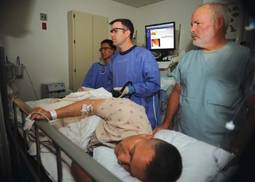
The research of these individuals, while important to the field, if left unfunded, could end prematurely. That’s something the field can’t afford, and that’s why I’ve supported the AGA Research Foundation over the years through my donations.
Show support, donate a colonoscopy
Donate a colonoscopy? Yes, symbolically. I earlier mentioned colonoscopy as one of my examples of how advances in the field help us deliver more effective patient care. Many of us perform colonoscopies on a regular basis. By donating your physician fee for just one screening colonoscopy (about $400-$800), you can make the difference in the lives of the young basic science and clinical investigators who are supported by the AGA Research Foundation through its research awards program. It’s a way for you to show your gratitude and give back to the field.
If you don’t perform colonoscopies, aren’t sure of the physician fee, or would like to give a different amount, that’s fine.
You can demonstrate your support by sending your tax-deductible gift of $400, $800, $1,000, or any amount you can give. You can make a secure online donation at www.gastro.org/contribute.
Your gift will go toward an endowment that will support young investigators on an ongoing basis, making it a gift that keeps on giving. Remember to give by Dec. 31, 2012, to receive a tax credit for this year.
Thank you in advance for your support. Best wishes for a happy, healthy holiday season and prosperous New Year.
Martin Brotman, M.D., AGAF, is Chair Elect of the AGA Research Foundation. He also is Senior Vice President of Education, Research, and Philanthropy at CPMC Sutter Health, San Francisco.
I am asking you to support a cause important to me and equally important to you. Please ensure that scientific discoveries and medical breakthroughs in the field of digestive diseases continue by making a tax-deductible gift to the AGA Research Foundation today.
Scientific discovery helps you successfully practice medicine
As clinicians we benefit from advances in clinical care made possible by scientific discovery. Widespread use of fiber-optic endoscopes beginning in the 1960s later led to retrograde colonoscopy of the entire colon and endoscopic excision of polyps, helping to significantly reduce colon cancer mortality rates. Barry J. Marshall and J. Robin Warren’s discovery that peptic ulcer disease was primarily caused by Helicobacter pylori helped revolutionize the treatment of the disease.
These are just a couple of examples of the highest-profile advances in the field. There are many more. Most every diagnostic decision you make and every treatment protocol you follow has its origins in bench science and clinical trials.
Imagine your practice without these advances
Sometimes we take for granted the things we do every day. But, where would we be as clinicians without scientific discovery and the people behind these important medical breakthroughs? Would most internal conditions only be diagnosed or treated with open surgery? Would the treatment of patients with peptic ulcer disease focus on hospitalization, bed rest, and prescription of special bland food?
More importantly, where will the field be if we don’t continue to invest in scientific discovery and ensure the ongoing pipeline of young investigators who will contribute to future advances? The AGA Research Foundation funds promising young investigators who might not receive funding otherwise at crucial times in their early careers.
The research of these individuals, while important to the field, if left unfunded, could end prematurely. That’s something the field can’t afford, and that’s why I’ve supported the AGA Research Foundation over the years through my donations.
Show support, donate a colonoscopy
Donate a colonoscopy? Yes, symbolically. I earlier mentioned colonoscopy as one of my examples of how advances in the field help us deliver more effective patient care. Many of us perform colonoscopies on a regular basis. By donating your physician fee for just one screening colonoscopy (about $400-$800), you can make the difference in the lives of the young basic science and clinical investigators who are supported by the AGA Research Foundation through its research awards program. It’s a way for you to show your gratitude and give back to the field.
If you don’t perform colonoscopies, aren’t sure of the physician fee, or would like to give a different amount, that’s fine.
You can demonstrate your support by sending your tax-deductible gift of $400, $800, $1,000, or any amount you can give. You can make a secure online donation at www.gastro.org/contribute.
Your gift will go toward an endowment that will support young investigators on an ongoing basis, making it a gift that keeps on giving. Remember to give by Dec. 31, 2012, to receive a tax credit for this year.
Thank you in advance for your support. Best wishes for a happy, healthy holiday season and prosperous New Year.
Martin Brotman, M.D., AGAF, is Chair Elect of the AGA Research Foundation. He also is Senior Vice President of Education, Research, and Philanthropy at CPMC Sutter Health, San Francisco.
I am asking you to support a cause important to me and equally important to you. Please ensure that scientific discoveries and medical breakthroughs in the field of digestive diseases continue by making a tax-deductible gift to the AGA Research Foundation today.
Scientific discovery helps you successfully practice medicine
As clinicians we benefit from advances in clinical care made possible by scientific discovery. Widespread use of fiber-optic endoscopes beginning in the 1960s later led to retrograde colonoscopy of the entire colon and endoscopic excision of polyps, helping to significantly reduce colon cancer mortality rates. Barry J. Marshall and J. Robin Warren’s discovery that peptic ulcer disease was primarily caused by Helicobacter pylori helped revolutionize the treatment of the disease.
These are just a couple of examples of the highest-profile advances in the field. There are many more. Most every diagnostic decision you make and every treatment protocol you follow has its origins in bench science and clinical trials.
Imagine your practice without these advances
Sometimes we take for granted the things we do every day. But, where would we be as clinicians without scientific discovery and the people behind these important medical breakthroughs? Would most internal conditions only be diagnosed or treated with open surgery? Would the treatment of patients with peptic ulcer disease focus on hospitalization, bed rest, and prescription of special bland food?
More importantly, where will the field be if we don’t continue to invest in scientific discovery and ensure the ongoing pipeline of young investigators who will contribute to future advances? The AGA Research Foundation funds promising young investigators who might not receive funding otherwise at crucial times in their early careers.
The research of these individuals, while important to the field, if left unfunded, could end prematurely. That’s something the field can’t afford, and that’s why I’ve supported the AGA Research Foundation over the years through my donations.
Show support, donate a colonoscopy
Donate a colonoscopy? Yes, symbolically. I earlier mentioned colonoscopy as one of my examples of how advances in the field help us deliver more effective patient care. Many of us perform colonoscopies on a regular basis. By donating your physician fee for just one screening colonoscopy (about $400-$800), you can make the difference in the lives of the young basic science and clinical investigators who are supported by the AGA Research Foundation through its research awards program. It’s a way for you to show your gratitude and give back to the field.
If you don’t perform colonoscopies, aren’t sure of the physician fee, or would like to give a different amount, that’s fine.
You can demonstrate your support by sending your tax-deductible gift of $400, $800, $1,000, or any amount you can give. You can make a secure online donation at www.gastro.org/contribute.
Your gift will go toward an endowment that will support young investigators on an ongoing basis, making it a gift that keeps on giving. Remember to give by Dec. 31, 2012, to receive a tax credit for this year.
Thank you in advance for your support. Best wishes for a happy, healthy holiday season and prosperous New Year.
Martin Brotman, M.D., AGAF, is Chair Elect of the AGA Research Foundation. He also is Senior Vice President of Education, Research, and Philanthropy at CPMC Sutter Health, San Francisco.
