User login
Official Newspaper of the American College of Surgeons
Award named in honor of Dr. Clowes available for 2017
The American College of Surgeons (ACS) is pleased to offer the George H. A. Clowes, Jr., MD, FACS, Memorial Research Career Development Award for 2017—made possible through the generosity of The Clowes Fund, Inc., of Indianapolis, IN. This award, consisting of a stipend of $45,000 for each of five years that is non-renewable thereafter, supports the research of a promising young surgical investigator. The closing date for receipt of completed 2017 applications and all related documents is August 1, 2016.
The criteria for selection of the recipient of this award are as follows:
• The award is restricted to a Fellow or an Associate Fellow of the ACS who has completed an accredited residency in general surgery within the last seven years (exclusive of time off for maternity leave, military deployment, or medical leave) and has received a full-time faculty appointment at a medical school accredited by the Liaison Committee on Medical Education in the U.S. or by the Committee for Accreditation of Canadian Medical Schools in Canada. The applicant’s academic appointment may not be above the level of assistant professor. Applicants should provide evidence (by publication or otherwise) of productive initial efforts in laboratory research.
• The award may be used for salary support or other purposes at the discretion of the recipient and the institution. Indirect costs are not paid to the recipient or to the recipient’s institution.
• The ACS Scholarships Committee will not consider applicants who have already received research career development awards from professional societies. The committee will give preference to applicants who have received or are working toward a K08 or K23 National Institutes of Health (NIH) grant. The recipient is responsible for notifying the College’s Scholarships Administrator and requesting approval of funding from another source.
• The administrator (dean or fiscal officer) and the head of the applicant’s department or administrative unit must approve the application. This approval must include a commitment to continuation of the academic position and facilities for research throughout the period of the award. In addition, the approval should specify that at least 50 percent of the applicant’s time will be spent conducting the research proposed in the application. This percentage may run concurrently with the time requirements of NIH or other accepted funding.
• The applicant must submit, in addition to the application form, an NIH-style biosketch, a detailed research plan of up to eight pages in length, and a proposed budget for the five-year period of the award. The applicant also is required to submit a cover letter of no more than one page describing his or her career objectives, how these career objectives will be achieved, and how the research protocol furthers the applicant’s career development. The ACS Scholarships Committee requires an annual written narrative and financial progress report from the recipient; annual renewal will be based on these reports.
• While holding the award, the recipient is required to attend the Clinical Congress of the ACS; the 2017 recipient will be expected to attend the 2018, 2020, and 2022 Clinical Congresses and present reports to the Scholarships Committee and its guests.
• Upon completion of the five-year funding period, the recipient will be required to submit a final narrative report summarizing research progress and providing information regarding current academic rank, sources of research support, and future plans. The recipient also is required to apply to the Scientific Forum at the conclusion of the award period.
The application form must be completed online and may be posted on the ACS website at facs.org/member-services/scholarships/research/acsclowes. Contact the Scholarships Administrator at [email protected] for additional information.
The American College of Surgeons (ACS) is pleased to offer the George H. A. Clowes, Jr., MD, FACS, Memorial Research Career Development Award for 2017—made possible through the generosity of The Clowes Fund, Inc., of Indianapolis, IN. This award, consisting of a stipend of $45,000 for each of five years that is non-renewable thereafter, supports the research of a promising young surgical investigator. The closing date for receipt of completed 2017 applications and all related documents is August 1, 2016.
The criteria for selection of the recipient of this award are as follows:
• The award is restricted to a Fellow or an Associate Fellow of the ACS who has completed an accredited residency in general surgery within the last seven years (exclusive of time off for maternity leave, military deployment, or medical leave) and has received a full-time faculty appointment at a medical school accredited by the Liaison Committee on Medical Education in the U.S. or by the Committee for Accreditation of Canadian Medical Schools in Canada. The applicant’s academic appointment may not be above the level of assistant professor. Applicants should provide evidence (by publication or otherwise) of productive initial efforts in laboratory research.
• The award may be used for salary support or other purposes at the discretion of the recipient and the institution. Indirect costs are not paid to the recipient or to the recipient’s institution.
• The ACS Scholarships Committee will not consider applicants who have already received research career development awards from professional societies. The committee will give preference to applicants who have received or are working toward a K08 or K23 National Institutes of Health (NIH) grant. The recipient is responsible for notifying the College’s Scholarships Administrator and requesting approval of funding from another source.
• The administrator (dean or fiscal officer) and the head of the applicant’s department or administrative unit must approve the application. This approval must include a commitment to continuation of the academic position and facilities for research throughout the period of the award. In addition, the approval should specify that at least 50 percent of the applicant’s time will be spent conducting the research proposed in the application. This percentage may run concurrently with the time requirements of NIH or other accepted funding.
• The applicant must submit, in addition to the application form, an NIH-style biosketch, a detailed research plan of up to eight pages in length, and a proposed budget for the five-year period of the award. The applicant also is required to submit a cover letter of no more than one page describing his or her career objectives, how these career objectives will be achieved, and how the research protocol furthers the applicant’s career development. The ACS Scholarships Committee requires an annual written narrative and financial progress report from the recipient; annual renewal will be based on these reports.
• While holding the award, the recipient is required to attend the Clinical Congress of the ACS; the 2017 recipient will be expected to attend the 2018, 2020, and 2022 Clinical Congresses and present reports to the Scholarships Committee and its guests.
• Upon completion of the five-year funding period, the recipient will be required to submit a final narrative report summarizing research progress and providing information regarding current academic rank, sources of research support, and future plans. The recipient also is required to apply to the Scientific Forum at the conclusion of the award period.
The application form must be completed online and may be posted on the ACS website at facs.org/member-services/scholarships/research/acsclowes. Contact the Scholarships Administrator at [email protected] for additional information.
The American College of Surgeons (ACS) is pleased to offer the George H. A. Clowes, Jr., MD, FACS, Memorial Research Career Development Award for 2017—made possible through the generosity of The Clowes Fund, Inc., of Indianapolis, IN. This award, consisting of a stipend of $45,000 for each of five years that is non-renewable thereafter, supports the research of a promising young surgical investigator. The closing date for receipt of completed 2017 applications and all related documents is August 1, 2016.
The criteria for selection of the recipient of this award are as follows:
• The award is restricted to a Fellow or an Associate Fellow of the ACS who has completed an accredited residency in general surgery within the last seven years (exclusive of time off for maternity leave, military deployment, or medical leave) and has received a full-time faculty appointment at a medical school accredited by the Liaison Committee on Medical Education in the U.S. or by the Committee for Accreditation of Canadian Medical Schools in Canada. The applicant’s academic appointment may not be above the level of assistant professor. Applicants should provide evidence (by publication or otherwise) of productive initial efforts in laboratory research.
• The award may be used for salary support or other purposes at the discretion of the recipient and the institution. Indirect costs are not paid to the recipient or to the recipient’s institution.
• The ACS Scholarships Committee will not consider applicants who have already received research career development awards from professional societies. The committee will give preference to applicants who have received or are working toward a K08 or K23 National Institutes of Health (NIH) grant. The recipient is responsible for notifying the College’s Scholarships Administrator and requesting approval of funding from another source.
• The administrator (dean or fiscal officer) and the head of the applicant’s department or administrative unit must approve the application. This approval must include a commitment to continuation of the academic position and facilities for research throughout the period of the award. In addition, the approval should specify that at least 50 percent of the applicant’s time will be spent conducting the research proposed in the application. This percentage may run concurrently with the time requirements of NIH or other accepted funding.
• The applicant must submit, in addition to the application form, an NIH-style biosketch, a detailed research plan of up to eight pages in length, and a proposed budget for the five-year period of the award. The applicant also is required to submit a cover letter of no more than one page describing his or her career objectives, how these career objectives will be achieved, and how the research protocol furthers the applicant’s career development. The ACS Scholarships Committee requires an annual written narrative and financial progress report from the recipient; annual renewal will be based on these reports.
• While holding the award, the recipient is required to attend the Clinical Congress of the ACS; the 2017 recipient will be expected to attend the 2018, 2020, and 2022 Clinical Congresses and present reports to the Scholarships Committee and its guests.
• Upon completion of the five-year funding period, the recipient will be required to submit a final narrative report summarizing research progress and providing information regarding current academic rank, sources of research support, and future plans. The recipient also is required to apply to the Scientific Forum at the conclusion of the award period.
The application form must be completed online and may be posted on the ACS website at facs.org/member-services/scholarships/research/acsclowes. Contact the Scholarships Administrator at [email protected] for additional information.
Dr. Julie Ann Freischlag inducted into Royal College of Surgeons of Edinburgh
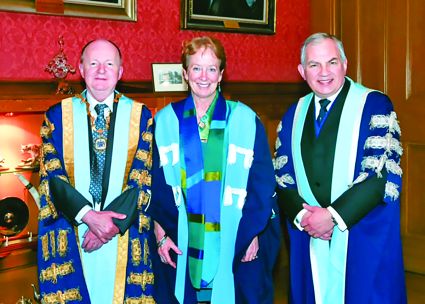
Julie Ann Freischlag, MD, FACS, vice-chancellor for human health sciences; dean, University of California (UC) Davis School of Medicine; and Past-Chair, American College of Surgeons Board of Regents, and former President of the Society for Vascular Surgery was inducted into the Royal College of Surgeons of Edinburgh (RCSEd) on April 22.
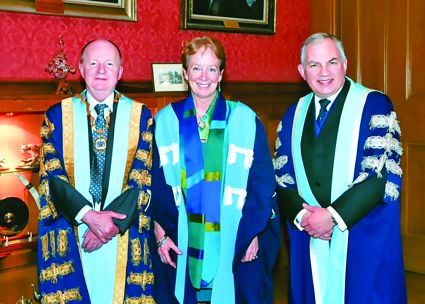
For more than 15 years, Dr. Freischlag has led education and training programs at medical schools in her role as professor and chair of surgery and vascular surgery departments. Dr. Freischlag also has more than 25 years of experience leading patient care services as chief of surgery or vascular surgery.
Dr. Freischlag currently oversees UC Davis Health System’s academic, research, and clinical programs, including the School of Medicine, the Betty Irene Moore School of Nursing, the 1,000-member physician practice group, and UC Davis Medical Center, a 619-bed acute care hospital. Before joining UC Davis, she served as professor and chair, surgery department, and surgeon-in-chief at Johns Hopkins Medical Institutions, Baltimore, MD. At Johns Hopkins, she led initiatives to expand research, add specialty clinical services, improve patient-centered care and patient safety, redesign the surgical training program, and enhance academic career paths for faculty.
Established in 1505, the RCSEd is among the world’s oldest surgical organizations, and admittance into its fellowship is based on professional prominence. With a worldwide membership, the RCSEd pursues excellence and advancement in surgical and dental practice via education, training, and examinations.
Julie Ann Freischlag, MD, FACS, vice-chancellor for human health sciences; dean, University of California (UC) Davis School of Medicine; and Past-Chair, American College of Surgeons Board of Regents, and former President of the Society for Vascular Surgery was inducted into the Royal College of Surgeons of Edinburgh (RCSEd) on April 22.
For more than 15 years, Dr. Freischlag has led education and training programs at medical schools in her role as professor and chair of surgery and vascular surgery departments. Dr. Freischlag also has more than 25 years of experience leading patient care services as chief of surgery or vascular surgery.
Dr. Freischlag currently oversees UC Davis Health System’s academic, research, and clinical programs, including the School of Medicine, the Betty Irene Moore School of Nursing, the 1,000-member physician practice group, and UC Davis Medical Center, a 619-bed acute care hospital. Before joining UC Davis, she served as professor and chair, surgery department, and surgeon-in-chief at Johns Hopkins Medical Institutions, Baltimore, MD. At Johns Hopkins, she led initiatives to expand research, add specialty clinical services, improve patient-centered care and patient safety, redesign the surgical training program, and enhance academic career paths for faculty.
Established in 1505, the RCSEd is among the world’s oldest surgical organizations, and admittance into its fellowship is based on professional prominence. With a worldwide membership, the RCSEd pursues excellence and advancement in surgical and dental practice via education, training, and examinations.
Julie Ann Freischlag, MD, FACS, vice-chancellor for human health sciences; dean, University of California (UC) Davis School of Medicine; and Past-Chair, American College of Surgeons Board of Regents, and former President of the Society for Vascular Surgery was inducted into the Royal College of Surgeons of Edinburgh (RCSEd) on April 22.
For more than 15 years, Dr. Freischlag has led education and training programs at medical schools in her role as professor and chair of surgery and vascular surgery departments. Dr. Freischlag also has more than 25 years of experience leading patient care services as chief of surgery or vascular surgery.
Dr. Freischlag currently oversees UC Davis Health System’s academic, research, and clinical programs, including the School of Medicine, the Betty Irene Moore School of Nursing, the 1,000-member physician practice group, and UC Davis Medical Center, a 619-bed acute care hospital. Before joining UC Davis, she served as professor and chair, surgery department, and surgeon-in-chief at Johns Hopkins Medical Institutions, Baltimore, MD. At Johns Hopkins, she led initiatives to expand research, add specialty clinical services, improve patient-centered care and patient safety, redesign the surgical training program, and enhance academic career paths for faculty.
Established in 1505, the RCSEd is among the world’s oldest surgical organizations, and admittance into its fellowship is based on professional prominence. With a worldwide membership, the RCSEd pursues excellence and advancement in surgical and dental practice via education, training, and examinations.
Drs. A. Brent Eastman, Michael Sinclair named UCSF Alumni of the Year
A. Brent Eastman, MD, FACS, a general, vascular, and trauma surgeon from San Diego, CA, and a Past-President of the American College of Surgeons, was one of two Fellows who received the University of California, San Francisco (UCSF) Medical Alumni Association’s 2016 Alumni of the Year awards at the 50th reunion of the UCSF School of Medicine. Michael C. Sinclair, MD, FACS, Allentown, PA, a retired cardiothoracic surgeon, mountain climber, and author of a memoir, No Regrets, No Apologies, also was honored. Alumni Association president Yao Heng, MD, San Francisco, presented the awards to the two 1966 alumni at an April 9 dinner with UCSF Medical School dean Talmadge King, Jr., MD.
Dr. Eastman is a former corporate senior vice-president and chief medical officer of Scripps Health, N. Paul Whittier Endowed Chair of Trauma at Scripps Memorial Hospital, La Jolla, and clinical professor of surgery-trauma at the University of California, San Diego. He is a founder of the San Diego County Trauma System, which is now in its 32nd year and regarded worldwide as a model for trauma care.
Dr. Eastman’s efforts in trauma took him around the world. He was part of a team that cared for thousands of evacuees after Hurricane Katrina in New Orleans, LA, in 2005, and assisted earthquake victims in Haiti in 2010. He has assisted in the development of extensive trauma systems internationally, including throughout India. In addition, he was a visiting surgeon at the U.S. military hospital in Landstuhl, Germany, where he provided care to soldiers injured in the Iraq and Afghanistan wars.
Dr. Sinclair has volunteered for a number of international humanitarian missions in Croatia, Guatemala, Jordan, Pakistan, Libya, and Nigeria and is currently on a two-year tour to provide surgical care and training in Rwanda.
The Alumni of the Year award is regarded as the highest honor bestowed by the UCSF Medical Alumni Association. Each year, alumni from all classes nominate fellow classmates who have demonstrated dedication to the principles of a physician, made significant contributions to medicine, and provided community service.
A. Brent Eastman, MD, FACS, a general, vascular, and trauma surgeon from San Diego, CA, and a Past-President of the American College of Surgeons, was one of two Fellows who received the University of California, San Francisco (UCSF) Medical Alumni Association’s 2016 Alumni of the Year awards at the 50th reunion of the UCSF School of Medicine. Michael C. Sinclair, MD, FACS, Allentown, PA, a retired cardiothoracic surgeon, mountain climber, and author of a memoir, No Regrets, No Apologies, also was honored. Alumni Association president Yao Heng, MD, San Francisco, presented the awards to the two 1966 alumni at an April 9 dinner with UCSF Medical School dean Talmadge King, Jr., MD.
Dr. Eastman is a former corporate senior vice-president and chief medical officer of Scripps Health, N. Paul Whittier Endowed Chair of Trauma at Scripps Memorial Hospital, La Jolla, and clinical professor of surgery-trauma at the University of California, San Diego. He is a founder of the San Diego County Trauma System, which is now in its 32nd year and regarded worldwide as a model for trauma care.
Dr. Eastman’s efforts in trauma took him around the world. He was part of a team that cared for thousands of evacuees after Hurricane Katrina in New Orleans, LA, in 2005, and assisted earthquake victims in Haiti in 2010. He has assisted in the development of extensive trauma systems internationally, including throughout India. In addition, he was a visiting surgeon at the U.S. military hospital in Landstuhl, Germany, where he provided care to soldiers injured in the Iraq and Afghanistan wars.
Dr. Sinclair has volunteered for a number of international humanitarian missions in Croatia, Guatemala, Jordan, Pakistan, Libya, and Nigeria and is currently on a two-year tour to provide surgical care and training in Rwanda.
The Alumni of the Year award is regarded as the highest honor bestowed by the UCSF Medical Alumni Association. Each year, alumni from all classes nominate fellow classmates who have demonstrated dedication to the principles of a physician, made significant contributions to medicine, and provided community service.
A. Brent Eastman, MD, FACS, a general, vascular, and trauma surgeon from San Diego, CA, and a Past-President of the American College of Surgeons, was one of two Fellows who received the University of California, San Francisco (UCSF) Medical Alumni Association’s 2016 Alumni of the Year awards at the 50th reunion of the UCSF School of Medicine. Michael C. Sinclair, MD, FACS, Allentown, PA, a retired cardiothoracic surgeon, mountain climber, and author of a memoir, No Regrets, No Apologies, also was honored. Alumni Association president Yao Heng, MD, San Francisco, presented the awards to the two 1966 alumni at an April 9 dinner with UCSF Medical School dean Talmadge King, Jr., MD.
Dr. Eastman is a former corporate senior vice-president and chief medical officer of Scripps Health, N. Paul Whittier Endowed Chair of Trauma at Scripps Memorial Hospital, La Jolla, and clinical professor of surgery-trauma at the University of California, San Diego. He is a founder of the San Diego County Trauma System, which is now in its 32nd year and regarded worldwide as a model for trauma care.
Dr. Eastman’s efforts in trauma took him around the world. He was part of a team that cared for thousands of evacuees after Hurricane Katrina in New Orleans, LA, in 2005, and assisted earthquake victims in Haiti in 2010. He has assisted in the development of extensive trauma systems internationally, including throughout India. In addition, he was a visiting surgeon at the U.S. military hospital in Landstuhl, Germany, where he provided care to soldiers injured in the Iraq and Afghanistan wars.
Dr. Sinclair has volunteered for a number of international humanitarian missions in Croatia, Guatemala, Jordan, Pakistan, Libya, and Nigeria and is currently on a two-year tour to provide surgical care and training in Rwanda.
The Alumni of the Year award is regarded as the highest honor bestowed by the UCSF Medical Alumni Association. Each year, alumni from all classes nominate fellow classmates who have demonstrated dedication to the principles of a physician, made significant contributions to medicine, and provided community service.
ACS announces 2016 Oweida Scholarship recipient
The Executive Committee of the American College of Surgeons (ACS) Board of Governors has selected the recipient of the 2016 Nizar N. Oweida, MD, FACS, Scholarship of the ACS – Chayanin Musikasinthorn, MD, MPH, FACS, a general and trauma/critical care surgeon, Gallup Indian Medical Center, NM. Dr. Musikasinthorn is a commissioned officer of the U.S. Public Health Service and provides surgical services to members of the local First Nation population, the Navajo people.

The scholarship will enable Dr. Musikasinthorn to attend Clinical Congress 2016, October 16-20 in Washington, DC, to enhance her ability to provide quality surgical care to patients. She will give a presentation at the Scholarships Committee meeting and the Rural Surgery Forum at Clinical Congress.
The Oweida Scholarship was established in 1998 in memory of Dr. Oweida, a general surgeon from a small town in western Pennsylvania. The $5,000 award subsidizes attendance at the annual Clinical Congress, including Postgraduate Course fees.
The Oweida Scholarship provides young surgeons who practice in rural communities with the opportunity to attend the Clinical Congress and benefit from its educational experiences. It is awarded annually.
The requirements for this award are posted to the College website at facs.org/member-services/scholarships/special/oweida. The application deadline for the 2017 Oweida Scholarship is December 15, 2016.
The Executive Committee of the American College of Surgeons (ACS) Board of Governors has selected the recipient of the 2016 Nizar N. Oweida, MD, FACS, Scholarship of the ACS – Chayanin Musikasinthorn, MD, MPH, FACS, a general and trauma/critical care surgeon, Gallup Indian Medical Center, NM. Dr. Musikasinthorn is a commissioned officer of the U.S. Public Health Service and provides surgical services to members of the local First Nation population, the Navajo people.
The scholarship will enable Dr. Musikasinthorn to attend Clinical Congress 2016, October 16-20 in Washington, DC, to enhance her ability to provide quality surgical care to patients. She will give a presentation at the Scholarships Committee meeting and the Rural Surgery Forum at Clinical Congress.
The Oweida Scholarship was established in 1998 in memory of Dr. Oweida, a general surgeon from a small town in western Pennsylvania. The $5,000 award subsidizes attendance at the annual Clinical Congress, including Postgraduate Course fees.
The Oweida Scholarship provides young surgeons who practice in rural communities with the opportunity to attend the Clinical Congress and benefit from its educational experiences. It is awarded annually.
The requirements for this award are posted to the College website at facs.org/member-services/scholarships/special/oweida. The application deadline for the 2017 Oweida Scholarship is December 15, 2016.
The Executive Committee of the American College of Surgeons (ACS) Board of Governors has selected the recipient of the 2016 Nizar N. Oweida, MD, FACS, Scholarship of the ACS – Chayanin Musikasinthorn, MD, MPH, FACS, a general and trauma/critical care surgeon, Gallup Indian Medical Center, NM. Dr. Musikasinthorn is a commissioned officer of the U.S. Public Health Service and provides surgical services to members of the local First Nation population, the Navajo people.
The scholarship will enable Dr. Musikasinthorn to attend Clinical Congress 2016, October 16-20 in Washington, DC, to enhance her ability to provide quality surgical care to patients. She will give a presentation at the Scholarships Committee meeting and the Rural Surgery Forum at Clinical Congress.
The Oweida Scholarship was established in 1998 in memory of Dr. Oweida, a general surgeon from a small town in western Pennsylvania. The $5,000 award subsidizes attendance at the annual Clinical Congress, including Postgraduate Course fees.
The Oweida Scholarship provides young surgeons who practice in rural communities with the opportunity to attend the Clinical Congress and benefit from its educational experiences. It is awarded annually.
The requirements for this award are posted to the College website at facs.org/member-services/scholarships/special/oweida. The application deadline for the 2017 Oweida Scholarship is December 15, 2016.

Register now for ACS NSQIP Conference, July 16−19 in San Diego, CA
Online registration for the 2016 American College of Surgeons National Surgical Quality Improvement Program (ACS NSQIP®) Conference, July 16−19 at the Hilton San Diego Bayfront, CA, is open. View the agenda on the conference brochure at facs.org/quality-programs/acs-nsqip/events/annual-conference/agenda. Conference space is limited.
With the theme of Innovate to Make a Difference, interactive workshops, informal meetings, and sessions built around personal perspectives will explore employing innovative approaches and ideas to improve patient safety and improve processes. The conference will include additional pediatric-specific content tailored to fit the needs of ACS NSQIP Pediatric program participants.
Julie A. Freischlag, MD, FACS, vice-chancellor for human health sciences and dean of the school of medicine at the University of California, Davis, will be the keynote speaker. A prominent academic health leader and a national voice for improving health and health care, Dr. Freischlag oversees UC Davis Health System’s academic, research, and clinical programs, including the school of medicine, the Betty Irene Moore School of Nursing, the 1,000-member physician practice group, and UC Davis Medical Center, a 619-bed acute-care hospital. Dr. Freischlag’s speech, Career Satisfaction by Way of Resilience, will highlight ways for health care professionals to find career happiness through flexibility, resiliency, and avoiding burnout.
For details regarding registration, contact Registration Services at 312-202-5244 or [email protected]. For questions about the conference, contact ACS NSQIP staff at 312-202-5261 or [email protected].
Online registration for the 2016 American College of Surgeons National Surgical Quality Improvement Program (ACS NSQIP®) Conference, July 16−19 at the Hilton San Diego Bayfront, CA, is open. View the agenda on the conference brochure at facs.org/quality-programs/acs-nsqip/events/annual-conference/agenda. Conference space is limited.
With the theme of Innovate to Make a Difference, interactive workshops, informal meetings, and sessions built around personal perspectives will explore employing innovative approaches and ideas to improve patient safety and improve processes. The conference will include additional pediatric-specific content tailored to fit the needs of ACS NSQIP Pediatric program participants.
Julie A. Freischlag, MD, FACS, vice-chancellor for human health sciences and dean of the school of medicine at the University of California, Davis, will be the keynote speaker. A prominent academic health leader and a national voice for improving health and health care, Dr. Freischlag oversees UC Davis Health System’s academic, research, and clinical programs, including the school of medicine, the Betty Irene Moore School of Nursing, the 1,000-member physician practice group, and UC Davis Medical Center, a 619-bed acute-care hospital. Dr. Freischlag’s speech, Career Satisfaction by Way of Resilience, will highlight ways for health care professionals to find career happiness through flexibility, resiliency, and avoiding burnout.
For details regarding registration, contact Registration Services at 312-202-5244 or [email protected]. For questions about the conference, contact ACS NSQIP staff at 312-202-5261 or [email protected].
Online registration for the 2016 American College of Surgeons National Surgical Quality Improvement Program (ACS NSQIP®) Conference, July 16−19 at the Hilton San Diego Bayfront, CA, is open. View the agenda on the conference brochure at facs.org/quality-programs/acs-nsqip/events/annual-conference/agenda. Conference space is limited.
With the theme of Innovate to Make a Difference, interactive workshops, informal meetings, and sessions built around personal perspectives will explore employing innovative approaches and ideas to improve patient safety and improve processes. The conference will include additional pediatric-specific content tailored to fit the needs of ACS NSQIP Pediatric program participants.
Julie A. Freischlag, MD, FACS, vice-chancellor for human health sciences and dean of the school of medicine at the University of California, Davis, will be the keynote speaker. A prominent academic health leader and a national voice for improving health and health care, Dr. Freischlag oversees UC Davis Health System’s academic, research, and clinical programs, including the school of medicine, the Betty Irene Moore School of Nursing, the 1,000-member physician practice group, and UC Davis Medical Center, a 619-bed acute-care hospital. Dr. Freischlag’s speech, Career Satisfaction by Way of Resilience, will highlight ways for health care professionals to find career happiness through flexibility, resiliency, and avoiding burnout.
For details regarding registration, contact Registration Services at 312-202-5244 or [email protected]. For questions about the conference, contact ACS NSQIP staff at 312-202-5261 or [email protected].
ACGME announces FIRST trial waiver for 2016−2017
On May 17, the Accreditation Council for Graduate Medical Education (ACGME) announced that it “has issued a multicenter research trial waiver, along with seed funding, to the Flexibility in Duty Hour Requirements for Surgical Trainees (FIRST) Trial for the 2016−2017 academic year, based on the recommendation of the ACGME Review Committee for Surgery.” The ACGME Task Force reviewing Common Program Requirements for residency training in the U.S. determined that, in order to comprehensively evaluate the clinical education and experience environment, “it is premature to issue any proposed modifications to requirements for the upcoming academic year.”
Working together in the best interests of surgical patient safety, the American College of Surgeons and the American Board of Surgery will continue to collect high-quality data during this one-year expansion of the FIRST Trial. In this time, new programs that meet the requirements as of July 1, 2016, will be allowed to enroll in the trial, and those programs already enrolled will be able to add ongoing data to support future reviews of residency program standards. The one-year expansion will conclude in June 2017.
FIRST Trial results were released online February 2 in the New England Journal of Medicine and presented concurrently at the 2016 Academic Surgical Congress in Jacksonville, FL, by the trial’s principal investigator, Karl Y. Bilimoria, MD, MS, FACS. The findings indicated that surgical residents can work more flexible hours than currently allowed by the ACGME without compromising surgical patient safety.
In addition to the patient safety findings, FIRST Trial results indicated that flexibility allowed for greater continuity of patient care, fewer handoffs to other care providers, and increased resident satisfaction. Read the announcement on the ACGME website at www.acgme.org/Portals/0/PDFs/Nasca-Community/NascaLettertotheCommunity-5-17-16.pdf.
On May 17, the Accreditation Council for Graduate Medical Education (ACGME) announced that it “has issued a multicenter research trial waiver, along with seed funding, to the Flexibility in Duty Hour Requirements for Surgical Trainees (FIRST) Trial for the 2016−2017 academic year, based on the recommendation of the ACGME Review Committee for Surgery.” The ACGME Task Force reviewing Common Program Requirements for residency training in the U.S. determined that, in order to comprehensively evaluate the clinical education and experience environment, “it is premature to issue any proposed modifications to requirements for the upcoming academic year.”
Working together in the best interests of surgical patient safety, the American College of Surgeons and the American Board of Surgery will continue to collect high-quality data during this one-year expansion of the FIRST Trial. In this time, new programs that meet the requirements as of July 1, 2016, will be allowed to enroll in the trial, and those programs already enrolled will be able to add ongoing data to support future reviews of residency program standards. The one-year expansion will conclude in June 2017.
FIRST Trial results were released online February 2 in the New England Journal of Medicine and presented concurrently at the 2016 Academic Surgical Congress in Jacksonville, FL, by the trial’s principal investigator, Karl Y. Bilimoria, MD, MS, FACS. The findings indicated that surgical residents can work more flexible hours than currently allowed by the ACGME without compromising surgical patient safety.
In addition to the patient safety findings, FIRST Trial results indicated that flexibility allowed for greater continuity of patient care, fewer handoffs to other care providers, and increased resident satisfaction. Read the announcement on the ACGME website at www.acgme.org/Portals/0/PDFs/Nasca-Community/NascaLettertotheCommunity-5-17-16.pdf.
On May 17, the Accreditation Council for Graduate Medical Education (ACGME) announced that it “has issued a multicenter research trial waiver, along with seed funding, to the Flexibility in Duty Hour Requirements for Surgical Trainees (FIRST) Trial for the 2016−2017 academic year, based on the recommendation of the ACGME Review Committee for Surgery.” The ACGME Task Force reviewing Common Program Requirements for residency training in the U.S. determined that, in order to comprehensively evaluate the clinical education and experience environment, “it is premature to issue any proposed modifications to requirements for the upcoming academic year.”
Working together in the best interests of surgical patient safety, the American College of Surgeons and the American Board of Surgery will continue to collect high-quality data during this one-year expansion of the FIRST Trial. In this time, new programs that meet the requirements as of July 1, 2016, will be allowed to enroll in the trial, and those programs already enrolled will be able to add ongoing data to support future reviews of residency program standards. The one-year expansion will conclude in June 2017.
FIRST Trial results were released online February 2 in the New England Journal of Medicine and presented concurrently at the 2016 Academic Surgical Congress in Jacksonville, FL, by the trial’s principal investigator, Karl Y. Bilimoria, MD, MS, FACS. The findings indicated that surgical residents can work more flexible hours than currently allowed by the ACGME without compromising surgical patient safety.
In addition to the patient safety findings, FIRST Trial results indicated that flexibility allowed for greater continuity of patient care, fewer handoffs to other care providers, and increased resident satisfaction. Read the announcement on the ACGME website at www.acgme.org/Portals/0/PDFs/Nasca-Community/NascaLettertotheCommunity-5-17-16.pdf.
Surgical workforce shortages in rural areas
This month I write about one of the College’s current advocacy efforts directed at ensuring an adequate surgical workforce in underserved and rural areas. Evidence indicates a current and growing shortage of surgeons available to serve the needs of populations in certain parts of the country. A shortage of general surgeons is a clear component to the crisis in health care workforce. Accordingly, the American College of Surgeons (ACS) is urging policy makers to recognize that only surgeons are uniquely qualified to provide certain necessary, lifesaving procedures, which other health professionals are neither trained nor competent to provide.
To determine where these areas of shortage are located and where access to surgical care is thus potentially a challenge, the ACS is strongly supporting the efforts of Representatives Larry Bucshon, MD, FACS (R-Ind.) and Ami Bera, MD (D-Calif.) who recently introduced H.R. 4959, the Ensuring Access to General Surgery Act of 2016. This legislation serves to direct the Secretary of the Department of Health and Human Services (HHS) to conduct a study on the designation of surgical Health Professional Shortage Areas (HPSA).
A variety of federal programs use the HPSA designation to improve access to health care by focusing aid and assistance on specific geographic areas and populations with the greatest unmet needs. The division of HHS known as the Health Resources and Services Administration (HRSA) has developed criteria used to determine whether certain geographic areas, population groups, or facilities may be designated as a HPSA. HPSA designation may be applied to urban or rural geographic areas, specific population groups, medical provider groups, or other public health care facilities. Currently, HRSA limits HPSA designations to shortages in primary care services, dental services, or mental health services.
HRSA has never designated an entity as a HPSA purely based upon a shortage of surgical services. In light of the available evidence relative to the shortage of surgical providers in certain parts of the country, ACS believes that research is necessary to determine exactly what constitutes a surgical shortage area, e.g., establish definitional criteria, with subsequent application of those criteria to determine where areas so defined are located. Such would provide HRSA with a valuable tool to utilize in efforts directed at increasing patient access to surgical care. Ultimately, offering incentives to surgeons to locate or remain in HPSA communities could become critical in guaranteeing all Medicare beneficiaries, regardless of geographic location, have access to quality surgical care. Determining what constitutes a surgical shortage area will serve to help HRSA to appropriately focus its resources.
Accordingly, we need your help and urge you to take action today.
Using the information below, please call your representatives today and urge them to join their colleagues and cosponsor H.R. 4959, the Ensuring Access to General Surgery Act of 2016.
Instructions
Call toll-free: 1-877-996-4464
You will be connected to your representative‘s office. Once you are connected, provide your name and indicate that you are a constituent. You should also be prepared to provide additional contact information for follow-up purposes.
Next, we suggest you use the following message:
• As a surgeon and as your constituent, I urge you to join your colleagues and cosponsor H.R. 4959, the Ensuring Access to General Surgery Act of 2016, which would direct the Secretary of Department of Health and Human Services (HHS) to conduct a study to designate General Surgery Health Professional Shortage Areas (HPSA).
• The division of HHS known as the Health Resources and Services Administration (HRSA) has developed designation criteria in order to determine whether certain geographic areas, population groups, or facilities may be designated as a HPSA.
• HRSA has never designated an entity as a HPSA purely based upon a shortage of surgical services.
• In light of evidence relative to a shortage of surgeons, ACS believes that research is necessary to determine exactly what constitutes a surgical shortage area and subsequently where these areas exist.
Alternatively, for those who were seeking a topic on which to initiate a personal in-district meeting with representatives and their staff as was discussed in last month’s edition of this column, H.R. 4959 presents a prime subject for such in order to have a focused meeting with a specific ask on a “white hat” issue that will surely resonate with members of Congress. Currently, in-district work periods are scheduled for the last week of June, the last two weeks of July, and the entire month of August.
As always, those with questions or concerns, or those who need assistance in setting up an in-district meeting may contact staff of the Division of Advocacy and Health Policy by phone at 202-337-2701 or via e-mail at [email protected].
Thank you for taking the time to engage and take action on this critical issue.
Please encourage your colleagues to do likewise.
Until next month ...
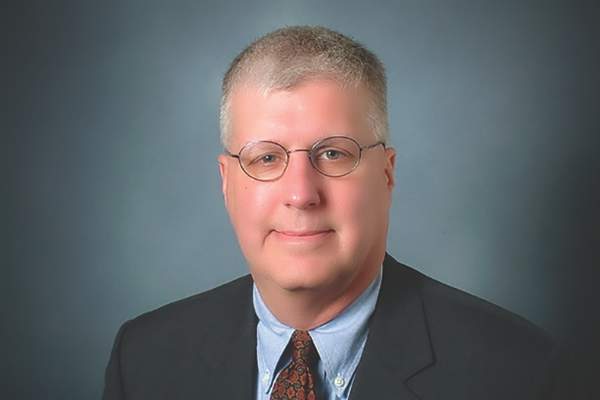
Dr. Patrick V. Bailey is an ACS Fellow, a pediatric surgeon, and Medical Director, Advocacy, for the Division of Advocacy and Health Policy, in the ACS offices in Washington, DC.
This month I write about one of the College’s current advocacy efforts directed at ensuring an adequate surgical workforce in underserved and rural areas. Evidence indicates a current and growing shortage of surgeons available to serve the needs of populations in certain parts of the country. A shortage of general surgeons is a clear component to the crisis in health care workforce. Accordingly, the American College of Surgeons (ACS) is urging policy makers to recognize that only surgeons are uniquely qualified to provide certain necessary, lifesaving procedures, which other health professionals are neither trained nor competent to provide.
To determine where these areas of shortage are located and where access to surgical care is thus potentially a challenge, the ACS is strongly supporting the efforts of Representatives Larry Bucshon, MD, FACS (R-Ind.) and Ami Bera, MD (D-Calif.) who recently introduced H.R. 4959, the Ensuring Access to General Surgery Act of 2016. This legislation serves to direct the Secretary of the Department of Health and Human Services (HHS) to conduct a study on the designation of surgical Health Professional Shortage Areas (HPSA).
A variety of federal programs use the HPSA designation to improve access to health care by focusing aid and assistance on specific geographic areas and populations with the greatest unmet needs. The division of HHS known as the Health Resources and Services Administration (HRSA) has developed criteria used to determine whether certain geographic areas, population groups, or facilities may be designated as a HPSA. HPSA designation may be applied to urban or rural geographic areas, specific population groups, medical provider groups, or other public health care facilities. Currently, HRSA limits HPSA designations to shortages in primary care services, dental services, or mental health services.
HRSA has never designated an entity as a HPSA purely based upon a shortage of surgical services. In light of the available evidence relative to the shortage of surgical providers in certain parts of the country, ACS believes that research is necessary to determine exactly what constitutes a surgical shortage area, e.g., establish definitional criteria, with subsequent application of those criteria to determine where areas so defined are located. Such would provide HRSA with a valuable tool to utilize in efforts directed at increasing patient access to surgical care. Ultimately, offering incentives to surgeons to locate or remain in HPSA communities could become critical in guaranteeing all Medicare beneficiaries, regardless of geographic location, have access to quality surgical care. Determining what constitutes a surgical shortage area will serve to help HRSA to appropriately focus its resources.
Accordingly, we need your help and urge you to take action today.
Using the information below, please call your representatives today and urge them to join their colleagues and cosponsor H.R. 4959, the Ensuring Access to General Surgery Act of 2016.
Instructions
Call toll-free: 1-877-996-4464
You will be connected to your representative‘s office. Once you are connected, provide your name and indicate that you are a constituent. You should also be prepared to provide additional contact information for follow-up purposes.
Next, we suggest you use the following message:
• As a surgeon and as your constituent, I urge you to join your colleagues and cosponsor H.R. 4959, the Ensuring Access to General Surgery Act of 2016, which would direct the Secretary of Department of Health and Human Services (HHS) to conduct a study to designate General Surgery Health Professional Shortage Areas (HPSA).
• The division of HHS known as the Health Resources and Services Administration (HRSA) has developed designation criteria in order to determine whether certain geographic areas, population groups, or facilities may be designated as a HPSA.
• HRSA has never designated an entity as a HPSA purely based upon a shortage of surgical services.
• In light of evidence relative to a shortage of surgeons, ACS believes that research is necessary to determine exactly what constitutes a surgical shortage area and subsequently where these areas exist.
Alternatively, for those who were seeking a topic on which to initiate a personal in-district meeting with representatives and their staff as was discussed in last month’s edition of this column, H.R. 4959 presents a prime subject for such in order to have a focused meeting with a specific ask on a “white hat” issue that will surely resonate with members of Congress. Currently, in-district work periods are scheduled for the last week of June, the last two weeks of July, and the entire month of August.
As always, those with questions or concerns, or those who need assistance in setting up an in-district meeting may contact staff of the Division of Advocacy and Health Policy by phone at 202-337-2701 or via e-mail at [email protected].
Thank you for taking the time to engage and take action on this critical issue.
Please encourage your colleagues to do likewise.
Until next month ...
Dr. Patrick V. Bailey is an ACS Fellow, a pediatric surgeon, and Medical Director, Advocacy, for the Division of Advocacy and Health Policy, in the ACS offices in Washington, DC.
This month I write about one of the College’s current advocacy efforts directed at ensuring an adequate surgical workforce in underserved and rural areas. Evidence indicates a current and growing shortage of surgeons available to serve the needs of populations in certain parts of the country. A shortage of general surgeons is a clear component to the crisis in health care workforce. Accordingly, the American College of Surgeons (ACS) is urging policy makers to recognize that only surgeons are uniquely qualified to provide certain necessary, lifesaving procedures, which other health professionals are neither trained nor competent to provide.
To determine where these areas of shortage are located and where access to surgical care is thus potentially a challenge, the ACS is strongly supporting the efforts of Representatives Larry Bucshon, MD, FACS (R-Ind.) and Ami Bera, MD (D-Calif.) who recently introduced H.R. 4959, the Ensuring Access to General Surgery Act of 2016. This legislation serves to direct the Secretary of the Department of Health and Human Services (HHS) to conduct a study on the designation of surgical Health Professional Shortage Areas (HPSA).
A variety of federal programs use the HPSA designation to improve access to health care by focusing aid and assistance on specific geographic areas and populations with the greatest unmet needs. The division of HHS known as the Health Resources and Services Administration (HRSA) has developed criteria used to determine whether certain geographic areas, population groups, or facilities may be designated as a HPSA. HPSA designation may be applied to urban or rural geographic areas, specific population groups, medical provider groups, or other public health care facilities. Currently, HRSA limits HPSA designations to shortages in primary care services, dental services, or mental health services.
HRSA has never designated an entity as a HPSA purely based upon a shortage of surgical services. In light of the available evidence relative to the shortage of surgical providers in certain parts of the country, ACS believes that research is necessary to determine exactly what constitutes a surgical shortage area, e.g., establish definitional criteria, with subsequent application of those criteria to determine where areas so defined are located. Such would provide HRSA with a valuable tool to utilize in efforts directed at increasing patient access to surgical care. Ultimately, offering incentives to surgeons to locate or remain in HPSA communities could become critical in guaranteeing all Medicare beneficiaries, regardless of geographic location, have access to quality surgical care. Determining what constitutes a surgical shortage area will serve to help HRSA to appropriately focus its resources.
Accordingly, we need your help and urge you to take action today.
Using the information below, please call your representatives today and urge them to join their colleagues and cosponsor H.R. 4959, the Ensuring Access to General Surgery Act of 2016.
Instructions
Call toll-free: 1-877-996-4464
You will be connected to your representative‘s office. Once you are connected, provide your name and indicate that you are a constituent. You should also be prepared to provide additional contact information for follow-up purposes.
Next, we suggest you use the following message:
• As a surgeon and as your constituent, I urge you to join your colleagues and cosponsor H.R. 4959, the Ensuring Access to General Surgery Act of 2016, which would direct the Secretary of Department of Health and Human Services (HHS) to conduct a study to designate General Surgery Health Professional Shortage Areas (HPSA).
• The division of HHS known as the Health Resources and Services Administration (HRSA) has developed designation criteria in order to determine whether certain geographic areas, population groups, or facilities may be designated as a HPSA.
• HRSA has never designated an entity as a HPSA purely based upon a shortage of surgical services.
• In light of evidence relative to a shortage of surgeons, ACS believes that research is necessary to determine exactly what constitutes a surgical shortage area and subsequently where these areas exist.
Alternatively, for those who were seeking a topic on which to initiate a personal in-district meeting with representatives and their staff as was discussed in last month’s edition of this column, H.R. 4959 presents a prime subject for such in order to have a focused meeting with a specific ask on a “white hat” issue that will surely resonate with members of Congress. Currently, in-district work periods are scheduled for the last week of June, the last two weeks of July, and the entire month of August.
As always, those with questions or concerns, or those who need assistance in setting up an in-district meeting may contact staff of the Division of Advocacy and Health Policy by phone at 202-337-2701 or via e-mail at [email protected].
Thank you for taking the time to engage and take action on this critical issue.
Please encourage your colleagues to do likewise.
Until next month ...
Dr. Patrick V. Bailey is an ACS Fellow, a pediatric surgeon, and Medical Director, Advocacy, for the Division of Advocacy and Health Policy, in the ACS offices in Washington, DC.
Down Under
If you want to know how big the world really is, I suggest you take a trip from McPherson, Kansas, to Sydney, Australia, in one day. You won’t be able to do it, by the way. The construct of days prohibits you from doing this from East to West. Your vessel will pass the International Date Line and you will lose the day (sort of the opposite of seizing the day). Don’t worry. You’ll get it back on the return trip. In this way, the universe seems to enjoy a certain symmetry. But even by first class in a “Sky Couch,” your body will understand how far 8,666 miles is. Trust me: The world is a big place.
There is something unsettling about stepping out of a metal tube that was going Mach 0.7 for 13 hours into a world with “mates” and where the bathtub water drains out the “wrong” way. It’s a little like a “Twilight Zone” episode in which the guest star notes everything in this world is familiar except just different enough to make all the difference.
I entered this zone because I have the great good fortune to know John Kyngdon, MD, FRACS. Dr. Kyngdon was the convener for this year’s Rural Surgery Section of the Royal Australasian College of Surgeons, aka, RACS. I was delighted to attend the 2016 RACS annual meeting, which had the theme of technology and communication.
We Americans can be pretty smug when it comes to our health care system, our training, and our outcomes. Traveling to the other side of the world and spending time with surgeons working in Australia and New Zealand can take the smug right off one’s face. Australia is a land of immense distances and minuscule population for such a large land mass. The challenge of providing care across this gigantic continent, the center of which contains an immense desert filled with some of this most deadly insects, snakes and other creatures on the planet, is epic for sure. Yet, where an American baby boomer like me might decry the hopelessness of such a task, the Australians smile and carry on. These people just don’t understand that their task is nigh on impossible, so they succeed to a large degree against the odds.
RACS, of course, does not just include Australia and New Zealand but the South Pacific and Southeast Asia as well. It was formed in part from the efforts of Dr. Will Mayo, who supported the effort of an ACS-like organization for this part of the world. RACS members seem to have a special affection for Americans, consequently, and one feels entirely at home with them. While ACS has many more members, the quality of the presentations given at the RACS annual meeting is certainly on par with much of what one would see in October at the ACS Clinical Congress. American surgeons commonly attend, and I was delighted to see ACS Vice President Ron Maier, MD, there, as well as Gary Timmerman, MD, of South Dakota and Nathaniel Soper, MD, of Northwestern.
The striking point for me is the commonality we surgeons share worldwide. Whether trained under a UK, Australian, or American-type system, the problems we face are similar. For RACS members, the challenge of managing the EHR is about the same, and as would be expected, interoperability is a huge problem for them! Because of the distances involved in Australia, they are much more involved in telemedicine than are US surgeons, but they are just beginning to deal with privacy issues that come with the technology. They are haunted by quality metrics just as we are. Malpractice is quite different from the US in that, at least in New Zealand, surgeons are not sued for compensation, but they can lose their professional credentials over a bad outcome attributed to them. Burnout among surgeons is a problem Down Under, just as it is here. Governmental intrusions and misadventures, ditto.

I had the opportunity to observe teaching of anatomy at a medical school and learned about dissecting electronically as well as in the flesh. One of the keynote speakers at the RACS meeting was an Australian dotcom entrepreneur. From him and his cohorts on the panel I learned that, in the very near future, over 90% of health care data will likely be gathered not in medical offices but from patient-worn devices. I saw apps based on patient-generated data claiming over 97% accuracy.
Of course, I got to spend a few days touring. Who wouldn’t? I got to see animals such as kangaroos that had been just pictures to me before. By the way, have you ever noticed those sharp claws on the “cuddly” koala? Eventually, I had to return and endure the jet lag that is always worse going West to East. Naturally, my first night on call kept me up most of 30 hours. Jet lag and call lag have the same effect. You just want to get some sleep but don’t know how.
RACS and ACS have been closely aligned for decades. I cannot think of a better mind-expanding view of the surgical world than to join them at one of their meetings. Like so many surgeons, I’ve always thought I just couldn’t take so much vacation at once. Nonsense. You can’t afford not to do so. And there’s nothing like patting the head of a kangaroo to help cure burnout.
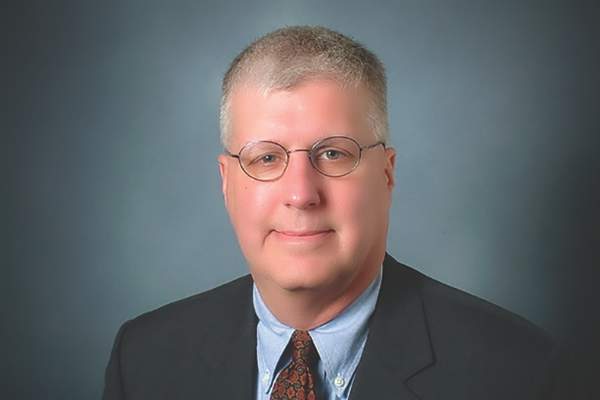
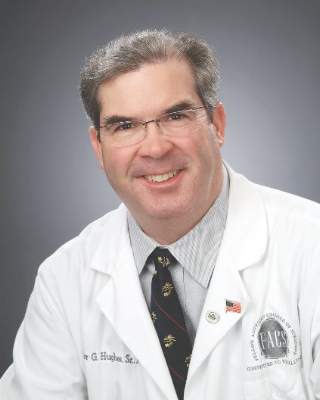
Dr. Hughes is an ACS Fellow with the department of general surgery, McPherson Hospital, McPherson, Kan., and is the Editor in Chief of ACS Communities. He is also Associate Editor for ACS Surgery News.
If you want to know how big the world really is, I suggest you take a trip from McPherson, Kansas, to Sydney, Australia, in one day. You won’t be able to do it, by the way. The construct of days prohibits you from doing this from East to West. Your vessel will pass the International Date Line and you will lose the day (sort of the opposite of seizing the day). Don’t worry. You’ll get it back on the return trip. In this way, the universe seems to enjoy a certain symmetry. But even by first class in a “Sky Couch,” your body will understand how far 8,666 miles is. Trust me: The world is a big place.
There is something unsettling about stepping out of a metal tube that was going Mach 0.7 for 13 hours into a world with “mates” and where the bathtub water drains out the “wrong” way. It’s a little like a “Twilight Zone” episode in which the guest star notes everything in this world is familiar except just different enough to make all the difference.
I entered this zone because I have the great good fortune to know John Kyngdon, MD, FRACS. Dr. Kyngdon was the convener for this year’s Rural Surgery Section of the Royal Australasian College of Surgeons, aka, RACS. I was delighted to attend the 2016 RACS annual meeting, which had the theme of technology and communication.
We Americans can be pretty smug when it comes to our health care system, our training, and our outcomes. Traveling to the other side of the world and spending time with surgeons working in Australia and New Zealand can take the smug right off one’s face. Australia is a land of immense distances and minuscule population for such a large land mass. The challenge of providing care across this gigantic continent, the center of which contains an immense desert filled with some of this most deadly insects, snakes and other creatures on the planet, is epic for sure. Yet, where an American baby boomer like me might decry the hopelessness of such a task, the Australians smile and carry on. These people just don’t understand that their task is nigh on impossible, so they succeed to a large degree against the odds.
RACS, of course, does not just include Australia and New Zealand but the South Pacific and Southeast Asia as well. It was formed in part from the efforts of Dr. Will Mayo, who supported the effort of an ACS-like organization for this part of the world. RACS members seem to have a special affection for Americans, consequently, and one feels entirely at home with them. While ACS has many more members, the quality of the presentations given at the RACS annual meeting is certainly on par with much of what one would see in October at the ACS Clinical Congress. American surgeons commonly attend, and I was delighted to see ACS Vice President Ron Maier, MD, there, as well as Gary Timmerman, MD, of South Dakota and Nathaniel Soper, MD, of Northwestern.
The striking point for me is the commonality we surgeons share worldwide. Whether trained under a UK, Australian, or American-type system, the problems we face are similar. For RACS members, the challenge of managing the EHR is about the same, and as would be expected, interoperability is a huge problem for them! Because of the distances involved in Australia, they are much more involved in telemedicine than are US surgeons, but they are just beginning to deal with privacy issues that come with the technology. They are haunted by quality metrics just as we are. Malpractice is quite different from the US in that, at least in New Zealand, surgeons are not sued for compensation, but they can lose their professional credentials over a bad outcome attributed to them. Burnout among surgeons is a problem Down Under, just as it is here. Governmental intrusions and misadventures, ditto.
I had the opportunity to observe teaching of anatomy at a medical school and learned about dissecting electronically as well as in the flesh. One of the keynote speakers at the RACS meeting was an Australian dotcom entrepreneur. From him and his cohorts on the panel I learned that, in the very near future, over 90% of health care data will likely be gathered not in medical offices but from patient-worn devices. I saw apps based on patient-generated data claiming over 97% accuracy.
Of course, I got to spend a few days touring. Who wouldn’t? I got to see animals such as kangaroos that had been just pictures to me before. By the way, have you ever noticed those sharp claws on the “cuddly” koala? Eventually, I had to return and endure the jet lag that is always worse going West to East. Naturally, my first night on call kept me up most of 30 hours. Jet lag and call lag have the same effect. You just want to get some sleep but don’t know how.
RACS and ACS have been closely aligned for decades. I cannot think of a better mind-expanding view of the surgical world than to join them at one of their meetings. Like so many surgeons, I’ve always thought I just couldn’t take so much vacation at once. Nonsense. You can’t afford not to do so. And there’s nothing like patting the head of a kangaroo to help cure burnout.
Dr. Hughes is an ACS Fellow with the department of general surgery, McPherson Hospital, McPherson, Kan., and is the Editor in Chief of ACS Communities. He is also Associate Editor for ACS Surgery News.
If you want to know how big the world really is, I suggest you take a trip from McPherson, Kansas, to Sydney, Australia, in one day. You won’t be able to do it, by the way. The construct of days prohibits you from doing this from East to West. Your vessel will pass the International Date Line and you will lose the day (sort of the opposite of seizing the day). Don’t worry. You’ll get it back on the return trip. In this way, the universe seems to enjoy a certain symmetry. But even by first class in a “Sky Couch,” your body will understand how far 8,666 miles is. Trust me: The world is a big place.
There is something unsettling about stepping out of a metal tube that was going Mach 0.7 for 13 hours into a world with “mates” and where the bathtub water drains out the “wrong” way. It’s a little like a “Twilight Zone” episode in which the guest star notes everything in this world is familiar except just different enough to make all the difference.
I entered this zone because I have the great good fortune to know John Kyngdon, MD, FRACS. Dr. Kyngdon was the convener for this year’s Rural Surgery Section of the Royal Australasian College of Surgeons, aka, RACS. I was delighted to attend the 2016 RACS annual meeting, which had the theme of technology and communication.
We Americans can be pretty smug when it comes to our health care system, our training, and our outcomes. Traveling to the other side of the world and spending time with surgeons working in Australia and New Zealand can take the smug right off one’s face. Australia is a land of immense distances and minuscule population for such a large land mass. The challenge of providing care across this gigantic continent, the center of which contains an immense desert filled with some of this most deadly insects, snakes and other creatures on the planet, is epic for sure. Yet, where an American baby boomer like me might decry the hopelessness of such a task, the Australians smile and carry on. These people just don’t understand that their task is nigh on impossible, so they succeed to a large degree against the odds.
RACS, of course, does not just include Australia and New Zealand but the South Pacific and Southeast Asia as well. It was formed in part from the efforts of Dr. Will Mayo, who supported the effort of an ACS-like organization for this part of the world. RACS members seem to have a special affection for Americans, consequently, and one feels entirely at home with them. While ACS has many more members, the quality of the presentations given at the RACS annual meeting is certainly on par with much of what one would see in October at the ACS Clinical Congress. American surgeons commonly attend, and I was delighted to see ACS Vice President Ron Maier, MD, there, as well as Gary Timmerman, MD, of South Dakota and Nathaniel Soper, MD, of Northwestern.
The striking point for me is the commonality we surgeons share worldwide. Whether trained under a UK, Australian, or American-type system, the problems we face are similar. For RACS members, the challenge of managing the EHR is about the same, and as would be expected, interoperability is a huge problem for them! Because of the distances involved in Australia, they are much more involved in telemedicine than are US surgeons, but they are just beginning to deal with privacy issues that come with the technology. They are haunted by quality metrics just as we are. Malpractice is quite different from the US in that, at least in New Zealand, surgeons are not sued for compensation, but they can lose their professional credentials over a bad outcome attributed to them. Burnout among surgeons is a problem Down Under, just as it is here. Governmental intrusions and misadventures, ditto.
I had the opportunity to observe teaching of anatomy at a medical school and learned about dissecting electronically as well as in the flesh. One of the keynote speakers at the RACS meeting was an Australian dotcom entrepreneur. From him and his cohorts on the panel I learned that, in the very near future, over 90% of health care data will likely be gathered not in medical offices but from patient-worn devices. I saw apps based on patient-generated data claiming over 97% accuracy.
Of course, I got to spend a few days touring. Who wouldn’t? I got to see animals such as kangaroos that had been just pictures to me before. By the way, have you ever noticed those sharp claws on the “cuddly” koala? Eventually, I had to return and endure the jet lag that is always worse going West to East. Naturally, my first night on call kept me up most of 30 hours. Jet lag and call lag have the same effect. You just want to get some sleep but don’t know how.
RACS and ACS have been closely aligned for decades. I cannot think of a better mind-expanding view of the surgical world than to join them at one of their meetings. Like so many surgeons, I’ve always thought I just couldn’t take so much vacation at once. Nonsense. You can’t afford not to do so. And there’s nothing like patting the head of a kangaroo to help cure burnout.
Dr. Hughes is an ACS Fellow with the department of general surgery, McPherson Hospital, McPherson, Kan., and is the Editor in Chief of ACS Communities. He is also Associate Editor for ACS Surgery News.
8 steps to avoid legal risks from your practice website
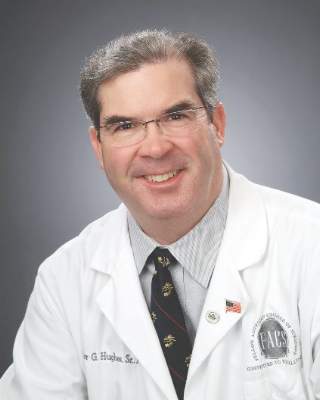
CHICAGO – An inadequately designed medical practice website can pose serious legal dangers, said Michael J. Sacopulos, a medical malpractice defense attorney based in Terre Haute, Ind.
Here is a list of website to-dos that can reduce your legal risks:
• Post emergency information on the website contact page. Unlike the practice’s phone system, the website may fail to include a disclaimer that the patient should call 911 if experiencing a medical emergency.
• Provide disclaimers about doctor-patient relationship. In addition, it’s important that the website includes a warning that communications through the website do not constitute a doctor-patient relationship, Mr. Sacopulos said during an American Bar Association conference. “Most [websites] have a box where you can leave comments. [People need to be told] that it does not create a physician-patient relationship when they describe their medical condition, sometimes even posting photographs.”

• Advise regarding comment security. Under the Health Information Technology for Economic and Clinical Health (HITECH) Act, medical information sent through electronic channels must be encrypted unless a patient consents otherwise. If information can be transmitted through a website’s comment box, patients should be advised that the transmission is not secure before they send their information, Mr. Sacopulos said.
• Secure any online appointment scheduling. Make sure that patients’ names and personal information are not visible to other patients when they schedule appointments, he said. A cardiology practice in Phoenix learned this the hard way when it had to pay the U.S. Department of Health & Human Services $100,000 for lack of HIPAA safeguards online. An investigation by the Office for Civil Rights found the practice was posting clinical and surgical appointments for patients on an Internet-based calendar that was publicly accessible.
• Ensure patient anonymity. The accidental release of private medical information occurred on the website of a St. Louis physician who obtained consent from her patients to include their before and after photos. No names were posted with the photos, but the computer file names of the photos included the patients’ names, and when a person scrolled over a photo with a cursor, the file name popped up. This allowed the public to view the patient name associated with each photo and caused serious problems for the practice, including litigation, he noted.
• Be aware of state board requirements that pertain to physician practice websites. Several state boards do not allow testimonials to be posted on websites. States also differ on the inclusion of before and after photos. New Jersey, for example, allows before and after photos on websites, while New York does not. Some state boards allow doctors to cite that they are board certified on a website without specifics, while states such as Louisiana require that physicians announce the specific certifying board.
“These are ethical and affirmative duties on behalf of physicians that oftentimes come up in websites,” he said.
• Adhere to the Americans With Disabilities Act (ADA). A website is considered real estate for purposes of the ADA, meaning it must include an accessible format to patients with disabilities, Mr. Sacupulos said. Problems arise when certain website features make sites difficult or incompatible with assistance devices that disabled patients require, such as a screen reader or voice interactive software. The National Federation for the Blind has been active in this area and has filed multiple class action lawsuits against companies that did not have compliant websites, he said. An ADA tool kit for best website practices can be found online.
• Hire an experienced Web designer to create the practice’s website. Too often, practices use a family member or friend to set up the company’s page, Mr. Sacupulos said. In one such instance, a young designer became angry at his doctor employer and set up a false website in his name, alleging abuses against patients. “Work with someone credible,” he advised. “Make sure you own your own domain. Many of these Web designers will purchase the domain name and build a site around it, which is great until you want to move to the next Web designer, and then you have to buy your domain back.”
On Twitter @legal_med
CHICAGO – An inadequately designed medical practice website can pose serious legal dangers, said Michael J. Sacopulos, a medical malpractice defense attorney based in Terre Haute, Ind.
Here is a list of website to-dos that can reduce your legal risks:
• Post emergency information on the website contact page. Unlike the practice’s phone system, the website may fail to include a disclaimer that the patient should call 911 if experiencing a medical emergency.
• Provide disclaimers about doctor-patient relationship. In addition, it’s important that the website includes a warning that communications through the website do not constitute a doctor-patient relationship, Mr. Sacopulos said during an American Bar Association conference. “Most [websites] have a box where you can leave comments. [People need to be told] that it does not create a physician-patient relationship when they describe their medical condition, sometimes even posting photographs.”
• Advise regarding comment security. Under the Health Information Technology for Economic and Clinical Health (HITECH) Act, medical information sent through electronic channels must be encrypted unless a patient consents otherwise. If information can be transmitted through a website’s comment box, patients should be advised that the transmission is not secure before they send their information, Mr. Sacopulos said.
• Secure any online appointment scheduling. Make sure that patients’ names and personal information are not visible to other patients when they schedule appointments, he said. A cardiology practice in Phoenix learned this the hard way when it had to pay the U.S. Department of Health & Human Services $100,000 for lack of HIPAA safeguards online. An investigation by the Office for Civil Rights found the practice was posting clinical and surgical appointments for patients on an Internet-based calendar that was publicly accessible.
• Ensure patient anonymity. The accidental release of private medical information occurred on the website of a St. Louis physician who obtained consent from her patients to include their before and after photos. No names were posted with the photos, but the computer file names of the photos included the patients’ names, and when a person scrolled over a photo with a cursor, the file name popped up. This allowed the public to view the patient name associated with each photo and caused serious problems for the practice, including litigation, he noted.
• Be aware of state board requirements that pertain to physician practice websites. Several state boards do not allow testimonials to be posted on websites. States also differ on the inclusion of before and after photos. New Jersey, for example, allows before and after photos on websites, while New York does not. Some state boards allow doctors to cite that they are board certified on a website without specifics, while states such as Louisiana require that physicians announce the specific certifying board.
“These are ethical and affirmative duties on behalf of physicians that oftentimes come up in websites,” he said.
• Adhere to the Americans With Disabilities Act (ADA). A website is considered real estate for purposes of the ADA, meaning it must include an accessible format to patients with disabilities, Mr. Sacupulos said. Problems arise when certain website features make sites difficult or incompatible with assistance devices that disabled patients require, such as a screen reader or voice interactive software. The National Federation for the Blind has been active in this area and has filed multiple class action lawsuits against companies that did not have compliant websites, he said. An ADA tool kit for best website practices can be found online.
• Hire an experienced Web designer to create the practice’s website. Too often, practices use a family member or friend to set up the company’s page, Mr. Sacupulos said. In one such instance, a young designer became angry at his doctor employer and set up a false website in his name, alleging abuses against patients. “Work with someone credible,” he advised. “Make sure you own your own domain. Many of these Web designers will purchase the domain name and build a site around it, which is great until you want to move to the next Web designer, and then you have to buy your domain back.”
On Twitter @legal_med
CHICAGO – An inadequately designed medical practice website can pose serious legal dangers, said Michael J. Sacopulos, a medical malpractice defense attorney based in Terre Haute, Ind.
Here is a list of website to-dos that can reduce your legal risks:
• Post emergency information on the website contact page. Unlike the practice’s phone system, the website may fail to include a disclaimer that the patient should call 911 if experiencing a medical emergency.
• Provide disclaimers about doctor-patient relationship. In addition, it’s important that the website includes a warning that communications through the website do not constitute a doctor-patient relationship, Mr. Sacopulos said during an American Bar Association conference. “Most [websites] have a box where you can leave comments. [People need to be told] that it does not create a physician-patient relationship when they describe their medical condition, sometimes even posting photographs.”
• Advise regarding comment security. Under the Health Information Technology for Economic and Clinical Health (HITECH) Act, medical information sent through electronic channels must be encrypted unless a patient consents otherwise. If information can be transmitted through a website’s comment box, patients should be advised that the transmission is not secure before they send their information, Mr. Sacopulos said.
• Secure any online appointment scheduling. Make sure that patients’ names and personal information are not visible to other patients when they schedule appointments, he said. A cardiology practice in Phoenix learned this the hard way when it had to pay the U.S. Department of Health & Human Services $100,000 for lack of HIPAA safeguards online. An investigation by the Office for Civil Rights found the practice was posting clinical and surgical appointments for patients on an Internet-based calendar that was publicly accessible.
• Ensure patient anonymity. The accidental release of private medical information occurred on the website of a St. Louis physician who obtained consent from her patients to include their before and after photos. No names were posted with the photos, but the computer file names of the photos included the patients’ names, and when a person scrolled over a photo with a cursor, the file name popped up. This allowed the public to view the patient name associated with each photo and caused serious problems for the practice, including litigation, he noted.
• Be aware of state board requirements that pertain to physician practice websites. Several state boards do not allow testimonials to be posted on websites. States also differ on the inclusion of before and after photos. New Jersey, for example, allows before and after photos on websites, while New York does not. Some state boards allow doctors to cite that they are board certified on a website without specifics, while states such as Louisiana require that physicians announce the specific certifying board.
“These are ethical and affirmative duties on behalf of physicians that oftentimes come up in websites,” he said.
• Adhere to the Americans With Disabilities Act (ADA). A website is considered real estate for purposes of the ADA, meaning it must include an accessible format to patients with disabilities, Mr. Sacupulos said. Problems arise when certain website features make sites difficult or incompatible with assistance devices that disabled patients require, such as a screen reader or voice interactive software. The National Federation for the Blind has been active in this area and has filed multiple class action lawsuits against companies that did not have compliant websites, he said. An ADA tool kit for best website practices can be found online.
• Hire an experienced Web designer to create the practice’s website. Too often, practices use a family member or friend to set up the company’s page, Mr. Sacupulos said. In one such instance, a young designer became angry at his doctor employer and set up a false website in his name, alleging abuses against patients. “Work with someone credible,” he advised. “Make sure you own your own domain. Many of these Web designers will purchase the domain name and build a site around it, which is great until you want to move to the next Web designer, and then you have to buy your domain back.”
On Twitter @legal_med
EXPERT ANALYSIS FROM THE PHYSICIANS LEGAL ISSUES CONFERENCE
Fresh Press: ACS Surgery News digital June issue is live on the website
The June issue of ACS Surgery News is available online. Use the mobile app to download or view as a pdf.
This month’s issue features coverage of a study of outcomes of common operations in critical access hospitals. The findings suggest that these smaller, rural hospitals are competitive with larger medical centers in costs and postop complications for appendectomy, cholecystectomy, colectomy, and hernia repair.
Don’t miss Dr. Tyler G. Hughes’s report on his visit with colleagues of the Royal Australasian College of Surgeons. He found some differences and many striking similarities when it comes to challenges faced by surgeons.
The April feature, “Operating with Pain” (2016, p. 1), provoked comments from readers on personal experiences and recommendations around the topic of pain and workplace injury. A sample of these responses can be found on p. 4.
The June issue of ACS Surgery News is available online. Use the mobile app to download or view as a pdf.
This month’s issue features coverage of a study of outcomes of common operations in critical access hospitals. The findings suggest that these smaller, rural hospitals are competitive with larger medical centers in costs and postop complications for appendectomy, cholecystectomy, colectomy, and hernia repair.
Don’t miss Dr. Tyler G. Hughes’s report on his visit with colleagues of the Royal Australasian College of Surgeons. He found some differences and many striking similarities when it comes to challenges faced by surgeons.
The April feature, “Operating with Pain” (2016, p. 1), provoked comments from readers on personal experiences and recommendations around the topic of pain and workplace injury. A sample of these responses can be found on p. 4.
The June issue of ACS Surgery News is available online. Use the mobile app to download or view as a pdf.
This month’s issue features coverage of a study of outcomes of common operations in critical access hospitals. The findings suggest that these smaller, rural hospitals are competitive with larger medical centers in costs and postop complications for appendectomy, cholecystectomy, colectomy, and hernia repair.
Don’t miss Dr. Tyler G. Hughes’s report on his visit with colleagues of the Royal Australasian College of Surgeons. He found some differences and many striking similarities when it comes to challenges faced by surgeons.
The April feature, “Operating with Pain” (2016, p. 1), provoked comments from readers on personal experiences and recommendations around the topic of pain and workplace injury. A sample of these responses can be found on p. 4.
