User login
Official Newspaper of the American College of Surgeons
More restrictive hemoglobin threshold recommended for transfusion
New guidelines on red blood cell blood transfusion recommend a restrictive threshold in which transfusion is not indicated until the hemoglobin level is 7-8 g/dL for most patients, finding that it is safe in most clinical settings.
The updated clinical practice guidelines on transfusion thresholds and storage from the AABB (formerly known as the American Association of Blood Banks), also note that red blood cell units can be used at any time within their licensed dating period, rather than a preference being given to fresher units less than 10 days old.
The guidelines, published online Oct. 12 in JAMA, are an update of the 2012 transfusion guidelines, and are a response to a more than doubling of the number of patients since enrolled in randomized controlled trials of red blood cell transfusions.
The AABB’s clinical transfusion medicine committee, led by Jeffrey L. Carson, MD, of Robert Wood Johnson Medical School, New Brunswick, N.J., analyzed data from 31 randomized controlled trials of 12,587 participants, which compared restrictive transfusion thresholds of 7-8 g/dL to more liberal thresholds of 9-10 g/dL.
This analysis showed that the use of restrictive transfusion protocols was associated with an absolute difference in 30-day mortality of three fewer deaths compared to the more liberal thresholds. There was no significant difference in 30-day mortality in trials that compared a threshold of 8-9 g/dL to a threshold of less than 7 g/dL (JAMA 2016, Oct 12. doi: 10.1001/jama.2016.9185).
“For all other outcomes evaluated, there was no evidence to suggest that patients were harmed by restrictive transfusion protocols, although the quality of the evidence was low for the outcomes of congestive heart failure and rebleeding,” the authors reported.
Based on these findings, they recommended a restrictive red blood cell transfusion threshold, in which transfusion is not indicated until the hemoglobin level is 7 g/dL for hospitalized adult patients who are hemodynamically stable, including critically ill patients.
However for patients undergoing orthopedic or cardiac surgery, or those with preexisting cardiovascular disease, they advised a threshold of 8 g/dL for initiating a red blood cell transfusion.
They also stressed that these recommendations did not apply to patients with acute coronary syndrome, those with severe thrombocytopenia, those treated for hematologic or oncologic disorders who at risk of bleeding, and those with chronic transfusion–dependent anemia, citing a lack of quality randomized controlled trial evidence.
The guideline authors examined the issue of the optimal length of time that red blood cell units should be stored, pointing out that there is currently no formal guidance on the optimal period of red blood cell storage prior to transfusion.
While units of red blood cells can be stored for up to 42 days, the committee said there was some evidence that longer storage may be associated with adverse transfusion outcomes.
“The RBCs stored for longer periods have decreased ability to deliver oxygen due to decreased levels of 2,3-diphsophoglycerate, decreased nitric oxide metabolism, alterations of the RBC membrane leading to increased rigidity, and increased RBC endothelial adherence,” they wrote.
Despite this, the review of 13 randomized controlled trials examining the effect of storage duration found no evidence that fresher units had any impact on mortality compared to standard issue units, nor were there any more adverse events with the standard issue units.
The absolute difference in 30-day mortality was four more deaths per 1,000 with fresher blood, and there was a higher risk of nosocomial infections among patients who received fresher red blood cell units although the authors said the quality of evidence was low.
They therefore recommended that no preference be given to fresher red blood cell units, and that all patients be treated with units chosen at any point within their licensed dating period.
Guideline development was supported by AABB. Four authors declared grants, fees, stock options or consultancies from pharmaceutical companies, but no other conflicts of interest were declared.
The two-tiered approach of this important update to the red blood cell transfusion guidelines acknowledges the current state of the evidence and also provides support for making more individualized transfusion decisions.
These new guidelines represent medicine at its best in that they are evidence based, derived from randomized controlled trials, reflect important clinical perspectives, and are definitive for conditions in which data are substantial, but provide greater flexibility for conditions in which data are less certain.
One major limitation of these guidelines is that they are based on hemoglobin level as the transfusion trigger, when good clinical practice dictates that the decision to transfuse should also be based on clinical factors, availability of alternative therapies, and patient preferences.
Mark H. Yazer, MD and Darrell J. Triulzi, MD, are in the division of transfusion medicine at the University of Pittsburgh Medical Center. These comments are adapted from an editorial (JAMA 2016, Oct 12. doi: 10.1001/jama.2016.10887 ). Dr Triulzi reported receiving grants from the National Heart, Lung, and Blood Institute; and receiving personal fees for serving on an advisory board for Fresenius Kabi.
The two-tiered approach of this important update to the red blood cell transfusion guidelines acknowledges the current state of the evidence and also provides support for making more individualized transfusion decisions.
These new guidelines represent medicine at its best in that they are evidence based, derived from randomized controlled trials, reflect important clinical perspectives, and are definitive for conditions in which data are substantial, but provide greater flexibility for conditions in which data are less certain.
One major limitation of these guidelines is that they are based on hemoglobin level as the transfusion trigger, when good clinical practice dictates that the decision to transfuse should also be based on clinical factors, availability of alternative therapies, and patient preferences.
Mark H. Yazer, MD and Darrell J. Triulzi, MD, are in the division of transfusion medicine at the University of Pittsburgh Medical Center. These comments are adapted from an editorial (JAMA 2016, Oct 12. doi: 10.1001/jama.2016.10887 ). Dr Triulzi reported receiving grants from the National Heart, Lung, and Blood Institute; and receiving personal fees for serving on an advisory board for Fresenius Kabi.
The two-tiered approach of this important update to the red blood cell transfusion guidelines acknowledges the current state of the evidence and also provides support for making more individualized transfusion decisions.
These new guidelines represent medicine at its best in that they are evidence based, derived from randomized controlled trials, reflect important clinical perspectives, and are definitive for conditions in which data are substantial, but provide greater flexibility for conditions in which data are less certain.
One major limitation of these guidelines is that they are based on hemoglobin level as the transfusion trigger, when good clinical practice dictates that the decision to transfuse should also be based on clinical factors, availability of alternative therapies, and patient preferences.
Mark H. Yazer, MD and Darrell J. Triulzi, MD, are in the division of transfusion medicine at the University of Pittsburgh Medical Center. These comments are adapted from an editorial (JAMA 2016, Oct 12. doi: 10.1001/jama.2016.10887 ). Dr Triulzi reported receiving grants from the National Heart, Lung, and Blood Institute; and receiving personal fees for serving on an advisory board for Fresenius Kabi.
New guidelines on red blood cell blood transfusion recommend a restrictive threshold in which transfusion is not indicated until the hemoglobin level is 7-8 g/dL for most patients, finding that it is safe in most clinical settings.
The updated clinical practice guidelines on transfusion thresholds and storage from the AABB (formerly known as the American Association of Blood Banks), also note that red blood cell units can be used at any time within their licensed dating period, rather than a preference being given to fresher units less than 10 days old.
The guidelines, published online Oct. 12 in JAMA, are an update of the 2012 transfusion guidelines, and are a response to a more than doubling of the number of patients since enrolled in randomized controlled trials of red blood cell transfusions.
The AABB’s clinical transfusion medicine committee, led by Jeffrey L. Carson, MD, of Robert Wood Johnson Medical School, New Brunswick, N.J., analyzed data from 31 randomized controlled trials of 12,587 participants, which compared restrictive transfusion thresholds of 7-8 g/dL to more liberal thresholds of 9-10 g/dL.
This analysis showed that the use of restrictive transfusion protocols was associated with an absolute difference in 30-day mortality of three fewer deaths compared to the more liberal thresholds. There was no significant difference in 30-day mortality in trials that compared a threshold of 8-9 g/dL to a threshold of less than 7 g/dL (JAMA 2016, Oct 12. doi: 10.1001/jama.2016.9185).
“For all other outcomes evaluated, there was no evidence to suggest that patients were harmed by restrictive transfusion protocols, although the quality of the evidence was low for the outcomes of congestive heart failure and rebleeding,” the authors reported.
Based on these findings, they recommended a restrictive red blood cell transfusion threshold, in which transfusion is not indicated until the hemoglobin level is 7 g/dL for hospitalized adult patients who are hemodynamically stable, including critically ill patients.
However for patients undergoing orthopedic or cardiac surgery, or those with preexisting cardiovascular disease, they advised a threshold of 8 g/dL for initiating a red blood cell transfusion.
They also stressed that these recommendations did not apply to patients with acute coronary syndrome, those with severe thrombocytopenia, those treated for hematologic or oncologic disorders who at risk of bleeding, and those with chronic transfusion–dependent anemia, citing a lack of quality randomized controlled trial evidence.
The guideline authors examined the issue of the optimal length of time that red blood cell units should be stored, pointing out that there is currently no formal guidance on the optimal period of red blood cell storage prior to transfusion.
While units of red blood cells can be stored for up to 42 days, the committee said there was some evidence that longer storage may be associated with adverse transfusion outcomes.
“The RBCs stored for longer periods have decreased ability to deliver oxygen due to decreased levels of 2,3-diphsophoglycerate, decreased nitric oxide metabolism, alterations of the RBC membrane leading to increased rigidity, and increased RBC endothelial adherence,” they wrote.
Despite this, the review of 13 randomized controlled trials examining the effect of storage duration found no evidence that fresher units had any impact on mortality compared to standard issue units, nor were there any more adverse events with the standard issue units.
The absolute difference in 30-day mortality was four more deaths per 1,000 with fresher blood, and there was a higher risk of nosocomial infections among patients who received fresher red blood cell units although the authors said the quality of evidence was low.
They therefore recommended that no preference be given to fresher red blood cell units, and that all patients be treated with units chosen at any point within their licensed dating period.
Guideline development was supported by AABB. Four authors declared grants, fees, stock options or consultancies from pharmaceutical companies, but no other conflicts of interest were declared.
New guidelines on red blood cell blood transfusion recommend a restrictive threshold in which transfusion is not indicated until the hemoglobin level is 7-8 g/dL for most patients, finding that it is safe in most clinical settings.
The updated clinical practice guidelines on transfusion thresholds and storage from the AABB (formerly known as the American Association of Blood Banks), also note that red blood cell units can be used at any time within their licensed dating period, rather than a preference being given to fresher units less than 10 days old.
The guidelines, published online Oct. 12 in JAMA, are an update of the 2012 transfusion guidelines, and are a response to a more than doubling of the number of patients since enrolled in randomized controlled trials of red blood cell transfusions.
The AABB’s clinical transfusion medicine committee, led by Jeffrey L. Carson, MD, of Robert Wood Johnson Medical School, New Brunswick, N.J., analyzed data from 31 randomized controlled trials of 12,587 participants, which compared restrictive transfusion thresholds of 7-8 g/dL to more liberal thresholds of 9-10 g/dL.
This analysis showed that the use of restrictive transfusion protocols was associated with an absolute difference in 30-day mortality of three fewer deaths compared to the more liberal thresholds. There was no significant difference in 30-day mortality in trials that compared a threshold of 8-9 g/dL to a threshold of less than 7 g/dL (JAMA 2016, Oct 12. doi: 10.1001/jama.2016.9185).
“For all other outcomes evaluated, there was no evidence to suggest that patients were harmed by restrictive transfusion protocols, although the quality of the evidence was low for the outcomes of congestive heart failure and rebleeding,” the authors reported.
Based on these findings, they recommended a restrictive red blood cell transfusion threshold, in which transfusion is not indicated until the hemoglobin level is 7 g/dL for hospitalized adult patients who are hemodynamically stable, including critically ill patients.
However for patients undergoing orthopedic or cardiac surgery, or those with preexisting cardiovascular disease, they advised a threshold of 8 g/dL for initiating a red blood cell transfusion.
They also stressed that these recommendations did not apply to patients with acute coronary syndrome, those with severe thrombocytopenia, those treated for hematologic or oncologic disorders who at risk of bleeding, and those with chronic transfusion–dependent anemia, citing a lack of quality randomized controlled trial evidence.
The guideline authors examined the issue of the optimal length of time that red blood cell units should be stored, pointing out that there is currently no formal guidance on the optimal period of red blood cell storage prior to transfusion.
While units of red blood cells can be stored for up to 42 days, the committee said there was some evidence that longer storage may be associated with adverse transfusion outcomes.
“The RBCs stored for longer periods have decreased ability to deliver oxygen due to decreased levels of 2,3-diphsophoglycerate, decreased nitric oxide metabolism, alterations of the RBC membrane leading to increased rigidity, and increased RBC endothelial adherence,” they wrote.
Despite this, the review of 13 randomized controlled trials examining the effect of storage duration found no evidence that fresher units had any impact on mortality compared to standard issue units, nor were there any more adverse events with the standard issue units.
The absolute difference in 30-day mortality was four more deaths per 1,000 with fresher blood, and there was a higher risk of nosocomial infections among patients who received fresher red blood cell units although the authors said the quality of evidence was low.
They therefore recommended that no preference be given to fresher red blood cell units, and that all patients be treated with units chosen at any point within their licensed dating period.
Guideline development was supported by AABB. Four authors declared grants, fees, stock options or consultancies from pharmaceutical companies, but no other conflicts of interest were declared.
FROM JAMA
Key clinical point: A restrictive threshold for red blood cell transfusion, in which transfusion is not indicated until the hemoglobin level is 7-8 g/dL, is now recommended for most patients.
Major finding: A more restrictive threshold for red blood cell transfusion is not associated with an increased risk of mortality or other adverse outcomes from transfusion.
Data source: Updated guidelines from the AABB (formerly known as the American Association of Blood Banks).
Disclosures: Guideline development was supported by AABB. Four authors declared grants, fees, stock options or consultancies from pharmaceutical companies including CSL and Fresenius Kabi, but no other conflicts of interest were declared.
No rise in complications with concomitant gynecologic cancer, PFD surgery
DENVER – Concomitantly treating pelvic floor disorders during surgery for gynecologic cancer does not increase the risk of postoperative complications, according to an analysis of 4 years of data from the American College of Surgeons’ National Surgical Quality Improvement Program.
Among 23,501 surgical gynecologic cancer patients, 556 (2.4%) underwent concomitant surgery for symptomatic pelvic organ prolapse or urinary incontinence, Katarzyna Bochenska, MD, reported in a poster at Pelvic Floor Disorders Week, sponsored by the American Urogynecologic Society. This subgroup had similar 30-day rates of reoperation, venous thromboembolism, and infectious, pulmonary, and cardiac complications as patients who had surgery only for gynecologic cancer, reported Dr. Bochenska and her associates at Northwestern University in Chicago.
Urinary incontinence and symptomatic pelvic organ prolapse often accompany gynecologic cancer, the researchers noted. In one study, more than half of women with gynecologic cancer reported urinary incontinence, while 11% described feeling a bulge of tissue from their vaginas (Obstet Gynecol. 2013 Nov;122[5]:976-80). But few studies have examined outcomes after concomitant surgery for pelvic floor disorders and gynecologic cancer, according to the researchers.
In the current study, the Northwestern University researchers used postoperative ICD-9 codes to identify patients in the American College of Surgeons’ National Surgical Quality Improvement Program (ACS NSQIP) who underwent surgery for uterine, cervical, ovarian, or vulvar or vaginal cancer between 2010 and 2014. Most patients had uterine or ovarian cancer, while the most common pelvic floor disorder procedures included anterior and/or posterior colporrhaphy, laparoscopic colpopexy, and midurethral slings.
None of the complications studied differed significantly between the groups. Rates of 30-day reoperation were 1.1% among concomitant surgery patients and 2.3% among patients who underwent only cancer surgery (P = .09). Rates of procedure-related infections such as sepsis, deep wound infections, and abscesses also were similar between groups (3.1% and 3.9%, respectively), as were rates of postoperative urinary tract infections (1.8% and 3.2%), pulmonary complications (0.7% and 1.3%), and cardiac complications (0.2% and 0.4%), with all P-values exceeding .05.
Patients who underwent concomitant surgery for pelvic floor disorders were an average of about 3.5 years older than other patients, but otherwise resembled them in term of body mass index and prevalence of comorbidities, such as diabetes, chronic obstructive pulmonary disease, and hypertension.
“Our data suggest that serious postoperative complication rates are not increased in this population,” the researchers concluded. “Therefore, gynecologic surgeons should consider offering concomitant treatment for pelvic floor symptoms at the time of gynecologic cancer surgery.”
Dr. Bochenska and her associates did not report information on funding sources or financial disclosures.
DENVER – Concomitantly treating pelvic floor disorders during surgery for gynecologic cancer does not increase the risk of postoperative complications, according to an analysis of 4 years of data from the American College of Surgeons’ National Surgical Quality Improvement Program.
Among 23,501 surgical gynecologic cancer patients, 556 (2.4%) underwent concomitant surgery for symptomatic pelvic organ prolapse or urinary incontinence, Katarzyna Bochenska, MD, reported in a poster at Pelvic Floor Disorders Week, sponsored by the American Urogynecologic Society. This subgroup had similar 30-day rates of reoperation, venous thromboembolism, and infectious, pulmonary, and cardiac complications as patients who had surgery only for gynecologic cancer, reported Dr. Bochenska and her associates at Northwestern University in Chicago.
Urinary incontinence and symptomatic pelvic organ prolapse often accompany gynecologic cancer, the researchers noted. In one study, more than half of women with gynecologic cancer reported urinary incontinence, while 11% described feeling a bulge of tissue from their vaginas (Obstet Gynecol. 2013 Nov;122[5]:976-80). But few studies have examined outcomes after concomitant surgery for pelvic floor disorders and gynecologic cancer, according to the researchers.
In the current study, the Northwestern University researchers used postoperative ICD-9 codes to identify patients in the American College of Surgeons’ National Surgical Quality Improvement Program (ACS NSQIP) who underwent surgery for uterine, cervical, ovarian, or vulvar or vaginal cancer between 2010 and 2014. Most patients had uterine or ovarian cancer, while the most common pelvic floor disorder procedures included anterior and/or posterior colporrhaphy, laparoscopic colpopexy, and midurethral slings.
None of the complications studied differed significantly between the groups. Rates of 30-day reoperation were 1.1% among concomitant surgery patients and 2.3% among patients who underwent only cancer surgery (P = .09). Rates of procedure-related infections such as sepsis, deep wound infections, and abscesses also were similar between groups (3.1% and 3.9%, respectively), as were rates of postoperative urinary tract infections (1.8% and 3.2%), pulmonary complications (0.7% and 1.3%), and cardiac complications (0.2% and 0.4%), with all P-values exceeding .05.
Patients who underwent concomitant surgery for pelvic floor disorders were an average of about 3.5 years older than other patients, but otherwise resembled them in term of body mass index and prevalence of comorbidities, such as diabetes, chronic obstructive pulmonary disease, and hypertension.
“Our data suggest that serious postoperative complication rates are not increased in this population,” the researchers concluded. “Therefore, gynecologic surgeons should consider offering concomitant treatment for pelvic floor symptoms at the time of gynecologic cancer surgery.”
Dr. Bochenska and her associates did not report information on funding sources or financial disclosures.
DENVER – Concomitantly treating pelvic floor disorders during surgery for gynecologic cancer does not increase the risk of postoperative complications, according to an analysis of 4 years of data from the American College of Surgeons’ National Surgical Quality Improvement Program.
Among 23,501 surgical gynecologic cancer patients, 556 (2.4%) underwent concomitant surgery for symptomatic pelvic organ prolapse or urinary incontinence, Katarzyna Bochenska, MD, reported in a poster at Pelvic Floor Disorders Week, sponsored by the American Urogynecologic Society. This subgroup had similar 30-day rates of reoperation, venous thromboembolism, and infectious, pulmonary, and cardiac complications as patients who had surgery only for gynecologic cancer, reported Dr. Bochenska and her associates at Northwestern University in Chicago.
Urinary incontinence and symptomatic pelvic organ prolapse often accompany gynecologic cancer, the researchers noted. In one study, more than half of women with gynecologic cancer reported urinary incontinence, while 11% described feeling a bulge of tissue from their vaginas (Obstet Gynecol. 2013 Nov;122[5]:976-80). But few studies have examined outcomes after concomitant surgery for pelvic floor disorders and gynecologic cancer, according to the researchers.
In the current study, the Northwestern University researchers used postoperative ICD-9 codes to identify patients in the American College of Surgeons’ National Surgical Quality Improvement Program (ACS NSQIP) who underwent surgery for uterine, cervical, ovarian, or vulvar or vaginal cancer between 2010 and 2014. Most patients had uterine or ovarian cancer, while the most common pelvic floor disorder procedures included anterior and/or posterior colporrhaphy, laparoscopic colpopexy, and midurethral slings.
None of the complications studied differed significantly between the groups. Rates of 30-day reoperation were 1.1% among concomitant surgery patients and 2.3% among patients who underwent only cancer surgery (P = .09). Rates of procedure-related infections such as sepsis, deep wound infections, and abscesses also were similar between groups (3.1% and 3.9%, respectively), as were rates of postoperative urinary tract infections (1.8% and 3.2%), pulmonary complications (0.7% and 1.3%), and cardiac complications (0.2% and 0.4%), with all P-values exceeding .05.
Patients who underwent concomitant surgery for pelvic floor disorders were an average of about 3.5 years older than other patients, but otherwise resembled them in term of body mass index and prevalence of comorbidities, such as diabetes, chronic obstructive pulmonary disease, and hypertension.
“Our data suggest that serious postoperative complication rates are not increased in this population,” the researchers concluded. “Therefore, gynecologic surgeons should consider offering concomitant treatment for pelvic floor symptoms at the time of gynecologic cancer surgery.”
Dr. Bochenska and her associates did not report information on funding sources or financial disclosures.
AT PFD WEEK 2016
Key clinical point:
Major finding: Women who underwent concomitant surgeries had similar rates of infectious, pulmonary, and cardiac complications as those who underwent surgery only for gynecologic cancer, with all P-values exceeding .05.
Data source: A study of 23,501 gynecologic cancer patients in the ACS National Surgical Quality Improvement Program dataset.
Disclosures: Dr. Bochenska and her associates did not report information on funding sources or financial disclosures.
Novel device provides real-time glucose monitoring of critically ill
WAIKOLOA, HAWAII – Use of an automated bedside blood monitoring platform was safe and effective in measuring glucose in critically ill patients, results from a pivotal, prospective multicenter trial demonstrated.
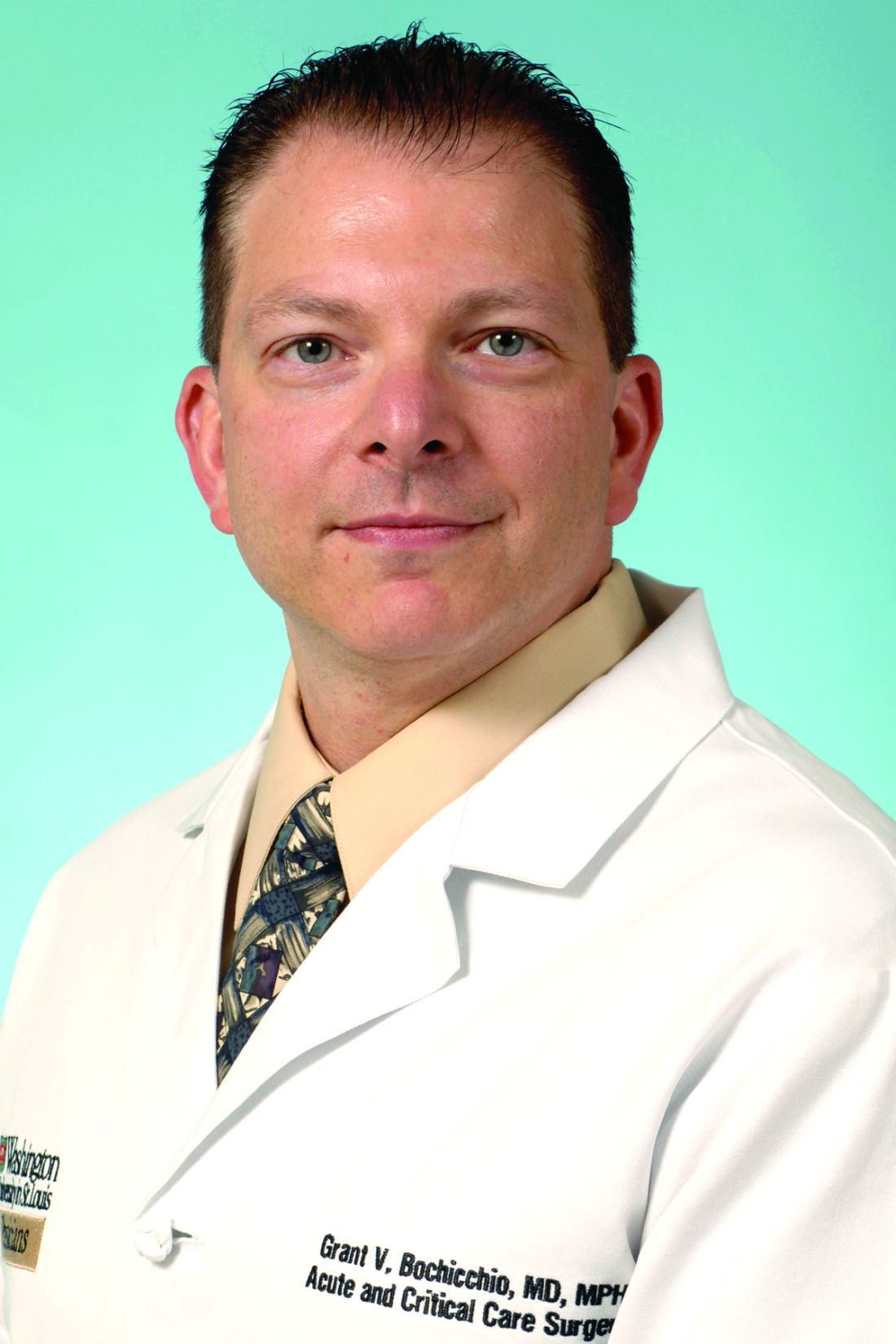
“The hypermetabolic stress response to injury is a well-known entity following injury,” Grant V. Bochicchio, MD, FACS, said at the annual meeting of the American Association for the Surgery of Trauma. “Hyperglycemia has been shown to be intimately associated with this response. Numerous studies have reported that hyperglycemia has been associated with increased infection and worse outcome in critically injured trauma patients.” In addition, several studies have demonstrated that the glucose meters used for trauma patients are inaccurate, whether in relation to anemia or other factors, said Dr. Bochicchio, chief of acute and critical care surgery at Washington University, St. Louis.
The system includes the device itself as well as a single-use, disposable cartridge, which is the only point of contact with the patient’s blood. A proprietary zero-depth space connector seamlessly attaches a disposable cartridge to the patient’s IV line, to ensure that blood flows smoothly without the need for heparin. “The OptiScanner automatically draws blood and the spectrometer measures blood glucose directly from the plasma sample without the need of calibration,” Dr. Bochicchio said. “Plasma glucose results are then displayed on the screen along with a trending graph of the glucose values. If the glucose values move outside of the desired range, the OptiScanner alerts the clinician by displaying the glucose value against a red background. We’re actually measuring [blood glucose] at the time of the patient in the ICU without having to send it to a lab, without having to wait 4 hours for a turnaround. This is where we have to go with ICU medicine.”
The purpose of the current trial was to evaluate the safety and accuracy of the OptiScanner in patients admitted to one of four ICUs who had an expected length of stay of 18 hours and required glucose monitoring. To be eligible they had to have a central line in place and could not have hematocrit level of less than 15% or greater than 60% on enrollment, and they had to be able to connect to the proximal port of the central venous catheter. Enrollment was defined as time of connection to the OptiScanner. Patients could remain connected for up to 72 hours. Blood draws were performed every 15 minutes, and a comparative sample was drawn within a 2-minute window at a minimum of 1-hour interval. The paired blood samples were then spun down for plasma within 15 minutes by the study team and analyzed twice by the Yellow Springs Instrument STAT Plus Glucose and Lactate Analyzer, which is the gold standard for measuring blood glucose levels remotely.
The primary endpoint was a mean absolute relative deviation (MARD) of 10% or less, while the secondary endpoint was a population coefficient of variance (PCV) of 13% or less. The mean age of the 200 patients was 62 years, 69% were male, 83% were white, and their mean Apache II score was 15.1. An analysis of 3,735 paired readings revealed that the mean MARD was 7.6%, “which is better than what we set our objective for,” Dr. Bochicchio said. The mean PCV was 9.8%, “which was the ideal,” he said. “So we achieved our primary and secondary objectives.” More than half of patients (52%) exhibited at least one form of dysglycemia, while 25% of patients exhibited at least one episode of hypoglycemia, severe hyperglycemia, or glycemic variability.
The invited discussant, Dennis Y. Kim, MD, FACS, noted that glucose control remains a key tenet of modern-day critical care. “It’s difficult to ignore the numerous technical and logistical challenges involved in obtaining a rapid and accurate glucose measurement upon which protocolized management decisions can be instituted,” said Dr. Kim, a surgeon at Harbor-UCLA Medical Center, Los Angeles. “Reliability of point of care devices, the ever-increasing work demands on our ICU nurses, and lack of sufficient data points to permit analysis of trends are but a few of the issues surrounding glycemic control. Dr. Bochicchio and his colleagues are to be congratulated on the present study, which proposes a potential solution to the aforementioned problems in managing hyperglycemia in the ICU.”
The study was funded by OptiScan Biomedical. Dr. Bochicchio reported having no financial disclosures.
WAIKOLOA, HAWAII – Use of an automated bedside blood monitoring platform was safe and effective in measuring glucose in critically ill patients, results from a pivotal, prospective multicenter trial demonstrated.
“The hypermetabolic stress response to injury is a well-known entity following injury,” Grant V. Bochicchio, MD, FACS, said at the annual meeting of the American Association for the Surgery of Trauma. “Hyperglycemia has been shown to be intimately associated with this response. Numerous studies have reported that hyperglycemia has been associated with increased infection and worse outcome in critically injured trauma patients.” In addition, several studies have demonstrated that the glucose meters used for trauma patients are inaccurate, whether in relation to anemia or other factors, said Dr. Bochicchio, chief of acute and critical care surgery at Washington University, St. Louis.
The system includes the device itself as well as a single-use, disposable cartridge, which is the only point of contact with the patient’s blood. A proprietary zero-depth space connector seamlessly attaches a disposable cartridge to the patient’s IV line, to ensure that blood flows smoothly without the need for heparin. “The OptiScanner automatically draws blood and the spectrometer measures blood glucose directly from the plasma sample without the need of calibration,” Dr. Bochicchio said. “Plasma glucose results are then displayed on the screen along with a trending graph of the glucose values. If the glucose values move outside of the desired range, the OptiScanner alerts the clinician by displaying the glucose value against a red background. We’re actually measuring [blood glucose] at the time of the patient in the ICU without having to send it to a lab, without having to wait 4 hours for a turnaround. This is where we have to go with ICU medicine.”
The purpose of the current trial was to evaluate the safety and accuracy of the OptiScanner in patients admitted to one of four ICUs who had an expected length of stay of 18 hours and required glucose monitoring. To be eligible they had to have a central line in place and could not have hematocrit level of less than 15% or greater than 60% on enrollment, and they had to be able to connect to the proximal port of the central venous catheter. Enrollment was defined as time of connection to the OptiScanner. Patients could remain connected for up to 72 hours. Blood draws were performed every 15 minutes, and a comparative sample was drawn within a 2-minute window at a minimum of 1-hour interval. The paired blood samples were then spun down for plasma within 15 minutes by the study team and analyzed twice by the Yellow Springs Instrument STAT Plus Glucose and Lactate Analyzer, which is the gold standard for measuring blood glucose levels remotely.
The primary endpoint was a mean absolute relative deviation (MARD) of 10% or less, while the secondary endpoint was a population coefficient of variance (PCV) of 13% or less. The mean age of the 200 patients was 62 years, 69% were male, 83% were white, and their mean Apache II score was 15.1. An analysis of 3,735 paired readings revealed that the mean MARD was 7.6%, “which is better than what we set our objective for,” Dr. Bochicchio said. The mean PCV was 9.8%, “which was the ideal,” he said. “So we achieved our primary and secondary objectives.” More than half of patients (52%) exhibited at least one form of dysglycemia, while 25% of patients exhibited at least one episode of hypoglycemia, severe hyperglycemia, or glycemic variability.
The invited discussant, Dennis Y. Kim, MD, FACS, noted that glucose control remains a key tenet of modern-day critical care. “It’s difficult to ignore the numerous technical and logistical challenges involved in obtaining a rapid and accurate glucose measurement upon which protocolized management decisions can be instituted,” said Dr. Kim, a surgeon at Harbor-UCLA Medical Center, Los Angeles. “Reliability of point of care devices, the ever-increasing work demands on our ICU nurses, and lack of sufficient data points to permit analysis of trends are but a few of the issues surrounding glycemic control. Dr. Bochicchio and his colleagues are to be congratulated on the present study, which proposes a potential solution to the aforementioned problems in managing hyperglycemia in the ICU.”
The study was funded by OptiScan Biomedical. Dr. Bochicchio reported having no financial disclosures.
WAIKOLOA, HAWAII – Use of an automated bedside blood monitoring platform was safe and effective in measuring glucose in critically ill patients, results from a pivotal, prospective multicenter trial demonstrated.
“The hypermetabolic stress response to injury is a well-known entity following injury,” Grant V. Bochicchio, MD, FACS, said at the annual meeting of the American Association for the Surgery of Trauma. “Hyperglycemia has been shown to be intimately associated with this response. Numerous studies have reported that hyperglycemia has been associated with increased infection and worse outcome in critically injured trauma patients.” In addition, several studies have demonstrated that the glucose meters used for trauma patients are inaccurate, whether in relation to anemia or other factors, said Dr. Bochicchio, chief of acute and critical care surgery at Washington University, St. Louis.
The system includes the device itself as well as a single-use, disposable cartridge, which is the only point of contact with the patient’s blood. A proprietary zero-depth space connector seamlessly attaches a disposable cartridge to the patient’s IV line, to ensure that blood flows smoothly without the need for heparin. “The OptiScanner automatically draws blood and the spectrometer measures blood glucose directly from the plasma sample without the need of calibration,” Dr. Bochicchio said. “Plasma glucose results are then displayed on the screen along with a trending graph of the glucose values. If the glucose values move outside of the desired range, the OptiScanner alerts the clinician by displaying the glucose value against a red background. We’re actually measuring [blood glucose] at the time of the patient in the ICU without having to send it to a lab, without having to wait 4 hours for a turnaround. This is where we have to go with ICU medicine.”
The purpose of the current trial was to evaluate the safety and accuracy of the OptiScanner in patients admitted to one of four ICUs who had an expected length of stay of 18 hours and required glucose monitoring. To be eligible they had to have a central line in place and could not have hematocrit level of less than 15% or greater than 60% on enrollment, and they had to be able to connect to the proximal port of the central venous catheter. Enrollment was defined as time of connection to the OptiScanner. Patients could remain connected for up to 72 hours. Blood draws were performed every 15 minutes, and a comparative sample was drawn within a 2-minute window at a minimum of 1-hour interval. The paired blood samples were then spun down for plasma within 15 minutes by the study team and analyzed twice by the Yellow Springs Instrument STAT Plus Glucose and Lactate Analyzer, which is the gold standard for measuring blood glucose levels remotely.
The primary endpoint was a mean absolute relative deviation (MARD) of 10% or less, while the secondary endpoint was a population coefficient of variance (PCV) of 13% or less. The mean age of the 200 patients was 62 years, 69% were male, 83% were white, and their mean Apache II score was 15.1. An analysis of 3,735 paired readings revealed that the mean MARD was 7.6%, “which is better than what we set our objective for,” Dr. Bochicchio said. The mean PCV was 9.8%, “which was the ideal,” he said. “So we achieved our primary and secondary objectives.” More than half of patients (52%) exhibited at least one form of dysglycemia, while 25% of patients exhibited at least one episode of hypoglycemia, severe hyperglycemia, or glycemic variability.
The invited discussant, Dennis Y. Kim, MD, FACS, noted that glucose control remains a key tenet of modern-day critical care. “It’s difficult to ignore the numerous technical and logistical challenges involved in obtaining a rapid and accurate glucose measurement upon which protocolized management decisions can be instituted,” said Dr. Kim, a surgeon at Harbor-UCLA Medical Center, Los Angeles. “Reliability of point of care devices, the ever-increasing work demands on our ICU nurses, and lack of sufficient data points to permit analysis of trends are but a few of the issues surrounding glycemic control. Dr. Bochicchio and his colleagues are to be congratulated on the present study, which proposes a potential solution to the aforementioned problems in managing hyperglycemia in the ICU.”
The study was funded by OptiScan Biomedical. Dr. Bochicchio reported having no financial disclosures.
AT THE AAST ANNUAL MEETING
Key clinical point:
Major finding: An analysis of 3,735 paired readings revealed that the mean absolute relative deviation (MARD) was 7.6%, which achieved the primary endpoint for accuracy.
Data source: A trial which set out to evaluate the safety and accuracy of the OptiScanner in 200 patients admitted to one of four ICUs who had an expected length of stay of 18 hours and required glucose monitoring.
Disclosures: The study was funded by OptiScan Biomedical. Dr. Bochicchio reported having no financial disclosures.
POP severity not linked to risk of de novo stress urinary incontinence
DENVER – Surgical correction of severe pelvic organ prolapse (POP) is no more likely to lead to stress urinary incontinence than is correction of less severe POP, suggest findings from a retrospective study of 206 patients at a tertiary care center.
But a baseline complaint of stress urinary incontinence (SUI) prior to surgery, despite a negative SUI evaluation, was associated with an increased risk, Alexandriah Alas, MD, and her colleagues at the Cleveland Clinic Florida in Weston wrote in a poster presented at Pelvic Floor Disorders Week, sponsored by the American Urogynecologic Society.
“We recommend counseling patients with a negative evaluation that there is up to a 10.6% risk of developing de novo SUI,” the researchers wrote.
Past studies have linked surgical correction of POP with a 16%-51% increase in risk of de novo SUI, but have not examined whether severe prolapse adds to that risk. The researchers reviewed records from patients who underwent surgical POP correction at their center between 2003 and 2013, excluding those with objective evidence of SUI at baseline or a history of incontinence surgery. They included patients with a baseline subjective complaint of SUI, as long as it was not the primary presenting complaint.
A total of 48 (23%) patients had massive POP – that is, a POP-Q score of at least 3 at points Ba, Bp, or C – and 158 patients had less massive POP, the researchers wrote. In all, 22 patients (10.6%) developed de novo SUI. Postsurgical rates of de novo SUI were 12.5% among women with massive POP and 10.6% among women with less severe POP (P = .6).
Women with massive POP tended to be older and had a higher incidence of hypertension than those with less severe POP. After controlling for these differences, a baseline complaint of SUI was the strongest predictor of de novo SUI, increasing the odds of this outcome more than fivefold (adjusted odds ratio, 5.5; 95% confidence interval, 1.4-23.9). Two other factors trended toward statistical significance in this multivariable model – a baseline complaint of mixed urinary incontinence and a longer POP-Q point D value (-9.5 instead of -7.5).
Among women with no baseline complaint of SUI, the incidence of de novo SUI was 6.3%. Significant predictors of de novo SUI in this subgroup included longer total vaginal length (10.5 cm vs. 9.5 cm, P = .003) and urinary leaks, even if they occurred about every other day as compared to not at all (P = .02).
The researchers did not report information on funding sources or financial disclosures.
DENVER – Surgical correction of severe pelvic organ prolapse (POP) is no more likely to lead to stress urinary incontinence than is correction of less severe POP, suggest findings from a retrospective study of 206 patients at a tertiary care center.
But a baseline complaint of stress urinary incontinence (SUI) prior to surgery, despite a negative SUI evaluation, was associated with an increased risk, Alexandriah Alas, MD, and her colleagues at the Cleveland Clinic Florida in Weston wrote in a poster presented at Pelvic Floor Disorders Week, sponsored by the American Urogynecologic Society.
“We recommend counseling patients with a negative evaluation that there is up to a 10.6% risk of developing de novo SUI,” the researchers wrote.
Past studies have linked surgical correction of POP with a 16%-51% increase in risk of de novo SUI, but have not examined whether severe prolapse adds to that risk. The researchers reviewed records from patients who underwent surgical POP correction at their center between 2003 and 2013, excluding those with objective evidence of SUI at baseline or a history of incontinence surgery. They included patients with a baseline subjective complaint of SUI, as long as it was not the primary presenting complaint.
A total of 48 (23%) patients had massive POP – that is, a POP-Q score of at least 3 at points Ba, Bp, or C – and 158 patients had less massive POP, the researchers wrote. In all, 22 patients (10.6%) developed de novo SUI. Postsurgical rates of de novo SUI were 12.5% among women with massive POP and 10.6% among women with less severe POP (P = .6).
Women with massive POP tended to be older and had a higher incidence of hypertension than those with less severe POP. After controlling for these differences, a baseline complaint of SUI was the strongest predictor of de novo SUI, increasing the odds of this outcome more than fivefold (adjusted odds ratio, 5.5; 95% confidence interval, 1.4-23.9). Two other factors trended toward statistical significance in this multivariable model – a baseline complaint of mixed urinary incontinence and a longer POP-Q point D value (-9.5 instead of -7.5).
Among women with no baseline complaint of SUI, the incidence of de novo SUI was 6.3%. Significant predictors of de novo SUI in this subgroup included longer total vaginal length (10.5 cm vs. 9.5 cm, P = .003) and urinary leaks, even if they occurred about every other day as compared to not at all (P = .02).
The researchers did not report information on funding sources or financial disclosures.
DENVER – Surgical correction of severe pelvic organ prolapse (POP) is no more likely to lead to stress urinary incontinence than is correction of less severe POP, suggest findings from a retrospective study of 206 patients at a tertiary care center.
But a baseline complaint of stress urinary incontinence (SUI) prior to surgery, despite a negative SUI evaluation, was associated with an increased risk, Alexandriah Alas, MD, and her colleagues at the Cleveland Clinic Florida in Weston wrote in a poster presented at Pelvic Floor Disorders Week, sponsored by the American Urogynecologic Society.
“We recommend counseling patients with a negative evaluation that there is up to a 10.6% risk of developing de novo SUI,” the researchers wrote.
Past studies have linked surgical correction of POP with a 16%-51% increase in risk of de novo SUI, but have not examined whether severe prolapse adds to that risk. The researchers reviewed records from patients who underwent surgical POP correction at their center between 2003 and 2013, excluding those with objective evidence of SUI at baseline or a history of incontinence surgery. They included patients with a baseline subjective complaint of SUI, as long as it was not the primary presenting complaint.
A total of 48 (23%) patients had massive POP – that is, a POP-Q score of at least 3 at points Ba, Bp, or C – and 158 patients had less massive POP, the researchers wrote. In all, 22 patients (10.6%) developed de novo SUI. Postsurgical rates of de novo SUI were 12.5% among women with massive POP and 10.6% among women with less severe POP (P = .6).
Women with massive POP tended to be older and had a higher incidence of hypertension than those with less severe POP. After controlling for these differences, a baseline complaint of SUI was the strongest predictor of de novo SUI, increasing the odds of this outcome more than fivefold (adjusted odds ratio, 5.5; 95% confidence interval, 1.4-23.9). Two other factors trended toward statistical significance in this multivariable model – a baseline complaint of mixed urinary incontinence and a longer POP-Q point D value (-9.5 instead of -7.5).
Among women with no baseline complaint of SUI, the incidence of de novo SUI was 6.3%. Significant predictors of de novo SUI in this subgroup included longer total vaginal length (10.5 cm vs. 9.5 cm, P = .003) and urinary leaks, even if they occurred about every other day as compared to not at all (P = .02).
The researchers did not report information on funding sources or financial disclosures.
AT PFD WEEK 2016
Key clinical point:
Major finding: Postsurgical rates of de novo SUI were 12.5% among women with massive POP and 10.6% among women with less severe POP (P = .6).
Data source: A single-center retrospective study of 206 patients who underwent surgical correction of POP and had no objective evidence of SUI at baseline.
Disclosures: The researchers did not report information on funding sources or financial disclosures.
Brief screen helps identify patients with PTSD, depression
WAIKOLOA, HAWAII – A new nine-item tool known as the Injured Trauma Survivor Screen demonstrated strong sensitivity and specificity for predicting posttraumatic stress disorder and depression in trauma patients.
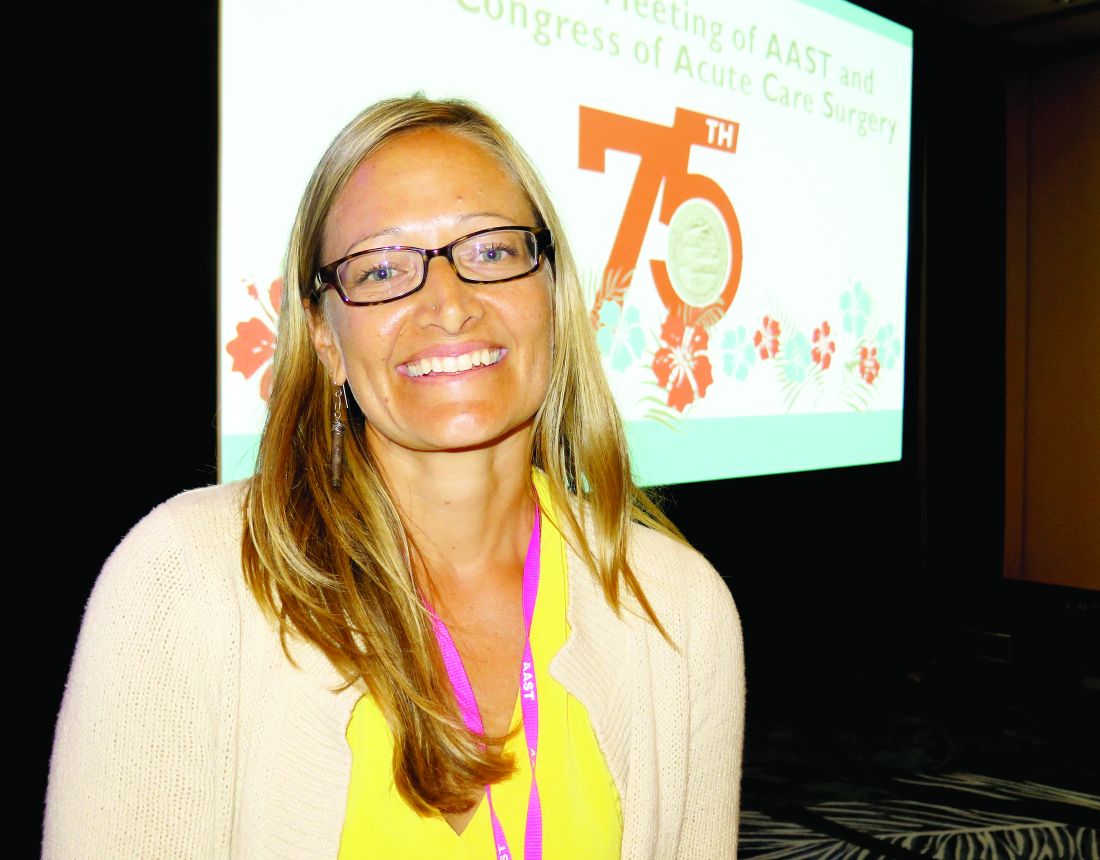
At the annual meeting of the American Association for the Surgery of Trauma, Terri deRoon-Cassini, PhD, said that the rates of PTSD among trauma patients range from 10% to 42%, depending on the type of injury sustained. “There is significant life impairment, including an increased risk for suicide and an increased risk for morbidity and mortality,” said Dr. deRoon-Cassini, a clinical psychologist and associate professor with the division of trauma and critical care at the Medical College of Wisconsin, Milwaukee.
The ACS Committee on Trauma currently recommends PTSD screening by trauma centers, including the 20-item PTSD Checklist and the nine-item PHD-9 for depression. However, these symptom-based screens were not validated in hospitalized trauma patients. “This becomes important, because according to the symptom trajectory of PTSD after trauma, about 22% of people experience chronic disease and about 16%-18% of people who have symptoms at baseline do not translate to symptoms by 6 months, so screening with a symptom-based measure isn’t always the best route,” she said.
In an effort to create a brief screening tool to identify those at risk for PTSD and depression following traumatic injury, Dr. deRoon-Cassini and her associates scoured existing medical literature on the topic to review risk factors and created an item pool of questions based on those risk factors. They came up with 47 items and statistically “funneled out the items to create the most parsimonious model predicting who goes on to develop PTSD and depression separately,” she explained. They then created the Injured Trauma Survivor Screen (ITSS), a nine-item list of yes/no questions that takes about 5 minutes to administer: five items for PTSD and five items for depression, with one item that overlaps. The five ITSS PTSD questions are:
• Did you think you were going to die? (risk factor being perceived life threat; odds ratio 6.32).
• Do you think this was done to you intentionally? (risk factor being intentionality; OR, 4.24).
• Have you felt more restless, tense, or jumpy than usual? (risk factor being assessment of arousal; OR, 5.31).
• Have you found yourself unable to stop worrying? (risk factor being worry/rumination; OR, 4.49).
• Do you find yourself thinking that the world is unsafe and that people are not to be trusted? (risk factor being negative alterations in cognition; OR, 5.52).
The five ITSS depression questions are:
• Have you ever taken medication for, or been given a mental health diagnosis? (risk factor being preexisting psychopathology; OR, 10.58).
• Has there ever been a time in your life you have been bothered by feeling down or hopeless or lost all interest in things you usually enjoyed for more than 2 weeks? (risk factor being premorbid depression; OR, 3.78).
• Did you think you were going to die? (risk factor being perceived life threat; OR, 9.69).
• Have you felt emotionally detached from your loved ones? (risk factor being negative alteration in mood; OR, 8.03).
• Do you find yourself crying and are unsure why? (risk factor being mood/depression; OR, 9.18).
The researchers administered the survey to 139 patients at two trauma centers. More than half (69%) were male, 48% were white, 40% were African American, and the remainder were from other ethnic backgrounds. The three most common mechanisms of injury were motor vehicle crashes (29%), motorcycle/all-terrain vehicle crashes (19%), and falls (13%). Dr. deRoon-Cassini reported that administration of the ITSS within 4 days of injury demonstrated a 75% sensitivity for identifying the risk for PTSD and depression, a 94% specificity for PTSD, and a 96% specificity for depression, with a cutoff score of 2 out of 5 for both subscales based on a receiver operating characteristic (ROC) curve analysis.
One month following administration of the ITSS, 20% of patients were diagnosed with depression and 29% were diagnosed with PTSD. Of those diagnosed with PTSD, 55% met criteria for concomitant depression “so we are seeing a high comorbidity between PTSD and depression, which is consistent with the medical literature,” she said.
“The ITSS represents a brief way that we can screen for PTSD and depression within a trauma system,” Dr. deRoon-Cassini said. “At our institution, social workers administer the tool. They have a flow sheet in our EMR system where they enter the responses. If someone screens positive, a best practice recommendation is put into the patient’s chart, which gets funneled to a trauma psychology consult. On the treatment side we try to intervene by triaging the severity of the current distress the person is experiencing, past comorbidities, and past trauma histories. From there we decide whether to do a brief intervention or more intensive evidence-based interventions for PTSD or depression together or separately.”
The study was funded by a grant from the Medical College of Wisconsin. Coauthors included Joshua Hunt, PhD, of the Medical College of Wisconsin, Milwaukee; Ann Marie Warren, PhD, of Baylor Medical Center, Dallas; and Karen Brasel, MD, FACS, of Oregon Health & Science University, Portland. Dr. deRoon-Cassini reported having no financial disclosures.
WAIKOLOA, HAWAII – A new nine-item tool known as the Injured Trauma Survivor Screen demonstrated strong sensitivity and specificity for predicting posttraumatic stress disorder and depression in trauma patients.
At the annual meeting of the American Association for the Surgery of Trauma, Terri deRoon-Cassini, PhD, said that the rates of PTSD among trauma patients range from 10% to 42%, depending on the type of injury sustained. “There is significant life impairment, including an increased risk for suicide and an increased risk for morbidity and mortality,” said Dr. deRoon-Cassini, a clinical psychologist and associate professor with the division of trauma and critical care at the Medical College of Wisconsin, Milwaukee.
The ACS Committee on Trauma currently recommends PTSD screening by trauma centers, including the 20-item PTSD Checklist and the nine-item PHD-9 for depression. However, these symptom-based screens were not validated in hospitalized trauma patients. “This becomes important, because according to the symptom trajectory of PTSD after trauma, about 22% of people experience chronic disease and about 16%-18% of people who have symptoms at baseline do not translate to symptoms by 6 months, so screening with a symptom-based measure isn’t always the best route,” she said.
In an effort to create a brief screening tool to identify those at risk for PTSD and depression following traumatic injury, Dr. deRoon-Cassini and her associates scoured existing medical literature on the topic to review risk factors and created an item pool of questions based on those risk factors. They came up with 47 items and statistically “funneled out the items to create the most parsimonious model predicting who goes on to develop PTSD and depression separately,” she explained. They then created the Injured Trauma Survivor Screen (ITSS), a nine-item list of yes/no questions that takes about 5 minutes to administer: five items for PTSD and five items for depression, with one item that overlaps. The five ITSS PTSD questions are:
• Did you think you were going to die? (risk factor being perceived life threat; odds ratio 6.32).
• Do you think this was done to you intentionally? (risk factor being intentionality; OR, 4.24).
• Have you felt more restless, tense, or jumpy than usual? (risk factor being assessment of arousal; OR, 5.31).
• Have you found yourself unable to stop worrying? (risk factor being worry/rumination; OR, 4.49).
• Do you find yourself thinking that the world is unsafe and that people are not to be trusted? (risk factor being negative alterations in cognition; OR, 5.52).
The five ITSS depression questions are:
• Have you ever taken medication for, or been given a mental health diagnosis? (risk factor being preexisting psychopathology; OR, 10.58).
• Has there ever been a time in your life you have been bothered by feeling down or hopeless or lost all interest in things you usually enjoyed for more than 2 weeks? (risk factor being premorbid depression; OR, 3.78).
• Did you think you were going to die? (risk factor being perceived life threat; OR, 9.69).
• Have you felt emotionally detached from your loved ones? (risk factor being negative alteration in mood; OR, 8.03).
• Do you find yourself crying and are unsure why? (risk factor being mood/depression; OR, 9.18).
The researchers administered the survey to 139 patients at two trauma centers. More than half (69%) were male, 48% were white, 40% were African American, and the remainder were from other ethnic backgrounds. The three most common mechanisms of injury were motor vehicle crashes (29%), motorcycle/all-terrain vehicle crashes (19%), and falls (13%). Dr. deRoon-Cassini reported that administration of the ITSS within 4 days of injury demonstrated a 75% sensitivity for identifying the risk for PTSD and depression, a 94% specificity for PTSD, and a 96% specificity for depression, with a cutoff score of 2 out of 5 for both subscales based on a receiver operating characteristic (ROC) curve analysis.
One month following administration of the ITSS, 20% of patients were diagnosed with depression and 29% were diagnosed with PTSD. Of those diagnosed with PTSD, 55% met criteria for concomitant depression “so we are seeing a high comorbidity between PTSD and depression, which is consistent with the medical literature,” she said.
“The ITSS represents a brief way that we can screen for PTSD and depression within a trauma system,” Dr. deRoon-Cassini said. “At our institution, social workers administer the tool. They have a flow sheet in our EMR system where they enter the responses. If someone screens positive, a best practice recommendation is put into the patient’s chart, which gets funneled to a trauma psychology consult. On the treatment side we try to intervene by triaging the severity of the current distress the person is experiencing, past comorbidities, and past trauma histories. From there we decide whether to do a brief intervention or more intensive evidence-based interventions for PTSD or depression together or separately.”
The study was funded by a grant from the Medical College of Wisconsin. Coauthors included Joshua Hunt, PhD, of the Medical College of Wisconsin, Milwaukee; Ann Marie Warren, PhD, of Baylor Medical Center, Dallas; and Karen Brasel, MD, FACS, of Oregon Health & Science University, Portland. Dr. deRoon-Cassini reported having no financial disclosures.
WAIKOLOA, HAWAII – A new nine-item tool known as the Injured Trauma Survivor Screen demonstrated strong sensitivity and specificity for predicting posttraumatic stress disorder and depression in trauma patients.
At the annual meeting of the American Association for the Surgery of Trauma, Terri deRoon-Cassini, PhD, said that the rates of PTSD among trauma patients range from 10% to 42%, depending on the type of injury sustained. “There is significant life impairment, including an increased risk for suicide and an increased risk for morbidity and mortality,” said Dr. deRoon-Cassini, a clinical psychologist and associate professor with the division of trauma and critical care at the Medical College of Wisconsin, Milwaukee.
The ACS Committee on Trauma currently recommends PTSD screening by trauma centers, including the 20-item PTSD Checklist and the nine-item PHD-9 for depression. However, these symptom-based screens were not validated in hospitalized trauma patients. “This becomes important, because according to the symptom trajectory of PTSD after trauma, about 22% of people experience chronic disease and about 16%-18% of people who have symptoms at baseline do not translate to symptoms by 6 months, so screening with a symptom-based measure isn’t always the best route,” she said.
In an effort to create a brief screening tool to identify those at risk for PTSD and depression following traumatic injury, Dr. deRoon-Cassini and her associates scoured existing medical literature on the topic to review risk factors and created an item pool of questions based on those risk factors. They came up with 47 items and statistically “funneled out the items to create the most parsimonious model predicting who goes on to develop PTSD and depression separately,” she explained. They then created the Injured Trauma Survivor Screen (ITSS), a nine-item list of yes/no questions that takes about 5 minutes to administer: five items for PTSD and five items for depression, with one item that overlaps. The five ITSS PTSD questions are:
• Did you think you were going to die? (risk factor being perceived life threat; odds ratio 6.32).
• Do you think this was done to you intentionally? (risk factor being intentionality; OR, 4.24).
• Have you felt more restless, tense, or jumpy than usual? (risk factor being assessment of arousal; OR, 5.31).
• Have you found yourself unable to stop worrying? (risk factor being worry/rumination; OR, 4.49).
• Do you find yourself thinking that the world is unsafe and that people are not to be trusted? (risk factor being negative alterations in cognition; OR, 5.52).
The five ITSS depression questions are:
• Have you ever taken medication for, or been given a mental health diagnosis? (risk factor being preexisting psychopathology; OR, 10.58).
• Has there ever been a time in your life you have been bothered by feeling down or hopeless or lost all interest in things you usually enjoyed for more than 2 weeks? (risk factor being premorbid depression; OR, 3.78).
• Did you think you were going to die? (risk factor being perceived life threat; OR, 9.69).
• Have you felt emotionally detached from your loved ones? (risk factor being negative alteration in mood; OR, 8.03).
• Do you find yourself crying and are unsure why? (risk factor being mood/depression; OR, 9.18).
The researchers administered the survey to 139 patients at two trauma centers. More than half (69%) were male, 48% were white, 40% were African American, and the remainder were from other ethnic backgrounds. The three most common mechanisms of injury were motor vehicle crashes (29%), motorcycle/all-terrain vehicle crashes (19%), and falls (13%). Dr. deRoon-Cassini reported that administration of the ITSS within 4 days of injury demonstrated a 75% sensitivity for identifying the risk for PTSD and depression, a 94% specificity for PTSD, and a 96% specificity for depression, with a cutoff score of 2 out of 5 for both subscales based on a receiver operating characteristic (ROC) curve analysis.
One month following administration of the ITSS, 20% of patients were diagnosed with depression and 29% were diagnosed with PTSD. Of those diagnosed with PTSD, 55% met criteria for concomitant depression “so we are seeing a high comorbidity between PTSD and depression, which is consistent with the medical literature,” she said.
“The ITSS represents a brief way that we can screen for PTSD and depression within a trauma system,” Dr. deRoon-Cassini said. “At our institution, social workers administer the tool. They have a flow sheet in our EMR system where they enter the responses. If someone screens positive, a best practice recommendation is put into the patient’s chart, which gets funneled to a trauma psychology consult. On the treatment side we try to intervene by triaging the severity of the current distress the person is experiencing, past comorbidities, and past trauma histories. From there we decide whether to do a brief intervention or more intensive evidence-based interventions for PTSD or depression together or separately.”
The study was funded by a grant from the Medical College of Wisconsin. Coauthors included Joshua Hunt, PhD, of the Medical College of Wisconsin, Milwaukee; Ann Marie Warren, PhD, of Baylor Medical Center, Dallas; and Karen Brasel, MD, FACS, of Oregon Health & Science University, Portland. Dr. deRoon-Cassini reported having no financial disclosures.
Key clinical point:
Major finding: Administration of the Injured Trauma Survivor Screen (ITSS) within 4 days of injury demonstrated a 75% sensitivity for identifying the risk for PTSD and depression, a 94% specificity for PTSD, and a 96% specificity for depression.
Data source: An analysis of 139 patients from two trauma centers who completed the ITSS.
Disclosures: The study was funded by a grant from the Medical College of Wisconsin. Dr. deRoon-Cassini reported having no financial disclosures.
Patients with stage 1 NSCLC more likely to die of other causes in short term
Patients with stage 1 non–small cell lung cancer who underwent resection with intent to cure were more likely, over the short term, to die of other causes, investigators reported.
“Non–cancer-specific mortality represents a significant competing event for lung cancer–specific mortality, with an increasing impact as age increases,” Takashi Eguchi, MD, and his associates at Memorial Sloan Kettering Cancer Center, New York wrote (J Clin Oncol. 2016 Oct 10. doi: 10.1200/JCO.2016.69.0834).
“These findings can provide patients with more accurate information on survivorship on the basis of their individual preoperative status, and help determine patients’ optimal treatment options.”
The study included 2,186 patients who underwent curative-intent resection of stage 1 non-small cell lung cancer at Memorial Sloan Kettering between 2000 and 2011. The cumulative 5-year lung cancer death rate was 10.4%, but rose with age from 7.5% among patients younger than 65 years to 13.2% among patients who were at least 75 years old. Cumulative 5-year rates of mortality not due to cancer were lower, at 5.3% overall, 1.8% in the youngest cohort, and 9% in the oldest cohort. But a competing risk analysis of the entire cohort showed that non–cancer-specific cumulative mortality was higher than mortality from lung cancer for up to 1.5 years after resection, the investigators found. Furthermore, patients who were at least 75 years old were more likely to die of causes other than cancer for up to 2.5 years after surgery.
In the multivariable analysis, low predicted postoperative diffusing capacity of lung for carbon monoxide (DCLO) independently predicted severe morbidity (P less than .001), 1-year mortality (P less than .001), and non–cancer-specific mortality (P less than .001), the researchers said. These findings reflect prior work linking low DCLO with obstructive, restrictive, and pulmonary vascular disease, chronic heart failure, and poor postoperative outcomes, they noted.
Senior author Prasad S. Adusumilli, MD, provided funding. Dr. Eguchi and Dr. Adusumilli had no relevant financial disclosures.
Patients with stage 1 non–small cell lung cancer who underwent resection with intent to cure were more likely, over the short term, to die of other causes, investigators reported.
“Non–cancer-specific mortality represents a significant competing event for lung cancer–specific mortality, with an increasing impact as age increases,” Takashi Eguchi, MD, and his associates at Memorial Sloan Kettering Cancer Center, New York wrote (J Clin Oncol. 2016 Oct 10. doi: 10.1200/JCO.2016.69.0834).
“These findings can provide patients with more accurate information on survivorship on the basis of their individual preoperative status, and help determine patients’ optimal treatment options.”
The study included 2,186 patients who underwent curative-intent resection of stage 1 non-small cell lung cancer at Memorial Sloan Kettering between 2000 and 2011. The cumulative 5-year lung cancer death rate was 10.4%, but rose with age from 7.5% among patients younger than 65 years to 13.2% among patients who were at least 75 years old. Cumulative 5-year rates of mortality not due to cancer were lower, at 5.3% overall, 1.8% in the youngest cohort, and 9% in the oldest cohort. But a competing risk analysis of the entire cohort showed that non–cancer-specific cumulative mortality was higher than mortality from lung cancer for up to 1.5 years after resection, the investigators found. Furthermore, patients who were at least 75 years old were more likely to die of causes other than cancer for up to 2.5 years after surgery.
In the multivariable analysis, low predicted postoperative diffusing capacity of lung for carbon monoxide (DCLO) independently predicted severe morbidity (P less than .001), 1-year mortality (P less than .001), and non–cancer-specific mortality (P less than .001), the researchers said. These findings reflect prior work linking low DCLO with obstructive, restrictive, and pulmonary vascular disease, chronic heart failure, and poor postoperative outcomes, they noted.
Senior author Prasad S. Adusumilli, MD, provided funding. Dr. Eguchi and Dr. Adusumilli had no relevant financial disclosures.
Patients with stage 1 non–small cell lung cancer who underwent resection with intent to cure were more likely, over the short term, to die of other causes, investigators reported.
“Non–cancer-specific mortality represents a significant competing event for lung cancer–specific mortality, with an increasing impact as age increases,” Takashi Eguchi, MD, and his associates at Memorial Sloan Kettering Cancer Center, New York wrote (J Clin Oncol. 2016 Oct 10. doi: 10.1200/JCO.2016.69.0834).
“These findings can provide patients with more accurate information on survivorship on the basis of their individual preoperative status, and help determine patients’ optimal treatment options.”
The study included 2,186 patients who underwent curative-intent resection of stage 1 non-small cell lung cancer at Memorial Sloan Kettering between 2000 and 2011. The cumulative 5-year lung cancer death rate was 10.4%, but rose with age from 7.5% among patients younger than 65 years to 13.2% among patients who were at least 75 years old. Cumulative 5-year rates of mortality not due to cancer were lower, at 5.3% overall, 1.8% in the youngest cohort, and 9% in the oldest cohort. But a competing risk analysis of the entire cohort showed that non–cancer-specific cumulative mortality was higher than mortality from lung cancer for up to 1.5 years after resection, the investigators found. Furthermore, patients who were at least 75 years old were more likely to die of causes other than cancer for up to 2.5 years after surgery.
In the multivariable analysis, low predicted postoperative diffusing capacity of lung for carbon monoxide (DCLO) independently predicted severe morbidity (P less than .001), 1-year mortality (P less than .001), and non–cancer-specific mortality (P less than .001), the researchers said. These findings reflect prior work linking low DCLO with obstructive, restrictive, and pulmonary vascular disease, chronic heart failure, and poor postoperative outcomes, they noted.
Senior author Prasad S. Adusumilli, MD, provided funding. Dr. Eguchi and Dr. Adusumilli had no relevant financial disclosures.
FROM JOURNAL OF CLINICAL ONCOLOGY
Key clinical point: Patients with resected stage 1 non-small cell lung cancer are more likely to die of other causes in the short term. Major finding: The non–cancer-specific cumulative incidence of death was higher than CID from lung cancer for up to 1.5 years after resection.
Data source: A single-center competing risk analysis of 2,186 patients who underwent curative-intent resection for stage 1 non–small cell lung cancer.
Disclosures: Senior author Prasad Adusumilli, MD, provided funding. Dr. Eguchi and Dr. Adusumilli had no relevant financial disclosures.
Preperitoneal pelvic packing benefits subset of pelvic fracture patients
WAIKOLOA, HAWAII – Preperitoneal pelvic packing reduces mortality in patients with life-threatening hemorrhage caused by unstable pelvic fractures, results from a long-term single-center study showed.
“Despite advances in care of the critically injured patient, mortality rates for patients with hemodynamic instability due to pelvic fractures remains greater than 30%,” Clay Cothren Burlew, MD, said at the annual meeting of the American Association for the Surgery of Trauma. “The majority of trauma centers in the United States use angioembolization for hemorrhage control. While angioembolization is effective in controlling arterial sources of hemorrhage, which constitutes about 15% of pelvic bleeding, it does not address the venous or bony sources of hemorrhage within the pelvis. Additionally, time to arterial hemorrhage control using angioembolization usually takes several hours to accomplish, even at the most advanced level I trauma centers.”

For the current study, the researchers hypothesized that pelvic packing would result in a shorter time to intervention and lower mortality, compared with other pelvic fracture management strategies.
Since September 2004 all patients at the Denver Health Medical Center with persistent hemodynamic instability and a pelvic fracture underwent pelvic packing. Indication for packing is a persistent systolic blood pressure of less than 90 mm Hg in the initial resuscitation period despite the transfusion of two units of red blood cells. “Initial stabilization of the pelvis is performed in the emergency department with a pelvic sheet or a binder,” Dr. Burlew explained. “Skeletal fixation of the pelvis with an external fixator or a pelvic C clamp is done concurrently with preperitoneal pelvic packing in the operating room. Angiography is performed for ongoing pelvic bleeding, defined as greater than four units of red blood cells after the patients’ coagulopathy is corrected; immediate postpacking angiography is performed for ongoing hemodynamic instability despite packing and external fixation.”
Over a period of 11 years, 2,293 patients were admitted to Denver Health Medical Center with pelvic fractures. Of these, 128 patients in refractory shock underwent pelvic packing. More than half of the patients (70%) were men, their mean age was 44 years, and their mean Injury Severity Score was 48. The most common mechanism of injury was motor vehicle collision, followed by auto/pedestrian accidents and motorcycle collision. Pelvic fracture patterns included every classification, with anterior posterior compression (APC) III and lateral compression (LC) II patterns predominating. Of these, 18 patients had open pelvic fractures. More than half of patients (70%) had an extremity injury, 65% had a thoracic injury, 63% had an abdominal injury, 43% had a traumatic brain injury, and 38% had a spine injury.
The mean systolic blood pressure of patients was 74 mm Hg and their mean heart rate was 120 beats per minute in the emergency department. Their mean base deficit was 12. However, 32% of patients did not have an arterial blood gas reported during this time frame. When the researchers compared 13% of patients who underwent postpacking angioembolization with those who did not require angioembolization after pelvic packing, they observed no significant differences in age, injury severity score, presenting systolic BP, presenting systolic BP/base deficit, or ED transfusions. The only difference that reached statistical significance was a lower heart rate in the ED in the postpacking angioembolization group, compared with the preperitoneal pelvic packing alone group (110 vs. 121 beats per minute). “We also realized that the angioembolization group received more red blood cells and fresh frozen plasma prior to ICU admission, as well as in the subsequent 24 hours,” Dr. Burlew said.
The majority of patients (84%) had a single packing of the preperitoneal space, while 20 patients underwent repacking when returned to the operating room; all occurred prior to July 2011. “At this time point we determined that there was an increased infection rate with repacking of the pelvis,” Dr. Burlew said. “There were 15 pelvic space infections. Four occurred in those with open fractures or perineal degloving, four developed in those with associated bladder injuries, and seven pelvic space infections occurred in patients without an open fracture.” The infection rate was 6% among patients with a single packing of the pelvis, compared with an infection rate of 45% among those who underwent repacking. “This emphasizes the need for local control of small bleeders when the pelvis in unpacked, using electrocautery and topical hemostatic agents,” she said.
Dr. Burlew went on to note that comparison of two prospective observational study groups with differing management schema may provide salient information. “The AAST multicenter study was an evaluation of the modern-day care of pelvic fracture patients from 11 different centers,” she said. “In that study, the mortality rate among patients presenting in shock who did not undergo pelvic packing was 32%. The mortality rate in our series was 21%, with a relative risk reduction that was statistically significant.” She concluded that pelvic packing “has a faster time to intervention for pelvic fracture–related hemorrhage. Arterial bleed was only present in 13% of patients, rendering angiography of limited utility. Pelvic packing should be utilized for pelvic fracture–related bleeding in the patient who remains hemodynamically unstable despite red blood cell transfusion.”
One of the study authors, Ernest E. Moore, MD, disclosed that he has received research funding from Haemonetics, TEM, and Prytime Medical Devices, and Charles J. Fox, MD, is on the clinical advisory board for Prytime Medical Devices. Dr. Burlew reported having no financial disclosures.
WAIKOLOA, HAWAII – Preperitoneal pelvic packing reduces mortality in patients with life-threatening hemorrhage caused by unstable pelvic fractures, results from a long-term single-center study showed.
“Despite advances in care of the critically injured patient, mortality rates for patients with hemodynamic instability due to pelvic fractures remains greater than 30%,” Clay Cothren Burlew, MD, said at the annual meeting of the American Association for the Surgery of Trauma. “The majority of trauma centers in the United States use angioembolization for hemorrhage control. While angioembolization is effective in controlling arterial sources of hemorrhage, which constitutes about 15% of pelvic bleeding, it does not address the venous or bony sources of hemorrhage within the pelvis. Additionally, time to arterial hemorrhage control using angioembolization usually takes several hours to accomplish, even at the most advanced level I trauma centers.”
For the current study, the researchers hypothesized that pelvic packing would result in a shorter time to intervention and lower mortality, compared with other pelvic fracture management strategies.
Since September 2004 all patients at the Denver Health Medical Center with persistent hemodynamic instability and a pelvic fracture underwent pelvic packing. Indication for packing is a persistent systolic blood pressure of less than 90 mm Hg in the initial resuscitation period despite the transfusion of two units of red blood cells. “Initial stabilization of the pelvis is performed in the emergency department with a pelvic sheet or a binder,” Dr. Burlew explained. “Skeletal fixation of the pelvis with an external fixator or a pelvic C clamp is done concurrently with preperitoneal pelvic packing in the operating room. Angiography is performed for ongoing pelvic bleeding, defined as greater than four units of red blood cells after the patients’ coagulopathy is corrected; immediate postpacking angiography is performed for ongoing hemodynamic instability despite packing and external fixation.”
Over a period of 11 years, 2,293 patients were admitted to Denver Health Medical Center with pelvic fractures. Of these, 128 patients in refractory shock underwent pelvic packing. More than half of the patients (70%) were men, their mean age was 44 years, and their mean Injury Severity Score was 48. The most common mechanism of injury was motor vehicle collision, followed by auto/pedestrian accidents and motorcycle collision. Pelvic fracture patterns included every classification, with anterior posterior compression (APC) III and lateral compression (LC) II patterns predominating. Of these, 18 patients had open pelvic fractures. More than half of patients (70%) had an extremity injury, 65% had a thoracic injury, 63% had an abdominal injury, 43% had a traumatic brain injury, and 38% had a spine injury.
The mean systolic blood pressure of patients was 74 mm Hg and their mean heart rate was 120 beats per minute in the emergency department. Their mean base deficit was 12. However, 32% of patients did not have an arterial blood gas reported during this time frame. When the researchers compared 13% of patients who underwent postpacking angioembolization with those who did not require angioembolization after pelvic packing, they observed no significant differences in age, injury severity score, presenting systolic BP, presenting systolic BP/base deficit, or ED transfusions. The only difference that reached statistical significance was a lower heart rate in the ED in the postpacking angioembolization group, compared with the preperitoneal pelvic packing alone group (110 vs. 121 beats per minute). “We also realized that the angioembolization group received more red blood cells and fresh frozen plasma prior to ICU admission, as well as in the subsequent 24 hours,” Dr. Burlew said.
The majority of patients (84%) had a single packing of the preperitoneal space, while 20 patients underwent repacking when returned to the operating room; all occurred prior to July 2011. “At this time point we determined that there was an increased infection rate with repacking of the pelvis,” Dr. Burlew said. “There were 15 pelvic space infections. Four occurred in those with open fractures or perineal degloving, four developed in those with associated bladder injuries, and seven pelvic space infections occurred in patients without an open fracture.” The infection rate was 6% among patients with a single packing of the pelvis, compared with an infection rate of 45% among those who underwent repacking. “This emphasizes the need for local control of small bleeders when the pelvis in unpacked, using electrocautery and topical hemostatic agents,” she said.
Dr. Burlew went on to note that comparison of two prospective observational study groups with differing management schema may provide salient information. “The AAST multicenter study was an evaluation of the modern-day care of pelvic fracture patients from 11 different centers,” she said. “In that study, the mortality rate among patients presenting in shock who did not undergo pelvic packing was 32%. The mortality rate in our series was 21%, with a relative risk reduction that was statistically significant.” She concluded that pelvic packing “has a faster time to intervention for pelvic fracture–related hemorrhage. Arterial bleed was only present in 13% of patients, rendering angiography of limited utility. Pelvic packing should be utilized for pelvic fracture–related bleeding in the patient who remains hemodynamically unstable despite red blood cell transfusion.”
One of the study authors, Ernest E. Moore, MD, disclosed that he has received research funding from Haemonetics, TEM, and Prytime Medical Devices, and Charles J. Fox, MD, is on the clinical advisory board for Prytime Medical Devices. Dr. Burlew reported having no financial disclosures.
WAIKOLOA, HAWAII – Preperitoneal pelvic packing reduces mortality in patients with life-threatening hemorrhage caused by unstable pelvic fractures, results from a long-term single-center study showed.
“Despite advances in care of the critically injured patient, mortality rates for patients with hemodynamic instability due to pelvic fractures remains greater than 30%,” Clay Cothren Burlew, MD, said at the annual meeting of the American Association for the Surgery of Trauma. “The majority of trauma centers in the United States use angioembolization for hemorrhage control. While angioembolization is effective in controlling arterial sources of hemorrhage, which constitutes about 15% of pelvic bleeding, it does not address the venous or bony sources of hemorrhage within the pelvis. Additionally, time to arterial hemorrhage control using angioembolization usually takes several hours to accomplish, even at the most advanced level I trauma centers.”
For the current study, the researchers hypothesized that pelvic packing would result in a shorter time to intervention and lower mortality, compared with other pelvic fracture management strategies.
Since September 2004 all patients at the Denver Health Medical Center with persistent hemodynamic instability and a pelvic fracture underwent pelvic packing. Indication for packing is a persistent systolic blood pressure of less than 90 mm Hg in the initial resuscitation period despite the transfusion of two units of red blood cells. “Initial stabilization of the pelvis is performed in the emergency department with a pelvic sheet or a binder,” Dr. Burlew explained. “Skeletal fixation of the pelvis with an external fixator or a pelvic C clamp is done concurrently with preperitoneal pelvic packing in the operating room. Angiography is performed for ongoing pelvic bleeding, defined as greater than four units of red blood cells after the patients’ coagulopathy is corrected; immediate postpacking angiography is performed for ongoing hemodynamic instability despite packing and external fixation.”
Over a period of 11 years, 2,293 patients were admitted to Denver Health Medical Center with pelvic fractures. Of these, 128 patients in refractory shock underwent pelvic packing. More than half of the patients (70%) were men, their mean age was 44 years, and their mean Injury Severity Score was 48. The most common mechanism of injury was motor vehicle collision, followed by auto/pedestrian accidents and motorcycle collision. Pelvic fracture patterns included every classification, with anterior posterior compression (APC) III and lateral compression (LC) II patterns predominating. Of these, 18 patients had open pelvic fractures. More than half of patients (70%) had an extremity injury, 65% had a thoracic injury, 63% had an abdominal injury, 43% had a traumatic brain injury, and 38% had a spine injury.
The mean systolic blood pressure of patients was 74 mm Hg and their mean heart rate was 120 beats per minute in the emergency department. Their mean base deficit was 12. However, 32% of patients did not have an arterial blood gas reported during this time frame. When the researchers compared 13% of patients who underwent postpacking angioembolization with those who did not require angioembolization after pelvic packing, they observed no significant differences in age, injury severity score, presenting systolic BP, presenting systolic BP/base deficit, or ED transfusions. The only difference that reached statistical significance was a lower heart rate in the ED in the postpacking angioembolization group, compared with the preperitoneal pelvic packing alone group (110 vs. 121 beats per minute). “We also realized that the angioembolization group received more red blood cells and fresh frozen plasma prior to ICU admission, as well as in the subsequent 24 hours,” Dr. Burlew said.
The majority of patients (84%) had a single packing of the preperitoneal space, while 20 patients underwent repacking when returned to the operating room; all occurred prior to July 2011. “At this time point we determined that there was an increased infection rate with repacking of the pelvis,” Dr. Burlew said. “There were 15 pelvic space infections. Four occurred in those with open fractures or perineal degloving, four developed in those with associated bladder injuries, and seven pelvic space infections occurred in patients without an open fracture.” The infection rate was 6% among patients with a single packing of the pelvis, compared with an infection rate of 45% among those who underwent repacking. “This emphasizes the need for local control of small bleeders when the pelvis in unpacked, using electrocautery and topical hemostatic agents,” she said.
Dr. Burlew went on to note that comparison of two prospective observational study groups with differing management schema may provide salient information. “The AAST multicenter study was an evaluation of the modern-day care of pelvic fracture patients from 11 different centers,” she said. “In that study, the mortality rate among patients presenting in shock who did not undergo pelvic packing was 32%. The mortality rate in our series was 21%, with a relative risk reduction that was statistically significant.” She concluded that pelvic packing “has a faster time to intervention for pelvic fracture–related hemorrhage. Arterial bleed was only present in 13% of patients, rendering angiography of limited utility. Pelvic packing should be utilized for pelvic fracture–related bleeding in the patient who remains hemodynamically unstable despite red blood cell transfusion.”
One of the study authors, Ernest E. Moore, MD, disclosed that he has received research funding from Haemonetics, TEM, and Prytime Medical Devices, and Charles J. Fox, MD, is on the clinical advisory board for Prytime Medical Devices. Dr. Burlew reported having no financial disclosures.
Key clinical point:
Major finding: Of the 128 patients who underwent preperitoneal pelvic packing for life-threatening hemorrhage caused by unstable pelvic fractures, 27 died, for a mortality rate of 21%, which is significantly lower than other analyses in the medical literature.
Data source: An 11-year study of 2,293 patients who were admitted to Denver Health Medical Center with pelvic fractures.
Disclosures: One of the study authors, Ernest E. Moore, MD, disclosed that he has received research funding from Haemonetics, TEM, and Prytime Medical Devices, and Charles J. Fox, MD, is on the clinical advisory board for Prytime Medical Devices. Dr. Burlew reported having no financial disclosures.
Partial-breast irradiation alternative to mastectomy following recurrence
BOSTON – In women with in-breast failures following breast-conserving surgery and whole-breast irradiation, partial-breast irradiation with 3D conformal radiation appears to be an effective and safe alternative to mastectomy, results of a phase II trial indicate.
At a median follow-up of 3.6 years, there were only two ipsilateral breast recurrences, and four mastectomies required among 58 women treated with partial-breast irradiation after a second lumpectomy, reported Douglas W. Arthur, MD, chair of radiation oncology at Virginia Commonwealth University in Richmond.
“I think this information adds to the growing data supporting this treatment approach as an alternative to mastectomy for those who continue to want to preserve the breast,” he said at a late-breaking abstracts session at the annual meeting of the American Society of Radiation Oncology.
The NRG/RTOG 1014 study is a prospective phase II trial designed to evaluate skin, breast, and chest wall events occurring within 1 year of re-irradiation. One-year toxicity results from the trial were reported at the 2015 ASTRO annual meeting.
Dr. Arthur presented 3-year efficacy results from the trial. The investigators enrolled women with in-breast recurrences more than 1 year after whole-breast irradiation (WBI), with tumors that were smaller than 3 cm, unifocal, and resected with negative margins. Axillary involvement was limited to pathologic NO or N1 without extracapsular extension.
Partial-breast irradiation was targeted to the surgical cavity with a safety margin of plus 1.5 cm for the clinical target volume, and an additional 1-cm expansion. The prescribed dose was 45 Gy in 1.5-Gy fractions delivered via 3D conformal radiotherapy in 30 treatments.
Of 65 patients accrued, 58 completed treatment and were evaluable for efficacy. The median age was 67.5 years. In all, 23 patients had ductal carcinoma in situ, and 35 had invasive cancers. All patients were node negative.
A total of four patients (6.9%) reported late grade 3 toxicities, which included breast infection, fibrous deep connective tissue, skin induration, and breast atrophy, pain, and volume loss. There were no grade 4 toxicities, and no treatment-related deaths.
Two patients had in-breast recurrences, which translated into a year estimate of 3.7%. Four patients underwent mastectomies, for a 3-year estimated mastectomy failure rate of 5.2%. Two of the mastectomies were for the in-breast recurrences, one for a nonhealing wound, and one occurred in a patient who developed cancer in the contralateral breast and opted for a bilateral mastectomy.
BOSTON – In women with in-breast failures following breast-conserving surgery and whole-breast irradiation, partial-breast irradiation with 3D conformal radiation appears to be an effective and safe alternative to mastectomy, results of a phase II trial indicate.
At a median follow-up of 3.6 years, there were only two ipsilateral breast recurrences, and four mastectomies required among 58 women treated with partial-breast irradiation after a second lumpectomy, reported Douglas W. Arthur, MD, chair of radiation oncology at Virginia Commonwealth University in Richmond.
“I think this information adds to the growing data supporting this treatment approach as an alternative to mastectomy for those who continue to want to preserve the breast,” he said at a late-breaking abstracts session at the annual meeting of the American Society of Radiation Oncology.
The NRG/RTOG 1014 study is a prospective phase II trial designed to evaluate skin, breast, and chest wall events occurring within 1 year of re-irradiation. One-year toxicity results from the trial were reported at the 2015 ASTRO annual meeting.
Dr. Arthur presented 3-year efficacy results from the trial. The investigators enrolled women with in-breast recurrences more than 1 year after whole-breast irradiation (WBI), with tumors that were smaller than 3 cm, unifocal, and resected with negative margins. Axillary involvement was limited to pathologic NO or N1 without extracapsular extension.
Partial-breast irradiation was targeted to the surgical cavity with a safety margin of plus 1.5 cm for the clinical target volume, and an additional 1-cm expansion. The prescribed dose was 45 Gy in 1.5-Gy fractions delivered via 3D conformal radiotherapy in 30 treatments.
Of 65 patients accrued, 58 completed treatment and were evaluable for efficacy. The median age was 67.5 years. In all, 23 patients had ductal carcinoma in situ, and 35 had invasive cancers. All patients were node negative.
A total of four patients (6.9%) reported late grade 3 toxicities, which included breast infection, fibrous deep connective tissue, skin induration, and breast atrophy, pain, and volume loss. There were no grade 4 toxicities, and no treatment-related deaths.
Two patients had in-breast recurrences, which translated into a year estimate of 3.7%. Four patients underwent mastectomies, for a 3-year estimated mastectomy failure rate of 5.2%. Two of the mastectomies were for the in-breast recurrences, one for a nonhealing wound, and one occurred in a patient who developed cancer in the contralateral breast and opted for a bilateral mastectomy.
BOSTON – In women with in-breast failures following breast-conserving surgery and whole-breast irradiation, partial-breast irradiation with 3D conformal radiation appears to be an effective and safe alternative to mastectomy, results of a phase II trial indicate.
At a median follow-up of 3.6 years, there were only two ipsilateral breast recurrences, and four mastectomies required among 58 women treated with partial-breast irradiation after a second lumpectomy, reported Douglas W. Arthur, MD, chair of radiation oncology at Virginia Commonwealth University in Richmond.
“I think this information adds to the growing data supporting this treatment approach as an alternative to mastectomy for those who continue to want to preserve the breast,” he said at a late-breaking abstracts session at the annual meeting of the American Society of Radiation Oncology.
The NRG/RTOG 1014 study is a prospective phase II trial designed to evaluate skin, breast, and chest wall events occurring within 1 year of re-irradiation. One-year toxicity results from the trial were reported at the 2015 ASTRO annual meeting.
Dr. Arthur presented 3-year efficacy results from the trial. The investigators enrolled women with in-breast recurrences more than 1 year after whole-breast irradiation (WBI), with tumors that were smaller than 3 cm, unifocal, and resected with negative margins. Axillary involvement was limited to pathologic NO or N1 without extracapsular extension.
Partial-breast irradiation was targeted to the surgical cavity with a safety margin of plus 1.5 cm for the clinical target volume, and an additional 1-cm expansion. The prescribed dose was 45 Gy in 1.5-Gy fractions delivered via 3D conformal radiotherapy in 30 treatments.
Of 65 patients accrued, 58 completed treatment and were evaluable for efficacy. The median age was 67.5 years. In all, 23 patients had ductal carcinoma in situ, and 35 had invasive cancers. All patients were node negative.
A total of four patients (6.9%) reported late grade 3 toxicities, which included breast infection, fibrous deep connective tissue, skin induration, and breast atrophy, pain, and volume loss. There were no grade 4 toxicities, and no treatment-related deaths.
Two patients had in-breast recurrences, which translated into a year estimate of 3.7%. Four patients underwent mastectomies, for a 3-year estimated mastectomy failure rate of 5.2%. Two of the mastectomies were for the in-breast recurrences, one for a nonhealing wound, and one occurred in a patient who developed cancer in the contralateral breast and opted for a bilateral mastectomy.
AT ASTRO 2016
Key clinical point: Re-irradiation following second lumpectomy after in-breast cancer recurrences appears to be a safe and effective alternative to mastectomy.
Major finding: The 3-year estimated in-breast recurrence rate was 3.7%.
Data source: Phase II nonrandomized study in 58 women with in-breast failures following breast-conserving surgery and whole-breast irradiation.
Disclosures: The study was supported by the National Cancer Institute. Dr. Arthur reported formerly serving on the medical advisory board of Impedimed,
The Problem of ‘Is’ and ‘Ought’ for Surgeons
Many years ago during medical school, I took time out to pursue graduate studies in philosophy. At that time, I took a number of courses that explored various approaches to the philosophical questions of morality and ethics. My ultimate goal, even back then, was to focus on ethical issues in the practice of medicine.
I often found the philosophical discussions from the “giants” in philosophy were not always easy to apply to everyday problems. After completing my graduate studies in philosophy and nearing the end of medical school, I found that I was drawn to surgery. Not surprisingly, many surgical faculty that I interviewed with for my residency saw little application of my philosophy studies to the practice of surgery. Although I felt confident that ethics was central to the practice of surgery, I let pass the general suggestions from many senior surgeons that surgery and philosophical analysis have little in common.

In recent years, however, I have increasingly seen an area of overlap that I believe will be central to the future of surgery. The options for the treatment of critically ill surgical patients across all areas of surgery have increased dramatically. Just in the area of cardiovascular disease, patients with failing hearts have the option of mechanical assist devices. Patients with multiple comorbidities and vascular problems can have numerous endovascular procedures done that years ago would have been unthinkable. Consider a patient with a ventricular assist device on a ventilator who is being dialyzed. Such a patient may be supported for weeks or months beyond what was possible just a few decades ago.
Whereas our surgical forefathers were constantly asking the question, “What can be done for this patient?” those caring for critically ill patients today must repeatedly ask, “What should we do for this patient?” Years ago, the statement, “there is nothing more that we can offer” was much more commonly heard than it is today. The critical question for today – “What should be done?” – is often more challenging and nuanced than “what can be done?” Whenever we ask “what should be done?” we must take into account the values of the patient and weigh the possible outcomes and the inherent risks of the possible interventions with the patient’s goals.
The current necessity to answer “what should be done?” has several striking parallels with the classical philosophical problem of “is” and “ought.” Over the centuries, many philosophers have considered whether we can derive an “ought” from an “is.” In other words, just because one can show that something is the case in the world, it does not automatically follow that it ought to be that way. David Hume, the Scottish philosopher (1711-1776), famously argued that there is a tremendous difference between statements about what is and statements about what ought to be. In particular, Hume argued that we cannot logically derive an “ought” from an “is.”
Despite the centuries that have passed since Hume’s days, I believe that his analysis has much to teach modern surgery. Just because we can undertake many interventions for our patients, it does not follow that we should undertake all of those interventions. A central aspect of what many of us refer to commonly as “surgical judgment” is deciding among the many possible interventions for a patient, what specific ones ought we offer. Although this entire discussion may seem theoretical (and possibly even arcane) to some surgeons, I firmly believe that one of the greatest challenges to the future of surgery is whether surgeons are willing to address the question of what should be done for every patient.
Excellent surgeons have traditionally been seen as having both technical mastery and sound judgment. In the current era in which surgeons are increasingly pushed to do more cases and maximize RVUs, multiple forces are encouraging surgeons to increasingly become pure technicians. Technicians can answer the question “what can be done?” However, “what should be done for this specific patient?” is a question that only a physician can answer. In the decades to come, we must ensure that surgeons continue to engage in the harder questions of “what should be done?” so that we do not forget that “is” and “ought” are different. The mastery of surgery involves not only the technical expertise that can be applied on behalf of a patient, but also the appreciation and understanding of the patient’s values so that surgeons can make recommendations about what should be done for their patients.
Dr. Angelos is the Linda Kohler Anderson Professor of Surgery and Surgical Ethics; chief, endocrine surgery; and associate director of the MacLean Center for Clinical Medical Ethics at the University of Chicago.
Many years ago during medical school, I took time out to pursue graduate studies in philosophy. At that time, I took a number of courses that explored various approaches to the philosophical questions of morality and ethics. My ultimate goal, even back then, was to focus on ethical issues in the practice of medicine.
I often found the philosophical discussions from the “giants” in philosophy were not always easy to apply to everyday problems. After completing my graduate studies in philosophy and nearing the end of medical school, I found that I was drawn to surgery. Not surprisingly, many surgical faculty that I interviewed with for my residency saw little application of my philosophy studies to the practice of surgery. Although I felt confident that ethics was central to the practice of surgery, I let pass the general suggestions from many senior surgeons that surgery and philosophical analysis have little in common.
In recent years, however, I have increasingly seen an area of overlap that I believe will be central to the future of surgery. The options for the treatment of critically ill surgical patients across all areas of surgery have increased dramatically. Just in the area of cardiovascular disease, patients with failing hearts have the option of mechanical assist devices. Patients with multiple comorbidities and vascular problems can have numerous endovascular procedures done that years ago would have been unthinkable. Consider a patient with a ventricular assist device on a ventilator who is being dialyzed. Such a patient may be supported for weeks or months beyond what was possible just a few decades ago.
Whereas our surgical forefathers were constantly asking the question, “What can be done for this patient?” those caring for critically ill patients today must repeatedly ask, “What should we do for this patient?” Years ago, the statement, “there is nothing more that we can offer” was much more commonly heard than it is today. The critical question for today – “What should be done?” – is often more challenging and nuanced than “what can be done?” Whenever we ask “what should be done?” we must take into account the values of the patient and weigh the possible outcomes and the inherent risks of the possible interventions with the patient’s goals.
The current necessity to answer “what should be done?” has several striking parallels with the classical philosophical problem of “is” and “ought.” Over the centuries, many philosophers have considered whether we can derive an “ought” from an “is.” In other words, just because one can show that something is the case in the world, it does not automatically follow that it ought to be that way. David Hume, the Scottish philosopher (1711-1776), famously argued that there is a tremendous difference between statements about what is and statements about what ought to be. In particular, Hume argued that we cannot logically derive an “ought” from an “is.”
Despite the centuries that have passed since Hume’s days, I believe that his analysis has much to teach modern surgery. Just because we can undertake many interventions for our patients, it does not follow that we should undertake all of those interventions. A central aspect of what many of us refer to commonly as “surgical judgment” is deciding among the many possible interventions for a patient, what specific ones ought we offer. Although this entire discussion may seem theoretical (and possibly even arcane) to some surgeons, I firmly believe that one of the greatest challenges to the future of surgery is whether surgeons are willing to address the question of what should be done for every patient.
Excellent surgeons have traditionally been seen as having both technical mastery and sound judgment. In the current era in which surgeons are increasingly pushed to do more cases and maximize RVUs, multiple forces are encouraging surgeons to increasingly become pure technicians. Technicians can answer the question “what can be done?” However, “what should be done for this specific patient?” is a question that only a physician can answer. In the decades to come, we must ensure that surgeons continue to engage in the harder questions of “what should be done?” so that we do not forget that “is” and “ought” are different. The mastery of surgery involves not only the technical expertise that can be applied on behalf of a patient, but also the appreciation and understanding of the patient’s values so that surgeons can make recommendations about what should be done for their patients.
Dr. Angelos is the Linda Kohler Anderson Professor of Surgery and Surgical Ethics; chief, endocrine surgery; and associate director of the MacLean Center for Clinical Medical Ethics at the University of Chicago.
Many years ago during medical school, I took time out to pursue graduate studies in philosophy. At that time, I took a number of courses that explored various approaches to the philosophical questions of morality and ethics. My ultimate goal, even back then, was to focus on ethical issues in the practice of medicine.
I often found the philosophical discussions from the “giants” in philosophy were not always easy to apply to everyday problems. After completing my graduate studies in philosophy and nearing the end of medical school, I found that I was drawn to surgery. Not surprisingly, many surgical faculty that I interviewed with for my residency saw little application of my philosophy studies to the practice of surgery. Although I felt confident that ethics was central to the practice of surgery, I let pass the general suggestions from many senior surgeons that surgery and philosophical analysis have little in common.
In recent years, however, I have increasingly seen an area of overlap that I believe will be central to the future of surgery. The options for the treatment of critically ill surgical patients across all areas of surgery have increased dramatically. Just in the area of cardiovascular disease, patients with failing hearts have the option of mechanical assist devices. Patients with multiple comorbidities and vascular problems can have numerous endovascular procedures done that years ago would have been unthinkable. Consider a patient with a ventricular assist device on a ventilator who is being dialyzed. Such a patient may be supported for weeks or months beyond what was possible just a few decades ago.
Whereas our surgical forefathers were constantly asking the question, “What can be done for this patient?” those caring for critically ill patients today must repeatedly ask, “What should we do for this patient?” Years ago, the statement, “there is nothing more that we can offer” was much more commonly heard than it is today. The critical question for today – “What should be done?” – is often more challenging and nuanced than “what can be done?” Whenever we ask “what should be done?” we must take into account the values of the patient and weigh the possible outcomes and the inherent risks of the possible interventions with the patient’s goals.
The current necessity to answer “what should be done?” has several striking parallels with the classical philosophical problem of “is” and “ought.” Over the centuries, many philosophers have considered whether we can derive an “ought” from an “is.” In other words, just because one can show that something is the case in the world, it does not automatically follow that it ought to be that way. David Hume, the Scottish philosopher (1711-1776), famously argued that there is a tremendous difference between statements about what is and statements about what ought to be. In particular, Hume argued that we cannot logically derive an “ought” from an “is.”
Despite the centuries that have passed since Hume’s days, I believe that his analysis has much to teach modern surgery. Just because we can undertake many interventions for our patients, it does not follow that we should undertake all of those interventions. A central aspect of what many of us refer to commonly as “surgical judgment” is deciding among the many possible interventions for a patient, what specific ones ought we offer. Although this entire discussion may seem theoretical (and possibly even arcane) to some surgeons, I firmly believe that one of the greatest challenges to the future of surgery is whether surgeons are willing to address the question of what should be done for every patient.
Excellent surgeons have traditionally been seen as having both technical mastery and sound judgment. In the current era in which surgeons are increasingly pushed to do more cases and maximize RVUs, multiple forces are encouraging surgeons to increasingly become pure technicians. Technicians can answer the question “what can be done?” However, “what should be done for this specific patient?” is a question that only a physician can answer. In the decades to come, we must ensure that surgeons continue to engage in the harder questions of “what should be done?” so that we do not forget that “is” and “ought” are different. The mastery of surgery involves not only the technical expertise that can be applied on behalf of a patient, but also the appreciation and understanding of the patient’s values so that surgeons can make recommendations about what should be done for their patients.
Dr. Angelos is the Linda Kohler Anderson Professor of Surgery and Surgical Ethics; chief, endocrine surgery; and associate director of the MacLean Center for Clinical Medical Ethics at the University of Chicago.

Sic transit gloria mundi
The email came with the words, “It is with sadness we report that Frank Moody died. …” I was instantly transported to the last time I saw the man and a flood of emotions swept over me. The name Frank Moody will ring a distant bell or none at all to some in our profession. Like many of the greats of surgery, he belongs to the ages.
I remember the first time I asked a student, “Who is Michael DeBakey?” I was dumbfounded to be greeted with a blank stare. How could a student of medicine not know of Dr. DeBakey? A few years later, the same question prompted a smart aleck reply that he was the man who invented DeBakey forceps. Well, of course he did invent the forceps, but to know nothing further of the man who was the world’s expert on ulcer disease in the 1940s, the progenitor of the National Medical Library, and among the foremost pioneers of heart surgery seemed beyond belief.

My mentor, Ernest Poulos, has long since left the active surgical scene. At times he would note the passing of one of his heroes like Carl Moyer (look it up!) and say, “Sic transit gloria mundi.” At 27 and anxious to get the right to cut into my fellow human beings, I would cock my head like a confounded puppy and wonder what that meant. I looked up the translation and meaning long ago, but now with age I understand the phrase in my bones.
I have long been a hanger-on at surgical meetings, hoping to meet those mighty figures that shaped surgical history. I saw W. Dean Warren once and had a very long hour with the great Mark Ravitch. Oliver Beahrs once performed magic tricks at a dinner I attended. At every surgical meeting there is an old guy (and now occasionally with the change in our profession, an elderly lady) getting on the bus to go to the reception or dinner dance. Often they are alone, their spouses having departed before them. As a young man, I wondered why the heck they came to the meetings. Just like every generation before, ours was eager to grab the reins, and in our ardor for future glory, we were polite but also restless for them to move aside. I hadn’t yet learned the importance of history and of listening.
What I missed while carousing with my young colleagues was an opportunity to hear history first hand and to learn that, what we thought was so cutting edge, these men and women had long ago considered. Many of our living legends imagined some of today’s innovations but they lacked the technology to bring their dreams to fruition, or time and age defeated them before they reached the final chapter of their research. It was when I was about 50 that I wised up and began seeking out living legends like Frank Moody and Frank Spencer.
In the case of Frank Moody, he was quite elderly when I first met him. For some reason, he knew who I was and shook my hand softly. I didn’t recognize him initially, but at the sound of his name, I knew I was in the presence of a major figure in 20th century gastrointestinal surgery. He had been at the University of California, San Francisco, during an historic time when George Sheldon, Donald Trunkey and other great surgeons trained there with J. Englebert Dunphy as their chief. Dr. Moody’s CV lists 141 articles in basic and clinical science that have had a profound impact on how we view the gastrointestinal tract. He was Chief at the University of Utah and the University of Alabama and finished his career as professor at the University of Texas-Houston. His awards and achievements were legion.
Parkinson’s had only recently really begun to affect him when I met him, and as the years went by his voice became so very faint that I had to lean in to hear him. We would sit together at the back of the dinner dance room so that we could hear each other. And while the other guests entertained themselves, Dr. Moody and I would discuss his life, scientific method and philosophy as well as his insights into his own case of Parkinsonism. I would see him at meetings, making his way slowly but steadily along a corridor while others briskly walked by, unaware that the man they just passed was among the most important surgical pioneers of our time. It was not sad that Dr. Moody was elderly and unrecognized, but that we younger surgeons missed knowing a great man in our tendency to rush past history.
History is not facts and dates, but rather, it is people and their lives. Yes, the history of our profession is embodied by pioneers like Frank Moody and the others I’ve mentioned.
We have many Fellows among us who are living history, still contributing – maybe not at the dais but at the dinner table, speaking softly and walking a bit slower than their juniors. Thanks to LaMar McGinnis who started it and Don Nakayama who continues it, the College has a History Community on the ACS Communities, an active Surgical History Group, and a will to acknowledge the history that lives and breathes among us. The Surgical History Group has organized a full program of events at the Clinical Congress and I hope many attendees take the opportunity to attend.
Take a moment at your next meeting or at the Clinical Congress and look for those historic surgeons still with us. Be smarter than I was at a young age and get to know them. You may learn something from them you can’t learn anyplace else.
Dr. Hughes is clinical professor in the department of surgery and director of medical education at the Kansas University School of Medicine, Salina Campus, and Co-Editor of ACS Surgery News.
The email came with the words, “It is with sadness we report that Frank Moody died. …” I was instantly transported to the last time I saw the man and a flood of emotions swept over me. The name Frank Moody will ring a distant bell or none at all to some in our profession. Like many of the greats of surgery, he belongs to the ages.
I remember the first time I asked a student, “Who is Michael DeBakey?” I was dumbfounded to be greeted with a blank stare. How could a student of medicine not know of Dr. DeBakey? A few years later, the same question prompted a smart aleck reply that he was the man who invented DeBakey forceps. Well, of course he did invent the forceps, but to know nothing further of the man who was the world’s expert on ulcer disease in the 1940s, the progenitor of the National Medical Library, and among the foremost pioneers of heart surgery seemed beyond belief.
My mentor, Ernest Poulos, has long since left the active surgical scene. At times he would note the passing of one of his heroes like Carl Moyer (look it up!) and say, “Sic transit gloria mundi.” At 27 and anxious to get the right to cut into my fellow human beings, I would cock my head like a confounded puppy and wonder what that meant. I looked up the translation and meaning long ago, but now with age I understand the phrase in my bones.
I have long been a hanger-on at surgical meetings, hoping to meet those mighty figures that shaped surgical history. I saw W. Dean Warren once and had a very long hour with the great Mark Ravitch. Oliver Beahrs once performed magic tricks at a dinner I attended. At every surgical meeting there is an old guy (and now occasionally with the change in our profession, an elderly lady) getting on the bus to go to the reception or dinner dance. Often they are alone, their spouses having departed before them. As a young man, I wondered why the heck they came to the meetings. Just like every generation before, ours was eager to grab the reins, and in our ardor for future glory, we were polite but also restless for them to move aside. I hadn’t yet learned the importance of history and of listening.
What I missed while carousing with my young colleagues was an opportunity to hear history first hand and to learn that, what we thought was so cutting edge, these men and women had long ago considered. Many of our living legends imagined some of today’s innovations but they lacked the technology to bring their dreams to fruition, or time and age defeated them before they reached the final chapter of their research. It was when I was about 50 that I wised up and began seeking out living legends like Frank Moody and Frank Spencer.
In the case of Frank Moody, he was quite elderly when I first met him. For some reason, he knew who I was and shook my hand softly. I didn’t recognize him initially, but at the sound of his name, I knew I was in the presence of a major figure in 20th century gastrointestinal surgery. He had been at the University of California, San Francisco, during an historic time when George Sheldon, Donald Trunkey and other great surgeons trained there with J. Englebert Dunphy as their chief. Dr. Moody’s CV lists 141 articles in basic and clinical science that have had a profound impact on how we view the gastrointestinal tract. He was Chief at the University of Utah and the University of Alabama and finished his career as professor at the University of Texas-Houston. His awards and achievements were legion.
Parkinson’s had only recently really begun to affect him when I met him, and as the years went by his voice became so very faint that I had to lean in to hear him. We would sit together at the back of the dinner dance room so that we could hear each other. And while the other guests entertained themselves, Dr. Moody and I would discuss his life, scientific method and philosophy as well as his insights into his own case of Parkinsonism. I would see him at meetings, making his way slowly but steadily along a corridor while others briskly walked by, unaware that the man they just passed was among the most important surgical pioneers of our time. It was not sad that Dr. Moody was elderly and unrecognized, but that we younger surgeons missed knowing a great man in our tendency to rush past history.
History is not facts and dates, but rather, it is people and their lives. Yes, the history of our profession is embodied by pioneers like Frank Moody and the others I’ve mentioned.
We have many Fellows among us who are living history, still contributing – maybe not at the dais but at the dinner table, speaking softly and walking a bit slower than their juniors. Thanks to LaMar McGinnis who started it and Don Nakayama who continues it, the College has a History Community on the ACS Communities, an active Surgical History Group, and a will to acknowledge the history that lives and breathes among us. The Surgical History Group has organized a full program of events at the Clinical Congress and I hope many attendees take the opportunity to attend.
Take a moment at your next meeting or at the Clinical Congress and look for those historic surgeons still with us. Be smarter than I was at a young age and get to know them. You may learn something from them you can’t learn anyplace else.
Dr. Hughes is clinical professor in the department of surgery and director of medical education at the Kansas University School of Medicine, Salina Campus, and Co-Editor of ACS Surgery News.
The email came with the words, “It is with sadness we report that Frank Moody died. …” I was instantly transported to the last time I saw the man and a flood of emotions swept over me. The name Frank Moody will ring a distant bell or none at all to some in our profession. Like many of the greats of surgery, he belongs to the ages.
I remember the first time I asked a student, “Who is Michael DeBakey?” I was dumbfounded to be greeted with a blank stare. How could a student of medicine not know of Dr. DeBakey? A few years later, the same question prompted a smart aleck reply that he was the man who invented DeBakey forceps. Well, of course he did invent the forceps, but to know nothing further of the man who was the world’s expert on ulcer disease in the 1940s, the progenitor of the National Medical Library, and among the foremost pioneers of heart surgery seemed beyond belief.
My mentor, Ernest Poulos, has long since left the active surgical scene. At times he would note the passing of one of his heroes like Carl Moyer (look it up!) and say, “Sic transit gloria mundi.” At 27 and anxious to get the right to cut into my fellow human beings, I would cock my head like a confounded puppy and wonder what that meant. I looked up the translation and meaning long ago, but now with age I understand the phrase in my bones.
I have long been a hanger-on at surgical meetings, hoping to meet those mighty figures that shaped surgical history. I saw W. Dean Warren once and had a very long hour with the great Mark Ravitch. Oliver Beahrs once performed magic tricks at a dinner I attended. At every surgical meeting there is an old guy (and now occasionally with the change in our profession, an elderly lady) getting on the bus to go to the reception or dinner dance. Often they are alone, their spouses having departed before them. As a young man, I wondered why the heck they came to the meetings. Just like every generation before, ours was eager to grab the reins, and in our ardor for future glory, we were polite but also restless for them to move aside. I hadn’t yet learned the importance of history and of listening.
What I missed while carousing with my young colleagues was an opportunity to hear history first hand and to learn that, what we thought was so cutting edge, these men and women had long ago considered. Many of our living legends imagined some of today’s innovations but they lacked the technology to bring their dreams to fruition, or time and age defeated them before they reached the final chapter of their research. It was when I was about 50 that I wised up and began seeking out living legends like Frank Moody and Frank Spencer.
In the case of Frank Moody, he was quite elderly when I first met him. For some reason, he knew who I was and shook my hand softly. I didn’t recognize him initially, but at the sound of his name, I knew I was in the presence of a major figure in 20th century gastrointestinal surgery. He had been at the University of California, San Francisco, during an historic time when George Sheldon, Donald Trunkey and other great surgeons trained there with J. Englebert Dunphy as their chief. Dr. Moody’s CV lists 141 articles in basic and clinical science that have had a profound impact on how we view the gastrointestinal tract. He was Chief at the University of Utah and the University of Alabama and finished his career as professor at the University of Texas-Houston. His awards and achievements were legion.
Parkinson’s had only recently really begun to affect him when I met him, and as the years went by his voice became so very faint that I had to lean in to hear him. We would sit together at the back of the dinner dance room so that we could hear each other. And while the other guests entertained themselves, Dr. Moody and I would discuss his life, scientific method and philosophy as well as his insights into his own case of Parkinsonism. I would see him at meetings, making his way slowly but steadily along a corridor while others briskly walked by, unaware that the man they just passed was among the most important surgical pioneers of our time. It was not sad that Dr. Moody was elderly and unrecognized, but that we younger surgeons missed knowing a great man in our tendency to rush past history.
History is not facts and dates, but rather, it is people and their lives. Yes, the history of our profession is embodied by pioneers like Frank Moody and the others I’ve mentioned.
We have many Fellows among us who are living history, still contributing – maybe not at the dais but at the dinner table, speaking softly and walking a bit slower than their juniors. Thanks to LaMar McGinnis who started it and Don Nakayama who continues it, the College has a History Community on the ACS Communities, an active Surgical History Group, and a will to acknowledge the history that lives and breathes among us. The Surgical History Group has organized a full program of events at the Clinical Congress and I hope many attendees take the opportunity to attend.
Take a moment at your next meeting or at the Clinical Congress and look for those historic surgeons still with us. Be smarter than I was at a young age and get to know them. You may learn something from them you can’t learn anyplace else.
Dr. Hughes is clinical professor in the department of surgery and director of medical education at the Kansas University School of Medicine, Salina Campus, and Co-Editor of ACS Surgery News.