User login
Barbara Jobst, MD
The video associated with this article is no longer available on this site. Please view all of our videos on the MDedge YouTube channel
The video associated with this article is no longer available on this site. Please view all of our videos on the MDedge YouTube channel
The video associated with this article is no longer available on this site. Please view all of our videos on the MDedge YouTube channel

Opioid abuse
The video associated with this article is no longer available on this site. Please view all of our videos on the MDedge YouTube channel
The video associated with this article is no longer available on this site. Please view all of our videos on the MDedge YouTube channel
The video associated with this article is no longer available on this site. Please view all of our videos on the MDedge YouTube channel
VIDEO: About 1 in 20 ALS patients in Washington state chose assisted suicide
BOSTON – A new study estimates that 3.4%-6.7% of amyotrophic lateral sclerosis (ALS) patients in Washington state sought to commit physician-assisted suicide over a 5-year period.
The rate is many times higher than that among cancer patients in the state, researchers found. They also discovered that ALS patients were significantly more likely than were other terminally ill people to use the deadly medication after getting prescriptions for it.
The findings appear to reflect the unique hopelessness facing ALS patients. “They’re not afforded as much denial of decline and death as are patients with other terminal illnesses,” said Linda Ganzini, MD, MPH, a professor of psychiatry and medicine at Oregon Health & Science University, Portland, who has studied end of life in ALS patients.
“Many cancer patients, even in the final days of life, receive treatments that they hope will extend their lives,” she said in an interview after reviewing the study findings. “In contrast, treatments for ALS are minimally effective.”
Physician-assisted suicide is legal in California, Colorado, the District of Columbia, Montana, Oregon, Vermont, and Washington.
A team led by Leo H. Wang, MD, PhD, of the University of Washington, Seattle, examined the medical records of 39 ALS patients who sought medication to end their lives at three hospitals in Seattle from March 2009 to Dec. 31, 2014.
Washington’s Death with Dignity (DWD) law, which went into effect in 2009, allows physicians to prescribe lethal medication if the patient has a terminal illness and a prognosis of less than 6 months to live as judged by two physicians.
The researchers reported their findings, a follow-up to a previous study (Neurology. 2016 Nov 15;87[20]:2117-22), at the annual meeting of the American Academy of Neurology.
The median age of the ALS patients at symptom onset was 64 (range, 42-83), and a median of 712 days passed (range, 207-2,407) from the date of diagnosis to date of prescription for lethal medication.
The median time from prescription to death was 22 days, with at least one patient dying immediately (range, 0-386 days). All 39 patients had limb involvement, and 82%-92% had bulbar involvement, dysarthria, dysphagia, and/or dyspnea.
The researchers estimate that 3.4%-6.7% of 1,146 ALS patients in Washington who died over the time period of the study sought a physician-assisted death. The 3.4% figure assumes that the 39 patients at the three hospitals make up all the ALS patients who received medication prescriptions. The 6.7% figure assumes that all patients with neurodegenerative disease who sought DWD in the state over that period had ALS.
“Similarly, 5% (92 of 1,795) of Oregon ALS patient who died sought medication under DWD between 1998 and 2014,” Dr. Wang said. “This is slightly increased compared to the percentage during the first decade, following enactment of the Oregon law (1998-2007), when 2.7% (26 of 962) of ALS patients died using DWD medication.”
Using Washington state data, researchers also estimated that 0.6% of 73,319 cancer patients and 0.2% of 298,178 people in the state who died of all causes sought DWD over the study period.
A total of 30 (77%) ALS patients who received the deadly prescriptions chose to take them, compared with 67% of all-cause patients who took advantage of the DWD law and 60% of cancer patients.
All 30 patients died. The nine who chose to not take the prescribed medication died after a median of 76 days. The patients who did not take the medication were more likely to be married (88% vs. 69%), to be college educated (100% vs. 74%), and to use a motorized wheelchair (78% vs. 31%).
Those who chose to not take the prescribed medication were also less motivated by loss of dignity (63% vs. 93% among those who took the medication) and by being a burden on others (25% vs. 66%). They were more likely to identify themselves as religious (80% vs. 35%).
Multiple factors may explain why ALS patients made different choices regarding the deadly drugs, lead study author Dr. Wang said in an interview. “We thought that the loss of communication may have played a role based on our finding, as most patients who followed through had more substantial trouble speaking,” he said. “For the patients who ultimately did not choose to take the medication, we found more of them had stronger religious beliefs than those who did not.”
As for pain, he reported that it was not a major issue. “Only about 10% of ALS patients were worried about pain, as opposed to 30% of the general Death with Dignity patients,” he said.
Dr. Ganzini noted that some patients who seek the prescribed drugs “want reassurance that, if their quality of life becomes unbearable, they have the option of physician-assisted death. But, they continue to cope and find reasons to live. As such, they ultimately die of their disease without taking the medications. Others lose the ability to ingest the medications, often because of sudden worsening of their disease.”
The video associated with this article is no longer available on this site. Please view all of our videos on the MDedge YouTube channel
No specific funding was reported. Dr. Ganzini and Dr. Wang had no disclosures.
BOSTON – A new study estimates that 3.4%-6.7% of amyotrophic lateral sclerosis (ALS) patients in Washington state sought to commit physician-assisted suicide over a 5-year period.
The rate is many times higher than that among cancer patients in the state, researchers found. They also discovered that ALS patients were significantly more likely than were other terminally ill people to use the deadly medication after getting prescriptions for it.
The findings appear to reflect the unique hopelessness facing ALS patients. “They’re not afforded as much denial of decline and death as are patients with other terminal illnesses,” said Linda Ganzini, MD, MPH, a professor of psychiatry and medicine at Oregon Health & Science University, Portland, who has studied end of life in ALS patients.
“Many cancer patients, even in the final days of life, receive treatments that they hope will extend their lives,” she said in an interview after reviewing the study findings. “In contrast, treatments for ALS are minimally effective.”
Physician-assisted suicide is legal in California, Colorado, the District of Columbia, Montana, Oregon, Vermont, and Washington.
A team led by Leo H. Wang, MD, PhD, of the University of Washington, Seattle, examined the medical records of 39 ALS patients who sought medication to end their lives at three hospitals in Seattle from March 2009 to Dec. 31, 2014.
Washington’s Death with Dignity (DWD) law, which went into effect in 2009, allows physicians to prescribe lethal medication if the patient has a terminal illness and a prognosis of less than 6 months to live as judged by two physicians.
The researchers reported their findings, a follow-up to a previous study (Neurology. 2016 Nov 15;87[20]:2117-22), at the annual meeting of the American Academy of Neurology.
The median age of the ALS patients at symptom onset was 64 (range, 42-83), and a median of 712 days passed (range, 207-2,407) from the date of diagnosis to date of prescription for lethal medication.
The median time from prescription to death was 22 days, with at least one patient dying immediately (range, 0-386 days). All 39 patients had limb involvement, and 82%-92% had bulbar involvement, dysarthria, dysphagia, and/or dyspnea.
The researchers estimate that 3.4%-6.7% of 1,146 ALS patients in Washington who died over the time period of the study sought a physician-assisted death. The 3.4% figure assumes that the 39 patients at the three hospitals make up all the ALS patients who received medication prescriptions. The 6.7% figure assumes that all patients with neurodegenerative disease who sought DWD in the state over that period had ALS.
“Similarly, 5% (92 of 1,795) of Oregon ALS patient who died sought medication under DWD between 1998 and 2014,” Dr. Wang said. “This is slightly increased compared to the percentage during the first decade, following enactment of the Oregon law (1998-2007), when 2.7% (26 of 962) of ALS patients died using DWD medication.”
Using Washington state data, researchers also estimated that 0.6% of 73,319 cancer patients and 0.2% of 298,178 people in the state who died of all causes sought DWD over the study period.
A total of 30 (77%) ALS patients who received the deadly prescriptions chose to take them, compared with 67% of all-cause patients who took advantage of the DWD law and 60% of cancer patients.
All 30 patients died. The nine who chose to not take the prescribed medication died after a median of 76 days. The patients who did not take the medication were more likely to be married (88% vs. 69%), to be college educated (100% vs. 74%), and to use a motorized wheelchair (78% vs. 31%).
Those who chose to not take the prescribed medication were also less motivated by loss of dignity (63% vs. 93% among those who took the medication) and by being a burden on others (25% vs. 66%). They were more likely to identify themselves as religious (80% vs. 35%).
Multiple factors may explain why ALS patients made different choices regarding the deadly drugs, lead study author Dr. Wang said in an interview. “We thought that the loss of communication may have played a role based on our finding, as most patients who followed through had more substantial trouble speaking,” he said. “For the patients who ultimately did not choose to take the medication, we found more of them had stronger religious beliefs than those who did not.”
As for pain, he reported that it was not a major issue. “Only about 10% of ALS patients were worried about pain, as opposed to 30% of the general Death with Dignity patients,” he said.
Dr. Ganzini noted that some patients who seek the prescribed drugs “want reassurance that, if their quality of life becomes unbearable, they have the option of physician-assisted death. But, they continue to cope and find reasons to live. As such, they ultimately die of their disease without taking the medications. Others lose the ability to ingest the medications, often because of sudden worsening of their disease.”
The video associated with this article is no longer available on this site. Please view all of our videos on the MDedge YouTube channel
No specific funding was reported. Dr. Ganzini and Dr. Wang had no disclosures.
BOSTON – A new study estimates that 3.4%-6.7% of amyotrophic lateral sclerosis (ALS) patients in Washington state sought to commit physician-assisted suicide over a 5-year period.
The rate is many times higher than that among cancer patients in the state, researchers found. They also discovered that ALS patients were significantly more likely than were other terminally ill people to use the deadly medication after getting prescriptions for it.
The findings appear to reflect the unique hopelessness facing ALS patients. “They’re not afforded as much denial of decline and death as are patients with other terminal illnesses,” said Linda Ganzini, MD, MPH, a professor of psychiatry and medicine at Oregon Health & Science University, Portland, who has studied end of life in ALS patients.
“Many cancer patients, even in the final days of life, receive treatments that they hope will extend their lives,” she said in an interview after reviewing the study findings. “In contrast, treatments for ALS are minimally effective.”
Physician-assisted suicide is legal in California, Colorado, the District of Columbia, Montana, Oregon, Vermont, and Washington.
A team led by Leo H. Wang, MD, PhD, of the University of Washington, Seattle, examined the medical records of 39 ALS patients who sought medication to end their lives at three hospitals in Seattle from March 2009 to Dec. 31, 2014.
Washington’s Death with Dignity (DWD) law, which went into effect in 2009, allows physicians to prescribe lethal medication if the patient has a terminal illness and a prognosis of less than 6 months to live as judged by two physicians.
The researchers reported their findings, a follow-up to a previous study (Neurology. 2016 Nov 15;87[20]:2117-22), at the annual meeting of the American Academy of Neurology.
The median age of the ALS patients at symptom onset was 64 (range, 42-83), and a median of 712 days passed (range, 207-2,407) from the date of diagnosis to date of prescription for lethal medication.
The median time from prescription to death was 22 days, with at least one patient dying immediately (range, 0-386 days). All 39 patients had limb involvement, and 82%-92% had bulbar involvement, dysarthria, dysphagia, and/or dyspnea.
The researchers estimate that 3.4%-6.7% of 1,146 ALS patients in Washington who died over the time period of the study sought a physician-assisted death. The 3.4% figure assumes that the 39 patients at the three hospitals make up all the ALS patients who received medication prescriptions. The 6.7% figure assumes that all patients with neurodegenerative disease who sought DWD in the state over that period had ALS.
“Similarly, 5% (92 of 1,795) of Oregon ALS patient who died sought medication under DWD between 1998 and 2014,” Dr. Wang said. “This is slightly increased compared to the percentage during the first decade, following enactment of the Oregon law (1998-2007), when 2.7% (26 of 962) of ALS patients died using DWD medication.”
Using Washington state data, researchers also estimated that 0.6% of 73,319 cancer patients and 0.2% of 298,178 people in the state who died of all causes sought DWD over the study period.
A total of 30 (77%) ALS patients who received the deadly prescriptions chose to take them, compared with 67% of all-cause patients who took advantage of the DWD law and 60% of cancer patients.
All 30 patients died. The nine who chose to not take the prescribed medication died after a median of 76 days. The patients who did not take the medication were more likely to be married (88% vs. 69%), to be college educated (100% vs. 74%), and to use a motorized wheelchair (78% vs. 31%).
Those who chose to not take the prescribed medication were also less motivated by loss of dignity (63% vs. 93% among those who took the medication) and by being a burden on others (25% vs. 66%). They were more likely to identify themselves as religious (80% vs. 35%).
Multiple factors may explain why ALS patients made different choices regarding the deadly drugs, lead study author Dr. Wang said in an interview. “We thought that the loss of communication may have played a role based on our finding, as most patients who followed through had more substantial trouble speaking,” he said. “For the patients who ultimately did not choose to take the medication, we found more of them had stronger religious beliefs than those who did not.”
As for pain, he reported that it was not a major issue. “Only about 10% of ALS patients were worried about pain, as opposed to 30% of the general Death with Dignity patients,” he said.
Dr. Ganzini noted that some patients who seek the prescribed drugs “want reassurance that, if their quality of life becomes unbearable, they have the option of physician-assisted death. But, they continue to cope and find reasons to live. As such, they ultimately die of their disease without taking the medications. Others lose the ability to ingest the medications, often because of sudden worsening of their disease.”
The video associated with this article is no longer available on this site. Please view all of our videos on the MDedge YouTube channel
No specific funding was reported. Dr. Ganzini and Dr. Wang had no disclosures.
At AAN 2017
Key clinical point:
Major finding: An estimated 3.4%-6.7% of ALS patients in Washington state sought physician-assisted death, and 77% took the prescribed deadly medication, a higher rate than all-cause (67%) and cancer patients (60%).
Data source: Analysis of 39 ALS patients who sought deadly medication from three Seattle hospitals from March 2009 to Dec. 31, 2014.
Disclosures: No specific funding was reported, and Dr. Wang had no disclosures.

VIDEO: Surgery use declines for non–small cell lung cancer
BOSTON – The use of surgical therapy for early stage lung cancer in the United States has declined as other nonsurgical treatment options have become available, according to a study reported at the annual meeting of the American Association for Thoracic Surgery.
Most notably, the study finds that surgery for early stage non–small cell lung cancer decreased by 12% from 2004 to 2013.
In a video interview, Keith Naunheim, MD, a professor of surgery at Saint Louis University, discusses the study findings and the potential reasons behind declining surgery use for lung cancer. Dr. Naunheim also addresses why physicians should keep an open mind about alternative therapy options for lung cancer, while ensuring that the treatments are safe and effective for patients.
The video associated with this article is no longer available on this site. Please view all of our videos on the MDedge YouTube channel
[email protected]
On Twitter @legal_med
BOSTON – The use of surgical therapy for early stage lung cancer in the United States has declined as other nonsurgical treatment options have become available, according to a study reported at the annual meeting of the American Association for Thoracic Surgery.
Most notably, the study finds that surgery for early stage non–small cell lung cancer decreased by 12% from 2004 to 2013.
In a video interview, Keith Naunheim, MD, a professor of surgery at Saint Louis University, discusses the study findings and the potential reasons behind declining surgery use for lung cancer. Dr. Naunheim also addresses why physicians should keep an open mind about alternative therapy options for lung cancer, while ensuring that the treatments are safe and effective for patients.
The video associated with this article is no longer available on this site. Please view all of our videos on the MDedge YouTube channel
[email protected]
On Twitter @legal_med
BOSTON – The use of surgical therapy for early stage lung cancer in the United States has declined as other nonsurgical treatment options have become available, according to a study reported at the annual meeting of the American Association for Thoracic Surgery.
Most notably, the study finds that surgery for early stage non–small cell lung cancer decreased by 12% from 2004 to 2013.
In a video interview, Keith Naunheim, MD, a professor of surgery at Saint Louis University, discusses the study findings and the potential reasons behind declining surgery use for lung cancer. Dr. Naunheim also addresses why physicians should keep an open mind about alternative therapy options for lung cancer, while ensuring that the treatments are safe and effective for patients.
The video associated with this article is no longer available on this site. Please view all of our videos on the MDedge YouTube channel
[email protected]
On Twitter @legal_med
AT THE AATS ANNUAL MEETING

VIDEO: Setbacks of serelaxin, ularitide prompt rethinking acute heart failure strategies
PARIS – Serelaxin’s failure to meet its primary endpoints in an acute heart failure trial with more than 6,500 patients, coupled with a similar failure by ularitide in the same patient population in pivotal trial results first reported in November 2016, led some experts to rethink their conception of potential interventions for patients hospitalized for acute heart failure decompensations.
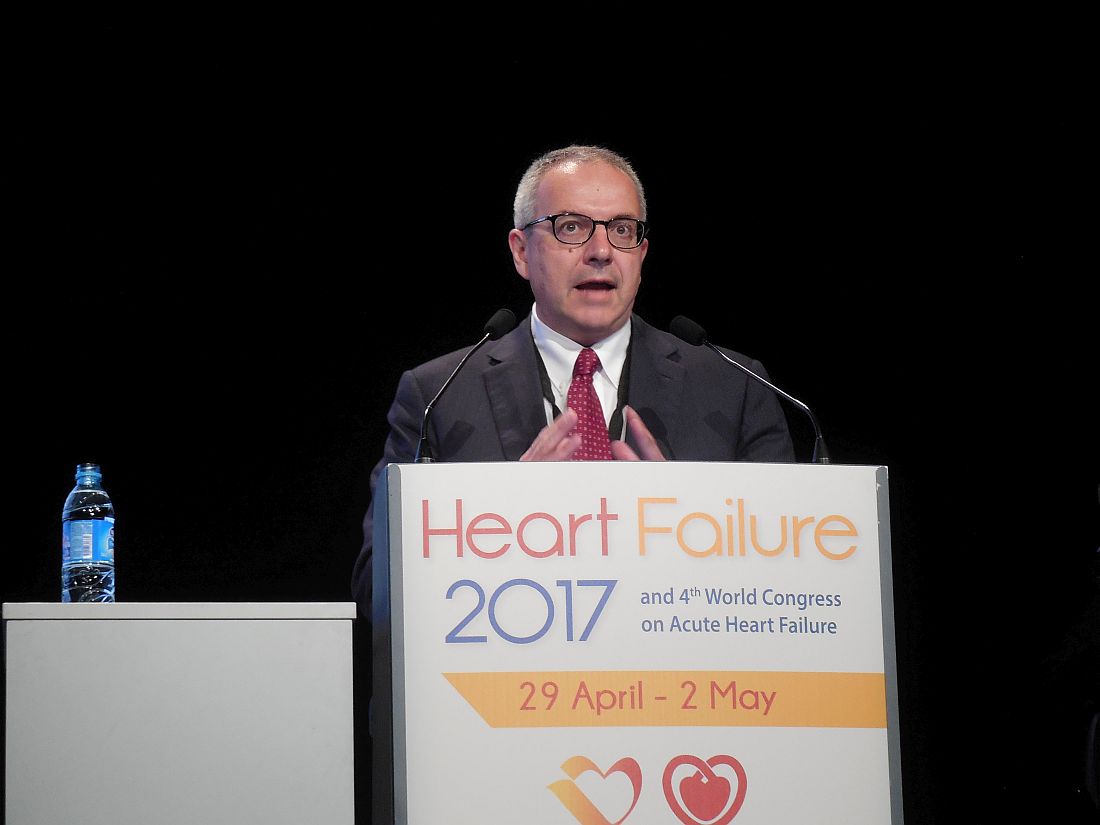
“We learned in TRUE-AHF that giving a drug very early [in acute heart failure] does not prevent [long-term] death. It means that early is not early enough,” Alexandre Mebazaa, MD, said in a video interview at a meeting held by the Heart Failure Association of the European Society of Cardiology.

In terms of finding new management strategies for patients who develop acute decompensations, “we need to better understand acute heart failure and the best subset of patients who might benefit” from existing or new drugs, he said.
The RELAX-AHF-2 trial enrolled and analyzed 6,545 patients hospitalized with an acute heart failure decompensation at more than 500 sites in 34 countries. The study compared the impact of a 48-hour IV infusion of serelaxin with placebo when begun within 16 hours of hospitalization for acute heart failure and added to standard treatment.
These findings closely matched the performance of ularitide in a similar study design, TRUE-AHF (New Engl J Med. 2017 Apr 12. doi: 10.1056/NEJMoa1601895).
At the 2016 meeting of the Heart Failure Association of the ESC, the organization released revised guidelines for diagnosing and managing heart failure that stressed the importance of rapid response to acute heart failure, including possible treatment with vasodilator drugs. The guidelines acknowledged that while “Vasodilators are the second most often used agents in acute heart failure for symptomatic relief; however, there is no robust evidence confirming their beneficial effects” (Eur Heart J. 2016 Jul 14;37[27]:2129-200).
Both ularitide and serelaxin are potent IV vasodilators, and their failure to meet their efficacy endpoints in these two trials put vasodilation and rapid decongestion into question as strategies to improve midterm prognosis in heart failure patients following acute decompensation episodes.
Serelaxin has been developed by Novartis, and ularitide has been developed by Cardiorentis. Dr. Mebazaa has received honoraria from Novartis and Cardiorentis, as well as from several other companies. Dr. Metra has been a consultant to Novartis. She has also served as consultant or spokesperson for Abbott Vascular, Amgen, AstraZeneca, Fresenius, Relypsa, and Servier.
The video associated with this article is no longer available on this site. Please view all of our videos on the MDedge YouTube channel
[email protected]
On Twitter @mitchelzoler
PARIS – Serelaxin’s failure to meet its primary endpoints in an acute heart failure trial with more than 6,500 patients, coupled with a similar failure by ularitide in the same patient population in pivotal trial results first reported in November 2016, led some experts to rethink their conception of potential interventions for patients hospitalized for acute heart failure decompensations.
“We learned in TRUE-AHF that giving a drug very early [in acute heart failure] does not prevent [long-term] death. It means that early is not early enough,” Alexandre Mebazaa, MD, said in a video interview at a meeting held by the Heart Failure Association of the European Society of Cardiology.
In terms of finding new management strategies for patients who develop acute decompensations, “we need to better understand acute heart failure and the best subset of patients who might benefit” from existing or new drugs, he said.
The RELAX-AHF-2 trial enrolled and analyzed 6,545 patients hospitalized with an acute heart failure decompensation at more than 500 sites in 34 countries. The study compared the impact of a 48-hour IV infusion of serelaxin with placebo when begun within 16 hours of hospitalization for acute heart failure and added to standard treatment.
These findings closely matched the performance of ularitide in a similar study design, TRUE-AHF (New Engl J Med. 2017 Apr 12. doi: 10.1056/NEJMoa1601895).
At the 2016 meeting of the Heart Failure Association of the ESC, the organization released revised guidelines for diagnosing and managing heart failure that stressed the importance of rapid response to acute heart failure, including possible treatment with vasodilator drugs. The guidelines acknowledged that while “Vasodilators are the second most often used agents in acute heart failure for symptomatic relief; however, there is no robust evidence confirming their beneficial effects” (Eur Heart J. 2016 Jul 14;37[27]:2129-200).
Both ularitide and serelaxin are potent IV vasodilators, and their failure to meet their efficacy endpoints in these two trials put vasodilation and rapid decongestion into question as strategies to improve midterm prognosis in heart failure patients following acute decompensation episodes.
Serelaxin has been developed by Novartis, and ularitide has been developed by Cardiorentis. Dr. Mebazaa has received honoraria from Novartis and Cardiorentis, as well as from several other companies. Dr. Metra has been a consultant to Novartis. She has also served as consultant or spokesperson for Abbott Vascular, Amgen, AstraZeneca, Fresenius, Relypsa, and Servier.
The video associated with this article is no longer available on this site. Please view all of our videos on the MDedge YouTube channel
[email protected]
On Twitter @mitchelzoler
PARIS – Serelaxin’s failure to meet its primary endpoints in an acute heart failure trial with more than 6,500 patients, coupled with a similar failure by ularitide in the same patient population in pivotal trial results first reported in November 2016, led some experts to rethink their conception of potential interventions for patients hospitalized for acute heart failure decompensations.
“We learned in TRUE-AHF that giving a drug very early [in acute heart failure] does not prevent [long-term] death. It means that early is not early enough,” Alexandre Mebazaa, MD, said in a video interview at a meeting held by the Heart Failure Association of the European Society of Cardiology.
In terms of finding new management strategies for patients who develop acute decompensations, “we need to better understand acute heart failure and the best subset of patients who might benefit” from existing or new drugs, he said.
The RELAX-AHF-2 trial enrolled and analyzed 6,545 patients hospitalized with an acute heart failure decompensation at more than 500 sites in 34 countries. The study compared the impact of a 48-hour IV infusion of serelaxin with placebo when begun within 16 hours of hospitalization for acute heart failure and added to standard treatment.
These findings closely matched the performance of ularitide in a similar study design, TRUE-AHF (New Engl J Med. 2017 Apr 12. doi: 10.1056/NEJMoa1601895).
At the 2016 meeting of the Heart Failure Association of the ESC, the organization released revised guidelines for diagnosing and managing heart failure that stressed the importance of rapid response to acute heart failure, including possible treatment with vasodilator drugs. The guidelines acknowledged that while “Vasodilators are the second most often used agents in acute heart failure for symptomatic relief; however, there is no robust evidence confirming their beneficial effects” (Eur Heart J. 2016 Jul 14;37[27]:2129-200).
Both ularitide and serelaxin are potent IV vasodilators, and their failure to meet their efficacy endpoints in these two trials put vasodilation and rapid decongestion into question as strategies to improve midterm prognosis in heart failure patients following acute decompensation episodes.
Serelaxin has been developed by Novartis, and ularitide has been developed by Cardiorentis. Dr. Mebazaa has received honoraria from Novartis and Cardiorentis, as well as from several other companies. Dr. Metra has been a consultant to Novartis. She has also served as consultant or spokesperson for Abbott Vascular, Amgen, AstraZeneca, Fresenius, Relypsa, and Servier.
The video associated with this article is no longer available on this site. Please view all of our videos on the MDedge YouTube channel
[email protected]
On Twitter @mitchelzoler
EXPERT ANALYSIS FROM HEART FAILURE 2017
VIDEO: Cannabidiol reduces convulsive seizures in Dravet syndrome
BOSTON – Adjunctive treatment with cannabidiol significantly reduced convulsive seizure frequency in Dravet syndrome patients in a randomized, double-blind, placebo-controlled trial.
Over a 14-week treatment period, including 2 weeks of titration and 12 weeks of maintenance, convulsive seizure frequency in 61 treated children and adolescents decreased from a median of 12.4 to 5.9 per month (median reduction of 39%), compared with a decrease from a median of 14.9 to 14.1 per month (median reduction of 13%) in 59 patients who received placebo, J. Helen Cross, MD, reported at the annual meeting of the American Academy of Neurology.
The proportion of patients with at least a 50% reduction in convulsive seizures was 42.6% with cannabidiol vs. 27.1% with placebo (odds ratio, 2.0), but this difference did not reach statistical significance, said Dr. Cross of the University College London Great Ormond Street Institute of Child Health and the Great Ormond Street Hospital for Children NHS Trust, London.
In a video interview, Dr. Cross discussed the findings and the importance of improving seizure control in patients with Dravet syndrome, a rare infantile-onset developmental and epileptic encephalopathy with very poor prognosis for long-term seizure control and neurodevelopmental outcomes.
Participants in the study (GWPCARE1) had a mean age of 10 years, but nearly a third were younger than 6 years. All had Dravet syndrome and drug-resistant seizures; the median number of antiepilepsy drugs previously tried was four, and the median number being used was three. Those randomized to the treatment group received cannabidiol oral solution up to 20 mg/kg per day.
Adverse events were common, occurring in 93.4% and 74.6% of treatment group and placebo group patients, respectively. But adverse events reported in the treatment group were mild or moderate in 84% of patients, and treatment was generally well tolerated.
“These are very complex patients with a high seizure burden... and therefore, to have another medication that looks as if it can be of benefit is really very exciting for this population,” Dr. Cross said, noting that cannabidiol was also shown in other studies presented at the AAN meeting (GWPCARE3 and GWPCARE4) to reduce seizure frequency in patients with Lennox-Gastaut syndrome.
GW Research sponsored the study. Dr. Cross is a member of the advisory boards for Eisai, GW Pharmaceuticals, Shire, and Zogenix.
The video associated with this article is no longer available on this site. Please view all of our videos on the MDedge YouTube channel
BOSTON – Adjunctive treatment with cannabidiol significantly reduced convulsive seizure frequency in Dravet syndrome patients in a randomized, double-blind, placebo-controlled trial.
Over a 14-week treatment period, including 2 weeks of titration and 12 weeks of maintenance, convulsive seizure frequency in 61 treated children and adolescents decreased from a median of 12.4 to 5.9 per month (median reduction of 39%), compared with a decrease from a median of 14.9 to 14.1 per month (median reduction of 13%) in 59 patients who received placebo, J. Helen Cross, MD, reported at the annual meeting of the American Academy of Neurology.
The proportion of patients with at least a 50% reduction in convulsive seizures was 42.6% with cannabidiol vs. 27.1% with placebo (odds ratio, 2.0), but this difference did not reach statistical significance, said Dr. Cross of the University College London Great Ormond Street Institute of Child Health and the Great Ormond Street Hospital for Children NHS Trust, London.
In a video interview, Dr. Cross discussed the findings and the importance of improving seizure control in patients with Dravet syndrome, a rare infantile-onset developmental and epileptic encephalopathy with very poor prognosis for long-term seizure control and neurodevelopmental outcomes.
Participants in the study (GWPCARE1) had a mean age of 10 years, but nearly a third were younger than 6 years. All had Dravet syndrome and drug-resistant seizures; the median number of antiepilepsy drugs previously tried was four, and the median number being used was three. Those randomized to the treatment group received cannabidiol oral solution up to 20 mg/kg per day.
Adverse events were common, occurring in 93.4% and 74.6% of treatment group and placebo group patients, respectively. But adverse events reported in the treatment group were mild or moderate in 84% of patients, and treatment was generally well tolerated.
“These are very complex patients with a high seizure burden... and therefore, to have another medication that looks as if it can be of benefit is really very exciting for this population,” Dr. Cross said, noting that cannabidiol was also shown in other studies presented at the AAN meeting (GWPCARE3 and GWPCARE4) to reduce seizure frequency in patients with Lennox-Gastaut syndrome.
GW Research sponsored the study. Dr. Cross is a member of the advisory boards for Eisai, GW Pharmaceuticals, Shire, and Zogenix.
The video associated with this article is no longer available on this site. Please view all of our videos on the MDedge YouTube channel
BOSTON – Adjunctive treatment with cannabidiol significantly reduced convulsive seizure frequency in Dravet syndrome patients in a randomized, double-blind, placebo-controlled trial.
Over a 14-week treatment period, including 2 weeks of titration and 12 weeks of maintenance, convulsive seizure frequency in 61 treated children and adolescents decreased from a median of 12.4 to 5.9 per month (median reduction of 39%), compared with a decrease from a median of 14.9 to 14.1 per month (median reduction of 13%) in 59 patients who received placebo, J. Helen Cross, MD, reported at the annual meeting of the American Academy of Neurology.
The proportion of patients with at least a 50% reduction in convulsive seizures was 42.6% with cannabidiol vs. 27.1% with placebo (odds ratio, 2.0), but this difference did not reach statistical significance, said Dr. Cross of the University College London Great Ormond Street Institute of Child Health and the Great Ormond Street Hospital for Children NHS Trust, London.
In a video interview, Dr. Cross discussed the findings and the importance of improving seizure control in patients with Dravet syndrome, a rare infantile-onset developmental and epileptic encephalopathy with very poor prognosis for long-term seizure control and neurodevelopmental outcomes.
Participants in the study (GWPCARE1) had a mean age of 10 years, but nearly a third were younger than 6 years. All had Dravet syndrome and drug-resistant seizures; the median number of antiepilepsy drugs previously tried was four, and the median number being used was three. Those randomized to the treatment group received cannabidiol oral solution up to 20 mg/kg per day.
Adverse events were common, occurring in 93.4% and 74.6% of treatment group and placebo group patients, respectively. But adverse events reported in the treatment group were mild or moderate in 84% of patients, and treatment was generally well tolerated.
“These are very complex patients with a high seizure burden... and therefore, to have another medication that looks as if it can be of benefit is really very exciting for this population,” Dr. Cross said, noting that cannabidiol was also shown in other studies presented at the AAN meeting (GWPCARE3 and GWPCARE4) to reduce seizure frequency in patients with Lennox-Gastaut syndrome.
GW Research sponsored the study. Dr. Cross is a member of the advisory boards for Eisai, GW Pharmaceuticals, Shire, and Zogenix.
The video associated with this article is no longer available on this site. Please view all of our videos on the MDedge YouTube channel
At ANN 2017
Key clinical point:
Major finding: Children and adolescents treated with cannabidiol had a decline in convulsive seizure frequency, from a median of 12.4 to 5.9 per month (median reduction of 39%), compared with a decrease from a median of 14.9 to 14.1 per month with placebo (median reduction of 13%).
Data source: A randomized, double-blind, placebo-controlled trial of adjunctive treatment with cannabidiol in 120 children and adolescents with Dravet syndrome.
Disclosures: GW Research sponsored the study. Dr. Cross is a member of the advisory boards for Eisai, GW Pharmaceuticals, Shire, and Zogenix.

VIDEO: Big research trials at AAN bring up important cost decisions
BOSTON – Some of the most influential clinical research reports coming out of the annual meeting of the American Academy of Neurology raise questions on how neurologists will strike a balance between the improved efficacy and safety of drugs in new therapeutic classes and their affordability for patients.
Natalia Rost, MD, vice chair of the AAN Science Committee, discussed phase III clinical trials (ARISE and STRIVE) in episodic migraine with erenumab, an investigational humanized monoclonal antibody against calcitonin gene-related peptide receptor; phase III clinical trials (ENDEAR and CHERISH) of the antisense oligonucleotide drug nusinersen (Spinraza) that was approved by the Food and Drug Administration for spinal muscular atrophy in late 2016; as well as phase III trials of a pharmaceutical-grade extract of the cannabis-derived compound cannabidiol in patients with Dravet syndrome and Lennox-Gastaut syndrome.
Erenumab and nusinersen are “disease-specific targeted biologics” that have been developed over decades to target a specific disease pathway, and hence translate into high prices, Dr. Rost said in a video interview at the meeting.
“How you value the cost of a drug against improvement in a physiological outcome is very difficult to measure,” she noted, for relatively small gains in reducing migraine days per month and improvements in functional outcome and disability against placebo.
But this calculation is different with the potentially lifesaving effects of nusinersen for spinal muscular atrophy patients, in which “we’re not talking about days of improvement, we’re talking about days of life,” said Dr. Rost, director of acute stroke services at Massachusetts General Hospital, Boston. “And so that becomes an ethical dilemma in terms of the cost of administration, who is paying for the drug, and how this is covered. Whom do you offer treatment to?”
The development of cannabidiol as a potential adjunctive treatment for Dravet and Lennox-Gastaut syndromes is a welcome addition to the armamentarium against these conditions, Dr. Rost added, because it offers an alternative to the unregulated use of herbal medications and supplements – particularly cannabis in its various forms – that patients ask about but are difficult to dose consistently and to ensure a pharmaceutical-grade level of purity.
The video associated with this article is no longer available on this site. Please view all of our videos on the MDedge YouTube channel
BOSTON – Some of the most influential clinical research reports coming out of the annual meeting of the American Academy of Neurology raise questions on how neurologists will strike a balance between the improved efficacy and safety of drugs in new therapeutic classes and their affordability for patients.
Natalia Rost, MD, vice chair of the AAN Science Committee, discussed phase III clinical trials (ARISE and STRIVE) in episodic migraine with erenumab, an investigational humanized monoclonal antibody against calcitonin gene-related peptide receptor; phase III clinical trials (ENDEAR and CHERISH) of the antisense oligonucleotide drug nusinersen (Spinraza) that was approved by the Food and Drug Administration for spinal muscular atrophy in late 2016; as well as phase III trials of a pharmaceutical-grade extract of the cannabis-derived compound cannabidiol in patients with Dravet syndrome and Lennox-Gastaut syndrome.
Erenumab and nusinersen are “disease-specific targeted biologics” that have been developed over decades to target a specific disease pathway, and hence translate into high prices, Dr. Rost said in a video interview at the meeting.
“How you value the cost of a drug against improvement in a physiological outcome is very difficult to measure,” she noted, for relatively small gains in reducing migraine days per month and improvements in functional outcome and disability against placebo.
But this calculation is different with the potentially lifesaving effects of nusinersen for spinal muscular atrophy patients, in which “we’re not talking about days of improvement, we’re talking about days of life,” said Dr. Rost, director of acute stroke services at Massachusetts General Hospital, Boston. “And so that becomes an ethical dilemma in terms of the cost of administration, who is paying for the drug, and how this is covered. Whom do you offer treatment to?”
The development of cannabidiol as a potential adjunctive treatment for Dravet and Lennox-Gastaut syndromes is a welcome addition to the armamentarium against these conditions, Dr. Rost added, because it offers an alternative to the unregulated use of herbal medications and supplements – particularly cannabis in its various forms – that patients ask about but are difficult to dose consistently and to ensure a pharmaceutical-grade level of purity.
The video associated with this article is no longer available on this site. Please view all of our videos on the MDedge YouTube channel
BOSTON – Some of the most influential clinical research reports coming out of the annual meeting of the American Academy of Neurology raise questions on how neurologists will strike a balance between the improved efficacy and safety of drugs in new therapeutic classes and their affordability for patients.
Natalia Rost, MD, vice chair of the AAN Science Committee, discussed phase III clinical trials (ARISE and STRIVE) in episodic migraine with erenumab, an investigational humanized monoclonal antibody against calcitonin gene-related peptide receptor; phase III clinical trials (ENDEAR and CHERISH) of the antisense oligonucleotide drug nusinersen (Spinraza) that was approved by the Food and Drug Administration for spinal muscular atrophy in late 2016; as well as phase III trials of a pharmaceutical-grade extract of the cannabis-derived compound cannabidiol in patients with Dravet syndrome and Lennox-Gastaut syndrome.
Erenumab and nusinersen are “disease-specific targeted biologics” that have been developed over decades to target a specific disease pathway, and hence translate into high prices, Dr. Rost said in a video interview at the meeting.
“How you value the cost of a drug against improvement in a physiological outcome is very difficult to measure,” she noted, for relatively small gains in reducing migraine days per month and improvements in functional outcome and disability against placebo.
But this calculation is different with the potentially lifesaving effects of nusinersen for spinal muscular atrophy patients, in which “we’re not talking about days of improvement, we’re talking about days of life,” said Dr. Rost, director of acute stroke services at Massachusetts General Hospital, Boston. “And so that becomes an ethical dilemma in terms of the cost of administration, who is paying for the drug, and how this is covered. Whom do you offer treatment to?”
The development of cannabidiol as a potential adjunctive treatment for Dravet and Lennox-Gastaut syndromes is a welcome addition to the armamentarium against these conditions, Dr. Rost added, because it offers an alternative to the unregulated use of herbal medications and supplements – particularly cannabis in its various forms – that patients ask about but are difficult to dose consistently and to ensure a pharmaceutical-grade level of purity.
The video associated with this article is no longer available on this site. Please view all of our videos on the MDedge YouTube channel
AT AAN 2017

VIDEO: Pilot stem cell trial for multiple system atrophy shows promising results
BOSTON – Intrathecal, autologous mesenchymal stem cell (MSC) treatment provided encouraging results for modifying the disease course of multiple system atrophy with relative safety and tolerability in a phase I/II trial.
The efficacy of MSCs on slowing multiple system atrophy (MSA) progression in a small trial of 24 patients appeared to be dependent on the dose, and, in the highest dose individuals, had a painful implantation response, trial investigator Wolfgang Singer, MD, reported at the annual meeting of the American Academy of Neurology.
Dr. Singer and his colleagues at the Mayo Clinic in Rochester, Minn., chose to investigate MSCs as a treatment because they are multipotent and capable of differentiating into different cell types, including glial cells, and they secrete neurotrophic factors, such as brain-derived neurotrophic factor and glial cell line-derived neurotrophic factor, which are thought to occur at pathologically low levels in individuals with MSA. The intrinsic immunomodulatory action of MSCs may also contribute to a potential benefit on neuroinflammatory aspects of MSA pathology.
MSCs have previously shown promising results on slowing disease progression in an open-label study of Korean patients with MSA, who received an intra-arterial infusion of MSCs into the internal carotids and dominant vertebral artery, followed by intravenous infusions (Clin Pharmacol Ther. 2008 May;83[5]:723-30). Those results were confirmed in a double-blind, placebo-controlled study (Ann Neurol. 2012 Jul;72[1]:32-40), but evidence of microemboli raised concerns with the Mayo Clinic team about stroke risk with the intra-arterial approach, Dr. Singer said.
The intrathecal route of administration also may be advantageous over an intra-arterial approach by reaching the targets of MSCs in the brain “in a more widespread fashion,” Dr. Singer said.
The relative safety and hint of efficacy with the different route of MSC administration in the Mayo Clinic study make it “a really groundbreaking direction to take,” session comoderator Christopher H. Gibbons, MD, said in an interview. “I think this a very good, small, but critical, step in demonstrating that ... you can do this, and maybe there’s a signal that it is, in fact, working at slowing down disease progression, which I think is incredibly important in this disease.”
In the current study, Dr. Singer and his associates intrathecally administered between 10 and 200 million autologous, fat-derived MSCs via lumbar puncture in predefined dose tiers and then followed patients over 1 year. Overall, 8 patients received a single dose of 10 million cells, 12 received a dose of 50 million cells followed by a second 50-million cell dose 4 weeks later, and 4 received a dose of 100 million cells followed by a second 100-million cell dose 4 weeks later.
The 24 patients in the study all met consensus criteria for probable MSA, had at least moderate laboratory evidence of autonomic failure, and were at an early stage of disease with a Unified MSA Rating Scale part 1 score of 18 or less.
In the primary outcome of safety, the investigators reported no treatment–attributable serious adverse events and said that the treatment was generally well-tolerated. All 16 patients who took either the high or medium doses had MRI abnormalities that showed thickening/enhancement of cauda equina nerve roots at the level of the puncture that were asymptomatic and did not lead to neurologic deficits.
The 12 medium-dose patients had variable elevation of cerebrospinal fluid protein and cell counts, and 5 had mild and transient low back pain. In the highest-dose tier, three of four patients developed low back pain, some of which was severe, and the same MRI findings, which signaled to the investigators that a dose-limiting toxicity had been reached.
Some patients also reported headaches after lumbar punctures, which were expected. Two patients also developed mild febrile reactions after administrations that were self-limited.
Treatment with MSCs led to a significantly lower rate of disease progression as measured by total score on the Unified MSA Rating Scale (0.43 vs. 1.22 points/month; P = .009), and this difference was even greater for the medium-dose tier than for the low-dose tier. The investigators used the placebo group from their recently completed rifampicin treatment trial in MSA to make the efficacy assessment.
There was no change between the treatment groups and the historical control group on the Composite Autonomic Symptom Scale or the Composite Autonomic Severity Score from baseline to 1 year.
Based on the promising findings, the Food and Drug Administration granted permission for a compassionate extension study for apparent responders to receive additional injections every 6 months, and, so far, 16 patients have been reinjected, according to Dr. Singer.
Dr. Singer and his associates have used these results as the basis for a multicenter, double-blind, placebo-controlled phase II/III study that is in the late planning stages. This kind of trial will be important for determining whether it’s possible to hold the quality of the MSC treatment steady and get the same sort of response across many centers, said Dr. Gibbons, a clinical neurophysiologist at Beth Israel Deaconess Medical Center, Boston, and past-president of the American Autonomic Society.
The trial was supported by grants from the National Institutes of Health, the Cure MSA Foundation, the Food and Drug Administration, the Autonomic Rare Disease Consortium, and Mayo Clinic funds. Dr. Singer and Dr. Gibbons reported having no relevant financial disclosures.
You can watch a video interview with Dr. Singer here.

BOSTON – Intrathecal, autologous mesenchymal stem cell (MSC) treatment provided encouraging results for modifying the disease course of multiple system atrophy with relative safety and tolerability in a phase I/II trial.
The efficacy of MSCs on slowing multiple system atrophy (MSA) progression in a small trial of 24 patients appeared to be dependent on the dose, and, in the highest dose individuals, had a painful implantation response, trial investigator Wolfgang Singer, MD, reported at the annual meeting of the American Academy of Neurology.
Dr. Singer and his colleagues at the Mayo Clinic in Rochester, Minn., chose to investigate MSCs as a treatment because they are multipotent and capable of differentiating into different cell types, including glial cells, and they secrete neurotrophic factors, such as brain-derived neurotrophic factor and glial cell line-derived neurotrophic factor, which are thought to occur at pathologically low levels in individuals with MSA. The intrinsic immunomodulatory action of MSCs may also contribute to a potential benefit on neuroinflammatory aspects of MSA pathology.
MSCs have previously shown promising results on slowing disease progression in an open-label study of Korean patients with MSA, who received an intra-arterial infusion of MSCs into the internal carotids and dominant vertebral artery, followed by intravenous infusions (Clin Pharmacol Ther. 2008 May;83[5]:723-30). Those results were confirmed in a double-blind, placebo-controlled study (Ann Neurol. 2012 Jul;72[1]:32-40), but evidence of microemboli raised concerns with the Mayo Clinic team about stroke risk with the intra-arterial approach, Dr. Singer said.
The intrathecal route of administration also may be advantageous over an intra-arterial approach by reaching the targets of MSCs in the brain “in a more widespread fashion,” Dr. Singer said.
The relative safety and hint of efficacy with the different route of MSC administration in the Mayo Clinic study make it “a really groundbreaking direction to take,” session comoderator Christopher H. Gibbons, MD, said in an interview. “I think this a very good, small, but critical, step in demonstrating that ... you can do this, and maybe there’s a signal that it is, in fact, working at slowing down disease progression, which I think is incredibly important in this disease.”
In the current study, Dr. Singer and his associates intrathecally administered between 10 and 200 million autologous, fat-derived MSCs via lumbar puncture in predefined dose tiers and then followed patients over 1 year. Overall, 8 patients received a single dose of 10 million cells, 12 received a dose of 50 million cells followed by a second 50-million cell dose 4 weeks later, and 4 received a dose of 100 million cells followed by a second 100-million cell dose 4 weeks later.
The 24 patients in the study all met consensus criteria for probable MSA, had at least moderate laboratory evidence of autonomic failure, and were at an early stage of disease with a Unified MSA Rating Scale part 1 score of 18 or less.
In the primary outcome of safety, the investigators reported no treatment–attributable serious adverse events and said that the treatment was generally well-tolerated. All 16 patients who took either the high or medium doses had MRI abnormalities that showed thickening/enhancement of cauda equina nerve roots at the level of the puncture that were asymptomatic and did not lead to neurologic deficits.
The 12 medium-dose patients had variable elevation of cerebrospinal fluid protein and cell counts, and 5 had mild and transient low back pain. In the highest-dose tier, three of four patients developed low back pain, some of which was severe, and the same MRI findings, which signaled to the investigators that a dose-limiting toxicity had been reached.
Some patients also reported headaches after lumbar punctures, which were expected. Two patients also developed mild febrile reactions after administrations that were self-limited.
Treatment with MSCs led to a significantly lower rate of disease progression as measured by total score on the Unified MSA Rating Scale (0.43 vs. 1.22 points/month; P = .009), and this difference was even greater for the medium-dose tier than for the low-dose tier. The investigators used the placebo group from their recently completed rifampicin treatment trial in MSA to make the efficacy assessment.
There was no change between the treatment groups and the historical control group on the Composite Autonomic Symptom Scale or the Composite Autonomic Severity Score from baseline to 1 year.
Based on the promising findings, the Food and Drug Administration granted permission for a compassionate extension study for apparent responders to receive additional injections every 6 months, and, so far, 16 patients have been reinjected, according to Dr. Singer.
Dr. Singer and his associates have used these results as the basis for a multicenter, double-blind, placebo-controlled phase II/III study that is in the late planning stages. This kind of trial will be important for determining whether it’s possible to hold the quality of the MSC treatment steady and get the same sort of response across many centers, said Dr. Gibbons, a clinical neurophysiologist at Beth Israel Deaconess Medical Center, Boston, and past-president of the American Autonomic Society.
The trial was supported by grants from the National Institutes of Health, the Cure MSA Foundation, the Food and Drug Administration, the Autonomic Rare Disease Consortium, and Mayo Clinic funds. Dr. Singer and Dr. Gibbons reported having no relevant financial disclosures.
You can watch a video interview with Dr. Singer here.
BOSTON – Intrathecal, autologous mesenchymal stem cell (MSC) treatment provided encouraging results for modifying the disease course of multiple system atrophy with relative safety and tolerability in a phase I/II trial.
The efficacy of MSCs on slowing multiple system atrophy (MSA) progression in a small trial of 24 patients appeared to be dependent on the dose, and, in the highest dose individuals, had a painful implantation response, trial investigator Wolfgang Singer, MD, reported at the annual meeting of the American Academy of Neurology.
Dr. Singer and his colleagues at the Mayo Clinic in Rochester, Minn., chose to investigate MSCs as a treatment because they are multipotent and capable of differentiating into different cell types, including glial cells, and they secrete neurotrophic factors, such as brain-derived neurotrophic factor and glial cell line-derived neurotrophic factor, which are thought to occur at pathologically low levels in individuals with MSA. The intrinsic immunomodulatory action of MSCs may also contribute to a potential benefit on neuroinflammatory aspects of MSA pathology.
MSCs have previously shown promising results on slowing disease progression in an open-label study of Korean patients with MSA, who received an intra-arterial infusion of MSCs into the internal carotids and dominant vertebral artery, followed by intravenous infusions (Clin Pharmacol Ther. 2008 May;83[5]:723-30). Those results were confirmed in a double-blind, placebo-controlled study (Ann Neurol. 2012 Jul;72[1]:32-40), but evidence of microemboli raised concerns with the Mayo Clinic team about stroke risk with the intra-arterial approach, Dr. Singer said.
The intrathecal route of administration also may be advantageous over an intra-arterial approach by reaching the targets of MSCs in the brain “in a more widespread fashion,” Dr. Singer said.
The relative safety and hint of efficacy with the different route of MSC administration in the Mayo Clinic study make it “a really groundbreaking direction to take,” session comoderator Christopher H. Gibbons, MD, said in an interview. “I think this a very good, small, but critical, step in demonstrating that ... you can do this, and maybe there’s a signal that it is, in fact, working at slowing down disease progression, which I think is incredibly important in this disease.”
In the current study, Dr. Singer and his associates intrathecally administered between 10 and 200 million autologous, fat-derived MSCs via lumbar puncture in predefined dose tiers and then followed patients over 1 year. Overall, 8 patients received a single dose of 10 million cells, 12 received a dose of 50 million cells followed by a second 50-million cell dose 4 weeks later, and 4 received a dose of 100 million cells followed by a second 100-million cell dose 4 weeks later.
The 24 patients in the study all met consensus criteria for probable MSA, had at least moderate laboratory evidence of autonomic failure, and were at an early stage of disease with a Unified MSA Rating Scale part 1 score of 18 or less.
In the primary outcome of safety, the investigators reported no treatment–attributable serious adverse events and said that the treatment was generally well-tolerated. All 16 patients who took either the high or medium doses had MRI abnormalities that showed thickening/enhancement of cauda equina nerve roots at the level of the puncture that were asymptomatic and did not lead to neurologic deficits.
The 12 medium-dose patients had variable elevation of cerebrospinal fluid protein and cell counts, and 5 had mild and transient low back pain. In the highest-dose tier, three of four patients developed low back pain, some of which was severe, and the same MRI findings, which signaled to the investigators that a dose-limiting toxicity had been reached.
Some patients also reported headaches after lumbar punctures, which were expected. Two patients also developed mild febrile reactions after administrations that were self-limited.
Treatment with MSCs led to a significantly lower rate of disease progression as measured by total score on the Unified MSA Rating Scale (0.43 vs. 1.22 points/month; P = .009), and this difference was even greater for the medium-dose tier than for the low-dose tier. The investigators used the placebo group from their recently completed rifampicin treatment trial in MSA to make the efficacy assessment.
There was no change between the treatment groups and the historical control group on the Composite Autonomic Symptom Scale or the Composite Autonomic Severity Score from baseline to 1 year.
Based on the promising findings, the Food and Drug Administration granted permission for a compassionate extension study for apparent responders to receive additional injections every 6 months, and, so far, 16 patients have been reinjected, according to Dr. Singer.
Dr. Singer and his associates have used these results as the basis for a multicenter, double-blind, placebo-controlled phase II/III study that is in the late planning stages. This kind of trial will be important for determining whether it’s possible to hold the quality of the MSC treatment steady and get the same sort of response across many centers, said Dr. Gibbons, a clinical neurophysiologist at Beth Israel Deaconess Medical Center, Boston, and past-president of the American Autonomic Society.
The trial was supported by grants from the National Institutes of Health, the Cure MSA Foundation, the Food and Drug Administration, the Autonomic Rare Disease Consortium, and Mayo Clinic funds. Dr. Singer and Dr. Gibbons reported having no relevant financial disclosures.
You can watch a video interview with Dr. Singer here.
AT AAN 2017
Key clinical point:
Major finding: Treatment with MSCs led to a significantly lower rate of disease progression as measured by total score on the Unified MSA Rating Scale (0.43 vs. 1.22 points/month in historical placebo group; P = .009).
Data source: A phase I/II trial of 24 patients with MSA treated intrathecally with autologous MSCs and compared against a historical control group.
Disclosures: The trial was supported by grants from the National Institutes of Health, the Cure MSA Foundation, the Food and Drug Administration, the Autonomic Rare Disease Consortium, and Mayo Clinic funds. Dr. Singer and Dr. Gibbons reported having no relevant financial disclosures.
VIDEO: Stroke risk in women deserves greater attention
BOSTON – Texas neurologist Louise McCullough, MD, PhD, is determined to help women live longer by urging neurologists to focus on the unique risks and needs involved.
Dr. McCullough, chief of neurology at Memorial Hermann Hospital in Houston, told a plenary audience at the annual meeting of the American Academy of Neurology that both biological and social factors contribute to conditions, such as atrial fibrillation, that are more dangerous in females than in males.
For example, women are less likely than men to be taking blood thinners, she said, possibly because doctors assume they’re frail even when they’ll confirm – if only someone asks – that they haven’t fallen.
At the same time, she said, women with atrial fibrillation are twice as likely as their male counterparts to suffer a stroke. “You need to screen older women for a-fib and have a much lower threshold for treatment.”
Isolation can be another contributing factor to the stroke gender gap, she said. “Women are often living alone – they’ve outlived their spouses; they don’t live near their children; they may not have access to rapid care.”
These factors, she said, may even contribute to the smaller presence of women in clinical trials.
Dr. McCullough discussed these issues and more in a video interview at the meeting.
The video associated with this article is no longer available on this site. Please view all of our videos on the MDedge YouTube channel
BOSTON – Texas neurologist Louise McCullough, MD, PhD, is determined to help women live longer by urging neurologists to focus on the unique risks and needs involved.
Dr. McCullough, chief of neurology at Memorial Hermann Hospital in Houston, told a plenary audience at the annual meeting of the American Academy of Neurology that both biological and social factors contribute to conditions, such as atrial fibrillation, that are more dangerous in females than in males.
For example, women are less likely than men to be taking blood thinners, she said, possibly because doctors assume they’re frail even when they’ll confirm – if only someone asks – that they haven’t fallen.
At the same time, she said, women with atrial fibrillation are twice as likely as their male counterparts to suffer a stroke. “You need to screen older women for a-fib and have a much lower threshold for treatment.”
Isolation can be another contributing factor to the stroke gender gap, she said. “Women are often living alone – they’ve outlived their spouses; they don’t live near their children; they may not have access to rapid care.”
These factors, she said, may even contribute to the smaller presence of women in clinical trials.
Dr. McCullough discussed these issues and more in a video interview at the meeting.
The video associated with this article is no longer available on this site. Please view all of our videos on the MDedge YouTube channel
BOSTON – Texas neurologist Louise McCullough, MD, PhD, is determined to help women live longer by urging neurologists to focus on the unique risks and needs involved.
Dr. McCullough, chief of neurology at Memorial Hermann Hospital in Houston, told a plenary audience at the annual meeting of the American Academy of Neurology that both biological and social factors contribute to conditions, such as atrial fibrillation, that are more dangerous in females than in males.
For example, women are less likely than men to be taking blood thinners, she said, possibly because doctors assume they’re frail even when they’ll confirm – if only someone asks – that they haven’t fallen.
At the same time, she said, women with atrial fibrillation are twice as likely as their male counterparts to suffer a stroke. “You need to screen older women for a-fib and have a much lower threshold for treatment.”
Isolation can be another contributing factor to the stroke gender gap, she said. “Women are often living alone – they’ve outlived their spouses; they don’t live near their children; they may not have access to rapid care.”
These factors, she said, may even contribute to the smaller presence of women in clinical trials.
Dr. McCullough discussed these issues and more in a video interview at the meeting.
The video associated with this article is no longer available on this site. Please view all of our videos on the MDedge YouTube channel
AT AAN 2017