User login
Vote by Nov. 30 for At-large Member of 2016 Nominating Committee
Electronic voting is now open to elect the at-large member of the 2016 SVS Nominating Committee by clicking on the link below.
Electronic voting is now open to elect the at-large member of the 2016 SVS Nominating Committee by clicking on the link below.
Electronic voting is now open to elect the at-large member of the 2016 SVS Nominating Committee by clicking on the link below.

Last Call: Claim credits from 2014 VAM
Attendees of the 2014 Vascular Annual Meeting have until Dec. 31 to claim the appropriate Continuing Medical Education credits. Visit 2014 VAM CME to record and print certificates. (Registrants may still access their credits after this date.)
Contact [email protected] for more information.
Attendees of the 2014 Vascular Annual Meeting have until Dec. 31 to claim the appropriate Continuing Medical Education credits. Visit 2014 VAM CME to record and print certificates. (Registrants may still access their credits after this date.)
Contact [email protected] for more information.
Attendees of the 2014 Vascular Annual Meeting have until Dec. 31 to claim the appropriate Continuing Medical Education credits. Visit 2014 VAM CME to record and print certificates. (Registrants may still access their credits after this date.)
Contact [email protected] for more information.

Please Pay Membership Dues
SVS members have until Dec. 31 to pay their 2016 dues.
“To take advantage of all the benefits of membership in the Society for Vascular Surgery, please pay your dues,” urged President Dr. Bruce A. Perler, M.D. “Stay abreast of clinical research with the Journal of Vascular Surgery publications. Stay informed with Vascular Specialist and our own PULSE electronic newsletter. Enjoy the camaraderie that comes from inclusion in this Society.”
Even without an invoice, members may pay their dues by logging onto their accounts online, at www.vsweb.org/SVSdues. For more information, email [email protected].
SVS members have until Dec. 31 to pay their 2016 dues.
“To take advantage of all the benefits of membership in the Society for Vascular Surgery, please pay your dues,” urged President Dr. Bruce A. Perler, M.D. “Stay abreast of clinical research with the Journal of Vascular Surgery publications. Stay informed with Vascular Specialist and our own PULSE electronic newsletter. Enjoy the camaraderie that comes from inclusion in this Society.”
Even without an invoice, members may pay their dues by logging onto their accounts online, at www.vsweb.org/SVSdues. For more information, email [email protected].
SVS members have until Dec. 31 to pay their 2016 dues.
“To take advantage of all the benefits of membership in the Society for Vascular Surgery, please pay your dues,” urged President Dr. Bruce A. Perler, M.D. “Stay abreast of clinical research with the Journal of Vascular Surgery publications. Stay informed with Vascular Specialist and our own PULSE electronic newsletter. Enjoy the camaraderie that comes from inclusion in this Society.”
Even without an invoice, members may pay their dues by logging onto their accounts online, at www.vsweb.org/SVSdues. For more information, email [email protected].

Save the Date!
The Society for Vascular Surgery and the David Geffen School of Medicine at the University of California, Los Angeles are joining forces for their first joint course: A Comprehensive Review and Update of What’s New in Vascular and endovascular Surgery.
The course, approved for AMA PRA Category 1 Credit™, will be held Aug. 27-29, 2016, at the Beverly Hilton in Beverly Hills, Calif.
The Society for Vascular Surgery and the David Geffen School of Medicine at the University of California, Los Angeles are joining forces for their first joint course: A Comprehensive Review and Update of What’s New in Vascular and endovascular Surgery.
The course, approved for AMA PRA Category 1 Credit™, will be held Aug. 27-29, 2016, at the Beverly Hilton in Beverly Hills, Calif.
The Society for Vascular Surgery and the David Geffen School of Medicine at the University of California, Los Angeles are joining forces for their first joint course: A Comprehensive Review and Update of What’s New in Vascular and endovascular Surgery.
The course, approved for AMA PRA Category 1 Credit™, will be held Aug. 27-29, 2016, at the Beverly Hilton in Beverly Hills, Calif.

FROM THE SVS: Society responds to recent PAD study
A written statement from the SVS:
The Society for Vascular Surgery, with more than 5,000 vascular surgeon and allied health members, reviewed with interest the study of Thomas T. Tsai, et al entitled “The Contemporary Safety and Effectiveness of Lower Extremity Bypass Surgery and Peripheral Endovascular Interventions in the Treatment of Symptomatic Peripheral Arterial Disease.”
Over the last decade there has been a dramatic evolution in the treatment of peripheral arterial disease with less invasive endovascular therapy far surpassing conventional open surgery as the first line therapy in the majority of cases. According to Dr. Bruce A. Perler, President of the Society for Vascular Surgery, “Vascular surgeons are truly comprehensive vascular specialists who perform both endovascular and open vascular surgical procedures, as well as medical management, and therefore have a unique perspective on the relative risks and benefits of treatment options for peripheral arterial disease.” Utilizing a community-based registry including more than 1,800 patients, Tsai, et al. found that while endovascular therapy was associated with fewer complications in the 30 day peri-procedural period, the rate of target lesion revascularization was significantly higher at one and three years following the procedure.
According to Dr. Perler, “These results are not unexpected, and are certainly consistent with the information we’ve been developing from our Vascular Quality Initiative which now includes more than 300,000 cases. While the less invasive approach to treating arterial occlusive disease would be expected to be associated with a lower rate of complications, and this is obviously appealing to patients and practitioners, the implications of the higher rate of subsequent reinterventions should not be ignored and will become an increasingly important consideration as we enter this era of value- based reimbursement with an emphasis on longitudinal care and bundled payments in the American health care system. In other words, will the lower rate of early complications be more than counterbalanced by a need for repeat interventions and greater costs mid- and long-term.”
The Society for Vascular Surgery has had a long-standing interest in cost efficacy analyses of treatment options. “As we continue to develop and publish clinical practice guidelines, in the future we will be including the relative costs of alternate treatment options in assessing and determining the most appropriate treatment option for our patients. In that regard, this study raises important questions that our research will address,” Dr. Perler said.
A written statement from the SVS:
The Society for Vascular Surgery, with more than 5,000 vascular surgeon and allied health members, reviewed with interest the study of Thomas T. Tsai, et al entitled “The Contemporary Safety and Effectiveness of Lower Extremity Bypass Surgery and Peripheral Endovascular Interventions in the Treatment of Symptomatic Peripheral Arterial Disease.”
Over the last decade there has been a dramatic evolution in the treatment of peripheral arterial disease with less invasive endovascular therapy far surpassing conventional open surgery as the first line therapy in the majority of cases. According to Dr. Bruce A. Perler, President of the Society for Vascular Surgery, “Vascular surgeons are truly comprehensive vascular specialists who perform both endovascular and open vascular surgical procedures, as well as medical management, and therefore have a unique perspective on the relative risks and benefits of treatment options for peripheral arterial disease.” Utilizing a community-based registry including more than 1,800 patients, Tsai, et al. found that while endovascular therapy was associated with fewer complications in the 30 day peri-procedural period, the rate of target lesion revascularization was significantly higher at one and three years following the procedure.
According to Dr. Perler, “These results are not unexpected, and are certainly consistent with the information we’ve been developing from our Vascular Quality Initiative which now includes more than 300,000 cases. While the less invasive approach to treating arterial occlusive disease would be expected to be associated with a lower rate of complications, and this is obviously appealing to patients and practitioners, the implications of the higher rate of subsequent reinterventions should not be ignored and will become an increasingly important consideration as we enter this era of value- based reimbursement with an emphasis on longitudinal care and bundled payments in the American health care system. In other words, will the lower rate of early complications be more than counterbalanced by a need for repeat interventions and greater costs mid- and long-term.”
The Society for Vascular Surgery has had a long-standing interest in cost efficacy analyses of treatment options. “As we continue to develop and publish clinical practice guidelines, in the future we will be including the relative costs of alternate treatment options in assessing and determining the most appropriate treatment option for our patients. In that regard, this study raises important questions that our research will address,” Dr. Perler said.
A written statement from the SVS:
The Society for Vascular Surgery, with more than 5,000 vascular surgeon and allied health members, reviewed with interest the study of Thomas T. Tsai, et al entitled “The Contemporary Safety and Effectiveness of Lower Extremity Bypass Surgery and Peripheral Endovascular Interventions in the Treatment of Symptomatic Peripheral Arterial Disease.”
Over the last decade there has been a dramatic evolution in the treatment of peripheral arterial disease with less invasive endovascular therapy far surpassing conventional open surgery as the first line therapy in the majority of cases. According to Dr. Bruce A. Perler, President of the Society for Vascular Surgery, “Vascular surgeons are truly comprehensive vascular specialists who perform both endovascular and open vascular surgical procedures, as well as medical management, and therefore have a unique perspective on the relative risks and benefits of treatment options for peripheral arterial disease.” Utilizing a community-based registry including more than 1,800 patients, Tsai, et al. found that while endovascular therapy was associated with fewer complications in the 30 day peri-procedural period, the rate of target lesion revascularization was significantly higher at one and three years following the procedure.
According to Dr. Perler, “These results are not unexpected, and are certainly consistent with the information we’ve been developing from our Vascular Quality Initiative which now includes more than 300,000 cases. While the less invasive approach to treating arterial occlusive disease would be expected to be associated with a lower rate of complications, and this is obviously appealing to patients and practitioners, the implications of the higher rate of subsequent reinterventions should not be ignored and will become an increasingly important consideration as we enter this era of value- based reimbursement with an emphasis on longitudinal care and bundled payments in the American health care system. In other words, will the lower rate of early complications be more than counterbalanced by a need for repeat interventions and greater costs mid- and long-term.”
The Society for Vascular Surgery has had a long-standing interest in cost efficacy analyses of treatment options. “As we continue to develop and publish clinical practice guidelines, in the future we will be including the relative costs of alternate treatment options in assessing and determining the most appropriate treatment option for our patients. In that regard, this study raises important questions that our research will address,” Dr. Perler said.
BEST-CLI: New Initiatives, Upcoming Meetings
A number of new initiatives have recently been incorporated into the Best Endovascular versus best Surgical Therapy in patients with Critical Limb Ischemia (BEST-CLI) trial. It is hoped the additions and changes, including a modification of the protocol exclusion criteria, will facilitate subject accrual, an expansion to 140 trial sites and distribution of additional funds to all participating and enrolling centers.
The landmark BEST-CLI trial is a prospective, randomized, pragmatic, open-label superiority trial that is currently enrolling patients at 120 active sites in the United States and Canada. The trial will compare treatment efficacy, functional outcomes and cost in patients with critical limb ischemia who are candidates for both infrainguinal bypass and endovascular therapy and who are randomly assigned to one of the two treatments. Of the target number of 2,100 patients, 295 have been assigned treatments.
Changes include:
- The presence of >50% stenosis of the ipsilateral common femoral artery (CFA) will no longer be an exclusion. Treatment of a severe stenosis or an occlusion of the CFA either by open (surgical endarterectomy and patch angioplasty) or endovascular means will now be allowed and will be irrespective of the randomized treatment of the more distal occlusive disease.
- Immnosuppressive medication, a femoropopliteal TASC II A pattern of disease and hypercoaguagility will no longer be exclusions.
- The required delay following a previous open vascular or endovascular procedure (surgical bypass, balloon angioplasty, atherectomy or stenting) performed on the index limb has been reduced from six to three months. The required delay following a previous surgical inflow procedures performed on the index limb has been reduced from six months to six weeks.
- Treatment of an aortic or ipsilateral iliac artery occlusion will now be allowed.
- The protocol changes serve to bring the trial criteria more in line with common practice, while not altering to any significant degree the study aims.
The National Heart Lung and Blood Institute is sponsoring the trial, designed to address a number of questions of ongoing clinical interest. It aspires to significantly impact clinical practice by defining an evidence-based standard of care for patients with CLI. Recent changes in the trial design should serve to facilitate patient enrollment. Vascular surgeons participating are asked to continue their efforts to achieve current enrollment targets. Those not participating who wish to do so are asked to email [email protected].
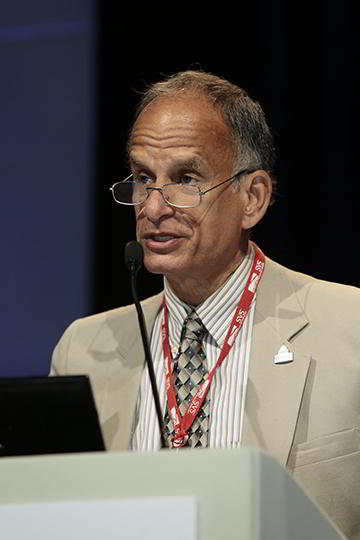
Drs. Alik Farber (Boston Medical Center), Matthew Menard (Brigham and Women’s Hospital) and Kenneth Rosenfield (Massachusetts General Hospital) are leading the BEST-CLI Trial.
All are invited to upcoming BEST-CLI Trial Investigators Meetings at VIVA (3 to 4:30 p.m. PST on Tuesday, Nov. 3) and VEITH (3 to 4:30 p.m. EST on Friday, Nov 20).
For more information visit www.bestcli.com
A number of new initiatives have recently been incorporated into the Best Endovascular versus best Surgical Therapy in patients with Critical Limb Ischemia (BEST-CLI) trial. It is hoped the additions and changes, including a modification of the protocol exclusion criteria, will facilitate subject accrual, an expansion to 140 trial sites and distribution of additional funds to all participating and enrolling centers.
The landmark BEST-CLI trial is a prospective, randomized, pragmatic, open-label superiority trial that is currently enrolling patients at 120 active sites in the United States and Canada. The trial will compare treatment efficacy, functional outcomes and cost in patients with critical limb ischemia who are candidates for both infrainguinal bypass and endovascular therapy and who are randomly assigned to one of the two treatments. Of the target number of 2,100 patients, 295 have been assigned treatments.
Changes include:
- The presence of >50% stenosis of the ipsilateral common femoral artery (CFA) will no longer be an exclusion. Treatment of a severe stenosis or an occlusion of the CFA either by open (surgical endarterectomy and patch angioplasty) or endovascular means will now be allowed and will be irrespective of the randomized treatment of the more distal occlusive disease.
- Immnosuppressive medication, a femoropopliteal TASC II A pattern of disease and hypercoaguagility will no longer be exclusions.
- The required delay following a previous open vascular or endovascular procedure (surgical bypass, balloon angioplasty, atherectomy or stenting) performed on the index limb has been reduced from six to three months. The required delay following a previous surgical inflow procedures performed on the index limb has been reduced from six months to six weeks.
- Treatment of an aortic or ipsilateral iliac artery occlusion will now be allowed.
- The protocol changes serve to bring the trial criteria more in line with common practice, while not altering to any significant degree the study aims.
The National Heart Lung and Blood Institute is sponsoring the trial, designed to address a number of questions of ongoing clinical interest. It aspires to significantly impact clinical practice by defining an evidence-based standard of care for patients with CLI. Recent changes in the trial design should serve to facilitate patient enrollment. Vascular surgeons participating are asked to continue their efforts to achieve current enrollment targets. Those not participating who wish to do so are asked to email [email protected].
Drs. Alik Farber (Boston Medical Center), Matthew Menard (Brigham and Women’s Hospital) and Kenneth Rosenfield (Massachusetts General Hospital) are leading the BEST-CLI Trial.
All are invited to upcoming BEST-CLI Trial Investigators Meetings at VIVA (3 to 4:30 p.m. PST on Tuesday, Nov. 3) and VEITH (3 to 4:30 p.m. EST on Friday, Nov 20).
For more information visit www.bestcli.com
A number of new initiatives have recently been incorporated into the Best Endovascular versus best Surgical Therapy in patients with Critical Limb Ischemia (BEST-CLI) trial. It is hoped the additions and changes, including a modification of the protocol exclusion criteria, will facilitate subject accrual, an expansion to 140 trial sites and distribution of additional funds to all participating and enrolling centers.
The landmark BEST-CLI trial is a prospective, randomized, pragmatic, open-label superiority trial that is currently enrolling patients at 120 active sites in the United States and Canada. The trial will compare treatment efficacy, functional outcomes and cost in patients with critical limb ischemia who are candidates for both infrainguinal bypass and endovascular therapy and who are randomly assigned to one of the two treatments. Of the target number of 2,100 patients, 295 have been assigned treatments.
Changes include:
- The presence of >50% stenosis of the ipsilateral common femoral artery (CFA) will no longer be an exclusion. Treatment of a severe stenosis or an occlusion of the CFA either by open (surgical endarterectomy and patch angioplasty) or endovascular means will now be allowed and will be irrespective of the randomized treatment of the more distal occlusive disease.
- Immnosuppressive medication, a femoropopliteal TASC II A pattern of disease and hypercoaguagility will no longer be exclusions.
- The required delay following a previous open vascular or endovascular procedure (surgical bypass, balloon angioplasty, atherectomy or stenting) performed on the index limb has been reduced from six to three months. The required delay following a previous surgical inflow procedures performed on the index limb has been reduced from six months to six weeks.
- Treatment of an aortic or ipsilateral iliac artery occlusion will now be allowed.
- The protocol changes serve to bring the trial criteria more in line with common practice, while not altering to any significant degree the study aims.
The National Heart Lung and Blood Institute is sponsoring the trial, designed to address a number of questions of ongoing clinical interest. It aspires to significantly impact clinical practice by defining an evidence-based standard of care for patients with CLI. Recent changes in the trial design should serve to facilitate patient enrollment. Vascular surgeons participating are asked to continue their efforts to achieve current enrollment targets. Those not participating who wish to do so are asked to email [email protected].
Drs. Alik Farber (Boston Medical Center), Matthew Menard (Brigham and Women’s Hospital) and Kenneth Rosenfield (Massachusetts General Hospital) are leading the BEST-CLI Trial.
All are invited to upcoming BEST-CLI Trial Investigators Meetings at VIVA (3 to 4:30 p.m. PST on Tuesday, Nov. 3) and VEITH (3 to 4:30 p.m. EST on Friday, Nov 20).
For more information visit www.bestcli.com

VRIC abstracts due Jan. 31
Abstract submissions for the 2016 Vascular Research Initiatives Conference must be submitted by Jan. 13, 2016. VRIC, set for May 4, 2016, in Nashville, Tenn., is held the day before the American Heart Association’s Arteriosclerosis, Thrombosis and Vascular Biology Scientific Sessions. Abstracts submitted to VRIC are simultaneously submitted to ATVB through a common submission system.
To learn more about VRIC and for the link to the submission system visit www.vsweb.org/VRIC.
Abstract submissions for the 2016 Vascular Research Initiatives Conference must be submitted by Jan. 13, 2016. VRIC, set for May 4, 2016, in Nashville, Tenn., is held the day before the American Heart Association’s Arteriosclerosis, Thrombosis and Vascular Biology Scientific Sessions. Abstracts submitted to VRIC are simultaneously submitted to ATVB through a common submission system.
To learn more about VRIC and for the link to the submission system visit www.vsweb.org/VRIC.
Abstract submissions for the 2016 Vascular Research Initiatives Conference must be submitted by Jan. 13, 2016. VRIC, set for May 4, 2016, in Nashville, Tenn., is held the day before the American Heart Association’s Arteriosclerosis, Thrombosis and Vascular Biology Scientific Sessions. Abstracts submitted to VRIC are simultaneously submitted to ATVB through a common submission system.
To learn more about VRIC and for the link to the submission system visit www.vsweb.org/VRIC.

In Honor of All PAs
Dear Physician Assistants throughout the country,
In the 1960s, internist Dr. Eugene Stead – one of the true icons and visionaries of American medicine – developed the Physician Assistant concept and founded the first program at Duke University School of Medicine. As an undergraduate pre-med and subsequently a medical student at Duke, I directly observed the maturation of this program and have always had tremendous admiration and respect for the contributions of PAs in the delivery of high-quality health care in this country.
It is true that surgical PAs represent only a portion of our national PA profession, and vascular surgical PAs an even smaller group, including some who are affiliate members of the Society for Vascular Surgery. However, it is indeed a privilege for me as SVS president to convey our congratulations during the recent week of celebration – National PA Week – and the admiration of our organization and our members to our vascular PAs, and in fact all PAs for all they do for our patients every day of the year.
In this period of a rapidly evolving health care system in this country, the delivery of health care has truly become a “team sport.” In my institution, our PAs play a vital and indispensable role on our vascular health care team. My PAs make me want to come to work every day. They epitomize the utmost examples of professionalism, compassion, competence and intelligence in the clinical evaluation of our patients, and in their medical, endovascular and surgical care. Indeed in many cases our patients often feel a closer bond to our PAs than to their surgeons! I can think of no more accurate and appropriate compliment for their dedicated contributions.
It is a privilege on behalf of our more than 5,300 members to express my congratulations to our vascular PAs, and to all PAs, for their dedicated service during their week of recognition.
Sincerely,
Bruce A. Perler, M.D.
President, Society for Vascular Surgery
Dear Physician Assistants throughout the country,
In the 1960s, internist Dr. Eugene Stead – one of the true icons and visionaries of American medicine – developed the Physician Assistant concept and founded the first program at Duke University School of Medicine. As an undergraduate pre-med and subsequently a medical student at Duke, I directly observed the maturation of this program and have always had tremendous admiration and respect for the contributions of PAs in the delivery of high-quality health care in this country.
It is true that surgical PAs represent only a portion of our national PA profession, and vascular surgical PAs an even smaller group, including some who are affiliate members of the Society for Vascular Surgery. However, it is indeed a privilege for me as SVS president to convey our congratulations during the recent week of celebration – National PA Week – and the admiration of our organization and our members to our vascular PAs, and in fact all PAs for all they do for our patients every day of the year.
In this period of a rapidly evolving health care system in this country, the delivery of health care has truly become a “team sport.” In my institution, our PAs play a vital and indispensable role on our vascular health care team. My PAs make me want to come to work every day. They epitomize the utmost examples of professionalism, compassion, competence and intelligence in the clinical evaluation of our patients, and in their medical, endovascular and surgical care. Indeed in many cases our patients often feel a closer bond to our PAs than to their surgeons! I can think of no more accurate and appropriate compliment for their dedicated contributions.
It is a privilege on behalf of our more than 5,300 members to express my congratulations to our vascular PAs, and to all PAs, for their dedicated service during their week of recognition.
Sincerely,
Bruce A. Perler, M.D.
President, Society for Vascular Surgery
Dear Physician Assistants throughout the country,
In the 1960s, internist Dr. Eugene Stead – one of the true icons and visionaries of American medicine – developed the Physician Assistant concept and founded the first program at Duke University School of Medicine. As an undergraduate pre-med and subsequently a medical student at Duke, I directly observed the maturation of this program and have always had tremendous admiration and respect for the contributions of PAs in the delivery of high-quality health care in this country.
It is true that surgical PAs represent only a portion of our national PA profession, and vascular surgical PAs an even smaller group, including some who are affiliate members of the Society for Vascular Surgery. However, it is indeed a privilege for me as SVS president to convey our congratulations during the recent week of celebration – National PA Week – and the admiration of our organization and our members to our vascular PAs, and in fact all PAs for all they do for our patients every day of the year.
In this period of a rapidly evolving health care system in this country, the delivery of health care has truly become a “team sport.” In my institution, our PAs play a vital and indispensable role on our vascular health care team. My PAs make me want to come to work every day. They epitomize the utmost examples of professionalism, compassion, competence and intelligence in the clinical evaluation of our patients, and in their medical, endovascular and surgical care. Indeed in many cases our patients often feel a closer bond to our PAs than to their surgeons! I can think of no more accurate and appropriate compliment for their dedicated contributions.
It is a privilege on behalf of our more than 5,300 members to express my congratulations to our vascular PAs, and to all PAs, for their dedicated service during their week of recognition.
Sincerely,
Bruce A. Perler, M.D.
President, Society for Vascular Surgery
SVS Coding Guide, SVU Coding Advisor Software now Available Together
The SVS Coding Guide and SVU Coding Advisor Software combination, available in a one-year license, includes expert coding guidance for all of the peripheral vascular surgery and interventional codes, as well as information on component and bundled coding.
The package also includes all databases used for coverage determination, plus notes on procedure codes specific to non-invasive vascular diagnostic testing.
The software automatically updates when codes change or localities adjust their reimbursements.
When ordering, please use code SVSCA to receive a special $100 discount.
The SVS Coding Guide and SVU Coding Advisor Software combination, available in a one-year license, includes expert coding guidance for all of the peripheral vascular surgery and interventional codes, as well as information on component and bundled coding.
The package also includes all databases used for coverage determination, plus notes on procedure codes specific to non-invasive vascular diagnostic testing.
The software automatically updates when codes change or localities adjust their reimbursements.
When ordering, please use code SVSCA to receive a special $100 discount.
The SVS Coding Guide and SVU Coding Advisor Software combination, available in a one-year license, includes expert coding guidance for all of the peripheral vascular surgery and interventional codes, as well as information on component and bundled coding.
The package also includes all databases used for coverage determination, plus notes on procedure codes specific to non-invasive vascular diagnostic testing.
The software automatically updates when codes change or localities adjust their reimbursements.
When ordering, please use code SVSCA to receive a special $100 discount.

Sept. JVS: Vascular surgeons do higher percentage of AAA repairs
The impact of endovascular repair on specialties performing abdominal aortic aneurysm repair.
Klaas H. J. Ultee, BSc,Rob Hurks, MD, PhD, Dominique B. Buck, MD, George S. DaSilva, BS, Peter A. Soden, MD,Joost A. van Herwaarden, MD, PhD, Hence J. M. Verhagen, MD, PhD, and Marc L. Schermerhorn, MD
Due to the increased use of EVAR for both intact and ruptured AAA repair, vascular surgeons are performing an increasing majority of AAA repairs, according to a new study reported in the September edition of Journal of Vascular Surgery.
The study examined the years 2001 through 2009 using the Nationwide Inpatient Sample, the largest national administrative database, which is maintained by the Agency for Healthcare Research and Quality as part of the Healthcare Cost and Utilization Project.
After 2009 the surgeon identification variables in the database were discontinued so more recent data were unavailable for the study.
“We do plan to analyze (this same subject) using Medicare data,” according to Dr. Marc L. Schermerhorn, “but our access to it lags several years behind. It will allow better risk adjustment as well.”
The study was interested in AAA repairs by the following types of physicians: vascular surgeons, general surgeons, cardiac surgeons, as well as nonsurgical specialists such as interventional cardiologists and interventional radiologists.
Overall, 108,587 EVARS and 85,080 open AAA repairs were identified. Of all repairs, 61 percent were performed by vascular surgeons, 20 percent by general surgeons, and 16 percent by cardiac surgeons. ICs and IRs performed the remaining 3 percent.
Significantly, the absolute number of vascular surgeons performing AAA repair increased 30 percent during the study period, whereas the number of GS and CS repairs decreased 46 and 30 percent, respectively.
AAA repairs are still done by general surgeons and cardiovascular surgeons; however, in those cases, patients are less likely to receive EVAR.
Researchers also found that whether patients received open or endovascular repair varied with the type of surgeon, but also by the patient’s gender, emergent admission, and race.
Other influencing factors were age of patient, treatment in a teaching hospital, year, and whether or not the hospital was in an urban area.
“The big question,” Schermerhorn noted, “is whether specialty has an influence on outcomes. We chose not to try to analyze this using this database because we did not think we could adequately do risk adjustment. It is difficult to distinguish a pre-existing condition from a post-op complication, for example, renal failure.”
The impact of endovascular repair on specialties performing abdominal aortic aneurysm repair.
Klaas H. J. Ultee, BSc,Rob Hurks, MD, PhD, Dominique B. Buck, MD, George S. DaSilva, BS, Peter A. Soden, MD,Joost A. van Herwaarden, MD, PhD, Hence J. M. Verhagen, MD, PhD, and Marc L. Schermerhorn, MD
Due to the increased use of EVAR for both intact and ruptured AAA repair, vascular surgeons are performing an increasing majority of AAA repairs, according to a new study reported in the September edition of Journal of Vascular Surgery.
The study examined the years 2001 through 2009 using the Nationwide Inpatient Sample, the largest national administrative database, which is maintained by the Agency for Healthcare Research and Quality as part of the Healthcare Cost and Utilization Project.
After 2009 the surgeon identification variables in the database were discontinued so more recent data were unavailable for the study.
“We do plan to analyze (this same subject) using Medicare data,” according to Dr. Marc L. Schermerhorn, “but our access to it lags several years behind. It will allow better risk adjustment as well.”
The study was interested in AAA repairs by the following types of physicians: vascular surgeons, general surgeons, cardiac surgeons, as well as nonsurgical specialists such as interventional cardiologists and interventional radiologists.
Overall, 108,587 EVARS and 85,080 open AAA repairs were identified. Of all repairs, 61 percent were performed by vascular surgeons, 20 percent by general surgeons, and 16 percent by cardiac surgeons. ICs and IRs performed the remaining 3 percent.
Significantly, the absolute number of vascular surgeons performing AAA repair increased 30 percent during the study period, whereas the number of GS and CS repairs decreased 46 and 30 percent, respectively.
AAA repairs are still done by general surgeons and cardiovascular surgeons; however, in those cases, patients are less likely to receive EVAR.
Researchers also found that whether patients received open or endovascular repair varied with the type of surgeon, but also by the patient’s gender, emergent admission, and race.
Other influencing factors were age of patient, treatment in a teaching hospital, year, and whether or not the hospital was in an urban area.
“The big question,” Schermerhorn noted, “is whether specialty has an influence on outcomes. We chose not to try to analyze this using this database because we did not think we could adequately do risk adjustment. It is difficult to distinguish a pre-existing condition from a post-op complication, for example, renal failure.”
The impact of endovascular repair on specialties performing abdominal aortic aneurysm repair.
Klaas H. J. Ultee, BSc,Rob Hurks, MD, PhD, Dominique B. Buck, MD, George S. DaSilva, BS, Peter A. Soden, MD,Joost A. van Herwaarden, MD, PhD, Hence J. M. Verhagen, MD, PhD, and Marc L. Schermerhorn, MD
Due to the increased use of EVAR for both intact and ruptured AAA repair, vascular surgeons are performing an increasing majority of AAA repairs, according to a new study reported in the September edition of Journal of Vascular Surgery.
The study examined the years 2001 through 2009 using the Nationwide Inpatient Sample, the largest national administrative database, which is maintained by the Agency for Healthcare Research and Quality as part of the Healthcare Cost and Utilization Project.
After 2009 the surgeon identification variables in the database were discontinued so more recent data were unavailable for the study.
“We do plan to analyze (this same subject) using Medicare data,” according to Dr. Marc L. Schermerhorn, “but our access to it lags several years behind. It will allow better risk adjustment as well.”
The study was interested in AAA repairs by the following types of physicians: vascular surgeons, general surgeons, cardiac surgeons, as well as nonsurgical specialists such as interventional cardiologists and interventional radiologists.
Overall, 108,587 EVARS and 85,080 open AAA repairs were identified. Of all repairs, 61 percent were performed by vascular surgeons, 20 percent by general surgeons, and 16 percent by cardiac surgeons. ICs and IRs performed the remaining 3 percent.
Significantly, the absolute number of vascular surgeons performing AAA repair increased 30 percent during the study period, whereas the number of GS and CS repairs decreased 46 and 30 percent, respectively.
AAA repairs are still done by general surgeons and cardiovascular surgeons; however, in those cases, patients are less likely to receive EVAR.
Researchers also found that whether patients received open or endovascular repair varied with the type of surgeon, but also by the patient’s gender, emergent admission, and race.
Other influencing factors were age of patient, treatment in a teaching hospital, year, and whether or not the hospital was in an urban area.
“The big question,” Schermerhorn noted, “is whether specialty has an influence on outcomes. We chose not to try to analyze this using this database because we did not think we could adequately do risk adjustment. It is difficult to distinguish a pre-existing condition from a post-op complication, for example, renal failure.”