User login
AGA Research Foundation salutes Dr. Donald O. Castell
Since its founding in 1897, the American Gastroenterological Association has been the trusted voice of the GI community. This success has been possible with the leadership of talented physicians who have paved the way to advance the science and practice of gastroenterology.
In 2013, Dr. Donald O. Castell funded the 14th Castell Award in Esophageal Clinical Research Award. Through his funding of the Castell award over the years, Dr. Castell – past AGA Institute President – has been the most generous AGA member donor to the AGA Research Foundation by providing an important clinical research award to 13 promising scientists since 2000.
The June and Donald O. Castell, M.D., Esophageal Clinical Research Award has had a significant impact on the careers of talented award recipients. "Beyond this award, you have continued to be an excellent role model for me as a clinical investigator and advocate for the field. Your generosity throughout the years and your work through the AGA Research Foundation is unparalleled and has inspired me to become more involved in national organizations and administration in my own department," said Dr. John E. Pandolfino, who received the 2007 Castell Esophageal Clinical Research Award. "Your dedication to education and the respect you have always exhibited for your trainees has also had a profound effect on my career as I have also placed a huge amount of effort on training faculty from around the world. The ‘legions’ of Don Castell trainees is extremely impressive and to me this is the most important legacy one can have in medicine."
Dr. Castell’s commitment to support young investigators and fund discoveries to improve GI practice and better patient care is truly remarkable. His continued support has been vital to the advancement of the AGA Research Foundation awards program. The AGA Research Foundation appreciates his philanthropic leadership.
Learn more about the Castell award or make a contribution to the AGA Research Foundation at www.gastro.org/foundation.
Since its founding in 1897, the American Gastroenterological Association has been the trusted voice of the GI community. This success has been possible with the leadership of talented physicians who have paved the way to advance the science and practice of gastroenterology.
In 2013, Dr. Donald O. Castell funded the 14th Castell Award in Esophageal Clinical Research Award. Through his funding of the Castell award over the years, Dr. Castell – past AGA Institute President – has been the most generous AGA member donor to the AGA Research Foundation by providing an important clinical research award to 13 promising scientists since 2000.
The June and Donald O. Castell, M.D., Esophageal Clinical Research Award has had a significant impact on the careers of talented award recipients. "Beyond this award, you have continued to be an excellent role model for me as a clinical investigator and advocate for the field. Your generosity throughout the years and your work through the AGA Research Foundation is unparalleled and has inspired me to become more involved in national organizations and administration in my own department," said Dr. John E. Pandolfino, who received the 2007 Castell Esophageal Clinical Research Award. "Your dedication to education and the respect you have always exhibited for your trainees has also had a profound effect on my career as I have also placed a huge amount of effort on training faculty from around the world. The ‘legions’ of Don Castell trainees is extremely impressive and to me this is the most important legacy one can have in medicine."
Dr. Castell’s commitment to support young investigators and fund discoveries to improve GI practice and better patient care is truly remarkable. His continued support has been vital to the advancement of the AGA Research Foundation awards program. The AGA Research Foundation appreciates his philanthropic leadership.
Learn more about the Castell award or make a contribution to the AGA Research Foundation at www.gastro.org/foundation.
Since its founding in 1897, the American Gastroenterological Association has been the trusted voice of the GI community. This success has been possible with the leadership of talented physicians who have paved the way to advance the science and practice of gastroenterology.
In 2013, Dr. Donald O. Castell funded the 14th Castell Award in Esophageal Clinical Research Award. Through his funding of the Castell award over the years, Dr. Castell – past AGA Institute President – has been the most generous AGA member donor to the AGA Research Foundation by providing an important clinical research award to 13 promising scientists since 2000.
The June and Donald O. Castell, M.D., Esophageal Clinical Research Award has had a significant impact on the careers of talented award recipients. "Beyond this award, you have continued to be an excellent role model for me as a clinical investigator and advocate for the field. Your generosity throughout the years and your work through the AGA Research Foundation is unparalleled and has inspired me to become more involved in national organizations and administration in my own department," said Dr. John E. Pandolfino, who received the 2007 Castell Esophageal Clinical Research Award. "Your dedication to education and the respect you have always exhibited for your trainees has also had a profound effect on my career as I have also placed a huge amount of effort on training faculty from around the world. The ‘legions’ of Don Castell trainees is extremely impressive and to me this is the most important legacy one can have in medicine."
Dr. Castell’s commitment to support young investigators and fund discoveries to improve GI practice and better patient care is truly remarkable. His continued support has been vital to the advancement of the AGA Research Foundation awards program. The AGA Research Foundation appreciates his philanthropic leadership.
Learn more about the Castell award or make a contribution to the AGA Research Foundation at www.gastro.org/foundation.
AGA Research Scholar Awardees
AGA Research Scholar Awardees: Robert Schwartz, M.D., instructor of medicine at Brigham and Women’s Hospital and postdoctoral fellow at MIT and Kara Gross Margolis, M.D., assistant professor of pediatrics at Columbia University Medical Center joined UEG Rising Star Harry Sokol, M.D., associate professor, gastroenterology department at Saint Antoine Hospital, AP-HP, in Paris as presenters at the 16th AGA-UEG (United European Gastroenterology) Scientific Exchange Program. The session took place in Berlin during the UEG Week in October.

AGA Research Scholar Awardees: Robert Schwartz, M.D., instructor of medicine at Brigham and Women’s Hospital and postdoctoral fellow at MIT and Kara Gross Margolis, M.D., assistant professor of pediatrics at Columbia University Medical Center joined UEG Rising Star Harry Sokol, M.D., associate professor, gastroenterology department at Saint Antoine Hospital, AP-HP, in Paris as presenters at the 16th AGA-UEG (United European Gastroenterology) Scientific Exchange Program. The session took place in Berlin during the UEG Week in October.
AGA Research Scholar Awardees: Robert Schwartz, M.D., instructor of medicine at Brigham and Women’s Hospital and postdoctoral fellow at MIT and Kara Gross Margolis, M.D., assistant professor of pediatrics at Columbia University Medical Center joined UEG Rising Star Harry Sokol, M.D., associate professor, gastroenterology department at Saint Antoine Hospital, AP-HP, in Paris as presenters at the 16th AGA-UEG (United European Gastroenterology) Scientific Exchange Program. The session took place in Berlin during the UEG Week in October.
Impact of the AGA Research Foundation
The AGA Research Foundation plays an important role in medical research by providing grants to young scientists at a critical time in their career. The foundation’s research program has had a significant impact on digestive disease research since 1984 providing more than $40 million in research grants to more than 750 scientists.
Foundation Grant recipients:

• Shehzad Z. Sheikh, M.D., assistant professor of medicine at the University of North Carolina, Chapel Hill, is a 2012 AGA Research Scholar Award Recipient. "The impact of the AGA Research Scholar Award on my career has been very significant, but I think what’s more important, and what we tend to lose perspective over, is that this is for our patients. Our patients look to us to help find a cure for their disease. IBD is a debilitating disease. It affects our patients day in, day out. I see them suffer silently on a daily basis. Until our politicians get their priorities correct, sources like the AGA Research Foundation are absolutely critical in maintaining viable research and advancing our goal to find a cure for IBD."
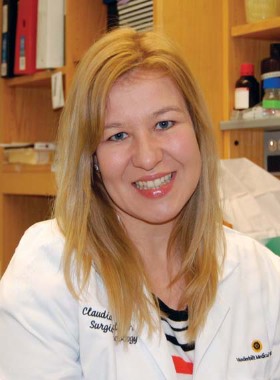
• Claudia D. Andl, Ph.D., assistant professor of surgery and cancer biology at Vanderbilt University, is a 2006 AGA Research Scholar Award Recipient. "I received the Research Scholar Award from the AGA Research Foundation in 2006 and I’m eternally grateful for this honor because it really set the stage for me as an independent investigator in my research program on cell adhesion molecules in esophageal cancer. With the economic downturn, support from the AGA Research Foundation is more important than ever. The clinicians, the researchers, everybody is working together to keep the research cutting edge so that we can help our patients. Without donating to the AGA Research Foundation, a lot of this research will not be happening anymore."

• John Pandolfino, M.D., AGAF, professor in medicine at Northwestern University, is a 2007 AGA–Castell Esophageal Clinical Research Award Recipient. "Unlike other subspecialties, gastroenterology and hepatology seem to have a little bit less funding available through the NIH and, more importantly, there’s the lure of private practice that really is dragging and pulling many of our young faculty away from research. I think some of the things that suffer when we lose these young faculty is that they come up with some of these new ideas. They’re seeing things for the very first time; they really break the paradigms that we’re set in as older and mid-level investigators. So if we don’t have these young investigators to challenge us, and look at things in a different way, the subspecialty won’t advance."
With your support, we are building a community of researchers whose work serves the greater community and benefits all our patients. Please support young researchers in gastroenterology and hepatology through a tax-deductible gift to the AGA Research Foundation. Donate today at www.gastro.org/contribute.
The AGA Research Foundation plays an important role in medical research by providing grants to young scientists at a critical time in their career. The foundation’s research program has had a significant impact on digestive disease research since 1984 providing more than $40 million in research grants to more than 750 scientists.
Foundation Grant recipients:
• Shehzad Z. Sheikh, M.D., assistant professor of medicine at the University of North Carolina, Chapel Hill, is a 2012 AGA Research Scholar Award Recipient. "The impact of the AGA Research Scholar Award on my career has been very significant, but I think what’s more important, and what we tend to lose perspective over, is that this is for our patients. Our patients look to us to help find a cure for their disease. IBD is a debilitating disease. It affects our patients day in, day out. I see them suffer silently on a daily basis. Until our politicians get their priorities correct, sources like the AGA Research Foundation are absolutely critical in maintaining viable research and advancing our goal to find a cure for IBD."
• Claudia D. Andl, Ph.D., assistant professor of surgery and cancer biology at Vanderbilt University, is a 2006 AGA Research Scholar Award Recipient. "I received the Research Scholar Award from the AGA Research Foundation in 2006 and I’m eternally grateful for this honor because it really set the stage for me as an independent investigator in my research program on cell adhesion molecules in esophageal cancer. With the economic downturn, support from the AGA Research Foundation is more important than ever. The clinicians, the researchers, everybody is working together to keep the research cutting edge so that we can help our patients. Without donating to the AGA Research Foundation, a lot of this research will not be happening anymore."
• John Pandolfino, M.D., AGAF, professor in medicine at Northwestern University, is a 2007 AGA–Castell Esophageal Clinical Research Award Recipient. "Unlike other subspecialties, gastroenterology and hepatology seem to have a little bit less funding available through the NIH and, more importantly, there’s the lure of private practice that really is dragging and pulling many of our young faculty away from research. I think some of the things that suffer when we lose these young faculty is that they come up with some of these new ideas. They’re seeing things for the very first time; they really break the paradigms that we’re set in as older and mid-level investigators. So if we don’t have these young investigators to challenge us, and look at things in a different way, the subspecialty won’t advance."
With your support, we are building a community of researchers whose work serves the greater community and benefits all our patients. Please support young researchers in gastroenterology and hepatology through a tax-deductible gift to the AGA Research Foundation. Donate today at www.gastro.org/contribute.
The AGA Research Foundation plays an important role in medical research by providing grants to young scientists at a critical time in their career. The foundation’s research program has had a significant impact on digestive disease research since 1984 providing more than $40 million in research grants to more than 750 scientists.
Foundation Grant recipients:
• Shehzad Z. Sheikh, M.D., assistant professor of medicine at the University of North Carolina, Chapel Hill, is a 2012 AGA Research Scholar Award Recipient. "The impact of the AGA Research Scholar Award on my career has been very significant, but I think what’s more important, and what we tend to lose perspective over, is that this is for our patients. Our patients look to us to help find a cure for their disease. IBD is a debilitating disease. It affects our patients day in, day out. I see them suffer silently on a daily basis. Until our politicians get their priorities correct, sources like the AGA Research Foundation are absolutely critical in maintaining viable research and advancing our goal to find a cure for IBD."
• Claudia D. Andl, Ph.D., assistant professor of surgery and cancer biology at Vanderbilt University, is a 2006 AGA Research Scholar Award Recipient. "I received the Research Scholar Award from the AGA Research Foundation in 2006 and I’m eternally grateful for this honor because it really set the stage for me as an independent investigator in my research program on cell adhesion molecules in esophageal cancer. With the economic downturn, support from the AGA Research Foundation is more important than ever. The clinicians, the researchers, everybody is working together to keep the research cutting edge so that we can help our patients. Without donating to the AGA Research Foundation, a lot of this research will not be happening anymore."
• John Pandolfino, M.D., AGAF, professor in medicine at Northwestern University, is a 2007 AGA–Castell Esophageal Clinical Research Award Recipient. "Unlike other subspecialties, gastroenterology and hepatology seem to have a little bit less funding available through the NIH and, more importantly, there’s the lure of private practice that really is dragging and pulling many of our young faculty away from research. I think some of the things that suffer when we lose these young faculty is that they come up with some of these new ideas. They’re seeing things for the very first time; they really break the paradigms that we’re set in as older and mid-level investigators. So if we don’t have these young investigators to challenge us, and look at things in a different way, the subspecialty won’t advance."
With your support, we are building a community of researchers whose work serves the greater community and benefits all our patients. Please support young researchers in gastroenterology and hepatology through a tax-deductible gift to the AGA Research Foundation. Donate today at www.gastro.org/contribute.

How to code colonoscopy under Obamacare
AGA is hearing reports of patients incorrectly charged cost-sharing fees for screening colonoscopy due to incorrect coding by physicians. There is significant confusion about how the Affordable Care Act covers preventive screenings. In response, AGA has developed a Q&A to guide you through the process.
Important items to note:
• Medicare and private payers must cover screening colonoscopy without a co-pay or deductible.
• If a polyp is found and removed during a screening colonoscopy, then a private insurer cannot impose cost-sharing since it is an integral part of a colonoscopy.
• Medicare CAN impose cost-sharing when a screening colonoscopy turns therapeutic. AGA is fighting to have this policy corrected.
In the meantime, use the AGA Q&A at http://www.gastro.org/journals-publications/aga-edigest/archive/aga_edigest_oct_31_2013 to help ensure you are using the correct modifiers and diagnosis codes. This document includes tips on how to order diagnosis codes to avoid payment denials.
AGA is hearing reports of patients incorrectly charged cost-sharing fees for screening colonoscopy due to incorrect coding by physicians. There is significant confusion about how the Affordable Care Act covers preventive screenings. In response, AGA has developed a Q&A to guide you through the process.
Important items to note:
• Medicare and private payers must cover screening colonoscopy without a co-pay or deductible.
• If a polyp is found and removed during a screening colonoscopy, then a private insurer cannot impose cost-sharing since it is an integral part of a colonoscopy.
• Medicare CAN impose cost-sharing when a screening colonoscopy turns therapeutic. AGA is fighting to have this policy corrected.
In the meantime, use the AGA Q&A at http://www.gastro.org/journals-publications/aga-edigest/archive/aga_edigest_oct_31_2013 to help ensure you are using the correct modifiers and diagnosis codes. This document includes tips on how to order diagnosis codes to avoid payment denials.
AGA is hearing reports of patients incorrectly charged cost-sharing fees for screening colonoscopy due to incorrect coding by physicians. There is significant confusion about how the Affordable Care Act covers preventive screenings. In response, AGA has developed a Q&A to guide you through the process.
Important items to note:
• Medicare and private payers must cover screening colonoscopy without a co-pay or deductible.
• If a polyp is found and removed during a screening colonoscopy, then a private insurer cannot impose cost-sharing since it is an integral part of a colonoscopy.
• Medicare CAN impose cost-sharing when a screening colonoscopy turns therapeutic. AGA is fighting to have this policy corrected.
In the meantime, use the AGA Q&A at http://www.gastro.org/journals-publications/aga-edigest/archive/aga_edigest_oct_31_2013 to help ensure you are using the correct modifiers and diagnosis codes. This document includes tips on how to order diagnosis codes to avoid payment denials.
Sequestration sets in: How can we move forward?
While it is not unusual to hear researchers complain about having to write grants and lack of funding, the tone of these conversations over the last few months has turned alarmingly grim. And, this week it became even worse.
Given the government shutdown, the political divide that has brought Congress’ ability to govern to a screeching halt, and the potential for cuts much steeper than 5% to the National Institutes of Health (the House budget calls for cuts of up to 18% for NIH), researchers can no longer afford to stand on the sidelines and not take action.
As a physician-scientist currently in the fourth year of my K08 award, I have become increasingly tuned into what has been happening to the NIH and its impact on my generation of researchers as well as the broader impact on science in this country. While I would like to believe that the current situation is just a low point, I was particularly disconcerted to read what Francis Collins, head of the NIH, admitted to when speaking with young scientists these days:
"I would like to be able to say, ‘You know, we’ve had ups and downs in the past. There’s a long tradition here of a roller coaster that NIH has to ride on. This just happens to be a tough interval. It always got better before; it’ll get better this time.’ But as I say those things, I’m not sure I’m completely right, or convinced that I’m telling the truth" (Huffington Post online, Aug. 23, 2013).
It has been 6 months since sequestration was initiated this past March, and the realities of these unprecedented across-the-board budget cuts are only now starting to sink in. The NIH was forced to make a 5%, or $1.55 billion, cut to the 2013 budget. These cuts affect every institute and type of research supported by the NIH. This translates into an average cut of 4.7% to existing grants and a stunning 700 fewer funded grants compared with last year. There is also no increase in stipends for young scientists currently supported by the National Research Service Award. These cuts will negatively impact progress in biomedical research, but, equally as important, they threaten a whole generation of young researchers who will hang up their lab coats and exit science – probably for good.
What can be done to ameliorate the situation? Recently, AGA representatives joined forces with the American Diabetes Association, Juvenile Diabetes Research Foundation, American Kidney Foundation, American Society of Nephrology, American Urological Association, and others to form a group called "Friends of the NIDDK" to bring awareness, education, and advocacy surrounding the mission of the institute and to collaborate advocacy efforts on funding. This group met with NIDDK Director Dr. Griffin Rodgers regarding the current funding climate. One of the key messages to emerge from this meeting was that researchers should contact their congressional representatives and invite them into their laboratories and clinics to show them the important work they are doing and its impact on society.
As a junior physician-scientist at risk of being part of a "sequestered generation" in science, I took Dr. Rodger’s advice by meeting with my congressional representative, Rep. Bobby Rush (D-Ill.) while in Washington recently and inviting him and his staff to see the important work being done by my colleagues and me. Rep. Rush has been a strong supporter of NIH funding.
During the recent AGA Public Affairs and Advocacy Committee meeting, we discussed AGA’s plans to develop a Research Advocacy Action Plan, which will provide members the tools they need to help set up meetings with their Congressperson, as well as provide the pertinent information for each state and how it is supported by NIH research. We also discussed the 100 new members of Congress and the need to educate them on the importance of funding research and its potential to lower health care costs.
While it is not unusual to hear researchers complain about having to write grants and lack of funding, the tone of these conversations over the last few months has turned alarmingly grim. And, this week it became even worse.
Given the government shutdown, the political divide that has brought Congress’ ability to govern to a screeching halt, and the potential for cuts much steeper than 5% to the National Institutes of Health (the House budget calls for cuts of up to 18% for NIH), researchers can no longer afford to stand on the sidelines and not take action.
As a physician-scientist currently in the fourth year of my K08 award, I have become increasingly tuned into what has been happening to the NIH and its impact on my generation of researchers as well as the broader impact on science in this country. While I would like to believe that the current situation is just a low point, I was particularly disconcerted to read what Francis Collins, head of the NIH, admitted to when speaking with young scientists these days:
"I would like to be able to say, ‘You know, we’ve had ups and downs in the past. There’s a long tradition here of a roller coaster that NIH has to ride on. This just happens to be a tough interval. It always got better before; it’ll get better this time.’ But as I say those things, I’m not sure I’m completely right, or convinced that I’m telling the truth" (Huffington Post online, Aug. 23, 2013).
It has been 6 months since sequestration was initiated this past March, and the realities of these unprecedented across-the-board budget cuts are only now starting to sink in. The NIH was forced to make a 5%, or $1.55 billion, cut to the 2013 budget. These cuts affect every institute and type of research supported by the NIH. This translates into an average cut of 4.7% to existing grants and a stunning 700 fewer funded grants compared with last year. There is also no increase in stipends for young scientists currently supported by the National Research Service Award. These cuts will negatively impact progress in biomedical research, but, equally as important, they threaten a whole generation of young researchers who will hang up their lab coats and exit science – probably for good.
What can be done to ameliorate the situation? Recently, AGA representatives joined forces with the American Diabetes Association, Juvenile Diabetes Research Foundation, American Kidney Foundation, American Society of Nephrology, American Urological Association, and others to form a group called "Friends of the NIDDK" to bring awareness, education, and advocacy surrounding the mission of the institute and to collaborate advocacy efforts on funding. This group met with NIDDK Director Dr. Griffin Rodgers regarding the current funding climate. One of the key messages to emerge from this meeting was that researchers should contact their congressional representatives and invite them into their laboratories and clinics to show them the important work they are doing and its impact on society.
As a junior physician-scientist at risk of being part of a "sequestered generation" in science, I took Dr. Rodger’s advice by meeting with my congressional representative, Rep. Bobby Rush (D-Ill.) while in Washington recently and inviting him and his staff to see the important work being done by my colleagues and me. Rep. Rush has been a strong supporter of NIH funding.
During the recent AGA Public Affairs and Advocacy Committee meeting, we discussed AGA’s plans to develop a Research Advocacy Action Plan, which will provide members the tools they need to help set up meetings with their Congressperson, as well as provide the pertinent information for each state and how it is supported by NIH research. We also discussed the 100 new members of Congress and the need to educate them on the importance of funding research and its potential to lower health care costs.
While it is not unusual to hear researchers complain about having to write grants and lack of funding, the tone of these conversations over the last few months has turned alarmingly grim. And, this week it became even worse.
Given the government shutdown, the political divide that has brought Congress’ ability to govern to a screeching halt, and the potential for cuts much steeper than 5% to the National Institutes of Health (the House budget calls for cuts of up to 18% for NIH), researchers can no longer afford to stand on the sidelines and not take action.
As a physician-scientist currently in the fourth year of my K08 award, I have become increasingly tuned into what has been happening to the NIH and its impact on my generation of researchers as well as the broader impact on science in this country. While I would like to believe that the current situation is just a low point, I was particularly disconcerted to read what Francis Collins, head of the NIH, admitted to when speaking with young scientists these days:
"I would like to be able to say, ‘You know, we’ve had ups and downs in the past. There’s a long tradition here of a roller coaster that NIH has to ride on. This just happens to be a tough interval. It always got better before; it’ll get better this time.’ But as I say those things, I’m not sure I’m completely right, or convinced that I’m telling the truth" (Huffington Post online, Aug. 23, 2013).
It has been 6 months since sequestration was initiated this past March, and the realities of these unprecedented across-the-board budget cuts are only now starting to sink in. The NIH was forced to make a 5%, or $1.55 billion, cut to the 2013 budget. These cuts affect every institute and type of research supported by the NIH. This translates into an average cut of 4.7% to existing grants and a stunning 700 fewer funded grants compared with last year. There is also no increase in stipends for young scientists currently supported by the National Research Service Award. These cuts will negatively impact progress in biomedical research, but, equally as important, they threaten a whole generation of young researchers who will hang up their lab coats and exit science – probably for good.
What can be done to ameliorate the situation? Recently, AGA representatives joined forces with the American Diabetes Association, Juvenile Diabetes Research Foundation, American Kidney Foundation, American Society of Nephrology, American Urological Association, and others to form a group called "Friends of the NIDDK" to bring awareness, education, and advocacy surrounding the mission of the institute and to collaborate advocacy efforts on funding. This group met with NIDDK Director Dr. Griffin Rodgers regarding the current funding climate. One of the key messages to emerge from this meeting was that researchers should contact their congressional representatives and invite them into their laboratories and clinics to show them the important work they are doing and its impact on society.
As a junior physician-scientist at risk of being part of a "sequestered generation" in science, I took Dr. Rodger’s advice by meeting with my congressional representative, Rep. Bobby Rush (D-Ill.) while in Washington recently and inviting him and his staff to see the important work being done by my colleagues and me. Rep. Rush has been a strong supporter of NIH funding.
During the recent AGA Public Affairs and Advocacy Committee meeting, we discussed AGA’s plans to develop a Research Advocacy Action Plan, which will provide members the tools they need to help set up meetings with their Congressperson, as well as provide the pertinent information for each state and how it is supported by NIH research. We also discussed the 100 new members of Congress and the need to educate them on the importance of funding research and its potential to lower health care costs.
AGA Institute approves new definition of digestive health
The AGA Institute recently updated AGA’s official definition of digestive health to reflect new developments.
The new definition is as follows: Good digestive health describes a digestive system that has appropriate nutrient absorption, intestinal motility, immune function, and a balanced microbiota (the community of microorganisms that live in the gut). A balanced diet has an important role in maintaining digestive health and can prevent or help relieve certain digestive symptoms. Most people with good digestive health do not regularly experience digestive symptoms such as heartburn, rumbling, nausea, bloating, excessive flatulence, constipation, diarrhea, or abdominal pain and discomfort.
The AGA Institute recently updated AGA’s official definition of digestive health to reflect new developments.
The new definition is as follows: Good digestive health describes a digestive system that has appropriate nutrient absorption, intestinal motility, immune function, and a balanced microbiota (the community of microorganisms that live in the gut). A balanced diet has an important role in maintaining digestive health and can prevent or help relieve certain digestive symptoms. Most people with good digestive health do not regularly experience digestive symptoms such as heartburn, rumbling, nausea, bloating, excessive flatulence, constipation, diarrhea, or abdominal pain and discomfort.
The AGA Institute recently updated AGA’s official definition of digestive health to reflect new developments.
The new definition is as follows: Good digestive health describes a digestive system that has appropriate nutrient absorption, intestinal motility, immune function, and a balanced microbiota (the community of microorganisms that live in the gut). A balanced diet has an important role in maintaining digestive health and can prevent or help relieve certain digestive symptoms. Most people with good digestive health do not regularly experience digestive symptoms such as heartburn, rumbling, nausea, bloating, excessive flatulence, constipation, diarrhea, or abdominal pain and discomfort.
New journal needs editor in chief
The AGA is soliciting applications for the position of editor in chief to help create and launch its official basic science, open access, online-only research journal. This journal will publish papers on a broad spectrum of themes in gastroenterology, hepatology, and pancreatology laboratory research, providing the latest advances in the biochemical, cellular, genetic, microbial, molecular, pharmacologic, and physiologic aspects of digestive health and disease.
Applicants must be AGA members and demonstrate an outstanding record of scientific achievement, and possess a comprehensive understanding of biomedical publication issues and processes, including online submission, review, and publication. Past participation in the operation of a scientific journal as an editor in chief or associate editor is desirable.
For more information please contact Erin Dubnansky, Senior Director, Scholarly Publishing at [email protected]. Deadline for applications is Dec. 15, 2013.
Body text starts here....
Second and subsequent grafs
Doctor’s Name and Bio
Body text starts here....
Second and subsequent grafs
Doctor’s Name and Bio
Body text starts here....
Second and subsequent grafs
Doctor’s Name and Bio
The AGA is soliciting applications for the position of editor in chief to help create and launch its official basic science, open access, online-only research journal. This journal will publish papers on a broad spectrum of themes in gastroenterology, hepatology, and pancreatology laboratory research, providing the latest advances in the biochemical, cellular, genetic, microbial, molecular, pharmacologic, and physiologic aspects of digestive health and disease.
Applicants must be AGA members and demonstrate an outstanding record of scientific achievement, and possess a comprehensive understanding of biomedical publication issues and processes, including online submission, review, and publication. Past participation in the operation of a scientific journal as an editor in chief or associate editor is desirable.
For more information please contact Erin Dubnansky, Senior Director, Scholarly Publishing at [email protected]. Deadline for applications is Dec. 15, 2013.
The AGA is soliciting applications for the position of editor in chief to help create and launch its official basic science, open access, online-only research journal. This journal will publish papers on a broad spectrum of themes in gastroenterology, hepatology, and pancreatology laboratory research, providing the latest advances in the biochemical, cellular, genetic, microbial, molecular, pharmacologic, and physiologic aspects of digestive health and disease.
Applicants must be AGA members and demonstrate an outstanding record of scientific achievement, and possess a comprehensive understanding of biomedical publication issues and processes, including online submission, review, and publication. Past participation in the operation of a scientific journal as an editor in chief or associate editor is desirable.
For more information please contact Erin Dubnansky, Senior Director, Scholarly Publishing at [email protected]. Deadline for applications is Dec. 15, 2013.
AGA’s vice president highlights IBS patient care
Functional GI and motility disorders are arguably one of the most relevant groups of disorders bringing patients to gastroenterologists. This area offers potential to reinvigorate the role of GIs; however, progress in this field has been difficult, and the speed bumps have included focus on symptom-based diagnosis rather than understanding of patho-physiological mechanisms, excessive regulatory focus on patient response outcomes, and lack of funding.
Michael Camilleri, M.D., AGAF, vice president of the AGA Institute from Mayo Clinic, has been at the forefront of applied, patient-oriented gastroenterology research over the past 25 years. Thanks to funding he received from the AGA Research Foundation at critical points in his career, Dr. Camilleri has developed validated measurements that shape how clinicians diagnose and care for patients with gastroparesis, dyspepsia, IBS, chronic constipation, and diarrhea. His research has also helped to develop the drugs that are used widely in practice today.

These findings have brought on a renaissance in IBS patient care; however, in order to continue to move forward, we must understand the interrelationships of the diverse traits of these functional GI diseases. This understanding is essential if we are to have an impact on the diseases that we are trying to cure sometimes, to relieve often and to comfort always.
Dr. Camilleri discusses this renaissance in gastroenterology in a new video for the AGA Research Foundation. To watch the video, visit www.gastro.org/foundation.
Functional GI and motility disorders are arguably one of the most relevant groups of disorders bringing patients to gastroenterologists. This area offers potential to reinvigorate the role of GIs; however, progress in this field has been difficult, and the speed bumps have included focus on symptom-based diagnosis rather than understanding of patho-physiological mechanisms, excessive regulatory focus on patient response outcomes, and lack of funding.
Michael Camilleri, M.D., AGAF, vice president of the AGA Institute from Mayo Clinic, has been at the forefront of applied, patient-oriented gastroenterology research over the past 25 years. Thanks to funding he received from the AGA Research Foundation at critical points in his career, Dr. Camilleri has developed validated measurements that shape how clinicians diagnose and care for patients with gastroparesis, dyspepsia, IBS, chronic constipation, and diarrhea. His research has also helped to develop the drugs that are used widely in practice today.
These findings have brought on a renaissance in IBS patient care; however, in order to continue to move forward, we must understand the interrelationships of the diverse traits of these functional GI diseases. This understanding is essential if we are to have an impact on the diseases that we are trying to cure sometimes, to relieve often and to comfort always.
Dr. Camilleri discusses this renaissance in gastroenterology in a new video for the AGA Research Foundation. To watch the video, visit www.gastro.org/foundation.
Functional GI and motility disorders are arguably one of the most relevant groups of disorders bringing patients to gastroenterologists. This area offers potential to reinvigorate the role of GIs; however, progress in this field has been difficult, and the speed bumps have included focus on symptom-based diagnosis rather than understanding of patho-physiological mechanisms, excessive regulatory focus on patient response outcomes, and lack of funding.
Michael Camilleri, M.D., AGAF, vice president of the AGA Institute from Mayo Clinic, has been at the forefront of applied, patient-oriented gastroenterology research over the past 25 years. Thanks to funding he received from the AGA Research Foundation at critical points in his career, Dr. Camilleri has developed validated measurements that shape how clinicians diagnose and care for patients with gastroparesis, dyspepsia, IBS, chronic constipation, and diarrhea. His research has also helped to develop the drugs that are used widely in practice today.
These findings have brought on a renaissance in IBS patient care; however, in order to continue to move forward, we must understand the interrelationships of the diverse traits of these functional GI diseases. This understanding is essential if we are to have an impact on the diseases that we are trying to cure sometimes, to relieve often and to comfort always.
Dr. Camilleri discusses this renaissance in gastroenterology in a new video for the AGA Research Foundation. To watch the video, visit www.gastro.org/foundation.

First step in Sunshine Law underway
On Aug. 1, pharmaceutical companies took the first step in implementing the law that requires industry to disclose gifts or payments to physicians of $10 or more. Companies began to collect data on these so-called "transfers of value" at the beginning of August, as directed by the Physician Payments Sunshine provisions in the Affordable Care Act.
Pharmaceutical companies must ultimately report payments and gifts to physicians to CMS, which will post the data on a website that will be available to the public. Physicians will be able to register with CMS on Jan. 1, 2014, to receive reports on any transfers of value that they receive from companies. The data will become available to the public on Sept. 30, 2014.
While physicians will not be required to report any such gifts to CMS, it is very important that they review reports from companies to ensure the accuracy of information that will be disclosed on the website.
Webinar: What GIs need to know about the Sunshine Rule
Join AGA for a webinar on Tuesday, Oct. 22, at noon ET to learn more about the implications of the Sunshine Law. During the webinar, you will hear from:
Michael L. Kochman, M.D., AGAF, chair, AGA Regulatory Workgroup
Emily L. Graham, RHIA, CCS-P, vice president of regulatory affairs, Hart Health Strategies, a leading health care consulting firm in Washington, D.C.
The webinar will cover key information that members should know about:
• Reporting timelines.
• How to appeal any incorrect data before it is made public.
• What transfers of value are covered under the reporting requirements.
Register now at: www.gotomeeting.com/register/492507393.
On Aug. 1, pharmaceutical companies took the first step in implementing the law that requires industry to disclose gifts or payments to physicians of $10 or more. Companies began to collect data on these so-called "transfers of value" at the beginning of August, as directed by the Physician Payments Sunshine provisions in the Affordable Care Act.
Pharmaceutical companies must ultimately report payments and gifts to physicians to CMS, which will post the data on a website that will be available to the public. Physicians will be able to register with CMS on Jan. 1, 2014, to receive reports on any transfers of value that they receive from companies. The data will become available to the public on Sept. 30, 2014.
While physicians will not be required to report any such gifts to CMS, it is very important that they review reports from companies to ensure the accuracy of information that will be disclosed on the website.
Webinar: What GIs need to know about the Sunshine Rule
Join AGA for a webinar on Tuesday, Oct. 22, at noon ET to learn more about the implications of the Sunshine Law. During the webinar, you will hear from:
Michael L. Kochman, M.D., AGAF, chair, AGA Regulatory Workgroup
Emily L. Graham, RHIA, CCS-P, vice president of regulatory affairs, Hart Health Strategies, a leading health care consulting firm in Washington, D.C.
The webinar will cover key information that members should know about:
• Reporting timelines.
• How to appeal any incorrect data before it is made public.
• What transfers of value are covered under the reporting requirements.
Register now at: www.gotomeeting.com/register/492507393.
On Aug. 1, pharmaceutical companies took the first step in implementing the law that requires industry to disclose gifts or payments to physicians of $10 or more. Companies began to collect data on these so-called "transfers of value" at the beginning of August, as directed by the Physician Payments Sunshine provisions in the Affordable Care Act.
Pharmaceutical companies must ultimately report payments and gifts to physicians to CMS, which will post the data on a website that will be available to the public. Physicians will be able to register with CMS on Jan. 1, 2014, to receive reports on any transfers of value that they receive from companies. The data will become available to the public on Sept. 30, 2014.
While physicians will not be required to report any such gifts to CMS, it is very important that they review reports from companies to ensure the accuracy of information that will be disclosed on the website.
Webinar: What GIs need to know about the Sunshine Rule
Join AGA for a webinar on Tuesday, Oct. 22, at noon ET to learn more about the implications of the Sunshine Law. During the webinar, you will hear from:
Michael L. Kochman, M.D., AGAF, chair, AGA Regulatory Workgroup
Emily L. Graham, RHIA, CCS-P, vice president of regulatory affairs, Hart Health Strategies, a leading health care consulting firm in Washington, D.C.
The webinar will cover key information that members should know about:
• Reporting timelines.
• How to appeal any incorrect data before it is made public.
• What transfers of value are covered under the reporting requirements.
Register now at: www.gotomeeting.com/register/492507393.
Boston Scientific pledges $600K to support GI technology
The AGA Institute has announced that Boston Scientific will provide a $600,000 unrestricted grant over 3 years to help fund the AGA Research and Technology Initiative. Boston Scientific, a leading innovator of medical solutions, is dedicated to creating enhanced technologies designed for diagnosing and treating diseases of the digestive system.
Boston Scientific’s gift to the AGA Research and Technology Initiative will help ensure that researchers have the support they need to discover ways to better diagnose, treat, and cure digestive diseases. Through the AGA Research Foundation, funding will support investigators interested in studying the role of technology in gastroenterology and hepatology.
In addition to funding research in technology, Boston Scientific’s gift will support:
• AGA’s Center for GI Innovation and Technology, which supports innovation and the development of new technology in gastroenterology, hepatology, nutrition, and obesity by guiding medical device and therapeutics innovators through the technology development and adoption process.
• AGA’s annual technology summit, which serves to identify unmet needs in gastroenterology, highlight promising new technologies, and deliver vital information on what it takes to obtain approval, adoption, coverage, and reimbursement in today’\'s health-care environment.
• AGA Research Foundation’s Corporate Roundtable, which engages corporate and clinical GI leaders in discussion regarding scientific advancements, policy, legislation, and other issues and opportunities that impact the science and practice of gastroenterology and hepatology.
The AGA Institute has announced that Boston Scientific will provide a $600,000 unrestricted grant over 3 years to help fund the AGA Research and Technology Initiative. Boston Scientific, a leading innovator of medical solutions, is dedicated to creating enhanced technologies designed for diagnosing and treating diseases of the digestive system.
Boston Scientific’s gift to the AGA Research and Technology Initiative will help ensure that researchers have the support they need to discover ways to better diagnose, treat, and cure digestive diseases. Through the AGA Research Foundation, funding will support investigators interested in studying the role of technology in gastroenterology and hepatology.
In addition to funding research in technology, Boston Scientific’s gift will support:
• AGA’s Center for GI Innovation and Technology, which supports innovation and the development of new technology in gastroenterology, hepatology, nutrition, and obesity by guiding medical device and therapeutics innovators through the technology development and adoption process.
• AGA’s annual technology summit, which serves to identify unmet needs in gastroenterology, highlight promising new technologies, and deliver vital information on what it takes to obtain approval, adoption, coverage, and reimbursement in today’\'s health-care environment.
• AGA Research Foundation’s Corporate Roundtable, which engages corporate and clinical GI leaders in discussion regarding scientific advancements, policy, legislation, and other issues and opportunities that impact the science and practice of gastroenterology and hepatology.
The AGA Institute has announced that Boston Scientific will provide a $600,000 unrestricted grant over 3 years to help fund the AGA Research and Technology Initiative. Boston Scientific, a leading innovator of medical solutions, is dedicated to creating enhanced technologies designed for diagnosing and treating diseases of the digestive system.
Boston Scientific’s gift to the AGA Research and Technology Initiative will help ensure that researchers have the support they need to discover ways to better diagnose, treat, and cure digestive diseases. Through the AGA Research Foundation, funding will support investigators interested in studying the role of technology in gastroenterology and hepatology.
In addition to funding research in technology, Boston Scientific’s gift will support:
• AGA’s Center for GI Innovation and Technology, which supports innovation and the development of new technology in gastroenterology, hepatology, nutrition, and obesity by guiding medical device and therapeutics innovators through the technology development and adoption process.
• AGA’s annual technology summit, which serves to identify unmet needs in gastroenterology, highlight promising new technologies, and deliver vital information on what it takes to obtain approval, adoption, coverage, and reimbursement in today’\'s health-care environment.
• AGA Research Foundation’s Corporate Roundtable, which engages corporate and clinical GI leaders in discussion regarding scientific advancements, policy, legislation, and other issues and opportunities that impact the science and practice of gastroenterology and hepatology.