User login
Sending letters to other doctors is good patient care
I send letters to other doctors, pretty religiously. I know this isn’t required, and some have stopped doing it.
To me, though, it isn’t just a courtesy. It’s good patient care. If an internist referred a patient to me, I assume they’d want to know what I think, what tests I’m ordering (and what they showed), and what, if any, treatments I’m prescribing. They’re also going to want to know this from me, and not the patient, whose recollection may not be accurate ("he ordered tests and gave me a white pill").
It saves money. I make sure test results from my orders are sent to them, so things don’t get duplicated and they’re up to date on my findings. Likewise, I hope they’ll copy me with relevant records.
It improves safety. Most of a patient’s medications are going to come from their internist, so it’s important they know what I’m prescribing. Drug interactions can be a serious problem.
Realistically, I’m not expecting anyone to read my entire note. I think most (like me) skip to the impression. That’s okay. The point is to know what others are doing. We’re all supposed to be working together to help Mrs. Smith get better, aren’t we? That’s not easy when you have no idea what’s going on elsewhere on the field.
One particular irritant I have is a major neurologic center in my town. Every now and then I have an unusually complex case and refer patients there for a second opinion ... and never hear back.
This drives me nuts. Sometimes the patients return to me, and to figure out what was done, I have to send over a release for records, which can take a week or two to get back. I’m also curious, for my own education, to know what they thought and what the final diagnosis was. Learning about the cases I didn’t figure out helps make me a better doctor.
Communication is a critical feature of our species. And, among doctors, I believe it leads to better patient care. I hope that my obsession with it is good for all involved, and I wish others felt the same way.
Dr. Block has a solo neurology practice in Scottsdale, Ariz.
I send letters to other doctors, pretty religiously. I know this isn’t required, and some have stopped doing it.
To me, though, it isn’t just a courtesy. It’s good patient care. If an internist referred a patient to me, I assume they’d want to know what I think, what tests I’m ordering (and what they showed), and what, if any, treatments I’m prescribing. They’re also going to want to know this from me, and not the patient, whose recollection may not be accurate ("he ordered tests and gave me a white pill").
It saves money. I make sure test results from my orders are sent to them, so things don’t get duplicated and they’re up to date on my findings. Likewise, I hope they’ll copy me with relevant records.
It improves safety. Most of a patient’s medications are going to come from their internist, so it’s important they know what I’m prescribing. Drug interactions can be a serious problem.
Realistically, I’m not expecting anyone to read my entire note. I think most (like me) skip to the impression. That’s okay. The point is to know what others are doing. We’re all supposed to be working together to help Mrs. Smith get better, aren’t we? That’s not easy when you have no idea what’s going on elsewhere on the field.
One particular irritant I have is a major neurologic center in my town. Every now and then I have an unusually complex case and refer patients there for a second opinion ... and never hear back.
This drives me nuts. Sometimes the patients return to me, and to figure out what was done, I have to send over a release for records, which can take a week or two to get back. I’m also curious, for my own education, to know what they thought and what the final diagnosis was. Learning about the cases I didn’t figure out helps make me a better doctor.
Communication is a critical feature of our species. And, among doctors, I believe it leads to better patient care. I hope that my obsession with it is good for all involved, and I wish others felt the same way.
Dr. Block has a solo neurology practice in Scottsdale, Ariz.
I send letters to other doctors, pretty religiously. I know this isn’t required, and some have stopped doing it.
To me, though, it isn’t just a courtesy. It’s good patient care. If an internist referred a patient to me, I assume they’d want to know what I think, what tests I’m ordering (and what they showed), and what, if any, treatments I’m prescribing. They’re also going to want to know this from me, and not the patient, whose recollection may not be accurate ("he ordered tests and gave me a white pill").
It saves money. I make sure test results from my orders are sent to them, so things don’t get duplicated and they’re up to date on my findings. Likewise, I hope they’ll copy me with relevant records.
It improves safety. Most of a patient’s medications are going to come from their internist, so it’s important they know what I’m prescribing. Drug interactions can be a serious problem.
Realistically, I’m not expecting anyone to read my entire note. I think most (like me) skip to the impression. That’s okay. The point is to know what others are doing. We’re all supposed to be working together to help Mrs. Smith get better, aren’t we? That’s not easy when you have no idea what’s going on elsewhere on the field.
One particular irritant I have is a major neurologic center in my town. Every now and then I have an unusually complex case and refer patients there for a second opinion ... and never hear back.
This drives me nuts. Sometimes the patients return to me, and to figure out what was done, I have to send over a release for records, which can take a week or two to get back. I’m also curious, for my own education, to know what they thought and what the final diagnosis was. Learning about the cases I didn’t figure out helps make me a better doctor.
Communication is a critical feature of our species. And, among doctors, I believe it leads to better patient care. I hope that my obsession with it is good for all involved, and I wish others felt the same way.
Dr. Block has a solo neurology practice in Scottsdale, Ariz.
Seeing 10 patients per hour to increase revenue
I see anywhere from 7 to 21 patients a day, depending on the mix of new ones, follow-ups, and electromyographs. I don’t break for lunch. But I’m told that’s not enough.
Like most doctors, I’ve been reading about ways to increase revenue. A common theme is to see more patients, with some suggesting as many as 10 per hour.
In some fields, like pediatrics, this may be doable. But in neurology? I just don’t see it. No one likes being rushed at the doctor’s office, especially when they have a complex issue and a lot of questions.
I admit that my schedule is not as busy as others. I try to allow extra time, hoping it averages out over the course of the day. I hate running behind, and don’t like the stereotype of patients waiting for hours reading moldy magazines. Yes, there are still unexpected emergencies, but overbooking is probably the most common reason for falling behind.
Right now I have no plans to cram people in. Making them angry will only hurt my practice in the long run. It will result in bad feedback to my referral sources and bad ratings on Yelp. Not only that, but if you’re also billing level four and five for a 6-minute visit that’s only going to invite an audit down the road.
Trying to hurry through the schedule isn’t good for patient care or doctor sanity. Too many things can be missed.
At the end of the day, I want to feel that I did my very best for my patients. This includes taking the time to listen and answer questions. I don’t see how that’s possible spending only 6 minutes with each one.
Dr. Block has a solo neurology practice in Scottsdale, Ariz.
I see anywhere from 7 to 21 patients a day, depending on the mix of new ones, follow-ups, and electromyographs. I don’t break for lunch. But I’m told that’s not enough.
Like most doctors, I’ve been reading about ways to increase revenue. A common theme is to see more patients, with some suggesting as many as 10 per hour.
In some fields, like pediatrics, this may be doable. But in neurology? I just don’t see it. No one likes being rushed at the doctor’s office, especially when they have a complex issue and a lot of questions.
I admit that my schedule is not as busy as others. I try to allow extra time, hoping it averages out over the course of the day. I hate running behind, and don’t like the stereotype of patients waiting for hours reading moldy magazines. Yes, there are still unexpected emergencies, but overbooking is probably the most common reason for falling behind.
Right now I have no plans to cram people in. Making them angry will only hurt my practice in the long run. It will result in bad feedback to my referral sources and bad ratings on Yelp. Not only that, but if you’re also billing level four and five for a 6-minute visit that’s only going to invite an audit down the road.
Trying to hurry through the schedule isn’t good for patient care or doctor sanity. Too many things can be missed.
At the end of the day, I want to feel that I did my very best for my patients. This includes taking the time to listen and answer questions. I don’t see how that’s possible spending only 6 minutes with each one.
Dr. Block has a solo neurology practice in Scottsdale, Ariz.
I see anywhere from 7 to 21 patients a day, depending on the mix of new ones, follow-ups, and electromyographs. I don’t break for lunch. But I’m told that’s not enough.
Like most doctors, I’ve been reading about ways to increase revenue. A common theme is to see more patients, with some suggesting as many as 10 per hour.
In some fields, like pediatrics, this may be doable. But in neurology? I just don’t see it. No one likes being rushed at the doctor’s office, especially when they have a complex issue and a lot of questions.
I admit that my schedule is not as busy as others. I try to allow extra time, hoping it averages out over the course of the day. I hate running behind, and don’t like the stereotype of patients waiting for hours reading moldy magazines. Yes, there are still unexpected emergencies, but overbooking is probably the most common reason for falling behind.
Right now I have no plans to cram people in. Making them angry will only hurt my practice in the long run. It will result in bad feedback to my referral sources and bad ratings on Yelp. Not only that, but if you’re also billing level four and five for a 6-minute visit that’s only going to invite an audit down the road.
Trying to hurry through the schedule isn’t good for patient care or doctor sanity. Too many things can be missed.
At the end of the day, I want to feel that I did my very best for my patients. This includes taking the time to listen and answer questions. I don’t see how that’s possible spending only 6 minutes with each one.
Dr. Block has a solo neurology practice in Scottsdale, Ariz.
The allure versus the reality of going cash only
The buzz phrase in medicine these days is "cash pay." You see it everywhere: in online physician forums, in the pages of medical magazines, and in brochures mailed to the office. Presumably, the idea is that if we all went to a cash-only system it would fix the ills of modern medicine.
I don’t know if it would or not, but I do think every private practice doc has at least kicked the idea around, including me.
I’d love to go cash only. I think it would make everyone’s life easier, both mine and the patients’. I have no idea what my realistic rates would be, but I know they’d be less than the inflated amounts we all charge insurances (knowing that we’ll see maybe half of what we charge, if we’re lucky).
I’m also not sure how well it would work for a specialist. Unlike internists, not all patients are with us for the long haul. Some certainly are, but many we may see just a few times before solving whatever ails them.
The other issue is competition. Cash pay offers a lot of incentives for fairness and transparency in pricing, but (at least in neurology) it flies out the window if you’re the only one doing it. In my immediate area there are seven other neurologists, all of whom take insurance. If I were to suddenly go cash only, I’m pretty sure most patients would quickly migrate elsewhere. Paying a $25 copay down the street is going to outweigh loyalty to me for most of them. Sure, there will be some who will stay with me, but realistically, it’s not likely to be enough to keep my door open. And by the time you’ve figured out if it’s going to work, it’s too late to go back if you guessed wrong.
I know only one other neurologist who tried opening a cash-only general neurology practice. He lasted slightly less than 5 months before frantically trying to get on every insurance plan he could. He folded after 2 years, unable to pay off the debt he’d accumulated in trying to start up.
Another way to do cash only is if you have some special skill that attracts people, such as being world famous at something or the only doc in your area that does a specific procedure. Then you might have a marketing angle. But for most of us it would probably settle out to a practice full of wealthy migraineurs and chronic pain patients. And I don’t want that.
So, without any better ideas right now, I plug along with the insurance companies, hoping (but not particularly hopeful) that things will improve.
Dr. Block has a solo neurology practice in Scottsdale, Ariz.
The buzz phrase in medicine these days is "cash pay." You see it everywhere: in online physician forums, in the pages of medical magazines, and in brochures mailed to the office. Presumably, the idea is that if we all went to a cash-only system it would fix the ills of modern medicine.
I don’t know if it would or not, but I do think every private practice doc has at least kicked the idea around, including me.
I’d love to go cash only. I think it would make everyone’s life easier, both mine and the patients’. I have no idea what my realistic rates would be, but I know they’d be less than the inflated amounts we all charge insurances (knowing that we’ll see maybe half of what we charge, if we’re lucky).
I’m also not sure how well it would work for a specialist. Unlike internists, not all patients are with us for the long haul. Some certainly are, but many we may see just a few times before solving whatever ails them.
The other issue is competition. Cash pay offers a lot of incentives for fairness and transparency in pricing, but (at least in neurology) it flies out the window if you’re the only one doing it. In my immediate area there are seven other neurologists, all of whom take insurance. If I were to suddenly go cash only, I’m pretty sure most patients would quickly migrate elsewhere. Paying a $25 copay down the street is going to outweigh loyalty to me for most of them. Sure, there will be some who will stay with me, but realistically, it’s not likely to be enough to keep my door open. And by the time you’ve figured out if it’s going to work, it’s too late to go back if you guessed wrong.
I know only one other neurologist who tried opening a cash-only general neurology practice. He lasted slightly less than 5 months before frantically trying to get on every insurance plan he could. He folded after 2 years, unable to pay off the debt he’d accumulated in trying to start up.
Another way to do cash only is if you have some special skill that attracts people, such as being world famous at something or the only doc in your area that does a specific procedure. Then you might have a marketing angle. But for most of us it would probably settle out to a practice full of wealthy migraineurs and chronic pain patients. And I don’t want that.
So, without any better ideas right now, I plug along with the insurance companies, hoping (but not particularly hopeful) that things will improve.
Dr. Block has a solo neurology practice in Scottsdale, Ariz.
The buzz phrase in medicine these days is "cash pay." You see it everywhere: in online physician forums, in the pages of medical magazines, and in brochures mailed to the office. Presumably, the idea is that if we all went to a cash-only system it would fix the ills of modern medicine.
I don’t know if it would or not, but I do think every private practice doc has at least kicked the idea around, including me.
I’d love to go cash only. I think it would make everyone’s life easier, both mine and the patients’. I have no idea what my realistic rates would be, but I know they’d be less than the inflated amounts we all charge insurances (knowing that we’ll see maybe half of what we charge, if we’re lucky).
I’m also not sure how well it would work for a specialist. Unlike internists, not all patients are with us for the long haul. Some certainly are, but many we may see just a few times before solving whatever ails them.
The other issue is competition. Cash pay offers a lot of incentives for fairness and transparency in pricing, but (at least in neurology) it flies out the window if you’re the only one doing it. In my immediate area there are seven other neurologists, all of whom take insurance. If I were to suddenly go cash only, I’m pretty sure most patients would quickly migrate elsewhere. Paying a $25 copay down the street is going to outweigh loyalty to me for most of them. Sure, there will be some who will stay with me, but realistically, it’s not likely to be enough to keep my door open. And by the time you’ve figured out if it’s going to work, it’s too late to go back if you guessed wrong.
I know only one other neurologist who tried opening a cash-only general neurology practice. He lasted slightly less than 5 months before frantically trying to get on every insurance plan he could. He folded after 2 years, unable to pay off the debt he’d accumulated in trying to start up.
Another way to do cash only is if you have some special skill that attracts people, such as being world famous at something or the only doc in your area that does a specific procedure. Then you might have a marketing angle. But for most of us it would probably settle out to a practice full of wealthy migraineurs and chronic pain patients. And I don’t want that.
So, without any better ideas right now, I plug along with the insurance companies, hoping (but not particularly hopeful) that things will improve.
Dr. Block has a solo neurology practice in Scottsdale, Ariz.
The Parkinson’s disease and melanoma dilemma
One of the biggest challenges I (and I suspect many) neurologists face is treating Parkinson’s disease in patients with a history of melanoma.
This is always tricky. Every medicine used for the condition has warnings about it, but on the other hand, we also want to help these people.
This is confounded by the fact that there clearly is an increased risk of melanoma with Parkinson’s disease alone. But you can’t tell patients with a history of melanoma not to get Parkinson’s disease and vice versa.
Our only real control here is what medications we prescribe. Data now suggest that medications have nothing to do with the risk of melanoma, but how well would that stand up in court? The labeling for most Parkinson’s medications clearly lists melanoma as a contraindication, and I don’t see anyone willing to sink the money needed to get that taken off anytime soon.
A tenet of medicine is "do no harm." We all try to live by that. But which is more harmful? Putting a patient at risk of a (relatively) incurable cancer? Or letting them suffer, day by day, of a degenerative illness when effective treatments are just a prescription pad away?
I don’t know what the right answer is. I try to explain all the angles to patients as best I can, and let them make an informed decision. But at the end of the day I still worry. I worry about them. I worry about their families. I worry about lawsuits.
The situation gets worse if they DO develop a melanoma. The knee-jerk response is to stop their Parkinson’s medications, with immediate (sometimes disabling) worsening of their tremor, balance, and other symptoms. But is that the right thing to do?
The relationship between Parkinson’s disease, its treatment, and melanoma remains murky even today. But the association is there, and no one wants to guess wrong. We’re all trying to do our best for the patient, but the definition of what’s best varies from person to person.
The lack of a crystal ball in medicine is a real problem. The most we can do some days is educate the patient, work with them as best we can, and hope things work out in their favor.
Dr. Block has a solo neurology practice in Scottsdale, Ariz.
One of the biggest challenges I (and I suspect many) neurologists face is treating Parkinson’s disease in patients with a history of melanoma.
This is always tricky. Every medicine used for the condition has warnings about it, but on the other hand, we also want to help these people.
This is confounded by the fact that there clearly is an increased risk of melanoma with Parkinson’s disease alone. But you can’t tell patients with a history of melanoma not to get Parkinson’s disease and vice versa.
Our only real control here is what medications we prescribe. Data now suggest that medications have nothing to do with the risk of melanoma, but how well would that stand up in court? The labeling for most Parkinson’s medications clearly lists melanoma as a contraindication, and I don’t see anyone willing to sink the money needed to get that taken off anytime soon.
A tenet of medicine is "do no harm." We all try to live by that. But which is more harmful? Putting a patient at risk of a (relatively) incurable cancer? Or letting them suffer, day by day, of a degenerative illness when effective treatments are just a prescription pad away?
I don’t know what the right answer is. I try to explain all the angles to patients as best I can, and let them make an informed decision. But at the end of the day I still worry. I worry about them. I worry about their families. I worry about lawsuits.
The situation gets worse if they DO develop a melanoma. The knee-jerk response is to stop their Parkinson’s medications, with immediate (sometimes disabling) worsening of their tremor, balance, and other symptoms. But is that the right thing to do?
The relationship between Parkinson’s disease, its treatment, and melanoma remains murky even today. But the association is there, and no one wants to guess wrong. We’re all trying to do our best for the patient, but the definition of what’s best varies from person to person.
The lack of a crystal ball in medicine is a real problem. The most we can do some days is educate the patient, work with them as best we can, and hope things work out in their favor.
Dr. Block has a solo neurology practice in Scottsdale, Ariz.
One of the biggest challenges I (and I suspect many) neurologists face is treating Parkinson’s disease in patients with a history of melanoma.
This is always tricky. Every medicine used for the condition has warnings about it, but on the other hand, we also want to help these people.
This is confounded by the fact that there clearly is an increased risk of melanoma with Parkinson’s disease alone. But you can’t tell patients with a history of melanoma not to get Parkinson’s disease and vice versa.
Our only real control here is what medications we prescribe. Data now suggest that medications have nothing to do with the risk of melanoma, but how well would that stand up in court? The labeling for most Parkinson’s medications clearly lists melanoma as a contraindication, and I don’t see anyone willing to sink the money needed to get that taken off anytime soon.
A tenet of medicine is "do no harm." We all try to live by that. But which is more harmful? Putting a patient at risk of a (relatively) incurable cancer? Or letting them suffer, day by day, of a degenerative illness when effective treatments are just a prescription pad away?
I don’t know what the right answer is. I try to explain all the angles to patients as best I can, and let them make an informed decision. But at the end of the day I still worry. I worry about them. I worry about their families. I worry about lawsuits.
The situation gets worse if they DO develop a melanoma. The knee-jerk response is to stop their Parkinson’s medications, with immediate (sometimes disabling) worsening of their tremor, balance, and other symptoms. But is that the right thing to do?
The relationship between Parkinson’s disease, its treatment, and melanoma remains murky even today. But the association is there, and no one wants to guess wrong. We’re all trying to do our best for the patient, but the definition of what’s best varies from person to person.
The lack of a crystal ball in medicine is a real problem. The most we can do some days is educate the patient, work with them as best we can, and hope things work out in their favor.
Dr. Block has a solo neurology practice in Scottsdale, Ariz.
It’s reunion season
It came in the mail today. I knew it would be here soon, I just didn’t know when. But it’s still a shock. It’s the invitation to my 20-year medical school reunion.
Holy cow! There’s no way it was 20 years ago. I remember it like it was yesterday. For that matter, I remember my first day of medical school. I remember packing up to move from Arizona to Omaha and a million other details. These were events that shaped my life, bringing me to where I am today.
It’s hard to believe it’s been 20 years – even after three kids and 15 years in practice – perhaps because it’s a reminder of my own advancing age. Every trip around the sun seems to get faster.
I flip through the class list. Some of these names I haven’t thought of in 20 years, but I can immediately picture them clearly.
Yes, I’m going to go. Omaha wasn’t the city where I wanted to settle (for that, I came home to Phoenix), but it was still a place I liked. I look at my old apartment building and the Creighton University campus on Google Earth, seeing what’s changed and what hasn’t. I never imagined such a thing as an iPad at the time, and now I use it to "fly" over Omaha, remembering certain places and wondering if restaurants and book stores I used to go to are still there.
I’d like to see my classmates again. My roommate and I were together for 4 years but haven’t been in touch since 1994. In the age of Google, it’s easy to find out where people are these days, but it still doesn’t tell you how they’re doing.
And you miss your classmates. For 4 years, you were a fairly solid unit with them, living on the same schedule, facing the same challenges, studying together, and often going to the same post test parties. It’s hard not to become attached to those around you in that situation. It’s like medical boot camp – drop and recite the Krebs cycle NOW!
I look at old pictures. I was thinner and more idealistic then, still viewing medicine with an almost religious zeal. I still do, but years of running a practice and raising a family knock it down a few notches.
But I’m looking forward to going. I’ll be there, and I hope many others will be, too.
Dr. Block has a solo neurology practice in Scottsdale, Ariz.
It came in the mail today. I knew it would be here soon, I just didn’t know when. But it’s still a shock. It’s the invitation to my 20-year medical school reunion.
Holy cow! There’s no way it was 20 years ago. I remember it like it was yesterday. For that matter, I remember my first day of medical school. I remember packing up to move from Arizona to Omaha and a million other details. These were events that shaped my life, bringing me to where I am today.
It’s hard to believe it’s been 20 years – even after three kids and 15 years in practice – perhaps because it’s a reminder of my own advancing age. Every trip around the sun seems to get faster.
I flip through the class list. Some of these names I haven’t thought of in 20 years, but I can immediately picture them clearly.
Yes, I’m going to go. Omaha wasn’t the city where I wanted to settle (for that, I came home to Phoenix), but it was still a place I liked. I look at my old apartment building and the Creighton University campus on Google Earth, seeing what’s changed and what hasn’t. I never imagined such a thing as an iPad at the time, and now I use it to "fly" over Omaha, remembering certain places and wondering if restaurants and book stores I used to go to are still there.
I’d like to see my classmates again. My roommate and I were together for 4 years but haven’t been in touch since 1994. In the age of Google, it’s easy to find out where people are these days, but it still doesn’t tell you how they’re doing.
And you miss your classmates. For 4 years, you were a fairly solid unit with them, living on the same schedule, facing the same challenges, studying together, and often going to the same post test parties. It’s hard not to become attached to those around you in that situation. It’s like medical boot camp – drop and recite the Krebs cycle NOW!
I look at old pictures. I was thinner and more idealistic then, still viewing medicine with an almost religious zeal. I still do, but years of running a practice and raising a family knock it down a few notches.
But I’m looking forward to going. I’ll be there, and I hope many others will be, too.
Dr. Block has a solo neurology practice in Scottsdale, Ariz.
It came in the mail today. I knew it would be here soon, I just didn’t know when. But it’s still a shock. It’s the invitation to my 20-year medical school reunion.
Holy cow! There’s no way it was 20 years ago. I remember it like it was yesterday. For that matter, I remember my first day of medical school. I remember packing up to move from Arizona to Omaha and a million other details. These were events that shaped my life, bringing me to where I am today.
It’s hard to believe it’s been 20 years – even after three kids and 15 years in practice – perhaps because it’s a reminder of my own advancing age. Every trip around the sun seems to get faster.
I flip through the class list. Some of these names I haven’t thought of in 20 years, but I can immediately picture them clearly.
Yes, I’m going to go. Omaha wasn’t the city where I wanted to settle (for that, I came home to Phoenix), but it was still a place I liked. I look at my old apartment building and the Creighton University campus on Google Earth, seeing what’s changed and what hasn’t. I never imagined such a thing as an iPad at the time, and now I use it to "fly" over Omaha, remembering certain places and wondering if restaurants and book stores I used to go to are still there.
I’d like to see my classmates again. My roommate and I were together for 4 years but haven’t been in touch since 1994. In the age of Google, it’s easy to find out where people are these days, but it still doesn’t tell you how they’re doing.
And you miss your classmates. For 4 years, you were a fairly solid unit with them, living on the same schedule, facing the same challenges, studying together, and often going to the same post test parties. It’s hard not to become attached to those around you in that situation. It’s like medical boot camp – drop and recite the Krebs cycle NOW!
I look at old pictures. I was thinner and more idealistic then, still viewing medicine with an almost religious zeal. I still do, but years of running a practice and raising a family knock it down a few notches.
But I’m looking forward to going. I’ll be there, and I hope many others will be, too.
Dr. Block has a solo neurology practice in Scottsdale, Ariz.
Staying impartial to all patients
I hate name-dropping. I don’t care who you know or are related to. It won’t get you any better (or worse) care at my office.
A key part of medicine is being impartial. Regardless of whether you’re rich, poor, ugly, attractive, or whatever, I try my best for you.
Granted, this isn’t always entirely possible. Part of human nature is that, consciously or subconsciously, we’re affected in how we view people and act. To the best of my ability, I try to ignore this.
The hard part is trying not to have a negative reaction to this. I’d say that the instinctive reaction of most docs is the opposite of what the patient is trying to get: a favorable position. When someone drops the "perhaps you’ve heard of my uncle, Senator Smith" line, human nature is more likely to make me instantly dislike that person.
I know I’m not alone, either. Name-droppers are generally seen as "pests." So why do people do it at all? In a medical office, I can only assume it’s because they think it will get them better care.
Maybe it will in some places. There are many medical institutions that are perennially on the lookout for potential donors who want to have a new wing named after them. But my solo practice isn’t one of them.
I promise to provide you the best care I am capable of, regardless of who you’re related to or are friends with. So please keep that information to yourself and let me stay impartial. It makes me a better doctor, and you a better patient.
Dr. Block has a solo neurology practice in Scottsdale, Ariz.
I hate name-dropping. I don’t care who you know or are related to. It won’t get you any better (or worse) care at my office.
A key part of medicine is being impartial. Regardless of whether you’re rich, poor, ugly, attractive, or whatever, I try my best for you.
Granted, this isn’t always entirely possible. Part of human nature is that, consciously or subconsciously, we’re affected in how we view people and act. To the best of my ability, I try to ignore this.
The hard part is trying not to have a negative reaction to this. I’d say that the instinctive reaction of most docs is the opposite of what the patient is trying to get: a favorable position. When someone drops the "perhaps you’ve heard of my uncle, Senator Smith" line, human nature is more likely to make me instantly dislike that person.
I know I’m not alone, either. Name-droppers are generally seen as "pests." So why do people do it at all? In a medical office, I can only assume it’s because they think it will get them better care.
Maybe it will in some places. There are many medical institutions that are perennially on the lookout for potential donors who want to have a new wing named after them. But my solo practice isn’t one of them.
I promise to provide you the best care I am capable of, regardless of who you’re related to or are friends with. So please keep that information to yourself and let me stay impartial. It makes me a better doctor, and you a better patient.
Dr. Block has a solo neurology practice in Scottsdale, Ariz.
I hate name-dropping. I don’t care who you know or are related to. It won’t get you any better (or worse) care at my office.
A key part of medicine is being impartial. Regardless of whether you’re rich, poor, ugly, attractive, or whatever, I try my best for you.
Granted, this isn’t always entirely possible. Part of human nature is that, consciously or subconsciously, we’re affected in how we view people and act. To the best of my ability, I try to ignore this.
The hard part is trying not to have a negative reaction to this. I’d say that the instinctive reaction of most docs is the opposite of what the patient is trying to get: a favorable position. When someone drops the "perhaps you’ve heard of my uncle, Senator Smith" line, human nature is more likely to make me instantly dislike that person.
I know I’m not alone, either. Name-droppers are generally seen as "pests." So why do people do it at all? In a medical office, I can only assume it’s because they think it will get them better care.
Maybe it will in some places. There are many medical institutions that are perennially on the lookout for potential donors who want to have a new wing named after them. But my solo practice isn’t one of them.
I promise to provide you the best care I am capable of, regardless of who you’re related to or are friends with. So please keep that information to yourself and let me stay impartial. It makes me a better doctor, and you a better patient.
Dr. Block has a solo neurology practice in Scottsdale, Ariz.
Running up a sleep debt
Medicine must be one of the worst fields for getting a decent amount of rest. It starts (at the latest) with studying late at night in medical school. In residency, we seem to be in a perennial cycle of being on call or post call or trying to catch up on sleep for our next call.
When you become an attending physician, it gets even worse (something you didn’t believe could happen when you were a resident). Now you have a lot more to worry about because the buck stops with you. You get up early to round. You stay late to do dictations and may have to round again. You go home and try to have family time. You go to bed and worry whether you missed anything. As you fall asleep, your pager goes off. You have to return the call and then start over with trying to fall asleep. Then you get up early to round, again.
Most of us turn to caffeine to compensate. My poison of choice is a never-ending cup of tea. Others use coffee or diet cola. The more hardcore among us will use energy drinks or pop caffeine pills. I’m not sure how good these are for you in the long run, but I don’t know any doctors who make it through the day without them.
It’s ironic because, just like telling patients to eat healthy when we don’t, many of us lecture people on the importance of a decent night’s sleep. Sleep medicine as a field has grown rapidly in the last 20 years. And I suspect those doctors are sleep deprived, too.
My wife and I often joke that on weekend mornings, it’s important to make sure we wake up in time to take a nap.
Four hundred years ago, Shakespeare described sleep as that which "knits up the ravell’d sleave of care ... sore labour’s bath, balm of hurt minds, great nature’s second course, chief nourisher in life’s feast." However, in modern medicine it’s one of the rarest commodities.
Dr. Block has a solo neurology practice in Scottsdale, Ariz.
Medicine must be one of the worst fields for getting a decent amount of rest. It starts (at the latest) with studying late at night in medical school. In residency, we seem to be in a perennial cycle of being on call or post call or trying to catch up on sleep for our next call.
When you become an attending physician, it gets even worse (something you didn’t believe could happen when you were a resident). Now you have a lot more to worry about because the buck stops with you. You get up early to round. You stay late to do dictations and may have to round again. You go home and try to have family time. You go to bed and worry whether you missed anything. As you fall asleep, your pager goes off. You have to return the call and then start over with trying to fall asleep. Then you get up early to round, again.
Most of us turn to caffeine to compensate. My poison of choice is a never-ending cup of tea. Others use coffee or diet cola. The more hardcore among us will use energy drinks or pop caffeine pills. I’m not sure how good these are for you in the long run, but I don’t know any doctors who make it through the day without them.
It’s ironic because, just like telling patients to eat healthy when we don’t, many of us lecture people on the importance of a decent night’s sleep. Sleep medicine as a field has grown rapidly in the last 20 years. And I suspect those doctors are sleep deprived, too.
My wife and I often joke that on weekend mornings, it’s important to make sure we wake up in time to take a nap.
Four hundred years ago, Shakespeare described sleep as that which "knits up the ravell’d sleave of care ... sore labour’s bath, balm of hurt minds, great nature’s second course, chief nourisher in life’s feast." However, in modern medicine it’s one of the rarest commodities.
Dr. Block has a solo neurology practice in Scottsdale, Ariz.
Medicine must be one of the worst fields for getting a decent amount of rest. It starts (at the latest) with studying late at night in medical school. In residency, we seem to be in a perennial cycle of being on call or post call or trying to catch up on sleep for our next call.
When you become an attending physician, it gets even worse (something you didn’t believe could happen when you were a resident). Now you have a lot more to worry about because the buck stops with you. You get up early to round. You stay late to do dictations and may have to round again. You go home and try to have family time. You go to bed and worry whether you missed anything. As you fall asleep, your pager goes off. You have to return the call and then start over with trying to fall asleep. Then you get up early to round, again.
Most of us turn to caffeine to compensate. My poison of choice is a never-ending cup of tea. Others use coffee or diet cola. The more hardcore among us will use energy drinks or pop caffeine pills. I’m not sure how good these are for you in the long run, but I don’t know any doctors who make it through the day without them.
It’s ironic because, just like telling patients to eat healthy when we don’t, many of us lecture people on the importance of a decent night’s sleep. Sleep medicine as a field has grown rapidly in the last 20 years. And I suspect those doctors are sleep deprived, too.
My wife and I often joke that on weekend mornings, it’s important to make sure we wake up in time to take a nap.
Four hundred years ago, Shakespeare described sleep as that which "knits up the ravell’d sleave of care ... sore labour’s bath, balm of hurt minds, great nature’s second course, chief nourisher in life’s feast." However, in modern medicine it’s one of the rarest commodities.
Dr. Block has a solo neurology practice in Scottsdale, Ariz.
Patients' gratitude goes a long way
We all have crappy days. Sometimes things just don’t go right.
When that happens, nothing helps turn it around more than a simple "thank you" from a patient. Someone genuinely appreciates what you’re doing for them, and expresses gratitude (in words or writing). The written notes go into what a veterinarian friend of mine calls the "I don’t suck" drawer. I take them out and read them on bad days.

Some patients bring gifts. They’re never necessary, but always appreciated. Sometimes it’s food, occasionally a book. One very nice lady always brings a gift card. These are the things that remind you why you came to medicine so many years ago.
During my third year of medical school, I had a rotation at the Omaha Veteran’s Affairs hospital. I spent a lot of time talking to a nice, but sick, old farmer named Lon. He went home after a week, but came back the next day with a bag full of corn from his farm. He wanted me to have it, and said it was to thank me. That was the first time this had ever happened to me, and it felt wonderful.
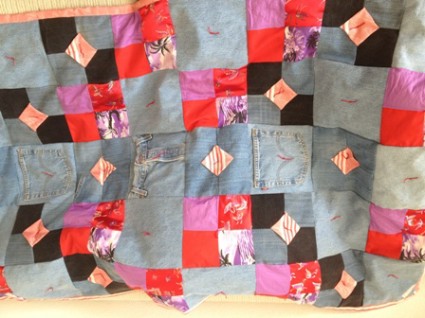
Last week, a regular patient came in for his annual follow-up. One of those in which the visit is more a friendly chat than a medical talk. I’ve always liked seeing this couple, but this time they’d done something very special: They made me a quilt.
Any gift is nice. But this couple had put extra effort into this, to make it personal to me. And it feels great. It reminds me, again, why I became a doctor. And why I stay here.
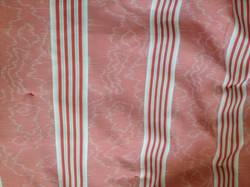
The front is made out of blue jeans, and the little detail squares were made from a Hawaiian shirt. My patients know my fondness for wearing Aloha garb. They also picked a pattern for the back that resembled an EEG.
Thank you. You guys are awesome.
Most days the good patients outnumber the bad by a huge margin, but just aren’t as vocal. It’s always good to keep that perspective in mind.
And it feels great when thoughtful patients let you know you’re appreciated, regardless of how they say "thank you."
Dr. Block has a solo neurology practice in Scottsdale, Ariz.
We all have crappy days. Sometimes things just don’t go right.
When that happens, nothing helps turn it around more than a simple "thank you" from a patient. Someone genuinely appreciates what you’re doing for them, and expresses gratitude (in words or writing). The written notes go into what a veterinarian friend of mine calls the "I don’t suck" drawer. I take them out and read them on bad days.
Some patients bring gifts. They’re never necessary, but always appreciated. Sometimes it’s food, occasionally a book. One very nice lady always brings a gift card. These are the things that remind you why you came to medicine so many years ago.
During my third year of medical school, I had a rotation at the Omaha Veteran’s Affairs hospital. I spent a lot of time talking to a nice, but sick, old farmer named Lon. He went home after a week, but came back the next day with a bag full of corn from his farm. He wanted me to have it, and said it was to thank me. That was the first time this had ever happened to me, and it felt wonderful.
Last week, a regular patient came in for his annual follow-up. One of those in which the visit is more a friendly chat than a medical talk. I’ve always liked seeing this couple, but this time they’d done something very special: They made me a quilt.
Any gift is nice. But this couple had put extra effort into this, to make it personal to me. And it feels great. It reminds me, again, why I became a doctor. And why I stay here.
The front is made out of blue jeans, and the little detail squares were made from a Hawaiian shirt. My patients know my fondness for wearing Aloha garb. They also picked a pattern for the back that resembled an EEG.
Thank you. You guys are awesome.
Most days the good patients outnumber the bad by a huge margin, but just aren’t as vocal. It’s always good to keep that perspective in mind.
And it feels great when thoughtful patients let you know you’re appreciated, regardless of how they say "thank you."
Dr. Block has a solo neurology practice in Scottsdale, Ariz.
We all have crappy days. Sometimes things just don’t go right.
When that happens, nothing helps turn it around more than a simple "thank you" from a patient. Someone genuinely appreciates what you’re doing for them, and expresses gratitude (in words or writing). The written notes go into what a veterinarian friend of mine calls the "I don’t suck" drawer. I take them out and read them on bad days.
Some patients bring gifts. They’re never necessary, but always appreciated. Sometimes it’s food, occasionally a book. One very nice lady always brings a gift card. These are the things that remind you why you came to medicine so many years ago.
During my third year of medical school, I had a rotation at the Omaha Veteran’s Affairs hospital. I spent a lot of time talking to a nice, but sick, old farmer named Lon. He went home after a week, but came back the next day with a bag full of corn from his farm. He wanted me to have it, and said it was to thank me. That was the first time this had ever happened to me, and it felt wonderful.
Last week, a regular patient came in for his annual follow-up. One of those in which the visit is more a friendly chat than a medical talk. I’ve always liked seeing this couple, but this time they’d done something very special: They made me a quilt.
Any gift is nice. But this couple had put extra effort into this, to make it personal to me. And it feels great. It reminds me, again, why I became a doctor. And why I stay here.
The front is made out of blue jeans, and the little detail squares were made from a Hawaiian shirt. My patients know my fondness for wearing Aloha garb. They also picked a pattern for the back that resembled an EEG.
Thank you. You guys are awesome.
Most days the good patients outnumber the bad by a huge margin, but just aren’t as vocal. It’s always good to keep that perspective in mind.
And it feels great when thoughtful patients let you know you’re appreciated, regardless of how they say "thank you."
Dr. Block has a solo neurology practice in Scottsdale, Ariz.
The background dialogue of an appointment
How’s your patter? Mine has been so well rehearsed it’s become second nature.
What do I mean by patter? It’s the background dialogue of an appointment. The small talk you make during the exam. The stock phrases and canned jokes to reduce tension and get people to feel more comfortable. It can be jokes about kids, the parking at your building, maybe some self-deprecating humor about my lack of fashion sense ... They may all seem like little things, but patter is critical to developing a relationship with a patient. It’s outside the framework of the routine history and exam, but every bit as important.
Helping patients feel at ease with you isn’t taught in medical school, more something that comes with experience. If they’re terrified over the visit, keeping them that way isn’t going to help you get details of what ails them.
So we use what I call "patter" – small talk to fill in the cracks of the visit. Asking about families, how long they’ve lived here, if they had trouble finding my office, etc., adds a human dimension to the visit. If the patient becomes more comfortable, hopefully you’ll be able to get better clues to figure out the case.
Seeing a new doctor is always a stressful event for most, and if it’s to see specialist, like myself, it means something is going on that the regular internist hasn’t been able to solve. That alone ups the anxiety level a bit. Unless you have a way to defuse patients, they may be too nervous to give you a good history, or forget simple details you need. Even talking about something simple, like Phoenix’s notoriously hot weather, can be a boon to getting a better history.
It becomes a work in progress during each patient’s visit, depending on how they respond, and then is quietly filed away in your mind for the next visit.
So, how’s your patter? The next show starts several times a day.
Dr. Block has a solo neurology practice in Scottsdale, Ariz.
How’s your patter? Mine has been so well rehearsed it’s become second nature.
What do I mean by patter? It’s the background dialogue of an appointment. The small talk you make during the exam. The stock phrases and canned jokes to reduce tension and get people to feel more comfortable. It can be jokes about kids, the parking at your building, maybe some self-deprecating humor about my lack of fashion sense ... They may all seem like little things, but patter is critical to developing a relationship with a patient. It’s outside the framework of the routine history and exam, but every bit as important.
Helping patients feel at ease with you isn’t taught in medical school, more something that comes with experience. If they’re terrified over the visit, keeping them that way isn’t going to help you get details of what ails them.
So we use what I call "patter" – small talk to fill in the cracks of the visit. Asking about families, how long they’ve lived here, if they had trouble finding my office, etc., adds a human dimension to the visit. If the patient becomes more comfortable, hopefully you’ll be able to get better clues to figure out the case.
Seeing a new doctor is always a stressful event for most, and if it’s to see specialist, like myself, it means something is going on that the regular internist hasn’t been able to solve. That alone ups the anxiety level a bit. Unless you have a way to defuse patients, they may be too nervous to give you a good history, or forget simple details you need. Even talking about something simple, like Phoenix’s notoriously hot weather, can be a boon to getting a better history.
It becomes a work in progress during each patient’s visit, depending on how they respond, and then is quietly filed away in your mind for the next visit.
So, how’s your patter? The next show starts several times a day.
Dr. Block has a solo neurology practice in Scottsdale, Ariz.
How’s your patter? Mine has been so well rehearsed it’s become second nature.
What do I mean by patter? It’s the background dialogue of an appointment. The small talk you make during the exam. The stock phrases and canned jokes to reduce tension and get people to feel more comfortable. It can be jokes about kids, the parking at your building, maybe some self-deprecating humor about my lack of fashion sense ... They may all seem like little things, but patter is critical to developing a relationship with a patient. It’s outside the framework of the routine history and exam, but every bit as important.
Helping patients feel at ease with you isn’t taught in medical school, more something that comes with experience. If they’re terrified over the visit, keeping them that way isn’t going to help you get details of what ails them.
So we use what I call "patter" – small talk to fill in the cracks of the visit. Asking about families, how long they’ve lived here, if they had trouble finding my office, etc., adds a human dimension to the visit. If the patient becomes more comfortable, hopefully you’ll be able to get better clues to figure out the case.
Seeing a new doctor is always a stressful event for most, and if it’s to see specialist, like myself, it means something is going on that the regular internist hasn’t been able to solve. That alone ups the anxiety level a bit. Unless you have a way to defuse patients, they may be too nervous to give you a good history, or forget simple details you need. Even talking about something simple, like Phoenix’s notoriously hot weather, can be a boon to getting a better history.
It becomes a work in progress during each patient’s visit, depending on how they respond, and then is quietly filed away in your mind for the next visit.
So, how’s your patter? The next show starts several times a day.
Dr. Block has a solo neurology practice in Scottsdale, Ariz.
Practicalities of choosing complex vs. simple cases
I prefer simple things, but that hasn’t always been the case. There was a time when I, and probably most doctors, enjoyed the complex cases and the intellectual detective work they involved. Neurology has a well-deserved reputation of being a thinking person’s field.
The challenging patients, especially during training, are what makes many of us tick. We look for subtle clues in the history and exam, comb through lab and radiology reports to see if anything was missed, and search databases for similar cases. This is the process that is critical to becoming a doctor, and learning it is a key step in medical school and residency.
You get to be a combination of Sherlock Holmes and Gregory House. Nothing can stoke your ego like nailing a difficult diagnosis, but not any more, at least to me.
As the years go by, I prefer my life simple. It doesn’t mean that I don’t occasionally enjoy the complex cases or have lost my ability to handle them.
It’s recognition of how life and the practice of medicine change you. At this point in my solo-practice career, I have responsibilities outside of my practice: kids to shuttle around, work to be done at home, and forms to complete.
Over time you realize that the simple cases and the complex ones both (generally) pay the same amount, yet the latter take far more time. This is a sad truth of modern medicine. The intellectual interest becomes replaced by the more immediate needs of financially supporting a practice.
Determining if a patient has oculopharyngeal muscular dystrophy or Kufs disease is certainly fascinating to work-up and then to manage, but I’ll take carpal tunnel syndrome over either, every time.
Dr. Block has a solo neurology practice in Scottsdale, Ariz.
I prefer simple things, but that hasn’t always been the case. There was a time when I, and probably most doctors, enjoyed the complex cases and the intellectual detective work they involved. Neurology has a well-deserved reputation of being a thinking person’s field.
The challenging patients, especially during training, are what makes many of us tick. We look for subtle clues in the history and exam, comb through lab and radiology reports to see if anything was missed, and search databases for similar cases. This is the process that is critical to becoming a doctor, and learning it is a key step in medical school and residency.
You get to be a combination of Sherlock Holmes and Gregory House. Nothing can stoke your ego like nailing a difficult diagnosis, but not any more, at least to me.
As the years go by, I prefer my life simple. It doesn’t mean that I don’t occasionally enjoy the complex cases or have lost my ability to handle them.
It’s recognition of how life and the practice of medicine change you. At this point in my solo-practice career, I have responsibilities outside of my practice: kids to shuttle around, work to be done at home, and forms to complete.
Over time you realize that the simple cases and the complex ones both (generally) pay the same amount, yet the latter take far more time. This is a sad truth of modern medicine. The intellectual interest becomes replaced by the more immediate needs of financially supporting a practice.
Determining if a patient has oculopharyngeal muscular dystrophy or Kufs disease is certainly fascinating to work-up and then to manage, but I’ll take carpal tunnel syndrome over either, every time.
Dr. Block has a solo neurology practice in Scottsdale, Ariz.
I prefer simple things, but that hasn’t always been the case. There was a time when I, and probably most doctors, enjoyed the complex cases and the intellectual detective work they involved. Neurology has a well-deserved reputation of being a thinking person’s field.
The challenging patients, especially during training, are what makes many of us tick. We look for subtle clues in the history and exam, comb through lab and radiology reports to see if anything was missed, and search databases for similar cases. This is the process that is critical to becoming a doctor, and learning it is a key step in medical school and residency.
You get to be a combination of Sherlock Holmes and Gregory House. Nothing can stoke your ego like nailing a difficult diagnosis, but not any more, at least to me.
As the years go by, I prefer my life simple. It doesn’t mean that I don’t occasionally enjoy the complex cases or have lost my ability to handle them.
It’s recognition of how life and the practice of medicine change you. At this point in my solo-practice career, I have responsibilities outside of my practice: kids to shuttle around, work to be done at home, and forms to complete.
Over time you realize that the simple cases and the complex ones both (generally) pay the same amount, yet the latter take far more time. This is a sad truth of modern medicine. The intellectual interest becomes replaced by the more immediate needs of financially supporting a practice.
Determining if a patient has oculopharyngeal muscular dystrophy or Kufs disease is certainly fascinating to work-up and then to manage, but I’ll take carpal tunnel syndrome over either, every time.
Dr. Block has a solo neurology practice in Scottsdale, Ariz.