User login
Sharon Worcester is an award-winning medical journalist for MDedge News. She has been with the company since 1996, first as the Southeast Bureau Chief (1996-2009) when the company was known as International Medical News Group, then as a freelance writer (2010-2015) before returning as a reporter in 2015. She previously worked as a daily newspaper reporter covering health and local government. Sharon currently reports primarily on oncology and hematology. She has a BA from Eckerd College and an MA in Mass Communication/Print Journalism from the University of Florida. Connect with her via LinkedIn and follow her on twitter @SW_MedReporter.
Rapid update to ASCO breast cancer guidelines after OlympiA data
The American Society of Clinical Oncology (ASCO) now recommends offering 1 year of adjuvant olaparib therapy to patients with early-stage HER2-negative, BRCA-mutated breast cancer who have completed chemotherapy and local treatment.
The change in management of hereditary breast cancer is outlined in an update to 2020 guidelines, and it comes as a “rapid recommendation” on the heels of the phase 3 OlympiA trial results, which indicated a 42% improvement in invasive and distant disease-free survival with the PARP inhibitor olaparib (Lynparza) in comparison with placebo.
The OlympiA trial results, as reported by this news organization, were presented during the plenary session of the ASCO 2021 annual meeting and were published June 3 in The New England Journal of Medicine.
“These clear and positive data prompted ASCO to issue a provisional update of the guideline recommendation focused specifically on the role of olaparib in this setting,” states an ASCO press release.
The previous 2020 guidelines stated: “There are insufficient data ... to recommend a PARP inhibitor for patients with nonmetastatic breast cancer.” The OlympiA trial changed that. ASCO now recommends that patients with early-stage, HER2-negative, BRCA-mutated breast cancer at high risk for recurrence be offered olaparib after completion of chemotherapy and local treatment, including radiotherapy.
The update states: “For those who had surgery first, adjuvant olaparib is recommended for patients with TNBC [triple-negative breast cancer] and tumor size greater than 2 cm or any involved axillary nodes. For patients with hormone receptor–positive disease, adjuvant olaparib is recommended for those with at least four involved axillary lymph nodes. For patients who had neoadjuvant chemotherapy, adjuvant olaparib is recommended for patients with TNBC and any residual cancer. Adjuvant olaparib is recommended for patients with residual disease and an estrogen receptor status and tumor grade (CSP+EG) score greater than or equal to 3.”
“The findings from the OlympiA trial – presented just last week – mark a significant improvement in the care of these patients,” Julie Garlow, MD, ASCO’s executive vice president and chief medical officer, states in the ASCO press release.
“ASCO’s Expert Guideline Panel and Evidence-based Medicine Committee noted this and then quickly produced and provisionally approved this guideline update to enable patients to begin to benefit from this research advance as quickly as possible,” she said.
A formal assessment and submission for publication in the Journal of Clinical Oncology will follow the release notes.
A version of this article first appeared on Medscape.com.
The American Society of Clinical Oncology (ASCO) now recommends offering 1 year of adjuvant olaparib therapy to patients with early-stage HER2-negative, BRCA-mutated breast cancer who have completed chemotherapy and local treatment.
The change in management of hereditary breast cancer is outlined in an update to 2020 guidelines, and it comes as a “rapid recommendation” on the heels of the phase 3 OlympiA trial results, which indicated a 42% improvement in invasive and distant disease-free survival with the PARP inhibitor olaparib (Lynparza) in comparison with placebo.
The OlympiA trial results, as reported by this news organization, were presented during the plenary session of the ASCO 2021 annual meeting and were published June 3 in The New England Journal of Medicine.
“These clear and positive data prompted ASCO to issue a provisional update of the guideline recommendation focused specifically on the role of olaparib in this setting,” states an ASCO press release.
The previous 2020 guidelines stated: “There are insufficient data ... to recommend a PARP inhibitor for patients with nonmetastatic breast cancer.” The OlympiA trial changed that. ASCO now recommends that patients with early-stage, HER2-negative, BRCA-mutated breast cancer at high risk for recurrence be offered olaparib after completion of chemotherapy and local treatment, including radiotherapy.
The update states: “For those who had surgery first, adjuvant olaparib is recommended for patients with TNBC [triple-negative breast cancer] and tumor size greater than 2 cm or any involved axillary nodes. For patients with hormone receptor–positive disease, adjuvant olaparib is recommended for those with at least four involved axillary lymph nodes. For patients who had neoadjuvant chemotherapy, adjuvant olaparib is recommended for patients with TNBC and any residual cancer. Adjuvant olaparib is recommended for patients with residual disease and an estrogen receptor status and tumor grade (CSP+EG) score greater than or equal to 3.”
“The findings from the OlympiA trial – presented just last week – mark a significant improvement in the care of these patients,” Julie Garlow, MD, ASCO’s executive vice president and chief medical officer, states in the ASCO press release.
“ASCO’s Expert Guideline Panel and Evidence-based Medicine Committee noted this and then quickly produced and provisionally approved this guideline update to enable patients to begin to benefit from this research advance as quickly as possible,” she said.
A formal assessment and submission for publication in the Journal of Clinical Oncology will follow the release notes.
A version of this article first appeared on Medscape.com.
The American Society of Clinical Oncology (ASCO) now recommends offering 1 year of adjuvant olaparib therapy to patients with early-stage HER2-negative, BRCA-mutated breast cancer who have completed chemotherapy and local treatment.
The change in management of hereditary breast cancer is outlined in an update to 2020 guidelines, and it comes as a “rapid recommendation” on the heels of the phase 3 OlympiA trial results, which indicated a 42% improvement in invasive and distant disease-free survival with the PARP inhibitor olaparib (Lynparza) in comparison with placebo.
The OlympiA trial results, as reported by this news organization, were presented during the plenary session of the ASCO 2021 annual meeting and were published June 3 in The New England Journal of Medicine.
“These clear and positive data prompted ASCO to issue a provisional update of the guideline recommendation focused specifically on the role of olaparib in this setting,” states an ASCO press release.
The previous 2020 guidelines stated: “There are insufficient data ... to recommend a PARP inhibitor for patients with nonmetastatic breast cancer.” The OlympiA trial changed that. ASCO now recommends that patients with early-stage, HER2-negative, BRCA-mutated breast cancer at high risk for recurrence be offered olaparib after completion of chemotherapy and local treatment, including radiotherapy.
The update states: “For those who had surgery first, adjuvant olaparib is recommended for patients with TNBC [triple-negative breast cancer] and tumor size greater than 2 cm or any involved axillary nodes. For patients with hormone receptor–positive disease, adjuvant olaparib is recommended for those with at least four involved axillary lymph nodes. For patients who had neoadjuvant chemotherapy, adjuvant olaparib is recommended for patients with TNBC and any residual cancer. Adjuvant olaparib is recommended for patients with residual disease and an estrogen receptor status and tumor grade (CSP+EG) score greater than or equal to 3.”
“The findings from the OlympiA trial – presented just last week – mark a significant improvement in the care of these patients,” Julie Garlow, MD, ASCO’s executive vice president and chief medical officer, states in the ASCO press release.
“ASCO’s Expert Guideline Panel and Evidence-based Medicine Committee noted this and then quickly produced and provisionally approved this guideline update to enable patients to begin to benefit from this research advance as quickly as possible,” she said.
A formal assessment and submission for publication in the Journal of Clinical Oncology will follow the release notes.
A version of this article first appeared on Medscape.com.
DCIS: Biosignature helps guide postlumpectomy decisions
A biosignature tool helps women avoid unnecessary radiotherapy after undergoing lumpectomy for ductal carcinoma in situ (DCIS) – and also identifies women who need more intense treatment.
The DCISionRT test (PreludeDx) and its response subtype (Rst) biosignature provide personalized risk assessment, explains Frank Vicini, MD, a radiation oncologist at GenesisCare and a member of NRG Oncology, Pontiac, Mich.
He presented data on the test at a poster at the recent American Society of Clinical Oncology Annual Meeting.
They can also identify patients who would likely benefit from radiotherapy, Dr. Vicini reported.
The tool shows promise for identifying those whose cancer is likely to recur despite undergoing postlumpectomy radiotherapy – women who might benefit from intensified or alternate treatment approaches, he added.
The latter finding is particularly provocative because it suggests that the biosignatures “may appropriately identify patients with very radioresistant ductal carcinoma in situ,” Benjamin D. Smith, MD, commented during a poster discussion session at the meeting.
“I think these findings merit validation in translational research models,” said Dr. Smith, a radiation oncologist and professor of radiation oncology and health services research at the University of Texas MD Anderson Cancer Center, Houston.
DCISionRT, Rst, and risk
DCISionRT combines molecular biology innovations with risk-based scores to assess risk for recurrence, which is classified as either low or elevated, according to the test developer, PreludeDx.
Dr. Vicini and colleagues used the test to classify tissue samples from 485 women who were part of previous DCISionRT validation cohorts in Sweden, Australia, and the United States. The patients underwent breast cancer surgery (BCS) with or without radiotherapy between 1996 and 2011.
The Rst biosignature was used to further categorize those in the elevated-risk group as having a good response subtype (good Rst) or a poor response subtype (poor Rst) after BCS plus radiotherapy.
Radiotherapy was associated with significantly reduced recurrence rates among women with elevated risk and a good Rst (the hazard ratios for ipsilateral breast tumor recurrence [IBTR] and invasive breast cancer [IBC] were 0.18 and 0.15, respectively).
No radiotherapy benefit was seen among those with elevated risk and poor Rst.
The investigators also reported that, among patients with a poor Rst, 10-year IBTR and IBC rates were 25% and 16%, respectively, regardless of whether they received radiotherapy. These rates were much higher than the rates among women with good Rst (6.6% and 4.5%; hazard ratio, 3.6 and 4.4, respectively).
No significant difference was seen in 10-year IBTR and IBC rates among patients in the low-risk group, with or without radiotherapy.
Traditional clinicopathologic risk factors, including age younger than 50 years, grade 3 disease, and tumor size greater than 2.5 cm, did not identify poor versus good response subtypes in this cohort, and on multivariable analysis, neither of these factors nor endocrine therapy was significantly associated with IBTR or IBC.
Prospective validation needed
In his discussion, Dr. Smith said that the study provides “important data” that further validate the DCISionRT platform alone for assessing risk among women with DCIS who undergo BCS. But it is the Rst biosignature, which allows clinicians to “predict radioresistance of residual malignant chromogens following lumpectomy plus radiation therapy,” that really stands out, he added.
From the data presented, “it is reasonable to conclude that patients with a poor Rst score treated with lumpectomy and radiation had a much higher risk of in-breast tumor recurrence than one might predict or anticipate based on existing published randomized clinical trial data,” he said.
“In my opinion, it is very important to prospectively validate this finding with other cohorts,” he said. “Moving forward, I think there may come a time where there may be interest in studying radiosensitizing agents for poor-Rst ductal carcinoma in situ that are resistant to standard doses of radiation, and it may be that we consider the Rst as a factor moving forward in selecting patients for BCT versus mastectomy.”
However, because 75% of patients at elevated risk with poor Rst who undergo lumpectomy and radiotherapy do not experience recurrence in the decade following their treatment, it would be “inappropriate and misguided” to start recommending mastectomy for patients at DCISionRT elevated risk who have poor Rst, he said.
The study was funded by PreludeDx. Dr. Vicini reported employment with 21st Century Oncology and financial relationships with ImpediMed, Prelude Therapeutics, and Concure Oncology. Dr. Smith, through his employer, has an equity interest in Oncora Medical through a partnership agreement. He also has an uncompensated relationship with the American Society for Radiation Oncology.
A version of this article first appeared on Medscape.com.
A biosignature tool helps women avoid unnecessary radiotherapy after undergoing lumpectomy for ductal carcinoma in situ (DCIS) – and also identifies women who need more intense treatment.
The DCISionRT test (PreludeDx) and its response subtype (Rst) biosignature provide personalized risk assessment, explains Frank Vicini, MD, a radiation oncologist at GenesisCare and a member of NRG Oncology, Pontiac, Mich.
He presented data on the test at a poster at the recent American Society of Clinical Oncology Annual Meeting.
They can also identify patients who would likely benefit from radiotherapy, Dr. Vicini reported.
The tool shows promise for identifying those whose cancer is likely to recur despite undergoing postlumpectomy radiotherapy – women who might benefit from intensified or alternate treatment approaches, he added.
The latter finding is particularly provocative because it suggests that the biosignatures “may appropriately identify patients with very radioresistant ductal carcinoma in situ,” Benjamin D. Smith, MD, commented during a poster discussion session at the meeting.
“I think these findings merit validation in translational research models,” said Dr. Smith, a radiation oncologist and professor of radiation oncology and health services research at the University of Texas MD Anderson Cancer Center, Houston.
DCISionRT, Rst, and risk
DCISionRT combines molecular biology innovations with risk-based scores to assess risk for recurrence, which is classified as either low or elevated, according to the test developer, PreludeDx.
Dr. Vicini and colleagues used the test to classify tissue samples from 485 women who were part of previous DCISionRT validation cohorts in Sweden, Australia, and the United States. The patients underwent breast cancer surgery (BCS) with or without radiotherapy between 1996 and 2011.
The Rst biosignature was used to further categorize those in the elevated-risk group as having a good response subtype (good Rst) or a poor response subtype (poor Rst) after BCS plus radiotherapy.
Radiotherapy was associated with significantly reduced recurrence rates among women with elevated risk and a good Rst (the hazard ratios for ipsilateral breast tumor recurrence [IBTR] and invasive breast cancer [IBC] were 0.18 and 0.15, respectively).
No radiotherapy benefit was seen among those with elevated risk and poor Rst.
The investigators also reported that, among patients with a poor Rst, 10-year IBTR and IBC rates were 25% and 16%, respectively, regardless of whether they received radiotherapy. These rates were much higher than the rates among women with good Rst (6.6% and 4.5%; hazard ratio, 3.6 and 4.4, respectively).
No significant difference was seen in 10-year IBTR and IBC rates among patients in the low-risk group, with or without radiotherapy.
Traditional clinicopathologic risk factors, including age younger than 50 years, grade 3 disease, and tumor size greater than 2.5 cm, did not identify poor versus good response subtypes in this cohort, and on multivariable analysis, neither of these factors nor endocrine therapy was significantly associated with IBTR or IBC.
Prospective validation needed
In his discussion, Dr. Smith said that the study provides “important data” that further validate the DCISionRT platform alone for assessing risk among women with DCIS who undergo BCS. But it is the Rst biosignature, which allows clinicians to “predict radioresistance of residual malignant chromogens following lumpectomy plus radiation therapy,” that really stands out, he added.
From the data presented, “it is reasonable to conclude that patients with a poor Rst score treated with lumpectomy and radiation had a much higher risk of in-breast tumor recurrence than one might predict or anticipate based on existing published randomized clinical trial data,” he said.
“In my opinion, it is very important to prospectively validate this finding with other cohorts,” he said. “Moving forward, I think there may come a time where there may be interest in studying radiosensitizing agents for poor-Rst ductal carcinoma in situ that are resistant to standard doses of radiation, and it may be that we consider the Rst as a factor moving forward in selecting patients for BCT versus mastectomy.”
However, because 75% of patients at elevated risk with poor Rst who undergo lumpectomy and radiotherapy do not experience recurrence in the decade following their treatment, it would be “inappropriate and misguided” to start recommending mastectomy for patients at DCISionRT elevated risk who have poor Rst, he said.
The study was funded by PreludeDx. Dr. Vicini reported employment with 21st Century Oncology and financial relationships with ImpediMed, Prelude Therapeutics, and Concure Oncology. Dr. Smith, through his employer, has an equity interest in Oncora Medical through a partnership agreement. He also has an uncompensated relationship with the American Society for Radiation Oncology.
A version of this article first appeared on Medscape.com.
A biosignature tool helps women avoid unnecessary radiotherapy after undergoing lumpectomy for ductal carcinoma in situ (DCIS) – and also identifies women who need more intense treatment.
The DCISionRT test (PreludeDx) and its response subtype (Rst) biosignature provide personalized risk assessment, explains Frank Vicini, MD, a radiation oncologist at GenesisCare and a member of NRG Oncology, Pontiac, Mich.
He presented data on the test at a poster at the recent American Society of Clinical Oncology Annual Meeting.
They can also identify patients who would likely benefit from radiotherapy, Dr. Vicini reported.
The tool shows promise for identifying those whose cancer is likely to recur despite undergoing postlumpectomy radiotherapy – women who might benefit from intensified or alternate treatment approaches, he added.
The latter finding is particularly provocative because it suggests that the biosignatures “may appropriately identify patients with very radioresistant ductal carcinoma in situ,” Benjamin D. Smith, MD, commented during a poster discussion session at the meeting.
“I think these findings merit validation in translational research models,” said Dr. Smith, a radiation oncologist and professor of radiation oncology and health services research at the University of Texas MD Anderson Cancer Center, Houston.
DCISionRT, Rst, and risk
DCISionRT combines molecular biology innovations with risk-based scores to assess risk for recurrence, which is classified as either low or elevated, according to the test developer, PreludeDx.
Dr. Vicini and colleagues used the test to classify tissue samples from 485 women who were part of previous DCISionRT validation cohorts in Sweden, Australia, and the United States. The patients underwent breast cancer surgery (BCS) with or without radiotherapy between 1996 and 2011.
The Rst biosignature was used to further categorize those in the elevated-risk group as having a good response subtype (good Rst) or a poor response subtype (poor Rst) after BCS plus radiotherapy.
Radiotherapy was associated with significantly reduced recurrence rates among women with elevated risk and a good Rst (the hazard ratios for ipsilateral breast tumor recurrence [IBTR] and invasive breast cancer [IBC] were 0.18 and 0.15, respectively).
No radiotherapy benefit was seen among those with elevated risk and poor Rst.
The investigators also reported that, among patients with a poor Rst, 10-year IBTR and IBC rates were 25% and 16%, respectively, regardless of whether they received radiotherapy. These rates were much higher than the rates among women with good Rst (6.6% and 4.5%; hazard ratio, 3.6 and 4.4, respectively).
No significant difference was seen in 10-year IBTR and IBC rates among patients in the low-risk group, with or without radiotherapy.
Traditional clinicopathologic risk factors, including age younger than 50 years, grade 3 disease, and tumor size greater than 2.5 cm, did not identify poor versus good response subtypes in this cohort, and on multivariable analysis, neither of these factors nor endocrine therapy was significantly associated with IBTR or IBC.
Prospective validation needed
In his discussion, Dr. Smith said that the study provides “important data” that further validate the DCISionRT platform alone for assessing risk among women with DCIS who undergo BCS. But it is the Rst biosignature, which allows clinicians to “predict radioresistance of residual malignant chromogens following lumpectomy plus radiation therapy,” that really stands out, he added.
From the data presented, “it is reasonable to conclude that patients with a poor Rst score treated with lumpectomy and radiation had a much higher risk of in-breast tumor recurrence than one might predict or anticipate based on existing published randomized clinical trial data,” he said.
“In my opinion, it is very important to prospectively validate this finding with other cohorts,” he said. “Moving forward, I think there may come a time where there may be interest in studying radiosensitizing agents for poor-Rst ductal carcinoma in situ that are resistant to standard doses of radiation, and it may be that we consider the Rst as a factor moving forward in selecting patients for BCT versus mastectomy.”
However, because 75% of patients at elevated risk with poor Rst who undergo lumpectomy and radiotherapy do not experience recurrence in the decade following their treatment, it would be “inappropriate and misguided” to start recommending mastectomy for patients at DCISionRT elevated risk who have poor Rst, he said.
The study was funded by PreludeDx. Dr. Vicini reported employment with 21st Century Oncology and financial relationships with ImpediMed, Prelude Therapeutics, and Concure Oncology. Dr. Smith, through his employer, has an equity interest in Oncora Medical through a partnership agreement. He also has an uncompensated relationship with the American Society for Radiation Oncology.
A version of this article first appeared on Medscape.com.
'Exciting': Olaparib benefit also in early BRCA+ breast cancer
New clinical data show that the PARP inhibitor olaparib (Lynparza, AstraZeneca/Merck) also has a place in the treatment of early stage breast cancer with BRCA mutations, in addition to its already established role in the treatment of metastatic disease.
It’s a notable outcome given that at least 5% of all breast cancers are associated with BRCA1 or BRCA2 mutations, said first author Andrew Tutt, MBChB, PhD, head of the division of breast cancer research at the Institute of Cancer Research and Guy’s Hospital, King’s College London.
The new results come from the phase 3 OlympiA trial, which involved nearly 2,000 women and showed that 1 year of adjuvant treatment with olaparib improved invasive and distant disease-free survival when used following adjuvant or neoadjuvant chemotherapy in patients with germline BRCA-mutated (gBRCAm) high-risk HER2-negative early breast cancer.
The study was highlighted at a press briefing ahead of the American Society of Clinical Oncology (ASCO) Annual Meeting, where the data will be presented during a plenary session. The study will also be published simultaneously in The New England Journal of Medicine.
The “exciting findings” highlight the importance of genetic testing in appropriate patients to identify those who might benefit from this treatment, and could open the door to additional trials of adjuvant PARP inhibitor in other BRCA1- and BRCA2-associated cancers, ASCO President Lori J. Pierce, MD, said during the press briefing.
“I think the implications are ... one, it’s an early stage disease, and two, it’s a reminder that when you see a patient in clinic and you’re taking a history that you query them for family history,” Dr. Pierce said in an interview. “You try to find out which of these patients could have a mutation so we [can] refer them for testing, and if they have a mutation this will be a therapy that they would be able to get and will likely benefit from.”
Improved IDFS and DDFS
The double-blind OlympiA trial enrolled 1,836 patients with gBRCAm and HER2-negative stage II-III breast cancer, including triple-negative or hormone receptor–positive disease with high risk of recurrence after completion of primary local treatment and adjuvant or neoadjuvant chemotherapy. Patients were randomized 1:1 to receive 1 year of continuous oral olaparib at a dose of 300 mg twice daily or placebo.
“Compared with placebo, patients receiving olaparib had a 42% reduction in the risk of the following events: local recurrence of breast cancer, metastatic recurrence of breast cancer, other new cancers, or death due to any cause,” Dr. Tutt said, describing the factors comprising the study’s primary endpoint of invasive disease-free survival (IDSF).
The hazard ratio for IDSF with olaparib versus placebo at a median follow-up of 2.5 years was 0.58, prompting the independent data monitoring committee to recommend unblinding the study at the time of the interim analysis.
At 3 years, 85.9% of patients in the olaparib group and 77.1% in the placebo group were alive and free from invasive disease, for a difference of 8.8%, Dr. Tutt said.
For the secondary endpoint of distant disease-free survival (DDFS), defined as the absence of metastatic breast cancer, new cancer, and death due to any cause, a highly statistically significant 43% reduction was observed with olaparib versus placebo (hazard ratio [HR], 0.57). The survival curves separated early and remained separated, with 3-year DDFS of 87.5% and 80.4%, for a 7.1% difference between the treatment and placebo group, he said.
“The secondary endpoint of overall survival is inevitably immature,” he added, noting that fewer deaths were nonetheless reported with olaparib at 3 years (3-year overall survival 92.0% vs. 88.3%; HR, 0.68), although the difference did not reach statistical significance.
Adverse events observed in the trial were limited and manageable, and were consistent with known effects and product labeling, he said.
Grade 3 adverse events that occurred in more than 10% of patients receiving olaparib were anemia (8.7%), neutropenia (4.8%), leukopenia (3.0%), and fatigue (1.8%). Serious adverse events and adverse events of special interest, including myelodysplastic syndrome/acute myeloid leukemia, new primary malignancy, and pneumonitis, were not increased with olaparib; they occurred in 8.7% vs. 8.4% and 2.6% vs. 4.6% of patients in the treatment and placebo groups, respectively.
Future implications
The findings have important implications for the future of breast cancer treatment, Dr. Tutt said.
Olaparib was already approved for use in the metastatic setting for gBRCAm HER2-negative breast cancer in 2018 on the basis of data from the pivotal OlympiAD trial, led by Mark E. Robson, MD, and colleagues.
In the high-risk early breast cancer setting, however, recurrence rates can be high even after chemotherapy, and novel adjuvant treatments have been lacking, Dr. Tutt said.
The latest findings from OlympiA appear to represent “a major advance for the subset of patients who have inherited BRCA1 and BRCA2 mutations,” Dr. Robson said in an interview.
“The absolute differences – even with relatively short follow-up – in invasive disease-free survival are impressive, and even though overall survival is not yet statistically significant, one surely would be hopeful that with further follow-up a difference would emerge,” he said.
There was some suggestion, even in the OlympiAD trial, that the earlier patients with metastatic disease were treated with PARP inhibition, the more benefit they received, so it’s not surprising that research has moved into the early stage disease setting, he noted.
Future directions may include looking at different drug combinations as investigators did with some success in the BROCADE3 trial of the PARP inhibitor veliparib plus carboplatin and paclitaxel in metastatic gBRCAmut HER2-negative breast cancer – particularly if concerns about worsening myelosuppression when combining a PARP inhibitor and chemotherapy are attenuated with newer PARP inhibitors, he said.
“But for now, using [olaparib] after completion of conventional chemotherapy is the approach that makes the most sense,” he added.
Dr. Robson also noted that some smaller studies show “fairly dramatic pathologic complete response rates” with preoperative PARP inhibitor therapy. He said that “the idea of giving therapy even before surgery, perhaps as a de-escalation approach, is something that would be worth studying in the future.”
For now, it will be important to keep a close eye on whether there is any worsening of rates of second malignancies, especially leukemia, over time in the OlympiA trial participants.
“That was not seen in either the OlympiAD or EMBRACA study [another phase 3 study looking at PARP inhibition in advanced gBRCAmut HER2-negative breast cancer] in the metastatic setting, but obviously [the early breast cancer] population will be at risk for a longer period of time and we will need to see what the data are,” he said. “So far the results are all very encouraging, and this could lead to a new paradigm where we’re basically testing all women with breast cancer at the time of diagnosis to figure out whether or not this is an appropriate adjuvant treatment for them.”
The OlympiA trial was funded by the National Cancer Institute and AstraZeneca. Dr. Tutt has reported multiple relationships with companies including Inbiomotion, Medscape, Prime Oncology, Artios, AstraZeneca, Merck Serono, Pfizer, Merck KGaA, Roche/Genentech, Breast Cancer Now Charity, and Cancer Research UK. Dr. Robson has reported being an investigator for clinical trials of PARP inhibitors and receiving research grants (to his institution) from AstraZeneca, Merck, and Pfizer.
A version of this article first appeared on Medscape.com.
New clinical data show that the PARP inhibitor olaparib (Lynparza, AstraZeneca/Merck) also has a place in the treatment of early stage breast cancer with BRCA mutations, in addition to its already established role in the treatment of metastatic disease.
It’s a notable outcome given that at least 5% of all breast cancers are associated with BRCA1 or BRCA2 mutations, said first author Andrew Tutt, MBChB, PhD, head of the division of breast cancer research at the Institute of Cancer Research and Guy’s Hospital, King’s College London.
The new results come from the phase 3 OlympiA trial, which involved nearly 2,000 women and showed that 1 year of adjuvant treatment with olaparib improved invasive and distant disease-free survival when used following adjuvant or neoadjuvant chemotherapy in patients with germline BRCA-mutated (gBRCAm) high-risk HER2-negative early breast cancer.
The study was highlighted at a press briefing ahead of the American Society of Clinical Oncology (ASCO) Annual Meeting, where the data will be presented during a plenary session. The study will also be published simultaneously in The New England Journal of Medicine.
The “exciting findings” highlight the importance of genetic testing in appropriate patients to identify those who might benefit from this treatment, and could open the door to additional trials of adjuvant PARP inhibitor in other BRCA1- and BRCA2-associated cancers, ASCO President Lori J. Pierce, MD, said during the press briefing.
“I think the implications are ... one, it’s an early stage disease, and two, it’s a reminder that when you see a patient in clinic and you’re taking a history that you query them for family history,” Dr. Pierce said in an interview. “You try to find out which of these patients could have a mutation so we [can] refer them for testing, and if they have a mutation this will be a therapy that they would be able to get and will likely benefit from.”
Improved IDFS and DDFS
The double-blind OlympiA trial enrolled 1,836 patients with gBRCAm and HER2-negative stage II-III breast cancer, including triple-negative or hormone receptor–positive disease with high risk of recurrence after completion of primary local treatment and adjuvant or neoadjuvant chemotherapy. Patients were randomized 1:1 to receive 1 year of continuous oral olaparib at a dose of 300 mg twice daily or placebo.
“Compared with placebo, patients receiving olaparib had a 42% reduction in the risk of the following events: local recurrence of breast cancer, metastatic recurrence of breast cancer, other new cancers, or death due to any cause,” Dr. Tutt said, describing the factors comprising the study’s primary endpoint of invasive disease-free survival (IDSF).
The hazard ratio for IDSF with olaparib versus placebo at a median follow-up of 2.5 years was 0.58, prompting the independent data monitoring committee to recommend unblinding the study at the time of the interim analysis.
At 3 years, 85.9% of patients in the olaparib group and 77.1% in the placebo group were alive and free from invasive disease, for a difference of 8.8%, Dr. Tutt said.
For the secondary endpoint of distant disease-free survival (DDFS), defined as the absence of metastatic breast cancer, new cancer, and death due to any cause, a highly statistically significant 43% reduction was observed with olaparib versus placebo (hazard ratio [HR], 0.57). The survival curves separated early and remained separated, with 3-year DDFS of 87.5% and 80.4%, for a 7.1% difference between the treatment and placebo group, he said.
“The secondary endpoint of overall survival is inevitably immature,” he added, noting that fewer deaths were nonetheless reported with olaparib at 3 years (3-year overall survival 92.0% vs. 88.3%; HR, 0.68), although the difference did not reach statistical significance.
Adverse events observed in the trial were limited and manageable, and were consistent with known effects and product labeling, he said.
Grade 3 adverse events that occurred in more than 10% of patients receiving olaparib were anemia (8.7%), neutropenia (4.8%), leukopenia (3.0%), and fatigue (1.8%). Serious adverse events and adverse events of special interest, including myelodysplastic syndrome/acute myeloid leukemia, new primary malignancy, and pneumonitis, were not increased with olaparib; they occurred in 8.7% vs. 8.4% and 2.6% vs. 4.6% of patients in the treatment and placebo groups, respectively.
Future implications
The findings have important implications for the future of breast cancer treatment, Dr. Tutt said.
Olaparib was already approved for use in the metastatic setting for gBRCAm HER2-negative breast cancer in 2018 on the basis of data from the pivotal OlympiAD trial, led by Mark E. Robson, MD, and colleagues.
In the high-risk early breast cancer setting, however, recurrence rates can be high even after chemotherapy, and novel adjuvant treatments have been lacking, Dr. Tutt said.
The latest findings from OlympiA appear to represent “a major advance for the subset of patients who have inherited BRCA1 and BRCA2 mutations,” Dr. Robson said in an interview.
“The absolute differences – even with relatively short follow-up – in invasive disease-free survival are impressive, and even though overall survival is not yet statistically significant, one surely would be hopeful that with further follow-up a difference would emerge,” he said.
There was some suggestion, even in the OlympiAD trial, that the earlier patients with metastatic disease were treated with PARP inhibition, the more benefit they received, so it’s not surprising that research has moved into the early stage disease setting, he noted.
Future directions may include looking at different drug combinations as investigators did with some success in the BROCADE3 trial of the PARP inhibitor veliparib plus carboplatin and paclitaxel in metastatic gBRCAmut HER2-negative breast cancer – particularly if concerns about worsening myelosuppression when combining a PARP inhibitor and chemotherapy are attenuated with newer PARP inhibitors, he said.
“But for now, using [olaparib] after completion of conventional chemotherapy is the approach that makes the most sense,” he added.
Dr. Robson also noted that some smaller studies show “fairly dramatic pathologic complete response rates” with preoperative PARP inhibitor therapy. He said that “the idea of giving therapy even before surgery, perhaps as a de-escalation approach, is something that would be worth studying in the future.”
For now, it will be important to keep a close eye on whether there is any worsening of rates of second malignancies, especially leukemia, over time in the OlympiA trial participants.
“That was not seen in either the OlympiAD or EMBRACA study [another phase 3 study looking at PARP inhibition in advanced gBRCAmut HER2-negative breast cancer] in the metastatic setting, but obviously [the early breast cancer] population will be at risk for a longer period of time and we will need to see what the data are,” he said. “So far the results are all very encouraging, and this could lead to a new paradigm where we’re basically testing all women with breast cancer at the time of diagnosis to figure out whether or not this is an appropriate adjuvant treatment for them.”
The OlympiA trial was funded by the National Cancer Institute and AstraZeneca. Dr. Tutt has reported multiple relationships with companies including Inbiomotion, Medscape, Prime Oncology, Artios, AstraZeneca, Merck Serono, Pfizer, Merck KGaA, Roche/Genentech, Breast Cancer Now Charity, and Cancer Research UK. Dr. Robson has reported being an investigator for clinical trials of PARP inhibitors and receiving research grants (to his institution) from AstraZeneca, Merck, and Pfizer.
A version of this article first appeared on Medscape.com.
New clinical data show that the PARP inhibitor olaparib (Lynparza, AstraZeneca/Merck) also has a place in the treatment of early stage breast cancer with BRCA mutations, in addition to its already established role in the treatment of metastatic disease.
It’s a notable outcome given that at least 5% of all breast cancers are associated with BRCA1 or BRCA2 mutations, said first author Andrew Tutt, MBChB, PhD, head of the division of breast cancer research at the Institute of Cancer Research and Guy’s Hospital, King’s College London.
The new results come from the phase 3 OlympiA trial, which involved nearly 2,000 women and showed that 1 year of adjuvant treatment with olaparib improved invasive and distant disease-free survival when used following adjuvant or neoadjuvant chemotherapy in patients with germline BRCA-mutated (gBRCAm) high-risk HER2-negative early breast cancer.
The study was highlighted at a press briefing ahead of the American Society of Clinical Oncology (ASCO) Annual Meeting, where the data will be presented during a plenary session. The study will also be published simultaneously in The New England Journal of Medicine.
The “exciting findings” highlight the importance of genetic testing in appropriate patients to identify those who might benefit from this treatment, and could open the door to additional trials of adjuvant PARP inhibitor in other BRCA1- and BRCA2-associated cancers, ASCO President Lori J. Pierce, MD, said during the press briefing.
“I think the implications are ... one, it’s an early stage disease, and two, it’s a reminder that when you see a patient in clinic and you’re taking a history that you query them for family history,” Dr. Pierce said in an interview. “You try to find out which of these patients could have a mutation so we [can] refer them for testing, and if they have a mutation this will be a therapy that they would be able to get and will likely benefit from.”
Improved IDFS and DDFS
The double-blind OlympiA trial enrolled 1,836 patients with gBRCAm and HER2-negative stage II-III breast cancer, including triple-negative or hormone receptor–positive disease with high risk of recurrence after completion of primary local treatment and adjuvant or neoadjuvant chemotherapy. Patients were randomized 1:1 to receive 1 year of continuous oral olaparib at a dose of 300 mg twice daily or placebo.
“Compared with placebo, patients receiving olaparib had a 42% reduction in the risk of the following events: local recurrence of breast cancer, metastatic recurrence of breast cancer, other new cancers, or death due to any cause,” Dr. Tutt said, describing the factors comprising the study’s primary endpoint of invasive disease-free survival (IDSF).
The hazard ratio for IDSF with olaparib versus placebo at a median follow-up of 2.5 years was 0.58, prompting the independent data monitoring committee to recommend unblinding the study at the time of the interim analysis.
At 3 years, 85.9% of patients in the olaparib group and 77.1% in the placebo group were alive and free from invasive disease, for a difference of 8.8%, Dr. Tutt said.
For the secondary endpoint of distant disease-free survival (DDFS), defined as the absence of metastatic breast cancer, new cancer, and death due to any cause, a highly statistically significant 43% reduction was observed with olaparib versus placebo (hazard ratio [HR], 0.57). The survival curves separated early and remained separated, with 3-year DDFS of 87.5% and 80.4%, for a 7.1% difference between the treatment and placebo group, he said.
“The secondary endpoint of overall survival is inevitably immature,” he added, noting that fewer deaths were nonetheless reported with olaparib at 3 years (3-year overall survival 92.0% vs. 88.3%; HR, 0.68), although the difference did not reach statistical significance.
Adverse events observed in the trial were limited and manageable, and were consistent with known effects and product labeling, he said.
Grade 3 adverse events that occurred in more than 10% of patients receiving olaparib were anemia (8.7%), neutropenia (4.8%), leukopenia (3.0%), and fatigue (1.8%). Serious adverse events and adverse events of special interest, including myelodysplastic syndrome/acute myeloid leukemia, new primary malignancy, and pneumonitis, were not increased with olaparib; they occurred in 8.7% vs. 8.4% and 2.6% vs. 4.6% of patients in the treatment and placebo groups, respectively.
Future implications
The findings have important implications for the future of breast cancer treatment, Dr. Tutt said.
Olaparib was already approved for use in the metastatic setting for gBRCAm HER2-negative breast cancer in 2018 on the basis of data from the pivotal OlympiAD trial, led by Mark E. Robson, MD, and colleagues.
In the high-risk early breast cancer setting, however, recurrence rates can be high even after chemotherapy, and novel adjuvant treatments have been lacking, Dr. Tutt said.
The latest findings from OlympiA appear to represent “a major advance for the subset of patients who have inherited BRCA1 and BRCA2 mutations,” Dr. Robson said in an interview.
“The absolute differences – even with relatively short follow-up – in invasive disease-free survival are impressive, and even though overall survival is not yet statistically significant, one surely would be hopeful that with further follow-up a difference would emerge,” he said.
There was some suggestion, even in the OlympiAD trial, that the earlier patients with metastatic disease were treated with PARP inhibition, the more benefit they received, so it’s not surprising that research has moved into the early stage disease setting, he noted.
Future directions may include looking at different drug combinations as investigators did with some success in the BROCADE3 trial of the PARP inhibitor veliparib plus carboplatin and paclitaxel in metastatic gBRCAmut HER2-negative breast cancer – particularly if concerns about worsening myelosuppression when combining a PARP inhibitor and chemotherapy are attenuated with newer PARP inhibitors, he said.
“But for now, using [olaparib] after completion of conventional chemotherapy is the approach that makes the most sense,” he added.
Dr. Robson also noted that some smaller studies show “fairly dramatic pathologic complete response rates” with preoperative PARP inhibitor therapy. He said that “the idea of giving therapy even before surgery, perhaps as a de-escalation approach, is something that would be worth studying in the future.”
For now, it will be important to keep a close eye on whether there is any worsening of rates of second malignancies, especially leukemia, over time in the OlympiA trial participants.
“That was not seen in either the OlympiAD or EMBRACA study [another phase 3 study looking at PARP inhibition in advanced gBRCAmut HER2-negative breast cancer] in the metastatic setting, but obviously [the early breast cancer] population will be at risk for a longer period of time and we will need to see what the data are,” he said. “So far the results are all very encouraging, and this could lead to a new paradigm where we’re basically testing all women with breast cancer at the time of diagnosis to figure out whether or not this is an appropriate adjuvant treatment for them.”
The OlympiA trial was funded by the National Cancer Institute and AstraZeneca. Dr. Tutt has reported multiple relationships with companies including Inbiomotion, Medscape, Prime Oncology, Artios, AstraZeneca, Merck Serono, Pfizer, Merck KGaA, Roche/Genentech, Breast Cancer Now Charity, and Cancer Research UK. Dr. Robson has reported being an investigator for clinical trials of PARP inhibitors and receiving research grants (to his institution) from AstraZeneca, Merck, and Pfizer.
A version of this article first appeared on Medscape.com.
Drug combo disappoints as second-line therapy for advanced NSCLC with EGFR and T790M mutations
Adding bevacizumab (Avastin) to second-line osimertinib (Tagrisso) provided no overall benefit versus osimertinib alone for advanced non–small cell lung cancer with epidermal growth factor receptor (EGFR) and T790M mutations in the randomized, open-label, phase 2 European Thoracic Oncology Platform (ETOP) BOOSTER trial.
The combination treatment did, however, show superiority over osimertinib alone in current and former smokers in the study, say the investigators.
“The use of osimertinib and bevacizumab was associated with longer progression-free survival in the subgroup of patients who were former or current smokers [hazard ratio, 0.57],” Ross Soo, MD, reported during a European Society of Medical Oncology virtual plenary session.
The findings were also published May 12, 2021, in Annals of Oncology.
Osimertinib, a third-generation EGFR tyrosine kinase inhibitor (TKI) with selective activity toward EGFR-sensitizing and T790M resistance mutations, is the standard treatment in this patient population, but progression inevitably occurs.
Based on preclinical studies suggesting that the angiogenic pathway is implicated in EGFR TKI resistance, the current study was designed to assess the efficacy and safety of combined osimertinib and the antiangiogenic agent bevacizumab versus osimertinib alone in patients who progressed on prior EGFR TKI therapy, explained Dr. Soo, a senior consultant in the department of hematology-oncology at the National University Cancer Institute, Singapore.
Median overall progression-free survival (PFS) at a median follow-up of 34 months was 15.4 months versus 12.3 months in 78 patients in the bevacizumab/osimertinib combination therapy group and 77 patients in the osimertinib monotherapy group, respectively – which translated into a nonstatistically significant difference (HR, 0.96).
In the current and former smoker subgroup, median PFS was 16.5 months and 8.4 months with combination versus monotherapy, respectively (HR, .57), Dr. Soo said.
An exploratory analysis showed that the effect of the combination therapy was statistically different in current/former smokers versus never-smokers (HR, 0.52 and 1.47, respectively), he noted.
For the secondary study endpoint of overall survival (OS), no significant difference was seen overall with the combination versus monotherapy (24.0 vs. 24.3 months; HR, 1.03) or the current or former smoker subgroup (HR, 0.54).
However, in the current and former smoker subgroup, the effect of the treatment combination “was in the same direction and similar in magnitude to progression-free survival, but did not reach statistical significance,” Dr. Soo noted.
The exploratory analysis showed OS HRs of 0.59 and 1.54 in the current/former smokers versus never-smokers, respectively.
Smoking data may be important
Study participants were adults with a median age of 67 years who had exon 19 del or L858R and T790M mutation at progression on prior EGFR TKI therapy. Most (62%) were women and 40% were current or former smokers. They were enrolled between 2017 and 2019 from 22 centers in six countries and randomly assigned to receive bevacizumab at a dose of 15 mg/kg intravenously on day 1 every 3 weeks plus osimertinib at 80 mg daily or osimertinib alone.
The median time to treatment failure was 8.2 months in the combination therapy, (with TTF of 8.2 months for bevacizumab and 12.4 for osimertinib), compared with 10.8 months for osimertinib monotherapy.
Overall response was 55% in both groups, and disease control rates were 90% and 82% in the groups, respectively. Median duration of response was 14.5 months versus 16.6 months, Dr. Soo said.
Grade 3 or greater treatment-related adverse events occurred in 47% and 18% of patients in the combination and monotherapy groups. The most frequent adverse event in both groups was diarrhea. Proteinuria and hypertension occurred more often in the combination-therapy group.
Based on these findings, osimertinib remains the standard of care in patients with advanced NSCLC with acquired EGFR TKI resistance harboring EGFR T790M mutations, he concluded.
The findings are in line with those from prior smaller studies, and are “hypothesis generating,” said invited discussant Edward B. Garon, MD, professor and director of the thoracic oncology program at the University of California, Los Angeles.
The new data are hypothesis generating and will help in analyzing other studies to determine whether there is a difference based on smoking history, he said.
Dr. Garon also noted that there has been increasing interest in similar combination approaches in the frontline setting, but to date there is little to support frontline use.
“It is certainly a situation where there is room for studies exploring other approaches in the frontline setting,” he concluded.
This study was supported by Astra Zeneca and Roche. Dr. Soo reported financial relationships with Amgen, AstraZeneca, Bayer, Bristol-Myers Squibb, Boehringer Ingelheim, Lilly, Merck, Novartis, Otsuka, Pfizer, Roche, Synthorx, Taiho, Takeda, and Yuhan. Dr. Garon reported relationships with ABL-Bio, AstraZeneca, Boehringer Ingelheim, Bristol-Myers Squibb, Dracen Pharmaceuticals, Dynavax Technologies, Eli Lilly, EMD Serono, Eisai, Genentech, GlaxoSmithKline, Iovance Biotherapeutics, Merck, Mirati Therapeutics, Natera, Neon, Novartis, Regeneron, Sanofi, Shionogi, and Xilio.
A version of this article first appeared on Medscape.com.
Adding bevacizumab (Avastin) to second-line osimertinib (Tagrisso) provided no overall benefit versus osimertinib alone for advanced non–small cell lung cancer with epidermal growth factor receptor (EGFR) and T790M mutations in the randomized, open-label, phase 2 European Thoracic Oncology Platform (ETOP) BOOSTER trial.
The combination treatment did, however, show superiority over osimertinib alone in current and former smokers in the study, say the investigators.
“The use of osimertinib and bevacizumab was associated with longer progression-free survival in the subgroup of patients who were former or current smokers [hazard ratio, 0.57],” Ross Soo, MD, reported during a European Society of Medical Oncology virtual plenary session.
The findings were also published May 12, 2021, in Annals of Oncology.
Osimertinib, a third-generation EGFR tyrosine kinase inhibitor (TKI) with selective activity toward EGFR-sensitizing and T790M resistance mutations, is the standard treatment in this patient population, but progression inevitably occurs.
Based on preclinical studies suggesting that the angiogenic pathway is implicated in EGFR TKI resistance, the current study was designed to assess the efficacy and safety of combined osimertinib and the antiangiogenic agent bevacizumab versus osimertinib alone in patients who progressed on prior EGFR TKI therapy, explained Dr. Soo, a senior consultant in the department of hematology-oncology at the National University Cancer Institute, Singapore.
Median overall progression-free survival (PFS) at a median follow-up of 34 months was 15.4 months versus 12.3 months in 78 patients in the bevacizumab/osimertinib combination therapy group and 77 patients in the osimertinib monotherapy group, respectively – which translated into a nonstatistically significant difference (HR, 0.96).
In the current and former smoker subgroup, median PFS was 16.5 months and 8.4 months with combination versus monotherapy, respectively (HR, .57), Dr. Soo said.
An exploratory analysis showed that the effect of the combination therapy was statistically different in current/former smokers versus never-smokers (HR, 0.52 and 1.47, respectively), he noted.
For the secondary study endpoint of overall survival (OS), no significant difference was seen overall with the combination versus monotherapy (24.0 vs. 24.3 months; HR, 1.03) or the current or former smoker subgroup (HR, 0.54).
However, in the current and former smoker subgroup, the effect of the treatment combination “was in the same direction and similar in magnitude to progression-free survival, but did not reach statistical significance,” Dr. Soo noted.
The exploratory analysis showed OS HRs of 0.59 and 1.54 in the current/former smokers versus never-smokers, respectively.
Smoking data may be important
Study participants were adults with a median age of 67 years who had exon 19 del or L858R and T790M mutation at progression on prior EGFR TKI therapy. Most (62%) were women and 40% were current or former smokers. They were enrolled between 2017 and 2019 from 22 centers in six countries and randomly assigned to receive bevacizumab at a dose of 15 mg/kg intravenously on day 1 every 3 weeks plus osimertinib at 80 mg daily or osimertinib alone.
The median time to treatment failure was 8.2 months in the combination therapy, (with TTF of 8.2 months for bevacizumab and 12.4 for osimertinib), compared with 10.8 months for osimertinib monotherapy.
Overall response was 55% in both groups, and disease control rates were 90% and 82% in the groups, respectively. Median duration of response was 14.5 months versus 16.6 months, Dr. Soo said.
Grade 3 or greater treatment-related adverse events occurred in 47% and 18% of patients in the combination and monotherapy groups. The most frequent adverse event in both groups was diarrhea. Proteinuria and hypertension occurred more often in the combination-therapy group.
Based on these findings, osimertinib remains the standard of care in patients with advanced NSCLC with acquired EGFR TKI resistance harboring EGFR T790M mutations, he concluded.
The findings are in line with those from prior smaller studies, and are “hypothesis generating,” said invited discussant Edward B. Garon, MD, professor and director of the thoracic oncology program at the University of California, Los Angeles.
The new data are hypothesis generating and will help in analyzing other studies to determine whether there is a difference based on smoking history, he said.
Dr. Garon also noted that there has been increasing interest in similar combination approaches in the frontline setting, but to date there is little to support frontline use.
“It is certainly a situation where there is room for studies exploring other approaches in the frontline setting,” he concluded.
This study was supported by Astra Zeneca and Roche. Dr. Soo reported financial relationships with Amgen, AstraZeneca, Bayer, Bristol-Myers Squibb, Boehringer Ingelheim, Lilly, Merck, Novartis, Otsuka, Pfizer, Roche, Synthorx, Taiho, Takeda, and Yuhan. Dr. Garon reported relationships with ABL-Bio, AstraZeneca, Boehringer Ingelheim, Bristol-Myers Squibb, Dracen Pharmaceuticals, Dynavax Technologies, Eli Lilly, EMD Serono, Eisai, Genentech, GlaxoSmithKline, Iovance Biotherapeutics, Merck, Mirati Therapeutics, Natera, Neon, Novartis, Regeneron, Sanofi, Shionogi, and Xilio.
A version of this article first appeared on Medscape.com.
Adding bevacizumab (Avastin) to second-line osimertinib (Tagrisso) provided no overall benefit versus osimertinib alone for advanced non–small cell lung cancer with epidermal growth factor receptor (EGFR) and T790M mutations in the randomized, open-label, phase 2 European Thoracic Oncology Platform (ETOP) BOOSTER trial.
The combination treatment did, however, show superiority over osimertinib alone in current and former smokers in the study, say the investigators.
“The use of osimertinib and bevacizumab was associated with longer progression-free survival in the subgroup of patients who were former or current smokers [hazard ratio, 0.57],” Ross Soo, MD, reported during a European Society of Medical Oncology virtual plenary session.
The findings were also published May 12, 2021, in Annals of Oncology.
Osimertinib, a third-generation EGFR tyrosine kinase inhibitor (TKI) with selective activity toward EGFR-sensitizing and T790M resistance mutations, is the standard treatment in this patient population, but progression inevitably occurs.
Based on preclinical studies suggesting that the angiogenic pathway is implicated in EGFR TKI resistance, the current study was designed to assess the efficacy and safety of combined osimertinib and the antiangiogenic agent bevacizumab versus osimertinib alone in patients who progressed on prior EGFR TKI therapy, explained Dr. Soo, a senior consultant in the department of hematology-oncology at the National University Cancer Institute, Singapore.
Median overall progression-free survival (PFS) at a median follow-up of 34 months was 15.4 months versus 12.3 months in 78 patients in the bevacizumab/osimertinib combination therapy group and 77 patients in the osimertinib monotherapy group, respectively – which translated into a nonstatistically significant difference (HR, 0.96).
In the current and former smoker subgroup, median PFS was 16.5 months and 8.4 months with combination versus monotherapy, respectively (HR, .57), Dr. Soo said.
An exploratory analysis showed that the effect of the combination therapy was statistically different in current/former smokers versus never-smokers (HR, 0.52 and 1.47, respectively), he noted.
For the secondary study endpoint of overall survival (OS), no significant difference was seen overall with the combination versus monotherapy (24.0 vs. 24.3 months; HR, 1.03) or the current or former smoker subgroup (HR, 0.54).
However, in the current and former smoker subgroup, the effect of the treatment combination “was in the same direction and similar in magnitude to progression-free survival, but did not reach statistical significance,” Dr. Soo noted.
The exploratory analysis showed OS HRs of 0.59 and 1.54 in the current/former smokers versus never-smokers, respectively.
Smoking data may be important
Study participants were adults with a median age of 67 years who had exon 19 del or L858R and T790M mutation at progression on prior EGFR TKI therapy. Most (62%) were women and 40% were current or former smokers. They were enrolled between 2017 and 2019 from 22 centers in six countries and randomly assigned to receive bevacizumab at a dose of 15 mg/kg intravenously on day 1 every 3 weeks plus osimertinib at 80 mg daily or osimertinib alone.
The median time to treatment failure was 8.2 months in the combination therapy, (with TTF of 8.2 months for bevacizumab and 12.4 for osimertinib), compared with 10.8 months for osimertinib monotherapy.
Overall response was 55% in both groups, and disease control rates were 90% and 82% in the groups, respectively. Median duration of response was 14.5 months versus 16.6 months, Dr. Soo said.
Grade 3 or greater treatment-related adverse events occurred in 47% and 18% of patients in the combination and monotherapy groups. The most frequent adverse event in both groups was diarrhea. Proteinuria and hypertension occurred more often in the combination-therapy group.
Based on these findings, osimertinib remains the standard of care in patients with advanced NSCLC with acquired EGFR TKI resistance harboring EGFR T790M mutations, he concluded.
The findings are in line with those from prior smaller studies, and are “hypothesis generating,” said invited discussant Edward B. Garon, MD, professor and director of the thoracic oncology program at the University of California, Los Angeles.
The new data are hypothesis generating and will help in analyzing other studies to determine whether there is a difference based on smoking history, he said.
Dr. Garon also noted that there has been increasing interest in similar combination approaches in the frontline setting, but to date there is little to support frontline use.
“It is certainly a situation where there is room for studies exploring other approaches in the frontline setting,” he concluded.
This study was supported by Astra Zeneca and Roche. Dr. Soo reported financial relationships with Amgen, AstraZeneca, Bayer, Bristol-Myers Squibb, Boehringer Ingelheim, Lilly, Merck, Novartis, Otsuka, Pfizer, Roche, Synthorx, Taiho, Takeda, and Yuhan. Dr. Garon reported relationships with ABL-Bio, AstraZeneca, Boehringer Ingelheim, Bristol-Myers Squibb, Dracen Pharmaceuticals, Dynavax Technologies, Eli Lilly, EMD Serono, Eisai, Genentech, GlaxoSmithKline, Iovance Biotherapeutics, Merck, Mirati Therapeutics, Natera, Neon, Novartis, Regeneron, Sanofi, Shionogi, and Xilio.
A version of this article first appeared on Medscape.com.
Poloxamer 188 disappoints for painful SCD vaso-occlusive episodes, study showsteaser
Poloxamer 188, a nonionic block polymer surfactant reported to reduce blood viscosity and cell-cell interactions, failed to shorten painful vaso-occlusive episodes in adults and children with sickle cell disease (SCD) in a randomized, placebo-controlled, phase 3 trial.
The findings contrast with those from a prior phase 3 trial showing benefits with treatment, James F. Casella, MD, professor of pediatrics and chief of pediatric hematology at Johns Hopkins University, Baltimore, and colleagues reported.
The time from randomization to the last dose of parenteral opioids in the current study did not differ in 194 patients randomized to the active treatment and 194 randomized to a placebo group (81.8 hours with poloxamer 188 vs. 77.8 hours with placebo), the authors found.
The study results were reported online in JAMA.
Participants in the double-blind study were individuals aged 4-65 years (mean, 15.2 years) with acute moderate to severe painful vaso-occlusive episodes requiring hospitalization. They were recruited between May 2013 and February 2016 from 66 hospitals in 12 countries.
Adverse events that were more common in the poloxamer 188 group included hyperbilirubinemia, which occurred in 12.7% of patients versus 5.2% in the placebo group. Hypoxia occurred more often in the placebo group (12.0% vs. 5.3%).
“Poloxamer 188 has been evaluated in three clinical trials of SCD demonstrating safety and possible efficacy for painful vaso-occlusive episodes and acute chest syndrome, which involves intrapulmonary vascular occlusion and/or infection,” the authors noted. “These studies included a previous phase 3 trial that suggested efficacy for painful vaso-occlusive episodes, particularly in children and participants receiving hydroxyurea.”
The mean duration of vaso-occlusive crisis was reduced by 8.8 hours overall, by 21 hours in those aged under 16 years, and by 16 hours in those receiving hydroxyurea. A small, nonsignificant difference was also seen in the incidence of acute chest syndrome for children in that study.
The findings were encouraging given the lack of disease-modifying therapies for ongoing painful vaso-occlusive episodes, which are associated with higher mortality in patients with SCD; although three agents are available for the prevention vaso-occlusive episodes, including hydroxyurea, L-glutamine, and crizanlizumab-tmca, no available agent effectively manages vaso-occlusive episodes once they have begun, the authors noted.
Current treatment therefore remains supportive, with analgesia and hydration, they added.
This is concerning since “acute pain is estimated to account for 95% of hospital admissions for those with SCD, creating a burden for individuals with SCD, their families, and health care systems,” they explained, adding that the ability to reduce the severity and duration of vaso-occlusive episodes would be a significant advance.
“Because intravenous poloxamer 188 is neither approved by the Food and Drug Administration nor available for clinical use and because other drugs for managing ongoing vaso-occlusive episodes are absent, the present trial was designed to determine whether poloxamer 188 is efficacious for painful vaso-occlusive episodes in SCD,” they said.
However, no benefit was seen for episode duration with treatment in the current study, nor was any beneficial effect on acute chest syndrome observed.
“Rather, although not statistically significant, there were more participants younger than 16 years who developed acute chest syndrome in the poloxamer 188 group than in the placebo group, paralleling the direction of effects on the primary outcome for participants younger than 16 years [in the current study],” they wrote, adding that there were also “no apparent effects on readmission for painful vaso-occlusive episodes in participants receiving hydroxyurea, despite the known effect of hydroxyurea in reducing rates of painful vaso-occlusive episodes and acute chest syndrome.”
Though limited by subjective aspects of assessing the primary outcome in this study and by challenges with effectively blinding poloxamer 188 use, the current findings do not support the use of poloxamer 188 for vaso-occlusive episodes, they concluded.
In an accompanying editorial, JAMA deputy editor Jody Zylke, MD, suggested that the most likely explanation for the differing conclusions in the current and prior phase 3 trials relates to the choice of primary outcome.
In the prior study, the primary outcome was time from randomization to crisis resolution.
“The resolution of pain is subjective, and the criteria to determine crisis resolution established by the investigators were extremely stringent and difficult to implement, leading to a high proportion of participants with incomplete documentation,” Dr. Zylke noted. “Also, incomplete documentation occurred more often in the placebo group than the intervention group, resulting in more imputation of missing values for the placebo group, which favored the poloxamer 188 group.”
In the current trial, a “more easily verified primary outcome was selected, with data available for 99% of participants.”
The report by Dr. Casella and colleagues “adds to the evidence base and illustrates some of the challenges in finding effective treatments for patients with sickle cell disease,” he said.
This study was funded by Mast Therapeutics (previously Adventrx Therapeutics). Dr. Casella reported receiving grants from Mast Therapeutics and receiving an honorarium, travel expenses, and salary support through Johns Hopkins for providing consultative advice to Mast Pharmaceuticals during development of the clinical trial and for serving as the principal investigator for the clinical trial; being an inventor and a named party on a patent and licensing agreement to ImmunArray through Johns Hopkins for a panel of brain biomarkers for the detection of brain injury; and holding a patent for aptamers as a potential treatment for sickle cell disease. Dr. Zylke reported having no disclosures.
Poloxamer 188, a nonionic block polymer surfactant reported to reduce blood viscosity and cell-cell interactions, failed to shorten painful vaso-occlusive episodes in adults and children with sickle cell disease (SCD) in a randomized, placebo-controlled, phase 3 trial.
The findings contrast with those from a prior phase 3 trial showing benefits with treatment, James F. Casella, MD, professor of pediatrics and chief of pediatric hematology at Johns Hopkins University, Baltimore, and colleagues reported.
The time from randomization to the last dose of parenteral opioids in the current study did not differ in 194 patients randomized to the active treatment and 194 randomized to a placebo group (81.8 hours with poloxamer 188 vs. 77.8 hours with placebo), the authors found.
The study results were reported online in JAMA.
Participants in the double-blind study were individuals aged 4-65 years (mean, 15.2 years) with acute moderate to severe painful vaso-occlusive episodes requiring hospitalization. They were recruited between May 2013 and February 2016 from 66 hospitals in 12 countries.
Adverse events that were more common in the poloxamer 188 group included hyperbilirubinemia, which occurred in 12.7% of patients versus 5.2% in the placebo group. Hypoxia occurred more often in the placebo group (12.0% vs. 5.3%).
“Poloxamer 188 has been evaluated in three clinical trials of SCD demonstrating safety and possible efficacy for painful vaso-occlusive episodes and acute chest syndrome, which involves intrapulmonary vascular occlusion and/or infection,” the authors noted. “These studies included a previous phase 3 trial that suggested efficacy for painful vaso-occlusive episodes, particularly in children and participants receiving hydroxyurea.”
The mean duration of vaso-occlusive crisis was reduced by 8.8 hours overall, by 21 hours in those aged under 16 years, and by 16 hours in those receiving hydroxyurea. A small, nonsignificant difference was also seen in the incidence of acute chest syndrome for children in that study.
The findings were encouraging given the lack of disease-modifying therapies for ongoing painful vaso-occlusive episodes, which are associated with higher mortality in patients with SCD; although three agents are available for the prevention vaso-occlusive episodes, including hydroxyurea, L-glutamine, and crizanlizumab-tmca, no available agent effectively manages vaso-occlusive episodes once they have begun, the authors noted.
Current treatment therefore remains supportive, with analgesia and hydration, they added.
This is concerning since “acute pain is estimated to account for 95% of hospital admissions for those with SCD, creating a burden for individuals with SCD, their families, and health care systems,” they explained, adding that the ability to reduce the severity and duration of vaso-occlusive episodes would be a significant advance.
“Because intravenous poloxamer 188 is neither approved by the Food and Drug Administration nor available for clinical use and because other drugs for managing ongoing vaso-occlusive episodes are absent, the present trial was designed to determine whether poloxamer 188 is efficacious for painful vaso-occlusive episodes in SCD,” they said.
However, no benefit was seen for episode duration with treatment in the current study, nor was any beneficial effect on acute chest syndrome observed.
“Rather, although not statistically significant, there were more participants younger than 16 years who developed acute chest syndrome in the poloxamer 188 group than in the placebo group, paralleling the direction of effects on the primary outcome for participants younger than 16 years [in the current study],” they wrote, adding that there were also “no apparent effects on readmission for painful vaso-occlusive episodes in participants receiving hydroxyurea, despite the known effect of hydroxyurea in reducing rates of painful vaso-occlusive episodes and acute chest syndrome.”
Though limited by subjective aspects of assessing the primary outcome in this study and by challenges with effectively blinding poloxamer 188 use, the current findings do not support the use of poloxamer 188 for vaso-occlusive episodes, they concluded.
In an accompanying editorial, JAMA deputy editor Jody Zylke, MD, suggested that the most likely explanation for the differing conclusions in the current and prior phase 3 trials relates to the choice of primary outcome.
In the prior study, the primary outcome was time from randomization to crisis resolution.
“The resolution of pain is subjective, and the criteria to determine crisis resolution established by the investigators were extremely stringent and difficult to implement, leading to a high proportion of participants with incomplete documentation,” Dr. Zylke noted. “Also, incomplete documentation occurred more often in the placebo group than the intervention group, resulting in more imputation of missing values for the placebo group, which favored the poloxamer 188 group.”
In the current trial, a “more easily verified primary outcome was selected, with data available for 99% of participants.”
The report by Dr. Casella and colleagues “adds to the evidence base and illustrates some of the challenges in finding effective treatments for patients with sickle cell disease,” he said.
This study was funded by Mast Therapeutics (previously Adventrx Therapeutics). Dr. Casella reported receiving grants from Mast Therapeutics and receiving an honorarium, travel expenses, and salary support through Johns Hopkins for providing consultative advice to Mast Pharmaceuticals during development of the clinical trial and for serving as the principal investigator for the clinical trial; being an inventor and a named party on a patent and licensing agreement to ImmunArray through Johns Hopkins for a panel of brain biomarkers for the detection of brain injury; and holding a patent for aptamers as a potential treatment for sickle cell disease. Dr. Zylke reported having no disclosures.
Poloxamer 188, a nonionic block polymer surfactant reported to reduce blood viscosity and cell-cell interactions, failed to shorten painful vaso-occlusive episodes in adults and children with sickle cell disease (SCD) in a randomized, placebo-controlled, phase 3 trial.
The findings contrast with those from a prior phase 3 trial showing benefits with treatment, James F. Casella, MD, professor of pediatrics and chief of pediatric hematology at Johns Hopkins University, Baltimore, and colleagues reported.
The time from randomization to the last dose of parenteral opioids in the current study did not differ in 194 patients randomized to the active treatment and 194 randomized to a placebo group (81.8 hours with poloxamer 188 vs. 77.8 hours with placebo), the authors found.
The study results were reported online in JAMA.
Participants in the double-blind study were individuals aged 4-65 years (mean, 15.2 years) with acute moderate to severe painful vaso-occlusive episodes requiring hospitalization. They were recruited between May 2013 and February 2016 from 66 hospitals in 12 countries.
Adverse events that were more common in the poloxamer 188 group included hyperbilirubinemia, which occurred in 12.7% of patients versus 5.2% in the placebo group. Hypoxia occurred more often in the placebo group (12.0% vs. 5.3%).
“Poloxamer 188 has been evaluated in three clinical trials of SCD demonstrating safety and possible efficacy for painful vaso-occlusive episodes and acute chest syndrome, which involves intrapulmonary vascular occlusion and/or infection,” the authors noted. “These studies included a previous phase 3 trial that suggested efficacy for painful vaso-occlusive episodes, particularly in children and participants receiving hydroxyurea.”
The mean duration of vaso-occlusive crisis was reduced by 8.8 hours overall, by 21 hours in those aged under 16 years, and by 16 hours in those receiving hydroxyurea. A small, nonsignificant difference was also seen in the incidence of acute chest syndrome for children in that study.
The findings were encouraging given the lack of disease-modifying therapies for ongoing painful vaso-occlusive episodes, which are associated with higher mortality in patients with SCD; although three agents are available for the prevention vaso-occlusive episodes, including hydroxyurea, L-glutamine, and crizanlizumab-tmca, no available agent effectively manages vaso-occlusive episodes once they have begun, the authors noted.
Current treatment therefore remains supportive, with analgesia and hydration, they added.
This is concerning since “acute pain is estimated to account for 95% of hospital admissions for those with SCD, creating a burden for individuals with SCD, their families, and health care systems,” they explained, adding that the ability to reduce the severity and duration of vaso-occlusive episodes would be a significant advance.
“Because intravenous poloxamer 188 is neither approved by the Food and Drug Administration nor available for clinical use and because other drugs for managing ongoing vaso-occlusive episodes are absent, the present trial was designed to determine whether poloxamer 188 is efficacious for painful vaso-occlusive episodes in SCD,” they said.
However, no benefit was seen for episode duration with treatment in the current study, nor was any beneficial effect on acute chest syndrome observed.
“Rather, although not statistically significant, there were more participants younger than 16 years who developed acute chest syndrome in the poloxamer 188 group than in the placebo group, paralleling the direction of effects on the primary outcome for participants younger than 16 years [in the current study],” they wrote, adding that there were also “no apparent effects on readmission for painful vaso-occlusive episodes in participants receiving hydroxyurea, despite the known effect of hydroxyurea in reducing rates of painful vaso-occlusive episodes and acute chest syndrome.”
Though limited by subjective aspects of assessing the primary outcome in this study and by challenges with effectively blinding poloxamer 188 use, the current findings do not support the use of poloxamer 188 for vaso-occlusive episodes, they concluded.
In an accompanying editorial, JAMA deputy editor Jody Zylke, MD, suggested that the most likely explanation for the differing conclusions in the current and prior phase 3 trials relates to the choice of primary outcome.
In the prior study, the primary outcome was time from randomization to crisis resolution.
“The resolution of pain is subjective, and the criteria to determine crisis resolution established by the investigators were extremely stringent and difficult to implement, leading to a high proportion of participants with incomplete documentation,” Dr. Zylke noted. “Also, incomplete documentation occurred more often in the placebo group than the intervention group, resulting in more imputation of missing values for the placebo group, which favored the poloxamer 188 group.”
In the current trial, a “more easily verified primary outcome was selected, with data available for 99% of participants.”
The report by Dr. Casella and colleagues “adds to the evidence base and illustrates some of the challenges in finding effective treatments for patients with sickle cell disease,” he said.
This study was funded by Mast Therapeutics (previously Adventrx Therapeutics). Dr. Casella reported receiving grants from Mast Therapeutics and receiving an honorarium, travel expenses, and salary support through Johns Hopkins for providing consultative advice to Mast Pharmaceuticals during development of the clinical trial and for serving as the principal investigator for the clinical trial; being an inventor and a named party on a patent and licensing agreement to ImmunArray through Johns Hopkins for a panel of brain biomarkers for the detection of brain injury; and holding a patent for aptamers as a potential treatment for sickle cell disease. Dr. Zylke reported having no disclosures.
FROM JAMA
Cervical cancer rates fall, but other HPV cancers increase
Cervical cancer incidence in the United States decreased by about 1% per year from 2001 to 2017, but at the same time there was an increase in the incidence of other human papillomavirus (HPV)–related cancers, a new study reveals.
Over the same period, there was an overall 1.3% annual increase in oropharyngeal, anal, rectal, and vulvar cancers in women, and a 2.3% annual increase in these cancers in men.
HPV is associated with more than 90% of cervical cancers and between 60% and 75% of oropharyngeal, vulvar, vaginal, and penile cancer in the United States, the researchers noted.
Oropharyngeal cancer incidence increased by 2.3% overall, with a 2.7% increase in men and a 0.77% increase in women. The incidence of this cancer was nearly fivefold greater in men at 8.89 per 100,000 population versus 1.68 per 100,000 population for women, the study found.
In addition, among women over age 50 years, anal and rectal cancer incidence increased by 3.5% per year; at the same time, cervical cancer incidence decreased 1.5% per year.
The increase in the incidence of oropharyngeal cancer and in anal and rectal cancers is expected to continue, the authors said.
The data showing these new trends come from an analysis of 657,317 individuals obtained from the U.S. Cancer Statistics program, conducted by Cheng-I Liao, MD, of Kaohsiung (Taiwan) Veterans Hospital and colleagues.
The study was highlighted at a press briefing ahead of the annual meeting of the American Society of Clinical Oncology, where the study will be presented June 6.
These incidence trends may reflect the availability of clear guidelines for screening and vaccination for the prevention of HPV-related cervical cancer – and the dearth of guidelines and standardized screening and vaccination for the other HPV-related cancers, the authors said.
The team also found cervical cancer accounted for 52% of all HPV-related cancers during the study period. The decrease in the incidence of cervical cancer over time was greater among women aged 20-24 (4.6% per year), compared with those aged 25-29 years (1.6%) and 30-34 years (1.1%),
Dr. Liao speculated that this age-based difference suggests a potential effect of HPV vaccination, greater vaccine acceptance among younger women, and clear guidelines for screening and vaccination.
However, an expert approached for comment was not so sure. It is likely too soon to give HPV vaccination too much credit for lower cervical cancer rates, said Jennifer Young Pierce, MD, MPH, a gynecologic oncologist at the Mitchell Cancer Institute, University of South Alabama, Mobile.
The continued rise in HPV-related cancers other than cervical cancers supports the point that screening – rather than vaccination – accounts for much of the decline observed in cervical cancer incidence, Dr. Pierce said in an interview.
Vaccination in men lags behind that of women, and there is a lack of good screening methods for head and neck cancers, she explained.
“When we have both vaccination and screening in these other cancers at high rates, we’re going to see significant declines in those cancers also,” she said.
“I’m very excited by the data but I do not believe it is related to vaccination as a method of prevention,” said Dr. Pierce, a professor of interdisciplinary clinical oncology who has been involved in numerous HPV vaccine–related studies and initiatives to improve vaccine uptake since its approval in 2006.
HPV vaccination
The HPV vaccine was first approved for preventing HPV-related cervical cancer in 2006 with an indication for girls and women aged 9-26 years. The vaccine indication was expanded in 2011 to include boys aged 11-12 years and is now approved for those up to age 45 years.
However, neither standardized screening nor HPV vaccination is currently recommended for any HPV-related cancer other than cervical cancer, Dr. Liao said.
Vaccination during much of the current study time frame (2001-2017) didn’t apply to most of the people who got cancer, Dr. Pierce explained in an interview, noting that the vaccinated individuals “still aren’t old enough to be part of the group we’re talking about.”
Rather, the increased use of HPV screening along with Pap testing for cervical cancer was becoming much more widespread at the time and was likely picking up more precancerous lesions – and thereby helping to decrease cervical cancer incidence in women in their 40s, 50s, 60s, and 70s, she said.
Dr. Pierce does, however, credit the vaccine movement for improving awareness of HPV risk.
“It has done a great job of educating the population about the dangers of these cancers ... and that there’s more we can do to prevent them,” she said.
Like Dr. Liao, she stressed the need for research focused on finding more effective screening modalities and on vaccine efficacy.
Also commenting on the study, ASCO president Lori J. Pierce, MD, a radiation oncologist, professor, and vice provost for academic and faculty affairs at the University of Michigan, Ann Arbor, said the findings underscore the need for ongoing exploration of potential strategies such as HPV screening for high-risk populations.
“We can pick out higher risk populations so it would make sense to do a screen,” she said.
“Clearly, this study shows that we still have a great deal of work to do in order to reverse the increasing incidence rates of other HPV-related cancers,” she added in a press statement.
In an interview prior to the press conference, Dr. Pierce said in an interview that the findings are important because the outcome “opens all of our eyes into the trends of HPV-related cancers in the United States.
“This is something that hasn’t been studied well over time,” she added, noting that, where guidelines do exist for HPV-related cancers other than cervical cancer, they are inconsistent.
Further, it is possible that the vaccine will “cover a significant portion of the etiologic viruses that cause these cancers,” thereby helping to prevent the other HPV-related cancers.
For that reason, additional research and strategies for overcoming vaccine hesitancy, increasing overall vaccination rates, and for developing consistent guidelines are needed.
“I think there needs to be further resources and research to address the lack of screening for these other HPV-related cancers and we need to have consistent vaccination guidelines, because these cancers are preventable,” she said
Dr. Liao and Dr. Pierce disclosed no relevant financial relationships.
A version of this article first appeared on Medscape.com.
Cervical cancer incidence in the United States decreased by about 1% per year from 2001 to 2017, but at the same time there was an increase in the incidence of other human papillomavirus (HPV)–related cancers, a new study reveals.
Over the same period, there was an overall 1.3% annual increase in oropharyngeal, anal, rectal, and vulvar cancers in women, and a 2.3% annual increase in these cancers in men.
HPV is associated with more than 90% of cervical cancers and between 60% and 75% of oropharyngeal, vulvar, vaginal, and penile cancer in the United States, the researchers noted.
Oropharyngeal cancer incidence increased by 2.3% overall, with a 2.7% increase in men and a 0.77% increase in women. The incidence of this cancer was nearly fivefold greater in men at 8.89 per 100,000 population versus 1.68 per 100,000 population for women, the study found.
In addition, among women over age 50 years, anal and rectal cancer incidence increased by 3.5% per year; at the same time, cervical cancer incidence decreased 1.5% per year.
The increase in the incidence of oropharyngeal cancer and in anal and rectal cancers is expected to continue, the authors said.
The data showing these new trends come from an analysis of 657,317 individuals obtained from the U.S. Cancer Statistics program, conducted by Cheng-I Liao, MD, of Kaohsiung (Taiwan) Veterans Hospital and colleagues.
The study was highlighted at a press briefing ahead of the annual meeting of the American Society of Clinical Oncology, where the study will be presented June 6.
These incidence trends may reflect the availability of clear guidelines for screening and vaccination for the prevention of HPV-related cervical cancer – and the dearth of guidelines and standardized screening and vaccination for the other HPV-related cancers, the authors said.
The team also found cervical cancer accounted for 52% of all HPV-related cancers during the study period. The decrease in the incidence of cervical cancer over time was greater among women aged 20-24 (4.6% per year), compared with those aged 25-29 years (1.6%) and 30-34 years (1.1%),
Dr. Liao speculated that this age-based difference suggests a potential effect of HPV vaccination, greater vaccine acceptance among younger women, and clear guidelines for screening and vaccination.
However, an expert approached for comment was not so sure. It is likely too soon to give HPV vaccination too much credit for lower cervical cancer rates, said Jennifer Young Pierce, MD, MPH, a gynecologic oncologist at the Mitchell Cancer Institute, University of South Alabama, Mobile.
The continued rise in HPV-related cancers other than cervical cancers supports the point that screening – rather than vaccination – accounts for much of the decline observed in cervical cancer incidence, Dr. Pierce said in an interview.
Vaccination in men lags behind that of women, and there is a lack of good screening methods for head and neck cancers, she explained.
“When we have both vaccination and screening in these other cancers at high rates, we’re going to see significant declines in those cancers also,” she said.
“I’m very excited by the data but I do not believe it is related to vaccination as a method of prevention,” said Dr. Pierce, a professor of interdisciplinary clinical oncology who has been involved in numerous HPV vaccine–related studies and initiatives to improve vaccine uptake since its approval in 2006.
HPV vaccination
The HPV vaccine was first approved for preventing HPV-related cervical cancer in 2006 with an indication for girls and women aged 9-26 years. The vaccine indication was expanded in 2011 to include boys aged 11-12 years and is now approved for those up to age 45 years.
However, neither standardized screening nor HPV vaccination is currently recommended for any HPV-related cancer other than cervical cancer, Dr. Liao said.
Vaccination during much of the current study time frame (2001-2017) didn’t apply to most of the people who got cancer, Dr. Pierce explained in an interview, noting that the vaccinated individuals “still aren’t old enough to be part of the group we’re talking about.”
Rather, the increased use of HPV screening along with Pap testing for cervical cancer was becoming much more widespread at the time and was likely picking up more precancerous lesions – and thereby helping to decrease cervical cancer incidence in women in their 40s, 50s, 60s, and 70s, she said.
Dr. Pierce does, however, credit the vaccine movement for improving awareness of HPV risk.
“It has done a great job of educating the population about the dangers of these cancers ... and that there’s more we can do to prevent them,” she said.
Like Dr. Liao, she stressed the need for research focused on finding more effective screening modalities and on vaccine efficacy.
Also commenting on the study, ASCO president Lori J. Pierce, MD, a radiation oncologist, professor, and vice provost for academic and faculty affairs at the University of Michigan, Ann Arbor, said the findings underscore the need for ongoing exploration of potential strategies such as HPV screening for high-risk populations.
“We can pick out higher risk populations so it would make sense to do a screen,” she said.
“Clearly, this study shows that we still have a great deal of work to do in order to reverse the increasing incidence rates of other HPV-related cancers,” she added in a press statement.
In an interview prior to the press conference, Dr. Pierce said in an interview that the findings are important because the outcome “opens all of our eyes into the trends of HPV-related cancers in the United States.
“This is something that hasn’t been studied well over time,” she added, noting that, where guidelines do exist for HPV-related cancers other than cervical cancer, they are inconsistent.
Further, it is possible that the vaccine will “cover a significant portion of the etiologic viruses that cause these cancers,” thereby helping to prevent the other HPV-related cancers.
For that reason, additional research and strategies for overcoming vaccine hesitancy, increasing overall vaccination rates, and for developing consistent guidelines are needed.
“I think there needs to be further resources and research to address the lack of screening for these other HPV-related cancers and we need to have consistent vaccination guidelines, because these cancers are preventable,” she said
Dr. Liao and Dr. Pierce disclosed no relevant financial relationships.
A version of this article first appeared on Medscape.com.
Cervical cancer incidence in the United States decreased by about 1% per year from 2001 to 2017, but at the same time there was an increase in the incidence of other human papillomavirus (HPV)–related cancers, a new study reveals.
Over the same period, there was an overall 1.3% annual increase in oropharyngeal, anal, rectal, and vulvar cancers in women, and a 2.3% annual increase in these cancers in men.
HPV is associated with more than 90% of cervical cancers and between 60% and 75% of oropharyngeal, vulvar, vaginal, and penile cancer in the United States, the researchers noted.
Oropharyngeal cancer incidence increased by 2.3% overall, with a 2.7% increase in men and a 0.77% increase in women. The incidence of this cancer was nearly fivefold greater in men at 8.89 per 100,000 population versus 1.68 per 100,000 population for women, the study found.
In addition, among women over age 50 years, anal and rectal cancer incidence increased by 3.5% per year; at the same time, cervical cancer incidence decreased 1.5% per year.
The increase in the incidence of oropharyngeal cancer and in anal and rectal cancers is expected to continue, the authors said.
The data showing these new trends come from an analysis of 657,317 individuals obtained from the U.S. Cancer Statistics program, conducted by Cheng-I Liao, MD, of Kaohsiung (Taiwan) Veterans Hospital and colleagues.
The study was highlighted at a press briefing ahead of the annual meeting of the American Society of Clinical Oncology, where the study will be presented June 6.
These incidence trends may reflect the availability of clear guidelines for screening and vaccination for the prevention of HPV-related cervical cancer – and the dearth of guidelines and standardized screening and vaccination for the other HPV-related cancers, the authors said.
The team also found cervical cancer accounted for 52% of all HPV-related cancers during the study period. The decrease in the incidence of cervical cancer over time was greater among women aged 20-24 (4.6% per year), compared with those aged 25-29 years (1.6%) and 30-34 years (1.1%),
Dr. Liao speculated that this age-based difference suggests a potential effect of HPV vaccination, greater vaccine acceptance among younger women, and clear guidelines for screening and vaccination.
However, an expert approached for comment was not so sure. It is likely too soon to give HPV vaccination too much credit for lower cervical cancer rates, said Jennifer Young Pierce, MD, MPH, a gynecologic oncologist at the Mitchell Cancer Institute, University of South Alabama, Mobile.
The continued rise in HPV-related cancers other than cervical cancers supports the point that screening – rather than vaccination – accounts for much of the decline observed in cervical cancer incidence, Dr. Pierce said in an interview.
Vaccination in men lags behind that of women, and there is a lack of good screening methods for head and neck cancers, she explained.
“When we have both vaccination and screening in these other cancers at high rates, we’re going to see significant declines in those cancers also,” she said.
“I’m very excited by the data but I do not believe it is related to vaccination as a method of prevention,” said Dr. Pierce, a professor of interdisciplinary clinical oncology who has been involved in numerous HPV vaccine–related studies and initiatives to improve vaccine uptake since its approval in 2006.
HPV vaccination
The HPV vaccine was first approved for preventing HPV-related cervical cancer in 2006 with an indication for girls and women aged 9-26 years. The vaccine indication was expanded in 2011 to include boys aged 11-12 years and is now approved for those up to age 45 years.
However, neither standardized screening nor HPV vaccination is currently recommended for any HPV-related cancer other than cervical cancer, Dr. Liao said.
Vaccination during much of the current study time frame (2001-2017) didn’t apply to most of the people who got cancer, Dr. Pierce explained in an interview, noting that the vaccinated individuals “still aren’t old enough to be part of the group we’re talking about.”
Rather, the increased use of HPV screening along with Pap testing for cervical cancer was becoming much more widespread at the time and was likely picking up more precancerous lesions – and thereby helping to decrease cervical cancer incidence in women in their 40s, 50s, 60s, and 70s, she said.
Dr. Pierce does, however, credit the vaccine movement for improving awareness of HPV risk.
“It has done a great job of educating the population about the dangers of these cancers ... and that there’s more we can do to prevent them,” she said.
Like Dr. Liao, she stressed the need for research focused on finding more effective screening modalities and on vaccine efficacy.
Also commenting on the study, ASCO president Lori J. Pierce, MD, a radiation oncologist, professor, and vice provost for academic and faculty affairs at the University of Michigan, Ann Arbor, said the findings underscore the need for ongoing exploration of potential strategies such as HPV screening for high-risk populations.
“We can pick out higher risk populations so it would make sense to do a screen,” she said.
“Clearly, this study shows that we still have a great deal of work to do in order to reverse the increasing incidence rates of other HPV-related cancers,” she added in a press statement.
In an interview prior to the press conference, Dr. Pierce said in an interview that the findings are important because the outcome “opens all of our eyes into the trends of HPV-related cancers in the United States.
“This is something that hasn’t been studied well over time,” she added, noting that, where guidelines do exist for HPV-related cancers other than cervical cancer, they are inconsistent.
Further, it is possible that the vaccine will “cover a significant portion of the etiologic viruses that cause these cancers,” thereby helping to prevent the other HPV-related cancers.
For that reason, additional research and strategies for overcoming vaccine hesitancy, increasing overall vaccination rates, and for developing consistent guidelines are needed.
“I think there needs to be further resources and research to address the lack of screening for these other HPV-related cancers and we need to have consistent vaccination guidelines, because these cancers are preventable,” she said
Dr. Liao and Dr. Pierce disclosed no relevant financial relationships.
A version of this article first appeared on Medscape.com.
Does surgery for colorectal liver metastases release tumor cells?
For patients with colorectal liver metastasis (CLM), surgical resection is the only hope for cure, but conventional hepatectomy involves mechanical manipulation that could release tumor cells into the bloodstream and result in further spread.
To minimize this risk, an alternative method was introduced in 1992 – an anterior approach for open right hepatectomies, which involves less manipulation. However, a trial that compared the two surgical approaches showed no difference between the two in reducing intraoperative tumor cell dissemination.
Circulating tumor cells (CTCs) were detected in 6 of 22 patients (27%) in the anterior hepatectomy group and in 5 of 21 (24%) patients in the conventional hepatectomy group, the study authors reported.
Operating time was longer with the anterior approach (221 vs. 171 minutes), but intraoperative and postoperative outcomes were similar for the two approaches. Median overall and disease-free survival were also similar (55 vs. 73 months and 48 vs. 40 months, respectively), as were recurrence patterns, reported Nuh N. Rahbari, MD, and colleagues. Dr. Rahbari is affiliated with the University of Heidelberg (Germany).
The findings were published online Nov. 4, 2020, in JAMA Surgery.
This “timely” trial “addresses the concerns of many liver surgeons about detaching and shedding cancer cells into the hepatic veins during the initial mobilization of the right lobe,” comment the authors of an accompanying editorial, Iswanto Sucandy, MD, from the Digestive Health Institute, AdventHealth, Tampa, and Allan Tsung, MD, from Ohio State University, Columbus.
“The medial rotation to get the right lobe out of its anatomical confinement is often mechanically rigorous (and potentially traumatic to the tumor and remaining parenchyma), but it is very helpful in facilitating later steps of the operation,” they wrote. “It seems intuitive and easy to extrapolate that this maneuver can increase the release of CTCs into the systemic circulation, thus leading to an inferior oncological outcome.”
However, this assumption appears to be unfounded in light of results from this latest study, they pointed out.
“The most likely reason for these findings is that surgical techniques for CLM resection play a minor role, compared with those of tumor biology and patient responses in affecting the metastatic cascade,” they suggested.
Tumor cell spread remains a concern
About 70% of patients experience hepatic or extrahepatic recurrence after conventional hepatectomy, noted the study authors, so the concern over tumor cell spread during surgical manipulation remains.
Although their study was limited by small sample size, the absence of bone marrow samples for eight patients, and early discontinuation of the study per protocol, the authors said the findings “do not support further efforts to reduce tumor cell dissemination and subsequent disease recurrence by minimizing intraoperative manipulation.”
The findings should “rather prompt strategies to prevent spontaneous tumor cell dissemination and to target minimal residual disease after potentially curative resection.”
The editorialists added that the results of this study provide further insights and points for discussion regarding the benefits of minimally invasive approaches to liver surgery, which have been shown in several studies to decrease dissemination of CTCs by reducing surgical manipulation of tumors.
The study was supported by the department of surgery at the University of Heidelberg. The study authors and the editorialists disclosed no relevant financial relationships.
A version of this article first appeared on Medscape.com.
For patients with colorectal liver metastasis (CLM), surgical resection is the only hope for cure, but conventional hepatectomy involves mechanical manipulation that could release tumor cells into the bloodstream and result in further spread.
To minimize this risk, an alternative method was introduced in 1992 – an anterior approach for open right hepatectomies, which involves less manipulation. However, a trial that compared the two surgical approaches showed no difference between the two in reducing intraoperative tumor cell dissemination.
Circulating tumor cells (CTCs) were detected in 6 of 22 patients (27%) in the anterior hepatectomy group and in 5 of 21 (24%) patients in the conventional hepatectomy group, the study authors reported.
Operating time was longer with the anterior approach (221 vs. 171 minutes), but intraoperative and postoperative outcomes were similar for the two approaches. Median overall and disease-free survival were also similar (55 vs. 73 months and 48 vs. 40 months, respectively), as were recurrence patterns, reported Nuh N. Rahbari, MD, and colleagues. Dr. Rahbari is affiliated with the University of Heidelberg (Germany).
The findings were published online Nov. 4, 2020, in JAMA Surgery.
This “timely” trial “addresses the concerns of many liver surgeons about detaching and shedding cancer cells into the hepatic veins during the initial mobilization of the right lobe,” comment the authors of an accompanying editorial, Iswanto Sucandy, MD, from the Digestive Health Institute, AdventHealth, Tampa, and Allan Tsung, MD, from Ohio State University, Columbus.
“The medial rotation to get the right lobe out of its anatomical confinement is often mechanically rigorous (and potentially traumatic to the tumor and remaining parenchyma), but it is very helpful in facilitating later steps of the operation,” they wrote. “It seems intuitive and easy to extrapolate that this maneuver can increase the release of CTCs into the systemic circulation, thus leading to an inferior oncological outcome.”
However, this assumption appears to be unfounded in light of results from this latest study, they pointed out.
“The most likely reason for these findings is that surgical techniques for CLM resection play a minor role, compared with those of tumor biology and patient responses in affecting the metastatic cascade,” they suggested.
Tumor cell spread remains a concern
About 70% of patients experience hepatic or extrahepatic recurrence after conventional hepatectomy, noted the study authors, so the concern over tumor cell spread during surgical manipulation remains.
Although their study was limited by small sample size, the absence of bone marrow samples for eight patients, and early discontinuation of the study per protocol, the authors said the findings “do not support further efforts to reduce tumor cell dissemination and subsequent disease recurrence by minimizing intraoperative manipulation.”
The findings should “rather prompt strategies to prevent spontaneous tumor cell dissemination and to target minimal residual disease after potentially curative resection.”
The editorialists added that the results of this study provide further insights and points for discussion regarding the benefits of minimally invasive approaches to liver surgery, which have been shown in several studies to decrease dissemination of CTCs by reducing surgical manipulation of tumors.
The study was supported by the department of surgery at the University of Heidelberg. The study authors and the editorialists disclosed no relevant financial relationships.
A version of this article first appeared on Medscape.com.
For patients with colorectal liver metastasis (CLM), surgical resection is the only hope for cure, but conventional hepatectomy involves mechanical manipulation that could release tumor cells into the bloodstream and result in further spread.
To minimize this risk, an alternative method was introduced in 1992 – an anterior approach for open right hepatectomies, which involves less manipulation. However, a trial that compared the two surgical approaches showed no difference between the two in reducing intraoperative tumor cell dissemination.
Circulating tumor cells (CTCs) were detected in 6 of 22 patients (27%) in the anterior hepatectomy group and in 5 of 21 (24%) patients in the conventional hepatectomy group, the study authors reported.
Operating time was longer with the anterior approach (221 vs. 171 minutes), but intraoperative and postoperative outcomes were similar for the two approaches. Median overall and disease-free survival were also similar (55 vs. 73 months and 48 vs. 40 months, respectively), as were recurrence patterns, reported Nuh N. Rahbari, MD, and colleagues. Dr. Rahbari is affiliated with the University of Heidelberg (Germany).
The findings were published online Nov. 4, 2020, in JAMA Surgery.
This “timely” trial “addresses the concerns of many liver surgeons about detaching and shedding cancer cells into the hepatic veins during the initial mobilization of the right lobe,” comment the authors of an accompanying editorial, Iswanto Sucandy, MD, from the Digestive Health Institute, AdventHealth, Tampa, and Allan Tsung, MD, from Ohio State University, Columbus.
“The medial rotation to get the right lobe out of its anatomical confinement is often mechanically rigorous (and potentially traumatic to the tumor and remaining parenchyma), but it is very helpful in facilitating later steps of the operation,” they wrote. “It seems intuitive and easy to extrapolate that this maneuver can increase the release of CTCs into the systemic circulation, thus leading to an inferior oncological outcome.”
However, this assumption appears to be unfounded in light of results from this latest study, they pointed out.
“The most likely reason for these findings is that surgical techniques for CLM resection play a minor role, compared with those of tumor biology and patient responses in affecting the metastatic cascade,” they suggested.
Tumor cell spread remains a concern
About 70% of patients experience hepatic or extrahepatic recurrence after conventional hepatectomy, noted the study authors, so the concern over tumor cell spread during surgical manipulation remains.
Although their study was limited by small sample size, the absence of bone marrow samples for eight patients, and early discontinuation of the study per protocol, the authors said the findings “do not support further efforts to reduce tumor cell dissemination and subsequent disease recurrence by minimizing intraoperative manipulation.”
The findings should “rather prompt strategies to prevent spontaneous tumor cell dissemination and to target minimal residual disease after potentially curative resection.”
The editorialists added that the results of this study provide further insights and points for discussion regarding the benefits of minimally invasive approaches to liver surgery, which have been shown in several studies to decrease dissemination of CTCs by reducing surgical manipulation of tumors.
The study was supported by the department of surgery at the University of Heidelberg. The study authors and the editorialists disclosed no relevant financial relationships.
A version of this article first appeared on Medscape.com.
Hyperprogression on immunotherapy: When outcomes are much worse
Immunotherapy with checkpoint inhibitors has ushered in a new era of cancer therapy, with some patients showing dramatic responses and significantly better outcomes than with other therapies across many cancer types. But some patients do worse, sometimes much worse.
A subset of patients who undergo immunotherapy experience unexpected, rapid disease progression, with a dramatic acceleration of disease trajectory. They also have a shorter progression-free survival and overall survival than would have been expected.
This has been described as hyperprogression and has been termed “hyperprogressive disease” (HPD). It has been seen in a variety of cancers; the incidence ranges from 4% to 29% in the studies reported to date.
There has been some debate over whether this is a real phenomenon or whether it is part of the natural course of disease.
HPD is a “provocative phenomenon,” wrote the authors of a recent commentary entitled “Hyperprogression and Immunotherapy: Fact, Fiction, or Alternative Fact?”
“This phenomenon has polarized oncologists who debate that this could still reflect the natural history of the disease,” said the author of another commentary.
But the tide is now turning toward acceptance of HPD, said Kartik Sehgal, MD, an oncologist at Dana-Farber Cancer Institute and Harvard University, both in Boston.
“With publication of multiple clinical reports of different cancer types worldwide, hyperprogression is now accepted by most oncologists to be a true phenomenon rather than natural progression of disease,” Dr. Sehgal said.
He authored an invited commentary in JAMA Network Openabout one of the latest meta-analyses (JAMA Netw Open. 2021;4[3]:e211136) to investigate HPD during immunotherapy. One of the biggest issues is that the studies that have reported on HPD have been retrospective, with a lack of comparator groups and a lack of a standardized definition of hyperprogression. Dr. Sehgal emphasized the need to study hyperprogression in well-designed prospective studies.
Existing data on HPD
HPD was described as “a new pattern of progression” seen in patients undergoing immune checkpoint inhibitor therapy in a 2017 article published in Clinical Cancer Research. Authors Stephane Champiat, MD, PhD, of Institut Gustave Roussy, Universite Paris Saclay, Villejuif, France, and colleagues cited “anecdotal occurrences” of HPD among patients in phase 1 trials of anti–PD-1/PD-L1 agents.
In that study, HPD was defined by tumor growth rate ratio. The incidence was 9% among 213 patients.
The findings raised concerns about treating elderly patients with anti–PD-1/PD-L1 monotherapy, according to the authors, who called for further study.
That same year, Roberto Ferrara, MD, and colleagues from the Insitut Gustave Roussy reported additional data indicating an incidence of HPD of 16% among 333 patients with non–small cell lung cancer who underwent immunotherapy at eight centers from 2012 to 2017. The findings, which were presented at the 2017 World Conference on Lung Cancer and reported at the time by this news organization, also showed that the incidence of HPD was higher with immunotherapy than with single-agent chemotherapy (5%).
Median overall survival (OS) was just 3.4 months among those with HPD, compared with 13 months in the overall study population – worse, even, than the median 5.4-month OS observed among patients with progressive disease who received immunotherapy.
In the wake of these findings, numerous researchers have attempted to better define HPD, its incidence, and patient factors associated with developing HPD while undergoing immunotherapy.
However, there is little so far to show for those efforts, Vivek Subbiah, MD, of the University of Texas MD Anderson Cancer Center, Houston, said in an interview.
“Many questions remain to be answered,” said Dr. Subbiah, clinical medical director of the Clinical Center for Targeted Therapy in the division of cancer medicine at MD Anderson. He was the senior author of the “Fact, Fiction, or Alternative Fact?” commentary.
Work is underway to elucidate biological mechanisms. Some groups have implicated the Fc region of antibodies. Another group has reported EGFR and MDM2/MDM4 amplifications in patients with HPD, Dr. Subbiah and colleagues noted.
Other “proposed contributing pathological mechanisms include modulation of tumor immune microenvironment through macrophages and regulatory T cells as well as activation of oncogenic signaling pathways,” noted Dr. Sehgal.
Both groups of authors emphasize the urgent need for prospective studies.
It is imperative to confirm underlying biology, predict which patients are at risk, and identify therapeutic directions for patients who experience HPD, Dr. Subbiah said.
The main challenge is defining HPD, he added. Definitions that have been proposed include tumor growth at least two times greater than in control persons, a 15% increase in tumor burden in a set period, and disease progression of 50% from the first evaluation before treatment, he said.
The recent meta-analysis by Hyo Jung Park, MD, PhD, and colleagues, which Dr. Sehgal addressed in his invited commentary, highlights the many approaches used for defining HPD.
Depending on the definition used, the incidence of HPD across 24 studies involving more than 3,100 patients ranged from 5.9% to 43.1%.
“Hyperprogressive disease could be overestimated or underestimated based on current assessment,” Dr. Park and colleagues concluded. They highlighted the importance of “establishing uniform and clinically relevant criteria based on currently available evidence.”
Steps for solving the HPD mystery
“I think we need to come up with consensus criteria for an HPD definition. We need a unified definition,” Dr. Subbiah said. “We also need to design prospective studies to prove or disprove the immunotherapy-HPD association.”
Prospective registries with independent review of patients with suspected immunotherapy-related HPD would be useful for assessing the true incidence and the biology of HPD among patients undergoing immunotherapy, he suggested.
“We need to know the immunologic signals of HPD. This can give us an idea if patients can be prospectively identified for being at risk,” he said. “We also need to know what to do if they are at risk.”
Dr. Sehgal also called for consensus on an HPD definition, with input from a multidisciplinary group that includes “colleagues from radiology, medical oncology, radiation oncology. Getting expertise from different disciplines would be helpful,” he said.
Dr. Park and colleagues suggested several key requirements for an optimal HP definition, such as the inclusion of multiple variables for measuring tumor growth acceleration, “sufficiently quantitative” criteria for determining time to failure, and establishment of a standardized measure of tumor growth acceleration.
The agreed-upon definition of HPD could be applied to patients in a prospective registry and to existing trial data, Dr. Sehgal said.
“Eventually, the goal of this exercise is to [determine] how we can help our patients the best, having a biomarker that can at least inform us in terms of being aware and being proactive in terms of looking for this ... so that interventions can be brought on earlier,” he said.
“If we know what may be a biological mechanism, we can design trials that are designed to look at how to overcome that HPD,” he said.
Dr. Sehgal said he believes HPD is triggered in some way by treatment, including immunotherapy, chemotherapy, and targeted therapy, but perhaps in different ways for each.
He estimated the true incidence of immunotherapy-related HPD will be in the 9%-10% range.
“This is a substantial number of patients, so it’s important that we try to understand this phenomenon, using, again, uniform criteria,” he said.
Current treatment decision-making
Until more is known, Dr. Sehgal said he considers the potential risk factors when treating patients with immunotherapy.
For example, the presence of MDM2 or MDM4 amplification on a genomic profile may factor into his treatment decision-making when it comes to using immunotherapy or immunotherapy in combination with chemotherapy, he said.
“Is that the only factor that is going to make me choose one thing or another? No,” Dr. Sehgal said. However, he said it would make him more “proactive in making sure the patient is doing clinically okay” and in determining when to obtain on-treatment imaging studies.
Dr. Subbiah emphasized the relative benefit of immunotherapy, noting that survival with chemotherapy for many difficult-to-treat cancers in the relapsed/refractory metastatic setting is less than 2 years.
Immunotherapy with checkpoint inhibitors has allowed some of these patients to live longer (with survival reported to be more than 10 years for patients with metastatic melanoma).
“Immunotherapy has been a game changer; it has been transformative in the lives of these patients,” Dr. Subbiah said. “So unless there is any other contraindication, the benefit of receiving immunotherapy for an approved indication far outweighs the risk of HPD.”
A version of this article first appeared on Medscape.com.
Immunotherapy with checkpoint inhibitors has ushered in a new era of cancer therapy, with some patients showing dramatic responses and significantly better outcomes than with other therapies across many cancer types. But some patients do worse, sometimes much worse.
A subset of patients who undergo immunotherapy experience unexpected, rapid disease progression, with a dramatic acceleration of disease trajectory. They also have a shorter progression-free survival and overall survival than would have been expected.
This has been described as hyperprogression and has been termed “hyperprogressive disease” (HPD). It has been seen in a variety of cancers; the incidence ranges from 4% to 29% in the studies reported to date.
There has been some debate over whether this is a real phenomenon or whether it is part of the natural course of disease.
HPD is a “provocative phenomenon,” wrote the authors of a recent commentary entitled “Hyperprogression and Immunotherapy: Fact, Fiction, or Alternative Fact?”
“This phenomenon has polarized oncologists who debate that this could still reflect the natural history of the disease,” said the author of another commentary.
But the tide is now turning toward acceptance of HPD, said Kartik Sehgal, MD, an oncologist at Dana-Farber Cancer Institute and Harvard University, both in Boston.
“With publication of multiple clinical reports of different cancer types worldwide, hyperprogression is now accepted by most oncologists to be a true phenomenon rather than natural progression of disease,” Dr. Sehgal said.
He authored an invited commentary in JAMA Network Openabout one of the latest meta-analyses (JAMA Netw Open. 2021;4[3]:e211136) to investigate HPD during immunotherapy. One of the biggest issues is that the studies that have reported on HPD have been retrospective, with a lack of comparator groups and a lack of a standardized definition of hyperprogression. Dr. Sehgal emphasized the need to study hyperprogression in well-designed prospective studies.
Existing data on HPD
HPD was described as “a new pattern of progression” seen in patients undergoing immune checkpoint inhibitor therapy in a 2017 article published in Clinical Cancer Research. Authors Stephane Champiat, MD, PhD, of Institut Gustave Roussy, Universite Paris Saclay, Villejuif, France, and colleagues cited “anecdotal occurrences” of HPD among patients in phase 1 trials of anti–PD-1/PD-L1 agents.
In that study, HPD was defined by tumor growth rate ratio. The incidence was 9% among 213 patients.
The findings raised concerns about treating elderly patients with anti–PD-1/PD-L1 monotherapy, according to the authors, who called for further study.
That same year, Roberto Ferrara, MD, and colleagues from the Insitut Gustave Roussy reported additional data indicating an incidence of HPD of 16% among 333 patients with non–small cell lung cancer who underwent immunotherapy at eight centers from 2012 to 2017. The findings, which were presented at the 2017 World Conference on Lung Cancer and reported at the time by this news organization, also showed that the incidence of HPD was higher with immunotherapy than with single-agent chemotherapy (5%).
Median overall survival (OS) was just 3.4 months among those with HPD, compared with 13 months in the overall study population – worse, even, than the median 5.4-month OS observed among patients with progressive disease who received immunotherapy.
In the wake of these findings, numerous researchers have attempted to better define HPD, its incidence, and patient factors associated with developing HPD while undergoing immunotherapy.
However, there is little so far to show for those efforts, Vivek Subbiah, MD, of the University of Texas MD Anderson Cancer Center, Houston, said in an interview.
“Many questions remain to be answered,” said Dr. Subbiah, clinical medical director of the Clinical Center for Targeted Therapy in the division of cancer medicine at MD Anderson. He was the senior author of the “Fact, Fiction, or Alternative Fact?” commentary.
Work is underway to elucidate biological mechanisms. Some groups have implicated the Fc region of antibodies. Another group has reported EGFR and MDM2/MDM4 amplifications in patients with HPD, Dr. Subbiah and colleagues noted.
Other “proposed contributing pathological mechanisms include modulation of tumor immune microenvironment through macrophages and regulatory T cells as well as activation of oncogenic signaling pathways,” noted Dr. Sehgal.
Both groups of authors emphasize the urgent need for prospective studies.
It is imperative to confirm underlying biology, predict which patients are at risk, and identify therapeutic directions for patients who experience HPD, Dr. Subbiah said.
The main challenge is defining HPD, he added. Definitions that have been proposed include tumor growth at least two times greater than in control persons, a 15% increase in tumor burden in a set period, and disease progression of 50% from the first evaluation before treatment, he said.
The recent meta-analysis by Hyo Jung Park, MD, PhD, and colleagues, which Dr. Sehgal addressed in his invited commentary, highlights the many approaches used for defining HPD.
Depending on the definition used, the incidence of HPD across 24 studies involving more than 3,100 patients ranged from 5.9% to 43.1%.
“Hyperprogressive disease could be overestimated or underestimated based on current assessment,” Dr. Park and colleagues concluded. They highlighted the importance of “establishing uniform and clinically relevant criteria based on currently available evidence.”
Steps for solving the HPD mystery
“I think we need to come up with consensus criteria for an HPD definition. We need a unified definition,” Dr. Subbiah said. “We also need to design prospective studies to prove or disprove the immunotherapy-HPD association.”
Prospective registries with independent review of patients with suspected immunotherapy-related HPD would be useful for assessing the true incidence and the biology of HPD among patients undergoing immunotherapy, he suggested.
“We need to know the immunologic signals of HPD. This can give us an idea if patients can be prospectively identified for being at risk,” he said. “We also need to know what to do if they are at risk.”
Dr. Sehgal also called for consensus on an HPD definition, with input from a multidisciplinary group that includes “colleagues from radiology, medical oncology, radiation oncology. Getting expertise from different disciplines would be helpful,” he said.
Dr. Park and colleagues suggested several key requirements for an optimal HP definition, such as the inclusion of multiple variables for measuring tumor growth acceleration, “sufficiently quantitative” criteria for determining time to failure, and establishment of a standardized measure of tumor growth acceleration.
The agreed-upon definition of HPD could be applied to patients in a prospective registry and to existing trial data, Dr. Sehgal said.
“Eventually, the goal of this exercise is to [determine] how we can help our patients the best, having a biomarker that can at least inform us in terms of being aware and being proactive in terms of looking for this ... so that interventions can be brought on earlier,” he said.
“If we know what may be a biological mechanism, we can design trials that are designed to look at how to overcome that HPD,” he said.
Dr. Sehgal said he believes HPD is triggered in some way by treatment, including immunotherapy, chemotherapy, and targeted therapy, but perhaps in different ways for each.
He estimated the true incidence of immunotherapy-related HPD will be in the 9%-10% range.
“This is a substantial number of patients, so it’s important that we try to understand this phenomenon, using, again, uniform criteria,” he said.
Current treatment decision-making
Until more is known, Dr. Sehgal said he considers the potential risk factors when treating patients with immunotherapy.
For example, the presence of MDM2 or MDM4 amplification on a genomic profile may factor into his treatment decision-making when it comes to using immunotherapy or immunotherapy in combination with chemotherapy, he said.
“Is that the only factor that is going to make me choose one thing or another? No,” Dr. Sehgal said. However, he said it would make him more “proactive in making sure the patient is doing clinically okay” and in determining when to obtain on-treatment imaging studies.
Dr. Subbiah emphasized the relative benefit of immunotherapy, noting that survival with chemotherapy for many difficult-to-treat cancers in the relapsed/refractory metastatic setting is less than 2 years.
Immunotherapy with checkpoint inhibitors has allowed some of these patients to live longer (with survival reported to be more than 10 years for patients with metastatic melanoma).
“Immunotherapy has been a game changer; it has been transformative in the lives of these patients,” Dr. Subbiah said. “So unless there is any other contraindication, the benefit of receiving immunotherapy for an approved indication far outweighs the risk of HPD.”
A version of this article first appeared on Medscape.com.
Immunotherapy with checkpoint inhibitors has ushered in a new era of cancer therapy, with some patients showing dramatic responses and significantly better outcomes than with other therapies across many cancer types. But some patients do worse, sometimes much worse.
A subset of patients who undergo immunotherapy experience unexpected, rapid disease progression, with a dramatic acceleration of disease trajectory. They also have a shorter progression-free survival and overall survival than would have been expected.
This has been described as hyperprogression and has been termed “hyperprogressive disease” (HPD). It has been seen in a variety of cancers; the incidence ranges from 4% to 29% in the studies reported to date.
There has been some debate over whether this is a real phenomenon or whether it is part of the natural course of disease.
HPD is a “provocative phenomenon,” wrote the authors of a recent commentary entitled “Hyperprogression and Immunotherapy: Fact, Fiction, or Alternative Fact?”
“This phenomenon has polarized oncologists who debate that this could still reflect the natural history of the disease,” said the author of another commentary.
But the tide is now turning toward acceptance of HPD, said Kartik Sehgal, MD, an oncologist at Dana-Farber Cancer Institute and Harvard University, both in Boston.
“With publication of multiple clinical reports of different cancer types worldwide, hyperprogression is now accepted by most oncologists to be a true phenomenon rather than natural progression of disease,” Dr. Sehgal said.
He authored an invited commentary in JAMA Network Openabout one of the latest meta-analyses (JAMA Netw Open. 2021;4[3]:e211136) to investigate HPD during immunotherapy. One of the biggest issues is that the studies that have reported on HPD have been retrospective, with a lack of comparator groups and a lack of a standardized definition of hyperprogression. Dr. Sehgal emphasized the need to study hyperprogression in well-designed prospective studies.
Existing data on HPD
HPD was described as “a new pattern of progression” seen in patients undergoing immune checkpoint inhibitor therapy in a 2017 article published in Clinical Cancer Research. Authors Stephane Champiat, MD, PhD, of Institut Gustave Roussy, Universite Paris Saclay, Villejuif, France, and colleagues cited “anecdotal occurrences” of HPD among patients in phase 1 trials of anti–PD-1/PD-L1 agents.
In that study, HPD was defined by tumor growth rate ratio. The incidence was 9% among 213 patients.
The findings raised concerns about treating elderly patients with anti–PD-1/PD-L1 monotherapy, according to the authors, who called for further study.
That same year, Roberto Ferrara, MD, and colleagues from the Insitut Gustave Roussy reported additional data indicating an incidence of HPD of 16% among 333 patients with non–small cell lung cancer who underwent immunotherapy at eight centers from 2012 to 2017. The findings, which were presented at the 2017 World Conference on Lung Cancer and reported at the time by this news organization, also showed that the incidence of HPD was higher with immunotherapy than with single-agent chemotherapy (5%).
Median overall survival (OS) was just 3.4 months among those with HPD, compared with 13 months in the overall study population – worse, even, than the median 5.4-month OS observed among patients with progressive disease who received immunotherapy.
In the wake of these findings, numerous researchers have attempted to better define HPD, its incidence, and patient factors associated with developing HPD while undergoing immunotherapy.
However, there is little so far to show for those efforts, Vivek Subbiah, MD, of the University of Texas MD Anderson Cancer Center, Houston, said in an interview.
“Many questions remain to be answered,” said Dr. Subbiah, clinical medical director of the Clinical Center for Targeted Therapy in the division of cancer medicine at MD Anderson. He was the senior author of the “Fact, Fiction, or Alternative Fact?” commentary.
Work is underway to elucidate biological mechanisms. Some groups have implicated the Fc region of antibodies. Another group has reported EGFR and MDM2/MDM4 amplifications in patients with HPD, Dr. Subbiah and colleagues noted.
Other “proposed contributing pathological mechanisms include modulation of tumor immune microenvironment through macrophages and regulatory T cells as well as activation of oncogenic signaling pathways,” noted Dr. Sehgal.
Both groups of authors emphasize the urgent need for prospective studies.
It is imperative to confirm underlying biology, predict which patients are at risk, and identify therapeutic directions for patients who experience HPD, Dr. Subbiah said.
The main challenge is defining HPD, he added. Definitions that have been proposed include tumor growth at least two times greater than in control persons, a 15% increase in tumor burden in a set period, and disease progression of 50% from the first evaluation before treatment, he said.
The recent meta-analysis by Hyo Jung Park, MD, PhD, and colleagues, which Dr. Sehgal addressed in his invited commentary, highlights the many approaches used for defining HPD.
Depending on the definition used, the incidence of HPD across 24 studies involving more than 3,100 patients ranged from 5.9% to 43.1%.
“Hyperprogressive disease could be overestimated or underestimated based on current assessment,” Dr. Park and colleagues concluded. They highlighted the importance of “establishing uniform and clinically relevant criteria based on currently available evidence.”
Steps for solving the HPD mystery
“I think we need to come up with consensus criteria for an HPD definition. We need a unified definition,” Dr. Subbiah said. “We also need to design prospective studies to prove or disprove the immunotherapy-HPD association.”
Prospective registries with independent review of patients with suspected immunotherapy-related HPD would be useful for assessing the true incidence and the biology of HPD among patients undergoing immunotherapy, he suggested.
“We need to know the immunologic signals of HPD. This can give us an idea if patients can be prospectively identified for being at risk,” he said. “We also need to know what to do if they are at risk.”
Dr. Sehgal also called for consensus on an HPD definition, with input from a multidisciplinary group that includes “colleagues from radiology, medical oncology, radiation oncology. Getting expertise from different disciplines would be helpful,” he said.
Dr. Park and colleagues suggested several key requirements for an optimal HP definition, such as the inclusion of multiple variables for measuring tumor growth acceleration, “sufficiently quantitative” criteria for determining time to failure, and establishment of a standardized measure of tumor growth acceleration.
The agreed-upon definition of HPD could be applied to patients in a prospective registry and to existing trial data, Dr. Sehgal said.
“Eventually, the goal of this exercise is to [determine] how we can help our patients the best, having a biomarker that can at least inform us in terms of being aware and being proactive in terms of looking for this ... so that interventions can be brought on earlier,” he said.
“If we know what may be a biological mechanism, we can design trials that are designed to look at how to overcome that HPD,” he said.
Dr. Sehgal said he believes HPD is triggered in some way by treatment, including immunotherapy, chemotherapy, and targeted therapy, but perhaps in different ways for each.
He estimated the true incidence of immunotherapy-related HPD will be in the 9%-10% range.
“This is a substantial number of patients, so it’s important that we try to understand this phenomenon, using, again, uniform criteria,” he said.
Current treatment decision-making
Until more is known, Dr. Sehgal said he considers the potential risk factors when treating patients with immunotherapy.
For example, the presence of MDM2 or MDM4 amplification on a genomic profile may factor into his treatment decision-making when it comes to using immunotherapy or immunotherapy in combination with chemotherapy, he said.
“Is that the only factor that is going to make me choose one thing or another? No,” Dr. Sehgal said. However, he said it would make him more “proactive in making sure the patient is doing clinically okay” and in determining when to obtain on-treatment imaging studies.
Dr. Subbiah emphasized the relative benefit of immunotherapy, noting that survival with chemotherapy for many difficult-to-treat cancers in the relapsed/refractory metastatic setting is less than 2 years.
Immunotherapy with checkpoint inhibitors has allowed some of these patients to live longer (with survival reported to be more than 10 years for patients with metastatic melanoma).
“Immunotherapy has been a game changer; it has been transformative in the lives of these patients,” Dr. Subbiah said. “So unless there is any other contraindication, the benefit of receiving immunotherapy for an approved indication far outweighs the risk of HPD.”
A version of this article first appeared on Medscape.com.
Frontline brentuximab vedotin shows promise in high-risk pediatric Hodgkin lymphoma
A frontline treatment regimen including brentuximab vedotin (Bv) was well tolerated, was highly effective, and significantly reduced radiation exposure in pediatric patients with high-risk Hodgkin lymphoma, according to the results of an open-label, phase 2 trial.
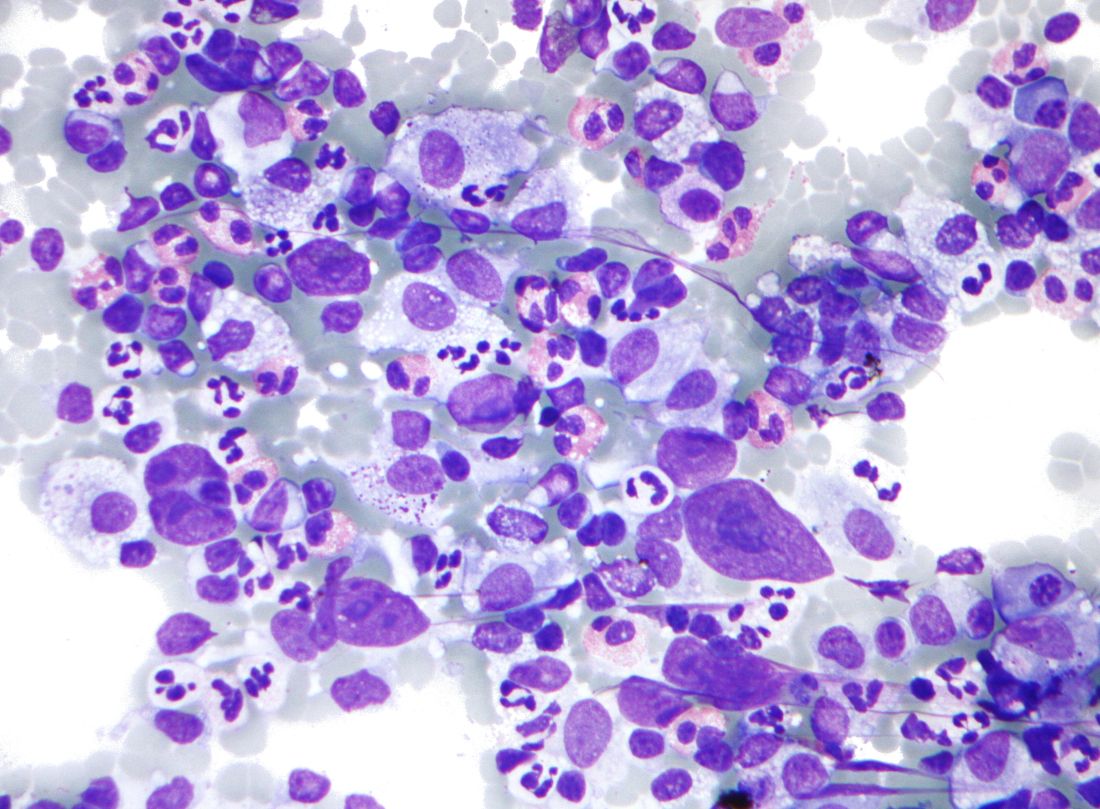
Of 77 patients enrolled in the investigator-initiated, single-arm, multicenter trial, 27 (35%) achieved complete remission (CR) without radiation at the early response assessment (ERA) after two cycles of therapy, reported Monika L. Metzger, MD, of St. Jude Children’s Research Hospital, Memphis, Tenn. and colleagues. The report was published online in the Journal of Clinical Oncology.
The addition of Bv also resulted in superior event-free survival (97.4%) and overall survival (98.7%) at median follow-up of 3.4 years, compared with previously published pediatric trials, such as the HOD99 trial (EFS and OS of 80.8% and 96.5%, respectively), the authors noted.
Bv chemotherapy
Bv, a targeted anti-CD30 antibody-drug conjugate, received expanded Food and Drug Administration approval in March 2018 for frontline use in combination with chemotherapy in adults with stage III or IV classical Hodgkin lymphoma (HL). The current study is the first to include Bv as part of a chemotherapy regimen in the frontline setting for pediatric classical HL, the authors noted, adding that their primary aim was to reduce prescribed radiation thereby limiting late toxicities associated with radiation in this population.
Patients enrolled were children and adolescents aged 18 years and under with stage IIB, IIIB, or IV classical HL. Bv was used in place of vincristine in the standard OEPA/COPDac (vincristine, etoposide, prednisone, and doxorubicin/cyclophosphamide, vincristine, prednisone, and dacarbazine) frontline regimen for pediatric HL.
The Bv-based chemotherapy regimen was well tolerated and mostly limited to low-grade nausea, vomiting, and constipation, and the most common adverse events were hematologic events occurring mainly during the first two cycles of chemotherapy.
“Notably, we observed a very low incidence of neuropathy (4%) by both clinician and patient report, and no participants required Bv dose reduction or discontinuation,” they wrote, explaining that neuropathy is more common with vincristine.
Radiation exposure
Residual node radiotherapy (RNRT) was delivered at a prescribed dose of 25.5 Gy in 17 fractions of 1.5 Gy, 2-4 weeks after completion of chemotherapy only to nodal sites that did not achieve a CR at the early response assessment (ERA) after two cycles of therapy.
“Patients treated with RNRT had significantly lower integral radiation dose compared with patients treated on HOD99 with [involved-field radiation therapy] (78.1 J vs. 249.6 J),” the authors wrote. “Doses to specific organs were also compared ... [t]he mean heart dose was reduced to 5.29 Gy from 16.9 Gy, and the mean thyroid dose was reduced to 4.46 Gy from 25.9 Gy.”
Women also had significantly less breast radiation exposure (mean of 3.21 Gy vs. 6.85 Gy in HOD99).
One irradiated patient experienced disease progression at the end of therapy, but remained disease free more than 6 years following salvage therapy, and one unexpected death occurred, the authors said.
“We have already reduced the use of radiation for low-risk Hodgkin lymphoma patients. In this study we’ve shown that it is also possible to either omit or reduce the extent of radiation for high-risk patients, using highly focal methods such as proton beam radiation or intensity modulated radiation,” co–senior author Matthew Krasin, MD, of St. Jude’s department of radiation oncology, stated in a press release.
Next steps
Co–senior author Melissa Hudson, MD, the St. Jude cancer survivorship division director, added that “[b]eing able to offer Hodgkin lymphoma patients a targeted therapy in the frontline setting is an exciting development.
“The favorable safety and toxicity profile of Bv in combination with chemotherapy for high-risk pediatric patients supports its prospective evaluation in a randomized trial,” the authors concluded, noting that “[l]onger follow-up is required to establish if this approach reduces risk of late-occurring toxicities such as second malignant neoplasms in this cohort of minimally irradiated patients.”
The study was sponsored by Seattle Genetics. The research at St. Jude was funded in part by grants from the National Cancer Institute and ALSAC (American Lebanese Syrian Associated Charities), St. Jude’s fundraising and awareness organization. Dr. Metzger reported research funding from Seattle Genetics. Dr. Krasin reported a consulting or advisory role for Debiopharm Group. Dr. Hudson reported a consulting or advisory role for Oncology Research Information Exchange Network, Princess Máxima Center.
A frontline treatment regimen including brentuximab vedotin (Bv) was well tolerated, was highly effective, and significantly reduced radiation exposure in pediatric patients with high-risk Hodgkin lymphoma, according to the results of an open-label, phase 2 trial.
Of 77 patients enrolled in the investigator-initiated, single-arm, multicenter trial, 27 (35%) achieved complete remission (CR) without radiation at the early response assessment (ERA) after two cycles of therapy, reported Monika L. Metzger, MD, of St. Jude Children’s Research Hospital, Memphis, Tenn. and colleagues. The report was published online in the Journal of Clinical Oncology.
The addition of Bv also resulted in superior event-free survival (97.4%) and overall survival (98.7%) at median follow-up of 3.4 years, compared with previously published pediatric trials, such as the HOD99 trial (EFS and OS of 80.8% and 96.5%, respectively), the authors noted.
Bv chemotherapy
Bv, a targeted anti-CD30 antibody-drug conjugate, received expanded Food and Drug Administration approval in March 2018 for frontline use in combination with chemotherapy in adults with stage III or IV classical Hodgkin lymphoma (HL). The current study is the first to include Bv as part of a chemotherapy regimen in the frontline setting for pediatric classical HL, the authors noted, adding that their primary aim was to reduce prescribed radiation thereby limiting late toxicities associated with radiation in this population.
Patients enrolled were children and adolescents aged 18 years and under with stage IIB, IIIB, or IV classical HL. Bv was used in place of vincristine in the standard OEPA/COPDac (vincristine, etoposide, prednisone, and doxorubicin/cyclophosphamide, vincristine, prednisone, and dacarbazine) frontline regimen for pediatric HL.
The Bv-based chemotherapy regimen was well tolerated and mostly limited to low-grade nausea, vomiting, and constipation, and the most common adverse events were hematologic events occurring mainly during the first two cycles of chemotherapy.
“Notably, we observed a very low incidence of neuropathy (4%) by both clinician and patient report, and no participants required Bv dose reduction or discontinuation,” they wrote, explaining that neuropathy is more common with vincristine.
Radiation exposure
Residual node radiotherapy (RNRT) was delivered at a prescribed dose of 25.5 Gy in 17 fractions of 1.5 Gy, 2-4 weeks after completion of chemotherapy only to nodal sites that did not achieve a CR at the early response assessment (ERA) after two cycles of therapy.
“Patients treated with RNRT had significantly lower integral radiation dose compared with patients treated on HOD99 with [involved-field radiation therapy] (78.1 J vs. 249.6 J),” the authors wrote. “Doses to specific organs were also compared ... [t]he mean heart dose was reduced to 5.29 Gy from 16.9 Gy, and the mean thyroid dose was reduced to 4.46 Gy from 25.9 Gy.”
Women also had significantly less breast radiation exposure (mean of 3.21 Gy vs. 6.85 Gy in HOD99).
One irradiated patient experienced disease progression at the end of therapy, but remained disease free more than 6 years following salvage therapy, and one unexpected death occurred, the authors said.
“We have already reduced the use of radiation for low-risk Hodgkin lymphoma patients. In this study we’ve shown that it is also possible to either omit or reduce the extent of radiation for high-risk patients, using highly focal methods such as proton beam radiation or intensity modulated radiation,” co–senior author Matthew Krasin, MD, of St. Jude’s department of radiation oncology, stated in a press release.
Next steps
Co–senior author Melissa Hudson, MD, the St. Jude cancer survivorship division director, added that “[b]eing able to offer Hodgkin lymphoma patients a targeted therapy in the frontline setting is an exciting development.
“The favorable safety and toxicity profile of Bv in combination with chemotherapy for high-risk pediatric patients supports its prospective evaluation in a randomized trial,” the authors concluded, noting that “[l]onger follow-up is required to establish if this approach reduces risk of late-occurring toxicities such as second malignant neoplasms in this cohort of minimally irradiated patients.”
The study was sponsored by Seattle Genetics. The research at St. Jude was funded in part by grants from the National Cancer Institute and ALSAC (American Lebanese Syrian Associated Charities), St. Jude’s fundraising and awareness organization. Dr. Metzger reported research funding from Seattle Genetics. Dr. Krasin reported a consulting or advisory role for Debiopharm Group. Dr. Hudson reported a consulting or advisory role for Oncology Research Information Exchange Network, Princess Máxima Center.
A frontline treatment regimen including brentuximab vedotin (Bv) was well tolerated, was highly effective, and significantly reduced radiation exposure in pediatric patients with high-risk Hodgkin lymphoma, according to the results of an open-label, phase 2 trial.
Of 77 patients enrolled in the investigator-initiated, single-arm, multicenter trial, 27 (35%) achieved complete remission (CR) without radiation at the early response assessment (ERA) after two cycles of therapy, reported Monika L. Metzger, MD, of St. Jude Children’s Research Hospital, Memphis, Tenn. and colleagues. The report was published online in the Journal of Clinical Oncology.
The addition of Bv also resulted in superior event-free survival (97.4%) and overall survival (98.7%) at median follow-up of 3.4 years, compared with previously published pediatric trials, such as the HOD99 trial (EFS and OS of 80.8% and 96.5%, respectively), the authors noted.
Bv chemotherapy
Bv, a targeted anti-CD30 antibody-drug conjugate, received expanded Food and Drug Administration approval in March 2018 for frontline use in combination with chemotherapy in adults with stage III or IV classical Hodgkin lymphoma (HL). The current study is the first to include Bv as part of a chemotherapy regimen in the frontline setting for pediatric classical HL, the authors noted, adding that their primary aim was to reduce prescribed radiation thereby limiting late toxicities associated with radiation in this population.
Patients enrolled were children and adolescents aged 18 years and under with stage IIB, IIIB, or IV classical HL. Bv was used in place of vincristine in the standard OEPA/COPDac (vincristine, etoposide, prednisone, and doxorubicin/cyclophosphamide, vincristine, prednisone, and dacarbazine) frontline regimen for pediatric HL.
The Bv-based chemotherapy regimen was well tolerated and mostly limited to low-grade nausea, vomiting, and constipation, and the most common adverse events were hematologic events occurring mainly during the first two cycles of chemotherapy.
“Notably, we observed a very low incidence of neuropathy (4%) by both clinician and patient report, and no participants required Bv dose reduction or discontinuation,” they wrote, explaining that neuropathy is more common with vincristine.
Radiation exposure
Residual node radiotherapy (RNRT) was delivered at a prescribed dose of 25.5 Gy in 17 fractions of 1.5 Gy, 2-4 weeks after completion of chemotherapy only to nodal sites that did not achieve a CR at the early response assessment (ERA) after two cycles of therapy.
“Patients treated with RNRT had significantly lower integral radiation dose compared with patients treated on HOD99 with [involved-field radiation therapy] (78.1 J vs. 249.6 J),” the authors wrote. “Doses to specific organs were also compared ... [t]he mean heart dose was reduced to 5.29 Gy from 16.9 Gy, and the mean thyroid dose was reduced to 4.46 Gy from 25.9 Gy.”
Women also had significantly less breast radiation exposure (mean of 3.21 Gy vs. 6.85 Gy in HOD99).
One irradiated patient experienced disease progression at the end of therapy, but remained disease free more than 6 years following salvage therapy, and one unexpected death occurred, the authors said.
“We have already reduced the use of radiation for low-risk Hodgkin lymphoma patients. In this study we’ve shown that it is also possible to either omit or reduce the extent of radiation for high-risk patients, using highly focal methods such as proton beam radiation or intensity modulated radiation,” co–senior author Matthew Krasin, MD, of St. Jude’s department of radiation oncology, stated in a press release.
Next steps
Co–senior author Melissa Hudson, MD, the St. Jude cancer survivorship division director, added that “[b]eing able to offer Hodgkin lymphoma patients a targeted therapy in the frontline setting is an exciting development.
“The favorable safety and toxicity profile of Bv in combination with chemotherapy for high-risk pediatric patients supports its prospective evaluation in a randomized trial,” the authors concluded, noting that “[l]onger follow-up is required to establish if this approach reduces risk of late-occurring toxicities such as second malignant neoplasms in this cohort of minimally irradiated patients.”
The study was sponsored by Seattle Genetics. The research at St. Jude was funded in part by grants from the National Cancer Institute and ALSAC (American Lebanese Syrian Associated Charities), St. Jude’s fundraising and awareness organization. Dr. Metzger reported research funding from Seattle Genetics. Dr. Krasin reported a consulting or advisory role for Debiopharm Group. Dr. Hudson reported a consulting or advisory role for Oncology Research Information Exchange Network, Princess Máxima Center.
FROM THE JOURNAL OF CLINICAL ONCOLOGY
FDA approves frontline immunotherapy for gastric cancers

This is the first immunotherapy approved for the frontline treatment of gastric cancers, the agency says in a press release.
The approval comes after nivolumab received Priority Review and Orphan Drug designations for this indication. There are approximately 28,000 new diagnoses of gastric cancer annually in the United States, and overall survival is generally poor with currently available therapy, points out the FDA.
“Today’s approval is the first treatment in more than a decade to show a survival benefit for patients with advanced or metastatic gastric cancer who are being treated for the first time,” Richard Pazdur, MD, director of the FDA’s Oncology Center of Excellence and acting director of the Office of Oncologic Diseases in the FDA’s Center for Drug Evaluation and Research, states in an FDA press release.
Efficacy in the gastric cancer setting was demonstrated in the randomized, phase 3, open-label CheckMate 649 study of 1,518 untreated patients. Median survival was 13.8 months among those treated with nivolumab, compared with 11.6 months with chemotherapy alone (hazard ratio, 0.80; P = .0002).
Common side effects experienced by patients in the nivolumab group included peripheral neuropathy, nausea, fatigue, diarrhea, vomiting, decreased appetite, abdominal pain, constipation, and musculoskeletal pain.
Nivolumab is also approved for numerous other cancers. Other known adverse effects include immune-mediated inflammation of the lungs, colon, liver, endocrine glands, and kidneys.
“Patients should tell their health care providers if they have immune system problems, lung or breathing problems, liver problems, have had an organ transplant, or are pregnant or plan to become pregnant before starting treatment,” the FDA states.
A version of this article first appeared on Medscape.com.
This is the first immunotherapy approved for the frontline treatment of gastric cancers, the agency says in a press release.
The approval comes after nivolumab received Priority Review and Orphan Drug designations for this indication. There are approximately 28,000 new diagnoses of gastric cancer annually in the United States, and overall survival is generally poor with currently available therapy, points out the FDA.
“Today’s approval is the first treatment in more than a decade to show a survival benefit for patients with advanced or metastatic gastric cancer who are being treated for the first time,” Richard Pazdur, MD, director of the FDA’s Oncology Center of Excellence and acting director of the Office of Oncologic Diseases in the FDA’s Center for Drug Evaluation and Research, states in an FDA press release.
Efficacy in the gastric cancer setting was demonstrated in the randomized, phase 3, open-label CheckMate 649 study of 1,518 untreated patients. Median survival was 13.8 months among those treated with nivolumab, compared with 11.6 months with chemotherapy alone (hazard ratio, 0.80; P = .0002).
Common side effects experienced by patients in the nivolumab group included peripheral neuropathy, nausea, fatigue, diarrhea, vomiting, decreased appetite, abdominal pain, constipation, and musculoskeletal pain.
Nivolumab is also approved for numerous other cancers. Other known adverse effects include immune-mediated inflammation of the lungs, colon, liver, endocrine glands, and kidneys.
“Patients should tell their health care providers if they have immune system problems, lung or breathing problems, liver problems, have had an organ transplant, or are pregnant or plan to become pregnant before starting treatment,” the FDA states.
A version of this article first appeared on Medscape.com.
This is the first immunotherapy approved for the frontline treatment of gastric cancers, the agency says in a press release.
The approval comes after nivolumab received Priority Review and Orphan Drug designations for this indication. There are approximately 28,000 new diagnoses of gastric cancer annually in the United States, and overall survival is generally poor with currently available therapy, points out the FDA.
“Today’s approval is the first treatment in more than a decade to show a survival benefit for patients with advanced or metastatic gastric cancer who are being treated for the first time,” Richard Pazdur, MD, director of the FDA’s Oncology Center of Excellence and acting director of the Office of Oncologic Diseases in the FDA’s Center for Drug Evaluation and Research, states in an FDA press release.
Efficacy in the gastric cancer setting was demonstrated in the randomized, phase 3, open-label CheckMate 649 study of 1,518 untreated patients. Median survival was 13.8 months among those treated with nivolumab, compared with 11.6 months with chemotherapy alone (hazard ratio, 0.80; P = .0002).
Common side effects experienced by patients in the nivolumab group included peripheral neuropathy, nausea, fatigue, diarrhea, vomiting, decreased appetite, abdominal pain, constipation, and musculoskeletal pain.
Nivolumab is also approved for numerous other cancers. Other known adverse effects include immune-mediated inflammation of the lungs, colon, liver, endocrine glands, and kidneys.
“Patients should tell their health care providers if they have immune system problems, lung or breathing problems, liver problems, have had an organ transplant, or are pregnant or plan to become pregnant before starting treatment,” the FDA states.
A version of this article first appeared on Medscape.com.